WO2025006554A1 - Use of transition metal catalyst to produce linear ethylene/polar copolymers in a high pressure process - Google Patents
Use of transition metal catalyst to produce linear ethylene/polar copolymers in a high pressure process Download PDFInfo
- Publication number
- WO2025006554A1 WO2025006554A1 PCT/US2024/035545 US2024035545W WO2025006554A1 WO 2025006554 A1 WO2025006554 A1 WO 2025006554A1 US 2024035545 W US2024035545 W US 2024035545W WO 2025006554 A1 WO2025006554 A1 WO 2025006554A1
- Authority
- WO
- WIPO (PCT)
- Prior art keywords
- substituted
- unsubstituted
- hydrocarbyl
- heterohydrocarbyl
- polymerization process
- Prior art date
- Legal status (The legal status is an assumption and is not a legal conclusion. Google has not performed a legal analysis and makes no representation as to the accuracy of the status listed.)
- Ceased
Links
Classifications
-
- C—CHEMISTRY; METALLURGY
- C07—ORGANIC CHEMISTRY
- C07F—ACYCLIC, CARBOCYCLIC OR HETEROCYCLIC COMPOUNDS CONTAINING ELEMENTS OTHER THAN CARBON, HYDROGEN, HALOGEN, OXYGEN, NITROGEN, SULFUR, SELENIUM OR TELLURIUM
- C07F15/00—Compounds containing elements of Groups 8, 9, 10 or 18 of the Periodic Table
- C07F15/0006—Compounds containing elements of Groups 8, 9, 10 or 18 of the Periodic Table compounds of the platinum group
- C07F15/006—Palladium compounds
-
- C—CHEMISTRY; METALLURGY
- C07—ORGANIC CHEMISTRY
- C07F—ACYCLIC, CARBOCYCLIC OR HETEROCYCLIC COMPOUNDS CONTAINING ELEMENTS OTHER THAN CARBON, HYDROGEN, HALOGEN, OXYGEN, NITROGEN, SULFUR, SELENIUM OR TELLURIUM
- C07F15/00—Compounds containing elements of Groups 8, 9, 10 or 18 of the Periodic Table
- C07F15/04—Nickel compounds
Definitions
- Embodiments of the present disclosure generally relate to ethylene and polar comonomer polymerization processes to produce linear ethylene copolymers, and, more specifically, to polymerization processes conducted at high temperatures and high pressures that incorporate catalyst systems having transition metal catalysts.
- BACKGROUND [0003]
- ethylene/acrylate copolymers are formed through high-pressure and/or high-temperature radical processes and have a highly branched microstructure similar to that of low-density polyethylene (LDPE).
- LDPE low-density polyethylene
- Ni and Pd catalysts have been reported for the copolymerization of ethylene and acrylate monomers in solution at relatively low pressures of ethylene (10-50 barg); however, the reported catalyst efficiencies are typically quite low.
- the reported Ni and Pd catalysts also exhibit significant deactivation in solution at temperatures > 120 °C and the Mw of the copolymers decreases precipitously at temperatures above 90 °C. 85349-WO-PCT/DOW 85349 WO SUMMARY [0005]
- Embodiments of this disclosure includes a polymerization process.
- the process includes polymerizing ethylene, one or more polar comonomers, optionally one or more (C 3 ⁇ C 12 ) ⁇ -olefins, and optionally an aluminum species in the presence of the catalyst system to form an ethylene-based copolymer in a high pressure reactor at a pressure of greater than 1000 barg and a temperature of greater than 100°C, wherein the catalyst system comprises a transition metal catalyst.
- the transition metal catalyst comprises nickel(II) or palladium(II).
- the transition metal catalyst or transition metal procatalyst comprises nickel(II) or palladium(II), and has a structure according to formula (I).
- M is nickel(II) or palladium(II);
- X is a ligand chosen from (C1 ⁇ C40)hydrocarbyl, (C 1 ⁇ C 40 )heterohydrocarbyl, -CH 2 Si(R C ) 3-Q (OR C ) Q , ⁇ Si(R C ) 3-Q (OR C ) Q , -OSi(R C ) 3-Q (OR C ) Q , ⁇ Ge(R C ) 3-Q (OR C ) Q , ⁇ P(R C ) 2-W (OR C ) W , ⁇ P(O)(R C ) 2-W (OR C ) W , ⁇ N(R C ) 2 , ⁇ NH(R C ), ⁇ N(Si(R C ) 3 ) 2 , -NR C Si(R C )3, ⁇ NHSi(R C )3, ⁇ OR C , ⁇ SR C , ⁇ NO2, ⁇ CN, ⁇
- R 2 , R 3 , and R 4 are independently selected from a substituted (C 1 ⁇ C 30 )hydrocarbyl, unsubstituted (C 1 ⁇ C 30 )hydrocarbyl, substituted (C 1 ⁇ C 30 )heterohydrocarbyl, unsubstituted (C 1 ⁇ C 30 )heterohydrocarbyl, ⁇ Si(R C ) 3-Q (OR C ) Q , ⁇ OSi(R C )3-Q(OR C )Q, -Ge(R C )3-Q(OR C )Q, -P(R C )2-W(OR C )W, -P(O)(R C )2-W(OR C )W, -N(R C )2, ⁇ NH(R C ) 2 , -OR C , -SR C , -NO 2 , -CN, -CF 3 , -OCF 3
- R 5 and R 6 are independently selected from a substituted (C1 ⁇ C30)hydrocarbyl, unsubstituted (C1 ⁇ C30)hydrocarbyl, substituted (C1 ⁇ C30)heterohydrocarbyl, or unsubstituted (C1 ⁇ C30)heterohydrocarbyl.
- R 5 and R 6 are linked to form a ring structure; optionally, R 2 and R 3 are linked to form a ring structure; or optionally, R 3 and R 4 are linked to form a ring structure.
- FIGURE is a graph of the melt temperature of the acrylate/ethylene copolymers as a function of the weight percent (wt.%) of the polar comonomer.
- DETAILED DESCRIPTION [0016] Specific embodiments of catalyst systems will now be described. It should be understood that the catalyst systems of this disclosure may be embodied in different forms and should not be construed as limited to the specific embodiments set forth in this disclosure. Rather, embodiments are provided so that this disclosure will be thorough and complete, and will fully convey the scope of the subject matter to those skilled in the art.
- a parenthetical expression having the form “(C x ⁇ C y )” means that the unsubstituted form of the chemical group has from x carbon atoms to y carbon atoms, inclusive of x and y.
- a (C1 ⁇ C50)alkyl is an alkyl group having from 1 to 50 carbon atoms in its unsubstituted form.
- R S substituents
- R S substituted version of a chemical group defined using the “(Cx ⁇ Cy)” parenthetical may contain more than y carbon atoms depending on the identity of any groups R S .
- a “(C 1 ⁇ C 50 )alkyl substituted with exactly one group R S , where R S is phenyl ( ⁇ C 6 H 5 )” may contain from 7 to 56 carbon atoms.
- substitution means that at least one hydrogen atom ( ⁇ H) bonded to a carbon atom or heteroatom of a corresponding unsubstituted compound or functional group is replaced by a substituent (e.g., R S ).
- substitution or “persubstituted” means that every hydrogen atom (H) bonded to a carbon atom or heteroatom of a corresponding unsubstituted compound or functional group is replaced by a substituent (e.g., R S ).
- a “perfluorinated alkyl” is an alkyl group in which every hydrogen atom is replaced by a fluorine atom.
- polysubstitution means that at least two, but fewer than all, hydrogen atoms bonded to carbon atoms or heteroatoms of a corresponding unsubstituted compound or functional group are replaced by a substituent.
- ⁇ H means a hydrogen or hydrogen radical that is covalently bonded to another atom.
- “Hydrogen” and “ ⁇ H” are interchangeable, and unless clearly specified have identical meanings.
- (C1 ⁇ C50)hydrocarbyl means a hydrocarbon radical of from 1 to 50 carbon atoms and the term “(C1 ⁇ C50)hydrocarbylene” means a hydrocarbon diradical of from 1 to 50 carbon atoms, in which each hydrocarbon radical and each hydrocarbon diradical is aromatic or non-aromatic, saturated or unsaturated, straight chain or branched chain, cyclic (having three carbons or more, and including mono- and poly-cyclic, fused and non-fused polycyclic, and bicyclic) or acyclic, and substituted by one or more R S or unsubstituted.
- a (C 1 ⁇ C 50 )hydrocarbyl includes, without limitation, unsubstituted or substituted forms of the following groups: (C1 ⁇ C50)alkyl, (C3 ⁇ C50)cycloalkyl, (C3 ⁇ C20)cycloalkyl-(C1 ⁇ C20)alkylene, (C6 ⁇ C40)aryl, or (C6 ⁇ C20)aryl-(C1-C20)alkylene (such as benzyl ( ⁇ CH 2 ⁇ C 6 H 5 )).
- (C 1 ⁇ C 50 )alkyl and “(C 1 ⁇ C 18 )alkyl” mean a saturated straight or branched hydrocarbon radical of from 1 to 50 carbon atoms and a saturated straight or branched hydrocarbon radical of from 1 to 18 carbon atoms, respectively, that is unsubstituted or substituted by one or more R S .
- the radical may be on any one carbon atom of the alkyl.
- Examples of unsubstituted (C 1 ⁇ C 50 )alkyl are unsubstituted (C 1 ⁇ C 20 )alkyl; unsubstituted (C 1 ⁇ C 10 )alkyl; unsubstituted (C1 ⁇ C5)alkyl; methyl; ethyl; 1-propyl; 2-propyl; 1-butyl; 2-butyl; 2-methylpropyl; 1,1- dimethylethyl; 1-pentyl; 2,2-dimethylpropyl; 1-hexyl; 1-heptyl; 1-nonyl; and 1-decyl.
- substituted (C 1 ⁇ C 40 )alkyl examples include substituted (C 1 ⁇ C 20 )alkyl, substituted (C 1 ⁇ C 10 )alkyl, trifluoromethyl, and [Cn]alkyl.
- [Cn]alkyl means the radical, including substituents, contains up to a maximum of n carbon atoms wherein n is an integer from 1 to 45.
- a [C 45 ]alkyl is, for example, a (C 27 ⁇ C 40 )alkyl substituted by one R S , which is a (C 1 ⁇ C 5 )alkyl, or is, for example a (C15-C25)alkyl substituted by two R S groups, which are each a (C1 ⁇ C10)alkyl.
- R S which is a (C 1 ⁇ C 5 )alkyl
- R S groups which are each a (C1 ⁇ C10)alkyl.
- Examples of (C1 ⁇ C5)alkyl include methyl, ethyl, 1-propyl, 1-methylethyl, 2,2-dimethylpropyl; or 1,1-dimethylethyl.
- 1,1-Dimethylethyl is a four-carbon alkyl having its radical on the tertiary carbon.
- tertiary carbon atom refers to a carbon atom that is covalently bonded to three other carbon atoms.
- (C6 ⁇ C50)aryl means an unsubstituted or substituted (by one or more R S ) monocyclic, bicyclic, or tricyclic aromatic hydrocarbon radical of from 6 to 40 carbon atoms, of which at least from 6 to 14 of the carbon atoms are aromatic ring carbon atoms.
- a monocyclic aromatic hydrocarbon radical includes one aromatic ring; a bicyclic aromatic hydrocarbon radical has two rings; and a tricyclic aromatic hydrocarbon radical has three rings. When the bicyclic or tricyclic aromatic hydrocarbon radical is present, at least one of the rings of the radical is aromatic.
- the other ring or rings of the aromatic radical may be independently fused or non-fused and aromatic or non-aromatic.
- unsubstituted (C 6 ⁇ C 50 )aryl include: unsubstituted (C 6 ⁇ C 20 )aryl, unsubstituted (C 6 ⁇ C 18 )aryl; 2-(C 1 ⁇ C 5 )alkyl-phenyl; phenyl; fluorenyl; tetrahydrofluorenyl; indacenyl; hexahydroindacenyl; indenyl; dihydroindenyl; naphthyl; tetrahydronaphthyl; anthracenyl; and phenanthrenyl.
- substituted (C6 ⁇ C40)aryl examples include: substituted (C 1 ⁇ C 20 )aryl; substituted (C 6 ⁇ C 18 )aryl; 2,4-bis([C 20 ]alkyl)-phenyl; 3,5- bis([C20]alkyl)-phenyl; pentafluorophenyl; and fluoren-9-one-l-yl.
- (C3 ⁇ C50)cycloalkyl means a saturated cyclic hydrocarbon radical of from 3 to 50 carbon atoms that is unsubstituted or substituted by one or more R S .
- unsubstituted (C3 ⁇ C40)cycloalkyl examples include unsubstituted (C3 ⁇ C20)cycloalkyl, unsubstituted (C3 ⁇ C10)cycloalkyl, cyclopropyl, cyclobutyl, cyclopentyl, cyclohexyl, cycloheptyl, cyclooctyl, cyclononyl, and cyclodecyl.
- Examples of substituted (C 3 ⁇ C 40 )cycloalkyl are substituted (C 3 ⁇ C 20 )cycloalkyl, substituted (C 3 ⁇ C 10 )cycloalkyl, cyclopentanon-2-yl, and 1-fluorocyclohexyl.
- Examples of (C1 ⁇ C50)hydrocarbylene include, without limitation, unsubstituted or substituted forms of groups such as (C6 ⁇ C50)arylene, (C3 ⁇ C50)cycloalkylene, and (C 1 ⁇ C 50 )alkylene (e.g., (C 1 ⁇ C 20 )alkylene).
- (C2 ⁇ C20)alkylene ⁇ , ⁇ -diradicals include ethan-1,2-diyl (i.e., ⁇ CH2CH2 ⁇ ), propan- 1,3-diyl (i.e., ⁇ CH 2 CH 2 CH 2 ⁇ ), 2-methylpropan-1,3-diyl (i.e., ⁇ CH 2 CH(CH 3 )CH 2 ⁇ ).
- Some examples of (C 6 ⁇ C 50 )arylene ⁇ , ⁇ -diradicals include phenyl-1,4-diyl, naphthalen-2,6-diyl, or naphthalen-3,7-diyl.
- (C1 ⁇ C50)alkylene means a saturated straight chain or branched chain diradical (i.e., the radicals are not on ring atoms) of from 1 to 50 carbon atoms that is unsubstituted or substituted by one or more R S .
- Examples of unsubstituted (C1 ⁇ C50)alkylene are unsubstituted (C1 ⁇ C20)alkylene, including unsubstituted ⁇ CH2CH2 ⁇ , ⁇ (CH2)3 ⁇ , ⁇ (CH2)4 ⁇ , ⁇ (CH2)5 ⁇ , ⁇ (CH2)6 ⁇ , ⁇ (CH2)7 ⁇ , ⁇ (CH2)8 ⁇ , ⁇ CH2C*HCH3, and ⁇ (CH2)4C*(H)(CH3), in which “C*” denotes a carbon atom from which a hydrogen atom is removed to form a secondary or tertiary alkyl radical.
- substituted (C 1 ⁇ C 50 )alkylene examples include substituted (C 1 ⁇ C 20 )alkylene, ⁇ CF 2 ⁇ , ⁇ C(O) ⁇ , and ⁇ (CH 2 ) 14 C(CH 3 ) 2 (CH 2 ) 5 ⁇ (i.e., a 6,6-dimethyl substituted 1,20-eicosylene).
- substituted (C1 ⁇ C50)alkylene examples include 1,2-cyclopentanediylbis(methylene), 1,2- cyclohexanediylbis(methylene), 7,7-dimethyl-bicyclo[2.2.1]heptane-2,3-diylbis(methylene), and bicyclo[2.2.2]octane-2,3-diylbis(methylene).
- (C3 ⁇ C50)cycloalkylene means a cyclic diradical (i.e., the radicals are on ring atoms) of from 3 to 50 carbon atoms that is unsubstituted or substituted by one or more R S .
- heteroatom refers to an atom other than hydrogen or carbon.
- the radical of the heterohydrocarbyl may be on a carbon atom or a heteroatom.
- the two radicals of the heterohydrocarbylene may be on a single carbon atom or on a single heteroatom. Additionally, one of the two radicals of the diradical may be on a carbon atom and the other radical may be on a different carbon atom; one of the two radicals may be on a carbon atom and the other on a heteroatom; or one of the two radicals may be on a heteroatom and the other radical on a different heteroatom.
- Each (C 1 ⁇ C 50 )heterohydrocarbyl and (C 1 ⁇ C 50 )heterohydrocarbylene may be unsubstituted or substituted (by one or more R S ), aromatic or non-aromatic, saturated or unsaturated, straight chain or branched chain, cyclic (including mono- and poly-cyclic, fused and non-fused polycyclic), or acyclic.
- the (C 1 ⁇ C 50 )heterohydrocarbyl may be unsubstituted or substituted.
- (C4 ⁇ C50)heteroaryl means an unsubstituted or substituted (by one or more R S ) monocyclic, bicyclic, or tricyclic heteroaromatic hydrocarbon radical of from 2 to 50 total carbon atoms and from 1 to 10 heteroatoms.
- the radical of the heteroaryl may be on a carbon 85349-WO-PCT/DOW 85349 WO atom or a heteroatom.
- a monocyclic heteroaromatic hydrocarbon radical includes one heteroaromatic ring; a bicyclic heteroaromatic hydrocarbon radical has two rings; and a tricyclic heteroaromatic hydrocarbon radical has three rings.
- the bicyclic or tricyclic heteroaromatic hydrocarbon radical When the bicyclic or tricyclic heteroaromatic hydrocarbon radical is present, at least one of the rings in the radical is heteroaromatic.
- the other ring or rings of the heteroaromatic radical may be independently fused or non-fused and aromatic or non-aromatic.
- Other heteroaryl groups e.g., (Cx ⁇ Cy)heteroaryl generally, such as (C4 ⁇ C12)heteroaryl
- Cx ⁇ Cy e.g., (Cx ⁇ Cy)heteroaryl generally, such as (C4 ⁇ C12)heteroaryl
- the monocyclic heteroaromatic hydrocarbon radical is a 5-membered ring or a 6-membered ring.
- the 5-membered ring has 5 minus h carbon atoms, wherein h is the number of heteroatoms and may be 1, 2, 3, or 4; and each heteroatom independently may be O, S, N, or P.
- Examples of 5-membered ring heteroaromatic hydrocarbon radicals include pyrrol-1-yl; pyrrol-2-yl; furan-3-yl; thiophen-2- yl; pyrazol-1-yl; isoxazol-2-yl; isothiazol-5-yl; imidazol-2-yl; oxazol-4-yl; thiazol-2-yl; 1,2,4- triazol-1-yl; 1,3,4-oxadiazol-2-yl; 1,3,4-thiadiazol-2-yl; tetrazol-1-yl; tetrazol-2-yl; and tetrazol- 5-yl.
- the 6-membered ring has 6 minus h carbon atoms, wherein h is the number of heteroatoms and may be 1, 2 or 3 and the heteroatoms may be N or P.
- 6-membered ring heteroaromatic hydrocarbon radicals include pyridine-2-yl; pyrimidin-2-yl; pyrazin-2-yl; 1,3,5- triazin-2-yl.
- the bicyclic heteroaromatic hydrocarbon radical can be a fused 5,6- or 6,6-ring system. Examples of the fused 5,6-ring system bicyclic heteroaromatic hydrocarbon radical are indol-1-yl; and benzimidazol-1-yl.
- Examples of the fused 6,6-ring system bicyclic heteroaromatic hydrocarbon radical are quinolin-2-yl; and isoquinolin-1-yl.
- the tricyclic heteroaromatic hydrocarbon radical can be a fused 5,6,5-; 5,6,6-; 6,5,6-; or 6,6,6-ring system.
- An example of the fused 5,6,5-ring system is 1,7-dihydropyrrolo[3,2-f]indol-1-yl.
- An example of the fused 5,6,6-ring system is 1H-benzo[f] indol-1-yl.
- An example of the fused 6,5,6-ring system is 9H-carbazol-9-yl.
- (C1 ⁇ C50)heteroalkyl means a saturated straight or branched chain radical containing 1 to 50 carbon atoms, and one or more than one heteroatom.
- (C 1 ⁇ C 50 )heteroalkylene means a saturated straight or branched chain diradical containing from 1 to 50 carbon atoms and one or more than one heteroatom.
- the heteroatoms of the heteroalkyls or the heteroalkylenes may include, but are not limited to Si(R C )3, Ge(R C )3, Si(R C )2, Ge(R C )2, P(R P ) 2 , P(R P ), P(O)(R P ) 2 , N(R N ) 2 , N(R N ), N, O, OR C , S, SR C , S(O), and S(O) 2 , wherein each of the heteroalkyl and heteroalkylene groups are unsubstituted or are substituted by one or more R S .
- Examples of unsubstituted (C 2 ⁇ C 40 )heterocycloalkyl include unsubstituted (C2 ⁇ C20)heterocycloalkyl, unsubstituted (C2 ⁇ C10)heterocycloalkyl, aziridin-l-yl, oxetan-2-yl, tetrahydrofuran-3-yl, pyrrolidin-l-yl, tetrahydrothiophen-S,S-dioxide-2-yl, morpholin-4-yl, 1,4- dioxan-2-yl, hexahydroazepin-4-yl, 3-oxa-cyclooctyl, 5-thio-cyclononyl, and 2-aza-cyclodecyl.
- halogen atom or “halogen” means the radical of a fluorine atom (F), chlorine atom (Cl), bromine atom (Br), or iodine atom (I).
- halide means the anionic form of the halogen atom: fluoride (F ⁇ ), chloride (Cl ⁇ ), bromide (Br ⁇ ), or iodide (I ⁇ ).
- saturated means lacking carbon–carbon double bonds, carbon–carbon triple bonds, and (in heteroatom-containing groups) carbon–nitrogen, carbon–phosphorus, nitrogen-nitrogen, nitrogen-phosphorus, and carbon–silicon double or triple bonds.
- one or more double and/or triple bonds optionally may or may not be present in substituents R S .
- the term “unsaturated” means containing one or more carbon–carbon double bonds, carbon–carbon triple bonds, or (in heteroatom-containing groups) one or more carbon–nitrogen, carbon–phosphorus, nitrogen- nitrogen, nitrogen-phosphorus, or carbon–silicon double or triple bonds, not including double bonds that may be present in substituents R S , if any, or in (hetero) aromatic rings, if any.
- the polymerization processes include polymerizing ethylene and one or more polar comonomers and optionally one or more (C3 ⁇ C12) ⁇ -olefins in the presence of the catalyst system to form an ethylene-based copolymer in a high pressure reactor at a pressure of greater than 1000 barg and a temperature of greater than 100°C, wherein the catalyst system comprises a transition metal catalyst.
- the reactor temperature is from 100°C to 500°C.
- the reactor temperature is from 120°C to 500°C, 140°C to 500°C, 150°C to 500°C, 160°C to 500°C, 120°C to 400°C, 130°C to 400°C, 140°C to 400°C, 150°C to 400°C, 120°C to 300°C, 130°C to 300°C, 140°C to 300°C, or 150°C to 300°C. In various embodiments, the reactor temperature is greater 150°C. [0040] In one or more embodiments, the reactor pressure is from 1000 barg to 10,000 barg.
- the reactor pressure is from 1000 barg to 5,000 barg, 1,100 barg to 5,000 barg, 1,200 barg to 5,000 barg, 1,300 barg to 5,000 barg, 1,400 barg to 5,000 barg, 1,500 barg to 5,000 barg, 1000 barg to 4,000 barg, 1,100 barg to 4,000 barg, 1,200 barg to 4,000 barg, 1,300 barg to 4,000 barg, 1,400 barg to 4,000 barg, 1,500 barg to 4,000 barg, 1000 barg to 3,000 barg, 85349-WO-PCT/DOW 85349 WO 1,100 barg to 3,000 barg, 1,200 barg to 3,000 barg, 1,300 barg to 3,000 barg, 1,400 barg to 3,000 barg, or 1,500 barg to 3,000 barg.
- Olefinic monomers such as (C3 ⁇ C12) ⁇ -olefins, may include, but are not limited to, propylene, 1-butene, 1-hexene, 1-octene, 1-nonene, 1-decene, 1-undecene, 1-dodecene, 4-methyl- 1-pentene, styrene, cyclobutene, cyclopentene, norbornene, ethylidene norbornene.
- the polar monomer is an alkyl acrylate, substituted (C1 ⁇ C30)hydrocarbyl acrylate, unsubstituted (C1 ⁇ C30)hydrocarbyl acrylate, substituted (C 1 ⁇ C 30 )heterohydrocarbyl acrylate, or unsubstituted (C 1 ⁇ C 30 )heterohydrocarbyl acrylate, or unsubstituted (C 1 ⁇ C 30 )heterohydrocarbyl acrylate, the polar ethylene-based copolymer may be de-esterified to form an acrylic acid/ethylene-based copolymer.
- the alkyl acrylate monomer may be, by way of example and not limitation, methyl acrylate, ethyl acrylate, n-butyl acrylate, iso- butyl acrylate, t-butyl acrylate, or combinations thereof.
- the alkyl acrylate has an alkyl group with from 1 to 8 carbons. This is designated a C1 ⁇ C8-alkyl acrylate.
- the alkyl acrylate is t-butyl acrylate or n-butyl acrylate.
- the optional ⁇ -olefin monomer may be, by way of example and not limitation, propylene, 1-butene, 1-pentene, 1-hexene, 1- heptene, 1-octene, 1-nonene, 1-decene, 1-undecene, 1-dodecene, 4-methyl-1-pentene, styrene, or combinations thereof.
- the process may further include a cyclic olefin, such as cyclobutene, cyclopentene, norbornene, and norbornene derivatives that are substituted in the 5- and 6-positions with (C1-C20)hydrocarbyl groups.
- a cyclic olefin such as cyclobutene, cyclopentene, norbornene, and norbornene derivatives that are substituted in the 5- and 6-positions with (C1-C20)hydrocarbyl groups.
- the polymerization processes include polymerizing ethylene and one or more polar comonomers and optionally one or more (C3 ⁇ C12) ⁇ -olefins, and optionally an aluminum species, in the presence of the catalyst system to form an ethylene-based copolymer in a high pressure reactor at a pressure of greater than 1000 barg and a temperature of greater than 100°C, wherein the catalyst system comprises a transition metal catalyst.
- the transition metal catalyst comprises nickel(II) or palladium(II).
- the transition metal catalyst or transition metal procatalyst comprises nickel(II) or palladium(II), and has a structure according to formula (I).
- R 5 and R 6 are independently selected from a substituted (C1 ⁇ C30)hydrocarbyl, unsubstituted (C1 ⁇ C30)hydrocarbyl, substituted (C 1 ⁇ C 30 )heterohydrocarbyl, or unsubstituted (C 1 ⁇ C 30 )heterohydrocarbyl.
- R 5 and R 6 are optionally linked to form a ring structure and R 2 and R 3 are optionally linked to form a ring structure. In some embodiments, R 3 and R 4 are optionally linked to form a ring structure.
- R 5 and R 6 are independently (C 1 ⁇ C 20 )alkyl or (C 6 ⁇ C 20 )aryl.
- R 2 , R 3 , and R 4 are (C1 ⁇ C18)alkyl or –H.
- R 1 is a radical of formula (II), (III), or (IV).
- R 1 is a radical of formula (I).
- R 42 and R 47 are (C 1 ⁇ C 12 )alkyl.
- R 43 and R 46 are (C1 ⁇ C12)alkyl. 85349-WO-PCT/DOW 85349 WO [0058]
- R 5 and R 6 are 2,6-dimethoxyphenyl, 2,6-diethoxyphenyl, 2,6- diphenoxyphenyl, 2,4,6-triethoxyphenyl, 2,4,6-trimethoxyphenyl, 2-phenylphenyl, or 2,6- diisopropoxyphenyl.
- Y is a neutral Lewis basic aprotic (C2 ⁇ C40)heterohydrocarbon.
- Aprotic (C2 ⁇ C40)heterohydrocarbons are (C 2 ⁇ C 40 )heterohydrocarbons as previously defined, for which every hydrogen atom of the (C 2 ⁇ C 40 )heterohydrocarbon has a pKa of greater than 30 wherein pKa is the negative base-10 logarithm of the acid dissociation constant (Ka).
- Y is an organic Lewis base.
- organic Lewis bases include pyridine, or a substituted pyridine, a sulfoxide, a trialkyl or triaryl phosphine, a trialkyl or triaryl phosphine oxide, an olefin or cyclic olefin, a substituted or unsubstituted heterocycle, an alkyl ester of an aliphatic or aromatic carboxylic acid, an aliphatic ketone, an aliphatic amine, an alkyl or cycloalkyl ether, or mixtures thereof, each electron donor having 2 to 20 carbon atoms.
- the organic Lewis base is selected from alkyl and cycloalkyl ethers having 2 to 20 carbon atoms; and dialkyl, diaryl, and alkylaryl ketones having 3 to 20 carbon atoms; and alkyl esters having 2 to 20 carbon atoms.
- an organic Lewis base examples include, but are not limited to: methyl formate, ethyl acetate, butyl acetate, ethyl ether, dioxane, di-n-propyl ether, dibutyl ether, ethyl formate, dimethylformamide, methyl acetate, ethyl anisate, ethylene carbonate, tetrahydropyran, tetrahydrofuran, ethyl propionate, lutidine, picoline, pyridine, dimethyl sulfoxide, trimethylphosphine, triethylphosphine, triphenylphosphine, cyclooctadiene, cyclopentene, ethylene, propylene, tert-butyl ethylene, trimethylamine, triethylamine, tributylamine, N,N- dimethylaniline, 1-methylimidazole, or 1-methylpyrazole.
- the Lewis base may be a monodentate ligand that may be a neutral ligand.
- the neutral ligand may contain a heteroatom.
- the neutral ligand is a neutral group such as R T NR K R L , R K OR L , R K SR L , or R T PR K R L , where each R T independently is [(C1 ⁇ C10)hydrocarbyl]3Si(C1 ⁇ C10)hydrocarbylene, (C1 ⁇ C40)hydrocarbyl, [(C1 ⁇ C10)hydrocarbyl]3Si, or (C1 ⁇ C40)heterohydrocarbyl and each R K and R L independently is hydrogen, (C 1 ⁇ C 40 )hydrocarbyl, or (C 1 ⁇ C 40 )heterohydrocarbyl.
- the Lewis base is (C 1 ⁇ C 20 )hydrocarbon. In some embodiments, the Lewis base is cyclopentadiene, 1,3-butadiene or cyclooctene. [0063] In various embodiments, the Lewis base is a (C1 ⁇ C20)heterohydrocarbon, wherein the heteroatom of the heterohydrocarbon is oxygen. In some embodiments, Y is tetrahydrofuran, pyrene, dioxane, diethyl ether, or methyl tert-butyl ether (MTBE).
- MTBE methyl tert-butyl ether
- the Lewis base is a (C1 ⁇ C20)heterohydrocarbon, wherein the heteroatom of the heterohydrocarbon is nitrogen.
- Y is pyridine, picoline, lutidine, trimethylamine, or triethylamine.
- the Lewis base is a (C1 ⁇ C20)heterohydrocarbon, wherein the heteroatom of the heterohydrocarbon is phosphorus.
- X and Y are linked and selected from the group consisting of: where R C is –H or (C1 ⁇ C30)hydrocarbyl, (C1 ⁇ C30)heterohydrocarbyl, (C1 ⁇ C20)alkyl, or (C 1 ⁇ C 12 )alkyl.
- R C is –H or (C1 ⁇ C30)hydrocarbyl, (C1 ⁇ C30)heterohydrocarbyl, (C1 ⁇ C20)alkyl, or (C 1 ⁇ C 12 )alkyl.
- X may be a monoanionic ligand having a net formal oxidation state of ⁇ 1.
- Each monoanionic ligand may independently be hydride, 85349-WO-PCT/DOW 85349 WO (C 1 ⁇ C 40 )hydrocarbyl carbanion, (C 1 ⁇ C 40 )heterohydrocarbyl carbanion, halide, nitrate, hydrogencarbonate, dihydrogenphosphate, hydrogensulfate, HC(O)O ⁇ , HC(O)N(H) ⁇ , (C1 ⁇ C40)hydrocarbylC(O)O ⁇ , (C1 ⁇ C40)hydrocarbylC(O)N((C1 ⁇ C20)hydrocarbyl) ⁇ , (C 1 ⁇ C 40 )hydrocarbylC(O)N(H) ⁇ , R K R L B ⁇ , R K R L N ⁇ , R K O ⁇ , R K S ⁇ , R K R L P ⁇ , or R M R K R L Si ⁇ , where each
- X is a halogen, (C 1 ⁇ C 20 )hydrocarbyl, (C1 ⁇ C20)heterohydrocarbyl, (C1 ⁇ C20)hydrocarbylC(O)O–, or R K R L N ⁇ , wherein each of R K and R L independently is an (C1 ⁇ C20)hydrocarbyl.
- each monodentate ligand X is a chlorine atom, (C 1 ⁇ C 10 )hydrocarbyl (e.g., (C 1 ⁇ C 6 )alkyl or benzyl), unsubstituted (C1 ⁇ C10)hydrocarbylC(O)O–, or R K R L N ⁇ , wherein each of R K and R L independently is an unsubstituted (C1 ⁇ C10)hydrocarbyl.
- X is a substituted or unsubstituted (C 1 ⁇ C 30 )hydrocarbyl, a substituted or unsubstituted (C 1 ⁇ C 30 )heterohydrocarbyl.
- X is selected from methyl; ethyl; 1-propyl; 2-propyl; 1-butyl; 2,2,-dimethylpropyl; trimethylsilylmethyl; dimethylphenylsilylmethyl; methyldiphenylsilylmethyl; triphenylsilylmethyl; benzyldimethylsilylmethyl; trimethylsilylmethyldimethylsilylmethyl; phenyl; benzyl; or chloro.
- X is–(CH2)SiR X 3, in which each R X is independently a (C 1 ⁇ C 30 )alkyl or a (C 1 ⁇ C 30 )heteroalkyl and at least one R X is (C 1 ⁇ C 30 )alkyl.
- the heteroatom is a silicon or oxygen atom.
- R X is methyl, ethyl, propyl, 2-propyl, butyl, 1,1-dimethylethyl (or tert-butyl), pentyl, hexyl, heptyl, n-octyl, tert-octyl, or nonyl.
- X is —(CH 2 )Si(CH 3 ) 3 , –(CH 2 )Si(CH 3 ) 2 (C 6 H 5 ), – (CH2)Si(CH3)(C6H5)2, –(CH2)Si(C6H5)3, –(CH2)Si(CH3)2(CH2C6H5), –(CH2)Si(CH3)2(CH2CH3); ⁇ (CH2)Si(CH3)(CH2CH3)2, –(CH2)Si(CH2CH3)3, –(CH2)Si(CH3)2(n-butyl), ⁇ (CH 2 )Si(CH 3 ) 2 (n-hexyl), ⁇ (CH 2 )Si(CH 3 )(n-oct)R X , ⁇ (CH 2 )Si(CH 3 ) 2 R X , –(CH 2 )Si(n-oct)R X 2 ,
- X is ⁇ CH 2 Si(R C ) 3-Q (OR C ) Q , ⁇ Si(R C ) 3-Q (OR C ) Q , ⁇ OSi(R C )3-Q(OR C )Q, in which subscript Q is 0, 1, 2 or 3 and each R C is independently a substituted or unsubstituted (C1 ⁇ C30)hydrocarbyl, or a substituted or unsubstituted (C 1 ⁇ C 30 )heterohydrocarbyl.
- X is ⁇ CH 2 Si(CH 3 ) 3 .
- X is methyl, 2,2-dimethylpropyl, trimethylsilylmethyl, (n- butyl)dimethylsilylmethyl, (n-hexyl)dimethylsilylmethyl, (n-octyl)dimethylsilylmethyl, or benzyl.
- the aluminum species may include alkyl aluminums; polymeric or oligomeric alumoxanes (also known as aluminoxanes); neutral Lewis acids; and non- polymeric, non-coordinating, ion-forming compounds (including the use of such compounds under oxidizing conditions).
- alkyl aluminum means a monoalkyl aluminum dihydride or monoalkylaluminum dihalide, a dialkyl aluminum hydride or dialkyl aluminum halide, or a trialkylaluminum.
- polymeric or oligomeric alumoxanes examples include methylalumoxane, triisobutylaluminum-modified methylalumoxane, and isobutylalumoxane.
- the aluminum species may include Group 13 metal compounds containing (C1 ⁇ C20)hydrocarbyl substituents as described herein. In some embodiments, Group 13 metal compounds are tri((C 1 ⁇ C 20 )hydrocarbyl)-substituted-aluminum.
- aluminum species may include tri(hydrocarbyl)-substituted-aluminum, tri((C1 ⁇ C10)alkyl)aluminum, and halogenated (including perhalogenated) derivatives thereof.
- the aluminum species may include polymeric or oligomeric aluminoxanes, especially methyl aluminoxane, as well as inert, compatible, noncoordinating, ion forming compounds.
- Exemplary suitable co-catalysts include, but are not limited to modified methyl aluminoxane (MMAO).
- the ratio of total number of moles of one or more metal-ligand complexes of formula (I) to total number of moles of aluminum species is from 1:10,000 to 100:1. In some embodiments, the ratio is at least 1:5000, in some other embodiments, at least 1:1000; and 10:1 or less, and in some other embodiments, 1:1 or less.
- Ethylene/ Acrylate Copolymer [0082] In various embodiments, the polymerization process of this disclosure may produce a polar ethylene-based copolymer, in which the polar ethylene-based copolymer contains at least 50 percent by weight (wt.%) ethylene based on the weight of the polar ethylene-based copolymer.
- the polar ethylene-based copolymer is the reaction product of 70 wt% to 99.9 wt.% ethylene units and 0.1 wt.% to 30 wt.% polar comonomer units based on the sum of the ethylene units and the polar comonomer units.
- the polymerization process of this disclosure may include ethylene monomers, alkyl acrylate monomers, and optionally one or more ⁇ -olefins.
- the ⁇ -olefins may be incorporated into the produced polymers in amounts of from 0.01 wt.% to 49.9 wt.% based on the weight of the ethylene-based copolymer.
- the polymerization process of this disclosure may produce ethylene-based copolymer with a molecular weight of from 2,000 g/mol to 1,000,000 g/mol.
- the produced polymer has a molecular weight of from 25,000 g/mol to 900,000 g/mol, from 30,000 g/mol to 800,000 g/mol, or from 10,000 g/mol to 300,000 g/mol.
- the chromatographic system consisted of a PolymerChar GPC-IR (Valencia, Spain) high temperature GPC chromatograph equipped with an internal IR5 infra-red detector (IR5).
- the autosampler oven compartment was set at 160o Celsius and the column compartment was set at 150o Celsius.
- the columns used were 4 Agilent “Mixed A” 30cm 20-micron linear mixed-bed columns.
- the chromatographic solvent used was 1,2,4 trichlorobenzene and contained 200 ppm of butylated hydroxytoluene (BHT).
- BHT butylated hydroxytoluene
- the solvent source was nitrogen sparged.
- the injection volume used was 200 microliters and the flow rate was 1.0 milliliters/minute.
- Calibration of the GPC column set was performed with a series of narrow molecular weight distribution polystyrene standards with molecular weights ranging from 580 up to 8,400,000 g/mol.
- the standards were purchased from Agilent Technologies.
- the polystyrene standards were prepared at 0.025 grams in 50 milliliters of solvent for molecular weights equal to or greater than 1,000,000, and 0.05 grams in 50 milliliters of solvent for molecular weights less than 1,000,000.
- the polystyrene standards were pre-dissolved at 80 oC with gentle agitation for 30 minutes then cooled and the room temperature solution is transferred cooled into the autosampler dissolution oven at 160oC for 30 minutes.
- Equation 1 The polystyrene standard peak molecular weights were converted to polyethylene molecular weights using Equation 1 (as described in Williams and Ward, J. Polym. Sci., Polym. Let., 6, 621 (1968)).: 85349-WO-PCT/DOW 85349 WO where M is the molecular weight, A has a value of 0.4117 and B is equal to 1.0. [0088] A fifth order polynomial was used to fit the respective polyethylene-equivalent calibration points. [0089] The total plate count of the GPC column set was performed with decane which was introduced into blank sample via a micropump controlled with the PolymerChar GPC-IR system.
- the plate count for the chromatographic system should be greater than 18,000 for the 4 Agilent “Mixed A” 30cm 20-micron linear mixed-bed columns.
- Samples were prepared in a semi-automatic manner with the PolymerChar “Instrument Control” Software, wherein the samples were weight-targeted at 2 mg/ml, and the solvent (contained 200ppm BHT) was added to a pre nitrogen-sparged septa-capped vial, via the PolymerChar high temperature autosampler. The samples were dissolved for 2 hours at 160o Celsius under “low speed” shaking.
- This flowrate marker (FM) was used to linearly correct the pump flowrate (Flowrate (nominal) ) for each sample by RV alignment of the respective decane peak within the sample (RV(FM Sample)) to that of the decane peak within the narrow standards calibration (RV(FM Calibrated)). Any changes in the time of the decane marker peak are then assumed to be related to a linear-shift in flowrate (Flowrate (effective) ) for the entire run. After calibrating the system based on a flow marker peak, the effective flowrate (with respect to the narrow standards calibration) is calculated as Equation 5. Processing of the flow marker peak was done via the PolymerChar GPCOneTM Software. Acceptable flowrate correction is such that the effective flowrate should be within +/- 0.5% of the nominal flowrate.
- Flowrate(effective) Flowrate(nominal) * (RV(FM Calibrated) / RV(FM Sample)) (EQ5)
- FT-IR Fourier transform infrared spectroscopy
- IR spectra were collected from the films using a Thermo Nicolet 6700 FT-IR equipped with a DTGS KBr detector from 4000-400 cm -1 utilizing 64 scans with a resolution of 4 cm -1 .
- t-Butylacrylate comonomer was quantitated using four peak areas, corresponding to the carbonyls at about 176 ppm, the CH 2 -O- at about 80 ppm, the quaternary carbon at about 47 ppm and the t-butyl methyls at about 28.5 ppm.
- DSC Differential Scanning Calorimetry
- the film is then subjected to a punch press in order to extract a disk that will fit the aluminum DSC test pan.
- the sample weight is approximately 5-6mg.
- the disk is then weighed individually, placed into the aluminum pan, and sealed before being inserted into the DSC test chamber.
- the DSC test is conducted using a heat-cool- heat cycle. First, the sample is equilibrated at 180 o C and held isothermally for 5min. to remove thermal and process history. The sample is then quenched to below -40 o C at a rate of 10 o C/min. and held isothermally once again for 5min. Lastly, the sample is heated at a rate of 10 o C/min.
- the melting temperatures and enthalpy of fusion is extracted from the second heating curve, whereas the enthalpy of crystallization is determined from the cooling curve.
- the enthalpy of fusion and crystallization are obtained by integrating the DSC thermogram from -20 o C to the end of melting and crystallization, respectively.
- the heat of fusion of 100% crystalline polyethylene is taken to be 292 J/g to calculate wt% crystallinity.
- the DSC tests are performed using the TA Instruments Discovery DSCs, and data analyses are conducted via TA Instruments Universal Analysis.
- Catalyst Efficiency Calculation [00104] Catalyst efficiency (gpoly/gmetal) was calculated by analyzing polymer samples using Inductively Coupled Plasma Atomic Emission Spectroscopy (ICP-AES). The samples were weighed into quartz crucibles and approximately 2 mL of sulfuric acid was added. Duplicates of each sample were ashed in a muffle furnace at 550° C until all of the organic components were removed. The ash was then dissolved in aqua regia on a hotplate. The samples were diluted to weight with deionized water and analyzed using ICP-AES.
- ICP-AES Inductively Coupled Plasma Atomic Emission Spectroscopy
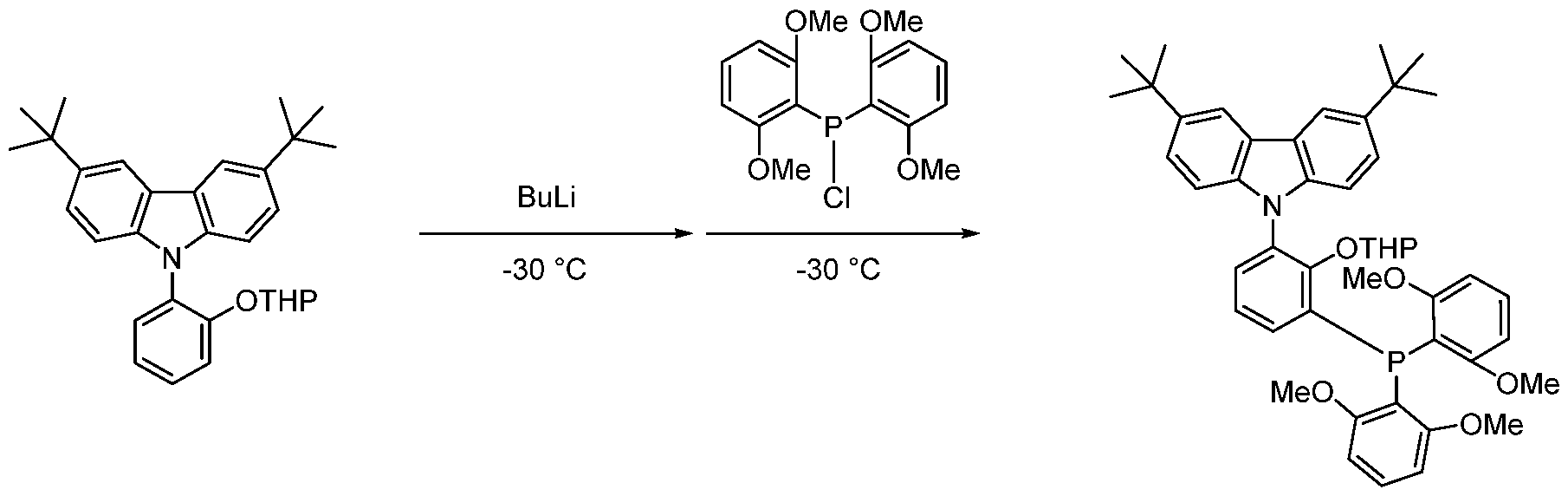
- Example 1 is the synthetic procedures for ligand intermediates, ligands, nickel precursors, and nickel procatalysts.
- Examples IE1 to IE8 are high pressure copolymerization reactions of Ni Catalyst 1, which are tabulated and discussed.
- Examples CE1 to CE7 are comparative examples.
- Q-5 reactant was activated by heating at 200 °C under a stream of nitrogen for 4 hours, followed by a stream of 5% hydrogen in nitrogen at 200 °C for 3 hours, and finally flushing with nitrogen gas.
- Solvents used for experiments performed in a nitrogen-filled glovebox were further dried by storage over activated 4 ⁇ molecular sieves. Glassware for moisture-sensitive reactions was dried in an oven overnight prior to use.
- HRMS analyses were performed using an Agilent 1290 Infinity LC with a Zorbax Eclipse Plus C18 1.8 ⁇ m 2.1x50 mm column coupled with an Agilent 6230 TOF Mass Spectrometer with electrospray ionization. NMR spectra were recorded on Varian 400-MR and VNMRS-500 spectrometers.
- the flask was put under a nitrogen purge and the DHP was added dropwise over 45 minutes. An exotherm (from 16.6 to 40.4 °C) was observed while the temperature peaked when the addition was approximately 75% complete, after which the temperature began to fall.
- the reaction solution was sampled immediately after the DHP addition was complete (temperature was 28.4 °C) to check for reaction completion by GC/MS and 1 H NMR. Once reaction was determined to be complete (20 minutes later), the reaction solution was transferred to a separatory funnel and washed with brine (2 X 135 mL). The organic phase was dried over MgSO 4 then filtered. The solvent was removed by rotovap, resulting in 136.77 g of gold-colored oil.
- n-BuLi in hexanes (93.23 mL, 2.69 M, 250.79 mmol) was added to a 1 L jar (with stirbar) containing a ⁇ 35 °C solution of 1,3-dimethoxybenzene (35.00 g, 253.32 mmol) in 400 mL THF. The solution was allowed to warm to ambient temperature and was stirred for 4 hours. The solution was cooled to ⁇ 35 °C and dimethylphosphoramidous dichloride (18.32 g, 125.52 mmol) in 33 mL THF was slowly added dropwise. The reaction mixture was allowed to warm to room temperature while stirring overnight to give a yellow solution containing some precipitate.
- the reaction solution was heated (heating block temperature set to 125 ° C) for a total of 19 hours, sampling at 18 hours and analyzing by GC/MS to check for reaction completion.
- the solution was cooled to room temperature and filtered through a short silica plug (pre-washed with THF).
- the silica plug was rinsed with THF (4 X 400 mL) to ensure the product was flushed through.
- the filtrate was concentrated by rotovap resulting in a dark oil.
- Acetonitrile (1 L) was added and the mixture was stirred vigorously using an overhead stirrer until solids formed (which was almost immediately). Vigorous stirring for 30 minutes resulted in a solution that looked uniform and creamy.
- the HCl in ether (394.78 mL, 789.55 mmol) was loaded into the addition funnel and it was also sealed with a rubber septum.
- the reaction mixture was removed from the glovebox and transferred to the fume hood and put under a nitrogen pad.
- 85349-WO-PCT/DOW 85349 WO Degassed water (170 mL) was added which resulted in two phases that were light brown in color.
- the solution of HCl in diethyl ether was added dropwise to the reaction mixture over 55 minutes. There appeared to be white solids that crashed out of solution in the bottom phase upon HCl addition.
- the reaction was heated at 40 °C (heating block temperature) overnight.
- the organic layer was sampled and dried and then analyzed by 1 H and 31 P NMR spectroscopy. Upon determination of reaction completion, the reaction was allowed to cool to room temperature and water (360 mL) was added to the reaction mixture. Sodium bicarbonate (1.1 equiv. with respect to HCl) was cautiously added in portions to the reaction mixture. After allowing to stir briefly, the ether was mostly removed under reduced pressure. To the residue was added dichloromethane (650 mL) until the solids dissolved into solution. The solution was stirred well, then transferred to a separatory funnel and the phases were separated. A saturated solution of sodium bicarbonate (1.4 L) was added to the organic phase and the mixture was shaken vigorously for less than 1 minute. The phases were separated.
- the procedure for the high pressure reactor campaign included feeding purified ethylene at 7 pph that was mixed with purified tert-butyl acrylate.
- Tert-butyl acrylate was supplied with 10-20 mass ppm methyl hydroquinone to prevent self-polymerization.
- 100 mass ppm of 4- hydroxy TEMPO was added to the tert-butyl acrylate and then the tert-butyl acrylate was nitrogen purged to remove residual oxygen.
- the tert-butyl acrylate was then purified across an AZ-300 absorption bed as it was fed to the process, primarily to remove the methyl hydroquinone and 4- hydroxy TEMPO as well as other impurities.
- the feed of ethylene and tert-butyl acrylate was then compressed and pressurized to 2000 barg in two stages creating a supercritical ethylene stream.
- the supercritical ethylene stream was then fed to a 300 mL continuously stirred tank reactor.
- Reactor temperature was controlled to target temperature using 4 electric heating bands on the wall of the reactor.
- a mixture of Ni catalyst 1 diluted in toluene at varying concentrations (abbreviated “conc.” in the Tables) was fed to the reactor.
- the feed was controlled to target a set concentration of Ni in the reactor.
- a mixture of MMAO-3A diluted in Isopar E at varying concentrations was additionally separately fed.
- Example CE2 Low Pressure Solution Batch Reactor Polymerization Process to produce linear polar ethylene copolymers Polymerization reactions were conducted in a 2 L Parr batch reactor. The reactor was heated by an electrical heating mantle and was cooled by an internal serpentine cooling coil containing cooling water. The water was pre-treated by passing through an Evoqua water 85349-WO-PCT/DOW 85349 WO purification system. Both the reactor and the heating/cooling system were controlled and monitored by a Camile TG process computer.
- the bottom of the reactor was fitted with a dump valve, which emptied the reactor contents into a lidded dump pot.
- the dump pot was prefilled with a catalyst kill solution (typically 5 mL of an Irgafos / Irganox / toluene mixture).
- the lidded dump pot was vented to a 15 gal. blow-down tank, with both the pot and the tank being N 2 -purged. All chemicals used for polymerization or catalyst makeup were run through purification columns in order to remove any impurities that may affect polymerization.
- the toluene was passed through two columns, the first containing A2 alumna and the second containing Q5 reactant.
- the tert-butyl acrylate was filtered through activated alumina.
- the ethylene was passed through two columns, the first containing A204 alumna and 4 ⁇ molecular sieves and the second containing Q5 reactant.
- the N 2 used for transfers, was passed through a single column containing A204 alumna, 4 ⁇ molecular sieves, and Q5 reactant.
- the reactor was loaded first from a shot tank that contained toluene and tert-butyl acrylate.
- the shot tank was filled to the load set points by use of a differential pressure transducer.
- the catalyst, Ni Catalyst 1 was handled in an inert atmosphere glove box and introduced to the reactor as a solution in toluene.
- the catalyst solution was drawn into a syringe and pressure transferred into the catalyst shot tank (59.2 ⁇ mol catalyst added). This was followed by 3 rinses of toluene, 5 mL each. Catalyst was only added after the reactor pressure set point was achieved. [00140] Immediately after catalyst addition, the run timer began. Ethylene was then fed (via Camile control) to the reactor in order to maintain the pressure set point. The ethylene/tert-butyl acrylate copolymerization reaction was run for 45 minutes, but ethylene uptake curves showed that the catalyst was only active during the first 3 minutes of the reaction. After 45 minutes, the agitator was stopped, and the bottom dump valve opened to empty reactor contents to the lidded dump pot.
- the valves on the lidded dump pot were closed and the sealed dump pot was disconnected from the reactor and taken to a fume hood.
- the lid was 85349-WO-PCT/DOW 85349 WO removed from the dump pot and the contents were poured into trays.
- the trays were left in the hood for a minimum of 36 hours to allow solvent and tert-butyl acrylate (tBA) to evaporate.
- the trays containing the remaining polymer were then transferred to a vacuum oven (note: 4- methoxyphenol was added to the trap to prevent spontaneous polymerization of tert-butyl acrylate), where they were heated up to 140°C under vacuum to remove any residual volatile materials.
- Table 2 ⁇ Catalyst Efficiency for Ni-catalyzed linear polyethylene and linear ethylene/tert-butyl acrylate (E/t-BA) prepared in high pressure reactor. 85349-WO-PCT/DOW 85349 WO Table 3 – Analytical characterization of Ni-catalyzed linear polyethylene and linear ethylene/tert- butyl acrylate (E/t-BA) [00142]
- the polymer produced from CE1 has a high melt index and a high melt temperature when compared to the other inventive examples of Table 3.
- the polymer of CE1 is a linear polymer that lacks the polar comonomer, and is not an illustrative embodiment of this disclosure.
- Example CE2 the Ni-catalyzed copolymerization of ethylene and tert-butyl acrylate was conducted in solution at low pressure.
- the MW of the copolymer of example CE2 was significantly lower than that achieved in IE1 to IE8.
- the linear ethylene/tert-butyl acrylate copolymers produced from the polymerization processes of IE1 to IE8 were compared to ethylene/tert-butyl acrylate copolymers that are highly branched (CE3 to CE7, Table 5), the polymers of IE1 to IE8 had a higher melt temperature (Tm) and a higher molecular weight (Mw).
- the supercritical ethylene stream was then fed to a 300 mL continuously stirred tank reactor.
- Reactor temperature was controlled to target temperature using 4 electric heating bands on the wall of the reactor.
- a mixture of tert- butyl peroctoate and Isopar E was fed to the reactor to initiate free radical polymerization.
- the feed was controlled so that ethylene conversion in the reactor, as measured based on total polymer collected, remained 12 +/- 2%.
- the stream was rapidly depressurized across a valve to 1 barg to separate the ethylene from the polymerized material. Nitrogen was added to the stream to freeze the polymer.
- Table 4 ⁇ Reactor Conditions for Comparative Branched ECP 85349-WO-PCT/DOW 85349 WO [00147]
- the reactor conditions were very similar to the reactor conditions as tabulated in Tables 1 and 2. However, the reactor conditions reported in Table 4 did not include a transition metal catalyst. Polymerization was initiated using a radical initiator, tert-butyl peroctoate.
- Table 5 ⁇ Polymer Analysis of Comparative Branched ethylene/tert-butyl acrylate copolymers CE3 to CE7 [00148] The copolymers recorded in Table 5 are highly branched and have a significantly lower melt temperature when compared with the linear copolymers produced by the polymerization conditions recorded in Table 1 (IE1 to IE8).
- the FIGURE graphically depicts that branched polymers have a lower melt temperature than the linear polymers.
- the linear copolymers (IE1-IE8) have an increase in Tm of at least 10 °C over the branched copolymers (CE3-CE7).
- Table 6 Catalyst Efficiency as a Function of Ethylene Concentration [00149] The results tabulated in Table 6 can demonstrate the increased efficiency of the catalyst when the ethylene concentration in the reactor is greatly increased at a given reaction time, temperature, and C2/tBA ratio.
- the reaction process for CE2 was a solution polymerization process at lower pressure (41 barg), and the efficiency of Ni Catalyst 1 was significantly lower when compared to high pressure experiments IE3 and IE4 (> 2000 barg).
- CE2 and 85349-WO-PCT/DOW 85349 WO IE4 were run at the same C2/tBA ratio, same temperature, and same reaction time, but the ethylene concentration in the reactor in IE4 is nearly 7 times higher than in CE2. This leads to a nearly 4X improvement in catalyst efficiency for IE4, accompanied by a nearly 3X improvement in copolymer MW (high t-BA incorporation maintained).
Landscapes
- Chemical & Material Sciences (AREA)
- Organic Chemistry (AREA)
- Transition And Organic Metals Composition Catalysts For Addition Polymerization (AREA)
Abstract
Description




Claims


Priority Applications (2)
| Application Number | Priority Date | Filing Date | Title |
|---|---|---|---|
| CN202480038715.8A CN121285562A (en) | 2023-06-30 | 2024-06-26 | Use of transition metal catalysts in high pressure processes for producing linear ethylene/polar copolymers |
| EP24745556.1A EP4735455A1 (en) | 2023-06-30 | 2024-06-26 | Use of transition metal catalyst to produce linear ethylene/polar copolymers in a high pressure process |
Applications Claiming Priority (2)
| Application Number | Priority Date | Filing Date | Title |
|---|---|---|---|
| US202363511257P | 2023-06-30 | 2023-06-30 | |
| US63/511,257 | 2023-06-30 |
Publications (1)
| Publication Number | Publication Date |
|---|---|
| WO2025006554A1 true WO2025006554A1 (en) | 2025-01-02 |
Family
ID=91959294
Family Applications (1)
| Application Number | Title | Priority Date | Filing Date |
|---|---|---|---|
| PCT/US2024/035545 Ceased WO2025006554A1 (en) | 2023-06-30 | 2024-06-26 | Use of transition metal catalyst to produce linear ethylene/polar copolymers in a high pressure process |
Country Status (3)
| Country | Link |
|---|---|
| EP (1) | EP4735455A1 (en) |
| CN (1) | CN121285562A (en) |
| WO (1) | WO2025006554A1 (en) |
Citations (3)
| Publication number | Priority date | Publication date | Assignee | Title |
|---|---|---|---|---|
| US20170002120A1 (en) * | 2014-01-28 | 2017-01-05 | Japan Polyethylene Corporation | Process for producing ethylene/unsaturated carboxylic acid copolymer, and said copolymer |
| WO2018021446A1 (en) * | 2016-07-27 | 2018-02-01 | 国立大学法人東京大学 | Metal complex and production method therefor, catalyst component for olefin polymerization and catalyst for olefin polymerization containing metal complex, and method for producing polymer and copolymer of α-olefin using catalyst for olefin polymerization |
| WO2019188499A1 (en) * | 2018-03-28 | 2019-10-03 | 日本ポリエチレン株式会社 | METHOD FOR PRODUCING α-OLEFIN/(METH)ACRYLIC ACID ESTER COPOLYMER |
-
2024
- 2024-06-26 WO PCT/US2024/035545 patent/WO2025006554A1/en not_active Ceased
- 2024-06-26 CN CN202480038715.8A patent/CN121285562A/en active Pending
- 2024-06-26 EP EP24745556.1A patent/EP4735455A1/en active Pending
Patent Citations (3)
| Publication number | Priority date | Publication date | Assignee | Title |
|---|---|---|---|---|
| US20170002120A1 (en) * | 2014-01-28 | 2017-01-05 | Japan Polyethylene Corporation | Process for producing ethylene/unsaturated carboxylic acid copolymer, and said copolymer |
| WO2018021446A1 (en) * | 2016-07-27 | 2018-02-01 | 国立大学法人東京大学 | Metal complex and production method therefor, catalyst component for olefin polymerization and catalyst for olefin polymerization containing metal complex, and method for producing polymer and copolymer of α-olefin using catalyst for olefin polymerization |
| WO2019188499A1 (en) * | 2018-03-28 | 2019-10-03 | 日本ポリエチレン株式会社 | METHOD FOR PRODUCING α-OLEFIN/(METH)ACRYLIC ACID ESTER COPOLYMER |
Non-Patent Citations (2)
| Title |
|---|
| WILLIAMSWARD, J. POLYM. SCI., POLYM. LET., vol. 6, 1968, pages 621 |
| YANPING ZHANG ET AL: "Elaborate Tuning in Ligand Makes a Big Difference in Catalytic Performance: Bulky Nickel Catalysts for (Co)polymerization of Ethylene with Promising Vinyl Polar Monomers", CHEMCATCHEM, JOHN WILEY & SONS, INC, HOBOKEN, USA, vol. 11, no. 9, 10 April 2019 (2019-04-10), pages 2329 - 2340, XP072435192, ISSN: 1867-3880, DOI: 10.1002/CCTC.201900265 * |
Also Published As
| Publication number | Publication date |
|---|---|
| EP4735455A1 (en) | 2026-05-06 |
| CN121285562A (en) | 2026-01-06 |
Similar Documents
| Publication | Publication Date | Title |
|---|---|---|
| CN110678488B (en) | Biaryl phenoxy group IV transition metal catalysts for olefin polymerization | |
| JP7706366B2 (en) | Biarylphenoxy group IV transition metal catalysts for olefin polymerization - Patents.com | |
| KR20200020789A (en) | Biaryl Phenoxy Group 4 Transition Metal Catalysts for Olefin Polymerization | |
| EP4097151A1 (en) | Group iii and lanthanide bis-phenyl-phenoxy metal-ligand complexes | |
| EP4097152B1 (en) | Polymerization processes that include group iii and lanthanide bis-phenyl-phenoxy metal-ligand complexes and chain transfer agents | |
| EP4126992B1 (en) | Sterically hindered phosphine-amide supported nickel(ii) or palladium(ii) catalysts for the copolymerization of ethylene and polar comonomers | |
| US12281190B2 (en) | Bis(phosphino)-phenoxy nickel(II) catalysts for the copolymerization of ethylene and acrylate monomers | |
| KR102787419B1 (en) | Highly soluble alkyl substituted carbenium borates as co-catalysts for olefin polymerization | |
| CN121021734A (en) | Heterocyclic-heterocyclic group IV transition metal catalysts for olefin polymerization | |
| EP4735455A1 (en) | Use of transition metal catalyst to produce linear ethylene/polar copolymers in a high pressure process | |
| KR102590976B1 (en) | Bis-phenyl-phenoxy polyolefin catalyst with methylenetrialkylsilicon ligands on metal for improved solubility | |
| EP4126991B1 (en) | Sterically hindered phosphino-urea supported nickel(ii) or palladium(ii) catalysts for the copolymerization of ethylene and polar comonomers | |
| WO2024050359A1 (en) | Group iii-halide or lanthanide-halide bis(phenylphenoxy) metal−ligand complexes | |
| WO2025117378A1 (en) | Electron-deficient phosphine-phosphonium-phenol supported nickel(ii) and palladium(ii) catalysts for the copolymerization of ethylene and acrylate comonomers | |
| WO2025029545A1 (en) | Olefin polymerization activators | |
| WO2024253860A1 (en) | Supported olefin polymerization catalysts comprising substituted 2-hydroxythiophene compounds | |
| KR20210148180A (en) | Single or bidentate aminopyridine Group 4 transition metal olefin copolymerization catalysts with ultrahigh molecular weight capacity and ultrahigh comonomer incorporation |
Legal Events
| Date | Code | Title | Description |
|---|---|---|---|
| 121 | Ep: the epo has been informed by wipo that ep was designated in this application |
Ref document number: 24745556 Country of ref document: EP Kind code of ref document: A1 |
|
| ENP | Entry into the national phase |
Ref document number: 2025571641 Country of ref document: JP Kind code of ref document: A |
|
| REG | Reference to national code |
Ref country code: BR Ref legal event code: B01A Ref document number: 112025027307 Country of ref document: BR |
|
| WWE | Wipo information: entry into national phase |
Ref document number: 2024745556 Country of ref document: EP |
|
| NENP | Non-entry into the national phase |
Ref country code: DE |
|
| ENP | Entry into the national phase |
Ref document number: 2024745556 Country of ref document: EP Effective date: 20260130 |
|
| ENP | Entry into the national phase |
Ref document number: 2024745556 Country of ref document: EP Effective date: 20260130 |
|
| WWP | Wipo information: published in national office |
Ref document number: 2024745556 Country of ref document: EP |