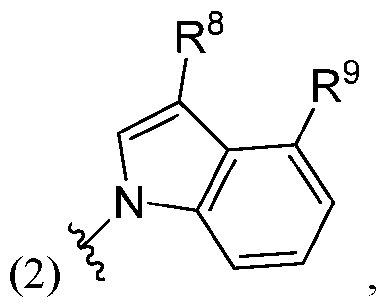
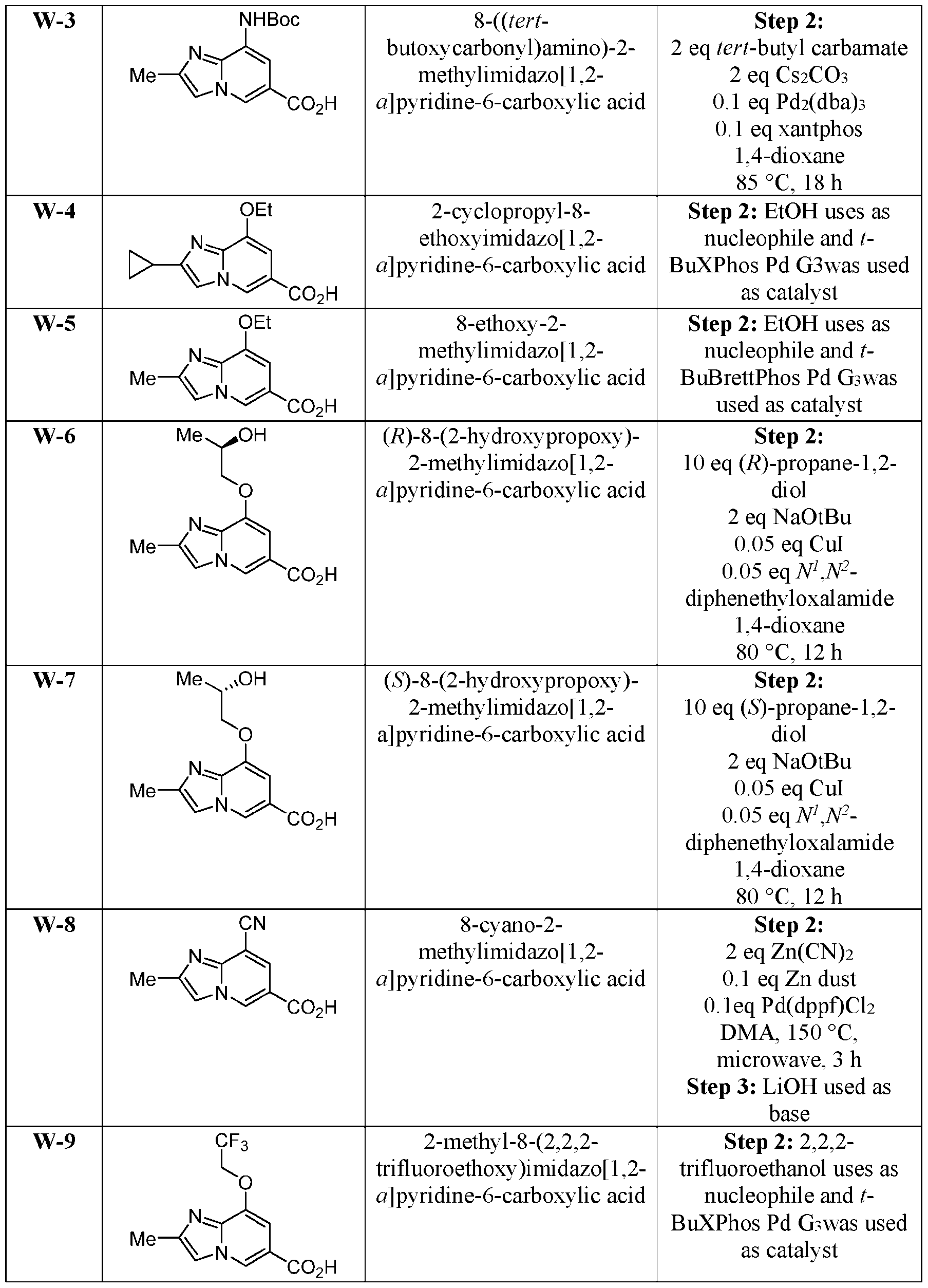
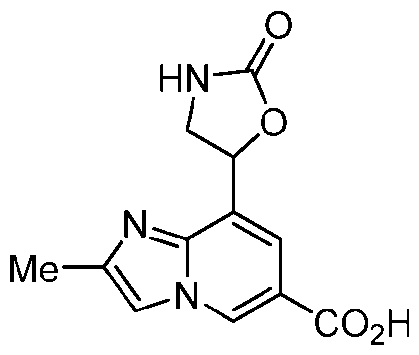
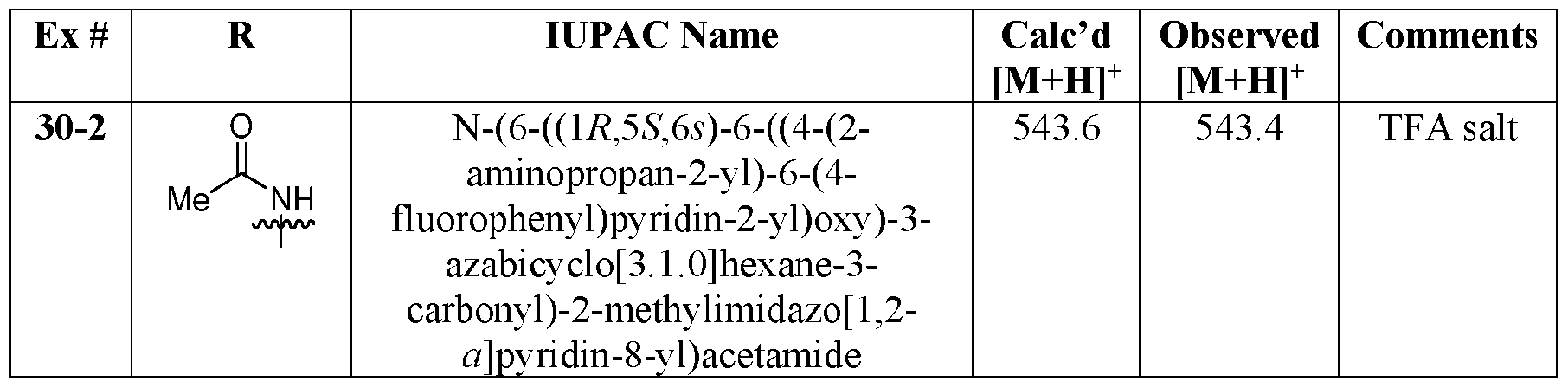
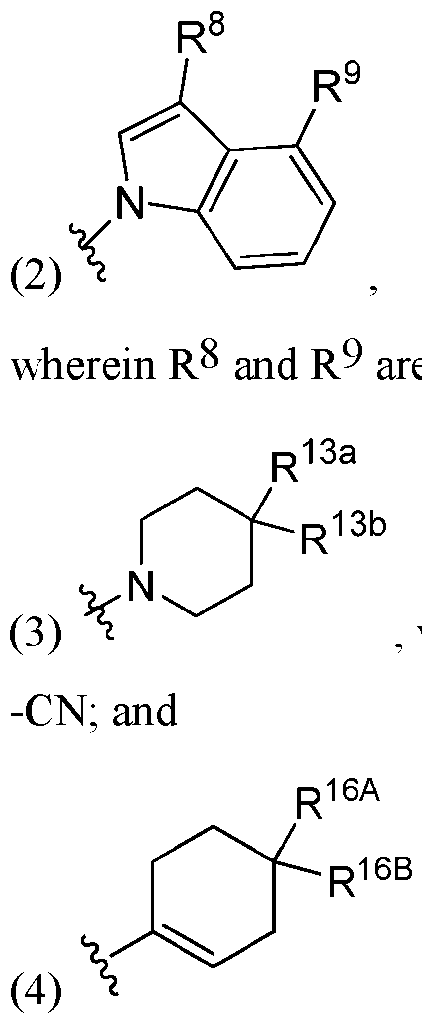
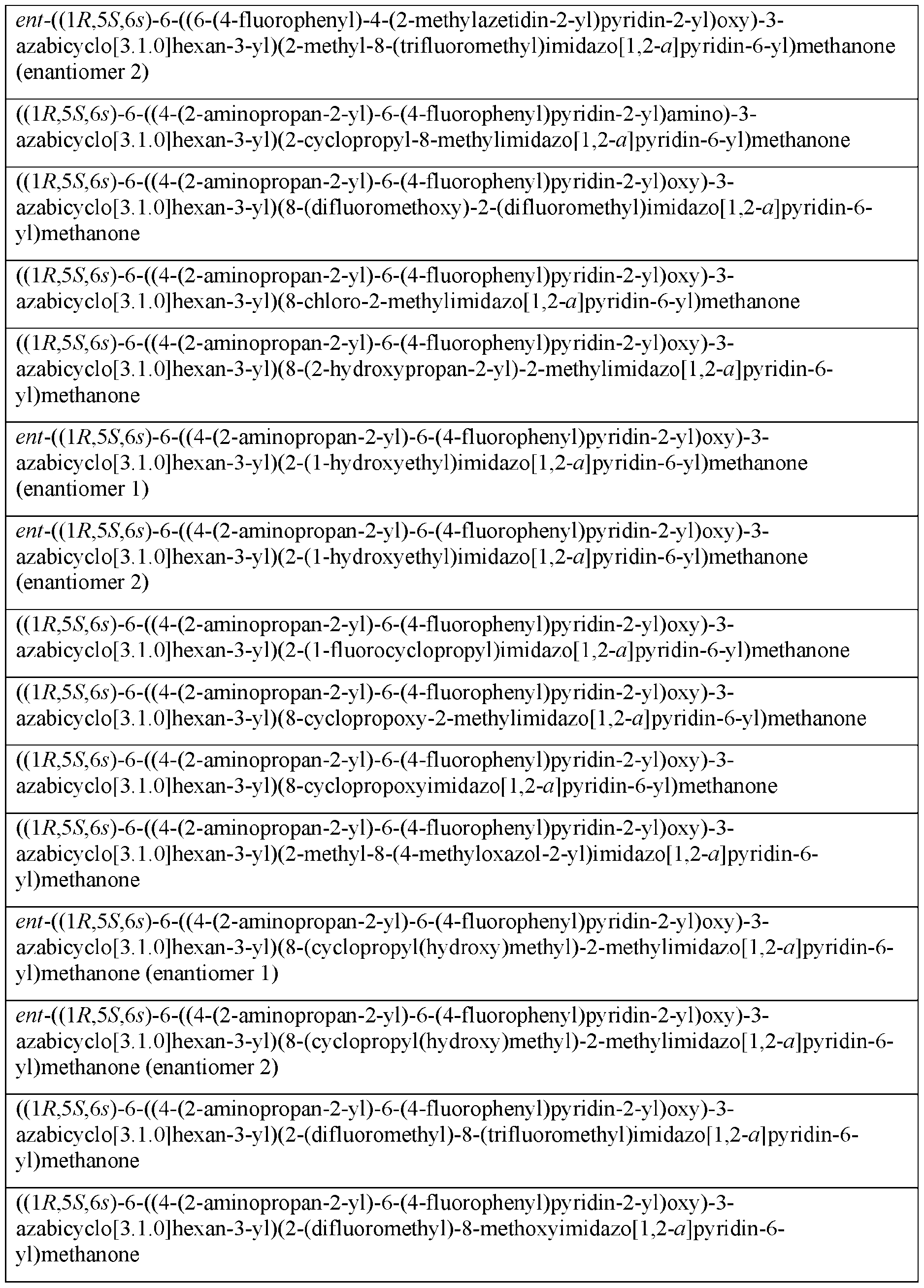
INHIBITORS OF HUMAN RESPIRATORY SYNCYTIAL VIRUS AND METAPNEUMOVIRUS CROSS-REFERENCE TO RELATED APPLICATIONS [0001] This application claims the benefit of priority to U.S. Provisional Application No. 63/510,235, filed June 26, 2023, the disclosure of which is incorporated herein by its entirety. FIELD OF THE INVENTION [0002] The present invention relates to therapeutic compounds useful for the inhibition of respiratory syncytial virus replication and metapneumovirus replication. The therapeutic compounds may be used in the treatment or prevention of respiratory syncytial virus infection and metapneumovirus infection. BACKGROUND OF THE INVENTION [0003] Paramyxoviruses are enveloped negative-strand RNA viruses that are significant human and animal pathogens. Human Respiratory Syncytial Virus (hRSV, RSV) belongs to the family Paramyxoviridae, subfamily Pneumovirinae. Two subtypes, type A and type B, have been identified and are a major cause of severe and sometimes even fatal respiratory infections in children less than 6 months of age. Adults with underlying diseases, such as COPD, asthma, cancer, immunocompromised status, including HIV or post transplantation, are also at risk of developing severe RSV infections. Fifteen percent of annual hospitalizations in adults over 50 years of age are due to acute respiratory infections caused by RSV. In the United States, RSV causes more than 100,000 hospitalizations annually and is estimated to cause 160,000 deaths globally each year. Other viral family members, including human metapneumovirus (hMPV) and human Parainfluenza Virus (hPIV), are also responsible for acute respiratory illness similar to hRSV. [0004] The RSV genome is a single-stranded negative-sense RNA molecule of approximately 15 kb, which encodes for 11 proteins. Two of these proteins are the main surface glycoproteins of the virion. These are the attachment (G) protein, which mediates virus binding to cells, and the fusion (F) protein, which promotes both fusion of the viral and cell membranes at the initial stages of the infectious cycle and fusion of the membrane of infected cells with those of adjacent cells to form characteristic syncytia. Four of the polypeptides, together with the viral RNA genome, form the RSV ribonucleoprotein (RNP) complex. These proteins are the nucleocapsid (N) protein, phosphoprotein (P), RNA polymerase (L) protein, and transcription factor M2-1,
which are also each required for the transcription and replication of the viral genome and the subject of drug discovery research. [0005] After hRSV, hMPV is the second most common cause of lower respiratory infection in young children. hMPV is responsible for 5-40% of respiratory tract infections in hospitalized and outpatient children. In healthy adults, hMPV generally results in mild respiratory tract infections; However, adults 70 years old and older, immunocompromised individuals and, people with comorbidities such as asthma and chronic obstructive pulmonary disease (COPD) are at higher risk for more serious disease and hospitalization as a result of hMPV infection. The hMPV genome is approximately 13 kb and the organization is similar to hRSV. hMPV genome RNA replication and mRNA transcription relies on the hMPV L-protein polymerase, which is highly homologous with the hRSV L-protein polymerase. [0006] Currently there are few options available for prophylaxis and treatment of RSV infections. There is no marketed vaccine for RSV. A clinical trial with a formalin-inactivated virus was associated with increased disease severity in infants upon infection with RSV (see Kim et al., American Journal of Epidemiology, 89:422-434 (1969)). The monoclonal antibody palivizumab (Synagis®) is approved for prophylactic use but has limited efficacy and its use is limited to high-risk infants as a result of high cost. Ribavarin (ViraZole®), a guanosine nucleoside analog broad-spectrum antiviral is approved as an inhaled treatment for RSV infection in infants, but clear efficacy data is lacking (Fearns et al., 2016 Antiviral Research, 134:63-76). In addition, the teratogenic potential of ribavirin raises significant risks for caregivers. The standard of care currently for RSV-infected patients is palliative and includes supplemental oxygen and intravenous fluids. [0007] There continues to be a need for anti-viral agents with pharmacokinetic properties suitable for a significant number of patients in the affected population. The present invention provides novel replication inhibitors of hRSV and hMPV useful for the inhibition of respiratory syncytial virus replication and metapneumovirus replication for addressing this need. SUMMARY OF THE INVENTION [0008] The present disclosure is directed to compounds of Formula I and embodiments thereof for use as anti-viral agents for inhibition of the replication of hRSV and hMPV and the treatment and prophylaxis of hRSV and hMPV infection. Compositions and methods of use comprising the compounds of this disclosure are also provided.
DETAILED DESCRIPTION OF THE INVENTION [0009] The present disclosure is directed to compounds of Formula I (I)

i
s selected from -H, halo, -NH2, -N(CH3)2, -C 1-3 alkyl, -OC 1-3 alkyl, and -C 3-5 cycloalkyl, wherein any alkyl or cycloalkyl moiety is unsubstituted or substituted with 1 to 3 substituents
independently selected at each occurrence from -OH, -OC 1-3 alkyl, and 1, 2 or 3 of fluoro; X 1 is independently selected from C and N; X 2 is independently selected from -CH, O, S, and N; X 3 is independently selected from C and N; X 4 and X 5 are each independently selected from -CH and N; X 6 is independently selected from -CH and N; R 2 is selected from (a) -H, (b) halo, (
c) -C 1-4 alkyl, (d) -C 3-5 cycloalkyl, (e) -OH, (
f) -OC 1-3 alkyl, (g) -OC 3-5 cycloalkyl , (h) a 5-member aromatic heterocyclyl ring comprised of: (1) three carbon atoms and (i) two of N, (ii) N and NH, (iii) N and one of O or S, or (iv) NH and O, (2) two carbon atoms and (i) two of N and one of NH, (ii) two of N and one of S, (
iii) two of N and one of O, or (iv) three of N, or (3) one carbon atom and four of N,
25700
wherein the heterocyclyl ring is unsubstituted or substituted with 1 to 2 substituents independently selected at each occurrence from -C 1-3 alkyl, -OC 1-3 alkyl, and =O; (i) a 6-member aromatic heterocyclyl ring comprised of three carbon atoms and two of N; (j) -CN; (
k) -CO2CH3; (l) -NRyRz or -CONRyRz, wherein each of Ryand Rzis -H or -C 1-3 alkyl; ;
is optionally substituted with 1 to 4 substituents independently selected at each occurrence from -OH, halo, methoxy and 1, 2 or 3 of fluoro;
R 3 is -O- or -NH-; X 7 and X 8 are selected from -CH and N; R 4 is selected from -H and methyl; R5 is selected from -C 1-3 alkyl unsubstituted or substituted with 1 to 3 substituents independently selected at each occurrence from halo, =NH, and -NH
2 and ;
from -H and fluoro; and R 7 is selected from: (1) aryl unsubstituted or substituted with 1 to 3 substituents independently selected at each occurrence from: (a) halo,
(b) -CN, (
c) -C 1-3 alkyl unsubstituted or substituted with 1 to 3 substituents independently selected at each occurrence from methoxy and 1, 2 or 3 of fluoro, (
d) -OC 1-3 alkyl, unsubstituted or substituted with 1 to 3 substituents independently selected at each occurrence from 1, 2 or 3 of fluoro, or (
e) -C 3-5 cycloalkyl; (2) pyridinyl, unsubstituted or substituted with -CF
3; (3) a bicyclic ring system selected from: ,
-CF 3 , -CN, and 1, 2 or 3 of halo, wherein R 14A , R 14B , R 15A and R 15B are each selected from -H and fluoro, and wherein X 9 is selected from -CH and N; R
13a ,
,
wherein R 16A , R 16B and R 16C are each selected from -H and -C1-3 alkyl, wherein the alkyl is optionally substituted with 1, 2 or 3 of fluoro. [0010] In some embodiments, of this disclosure are compounds of Formula I, or a
pharmaceutically acceptable salt thereof, wherein: R 1 is selected from -H, halo, -N(CH3)2, cyclopentane, and a C 1-2 alkyl unsubstituted or substituted with 1 to 2 substituents independently selected from -OH, -OC 1-3 alkyl, and 1, 2 or 3 of fluoro; X 1 and X 3 are C; X 2 is independently selected from -CH, O, S, and N; X 4 is N; X 5 and X 6 are -CH; R 2 is selected from (a) -H, (b) halo, (
c) -C 1-4 alkyl, (d) -OH, -OC 1-3 alkyl, or -OC 3 cycloalkyl, and (e) a 5-member aromatic heterocyclyl ring comprised of three carbon atoms and N and one of O, or NH and O,
wherein any R 2 alkyl moiety is optionally substituted with 1 to 4 substituents independently selected at each occurrence from -OH, methoxy, and 1, 2 or 3 of fluoro;
R 3 is -O- or -NH-; X 7 is N, and X 8 is -CH; R 4 and R 6 are -H; R5 is selected from -C 1-3 alkyl unsubstituted or substituted with 1 to 3 substituents independently selected at each occurrence from halo and -NH
2; and
R 7 is selected from: (1) phenyl substituted with 1 to 3 substituents independently selected at each occurrence from: (a) fluoro, (b) -CN, (
c) -C 1-3 alkyl, or (d) -OC 1-3 alkyl,
wherein any such alkyl moiety is optionally substituted with 1 to 3 substituents independently selected at each occurrence from 1, 2 or 3 of fluoro; , are each selected from -H, -C
1-2alkyl, methoxy, -CN, and fluoro;
(3) , wherein R 13a and R 13b are each selected from -H, methyl, -F, and -CN; and R
16A , wherein R
16A and R
16B are each selected from -H or -C
1-3 alkyl,
substituted with 1, 2 or 3 of fluoro. [0011] In Embodiment 1 of this disclosure are compounds of Formula I, or a pharmaceutically
acceptable salt thereof, wherein: (i) X 1 and X 3 are C; (ii) X 2 is independently selected from -CH, O, S, and N; (iii) X 4 is N; or (iv) X 5 and X 6 are -CH. In a class thereof are compounds of Formula I, or a pharmaceutically acceptable salt thereof, wherein: (i) X 1 and X 3 are C; (ii) X 2 is independently selected from -CH, O, S, and N; (iii) X 4 is N; and (iv) X 5 and X 6 are -CH. [0012] In a first sub-class of compounds of Formula I and Embodiment 1 are compounds of
Formula I, or a pharmaceutically acceptable salt thereof, wherein: X 1 and X 2 are -CH, X 3 is C, X 4 is N, and X 6 is -CH. In a first sub-class of compounds of Formula I and Embodiment 1 are compounds of Formula I, or a pharmaceutically acceptable salt thereof, wherein: X 1 and X 2 are -CH, X 3 is N, X 4 is -CH, and X 6 is -CH. [0013] In Embodiment 2 of this disclosure are compounds of Formula I and Embodiment 1, or
a pharmaceutically acceptable salt thereof, wherein R 1 is selected from -H, halo, -N(CH3)2, cyclopentane, and a C 1-2 alkyl unsubstituted or substituted with 1 to 2 substituents independently selected from -OH, -OC 1-3 alkyl, and 1, 2 or 3 of fluoro. In a first class thereof, R1 is a C 1-2 alkyl unsubstituted or substituted with 1 to 2 substituents independently selected at each occurrence
from -OH, methoxy, and 1, 2 or 3 of fluoro. In a second class thereof, R
1 is selected from -H, -F,
-CF 3 , cyclopentane, and C 1-3 alkyl. [0014] In Embodiment 3 of this disclosure are compounds of Formula I, and each of Embodiments 1 and 2, or a pharmaceutically acceptable salt thereof, wherein R
2 is selected from: (a) -H, (b) halo, (c) -C1-4alkyl, (
d) -OH, -OC 1-3 alkyl, or -OC 3 cycloalkyl, and (e) a 5-member aromatic heterocyclyl ring comprised of three carbon atoms and N and
one of O, or NH and O, wherein any R 2 alkyl moiety is optionally substituted with 1 to 4 substituents independently selected at occurrence from -OH, methoxy, and 1, 2 or 3 of fluoro. In a first class of
Embodiment 3, R2 is a C 1-2 alkyl unsubstituted or substituted with 1 to 2 substituents independently selected at each occurrence from -OH, methoxy, and 1, 2 or 3 of fluoro. In a sub-
class of the first class of Embodiment 3, R2 is a C 1-2 alkyl substituted with -OH. In a second class of Embodiment 3, R
2 is selected from -H, -F, -CF3, cyclopentane, and unsubstituted C
1- 3 alkyl. [0015] In some embodiments are compounds of Formula I, and each of Embodiments 1-3, or a pharmaceutically acceptable salt thereof, wherein R
1 and R
2 are each C
1-2alkyl unsubstituted or substituted with 1 to 2 substituents independently selected at each occurrence from -OH, methoxy, and 1, 2 or 3 of fluoro. In some embodiments are compounds of Formula I, and each of
Embodiments 1-3, or a pharmaceutically acceptable salt thereof, wherein R 1 and R 2 are each independently selected from -H, -F, -CF 3 , cyclopentane, and C 1-3 alkyl. In some sub- embodiments, R 1 and/or R 2 are cyclopentane. In some embodiments, R 1 and/or R 2 are -CF3. -In some sub-embodiments, R 1 and/or R 2 are -F. [0016] In a third class of Embodiment 3, R 2 is selected from:
25700 ,
X b is independently selected from S, O, and NH, X c is independently selected from N and -CH, X d is independently selected from S and O, X e is independently selected from O and -CH, and R a is selected from -H, methyl, and methoxy. [0017] In a fourth class of Embodiment 3, R 2 is selected from -CO2CH3, -OCH3, -OCHF2, -NH 2 , and -N(CH 3 ) 2 . In a fifth class of Embodiment 3, R2 is a C 3-4 cycloalkyl unsubstituted or substituted with substituted with 1 to 4 substituents independently selected at each occurrence from -OH, methoxy, and 1, 2 or 3 of fluoro. [0018] In Embodiment 4A of this disclosure, as well as Embodiments 1-3, and classes thereof,
are compounds of Formula I, or a pharmaceutically acceptable salt thereof, wherein R 3 is -NH-. [0019] In Embodiment 4B of this disclosure are compounds of Formula I, and each of Embodiments 1-3, and classes thereof, or a pharmaceutically acceptable salt thereof, wherein R
3 is -O-. [0020] In Embodiment 5 of this disclosure are compounds of Formula I, and each of Embodiments 1-4A and 4B, and classes thereof, or a pharmaceutically acceptable salt thereof,
wherein X 7 is N, and X 8 is -CH. [0021] In Embodiment 6 of this disclosure are compounds of Formula I, and each of Embodiments 1-5, and classes thereof, or a pharmaceutically acceptable salt thereof, wherein R
4 and R 6 are -H. [0022] In Embodiment 7 of this disclosure are compounds of Formula I, and each of Embodiments 1-6, and classes thereof, or a pharmaceutically acceptable salt thereof, wherein R
5
25700
is selected from -C 1-3 alkyl unsubstituted or substituted with 1 to 3 substituents independently selected at each occurrence from halo and -NH
2. In a class of Embodiment 7, R
5 is a C
3alkyl substituted with -NH2. [0023] In Embodiment 8 of this disclosure are compounds of Formula I, and each of Embodiments 1-7, and classes thereof, or a pharmaceutically acceptable salt thereof, wherein R
7 is selected from: (1) phenyl substituted with 1 to 3 substituents independently selected at each occurrence from: (a) fluoro, (b) -CN, (
c) -C 1-3 alkyl, or (d) -OC 1-3 alkyl, wherein any such alkyl moiety is optionally substituted with 1 to 3 substituents independently selected at each occurrence from 1, 2 or 3 of fluoro; each selected from -H, -C
1-2alkyl, methoxy, -CN, and fluoro; w
herein R 13a and R 13b are each selected from -H, methyl, -F, and , wherein R 16A and R 16B are each selected from -H or -C1-3 alkyl,
substituted with 1, 2 or 3 of fluoro.
25700 [0024] In a first class of a second class of
Embodiment 8, R 7 is , wherein Rb is selected from -H, halo, -CN, -CF3, and methoxy. [0025] In embodiments of compounds of Formula I, or a pharmaceutically acceptable salt
thereof, wherein X 1 is N: there is a single bond between X 1 and X 2 and a double bond between X 2 and X 4 . In embodiments, X 2 , X 4 , X 5 and X 6 each 3
-CH, and X is C. [0026] In some aspects of the disclosed compounds, provided herein is a compound is of Formula II:
or a
[0027] In some aspects of the disclosed compounds, provided herein is a compound is of Formula III:
or a
as above. [0028] Reference to the compounds of Formula I herein encompasses the compounds of Formula II and III, and all embodiments, classes and sub-classes thereof and includes the compounds of the Examples herein. The compounds of Formula I encompass neutral compounds or salts thereof when such salts are possible, including pharmaceutically acceptable salts.
25700 Definitions [0029] The term “e.g.” means “for example.” When the terms “e.g.,” or “for example” are used herein, the example(s) recited are intended to be illustrative and are not intended to be an exhaustive list of all relevant examples. [0030] As used herein, “alkyl” refers to both branched- and straight-chain saturated aliphatic hydrocarbon groups having the specified number of carbon atoms in a specified range. For
example the term “C 1-4 alkyl” means linear or branched chain alkyl groups, including all possible isomers, having 1, 2, 3, or 4 carbon atoms, and includes n-, iso-, sec- and tert-butyl (butyl, i- butyl, s-butyl, t-butyl, collectively “C
4alkyl”; Bu = butyl), n- and i-propyl (propyl, i-propyl,
collectively “C 3 alkyl”; Pr = propyl), ethyl (Et) and methyl (Me). “C 1-3 alkyl” has 1, 2 or 3 carbon atoms and includes each of n-propyl, i-propyl, ethyl and methyl. [0031] “Cycloalkyl” refers to a cyclized alkyl ring having the indicated number of carbon
atoms in a specified range. Thus, for example, “C 3-5 cycloalkyl” includes each of cyclopropyl, cyclobutyl, and cyclopentyl, and “C 3-4 cycloalkyl” includes each of cyclopropyl and cyclobutyl. [0032] “Halo” or “halogen” refers to chloro, fluoro, bromo or iodo. Chloro, fluoro and bromo are a class of halogens of interest, and more particularly fluoro and chloro. [0033] A “stable” compound is a compound which can be prepared and isolated and whose structure and properties remain or can be caused to remain essentially unchanged for a period of time sufficient to allow use of the compound for the purposes described herein (e.g., therapeutic or prophylactic administration to a subject). The compounds of the present disclosure are limited to stable compounds embraced by Formula I and its embodiments. For example, certain moieties as defined in Formula I may be unsubstituted or substituted, and the latter is intended to encompass substitution patterns (i.e., number and kind of substituents) that are chemically possible for the moiety and that result in a stable compound. [0034] This disclosure includes individual diastereomers, particularly epimers, i.e., compounds having the same chemical formula but which differ in the spatial arrangement around a single atom. This disclosure also includes mixtures of diastereomers, particularly mixtures of epimers, in all ratios. This disclosure encompasses compounds of Formula I having either the (R) or (S) stereo-configuration at an asymmetric center and at any additional asymmetric centers that may be present in a compound of Formula I, as well as stereo-isomeric mixtures thereof. Embodiments of this disclosure also include a mixture of enantiomers enriched with 51% or more of one of the enantiomers, including for example 60% or more, 70% or more, 80% or more, or 90% or more of one enantiomer. A single epimer is preferred. An individual or single
25700 enantiomer refers to an enantiomer obtained by chiral synthesis and/or using generally known separation and purification techniques, and which may be 100% of one enantiomer or may contain small amounts (e.g., 10% or less) of the opposite enantiomer. Thus, individual enantiomers are a subject of this disclosure in pure form, both as levorotatory and as dextrorotatory antipodes, in the form of racemates and in the form of mixtures of the two enantiomers in all ratios. In the case of a cis/trans isomerism this disclosure includes both the cis form and the trans form as well as mixtures of these forms in all ratios. [0035] The preparation of individual stereoisomers can be carried out, if desired, by separation of a mixture by customary methods, for example by chromatography or crystallization, by the use of stereochemically uniform starting materials for the synthesis or by stereoselective synthesis. Optionally a derivatization can be carried out before a separation of stereoisomers. The separation of a mixture of stereoisomers can be carried out at an intermediate step during the synthesis of a compound of Formula I or it can be done on a final racemic product. Absolute stereochemistry may be determined by X-ray crystallography of crystalline products or crystalline intermediates which are derivatized, if necessary, with a reagent containing a stereogenic center of known configuration. Alternatively, absolute stereochemistry may be determined by Vibrational Circular Dichroism (VCD) spectroscopy analysis. The present disclosure includes all such isomers, as well as salts, solvates (which includes hydrates). and solvated salts of such racemates, enantiomers, diastereomers and tautomers and mixtures thereof. [0036] As would be recognized by one of ordinary skill in the art, certain compounds of the present disclosure may be able to exist as tautomers. All tautomeric forms of such compounds, whether isolated individually or in mixtures, are within the scope of the present disclosure. For example, in instances where an oxo (=O) substituent is permitted on an aromatic heterocyclic ring (also referred to as a heteroaromatic ring) and keto-enol tautomerism is possible, it is understood that the substituent might in fact be present, in whole or in part, in the -OH form. [0037] The atoms in a compound of Formula I may exhibit their natural isotopic abundances, or one or more of the atoms may be artificially enriched in a particular isotope having the same atomic number, but an atomic mass or mass number different from the atomic mass or mass number predominantly found in nature. The present disclosure is meant to include all suitable isotopic variations of the compounds of Formula I; for example, different isotopic forms of hydrogen (H) include protium (
1H) and deuterium (
2H). Protium is the predominant hydrogen isotope found in nature. Enriching for deuterium may afford certain therapeutic advantages, such as increasing in vivo half-life or reducing dosage requirements, or may provide a compound
25700 useful as a standard for characterization of biological samples. Isotopically-enriched compounds of Formula I can be prepared without undue experimentation by conventional techniques well known to those skilled in the art or by processes analogous to those described in the Schemes and Examples herein using appropriate isotopically-enriched reagents and/or intermediates. [0038] The compounds can be administered in the form of pharmaceutically acceptable salts. The term “pharmaceutically acceptable salt” refers to a salt which possesses the effectiveness of the parent compound and which is not biologically or otherwise undesirable (e.g., is neither toxic nor otherwise rious to the recipient thereof). When the compounds of Formula I contain one or more acidic groups or basic groups, the invention includes the corresponding pharmaceutically acceptable salts. [0039] The compounds of Formula I, and pharmaceutically acceptable salts thereof, which contain one or more basic groups, i.e., groups which can be protonated, can be used according to the invention in the form of their acid addition salts with inorganic or organic acids as, for example but not limited to, salts with hydrogen chloride, hydrogen fluoride, hydrogen bromide, trifluoroacetic acid (trifluoroacetate), phosphoric acid, sulfuric acid, nitric acid, benzenesulfonic acid, methanesulfonic acid, p-toluenesulfonic acid, naphthalenedisulfonic acids, oxalic acid, acetic acid, tartaric acid, lactic acid, salicylic acid, benzoic acid, formic acid, propionic acid, pivalic acid, diethylacetic acid, malonic acid, succinic acid, pimelic acid, fumaric acid, maleic acid, malic acid, sulfaminic acid, phenylpropionic acid, gluconic acid, ascorbic acid, isonicotinic acid, citric acid, adipic acid, etc. In some embodiments, one or more NH
2 groups (e.g., a single NH2 group, or two NH2 groups) of any of the compounds of Formula I is protonated in a salt form. In some embodiments, one or more NH2 groups (e.g., a single NH2 group) of any of the compounds of Formula I is protonated in a salt form with trifluoroacetic acid (trifluoroacetate). In some embodiments, one or more NH2 groups (e.g., a single NH2 group) of any of the compounds of Formula I is protonated in a salt form with hydrogen chloride. If the compounds of Formula I simultaneously contain acidic and basic groups in the molecule the invention also includes, in addition to the salt forms mentioned, inner salts or betaines (zwitterions). Salts can be obtained from the compounds of Formula I by customary methods which are known to the person skilled in the art, for example by combination with an organic or inorganic acid or base in a solvent or dispersant, or by anion exchange or cation exchange from other salts. The present disclosure also includes all salts of the compounds of Formula I which, owing to low physiological compatibility, are not directly suitable for use in pharmaceuticals but which can be used, for example, as intermediates for chemical reactions or for the preparation of pharmaceutically acceptable salts.
25700 [0040] The present disclosure encompasses any composition comprised of a compound of Formula I or a compound that is a salt thereof, including for example but not limited to, a composition comprised of said compound associated together with one or more additional molecular and/or ionic component(s) which may be referred to as a “co-crystal.” The term "co- crystal" as used herein refers to a solid phase (which may or may not be crystalline) wherein two or more different molecular and/or ionic components (generally in a stoichiometric ratio) are held together by non-ionic interactions including but not limited to hydrogen-bonding, dipole-dipole interactions, dipole-quadrupole interactions or dispersion forces (van der Waals). There is no proton transfer between the dissimilar components and the solid phase is neither a simple salt nor a solvate. A discussion of co-crystals can be found, e.g., in Aitipamula et al., Crystal Growth and Design, 2012, 12 (5), pp.2147-2152. [0041] Furthermore, compounds of the present disclosure may exist in amorphous form and/or one or more crystalline forms, and as such all amorphous and crystalline forms and mixtures thereof of the compounds of Formula I and salts thereof are intended to be included within the scope of the present disclosure. In addition, some of the compounds of the present disclosure may form solvates with water (i.e., a hydrate) or common organic solvents. Such solvates and hydrates, particularly the pharmaceutically acceptable solvates and hydrates, of the compounds of this disclosure are likewise encompassed within the scope of the compounds defined by Formula I and the pharmaceutically acceptable salts thereof, along with un-solvated and anhydrous forms of such compounds. [0042] Accordingly, the compounds of Formula I or salts thereof including pharmaceutically acceptable salts thereof, embodiments thereof and specific compounds described and claimed herein, encompass all possible stereoisomers, tautomers, physical forms (e.g., amorphous and crystalline forms), co-crystal forms, solvate and hydrate forms, and any combination of the foregoing forms where such forms are possible. [0043] Another embodiment of the present disclosure is a compound of Formula I wherein the compound or its salt is in a substantially pure form. As used herein "substantially pure" means suitably at least about 60 wt.%, typically at least about 70 wt.%, preferably at least about 80 wt.%, more preferably at least about 90 wt.% (e.g., from about 90 wt.% to about 99 wt.%), even more preferably at least about 95 wt.% (e.g., from about 95 wt.% to about 99 wt.%, or from about 98 wt.% to 100 wt.%), and most preferably at least about 99 wt.% (e.g., 100 wt.%) of a product containing a compound of Formula I or its salt (e.g., the product isolated from a reaction mixture affording the compound or salt) consists of the compound or salt. The level of purity of the compounds and salts can be determined using a standard method of analysis such as, high
25700 performance liquid chromatography, and/or mass spectrometry or NMR techniques. If more than one method of analysis is employed and the methods provide experimentally significant differences in the level of purity determined, then the method providing the highest purity level governs. A compound or salt of 100% purity is one which is free of detectable impurities as determined by a standard method of analysis. With respect to a compound of the invention which has one or more asymmetric centers and can occur as mixtures of stereoisomers, a substantially pure compound can be either a substantially pure mixture of the stereoisomers or a substantially pure individual stereoisomer. [0044] The compounds of Formula I herein, and pharmaceutically acceptable salts thereof, are useful for the inhibition of respiratory syncytial virus replication and metapneumovirus replication. Thus, the compounds of Formula I and pharmaceutically acceptable salts thereof are useful for: (i) a method for the treatment of respiratory syncytial virus infection in a human subject in need thereof which comprises administering to the human subject an effective amount of the compound according to Formula I, or a pharmaceutically acceptable salt thereof; (ii) a method for the prophylaxis of respiratory syncytial virus infection in a human subject in need thereof which comprises administering to the human subject an effective amount of the compound according to Formula I, or a pharmaceutically acceptable salt thereof; (iii) a method for the treatment of metapneumovirus infection in a human subject in need thereof which comprises administering to the human subject an effective amount of the compound according to Formula I, or a pharmaceutically acceptable salt thereof; and/or (iv) a method for the prophylaxis of metapneumovirus infection in a human subject in need thereof which comprises administering to the human subject an effective amount of the compound according to Formula I, or a pharmaceutically acceptable salt thereof. [0045] In some aspects, provided herein are uses of any of the disclosed compounds in therapy. Further provided herein are uses of any of the disclosed compounds as a medicament, or in the manufacture of a medicament, for the treatment of respiratory syncytial virus infection, prophylaxis of respiratory syncytial virus infection, treatment of metapneumovirus infection, prophylaxis of metapneumovirus infection, or inhibition of the replication of hRSV or hMPV. [0046] Additional embodiments of the present disclosure include the following: (a) a pharmaceutical composition comprising an effective amount of a compound of Formula I or a pharmaceutically acceptable salt thereof, and a pharmaceutically acceptable carrier, and
25700 (b) a pharmaceutical composition which comprises the product prepared by combining (e.g., mixing) an effective amount of a compound of Formula I or a pharmaceutically acceptable salt thereof, and a pharmaceutically acceptable carrier. [0047] Additional embodiments of the present disclosure include each of the pharmaceutical compositions, methods and uses set forth in the preceding paragraphs, wherein the compound of Formula I or its salt employed therein in substantially pure. With respect to a pharmaceutical composition comprising a compound of Formula I or its salt and a pharmaceutically acceptable carrier and optionally one or more excipients, it is understood that the term “substantially pure” is in reference to a compound of Formula I or its salt per se. [0048] The term “administration” and variants thereof (e.g., “administering” a compound) in reference to a compound of Formula I means providing the compound to the individual in need of treatment or prophylaxis and includes both self-administration and administration to the patient by another person or any other means. [0049] As used herein, the term “composition” is intended to encompass a product comprising the specified ingredients, as well as any product which results from combining the specified ingredients. Ingredients suitable for inclusion in a pharmaceutical composition are pharmaceutically acceptable ingredients, which means the ingredients must be compatible with each other and not rious to the recipient thereof. [0050] The term “subject” as used herein refers to an animal, such as a human, that is the object of treatment, observation or experiment. In various embodiments of the present disclosure, a “subject” encompasses a mammalian animal. In some embodiments, the subject encompasses a domesticated or companion animal, or an experimental animal model. In some embodiments, the subject is a rodent, such as a mouse or rat. In some embodiments, the subject is a primate. In some embodiments, the subject is a non-human primate, such as a macaque. In some embodiments, the subject is a human. [0051] The term “human subject” or “patient” as used herein refers to a human (or “person”) who has been the object of treatment, observation or experiment. Patients to be treated with an RSV inhibitor (RSV-i) and/or an MPV inhibitor (MPV-i) agent include but are not limited to, patients who have been infected with RSV and/or MPV. Patients to be treated with an RSV-i and/or an MPV-i agent also include, but are not limited to, those using an RSV-i and/or an MPV- i agent for prophylaxis of RSV and/or MPV infection or for post-exposure prophylaxis after being potentially exposed to RSV and/or MPV to prevent or reduce the severity of symptoms of virus-associated disease or condition.
25700 [0052] “Prophylaxis” includes each of (i) pre-exposure prophylaxis (PrEP), i.e., using a compound of Formula I, or a pharmaceutically acceptable salt thereof, to prevent hRSV and/or hMPV infection in a person who is not infected with hRSV and/or hMPV, and (ii) post-exposure prophylaxis (PEP), i.e., using a compound of Formula I, or a pharmaceutically acceptable salt thereof, after being exposed or potentially exposed to hRSV and/or hMPV to prevent or reduce the severity of symptoms of virus-associated disease or condition. In some embodiments, a compound of Formula I, or a pharmaceutically acceptable salt thereof, is administered for PEP in patients exposed to RSV to minimize the risk of severe RSV disease or symptoms thereof. [0053] The term “effective amount” as used herein means the amount of active compound or pharmaceutical agent that elicits the biological or medicinal response in a tissue, system, animal or human that is being sought by a researcher, veterinarian, medical doctor or other clinician. In one embodiment, the effective amount is a “therapeutically effective amount” for the alleviation of the symptoms of the disease or condition being treated. In another embodiment, the effective amount is a “prophylactically effective amount” for prophylaxis of the symptoms of the disease or condition being prevented. [0054] When the active compound (i.e., active ingredient) is administered as the salt, references to the amount of active ingredient are to the free form (i.e., the non-salt form) of the compound. [0055] In the methods of the present disclosure, the disclosed compounds, and salts thereof, can be administered by means that produce contact of the active agent with the agent’s site of action. They can be administered by conventional means available for use in conjunction with pharmaceuticals, either as individual therapeutic agents or with other therapeutic agents the patient may be in need of. The compound can be administered itself, but typically is administered with a pharmaceutical carrier selected on the basis of the chosen route of administration and standard pharmaceutical practice. The compounds of the invention can, for example, be administered orally (e.g., via tablet or capsule), parenterally (including subcutaneous injection; intravenous, intramuscular or intrasternal injection; or infusion techniques), by inhalation spray, or rectally, in the form of a unit dosage of a pharmaceutical composition containing an effective amount of the compound and conventional non-toxic pharmaceutically acceptable carriers, adjuvants and vehicles. The compound could also be administered via an implantable drug delivery device adapted to provide an effective amount of the compound or a pharmaceutical composition of the compound over an extended period of time.
25700 Formulations [0056] Solid preparations suitable for oral administration (e.g., powders, pills, capsules and tablets) can be prepared according to techniques known in the art and can employ such solid excipients as starches, sugars, kaolin, lubricants, binders, disintegrating agents and the like. Liquid preparations suitable for oral administration (e.g., suspensions, syrups, elixirs and the like) can be prepared according to techniques known in the art and can employ any of the usual media such as water, glycols, oils, alcohols and the like. Parenteral compositions can be prepared according to techniques known in the art and typically employ sterile water as a carrier and optionally other ingredients, such as a solubility aid. Injectable solutions can be prepared according to methods known in the art wherein the carrier comprises a saline solution, a glucose solution or a solution containing a mixture of saline and glucose. Implantable compositions can be prepared according to methods known in the art wherein the carrier comprises the active chemical ingredient with polymers and suitable excipients, or utilizing an implantable device for drug delivery. Further description of methods suitable for use in preparing pharmaceutical compositions for use in the present disclosure and of ingredients suitable for use in said compositions is provided in Remington - The Science and Practice of Pharmacy, 22nd Edition, published by Pharmaceutical Press and Philadelphia College of Pharmacy at University of the Sciences, 2012, ISBN 978085711-062-6 and prior editions. [0057] Formulations of compounds of Formula I that result in drug supersaturation and/or rapid dissolution may be utilized to facilitate oral drug absorption. Formulation approaches to cause drug supersaturation and/or rapid dissolution include, but are not limited to, nanoparticulate systems, amorphous systems, solid solutions, solid dispersions, and lipid systems. Such formulation approaches and techniques for preparing them are known in the art. For example, solid dispersions can be prepared using excipients and processes as described in reviews (e.g., A.T.M. Serajuddin, J Pharm Sci, 88:10, pp.1058-1066 (1999)). Nanoparticulate systems based on both attrition and direct synthesis have also been described in reviews such as Wu et al. (F. Kesisoglou, S. Panmai, Y. Wu, Advanced Drug Delivery Reviews, 59:7 pp.631-644 (2007)). [0058] The compounds of Formula I may be administered in a dosage range of, e.g., 1 to 20 mg/kg, or 1 to 10 mg/kg, or about 5 mg/kg of mammal (e.g., human) body weight per day, or at other time intervals as appropriate, in a single dose or in divided doses. The compounds of Formula I may be administered in a dosage range of 0.001 to 2000 mg per day in a single dose or in divided doses. Examples of dosage ranges are 0.01 to 1500 mg per day, or 0.1 to 1000 mg per day, administered orally or via other routes of administration in a single dose or in divided doses.
25700 [0059] For oral (e.g., tablets or capsules) or other routes of administration, the dosage units may contain 100 mg to 1500 mg of the active ingredient, for example but not limited to 0.1 mg to about 1500 mg of the active ingredient, for example but not limited to 0.1, 0.25, 0.5, 1, 2, 2.5, 5, 10, 15, 20, 25, 40, 50, 75, 100, 125, 150, 175, 200, 225, 250, 500, 1000, 1250, or 1500 milligrams of the active ingredient for the symptomatic adjustment of the dosage to the patient to be treated. Furthermore, the compound may be formulated in oral formulations for immediate or modified release such as extended or controlled release. When the compound of Formula I is administered as a salt, reference to an amount of the compound in milligrams or grams is based on the free form (i.e., the non-salt form) of the compound. [0060] Daily administration can be via any suitable route of administration but is preferably via oral administration and can be a single dose or more than one dose at staggered times (divided daily doses) within each 24-hour period. Each dose may be administered using one or multiple dosage units as appropriate. [0061] The specific dose level and frequency of dosage for any particular patient may be varied and will depend upon a variety of factors including the activity of the specific compound employed, the metabolic stability and length of action of that compound, the age, body weight, general health, sex, diet, mode and time of administration, rate of excretion, the effect of other drugs the patient is taking while using and RSP-i or an MPV-i compound described herein, the severity of the particular condition, and the host undergoing therapy. In some cases, depending on the potency of the compound or the individual response, it may be necessary to deviate upwards or downwards from the given dose. The amount and frequency of administration will be regulated according to the judgment of the attending clinician considering such factors. [0062] The compounds of this invention are also useful in the preparation and execution of screening assays for antiviral compounds. For example, the compounds of this invention are useful for isolating enzyme mutants, which are excellent screening tools for more powerful antiviral compounds. Furthermore, the compounds of this invention are useful in establishing or determining the binding site of other antivirals. [0063] It is understood that a chiral center in a compound may exist in the "S" or "R" stereo- configuration, or as a mixture of both. Within a molecule, each bond drawn as a straight line from a chiral center encompasses each of the (R) and (S) stereoisomers as well as mixtures thereof unless otherwise noted. For compounds in the Examples that contain a chiral center, isomer mixtures may have been separated, providing one or both of an isomer 1 (the faster eluting isomer) and an isomer 2 (the slower eluting isomer), based on their observed elution order resulting from the separation as performed in the Example. Elution time and/or order of separated
25700 isomers may differ if performed under conditions different than those employed herein. Absolute stereochemistry (R or S) of the chiral center in each of isomer “1” and/or isomer “2” separated stereoisomers in the intermediates and Examples was not determined, and “1” and “2” only refer to elution order resulting from the purification conditions as performed. General Procedures [0064] The following reaction schemes and Examples illustrate methods which may be employed for the synthesis of the compounds of structural Formula I described in this invention. These reaction schemes and Examples are provided to illustrate the invention and are not to be construed as limiting the invention in any manner. All substituents are as defined above unless indicated otherwise. Several strategies based upon synthetic transformations known in the literature of organic synthesis may be employed for the preparation of the compounds of structural Formula I. [0065] The compounds of the present disclosure can be prepared according to the procedures of the following Examples, using appropriate materials. The compounds illustrated in the examples are not, however, to be construed as forming the only genus that is considered as the invention. The Examples further illustrate details for the preparation of the compounds of the present disclosure. Those skilled in the art will readily understand that known variations of protecting groups, as well as of the conditions and processes of the following preparative procedures, can be used to prepare these compounds. It is also understood that whenever a chemical reagent such as a boronic acid or a boronate is not commercially available, such a chemical reagent can be readily prepared following one of numerous methods described in the literature. [0066] Reactions sensitive to moisture or air were performed under nitrogen or argon using anhydrous solvents and reagents. The progress of reactions was determined by either liquid chromatography-mass spectrometry (LC-MS) or analytical thin layer chromatography (TLC) usually performed with Merck KGaA glass-backed TLC plates, silica gel 60 F254. All temperatures are degrees Celsius unless otherwise noted. Mass spectra (MS) were measured either by electrospray ionization mass spectroscopy (ESI) or by atmospheric pressure chemical ionization mass spectroscopy (APCI). [0067] In general, compounds of Formula (I) can be prepared by amide coupling of appropriately functionalized carboxylic acids of Formula (II) and amines of Formula (III). Acids of Formula (II) and amines of Formula (III) are commercially available or may be synthesized from appropriate intermediates. Other synthetic methods to prepare compounds of Formula (I)
25700 are presented for the exemplification of compounds. Further, compounds of Formula (I) can be prepared by reaction procedures generally known in the art. [0068] mass

range at 150- 900 daltons, data collected in centroid mode and scan time set to 0.2 seconds) and a Waters Acquity UPLC system (binary solvent manager, sample manager, and TUV). The column used was a Waters Acquity BEH C181 × 50 mm, 1.7 µm, heated to 50 ºC. The mobile phases used were modified with either acidic or basic additives. The acidic mobile phase consisted of water (with 0.1% TFA modifier) for Solvent A and 100% MeCN for Solvent B. A two-minute run was established at a flow rate of 0.3 mL/min with initial conditions of 95% Solvent A and ramping up to 99% Solvent B at 1.60 minutes and holding at 99% Solvent B for 0.40 minutes. The injection volume was 0.5 µL using partial loop needle overfill injection mode. The TUV monitored wavelength 215 or 254 nm with a sampling rate of 20 points/second, normal filter constant and absorbance data mode. The basic mobile phase consisted of water (with 0.05% NH
4OH modifier) for solvent A and 100% MeCN for solvent B. A two-minute run was established at a flow rate of 0.3 mL/min with Initial conditions of 99% Solvent A and ramping up to 99% Solvent B at 1.90 minutes and holding at 99% Solvent B for 0.10 minutes. A five-minute run was established at a flow rate of 0.3 mL/min with initial conditions of 95% Solvent A and ramping up to 99% Solvent B at 4.90 minutes and holding at 99% Solvent B for 0.10 minutes. For both methods, the injection volume was 5.0 µL using Partial Loop Needle Overfill Injection mode. The TUV monitored wavelength 215 nm with a sampling rate of 20 points/second, normal filter constant and absorbance data mode. Alternatively, a commonly used system consisted of a Waters ZQ™ platform with electrospray ionization in positive ion detection mode with an Agilent 1100 series HPLC with autosampler. The column was commonly a Waters Xterra MS C18, 3.0 × 50 mm, 5 μm or a Waters Acquity UPLC® BEH C181.0 x 50 mm, 1.7 μm. The flow rate was 1 mL/min, and the injection volume was 10 μL. UV detection was in the range 210–400 nm. The mobile phase consisted of solvent A (water with 0.05% TFA modifier) and solvent B (MeCN with 0.05% TFA modifier) with a gradient of 100% solvent A for 0.7 min changing to 100% solvent B over 3.75 min, maintained for 1.1 min, then reverting to 100% solvent A over 0.2 min.
25700 [0069] Preparative reverse-phase chromatography was generally carried out on a Teledyne ISCO ACCQPrep HP125 or HP150 apparatus equipped with UV and ELSD detectors. The UV detector typically monitored wavelengths of 215 and 254 nm. The column was commonly one of the following: Waters XBridge Prep C18 OBD 5 μm 30 × 150 mm, Waters XBridge Prep C18 OBD 5 μm 30 × 250 mm, Waters XBridge Prep C18 OBD 5 μm 50 × 250 mm, Waters SunFire Prep C18 OBD 5 μm 30 × 150 mm, Waters SunFire Prep C18 OBD 10 μm 30 × 150 mm, Waters SunFire Prep C18 OBD 5 μm 50 × 250 mm, Waters SunFire Prep C18 OBD 10 μm 50 × 250 mm, or Phenomenex Luna Prep C185 μm 50 × 250 mm. The mobile phases consisted of mixtures of MeCN (with 0.1% TFA modifier) and water (with 0.1% TFA modifier). Alternatively, a commonly used system was a Waters Chromatography Workstation configured with an LCMS system consisting of: Waters ZQ™ single quad MS system with Electrospray Ionization, Waters 2525 Gradient Pump, Waters 2767 Injector/Collector, Waters 996 PDA Detector. MS conditions were: 150-750 amu, positive electrospray, collection triggered by MS. Columns used were commonly a Waters SunFire C185 μm 30 × 150 mm, a Boston Green ODS 5 µm 150 × 30 mm, or a YMC-Actus Triart C185 µm 150 × 30 mm column. The mobile phases consisted of mixtures of MeCN (10-100%) in water (with 0.1% TFA modifier). Flow rates were maintained at 50 mL/min, and the UV detection range was 210–400 nm. An additional preparative HPLC system used was a Gilson Workstation consisting of: Gilson GX-281 Injector/Collector, Gilson UV/VIS-155 Detector, Gilson 333 and 334 Pumps, and either a Phenomenex Gemini-NX C185 μm 50 × 250 mm column, a Waters XBridge Prep C18 OBD 5 μm 30 × 250 mm, or a Welch Xtimate C185 μm 150 × 25 mm. The mobile phases consisted of mixtures of acetonitrile (0-75%) in water containing 5 mM (NH4)HCO3. Flow rates were maintained at 50 mL/min for the Waters XBridge column, 90 mL/min for the Phenomenex Gemini column, and 25 mL/min for the Welch Xtimate column. The UV detection range was 210–400 nm. Mobile phase gradients were optimized for the individual compounds. [0070] Silica gel chromatography was usually performed using an ISCO CombiFlash Rf apparatus, a Biotage® Flash Chromatography apparatus (Dyax Corp.), or an ISCO CombiFlash® Companion XL apparatus on silica gel (60 Å pore size) in pre-packed RediSep Rf, RediSep Rf Gold, or SepaFlash columns. Mobile phases generally consisted of mixtures of hexanes, petroleum ether, or DCM with EtOAc, 3:1 EtOAc:EtOH, or MeOH. Mobile phase gradients were optimized for the individual compounds. [0071] Chiral chromatography was commonly performed by supercritical fluid chromatography with a column chosen from one of the following: ChiralPak AD, ChiralPak AD-3, ChiralPak AD- H, ChiralPak AS, ChiralPak AS-3, ChiralPak AS-H, ChiralPak IB-N, ChiralPak OD-H,
25700 ChiralPak OJ-3, ChiralPak OJ-H, Phenomenex-Cellulose-2, or (S,S)Whelk-O1. Mobile phases consisted of mixtures of CO2 or hexane with MeOH, EtOH, or IPA using 0.05-0.1% DEA or NH
4OH modifier. Mobile phase gradients were optimized for the individual compounds. Pressure was typically maintained at 100 bar, and flow rates ranged from 50-200 mL/min. UV monitoring was generally carried out at 220 or 205 nM. [0072]
1H NMR data were typically acquired using a Bruker NEO 500 MHz NMR spectrometer equipped with a room temperature 5 mm BBF iProbe, a Bruker Avance NEO 400 MHz NMR spectrometer equipped with a Bruker PI HR-BBO400S1-BBF/H/D-5.0-Z SP probe, or a Bruker Avance III 500 MHz NMR spectrometer equipped with a Bruker 5mm PABBO probe. Chemical shift values are reported in delta (δ) units, parts per million (ppm). Chemical shifts for
1H NMR spectra are given relative to signals for residual non-deuterated solvent (CDCl
3 referenced at δ 7.26 ppm; DMSO-d
6 referenced at δ 2.50 ppm and CD
3OD referenced at δ 3.31 ppm). Multiplets are reported by the following abbreviations: s = singlet, d = doublet, t = triplet, q = quartet, dd = doublet of doublets, m = multiplet or overlap of non-equivalent resonances. Coupling constants (J) are reported in Hertz (Hz). When compounds appear as mixtures of rotamers by NMR, spectral data corresponding to the major species observed in solution are reported. Abbreviations: (Ad-BippyPhos)2PdCl2 bis[5-(di(1-adamantyl)phosphino)-1′,3′,5′-triphenyl- 1′H-[14′]bipyrazole] palladium(II) dichloride )]
BTMG 2-tert-butyl-1,1,3,3-tetramethylguanidine Cbz carbobenzyloxy DI 11’ lii i l e I)
Pd(dtbpf)Cl2 [1,1′-bis(di-tert- butylphosphino)ferrocene]dichloropalladium(II) PdOA lldi II ]
25700 Xantphos Pd G2 chloro[(4,5-bis(diphenylphosphino)-9,9- dimethylxanthene)-2-(2′-amino-1,1′- bi h l ll di II
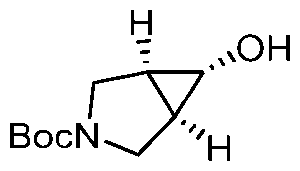
tert-butyl (1R,5S,6s)-6-hydroxy-3-azabicyclo[3.1.0]hexane-3-carboxylate Step 1: benzyl(diiodomethyl)
[0073] Ten reactions were carried out in parallel. Lithium bis(trimethylsilyl)amide solution (1.0 M, 1.5 L, 1.5 mol) in isopropyl ether (3.0 L) was charged into a 10 L vessel. Diiodomethane (130 mL, 1.6 mol) was added to the mixture at –65 °C. After 15 minutes benzylchlorodimethylsilane (200 g, 1.1 mol, 200 mL) was added. After 3 h the mixture was warmed to rt. After 12 h the reactions were combined and treated with water (10 L). The resulting mixture was extracted with MTBE (5 L x 2). The combined organic extracts were washed with brine then dried (Na
2SO
4) then filtered then the filtrate was concentrated. The crude product was subjected to silica gel chromatography (2-100% EtOAc/petroleum ether) to give the title compound. Step 2: tert-butyl (1R,5S,6s)-6-(benzyldimethylsilyl)-3-azabicyclo[3.1.0]hexane-3- carboxylate [0074] Fourteen reactions were carried out in parallel. Chromium (II) chloride (150 g, 1.2 mol) was charged to a 5 L vessel. THF (2.5 L) and N,N,N,N-tetramethylethylenediamine (360 mL, 2.4 mol) were added to the mixture at rt over 30 minutes. Benzyl(diiodomethyl)dimethylsilane (240 g, 560 mmol) was added and the mixture was stirred at rt for 30 minutes. tert-Butyl 2,5-dihydro- 1H-pyrrole-1-carboxylate (50 g, 0.30 mol) was added then the mixture was heated to 50 °C. After 18 h the mixture was cooled to rt then the reactions were combined and treated with water (15 L). The resulting mixture was extracted with MTBE (7 L x 3). The combined organic extracts were washed with brine then dried (Na2SO4) then filtered then the filtrate was concentrated. The crude
25700 product was subjected to silica gel chromatography (1-100% EtOAc/petroleum ether) to give the title compound. Step 3: tert-butyl (1R,5S,6s)-6-hydroxy-3-azabicyclo[3.1.0]hexane-3-carboxylate [0075] Fourteen reactions were carried out in parallel. tert-Butyl (1R,5S,6s)-6- (benzyldimethylsilyl)-3-azabicyclo[3.1.0]hexane-3-carboxylate (70 g, 210 mmol) in THF (2.1 L) was charged to a 10 L vessel. Tetrabutylammonium fluoride solution (1.0M in THF, 630 mL) was added at rt. After 30 minutes the mixture was cooled to 0 °C then MeOH (2.1 L) and K2CO3 (200 g, 2.1 mol) were added followed by hydrogen peroxide (30 wt % in water, 100 mL, 1.1 mol). After 30 minutes the mixture was warmed to rt. After 16 h the reactions were combined then treated with Na
2SO
3 (saturated aq., 25 L). The resulting mixture was extracted with EtOAc (7 L x 2). The combined organic extracts were washed with brine then dried (Na2SO4) then filtered then the filtrate was concentrated. The crude product was subjected to silica gel chromatography (0-100% EtOAc/hexane) and then re-crystallized from n-heptane:MTBE = 20:1 (9 L) to give the title compound. Scheme:
benzyl (1R,5S,6s)-6-hydroxy-3-azabicyclo[3.1.0]hexane-3-carboxylate Step 1: (1R,5S,6s)-3-azabicyclo
[0076] To a solution of tert-butyl (1R,5S,6s)-6-hydroxy-3-azabicyclo[3.1.0]hexane-3- carboxylate (Int. A-1, 500 mg, 2.509 mmol) in DCM (10 mL) was added TFA (1 mL) at rt. After 1 h the mixture was concentrated to give the TFA salt of the title compound. Step 2: benzyl (1R,5S,6s)-6-hydroxy-3-azabicyclo[3.1.0]hexane-3-carboxylate [0077] To a solution of (1R,5S,6s)-3-azabicyclo[3.1.0]hexan-6-ol TFA salt (245 mg, 2.47 mmol) and K
2CO
3 (520 mg, 3.71 mmol) in THF (10 mL) was added benzyl chloroformate (0.52 mL, 3.71 mmol) at 0 ºC. After the addition was complete the mixture was warmed to rt. After 20 h the mixture was filtered then the filtrate was concentrated. The crude product was subjected to silica gel chromatography (0-40% EtOAc/petroleum ether) to give the title compound. Scheme:
25700
tert-butyl 6-hydroxy-1-methyl-3-azabicyclo[3.1.0]hexane-3-carboxylate Step 1: tert-butyl 6,6-dibromo-1- [3.1.0]hexane-3-carboxylate

[0078] A mixture of tert-butyl 3- 1H-pyrrole-1-carboxylate (15 g, 82 mmol), bromoform (62 g, 0.25 mol), and N-benzyl-N,N,N-triethylammonium chloride (750 mg, 3.3 mmol) in DCM (400 mL) and EtOH (8.0 mL) was cooled to 0 °C. To this was added 50 wt% NaOH (66 g, 0.82 mol) then the mixture was heated to 45 °C. After 12 h the mixture was cooled to rt then water (150 mL) was added then the mixture was extracted with DCM (80 mL x 3). The combined organic extracts were washed with brine (50 mL) then dried (Na2SO4) then filtered then the filtrate was concentrated. The crude product was subjected to silica gel chromatography (0-5% EtOAc/petroleum ether) to give the title compound. Step 2: tert-butyl 6-hydroxy-1-methyl-3-azabicyclo[3.1.0]hexane-3-carboxylate [0079] A solution of tert-butyl 6,6-dibromo-1-methyl-3-azabicyclo[3.1.0]hexane-3-carboxylate (2.0 g, 5.6 mmol) in THF (40 mL) was cooled to –78 °C. To this was added a solution of n- butyllithium (2.5M in hexane, 2.7 mL, 6.8 mmol) dropwise. After 15 minutes a solution of catecholborane (1.0M in THF, 11 mL, 11 mmol) was added then the mixture was warmed to 50 ºC. After 12 h the mixture was cooled to 0 ºC and hydrogen peroxide (30% (w/w) aq., 2.9 mL, 28 mmol) and sodium hydroxide (2.5M aq., 9.0 mL, 23 mmol) were added. After the additions were complete the mixture was warmed to rt. After 12 h saturated Na2SO3 (5 mL) and water (20 mL) were added. The resulting mixture was extracted with EtOAc (30 mL x 3). The combined organic extracts were washed with brine then dried (Na2SO4) then filtered then the filtrate was concentrated. The crude product was subjected to silica gel chromatography (0-60% EtOAc/petroleum ether) to give the title compound. Scheme:
25700

4-(2-(((benzyloxy)carbonyl)amino)propan-2-yl)-2-(4-fluorophenyl)pyridine 1-oxide Step 1: 2-(2-chloropyridin-4-yl)

[0080] To a solution of 2-chloroisonicotinonitrile (30 g, 217 mmol) in THF (350 mL) was slowly added methylmagnesium bromide (3M in diethyl ether, 217 mL, 650 mmol) at 0 °C. After the addition was complete the mixture was warmed to rt. After 30 minutes titanium (IV) propan- 2-olate (61.5 g, 217 mmol) was added then the mixture was heated to 95 °C. After 3 h the mixture was cooled to rt then diluted with saturated NH4Cl (150 mL). The resulting mixture was and extracted with EtOAc (3 x 250 mL). The combined organic extracts were washed with brine (130 mL) then dried (Na2SO4) then filtered then the filtrate was concentrated to give the title compound which was used in the next step without purification. Step 2: benzyl (2-(2-chloropyridin-4-yl)propan-2-yl)carbamate [0081] To a solution of 2-(2-chloropyridin-4-yl)propan-2-amine (64.1 g, 376 mmol) and DIEA (79 mL, 451 mmol) in DCM (250 mL) was added benzyl chloroformate (80 mL, 563 mmol) at 0 °C. After the addition was complete the mixture was warmed to rt over 12 h. The resulting mixture was diluted with water (150 mL) then extracted with DCM (150 mL x 3). The combined organic extracts were washed with brine (130 mL) then dried (Na2SO4) then filtered then the filtrate was concentrated. The crude product was subjected to silica gel chromatography (0-40% EtOAc/petroleum ether) to give the title compound. Step 3: benzyl (2-(2-(4-fluorophenyl)pyridin-4-yl)propan-2-yl)carbamate [0082] A mixture of benzyl (2-(2-chloropyridin-4-yl)propan-2-yl)carbamate (1.1 g, 3.61 mmol), (4-fluorophenyl) boronic acid (0.758 g, 5.41 mmol) and Cs
2CO
3 (3.53 g, 10.83 mmol) in 1,4-dioxane (9 mL) and water (1 mL) was degassed (3 x vacuum/N2). To this was added Pd(dppf) Cl
2 (264 mg, 0.36 mmol) then the mixture was heated to 100 °C. After 3 h the mixture
25700 was cooled to rt then diluted with water then extracted with EtOAc (50 mL x 3). The combined organic extracts were washed with brine (80 mL x 2) then dried (Na2SO4) then filtered then the filtrate was concentrated. The crude product was subjected to silica gel chromatography (0-40% EtOAc/petroleum ether) to give the title compound. Step 4: 4-(2-(((benzyloxy)carbonyl)amino)propan-2-yl)-2-(4-fluorophenyl)pyridine 1-oxide [0083] 3-Chloroperoxybenzoic acid (18.83 g, 93 mmol) was added to a solution of benzyl (2- (2-(4-fluorophenyl)pyridin-4-yl)propan-2-yl)carbamate (16.9 g, 46.4 mmol) in DCM (300 mL) at rt. After 12 h the mixture was diluted with saturated Na
2S
2O
3(150 mL) and saturated aqueous NaHCO3 (150 mL) then extracted with DCM (3 x 150 mL). The combined organic extracts were washed with brine (100 mL) then dried (Na
2SO
4) then filtered then the filtrate was concentrated to give the title compound which was used without purification. Utilizing the procedures described in the synthesis of Intermediate D-1, the following compound was prepared substituting the appropriate reagents for benzyl chloroformate. Int. # Structure IUPAC Name Comments D-2 4-(2-((tert-
Scheme:
benzyl (2-(2-chloro-6-(4-fluorophenyl)pyridin-4-yl)propan-2-yl)carbamate Step 1: 2-chloro-6-(4-
25700 [0084] Four reactions were carried out in parallel.2,6-Dichloroisonicotinonitrile (190 g, 1.10 mol), 4-fluorophenylboronic acid (169 g, 1.21 mol), and Pd(dppf)Cl2 ^DCM (13 g, 0.016 mol) were added into the DCM (1.52 L). The mixture was purged with N
2 then cooled to 0 °C. TBAF (520 g, 1.65 mol) was added dropwise. After the addition was complete the mixture was warmed to rt. After 6 h the reactions were combined then diluted with cold water (1.5 L). The resulting mixture was extracted with DCM (800 mL x 2). The combined organic extracts were washed with brine (1.30 L x 2) then dried (Na2SO4) then filtered then the filtrate was concentrated. The crude product was subjected to silica gel chromatography (2-100% EtOAc/petroleum ether) to give impure product which was further purified by preparative reverse-phase HPLC (50-80% MeCN/water) to give the title compound. Step 2: 2-(2-chloro-6-(4-fluorophenyl)pyridin-4-yl)propan-2-amine [0085] Five reactions were carried out in parallel. To a solution of 2-chloro-6-(4- fluorophenyl)isonicotinonitrile (150 g, 0.645 mol) in toluene (3.0 L) was added 3M MeMgBr (0.645 L, 1.93 mol) in diethyl ether dropwise at -10 °C. After 1 h the mixture was warmed to 0 °C and titanium (IV) isopropoxide (183 g, 0.645 mol) was added dropwise. After the addition was complete the mixture was warmed to rt. After 16 h the reactions were combined then quench with cold saturated Na2CO3 (7.0 L). The resulting mixture was filtered then the filter cake was washed with EtOAc (2.5 L x 3). The filtrate layers were separated then the organic phase was concentrated to give the title compound which was used in the next step directly without purification. Step 3: benzyl (2-(2-chloro-6-(4-fluorophenyl)pyridin-4-yl)propan-2-yl)carbamate [0086] To a solution of 2-(2-chloro-6-(4-fluorophenyl)pyridin-4-yl)propan-2-amine (500 g, 1.89 mol) in DCM (3.0 L) was added DIPEA (269 g, 2.08 mol) at rt. The mixture was cooled to 10 °C then benzyl chloroformate (354 g, 2.08 mol) was added dropwise. After 30 minutes the mixture was warmed to rt. After 3 h the mixture was washed with 1N HCl (600 mL x 3) then dried (Na2SO4) then filtered then the filtrate was concentrated. The crude product was triturated with 3V of mixture solvent (MTBE:DCM:MeCN = 1:0.2:1) at rt for 2 h. The resulting mixture was filtered then the filtrate was concentrated to give the title compound. Scheme:
25700 Intermediate F-1 tert-butyl (2-(2-chloro-6-(4-fluorophenyl)pyridin-4-yl)propan-2-yl)carbamate [0087] Into a 3 L 4-necked round- and maintained with an inert atmosphere

of nitrogen, was placed 2-(2-chloro- 4-yl)propan-2-amine (prepared according to step 1-2 for Int. E-1, 90 g, 339.97 mmol), triethylamine (103.2 g, 1.02 mmol), and toluene (1.80 L). The mixture was cooled to 0 °C then di-tert-butyl dicarbonate (89.04 g, 0.408 mmol) was added. After the addition was complete the mixture was warmed to 80 °C. After 2 h the mixture was cooled to rt then diluted with water (2 L). The resulting mixture was extracted with EtOAc (2 L x 3). The combined organic extracts were dried (Na
2SO
4) then filtered then the filtrate was concentrated. The crude product was subjected to silica gel chromatography (9% EtOAc/petroleum ether) to give the title compound. Scheme:
Intermediate G-1 tert-butyl rac-2-(2-chloro-6-(4-fluorophenyl)pyridin-4-yl)-2-methylazetidine-1-carboxylate Step 1: tert-butyl rac-2-(2,6-
1-carboxylate [0088] 4-Bromo-2,6-dichloropyridine (500 mg, 2.2 mmol), (S)-1-(tert- butoxycarbonyl)azetidine-2-carboxylic acid (490 mg, 2.4 mmol), [4,4′-bis(1,1-dimethylethyl)- 2,2′-bipyridine-N1,N1′]bis[3,5-difluoro-2-[5-(trifluoromethyl)-2-pyridinyl-N]phenyl-
25700 C]iridium(III) hexafluorophosphate (25 mg, 0.022 mmol), and tetraaquo[4,4′-bis(1,1- dimethylethyl)-2,2′-bipyridine] nickel (II) dichloride (11 mg, 0.023 mmol) were combined in a screw cap vial. To this was added DMSO (22 mL) and 2-tert-butyl-1,1,3,3-tetramethylguanidine (0.90 mL, 4.4 mmol). N2 was bubbled through the mixture for 5 minutes. The vial was capped then irradiated in a PennOC Photoreactor
® (wavelength: 450 nm; LED intensity: 100%; fan speed: 5000 rpm; stir: 1200 rpm). After 4 h the mixture was diluted with H
2O then extracted with EtOAc (4 x). The combined organic extracts were washed with H2O and brine then dried (MgSO
4) then filtered then the filtrate was concentrated. The crude product was subjected to silica gel chromatography (0-25% (3:1 EtOAc:EtOH)/heptane) to give the title compound. Step 2: tert-butyl rac-2-(2,6-dichloropyridin-4-yl)-2-methylazetidine-1-carboxylate [0089] A solution of tert-butyl rac-2-(2,6-dichloropyridin-4-yl)azetidine-1-carboxylate (240 mg, 0.79 mmol) in THF (4.0 mL) was cooled to –78 °C. To this was added lithium diisopropylamide (2.0 M in THF/heptane/ethylbenzene, 0.56 mL, 1.1 mmol) slowly. After 30 minutes iodomethane (0.10 mL, 1.6 mmol) was added. After 10 minutes the mixture was warmed to rt. After 3 h the mixture was treated with MeOH then concentrated. The crude product was subjected to preparative reverse-phase HPLC (5- 95% MeCN/water with 0.1% TFA modifier) to give the title compound. Step 3: tert-butyl 2-(2-chloro-6-(4-fluorophenyl)pyridin-4-yl)-2-methylazetidine-1- carboxylate [0090] Tert-butyl 2-(2,6-dichloropyridin-4-yl)-2-methylazetidine-1-carboxylate (110 mg, 0.35 mmol), (4-fluorophenyl)boronic acid (54 mg, 0.39 mmol), and Pd(dppf)Cl2-DCM adduct (15 mg, 0.018 mmol) were combined in a screw cap vial. To this was added 1,4-dioxane (2 mL) and 2M K2CO3 (0.520 ml, 1.04 mmol). N2 was bubbled through the mixture for 1 minute. The vial was capped then heated to 80 °C overnight. The resulting mixture was cooled to rt then diluted with EtOAc then filtered through a pad of Celite
® washing with EtOAc then the filtrate was concentrated. The crude product was subjected to preparative reverse-phase HPLC (5- 95% MeCN/water with 0.1% TFA modifier) to give the title compound. Scheme:
25700
benzyl rac-2-(2-chloro-6-(4-fluorophenyl)pyridin-4-yl)-2-methylpyrrolidine-1-carboxylate Step 1: benzyl rac-2-methyl-2-
1-carboxylate [0091] Isonicotinonitrile (300 mg, 2.9 mmol), 1-((benzyloxy)carbonyl)-2-methylpyrrolidine-2- carboxylic acid (1.5 g, 5.8 mmol), [4,4′-bis(1,1-dimethylethyl)-2,2′-bipyridine-N1,N1′]bis[3,5- difluoro-2-[5-(trifluoromethyl)-2-pyridinyl-N]phenyl-C]iridium (III) hexafluorophosphate (65 mg, 0.06 mmol) and K2HPO4 (1.5 g, 8.7 mmol) were combined in a screw cap vial. To this was added DMSO (28 mL). N
2 was bubbled through the mixture for 10 minutes. The vial was capped and then irradiated in a PennOC Photoreactor
® (wavelength: 450 nm; LED intensity: 100%; fan speed: 5000 rpm; stir: 1200 rpm). After 24 h the mixture was diluted with a saturated NaHCO
3 then extracted with EtOAc (3 x). The combined organic extracts were washed with H2O and brine then dried (Na
2SO
4) then filtered then the filtrate was concentrated. The crude product was subjected to silica gel chromatography (0-50% (3:1 EtOAc:EtOH)/heptane) to give the title compound. Step 2: rac-4-(1-((benzyloxy)carbonyl)-2-methylpyrrolidin-2-yl)pyridine 1-oxide [0092] To a rt solution of benzyl rac-2-methyl-2-(pyridin-4-yl)pyrrolidine-1-carboxylate (510 mg, 1.7 mmol) in DCM (10 mL) was added 3-chloroperoxybenzoic acid (640 mg, 2.6 mmol).
25700 After 3 h the mixture was concentrated. The crude product was subjected to silica gel chromatography (0-100% (3:1 EtOAc:EtOH)/heptane) to give the title compound. Step 3: rac-4-(1-((benzyloxy)carbonyl)-2-methylpyrrolidin-2-yl)-2-(4-fluorophenyl)pyridine 1-oxide [0093] 1-Bromo-4-fluorobenzene (0.13 mL, 1.2 mmol), rac-4-(1-((benzyloxy)carbonyl)-2- methylpyrrolidin-2-yl)pyridine 1-oxide (440 mg, 1.4 mmol), and K
2CO
3 (330 mg, 2.4 mmol) were combined in a screw cap vial. To this was added toluene (4.0 mL). N2 was bubbled through the mixture for 1 minute then Pd(OAc)
2 (27 mg, 0.12 mmol) and tri-tert-butylphosphonium tetrafluoroborate (42 mg, 0.15 mmol) were added. The vial was capped then heated to 120 °C overnight. The resulting mixture was cooled to rt then diluted with EtOAc then filtered through a pad of Celite
® washing with EtOAc then the filtrate was concentrated. The crude product was subjected to silica gel chromatography (0-100% (3:1 EtOAc:EtOH)/heptane) to give the title compound. Step 4: benzyl rac-2-(2-chloro-6-(4-fluorophenyl)pyridin-4-yl)-2-methylpyrrolidine-1- carboxylate [0094] A solution of rac-4-(1-((benzyloxy)carbonyl)-2-methylpyrrolidin-2-yl)-2-(4- fluorophenyl)pyridine 1-oxide (190 mg, 0.47 mmol) in DCM (2.5 mL) was cooled to 0 °C. To this was added triethylamine (0.27 mL, 1.9 mmol) then oxalyl chloride (0.085 mL, 0.97 mmol) slowly. After 30 minutes the mixture warmed to rt and stirred for 3.5 h. The mixture was diluted with saturated NaHCO
3 (saturated aq.) then extracted with DCM (3 x). The combined organic extracts were dried (MgSO4) then filtered then the filtrate was concentrated. The crude product was subjected to silica gel chromatography (0-50% (3:1 EtOAc:EtOH)/heptane) to give the title compound. Scheme: F F F
25700 benzyl (2-(6-chloro-4-(4-fluorophenyl)pyridin-2-yl)propan-2-yl)carbamate Step 1: 2-chloro-4-(4-

[0095] To a solution of 2-chloro-4- (5.8 g, 28 mmol) in DCM (100 mL) was added 3-chloroperoxybenzoic acid (15 g, 84 mmol) at rt. The mixture was then heated under an atmosphere of nitrogen at 50 °C for 12 h. The mixture was cooled to rt then diluted with saturated NaHCO3 (100 mL) and saturated Na2SO3 (100 mL). The resulting mixture was extracted with EtOAc (50 mL x 4). The combined organic extracts were washed with brine (100 mL) then dried (Na2SO4) then filtered then the filtrate was concentrated. The crude product was subjected to silica gel chromatography (0-70% EtOAc/petroleum ether) to give the title compound. Step 2: 6-chloro-4-(4-fluorophenyl)picolinonitrile [0096] A solution of 2-chloro-4-(4-fluorophenyl)pyridine 1-oxide (4.3 g, 19 mmol), trimethylsilyl cyanide (11 g, 0.12 mol) and triethylamine (5.4 mL, 39 mmol) was heated under an atmosphere of nitrogen at 100 °C for 12 h. The mixture was cooled to rt then concentrated. The crude product was subjected to silica gel chromatography (0-40% EtOAc/petroleum ether) to give the title compound. Step 3: 2-(6-chloro-4-(4-fluorophenyl)pyridin-2-yl)propan-2-amine [0097] To a solution of 6-chloro-4-(4-fluorophenyl)picolinonitrile (2.7 g, 12 mmol) in THF (80 mL) was slowly added methylmagnesium bromide (3.0 M in Et
2O, 19 mL, 58 mmol) at 0 °C. After the addition was complete the mixture was warmed to rt. After 30 minutes titanium isopropoxide (3.4 mL, 12 mmol) was added then the mixture was heated to 80 °C. After 12 h the mixture was cooled to rt then diluted with saturated NH4Cl (50 mL). The resulting mixture was extracted with EtOAc (50 mL x 3). The combined organic extracts were washed with brine (50 mL) then dried (Na2SO4) then filtered then the filtrate was concentrated to give the title compound. Step 4: benzyl (2-(6-chloro-4-(4-fluorophenyl)pyridin-2-yl)propan-2-yl)carbamate [0098] To a mixture of 2-(6-chloro-4-(4-fluorophenyl)pyridin-2-yl)propan-2-amine (2.0 g, 7.6 mmol) and DIPEA (4.0 mL, 23 mmol) in DCM (40 mL) was added benzyl chloroformate (2.2 mL, 15 mmol) at 0 °C. The resulting mixture was warmed to rt and stirred for 12 h. The mixture
25700 was concentrated under reduced pressure. The crude product was subjected to silica gel chromatography (0-20% EtOAc/petroleum ether) to give the title compound. Scheme:

benzyl (2-(2,6-dichloropyridin-4-yl)propan-2-yl)carbamate Step 1: 2,6-dichloroisonicotinoyl
[0099] 2,6-Dichloroisonicotinic acid (450 g, 2.34 mol) and DMF (1.71 g, 0.023 mol) were added into the DCM (2.7 L). The mixture was purged with N2 then cooled to 0 °C. Oxalyl dichloride (357 g, 2.81 mol) was added dropwise over 1 h then the mixture was warmed to rt. After 4 h the mixture was concentrated to give the title compound which was used in the next step directly without purification. Step 2: 2,6-dichloroisonicotinamide [0100] To a solution of 2,6-dichloroisonicotinoyl chloride (450 g, crude) in DCM (1.35 L) was added NH
4OH (325 g, 2.28 mol, 357 mL, 30% wt) dropwise over 1 h at 0 °C. After 30 minutes the title compound was collected by filtration then used in the next step directly without purification. Step 3: 2,6-dichloroisonicotinonitrile [0101] To a solution of 2,6-dichloroisonicotinamide (400 g, 2.09 mol) in DCM (2.4 L) was added triethylamine (636 g, 6.28 mol). The mixture was purged with N2 then cooled to 0 °C. Trifluoroacetic anhydride (880 g, 4.19 mol) was added dropwise over 1 h then the mixture was
25700 warmed to rt. After 12 h the mixture was concentrated. The residue was taken up in cold saturated Na2CO3 then the resulting mixture was extracted with EtOAc (1 L x 3). The combined organic extracts were washed with brine (1 L) then dried (Na
2SO
4) then filtered then the filtrate was concentrated. The crude product was subjected to silica gel chromatography (5-100% EtOAc/petroleum ether) to give the title compound. Step 4: 2-(2,6-dichloropyridin-4-yl)propan-2-amine [0102] A solution of 2,6-dichloroisonicotinonitrile (300 g, 1.73 mol) in toluene (1.5 L) was cooled to 0 °C. To this was added methylmagnesium bromide solution (3M in diethyl ether, 1.73 L, 5.20 mol) dropwise over 1 h. The resulting mixture was warmed up to rt and stirred for 1 h. The mixture was cooled to 0 °C then titanium (IV) isopropoxide (493 g, 1.73 mol) was added dropwise over 30 minutes. After the addition was complete the mixture was heated to 100 °C. After 1 h the mixture was cooled to rt then quenched with cold saturated Na
2CO
3 (5 L). The resulting mixture was filtered then the filter cake was washed with EtOAc (800 mL x 3). The filtrate layers were separated then the organic phase was concentrated to give the title compound which was used in the next step directly without purification. Step 5: benzyl (2-(2,6-dichloropyridin-4-yl)propan-2-yl)carbamate [0103] To a solution of 2-(2,6-dichloropyridin-4-yl)propan-2-amine (270 g, 1.32 mol) and DIPEA (187 g, 1.45 mol) in DCM (2.7 L) was added benzyl chloroformate (247 g, 1.45 mol) dropwise over 30 minutes at 0 °C. After the addition was complete the mixture was warmed to rt. After 12 h the mixture was washed with 1N HCl (800 mL x 3) then dried (Na
2SO
4) then filtered then the filtrate was concentrated. The crude product was triturated with 800 mL of mixture solvent (MTBE:EtOAc = 10:1) at rt for 12 h. The mixture was filtered then the filtrate was concentrated to give the title compound. [0104] Utilizing the procedures described in the synthesis of Intermediate J-1, the following compound was prepared substituting the appropriate reagents for benzyl chloroformate. Int. # Structure IUPAC Name Comments 2 l 2 2
Scheme:
25700
benzyl (2-(6-chloro-3-fluoro-2-(4-fluorophenyl)pyridin-4-yl)propan-2-yl)carbamate Step 1: methyl 3-fluoro-2-(4-
[0105] Methyl 2-chloro-3-fluoroisonicotinate (11 g, 58.0 mmol), (4-fluorophenyl) boronic acid (12.18 g, 87 mmol), and Cs2CO3 (56.7 g, 174 mmol) were combined in 1,4-dioxane (200 mL) and water (20 mL) under N
2. To this was added Pd(dppf)Cl
2 (4.26 g, 5.80 mmol) then the mixture was heated to 100 °C for 5 h. The resulting mixture was cooled to rt then diluted with water (125 mL) then extracted with EtOAc (75 mL x 3). The combined organic extracts were washed with brine (100 mL) then dried (Na2SO4) then filtered then the filtrate was concentrated. The crude product was subjected to silica gel chromatography (0-10% EtOAc/petroleum ether) to give the title compound. Step 2: 3-fluoro-2-(4-fluorophenyl)-4-(methoxycarbonyl)pyridine 1-oxide [0106] 3-Chloroperoxybenzoic acid (2.44 g, 12.04 mmol) was added to a solution of methyl 3- fluoro-2-(4-fluorophenyl)isonicotinate (1.5 g, 6.02 mmol) in DCM (40 mL) at rt. After 12 h the mixture was diluted with saturated Na
2SO
3 (15 mL) and saturated aqueous NaHCO
3 (15 mL) then extracted with DCM (3 x 20 mL). The combined organic extracts were washed with brine (20 mL) then dried (Na
2SO
4) then filtered then the filtrate was concentrated. The crude product was subjected to silica gel chromatography (0-30% EtOAc/petroleum ether) to give the title compound.
25700 Step 3: methyl 6-chloro-3-fluoro-2-(4-fluorophenyl)isonicotinate [0107] A solution of 4-methylbenzenesulfonyl chloride (34.5 g, 181 mmol) and 3-fluoro-2-(4- fluorophenyl)-4-(methoxycarbonyl)pyridine 1-oxide (8 g, 30.2 mmol) in DMF (140 mL) was heated to 80 °C for 48 h. The resulting mixture was cooled to rt then diluted with saturated NaHCO3 (80 mL) then extracted with EtOAc (50 mL x 3). The combined organic extracts were dried (Na
2SO
4) then filtered then the filtrate was concentrated. The crude product subjected to silica gel chromatography (0-10% EtOAc/petroleum ether) to give the title compound. Step 4: 2-(6-chloro-3-fluoro-2-(4-fluorophenyl)pyridin-4-yl)propan-2-ol [0108] Methylmagnesium bromide (3M in THF, 21.15 mL, 63.5 mmol) was added to a solution of methyl 6-chloro-3-fluoro-2-(4-fluorophenyl)isonicotinate (3 g, 10.58 mmol) in THF (100 mL) at 0 °C then the mixture was warmed to rt. After 2 h the reaction was diluted with saturated NH
4Cl (40 mL) then extracted with EtOAc (40 mL x 3). The combined organic extracts were dried (Na2SO4) then filtered then the filtrate was concentrated to give the title compound which was used in the next step without purification. Step 5: 2-chloro-N-(2-(6-chloro-3-fluoro-2-(4-fluorophenyl)pyridin-4-yl)propan-2- yl)acetamide [0109] To a solution of 2-(6-chloro-3-fluoro-2-(4-fluorophenyl)pyridin-4-yl)propan-2-ol (2.6 g, 9.16 mmol) in TFA (20 mL) was added 2-chloroacetonitrile (20 mL, 316 mmol) then the mixture was heated to 90 °C for 12 h. The resulting mixture was cooled to rt then concentrated. The residue was taken up in saturated NaHCO
3 (30 mL) then the resulting mixture was extracted with EtOAc (30 mL x 3). The combined organic extracts were dried (Na2SO4) then filtered then the filtrate was concentrated. The crude product was subjected to silica gel chromatography (0-50% EtOAc/petroleum ether) to give the title compound. Step 6: 2-(6-chloro-3-fluoro-2-(4-fluorophenyl)pyridin-4-yl)propan-2-amine [0110] To a solution of 2-chloro-N-(2-(6-chloro-3-fluoro-2-(4-fluorophenyl)pyridin-4- yl)propan-2-yl)acetamide (1.65 g, 4.59 mmol) in MeOH (30 mL) and AcOH (5 mL) was added thiourea (0.699 g, 9.19 mmol) then the mixture was heated to 80 °C for 12 h. The mixture was cooled to rt then concentrated. The crude product was subjected to silica gel chromatography (0- 100%, EtOAc/petroleum ether) to give the title compound. Step 7: benzyl (2-(6-chloro-3-fluoro-2-(4-fluorophenyl)pyridin-4-yl)propan-2-yl)carbamate [0111] To a solution of 2-(6-chloro-3-fluoro-2-(4-fluorophenyl)pyridin-4-yl)propan-2-amine (50 mg, 0.18 mmol) in DCM (2 mL) was added DIPEA (0.154 mL, 0.88 mmol) then benzyl chloroformate (0.037 mL, 0.265 mmol) at rt. After 12 h the mixture was filtered then the filtrate
25700 was concentrated. The residue was purified by prep-TLC (petroleum ether:EtOAc = 5:1) to give the title compound. Scheme:

benzyl (2-(2-chloro-6-(4-fluorophenyl)pyridin-4-yl)-1-fluoropropan-2-yl)carbamate Step 1: methyl 2-(2-chloro-6-(4-
4-yl)acetate [0112] Under an atmosphere of nitrogen, a mixture of methyl 2-(2,6-dichloropyridin-4- yl)acetate (30 g, 0.14 mol), (4-fluorophenyl)boronic acid (19 g, 0.14 mol), Pd(dppf)Cl
2 (5.0 g, 6.8 mmol), K2CO3 (38 g, 0.27 mol), 1,4-dioxane (400 mL), and water (40 mL) was stirred at 100 °C for 2 h. The mixture was cooled to rt then filtered then the filtrate was concentrated. The crude product was subjected to silica gel chromatography (0-8% EtOAc/petroleum ether) to give the title compound. Step 2: methyl 2-(2-chloro-6-(4-fluorophenyl)pyridin-4-yl)propanoate [0113] Under an atmosphere of nitrogen, to a –78 °C solution of methyl 2-(2-chloro-6-(4- fluorophenyl)pyridin-4-yl)acetate (14 g, 0.050 mol) in THF (150 mL) was added a solution of lithium bis(trimethylsilyl)amide (1.0M in THF, 0.060 L, 0.060 mol). The mixture was stirred for 30 minutes then iodomethane (6.3 mL, 0.10 mol) was added dropwise. The mixture was warmed to rt and stirred for 2 h. Water (100 mL) was added then the mixture was extracted with EtOAc
25700 (100 mL x 3). The combined organic extracts were washed with brine (100 mL) then dried (Na2SO4) then filtered then the filtrate was concentrated. The residue was subjected to silica gel chromatography (0-5% EtOAc/petroleum ether) to give the title compound. Step 3: methyl 2-(2-chloro-6-(4-fluorophenyl)pyridin-4-yl)-3-hydroxy-2-methylpropanoate [0114] To a solution of methyl 2-(2-chloro-6-(4-fluorophenyl)pyridin-4-yl)propanoate (1 g, 3.40 mmol) and TEA (4.75 mL, 34.0 mmol) in THF (30 mL) was added aqueous formaldehyde (2.76 g, 34.0 mmol, 37% in water) at rt under N2. After 48 h the mixture was diluted with 30 mL of H
2O then extracted with EtOAc (40 mL x 3). The combined organic extracts were washed with brine (30 mL x 2) then dried (Na2SO4) then filtered then the filtrate was concentrated. The crude product was subjected to silica gel chromatography (0-25% EtOAc / petroleum ether) to give the title compound. Step 4: methyl 2-(2-chloro-6-(4-fluorophenyl)pyridin-4-yl)-3-fluoro-2-methylpropanoate [0115] To a solution of methyl 2-(2-chloro-6-(4-fluorophenyl)pyridin-4-yl)-3-hydroxy-2- methylpropanoate (1 g, 4.35 mmol) in DCM (20 mL) was added DAST (5.8 mL, 43.5 mmol) dropwise at -78 °C under N2. The mixture was slowly warmed to rt over 16 h. The resulting mixture was diluted with DCM (20 mL) then washed with saturated NaHCO
3 (30 mL), water (30 mL), and brine (30 mL). The DCM layer was dried (Na2SO4) then filtered then the filtrate was concentrated. The crude product was subjected to silica gel chromatography (0-10% EtOAc/petroleum ether) to give the title compound. Step 5: 2-(2-chloro-6-(4-fluorophenyl)pyridin-4-yl)-3-fluoro-2-methylpropanoic acid [0116] To a mixture of methyl 2-(2-chloro-6-(4-fluorophenyl)pyridin-4-yl)-3-fluoro-2- methylpropanoate (300 mg, 0.92 mmol) in THF (5 mL) and H2O (5 mL) was added lithium hydroxide (110 mg, 4.60 mmol) at rt. After 2 h the mixture was concentrated to remove volatile organic solvents. The resulting mixture was washed with DCM (10 mL x 2). The aqueous phase was adjusted to pH 5 using 1M HCl then concentrated. The crude product was taken up in 20 mL 1:1 MeOH:DCM and stirred at rt for 1 h. The resulting mixture was filtered then the filtrate was concentrated in vacuo to give the title compound. Step 6: benzyl (2-(2-chloro-6-(4-fluorophenyl)pyridin-4-yl)-1-fluoropropan-2-yl)carbamate [0117] To a solution of 2-(2-chloro-6-(4-fluorophenyl)pyridin-4-yl)-3-fluoro-2- methylpropanoic acid (270 mg, 0.87 mmol) and DIPEA (0.6 mL, 3.46 mmol) in toluene (3 mL) was added DPPA (0.3 mL, 1.732 mmol) then benzyl alcohol (187 mg, 1.73 mmol). The resulting mixture was heated to 80 °C for 12 h. The resulting mixture was cooled to rt then concentrated. The crude product was purified by prep-TLC (petroleum ether:EtOAc = 5:1) to give the title compound.
25700 Scheme:

tert-butyl -6- propan-2-yl)-6-chloropyridin-2- yl)oxy)-3-azabicyclo[3.1.0]hexane-3-carboxylate [0118] To a solution of tert- azabicyclo[3.1.0]hexane-3-
carboxylate (Int. A-1, 30.0 g, 50 mmol) in 1,4-dioxane (1.2 L) was added benzyl (2-(2,6- dichloropyridin-4-yl)propan-2-yl)carbamate (Int. J-1, 66.4 g, 65 mmol), K3PO4 (95.9 g, 150 mmol), and Ad-BippyPhos (2.99 g, 1.5 mmol). The mixture was purged with N
2 then Pd
2(dba)
3 (1.72 g, 0.63 mmol) was added then the mixture was heated to 70 °C for 16 h. The resulting mixture was cooled to rt then diluted with saturated NaHCO
3 (1.0 L) then filtered. The filter cake was washed with EtOAc (1.5 L). The filtrate layers were separated then the aqueous phase was extracted with EtOAc (500 mL x 4). The combined organic extracts were dried (Na
2SO
4) then filtered then the filtrate was concentrated. The crude product was subjected to silica gel chromatography (1-17% EtOAc/petroleum ether) give impure material which was further purified by preparative reverse-phase HPLC (40-70% MeCN/water) to give the title compound. Scheme: H H O N Cl O N Cl
25700 Intermediate N-1 benzyl (2-(2-chloro-6-(((1R,5S,6s)-3-(2-methyl-8-(trifluoromethyl)imidazo[1,2-a]pyridine-6- carbonyl)-3-azabicyclo[3.1.0]hexan-6-yl)oxy)pyridin-4-yl)propan-2-yl)carbamate Step 1: benzyl (2-(2-(( -6-chloropyridin-4-

yl)propan-2-yl) [0119] To a solution of tert-butyl (1R,5S,6s)-6-((4-(2-(((benzyloxy)carbonyl)amino)propan-2- yl)-6-chloropyridin-2-yl)oxy)-3-azabicyclo[3.1.0]hexane-3-carboxylate (Int. M-1, 1 g, 1.99 mmol) in DCM (50 mL) was added TFA (5 mL) at rt. After 2 h the mixture was poured into 1N NaOH (80 mL) then extracted with DCM (3 x 50 mL). The combined organic extracts were dried (MgSO4) then filtered then the filtrate was concentrated to give the title compound which was used in the next step without purification. Step 2: benzyl (2-(2-chloro-6-(((1R,5S,6s)-3-(2-methyl-8-(trifluoromethyl)imidazo[1,2- a]pyridine-6-carbonyl)-3-azabicyclo[3.1.0]hexan-6-yl)oxy)pyridin-4-yl)propan-2- yl)carbamate [0120] To a solution of 2-methyl-8-(trifluoromethyl)imidazo[1,2-a]pyridine-6-carboxylic acid (0.478 g, 1.96 mmol) and HATU (1.12 g, 2.94 mmol) in DMF (20 mL) was added DIPEA (1.71 mL, 9.79 mmol) and benzyl (2-(2-(((1R,5S,6s)-3-azabicyclo[3.1.0]hexan-6-yl)oxy)-6- chloropyridin-4-yl)propan-2-yl)carbamate (0.787 g, 1.96 mmol) at rt. After 1 h the resulting mixture was diluted with water (5 mL) then extracted with EtOAc (5 mL x 3). The combined organic extracts were dried (Na
2SO
4) then filtered then the filtrate was concentrated. The crude product was subjected to silica gel chromatography (0-5% MeOH/DCM) to the title compound. Scheme:
2-(2-(((1R,5S,6s)-3-azabicyclo[3.1.0]hexan-6-yl)oxy)-6-(4-fluorophenyl)pyridin-4-yl)propan- 2-amine
25700 Step 1: tert-butyl (1R,5S,6s)-6- amino)propan-2-yl)-6-(4- fluorophenyl)pyridin-2-yl)
- 3-carboxylate [0121] Under an atmosphere of nitrogen, a mixture of tert-butyl (2-(2-chloro-6-(4- fluorophenyl)pyridin-4-yl)propan-2-yl)carbamate (Int. F-1, 1.0 g, 2.7 mmol), tert-butyl (1R,5S,6s)-6-hydroxy-3-azabicyclo[3.1.0]hexane-3-carboxylate (Int. A-1, 0.60 g, 3.0 mmol), Cs
2CO
3 (2.7 g, 8.2 mmol), Ad-BippyPhos (0.18 g, 0.27 mmol), Pd
2(dba)
3 (0.13 g, 0.14 mmol), and 1,4-dioxane (14 mL) was stirred at 85 °C for 2 h. The mixture was cooled to rt then filtered then the filtrate was concentrated. The crude product was subjected to silica gel chromatography (0-50% EtOAc/hexanes) to give the title compound. Step 2: 2-(2-(((1R,5S,6s)-3-azabicyclo[3.1.0]hexan-6-yl)oxy)-6-(4-fluorophenyl)pyridin-4- yl)propan-2-amine [0122] To a 0 °C solution of tert-butyl (1R,5S,6s)-6-((4-(2-((tert- butoxycarbonyl)amino)propan-2-yl)-6-(4-fluorophenyl)pyridin-2-yl)oxy)-3- azabicyclo[3.1.0]hexane-3-carboxylate (1.3 g, 2.4 mmol) in DCM (20 mL) was added a solution of HCl (4.0M in 1,4-dioxane, 6.1 mL, 24 mmol) at rt. After 1 h the mixture was concentrated. The resulting solid was suspended in Et2O then cooled to 0 °C. The solid was collected by filtration then dried in vacuo to give the bis-HCl salt of the title compound. Intermediate P-1 benzyl (2-(2-(((1R,5S,6s)-3-azabicyclo[3.1.0]hexan-6-yl)oxy)-6-(4-fluorophenyl)pyridin-4- yl)propan-2-yl)carbamate Step 1: tert-butyl (1R,5S,6s)-6-

amino)propan-2-yl)-6-(4- fluorophenyl)pyridin-2-yl)oxy)-3-azabicyclo[3.1.0]hexane-3-carboxylate [0123] Under an atmosphere of nitrogen, a mixture of benzyl (2-(2-chloro-6-(4- fluorophenyl)pyridin-4-yl)propan-2-yl)carbamate (Int. E-1, 1.0 g, 2.5 mmol), tert-butyl
25700 (1R,5S,6s)-6-hydroxy-3-azabicyclo[3.1.0]hexane-3-carboxylate (Int. A-1, 0.50 g, 2.5 mmol), K3PO4 (1.6 g, 7.5 mmol), Ad-BippyPhos (0.17 g, 0.25 mmol), Pd(OAc)2 (28 mg, 0.13 mmol), CPME (10 mL), and PhCF
3 (10 mL) was stirred at 90 °C for 16 h. The resulting mixture was cooled to rt then filtered through a thin pad of silica gel washing with EtOAc. The filtrate was concentrated. The crude product was subjected to silica gel chromatography (0-45% EtOAc/petroleum ether) to give the title compound. Step 2: benzyl (2-(2-(((1R,5S,6s)-3-azabicyclo[3.1.0]hexan-6-yl)oxy)-6-(4- fluorophenyl)pyridin-4-yl)propan-2-yl)carbamate [0124] To a mixture of tert-butyl (1R,5S,6s)-6-((4-(2-(((benzyloxy)carbonyl)amino)propan-2- yl)-6-(4-fluorophenyl)pyridin-2-yl)oxy)-3-azabicyclo[3.1.0]hexane-3-carboxylate (1.4 g, 2.5 mmol) in DCM (10 mL) was added TFA (2.0 mL). The mixture was stirred at rt for 1 h then concentrated. The crude product was subjected to silica gel chromatography (0-10% MeOH/DCM) to give the title compound. [0125] Utilizing the procedures described in the preparation of Intermediate P-1, the following compounds were prepared substituting the appropriate reagents for benzyl (2-(2-chloro-6-(4- fluorophenyl)pyridin-4-yl)propan-2-yl)carbamate. Int. Structure IUPAC Name Comments P-2 rac-(1R,5S,6s)-6-((6-(4- Form: bis-HCl salt

25700 P-5 benzyl (2-(6-(((1R,5S,6s)- Form: TFA salt 3-azabicyclo[3.1.0]hexan- 6 l 4 4
tert-butyl (2-(2-(((1R,5S,6s)-3-azabicyclo[3.1.0]hexan-6-yl)oxy)-6-(4-fluorophenyl)pyridin-4- yl)propan-2-yl)carbamate Step 1: benzyl (1R,5S,6s)-6-(

propan-2-yl)-6-(4- fluorophenyl)pyridin-2-yl)oxy)-3-azabicyclo[3.1.0]hexane-3-carboxylate [0126] In glove box, to a solution of tert-butyl (2-(2-chloro-6-(4-fluorophenyl)pyridin-4- yl)propan-2-yl)carbamate (Int. F-1, 782 mg, 2.14 mmol), benzyl (1R,5S,6s)-6-hydroxy-3- azabicyclo[3.1.0]hexane-3-carboxylate (Int. B-1, 500 mg, 2.14 mmol), K3PO4 (1.37 g, 6.43 mmol), and Ad-BippyPhos (142 mg, 0.214 mmol) in CPME (8 mL) and CF3Ph (8 mL) was added Pd(OAc)2 (24.06 mg, 0.107 mmol) then the mixture was heated to 90 °C. After 16 h the mixture was cooled to rt then filtered through a thin pad of silica gel washing with EtOAc. The filtrate was concentrated. The crude product was subjected to silica gel chromatography (0-25% EtOAc/petroleum ether) to give the title compound. Step 2: tert-butyl (2-(2-(((1R,5S,6s)-3-azabicyclo[3.1.0]hexan-6-yl)oxy)-6-(4- fluorophenyl)pyridin-4-yl)propan-2-yl)carbamate [0127] To a solution of benzyl (1R,5S,6s)-6-((4-(2-((tert-butoxycarbonyl)amino)propan-2-yl)- 6-(4-fluorophenyl)pyridin-2-yl)oxy)-3-azabicyclo[3.1.0]hexane-3-carboxylate (500 mg, 0.890 mmol) in THF (20 mL) was added TEA (450 mg, 4.45 mmol), triethylsilane (414 mg, 3.56 mmol) and PdCl2 (3.16 mg, 0.018 mmol) at rt. After 10 minutes the mixture was filtered then the
25700 filtrate was concentrated. The crude product was subjected to preparative reverse-phase HPLC (40-70% MeCN/water with 10 mM NH4HCO3 modifier) to give the title compound. Scheme:

rac- - - 6- yl)oxy)pyridin-4-yl)propan-2-yl)carbamate Step 1: tert-butyl rac- amino)propan-2-yl)-6-(4-
fluorophenyl)pyridin-2-yl)oxy)-1-methyl-3-azabicyclo[3.1.0]hexane-3-carboxylate [0128] Under an atmosphere of nitrogen, a mixture of tert-butyl 6-hydroxy-1-methyl-3- azabicyclo[3.1.0]hexane-3-carboxylate (Int. C-1, 1.3 g, 4.3 mmol), benzyl (2-(2-chloro-6-(4- fluorophenyl)pyridin-4-yl)propan-2-yl)carbamate (Int. E-1, 1.7 g, 1.3 mmol), Pd(OAc)2 (48 mg, 0.21 mmol), Ad-BippyPhos (0.28 g, 0.43 mmol), K
3PO
4 (2.7 g, 13 mmol), PhCF
3 (10 mL), and CPME (10 mL) was stirred at 95 °C for 12 h. The mixture was cooled to rt then filtered then the filtrate was concentrated. The crude product was subjected to silica gel chromatography (0-15% EtOAc/petroleum ether) to give the title compound. Step 2: benzyl rac-(2-(2-(4-fluorophenyl)-6-(((1R,5S,6S)-1-methyl-3-azabicyclo[3.1.0]hexan- 6-yl)oxy)pyridin-4-yl)propan-2-yl)carbamate [0129] To a mixture of tert-butyl rac-(1R,5S,6S)-6-((4-(2- (((benzyloxy)carbonyl)amino)propan-2-yl)-6-(4-fluorophenyl)pyridin-2-yl)oxy)-1-methyl-3- azabicyclo[3.1.0]hexane-3-carboxylate (150 mg, 0.26 mmol) in DCM (4.0 mL) was added TFA (1.0 mL) at rt. After 1 h the mixture was concentrated to give the title compound as a TFA salt. Scheme:
25700
- - 4- yl)propan-2-yl)carbamate Step 1: tert-butyl (1R,5S,6s)-6- amino)propan-2-yl)-6-(4-
fluorophenyl)pyridin-2-yl)amino)-3-azabicyclo[3.1.0]hexane-3-carboxylate [0130] To a solution of 4-(2-(((benzyloxy)carbonyl)amino)propan-2-yl)-2-(4- fluorophenyl)pyridine 1-oxide (Int. D-1, 384 mg, 1.01 mmol), DIPEA (0.661 mL, 3.78 mmol), and tert-butyl (1R,5S,6s)-6-amino-3-azabicyclo[3.1.0]hexane-3-carboxylate (200 mg, 1.01 mmol) in DCM (5 mL) was added PyBrOP (611 mg, 1.31 mmol) at rt. After 16 h the mixture was diluted with water (10 mL) then extracted with DCM (3 x 25 mL). The combined organic extracts were washed with brine (20 mL) then dried (Na
2SO
4) then filtered then the filtrate was concentrated. The crude product was subjected to silica gel chromatography (0-20 % EtOAc/petroleum ether) to give the title compound. Step 2: benzyl (2-(2-(((1R,5S,6s)-3-azabicyclo[3.1.0]hexan-6-yl)amino)-6-(4- fluorophenyl)pyridin-4-yl)propan-2-yl)carbamate [0131] To a solution of tert-butyl (1R,5S,6s)-6-((4-(2-(((benzyloxy)carbonyl)amino)propan-2- yl)-6-(4-fluorophenyl)pyridin-2-yl)amino)-3-azabicyclo[3.1.0]hexane-3-carboxylate (536 mg, 0.96 mmol) in DCM (5 mL) was added TFA (2 mL) at rt. After 1 h the reaction mixture was concentrated. The crude product was subjected to preparative reverse-phase HPLC (25-45% MeCN/water with 0.1% TFA modifier) to give the title compound as a TFA salt. [0132] Utilizing the procedures described in the synthesis of Intermediate S-1, the following compound was prepared substituting the appropriate reagents for Intermediate D-1.
25700 Int. # Structure IUPAC Name Comments S-2 (1R,5S,6s)-N-(4-(2- bis-HCl salt i 2 l 6


benzyl (2-(5-(((1R,5S,6s)-3-azabicyclo[3.1.0]hexan-6-yl)oxy)-4'-fluoro-[1,1'-biphenyl]-3- yl)propan-2-yl)carbamate Step 1: tert-butyl (1R,5S,6s)-6-

-3-azabicyclo[3.1.0]hexane-3- carboxylate [0133] To a stirred suspension of tert-butyl (1R,5S,6s)-6-hydroxy-3-azabicyclo[3.1.0]hexane-3- carboxylate (Int. A-1, 149 mg, 0.75 mmol) in DMF (1.5 mL) at rt was added sodium bis(trimethylsilyl)amide (1M in THF, 0.75 mL, 0.75 mmol) in THF over 15 minutes. A slight exotherm was observed so the mixture was placed in a cold-water bath. A solution of 3-bromo-5- fluorobenzonitrile (100 mg, 0.50 mmol) in DMF (2 mL) was added over 15 minutes with the cold-water bath still present. An exotherm (3° C) was observed and the mixture turned from yellow to brown. DMF (3 mL) was added then the mixture stirred at rt for 1 hour. The reaction was quenched by addition of 2M HCl (2 mL) maintaining temperature below 25° C. The
25700 resulting mixture was diluted with water (10 mL) then extracted with EtOAc (3 x 10 mL). The combined organic extracts were washed with water (3 x 10 mL) then dried (MgSO4) then filtered then the filtrate was concentrated. The crude product was subjected to silica gel chromatography (0-10% EtOAc/petroleum ether) to give the title compound. Step 2: tert-butyl (1R,5S,6s)-6-((5-cyano-4'-fluoro-[1,1'-biphenyl]-3-yl)oxy)-3- azabicyclo[3.1.0]hexane-3-carboxylate [0134] A mixture of tert-butyl (1R,5S,6s)-6-(3-bromo-5-cyanophenoxy)-3- azabicyclo[3.1.0]hexane-3-carboxylate (1.5 g, 3.96 mmol), (4-fluorophenyl)boronic acid (0.609 g, 4.35 mmol), K2CO3 (1.640 g, 11.87 mmol) and Pd(PPh3)4 (229 mg, 0.20 mmol) in THF (30 mL) and water (15 mL) was degassed (3 x vacuum/N
2) then heated to 80 °C for 12 h. The resulting mixture was cooled to rt then diluted with water (20 mL) then extracted with EtOAc (20 mL x 3). The combined organic extracts were washed with brine (20 mL) then dried (Na
2SO
4) then filtered then the filtrate was concentrated. The crude product was subjected to silica gel chromatography (0-1% EtOAc/petroleum ether) to give the title compound. Step 3: tert-butyl (1R,5S,6s)-6-((5-(2-aminopropan-2-yl)-4'-fluoro-[1,1'-biphenyl]-3-yl)oxy)- 3-azabicyclo[3.1.0]hexane-3-carboxylate [0135] A 20 mL Biotage microwave process tube with stir bar was charged with tert-butyl (1R,5S,6s)-6-((5-cyano-4'-fluoro-[1,1'-biphenyl]-3-yl)oxy)-3-azabicyclo[3.1.0]hexane-3- carboxylate (690 mg, 1.75 mmol) and THF (8 mL). To this was added methylmagnesium bromide (3M in diethyl ether, 2.33 mL, 7.00 mmol) then the mixture was heated by microwave irradiation to 100 °C for 10 minutes. Ti(OiPr)4 (0.53 mL, 1.75 mmol) was added then the mixture was heated by microwave irradiation at 50 °C for 1 h. The resulting mixture was quenched with a saturated Na2CO3 (25 mL) then filtered through a pad of Celite
® washing with DCM (3 x 50 mL). The filtrate organic layer was washed with brine (30 mL) then dried (Na2SO4) then filtered then the filtrate was concentrated to give the title compound which was used in the next step without purification. Step 4: tert-butyl (1R,5S,6s)-6-((5-(2-(((benzyloxy)carbonyl)amino)propan-2-yl)-4'-fluoro- [1,1'-biphenyl]-3-yl)oxy)-3-azabicyclo[3.1.0]hexane-3-carboxylate [0136] To a solution of tert-butyl (1R,5S,6s)-6-((5-(2-aminopropan-2-yl)-4'-fluoro-[1,1'- biphenyl]-3-yl)oxy)-3-azabicyclo[3.1.0]hexane-3-carboxylate (680 mg, 1.59 mmol) and DIPEA (0.84 mL, 4.78 mmol) in DCM (5 mL) was added benzyl chloroformate (0.34 ml, 2.39 mmol) at 0 ºC. After the addition was complete the mixture was warmed to rt. After 12 h the mixture was concentrated. The crude product was subjected to silica gel chromatography (0-40% EtOAc/petroleum ether) to give the title compound.
25700 Step 5: benzyl (2-(5-(((1R,5S,6s)-3-azabicyclo[3.1.0]hexan-6-yl)oxy)-4'-fluoro-[1,1'- biphenyl]-3-yl)propan-2-yl)carbamate [0137] To a solution of tert-butyl (1R,5S,6s)-6-((5-(2-(((benzyloxy)carbonyl)amino)propan-2- yl)-4'-fluoro-[1,1'-biphenyl]-3-yl)oxy)-3-azabicyclo[3.1.0]hexane-3-carboxylate (585 mg, 1.04 mmol) in DCM (20 mL) was added TFA (1 mL) at rt. After 1 h the mixture was made basic by addition of DIPEA. The resulting mixture was concentrated to give the title compound which was used without purification. Scheme:

Intermediate U-1-ent-1 benzyl ent-(1-(2-(((1R,5S,6s)-3-azabicyclo[3.1.0]hexan-6-yl)oxy)-6-(4-fluorophenyl)pyridin- 4-yl)ethyl)carbamate (enantiomer 1) and Intermediate U-1-ent-2 benzyl ent-(1-(2-(((1R,5S,6s)-3-azabicyclo[3.1.0]hexan-6-yl)oxy)-6-(4-fluorophenyl)pyridin- 4-yl)ethyl)carbamate (enantiomer 2) Step 1: tert-butyl (1R,5S,6s)-6-
pyridin-2-yl)oxy)-3- azabicyclo[3.1.0]hexane-3-carboxylate [0138] In glove box, to a solution of tert-butyl (1R,5S,6s)-6-hydroxy-3- azabicyclo[3.1.0]hexane-3-carboxylate (Int. A-1, 103 mg, 0.52 mmol), 2-chloro-6-(4- fluorophenyl)isonicotinonitrile (100 mg, 0.43 mmol), K
3PO
4 (274 mg, 1.29 mmol), and Ad-
25700 Bippyphos (28.5 mg, 0.043 mmol) in CPME (2 mL) and PhCF
3 (2 mL) was added Pd(OAc)
2 (5 mg, 0.021 mmol) then the mixture was heated to 90 °C for 16 h. The resulting mixture was cooled to rt then filtered through a thin pad of silica gel washing with EtOAc. The filtrate was concentrated. The crude product was subjected to silica gel chromatography (0-45% EtOAc/petroleum ether) to give the title compound. Step 2: tert-butyl rac-(1R,5S,6s)-6-((4-(1-(((benzyloxy)carbonyl)amino)ethyl)-6-(4- fluorophenyl)pyridin-2-yl)oxy)-3-azabicyclo[3.1.0]hexane-3-carboxylate [0139] A 5 mL Biotage microwave process tube with a magnetic stir bar was charged with tert- butyl (1R,5S,6s)-6-((4-cyano-6-(4-fluorophenyl)pyridin-2-yl)oxy)-3-azabicyclo[3.1.0]hexane-3- carboxylate (50 mg, 0.13 mmol) and THF (2 mL). To this was added methylmagnesium bromide (3M in diethyl ether, 0.15 ml, 0.44 mmol). The resulting mixture was heated under microwave conditions to 100 °C for 20 minutes. The resulting mixture was carefully added to a freshly prepared solution of NaBH4 (10 mg, 0.25 mmol) in methanol (2 mL) at 0 °C. After stirring for 5 minutes the reaction mixture was quenched with saturated NH
4Cl (5 mL) while maintaining the temperature at 0° C. The resulting mixture was warmed to rt then extracted with EtOAc (3 x 10 mL). The combined organic extracts were washed with water (10 mL) then dried (MgSO
4) then filtered then the filtrate was concentrated to give tert-butyl rac-6-((4-(1- aminoethyl)-6-(4- fluorophenyl)pyridin-2-yl)oxy)-3-azabicyclo[3.1.0]hexane-3-carboxylate which was used in the next step without purification. [0140] To a solution of tert-butyl rac-6-((4-(1-aminoethyl)-6-(4-fluorophenyl)pyridin-2-yl) oxy)-3-azabicyclo[3.1.0]hexane-3-carboxylate (70 mg, 0.17 mmol) and DIEA (0.089 mL, 0.51 mmol) in DCM (6 mL) was added benzyl chloroformate (0.04 mL, 0.25 mmol) at 0 ºC. The resulting mixture was warmed to rt. After 12 h the mixture was concentrated. The crude product was subjected to silica gel chromatography (0-40% EtOAc/petroleum ether) to give the title compound. Step 3: tert-butyl ent-(1R,5S,6s)-6-((4-(1-(((benzyloxy)carbonyl)amino)ethyl)-6-(4- fluorophenyl)pyridin-2-yl)oxy)-3-azabicyclo[3.1.0]hexane-3-carboxylate (enantiomers 1 and 2) [0141] The racemic mixture from step 2 was subjected to chiral SFC (Chiralpak IC-3, 40% IPA/CO2) to give the title compounds, Int. U-ent-1 (faster eluting enantiomer) and Int. U-ent-2 (slower eluting enantiomer). Step 4: benzyl ent-(1-(2-(((1R,5S,6s)-3-azabicyclo[3.1.0]hexan-6-yl)oxy)-6-(4- fluorophenyl)pyridin-4-yl)ethyl)carbamate (enantiomers 1 and 2)
25700 [0142] To a solution of Int. U-ent-1 (79 mg, 0.144 mmol) in DCM (10 mL) was added TFA (1 mL) at rt. After 1 h the mixture was concentrated to give Int. U-1-ent-1 as the TFA salt. [0143] To a solution of Int. U-ent-2 (88 mg, 0.161 mmol) in DCM (10 mL) was added TFA (1 mL) at rt. After 1 h the mixture was concentrated to give Int. U-1-ent-2 as the TFA salt. Scheme:

Step 1: methyl 2-cyclopropyl-8- 6-carboxylate
[0144] A mixture of 2-bromo-1-cyclopropylethanone (7.06 g, 43.3 mmol) and methyl 6-amino- 5-methylnicotinate (6 g, 36.1 mmol) in EtOH (150 mL) was heated to 80 °C. After 12 h the mixture was cooled to rt then DIPEA (30 mL) was added. The resulting mixture was concentrated. The crude product was subjected to silica gel chromatography (20-80% EtOAc / petroleum ether) to give the title compound. Step 2: 2-cyclopropyl-8-methylimidazo[1,2-a]pyridine-6-carboxylic acid [0145] To a mixture of methyl 2-cyclopropyl-8-methylimidazo[1,2-a]pyridine-6-carboxylate (7.3 g, 31.7 mmol) in THF (30 mL), water (18 mL), and EtOH (30 mL) was added NaOH (10.14 g, 254 mmol) at rt. After 12 h the mixture was concentrated to remove volatile organic solvents. The resulting aqueous mixture was washed with DCM (20 mL x 2) then the pH was adjusted to 2 using 1M HCl. The resulting solid was collected by filtration washing with H
2O then dried to give the title compound. [0146] Utilizing the procedures described in the preparation of Intermediate V-1, the following compounds were prepared substituting the appropriate reagents for methyl 6-amino-5- methylnicotinate and 2-bromo-1-cyclopropylethanone. Int. Structure IUPAC Name Comments
25700 V-3 2-cyclopropylimidazo[1,2- a]pyridine-6-carboxylic acid s
Scheme:
Step 1: methyl 8-bromo-2- 6-carboxylate [0147] A mixture of 2-bromo-1-
g, 9.52 mmol) and methyl 6-amino- 5-bromonicotinate (2 g, 8.66 mmol) in EtOH (30 mL) was heated to 80 °C. After 12 h the mixture was cooled to rt then concentrated. The residue was taken up in saturated NaHCO3 then the mixture was extracted with DCM (30 mL x 2). The combined organic extracts were washed with brine (30 mL x 2) then dried (Na2SO4) then filtered then the filtrate was concentrated. The crude product was subjected to silica gel chromatography (0-10% MeOH/DCM) to give the title compound. Step 2: methyl 2-cyclopropyl-8-methoxyimidazo[1,2-a]pyridine-6-carboxylate [0148] Methyl 8-bromo-2-cyclopropylimidazo[1,2-a]pyridine-6-carboxylate (200 mg, 0.68 mmol), Cs2CO3 (442 mg, 1.36 mmol), and methanol (65.1 mg, 2.03 mmol) were combined in toluene (8 mL) under N
2. To this was added t-BuBrettPhos Pd G
3 (116 mg, 0.14 mmol) then the mixture was heated to 100 °C. After 15 h the mixture was cooled to rt then filtered then the filtrate was concentrated. The crude product was subjected to silica gel chromatography (0-60% EtOAc/petroleum ether) to give the title compound. Step 3: 2-cyclopropyl-8-methoxyimidazo[1,2-a]pyridine-6-carboxylic acid [0149] To a mixture of methyl 2-cyclopropyl-8-methoxyimidazo[1,2-a]pyridine-6-carboxylate (842 mg, 3.42 mmol) in THF (5 mL), water (3 mL), and EtOH (5 mL) was added NaOH (684 mg, 17.10 mmol) at rt. After 12 h the mixture was concentrated to remove volatile organic solvents. The resulting aqueous mixture was washed with DCM (20 mL x 2) then the pH was adjusted to 3 using 1M HCl. The resulting mixture was concentrated then taken up in 100 mL (MeOH/ DCM = 1: 1) and stirred at rt for 1 h. The resulting mixture was filtered then the filtrate was concentrated to give the title compound. [0150] Utilizing the procedures described in the preparation of Intermediate W-1, the following compounds were prepared substituting the appropriate reagents for methyl 6-amino-5- bromonicotinate and 2-bromo-1-cyclopropylethanone in step 1 and the appropriate reagents in step 2 found in the comments of the table below. Int. Structure IUPAC Name Comments t

W-3 8-((tert- Step 2: butoxycarbonyl)amino)-2- 2 eq tert-butyl carbamate thli id 12 2 C CO ed s - s d
25700 W-10 8-(2,2-difluoroethoxy)-2- Step 2: 2,2- methylimidazo[1,2- difluoroethan-1-ol uses idi 6 b li id l hil t d
O O NHBoc NH
2 NH
Step 1: methyl 8-amino-2-
6-carboxylate [0151] To a mixture of methyl 8-((tert-butoxycarbonyl)amino)-2-methylimidazo[1,2- a]pyridine-6-carboxylate (400 mg, 1.31 mmol) in DCM (10 mL) was added TFA (2 ml) at 0 °C
25700 then the mixture was warmed to rt. After 2 h the mixture was quenched with saturated NaHCO
3 (15 mL) then extracted with DCM (10 mL x 3). The combined organic extracts were washed with brine (15 mL) then dried (Na
2SO
4) then filtered then the filtrate was concentrated. The crude product was subjected to silica gel chromatography (0-10% MeOH/DCM) to give the title compound. Step 2: methyl 8-(2,4-dioxoimidazolidin-1-yl)-2-methylimidazo[1,2-a]pyridine-6- carboxylate [0152] To a solution of methyl 8-amino-2-methylimidazo[1,2-a]pyridine-6-carboxylate (50 mg, 0.244 mmol) in 1,4-dioxane (2 mL) was added 2-chloroacetyl isocyanate (29.1 mg, 0.244 mmol) at rt. After 2.5 h DBU (0.257 ml, 1.71 mmol) was added. After 16 h the mixture was filtered then the filter cake washed with EtOAc (15 mL) to give the title compound. Step 3: 8-(2,4-dioxoimidazolidin-1-yl)-2-methylimidazo[1,2-a]pyridine-6-carboxylic acid [0153] To a mixture of methyl 8-(2,4-dioxoimidazolidin-1-yl)-2-methylimidazo[1,2-a]pyridine- 6-carboxylate (50 mg, 0.087 mmol) in THF (2 mL) was added potassium trimethylsilanolate (56 mg, 0.434 mmol) at rt. After 12 h H2O (10 mL) was added then 1M HCl was used to adjust pH of the mixture to 3. The resulting mixture was washed with EtOAc (10 mL x 4) then the aqueous layer was lyophilized to give the title compound. Scheme:

2-methyl-8-(1H-tetrazol-1-yl)imidazo[1,2-a]pyridine-6-carboxylic Step 1: methyl 2-methyl-8-(1H-tetrazol-1-yl)imidazo[1,2-a]pyridine-
[0154] To a mixture of methyl 8-amino-2-methylimidazo[1,2-a]pyridine-6-carboxylate (50 mg, 0.24 mmol) and trimethyl orthoformate (52 mg, 0.49 mmol) in AcOH (2 mL) was added sodium azide (24 mg, 0.37 mmol) then the mixture was heated to 90 °C. After 6 h the mixture was cooled to rt then diluted with H
2O (10 mL). The pH of the resulting mixture was adjusted to 9 using solid K2CO3 then the mixture was extracted with EtOAc (10 mL x 3). The combined organic
25700 extracts were washed with brine (10 mL) then dried (Na
2SO
4) then filtered then the filtrate was concentrated. The crude product was purified by prep-TLC (petroleum ether:EtOAc = 1:2) to give the title compound. Step 2: 2-methyl-8-(1H-tetrazol-1-yl)imidazo[1,2-a]pyridine-6-carboxylic acid [0155] To a mixture of methyl 2-methyl-8-(1H-tetrazol-1-yl)imidazo[1,2-a]pyridine-6- carboxylate (30 mg, 0.12 mmol) in THF (2 mL) and water (0.5 mL) was added potassium trimethylsilanolate (75 mg, 0.58 mmol) at rt. After 3 h H2O (3 mL) was added then 1M HCl was used to adjust pH of the mixture to 3. The resulting mixture was washed with EtOAc then the water layer was lyophilized to give the title compound. Scheme:
2-methyl-8-(2-oxoimidazolidin-1-yl)imidazo[1,2-a]pyridine-6-carboxylic acid Step 1: methyl 8-((2-((tert-
amino)-2-methylimidazo[1,2- a]pyridine-6-carboxylate [0156] A mixture of methyl 8-bromo-2-methylimidazo[1,2-a]pyridine-6-carboxylate (200 mg, 0.74 mmol), tert-butyl (2-aminoethyl)carbamate (163 mg, 0.93 mmol), Pd
2(dba)
3 (34.0 mg, 0.037 mmol), xantphos (21.5 mg, 0.037 mmol) and Cs2CO3 (726 mg, 2.23 mmol) in 1,4-dioxane (10 mL) was heated to 100 °C. After 12 h the mixture was cooled to rt then filtered then the filtrate was concentrated. The crude product was purified by prep-TLC (EtOAc) to give the title compound. Step 2: methyl 8-((2-aminoethyl)amino)-2-methylimidazo[1,2-a]pyridine-6-carboxylate
25700 [0157] To a solution of methyl 8-((2-((tert-butoxycarbonyl)amino)ethyl)amino)-2- methylimidazo[1,2-a]pyridine-6-carboxylate (180 mg, 0.52 mmol) in DCM (6 mL) was added TFA (3 mL) at rt. After 1 h the mixture was concentrated to give the TFA salt of the title compound. Step 3: methyl 2-methyl-8-(2-oxoimidazolidin-1-yl)imidazo[1,2-a]pyridine-6-carboxylate [0158] To a solution of methyl 8-((2-aminoethyl)amino)-2-methylimidazo[1,2-a]pyridine-6- carboxylate (170 mg, 0.69 mmol) in MeCN (7 mL) was added DIPEA (1.2 mL, 6.85 mmol) and CDI (167 mg, 1.03 mmol) at rt. After 2 h the mixture was filtered then the filtrate was concentrated. The crude product was purified by prep-TLC (DCM:MeOH = 10:1) to give the title compound. Step 4: 2-methyl-8-(2-oxoimidazolidin-1-yl)imidazo[1,2-a]pyridine-6-carboxylic acid [0159] To a mixture of methyl 2-methyl-8-(2-oxoimidazolidin-1-yl)imidazo[1,2-a]pyridine-6- carboxylate (160 mg, 0.58 mmol) in THF (5 mL) and water (5 mL) was added LiOH (41.9 mg, 1.75 mmol) at rt. After 2 h the mixture was concentrated to remove volatile organic solvents. The pH of the resulting aqueous mixture was adjusted to 4 using 1M HCl. The resulting mixture was concentrated. The residue was taken up in 20 mL (MeOH:DCM = 1:5) then filtered then the filtrate was concentrated to give the title compound. Scheme:

2-chloro-8-(trifluoromethyl)imidazo[1,2-a]pyridine-6-carboxylic acid Step 1: ethyl 8-cyclopropyl-2-
6-carboxylate [0160] Ethyl 8-bromo-2-methylimidazo[1,2-a]pyridine-6-carboxylate (1.5 g, 5.3 mmol), cyclopropylboronic acid (683 mg, 7.95 mmol), K3PO4 (2.81 g, 13.25 mmol), Pd(dppf)Cl2 (194 mg, 0.265 mmol) were combined in 1,4-dioxane (26.5 mL). The mixture was degassed (3 x vacuum/N
2) then heated to 90 °C. After 16 h cyclopropylboronic acid (228 mg, 2.65 mmol) was added and the mixture was stirred at 90 °C. After 6 h the mixture was cooled to rt then diluted with EtOAc (100 mL). The resulting mixture was washed with water (100 mL) and brine (100
25700 mL) then dried (MgSO4) then filtered then the filtrate was concentrated. The crude product was subjected to silica gel chromatography (0-20% (3:1 EtOAc:EtOH)/hexanes) to give the title compound. Step 2: 8-cyclopropyl-2-methylimidazo[1,2-a]pyridine-6-carboxylic acid [0161] To a solution of ethyl 8-cyclopropyl-2-methylimidazo[1,2-a]pyridine-6-carboxylate (1.01 g, 4.13 mmol) in MeOH (21 mL) was added 1M NaOH (4.13 mL, 4.13 mmol) at rt. After 16 h the mixture was concentrated to remove volatile organic solvents. MeCN (10 mL) was added then the mixture was lyophilized to give the sodium salt of the title compound. [0162] Utilizing the procedures described in the preparation of Intermediate AA-1, the following compounds were prepared substituting the appropriate reagents for ethyl 8-bromo-2- methylimidazo[1,2-a]pyridine-6-carboxylate and cyclopropylboronic acid. Int. Structure IUPAC Name Comments AA-2 2-methyl-8-(1-(tetrahydro- Step 2: LiOH used as

Scheme:
25700 Step 1: ethyl 2-hydroxy-8-(trifluoromethyl)imidazo[1,2-a]pyridine-6-carboxylate [0163] A mixture of ethyl bromoacetate (1.417 mL, 12.81 mmol) and ethyl 6-amino-5- (trifluoromethyl)nicotinate (1.0 g, 4.27 mmol) in THF (30 mL) was heated to 70 °C. After 40 h the mixture was cooled to rt then concentrated. The residue was taken up in 2N Na2CO3 then the mixture was extracted with DCM (30 mL x 2). The combined organic extracts were washed with brine (30 mL x2) then dried (Na
2SO
4) then filtered then the filtrate was concentrated. The crude product was subjected to silica gel chromatography (0-70% EtOAc/petroleum ether) to give the title compound. Step 2: ethyl 2-chloro-8-(trifluoromethyl)imidazo[1,2-a]pyridine-6-carboxylate [0164] A mixture of ethyl 2-hydroxy-8-(trifluoromethyl)imidazo[1,2-a]pyridine-6-carboxylate (300 mg, 0.66 mmol) and POCl3 (0.306 mL, 3.28 mmol) in DCE (10 mL) was heated to 80 °C. After 12 h the mixture was cooled to rt then concentrated. The residue was taken up in saturated NaHCO3then the mixture was extracted with DCM (30 mL x 2). The combined organic extracts were washed with brine (30 mL x2) then dried (Na
2SO
4) then filtered then the filtrate was concentrated. The crude product was purified by preparative reverse-phase HPLC (37-67% MeCN/water with 0.1% TFA modifier) to give the title compound. Step 3: 2-chloro-8-(trifluoromethyl)imidazo[1,2-a]pyridine-6-carboxylic acid [0165] To a mixture of ethyl 2-chloro-8-(trifluoromethyl)imidazo[1,2-a]pyridine-6-carboxylate (51 mg, 0.174 mmol) in THF (5 mL) and water (3 mL) was added NaOH (34.9 mg, 0.871 mmol) at rt. After 1 h the mixture was concentrated to remove volatile organic solvents. The resulting aqueous mixture was washed with DCM (20 mL x 2) then the pH was adjusted to 6 using 1M HCl. The resulting mixture was concentrated then taken up in 10 mL (MeOH/ DCM = 1:1) and stirred at rt for 1 h. The resulting mixture was filtered then the filtrate was concentrated to give the title compound. [0166] Utilizing the procedures described in the synthesis of Intermediate AB-1, the following compounds were prepared substituting the appropriate reagents for ethyl 6-amino-5- (trifluoromethyl)nicotinate in step 1 and POCl
3 in step 2. Int. # Structure IUPAC Name Comments
25700 Scheme:
2-cyclopropyl-8-(difluoromethoxy)imidazo[1,2-a]pyridine-6-carboxylic acid Step 1: 6-bromo-2-cyclopropyl- [1,2-a]pyridine
[0167] To a solution of 5-bromo-3-(difluoromethoxy)pyridin-2-amine (8 g, 33.5 mmol) in EtOH (80 mL) was added 2-bromo-1-cyclopropylethan-1-one (16.37 g, 100 mmol) then the mixture was heated to 80 °C. After 12 h the mixture was cooled to rt then concentrated. The residue was taken up in saturated NaHCO3 then the mixture was extracted with DCM (100 mL x 2). The combined organic extracts were washed with brine (100 mL x 2) then dried (Na
2SO
4) then filtered then the filtrate was concentrated. The crude product was subjected to silica gel chromatography (0-20% EtOAc/petroleum ether) to give the title compound. Step 2: 2-cyclopropyl-8-(difluoromethoxy)imidazo[1,2-a]pyridine-6-carboxylic acid [0168] 6-bromo-2-cyclopropyl-8-(difluoromethoxy)imidazo[1,2-a]pyridine (7 g, 23.09 mmol), 1,3-bis(dicyclohexylphosphino)propane bis(tetrafluoroborate) (1.414 g, 2.31 mmol) and K2CO3 (5.75 g, 41.6 mmol) were combined in DMSO (70 mL) and water (7 mL). To this was added Pd(OAc)2 (0.259 g, 1.16 mmol). The mixture was placed under an atmosphere of CO then heated to 110 °C. After 14 h the mixture was cooled to rt then diluted with H
2O. The resulting mixture was washed with DCM then the pH of the aqueous layer was adjusted to 5 using 1M HCl. The resulting mixture was extracted with EtOAc (80 mL x 6). The combined organic extracts were dried (Na2SO4) then filtered then the filtrate was concentrated under vacuo to give the title compound. Utilizing the procedures described in the preparation of Intermediate AC-1, the following compounds were prepared substituting the appropriate reagents for 5-bromo-3- (difluoromethoxy)pyridin-2-amine and 2-bromo-1-cyclopropylethan-1-one. Int. Structure IUPAC Name Comments
25700 AC-2 8-(difluoromethoxy)-2- methylimidazo[1,2- idi 6 b li
Intermediate AD-1 2-(1-fluoroethyl)imidazo[1,2-a]pyridine-6-carboxylic acid Step 1: 6-bromo-2-(1-
[0169] To a solution of 1-(6-bromoimidazo[1,2-a]pyridin-2-yl)ethan-1-ol (200 mg, 0.83 mmol) in DCM (10 mL) was added DAST (0.55 mL, 4.15 mmol) at -78 °C. The mixture as allowed to warm to rt over 12 h. The resulting mixture was diluted with NaHCO
3 (5 mL) then extracted with DCM (10 mL x 3). The combined organic extracts were washed with brine (10 x 2 mL) then dried (Na
2SO
4) then filtered then the filtrate was concentrated. The crude product was purified by prep-TLC (petroleum ether:EtOAc = 3:1) to give the title compound. Step 2: 2-(1-fluoroethyl)imidazo[1,2-a]pyridine-6-carboxylic acid [0170] To a mixture of 6-bromo-2-(1-fluoroethyl)imidazo[1,2-a]pyridine (50 mg, 0.21 mmol), 1,3-bis(dicyclohexylphosphino)propane bis(tetrafluoroborate) (12.59 mg, 0.021 mmol) and K
2CO
3 (51.2 mg, 0.37 mmol) in DMSO (5 mL) and water (0.5 mL) was added Pd(OAc)
2 (2.3 mg, 10.28 µmol). The mixture was placed under an atmosphere of CO then heated to 110 °C. After 1.5 h the mixture was cooled to rt then filtered then the filtrate was concentrated. The crude product was purified by preparative reverse-phase HPLC (0-30% MeCN/water with 0.1% TFA modifier) to give the title compound. Scheme:
25700
2-cyclopropyl-8-(difluoromethyl)imidazo[1,2-a]pyridine-6-carboxylic acid Step 1: methyl 2-cyclopropyl-8- 6-carboxylate
[0171] To a mixture of methyl 8-bromo-2-cyclopropylimidazo[1,2-a]pyridine-6-carboxylate (100 mg, 0.34 mmol), K2CO3 (70.2 mg, 0.51 mmol) and potassium trifluoro(vinyl)borate (54.5 mg, 0.41 mmol) in 1,4-dioxane (5 mL) and water (0.6 mL) was added Pd(dppf)Cl
2 (49.6 mg, 0.068 mmol) then the mixture was heated to 100 °C. After 12 h the mixture was cooled to rt then diluted with water then extracted with EtOAc (20 mL x 3). The combined organic extracts were
washed with brine (30 mL x 2) then dried (Na 2 SO 4 ) then filtered then the filtrate was concentrated. The crude product was subjected to silica gel chromatography (0-10% EtOAc/petroleum ether) to give the title compound. Step 2: methyl 2-cyclopropyl-8-formylimidazo[1,2-a]pyridine-6-carboxylate [0172] To a solution of methyl 2-cyclopropyl-8-vinylimidazo[1,2-a]pyridine-6-carboxylate (350 mg, 1.45 mmol) and NMO (338 mg, 2.89 mmol) in THF (10 mL) was added a solution of osmium tetroxide (7.35 mg, 0.029 mmol) in water (0.5 mL) at rt. After 1 h sodium periodate (927 mg, 4.33 mmol) was added. After 12 h the mixture was diluted with saturated Na2SO3 (10 mL) then extracted with EtOAc (30 mL x 3). The combined organic extracts were dried (Na
2SO
4) then filtered then the filtrate was concentrated. The crude product was subjected to silica gel chromatography (0-10% EtOAc/petroleum ether) to give the title compound. Step 3: methyl 2-cyclopropyl-8-(difluoromethyl)imidazo[1,2-a]pyridine-6-carboxylate [0173] To a solution of methyl 2-cyclopropyl-8-formylimidazo[1,2-a]pyridine-6-carboxylate (210 mg, 0.860 mmol) in DCM (6 mL) was added DAST (0.568 mL, 4.30 mmol) at -78 °C. The mixture as allowed to warm to rt over 12 h. The resulting mixture was diluted with saturated
25700 NaHCO
3(30 mL) then extracted with DCM (20 mL x 2). The combined organic extracts were washed with brine (20 x 2 mL) then dried (Na2SO4) then filtered then the filtrate was concentrated. The crude product was subjected to silica gel chromatography (0-10% EtOAc/petroleum ether) to give the title compound. Step 4: 2-cyclopropyl-8-(difluoromethyl)imidazo[1,2-a]pyridine-6-carboxylic acid [0174] To a mixture of methyl 2-cyclopropyl-8-(difluoromethyl)imidazo[1,2-a]pyridine-6- carboxylate (170 mg, 0.64 mmol) in THF (5 mL) and water (5 mL) was added NaOH (128 mg, 3.19 mmol) at rt. After 2 h the mixture was concentrated to remove volatile organic solvents. The resulting aqueous mixture was washed with DCM (20 mL x 2) then the pH was adjusted to 5 using 1M HCl. The resulting mixture was concentrated then taken up in 15 mL (MeOH/DCM = 10:1) then filtered then the filtrate was concentrated to give the title compound. [0175] Utilizing the procedures described in the synthesis of Intermediate AE-1, the following compound was prepared substituting the appropriate reagents for methyl 8-bromo-2- cyclopropylimidazo[1,2-a]pyridine-6-carboxylate. Int. # Structure IUPAC Name Comments AE-2 8-(difluoromethyl)-2-

Scheme:
Step 1: ethyl 8-(2-hydroxyethyl)-
pyridine-6-carboxylate [0176] 9-BBN (0.5 M in THF, 1.72 mL, 0.86 mmol) was added directly to neat ethyl 2-methyl- 8-vinylimidazo[1,2-a]pyridine-6-carboxylate (66 mg, 0.29 mmol) at rt. After 16 h H2O2 (30 wt% in water, 0.15 mL, 1.43 mmol) and 1N NaOH (1.43 mL, 1.43 mmol) were added. After 1 h the
25700 mixture was diluted with Na
2SO
3 (30 mL) then extracted with EtOAc (30 mL). The combined organic extracts were washed with NaHCO3(30 mL) and brine (30 mL) then dried (MgSO4) then filtered then the filtrate was concentrated. The crude product was purified by silica gel chromatography (0-40% (3:1 EtOAc:EtOH)/hexanes) to give the title compound. Step 2: 8-(2-hydroxyethyl)-2-methylimidazo[1,2-a]pyridine-6-carboxylic acid [0177] To a solution of ethyl 8-(2-hydroxyethyl)-2-methylimidazo[1,2-a]pyridine-6- carboxylate (51.8 mg, 0.21 mmol) in MeOH (2.1 mL) was added 1M NaOH (0.21 mL, 0.21 mmol) at rt. After 16 h the mixture was concentrated. The residue was taken up in toluene then concentrated (4 x) to give the sodium salt of the title compound. Scheme:
2-methyl-8-(2,2,2-trifluoro-1-hydroxyethyl)imidazo[1,2-a]pyridine-6-carboxylic acid Step 1: methyl 2-methyl-8-(2,2,2-
imidazo[1,2-a]pyridine-6- carboxylate [0178] To a solution of methyl 8-formyl-2-methylimidazo[1,2-a]pyridine-6-carboxylate (190 mg, 0.87 mmol) in dry THF (10 mL) was added trimethyl(trifluoromethyl)silane (495 mg, 3.48 mmol) then TBAF (1M in THF, 1.3 mL, 1.31 mmol) at 0 °C. After the addition was complete the mixture was warmed to rt. After 15 h the mixture was diluted with saturated NH
4Cl (10 mL) then extracted with EtOAc (10 mL x 2). The combined organic extracts were washed with brine (10 mL x 2) then dried (Na
2SO
4) then filtered then the filtrate was concentrated. The crude product was subjected to silica gel chromatography (0-100% EtOAc/petroleum ether) to give the title compound. Step 2: 2-methyl-8-(2,2,2-trifluoro-1-hydroxyethyl)imidazo[1,2-a]pyridine-6-carboxylic acid [0179] To a mixture of methyl 2-methyl-8-(2,2,2-trifluoro-1-hydroxyethyl)imidazo[1,2- a]pyridine-6-carboxylate (70 mg, 0.243 mmol) in MeOH (3 mL) and water (3 mL) was added sodium hydroxide (29.1 mg, 0.729 mmol) at rt. After 2 h the mixture was concentrated to remove volatile organic solvents. The pH of the resulting mixture was adjusted to 3 using 1M HCl then it
was extracted with EtOAc (10 mL x 3). The combined organic extracts were dried (Na
2SO
4) then filtered then the filtrate was concentrated to give the title compound. Scheme: NO O
2 NH
2 CH
3NO
2 OH H
2 OH
2-methyl-8- oxooxazolidin-5- imidazo[1,2-a]pyridine-6-carboxylic acid Step 1: methyl 8-(1-hydroxy-2-
[1,2-a]pyridine-6-carboxylate [0180] A mixture of methyl 8-formyl-2-methylimidazo[1,2-a]pyridine-6-carboxylate (130 mg, 0.60 mmol) and K2CO3 (97 mg, 0.70 mmol) in nitromethane (2 mL) was stirred at rt. After 1 h the mixture was diluted with H2O (5 mL) then extracted with DCM (5 mL x 3). The combined organic layers were dried (Na2SO4) then filtered then the filtrate was concentrated to give the title compound which was used for the next step without purification. Step 2: methyl 8-(2-amino-1-hydroxyethyl)-2-methylimidazo[1,2-a]pyridine-6-carboxylate [0181] To a solution of methyl 8-(1-hydroxy-2-nitroethyl)-2-methylimidazo[1,2-a]pyridine-6- carboxylate (75 mg, 0.27 mmol) in MeOH (4 mL) was added Raney-Ni (16 mg, 0.27 mmol) under N
2 atmosphere. The mixture degassed and backfilled with H
2 (three times). The resulting mixture was stirred under H2 at rt. After 1 h the mixture was filtered then the filtrate concentrated. The crude product was purified by reverse phase HPLC (0-20% MeCN/water with 0.1% TFA modifier) to give the TFA salt of the title compound. Step 3: methyl 2-methyl-8-(2-oxooxazolidin-5-yl)imidazo[1,2-a]pyridine-6-carboxylate
[0182] To a solution of methyl 8-(2-amino-1-hydroxyethyl)-2-methylimidazo[1,2-a]pyridine-6- carboxylate (40 mg, 0.16 mmol) in DCM (4 mL) was added DIPEA (0.3 mL, 1.61 mmol) and CDI (39 mg, 0.24 mmol) at rt. After 2 h the mixture was concentrated. The crude product was purified by prep-TLC (DCM:MeOH = 10:1) to give the title compound. Step 4: 2-methyl-8-(2-oxooxazolidin-5-yl)imidazo[1,2-a]pyridine-6-carboxylic acid [0183] To a mixture of methyl 2-methyl-8-(2-oxooxazolidin-5-yl)imidazo[1,2-a]pyridine-6- carboxylate (35 mg, 0.13 mmol) in THF (2 mL) and water (2 mL) was added LiOH (9 mg, 0.38 mmol). After 2 h the mixture was concentrated to remove volatile organic solvents. The pH of the resulting aqueous mixture was adjusted to 4 using 1M HCl. The resulting mixture was concentrated. The residue was taken up in 10 mL (MeOH:DCM = 1:10) then filtered then the filtrate was concentrated to give the title compound. Scheme:

8-methoxy-2-(2,2,2-trifluoroethyl)imidazo[1,2-a]pyridine-6-carboxylic acid Step 1: methyl 8-bromo-2-
a]pyridine-6-carboxylate [0184] A mixture of methyl 6-amino-5-bromonicotinate (2.5 g, 10.82 mmol) and 1,1,3- trichloropropan-2-one (1.92 g, 11.90 mmol) in DME (25 mL) was heated to 80 °C. After 12 h the mixture was cooled to rt then diluted with H2O (30 mL) then the mixture was extracted with
25700 EtOAc (50 mL x 4). The combined organic layers were dried (Na
2SO
4) then filtered then the filtrate was concentrated. The crude product was subjected to silica gel chromatography (0-40% EtOAc/petroleum ether) to give the title compound. Step 2: methyl 8-bromo-2-formylimidazo[1,2-a]pyridine-6-carboxylate [0185] To a suspension of methyl 8-bromo-2-(dichloromethyl)imidazo[1,2-a]pyridine-6- carboxylate (2 g, 5.92 mmol) in MeOH (30 mL) and water (10 mL) was added NaOAc (1.456 g, 17.75 mmol) then the mixture was heated to 80 °C. After 12 h the mixture was cooled to rt then extracted with DCM (50 mL x 2). The combined organic extracts were washed with brine (30 mL x 2) then dried (Na2SO4) then filtered then the filtrate was concentrated. The crude product was subjected to silica gel chromatography (0-50% EtOAc/petroleum ether) to give the title compound. Step 3: methyl 8-bromo-2-(2,2,2-trifluoro-1-hydroxyethyl)imidazo[1,2-a]pyridine-6- carboxylate [0186] Trimethyl(trifluoromethyl)silane (1.055 g, 7.42 mmol) was added to a degassed solution of methyl 8-bromo-2-formylimidazo[1,2-a]pyridine-6-carboxylate (1.05 g, 3.71 mmol) in DME (5 mL) at 0 °C. CsF (113 mg, 0.74 mmol) was added then the mixture was warmed to rt. After 5 h the mixture was cooled to 0 °C then diluted with 1N HCl then warmed to rt. After 30 minutes the mixture was made basic by careful addition of saturated NaHCO3. The resulting mixture was extracted with EtOAc (40 mL x 2). The combined organic extracts were washed with brine (40 mL) then dried (Na
2SO
4) then filtered then the filtrate was concentrated. The crude product was subjected to silica gel chromatography (0-50% EtOAc/petroleum ether) to give the title compound. Step 4: methyl 8-bromo-2-(2,2,2-trifluoroethyl)imidazo[1,2-a]pyridine-6-carboxylate [0187] A mixture of methyl 8-bromo-2-(2,2,2-trifluoro-1-hydroxyethyl)imidazo[1,2- a]pyridine-6-carboxylate (400 mg, 1.13 mmol) and di(1H-imidazol-1-yl)methanethione (303 mg, 1.70 mmol) in THF (5 mL) was heated to reflux. After 3 h the mixture was cooled to rt then concentrated. The residue was taken up in toluene (20 mL) then AIBN (29.8 mg, 0.18 mmol) and tributylstannane (713 mg, 2.45 mmol) were added then the mixture was heated to 85 °C. After 2 h the mixture was cooled to rt then 30% aqueous CsF (10 mL) was added. After stirring for 30 minutes at rt the mixture was further diluted with 20 mL H2O then extracted with EtOAc (30 mL x 2). The combined organic extracts were washed with brine (30 mL x 2) then dried (Na
2SO
4) then filtered then the filtrate was concentrated. The crude product was subjected to silica gel chromatography (0-50% EtOAc/petroleum ether) to give the title compound. Step 5: methyl 8-methoxy-2-(2,2,2-trifluoroethyl)imidazo[1,2-a]pyridine-6-carboxylate
25700 [0188] Methyl 8-bromo-2-(2,2,2-trifluoroethyl)imidazo[1,2-a]pyridine-6-carboxylate (150 mg, 0.34 mmol), Cs2CO3 (221 mg, 0.68 mmol), and methanol (109 mg, 3.40 mmol) were combined in toluene (10 mL) in a glove box. To this was added t-BuBrettPhos Pd G3 (58.1 mg, 0.068 mmol) then the mixture was heated to 100 °C. After 12 h the mixture was cooled to rt then filtered then the filtrate was concentrated. The crude product was subjected to silica gel chromatography (0-60% ethyl EtOAc/petroleum ether) to give the title compound. Step 6: 8-methoxy-2-(2,2,2-trifluoroethyl)imidazo[1,2-a]pyridine-6-carboxylic acid [0189] To a solution of methyl 8-methoxy-2-(2,2,2-trifluoroethyl)imidazo[1,2-a]pyridine-6- carboxylate (60 mg, 0.21 mmol) in THF (2 mL) and water (2 mL) was added NaOH (24.98 mg, 0.625 mmol) at rt. After 4 h the mixture was concentrated to remove volatile organic solvents. The pH of the resulting mixture was adjusted to 5 using 1M HCl then it was extracted with EtOAc (10 mL x 3). The combined organic extracts were dried (Na
2SO
4) then filtered then the filtrate was concentrated to give the title compound. Scheme: SnBu
3 Br Br Me O D
AST
2-(difluoromethyl)-8-(1-hydroxyethyl)imidazo[1,2-a]pyridine-6-carboxylic acid Step 1: methyl 8-bromo-2-
a]pyridine-6-carboxylate [0190] To a mixture of methyl 8-bromo-2-formylimidazo[1,2-a]pyridine-6-carboxylate (595 mg, 1.47 mmol) in DCM (10 mL) was added DAST (1.0 mL, 7.36 mmol) at -78 °C. After the addition was complete the mixture was warmed to rt. After 18 h the resulting mixture was diluted with saturated NaHCO
3 (10 mL) then extracted with EtOAc (15 mL x 3). The combined organic extracts were washed with brine (25 mL) then dried (Na2SO4) then filtered then the filtrate was
25700 concentrated. The crude product was subjected to silica gel chromatography (0-30% EtOAc/petroleum ether) to give the title compound. Step 2: methyl 8-acetyl-2-(difluoromethyl)imidazo[1,2-a]pyridine-6-carboxylate [0191] To a solution of methyl 8-bromo-2-(difluoromethyl)imidazo[1,2-a]pyridine-6- carboxylate (240 mg, 0.79 mmol) in 1,4-dioxane (5 mL) was added tributyl(1-ethoxyvinyl)tin (0.2 mL, 0.56 mmol) and Pd(Ph
3P)
4 (91 mg, 0.079 mmol) then the mixture was heated to 110 °C under N2. After 12 h the mixture was cooled to rt then diluted with 4M HCl (15 mL). After 2 h the mixture was diluted with saturated KF (25 mL). After 30 minutes the mixture was extracted with EtOAc (3 x 30 mL). The combined organic extracts were washed with brine (30 mL) then dried (Na
2SO
4)then filtered then the filtrate was concentrated. The crude product was subjected to silica gel chromatography (0-80% EtOAc/petroleum ether) to give the title compound. Step 3: methyl 2-(difluoromethyl)-8-(1-hydroxyethyl)imidazo[1,2-a]pyridine-6-carboxylate [0192] To a mixture of methyl 8-acetyl-2-(difluoromethyl)imidazo[1,2-a]pyridine-6- carboxylate (116 mg, 0.432 mmol) in MeOH (10 mL) was added NaBH
4 (8.2 mg, 0.216 mmol) at 0 °C. After 10 minutes the mixture was quenched with water (10 mL) then warmed to rt then extracted with EtOAc (20 mL x 3). The combined organic extracts were washed with brine (20 mL) then dried (Na2SO4) then filtered then the filtrate was concentrated. The crude product was purified by prep-TLC (EtOAc) to give the title compound. Step 4: 2-(difluoromethyl)-8-(1-hydroxyethyl)imidazo[1,2-a]pyridine-6-carboxylic acid [0193] To a mixture of methyl 2-(difluoromethyl)-8-(1-hydroxyethyl)imidazo[1,2-a]pyridine-6- carboxylate (60 mg, 0.222 mmol) in THF (10 mL) was added LiOH (53.2 mg, 2.22 mmol) in water (2 mL) at rt. After 2 h the mixture diluted with H2O (10 mL) then the pH was adjusted to 3 using 1M HCl then it was extracted with EtOAc (10 mL x 4). The combined organic extracts were dried (Na2SO4) then filtered then the filtrate was concentrated to give the title compound. Scheme:

25700 8-cyclopropyl-2-(difluoromethyl)imidazo[1,2-a]pyridine-6-carboxylic acid Step 1: ethyl 6-bromo-8- carboxylate [0194] A mixture of ethyl 3-
g, 25.09 mmol), NaHCO3 (2.81 g, 33.5 mmol) and 5-bromo-3-iodopyridin-2-amine (5 g, 16.73 mmol) in 1,4-dioxane (15 ml) was heated to 100 °C. After 12 h the mixture was cooled to rt then concentrated. The residue was taken up in saturated NaHCO
3 then extracted with EtOAc (30 mL x 2). The combined organic extracts were washed with brine (30 mL x 2) then dried (Na2SO4) then filtered then the filtrate was concentrated. The crude product was subjected to silica gel chromatography (0-20% EtOAc/petroleum ether) to give the title compound. Step 2: 6-bromo-8-iodoimidazo[1,2-a]pyridine-2-carbaldehyde [0195] To a solution of ethyl 6-bromo-8-iodoimidazo[1,2-a]pyridine-2-carboxylate (1 g, 2.53 mmol) in DCM (20 mL) was added DIBAL-H (1M in THF, 7.60 mL, 7.60 mmol) slowly at -78 °C. After 40 minutes the mixture was quenched with H2O (20 mL) then warmed to rt then extracted with DCM (20 mL x 3). The combined organic extracts were washed with brine (10 mL) then dried over (Na2SO4) then filtered then the filtrate concentrated. The crude product was subjected to silica gel chromatography (0-20% EtOAc/petroleum ether) to give the title compound. Step 3: 6-bromo-2-(difluoromethyl)-8-iodoimidazo[1,2-a]pyridine [0196] To a solution of 6-bromo-8-iodoimidazo[1,2-a]pyridine-2-carbaldehyde (350 mg, 0.997 mmol) in DCM (10 ml) was added DAST (0.659 ml, 4.99 mmol) at -78 °C. After the addition was complete the mixture was warmed to rt. After 12 h the mixture was diluted with saturated NaHCO3 (5 mL) then extracted with DCM (10 mL x 3). The combined organic extracts were washed with brine (10 x 2 mL) then dried (Na
2SO
4) then filtered then the filtrate was concentrated. The crude product was subjected to silica gel chromatography (0-30% EtOAc/petroleum ether) to give the title compound. Step 4: 6-bromo-8-cyclopropyl-2-(difluoromethyl)imidazo[1,2-a]pyridine [0197] In a glove box, to a solution of 6-bromo-2-(difluoromethyl)-8-iodoimidazo[1,2- a]pyridine (100 mg, 0.268 mmol) and cyclopropylboronic acid (69.1 mg, 0.804 mmol) in toluene (2 mL) was added Pd(OAc)
2 (6.0 mg, 0.027 mmol), Na
2CO
3 (85 mg, 0.804 mmol) and tricyclohexylphosphene (15.0 mg, 0.054 mmol) then the mixture was heated to 100 °C. After 12
25700 h the mixture was cooled to rt then filtered then the filtrate was concentrated. The crude product was purified by prep-TLC (petroleum ether:EtOAc = 3:1) to give the title compound. Step 5: 8-cyclopropyl-2-(difluoromethyl)imidazo[1,2-a]pyridine-6-carboxylic acid [0198] To a mixture of 6-bromo-8-cyclopropyl-2-(difluoromethyl)imidazo[1,2-a]pyridine (30 mg, 0.104 mmol), 1,3-bis(dicyclohexylphosphino)propane bis(tetrafluoroborate) (6.4 mg, 10.45 µmol), and K
2CO
3 (26.0 mg, 0.188 mmol) in DMSO (10 mL) and water (1 mL) was added Pd(OAc)2 (1.2 mg, 5.22 µmol). The mixture was placed under an atmosphere of CO then heated to 110 °C. After 14 h the mixture was cooled to rt then diluted with 10 mL water. The resulting mixture was washed with DCM (30 mL) then the aqueous layer was acidified to pH 5 using 1M HCl then extracted with EtOAc (30 mL x 6). The combined organic extracts were dried (Na
2SO
4) then filtered then the filtrate was concentrated. The crude product was purified by preparative reverse-phase HPLC (17-47% MeCN/water with 0.1% TFA modifier) to give the title compound. Scheme:
8-(1,1-difluoroethyl)-2-methylimidazo[1,2-a]pyridine-6-carboxylic acid Step 1: methyl 8-bromo-2-

6-carboxylate [0199] A mixture of 1-bromopropan-2-one (5.34 g, 39.0 mmol) and methyl 6-amino-5- bromonicotinate (3 g, 12.98 mmol) in EtOH (15 mL) was heated to 80 °C. After 12 h the mixture was cooled to rt then concentrated. The residue was taken up in saturated NaHCO3then the mixture was extracted with DCM (30 mL x 2). The combined organic extracts were washed with brine (30 mL x 2) then dried (Na2SO4) then filtered then the filtrate was concentrated. The crude product was subjected to silica gel chromatography (0-25% EtOAc/ petroleum ether) to give the title compound.
25700 Step 2: methyl 8-acetyl-2-methylimidazo[1,2-a]pyridine-6-carboxylate [0200] To a solution of methyl 8-bromo-2-methylimidazo[1,2-a]pyridine-6-carboxylate (1.5 g, 5.57 mmol) in 1,4-dioxane (30 mL) were added tributyl(1-ethoxyvinyl)stannane (4.9 mL, 14.62 mmol) and Pd(Ph3P)4 (664 mg, 0.557 mmol) then the mixture was heated to 110 °C. After 12 h the mixture was cooled to rt then 4M HCl (20 mL) was added. After 2 h saturated KF (40 mL) was added. After 30 minutes the resulting mixture was extracted with EtOAc (3 x 30 mL). The combined organic extracts were washed with brine (50 mL) then dried (Na2SO4) then filtered then the filtrate was concentrated. The crude product was subjected to silica gel chromatography (0-33% EtOAc/petroleum ether) to give the title compound. Step 3: methyl 8-(1,1-difluoroethyl)-2-methylimidazo[1,2-a]pyridine-6-carboxylate [0201] To a mixture of methyl 8-acetyl-2-methylimidazo[1,2-a]pyridine-6-carboxylate (500 mg, 2.153 mmol) in DCM (10 mL) was added DAST (8 mL, 60.6 mmol) at 0 °C then the mixture was warmed to rt. After 18 h the mixture was diluted with saturated NaHCO3 (15 mL) then extracted with EtOAc (15 mL x 3). The combined organic extracts were washed with brine (20 mL) then dried (Na2SO4) then filtered then the filtrate was concentrated. The crude product was subjected to silica gel chromatography (0-30% EtOAc/petroleum ether) to give the title compound. Step 4: 8-(1,1-difluoroethyl)-2-methylimidazo[1,2-a]pyridine-6-carboxylic acid [0202] To a mixture of methyl 8-(1,1-difluoroethyl)-2-methylimidazo[1,2-a]pyridine-6- carboxylate (150 mg, 0.59 mmol) in THF (5 mL) was added LiOH (28.3 mg, 1.18 mmol) in water (0.5 mL) at rt. After 1 h the mixture was diluted with H2O (15 mL) then the pH adjusted to 3 with 1M HCl. The resulting mixture was extracted with EtOAc (10 mL x 4). The combined organic extracts were washed with brine (10 mL x 2) then dried (Na2SO4) then filtered then the filtrate was concentrated to give the title compound. Scheme:

25700 Intermediate AM-1 8-(1-methoxyethyl)-2-methylimidazo[1,2-a]pyridine-6-carboxylic acid Step 1: methyl 8-(1-hydroxyethyl) a]pyridine-6-carboxylate [0203] To a mixture of methyl 8-
[1,2-a]pyridine-6-carboxylate (810 mg, 2.09 mmol) in MeOH (10 mL) was added NaBH4 (79 mg, 2.09 mmol) at 0 °C. After 10 minutes the mixture was warmed to rt then diluted with water (10 mL) then extracted with EtOAc (20 mL x 3). The combined organic extracts were washed with brine (40 mL) then dried (Na
2SO
4) then filtered then the filtrate was concentrated. The crude product was subjected to silica gel chromatography (0-100% EtOAc/petroleum ether) to give the title compound. Step 2: methyl 8-(1-methoxyethyl)-2-methylimidazo[1,2-a]pyridine-6-carboxylate [0204] Sodium hydride (20.5 mg, 0.51 mmol, 60% dispersion in mineral oil) was added to a solution of methyl 8-(1-hydroxyethyl)-2-methylimidazo[1,2-a]pyridine-6-carboxylate (40 mg, 0.17 mmol) in DMF (2.5 mL) at 0 °C. After 30 minutes a solution of iodomethane (0.1 mL, 0.51 mmol) in DMF (0.5 mL) was added then the mixture was warmed to rt. After 12 h the mixture was diluted with saturated NH4Cl (10 mL) then extracted with EtOAc (15 mL x 3). The combined organic extracts were dried (Na
2SO
4) then filtered then the filtrate was concentrated. The crude product was purified by prep-TLC (EtOAc/petroleum ether = 1/1) to give the title compound. Step 3: 8-(1-methoxyethyl)-2-methylimidazo[1,2-a]pyridine-6-carboxylic acid [0205] To a mixture of methyl 8-(1-methoxyethyl)-2-methylimidazo[1,2-a]pyridine-6- carboxylate (21 mg, 0.068 mmol) in THF (2 mL) and water (2 mL) was added lithium hydroxide hydrate (14.2 mg, 0.34 mmol) at rt. After 2 h the mixture was concentrated to remove volatile organic solvents. The resulting aqueous mixture was washed with DCM (5 mL x 2) then the pH was adjusted to 6 using 1M HCl then the mixture was concentrated. The residue was taken up in 10 mL (MeOH:DCM = 1:1) then filtered then the filtrate was concentrated to give the title compound. [0206] Utilizing the procedures described in the synthesis of Intermediate AM-1, the following compound was prepared omitting step 2. Int. # Structure IUPAC Name Comments
25700 AM-2 8-(1-hydroxyethyl)- 2-methylimidazo[1,2- idi 6


8-(1-hydroxycyclopropyl)-2-methylimidazo[1,2-a]pyridine-6-carboxylic acid Step 1: methyl 8-(1-((tert-
-2-methylimidazo[1,2-a]pyridine-6- carboxylate [0207] To a solution of methyl 8-acetyl-2-methylimidazo[1,2-a]pyridine-6-carboxylate (500 mg, 2.15 mmol) in DCM (20 mL) was added TEA (0.9 mL, 6.46 mmol) then the mixture was cooled to 0 °C. To this was added TBDMSOTf (683 mg, 2.58 mmol) dropwise. The mixture was slowly warmed to rt over 3 h. The resulting mixture was diluted with DCM (30 mL) then washed with saturated NaHCO
3 (20 mL), water, and brine (20 mL). The organic layer was dried (Na2SO4) then filtered then the filtrate was concentrated. The crude product was subjected to silica gel chromatography (0-30% EtOAc/petroleum ether) to give the title compound. Step 2: methyl 8-(1-((tert-butyldimethylsilyl)oxy)cyclopropyl)-2-methylimidazo[1,2- a]pyridine-6-carboxylate [0208] To a solution of diethylzinc (1M in toluene, 4.8 mL, 4.81 mmol) in DCM (20 mL) at - 4°C was added a solution of chloroiodomethane (1.7 g, 9.62 mmol) in DCM (5 mL) dropwise. Once the addition was complete the mixture was warmed to 0 °C. After 15 minutes a solution of methyl 8-(1-((tert-butyldimethylsilyl)oxy)vinyl)-2-methylimidazo[1,2-a]pyridine-6-carboxylate
25700 (500 mg, 1.44 mmol) in DCM (3.0 mL) was added then the mixture was warmed to rt. After 2 h the mixture was diluted with cold saturated NH4Cl (20 mL) and DCM (20 mL). The phases were separated then the organic phase was washed with saturated NaHCO
3 (20 mL), water, and brine (20 mL) then dried (Na2SO4) then filtered then the filtrate was concentrated. The crude product was subjected to silica gel chromatography (0-30% EtOAc/petroleum ether) to give the title compound. Step 3: methyl 8-(1-hydroxycyclopropyl)-2-methylimidazo[1,2-a]pyridine-6-carboxylate [0209] To a solution of methyl 8-(1-((tert-butyldimethylsilyl)oxy)cyclopropyl)-2- methylimidazo[1,2-a]pyridine-6-carboxylate (400 mg, 1.11 mmol) in THF (10 mL) was added TBAF (1M in THF, 1.1 mL, 1.11 mmol) at rt. After 30 minutes the mixture was concentrated. The crude product was purified by prep-TLC (petroleum ether:EtOAc = 1:1) to give the title compound. Step 4: 8-(1-hydroxycyclopropyl)-2-methylimidazo[1,2-a]pyridine-6-carboxylic acid [0210] To a mixture of methyl 8-(1-hydroxycyclopropyl)-2-methylimidazo[1,2-a]pyridine-6- carboxylate (100 mg, 0.41 mmol) in THF (3 mL) and H2O (3 mL) was added lithium hydroxide (48.6 mg, 2.03 mmol) at rt. After 2 h the mixture was concentrated to remove volatile organic solvents. The resulting aqueous mixture was washed with DCM (10 mL x 2) then the pH was adjusted to 5 using 1M HCl. The resulting mixture was concentrated then taken up in 20 mL (MeOH:DCM = 1:1) then filtered then the filtrate was concentrated to give the title compound. Scheme:

8-(1-fluorocyclopropyl)-2-methylimidazo[1,2-a]pyridine-6-carboxylic acid Step 1: methyl 8-(1-
[1,2-a]pyridine-6-carboxylate [0211] To a solution of methyl 8-(1-hydroxycyclopropyl)-2-methylimidazo[1,2-a]pyridine-6- carboxylate (100 mg, 0.41 mmol) in DCM (10 mL) was added DAST (0.3 mL, 2.03 mmol) dropwise at -78 °C under N2. After 30 minutes the mixture was quenched with H2O (5 mL) then warmed to rt. The resulting mixture was diluted with saturated NaHCO3and DCM (20 mL). The
25700 phases were separated then the organic phase was washed with water (20 mL) and brine (20 mL) then dried (Na2SO4) then filtered then the filtrate was concentrated. The crude product was purified by prep-TLC (petroleum ether:EtOAc = 2:1) to give the title compound. Step 2: 8-(1-fluorocyclopropyl)-2-methylimidazo[1,2-a]pyridine-6-carboxylic acid [0212] To a mixture of methyl 8-(1-fluorocyclopropyl)-2-methylimidazo[1,2-a]pyridine-6- carboxylate (35 mg, 0.141 mmol) in THF (3 mL) and H
2O (3 mL) was added lithium hydroxide (16.9 mg, 0.705 mmol) at rt. After 2 h the pH of the mixture was adjusted to 6 using 1M HCl then the mixture was concentrated to give the title compound which was used without purification. Scheme:
8-(isoxazol-3-yl)-2-methylimidazo[1,2-a]pyridine-6-carboxylic acid Step 1: methyl (E)-8-(3-

[1,2-a]pyridine-6- carboxylate [0213] A mixture of methyl 8-acetyl-2-methylimidazo[1,2-a]pyridine-6-carboxylate (200 mg, 0.69 mmol) in DMF-DMA (5 mL, 37.3 mmol) was heated to 100 °C. After 12 h the mixture was cooled to rt then concentrated to give the title compound which was used in the next step without purification. Step 2: methyl 8-(isoxazol-3-yl)-2-methylimidazo[1,2-a]pyridine-6-carboxylate [0214] A solution of hydroxylamine hydrochloride (51 mg, 0.731 mmol) in EtOH (5 mL) and pyridine (1 mL) was stirred at rt. After 15 minutes methyl (E)-8-(3-(dimethylamino)acryloyl)-2-
25700 methylimidazo[1,2-a]pyridine-6-carboxylate (200 mg, 0.49 mmol) was added then the mixture was heated to 80 °C. After 12 h the mixture was cooled to rt then concentrated. The crude product was purified by preparative reverse-phase HPLC (5-35% MeCN/water with 0.1% TFA modifier) to give the TFA salt of the title compound. Step 3: 8-(isoxazol-3-yl)-2-methylimidazo[1,2-a]pyridine-6-carboxylic acid [0215] To a mixture of methyl 8-(isoxazol-3-yl)-2-methylimidazo[1,2-a]pyridine-6-carboxylate (42 mg, 0.16 mmol) in THF (1 mL) and water (0.6 mL) was added LiOH (20 mg, 0.82 mmol) at rt. After 2 h the mixture was concentrated to remove volatile organic solvents. The resulting aqueous mixture was washed with DCM (5 mL x 2) then the pH was adjusted to 6 using 1M HCl. The resulting mixture was concentrated then taken up in 30 mL (MeOH:DCM = 1:1) then filtered then the filtrate was concentrated to give the title compound. Scheme:

2-methyl-8-(1,2,4-oxadiazol-3-yl)imidazo[1,2-a]pyridine-6-carboxylic acid Step 1: methyl 8-cyano-2-
6-carboxylate [0216] A solution of methyl 8-bromo-2-methylimidazo[1,2-a]pyridine-6-carboxylate (2 g, 7.43 mmol), Pd(PPh
3)
4 (0.859 g, 0.743 mmol), and Zn(CN)
2 (1.047 g, 8.92 mmol) in DMF (30 mL) was heated to 140 °C under N2. After 12 h the mixture was cooled to rt then diluted with EtOAc (80 mL) then washed with water (2 x 100 mL). The combined aqueous layers were extracted with EtOAc (80 mL x 2). The combined organic extracts were dried (Na2SO4) then filtered then the filtrate was concentrated. The crude product was subjected to silica gel chromatography (0- 100% EtOAc/petroleum ether) to give the title compound.
25700 Step 2: methyl (Z)-8-(N'-hydroxycarbamimidoyl)-2-methylimidazo[1,2-a]pyridine-6- carboxylate [0217] To a solution of methyl 8-cyano-2-methylimidazo[1,2-a]pyridine-6-carboxylate (1.1 g, 5.11 mmol) in EtOH (50 mL) was added NaHCO3 (1.116 g, 13.29 mmol) and hydroxylamine hydrochloride (0.910 g, 13.29 mmol) then the mixture was heated to 80 °C. After 8 h the mixture was cooled to rt then filtered then the filtrate was concentrated to give the title compound which was used without purification. Step 3: methyl 2-methyl-8-(1,2,4-oxadiazol-3-yl)imidazo[1,2-a]pyridine-6-carboxylate [0218] To a solution of methyl (Z)-8-(N'-hydroxycarbamimidoyl)-2-methylimidazo[1,2- a]pyridine-6-carboxylate (1.5 g, 6.04 mmol) in trimethyl orthoformate (50 g, 471 mmol) was added pTsOH (0.104 g, 0.604 mmol) then the mixture was heated to 100 °C. After 12 h the mixture was cooled to rt then concentrated. The crude product was subjected to silica gel chromatography (0-100% EtOAc/petroleum ether) to give the title compound. Step 4: 2-methyl-8-(1,2,4-oxadiazol-3-yl)imidazo[1,2-a]pyridine-6-carboxylic acid [0219] A solution of methyl 2-methyl-8-(1,2,4-oxadiazol-3-yl)imidazo[1,2-a]pyridine-6- carboxylate (650 mg, 2.52 mmol) in concentrated HCl (20 mL) was heated to 80 °C. After 2 h the mixture was cooled to rt then concentrated to give the title compound which was used without purification. [0220] Utilizing the procedures described in the synthesis of Intermediate AQ-1, the following compound was prepared substituting the appropriate reagents for trimethyl orthoformate. Int. # Structure IUPAC Name Comments

25700 Scheme:
4-(isoxazol-3-yl)-2-methylbenzo[d]oxazole-6-carboxylic acid Step 1: methyl 4-bromo-2-
[0284] To a solution of methyl 4-amino-3-bromo-5-hydroxybenzoate (4 g, 16.26 mmol) in triethyl orthoacetate (3 mL, 16.26 mmol) was added 1,3-dibromo-5,5-dimethylhydantoin (0.465 g, 1.63 mmol) at rt. After 30 minutes the mixture was filtered then the collected solid was washed with petroleum ether (30 mL) then dried to give the title compound. Step 2: methyl 2-methyl-4-vinylbenzo[d]oxazole-6-carboxylate [0285] To a mixture of methyl 4-bromo-2-methylbenzo[d]oxazole-6-carboxylate (1 g, 3.70 mmol), K2CO3 (0.768 g, 5.55 mmol), and potassium vinyltrifluoroborate (0.595 g, 4.44 mmol) in water (1.5 mL) and 1,4-dioxane (15 mL) was added Pd(dppf)Cl
2 (0.542 g, 0.741 mmol) under N
2 then the mixture was heated to 100 °C. After 12 h the mixture was cooled to rt then diluted with water (10 mL) then extracted with EtOAc (15 mL x 3). The combined organic layers were washed with brine (15 mL x 2) then dried (Na2SO4) then filtered then the filtrate was
25700 concentrated. The crude product was subjected to silica gel chromatography (0-30% EtOAc/ petroleum ether) to give the title compound. Step 3: methyl 4-formyl-2-methylbenzo[d]oxazole-6-carboxylate [0286] To a solution of methyl 2-methyl-4-vinylbenzo[d]oxazole-6-carboxylate (580 mg, 2.67 mmol) and NMO (626 mg, 5.34 mmol) in THF (10 mL) was added K2OsO4 ^2H2O (197 mg, 0.534 mmol) at rt. After 1 h NaIO
4 (1.71 g, 8.01 mmol) was added. After 12 h the mixture was diluted with saturated Na2SO3 (30 mL) then extracted with EtOAc (30 mL x 3). The combined organic extracts were dried (Na
2SO
4) then filtered then the filtrate was concentrated to give the title compound which was used in the next step without purification. Step 4: methyl (E)-4-((hydroxyimino)methyl)-2-methylbenzo[d]oxazole-6-carboxylate [0287] To a solution of NaHCO3 (460 mg, 5.47 mmol) and hydroxylamine hydrochloride (190 mg, 2.74 mmol) in EtOH (10 mL) was added methyl 4-formyl-2-methylbenzo[d]oxazole-6- carboxylate (400 mg, 1.83 mmol) at rt. After 3 h the mixture was concentrated to give the title compound which was used in the next step without purification. Step 5: methyl 2-methyl-4-(5-(trimethylsilyl)isoxazol-3-yl)benzo[d]oxazole-6-carboxylate [0288] To a solution of methyl (E)-4-((hydroxyimino)methyl)-2-methylbenzo[d]oxazole-6- carboxylate (400 mg, 1.71 mmol) and trimethylsilylacetylene (503 mg, 5.12 mmol) in MeCN (20 mL) was added CrO
2 (1.435 g, 17.08 mmol) then the mixture was heated to 80 °C. After 12 h the mixture was cooled to rt then filtered through a thin pad of silica gel washing with EtOAc. The collected eluent was concentrated. The crude product was subjected to silica gel chromatography (0-25% EtOAc/petroleum ether) to give the title compound. Step 6: 4-(isoxazol-3-yl)-2-methylbenzo[d]oxazole-6-carboxylic acid [0289] To a mixture of methyl 2-methyl-4-(5-(trimethylsilyl)isoxazol-3-yl)benzo[d]oxazole-6- carboxylate (120 mg, 0.36 mmol) in THF (5 mL) and water (5 mL) was added LiOH (43.5 mg, 1.82 mmol) at rt. After 30 minutes the mixture was concentrated to remove volatile organic solvents. The resulting aqueous mixture was washed with DCM (10 mL x 2) then the pH was adjusted to 4 using 1M HCl then the mixture was concentrated. The residue was taken up in 10 mL (MeOH: DCM = 1: 1) with stirring at rt. After 1 h the mixture was filtered then the filtrate was concentrated to give the title compound.
25700 Scheme:

2-methyl-8-(1,2,4-thiadiazol-3-yl)imidazo[1,2-a]pyridine-6-carboxylic acid Step 1: ethyl 5-carbamoyl-6-
[0290] A solution of ethyl 6-chloro-5-cyanonicotinate (2.7 g, 12.82 mmol) in concentrated H2SO4 (13.7 mL, 256 mmol) was heated to 60 °C. After 1 h the mixture was cooled to rt then quenched with ice/H
2O. The resulting solid was collected by filtration and dried in an oven under reduced pressure to give the title compound. Step 2: ethyl 6-chloro-5-(2-oxo-1,3,4-oxathiazol-5-yl)nicotinate [0291] To a solution of ethyl 5-carbamoyl-6-chloronicotinate (1 g, 4.37 mmol) in THF (30 mL) was added carbonochloridic hypochlorous thioanhydride (1.72 g, 13.12 mmol) at rt. After 16 h the mixture was concentrated. The crude product was subjected to silica gel chromatography (0- 60% EtOAc/petroleum ether) to give the title compound. Step 3: ethyl 3-(2-chloro-5-(ethoxycarbonyl)pyridin-3-yl)-1,2,4-thiadiazole-5-carboxylate [0292] A mixture of ethyl 6-chloro-5-(2-oxo-1,3,4-oxathiazol-5-yl)nicotinate (300 mg, 1.046 mmol) and ethyl carbonocyanidate (1037 mg, 10.46 mmol) in xylene (6 mL) was sealed in a 40 mL microwave vial then heated to 170 °C by microwave irradition for 1 h. The resulting mixture was cooled to rt then concentrated. The crude product was subjected to silica gel chromatography (0-30% EtOAc/petroleum ether) to give the title compound.
25700 Step 4: ethyl 3-(2-amino-5-(ethoxycarbonyl)pyridin-3-yl)-1,2,4-thiadiazole-5-carboxylate [0293] To a mixture of ethyl 3-(2-chloro-5-(ethoxycarbonyl)pyridin-3-yl)-1,2,4-thiadiazole-5- carboxylate (300 mg, 0.878 mmol) in 1,4-dioxane (10 mL) was added Cs
2CO
3 (686 mg, 2.107 mmol), Xantphos (102 mg, 0.176 mmol), diphenylmethanimine (191 mg, 1.053 mmol) and Pd2(dba)3 (80 mg, 0.088 mmol) under N2. The resulting mixture was heated to 90 °C. After 2 h the mixture was cooled to rt then concentrated. The residue was taken up in THF (6 mL) and 6M HCl (0.12 mL, 0.719 mmol) then stirred at rt for 30 minutes. The resulting mixture was diluted with H
2O (10 mL) then extracted with DCM (3 x 10 mL). The combined organic fractions were dried (Na2SO4) then filtered then the filtrate was concentrated. The crude product was purified by prep-TLC (EtOAc) to give the title compound. Step 5: ethyl 3-(6-(ethoxycarbonyl)-2-methylimidazo[1,2-a]pyridin-8-yl)-1,2,4-thiadiazole-5- carboxylate [0294] A mixture of 1-bromopropan-2-one (0.5 mL, 5.58 mmol) and ethyl 3-(2-amino-5- (ethoxycarbonyl)pyridin-3-yl)-1,2,4-thiadiazole-5-carboxylate (180 mg, 0.558 mmol) in EtOH (6 mL) was heated to 80 °C. After 12 h the mixture was cooled to rt then diluted with H2O (10 mL). The resulting mixture was extracted with EtOAc (3 x 10 mL). The combined organic fractions were dried (Na2SO4), then filtered, then the filtrate was concentrated to give the title compound which was used in the next step without purification. Step 6: 2-methyl-8-(1,2,4-thiadiazol-3-yl)imidazo[1,2-a]pyridine-6-carboxylic acid [0295] A mixture of ethyl 3-(6-(ethoxycarbonyl)-2-methylimidazo[1,2-a]pyridin-8-yl)-1,2,4- thiadiazole-5-carboxylate (180 mg, 0.499 mmol), NaOH (22 mg, 0.549 mmol), H2O (6 mL) and EtOH (1 mL) was heated to 100 °C. After 1 h the mixture was cooled to rt then concentrated HCl (0.1 mL, 0.499 mmol) was added. The resulting mixture was heated to 100 °C. After 30 minutes the mixture was cooled to rt then concentrated to remove volatile organic solvents. The resulting aqueous mixture was washed with DCM (2 x10 mL) then the pH was adjusted to 7 using 1M NaOH the was concentrated. The crude product was taken up in 20 mL (DCM/MeOH, 5:1) then stirred at ambient temperature. After 1 h the mixture was filtered then the filtrate was concentrated to give the title compound. Scheme:
25700 F O BF
3K O O
2N HO
7-cyclopropoxy-2-methyl-2H-indazole-5-carboxylic acid Step 1: methyl 3-bromo-5-
[0296] To a solution of methyl 3-bromo-5-fluoro-4-nitrobenzoate (2.5 g, 8.99 mmol) in DMF (25 mL) was added cyclopropanol (1.044 g, 17.98 mmol) and Cs2CO3 (5.86 g, 17.98 mmol) at rt. After 3 h the mixture was diluted with EtOAc (40 mL) then washed with H
2O (80 mL) and brine (50 mL) then dried (Na2SO4) then filtered then the filtrate was concentrated. The crude product was subjected to silica gel chromatography (0-10% EtOAc/petroleum ether) to give the title compound. Step 2: methyl 3-cyclopropoxy-4-nitro-5-vinylbenzoate [0297] A solution of methyl 3-bromo-5-cyclopropoxy-4-nitrobenzoate (1.9 g, 6.01 mmol), potassium vinyltrifluoroborate (1.208 g, 9.02 mmol) and Cs
2CO
3 (3.92 g, 12.02 mmol) in THF (40 mL) was added Pd(dppf)Cl2 (0.880 g, 1.202 mmol) then the mixture was heated to 85 °C under N
2. After 16 h the mixture was cooled to rt then filtered washing with EtOAc then the
25700 filtrate was concentrated. The crude product was subjected to silica gel chromatography (0-10% EtOAc/petroleum ether) to give the title compound. Step 3: methyl 3-cyclopropoxy-5-formyl-4-nitrobenzoate [0298] A solution of methyl 3-cyclopropoxy-4-nitro-5-vinylbenzoate (0.7 g, 2.66 mmol) in DCM (26 mL) was cooled to -78
oC then treated with O3 (excess) until TLC indicated starting material had been consumed. Excess O
3 was removed by purging with O
2 then N
2. The reaction was quenched with Ph3P (2.092 g, 7.98 mmol) then warmed to 25
oC. After 1 h the mixture was concentrated. The crude product was subjected to silica gel chromatography (0-5% EtOAc/petroleum ether) to give the title compound. Step 4: methyl 3-cyclopropoxy-5-((methylamino)methyl)-4-nitrobenzoate [0299] To a solution of methyl 3-cyclopropoxy-5-formyl-4-nitrobenzoate (450 mg, 1.697 mmol) in MeOH (34 mL) was added methylamine as an EtOH solution (527 mg, 5.09 mmol) and AcOH (0.583 mL, 10.18 mmol) at 0
oC. After 4 hr NaBH(OAc)3 (2877 mg, 13.57 mmol) was added then the mixture was warmed to rt. After 2 h the mixture was diluted with saturated NaHCO3 then extracted with EtOAc (3 x 25 mL). The combined organic fractions were washed with brine (25 mL) then dried (Na
2SO
4) then filtered then the filtrated was concentrated. The crude product was subjected to silica gel chromatography (0-100% EtOAc/petroleum ether) to give the title compound. Step 5: methyl 7-cyclopropoxy-2-methyl-2H-indazole-5-carboxylate [0300] To a solution of methyl 3-cyclopropoxy-5-((methylamino)methyl)-4-nitrobenzoate (450 mg, 1.606 mmol) in MeOH (30 mL) was added zinc (840 mg, 12.84 mmol) then dropwise addition of ammonium formate (202 mg, 3.21 mmol) in MeOH (1.5 mL) at rt. After 3 h the mixture was filtered through a pad of Celite
® washing with MeOH then the filtrate was concentrated. The crude product was subjected to silica gel chromatography (0-50% EtOAc/petroleum ether) to give the title compound. Step 6: 7-cyclopropoxy-2-methyl-2H-indazole-5-carboxylic acid [0301] To a solution of methyl 7-cyclopropoxy-2-methyl-2H-indazole-5-carboxylate (200 mg, 0.812 mmol) in THF (3 mL) and MeOH (3 mL) was added lithium hydroxide monohydrate (85 mg, 2.030 mmol) in water (1 mL) at ambient temperature. After 2 h the mixture was poured into ice-water (25 mL) then washed with EtOAc (10 mL). The aqueous phase was acidified to pH 2 using 1N HCl then the resulting mixture was extracted with EtOAc (3 x 15 mL). The combined organic fractions were dried (Na2SO4) then filtered then the filtrate was concentrated to give the title compound.
25700 [0302] Utilizing the procedures described in the synthesis of Intermediate BH-1, the following compounds were prepared substituting the appropriate reagents as noted in the comments. Int. # Structure IUPAC Name Comments BH-2 2-cyclopropyl-7- Step 1: MeOH as s e

1
6-bromo-8-chloro-2-methylimidazo[1,2-a]pyridine Step 1: 6-bromo-8-chloro-2-
[0303] A mixture of 5-bromo-3-chloropyridin-2-amine (2 g, 9.64 mmol) and 1-bromopropan-2- one (3.96 g, 28.9 mmol) in EtOH (20 ml) was heated to 80 °C. After 18 h the mixture was cooled to rt then concentrated. The residue was taken up in saturated NaHCO3 then the mixture was extracted with EtOAc (3 x). The combined organic extracts were washed with brine then dried (Na2SO4) then filtered then the filtrated was concentrated. The crude product was purified by prep-TLC (petroleum ether:EtOAc = 5:1) to give the title compound. [0304] Utilizing the procedures described in the preparation of Intermediate BI-1, the following compounds were prepared substituting the appropriate reagents for 5-bromo-3- chloropyridin-2-amine and 1-bromopropan-2-one. Int. Structure IUPAC Name Comments
25700 Scheme:
- Step 1: ethyl 6-bromo-8- a]pyridine-2-carboxylate
[0305] A mixture of 5-bromo-3-(difluoromethoxy)pyridin-2-amine (245 mg, 1.26 mmol), NaHCO
3 (141 mg, 1.67 mmol), and ethyl 3-bromo-2-oxopropanoate (200 mg, 0.84 mmol) in 1,4- dioxane (10 mL) was heated to 100 °C. After 12 h the mixture was cooled to rt then diluted with saturated NaHCO
3 then the mixture was extracted with EtOAc (30 mL x 2). The combined organic extracts were washed with brine (30 mL x 2) then dried (Na2SO4) then filtered then the filtrate was concentrated. The crude product was subjected to silica gel chromatography (0-20% ethyl EtOAc/petroleum ether) to give the title compound. Step 2: 6-bromo-8-(difluoromethoxy)imidazo[1,2-a]pyridine-2-carbaldehyde [0306] To a solution of ethyl 6-bromo-8-(difluoromethoxy)imidazo[1,2-a]pyridine-2- carboxylate (200 mg, 0.60 mmol) in DCM (10 mL) was added DIBAL-H (1M in toluene, 1.8 mL, 1.79 mmol) slowly at -78 °C. After 40 minutes the mixture was quenched with H2O (5 mL) then warmed to rt. The resulting mixture was extracted with DCM (20 mL x 3). The combined organic extracts were washed with brine (10 mL) then dried (Na
2SO
4) then filtered then the filtrate was concentrated. The crude product was purified by prep-TLC (EtOAc:petroleum ether = 1:3) to give the title compound. Step 3: 6-bromo-8-(difluoromethoxy)-2-(difluoromethyl)imidazo[1,2-a]pyridine [0307] To a solution of 6-bromo-8-(difluoromethoxy)imidazo[1,2-a]pyridine-2-carbaldehyde (250 mg, 0.86 mmol) in DCM (10 mL) was added DAST (0.6 mL, 4.29 mmol) at -78 °C. The mixture was allowed to warm to rt slowly over 12 h. The resulting solution was diluted with
25700 saturated NaHCO
3 (5 mL) then extracted with DCM (10 mL x 3). The combined organic extracts were washed with brine (10 x 2 mL) then dried (Na2SO4) then filtered then the filtrate was concentrated. The crude product was subjected to silica gel chromatography (0-30% EtOAc/petroleum ether) to give the title compound. [0308] Utilizing the procedures described in the synthesis of Intermediate BJ-1, the following compound was prepared substituting the appropriate reagents for 5-bromo-3- (difluoromethoxy)pyridin-2-amine. Int. # Structure IUPAC Name Comments BJ-2 6-bromo-2-(difluoromethyl)-
2-(6-bromo-2-methylimidazo[1,2-a]pyridin-8-yl)propan-2-ol Step 1: methyl 6-bromo-2-
8-carboxylate [0309] To a solution of methyl 2-amino-5-bromonicotinate (9 g, 39.0 mmol) in EtOH (100 mL) was added 1-bromopropan-2-one (5.20 mL, 62.1 mmol) then the mixture was heated to 80 °C. After 12 h the mixture was cooled to rt then concentrated. The residue was taken up in saturated NaHCO3 then extracted with DCM (100 mL x 2). The combined organic extracts were washed with brine (100 mL x 2) then dried (Na
2SO
4) then filtered then the filtrate was concentrated. The crude product was subjected to silica gel chromatography (0-70% EtOAc/petroleum ether) to give the title compound. Step 2: 2-(6-bromo-2-methylimidazo[1,2-a]pyridin-8-yl)propan-2-ol
25700 [0310] To a solution of methyl 6-bromo-2-methylimidazo[1,2-a]pyridine-8-carboxylate (200 mg, 0.74 mmol) in THF (10 mL) was added methylmagnesium bromide (3M in THF, 1.5 mL, 4.50 mmol) slowly at 0 °C. After 1 h the mixture was quenched with saturated NH
4Cl (10 mL) then warmed to rt then extracted with EtOAc (40 mL x 3). The combined organic extracts were washed with brine (50 mL) then dried (Na2SO4) then filtered then the filtrate was concentrated. The crude product was purified by prep-TLC (EtOAc:petroleum ether = 2:1) to give the title compound. Scheme:
rac- bromo-2-methylimidazo[1,2-a]pyridin-8- methanol Step 1: 6-bromo-2-methylimidazo
[0311] To a solution of methyl 6-bromo-2-methylimidazo[1,2-a]pyridine-8-carboxylate (1 g, 3.72 mmol) in DCM (20 mL) was added DIBAL-H (1M in toluene, 11 mL 11.15 mmol) slowly at -78 °C. After 1 h the mixture was quenched with 1N HCl (20 mL) then warmed to rt then extracted with DCM (50 mL x 3). The combined organic extracts were washed with brine (50 mL) then dried (Na
2SO
4) then filtered then the filtrate was concentrated. The crude product was subjected to silica gel chromatography (0-80% EtOAc/petroleum ether) to give the title compound. Step 2: rac-(6-bromo-2-methylimidazo[1,2-a]pyridin-8-yl)(cyclopropyl)methanol [0312] To a solution of 6-bromo-2-methylimidazo[1,2-a]pyridine-8-carbaldehyde (100 mg, 0.42 mmol) in THF (2 mL) was added cyclopropylmagnesium bromide (0.5M in THF, 2.5 mL, 1.26 mmol) slowly at -78 °C. After 1 h the mixture was quenched with saturated NH
4Cl (10 mL) then warmed to rt then extracted with EtOAc (10 mL x 3). The combined organic extracts were washed with brine (15 mL) then dried (Na
2SO
4) then filtered then the filtrate was concentrated. The crude product was purified by prep-TLC (EtOAc) to give the title compound. Scheme:
25700
- Step 1: 6-bromo-2-methylimidazo
[0313] To a solution of methyl 6- [1,2-a]pyridine-8-carboxylate (300 mg, 1.12 mmol) in EtOH (10 mL) was added hydrazine hydrate (0.5 mL, 1.12 mmol) then the mixture was heated to 80 °C. After 2 h the mixture was cooled to rt then concentrated. The residue was taken up in 20 mL DCM then the mixture was filtered then the filtrate was concentrated to give the title compound. Step 2: 2-(6-bromo-2-methylimidazo[1,2-a]pyridin-8-yl)-1,3,4-oxadiazole [0314] A mixture of the 6-bromo-2-methylimidazo[1,2-a]pyridine-8-carbohydrazide (300 mg, 0.89 mmol), trimethyl orthoformate (10 mL, 0.89 mmol) and p-TsOH (17 mg, 0.089 mmol) was stirred at rt. After 5 h the mixture was diluted with saturated NaHCO3 (20 mL) then extracted with EtOAc (20 mL x 3). The combined organic extracts were washed with brine (10 mL) then dried (Na2SO4) then filtered then the filtrate was concentrated to give the title compound. Scheme:

2-(6-bromo-2-methylimidazo[1,2-a]pyridin-8-yl)-4-methyloxazole
25700 Step 1: 6-bromo-2-methylimidazo acid [0315] To a mixture of methyl 6-
[1,2-a]pyridine-8-carboxylate (400 mg, 1.49 mmol) in THF (10 mL) and H
2O (10 mL) was added LiOH (178 mg, 7.43 mmol) at rt. After 2 h the mixture was concentrated to remove volatile organic solvents. The resulting aqueous mixture was washed with DCM (5 mL x 2) then the pH was adjusted to 6 using 1M HCl then the mixture was concentrated to dryness. The residue was taken up in 10 mL (MeOH:DCM = 1:1) and stirred at rt for 1 h. The resulting mixture was filtered then the filtrate was concentrated to give the title compound. Step 2: 6-bromo-2-methylimidazo[1,2-a]pyridine-8-carboxamide [0316] To a solution of 6-bromo-2-methylimidazo[1,2-a]pyridine-8-carboxylic acid (200 mg, 0.78 mmol)) in DMF (10 mL) was added HATU (596 mg, 1.57 mmol), DIPEA (0.4 mL, 2.35 mmol) and NH4Cl (84 mg, 1.57 mmol) at rt. After 1 h the mixture was diluted with water (20 mL) then extracted with EtOAc (10 mL x 3). The combined organic extracts were washed with brine (20 mL x 2) then dried (Na2SO4) then filtered then the filtrate was concentrated. The crude product was purified by prep-TLC (EtOAc) to give the title compound. Step 3: 2-(6-bromo-2-methylimidazo[1,2-a]pyridin-8-yl)-4-methyloxazole [0317] A mixture of 1-bromopropan-2-one (1.21 g, 8.83 mmol), AgOTf (0.364 g, 1.42 mmol), and 6-bromo-2-methylimidazo[1,2-a]pyridine-8-carboxamide (180 mg, 0.71 mmol) in EtOAc (10 mL) was heated to 80 °C. After 6 h the mixture was cooled to rt then diluted with saturated NaHCO3. The resulting mixture was extracted with DCM (10 mL x 2). The combined organic extracts were washed with brine (10 mL) then dried (Na2SO4) then filtered then the filtrate was concentrated to give the title compound. Scheme:
25700
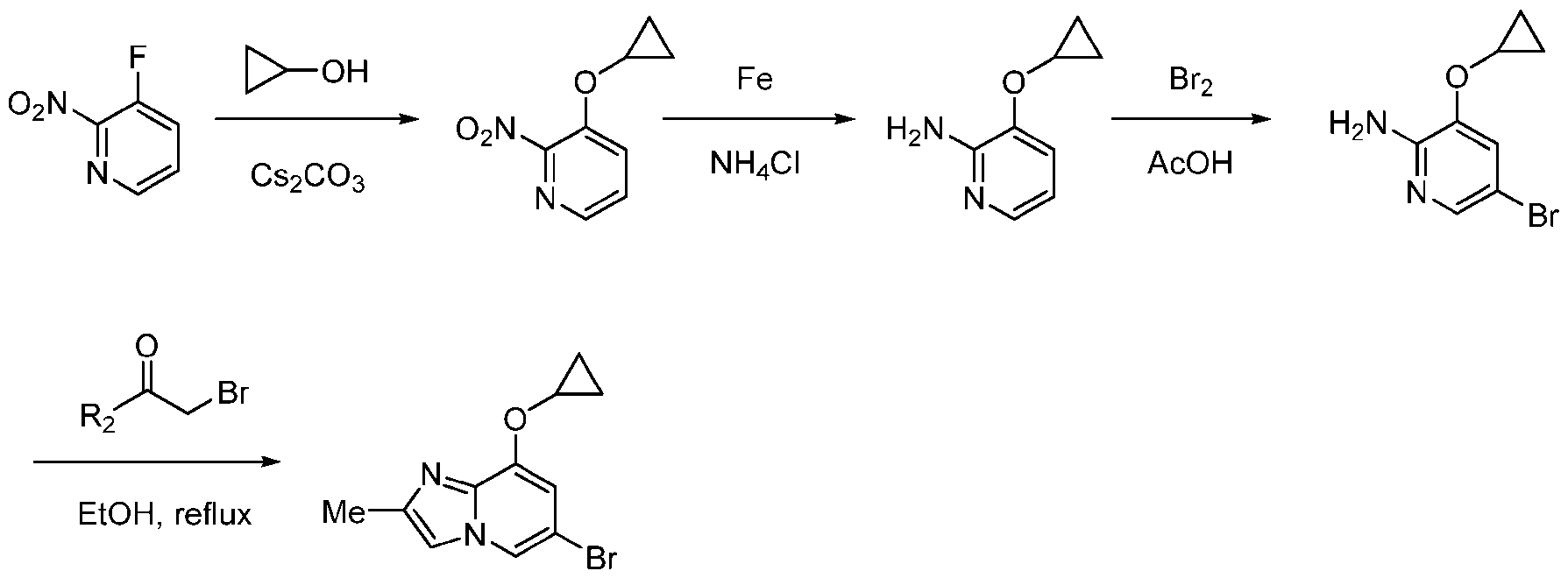
O Step 1: 3-cyclopropoxy-2-
[0318] To a solution of cyclopropanol (0.818 g, 14.08 mmol) and 3-fluoro-2-nitropyridine (2 g, 14.08 mmol) in THF (40 mL) was added Cs2CO3 (9.17 g, 28.2 mmol) then the mixture was heated to 65 °C. After 12 h the mixture was cooled to rt then concentrated. The crude product was subjected to silica gel chromatography (0-30%, EtOAc/petroleum ether) to give the title compound. Step 2: 3-cyclopropoxypyridin-2-amine [0319] A mixture of 3-cyclopropoxy-2-nitropyridine (1 g, 5.55 mmol), iron (3.10 g, 55.5 mmol), and ammonia hydrochloride (2.97 g, 55.5 mmol) in EtOH (10 mL) and AcOH (1mL) was heated to 80 °C. After 12 h the mixture was cooled to rt then filtered then the filtrate was concentrated. The residue was taken up in H2O (10 mL) then the mixture was extracted with EtOAc (20 mL x 3). The combined organic extracts were dried (Na
2SO
4) then filtered then the filtrate was concentrated. The crude product was subjected to silica gel chromatography (0-70% EtOAc/petroleum ether) to give the title compound. Step 3: 5-bromo-3-cyclopropoxypyridin-2-amine [0320] To a solution of 3-cyclopropoxypyridin-2-amine (510 mg, 3.40 mmol) in AcOH (10 mL) was added Br2 (0.4 mL, 6.79 mmol) at rt. After 12 h the mixture was concentrated. The residue was taken up in saturated NaHCO3 then the mixture was extracted with EtOAc (10 mL x 3). The combined organic extracts were washed with brine (10 mL) then dried (Na2SO4) then
25700 filtered then the filtrate was concentrated. The crude product was subjected to silica gel chromatography (0-14% EtOAc/petroleum ether) to give the title compound. Step 4: 6-bromo-8-cyclopropoxy-2-methylimidazo[1,2-a]pyridine [0321] To a solution of 5-bromo-3-cyclopropoxypyridin-2-amine (320 mg, 1.40 mmol) in EtOH (5 mL) was added 1-bromopropan-2-one (0.2 mL, 2.79 mmol) then the mixture was heated to 80 °C. After 12 h the mixture was cooled to rt then concentrated. The residue was taken up in saturated NaHCO3 then the mixture was extracted with DCM (10 mL x 2). The combined organic extracts were washed with brine (20 mL x 2) then dried (Na
2SO
4) then filtered then the filtrate was concentrated. The crude product was purified by prep-TLC (EtOAc:petroleum ether = 1:1) to give the title compound. [0322] Utilizing the procedures described in the preparation of Intermediate BO-1, the following compounds were prepared substituting the appropriate reagents for 1-bromopropan-2- one. Int. Structure IUPAC Name Comments B 2 4 2 s
Scheme:
1-(6-bromoimidazo[1,2-a]pyridin-2-yl)ethan-1-ol Step 1: ethyl 6-bromoimidazo[1,2-
[0323] A mixture of methyl 2-amino-5-bromonicotinate (10 g, 57.8 mmol) in 1,4-dioxane (200 ml) was added ethyl 3-bromo-2-oxopropanoate (10.88 ml, 87 mmol) and MgSO
4 (4 g, 33.2 mmol) then the mixture was heated to 80 °C. After 3 h the mixture was cooled to rt then
25700 concentrated. The residue was taken up in saturated NaHCO
3 (50 mL) then the mixture was extracted with EtOAc (50 mL x 3). The combined organic extracts were washed with brine (50 mL) then dried (Na
2SO
4) then filtered then the filtrate was concentrated. The crude product was subjected to silica gel chromatography (0-50% EtOAc/petroleum ether) to give the title compound. Step 2: 6-bromoimidazo[1,2-a]pyridine-2-carbaldehyde [0324] To a solution of ethyl 6-bromoimidazo[1,2-a]pyridine-2-carboxylate (1 g, 3.72 mmol) in DCM (20 mL) was added DIBAL-H (1M in toluene, 7.4 mL, 7.43 mmol) slowly at -78 °C under a nitrogen atmosphere. After 2 h the mixture was quenched with 1N HCl (5 mL) then warmed to rt then extracted with DCM (50 mL x 3). The combined organic extracts were washed with brine (50 mL) then dried over (Na2SO4) then filtered then the filtrate was concentrated. The crude product was subjected to silica gel chromatography (0-40% EtOAc/petroleum ether) to give the title compound. Step 3: 1-(6-bromoimidazo[1,2-a]pyridin-2-yl)ethan-1-ol [0325] To a solution of 6-bromoimidazo[1,2-a]pyridine-2-carbaldehyde (400 mg, 1.78 mmol) in THF (5 mL) was added methylmagnesium bromide (3M in Et
2O, 2.96 mL, 8.89 mmol) slowly at -78 °C. After the addition was complete the mixture was warmed to 0 °C. After 1.5 h the mixture was quenched with saturated NH
4Cl (5 mL) then warmed to rt then extracted with EtOAc (20 mL x 3). The combined organic extracts were washed with brine (30 mL) then dried (Na
2SO
4) then filtered then the filtrate was concentrated. The crude product was subjected to silica gel chromatography (0-30% EtOAc/petroleum ether) to give the title compound. Scheme:
6-bromo-2-(1,1-difluoroethyl)imidazo[1,2-a]pyridine Step 1: 1-(6-bromoimidazo[1,2-a]
one [0326] To a solution of ethyl 6-bromoimidazo[1,2-a]pyridine-2-carboxylate (1g, 3.72 mmol) in THF (10 mL)was added methylmagnesium bromide (3M in 2-MeTHF, 7.43 mL, 22.30 mmol)
slowly at 0 °C. After 1 h the mixture was quenched with saturated NH 4 Cl aqueous solution (20 mL) then warmed to rt then the resulting mixture was extracted with EtOAc (30 mL x 3). The
25700 combined organic extracts were washed with brine (30 mL) then dried (Na
2SO
4) then filtered then the filtrate was concentrated. The crude product was subjected to silica gel chromatography (0-25% EtOAc/petroleum ether) to give 2-(6-bromoimidazo[1,2-a]pyridin-2-yl)propan-2-ol and the title compound. Step 2: 6-bromo-2-(1,1-difluoroethyl)imidazo[1,2-a]pyridine [0327] To a solution of 1-(6-bromoimidazo[1,2-a]pyridin-2-yl)ethan-1-one (250 mg, 1.05 mmol) in DCM (2 mL) was added DAST (1.4 mL, 10.46 mmol) at -78 °C. The mixture was allowed to warm to rt slowly over 12 h. The resulting mixture was diluted with saturated NaHCO3 (20 mL) then the mixture was extracted with DCM (20 mL x 2). The combined organic extracts were washed with brine (20 mL x 2) then dried (Na
2SO
4) then filtered then the filtrate was concentrated. The crude product was purified by prep-TLC (petroleum ether:EtOAc = 3:1) to give the title compound. Scheme:
6-bromo-2-(1-fluorocyclopropyl)imidazo[1,2-a]pyridine Step 1: 1-(6-bromoimidazo[1,2-a]
1-ol [0328] To a solution of ethyl 6-bromoimidazo[1,2-a]pyridine-2-carboxylate (1 g, 3.72 mmol) and Ti(OiPr)
4 (0.3 mL, 0.93 mmol) in THF (20 mL) was added ethylmagnesium bromide (3M in Et2O, 3.10 mL, 9.29 mmol) slowly at rt. After 16 h the mixture was diluted with water (10 mL) then extracted with EtOAc (20 mL x 3). The combined organic extracts were washed with brine (30 mL) then dried (Na2SO4) then filtered then the filtrate was concentrated. The crude product was subjected to silica gel chromatography (0-50% EtOAc/petroleum ether) to give the title compound. Step 2: 6-bromo-2-(1-fluorocyclopropyl)imidazo[1,2-a]pyridine [0329] To a solution of 1-(6-bromoimidazo[1,2-a]pyridin-2-yl)cyclopropan-1-ol (55 mg, 0.22 mmol) in DCM (5 mL) was added DAST (0.2 mL, 1.09 mmol) at -78 °C. After 1 h the mixture was quenched with saturated NaHCO
3 (20 mL) then warmed to rt then extracted with DCM (10 mL x 3). The combined organic extracts were washed with brine (10 mL x 2) then dried
25700 (Na
2SO
4) then filtered then the filtrate was concentrated. The crude product was purified by prep- TLC (EtOAc:petroleum ether = 3:1) to give the title compound. Scheme:
- Step 1: ethyl 6-bromo-8- a]pyridine-2-carboxylate
[0330] A mixture of ethyl 3-bromo-2-oxopropanoate (1.821 g, 9.34 mmol), NaHCO3 (1.568 g, 18.67 mmol) and 5-bromo-3-(trifluoromethyl)pyridin-2-amine (1.5 g, 6.22 mmol) in 1,4-dioxane (20 ml) was heated to 100 °C. After 12 h the mixture was cooled to rt then concentrated. The residue was taken up in saturated NaHCO
3 then extracted with EtOAc (50 mL x 2). The combined organic extracts were washed with brine (30 mL x 2) then dried (Na2SO4) then filtered then the filtrate was concentrated. The crude product was subjected to silica gel chromatography (0-40% EtOAc/petroleum ether) to give the title compound. Step 2: 6-bromo-8-(trifluoromethyl)imidazo[1,2-a]pyridine-2-carbaldehyde [0331] To a solution of ethyl 6-bromo-8-(trifluoromethyl)imidazo[1,2-a]pyridine-2-carboxylate (1 g, 2.97 mmol) in DCM (20 mL) was added DIBAL-H (1M in toluene, 8.90 mL, 8.90 mmol) slowly at -78 °C. After 2 h the mixture was quenched with 1N HCl (5 mL) then warmed to rt then extracted with DCM (50 mL x 3). The combined organic extracts were washed with brine (50 mL) then dried (Na2SO4) then filtered then the filtrate was concentrated. The crude product was subjected to silica gel chromatography (0-40% EtOAc/petroleum ether) to give the title compound. Step 3: (6-bromo-8-(trifluoromethyl)imidazo[1,2-a]pyridin-2-yl)methanol [0332] To a solution of 6-bromo-8-(trifluoromethyl)imidazo[1,2-a]pyridine-2-carbaldehyde (150 mg, 0.52 mmol) in EtOH (6 ml) was added NaBH4 (19.36 mg, 0.52 mmol) at 0 °C. Once
25700 the addition was complete the mixture was warmed to rt. After 30 minutes the mixture was diluted with saturated NH4Cl (5 mL). The resulting mixture was concentrated to remove volatile organic solvents then extracted with DCM (10 mL x 3). The combined organic extracts were washed with brine (10 mL x 2) then dried (Na2SO4) then filtered then the filtrate was concentrated to give the title compound which was used without purification. Step 4: 6-bromo-2-(fluoromethyl)-8-(trifluoromethyl)imidazo[1,2-a]pyridine [0333] To a solution of (6-bromo-8-(trifluoromethyl)imidazo[1,2-a]pyridin-2-yl)methanol (150 mg, 0.508 mmol) in DCM (10 mL) was added DAST (0.4 mL, 2.54 mmol) at -78 °C. The mixture was allowed to warm to rt slowly over 12 h. The resulting mixture was diluted with saturated NaHCO
3 (5 mL) then extracted with DCM (10 mL x 3). The combined organic extracts were washed with brine (20 mL x 2) then dried (Na2SO4) then filtered then the filtrate was concentrated. The crude product was subjected to silica gel chromatography (0-30% EtOAc/petroleum ether) to give the title compound. Scheme:
7,7-difluoro-3-iodobicyclo[4.2.0]octa-1(6),2,4-triene Step 1: (4,8-di-tert-butyl-2,10-

dibenzo[d,g][1,3,2]dioxaphosphocin-6- yl)(4-iodo-2-methylphenyl)methanone [0334] To a solution of 4-iodo-2-methylbenzoic acid (4.1 g, 16 mmol) in DCM (31 mL) was added a solution of oxalyl chloride (2.0M in DCM, 2.7 mL, 31 mmol), followed by DMF (2 drops). The mixture was heated at reflux for 1 h then concentrated under reduced pressure. DCM
25700 (31 mL) and DIPEA (14 mL, 78 mmol) were added then a solution of 4,8-di-tert-butyl-2,10- dimethyl-12H-dibenzo[d,g][1,3,2]dioxaphosphocine 6-oxide (6.0 g, 16 mmol) in DCM (31 mL) was added dropwise over 1 h. The mixture was stirred at rt for 6 h. DCM (50 mL) was added then the mixture was washed with 1N HCl (50 mL) then saturated NaHCO3 (50 mL). The organic fraction was dried (MgSO4) then filtered then the filtrate was concentrated. The crude product was subjected to silica gel chromatography (0-30% EtOAc/hexanes) to give the title compound. Step 2: 3-iodobicyclo[4.2.0]octa-1(6),2,4-trien-7-one [0335] A solution of (4,8-di-tert-butyl-2,10-dimethyl-6-oxido-12H- dibenzo[d,g][1,3,2]dioxaphosphocin-6-yl)(4-iodo-2-methylphenyl)methanone (4.7 g, 7.4 mmol) in toluene (15 mL) was irradiated in a PennOC Photoreactor
® (wavelength: 420 nm; LED intensity: 100%; fan speed: 5000 rpm; stir: 1200 rpm) for 12 h. Triethylamine (1.0 mL, 7.4 mmol) was added then the mixture was heated to 45 °C for 4 h. The resulting mixture was cooled to rt then concentrated. The crude product was subjected to silica gel chromatography (0-15% EtOAc/hexanes) to give the title compound. Step 3: 7,7-difluoro-3-iodobicyclo[4.2.0]octa-1(6),2,4-triene [0336] A mixture of bis(2-methoxyethyl)aminosulfur trifluoride (0.93 mL, 5.0 mmol) and 3- iodobicyclo[4.2.0]octa-1(6),2,4-trien-7-one (250 mg, 1.0 mmol) was stirred at 50 °C for 16 h. The mixture was cooled to rt and a 0 °C solution of NaHCO3 (saturated aq., 30 mL) was added dropwise. The mixture was extracted with DCM (30 mL x 3) and the combined organic extracts were dried (MgSO4) then filtered then the filtrate concentrated. The crude product was subjected to silica gel chromatography (hexanes) to give the title compound. Scheme:

((1R,5S,6s)-6-hydroxy-3-azabicyclo[3.1.0]hexan-3-yl)(2-methyl-8- (trifluoromethyl)imidazo[1,2-a]pyridin-6-yl)methanone
25700 Step 1: (1R,5S,6s)-3-azabicyclo[3.1.0]hexan-6-ol [0337] To a solution of tert-butyl (1R,5S,6s)-6-hydroxy-3-azabicyclo[3.1.0]hexane-3- carboxylate (Int. A-1, 400 mg, 2.01 mmol) in DCM (8 mL) was added TFA (2 mL) at rt. After 1 h the mixture was concentrated to give the TFA salt of the title compound which was used immediately in the next step. Step 2: ((1R,5S,6s)-6-hydroxy-3-azabicyclo[3.1.0]hexan-3-yl)(2-methyl-8- (trifluoromethyl)imidazo[1,2-a]pyridin-6-yl)methanone [0338] To a solution of 2-methyl-8-(trifluoromethyl)imidazo[1,2-a]pyridine-6-carboxylic acid (Int. V-4, 500 mg, 2.05 mmol) and T3P (1.96 g, 3.07 mmol, 50% in EtOAc) in DMF (10 mL) were added DIPEA (2 mL, 10.24 mmol) and crude (1R,5S,6s)-3-azabicyclo[3.1.0]hexan-6-ol (203 mg, 2.048 mmol) at rt. After 12 h the mixture was diluted with water (20 mL) then extracted with EtOAc (60 mL x 3). The combined organic extracts were washed with brine (30 mL x 3) then dried (Na2SO4) then filtered then the filtrate was concentrated. The crude product was subjected to silica gel chromatography (0-100% EtOAc/petroleum ether) to give the title compound. Scheme:

((1R,5S,6s)-6-amino-3-azabicyclo[3.1.0]hexan-3-yl)(2-cyclopropyl-8-methylimidazo[1,2- a]pyridin-6-yl)methanone Step 1: tert-butyl ((1R,5S,6s)-

[1,2-a]pyridine-6-carbonyl)- 3-azabicyclo[3.1.0]hexan-6-yl)carbamate [0339] 2-Cyclopropyl-8-methylimidazo[1,2-a]pyridine-6-carboxylic acid (Int. V-1, 200 mg, 0.79 mmol), tert-butyl ((1R,5S,6s)-3-azabicyclo[3.1.0]hexan-6-yl)carbamate (188 mg, 0.95 mmol), HATU (602 mg, 1.58 mmol), and TEA (331 µl, 2.37 mmol) were combined in DCM (4 mL) at rt. After 72 h the mixture was concentrated. The crude product was subjected to silica gel chromatography (0-100% (3:1 EtOAc:EtOH)/hexanes) to give the title compound.
25700 Step 2: ((1R,5S,6s)-6-amino-3-azabicyclo[3.1.0]hexan-3-yl)(2-cyclopropyl-8- methylimidazo[1,2-a]pyridin-6-yl)methanone [0340] Tert-butyl ((1R,5S,6s)-3-(2-cyclopropyl-8-methylimidazo[1,2-a]pyridine-6-carbonyl)-3- azabicyclo[3.1.0]hexan-6-yl)carbamate (314 mg, 0.79 mmol) was dissolved in DCM (4 mL). To this was added 4M HCl (2 mL, 8.00 mmol) in 1,4-dioxane at rt. After 30 minutes the mixture was concentrated to give the HCl salt of the title compound. Scheme:

benzyl -3- bromoimidazo[1,2-a]pyridine-6- -3- azabicyclo[3.1.0]hexan-6-yl)oxy)-6-(4-fluorophenyl)pyridin-4-yl)propan-2-yl)carbamate Step 1: benzyl (2-(2-((
6-carbonyl)-3- azabicyclo[3.1.0]hexan-6-yl)oxy)-6-(4-fluorophenyl)pyridin-4-yl)propan-2-yl)carbamate [0341] To a solution of 2-bromoimidazo[1,2-a]pyridine-6-carboxylic acid (Int. AB-3, 125 mg, 0.52 mmol) in DMF (4 mL) was added DIPEA (0.378 mL, 2.17 mmol) and HATU (247 mg, 0.65 mmol) at rt. After 30 minutes benzyl (2-(2-(((1R,5S,6s)-3-azabicyclo[3.1.0]hexan-6-yl)oxy)-6-(4- fluorophenyl)pyridin-4-yl)propan-2-yl)carbamate (Int. P-1, 200 mg, 0.43 mmol) in DMF (1mL) was added. After 1 h the mixture was concentrated to dryness. The crude product was purified by prep-TLC (EtOAc) to give the title compound. Scheme:

25700 benzyl (2-(2-(((1R,5S,6s)-3-(7-bromo-2-methylpyrazolo[1,5-a]pyridine-5-carbonyl)-3- azabicyclo[3.1.0]hexan-6-yl)oxy)-6-(4-fluorophenyl)pyridin-4-yl)propan-2-yl)carbamate [0342] To a solution of benzyl (2-(2-(((1R,5S,6s)-3-azabicyclo[3.1.0]hexan-6-yl)oxy)-6-(4- fluorophenyl)pyridin-4-yl)propan-2-yl)carbamate (Int. P-1, 110 mg, 0.24 mmol) and 7-bromo-2- methylpyrazolo[1,5-a]pyridine-5-carboxylic acid (60 mg, 0.24 mmol) in DMF (3 mL) was added T3P (303 mg, 0.48 mmol, 50% in EtOAc) and DIPEA (0.1 mL, 0.72 mmol) at rt. After 1 h the reaction mixture was diluted with saturated NaHCO
3 (5 mL) then extracted with EtOAc (5 mL x 3). The combined organic extracts were washed with brine (5 mL) then dried (Na2SO4) then filtered then the filtrate was concentrated. The crude product was purified by prep-TLC (petroleum ether:EtOAc = 1:2) to give the title compound. [0343] Utilizing the procedures described in the synthesis of Intermediate BX-1, the following compound was prepared substituting the appropriate reagents for benzyl (2-(2-(((1R,5S,6s)-3- azabicyclo[3.1.0]hexan-6-yl)oxy)-6-(4-fluorophenyl)pyridin-4-yl)propan-2-yl)carbamate and 7- bromo-2-methylpyrazolo[1,5-a]pyridine-5-carboxylic acid. Int. Structure IUPAC Name # - )- )- e- )-

25700 EXAMPLES Example 1-1-P1 ent-((1R,5S,6s)-6-((4-(2-amino-1-fluoropropan-2-yl)-6-(4-fluorophenyl)pyridin-2-yl)oxy)-3- azabicyclo[3.1.0]hexan-3-yl)(2-methyl-8-(trifluoromethyl)imidazo[1,2-a]pyridin-6- yl)methanone (enantiomer 1) and Example 1-1-P2 ent-((1R,5S,6s)-6-((4-(2-amino-1-fluoropropan-2-yl)-6-(4-fluorophenyl)pyridin-2-yl)oxy)-3- azabicyclo[3.1.0]hexan-3-yl)(2-methyl-8-(trifluoromethyl)imidazo[1,2-a]pyridin-6- yl)methanone (enantiomer 2) Step 1: rac-benzyl (1- (2-methyl-8-
(trifluoromethyl)imidazo[1,2-a]pyridine-6-carbonyl)-3-azabicyclo[3.1.0]hexan-6- yl)oxy)pyridin-4-yl)propan-2-yl)carbamate [0344] In glove box, to a mixture of rac-benzyl (2-(2-chloro-6-(4-fluorophenyl)pyridin-4-yl)-1- fluoropropan-2-yl)carbamate (Int. L-1, 140 mg, 0.34 mmol) and ((1R,5S,6s)-6-hydroxy-3- azabicyclo[3.1.0]hexan-3-yl)(2-methyl-8-(trifluoromethyl)imidazo[1,2-a]pyridin-6-yl)methanone (Int. BU-1, 120 mg, 0.37 mmol) in PhCF
3 (3 mL) and CPME (3 mL) was added Pd(OAc)
2 (7.54 mg, 0.034 mmol), Ad-BippyPhos (44.5 mg, 0.067 mmol) and K3PO4 (214 mg, 1.01 mmol) then the mixture was heated to 95 °C. After 12 h the mixture was cooled to rt then filtered then the filtrate was concentrated. The crude product was purified by prep-TLC (petroleum ether:EtOAc = 1:2) to give the title compound. Step 2: ent-((1R,5S,6s)-6-((4-(2-amino-1-fluoropropan-2-yl)-6-(4-fluorophenyl)pyridin-2- yl)oxy)-3-azabicyclo[3.1.0]hexan-3-yl)(2-methyl-8-(trifluoromethyl)imidazo[1,2-a]pyridin-6- yl)methanone (enantiomer 1 and 2) [0345] To a solution of rac-benzyl (1-fluoro-2-(2-(4-fluorophenyl)-6-(((1R,5S,6s)-3-(2-methyl- 8-(trifluoromethyl)imidazo[1,2-a]pyridine-6-carbonyl)-3-azabicyclo[3.1.0]hexan-6- yl)oxy)pyridin-4-yl)propan-2-yl)carbamate (65 mg, 0.092 mmol) in THF (10 mL) was added TEA (46.6 mg, 0.461 mmol), Et3SiH (42.8 mg, 0.37 mmol) and PdCl2 (1 mg, 1.84 µmol) at rt.
25700 After 10 minutes the mixture was filtered and then the filtrate was concentrated. The crude product was purified by prep-TLC (EtOAc) to give the racemate of the title compound. The racemate was subjected to chiral SFC (ChiralPak AD, 45% EtOH (with 0.1% NH
4OH modifier)/CO2) to give the title compounds. Example 1-1-P1 (faster eluting enantiomer): MS m/z (M+H)
+: calculated 572.2, observed 572.1.
1H-NMR (500 MHz, CD3OD) δ 8.81 (s, 1H), 8.02- 7.90 (m, 2H), 7.71 (d, J = 15.3 Hz, 2H), 7.52 (s, 1H), 6.98 (t, J = 8.9 Hz, 2H), 6.77 (d, J = 1.2 Hz, 1H), 4.49-4.27 (m, 2H), 4.24-4.13 (m, 1H), 3.93-3.60 (m, 4H), 2.38 (s, 3H), 1.98-1.92 (m, 2H), 1.37 (s, 3H). Example 1-1-P2 (slower eluting enantiomer): MS m/z (M+H)
+: calculated 572.2, observed 572.1.
1H-NMR (500 MHz, CD3OD) δ 8.82 (s, 1H), 8.01-7.94 (m, 2H), 7.72 (d, J = 12.8 Hz, 2H), 7.52 (s, 1H), 6.99 (t, J = 8.5 Hz, 2H), 6.77 (s, 1H), 4.51-4.28 (m, 2H), 4.25-4.16 (m, 1H), 3.94-3.58 (m, 4H), 2.38 (s, 3H), 2.01-1.92 (m, 2H), 1.39 (s, 3H). Example 2-1-P1 ent-((1R,5S,6s)-6-((6-(4-fluorophenyl)-4-(2-methylpyrrolidin-2-yl)pyridin-2-yl)oxy)-3- azabicyclo[3.1.0]hexan-3-yl)(2-methyl-8-(trifluoromethyl)imidazo[1,2-a]pyridin-6- yl)methanone (enantiomer 1) and Example 2-1-P2 ent-((1R,5S,6s)-6-((6-(4-fluorophenyl)-4-(2-methylpyrrolidin-2-yl)pyridin-2-yl)oxy)-3- azabicyclo[3.1.0]hexan-3-yl)(2-methyl-8-(trifluoromethyl)imidazo[1,2-a]pyridin-6- yl)methanone (enantiomer 2) Step 1: ent-tert-butyl

8- (trifluoromethyl)imidazo[1,2-a]pyridine-6-carbonyl)-3-azabicyclo[3.1.0]hexan-6- yl)oxy)pyridin-4-yl)-2-methylpyrrolidine-1-carboxylate (enantiomers 1 and 2) [0346] In glove box, to a mixture of rac-tert-butyl 2-(2-chloro-6-(4-fluorophenyl)pyridin-4-yl)- 2-methylpyrrolidine-1-carboxylate (Int. H-1, 80 mg, 0.21 mmol) and ((1R,5S,6s)-6-hydroxy-3- azabicyclo[3.1.0]hexan-3-yl)(2-methyl-8-(trifluoromethyl)imidazo[1,2-a]pyridin-6-yl)methanone (Int. BU-1, 66.6 mg, 0.21 mmol) in dioxane (7 mL) was added Cs2CO3 (200 mg, 0.61 mmol) and rac-BINAP Pd G3 (20.3 mg, 0.020 mmol) then the mixture was heated to 100 °C. After 12 h the mixture was cooled to rt then filtered then the filtrate was concentrated. The crude product was
25700 purified by prep-TLC (petroleum ether:EtOAc = 1:2) to give the racemate of the title compound. The racemate was subjected to chiral SFC (ChiralPak AS, 30% EtOH (with 0.1% NH4OH modifier)/CO
2) to give the title compounds. Example Int.2-1-P1 (faster eluting enantiomer) and Example Int.2-1-P2 (slower eluting enantiomer) Step 2: ent-((1R,5S,6s)-6-((4-(2-amino-1-fluoropropan-2-yl)-6-(4-fluorophenyl)pyridin-2- yl)oxy)-3-azabicyclo[3.1.0]hexan-3-yl)(2-methyl-8-(trifluoromethyl)imidazo[1,2-a]pyridin-6- yl)methanone (enantiomer 1 and 2) [0347] To a solution of Example Int.2-1-P1 (8 mg, 0.012 mmol) in DCM (4 mL) was added TFA (1 mL). at rt. After 1 h the mixture was concentrated. The crude product was purified by preparative reverse-phase HPLC (20-40% MeCN/water with 0.1% TFA modifier) to give the title compound as the TFA salt. Example 2-1-P1 (faster eluting enantiomer): MS m/z (M+H)
+: calculated 580.2, observed 580.2.
1H-NMR (500 MHz, CD
3OD) δ 9.11 (s, 1H), 8.19-8.10 (m, 3H), 8.01 (s, 1H), 7.56 (s, 1H), 7.18 (t, J = 8.9 Hz, 2H), 6.81 (d, J = 1.2 Hz, 1H), 4.38-4.29 (m, 1H), 4.16-3.94 (m, 2H), 3.92-3.76 (m, 2H), 3.66-3.48 (m, 2H), 2.58 (s, 3H), 2.52-2.29 (m, 3H), 2.25-1.99 (m, 3H), 1.71 (s, 3H). [0348] To a solution of Example Int.2-1-P2 (10 mg, 0.015 mmol) in DCM (4 mL) was added TFA (1 mL) at rt. After 1 h the mixture was concentrated. The crude product was purified by preparative reverse-phase HPLC (20-40% MeCN/water with 0.1% TFA modifier) to give the title compound as the TFA salt. Example 2-1-P2 (slower eluting enantiomer): MS m/z (M+H)
+: calculated 580.6, observed 580.2.
1H-NMR (500 MHz, CD
3OD) δ 9.08 (s, 1H), 8.18-8.09 (m, 3H), 7.97 (s, 1H), 7.56 (d, J = 1.2 Hz, 1H), 7.17 (t, J = 8.9 Hz, 2H), 6.80 (d, J = 1.2 Hz, 1H), 4.39-4.31 (m, 1H), 4.15-3.94 (m, 2H), 3.92-3.76 (m, 2H), 3.67-3.46 (m, 2H), 2.56 (s, 3H), 2.52- 2.31 (m, 3H), 2.26-2.03 (m, 3H), 1.71 (s, 3H). Example 3-1-P1 ent-((1R,5S,6s)-6-((6-(4-fluorophenyl)-4-(2-methylazetidin-2-yl)pyridin-2-yl)oxy)-3- azabicyclo[3.1.0]hexan-3-yl)(2-methyl-8-(trifluoromethyl)imidazo[1,2-a]pyridin-6- yl)methanone (enantiomer 1) and Example 3-1-P2 ent-((1R,5S,6s)-6-((6-(4-fluorophenyl)-4-(2-methylazetidin-2-yl)pyridin-2-yl)oxy)-3- azabicyclo[3.1.0]hexan-3-yl)(2-methyl-8-(trifluoromethyl)imidazo[1,2-a]pyridin-6- yl)methanone (enantiomer 2)
25700 Step 1: ent-tert-butyl 8- (trifluoromethyl)

- hexan-6- yl)oxy)pyridin-4-yl)-2-methylazetidine-1-carboxylate (enantiomers 1 and 2) [0349] In glove box, to a mixture of rac-tert-butyl 2-(2-chloro-6-(4-fluorophenyl)pyridin-4-yl)- 2-methylazetidine-1-carboxylate (Int. G-1, 110 mg, 0.29 mmol) and ((1R,5S,6s)-6-hydroxy-3- azabicyclo[3.1.0]hexan-3-yl)(2-methyl-8-(trifluoromethyl)imidazo[1,2-a]pyridin-6-yl)methanone (Int. BU-1, 104 mg, 0.32 mmol) in 1,4-dioxane (12 mL) was added Cs2CO3 (285 mg, 0.88 mmol) and (Ad-BippyPhos)
2PdCl
2 (44 mg, 0.029 mmol) then the mixture was heated to 90 °C. After 12 h the mixture was cooled to rt then filtered then the filtrate was concentrated. The crude product was subjected to silica gel chromatography (0-60% EtOAc/petroleum ether) to give the racemate of the title compound. The racemate was subjected to chiral SFC (ChiralPak AS-3, 5- 40% EtOH (with 0.05% DEA modifier)/CO2) to give the title compounds. Example Int.3-1-P1 (faster eluting enantiomer) and Example Int.3-1-P2 (slower eluting enantiomer) Step 2: ent-((1R,5S,6s)-6-((4-(2-amino-1-fluoropropan-2-yl)-6-(4-fluorophenyl)pyridin-2- yl)oxy)-3-azabicyclo[3.1.0]hexan-3-yl)(2-methyl-8-(trifluoromethyl)imidazo[1,2-a]pyridin-6- yl)methanone (enantiomer 1 and 2) [0350] To a solution of Example Int.3-1-P1 (58 mg, 0.087 mmol) in DCM (8 mL) was added TFA (2 mL). at rt. After 2 h the mixture was concentrated. The crude product was purified by preparative reverse-phase HPLC (16-36% MeCN/water with 0.1% TFA modifier) to give the title compound as the TFA salt. Example 3-1-P1 (faster eluting enantiomer): MS m/z (M+H)
+: calculated 566.2, observed 566.4.
1H-NMR (400 MHz, CD
3OD) δ 9.09 (s, 1H), 8.19-8.08 (m, 3H), 7.99 (s, 1H), 7.48 (d, J = 0.7 Hz, 1H), 7.15 (t, J = 8.8 Hz, 2H), 6.72 (d, J = 0.7 Hz, 1H), 4.40-4.22 (m, 2H), 4.11 (s, 1H), 4.00 (s, 1H), 3.93-3.75 (m, 3H), 3.21-3.05 (m, 1H), 2.71 (d, J = 12.1 Hz, 1H), 2.56 (s, 3H), 2.10 (d, J = 13.2 Hz, 2H), 1.97 (s, 3H). [0351] To a solution of Example Int.3-1-P2 (63 mg, 0.095 mmol) in DCM (8 mL) was added TFA (2 mL) at rt. After 1 h the mixture was concentrated. The crude product was purified by preparative reverse-phase HPLC (20-40% MeCN/water with 0.1% TFA modifier) to give the title compound as the TFA salt. Example 3-1-P2 (slower eluting enantiomer): MS m/z (M+H)
+: calculated 566.2, observed 566.4.
1H-NMR (400 MHz, CD3OD) δ 9.09 (s, 1H), 8.21-8.08 (m,
25700 3H), 7.99 (s, 1H), 7.47 (d, J = 1.0 Hz, 1H), 7.16 (t, J = 8.7 Hz, 2H), 6.72 (d, J = 1.0 Hz, 1H), 4.39-4.23 (m, 2H), 4.11 (s, 1H), 4.00 (s, 1H), 3.94-3.75 (m, 3H), 3.21-3.08 (m, 1H), 2.71 (d, J = 12.1 Hz, 1H), 2.56 (s, 3H), 2.10 (d, J = 12.5 Hz, 2H), 1.97 (s, 3H). Example 4-1 ((1R,5S,6s)-6-((4-(2-aminopropan-2-yl)-6-(4-fluorophenyl)pyridin-2-yl)amino)-3- azabicyclo[3.1.0]hexan-3-yl)(2-cyclopropyl-8-methylimidazo[1,2-a]pyridin-6-yl)methanone Step 1: tert-butyl (2- [1,2-a]pyridine-6-
carbonyl)-3-azabicyclo[3.1.0]hexan-6- -6- pyridin-4-yl)propan-2- yl)carbamate [0352] Tert-butyl (2-(2-chloro-6-(4-fluorophenyl)pyridin-4-yl)propan-2-yl)carbamate (Int. E-1, 50 mg, 0.14 mmol), ((1R,5S,6s)-6-amino-3-azabicyclo[3.1.0]hexan-3-yl)(2-cyclopropyl-8- methylimidazo[1,2-a]pyridin-6-yl)methanone dihydrochloride (Int. BV-1, 202 mg, 0.55 mmol), BrettPhos Pd G3 (12.42 mg, 0.014 mmol), and Cs
2CO
3 (179 mg, 0.55 mmol) were combined in 1,4-dioxane (0.7 mL) then heated to 80 °C under N2. After 24 h the mixture was cooled to rt then BrettPhos Pd G3 (12.42 mg, 0.014 mmol) was added. The resulting mixture was heated to 100 °C. After 2 h the mixture was cooled to rt then filtered through a pad of Celite
® washing with EtOAc. The filtrate was concentrated. The crude product was subjected to silica gel chromatography (0-70% (3:1 EtOAc:EtOH)/hexanes) to give the title compound. Step 2: ((1R,5S,6s)-6-((4-(2-aminopropan-2-yl)-6-(4-fluorophenyl)pyridin-2-yl)amino)-3- azabicyclo[3.1.0]hexan-3-yl)(2-cyclopropyl-8-methylimidazo[1,2-a]pyridin-6-yl)methanone [0353] To a solution of tert-butyl (2-(2-(((1R,5S,6s)-3-(2-cyclopropyl-8-methylimidazo[1,2- a]pyridine-6-carbonyl)-3-azabicyclo[3.1.0]hexan-6-yl)amino)-6-(4-fluorophenyl)pyridin-4- yl)propan-2-yl)carbamate (39 mg, 0.062 mmol) in DCM (0.5 mL) was added HCl (4M in 1,4- dioxane, 156 µl, 0.62 mmol) in at rt. After 2 h the mixture was concentrated. The crude product was purified by preparative reverse-phase HPLC (5-95% MeCN/water with 0.1% TFA modifier). Fractions containing product were combined then made basic with saturated NaHCO
3. The resulting mixture was extracted with EtOAc (3x). The combined organic extracts were washed with brine the dried (MgSO
4) then filtered then the filtrate was concentrated to give the title compound. Example 4-1: MS m/z (M+H)
+: calculated 525.6, observed 525.4.
1H-NMR (500
25700 MHz, CDCl
3) δ 8.13 (s, 1H), 7.90 (s, 2H), 7.27 (s, 1H), 7.19 (s, 1H), 7.08 (t, J = 8.1 Hz, 2H), 6.99 (s, 1H), 6.68 (s, 1H), 5.04 (s, 1H), 4.33 (s, 1H), 4.12 (d, J = 7.0 Hz, 1H), 3.75 (d, J = 45.3 Hz, 3H), 2.60 (s, 3H), 2.42 (s, 1H), 2.08 (s, 1H), 2.05 (s, 2H), 1.53 (s, 6H), 1.26 (s, 1H), 1.00 (d, J = 6.3 Hz, 2H), 0.87 (s, 2H). Example 5-1 ((1R,5S,6s)-6-((4-(2-aminopropan-2-yl)-6-(4-fluorophenyl)pyridin-2-yl)oxy)-3- azabicyclo[3.1.0]hexan-3-yl)(8-(difluoromethoxy)-2-(difluoromethyl)imidazo[1,2-a]pyridin- 6-yl)methanone Step 1: benzyl (2-(2-( imidazo[1,2-

a]pyridine-6-carbonyl)-3-azabicyclo[3.1.0]hexan-6-yl)oxy)-6-(4-fluorophenyl)pyridin-4- yl)propan-2-yl)carbamate [0354] To a solution of 6-bromo-8-(difluoromethoxy)-2-(difluoromethyl)imidazo[1,2- a]pyridine (Int. BJ-1, 50 mg, 0.16 mmol), benzyl (2-(2-(((1R,5S,6s)-3-azabicyclo[3.1.0]hexan-6- yl)oxy)-6-(4-fluorophenyl)pyridin-4-yl)propan-2-yl)carbamate (Int. P-1, 73.7 mg, 0.16 mmol) in 1,4-dioxane (1.2 mL) was added TEA (0.1 mL, 0.639 mmol) and Xantphos Pd G2 (14.2 mg, 0.016 mmol). The reaction mixture was placed under an atmosphere of CO then heated to 100 °C. After 13 h the mixture was cooled to rt then filtered then the filtrate was concentrated. The crude product was purified by prep-TLC (petroleum ether:EtOAc = 1:1) to give the title compound. Step 2: ((1R,5S,6s)-6-((4-(2-aminopropan-2-yl)-6-(4-fluorophenyl)pyridin-2-yl)oxy)-3- azabicyclo[3.1.0]hexan-3-yl)(8-(difluoromethoxy)-2-(difluoromethyl)imidazo[1,2-a]pyridin- 6-yl)methanone [0355] A solution of benzyl (2-(2-(((1R,5S,6s)-3-(8-(difluoromethoxy)-2- (difluoromethyl)imidazo[1,2-a]pyridine-6-carbonyl)-3-azabicyclo[3.1.0]hexan-6-yl)oxy)-6-(4- fluorophenyl)pyridin-4-yl)propan-2-yl)carbamate (40 mg, 0.055 mmol) in concentrated HCl (1.8 mL) was heated to 80 °C. After 10 minutes the mixture was cooled to rt then concentrated. The crude product was purified by preparative reverse-phase HPLC (25-55% MeCN/water with 0.05% HCl modifier) to give the title compound as the HCl salt. Example 5-1: MS m/z (M+H)
+:
25700 calculated 588.2, observed 588.2.
1H-NMR (500 MHz, CD
3OD) δ 8.94 (s, 1H), 8.56 (s, 1H), 8.17-8.08 (m, 2H), 7.73 (s, 1H), 7.65 (s, 1H), 7.41-7.12 (m, 4H), 6.93 (s, 1H), 4.30 (d, J = 12.2 Hz, 1H), 4.13 (s, 1H), 4.06-3.87 (m, 2H), 3.85-3.73 (m, 1H), 2.19-2.05 (m, 2H), 1.77 (s, 6H). [0356] Utilizing the procedures described in Example 5-1, the following compounds were prepared substituting the appropriate reagents for 6-bromo-8-(difluoromethoxy)-2- (difluoromethyl)imidazo[1,2-a]pyridine (Int. BJ-1). Following HPLC purification, Examples were concentrated directly to give TFA or HCl salts or extracted under basic conditions to give free bases. Ex # R Observed Comments
+ [M+H]
+ n 2 A % th
25700 1,2-a]pyridin-6- NH4OH yl)methanone modifier)/C ti 1 O n 2 A % th C
Example 6-1 ((1R,5S,6s)-6-((4-(2-aminopropan-2-yl)-6-(4-fluorophenyl)pyridin-2-yl)oxy)-3- azabicyclo[3.1.0]hexan-3-yl)(8-cyclopropoxy-2-methylimidazo[1,2-a]pyridin-6- yl)methanone Step 1: benzyl (2-(2-(

[1,2-a]pyridine-6- carbonyl)-3-azabicyclo[3.1.0]hexan-6-yl)oxy)-6-(4-fluorophenyl)pyridin-4-yl)propan-2- yl)carbamate [0357] To a solution of 6-bromo-8-cyclopropoxy-2-methylimidazo[1,2-a]pyridine (Int. BO-1, 150 mg, 0.562 mmol) and benzyl (2-(2-(((1R,5S,6s)-3-azabicyclo[3.1.0]hexan-6-yl)oxy)-6-(4-
25700 fluorophenyl)pyridin-4-yl)propan-2-yl)carbamate (Int. P-1, 259 mg, 0.56 mmol) in 1,4-dioxane (10 mL) was added TEA (0.2 mL, 1.69 mmol) and Xantphos Pd G2 (50 mg, 0.056 mmol). The reaction mixture was placed under an atmosphere of CO then heated to 100 °C. After 13 h the mixture was cooled to rt then filtered then the filtrate was concentrated. The crude was subjected to silica gel chromatography (0-100% EtOAc/petroleum ether) to give the title compound. Step 2: ((1R,5S,6s)-6-((4-(2-aminopropan-2-yl)-6-(4-fluorophenyl)pyridin-2-yl)oxy)-3- azabicyclo[3.1.0]hexan-3-yl)(8-cyclopropoxy-2-methylimidazo[1,2-a]pyridin-6- yl)methanone [0358] To a solution of benzyl (2-(2-(((1R,5S,6s)-3-(8-cyclopropoxy-2-methylimidazo[1,2- a]pyridine-6-carbonyl)-3-azabicyclo[3.1.0]hexan-6-yl)oxy)-6-(4-fluorophenyl)pyridin-4- yl)propan-2-yl)carbamate (162 mg, 0.24 mmol) in THF (10 mL) was added TEA (97 mg, 0.96 mmol), Et
3SiH (139 mg, 1.20 mmol) and PdCl
2 (13 mg, 0.072 mmol) at rt. After 1 h the mixture was filtered then the filtrate was concentrated. The crude product was purified by preparative reverse-phase HPLC (35-55% MeCN/water with 10 mM NH
4HCO
3 modifier) to give the title compound. Example 6-1: MS m/z (M+H)
+: calculated 542.2, observed 542.2.
1H-NMR (500 MHz, CD
3OD) δ 8.28 (s, 1H), 8.05 (dd, J = 8.5, 5.5 Hz, 2H), 7.61 (s, 2H), 7.13-7.01 (m, 3H), 6.84 (s, 1H), 4.33 (d, J = 11.0 Hz, 1H), 4.10-3.83 (m, 4H), 3.72 (s, 1H), 2.40 (s, 3H), 2.04 (s, 2H), 1.49 (s, 6H), 0.86 (s, 4H). [0359] Utilizing the procedures described in Example 6-1, the following compounds were prepared substituting the appropriate reagents for 6-bromo-8-cyclopropoxy-2- methylimidazo[1,2-a]pyridine (Int. BO-1). Following HPLC purification, Examples were concentrated directly to give TFA or HCl salts or extracted under basic conditions to give free bases. Ex # R
Observed Comments [M+H]
+ [M+H]
+
25700 6-3 ((1R,5S,6s)-6-((4-(2- 567.2 567.2 TFA salt aminopropan-2-yl)-6-(4- fluorophenyl)pyridin-2- x- , O
2 x- , O
2
25700 methylimidazo[1,2- a]pyridin-6-yl)methanone 6-8 ((1R5S6s)-6-((4-(2- 536.2 536.5 TFA salt
((1R,5S,6s)-6-((4-(2-aminopropan-2-yl)-6-(4-fluorophenyl)pyridin-2-yl)oxy)-3- azabicyclo[3.1.0]hexan-3-yl)(2-methyl-8-(1,3,4-oxadiazol-2-yl)imidazo[1,2-a]pyridin-6- yl)methanone Step 1: tert-butyl (2-

8-(1,3,4-oxadiazol-2- yl)imidazo[1,2-a]pyridine-6-carbonyl)-3-azabicyclo[3.1.0]hexan-6-yl)oxy)pyridin-4- yl)propan-2-yl)carbamate [0360] To a solution of 2-(6-bromo-2-methylimidazo[1,2-a]pyridin-8-yl)-1,3,4-oxadiazole (Int. BM-1, 65 mg, 0.23 mmol) and tert-butyl (2-(2-(((1R,5S,6s)-3-azabicyclo[3.1.0]hexan-6-yl)oxy)- 6-(4-fluorophenyl)pyridin-4-yl)propan-2-yl)carbamate (Int. Q-1, 100 mg, 0.23 mmol) in 1,4- dioxane (10 mL) was added TEA (0.1 mL, 0.702 mmol) and Xantphos Pd G2 (20.8 mg, 0.023 mmol). The reaction mixture was placed under an atmosphere of CO then heated to 100 °C. After 13 h the mixture was cooled to rt then filtered then the filtrate was concentrated. The crude product was purified by prep-TLC (EtOAc) to give the title compound.
25700 Step 2: ((1R,5S,6s)-6-((4-(2-aminopropan-2-yl)-6-(4-fluorophenyl)pyridin-2-yl)oxy)-3- azabicyclo[3.1.0]hexan-3-yl)(2-methyl-8-(1,3,4-oxadiazol-2-yl)imidazo[1,2-a]pyridin-6- yl)methanone [0361] To a solution of tert-butyl (2-(2-(4-fluorophenyl)-6-(((1R,5S,6s)-3-(2-methyl-8-(1,3,4- oxadiazol-2-yl)imidazo[1,2-a]pyridine-6-carbonyl)-3-azabicyclo[3.1.0]hexan-6-yl)oxy)pyridin- 4-yl)propan-2-yl)carbamate (40 mg, 0.061 mmol) in DCM (4 mL) was added TFA (1 mL) at rt. After 1 h TEA was added then the mixture was filtered then the filtrate was concentrated. The crude product was purified by preparative reverse-phase HPLC (28-58% MeCN/water with 10 mM NH4HCO3 modifier) to give the title compound. Example 7-1: MS m/z (M+H)
+: calculated 554.2, observed 554.2.
1H-NMR (500 MHz, CD
3OD) δ 9.19 (s, 1H), 8.96 (d, J = 1.2 Hz, 1H), 8.20 (d, J = 1.2 Hz, 1H), 8.13-8.05 (m, 2H), 7.86 (s, 1H), 7.62 (s, 1H), 7.10 (s, 2H), 6.86 (d, J = 1.2 Hz, 1H), 4.41-4.33 (m, 1H), 4.08-3.96 (m, 3H), 3.83-3.74 (m, 1H), 2.54 (s, 3H), 2.11-2.07 (m, 2H), 1.55 (s, 6H). Example 8-1 ((1R,5S,6s)-6-((4-(2-aminopropan-2-yl)-6-(4-fluorophenyl)pyridin-2-yl)oxy)-3- azabicyclo[3.1.0]hexan-3-yl)(2-cyclopropyl-8-methylimidazo[1,2-a]pyridin-6-yl)methanone [0362] 2-(2-((

pyridin-4- yl)propan-2-amine (Int. O-1, 60.5 mg, 0.14 mmol), 2-cyclopropyl-8-methylimidazo[1,2- a]pyridine-6-carboxylic acid (Int. V-1,35 mg, 0.14 mmol), TEA (57.9 µl, 0.42 mmol), and HATU (63.2 mg, 0.17 mmol) were combined in DMF (1 mL) at rt. After 10 minutes the mixture was purified directly by preparative reverse-phase HPLC (20-95% MeCN/water with 0.1% TFA modifier). Fractions containing product were combined then made basic with saturated NaHCO3. The resulting mixture was extracted with EtOAc (3x). The combined organic extracts were washed with brine the dried (MgSO4) then filtered then the filtrate was concentrated to give the title compound. Example 8-1: MS m/z (M+H)
+: calculated 526.6, observed 526.3.
1H-NMR (500 MHz, CDCl
3) δ 8.14 (s, 1H), 7.98 (dd, J = 8.6, 5.5 Hz, 2H), 7.50 (s, 1H), 7.27 (s, 1H), 7.07 (t, J = 8.6 Hz, 2H), 7.01 (s, 1H), 6.78 (s, 1H), 4.31 (s, 1H), 3.99 (s, 1H), 3.76 (bs, 3H), 2.60 (s, 3H), 2.14 – 2.03 (m, 2H), 2.00 (s, 2H), 1.51 (s, 6H), 1.26 (s, 1H), 1.04 – 0.94 (m, 2H), 0.90 – 0.84 (m, 2H).
25700 [0363] Utilizing the procedures described in Example 8-1, the following compounds were prepared substituting the appropriate reagents for 2-cyclopropyl-8-methylimidazo[1,2- a]pyridine-6-carboxylic acid (Int. V-1). Following HPLC purification, Examples were concentrated directly to give TFA or HCl salts or extracted under basic conditions to give free bases. Ex # R Calc’d Observed Comments
+ [M+H]
+ t t t e e t
25700 Ex # R IUPAC Name Calc’d Observed Comments [M+H]
+ [M+H]
+ 8-8 ((1R5S6s)-6-((4-(2- 526.6 526.4 Free base t t t t e P H, % /C e
25700 Ex # R IUPAC Name Calc’d Observed Comments [M+H]
+ [M+H]
+ -14- ent-((1R 5S6s)-6-((4-(2- 530.6 530.4 SFC P H, % /C e t t t t t t e
25700 Ex # R IUPAC Name Calc’d Observed Comments [M+H]
+ [M+H]
+ methyl-2H-indazol-5-
((1R,5S,6s)-6-((4-(2-aminopropan-2-yl)-6-(4-fluorophenyl)pyridin-2-yl)amino)-3- azabicyclo[3.1.0]hexan-3-yl)(2-methylbenzo[d]oxazol-6-yl)methanone [0364] To a solution mg, 0.08 mmol) in
DMSO (0.1 mL) and CH3CN (0.1 mL) was added DIPEA (42 μL, 0.24 mmol) then HATU (30.4 mg, 0.08 mmol) at rt. After 15 minutes this mixture was transferred to a solution of (1R,5S,6s)-N- (4-(2-aminopropan-2-yl)-6-(4-fluorophenyl)pyridin-2-yl)-3-azabicyclo[3.1.0]hexan-6-amine dihydrochloride (Int. S-2, 35.1 mg, 0.088 mmol) in DMSO (0.06 mL) and CH
3CN (0.06 mL). After 2 h the mixture was purified directly by preparative reverse-phase HPLC (10-100% MeCN/water with 0.1% NH
4OH modifier). Fractions containing product were combined then concentrated then lyophilized to give the title compound. Example 9-1: MS m/z (M+H)
+: calculated 486.6, observed 486.3.
1H-NMR (500 MHz, CDCl
3) δ 7.89 (td, J = 5.5, 2.1 Hz, 2H), 7.68 (d, J = 8.1 Hz, 1H), 7.62 (s, 1H), 7.42 (dd, J = 8.1, 1.3 Hz, 1H), 7.17 (s, 1H), 7.08 (t, J = 8.7 Hz, 2H), 6.66 (s, 1H), 5.20 (s, 1H), 4.35 (d, J = 11.9 Hz, 1H), 3.71 (dd, J = 25.2, 12.6 Hz, 2H), 3.39 (bs, 2H), 2.68 (s, 3H), 2.42 (s, 1H), 1.97 (s, 1H), 1.51 (s, 6H), 1.26 (d, J = 8.1 Hz, 2H). [0365] Utilizing the procedures described in Example 9-1, the following compounds were prepared substituting the appropriate reagents for 2-methylbenzo[d]oxazole-6-carboxylic acid. Following HPLC purification, Examples were concentrated directly to give TFA or HCl salts or extracted under basic conditions to give free bases.
25700 Ex # R IUPAC Name Calc’d Observed Comments [M+H]
+ [M+H]
+ 2 1R 42 41 411 TFA lt t t t t
25700 [d]oxazol-6- yl)methanone 97 1R5S6 6 4 2 5006 5003 TFA lt t e e
Example 10-1 ((1R,5S,6s)-6-((4-(2-aminopropan-2-yl)-6-(4-fluorophenyl)pyridin-2-yl)oxy)-3- azabicyclo[3.1.0]hexan-3-yl)(2-cyclopropyl-8-ethoxyimidazo[1,2-a]pyridin-6-yl)methanone
25700 Step 1: benzyl (2-(2-(( [1,2-a]pyridine-6- carbonyl)-3-

- 4-yl)propan-2- yl)carbamate [0366] To a solution of 2-cyclopropyl-8-ethoxyimidazo[1,2-a]pyridine-6-carboxylic acid (Int. W-4, 16.01 mg, 0.065 mmol) in DMF (5 mL) was added HATU (29.7 mg, 0.078 mmol) and DIPEA (0.017 mL, 0.098 mmol) at rt. After 30 minutes benzyl (2-(2-(((1R,5S,6s)-3- azabicyclo[3.1.0]hexan-6-yl)oxy)-6-(4-fluorophenyl)pyridin-4-yl)propan-2-yl)carbamate (Int. P- 1, 30 mg, 0.065 mmol) was added. After 1 h the mixture was diluted with water (15 mL) then extracted with EtOAc (20 mL x 2). The combined organic extracts were washed with brine (20 x 2 mL) then dried (Na2SO4) then filtered then the filtrate was concentrated. The crude product was purified by prep-TLC (EtOAc) to give the title compound. Step 2: ((1R,5S,6s)-6-((4-(2-aminopropan-2-yl)-6-(4-fluorophenyl)pyridin-2-yl)oxy)-3- azabicyclo[3.1.0]hexan-3-yl)(2-cyclopropyl-8-ethoxyimidazo[1,2-a]pyridin-6-yl)methanone [0367] To a solution of benzyl (2-(2-(((1R,5S,6s)-3-(2-cyclopropyl-8-ethoxyimidazo[1,2- a]pyridine-6-carbonyl)-3-azabicyclo[3.1.0]hexan-6-yl)oxy)-6-(4-fluorophenyl)pyridin-4- yl)propan-2-yl)carbamate (30 mg, 0.043 mmol) in THF (2 mL) was added Et3SiH (25.3 mg, 0.22 mmol), TEA (0.024 mL, 0.17 mmol) and PdCl
2 (3.08 mg, 0.017 mmol) at rt. After 1 h the mixture was filtered then the filtrate was concentrated. The crude product was purified by preparative reverse-phase HPLC (25-55% MeCN/water with 0.1% TFA modifier) to give the TFA salt of the title compound. Example 10-1: MS m/z (M+H)
+: calculated 556.3, observed 556.5.
1H-NMR (400 MHz, CD
3OD) δ 8.48 (d, J = 0.8 Hz, 1H), 8.19-8.06 (m, 2H), 7.96-7.83 (m, 1H), 7.61 (d, J = 1.6 Hz, 1H), 7.42 (s, 1H), 7.17 (t, J = 8.8 Hz, 2H), 6.82 (d, J = 1.2 Hz, 1H), 4.51-4.35 (m, 2H), 4.30 (br d, J = 12.5 Hz, 1H), 4.09 (s, 1H), 3.94-3.98 (m, 1H), 3.86-3.63 (m, 2H), 2.26-2.01 (m, 3H), 1.75 (s, 6H), 1.55 (t, J = 7.0 Hz, 3H), 1.25-1.20 (m, 2H), 1.06-0.93 (m, 2H). [0368] Utilizing the procedures described in Example 10-1, the following compounds were prepared substituting the appropriate reagents for 2-cyclopropyl-8-ethoxyimidazo[1,2-a]pyridine- 6-carboxylic acid (Int. W-4). Following HPLC purification, Examples were concentrated directly to give TFA or HCl salts or extracted under basic conditions to give free bases.
25700 Ex # R Observed Comments
+ [M+H]
+ t t t t e
25700 10-7 ((1R,5S,6s)-6-((4-(2- 512.2 512.2 Free base aminopropan-2-yl)-6-(4- fl h l idi 2
((1R,5S,6s)-6-((4-(2-aminopropan-2-yl)-6-(4-fluorophenyl)pyridin-2-yl)oxy)-3- azabicyclo[3.1.0]hexan-3-yl)(2-methyl-8-(1,2,4-oxadiazol-3-yl)imidazo[1,2-a]pyridin-6- yl)methanone Step 1: benzyl (2-(2- oxadiazol-3-

yl)imidazo[1,2-a]pyridine-6-carbonyl)-3-azabicyclo[3.1.0]hexan-6-yl)oxy)pyridin-4- yl)propan-2-yl)carbamate [0369] To a solution of 2-methyl-8-(1,2,4-oxadiazol-3-yl)imidazo[1,2-a]pyridine-6-carboxylic acid (Int. AQ-1, 300 mg, 1.23 mmol) in DMF (10 mL) was added DIPEA (0.6 mL, 3.69 mmol) and HATU (561 mg, 1.47 mmol) at rt. After 30 minutes benzyl (2-(2-(((1R,5S,6s)-3- azabicyclo[3.1.0]hexan-6-yl)oxy)-6-(4-fluorophenyl)pyridin-4-yl)propan-2-yl)carbamate (Int. P- 1, 567 mg, 1.23 mmol) added. After 1 h the mixture was diluted with water (15 mL) then extracted with EtOAc (20 mL x 3). The combined organic extracts were dried (Na2SO4) then filtered then the filtrate was concentrated. The crude product was subjected to silica gel chromatography (0-60% EtOAc/petroleum ether) to give the title compound. Step 2: ((1R,5S,6s)-6-((4-(2-aminopropan-2-yl)-6-(4-fluorophenyl)pyridin-2-yl)oxy)-3- azabicyclo[3.1.0]hexan-3-yl)(2-methyl-8-(1,2,4-oxadiazol-3-yl)imidazo[1,2-a]pyridin-6- yl)methanone [0370] A solution of benzyl (2-(2-(4-fluorophenyl)-6-(((1R,5S,6s)-3-(2-methyl-8-(1,2,4- oxadiazol-3-yl)imidazo[1,2-a]pyridine-6-carbonyl)-3-azabicyclo[3.1.0]hexan-6-yl)oxy)pyridin- 4-yl)propan-2-yl)carbamate (2.7 g, 3.93 mmol) in concentrated HCl (10 mL) was heated to 80 °C. After 10 minutes the mixture was cooled to rt then concentrated. The crude product was
25700 purified by preparative reverse-phase HPLC (5-25% MeCN/water with 0.05% HCl modifier) to give the HCl salt of the title compound. Example 11-1: MS m/z (M+H)
+: calculated 554.2, observed 554.2.
1H-NMR (400 MHz, CD
3OD) δ 9.66 (s, 1H), 9.39 (d, J = 1.2 Hz, 1H), 8.83 (d, J = 1.2 Hz, 1H), 8.27 (d, J = 0.7 Hz, 1H), 8.15-8.08 (m, 2H), 7.72 (d, J = 1.0 Hz, 1H), 7.21 (t, J = 8.8 Hz, 2H), 7.15 (d, J = 1.2 Hz, 1H), 4.34 (d, J = 12.8 Hz, 1H), 4.25 (s, 1H), 4.08 (s, 2H), 3.84 (d, J = 9.2 Hz, 1H), 2.68 (s, 3H), 2.20 (s, 2H), 1.80 (s, 6H). [0371] Utilizing the procedures described in Example 11-1, the following compounds were prepared substituting the appropriate reagents for 2-methyl-8-(1,2,4-oxadiazol-3-yl)imidazo[1,2- a]pyridine-6-carboxylic acid (Int. AQ-1). Following HPLC purification, Examples were concentrated directly to give TFA or HCl salts or extracted under basic conditions to give free bases. Ex # R
Observed Comments [M+H]
+ [M+H]
+ t e t
25700 11-5 ((1R,5S,6s)-6-((4-(2- 502.6 502.2 HCl salt aminopropan-2-yl)-6-(4- fl h l idi 2 e e e
Example 12-1 ((1R,5S,6s)-6-((4-(2-aminopropan-2-yl)-6-(4-fluorophenyl)pyridin-2-yl)oxy)-3- azabicyclo[3.1.0]hexan-3-yl)(2-methyl-8-(trifluoromethyl)imidazo[1,2-a]pyridin-6- yl)methanone Step 1: benzyl (2-(2-
(trifluoromethyl)imidazo[1,2-a]pyridine-6-carbonyl)-3-azabicyclo[3.1.0]hexan-6- yl)oxy)pyridin-4-yl)propan-2-yl)carbamate
25700 [0372] To a solution of 2-methyl-8-(trifluoromethyl)imidazo[1,2-a]pyridine-6-carboxylic acid (Int. V-4, 259 mg, 1.06 mmol) and benzyl (2-(2-(((1R,5S,6s)-3-azabicyclo[3.1.0]hexan-6- yl)oxy)-6-(4-fluorophenyl)pyridin-4-yl)propan-2-yl)carbamate (Int. P-1, 490 mg, 1.06 mmol) in DMF (10 mL) was added DIPEA (0.927 mL, 5.31 mmol) and T3P (1.01 g, 1.59 mmol, 50% in EtOAc) at rt. After 12 h the mixture was diluted with water then extracted with EtOAc (10 mL x 3). The combined organic extracts were washed with brine (10 mL x 2) then dried (Na
2SO
4) then filtered then the filtrate was concentrated. The crude product was subjected to silica gel chromatography (0-70% EtOAc/petroleum ether) to give the title compound. Step 2: ((1R,5S,6s)-6-((4-(2-aminopropan-2-yl)-6-(4-fluorophenyl)pyridin-2-yl)oxy)-3- azabicyclo[3.1.0]hexan-3-yl)(2-methyl-8-(trifluoromethyl)imidazo[1,2-a]pyridin-6- yl)methanone [0373] To a solution of benzyl (2-(2-(4-fluorophenyl)-6-(((1R,5S,6s)-3-(2-methyl-8- (trifluoromethyl)imidazo[1,2-a]pyridine-6-carbonyl)-3-azabicyclo[3.1.0]hexan-6-yl)oxy)pyridin- 4-yl)propan-2-yl)carbamate (800 mg, 1.16 mmol) in THF (10 mL) was added TEA (0.649 mL, 4.65 mmol), Et3SiH (676 mg, 5.82 mmol) and PdCl2 (83 mg, 0.47 mmol) at rt. After 1 h the mixture was filtered then the filtrate was concentrated. The crude product was purified by preparative reverse-phase HPLC (24-44% MeCN/water with 10 mM NH4HCO3modifier) to give the title compound. Example 12-1: MS m/z (M+H)
+: calculated 554.2, observed 554.3.
1H-NMR (500 MHz, CD3OD) δ 8.97-8.88 (m, 1H), 8.12-8.00 (m, 2H), 7.82 (d, J = 14.0 Hz, 2H), 7.61 (d, J = 1.2 Hz, 1H), 7.16-7.04 (m, 2H), 6.84 (d, J = 1.2 Hz, 1H), 4.31 (m, 1H), 4.03-3.94 (m, 2H), 3.88 (m, 1H), 3.75 (m, 1H), 2.52-2.46 (m, 3H), 2.04 (d, J = 10.4 Hz, 2H), 1.53-1.44 (m, 6H). [0374] Utilizing the procedures described in Example 12-1, the following compounds were prepared substituting the appropriate reagents for 2-methyl-8-(trifluoromethyl)imidazo[1,2- a]pyridine-6-carboxylic acid (Int. V-4). Following HPLC purification, Examples were concentrated directly to give TFA or HCl salts or extracted under basic conditions to give free bases.
25700 Ex # R IUPAC Name Calc’d Observed Comments [M+H]
+ [M+H]
+ 122 1R5S6 6 42 5426 5422 TFA lt e t t
25700 Ex # R IUPAC Name Calc’d Observed Comments [M+H]
+ [M+H]
+ 127 1R5S6 6 42 5432 5432 TFA lt e t e t e
25700 Ex # R IUPAC Name Calc’d Observed Comments [M+H]
+ [M+H]
+ 1213 1R5S6 6 42 5506 5503 F b e t t r n - th C t r n - th
25700 Ex # R IUPAC Name Calc’d Observed Comments [M+H]
+ [M+H]
+ difi /C t r k - H C t r k - H C t e t t
25700 Ex # R IUPAC Name Calc’d Observed Comments [M+H]
+ [M+H]
+ l1 li id 12 r k - C t r k - C t e e
25700 Example 13-1-P1 ent-((1R,5S,6s)-6-((4-(2-aminopropan-2-yl)-6-(4-fluorophenyl)pyridin-2-yl)oxy)-3- azabicyclo[3.1.0]hexan-3-yl)(7-(1-hydroxyethyl)-2-methylpyrazolo[1,5-a]pyridin-5- yl)methanone (enantiomer 1) and Example 13-1-P2 ent-((1R,5S,6s)-6-((4-(2-aminopropan-2-yl)-6-(4-fluorophenyl)pyridin-2-yl)oxy)-3- azabicyclo[3.1.0]hexan-3-yl)(7-(1-hydroxyethyl)-2-methylpyrazolo[1,5-a]pyridin-5- yl)methanone (enantiomer 2) Step 1: ent-benzyl (2- -2-

methylpyrazolo[1,5-a]pyridine-5-carbonyl)-3-azabicyclo[3.1.0]hexan-6-yl)oxy)pyridin-4- yl)propan-2-yl)carbamate (enantiomers 1 and 2) [0375] To a solution of 7-(1-hydroxyethyl)-2-methylpyrazolo[1,5-a]pyridine-5-carboxylic acid (Int. AZ-1, 60 mg, 0.27 mmol) and benzyl (2-(2-(((1R,5S,6s)-3-azabicyclo[3.1.0]hexan-6- yl)oxy)-6-(4-fluorophenyl)pyridin-4-yl)propan-2-yl)carbamate (Int. P-1, 126 mg, 0.27 mmol) in DMF (2 mL) was added T3P (347 mg, 0.55 mmol, 50% in EtOAc) and DIPEA (0.2 mL 0.82 mmol) at rt. After 1 h the mixture was diluted with water (5 mL) then extracted with EtOAc (5 mL x 3). The combined organic extracts were washed with brine (5 mL) then dried (Na2SO4) then filtered then the filtrate was concentrated. The crude product was purified by prep-TLC (petroleum ether:EtOAc = 1:2) to give the racemate of the title compound. The racemate was subjected to chiral SFC (Phenomenex-Cellulose-2, 60% MeOH (with 0.1% NH
4OH modifier)/CO2) to give the title compounds. Example Int.13-1-P1 (faster eluting enantiomer) and Example Int.13-1-P2 (slower eluting enantiomer). Step 2: ent-((1R,5S,6s)-6-((4-(2-aminopropan-2-yl)-6-(4-fluorophenyl)pyridin-2-yl)oxy)-3- azabicyclo[3.1.0]hexan-3-yl)(7-(1-hydroxyethyl)-2-methylpyrazolo[1,5-a]pyridin-5- yl)methanone (enantiomer 1 and 2) [0376] Example Int.13-1-P1 (45 mg, 0.068 mmol) in concentrated HCl (1 mL) was heated to 80 °C. After 10 minutes the mixture was cooled to rt then made basic by careful addition of solid NaHCO3. The resulting mixture was diluted with MeOH (10 mL) then filtered then the filtrate
25700 was concentrated. The crude product was purified by preparative reverse-phase HPLC (25-55% MeCN/water with 0.1% TFA modifier) to give the title compound as the TFA salt. Example 13- 1-P1 (faster eluting enantiomer): MS m/z (M+H)
+: calculated 530.6, observed 530.2.
1H-NMR (400 MHz, CD3OD) δ 8.10-8.07 (m, 2H), 7.65 (d, J = 1.5 Hz, 1H), 7.60 (d, J = 1.0 Hz, 1H), 7.11- 6.99 (m, 3H), 6.80 (d, J = 1.2 Hz, 1H), 6.55 (s, 1H), 5.52 (q, J = 6.4 Hz, 1H), 4.31 (dd, J = 12.2, 3.2 Hz, 1H), 4.00 (s, 1H), 3.96-3.88 (m, 1H), 3.87-3.80 (m, 1H), 3.75-3.71 (m, 1H), 2.52 (s, 3H), 2.13-1.98 (m, 2H), 1.75 (s, 6H), 1.65-1.60 (m, 3H). [0377] Example Int.13-1-P2 (45 mg, 0.068 mmol) in concentrated HCl (1 mL) was heated to 80 °C. After 10 minutes the mixture was cooled to rt then made basic by careful addition of solid NaHCO
3. The resulting mixture was diluted with MeOH (2 mL) then filtered then the filtrate was concentrated. The crude product was purified by preparative reverse-phase HPLC (25-55% MeCN/water with 0.1% TFA modifier) to give the title compound as the TFA salt. Example 13- 1-P2 (slower eluting enantiomer): MS m/z (M+H)
+: calculated 530.6, observed 530.2.
1H-NMR (400 MHz, CD
3OD) δ 8.10-8.06 (m, 2H), 7.65 (d, J = 1.5 Hz, 1H), 7.60 (d, J = 1.0 Hz, 1H), 7.11- 6.99 (m, 3H), 6.80 (d, J = 1.2 Hz, 1H), 6.55 (s, 1H), 5.52 (q, J = 6.4 Hz, 1H), 4.31 (dd, J = 12.2, 3.2 Hz, 1H), 4.00 (s, 1H), 3.96-3.87 (m, 1H), 3.87-3.79 (m, 1H), 3.74-3.70 (m, 1H), 2.51 (s, 3H), 2.12-1.97 (m, 2H), 1.75 (s, 6H), 1.64-1.59 (m, 3H). [0378] Utilizing the procedures described in Example 13-1, the following compounds were prepared substituting the appropriate reagents for 7-(1-hydroxyethyl)-2-methylpyrazolo[1,5- a]pyridine-5-carboxylic acid (Int. AZ-1). Following HPLC purification, Examples were concentrated directly to give TFA or HCl salts or extracted under basic conditions to give free bases. Ex # R
Observe Comments
25700 Ex # R IUPAC Name Calc’d Observe Comments [M+H] d + [M+H]
+
25700 Ex # R IUPAC Name Calc’d Observe Comments [M+H] d + [M+H]
+ ex 2, O ex 2, O
25700 Ex # R IUPAC Name Calc’d Observe Comments [M+H] d + [M+H]
+ % h A O
25700 Ex # R IUPAC Name Calc’d Observe Comments [M+H] d + [M+H]
+ % h A O
25700 Ex # R IUPAC Name Calc’d Observe Comments [M+H] d + [M+H]
+
[0379] Utilizing the procedures described in Example 10-1, the following compounds were prepared substituting the appropriate reagents for 2-cyclopropyl-8-ethoxyimidazo[1,2-a]pyridine- 6-carboxylic acid (Int. W-4) and benzyl (2-(2-(((1R,5S,6s)-3-azabicyclo[3.1.0]hexan-6-yl)oxy)- 6-(4-fluorophenyl)pyridin-4-yl)propan-2-yl)carbamate (Int. S-1). Following HPLC purification, Examples were concentrated directly to give TFA or HCl salts or extracted under basic conditions to give free bases.
Ex # R IUPAC Name Calc’d Observed Comments +
+ t
25700 yl)(7-methoxy-2- methylpyrazolo[1,5- idi 5 l th 2 e t t t t t t
25700 methylimidazo[1,2- a]pyridin-6-yl)methanone 148 8 i 2 5002 5003 Af St p ed A on t
prepared substituting the appropriate reagents for 2-methyl-8-(trifluoromethyl)imidazo[1,2- a]pyridine-6-carboxylic acid (Int. V-4) and benzyl (2-(2-(((1R,5S,6s)-3-azabicyclo[3.1.0]hexan- 6-yl)oxy)-6-(4-fluorophenyl)pyridin-4-yl)propan-2-yl)carbamate (Int. P-1). Following HPLC purification, Examples were concentrated directly to give TFA or HCl salts or extracted under basic conditions to give free bases. Ex # R
1 R
2 IUPAC Name Calc’d Observed Comments [M+H]
+ [M+H]
+ t t
25700 methoxyimidaz o[1,2-a]pyridin- 6-yl)methanone t t t t
25700 methylpyrazolo[ 1,5-a]pyridin-5- yl)methanone t t t e
25700 a]pyridin-6- yl)methanone 15- ((1R,5S,6s)-6- 499.2 499.3 TFA salt t t
Example 16-1-P1 ent-((1R,5S,6S)-6-((4-(2-aminopropan-2-yl)-6-(4-fluorophenyl)pyridin-2-yl)oxy)-1-methyl-3- azabicyclo[3.1.0]hexan-3-yl)(2-cyclopropyl-8-methylimidazo[1,2-a]pyridin-6-yl)methanone (enantiomer 1) and Example 16-1-P2 ent-((1R,5S,6S)-6-((4-(2-aminopropan-2-yl)-6-(4-fluorophenyl)pyridin-2-yl)oxy)-1-methyl-3- azabicyclo[3.1.0]hexan-3-yl)(2-cyclopropyl-8-methylimidazo[1,2-a]pyridin-6-yl)methanone (enantiomer 2)
25700 Step 1: rac-benzyl (2- [1,2-a]pyridine-6- carbonyl)-1-methyl-3-

- pyridin-4- yl)propan-2-yl)carbamate [0381] To a solution of benzyl rac-(2-(2-(4-fluorophenyl)-6-(((1R,5S,6S)-1-methyl-3- azabicyclo[3.1.0]hexan-6-yl)oxy)pyridin-4-yl)propan-2-yl)carbamate (Int. R-1, 40 mg, 0.084 mmol) and 2-cyclopropyl-8-methylimidazo[1,2-a]pyridine-6-carboxylic acid (Int. V-1, 18.2 mg, 0.084 mmol) in DMF (3 mL) was added T3P (161 mg, 0.25 mmol, 50% in EtOAc) and DIPEA (0.1 mL, 0.13 mmol) at rt. After 2 h the mixture was diluted with water then extracted with EtOAc (10 mL x 3). The combined organic extracts were washed with brine (10 mL x 2) then dried (Na
2SO
4) then filtered then the filtrate was concentrated. The crude product was purified by prep-TLC (petroleum ether:EtOAc = 1:2) to give the title compound. Step 2: ent-((1R,5S,6S)-6-((4-(2-aminopropan-2-yl)-6-(4-fluorophenyl)pyridin-2-yl)oxy)-1- methyl-3-azabicyclo[3.1.0]hexan-3-yl)(2-cyclopropyl-8-methylimidazo[1,2-a]pyridin-6- yl)methanone (enantiomer 1 and 2) [0382] To a solution of rac-benzyl (2-(2-(4-fluorophenyl)-6-(((1R,5S,6s)-3-(7-(1- hydroxyethyl)-2-methylpyrazolo[1,5-a]pyridine-5-carbonyl)-3-azabicyclo[3.1.0]hexan-6- yl)oxy)pyridin-4-yl)propan-2-yl)carbamate (70 mg, 0.10 mmol) in THF (5 mL) was added TEA (0.1 mL, 0.42 mmol), Et3SiH (60.4 mg, 0.52 mmol) and PdCl2 (7.4 mg, 0.042 mmol) at rt. After 1 h the mixture was filtered then the filtrate was concentrated. The crude product was purified by preparative reverse-phase HPLC (12-42% MeCN/water with 0.1% TFA modifier) to give the racemate of the title compound. The racemate was subjected to chiral SFC (Chiralpak AS-3, 5- 40% EtOH (with 0.05% DEA modifier)/CO2) to give the title compounds. Example 16-1-P1 (faster eluting enantiomer): MS m/z (M+H)
+: calculated 540.2, observed 540.2.
1H-NMR (400 MHz, CD3OD) δ 8.78 (s, 1H), 8.19-8.03 (m, 2H), 7.91 (s, 1H), 7.82 (s, 1H), 7.62 (s, 1H), 7.26- 7.06 (m, 2H), 6.87 (s, 1H), 4.32-4.30 (m, J = 11.1 Hz, 1H), 4.06 (s, 1H), 4.00 (s, 0.5H), 3.86-3.73 (m, 2H), 3.62 (s, 0.5H), 2.66 (s, 3H), 2.19 (s, 1H), 1.76 (s, 6H), 1.71 (s, 1H), 1.31 (s, 3H), 1.24 (s, 2H), 1.01 (s, 2H). Example 16-1-P2 (slower eluting enantiomer): MS m/z (M+H)
+: calculated 540.2, observed 540.2.
1H-NMR (500 MHz, CD3OD) δ 8.47 (s, 1H), 8.10-7.95 (m, 2H), 7.61 (s, 1H), 7.57 (s, 1H), 7.17 (s, 1H), 7.04 (s, 1H), 6.98-6.89 (m, 1H), 6.86 (s, 1H), 4.38-4.25 (m, 1H),
25700 3.93 (s, 1.5H), 3.86-3.74 (m, 1.5H), 3.70 (s, 0.5H), 3.54 (s, 0.5H), 2.55 (s, 3H), 2.13-2.01 (m, 1H), 1.71-1.59 (m, 1H), 1.55-1.46 (m, 6H), 1.33 (s, 2H), 1.24 (s, 1H), 1.01 (m, 2H), 0.90-0.81 (m, 2H). [0383] Utilizing the procedures described in Example 16-1, the following compounds were prepared substituting the appropriate reagents for 2-cyclopropyl-8-methylimidazo[1,2- a]pyridine-6-carboxylic acid (Int. V-1). Following HPLC purification, Examples were concentrated directly to give TFA or HCl salts or extracted under basic conditions to give free bases. Ex # R Observed Comments
+ [M+H]
+ n n . 3, 2) n n . 3, 2) n n . 3, 2)
25700 16-3- ent-((1R,5S,6S)-6-((4-(2- 530.2 530.2 SFC separation P2 aminopropan-2-yl)-6-(4- performed on fluorophenyl)pyridin-2- Example Int. 3, 2) n n . 3, 2) n n . 3, 2) k 2) k 2) n n . 3, 2)
25700 TFA salt 16-6- ent-((1R,5S,6S)-6-((4-(2- 556.2 556.2 SFC separation P2 aminopropan-2-yl)-6-(4- performed on . 3, 2)
((1R,5S,6s)-6-((4-(2-aminopropan-2-yl)-6-(4-fluorophenyl)pyridin-2-yl)oxy)-3- azabicyclo[3.1.0]hexan-3-yl)(2-(difluoromethyl)imidazo[1,2-a]pyridin-6-yl)methanone Step 1: benzyl (2-(2- [1,2-a]pyridine-6-

carbonyl)-3-azabicyclo[3.1.0]hexan-6-yl)oxy)pyridin-4-yl)propan-2-yl)carbamate [0384] To a mixture of benzyl (2-(2-(((1R,5S,6s)-3-(2-bromoimidazo[1,2-a]pyridine-6- carbonyl)-3-azabicyclo[3.1.0]hexan-6-yl)oxy)-6-(4-fluorophenyl)pyridin-4-yl)propan-2- yl)carbamate (Int. BW-1, 200 mg, 0.29 mmol), K2CO3 (60.6 mg, 0.44 mmol) and potassium trifluoro(vinyl)borate (47.0 mg, 0.35 mmol) in 1,4-dioxane (5 mL) and water (0.5 mL) was added Pd(dppf)Cl2 (42.8 mg, 0.058 mmol) under N2 then the mixture was heated to 100 °C. After 12 h the mixture was cooled to rt then diluted with water then extracted with EtOAc (10 mL x 3). The combined organic extracts were washed with brine (10 mL x 2) then dried (Na2SO4) then filtered then the filtrate was concentrated. The crude product was subjected to silica gel chromatography (0-60% EtOAc/petroleum ether) to give the title compound. Step 2: benzyl (2-(2-(4-fluorophenyl)-6-(((1R,5S,6s)-3-(2-formylimidazo[1,2-a]pyridine-6- carbonyl)-3-azabicyclo[3.1.0]hexan-6-yl)oxy)pyridin-4-yl)propan-2-yl)carbamate [0385] To a solution of benzyl (2-(2-(4-fluorophenyl)-6-(((1R,5S,6s)-3-(2-vinylimidazo[1,2- a]pyridine-6-carbonyl)-3-azabicyclo[3.1.0]hexan-6-yl)oxy)pyridin-4-yl)propan-2-yl)carbamate (80 mg, 0.13 mmol) and NMO (29.7 mg, 0.25 mmol) in THF (2 mL) was added a solution of osmium tetroxide (0.644 mg, 2.53 µmol) in water (0.2 mL) at rt. After 1 h sodium periodate (81 mg, 0.38 mmol) was added. After 12 h the mixture was quenched with saturated Na2SO3 (10 mL) then extracted with EtOAc (10 mL x 3). The combined organic extracts were dried (Na
2SO
4) then
25700 filtered then the filtrate was concentrated. The crude product was purified by prep-TLC (EtOAc) to give the title compound. Step 3: benzyl (2-(2-(((1R,5S,6s)-3-(2-(difluoromethyl)imidazo[1,2-a]pyridine-6-carbonyl)-3- azabicyclo[3.1.0]hexan-6-yl)oxy)-6-(4-fluorophenyl)pyridin-4-yl)propan-2-yl)carbamate [0386] To a solution of benzyl (2-(2-(4-fluorophenyl)-6-(((1R,5S,6s)-3-(2-formylimidazo[1,2- a]pyridine-6-carbonyl)-3-azabicyclo[3.1.0]hexan-6-yl)oxy)pyridin-4-yl)propan-2-yl)carbamate (30 mg, 0.047 mmol) in DCM (2 mL) was added DAST (0.031 mL, 0.24 mmol) at -78 °C. The mixture was allowed to warm to rt slowly over 12 h. The resulting mixture was diluted with saturated NaHCO3 (10 mL) then the mixture was extracted with DCM (20 mL x 2). The combined organic extracts were washed with brine (20 mL x 2) then dried (Na
2SO
4) then filtered then the filtrate was concentrated. The crude product was purified by prep- TLC (EtOAc) to give the title compound. Step 4: ((1R,5S,6s)-6-((4-(2-aminopropan-2-yl)-6-(4-fluorophenyl)pyridin-2-yl)oxy)-3- azabicyclo[3.1.0]hexan-3-yl)(2-(difluoromethyl)imidazo[1,2-a]pyridin-6-yl)methanone [0387] A solution of benzyl (2-(2-(((1R,5S,6s)-3-(2-(difluoromethyl)imidazo[1,2-a]pyridine-6- carbonyl)-3-azabicyclo[3.1.0]hexan-6-yl)oxy)-6-(4-fluorophenyl)pyridin-4-yl)propan-2- yl)carbamate (15 mg, 0.023 mmol) in concentrated HCl (0.5 mL) was heated to 80°C. After 10 minutes the mixture was cooled to rt then concentrated. The crude product was purified by preparative reverse-phase HPLC (24-54% MeCN/water with 0.1% TFA modifier) to give the TFA salt of the title compound. Example 17-1: MS m/z (M+H)
+: calculated 522.2, observed 522.2.
1H-NMR (500MHz, CD3OD) δ 8.90-8.79 (m, 1H), 8.30-8.19 (m, 1H), 8.17-8.02 (m, 2H), 7.72 (d, J = 9.5 Hz, 1H), 7.69-7.55 (m, 2H), 7.21-7.10 (m, 2H), 7.08-6.76 (m, 2H), 4.32-4.35 (m, 1H), 4.10-4.02 (m, 1H), 3.96-4.00 (m, 1H), 3.87-3.90 (m, 1H), 3.75-3.80 (m, 1H), 2.14-2.00 (m, 2H), 1.76 (s, 6H). Example 18-1 ((1R,5S,6s)-6-((4-(2-aminopropan-2-yl)-6-(4-fluorophenyl)pyridin-2-yl)oxy)-3- azabicyclo[3.1.0]hexan-3-yl)(2-(hydroxymethyl)imidazo[1,2-a]pyridin-6-yl)methanone
25700 Step 1: benzyl (2-(2-(4-fluorophenyl)-6-(((1R,5S,6s)-3-(2-(hydroxymethyl)imidazo[1,2- a]pyridine-6-carbonyl)-3-azabicyclo[3.1.0]hexan-6-yl)oxy)pyridin-4-yl)propan-2- yl)carbamate [0388] To solution of benzyl (2-(2-(4-fluorophenyl)-6-(((1R,5S,6s)-3-(2-formylimidazo[1,2- a]pyridine-6-carbonyl)-3-azabicyclo[3.1.0]hexan-6-yl)oxy)pyridin-4-yl)propan-2-yl)carbamate (30 mg, 0.047 mmol) in MeOH (1.5 mL) was added NaBH
4(5.37 mg, 0.14 mmol) slowly at 0 °C under N2. After the addition was complete the mixture was warmed to rt. After 30 minutes water (10 mL) was added then the mixture was extracted with EtOAc (10 mL x 3). The combined organic extracts were dried (Na2SO4) then filtrated then the filtrate was concentrated to give the title compound which was used in the next step without purification. Step 2: ((1R,5S,6s)-6-((4-(2-aminopropan-2-yl)-6-(4-fluorophenyl)pyridin-2-yl)oxy)-3- azabicyclo[3.1.0]hexan-3-yl)(2-(hydroxymethyl)imidazo[1,2-a]pyridin-6-yl)methanone [0389] A solution of benzyl (2-(2-(4-fluorophenyl)-6-(((1R,5S,6s)-3-(2- (hydroxymethyl)imidazo[1,2-a]pyridine-6-carbonyl)-3-azabicyclo[3.1.0]hexan-6-yl)oxy)pyridin- 4-yl)propan-2-yl)carbamate (20 mg, 0.031 mmol) in concentrated HCl (1 mL) was heated to 80 °C. After 10 minutes the mixture was cooled to rt then concentrated. The crude product was purified by preparative reverse-phase HPLC (23-53% MeCN/water with 10 mM NH4HCO3 modifier) to give the title compound. Example 18-1: MS m/z (M+H)
+: calculated 502.2, observed 502.5.
1H-NMR (500MHz, CD3OD) δ = 8.74 (s, 1H), 8.18-8.00 (m, 2H), 7.86 (s, 1H), 7.70-7.52 (m, 2H), 7.46 (dd, J = 9.3, 1.7 Hz, 1H), 7.20-6.99 (m, 2H), 6.84 (d, J = 1.2 Hz, 1H), 4.78 (s, 1H), 4.78-4.76 (m, 1H), 4.32-4.35 (m, 1H), 4.02-3.82 (m, 3H), 3.72-3.75 (m, 1H), 2.04- 2.10 (m, 2H), 1.50 (s, 6H). Example 19-1 ((1R,5S,6s)-6-((4-(2-aminopropan-2-yl)-6-(4-fluorophenyl)pyridin-2-yl)oxy)-3- azabicyclo[3.1.0]hexan-3-yl)(2-methoxyimidazo[1,2-a]pyridin-6-yl)methanone Step 1: benzyl (2-(2-
[1,2-a]pyridine-6- carbonyl)-3-azabicyclo[3.1.0]hexan-6-yl)oxy)pyridin-4-yl)propan-2-yl)carbamate [0390] A mixture of Cs
2CO
3 (47.6 mg, 0.15 mmol), benzyl (2-(2-(((1R,5S,6s)-3-(2- bromoimidazo[1,2-a]pyridine-6-carbonyl)-3-azabicyclo[3.1.0]hexan-6-yl)oxy)-6-(4-
25700 fluorophenyl)pyridin-4-yl)propan-2-yl)carbamate (Int. BW-1, 50 mg, 0.073 mmol) and t- BuBrettPhos Pd G3(12.48 mg, 0.015 mmol) in toluene (3 mL) and methanol (7.02 mg, 0.219 mmol) was heated to 100 °C under N
2. After 12 h the mixture was cooled to rt then filtered then the filtrate was concentrated. The crude product was purified by prep-TLC (EtOAc) to give the title compound. Step 2: ((1R,5S,6s)-6-((4-(2-aminopropan-2-yl)-6-(4-fluorophenyl)pyridin-2-yl)oxy)-3- azabicyclo[3.1.0]hexan-3-yl)(2-methoxyimidazo[1,2-a]pyridin-6-yl)methanone [0391] To a solution of benzyl (2-(2-(4-fluorophenyl)-6-(((1R,5S,6s)-3-(2-methoxyimidazo[1,2- a]pyridine-6-carbonyl)-3-azabicyclo[3.1.0]hexan-6-yl)oxy)pyridin-4-yl)propan-2-yl)carbamate (23 mg, 0.036 mmol) in THF (5 mL) was added TEA (14.64 mg, 0.15 mmol), Et
3SiH (21.04 mg, 0.18 mmol) and PdCl2 (1.925 mg, 10.85 µmol) at rt. After 1 h the mixture was filtered then the filtrate was concentrated. The crude product was purified by preparative reverse-phase HPLC (24-44% MeCN/water with 0.1% TFA modifier) to give the TFA salt of the title compound. Example 19-1: MS m/z (M+H)
+: calculated 502.1, observed 502.2.
1H-NMR (400MHz, CD
3OD) δ 8.72 (s, 1H), 8.11 (dd, J = 8.7, 5.5 Hz, 2H), 7.70-7.36 (m, 4H), 7.14 (t, J = 8.8 Hz, 2H), 6.80 (d, J = 1.2 Hz, 1H), 4.33 (d, J = 12.2 Hz, 1H), 4.05 (s, 1H), 3.99 (s, 4H), 3.87 (s, 1H), 3.74 (d, J = 10.5 Hz, 1H), 2.07 (s, 2H), 1.76-.74 (m, 6H). Example 20-1 ((1R,5S,6s)-6-((4-(2-aminopropan-2-yl)-6-(4-fluorophenyl)pyridin-2-yl)oxy)-3- azabicyclo[3.1.0]hexan-3-yl)(2,4-dimethylbenzo[d]thiazol-6-yl)methanone Step 1: benzyl (2-(2-((
carbonyl)-3- azabicyclo[3.1.0]hexan-6-yl)oxy)-6-(4-fluorophenyl)pyridin-4-yl)propan-2-yl)carbamate [0392] To a mixture of benzyl (2-(2-(((1R,5S,6s)-3-(4-bromo-2-methylbenzo[d]thiazole-6- carbonyl)-3-azabicyclo[3.1.0]hexan-6-yl)oxy)-6-(4-fluorophenyl)pyridin-4-yl)propan-2- yl)carbamate (Int. BX-4, 100 mg, 0.14 mmol), K3PO4 (119 mg, 0.56 mmol) and methylboronic acid (25 mg, 0.42 mmol) in 1,4-dioxane (5 mL) was added Pd(dppf)Cl
2 (16 mg, 0.021 mmol) under N2 then the mixture was heated to 100 °C. After 12 h the mixture was cooled to rt then diluted with H
2O then extracted with EtOAc (10 mL x 3). The combined organic extracts were washed with brine (10 mL x 2) then dried (Na2SO4) then filtered then the filtrate was
25700 concentrated. The crude product was subjected to silica gel chromatography (0-60% EtOAc/ petroleum ether gradient) to give the title compound. Step 2: ((1R,5S,6s)-6-((4-(2-aminopropan-2-yl)-6-(4-fluorophenyl)pyridin-2-yl)oxy)-3- azabicyclo[3.1.0]hexan-3-yl)(2,4-dimethylbenzo[d]thiazol-6-yl)methanone [0393] A solution of benzyl (2-(2-(((1R,5S,6s)-3-(2,4-dimethylbenzo[d]thiazole-6-carbonyl)-3- azabicyclo[3.1.0]hexan-6-yl)oxy)-6-(4-fluorophenyl)pyridin-4-yl)propan-2-yl)carbamate (73 mg, 0.11 mmol) in concentrated HCl (0.5 mL, 6.09 mmol) was heated to 80 °C. After 20 minutes the mixture was cooled to rt then concentrated. The crude product was purified by preparative reverse-phase HPLC (27-57% MeCN/water with 0.1% TFA modifier) to give the TFA salt of the title compound. Example 20-1: MS m/z (M+H)
+: calculated 517.2, observed 517.3.
1H-NMR (400MHz, CD3OD) δ 8.10-8.04 (m, 2H), 7.92 (s, 1H), 7.58 (d, J = 1.2 Hz, 1H), 7.42 (s, 1H), 7.05 (t, J = 8.8 Hz, 2H), 6.79 (d, J = 1.5 Hz, 1H), 4.33 (d, J = 12.2 Hz, 1H), 3.99 (s, 1H), 3.91-3.82 (m, 1H), 3.79-3.67 (m, 2H), 2.89 (s, 3H), 2.73 (s, 3H), 2.12-2.04 (m, 1H), 1.98 (d, J = 3.7 Hz, 1H), 1.75 (s, 6H). Example 21-1 6-((1R,5S,6s)-6-((4-(2-aminopropan-2-yl)-6-(4-fluorophenyl)pyridin-2-yl)oxy)-3- azabicyclo[3.1.0]hexane-3-carbonyl)-2-methylbenzo[d]thiazole-4-carboxamide Step 1: benzyl (2-(2-((

6-carbonyl)-3- azabicyclo[3.1.0]hexan-6-yl)oxy)-6-(4-fluorophenyl)pyridin-4-yl)propan-2-yl)carbamate [0394] To a solution of benzyl (2-(2-(((1R,5S,6s)-3-(4-bromo-2-methylbenzo[d]thiazole-6- carbonyl)-3-azabicyclo[3.1.0]hexan-6-yl)oxy)-6-(4-fluorophenyl)pyridin-4-yl)propan-2- yl)carbamate (Int. BX-4, 160 mg, 0.22 mmol) in DMA (8 mL) was added zinc cyanide (40 mg, 0.34 mmol) and Pd(Ph3P)4 (25.8 mg, 0.022 mmol) then the mixture was heated to 100 °C. After 15 h the mixture was cooled to rt then diluted with water (10 mL) then extracted with EtOAc (20 mL x 3). The combined organic extracts were washed with brine (10 mL x 2) then dried (Na
2SO
4) then filtered then the filtrate was concentrated. The crude product was subjected to silica gel chromatography (0-80% EtOAc/petroleum ether) to give the title compound. Step 2: benzyl (2-(2-(((1R,5S,6s)-3-(4-carbamoyl-2-methylbenzo[d]thiazole-6-carbonyl)-3- azabicyclo[3.1.0]hexan-6-yl)oxy)-6-(4-fluorophenyl)pyridin-4-yl)propan-2-yl)carbamate
25700 [0395] To a solution of benzyl (2-(2-(((1R,5S,6s)-3-(4-cyano-2-methylbenzo[d]thiazole-6- carbonyl)-3-azabicyclo[3.1.0]hexan-6-yl)oxy)-6-(4-fluorophenyl)pyridin-4-yl)propan-2- yl)carbamate (127 mg, 0.19 mmol) in MeOH (8 mL) was added H
2O
2 (21 mg, 0.211 mmol, 30 wt%) and 1M NaOH (0.3 mL, 0.230 mmol) then the mixture was heated to 40 °C. After 1 h the mixture was cooled to rt then diluted with water (10 mL) then extracted with EtOAc (10 mL x 3). The combined organic extracts were washed with brine (10 mL x 2) then dried (Na
2SO
4) then filtered then the filtrate was concentrated to give a mixture of the title compound and 6- ((1R,5S,6s)-6-((4-(2-(((benzyloxy)carbonyl)amino)propan-2-yl)-6-(4-fluorophenyl)pyridin-2- yl)oxy)-3-azabicyclo[3.1.0]hexane-3-carbonyl)-2-methylbenzo[d]thiazole-4-carboxylic acid. Step 3: 6-((1R,5S,6s)-6-((4-(2-aminopropan-2-yl)-6-(4-fluorophenyl)pyridin-2-yl)oxy)-3- azabicyclo[3.1.0]hexane-3-carbonyl)-2-methylbenzo[d]thiazole-4-carboxamide [0396] A solution of benzyl (2-(2-(((1R,5S,6s)-3-(4-carbamoyl-2-methylbenzo[d]thiazole-6- carbonyl)-3-azabicyclo[3.1.0]hexan-6-yl)oxy)-6-(4-fluorophenyl)pyridin-4-yl)propan-2- yl)carbamate (124 mg, 0.18 mmol) in concentrated HCl (0.5 mL) was heated to 80 °C. After 20 minutes the mixture was cooled to rt then concentrated. The crude product was purified by preparative reverse-phase HPLC (27-47% MeCN/water with 0.1% TFA modifier) to give the TFA salt of the title compound. Example 21-1: MS m/z (M+H)
+: calculated 546.2, observed 546.3.
1H-NMR (400MHz, CD
3OD) δ 8.39 (d, J = 1.5 Hz, 1H), 8.34 (d, J = 1.7 Hz, 1H), 8.08 (dd, J = 8.8, 5.4 Hz, 2H), 7.58 (d, J = 1.2 Hz, 1H), 7.10 (t, J = 8.8 Hz, 2H), 6.80 (d, J = 1.2 Hz, 1H), 4.34 (d, J = 12.5 Hz, 1H), 4.04 (s, 1H), 3.90 (dd, J = 14.3, 10.6 Hz, 1H), 3.81-3.72 (m, 2H), 2.98 (s, 3H), 2.08 (d, J = 4.2 Hz, 1H), 2.04-1.97 (m, 1H), 1.75 (s, 6H). Example 22-1 ((1R,5S,6s)-6-((4-(2-aminopropan-2-yl)-6-(4-fluorophenyl)pyridin-2-yl)oxy)-3- azabicyclo[3.1.0]hexan-3-yl)(7-cyclopropyl-2-methylpyrazolo[1,5-a]pyridin-5-yl)methanone Step 1: benzyl (2-(2-((

[1,5-a]pyridine-5- carbonyl)-3-azabicyclo[3.1.0]hexan-6-yl)oxy)-6-(4-fluorophenyl)pyridin-4-yl)propan-2- yl)carbamate [0397] A mixture of benzyl (2-(2-(((1R,5S,6s)-3-(7-bromo-2-methylpyrazolo[1,5-a]pyridine-5- carbonyl)-3-azabicyclo[3.1.0]hexan-6-yl)oxy)-6-(4-fluorophenyl)pyridin-4-yl)propan-2-
25700 yl)carbamate (Int. BX-1, 100 mg, 0.14 mmol) and cyclopropylboronic acid (14.7 mg, 0.17 mmol) in water (0.1 mL) and 1,4-dioxane (2 mL) was added K2CO3 (29.7 mg, 0.22 mmol) and Pd(dppf)Cl
2 (20.9 mg, 0.029 mmol) under N
2 then the mixture was heated to 90 °C. After 12 h the mixture was cooled to rt then filtered then the filtrate was concentrated. The crude product was purified by prep-TLC (petroleum ether:EtOAc = 1:2) to give the title compound. Step 2: ((1R,5S,6s)-6-((4-(2-aminopropan-2-yl)-6-(4-fluorophenyl)pyridin-2-yl)oxy)-3- azabicyclo[3.1.0]hexan-3-yl)(7-cyclopropyl-2-methylpyrazolo[1,5-a]pyridin-5-yl)methanone [0398] To a solution of benzyl (2-(2-(((1R,5S,6s)-3-(7-cyclopropyl-2-methylpyrazolo[1,5- a]pyridine-5-carbonyl)-3-azabicyclo[3.1.0]hexan-6-yl)oxy)-6-(4-fluorophenyl)pyridin-4- yl)propan-2-yl)carbamate (80 mg, 0.12 mmol) in THF (2 mL) was added TEA (0.02 mL, 0.12 mmol), Et3SiH (14.1 mg, 0.12 mmol) and PdCl2 (21.5 mg, 0.12 mmol) at rt. After 30 minutes the mixture was filtered then the filtrate was concentrated. The crude product was purified by preparative reverse-phase HPLC (30-60% MeCN/water with 0.1% TFA modifier) to give the TFA salt of the title compound. Example 22-1: MS m/z (M+H)
+: calculated 526.6, observed 526.2.
1H-NMR (400MHz, CD3OD) δ 8.11-8.00 (m, 2H), 7.59 (dd, J = 6.3, 1.6 Hz, 2H), 7.06 (t, J = 8.8 Hz, 2H), 6.80 (d, J = 1.6 Hz, 1H), 6.63-6.51 (m, 2H), 4.31-4.27 (m, 1H), 3.99 (s, 1H), 3.93-3.84 (m, 1H), 3.82-3.75 (m, 1H), 3.72-3.69 (m, 1H), 2.66-2.58 (m, 1H), 2.54 (s, 3H), 2.12- 1.94 (m, 2H), 1.75 (s, 6H), 1.23-1.15 (m, 2H), 0.95-0.91 (m, 2H). Example 23-1 ((1R,5S,6s)-6-((4-(2-aminopropan-2-yl)-6-(4-fluorophenyl)pyridin-2-yl)oxy)-3- azabicyclo[3.1.0]hexan-3-yl)(7-(2-hydroxypropan-2-yl)-2-methylpyrazolo[1,5-a]pyridin-5- yl)methanone Step 1: 1-(5-(
pyridin-2-yl)oxy)-3- azabicyclo[3.1.0]hexane-3-carbonyl)-2-methylpyrazolo[1,5-a]pyridin-7-yl)ethan-1-one [0399] To a solution of benzyl (2-(2-(((1R,5S,6s)-3-(7-bromo-2-methylpyrazolo[1,5-a]pyridine- 5-carbonyl)-3-azabicyclo[3.1.0]hexan-6-yl)oxy)-6-(4-fluorophenyl)pyridin-4-yl)propan-2- yl)carbamate (Int. BX-1, 100 mg, 0.14 mmol) in 1,4-dioxane (2 mL) was added tributyl(1- ethoxyvinyl)tin (0.3 mL 0.83 mmol) and Pd(PPh
3)
4 (17 mg, 0.014 mmol) then the mixture was heated to 110 °C. After 12 h the mixture was cooled to rt then 1M HCl (3 mL) and saturated KF
25700 (10 mL) were added. After 2 h the mixture was extracted with EtOAc (3 x 50 mL). The combined organic extracts were washed with brine (50 mL) then dried (Na2SO4) then filtered then the filtrate was concentrated. The crude product was purified by preparative reverse-phase HPLC (30-60% MeCN/water with 0.1% TFA modifier) to give the TFA salt of the title compound. Step 2: ((1R,5S,6s)-6-((4-(2-aminopropan-2-yl)-6-(4-fluorophenyl)pyridin-2-yl)oxy)-3- azabicyclo[3.1.0]hexan-3-yl)(7-(2-hydroxypropan-2-yl)-2-methylpyrazolo[1,5-a]pyridin-5- yl)methanone [0400] To a mixture of 1-(5-((1R,5S,6s)-6-((4-(2-aminopropan-2-yl)-6-(4-fluorophenyl)pyridin- 2-yl)oxy)-3-azabicyclo[3.1.0]hexane-3-carbonyl)-2-methylpyrazolo[1,5-a]pyridin-7-yl)ethan-1- one (25 mg, 0.047 mmol) in THF (3 mL) was added methylmagnesium bromide (3M in Et2O, 0.1 mL, 0.25 mmol) slowly at -78 °C. After 45 minutes the mixture was quenched with saturated NH4Cl (1.5 mL) then warmed to rt then extracted with EtOAc (5 mL x 3). The combined organic extracts were washed with brine (10 mL) then dried (Na
2SO
4) then filtered then the filtrate was concentrated. The crude product was purified by preparative reverse-phase HPLC (25-55% MeCN/water with 0.1% TFA modifier) to give the TFA salt of the title compound. Example 23- 1: MS m/z (M+H)
+: calculated 544.6, observed 544.2.
1H-NMR (500MHz, CD3OD) δ 8.10 (dd, J = 8.4, 5.5 Hz, 2H), 7.70 (s, 1H), 7.61 (s, 1H), 7.07 (t, J = 8.6 Hz, 2H), 7.00 (s, 1H), 6.82 (s, 1H), 6.63-6.50 (m, 1H), 4.34 (m, 1H), 4.01 (s, 1H), 3.97-3.94 (m, 1H), 3.87-3.85 (m, 1H), 3.77-3.72 (m, 1H), 2.54 (s, 3H), 2.13-2.01 (m, 2H), 1.81 (s, 6H), 1.77 (s, 6H). Example 24-1-P1 ent-((1R,5S,6s)-6-((4-(2-aminopropan-2-yl)-6-(4-fluorophenyl)pyridin-2-yl)oxy)-3- azabicyclo[3.1.0]hexan-3-yl)(8-(1-hydroxyethyl)imidazo[1,2-a]pyridin-6-yl)methanone (enantiomer 1) and Example 24-1-P2 ent-((1R,5S,6s)-6-((4-(2-aminopropan-2-yl)-6-(4-fluorophenyl)pyridin-2-yl)oxy)-3- azabicyclo[3.1.0]hexan-3-yl)(8-(1-hydroxyethyl)imidazo[1,2-a]pyridin-6-yl)methanone (enantiomer 2)
25700 Step 1: benzyl (2-(2-(((1R,5S,6s)-3-(8-acetylimidazo[1,2-a]pyridine-6-carbonyl)-3- azabicyclo[3.1.0]hexan-6-yl)oxy)-6-(4-fluorophenyl)pyridin-4-yl)propan-2-yl)carbamate To a solution of benzyl (2-(2-(((1R,5S,6s)-3-(8-bromoimidazo[1,2-a]pyridine-6-carbonyl)-3- azabicyclo[3.1.0]hexan-6-yl)oxy)-6-(4-fluorophenyl)pyridin-4-yl)propan-2-yl)carbamate (Int. BX-2, 200 mg, 0.29 mmol) in 1,4-dioxane (5 mL) was added tributyl(1-ethoxyvinyl)tin (0.6 mL, 1.74 mmol) and Pd(Ph
3P)
4 (33.8 mg, 0.029 mmol) then the mixture was heated to 110 °C. After 12 h the mixture was cooled to rt then 4M HCl (2 mL) and saturated KF (15 mL) were added. After 30 minutes the mixture was extracted with EtOAc (3 x 15 mL). The combined organic extracts were washed with brine (10 mL) then dried over (Na2SO4) then filtered then the filtrate was concentrated. The crude product was subjected to silica gel chromatography (0-70% EtOAc/petroleum ether) to give the title compound. Step 2: ent-benzyl (2-(2-(4-fluorophenyl)-6-(((1R,5S,6s)-3-(8-(1-hydroxyethyl)imidazo[1,2- a]pyridine-6-carbonyl)-3-azabicyclo[3.1.0]hexan-6-yl)oxy)pyridin-4-yl)propan-2- yl)carbamate (enantiomer 1 and 2) [0401] To a mixture of benzyl (2-(2-(((1R,5S,6s)-3-(8-acetylimidazo[1,2-a]pyridine-6- carbonyl)-3-azabicyclo[3.1.0]hexan-6-yl)oxy)-6-(4-fluorophenyl)pyridin-4-yl)propan-2- yl)carbamate (80 mg, 0.12 mmol) in MeOH (2 mL) was added NaBH4 (2.3 mg, 0.062 mmol) at 0 °C. After 30 minutes the mixture was warmed to rt then diluted with water (5 mL) then extracted with EtOAc (5 mL x 3). The combined organic phases were washed with brine (5 mL) then dried (Na
2SO
4) then filtered then the filtrate was concentrated. The crude product was purified by prep- TLC (DCM:MeOH=10:1) to give the racemate of the title compound. The racemate was subjected to chiral SFC (Chiralpak AD-3, 5-40% iPrOH (with 0.05% DEA modifier)/CO2) to give the title compounds. Example Int.24-1-P1 (faster eluting enantiomer) and Example Int. 24-1-P2 (slower eluting enantiomer). Step 3: ent-((1R,5S,6s)-6-((4-(2-aminopropan-2-yl)-6-(4-fluorophenyl)pyridin-2-yl)oxy)-3- azabicyclo[3.1.0]hexan-3-yl)(8-(1-hydroxyethyl)imidazo[1,2-a]pyridin-6-yl)methanone (enantiomer 1 and 2) [0402] To a solution of Example Int.24-1-P1 (20 mg, 0.031 mmol) in THF (1 mL) was added TEA (0.1 mL, 0.12 mmol), Et
3SiH (18 mg, 0.15 mmol) and PdCl
2 (2 mg, 0.012 mmol) at rt. After 1 h the mixture was filtered then the filtrate was concentrated. The crude product was purified by preparative reverse-phase HPLC (15-45% MeCN/water with 0.1% TFA modifier) to give the title compound as the TFA salt. Example 24-1-P1 (faster eluting enantiomer): MS m/z (M+H)
+: calculated 516.2, observed 516.2.
1H-NMR (400MHz, CD
3OD) δ 8.98 (s, 1H), 8.26 (d, J = 2.0 Hz, 1H), 8.13 (dd, J = 8.8, 5.4 Hz, 2H), 8.06 (d, J = 1.7 Hz, 1H), 7.99 (s, 1H), 7.61 (d, J =
25700 1.0 Hz, 1H), 7.19 (t, J = 8.7 Hz, 2H), 6.82 (s, 1H), 5.33 (q, J = 6.4 Hz, 1H), 4.32 (d, J = 12.0 Hz, 1H), 4.10 (s, 1H), 3.99 (d, J = 6.4 Hz, 1H), 3.87-3.76 (m, 2H), 2.17-2.04 (m, 2H), 1.76 (s, 6H), 1.62 (d, J = 6.4 Hz, 3H). [0403] To a solution of Example Int.24-1-P2 (30 mg, 0.046 mmol) in THF (1 mL) was added TEA (0.1 mL, 0.12 mmol), Et3SiH (27 mg, 0.23 mmol) and PdCl2 (3 mg, 0.018 mmol) at rt. After 1 h the mixture was filtered then the filtrate was concentrated. The crude product was purified by preparative reverse-phase HPLC (15-45% MeCN/water with 0.1% TFA modifier) to give the title compound as the TFA salt. Example 24-1-P2 (slower eluting enantiomer): MS m/z (M+H)
+: calculated 516.2, observed 516.2.
1H-NMR (400MHz, CD3OD) δ 9.00 (s, 1H), 8.28 (s, 1H), 8.18-8.05 (m, 3H), 8.00 (s, 1H), 7.62 (s, 1H), 7.18 (t, J = 8.7 Hz, 2H), 6.83 (s, 1H), 5.34 (q, J = 6.2 Hz, 1H), 4.31 (d, J = 12.0 Hz, 1H), 4.15-3.95 (m, 2H), 3.91-3.75 (m, 2H), 2.16 - 2.04 (m, 2H), 1.76 (s, 6H), 1.62 (d, J = 6.4 Hz, 3H). Example 25-1 ((1R,5S,6s)-6-((4-(2-aminopropan-2-yl)-6-(4-fluorophenyl)pyridin-2-yl)oxy)-3- azabicyclo[3.1.0]hexan-3-yl)(2-methyl-8-(1H-1,2,4-triazol-3-yl)imidazo[1,2-a]pyridin-6- yl)methanone Step 1: 6-((1R,5S,6s)-
2-yl)-6-(4- fluorophenyl)pyridin-2-yl)oxy)-3-azabicyclo[3.1.0]hexane-3-carbonyl)-2-methylimidazo[1,2- a]pyridine-8-carboxylic acid [0404] To a mixture of benzyl (2-(2-(((1R,5S,6s)-3-(8-bromo-2-methylimidazo[1,2-a]pyridine- 6-carbonyl)-3-azabicyclo[3.1.0]hexan-6-yl)oxy)-6-(4-fluorophenyl)pyridin-4-yl)propan-2- yl)carbamate (Int. BX-3, 600 mg, 0.86 mmol), 1,3-bis(dicyclohexylphosphino)propane bis(tetrafluoroborate) (52.6 mg, 0.086 mmol) and K
2CO
3 (237 mg, 1.72 mmol) in DMSO (20 ml) and water (2 mL) was added Pd(OAc)2 (9.64 mg, 0.043 mmol). The mixture was placed under an atmosphere of CO then heated to 110 °C. After 4 h the mixture was cooled to rt then concentrated. The crude product was purified by preparative reverse-phase HPLC (5-25% MeCN/water with 0.1% TFA modifier) to give the title compound.
25700 Step 2: benzyl (2-(2-(((1R,5S,6s)-3-(8-carbamoyl-2-methylimidazo[1,2-a]pyridine-6- carbonyl)-3-azabicyclo[3.1.0]hexan-6-yl)oxy)-6-(4-fluorophenyl)pyridin-4-yl)propan-2- yl)carbamate [0405] To a solution of 6-((1R,5S,6s)-6-((4-(2-(((benzyloxy)carbonyl)amino)propan-2-yl)-6-(4- fluorophenyl)pyridin-2-yl)oxy)-3-azabicyclo[3.1.0]hexane-3-carbonyl)-2-methylimidazo[1,2- a]pyridine-8-carboxylic acid (100 mg, 0.15 mmol) in DMF (10 mL) was added HATU (115 mg, 0.30 mmol), DIPEA (0.1 mL, 0.45 mmol) and NH4Cl (16.1 mg, 0.30 mmol) at rt. After 1 h the mixture was diluted with water (20 mL) then extracted with EtOAc (10 mL x 3). The combined organic extracts were washed with brine (20 mL x 2) then dried (Na2SO4) then filtered then the filtrate was concentrated. The crude product was purified by prep-TLC (EtOAc) to give the title compound. Step 3: benzyl (2-(2-(4-fluorophenyl)-6-(((1R,5S,6s)-3-(2-methyl-8-(1H-1,2,4-triazol-3- yl)imidazo[1,2-a]pyridine-6-carbonyl)-3-azabicyclo[3.1.0]hexan-6-yl)oxy)pyridin-4- yl)propan-2-yl)carbamate [0406] To a suspension of benzyl (2-(2-(((1R,5S,6s)-3-(8-carbamoyl-2-methylimidazo[1,2- a]pyridine-6-carbonyl)-3-azabicyclo[3.1.0]hexan-6-yl)oxy)-6-(4-fluorophenyl)pyridin-4- yl)propan-2-yl)carbamate (50 mg, 0.075 mmol) in toluene (3 mL) was added DMF-DMA (0.1 mL, 0.23 mmol) then the mixture was heated to 50 °C. After 2 h the mixture was cooled to rt then concentrated. The residue was dissolved in AcOH (3 mL) then hydrazine hydrate (18.88 mg, 0.38 mmol) was added. After 1 h the mixture was concentrated. The residue was azeotroped several times with toluene (10 mL) and then diluted with EtOAc (10 mL). The resulting mixture was washed with saturated NaHCO3 (20 mL) then dried (Na2SO4) then filtered then the filtrate was concentrated. The crude product was purified by prep-TLC (EtOAc) to give the title compound. Step 4: ((1R,5S,6s)-6-((4-(2-aminopropan-2-yl)-6-(4-fluorophenyl)pyridin-2-yl)oxy)-3- azabicyclo[3.1.0]hexan-3-yl)(2-methyl-8-(1H-1,2,4-triazol-3-yl)imidazo[1,2-a]pyridin-6- yl)methanone [0407] A solution of benzyl (2-(2-(4-fluorophenyl)-6-(((1R,5S,6s)-3-(2-methyl-8-(1H-1,2,4- triazol-3-yl)imidazo[1,2-a]pyridine-6-carbonyl)-3-azabicyclo[3.1.0]hexan-6-yl)oxy)pyridin-4- yl)propan-2-yl)carbamate (35 mg, 0.051 mmol) in concentrated HCl (3 mL) was heated to 80 °C. After 10 minutes the mixture was cooled to rt then carefully quenched with sold NaHCO
3 until pH 8. The resulting mixture was diluted with MeOH (2 mL) then filtered then the filtrate was concentrated. The crude product was purified by preparative reverse-phase HPLC (14-34% MeCN/water with 0.05% HCl modifier) to give the HCl salt of the title compound. Example 25-
25700 1: MS m/z (M+H)
+: calculated 553.3, observed 553.3.
1H-NMR (400MHz, CD
3OD) δ 9.16 (s, 1H), 8.81 (s, 1H), 8.72 (s, 1H), 8.17 (s, 1H), 8.14-8.05 (m, 2H), 7.67 (d, J = 1.2 Hz, 1H), 7.16 (t, J = 8.8 Hz, 2H), 7.03 (d, J = 1.2 Hz, 1H), 4.38-4.30 (m, 1H), 4.21 (s, 1H), 4.07-3.95 (m, 2H), 3.88-3.75 (m, 1H), 2.67 (s, 3H), 2.22-2.11 (m, 2H), 1.77 (s, 6H). Example 26-1 ((1R,5S,6s)-6-((4-(2-aminopropan-2-yl)-6-(4-fluorophenyl)pyridin-2-yl)oxy)-3- azabicyclo[3.1.0]hexan-3-yl)(2-methyl-8-(2H-1,2,3-triazol-2-yl)imidazo[1,2-a]pyridin-6- yl)methanone N N F N Step 1: benzyl (2-(2- 1,2,3-triazol-2-
yl)imidazo[1,2-a]pyridine-6-carbonyl)-3-azabicyclo[3.1.0]hexan-6-yl)oxy)pyridin-4- yl)propan-2-yl)carbamate [0408] An oven-dried vial was equipped with a magnetic stir bar and charged with Pd2(dba)3 (6.6 mg, 7.16 µmol) and Me
4tBuXPhos (6.9 mg, 0.014 mmol). The vial was sealed with a screw- cap septum then evacuated and backfilled with argon (3 x). Toluene (2 mL) was added to the vial via syringe. The resulting mixture was heated to 120 °C. After 3 minutes the mixture was cooled to rt then K3PO4 (60.8 mg, 0.29 mmol) was added followed by a solution of 1,2,3-triazole (11.8 mg, 0.17 mmol) and benzyl (2-(2-(((1R,5S,6s)-3-(8-bromo-2-methylimidazo[1,2-a]pyridine-6- carbonyl)-3-azabicyclo[3.1.0]hexan-6-yl)oxy)-6-(4-fluorophenyl)pyridin-4-yl)propan-2- yl)carbamate (Int. BX-3, 100 mg, 0.14 mmol) in 2 mL toluene. The resulting mixture was heated to 120 °C. After 5 h the mixture was cooled to rt then diluted with EtOAc (20 mL) then filtered then the filtrate was concentrated. The crude product was purified by prep-TLC (EtOAc) to give the title compound. Step 2: ((1R,5S,6s)-6-((4-(2-aminopropan-2-yl)-6-(4-fluorophenyl)pyridin-2-yl)oxy)-3- azabicyclo[3.1.0]hexan-3-yl)(2-methyl-8-(2H-1,2,3-triazol-2-yl)imidazo[1,2-a]pyridin-6- yl)methanone [0409] To a solution of benzyl (2-(2-(4-fluorophenyl)-6-(((1R,5S,6s)-3-(2-methyl-8-(2H-1,2,3- triazol-2-yl)imidazo[1,2-a]pyridine-6-carbonyl)-3-azabicyclo[3.1.0]hexan-6-yl)oxy)pyridin-4- yl)propan-2-yl)carbamate (50 mg, 0.073 mmol) in THF (10 mL) was added TEA (37 mg, 0.36 mmol), Et3SiH (34 mg, 0.29 mmol) and PdCl2 (1 mg, 1.46 µmol) at rt. After 10 minutes the
25700 mixture was filtered then the filtrate was concentrated. The crude product was purified by preparative reverse-phase HPLC (34-64% MeCN/water with 10 mM NH4HCO3 modifier) to give the title compound. Example 26-1: MS m/z (M+H)
+: calculated 553.2, observed 553.2.
1H-NMR (500MHz, CD3OD) δ 9.26 (s, 1H), 8.83 (s, 1H), 8.14-8.06 (m, 3H), 8.01 (s, 1H), 7.87 (s, 1H), 7.62 (s, 1H), 7.08 (t, J = 8.5 Hz, 2H), 6.86 (s, 1H), 4.39-4.29 (m, 1H), 4.09-3.94 (m, 3H), 3.83- 3.73 (m, 1H), 2.51 (s, 3H), 2.10-2.06 (m, 2H), 1.52 (s, 6H). Example 27-1 ((1R,5S,6s)-6-((4-(2-aminopropan-2-yl)-6-(4-fluorophenyl)pyridin-2-yl)oxy)-3- azabicyclo[3.1.0]hexan-3-yl)(2-methyl-8-(1H-1,2,3-triazol-4-yl)imidazo[1,2-a]pyridin-6- yl)methanone Step 1: benzyl (2-(2- (2-(tetrahydro-2H-pyran-
2-yl)-2H-1,2,3-triazol-4-yl)imidazo[1,2-a]pyridine-6-carbonyl)-3-azabicyclo[3.1.0]hexan-6- yl)oxy)pyridin-4-yl)propan-2-yl)carbamate [0410] To a mixture of benzyl (2-(2-(((1R,5S,6s)-3-(8-bromo-2-methylimidazo[1,2-a]pyridine- 6-carbonyl)-3-azabicyclo[3.1.0]hexan-6-yl)oxy)-6-(4-fluorophenyl)pyridin-4-yl)propan-2- yl)carbamate (Int. BX-3, 100 mg, 0.14 mmol), K
2CO
3 (59.3 mg, 0.43 mmol) and 2-(tetrahydro- 2H-pyran-2-yl)-4-(4,4,5,5-tetramethyl-1,3,2-dioxaborolan-2-yl)-2H-1,2,3-triazole (40.0 mg, 0.14 mmol) in 1,4-dioxane (5 mL) and water (0.5 mL) was added Pd(dppf)Cl
2 (10.5 mg, 0.014 mmol) then the mixture was heated to 100 °C. After 2 h the mixture was cooled to rt then diluted with water (10 mL) then extracted with EtOAc (10 mL x 3). The combined organic extracts were washed with brine (10 mL x 2) then dried (Na2SO4) then filtered then the filtrate was concentrated. The crude product was purified by prep-TLC (EtOAc) to give the title compound. Step 2: ((1R,5S,6s)-6-((4-(2-aminopropan-2-yl)-6-(4-fluorophenyl)pyridin-2-yl)oxy)-3- azabicyclo[3.1.0]hexan-3-yl)(2-methyl-8-(1H-1,2,3-triazol-4-yl)imidazo[1,2-a]pyridin-6- yl)methanone [0411] A solution of benzyl (2-(2-(4-fluorophenyl)-6-(((1R,5S,6s)-3-(2-methyl-8-(2- (tetrahydro-2H-pyran-2-yl)-2H-1,2,3-triazol-4-yl)imidazo[1,2-a]pyridine-6-carbonyl)-3- azabicyclo[3.1.0]hexan-6-yl)oxy)pyridin-4-yl)propan-2-yl)carbamate (80 mg, 0.10 mmol) in
25700 concentrated HCl (0.5 mL) was heated to 80 °C. After 10 minutes the mixture was cooled to rt then concentrated. The crude product was purified by preparative reverse-phase HPLC (34-64% MeCN/water with 0.05% HCl modifier) to give the HCl salt of title compound. Example 27-1: MS m/z (M+H)
+: calculated 553.2, observed 553.2.
1H-NMR (500MHz, CD3OD) δ 9.05 (s, 1H), 8.66 (s, 1H), 8.51 (s, 1H), 8.15-8.11 (m, 3H), 7.65 (s, 1H), 7.14 (t, J = 8.5 Hz, 2H), 6.92 (s, 1H), 4.34 (d, J = 12.2 Hz, 1H), 4.17 (s, 1H), 4.07-3.82 (m, 3H), 2.67 (s, 3H), 2.13 (d, J = 9.8 Hz, 2H), 1.77 (s, 6H). Example 28-1 ((1R,5S,6s)-6-((4-(2-aminopropan-2-yl)-6-(4-fluorophenyl)pyridin-2-yl)oxy)-3- azabicyclo[3.1.0]hexan-3-yl)(8-ethyl-2-methylimidazo[1,2-a]pyridin-6-yl)methanone [0412] Benzyl (2-(2-(
pyridine-6-carbonyl)-3- azabicyclo[3.1.0]hexan-6-yl)oxy)-6-(4-fluorophenyl)pyridin-4-yl)propan-2-yl)carbamate (Int. BX-3, 50 mg, 0.072 mmol), ethylboronic acid (11.9 mg, 0.11 mmol), Pd(dppf)Cl
2 (5.2 mg, 0.007 mmol), and K2CO3 (29.7 mg, 0.22 mmol) were combined in toluene (0.72 mL). The resulting mixture was purged with N
2 then heated to 110 °C. After 16 h the mixture was cooled to rt then filtered through a pad of Celite
® washing with EtOAc. The filtrate was concentrated. The residue was taken up in DCM (0.72 mL) then PdCl
2 (1.3 mg, 0.007 mmol), TEA (0.2 mL, 1.43 mmol), and Et3SiH (0.2 mL, 1.25 mmol) were added at rt. After 4 h the mixture was filtered through a pad of Celite
® washing with DCM. The filtrate was concentrated. The crude product was purified by preparative reverse-phase HPLC (10-100% MeCN/water with 0.1% TFA modifier). Fractions containing product were pooled then diluted with 1M NaOH (60 mL). The resulting mixture was extracted with DCM (3 x 30 mL). The combined organic extracts were dried (MgSO4) then filtered then the filtrate was concentrated. The residue was taken up in MeCN (10 mL) and H
2O (2 mL) then lyophilized to give the title compound. Example 28-1: MS m/z (M+H)
+: calculated 514.6, observed 514.4.
1H-NMR (500 MHz, DMSO-d
6) δ 8.64 (d, J = 1.4 Hz, 1H), 8.11 (dd, J = 8.8, 5.6 Hz, 2H), 7.73 (d, J = 0.9 Hz, 1H), 7.70 (s, 1H), 7.18 (t, J = 8.8 Hz, 2H), 7.13 (s, 1H), 6.89 (d, J = 1.0 Hz, 1H), 4.14 (s, 1H), 3.95 (s, 1H), 3.81 (d, J = 37.7 Hz, 2H), 3.62 (s, 1H), 3.32 (s, 2H), 2.90 (q, J = 7.4 Hz, 2H), 2.36 (s, 3H), 2.01 (s, 2H), 1.39 (s, 6H), 1.29 (t, J = 7.5 Hz, 3H).
25700 Example 29-1 ((1R,5S,6s)-6-((4-(2-aminopropan-2-yl)-6-(4-fluorophenyl)pyridin-2-yl)oxy)-3- azabicyclo[3.1.0]hexan-3-yl)(2-methyl-8-(oxazol-2-yl)imidazo[1,2-a]pyridin-6-yl)methanone O N F H [0413] Benzyl (2-(2-( carbonyl)-3-
azabicyclo[3.1.0] - propan-2-yl)carbamate (Int. BX-3, 25 mg, 0.036 mmol), 2-(tri-n-butylstannyl)oxazole (15 μL, 0.072 mmol), bis(tri-tert- butylphosphine)palladium(0) (0.9 mg, 1.8 μmol), and CsF (16.3 mg, 0.11 mmol) were combined in 1,4-dioxane (0.36 mL). The mixture was purged with N2 then heated to 100 °C. After 16 h the mixture was cooled to rt then filtered through a pad of Celite
® washing with EtOAc. The filtrate was concentrated. The crude product was purified by preparative reverse-phase HPLC (10-100% MeCN/water with 0.1% TFA modifier) to give the TFA salt of title compound. Example 29-1: MS m/z (M+H)
+: calculated 553.6, observed 553.4.
1H-NMR (500 MHz, DMSO-d
6) δ 9.30 (s, 1H), 8.94 (s, 3H), 8.51 (s, 1H), 8.46 (s, 1H), 8.21 (dd, J = 7.6, 4.4 Hz, 3H), 7.87 (s, 1H), 7.69 (s, 1H), 7.26 (t, J = 8.8 Hz, 2H), 6.95 (s, 1H), 4.16 (d, J = 12.3 Hz, 1H), 4.12 (s, 1H), 3.89 (s, 1H), 3.83 (d, J = 10.5 Hz, 1H), 3.70 (d, J = 9.1 Hz, 1H), 2.56 (s, 3H), 2.08 (s, 2H), 1.66 (s, 6H). [0414] Utilizing the procedures described in Example 29-1, the following compounds were prepared substituting the appropriate reagents for 2-(tri-n-butylstannyl)oxazole. Following HPLC purification, Examples were concentrated directly to give TFA or HCl salts or extracted under basic conditions to give free bases.
Ex # R IUPAC Name Calc’d Observed Comments
25700 Ex # R IUPAC Name Calc’d Observed Comments [M+H]
+ [M+H]
+ l i id 12 idi 6
Example 30-1 1-(6-((1R,5S,6s)-6-((4-(2-aminopropan-2-yl)-6-(4-fluorophenyl)pyridin-2-yl)oxy)-3- azabicyclo[3.1.0]hexane-3-carbonyl)-2-methylimidazo[1,2-a]pyridin-8-yl)azetidin-2-one
25700 [0415] Benzyl (2-(2-( pyridine-6-carbonyl)-3- azabicyclo[3.1.0]
- propan-2-yl)carbamate (Int. BX-3, 25 mg, 0.036 mmol), azetidin-2-one (5.1 mg, 0.072 mmol), Xantphos Pd G3 (1.7 mg, 1.8 μmol), and Cs
2CO
3 (35 mg, 0.11 mmol) were combined in 1,4-dioxane (0.36 mL) under N
2 then the mixture was heated to 100 °C. After 16 h the mixture was cooled to rt then filtered through a pad of Celite
® washing with EtOAc. The filtrate was concentrated. To this was added DCM (0.36 mL) then PdCl2 (0.6 mg, 0.004 mmol), TEA (100 μL, 0.72 mmol), and Et3SiH (100 μL, 0.63 mmol) at rt. After 1 h the mixture was filtered through a pad of Celite
® washing with DCM. The filtrate was concentrated. The crude product was purified by preparative reverse-phase HPLC (10-100% MeCN/water with 0.1% TFA modifier) to give the TFA salt of title compound. Example 30-1: MS m/z (M+H)
+: calculated 555.6, observed 555.4.
1H-NMR (500 MHz, DMSO- d
6) δ 8.65 (d, J = 10.8 Hz, 4H), 8.16 (dd, J = 8.7, 5.6 Hz, 2H), 7.86 (s, 1H), 7.76 (s, 1H), 7.74 – 7.69 (m, 1H), 7.28 (t, J = 8.8 Hz, 2H), 6.88 (s, 1H), 4.19 (t, J = 4.5 Hz, 2H), 4.01 (s, 1H), 3.82 (d, J = 29.9 Hz, 2H), 3.66 (s, 1H), 3.20 (s, 2H), 2.41 (s, 3H), 2.05 (s, 2H), 1.65 (s, 6H). [0416] Utilizing the procedures described in Example 30-1, the following compounds were prepared substituting the appropriate reagents for azetidin-2-one. Following HPLC purification, Examples were concentrated directly to give TFA or HCl salts or extracted under basic conditions to give free bases. Ex # R
Observed Comments +
+ t
25700 30-3 3-(6-((1R,5S,6s)-6-((4-(2- 571.6 571.5 TFA salt aminopropan-2-yl)-6-(4- fl h l idi 2 l 3 t
2-(4-fluorophenyl)-6-(((1R,5S,6s)-3-(2-methyl-8-(trifluoromethyl)imidazo[1,2-a]pyridine-6- carbonyl)-3-azabicyclo[3.1.0]hexan-6-yl)oxy)isonicotinimidamide Step 1: tert-butyl

3- azabicyclo[3.1.0]hexane-3-carboxylate [0417] To a solution of tert-butyl (1R,5S,6s)-6-hydroxy-3-azabicyclo[3.1.0]hexane-3- carboxylate (Int. A-1,1.728 g, 8.67 mmol) in 1,4-dioxane (50 mL) was added NaH (60% dispersion in mineral oil, 0.347 g, 8.67 mmol) in portions at rt. Once gas evolution had ceased 2,6-dichloroisonicotinonitrile (1 g, 5.78 mmol) was added then the mixture was heated to 60° C. After 2.5 h the mixture was cooled to rt then diluted with EtOAc. The resulting mixture was washed with 1M HCl and brine then dried (Na2SO4) then filtered then the filtrate was concentrated. The crude product was purified by silica gel chromatography (0-17% EtOAc/petroleum ether) to give the title compound. Step 2: tert-butyl (1R,5S,6s)-6-((4-cyano-6-(4-fluorophenyl)pyridin-2-yl)oxy)-3- azabicyclo[3.1.0]hexane-3-carboxylate [0418] To a mixture of tert-butyl (1R,5S,6s)-6-((6-chloro-4-cyanopyridin-2-yl)oxy)-3- azabicyclo[3.1.0]hexane-3-carboxylate (300 mg, 0.893 mmol) and (4-fluorophenyl)boronic acid (188 mg, 1.340 mmol) in water (0.5 mL) and 1,4-dioxane (5 mL) was added Cs2CO3 (582 mg, 1.79 mmol). The mixture degassed (3 x vacuum/N
2) then Pd(dppf)Cl
2 (131 mg, 0.18 mmol) was added then the mixture was heated to 100 °C. After 12 h the mixture was cooled to rt then filtered
25700 then the filtrate was concentrated. The crude product was subjected to silica gel chromatography (0-23% EtOAc/petroleum ether) to give the title compound. Step 3: 2-(((1R,5S,6s)-3-azabicyclo[3.1.0]hexan-6-yl)oxy)-6-(4- fluorophenyl)isonicotinonitrile [0419] To a solution of tert-butyl (1R,5S,6s)-6-((4-cyano-6-(4-fluorophenyl)pyridin-2-yl)oxy)- 3-azabicyclo[3.1.0]hexane-3-carboxylate (150 mg, 0.38 mmol) in DCM (5 mL) was added TFA (2 mL, 26.0 mmol) at 0 °C then the mixture was warmed to rt. After 2 h the mixture was concentrated to give the TFA salt of the title compound which was used in the next step without purification. Step 4: 2-(4-fluorophenyl)-6-(((1R,5S,6s)-3-(2-methyl-8-(trifluoromethyl)imidazo[1,2- a]pyridine-6-carbonyl)-3-azabicyclo[3.1.0]hexan-6-yl)oxy)isonicotinonitrile [0420] To a solution of 2-methyl-8-(trifluoromethyl)imidazo[1,2-a]pyridine-6-carboxylic acid (Int. V-4, 100 mg, 0.41 mmol) and 2-(((1R,5S,6s)-3-azabicyclo[3.1.0]hexan-6-yl)oxy)-6-(4- fluorophenyl)isonicotinonitrile (121 mg, 0.41 mmol) in DMF (2 mL) was added T
3P (521 mg, 0.82 mmol, 50% in EtOAc) and DIPEA (0.2 mL, 1.23 mmol) at rt. After 1 h the mixture was diluted with water (5 mL) then extracted with EtOAc (5 mL x 3). The combined organic extracts were washed with brine (5 mL) then dried (Na2SO4) then filtered then the filtrate was concentrated. The crude product was purified by prep-TLC (petroleum ether:EtOAc = 1:2) to give the title compound. Step 5: (E)-2-(4-fluorophenyl)-N'-hydroxy-6-(((1R,5S,6s)-3-(2-methyl-8- (trifluoromethyl)imidazo[1,2-a]pyridine-6-carbonyl)-3-azabicyclo[3.1.0]hexan-6- yl)oxy)isonicotinimidamide [0421] To a mixture of 2-(4-fluorophenyl)-6-(((1R,5S,6s)-3-(2-methyl-8- (trifluoromethyl)imidazo[1,2-a]pyridine-6-carbonyl)-3-azabicyclo[3.1.0]hexan-6- yl)oxy)isonicotinonitrile (120 mg, 0.23 mmol) and K
2CO
3 (318 mg, 2.30 mmol) in EtOH (2 mL) was added hydroxylamine hydrochloride (160 mg, 2.30 mmol) at rt. After 8 h the mixture was filtered then the filtrate was concentrated to give the title compound which was used in the next step without purification. Step 6: 2-(4-fluorophenyl)-6-(((1R,5S,6s)-3-(2-methyl-8-(trifluoromethyl)imidazo[1,2- a]pyridine-6-carbonyl)-3-azabicyclo[3.1.0]hexan-6-yl)oxy)isonicotinimidamide [0422] To a stirred solution of K
2CO
3 (100 mg, 0.72 mmol) in MeOH (3 mL) was add formic acid (66.4 mg, 1.44 mmol) at rt under N2. After 10 minutes this mixture was added to a solution (E)-2-(4-fluorophenyl)-N'-hydroxy-6-(((1R,5S,6s)-3-(2-methyl-8-(trifluoromethyl)imidazo[1,2- a]pyridine-6-carbonyl)-3-azabicyclo[3.1.0]hexan-6-yl)oxy)isonicotinimidamide (100 mg, 0.14
25700 mmol) in AcOH (0.5 mL) and acetic anhydride (16 mg, 0.16 mmol). To this was added 10% Pd/C (77 mg, 0.072 mmol) at rt. After 2 h the mixture was filtered then the filtrate was concentrated. The crude product was purified by preparative reverse-phase HPLC (18-38% MeCN/water with 0.05% HCl modifier) to give the HCl salt of title compound. Example 31-1: MS m/z (M+H)
+: calculated 539.5, observed 539.1.
1H-NMR (400MHz, CD3OD) δ 9.35 (s, 1H), 8.52 (s, 1H), 8.30-8.13 (m, 3H), 7.85 (s, 1H), 7.24 (t, J = 8.6 Hz, 2H), 7.13 (s, 1H), 4.35-4.30 (m, 1H), 4.22 (s, 1H), 4.05 (s, 1H), 3.94-3.77 (m, 2H), 2.65 (s, 3H), 2.21 (s, 1H), 2.12 (s, 1H). Example 32-1 ((1R,5S,6s)-6-((4-(2-aminopropan-2-yl)-6-(4-fluorophenyl)pyridin-2-yl)oxy)-3- azabicyclo[3.1.0]hexan-3-yl)(2-cyclopropyl-7-methoxypyrazolo[1,5-a]pyridin-5- yl)methanone Step 1: ((1R,5S,6s)-6-( 2-yl)oxy)-3-

azabicyclo[3.1.0]hexan-3-yl)(7-bromo-2-cyclopropylpyrazolo[1,5-a]pyridin-5-yl)methanone [0423] To a solution of 7-bromo-2-cyclopropylpyrazolo[1,5-a]pyridine-5-carboxylic acid (Int. AX-3, 143.3 mg, 0.51 mmol) in DMSO (3 mL) was added N-methylmorpholine (224 μL, 2.04 mmol) then HATU (194 mg, 0.51 mmol) at rt. After 15 minutes this mixture was transferred to a mixture of 2-(2-(((1R,5S,6s)-3-azabicyclo[3.1.0]hexan-6-yl)oxy)-6-(4-fluorophenyl)pyridin-4- yl)propan-2-amine, bis-HCl (Int. O-1, 204 mg, 0.51 mmol) in DMSO (2 mL). After 16 h the mixture was purified directly by preparative reverse-phase HPLC (0-90% MeCN/water with 0.1% TFA modifier) to give the TFA salt of title compound Step 2: tert-butyl (2-(2-(((1R,5S,6s)-3-(7-bromo-2-cyclopropylpyrazolo[1,5-a]pyridine-5- carbonyl)-3-azabicyclo[3.1.0]hexan-6-yl)oxy)-6-(4-fluorophenyl)pyridin-4-yl)propan-2- yl)carbamate [0424] To a solution of ((1R,5S,6s)-6-((4-(2-aminopropan-2-yl)-6-(4-fluorophenyl)pyridin-2- yl)oxy)-3-azabicyclo[3.1.0]hexan-3-yl)(7-bromo-2-cyclopropylpyrazolo[1,5-a]pyridin-5- yl)methanone, TFA (145 mg, 0.21 mmol) in DCM (1.1 mL) was added TEA (86 μL, 0.62 mmol) then Boc2O (50 mg, 0.23 mmol) at rt. After 16 h the mixture was diluted with EtOAc (30 mL) then washed with water (30 mL) and brine (30 mL). The organic solution was dried (MgSO4)
25700 then filtered then the filtrate was concentrated. The crude product was purified by silica gel chromatography (0-25% (3:1 EtOAc:EtOH)/hexanes) to give the title compound. Step 3: tert-butyl (2-(2-(((1R,5S,6s)-3-(2-cyclopropyl-7-methoxypyrazolo[1,5-a]pyridine-5- carbonyl)-3-azabicyclo[3.1.0]hexan-6-yl)oxy)-6-(4-fluorophenyl)pyridin-4-yl)propan-2- yl)carbamate [0425] Tert-butyl (2-(2-(((1R,5S,6s)-3-(7-bromo-2-cyclopropylpyrazolo[1,5-a]pyridine-5- carbonyl)-3-azabicyclo[3.1.0]hexan-6-yl)oxy)-6-(4-fluorophenyl)pyridin-4-yl)propan-2- yl)carbamate (28 mg, 0.041 mmol), t-BuXphos Pd G3 (6.4 mg, 8.1 μM), and Cs
2CO
3 (26.4 mg, 0.081 mmol) were combined in toluene (0.41 mL) under N2 then MeOH (4.9 μL, 0.12 mmol) was added and the mixture heated to 100 °C. After 14 h the mixture was cooled to rt then diluted with EtOAc (30 mL) then washed with water (30 mL) and brine (30 mL). The organic solution was dried (MgSO4) then filtered then the filtrate was concentrated. The crude product was purified by silica gel chromatography (0-10% (3:1 EtOAc:EtOH)/hexanes) to give the title compound. Step 4: ((1R,5S,6s)-6-((4-(2-aminopropan-2-yl)-6-(4-fluorophenyl)pyridin-2-yl)oxy)-3- azabicyclo[3.1.0]hexan-3-yl)(2-cyclopropyl-7-methoxypyrazolo[1,5-a]pyridin-5- yl)methanone [0426] To a solution of tert-butyl (2-(2-(((1R,5S,6s)-3-(2-cyclopropyl-7-methoxypyrazolo[1,5- a]pyridine-5-carbonyl)-3-azabicyclo[3.1.0]hexan-6-yl)oxy)-6-(4-fluorophenyl)pyridin-4- yl)propan-2-yl)carbamate (5 mg, 8 μmol) in DCM (0.2 mL) was added HCl (4N in 1,4-dioxane, 20 μL, 0.08 mmol) at rt. After 16 h the mixture was concentrated. The crude product was purified by preparative reverse-phase HPLC (0-90% MeCN/water with 0.1% TFA modifier) to give the TFA salt of title compound. Example 32-1: MS m/z (M+H)
+: calculated 542.6, observed 542.4.
1H-NMR (500 MHz, DMSO-d
6) δ 8.54 (s, 3H), 8.13 (dd, J = 8.7, 5.6 Hz, 2H), 7.74 (s, 1H), 7.31 (s, 1H), 7.24 (t, J = 8.8 Hz, 2H), 6.87 (s, 1H), 6.41 (s, 1H), 6.33 (s, 1H), 4.13 (d, J = 12.0 Hz, 1H), 4.07 (s, 3H), 4.01 (s, 1H), 3.80 (bs, 2H), 2.14 – 2.07 (m, 1H), 2.04 (s, 1H), 1.99 (s, 1H), 1.64 (s, 6H), 1.24 (s, 1H), 1.00 (dd, J = 8.3, 2.5 Hz, 2H), 0.83 (d, J = 2.8 Hz, 2H). Example 33-1 ((1R,5S,6s)-6-((4-(2-aminopropan-2-yl)-6-(p-tolyl)pyridin-2-yl)oxy)-3- azabicyclo[3.1.0]hexan-3-yl)(2-methyl-8-(trifluoromethyl)imidazo[1,2-a]pyridin-6- yl)methanone
25700 [0427] Benzyl (2-(2-
- imidazo[1,2- a]pyridine-6-carbonyl)-3-azabicyclo[3.1.0]hexan-6-yl)oxy)pyridin-4-yl)propan-2-yl)carbamate (Int. N-1, 30 mg, 0.048 mmol), 4-methylphenylboronic acid (8.2 mg, 0.060 mmol), XPhos Pd G2 (1.9 mg, 2.4 μmol), and K3PO4 (30.4 mg, 0.14 mmol) were combined in 1,4-dioxane (0.48 mL) under N2 then the mixture was heated to 100 °C. After 16 h the mixture was cooled to rt diluted with H
2O (1 mL). The resulting mixture was extracted with EtOAc (3 x 1 mL). The combined organic extracts were concentrated. The residue was taken up in DCM (0.48 mL) then PdCl
2 (0.8 mg, 4.8 μmol), TEA (100 μL, 0.048 mmol), and Et
3SiH (100 μL, 0.048 mmol) were added at rt. After 16 h the mixture was filtered through a pad of Celite
® washing with DCM. The filtrate was concentrated. The crude product was purified by preparative reverse-phase HPLC (10-100% MeCN/water with 0.1% TFA modifier) to give the TFA salt of title compound. Example 33-1: MS m/z (M+H)
+: calculated 550.6, observed 550.4.
1H-NMR (500 MHz, DMSO- d
6) δ 9.14 (s, 1H), 8.61 (s, 3H), 8.00 (d, J = 8.2 Hz, 2H), 7.95 (s, 1H), 7.84 (s, 1H), 7.73 (s, 1H), 7.20 (d, J = 8.1 Hz, 2H), 6.85 (s, 1H), 4.19 (d, J = 12.1 Hz, 1H), 4.03 (s, 1H), 3.92 (s, 1H), 3.79 (d, J = 9.9 Hz, 1H), 3.65 (d, J = 11.5 Hz, 1H), 2.43 (s, 3H), 2.34 (s, 3H), 2.04 (s, 2H), 1.64 (s, 6H). [0428] Utilizing the procedures described in Example 33-1, the following compounds were prepared substituting the appropriate reagents for 4-methylphenylboronic acid. Following HPLC purification, Examples were concentrated directly to give TFA or HCl salts or extracted under basic conditions to give free bases.
25700 Ex # R IUPAC Name Calc’d Observed Comments [M+H]
+ [M+H]
+ 332 1R5S6 6 42 5546 5543 TFA l
25700 33-7 ((1R,5S,6s)-6-((4-(2- 590.2 590.4 TFA salt aminopropan-2-yl)-6-(2,3,4- tifl h l idi 2
25700 33-13 4-(4-(2-aminopropan-2-yl)-6- 561.5 561.3 TFA salt (((1R,5S,6s)-3-(2-methyl-8- tifl thli id 12
25700 33-19 ((1R,5S,6s)-6-((4-(2- 584.6 584.3 TFA salt aminopropan-2-yl)-6-(4- fl 2
25700 33-25 ((1R,5S,6s)-6-((4-(2- 564.2 564.3 TFA salt aminopropan-2-yl)-6-(3,4- di thlh l idi 2
25700 33-30 ((1R,5S,6s)-6-((4-(2- 638.2 638.1 TFA salt aminopropan-2-yl)-6-(2- hl 4
25700 33-35 2-(4-(2-aminopropan-2-yl)-6- 629.2 629.1 TFA salt (((1R,5S,6s)-3-(2-methyl-8- tifl thli id 12
25700 33-41 ((1R,5S,6s)-6-((4-(2- 576.6 576.5 TFA salt aminopropan-2-yl)-6-(4- l lh l idi 2
25700 33-47 ((1R,5S,6s)-6-((4-(2- 604.6 604.4 TFA salt aminopropan-2-yl)-6-(4- tifl thl h l idi
25700 Example 34-1 ((1R,5S,6s)-6-((4-(2-aminopropan-2-yl)-6-(4,4-dimethylcyclohex-1-en-1-yl)pyridin-2- yl)oxy)-3-azabicyclo[3.1.0]hexan-3-yl)(2-methyl-8-(trifluoromethyl)imidazo[1,2-a]pyridin-6- yl)methanone Step 1: benzyl (2-(2- -3-(2-methyl-8-
(trifluoromethyl) - hexan-6- yl)oxy)pyridin-4-yl)propan-2-yl)carbamate [0429] Benzyl (2-(2-chloro-6-(((1R,5S,6s)-3-(2-methyl-8-(trifluoromethyl)imidazo[1,2- a]pyridine-6-carbonyl)-3-azabicyclo[3.1.0]hexan-6-yl)oxy)pyridin-4-yl)propan-2-yl)carbamate (Int. N-1, 100 mg, 0.16 mmol), (4,4-dimethylcyclohex-1-en-1-yl)boronic acid (30 mg, 0.20 mmol) and Pd(dppf)Cl
2 (13.00 mg, 0.016 mmol) were combined in 1,4-dioxane (1 mL) at rt. To this was added 5M Cs2CO3 (0.1 ml, 0.500 mmol) then the mixture was sparged with N2 then heated to 90 °C. After 16 h the mixture was cooled to rt then diluted with EtOAc then filtered through a pad of Celite
® washing with EtOAc then the filtrate was concentrated. The crude product was subjected to silica gel chromatography (0-50% (3:1 EtOAc:EtOH)/heptane) to give the title compound. Step 2: ((1R,5S,6s)-6-((4-(2-aminopropan-2-yl)-6-(4,4-dimethylcyclohex-1-en-1-yl)pyridin-2- yl)oxy)-3-azabicyclo[3.1.0]hexan-3-yl)(2-methyl-8-(trifluoromethyl)imidazo[1,2-a]pyridin-6- yl)methanone [0430] Benzyl (2-(2-(4,4-dimethylcyclohex-1-en-1-yl)-6-(((1R,5S,6s)-3-(2-methyl-8- (trifluoromethyl)imidazo[1,2-a]pyridine-6-carbonyl)-3-azabicyclo[3.1.0]hexan-6-yl)oxy)pyridin- 4-yl)propan-2-yl)carbamate (47 mg, 0.067 mmol) was taken up in concentrated HCl (0.5 ml) then heated to 80 °C. After 10 minutes the mixture was cooled to rt. The mixture was quenched slowly with 10N NaOH until basic. The resulting slurry was diluted with DCM then filtered through a pad of Celite
® washing with DCM then the filtrate was concentrated. The crude product was subjected to silica gel chromatography (0-100% (9:1 DCM:MeOH)/DCM) to give the title compound. Example 34-1: MS m/z (M+H)
+: calculated 568.7, observed 568.2.
1H-NMR (500 MHz, DMSO-d
6) δ 9.09 (s, 1H), 7.93 – 7.89 (m, 1H), 7.76 (s, 1H), 7.25 (d, J = 1.0 Hz, 1H), 6.74 (d, J = 1.0 Hz, 1H), 6.66 (s, 1H), 4.12 (d, J = 11.4 Hz, 1H), 3.89 (s, 1H), 3.83 (s, 1H), 3.72
25700 (d, J = 9.9 Hz, 1H), 3.60 (s, 1H), 2.44 – 2.40 (m, 3H), 2.38 (s, 2H), 2.21 (s, 2H), 2.02 – 1.89 (m, 2H), 1.86 (s, 2H), 1.31 (s, 8H), 0.86 (s, 6H). [0431] Utilizing the procedures described in Example 34-1, the following compounds were prepared substituting the appropriate reagents for (4,4-dimethylcyclohex-1-en-1-yl)boronic acid. Following HPLC purification, Examples were concentrated directly to give TFA or HCl salts or extracted under basic conditions to give free bases. Ex # R Observed Comments
[M+H]
+ k % ) k % ) as t s as t s
25700 34-5 ((1R,5S,6s)-6-((4-(2- 526.6 526.3 Pd(PCy
3)Cl
2 was aminopropan-2-yl)-6- used as catalyst (cyclopent-1-en-1-yl)pyridin-2- and K2CO3 was as t s
((1R,5S,6s)-6-((4-(2-aminopropan-2-yl)-6-(4,4-difluorocyclohexyl)pyridin-2-yl)oxy)-3- azabicyclo[3.1.0]hexan-3-yl)(2-methyl-8-(trifluoromethyl)imidazo[1,2-a]pyridin-6- yl)methanone Step 1: benzyl (2-(2-
8- (trifluoromethyl)imidazo[1,2-a]pyridine-6-carbonyl)-3-azabicyclo[3.1.0]hexan-6- yl)oxy)pyridin-4-yl)propan-2-yl)carbamate [0432] A mixture of benzyl (2-(2-chloro-6-(((1R,5S,6s)-3-(2-methyl-8- (trifluoromethyl)imidazo[1,2-a]pyridine-6-carbonyl)-3-azabicyclo[3.1.0]hexan-6-yl)oxy)pyridin- 4-yl)propan-2-yl)carbamate (Int. N-1, 60 mg, 0.096 mmol) and 2-(4,4-difluorocyclohex-1-en-1- yl)-4,4,5,5-tetramethyl-1,3,2-dioxaborolane (28.0 mg, 0.12 mmol) in water (0.2 mL) and 1,4- dioxane (1 mL) was added Cs2CO3 (62.3 mg, 0.191 mmol). The mixture was degassed (3 x vacuum/N
2) then Pd(dppf)Cl
2 (14 mg, 0.019 mmol) was added then the mixture was heated to 100 °C. After 3 h the mixture was cooled to rt then filtered then the filtrate was concentrated. The crude product was purified by prep-TLC (petroleum ether:EtOAc =1:2) to give the title compound.
25700 Step 2: ((1R,5S,6s)-6-((4-(2-aminopropan-2-yl)-6-(4,4-difluorocyclohexyl)pyridin-2-yl)oxy)- 3-azabicyclo[3.1.0]hexan-3-yl)(2-methyl-8-(trifluoromethyl)imidazo[1,2-a]pyridin-6- yl)methanone [0433] To a mixture of benzyl (2-(2-(4,4-difluorocyclohexyl)-6-(((1R,5S,6s)-3-(2-methyl-8- (trifluoromethyl)imidazo[1,2-a]pyridine-6-carbonyl)-3-azabicyclo[3.1.0]hexan-6-yl)oxy)pyridin- 4-yl)propan-2-yl)carbamate (40 mg, 0.056 mmol) in EtOAc (10 mL) was added 10% Pd/C (12.00 mg, 0.011 mmol). The mixture was placed under an atmosphere of H2 and stirred at rt. After 12 h the mixture was filtered then the filtrate was concentrated. The crude product was purified by preparative reverse-phase HPLC (20-50% MeCN/water with 0.1% TFA modifier) to give the TFA salt of title compound. Example 35-1: MS m/z (M+H)
+: calculated 578.6, observed 578.2.
1H-NMR (400MHz, CD3OD) δ 9.19 (s, 1H), 8.31 (s, 1H), 8.11 (s, 1H), 6.99 (d, J = 1.5 Hz, 1H), 6.69 (d, J = 1.5 Hz, 1H), 4.35-4.31 (M, 1H), 4.06-3.95 (m, 1H), 3.85 (s, 1H), 3.81-3.74 (M, 1H), 3.76-3.68 (m, 1H), 2.78 (s, 1H), 2.59 (s, 3H), 2.10 (s, 1H), 2.00-1.78 (m, 9H), 1.68 (s, 6H). [0434] Utilizing the procedures described in Example 35-1, the following compounds were prepared substituting the appropriate reagents for 2-(4,4-difluorocyclohex-1-en-1-yl)-4,4,5,5- tetramethyl-1,3,2-dioxaborolane. Following HPLC purification, Examples were concentrated directly to give TFA or HCl salts or extracted under basic conditions to give free bases. Ex # R
Observed Comments + [M+H]
+
25700 Example 36-1 ((1R,5S,6s)-6-((4-(2-aminopropan-2-yl)-6-(7,7-difluorobicyclo[4.2.0]octa-1(6),2,4-trien-3- yl)pyridin-2-yl)oxy)-3-azabicyclo[3.1.0]hexan-3-yl)(2-methyl-8- (trifluoromethyl)imidazo[1,2-a]pyridin-6-yl)methanone Step 1: benzyl (2-(2- -6-(((1R,5S,6s)-3-(2-
methyl-8- - [3.1.0]hexan-6- yl)oxy)pyridin-4-yl)propan-2-yl)carbamate [0435] Ethanol (1 mL) was added to 7,7-difluoro-3-iodobicyclo[4.2.0]octa-1(6),2,4-triene (Int. BT-1, 27 mg, 0.10 mmol), XPhos Pd G2 (7.99 mg, 10.15 µmol), XPhos (9.68 mg, 0.020 mmol), tetrahydroxydiboron (27.3 mg, 0.30 mmol), and KOAc (29.9 mg, 0.30 mmol) then the reaction was degassed (3 x vacuum/N
2) then heated to 80 °C. After 2 h 1.8 M K
2CO
3 (169 µl, 0.30 mmol) was added followed by benzyl (2-(2-chloro-6-(((1R,5S,6s)-3-(2-methyl-8- (trifluoromethyl)imidazo[1,2-a]pyridine-6-carbonyl)-3-azabicyclo[3.1.0]hexan-6-yl)oxy)pyridin- 4-yl)propan-2-yl)carbamate (Int. N-1, 63.7 mg, 0.10 mmol). Heating was continued at 80 °C for 2 h. The resulting mixture was cooled to rt then quenched with aqueous potassium phosphate monobasic (saturated). The resulting mixture was extracted with EtOAc (3 x). The combined organic extracts were dried (MgSO4) then filtered then the filtrated was concentrated. The crude product was subjected to silica gel chromatography (0-100% EtOAc/hexanes) to give the title compound. Step 2: ((1R,5S,6s)-6-((4-(2-aminopropan-2-yl)-6-(7,7-difluorobicyclo[4.2.0]octa-1(6),2,4- trien-3-yl)pyridin-2-yl)oxy)-3-azabicyclo[3.1.0]hexan-3-yl)(2-methyl-8- (trifluoromethyl)imidazo[1,2-a]pyridin-6-yl)methanone [0436] Triethylsilane (39.3 µl, 0.25 mmol) was added to a mixture of benzyl (2-(2-(7,7- difluorobicyclo[4.2.0]octa-1(6),2,4-trien-3-yl)-6-(((1R,5S,6s)-3-(2-methyl-8- (trifluoromethyl)imidazo[1,2-a]pyridine-6-carbonyl)-3-azabicyclo[3.1.0]hexan-6-yl)oxy)pyridin- 4-yl)propan-2-yl)carbamate (36 mg, 0.049 mmol), PdCl
2 (2.62 mg, 0.015 mmol), and TEA (27.4 µl, 0.20 mmol) in DCM (246 µl) at rt. After 18 h the mixture was filtered through a pad of Celite
® washing with DCM then the filtrate was concentrated. The crude product was purified by preparative reverse-phase HPLC (5-95% MeCN/water with 0.1% TFA modifier) to give the TFA
25700 salt of title compound. Example 36-1: MS m/z (M+H)
+: calculated 598.6, observed 598.2.
1H- NMR (500 MHz, DMSO-d
6) δ 9.10 (s, 1H), 8.58 (s, 2H), 8.17 (d, J = 8.0 Hz, 1H), 8.13 (s, 1H), 7.91 (s, 1H), 7.80 (d, J = 10.9 Hz, 2H), 7.54 (d, J = 7.9 Hz, 1H), 6.94 (s, 1H), 4.15 (d, J = 10.6 Hz, 1H), 4.07 (s, 1H), 3.92 (s, 1H), 3.78 (d, J = 3.9 Hz, 2H), 3.67 (s, 1H), 2.42 (s, 3H), 2.06 (s, 2H), 1.65 (s, 6H). Example 37-1 ((1R,5S,6s)-6-((4-(2-aminopropan-2-yl)-6-(4-methyl-1H-indol-1-yl)pyridin-2-yl)oxy)-3- azabicyclo[3.1.0]hexan-3-yl)(2-methyl-8-(trifluoromethyl)imidazo[1,2-a]pyridin-6- yl)methanone
[0437] Benzyl (2-(2-chloro-6-(((1R,5S,6s)-3-(2-methyl-8-(trifluoromethyl)imidazo[1,2- a]pyridine-6-carbonyl)-3-azabicyclo[3.1.0]hexan-6-yl)oxy)pyridin-4-yl)propan-2-yl)carbamate (Int. N-1, 20 mg, 0.032 mmol), 4-methyl-1H-indole (5.3 mg, 0.040 mmol), Xantphos Pd G3 (1.5 mg, 1.6 μmol), and Cs
2CO
3 (41.5 mg, 0.13 mmol) were combined in 1,4-dioxane (0.32 mL) under N2 then the mixture was heated to 100 °C. After 16 h the mixture was cooled to rt then filtered through a pad of Celite
® washing with EtOAc. The filtrate was concentrated. The residue was taken up in DCM (0.32 mL) then PdCl2 (0.6 mg, 0.004 mmol), TEA (100 μL, 0.72 mmol), and Et
3SiH (100 μL, 0.63 mmol) were added at rt. After 1 h the mixture was filtered through a pad of Celite
® washing with DCM. The filtrate was concentrated. The crude product was purified by preparative reverse-phase HPLC (10-100% MeCN/water with 0.1% TFA modifier) to give the TFA salt of title compound. Example 37-1: MS m/z (M+H)
+: calculated 589.6, observed 589.5.
1H-NMR (500 MHz, DMSO-d
6) δ 9.07 (s, 1H), 8.63 (s, 3H), 8.30 (d, J = 8.3 Hz, 1H), 8.01 (d, J = 3.6 Hz, 1H), 7.90 (s, 1H), 7.79 (s, 1H), 7.44 (s, 1H), 6.81 (d, J = 3.5 Hz, 1H), 6.78 (s, 1H), 6.70 – 6.65 (m, 1H), 6.61 (d, J = 7.1 Hz, 1H), 4.30 (d, J = 11.8 Hz, 1H), 4.05 (s, 1H), 4.01 (s, 1H), 3.81 (s, 1H), 3.63 (s, 1H), 2.45 (s, 3H), 2.44 (s, 3H), 2.11 (d, J = 15.3 Hz, 2H), 1.66 (s, 6H). [0438] Utilizing the procedures described in Example 37-1, the following compounds were prepared substituting the appropriate reagents for 4-methyl-1H-indole. Following HPLC purification, Examples were concentrated directly to give TFA or HCl salts or extracted under basic conditions to give free bases.
25700 Ex # R Observed Comments
[M+H]
+ ) o) - le 4
25700 37-6 1-(4-(2-aminopropan-2- 600.6 600.5 TFA salt yl)-6-(((1R,5S,6s)-3-(2- th l 8
Example 38-1 ((1R,5S,6s)-6-((4-(2-aminopropan-2-yl)-6-(4-(trifluoromethyl)piperidin-1-yl)pyridin-2- yl)oxy)-3-azabicyclo[3.1.0]hexan-3-yl)(2-methyl-8-(trifluoromethyl)imidazo[1,2-a]pyridin-6- yl)methanone
[0439] Benzyl (2-(2-chloro-6-(((1R,5S,6s)-3-(2-methyl-8-(trifluoromethyl)imidazo[1,2- a]pyridine-6-carbonyl)-3-azabicyclo[3.1.0]hexan-6-yl)oxy)pyridin-4-yl)propan-2-yl)carbamate (Int. N-1, 20 mg, 0.032 mmol), 4-(trifluoromethyl)piperidine, HCl (7.3 mg, 0.038 mmol), [1,3- bis(2,6-diisopropylphenyl)imidazol-2-ylidene](3-chloropyridyl)palladium (II) dichloride (1.1 mg, 1.6 μmol), and Cs2CO3 (41.5 mg, 0.127 mmol) were combined in 1,4-dioxane (0.32 mL) under
25700 N
2 then the mixture was heated to 110 °C. After 16 h the mixture was cooled to rt then diluted with H2O (1 mL). The resulting mixture was extracted with EtOAc (3 x 1 mL). The combined organic extracts were concentrated. The residue was taken up in DCM (0.32 mL) then PdCl
2 (0.6 mg, 0.004 mmol), TEA (14 μL, 0.096 mmol), and Et3SiH (51 μL, 0.32 mmol) were added at rt. After 4 h the mixture was filtered through a pad of Celite
® washing with DCM. The filtrate was concentrated. The crude product was purified by preparative reverse-phase HPLC (10-100% MeCN/water with 0.1% TFA modifier) to give the TFA salt of title compound. Example 38-1: MS m/z (M+H)
+: calculated 611.6, observed 611.5.
1H-NMR (500 MHz, DMSO-d
6) δ 9.08 (s, 1H), 8.37 (s, 3H), 7.90 (s, 1H), 7.77 (s, 1H), 6.51 (s, 1H), 6.13 (s, 1H), 4.39 (d, J = 11.5 Hz, 2H), 4.07 (d, J = 11.1 Hz, 1H), 3.86 (s, 1H), 3.83 (s, 1H), 3.71 (s, 1H), 3.61 (s, 1H), 2.86 (t, J = 13.0 Hz, 2H), 2.62 (d, J = 20.1 Hz, 1H), 2.41 (s, 3H), 1.94 (s, 2H), 1.75 (s, 2H), 1.54 (s, 6H), 1.37 (s, 2H). [0440] Utilizing the procedures described in Example 38-1, the following compounds were prepared substituting the appropriate reagents for 4-(trifluoromethyl)piperidine, HCl. Following HPLC purification, Examples were concentrated directly to give TFA or HCl salts or extracted under basic conditions to give free bases. Ex # R
Observed Comments + [M+H]
+
25700 yl)pyridin-2-yl)oxy)-3- azabicyclo[3.1.0]hexan-3- l 2 thl8
25700 a]pyridine-6-carbonyl)-3- azabicyclo[3.1.0]hexan-6- l idi 2 l 4

Sample Corrections: [0441] Wells with DMSO (final concentration of 0.4%) or a compound at a concentration at which viral replication was completely inhibited with a control compound were used as viral replication assay Min_E and Max_E controls, respectively. To set up the assay, ARF vials were thawed in a 37 °C water bath and a control compound was resuspended in assay media DMEM (Dulbecco's Modified Eagle Medium) containing 2% FBS, 100U/ml Penicillin-Streptomycin. Generation and propagation of recombinant RSV-A2-GFP virus: [0442] GFP sequence was derived from pJTI™ R4 Dest CMV N-EmGFP pA Vector (Invitrogen) and was cloned into the intergenic sequence between wild-type RSV-A2 P and M genes using standard recombineering techniques. Recombinant RSV-A2-GFP was propagated in Hep2 cells (human cells contain HeLa marker chromosomes and were derived via HeLa contamination, ATCC CCL-23) with a Multiplicity of Infection (MOI) of 0.1. Virus was harvested 3 days after infection by collecting all culture material and then freeze-thawing the mixture for 5 minutes. Working virus stocks were generated by thawing frozen viral cultures in 37 °C water bath, which were centrifuged at 218 g for 15 min at 4°C.1/10 of 10x SPG (Biological Industries 06-3061-01-5A) were added and then mixed. The supernatant was aliquoted, frozen in liquid nitrogen, and then transferred to a -80 °C freezer for storage. Virus
25700 titer was determined by automated plaque assay in HEp-2 cells following methods described previously (Wen Z. et al.; 2019). Generating Calu-1 assay ready freeze-down (ARF): [0443] Calu-1 cells were purchased from ATCC (Cat# HTB-54) and were expanded in growth media (DMEM containing 10%FBS, 100U/ml Penicillin-Streptomycin). To make ARF, cell culture media was removed and discarded and the cell layer was briefly rinsed with PBS to remove serum.2.5 mL of TrypLE Express solution were added and cells incubated until dislodged, to which growth media was added and the cells were resuspended by gentle pipetting. Cells were counted for concentration and viability as determined by ViCell. Cells were centrifuged at RT, 300 g for 5 minutes to pellet cells. The supernatant was gently aspirated and the pellet was flicked to loosen cells. Cells were resuspended in an appropriate volume of freezing medium (DMEM containing 10% DMSO, 10%FBS, 100U/ml Penicillin-Streptomycin) to achieve a concentration of 5 x 10
6cells/mL.1 mL aliquots of the cell suspension were transferred to freezing vials. The vials were put into an upright container in a -80 °C freezer overnight before transferring vials to liquid nitrogen for storage RSV-A2-GFP viral replication assay: [0444] Assay ready freeze-down (ARF, generation described separately) Calu-1 cells (ATCC HTB-54) were used. Compound plates were prepared by dispensing compounds dissolved in DMSO into the wells of a 384 well Corning® 3985 plate with an ECHO acoustic dispenser and compounds were tested in 10-point serial 3-fold dilution. Wells with DMSO (final concentration of 0.4 %) or a compound at a concentration at which viral replication was completely inhibited with a control compound were used as viral replication assay Min_E and Max_E control, respectively. To set up the assay, ARF vial(s) were thawed in a 37
oC water bath and were then resuspended into assay media (DMEM containing 2 % FBS, 100U/ml Penicillin-Streptomycin). Cells were counted using default parameters on ViCell and diluted to 20,000 cells/mL in assay media. RSV-A2-GFP virus was added to cells at 24,000 pfu/ml (MOI = 1.2) and mixed by gentle inversion.10 µL/well of 100% DMSO was dispensed as CellTiter-Glo (CTG) assay Max_E controls wells. The cells were dispensed at 50 µL/well using Bravo with 50 µL filtered tips into compound plates. Plates were covered with MicroClime lids, loaded with 7.5 mL of assay media to minimize evaporation, and were incubated at 37 °C and 5% CO2 for 96 hrs. Following incubation, distinct, GFP-expressing cells were counted using an Acumen imaging system with appropriate settings. A same-well CTG assay was performed by adding 10 µL/well reconstituted
25700 CellTiter-Glo reagent (Promega G7573) and plates were read on PerkinElmer Envision according to manufacturer’s instructions. Raw data were loaded and analyzed in ActivityBase. Antiviral IC
50 and cytotoxicity CC
50 values were determined using a 4 parameter logistic fit based on the Levenberg-Marquardt algorithm. Model: 205 - 4 Parameter Logistic. Generation and propagation of hMPV-GFP virus: [0445] GFP expressing rgHMPV#3 p3 was generated by the Buchholz lab (Biacchesi S. et al., J Virol.2007 Jun; 81(11): 6057–6067) and propagated in VERO cells (ATCC Cat# CCL-81) with a Multiplicity of Infection (MOI) of 0.1. Virus was harvested 4 days after infection by collecting cultured material and was freeze-thaw cycled in liquid nitrogen twice. Working virus stocks were generated from thawing frozen samples in 37 °C water bath, which were centrifuged at 218 g for 15 min at 4°C.1/10 of 10x SPG (Biological Industries 06-3061-01-5A) were added and then mixed. The supernatant was aliquoted, frozen in liquid nitrogen, and then transferred to a -80 °C freezer for storage. Virus titer was determined by performing titration test in 96-well plates and calculate approximate virus titer using GFP event/well data. hMPV-GFP viral replication assay: [0446] Compound plates were prepared by dispensing compounds dissolved in DMSO into wells of a 384 well Corning 3985 polystyrene flat clear bottom optical imaging microplate (202.5nL/well) using an ECHO acoustic dispenser. Each compound was tested in10-point serial 3-fold dilution (typical final concentrations: 40,300nM – 2 nM). Wells with DMSO (final concentration of 0.4 %) or a compound at a concentration at which viral replication was completely inhibited relative to a control compound were used as viral replication assay Min_E and Max_E control, respectively. Continuous culture of VERO cells was maintained in complete culture media (OptiMEM supplemented with 2mM GlutaMAX™ and 100U/ml Penicillin- Streptomycin). To set up the assay, VERO cells were trypsinized with 0.25 % Trypsin-EDTA until cells were dislodged, then cells were re-suspended with 1 mL FBS. Cells were spundown at 300g for 5 minutes and cells were washed twice with culture media and counted using default parameters on ViCell. Cells were then diluted to 100,000 cells/mL (5,000 cells/50 µL) in complete culture media + TrypLE Select (80 µL/mL). hMPV-GFP virus was added to cells at 125,000 pfu/mL (MOI = 1.25) and were mixed by gentle inversion.10 µL/well of 100% DMSO was dispensed to CellTiter-Glo (CTG) assay Max_E controls wells. Cells were dispensed at 50 µL/well using Bravo and 50 µL filtered tips into compound plates. Plates were covered with MicroClime lids and loaded with 7.5 mL of assay media to minimize evaporation. Plates were
25700 lightly shaken for 10 minutes at room temperature and then incubated at 37 ^C and 5 % CO2 for 48hrs. Following incubation, distinct GFP-expressing cells were counted using an Acumen imaging system with appropriate settings. A same-well CTG assay was performed by adding 10 µL/well reconstituted CellTiter-Glo reagent (Promega G7573) and plates were read on PerkinElmer Envision according to manufacturer’s instructions. Raw data were loaded and analyzed in ActivityBase. Antiviral IC50 and cytotoxicity CC50 values were determined using a 4 parameter logistic fit based on the Levenberg-Marquardt algorithm. Model: 205 - 4 Parameter Logistic. References: Wen Z, Citron M, Bett AJ, Espeseth AS, Vora KA, Zhang L, DiStefano DJ. Development and application of a higher throughput RSV plaque assay by immunofluorescent imaging. J Virol Methods.2019 Jan;263:88-95. doi: 10.1016/j.jviromet.2018.10.022. Epub 2018 Oct 28. PMID: 30381239. Biacchesi S, Murphy BR, Collins PL, Buchholz UJ. Frequent frameshift and point mutations in the SH gene of human metapneumovirus passaged in vitro. J Virol.2007 Jun;81(11):6057- 67. doi: 10.1128/JVI.00128-07. Epub 2007 Mar 21. PMID: 17376897; PMCID: MC1900297. ASSAY DATA [0447] The EC
50 of each compound is listed in Table I and EC
50 ranges are as follows: A ≤ 0.010 µM; B > 0.010 µM – ≤ 0.10 µM; C > 0.10 µM; ND = Not Determined.
Table I: Summary of Activities for RSV Ex. # RSV Ex. # RSV Ex. # RSV Ex. # RSV Ex. # RSV EC
50 EC
50 EC
50 EC
50 EC
50
25700 Ex. # RSV Ex. # RSV Ex. # RSV Ex. # RSV Ex. # RSV EC
50 EC
50 EC
50 EC
50 EC
50 6-4-P2 A 11-8 A 14-6 B 31-1 A 33-52 A
[0448] The EC
50 of each compound is listed in Table II and EC
50 ranges are as follows: A ≤ 0.010 µM; B > 0.010 µM – ≤ 0.10 µM; C > 0.10 µM; ND = Not Determined. Table II: Summary of Activities for hMPV Ex. # hMPV Ex. # hMPV Ex. # hMPV Ex. # hMPV Ex. # hMPV
25700 Ex. # hMPV Ex. # hMPV Ex. # hMPV Ex. # hMPV Ex. # hMPV EC
50 EC
50 EC
50 EC
50 EC
50 31 P1 C 102 C 1312 C 281 C 3339 C
25700 Ex. # hMPV Ex. # hMPV Ex. # hMPV Ex. # hMPV Ex. # hMPV EC
50 EC
50 EC
50 EC
50 EC
50 815 C 1220 C 164 P1 B 3321 C 383 C