WO2025005017A1 - 検査システム、検査方法及び検査プログラム - Google Patents
検査システム、検査方法及び検査プログラム Download PDFInfo
- Publication number
- WO2025005017A1 WO2025005017A1 PCT/JP2024/022659 JP2024022659W WO2025005017A1 WO 2025005017 A1 WO2025005017 A1 WO 2025005017A1 JP 2024022659 W JP2024022659 W JP 2024022659W WO 2025005017 A1 WO2025005017 A1 WO 2025005017A1
- Authority
- WO
- WIPO (PCT)
- Prior art keywords
- frame
- input
- information
- estimated
- nth
- Prior art date
- Legal status (The legal status is an assumption and is not a legal conclusion. Google has not performed a legal analysis and makes no representation as to the accuracy of the status listed.)
- Ceased
Links
Images


Classifications
-
- G—PHYSICS
- G06—COMPUTING OR CALCULATING; COUNTING
- G06T—IMAGE DATA PROCESSING OR GENERATION, IN GENERAL
- G06T7/00—Image analysis
- G06T7/0002—Inspection of images, e.g. flaw detection
-
- A—HUMAN NECESSITIES
- A63—SPORTS; GAMES; AMUSEMENTS
- A63F—CARD, BOARD, OR ROULETTE GAMES; INDOOR GAMES USING SMALL MOVING PLAYING BODIES; VIDEO GAMES; GAMES NOT OTHERWISE PROVIDED FOR
- A63F13/00—Video games, i.e. games using an electronically generated display having two or more dimensions
- A63F13/60—Generating or modifying game content before or while executing the game program, e.g. authoring tools specially adapted for game development or game-integrated level editor
- A63F13/67—Generating or modifying game content before or while executing the game program, e.g. authoring tools specially adapted for game development or game-integrated level editor adaptively or by learning from player actions, e.g. skill level adjustment or by storing successful combat sequences for re-use
-
- G—PHYSICS
- G06—COMPUTING OR CALCULATING; COUNTING
- G06T—IMAGE DATA PROCESSING OR GENERATION, IN GENERAL
- G06T1/00—General purpose image data processing
-
- G—PHYSICS
- G06—COMPUTING OR CALCULATING; COUNTING
- G06T—IMAGE DATA PROCESSING OR GENERATION, IN GENERAL
- G06T19/00—Manipulating three-dimensional [3D] models or images for computer graphics
-
- G—PHYSICS
- G06—COMPUTING OR CALCULATING; COUNTING
- G06T—IMAGE DATA PROCESSING OR GENERATION, IN GENERAL
- G06T5/00—Image enhancement or restoration
- G06T5/60—Image enhancement or restoration using machine learning, e.g. neural networks
-
- G—PHYSICS
- G06—COMPUTING OR CALCULATING; COUNTING
- G06T—IMAGE DATA PROCESSING OR GENERATION, IN GENERAL
- G06T2207/00—Indexing scheme for image analysis or image enhancement
- G06T2207/20—Special algorithmic details
- G06T2207/20081—Training; Learning
-
- G—PHYSICS
- G06—COMPUTING OR CALCULATING; COUNTING
- G06T—IMAGE DATA PROCESSING OR GENERATION, IN GENERAL
- G06T2207/00—Indexing scheme for image analysis or image enhancement
- G06T2207/20—Special algorithmic details
- G06T2207/20084—Artificial neural networks [ANN]
-
- G—PHYSICS
- G06—COMPUTING OR CALCULATING; COUNTING
- G06T—IMAGE DATA PROCESSING OR GENERATION, IN GENERAL
- G06T2207/00—Indexing scheme for image analysis or image enhancement
- G06T2207/30—Subject of image; Context of image processing
- G06T2207/30168—Image quality inspection
Definitions
- N is a natural number equal to or greater than 2
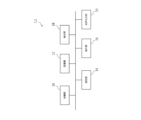
- FIG. 2 is a diagram illustrating an example of a hardware configuration of an image processing system and an inspection system.
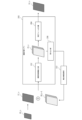
- FIG. 1 is a diagram illustrating an overview of an image processing system.
- FIG. 2 is a diagram illustrating a process of the image processing system.
- FIG. 2 is a functional block diagram showing an example of functions realized by the image processing system.
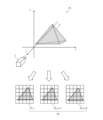
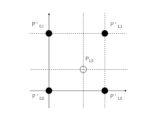
- FIG. 4 is a diagram illustrating the processing of a rendering unit.
- 11A and 11B are diagrams illustrating a process in an intermediate frame acquisition unit.
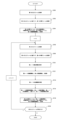
- FIG. 4 is a flowchart showing an example of a flow of processing executed in the image processing system.
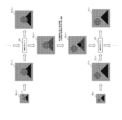
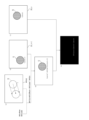
- FIG. 2 is a diagram illustrating a process executed by the inspection system.
- FIG. 2 is a diagram illustrating a process executed by the inspection system.
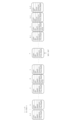
- 13A and 13B are diagrams illustrating information stored in a rendering information storage unit for each frame.
- FIG. 1 is a diagram showing an example of the hardware configuration of an image processing system 1 and an inspection system 2.
- the image processing system 1 is a computer such as a game console.
- the inspection system 2 is a computer in which a program for creating a game program is installed.
- the image processing system 1 and the inspection system 2 include a control unit 10, a storage unit 12, a communication unit 14, an operation unit 16, a display unit 18, and an audio output unit 19.
- the control unit 10 includes a program control device such as a CPU that operates according to programs installed in the image processing system 1 and the inspection system 2.
- the control unit 10 also includes a GPU (Graphics Processing Unit) that draws images in a frame buffer based on graphics commands and data supplied from the CPU.
- a program control device such as a CPU that operates according to programs installed in the image processing system 1 and the inspection system 2.
- the control unit 10 also includes a GPU (Graphics Processing Unit) that draws images in a frame buffer based on graphics commands and data supplied from the CPU.
- GPU Graphics Processing Unit
- the storage unit 12 includes a main storage device such as a ROM or RAM, and an auxiliary storage device such as a HDD or SSD.
- the storage unit 12 stores programs executed by the control unit 10, etc.
- the storage unit 12 stores instructions executed by the processor and a machine learning model trained using multiple training data.
- the storage unit 12 stores a game program (game software) in addition to programs for implementing various functions of the image processing system 1 described below.
- the storage unit 12 also reserves an area for a frame buffer in which images are drawn by the GPU.
- the display unit 18 is a display device such as a liquid crystal display or an organic EL display, and displays various images according to instructions from the control unit 10.
- the intermediate frame acquisition unit 310 uses the fluctuation information and each pixel of each input frame 20 to obtain pixel values at positions corresponding to each pixel before fluctuation by interpolation, and generates each intermediate frame 22.
- FIG. 6 is a diagram for explaining the processing in the intermediate frame acquisition unit 310.
- FIG. 6 illustrates an example of obtaining the n-th intermediate frame 22_n. For example, as shown in FIG.
- the convolution layer 206 is a layer that reduces the number of channels of the accumulated feature information 26 while maintaining the number of pixels of the accumulated feature information 26.
- the accumulated feature information 26 output from the convolution layer 206 is subjected to processing in the auxiliary information acquisition unit 322.
- the convolution layer 206 reduces the dimension of the accumulated feature information 26, thereby reducing calculation costs.
- the convolution layer 206 is, for example, a convolution layer with a kernel size of 1 ⁇ 1, but is not limited to this.
- the motion information acquisition unit 316 acquires n-th motion information, which is information indicating the amount and direction of motion from the n-1th input frame 20_n-1 to the n-th input frame 20_n.
- the n-th motion information is motion information included in the auxiliary information attached to the n-th input frame.
- the n-th motion information is information having the same number of pixels as the intermediate pixel number.
- the motion information is image information indicating the amount and direction of motion of each pixel between the n-1th input frame 20_n-1 and the n-th input frame 20_n (information in bitmap format).
- the motion information is also called a motion vector.
- the motion information acquisition unit 316 acquires motion information having the same number of pixels as the number of input pixels, and acquires motion information having the same number of pixels as the intermediate pixel number by performing enlargement and interpolation processing on the motion information.
- the motion information having the same number of pixels as the number of input pixels is also referred to as original motion information.
- the appearance pixel specifying unit 320 may specify the nth appearance pixel 222_n based on the n-1th perspective projection matrix related to the n-1th intermediate frame 22_n-1 and the nth perspective projection matrix related to the nth intermediate frame 22_n.
- the appearance pixel specifying unit 320 may also specify the nth appearance pixel 222_n by using the n-1th motion information. More specifically, the appearance pixel specifying section 320 specifies the nth appearance pixel 222_n, and generates nth appearance pixel information, which is image information indicating the position of the nth appearance pixel 222_n.
- the auxiliary information acquisition unit 322 acquires the n-1th auxiliary information 28_n-1 by setting the pixel value of each of one or more pixels in the n-1th accumulated feature information 26_n-1 to a pixel at a position moved according to the amount and direction of the pixel's motion based on the n-1th motion information.
- a ghost phenomenon may occur in which an afterimage of the game object O that was displayed in the nth intermediate frame 22_n is displayed in the output nth estimated frame 24_n.
- motion compensation is applied to the n-1th accumulated feature information 26_n-1 based on the n-1th motion information to obtain the n-1th auxiliary information 28_n-1, and when obtaining the nth estimated frame 24_n, this n-1th auxiliary information 28_n-1 is input to the machine learning model 200. This makes it possible to suppress the above-mentioned ghost phenomenon.
- the auxiliary information acquisition unit 322 also acquires the n-1th auxiliary information 28_n-1 by replacing the pixel value of the nth appearance pixel 222_n in the n-1th accumulated feature information 26_n-1 with a predetermined value. Specifically, the auxiliary information acquisition unit 322 acquires the n-1th auxiliary information 28_n-1 by replacing the pixel value of the nth appearance pixel 222_n in the n-1th accumulated feature information 26_n-1 with a predetermined value based on the nth appearance pixel information.
- the predetermined value may be a constant value such as 0 (black), or may be the pixel value of the nth appearance pixel 222_n in the nth intermediate frame 22_n.
- the ghost phenomenon described above may occur in the nth estimated frame 24_n that is output.
- the image processing system 1 identifies the nth appearance pixel 222_n, which is a pixel in the nth intermediate frame 22_n where all or part of the game object O that is not displayed in the n-1th intermediate frame 22_n-1 is displayed, and obtains the n-1th auxiliary information 28_n-1 by replacing the pixel value of the nth appearance pixel 222_n in the n-1th accumulated feature information 26_n-1 with a predetermined value. This makes it possible to suppress the above-mentioned ghost phenomenon.
- the auxiliary information processing unit 326 generates, based on the n-th auxiliary information, a difference image between an image obtained by applying auxiliary information to the (n-1)th input frame 20_n-1 and an image represented by the n-th input frame 20_n. Specifically, for example, the auxiliary information processing unit 326 generates, based on the n-th motion information, a difference image between an image obtained by applying motion compensation to the (n-1)th input frame 20_n-1 and an image represented by the n-th input frame 20_n.
- the display unit 328 displays the n-th estimated frame 24_n. Specifically, for example, the display unit 328 displays the n-th estimated frame 24_n acquired by the estimated frame acquisition unit 314 by inputting the n-th intermediate frame 22_n and the n-1th auxiliary information 28_n-1 to the machine learning model 200. The display unit 328 also displays the difference image generated by the auxiliary information processing unit 326. In addition, the display unit 328 displays the input frame 20 and each piece of auxiliary information stored in the rendering information storage unit 304. The display unit 328 may display some or all of the estimated frame 24, each piece of auxiliary information, and difference image selected by the user in an order.
- FIG. 7 is a flow diagram showing an example of the flow of processing executed in the image processing system 1. The processing shown in FIG.
- the control unit 10 acquires a first input frame 20_1 (S700).
- the control unit 10 acquires a first intermediate frame 22_1 based on the first input frame 20_1 (S702).
- the control unit 10 inputs the first intermediate frame 22_1 and given auxiliary information to the machine learning model 200, and acquires a first estimated frame 24_1 and first accumulated feature information 26_1 (S704).
- the control unit 10 acquires the n-1th motion information (S710).
- the control unit 10 also acquires the n-1th depth information and the nth depth information (S712), and identifies the nth appearance pixel 222_n based on the n-1th depth information and the nth depth information (S714).
- the control unit 10 acquires the n-1th auxiliary information 28_n-1 based on the n-1th cumulative feature information 26_n-1, the n-1th motion information, and the nth appearance pixel 222_n (S716).
- Figs. 8 to 10 Processing performed by the inspection system
- the auxiliary information edited in this process is the original motion information of the motion information.
- Figs. 8 and 9 show the input frame 20 and the difference image changed by the process.
- the process shown in Figs. 8 and 9 is executed by the control unit 10 operating according to the program stored in the storage unit 12.
- Fig. 10 shows the information stored in the rendering information storage unit 304 for each frame. In Figs.
- the input frame is represented as "Color”
- the motion information original motion information
- the depth information original depth information
- “Prev Depth” the appearance pixel information is represented as "Exposure”
- the auxiliary information is represented as "RFM”.
- Prev Depth means the depth information of the frame before "Depth”.
- (n) is added to each piece of information.
- FIG. 8 is a diagram showing the nth motion information, that is, a motion vector representing the amount and direction of movement of game object Q from the n-1th input frame to the nth input frame.
- MV(n) which is the nth motion information, represents information that indicates that the spherical game object Q moves from the lower left to the upper right from the n-1th input frame to the nth input frame.
- the direction of the arrow is from the game object in the nth input frame 20_n to the game object in the n-1th input frame 20_n-1.
- FIG. 8 is a diagram showing the (n-1)th input frame 20_n-1, i.e., color information Color(n-1).
- (c) of FIG. 8 is a diagram showing the nth input frame 20_n, i.e., color information Color(n).
- (b) and (c) of FIG. 8 both show that a game object Q seen from a certain viewpoint is displayed at a predetermined position in the background.
- (b) of FIG. 8 is the input frame 20 one frame before (c), and the game object Q shown in (b) of FIG. 8 is located to the lower left of the game object Q shown in (c) of FIG. 8.
- (a) to (c) of FIG. 8 are all information generated by the rendering unit 302 and stored in the rendering information storage unit 304.
- the auxiliary information processing unit 326 generates an image by applying motion compensation to the (n-1)th input frame based on the nth motion information.
- the auxiliary information processing unit 326 generates an image by applying motion compensation (MC(MV'(n), Color(n-1))) to the input frame (Color(n-1)) shown in Figure 9(b) using the edited motion information MV'(n).
- Figure 9(d) shows the generated color information (Color(n)'').
- the user performs the above inspection method from the first frame onwards. For example, as shown in Figure 10, the user changes the MV, which is the nth ancillary information, to MV'. This causes a difference image to be displayed, as shown in Figure 9.
- the intermediate frame 22 does not necessarily have to be an enlarged version of the input frame 20.
- the auxiliary information includes n-th motion information that is information indicating an amount and direction of motion from the n-1-th input frame to the n-th input frame,
- the processor obtains the n-th auxiliary information by applying motion compensation to the (n-1)-th accumulated feature information based on the n-th motion information.
- the processor generates a difference image between an image obtained by applying motion compensation to the (n-1)th input frame based on the nth motion information and an image represented by the nth input frame;
- the display unit displays the difference image.
- An inspection system as described in (3).
Landscapes
- Engineering & Computer Science (AREA)
- Physics & Mathematics (AREA)
- General Physics & Mathematics (AREA)
- Theoretical Computer Science (AREA)
- Multimedia (AREA)
- Computer Graphics (AREA)
- Computer Hardware Design (AREA)
- General Engineering & Computer Science (AREA)
- Software Systems (AREA)
- Quality & Reliability (AREA)
- Computer Vision & Pattern Recognition (AREA)
- Image Analysis (AREA)
Abstract
Description
図1は、画像処理システム1及び検査システム2のハードウェア構成の一例を示す図である。画像処理システム1は、例えばゲームコンソール(ゲーム機)等のコンピュータである。検査システム2は、例えばゲームプログラムを作成するためのプログラムがインストールされたコンピュータである。図1に示すように、画像処理システム1及び検査システム2は、制御部10、記憶部12、通信部14、操作部16、表示部18及び音声出力部19を含む。
図2は、画像処理システム1の概要を示す図である。図3は、画像処理システム1の処理を模式的に示す図である。本実施形態では、画像処理システム1が、ゲームにおけるプレイ動画像の画質向上に利用される場合を例示する。プレイ動画像は、制御部10が実行するゲームプログラムや操作部16が受け付けるユーザの入力等に応じて生成される動画像であり、時系列データである複数の静止画像(フレーム)から構成される。画像処理システム1で行われる処理は主に以下の通りである。
まず画像処理システム1は、所定の視点から見た一以上のゲームオブジェクトを示す3次元データのレンダリングを実行することにより、該ゲームオブジェクトが描画された画像(入力フレーム)を生成する。この入力フレームは、所定の画素数(入力画素数)及び所定の画質(入力画質)を有する画像である(図3参照)。入力フレーム20は、色情報によって構成される。入力フレームは所定時間毎に生成される。入力フレームの画素数は、例えば1920×1080(1080p)である。生成された各入力フレームは、そのまま表示部18に表示されるのではなく、一旦記憶部12に格納され、以降の処理に供される。なお、以降の説明においては、n番目の(第nの)入力フレーム20_nを対象とする処理を主に例示するが、同様の処理は他の入力フレームに対しても実行される(すなわち、n=2,3,…,N)。
画像処理システム1は、取得された入力フレーム20_nに基づいて、入力画素数より多い画素数(中間画素数)を有するフレーム(中間フレーム)22_nを取得する。中間画素数は、例えば3840×2160(4K)である。具体的には、入力フレーム20_nに対して拡大及び補間処理が実行されることにより、中間フレーム22_nが生成される(図3参照)。
画像処理システム1は、中間フレーム22_nを機械学習モデル200に入力し、推定フレーム24_nを取得する。推定フレーム24_nは、中間画素数と同数の画素数(推定画素数)及び入力画質以上の画質である画質(推定画質)を有する画像である(図3参照)。
機械学習モデル200は、中間フレーム22_nと、補助情報28_n-1と、が入力され、第1~第nの中間フレーム22の特徴を示す第nの累積特徴情報26_nを出力する累積特徴情報出力層202を有する(図2参照)。画像処理システム1は、第nの累積特徴情報26_nを取得する。
第n-1の累積特徴情報26_n-1は、前述の通り、第1~第n-1の中間フレーム22(ひいては第1~第n-1の入力フレーム20)の特徴を示す情報である。このように過去の入力フレーム20の情報が蓄積された累積特徴情報26_n-1を第nの推定フレーム24_nの推定に利用すれば、推定に利用可能な情報が増えるので、高画質な推定フレーム24_nを得ることができる。
図4は、画像処理システム1及び検査システム2で実現される機能の一例を示す機能ブロック図である。図4に示すように、画像処理システム1では、ゲーム処理部300、レンダリング部302、レンダリング情報記憶部304、入力フレーム取得部306、変動情報取得部308、中間フレーム取得部310、機械学習モデル記憶部312、推定フレーム取得部314、動き情報取得部316、深度情報取得部318、出現画素特定部320及び補助情報取得部322が実現される。検査システム2では、画像処理システム1の各部に加えて、編集部324、付属情報処理部326及び表示部328が実現される。ゲーム処理部300、レンダリング部302、入力フレーム取得部306、変動情報取得部308、中間フレーム取得部310、推定フレーム取得部314、動き情報取得部316、深度情報取得部318、出現画素特定部320、補助情報取得部322、編集部324及び付属情報処理部326は、主に制御部10により実現される。レンダリング情報記憶部304及び機械学習モデル記憶部312は、主に記憶部12により実現される。表示部328としての機能は、主にデバイスである表示部18により実現される。なお、ゲーム処理部300、レンダリング部302及びレンダリング情報記憶部304は、ゲームソフトウェアにより提供される機能である。
ゲーム処理部300は、ゲームに関する種々の処理を実行する。ゲーム処理部300は、例えば、制御部10が実行するゲームプログラムや操作部16が受け付けるユーザの入力に応じて、仮想3次元空間VSにゲームオブジェクトOを配置する処理や、ゲームオブジェクトOを動作させ又は移動させる処理、仮想3次元空間VSを見る視点Cを変更する処理等を実行する(図5参照)。ゲームオブジェクトOは、3次元データが示すポリゴン等のプリミティブにより構成される。3次元データは、頂点の位置等を示す幾何情報と、頂点同士をどのように結ぶかを示す位相情報と、色等の属性情報と、を含む。
図5は、レンダリング部302の処理を説明する図である。レンダリング部302は、所定の視点Cから見た一以上のゲームオブジェクトOを示す3次元データのレンダリング(描画処理)を実行することにより、第1~第N(Nは2以上の自然数である。)の入力フレーム20を生成する。レンダリング部302は、ゲーム処理部300で実行される種々の処理の結果に基づいてレンダリングを実行する。レンダリング部302は、具体的には、仮想3次元空間VSに配置されたゲームオブジェクトOを示す3次元データに基づいて、頂点処理(頂点シェーディング)及び画素処理(ピクセルシェーディング)を実行する。頂点処理は、ビュー座標系からスクリーン座標系への座標変換処理(透視投影)を含み、該座標変換処理に用いられる透視投影行列(カメラ行列)には、後述するように、視点Cの変動に係る数値が加えられる。レンダリング部302は、光源情報や深度情報(デプスバッファ)、テクスチャ情報、法線情報等に基づいて、レンダリングを実行してもよい。レンダリング部302は、上記の処理の他、例えば、被写界深度(DoF)やモーションブラー等のエフェクトを適用する処理を実行してもよい。レンダリング部302の処理は、ゲームソフトウェアの開発者等が適宜設定してよい。ここで、ゲームソフトウェアェアの開発者等は、推定フレーム24の推定画素数等に応じて、テクスチャのMIPを調整してよい。これにより、推定フレーム24において、モアレ等のノイズの発生を抑制することができる。
レンダリング情報記憶部304は、レンダリング部302でのレンダリング処理に必要な情報及びレンダリング処理の結果得られる情報を記憶する。例えば、レンダリング情報記憶部304は、所定の入力画素数を有する第1~第N(Nは2以上の自然数)の入力フレーム20を記憶する。また、レンダリング情報記憶部304は、入力フレーム20とともに該入力フレーム20ごとの付属情報を記憶する。付属情報は、変動情報、動き情報及び深度情報を含む。付属情報の詳細については後述する。また、レンダリング情報記憶部304は、付属情報に基づいて生成された情報(出現画素情報及び補助情報28)を記憶する。その他、レンダリング情報記憶部304は、座標変換に用いるパラメータや、光源情報、テクスチャ情報、法線情報等を記憶してよい。
入力フレーム取得部306は、第1~第Nの入力フレーム20をそれぞれ取得する。具体的には、入力フレーム取得部306は、レンダリング情報記憶部304に記憶された第1~第Nの入力フレーム20をそれぞれ取得する。
変動情報取得部308は、変動情報を取得する。変動情報取得部308は、レンダリング情報記憶部304に記憶された変動情報を取得する。変動情報は、具体的には、変動前と変動後との間での視点Cの変動量を示す情報である。変動量を示す情報は、変動の方向及び距離を示す変動ベクトルであるということもできる。例えば、前述したHalton列に視点Cの変動量を示す情報が含まれているため、その情報を変動情報として用いてよい。
中間フレーム取得部310は、各入力フレーム20に基づいて、該入力フレーム20に対応するとともに入力画素数以上の中間画素数を有する中間フレーム22を生成することにより、第1~第Nの中間フレーム22をそれぞれ取得する。本実施形態では、各中間フレーム22は、入力画素数より多い中間画素数を有する。すなわち、本実施形態では,各中間フレーム22は、該中間フレーム22に対応する入力フレーム20を拡大した画像である。
機械学習モデル200は、第nの中間フレーム22_nに基づいて、第nの推定フレーム24_nを推定するモデルである。具体的には、機械学習モデル200は、第nの中間フレーム22_n及び第n-1の補助情報28_n-1に基づいて、第nの推定フレーム24_nを推定するモデルである。なお、機械学習モデル200は画像処理システム1検査の一部としても機能するし、システム2の一部としても機能する。どちらの場合でも機械学習モデル200は同一であるが、機械学習モデル200が検査システム2の一部として機能する場合には、第1から第n-1までの入力フレーム20及び付属情報と、第nの入力フレーム20_n及び編集された付属情報と、に基づいて、入力画素数以上の推定画素数を有する第nの推定フレームを出力する。機械学習モデル200は、具体的には、畳み込みニューラルネットワーク(CNN:Convolutional Neural Network)である。機械学習モデル200としては、例えば、残差接続機構を有する多層構造のResNetや、いわゆるエンコーダ-デコーダ型のU-Net等、公知のモデルが利用可能である。機械学習モデル200として、非特許文献1に記載のモデルを利用してもよい。
機械学習モデル記憶部312は、機械学習モデル200を記憶する。具体的には、機械学習モデル記憶部312は、機械学習モデル200のパラメータ(畳み込み層の数や各畳み込み層に使用されるノード数、各ノードの重み等)を記憶する。
推定フレーム取得部314は、各中間フレーム22を機械学習モデル200に入力して、入力画素数より多く中間画素数以上の推定画素数を有する第1~第Nの推定フレーム24をそれぞれ取得する。本実施形態では、推定フレーム24は、中間画素数と同数の推定画素数を有する。推定フレーム取得部314は、より具体的には、第nの中間フレーム22_n及び第n-1の補助情報28_n-1を機械学習モデル200に入力して、第nの推定フレーム24_nを取得する。
動き情報取得部316は、第n-1の入力フレーム20_n-1から第nの入力フレーム20_nへの動きの量及び方向を示す情報である第nの動き情報を取得する。具体的には、例えば、第nの動き情報は、第nの入力フレームに付属する付属情報に含まれる動き情報である。また、第nの動き情報は、中間画素数と同数の画素を有する情報である。動き情報は、第n-1の入力フレーム20_n-1と第nの入力フレーム20_nとの間における各画素の動きの量及び方向を示す画像情報である(ビットマップ形式の情報)。動き情報は、モーションベクトル(Motion Vector)とも呼ばれる。動き情報取得部316は、具体的には、入力画素数と同数の画素数を有する動き情報を取得し、該動き情報に対して拡大及び補間処理を実行することにより、中間画素数と同数の画素を有する動き情報を取得する。以下、入力画素数と同数の画素数を有する動き情報を元動き情報とも呼称する。
深度情報取得部318は、第n-1の入力フレーム20_n-1の各画素の深度を示す第n-1の深度情報と、第nの入力フレーム20_nの各画素の深度を示す第nの深度情報と、を取得する。深度情報は、具体的には、中間画素数と同数の画素を有する画像情報である(ビットマップ形式の情報)。深度情報は、深度バッファ、Zバッファ又はデプスバッファとも呼ばれる。深度情報取得部318は、具体的には、入力画素数と同数の画素数を有する深度情報を取得し、該深度情報に対して拡大及び補間処理を実行することにより、中間画素数と同数の画素を有する深度情報を取得する。以下、入力画素数と同数の画素数を有する深度情報を元深度情報とも呼称する。
出現画素特定部320は、第n-1の深度情報と、第nの深度情報と、に基づいて、第nの中間フレーム22_nの画素のうち、第n-1の中間フレーム22_n-1では表示されていないゲームオブジェクトOの全部又は一部が表示されている画素である第nの出現画素222_nを特定する(図3参照)。出現画素特定部320は、具体的には、第n-1の深度情報と、第nの深度情報と、の差分に基づいて、第nの出現画素222_nを特定する。なお、出現画素特定部320は、第n-1の中間フレーム22_n-1に係る第n-1の透視投影行列と、第nの中間フレーム22_nに係る第nの透視投影行列と、に基づいて、第nの出現画素222_nを特定してもよい。また、出現画素特定部320は、第n-1の動き情報を利用して第nの出現画素222_nを特定してもよい。なお、出現画素特定部320は、より具体的には、第nの出現画素222_nを特定し、第nの出現画素222_nの位置を示す画像情報である第nの出現画素情報を生成する。
補助情報取得部322は、第n-1の動き情報(元動き情報を除く)に基づいて、第n-1の累積特徴情報26_n-1に対して動き補償を適用することにより、第n-1の補助情報28_n-1を取得する。動き補償とは、例えば、第n-1の中間フレーム22_n-1では位置xにある画素が、第nの中間フレーム22_nでは位置x’に動いていた場合において、第n-1の累積特徴情報26_nの位置xにある画素を位置x’に移動させる処理をいう(図3参照)。すなわち、補助情報取得部322は、第n-1の動き情報に基づいて、第n-1の累積特徴情報26_n-1の一以上の画素のそれぞれの画素値を、該画素の動きの量及び方向に従って移動した位置の画素に設定することにより、第n-1の補助情報28_n-1を取得する。
編集部324は、ユーザの指示によりレンダリング情報記憶部304に記憶された第nの付属情報を編集する。具体的には、例えば、編集部324は、ユーザが選択した第nの入力フレーム20_nに付属する動き情報の値を、ユーザが指定した値に変更する。ここで、変更される動き情報は、入力画素数と同数の画素数を有する動き情報(すなわち元動き情報)である。変更された動き情報の値は、第nの入力フレーム20_nの他の付属情報と関連付けてレンダリング情報記憶部304に記憶される。なお、ユーザの指示により編集される付属情報は、動き情報に限られず変動情報または深度情報であってもよい。
付属情報処理部326は、第nの付属情報に基づいて、第n-1の入力フレーム20_n-1に対して付属情報を適用した画像と、第nの入力フレーム20_nが表す画像と、の差分画像を生成する。具体的には、例えば、付属情報処理部326は、第nの動き情報に基づいて、第n-1の入力フレーム20_n-1に対して動き補償を適用した画像と、第nの入力フレーム20_nが表す画像と、の差分画像を生成する。
表示部328は、第nの推定フレーム24_nを表示する。具体的には、例えば、表示部328は、推定フレーム取得部314が、第nの中間フレーム22_n及び第n-1の補助情報28_n-1を機械学習モデル200に入力して取得した第nの推定フレーム24_nを表示する。また、表示部328は、付属情報処理部326が生成した差分画像を表示する。その他、表示部328は、レンダリング情報記憶部304に記憶された入力フレーム20及び各付属情報を表示する。表示部328は、推定フレーム24、各付属情報、差分画像のうち、ユーザに選択された一部または全部を並べて表示してもよい。
図7は、画像処理システム1で実行される処理の流れの一例を示すフロー図である。図7に示す処理は、制御部10が、記憶部12に記憶されたプログラムに従って動作することによって実行される。
まず、制御部10は、第1の入力フレーム20_1を取得する(S700)。制御部10は、第1の入力フレーム20_1に基づいて、第1の中間フレーム22_1を取得する(S702)。そして、制御部10は、第1の中間フレーム22_1と、所与の補助情報と、を機械学習モデル200に入力し、第1の推定フレーム24_1と、第1の累積特徴情報26_1と、を取得する(S704)。
制御部10は、第nの入力フレーム20_nを取得する(S706)。制御部10は、第nの入力フレーム20_nに基づいて、第nの中間フレーム22_nを取得する(S708)。
図8乃至図10を参照しながら、一例としてユーザの指示により動き情報が編集された場合における検査システム2で実行される処理及び検査方法について説明する。本処理で編集される付属情報は動き情報のうちの元動き情報である。図8及び図9は、当該処理によって変化する入力フレーム20や差分画像を表している。図8及び図9に示す処理は、制御部10が、記憶部12に記憶されたプログラムに従って動作することによって実行される。図10は、各フレームにおいて、レンダリング情報記憶部304が記憶する情報を表している。図8乃至図10において、入力フレームは「Color」、動き情報(元動き情報)は「MV」、深度情報(元深度情報)は「Depth」及び「Prev Depth」、出現画素情報は「Exposure」、補助情報を「RFM」と表記する。なお、「Prev Depth」は「Depth」の1フレーム前の深度情報を意味する。また、n番目のフレームに属する情報であることを表すために各情報に(n)を付して表記する。
以上に説明した本実施形態に係る画像処理システム1によれば、第1~第n-1の中間フレーム22の特徴を示す第n-1の累積特徴情報26_n-1を用いて、第nの推定フレーム24_nを推定する。そして、本実施形態に係る検査システム2によれば、画像処理システム1を用いる高画質の動画像を推定する際に、元となる低画質の動画像の各フレームに含まれる情報が正しいものであるか容易に判別することが可能となる。
(1)
プロセッサと、
前記プロセッサにより実行される命令と、複数の訓練データにより学習された機械学習モデルと、を記憶する記憶部と、
表示部と、
を含むゲームプログラムの検査システムであって、
前記記憶部は、所定の入力画素数を有する第1~第N(Nは2以上の自然数)の入力フレームとともに該入力フレームごとの付属情報を記憶し、
前記プロセッサは、ユーザの指示により前記記憶部に記憶された第n(n=2,3,…,N)の前記付属情報を編集し、
前記機械学習モデルは、第1から第n-1までの前記入力フレーム及び前記付属情報と、第nの前記入力フレーム及び編集された前記付属情報と、に基づいて、前記入力画素数以上の推定画素数を有する第nの推定フレームを出力し、
前記表示部は、第nの前記推定フレームを表示する、
ゲームプログラムの検査システム。
(2)
前記プロセッサは、
前記各入力フレームに基づいて、該入力フレームに対応するとともに前記入力画素数以上の中間画素数を有する中間フレームを生成することにより、第1~第Nの前記中間フレームをそれぞれ取得し、
前記各中間フレームを機械学習モデルに入力して、前記入力画素数より多く前記中間画素数以上の推定画素数を有する第1~第Nの推定フレームをそれぞれ取得し、
前記機械学習モデルは、
第nの前記中間フレームと、第1~第n-1の前記中間フレームの特徴を示す第n-1の累積特徴情報に基づく第n-1の補助情報と、が入力され、第1~第nの前記中間フレームの特徴を示す第nの前記累積特徴情報を出力する累積特徴情報出力層と、
第nの前記累積特徴情報が入力され、第nの前記推定フレームを出力する推定フレーム出力層と、を含み、
前記入力画素数を有する学習入力フレームに基づいて生成された前記中間画素数を有する学習中間フレームと、前記推定画素数を有する学習推定フレームと、をそれぞれ含む、複数の訓練データにより学習されたものである、
(1)に記載の検査システム。
(3)
前記付属情報は、第n-1の前記入力フレームから第nの前記入力フレームへの動きの量及び方向を示す情報である第nの動き情報を含み、
前記プロセッサは、第nの前記動き情報に基づいて、第n-1の前記累積特徴情報に対して動き補償を適用することにより、第nの前記補助情報を取得する、
(2)に記載の検査システム。
(4)
前記プロセッサは、第nの前記動き情報に基づいて、第n-1の前記入力フレームに対して動き補償を適用した画像と、第nの前記入力フレームが表す画像と、の差分画像を生成し、
前記表示部は、前記差分画像を表示する、
(3)に記載の検査システム。
(5)
前記各入力フレームは、所定の視点から見た一以上のオブジェクトを示す3次元データのレンダリングを実行することにより得られる画像である、
(2)に記載の検査システム。
(6)
前記付属情報は、第nの前記入力フレームの各画素の深度を示す第nの深度情報を含み、
前記プロセッサは、
第n-1の前記深度情報と、第nの前記深度情報と、に基づいて、第nの前記中間フレームの画素のうち、第n-1の前記中間フレームでは表示されていない前記オブジェクトの全部又は一部が表示されている画素である第nの出現画素を特定し、
第n-1の前記累積特徴情報における第nの前記出現画素の画素値を所定の値に置換することにより、第n-1の前記補助情報を取得する、
(5)に記載の検査システム。
(7)
前記各入力フレームは、前記視点が前記入力フレーム毎に変動するように前記レンダリングを実行することにより得られる画像であり、
前記プロセッサは、
前記レンダリングにおける前記入力フレーム毎の前記視点の変動に係る情報である変動情報を取得し、
前記変動情報と、前記各入力フレームの各画素と、に基づいて、該入力フレームにおける、変動前の各画素に相当する位置の画素値を補間により求め、前記各中間フレームを生成する、
(6)に記載の検査システム。
(8)
前記累積特徴情報出力層は、第1の前記中間フレームと、所与の補助情報と、が入力され、第1の前記累積特徴情報を出力する、
(2)に記載のゲームプログラムの検査システム。
(9)
前記累積特徴情報は、前記中間画素数と同数の画素数を有する画像情報である、
(2)に記載の検査システム。
(10)
記憶部が、所定の入力画素数を有する第1~第N(Nは2以上の自然数)の入力フレームとともに該入力フレームごとの付属情報を記憶し、
プロセッサが、ユーザの指示により前記記憶部に記憶された第n(n=2,3,…,N)の前記付属情報を編集し、
複数の訓練データにより学習された機械学習モデルが、第1から第n-1までの前記入力フレーム及び前記付属情報と、第nの前記入力フレーム及び編集された前記付属情報と、に基づいて、前記入力画素数以上の推定画素数を有する第nの推定フレームを出力し、
表示部は、第nの前記推定フレームを表示する、
検査方法。
(11)
所定の入力画素数を有する第1~第N(Nは2以上の自然数)の入力フレームとともに該入力フレームごとの付属情報を記憶する記憶手段、
ユーザの指示により前記記憶部に記憶された第n(n=2,3,…,N)の前記付属情報を編集する編集手段、
複数の訓練データにより学習された機械学習モデルにより、第1から第n-1までの前記入力フレーム及び前記付属情報と、第nの前記入力フレーム及び編集された前記付属情報と、に基づいて、前記入力画素数以上の推定画素数を有する第nの推定フレームを出力する出力手段、
第nの前記推定フレームを表示する表示手段、
としてコンピュータを機能させるための検査プログラム。
Claims (11)
- プロセッサと、
前記プロセッサにより実行される命令と、複数の訓練データにより学習された機械学習モデルと、を記憶する記憶部と、
表示部と、
を含むゲームプログラムの検査システムであって、
前記記憶部は、所定の入力画素数を有する第1~第N(Nは2以上の自然数)の入力フレームとともに該入力フレームごとの付属情報を記憶し、
前記プロセッサは、ユーザの指示により前記記憶部に記憶された第n(n=2,3,…,N)の前記付属情報を編集し、
前記機械学習モデルは、第1から第n-1までの前記入力フレーム及び前記付属情報と、第nの前記入力フレーム及び編集された前記付属情報と、に基づいて、前記入力画素数以上の推定画素数を有する第nの推定フレームを出力し、
前記表示部は、第nの前記推定フレームを表示する、
ゲームプログラムの検査システム。 - 前記プロセッサは、
前記各入力フレームに基づいて、該入力フレームに対応するとともに前記入力画素数以上の中間画素数を有する中間フレームを生成することにより、第1~第Nの前記中間フレームをそれぞれ取得し、
前記各中間フレームを機械学習モデルに入力して、前記入力画素数より多く前記中間画素数以上の推定画素数を有する第1~第Nの推定フレームをそれぞれ取得し、
前記機械学習モデルは、
第nの前記中間フレームと、第1~第n-1の前記中間フレームの特徴を示す第n-1の累積特徴情報に基づく第n-1の補助情報と、が入力され、第1~第nの前記中間フレームの特徴を示す第nの前記累積特徴情報を出力する累積特徴情報出力層と、
第nの前記累積特徴情報が入力され、第nの前記推定フレームを出力する推定フレーム出力層と、を含み、
前記入力画素数を有する学習入力フレームに基づいて生成された前記中間画素数を有する学習中間フレームと、前記推定画素数を有する学習推定フレームと、をそれぞれ含む、複数の訓練データにより学習されたものである、
請求項1に記載の検査システム。 - 前記付属情報は、第n-1の前記入力フレームから第nの前記入力フレームへの動きの量及び方向を示す情報である第nの動き情報を含み、
前記プロセッサは、第nの前記動き情報に基づいて、第n-1の前記累積特徴情報に対して動き補償を適用することにより、第nの前記補助情報を取得する、
請求項2に記載の検査システム。 - 前記プロセッサは、第nの前記動き情報に基づいて、第n-1の前記入力フレームに対して動き補償を適用した画像と、第nの前記入力フレームが表す画像と、の差分画像を生成し、
前記表示部は、前記差分画像を表示する、
請求項3に記載の検査システム。 - 前記各入力フレームは、所定の視点から見た一以上のオブジェクトを示す3次元データのレンダリングを実行することにより得られる画像である、
請求項2に記載の検査システム。 - 前記付属情報は、第nの前記入力フレームの各画素の深度を示す第nの深度情報を含み、
前記プロセッサは、
第n-1の前記深度情報と、第nの前記深度情報と、に基づいて、第nの前記中間フレームの画素のうち、第n-1の前記中間フレームでは表示されていない前記オブジェクトの全部又は一部が表示されている画素である第nの出現画素を特定し、
第n-1の前記累積特徴情報における第nの前記出現画素の画素値を所定の値に置換することにより、第n-1の前記補助情報を取得する、
請求項5に記載の検査システム。 - 前記各入力フレームは、前記視点が前記入力フレーム毎に変動するように前記レンダリングを実行することにより得られる画像であり、
前記プロセッサは、
前記レンダリングにおける前記入力フレーム毎の前記視点の変動に係る情報である変動情報を取得し、
前記変動情報と、前記各入力フレームの各画素と、に基づいて、該入力フレームにおける、変動前の各画素に相当する位置の画素値を補間により求め、前記各中間フレームを生成する、
請求項6に記載の検査システム。 - 前記累積特徴情報出力層は、第1の前記中間フレームと、所与の補助情報と、が入力され、第1の前記累積特徴情報を出力する、
請求項2に記載のゲームプログラムの検査システム。 - 前記累積特徴情報は、前記中間画素数と同数の画素数を有する画像情報である、
請求項2に記載の検査システム。 - 記憶部が、所定の入力画素数を有する第1~第N(Nは2以上の自然数)の入力フレームとともに該入力フレームごとの付属情報を記憶し、
プロセッサが、ユーザの指示により前記記憶部に記憶された第n(n=2,3,…,N)の前記付属情報を編集し、
複数の訓練データにより学習された機械学習モデルが、第1から第n-1までの前記入力フレーム及び前記付属情報と、第nの前記入力フレーム及び編集された前記付属情報と、に基づいて、前記入力画素数以上の推定画素数を有する第nの推定フレームを出力し、
表示部は、第nの前記推定フレームを表示する、
検査方法。 - 所定の入力画素数を有する第1~第N(Nは2以上の自然数)の入力フレームとともに該入力フレームごとの付属情報を記憶する記憶手段、
ユーザの指示により前記記憶部に記憶された第n(n=2,3,…,N)の前記付属情報を編集する編集手段、
複数の訓練データにより学習された機械学習モデルにより、第1から第n-1までの前記入力フレーム及び前記付属情報と、第nの前記入力フレーム及び編集された前記付属情報と、に基づいて、前記入力画素数以上の推定画素数を有する第nの推定フレームを出力する出力手段、
第nの前記推定フレームを表示する表示手段、
としてコンピュータを機能させるための検査プログラム。
Priority Applications (4)
| Application Number | Priority Date | Filing Date | Title |
|---|---|---|---|
| CN202480042055.0A CN121399649A (zh) | 2023-06-30 | 2024-06-21 | 检查系统、检查方法及检查程序 |
| EP24831878.4A EP4738237A1 (en) | 2023-06-30 | 2024-06-21 | Inspection system, inspection method, and inspection program |
| JP2025530102A JPWO2025005017A1 (ja) | 2023-06-30 | 2024-06-21 | |
| US19/413,355 US20260105584A1 (en) | 2023-06-30 | 2025-12-09 | Image processing system, image processing method, and program |
Applications Claiming Priority (2)
| Application Number | Priority Date | Filing Date | Title |
|---|---|---|---|
| JP2023108579 | 2023-06-30 | ||
| JP2023-108579 | 2023-06-30 |
Related Child Applications (1)
| Application Number | Title | Priority Date | Filing Date |
|---|---|---|---|
| US19/413,355 Continuation US20260105584A1 (en) | 2023-06-30 | 2025-12-09 | Image processing system, image processing method, and program |
Publications (1)
| Publication Number | Publication Date |
|---|---|
| WO2025005017A1 true WO2025005017A1 (ja) | 2025-01-02 |
Family
ID=93939039
Family Applications (1)
| Application Number | Title | Priority Date | Filing Date |
|---|---|---|---|
| PCT/JP2024/022659 Ceased WO2025005017A1 (ja) | 2023-06-30 | 2024-06-21 | 検査システム、検査方法及び検査プログラム |
Country Status (5)
| Country | Link |
|---|---|
| US (1) | US20260105584A1 (ja) |
| EP (1) | EP4738237A1 (ja) |
| JP (1) | JPWO2025005017A1 (ja) |
| CN (1) | CN121399649A (ja) |
| WO (1) | WO2025005017A1 (ja) |
Citations (1)
| Publication number | Priority date | Publication date | Assignee | Title |
|---|---|---|---|---|
| US20110037894A1 (en) * | 2009-08-11 | 2011-02-17 | Google Inc. | Enhanced image and video super-resolution processing |
-
2024
- 2024-06-21 CN CN202480042055.0A patent/CN121399649A/zh active Pending
- 2024-06-21 WO PCT/JP2024/022659 patent/WO2025005017A1/ja not_active Ceased
- 2024-06-21 EP EP24831878.4A patent/EP4738237A1/en active Pending
- 2024-06-21 JP JP2025530102A patent/JPWO2025005017A1/ja active Pending
-
2025
- 2025-12-09 US US19/413,355 patent/US20260105584A1/en active Pending
Patent Citations (1)
| Publication number | Priority date | Publication date | Assignee | Title |
|---|---|---|---|---|
| US20110037894A1 (en) * | 2009-08-11 | 2011-02-17 | Google Inc. | Enhanced image and video super-resolution processing |
Non-Patent Citations (3)
| Title |
|---|
| AWATSU, YUSAKU ET AL.: "Spatio-Temporal Super-Resolution Using Depth Maps", IPSJ SIG TECHNICAL REPORTS, IPSJ, JP, vol. 2008, no. 27, 31 March 2008 (2008-03-31), JP, pages 431 - 436, XP009559626 * |
| CHAO DONGCHEN CHANGE LOYKAIMING HEXIAOOU TANG: "Learning a Deep Convolutional Network for Image Super-Resolution", PROCEEDINGS OF EUROPEAN CONFERENCE ON COMPUTER VISION (ECCV, 2014 |
| SHAH N. R., ZAKHOR A.: "RESOLUTION ENHANCEMENT OF COLOR VIDEO SEQUENCES.", IEEE TRANSACTIONS ON IMAGE PROCESSING, IEEE, USA, vol. 08., no. 06., 1 June 1999 (1999-06-01), USA, pages 879 - 885., XP000832655, ISSN: 1057-7149, DOI: 10.1109/83.766865 * |
Also Published As
| Publication number | Publication date |
|---|---|
| JPWO2025005017A1 (ja) | 2025-01-02 |
| EP4738237A1 (en) | 2026-05-06 |
| CN121399649A (zh) | 2026-01-23 |
| US20260105584A1 (en) | 2026-04-16 |
Similar Documents
| Publication | Publication Date | Title |
|---|---|---|
| US6654020B2 (en) | Method of rendering motion blur image and apparatus therefor | |
| JP4508878B2 (ja) | 立体画像のためのビデオフィルタ処理 | |
| US7742060B2 (en) | Sampling methods suited for graphics hardware acceleration | |
| US8976180B2 (en) | Method, medium and system rendering 3-D graphics data having an object to which a motion blur effect is to be applied | |
| US8330767B2 (en) | Method and apparatus for angular invariant texture level of detail generation | |
| US12020442B2 (en) | Graphics processing systems | |
| US20070120858A1 (en) | Generation of motion blur | |
| JP3538263B2 (ja) | 画像生成方法 | |
| US11521296B2 (en) | Image size triggered clarification to maintain image sharpness | |
| WO2025005017A1 (ja) | 検査システム、検査方法及び検査プログラム | |
| CN114241101A (zh) | 三维场景渲染方法、系统、装置及存储介质 | |
| WO2025004921A1 (ja) | 画像処理システム、画像処理方法及びプログラム | |
| CN112565623A (zh) | 一种动态图像显示系统 | |
| WO2025009437A1 (ja) | 画像処理システム、画像処理方法及びプログラム | |
| WO2025018300A1 (ja) | 画像処理システム、画像処理方法及びプログラム | |
| TW202439822A (zh) | 使用光學運動補償和遊戲內運動補償的畫面插值 | |
| WO2025005018A1 (ja) | 画像処理システム、画像処理方法及びプログラム | |
| US9330434B1 (en) | Art-directable retargeting for streaming video | |
| WO2025009436A1 (ja) | 画像処理システム、画像処理方法及びプログラム | |
| WO2025070247A1 (ja) | 画像処理システム、画像処理方法及びプログラム | |
| WO2025018184A1 (ja) | 学習方法、機械学習モデル、プログラム | |
| WO2025052976A1 (ja) | 画像処理システム、画像処理方法及びプログラム | |
| WO2025018177A1 (ja) | 画像処理システム、画像処理方法及びプログラム | |
| WO2025070246A1 (ja) | 画像処理システム、画像処理方法及びプログラム | |
| WO2025005001A1 (ja) | 画像処理システム、画像処理方法及びプログラム |
Legal Events
| Date | Code | Title | Description |
|---|---|---|---|
| 121 | Ep: the epo has been informed by wipo that ep was designated in this application |
Ref document number: 24831878 Country of ref document: EP Kind code of ref document: A1 |
|
| ENP | Entry into the national phase |
Ref document number: 2025530102 Country of ref document: JP Kind code of ref document: A |
|
| WWE | Wipo information: entry into national phase |
Ref document number: 2025530102 Country of ref document: JP |
|
| WWE | Wipo information: entry into national phase |
Ref document number: 2024831878 Country of ref document: EP |
|
| NENP | Non-entry into the national phase |
Ref country code: DE |
|
| ENP | Entry into the national phase |
Ref document number: 2024831878 Country of ref document: EP Effective date: 20260130 |
|
| ENP | Entry into the national phase |
Ref document number: 2024831878 Country of ref document: EP Effective date: 20260130 |