WO2025004366A1 - 分類装置、分類方法、及びプログラム - Google Patents
分類装置、分類方法、及びプログラム Download PDFInfo
- Publication number
- WO2025004366A1 WO2025004366A1 PCT/JP2023/024480 JP2023024480W WO2025004366A1 WO 2025004366 A1 WO2025004366 A1 WO 2025004366A1 JP 2023024480 W JP2023024480 W JP 2023024480W WO 2025004366 A1 WO2025004366 A1 WO 2025004366A1
- Authority
- WO
- WIPO (PCT)
- Prior art keywords
- sequence data
- feature
- time period
- classification model
- classification
- Prior art date
- Legal status (The legal status is an assumption and is not a legal conclusion. Google has not performed a legal analysis and makes no representation as to the accuracy of the status listed.)
- Ceased
Links
Images


Classifications
-
- G—PHYSICS
- G06—COMPUTING OR CALCULATING; COUNTING
- G06N—COMPUTING ARRANGEMENTS BASED ON SPECIFIC COMPUTATIONAL MODELS
- G06N20/00—Machine learning
Definitions
- This disclosure relates to a classification device, a classification method, and a program.
- Non-Patent Document 1 describes a method of using machine learning techniques to classify 12-lead electrocardiogram data into nine classes (NSR (normal sinus rhythm), AF (atrial fibrillation), IAVB (first degree atrioventricular block), LBBB (left bundle branch block), RBBB (right bundle branch block), PAC (supraventricular extrasystoles), PVC (premature ventricular extrasystoles), STD (ST segment depression), STE (ST segment elevation)).
- NSR normal sinus rhythm
- AF atrial fibrillation
- IAVB first degree atrioventricular block
- LBBB left bundle branch block
- RBBB right bundle branch block
- PAC serpraventricular extrasystoles
- PVC premature ventricular extrasystoles
- STD ST segment depression
- STE ST segment elevation
- the present disclosure has been made in consideration of the above points, and provides a technology that can accurately classify sequence data measured while sequentially changing the type of feature.
- a classification device includes a creation unit that uses first sequence data consisting of multiple features to create second sequence data consisting of only one feature for each predetermined time period; a model learning unit that uses the second sequence data and a correct answer label for the first sequence data to learn a classification model that predicts a label using sequence data of any length as input; an order estimation unit that uses third sequence data consisting of multiple features, the correct answer label for the third sequence data, and the trained classification model to estimate an optimal order of feature types that will provide the highest classification performance when sequence data consisting of only one feature for each time period is input to the trained classification model; and a prediction unit that uses fourth sequence data in which only one feature is measured for each time period according to the optimal order and the trained classification model to predict a label for the fourth sequence data.
- a technology is provided that can accurately classify measured sequence data while sequentially changing the type of features.
- FIG. 1 illustrates an example of a classification model.
- FIG. 2 is a diagram illustrating an example of a hardware configuration of the classification device according to the present embodiment.
- FIG. 2 is a diagram illustrating an example of a functional configuration of the classification device according to the present embodiment.
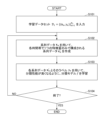
- 13 is a flowchart illustrating an example of a model learning process according to the present embodiment.
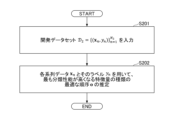
- 11 is a flowchart illustrating an example of an order estimation process according to the present embodiment.
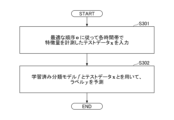
- 10 is a flowchart illustrating an example of a classification process according to the embodiment.
- a classification device 10 that can accurately classify sequence data measured while sequentially changing the type of feature (i.e., one-dimensional sequence data in which the type of feature changes).
- electrocardiogram data is mainly assumed as the sequence data, and the types of feature are assumed to be the measurement locations of the electrocardiogram (lead 1, lead 2, lead 3, lead aVR, lead aVL, lead aVL, leads V1 to V6).
- measurement may also be referred to as, for example, "observation” or "measurement”.
- electrocardiogram data is just one example, and the classification device 10 according to this embodiment can be applied to classify any one-dimensional series data in which the type of feature changes.
- the classification device 10 according to this embodiment can be applied to classifying one-dimensional series data that is composed of multiple types of data, such as one-dimensional series data that is composed of electrocardiogram data and heart sound data.
- the classification model shown in FIG. 1 is composed of a convolutional neural network (CNN) that takes sequence data of a unit period as input, an average pooling layer that takes the average of the output of the CNN over the entire period (K unit periods in the example shown in FIG. 1), and a forward propagation neural network (FNN) that takes the output of the average pooling layer as input and outputs a label.
- CNN convolutional neural network
- FNN forward propagation neural network
- the classification model shown in Figure 1 is just one example and is not limited to this. Any machine learning model can be used as long as it takes one-dimensional sequence data of any length as input and outputs a label indicating the class to which the sequence data belongs.
- the classification device 10 includes an input device 101, a display device 102, an external I/F 103, a communication I/F 104, a RAM (Random Access Memory) 105, a ROM (Read Only Memory) 106, an auxiliary storage device 107, and a processor 108.
- the classification device 10 includes an input device 101, a display device 102, an external I/F 103, a communication I/F 104, a RAM (Random Access Memory) 105, a ROM (Read Only Memory) 106, an auxiliary storage device 107, and a processor 108.
- a bus 109 so as to be able to communicate with each other.
- the input device 101 is, for example, a keyboard, a mouse, a touch panel, a physical button, etc.
- the display device 102 is, for example, a display, a display panel, etc. Note that the classification device 10 does not have to have at least one of the input device 101 and the display device 102, for example.
- the external I/F 103 is an interface with external devices such as a recording medium 103a.
- recording media 103a include a CD (Compact Disc), a DVD (Digital Versatile Disk), an SD memory card (Secure Digital memory card), and a USB (Universal Serial Bus) memory card.
- the communication I/F 104 is an interface for connecting the classification device 10 to a communication network.
- the RAM 105 is a volatile semiconductor memory (storage device) that temporarily stores programs and data.
- the ROM 106 is a non-volatile semiconductor memory (storage device) that can store programs and data even when the power is turned off.
- the auxiliary storage device 107 is a non-volatile storage device such as a HDD (Hard Disk Drive), SSD (Solid State Drive), flash memory, etc.
- the processor 108 is various types of arithmetic devices such as a CPU (Central Processing Unit) and a GPU (Graphic Processing Unit).
- the hardware configuration shown in FIG. 2 is an example, and the hardware configuration of the classification device 10 is not limited to this.
- the classification device 10 may have multiple auxiliary storage devices 107 and multiple processors 108, may not have some of the hardware shown in the figure, or may have various hardware other than the hardware shown in the figure.
- the classification device 10 has a learning unit 201, an order estimation unit 202, and a classification unit 203. These units are realized, for example, by a process in which one or more programs installed in the classification device 10 are executed by the processor 108 or the like.
- the classification device 10 according to this embodiment also has a memory unit 204.
- the memory unit 204 is realized, for example, by a memory area of the auxiliary storage device 107 or the like. However, the memory unit 204 may also be realized, for example, by a memory area of a storage device connected to the classification device 10 via a communication network.
- the learning unit 201 uses a given learning data set D1 to learn a classification model f for classifying one-dimensional sequence data in which the types of feature quantities change.
- a training data set D1 ⁇ ( xn , yn )
- n 1, ..., N1 ⁇ is given, where N1 is the number of training data included in the training data set D1 .
- xn is the nth D-dimensional sequence data, and is expressed as follows:
- xntd is the d-th feature at time t
- D is the number of types of features
- Mn is the sequence length of the n-th D-dimensional sequence data.
- Step 11 The learning unit 201 randomly selects an integer mn that is equal to or greater than 1 and satisfies mnT ⁇ Mn .
- the order estimation unit 202 uses the given development dataset D2 and the classification model f trained by the training unit 201 (hereinafter also referred to as the trained classification model f) to estimate the optimal order of the types of feature quantities when measuring while sequentially changing the types of feature quantities.
- a development data set D2 ⁇ ( xn , yn )
- n 1, ..., N2 ⁇ is given, where N2 is the number of development data included in the development data set D2 .
- the development data set D2 may be the same as the learning data set D1 , or may be different from the learning data set D1 .
- x n included in the development dataset D 2 is the n-th D-dimensional sequence data, and similarly to x n included in the training dataset D 1 , it is assumed that this is expressed as follows:
- xntd is the d-th feature amount at time t
- D is the number of types of feature amounts
- Mn is the sequence length of the n-th D-dimensional sequence data.
- the error e.g., cross-entropy loss, etc.
- Step 23 When the optimal order o k-1 (where k ⁇ 2) has been determined, the order estimation unit 202 determines the optimal order o k by the following steps 23-1 and 23-2.
- the error e.g., cross-entropy loss, etc.
- Step 24 The order estimation unit 202 sets k ⁇ k+1, and if kT ⁇ minM n , executes the above step 23 again, and if kT>minM n, sets the optimal order o ⁇ o k ⁇ 1 .
- the classification unit 203 classifies the given test data x (i.e., predicts the label y by f(x)) using the given test data x and the trained classification model f.
- the test data x is sequence data measured for each unit period while sequentially changing the type of feature according to the optimal order o (i.e., one-dimensional sequence data in which the type of feature changes for each unit period according to the optimal order o).
- the storage unit 204 stores various data, such as parameters of a classification model f, a learning data set D 1 , a development data set D 2 , and test data x.
- one classification device 10 has the learning unit 201, the order estimation unit 202, and the classification unit 203, but this is just one example, and these units may be distributed across multiple devices.
- one device may have the learning unit 201 and the order estimation unit 202, and another device may have the classification unit 203.
- three devices may each have the learning unit 201, the order estimation unit 202, and the classification unit 203.
- the learning unit 201 receives the learning data set D1 stored in the storage unit 204 (step S101).
- the learning unit 201 randomly creates sequence data x n ', each of which is composed of only one type of feature for each time period, using each sequence data x n included in the learning dataset D 1 (step S102). For example, the learning unit 201 creates sequence data x n ' from each sequence data x n by the above steps 11 to 14.
- the learning unit 201 determines whether or not to end the model learning process (step S104).
- the learning unit 201 may determine to end the model learning process if a predetermined end condition is met, and may determine not to end the model learning process if a predetermined end condition is not met.
- the end condition include the number of repetitions of steps S102 to S103 above exceeding a predetermined number of times, the parameters of the classification model f converging, etc.
- step S104 If it is determined in step S104 above that the model learning process should be terminated, the learning unit 201 terminates the model learning process. On the other hand, if it is determined in step S104 above that the model learning process should not be terminated, the learning unit 201 returns to step S102 above. As a result, steps S102 to S103 above are repeatedly executed until it is determined in step S104 above that the model learning process should be terminated. Note that one repetition of steps S102 to S103 above is also called a learning step, iteration, etc.
- the order estimation unit 202 receives the development data set D2 stored in the storage unit 204 (step S201).
- the order estimation unit 202 estimates an optimal order o of the types of feature quantities when measuring while sequentially changing the types of feature quantities, so as to maximize the classification performance of the trained classification model f, by using each sequence data x n and its label y n included in the development dataset D 2 (step S202). For example, the order estimation unit 202 determines the optimal order o by the above steps 21 to 24.
- the classification unit 203 inputs the sequence data x stored in the memory unit 204 as test data x (step S301).
- the classification unit 203 uses the trained classification model f and the test data x to predict the label y by f(x) (step S302). As a result, the test data x is classified by the label y.
- the AUC for the proposed method and for the case using electrocardiogram data measured at a single fixed location (1-lead electrocardiogram data) is shown in Table 1 below.
- the proposed method is able to predict correct labels with higher accuracy than when using electrocardiogram data measured at a single fixed location.
- the classification device 10 randomly creates sequence data x n ' consisting of only one type of feature for each time period, and then learns the classification model f from the sequence data x n ' and the corresponding label yn . Furthermore, the classification device 10 according to the present embodiment estimates the order of the types of feature that will provide the highest classification performance in the trained classification model f. This allows the classification device 10 according to the present embodiment to accurately classify sequence data in which features are measured for each time period according to the order.
- the classification device 10 according to the present embodiment can accurately classify sequence data obtained by the measurements by measuring the features while changing the type of feature for each time period according to an optimal order.
- Classification device 101 Input device 102 Display device 103 External I/F 103a Recording medium 104 Communication I/F 105 RAM 106 ROM 107 Auxiliary storage device 108 Processor 109 Bus 201 Learning unit 202 Order estimation unit 203 Classification unit 204 Storage unit
Landscapes
- Engineering & Computer Science (AREA)
- Theoretical Computer Science (AREA)
- Software Systems (AREA)
- Data Mining & Analysis (AREA)
- Evolutionary Computation (AREA)
- Medical Informatics (AREA)
- Computer Vision & Pattern Recognition (AREA)
- Physics & Mathematics (AREA)
- Computing Systems (AREA)
- General Engineering & Computer Science (AREA)
- General Physics & Mathematics (AREA)
- Mathematical Physics (AREA)
- Artificial Intelligence (AREA)
- Information Retrieval, Db Structures And Fs Structures Therefor (AREA)
Abstract
本開示の一態様による分類装置は、複数の特徴量で構成される第1の系列データを用いて、所定の各時間帯で1つの特徴量のみで構成される第2の系列データを作成する作成部と、前記第2の系列データと、前記第1の系列データに対する正解ラベルとを用いて、任意長の系列データを入力としてラベルを予測する分類モデルを学習するモデル学習部と、複数の特徴量で構成される第3の系列データと、前記第3の系列データに対する正解ラベルと、学習済みの前記分類モデルとを用いて、前記各時間帯で1つの特徴量のみで構成される系列データを学習済みの前記分類モデルに入力したときに最も高い分類性能が得られる特徴量の種類の最適な順序を推定する順序推定部と、前記最適な順序に従って前記各時間帯で1つの特徴量のみを計測した第4の系列データと、学習済みの前記分類モデルとを用いて、前記第4の系列データに対するラベルを予測する予測部と、を有する。
Description
本開示は、分類装置、分類方法、及びプログラムに関する。
機械学習手法を用いて、心電図データから病気の分類を行う手法が従来から提案されている。例えば、非特許文献1には、機械学習手法を用いて、12誘導心電図データを9つのクラス(NSR(正常洞調律)、AF(心房細動)、IAVB(I度の房室ブロック)、LBBB(左脚ブロック)、RBBB(右脚ブロック)、PAC(上室性期外収縮)、PVC(心室性期外収縮)、STD(STセグメント低下)、STE(STセグメント上昇))に分類する手法が記載されている。
Zhang, D., Yang, S., Yuan, X., & Zhang, P. (2021). Interpretable deep learning for automatic diagnosis of 12-lead electrocardiogram. iScience, 24(4), 102373.
一般に、1箇所で計測された心電図データ(つまり、1種類の特徴量の系列データ)を利用するよりも、12箇所で同時に計測された12誘導心電図データ(つまり、12種類の特徴量の系列データ)を利用した方が精度の良いの分類結果が得られる。しかしながら、12誘導心電図データを計測するには高価な機器が必要であり、また計測準備に時間が掛かるという問題がある。
本開示は、上記の点に鑑みてなされたもので、特徴量の種類を順次変更しながら計測された系列データを精度良く分類できる技術を提供する。
本開示の一態様による分類装置は、複数の特徴量で構成される第1の系列データを用いて、所定の各時間帯で1つの特徴量のみで構成される第2の系列データを作成する作成部と、前記第2の系列データと、前記第1の系列データに対する正解ラベルとを用いて、任意長の系列データを入力としてラベルを予測する分類モデルを学習するモデル学習部と、複数の特徴量で構成される第3の系列データと、前記第3の系列データに対する正解ラベルと、学習済みの前記分類モデルとを用いて、前記各時間帯で1つの特徴量のみで構成される系列データを学習済みの前記分類モデルに入力したときに最も高い分類性能が得られる特徴量の種類の最適な順序を推定する順序推定部と、前記最適な順序に従って前記各時間帯で1つの特徴量のみを計測した第4の系列データと、学習済みの前記分類モデルとを用いて、前記第4の系列データに対するラベルを予測する予測部と、を有する。
特徴量の種類を順次変更しながら計測された系列データを精度良く分類できる技術が提供される。
以下、本発明の一実施形態について説明する。以下の実施形態では、特徴量の種類を順次変更しながら計測された系列データ(つまり、特徴量の種類が変化する1次元の系列データ)を精度良く分類できる分類装置10について説明する。以下では、主に、系列データとして心電図データを想定し、特徴量の種類は心電図の計測箇所(第1誘導、第2誘導、第3誘導、aVR誘導、aVL誘導、aVL誘導、V1誘導~V6誘導)を想定する。なお、「計測」は、例えば、「観測」や「測定」等と称されてもよい。
ただし、心電図データは一例であって、特徴量の種類が変化する1次元の系列データであれば任意の系列データを分類する場合にも、本実施形態に係る分類装置10を適用することが可能である。例えば、心電図データ以外にも、心電図データと心音データで構成される1次元の系列データ等といった複数種類のデータで構成される1次元の系列データを分類する場合にも、本実施形態に係る分類装置10を適用することが可能である。
<分類モデル>
特徴量の種類が変化する1次元の系列データを分類するための分類モデルとしては、任意の長さの1次元の系列データを入力として、その系列データが属するクラスを表すラベルを出力する任意の機械学習モデルを用いることができる。以下では、一例として、主に、図1に示す分類モデルを想定する。図1に示す分類モデルは、単位期間の系列データを入力とする畳み込みニューラルネットワーク(CNN)と、全期間(図1に示す例ではK個の単位期間)にわたってCNNの出力の平均を取る平均プーリング層(Average pooling)と、平均プーリング層の出力を入力としてラベルを出力する順伝播型ニューラルネットワーク(FNN)とで構成されている。ここで、単位期間とは予め決められた長さの期間のことである。以下、分類モデルをfで表し、また単位期間の長さ(つまり、その期間の時間幅)をTで表す。
特徴量の種類が変化する1次元の系列データを分類するための分類モデルとしては、任意の長さの1次元の系列データを入力として、その系列データが属するクラスを表すラベルを出力する任意の機械学習モデルを用いることができる。以下では、一例として、主に、図1に示す分類モデルを想定する。図1に示す分類モデルは、単位期間の系列データを入力とする畳み込みニューラルネットワーク(CNN)と、全期間(図1に示す例ではK個の単位期間)にわたってCNNの出力の平均を取る平均プーリング層(Average pooling)と、平均プーリング層の出力を入力としてラベルを出力する順伝播型ニューラルネットワーク(FNN)とで構成されている。ここで、単位期間とは予め決められた長さの期間のことである。以下、分類モデルをfで表し、また単位期間の長さ(つまり、その期間の時間幅)をTで表す。
ただし、図1に示す分類モデルは一例であって、これに限られるものではなく、任意の長さの1次元の系列データを入力として、その系列データが属するクラスを表すラベルを出力する任意の機械学習モデルであれば任意の分類モデルを用いることが可能である。
<分類装置10のハードウェア構成例>
本実施形態に係る分類装置10のハードウェア構成例を図2に示す。図2に示すように、本実施形態に係る分類装置10は、入力装置101と、表示装置102と、外部I/F103と、通信I/F104と、RAM(Random Access Memory)105と、ROM(Read Only Memory)106と、補助記憶装置107と、プロセッサ108とを有する。これらの各ハードウェアは、それぞれがバス109を介して通信可能に接続される。
本実施形態に係る分類装置10のハードウェア構成例を図2に示す。図2に示すように、本実施形態に係る分類装置10は、入力装置101と、表示装置102と、外部I/F103と、通信I/F104と、RAM(Random Access Memory)105と、ROM(Read Only Memory)106と、補助記憶装置107と、プロセッサ108とを有する。これらの各ハードウェアは、それぞれがバス109を介して通信可能に接続される。
入力装置101は、例えば、キーボード、マウス、タッチパネル、物理ボタン等である。表示装置102は、例えば、ディスプレイ、表示パネル等である。なお、分類装置10は、例えば、入力装置101及び表示装置102のうちの少なくとも一方を有していなくてもよい。
外部I/F103は、記録媒体103a等の外部装置とのインタフェースである。記録媒体103aとしては、例えば、CD(Compact Disc)、DVD(Digital Versatile Disk)、SDメモリカード(Secure Digital memory card)、USB(Universal Serial Bus)メモリカード等が挙げられる。
通信I/F104は、分類装置10を通信ネットワークに接続させるためのインタフェースである。RAM105は、プログラムやデータを一時保持する揮発性の半導体メモリ(記憶装置)である。ROM106は、電源を切ってもプログラムやデータを保持することができる不揮発性の半導体メモリ(記憶装置)である。補助記憶装置107は、例えば、HDD(Hard Disk Drive)、SSD(Solid State Drive)、フラッシュメモリ等の不揮発性の記憶装置である。プロセッサ108は、例えば、CPU(Central Processing Unit)やGPU(Graphic Processing Unit)等の各種演算装置である。
なお、図2に示すハードウェア構成は一例であって、分類装置10のハードウェア構成はこれに限られるものではない。例えば、分類装置10は、複数の補助記憶装置107や複数のプロセッサ108を有していてもよいし、図示したハードウェアの一部を有していなくてもよいし、図示したハードウェア以外の種々のハードウェアを有していてもよい。
<分類装置10の機能構成例>
本実施形態に係る分類装置10の機能構成例を図3に示す。図3に示すように、本実施形態に係る分類装置10は、学習部201と、順序推定部202と、分類部203とを有する。これら各部は、例えば、分類装置10にインストールされた1以上のプログラムが、プロセッサ108等に実行させる処理により実現される。また、本実施形態に係る分類装置10は、記憶部204を有する。記憶部204は、例えば、補助記憶装置107等の記憶領域により実現される。ただし、記憶部204は、例えば、分類装置10と通信ネットワークを介して接続される記憶装置の記憶領域により実現されてもよい。
本実施形態に係る分類装置10の機能構成例を図3に示す。図3に示すように、本実施形態に係る分類装置10は、学習部201と、順序推定部202と、分類部203とを有する。これら各部は、例えば、分類装置10にインストールされた1以上のプログラムが、プロセッサ108等に実行させる処理により実現される。また、本実施形態に係る分類装置10は、記憶部204を有する。記憶部204は、例えば、補助記憶装置107等の記憶領域により実現される。ただし、記憶部204は、例えば、分類装置10と通信ネットワークを介して接続される記憶装置の記憶領域により実現されてもよい。
学習部201は、与えられた学習データセットD1を用いて、特徴量の種類が変化する1次元の系列データを分類するための分類モデルfを学習する。
ここで、分類モデルfを学習する際には、学習データセットD1={(xn,yn)|n=1,・・・,N1}が与えられるものとする。N1は学習データセットD1に含まれる学習データ数である。また、xnはn番目のD次元の系列データであり、以下で表される。

このとき、学習部201は、分類モデルfを学習する際の各学習ステップ(つまり、分類モデルfのパラメータを更新する際の各イテレーション)で、各系列データxnを用いて、各時間帯で1種類の特徴量のみで構成される系列データxn'をランダムに作成する。例えば、同一種類の特徴量が計測される期間を単位期間Δ、k番目の単位期間をΔkとして、学習部201は、n=1,・・・,N1の各々に対して、以下の手順11~手順14により、系列データxnから系列データxn'を作成する。ここで、Δkはt=(k-1)T+1からt=kTまでの期間のことである。
手順11:学習部201は、mnT≦Mnを満たす1以上の整数mnをランダムに選択する。
手順12:学習部201は、単位期間Δk(k=1,・・・,mn)の各々に対して、特徴量の種類dkをランダムに選択する。
手順13:学習部201は、単位期間Δk(k=1,・・・,mn)の各々に対して、当該単位期間Δkの系列データxnからdk番目の特徴量xntd_k(ただし、「d_k」は「dk」を表す。)を抽出する。すなわち、学習部201は、単位期間Δk(k=1,・・・,mn)の各々に対して、dk番目の特徴量xntd_k(t∈Δk)を抽出する。
手順14:学習部201は、dk番目の特徴量xntd_k(t∈Δk,k=1,・・・,mn)で構成される系列データをxn'とする。すなわち、学習部201は、xn'=(xntd_k),(t∈Δk,k=1,・・・,mn)とする。これにより、各単位期間でランダムな1種類の特徴量のみで構成され、かつ、ランダムな長さの系列データが得られる。
また、学習部201は、系列データxn'とそれに対応するラベルynとを用いて、分類性能が高くなるように、分類モデルfのパラメータを更新(学習)する。例えば、学習部201は、n=1,・・・,N1に関するf(xn')とynのクロスエントロピー損失等といった誤差を最小化するように、確率的勾配法等既知の最適化手法を利用して分類モデルfのパラメータを更新(学習)する。
順序推定部202は、与えられた開発データセットD2と、学習部201によって学習された分類モデルf(以下、学習済み分類モデルfともいう。)とを用いて、特徴量の種類を順次変更しながら計測する際における特徴量の種類の最適な順序を推定する。
ここで、特徴量の種類の最適な順序を推定する際には、開発データセットD2={(xn,yn)|n=1,・・・,N2}が与えられるものとする。N2は開発データセットD2に含まれる開発データ数である。なお、開発データセットD2は学習データセットD1と同じものであってもよいし、学習データセットD1とは異なるものであってもよい。
以下、開発データセットD2に含まれるxnはn番目のD次元の系列データであり、学習データセットD1に含まれるxnと同様に、以下で表されるものとする。

このとき、順序推定部202は、学習済み分類モデルfの分類性能が最も高くなるように、特徴量の種類を順次変更しながら計測する際における特徴量の種類の最適な順序を推定する。例えば、順序推定部202は、貪欲法を用いて、1番目の単位期間Δ1から順に学習済み分類モデルfの分類性能が最も高くなる特徴量を決定する。具体的には、順序推定部202は、以下の手順21~手順24により、特徴量の種類の最適な順序oを決定する。なお、以下では、1番目からk番目までの最適な順序をok=(d1,・・・,dk)とする。
手順21:順序推定部202は、n=1,・・・,N2の各々に対して、1番目の単位期間Δ1における系列データxn(つまり、特徴量xntd(t∈Δ1)で構成される系列データ)を用いて、D個の系列データxnd
(1)=(xntd),(t∈Δ1,d=1,・・,D)を作成する。
手順22:順序推定部202は、d=1,・・・,Dの各々に対して、n=1,・・・,N2に関するf(xnd
(1))とynの誤差(例えば、クロスエントロピー損失等)を求め、最も誤差が小さい特徴量の種類dをd1とする。これにより、最適な順序o1=(d1)が決定される。
手順23:順序推定部202は、最適な順序ok-1(ただし、k≧2)が決まっているとき、以下の手順23-1~手順23-2により最適な順序okを決定する。
手順23-1:順序推定部202は、n=1,・・・,N2の各々に対して、k番目の単位期間における系列データxn(つまり、特徴量xntd(t∈Δk)で構成される系列データ)と、s番目の期間Δs(s=1,・・・,k-1)が特徴量xntd_s(ただし、「d_s」は「ds」を表す。)である系列データxnd
(k-1)=(xntd_s),(t∈Δs,s=1,・・・,k-1)とを用いて、D個の系列データxnd
(k)(d=1,・・・,D)を作成する。ここで、d番目の系列データxnd
(k)=(xntd')は、t∈Δs(s=1,・・・,k-1)に関してはd'=ds、t∈Δkに関してはd'=dである特徴量xntd'の系列データである。
手順23-2:順序推定部202は、d=1,・・・,Dの各々に対して、n=1,・・・,N2に関するf(xnd
(k))とynの誤差(例えば、クロスエントロピー損失等)を求め、最も誤差が小さい特徴量の種類dをdkとする。これにより、最適な順序ok=(d1,・・・,dk)が決定される。
手順24:順序推定部202は、k←k+1として、kT≦minMnである場合は上記の手順23を再度実行し、kT>minMnである場合は最適な順序o←ok-1とする。
分類部203は、与えられたテストデータxと、学習済み分類モデルfとを用いて、そのテストデータxを分類(つまり、f(x)によりラベルyを予測)する。ここで、テストデータxは、単位期間Δk毎に最適な順序oで特徴量が計測された任意長の系列データである。すなわち、テストデータx=(xtd')は、例えば、最適な順序oに含まれるk番目の特徴量の種類をdkとして、k=1,・・・,L(ただし、Lはテストデータxに含まれる単位期間数)に対して、t∈Δkのときd'=dkである特徴量xtd'の系列データである。言い換えれば、テストデータxは、最適な順序oに従って特徴量の種類を順次変更しながら単位期間毎に計測された系列データ(つまり、最適な順序oに従って特徴量の種類が単位期間毎に変化する1次元の系列データ)である。
記憶部204は、各種データを記憶する。記憶部204に記憶される各種データとしては、例えば、分類モデルfのパラメータ、学習データセットD1、開発データセットD2、テストデータx等が挙げられる。
なお、図3に示す例では、学習部201と順序推定部202と分類部203とを1台の分類装置10が有しているが、これは一例であって、これら各部が複数の装置上に分散して配置されていてもよい。例えば、或る1台の装置が学習部201及び順序推定部202を有しており、他の1台の装置が分類部203を有していてもよい。又は、例えば、3台の装置が学習部201、順序推定部202、分類部203をそれぞれ有していてもよい。
<モデル学習処理>
以下、分類モデルfを学習するためのモデル学習処理について、図4を参照しながら説明する。
以下、分類モデルfを学習するためのモデル学習処理について、図4を参照しながら説明する。
学習部201は、記憶部204に記憶されている学習データセットD1を入力する(ステップS101)。
次に、学習部201は、学習データセットD1に含まれる各系列データxnを用いて、各時間帯で1種類の特徴量のみで構成される系列データxn'をそれぞれランダムに作成する(ステップS102)。例えば、学習部201は、上記の手順11~手順14により、各系列データxnから系列データxn'をそれぞれ作成する。
次に、学習部201は、各系列データxn'とそれに対応するラベルynとを用いて、分類性能が高くなるように、分類モデルfのパラメータを更新(学習)する(ステップS103)。例えば、学習部201は、n=1,・・・,N1に関するf(xn')とynのクロスエントロピー損失等といった誤差を最小化するように、確率的勾配法等既知の最適化手法を利用して分類モデルfのパラメータを更新(学習)する。
次に、学習部201は、モデル学習処理を終了するか否かを判定する(ステップS104)。ここで、学習部201は、例えば、所定の終了条件を満たす場合はモデル学習処理を終了すると判定し、そうでない場合はモデル学習処理を終了しないと判定すればよい。当該終了条件としては、例えば、上記のステップS102~ステップS103の繰り返し回数が所定の回数を超えたこと、分類モデルfのパラメータが収束したこと等が挙げられる。
上記のステップS104でモデル学習処理を終了すると判定された場合、学習部201は、モデル学習処理を終了する。一方で、上記のステップS104でモデル学習処理を終了しないと判定された場合、学習部201は、上記のステップS102に戻る。これにより、上記のステップS104でモデル学習処理を終了すると判定されるまで、上記のステップS102~ステップS103が繰り返し実行される。なお、上記のステップS102~ステップS103の1回の繰り返しは学習ステップ又はイテレーション等とも呼ばれる。
<順序推定処理>
以下、最適な順序oを推定するための順序推定処理について、図5を参照しながら説明する。
以下、最適な順序oを推定するための順序推定処理について、図5を参照しながら説明する。
順序推定部202は、記憶部204に記憶されている開発データセットD2を入力する(ステップS201)。
順序推定部202は、開発データセットD2に含まれる各系列データxnとそのラベルynとを用いて、学習済み分類モデルfの分類性能が最も高くなるように、特徴量の種類を順次変更しながら計測する際における特徴量の種類の最適な順序oを推定する(ステップS202)。例えば、順序推定部202は、上記の手順21~手順24により、最適な順序oを決定する。
<分類処理>
以下、最適な順序oに従って特徴量の種類を順次変更しながら単位期間毎に計測された系列データxを分類するための分類処理について、図6を参照しながら説明する。
以下、最適な順序oに従って特徴量の種類を順次変更しながら単位期間毎に計測された系列データxを分類するための分類処理について、図6を参照しながら説明する。
分類部203は、記憶部204に記憶されている系列データxをテストデータxとして入力する(ステップS301)。
分類部203は、学習済み分類モデルfとテストデータxとを用いて、f(x)によりラベルyを予測する(ステップS302)。これにより、ラベルyによってテストデータxが分類される。
<評価>
本実施形態に係る分類装置10(以下、提案手法ともいう。)を評価するために、9種類のラベルが付与されている12誘導心電図データを用いた実験を行った。本実験では、6,877人の12誘導心電図データを用いて、その80%を学習データセット、10%開発データセット、10%をテストデータとした。また、単位期間を2秒として、1次元の心電図データをランダムに作成して分類モデルfを学習した。更に、評価指標としてはAUC(Area Under the ROC Curve)を用いた。
本実施形態に係る分類装置10(以下、提案手法ともいう。)を評価するために、9種類のラベルが付与されている12誘導心電図データを用いた実験を行った。本実験では、6,877人の12誘導心電図データを用いて、その80%を学習データセット、10%開発データセット、10%をテストデータとした。また、単位期間を2秒として、1次元の心電図データをランダムに作成して分類モデルfを学習した。更に、評価指標としてはAUC(Area Under the ROC Curve)を用いた。
提案手法と、固定した1箇所で計測された心電図データ(1誘導の心電図データ)を用いた場合とのAUCを以下の表1に示す。

<まとめ>
以上のように、本実施形態に係る分類装置10では、各時間帯で1種類の特徴量のみで構成される系列データxn'をランダムに作成した上で、これらの系列データxn'とそれに対応するラベルynから分類モデルfを学習する。また、本実施形態に係る分類装置10では、学習済み分類モデルfで最も高い分類性能が得られる特徴量の種類の順序を推定する。これにより、本実施形態に係る分類装置10では、その順序に従って各時間帯で特徴量を計測した系列データを精度良く分類することが可能となる。このため、本実施形態に係る分類装置10によれば、複数の特徴量を同時に計測することができない場合であっても、最適な順序に従って各時間帯で特徴量の種類を変化させながらその特徴量を計測することにより、この計測によって得られた系列データを精度良く分類することが可能となる。
以上のように、本実施形態に係る分類装置10では、各時間帯で1種類の特徴量のみで構成される系列データxn'をランダムに作成した上で、これらの系列データxn'とそれに対応するラベルynから分類モデルfを学習する。また、本実施形態に係る分類装置10では、学習済み分類モデルfで最も高い分類性能が得られる特徴量の種類の順序を推定する。これにより、本実施形態に係る分類装置10では、その順序に従って各時間帯で特徴量を計測した系列データを精度良く分類することが可能となる。このため、本実施形態に係る分類装置10によれば、複数の特徴量を同時に計測することができない場合であっても、最適な順序に従って各時間帯で特徴量の種類を変化させながらその特徴量を計測することにより、この計測によって得られた系列データを精度良く分類することが可能となる。
本発明は、具体的に開示された上記の実施形態に限定されるものではなく、請求の範囲の記載から逸脱することなく、種々の変形や変更、既知の技術との組み合わせ等が可能である。
10 分類装置
101 入力装置
102 表示装置
103 外部I/F
103a 記録媒体
104 通信I/F
105 RAM
106 ROM
107 補助記憶装置
108 プロセッサ
109 バス
201 学習部
202 順序推定部
203 分類部
204 記憶部
101 入力装置
102 表示装置
103 外部I/F
103a 記録媒体
104 通信I/F
105 RAM
106 ROM
107 補助記憶装置
108 プロセッサ
109 バス
201 学習部
202 順序推定部
203 分類部
204 記憶部
Claims (6)
- 複数の特徴量で構成される第1の系列データを用いて、所定の各時間帯で1つの特徴量のみで構成される第2の系列データを作成する作成部と、
前記第2の系列データと、前記第1の系列データに対する正解ラベルとを用いて、任意長の系列データを入力としてラベルを予測する分類モデルを学習するモデル学習部と、
複数の特徴量で構成される第3の系列データと、前記第3の系列データに対する正解ラベルと、学習済みの前記分類モデルとを用いて、前記各時間帯で1つの特徴量のみで構成される系列データを学習済みの前記分類モデルに入力したときに最も高い分類性能が得られる特徴量の種類の最適な順序を推定する順序推定部と、
前記最適な順序に従って前記各時間帯で1つの特徴量のみを計測した第4の系列データと、学習済みの前記分類モデルとを用いて、前記第4の系列データに対するラベルを予測する予測部と、
を有する分類装置。 - 前記作成部は、
前記時間帯の数をランダムに選択し、
前記各時間帯の各々で前記複数の特徴量の中から1つの特徴量のみをランダムに選択し、
前記各時間帯の各々で、選択された1つの特徴量のみで構成される1次元の系列データを前記第2の系列データとして作成する、請求項1に記載の分類装置。 - 前記順序推定部は、
1番目の前記時間帯から順に、前記第3の系列データを用いて、前記時間帯で1つの特徴量のみで構成される複数の系列データを作成し、作成した複数の系列データの各々を学習済みの前記分類モデルに入力したときに最も高い分類性能が得られる特徴量の種類を決定することにより、前記最適な順序を推定する、請求項1又は2に記載の分類装置。 - 前記順序推定部は、
前記複数の特徴量の種類数をDとして、1番目の前記時間帯~s-1番目の前記時間帯までの前記順序が決まっているときに、前記第3の系列データを用いて、s番目の前記時間帯でd(d=1,・・・,D)番目の特徴量のみで構成されるD個の系列データを作成し、
1番目の前記時間帯~s-1番目の前記時間帯までの系列データと、s番目の前記時間帯のD個の系列データの各々とで構成されるD個の系列データの各々を学習済みの前記分類モデルに入力したときに最も高い分類性能が得られる特徴量の種類をs番目の特徴量の種類として決定する、
ことを繰り返すことにより、前記最適な順序を推定する、請求項3に記載の分類装置。 - 複数の特徴量で構成される第1の系列データを用いて、所定の各時間帯で1つの特徴量のみで構成される第2の系列データを作成する作成手順と、
前記第2の系列データと、前記第1の系列データに対する正解ラベルとを用いて、任意長の系列データを入力としてラベルを予測する分類モデルを学習するモデル学習手順と、
複数の特徴量で構成される第3の系列データと、前記第3の系列データに対する正解ラベルと、学習済みの前記分類モデルとを用いて、前記各時間帯で1つの特徴量のみで構成される系列データを学習済みの前記分類モデルに入力したときに最も高い分類性能が得られる特徴量の種類の最適な順序を推定する順序推定手順と、
前記最適な順序に従って前記各時間帯で1つの特徴量のみを計測した第4の系列データと、学習済みの前記分類モデルとを用いて、前記第4の系列データに対するラベルを予測する予測手順と、
をコンピュータが実行する分類方法。 - 複数の特徴量で構成される第1の系列データを用いて、所定の各時間帯で1つの特徴量のみで構成される第2の系列データを作成する作成手順と、
前記第2の系列データと、前記第1の系列データに対する正解ラベルとを用いて、任意長の系列データを入力としてラベルを予測する分類モデルを学習するモデル学習手順と、
複数の特徴量で構成される第3の系列データと、前記第3の系列データに対する正解ラベルと、学習済みの前記分類モデルとを用いて、前記各時間帯で1つの特徴量のみで構成される系列データを学習済みの前記分類モデルに入力したときに最も高い分類性能が得られる特徴量の種類の最適な順序を推定する順序推定手順と、
前記最適な順序に従って前記各時間帯で1つの特徴量のみを計測した第4の系列データと、学習済みの前記分類モデルとを用いて、前記第4の系列データに対するラベルを予測する予測手順と、
をコンピュータに実行させるプログラム。
Priority Applications (2)
| Application Number | Priority Date | Filing Date | Title |
|---|---|---|---|
| JP2025529392A JPWO2025004366A1 (ja) | 2023-06-30 | 2023-06-30 | |
| PCT/JP2023/024480 WO2025004366A1 (ja) | 2023-06-30 | 2023-06-30 | 分類装置、分類方法、及びプログラム |
Applications Claiming Priority (1)
| Application Number | Priority Date | Filing Date | Title |
|---|---|---|---|
| PCT/JP2023/024480 WO2025004366A1 (ja) | 2023-06-30 | 2023-06-30 | 分類装置、分類方法、及びプログラム |
Publications (1)
| Publication Number | Publication Date |
|---|---|
| WO2025004366A1 true WO2025004366A1 (ja) | 2025-01-02 |
Family
ID=93938449
Family Applications (1)
| Application Number | Title | Priority Date | Filing Date |
|---|---|---|---|
| PCT/JP2023/024480 Ceased WO2025004366A1 (ja) | 2023-06-30 | 2023-06-30 | 分類装置、分類方法、及びプログラム |
Country Status (2)
| Country | Link |
|---|---|
| JP (1) | JPWO2025004366A1 (ja) |
| WO (1) | WO2025004366A1 (ja) |
Citations (2)
| Publication number | Priority date | Publication date | Assignee | Title |
|---|---|---|---|---|
| JP2016152039A (ja) * | 2015-02-19 | 2016-08-22 | 富士通株式会社 | データ出力方法、データ出力プログラムおよびデータ出力装置 |
| JP2020528336A (ja) * | 2017-08-03 | 2020-09-24 | 安徽▲華▼米信息科技有限公司Anhui Huami Information Technology Co., Ltd. | 心電信号の検出 |
-
2023
- 2023-06-30 WO PCT/JP2023/024480 patent/WO2025004366A1/ja not_active Ceased
- 2023-06-30 JP JP2025529392A patent/JPWO2025004366A1/ja active Pending
Patent Citations (2)
| Publication number | Priority date | Publication date | Assignee | Title |
|---|---|---|---|---|
| JP2016152039A (ja) * | 2015-02-19 | 2016-08-22 | 富士通株式会社 | データ出力方法、データ出力プログラムおよびデータ出力装置 |
| JP2020528336A (ja) * | 2017-08-03 | 2020-09-24 | 安徽▲華▼米信息科技有限公司Anhui Huami Information Technology Co., Ltd. | 心電信号の検出 |
Also Published As
| Publication number | Publication date |
|---|---|
| JPWO2025004366A1 (ja) | 2025-01-02 |
Similar Documents
| Publication | Publication Date | Title |
|---|---|---|
| Nayebi et al. | WindowSHAP: An efficient framework for explaining time-series classifiers based on Shapley values | |
| US8595155B2 (en) | Kernel regression system, method, and program | |
| JP6299759B2 (ja) | 予測関数作成装置、予測関数作成方法、及びプログラム | |
| CN107480694B (zh) | 基于Spark平台采用两次评价的加权选择集成三支聚类方法 | |
| US11829442B2 (en) | Methods and systems for efficient batch active learning of a deep neural network | |
| CN114897173B (zh) | 基于变分量子线路确定PageRank的方法及装置 | |
| JP2020518050A5 (ja) | ||
| JP7006296B2 (ja) | 学習プログラム、学習方法および学習装置 | |
| CN102265227A (zh) | 用于在机器状况监视中创建状态估计模型的方法和设备 | |
| CN109767308A (zh) | 金融欺诈检测中时间与成本特征选择方法、设备、介质 | |
| WO2013125482A1 (ja) | 文書評価装置、文書評価方法、及びコンピュータ読み取り可能な記録媒体 | |
| JP4265296B2 (ja) | 変化点検出装置,変化点検出方法および変化点検出用プログラム | |
| JPWO2018088277A1 (ja) | 予測モデル生成システム、方法およびプログラム | |
| Hung | Penalized blind kriging in computer experiments | |
| Pacca et al. | Using sequence and cluster analysis to characterize variables that unfold over time: implementation and practical considerations for epidemiologists | |
| JP6930195B2 (ja) | モデル同定装置、予測装置、監視システム、モデル同定方法および予測方法 | |
| WO2020218246A1 (ja) | 最適化装置、最適化方法、及びプログラム | |
| WO2025004366A1 (ja) | 分類装置、分類方法、及びプログラム | |
| Acebes et al. | A cartesian grid representation of left atrial appendages for a deep learning estimation of thrombogenic risk predictors | |
| Azzeh et al. | An application of classification and class decomposition to use case point estimation method | |
| JPWO2018088276A1 (ja) | 予測モデル生成システム、方法およびプログラム | |
| CN120036749A (zh) | 一种基于机器学习的颈动脉脉搏波速预测方法、设备及介质 | |
| EP3933715B1 (en) | Method and system for generating synthetic time domain signals to build a classifier | |
| Waris et al. | A survey on heart disease early prediction methodologies | |
| US20250226063A1 (en) | Information processing apparatus and machine learning method |
Legal Events
| Date | Code | Title | Description |
|---|---|---|---|
| 121 | Ep: the epo has been informed by wipo that ep was designated in this application |
Ref document number: 23943754 Country of ref document: EP Kind code of ref document: A1 |
|
| ENP | Entry into the national phase |
Ref document number: 2025529392 Country of ref document: JP Kind code of ref document: A |
|
| WWE | Wipo information: entry into national phase |
Ref document number: 2025529392 Country of ref document: JP |
|
| NENP | Non-entry into the national phase |
Ref country code: DE |