WO2025004348A1 - 端末、無線通信方法及び基地局 - Google Patents
端末、無線通信方法及び基地局 Download PDFInfo
- Publication number
- WO2025004348A1 WO2025004348A1 PCT/JP2023/024434 JP2023024434W WO2025004348A1 WO 2025004348 A1 WO2025004348 A1 WO 2025004348A1 JP 2023024434 W JP2023024434 W JP 2023024434W WO 2025004348 A1 WO2025004348 A1 WO 2025004348A1
- Authority
- WO
- WIPO (PCT)
- Prior art keywords
- ssb
- csi
- rsrp
- prach
- attempt
- Prior art date
- Legal status (The legal status is an assumption and is not a legal conclusion. Google has not performed a legal analysis and makes no representation as to the accuracy of the status listed.)
- Ceased
Links
Images








Classifications
-
- H—ELECTRICITY
- H04—ELECTRIC COMMUNICATION TECHNIQUE
- H04W—WIRELESS COMMUNICATION NETWORKS
- H04W74/00—Wireless channel access
- H04W74/08—Non-scheduled access, e.g. ALOHA
Definitions
- This disclosure relates to terminals, wireless communication methods, and base stations in next-generation mobile communication systems.
- LTE Long Term Evolution
- UMTS Universal Mobile Telecommunications System
- Non-Patent Document 1 LTE-Advanced (3GPP Rel. 10-14) was specified for the purpose of achieving higher capacity and greater sophistication over LTE (Third Generation Partnership Project (3GPP (registered trademark)) Release (Rel.) 8, 9).
- LTE 5th generation mobile communication system
- 5G+ 5th generation mobile communication system
- 6G 6th generation mobile communication system
- NR New Radio
- Improvements to coverage are being considered for future wireless communication systems (e.g., NR).
- one of the objectives of this disclosure is to provide a terminal, a wireless communication method, and a base station that improve the coverage of the random access procedure.
- a terminal has a receiving unit that receives one or more first reference signals, and a control unit that determines, based on the received power of the one or more first reference signals, at least one of whether to perform a single random access channel transmission or multiple random channel transmissions in an attempt to transmit a random access channel and the number of random access channel transmissions in the attempt, and, if the attempt fails, selects a third reference signal for determining resources for a retry based on the received power of one or more second reference signals and the determination.
- FIG. 1 shows an example of a RACH configuration information element.
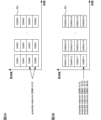
- 2A and 2B show an example of PRACH occasion and beam association.
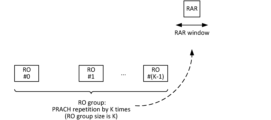
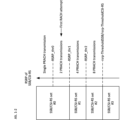
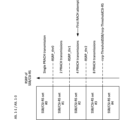
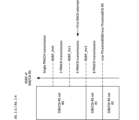
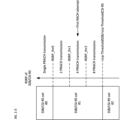
- FIG. 3 shows an example of a RAR window.
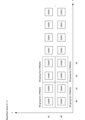
- FIG. 4 shows an example of an RO group.
- 5A and 5B show an example of a set of RSRP thresholds for UE power classes.
- FIG. 6 shows an example of the relationship between RSRP ranges and parameter sets.
- FIG. 7 shows an example of option 1 of embodiment C-1.
- FIG. 8 shows an example of embodiment C-3.
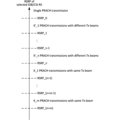
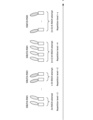
- FIG. 9 shows an example of multiple RACH attempts.
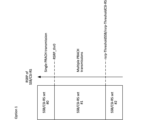
- FIG. 10 shows an example of option 1 of embodiment 1-1.
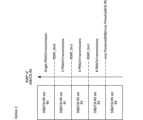
- FIG. 11 shows an example of option 2 of embodiment 1-1.
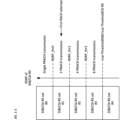
- FIG. 18 shows an example of K>1 and options 1-5 in embodiment 3-1.
- FIG. 19 is a diagram illustrating an example of a schematic configuration of a wireless communication system according to an embodiment.
- FIG. 20 is a diagram illustrating an example of the configuration of a base station according to an embodiment.
- FIG. 21 is a diagram illustrating an example of the configuration of a user terminal according to an embodiment.
- FIG. 22 is a diagram illustrating an example of the hardware configuration of a base station and a user terminal according to an embodiment.
- FIG. 23 is a diagram illustrating an example of a vehicle according to an embodiment.
- TCI transmission configuration indication state
- the TCI state may represent that which applies to the downlink signal/channel.
- the equivalent of the TCI state which applies to the uplink signal/channel may be expressed as a spatial relation.
- TCI state is information about the Quasi-Co-Location (QCL) of signals/channels and may also be called spatial reception parameters, spatial relation information, etc. TCI state may be set in the UE on a per channel or per signal basis.
- QCL Quasi-Co-Location
- QCL is an index that indicates the statistical properties of a signal/channel. For example, if a signal/channel has a QCL relationship with another signal/channel, it may mean that it can be assumed that at least one of the Doppler shift, Doppler spread, average delay, delay spread, and spatial parameters (e.g., spatial Rx parameters) is identical between these different signals/channels (i.e., it is QCL with respect to at least one of these).
- spatial parameters e.g., spatial Rx parameters
- the spatial reception parameters may correspond to a reception beam (e.g., a reception analog beam) of the UE, and the beam may be identified based on a spatial QCL.
- the QCL (or at least one element of the QCL) in this disclosure may be interpreted as sQCL (spatial QCL).
- QCL types QCL types
- QCL types A to D QCL types A to D
- the parameters (which may be called QCL parameters) are as follows: QCL Type A (QCL-A): Doppler shift, Doppler spread, mean delay and delay spread, QCL type B (QCL-B): Doppler shift and Doppler spread, QCL type C (QCL-C): Doppler shift and mean delay; QCL Type D (QCL-D): Spatial reception parameters.
- QCL Type A QCL-A
- QCL-B Doppler shift and Doppler spread
- QCL type C QCL type C
- QCL Type D QCL Type D
- the UE's assumption that a Control Resource Set (CORESET), channel or reference signal is in a particular QCL (e.g., QCL type D) relationship with another CORESET, channel or reference signal may be referred to as a QCL assumption.
- CORESET Control Resource Set
- QCL QCL type D
- the UE may determine at least one of a transmit beam (Tx beam) and a receive beam (Rx beam) for a signal/channel based on the TCI condition or QCL assumption of the signal/channel.
- Tx beam transmit beam
- Rx beam receive beam
- the TCI state may be, for example, information regarding the QCL between the target channel (in other words, the Reference Signal (RS) for that channel) and another signal (e.g., another RS).
- the TCI state may be set (indicated) by higher layer signaling, physical layer signaling, or a combination of these.
- the physical layer signaling may be, for example, Downlink Control Information (DCI).
- DCI Downlink Control Information
- the channel for which the TCI state or spatial relationship is set (specified) may be, for example, at least one of the downlink shared channel (Physical Downlink Shared Channel (PDSCH)), the downlink control channel (Physical Downlink Control Channel (PDCCH)), the uplink shared channel (Physical Uplink Shared Channel (PUSCH)), and the uplink control channel (Physical Uplink Control Channel (PUCCH)).
- PDSCH Physical Downlink Shared Channel
- PDCCH Physical Downlink Control Channel
- PUSCH Physical Uplink Shared Channel
- PUCCH Physical Uplink Control Channel
- the RS that has a QCL relationship with the channel may be, for example, at least one of a synchronization signal block (SSB), a channel state information reference signal (CSI-RS), a sounding reference signal (SRS), a tracking CSI-RS (also called a tracking reference signal (TRS)), and a QCL detection reference signal (also called a QRS).
- SSB synchronization signal block
- CSI-RS channel state information reference signal
- SRS sounding reference signal
- TRS tracking CSI-RS
- QRS QCL detection reference signal
- An SSB is a signal block that includes at least one of a Primary Synchronization Signal (PSS), a Secondary Synchronization Signal (SSS), and a Physical Broadcast Channel (PBCH).
- PSS Primary Synchronization Signal
- SSS Secondary Synchronization Signal
- PBCH Physical Broadcast Channel
- An SSB may also be referred to as an SS/PBCH block.
- An RS of QCL type X in a TCI state may refer to an RS that has a QCL type X relationship with a certain channel/signal (DMRS), and this RS may be called a QCL source of QCL type X in that TCI state.
- DMRS channel/signal
- the UE receives the SS/PBCH block (SSB), transmits Msg. 1 (PRACH/random access preamble/preamble), receives Msg. 2 (PDCCH, PDSCH including random access response (RAR)), transmits Msg. 3 (PUSCH scheduled by RAR UL grant), and receives Msg. 4 (PDCCH, PDSCH including UE contention resolution identity).
- Msg. 1 PRACH/random access preamble/preamble
- RAR random access response
- Msg. 3 PUSCH scheduled by RAR UL grant
- Msg. 4 PDCCH, PDSCH including UE contention resolution identity
- SSB reception includes PSS detection, SSS detection, PBCH-DMRS detection, and PBCH reception.
- PSS detection includes detection of part of the physical cell ID (PCI), detection (synchronization) of the OFDM symbol timing, and (coarse) frequency synchronization.
- SSS detection includes detection of the physical cell ID.
- PBCH-DMRS detection includes detection of (part of) the SSB index within a half radio frame (5 ms).
- PBCH reception includes detection of the system frame number (SFN) and radio frame timing (SSB index), reception of configuration information for remaining minimum system information (RMSI, SIB1) reception, and recognition of whether the UE can camp on that cell (carrier).
- SFN system frame number
- SSB index radio frame timing
- SSB has a bandwidth of 20RB and a time of 4 symbols.
- the transmission period of SSB can be set from ⁇ 5, 10, 20, 40, 80, 160 ⁇ ms.
- multiple symbol positions of SSB are specified based on the frequency range (FR1, FR2).
- the PBCH has a payload of 56 bits. N repetitions of the PBCH are transmitted within a period of 80 ms, where N depends on the SSB transmission period.
- the system information consists of the MIB, RMSI (SIB1), and other system information (OSI) carried by the PBCH.
- SIB1 contains information for RACH configuration and RACH procedures.
- the time/frequency resource relationship between the SSB and the PDCCH monitoring resources for SIB1 is set by the PBCH.
- a base station using beam correspondence transmits multiple SSBs using multiple beams for each SSB transmission period.
- the multiple SSBs each have multiple SSB indices.
- a UE that detects an SSB transmits a PRACH in the RACH occasion associated with that SSB index and receives an RAR in the RAR window.
- the common RACH configuration may include a generic RACH configuration (rach-ConfigGeneric), a total number of RA preambles (totalNumberOfRA-Preambles), and SSB per RACH occasion and contention-based (CB) preambles per SSB (ssb-perRACH-OccasionAndCB-PreamblesPerSSB).
- the rach-ConfigGeneric may include a PRACH configuration index (prach-ConfigurationIndex) and a message 1 FDM (msg1-FDM, the number of PRACH occasions FDMed in one time instance).
- ssb-perRACH-OccasionAndCB-PreamblesPerSSB may contain the number of CB preambles per SSB for oneEighth (one SSB associated with eight RACH occasions) of SSBs per RACH occasion.
- the UE may apply the number N of SS/PBCH blocks associated with one PRACH occasion and the number R of CB preambles per SS/PBCH block per valid PRACH occasion via ssb-perRACH-OccasionAndCB-PreamblesPerSSB.
- N_preamble ⁇ total is given by totalNumberOfRA-Preambles for type 1 random access procedures and by msgA-TotalNumberOfRA-Preambles for type 2 random access procedures involving the configuration of a PRACH occasion independent of the type 1 random access procedure.
- N_preamble ⁇ total is a multiple of N.
- the association period for mapping SS/PBCH blocks to PRACH occasions is the minimum value in the set determined by the PRACH configuration period according to the relationship (relationship defined in the specification) between the PRACH configuration period and the association period (number of PRACH configuration periods) such that N Tx SSB SS/PBCH block indices are mapped to a PRACH occasion at least once in the association period, where the UE derives N Tx SSB from the value of ssb-PositionsInBurst in SIB1 or in the ServingCellConfigCommon.
- An association pattern period includes one or more association periods and is determined such that the pattern between PRACH occasions and SS/PBCH block indices repeats at most every 160 ms. If there is a PRACH occasion that is not associated to a SS/PBCH block index after an integer number of association periods, then that PRACH occasion is not used for PRACH.
- the PRACH mask index is indicated by ra-ssb-OccasionMaskIndex, which indicates the PRACH occasion for which the PRACH occasion is associated with the selected SS/PBCH block index.
- the PRACH occasions are mapped consecutively for each corresponding SS/PBCH block index.
- the indexing of the PRACH occasions indicated by the mask index value is reset for each SS/PBCH block index and for each successive PRACH occasion mapping cycle.
- the UE selects for PRACH transmission the PRACH occasion indicated by the PRACH mask index value for the indicated SS/PBCH block index in the first available mapping cycle.
- the order of the PRACH occasions is as follows: First, in increasing order of frequency resource index for frequency multiplexed PRACH occasions. Second, in increasing order of time resource index for time multiplexed PRACH occasions within a PRACH slot. - Third, ascending order of PRACH slot index.
- the value of ra-OccasionList indicates the list of PRACH occasions for the PRACH transmission, where the PRACH occasions are associated with the selected CSI-RS index indicated by csi-RS.
- the indexing of the PRACH occasions indicated by ra-OccasionList is reset every association pattern period.
- the association periods are ⁇ 1, 2, 4, 8, 16 ⁇ , ⁇ 1, 2, 4, 8 ⁇ , ⁇ 1, 2, 4 ⁇ , ⁇ 1, 2 ⁇ , and ⁇ 1 ⁇ , respectively.
- the value of the PRACH mask index value (msgA-SSB-SharedRO-MaskIndex) is associated with the allowed PRACH occasions (PRACH occasion index values) of the SSB.
- Preamble indexes #0 to #15 are associated with SSB #0
- preamble indexes #16 to #31 are associated with SSB #1
- preamble indexes #32 to #47 are associated with SSB #2
- preamble indexes #48 to #63 are associated with SSB #3.
- the base station can distinguish the associated SS/PBCH block indexes by the received PRACH.
- the random access preamble can only be transmitted in time resources specified in the random access configuration of the specification, depending on FR1 or FR2 and spectrum type (paired spectrum/supplementary uplink (SUL)/unpaired spectrum).
- the PRACH configuration index is given by the higher layer parameter prach-ConfigurationIndex or, if configured, by msgA-PRACH-ConfigurationIndex.
- the type of RACH procedure triggered by different purposes is different.
- the type of RACH procedure may be at least one of the following: - contention-free random access (CFRA), PDCCH ordered RA (PDCCH ordered RA, RA initiated by a PDCCH order), CFRA for beam failure recovery (BFR), CFRA for system information (SI) request, CFRA for reconfiguration with sync, etc.
- CFRA contention-free random access
- PDCCH ordered RA PDCCH ordered RA
- CFRA for beam failure recovery
- SI system information
- CFRA for reconfiguration with sync
- CBRA contention-based random access
- RA triggered by MAC entity RA triggered by RRC with event
- CBRA for BFR etc.
- - 4 step RACH - Two-step RACH.
- DCI format 1_0 includes a DCI format identifier field, a bit field that is always set to 1, and a frequency domain resource assignment field. If the cyclic redundancy check (CRC) of DCI format 1_0 is scrambled by the C-RNTI and the frequency domain resource assignment field is all 1, then the DCI format 1_0 is for a random access procedure initiated by a PDCCH order, and the remaining fields are a random access preamble, a UL/supplementary uplink (SUL) indicator, a SS/PBCH index (SSB index), a PRACH mask index, and reserved bits (12 bits).
- CRC cyclic redundancy check
- the PRACH mask index field indicates the PRACH occasion of the PRACH transmission that is associated with the SS/PBCH block index indicated by the SS/PBCH block index field of the PDCCH order if the value of the random access preamble index field is not zero.
- the random access procedure is initiated by a PDCCH order, by the MAC entity itself, or by the RRC for specification compliant events. Within a MAC entity, there can only be one random access procedure in progress at any given time.
- the random access procedure for an SCell is only initiated by a PDCCH order with a ra-PreambleIndex different from 0b000000.
- the MAC entity When a random access procedure is initiated on the serving cell, the MAC entity does the following: - If the random access procedure is initiated by a PDCCH order and the ra-PreambleIndex explicitly provided by the PDCCH is not 0b000000, or if the random access procedure is initiated for a reconfiguration with synchronization and a 4-step RA type contention-free random access resource is explicitly provided by rach-ConfigDedicated for the BWP selected for the random access procedure, set RA_TYPE to 4-stepRA.
- the MAC entity shall: - If ra-PreambleIndex is explicitly provided by the PDCCH and ra-PreambleIndex is not 0b000000, set PREAMBLE_INDEX to the reported ra-PreambleIndex and select the SSB reported by the PDCCH. - If an SSB is selected as above, determine the next available PRACH occasion from those allowed by the restrictions given by ra-ssb-OccasionMaskIndex and corresponding to the selected SSB (the MAC entity shall select a PRACH occasion randomly with equal probability from among consecutive PRACH occasions corresponding to the selected SSB according to the specifications. The MAC entity may take into account possible occurrence of measurement gaps when determining the next available PRACH occasion corresponding to the selected SSB).
- the UE if requested by higher layers, transmits PRACH within the selected PRACH occasion if the time between the last symbol of the PDCCH order reception and the first symbol of the PRACH transmission is greater than or equal to N_(T,2)+ ⁇ _BWPSwitching+ ⁇ _Delay+T_switch [msec] (time condition), as described in the specification, where N_(T,2) is the duration of N_2 symbols corresponding to the PUSCH preparation time for UE processing capability 1.
- ⁇ corresponds to the minimum subcarrier spacing (SCS) setting between the SCS setting of the PDCCH order and the SCS setting of the corresponding PRACH transmission.
- SCS subcarrier spacing
- ⁇ _BWPSwitching 0, otherwise ⁇ _BWPSwitching is defined in the specification.
- T_switch is the switching gap duration defined in the specification.
- SSB/CSI-RS selection MAC protocol specification: Random Access Resource selection
- the MAC entity performs the following actions: - RA procedure is initiated for SpCell beam failure recovery and the beamFailureRecoveryTimer is running or not set, and the beam associated with at least one of the SSB/CSI-RS
- the CFRA resource for the failure recovery request is explicitly provided by the RRC and is associated with an SS-RSRP that exceeds the SS-RSRP threshold (rsrp-ThresholdSSB) among multiple SSBs in the candidate beam RS list (candidateBeamRSList).
- the MAC entity performs the following actions: The MAC entity has one SSB with an SS-RSRP that exceeds rsrp-ThresholdSSB among the SSBs in the candidateBeamRSList, or one CSI-RS with an SS-RSRP that exceeds rsrp-ThresholdCSI-RS among the CSI-RSs in the candidateBeamRSList.
- the MAC entity shall - Set the preamble index (PREAMBLE_INDEX) to the ra-PreambleIndex corresponding to the SSB that is quasi-colocated with the RS. -- Otherwise, set PREAMBLE_INDEX to the ra-PreambleIndex corresponding to the SSB or CSI-RS selected from the set of RA preambles for beam failure recovery request.
- PREAMBLE_INDEX preamble index
- the MAC entity sets PREAMBLE_INDEX to the reported ra-PreambleIndex and selects the SSB reported by the PDCCH.
- the MAC entity selects one SSB from the associated multiple SSBs with SS-RSRP exceeding rsrp-ThresholdSSB and sets PREAMBLE_INDEX to the ra-PreambleIndex corresponding to the selected SSB.
- the MAC entity selects one CSI-RS with a CSI-RS SRP exceeding rsrp-ThresholdCSI-RS among the associated multiple CSI-RSs and sets PREAMBLE_INDEX to the ra-PreambleIndex corresponding to the selected CSI-RS.
- the MAC entity shall: -- If at least one SSB with SS-RSRP exceeding rsrp-ThresholdSSB is available, the MAC entity selects one SSB with SS-RSRP exceeding rsrp-ThresholdSSB. -- Otherwise, the MAC entity selects an arbitrary SSB. --The MAC entity selects an RA preamble corresponding to the selected SSB from the RA preambles examined according to the RA-PreambleStartIndex, and sets PREAMBLE_INDEX to the selected RA preamble.
- the MAC entity performs the following actions: -- If at least one SSB with SS-RSRP exceeding rsrp-ThresholdSSB is available, the MAC entity selects one SSB with SS-RSRP exceeding rsrp-ThresholdSSB. -- Otherwise, the MAC entity selects an arbitrary SSB.
- the candidate SS/PBCH block index of the SS/PBCH block corresponds to the SS/PBCH block index provided by ssb-PositionsInBurst in SIB1 or in ServingCellConfigCommon.
- a PRACH occasion within a PRACH slot is valid if: The PRACH occasion is within a UL symbol, or The PRACH occasion does not precede an SS/PBCH block in the PRACH slot and starts at least N_gap symbols after the last DL symbol and at least N_gap symbols after the last SS/PBCH block symbol, where N_gap is defined in the specification.
- the PRACH occasion does not overlap with the set of consecutive symbols before the start of the next channel occupancy period during which there should not be any transmission, as described in the specification.
- the candidate SS/PBCH block index of the SS/PBCH block corresponds to the SS/PBCH block index provided by ssb-PositionsInBurst in SIB1 or in ServingCellConfigCommon, as described in the specification.
- PRACH transmission power control Physical layer procedures for control/Uplink Power control/Physical random access channel
- the actual PRACH transmit power is determined based on the target preamble reception power, the path loss of the RS, and the maximum output power limit.
- P CMAX,f,c (i) is the maximum output power configured to the UE for carrier f of serving cell c in transmission occasion i.
- P PRACH,target,f,c is the PRACH target received power PREAMBLE_RECEIVED_TARGET_POWER provided by higher layers for active UL BWP b of carrier f of serving cell c .
- PL b,f,c is the path loss for active UL BWP b of carrier f based on DL RS associated with PRACH transmission on the active DL BWP of serving cell c, calculated by the UE as (reference signal power (referenceSignalPower, ss-PBCH-BlockPower) [dBm] - higher layer filtered RSRP [dBm]) [dB]. If the active DL BWP is the initial DL BWP and is for multiplexing pattern 2 or 3 of the SS/PBCH block and CORESET, the UE determines PL b,f,c based on the SS/PBCH block associated to the PRACH transmission.
- the DL RS used in path loss calculation may be called pathloss (PL)-RS, pathloss reference RS, etc.
- a UE sends a PRACH and does not receive a network RAR or contention/conflict resolution Msg4 within a certain time window and the random access process is not completed, the UE retransmits the PRACH after a random backoff time.
- the UE calculates the transmit power based on the target preamble receive power set by the network and the value of a preamble power ramping counter (power lifting/ramping mechanism).
- preambleReceivedTargetPower is the initial random access preamble power for 4-step RA type.
- DELTA_PREAMBLE relates to the preamble format.
- PREAMBLE_POWER_RAMPING_COUNTER is the number of times the power is ramped up.
- PREAMBLE_POWER_RAMPING_STEP is the step (step size) of the power lifting/ramping.
- the MAC entity For each RA preamble, the MAC entity performs the following actions: If the selected SSB or CSI-RS has not changed since the selection in the RA preamble transmission of the side, -- increment the PREAMBLE_POWER_RAMPING_COUNTER by 1, - Select the value of DELTA_PREAMBLE, - Set PREAMBLE_RECEIVED_TARGET_POWER to preambleReceivedTargetPower + DELTA_PREAMBLE + (PREAMBLE_POWER_RAMPING_COUNTER-1)*PREAMBLE_POWER_RAMPING_STEP + POWER_OFFSET_2STEP_RA.
- the MAC entity applies the following actions for the serving cell from which the RAR preamble was transmitted: - processing received timing advance commands; – Indicate to lower layers the preambleReceivedTargetPower and the amount of power ramping applied to the last RA preamble transmission (i.e.
- the UE increments the power ramping counter (PREAMBLE_POWER_RAMPING_COUNTER).
- PREAMBLE_POWER_RAMPING_STEP is set by powerRampingStep ⁇ 0dB, 2dB, 4dB, 6dB ⁇ in the RRC IE RACH-ConfigGeneric.
- preambleTransMax is the maximum number of random access preamble transmissions.
- PREAMBLE_TRANSMISSION_COUNTER preambleTransMax + 1: -- If a random access preamble is being transmitted on the SpCell, the MAC entity indicates an RA problem to upper layers, and if the RA procedure is triggered
- the MAC entity flushes (clears) the HARQ buffers used to transmit the MAC PDU in the Msg3 buffer, increments the PREAMBLE_TRANSMISSION_COUNTER by 1, indicates the RA problem to upper layers, and if the RA procedure was triggered due to an SI request, the MAC entity considers the RA procedure to have failed to complete.
- RA-ResponseWindow is the time window for monitoring RA Response (RAR) (special cell (SpCell) only).
- RA-ContentionResolutionTimer is the timer for RA contention resolution (SpCell only).
- Msg. B ResponseWindow is the time window for monitoring RA Response (RAR) for 2-step RA type (SpCell only).
- SpCell primary cell
- PCell primary cell
- PSCell primary secondary cell
- the MAC entity When an RA preamble is transmitted, the MAC entity performs the following actions 1 to 3, regardless of the possibility that a measurement gap may occur.
- the MAC entity performs the following operations 2-1 and 2-2.
- the MAC entity starts the ra-ResponseWindow configured in the common RACH configuration (RACH-ConfigCommon) on the first PDCCH occasion after the end of the RA preamble transmission.
- the MAC entity monitors the PDCCH transmission of the SpCell for the RAR identified by the RA-RNTI while the ra-ResponseWindow is running.
- the MAC entity may stop the ra-ResponseWindow (stop monitoring for RARs) after successful reception of an RAR containing RA preamble identifiers matching the transmitted PREAMBLE_INDEX.
- PDCCH monitoring within the RA response window There are two cases for PDCCH monitoring within the RA response window: PDCCH for the base station's response to BFR and PDCCH for RAR. The following may apply to both cases.
- the MAC entity When the MSGA (Msg. A) preamble is transmitted, the MAC entity performs the following actions 4 to 6, regardless of whether a measurement gap may occur.
- the MAC entity starts the Msg. B response window (msgB-ResponseWindow) in the PDCCH monitoring window defined in the specification.
- the msgB-ResponseWindow may start at the first symbol of the earliest CORESET for which the UE is configured to receive a PDCCH for a Type 1-PDCCH CSS set that is at least one symbol after the last symbol of the PRACH occasion corresponding to the PRACH transmission.
- the length of the msgB-ResponseWindow may correspond to the SCS for the Type 1-PDCCH CSS set.
- the MAC entity monitors the PDCCH transmission of the SpCell for the RAR identified by the MSGB-RNTI while the msgB-ResponseWindow is running.
- RA-RNTI MAC protocol specification/Random Access Preamble transmission
- the subcarrier spacing (SCS) for determining t_id is based on the value of ⁇ .
- ul_carrier_id is the UL carrier used for RA preamble transmission (0 for normal uplink (NUL) carrier, 1 for supplementary uplink (SUL) carrier).
- RA-RNTI is calculated according to the specification.
- RA-RNTI is the RNTI for 4-step RACH.
- MSGB-RNTI 1+s_id+14 ⁇ t_id+14 ⁇ 80 ⁇ f_id+14 ⁇ 80 ⁇ 8 ⁇ ul_carrier_id+14 ⁇ 80 ⁇ 8 ⁇ 2
- the subcarrier spacing (SCS) for determining t_id is based on the value of ⁇ .
- ul_carrier_id is the UL carrier used for RA preamble transmission (0 for normal uplink (NUL) carrier, 1 for supplementary uplink (SUL) carrier).
- MSGB-RNTI is the RNTI for 2-step RACH.
- the total number of RA-RNTI values (total number of PRACH occasions in a system frame) is 14 x 80 x 8 x 2.
- the MSGB-RNTI formula is the RA-RNTI formula plus the total number of RA-RNTI values. This formula helps to avoid collisions between MSGB-RNTI and RA-RNTI.
- the UE In response to a PRACH transmission, the UE attempts to detect DCI format 1_0 with CRC scrambled by the corresponding RA-RNTI during the aforementioned higher layer controlled window.
- the window starts at the first symbol of the earliest CORESET for which the UE is configured to receive a PDCCH for the Type 1-PDCCH CSS set, i.e. at least one symbol after the last symbol of the PRACH occasion corresponding to the PRACH transmission.
- the symbol period corresponds to the SCS for the Type 1-PDCCH CSS set.
- the length of the window is based on the SCS for the Type 1-PDCCH CSS set and is given by ra-responseWindow as number of slots.
- the UE may assume the same DMRS antenna port QCL properties for the SS/PBCH block or CSI-RS resource that the UE uses to associate the PRACH, regardless of whether the UE is provided with a TCI-State for the CORESET in which it receives the PDCCH with that DCI format 1_0.
- the UE may assume that the PDCCH containing that DCI format 1_0 and the PDCCH order have the same DMRS antenna port QCL properties.
- the UE may assume the DMRS antenna port QCL properties of the CORESET associated with the type 1-PDCCH CSS set for reception of the PDCCH containing that DCI format 1_0.
- the RAR UL grant may include at least one of a frequency hopping flag field, a PUSCH frequency resource allocation field, a PUSCH time resource allocation field, a modulation and coding scheme (MCS) field, a TPC command field for PUSCH, a CSI request field, and a channel access-cyclic prefix extension (CPext) field.
- MCS modulation and coding scheme
- CPext channel access-cyclic prefix extension
- the UE In single-cell operation or operation with carrier aggregation in the same frequency band, if the qcl-Type set in the 'typeD' properties of a DMRS for monitoring a PDCCH in a type 1-PDCCH CSS set is not set to the same as the qcl-Type set in the 'typeD' properties of a DMRS for monitoring a PDCCH in a type 0/0A/0B/2/3-PDCCH CSS set or in a USS set, and that PDCCH or associated PDSCH overlaps with a PDCCH or associated PDSCH that the UE monitors in the type 1-PDCCH CSS set by at least one symbol, the UE shall not assume to monitor a PDCCH in a type 0/0A/0B/2/3-PDCCH CSS set or in a USS set.
- the UE is provided with one or more search space sets by PDCCH-Config with corresponding one or more of searchSpaceZero, searchSpaceSIB1, searchSpaceOtherSystemInformation, pagingSearchSpace, peiSearchSpace, ra-SearchSpace, and CSS sets, and is provided with SI-RNTI, P-RNTI, PEI-RNTI, RA-RNTI, MsgB-RNTI, SFI-RNTI, INT-RNTI, TPC-PUSCH-RNTI, TPC-PUCCH-RNTI, or TPC-SRS-RNTI, for any RNTI from these RNTIs, the UE is not expected to process information from more than one DCI format with CRC scrambled using that RNTI per slot.
- the UE transmits a transport block on the PUSCH scheduled by the RAR UL grant in the corresponding RAR message.
- the UE transmits the PUSCH in slot n+k 2 + ⁇ +2 ⁇ ⁇ K cell,offset.
- k2 is a slot offset, determined based on the allocation table row index m+1 provided by the PUSCH time resource allocation field value m of the RAR UL grant and the PUSCH subcarrier spacing ⁇ PUSCH.
- ⁇ is an additional subcarrier spacing-specific slot delay time value for the first transmission of the PUSCH scheduled by the RAR, specific to the PUSCH subcarrier spacing ⁇ PUSCH, and is applied in addition to K2 .
- the UE transmits PUSCH over N PUSCH repeat slots, where N PUSCH repeat is indicated by the 2 MSBs of the MCS field in the RAR UL grant or DCI format 0_0 from a set of four values provided by numberOfMsg3Repetitions, or from ⁇ 1, 2, 3, 4 ⁇ if numberOfMsg3Repetitions is not provided.
- the UE decides whether to apply Msg3 repetition based on the RSRP. If Msg repetition is configured and the RSRP of the DL pathloss reference is less than rsrp-ThresholdMsg3 (threshold), the MAC entity assumes that Msg3 repetition is applicable to the current random access (RA) procedure.
- RA random access
- the UE can request Msg3 PUSCH repetition via a separate PRACH resource.
- the MAC entity selects an RA resource if there are one or more sets of available RA resources, one of which is used to indicate all functions that trigger this RA procedure, or if there are one or more sets of available RA resources configured with indications for a subset of all functions that trigger this RA procedure. If Msg3 repetition indication is configured for a set of RA resources, and Msg3 repetition is not available, the MAC entity considers that set of RA resources as not available for the RACH procedure.
- RA resources may be partitioned for each function.
- the functions may include at least one of Msg3 repetition, reduced capacity (RedCap), small data transmission (SDT), and RAN slicing.
- Priority of each feature (priority, featurePriorities-r17). This priority is used to determine which FeatureCombinationPreambles the UE should use when a feature is mapped to more than one FeatureCombinationPreamble. Additional RO configuration, including available capabilities (which may be associated with multiple capabilities), RA resources (e.g., preamble index), and mask index to distinguish ROs.
- the UE decides which RO to use depending on its capabilities.
- SIB1 contains ServingCellConfigCommonSIB, which contains UplinkConfigCommonSIB, which contains BWP-UplinkCommon (UL BWP common configuration).
- BWP-UplinkCommon may include RACH common configuration (RACH-ConfigCommon or MsgA-ConfigCommon) and additionalRACH-ConfigList-r17 (additional RACH configuration list).
- additionalRACH-ConfigList-r17 may include rsrp-ThresholdMsg3-r17 (threshold).
- the RACH common setting may include FeatureCombinationPreambles.
- FeatureCombinationPreambles associates one set of preambles (partition) with one feature combination.
- FeatureCombinationPreambles may include FeatureCombination (feature combination setting), startPreambleForThisPartition (index of first preamble), numberOfPreamblesPerSSB-ForThisPartition (number of preambles), and ssb-SharedRO-MaskIndex-r17 (PRACH mask index).
- FeatureCombination includes at least one of redCap (RedCap), smallData (SDT), sliceGroup (RAN slicing), and msg3-Repetition (Msg3 repetition). The partition is given by the index of the first preamble and the number of preambles.
- the available RO is explicitly set by the PRACH mask index.
- At least one of the PRACH occasion indexes 1 to 8 can be set using the relationship between the PRACH mask index and the allowed PRACH occasions (ROs) of the SSB (MAC protocol specification/table of PRACH mask index values).
- the number of Msg3 repetitions is indicated by the 2 most significant bits (MSBs) of the modulation and coding scheme (MCS) field in the RAR UL grant.
- MSBs most significant bits
- MCS modulation and coding scheme
- the 2 MSBs of the MCS information field of the RAR UL grant provide a code point for determining the number of repetitions K, according to the relationship (table) between the value (code point) of the 2 MSBs of the MCS information field and the number of repetitions K, based on whether the upper layer parameter numberOfMsg3Repetitions is set or not.
- the number of slots N used to determine the transport block size (TBS) is equal to 1.
- the 2 MSBs of the MCS information field of that DCI format provide a code point for determining the number of repetitions K, according to the relationship (table) between the value (code point) of the 2 MSBs of the MCS information field and the number of repetitions K, based on whether the upper layer parameter numberOfMsg3Repetitions is set or not.
- the number of slots N used for TBS determination is equal to 1.
- the MAC entity follows actions 1 to 4 below. [Action 1] If Msg3 is transmitted over a non-terrestrial network, the MAC entity starts the ra-ContentionResolutionTimer and restarts it at each HARQ retransmission in the first symbol after the end of Msg3 plus the UE estimate of the UE-gNB RTT. [Action 2] Otherwise, if the Msg3 transmission (initial transmission or HARQ retransmission) is scheduled with Type A PUSCH repetitions, the MAC entity starts or restarts the ra-ContentionResolutionTimer within the first symbol after the end of all repetitions of the Msg3 transmission.
- the MAC entity If not, the MAC entity starts or restarts the ra-ContentionResolutionTimer within the first symbol after the end of the Msg3 transmission. [Operation 4] The MAC entity monitors the PDCCH while the ra-ContentionResolutionTimer is running, regardless of the possibility of a measurement gap occurring.
- Step 4 (Msg4) in the Rel. 16 NR RA procedure follows the step 4 operations below.
- Step 4 Operation If the UE is not provided with a C-RNTI, in response to a PUSCH transmission scheduled by an RAR UL grant, the UE schedules a PDSCH containing the UE contention resolution identity and attempts to detect DCI format 1_0 with CRC scrambled by the corresponding TCI-RNTI. In response to receiving a PDSCH containing the UE contention resolution identity, the UE transmits HARQ-ACK information in the PUCCH.
- the PUCCH transmission is in the same active UL BWP as the PUSCH transmission.
- N_T,1 is the duration of N_T,1 symbols, which corresponds to the PDSCH processing time of UE processing capability 1 when additional PDSCH DM-RS is configured.
- N_T,1 is the duration of N_T,1 symbols, which corresponds to the PDSCH processing time of UE processing capability 1 when additional PDSCH DM-RS is configured.
- the UE may assume that the PDCCH carrying that DCI format has the same DM-RS antenna port quasi co-location (QCL) properties as the DM-RS antenna port QCL properties for the SS/PBCH block used by the UE for PRACH association, regardless of whether the UE is provided with a TCI state for the CORESET in which the UE received a PDCCH with that DCI format.
- QCL quasi co-location
- Type 2 RA Procedure In a MsgA transmission within a Type 2 RA procedure (two-step RA procedure), the UE transmits the following pairs: - Within the MsgA RACH Occasion (RO), one preamble with one preamble index. - One PUSCH with one PUSCH Resource Unit (PRU) within a MsgA PUSCH Occasion (PO) per MsgA PUSCH configuration.
- RO MsgA RACH Occasion
- PRU PUSCH Resource Unit
- PO MsgA PUSCH Occasion
- MsgA PRACH has the structure of MsgA preamble index (code domain resource) within MsgA RACH occasion (time domain resource/frequency domain resource).
- MsgA PUSCH has the structure of a MsgA PUSCH resource unit (code domain resource/spatial domain resource) within a MsgA PUSCH occasion (time domain resource/frequency domain resource) within a MsgA PUSCH setting (RRC setting).
- multiple PRUs can be multiplexed using DMRS ports/DMRS sequences. Only in CP-OFDM, more than one DMRS sequence can be configured.
- MsgA PUSCH Occasion in Type 2 RA Procedure A MsgA PUSCH Occasion (PO) that overlaps with a valid RO for a Type 1/2 RA procedure is an invalid PO.
- a PUSCH occasion is valid if it does not overlap in time and frequency with any valid PRACH occasion associated with a Type 1 RA procedure or a Type 2 RA procedure.
- TDD unpaired spectrum
- SS/PBCH blocks with index provided by ssb-PositionsInBurst in SIB1 or by ServingCellConfigCommon the UE follows some actions:
- PRACH collision Physical layer procedures for control/Slot configuration
- TDD unpaired spectrum
- the UE may cancel the actual repetition of PUCCH, PUSCH, or PRACH transmissions within the set of symbols.
- Cancel. If the UE indicates a capability of partial Cancellation, the UE shall follow these actions: The UE detects the DCI format in a PUCCH symbol from the set of symbols where the first symbol in the set of symbols occurs within T proc,2 from the last symbol of the CORESET in which the UE detects the DCI format. The UE does not expect to cancel the transmission of PUCCH or PUSCH or PRACH. The UE does not expect to cancel the actual repetition of PUCCH or PUSCH or PRACH transmission in the remaining symbols from the set of symbols. Cancel.
- the UE When operating on a single carrier in unpaired spectrum (TDD), if a transmission would overlap with any symbol from a set of symbols in a slot in which the UE is instructed to receive a particular SS/PBCH block, the UE shall not transmit PUSCH, PUCCH, PRACH in that slot, and the UE shall not transmit SRS in that set of symbols in that slot.
- TDD unpaired spectrum
- the specific SS/PBCH block is the SS/PBCH block for the set of symbols in the slot corresponding to the SS/PBCH block configured for L1 beam measurement/reporting according to the ssb-PositionsInBurst in SIB1 (SystemInformationBlockType1), or according to the ssb-PositionsInBurst in ServingCellConfigCommon, or according to the ssb-PositionsInBurst in SSB-MTCAdditionalPCI associated with the physical cell ID with active TCI state for PDCCH or PDSCH if the UE is not provided with dl-OrJoint-TCIStateList, or according to the ssb-PositionsInBurst in SSB-MTCAdditionalPCI associated with the physical cell ID with active TCI state for PDCCH or PDSCH if the UE is not provided with dl-OrJoint-TCIStateList.
- the set of symbols in the slot is not expected to be indicated as uplink by the tdd-UL-DL-ConfigurationCommon or tdd-UL-DL-ConfigurationDedicated.
- the UE shall follow the following actions: - If the transmission would overlap with any symbol from the set of symbols of a slot in which the UE is instructed to receive a specific SS/PBCH block in the first of the multiple serving cells, then the UE shall not transmit PUSCH, PUCCH, PRACH in that slot, and the UE shall not transmit SRS in that set of symbols of that slot in the specific cell.
- the specific SS/PBCH block is the SS/PBCH block according to ssb-PositionsInBurst in SIB1 (SystemInformationBlockType1), or according to ssb-PositionsInBurst in ServingCellConfigCommon, or according to ssb-PositionsInBurst in SSB-MTCAdditionalPCI associated with a physical cell ID with active TCI state for PDCCH or PDSCH if the UE is not provided with dl-OrJoint-TCIStateList, or for a set of symbols of slots corresponding to the SS/PBCH block configured for L1 beam measurement/reporting.
- SIB1 SystemInformationBlockType1
- ssb-PositionsInBurst in ServingCellConfigCommon or according to ssb-PositionsInBurst in SSB-MTCAdditionalPCI associated with a physical cell ID with active TCI state for PDC
- the specific cell is any one of the multiple serving cells if they do not have the capability of simultaneous transmission/reception indicated by simultaneousRxTxInterBandCA, or any one of the cells corresponding to the same band as the first cell, regardless of the capability indicated by simultaneousRxTxInterBandCA.
- a UE is configured by higher layers to transmit SRS or PUCCH or PUSCH or PRACH in a set of symbols of a slot and the UE detects DCI format 2_0 with a slot format value other than 255 indicating a slot format with a subset of symbols from the set of symbols as downlink or flexible, or receives a DCI format indicating to the UE reception of CSI-RS or PDSCH in a subset of symbols from the set of symbols, the UE shall follow the following actions: - If the UE does not indicate capability of partial Cancellation, the UE shall follow the following actions: -- If the first symbol in the set of symbols occurs within Tproc ,2 from the last symbol of the CORESET at which the UE detects the DCI format, the UE does not expect to cancel PUCCH or PUSCH or PRACH transmissions in the set of symbols, otherwise the UE cancels PUCCH or PUSCH or actual repetitions of PUSCH or PRACH transmissions in the set of symbols.
- the UE shall follow these actions: -- The UE does not expect to cancel PUCCH or PUSCH or PRACH transmissions in symbols from the set of symbols where the first symbol in the set of symbols occurs within Tproc ,2 from the last symbol of the CORESET where the UE detects the DCI format.
- the UE cancels PUCCH or PUSCH or actual repetitions of PUSCH or PRACH transmissions in the remaining symbols from the set of symbols.
- the UE shall follow the following actions: - If the UE is configured by higher layers for transmission of SRS or PUCCH or PUSCH or PRACH and the UE has not been provisioned with enableConfiguredUL, the UE shall follow the following actions: -- If the UE does not indicate partial Cancellation capability, the UE shall follow these actions: --- If the first symbol of PUCCH or PUSCH or actual repetition of PUSCH or PRACH occurs within Tproc ,2 from the last symbol of the CORE
- the UE shall follow the following actions: --- The UE does not expect to cancel PUCCH or PUSCH or actual repetition of PUSCH or PRACH transmissions in symbols from the set of symbols that occur within Tproc ,2 from the last symbol of the CORESET for which the UE is configured to monitor PDCCH for DCI format 2_0.
- the UE cancels PUCCH or PUSCH or actual repetition of PUSCH or PRACH transmissions in that slot.
- the UE cancels PUCCH or PUSCH or actual repetition of PUSCH or PRACH transmissions in the remaining symbols from the set of symbols.
- Beam and Coverage In high frequency bands, if beamforming is not applied to the synchronization signal/reference signal, the coverage will be narrow and it will be difficult for the UE to find the base station. On the other hand, if beamforming is applied to the synchronization signal/reference signal to ensure coverage, a strong signal will reach a specific direction, but the signal will be even more difficult to reach in other directions. If the direction in which the UE exists is unknown in the base station before the UE is connected, it is impossible to transmit the synchronization signal/reference signal using a beam only in the appropriate direction. A method is considered in which the base station transmits multiple synchronization signals/reference signals each having a beam in a different direction, and the UE recognizes which beam it has found. If a thin (narrow) beam is used for coverage, it is necessary to transmit many synchronization signals/reference signals, which may increase overhead and reduce frequency utilization efficiency.
- PRACH coverage extensions are being considered. For example, multiple PRACH transmissions using the same beam in a four-step RACH procedure (multiple repetitions of PRACH), and multiple PRACH transmissions using different beams in a four-step RACH procedure are being considered.
- This PRACH extension may be targeted to frequency range (FR) 2 or may be applied to FR 1.
- This PRACH extension may be applied to short PRACH formats or other formats.
- one RAR window may be used for each PRACH transmission.
- the RAR window may follow existing designs.
- only one RAR window may be used for all of the multiple PRACH transmissions.
- the UE may use different transmit (Tx) beams for transmitting multiple PRACHs across multiple ROs associated with the same SSB/CSI-RS.
- Tx transmit
- PRACH Resources for Multiple PRACH Transmissions It is being considered that multiple PRACH transmissions (multi-PRACH transmissions) are transmitted on ROs (separate ROs, ROs separated for multiple PRACH transmissions and single PRACH transmissions) that are separate from single PRACH transmissions (single PRACH transmissions), and that multiple PRACH transmissions are transmitted on ROs (shared ROs) that are shared with single PRACH transmissions, using preambles (separate preambles) that are separate from single PRACH transmissions.
- a "RO group" is assumed for at least one of separate preambles on a shared RO and multiple PRACH transmissions on separate ROs.
- All ROs in an RO group are associated with the same SSB(s).
- - Shared RO/preamble means that the RO/preamble is shared with a single PRACH transmission.
- Separate RO/preamble means that the RO/preamble is separate from the single PRACH transmission.
- Valid RO is defined in existing specifications. Valid RO may follow the validity conditions of the PRACH occasions mentioned above.
- RAR Monitoring for Multiple PRACHs In multiple PRACH transmissions using the same transmission beam, it is considered that only a single RAR window is supported in RAR monitoring for multiple PRACH transmissions within one RACH attempt.
- the UE repeatedly transmits Msg1 on K random access occasions (ROs)/RO resources.
- the UE then waits to detect Msg2 on the configured Type 1 PDCCH occasion.
- the repeated transmission of preambles on K ROs/RO resources may be referred to as an RO group.
- Figure 3 shows an example of the timing of multiple PRACH transmissions.
- the size of the RO group (the number of ROs in the RO group) is K. After one RO group, one RAR window begins.
- the number of PRACH transmissions supported for multiple PRACH transmissions using the same Tx beam is ⁇ 2,4,8 ⁇ . It is considered that one or more SSB-RSRP thresholds are used to determine the number of PRACH transmissions for multiple PRACH transmissions using the same Tx beam, at least for the first RACH attempt.
- the maximum UE output power limit is taken into account (i.e. min(P CMAX,f,c (i), P PRACH,target,f,c +PL b,f,c ) is taken into account), if the path loss is very large, i.e. the detected SINR is very low, then it will be larger/higher (P PRACH,target,f,c +PL b,f,c ) and the PRACH transmit power will be limited by the maximum UE output power limit and the PRACH received power at the base station side may be lower than (preambleReceivedTargetPower + DELTA_PREAMBLE).
- the restriction on multiple PRACH transmissions may be triggered only if the transmission power reaches (exceeds) the maximum UE output power limit.
- the motivation for multiple PRACH transmissions is to compensate for poor performance for some UEs in order to match the same target preamble performance as other UEs in relatively good channel conditions.
- the total/effective preamble received power for some UEs is equal to or close to the target (preambleReceivedTargetPower + DELTA_PREAMBLE) for other UEs.
- the adjustment regarding the target preamble reception power takes into account the number of PRACH transmissions.
- the total/effective target preamble receive power at the base station side may be adjusted. That is, no restriction may be required according to analysis 2 and its solution. The results are similar regardless of whether the UE performs a single PRACH transmission with a larger target preamble receive power or multiple PRACH transmissions with reduced target preamble receive power.
- the UE it is preferable for the UE to have multiple options for each RSRP range.
- a single PRACH transmission is determined for the first RACH attempt, it is considered that a single PRACH transmission is also applied for any RACH re-attempts in the RACH procedure.
- the SSB/CSI-RS selection follows the existing rules, the UE can select an SSB/CSI-RS with an RSRP lower than the RSRP threshold for triggering multiple PRACH transmissions. In this case, the PRACH performance is not high if a single PRACH transmission is considered to be applied to the RACH re-attempt. It is preferable that the SSB/CSI-RS selection is extended. An extension of power ramping is also considered. For example, power ramping may be necessary if the UE selects an SSB/CSI-RS in a RACH re-attempt using an RSRP corresponding to multiple PRACH transmissions.
- the inventors therefore came up with the idea of an operation related to RACH retry.
- A/B and “at least one of A and B” may be interpreted as interchangeable. Also, in this disclosure, “A/B/C” may mean “at least one of A, B, and C.”
- Radio Resource Control RRC
- RRC parameters RRC parameters
- RRC messages higher layer parameters, fields, information elements (IEs), settings, etc.
- IEs information elements
- CE Medium Access Control
- update commands activation/deactivation commands, etc.
- the higher layer signaling may be, for example, any one of Radio Resource Control (RRC) signaling, Medium Access Control (MAC) signaling, broadcast information, other messages (e.g., messages from the core network such as positioning protocols (e.g., NR Positioning Protocol A (NRPPa)/LTE Positioning Protocol (LPP)) messages), or a combination of these.
- RRC Radio Resource Control
- MAC Medium Access Control
- LPP LTE Positioning Protocol
- the MAC signaling may use, for example, a MAC Control Element (MAC CE), a MAC Protocol Data Unit (PDU), etc.
- the broadcast information may be, for example, a Master Information Block (MIB), a System Information Block (SIB), Remaining Minimum System Information (RMSI), Other System Information (OSI), etc.
- MIB Master Information Block
- SIB System Information Block
- RMSI Remaining Minimum System Information
- OSI System Information
- the physical layer signaling may be, for example, Downlink Control Information (DCI), Uplink Control Information (UCI), etc.
- DCI Downlink Control Information
- UCI Uplink Control Information
- TDM - time division multiplexing TDM - time-division-multiplexed: TDM - frequency division multiplexing: FDM - frequency-division-multiplexed: FDM
- a b , a_b, and the notation with b added to the lower right of a may be read as mutually interchangeable.
- a c , a ⁇ c, and the notation with c added to the upper right of a may be read as mutually interchangeable.
- a b c , a_b ⁇ c, and the notation with b added to the lower right of a and c added to the upper right may be read as mutually interchangeable.
- ceil(x), ceiling function, and ceiling function may be read as mutually interchangeable.
- floor(x), floor function, and floor function may be read as mutually interchangeable.
- the reference signal (RS), downlink reference signal (DL-RS), and SSB/CSI-RS may be interchangeable.
- RSRP, SS-RSRP/CSI-RSRP may be interchangeable.
- the RS with RSRP, RS corresponding to RSRP, RS used to measure RSRP, SSB with SS-RSRP, and CSI-RS with CSI-RSRP may be interchangeable.
- beam, SSB, SSB index, CSI-RS, CSI-RS resource, CSI-RS resource index, reference signal (RS), QCL assumption, TCI state, unified TCI state, DL or joint TCI state, UL TCI state, UL Tx spatial filter, spatial domain filter, spatial domain transmit filter, spatial domain receive filter, antenna port QCL parameter, QCL parameter, Tx beam, and spatial filter may be interpreted as interchangeable.
- RACH resource, RA resource, PRACH preamble, occasion, RACH occasion (RO), PRACH occasion, repetition resource, repetition setting resource, resources set for RO/repetition, time instance and frequency instance, time resource and frequency resource, RO/preamble resource, repetition, PRACH resource, time/frequency resource for PRACH, preamble setting/index, mask setting/index, PRACH setting may be read as interchangeable.
- time occasion, time domain position, time location, PRACH occasion, PRACH slot, period, period, symbol/slot/subframe/frame, at least one index thereof, time domain index, T# may be read as interchangeable.
- frequency domain position, frequency location, subcarrier/RE/RB/CC, at least one index thereof, frequency domain index, F# may be read as interchangeable.
- RO, RO index, RO# may be read as interchangeable.
- the number of PRACH transmissions, the number of repetitions, the repetition factor, and the aggregation factor K may be read as interchangeable.
- multiple PRACH transmissions, the number of PRACH transmissions being greater than one, and multiple repetitions of PRACH may be read as interchangeable.
- a single PRACH transmission and the number of PRACH transmissions being one may be read as interchangeable.
- multiple PRACH transmission, multiple PRACH transmission using the same Tx beam, multiple PRACH transmission using different Tx beams, and multiple PRACH transmission including multiple PRACH transmission using the same Tx beam and multiple PRACH transmission using different Tx beams may be interpreted as interchangeable.
- single PRACH transmission, existing PRACH transmission, and existing PRACH resource configuration may be interpreted as interchangeable.
- multiple PRACH transmission, new PRACH transmission, and multiple PRACH resource configuration may be interpreted as interchangeable.
- separated RO, new RO, additional RO, RO for multiple PRACH transmission, and RO separated from an existing RO for PRACH transmission may be interpreted as interchangeable.
- the existing RO may include the RO set/determined by RACH-ConfigCommon/RACH-ConfigGeneric/RACH-ConfigDedicated/AdditionalRACH-Config-r17/additionalRACH-ConfigList-r17.
- determining the number of PRACH transmissions may include determining whether to perform a single PRACH transmission or multiple PRACH transmissions.
- the number of PRACH transmissions may include 1 (single PRACH transmission).
- multiple actual PRACH transmissions may mean that the actual number of PRACH transmissions is greater than one after taking into account possible dropped/cancelled PRACH transmissions due to at least one of collisions defined in existing specifications and other collisions (e.g., collisions in embodiment B1/embodiment B2).
- multiple nominal PRACH transmissions may mean a repetition level greater than 1.
- one RACH attempt, one single PRACH transmission, and one multiple PRACH transmission may be read as interchangeable.
- attempt, initial transmission RACH attempt, first RACH attempt, previous RACH attempt, and transmitted RACH attempt may be read as interchangeable.
- retry, RACH re-attempt, retransmission RACH attempt, later RACH attempt, a RACH attempt other than the first RACH attempt, a second or subsequent RACH attempt, a scheduled RACH attempt, a current RACH attempt, and a RACH attempt after one or more RACH attempts may be read as interchangeable.
- the repetition level, the determined number of PRACH transmissions, the determined number of PRACH transmissions, the number of ROs in an RO group selected for multiple PRACH transmissions, the repetition factor in the RA procedure, the repetition factor in the first RACH attempt, the number of PRACH transmissions determined for the first RACH attempt, and the number of valid ROs in an RO group selected for the first RACH attempt may be interpreted as interchangeable.
- the actual number of PRACH transmissions, the number of PRACH transmissions, the actual number of PRACH transmissions, the number of PRACH transmissions that were actually transmitted, and the number of PRACH transmissions that were transmitted after a PRACH transmission was dropped due to a dropping loop may be interpreted as interchangeable.
- maximum transmission power UE maximum transmission power
- maximum output power UE maximum output power
- the received power range, RSRP range, SSB/CSI-RS set, whether or not a specific RSRP threshold is exceeded, an RSRP range bounded by an RSRP threshold, RSRP corresponding to a single PRACH transmission or multiple PRACH transmissions, and RSRP corresponding to a specific repetition factor may be interpreted as interchangeable.
- the UE power class is taken into account in addition to the RSRP threshold. This embodiment addresses the issue in analysis 1 (i.e., trigger conditions for multiple PRACH transmissions taking into account maximum UE output power limits).
- Each set of RSRP thresholds may correspond to a UE power class. For example, if the number of supported UE power classes is X, then X sets of RSRP thresholds may be configured/indicated. The UE may use the set corresponding to the UE's power class.
- the maximum transmit power for power classes PC1, PC1.5, PC2, and PC3 are 31 dBm, 29 dBm, 26 dBm, and 23 dBm, respectively.
- the example of Figure 5A shows a set of RSRP thresholds for PC2 ⁇ RSRP_0_PC2, RSRP_1_PC2, RSRP_2_PC2 ⁇ .
- the example of Figure 5B shows a set of RSRP thresholds for PC3 ⁇ RSRP_0_PC3, RSRP_1_PC3, RSRP_2_PC3 ⁇ .
- a UE that is PC2 uses the set of RSRP thresholds for PC2, and a UE that is PC3 uses the set of RSRP thresholds for PC3.
- the RSRP thresholds in the set for PC3 may be lower than the RSRP thresholds in the set for PC2.
- x in RSRP_0_x may be any of PC1, PC1.5, PC2, and PC3.
- the UE determines the number of PRACH transmissions N to be 1. If the RSRP (measurement result) of the SSB/CSI-RS is less than RSRP_0_x and greater than or equal to RSRP_1_x, the UE determines the number of PRACH transmissions N to be 2.
- the UE determines the number of PRACH transmissions N to be 4. If the RSRP (measurement result) of the SSB/CSI-RS is less than RSRP_2_x, the UE determines the number of PRACH transmissions N to be 8.
- Each set of RSRP thresholds may correspond to a UE power class and a specific range of the number of previously failed RACH attempts. For example, if the number of supported UE power classes is X, Y (>X) sets of RSRP thresholds may be configured/indicated.
- One power class may correspond to one or more sets. If one power class corresponds to multiple sets of RSRP thresholds, each set of RSRP thresholds may correspond to a specific range of the number of previously failed RACH attempts. The UE may use the set corresponding to the UE's power class and the number of previously failed RACH attempts.
- Each set of RSRP thresholds may correspond to at least one of the parameters and a specific range of the number of previous failed RACH attempts.
- -- Variation 1-1 Current UE power class. A UE capable of high power (e.g., UE power class 1/1.5/2) may need to fall back to UE power class 3 depending on the situation, so the current UE power class may be used.
- -- Variation 1-2 ⁇ P PowerClass . This parameter is considered to be used because it indicates the amount of power reduction due to fallback to power class 3.
- --Variations 1-3 P-MPR (P- MPRc , power management maximum power reduction).
- a combination of two or more of the UE power class, a specific range of the number of previous failed RACH attempts, the current UE power class, ⁇ P PowerClass , and P-MPR may be used to determine the number of PRACH transmissions.
- the UE may determine the number of PRACH transmissions by combining this embodiment with embodiment C.
- the UE can appropriately determine the number of PRACH transmissions.
- ⁇ P Power Class may comply with the following: If a P-max of 23 dBm or less is indicated, or if the field of UE capabilities maxUplinkDutyCycle-PC2-FR1 is not present and the field of UE capabilities maxUplinkDutyCycle-MPE-FR1 is not present and the percentage of uplink symbols transmitted in an evaluation period is greater than 50%, or if the field of UE capabilities maxUplinkDutyCycle-PC2-FR1 is present and the percentage of uplink symbols transmitted in an evaluation period is greater than maxUplinkDutyCycle-PC2-FR1 (the strict evaluation period is greater than or equal to one radio frame), or if the field of UE capabilities maxUplinkDutyCycle-MPE-FR1 is present and half of the percentage of uplink symbols transmitted in an evaluation period is greater than maxUplinkDutyCycle-MPE-FR1 (the strict evaluation period is greater than or equal to one radio frame), ⁇ P PowerClass is 3 dB
- ⁇ P PowerClass is 3 dB for a UE with Power Class 1.5 capability.
- SUL supplementary uplink
- ⁇ P PowerClass is 0 dB.
- P-MPR P-MPR c may be the power management maximum power reduction for a and b below.
- the UE applies P-MPR c for serving cell c only in these cases.
- P-MPR c is 0 dB.
- P-MPR c is introduced into the formula for P CMAX,f,c so that the UE can report the maximum output transmit power available to the base station.
- P-MPR c may affect the maximum uplink performance of the selected UL transmission path.
- This embodiment relates to analysis 2. According to this embodiment, the base station side total/effective target preamble received power/performance can be tailored for different numbers of PRACH transmissions.
- a target preamble receive power for multiple (actual/nominal) PRACH transmissions separated from a single PRACH transmission may be introduced.
- the separate target preamble receive power may follow at least one of several options:
- a separate target preamble received power parameter for multiple PRACH transmissions (eg, preambleReceivedTargetPower-Multi-PRACH) is set/indicated.
- PREAMBLE_RECEIVED_TARGET_POWER preambleReceivedTargetPower-Multi-PRACH + DELTA_PREAMBLE + (PREAMBLE_POWER_RAMPING_COUNTER - 1) ⁇ PREAMBLE_POWER_RAMPING_STEP
- the power reduction offset (eg, Multi-PRACH-offset) may be configured/indicated by the RRC IE/SIB or may be defined by the specification.
- PREAMBLE_RECEIVED_TARGET_POWER preambleReceivedTargetPower - Multi-PRACH-offset + DELTA_PREAMBLE + (PREAMBLE_POWER_RAMPING_COUNTER - 1) ⁇ PREAMBLE_POWER_RAMPING_STEP
- ⁇ Embodiment A2-2>> Separate target preamble receive powers for different numbers of multiple (real/nominal) PRACH transmissions may be introduced.
- the separate target preamble receive powers may follow at least one of several options:
- target preamble received power parameters e.g., preambleReceivedTargetPower-PRACH-Rep2, preambleReceivedTargetPower-PRACH-Rep4, preambleReceivedTargetPower-PRACH-Rep8 for different numbers of multiple (actual/nominal) PRACH transmissions are set/indicated.
- PREAMBLE_RECEIVED_TARGET_POWER preambleReceivedTargetPower-PRACH-RepK + DELTA_PREAMBLE + (PREAMBLE_POWER_RAMPING_COUNTER - 1) ⁇ PREAMBLE_POWER_RAMPING_STEP
- the UE can determine an appropriate target preamble reception power for multiple PRACH transmissions.
- This embodiment relates to analysis 3. According to this embodiment, the restriction that multiple PRACH transmissions may be triggered only by the transmit power reaching the maximum UE output power limit can be relaxed.
- a particular RSRP range may correspond to multiple operational candidates, and the UE may select one operation from the multiple operational candidates corresponding to the RSRP.
- Multiple operational candidates may refer to multiple sets of at least one of the parameters: number of PRACH transmissions, target preamble receive power, and preamble receive power offset (power reduction offset).
- RSRP thresholds ⁇ RSRP_0, RSRP_1, RSRP_2 ⁇ there are range 0 where RSRP is equal to or greater than RSRP_0, range 1 where RSRP is lower than RSRP_0 and equal to or greater than RSRP_1, range 2 where RSRP is lower than RSRP_1 and equal to or greater than RSRP_2, and range 3 where RSRP is lower than RSRP_2.
- the number of PRACH transmissions is represented as N
- the target preamble received power is represented as target_power_x.
- the UE may select a range from ranges 0, 1, 2, and 3 that corresponds to the RSRP measurement result, select one parameter set from the one or more parameter sets that correspond to that range, and apply that one parameter set to the PRACH transmission.
- the UE may determine the number of PRACH transmissions by combining this embodiment with embodiment C.
- the UE can apply an appropriate parameter set to the PRACH transmission depending on the situation.
- the UE operation may follow at least one of several options:
- the UE does not expect the first or last (valid) RO in an RO group to be with a collision. Alternatively, the UE does not expect the first or last (valid) RO in any RO group to be with a collision.
- - Option 2 When the UE selects an RO group, collisions are taken into consideration.
- the UE may follow at least one of several options: -- Option 2-1: The UE does not determine/select the RO group that has the first or last (valid) RO with collision as the RO group for multiple PRACH transmission.
- -- Option 2-2 If the number of (valid) ROs with collisions is greater than or equal to a specific value X, the UE does not determine/select the RO group as the RO group for multiple PRACH transmission, where the value of X may be specified by the specification or may be configured by the base station.
- Option 2-3 If the number of ROs without collisions (valid) is less than or equal to a specific value Y, the UE does not determine/select the RO group as the RO group for multiple PRACH transmission, where the value of Y may be specified by the specification or may be configured by the base station.
- - Option 3 When the UE selects an RO group, collisions are not considered.
- the UE behavior after the selection of an RO group is defined.
- the UE may follow at least one of several options: -- Option 3-1: If any (valid) RO in the RO group has a collision, the UE does not transmit PRACH on that RO or cancels the PRACH transmission. The UE may transmit PRACH on the (remaining) valid ROs without collision in the RO group.
- -- Option 3-2 If the first or last (valid) RO in an RO group involves a collision, the UE does not transmit PRACH in that RO group or cancels the PRACH transmission.
- -- Option 3-3 If the number of ROs with collisions (valid) in a selected RO group is greater than or equal to a specific value X, the UE does not transmit PRACH in that RO group or cancels the PRACH transmission, where the value of X may be specified by the specification or may be configured by the base station.
- -- Option 3-4 If the number of collision-free (valid) ROs in a selected RO group is less than or equal to a specific value Y, the UE does not transmit PRACH or cancels the PRACH transmission in that RO group, where the value of Y may be specified by the specification or may be configured by the base station.
- the UE can appropriately control multiple PRACH transmissions even in the presence of possible collisions.
- ⁇ Embodiment B2> The definition of "collision" in the context of "with collision”/"without collision” in this disclosure may include at least one of the following collision cases. Any symbol indicated as DL by tdd-UL-DL-ConfigurationCommon or tdd-UL-DL-ConfigurationDedicated and its RO shall overlap. The RO overlaps with any symbol indicated for reception of SS/PBCH blocks by ssb-PositionsInBurst in SIB1 or ssb-PositionsInBurst in ServingCellConfigCommon. Any symbol indicated as DL by DCI format 2_0/SFI and its RO overlap. - Any symbol indicated as flexible by DCI format 2_0/SFI and its RO shall overlap.
- the RO overlaps with any symbol indicated for PDSCH/CSI-RS reception by the detected DCI.
- tdd-UL-DL-ConfigurationCommon and tdd-UL-DL-ConfigurationDedicated are configured, if any symbol is configured as flexible by the tdd-UL-DL-ConfigurationCommon and tdd-UL-DL-ConfigurationDedicated, and if the UE is configured to monitor DCI format 2_0/SFI and the UE does not detect DCI format 2_0/SFI, then the symbol and the RO shall overlap.
- the RO overlaps with any valid RO for a single PRACH transmission associated with a Type-1 RA procedure in the time/frequency domain.
- the RO overlaps with any valid RO associated with a Type 2 RA procedure in the time/frequency domain.
- Whether or not a collision case is included among the above collision cases may be specified by the specifications or may be set by the base station.
- the UE can handle collisions appropriately.
- Embodiment B1/Embodiment B2 can be applied to the case of multiple PRACH transmissions using different multiple Tx beams.
- Different options in embodiment B1/embodiment B2 may be applied to the case of multiple PRACH transmissions using the same Tx beam and the case of multiple PRACH transmissions using different Tx beams.
- the options applied to each case may be specified by the specifications or may be set by the base station.
- Embodiment B1/Embodiment B2 can be applied to multiple PRACH transmissions with a specific RACH type, which may be a specific RACH triggering method, a specific RACH purpose, and so on.
- a specific RACH type which may be a specific RACH triggering method, a specific RACH purpose, and so on.
- Example: embodiment B1/embodiment B2 may be applied to a specific RACH triggering method, which may be, for example, an RA procedure initiated/triggered by the PDCCH/MAC entity/RRC.
- Example: Embodiment B1/Embodiment B2 may be applied to a specific RACH purpose.
- the specific RACH purpose method may be, for example, at least one of initial access, SI request, SpCell BFR, and Reconfiguration with sync.
- This embodiment relates to determining the number/times of PRACH transmissions.
- the determination of the number of PRACH transmissions using the same Tx beam may be according to at least one of the following options: -- Option 1
- the UE may determine the number of PRACH transmissions based on the selected SSB/CSI-RS and a configured RSRP threshold, which may be set for determining the number of PRACH transmissions using the same Tx beam.
- -- Option 2 The UE may determine the number of PRACH transmissions based on the selected SSB/CSI-RS, the configured RSRP threshold, and the number of past failed attempts.
- the RSRP threshold may be configured for determining the number of PRACH transmissions using the same Tx beam, which may be attempts using the same Tx beam or attempts for the same selected SSB/CSI-RS.
- the UE may determine the number of PRACH transmissions based on at least one of the number of PRACH transmissions in past attempts, the number of past failed attempts, and the RSRP of the selected SSB/CSI-RS, where the number of PRACH transmissions may be the number of PRACH transmissions using the same Tx beam or the number of PRACH transmissions for the same selected SSB/CSI-RS.
- the base station may set up to m values of the number of PRACH transmissions using the same Tx beam, and may set (m+1) RSRP thresholds of the SSB/CSI-RS for determining the number of PRACH transmissions using the same Tx beam.
- the m values of the number of PRACH transmissions may be candidate values N_1, N_2, ..., N_m, where N_m>...>N_2>N_1>1.
- the (m+1) RSRP thresholds may be RSRP_0, RSRP_1, RSRP_2, ..., RSRP_m, where RSRP_0>RSRP_1>RSRP_2>...>RSRP_m.
- the UE may decide to transmit a single PRACH.
- the UE may determine the number of PRACH transmissions to be N_i.
- the UE may transmit multiple PRACH transmissions using PRACH resources configured for multiple PRACH transmissions using the same Tx beam or using PRACH resources configured for a specific number N_i.
- the base station may set m RSRP thresholds of SSB/CSI-RS for determining the number of PRACH transmissions using the same Tx beam.
- the m RSRP thresholds may be RSRP_1, RSRP_2, ..., RSRP_m.
- the UE may determine a single PRACH transmission.
- the RSRP of the selected SSB/CSI-RS is greater than (greater than) RSRP_(i+1) and less than (less than) RSRP_i
- the UE may determine the number of PRACH transmissions as N_i.
- the UE may transmit multiple PRACH transmissions using PRACH resources configured for multiple PRACH transmissions using the same Tx beam or using PRACH resources configured for a specific number N_i.
- the base station may set up to m values of the number of PRACH transmissions using the same Tx beam, and may set (m+1) RSRP thresholds of the SSB/CSI-RS for determining the number of PRACH transmissions using the same Tx beam.
- the m values of the number of PRACH transmissions may be candidate values N_1, N_2, ..., N_m, where N_m>...>N_2>N_1>1.
- the (m+1) RSRP thresholds may be RSRP_0, RSRP_1, RSRP_2, ..., RSRP_m, where RSRP_0>RSRP_1>RSRP_2>...>RSRP_m.
- the UE may follow at least one of the following actions. --- If the number of past failed attempts is less than (equal to or less than) a certain value Z, the UE may decide to perform a single PRACH transmission, which may be attempts using the same Tx beam or for the same selected SSB/CSI-RS. Z may be defined in the specification or may be configured by an RRC IE. --- If the number of failed past attempts is equal to or greater than a certain value Z, the UE may determine the number of PRACH transmissions using the same Tx beam as N_1. The attempts may be attempts using the same Tx beam or for the same selected SSB/CSI-RS.
- Z may be defined in the specification or may be configured by an RRC IE.
- a set of (m+1) multiple values of Z (Z_1, Z_2, ..., Z_i, ...) may be configured/defined. For example, if the number of past failed attempts is greater than or equal to Z_i, the UE may determine the number of PRACH transmissions using the same Tx beam as N_i. The attempts may be attempts using the same Tx beam or attempts for the same selected SSB/CSI-RS.
- Z may be defined in the specification or may be configured by an RRC IE.
- the UE may follow at least one of the following actions. --- If the number of past failed attempts is less than (less than) a certain value Z, the UE may determine the number of PRACH transmissions using the same Tx beam as N_i.
- the attempts may be attempts using the same Tx beam or attempts for the same selected SSB/CSI-RS.
- Z may be defined in the specification or may be set by an RRC IE.
- the attempts may be attempts using the same Tx beam or attempts for the same selected SSB/CSI-RS.
- Z may be defined in the specification or may be configured by an RRC IE.
- the UE may determine the number of PRACH transmissions using the same Tx beam as N_(i+j), and if (i+j)>m, the UE may determine the number of PRACH transmissions using the same Tx beam as N_m.
- the attempts may be attempts using the same Tx beam or attempts for the same selected SSB/CSI-RS.
- Z may be defined in the specification or may be configured by an RRC IE.
- the base station may configure up to m values of the number of PRACH transmissions using the same Tx beam, and may configure multiple sets of RSRP thresholds of SSB/CSI-RS for determining the number of PRACH transmissions using the same Tx beam.
- the m values of the number of PRACH transmissions may be candidate values N_1, N_2, ..., N_m, where N_m>...>N_2>N_1>1.
- Each set may include (m+1) RSRP thresholds RSRP_0, RSRP_1, RSRP_2, ..., RSRP_m, where RSRP_0>RSRP_1>RSRP_2>...>RSRP_m.
- the UE may use the first set of RSRP thresholds to determine the number of PRACH transmissions and follow the procedure of Example 1 of Option 1.
- a new counter for the number of PRACH transmissions using the same Tx beam may be introduced.
- the counter may be, for example, PRACH_TRANSMISSION_NUMBER.
- the candidate values for the counter may be the same as the candidate values for the number of PRACH transmissions (e.g., N_1, N_2, ).
- the UE may ramp the number of PRACH transmissions (repetitions).
- the UE may determine the number of PRACH transmissions N based on Option 1 (e.g., Example 1) and set the value of PRACH_TRANSMISSION_NUMBER to N.
- Option 1 e.g., Example 1
- the UE may follow at least one of the following examples:
- PRACH_TRANSMISSION_NUMBER is maintained/incremented based on the PRACH_TRANSMISSION_COUNTER. ---If at least one of the following is met: k is greater than (or equal to) a specific value K_thres, the RSRP of the selected SSB/CSI-RS is less than (or equal to) a specific value RSRP-thres, and the selected SSB/CSI-RS has not changed since the last attempt, PRACH_TRANSMISSION_NUMBER may be set to the next candidate value for the number of PRACH transmissions. --- Otherwise, PRACH_TRANSMISSION_NUMBER may be maintained.
- K_thres and RSRP-thres may be defined in the specification or may be set by an RRC IE.
- PRACH_TRANSMISSION_NUMBER the value of at least one of K_thres and RSRP-thres may be different.
- Example 3-2 A new counter (failure counter, Multi_PRACH_TRANSMISSION_FAILURE) may be introduced.
- the initial value of Multi_PRACH_TRANSMISSION_FAILURE may be 0.
- PRACH_TRANSMISSION_NUMBER is maintained/increased based on Multi_PRACH_TRANSMISSION_FAILURE.
- Multi_PRACH_TRANSMISSION_FAILURE is greater than (or equal to) a specific value K_fail
- the RSRP of the selected SSB/CSI-RS is less than (or equal to) a specific value RSRP-thres
- the selected SSB/CSI-RS has not changed since the last attempt
- PRACH_TRANSMISSION_NUMBER may be set to the next candidate value for the number of PRACH transmissions and Multi_PRACH_TRANSMISSION_FAILURE may be reset to 0.
- PRACH_TRANSMISSION_NUMBER may be maintained and Multi_PRACH_TRANSMISSION_FAILURE may be incremented by one.
- At least one value of PRACH_TRANSMISSION_NUMBER and Multi_PRACH_TRANSMISSION_FAILURE may be defined in the specification, configured by the RRC IE, or maintained per SSB/CSI-RS.
- At least one value of K_thres and RSRP-thres may be defined in the specification or configured by the RRC IE.
- At least one value of K_thres and RSRP-thres may be different for different values of PRACH_TRANSMISSION_NUMBER.
- PRACH_TRANSMISSION_NUMBER In the kth (k>1) PRACH attempt (where the value of PRACH_TRANSMISSION_NUMBER is equal to k1 (or k-1)), if PRACH_TRANSMISSION_NUMBER has not reached the maximum candidate value for PRACH transmissions (maximum number of PRACH transmissions), the value of PRACH_TRANSMISSION_NUMBER may be maintained.
- the UE may determine the number N of PRACH transmissions using the same Tx beam according to Option 1/2/3. ---If X ⁇ N, the UE may determine the number of PRACH transmissions using the same Tx beam to be X. ---If X>N, the UE may determine the number of PRACH transmissions using the same Tx beam as N.
- -Embodiment C-2 Options 1/2/3 of embodiment C-1 may also be applied to determining the number of PRACH transmissions using different multiple Tx beams by replacing "using the same Tx beam” with "using different multiple Tx beams.” --Variations If the UE has/reports capability of a maximum number (supported number) of PRACH transmissions using different multiple Tx beams (the UE has capability of up to X PRACH transmissions using different multiple Tx beams), the UE may determine the number N of PRACH transmissions using different multiple Tx beams according to options 1/2/3 of embodiment C-1. ---If X ⁇ N, the UE may determine the number of PRACH transmissions using different multiple Tx beams to be X. ---If X>N, the UE may determine the number of PRACH transmissions using different multiple Tx beams as N.
- the UE may determine either a procedure of a single PRACH transmission, a procedure of a specific number of PRACH transmissions using the same Tx beam, or a procedure of a specific number of PRACH transmissions using different multiple Tx beams.
- a base station may set up to m values of the number of PRACH transmissions using the same Tx beam, set up to n values of the number of PRACH transmissions using different multiple Tx beams, and set (m+n+1) RSRP thresholds.
- the m values of the number of PRACH transmissions may be candidate values K_1, K_2, ..., K_m, where K_m>...>K_2>K_1>1.
- the n values of the number of PRACH transmissions may be candidate values K'_1, K'_2, ..., K'_n, where K'_n>...>K'_2>K'_1>1.
- the UE may determine one of the procedures of a single PRACH transmission, a specific number of PRACH transmissions using the same Tx beam, and a specific number of PRACH transmissions using different multiple Tx beams by comparing the RSRP of the selected SSB/CSI-RS with the multiple RSRP thresholds.
- the (m+n+1) RSRP thresholds may be RSRP_0, RSRP_1, RSRP_2, ..., RSRP_n, RSRP_n+1, RSRP_n+2, ..., RSRP_n+m.
- RSRP of the selected SSB/CSI-RS is less than (less than) RSRP_(i-1) and greater than (or equal to) RSRP_i
- a procedure for K'_i PRACH transmissions using different multiple Tx beams may be determined. If the RSRP of the selected SSB/CSI-RS is less than (less than) RSRP_(n+i-1) and greater than (greater than) RSRP_(n+i), a procedure for K_i PRACH transmissions using the same Tx beam may be determined.
- the base station may set up to m values for the number of PRACH transmissions using the same Tx beam, set up to n values for the number of PRACH transmissions using different Tx beams, and set (m+n) RSRP thresholds.
- the m values for the number of PRACH transmissions may be candidate values K_1, K_2, ..., K_m.
- the n values for the number of PRACH transmissions may be candidate values K'_1, K'_2, ..., K'_n.
- the (m+n) RSRP thresholds may be RSRP_1, RSRP_2, ..., RSRP_n, RSRP_n+1, RSRP_n+2, ..., RSRP_n+m.
- RSRP_1>RSRP_2>...>RSRP_n>RSRP_n+1>RSRP_n+2>...>RSRP_n+m may be satisfied. If the RSRP of the selected SSB/CSI-RS is greater than (or greater than) RSRP_1, a procedure for single PRACH transmission may be determined.
- a procedure for K'_i PRACH transmissions using different multiple Tx beams may be determined. If the RSRP of the selected SSB/CSI-RS is less than (less than) RSRP_(n+i) and greater than (or greater than) RSRP_(n+i+1), a procedure for K_i PRACH transmissions using the same Tx beam may be determined.
- a UE that only has the capability of multiple PRACH transmissions using the same Tx beam and does not have the capability of multiple PRACH transmissions using different Tx beams may follow at least one of the following actions.
- the UE may use only the first/last (m+1) values among the multiple RSRP thresholds to decide between a single PRACH transmission procedure and a specific number of PRACH transmission procedures using the same Tx beam.
- the UE may determine the number N of PRACH transmissions using the same Tx beam.
- X>N the UE may determine the number of PRACH transmissions using the same Tx beam to be N.
- a UE that only has the capability of multiple PRACH transmissions using different Tx beams and does not have the capability of multiple PRACH transmissions using the same Tx beam may follow at least one of the following actions.
- the UE may use only the first/last (n+1) values among the multiple RSRP thresholds to decide between a single PRACH transmission procedure and a specific number of PRACH transmission procedures using different multiple Tx beams.
- the UE may determine the number N of PRACH transmissions using different multiple Tx beams.
- If Y>N the UE may determine the number of PRACH transmissions using different multiple Tx beams to be N.
- the UE may decide between a single PRACH transmission procedure and a multiple PRACH transmission procedure.
- the UE may decide between a single PRACH transmission procedure and a multiple PRACH transmission procedure based on the RSRP of the selected SSB/CSI-RS and the configured RSRP threshold.
- the UE may decide between a single PRACH transmission procedure and a multiple PRACH transmission procedure based on the RSRP of the selected SSB/CSI-RS, the configured RSRP threshold, and the number of previous failed attempts.
- the base station may set one RSRP threshold of the SSB/CSI-RS to decide between a single PRACH transmission procedure and a multiple PRACH transmission procedure. --- If the RSRP of the selected SSB/CSI-RS is greater than (equal to) the configured RSRP threshold, the UE may decide to perform a single PRACH transmission procedure. --- If the RSRP of the selected SSB/CSI-RS is less than or equal to the configured RSRP threshold, the UE may decide to perform multiple PRACH transmission procedures.
- the base station may set one RSRP threshold of the SSB/CSI-RS to decide between a single PRACH transmission procedure and a multiple PRACH transmission procedure. --- If the RSRP of the selected SSB/CSI-RS is greater than (equal to or greater than) the configured RSRP threshold, the UE may follow at least one of the following actions: ---If the number of past failed attempts is less than (equal to or less than) a certain value Z, the UE may decide to perform a single PRACH transmission procedure.
- the attempts may be with the same Tx beam or for the same selected SSB/CSI-RS.
- Z may be defined in the specification or may be configured by an RRC IE.
- the UE may decide to perform multiple PRACH transmissions, either using the same Tx beam or for the same selected SSB/CSI-RS.
- Z may be defined in the specification or configured by an RRC IE.
- the base station may configure multiple RSRP thresholds for the SSB/CSI-RS to determine whether to use a single PRACH transmission procedure or a multiple PRACH transmission procedure, with each RSRP threshold being applicable to a different number of past failed attempts.
- each RSRP threshold being applicable to a different number of past failed attempts.
- the UE may use the first RSRP threshold to decide between single PRACH transmission procedure and multiple PRACH transmission procedure.
- the attempts may be with the same Tx beam or for the same selected SSB/CSI-RS.
- Z may be defined in the specification or configured by the RRC IE.
- More than two RSRP thresholds and a set of ((m+1)) multiple values of Z (Z_1, Z_2, ..., Z_i, ...) may be configured/defined. For example, if the number of past failed attempts is greater than or equal to Z_i, the UE may use the (i+1)-th RSRP threshold to decide between a single PRACH transmission procedure and a multiple PRACH transmission procedure.
- the UE can determine the appropriate number of PRACH transmissions.
- This embodiment relates to a method for determining the number of PRACH transmissions (repetition level) within a RACH attempt other than the first RACH attempt.
- the determination of the repetition level for RACH attempts other than the first RACH attempt may be according to at least one of several options: - Option 0: The repetition level of each RACH attempt is determined independently according to the same rules as for determining the repetition level of the first RACH attempt. - Option 1: The repetition level of the retransmission RACH attempt depends on the repetition level of the last or the first RACH attempt. - Option 2: The repetition level of a retransmission RACH attempt depends on the repetition level of the last or first RACH attempt with the same SSB/CSI-RS (Reference Signal/Tx Beam/TCI State) selection as that of the retransmission RACH attempt, if there is one.
- SSB/CSI-RS Reference Signal/Tx Beam/TCI State
- the retransmission RACH attempt may include any RACH attempt other than the initial RACH attempt.
- the retransmission RACH attempt may be a RACH attempt with a preamble transmission counter (PREAMBLE_TRANSMISSION_COUNTER) greater than 1.
- PREAMBLE_TRANSMISSION_COUNTER a preamble transmission counter
- Figure 9 shows an example of multiple RACH attempts.
- the UE performs the (n+2)th RACH attempt.
- the UE may select SSB/CSI-RS #1 and use a Tx beam (TCI state) based on that reference signal for each PRACH transmission within that RACH attempt.
- the UE may select SSB/CSI-RS #2 and use a Tx beam (TCI state) based on that reference signal for each PRACH transmission within that RACH attempt.
- the repetition level for the (n+2)th RACH attempt is determined independently (according to the same decision rule) as the previous (up to (n+1)th) RACH attempts.
- the repetition level for the (n+2)th RACH attempt is determined based on the last ((n+1)th) RACH attempt.
- the repetition level for the (n+2)th RACH attempt with SSB/CSI-RS#2 selected is determined based on the last (nth) RACH attempt based on the same SSB/CSI-RS#2.
- the UE may follow at least one of the following case actions:
- the repetition level of the last or first RACH attempt is equal to 1 (a single PRACH transmission was decided in the last or first RACH attempt).
- the UE may determine the repetition level of the current RACH attempt based on a decision rule for determining the repetition level of the first RACH attempt, which may determine the repetition level based on at least one of the SSB-RSRP, the UE power class, and the UE maximum transmit power.
- the repetition level of the last or first RACH attempt is greater than 1 (multiple PRACH transmissions were decided in the last or first RACH attempt).
- the UE may determine the repetition level of the current RACH attempt based on the repetition level of the last or first RACH attempt.
- the repetition level of the current RACH attempt may follow at least one of several options: -- Option 1-1: The repetition level of the retransmission RACH attempt may be the same as the repetition level of the last or first RACH attempt. -- Option 1-2: The repetition level of the retransmission RACH attempt may be increased based on the repetition level of the last or first RACH attempt.
- option 1-1 or option 1-2 may be applied, and if not, option 1-1 may be applied. If option 1-2 is applied, the repetition level of the RACH attempt may be increased (the repetition level of the current RACH attempt may be increased from the repetition level of the last or first RACH attempt). If option 1-1 is applied, the repetition level of the RACH attempt may be maintained (the repetition level of the current RACH attempt may be equal to the repetition level of the last or first RACH attempt).
- the specific condition may be one of the following several conditions, or a condition obtained by an AND/OR operation of at least two of the following several conditions.
- Condition 1 The repetition level of the last or first RACH attempt does not reach the maximum number configured for the number of PRACH transmissions.
- the repetition level X of the last or first RACH attempt reaches the maximum number configured for the number of PRACH transmissions, then the repetition level of the current RACH attempt is not increased from X (equals X), otherwise the repetition level of the current RACH attempt is increased from X.
- - Condition 2 The selected SSB/CSI-RS is not changed since the SSB/CSI-RS selection in the last or first RACH attempt.
- Condition 3 The actual number of PRACH transmissions in the last or first RACH attempt is equal to Y (or is greater than Y, or is less than Y), where the value of Y may be defined in the specification or set/indicated by the base station. For example, Y may be 1 or a number greater than 1.
- Y may be 1 or a number greater than 1.
- Condition 4 The actual number of PRACH transmissions within the last or first RACH attempt is equal to (or less than) the repetition level of the last or first RACH attempt.
- the dropping rule may be specified in the random access channel specification of the controlling physical layer procedures.
- Condition 5 Within the last RACH attempt, the transmission power has reached the maximum transmission power.
- the repetition level of the current RACH attempt is not increased from the repetition level X of the last or first RACH attempt, otherwise the repetition level of the current RACH attempt is increased from X.
- Condition 6 The transmission power within the current RACH attempt, which is determined by assuming that the repetition level of the current RACH attempt is the same as the repetition level of the last or first RACH attempt, reaches the maximum transmission power.
- the transmit power within the current RACH attempt determined by assuming that the repetition level of the current RACH attempt is the same as the repetition level of the last or first RACH attempt, reaches the maximum transmit power, then the determined number of PRACH transmissions within the current RACH attempt is not increased from the repetition level X of the last or first RACH attempt, otherwise the repetition level of the current RACH attempt is increased from X.
- the condition for increasing the repetition level in the above-mentioned case 2 may be any combination of conditions 1/2/3/4/5/6.
- the combination of conditions may include at least one of the following examples:
- Condition 1 AND Condition 2 If the SSB or CSI-RS selected in the current RACH attempt is not changed from the SSB or CSI-RS selected in the last or first RACH attempt and the repetition level of the last or first RACH attempt is less than the maximum number set for the number of PRACH transmissions, the repetition level of the current RACH attempt is increased from the repetition level X of the last or first RACH attempt; otherwise, the repetition level of the current RACH attempt is equal to X.
- Condition 1 AND Condition 2 AND Condition 4 If the SSB or CSI-RS selected in the current RACH attempt is not changed from the SSB or CSI-RS selected in the last or first RACH attempt, and the repetition level of the last or first RACH attempt is less than the maximum number set for the number of PRACH transmissions, and the actual number of PRACH transmissions in the last or first RACH attempt is equal to the repetition level X of the last or first RACH attempt, then the repetition level of the current RACH attempt is increased from the repetition level X of the last or first RACH attempt; otherwise, the repetition level of the current RACH attempt is equal to X.
- Condition 1 AND Condition 2 AND Condition 6 If the SSB or CSI-RS selected in the current RACH attempt is not changed from the SSB or CSI-RS selected in the last or first RACH attempt, and the repetition level of the last or first RACH attempt is less than the maximum number set for the number of PRACH transmissions, and the transmission power within the current RACH attempt reaches the maximum transmission power, which is determined by assuming that the repetition level of the current RACH attempt is the same as the repetition level of the last or first RACH attempt, then the repetition level of the current RACH attempt is increased from the repetition level X of the last or first RACH attempt, otherwise the repetition level of the current RACH attempt is equal to X.
- the repetition level of the current RACH attempt is increased to the lowest repetition level among one or more candidate repetition levels configured that is greater than the repetition level of the last or first RACH attempt.
- the repetition level of the current RACH attempt is increased to the lowest repetition level among the configured candidate repetition levels if there is one or more candidate repetition levels that are greater than the repetition level of the last or first RACH attempt and that are obtained by assuming that the calculated transmission power does not exceed the UE maximum transmission power.
- the increased repetition level may be determined to be the maximum repetition level among the configured candidate repetition levels.
- the UE may follow at least one of the following actions: If the determined transmission power exceeds the UE maximum transmission power if the repetition level of the current RACH attempt is assumed to be K1, but if the determined transmission power does not exceed the UE maximum transmission power if the repetition level of the current RACH attempt is assumed to be K2 or K3, the UE may determine the repetition level within the current RACH attempt to be K2. - If the repetition level of the current RACH attempt is assumed to be K1 or K2 or K3, then the UE may determine the repetition level within the current RACH attempt to be K3 if the determined transmission power exceeds the UE maximum transmission power.
- the UE may determine the repetition level of the current RACH attempt based on the decision rule used to determine the repetition level of the first RACH attempt, which may determine the repetition level based on at least one of the SSB-RSRP, the UE power class, and the UE maximum transmit power.
- the UE can appropriately determine the repetition level of the retransmission RACH attempt based on the repetition level of the last or first RACH attempt.
- the UE may follow at least one of the following case actions:
- the UE may determine the repetition level of the current RACH attempt based on the decision rule used to determine the repetition level of the first RACH attempt, which may determine the repetition level based on at least one of the SSB-RSRP, the UE power class, and the UE maximum transmit power.
- the UE may determine the repetition level of the current RACH attempt according to at least one of several options: -- Option 2-1: The repetition level of the retransmission RACH attempt (current RACH attempt) may be the same as the repetition level of the last or first RACH attempt with that same SSB/CSI-RS selection. -- Option 2-2: The repetition level of the retransmission RACH attempt (current RACH attempt) may be increased based on the repetition level of the last or first RACH attempt with that same SSB/CSI-RS selection.
- whether to maintain or increase the repetition level based on the repetition level of the last or first RACH attempt with the same SSB/CSI-RS selection may be based on a condition. For example, if a specific condition (repetition level increase condition) is met, option 2-2 may be applied, and if not, option 2-1 may be applied. If option 2-2 is applied, the repetition level of the RACH attempt may be increased (the repetition level of the current RACH attempt may be increased from the repetition level of the last or first RACH attempt with the same SSB/CSI-RS selection).
- a condition for example, if a specific condition (repetition level increase condition) is met, option 2-2 may be applied, and if not, option 2-1 may be applied. If option 2-2 is applied, the repetition level of the RACH attempt may be increased (the repetition level of the current RACH attempt may be increased from the repetition level of the last or first RACH attempt with the same SSB/CSI-RS selection).
- the repetition level of the RACH attempt may be maintained (the repetition level of the current RACH attempt may be equal to the repetition level of the last or first RACH attempt with the same SSB/CSI-RS selection).
- the specific condition may reuse/repurpose the specific condition of embodiment D1-1 by replacing "last or first RACH attempt" with "last or first RACH attempt with the same SSB/CSI-RS selection".
- the determination of the increased repetition level may be made by reusing/adapting the determination method of embodiment D1-2 by replacing "last or first RACH attempt" with "last or first RACH attempt with the same SSB/CSI-RS selection".
- the UE may determine the repetition level of the current RACH attempt based on the decision rule used to determine the repetition level of the first RACH attempt.
- the decision rule may determine the repetition level based on at least one of the SSB-RSRP, the UE power class, and the UE maximum transmit power.
- the UE can appropriately determine the repetition level of the retransmission RACH attempt based on the last or first RACH attempt with the same SSB/CSI-RS selection as the SSB/CSI-RS selection in the retransmission RACH attempt.
- the operation of the UE determining whether to perform a single PRACH transmission or multiple PRACH transmissions for a certain RACH attempt based on the RSRP of the SSB/CSI-RS and the operation of determining the number of PRACH transmissions for a certain RACH attempt based on the RSRP of the SSB/CSI-RS may follow at least one of the above embodiments A to D.
- This embodiment relates to the case where a single PRACH transmission is decided upon.
- the specification may specify that if a single PRACH transmission is determined for the first RACH attempt, then the single PRACH transmission is applied for one or more RACH attempts within the RA procedure.
- the operation in this case may follow at least one of the following embodiments 1-x.
- the SSB/CSI-RS selection in the RACH retry in this case may follow at least one of the following options:
- SSB/CSI-RS selection is the same as the existing SSB/CSI-RS selection rules. -- The existing SSB/CSI-RS selection rules are as follows: --- If there is an SSB/CSI-RS with an RSRP exceeding the threshold (rsrp-ThresholdSSB/rsrp-ThresholdCSI-RS), the UE selects that SSB/CSI-RS; otherwise, the UE selects any SSB/CSI-RS. --The UE may select an SSB/CSI-RS with a RSRP lower than the RSRP threshold for triggering multiple PRACH transmissions. In this case, the PRACH performance is not high considering that a single PRACH transmission applies to RACH retry.
- the UE prioritizes SSB/CSI-RS with RSRP corresponding to a single PRACH transmission, then prioritizes SSB/CSI-RS with RSRP corresponding to multiple PRACH transmissions.
- the UE prioritizes SSB/CSI-RS with RSRP above a threshold corresponding to a single PRACH transmission, then prioritizes SSB/CSI-RS with RSRP above a threshold corresponding to multiple PRACH transmissions.
- the UE may follow at least one of the following examples:
- an existing threshold rsrp-ThresholdSSB/rsrp-ThresholdCSI-RS and a higher threshold RSRP_thr0 may be set/defined. If there is an SSB/CSI-RS with an RSRP greater than RSRP_thr0 in the first RACH attempt, the UE may decide to transmit a single PRACH for the first RACH attempt. If there is no SSB/CSI-RS with an RSRP greater than RSRP_thr0 in the first RACH attempt, the UE may decide to transmit multiple PRACHs for the first RACH attempt.
- the UE may follow at least one of the following examples.
- Example 1-1 If there is at least one (associated) SSB/CSI-RS with an RSRP greater than RSRP_thr0, the UE may select one SSB/CSI-RS with an RSRP greater than RSRP_thr0. Otherwise, if there is at least one (associated) SSB/CSI-RS with an RSRP greater than rsrp-ThresholdSSB/rsrp-ThresholdCSI-RS, the UE may select one SSB/CSI-RS with an RSRP greater than rsrp-ThresholdSSB/rsrp-ThresholdCSI-RS. Otherwise, the UE may select any SSB/CSI-RS.
- An SSB/CSI-RS having an RSRP exceeding RSRP_thr0 may be identified as SSB/CSI-RS set #0.
- An SSB/CSI-RS having an RSRP not exceeding RSRP_thr0 and exceeding rsrp-ThresholdSSB/rsrp-ThresholdCSI-RS may be identified as SSB/CSI-RS set #1.
- An SSB/CSI-RS having an RSRP not exceeding rsrp-ThresholdSSB/rsrp-ThresholdCSI-RS may be identified as SSB/CSI-RS set #2.
- the UE may prioritize SSB/CSI-RS set #0. If there is no SSB/CSI-RS in SSB/CSI-RS set #0, the UE may prioritize SSB/CSI-RS set #1. If there is no SSB/CSI-RS in SSB/CSI-RS set #1, the UE may select any SSB/CSI-RS or may select an SSB/CSI-RS in SSB/CSI-RS set #2.
- the existing thresholds rsrp-ThresholdSSB/rsrp-ThresholdCSI-RS and a lower threshold RSRP_thr0 may be set/defined. If there is an SSB/CSI-RS with RSRP exceeding the thresholds rsrp-ThresholdSSB/rsrp-ThresholdCSI-RS in the first RACH attempt, the UE may decide on a single PRACH transmission for the first RACH attempt. If there is no SSB/CSI-RS with RSRP exceeding the thresholds rsrp-ThresholdSSB/rsrp-ThresholdCSI-RS in the first RACH attempt, the UE may decide on a multiple PRACH transmission for the first RACH attempt.
- the UE may follow at least one of the following examples:
- Example 2-1 If there is at least one (associated) SSB/CSI-RS with an RSRP exceeding rsrp-ThresholdSSB/rsrp-ThresholdCSI-RS, the UE may select one SSB/CSI-RS with an RSRP exceeding rsrp-ThresholdSSB/rsrp-ThresholdCSI-RS. Otherwise, if there is at least one (associated) SSB/CSI-RS with an RSRP exceeding RSRP_thr0, the UE may select one SSB/CSI-RS with an RSRP exceeding RSRP_thr0. Otherwise, the UE may select any SSB/CSI-RS.
- the UE prioritizes SSB/CSI-RS with RSRP corresponding to a single PRACH transmission, then prioritizes SSB/CSI-RS with RSRP corresponding to a smaller repetition factor.
- the UE may follow the example below.
- the existing threshold rsrp-ThresholdSSB/rsrp-ThresholdCSI-RS, a higher threshold RSRP_thr2, a higher threshold RSRP_thr1, and a higher threshold RSRP_thr0 may be set/defined. If there is an SSB/CSI-RS with an RSRP greater than RSRP_thr0 in the first RACH attempt, the UE may decide to transmit a single PRACH for the first RACH attempt. If there is no SSB/CSI-RS with an RSRP greater than RSRP_thr0 in the first RACH attempt, the UE may decide to transmit multiple PRACH for the first RACH attempt.
- the UE may decide to transmit multiple PRACH for the first RACH attempt. If there is an SSB/CSI-RS with an RSRP greater than RSRP_thr1 but not greater than RSRP_thr0 in the first RACH attempt, the UE may decide to transmit two PRACHs for the first RACH attempt. If there is an SSB/CSI-RS with an RSRP not exceeding RSRP_thr1 and exceeding RSRP_thr2 in the first RACH attempt, the UE may determine the number of PRACH transmissions for the first RACH attempt to be 4. If there is no SSB/CSI-RS with an RSRP exceeding RSRP_thr2, the UE may determine the number of PRACH transmissions for the first RACH attempt to be 8.
- the UE may follow at least one of the following examples:
- Example 1-1 If there is at least one (associated) SSB/CSI-RS with an RSRP greater than RSRP_thr0, the UE may select one SSB/CSI-RS with an RSRP greater than RSRP_thr0. Alternatively, if there is at least one (associated) SSB/CSI-RS with an RSRP greater than RSRP_thr1, the UE may select one SSB/CSI-RS with an RSRP greater than RSRP_thr1. Alternatively, if there is at least one (associated) SSB/CSI-RS with an RSRP greater than RSRP_thr2, the UE may select one SSB/CSI-RS with an RSRP greater than RSRP_thr2.
- the UE may select one SSB/CSI-RS with RSRP exceeding rsrp-ThresholdSSB/rsrp-ThresholdCSI-RS. Otherwise, the UE may select any SSB/CSI-RS.
- An SSB/CSI-RS having an RSRP greater than RSRP_thr0 may be identified as SSB/CSI-RS set #0.
- An SSB/CSI-RS having an RSRP not greater than RSRP_thr0 but greater than RSRP_thr1 may be identified as SSB/CSI-RS set #1.
- An SSB/CSI-RS having an RSRP not greater than RSRP_thr1 but greater than RSRP_thr2 may be identified as SSB/CSI-RS set #2.
- An SSB/CSI-RS having an RSRP not greater than RSRP_thr2 but greater than rsrp-ThresholdSSB/rsrp-ThresholdCSI-RS may be identified as SSB/CSI-RS set #3.
- An SSB/CSI-RS having an RSRP not exceeding rsrp-ThresholdSSB/rsrp-ThresholdCSI-RS may be identified as SSB/CSI-RS Set #4. If there is an SSB/CSI-RS in SSB/CSI-RS Set #0 for SSB/CSI-RS selection, the UE may prioritize SSB/CSI-RS Set #0.
- the UE may prioritize SSB/CSI-RS Set #1. If there is no SSB/CSI-RS in SSB/CSI-RS Sets #0 and #1, the UE may prioritize SSB/CSI-RS Set #2. If there is no SSB/CSI-RS in SSB/CSI-RS sets #0 to #2, the UE may prioritize SSB/CSI-RS set #3. If there is no SSB/CSI-RS in SSB/CSI-RS sets #0 to #3, the UE may select any SSB/CSI-RS or may select an SSB/CSI-RS in SSB/CSI-RS set #4.
- rsrp-ThresholdSSB/rsrp-ThresholdCSI-RS a lower threshold RSRP_thr1, a lower threshold RSRP_thr2, and a higher threshold RSRP_thr3 may be configured/defined. If there is an SSB/CSI-RS with RSRP exceeding rsrp-ThresholdSSB/rsrp-ThresholdCSI-RS in the first RACH attempt, the UE may decide on single PRACH transmission for the first RACH attempt.
- the UE may decide on multiple PRACH transmission for the first RACH attempt. If there is an SSB/CSI-RS with an RSRP that does not exceed rsrp-ThresholdSSB/rsrp-ThresholdCSI-RS and exceeds RSRP_thr1 in the first RACH attempt, the UE may determine the number of PRACH transmissions for the first RACH attempt to be 2.
- the UE may determine the number of PRACH transmissions for the first RACH attempt to be 4. If there is no SSB/CSI-RS with an RSRP that exceeds RSRP_thr2, the UE may determine the number of PRACH transmissions for the first RACH attempt to be 8.
- the UE may follow at least one of the following examples.
- Example 2-1 If there is at least one (associated) SSB/CSI-RS with an RSRP exceeding rsrp-ThresholdSSB/rsrp-ThresholdCSI-RS, the UE may select one SSB/CSI-RS with an RSRP exceeding rsrp-ThresholdSSB/rsrp-ThresholdCSI-RS. Otherwise, if there is at least one (associated) SSB/CSI-RS with an RSRP exceeding RSRP_thr1, the UE may select one SSB/CSI-RS with an RSRP exceeding RSRP_thr1.
- the UE may select one SSB/CSI-RS with an RSRP exceeding RSRP_thr2. Otherwise, if there is at least one (associated) SSB/CSI-RS with an RSRP greater than RSRP_thr3, the UE may select one SSB/CSI-RS with an RSRP greater than RSRP_thr3. Otherwise, the UE may select any SSB/CSI-RS.
- Power ramping in the RACH retry in this case may follow at least one of several options:
- Option 1 Existing power ramping rules can be reused/repurposed. -- The existing power ramping rules are: --- If the selected SSB/CSI-RS has not changed since the selection in the last RACH attempt, the UE increments PREAMBLE_POWER_RAMPING_COUNTER by 1. If the selected SSB/CSI-RS has changed since the selection in the last RACH attempt, the UE maintains PREAMBLE_POWER_RAMPING_COUNTER.
- An extended power ramping rule is applied based on the RSRP threshold for determining the number of PRACH transmissions and the RSRP of the selected SSB/CSI-RS.
- the UE may follow the following rules:
- the UE may follow at least one of the following actions: As in embodiment 1-1, whether the RSRP corresponds to multiple PRACH transmissions or single PRACH transmissions may be determined based on a threshold value. --- If the selected SSB/CSI-RS has not changed from the selection in the last RACH attempt, the UE may increment the PREAMBLE_POWER_RAMPING_COUNTER by X, where X may be equal to or greater than 1. X may be defined by the specification or may be indicated/set by the base station.
- the UE may increment the PREAMBLE_POWER_RAMPING_COUNTER by Y, where Y may be equal to or greater than 0.
- Y may be defined by the specification or may be indicated/set by the base station.
- the values of X and Y may depend on the value of the repetition factor corresponding to the selected SSB/CSI-RS (the values of X and Y may be different for different values of that repetition factor).
- the RSRP of the selected SSB/CSI-RS does not necessarily exceed the threshold for a single PRACH transmission. This extension allows power to be increased when there is no SSB/CSI-RS with an RSRP that exceeds the threshold corresponding to a single PRACH transmission.
- the UE can appropriately perform at least one of SSB/CSI-RS selection and power ramping for one or more RACH attempts within that RA procedure.
- This embodiment relates to the case where the number of PRACH transmissions is maintained in RACH retry when multiple PRACH transmissions are decided.
- the specification may specify that multiple PRACH transmissions are applied for one or more RACH attempts in the RAC procedure, and the number of PRACH transmissions in the RACH retry is the same as the number of PRACH transmissions in the first RACH attempt.
- the operation in this case may follow at least one of the following embodiments 2-x.
- the SSB/CSI-RS selection in the RACH retry in this case may follow at least one of the following options:
- SSB/CSI-RS selection is the same as the existing SSB/CSI-RS selection rules. -- The existing SSB/CSI-RS selection rules are as follows: --- If there is an SSB/CSI-RS with an RSRP exceeding the threshold (rsrp-ThresholdSSB/rsrp-ThresholdCSI-RS), the UE selects that SSB/CSI-RS; otherwise, the UE selects any SSB/CSI-RS. --The UE may select an SSB/CSI-RS with a RSRP lower than the RSRP threshold for triggering multiple PRACH transmissions. In this case, the PRACH performance is not high considering that a single PRACH transmission applies to RACH retry.
- the UE prioritizes an SSB/CSI-RS with an RSRP corresponding to a repetition factor equal to the repetition factor in the first RACH attempt, then prioritizes an SSB/CSI-RS with an RSRP corresponding to a repetition factor smaller than and closest to the repetition factor in the first RACH attempt, then prioritizes an SSB/CSI-RS with an RSRP corresponding to a repetition factor larger than and closest to the repetition factor in the first RACH attempt.
- the UE prioritizes the SSB/CSI-RS with an RSRP corresponding to a repetition factor less than or equal to the repetition factor in the first RACH attempt, then prioritizes the SSB/CSI-RS with an RSRP corresponding to a repetition factor greater than and closest to the repetition factor in the first RACH attempt.
- the UE prioritizes an SSB/CSI-RS with an RSRP corresponding to a repetition factor equal to the repetition factor in the first RACH attempt, then prioritizes an SSB/CSI-RS with an RSRP corresponding to a repetition factor smaller and closest to the repetition factor in the first RACH attempt, then prioritizes an SSB/CSI-RS with an RSRP corresponding to a repetition factor larger than the repetition factor in the first RACH attempt.
- the UE prioritizes SSB/CSI-RS with an RSRP corresponding to a repetition factor less than or equal to the repetition factor in the first RACH attempt, then prioritizes SSB/CSI-RS with an RSRP corresponding to a repetition factor greater than the repetition factor in the first RACH attempt.
- the existing threshold rsrp-ThresholdSSB/rsrp-ThresholdCSI-RS, a higher threshold RSRP_thr2, a higher threshold RSRP_thr1, and a higher threshold RSRP_thr0 may be set/defined.
- the first RACH attempt whether single PRACH transmission or multiple PRACH transmission and the repetition factor K in multiple PRACH transmission are associated with the threshold of RSRP. If there is an SSB/CSI-RS with an RSRP exceeding RSRP_thr0 in the first RACH attempt, single PRACH transmission may be selected.
- an SSB/CSI-RS having an RSRP greater than RSRP_thr0 may be identified as SSB/CSI-RS set #0.
- An SSB/CSI-RS having an RSRP not exceeding RSRP_thr0 and greater than RSRP_thr1 may be identified as SSB/CSI-RS set #1.
- An SSB/CSI-RS having an RSRP not exceeding RSRP_thr1 and greater than RSRP_thr2 may be identified as SSB/CSI-RS set #2.
- An SSB/CSI-RS having an RSRP not exceeding RSRP_thr2 and greater than rsrp-ThresholdSSB/rsrp-ThresholdCSI-RS may be identified as SSB/CSI-RS set #3.
- SSB/CSI-RS having an RSRP that does not exceed rsrp-ThresholdSSB/rsrp-ThresholdCSI-RS may be identified as SSB/CSI-RS set #4.
- the priority of SSB/CSI-RS sets selected in SSB/CSI-RS selection is SSB/CSI-RS sets #1, #0, #2, #3, #4. If there is an SSB/CSI-RS in SSB/CSI-RS set #1, the UE selects that SSB/CSI-RS. If there is no SSB/CSI-RS in SSB/CSI-RS set #1 and if there is an SSB/CSI-RS in SSB/CSI-RS set #0, the UE selects that SSB/CSI-RS.
- the UE selects that SSB/CSI-RS. If there is no SSB/CSI-RS in SSB/CSI-RS sets #1 and #0, and if there is an SSB/CSI-RS in SSB/CSI-RS set #2, the UE selects that SSB/CSI-RS. If there is no SSB/CSI-RS in SSB/CSI-RS sets #1, #0, and #2, and if there is an SSB/CSI-RS in SSB/CSI-RS set #3, the UE selects that SSB/CSI-RS. If there is no SSB/CSI-RS in SSB/CSI-RS sets #1, #0, #2, and #3, the UE selects any SSB/CSI-RS.
- an SSB/CSI-RS having an RSRP that exceeds RSRP_thr1 may be identified as SSB/CSI-RS set #0.
- An SSB/CSI-RS having an RSRP that does not exceed RSRP_thr1 and exceeds RSRP_thr2 may be identified as SSB/CSI-RS set #1.
- An SSB/CSI-RS having an RSRP that does not exceed RSRP_thr2 and exceeds rsrp-ThresholdSSB/rsrp-ThresholdCSI-RS may be identified as SSB/CSI-RS set #2.
- An SSB/CSI-RS having an RSRP that does not exceed rsrp-ThresholdSSB/rsrp-ThresholdCSI-RS may be identified as SSB/CSI-RS set #3.
- the priority of SSB/CSI-RS sets selected in SSB/CSI-RS selection is SSB/CSI-RS sets #0, #1, #2, #3. If there is an SSB/CSI-RS in SSB/CSI-RS set #0, the UE selects that SSB/CSI-RS. If there is no SSB/CSI-RS in SSB/CSI-RS set #0 and if there is an SSB/CSI-RS in SSB/CSI-RS set #1, the UE selects that SSB/CSI-RS.
- the UE selects that SSB/CSI-RS. If there is no SSB/CSI-RS in SSB/CSI-RS sets #0 and #1, and if there is an SSB/CSI-RS in SSB/CSI-RS set #2, the UE selects that SSB/CSI-RS. If there is no SSB/CSI-RS in SSB/CSI-RS sets #0, #1, and #2, the UE selects an arbitrary SSB/CSI-RS.
- an SSB/CSI-RS having an RSRP that exceeds RSRP_thr0 may be identified as SSB/CSI-RS set #0.
- An SSB/CSI-RS having an RSRP that does not exceed RSRP_thr0 and exceeds RSRP_thr1 may be identified as SSB/CSI-RS set #1.
- An SSB/CSI-RS having an RSRP that does not exceed RSRP_thr1 and exceeds rsrp-ThresholdSSB/rsrp-ThresholdCSI-RS may be identified as SSB/CSI-RS set #2.
- An SSB/CSI-RS having an RSRP that does not exceed rsrp-ThresholdSSB/rsrp-ThresholdCSI-RS may be identified as SSB/CSI-RS set #3.
- the priority of SSB/CSI-RS sets selected in SSB/CSI-RS selection is SSB/CSI-RS sets #1, #0, #2, #3. If there is an SSB/CSI-RS in SSB/CSI-RS set #1, the UE selects that SSB/CSI-RS. If there is no SSB/CSI-RS in SSB/CSI-RS set #1 and if there is an SSB/CSI-RS in SSB/CSI-RS set #0, the UE selects that SSB/CSI-RS.
- the UE selects that SSB/CSI-RS. If there is no SSB/CSI-RS in SSB/CSI-RS sets #1 and #0, and if there is an SSB/CSI-RS in SSB/CSI-RS set #2, the UE selects that SSB/CSI-RS. If there is no SSB/CSI-RS in SSB/CSI-RS sets #1, #0, and #2, the UE selects an arbitrary SSB/CSI-RS.
- an SSB/CSI-RS having an RSRP that exceeds RSRP_thr1 may be identified as SSB/CSI-RS set #0.
- An SSB/CSI-RS having an RSRP that does not exceed RSRP_thr1 and exceeds rsrp-ThresholdSSB/rsrp-ThresholdCSI-RS may be identified as SSB/CSI-RS set #1.
- An SSB/CSI-RS having an RSRP that does not exceed rsrp-ThresholdSSB/rsrp-ThresholdCSI-RS may be identified as SSB/CSI-RS set #2.
- the priority of the SSB/CSI-RS set selected in SSB/CSI-RS selection is SSB/CSI-RS set #0, #1, #2. If there is an SSB/CSI-RS in SSB/CSI-RS set #0, the UE selects that SSB/CSI-RS. If there is no SSB/CSI-RS in SSB/CSI-RS set #0 and there is an SSB/CSI-RS in SSB/CSI-RS set #1, the UE selects that SSB/CSI-RS. If there is no SSB/CSI-RS in SSB/CSI-RS set #0 and #1, the UE selects any SSB/CSI-RS.
- an SSB/CSI-RS having an RSRP greater than RSRP_thr0 may be identified as SSB/CSI-RS set #0.
- An SSB/CSI-RS having an RSRP not greater than RSRP_thr0 and greater than RSRP_thr1 may be identified as SSB/CSI-RS set #1.
- An SSB/CSI-RS having an RSRP not greater than RSRP_thr1 and greater than RSRP_thr2 may be identified as SSB/CSI-RS set #2.
- An SSB/CSI-RS having an RSRP not greater than RSRP_thr2 and greater than rsrp-ThresholdSSB/rsrp-ThresholdCSI-RS may be identified as SSB/CSI-RS set #3.
- SSB/CSI-RS having an RSRP that does not exceed rsrp-ThresholdSSB/rsrp-ThresholdCSI-RS may be identified as SSB/CSI-RS set #4.
- the priority of SSB/CSI-RS sets selected in SSB/CSI-RS selection is SSB/CSI-RS sets #2, #1, #0, #3, #4. If there is an SSB/CSI-RS in SSB/CSI-RS set #2, the UE selects that SSB/CSI-RS. If there is no SSB/CSI-RS in SSB/CSI-RS set #2 and if there is an SSB/CSI-RS in SSB/CSI-RS set #1, the UE selects that SSB/CSI-RS.
- the UE selects that SSB/CSI-RS. If there is no SSB/CSI-RS in SSB/CSI-RS sets #2 and #1, and if there is an SSB/CSI-RS in SSB/CSI-RS set #0, the UE selects that SSB/CSI-RS. If there is no SSB/CSI-RS in SSB/CSI-RS sets #2, #1, and #0, and if there is an SSB/CSI-RS in SSB/CSI-RS set #3, the UE selects that SSB/CSI-RS. If there is no SSB/CSI-RS in SSB/CSI-RS sets #2, #1, #0, and #3, the UE selects any SSB/CSI-RS.
- an SSB/CSI-RS having an RSRP that exceeds RSRP_thr2 may be identified as SSB/CSI-RS set #0.
- An SSB/CSI-RS having an RSRP that does not exceed RSRP_thr2 and exceeds rsrp-ThresholdSSB/rsrp-ThresholdCSI-RS may be identified as SSB/CSI-RS set #1.
- An SSB/CSI-RS having an RSRP that does not exceed rsrp-ThresholdSSB/rsrp-ThresholdCSI-RS may be identified as SSB/CSI-RS set #2.
- the priority of the SSB/CSI-RS set selected in SSB/CSI-RS selection is SSB/CSI-RS set #0, #1, #2. If there is an SSB/CSI-RS in SSB/CSI-RS set #0, the UE selects that SSB/CSI-RS. If there is no SSB/CSI-RS in SSB/CSI-RS set #0 and there is an SSB/CSI-RS in SSB/CSI-RS set #1, the UE selects that SSB/CSI-RS. If there is no SSB/CSI-RS in SSB/CSI-RS set #0 and #1, the UE selects any SSB/CSI-RS.
- an SSB/CSI-RS having an RSRP greater than RSRP_thr0 may be identified as SSB/CSI-RS set #0.
- An SSB/CSI-RS having an RSRP not greater than RSRP_thr0 but greater than RSRP_thr1 may be identified as SSB/CSI-RS set #1.
- An SSB/CSI-RS having an RSRP not greater than RSRP_thr1 but greater than RSRP_thr2 may be identified as SSB/CSI-RS set #2.
- An SSB/CSI-RS having an RSRP not greater than RSRP_thr2 but greater than rsrp-ThresholdSSB/rsrp-ThresholdCSI-RS may be identified as SSB/CSI-RS set #3.
- SSB/CSI-RS having an RSRP that does not exceed rsrp-ThresholdSSB/rsrp-ThresholdCSI-RS may be identified as SSB/CSI-RS set #4.
- the priority of SSB/CSI-RS sets selected in SSB/CSI-RS selection is SSB/CSI-RS sets #2, #1, #0, #3, #4. If there is an SSB/CSI-RS in SSB/CSI-RS set #2, the UE selects that SSB/CSI-RS. If there is no SSB/CSI-RS in SSB/CSI-RS set #2 and if there is an SSB/CSI-RS in SSB/CSI-RS set #1, the UE selects that SSB/CSI-RS.
- the UE selects that SSB/CSI-RS. If there is no SSB/CSI-RS in SSB/CSI-RS sets #2 and #1, and if there is an SSB/CSI-RS in SSB/CSI-RS set #0, the UE selects that SSB/CSI-RS. If there is no SSB/CSI-RS in SSB/CSI-RS sets #2, #1, and #0, and if there is an SSB/CSI-RS in SSB/CSI-RS set #3, the UE selects that SSB/CSI-RS. If there is no SSB/CSI-RS in SSB/CSI-RS sets #2, #1, #0, and #3, the UE selects any SSB/CSI-RS.
- an SSB/CSI-RS having an RSRP that exceeds RSRP_thr2 may be identified as SSB/CSI-RS set #0.
- An SSB/CSI-RS having an RSRP that does not exceed RSRP_thr2 and exceeds rsrp-ThresholdSSB/rsrp-ThresholdCSI-RS may be identified as SSB/CSI-RS set #1.
- An SSB/CSI-RS having an RSRP that does not exceed rsrp-ThresholdSSB/rsrp-ThresholdCSI-RS may be identified as SSB/CSI-RS set #2.
- the priority of the SSB/CSI-RS set selected in SSB/CSI-RS selection is SSB/CSI-RS set #0, #1, #2. If there is an SSB/CSI-RS in SSB/CSI-RS set #0, the UE selects that SSB/CSI-RS. If there is no SSB/CSI-RS in SSB/CSI-RS set #0 and there is an SSB/CSI-RS in SSB/CSI-RS set #1, the UE selects that SSB/CSI-RS. If there is no SSB/CSI-RS in SSB/CSI-RS set #0 and #1, the UE selects any SSB/CSI-RS.
- Power ramping in the RACH retry in this case may follow at least one of several options: - Option 1: If the selected SSB/CSI-RS has not changed since the selection in the last RACH attempt, the UE increments PREAMBLE_POWER_RAMPING_COUNTER by 1. If the selected SSB/CSI-RS has changed since the selection in the last RACH attempt, the UE maintains PREAMBLE_POWER_RAMPING_COUNTER.
- An extended power ramping rule is applied based on the RSRP threshold for determining the number of PRACH transmissions and the RSRP of the selected SSB/CSI-RS.
- the repetition factor corresponding to the RSRP may be determined based on the threshold.
- the UE may follow at least one of the following rules:
- the UE may follow at least one of the following actions: --- If the selected SSB/CSI-RS has not changed from the selection in the last RACH attempt, the UE may increment the PREAMBLE_POWER_RAMPING_COUNTER by X, where X may be equal to or greater than 1. X may be defined by the specification or may be indicated/set by the base station. --- If the selected SSB/CSI-RS has changed from the selection in the last RACH attempt, the UE may increment the PREAMBLE_POWER_RAMPING_COUNTER by Y, where Y may be equal to or greater than 0.
- Y may be defined by the specification or may be indicated/set by the base station. ---Variation: The values of X and Y may depend on the gap between the determined repetition factor and the repetition factor corresponding to the selected SSB/CSI-RS (the values of X and Y may be different for different values of the gap).
- the UE may follow some of the following actions. --- If the selected SSB/CSI-RS has not changed from the selection in the last RACH attempt, the UE may increment the PREAMBLE_POWER_RAMPING_COUNTER by X, where X may be equal to 0 or 1 or may be greater than 0 or 1. X may be defined by the specification or may be indicated/set by the base station.
- the UE may increment the PREAMBLE_POWER_RAMPING_COUNTER by Y, where Y may be equal to or greater than 0.
- Y may be defined by the specification or may be indicated/set by the base station.
- the values of X and Y may depend on the gap between the determined repetition factor and the repetition factor corresponding to the selected SSB/CSI-RS (the values of X and Y may be different for different values of the gap).
- Individual power ramping step sizes may be set/indicated for different repetition factors.
- a power ramping step size for that specific repetition factor may be applied.
- RRC IE powerRampingStep-Rep2, powerRampingStep-Rep4, and powerRampingStep-Rep8 may be set/indicated for RA procedures using repetition factors 2, 4, and 8, respectively. If the repetition factor in an RA procedure is 2, powerRampingStep-Rep2 may be applied to that RA procedure.
- the maximum value of the preamble transmission counter in this case may follow the following settings/indications:
- the maximum number of random access preamble transmissions can be set/indicated separately for different repetition factors.
- a maximum number (limit) of random access preamble transmissions corresponding to the repetition factor for that RA procedure may be applied. For example, for RA procedures using repetition factors 2, 4, and 8, the RRC IEs preambleTransMax-Rep2, preambleTransMax-Rep4, and preambleTransMax-Rep8 may be set/indicated, respectively. If the repetition factor in an RA procedure is 2, preambleTransMax-Rep2 may be applied to that RA procedure.
- the UE can appropriately perform at least one of SSB/CSI-RS selection, power ramping, and preamble transmission counter for one or more RACH attempts within the RA procedure.
- This embodiment relates to the case where the number of PRACH transmissions is not maintained in RACH retry when multiple PRACH transmissions are decided.
- the specifications may specify that a single PRACH transmission is applied for one or more RACH attempts within the RAC procedure, and that the number of PRACH transmissions in the RACH retry attempts may be the same as or different from the number of PRACH transmissions in the first RACH attempt.
- the specifications may specify that a single PRACH transmission is applied for one or more RACH attempts in the RAC procedure, and the number of PRACH transmissions in the RACH retry is the same as the first RACH attempt, or is greater than the number of PRACH transmissions in the first RACH attempt, or is less than the number of PRACH transmissions in the first RACH attempt.
- the SSB/CSI-RS selection in the RACH retry in this case may follow at least one of the following options: - Option 1-0: Same as embodiment 2-1. -Option 1-1: Same as embodiment 2-1. -Option 1-2: Same as embodiment 2-1. -Option 1-3: Same as embodiment 2-1. -Option 1-4: Same as embodiment 2-1. -Option 1-5: The UE prioritizes an SSB/CSI-RS with an RSRP corresponding to multiple PRACH transmissions, followed by an SSB/CSI-RS with an RSRP corresponding to a single PRACH transmission.
- the existing thresholds rsrp-ThresholdSSB/rsrp-ThresholdCSI-RS, a higher threshold RSRP_thr2, a higher threshold RSRP_thr1, and a higher threshold RSRP_thr0 may be set/defined.
- an SSB/CSI-RS having an RSRP that exceeds RSRP_thr0 may be identified as SSB/CSI-RS set #0.
- An SSB/CSI-RS having an RSRP that does not exceed RSRP_thr0 and exceeds rsrp-ThresholdSSB/rsrp-ThresholdCSI-RS may be identified as SSB/CSI-RS set #1.
- An SSB/CSI-RS having an RSRP that does not exceed rsrp-ThresholdSSB/rsrp-ThresholdCSI-RS may be identified as SSB/CSI-RS set #2.
- the priority of the SSB/CSI-RS set selected in the SSB/CSI-RS selection is SSB/CSI-RS set #1, #0, #2. If there is an SSB/CSI-RS in SSB/CSI-RS set #1, the UE selects that SSB/CSI-RS. If there is no SSB/CSI-RS in SSB/CSI-RS set #1 and there is an SSB/CSI-RS in SSB/CSI-RS set #0, the UE selects that SSB/CSI-RS. If there is no SSB/CSI-RS in SSB/CSI-RS set #1 and #0, the UE selects any SSB/CSI-RS.
- Power ramping in the RACH retry in this case may follow at least one of several options:
- Whether power ramping is performed depends on whether repetition factor ramping (changing/increasing the repetition factor) is performed.
- the UE may follow at least one of the following rules:
- the UE may maintain the PREAMBLE_POWER_RAMPING_COUNTER for the SSB/CSI-RS selection in the last RACH attempt, regardless of whether the selected SSB/CSI-RS is the same or different.
- the UE may increment the PREAMBLE_POWER_RAMPING_COUNTER by X.
- the value of X may be different for the cases where the selected SSB/CSI-RS is the same as and different from the SSB/CSI-RS selection in the last RACH attempt.
- the UE may follow at least one of the following actions: --- If the selected SSB/CSI-RS has not changed from the selection in the last RACH attempt, the UE increments PREAMBLE_POWER_RAMPING_COUNTER by 1. --- If the selected SSB/CSI-RS has changed from the selection in the last RACH attempt, the UE maintains the PREAMBLE_POWER_RAMPING_COUNTER.
- Separate power ramping step sizes may be configured/indicated for multiple PRACH transmissions and single PRACH transmissions.
- the power ramping step size configured/indicated for multiple PRACH transmissions may be applied.
- the RRC IE powerRampingStep-MultiPRACH (separate from the RRC IE for a RA procedure using single PRACH transmission) may be configured/indicated. If multiple PRACH transmissions are decided in the RA procedure (in the first RACH attempt within that RA procedure), powerRampingStep-MultiPRACH may be applied to that RA procedure.
- the maximum value of the preamble transmission counter in this case may follow the following settings/indications:
- the maximum number of random access preamble transmissions can be set/indicated separately for multiple PRACH transmissions and single PRACH transmissions.
- the maximum number (limit) of random access preamble transmissions set/indicated for multiple PRACH transmissions may be applied to a RA procedure using multiple PRACH transmissions (a RA procedure in which multiple PRACH transmissions are decided in the first RACH attempt in that RA procedure).
- the RRC IE preambleTransMax-MultiPRACH (separate from the RRC IE for a RA procedure using a single PRACH transmission) may be set/indicated for a RA procedure using multiple PRACH transmissions. If multiple PRACH transmissions are decided in a RA procedure (in the first RACH attempt in that RA procedure), preambleTransMax-MultiPRACH may be applied to that RA procedure.
- the UE when multiple PRACH transmissions are determined for the first RACH attempt and the number of PRACH transmissions is not necessarily maintained in the RACH retry, the UE can appropriately perform at least one of SSB/CSI-RS selection, power ramping, and preamble transmission counter for one or more RACH attempts in the RA procedure.
- any information may be notified to the UE (from a network (NW) (e.g., a base station (BS))) (in other words, any information is received from the BS by the UE) using physical layer signaling (e.g., DCI), higher layer signaling (e.g., RRC signaling, MAC CE), a specific signal/channel (e.g., PDCCH, PDSCH, reference signal), or a combination thereof.
- NW network
- BS base station
- the MAC CE may be identified by including in the MAC subheader a new Logical Channel ID (LCID) that is not specified in existing standards.
- LCID Logical Channel ID
- the notification When the notification is made by a DCI, the notification may be made by a specific field of the DCI, a Radio Network Temporary Identifier (RNTI) used to scramble Cyclic Redundancy Check (CRC) bits assigned to the DCI, the format of the DCI, etc.
- RNTI Radio Network Temporary Identifier
- CRC Cyclic Redundancy Check
- notification of any information to the UE in the above-mentioned embodiments may be performed periodically, semi-persistently, or aperiodically.
- notification of any information from the UE (to the NW) may be performed using physical layer signaling (e.g., UCI), higher layer signaling (e.g., RRC signaling, MAC CE), a specific signal/channel (e.g., PUCCH, PUSCH, PRACH, reference signal), or a combination thereof.
- physical layer signaling e.g., UCI
- higher layer signaling e.g., RRC signaling, MAC CE
- a specific signal/channel e.g., PUCCH, PUSCH, PRACH, reference signal
- the MAC CE may be identified by including a new LCID in the MAC subheader that is not specified in existing standards.
- the notification may be transmitted using PUCCH or PUSCH.
- notification of any information from the UE may be performed periodically, semi-persistently, or aperiodically.
- At least one of the above-mentioned embodiments may be applied when a specific condition is met, which may be specified in a standard or may be notified to a UE/BS using higher layer signaling/physical layer signaling.
- At least one of the above-described embodiments may be applied to at least one of the following random access (RA)s or may be limited to only at least one of the following RAs: ⁇ CBR A. ⁇ CFRA. RA ordered on the PDCCH. RA for system information acquisition (SI acquisition).
- RA random access
- At least one of the above-described embodiments may be applied only to UEs that have reported or support a particular UE capability.
- the specific UE capabilities may indicate at least one of the following: - Supporting specific processing/operations/control/information for at least one of the above embodiments. Support for changing (increasing/decreasing) the number of PRACH transmissions within one RA procedure. Support SSB/CSI-RS selection taking into account the indicated/configured RSRP threshold for determining the number of PRACH transmissions. Supporting separate power ramping step sizes for RA procedures with different numbers of PRACH transmissions within one RACH attempt. Supporting separate power ramping step sizes for RA procedures with multiple PRACH transmissions within each RACH attempt and RA procedures with a single PRACH transmission within each RACH attempt.
- the above-mentioned specific UE capabilities may be capabilities that are applied across all frequencies (commonly regardless of frequency), capabilities per frequency (e.g., one or a combination of a cell, band, band combination, BWP, component carrier, etc.), capabilities per frequency range (e.g., Frequency Range 1 (FR1), FR2, FR3, FR4, FR5, FR2-1, FR2-2), capabilities per subcarrier spacing (SubCarrier Spacing (SCS)), or capabilities per Feature Set (FS) or Feature Set Per Component-carrier (FSPC).
- FR1 Frequency Range 1
- FR2 FR2, FR3, FR4, FR5, FR2-1, FR2-2
- SCS subcarrier Spacing
- FS Feature Set
- FSPC Feature Set Per Component-carrier
- the above-mentioned specific UE capabilities may be capabilities that are applied across all duplexing methods (commonly regardless of the duplexing method), or may be capabilities for each duplexing method (e.g., Time Division Duplex (TDD) and Frequency Division Duplex (FDD)).
- TDD Time Division Duplex
- FDD Frequency Division Duplex
- At least one of the above-mentioned embodiments may be applied when the UE configures/activates/triggers specific information related to the above-mentioned embodiments (or performs the operations of the above-mentioned embodiments) by higher layer signaling/physical layer signaling.
- the specific information may be information indicating that at least one of the operations of the above-mentioned embodiments is enabled, any RRC parameters for a specific release (e.g., Rel. 18/19), etc.
- the RRC parameters that enable operation XXX may be represented as XXX_rYY (XXX-rYY).
- the UE may, for example, apply Rel. 15/16 operations.
- Appendix 1 a receiver for receiving one or more first reference signals;
- a terminal having a control unit that determines at least one of whether to perform a single random access channel transmission or multiple random channel transmissions in an attempt of random access channel transmission and the number of random access channel transmissions in the attempt based on received power of the one or more first reference signals, and if the attempt fails, selects a third reference signal for determining resources for a retry based on the received power of one or more second reference signals and the determination.
- Appendix 1 a receiver for receiving one or more first reference signals;
- a terminal having a control unit that determines at least one of whether to perform a single random access channel transmission or multiple random access channel transmissions in an attempt of random access channel transmission and the number of random access channel transmissions in the attempt based on the received power of the one or more first reference signals, and if the attempt fails, determines at least one of the transmission power of a retry and the maximum number of random access channel transmissions based on the determination.
- Wired communication system A configuration of a wireless communication system according to an embodiment of the present disclosure will be described below.
- communication is performed using any one of the wireless communication methods according to the above embodiments of the present disclosure or a combination of these methods.
- FIG. 19 is a diagram showing an example of a schematic configuration of a wireless communication system according to an embodiment.
- the wireless communication system 1 (which may simply be referred to as system 1) may be a system that realizes communication using Long Term Evolution (LTE) specified by the Third Generation Partnership Project (3GPP), 5th generation mobile communication system New Radio (5G NR), or the like.
- LTE Long Term Evolution
- 3GPP Third Generation Partnership Project
- 5G NR 5th generation mobile communication system New Radio
- the wireless communication system 1 may also support dual connectivity between multiple Radio Access Technologies (RATs) (Multi-RAT Dual Connectivity (MR-DC)).
- MR-DC may include dual connectivity between LTE (Evolved Universal Terrestrial Radio Access (E-UTRA)) and NR (E-UTRA-NR Dual Connectivity (EN-DC)), dual connectivity between NR and LTE (NR-E-UTRA Dual Connectivity (NE-DC)), etc.
- RATs Radio Access Technologies
- MR-DC may include dual connectivity between LTE (Evolved Universal Terrestrial Radio Access (E-UTRA)) and NR (E-UTRA-NR Dual Connectivity (EN-DC)), dual connectivity between NR and LTE (NR-E-UTRA Dual Connectivity (NE-DC)), etc.
- E-UTRA Evolved Universal Terrestrial Radio Access
- EN-DC E-UTRA-NR Dual Connectivity
- NE-DC NR-E-UTRA Dual Connectivity
- the LTE (E-UTRA) base station (eNB) is the master node (MN), and the NR base station (gNB) is the secondary node (SN).
- the NR base station (gNB) is the MN, and the LTE (E-UTRA) base station (eNB) is the SN.
- the wireless communication system 1 may support dual connectivity between multiple base stations within the same RAT (e.g., dual connectivity in which both the MN and SN are NR base stations (gNBs) (NR-NR Dual Connectivity (NN-DC))).
- dual connectivity in which both the MN and SN are NR base stations (gNBs) (NR-NR Dual Connectivity (NN-DC))).
- gNBs NR base stations
- N-DC Dual Connectivity
- the wireless communication system 1 may include a base station 11 that forms a macrocell C1 with a relatively wide coverage, and base stations 12 (12a-12c) that are arranged within the macrocell C1 and form a small cell C2 that is narrower than the macrocell C1.
- a user terminal 20 may be located within at least one of the cells. The arrangement and number of each cell and user terminal 20 are not limited to the embodiment shown in the figure. Hereinafter, when there is no need to distinguish between the base stations 11 and 12, they will be collectively referred to as base station 10.
- the user terminal 20 may be connected to at least one of the multiple base stations 10.
- the user terminal 20 may utilize at least one of carrier aggregation (CA) using multiple component carriers (CC) and dual connectivity (DC).
- CA carrier aggregation
- CC component carriers
- DC dual connectivity
- Each CC may be included in at least one of a first frequency band (Frequency Range 1 (FR1)) and a second frequency band (Frequency Range 2 (FR2)).
- Macro cell C1 may be included in FR1
- small cell C2 may be included in FR2.
- FR1 may be a frequency band below 6 GHz (sub-6 GHz)
- FR2 may be a frequency band above 24 GHz (above-24 GHz). Note that the frequency bands and definitions of FR1 and FR2 are not limited to these, and for example, FR1 may correspond to a higher frequency band than FR2.
- the user terminal 20 may communicate using at least one of Time Division Duplex (TDD) and Frequency Division Duplex (FDD) in each CC.
- TDD Time Division Duplex
- FDD Frequency Division Duplex
- the multiple base stations 10 may be connected by wire (e.g., optical fiber conforming to the Common Public Radio Interface (CPRI), X2 interface, etc.) or wirelessly (e.g., NR communication).
- wire e.g., optical fiber conforming to the Common Public Radio Interface (CPRI), X2 interface, etc.
- NR communication e.g., NR communication
- base station 11 which corresponds to the upper station
- IAB Integrated Access Backhaul
- base station 12 which corresponds to a relay station
- the base station 10 may be connected to the core network 30 via another base station 10 or directly.
- the core network 30 may include, for example, at least one of an Evolved Packet Core (EPC), a 5G Core Network (5GCN), a Next Generation Core (NGC), etc.
- EPC Evolved Packet Core
- 5GCN 5G Core Network
- NGC Next Generation Core
- the core network 30 may include network functions (Network Functions (NF)) such as, for example, a User Plane Function (UPF), an Access and Mobility management Function (AMF), a Session Management Function (SMF), a Unified Data Management (UDM), an Application Function (AF), a Data Network (DN), a Location Management Function (LMF), and Operation, Administration and Maintenance (Management) (OAM).
- NF Network Functions
- UPF User Plane Function
- AMF Access and Mobility management Function
- SMF Session Management Function
- UDM Unified Data Management
- AF Application Function
- DN Data Network
- LMF Location Management Function
- OAM Operation, Administration and Maintenance
- the user terminal 20 may be a terminal that supports at least one of the communication methods such as LTE, LTE-A, and 5G.
- a wireless access method based on Orthogonal Frequency Division Multiplexing may be used.
- OFDM Orthogonal Frequency Division Multiplexing
- CP-OFDM Cyclic Prefix OFDM
- DFT-s-OFDM Discrete Fourier Transform Spread OFDM
- OFDMA Orthogonal Frequency Division Multiple Access
- SC-FDMA Single Carrier Frequency Division Multiple Access
- the radio access method may also be called a waveform.
- other radio access methods e.g., other single-carrier transmission methods, other multi-carrier transmission methods
- a downlink shared channel (Physical Downlink Shared Channel (PDSCH)) shared by each user terminal 20, a broadcast channel (Physical Broadcast Channel (PBCH)), a downlink control channel (Physical Downlink Control Channel (PDCCH)), etc. may be used as the downlink channel.
- PDSCH Physical Downlink Shared Channel
- PBCH Physical Broadcast Channel
- PDCCH Physical Downlink Control Channel
- an uplink shared channel (Physical Uplink Shared Channel (PUSCH)) shared by each user terminal 20, an uplink control channel (Physical Uplink Control Channel (PUCCH)), a random access channel (Physical Random Access Channel (PRACH)), etc. may be used as an uplink channel.
- PUSCH Physical Uplink Shared Channel
- PUCCH Physical Uplink Control Channel
- PRACH Physical Random Access Channel
- SIB System Information Block
- PDSCH User data, upper layer control information, System Information Block (SIB), etc.
- SIB System Information Block
- PUSCH User data, upper layer control information, etc.
- MIB Master Information Block
- PBCH Physical Broadcast Channel
- Lower layer control information may be transmitted by the PDCCH.
- the lower layer control information may include, for example, downlink control information (Downlink Control Information (DCI)) including scheduling information for at least one of the PDSCH and the PUSCH.
- DCI Downlink Control Information
- the DCI for scheduling the PDSCH may be called a DL assignment or DL DCI
- the DCI for scheduling the PUSCH may be called a UL grant or UL DCI.
- the PDSCH may be interpreted as DL data
- the PUSCH may be interpreted as UL data.
- a control resource set (COntrol REsource SET (CORESET)) and a search space may be used to detect the PDCCH.
- the CORESET corresponds to the resources to search for DCI.
- the search space corresponds to the search region and search method of PDCCH candidates.
- One CORESET may be associated with one or multiple search spaces. The UE may monitor the CORESET associated with a search space based on the search space configuration.
- a search space may correspond to PDCCH candidates corresponding to one or more aggregation levels.
- One or more search spaces may be referred to as a search space set. Note that the terms “search space,” “search space set,” “search space setting,” “search space set setting,” “CORESET,” “CORESET setting,” etc. in this disclosure may be read as interchangeable.
- the PUCCH may transmit uplink control information (UCI) including at least one of channel state information (CSI), delivery confirmation information (which may be called, for example, Hybrid Automatic Repeat reQuest ACKnowledgement (HARQ-ACK), ACK/NACK, etc.), and a scheduling request (SR).
- UCI uplink control information
- CSI channel state information
- HARQ-ACK Hybrid Automatic Repeat reQuest ACKnowledgement
- ACK/NACK ACK/NACK
- SR scheduling request
- the PRACH may transmit a random access preamble for establishing a connection with a cell.
- downlink, uplink, etc. may be expressed without adding "link.”
- various channels may be expressed without adding "Physical” to the beginning.
- a synchronization signal (SS), a downlink reference signal (DL-RS), etc. may be transmitted.
- a cell-specific reference signal (CRS), a channel state information reference signal (CSI-RS), a demodulation reference signal (DMRS), a positioning reference signal (PRS), a phase tracking reference signal (PTRS), etc. may be transmitted.
- the synchronization signal may be, for example, at least one of a Primary Synchronization Signal (PSS) and a Secondary Synchronization Signal (SSS).
- a signal block including an SS (PSS, SSS) and a PBCH (and a DMRS for PBCH) may be called an SS/PBCH block, an SS Block (SSB), etc.
- the SS, SSB, etc. may also be called a reference signal.
- a measurement reference signal Sounding Reference Signal (SRS)
- a demodulation reference signal DMRS
- UL-RS uplink reference signal
- DMRS may also be called a user equipment-specific reference signal (UE-specific Reference Signal).
- the base station 20 is a diagram showing an example of the configuration of a base station according to an embodiment.
- the base station 10 includes a control unit 110, a transceiver unit 120, a transceiver antenna 130, and a transmission line interface 140. Note that one or more of each of the control unit 110, the transceiver unit 120, the transceiver antenna 130, and the transmission line interface 140 may be provided.
- this example mainly shows the functional blocks of the characteristic parts of this embodiment, and the base station 10 may also be assumed to have other functional blocks necessary for wireless communication. Some of the processing of each part described below may be omitted.
- the control unit 110 controls the entire base station 10.
- the control unit 110 can be configured from a controller, a control circuit, etc., which are described based on a common understanding in the technical field to which this disclosure pertains.
- the control unit 110 may control signal generation, scheduling (e.g., resource allocation, mapping), etc.
- the control unit 110 may control transmission and reception using the transceiver unit 120, the transceiver antenna 130, and the transmission path interface 140, measurement, etc.
- the control unit 110 may generate data, control information, sequences, etc. to be transmitted as signals, and transfer them to the transceiver unit 120.
- the control unit 110 may perform call processing of communication channels (setting, release, etc.), status management of the base station 10, management of radio resources, etc.
- the transceiver unit 120 may include a baseband unit 121, a radio frequency (RF) unit 122, and a measurement unit 123.
- the baseband unit 121 may include a transmission processing unit 1211 and a reception processing unit 1212.
- the transceiver unit 120 may be composed of a transmitter/receiver, an RF circuit, a baseband circuit, a filter, a phase shifter, a measurement circuit, a transceiver circuit, etc., which are described based on a common understanding in the technical field to which the present disclosure relates.
- the transceiver 120 may be configured as an integrated transceiver, or may be composed of a transmitter and a receiver.
- the transmitter may be composed of a transmission processing unit 1211 and an RF unit 122.
- the receiver may be composed of a reception processing unit 1212, an RF unit 122, and a measurement unit 123.
- the transmitting/receiving antenna 130 can be configured as an antenna described based on common understanding in the technical field to which this disclosure pertains, such as an array antenna.
- the transceiver 120 may transmit the above-mentioned downlink channel, synchronization signal, downlink reference signal, etc.
- the transceiver 120 may receive the above-mentioned uplink channel, uplink reference signal, etc.
- the transceiver 120 may form at least one of the transmit beam and receive beam using digital beamforming (e.g., precoding), analog beamforming (e.g., phase rotation), etc.
- digital beamforming e.g., precoding
- analog beamforming e.g., phase rotation
- the transceiver 120 may perform Packet Data Convergence Protocol (PDCP) layer processing, Radio Link Control (RLC) layer processing (e.g., RLC retransmission control), Medium Access Control (MAC) layer processing (e.g., HARQ retransmission control), etc. on data and control information obtained from the control unit 110 to generate a bit string to be transmitted.
- PDCP Packet Data Convergence Protocol
- RLC Radio Link Control
- MAC Medium Access Control
- HARQ retransmission control HARQ retransmission control
- the transceiver 120 may perform transmission processing such as channel coding (which may include error correction coding), modulation, mapping, filtering, Discrete Fourier Transform (DFT) processing (if necessary), Inverse Fast Fourier Transform (IFFT) processing, precoding, and digital-to-analog conversion on the bit string to be transmitted, and output a baseband signal.
- transmission processing such as channel coding (which may include error correction coding), modulation, mapping, filtering, Discrete Fourier Transform (DFT) processing (if necessary), Inverse Fast Fourier Transform (IFFT) processing, precoding, and digital-to-analog conversion on the bit string to be transmitted, and output a baseband signal.
- channel coding which may include error correction coding
- DFT Discrete Fourier Transform
- IFFT Inverse Fast Fourier Transform
- the transceiver unit 120 may perform modulation, filtering, amplification, etc., on the baseband signal to a radio frequency band, and transmit the radio frequency band signal via the transceiver antenna 130.
- the transceiver unit 120 may perform amplification, filtering, demodulation to a baseband signal, etc. on the radio frequency band signal received by the transceiver antenna 130.
- the transceiver 120 may apply reception processing such as analog-to-digital conversion, Fast Fourier Transform (FFT) processing, Inverse Discrete Fourier Transform (IDFT) processing (if necessary), filtering, demapping, demodulation, decoding (which may include error correction decoding), MAC layer processing, RLC layer processing, and PDCP layer processing to the acquired baseband signal, and acquire user data, etc.
- reception processing such as analog-to-digital conversion, Fast Fourier Transform (FFT) processing, Inverse Discrete Fourier Transform (IDFT) processing (if necessary), filtering, demapping, demodulation, decoding (which may include error correction decoding), MAC layer processing, RLC layer processing, and PDCP layer processing to the acquired baseband signal, and acquire user data, etc.
- FFT Fast Fourier Transform
- IDFT Inverse Discrete Fourier Transform
- the transceiver 120 may perform measurements on the received signal.
- the measurement unit 123 may perform Radio Resource Management (RRM) measurements, Channel State Information (CSI) measurements, etc. based on the received signal.
- the measurement unit 123 may measure received power (e.g., Reference Signal Received Power (RSRP)), received quality (e.g., Reference Signal Received Quality (RSRQ), Signal to Interference plus Noise Ratio (SINR), Signal to Noise Ratio (SNR)), signal strength (e.g., Received Signal Strength Indicator (RSSI)), propagation path information (e.g., CSI), etc.
- RSRP Reference Signal Received Power
- RSSI Received Signal Strength Indicator
- the measurement results may be output to the control unit 110.
- the transmission path interface 140 may transmit and receive signals (backhaul signaling) between devices included in the core network 30 (e.g., network nodes providing NF), other base stations 10, etc., and may acquire and transmit user data (user plane data), control plane data, etc. for the user terminal 20.
- devices included in the core network 30 e.g., network nodes providing NF
- other base stations 10, etc. may acquire and transmit user data (user plane data), control plane data, etc. for the user terminal 20.
- the transmitting section and receiving section of the base station 10 in this disclosure may be configured with at least one of the transmitting/receiving section 120, the transmitting/receiving antenna 130, and the transmission path interface 140.
- the transceiver 120 may transmit one or more first reference signals.
- the control unit 110 may control retry reception if an attempt to transmit a random access channel fails. At least one of whether to perform a single random access channel transmission or multiple random access channel transmissions in the attempt and the number of random access channel transmissions in the attempt may be determined based on the received power of the one or more first reference signals. If the attempt fails, a third reference signal for determining resources for the retry may be selected based on the received power of one or more second reference signals and the determination.
- the transceiver unit 120 may transmit one or more first reference signals.
- the control unit 110 may control retry reception if an attempt to transmit a random access channel fails. At least one of whether to perform a single random access channel transmission or multiple random access channel transmissions in the attempt and the number of random access channel transmissions in the attempt may be determined based on the reception power of the one or more first reference signals. If the attempt fails, at least one of the transmission power of the retry and the maximum number of random access channel transmissions may be determined based on the determination.
- the user terminal 21 is a diagram showing an example of the configuration of a user terminal according to an embodiment.
- the user terminal 20 includes a control unit 210, a transmitting/receiving unit 220, and a transmitting/receiving antenna 230.
- the control unit 210, the transmitting/receiving unit 220, and the transmitting/receiving antenna 230 may each include one or more.
- this example mainly shows the functional blocks of the characteristic parts of this embodiment, and the user terminal 20 may also be assumed to have other functional blocks necessary for wireless communication. Some of the processing of each part described below may be omitted.
- the control unit 210 controls the entire user terminal 20.
- the control unit 210 can be configured from a controller, a control circuit, etc., which are described based on a common understanding in the technical field to which this disclosure pertains.
- the control unit 210 may control signal generation, mapping, etc.
- the control unit 210 may control transmission and reception using the transceiver unit 220 and the transceiver antenna 230, measurement, etc.
- the control unit 210 may generate data, control information, sequences, etc. to be transmitted as signals, and transfer them to the transceiver unit 220.
- the transceiver unit 220 may include a baseband unit 221, an RF unit 222, and a measurement unit 223.
- the baseband unit 221 may include a transmission processing unit 2211 and a reception processing unit 2212.
- the transceiver unit 220 may be composed of a transmitter/receiver, an RF circuit, a baseband circuit, a filter, a phase shifter, a measurement circuit, a transceiver circuit, etc., which are described based on a common understanding in the technical field to which the present disclosure relates.
- the transceiver unit 220 may be configured as an integrated transceiver unit, or may be composed of a transmission unit and a reception unit.
- the transmission unit may be composed of a transmission processing unit 2211 and an RF unit 222.
- the reception unit may be composed of a reception processing unit 2212, an RF unit 222, and a measurement unit 223.
- the transmitting/receiving antenna 230 can be configured as an antenna described based on common understanding in the technical field to which this disclosure pertains, such as an array antenna.
- the transceiver 220 may receive the above-mentioned downlink channel, synchronization signal, downlink reference signal, etc.
- the transceiver 220 may transmit the above-mentioned uplink channel, uplink reference signal, etc.
- the transceiver unit 220 may form at least one of the transmit beam and receive beam using digital beamforming (e.g., precoding), analog beamforming (e.g., phase rotation), etc.
- digital beamforming e.g., precoding
- analog beamforming e.g., phase rotation
- the transceiver 220 may perform PDCP layer processing, RLC layer processing (e.g., RLC retransmission control), MAC layer processing (e.g., HARQ retransmission control), etc. on the data and control information acquired from the controller 210, and generate a bit string to be transmitted.
- RLC layer processing e.g., RLC retransmission control
- MAC layer processing e.g., HARQ retransmission control
- the transceiver 220 may perform transmission processing such as channel coding (which may include error correction coding), modulation, mapping, filtering, DFT processing (if necessary), IFFT processing, precoding, and digital-to-analog conversion on the bit string to be transmitted, and output a baseband signal.
- transmission processing such as channel coding (which may include error correction coding), modulation, mapping, filtering, DFT processing (if necessary), IFFT processing, precoding, and digital-to-analog conversion on the bit string to be transmitted, and output a baseband signal.
- Whether or not to apply DFT processing may be based on the settings of transform precoding.
- the transceiver unit 220 transmission processing unit 2211
- the transceiver unit 220 may perform DFT processing as the above-mentioned transmission processing in order to transmit the channel using a DFT-s-OFDM waveform, and when transform precoding is not enabled, it is not necessary to perform DFT processing as the above-mentioned transmission processing.
- the transceiver unit 220 may perform modulation, filtering, amplification, etc., on the baseband signal to a radio frequency band, and transmit the radio frequency band signal via the transceiver antenna 230.
- the transceiver unit 220 may perform amplification, filtering, demodulation to a baseband signal, etc. on the radio frequency band signal received by the transceiver antenna 230.
- the transceiver 220 may apply reception processing such as analog-to-digital conversion, FFT processing, IDFT processing (if necessary), filtering, demapping, demodulation, decoding (which may include error correction decoding), MAC layer processing, RLC layer processing, and PDCP layer processing to the acquired baseband signal to acquire user data, etc.
- reception processing such as analog-to-digital conversion, FFT processing, IDFT processing (if necessary), filtering, demapping, demodulation, decoding (which may include error correction decoding), MAC layer processing, RLC layer processing, and PDCP layer processing to the acquired baseband signal to acquire user data, etc.
- the transceiver 220 may perform measurements on the received signal. For example, the measurement unit 223 may perform RRM measurements, CSI measurements, etc. based on the received signal.
- the measurement unit 223 may measure received power (e.g., RSRP), received quality (e.g., RSRQ, SINR, SNR), signal strength (e.g., RSSI), propagation path information (e.g., CSI), etc.
- the measurement results may be output to the control unit 210.
- the measurement unit 223 may derive channel measurements for CSI calculation based on channel measurement resources.
- the channel measurement resources may be, for example, non-zero power (NZP) CSI-RS resources.
- the measurement unit 223 may derive interference measurements for CSI calculation based on interference measurement resources.
- the interference measurement resources may be at least one of NZP CSI-RS resources for interference measurement, CSI-Interference Measurement (IM) resources, etc.
- CSI-IM may be called CSI-Interference Management (IM) or may be interchangeably read as Zero Power (ZP) CSI-RS.
- CSI-RS, NZP CSI-RS, ZP CSI-RS, CSI-IM, CSI-SSB, etc. may be read as interchangeable.
- the transmitting unit and receiving unit of the user terminal 20 in this disclosure may be configured by at least one of the transmitting/receiving unit 220 and the transmitting/receiving antenna 230.
- the transceiver 220 may receive one or more first reference signals (e.g., one or more SSB/CSI-RS for determining resources for the first RACH attempt).
- the control unit 210 may determine at least one of whether to perform a single random access channel transmission or multiple random channel transmissions in a random access channel transmission attempt (e.g., a first RACH attempt) and the number of random access channel transmissions in the attempt based on the received power (e.g., RSRP) of the one or more first reference signals, and if the attempt fails, may select a third reference signal (e.g., SSB/CSI-RS to be selected in the retry) for determining resources for the retry based on the received power of one or more second reference signals (e.g., one or more SSB/CSI-RS for determining resources for the RACH retry) and the determination.
- a third reference signal e.g., SSB/CSI-RS to be selected in the retry
- control unit 210 may determine that a single random access channel transmission is to be performed in the retry and select the third reference signal from the one or more second reference signals, giving priority to a reference signal that is in a reception power range (e.g., whether or not a specific RSRP threshold is exceeded, SSB/CSI-RS set) corresponding to the single random access channel transmission.
- a reception power range e.g., whether or not a specific RSRP threshold is exceeded, SSB/CSI-RS set
- control unit 210 may determine that multiple random access channel transmissions, the number of which is equal to the number of random access channel transmissions in the attempt, are to be performed in the retry attempt, and may select the third reference signal by giving priority to a reference signal that is in a reception power range corresponding to the number of random access channel transmissions in the attempt, or a reference signal that is in a reception power range corresponding to a number equal to or less than the number of random access channel transmissions in the attempt.
- control unit 210 may determine that multiple random access channel transmissions will be performed in the retry attempt and the number of random access channel transmissions in the retry attempt, and may select the third reference signal by giving priority to a reference signal that is in a reception power range corresponding to the number of random access channel transmissions in the attempt, or a reference signal that is in a reception power range corresponding to a number equal to or less than the number of random access channel transmissions in the attempt.
- the transceiver unit 220 may receive one or more first reference signals.
- the control unit 210 may determine, based on the received power of the one or more first reference signals, at least one of whether to perform a single random access channel transmission or multiple random access channel transmissions in a random access channel transmission attempt and the number of random access channel transmissions in the attempt, and, if the attempt fails, may determine, based on the determination, at least one of the transmission power of the retry (e.g., power ramping) and the maximum number of random access channel transmissions.
- the transmission power of the retry e.g., power ramping
- control unit 210 may determine that a single random access channel transmission is to be performed in the retry, select a third reference signal for determining resources for the retry based on the received power of the one or more second reference signals, and determine the transmission power for the retry based on a received power threshold for determining the number of random access channel transmissions, the received power of the third reference signal, and the transmission power of the attempt.
- control unit 210 may determine that multiple random access channel transmissions are to be performed in the retry attempt in a number equal to the number of random access channel transmissions in the attempt, select a third reference signal for determining resources for the retry attempt based on the received power of the one or more second reference signals, and determine the transmission power for the retry attempt based on a received power threshold for determining the number of random access channel transmissions, the received power of the third reference signal, and the transmission power of the attempt.
- control unit 210 may determine that multiple random access channel transmissions will be performed in the retry attempt and the number of random access channel transmissions in the retry attempt, and may determine the transmission power for the retry attempt based on the number of random access channel transmissions in the retry attempt and the transmission power for the attempt.
- each functional block may be realized using one device that is physically or logically coupled, or may be realized using two or more devices that are physically or logically separated and directly or indirectly connected (for example, using wires, wirelessly, etc.).
- the functional blocks may be realized by combining the one device or the multiple devices with software.
- the functions include, but are not limited to, judgement, determination, judgment, calculation, computation, processing, derivation, investigation, search, confirmation, reception, transmission, output, access, resolution, selection, selection, establishment, comparison, assumption, expectation, deeming, broadcasting, notifying, communicating, forwarding, configuring, reconfiguring, allocating, mapping, and assignment.
- a functional block (component) that performs the transmission function may be called a transmitting unit, a transmitter, and the like. In either case, as mentioned above, there are no particular limitations on the method of realization.
- a base station, a user terminal, etc. in one embodiment of the present disclosure may function as a computer that performs processing of the wireless communication method of the present disclosure.
- FIG. 22 is a diagram showing an example of the hardware configuration of a base station and a user terminal according to one embodiment.
- the above-mentioned base station 10 and user terminal 20 may be physically configured as a computer device including a processor 1001, a memory 1002, a storage 1003, a communication device 1004, an input device 1005, an output device 1006, a bus 1007, etc.
- the hardware configurations of the base station 10 and the user terminal 20 may be configured to include one or more of the devices shown in the figures, or may be configured to exclude some of the devices.
- processor 1001 may be implemented by one or more chips.
- the functions of the base station 10 and the user terminal 20 are realized, for example, by loading specific software (programs) onto hardware such as the processor 1001 and memory 1002, causing the processor 1001 to perform calculations, control communications via the communication device 1004, and control at least one of the reading and writing of data in the memory 1002 and storage 1003.
- the processor 1001 operates an operating system to control the entire computer.
- the processor 1001 may be configured as a central processing unit (CPU) including an interface with peripheral devices, a control device, an arithmetic unit, registers, etc.
- CPU central processing unit
- control unit 110 210
- transmission/reception unit 120 220
- etc. may be realized by the processor 1001.
- the processor 1001 also reads out programs (program codes), software modules, data, etc. from at least one of the storage 1003 and the communication device 1004 into the memory 1002, and executes various processes according to these.
- the programs used are those that cause a computer to execute at least some of the operations described in the above embodiments.
- the control unit 110 (210) may be realized by a control program stored in the memory 1002 and running on the processor 1001, and similar implementations may be made for other functional blocks.
- Memory 1002 is a computer-readable recording medium and may be composed of at least one of, for example, Read Only Memory (ROM), Erasable Programmable ROM (EPROM), Electrically EPROM (EEPROM), Random Access Memory (RAM), and other suitable storage media. Memory 1002 may also be called a register, cache, main memory, etc. Memory 1002 can store executable programs (program codes), software modules, etc. for implementing a wireless communication method according to one embodiment of the present disclosure.
- ROM Read Only Memory
- EPROM Erasable Programmable ROM
- EEPROM Electrically EPROM
- RAM Random Access Memory
- Memory 1002 may also be called a register, cache, main memory, etc.
- Memory 1002 can store executable programs (program codes), software modules, etc. for implementing a wireless communication method according to one embodiment of the present disclosure.
- Storage 1003 is a computer-readable recording medium and may be composed of at least one of a flexible disk, a floppy disk, a magneto-optical disk (e.g., a compact disk (Compact Disc ROM (CD-ROM)), a digital versatile disk, a Blu-ray disk), a removable disk, a hard disk drive, a smart card, a flash memory device (e.g., a card, a stick, a key drive), a magnetic stripe, a database, a server, or other suitable storage medium.
- Storage 1003 may also be referred to as an auxiliary storage device.
- the communication device 1004 is hardware (transmitting/receiving device) for communicating between computers via at least one of a wired network and a wireless network, and is also called, for example, a network device, a network controller, a network card, a communication module, etc.
- the communication device 1004 may be configured to include a high-frequency switch, a duplexer, a filter, a frequency synthesizer, etc. to realize at least one of, for example, Frequency Division Duplex (FDD) and Time Division Duplex (TDD).
- FDD Frequency Division Duplex
- TDD Time Division Duplex
- the above-mentioned transmitting/receiving unit 120 (220), transmitting/receiving antenna 130 (230), etc. may be realized by the communication device 1004.
- the transmitting/receiving unit 120 (220) may be implemented as a transmitting unit 120a (220a) and a receiving unit 120b (220b) that are physically or logically separated.
- the input device 1005 is an input device (e.g., a keyboard, a mouse, a microphone, a switch, a button, a sensor, etc.) that accepts input from the outside.
- the output device 1006 is an output device (e.g., a display, a speaker, a Light Emitting Diode (LED) lamp, etc.) that performs output to the outside. Note that the input device 1005 and the output device 1006 may be integrated into one structure (e.g., a touch panel).
- each device such as the processor 1001 and memory 1002 is connected by a bus 1007 for communicating information.
- the bus 1007 may be configured using a single bus, or may be configured using different buses between each device.
- the base station 10 and the user terminal 20 may be configured to include hardware such as a microprocessor, a digital signal processor (DSP), an application specific integrated circuit (ASIC), a programmable logic device (PLD), or a field programmable gate array (FPGA), and some or all of the functional blocks may be realized using the hardware.
- the processor 1001 may be implemented using at least one of these pieces of hardware.
- a channel, a symbol, and a signal may be read as mutually interchangeable.
- a signal may also be a message.
- a reference signal may be abbreviated as RS, and may be called a pilot, a pilot signal, or the like depending on the applied standard.
- a component carrier may also be called a cell, a frequency carrier, a carrier frequency, or the like.
- a radio frame may be composed of one or more periods (frames) in the time domain.
- Each of the one or more periods (frames) constituting a radio frame may be called a subframe.
- a subframe may be composed of one or more slots in the time domain.
- a subframe may have a fixed time length (e.g., 1 ms) that is independent of numerology.
- the numerology may be a communication parameter that is applied to at least one of the transmission and reception of a signal or channel.
- the numerology may indicate, for example, at least one of the following: SubCarrier Spacing (SCS), bandwidth, symbol length, cyclic prefix length, Transmission Time Interval (TTI), number of symbols per TTI, radio frame configuration, a specific filtering process performed by the transceiver in the frequency domain, a specific windowing process performed by the transceiver in the time domain, etc.
- SCS SubCarrier Spacing
- TTI Transmission Time Interval
- radio frame configuration a specific filtering process performed by the transceiver in the frequency domain
- a specific windowing process performed by the transceiver in the time domain etc.
- a slot may consist of one or more symbols in the time domain (such as Orthogonal Frequency Division Multiplexing (OFDM) symbols, Single Carrier Frequency Division Multiple Access (SC-FDMA) symbols, etc.).
- OFDM Orthogonal Frequency Division Multiplexing
- SC-FDMA Single Carrier Frequency Division Multiple Access
- a slot may also be a time unit based on numerology.
- a slot may include multiple minislots. Each minislot may consist of one or multiple symbols in the time domain. A minislot may also be called a subslot. A minislot may consist of fewer symbols than a slot.
- a PDSCH (or PUSCH) transmitted in a time unit larger than a minislot may be called PDSCH (PUSCH) mapping type A.
- a PDSCH (or PUSCH) transmitted using a minislot may be called PDSCH (PUSCH) mapping type B.
- a radio frame, subframe, slot, minislot, and symbol all represent time units when transmitting a signal.
- a different name may be used for radio frame, subframe, slot, minislot, and symbol. Note that the time units such as frame, subframe, slot, minislot, and symbol in this disclosure may be read as interchangeable.
- one subframe may be called a TTI
- multiple consecutive subframes may be called a TTI
- one slot or one minislot may be called a TTI.
- at least one of the subframe and the TTI may be a subframe (1 ms) in existing LTE, a period shorter than 1 ms (e.g., 1-13 symbols), or a period longer than 1 ms.
- the unit representing the TTI may be called a slot, minislot, etc., instead of a subframe.
- TTI refers to, for example, the smallest time unit for scheduling in wireless communication.
- a base station schedules each user terminal by allocating radio resources (such as frequency bandwidth and transmission power that can be used by each user terminal) in TTI units.
- radio resources such as frequency bandwidth and transmission power that can be used by each user terminal
- the TTI may be a transmission time unit for a channel-coded data packet (transport block), a code block, a code word, etc., or may be a processing unit for scheduling, link adaptation, etc.
- the time interval e.g., the number of symbols
- the time interval in which a transport block, a code block, a code word, etc. is actually mapped may be shorter than the TTI.
- one or more TTIs may be the minimum time unit of scheduling.
- the number of slots (minislots) that constitute the minimum time unit of scheduling may be controlled.
- a TTI having a time length of 1 ms may be called a normal TTI (TTI in 3GPP Rel. 8-12), normal TTI, long TTI, normal subframe, normal subframe, long subframe, slot, etc.
- a TTI shorter than a normal TTI may be called a shortened TTI, short TTI, partial or fractional TTI, shortened subframe, short subframe, minislot, subslot, slot, etc.
- a long TTI (e.g., a normal TTI, a subframe, etc.) may be interpreted as a TTI having a time length of more than 1 ms
- a short TTI e.g., a shortened TTI, etc.
- TTI length shorter than the TTI length of a long TTI and equal to or greater than 1 ms.
- a resource block is a resource allocation unit in the time domain and frequency domain, and may include one or more consecutive subcarriers in the frequency domain.
- the number of subcarriers included in an RB may be the same regardless of numerology, and may be, for example, 12.
- the number of subcarriers included in an RB may be determined based on numerology.
- an RB may include one or more symbols in the time domain and may be one slot, one minislot, one subframe, or one TTI in length.
- One TTI, one subframe, etc. may each be composed of one or more resource blocks.
- one or more RBs may be referred to as a physical resource block (PRB), a sub-carrier group (SCG), a resource element group (REG), a PRB pair, an RB pair, etc.
- PRB physical resource block
- SCG sub-carrier group
- REG resource element group
- PRB pair an RB pair, etc.
- a resource block may be composed of one or more resource elements (REs).
- REs resource elements
- one RE may be a radio resource area of one subcarrier and one symbol.
- a Bandwidth Part which may also be referred to as a partial bandwidth, may represent a subset of contiguous common resource blocks (RBs) for a given numerology on a given carrier, where the common RBs may be identified by an index of the RB relative to a common reference point of the carrier.
- PRBs may be defined in a BWP and numbered within the BWP.
- the BWP may include a UL BWP (BWP for UL) and a DL BWP (BWP for DL).
- BWP UL BWP
- BWP for DL DL BWP
- One or more BWPs may be configured for a UE within one carrier.
- At least one of the configured BWPs may be active, and the UE may not expect to transmit or receive a given signal/channel outside the active BWP.
- BWP bitmap
- radio frames, subframes, slots, minislots, and symbols are merely examples.
- the number of subframes included in a radio frame, the number of slots per subframe or radio frame, the number of minislots included in a slot, the number of symbols and RBs included in a slot or minislot, the number of subcarriers included in an RB, as well as the number of symbols in a TTI, the symbol length, and the cyclic prefix (CP) length can be changed in various ways.
- the information, parameters, etc. described in this disclosure may be represented using absolute values, may be represented using relative values from a predetermined value, or may be represented using other corresponding information.
- a radio resource may be indicated by a predetermined index.
- the names used for parameters and the like in this disclosure are not limiting in any respect. Furthermore, the formulas and the like using these parameters may differ from those explicitly disclosed in this disclosure.
- the various channels (PUCCH, PDCCH, etc.) and information elements may be identified by any suitable names, and the various names assigned to these various channels and information elements are not limiting in any respect.
- the information, signals, etc. described in this disclosure may be represented using any of a variety of different technologies.
- the data, instructions, commands, information, signals, bits, symbols, chips, etc. that may be referred to throughout the above description may be represented by voltages, currents, electromagnetic waves, magnetic fields or magnetic particles, optical fields or photons, or any combination thereof.
- information, signals, etc. may be output from a higher layer to a lower layer and/or from a lower layer to a higher layer.
- Information, signals, etc. may be input/output via multiple network nodes.
- Input/output information, signals, etc. may be stored in a specific location (e.g., memory) or may be managed using a management table. Input/output information, signals, etc. may be overwritten, updated, or added to. Output information, signals, etc. may be deleted. Input information, signals, etc. may be transmitted to another device.
- a specific location e.g., memory
- Input/output information, signals, etc. may be overwritten, updated, or added to.
- Output information, signals, etc. may be deleted.
- Input information, signals, etc. may be transmitted to another device.
- the notification of information is not limited to the aspects/embodiments described in this disclosure, and may be performed using other methods.
- the notification of information in this disclosure may be performed by physical layer signaling (e.g., Downlink Control Information (DCI), Uplink Control Information (UCI)), higher layer signaling (e.g., Radio Resource Control (RRC) signaling, broadcast information (Master Information Block (MIB), System Information Block (SIB)), etc.), Medium Access Control (MAC) signaling), other signals, or a combination of these.
- DCI Downlink Control Information
- UCI Uplink Control Information
- RRC Radio Resource Control
- MIB Master Information Block
- SIB System Information Block
- MAC Medium Access Control
- the physical layer signaling may be called Layer 1/Layer 2 (L1/L2) control information (L1/L2 control signal), L1 control information (L1 control signal), etc.
- the RRC signaling may be called an RRC message, for example, an RRC Connection Setup message, an RRC Connection Reconfiguration message, etc.
- the MAC signaling may be notified, for example, using a MAC Control Element (CE).
- CE MAC Control Element
- notification of specified information is not limited to explicit notification, but may be implicit (e.g., by not notifying the specified information or by notifying other information).
- the determination may be based on a value represented by a single bit (0 or 1), a Boolean value represented by true or false, or a comparison of numerical values (e.g., with a predetermined value).
- Software shall be construed broadly to mean instructions, instruction sets, code, code segments, program code, programs, subprograms, software modules, applications, software applications, software packages, routines, subroutines, objects, executable files, threads of execution, procedures, functions, etc., whether referred to as software, firmware, middleware, microcode, hardware description language, or otherwise.
- Software, instructions, information, etc. may also be transmitted and received via a transmission medium.
- a transmission medium For example, if the software is transmitted from a website, server, or other remote source using at least one of wired technologies (such as coaxial cable, fiber optic cable, twisted pair, Digital Subscriber Line (DSL)), and/or wireless technologies (such as infrared, microwave, etc.), then at least one of these wired and wireless technologies is included within the definition of a transmission medium.
- wired technologies such as coaxial cable, fiber optic cable, twisted pair, Digital Subscriber Line (DSL)
- wireless technologies such as infrared, microwave, etc.
- Network may refer to the devices included in the network (e.g., base stations).
- the antenna port may be interchangeably read as an antenna port for any signal/channel (e.g., a demodulation reference signal (DMRS) port).
- the resource may be interchangeably read as a resource for any signal/channel (e.g., a reference signal resource, an SRS resource, etc.).
- the resource may include time/frequency/code/space/power resources.
- the spatial domain transmission filter may include at least one of a spatial domain transmission filter and a spatial domain reception filter.
- the above groups may include, for example, at least one of a spatial relationship group, a Code Division Multiplexing (CDM) group, a Reference Signal (RS) group, a Control Resource Set (CORESET) group, a PUCCH group, an antenna port group (e.g., a DMRS port group), a layer group, a resource group, a beam group, an antenna group, a panel group, etc.
- CDM Code Division Multiplexing
- RS Reference Signal
- CORESET Control Resource Set
- beam SRS Resource Indicator (SRI), CORESET, CORESET pool, PDSCH, PUSCH, codeword (CW), transport block (TB), RS, etc. may be read as interchangeable.
- SRI SRS Resource Indicator
- CORESET CORESET pool
- PDSCH PUSCH
- codeword CW
- TB transport block
- RS etc.
- TCI state downlink TCI state
- DL TCI state downlink TCI state
- UL TCI state uplink TCI state
- unified TCI state common TCI state
- joint TCI state etc.
- QCL QCL
- QCL assumptions QCL relationship
- QCL type information QCL property/properties
- specific QCL type e.g., Type A, Type D
- specific QCL type e.g., Type A, Type D
- index identifier
- indicator indication, resource ID, etc.
- sequence list, set, group, cluster, subset, etc.
- TCI state ID the spatial relationship information identifier
- TCI state ID the spatial relationship information
- TCI state the spatial relationship information
- TCI state the spatial relationship information
- TCI state the spatial relationship information
- Base Station may also be referred to by terms such as macrocell, small cell, femtocell, picocell, etc.
- a base station can accommodate one or more (e.g., three) cells.
- a base station accommodates multiple cells, the entire coverage area of the base station can be divided into multiple smaller areas, and each smaller area can also provide communication services by a base station subsystem (e.g., a small base station for indoor use (Remote Radio Head (RRH))).
- RRH Remote Radio Head
- the term "cell” or “sector” refers to a part or the entire coverage area of at least one of the base station and base station subsystems that provide communication services in this coverage.
- a base station transmitting information to a terminal may be interpreted as the base station instructing the terminal to control/operate based on the information.
- MS Mobile Station
- UE User Equipment
- a mobile station may also be referred to as a subscriber station, mobile unit, subscriber unit, wireless unit, remote unit, mobile device, wireless device, wireless communication device, remote device, mobile subscriber station, access terminal, mobile terminal, wireless terminal, remote terminal, handset, user agent, mobile client, client, or some other suitable terminology.
- At least one of the base station and the mobile station may be called a transmitting device, a receiving device, a wireless communication device, etc.
- at least one of the base station and the mobile station may be a device mounted on a moving object, the moving object itself, etc.
- the moving body in question refers to an object that can move, and the moving speed is arbitrary, and of course includes the case where the moving body is stationary.
- the moving body in question includes, but is not limited to, vehicles, transport vehicles, automobiles, motorcycles, bicycles, connected cars, excavators, bulldozers, wheel loaders, dump trucks, forklifts, trains, buses, handcarts, rickshaws, ships and other watercraft, airplanes, rockets, artificial satellites, drones, multicopters, quadcopters, balloons, and objects mounted on these.
- the moving body in question may also be a moving body that moves autonomously based on an operating command.
- the moving object may be a vehicle (e.g., a car, an airplane, etc.), an unmanned moving object (e.g., a drone, an autonomous vehicle, etc.), or a robot (manned or unmanned).
- a vehicle e.g., a car, an airplane, etc.
- an unmanned moving object e.g., a drone, an autonomous vehicle, etc.
- a robot manned or unmanned
- at least one of the base station and the mobile station may also include devices that do not necessarily move during communication operations.
- at least one of the base station and the mobile station may be an Internet of Things (IoT) device such as a sensor.
- IoT Internet of Things
- FIG. 23 is a diagram showing an example of a vehicle according to an embodiment.
- the vehicle 40 includes a drive unit 41, a steering unit 42, an accelerator pedal 43, a brake pedal 44, a shift lever 45, left and right front wheels 46, left and right rear wheels 47, an axle 48, an electronic control unit 49, various sensors (including a current sensor 50, a rotation speed sensor 51, an air pressure sensor 52, a vehicle speed sensor 53, an acceleration sensor 54, an accelerator pedal sensor 55, a brake pedal sensor 56, a shift lever sensor 57, and an object detection sensor 58), an information service unit 59, and a communication module 60.
- various sensors including a current sensor 50, a rotation speed sensor 51, an air pressure sensor 52, a vehicle speed sensor 53, an acceleration sensor 54, an accelerator pedal sensor 55, a brake pedal sensor 56, a shift lever sensor 57, and an object detection sensor 58
- an information service unit 59 including a communication module 60.
- the drive unit 41 is composed of at least one of an engine, a motor, and a hybrid of an engine and a motor, for example.
- the steering unit 42 includes at least a steering wheel (also called a handlebar), and is configured to steer at least one of the front wheels 46 and the rear wheels 47 based on the operation of the steering wheel operated by the user.
- the electronic control unit 49 is composed of a microprocessor 61, memory (ROM, RAM) 62, and a communication port (e.g., an Input/Output (IO) port) 63. Signals are input to the electronic control unit 49 from various sensors 50-58 provided in the vehicle.
- the electronic control unit 49 may also be called an Electronic Control Unit (ECU).
- ECU Electronic Control Unit
- Signals from the various sensors 50-58 include a current signal from a current sensor 50 that senses the motor current, a rotation speed signal of the front wheels 46/rear wheels 47 acquired by a rotation speed sensor 51, an air pressure signal of the front wheels 46/rear wheels 47 acquired by an air pressure sensor 52, a vehicle speed signal acquired by a vehicle speed sensor 53, an acceleration signal acquired by an acceleration sensor 54, a depression amount signal of the accelerator pedal 43 acquired by an accelerator pedal sensor 55, a depression amount signal of the brake pedal 44 acquired by a brake pedal sensor 56, an operation signal of the shift lever 45 acquired by a shift lever sensor 57, and a detection signal for detecting obstacles, vehicles, pedestrians, etc. acquired by an object detection sensor 58.
- the information service unit 59 is composed of various devices, such as a car navigation system, audio system, speakers, displays, televisions, and radios, for providing (outputting) various information such as driving information, traffic information, and entertainment information, and one or more ECUs that control these devices.
- the information service unit 59 uses information acquired from external devices via the communication module 60, etc., to provide various information/services (e.g., multimedia information/multimedia services) to the occupants of the vehicle 40.
- various information/services e.g., multimedia information/multimedia services
- the information service unit 59 may include input devices (e.g., a keyboard, a mouse, a microphone, a switch, a button, a sensor, a touch panel, etc.) that accept input from the outside, and may also include output devices (e.g., a display, a speaker, an LED lamp, a touch panel, etc.) that perform output to the outside.
- input devices e.g., a keyboard, a mouse, a microphone, a switch, a button, a sensor, a touch panel, etc.
- output devices e.g., a display, a speaker, an LED lamp, a touch panel, etc.
- the driving assistance system unit 64 is composed of various devices that provide functions for preventing accidents and reducing the driver's driving load, such as a millimeter wave radar, a Light Detection and Ranging (LiDAR), a camera, a positioning locator (e.g., a Global Navigation Satellite System (GNSS)), map information (e.g., a High Definition (HD) map, an Autonomous Vehicle (AV) map, etc.), a gyro system (e.g., an Inertial Measurement Unit (IMU), an Inertial Navigation System (INS), etc.), an Artificial Intelligence (AI) chip, and an AI processor, and one or more ECUs that control these devices.
- the driving assistance system unit 64 also transmits and receives various information via the communication module 60 to realize a driving assistance function or an autonomous driving function.
- the communication module 60 can communicate with the microprocessor 61 and components of the vehicle 40 via the communication port 63.
- the communication module 60 transmits and receives data (information) via the communication port 63 between the drive unit 41, steering unit 42, accelerator pedal 43, brake pedal 44, shift lever 45, left and right front wheels 46, left and right rear wheels 47, axles 48, the microprocessor 61 and memory (ROM, RAM) 62 in the electronic control unit 49, and the various sensors 50-58 that are provided on the vehicle 40.
- the communication module 60 is a communication device that can be controlled by the microprocessor 61 of the electronic control unit 49 and can communicate with an external device. For example, it transmits and receives various information to and from the external device via wireless communication.
- the communication module 60 may be located either inside or outside the electronic control unit 49.
- the external device may be, for example, the above-mentioned base station 10 or user terminal 20.
- the communication module 60 may also be, for example, at least one of the above-mentioned base station 10 and user terminal 20 (it may function as at least one of the base station 10 and user terminal 20).
- the communication module 60 may transmit at least one of the signals from the various sensors 50-58 described above input to the electronic control unit 49, information obtained based on the signals, and information based on input from the outside (user) obtained via the information service unit 59 to an external device via wireless communication.
- the electronic control unit 49, the various sensors 50-58, the information service unit 59, etc. may be referred to as input units that accept input.
- the PUSCH transmitted by the communication module 60 may include information based on the above input.
- the communication module 60 receives various information (traffic information, signal information, vehicle distance information, etc.) transmitted from an external device and displays it on an information service unit 59 provided in the vehicle.
- the information service unit 59 may also be called an output unit that outputs information (for example, outputs information to a device such as a display or speaker based on the PDSCH (or data/information decoded from the PDSCH) received by the communication module 60).
- the communication module 60 also stores various information received from external devices in memory 62 that can be used by the microprocessor 61. Based on the information stored in memory 62, the microprocessor 61 may control the drive unit 41, steering unit 42, accelerator pedal 43, brake pedal 44, shift lever 45, left and right front wheels 46, left and right rear wheels 47, axles 48, various sensors 50-58, and the like provided on the vehicle 40.
- the base station in the present disclosure may be read as a user terminal.
- each aspect/embodiment of the present disclosure may be applied to a configuration in which communication between a base station and a user terminal is replaced with communication between multiple user terminals (which may be called, for example, Device-to-Device (D2D), Vehicle-to-Everything (V2X), etc.).
- the user terminal 20 may be configured to have the functions of the base station 10 described above.
- terms such as "uplink” and "downlink” may be read as terms corresponding to terminal-to-terminal communication (for example, "sidelink").
- the uplink channel, downlink channel, etc. may be read as the sidelink channel.
- the user terminal in this disclosure may be interpreted as a base station.
- the base station 10 may be configured to have the functions of the user terminal 20 described above.
- operations that are described as being performed by a base station may in some cases be performed by its upper node.
- a network that includes one or more network nodes having base stations, it is clear that various operations performed for communication with terminals may be performed by the base station, one or more network nodes other than the base station (such as, but not limited to, a Mobility Management Entity (MME) or a Serving-Gateway (S-GW)), or a combination of these.
- MME Mobility Management Entity
- S-GW Serving-Gateway
- each aspect/embodiment described in this disclosure may be used alone, in combination, or switched between depending on the implementation.
- the processing procedures, sequences, flow charts, etc. of each aspect/embodiment described in this disclosure may be rearranged as long as there is no inconsistency.
- the methods described in this disclosure present elements of various steps in an exemplary order, and are not limited to the particular order presented.
- LTE Long Term Evolution
- LTE-A LTE-Advanced
- LTE-B LTE-Beyond
- SUPER 3G IMT-Advanced
- 4th generation mobile communication system 4th generation mobile communication system
- 5G 5th generation mobile communication system
- 6G 6th generation mobile communication system
- xG x is, for example, an integer or decimal
- Future Radio Access FX
- GSM Global System for Mobile communications
- CDMA2000 Code Division Multiple Access
- UMB Ultra Mobile Broadband
- IEEE 802.11 Wi-Fi
- IEEE 802.16 WiMAX (registered trademark)
- IEEE 802.20 Ultra-Wide Band (UWB), Bluetooth (registered trademark), and other appropriate wireless communication methods, as well as next-generation systems that are expanded, modified, created
- the phrase “based on” does not mean “based only on,” unless expressly stated otherwise. In other words, the phrase “based on” means both “based only on” and “based at least on.”
- any reference to an element using a designation such as "first,” “second,” etc., used in this disclosure does not generally limit the quantity or order of those elements. These designations may be used in this disclosure as a convenient method of distinguishing between two or more elements. Thus, a reference to a first and second element does not imply that only two elements may be employed or that the first element must precede the second element in some way.
- determining may encompass a wide variety of actions. For example, “determining” may be considered to be judging, calculating, computing, processing, deriving, investigating, looking up, search, inquiry (e.g., looking in a table, database, or other data structure), ascertaining, etc.
- Determining may also be considered to mean “determining” receiving (e.g., receiving information), transmitting (e.g., sending information), input, output, accessing (e.g., accessing data in a memory), etc.
- judgment (decision) may be considered to mean “judging (deciding)” resolving, selecting, choosing, establishing, comparing, etc.
- judgment (decision) may be considered to mean “judging (deciding)” some kind of action.
- judgment (decision) may be read as interchangeably with the actions described above.
- expect may be read as “be expected”.
- "expect(s) " ("" may be expressed, for example, as a that clause, a to infinitive, etc.) may be read as “be expected !.
- "does not expect " may be read as "be not expected ".
- "An apparatus A is not expected " may be read as "An apparatus B other than apparatus A does not expect " (for example, if apparatus A is a UE, apparatus B may be a base station).
- the "maximum transmit power" referred to in this disclosure may mean the maximum value of transmit power, may mean the nominal UE maximum transmit power, or may mean the rated UE maximum transmit power.
- connection refers to any direct or indirect connection or coupling between two or more elements, and may include the presence of one or more intermediate elements between two elements that are “connected” or “coupled” to each other.
- the coupling or connection between the elements may be physical, logical, or a combination thereof. For example, “connected” may be read as "access.”
- a and B are different may mean “A and B are different from each other.”
- the term may also mean “A and B are each different from C.”
- Terms such as “separate” and “combined” may also be interpreted in the same way as “different.”
- timing, time, duration, time instance, any time unit e.g., slot, subslot, symbol, subframe
- period occasion, resource, etc.
Landscapes
- Engineering & Computer Science (AREA)
- Computer Networks & Wireless Communication (AREA)
- Signal Processing (AREA)
- Mobile Radio Communication Systems (AREA)
Abstract
本開示の一態様に係る端末は、1つ以上の第1参照信号を受信する受信部と、前記1つ以上の第1参照信号の受信電力に基づいて、ランダムアクセスチャネル送信の試行において単一ランダムアクセスチャネル送信を行うか複数ランダムチャネル送信を行うかと、前記試行におけるランダムアクセスチャネル送信の数と、の少なくとも1つを決定し、前記試行が失敗した場合、1つ以上の第2参照信号の受信電力と、前記決定と、に基づいて、再試行のリソースの決定のための第3参照信号を選択する制御部と、を有する。
Description
本開示は、次世代移動通信システムにおける端末、無線通信方法及び基地局に関する。
Universal Mobile Telecommunications System(UMTS)ネットワークにおいて、更なる高速データレート、低遅延などを目的としてLong Term Evolution(LTE)が仕様化された(非特許文献1)。また、LTE(Third Generation Partnership Project(3GPP(登録商標)) Release(Rel.)8、9)の更なる大容量、高度化などを目的として、LTE-Advanced(3GPP Rel.10-14)が仕様化された。
LTEの後継システム(例えば、5th generation mobile communication system(5G)、5G+(plus)、6th generation mobile communication system(6G)、New Radio(NR)、3GPP Rel.15以降などともいう)も検討されている。
将来の無線通信システム(例えば、NR)において、カバレッジの改善が検討されている。
しかしながら、カバレッジ改善のためのランダムアクセス手順が明らかでない。このようなランダムアクセス手順が明らかでなければ、通信スループットが低下するおそれがある。
そこで、本開示は、ランダムアクセス手順のカバレッジを改善する端末、無線通信方法及び基地局を提供することを目的の1つとする。
本開示の一態様に係る端末は、1つ以上の第1参照信号を受信する受信部と、前記1つ以上の第1参照信号の受信電力に基づいて、ランダムアクセスチャネル送信の試行において単一ランダムアクセスチャネル送信を行うか複数ランダムチャネル送信を行うかと、前記試行におけるランダムアクセスチャネル送信の数と、の少なくとも1つを決定し、前記試行が失敗した場合、1つ以上の第2参照信号の受信電力と、前記決定と、に基づいて、再試行のリソースの決定のための第3参照信号を選択する制御部と、を有する。
本開示の一態様によれば、ランダムアクセス手順のカバレッジを改善できる。
(TCI、空間関係、QCL)
NRでは、送信設定指示状態(Transmission Configuration Indication state(TCI状態))に基づいて、信号及びチャネルの少なくとも一方(信号/チャネルと表現する)のUEにおける受信処理(例えば、受信、デマッピング、復調、復号の少なくとも1つ)、送信処理(例えば、送信、マッピング、プリコーディング、変調、符号化の少なくとも1つ)を制御することが検討されている。
NRでは、送信設定指示状態(Transmission Configuration Indication state(TCI状態))に基づいて、信号及びチャネルの少なくとも一方(信号/チャネルと表現する)のUEにおける受信処理(例えば、受信、デマッピング、復調、復号の少なくとも1つ)、送信処理(例えば、送信、マッピング、プリコーディング、変調、符号化の少なくとも1つ)を制御することが検討されている。
TCI状態は下りリンクの信号/チャネルに適用されるものを表してもよい。上りリンクの信号/チャネルに適用されるTCI状態に相当するものは、空間関係(spatial relation)と表現されてもよい。
TCI状態とは、信号/チャネルの疑似コロケーション(Quasi-Co-Location(QCL))に関する情報であり、空間受信パラメータ、空間関係情報(Spatial Relation Information)などと呼ばれてもよい。TCI状態は、チャネルごと又は信号ごとにUEに設定されてもよい。
QCLとは、信号/チャネルの統計的性質を示す指標である。例えば、ある信号/チャネルと他の信号/チャネルがQCLの関係である場合、これらの異なる複数の信号/チャネル間において、ドップラーシフト(Doppler shift)、ドップラースプレッド(Doppler spread)、平均遅延(average delay)、遅延スプレッド(delay spread)、空間パラメータ(spatial parameter)(例えば、空間受信パラメータ(spatial Rx parameter))の少なくとも1つが同一である(これらの少なくとも1つに関してQCLである)と仮定できることを意味してもよい。
なお、空間受信パラメータは、UEの受信ビーム(例えば、受信アナログビーム)に対応してもよく、空間的QCLに基づいてビームが特定されてもよい。本開示におけるQCL(又はQCLの少なくとも1つの要素)は、sQCL(spatial QCL)で読み替えられてもよい。
QCLは、複数のタイプ(QCLタイプ)が規定されてもよい。例えば、同一であると仮定できるパラメータ(又はパラメータセット)が異なる4つのQCLタイプA-Dが設けられてもよく、以下に当該パラメータ(QCLパラメータと呼ばれてもよい)について示す:
・QCLタイプA(QCL-A):ドップラーシフト、ドップラースプレッド、平均遅延及び遅延スプレッド、
・QCLタイプB(QCL-B):ドップラーシフト及びドップラースプレッド、
・QCLタイプC(QCL-C):ドップラーシフト及び平均遅延、
・QCLタイプD(QCL-D):空間受信パラメータ。
・QCLタイプA(QCL-A):ドップラーシフト、ドップラースプレッド、平均遅延及び遅延スプレッド、
・QCLタイプB(QCL-B):ドップラーシフト及びドップラースプレッド、
・QCLタイプC(QCL-C):ドップラーシフト及び平均遅延、
・QCLタイプD(QCL-D):空間受信パラメータ。
ある制御リソースセット(Control Resource Set(CORESET))、チャネル又は参照信号が、別のCORESET、チャネル又は参照信号と特定のQCL(例えば、QCLタイプD)の関係にあるとUEが想定することは、QCL想定(QCL assumption)と呼ばれてもよい。
UEは、信号/チャネルのTCI状態又はQCL想定に基づいて、当該信号/チャネルの送信ビーム(Txビーム)及び受信ビーム(Rxビーム)の少なくとも1つを決定してもよい。
TCI状態は、例えば、対象となるチャネル(言い換えると、当該チャネル用の参照信号(Reference Signal(RS)))と、別の信号(例えば、別のRS)とのQCLに関する情報であってもよい。TCI状態は、上位レイヤシグナリング、物理レイヤシグナリング又はこれらの組み合わせによって設定(指示)されてもよい。
物理レイヤシグナリングは、例えば、下り制御情報(Downlink Control Information(DCI))であってもよい。
TCI状態又は空間関係が設定(指定)されるチャネルは、例えば、下り共有チャネル(Physical Downlink Shared Channel(PDSCH))、下り制御チャネル(Physical Downlink Control Channel(PDCCH))、上り共有チャネル(Physical Uplink Shared Channel(PUSCH))、上り制御チャネル(Physical Uplink Control Channel(PUCCH))の少なくとも1つであってもよい。
また、当該チャネルとQCL関係となるRSは、例えば、同期信号ブロック(Synchronization Signal Block(SSB))、チャネル状態情報参照信号(Channel State Information Reference Signal(CSI-RS))、測定用参照信号(Sounding Reference Signal(SRS))、トラッキング用CSI-RS(Tracking Reference Signal(TRS)とも呼ぶ)、QCL検出用参照信号(QRSとも呼ぶ)の少なくとも1つであってもよい。
SSBは、プライマリ同期信号(Primary Synchronization Signal(PSS))、セカンダリ同期信号(Secondary Synchronization Signal(SSS))及びブロードキャストチャネル(Physical Broadcast Channel(PBCH))の少なくとも1つを含む信号ブロックである。SSBは、SS/PBCHブロックと呼ばれてもよい。
TCI状態のQCLタイプXのRSは、あるチャネル/信号(のDMRS)とQCLタイプXの関係にあるRSを意味してもよく、このRSは当該TCI状態のQCLタイプXのQCLソースと呼ばれてもよい。
(初期アクセス手順)
初期アクセス手順において、UE(RRC_IDLEモード)は、SS/PBCHブロック(SSB)の受信、Msg.1(PRACH/ランダムアクセスプリアンブル/プリアンブル)の送信、Msg.2(PDCCH、random access response(RAR)を含むPDSCH)の受信、Msg.3(RAR ULグラントによってスケジュールされるPUSCH)の送信、Msg.4(PDCCH、UE contention resolution identityを含むPDSCH)の受信、を行う。その後、UEから基地局(ネットワーク)によってMsg.4に対するACKが送信されるとRRC接続が確立される(RRC_CONNECTEDモード)。
初期アクセス手順において、UE(RRC_IDLEモード)は、SS/PBCHブロック(SSB)の受信、Msg.1(PRACH/ランダムアクセスプリアンブル/プリアンブル)の送信、Msg.2(PDCCH、random access response(RAR)を含むPDSCH)の受信、Msg.3(RAR ULグラントによってスケジュールされるPUSCH)の送信、Msg.4(PDCCH、UE contention resolution identityを含むPDSCH)の受信、を行う。その後、UEから基地局(ネットワーク)によってMsg.4に対するACKが送信されるとRRC接続が確立される(RRC_CONNECTEDモード)。
SSBの受信は、PSS検出、SSS検出、PBCH-DMRS検出、PBCH受信、を含む。PSS検出は、物理セルID(PCI)の一部の検出と、OFDMシンボルタイミングの検出(同期)と、(粗い)周波数同期と、を行う。SSS検出は、物理セルIDの検出を含む。PBCH-DMRS検出は、ハーフ無線フレーム(5ms)内におけるSSBインデックス(の一部)の検出を含む。PBCH受信は、system frame number(SFN)及び無線フレームタイミング(SSBインデックス)の検出と、remaining minimum system information(RMSI、SIB1)受信用の設定情報の受信と、UEがそのセル(キャリア)にキャンプできるか否かの認識と、を含む。
SSBは、20RBの帯域と4シンボルの時間を有する。SSBの送信周期は、{5、10、20、40、80、160}msから設定可能である。ハーフフレームにおいて、周波数レンジ(FR1、FR2)に基づき、SSBの複数のシンボル位置が規定されている。
PBCHは、56ビットのペイロードを有する。80msの周期内にPBCHのN個の繰り返しが送信される。NはSSB送信周期に依存する。
システム情報は、PBCHによって運ばれるMIBと、RMSI(SIB1)と、other system information(OSI)と、からなる。SIB1は、RACH設定、RACH手順を行うための情報を含む。SSBとSIB1用PDCCHモニタリングリソースとの間の時間/周波数のリソースの関係は、PBCHによって設定される。
ビームコレスポンデンスを用いる基地局は、SSB送信周期毎に複数のSSBを複数のビームを用いてそれぞれ送信する。複数のSSBは、複数のSSBインデックスをそれぞれ有する。1つのSSBを検出したUEは、そのSSBインデックスに関連付けられたRACHオケージョンにおいて、PRACHを送信し、RARウィンドウにおいて、RARを受信する。
(PRACH設定)
図1のように、共通RACH設定(RACH-ConfigCommon)は、一般RACH設定(rach-ConfigGeneric)と、RAプリアンブル総数(totalNumberOfRA-Preambles)と、RACHオケージョン毎のSSB及びSSB毎のcontention-based(CB)プリアンブル(ssb-perRACH-OccasionAndCB-PreamblesPerSSB)と、を含んでもよい。rach-ConfigGenericは、PRACH設定インデックス(prach-ConfigurationIndex)と、メッセージ1FDM(msg1-FDM、1つの時間インスタンス内においてFDMされるPRACHオケージョンの数)と、を含んでもよい。ssb-perRACH-OccasionAndCB-PreamblesPerSSBは、RACHオケージョン毎のSSB数1/8(oneEighth、8個のRACHオケージョンに1つのSSBが関連付けられること)に対し、SSB毎のCBプリアンブルの数を含んでもよい。
図1のように、共通RACH設定(RACH-ConfigCommon)は、一般RACH設定(rach-ConfigGeneric)と、RAプリアンブル総数(totalNumberOfRA-Preambles)と、RACHオケージョン毎のSSB及びSSB毎のcontention-based(CB)プリアンブル(ssb-perRACH-OccasionAndCB-PreamblesPerSSB)と、を含んでもよい。rach-ConfigGenericは、PRACH設定インデックス(prach-ConfigurationIndex)と、メッセージ1FDM(msg1-FDM、1つの時間インスタンス内においてFDMされるPRACHオケージョンの数)と、を含んでもよい。ssb-perRACH-OccasionAndCB-PreamblesPerSSBは、RACHオケージョン毎のSSB数1/8(oneEighth、8個のRACHオケージョンに1つのSSBが関連付けられること)に対し、SSB毎のCBプリアンブルの数を含んでもよい。
タイプ1ランダムアクセス手順(4ステップランダムアクセス手順、メッセージ1/2/3/4)に対し、UEは、1つのPRACHオケージョンに関連付けられるSS/PBCHブロックの数Nと、有効な(valid)PRACHオケージョン毎、SS/PBCHブロック毎のCBプリアンブルの数Rとを、ssb-perRACH-OccasionAndCB-PreamblesPerSSBによって適用されてもよい。
タイプ1ランダムアクセス手順に対し、又は、タイプ1ランダムアクセス手順と独立したPRACHオケージョンの設定を伴うタイプ2ランダムアクセス手順(2ステップランダムアクセス手順、メッセージA/B)に対し、もしN<1の場合、1つのSS/PBCHブロックが1/N個の連続する有効なRACHオケージョンにマップされ、有効なPRACHオケージョン毎にSS/PBCHブロックインデックスに関連付けられた連続インデックスを伴うR個のCBプリアンブルが、プリアンブルインデックス0から始まる。もしN>=1の場合、有効なPRACHオケージョン毎にSS/PBCHブロックインデックスn(0<=n<-N-1)に関連付けられた連続インデックスを伴うR個のCBプリアンブルが、プリアンブルインデックスn・N_preamble^total/Nから始まる。ここで、N_preamble^totalは、タイプ1ランダムアクセス手順に対し、totalNumberOfRA-Preamblesによって与えられ、タイプ1ランダムアクセス手順と独立したPRACHオケージョンの設定を伴うタイプ2ランダムアクセス手順に対し、msgA-TotalNumberOfRA-Preamblesによって与えられる。N_preamble^totalは、Nの倍数である。
フレーム0から始まり、SS/PBCHブロックをPRACHオケージョンにマップするための、関連付け期間(association period)は、NTx
SSB個のSS/PBCHブロックインデックスがその関連付け期間内において少なくとも1回、PRACHオケージョンにマップされるように、PRACH設定期間(configuration period)と関連付け期間(PRACH設定期間の数)との関係(仕様に規定される関係)に従ってPRACH設定期間によって決定されるセット内の最小値である。ここで、UEは、SIB1内の、又は、共通サービングセル設定(ServingCellConfigCommon)内の、バースト内SSB位置(ssb-PositionsInBurst)の値からNTx
SSBを得る。もし関連付け期間内のSS/PBCHブロックインデックスからPRACHオケージョンへの整数回のマッピングサイクルの後、NTx
SSB個のSS/PBCHブロックインデックスへマップされない、PRACHオケージョン又はPRACHプリアンブルのセットがある場合、1つのSS/PBCHブロックインデックスも、PRACHオケージョン又はPRACHプリアンブルのそのセットへマップされない。関連付けパターン期間は、1つ以上の関連付け期間を含み、PRACHオケージョン及びSS/PBCHブロックインデックスの間のパターンが多くとも160ms毎に繰り返すように決定される。整数回の関連付け期間の後の、SS/PBCHブロックインデックスに関連付けられないPRACHオケージョンがあれば、そのPRACHオケージョンはPRACHに用いられない。
上位レイヤによってトリガされたPRACH送信(PDCCHオーダによってトリガされないPRACH送信)の場合、もしssb-ResourceListが提供されると、PRACHマスクインデックスはra-ssb-OccasionMaskIndexによって示される。そのra-ssb-OccasionMaskIndexは、PRACHオケージョンが、選択されているSS/PBCHブロックインデックスに関連付けられているPRACH送信のための、そのPRACHオケージョンを示す。
PRACHオケージョンは、対応するSS/PBCHブロックインデックス毎に連続してマッピングされる。マスクインデックス値によって示されるPRACHオケージョンのインデックス付けは、SS/PBCHブロックインデックス毎、連続するPRACHオケージョンのマッピングサイクル毎に、リセットされる。UEは、利用可能な最初のマッピングサイクルにおいて、指示されたSS/PBCHブロックインデックスに対するPRACHマスクインデックス値によって示されるPRACHオケージョンを、PRACH送信用に選択する。
指示されたプリアンブルインデックスに対し、PRACHオケージョンの順序は、以下である。
・第1に、周波数多重されているPRACHオケージョンのための周波数リソースインデックスの増加順。
・第2に、PRACHスロット内の時間多重されているPRACHオケージョンのための時間リソースインデックスの増加順。
・第3に、PRACHスロットのインデックスの昇順。
・第1に、周波数多重されているPRACHオケージョンのための周波数リソースインデックスの増加順。
・第2に、PRACHスロット内の時間多重されているPRACHオケージョンのための時間リソースインデックスの増加順。
・第3に、PRACHスロットのインデックスの昇順。
上位レイヤからの要求に応じてトリガされるPRACH送信に対し、もしcsirs-ResourceListが提供されている場合、ra-OccasionListの値は、PRACH送信のPRACHオケージョンのリストを示し、PRACHオケージョンはcsi-RSによって示され選択されているCSI-RSインデックスに関連付けられる。ra-OccasionListによって示されるPRACHオケージョンのインデックス付けは、関連付けパターン期間毎にリセットされる。
PRACH設定期間10、20、40、80、160[msec]に対し、関連付け期間は、それぞれ{1,2,4,8,16}、{1,2,4,8}、{1,2,4}、{1,2}、{1}である。
PRACHマスクインデックス値(msgA-SSB-SharedRO-MaskIndex)の値は、SSBの許容されるPRACHオケージョン(PRACHオケージョンインデックスの値)に関連付けられる。
図2Aは、上位レイヤパラメータssb-perRACH-OccasionAndCB-PreamblesPerSSBに基づく、PRACHオケージョン(RACHオケージョン(RO))とビーム(SSB/CSI-RS)の関連付けの一例(マッピング1)を示す。ssb-perRACH-OccasionAndCB-PreamblesPerSSBがoneHalf,n16を示し(N=1/2、R=16)、msg1-FDMが4である場合、1つの時間インスタンスに4つのROがFDMされ、1つのSSBが2つのROにマップされる。2つのROにプリアンブルインデックス0から15が関連付けられ、プリアンブルインデックス0から15がSSB0に関連付けられる。このように、N<1の場合、1つのSSBが複数のROにマップされる。これによって、ビーム毎のROの容量が高められる。
図2Bは、上位レイヤパラメータssb-perRACH-OccasionAndCB-PreamblesPerSSBに基づく、ROとビームの関連付けの別の一例(マッピング2)を示す。ssb-perRACH-OccasionAndCB-PreamblesPerSSBがn4,n16を示し(N=4、R=16)、msg1-FDMが4、N_preamble^totalが64である場合、1つの時間インスタンスに4つのROがFDMされ、4つのSSBが1つのROにマップされる。1つのROにSSB#0から#3に関連付けられる。SSB#0にプリアンブルインデックス#0から#15が関連付けられ、SSB#1にプリアンブルインデックス#16から#31が関連付けられ、SSB#2にプリアンブルインデックス#32から#47が関連付けられ、SSB#3にプリアンブルインデックス#48から#63が関連付けられる。このように、同じROが異なるSS/PBCHブロックインデックスに関連付けられ、異なるプリアンブルが異なるSS/PBCHブロックインデックスを用いる。基地局は、受信したPRACHによって、関連付けられたSS/PBCHブロックインデックスを区別できる。
ランダムアクセスプリアンブルは、仕様のランダムアクセス設定に規定されている時間リソースのみにおいて送信されることができ、FR1であるかFR2であるかと、スペクトラムタイプ(ペアード(paired)スペクトラム/supplementary uplink(SUL)/アンペアード(unpaired)スペクトラム)と、に依存する。PRACH設定インデックスは、上位レイヤパラメータprach-ConfigurationIndexによって、又は、もし設定されればmsgA-PRACH-ConfigurationIndexによって、与えられる。仕様において、PRACH設定インデックスの各値に対し、プリアンブルフォーマット、n_f(フレーム番号) mod x = yにおけるx及びy、サブフレーム番号、開始シンボル、サブフレーム内のPRACHスロット数、PRACHスロット内の時間ドメインPRACHオケージョン数N_t^RA,slot、PRACH継続時間N_dur^RA、の少なくとも1つに関連付けられている。
PRACH繰り返しがシナリオへ適用できるかどうか、異なる目的によってトリガされるRACH手順のタイプは異なる。RACH手順のタイプは、以下の少なくとも1つであってもよい。
・contention-free random access(CFRA)、PDCCHオーダRA(PDCCH ordered RA、PDCCHオーダによって開始される(initiated)RA)、beam failure recovery(BFR)用CFRA、system information(SI)要求用CFRA、同期を伴う再設定(reconfiguration with sync)用CFRAなど。
・contention-based random access(CBRA)、MACエンティティによってトリガされたRA、イベントを伴うRRCによってトリガされたRA、BFR用CBRAなど。
・4ステップRACH。
・2ステップRACH。
・contention-free random access(CFRA)、PDCCHオーダRA(PDCCH ordered RA、PDCCHオーダによって開始される(initiated)RA)、beam failure recovery(BFR)用CFRA、system information(SI)要求用CFRA、同期を伴う再設定(reconfiguration with sync)用CFRAなど。
・contention-based random access(CBRA)、MACエンティティによってトリガされたRA、イベントを伴うRRCによってトリガされたRA、BFR用CBRAなど。
・4ステップRACH。
・2ステップRACH。
(PDCCHオーダ)
DCIフォーマット1_0は、DCIフォーマットの識別子フィールドと、常に1にセットされているビットフィールドと、周波数ドメインリソース割り当て(frequency domain resource assignment)フィールドと、を含む。DCIフォーマット1_0のcyclic redundancy check(CRC)がC-RNTIによってスクランブルされ、周波数ドメインリソース割り当てフィールドが全て1である場合、そのDCIフォーマット1_0は、PDCCHオーダによって開始されるランダムアクセス手順用であり、残りのフィールドは、ランダムアクセスプリアンブル、UL/supplementary Uplink(SUL)インジケータ、SS/PBCHインデックス(SSBインデックス)、PRACHマスクインデックス、予約(reserved)ビット(12ビット)、である。
DCIフォーマット1_0は、DCIフォーマットの識別子フィールドと、常に1にセットされているビットフィールドと、周波数ドメインリソース割り当て(frequency domain resource assignment)フィールドと、を含む。DCIフォーマット1_0のcyclic redundancy check(CRC)がC-RNTIによってスクランブルされ、周波数ドメインリソース割り当てフィールドが全て1である場合、そのDCIフォーマット1_0は、PDCCHオーダによって開始されるランダムアクセス手順用であり、残りのフィールドは、ランダムアクセスプリアンブル、UL/supplementary Uplink(SUL)インジケータ、SS/PBCHインデックス(SSBインデックス)、PRACHマスクインデックス、予約(reserved)ビット(12ビット)、である。
PDCCHオーダによってトリガされたPRACH送信の場合、PRACHマスクインデックスフィールドは、ランダムアクセスプリアンブルインデックスフィールドの値がゼロでない場合、PRACHオケージョンが、PDCCHオーダのSS/PBCHブロックインデックスフィールドによって示されるSS/PBCHブロックインデックスに関連付けられているPRACH送信のPRACHオケージョンを示す。
(MACエンティティにおけるランダムアクセス手順:MAC protocol specification:Random Access procedure initialization)
ランダムアクセス手順は、PDCCHオーダ、MACエンティティ自身、又は、仕様に準拠したイベントのためのRRCによって開始される。MACエンティティ内において、任意の時点において進行中のランダムアクセス手順は1つだけである。SCellのランダムアクセス手順は、0b000000と異なるra-PreambleIndexを伴うPDCCHオーダによってのみ開始される。
ランダムアクセス手順は、PDCCHオーダ、MACエンティティ自身、又は、仕様に準拠したイベントのためのRRCによって開始される。MACエンティティ内において、任意の時点において進行中のランダムアクセス手順は1つだけである。SCellのランダムアクセス手順は、0b000000と異なるra-PreambleIndexを伴うPDCCHオーダによってのみ開始される。
サービングセル上においてランダムアクセス手順が開始された場合、MACエンティティは、以下のことを行う。
・ランダムアクセス手順がPDCCHオーダによって開始され、且つ、PDCCHによって明示的に提供されているra-PreambleIndexが0b000000でない場合、又は、ランダムアクセス手順が同期を伴う再設定(reconfiguration)のために開始され、4ステップRAタイプのコンテンションフリーのランダムアクセスリソースが、ランダムアクセス手順のために選択されているBWPに対し、rach-ConfigDedicatedによって明示的に提供されている場合、RA_TYPEを4-stepRAに設定する。
・ランダムアクセス手順がPDCCHオーダによって開始され、且つ、PDCCHによって明示的に提供されているra-PreambleIndexが0b000000でない場合、又は、ランダムアクセス手順が同期を伴う再設定(reconfiguration)のために開始され、4ステップRAタイプのコンテンションフリーのランダムアクセスリソースが、ランダムアクセス手順のために選択されているBWPに対し、rach-ConfigDedicatedによって明示的に提供されている場合、RA_TYPEを4-stepRAに設定する。
選択されているRA_TYPEが4-stepRAに設定されている場合、MACエンティティは次のことを行う。
・ra-PreambleIndexがPDCCHから明示的に提供され、且つ、ra-PreambleIndexが0b000000ではない場合、PREAMBLE_INDEXを通知されたra-PreambleIndexにセットし、PDCCHによって通知されたSSBを選択する。
・上記のようにSSBが選択されている場合、ra-ssb-OccasionMaskIndexによって与えられた制限によって許可され、選択されているSSBに対応する、PRACHオケージョンから、次に利用可能なPRACHオケージョンを決定する(MACエンティティは、仕様に従って、選択されているSSBに対応して、連続するPRACHオケージョンの中から等確率でランダムにPRACHオケージョンを選択する。MACエンティティは、選択されているSSBに対応する次に利用可能なPRACHオケージョンを決定する場合、測定ギャップの発生の可能性を考慮してもよい)。
・ra-PreambleIndexがPDCCHから明示的に提供され、且つ、ra-PreambleIndexが0b000000ではない場合、PREAMBLE_INDEXを通知されたra-PreambleIndexにセットし、PDCCHによって通知されたSSBを選択する。
・上記のようにSSBが選択されている場合、ra-ssb-OccasionMaskIndexによって与えられた制限によって許可され、選択されているSSBに対応する、PRACHオケージョンから、次に利用可能なPRACHオケージョンを決定する(MACエンティティは、仕様に従って、選択されているSSBに対応して、連続するPRACHオケージョンの中から等確率でランダムにPRACHオケージョンを選択する。MACエンティティは、選択されているSSBに対応する次に利用可能なPRACHオケージョンを決定する場合、測定ギャップの発生の可能性を考慮してもよい)。
(PDCCHオーダ受信とPRACH送信の間の時間)
もしPDCCHオーダによってランダムアクセス手順が開始された場合、UEは、上位レイヤによって要求されれば、仕様に記述されているように、PDCCHオーダ受信の最後のシンボルとPRACH送信の最初のシンボルとの間の時間が、N_(T,2)+Δ_BWPSwitching+Δ_Delay+T_switch[msec]以上である場合(時間条件)の、選択されているPRACHオケージョン内においてPRACHを送信する。ここで、N_(T,2)は、UE処理能力1(UE processing capability 1)のPUSCH準備時間に対応するN_2シンボルの継続時間である。μは、PDCCHオーダのサブキャリア間隔(SCS)設定と、それに対応するPRACH送信のSCS設定と、の間の最小SCS設定に対応すると仮定する。アクティブUL BWPが変化しない場合、Δ_BWPSwitching=0であり、そうでない場合、Δ_BWPSwitchingは仕様に定義される。FR1においてΔ_delay=0.5msecであり、FR2においてΔ_delay=0.25msecである。T_switchは、仕様に定義されているスイッチングギャップ継続時間である。
もしPDCCHオーダによってランダムアクセス手順が開始された場合、UEは、上位レイヤによって要求されれば、仕様に記述されているように、PDCCHオーダ受信の最後のシンボルとPRACH送信の最初のシンボルとの間の時間が、N_(T,2)+Δ_BWPSwitching+Δ_Delay+T_switch[msec]以上である場合(時間条件)の、選択されているPRACHオケージョン内においてPRACHを送信する。ここで、N_(T,2)は、UE処理能力1(UE processing capability 1)のPUSCH準備時間に対応するN_2シンボルの継続時間である。μは、PDCCHオーダのサブキャリア間隔(SCS)設定と、それに対応するPRACH送信のSCS設定と、の間の最小SCS設定に対応すると仮定する。アクティブUL BWPが変化しない場合、Δ_BWPSwitching=0であり、そうでない場合、Δ_BWPSwitchingは仕様に定義される。FR1においてΔ_delay=0.5msecであり、FR2においてΔ_delay=0.25msecである。T_switchは、仕様に定義されているスイッチングギャップ継続時間である。
(SSB/CSI-RS選択:MAC protocol specification:Random Access Resource selection)
RAタイプ(RA_TYPE)が4ステップRA(4-stepRA)にセットされている場合、MACエンティティは、以下の動作を行う:
- RA手順がSpCellビーム障害回復のために開始され、且つ、ビーム障害回復タイマ(beamFailureRecoveryTimer)が動作中であり又は設定されておらず、SSB/CSI-RSの少なくとも1つに関連付けられているビーム障害回復要求のためのCFRAリソースがRRCによって明示的に提供され、且つ、候補ビームRSリスト(candidateBeamRSList)内の複数SSBの内の、SS-RSRP閾値(rsrp-ThresholdSSB)を超えるSS-RSRPを伴う1つ以上のSSBと、候補ビームRSリスト(candidateBeamRSList)内の複数CSI-RSの内の、CSI-RSRP閾値(rsrp-ThresholdCSI-RS)を超えるCSI-RSRPを伴う1つ以上のCSI-RSと、の少なくとも1つが利用可能である場合、そのMACエンティティは、以下の動作を行う。
-- そのMACエンティティは、candidateBeamRSList内の複数SSBの内の、rsrp-ThresholdSSBを超えるSS-RSRPを伴う1つのSSB、又は、candidateBeamRSList内の複数CSI-RSの内の、rsrp-ThresholdCSI-RSを超えるCSI-RSRPを伴う1つのCSI-RS、を選択する。
-- もしCSI-RSが選択され、且つ、選択されているCSI-RSに関連付けられているRAプリアンブルインデックス(ra-PreambleIndex)がある場合、そのMACエンティティは、candidateBeamRSList内の、選択されているCSI-RSとQCLされている(quasi-colocated)SSBに対応するra-PreambleIndexへとプリアンブルインデックス(PREAMBLE_INDEX)をセットする。
-- そうではない場合、ビーム障害回復リクエストのためのRAプリアンブルのセットから選択されているSSB又はCSI-RSに対応するra-PreambleIndexへとPREAMBLE_INDEXをセットする。
RAタイプ(RA_TYPE)が4ステップRA(4-stepRA)にセットされている場合、MACエンティティは、以下の動作を行う:
- RA手順がSpCellビーム障害回復のために開始され、且つ、ビーム障害回復タイマ(beamFailureRecoveryTimer)が動作中であり又は設定されておらず、SSB/CSI-RSの少なくとも1つに関連付けられているビーム障害回復要求のためのCFRAリソースがRRCによって明示的に提供され、且つ、候補ビームRSリスト(candidateBeamRSList)内の複数SSBの内の、SS-RSRP閾値(rsrp-ThresholdSSB)を超えるSS-RSRPを伴う1つ以上のSSBと、候補ビームRSリスト(candidateBeamRSList)内の複数CSI-RSの内の、CSI-RSRP閾値(rsrp-ThresholdCSI-RS)を超えるCSI-RSRPを伴う1つ以上のCSI-RSと、の少なくとも1つが利用可能である場合、そのMACエンティティは、以下の動作を行う。
-- そのMACエンティティは、candidateBeamRSList内の複数SSBの内の、rsrp-ThresholdSSBを超えるSS-RSRPを伴う1つのSSB、又は、candidateBeamRSList内の複数CSI-RSの内の、rsrp-ThresholdCSI-RSを超えるCSI-RSRPを伴う1つのCSI-RS、を選択する。
-- もしCSI-RSが選択され、且つ、選択されているCSI-RSに関連付けられているRAプリアンブルインデックス(ra-PreambleIndex)がある場合、そのMACエンティティは、candidateBeamRSList内の、選択されているCSI-RSとQCLされている(quasi-colocated)SSBに対応するra-PreambleIndexへとプリアンブルインデックス(PREAMBLE_INDEX)をセットする。
-- そうではない場合、ビーム障害回復リクエストのためのRAプリアンブルのセットから選択されているSSB又はCSI-RSに対応するra-PreambleIndexへとPREAMBLE_INDEXをセットする。
- そうではない場合において、ra-PreambleIndexがPDCCHによって明示的に提供され、且つ、そのra-PreambleIndexが0b000000でない場合、そのMACエンティティは、通知されたra-PreambleIndexへとPREAMBLE_INDEXをセットし、PDCCHによって通知されるSSBを選択する。
- そうではない場合において、複数SSBに関連付けられているCFRAリソースが個別RACH設定(rach-ConfigDedicated)内において明示的に提供され、且つ、rsrp-ThresholdSSBを超えるSS-RSRPを伴う少なくとも1つのSSBが利用可能である場合、そのMACエンティティは、その関連付けられた複数SSBの内の、rsrp-ThresholdSSBを超えるSS-RSRPを伴う1つのSSBを選択し、選択されているSSBに対応するra-PreambleIndexへとPREAMBLE_INDEXをセットする。
- そうではない場合において、複数CSI-RSに関連付けられているCFRAリソースが個別RACH設定(rach-ConfigDedicated)内において明示的に提供され、且つ、複数CSI-RSの内の、rsrp-ThresholdCSI-RSを超えるCSI-RSRPを伴う少なくとも1つのCSI-RSが利用可能である場合、そのMACエンティティは、その関連付けられた複数CSI-RSの内の、rsrp-ThresholdCSI-RSを超えるCSI-RSRPを伴う1つのCSI-RSを選択し、選択されているCSI-RSに対応するra-PreambleIndexへとPREAMBLE_INDEXをセットする。
- そうではない場合において、RA手順がSIリクエストのために開始され、且つ、SIリクエスト用RAリソースがRRCによって明示的に提供されている場合において、そのMACエンティティは、以下の動作を行う。
-- もしrsrp-ThresholdSSBを超えるSS-RSRPを伴う少なくとも1つのSSBが利用可能である場合、そのMACエンティティは、rsrp-ThresholdSSBを超えるSS-RSRPを伴う1つのSSBを選択する。
-- そうではない場合、そのMACエンティティは、任意のSSBを選択する。
-- そのMACエンティティは、RAプリアンブル開始インデックス(ra-PreambleStartIndex)に従って検定されるRAプリアンブルから、選択されているSSBに対応するRAプリアンブルを選択し、選択されているRAプリアンブルへとPREAMBLE_INDEXをセットする。
-- もしrsrp-ThresholdSSBを超えるSS-RSRPを伴う少なくとも1つのSSBが利用可能である場合、そのMACエンティティは、rsrp-ThresholdSSBを超えるSS-RSRPを伴う1つのSSBを選択する。
-- そうではない場合、そのMACエンティティは、任意のSSBを選択する。
-- そのMACエンティティは、RAプリアンブル開始インデックス(ra-PreambleStartIndex)に従って検定されるRAプリアンブルから、選択されているSSBに対応するRAプリアンブルを選択し、選択されているRAプリアンブルへとPREAMBLE_INDEXをセットする。
- そうではない場合(CBRAプリアンブル選択)において、そのMACエンティティは、以下の動作を行う。
-- もしrsrp-ThresholdSSBを超えるSS-RSRPを伴う少なくとも1つのSSBが利用可能である場合、そのMACエンティティは、rsrp-ThresholdSSBを超えるSS-RSRPを伴う1つのSSBを選択する。
-- そうではない場合、そのMACエンティティは、任意のSSBを選択する。
-- もしrsrp-ThresholdSSBを超えるSS-RSRPを伴う少なくとも1つのSSBが利用可能である場合、そのMACエンティティは、rsrp-ThresholdSSBを超えるSS-RSRPを伴う1つのSSBを選択する。
-- そうではない場合、そのMACエンティティは、任意のSSBを選択する。
(PRACHオケージョンの有効(valid)/無効(invalid)の条件(有効条件))
ペアード(paired)スペクトラム(FDD)又はSULバンドにおいて、全てのPRACHオケージョンが有効である。アンペアード(unpaired)スペクトラム(TDD)において、PRACHオケージョンは、以下の規定1及び2に従ってもよい。
[規定1]
UEがtdd-UL-DL-ConfigurationCommonを提供されていない場合において、PRACHスロット内のPRACHオケージョンが、PRACHスロット内のSS/PBCHブロックに先行せず、最後のSS/PBCHブロック受信シンボルから少なくともN_gapシンボル後に開始する場合、そのPRACHオケージョンは有効である。ここで、N_gapは仕様において規定されている。channelAccessMode=semistaticが提供されている場合、UEが送信しない次のチャネル占有時間の開始前の連続するシンボルのセットと重複しない。SS/PBCHブロックの候補(candidate)SS/PBCHブロックインデックスは、SIB1内の又はServingCellConfigCommon内のssb-PositionsInBurstによって提供されるSS/PBCHブロックインデックスに対応する。
[規定2]
UEがtdd-UL-DL-ConfigurationCommonを提供されている場合、PRACHスロット内のPRACHオケージョンは、以下の場合に有効である。
・そのPRACHオケージョンがULシンボル内にある。又は、
・そのPRACHオケージョンがPRACHスロット内のSS/PBCHブロックに先行せず、最後のDLシンボルから少なくともN_gapシンボル後、且つ、最後のSS/PBCHブロックシンボルから少なくともN_gapシンボル後に、開始する。ここで、N_gapは仕様に規定される。もしchannelAccessMode=semistaticが提供されている場合、そのPRACHオケージョンは、仕様に記載されているように、いかなる送信もあってはならない次のチャネル占有時間の開始前の連続するシンボルのセットと重複しない。SS/PBCHブロックの候補SS/PBCHブロックインデックスは、仕様に記載されているように、SIB1内の又はServingCellConfigCommon内のssb-PositionsInBurstによって提供されるSS/PBCHブロックインデックスに対応する。
ペアード(paired)スペクトラム(FDD)又はSULバンドにおいて、全てのPRACHオケージョンが有効である。アンペアード(unpaired)スペクトラム(TDD)において、PRACHオケージョンは、以下の規定1及び2に従ってもよい。
[規定1]
UEがtdd-UL-DL-ConfigurationCommonを提供されていない場合において、PRACHスロット内のPRACHオケージョンが、PRACHスロット内のSS/PBCHブロックに先行せず、最後のSS/PBCHブロック受信シンボルから少なくともN_gapシンボル後に開始する場合、そのPRACHオケージョンは有効である。ここで、N_gapは仕様において規定されている。channelAccessMode=semistaticが提供されている場合、UEが送信しない次のチャネル占有時間の開始前の連続するシンボルのセットと重複しない。SS/PBCHブロックの候補(candidate)SS/PBCHブロックインデックスは、SIB1内の又はServingCellConfigCommon内のssb-PositionsInBurstによって提供されるSS/PBCHブロックインデックスに対応する。
[規定2]
UEがtdd-UL-DL-ConfigurationCommonを提供されている場合、PRACHスロット内のPRACHオケージョンは、以下の場合に有効である。
・そのPRACHオケージョンがULシンボル内にある。又は、
・そのPRACHオケージョンがPRACHスロット内のSS/PBCHブロックに先行せず、最後のDLシンボルから少なくともN_gapシンボル後、且つ、最後のSS/PBCHブロックシンボルから少なくともN_gapシンボル後に、開始する。ここで、N_gapは仕様に規定される。もしchannelAccessMode=semistaticが提供されている場合、そのPRACHオケージョンは、仕様に記載されているように、いかなる送信もあってはならない次のチャネル占有時間の開始前の連続するシンボルのセットと重複しない。SS/PBCHブロックの候補SS/PBCHブロックインデックスは、仕様に記載されているように、SIB1内の又はServingCellConfigCommon内のssb-PositionsInBurstによって提供されるSS/PBCHブロックインデックスに対応する。
(PRACH送信電力制御:Physical layer procedures for control/Uplink Power control/Physical random access channel)
実際のPRACH送信電力は、目標プリアンブル受信電力(target preamble reception power)、RSのパスロス、最大出力電力制限、に基づいて決定される。
実際のPRACH送信電力は、目標プリアンブル受信電力(target preamble reception power)、RSのパスロス、最大出力電力制限、に基づいて決定される。
UEは、送信オケージョンi内のサービングセルcに対するDL RSに基づいて、サービングセルcのキャリアfのアクティブUL BWP b上のPRACHの(実際の)送信電力PPRACH,b,f,c(i)を、次式のように決定する。
PPRACH,b,f,c(i) = min{PCMAX,f,c(i),PPRACH,target,f,c+PLb,f,c} [dBm]
PPRACH,b,f,c(i) = min{PCMAX,f,c(i),PPRACH,target,f,c+PLb,f,c} [dBm]
PCMAX,f,c(i)は、送信オケージョンi内のサービングセルcのキャリアfに対してUEに設定された最大出力電力である。PPRACH,target,f,cは、サービングセルcのキャリアfのアクティブUL BWP bに対して上位レイヤによって提供されたPRACH目標受信電力PREAMBLE_RECEIVED_TARGET_POWERである。PLb,f,cは、サービングセルcのアクティブDL BWP上のPRACH送信に関連付けられたDL RSに基づく、キャリアfのアクティブUL BWP bに対するパスロスであり、UEによって、(参照信号電力(referenceSignalPower、ss-PBCH-BlockPower)[dBm]-上位レイヤフィルタされたRSRP[dBm])[dB]として計算される。もしアクティブDL BWPが初期DL BWPであり、SS/PBCHブロック及びCORESETの多重パターン2又は3用である場合、UEは、PRACH送信に関連付けられたSS/PBCHブロックに基づいて、PLb,f,cを決定する。
パスロス計算に用いられるDL RSは、pathloss(PL)-RS、パスロス参照RS、などと呼ばれてもよい。
既存のRACHプロセス(手順)において、もしUEがPRACHを送り、特定の時間ウィンドウ内において、ネットワークのRAR、又は、競合解決(contention/conflict resolution)のMsg4を受信せず、ランダムアクセスプロセスが完了しない場合、UEは、ランダムバックオフ時間の後に、PRACHを再送する。
(目標プリアンブル受信電力:MAC protocol specification/MAC procedures/Random Access procedure)
UEは、ネットワークから設定される目標プリアンブル受信電力と、プリアンブル電力ランピング(ramping)カウンタ(電力上昇(lifting/ramping)機構)の値と、に基づいて、送信電力を計算する。
UEは、ネットワークから設定される目標プリアンブル受信電力と、プリアンブル電力ランピング(ramping)カウンタ(電力上昇(lifting/ramping)機構)の値と、に基づいて、送信電力を計算する。
preambleReceivedTargetPowerは、4ステップRAタイプに対する初期ランダムアクセスプリアンブル電力である。DELTA_PREAMBLEは、プリアンブルフォーマットに関連する。PREAMBLE_POWER_RAMPING_COUNTERは、電力が上昇する回数である。PREAMBLE_POWER_RAMPING_STEPは、電力上昇(power lifting/ramping)のステップ(ステップサイズ)である。
各RAプリアンブルに対し、MACエンティティは、以下の動作を行う:
- もしサイドのRAプリアンブル送信における選択から、選択されているSSB又はCSI-RSが変更されていない場合、
-- PREAMBLE_POWER_RAMPING_COUNTERを1によってインクリメントし、
- DELTA_PREAMBLEの値を選択し、
- PREAMBLE_RECEIVED_TARGET_POWERを、preambleReceivedTargetPower + DELTA_PREAMBLE + (PREAMBLE_POWER_RAMPING_COUNTER-1)×PREAMBLE_POWER_RAMPING_STEP + POWER_OFFSET_2STEP_RAにセットする。
- もしサイドのRAプリアンブル送信における選択から、選択されているSSB又はCSI-RSが変更されていない場合、
-- PREAMBLE_POWER_RAMPING_COUNTERを1によってインクリメントし、
- DELTA_PREAMBLEの値を選択し、
- PREAMBLE_RECEIVED_TARGET_POWERを、preambleReceivedTargetPower + DELTA_PREAMBLE + (PREAMBLE_POWER_RAMPING_COUNTER-1)×PREAMBLE_POWER_RAMPING_STEP + POWER_OFFSET_2STEP_RAにセットする。
RA-RNTIに対するPDCCH上において有効な下りリンクアサインメントが受信され、受信されたTBの復号に成功し、RARの受信が成功と見なされ、そのRARがRAPIDのみを伴うMAC subPDUを含まない場合において、そのMACエンティティは、RARプリアンブルが送信されたサービングセルに対し、以下の動作を適用する:
- 受信されたタイミングアドバンスコマンドを処理し、
- preambleReceivedTargetPowerと、最後のRAプリアンブル送信に適用されたパワーランピングの量(すなわち、PREAMBLE_POWER_RAMPING_COUNTER- - 1) × PREAMBLE_POWER_RAMPING_STEP))と、を下位レイヤへ指示し、
- もしpusch-Configが設定されていない上りリンクキャリア上において、SCellに対するRA手順が行われている場合、受信されたULグラントを無視する。
- 受信されたタイミングアドバンスコマンドを処理し、
- preambleReceivedTargetPowerと、最後のRAプリアンブル送信に適用されたパワーランピングの量(すなわち、PREAMBLE_POWER_RAMPING_COUNTER- - 1) × PREAMBLE_POWER_RAMPING_STEP))と、を下位レイヤへ指示し、
- もしpusch-Configが設定されていない上りリンクキャリア上において、SCellに対するRA手順が行われている場合、受信されたULグラントを無視する。
以上に述べたように、選択されたSSB/CSI-RSが最後のSSB/CSI-RS選択から変更されていない場合、UEは、パワーランピングカウンタ(PREAMBLE_POWER_RAMPING_COUNTER)をインクリメントする。
PREAMBLE_POWER_RAMPING_STEPは、RRC IE RACH-ConfigGeneric内のpowerRampingStep{0dB、2dB、4dB、6dB}によって設定される。
(最大プリアンブル送信回数:MAC protocol specification/MAC procedures/Random Access procedure)
preambleTransMaxは、ランダムアクセスプリアンブル送信の最大数である。
preambleTransMaxは、ランダムアクセスプリアンブル送信の最大数である。
もしランダムアクセスプリアンブル送信に対し、下位レイヤからlisten before talk(LBT)障害が受信された場合において、lbt-FailureRecoveryConfigが設定されていない場合、MACエンティティは、以下の動作を行う:
- MACエンティティは、プリアンブル送信カウンタ(PREAMBLE_TRANSMISSION_COUNTER)を1によってインクリメントする。
- もしPREAMBLE_TRANSMISSION_COUNTER = preambleTransMax + 1である場合:
-- もしランダムアクセスプリアンブルがSpCell上において送信されている場合、そのMACエンティティは、RAの問題を上位レイヤへ表示し、もしそのRA手順がSI要求のためにトリガされている場合、そのMACエンティティは、そのRA手順の完了の失敗と見なす。
-- もしランダムアクセスプリアンブルがSCell上において送信されている場合、そのMACエンティティは、そのRA手順の完了の失敗と見なす。
- もしそのRA手順が完了していない場合、そのMACエンティティは、RAリソース選択手順を行う。
- MACエンティティは、プリアンブル送信カウンタ(PREAMBLE_TRANSMISSION_COUNTER)を1によってインクリメントする。
- もしPREAMBLE_TRANSMISSION_COUNTER = preambleTransMax + 1である場合:
-- もしランダムアクセスプリアンブルがSpCell上において送信されている場合、そのMACエンティティは、RAの問題を上位レイヤへ表示し、もしそのRA手順がSI要求のためにトリガされている場合、そのMACエンティティは、そのRA手順の完了の失敗と見なす。
-- もしランダムアクセスプリアンブルがSCell上において送信されている場合、そのMACエンティティは、そのRA手順の完了の失敗と見なす。
- もしそのRA手順が完了していない場合、そのMACエンティティは、RAリソース選択手順を行う。
もしBeamFailureRecoveryConfig内において設定されているra-ResponseWindowが満了し、且つ、もしプリアンブルが送信されたサービングセル上において、C-RNTI宛のrecoverySearchSpaceIdによって指示されているサーチスペース上のPDCCH送信が受信されなかった場合において、又は、もしRACH-ConfigCommon内において設定されているra-ResponseWindowが満了し、且つ、もし送信されたPREAMBLE_INDEXに一致するランダムアクセスプリアンブル識別子を含むRARが受信されなかった場合において、MACエンティティは、以下の動作を行う:
- そのMACエンティティは、RAR受信の失敗と見なし、
- PREAMBLE_TRANSMISSION_COUNTERを1によってインクリメントし、
- もしPREAMBLE_TRANSMISSION_COUNTER = preambleTransMax + 1である場合:
-- もしランダムアクセスプリアンブルがSpCell上において送信されている場合、そのMACエンティティは、RAの問題を上位レイヤへ表示し、もしそのRA手順がSI要求のためにトリガされている場合、そのMACエンティティは、そのRA手順の完了の失敗と見なす。
-- もしランダムアクセスプリアンブルがSCell上において送信されている場合、そのMACエンティティは、そのRA手順の完了の失敗と見なす。
- そのMACエンティティは、RAR受信の失敗と見なし、
- PREAMBLE_TRANSMISSION_COUNTERを1によってインクリメントし、
- もしPREAMBLE_TRANSMISSION_COUNTER = preambleTransMax + 1である場合:
-- もしランダムアクセスプリアンブルがSpCell上において送信されている場合、そのMACエンティティは、RAの問題を上位レイヤへ表示し、もしそのRA手順がSI要求のためにトリガされている場合、そのMACエンティティは、そのRA手順の完了の失敗と見なす。
-- もしランダムアクセスプリアンブルがSCell上において送信されている場合、そのMACエンティティは、そのRA手順の完了の失敗と見なす。
もし競合解決(contention resolution)が失敗と見なされている場合、MACエンティティは、Msg3バッファ内のMAC PDUの送信に用いられているHARQバッファをフラッシュ(クリア)し、PREAMBLE_TRANSMISSION_COUNTERを1によってインクリメントし、RAの問題を上位レイヤへ表示し、もしそのRA手順がSI要求のためにトリガされている場合、そのMACエンティティは、そのRA手順の完了の失敗と見なす。
(RARウィンドウ)
RA応答ウィンドウ(ra-ResponseWindow)は、RA応答(RAR)をモニタするための時間ウィンドウである(special cell(SpCell)のみ)。RA競合解決タイマ(ra-ContentionResolutionTimer)は、RA競合解決のタイマである(SpCellのみ)。Msg.B応答ウィンドウは、2ステップRAタイプのためのRA応答(RAR)をモニタするための時間ウィンドウである(SpCellのみ)。
RA応答ウィンドウ(ra-ResponseWindow)は、RA応答(RAR)をモニタするための時間ウィンドウである(special cell(SpCell)のみ)。RA競合解決タイマ(ra-ContentionResolutionTimer)は、RA競合解決のタイマである(SpCellのみ)。Msg.B応答ウィンドウは、2ステップRAタイプのためのRA応答(RAR)をモニタするための時間ウィンドウである(SpCellのみ)。
本開示において、SpCell、primary cell(PCell)、primary secondary cell(PSCell)、は互いに読み替えられてもよい。
RAプリアンブルが送信されると、測定ギャップが発生する可能性に関わらず、MACエンティティは、以下の動作1から3を行う。
[動作1]
もしBFRリクエスト用のコンテンションフリーRAプリアンブルがそのMACエンティティによって送信された場合、そのMACエンティティは、以下の動作1-1及び1-2を行う。
[[動作1-1]]そのMACエンティティは、RAプリアンブル送信の終了からの最初のPDCCHオケージョンにおいて、BFR設定(BeamFailureRecoveryConfig)内に設定されているra-ResponseWindowを開始する。
[[動作1-2]]そのMACエンティティは、ra-ResponseWindowが動作している間、C-RNTIによって識別されるSpCellのBFR用サーチスペースID(recoverySearchSpaceId)によって指示されているサーチスペースにおいてPDCCH送信をモニタする。
もしBFRリクエスト用のコンテンションフリーRAプリアンブルがそのMACエンティティによって送信された場合、そのMACエンティティは、以下の動作1-1及び1-2を行う。
[[動作1-1]]そのMACエンティティは、RAプリアンブル送信の終了からの最初のPDCCHオケージョンにおいて、BFR設定(BeamFailureRecoveryConfig)内に設定されているra-ResponseWindowを開始する。
[[動作1-2]]そのMACエンティティは、ra-ResponseWindowが動作している間、C-RNTIによって識別されるSpCellのBFR用サーチスペースID(recoverySearchSpaceId)によって指示されているサーチスペースにおいてPDCCH送信をモニタする。
[動作2]
そうでない場合、そのMACエンティティは、以下の動作2-1及び2-2を行う。
[[動作2-1]]そのMACエンティティは、RAプリアンブル送信の終了からの最初のPDCCHオケージョンにおいて、共通RACH設定(RACH-ConfigCommon)内に設定されているra-ResponseWindowを開始する。
[[動作2-2]]そのMACエンティティは、ra-ResponseWindowが動作している間、RA-RNTIによって識別されるRAR用のSpCellのPDCCH送信をモニタする。
そうでない場合、そのMACエンティティは、以下の動作2-1及び2-2を行う。
[[動作2-1]]そのMACエンティティは、RAプリアンブル送信の終了からの最初のPDCCHオケージョンにおいて、共通RACH設定(RACH-ConfigCommon)内に設定されているra-ResponseWindowを開始する。
[[動作2-2]]そのMACエンティティは、ra-ResponseWindowが動作している間、RA-RNTIによって識別されるRAR用のSpCellのPDCCH送信をモニタする。
[動作3]
もしBeamFailureRecoveryConfig内に設定されているra-ResponseWindowが満了し、且つ、C-RNTI宛のrecoverySearchSpaceIdによって指示されているサーチスペース上のPDCCH送信がそのプリアンブルが送信されたサービングセル上において受信された場合、又は、もしRACH-ConfigCommon内に設定されているra-ResponseWindowが満了し、且つ、送信されたプリアンブルインデックス(PREAMBLE_INDEX)に一致するRAプリアンブル識別子(identifiers)を含むRARが受信された場合、そのMACエンティティは、そのRAR受信を失敗と見なし、プリアンブル送信カウンタ(PREAMBLE_TRANSMISSION_COUNTER)を1によってインクリメントする。
もしBeamFailureRecoveryConfig内に設定されているra-ResponseWindowが満了し、且つ、C-RNTI宛のrecoverySearchSpaceIdによって指示されているサーチスペース上のPDCCH送信がそのプリアンブルが送信されたサービングセル上において受信された場合、又は、もしRACH-ConfigCommon内に設定されているra-ResponseWindowが満了し、且つ、送信されたプリアンブルインデックス(PREAMBLE_INDEX)に一致するRAプリアンブル識別子(identifiers)を含むRARが受信された場合、そのMACエンティティは、そのRAR受信を失敗と見なし、プリアンブル送信カウンタ(PREAMBLE_TRANSMISSION_COUNTER)を1によってインクリメントする。
そのMACエンティティは、送信されたPREAMBLE_INDEXに一致するRAプリアンブル識別子(identifiers)を含むRARの受信成功の後のra-ResponseWindowを停止してもよい(RAR用のモニタリングを停止してもよい)。
RA応答ウィンドウ内のPDCCHモニタリングに対し、BFRに対する基地局の応答のためのPDCCHと、RARのためのPDCCHと、の2つのケースがある。以下の内容は、両方のケースに適用されてもよい。
MSGA(Msg.A)プリアンブルが送信されると、測定ギャップが発生する可能性に関わらず、MACエンティティは、以下の動作4から6を行う。
[動作4]
そのMACエンティティは、仕様に規定されているPDCCHモニタリングウィンドウにおいて、Msg.B応答ウィンドウ(msgB-ResponseWindow)を開始する。
そのMACエンティティは、仕様に規定されているPDCCHモニタリングウィンドウにおいて、Msg.B応答ウィンドウ(msgB-ResponseWindow)を開始する。
msgB-ResponseWindowは、UEが、PRACH送信に対応するPRACHオケージョンの最後のシンボルの後の少なくとも1つのシンボルであるタイプ1-PDCCH CSSセットに対するPDCCHを受信することを設定されている、最も早いCORESETの最初のシンボルにおいて開始してもよい。msgB-ResponseWindowの長さは、タイプ1-PDCCH CSSセット用のSCSに対応してもよい。
[動作5]
そのMACエンティティは、msgB-ResponseWindowが動作している間、MSGB-RNTIによって識別されるRAR用のSpCellのPDCCH送信をモニタする。
そのMACエンティティは、msgB-ResponseWindowが動作している間、MSGB-RNTIによって識別されるRAR用のSpCellのPDCCH送信をモニタする。
[動作6]
もしC-RNTI MAC CEが、そのMSGA内に含まれた場合、そのMACエンティティは、msgB-ResponseWindowが動作している間、C-RNTIによって識別されるRAR用のSpCellのPDCCH送信をモニタする。
もしC-RNTI MAC CEが、そのMSGA内に含まれた場合、そのMACエンティティは、msgB-ResponseWindowが動作している間、C-RNTIによって識別されるRAR用のSpCellのPDCCH送信をモニタする。
(RA-RNTI:MAC protocol specification/Random Access Preamble transmission)
RAプリアンブルが送信されるPRACHオケージョンに関連付けられたRA-RNTIは、以下のように計算される。
RA-RNTI = 1+s_id+14×t_id+14×80×f_id+14×80×8×ul_carrier_id
RAプリアンブルが送信されるPRACHオケージョンに関連付けられたRA-RNTIは、以下のように計算される。
RA-RNTI = 1+s_id+14×t_id+14×80×f_id+14×80×8×ul_carrier_id
ここで、s_idは、PRACHオケージョンの最初のOFDMシンボルのインデックスである(0<=s_id<14(スロット内のシンボル数))。t_idは、システムフレーム内のPRACHオケージョンの最初のスロットのインデックスである(0<=t_id<80(SCSが120kHzである場合のシステムフレーム内のスロット数))。t_idの決定のためのサブキャリア間隔(SCS)は、μの値に基づく。f_idは、周波数ドメインにおけるPRACHオケージョンのインデックスである(0<=f_id<8(FDMされるPRACHオケージョンの最大数))。ul_carrier_idは、RAプリアンブル送信に用いられるULキャリアである(normal uplink(NUL)キャリアに対して0、supplementary uplink(SUL)キャリアに対して1)。RA-RNTIは、仕様に従って計算される。RA-RNTIは、4ステップRACH用のRNTIである。
RAプリアンブルが送信されるPRACHオケージョンに関連付けられたMSGB-RNTIは、以下のように計算される。
MSGB-RNTI = 1+s_id+14×t_id+14×80×f_id+14×80×8×ul_carrier_id+14×80×8×2
MSGB-RNTI = 1+s_id+14×t_id+14×80×f_id+14×80×8×ul_carrier_id+14×80×8×2
ここで、s_idは、PRACHオケージョンの最初のOFDMシンボルのインデックスである(0<=s_id<14)。t_idは、システムフレーム内のPRACHオケージョンの最初のスロットのインデックスである(0<=t_id<80)。t_idの決定のためのサブキャリア間隔(SCS)は、μの値に基づく。f_idは、周波数ドメインにおけるPRACHオケージョンのインデックスである(0<=f_id<8)。ul_carrier_idは、RAプリアンブル送信に用いられるULキャリアである(normal uplink(NUL)キャリアに対して0、supplementary uplink(SUL)キャリアに対して1)。MSGB-RNTIは、2ステップRACH用のRNTIである。
RA-RNTIの値の総数(システムフレーム内のPRACHオケージョンの総数)は、14×80×8×2である。MSGB-RNTIの式は、RA-RNTIの式に、RA-RNTIの値の総数を加算している。この式によって、MSGB-RNTIとRA-RNTIの衝突を避けることができる。
(RARモニタリング)
PRACH送信に応じて、UEは、前述の上位レイヤによって制御されるウィンドウ中において、対応するRA-RNTIによってスクランブルされているCRCを伴うDCIフォーマット1_0の検出を試みる。UEがタイプ1-PDCCH CSSセットに対するPDCCHを受信することを設定されている最も早いCORESETの最初のシンボルにおいて、すなわち、PRACH送信に対応するPRACHオケージョンの最後のシンボルの少なくとも1シンボル後において、そのウィンドウは開始する。そのシンボル期間は、タイプ1-PDCCH CSSセットに対するSCSに対応する。そのウィンドウの長さは、タイプ1-PDCCH CSSセットに対するSCSに基づき、ra-responseWindowによってスロット数として提供される。
PRACH送信に応じて、UEは、前述の上位レイヤによって制御されるウィンドウ中において、対応するRA-RNTIによってスクランブルされているCRCを伴うDCIフォーマット1_0の検出を試みる。UEがタイプ1-PDCCH CSSセットに対するPDCCHを受信することを設定されている最も早いCORESETの最初のシンボルにおいて、すなわち、PRACH送信に対応するPRACHオケージョンの最後のシンボルの少なくとも1シンボル後において、そのウィンドウは開始する。そのシンボル期間は、タイプ1-PDCCH CSSセットに対するSCSに対応する。そのウィンドウの長さは、タイプ1-PDCCH CSSセットに対するSCSに基づき、ra-responseWindowによってスロット数として提供される。
もしUEが、対応するRA-RNTIによってスクランブルされているCRCと、UEがPRACHを送信したsystem frame number(SFN)のleast significant bits(LSBs)と同じ、DCIフォーマット内のSFNフィールドのLSBsと、を伴うそのDCIフォーマット1_0を検出し、且つ、UEが、対応するPDSCH内のトランスポートブロックを受信した場合、UEが、そのDCIフォーマット1_0を伴うPDCCHを受信するCORESET用のTCI状態(TCI-State)を提供されるか否かに関わらず、UEがPRACHの関連付けに用いる、SS/PBCHブロック又はCSI-RSリソースに関して、UEは、同じDMRSアンテナポートQCL特性(properties)を想定してもよい。
もしUEが、SpCellに対するCFRA手順をトリガするPDCCHオーダによって開始されるPRACH送信に応じて、対応するRA-RNTIによってスクランブルされているCRCを伴うDCIフォーマット1_0の検出を試みる場合、UEは、そのDCIフォーマット1_0を含むPDCCHと、そのPDCCHオーダと、が同じDMRSアンテナポートQCL特性(properties)を有すると想定してもよい。もしUEが、セカンダリセルに対するCFRA手順をトリガするPDCCHオーダによって開始されるPRACH送信に応じて、対応するRA-RNTIによってスクランブルされているCRCを伴うDCIフォーマット1_0の検出を試みる場合、UEは、そのDCIフォーマット1_0を含むPDCCHの受信のためのタイプ1-PDCCH CSSセットに関連付けられたCORESETのDMRSアンテナポートQCL特性(properties)を想定してもよい。
RAR ULグラントは、周波数ホッピングフラグフィールドと、PUSCH周波数リソース配置(allocation)フィールドと、PUSCH時間リソース配置フィールドと、modulation and coding scheme(MCS)フィールドと、PUSCH用TPCコマンドフィールドと、CSIリクエストフィールドと、チャネルアクセス-cyclic prefix延長(CPext)フィールドと、の少なくとも1つを含んでもよい。
シングルセル動作、又は、同じ周波数バンド内のキャリアアグリゲーションを伴う動作において、もしタイプ1-PDCCH CSSセット内のPDCCHのモニタリング用のDMRSの'typeD'特性(properties)にセットされているqcl-Typeが、タイプ0/0A/0B/2/3-PDCCH CSSセット内の、又は、USSセット内の、PDCCHのモニタリング用のDMRSの'typeD'特性にセットされているqcl-Typeと同じに設定されず、且つ、そのPDCCH又は関連付けられたPDSCHが、タイプ1-PDCCH CSSセット内においてそのUEがモニタするPDCCH又は関連付けられたPDSCHと、少なくとも1シンボルにいてオーバーラップする場合、UEは、タイプ0/0A/0B/2/3-PDCCH CSSセット内の、又は、USSセット内の、PDCCHをモニタすると想定しない。
もしUEが、PDCCH-Configによって、searchSpaceZeroと、searchSpaceSIB1と、searchSpaceOtherSystemInformationと、pagingSearchSpaceと、peiSearchSpaceと、ra-SearchSpaceと、CSSセットと、の対応する1つ以上によって1つ以上のサーチスペースセットを提供され、且つ、SI-RNTI、P-RNTI、PEI-RNTI、RA-RNTI、MsgB-RNTI、SFI-RNTI、INT-RNTI、TPC-PUSCH-RNTI、TPC-PUCCH-RNTI、又はTPC-SRS-RNTIを提供される場合、これらのRNTIのいずれかからのRNTIに対し、UEは、スロット当たり、そのRNTIを用いてスクランブルされているCRCを伴う1つより多いDCIフォーマットからの情報を処理すると想定しない。
(Msg3 PUSCH)
UEは対応するRARメッセージ内のRAR ULグラントによってスケジュールされるPUSCHにおいてトランスポートブロックを送信する。UEは、スロットn+k2+Δ+2μ・Kcell,offset内において、そのPUSCHを送信する。Kcell,offset内はCellSpecific_Koffsetによって提供され、もし提供されない場合、Kcell,offset=0である。
UEは対応するRARメッセージ内のRAR ULグラントによってスケジュールされるPUSCHにおいてトランスポートブロックを送信する。UEは、スロットn+k2+Δ+2μ・Kcell,offset内において、そのPUSCHを送信する。Kcell,offset内はCellSpecific_Koffsetによって提供され、もし提供されない場合、Kcell,offset=0である。
k2は、スロットオフセットであり、RAR ULグラントのPUSCH時間リソース配置(allocation)フィールド値mによって提供される配置テーブルの行インデックスm+1と、PUSCHサブキャリア間隔μPUSCHと、に基づいて決定される。Δは、RARによってスケジュールされるPUSCHの最初の送信のための追加サブキャリア間隔固有スロット遅延時間値であり、PUSCHサブキャリア間隔μPUSCHに固有であり、K2に加えて適用される。
もしUEがPUSCH送信に対する繰り返しを要求する場合、そのUEは、NPUSCH
repeat個のスロットにわたってPUSCHを送信する。ここで、NPUSCH
repeatは、numberOfMsg3Repetitionsによって提供される4つの値のセットから、又は、もしnumberOfMsg3Repetitionsが提供されていない場合に{1,2,3,4}から、RAR ULグラント又はDCIフォーマット0_0内のMCSフィールドの2MSBによって指示される。
UEは、RSRPに基づいて、Msg3繰り返しを適用するかを決定する。Msg繰り返しが設定され、且つ、DLパスロス参照のRSRPがrsrp-ThresholdMsg3(閾値)より小さい場合、MACエンティティは、現在のランダムアクセス(RA)手順にMsg3繰り返しが適用可能であると想定する。
UEは、個別のPRACHリソースを介してMsg3PUSCH繰り返しを要求できる。利用可能なRAリソースの1つ以上のセットがあり、且つ、その1つ以上のセットの1つが、このRA手順をトリガする全ての機能の指示に用いられる場合と、このRA手順をトリガする全ての機能のサブセットに対する指示を設定される、利用可能なRAリソースの1つ以上のセットがある場合と、において、MACエンティティは、RAリソースを選択する。Msg3繰り返し指示がRAリソースのセットのために設定される場合において、Msg3繰り返しが利用可能でない場合、MACエンティティは、そのRAリソースのセットを、RACH手順に利用可能でないと見なす。
機能ごとにRAリソースが分割され(partitioned)てもよい。機能は、Msg3繰り返し、reduced capacity(RedCap)、small data transmission(SDT)、RAN slicing、の少なくとも1つを含んでもよい。
基地局によって送られるSIB1内において、以下が通知される。
・各機能の優先度(priority、featurePriorities-r17)。この優先度は、ある機能が1つより多いFeatureCombinationPreambles(機能組み合わせプリアンブル設定)へマップされる場合にUEがどのFeatureCombinationPreamblesを用いるかの決定に用いられる。
・追加RO設定。その設定は、利用可能な機能(それは、複数の機能に関連付けられてもよい)、RAリソース(例えば、プリアンブルインデックス)、ROを区別するためのマスクインデックス、を含む。
・各機能の優先度(priority、featurePriorities-r17)。この優先度は、ある機能が1つより多いFeatureCombinationPreambles(機能組み合わせプリアンブル設定)へマップされる場合にUEがどのFeatureCombinationPreamblesを用いるかの決定に用いられる。
・追加RO設定。その設定は、利用可能な機能(それは、複数の機能に関連付けられてもよい)、RAリソース(例えば、プリアンブルインデックス)、ROを区別するためのマスクインデックス、を含む。
UEは、その機能に依存して、使用するROを決定する。
SIB1は、ServingCellConfigCommonSIBを含む。それは、UplinkConfigCommonSIBを含む。それは、BWP-UplinkCommon(UL BWP共通設定)を含む。
BWP-UplinkCommonは、RACH共通設定(RACH-ConfigCommon又はMsgA-ConfigCommon)、additionalRACH-ConfigList-r17(追加RACH設定リスト)を含んでもよい。additionalRACH-ConfigList-r17は、rsrp-ThresholdMsg3-r17(閾値)を含んでもよい。
RACH共通設定は、FeatureCombinationPreamblesを含んでもよい。FeatureCombinationPreamblesは、プリアンブルの1つのセット(パーティション)を1つの機能組み合わせに関連付ける。FeatureCombinationPreamblesは、FeatureCombination(機能組み合わせ設定)、startPreambleForThisPartition(最初のプリアンブルのインデックス)、numberOfPreamblesPerSSB-ForThisPartition(プリアンブル数)、ssb-SharedRO-MaskIndex-r17(PRACHマスクインデックス)、を含んでもよい。FeatureCombinationは、redCap(RedCap)、smallData(SDT)、sliceGroup(RAN slicing)、msg3-Repetition(Msg3繰り返し)、の少なくとも1つを含む。パーティションは、最初のプリアンブルのインデックスと、プリアンブル数と、によって与えられる。
PRACHマスクインデックスによって、利用可能なROが明示的に設定される。PRACHマスクインデックスと、SSBの許可されるPRACHオケージョン(RO)と、の関係(MACプロトコル仕様/PRACHマスクインデックス値のテーブル)を用いて、PRACHオケージョンインデックス1から8の少なくとも1つが設定されることができる。
Msg3繰り返しの数は、RAR ULグラント内のmodulation and coding scheme(MCS)フィールドの2 most significant bit(MSB)(上位2ビット)によって指示される。
PUSCH繰り返しタイプAにおいて、RAR ULグラントによってスケジュールされるPUSCHを送信する場合、そのRAR ULグラントのMCS情報フィールドの2MSBは、上位レイヤパラメータnumberOfMsg3Repetitionsが設定されているか否かに基づき、MCS情報フィールドの2MSBの値(コードポイント)と、繰り返し数Kと、の関係(テーブル)に従って、繰り返し数Kの決定のためのコードポイントを提供する。transport block size(TBS)決定に用いられるスロット数Nは1に等しい。
PUSCH繰り返しタイプBにおいて、TC-RNTIによってスクランブルされるCRCを伴うDCIフォーマット0_0によってスケジュールされるPUSCHを送信する場合、そのDCIフォーマットのMCS情報フィールドの2MSBは、上位レイヤパラメータnumberOfMsg3Repetitionsが設定されているか否かに基づき、MCS情報フィールドの2MSBの値(コードポイント)と、繰り返し数Kと、の関係(テーブル)に従って、繰り返し数Kの決定のためのコードポイントを提供する。TBS決定に用いられるスロット数Nは1に等しい。
(競合解決(contention resolution))
Msg3が送信されると、MACエンティティは、以下の動作1から4に従う。
[動作1]もしMsg3が非地上ネットワーク上において送信される場合、そのMACエンティティは、ra-ContentionResolutionTimerを開始し、Msg3の終了にUE-gNB RTTのUE推定を加えた後の最初のシンボル内の各HARQ再送において再開する。
[動作2]そうでなく、もしそのMsg3送信(初送又はHARQ再送)がタイプA PUSCH繰り返しを伴ってスケジュールされる場合、そのMACエンティティは、そのMsg3送信の全ての繰り返しの終了の後の最初のシンボル内において、ra-ContentionResolutionTimerを開始又は再開する。
[動作3]そうでない場合、そのMACエンティティは、そのMsg3送信の終了の後の最初のシンボル内において、ra-ContentionResolutionTimerを開始又は再開する。
[動作4]そのMACエンティティは、ra-ContentionResolutionTimerが動作している間、測定ギャップの発生の可能性に関わらず、PDCCHをモニタする。
Msg3が送信されると、MACエンティティは、以下の動作1から4に従う。
[動作1]もしMsg3が非地上ネットワーク上において送信される場合、そのMACエンティティは、ra-ContentionResolutionTimerを開始し、Msg3の終了にUE-gNB RTTのUE推定を加えた後の最初のシンボル内の各HARQ再送において再開する。
[動作2]そうでなく、もしそのMsg3送信(初送又はHARQ再送)がタイプA PUSCH繰り返しを伴ってスケジュールされる場合、そのMACエンティティは、そのMsg3送信の全ての繰り返しの終了の後の最初のシンボル内において、ra-ContentionResolutionTimerを開始又は再開する。
[動作3]そうでない場合、そのMACエンティティは、そのMsg3送信の終了の後の最初のシンボル内において、ra-ContentionResolutionTimerを開始又は再開する。
[動作4]そのMACエンティティは、ra-ContentionResolutionTimerが動作している間、測定ギャップの発生の可能性に関わらず、PDCCHをモニタする。
Rel.16 NRのRA手順におけるステップ4(Msg4)は、以下のステップ4動作に従う。
[ステップ4動作]
UEにC-RNTIが提供されていない場合、RAR ULグラントによってスケジュールされたPUSCH送信に応じて、UEは、UE contention resolution identityを含むPDSCHをスケジュールし対応するTCI-RNTIによってスクランブルされているCRCを伴うDCIフォーマット1_0の検出を試みる。UE contention resolution identityを含むPDSCHの受信に応じて、UEは、PUCCH内においてHARQ-ACK情報を送信する。PUCCH送信は、PUSCH送信と同じアクティブUL BWP内である。PDSCH受信の最後のシンボルと、HARQ-ACK情報を含み対応するPUCCH送信の最初のシンボルと、の間の最小時間は、N_T,1[msec]に等しい。N_T,1は、追加PDSCH DM-RSが設定されている場合のUE処理能力1のPDSCH処理時間に相当するN_T,1シンボルの継続時間である。μ=0に対し、UEは、N_T,1=14を想定する。
UEにC-RNTIが提供されていない場合、RAR ULグラントによってスケジュールされたPUSCH送信に応じて、UEは、UE contention resolution identityを含むPDSCHをスケジュールし対応するTCI-RNTIによってスクランブルされているCRCを伴うDCIフォーマット1_0の検出を試みる。UE contention resolution identityを含むPDSCHの受信に応じて、UEは、PUCCH内においてHARQ-ACK情報を送信する。PUCCH送信は、PUSCH送信と同じアクティブUL BWP内である。PDSCH受信の最後のシンボルと、HARQ-ACK情報を含み対応するPUCCH送信の最初のシンボルと、の間の最小時間は、N_T,1[msec]に等しい。N_T,1は、追加PDSCH DM-RSが設定されている場合のUE処理能力1のPDSCH処理時間に相当するN_T,1シンボルの継続時間である。μ=0に対し、UEは、N_T,1=14を想定する。
RAR ULグラントによってスケジュールされたPUSCH送信に応じて、又は、対応するRARメッセージに提供されているTC-RNTIによってスクランブルされているCRCを伴うDCIフォーマット0_0によってスケジュールされ対応するPUSCH再送に応じて、DCIフォーマットを検出する場合、UEがそのDCIフォーマットを伴うPDCCHを受信したCORESETに対するTCI状態がUEに提供されているか否かに関わらず、UEは、そのDCIフォーマットを運ぶPDCCHが、UEによってPRACH関連付けに用いられたSS/PBCHブロックに対するDM-RSアンテナポートquasi co-location(QCL)特性(properties)と同じDM-RSアンテナポートQCL特性を想定してもよい。
(タイプ2RA手順)
タイプ2RA手順(2ステップRA手順)内のMsgA送信において、UEは、以下のペアを送信する:
- MsgA RACHオケージョン(RO)内において、1つのプリアンブルインデックスを伴う1つのプリアンブル。
- MsgA PUSCH設定ごとのMsgA PUSCHオケージョン(PO)内において、1つのPUSCHリソースユニット(PRU)を伴う1つのPUSCH。
タイプ2RA手順(2ステップRA手順)内のMsgA送信において、UEは、以下のペアを送信する:
- MsgA RACHオケージョン(RO)内において、1つのプリアンブルインデックスを伴う1つのプリアンブル。
- MsgA PUSCH設定ごとのMsgA PUSCHオケージョン(PO)内において、1つのPUSCHリソースユニット(PRU)を伴う1つのPUSCH。
MsgA PRACHは、MsgA RACHオケージョン(時間ドメインリソース/周波数ドメインリソース)内のMsgAプリアンブルインデックス(符号ドメインリソース)の構造を有する。
MsgA PUSCHは、MsgA PUSCH設定(RRC設定)内のMsgA PUSCHオケージョン(時間ドメインリソース/周波数ドメインリソース)内のMsgA PUSCHリソースユニット(符号ドメインリソース/空間ドメインリソース)の構造を有する。
MsgA PUSCHオケージョン(時間ドメインリソース/周波数ドメインリソース)内において、複数PRUが、DMRSポート/DMRS系列を用いて多重されることができる。CP-OFDMのみにおいて、1つより多いDMRS系列が設定されることができる。
(タイプ2RA手順内のMsgA PUSCHオケージョン)
タイプ1/2RA手順のための有効ROとオーバーラップするMsgA PUSCHオケージョン(PO)は、無効POである。
タイプ1/2RA手順のための有効ROとオーバーラップするMsgA PUSCHオケージョン(PO)は、無効POである。
PUSCHオケージョンが、タイプ1RA手順又はタイプ2RA手順に関連付けられている如何なる有効PRACHオケージョンとも、時間及び周波数においてオーバーラップしない場合、そのPUSCHオケージョンは、有効である。アンペアードスペクトラム(TDD)と、SIB1内のssb-PositionsInBurstによって、又はServingCellConfigCommonによって、提供されるインデックスを伴うSS/PBCHブロックと、に対し、UEは、以下のいくつかの動作に従う。
- もしUEがtdd-UL-DL-ConfigurationCommonを提供されず、PUSCHオケージョンが以下の条件を満たす場合、そのPUSCHオケージョンは有効である。
-- そのPUSCHオケージョンが、そのPUSCHスロット内のSS/PBCHブロックに先行し、且つ、
-- そのPUSCHオケージョンが、最後のSS/PBCHブロックシンボルから少なくともNgapシンボル後に開始し、もしchannelAccessMode="semiStatic"が提供されている場合、そのPUSCHオケージョンが、そのUEが送信を行わない次のチャネル占有時間の開始前の連続シンボルのセットとオーバラップしないこと。ここで、Ngapは、仕様のテーブル内において提供される。
-- そのPUSCHオケージョンが、そのPUSCHスロット内のSS/PBCHブロックに先行し、且つ、
-- そのPUSCHオケージョンが、最後のSS/PBCHブロックシンボルから少なくともNgapシンボル後に開始し、もしchannelAccessMode="semiStatic"が提供されている場合、そのPUSCHオケージョンが、そのUEが送信を行わない次のチャネル占有時間の開始前の連続シンボルのセットとオーバラップしないこと。ここで、Ngapは、仕様のテーブル内において提供される。
- もしUEがtdd-UL-DL-ConfigurationCommonを提供され、PUSCHオケージョンが以下の条件を満たす場合、そのPUSCHオケージョンは有効である。
-- そのPUSCHオケージョンが、ULシンボル内にある、又は、
-- そのPUSCHオケージョンが、そのPUSCHスロット内のSS/PBCHブロックに先行し、且つ、
-- そのPUSCHオケージョンが、最後のDLシンボルから少なくともNgapシンボル後、且つ、最後のSS/PBCHブロックシンボルから少なくともNgapシンボル後に開始し、もしchannelAccessMode="semiStatic"が提供されている場合、そのPUSCHオケージョンが、そのUEが送信を行わない次のチャネル占有時間の開始前の連続シンボルのセットとオーバラップしないこと。ここで、Ngapは、仕様のテーブル内において提供される。
-- そのPUSCHオケージョンが、ULシンボル内にある、又は、
-- そのPUSCHオケージョンが、そのPUSCHスロット内のSS/PBCHブロックに先行し、且つ、
-- そのPUSCHオケージョンが、最後のDLシンボルから少なくともNgapシンボル後、且つ、最後のSS/PBCHブロックシンボルから少なくともNgapシンボル後に開始し、もしchannelAccessMode="semiStatic"が提供されている場合、そのPUSCHオケージョンが、そのUEが送信を行わない次のチャネル占有時間の開始前の連続シンボルのセットとオーバラップしないこと。ここで、Ngapは、仕様のテーブル内において提供される。
(PRACH衝突:Physical layer procedures for control/Slot configuration)
アンペアードスペクトラム(TDD)内の単一キャリア上の動作において、もしUEが、1つのスロットのシンボルのセット内におけるSRS又はPUCCH又はPUSCH又はPRACHの送信を上位レイヤによって設定され、且つ、そのUEが、そのシンボルのセットからのシンボルのサブセット内においてCSI-RS又はPDSCHの受信をそのUEへ指示するDCIフォーマットを検出する場合、そのUEは、以下の動作に従う:
- もしそのUEが部分取消(partialCancellation)の能力を示さない場合、そのUEは、以下の動作に従う:
-- そのシンボルのセット内の最初のシンボルが、そのUEがそのDCIフォーマットを検出するCORESETの最後のシンボルからTproc,2内に起こる場合、そのUEは、そのシンボルのセット内における、PUCCH又はPUSCH又はPRACHの送信をキャンセルすることを期待しない。そうでない場合、そのUEは、そのシンボルのセット内における、PUCCH、又はPUSCH、又はPUSCHの実際の繰り返し(actual repetition)、又は、PRACH送信、をキャンセルする。
- もしそのUEが部分取消(partialCancellation)の能力を示す場合、UEは、以下の動作に従う:
-- そのUEは、そのシンボルのセット内の最初のシンボルが、そのUEがそのDCIフォーマットを検出するCORESETの最後のシンボルからTproc,2内に起こるそのシンボルのセットからのシンボル内における、PUCCH又はPUSCH又はPRACHの送信を、キャンセルすることを期待しない。そのUEは、そのシンボルのセットからの残りのシンボル内における、PUCCH、又は、PUSCH、又は、PUSCHの実際の繰り返し、又は、PRACH送信、をキャンセルする。
アンペアードスペクトラム(TDD)内の単一キャリア上の動作において、もしUEが、1つのスロットのシンボルのセット内におけるSRS又はPUCCH又はPUSCH又はPRACHの送信を上位レイヤによって設定され、且つ、そのUEが、そのシンボルのセットからのシンボルのサブセット内においてCSI-RS又はPDSCHの受信をそのUEへ指示するDCIフォーマットを検出する場合、そのUEは、以下の動作に従う:
- もしそのUEが部分取消(partialCancellation)の能力を示さない場合、そのUEは、以下の動作に従う:
-- そのシンボルのセット内の最初のシンボルが、そのUEがそのDCIフォーマットを検出するCORESETの最後のシンボルからTproc,2内に起こる場合、そのUEは、そのシンボルのセット内における、PUCCH又はPUSCH又はPRACHの送信をキャンセルすることを期待しない。そうでない場合、そのUEは、そのシンボルのセット内における、PUCCH、又はPUSCH、又はPUSCHの実際の繰り返し(actual repetition)、又は、PRACH送信、をキャンセルする。
- もしそのUEが部分取消(partialCancellation)の能力を示す場合、UEは、以下の動作に従う:
-- そのUEは、そのシンボルのセット内の最初のシンボルが、そのUEがそのDCIフォーマットを検出するCORESETの最後のシンボルからTproc,2内に起こるそのシンボルのセットからのシンボル内における、PUCCH又はPUSCH又はPRACHの送信を、キャンセルすることを期待しない。そのUEは、そのシンボルのセットからの残りのシンボル内における、PUCCH、又は、PUSCH、又は、PUSCHの実際の繰り返し、又は、PRACH送信、をキャンセルする。
つまり、上位レイヤによってトリガ/設定されているPRACHが、DCIによってDL受信用にスケジュールされたシンボルにオーバーラップする場合、UEは、そのPRACHをキャンセルする。
アンペアードスペクトラム(TDD)内の単一キャリア上の動作であって、特定SS/PBCHブロックの受信をUEへ指示されている1つのスロットのシンボルのセット内において、送信がそのシンボルのセットからの任意のシンボルとオーバーラップすることになる場合、そのUEは、そのスロット内において、PUSCH、PUCCH、PRACHを送信せず、そのUEは、そのスロットのそのシンボルのセット内においてSRSを送信しない。その特定SS/PBCHブロックは、SIB1(SystemInformationBlockType1)内のssb-PositionsInBurstによる、又は、ServingCellConfigCommon内のssb-PositionsInBurstによる、又は、そのUEがdl-OrJoint-TCIStateListを提供されていない場合にPDCCH又はPDSCHのためのアクティブTCI状態を伴う物理セルIDに関連付けられているSSB-MTCAdditionalPCI内のssb-PositionsInBurstによる、又は、L1ビーム測定/報告用に設定されているSS/PBCHブロックに対応するスロットのシンボルのセットに対する、SS/PBCHブロックである。tdd-UL-DL-ConfigurationCommon又はtdd-UL-DL-ConfigurationDedicatedがそのUEへ提供されている場合、そのスロットのそのシンボルのセットが、そのtdd-UL-DL-ConfigurationCommon又はtdd-UL-DL-ConfigurationDedicatedによって上りリンクと指示されることを期待しない。
もしUEが、
- 複数サービングセルを設定され、且つ、その複数サービングセルの内のサービングセルのセットに対してdirectionalCollisionHandling-r16 = 'enabled'を提供され、且つ、
- half-DuplexTDD-CA-SameSCS-r16の能力のサポートを示し、且つ、
- その複数サービングセルの内のいずれの上においてもDCIフォーマット2_0の検出のためのPDCCHをモニタすることを設定されない場合、そのUEは、以下の動作に従う:
-その複数サービングセルの内の最初のセル内の特定SS/PBCHブロックの受信をそのUEへ指示されるスロットのシンボルのセットにおいて、送信がそのシンボルのセットからの任意のシンボルとオーバーラップすることになる場合、そのUEは、そのスロット内において、PUSCH、PUCCH、PRACHを送信せず、そのUEは、特定セル内のそのスロットのそのシンボルのセット内においてSRSを送信しない。その特定SS/PBCHブロックは、SIB1(SystemInformationBlockType1)内のssb-PositionsInBurstによる、又は、ServingCellConfigCommon内のssb-PositionsInBurstによる、又は、そのUEがdl-OrJoint-TCIStateListを提供されていない場合にPDCCH又はPDSCHのためのアクティブTCI状態を伴う物理セルIDに関連付けられているSSB-MTCAdditionalPCI内のssb-PositionsInBurstによる、又は、L1ビーム測定/報告用に設定されているSS/PBCHブロックに対応するスロットのシンボルのセットに対する、SS/PBCHブロックである。その特定セルは、その複数サービングセルの内のsimultaneousRxTxInterBandCAによって示されている同時送受信の能力を有していない場合のその複数サービングセルのいずれかであり、simultaneousRxTxInterBandCAによって示されている能力に関わらず、最初のセルと同じバンドに対応するセルのいずれか1つである。
- 複数サービングセルを設定され、且つ、その複数サービングセルの内のサービングセルのセットに対してdirectionalCollisionHandling-r16 = 'enabled'を提供され、且つ、
- half-DuplexTDD-CA-SameSCS-r16の能力のサポートを示し、且つ、
- その複数サービングセルの内のいずれの上においてもDCIフォーマット2_0の検出のためのPDCCHをモニタすることを設定されない場合、そのUEは、以下の動作に従う:
-その複数サービングセルの内の最初のセル内の特定SS/PBCHブロックの受信をそのUEへ指示されるスロットのシンボルのセットにおいて、送信がそのシンボルのセットからの任意のシンボルとオーバーラップすることになる場合、そのUEは、そのスロット内において、PUSCH、PUCCH、PRACHを送信せず、そのUEは、特定セル内のそのスロットのそのシンボルのセット内においてSRSを送信しない。その特定SS/PBCHブロックは、SIB1(SystemInformationBlockType1)内のssb-PositionsInBurstによる、又は、ServingCellConfigCommon内のssb-PositionsInBurstによる、又は、そのUEがdl-OrJoint-TCIStateListを提供されていない場合にPDCCH又はPDSCHのためのアクティブTCI状態を伴う物理セルIDに関連付けられているSSB-MTCAdditionalPCI内のssb-PositionsInBurstによる、又は、L1ビーム測定/報告用に設定されているSS/PBCHブロックに対応するスロットのシンボルのセットに対する、SS/PBCHブロックである。その特定セルは、その複数サービングセルの内のsimultaneousRxTxInterBandCAによって示されている同時送受信の能力を有していない場合のその複数サービングセルのいずれかであり、simultaneousRxTxInterBandCAによって示されている能力に関わらず、最初のセルと同じバンドに対応するセルのいずれか1つである。
つまり、上位レイヤによってトリガ/設定されているPRACHが、SSBシンボルにオーバーラップする場合、UEは、そのPRACHを送信しない。
(PRACH衝突:Physical layer procedures for control/UE procedure for determining slot format)
tdd-UL-DL-ConfigurationCommon及びtdd-UL-DL-ConfigurationDedicatedが提供されている場合の、そのtdd-UL-DL-ConfigurationCommon及びtdd-UL-DL-ConfigurationDedicatedによってフレキシブルとUEへ指示されているスロットのシンボルのセットにおいて、又は、tdd-UL-DL-ConfigurationCommon及びtdd-UL-DL-ConfigurationDedicatedが提供されていない場合において、又は、そのUEが、そのスロットに対し、255以外のスロットフォーマット値を用いるフォーマットを提供するDCIフォーマット2_0を検出する場合において、そのUEは、以下の動作に従う:
- DCIフォーマット2_0内のSFIインデックスフィールド値がmそのスロットのそのシンボルのセットをフレキシブルと指示し、且つ、そのUEが、PDSCH又はCSI-RSの受信をUEへ指示するDCIフォーマットを受信しない、又は、そのスロットのそのシンボルのセット内において、PUSCH、PUCCH、PRACH、又はSRSの送信をUEへ指示する、DCIフォーマット、RAR ULグラント、フォールバックRAR(fallbackRAR) ULグラント、又は成功RAR(successRAR)を受信しない場合、そのUEは、そのスロットのそのシンボルのセット内において、送信も受信も行わない。
tdd-UL-DL-ConfigurationCommon及びtdd-UL-DL-ConfigurationDedicatedが提供されている場合の、そのtdd-UL-DL-ConfigurationCommon及びtdd-UL-DL-ConfigurationDedicatedによってフレキシブルとUEへ指示されているスロットのシンボルのセットにおいて、又は、tdd-UL-DL-ConfigurationCommon及びtdd-UL-DL-ConfigurationDedicatedが提供されていない場合において、又は、そのUEが、そのスロットに対し、255以外のスロットフォーマット値を用いるフォーマットを提供するDCIフォーマット2_0を検出する場合において、そのUEは、以下の動作に従う:
- DCIフォーマット2_0内のSFIインデックスフィールド値がmそのスロットのそのシンボルのセットをフレキシブルと指示し、且つ、そのUEが、PDSCH又はCSI-RSの受信をUEへ指示するDCIフォーマットを受信しない、又は、そのスロットのそのシンボルのセット内において、PUSCH、PUCCH、PRACH、又はSRSの送信をUEへ指示する、DCIフォーマット、RAR ULグラント、フォールバックRAR(fallbackRAR) ULグラント、又は成功RAR(successRAR)を受信しない場合、そのUEは、そのスロットのそのシンボルのセット内において、送信も受信も行わない。
つまり、PDCCHオーダを伴わないPRACHが、SFIによってフレキシブルと指示されているシンボルにオーバーラップする場合、UEは、そのPRACHを送信しない。
もしUEが、スロットのシンボルのセット内におけるSRS又はPUCCH又はPUSCH又はPRACHの送信を上位レイヤによって設定され、且つ、そのUEが、そのシンボルのセットからのシンボルのサブセットを伴うスロットフォーマットを下りリンク又はフレキシブルと指示する、255以外のスロットフォーマット値を伴いDCIフォーマット2_0を検出する、又は、そのシンボルのセットからのシンボルのサブセット内における、CSI-RS又はPDSCHの受信をそのUEへ指示するDCIフォーマットを受信する場合、そのUEは、以下の動作に従う:
- もしそのUEが部分取消(partialCancellation)の能力を示さない場合、UEは、以下の動作に従う:
-- そのシンボルのセット内の最初のシンボルが、そのUEがそのDCIフォーマットを検出するCORESETの最後のシンボルからTproc,2内に起こる場合、そのUEは、そのシンボルのセット内における、PUCCH又はPUSCH又はPRACHの送信をキャンセルすることを期待しない。そうでない場合、そのUEは、そのシンボルのセット内における、PUCCH、又はPUSCH、又はPUSCHの実際の繰り返し(actual repetition)、又は、PRACH送信、をキャンセルする。
- もしそのUEが部分取消(partialCancellation)の能力を示す場合、UEは、以下の動作に従う:
-- そのUEは、そのシンボルのセット内の最初のシンボルが、そのUEがそのDCIフォーマットを検出するCORESETの最後のシンボルからTproc,2内に起こるそのシンボルのセットからのシンボル内における、PUCCH又はPUSCH又はPRACHの送信を、キャンセルすることを期待しない。そのUEは、そのシンボルのセットからの残りのシンボル内における、PUCCH、又は、PUSCH、又は、PUSCHの実際の繰り返し、又は、PRACH送信、をキャンセルする。
- もしそのUEが部分取消(partialCancellation)の能力を示さない場合、UEは、以下の動作に従う:
-- そのシンボルのセット内の最初のシンボルが、そのUEがそのDCIフォーマットを検出するCORESETの最後のシンボルからTproc,2内に起こる場合、そのUEは、そのシンボルのセット内における、PUCCH又はPUSCH又はPRACHの送信をキャンセルすることを期待しない。そうでない場合、そのUEは、そのシンボルのセット内における、PUCCH、又はPUSCH、又はPUSCHの実際の繰り返し(actual repetition)、又は、PRACH送信、をキャンセルする。
- もしそのUEが部分取消(partialCancellation)の能力を示す場合、UEは、以下の動作に従う:
-- そのUEは、そのシンボルのセット内の最初のシンボルが、そのUEがそのDCIフォーマットを検出するCORESETの最後のシンボルからTproc,2内に起こるそのシンボルのセットからのシンボル内における、PUCCH又はPUSCH又はPRACHの送信を、キャンセルすることを期待しない。そのUEは、そのシンボルのセットからの残りのシンボル内における、PUCCH、又は、PUSCH、又は、PUSCHの実際の繰り返し、又は、PRACH送信、をキャンセルする。
つまり、上位レイヤによって設定されているPRACHが、SFIによってDL又はフレキシブルと指示されているシンボルにオーバーラップする場合、UEは、そのPRACHをキャンセルする。
tdd-UL-DL-ConfigurationCommon及びtdd-UL-DL-ConfigurationDedicatedが提供されている場合の、そのtdd-UL-DL-ConfigurationCommon及びtdd-UL-DL-ConfigurationDedicatedによってフレキシブルとUEへ指示されているスロットのシンボルのセットにおいて、又は、tdd-UL-DL-ConfigurationCommon及びtdd-UL-DL-ConfigurationDedicatedが提供されていない場合において、且つ、そのUEが、そのスロットに対するスロットフォーマットを提供するDCIフォーマット2_0を検出していない場合において、そのUEは、以下の動作に従う:
- もしそのUEが、SRS又はPUCCH又はPUSCH又はPRACHの送信を上位レイヤによって設定され、且つ、そのUEが、enableConfiguredULを提供されていない場合、そのUEは、以下の動作に従う:
-- もしそのUEが部分取消(partialCancellation)の能力を示さない場合、そのUEは、以下の動作に従う:
--- もしPUCCH、又は、PUSCH、又は、PUSCHの実際の繰り返し、又は、PRACHの最初のシンボルが、そのUEがDCIフォーマット2_0のためのPDCCHのモニタすることを設定されているCORESETの最後のシンボルからTproc,2内に起こる場合、そのUEは、そのスロット内における、PUCCH、又は、PUSCH、又は、PUSCHの実際の繰り返し(actual repetition)、又は、PRACHの送信をキャンセルすることを期待しない。そうでない場合、UEは、そのスロット内における、PUCCH、又はPUSCH、又はPUSCHの実際の繰り返し(actual repetition)、又は、PRACH送信、をキャンセルする。
-- もしそのUEが部分取消(partialCancellation)の能力を示す場合、そのUEは、以下の動作に従う:
--- そのUEは、そのUEがDCIフォーマット2_0のためのPDCCHのモニタすることを設定されているCORESETの最後のシンボルからTproc,2内に起こるそのシンボルのセットからのシンボル内における、PUCCH、又は、PUSCH、又は、PUSCHの実際の繰り返し(actual repetition)、又は、PRACHの送信をキャンセルすることを期待しない。そのUEは、そのスロット内における、PUCCH、又はPUSCH、又はPUSCHの実際の繰り返し(actual repetition)、又は、PRACH送信、をキャンセルする。そのUEは、そのシンボルのセットからの残りのシンボル内における、PUCCH、又は、PUSCH、又は、PUSCHの実際の繰り返し、又は、PRACH送信、をキャンセルする。
- もしそのUEが、SRS又はPUCCH又はPUSCH又はPRACHの送信を上位レイヤによって設定され、且つ、そのUEが、enableConfiguredULを提供されていない場合、そのUEは、以下の動作に従う:
-- もしそのUEが部分取消(partialCancellation)の能力を示さない場合、そのUEは、以下の動作に従う:
--- もしPUCCH、又は、PUSCH、又は、PUSCHの実際の繰り返し、又は、PRACHの最初のシンボルが、そのUEがDCIフォーマット2_0のためのPDCCHのモニタすることを設定されているCORESETの最後のシンボルからTproc,2内に起こる場合、そのUEは、そのスロット内における、PUCCH、又は、PUSCH、又は、PUSCHの実際の繰り返し(actual repetition)、又は、PRACHの送信をキャンセルすることを期待しない。そうでない場合、UEは、そのスロット内における、PUCCH、又はPUSCH、又はPUSCHの実際の繰り返し(actual repetition)、又は、PRACH送信、をキャンセルする。
-- もしそのUEが部分取消(partialCancellation)の能力を示す場合、そのUEは、以下の動作に従う:
--- そのUEは、そのUEがDCIフォーマット2_0のためのPDCCHのモニタすることを設定されているCORESETの最後のシンボルからTproc,2内に起こるそのシンボルのセットからのシンボル内における、PUCCH、又は、PUSCH、又は、PUSCHの実際の繰り返し(actual repetition)、又は、PRACHの送信をキャンセルすることを期待しない。そのUEは、そのスロット内における、PUCCH、又はPUSCH、又はPUSCHの実際の繰り返し(actual repetition)、又は、PRACH送信、をキャンセルする。そのUEは、そのシンボルのセットからの残りのシンボル内における、PUCCH、又は、PUSCH、又は、PUSCHの実際の繰り返し、又は、PRACH送信、をキャンセルする。
つまり、上位レイヤによってトリガ/設定されているPRACHが、セミスタティックに設定されているフレキシブルシンボルにオーバーラップし、且つ、UEがDCIフォーマット2_0を検出していない場合、そのUEは、そのPRACHをキャンセルする。
(ビームとカバレッジ)
高周波数帯においては、同期信号/参照信号に対してビームフォーミングを適用しなければ、カバレッジが狭くなり、UEが基地局を発見することが難しくなる。一方、カバレッジを確保するために、同期信号/参照信号にビームフォーミングを適用すると、特定の方向には強い信号が届くようになるが、それ以外の方向にはさらに信号が届きにくくなる。UEの接続前の基地局において、UEが存在する方向が不明であるとすると、適切な方向のみへのビームを用いて、同期信号/参照信号を送信することは不可能である。基地局が、異なる方向のビームをそれぞれ有する複数の同期信号/参照信号を送信し、UEが、どのビームを発見したかを認識する方法が考えられる。カバレッジのために細い(狭い)ビームを用いると、多くの同期信号/参照信号を送信する必要があるため、オーバーヘッドが増加し、周波数利用効率が低下するおそれがある。
高周波数帯においては、同期信号/参照信号に対してビームフォーミングを適用しなければ、カバレッジが狭くなり、UEが基地局を発見することが難しくなる。一方、カバレッジを確保するために、同期信号/参照信号にビームフォーミングを適用すると、特定の方向には強い信号が届くようになるが、それ以外の方向にはさらに信号が届きにくくなる。UEの接続前の基地局において、UEが存在する方向が不明であるとすると、適切な方向のみへのビームを用いて、同期信号/参照信号を送信することは不可能である。基地局が、異なる方向のビームをそれぞれ有する複数の同期信号/参照信号を送信し、UEが、どのビームを発見したかを認識する方法が考えられる。カバレッジのために細い(狭い)ビームを用いると、多くの同期信号/参照信号を送信する必要があるため、オーバーヘッドが増加し、周波数利用効率が低下するおそれがある。
ビーム(同期信号/参照信号)の数を減らしてオーバーヘッドを抑えるために、太い(広い)ビームを用いると、カバレッジが狭くなる。
将来の無線通信システム(例えば、6G)においては、ミリ波やテラヘルツ波などの周波数帯の利用がさらに進むと考えられる。多数の細いビームを用いて、セルのエリア/カバレッジを構築することによって、通信サービスを提供することが考えられる。
既存のFR2を用い、エリアを拡大すること、既存のFR2よりも高い周波数帯を用いること、が考えられる。これらの実現のために、マルチTRP、reconfigurable intelligent surface(RIS)などに加え、ビーム管理の改善が好ましい。
PRACHカバレッジ拡張が検討されている。例えば、4ステップ RACH手順において同じビームを用いる複数PRACH送信(PRACHの複数繰り返し)、4ステップ RACH手順において異なるビームを用いる複数PRACH送信、が検討されている。このPRACHの拡張は、frequency range(FR)2を対象としてもよいし、FR1に適用されてもよい。このPRACH拡張は、短いPRACHフォーマットに適用されてもよいし、他のフォーマットに適用されてもよい。
同じビームを伴う複数PRACH送信に対し、各PRACH送信に1つのRARウィンドウが用いられてもよい。そのRARウィンドウは、既存の設計に従ってもよい。同じビームを伴う複数PRACH送信に対し、複数PRACH送信の全てに対して1つのみのRARウィンドウが用いられてもよい。
UEは、同じSSB/CSI-RSに関連付けられている複数ROにわたる複数PRACHの送信に異なる複数送信(Tx)ビームを用いてもよい。
(複数PRACH送信用PRACHリソース)
複数PRACH送信(マルチPRACH送信)が、単一PRACH送信(シングルPRACH送信)から分離されているRO(分離RO、separate ROs、複数PRACH送信及び単一PRACH送信に対して分離されているRO)上において送信されること、複数PRACH送信が、単一PRACH送信と共有されているRO(共有RO、shared ROs)上において、単一PRACH送信から分離されているプリアンブル(分離プリアンブル、separate preambles)を用いて送信されること、が検討されている。
複数PRACH送信(マルチPRACH送信)が、単一PRACH送信(シングルPRACH送信)から分離されているRO(分離RO、separate ROs、複数PRACH送信及び単一PRACH送信に対して分離されているRO)上において送信されること、複数PRACH送信が、単一PRACH送信と共有されているRO(共有RO、shared ROs)上において、単一PRACH送信から分離されているプリアンブル(分離プリアンブル、separate preambles)を用いて送信されること、が検討されている。
同じTxビームを用いる複数PRACH送信を、単一PRACH送信と区別するために、複数PRACH送信が分離RO上において送信されることがサポートされることが検討されている。
同じTxビームを用いる複数PRACH送信を、単一PRACH送信と区別するために、複数PRACH送信が共有RO上の分離プリアンブルを用いて送信されることがサポートされることが検討されている。
同じTxビームを用いる複数PRACH送信において、共有RO上の分離プリアンブルと、分離RO上の複数PRACH送信と、の少なくとも1つに対して、「ROグループ」が想定される。
- 1つのROグループ内の全てのROは、1つ以上の同じSSBに関連付けられる。
- 共有(shared)RO/プリアンブルは、RO/プリアンブルが単一PRACH送信と共有されていることを意味する。
- 分離(separate)RO/プリアンブルは、RO/プリアンブルが単一PRACH送信から分離されていることを意味する。
- 有効ROは、既存仕様において定義されている。有効ROは、前述のPRACHオケージョンの有効条件に従ってもよい。
- 1つのROグループ内の全てのROは、1つ以上の同じSSBに関連付けられる。
- 共有(shared)RO/プリアンブルは、RO/プリアンブルが単一PRACH送信と共有されていることを意味する。
- 分離(separate)RO/プリアンブルは、RO/プリアンブルが単一PRACH送信から分離されていることを意味する。
- 有効ROは、既存仕様において定義されている。有効ROは、前述のPRACHオケージョンの有効条件に従ってもよい。
(複数PRACHに対するRARモニタリング)
同じ送信ビームを用いる複数PRACH送信において、1つのRACH試行(attempt)内の複数PRACH送信に対するRARモニタリングにおいて、単一RARウィンドウのみがサポートされることが検討されている。
同じ送信ビームを用いる複数PRACH送信において、1つのRACH試行(attempt)内の複数PRACH送信に対するRARモニタリングにおいて、単一RARウィンドウのみがサポートされることが検討されている。
UEは、K個のランダムアクセスオケージョン(RO)/ROリソース上においてMsg1を繰り返し送信する。その後、UEは、設定されているタイプ1PDCCHオケージョンにおけるMsg2の検出を待つ。本開示において、K個のRO/ROリソースにおけるプリアンブルの繰り返し送信を、ROグループと呼ぶことがある。図3は、複数PRACH送信のタイミングの一例を示す。この例において、ROグループのサイズ(ROグループ内のROの数)は、Kである。1つのROグループの後に、1つのRARウィンドウが開始される。
本開示において、ROグループは、TDMされたK個の有効ROからなり、時間オケージョン毎に、周波数ドメインにおいて単独のROを有する、と定義してもよい。言い換えれば、ROグループが選択されると、各PRACH送信のためのROが決定される。図4の例において、繰り返し数K=2の場合、ROグループはTDMされ連続する2つのROからなる。
(検討)
同じTxビームを用いる複数PRACH送信において、PRACH送信の数として{2,4,8}がサポートされることが検討されている。同じTxビームを用いる複数PRACH送信において、少なくとも最初のRACH試行に対し、1つ以上のSSB-RSRP閾値がPRACH送信の数の決定に用いられることが検討されている。
同じTxビームを用いる複数PRACH送信において、PRACH送信の数として{2,4,8}がサポートされることが検討されている。同じTxビームを用いる複数PRACH送信において、少なくとも最初のRACH試行に対し、1つ以上のSSB-RSRP閾値がPRACH送信の数の決定に用いられることが検討されている。
単一PRACH送信から複数PRACH送信(PRACH繰り返し)へのスイッチング(フォールバック)がサポートされないことが検討されている。例えば、1つのRACH手順内において、単一PRACH送信及び複数PRACH送信の間のスイッチングがサポートされないことが検討されている。
(分析1)
既存のPRACH送信電力計算ルールに従って、最初のRACH試行(すなわち、パワーランピングカウンタが0に等しいケース)における特定PRACHフォーマットに対し、以下の内容が認められる:
- 最大UE出力電力制限が考慮されない(すなわち、(PPRACH,target,f,c+PLb,f,c)のみが考慮される)場合、PRACH送信電力の決定においてパスロスが補償されるため、UE側において測定されたSSB/CSI-RSに関わらず、基地局側における目標プリアンブル受信電力は、SIBによって設定/指示される(preambleReceivedTargetPower + DELTA_PREAMBLE)に等しい。
- 最大UE出力電力制限が考慮される(すなわち、min(PCMAX,f,c(i), PPRACH,target,f,c+PLb,f,c)が考慮される)場合において、パスロスが非常に大きい、すなわち、検出されるSINRが非常に低い場合、より大きい/高い(PPRACH,target,f,c+PLb,f,c)になり、PRACH送信電力が、最大UE出力電力制限によって制限され、基地局側におけるPRACH受信電力は、(preambleReceivedTargetPower + DELTA_PREAMBLE)よりも低くなり得る。
既存のPRACH送信電力計算ルールに従って、最初のRACH試行(すなわち、パワーランピングカウンタが0に等しいケース)における特定PRACHフォーマットに対し、以下の内容が認められる:
- 最大UE出力電力制限が考慮されない(すなわち、(PPRACH,target,f,c+PLb,f,c)のみが考慮される)場合、PRACH送信電力の決定においてパスロスが補償されるため、UE側において測定されたSSB/CSI-RSに関わらず、基地局側における目標プリアンブル受信電力は、SIBによって設定/指示される(preambleReceivedTargetPower + DELTA_PREAMBLE)に等しい。
- 最大UE出力電力制限が考慮される(すなわち、min(PCMAX,f,c(i), PPRACH,target,f,c+PLb,f,c)が考慮される)場合において、パスロスが非常に大きい、すなわち、検出されるSINRが非常に低い場合、より大きい/高い(PPRACH,target,f,c+PLb,f,c)になり、PRACH送信電力が、最大UE出力電力制限によって制限され、基地局側におけるPRACH受信電力は、(preambleReceivedTargetPower + DELTA_PREAMBLE)よりも低くなり得る。
この観点から、送信電力が最大UE出力電力制限に達する(超える)場合のみ、複数PRACH送信の制限がトリガされ得ることが好ましい。
(分析2)
複数PRACH送信は、公平でない状況になる可能性がある。例えば、UE#1において選択されたSSBのRSRPが、UE#2において選択されたSSBのRSRPよりも高い(例えば、それらの間に2dBのギャップがある)場合、UE#1は、単一PRACH送信を行い、UE#2は、2つのPRACH送信を行うことが想定される。その結果、基地局側における合成ゲイン(例えば、2つのPRACH送信に対して3dBの合成ゲイン)を考慮すると、UE#2プリアンブルに対する目標性能は、UE#1プリアンブルに対する目標性能よりも良くなる。これは、Rel.18における複数PRACH送信のサポートの動機とは異なる。
複数PRACH送信は、公平でない状況になる可能性がある。例えば、UE#1において選択されたSSBのRSRPが、UE#2において選択されたSSBのRSRPよりも高い(例えば、それらの間に2dBのギャップがある)場合、UE#1は、単一PRACH送信を行い、UE#2は、2つのPRACH送信を行うことが想定される。その結果、基地局側における合成ゲイン(例えば、2つのPRACH送信に対して3dBの合成ゲイン)を考慮すると、UE#2プリアンブルに対する目標性能は、UE#1プリアンブルに対する目標性能よりも良くなる。これは、Rel.18における複数PRACH送信のサポートの動機とは異なる。
複数PRACH送信の動機は、いくつかのUEに対する悪い性能を、比較的良いチャネル条件における他のUEと同じ目標プリアンブル性能に合わせるために、補償することである。例えば、そのいくつかのUEの全体/実効のプリアンブル受信電力は、他のUEに対する目標の(preambleReceivedTargetPower + DELTA_PREAMBLE)に等しいか近くなる。
この観点から、目標プリアンブル受信電力に関する調整がPRACH送信の数を考慮することが好ましい。
(分析3)
前述の分析1に基づき、複数PRACH送信が、送信電力が最大UE出力電力制限に達することのみによってトリガされる場合、複数PRACH送信が適用される可能性が低くなり得る。複数PRACH送信及び単一PRACH送信に対する分離PRACHリソース(分離ROリソース/分離プリアンブルリソース)が検討されており、複数PRACH送信のための分離PRACHリソースの利用率が非常に低くなる可能性がある。これは、システム観点から効率的ではない。このような場合、送信電力が最大UE出力電力制限に達するという条件は、好ましくない。
前述の分析1に基づき、複数PRACH送信が、送信電力が最大UE出力電力制限に達することのみによってトリガされる場合、複数PRACH送信が適用される可能性が低くなり得る。複数PRACH送信及び単一PRACH送信に対する分離PRACHリソース(分離ROリソース/分離プリアンブルリソース)が検討されており、複数PRACH送信のための分離PRACHリソースの利用率が非常に低くなる可能性がある。これは、システム観点から効率的ではない。このような場合、送信電力が最大UE出力電力制限に達するという条件は、好ましくない。
PRACH送信の異なる数に対し、基地局側における全体/実効の目標プリアンブル受信電力が合わせられてもよい。すなわち、分析2及びその解決策に従って、制限が必要とされなくてもよい。その結果は、UEが、より大きい目標プリアンブル受信電力を伴う単一PRACH送信を行うか、低減された目標プリアンブル受信電力を伴う複数PRACH送信を行うか、に関わらず、類似する。
この観点から、各RSRP範囲に対し、UEに複数の選択肢があることが好ましい。
(分析4)
再送のためのPRACH送信の数をどのように決定するかについて、十分な検討がなされていない。また、SSB-RSRPと他の因子との少なくとも1つに基づいてPRACH送信の数を決定するルールが、最初のRACH試行のみに適用されることが検討されている。より後のRACH試行の繰り返しレベルの決定に、以前のRACH試行内のPRACH送信の数(繰り返しレベル、PRACH送信の決定された数)が考慮されることについて、十分な検討がなされていない。
再送のためのPRACH送信の数をどのように決定するかについて、十分な検討がなされていない。また、SSB-RSRPと他の因子との少なくとも1つに基づいてPRACH送信の数を決定するルールが、最初のRACH試行のみに適用されることが検討されている。より後のRACH試行の繰り返しレベルの決定に、以前のRACH試行内のPRACH送信の数(繰り返しレベル、PRACH送信の決定された数)が考慮されることについて、十分な検討がなされていない。
(分析5)
1つのRACH手順内の複数のRACH試行に対する制限が十分に検討されていない。
1つのRACH手順内の複数のRACH試行に対する制限が十分に検討されていない。
もし最初のRACH試行に対して単一PRACH送信が決定された場合、そのRACH手順内の任意のRACH再試行(re-attempt)も対して単一PRACH送信が適用されることが考えられる。もしSSB/CSI-RS選択が既存ルールに従う場合、UEは、複数PRACH送信のトリガリングのためのRSRP閾値よりも低いRSRPを有するSSB/CSI-RSを選択することが可能である。この場合、単一PRACH送信がRACH再試行に適用されると見なすと、PRACH性能は高くない。SSB/CSI-RS選択が拡張されることが好ましい。パワーランピングの拡張も考えられる。例えば、複数PRACH送信に対応するRSRPを用いるRACH再試行において、UEがSSB/CSI-RSを選択する場合、パワーランピングが必要であり得る。
もし最初のRACH試行に対して複数PRACH送信が決定された場合、そのRA手順内のRACH再試行に対して、繰り返し因子が維持されるかが明らかでない。同様に、SSB/CSI-RS選択ルール及びパワーランピングルールの拡張が考えられる。1つのRACH試行内において複数PRACH送信が送信されることを考慮したプリアンブル送信の最大数の制限も考えられる。
このように、RACH再試行に関する動作が十分に検討されなければ、通信スループットの低下などを招くおそれがある。
そこで、本発明者らは、RACH再試行に関する動作を着想した。
以下、本開示に係る実施形態について、図面を参照して詳細に説明する。なお、以下の各実施形態(例えば、各ケース)はそれぞれ単独で用いられてもよいし、少なくとも2つを組み合わせて適用されてもよい。
本開示において、「A/B」及び「A及びBの少なくとも一方」は、互いに読み替えられてもよい。また、本開示において、「A/B/C」は、「A、B及びCの少なくとも1つ」を意味してもよい。
本開示において、通知、アクティベート、ディアクティベート、指示(又は指定(indicate))、選択(select)、設定(configure)、更新(update)、決定(determine)などは、互いに読み替えられてもよい。本開示において、サポートする、制御する、制御できる、動作する、動作できるなどは、互いに読み替えられてもよい。
本開示において、無線リソース制御(Radio Resource Control(RRC))、RRCパラメータ、RRCメッセージ、上位レイヤパラメータ、フィールド、情報要素(Information Element(IE))、設定などは、互いに読み替えられてもよい。本開示において、Medium Access Control制御要素(MAC Control Element(CE))、更新コマンド、アクティベーション/ディアクティベーションコマンドなどは、互いに読み替えられてもよい。
本開示において、上位レイヤシグナリングは、例えば、Radio Resource Control(RRC)シグナリング、Medium Access Control(MAC)シグナリング、ブロードキャスト情報、その他のメッセージ(例えば、測位用プロトコル(例えば、NR Positioning Protocol A(NRPPa)/LTE Positioning Protocol(LPP))メッセージなどの、コアネットワークからのメッセージ)などのいずれか、又はこれらの組み合わせであってもよい。
本開示において、MACシグナリングは、例えば、MAC制御要素(MAC Control Element(MAC CE))、MAC Protocol Data Unit(PDU)などを用いてもよい。ブロードキャスト情報は、例えば、マスタ情報ブロック(Master Information Block(MIB))、システム情報ブロック(System Information Block(SIB))、最低限のシステム情報(Remaining Minimum System Information(RMSI))、その他のシステム情報(Other System Information(OSI))などであってもよい。
本開示において、物理レイヤシグナリングは、例えば、下りリンク制御情報(Downlink Control Information(DCI))、上りリンク制御情報(Uplink Control Information(UCI))などであってもよい。
本開示において、以下の略語が用いられてもよい。
- time division multiplexing:TDM
- time-division-multiplexed:TDMされている
- frequency division multiplexing:FDM
- frequency-division-multiplexed:FDMされている
- time division multiplexing:TDM
- time-division-multiplexed:TDMされている
- frequency division multiplexing:FDM
- frequency-division-multiplexed:FDMされている
本開示において、ab、a_b、aの右下にbが付された表記、は互いに読み替えられてもよい。本開示において、ac、a^c、aの右上にcが付された表記、は互いに読み替えられてもよい。本開示において、ab
c、a_b^c、aの右下にbが付され右上にcが付された表記、は互いに読み替えられてもよい。本開示において、ceil(x)、ceiling関数、天井関数、は互いに読み替えられてもよい。本開示において、floor(x)、floor関数、床関数、は互いに読み替えられてもよい。
本開示において、参照信号(RS)、下りリンク参照信号(DL-RS)、SSB/CSI-RS、は互いに読み替えられてもよい。本開示において、RSRP、SS-RSRP/CSI-RSRP、は互いに読み替えられてもよい。本開示において、RSRPを伴うRS、RSRPに対応するRS、RSRPの測定に用いられたRS、SS-RSRPを伴うSSB、CSI-RSRPを伴うCSI-RS、は互いに読み替えられてもよい。
本開示において、ビーム、SSB、SSBインデックス、CSI-RS、CSI-RSリソース、CSI-RSリソースインデックス、参照信号(RS)、QCL想定、TCI状態、統一TCI状態、DL又はジョイントTCI状態、UL TCI状態、UL Tx空間フィルタ、空間ドメインフィルタ、空間ドメイン送信フィルタ、空間ドメイン受信フィルタ、アンテナポートQCLパラメータ、QCLパラメータ、Txビーム、空間フィルタ、は互いに読み替えられてもよい。
本開示において、RACHリソース、RAリソース、PRACHプリアンブル、オケージョン、RACHオケージョン(RO)、PRACHオケージョン、繰り返しリソース、繰り返し設定リソース、RO/繰り返しのために設定されているリソース、時間インスタンス及び周波数インスタンス、時間リソース及び周波数リソース、RO/プリアンブルのリソース、繰り返し、PRACHリソース、PRACH用の時間/周波数リソース、プリアンブルの設定/インデックス、マスクの設定/インデックス、PRACH設定、は互いに読み替えられてもよい。
本開示において、時間オケージョン、時間ドメイン位置、時間位置、PRACHオケージョン、PRACHスロット、期間、周期、シンボル/スロット/サブフレーム/フレーム、それらの少なくとも1つのインデックス、時間ドメインインデックス、T#、は互いに読み替えられてもよい。本開示において、周波数ドメイン位置、周波数位置、サブキャリア/RE/RB/CC、それらの少なくとも1つのインデックス、周波数ドメインインデックス、F#、は互いに読み替えられてもよい。本開示において、RO、ROインデックス、RO#、は互いに読み替えられてもよい。
本開示において、PRACH送信の数、繰り返し数、繰り返し因子(factor)、アグリゲーション因子、K、は互いに読み替えられてもよい。本開示において、複数PRACH送信(multiple PRACH transmissions)、PRACH送信の数が1よりも多いこと、PRACHの複数繰り返し、は互いに読み替えられてもよい。本開示において、単一PRACH送信(single PRACH transmission)、PRACH送信の数が1であること、は互いに読み替えられてもよい。
本開示において、複数PRACH送信、同じTxビームを用いる複数PRACH送信、異なる複数Txビームを用いる複数PRACH送信、同じTxビームを用いる複数PRACH送信と異なる複数Txビームを用いる複数PRACH送信とを含む複数PRACH送信、は互いに読み替えられてもよい。
本開示において、単一PRACH送信、既存PRACH送信、既存PRACHリソース設定、は互いに読み替えられてもよい。
本開示において、複数PRACH送信、新規PRACH送信、複数PRACHリソース設定、は互いに読み替えられてもよい。本開示において、分離RO、新規RO、追加RO、複数PRACH送信用RO、既存PRACH送信用ROから分離されたRO、は互いに読み替えられてもよい。
本開示において、既存ROは、RACH-ConfigCommon/RACH-ConfigGeneric/RACH-ConfigDedicated/AdditionalRACH-Config-r17/additionalRACH-ConfigList-r17によって設定/決定されるROを含んでもよい。
本開示において、PRACH送信の数の決定は、単一PRACH送信を行うか複数PRACH送信を行うかの決定を含んでもよい。PRACH送信の数は、1(単一PRACH送信)を含んでもよい。
本開示において、複数実PRACH送信は、既存の仕様に定義されている衝突と、他の衝突(例えば、実施形態B1/実施形態B2における衝突)と、の少なくとも1つによって、PRACH送信のドロップ/キャンセルの可能性が考慮された後の、PRACH送信の実際の数が1よりも多いことを意味してもよい。
本開示において、複数公称PRACH送信は、繰り返しレベルが1よりも多いことを意味してもよい。
本開示において、1つのRACH試行(attempt)、1つの単一PRACH送信、1つの複数PRACH送信、は互いに読み替えられてもよい。本開示において、試行、初送(initial transmission)RACH試行、最初の(first)RACH試行、以前の(previous)RACH試行、送信済みのRACH試行、は互いに読み替えられてもよい。本開示において、再試行、RACH再試行(re-attempt)、再送(retransmission)RACH試行、より後の(later)RACH試行、最初のRACH試行以外のRACH試行、2番目以降のRACH試行、送信予定のRACH試行、現在のRACH試行、1つ以上のRACH試行の後のRACH試行、は互いに読み替えられてもよい。
本開示において、繰り返しレベル、PRACH送信の決定数、PRACH送信の決定された数、複数PRACH送信のために選択されたROグループ内のROの数、RA手順における繰り返し因子(repetition factor)、最初のRACH試行における繰り返し因子、最初のRACH試行に対して決定されたPRACH送信の数、最初のRACH試行に対して選択されたROグループ内の有効ROの数、は互いに読み替えられてもよい。
本開示において、PRACH送信の実送信数、PRACH送信の送信数、PRACH送信の実際の送信数、実際に送信されたPRACH送信の数、ドロッピングループに起因してPRACH送信をドロップした後に送信されたPRACH送信の数、は互いに読み替えられてもよい。
本開示において、最大送信電力、UE最大送信電力、最大出力電力、UE最大出力電力、は互いに読み替えられてもよい。
本開示において、受信電力範囲、RSRP範囲、SSB/CSI-RSセット、特定のRSRP閾値を超えるか否か、RSRP閾値によって区切られるRSRP範囲、単一PRACH送信又は複数PRACH送信に対応するRSRP、特定の繰り返し因子に対応するRSRP、は互いに読み替えられてもよい。
(無線通信方法)
<実施形態A1>
この実施形態は、分析1に関する。
<実施形態A1>
この実施形態は、分析1に関する。
PRACH送信の数の決定において、RSRP閾値に加え、UEパワークラスが考慮される。この実施形態によれば、分析1の問題(すなわち、最大UE出力電力制限を考慮した複数PRACH送信のトリガ条件)に対処できる。
- 例
PRACH送信の数の決定のために、RSRP閾値の複数セットが設定/指示されてもよい。RSRP閾値の各セットは、UEパワークラスに対応してもよい。例えば、サポートされているUEパワークラスの数がXである場合、RSRP閾値のX個のセットが設定/指示されてもよい。UEは、そのUEのパワークラスに対応するセットを用いてもよい。
PRACH送信の数の決定のために、RSRP閾値の複数セットが設定/指示されてもよい。RSRP閾値の各セットは、UEパワークラスに対応してもよい。例えば、サポートされているUEパワークラスの数がXである場合、RSRP閾値のX個のセットが設定/指示されてもよい。UEは、そのUEのパワークラスに対応するセットを用いてもよい。
図5A及び図5Bの例において、パワークラスPC1、PC1.5、PC2、PC3に対する最大送信電力はそれぞれ、31dBm、29dBm、26dBm、23dBmである。図5Aの例は、PC2に対するRSRP閾値のセット{RSRP_0_PC2,RSRP_1_PC2,RSRP_2_PC2}を示す。図5Bの例は、PC3に対するRSRP閾値のセット{RSRP_0_PC3,RSRP_1_PC3,RSRP_2_PC3}を示す。PC2であるUEは、PC2に対するRSRP閾値のセットを用い、PC3であるUEは、PC3に対するRSRP閾値のセットを用いる。PC3に対するセット内のRSRP閾値は、PC2に対するセット内のRSRP閾値より低くてもよい。ここで、RSRP_0_xにおけるxは、PC1,PC1.5,PC2,PC3のいずれかであってもよい。この例において、SSB/CSI-RSのRSRP(測定結果)がRSRP_0_x以上である場合、UEは、PRACH送信の数Nを1と決定する。SSB/CSI-RSのRSRP(測定結果)がRSRP_0_xよりも低くRSRP_1_x以上である場合、UEは、PRACH送信の数Nを2と決定する。SSB/CSI-RSのRSRP(測定結果)がRSRP_1_xよりも低くRSRP_2_x以上である場合、UEは、PRACH送信の数Nを4と決定する。SSB/CSI-RSのRSRP(測定結果)がRSRP_2_xより低い場合、UEは、PRACH送信の数Nを8と決定する。
- バリエーション0
PRACH送信の数の決定のために、RSRP閾値の複数セットが設定/指示されてもよい。RSRP閾値の各セットは、UEパワークラスと、以前に失敗したRACH試行の数の特定範囲と、に対応してもよい。例えば、サポートされているUEパワークラスの数がXである場合、RSRP閾値のY(>X)個のセットが設定/指示されてもよい。1つのパワークラスが1つ以上のセットに対応してもよい。1つのパワークラスがRSRP閾値の複数セットに対応する場合、RSRP閾値の各セットは、以前に失敗したRACH試行の数の特定範囲に対応してもよい。UEは、そのUEのパワークラスと、以前に失敗したRACH試行の数と、に対応するセットを用いてもよい。
PRACH送信の数の決定のために、RSRP閾値の複数セットが設定/指示されてもよい。RSRP閾値の各セットは、UEパワークラスと、以前に失敗したRACH試行の数の特定範囲と、に対応してもよい。例えば、サポートされているUEパワークラスの数がXである場合、RSRP閾値のY(>X)個のセットが設定/指示されてもよい。1つのパワークラスが1つ以上のセットに対応してもよい。1つのパワークラスがRSRP閾値の複数セットに対応する場合、RSRP閾値の各セットは、以前に失敗したRACH試行の数の特定範囲に対応してもよい。UEは、そのUEのパワークラスと、以前に失敗したRACH試行の数と、に対応するセットを用いてもよい。
- バリエーション1
以上の動作において、UEパワークラスの代わりに、以下のいくつかのバリエーションの内の少なくとも1つのパラメータが、PRACH送信の数の決定に用いられてもよい。RSRP閾値の各セットは、そのパラメータと、以前に失敗したRACH試行の数の特定範囲と、の少なくとも1つに対応してもよい。
-- バリエーション1-1:現在のUEパワークラス。高電力(例えばUEパワークラス1/1.5/2)の能力を有するUEは、状況に依存して、UEパワークラス3へフォールバックする必要があるため、現在のUEパワークラスが用いられることが考えられる。
-- バリエーション1-2:ΔPPowerClass。このパラメータは、パワークラス3へのフォールバックによる電力の低減量を示すため、このパラメータが用いられることが考えられる。
-- バリエーション1-3:P-MPR(P-MPRc、電力管理最大電力低減、power management maximum power reduction)。
以上の動作において、UEパワークラスの代わりに、以下のいくつかのバリエーションの内の少なくとも1つのパラメータが、PRACH送信の数の決定に用いられてもよい。RSRP閾値の各セットは、そのパラメータと、以前に失敗したRACH試行の数の特定範囲と、の少なくとも1つに対応してもよい。
-- バリエーション1-1:現在のUEパワークラス。高電力(例えばUEパワークラス1/1.5/2)の能力を有するUEは、状況に依存して、UEパワークラス3へフォールバックする必要があるため、現在のUEパワークラスが用いられることが考えられる。
-- バリエーション1-2:ΔPPowerClass。このパラメータは、パワークラス3へのフォールバックによる電力の低減量を示すため、このパラメータが用いられることが考えられる。
-- バリエーション1-3:P-MPR(P-MPRc、電力管理最大電力低減、power management maximum power reduction)。
UEパワークラスと、以前に失敗したRACH試行の数の特定範囲と、現在のUEパワークラスと、ΔPPowerClassと、P-MPRと、の内の2つの以上の組み合わせが、PRACH送信の数の決定に用いられてもよい。
UEは、この実施形態と実施形態Cとの組み合わせによって、PRACH送信の数を決定してもよい。
この実施形態によれば、UEは、PRACH送信の数を適切に決定できる。
(ΔPPowerClass)
ΔPPowerClassは、以下に従ってもよい。
- 23dBm以下のP-maxが指示された場合、又は、UE能力maxUplinkDutyCycle-PC2-FR1のフィールドが存在せず、且つUE能力maxUplinkDutyCycle-MPE-FR1のフィールドが存在せず、且つある評価期間内において送信される上りリンクシンボルのパーセンテージが50%よりも大きい場合、又は、UE能力maxUplinkDutyCycle-PC2-FR1のフィールドが存在し、且つある評価期間内において送信される上りリンクシンボルのパーセンテージがmaxUplinkDutyCycle-PC2-FR1よりも大きい場合(厳密な評価期間は1無線フレーム以上である)、又は、UE能力maxUplinkDutyCycle-MPE-FR1のフィールドが存在し、且つある評価期間内において送信される上りリンクシンボルのパーセンテージの半分がmaxUplinkDutyCycle-MPE-FR1よりも大きい場合(厳密な評価期間は1無線フレーム以上である)、ΔPPowerClassは、パワークラス2能力のUEに対して3dBであり、パワークラス1.5能力のUEに対して6dBである。
- 23dBm及び26dBmの間のP-maxが指示された場合、又は、UE能力maxUplinkDutyCycle-PC2-FR1のフィールドが存在せず、且つUE能力maxUplinkDutyCycle-MPE-FR1のフィールドが存在せず、且つある評価期間内において送信される上りリンクシンボルのパーセンテージが25%及び50%の間である場合、又は、UE能力maxUplinkDutyCycle-PC2-FR1のフィールドが存在し、且つある評価期間内において送信される上りリンクシンボルのパーセンテージがmaxUplinkDutyCycle-PC2-FR1及びmaxUplinkDutyCycle-PC2-FR1/2の間である場合(厳密な評価期間は1無線フレーム以上である)、又は、UE能力maxUplinkDutyCycle-MPE-FR1のフィールドが存在し、且つある評価期間内において送信される上りリンクシンボルのパーセンテージがmaxUplinkDutyCycle-MPE-FR1よりも大きい場合(厳密な評価期間は1無線フレーム以上である)、ΔPPowerClassは、パワークラス1.5能力のUEに対して3dBである。
- そのUEが、supplementary uplink(SUL)設定を設定され、且つ、UEがパワークラス2を示しているバンド上においてデフォルトパワークラスの要件が適用されている場合、ΔPPowerClassは、3dBである。
- txDiversity-r16能力を伴うPC2能力のUE又はPC1.5能力のUEが、さらにSRS-TxSwitch能力‘t1r2’又は‘t1r4’又は‘t1r1-t1r2’又は‘t1r1-t1r2-t1r4’を示す場合、各SRSリソースセット内に1つのSRSポートからなるSRSリソースを設定されているSRSリソースセット内に‘antennaSwitching’の用途を伴うSRS送信オケージョン中のΔPPowerClassに、3dBが適用される。
- そうでない場合、ΔPPowerClassは、0dBである。
ΔPPowerClassは、以下に従ってもよい。
- 23dBm以下のP-maxが指示された場合、又は、UE能力maxUplinkDutyCycle-PC2-FR1のフィールドが存在せず、且つUE能力maxUplinkDutyCycle-MPE-FR1のフィールドが存在せず、且つある評価期間内において送信される上りリンクシンボルのパーセンテージが50%よりも大きい場合、又は、UE能力maxUplinkDutyCycle-PC2-FR1のフィールドが存在し、且つある評価期間内において送信される上りリンクシンボルのパーセンテージがmaxUplinkDutyCycle-PC2-FR1よりも大きい場合(厳密な評価期間は1無線フレーム以上である)、又は、UE能力maxUplinkDutyCycle-MPE-FR1のフィールドが存在し、且つある評価期間内において送信される上りリンクシンボルのパーセンテージの半分がmaxUplinkDutyCycle-MPE-FR1よりも大きい場合(厳密な評価期間は1無線フレーム以上である)、ΔPPowerClassは、パワークラス2能力のUEに対して3dBであり、パワークラス1.5能力のUEに対して6dBである。
- 23dBm及び26dBmの間のP-maxが指示された場合、又は、UE能力maxUplinkDutyCycle-PC2-FR1のフィールドが存在せず、且つUE能力maxUplinkDutyCycle-MPE-FR1のフィールドが存在せず、且つある評価期間内において送信される上りリンクシンボルのパーセンテージが25%及び50%の間である場合、又は、UE能力maxUplinkDutyCycle-PC2-FR1のフィールドが存在し、且つある評価期間内において送信される上りリンクシンボルのパーセンテージがmaxUplinkDutyCycle-PC2-FR1及びmaxUplinkDutyCycle-PC2-FR1/2の間である場合(厳密な評価期間は1無線フレーム以上である)、又は、UE能力maxUplinkDutyCycle-MPE-FR1のフィールドが存在し、且つある評価期間内において送信される上りリンクシンボルのパーセンテージがmaxUplinkDutyCycle-MPE-FR1よりも大きい場合(厳密な評価期間は1無線フレーム以上である)、ΔPPowerClassは、パワークラス1.5能力のUEに対して3dBである。
- そのUEが、supplementary uplink(SUL)設定を設定され、且つ、UEがパワークラス2を示しているバンド上においてデフォルトパワークラスの要件が適用されている場合、ΔPPowerClassは、3dBである。
- txDiversity-r16能力を伴うPC2能力のUE又はPC1.5能力のUEが、さらにSRS-TxSwitch能力‘t1r2’又は‘t1r4’又は‘t1r1-t1r2’又は‘t1r1-t1r2-t1r4’を示す場合、各SRSリソースセット内に1つのSRSポートからなるSRSリソースを設定されているSRSリソースセット内に‘antennaSwitching’の用途を伴うSRS送信オケージョン中のΔPPowerClassに、3dBが適用される。
- そうでない場合、ΔPPowerClassは、0dBである。
(P-MPR)
P-MPRcは、以下のa及びbのための電力管理最大電力低減であってもよい。
(a)仕様のスコープにないシナリオのための複数RAT上の同時送信のケースにおいて、適用可能な電磁エネルギー吸収要件の遵守することと、不要放射(unwanted emission)/自己感度低減(self desense)の要件に確実に準拠すること。
(b)近接検出(proximity detection)が、より低い最大出力電力を必要とするような要件への対処に用いられるケースにおいて、適用可能な電磁エネルギー吸収要件の遵守すること。
P-MPRcは、以下のa及びbのための電力管理最大電力低減であってもよい。
(a)仕様のスコープにないシナリオのための複数RAT上の同時送信のケースにおいて、適用可能な電磁エネルギー吸収要件の遵守することと、不要放射(unwanted emission)/自己感度低減(self desense)の要件に確実に準拠すること。
(b)近接検出(proximity detection)が、より低い最大出力電力を必要とするような要件への対処に用いられるケースにおいて、適用可能な電磁エネルギー吸収要件の遵守すること。
UEは、以上のケースのみに対し、サービングセルcに対するP-MPRcを適用する。UEによって行われる適合試験において、P-MPRcは0dBである。P-MPRcは、UEが利用可能な最大出力送信電力を基地局へ報告できるように、PCMAX,f,cの式へ導入された。P-MPRcは、選択されたUL伝送路の最大上りリンク性能に影響を与える可能性がある。
<実施形態A2>
この実施形態は、分析2に関する。この実施形態によれば、PRACH送信の異なる数に対し、基地局側の全体/実効の目標プリアンブル受信電力/性能を合わせることができる。
この実施形態は、分析2に関する。この実施形態によれば、PRACH送信の異なる数に対し、基地局側の全体/実効の目標プリアンブル受信電力/性能を合わせることができる。
《実施形態A2-1》
単一PRACH送信から分離された複数(実(actual)/公称(nominal))PRACH送信のための目標プリアンブル受信電力(分離(separate)目標プリアンブル受信電力)が導入されてもよい。分離目標プリアンブル受信電力は、以下のいくつかのオプションの内の少なくとも1つに従ってもよい。
単一PRACH送信から分離された複数(実(actual)/公称(nominal))PRACH送信のための目標プリアンブル受信電力(分離(separate)目標プリアンブル受信電力)が導入されてもよい。分離目標プリアンブル受信電力は、以下のいくつかのオプションの内の少なくとも1つに従ってもよい。
- オプション2-1-1
複数PRACH送信のための分離目標プリアンブル受信電力パラメータ(例えば、preambleReceivedTargetPower-Multi-PRACH)が設定/指示される。
複数PRACH送信のための分離目標プリアンブル受信電力パラメータ(例えば、preambleReceivedTargetPower-Multi-PRACH)が設定/指示される。
複数(実/公称)PRACH送信に対するPREAMBLE_RECEIVED_TARGET_POWERは、以下の式によって計算されてもよい。
PREAMBLE_RECEIVED_TARGET_POWER = preambleReceivedTargetPower-Multi-PRACH + DELTA_PREAMBLE + (PREAMBLE_POWER_RAMPING_COUNTER - 1) × PREAMBLE_POWER_RAMPING_STEP
PREAMBLE_RECEIVED_TARGET_POWER = preambleReceivedTargetPower-Multi-PRACH + DELTA_PREAMBLE + (PREAMBLE_POWER_RAMPING_COUNTER - 1) × PREAMBLE_POWER_RAMPING_STEP
- オプション2-1-2
電力低減オフセット(例えば、Multi-PRACH-offset)が、RRC IE/SIBによって設定/指示されてもよいし、仕様によって定義されてもよい。
電力低減オフセット(例えば、Multi-PRACH-offset)が、RRC IE/SIBによって設定/指示されてもよいし、仕様によって定義されてもよい。
複数(実/公称)PRACH送信に対するPREAMBLE_RECEIVED_TARGET_POWERは、以下の式によって計算されてもよい。
PREAMBLE_RECEIVED_TARGET_POWER = preambleReceivedTargetPower - Multi-PRACH-offset + DELTA_PREAMBLE + (PREAMBLE_POWER_RAMPING_COUNTER - 1) × PREAMBLE_POWER_RAMPING_STEP
PREAMBLE_RECEIVED_TARGET_POWER = preambleReceivedTargetPower - Multi-PRACH-offset + DELTA_PREAMBLE + (PREAMBLE_POWER_RAMPING_COUNTER - 1) × PREAMBLE_POWER_RAMPING_STEP
《実施形態A2-2》
複数(実/公称)PRACH送信の異なる数に対する分離目標プリアンブル受信電力が導入されてもよい。分離目標プリアンブル受信電力は、以下のいくつかのオプションの内の少なくとも1つに従ってもよい。
複数(実/公称)PRACH送信の異なる数に対する分離目標プリアンブル受信電力が導入されてもよい。分離目標プリアンブル受信電力は、以下のいくつかのオプションの内の少なくとも1つに従ってもよい。
- オプション2-2-1
複数(実/公称)PRACH送信の異なる数に対する分離目標プリアンブル受信電力パラメータ(例えば、preambleReceivedTargetPower-PRACH-Rep2、preambleReceivedTargetPower-PRACH-Rep4、preambleReceivedTargetPower-PRACH-Rep8)が設定/指示される。
複数(実/公称)PRACH送信の異なる数に対する分離目標プリアンブル受信電力パラメータ(例えば、preambleReceivedTargetPower-PRACH-Rep2、preambleReceivedTargetPower-PRACH-Rep4、preambleReceivedTargetPower-PRACH-Rep8)が設定/指示される。
4つの(実/公称)PRACH送信がある場合、PREAMBLE_RECEIVED_TARGET_POWERは、以下の式によって計算されてもよい。
PREAMBLE_RECEIVED_TARGET_POWER = preambleReceivedTargetPower-PRACH-Rep4 + DELTA_PREAMBLE + (PREAMBLE_POWER_RAMPING_COUNTER - 1) × PREAMBLE_POWER_RAMPING_STEP
PREAMBLE_RECEIVED_TARGET_POWER = preambleReceivedTargetPower-PRACH-Rep4 + DELTA_PREAMBLE + (PREAMBLE_POWER_RAMPING_COUNTER - 1) × PREAMBLE_POWER_RAMPING_STEP
K個の(実/公称)PRACH送信に対する分離目標プリアンブル受信電力パラメータが、preambleReceivedTargetPower-PRACH-RepKと表される場合、K個の(実/公称)PRACH送信に対するPREAMBLE_RECEIVED_TARGET_POWERは、以下の式によって計算されてもよい。
PREAMBLE_RECEIVED_TARGET_POWER = preambleReceivedTargetPower-PRACH-RepK + DELTA_PREAMBLE + (PREAMBLE_POWER_RAMPING_COUNTER - 1) × PREAMBLE_POWER_RAMPING_STEP
PREAMBLE_RECEIVED_TARGET_POWER = preambleReceivedTargetPower-PRACH-RepK + DELTA_PREAMBLE + (PREAMBLE_POWER_RAMPING_COUNTER - 1) × PREAMBLE_POWER_RAMPING_STEP
- オプション2-2-2
複数(実/公称)PRACH送信の異なる数に対する電力低減オフセット(例えば、Multi-PRACH-offset-Rep2、Multi-PRACH-offset-Rep4、Multi-PRACH-offset-Rep8)が、RRC IE/SIBによって設定/指示されてもよいし、仕様によって定義されてもよい。例えば、Multi-PRACH-offset-Rep2=3dB、Multi-PRACH-offset-Rep4=6dB、Multi-PRACH-offset-Rep8=9dBであってもよい。
複数(実/公称)PRACH送信の異なる数に対する電力低減オフセット(例えば、Multi-PRACH-offset-Rep2、Multi-PRACH-offset-Rep4、Multi-PRACH-offset-Rep8)が、RRC IE/SIBによって設定/指示されてもよいし、仕様によって定義されてもよい。例えば、Multi-PRACH-offset-Rep2=3dB、Multi-PRACH-offset-Rep4=6dB、Multi-PRACH-offset-Rep8=9dBであってもよい。
4つの(実/公称)PRACH送信がある場合、PREAMBLE_RECEIVED_TARGET_POWERは、以下の式によって計算されてもよい。
PREAMBLE_RECEIVED_TARGET_POWER = preambleReceivedTargetPower - Multi-PRACH-offset-Rep4 + DELTA_PREAMBLE + (PREAMBLE_POWER_RAMPING_COUNTER - 1) × PREAMBLE_POWER_RAMPING_STEP
PREAMBLE_RECEIVED_TARGET_POWER = preambleReceivedTargetPower - Multi-PRACH-offset-Rep4 + DELTA_PREAMBLE + (PREAMBLE_POWER_RAMPING_COUNTER - 1) × PREAMBLE_POWER_RAMPING_STEP
K個の(実/公称)PRACH送信に対する分離目標プリアンブル受信電力パラメータが、Multi-PRACH-offset-RepKと表される場合、K個の(実/公称)PRACH送信に対するPREAMBLE_RECEIVED_TARGET_POWERは、以下の式によって計算されてもよい。
PREAMBLE_RECEIVED_TARGET_POWER = preambleReceivedTargetPower - Multi-PRACH-offset-RepK + DELTA_PREAMBLE + (PREAMBLE_POWER_RAMPING_COUNTER - 1) × PREAMBLE_POWER_RAMPING_STEP
PREAMBLE_RECEIVED_TARGET_POWER = preambleReceivedTargetPower - Multi-PRACH-offset-RepK + DELTA_PREAMBLE + (PREAMBLE_POWER_RAMPING_COUNTER - 1) × PREAMBLE_POWER_RAMPING_STEP
この実施形態によれば、UEは、複数PRACH送信に対して適切な目標プリアンブル受信電力を決定できる。
<実施形態A3>
この実施形態は、分析3に関する。この実施形態によれば、送信電力が最大UE出力電力制限に達することのみによって複数PRACH送信がトリガされ得るという制限を緩和できる。
この実施形態は、分析3に関する。この実施形態によれば、送信電力が最大UE出力電力制限に達することのみによって複数PRACH送信がトリガされ得るという制限を緩和できる。
複数PRACH送信に対して設定/指示されている1つ以上のRSRP閾値に対し、特定RSRP範囲が、複数の動作候補に対応し、UEは、RSRPに対応する複数の動作候補から1つの動作を選択してもよい。
複数の動作候補は、PRACH送信の数と、目標プリアンブル受信電力と、プリアンブル受信電力オフセット(電力低減オフセット)と、の少なくとも1つのパラメータの複数のセットを意味してもよい。
図6の例において、RSRP閾値{RSRP_0,RSRP_1,RSRP_2}が設定されることによって、RSRPがRSRP_0以上である範囲0と、RSRPがRSRP_0より低くRSRP_1以上である範囲1と、RSRPがRSRP_1より低くRSRP_2以上である範囲2と、RSRPがRSRP_2より低い範囲3と、がある。PRACH送信の数はNと表され、目標プリアンブル受信電力は、target_power_xと表されている。範囲0は、1つのパラメータセット{N=1}(単一PRACH送信)に対応する。範囲1は、3つのパラメータセット{N=1, target_power_1}、{N=2, target_power_2}、{N=4, target_power_4}に対応する。範囲2は、3つのパラメータセット{N=2, target_power_2a}、{N=4, target_power_4a}、{N=8, target_power_8a}に対応する。範囲3は、3つのパラメータセット{N=2, target_power_2b}、{N=4, target_power_4b}、{N=8, target_power_8b}に対応する。UEは、範囲0、1、2、3から、RSRPの測定結果に対応する範囲を選択し、その範囲に対応する1つ以上のパラメータセットから1つのパラメータセットを選択し、その1つのパラメータセットをPRACH送信に適用してもよい。
UEは、この実施形態と実施形態Cとの組み合わせによって、PRACH送信の数を決定してもよい。
この実施形態によれば、UEは、状況に応じて、適切なパラメータセットをPRACH送信に適用できる。
<実施形態B1>
同じTxビームを用いる複数PRACH送信におけるRO衝突の可能性を考慮し、UE動作は、以下のいくつかのオプションの内の少なくとも1つに従ってもよい。
同じTxビームを用いる複数PRACH送信におけるRO衝突の可能性を考慮し、UE動作は、以下のいくつかのオプションの内の少なくとも1つに従ってもよい。
- オプション1
UEは、ROグループ内の最初又は最後の(有効)ROが衝突を伴うことを期待しない。あるいは、UEは、如何なるROグループ内の最初又は最後の(有効)ROも衝突を伴うことを期待しない。
UEは、ROグループ内の最初又は最後の(有効)ROが衝突を伴うことを期待しない。あるいは、UEは、如何なるROグループ内の最初又は最後の(有効)ROも衝突を伴うことを期待しない。
- オプション2
UEがROグループを選択する場合、衝突が考慮される。UEは、以下のいくつかのオプションの内の少なくとも1つに従ってもよい。
-- オプション2-1:UEは、衝突を伴う最初又は最後の(有効)ROを有するROグループを、複数PRACH送信のためのROグループと決定/選択しない。
-- オプション2-2:衝突を伴う(有効)ROの数が、特定値Xよりも大きい、又は、特定値X以上である場合、UEは、ROグループを、複数PRACH送信のためのROグループと決定/選択しない。ここで、Xの値は、仕様によって規定されてもよいし、基地局によって設定されてもよい。
-- オプション2-3:衝突を伴わない(有効)ROの数が、特定値Yよりも小さい、又は、特定値Y以下である場合、UEは、ROグループを、複数PRACH送信のためのROグループと決定/選択しない。ここで、Yの値は、仕様によって規定されてもよいし、基地局によって設定されてもよい。
UEがROグループを選択する場合、衝突が考慮される。UEは、以下のいくつかのオプションの内の少なくとも1つに従ってもよい。
-- オプション2-1:UEは、衝突を伴う最初又は最後の(有効)ROを有するROグループを、複数PRACH送信のためのROグループと決定/選択しない。
-- オプション2-2:衝突を伴う(有効)ROの数が、特定値Xよりも大きい、又は、特定値X以上である場合、UEは、ROグループを、複数PRACH送信のためのROグループと決定/選択しない。ここで、Xの値は、仕様によって規定されてもよいし、基地局によって設定されてもよい。
-- オプション2-3:衝突を伴わない(有効)ROの数が、特定値Yよりも小さい、又は、特定値Y以下である場合、UEは、ROグループを、複数PRACH送信のためのROグループと決定/選択しない。ここで、Yの値は、仕様によって規定されてもよいし、基地局によって設定されてもよい。
- オプション3
UEがROグループを選択する場合、衝突が考慮されない。ROグループの選択後のUE動作が定義される。UEは、以下のいくつかのオプションの内の少なくとも1つに従ってもよい。
-- オプション3-1:もしROグループ内の任意の(有効)ROが衝突を伴う場合、UEは、そのRO上においてPRACHを送信しない、又は、PRACH送信をキャンセルする。そのUEは、そのROグループ内において衝突を伴わない(残りの)有効RO上においてPRACHを送信してもよい。
-- オプション3-2:もしROグループ内の最初又は最後の(有効)ROが衝突を伴う場合、UEは、そのROグループ内においてPRACHを送信しない、又は、PRACH送信をキャンセルする。
-- オプション3-3:もし選択されたROグループ内の衝突を伴う(有効)ROの数が、特定値Xよりも大きい、又は、特定値X以上である場合、UEは、そのROグループ内においてPRACHを送信しない、又は、PRACH送信をキャンセルする。ここで、Xの値は、仕様によって規定されてもよいし、基地局によって設定されてもよい。
-- オプション3-4:もし選択されたROグループ内の衝突を伴わない(有効)ROの数が、特定値Yよりも小さい、又は、特定値Y以下である場合、UEは、そのROグループ内においてPRACHを送信しない、又は、PRACH送信をキャンセルする。ここで、Yの値は、仕様によって規定されてもよいし、基地局によって設定されてもよい。
UEがROグループを選択する場合、衝突が考慮されない。ROグループの選択後のUE動作が定義される。UEは、以下のいくつかのオプションの内の少なくとも1つに従ってもよい。
-- オプション3-1:もしROグループ内の任意の(有効)ROが衝突を伴う場合、UEは、そのRO上においてPRACHを送信しない、又は、PRACH送信をキャンセルする。そのUEは、そのROグループ内において衝突を伴わない(残りの)有効RO上においてPRACHを送信してもよい。
-- オプション3-2:もしROグループ内の最初又は最後の(有効)ROが衝突を伴う場合、UEは、そのROグループ内においてPRACHを送信しない、又は、PRACH送信をキャンセルする。
-- オプション3-3:もし選択されたROグループ内の衝突を伴う(有効)ROの数が、特定値Xよりも大きい、又は、特定値X以上である場合、UEは、そのROグループ内においてPRACHを送信しない、又は、PRACH送信をキャンセルする。ここで、Xの値は、仕様によって規定されてもよいし、基地局によって設定されてもよい。
-- オプション3-4:もし選択されたROグループ内の衝突を伴わない(有効)ROの数が、特定値Yよりも小さい、又は、特定値Y以下である場合、UEは、そのROグループ内においてPRACHを送信しない、又は、PRACH送信をキャンセルする。ここで、Yの値は、仕様によって規定されてもよいし、基地局によって設定されてもよい。
この実施形態によれば、UEは、衝突の可能性があっても、複数PRACH送信を適切に制御できる。
<実施形態B2>
本開示の「衝突を伴う」/「衝突を伴わない」における「衝突」の定義は、以下のいくつかの衝突ケースの内の少なくとも1つを含んでもよい。
- tdd-UL-DL-ConfigurationCommon又はtdd-UL-DL-ConfigurationDedicatedによってDLと指示されている任意のシンボルと、そのROとが、オーバーラップすること。
- SIB1内のssb-PositionsInBurst、又は、ServingCellConfigCommon内のssb-PositionsInBurstによって、SS/PBCHブロックの受信のために指示されている任意のシンボルと、そのROとが、オーバーラップすること。
- DCIフォーマット2_0/SFIによってDLと指示されている任意のシンボルと、そのROとが、オーバーラップすること。
- DCIフォーマット2_0/SFIによってフレキシブルと指示されている任意のシンボルと、そのROとが、オーバーラップすること。
- 検出されたDCIによってPDSCH/CSI-RSの受信のために指示されている任意のシンボルと、そのROとが、オーバーラップすること。
- tdd-UL-DL-ConfigurationCommon及びtdd-UL-DL-ConfigurationDedicatedが設定されている場合にそのtdd-UL-DL-ConfigurationCommon及びtdd-UL-DL-ConfigurationDedicatedによって任意のシンボルがフレキシブルと設定されている場合、且つ、UEがDCIフォーマット2_0/SFIのモニタを設定され、且つ、そのUEがDCIフォーマット2_0/SFIを検出していない場合の、そのシンボルと、そのROとが、オーバーラップすること。
- 時間ドメイン/周波数ドメインにおいて、タイプ1RA手順に関連付けられている単一PRACH送信のための任意の有効ROと、そのROとが、オーバーラップすること。
- 時間ドメイン/周波数ドメインにおいて、タイプ2RA手順に関連付けられている任意の有効ROと、そのROとが、オーバーラップすること。
- 時間ドメイン/周波数ドメインにおいて、タイプ2RA手順に関連付けられている任意の有効PUSCHオケージョンと、そのROとが、オーバーラップすること。
本開示の「衝突を伴う」/「衝突を伴わない」における「衝突」の定義は、以下のいくつかの衝突ケースの内の少なくとも1つを含んでもよい。
- tdd-UL-DL-ConfigurationCommon又はtdd-UL-DL-ConfigurationDedicatedによってDLと指示されている任意のシンボルと、そのROとが、オーバーラップすること。
- SIB1内のssb-PositionsInBurst、又は、ServingCellConfigCommon内のssb-PositionsInBurstによって、SS/PBCHブロックの受信のために指示されている任意のシンボルと、そのROとが、オーバーラップすること。
- DCIフォーマット2_0/SFIによってDLと指示されている任意のシンボルと、そのROとが、オーバーラップすること。
- DCIフォーマット2_0/SFIによってフレキシブルと指示されている任意のシンボルと、そのROとが、オーバーラップすること。
- 検出されたDCIによってPDSCH/CSI-RSの受信のために指示されている任意のシンボルと、そのROとが、オーバーラップすること。
- tdd-UL-DL-ConfigurationCommon及びtdd-UL-DL-ConfigurationDedicatedが設定されている場合にそのtdd-UL-DL-ConfigurationCommon及びtdd-UL-DL-ConfigurationDedicatedによって任意のシンボルがフレキシブルと設定されている場合、且つ、UEがDCIフォーマット2_0/SFIのモニタを設定され、且つ、そのUEがDCIフォーマット2_0/SFIを検出していない場合の、そのシンボルと、そのROとが、オーバーラップすること。
- 時間ドメイン/周波数ドメインにおいて、タイプ1RA手順に関連付けられている単一PRACH送信のための任意の有効ROと、そのROとが、オーバーラップすること。
- 時間ドメイン/周波数ドメインにおいて、タイプ2RA手順に関連付けられている任意の有効ROと、そのROとが、オーバーラップすること。
- 時間ドメイン/周波数ドメインにおいて、タイプ2RA手順に関連付けられている任意の有効PUSCHオケージョンと、そのROとが、オーバーラップすること。
以上のいくつかの衝突ケースの内のその衝突ケースが含まれるかが、仕様によって規定されてもよいし、基地局によって設定されてもよい。
この実施形態によれば、UEは、衝突を適切に処理できる。
<実施形態B1/実施形態B2のバリエーション>
実施形態B1/実施形態B2は、異なる複数Txビームを用いる複数PRACH送信のケースに適用されることができる。
実施形態B1/実施形態B2は、異なる複数Txビームを用いる複数PRACH送信のケースに適用されることができる。
同じTxビームを用いる複数PRACH送信のケースと、異なる複数Txビームを用いる複数PRACH送信のケースと、に対し、実施形態B1/実施形態B2における異なるオプションが適用されてもよい。実施形態B1/実施形態B2におけるオプションのうち、各ケースに適用されるオプションは、仕様によって規定されてもよいし、基地局によって設定されてもよい。
実施形態B1/実施形態B2は、特定RACHタイプを伴う複数PRACH送信に適用されることができる。特定RACHタイプは、特定RACHトリガリング方法、特定RACH目的などであってもよい。
- 例:実施形態B1/実施形態B2は、特定RACHトリガリング方法に適用されてもよい。特定RACHトリガリング方法は、例えば、PDCCH/MACエンティティ/RRCによって開始/トリガされるRA手順であってもよい。
- 例:実施形態B1/実施形態B2は、特定RACH目的に適用されてもよい。特定RACH目的方法は、例えば、初期アクセスと、SI要求と、SpCell BFRと、同期を伴う再設定(Reconfiguration with sync)と、の少なくとも1つであってもよい。
- 例:実施形態B1/実施形態B2は、特定RACHトリガリング方法に適用されてもよい。特定RACHトリガリング方法は、例えば、PDCCH/MACエンティティ/RRCによって開始/トリガされるRA手順であってもよい。
- 例:実施形態B1/実施形態B2は、特定RACH目的に適用されてもよい。特定RACH目的方法は、例えば、初期アクセスと、SI要求と、SpCell BFRと、同期を伴う再設定(Reconfiguration with sync)と、の少なくとも1つであってもよい。
<実施形態C>
この実施形態は、PRACH送信の数/回数の決定に関する。
この実施形態は、PRACH送信の数/回数の決定に関する。
- 実施形態C-1
同じTxビームを用いるPRACH送信の数の決定は、以下のいくつかのオプションの少なくとも1つに従ってもよい。
-- オプション1
UEは、選択されたSSB/CSI-RSと、設定されたRSRP閾値と、に基づいてPRACH送信の数を決定してもよい。そのRSRP閾値は、同じTxビームを用いるPRACH送信の数の決定のために設定されてもよい。
-- オプション2
UEは、選択されたSSB/CSI-RSと、設定されたRSRP閾値と、過去の試行の失敗の数と、に基づいてPRACH送信の数を決定してもよい。そのRSRP閾値は、同じTxビームを用いるPRACH送信の数の決定のために設定されてもよい。その試行は、同じTxビームを用いる試行であってもよいし、同じ選択されたSSB/CSI-RSに対する試行であってもよい。
-- オプション3
UEは、過去の試行内のPRACH送信の数と、過去の試行の失敗の数と、選択されたSSB/CSI-RSのRSRPと、の少なくとも1つに基づいてPRACH送信の数を決定してもよい。そのPRACH送信の数は、同じTxビームを用いるPRACH送信の数であってもよいし、同じ選択されたSSB/CSI-RSに対するPRACH送信の数であってもよい。
同じTxビームを用いるPRACH送信の数の決定は、以下のいくつかのオプションの少なくとも1つに従ってもよい。
-- オプション1
UEは、選択されたSSB/CSI-RSと、設定されたRSRP閾値と、に基づいてPRACH送信の数を決定してもよい。そのRSRP閾値は、同じTxビームを用いるPRACH送信の数の決定のために設定されてもよい。
-- オプション2
UEは、選択されたSSB/CSI-RSと、設定されたRSRP閾値と、過去の試行の失敗の数と、に基づいてPRACH送信の数を決定してもよい。そのRSRP閾値は、同じTxビームを用いるPRACH送信の数の決定のために設定されてもよい。その試行は、同じTxビームを用いる試行であってもよいし、同じ選択されたSSB/CSI-RSに対する試行であってもよい。
-- オプション3
UEは、過去の試行内のPRACH送信の数と、過去の試行の失敗の数と、選択されたSSB/CSI-RSのRSRPと、の少なくとも1つに基づいてPRACH送信の数を決定してもよい。そのPRACH送信の数は、同じTxビームを用いるPRACH送信の数であってもよいし、同じ選択されたSSB/CSI-RSに対するPRACH送信の数であってもよい。
-- オプション1に基づく例1
基地局は、同じTxビームを用いるPRACH送信の数のm個までの値を設定し、同じTxビームを用いるPRACH送信の数の決定のためのSSB/CSI-RSの(m+1)個のRSRP閾値を設定してもよい。PRACH送信の数のm個の値は、候補値N_1,N_2,...,N_mであってもよい。ここで、N_m>...>N_2>N_1>1であってもよい。(m+1)個のRSRP閾値は、RSRP_0,RSRP_1,RSRP_2,...,RSRP_mであってもよい。ここで、RSRP_0>RSRP_1>RSRP_2>...>RSRP_mであってもよい。
基地局は、同じTxビームを用いるPRACH送信の数のm個までの値を設定し、同じTxビームを用いるPRACH送信の数の決定のためのSSB/CSI-RSの(m+1)個のRSRP閾値を設定してもよい。PRACH送信の数のm個の値は、候補値N_1,N_2,...,N_mであってもよい。ここで、N_m>...>N_2>N_1>1であってもよい。(m+1)個のRSRP閾値は、RSRP_0,RSRP_1,RSRP_2,...,RSRP_mであってもよい。ここで、RSRP_0>RSRP_1>RSRP_2>...>RSRP_mであってもよい。
図7の例のように、もし選択されたSSB/CSI-RSのRSRPがRSRP_0よりも大きい(以上である)場合、UEは、単一PRACH送信を決定してもよい。
もし選択されたSSB/CSI-RSのRSRPがRSRP_iよりも大きく(以上であり)RSRP_i-1以下である(よりも小さい)場合、UEは、PRACH送信の数をN_iと決定してもよい。UEは、同じTxビームを用いる複数PRACH送信のために設定されているPRACHリソースを用いて、又は、特定回数N_iに対して設定されているPRACHリソースを用いて、複数PRACH送信を送信してもよい。
基地局は、同じTxビームを用いるPRACH送信の数の決定のためのSSB/CSI-RSのm個のRSRP閾値を設定してもよい。m個のRSRP閾値は、RSRP_1,RSRP_2,...,RSRP_mであってもよい。ここで、RSRP_1>RSRP_2>...>RSRP_mであってもよい。もし選択されたSSB/CSI-RSのRSRPがRSRP_1よりも大きい(以上である)場合、UEは、単一PRACH送信を決定してもよい。もし選択されたSSB/CSI-RSのRSRPがRSRP_(i+1)よりも大きく(以上であり)RSRP_i以下である(よりも小さい)場合、UEは、PRACH送信の数をN_iと決定してもよい。UEは、同じTxビームを用いる複数PRACH送信のために設定されているPRACHリソースを用いて、又は、特定回数N_iに対して設定されているPRACHリソースを用いて、複数PRACH送信を送信してもよい。
-- オプション2に基づく例2-1
基地局は、同じTxビームを用いるPRACH送信の数のm個までの値を設定し、同じTxビームを用いるPRACH送信の数の決定のためのSSB/CSI-RSの(m+1)個のRSRP閾値を設定してもよい。PRACH送信の数のm個の値は、候補値N_1,N_2,...,N_mであってもよい。ここで、N_m>...>N_2>N_1>1であってもよい。(m+1)個のRSRP閾値は、RSRP_0,RSRP_1,RSRP_2,...,RSRP_mであってもよい。ここで、RSRP_0>RSRP_1>RSRP_2>...>RSRP_mであってもよい。
基地局は、同じTxビームを用いるPRACH送信の数のm個までの値を設定し、同じTxビームを用いるPRACH送信の数の決定のためのSSB/CSI-RSの(m+1)個のRSRP閾値を設定してもよい。PRACH送信の数のm個の値は、候補値N_1,N_2,...,N_mであってもよい。ここで、N_m>...>N_2>N_1>1であってもよい。(m+1)個のRSRP閾値は、RSRP_0,RSRP_1,RSRP_2,...,RSRP_mであってもよい。ここで、RSRP_0>RSRP_1>RSRP_2>...>RSRP_mであってもよい。
もし選択されたSSB/CSI-RSのRSRPがRSRP_0よりも大きい(以上である)場合、UEは、以下のいくつかの動作の少なくとも1つに従ってもよい。
--- もし過去の試行の失敗の数が、特定値Zよりも小さい(以下である)場合、UEは、単一PRACH送信を決定してもよい。その試行は、同じTxビームを用いる試行であってもよいし、同じ選択されたSSB/CSI-RSに対する試行であってもよい。Zは、仕様において定義されてもよいし、RRC IEによって設定されてもよい。
--- もし過去の試行の失敗の数が、特定値Z以上である(よりも大きい)場合、UEは、同じTxビームを用いるPRACH送信の数をN_1と決定してもよい。その試行は、同じTxビームを用いる試行であってもよいし、同じ選択されたSSB/CSI-RSに対する試行であってもよい。Zは、仕様において定義されてもよいし、RRC IEによって設定されてもよい。
--- バリエーション:((m+1)個の)Zの複数値(Z_1,Z_2,...,Z_i,...)のセットが設定/定義されてもよい。例えば、もし過去の試行の失敗の数が、Z_i以上である(よりも大きい)場合、UEは、同じTxビームを用いるPRACH送信の数をN_iと決定してもよい。その試行は、同じTxビームを用いる試行であってもよいし、同じ選択されたSSB/CSI-RSに対する試行であってもよい。Zは、仕様において定義されてもよいし、RRC IEによって設定されてもよい。
--- もし過去の試行の失敗の数が、特定値Zよりも小さい(以下である)場合、UEは、単一PRACH送信を決定してもよい。その試行は、同じTxビームを用いる試行であってもよいし、同じ選択されたSSB/CSI-RSに対する試行であってもよい。Zは、仕様において定義されてもよいし、RRC IEによって設定されてもよい。
--- もし過去の試行の失敗の数が、特定値Z以上である(よりも大きい)場合、UEは、同じTxビームを用いるPRACH送信の数をN_1と決定してもよい。その試行は、同じTxビームを用いる試行であってもよいし、同じ選択されたSSB/CSI-RSに対する試行であってもよい。Zは、仕様において定義されてもよいし、RRC IEによって設定されてもよい。
--- バリエーション:((m+1)個の)Zの複数値(Z_1,Z_2,...,Z_i,...)のセットが設定/定義されてもよい。例えば、もし過去の試行の失敗の数が、Z_i以上である(よりも大きい)場合、UEは、同じTxビームを用いるPRACH送信の数をN_iと決定してもよい。その試行は、同じTxビームを用いる試行であってもよいし、同じ選択されたSSB/CSI-RSに対する試行であってもよい。Zは、仕様において定義されてもよいし、RRC IEによって設定されてもよい。
もし選択されたSSB/CSI-RSのRSRPがRSRP_iよりも大きく(以上であり)RSRP_i-1以下である(よりも小さい)場合、UEは、以下のいくつかの動作の少なくとも1つに従ってもよい。
--- もし過去の試行の失敗の数が、特定値Zよりも小さい(以下である)場合、UEは、同じTxビームを用いるPRACH送信の数をN_iと決定してもよい。その試行は、同じTxビームを用いる試行であってもよいし、同じ選択されたSSB/CSI-RSに対する試行であってもよい。Zは、仕様において定義されてもよいし、RRC IEによって設定されてもよい。
--- もし過去の試行の失敗の数が、特定値Z以上である(よりも大きい)場合において、i<mであれば、UEは、同じTxビームを用いるPRACH送信の数をN_i+1と決定し、i=mであれば、UEは、同じTxビームを用いるPRACH送信の数をN_mと決定してもよい。その試行は、同じTxビームを用いる試行であってもよいし、同じ選択されたSSB/CSI-RSに対する試行であってもよい。Zは、仕様において定義されてもよいし、RRC IEによって設定されてもよい。
--- バリエーション:((m+1)個の)Zの複数値(Z_1,Z_2,...,Z_j,...)のセットが設定/定義されてもよい。例えば、もし過去の試行の失敗の数が、Z_j以上である(よりも大きい)場合において、(i+j)≦mであれば、UEは、同じTxビームを用いるPRACH送信の数をN_(i+j)と決定し、(i+j)>mであれば、UEは、同じTxビームを用いるPRACH送信の数をN_mと決定してもよい。その試行は、同じTxビームを用いる試行であってもよいし、同じ選択されたSSB/CSI-RSに対する試行であってもよい。Zは、仕様において定義されてもよいし、RRC IEによって設定されてもよい。
--- もし過去の試行の失敗の数が、特定値Zよりも小さい(以下である)場合、UEは、同じTxビームを用いるPRACH送信の数をN_iと決定してもよい。その試行は、同じTxビームを用いる試行であってもよいし、同じ選択されたSSB/CSI-RSに対する試行であってもよい。Zは、仕様において定義されてもよいし、RRC IEによって設定されてもよい。
--- もし過去の試行の失敗の数が、特定値Z以上である(よりも大きい)場合において、i<mであれば、UEは、同じTxビームを用いるPRACH送信の数をN_i+1と決定し、i=mであれば、UEは、同じTxビームを用いるPRACH送信の数をN_mと決定してもよい。その試行は、同じTxビームを用いる試行であってもよいし、同じ選択されたSSB/CSI-RSに対する試行であってもよい。Zは、仕様において定義されてもよいし、RRC IEによって設定されてもよい。
--- バリエーション:((m+1)個の)Zの複数値(Z_1,Z_2,...,Z_j,...)のセットが設定/定義されてもよい。例えば、もし過去の試行の失敗の数が、Z_j以上である(よりも大きい)場合において、(i+j)≦mであれば、UEは、同じTxビームを用いるPRACH送信の数をN_(i+j)と決定し、(i+j)>mであれば、UEは、同じTxビームを用いるPRACH送信の数をN_mと決定してもよい。その試行は、同じTxビームを用いる試行であってもよいし、同じ選択されたSSB/CSI-RSに対する試行であってもよい。Zは、仕様において定義されてもよいし、RRC IEによって設定されてもよい。
-- オプション2に基づく例2-2
基地局は、同じTxビームを用いるPRACH送信の数のm個までの値を設定し、同じTxビームを用いるPRACH送信の数の決定のためのSSB/CSI-RSのRSRP閾値の複数セットを設定してもよい。PRACH送信の数のm個の値は、候補値N_1,N_2,...,N_mであってもよい。ここで、N_m>...>N_2>N_1>1であってもよい。各セットは、(m+1)個のRSRP閾値RSRP_0,RSRP_1,RSRP_2,...,RSRP_mを含んでもよい。ここで、RSRP_0>RSRP_1>RSRP_2>...>RSRP_mであってもよい。
基地局は、同じTxビームを用いるPRACH送信の数のm個までの値を設定し、同じTxビームを用いるPRACH送信の数の決定のためのSSB/CSI-RSのRSRP閾値の複数セットを設定してもよい。PRACH送信の数のm個の値は、候補値N_1,N_2,...,N_mであってもよい。ここで、N_m>...>N_2>N_1>1であってもよい。各セットは、(m+1)個のRSRP閾値RSRP_0,RSRP_1,RSRP_2,...,RSRP_mを含んでもよい。ここで、RSRP_0>RSRP_1>RSRP_2>...>RSRP_mであってもよい。
--- RSRP閾値の2つのセットが設定されている場合において、もし過去の試行の失敗の数が、特定値Z以上である(よりも大きい)場合、UEは、PRACH送信の数の決定にRSRP閾値の1番目のセットを用い、オプション1の例1の手順に従ってもよい。
--- バリエーション:RSRP閾値の2つよりも多いセットと、((m+1)個の)Zの複数値(Z_1,Z_2,...,Z_i,...)のセットと、が設定/定義されてもよい。例えば、もし過去の試行の失敗の数が、Z_i以上である(よりも大きい)場合、UEは、RSRP閾値の(i+1)番目のセットを用い、オプション1の例1の手順に従ってもよい。
--- バリエーション:RSRP閾値の2つよりも多いセットと、((m+1)個の)Zの複数値(Z_1,Z_2,...,Z_i,...)のセットと、が設定/定義されてもよい。例えば、もし過去の試行の失敗の数が、Z_i以上である(よりも大きい)場合、UEは、RSRP閾値の(i+1)番目のセットを用い、オプション1の例1の手順に従ってもよい。
-- オプション3に基づく例3
同じTxビームを用いるPRACH送信の数のための新規カウンタが導入されてもよい。そのカウンタは、例えば、PRACH_TRANSMISSION_NUMBERなどであってもよい。そのカウンタの候補値は、PRACH送信の数に対する候補値(例えば、N_1,N_2,...)と同じであってもよい。UEは、PRACH送信の数(繰り返し数)のランピングを行ってもよい。
同じTxビームを用いるPRACH送信の数のための新規カウンタが導入されてもよい。そのカウンタは、例えば、PRACH_TRANSMISSION_NUMBERなどであってもよい。そのカウンタの候補値は、PRACH送信の数に対する候補値(例えば、N_1,N_2,...)と同じであってもよい。UEは、PRACH送信の数(繰り返し数)のランピングを行ってもよい。
1番目のPRACH試行において(PRACH_TRANSMISSION_NUMBERの値が1(又は0)に等しい場合)、UEは、オプション1(例えば、例1)に基づいてPRACH送信の数Nを決定し、PRACH_TRANSMISSION_NUMBERの値をNにセットしてもよい。
k(k>1)番目のPRACH試行において(PRACH_TRANSMISSION_NUMBERの値がk1(又はk-1)に等しい場合)、もしPRACH_TRANSMISSION_NUMBERがPRACH送信の最大候補値(PRACH送信の最大数)に達していない場合、UEは、以下のいくつかの例の少なくとも1つに従ってもよい。
--- 例3-1
PRACH_TRANSMISSION_NUMBERはPRACH_TRANSMISSION_COUNTERに基づいて維持される/増加する。
---- kが特定値K_thresよりも大きい(以上である)ことと、選択されたSSB/CSI-RSのRSRPが特定値RSRP-thresよりも小さい(以下である)ことと、選択されたSSB/CSI-RSが最後の試行から変更されていないことと、の少なくとも1つが満たされる場合、PRACH_TRANSMISSION_NUMBERは、PRACH送信の数に対する次の候補値にセットされてもよい。
---- そうでない場合、PRACH_TRANSMISSION_NUMBERは維持されてもよい。
---- バリエーション:K_thres及びRSRP-thresの少なくとも1つの値は、仕様において定義されてもよいし、RRC IEによって設定されてもよい。PRACH_TRANSMISSION_NUMBERの異なる値に対し、K_thres及びRSRP-thresの少なくとも1つの値が異なってもよい。
PRACH_TRANSMISSION_NUMBERはPRACH_TRANSMISSION_COUNTERに基づいて維持される/増加する。
---- kが特定値K_thresよりも大きい(以上である)ことと、選択されたSSB/CSI-RSのRSRPが特定値RSRP-thresよりも小さい(以下である)ことと、選択されたSSB/CSI-RSが最後の試行から変更されていないことと、の少なくとも1つが満たされる場合、PRACH_TRANSMISSION_NUMBERは、PRACH送信の数に対する次の候補値にセットされてもよい。
---- そうでない場合、PRACH_TRANSMISSION_NUMBERは維持されてもよい。
---- バリエーション:K_thres及びRSRP-thresの少なくとも1つの値は、仕様において定義されてもよいし、RRC IEによって設定されてもよい。PRACH_TRANSMISSION_NUMBERの異なる値に対し、K_thres及びRSRP-thresの少なくとも1つの値が異なってもよい。
--- 例3-2
新規カウンタ(失敗カウンタ、Multi_PRACH_TRANSMISSION_FAILURE)が導入されてもよい。Multi_PRACH_TRANSMISSION_FAILUREの初期値は0であってもよい。PRACH_TRANSMISSION_NUMBERはMulti_PRACH_TRANSMISSION_FAILUREに基づいて維持される/増加する。
---- Multi_PRACH_TRANSMISSION_FAILUREが特定値K_failよりも大きい(以上である)ことと、選択されたSSB/CSI-RSのRSRPが特定値RSRP-thresよりも小さい(以下である)ことと、選択されたSSB/CSI-RSが最後の試行から変更されていないことと、の少なくとも1つが満たされる場合、PRACH_TRANSMISSION_NUMBERは、PRACH送信の数に対する次の候補値にセットされ、Multi_PRACH_TRANSMISSION_FAILUREは0にリセットされてもよい。
---- そうでない場合、PRACH_TRANSMISSION_NUMBERは維持され、Multi_PRACH_TRANSMISSION_FAILUREは1だけ増加してもよい。
---- バリエーション:PRACH_TRANSMISSION_NUMBER及びMulti_PRACH_TRANSMISSION_FAILUREの少なくとも1つの値は、SSB/CSI-RSごとに、仕様において定義されてもよいし、RRC IEによって設定されてもよいし、保持されてもよい。K_thres及びRSRP-thresの少なくとも1つの値は、仕様において定義されてもよいし、RRC IEによって設定されてもよい。PRACH_TRANSMISSION_NUMBERの異なる値に対し、K_thres及びRSRP-thresの少なくとも1つの値が異なってもよい。
新規カウンタ(失敗カウンタ、Multi_PRACH_TRANSMISSION_FAILURE)が導入されてもよい。Multi_PRACH_TRANSMISSION_FAILUREの初期値は0であってもよい。PRACH_TRANSMISSION_NUMBERはMulti_PRACH_TRANSMISSION_FAILUREに基づいて維持される/増加する。
---- Multi_PRACH_TRANSMISSION_FAILUREが特定値K_failよりも大きい(以上である)ことと、選択されたSSB/CSI-RSのRSRPが特定値RSRP-thresよりも小さい(以下である)ことと、選択されたSSB/CSI-RSが最後の試行から変更されていないことと、の少なくとも1つが満たされる場合、PRACH_TRANSMISSION_NUMBERは、PRACH送信の数に対する次の候補値にセットされ、Multi_PRACH_TRANSMISSION_FAILUREは0にリセットされてもよい。
---- そうでない場合、PRACH_TRANSMISSION_NUMBERは維持され、Multi_PRACH_TRANSMISSION_FAILUREは1だけ増加してもよい。
---- バリエーション:PRACH_TRANSMISSION_NUMBER及びMulti_PRACH_TRANSMISSION_FAILUREの少なくとも1つの値は、SSB/CSI-RSごとに、仕様において定義されてもよいし、RRC IEによって設定されてもよいし、保持されてもよい。K_thres及びRSRP-thresの少なくとも1つの値は、仕様において定義されてもよいし、RRC IEによって設定されてもよい。PRACH_TRANSMISSION_NUMBERの異なる値に対し、K_thres及びRSRP-thresの少なくとも1つの値が異なってもよい。
k(k>1)番目のPRACH試行において(PRACH_TRANSMISSION_NUMBERの値がk1(又はk-1)に等しい場合)、もしPRACH_TRANSMISSION_NUMBERがPRACH送信の最大候補値(PRACH送信の最大数)に達していない場合、PRACH_TRANSMISSION_NUMBERの値が維持されてもよい。
-- バリエーション
もしUEが、同じTxビームを用いるPRACH送信の最大数(サポートされる数)の能力を有する/報告する(UEが、同じTxビームを用いるX個までのPRACH送信の能力を有する)場合、そのUEは、オプション1/2/3に従って、同じTxビームを用いるPRACH送信の数Nを決定してもよい。
--- もしX≦Nである場合、UEは、同じTxビームを用いるPRACH送信の数をXと決定してもよい。
--- もしX>Nである場合、UEは、同じTxビームを用いるPRACH送信の数をNと決定してもよい。
もしUEが、同じTxビームを用いるPRACH送信の最大数(サポートされる数)の能力を有する/報告する(UEが、同じTxビームを用いるX個までのPRACH送信の能力を有する)場合、そのUEは、オプション1/2/3に従って、同じTxビームを用いるPRACH送信の数Nを決定してもよい。
--- もしX≦Nである場合、UEは、同じTxビームを用いるPRACH送信の数をXと決定してもよい。
--- もしX>Nである場合、UEは、同じTxビームを用いるPRACH送信の数をNと決定してもよい。
- 実施形態C-2
実施形態C-1のオプション1/2/3は、「同じTxビームを用いる」を「異なる複数Txビームを用いる」と読み替えることによって、異なる複数Txビームを用いるPRACH送信の数の決定に適用されてもよい。
-- バリエーション
もしUEが、異なる複数Txビームを用いるPRACH送信の最大数(サポートされる数)の能力を有する/報告する(UEが、異なる複数Txビームを用いるX個までのPRACH送信の能力を有する)場合、そのUEは、実施形態C-1のオプション1/2/3に従って、異なる複数Txビームを用いるPRACH送信の数Nを決定してもよい。
--- もしX≦Nである場合、UEは、異なる複数Txビームを用いるPRACH送信の数をXと決定してもよい。
--- もしX>Nである場合、UEは、異なる複数Txビームを用いるPRACH送信の数をNと決定してもよい。
実施形態C-1のオプション1/2/3は、「同じTxビームを用いる」を「異なる複数Txビームを用いる」と読み替えることによって、異なる複数Txビームを用いるPRACH送信の数の決定に適用されてもよい。
-- バリエーション
もしUEが、異なる複数Txビームを用いるPRACH送信の最大数(サポートされる数)の能力を有する/報告する(UEが、異なる複数Txビームを用いるX個までのPRACH送信の能力を有する)場合、そのUEは、実施形態C-1のオプション1/2/3に従って、異なる複数Txビームを用いるPRACH送信の数Nを決定してもよい。
--- もしX≦Nである場合、UEは、異なる複数Txビームを用いるPRACH送信の数をXと決定してもよい。
--- もしX>Nである場合、UEは、異なる複数Txビームを用いるPRACH送信の数をNと決定してもよい。
- 実施形態C-3
UEは、選択されたSSB/CSI-RSのRSRPに基づいて、単一PRACH送信の手順と、同じTxビームを用いる特定回数のPRACH送信の手順と、異なる複数Txビームを用いる特定回数のPRACH送信の手順と、のいずれかを決定してもよい。
UEは、選択されたSSB/CSI-RSのRSRPに基づいて、単一PRACH送信の手順と、同じTxビームを用いる特定回数のPRACH送信の手順と、異なる複数Txビームを用いる特定回数のPRACH送信の手順と、のいずれかを決定してもよい。
--例
基地局は、同じTxビームを用いるPRACH送信の数のm個までの値を設定し、異なる複数Txビームを用いるPRACH送信の数のn個までの値を設定し、(m+n+1)個のRSRP閾値を設定してもよい。PRACH送信の数のm個の値は、候補値K_1,K_2,...,K_mであってもよい。ここで、K_m>...>K_2>K_1>1であってもよい。PRACH送信の数のn個の値は、候補値K'_1,K'_2,...,K'_nであってもよい。ここで、K'_n>...>K'_2>K'_1>1であってもよい。UEは、選択されたSSB/CSI-RSのRSRPを複数RSRP閾値と比較することによって、単一PRACH送信の手順と、同じTxビームを用いる特定回数のPRACH送信の手順と、異なる複数Txビームを用いる特定回数のPRACH送信の手順と、のいずれかを決定してもよい。
基地局は、同じTxビームを用いるPRACH送信の数のm個までの値を設定し、異なる複数Txビームを用いるPRACH送信の数のn個までの値を設定し、(m+n+1)個のRSRP閾値を設定してもよい。PRACH送信の数のm個の値は、候補値K_1,K_2,...,K_mであってもよい。ここで、K_m>...>K_2>K_1>1であってもよい。PRACH送信の数のn個の値は、候補値K'_1,K'_2,...,K'_nであってもよい。ここで、K'_n>...>K'_2>K'_1>1であってもよい。UEは、選択されたSSB/CSI-RSのRSRPを複数RSRP閾値と比較することによって、単一PRACH送信の手順と、同じTxビームを用いる特定回数のPRACH送信の手順と、異なる複数Txビームを用いる特定回数のPRACH送信の手順と、のいずれかを決定してもよい。
図8の例のように、(m+n+1)個のRSRP閾値は、RSRP_0,RSRP_1,RSRP_2,...,RSRP_n,RSRP_n+1,RSRP_n+2,...,RSRP_n+mであってもよい。ここで、RSRP_0>RSRP_1>RSRP_2>...>RSRP_n>RSRP_n+1>RSRP_n+2>...>RSRP_n+mであってもよい。選択されたSSB/CSI-RSのRSRPがRSRP_0よりも大きい(以上である)場合、単一PRACH送信の手順が決定されてもよい。選択されたSSB/CSI-RSのRSRPがRSRP_(i-1)以下であり(よりも小さく)RSRP_iよりも大きい(以上である)場合、異なる複数Txビームを用いるK'_i個のPRACH送信の手順が決定されてもよい。選択されたSSB/CSI-RSのRSRPがRSRP_(n+i-1)以下であり(よりも小さく)RSRP_(n+i)よりも大きい(以上である)場合、同じTxビームを用いるK_i個のPRACH送信の手順が決定されてもよい。
基地局は、同じTxビームを用いるPRACH送信の数のm個までの値を設定し、異なる複数Txビームを用いるPRACH送信の数のn個までの値を設定し、(m+n)個のRSRP閾値を設定してもよい。PRACH送信の数のm個の値は、候補値K_1,K_2,...,K_mであってもよい。ここで、K_m>...>K_2>K_1>1であってもよい。PRACH送信の数のn個の値は、候補値K'_1,K'_2,...,K'_nであってもよい。ここで、K'_n>...>K'_2>K'_1>1であってもよい。(m+n)個のRSRP閾値は、RSRP_1,RSRP_2,...,RSRP_n,RSRP_n+1,RSRP_n+2,...,RSRP_n+mであってもよい。ここで、RSRP_1>RSRP_2>...>RSRP_n>RSRP_n+1>RSRP_n+2>...>RSRP_n+mであってもよい。選択されたSSB/CSI-RSのRSRPがRSRP_1よりも大きい(以上である)場合、単一PRACH送信の手順が決定されてもよい。選択されたSSB/CSI-RSのRSRPがRSRP_i以下であり(よりも小さく)RSRP_(i+1)よりも大きい(以上である)場合、異なる複数Txビームを用いるK'_i個のPRACH送信の手順が決定されてもよい。選択されたSSB/CSI-RSのRSRPがRSRP_(n+i)以下であり(よりも小さく)RSRP_(n+i+1)よりも大きい(以上である)場合、同じTxビームを用いるK_i個のPRACH送信の手順が決定されてもよい。
同じTxビームを用いる複数PRACH送信の能力のみを有しており、異なる複数Txビームを用いる複数PRACH送信の能力を有していないUEは、以下のいくつかの動作の少なくとも1つに従ってもよい。
--- UEは、単一PRACH送信の手順と、同じTxビームを用いる特定回数のPRACH送信の手順と、のいずれかの決定に、複数RSRP閾値の内の最初/最後から(m+1)個の値のみを用いてもよい。
--- もしUEが、同じTxビームを用いるPRACH送信の最大数(サポートされる数)の能力を有する/報告する(UEが、同じTxビームを用いるX個までのPRACH送信の能力を有する)場合、そのUEは、同じTxビームを用いるPRACH送信の数Nを決定してもよい。
---- もしX≦Nである場合、UEは、同じTxビームを用いるPRACH送信の数をXと決定してもよい。
---- もしX>Nである場合、UEは、同じTxビームを用いるPRACH送信の数をNと決定してもよい。
--- UEは、単一PRACH送信の手順と、同じTxビームを用いる特定回数のPRACH送信の手順と、のいずれかの決定に、複数RSRP閾値の内の最初/最後から(m+1)個の値のみを用いてもよい。
--- もしUEが、同じTxビームを用いるPRACH送信の最大数(サポートされる数)の能力を有する/報告する(UEが、同じTxビームを用いるX個までのPRACH送信の能力を有する)場合、そのUEは、同じTxビームを用いるPRACH送信の数Nを決定してもよい。
---- もしX≦Nである場合、UEは、同じTxビームを用いるPRACH送信の数をXと決定してもよい。
---- もしX>Nである場合、UEは、同じTxビームを用いるPRACH送信の数をNと決定してもよい。
異なる複数Txビームを用いる複数PRACH送信の能力のみを有しており、同じTxビームを用いる複数PRACH送信の能力を有していないUEは、以下のいくつかの動作の少なくとも1つに従ってもよい。
--- UEは、単一PRACH送信の手順と、異なる複数Txビームを用いる特定回数のPRACH送信の手順と、のいずれかの決定に、複数RSRP閾値の内の最初/最後から(n+1)個の値のみを用いてもよい。
--- もしUEが、異なる複数Txビームを用いるPRACH送信の最大数(サポートされる数)の能力を有する/報告する(UEが、異なる複数Txビームを用いるY個までのPRACH送信の能力を有する)場合、そのUEは、異なる複数Txビームを用いるPRACH送信の数Nを決定してもよい。
---- もしY≦Nである場合、UEは、異なる複数Txビームを用いるPRACH送信の数をYと決定してもよい。
---- もしY>Nである場合、UEは、異なる複数Txビームを用いるPRACH送信の数をNと決定してもよい。
--- UEは、単一PRACH送信の手順と、異なる複数Txビームを用いる特定回数のPRACH送信の手順と、のいずれかの決定に、複数RSRP閾値の内の最初/最後から(n+1)個の値のみを用いてもよい。
--- もしUEが、異なる複数Txビームを用いるPRACH送信の最大数(サポートされる数)の能力を有する/報告する(UEが、異なる複数Txビームを用いるY個までのPRACH送信の能力を有する)場合、そのUEは、異なる複数Txビームを用いるPRACH送信の数Nを決定してもよい。
---- もしY≦Nである場合、UEは、異なる複数Txビームを用いるPRACH送信の数をYと決定してもよい。
---- もしY>Nである場合、UEは、異なる複数Txビームを用いるPRACH送信の数をNと決定してもよい。
- 実施形態C-4
UEは、単一PRACH送信の手順と、複数PRACH送信の手順と、のいずれかを決定してもよい。
UEは、単一PRACH送信の手順と、複数PRACH送信の手順と、のいずれかを決定してもよい。
-- オプション1
UEは、選択されたSSB/CSI-RSのRSRPと、設定されたRSRP閾値と、に基づいて、単一PRACH送信の手順と、複数PRACH送信の手順と、のいずれかを決定してもよい。
UEは、選択されたSSB/CSI-RSのRSRPと、設定されたRSRP閾値と、に基づいて、単一PRACH送信の手順と、複数PRACH送信の手順と、のいずれかを決定してもよい。
-- オプション2
UEは、選択されたSSB/CSI-RSのRSRPと、設定されたRSRP閾値と、過去の試行の失敗の数と、に基づいて、単一PRACH送信の手順と、複数PRACH送信の手順と、のいずれかを決定してもよい。
UEは、選択されたSSB/CSI-RSのRSRPと、設定されたRSRP閾値と、過去の試行の失敗の数と、に基づいて、単一PRACH送信の手順と、複数PRACH送信の手順と、のいずれかを決定してもよい。
-- オプション1に基づく例1
基地局は、単一PRACH送信の手順と、複数PRACH送信の手順と、のいずれかを決定するためのSSB/CSI-RSの1つのRSRP閾値を設定してもよい。
--- もし選択されたSSB/CSI-RSのRSRPが、設定されたRSRP閾値よりも大きい(以上である)場合、UEは、単一PRACH送信の手順を決定してもよい。
--- もし選択されたSSB/CSI-RSのRSRPが、設定されたRSRP閾値以下である(よりも小さい)場合、UEは、複数PRACH送信の手順を決定してもよい。
基地局は、単一PRACH送信の手順と、複数PRACH送信の手順と、のいずれかを決定するためのSSB/CSI-RSの1つのRSRP閾値を設定してもよい。
--- もし選択されたSSB/CSI-RSのRSRPが、設定されたRSRP閾値よりも大きい(以上である)場合、UEは、単一PRACH送信の手順を決定してもよい。
--- もし選択されたSSB/CSI-RSのRSRPが、設定されたRSRP閾値以下である(よりも小さい)場合、UEは、複数PRACH送信の手順を決定してもよい。
-- オプション2に基づく例2-1
基地局は、単一PRACH送信の手順と、複数PRACH送信の手順と、のいずれかを決定するための、SSB/CSI-RSの1つのRSRP閾値を設定してもよい。
--- もし選択されたSSB/CSI-RSのRSRPが、設定されたRSRP閾値よりも大きい(以上である)場合、UEは、以下のいくつかの動作の少なくとも1つに従ってもよい。
---- もし過去の試行の失敗の数が、特定値Zよりも小さい(以下である)場合、UEは、単一PRACH送信の手順を決定してもよい。その試行は、同じTxビームを用いる試行であってもよいし、同じ選択されたSSB/CSI-RSに対する試行であってもよい。Zは、仕様において定義されてもよいし、RRC IEによって設定されてもよい。
---- もし過去の試行の失敗の数が、特定値Z以上である(よりも大きい)場合、UEは、複数PRACH送信の手順を決定してもよい。その試行は、同じTxビームを用いる試行であってもよいし、同じ選択されたSSB/CSI-RSに対する試行であってもよい。Zは、仕様において定義されてもよいし、RRC IEによって設定されてもよい。
基地局は、単一PRACH送信の手順と、複数PRACH送信の手順と、のいずれかを決定するための、SSB/CSI-RSの1つのRSRP閾値を設定してもよい。
--- もし選択されたSSB/CSI-RSのRSRPが、設定されたRSRP閾値よりも大きい(以上である)場合、UEは、以下のいくつかの動作の少なくとも1つに従ってもよい。
---- もし過去の試行の失敗の数が、特定値Zよりも小さい(以下である)場合、UEは、単一PRACH送信の手順を決定してもよい。その試行は、同じTxビームを用いる試行であってもよいし、同じ選択されたSSB/CSI-RSに対する試行であってもよい。Zは、仕様において定義されてもよいし、RRC IEによって設定されてもよい。
---- もし過去の試行の失敗の数が、特定値Z以上である(よりも大きい)場合、UEは、複数PRACH送信の手順を決定してもよい。その試行は、同じTxビームを用いる試行であってもよいし、同じ選択されたSSB/CSI-RSに対する試行であってもよい。Zは、仕様において定義されてもよいし、RRC IEによって設定されてもよい。
-- オプション2に基づく例2-2
基地局は、単一PRACH送信の手順と、複数PRACH送信の手順と、のいずれかを決定するための、SSB/CSI-RSの複数RSRP閾値を設定してもよい。各RSRP閾値は、過去の試行の失敗の異なる数に適用されてもよい。
--- 2つのRSRP閾値が設定されている場合において、もし過去の試行の失敗の数が、特定値Zよりも大きい/小さい(以上/以下である)場合、UEは、単一PRACH送信の手順と、複数PRACH送信の手順と、のいずれかの決定に、1番目のRSRP閾値を用いてもよい。その試行は、同じTxビームを用いる試行であってもよいし、同じ選択されたSSB/CSI-RSに対する試行であってもよい。Zは、仕様において定義されてもよいし、RRC IEによって設定されてもよい。
--- バリエーション:2つよりも多いRSRP閾値と、((m+1)個の)Zの複数値(Z_1,Z_2,...,Z_i,...)のセットと、が設定/定義されてもよい。例えば、もし過去の試行の失敗の数が、Z_i以上である(よりも大きい)場合、UEは、単一PRACH送信の手順と、複数PRACH送信の手順と、のいずれかの決定に、(i+1)番目のRSRP閾値を用いてもよい。
基地局は、単一PRACH送信の手順と、複数PRACH送信の手順と、のいずれかを決定するための、SSB/CSI-RSの複数RSRP閾値を設定してもよい。各RSRP閾値は、過去の試行の失敗の異なる数に適用されてもよい。
--- 2つのRSRP閾値が設定されている場合において、もし過去の試行の失敗の数が、特定値Zよりも大きい/小さい(以上/以下である)場合、UEは、単一PRACH送信の手順と、複数PRACH送信の手順と、のいずれかの決定に、1番目のRSRP閾値を用いてもよい。その試行は、同じTxビームを用いる試行であってもよいし、同じ選択されたSSB/CSI-RSに対する試行であってもよい。Zは、仕様において定義されてもよいし、RRC IEによって設定されてもよい。
--- バリエーション:2つよりも多いRSRP閾値と、((m+1)個の)Zの複数値(Z_1,Z_2,...,Z_i,...)のセットと、が設定/定義されてもよい。例えば、もし過去の試行の失敗の数が、Z_i以上である(よりも大きい)場合、UEは、単一PRACH送信の手順と、複数PRACH送信の手順と、のいずれかの決定に、(i+1)番目のRSRP閾値を用いてもよい。
この実施形態によれば、UEは、PRACH送信の適切な数を決定できる。
<実施形態D0>
この実施形態は、最初のRACH試行以外のRACH試行内におけるPRACH送信の数(繰り返しレベル)の決定方法に関する。
この実施形態は、最初のRACH試行以外のRACH試行内におけるPRACH送信の数(繰り返しレベル)の決定方法に関する。
最初のRACH試行以外のRACH試行の繰り返しレベルの決定は、以下のいくつかのオプションの内の少なくとも1つに従ってもよい。
- オプション0:各RACH試行の繰り返しレベルは、最初のRACH試行の繰り返しレベルの決定のルールと同じルールに従って、独立に決定される。
- オプション1:再送RACH試行の繰り返しレベルは、最後又は最初のRACH試行の繰り返しレベルに依存する。
- オプション2:再送RACH試行の繰り返しレベルは、その再送RACH試行におけるSSB/CSI-RS(参照信号/Txビーム/TCI状態)の選択と同じSSB/CSI-RSの選択を伴う最後又は最初のRACH試行があれば、そのRACH試行の繰り返しレベルに依存する。
- オプション0:各RACH試行の繰り返しレベルは、最初のRACH試行の繰り返しレベルの決定のルールと同じルールに従って、独立に決定される。
- オプション1:再送RACH試行の繰り返しレベルは、最後又は最初のRACH試行の繰り返しレベルに依存する。
- オプション2:再送RACH試行の繰り返しレベルは、その再送RACH試行におけるSSB/CSI-RS(参照信号/Txビーム/TCI状態)の選択と同じSSB/CSI-RSの選択を伴う最後又は最初のRACH試行があれば、そのRACH試行の繰り返しレベルに依存する。
再送RACH試行は、最初のRACH試行以外の任意のRACH試行を含んでもよい。再送RACH試行は、1よりも大きいプリアンブル送信カウンタ(PREAMBLE_TRANSMISSION_COUNTER)を伴うRACH試行であってもよい。再送RACH試行は、RAR受信の失敗又は競合解決受信の失敗によってトリガされてもよい。
図9は、複数のRACH試行の一例を示す。UEは、1番目から(n+1)番目までのRACH試行が行った後(1番目から(n+1)番目までのRACH試行が失敗した後)、(n+2)番目のRACH試行を行う。1番目のRACH試行、(n+1)番目のRACH試行において、UEは、SSB/CSI-RS#1を選択し、その参照信号に基づくTxビーム(TCI状態)をそのRACH試行内の各PRACH送信に用いてもよい。n番目のRACH試行、(n+2)番目のRACH試行において、UEは、SSB/CSI-RS#2を選択し、その参照信号に基づくTxビーム(TCI状態)をそのRACH試行内の各PRACH送信に用いてもよい。オプション0において、(n+2)番目のRACH試行に対する繰り返しレベルは、それより前((n+1)番目まで)のRACH試行と同様に(同じ決定ルールに従って)独立に決定される。オプション1において、再送RACH試行の繰り返しレベルが、最後のRACH試行の繰り返しレベルに依存する場合、(n+2)番目のRACH試行に対する繰り返しレベルは、最後((n+1)番目)のRACH試行に基づいて決定される。オプション2において、再送RACH試行の繰り返しレベルが、同じSSB/CSI-RSの選択を伴う最後のRACH試行の繰り返しレベルに依存する場合、SSB/CSI-RS#2を選択した(n+2)番目のRACH試行に対する繰り返しレベルは、同じSSB/CSI-RS#2に基づく最後(n番目)のRACH試行に基づいて決定される。
<実施形態D1>
この実施形態は、実施形態D0のオプション1の詳細に関する。
この実施形態は、実施形態D0のオプション1の詳細に関する。
オプション1において、UEは、以下のいくつかのケースの動作の内の少なくとも1つに従ってもよい。
- ケース1:最後又は最初のRACH試行の繰り返しレベルが、1に等しい(最後又は最初のRACH試行において単一PRACH送信が決定された)ケース。
このケースにおいて、UEは、最初のRACH試行の繰り返しレベルの決定のための決定ルールに基づいて、現在のRACH試行の繰り返しレベルを決定してもよい。その決定ルールは、SSB-RSRPと、UEパワークラスと、UE最大送信電力と、の少なくとも1つに基づいて、繰り返しレベルを決定してもよい。
このケースにおいて、UEは、最初のRACH試行の繰り返しレベルの決定のための決定ルールに基づいて、現在のRACH試行の繰り返しレベルを決定してもよい。その決定ルールは、SSB-RSRPと、UEパワークラスと、UE最大送信電力と、の少なくとも1つに基づいて、繰り返しレベルを決定してもよい。
- ケース2:最後又は最初のRACH試行の繰り返しレベルが、1よりも大きい(最後又は最初のRACH試行において複数PRACH送信が決定された)ケース。
このケースにおいて、UEは、最後又は最初のRACH試行の繰り返しレベルに基づいて、現在のRACH試行の繰り返しレベルを決定してもよい。現在のRACH試行の繰り返しレベルは、以下のいくつかのオプションの内の少なくとも1つに従ってもよい。
-- オプション1-1:再送RACH試行の繰り返しレベルは、最後又は最初のRACH試行の繰り返しレベルと同じであってもよい。
-- オプション1-2:再送RACH試行の繰り返しレベルは、最後又は最初のRACH試行の繰り返しレベルに基づいて増やされてもよい。
このケースにおいて、UEは、最後又は最初のRACH試行の繰り返しレベルに基づいて、現在のRACH試行の繰り返しレベルを決定してもよい。現在のRACH試行の繰り返しレベルは、以下のいくつかのオプションの内の少なくとも1つに従ってもよい。
-- オプション1-1:再送RACH試行の繰り返しレベルは、最後又は最初のRACH試行の繰り返しレベルと同じであってもよい。
-- オプション1-2:再送RACH試行の繰り返しレベルは、最後又は最初のRACH試行の繰り返しレベルに基づいて増やされてもよい。
《実施形態D1-1》
前述のケース2において、オプション1-1が適用されるかオプション1-2が適用されるかは、条件に基づいて決定されてもよい。例えば、特定の条件(繰り返しレベル増加条件)が満たされる場合、オプション1-2が適用され、そうでない場合、オプション1-1が適用されてもよい。オプション1-2が適用される場合、RACH試行の繰り返しレベルが増加してもよい(現在のRACH試行の繰り返しレベルが、最後又は最初のRACH試行の繰り返しレベルから増加してもよい)。オプション1-1が適用される場合、RACH試行の繰り返しレベルが維持されてもよい(現在のRACH試行の繰り返しレベルが、最後又は最初のRACH試行の繰り返しレベルに等しくてもよい)。特定の条件は、以下のいくつかの条件の内の1つの条件、又は、以下のいくつかの条件の内の少なくとも2つのAND/OR演算によって得られる条件であってもよい。
前述のケース2において、オプション1-1が適用されるかオプション1-2が適用されるかは、条件に基づいて決定されてもよい。例えば、特定の条件(繰り返しレベル増加条件)が満たされる場合、オプション1-2が適用され、そうでない場合、オプション1-1が適用されてもよい。オプション1-2が適用される場合、RACH試行の繰り返しレベルが増加してもよい(現在のRACH試行の繰り返しレベルが、最後又は最初のRACH試行の繰り返しレベルから増加してもよい)。オプション1-1が適用される場合、RACH試行の繰り返しレベルが維持されてもよい(現在のRACH試行の繰り返しレベルが、最後又は最初のRACH試行の繰り返しレベルに等しくてもよい)。特定の条件は、以下のいくつかの条件の内の1つの条件、又は、以下のいくつかの条件の内の少なくとも2つのAND/OR演算によって得られる条件であってもよい。
- 条件1:最後又は最初のRACH試行の繰り返しレベルが、PRACH送信の数に対して設定されている最大数に達していない。
例:最後又は最初のRACH試行の繰り返しレベルXが、PRACH送信の数に対して設定されている最大数に達した場合、現在のRACH試行の繰り返しレベルは、Xから増やされず(Xに等しく)、そうでない場合、現在のRACH試行の繰り返しレベルは、Xから増やされる。
例:最後又は最初のRACH試行の繰り返しレベルXが、PRACH送信の数に対して設定されている最大数に達した場合、現在のRACH試行の繰り返しレベルは、Xから増やされず(Xに等しく)、そうでない場合、現在のRACH試行の繰り返しレベルは、Xから増やされる。
- 条件2:最後又は最初のRACH試行内のSSB/CSI-RSの選択から、選択されたSSB/CSI-RSが変更されない。
例:最後又は最初のRACH試行内のSSB/CSI-RSの選択から、選択されたSSB/CSI-RSが変更されない場合、現在のRACH試行の繰り返しレベルは、最後又は最初のRACH試行の繰り返しレベルXから増やされ、そうでない場合、現在のRACH試行の繰り返しレベルは、Xから増やされない。
例:最後又は最初のRACH試行内のSSB/CSI-RSの選択から、選択されたSSB/CSI-RSが変更されない場合、現在のRACH試行の繰り返しレベルは、最後又は最初のRACH試行の繰り返しレベルXから増やされ、そうでない場合、現在のRACH試行の繰り返しレベルは、Xから増やされない。
- 条件3:最後又は最初のRACH試行内のPRACH送信の実送信数が、Yに等しい(又は、Yよりも大きい、又は、Yよりも小さい)。ここで、Yの値は、仕様において定義されてもよいし、基地局によって設定/指示されてもよい。例えば、Y=1であってもよいし、1よりも大きい数であってもよい。
例:最後又は最初のRACH試行内のPRACH送信の実送信数ZがYよりも大きい又は小さい場合、現在のRACH試行の繰り返しレベルは、最後又は最初のRACH試行の繰り返しレベルXから増やされず、そうでない場合、現在のRACH試行の繰り返しレベルは、Xから増やされる。
例:最後又は最初のRACH試行内のPRACH送信の実送信数ZがYよりも大きい又は小さい場合、現在のRACH試行の繰り返しレベルは、最後又は最初のRACH試行の繰り返しレベルXから増やされず、そうでない場合、現在のRACH試行の繰り返しレベルは、Xから増やされる。
- 条件4:最後又は最初のRACH試行内のPRACH送信の実送信数が、最後又は最初のRACH試行の繰り返しレベルに等しい(又は、その繰り返しレベルよりも小さい)。
例:最後又は最初のRACH試行内のPRACH送信の実送信数Zが最後又は最初のRACH試行の繰り返しレベルXよりも小さい(少なくとも1つのPRACH送信がドロッピングルールに起因してドロップされる)場合、現在のRACH試行の繰り返しレベルは、Xから増やされず、そうでない場合、現在のRACH試行の繰り返しレベルは、Xから増やされる。ドロッピングルールは、制御用物理レイヤ手順のランダムアクセスチャネルの仕様に規定されてもよい。
例:最後又は最初のRACH試行内のPRACH送信の実送信数Zが最後又は最初のRACH試行の繰り返しレベルXよりも小さい(少なくとも1つのPRACH送信がドロッピングルールに起因してドロップされる)場合、現在のRACH試行の繰り返しレベルは、Xから増やされず、そうでない場合、現在のRACH試行の繰り返しレベルは、Xから増やされる。ドロッピングルールは、制御用物理レイヤ手順のランダムアクセスチャネルの仕様に規定されてもよい。
- 条件5:最後のRACH試行内において、送信電力が最大送信電力に達した。
例:最後のRACH試行内において、送信電力が最大送信電力に達した場合、現在のRACH試行の繰り返しレベルは、最後又は最初のRACH試行の繰り返しレベルXから増やされず、そうでない場合、現在のRACH試行の繰り返しレベルは、Xから増やされる。
例:最後のRACH試行内において、送信電力が最大送信電力に達した場合、現在のRACH試行の繰り返しレベルは、最後又は最初のRACH試行の繰り返しレベルXから増やされず、そうでない場合、現在のRACH試行の繰り返しレベルは、Xから増やされる。
- 条件6:現在のRACH試行の繰り返しレベルが、最後又は最初のRACH試行の繰り返しレベルと同じであると想定することによって決定される現在のRACH試行内における送信電力が最大送信電力に達する。
例:現在のRACH試行の繰り返しレベルが、最後又は最初のRACH試行の繰り返しレベルと同じであると想定することによって決定される現在のRACH試行内における送信電力が最大送信電力に達する場合、現在のRACH試行内のPRACH送信の決定数は、最後又は最初のRACH試行の繰り返しレベルXから増やされず、そうでない場合、現在のRACH試行の繰り返しレベルは、Xから増やされる。
例:現在のRACH試行の繰り返しレベルが、最後又は最初のRACH試行の繰り返しレベルと同じであると想定することによって決定される現在のRACH試行内における送信電力が最大送信電力に達する場合、現在のRACH試行内のPRACH送信の決定数は、最後又は最初のRACH試行の繰り返しレベルXから増やされず、そうでない場合、現在のRACH試行の繰り返しレベルは、Xから増やされる。
前述のケース2における繰り返しレベル増加条件は、条件1/2/3/4/5/6の任意の組み合わせの条件であってもよい。その組み合わせの条件は、以下のいくつかの例の内の少なくとも1つを含んでもよい。
- 例:条件1 AND 条件2
現在のRACH試行において選択されたSSB又はCSI-RSが、最後又は最初のRACH試行において選択されたSSB又はCSI-RSから変更されず、且つ、最後又は最初のRACH試行の繰り返しレベルが、PRACH送信の数に対して設定されている最大数よりも小さい場合、現在のRACH試行の繰り返しレベルは、最後又は最初のRACH試行の繰り返しレベルXから増やされ、そうでない場合、現在のRACH試行の繰り返しレベルは、Xに等しい。
現在のRACH試行において選択されたSSB又はCSI-RSが、最後又は最初のRACH試行において選択されたSSB又はCSI-RSから変更されず、且つ、最後又は最初のRACH試行の繰り返しレベルが、PRACH送信の数に対して設定されている最大数よりも小さい場合、現在のRACH試行の繰り返しレベルは、最後又は最初のRACH試行の繰り返しレベルXから増やされ、そうでない場合、現在のRACH試行の繰り返しレベルは、Xに等しい。
- 例:条件1 AND 条件2 AND 条件4
現在のRACH試行において選択されたSSB又はCSI-RSが、最後又は最初のRACH試行において選択されたSSB又はCSI-RSから変更されず、且つ、最後又は最初のRACH試行の繰り返しレベルが、PRACH送信の数に対して設定されている最大数よりも小さく、且つ、最後又は最初のRACH試行内のPRACH送信の実送信数が、最後又は最初のRACH試行の繰り返しレベルXに等しい場合、現在のRACH試行の繰り返しレベルは、最後又は最初のRACH試行の繰り返しレベルXから増やされ、そうでない場合、現在のRACH試行の繰り返しレベルは、Xに等しい。
現在のRACH試行において選択されたSSB又はCSI-RSが、最後又は最初のRACH試行において選択されたSSB又はCSI-RSから変更されず、且つ、最後又は最初のRACH試行の繰り返しレベルが、PRACH送信の数に対して設定されている最大数よりも小さく、且つ、最後又は最初のRACH試行内のPRACH送信の実送信数が、最後又は最初のRACH試行の繰り返しレベルXに等しい場合、現在のRACH試行の繰り返しレベルは、最後又は最初のRACH試行の繰り返しレベルXから増やされ、そうでない場合、現在のRACH試行の繰り返しレベルは、Xに等しい。
- 例:条件1 AND 条件2 AND 条件5
現在のRACH試行において選択されたSSB又はCSI-RSが、最後又は最初のRACH試行において選択されたSSB又はCSI-RSから変更されず、且つ、最後又は最初のRACH試行の繰り返しレベルが、PRACH送信の数に対して設定されている最大数よりも小さく、且つ、最後のRACH試行内における送信電力が最大送信電力に達した場合、現在のRACH試行の繰り返しレベルは、最後又は最初のRACH試行の繰り返しレベルXから増やされ、そうでない場合、現在のRACH試行の繰り返しレベルは、Xに等しい。
現在のRACH試行において選択されたSSB又はCSI-RSが、最後又は最初のRACH試行において選択されたSSB又はCSI-RSから変更されず、且つ、最後又は最初のRACH試行の繰り返しレベルが、PRACH送信の数に対して設定されている最大数よりも小さく、且つ、最後のRACH試行内における送信電力が最大送信電力に達した場合、現在のRACH試行の繰り返しレベルは、最後又は最初のRACH試行の繰り返しレベルXから増やされ、そうでない場合、現在のRACH試行の繰り返しレベルは、Xに等しい。
- 例:条件1 AND 条件2 AND 条件6
現在のRACH試行において選択されたSSB又はCSI-RSが、最後又は最初のRACH試行において選択されたSSB又はCSI-RSから変更されず、且つ、最後又は最初のRACH試行の繰り返しレベルが、PRACH送信の数に対して設定されている最大数よりも小さく、且つ、現在のRACH試行の繰り返しレベルが、最後又は最初のRACH試行の繰り返しレベルと同じであると想定することによって決定される現在のRACH試行内における送信電力が最大送信電力に達する場合、現在のRACH試行の繰り返しレベルは、最後又は最初のRACH試行の繰り返しレベルXから増やされ、そうでない場合、現在のRACH試行の繰り返しレベルは、Xに等しい。
現在のRACH試行において選択されたSSB又はCSI-RSが、最後又は最初のRACH試行において選択されたSSB又はCSI-RSから変更されず、且つ、最後又は最初のRACH試行の繰り返しレベルが、PRACH送信の数に対して設定されている最大数よりも小さく、且つ、現在のRACH試行の繰り返しレベルが、最後又は最初のRACH試行の繰り返しレベルと同じであると想定することによって決定される現在のRACH試行内における送信電力が最大送信電力に達する場合、現在のRACH試行の繰り返しレベルは、最後又は最初のRACH試行の繰り返しレベルXから増やされ、そうでない場合、現在のRACH試行の繰り返しレベルは、Xに等しい。
《実施形態D1-2》
前述のケース2において、オプション1-2が適用される(繰り返しレベルが増加する)場合、増加後の繰り返しレベルの決定は、以下のいくつかのオプションの内の少なくとも1つに従ってもよい。
前述のケース2において、オプション1-2が適用される(繰り返しレベルが増加する)場合、増加後の繰り返しレベルの決定は、以下のいくつかのオプションの内の少なくとも1つに従ってもよい。
- オプション1-2a:現在のRACH試行の繰り返しレベルは、設定された複数の候補繰り返しレベルの内の、最後又は最初のRACH試行の繰り返しレベルよりも大きい1つ以上の候補繰り返しレベルの内の最低繰り返しレベルへ増やされる。
例:複数PRACH送信のための候補繰り返しレベル{K0,K1,K2,K3}(K0<K1<K2<K3)が基地局によって設定され、且つ、最後又は最初のRACH試行の繰り返しレベルがK1であり、且つ、繰り返しレベル増加条件が満たされる場合、UEは、現在のRACH試行の繰り返しレベルをK2と決定してもよい。
- オプション1-2b:現在のRACH試行の繰り返しレベルは、設定された複数の候補繰り返しレベルの内の、(最後又は最初のRACH試行の繰り返しレベルよりも大きく、且つ、)計算された送信電力がUE最大送信電力を超えないと想定することによって得られる1つ以上の候補繰り返しレベルがあれば、その1つ以上の候補繰り返しレベルの内の最低繰り返しレベルへ増やされる。
設定されているいずれの候補繰り返しレベルも、PRACH送信電力がUE最大送信電力を超えなくなるのに必要な条件を満たさない場合、増加後の繰り返しレベルは、設定されている候補繰り返しレベルの内の最大繰り返しレベルと決定されてもよい。
例:複数PRACH送信のための候補繰り返しレベル{K0,K1,K2,K3}(K0<K1<K2<K3)が基地局によって設定され、且つ、最後又は最初のRACH試行の繰り返しレベルがK0であり、且つ、繰り返しレベル増加条件が満たされる場合、UEは、以下のいくつかの動作の内の少なくとも1つに従ってもよい。
- もし現在のRACH試行の繰り返しレベルをK1と想定すると、決定される送信電力がUE最大送信電力を超えるが、もし現在のRACH試行の繰り返しレベルをK2又はK3と想定すると、決定される送信電力がUE最大送信電力を超えない場合、UEは、現在のRACH試行内の繰り返しレベルをK2と決定してもよい。
- もし現在のRACH試行の繰り返しレベルをK1又はK2又はK3と想定すると、決定される送信電力がUE最大送信電力を超える場合、UEは、現在のRACH試行内の繰り返しレベルをK3と決定してもよい。
- もし現在のRACH試行の繰り返しレベルをK1と想定すると、決定される送信電力がUE最大送信電力を超えるが、もし現在のRACH試行の繰り返しレベルをK2又はK3と想定すると、決定される送信電力がUE最大送信電力を超えない場合、UEは、現在のRACH試行内の繰り返しレベルをK2と決定してもよい。
- もし現在のRACH試行の繰り返しレベルをK1又はK2又はK3と想定すると、決定される送信電力がUE最大送信電力を超える場合、UEは、現在のRACH試行内の繰り返しレベルをK3と決定してもよい。
《バリエーション》
実施形態D1-1における特定の条件(繰り返しレベル増加条件)が満たされる場合、UEは、最初のRACH試行の繰り返しレベルの決定に用いられる決定ルールに基づいて、現在のRACH試行の繰り返しレベルを決定してもよい。その決定ルールは、SSB-RSRPと、UEパワークラスと、UE最大送信電力と、の少なくとも1つに基づいて、繰り返しレベルを決定してもよい。
実施形態D1-1における特定の条件(繰り返しレベル増加条件)が満たされる場合、UEは、最初のRACH試行の繰り返しレベルの決定に用いられる決定ルールに基づいて、現在のRACH試行の繰り返しレベルを決定してもよい。その決定ルールは、SSB-RSRPと、UEパワークラスと、UE最大送信電力と、の少なくとも1つに基づいて、繰り返しレベルを決定してもよい。
この実施形態によれば、UEは、最後又は最初のRACH試行の繰り返しレベルに基づいて、再送RACH試行の繰り返しレベルを適切に決定できる。
<実施形態D2>
この実施形態は、実施形態D0のオプション2の詳細に関する。
この実施形態は、実施形態D0のオプション2の詳細に関する。
オプション2において、UEは、以下のいくつかのケースの動作の内の少なくとも1つに従ってもよい。
- ケース1:現在のRACH試行のSSB/CSI-RSの選択と同じSSB/CSI-RSの選択を伴う以前のRACH試行がないケース。
このケースにおいて、UEは、最初のRACH試行の繰り返しレベルの決定に用いられた決定ルールに基づいて、現在のRACH試行の繰り返しレベルを決定してもよい。その決定ルールは、SSB-RSRPと、UEパワークラスと、UE最大送信電力と、の少なくとも1つに基づいて、繰り返しレベルを決定してもよい。
このケースにおいて、UEは、最初のRACH試行の繰り返しレベルの決定に用いられた決定ルールに基づいて、現在のRACH試行の繰り返しレベルを決定してもよい。その決定ルールは、SSB-RSRPと、UEパワークラスと、UE最大送信電力と、の少なくとも1つに基づいて、繰り返しレベルを決定してもよい。
- ケース2:現在のRACH試行のSSB/CSI-RSの選択と同じSSB/CSI-RSの選択を伴う以前のRACH試行があり、且つ、その同じSSB/CSI-RSの選択を伴う最後又は最初のRACH試行の繰り返しレベルが1に等しい(その同じSSB/CSI-RSの選択を伴う最後又は最初のRACH試行において単一PRACH送信が決定された)ケース。
このケースにおいて、UEは、最初のRACH試行の繰り返しレベルの決定に用いられた決定ルールに基づいて、現在のRACH試行の繰り返しレベルを決定してもよい。その決定ルールは、SSB-RSRPと、UEパワークラスと、UE最大送信電力と、の少なくとも1つに基づいて、繰り返しレベルを決定してもよい。
このケースにおいて、UEは、最初のRACH試行の繰り返しレベルの決定に用いられた決定ルールに基づいて、現在のRACH試行の繰り返しレベルを決定してもよい。その決定ルールは、SSB-RSRPと、UEパワークラスと、UE最大送信電力と、の少なくとも1つに基づいて、繰り返しレベルを決定してもよい。
- ケース3:現在のRACH試行のSSB/CSI-RSの選択と同じSSB/CSI-RSの選択を伴う以前のRACH試行があり、且つ、その同じSSB/CSI-RSの選択を伴う最後又は最初のRACH試行の繰り返しレベルが1よりも大きい(その同じSSB/CSI-RSの選択を伴う最後又は最初のRACH試行において複数PRACH送信が決定された)ケース。
このケースにおいて、UEは、その同じSSB/CSI-RSの選択を伴う最後又は最初のRACH試行の繰り返しレベルに基づいて、現在のRACH試行の繰り返しレベルを決定してもよい。このケースにおいて、UEは、以下のいくつかのオプションの内の少なくとも1つに従って、現在のRACH試行の繰り返しレベルを決定してもよい。
-- オプション2-1:再送RACH試行(現在のRACH試行)の繰り返しレベルは、その同じSSB/CSI-RSの選択を伴う最後又は最初のRACH試行の繰り返しレベルと同じであってもよい。
-- オプション2-2:再送RACH試行(現在のRACH試行)の繰り返しレベルは、その同じSSB/CSI-RSの選択を伴う最後又は最初のRACH試行の繰り返しレベルに基づいて、増やされてもよい。
このケースにおいて、UEは、その同じSSB/CSI-RSの選択を伴う最後又は最初のRACH試行の繰り返しレベルに基づいて、現在のRACH試行の繰り返しレベルを決定してもよい。このケースにおいて、UEは、以下のいくつかのオプションの内の少なくとも1つに従って、現在のRACH試行の繰り返しレベルを決定してもよい。
-- オプション2-1:再送RACH試行(現在のRACH試行)の繰り返しレベルは、その同じSSB/CSI-RSの選択を伴う最後又は最初のRACH試行の繰り返しレベルと同じであってもよい。
-- オプション2-2:再送RACH試行(現在のRACH試行)の繰り返しレベルは、その同じSSB/CSI-RSの選択を伴う最後又は最初のRACH試行の繰り返しレベルに基づいて、増やされてもよい。
ケース3において、同じSSB/CSI-RSの選択を伴う最後又は最初のRACH試行の繰り返しレベルに基づいて、繰り返しレベルを維持するか増やすかは、条件に基づいてもよい。例えば、特定の条件(繰り返しレベル増加条件)が満たされる場合、オプション2-2が適用され、そうでない場合、オプション2-1が適用されてもよい。オプション2-2が適用される場合、RACH試行の繰り返しレベルが増加してもよい(現在のRACH試行の繰り返しレベルが、同じSSB/CSI-RSの選択を伴う最後又は最初のRACH試行の繰り返しレベルから増加してもよい)。オプション2-1が適用される場合、RACH試行の繰り返しレベルが維持されてもよい(現在のRACH試行の繰り返しレベルが、同じSSB/CSI-RSの選択を伴う最後又は最初のRACH試行の繰り返しレベルに等しくてもよい)。特定の条件は、「最後又は最初のRACH試行」を「同じSSB/CSI-RSの選択を伴う最後又は最初のRACH試行」に置き換えて、実施形態D1-1の特定の条件を再利用/転用してもよい。
ケース3において、オプション2-2が適用される(繰り返しレベルが増加する)場合、増加後の繰り返しレベルの決定は、「最後又は最初のRACH試行」を「同じSSB/CSI-RSの選択を伴う最後又は最初のRACH試行」に置き換えて、実施形態D1-2の決定方法を再利用/転用してもよい。
《バリエーション》
「最後又は最初のRACH試行」を「同じSSB/CSI-RSの選択を伴う最後又は最初のRACH試行」に置き換えて、実施形態D1-1における特定の条件が満たされる場合、UEは、最初のRACH試行の繰り返しレベルの決定に用いられた決定ルールに基づいて、現在のRACH試行の繰り返しレベルを決定してもよい。その決定ルールは、SSB-RSRPと、UEパワークラスと、UE最大送信電力と、の少なくとも1つに基づいて、繰り返しレベルを決定してもよい。
「最後又は最初のRACH試行」を「同じSSB/CSI-RSの選択を伴う最後又は最初のRACH試行」に置き換えて、実施形態D1-1における特定の条件が満たされる場合、UEは、最初のRACH試行の繰り返しレベルの決定に用いられた決定ルールに基づいて、現在のRACH試行の繰り返しレベルを決定してもよい。その決定ルールは、SSB-RSRPと、UEパワークラスと、UE最大送信電力と、の少なくとも1つに基づいて、繰り返しレベルを決定してもよい。
この実施形態によれば、UEは、再送RACH試行におけるSSB/CSI-RSの選択と同じSSB/CSI-RSの選択を伴う最後又は最初のRACH試行に基づいて、その再送RACH試行の繰り返しレベルを適切に決定できる。
<実施形態0>
以下の幾つかの実施形態において、UEが、あるRACH試行に対し、SSB/CSI-RSのRSRPに基づいて、単一PRACH送信を行うか複数PRACH送信を行うかを決定する動作と、あるRACH試行に対し、SSB/CSI-RSのRSRPに基づいて、PRACH送信の数を決定する動作とは、以上の実施形態Aから実施形態Dの少なくとも1つに従ってもよい。
以下の幾つかの実施形態において、UEが、あるRACH試行に対し、SSB/CSI-RSのRSRPに基づいて、単一PRACH送信を行うか複数PRACH送信を行うかを決定する動作と、あるRACH試行に対し、SSB/CSI-RSのRSRPに基づいて、PRACH送信の数を決定する動作とは、以上の実施形態Aから実施形態Dの少なくとも1つに従ってもよい。
<実施形態1>
この実施形態は、単一PRACH送信が決定されたケースに関する。
この実施形態は、単一PRACH送信が決定されたケースに関する。
最初のRACH試行に対して単一PRACH送信が決定された場合、そのRA手順内の1つ以上のRACH試行に対して単一PRACH送信が適用される、と仕様に規定されてもよい。このケースの動作は、以下の幾つかの実施形態1-xの内の少なくとも1つに従ってもよい。
<<実施形態1-1>>
このケースのRACH再試行におけるSSB/CSI-RS選択は、以下の幾つかの選択肢の内の少なくとも1つに従ってもよい。
このケースのRACH再試行におけるSSB/CSI-RS選択は、以下の幾つかの選択肢の内の少なくとも1つに従ってもよい。
- オプション0:SSB/CSI-RS選択は、既存SSB/CSI-RS選択ルールと同じである。
-- 既存SSB/CSI-RS選択ルールは、以下である:
--- 閾値(rsrp-ThresholdSSB/rsrp-ThresholdCSI-RS)を超えるRSRPを有するSSB/CSI-RSがあれば、UEは、そのSSB/CSI-RSを選択し、そうでなければ、UEは、任意のSSB/CSI-RSを選択する。
-- UEは、複数PRACH送信のトリガリングのためのRSRP閾値よりも低いRSRPを有するSSB/CSI-RSを選択することが可能である。この場合、単一PRACH送信がRACH再試行に適用されると見なすと、PRACH性能は高くない。
-- 既存SSB/CSI-RS選択ルールは、以下である:
--- 閾値(rsrp-ThresholdSSB/rsrp-ThresholdCSI-RS)を超えるRSRPを有するSSB/CSI-RSがあれば、UEは、そのSSB/CSI-RSを選択し、そうでなければ、UEは、任意のSSB/CSI-RSを選択する。
-- UEは、複数PRACH送信のトリガリングのためのRSRP閾値よりも低いRSRPを有するSSB/CSI-RSを選択することが可能である。この場合、単一PRACH送信がRACH再試行に適用されると見なすと、PRACH性能は高くない。
- オプション1:UEは、単一PRACH送信に対応するRSRPを有するSSB/CSI-RSを優先し、次に、複数PRACH送信に対応するRSRPを有するSSB/CSI-RSを優先する。言い換えれば、UEは、単一PRACH送信に対応する閾値を超えるRSRPを有するSSB/CSI-RSを優先し、次に、複数PRACH送信に対応する閾値を超えるRSRPを有するSSB/CSI-RSを優先する。この場合、UEは、以下の幾つかの例の内の少なくとも1つに従ってもよい。
-- 例1:図10の例のように、既存の閾値rsrp-ThresholdSSB/rsrp-ThresholdCSI-RSと、それよりも高い閾値RSRP_thr0と、が設定/定義されてもよい。最初のRACH試行において、RSRP_thr0を超えるRSRPを有するSSB/CSI-RSがある場合、UEは、最初のRACH試行に対して単一PRACH送信を決定してもよい。最初のRACH試行において、RSRP_thr0を超えるRSRPを有するSSB/CSI-RSがない場合、UEは、最初のRACH試行に対して複数PRACH送信を決定してもよい。UEは、以下の幾つかの例の内の少なくとも1つに従ってもよい。
--- 例1-1:もしRSRP_thr0を超えるRSRPを有する少なくとも1つの(関連付けられた)SSB/CSI-RSがあれば、UEは、RSRP_thr0を超えるRSRPを有する1つのSSB/CSI-RSを選択してもよい。そうではなく、もしrsrp-ThresholdSSB/rsrp-ThresholdCSI-RSを超えるRSRPを有する少なくとも1つの(関連付けられた)SSB/CSI-RSがあれば、UEは、rsrp-ThresholdSSB/rsrp-ThresholdCSI-RSを超えるRSRPを有する1つのSSB/CSI-RSを選択してもよい。そうでなければ、UEは、任意のSSB/CSI-RSを選択してもよい。
--- 例1-2:RSRP_thr0を超えるRSRPを有するSSB/CSI-RSが、SSB/CSI-RSセット#0と識別されてもよい。RSRP_thr0を超えずrsrp-ThresholdSSB/rsrp-ThresholdCSI-RSを超えるRSRPを有するSSB/CSI-RSが、SSB/CSI-RSセット#1と識別されてもよい。rsrp-ThresholdSSB/rsrp-ThresholdCSI-RSを超えないRSRPを有するSSB/CSI-RSが、SSB/CSI-RSセット#2と識別されてもよい。もしSSB/CSI-RS選択のためのSSB/CSI-RSセット#0内のSSB/CSI-RSがあれば、UEは、SSB/CSI-RSセット#0を優先してもよい。もしSSB/CSI-RSセット#0内のSSB/CSI-RSがなければ、UEが、SSB/CSI-RSセット#1を優先してもよい。もしSSB/CSI-RSセット#1内のSSB/CSI-RSがなければ、UEが、任意のSSB/CSI-RSを選択してもよいし、SSB/CSI-RSセット#2内のSSB/CSI-RSを選択してもよい。
-- 例2:既存の閾値rsrp-ThresholdSSB/rsrp-ThresholdCSI-RSと、それよりも低い閾値RSRP_thr0と、が設定/定義されてもよい。最初のRACH試行において、閾値rsrp-ThresholdSSB/rsrp-ThresholdCSI-RSを超えるRSRPを有するSSB/CSI-RSがある場合、UEは、最初のRACH試行に対して単一PRACH送信を決定してもよい。最初のRACH試行において、閾値rsrp-ThresholdSSB/rsrp-ThresholdCSI-RSを超えるRSRPを有するSSB/CSI-RSがない場合、UEは、最初のRACH試行に対して複数PRACH送信を決定してもよい。UEは、以下の幾つかの例の内の少なくとも1つに従ってもよい。
--- 例2-1:もしrsrp-ThresholdSSB/rsrp-ThresholdCSI-RSを超えるRSRPを有する少なくとも1つの(関連付けられた)SSB/CSI-RSがあれば、UEは、rsrp-ThresholdSSB/rsrp-ThresholdCSI-RSを超えるRSRPを有する1つのSSB/CSI-RSを選択してもよい。そうではなく、もしRSRP_thr0を超えるRSRPを有する少なくとも1つの(関連付けられた)SSB/CSI-RSがあれば、UEは、RSRP_thr0を超えるRSRPを有する1つのSSB/CSI-RSを選択してもよい。そうでなければ、UEは、任意のSSB/CSI-RSを選択してもよい。
- オプション2:UEは、単一PRACH送信に対応するRSRPを有するSSB/CSI-RSを優先し、次に、より小さい繰り返し因子に対応するRSRPを有するSSB/CSI-RSを優先する。この場合、UEは、以下の例に従ってもよい。
-- 例1:図11の例のように、既存の閾値rsrp-ThresholdSSB/rsrp-ThresholdCSI-RSと、それよりも高い閾値RSRP_thr2と、それよりも高い閾値RSRP_thr1と、それよりも高い閾値RSRP_thr0と、が設定/定義されてもよい。最初のRACH試行において、RSRP_thr0を超えるRSRPを有するSSB/CSI-RSがある場合、UEは、最初のRACH試行に対して単一PRACH送信を決定してもよい。最初のRACH試行において、RSRP_thr0を超えるRSRPを有するSSB/CSI-RSがない場合、UEは、最初のRACH試行に対して複数PRACH送信を決定してもよい。最初のRACH試行において、RSRP_thr0を超えずRSRP_thr1を超えるRSRPを有するSSB/CSI-RSがある場合、UEは、最初のRACH試行に対してPRACH送信数を2と決定してもよい。最初のRACH試行において、RSRP_thr1を超えずRSRP_thr2を超えるRSRPを有するSSB/CSI-RSがある場合、UEは、最初のRACH試行に対してPRACH送信数を4と決定してもよい。RSRP_thr2を超えるRSRPを有するSSB/CSI-RSがない場合、UEは、最初のRACH試行に対してPRACH送信数を8と決定してもよい。UEは、以下の幾つかの例の内の少なくとも1つに従ってもよい。
--- 例1-1:もしRSRP_thr0を超えるRSRPを有する少なくとも1つの(関連付けられた)SSB/CSI-RSがあれば、UEは、RSRP_thr0を超えるRSRPを有する1つのSSB/CSI-RSを選択してもよい。そうではなく、もしRSRP_thr1を超えるRSRPを有する少なくとも1つの(関連付けられた)SSB/CSI-RSがあれば、UEは、RSRP_thr1を超えるRSRPを有する1つのSSB/CSI-RSを選択してもよい。そうではなく、もしRSRP_thr2を超えるRSRPを有する少なくとも1つの(関連付けられた)SSB/CSI-RSがあれば、UEは、RSRP_thr2を超えるRSRPを有する1つのSSB/CSI-RSを選択してもよい。そうではなく、もしrsrp-ThresholdSSB/rsrp-ThresholdCSI-RSを超えるRSRPを有する少なくとも1つの(関連付けられた)SSB/CSI-RSがあれば、UEは、rsrp-ThresholdSSB/rsrp-ThresholdCSI-RSを超えるRSRPを有する1つのSSB/CSI-RSを選択してもよい。そうでなければ、UEは、任意のSSB/CSI-RSを選択してもよい。
--- 例1-2:RSRP_thr0を超えるRSRPを有するSSB/CSI-RSが、SSB/CSI-RSセット#0と識別されてもよい。RSRP_thr0を超えずRSRP_thr1を超えるRSRPを有するSSB/CSI-RSが、SSB/CSI-RSセット#1と識別されてもよい。RSRP_thr1を超えずRSRP_thr2を超えるRSRPを有するSSB/CSI-RSが、SSB/CSI-RSセット#2と識別されてもよい。RSRP_thr2を超えずrsrp-ThresholdSSB/rsrp-ThresholdCSI-RSを超えるRSRPを有するSSB/CSI-RSが、SSB/CSI-RSセット#3と識別されてもよい。rsrp-ThresholdSSB/rsrp-ThresholdCSI-RSを超えないRSRPを有するSSB/CSI-RSが、SSB/CSI-RSセット#4と識別されてもよい。もしSSB/CSI-RS選択のためのSSB/CSI-RSセット#0内のSSB/CSI-RSがあれば、UEは、SSB/CSI-RSセット#0を優先してもよい。もしSSB/CSI-RSセット#0内のSSB/CSI-RSがなければ、UEが、SSB/CSI-RSセット#1を優先してもよい。もしSSB/CSI-RSセット#0及び#1内のSSB/CSI-RSがなければ、UEが、SSB/CSI-RSセット#2を優先してもよい。もしSSB/CSI-RSセット#0から#2内のSSB/CSI-RSがなければ、UEが、SSB/CSI-RSセット#3を優先してもよい。もしSSB/CSI-RSセット#0から#3内のSSB/CSI-RSがなければ、UEが、任意のSSB/CSI-RSを選択してもよいし、SSB/CSI-RSセット#4内のSSB/CSI-RSを選択してもよい。
-- 例2:既存の閾値rsrp-ThresholdSSB/rsrp-ThresholdCSI-RSと、それよりも低い閾値RSRP_thr1と、それよりも低い閾値RSRP_thr2と、それよりも高い閾値RSRP_thr3と、が設定/定義されてもよい。最初のRACH試行において、rsrp-ThresholdSSB/rsrp-ThresholdCSI-RSを超えるRSRPを有するSSB/CSI-RSがある場合、UEは、最初のRACH試行に対して単一PRACH送信を決定してもよい。最初のRACH試行において、rsrp-ThresholdSSB/rsrp-ThresholdCSI-RSを超えるRSRPを有するSSB/CSI-RSがない場合、UEは、最初のRACH試行に対して複数PRACH送信を決定してもよい。最初のRACH試行において、rsrp-ThresholdSSB/rsrp-ThresholdCSI-RSを超えずRSRP_thr1を超えるRSRPを有するSSB/CSI-RSがある場合、UEは、最初のRACH試行に対してPRACH送信数を2と決定してもよい。最初のRACH試行において、RSRP_thr1を超えずRSRP_thr2を超えるRSRPを有するSSB/CSI-RSがある場合、UEは、最初のRACH試行に対してPRACH送信数を4と決定してもよい。RSRP_thr2を超えるRSRPを有するSSB/CSI-RSがない場合、UEは、最初のRACH試行に対してPRACH送信数を8と決定してもよい。UEは、以下の幾つかの例の内の少なくとも1つに従ってもよい。
--- 例2-1:もしrsrp-ThresholdSSB/rsrp-ThresholdCSI-RSを超えるRSRPを有する少なくとも1つの(関連付けられた)SSB/CSI-RSがあれば、UEは、rsrp-ThresholdSSB/rsrp-ThresholdCSI-RSを超えるRSRPを有する1つのSSB/CSI-RSを選択してもよい。そうではなく、もしRSRP_thr1を超えるRSRPを有する少なくとも1つの(関連付けられた)SSB/CSI-RSがあれば、UEは、RSRP_thr1を超えるRSRPを有する1つのSSB/CSI-RSを選択してもよい。そうではなく、もしRSRP_thr2を超えるRSRPを有する少なくとも1つの(関連付けられた)SSB/CSI-RSがあれば、UEは、RSRP_thr2を超えるRSRPを有する1つのSSB/CSI-RSを選択してもよい。そうではなく、もしRSRP_thr3を超えるRSRPを有する少なくとも1つの(関連付けられた)SSB/CSI-RSがあれば、UEは、RSRP_thr3を超えるRSRPを有する1つのSSB/CSI-RSを選択してもよい。そうでなければ、UEは、任意のSSB/CSI-RSを選択してもよい。
<<実施形態1-2>>
このケースのRACH再試行におけるパワーランピングは、以下の幾つかのオプションの内の少なくとも1つに従ってもよい。
このケースのRACH再試行におけるパワーランピングは、以下の幾つかのオプションの内の少なくとも1つに従ってもよい。
- オプション1:既存パワーランピングルールが再利用/転用されることができる。
-- 既存パワーランピングルールは、以下である:
--- もし選択されたSSB/CSI-RSが最後のRACH試行内の選択から変化していない場合、UEは、PREAMBLE_POWER_RAMPING_COUNTERを1によってインクリメントする。もし選択されたSSB/CSI-RSが最後のRACH試行内の選択から変化している場合、UEは、PREAMBLE_POWER_RAMPING_COUNTERを維持する。
-- 既存パワーランピングルールは、以下である:
--- もし選択されたSSB/CSI-RSが最後のRACH試行内の選択から変化していない場合、UEは、PREAMBLE_POWER_RAMPING_COUNTERを1によってインクリメントする。もし選択されたSSB/CSI-RSが最後のRACH試行内の選択から変化している場合、UEは、PREAMBLE_POWER_RAMPING_COUNTERを維持する。
- オプション2:PRACH送信数の決定のためのRSRP閾値と、選択されたSSB/CSI-RSのRSRPと、に基づく、拡張パワーランピングルールが適用される。UEは、以下のルールに従ってもよい。
-- ルール:もし選択されたSSB/CSI-RSのRSRPが複数PRACH送信に対応する場合、UEは、以下の幾つかの動作の内の少なくとも1つに従ってもよい。実施形態1-1のように、RSRPが、複数PRACH送信に対応するか単一PRACH送信に対応するかが、閾値に基づいて決定されてもよい。
--- もし選択されたSSB/CSI-RSが最後のRACH試行内の選択から変化していない場合、UEは、PREAMBLE_POWER_RAMPING_COUNTERをXによってインクリメントしてもよい。ここで、Xは、1に等しくてもよいし、1より大きくてもよい。Xは、仕様によって定義されてもよいし、基地局によって指示/設定されてもよい。
--- もし選択されたSSB/CSI-RSが最後のRACH試行内の選択から変化している場合、UEは、PREAMBLE_POWER_RAMPING_COUNTERをYによってインクリメントしてもよい。ここで、Yは、0に等しくてもよいし、0より大きくてもよい。Yは、仕様によって定義されてもよいし、基地局によって指示/設定されてもよい。
--- バリエーション:X及びYの値は、選択されたSSB/CSI-RSに対応する繰り返し因子の値に依存してもよい(X及びYの値は、その繰り返し因子の異なる値に対して異なってもよい)。
--- もし選択されたSSB/CSI-RSが最後のRACH試行内の選択から変化していない場合、UEは、PREAMBLE_POWER_RAMPING_COUNTERをXによってインクリメントしてもよい。ここで、Xは、1に等しくてもよいし、1より大きくてもよい。Xは、仕様によって定義されてもよいし、基地局によって指示/設定されてもよい。
--- もし選択されたSSB/CSI-RSが最後のRACH試行内の選択から変化している場合、UEは、PREAMBLE_POWER_RAMPING_COUNTERをYによってインクリメントしてもよい。ここで、Yは、0に等しくてもよいし、0より大きくてもよい。Yは、仕様によって定義されてもよいし、基地局によって指示/設定されてもよい。
--- バリエーション:X及びYの値は、選択されたSSB/CSI-RSに対応する繰り返し因子の値に依存してもよい(X及びYの値は、その繰り返し因子の異なる値に対して異なってもよい)。
-- 選択されたSSB/CSI-RSのRSRPは、単一PRACH送信の閾値を超えるとは限らない。この拡張によれば、単一PRACH送信に対応する閾値を超えるRSRPを有するSSB/CSI-RSがない場合に電力を増加させることができる。
この実施形態によれば、最初のRACH試行に対して単一PRACH送信が決定された場合に、UEは、そのRA手順内の1つ以上のRACH試行に対し、SSB/CSI-RS選択及びパワーランピングの少なくとも1つを適切に行うことができる。
<実施形態2>
この実施形態は、複数PRACH送信が決定された場合のRACH再試行において、PRACH送信数を維持するケースに関する。
この実施形態は、複数PRACH送信が決定された場合のRACH再試行において、PRACH送信数を維持するケースに関する。
最初のRACH試行に対して複数PRACH送信が決定された場合、そのRA手順内の1つ以上のRACH試行に対して複数PRACH送信が適用され、RACH再試行におけるPRACH送信数は、最初のRACH試行におけるPRACH送信数と同じである、と仕様に規定されてもよい。このケースの動作は、以下の幾つかの実施形態2-xの内の少なくとも1つに従ってもよい。
<<実施形態2-1>>
このケースのRACH再試行におけるSSB/CSI-RS選択は、以下の幾つかの選択肢の内の少なくとも1つに従ってもよい。
このケースのRACH再試行におけるSSB/CSI-RS選択は、以下の幾つかの選択肢の内の少なくとも1つに従ってもよい。
- 選択肢1-0:SSB/CSI-RS選択は、既存SSB/CSI-RS選択ルールと同じである。
-- 既存SSB/CSI-RS選択ルールは、以下である:
--- 閾値(rsrp-ThresholdSSB/rsrp-ThresholdCSI-RS)を超えるRSRPを有するSSB/CSI-RSがあれば、UEは、そのSSB/CSI-RSを選択し、そうでなければ、UEは、任意のSSB/CSI-RSを選択する。
-- UEは、複数PRACH送信のトリガリングのためのRSRP閾値よりも低いRSRPを有するSSB/CSI-RSを選択することが可能である。この場合、単一PRACH送信がRACH再試行に適用されると見なすと、PRACH性能は高くない。
-- 既存SSB/CSI-RS選択ルールは、以下である:
--- 閾値(rsrp-ThresholdSSB/rsrp-ThresholdCSI-RS)を超えるRSRPを有するSSB/CSI-RSがあれば、UEは、そのSSB/CSI-RSを選択し、そうでなければ、UEは、任意のSSB/CSI-RSを選択する。
-- UEは、複数PRACH送信のトリガリングのためのRSRP閾値よりも低いRSRPを有するSSB/CSI-RSを選択することが可能である。この場合、単一PRACH送信がRACH再試行に適用されると見なすと、PRACH性能は高くない。
- 選択肢1-1:UEは、最初のRACH試行における繰り返し因子に等しい繰り返し因子に対応するRSRPを有するSSB/CSI-RSを優先し、次に、最初のRACH試行における繰り返し因子よりも小さく且つ最も近い繰り返し因子に対応するRSRPを有するSSB/CSI-RSを優先し、次に、最初のRACH試行における繰り返し因子よりも大きく且つ最も近い繰り返し因子に対応するRSRPを有するSSB/CSI-RSを優先する。
- 選択肢1-2:UEは、最初のRACH試行における繰り返し因子以下の繰り返し因子に対応するRSRPを有するSSB/CSI-RSを優先し、次に、最初のRACH試行における繰り返し因子よりも大きく且つ最も近い繰り返し因子に対応するRSRPを有するSSB/CSI-RSを優先する。
- 選択肢1-3:UEは、最初のRACH試行における繰り返し因子に等しい繰り返し因子に対応するRSRPを有するSSB/CSI-RSを優先し、次に、最初のRACH試行における繰り返し因子よりも小さく且つ最も近い繰り返し因子に対応するRSRPを有するSSB/CSI-RSを優先し、次に、最初のRACH試行における繰り返し因子よりも大きい繰り返し因子に対応するRSRPを有するSSB/CSI-RSを優先する。
- 選択肢1-4:UEは、最初のRACH試行における繰り返し因子以下の繰り返し因子に対応するRSRPを有するSSB/CSI-RSを優先し、次に、最初のRACH試行における繰り返し因子よりも大きい繰り返し因子に対応するRSRPを有するSSB/CSI-RSを優先する。
<<<各選択肢の具体例>>>
以下の具体例においては、前述の図11の例のように、既存の閾値rsrp-ThresholdSSB/rsrp-ThresholdCSI-RSと、それよりも高い閾値RSRP_thr2と、それよりも高い閾値RSRP_thr1と、それよりも高い閾値RSRP_thr0と、が設定/定義されてもよい。最初のRACH試行において、単一PRACH送信であるか複数PRACH送信であるかと、複数PRACH送信における繰り返し因子Kは、RSRPの閾値に関連付けられている。最初のRACH試行においてRSRP_thr0を超えるRSRPを有するSSB/CSI-RSがある場合、単一PRACH送信が選択されてもよい。最初のRACH試行において、RSRP_thr0を超えるRSRPを有するSSB/CSI-RSがない場合、複数PRACH送信が選択されてもよい。最初のRACH試行において、RSRP_thr0を超えずRSRP_thr1を超えるRSRPを有するSSB/CSI-RSがある場合、K=2が決定される。最初のRACH試行において、RSRP_thr1を超えずRSRP_thr2を超えるRSRPを有するSSB/CSI-RSがある場合、K=4が決定される。最初のRACH試行において、RSRP_thr2を超えるRSRPを有するSSB/CSI-RSがない場合、K=8が決定される。
以下の具体例においては、前述の図11の例のように、既存の閾値rsrp-ThresholdSSB/rsrp-ThresholdCSI-RSと、それよりも高い閾値RSRP_thr2と、それよりも高い閾値RSRP_thr1と、それよりも高い閾値RSRP_thr0と、が設定/定義されてもよい。最初のRACH試行において、単一PRACH送信であるか複数PRACH送信であるかと、複数PRACH送信における繰り返し因子Kは、RSRPの閾値に関連付けられている。最初のRACH試行においてRSRP_thr0を超えるRSRPを有するSSB/CSI-RSがある場合、単一PRACH送信が選択されてもよい。最初のRACH試行において、RSRP_thr0を超えるRSRPを有するSSB/CSI-RSがない場合、複数PRACH送信が選択されてもよい。最初のRACH試行において、RSRP_thr0を超えずRSRP_thr1を超えるRSRPを有するSSB/CSI-RSがある場合、K=2が決定される。最初のRACH試行において、RSRP_thr1を超えずRSRP_thr2を超えるRSRPを有するSSB/CSI-RSがある場合、K=4が決定される。最初のRACH試行において、RSRP_thr2を超えるRSRPを有するSSB/CSI-RSがない場合、K=8が決定される。
- 例:K=2、選択肢1-1において、UEは、以下の動作に従ってもよい。
-- 図12の例のように、RSRP_thr0を超えるRSRPを有するSSB/CSI-RSが、SSB/CSI-RSセット#0と識別されてもよい。RSRP_thr0を超えずRSRP_thr1を超えるRSRPを有するSSB/CSI-RSが、SSB/CSI-RSセット#1と識別されてもよい。RSRP_thr1を超えずRSRP_thr2を超えるRSRPを有するSSB/CSI-RSが、SSB/CSI-RSセット#2と識別されてもよい。RSRP_thr2を超えずrsrp-ThresholdSSB/rsrp-ThresholdCSI-RSを超えるRSRPを有するSSB/CSI-RSが、SSB/CSI-RSセット#3と識別されてもよい。rsrp-ThresholdSSB/rsrp-ThresholdCSI-RSを超えないRSRPを有するSSB/CSI-RSが、SSB/CSI-RSセット#4と識別されてもよい。
-- もし最初のRACH試行における繰り返し因子K=2である場合、SSB/CSI-RS選択において選択されるSSB/CSI-RSセットの優先順位は、SSB/CSI-RSセット#1、#0、#2、#3、#4である。もしSSB/CSI-RSセット#1内のSSB/CSI-RSがある場合、UEは、そのSSB/CSI-RSを選択する。もしSSB/CSI-RSセット#1内のSSB/CSI-RSがなく、もしSSB/CSI-RSセット#0内のSSB/CSI-RSがある場合、UEは、そのSSB/CSI-RSを選択する。もしSSB/CSI-RSセット#1及び#0内のSSB/CSI-RSがなく、もしSSB/CSI-RSセット#2内のSSB/CSI-RSがある場合、UEは、そのSSB/CSI-RSを選択する。もしSSB/CSI-RSセット#1、#0、及び#2内のSSB/CSI-RSがなく、もしSSB/CSI-RSセット#3内のSSB/CSI-RSがある場合、UEは、そのSSB/CSI-RSを選択する。もしSSB/CSI-RSセット#1、#0、#2、及び#3内のSSB/CSI-RSがない場合、UEは、任意のSSB/CSI-RSを選択する。
- 例:K=2、選択肢1-2において、UEは、以下の動作に従ってもよい。
-- 図13の例のように、RSRP_thr1を超えるRSRPを有するSSB/CSI-RSが、SSB/CSI-RSセット#0と識別されてもよい。RSRP_thr1を超えずRSRP_thr2を超えるRSRPを有するSSB/CSI-RSが、SSB/CSI-RSセット#1と識別されてもよい。RSRP_thr2を超えずrsrp-ThresholdSSB/rsrp-ThresholdCSI-RSを超えるRSRPを有するSSB/CSI-RSが、SSB/CSI-RSセット#2と識別されてもよい。rsrp-ThresholdSSB/rsrp-ThresholdCSI-RSを超えないRSRPを有するSSB/CSI-RSが、SSB/CSI-RSセット#3と識別されてもよい。
-- もし最初のRACH試行における繰り返し因子K=2である場合、SSB/CSI-RS選択において選択されるSSB/CSI-RSセットの優先順位は、SSB/CSI-RSセット#0、#1、#2、#3である。もしSSB/CSI-RSセット#0内のSSB/CSI-RSがある場合、UEは、そのSSB/CSI-RSを選択する。もしSSB/CSI-RSセット#0内のSSB/CSI-RSがなく、もしSSB/CSI-RSセット#1内のSSB/CSI-RSがある場合、UEは、そのSSB/CSI-RSを選択する。もしSSB/CSI-RSセット#0及び#1内のSSB/CSI-RSがなく、もしSSB/CSI-RSセット#2内のSSB/CSI-RSがある場合、UEは、そのSSB/CSI-RSを選択する。もしSSB/CSI-RSセット#0、#1、及び#2内のSSB/CSI-RSがない場合、UEは、任意のSSB/CSI-RSを選択する。
- 例:K=2、選択肢1-3において、UEは、以下の動作に従ってもよい。
-- 図14の例のように、RSRP_thr0を超えるRSRPを有するSSB/CSI-RSが、SSB/CSI-RSセット#0と識別されてもよい。RSRP_thr0を超えずRSRP_thr1を超えるRSRPを有するSSB/CSI-RSが、SSB/CSI-RSセット#1と識別されてもよい。RSRP_thr1を超えずrsrp-ThresholdSSB/rsrp-ThresholdCSI-RSを超えるRSRPを有するSSB/CSI-RSが、SSB/CSI-RSセット#2と識別されてもよい。rsrp-ThresholdSSB/rsrp-ThresholdCSI-RSを超えないRSRPを有するSSB/CSI-RSが、SSB/CSI-RSセット#3と識別されてもよい。
-- もし最初のRACH試行における繰り返し因子K=2である場合、SSB/CSI-RS選択において選択されるSSB/CSI-RSセットの優先順位は、SSB/CSI-RSセット#1、#0、#2、#3である。もしSSB/CSI-RSセット#1内のSSB/CSI-RSがある場合、UEは、そのSSB/CSI-RSを選択する。もしSSB/CSI-RSセット#1内のSSB/CSI-RSがなく、もしSSB/CSI-RSセット#0内のSSB/CSI-RSがある場合、UEは、そのSSB/CSI-RSを選択する。もしSSB/CSI-RSセット#1及び#0内のSSB/CSI-RSがなく、もしSSB/CSI-RSセット#2内のSSB/CSI-RSがある場合、UEは、そのSSB/CSI-RSを選択する。もしSSB/CSI-RSセット#1、#0、及び#2内のSSB/CSI-RSがない場合、UEは、任意のSSB/CSI-RSを選択する。
- 例:K=2、選択肢1-4において、UEは、以下の動作に従ってもよい。
-- 図15の例のように、RSRP_thr1を超えるRSRPを有するSSB/CSI-RSが、SSB/CSI-RSセット#0と識別されてもよい。RSRP_thr1を超えずrsrp-ThresholdSSB/rsrp-ThresholdCSI-RSを超えるRSRPを有するSSB/CSI-RSが、SSB/CSI-RSセット#1と識別されてもよい。rsrp-ThresholdSSB/rsrp-ThresholdCSI-RSを超えないRSRPを有するSSB/CSI-RSが、SSB/CSI-RSセット#2と識別されてもよい。
-- もし最初のRACH試行における繰り返し因子K=2である場合、SSB/CSI-RS選択において選択されるSSB/CSI-RSセットの優先順位は、SSB/CSI-RSセット#0、#1、#2である。もしSSB/CSI-RSセット#0内のSSB/CSI-RSがある場合、UEは、そのSSB/CSI-RSを選択する。もしSSB/CSI-RSセット#0内のSSB/CSI-RSがなく、もしSSB/CSI-RSセット#1内のSSB/CSI-RSがある場合、UEは、そのSSB/CSI-RSを選択する。もしSSB/CSI-RSセット#0及び#1内のSSB/CSI-RSがない場合、UEは、任意のSSB/CSI-RSを選択する。
- 例:K=4、選択肢1-1において、UEは、以下の動作に従ってもよい。
-- 図16の例のように、RSRP_thr0を超えるRSRPを有するSSB/CSI-RSが、SSB/CSI-RSセット#0と識別されてもよい。RSRP_thr0を超えずRSRP_thr1を超えるRSRPを有するSSB/CSI-RSが、SSB/CSI-RSセット#1と識別されてもよい。RSRP_thr1を超えずRSRP_thr2を超えるRSRPを有するSSB/CSI-RSが、SSB/CSI-RSセット#2と識別されてもよい。RSRP_thr2を超えずrsrp-ThresholdSSB/rsrp-ThresholdCSI-RSを超えるRSRPを有するSSB/CSI-RSが、SSB/CSI-RSセット#3と識別されてもよい。rsrp-ThresholdSSB/rsrp-ThresholdCSI-RSを超えないRSRPを有するSSB/CSI-RSが、SSB/CSI-RSセット#4と識別されてもよい。
-- もし最初のRACH試行における繰り返し因子K=4である場合、SSB/CSI-RS選択において選択されるSSB/CSI-RSセットの優先順位は、SSB/CSI-RSセット#2、#1、#0、#3、#4である。もしSSB/CSI-RSセット#2内のSSB/CSI-RSがある場合、UEは、そのSSB/CSI-RSを選択する。もしSSB/CSI-RSセット#2内のSSB/CSI-RSがなく、もしSSB/CSI-RSセット#1内のSSB/CSI-RSがある場合、UEは、そのSSB/CSI-RSを選択する。もしSSB/CSI-RSセット#2及び#1内のSSB/CSI-RSがなく、もしSSB/CSI-RSセット#0内のSSB/CSI-RSがある場合、UEは、そのSSB/CSI-RSを選択する。もしSSB/CSI-RSセット#2、#1、及び#0内のSSB/CSI-RSがなく、もしSSB/CSI-RSセット#3内のSSB/CSI-RSがある場合、UEは、そのSSB/CSI-RSを選択する。もしSSB/CSI-RSセット#2、#1、#0、及び#3内のSSB/CSI-RSがない場合、UEは、任意のSSB/CSI-RSを選択する。
- 例:K=4、選択肢1-2において、UEは、以下の動作に従ってもよい。
-- 図17の例のように、RSRP_thr2を超えるRSRPを有するSSB/CSI-RSが、SSB/CSI-RSセット#0と識別されてもよい。RSRP_thr2を超えずrsrp-ThresholdSSB/rsrp-ThresholdCSI-RSを超えるRSRPを有するSSB/CSI-RSが、SSB/CSI-RSセット#1と識別されてもよい。rsrp-ThresholdSSB/rsrp-ThresholdCSI-RSを超えないRSRPを有するSSB/CSI-RSが、SSB/CSI-RSセット#2と識別されてもよい。
-- もし最初のRACH試行における繰り返し因子K=4である場合、SSB/CSI-RS選択において選択されるSSB/CSI-RSセットの優先順位は、SSB/CSI-RSセット#0、#1、#2である。もしSSB/CSI-RSセット#0内のSSB/CSI-RSがある場合、UEは、そのSSB/CSI-RSを選択する。もしSSB/CSI-RSセット#0内のSSB/CSI-RSがなく、もしSSB/CSI-RSセット#1内のSSB/CSI-RSがある場合、UEは、そのSSB/CSI-RSを選択する。もしSSB/CSI-RSセット#0及び#1内のSSB/CSI-RSがない場合、UEは、任意のSSB/CSI-RSを選択する。
- 例:K=4、選択肢1-3において、UEは、以下の動作に従ってもよい。
-- 前述の図16の例のように、RSRP_thr0を超えるRSRPを有するSSB/CSI-RSが、SSB/CSI-RSセット#0と識別されてもよい。RSRP_thr0を超えずRSRP_thr1を超えるRSRPを有するSSB/CSI-RSが、SSB/CSI-RSセット#1と識別されてもよい。RSRP_thr1を超えずRSRP_thr2を超えるRSRPを有するSSB/CSI-RSが、SSB/CSI-RSセット#2と識別されてもよい。RSRP_thr2を超えずrsrp-ThresholdSSB/rsrp-ThresholdCSI-RSを超えるRSRPを有するSSB/CSI-RSが、SSB/CSI-RSセット#3と識別されてもよい。rsrp-ThresholdSSB/rsrp-ThresholdCSI-RSを超えないRSRPを有するSSB/CSI-RSが、SSB/CSI-RSセット#4と識別されてもよい。
-- もし最初のRACH試行における繰り返し因子K=4である場合、SSB/CSI-RS選択において選択されるSSB/CSI-RSセットの優先順位は、SSB/CSI-RSセット#2、#1、#0、#3、#4である。もしSSB/CSI-RSセット#2内のSSB/CSI-RSがある場合、UEは、そのSSB/CSI-RSを選択する。もしSSB/CSI-RSセット#2内のSSB/CSI-RSがなく、もしSSB/CSI-RSセット#1内のSSB/CSI-RSがある場合、UEは、そのSSB/CSI-RSを選択する。もしSSB/CSI-RSセット#2及び#1内のSSB/CSI-RSがなく、もしSSB/CSI-RSセット#0内のSSB/CSI-RSがある場合、UEは、そのSSB/CSI-RSを選択する。もしSSB/CSI-RSセット#2、#1、及び#0内のSSB/CSI-RSがなく、もしSSB/CSI-RSセット#3内のSSB/CSI-RSがある場合、UEは、そのSSB/CSI-RSを選択する。もしSSB/CSI-RSセット#2、#1、#0、及び#3内のSSB/CSI-RSがない場合、UEは、任意のSSB/CSI-RSを選択する。
- 例:K=4、選択肢1-4において、UEは、以下の動作に従ってもよい。
-- 前述の図17の例のように、RSRP_thr2を超えるRSRPを有するSSB/CSI-RSが、SSB/CSI-RSセット#0と識別されてもよい。RSRP_thr2を超えずrsrp-ThresholdSSB/rsrp-ThresholdCSI-RSを超えるRSRPを有するSSB/CSI-RSが、SSB/CSI-RSセット#1と識別されてもよい。rsrp-ThresholdSSB/rsrp-ThresholdCSI-RSを超えないRSRPを有するSSB/CSI-RSが、SSB/CSI-RSセット#2と識別されてもよい。
-- もし最初のRACH試行における繰り返し因子K=4である場合、SSB/CSI-RS選択において選択されるSSB/CSI-RSセットの優先順位は、SSB/CSI-RSセット#0、#1、#2である。もしSSB/CSI-RSセット#0内のSSB/CSI-RSがある場合、UEは、そのSSB/CSI-RSを選択する。もしSSB/CSI-RSセット#0内のSSB/CSI-RSがなく、もしSSB/CSI-RSセット#1内のSSB/CSI-RSがある場合、UEは、そのSSB/CSI-RSを選択する。もしSSB/CSI-RSセット#0及び#1内のSSB/CSI-RSがない場合、UEは、任意のSSB/CSI-RSを選択する。
<<実施形態2-2>>
このケースのRACH再試行におけるパワーランピングは、以下の幾つかのオプションの内の少なくとも1つに従ってもよい。
- オプション1:もし選択されたSSB/CSI-RSが最後のRACH試行内の選択から変化していない場合、UEは、PREAMBLE_POWER_RAMPING_COUNTERを1によってインクリメントする。もし選択されたSSB/CSI-RSが最後のRACH試行内の選択から変化している場合、UEは、PREAMBLE_POWER_RAMPING_COUNTERを維持する。
このケースのRACH再試行におけるパワーランピングは、以下の幾つかのオプションの内の少なくとも1つに従ってもよい。
- オプション1:もし選択されたSSB/CSI-RSが最後のRACH試行内の選択から変化していない場合、UEは、PREAMBLE_POWER_RAMPING_COUNTERを1によってインクリメントする。もし選択されたSSB/CSI-RSが最後のRACH試行内の選択から変化している場合、UEは、PREAMBLE_POWER_RAMPING_COUNTERを維持する。
- オプション2:PRACH送信数の決定のためのRSRP閾値と、選択されたSSB/CSI-RSのRSRPと、に基づく、拡張パワーランピングルールが適用される。実施形態2-1のように、RSRPに対応する繰り返し因子が、閾値に基づいて決定されてもよい。UEは、以下の幾つかのルールの内の少なくとも1つに従ってもよい。
-- ルール1:もし選択されたSSB/CSI-RSのRSRPが、最後のRACH試行における繰り返し因子よりも大きい繰り返し因子に対応する場合、UEは、以下の幾つかの動作の内の少なくとも1つに従ってもよい。
--- もし選択されたSSB/CSI-RSが最後のRACH試行内の選択から変化していない場合、UEは、PREAMBLE_POWER_RAMPING_COUNTERをXによってインクリメントしてもよい。ここで、Xは、1に等しくてもよいし、1より大きくてもよい。Xは、仕様によって定義されてもよいし、基地局によって指示/設定されてもよい。
--- もし選択されたSSB/CSI-RSが最後のRACH試行内の選択から変化している場合、UEは、PREAMBLE_POWER_RAMPING_COUNTERをYによってインクリメントしてもよい。ここで、Yは、0に等しくてもよいし、0より大きくてもよい。Yは、仕様によって定義されてもよいし、基地局によって指示/設定されてもよい。
--- バリエーション:X及びYの値は、決定された繰り返し因子と、選択されたSSB/CSI-RSに対応する繰り返し因子と、の間のギャップに依存してもよい(X及びYの値は、そのギャップの異なる値に対して異なってもよい)。
--- もし選択されたSSB/CSI-RSが最後のRACH試行内の選択から変化していない場合、UEは、PREAMBLE_POWER_RAMPING_COUNTERをXによってインクリメントしてもよい。ここで、Xは、1に等しくてもよいし、1より大きくてもよい。Xは、仕様によって定義されてもよいし、基地局によって指示/設定されてもよい。
--- もし選択されたSSB/CSI-RSが最後のRACH試行内の選択から変化している場合、UEは、PREAMBLE_POWER_RAMPING_COUNTERをYによってインクリメントしてもよい。ここで、Yは、0に等しくてもよいし、0より大きくてもよい。Yは、仕様によって定義されてもよいし、基地局によって指示/設定されてもよい。
--- バリエーション:X及びYの値は、決定された繰り返し因子と、選択されたSSB/CSI-RSに対応する繰り返し因子と、の間のギャップに依存してもよい(X及びYの値は、そのギャップの異なる値に対して異なってもよい)。
-- ルール2:もし選択されたSSB/CSI-RSのRSRPが、最後のRACH試行における繰り返し因子よりも小さい繰り返し因子に対応する場合、UEは、以下の幾つかの動作に従ってもよい。
--- もし選択されたSSB/CSI-RSが最後のRACH試行内の選択から変化していない場合、UEは、PREAMBLE_POWER_RAMPING_COUNTERをXによってインクリメントしてもよい。ここで、Xは、0又は1に等しくてもよいし、0又は1より大きくてもよい。Xは、仕様によって定義されてもよいし、基地局によって指示/設定されてもよい。
--- もし選択されたSSB/CSI-RSが最後のRACH試行内の選択から変化している場合、UEは、PREAMBLE_POWER_RAMPING_COUNTERをYによってインクリメントしてもよい。ここで、Yは、0に等しくてもよいし、0より大きくてもよい。Yは、仕様によって定義されてもよいし、基地局によって指示/設定されてもよい。
--- バリエーション:X及びYの値は、決定された繰り返し因子と、選択されたSSB/CSI-RSに対応する繰り返し因子と、の間のギャップに依存してもよい(X及びYの値は、そのギャップの異なる値に対して異なってもよい)。
--- もし選択されたSSB/CSI-RSが最後のRACH試行内の選択から変化していない場合、UEは、PREAMBLE_POWER_RAMPING_COUNTERをXによってインクリメントしてもよい。ここで、Xは、0又は1に等しくてもよいし、0又は1より大きくてもよい。Xは、仕様によって定義されてもよいし、基地局によって指示/設定されてもよい。
--- もし選択されたSSB/CSI-RSが最後のRACH試行内の選択から変化している場合、UEは、PREAMBLE_POWER_RAMPING_COUNTERをYによってインクリメントしてもよい。ここで、Yは、0に等しくてもよいし、0より大きくてもよい。Yは、仕様によって定義されてもよいし、基地局によって指示/設定されてもよい。
--- バリエーション:X及びYの値は、決定された繰り返し因子と、選択されたSSB/CSI-RSに対応する繰り返し因子と、の間のギャップに依存してもよい(X及びYの値は、そのギャップの異なる値に対して異なってもよい)。
異なる繰り返し因子に対し、個別のパワーランピングステップサイズが設定/指示されてもよい。特定繰り返し因子を用いるRA手順において、その特定繰り返し因子に対するパワーランピングステップサイズが適用されてもよい。例えば、繰り返し因子2、4、8を用いるRA手順に対し、RRC IE powerRampingStep-Rep2、powerRampingStep-Rep4、powerRampingStep-Rep8がそれぞれ設定/指示されてもよい。もしRA手順における繰り返し因子が2である場合、そのRA手順に対してpowerRampingStep-Rep2が適用されてもよい。
<<実施形態2-3>>
このケースのプリアンブル送信カウンタの最大値(ランダムアクセスプリアンブル送信の最大数)は、以下の設定/指示に従ってもよい。
このケースのプリアンブル送信カウンタの最大値(ランダムアクセスプリアンブル送信の最大数)は、以下の設定/指示に従ってもよい。
- 異なる繰り返し因子に対し、ランダムアクセスプリアンブル送信の最大数(preambleTransMax)が個別に設定/指示されることができる。あるRA手順において、そのRA手順に対する繰り返し因子に対応するランダムアクセスプリアンブル送信の最大数(制限)が適用されてもよい。例えば、繰り返し因子2、4、8を用いるRA手順に対し、RRC IE preambleTransMax-Rep2、preambleTransMax-Rep4、preambleTransMax-Rep8がそれぞれ設定/指示されてもよい。もしRA手順における繰り返し因子が2である場合、そのRA手順に対してpreambleTransMax-Rep2が適用されてもよい。
この実施形態によれば、最初のRACH試行に対して複数PRACH送信が決定され、RACH再試行においてPRACH送信数を維持される場合に、UEは、そのRA手順内の1つ以上のRACH試行に対し、SSB/CSI-RS選択と、パワーランピングと、プリアンブル送信カウンタと、の少なくとも1つを適切に行うことができる。
<実施形態3>
この実施形態は、複数PRACH送信が決定された場合のRACH再試行において、PRACH送信数を維持しないケースに関する。
この実施形態は、複数PRACH送信が決定された場合のRACH再試行において、PRACH送信数を維持しないケースに関する。
最初のRACH試行に対して複数PRACH送信が決定された場合、そのRA手順内の1つ以上のRACH試行に対して単一PRACH送信が適用され、RACH再試行におけるPRACH送信数は、最初のRACH試行におけるPRACH送信数と同じである、又は、異なる、と仕様に規定されてもよい。
最初のRACH試行に対して複数PRACH送信が決定された場合、そのRA手順内の1つ以上のRACH試行に対して単一PRACH送信が適用され、RACH再試行におけるPRACH送信数は、最初のRACH試行と同じである、又は、最初のRACH試行におけるPRACH送信数よりも大きい、又は、最初のRACH試行におけるPRACH送信数よりも小さい、と仕様に規定されてもよい。
このケースの動作は、以下の幾つかの実施形態3-xの内の少なくとも1つに従ってもよい。
<<実施形態3-1>>
このケースのRACH再試行におけるSSB/CSI-RS選択は、以下の幾つかの選択肢の内の少なくとも1つに従ってもよい。
- 選択肢1-0:実施形態2-1と同様。
- 選択肢1-1:実施形態2-1と同様。
- 選択肢1-2:実施形態2-1と同様。
- 選択肢1-3:実施形態2-1と同様。
- 選択肢1-4:実施形態2-1と同様。
- 選択肢1-5:UEは、複数PRACH送信に対応するRSRPを有するSSB/CSI-RSを優先し、次に、単一PRACH送信に対応するRSRPを有するSSB/CSI-RSを優先する。
このケースのRACH再試行におけるSSB/CSI-RS選択は、以下の幾つかの選択肢の内の少なくとも1つに従ってもよい。
- 選択肢1-0:実施形態2-1と同様。
- 選択肢1-1:実施形態2-1と同様。
- 選択肢1-2:実施形態2-1と同様。
- 選択肢1-3:実施形態2-1と同様。
- 選択肢1-4:実施形態2-1と同様。
- 選択肢1-5:UEは、複数PRACH送信に対応するRSRPを有するSSB/CSI-RSを優先し、次に、単一PRACH送信に対応するRSRPを有するSSB/CSI-RSを優先する。
<<<具体例>>>
以下の具体例においては、実施形態2-1の各選択肢の具体例と同様、既存の閾値rsrp-ThresholdSSB/rsrp-ThresholdCSI-RSと、それよりも高い閾値RSRP_thr2と、それよりも高い閾値RSRP_thr1と、それよりも高い閾値RSRP_thr0と、が設定/定義されてもよい。
以下の具体例においては、実施形態2-1の各選択肢の具体例と同様、既存の閾値rsrp-ThresholdSSB/rsrp-ThresholdCSI-RSと、それよりも高い閾値RSRP_thr2と、それよりも高い閾値RSRP_thr1と、それよりも高い閾値RSRP_thr0と、が設定/定義されてもよい。
- 例:K>1、選択肢1-5において、UEは、以下の動作に従ってもよい。
-- 図18の例のように、RSRP_thr0を超えるRSRPを有するSSB/CSI-RSが、SSB/CSI-RSセット#0と識別されてもよい。RSRP_thr0を超えずrsrp-ThresholdSSB/rsrp-ThresholdCSI-RSを超えるRSRPを有するSSB/CSI-RSが、SSB/CSI-RSセット#1と識別されてもよい。rsrp-ThresholdSSB/rsrp-ThresholdCSI-RSを超えないRSRPを有するSSB/CSI-RSが、SSB/CSI-RSセット#2と識別されてもよい。
-- もし最初のRACH試行における繰り返し因子K>1である場合、SSB/CSI-RS選択において選択されるSSB/CSI-RSセットの優先順位は、SSB/CSI-RSセット#1、#0、#2である。もしSSB/CSI-RSセット#1内のSSB/CSI-RSがある場合、UEは、そのSSB/CSI-RSを選択する。もしSSB/CSI-RSセット#1内のSSB/CSI-RSがなく、もしSSB/CSI-RSセット#0内のSSB/CSI-RSがある場合、UEは、そのSSB/CSI-RSを選択する。もしSSB/CSI-RSセット#1及び#0内のSSB/CSI-RSがない場合、UEは、任意のSSB/CSI-RSを選択する。
<<実施形態3-2>>
このケースのRACH再試行におけるパワーランピングは、以下の幾つかのオプションの内の少なくとも1つに従ってもよい。
このケースのRACH再試行におけるパワーランピングは、以下の幾つかのオプションの内の少なくとも1つに従ってもよい。
- オプション1:もし選択されたSSB/CSI-RSが最後のRACH試行内の選択から変化していない場合、UEは、PREAMBLE_POWER_RAMPING_COUNTERを1によってインクリメントする。もし選択されたSSB/CSI-RSが最後のRACH試行内の選択から変化している場合、UEは、PREAMBLE_POWER_RAMPING_COUNTERを維持する。
- オプション2:パワーランピングが行われるか否かは、繰り返し因子ランピング(繰り返し因子の変更/増加)が行われるか否かに依存する。UEは、以下の幾つかのルールの内の少なくとも1つに従ってもよい。
-- ルール1:決定された繰り返し因子が、最後のRACH試行における繰り返し因子よりも大きい場合、UEは、最後のRACH試行におけるSSB/CSI-RS選択に対し、選択されたSSB/CSI-RSが同じであるか異なっているかに依らず、PREAMBLE_POWER_RAMPING_COUNTERを維持してもよい。
-- ルール2:決定された繰り返し因子が、最後のRACH試行における繰り返し因子よりも小さい場合、UEは、PREAMBLE_POWER_RAMPING_COUNTERをXによってインクリメントしてもよい。ここで、最後のRACH試行におけるSSB/CSI-RS選択に対し、選択されたSSB/CSI-RSが同じであるケースと異なっているケースとに対し、Xの値が異なってもよい。
-- ルール3:決定された繰り返し因子が、最後のRACH試行における繰り返し因子と同じである場合、UEは、以下の幾つかの動作の内の少なくとも1つに従ってもよい。
--- もし選択されたSSB/CSI-RSが最後のRACH試行内の選択から変化していない場合、UEは、PREAMBLE_POWER_RAMPING_COUNTERを1によってインクリメントする。
--- もし選択されたSSB/CSI-RSが最後のRACH試行内の選択から変化している場合、UEは、PREAMBLE_POWER_RAMPING_COUNTERを維持する。
--- もし選択されたSSB/CSI-RSが最後のRACH試行内の選択から変化していない場合、UEは、PREAMBLE_POWER_RAMPING_COUNTERを1によってインクリメントする。
--- もし選択されたSSB/CSI-RSが最後のRACH試行内の選択から変化している場合、UEは、PREAMBLE_POWER_RAMPING_COUNTERを維持する。
- バリエーション:複数PRACH送信及び単一PRACH送信に対し、個別のパワーランピングステップサイズが設定/指示されてもよい。複数PRACH送信を用いるRA手順(そのRA手順内の最初のRACH試行において複数PRACH送信が決定されたRA手順)に対し、複数PRACH送信に対して設定/指示されているパワーランピングステップサイズが適用されてもよい。例えば、複数PRACH送信を用いるRA手順に対し、(単一PRACH送信を用いるRA手順に対するRRC IEとは別の)RRC IE powerRampingStep-MultiPRACHが設定/指示されてもよい。もしRA手順において(そのRA手順内の最初のRACH試行において)複数PRACH送信が決定された場合、そのRA手順に対してpowerRampingStep-MultiPRACHが適用されてもよい。
<<実施形態3-3>>
このケースのプリアンブル送信カウンタの最大値(ランダムアクセスプリアンブル送信の最大数)は、以下の設定/指示に従ってもよい。
このケースのプリアンブル送信カウンタの最大値(ランダムアクセスプリアンブル送信の最大数)は、以下の設定/指示に従ってもよい。
- 複数PRACH送信及び単一PRACH送信に対し、ランダムアクセスプリアンブル送信の最大数(preambleTransMax)が個別に設定/指示されることができる。複数PRACH送信を用いるRA手順(そのRA手順内の最初のRACH試行において複数PRACH送信が決定されたRA手順)に対し、複数PRACH送信に対して設定/指示されているランダムアクセスプリアンブル送信の最大数(制限)が適用されてもよい。例えば、複数PRACH送信を用いるRA手順に対し、(単一PRACH送信を用いるRA手順に対するRRC IEとは別の)RRC IE preambleTransMax-MultiPRACHが設定/指示されてもよい。もしRA手順において(そのRA手順内の最初のRACH試行において)複数PRACH送信が決定された場合、そのRA手順に対してpreambleTransMax-MultiPRACHが適用されてもよい。
この実施形態によれば、最初のRACH試行に対して複数PRACH送信が決定され、RACH再試行においてPRACH送信数を維持されるとは限らない場合に、UEは、そのRA手順内の1つ以上のRACH試行に対し、SSB/CSI-RS選択と、パワーランピングと、プリアンブル送信カウンタと、の少なくとも1つを適切に行うことができる。
<補足>
[UEへの情報の通知]
上述の実施形態における(ネットワーク(Network(NW))(例えば、基地局(Base Station(BS)))から)UEへの任意の情報の通知(言い換えると、UEにおけるBSからの任意の情報の受信)は、物理レイヤシグナリング(例えば、DCI)、上位レイヤシグナリング(例えば、RRCシグナリング、MAC CE)、特定の信号/チャネル(例えば、PDCCH、PDSCH、参照信号)、又はこれらの組み合わせを用いて行われてもよい。
[UEへの情報の通知]
上述の実施形態における(ネットワーク(Network(NW))(例えば、基地局(Base Station(BS)))から)UEへの任意の情報の通知(言い換えると、UEにおけるBSからの任意の情報の受信)は、物理レイヤシグナリング(例えば、DCI)、上位レイヤシグナリング(例えば、RRCシグナリング、MAC CE)、特定の信号/チャネル(例えば、PDCCH、PDSCH、参照信号)、又はこれらの組み合わせを用いて行われてもよい。
上記通知がMAC CEによって行われる場合、当該MAC CEは、既存の規格では規定されていない新たな論理チャネルID(Logical Channel ID(LCID))がMACサブヘッダに含まれることによって識別されてもよい。
上記通知がDCIによって行われる場合、上記通知は、当該DCIの特定のフィールド、当該DCIに付与される巡回冗長検査(Cyclic Redundancy Check(CRC))ビットのスクランブルに用いられる無線ネットワーク一時識別子(Radio Network Temporary Identifier(RNTI))、当該DCIのフォーマットなどによって行われてもよい。
また、上述の実施形態におけるUEへの任意の情報の通知は、周期的、セミパーシステント又は非周期的に行われてもよい。
[UEからの情報の通知]
上述の実施形態におけるUEから(NWへ)の任意の情報の通知(言い換えると、UEにおけるBSへの任意の情報の送信/報告)は、物理レイヤシグナリング(例えば、UCI)、上位レイヤシグナリング(例えば、RRCシグナリング、MAC CE)、特定の信号/チャネル(例えば、PUCCH、PUSCH、PRACH、参照信号)、又はこれらの組み合わせを用いて行われてもよい。
上述の実施形態におけるUEから(NWへ)の任意の情報の通知(言い換えると、UEにおけるBSへの任意の情報の送信/報告)は、物理レイヤシグナリング(例えば、UCI)、上位レイヤシグナリング(例えば、RRCシグナリング、MAC CE)、特定の信号/チャネル(例えば、PUCCH、PUSCH、PRACH、参照信号)、又はこれらの組み合わせを用いて行われてもよい。
上記通知がMAC CEによって行われる場合、当該MAC CEは、既存の規格では規定されていない新たなLCIDがMACサブヘッダに含まれることによって識別されてもよい。
上記通知がUCIによって行われる場合、上記通知は、PUCCH又はPUSCHを用いて送信されてもよい。
また、上述の実施形態におけるUEからの任意の情報の通知は、周期的、セミパーシステント又は非周期的に行われてもよい。
[各実施形態の適用について]
上述の実施形態の少なくとも1つは、特定の条件を満たす場合に適用されてもよい。当該特定の条件は、規格において規定されてもよいし、上位レイヤシグナリング/物理レイヤシグナリングを用いてUE/BSに通知されてもよい。
上述の実施形態の少なくとも1つは、特定の条件を満たす場合に適用されてもよい。当該特定の条件は、規格において規定されてもよいし、上位レイヤシグナリング/物理レイヤシグナリングを用いてUE/BSに通知されてもよい。
上述の実施形態の少なくとも1つは、以下のいくつかのランダムアクセス(RA)の内の少なくとも1つに適用されてもよいし、以下のいくつかのRAの内の少なくとも1つのみに限定されてもよい。
・CBRA。
・CFRA。
・PDCCHにオーダされたRA。
・システム情報獲得(SI acquisition)のためのRA。
・CBRA。
・CFRA。
・PDCCHにオーダされたRA。
・システム情報獲得(SI acquisition)のためのRA。
上述の実施形態の少なくとも1つは、特定のUE能力(UE capability)を報告した又は当該特定のUE能力をサポートするUEに対してのみ適用されてもよい。
当該特定のUE能力は、以下の少なくとも1つを示してもよい:
・上記実施形態の少なくとも1つについての特定の処理/動作/制御/情報をサポートすること。
・1つのRA手順内におけるPRACH送信の数の変更(増加/減少)をサポートすること。
・PRACH送信の数の決定のために指示/設定されるRSRP閾値を考慮するSSB/CSI-RS選択をサポートすること。
・1つのRACH試行内のPRACH送信の異なる数を用いるRA手順に対して個別のパワーランピングステップサイズをサポートすること。
・各RACH試行内において複数PRACH送信を用いるRA手順と、各RACH試行内において単一PRACH送信を用いるRA手順と、に対して個別のパワーランピングステップサイズをサポートすること。
・1つのRACH試行内のPRACH送信の異なる数を用いるRA手順に対して個別のプリアンブル送信カウンタの最大数をサポートすること。
・各RACH試行内において複数PRACH送信を用いるRA手順と、各RACH試行内において単一PRACH送信を用いるRA手順と、に対して個別のプリアンブル送信カウンタの最大数をサポートすること。
・上記実施形態の少なくとも1つについての特定の処理/動作/制御/情報をサポートすること。
・1つのRA手順内におけるPRACH送信の数の変更(増加/減少)をサポートすること。
・PRACH送信の数の決定のために指示/設定されるRSRP閾値を考慮するSSB/CSI-RS選択をサポートすること。
・1つのRACH試行内のPRACH送信の異なる数を用いるRA手順に対して個別のパワーランピングステップサイズをサポートすること。
・各RACH試行内において複数PRACH送信を用いるRA手順と、各RACH試行内において単一PRACH送信を用いるRA手順と、に対して個別のパワーランピングステップサイズをサポートすること。
・1つのRACH試行内のPRACH送信の異なる数を用いるRA手順に対して個別のプリアンブル送信カウンタの最大数をサポートすること。
・各RACH試行内において複数PRACH送信を用いるRA手順と、各RACH試行内において単一PRACH送信を用いるRA手順と、に対して個別のプリアンブル送信カウンタの最大数をサポートすること。
また、上記特定のUE能力は、全周波数にわたって(周波数に関わらず共通に)適用される能力であってもよいし、周波数(例えば、セル、バンド、バンドコンビネーション、BWP、コンポーネントキャリアなどの1つ又はこれらの組み合わせ)ごとの能力であってもよいし、周波数レンジ(例えば、Frequency Range 1(FR1)、FR2、FR3、FR4、FR5、FR2-1、FR2-2)ごとの能力であってもよいし、サブキャリア間隔(SubCarrier Spacing(SCS))ごとの能力であってもよいし、Feature Set(FS)又はFeature Set Per Component-carrier(FSPC)ごとの能力であってもよい。
また、上記特定のUE能力は、全複信方式にわたって(複信方式に関わらず共通に)適用される能力であってもよいし、複信方式(例えば、時分割複信(Time Division Duplex(TDD))、周波数分割複信(Frequency Division Duplex(FDD)))ごとの能力であってもよい。
また、上述の実施形態の少なくとも1つは、UEが上位レイヤシグナリング/物理レイヤシグナリングによって、上述の実施形態に関連する特定の情報(又は上述の実施形態の動作を実施すること)を設定/アクティベート/トリガされた場合に適用されてもよい。例えば、当該特定の情報は、上述の実施形態の少なくとも1つの動作を有効化することを示す情報、特定のリリース(例えば、Rel.18/19)向けの任意のRRCパラメータなどであってもよい。
Rel.YY(例えば、YYは18以上)において、動作XXXを有効化するRRCパラメータは、XXX_rYY(XXX-rYY)と表されてもよい。
UEは、上記特定のUE能力の少なくとも1つをサポートしない又は上記特定の情報を設定されない場合、例えばRel.15/16の動作を適用してもよい。
(付記)
本開示の一実施形態に関して、以下の発明を付記する。
[付記1]
1つ以上の第1参照信号を受信する受信部と、
前記1つ以上の第1参照信号の受信電力に基づいて、ランダムアクセスチャネル送信の試行において単一ランダムアクセスチャネル送信を行うか複数ランダムチャネル送信を行うかと、前記試行におけるランダムアクセスチャネル送信の数と、の少なくとも1つを決定し、前記試行が失敗した場合、1つ以上の第2参照信号の受信電力と、前記決定と、に基づいて、再試行のリソースの決定のための第3参照信号を選択する制御部と、を有する端末。
[付記2]
前記試行において単一ランダムアクセスチャネル送信を行うことが決定され、且つ、前記試行が失敗した場合、前記制御部は、前記再試行において単一ランダムアクセスチャネル送信を行うことを決定し、単一ランダムアクセスチャネル送信に対応する受信電力範囲にある参照信号を優先して、前記1つ以上の第2参照信号から前記第3参照信号を選択する、付記1に記載の端末。
[付記3]
前記試行において複数ランダムアクセスチャネル送信を行うことが決定され、且つ、前記試行が失敗した場合、前記制御部は、前記再試行において前記試行におけるランダムアクセスチャネル送信の数と等しい数の複数ランダムアクセスチャネル送信を行うことを決定し、前記試行におけるランダムアクセスチャネル送信の数に対応する受信電力範囲にある参照信号、又は、前記試行におけるランダムアクセスチャネル送信の数以下の数に対応する受信電力範囲にある参照信号、を優先して、前記第3参照信号を選択する、付記1又は付記2に記載の端末。
[付記4]
前記試行において複数ランダムアクセスチャネル送信を行うことが決定され、且つ、前記試行が失敗した場合、前記制御部は、前記再試行において複数ランダムアクセスチャネル送信を行うことと、前記再試行におけるランダムアクセスチャネル送信の数と、を決定し、前記試行におけるランダムアクセスチャネル送信の数に対応する受信電力範囲にある参照信号、又は、前記試行におけるランダムアクセスチャネル送信の数以下の数に対応する受信電力範囲にある参照信号、を優先して、前記第3参照信号を選択する、付記1から付記3のいずれかに記載の端末。
本開示の一実施形態に関して、以下の発明を付記する。
[付記1]
1つ以上の第1参照信号を受信する受信部と、
前記1つ以上の第1参照信号の受信電力に基づいて、ランダムアクセスチャネル送信の試行において単一ランダムアクセスチャネル送信を行うか複数ランダムチャネル送信を行うかと、前記試行におけるランダムアクセスチャネル送信の数と、の少なくとも1つを決定し、前記試行が失敗した場合、1つ以上の第2参照信号の受信電力と、前記決定と、に基づいて、再試行のリソースの決定のための第3参照信号を選択する制御部と、を有する端末。
[付記2]
前記試行において単一ランダムアクセスチャネル送信を行うことが決定され、且つ、前記試行が失敗した場合、前記制御部は、前記再試行において単一ランダムアクセスチャネル送信を行うことを決定し、単一ランダムアクセスチャネル送信に対応する受信電力範囲にある参照信号を優先して、前記1つ以上の第2参照信号から前記第3参照信号を選択する、付記1に記載の端末。
[付記3]
前記試行において複数ランダムアクセスチャネル送信を行うことが決定され、且つ、前記試行が失敗した場合、前記制御部は、前記再試行において前記試行におけるランダムアクセスチャネル送信の数と等しい数の複数ランダムアクセスチャネル送信を行うことを決定し、前記試行におけるランダムアクセスチャネル送信の数に対応する受信電力範囲にある参照信号、又は、前記試行におけるランダムアクセスチャネル送信の数以下の数に対応する受信電力範囲にある参照信号、を優先して、前記第3参照信号を選択する、付記1又は付記2に記載の端末。
[付記4]
前記試行において複数ランダムアクセスチャネル送信を行うことが決定され、且つ、前記試行が失敗した場合、前記制御部は、前記再試行において複数ランダムアクセスチャネル送信を行うことと、前記再試行におけるランダムアクセスチャネル送信の数と、を決定し、前記試行におけるランダムアクセスチャネル送信の数に対応する受信電力範囲にある参照信号、又は、前記試行におけるランダムアクセスチャネル送信の数以下の数に対応する受信電力範囲にある参照信号、を優先して、前記第3参照信号を選択する、付記1から付記3のいずれかに記載の端末。
(付記)
本開示の一実施形態に関して、以下の発明を付記する。
[付記1]
1つ以上の第1参照信号を受信する受信部と、
前記1つ以上の第1参照信号の受信電力に基づいて、ランダムアクセスチャネル送信の試行において単一ランダムアクセスチャネル送信を行うか複数ランダムチャネル送信を行うかと、前記試行におけるランダムアクセスチャネル送信の数と、の少なくとも1つを決定し、前記試行が失敗した場合、前記決定に基づいて、再試行の送信電力と、ランダムアクセスチャネル送信の最大数と、の少なくとも1つを決定する制御部と、を有する端末。
[付記2]
前記試行において単一ランダムアクセスチャネル送信を行うことが決定され、且つ、前記試行が失敗した場合、前記制御部は、前記再試行において単一ランダムアクセスチャネル送信を行うことを決定し、前記1つ以上の第2参照信号の受信電力に基づいて、前記再試行のリソースの決定のための第3参照信号を選択し、ランダムアクセスチャネル送信の数の決定のための受信電力閾値と、前記第3参照信号の受信電力と、前記試行の送信電力と、に基づいて、前記再試行の送信電力を決定する、付記1に記載の端末。
[付記3]
前記試行において複数ランダムアクセスチャネル送信を行うことが決定され、且つ、前記試行が失敗した場合、前記制御部は、前記再試行において前記試行におけるランダムアクセスチャネル送信の数と等しい数の複数ランダムアクセスチャネル送信を行うことを決定し、前記1つ以上の第2参照信号の受信電力に基づいて、前記再試行のリソースの決定のための第3参照信号を選択し、ランダムアクセスチャネル送信の数の決定のための受信電力閾値と、前記第3参照信号の受信電力と、前記試行の送信電力と、に基づいて、前記再試行の送信電力を決定する、付記1又は付記2に記載の端末。
[付記4]
前記試行において複数ランダムアクセスチャネル送信を行うことが決定され、且つ、前記試行が失敗した場合、前記制御部は、前記再試行において複数ランダムアクセスチャネル送信を行うことと、前記再試行におけるランダムアクセスチャネル送信の数と、を決定し、前記再試行におけるランダムアクセスチャネル送信の数と、前記試行の送信電力と、に基づいて、前記再試行の送信電力を決定する、付記1から付記3のいずれかに記載の端末。
本開示の一実施形態に関して、以下の発明を付記する。
[付記1]
1つ以上の第1参照信号を受信する受信部と、
前記1つ以上の第1参照信号の受信電力に基づいて、ランダムアクセスチャネル送信の試行において単一ランダムアクセスチャネル送信を行うか複数ランダムチャネル送信を行うかと、前記試行におけるランダムアクセスチャネル送信の数と、の少なくとも1つを決定し、前記試行が失敗した場合、前記決定に基づいて、再試行の送信電力と、ランダムアクセスチャネル送信の最大数と、の少なくとも1つを決定する制御部と、を有する端末。
[付記2]
前記試行において単一ランダムアクセスチャネル送信を行うことが決定され、且つ、前記試行が失敗した場合、前記制御部は、前記再試行において単一ランダムアクセスチャネル送信を行うことを決定し、前記1つ以上の第2参照信号の受信電力に基づいて、前記再試行のリソースの決定のための第3参照信号を選択し、ランダムアクセスチャネル送信の数の決定のための受信電力閾値と、前記第3参照信号の受信電力と、前記試行の送信電力と、に基づいて、前記再試行の送信電力を決定する、付記1に記載の端末。
[付記3]
前記試行において複数ランダムアクセスチャネル送信を行うことが決定され、且つ、前記試行が失敗した場合、前記制御部は、前記再試行において前記試行におけるランダムアクセスチャネル送信の数と等しい数の複数ランダムアクセスチャネル送信を行うことを決定し、前記1つ以上の第2参照信号の受信電力に基づいて、前記再試行のリソースの決定のための第3参照信号を選択し、ランダムアクセスチャネル送信の数の決定のための受信電力閾値と、前記第3参照信号の受信電力と、前記試行の送信電力と、に基づいて、前記再試行の送信電力を決定する、付記1又は付記2に記載の端末。
[付記4]
前記試行において複数ランダムアクセスチャネル送信を行うことが決定され、且つ、前記試行が失敗した場合、前記制御部は、前記再試行において複数ランダムアクセスチャネル送信を行うことと、前記再試行におけるランダムアクセスチャネル送信の数と、を決定し、前記再試行におけるランダムアクセスチャネル送信の数と、前記試行の送信電力と、に基づいて、前記再試行の送信電力を決定する、付記1から付記3のいずれかに記載の端末。
(無線通信システム)
以下、本開示の一実施形態に係る無線通信システムの構成について説明する。この無線通信システムでは、本開示の上記各実施形態に係る無線通信方法のいずれか又はこれらの組み合わせを用いて通信が行われる。
以下、本開示の一実施形態に係る無線通信システムの構成について説明する。この無線通信システムでは、本開示の上記各実施形態に係る無線通信方法のいずれか又はこれらの組み合わせを用いて通信が行われる。
図19は、一実施形態に係る無線通信システムの概略構成の一例を示す図である。無線通信システム1(単にシステム1と呼ばれてもよい)は、Third Generation Partnership Project(3GPP)によって仕様化されるLong Term Evolution(LTE)、5th generation mobile communication system New Radio(5G NR)などを用いて通信を実現するシステムであってもよい。
また、無線通信システム1は、複数のRadio Access Technology(RAT)間のデュアルコネクティビティ(マルチRATデュアルコネクティビティ(Multi-RAT Dual Connectivity(MR-DC)))をサポートしてもよい。MR-DCは、LTE(Evolved Universal Terrestrial Radio Access(E-UTRA))とNRとのデュアルコネクティビティ(E-UTRA-NR Dual Connectivity(EN-DC))、NRとLTEとのデュアルコネクティビティ(NR-E-UTRA Dual Connectivity(NE-DC))などを含んでもよい。
EN-DCでは、LTE(E-UTRA)の基地局(eNB)がマスタノード(Master Node(MN))であり、NRの基地局(gNB)がセカンダリノード(Secondary Node(SN))である。NE-DCでは、NRの基地局(gNB)がMNであり、LTE(E-UTRA)の基地局(eNB)がSNである。
無線通信システム1は、同一のRAT内の複数の基地局間のデュアルコネクティビティ(例えば、MN及びSNの双方がNRの基地局(gNB)であるデュアルコネクティビティ(NR-NR Dual Connectivity(NN-DC)))をサポートしてもよい。
無線通信システム1は、比較的カバレッジの広いマクロセルC1を形成する基地局11と、マクロセルC1内に配置され、マクロセルC1よりも狭いスモールセルC2を形成する基地局12(12a-12c)と、を備えてもよい。ユーザ端末20は、少なくとも1つのセル内に位置してもよい。各セル及びユーザ端末20の配置、数などは、図に示す態様に限定されない。以下、基地局11及び12を区別しない場合は、基地局10と総称する。
ユーザ端末20は、複数の基地局10のうち、少なくとも1つに接続してもよい。ユーザ端末20は、複数のコンポーネントキャリア(Component Carrier(CC))を用いたキャリアアグリゲーション(Carrier Aggregation(CA))及びデュアルコネクティビティ(DC)の少なくとも一方を利用してもよい。
各CCは、第1の周波数帯(Frequency Range 1(FR1))及び第2の周波数帯(Frequency Range 2(FR2))の少なくとも1つに含まれてもよい。マクロセルC1はFR1に含まれてもよいし、スモールセルC2はFR2に含まれてもよい。例えば、FR1は、6GHz以下の周波数帯(サブ6GHz(sub-6GHz))であってもよいし、FR2は、24GHzよりも高い周波数帯(above-24GHz)であってもよい。なお、FR1及びFR2の周波数帯、定義などはこれらに限られず、例えばFR1がFR2よりも高い周波数帯に該当してもよい。
また、ユーザ端末20は、各CCにおいて、時分割複信(Time Division Duplex(TDD))及び周波数分割複信(Frequency Division Duplex(FDD))の少なくとも1つを用いて通信を行ってもよい。
複数の基地局10は、有線(例えば、Common Public Radio Interface(CPRI)に準拠した光ファイバ、X2インターフェースなど)又は無線(例えば、NR通信)によって接続されてもよい。例えば、基地局11及び12間においてNR通信がバックホールとして利用される場合、上位局に該当する基地局11はIntegrated Access Backhaul(IAB)ドナー、中継局(リレー)に該当する基地局12はIABノードと呼ばれてもよい。
基地局10は、他の基地局10を介して、又は直接コアネットワーク30に接続されてもよい。コアネットワーク30は、例えば、Evolved Packet Core(EPC)、5G Core Network(5GCN)、Next Generation Core(NGC)などの少なくとも1つを含んでもよい。
コアネットワーク30は、例えば、User Plane Function(UPF)、Access and Mobility management Function(AMF)、Session Management Function(SMF)、Unified Data Management(UDM)、Application Function(AF)、Data Network(DN)、Location Management Function(LMF)、保守運用管理(Operation、Administration and Maintenance(Management)(OAM))などのネットワーク機能(Network Functions(NF))を含んでもよい。なお、1つのネットワークノードによって複数の機能が提供されてもよい。また、DNを介して外部ネットワーク(例えば、インターネット)との通信が行われてもよい。
ユーザ端末20は、LTE、LTE-A、5Gなどの通信方式の少なくとも1つに対応した端末であってもよい。
無線通信システム1においては、直交周波数分割多重(Orthogonal Frequency Division Multiplexing(OFDM))ベースの無線アクセス方式が利用されてもよい。例えば、下りリンク(Downlink(DL))及び上りリンク(Uplink(UL))の少なくとも一方において、Cyclic Prefix OFDM(CP-OFDM)、Discrete Fourier Transform Spread OFDM(DFT-s-OFDM)、Orthogonal Frequency Division Multiple Access(OFDMA)、Single Carrier Frequency Division Multiple Access(SC-FDMA)などが利用されてもよい。
無線アクセス方式は、波形(waveform)と呼ばれてもよい。なお、無線通信システム1においては、UL及びDLの無線アクセス方式には、他の無線アクセス方式(例えば、他のシングルキャリア伝送方式、他のマルチキャリア伝送方式)が用いられてもよい。
無線通信システム1では、下りリンクチャネルとして、各ユーザ端末20で共有される下り共有チャネル(Physical Downlink Shared Channel(PDSCH))、ブロードキャストチャネル(Physical Broadcast Channel(PBCH))、下り制御チャネル(Physical Downlink Control Channel(PDCCH))などが用いられてもよい。
また、無線通信システム1では、上りリンクチャネルとして、各ユーザ端末20で共有される上り共有チャネル(Physical Uplink Shared Channel(PUSCH))、上り制御チャネル(Physical Uplink Control Channel(PUCCH))、ランダムアクセスチャネル(Physical Random Access Channel(PRACH))などが用いられてもよい。
PDSCHによって、ユーザデータ、上位レイヤ制御情報、System Information Block(SIB)などが伝送される。PUSCHによって、ユーザデータ、上位レイヤ制御情報などが伝送されてもよい。また、PBCHによって、Master Information Block(MIB)が伝送されてもよい。
PDCCHによって、下位レイヤ制御情報が伝送されてもよい。下位レイヤ制御情報は、例えば、PDSCH及びPUSCHの少なくとも一方のスケジューリング情報を含む下り制御情報(Downlink Control Information(DCI))を含んでもよい。
なお、PDSCHをスケジューリングするDCIは、DLアサインメント、DL DCIなどと呼ばれてもよいし、PUSCHをスケジューリングするDCIは、ULグラント、UL DCIなどと呼ばれてもよい。なお、PDSCHはDLデータで読み替えられてもよいし、PUSCHはULデータで読み替えられてもよい。
PDCCHの検出には、制御リソースセット(COntrol REsource SET(CORESET))及びサーチスペース(search space)が利用されてもよい。CORESETは、DCIをサーチするリソースに対応する。サーチスペースは、PDCCH候補(PDCCH candidates)のサーチ領域及びサーチ方法に対応する。1つのCORESETは、1つ又は複数のサーチスペースに関連付けられてもよい。UEは、サーチスペース設定に基づいて、あるサーチスペースに関連するCORESETをモニタしてもよい。
1つのサーチスペースは、1つ又は複数のアグリゲーションレベル(aggregation Level)に該当するPDCCH候補に対応してもよい。1つ又は複数のサーチスペースは、サーチスペースセットと呼ばれてもよい。なお、本開示の「サーチスペース」、「サーチスペースセット」、「サーチスペース設定」、「サーチスペースセット設定」、「CORESET」、「CORESET設定」などは、互いに読み替えられてもよい。
PUCCHによって、チャネル状態情報(Channel State Information(CSI))、送達確認情報(例えば、Hybrid Automatic Repeat reQuest ACKnowledgement(HARQ-ACK)、ACK/NACKなどと呼ばれてもよい)及びスケジューリングリクエスト(Scheduling Request(SR))の少なくとも1つを含む上り制御情報(Uplink Control Information(UCI))が伝送されてもよい。PRACHによって、セルとの接続確立のためのランダムアクセスプリアンブルが伝送されてもよい。
なお、本開示において下りリンク、上りリンクなどは「リンク」を付けずに表現されてもよい。また、各種チャネルの先頭に「物理(Physical)」を付けずに表現されてもよい。
無線通信システム1では、同期信号(Synchronization Signal(SS))、下りリンク参照信号(Downlink Reference Signal(DL-RS))などが伝送されてもよい。無線通信システム1では、DL-RSとして、セル固有参照信号(Cell-specific Reference Signal(CRS))、チャネル状態情報参照信号(Channel State Information Reference Signal(CSI-RS))、復調用参照信号(DeModulation Reference Signal(DMRS))、位置決定参照信号(Positioning Reference Signal(PRS))、位相トラッキング参照信号(Phase Tracking Reference Signal(PTRS))などが伝送されてもよい。
同期信号は、例えば、プライマリ同期信号(Primary Synchronization Signal(PSS))及びセカンダリ同期信号(Secondary Synchronization Signal(SSS))の少なくとも1つであってもよい。SS(PSS、SSS)及びPBCH(及びPBCH用のDMRS)を含む信号ブロックは、SS/PBCHブロック、SS Block(SSB)などと呼ばれてもよい。なお、SS、SSBなども、参照信号と呼ばれてもよい。
また、無線通信システム1では、上りリンク参照信号(Uplink Reference Signal(UL-RS))として、測定用参照信号(Sounding Reference Signal(SRS))、復調用参照信号(DMRS)などが伝送されてもよい。なお、DMRSはユーザ端末固有参照信号(UE-specific Reference Signal)と呼ばれてもよい。
(基地局)
図20は、一実施形態に係る基地局の構成の一例を示す図である。基地局10は、制御部110、送受信部120、送受信アンテナ130及び伝送路インターフェース(transmission line interface)140を備えている。なお、制御部110、送受信部120及び送受信アンテナ130及び伝送路インターフェース140は、それぞれ1つ以上が備えられてもよい。
図20は、一実施形態に係る基地局の構成の一例を示す図である。基地局10は、制御部110、送受信部120、送受信アンテナ130及び伝送路インターフェース(transmission line interface)140を備えている。なお、制御部110、送受信部120及び送受信アンテナ130及び伝送路インターフェース140は、それぞれ1つ以上が備えられてもよい。
なお、本例では、本実施の形態における特徴部分の機能ブロックを主に示しており、基地局10は、無線通信に必要な他の機能ブロックも有すると想定されてもよい。以下で説明する各部の処理の一部は、省略されてもよい。
制御部110は、基地局10全体の制御を実施する。制御部110は、本開示に係る技術分野での共通認識に基づいて説明されるコントローラ、制御回路などから構成することができる。
制御部110は、信号の生成、スケジューリング(例えば、リソース割り当て、マッピング)などを制御してもよい。制御部110は、送受信部120、送受信アンテナ130及び伝送路インターフェース140を用いた送受信、測定などを制御してもよい。制御部110は、信号として送信するデータ、制御情報、系列(sequence)などを生成し、送受信部120に転送してもよい。制御部110は、通信チャネルの呼処理(設定、解放など)、基地局10の状態管理、無線リソースの管理などを行ってもよい。
送受信部120は、ベースバンド(baseband)部121、Radio Frequency(RF)部122、測定部123を含んでもよい。ベースバンド部121は、送信処理部1211及び受信処理部1212を含んでもよい。送受信部120は、本開示に係る技術分野での共通認識に基づいて説明されるトランスミッター/レシーバー、RF回路、ベースバンド回路、フィルタ、位相シフタ(phase shifter)、測定回路、送受信回路などから構成することができる。
送受信部120は、一体の送受信部として構成されてもよいし、送信部及び受信部から構成されてもよい。当該送信部は、送信処理部1211、RF部122から構成されてもよい。当該受信部は、受信処理部1212、RF部122、測定部123から構成されてもよい。
送受信アンテナ130は、本開示に係る技術分野での共通認識に基づいて説明されるアンテナ、例えばアレイアンテナなどから構成することができる。
送受信部120は、上述の下りリンクチャネル、同期信号、下りリンク参照信号などを送信してもよい。送受信部120は、上述の上りリンクチャネル、上りリンク参照信号などを受信してもよい。
送受信部120は、デジタルビームフォーミング(例えば、プリコーディング)、アナログビームフォーミング(例えば、位相回転)などを用いて、送信ビーム及び受信ビームの少なくとも一方を形成してもよい。
送受信部120(送信処理部1211)は、例えば制御部110から取得したデータ、制御情報などに対して、Packet Data Convergence Protocol(PDCP)レイヤの処理、Radio Link Control(RLC)レイヤの処理(例えば、RLC再送制御)、Medium Access Control(MAC)レイヤの処理(例えば、HARQ再送制御)などを行い、送信するビット列を生成してもよい。
送受信部120(送信処理部1211)は、送信するビット列に対して、チャネル符号化(誤り訂正符号化を含んでもよい)、変調、マッピング、フィルタ処理、離散フーリエ変換(Discrete Fourier Transform(DFT))処理(必要に応じて)、逆高速フーリエ変換(Inverse Fast Fourier Transform(IFFT))処理、プリコーディング、デジタル-アナログ変換などの送信処理を行い、ベースバンド信号を出力してもよい。
送受信部120(RF部122)は、ベースバンド信号に対して、無線周波数帯への変調、フィルタ処理、増幅などを行い、無線周波数帯の信号を、送受信アンテナ130を介して送信してもよい。
一方、送受信部120(RF部122)は、送受信アンテナ130によって受信された無線周波数帯の信号に対して、増幅、フィルタ処理、ベースバンド信号への復調などを行ってもよい。
送受信部120(受信処理部1212)は、取得されたベースバンド信号に対して、アナログ-デジタル変換、高速フーリエ変換(Fast Fourier Transform(FFT))処理、逆離散フーリエ変換(Inverse Discrete Fourier Transform(IDFT))処理(必要に応じて)、フィルタ処理、デマッピング、復調、復号(誤り訂正復号を含んでもよい)、MACレイヤ処理、RLCレイヤの処理及びPDCPレイヤの処理などの受信処理を適用し、ユーザデータなどを取得してもよい。
送受信部120(測定部123)は、受信した信号に関する測定を実施してもよい。例えば、測定部123は、受信した信号に基づいて、Radio Resource Management(RRM)測定、Channel State Information(CSI)測定などを行ってもよい。測定部123は、受信電力(例えば、Reference Signal Received Power(RSRP))、受信品質(例えば、Reference Signal Received Quality(RSRQ)、Signal to Interference plus Noise Ratio(SINR)、Signal to Noise Ratio(SNR))、信号強度(例えば、Received Signal Strength Indicator(RSSI))、伝搬路情報(例えば、CSI)などについて測定してもよい。測定結果は、制御部110に出力されてもよい。
伝送路インターフェース140は、コアネットワーク30に含まれる装置(例えば、NFを提供するネットワークノード)、他の基地局10などとの間で信号を送受信(バックホールシグナリング)し、ユーザ端末20のためのユーザデータ(ユーザプレーンデータ)、制御プレーンデータなどを取得、伝送などしてもよい。
なお、本開示における基地局10の送信部及び受信部は、送受信部120、送受信アンテナ130及び伝送路インターフェース140の少なくとも1つによって構成されてもよい。
送受信部120は、1つ以上の第1参照信号を送信してもよい。制御部110は、ランダムアクセスチャネル送信の試行が失敗した場合、再試行の受信を制御してもよい。前記1つ以上の第1参照信号の受信電力に基づいて、前記試行において単一ランダムアクセスチャネル送信を行うか複数ランダムチャネル送信を行うかと、前記試行におけるランダムアクセスチャネル送信の数と、の少なくとも1つが決定されてもよい。前記試行に失敗した場合、1つ以上の第2参照信号の受信電力と、前記決定と、に基づいて、前記再試行のリソースの決定のための第3参照信号が選択されてもよい。
送受信部120は、1つ以上の第1参照信号を送信してもよい。制御部110は、ランダムアクセスチャネル送信の試行が失敗した場合、再試行の受信を制御してもよい。前記1つ以上の第1参照信号の受信電力に基づいて、前記試行において単一ランダムアクセスチャネル送信を行うか複数ランダムチャネル送信を行うかと、前記試行におけるランダムアクセスチャネル送信の数と、の少なくとも1つが決定されてもよい。前記試行が失敗した場合、前記決定に基づいて、前記再試行の送信電力と、ランダムアクセスチャネル送信の最大数と、の少なくとも1つが決定されてもよい。
(ユーザ端末)
図21は、一実施形態に係るユーザ端末の構成の一例を示す図である。ユーザ端末20は、制御部210、送受信部220及び送受信アンテナ230を備えている。なお、制御部210、送受信部220及び送受信アンテナ230は、それぞれ1つ以上が備えられてもよい。
図21は、一実施形態に係るユーザ端末の構成の一例を示す図である。ユーザ端末20は、制御部210、送受信部220及び送受信アンテナ230を備えている。なお、制御部210、送受信部220及び送受信アンテナ230は、それぞれ1つ以上が備えられてもよい。
なお、本例では、本実施の形態における特徴部分の機能ブロックを主に示しており、ユーザ端末20は、無線通信に必要な他の機能ブロックも有すると想定されてもよい。以下で説明する各部の処理の一部は、省略されてもよい。
制御部210は、ユーザ端末20全体の制御を実施する。制御部210は、本開示に係る技術分野での共通認識に基づいて説明されるコントローラ、制御回路などから構成することができる。
制御部210は、信号の生成、マッピングなどを制御してもよい。制御部210は、送受信部220及び送受信アンテナ230を用いた送受信、測定などを制御してもよい。制御部210は、信号として送信するデータ、制御情報、系列などを生成し、送受信部220に転送してもよい。
送受信部220は、ベースバンド部221、RF部222、測定部223を含んでもよい。ベースバンド部221は、送信処理部2211、受信処理部2212を含んでもよい。送受信部220は、本開示に係る技術分野での共通認識に基づいて説明されるトランスミッター/レシーバー、RF回路、ベースバンド回路、フィルタ、位相シフタ、測定回路、送受信回路などから構成することができる。
送受信部220は、一体の送受信部として構成されてもよいし、送信部及び受信部から構成されてもよい。当該送信部は、送信処理部2211、RF部222から構成されてもよい。当該受信部は、受信処理部2212、RF部222、測定部223から構成されてもよい。
送受信アンテナ230は、本開示に係る技術分野での共通認識に基づいて説明されるアンテナ、例えばアレイアンテナなどから構成することができる。
送受信部220は、上述の下りリンクチャネル、同期信号、下りリンク参照信号などを受信してもよい。送受信部220は、上述の上りリンクチャネル、上りリンク参照信号などを送信してもよい。
送受信部220は、デジタルビームフォーミング(例えば、プリコーディング)、アナログビームフォーミング(例えば、位相回転)などを用いて、送信ビーム及び受信ビームの少なくとも一方を形成してもよい。
送受信部220(送信処理部2211)は、例えば制御部210から取得したデータ、制御情報などに対して、PDCPレイヤの処理、RLCレイヤの処理(例えば、RLC再送制御)、MACレイヤの処理(例えば、HARQ再送制御)などを行い、送信するビット列を生成してもよい。
送受信部220(送信処理部2211)は、送信するビット列に対して、チャネル符号化(誤り訂正符号化を含んでもよい)、変調、マッピング、フィルタ処理、DFT処理(必要に応じて)、IFFT処理、プリコーディング、デジタル-アナログ変換などの送信処理を行い、ベースバンド信号を出力してもよい。
なお、DFT処理を適用するか否かは、トランスフォームプリコーディングの設定に基づいてもよい。送受信部220(送信処理部2211)は、あるチャネル(例えば、PUSCH)について、トランスフォームプリコーディングが有効(enabled)である場合、当該チャネルをDFT-s-OFDM波形を用いて送信するために上記送信処理としてDFT処理を行ってもよいし、そうでない場合、上記送信処理としてDFT処理を行わなくてもよい。
送受信部220(RF部222)は、ベースバンド信号に対して、無線周波数帯への変調、フィルタ処理、増幅などを行い、無線周波数帯の信号を、送受信アンテナ230を介して送信してもよい。
一方、送受信部220(RF部222)は、送受信アンテナ230によって受信された無線周波数帯の信号に対して、増幅、フィルタ処理、ベースバンド信号への復調などを行ってもよい。
送受信部220(受信処理部2212)は、取得されたベースバンド信号に対して、アナログ-デジタル変換、FFT処理、IDFT処理(必要に応じて)、フィルタ処理、デマッピング、復調、復号(誤り訂正復号を含んでもよい)、MACレイヤ処理、RLCレイヤの処理及びPDCPレイヤの処理などの受信処理を適用し、ユーザデータなどを取得してもよい。
送受信部220(測定部223)は、受信した信号に関する測定を実施してもよい。例えば、測定部223は、受信した信号に基づいて、RRM測定、CSI測定などを行ってもよい。測定部223は、受信電力(例えば、RSRP)、受信品質(例えば、RSRQ、SINR、SNR)、信号強度(例えば、RSSI)、伝搬路情報(例えば、CSI)などについて測定してもよい。測定結果は、制御部210に出力されてもよい。
なお、測定部223は、チャネル測定用リソースに基づいて、CSI算出のためのチャネル測定を導出してもよい。チャネル測定用リソースは、例えば、ノンゼロパワー(Non Zero Power(NZP))CSI-RSリソースであってもよい。また、測定部223は、干渉測定用リソースに基づいて、CSI算出のための干渉測定を導出してもよい。干渉測定用リソースは、干渉測定用のNZP CSI-RSリソース、CSI-干渉測定(Interference Measurement(IM))リソースなどの少なくとも1つであってもよい。なお、CSI-IMは、CSI-干渉管理(Interference Management(IM))と呼ばれてもよいし、ゼロパワー(Zero Power(ZP))CSI-RSと互いに読み替えられてもよい。なお、本開示において、CSI-RS、NZP CSI-RS、ZP CSI-RS、CSI-IM、CSI-SSBなどは、互いに読み替えられてもよい。
なお、本開示におけるユーザ端末20の送信部及び受信部は、送受信部220及び送受信アンテナ230の少なくとも1つによって構成されてもよい。
送受信部220は、1つ以上の第1参照信号(例えば、最初のRACH試行のリソースの決定のための1つ以上のSSB/CSI-RS)を受信してもよい。制御部210は、前記1つ以上の第1参照信号の受信電力(例えば、RSRP)に基づいて、ランダムアクセスチャネル送信の試行(例えば、最初のRACH試行)において単一ランダムアクセスチャネル送信を行うか複数ランダムチャネル送信を行うかと、前記試行におけるランダムアクセスチャネル送信の数と、の少なくとも1つを決定し、前記試行が失敗した場合、1つ以上の第2参照信号(例えば、RACH再試行のリソースの決定のための1つ以上のSSB/CSI-RS)の受信電力と、前記決定と、に基づいて、再試行のリソースの決定のための第3参照信号(例えば、再試行において選択されるSSB/CSI-RS)を選択してもよい。
前記試行において単一ランダムアクセスチャネル送信を行うことが決定され、且つ、前記試行が失敗した場合、前記制御部210は、前記再試行において単一ランダムアクセスチャネル送信を行うことを決定し、単一ランダムアクセスチャネル送信に対応する受信電力範囲(例えば、特定のRSRP閾値を超えるか否か、SSB/CSI-RSセット)にある参照信号を優先して、前記1つ以上の第2参照信号から前記第3参照信号を選択してもよい。
前記試行において複数ランダムアクセスチャネル送信を行うことが決定され、且つ、前記試行が失敗した場合、前記制御部210は、前記再試行において前記試行におけるランダムアクセスチャネル送信の数と等しい数の複数ランダムアクセスチャネル送信を行うことを決定し、前記試行におけるランダムアクセスチャネル送信の数に対応する受信電力範囲にある参照信号、又は、前記試行におけるランダムアクセスチャネル送信の数以下の数に対応する受信電力範囲にある参照信号、を優先して、前記第3参照信号を選択してもよい。
前記試行において複数ランダムアクセスチャネル送信を行うことが決定され、且つ、前記試行が失敗した場合、前記制御部210は、前記再試行において複数ランダムアクセスチャネル送信を行うことと、前記再試行におけるランダムアクセスチャネル送信の数と、を決定し、前記試行におけるランダムアクセスチャネル送信の数に対応する受信電力範囲にある参照信号、又は、前記試行におけるランダムアクセスチャネル送信の数以下の数に対応する受信電力範囲にある参照信号、を優先して、前記第3参照信号を選択してもよい。
送受信部220は、1つ以上の第1参照信号を受信してもよい。制御部210は、前記1つ以上の第1参照信号の受信電力に基づいて、ランダムアクセスチャネル送信の試行において単一ランダムアクセスチャネル送信を行うか複数ランダムチャネル送信を行うかと、前記試行におけるランダムアクセスチャネル送信の数と、の少なくとも1つを決定し、前記試行が失敗した場合、前記決定に基づいて、再試行の送信電力(例えば、パワーランピング)と、ランダムアクセスチャネル送信の最大数と、の少なくとも1つを決定してもよい。
前記試行において単一ランダムアクセスチャネル送信を行うことが決定され、且つ、前記試行が失敗した場合、前記制御部210は、前記再試行において単一ランダムアクセスチャネル送信を行うことを決定し、前記1つ以上の第2参照信号の受信電力に基づいて、前記再試行のリソースの決定のための第3参照信号を選択し、ランダムアクセスチャネル送信の数の決定のための受信電力閾値と、前記第3参照信号の受信電力と、前記試行の送信電力と、に基づいて、前記再試行の送信電力を決定してもよい。
前記試行において複数ランダムアクセスチャネル送信を行うことが決定され、且つ、前記試行が失敗した場合、前記制御部210は、前記再試行において前記試行におけるランダムアクセスチャネル送信の数と等しい数の複数ランダムアクセスチャネル送信を行うことを決定し、前記1つ以上の第2参照信号の受信電力に基づいて、前記再試行のリソースの決定のための第3参照信号を選択し、ランダムアクセスチャネル送信の数の決定のための受信電力閾値と、前記第3参照信号の受信電力と、前記試行の送信電力と、に基づいて、前記再試行の送信電力を決定してもよい。
前記試行において複数ランダムアクセスチャネル送信を行うことが決定され、且つ、前記試行が失敗した場合、前記制御部210は、前記再試行において複数ランダムアクセスチャネル送信を行うことと、前記再試行におけるランダムアクセスチャネル送信の数と、を決定し、前記再試行におけるランダムアクセスチャネル送信の数と、前記試行の送信電力と、に基づいて、前記再試行の送信電力を決定してもよい。
(ハードウェア構成)
なお、上記実施形態の説明に用いたブロック図は、機能単位のブロックを示している。これらの機能ブロック(構成部)は、ハードウェア及びソフトウェアの少なくとも一方の任意の組み合わせによって実現される。また、各機能ブロックの実現方法は特に限定されない。すなわち、各機能ブロックは、物理的又は論理的に結合した1つの装置を用いて実現されてもよいし、物理的又は論理的に分離した2つ以上の装置を直接的又は間接的に(例えば、有線、無線などを用いて)接続し、これら複数の装置を用いて実現されてもよい。機能ブロックは、上記1つの装置又は上記複数の装置にソフトウェアを組み合わせて実現されてもよい。
なお、上記実施形態の説明に用いたブロック図は、機能単位のブロックを示している。これらの機能ブロック(構成部)は、ハードウェア及びソフトウェアの少なくとも一方の任意の組み合わせによって実現される。また、各機能ブロックの実現方法は特に限定されない。すなわち、各機能ブロックは、物理的又は論理的に結合した1つの装置を用いて実現されてもよいし、物理的又は論理的に分離した2つ以上の装置を直接的又は間接的に(例えば、有線、無線などを用いて)接続し、これら複数の装置を用いて実現されてもよい。機能ブロックは、上記1つの装置又は上記複数の装置にソフトウェアを組み合わせて実現されてもよい。
ここで、機能には、判断、決定、判定、計算、算出、処理、導出、調査、探索、確認、受信、送信、出力、アクセス、解決、選択、選定、確立、比較、想定、期待、みなし、報知(broadcasting)、通知(notifying)、通信(communicating)、転送(forwarding)、構成(configuring)、再構成(reconfiguring)、割り当て(allocating、mapping)、割り振り(assigning)などがあるが、これらに限られない。例えば、送信を機能させる機能ブロック(構成部)は、送信部(transmitting unit)、送信機(transmitter)などと呼称されてもよい。いずれも、上述したとおり、実現方法は特に限定されない。
例えば、本開示の一実施形態における基地局、ユーザ端末などは、本開示の無線通信方法の処理を行うコンピュータとして機能してもよい。図22は、一実施形態に係る基地局及びユーザ端末のハードウェア構成の一例を示す図である。上述の基地局10及びユーザ端末20は、物理的には、プロセッサ1001、メモリ1002、ストレージ1003、通信装置1004、入力装置1005、出力装置1006、バス1007などを含むコンピュータ装置として構成されてもよい。
なお、本開示において、装置、回路、デバイス、部(section)、ユニットなどの文言は、互いに読み替えることができる。基地局10及びユーザ端末20のハードウェア構成は、図に示した各装置を1つ又は複数含むように構成されてもよいし、一部の装置を含まずに構成されてもよい。
例えば、プロセッサ1001は1つだけ図示されているが、複数のプロセッサがあってもよい。また、処理は、1のプロセッサによって実行されてもよいし、処理が同時に、逐次に、又はその他の手法を用いて、2以上のプロセッサによって実行されてもよい。なお、プロセッサ1001は、1以上のチップによって実装されてもよい。
基地局10及びユーザ端末20における各機能は、例えば、プロセッサ1001、メモリ1002などのハードウェア上に所定のソフトウェア(プログラム)を読み込ませることによって、プロセッサ1001が演算を行い、通信装置1004を介する通信を制御したり、メモリ1002及びストレージ1003におけるデータの読み出し及び書き込みの少なくとも一方を制御したりすることによって実現される。
プロセッサ1001は、例えば、オペレーティングシステムを動作させてコンピュータ全体を制御する。プロセッサ1001は、周辺装置とのインターフェース、制御装置、演算装置、レジスタなどを含む中央処理装置(Central Processing Unit(CPU))によって構成されてもよい。例えば、上述の制御部110(210)、送受信部120(220)などの少なくとも一部は、プロセッサ1001によって実現されてもよい。
また、プロセッサ1001は、プログラム(プログラムコード)、ソフトウェアモジュール、データなどを、ストレージ1003及び通信装置1004の少なくとも一方からメモリ1002に読み出し、これらに従って各種の処理を実行する。プログラムとしては、上述の実施形態において説明した動作の少なくとも一部をコンピュータに実行させるプログラムが用いられる。例えば、制御部110(210)は、メモリ1002に格納され、プロセッサ1001において動作する制御プログラムによって実現されてもよく、他の機能ブロックについても同様に実現されてもよい。
メモリ1002は、コンピュータ読み取り可能な記録媒体であり、例えば、Read Only Memory(ROM)、Erasable Programmable ROM(EPROM)、Electrically EPROM(EEPROM)、Random Access Memory(RAM)、その他の適切な記憶媒体の少なくとも1つによって構成されてもよい。メモリ1002は、レジスタ、キャッシュ、メインメモリ(主記憶装置)などと呼ばれてもよい。メモリ1002は、本開示の一実施形態に係る無線通信方法を実施するために実行可能なプログラム(プログラムコード)、ソフトウェアモジュールなどを保存することができる。
ストレージ1003は、コンピュータ読み取り可能な記録媒体であり、例えば、フレキシブルディスク、フロッピー(登録商標)ディスク、光磁気ディスク(例えば、コンパクトディスク(Compact Disc ROM(CD-ROM)など)、デジタル多用途ディスク、Blu-ray(登録商標)ディスク)、リムーバブルディスク、ハードディスクドライブ、スマートカード、フラッシュメモリデバイス(例えば、カード、スティック、キードライブ)、磁気ストライプ、データベース、サーバ、その他の適切な記憶媒体の少なくとも1つによって構成されてもよい。ストレージ1003は、補助記憶装置と呼ばれてもよい。
通信装置1004は、有線ネットワーク及び無線ネットワークの少なくとも一方を介してコンピュータ間の通信を行うためのハードウェア(送受信デバイス)であり、例えばネットワークデバイス、ネットワークコントローラ、ネットワークカード、通信モジュールなどともいう。通信装置1004は、例えば周波数分割複信(Frequency Division Duplex(FDD))及び時分割複信(Time Division Duplex(TDD))の少なくとも一方を実現するために、高周波スイッチ、デュプレクサ、フィルタ、周波数シンセサイザなどを含んで構成されてもよい。例えば、上述の送受信部120(220)、送受信アンテナ130(230)などは、通信装置1004によって実現されてもよい。送受信部120(220)は、送信部120a(220a)と受信部120b(220b)とで、物理的に又は論理的に分離された実装がなされてもよい。
入力装置1005は、外部からの入力を受け付ける入力デバイス(例えば、キーボード、マウス、マイクロフォン、スイッチ、ボタン、センサなど)である。出力装置1006は、外部への出力を実施する出力デバイス(例えば、ディスプレイ、スピーカー、Light Emitting Diode(LED)ランプなど)である。なお、入力装置1005及び出力装置1006は、一体となった構成(例えば、タッチパネル)であってもよい。
また、プロセッサ1001、メモリ1002などの各装置は、情報を通信するためのバス1007によって接続される。バス1007は、単一のバスを用いて構成されてもよいし、装置間ごとに異なるバスを用いて構成されてもよい。
また、基地局10及びユーザ端末20は、マイクロプロセッサ、デジタル信号プロセッサ(Digital Signal Processor(DSP))、Application Specific Integrated Circuit(ASIC)、Programmable Logic Device(PLD)、Field Programmable Gate Array(FPGA)などのハードウェアを含んで構成されてもよく、当該ハードウェアを用いて各機能ブロックの一部又は全てが実現されてもよい。例えば、プロセッサ1001は、これらのハードウェアの少なくとも1つを用いて実装されてもよい。
(変形例)
なお、本開示において説明した用語及び本開示の理解に必要な用語については、同一の又は類似する意味を有する用語と置き換えてもよい。例えば、チャネル、シンボル及び信号(シグナル又はシグナリング)は、互いに読み替えられてもよい。また、信号はメッセージであってもよい。参照信号(reference signal)は、RSと略称することもでき、適用される標準によってパイロット(Pilot)、パイロット信号などと呼ばれてもよい。また、コンポーネントキャリア(Component Carrier(CC))は、セル、周波数キャリア、キャリア周波数などと呼ばれてもよい。
なお、本開示において説明した用語及び本開示の理解に必要な用語については、同一の又は類似する意味を有する用語と置き換えてもよい。例えば、チャネル、シンボル及び信号(シグナル又はシグナリング)は、互いに読み替えられてもよい。また、信号はメッセージであってもよい。参照信号(reference signal)は、RSと略称することもでき、適用される標準によってパイロット(Pilot)、パイロット信号などと呼ばれてもよい。また、コンポーネントキャリア(Component Carrier(CC))は、セル、周波数キャリア、キャリア周波数などと呼ばれてもよい。
無線フレームは、時間領域において1つ又は複数の期間(フレーム)によって構成されてもよい。無線フレームを構成する当該1つ又は複数の各期間(フレーム)は、サブフレームと呼ばれてもよい。さらに、サブフレームは、時間領域において1つ又は複数のスロットによって構成されてもよい。サブフレームは、ニューメロロジー(numerology)に依存しない固定の時間長(例えば、1ms)であってもよい。
ここで、ニューメロロジーは、ある信号又はチャネルの送信及び受信の少なくとも一方に適用される通信パラメータであってもよい。ニューメロロジーは、例えば、サブキャリア間隔(SubCarrier Spacing(SCS))、帯域幅、シンボル長、サイクリックプレフィックス長、送信時間間隔(Transmission Time Interval(TTI))、TTIあたりのシンボル数、無線フレーム構成、送受信機が周波数領域において行う特定のフィルタリング処理、送受信機が時間領域において行う特定のウィンドウイング処理などの少なくとも1つを示してもよい。
スロットは、時間領域において1つ又は複数のシンボル(Orthogonal Frequency Division Multiplexing(OFDM)シンボル、Single Carrier Frequency Division Multiple Access(SC-FDMA)シンボルなど)によって構成されてもよい。また、スロットは、ニューメロロジーに基づく時間単位であってもよい。
スロットは、複数のミニスロットを含んでもよい。各ミニスロットは、時間領域において1つ又は複数のシンボルによって構成されてもよい。また、ミニスロットは、サブスロットと呼ばれてもよい。ミニスロットは、スロットよりも少ない数のシンボルによって構成されてもよい。ミニスロットより大きい時間単位で送信されるPDSCH(又はPUSCH)は、PDSCH(PUSCH)マッピングタイプAと呼ばれてもよい。ミニスロットを用いて送信されるPDSCH(又はPUSCH)は、PDSCH(PUSCH)マッピングタイプBと呼ばれてもよい。
無線フレーム、サブフレーム、スロット、ミニスロット及びシンボルは、いずれも信号を伝送する際の時間単位を表す。無線フレーム、サブフレーム、スロット、ミニスロット及びシンボルは、それぞれに対応する別の呼称が用いられてもよい。なお、本開示におけるフレーム、サブフレーム、スロット、ミニスロット、シンボルなどの時間単位は、互いに読み替えられてもよい。
例えば、1サブフレームはTTIと呼ばれてもよいし、複数の連続したサブフレームがTTIと呼ばれてよいし、1スロット又は1ミニスロットがTTIと呼ばれてもよい。つまり、サブフレーム及びTTIの少なくとも一方は、既存のLTEにおけるサブフレーム(1ms)であってもよいし、1msより短い期間(例えば、1-13シンボル)であってもよいし、1msより長い期間であってもよい。なお、TTIを表す単位は、サブフレームではなくスロット、ミニスロットなどと呼ばれてもよい。
ここで、TTIは、例えば、無線通信におけるスケジューリングの最小時間単位のことをいう。例えば、LTEシステムでは、基地局が各ユーザ端末に対して、無線リソース(各ユーザ端末において使用することが可能な周波数帯域幅、送信電力など)を、TTI単位で割り当てるスケジューリングを行う。なお、TTIの定義はこれに限られない。
TTIは、チャネル符号化されたデータパケット(トランスポートブロック)、コードブロック、コードワードなどの送信時間単位であってもよいし、スケジューリング、リンクアダプテーションなどの処理単位となってもよい。なお、TTIが与えられたとき、実際にトランスポートブロック、コードブロック、コードワードなどがマッピングされる時間区間(例えば、シンボル数)は、当該TTIよりも短くてもよい。
なお、1スロット又は1ミニスロットがTTIと呼ばれる場合、1以上のTTI(すなわち、1以上のスロット又は1以上のミニスロット)が、スケジューリングの最小時間単位となってもよい。また、当該スケジューリングの最小時間単位を構成するスロット数(ミニスロット数)は制御されてもよい。
1msの時間長を有するTTIは、通常TTI(3GPP Rel.8-12におけるTTI)、ノーマルTTI、ロングTTI、通常サブフレーム、ノーマルサブフレーム、ロングサブフレーム、スロットなどと呼ばれてもよい。通常TTIより短いTTIは、短縮TTI、ショートTTI、部分TTI(partial又はfractional TTI)、短縮サブフレーム、ショートサブフレーム、ミニスロット、サブスロット、スロットなどと呼ばれてもよい。
なお、ロングTTI(例えば、通常TTI、サブフレームなど)は、1msを超える時間長を有するTTIで読み替えてもよいし、ショートTTI(例えば、短縮TTIなど)は、ロングTTIのTTI長未満かつ1ms以上のTTI長を有するTTIで読み替えてもよい。
リソースブロック(Resource Block(RB))は、時間領域及び周波数領域のリソース割当単位であり、周波数領域において、1つ又は複数個の連続した副搬送波(サブキャリア(subcarrier))を含んでもよい。RBに含まれるサブキャリアの数は、ニューメロロジーに関わらず同じであってもよく、例えば12であってもよい。RBに含まれるサブキャリアの数は、ニューメロロジーに基づいて決定されてもよい。
また、RBは、時間領域において、1つ又は複数個のシンボルを含んでもよく、1スロット、1ミニスロット、1サブフレーム又は1TTIの長さであってもよい。1TTI、1サブフレームなどは、それぞれ1つ又は複数のリソースブロックによって構成されてもよい。
なお、1つ又は複数のRBは、物理リソースブロック(Physical RB(PRB))、サブキャリアグループ(Sub-Carrier Group(SCG))、リソースエレメントグループ(Resource Element Group(REG))、PRBペア、RBペアなどと呼ばれてもよい。
また、リソースブロックは、1つ又は複数のリソースエレメント(Resource Element(RE))によって構成されてもよい。例えば、1REは、1サブキャリア及び1シンボルの無線リソース領域であってもよい。
帯域幅部分(Bandwidth Part(BWP))(部分帯域幅などと呼ばれてもよい)は、あるキャリアにおいて、あるニューメロロジー用の連続する共通RB(common resource blocks)のサブセットのことを表してもよい。ここで、共通RBは、当該キャリアの共通参照ポイントを基準としたRBのインデックスによって特定されてもよい。PRBは、あるBWPで定義され、当該BWP内で番号付けされてもよい。
BWPには、UL BWP(UL用のBWP)と、DL BWP(DL用のBWP)とが含まれてもよい。UEに対して、1キャリア内に1つ又は複数のBWPが設定されてもよい。
設定されたBWPの少なくとも1つがアクティブであってもよく、UEは、アクティブなBWPの外で所定の信号/チャネルを送受信することを想定しなくてもよい。なお、本開示における「セル」、「キャリア」などは、「BWP」で読み替えられてもよい。
なお、上述した無線フレーム、サブフレーム、スロット、ミニスロット及びシンボルなどの構造は例示に過ぎない。例えば、無線フレームに含まれるサブフレームの数、サブフレーム又は無線フレームあたりのスロットの数、スロット内に含まれるミニスロットの数、スロット又はミニスロットに含まれるシンボル及びRBの数、RBに含まれるサブキャリアの数、並びにTTI内のシンボル数、シンボル長、サイクリックプレフィックス(Cyclic Prefix(CP))長などの構成は、様々に変更することができる。
また、本開示において説明した情報、パラメータなどは、絶対値を用いて表されてもよいし、所定の値からの相対値を用いて表されてもよいし、対応する別の情報を用いて表されてもよい。例えば、無線リソースは、所定のインデックスによって指示されてもよい。
本開示においてパラメータなどに使用する名称は、いかなる点においても限定的な名称ではない。さらに、これらのパラメータを使用する数式などは、本開示において明示的に開示したものと異なってもよい。様々なチャネル(PUCCH、PDCCHなど)及び情報要素は、あらゆる好適な名称によって識別できるので、これらの様々なチャネル及び情報要素に割り当てている様々な名称は、いかなる点においても限定的な名称ではない。
本開示において説明した情報、信号などは、様々な異なる技術のいずれかを使用して表されてもよい。例えば、上記の説明全体に渡って言及され得るデータ、命令、コマンド、情報、信号、ビット、シンボル、チップなどは、電圧、電流、電磁波、磁界若しくは磁性粒子、光場若しくは光子、又はこれらの任意の組み合わせによって表されてもよい。
また、情報、信号などは、上位レイヤから下位レイヤ及び下位レイヤから上位レイヤの少なくとも一方へ出力され得る。情報、信号などは、複数のネットワークノードを介して入出力されてもよい。
入出力された情報、信号などは、特定の場所(例えば、メモリ)に保存されてもよいし、管理テーブルを用いて管理してもよい。入出力される情報、信号などは、上書き、更新又は追記をされ得る。出力された情報、信号などは、削除されてもよい。入力された情報、信号などは、他の装置へ送信されてもよい。
情報の通知は、本開示において説明した態様/実施形態に限られず、他の方法を用いて行われてもよい。例えば、本開示における情報の通知は、物理レイヤシグナリング(例えば、下り制御情報(Downlink Control Information(DCI))、上り制御情報(Uplink Control Information(UCI)))、上位レイヤシグナリング(例えば、Radio Resource Control(RRC)シグナリング、ブロードキャスト情報(マスタ情報ブロック(Master Information Block(MIB))、システム情報ブロック(System Information Block(SIB))など)、Medium Access Control(MAC)シグナリング)、その他の信号又はこれらの組み合わせによって実施されてもよい。
なお、物理レイヤシグナリングは、Layer 1/Layer 2(L1/L2)制御情報(L1/L2制御信号)、L1制御情報(L1制御信号)などと呼ばれてもよい。また、RRCシグナリングは、RRCメッセージと呼ばれてもよく、例えば、RRC接続セットアップ(RRC Connection Setup)メッセージ、RRC接続再構成(RRC Connection Reconfiguration)メッセージなどであってもよい。また、MACシグナリングは、例えば、MAC制御要素(MAC Control Element(CE))を用いて通知されてもよい。
また、所定の情報の通知(例えば、「Xであること」の通知)は、明示的な通知に限られず、暗示的に(例えば、当該所定の情報の通知を行わないことによって又は別の情報の通知によって)行われてもよい。
判定は、1ビットで表される値(0か1か)によって行われてもよいし、真(true)又は偽(false)で表される真偽値(boolean)によって行われてもよいし、数値の比較(例えば、所定の値との比較)によって行われてもよい。
ソフトウェアは、ソフトウェア、ファームウェア、ミドルウェア、マイクロコード、ハードウェア記述言語と呼ばれるか、他の名称で呼ばれるかを問わず、命令、命令セット、コード、コードセグメント、プログラムコード、プログラム、サブプログラム、ソフトウェアモジュール、アプリケーション、ソフトウェアアプリケーション、ソフトウェアパッケージ、ルーチン、サブルーチン、オブジェクト、実行可能ファイル、実行スレッド、手順、機能などを意味するよう広く解釈されるべきである。
また、ソフトウェア、命令、情報などは、伝送媒体を介して送受信されてもよい。例えば、ソフトウェアが、有線技術(同軸ケーブル、光ファイバケーブル、ツイストペア、デジタル加入者回線(Digital Subscriber Line(DSL))など)及び無線技術(赤外線、マイクロ波など)の少なくとも一方を使用してウェブサイト、サーバ、又は他のリモートソースから送信される場合、これらの有線技術及び無線技術の少なくとも一方は、伝送媒体の定義内に含まれる。
本開示において使用する「システム」及び「ネットワーク」という用語は、互換的に使用され得る。「ネットワーク」は、ネットワークに含まれる装置(例えば、基地局)のことを意味してもよい。
本開示において、「プリコーディング」、「プリコーダ」、「ウェイト(プリコーディングウェイト)」、「擬似コロケーション(Quasi-Co-Location(QCL))」、「Transmission Configuration Indication state(TCI状態)」、「空間関係(spatial relation)」、「空間ドメインフィルタ(spatial domain filter)」、「送信電力」、「位相回転」、「アンテナポート」、「レイヤ」、「レイヤ数」、「ランク」、「リソース」、「リソースセット」、「ビーム」、「ビーム幅」、「ビーム角度」、「アンテナ」、「アンテナ素子」、「パネル」、「UEパネル」、「送信エンティティ」、「受信エンティティ」、などの用語は、互換的に使用され得る。
なお、本開示において、アンテナポートは、任意の信号/チャネルのためのアンテナポート(例えば、復調用参照信号(DeModulation Reference Signal(DMRS))ポート)と互いに読み替えられてもよい。本開示において、リソースは、任意の信号/チャネルのためのリソース(例えば、参照信号リソース、SRSリソースなど)と互いに読み替えられてもよい。なお、リソースは、時間/周波数/符号/空間/電力リソースを含んでもよい。また、空間ドメイン送信フィルタは、空間ドメイン送信フィルタ(spatial domain transmission filter)及び空間ドメイン受信フィルタ(spatial domain reception filter)の少なくとも一方を含んでもよい。
上記グループは、例えば、空間関係グループ、符号分割多重(Code Division Multiplexing(CDM))グループ、参照信号(Reference Signal(RS))グループ、制御リソースセット(COntrol REsource SET(CORESET))グループ、PUCCHグループ、アンテナポートグループ(例えば、DMRSポートグループ)、レイヤグループ、リソースグループ、ビームグループ、アンテナグループ、パネルグループなどの少なくとも1つを含んでもよい。
また、本開示において、ビーム、SRSリソースインディケーター(SRS Resource Indicator(SRI))、CORESET、CORESETプール、PDSCH、PUSCH、コードワード(Codeword(CW))、トランスポートブロック(Transport Block(TB))、RSなどは、互いに読み替えられてもよい。
また、本開示において、TCI状態、下りリンクTCI状態(DL TCI状態)、上りリンクTCI状態(UL TCI状態)、統一されたTCI状態(unified TCI state)、共通TCI状態(common TCI state)、ジョイントTCI状態などは、互いに読み替えられてもよい。
また、本開示において、「QCL」、「QCL想定」、「QCL関係」、「QCLタイプ情報」、「QCL特性(QCL property/properties)」、「特定のQCLタイプ(例えば、タイプA、タイプD)特性」、「特定のQCLタイプ(例えば、タイプA、タイプD)」などは、互いに読み替えられてもよい。
本開示において、インデックス、識別子(Identifier(ID))、インディケーター(indicator)、インディケーション(indication)、リソースIDなどは、互いに読み替えられてもよい。本開示において、シーケンス、リスト、セット、グループ、群、クラスター、サブセットなどは、互いに読み替えられてもよい。
また、空間関係情報Identifier(ID)(TCI状態ID)と空間関係情報(TCI状態)は、互いに読み替えられてもよい。「空間関係情報(TCI状態)」は、「空間関係情報(TCI状態)のセット」、「1つ又は複数の空間関係情報」などと互いに読み替えられてもよい。TCI状態及びTCIは、互いに読み替えられてもよい。空間関係情報及び空間関係は、互いに読み替えられてもよい。
本開示においては、「基地局(Base Station(BS))」、「無線基地局」、「固定局(fixed station)」、「NodeB」、「eNB(eNodeB)」、「gNB(gNodeB)」、「アクセスポイント(access point)」、「送信ポイント(Transmission Point(TP))」、「受信ポイント(Reception Point(RP))」、「送受信ポイント(Transmission/Reception Point(TRP))」、「パネル」、「セル」、「セクタ」、「セルグループ」、「キャリア」、「コンポーネントキャリア」などの用語は、互換的に使用され得る。基地局は、マクロセル、スモールセル、フェムトセル、ピコセルなどの用語で呼ばれる場合もある。
基地局は、1つ又は複数(例えば、3つ)のセルを収容することができる。基地局が複数のセルを収容する場合、基地局のカバレッジエリア全体は複数のより小さいエリアに区分でき、各々のより小さいエリアは、基地局サブシステム(例えば、屋内用の小型基地局(Remote Radio Head(RRH)))によって通信サービスを提供することもできる。「セル」又は「セクタ」という用語は、このカバレッジにおいて通信サービスを行う基地局及び基地局サブシステムの少なくとも一方のカバレッジエリアの一部又は全体を指す。
本開示において、基地局が端末に情報を送信することは、当該基地局が当該端末に対して、当該情報に基づく制御/動作を指示することと、互いに読み替えられてもよい。
本開示においては、「移動局(Mobile Station(MS))」、「ユーザ端末(user terminal)」、「ユーザ装置(User Equipment(UE))」、「端末」などの用語は、互換的に使用され得る。
移動局は、加入者局、モバイルユニット、加入者ユニット、ワイヤレスユニット、リモートユニット、モバイルデバイス、ワイヤレスデバイス、ワイヤレス通信デバイス、リモートデバイス、モバイル加入者局、アクセス端末、モバイル端末、ワイヤレス端末、リモート端末、ハンドセット、ユーザエージェント、モバイルクライアント、クライアント又はいくつかの他の適切な用語で呼ばれる場合もある。
基地局及び移動局の少なくとも一方は、送信装置、受信装置、無線通信装置などと呼ばれてもよい。なお、基地局及び移動局の少なくとも一方は、移動体(moving object)に搭載されたデバイス、移動体自体などであってもよい。
当該移動体は、移動可能な物体をいい、移動速度は任意であり、移動体が停止している場合も当然含む。当該移動体は、例えば、車両、輸送車両、自動車、自動二輪車、自転車、コネクテッドカー、ショベルカー、ブルドーザー、ホイールローダー、ダンプトラック、フォークリフト、列車、バス、リヤカー、人力車、船舶(ship and other watercraft)、飛行機、ロケット、人工衛星、ドローン、マルチコプター、クアッドコプター、気球及びこれらに搭載される物を含み、またこれらに限られない。また、当該移動体は、運行指令に基づいて自律走行する移動体であってもよい。
当該移動体は、乗り物(例えば、車、飛行機など)であってもよいし、無人で動く移動体(例えば、ドローン、自動運転車など)であってもよいし、ロボット(有人型又は無人型)であってもよい。なお、基地局及び移動局の少なくとも一方は、必ずしも通信動作時に移動しない装置も含む。例えば、基地局及び移動局の少なくとも一方は、センサなどのInternet of Things(IoT)機器であってもよい。
図23は、一実施形態に係る車両の一例を示す図である。車両40は、駆動部41、操舵部42、アクセルペダル43、ブレーキペダル44、シフトレバー45、左右の前輪46、左右の後輪47、車軸48、電子制御部49、各種センサ(電流センサ50、回転数センサ51、空気圧センサ52、車速センサ53、加速度センサ54、アクセルペダルセンサ55、ブレーキペダルセンサ56、シフトレバーセンサ57、及び物体検知センサ58を含む)、情報サービス部59と通信モジュール60を備える。
駆動部41は、例えば、エンジン、モータ、エンジンとモータのハイブリッドの少なくとも1つで構成される。操舵部42は、少なくともステアリングホイール(ハンドルとも呼ぶ)を含み、ユーザによって操作されるステアリングホイールの操作に基づいて前輪46及び後輪47の少なくとも一方を操舵するように構成される。
電子制御部49は、マイクロプロセッサ61、メモリ(ROM、RAM)62、通信ポート(例えば、入出力(Input/Output(IO))ポート)63で構成される。電子制御部49には、車両に備えられた各種センサ50-58からの信号が入力される。電子制御部49は、Electronic Control Unit(ECU)と呼ばれてもよい。
各種センサ50-58からの信号としては、モータの電流をセンシングする電流センサ50からの電流信号、回転数センサ51によって取得された前輪46/後輪47の回転数信号、空気圧センサ52によって取得された前輪46/後輪47の空気圧信号、車速センサ53によって取得された車速信号、加速度センサ54によって取得された加速度信号、アクセルペダルセンサ55によって取得されたアクセルペダル43の踏み込み量信号、ブレーキペダルセンサ56によって取得されたブレーキペダル44の踏み込み量信号、シフトレバーセンサ57によって取得されたシフトレバー45の操作信号、物体検知センサ58によって取得された障害物、車両、歩行者などを検出するための検出信号などがある。
情報サービス部59は、カーナビゲーションシステム、オーディオシステム、スピーカー、ディスプレイ、テレビ、ラジオ、といった、運転情報、交通情報、エンターテイメント情報などの各種情報を提供(出力)するための各種機器と、これらの機器を制御する1つ以上のECUとから構成される。情報サービス部59は、外部装置から通信モジュール60などを介して取得した情報を利用して、車両40の乗員に各種情報/サービス(例えば、マルチメディア情報/マルチメディアサービス)を提供する。
情報サービス部59は、外部からの入力を受け付ける入力デバイス(例えば、キーボード、マウス、マイクロフォン、スイッチ、ボタン、センサ、タッチパネルなど)を含んでもよいし、外部への出力を実施する出力デバイス(例えば、ディスプレイ、スピーカー、LEDランプ、タッチパネルなど)を含んでもよい。
運転支援システム部64は、ミリ波レーダ、Light Detection and Ranging(LiDAR)、カメラ、測位ロケータ(例えば、Global Navigation Satellite System(GNSS)など)、地図情報(例えば、高精細(High Definition(HD))マップ、自動運転車(Autonomous Vehicle(AV))マップなど)、ジャイロシステム(例えば、慣性計測装置(Inertial Measurement Unit(IMU))、慣性航法装置(Inertial Navigation System(INS))など)、人工知能(Artificial Intelligence(AI))チップ、AIプロセッサといった、事故を未然に防止したりドライバの運転負荷を軽減したりするための機能を提供するための各種機器と、これらの機器を制御する1つ以上のECUとから構成される。また、運転支援システム部64は、通信モジュール60を介して各種情報を送受信し、運転支援機能又は自動運転機能を実現する。
通信モジュール60は、通信ポート63を介して、マイクロプロセッサ61及び車両40の構成要素と通信することができる。例えば、通信モジュール60は通信ポート63を介して、車両40に備えられた駆動部41、操舵部42、アクセルペダル43、ブレーキペダル44、シフトレバー45、左右の前輪46、左右の後輪47、車軸48、電子制御部49内のマイクロプロセッサ61及びメモリ(ROM、RAM)62、各種センサ50-58との間でデータ(情報)を送受信する。
通信モジュール60は、電子制御部49のマイクロプロセッサ61によって制御可能であり、外部装置と通信を行うことが可能な通信デバイスである。例えば、外部装置との間で無線通信を介して各種情報の送受信を行う。通信モジュール60は、電子制御部49の内部と外部のどちらにあってもよい。外部装置は、例えば、上述の基地局10、ユーザ端末20などであってもよい。また、通信モジュール60は、例えば、上述の基地局10及びユーザ端末20の少なくとも1つであってもよい(基地局10及びユーザ端末20の少なくとも1つとして機能してもよい)。
通信モジュール60は、電子制御部49に入力された上述の各種センサ50-58からの信号、当該信号に基づいて得られる情報、及び情報サービス部59を介して得られる外部(ユーザ)からの入力に基づく情報、の少なくとも1つを、無線通信を介して外部装置へ送信してもよい。電子制御部49、各種センサ50-58、情報サービス部59などは、入力を受け付ける入力部と呼ばれてもよい。例えば、通信モジュール60によって送信されるPUSCHは、上記入力に基づく情報を含んでもよい。
通信モジュール60は、外部装置から送信されてきた種々の情報(交通情報、信号情報、車間情報など)を受信し、車両に備えられた情報サービス部59へ表示する。情報サービス部59は、情報を出力する(例えば、通信モジュール60によって受信されるPDSCH(又は当該PDSCHから復号されるデータ/情報)に基づいてディスプレイ、スピーカーなどの機器に情報を出力する)出力部と呼ばれてもよい。
また、通信モジュール60は、外部装置から受信した種々の情報をマイクロプロセッサ61によって利用可能なメモリ62へ記憶する。メモリ62に記憶された情報に基づいて、マイクロプロセッサ61が車両40に備えられた駆動部41、操舵部42、アクセルペダル43、ブレーキペダル44、シフトレバー45、左右の前輪46、左右の後輪47、車軸48、各種センサ50-58などの制御を行ってもよい。
また、本開示における基地局は、ユーザ端末で読み替えてもよい。例えば、基地局及びユーザ端末間の通信を、複数のユーザ端末間の通信(例えば、Device-to-Device(D2D)、Vehicle-to-Everything(V2X)などと呼ばれてもよい)に置き換えた構成について、本開示の各態様/実施形態を適用してもよい。この場合、上述の基地局10が有する機能をユーザ端末20が有する構成としてもよい。また、「上りリンク(uplink)」、「下りリンク(downlink)」などの文言は、端末間通信に対応する文言(例えば、「サイドリンク(sidelink)」)で読み替えられてもよい。例えば、上りリンクチャネル、下りリンクチャネルなどは、サイドリンクチャネルで読み替えられてもよい。
同様に、本開示におけるユーザ端末は、基地局で読み替えてもよい。この場合、上述のユーザ端末20が有する機能を基地局10が有する構成としてもよい。
本開示において、基地局によって行われるとした動作は、場合によってはその上位ノード(upper node)によって行われることもある。基地局を有する1つ又は複数のネットワークノード(network nodes)を含むネットワークにおいて、端末との通信のために行われる様々な動作は、基地局、基地局以外の1つ以上のネットワークノード(例えば、Mobility Management Entity(MME)、Serving-Gateway(S-GW)などが考えられるが、これらに限られない)又はこれらの組み合わせによって行われ得ることは明らかである。
本開示において説明した各態様/実施形態は単独で用いてもよいし、組み合わせて用いてもよいし、実行に伴って切り替えて用いてもよい。また、本開示において説明した各態様/実施形態の処理手順、シーケンス、フローチャートなどは、矛盾の無い限り、順序を入れ替えてもよい。例えば、本開示において説明した方法については、例示的な順序を用いて様々なステップの要素を提示しており、提示した特定の順序に限定されない。
本開示において説明した各態様/実施形態は、Long Term Evolution(LTE)、LTE-Advanced(LTE-A)、LTE-Beyond(LTE-B)、SUPER 3G、IMT-Advanced、4th generation mobile communication system(4G)、5th generation mobile communication system(5G)、6th generation mobile communication system(6G)、xth generation mobile communication system(xG(xは、例えば整数、小数))、Future Radio Access(FRA)、New-Radio Access Technology(RAT)、New Radio(NR)、New radio access(NX)、Future generation radio access(FX)、Global System for Mobile communications(GSM(登録商標))、CDMA2000、Ultra Mobile Broadband(UMB)、IEEE 802.11(Wi-Fi(登録商標))、IEEE 802.16(WiMAX(登録商標))、IEEE 802.20、Ultra-WideBand(UWB)、Bluetooth(登録商標)、その他の適切な無線通信方法を利用するシステム、これらに基づいて拡張、修正、作成又は規定された次世代システムなどに適用されてもよい。また、複数のシステムが組み合わされて(例えば、LTE又はLTE-Aと、5Gとの組み合わせなど)適用されてもよい。
本開示において使用する「に基づいて」という記載は、別段に明記されていない限り、「のみに基づいて」を意味しない。言い換えれば、「に基づいて」という記載は、「のみに基づいて」と「に少なくとも基づいて」の両方を意味する。
本開示において使用する「第1の」、「第2の」などの呼称を使用した要素へのいかなる参照も、それらの要素の量又は順序を全般的に限定しない。これらの呼称は、2つ以上の要素間を区別する便利な方法として本開示において使用され得る。したがって、第1及び第2の要素の参照は、2つの要素のみが採用され得ること又は何らかの形で第1の要素が第2の要素に先行しなければならないことを意味しない。
本開示において使用する「判断(決定)(determining)」という用語は、多種多様な動作を包含する場合がある。例えば、「判断(決定)」は、判定(judging)、計算(calculating)、算出(computing)、処理(processing)、導出(deriving)、調査(investigating)、探索(looking up、search、inquiry)(例えば、テーブル、データベース又は別のデータ構造での探索)、確認(ascertaining)などを「判断(決定)」することであるとみなされてもよい。
また、「判断(決定)」は、受信(receiving)(例えば、情報を受信すること)、送信(transmitting)(例えば、情報を送信すること)、入力(input)、出力(output)、アクセス(accessing)(例えば、メモリ中のデータにアクセスすること)などを「判断(決定)」することであるとみなされてもよい。
また、「判断(決定)」は、解決(resolving)、選択(selecting)、選定(choosing)、確立(establishing)、比較(comparing)などを「判断(決定)」することであるとみなされてもよい。つまり、「判断(決定)」は、何らかの動作を「判断(決定)」することであるとみなされてもよい。本開示において、「判断(決定)」は、上述した動作と互いに読み替えられてもよい。
また、本開示において、「判断(決定)(determine/determining)」は、「想定する(assume/assuming)」、「期待する(expect/expecting)」、「みなす(consider/considering)」などと互いに読み替えられてもよい。なお、本開示において、「...することを想定しない」は、「...しないことを想定する」と互いに読み替えられてもよい。
本開示において、「期待する(expect)」は、「期待される(be expected)」と互いに読み替えられてもよい。例えば、「...を期待する(expect(s) ...)」(”...”は、例えばthat節、to不定詞などで表現されてもよい)は、「...を期待される(be expected ...)」と互いに読み替えられてもよい。「...を期待しない(does not expect ...)」は、「...を期待されない(be not expected ...)」と互いに読み替えられてもよい。また、「装置Aは...を期待されない(An apparatus A is not expected ...)」は、「装置A以外の装置Bが、当該装置Aについて...を期待しない」と互いに読み替えられてもよい(例えば、装置AがUEである場合、装置Bは基地局であってもよい)。
本開示に記載の「最大送信電力」は送信電力の最大値を意味してもよいし、公称最大送信電力(the nominal UE maximum transmit power)を意味してもよいし、定格最大送信電力(the rated UE maximum transmit power)を意味してもよい。
本開示において使用する「接続された(connected)」、「結合された(coupled)」という用語、又はこれらのあらゆる変形は、2又はそれ以上の要素間の直接的又は間接的なあらゆる接続又は結合を意味し、互いに「接続」又は「結合」された2つの要素間に1又はそれ以上の中間要素が存在することを含むことができる。要素間の結合又は接続は、物理的であっても、論理的であっても、あるいはこれらの組み合わせであってもよい。例えば、「接続」は「アクセス」で読み替えられてもよい。
本開示において、2つの要素が接続される場合、1つ以上の電線、ケーブル、プリント電気接続などを用いて、並びにいくつかの非限定的かつ非包括的な例として、無線周波数領域、マイクロ波領域、光(可視及び不可視の両方)領域の波長を有する電磁エネルギーなどを用いて、互いに「接続」又は「結合」されると考えることができる。
本開示において、「AとBが異なる」という用語は、「AとBが互いに異なる」ことを意味してもよい。なお、当該用語は、「AとBがそれぞれCと異なる」ことを意味してもよい。「離れる」、「結合される」などの用語も、「異なる」と同様に解釈されてもよい。
本開示において、「含む(include)」、「含んでいる(including)」及びこれらの変形が使用されている場合、これらの用語は、用語「備える(comprising)」と同様に、包括的であることが意図される。さらに、本開示において使用されている用語「又は(or)」は、排他的論理和ではないことが意図される。
本開示において、例えば、英語でのa, an及びtheのように、翻訳によって冠詞が追加された場合、本開示は、これらの冠詞の後に続く名詞が複数形であることを含んでもよい。
本開示において、「以下」、「未満」、「以上」、「より多い」、「と等しい」などは、互いに読み替えられてもよい。また、本開示において、「良い」、「悪い」、「大きい」、「小さい」、「高い」、「低い」、「早い」、「遅い」、「広い」、「狭い」、などを意味する文言は、原級、比較級及び最上級に限らず互いに読み替えられてもよい。また、本開示において、「良い」、「悪い」、「大きい」、「小さい」、「高い」、「低い」、「早い」、「遅い」、「広い」、「狭い」などを意味する文言は、「i番目に」(iは任意の整数)を付けた表現として、原級、比較級及び最上級に限らず互いに読み替えられてもよい(例えば、「最高」は「i番目に最高」と互いに読み替えられてもよい)。
本開示において、「の(of)」、「のための(for)」、「に関する(regarding)」、「に関係する(related to)」、「に関連付けられる(associated with)」などは、互いに読み替えられてもよい。
本開示において、「Aのとき(場合)、B(when A, B)」、「(もし)Aならば、B(if A, (then) B)」、「Aの際にB(B upon A)」、「Aに応じてB(B in response to A)」、「Aに基づいてB(B based on A)」、「Aの間B(B during/while A)」、「Aの前にB(B before A)」、「Aにおいて(Aと同時に)B(B at( the same time as)/on A)」、「Aの後にB(B after A)」、「A以来B(B since A)」、「AまでB(B until A)」などは、互いに読み替えられてもよい。なお、ここでのA、Bなどは、文脈に応じて、名詞、動名詞、通常の文章など適宜適当な表現に置き換えられてもよい。なお、AとBの時間差は、ほぼ0(直後又は直前)であってもよい。また、Aが生じる時間には、時間オフセットが適用されてもよい。例えば、「A」は「Aが生じる時間オフセット前/後」と互いに読み替えられてもよい。当該時間オフセット(例えば、1つ以上のシンボル/スロット)は、予め規定されてもよいし、通知される情報に基づいてUEによって特定されてもよい。
本開示において、タイミング、時刻、時間、時間インスタンス、任意の時間単位(例えば、スロット、サブスロット、シンボル、サブフレーム)、期間(period)、機会(occasion)、リソースなどは、互いに読み替えられてもよい。
以上、本開示に係る発明について詳細に説明したが、当業者にとっては、本開示に係る発明が本開示中に説明した実施形態に限定されないということは明らかである。本開示の記載は、例示説明を目的とし、本開示に係る発明に対して何ら制限的な意味をもたらさない。
Claims (6)
- 1つ以上の第1参照信号を受信する受信部と、
前記1つ以上の第1参照信号の受信電力に基づいて、ランダムアクセスチャネル送信の試行において単一ランダムアクセスチャネル送信を行うか複数ランダムチャネル送信を行うかと、前記試行におけるランダムアクセスチャネル送信の数と、の少なくとも1つを決定し、前記試行が失敗した場合、1つ以上の第2参照信号の受信電力と、前記決定と、に基づいて、再試行のリソースの決定のための第3参照信号を選択する制御部と、を有する端末。 - 前記試行において単一ランダムアクセスチャネル送信を行うことが決定され、且つ、前記試行が失敗した場合、前記制御部は、前記再試行において単一ランダムアクセスチャネル送信を行うことを決定し、単一ランダムアクセスチャネル送信に対応する受信電力範囲にある参照信号を優先して、前記1つ以上の第2参照信号から前記第3参照信号を選択する、請求項1に記載の端末。
- 前記試行において複数ランダムアクセスチャネル送信を行うことが決定され、且つ、前記試行が失敗した場合、前記制御部は、前記再試行において前記試行におけるランダムアクセスチャネル送信の数と等しい数の複数ランダムアクセスチャネル送信を行うことを決定し、前記試行におけるランダムアクセスチャネル送信の数に対応する受信電力範囲にある参照信号、又は、前記試行におけるランダムアクセスチャネル送信の数以下の数に対応する受信電力範囲にある参照信号、を優先して、前記第3参照信号を選択する、請求項1に記載の端末。
- 前記試行において複数ランダムアクセスチャネル送信を行うことが決定され、且つ、前記試行が失敗した場合、前記制御部は、前記再試行において複数ランダムアクセスチャネル送信を行うことと、前記再試行におけるランダムアクセスチャネル送信の数と、を決定し、前記試行におけるランダムアクセスチャネル送信の数に対応する受信電力範囲にある参照信号、又は、前記試行におけるランダムアクセスチャネル送信の数以下の数に対応する受信電力範囲にある参照信号、を優先して、前記第3参照信号を選択する、請求項1に記載の端末。
- 1つ以上の第1参照信号を受信するステップと、
前記1つ以上の第1参照信号の受信電力に基づいて、ランダムアクセスチャネル送信の試行において単一ランダムアクセスチャネル送信を行うか複数ランダムチャネル送信を行うかと、前記試行におけるランダムアクセスチャネル送信の数と、の少なくとも1つを決定するステップと、
前記試行が失敗した場合、1つ以上の第2参照信号の受信電力と、前記決定と、に基づいて、再試行のリソースの決定のための第3参照信号を選択するステップと、を有する、端末の無線通信方法。 - 1つ以上の第1参照信号を送信する送信部と、
ランダムアクセスチャネル送信の試行が失敗した場合、再試行の受信を制御する制御部と、を有し、
前記1つ以上の第1参照信号の受信電力に基づいて、前記試行において単一ランダムアクセスチャネル送信を行うか複数ランダムチャネル送信を行うかと、前記試行におけるランダムアクセスチャネル送信の数と、の少なくとも1つが決定され、
前記試行に失敗した場合、1つ以上の第2参照信号の受信電力と、前記決定と、に基づいて、前記再試行のリソースの決定のための第3参照信号が選択される、基地局。
Priority Applications (2)
| Application Number | Priority Date | Filing Date | Title |
|---|---|---|---|
| JP2025529374A JPWO2025004348A1 (ja) | 2023-06-30 | 2023-06-30 | |
| PCT/JP2023/024434 WO2025004348A1 (ja) | 2023-06-30 | 2023-06-30 | 端末、無線通信方法及び基地局 |
Applications Claiming Priority (1)
| Application Number | Priority Date | Filing Date | Title |
|---|---|---|---|
| PCT/JP2023/024434 WO2025004348A1 (ja) | 2023-06-30 | 2023-06-30 | 端末、無線通信方法及び基地局 |
Publications (1)
| Publication Number | Publication Date |
|---|---|
| WO2025004348A1 true WO2025004348A1 (ja) | 2025-01-02 |
Family
ID=93938027
Family Applications (1)
| Application Number | Title | Priority Date | Filing Date |
|---|---|---|---|
| PCT/JP2023/024434 Ceased WO2025004348A1 (ja) | 2023-06-30 | 2023-06-30 | 端末、無線通信方法及び基地局 |
Country Status (2)
| Country | Link |
|---|---|
| JP (1) | JPWO2025004348A1 (ja) |
| WO (1) | WO2025004348A1 (ja) |
-
2023
- 2023-06-30 JP JP2025529374A patent/JPWO2025004348A1/ja active Pending
- 2023-06-30 WO PCT/JP2023/024434 patent/WO2025004348A1/ja not_active Ceased
Non-Patent Citations (3)
| Title |
|---|
| ERICSSON: "Discussion on PRACH coverage enhancement", 3GPP DRAFT; R1-2306008, 3RD GENERATION PARTNERSHIP PROJECT (3GPP), MOBILE COMPETENCE CENTRE ; 650, ROUTE DES LUCIOLES ; F-06921 SOPHIA-ANTIPOLIS CEDEX ; FRANCE, vol. 3GPP RAN 1, no. Incheon, Korea; 20230522 - 20230526, 22 May 2023 (2023-05-22), Mobile Competence Centre ; 650, route des Lucioles ; F-06921 Sophia-Antipolis Cedex ; France, XP052483631 * |
| INTERDIGITAL, INC.: "Discussion on PRACH coverage enhancements", 3GPP DRAFT; R1-2305858, 3RD GENERATION PARTNERSHIP PROJECT (3GPP), MOBILE COMPETENCE CENTRE ; 650, ROUTE DES LUCIOLES ; F-06921 SOPHIA-ANTIPOLIS CEDEX ; FRANCE, vol. 3GPP RAN 1, no. Incheon, Korea; 20230522 - 20230526, 21 May 2023 (2023-05-21), Mobile Competence Centre ; 650, route des Lucioles ; F-06921 Sophia-Antipolis Cedex ; France, XP052394223 * |
| SHINYA KUMAGAI, NTT DOCOMO, INC.: "Discussion on PRACH coverage enhancements", 3GPP DRAFT; R1-2301519; TYPE DISCUSSION; NR_COV_ENH2-CORE, 3RD GENERATION PARTNERSHIP PROJECT (3GPP), MOBILE COMPETENCE CENTRE ; 650, ROUTE DES LUCIOLES ; F-06921 SOPHIA-ANTIPOLIS CEDEX ; FRANCE, vol. RAN WG1, no. Athens, GR; 20230227 - 20230303, 17 February 2023 (2023-02-17), Mobile Competence Centre ; 650, route des Lucioles ; F-06921 Sophia-Antipolis Cedex ; France, XP052248651 * |
Also Published As
| Publication number | Publication date |
|---|---|
| JPWO2025004348A1 (ja) | 2025-01-02 |
Similar Documents
| Publication | Publication Date | Title |
|---|---|---|
| WO2023223551A1 (ja) | 端末、無線通信方法及び基地局 | |
| WO2024154344A1 (ja) | 端末、無線通信方法及び基地局 | |
| WO2024209672A1 (ja) | 端末、無線通信方法及び基地局 | |
| US20250150979A1 (en) | Terminal, radio communication method, and base station | |
| WO2024038516A1 (ja) | 端末、無線通信方法及び基地局 | |
| WO2024176337A1 (ja) | 端末、無線通信方法及び基地局 | |
| WO2024069840A1 (ja) | 端末、無線通信方法及び基地局 | |
| WO2025004348A1 (ja) | 端末、無線通信方法及び基地局 | |
| WO2025004349A1 (ja) | 端末、無線通信方法及び基地局 | |
| WO2024232076A1 (ja) | 端末、無線通信方法及び基地局 | |
| WO2024219482A1 (ja) | 端末、無線通信方法及び基地局 | |
| JP7766809B2 (ja) | 端末、無線通信方法、基地局及びシステム | |
| WO2024225240A1 (ja) | 端末、無線通信方法及び基地局 | |
| WO2024242081A1 (ja) | 端末、無線通信方法及び基地局 | |
| WO2025041563A1 (ja) | 端末、無線通信方法及び基地局 | |
| WO2025041565A1 (ja) | 端末、無線通信方法及び基地局 | |
| WO2025041564A1 (ja) | 端末、無線通信方法及び基地局 | |
| WO2024219452A1 (ja) | 端末、無線通信方法及び基地局 | |
| WO2024219453A1 (ja) | 端末、無線通信方法及び基地局 | |
| WO2024214182A1 (ja) | 端末、無線通信方法及び基地局 | |
| WO2024219411A1 (ja) | 端末、無線通信方法及び基地局 | |
| WO2024219412A1 (ja) | 端末、無線通信方法及び基地局 | |
| WO2024209507A1 (ja) | 端末、無線通信方法及び基地局 | |
| WO2024218837A1 (ja) | 端末、無線通信方法及び基地局 | |
| WO2024209673A1 (ja) | 端末、無線通信方法及び基地局 |
Legal Events
| Date | Code | Title | Description |
|---|---|---|---|
| 121 | Ep: the epo has been informed by wipo that ep was designated in this application |
Ref document number: 23943736 Country of ref document: EP Kind code of ref document: A1 |
|
| ENP | Entry into the national phase |
Ref document number: 2025529374 Country of ref document: JP Kind code of ref document: A |
|
| WWE | Wipo information: entry into national phase |
Ref document number: 2025529374 Country of ref document: JP |
|
| NENP | Non-entry into the national phase |
Ref country code: DE |