WO2024262018A1 - シミュレーション装置、シミュレーション方法、プログラム - Google Patents
シミュレーション装置、シミュレーション方法、プログラム Download PDFInfo
- Publication number
- WO2024262018A1 WO2024262018A1 PCT/JP2023/023356 JP2023023356W WO2024262018A1 WO 2024262018 A1 WO2024262018 A1 WO 2024262018A1 JP 2023023356 W JP2023023356 W JP 2023023356W WO 2024262018 A1 WO2024262018 A1 WO 2024262018A1
- Authority
- WO
- WIPO (PCT)
- Prior art keywords
- learning
- learning model
- sub
- model
- resolution
- Prior art date
- Legal status (The legal status is an assumption and is not a legal conclusion. Google has not performed a legal analysis and makes no representation as to the accuracy of the status listed.)
- Ceased
Links
Images
Classifications
-
- G—PHYSICS
- G06—COMPUTING OR CALCULATING; COUNTING
- G06N—COMPUTING ARRANGEMENTS BASED ON SPECIFIC COMPUTATIONAL MODELS
- G06N20/00—Machine learning
Definitions
- This disclosure relates to a simulation device, a simulation method, and a program for simulating phenomena in marine ecosystems.
- the surrogate model is realized by machine learning, for example a neural network.
- the surrogate model realized by machine learning is also referred to as the learning model.
- the learning model is trained using the simulation results of the physical model (hereinafter also referred to as the learning data).
- the trained (learned) learning model can perform simulations at a lower computational cost than the physical model.
- the U-Net model is known as a specific learning model.
- the U-Net model consists of multiple layers, and in each layer, it symmetrically comprises an encoder that extracts features through convolution, and a decoder that restores the resolution of the extracted features through deconvolution.
- the deepest layer only comprises a decoder.
- the U-Net model is characterized by skip connections that input the extracted features from the encoder to the decoder in layers of the same depth. These skip connections enable the U-Net model to improve the accuracy of simulations.
- Non-Patent Document 1 combines the idea of the multigrid method with the U-Net model. Specifically, the grids in each layer of the U-Net model are replaced with grids of three different resolutions, and max-pooling and sub-sampling are performed between these grids of different resolutions.
- Non-Patent Document 1 utilizes such an improved model in fluid simulation.
- fluid phenomena such as eddies and currents
- biological phenomena may be interpreted as phenomena including chemical substances exchanged through interactions between multiple organisms, and may also be called “biogeochemical phenomena.”
- the physical model In biological simulations, on the other hand, if the resolution at which the simulation is run is different, the physical model must also be changed. For example, different physical models are needed to represent large mammals or schools of fish, to represent individual fish, and to represent the movements of zooplankton. Therefore, the structure of the learning model that corresponds to the physical model (number of layers, number of nodes, etc.) must also be changed depending on the resolution at which the simulation is run.
- the present disclosure has been made in light of these circumstances, and aims to simulate phenomena in marine ecosystems.
- One aspect of the present disclosure is a simulation device comprising: a simulation unit that simulates a phenomenon in a marine ecosystem using a learning model that has sub-learning models corresponding to different resolutions for each layer and inputs and outputs simulation results between the sub-learning models; and a learning unit that causes the sub-learning models to learn using learning data of a corresponding resolution and the learning results of a previous sub-learning model, the sub-learning models comprising a fluid learning model that simulates a fluid phenomenon and an organism learning model that simulates an organism phenomenon, the structure of the fluid learning model being the same regardless of the layer, and the structure of the organism learning model being different for each layer.
- One aspect of the present disclosure is a simulation method comprising: a simulation step of simulating a phenomenon in a marine ecosystem using a learning model that has sub-learning models corresponding to different resolutions for each hierarchical level and inputs and outputs simulation results between the sub-learning models; and a learning step of having the sub-learning models learn using learning data of the corresponding resolution and the learning results of the sub-learning model of the previous stage, the sub-learning models comprising a fluid learning model that simulates a fluid phenomenon and an organism learning model that simulates an organism phenomenon, the structure of the fluid learning model being the same regardless of the hierarchical level, and the structure of the organism learning model being different for each hierarchical level.
- This disclosure makes it possible to simulate phenomena in marine ecosystems.
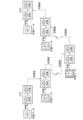
- FIG. 1 is a diagram illustrating an example of a learning model according to the present disclosure.
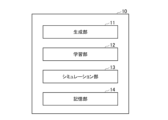
- FIG. 2 is a functional block diagram of a simulation device according to the present disclosure.
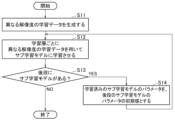
- FIG. 3 is a flowchart illustrating an example of learning according to the present disclosure.
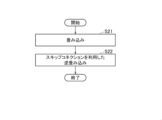
- FIG. 4 is a flowchart illustrating an example of a simulation according to the present disclosure.
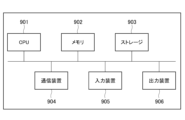
- FIG. 5 is a diagram illustrating an example of a hardware configuration of a simulation device according to the present disclosure.
- the learning model of the present disclosure will be described with reference to Figure 1.
- the learning model of the present disclosure is based on a U-Net model that is made up of multiple layers, and in each layer, symmetrically comprises an encoder that extracts features by convolution, and a decoder that restores the resolution of the extracted features by deconvolution.
- the deepest layer only comprises a decoder.
- the decoder performs deconvolution while referring to the features extracted by the encoder in the layer at the same depth. Note that, for ease of explanation, hereinafter, the layers in the learning model will also be referred to as "learning layers.”
- the learning model of the present disclosure comprises a learning model in each layer of multiple learning layers.
- the learning model in each layer is also referred to as a sub-learning model. That is, the learning model of the present disclosure comprises a sub-learning model in each layer of multiple learning layers.
- the simulation results of each sub-learning model are input and output between the sub-learning models continuously from the previous stage to the next stage, and the final simulation result is output.
- the sub-learning models constitute the above-mentioned encoder or decoder.
- the sub-learning model includes, for each learning layer, a fluid learning model ("Fluid” in the figure) that simulates fluid phenomena, and an organism learning model ("Organism” in the figure) that simulates organism phenomena.
- the fluid learning model is, for example, a surrogate model of a fluid physics model described by the Navier-Stokes equations.
- the organism learning model is, for example, a surrogate model of a biophysical model such as Biogeochemistry with Light, Iron, Nutrients and Gas (BLING), PlankTOM5, HAMOCC, PISCES, REcom2, and COBALT.
- the structure of the fluid learning model (number of layers, number of nodes, etc.) is the same regardless of the depth of the learning layer.
- the fluid learning model can output simulation results by specifying the resolution.
- the fluid learning model outputs simulation results by specifying a different resolution for each learning layer.
- the structure of the biological learning model (number of layers, number of nodes, etc.) varies depending on the depth of the learning layer.
- the biological learning model in the shallow layer is a model suitable for a case where the resolution for performing the simulation is low
- the biological learning model in the deep layer is a model suitable for a case where the resolution for performing the simulation is high.
- the biological learning model in the shallow layer may be BLING
- the biological learning model in the deep layer may be PlankTOM5. Therefore, the biological learning model differs for each learning layer, and outputs a simulation result of the corresponding resolution.
- a biological learning model corresponding to N 2 resolution is used in the shallowest layer (first layer) on the input/output side.
- a biological learning model corresponding to (N/2) 2 resolution is used in the next deepest layer (second layer), and so on.
- a biological learning model corresponding to (N/n) 2 resolution is used in the deepest layer (nth layer).
- the biological learning model corresponding to N 2 resolution is a surrogate model of the biophysical model corresponding to N 2 resolution.
- a biological learning model corresponding to (N/2) 2 resolution is a surrogate model of a biophysical model corresponding to (N/2) 2 resolution, and so on.
- a biological learning model corresponding to (N/n) 2 resolution is a surrogate model of a biophysical model corresponding to (N/n) 2 resolution.
- the resolution in the present disclosure is proportional to the depth of the learning layer.
- the structure of the biological learning model and the corresponding biophysical model differ depending on the resolution.
- the sub-learning models correspond to different resolutions for each learning layer. Therefore, the learning data to be trained by the sub-learning models also has a corresponding resolution for each learning layer.
- the learning data in the first layer is a simulation result of N2 resolution that is obtained by coupling the simulation result of N2 resolution output to the fluid physics model by specifying N2 resolution and the simulation result of N2 resolution output to the biophysics model corresponding to N2 resolution.
- subsequent stage and “previous stage” used here indicate the order of input and output, regardless of the depth of the learning layer. It does not necessarily mean that the deeper layer of the learning layer is the “subsequent stage”. As is clear from Figure 1, in the decoder, the shallower layer is the “subsequent stage”.
- the simulation device 10 of the present disclosure will be described with reference to FIG. 2.
- the simulation device 10 simulates a phenomenon in a marine ecosystem. For example, when a phenomenon in a marine ecosystem at a certain time is input to the simulation device 10, the simulation device 10 outputs the phenomenon in the marine ecosystem after a predetermined time has passed as a simulation result. In other words, the simulation device 10 simulates how the phenomenon in the marine ecosystem changes after a predetermined time has passed.
- the simulation device 10 includes a generation unit 11, a learning unit 12, a simulation unit 13, and a memory unit 14.
- the generation unit 11 generates training data using a fluid physics model with the same structure regardless of the resolution, and a biophysics model with a different structure corresponding to the resolution.
- a fluid physics model with the same structure regardless of the resolution
- a biophysics model with a different structure corresponding to the resolution.
- the generator 11 generates learning data for the fluid physics model by using a fluid physics model that expresses a fluid phenomenon. Specifically, the generator 11 specifies N2 resolution and causes the fluid physics model to output a simulation result of N2 resolution, and uses the simulation result as learning data for the fluid learning model.
- the generation unit 11 generates learning data for the biophysical model using a biophysical model that expresses a biological (biogeochemical) phenomenon. Specifically, the generation unit 11 causes the biophysical model corresponding to the N2 resolution to output a simulation result of the N2 resolution, and uses the simulation result as learning data for the biological learning model.
- the generation unit 11 couples these two sets of learning data to generate learning data of N2 resolution.
- the generation unit 11 generates learning data for sub-learning models in the second layer to the nth layer. That is, the generation unit 11 couples a simulation result of (N/2) 2 resolution, which is output to a fluid physics model by specifying (N/2) 2 resolution, with a simulation result of (N/2) 2 resolution, which is output to a biophysical model corresponding to the (N/2) 2 resolution, to generate learning data of (N/2) 2 resolution, ...
- the generation unit 11 generates learning data of N2 resolution to (N/n) 2 resolution as learning data for the sub-learning models in the 1st layer to the nth layer by using a fluid learning model having the same structure regardless of resolution and a biophysical model having a different structure corresponding to N2 resolution to (N/n) 2 resolution.
- the fluid physics model is, for example, a fluid physics model described by the Navier-Stokes equations.
- the biophysical model is, for example, Biogeochemistry with Light, Iron, Nutrients and Gas (BLING), PlankTOM5, HAMOCC, PISCES, REcom2, and COBALT.
- the learning unit 12 trains the sub-learning models in each layer of the above-mentioned learning model using the learning data with different resolutions for each learning layer generated by the generation unit 11. In other words, the learning unit 12 trains the sub-learning models for each learning layer using learning data with a resolution corresponding to the sub-learning model.
- the learning of the sub-learning models in the first layer of the learning model will be described, followed by the learning of the sub-learning models in the second to nth layers.
- the learning data trained for the sub-learning models is not limited to that generated by the generation unit 11, and may be generated separately from the simulation device 10. In this case, the simulation device 10 may omit the generation unit 11 from its configuration.
- the learning unit 12 trains the sub-learning models in the first layer using the learning data of N2 resolution.
- the sub-learning models in the first layer include a fluid learning model having the same structure in each layer and a biological learning model corresponding to N2 resolution.
- the fluid learning model is a surrogate model of the above-mentioned fluid physics model
- the biological learning model is a surrogate model of the above-mentioned biophysical model.
- the learning unit 12 trains the sub-learning models in the second layer using the learning data at (N/2) 2 resolution, ... trains the sub-learning models in the nth layer using the learning data at (N/n) 2 resolution.
- the sub-learning models in the second layer include fluid learning models with the same structure in each layer and a biological learning model corresponding to (N/2) 2 resolution, ... and the sub-learning models in the nth layer include fluid learning models with the same structure in each layer and a biological learning model corresponding to (N/n) 2 resolution. In this way, the biological learning models have different structures corresponding to the resolution in each layer.
- the learning unit 12 may set the parameters of the sub-learning model of the first-layer encoder that has been trained as the initial values of the parameters of the sub-learning model of the second-layer encoder. Similarly, the learning unit 12 may set the parameters of the sub-learning model of the second-layer decoder that has been trained as the initial values of the parameters of the sub-learning model of the first-layer decoder.
- the learning unit 12 may set the parameters of the sub-learning model of the encoder of the k-1th layer, which has already been trained, as the initial values of the parameters of the sub-learning model of the encoder of the kth layer.
- the learning unit 12 may set the parameters of the sub-learning model of the decoder of the kth layer, which has already been trained, as the initial values of the parameters of the sub-learning model of the decoder of the k-1th layer.
- the learning unit 12 uses the learning data of N2 resolution to (N/n) 2 resolution to train the sub-learning models in the 1st layer to the nth layer.
- the learning unit 12 uses the learning data of N2 resolution to (N/n) 2 resolution to train different biological learning models corresponding to the N2 resolution to (N/n) 2 resolution. In this way, the learning unit 12 trains the above-mentioned learning models.
- the simulation unit 13 executes a simulation using a learning model trained by the learning unit 12. For example, when the simulation unit 13 receives a phenomenon in a marine ecosystem at a certain time, it outputs the phenomenon in the marine ecosystem after a predetermined time has passed as a simulation result. In other words, the simulation unit 13 simulates how the phenomenon in the marine ecosystem changes after a predetermined time has passed. Specifically, when the simulation unit 13 uses a learning model such as that shown in FIG.
- the encoder sub-learning models in each layer sequentially convolve the simulation results for the input data input to the encoder sub-learning model in the first layer, and when the deepest layer is reached, the decoder sub-learning models in each layer sequentially deconvolve the simulation results, and output them as the final simulation results of the learning model.
- the above-mentioned skip connection may be used in this deconvolution.
- the memory unit 14 stores the learning model described above.
- the learning unit 12 trains the learning model stored in the memory unit 14, and the simulation unit 13 simulates the learning model stored in the memory unit 14.
- the storage unit 14 may also store the above-mentioned physical model.
- the generation unit 11 may generate learning data using the physical model stored in the storage unit 14.
- the storage unit 14 may also store learning data.
- the generation unit 11 generates learning data of different resolutions using a fluid physics model and a biophysics model (step S11). Specifically, the generation unit 11 couples learning data output to the fluid physics model with a specified resolution with learning data output to the biophysics model corresponding to the same resolution to generate learning data of that resolution. The generation unit 11 generates learning data of different resolutions as learning data for sub-learning models in the first to nth layers of the above-mentioned learning model.
- the learning unit 12 trains the sub-learning models using learning data with different resolutions for each learning layer (step S12).
- the order in which the learning unit 12 trains the sub-learning models will be explained with reference to FIG. 1.
- the learning unit 12 trains the sub-learning model of the encoder in the first layer. If there is a sub-learning model in the subsequent stage (YES in step S13), the learning unit 12 sets the parameters of the trained sub-learning model as the initial values of the parameters of the sub-learning model in the subsequent stage (step S14).
- the sub-learning model of the encoder in the second layer is located subsequent to the sub-learning model of the encoder in the first layer. Therefore, the learning unit 12 sets the parameters of the sub-learning model of the encoder in the first layer as the initial values of the parameters of the sub-learning model of the encoder in the second layer.
- the learning unit 12 repeats steps S12 and S13 (YES) until there are no more sub-learning models in the subsequent stages (NO in step S13).
- the learning unit 12 repeats steps S12 and S13 (YES) until there are no more sub-learning models in the subsequent stages (NO in step S13).
- the learning unit 12 repeats steps S12 and S13 (YES) until there are no more sub-learning models in the subsequent stages (NO in step S13).
- the learning unit 12 repeats steps S12 and S13 (YES) until there are no more sub-learning models in the subsequent stages (NO in step S13).
- simulation steps of the simulation device 10 simulation unit 13 of the present disclosure will be described with reference to FIG. 4. Note that it is assumed that the learning model has already been learned by the learning unit 12.
- the encoder sub-learning models in each layer sequentially perform convolution on the input data input to the encoder sub-learning model in the first layer (step S21).
- the decoder sub-learning models in each layer sequentially perform deconvolution (step S22). Note that the above-mentioned skip connection may be used in this deconvolution.
- the simulation device 10 of the present disclosure includes a simulation unit 13 that simulates a phenomenon in a marine ecosystem using a learning model that includes a sub-learning model for each learning layer, and a learning unit 12 that trains the sub-learning models using learning data with different resolutions for each learning layer.
- the sub-learning models include a fluid learning model that simulates a fluid phenomenon and an organism learning model that simulates an organism phenomenon, and the organism learning models differ for each learning layer.
- the simulation device 10 of the present disclosure focuses on the fact that, unlike fluid phenomena, biological (biogeochemical) phenomena differ depending on the resolution at which the simulation is performed when simulating phenomena in a marine ecosystem.
- the simulation device 10 uses a learning model that includes sub-learning models for each learning layer, each of which includes a fluid learning model of the same structure and an organism learning model of a different structure corresponding to the resolution, and further trains the sub-learning models using learning data of the corresponding resolution. This enables the simulation device 10 to accurately simulate phenomena in a marine ecosystem, which consists of fluid phenomena that remain the same regardless of resolution and organism phenomena that differ depending on the resolution.
- the learning model of the present disclosure increases the resolution used for learning the biological learning model in proportion to the depth of the learning layer, and the biological learning model also corresponds to the resolution.
- the simulation device 10 can reduce learning costs and improve calculation accuracy by using each coefficient and output of a neural network trained at a low resolution as the initial learning values and inputs at a high resolution.
- the learning device including the above-mentioned learning unit 12, the learning steps of the learning unit 12, and the learning model (trained model) that has been trained by the learning steps of the learning unit 12 are also aspects of the present disclosure.
- the resolution that the sub-learning model corresponds to is proportional to the depth of the learning layer in which the sub-learning model is provided, but this is not limited to this. In order to obtain the desired simulation results, adjustments may be made so that the relationship is not partially proportional.
- the simulation device 10 described above may be, for example, a general-purpose computer system including a central processing unit (CPU) 901, memory 902, storage 903, communication device 904, input device 905, and output device 906, as shown in FIG. 5.
- CPU central processing unit
- memory 902 memory 902, storage 903, communication device 904, input device 905, and output device 906, as shown in FIG. 5.
- the ocean carbon flux uncertainty quantification system is realized by the CPU 901 executing a predetermined program loaded onto the memory 902.
- This program can be recorded on a non-transitory computer-readable recording medium, such as a magnetic disk, optical disk, or semiconductor memory, or can be distributed via a network.
Landscapes
- Engineering & Computer Science (AREA)
- Theoretical Computer Science (AREA)
- Software Systems (AREA)
- Data Mining & Analysis (AREA)
- Evolutionary Computation (AREA)
- Medical Informatics (AREA)
- Computer Vision & Pattern Recognition (AREA)
- Physics & Mathematics (AREA)
- Computing Systems (AREA)
- General Engineering & Computer Science (AREA)
- General Physics & Mathematics (AREA)
- Mathematical Physics (AREA)
- Artificial Intelligence (AREA)
- Management, Administration, Business Operations System, And Electronic Commerce (AREA)
Abstract
シミュレーション装置は、階層ごとに異なる解像度に対応するサブ学習モデルを備え、前記サブ学習モデル間においてシミュレーション結果を入出力する学習モデルを用いて、海洋生態系の現象をシミュレーションするシミュレーション部と、対応する解像度の学習データと前段のサブ学習モデルの学習結果とを用いて、前記サブ学習モデルに学習させる学習部と、を備え、前記サブ学習モデルは、流体の現象をシミュレーションする流体学習モデルと、生物の現象をシミュレーションする生物学習モデルと、を備え、前記流体学習モデルの構造は、前記階層に拘わらず同じであり、前記生物学習モデルの構造は、前記階層ごとに異なる。
Description
本開示は、海洋生態系の現象をシミュレーションするシミュレーション装置、シミュレーション方法、プログラムに関する。
物理モデルによるシミュレーションは、高精度の予測を可能にする一方で、計算時間や計算リソースなどの計算コストが大きくなるきらいがある。このデメリットを解消する手段として、物理モデルを代替するサロゲートモデルが注目されている。
サロゲートモデルは、機械学習、例えばニューラルネットワークにより実現される。以下、機械学習により実現されるサロゲートモデルを、学習モデルともいう。学習モデルは、物理モデルによるシミュレーション結果(以下、学習データともいう。)を用いて訓練される。訓練された(学習済みの)学習モデルは、物理モデルに比べて低い計算コストでシミュレーションを実行することが出来る。
具体的な学習モデルとして、U-Netモデルが知られている。U-Netモデルは、複数の階層からなり、各層において、畳み込みにより特徴を抽出するエンコーダと、逆畳み込みにより抽出した特徴の解像度を元に戻すデコーダとを対称に備える。ただし、最深層においては、デコーダのみを備える。U-Netモデルの特徴は、同じ深さの層において、エンコーダからデコーダに抽出した特徴を入力するスキップコネクションにある。U-Netモデルは、このスキップコネクションによって、シミュレーションの精度を向上させることが出来る。
U-Netモデルには、様々な改良モデルが存在する。例えば、非特許文献1は、U-Netモデルにマルチグリッド法のアイデアを組み合わせるものである。具体的には、U-Netモデルの各層におけるグリッドを、3段階の解像度のグリッドに置き換え、これらの異なる解像度のグリッド間においてMax-pooling及びSub-samplingを実行するというものである。
Le, Quang Tuyen, and Chinchun Ooi. "Surrogate modeling of fluid dynamics with a multigrid inspired neural network architecture." Machine Learning with Applications 6 (2021): 100176.
非特許文献1は、このような改良モデルを、流体シミュレーションに活用している。しかしながら、海洋生態系の現象をシミュレーションするにあたっては、渦や潮流などの流体の現象だけでなく、流体の現象と連成する生物の現象をもシミュレーションする必要がある。なお、「生物の現象」とは、複数の生物間の相互作用によってやり取りされる化学物質を含む現象という意味に解されてもよく、「生物地球化学(Biogeochemistry)の現象」と呼ばれてもよい。
ここで、流体シミュレーションにおいては、シミュレーションを実行する解像度が異なっても、物理モデル(例えば、支配方程式となるNavier-Stokes方程式)を変更する必要はない。従って、物理モデルに対応する学習モデルの構造(層数、ノード数など)も変わらない。
一方で、生物シミュレーションにおいては、シミュレーションを実行する解像度が異なると、物理モデルも変更する必要がある。例えば、大型哺乳類や魚群を表現する場合と、魚一匹一匹を表現する場合と、動物プランクトンの動きを表現する場合とでは、それぞれに対応する物理モデルが必要になる。従って、物理モデルに対応する学習モデルの構造(層数、ノード数など)も、シミュレーションを実行する解像度に応じて変更する必要がある。
このような事情があり、従来技術では、海洋生態系の現象をシミュレーションすることが難しいという問題があった。
そこで、本開示は、このような状況に鑑みてなされたものであり、海洋生態系の現象をシミュレーションすることを目的とする。
本開示の一態様は、階層ごとに異なる解像度に対応するサブ学習モデルを備え、前記サブ学習モデル間においてシミュレーション結果を入出力する学習モデルを用いて、海洋生態系の現象をシミュレーションするシミュレーション部と、対応する解像度の学習データと前段のサブ学習モデルの学習結果とを用いて、前記サブ学習モデルに学習させる学習部と、を備え、前記サブ学習モデルは、流体の現象をシミュレーションする流体学習モデルと、生物の現象をシミュレーションする生物学習モデルと、を備え、前記流体学習モデルの構造は、前記階層に拘わらず同じであり、前記生物学習モデルの構造は、前記階層ごとに異なる、シミュレーション装置。
本開示の一態様は、階層ごとに異なる解像度に対応するサブ学習モデルを備え、前記サブ学習モデル間においてシミュレーション結果を入出力する学習モデルを用いて、海洋生態系の現象をシミュレーションするシミュレーションステップと、対応する解像度の学習データと前段のサブ学習モデルの学習結果とを用いて、前記サブ学習モデルに学習させる学習ステップと、を備え、前記サブ学習モデルは、流体の現象をシミュレーションする流体学習モデルと、生物の現象をシミュレーションする生物学習モデルと、を備え、前記流体学習モデルの構造は、前記階層に拘わらず同じであり、前記生物学習モデルの構造は、前記階層ごとに異なる、シミュレーション方法。
本開示によれば、海洋生態系の現象をシミュレーションすることができる。
以下、本開示の実施の形態について図面を参照して説明する。
図1を参照しつつ、本開示の学習モデルについて説明する。本開示の学習モデルは、複数の階層からなり、各層において、畳み込みにより特徴を抽出するエンコーダと、逆畳み込みにより抽出した特徴の解像度を元に戻すデコーダとを対称に備えるU-Netモデルをベースにしている。ただし、上述したように、最深層においてはデコーダのみを備える。また、図示はしないが、デコーダは、同じ深さの層のエンコーダが抽出した特徴を参照しつつ、逆畳み込みを行う。なお、以下では、学習モデルにおける階層を、説明の便宜上、「学習層」ともいう。
本開示の学習モデルは、複数の学習層の各層において、学習モデルを備える。以下では、各層における学習モデルをサブ学習モデルともいう。すなわち、本開示の学習モデルは、複数の学習層の各層において、サブ学習モデルを備える。本開示の学習モデルを用いたシミュレーションにおいては、サブ学習モデル間において、前段から後段へと連続的に各サブ学習モデルのシミュレーション結果が入出力され、最終的なシミュレーション結果が出力される。また、サブ学習モデルは、上述したエンコーダまたはデコーダを構成する。
図1に示すように、サブ学習モデルは、学習層ごとに、流体の現象をシミュレーションする流体学習モデル(図中の「流体」)と、生物の現象をシミュレーションする生物学習モデル(図中の「生物」)とを備える。流体学習モデルは、例えば、Navier-Stokes方程式により記述される流体物理モデルのサロゲートモデルである。生物学習モデルは、例えば、Biogeochemistry with Light, Iron, Nutrients and Gas (BLING)、PlankTOM5、HAMOCC、PISCES、REcom2、COBALTなどの生物物理モデルのサロゲートモデルである。
流体学習モデルの構造(層数、ノード数など)は、学習層の深さに拘わらず同じである。一方で、流体学習モデルは、解像度を指定してシミュレーション結果を出力することが出来る。上述した学習モデルにおいて、流体学習モデルは、学習層ごとに、異なる解像度を指定してシミュレーション結果を出力する。
生物学習モデルの構造(層数、ノード数など)は、学習層の深さによって異なる。具体的には、浅い層の生物学習モデルは、シミュレーションを実行する解像度が低い場合に適したモデルであり、深い層の生物学習モデルは、シミュレーションを実行する解像度が高い場合に適したモデルである。例えば、浅い層の生物学習モデルがBLINGであり、深い層の生物学習モデルがPlankTOM5であってもよい。従って、生物学習モデルは、学習層ごとに異なり、対応する解像度のシミュレーション結果を出力する。図1の例で説明すると、入力/出力側の最も浅い層(第1層)においては、N2解像度に対応する生物学習モデルが用いられる。同様に、次に深い層(第2層)においては、(N/2)2解像度に対応する生物学習モデルが用いられ、・・・最深層(第n層)においては、(N/n)2解像度に対応する生物学習モデルが用いられる。なお、N2解像度に対応する生物学習モデルは、N2解像度に対応する生物物理モデルのサロゲートモデルである。同様に、(N/2)2解像度に対応する生物学習モデルは、(N/2)2解像度に対応する生物物理モデルのサロゲートモデルであり、・・・(N/n)2解像度に対応する生物学習モデルは、(N/n)2解像度に対応する生物物理モデルのサロゲートモデルである。このように、本開示における解像度は、学習層の深さに比例する。また、生物学習モデルの構造及び対応する生物物理モデルは、解像度に対応して異なる。
以上のように、サブ学習モデルは、学習層ごとに、異なる解像度に対応する。従って、サブ学習モデルに学習させる学習データも、学習層ごとに、対応する解像度のものが用いられる。図1の例で説明すると、第1層における学習データは、N2解像度を指定して流体物理モデルに出力させたN2解像度のシミュレーション結果と、N2解像度に対応する生物物理モデルに出力させたN2解像度のシミュレーション結果とをカップリングしたN2解像度のシミュレーション結果である。同様に、第2層における学習データは、(N/2)2解像度を指定して流体物理モデルに出力させた(N/2)2解像度のシミュレーション結果と、(N/2)2解像度に対応する生物物理モデルに出力させた(N/2)2解像度のシミュレーション結果とをカップリングした(N/2)2解像度のシミュレーション結果であり、・・・第n層における学習データは、(N/n)2解像度を指定して流体物理モデルに出力させた(N/n)2解像度のシミュレーション結果と、(N/n)2解像度に対応する生物物理モデルに出力させた(N/n)2解像度のシミュレーション結果とをカップリングした(N/n)2解像度のシミュレーション結果である。このように、本開示における学習データは、学習層ごとに異なる解像度のものが用いられる。
また、学習データにより学習済みとなったサブ学習モデルは、その学習結果を後段のサブ学習モデルに入力してもよい。すなわち、サブ学習モデルは、その学習において、対応する解像度の学習データに加え、前段のサブ学習モデルの学習結果を用いてもよい。例えば、学習により最適化されたサブ学習モデルのパラメータを、後段のサブ学習モデルのパラメータの初期値としてもよい。別の言い方をすれば、サブ学習モデルは、前段のサブ学習モデルのパラメータを自身の初期パラメータとした上で、学習データにより学習されてもよい。学習モデルのパラメータは、例えば、当該学習モデルを実現するニューラルネットワークのノード間における重みづけの係数である。なお、ここで言うところの「後段」「前段」は、学習層の深さとは関係なく、入出力の順序を示すものである。必ずしも学習層の深い方の層が「後段」という意味ではない。図1からも明らかなように、デコーダにおいては、浅い方の層が「後段」となる。
図2を参照しつつ、本開示のシミュレーション装置10について説明する。シミュレーション装置10は、海洋生態系の現象をシミュレーションする。シミュレーション装置10は、例えば、ある時間における海洋生態系の現象を入力すると、所定の時間が経過した後の海洋生態系の現象をシミュレーション結果として出力する。別の言い方をすれば、シミュレーション装置10は、所定の時間が経過した後に、海洋生態系の現象がどのように変化するかをシミュレーションする。図2に示すように、シミュレーション装置10は、生成部11と、学習部12と、シミュレーション部13と、記憶部14と、を備える。
生成部11は、解像度に拘わらず同じ構造の流体物理モデルと、解像度に対応して異なる構造の生物物理モデルとを用いて、学習データを生成する。まず、上述した学習モデルの第1層におけるサブ学習モデル用の学習データの生成について説明し、続いて、第2層~第n層におけるサブ学習モデル用の学習データの生成について説明する。
まず、生成部11は、流体の現象を表現する流体物理モデルを用いて、流体物理モデル用の学習データを生成する。具体的には、生成部11は、N2解像度を指定して流体物理モデルにN2解像度のシミュレーション結果を出力させ、このシミュレーション結果を流体学習モデル用の学習データとする。
また、生成部11は、生物(生物地球化学)の現象を表現する生物物理モデルを用いて、生物物理モデル用の学習データを生成する。具体的には、生成部11は、N2解像度に対応する生物物理モデルにN2解像度のシミュレーション結果を出力させ、このシミュレーション結果を生物学習モデル用の学習データとする。
最後に、生成部11は、これら2つの学習データをカップリングし、N2解像度の学習データを生成する。
同様に、生成部11は、第2層~第n層におけるサブ学習モデル用の学習データを生成する。すなわち、生成部11は、(N/2)2解像度を指定して流体物理モデルに出力させた(N/2)2解像度のシミュレーション結果と、(N/2)2解像度に対応する生物物理モデルに出力させた(N/2)2解像度のシミュレーション結果とをカップリングし、(N/2)2解像度の学習データを生成し、・・・(N/n)2解像度を指定して流体物理モデルに出力させた(N/n)2解像度のシミュレーション結果と、(N/n)2解像度に対応する生物物理モデルに出力させた(N/n)2解像度のシミュレーション結果とをカップリングし、(N/n)2解像度の学習データを生成する。
以上のように、生成部11は、第1層~第n層におけるサブ学習モデル用の学習データとして、解像度に拘わらず同じ構造の流体学習モデルと、N2解像度~(N/n)2解像度に対応して異なる構造の生物物理モデルを用いて、N2解像度~(N/n)2解像度の学習データを生成する。
なお、流体物理モデルは、例えば、Navier-Stokes方程式により記述される流体物理モデルである。また、生物物理モデルは、例えば、Biogeochemistry with Light, Iron, Nutrients and Gas (BLING)、PlankTOM5、HAMOCC、PISCES、REcom2、COBALTである。
学習部12は、生成部11が生成した、学習層ごとに異なる解像度の学習データを用いて、上述した学習モデルの各層におけるサブ学習モデルに学習させる。別の言い方をすれば、学習部12は、学習層ごとに、サブ学習モデルに対応する解像度の学習データを用いて、当該サブ学習モデルに学習させる。まず、学習モデルの第1層におけるサブ学習モデルの学習について説明し、続いて、第2層~第n層におけるサブ学習モデルの学習について説明する。なお、サブ学習モデルに学習させる学習データは、生成部11が生成したものに限られず、シミュレーション装置10とは別に生成されてもよい。この場合、シミュレーション装置10は、その構成として生成部11を省略してもよい。
まず、学習部12は、N2解像度の学習データを用いて、第1層におけるサブ学習モデルに学習させる。第1層におけるサブ学習モデルは、各層において同じ構造の流体学習モデルと、N2解像度に対応する生物学習モデルとを備える。なお、流体学習モデルは、上述した流体物理モデルのサロゲートモデルであり、生物学習モデルは、上述した生物物理モデルのサロゲートモデルである。
次に、学習部12は、(N/2)2解像度の学習データを用いて、第2層におけるサブ学習モデルに学習させ、・・・(N/n)2解像度の学習データを用いて、第n層におけるサブ学習モデルに学習させる。第2層におけるサブ学習モデルは、各層において同じ構造の流体学習モデルと、(N/2)2解像度に対応する生物学習モデルとを備え、・・・第n層におけるサブ学習モデルは、各層において同じ構造の流体学習モデルと、(N/n)2解像度に対応する生物学習モデルとを備える。このように、生物学習モデルは、各層において、解像度に対応して構造が異なる。
ここで、学習部12は、学習済みとなった第1層のエンコーダのサブ学習モデルのパラメータを、第2層のエンコーダのサブ学習モデルのパラメータの初期値としてもよい。同様に、学習部12は、学習済みとなった第2層のデコーダのサブ学習モデルのパラメータを、第1層のデコーダのサブ学習モデルのパラメータの初期値としてもよい。
すなわち、学習部12は、学習済みとなった第k-1層のエンコーダのサブ学習モデルのパラメータを、第k層のエンコーダのサブ学習モデルのパラメータの初期値としてもよい。同様に、学習部12は、学習済みとなった第k層のデコーダのサブ学習モデルのパラメータを、第k-1層のデコーダのサブ学習モデルのパラメータの初期値としてもよい。なお、kは2以上n以下の正の整数であり、k=nの場合に、「第k層のエンコーダのサブ学習モデル」は、「第k層のデコーダのサブ学習モデル」に読み替えられる。
以上のように、学習部12は、N2解像度~(N/n)2解像度の学習データを用いて、第1層~第n層におけるサブ学習モデルに学習させる。特に、学習部12は、N2解像度~(N/n)2解像度の学習データを用いて、N2解像度~(N/n)2解像度に対応して異なる生物学習モデルに学習させる。これにより、学習部12は、上述した学習モデルに学習させる。
シミュレーション部13は、学習部12により訓練された学習済みの学習モデルを用いて、シミュレーションを実行する。シミュレーション部13は、例えば、ある時間における海洋生態系の現象を入力すると、所定の時間が経過した後の海洋生態系の現象をシミュレーション結果として出力する。別の言い方をすれば、シミュレーション部13は、所定の時間が経過した後に、海洋生態系の現象がどのように変化するかをシミュレーションする。具体的には、シミュレーション部13は、図1に示すような学習モデルを用いる場合、第1層のエンコーダのサブ学習モデルに入力された入力データに対して、各層におけるエンコーダのサブ学習モデルが順次シミュレーション結果の畳み込みを行い、最深層に到達すると、次は各層におけるデコーダのサブ学習モデルが順次シミュレーション結果の逆畳み込みを行い、学習モデルの最終的なシミュレーション結果として出力する。なお、この逆畳み込みにおいては、上述したスキップコネクションが利用されてもよい。
記憶部14は、上述した学習モデルを記憶する。学習部12は、記憶部14が記憶する学習モデルに学習させ、シミュレーション部13は、記憶部14が記憶する学習モデルにシミュレーションさせる。
また、記憶部14は、上述した物理モデルを記憶してもよい。生成部11は、記憶部14が記憶する物理モデルを用いて、学習データを生成してもよい。なお、記憶部14は、学習データを記憶してもよい。
図3を参照しつつ、本開示の学習モデルの学習ステップについて説明する。まず、生成部11は、流体物理モデルと生物物理モデルとを用いて、異なる解像度の学習データを生成する(ステップS11)。具体的には、生成部11は、解像度を指定して流体物理モデルに出力させた学習データと、同じ解像度に対応する生物物理モデルに出力させた学習データとをカップリングして、当該解像度の学習データとする。生成部11は、上述した学習モデルの第1層~第n層におけるサブ学習モデル用の学習データとして、異なる解像度の学習データを生成する。
次に、学習部12は、学習層ごとに異なる解像度の学習データを用いて、サブ学習モデルに学習させる(ステップS12)。ここで、学習部12がサブ学習モデルに学習させる順序について、図1を参照しつつ説明する。
まず、学習部12は、第1層におけるエンコーダのサブ学習モデルに学習させる。学習部12は、後段にサブ学習モデルがある場合(ステップS13のYES)、学習済みのサブ学習モデルのパラメータを、後段のサブ学習モデルのパラメータの初期値とする(ステップS14)。ここで、図1の例においては、第1層におけるエンコーダのサブ学習モデルの後段に、第2層におけるエンコーダのサブ学習モデルがある。従って、学習部12は、第1層におけるエンコーダのサブ学習モデルのパラメータを、第2層におけるエンコーダのサブ学習モデルのパラメータの初期値とする。
この後、学習部12は、後段にサブ学習モデルがなくなるまで(ステップS13のNO)、ステップS12及びステップS13のYESを繰り返す。ここで、図1の例に戻ると、第1層におけるデコーダのサブ学習モデルの後段に、サブ学習モデルはない。これにより、図3に示すように、学習モデルの学習ステップは終了する。
最後に、図4を参照しつつ、本開示のシミュレーション装置10(シミュレーション部13)のシミュレーションステップについて説明する。なお、学習モデルは、学習部12により、既に学習済みであるものとする。
図1に示すような学習モデルを用いる場合、第1層のエンコーダのサブ学習モデルに入力された入力データに対して、各層におけるエンコーダのサブ学習モデルが順次畳み込みを行う(ステップS21)。最深層に到達すると、次は各層におけるデコーダのサブ学習モデルが順次逆畳み込みを行う(ステップS22)。なお、この逆畳み込みにおいては、上述したスキップコネクションが利用されてもよい。
以上のように、本開示のシミュレーション装置10は、学習層ごとにサブ学習モデルを備える学習モデルを用いて、海洋生態系の現象をシミュレーションするシミュレーション部13と、学習層ごとに異なる解像度の学習データを用いて、サブ学習モデルに学習させる学習部12と、を備える。また、本開示のシミュレーション装置10において、サブ学習モデルは、流体の現象をシミュレーションする流体学習モデルと、生物の現象をシミュレーションする生物学習モデルと、を備え、生物学習モデルは、学習層ごとに異なる。
本開示のシミュレーション装置10は、海洋生態系の現象をシミュレーションするにあたって、流体の現象と異なり、生物(生物地球化学)の現象が、シミュレーションを実行する解像度によって異なることに着目したものである。具体的には、シミュレーション装置10は、同じ構造の流体学習モデルと、解像度に対応して異なる構造の生物学習モデルとを備えるサブ学習モデルを、学習層ごとに備える学習モデルを用い、さらに、対応する解像度の学習データを用いてサブ学習モデルに学習させる。これにより、シミュレーション装置10は、解像度に拘わらず変わらない流体の現象と解像度によって異なる生物の現象とからなる海洋生態系の現象を、精確にシミュレーションすることが出来る。
特に、本開示の学習モデルは、学習層の深さに比例するように、生物学習モデルの学習に用いられる解像度を高め、生物学習モデルも解像度に対応するものとした。これにより、シミュレーション装置10は、低い解像度から計算し、低い解像度の解を高い解像度の計算に活用するというマルチグリッド法のアドバンテージを得ることが出来る。具体的には、シミュレーション装置10は、低解像度で学習したニューラルネットワークの各係数や出力を、高解像度での学習初期値や入力として利用することで、学習コストの削減及び計算精度の向上という効果を奏することが出来る。
なお、上述した学習部12を備える学習装置、学習部12の学習ステップ、学習部12の学習ステップにより学習済みとなった学習モデル(学習済みモデル)も、本開示の一態様である。
なお、上述した開示においては、サブ学習モデルが対応する解像度は、当該サブ学習モデルが設けられる学習層の深さに比例するものとしたが、これに限られない。所望のシミュレーション結果を得るために、部分的に比例関係にならないように調整してもよい。
上記説明したシミュレーション装置10には、例えば、図5に示すような、中央演算処理装置(CPU)901と、メモリ902と、ストレージ903と、通信装置904と、入力装置905と、出力装置906とを備える汎用的なコンピュータシステムを用いることができる。このコンピュータシステムにおいて、CPU901がメモリ902上にロードされた所定のプログラムを実行することにより、海洋炭素フラックス不確実定量化システムが実現される。このプログラムは磁気ディスク、光ディスク、半導体メモリなどの、コンピュータが読み取り可能な非一時的な記録媒体に記録することも、ネットワークを介して配信することもできる。
10 シミュレーション装置
11 生成部
12 学習部
13 シミュレーション部
14 記憶部
11 生成部
12 学習部
13 シミュレーション部
14 記憶部
Claims (7)
- 階層ごとに異なる解像度に対応するサブ学習モデルを備え、前記サブ学習モデル間においてシミュレーション結果を入出力する学習モデルを用いて、海洋生態系の現象をシミュレーションするシミュレーション部と、
対応する解像度の学習データと前段のサブ学習モデルの学習結果とを用いて、前記サブ学習モデルに学習させる学習部と、
を備え、
前記サブ学習モデルは、
流体の現象をシミュレーションする流体学習モデルと、
生物の現象をシミュレーションする生物学習モデルと、
を備え、
前記流体学習モデルの構造は、前記階層に拘わらず同じであり、
前記生物学習モデルの構造は、前記階層ごとに異なる、
シミュレーション装置。 - 前記解像度は、前記階層の深さに比例する、
請求項1に記載のシミュレーション装置。 - 前記学習部は、前記解像度に対応して異なる前記生物学習モデルを用いて、前記サブ学習モデルに学習させる、
請求項2に記載のシミュレーション装置。 - 前記流体の現象を表現する流体物理モデルと、前記生物の現象を表現する生物物理モデルとを用いて、前記学習データを生成する生成部を備え、
前記生成部は、前記解像度に対応して異なる前記生物物理モデルを用いて、前記学習データを生成する、
請求項3に記載のシミュレーション装置。 - 前記学習部は、前段の前記サブ学習モデルのパラメータを、前記サブ学習モデルのパラメータの初期値として用いる、
請求項1に記載のシミュレーション装置。 - 階層ごとに異なる解像度に対応するサブ学習モデルを備え、前記サブ学習モデル間においてシミュレーション結果を入出力する学習モデルを用いて、海洋生態系の現象をシミュレーションするシミュレーションステップと、
対応する解像度の学習データと前段のサブ学習モデルの学習結果とを用いて、前記サブ学習モデルに学習させる学習ステップと、
を備え、
前記サブ学習モデルは、
流体の現象をシミュレーションする流体学習モデルと、
生物の現象をシミュレーションする生物学習モデルと、
を備え、
前記流体学習モデルの構造は、前記階層に拘わらず同じであり、
前記生物学習モデルの構造は、前記階層ごとに異なる、
シミュレーション方法。 - 請求項1乃至5のいずれかに記載のシミュレーション装置の各部としてコンピュータを動作させるプログラム。
Priority Applications (2)
| Application Number | Priority Date | Filing Date | Title |
|---|---|---|---|
| PCT/JP2023/023356 WO2024262018A1 (ja) | 2023-06-23 | 2023-06-23 | シミュレーション装置、シミュレーション方法、プログラム |
| JP2025527393A JPWO2024262018A1 (ja) | 2023-06-23 | 2023-06-23 |
Applications Claiming Priority (1)
| Application Number | Priority Date | Filing Date | Title |
|---|---|---|---|
| PCT/JP2023/023356 WO2024262018A1 (ja) | 2023-06-23 | 2023-06-23 | シミュレーション装置、シミュレーション方法、プログラム |
Publications (1)
| Publication Number | Publication Date |
|---|---|
| WO2024262018A1 true WO2024262018A1 (ja) | 2024-12-26 |
Family
ID=93935251
Family Applications (1)
| Application Number | Title | Priority Date | Filing Date |
|---|---|---|---|
| PCT/JP2023/023356 Ceased WO2024262018A1 (ja) | 2023-06-23 | 2023-06-23 | シミュレーション装置、シミュレーション方法、プログラム |
Country Status (2)
| Country | Link |
|---|---|
| JP (1) | JPWO2024262018A1 (ja) |
| WO (1) | WO2024262018A1 (ja) |
Citations (1)
| Publication number | Priority date | Publication date | Assignee | Title |
|---|---|---|---|---|
| JP2022082681A (ja) * | 2019-04-15 | 2022-06-02 | 国立研究開発法人理化学研究所 | 環境因子予測装置、方法、プログラム、学習済モデルおよび記憶媒体 |
-
2023
- 2023-06-23 WO PCT/JP2023/023356 patent/WO2024262018A1/ja not_active Ceased
- 2023-06-23 JP JP2025527393A patent/JPWO2024262018A1/ja active Pending
Patent Citations (1)
| Publication number | Priority date | Publication date | Assignee | Title |
|---|---|---|---|---|
| JP2022082681A (ja) * | 2019-04-15 | 2022-06-02 | 国立研究開発法人理化学研究所 | 環境因子予測装置、方法、プログラム、学習済モデルおよび記憶媒体 |
Non-Patent Citations (1)
| Title |
|---|
| REN TINGDI, XU HAIYONG, JIANG GANGYI, YU MEI, ZHANG XUAN, WANG BIAO, LUO TING: "Reinforced Swin-Convs Transformer for Simultaneous Underwater Sensing Scene Image Enhancement and Super-resolution", IEEE TRANSACTIONS ON GEOSCIENCE AND REMOTE SENSING, IEEE, USA, vol. 60, 1 January 2022 (2022-01-01), USA, pages 1 - 16, XP093251709, ISSN: 0196-2892, DOI: 10.1109/TGRS.2022.3205061 * |
Also Published As
| Publication number | Publication date |
|---|---|
| JPWO2024262018A1 (ja) | 2024-12-26 |
Similar Documents
| Publication | Publication Date | Title |
|---|---|---|
| Ye et al. | Inverted pyramid multi-task transformer for dense scene understanding | |
| Thuerey et al. | Physics-based deep learning | |
| EP4018390B1 (en) | Resource constrained neural network architecture search | |
| CN111860759B (zh) | 数据的自主修改的方法和系统 | |
| CN114424208A (zh) | 门控注意力神经网络 | |
| US20240232519A1 (en) | Automated notebook completion using sequence-to-sequence transformer | |
| KR20190117713A (ko) | 신경망 아키텍처 최적화 | |
| KR102063562B1 (ko) | 포인터 네트워크의 학습을 통해 고품질의 메쉬 구조의 생성을 지원하기 위한 그래픽 처리 장치 및 그 동작 방법 | |
| KR20220032861A (ko) | 하드웨어에서의 성능을 고려한 뉴럴 아키텍처 서치 방법 빛 장치 | |
| CN117196908A (zh) | 基于认知神经科学的多模态混合教学资源构建方法及系统 | |
| CN121213307A (zh) | 一种基于大数据分析的线上多端互联产教融合精准管理系统 | |
| US20260057583A1 (en) | Visual Prompt Tuning for Generative Transfer Learning | |
| Gaihua et al. | Instance segmentation convolutional neural network based on multi-scale attention mechanism | |
| CN115511070B (zh) | 模型训练方法、装置及可读存储介质 | |
| CN114282651B (zh) | 光流预测模型的训练方法及系统和视频生成方法及系统 | |
| CN119830033B (zh) | 一种支持动态上下文的知识追踪方法及系统 | |
| CN120047332B (zh) | 一种结构扰动指导和一致性蒸馏融合的扩散模型图像生成方法及装置 | |
| CN114580252A (zh) | 一种用于流体仿真的图神经网络仿真方法及系统 | |
| WO2024262018A1 (ja) | シミュレーション装置、シミュレーション方法、プログラム | |
| CN117313641A (zh) | 光刻掩膜生成模型的训练方法、装置、设备及存储介质 | |
| CN118553346A (zh) | 设定有效导热率的多孔材料微观结构生成方法及相关装置 | |
| CN114528975B (zh) | 深度学习模型训练方法、系统及介质 | |
| CN119399300A (zh) | 一种多模态大模型指导的监管指令图像生成方法及设备 | |
| CN118984414A (zh) | 基于扩散模型的视频生成方法、装置以及设备 | |
| JP7438544B2 (ja) | ニューラルネットワーク処理装置、コンピュータプログラム、ニューラルネットワーク製造方法、ニューラルネットワークデータの製造方法、ニューラルネットワーク利用装置、及びニューラルネットワーク小規模化方法 |
Legal Events
| Date | Code | Title | Description |
|---|---|---|---|
| 121 | Ep: the epo has been informed by wipo that ep was designated in this application |
Ref document number: 23942449 Country of ref document: EP Kind code of ref document: A1 |
|
| ENP | Entry into the national phase |
Ref document number: 2025527393 Country of ref document: JP Kind code of ref document: A |
|
| WWE | Wipo information: entry into national phase |
Ref document number: 2025527393 Country of ref document: JP |
|
| NENP | Non-entry into the national phase |
Ref country code: DE |