WO2024259435A2 - Sequestrant compounds for alpha 2 adrenergic agonists - Google Patents
Sequestrant compounds for alpha 2 adrenergic agonists Download PDFInfo
- Publication number
- WO2024259435A2 WO2024259435A2 PCT/US2024/034379 US2024034379W WO2024259435A2 WO 2024259435 A2 WO2024259435 A2 WO 2024259435A2 US 2024034379 W US2024034379 W US 2024034379W WO 2024259435 A2 WO2024259435 A2 WO 2024259435A2
- Authority
- WO
- WIPO (PCT)
- Prior art keywords
- alkyl
- independently selected
- halogen
- substituted
- pharmaceutically acceptable
- Prior art date
- Legal status (The legal status is an assumption and is not a legal conclusion. Google has not performed a legal analysis and makes no representation as to the accuracy of the status listed.)
- Ceased
Links
Classifications
-
- A—HUMAN NECESSITIES
- A61—MEDICAL OR VETERINARY SCIENCE; HYGIENE
- A61K—PREPARATIONS FOR MEDICAL, DENTAL OR TOILETRY PURPOSES
- A61K45/00—Medicinal preparations containing active ingredients not provided for in groups A61K31/00 - A61K41/00
- A61K45/06—Mixtures of active ingredients without chemical characterisation, e.g. antiphlogistics and cardiaca
-
- A—HUMAN NECESSITIES
- A61—MEDICAL OR VETERINARY SCIENCE; HYGIENE
- A61K—PREPARATIONS FOR MEDICAL, DENTAL OR TOILETRY PURPOSES
- A61K31/00—Medicinal preparations containing organic active ingredients
- A61K31/045—Hydroxy compounds, e.g. alcohols; Salts thereof, e.g. alcoholates
- A61K31/05—Phenols
-
- A—HUMAN NECESSITIES
- A61—MEDICAL OR VETERINARY SCIENCE; HYGIENE
- A61K—PREPARATIONS FOR MEDICAL, DENTAL OR TOILETRY PURPOSES
- A61K31/00—Medicinal preparations containing organic active ingredients
- A61K31/095—Sulfur, selenium, or tellurium compounds, e.g. thiols
-
- A—HUMAN NECESSITIES
- A61—MEDICAL OR VETERINARY SCIENCE; HYGIENE
- A61K—PREPARATIONS FOR MEDICAL, DENTAL OR TOILETRY PURPOSES
- A61K31/00—Medicinal preparations containing organic active ingredients
- A61K31/13—Amines
- A61K31/135—Amines having aromatic rings, e.g. ketamine, nortriptyline
- A61K31/137—Arylalkylamines, e.g. amphetamine, epinephrine, salbutamol, ephedrine or methadone
-
- A—HUMAN NECESSITIES
- A61—MEDICAL OR VETERINARY SCIENCE; HYGIENE
- A61K—PREPARATIONS FOR MEDICAL, DENTAL OR TOILETRY PURPOSES
- A61K31/00—Medicinal preparations containing organic active ingredients
- A61K31/185—Acids; Anhydrides, halides or salts thereof, e.g. sulfur acids, imidic, hydrazonic or hydroximic acids
- A61K31/19—Carboxylic acids, e.g. valproic acid
- A61K31/194—Carboxylic acids, e.g. valproic acid having two or more carboxyl groups, e.g. succinic, maleic or phthalic acid
-
- A—HUMAN NECESSITIES
- A61—MEDICAL OR VETERINARY SCIENCE; HYGIENE
- A61K—PREPARATIONS FOR MEDICAL, DENTAL OR TOILETRY PURPOSES
- A61K31/00—Medicinal preparations containing organic active ingredients
- A61K31/33—Heterocyclic compounds
- A61K31/395—Heterocyclic compounds having nitrogen as a ring hetero atom, e.g. guanethidine or rifamycins
- A61K31/41—Heterocyclic compounds having nitrogen as a ring hetero atom, e.g. guanethidine or rifamycins having five-membered rings with two or more ring hetero atoms, at least one of which being nitrogen, e.g. tetrazole
- A61K31/4164—1,3-Diazoles
- A61K31/4188—1,3-Diazoles condensed with other heterocyclic ring systems, e.g. biotin, sorbinil
-
- A—HUMAN NECESSITIES
- A61—MEDICAL OR VETERINARY SCIENCE; HYGIENE
- A61K—PREPARATIONS FOR MEDICAL, DENTAL OR TOILETRY PURPOSES
- A61K31/00—Medicinal preparations containing organic active ingredients
- A61K31/33—Heterocyclic compounds
- A61K31/395—Heterocyclic compounds having nitrogen as a ring hetero atom, e.g. guanethidine or rifamycins
- A61K31/435—Heterocyclic compounds having nitrogen as a ring hetero atom, e.g. guanethidine or rifamycins having six-membered rings with one nitrogen as the only ring hetero atom
- A61K31/44—Non condensed pyridines; Hydrogenated derivatives thereof
- A61K31/445—Non condensed piperidines, e.g. piperocaine
-
- A—HUMAN NECESSITIES
- A61—MEDICAL OR VETERINARY SCIENCE; HYGIENE
- A61K—PREPARATIONS FOR MEDICAL, DENTAL OR TOILETRY PURPOSES
- A61K31/00—Medicinal preparations containing organic active ingredients
- A61K31/33—Heterocyclic compounds
- A61K31/395—Heterocyclic compounds having nitrogen as a ring hetero atom, e.g. guanethidine or rifamycins
- A61K31/435—Heterocyclic compounds having nitrogen as a ring hetero atom, e.g. guanethidine or rifamycins having six-membered rings with one nitrogen as the only ring hetero atom
- A61K31/44—Non condensed pyridines; Hydrogenated derivatives thereof
- A61K31/445—Non condensed piperidines, e.g. piperocaine
- A61K31/4468—Non condensed piperidines, e.g. piperocaine having a nitrogen directly attached in position 4, e.g. clebopride, fentanyl
-
- A—HUMAN NECESSITIES
- A61—MEDICAL OR VETERINARY SCIENCE; HYGIENE
- A61K—PREPARATIONS FOR MEDICAL, DENTAL OR TOILETRY PURPOSES
- A61K31/00—Medicinal preparations containing organic active ingredients
- A61K31/33—Heterocyclic compounds
- A61K31/395—Heterocyclic compounds having nitrogen as a ring hetero atom, e.g. guanethidine or rifamycins
- A61K31/435—Heterocyclic compounds having nitrogen as a ring hetero atom, e.g. guanethidine or rifamycins having six-membered rings with one nitrogen as the only ring hetero atom
- A61K31/46—8-Azabicyclo [3.2.1] octane; Derivatives thereof, e.g. atropine, cocaine
-
- A—HUMAN NECESSITIES
- A61—MEDICAL OR VETERINARY SCIENCE; HYGIENE
- A61K—PREPARATIONS FOR MEDICAL, DENTAL OR TOILETRY PURPOSES
- A61K31/00—Medicinal preparations containing organic active ingredients
- A61K31/33—Heterocyclic compounds
- A61K31/395—Heterocyclic compounds having nitrogen as a ring hetero atom, e.g. guanethidine or rifamycins
- A61K31/54—Heterocyclic compounds having nitrogen as a ring hetero atom, e.g. guanethidine or rifamycins having six-membered rings with at least one nitrogen and one sulfur as the ring hetero atoms, e.g. sulthiame
-
- A—HUMAN NECESSITIES
- A61—MEDICAL OR VETERINARY SCIENCE; HYGIENE
- A61P—SPECIFIC THERAPEUTIC ACTIVITY OF CHEMICAL COMPOUNDS OR MEDICINAL PREPARATIONS
- A61P25/00—Drugs for disorders of the nervous system
- A61P25/30—Drugs for disorders of the nervous system for treating abuse or dependence
-
- A—HUMAN NECESSITIES
- A61—MEDICAL OR VETERINARY SCIENCE; HYGIENE
- A61P—SPECIFIC THERAPEUTIC ACTIVITY OF CHEMICAL COMPOUNDS OR MEDICINAL PREPARATIONS
- A61P25/00—Drugs for disorders of the nervous system
- A61P25/30—Drugs for disorders of the nervous system for treating abuse or dependence
- A61P25/36—Opioid-abuse
-
- A—HUMAN NECESSITIES
- A61—MEDICAL OR VETERINARY SCIENCE; HYGIENE
- A61K—PREPARATIONS FOR MEDICAL, DENTAL OR TOILETRY PURPOSES
- A61K2300/00—Mixtures or combinations of active ingredients, wherein at least one active ingredient is fully defined in groups A61K31/00 - A61K41/00
Definitions
- the present disclosure provides methods and compositions for reducing an ⁇ 2 adrenergic receptor agonist in the body of a patient. Also provided are methods and compositions for preventing or treating an overdose from an ⁇ 2 adrenergic receptor agonist, or from the combination of an ⁇ 2 adrenergic receptor agonist with another drug of abuse, by administering to the patient a therapeutically effective amount of a sequestration agent.
- the DEA has seized xylazine and fentanyl mixtures in 48 of 50 states, and the DEA reported that approximately 23% of fentanyl powder and 7% of fentanyl pills seized by the DEA in 2022 contained xylazine.
- xylazine overdose or intoxication both for xylazine alone and when xylazine is combined with other drugs of abuse.
- SUMMARY [0006] The present disclosure provides methods and compositions for addressing these and other circumstances wherein it is desirable to reverse the effect of one or more drugs of abuse which comprises an ⁇ 2 adrenergic receptor agonist.
- the sequestration agent may be administered to the patient orally and/or intravenously.
- the composition comprising the sequestration agent is administered to the patient, and sequesters the ⁇ 2 adrenergic receptor agonist and other drug of abuse, if present, and removes the drugs from the patient’s body.
- the ⁇ 2 adrenergic receptor agonist is xylazine.
- the additional drug may be a pharmaceutical drug and/or a drug of abuse.
- the additional drug of abuse may include one or more of amphetamine stimulants, barbiturates, opioids, benzodiazepines and psychedelics.
- the additional drug of abuse may include one or more of methamphetamine (and e.g., hydroxy methamphetamine, 3,4- methylenedioxy methamphetamine), fentanyl, and cocaine.
- the additional drug of abuse may comprise fentanyl or a fentanyl analog, such as carfentanil.
- the sequestration agent may be a cucurbituril, a pillararene, a cyclodextrin or a calixarene.
- the disclosure provides a method for rapidly lowering the concentration of an ⁇ 2 adrenergic receptor agonist in the body of a patient by administering to the patient a sequestration agent in an amount sufficient to reduce the level of drug in the patient’s body.
- the administration of the sequestration agent provides a more rapid drug detoxification for the patient than would occur under metabolic detoxification.
- the present disclosure provides a method of treating an intoxication, overdose or a symptom thereof due to an ⁇ 2 adrenergic receptor agonist, or the combination of an ⁇ 2 adrenergic receptor agonist and another drug of abuse, the method comprising: administering a therapeutically effective amount of a sequestration agent or a pharmaceutically acceptable salt thereof, wherein the administration is effective to reduce the level of ⁇ 2 adrenergic receptor agonist in the patient.
- the therapeutically effective amount of a sequestration agent may additionally be simultaneously effective at lowering the level of an additional drug of abuse present in the patient.
- the present disclosure provides a method of treating a suspected overdose or symptom thereof in a patient, comprising administering a therapeutically effective amount of a sequestration agent or a pharmaceutically acceptable salt thereof, wherein the subject has a suspected overdose from an ⁇ 2 adrenergic receptor agonist, or from an ⁇ 2 adrenergic receptor agonist in combination with one or more additional drugs of abuse.
- Figure 1 shows the recovery of xylazine in urine from rats given an IV bolus of xylazine followed by Comp. A.
- Figure 2 shows the recovery of fentanyl (Fig.2a) and xylazine (Fig.2b) in urine from rats given an IV bolus of fentanyl and xylazine followed by Comp. A.
- Figure 3 shows the recovery of rats after administration of an IV bolus of xylazine followed by Comp. A by the improvement in gait scores over time.
- DETAILED DESCRIPTION [0016]
- the present disclosure provides a method for reducing an ⁇ 2 adrenergic receptor agonist from the body of a patient that has been administered the ⁇ 2 adrenergic receptor agonist, including self-administration.
- the disclosure also provides a method to prevent or treat an overdose, or suspected overdose, from an ⁇ 2 adrenergic receptor agonist that has been administered to a patient.
- the ⁇ 2 adrenergic receptor agonist may be present in the patient as the sole toxic agent, or may be present in the patient in combination with another drug of abuse.
- the method includes at a time after the administration of ⁇ 2 adrenergic receptor agonist to the patient, administering to the patient a therapeutically effective amount of a sequestration agent.
- the administration of the sequestration agent may reduce of symptoms associated with ⁇ 2 adrenergic receptor agonist withdrawal and ease the transition into a medically assisted therapy (MAT) program.
- MAT medically assisted therapy
- the sequestration agent tightly binds, inactivates, and clears the ⁇ 2 adrenergic receptor agonist, and optionally other drugs of abuse that may be present, from the body with high specificity.
- the sequestration agent may be administered to the patient intravenously and/or orally.
- the sequestration agent When the sequestering agent is administered by injection to the patient, the sequestration agent binds to (i.e., sequesters) the ⁇ 2 adrenergic receptor agonist (and other drug of abuse, if present) in the plasma compartment of blood and removes it from the effect 347495.46476 site.
- the now ‘inactive’ drug is eliminated from the body by filtration in the kidney.
- the composition comprising the sequestering agent may be administered orally to the patient, and sequesters the ⁇ 2 adrenergic receptor agonist (and other drug of abuse, if present) in the gastrointestinal tract, reducing and/or preventing absorption into the blood, and removes it from the patient’s body by elimination into feces.
- Metabolic detoxification refers to the elimination of the ⁇ 2 adrenergic receptor agonist (and other drug of abuse, if present) from the patient’s body through the normal routes of drug metabolism as they occur in the absence of the sequestration agent. Rapid sequestration and clearance of the ⁇ 2 adrenergic receptor agonist (and other drug of abuse, if present) rapidly lower the level of drug in the body and reverses its effects.
- the sequestrants work by strong selective molecular-level binding with the ⁇ 2 adrenergic receptor agonist (and other drug of abuse, if present), resulting in a more potent, fast-acting, safe, and easy to administer reversal agent.
- the sequestration agent may include a cucurbituril, a pillararene, or a calixarene, and particularly may include a cucurbituril compound.
- the additional drug of abuse is an opioid drug, such as fentanyl, carfentanil or heroin, which may present in the patient’s body in combination with another drug of abuse, such as a stimulant drug (for example, methamphetamine or cocaine).
- the additional drug of abuse is a stimulant drug such as methamphetamine (and e.g., hydroxy methamphetamine, 3,4-methylenedioxy methamphetamine) or cocaine.
- a stimulant drug such as methamphetamine (and e.g., hydroxy methamphetamine, 3,4-methylenedioxy methamphetamine) or cocaine.
- the terms “subject,” “host,” “patient,” and “individual” are used interchangeably herein to refer to any mammalian subject for whom the therapy provided herein is desired, particularly humans.
- ⁇ 2 adrenergic agonist [0023] The methods and compositions provided in this disclosure are used for the treatment of patients suffering from the administration of an ⁇ 2 adrenergic agonist by lowering the concentration of the ⁇ 2 adrenergic agonist in the body of the patient by binding to the sequestration agent.
- Alpha-adrenergic agonists are a class of sympathomimetic agents that selectively stimulates alpha adrenergic receptors.
- the alpha-adrenergic receptor has two subclasses, ⁇ 1 and ⁇ 2.
- Alpha 2 receptors are associated with sympatholytic properties, which oppose the downstream effects of postganglionic nerve firing in effector organs innervated by the sympathetic nervous system (SNS).
- SNS sympathetic nervous system
- Alpha-2 adrenergic agonists may mimic the effects of the hormone norepinephrine. Examples of alpha-2 adrenergic agonists include xylazine, guanabenz, guanfacine, and clonidine.
- xylazine The chemical structure of xylazine is shown below The IUPAC name is N-(2,6-dimethylphenyl)-5,6-dihydro-4H-1,3-thiazin-2-amine. Following administration, xylazine diffuses extensively and penetrates the blood–brain barrier. [0026] Xylazine is often used in combination with illicit substances, knowingly or unknowingly, but may also be abused alone. Additionally, published case reports have demonstrated that xylazine has been used in drug-facilitated crimes to induce sleep. Fatalities involving xylazine have been reported. The known doses of xylazine that produce toxicity and fatality in humans vary from 40 to 2400 mg.
- compositions and methods provided in this disclosure are additionally suitable for the treatment of patients suffering from the abuse or overdose of a combination of another drug of abuse and an ⁇ 2 adrenergic agonist, such as xylazine.
- drug of abuse is intended to mean any drug or substance the excessive consumption or administration of which can result in intoxication, overdose, or a diagnosis of substance dependence or substance abuse (e.g., substance use disorder).
- Drugs of abuse include, without limitation, opioids, stimulants, barbiturates, benzodiazepines, and 347495.46476 psychedelics.
- Drug of abuse include, but are not limited to, cocaine, amphetamines, methamphetamine (and e.g., hydroxy methamphetamine, 3,4-methylenedioxy methamphetamine), methylphenidate, heroin, codeine, hydrocodone, oxycodone, marijuana (cannabis), methadone, opioids, fentanyl, carfentenil, fentanyl analogs, ayahuasca, CNS depressants, N,N-dimethyltryptamine (DMT), gamma-hydroxybutyrate (GHB), hallucinogens, inhalants, ketamine, khat, kratom, lysergic acid diethylamide (LSD), MDMA (molly/ecstasy), mescaline (peyote), dextromethorphan, loperamide, PCP, psilocybin, rohypnol, salvia, synthetic cannabinoids,
- drugs of abuse can include, but are not necessarily limited to those drugs listed by the National Institute of Health (NIH) and the National Institute of Drug Abuse (NIDA).
- the drug of abuse may be a stimulant, including amphetamine, methamphetamine (and e.g., hydroxy methamphetamine, 3,4-methylenedioxy methamphetamine), methylphenidate, cathinone, methcathinone, and the like.
- the drug of abuse may be an opioid, such as fentanyl or a fentanyl analog such as carfentanil.
- the drug of abuse comprises a combination of one or more stimulants, such as methamphetamine (and e.g., hydroxy methamphetamine, 3,4- methylenedioxy methamphetamine), and one or more opioids, such as fentanyl or a fentanyl analog.
- the drug of abuse is an opioid, such as heroin, fentanyl or carfentanil.
- the methods provided in this disclosure may be particularly suitable for the treatment of patients suffering from abuse, overdose, or suspected overdose of fentanyl and its analogs, in combination with the ⁇ 2 adrenergic agonist.
- Fentanyl (N-(1- phenethylpiperidin-4-yl)-N-phenylpropionamide) is a synthetic, lipophilic phenylpiperidine opioid agonist with analgesic and anesthetic properties.
- Fentanyl has a distinct pharmacological profile as compared to other opioids, including high potency (100x morphine), high lipophilicity, sequestration and gradual release from lipid tissue, and extended elimination half-life.
- Fentanyl poses an exceptionally high risk for overdose in humans, particular due to its high potency and its unpredictable fatal dosage when mixed with other drugs, such as xylazine.
- fentanyl analog refers to a molecule that has been designed to mimic the pharmacological effects of fentanyl.
- exemplary fentanyl analogs include 3-allylfentanyl, alfentanil, acrylfentanyl, acetylfentanyl, brifentanil, butyrfentanyl, 2,2'-difluorofentanyl, carfentanil, crotonylfentanyl, cyclopentylfentanyl, cyclopropyl fentanyl, ( ⁇ )-cis-3-methyl fentanyl, furanyl fentanyl, 3-fluorofentanyl, 3-furanylfentanyl, 3-methylbutyrfentanyl, 3- methylfentanyl, 3-methylfuranylfentanyl, 3-methylthiofentanyl, 3-phenylpropanoylfentanyl, 4-fluorobutyrfentanyl
- Sequestering agents are used in the methods disclosed herein to lower the concentration of the ⁇ 2 adrenergic agonist, and other drug of abuse, in the body of the patient.
- the sequestering agent is administered to the patient and binds to (i.e., sequesters) the ⁇ 2 adrenergic agonist and other drug of abuse in the plasma compartment of blood (for IV administration) and/or in the gastrointestinal tract (for oral administration) and removes it from the body.
- the now ‘inactive’ drug is eliminated from the body by filtration in the kidney or by elimination is feces.
- the administration of the sequestration agent provides a more rapid drug detoxification for the patient than would occur under metabolic detoxification.
- Metabolic detoxification refers to the elimination of the drug of abuse from the patient’s body through the normal routes of drug metabolism as they occur in the absence of the sequestration agent. Rapid sequestration and clearance of the ⁇ 2 adrenergic agonist and the other drug of abuse, if present, rapidly lower the level of drug(s) in the body and reverses their effects.
- the sequestration agent can be a cyclodextrin, an acyclic cucurbituril, a cyclic cucurbituril, a pillararene, or a calixarene.
- the sequestration agent is a cucurbituril.
- the sequestration agent is an acyclic cucurbituril. In some embodiments, the sequestration agent is a cyclic cucurbituril. In 347495.46476 some embodiments, the sequestration agent is a pillararene. In some embodiments, the sequestration agent is a calixarene. In some embodiments, the sequestration agent is a cyclodextrin. Calixarenes [0035] In some embodiments, the sequestration agent is a calixarene.
- the disclosure provides a method for rapidly lowering the concentration of the ⁇ 2 adrenergic agonist and the other drug of abuse, if present, in the body of a patient by administering to the patient a calixarene compound in an amount sufficient to reduce the level of the ⁇ 2 adrenergic agonist and the other drug of abuse, if present, in the patient’s body.
- the administration of the calixarene compound provides a more rapid drug detoxification for the patient than would occur under metabolic detoxification.
- the calixarenes are a family of cyclic macrocyclic compounds with a variable number of phenol units linked by methylene bridges in ortho position.
- the sequestration agent is a pillararene.
- the disclosure provides a method for rapidly lowering the concentration of the ⁇ 2 adrenergic agonist and the other drug of abuse, if present, in the body of a patient by administering to the patient a pillararene compound in an amount sufficient to reduce the level of the ⁇ 2 adrenergic agonist and the other drug of abuse, if present, in the patient’s body.
- the administration of the pillararene compound provides a more rapid drug detoxification for the patient than would occur under metabolic detoxification.
- Pillararenes are macrocyclic molecules composed of aromatic rings connected by methylene bridges at the para positions, in which the macrocycle comprises is 5, 6, 7 or 8. Small pillararenes bind to narrow n-alkane molecules, whereas larger pillararenes can bind to aromatics, viologens, and alicyclic molecules. Exemplary pillararenes are provided in (Xue et. Al, Angewandte Chemie, 2020), which has been incorporated by reference in its entirety.
- the sequestration agent is a pillararene of the following structure: 347495.46476 or a pharmaceutically acceptable salt thereof; wherein n is selected from 0, 1, 2 or 3, and each R is independently selected from -(CH 2 ) a S(O) b X 1 , -(CH 2 ) a CO 2 X 1 , and -(CH 2 ) a PO b X 1 ; a is 0, 1, 2, 3 or 4; b is 2 or 3; and each X 1 is independently selected from selected from H, -OH, alkali metal cation, and quaternary ammonium cation.
- each R is-(CH 2 ) a SO 3 X 1a , -(CH 2 ) a CO 2 X 1a , and -(CH 2 ) a PO 3 X 1a ; wherein a is 0, 1, 2 or 3; and X 1a is H, alkali metal cation, and quaternary ammonium cation.
- R is SO 3 H or a salt there (e.g., SO 3 Na), or - CH 2 COOH or a salt thereof (e.g., CH 2 COONa).
- n 0.
- n 1.
- n 2.
- n 3.
- the sequestration agent is a cucurbituril compound.
- the disclosure provides a method for rapidly lowering the concentration of the ⁇ 2 adrenergic agonist and the other drug of abuse, if present, in the body of a patient by administering to the patient a cucurbituril compound in an amount sufficient to reduce the level of the ⁇ 2 adrenergic agonist and the other drug of abuse, if present, in the patient’s body.
- Cucurbiturils are a class of macrocyclic compounds based on oligomers of glycoluril, its analogues and derivatives. Cucurbiturils can be used to form complexes with other molecules and are useful as sequestering agents. This property makes cucurbiturils an attractive candidate for the entrapment and removal of chemical agents.
- Cucurbituril compounds may be cyclic or acyclic. The molecular structure of cucurbiturils features a central hydrophobic cavity that is guarded by two symmetry equivalent ureidyl carbonyl portals of highly negative electrostatic potential.
- cucurbiturils may show a preference to bind molecules that feature a central hydrophobic domain that is flanked by cationic (e.g., ammonium) groups. Binding of molecules are mediated by the hydrophobic effects and ion-dipole interactions.
- Acyclic cucurbiturils may exhibit higher water solubility and may provide a more flexible binding cavity that can accommodate larger molecules.
- Acyclic cucurbiturils mediate tight binding through interaction of hydrophobic cations but can also be modified synthetically.
- one or more cucurbituril compounds is administering to the patient in an amount sufficient to reduce the level of a drug of abuse, and particularly an opioid (fentanyl, carfentanil, etc.), in the patient’s body.
- the cucurbituril compounds may simultaneously lower the level of amphetamine, methamphetamine (and e.g., hydroxy methamphetamine, 3,4-methylenedioxy methamphetamine), or other stimulants in the patient’s body.
- the cucurbituril compound disclosed herein bind to xylazine.
- this disclosure provides cucurbituril compounds that bind to fentanyl or a fentanyl analog.
- the cucurbituril compound disclosed herein bind to fentanyl or fentanyl analogs with high affinity.
- the cucurbituril compound may also bind to amphetamine, methamphetamine (and e.g., hydroxy methamphetamine, 3,4-methylenedioxy methamphetamine), or other stimulants with high affinity.
- the cucurbituril compound may bind to toxic agents having a suitable molecular size.
- the cucurbituril may show high binding affinity to an opioid 347495.46476 (fentanyl, carfentanyl, etc.), amphetamine, methamphetamine (and e.g., hydroxy methamphetamine, 3,4-methylenedioxy methamphetamine), or other stimulants, and to xylazine.
- the cucurbituril compound has a structure of formula I: or a pharmaceutically acceptable salt thereof, wherein: each R 1A and R 1D is independently selected from hydrogen, halogen, -OH, C 1 -C 6 alkyl, 2 to 6 membered heteroalkyl, C 3 -C 6 cycloalkyl, 5 to 6 membered heterocycloalkyl, phenyl, 5 to 6 membered heteroaryl, -O-(CH 2 ) n1 S(O) v1 X 1 , -O-(CH 2 ) n1 CO 2 X 1 , and -O-(CH2)n1POv1X 1 ; each R 1B and R 1C is independently selected from hydrogen, halogen, -OH, C 1 -C 6 alkyl, 2 to 6 membered heteroalkyl, C 3 -C 6 cycloalkyl, 5 to 6 membered heterocycloalkyl,
- R 1B is hydrogen, halogen, -OH, C 1 -C 6 alkyl, 2 to 6 membered heteroalkyl, C 3 -C 6 cycloalkyl, 5 to 6 membered heterocycloalkyl, phenyl, or 5 to 6 membered heteroaryl.
- R 1B is hydrogen, halogen, -OH, or C 1 -C 6 alkyl, and particularly R 1B is hydrogen or halogen.
- R 1C is hydrogen, halogen, -OH, C 1 -C 6 alkyl, 2 to 6 membered heteroalkyl, C 3 -C 6 cycloalkyl, 5 to 6 membered heterocycloalkyl, phenyl, or 5 to 6 membered heteroaryl.
- R 1C is hydrogen, halogen, -OH or C 1 -C 6 alkyl, and particularly, R 1C is hydrogen or halogen.
- R 1B and R 1C are hydrogen.
- R 1A and R 1B attached on the same phenyl ring, together with atoms attached thereto, may be joined to form a C 6 -C 12 aryl, or 5 to 12 membered heteroaryl.
- R 1A and R 1B attached on the same phenyl ring, together with atoms attached thereto, join to form phenyl.
- R 1A and R 1B attached on the same phenyl ring, together with atoms attached thereto, join to form naphthyl.
- R 1A and R 1B attached on the same phenyl ring, together with atoms attached thereto, join to form pyridyl.
- R 1B and R 1C attached on the same phenyl ring, together with atoms attached thereto, join to form C 6 -C 12 aryl, or 5 to 12 membered heteroaryl.
- R 1B and R 1C attached on the same phenyl ring, together with atoms attached thereto, join to form phenyl.
- R 1B and R 1C attached on the same phenyl ring, together with atoms attached thereto, join to form naphthyl.
- R 1B and R 1C attached on the same phenyl ring, together with atoms attached thereto, join to form pyridyl.
- R 1C and R 1D attached on the same phenyl ring, together with atoms attached thereto, join to form C 6 -C 12 aryl, or 5 to 12 membered heteroaryl.
- R 1C and R 1D attached on the same phenyl ring, together with atoms attached thereto, join to form phenyl.
- R 1C and R 1D attached on the same phenyl ring, together with atoms attached thereto, join to form naphthyl.
- R 1C and R 1D attached on the same phenyl ring, together with atoms attached thereto, join to form pyridyl.
- the C 6 -C 12 aryl or 5 to 12 membered heteroaryl which are formed by two of R 1A , R 1B , R 1C and R 1D attached on the same phenyl ring, may be substituted with one or more substituents, e.g., halogen, -OH, -NH 2 , substituted or unsubstituted C 1 -C 6 alkyl, or substituted or unsubstituted 2 to 6 membered heteroalkyl.
- R 3A is hydrogen or substituted or unsubstituted C 1 -C 3 alkyl.
- R 3A is C 1 -C 3 alkyl, and particularly methyl.
- R 3B is hydrogen or substituted or unsubstituted C 1 -C 3 alkyl. In embodiments, R 3B is C 1 -C 3 alkyl, and particularly methyl.
- R 3A and R 3B are both hydrogen. Alternatively, R 3A and R 3B may both be methyl. In embodiments, one of R 3A and R 3B is hydrogen and the other is methyl.
- R 4A is hydrogen or substituted or unsubstituted C 1 -C 3 alkyl. In embodiments, R 4A is C 1 -C 3 alkyl, and particularly methyl.
- R 4A is H.
- R 4B is hydrogen or substituted or unsubstituted C 1 -C 3 alkyl.
- R 4B is C 1 -C 3 alkyl, and particularly methyl.
- R 4B is hydrogen.
- each R 4A and R 4B is hydrogen.
- each R 4A and R 4B may be methyl.
- one of R 4A and R 4B is hydrogen and the other is methyl.
- each R 3A and R 3B is independently C 1 -C 3 alkyl and R 4A and R 4B are hydrogen, and particularly, each R 3A and R 3B are methyl and each R 4A and R 4B are hydrogen.
- the cucurbituril compounds used in the methods of this disclosure have the structure of formula (I-a): or a pharmaceutically acceptable salt thereof.
- R 1A , R 1D , R 3A , R 3B , R 4A , and R 4B are as described herein for formula I.
- R 3A is hydrogen or substituted or unsubstituted C 1 -C 3 alkyl.
- R 3A is C 1 -C 3 alkyl, and particularly methyl. 347495.46476
- R 3B is hydrogen or substituted or unsubstituted C 1 -C 3 alkyl. In embodiments, R 3B is C 1 -C 3 alkyl, and particularly methyl.
- R 3A and R 3B are both hydrogen. Alternatively, R 3A and R 3B may both be methyl. In embodiments, one of R 3A and R 3B is hydrogen and the other is methyl.
- R 4A is hydrogen or substituted or unsubstituted C 1 -C 3 alkyl.
- R 4A is C 1 -C 3 alkyl, and particularly methyl. In embodiments, R 4A is H.
- R 4B is hydrogen or substituted or unsubstituted C 1 -C 3 alkyl. In embodiments, R 4B is C 1 -C 3 alkyl, and particularly methyl. In embodiments, R 4B is hydrogen. [0070] In embodiments, each R 4A and R 4B is hydrogen. Alternatively, each R 4A and R 4B may be methyl. In embodiments, one of R 4A and R 4B is hydrogen and the other is methyl.
- each R 3A and R 3B is independently C 1 -C 3 alkyl and R 4A and R 4B are hydrogen, and particularly, each R 3A and R 3B are methyl and each R 4A and R 4B are hydrogen.
- each R 1A and R 1D is neutral.
- each R 1A and R 1D is in an ionic salt form.
- R 1A is -O-(CH 2 ) n1 S(O) v1 X 1 .
- R 1A is -O- (CH 2 ) n1 CO 2 X 1 .
- R 1A is -O-(CH 2 ) n1 PO v1 X 1 .
- each n1 is 0. In embodiments, each n1 is 1. In embodiments, each n1 is 2. In embodiments, each n1 is 3. In embodiments, each n1 is 4. In embodiments, each n1 is 5. In embodiments, each v1 is 2. In embodiments, each v1 is 3. [0074] In embodiments, R 1D is -O-(CH 2 ) n1 S(O) v1 X 1 . In embodiments, R 1D is -O- (CH 2 ) n1 CO 2 X 1 .
- R 1D is -O-(CH 2 ) n1 PO v1 X 1 .
- each n1 is 0. In embodiments, each n1 is 1. In embodiments, each n1 is 2. In embodiments, each n1 is 3. In embodiments, each n1 is 4. In embodiments, each n1 is 5. In embodiments, each v1 is 2. In embodiments, each v1 is 3. [0075] In embodiments, R 1A and R 1D attached to the same phenyl ring may be same or different. In embodiments, R 1A and R 1A attached to the different phenyl rings may be same or different. In embodiments, R 1D and R 1D attached to the different phenyl rings may be same or different.
- each R 1A and R 1D attached to the same phenyl ring is independently -O-(CH 2 ) n1 S(O) v1 X 1 .
- each R 1A and R 1A attached to the different phenyl rings is independently -O-(CH 2 ) n1 S(O) v1 X 1 .
- each R 1D and R 1D attached to the different phenyl rings is independently -O-(CH 2 ) n1 S(O) v1 X 1 .
- the cucurbituril compounds used in the methods of this disclosure have the structure of formula (I-b): or a pharmaceutically acceptable salt thereof.
- R 1A and R 1D are as described herein for formula I.
- each R 1A and R 1D is neutral.
- each R 1A and R 1D is in an ionic salt form.
- R 1A is -O-(CH 2 ) n1 S(O) v1 X 1 .
- R 1A is -O- (CH 2 ) n1 CO 2 X 1 .
- R 1A is -O-(CH 2 ) n1 PO v1 X 1 .
- each n1 is 0. In embodiments, each n1 is 1. In embodiments, each n1 is 2. In embodiments, each n1 is 3. In embodiments, each n1 is 4. In embodiments, each n1 is 5. In embodiments, each v1 is 2. In embodiments, each v1 is 3. [0080] In embodiments, R 1D is -O-(CH 2 ) n1 S(O) v1 X 1 . In embodiments, R 1D is -O- (CH 2 ) n1 CO 2 X 1 . In embodiments, R 1D is -O-(CH 2 ) n1 PO v1 X 1 . In embodiments, each n1 is 0. In embodiments, each n1 is 1.
- each n1 is 2. In embodiments, each n1 is 3. In embodiments, each n1 is 4. In embodiments, each n1 is 5. In embodiments, each v1 is 2. In embodiments, each v1 is 3. [0081] In embodiments, R 1A and R 1D attached to the same phenyl ring may be same or different. In embodiments, R 1A and R 1A attached to the different phenyl rings may be same or different. In embodiments, R 1D and R 1D attached to the different phenyl rings may be same or different.
- each R 1A and R 1D attached to the same phenyl ring is independently -O-(CH 2 ) n1 S(O) v1 X 1 .
- each R 1A and R 1A attached to the 347495.46476 different phenyl rings is independently -O-(CH 2 ) n1 S(O) v1 X 1 .
- each R 1D and R 1D attached to the different phenyl rings is independently -O-(CH 2 ) n1 S(O) v1 X 1 .
- the cucurbituril compounds used in the methods of this disclosure have the structure of formula (I-c): or a pharmaceutically acceptable salt thereof.
- X 1 and n1 are as described herein for formula I.
- each X 1 are same or different.
- each X 1 is independently H, -OH, C 1 -C 6 alkyl, alkali metal cation, or quaternary ammonium cation.
- each n1 is 0 to 5.
- each n1 is 1 to 5.
- each n1 is 2 to 5.
- each n1 is 3 to 5.
- each n1 is 4 to 5.
- the cucurbituril compounds used in the methods of this disclosure have the structure of formula (I-A), or a pharmaceutically acceptable salt thereof.
- Each X is independently H, alkali metal cation (e.g., Li + , Na + , K + , or Cs + ), or quaternary ammonium cation.
- the cucurbituril compounds used in the methods of this disclosure is Compound A, having the following structure: 347495.46476 or a pharmaceutically acceptable salt thereof.
- the cucurbituril compounds used in the methods of this disclosure have the structure of formula (I-d), or a pharmaceutically acceptable salt thereof.
- R 1A , R 1D , R 3A , R 3B , R 4A , and R 4B are as described herein for formula I.
- R 3A is hydrogen or substituted or unsubstituted C 1 -C 3 alkyl. In embodiments, R 3A is C 1 -C 3 alkyl, and particularly methyl.
- R 3B is hydrogen or substituted or unsubstituted C 1 -C 3 alkyl. In embodiments, R 3B is C 1 -C 3 alkyl, and particularly methyl.
- R 3A and R 3B are both hydrogen. Alternatively, R 3A and R 3B may both be methyl.
- R 3A and R 3B are hydrogen and the other is methyl.
- R 4A is hydrogen or substituted or unsubstituted C 1 -C 3 alkyl. In embodiments, R 4A is C 1 -C 3 alkyl, and particularly methyl. In embodiments, R 4A is H.
- R 4B is hydrogen or substituted or unsubstituted C 1 -C 3 alkyl. In embodiments, R 4B is C 1 -C 3 alkyl, and particularly methyl. In embodiments, R 4B is hydrogen. [0093] In embodiments, each R 4A and R 4B is hydrogen. Alternatively, each R 4A and R 4B may be methyl.
- R 4A and R 4B is hydrogen and the other is methyl.
- each R 3A and R 3B is independently C1-C3 alkyl and R 4A and R 4B are hydrogen, and particularly, each R 3A and R 3B are methyl and each R 4A and R 4B are hydrogen. 347495.46476
- each R 1A and R 1D is neutral.
- each R 1A and R 1D is in an ionic salt form.
- R 1A is -O-(CH 2 ) n1 S(O) v1 X 1 .
- R 1A is -O- (CH 2 ) n1 CO 2 X 1 . In embodiments, R 1A is -O-(CH 2 ) n1 PO v1 X 1 . In embodiments, each n1 is 0. In embodiments, each n1 is 1. In embodiments, each n1 is 2. In embodiments, each n1 is 3. In embodiments, each n1 is 4. In embodiments, each n1 is 5. In embodiments, each v1 is 2. In embodiments, each v1 is 3. [0097] In embodiments, R 1D is -O-(CH 2 ) n1 S(O) v1 X 1 .
- R 1D is -O- (CH 2 ) n1 CO 2 X 1 . In embodiments, R 1D is -O-(CH 2 ) n1 PO v1 X 1 . In embodiments, each n1 is 0. In embodiments, each n1 is 1. In embodiments, each n1 is 2. In embodiments, each n1 is 3. In embodiments, each n1 is 4. In embodiments, each n1 is 5. In embodiments, each v1 is 2. In embodiments, each v1 is 3. [0098] In embodiments, R 1A and R 1D attached to the same phenyl ring may be same or different.
- R 1A and R 1A attached to the different phenyl rings may be same or different.
- R 1D and R 1D attached to the different phenyl rings may be same or different.
- each R 1A and R 1D attached to the same phenyl ring is independently -O-(CH 2 ) n1 S(O) v1 X 1 .
- each R 1A and R 1A attached to the different phenyl rings is independently -O-(CH 2 ) n1 S(O) v1 X 1 .
- each R 1D and R 1D attached to the different phenyl rings is independently -O-(CH 2 ) n1 S(O) v1 X 1 .
- each R 1A and R 1D is neutral.
- each R 1A and R 1D is in an ionic salt form. 347495.46476
- R 1A is -O-(CH 2 ) n1 S(O) v1 X 1 .
- R 1A is -O- (CH 2 ) n1 CO 2 X 1 .
- R 1A is -O-(CH 2 ) n1 PO v1 X 1 .
- each n1 is 0. In embodiments, each n1 is 1. In embodiments, each n1 is 2. In embodiments, each n1 is 3. In embodiments, each n1 is 4. In embodiments, each n1 is 5. In embodiments, each v1 is 2. In embodiments, each v1 is 3. [00103] In embodiments, R 1D is -O-(CH 2 ) n1 S(O) v1 X 1 . In embodiments, R 1D is -O- (CH 2 ) n1 CO 2 X 1 .
- R 1D is -O-(CH 2 ) n1 PO v1 X 1 .
- each n1 is 0. In embodiments, each n1 is 1. In embodiments, each n1 is 2. In embodiments, each n1 is 3. In embodiments, each n1 is 4. In embodiments, each n1 is 5. In embodiments, each v1 is 2. In embodiments, each v1 is 3. [00104] In embodiments, R 1A and R 1D attached to the same phenyl ring may be same or different. In embodiments, R 1A and R 1A attached to the different phenyl rings may be same or different. In embodiments, R 1D and R 1D attached to the different phenyl rings may be same or different.
- each R 1A and R 1D attached to the same phenyl ring is independently -O-(CH 2 ) n1 S(O) v1 X 1 .
- each R 1A and R 1A attached to the different phenyl rings is independently -O-(CH 2 ) n1 S(O) v1 X 1 .
- each R 1D and R 1D attached to the different phenyl rings is independently -O-(CH 2 ) n1 S(O) v1 X 1 .
- the cucurbituril compounds used in the methods of this disclosure is Compound B, having the following structure: or a pharmaceutically acceptable salt thereof.
- the cucurbituril compound has a structure of formula XI: 347495.46476 or a pharmaceutically acceptable salt thereof, wherein: each R 1A and R 1D is independently selected from -O-L-CO 2 X 1 and -O-L-SO 3 X 1 ; each L is independently selected from a chemical bond (single), C 1 to C 10 alkylene, C 2 to C 10 alkenylene, -(CH 2 ) a -O-(CH 2 ) b , -(CH 2 ) c -N(R)-(CH 2 ) d , and -(CH 2 ) a -(OCH 2 CH 2 ) e - (Y) f -, each of which may be unsubstituted or substituted at any carbon with 1 to 4 substituents selected from halogen, OH, CO 2 H, C 1-3 alkyl, NH 2 , NH(C 1-3 alkyl), N(C
- L is C 1 to C 10 alkylene, which may be unsubstituted or substituted with 1 to 4 substituents selected from halogen, OH, CO 2 H, C 1-3 alkyl, NH 2 , NH(C 1-3 alkyl), N(C 1-3 alkyl) 2 , and O-C 1-3 alkyl.
- L is C 1 to C 10 alkylene, C 2 to C 10 alkylene, C 1 to C 6 alkylene, or C 2 to C 6 alkylene, each of which may be unsubstituted or substituted.
- L may be -CH 2 -, -CH 2 CH 2 -, -CH(CH 3 )CH 2 -, -CH 2 CH 2 CH 2 -, -CH 2 CH(CH 3 )CH 2 -, -CH 2 CH 2 CH 2 CH 2 -, -CH 2 CH 2 CH 2 CH 2 -, -CH 2 CH 2 CH 2 CH 2 CH 2 -, -CH 2 CH 2 CH 2 CH 2 CH 2 CH 2 -, and the like.
- L is a C 2 to C 10 alkenylene chain, which may be unsubstituted or substituted with 1 to 4 substituents selected from halogen, OH, CO 2 H, C 1-3 alkyl, NH 2 , NH(C 1-3 alkyl), N(C 1-3 alkyl) 2 , and O-C 1-3 alkyl, and which comprises 1 to 3 carbon-carbon double bonds.
- L is C 2 to C 6 alkenylene, which may be unsubstituted or substituted.
- L is -(CH 2 ) a -(OCH 2 CH 2 ) e -(Y) f -, each of which may be unsubstituted or substituted at any carbon with 1 to 4 substituents selected from halogen, OH, CO 2 H, C 1-3 alkyl, NH 2 , NH(C 1-3 alkyl), N(C 1-3 alkyl) 2 , and O-C 1-3 alkyl.
- L may comprise a polyethylene glycol oligomer, i.e., -(CH 2 CH 2 O) x -, in which x is 2 to 6.
- L is a chemical bond.
- R 1B is hydrogen, halogen, -OH, C 1 -C 6 alkyl, 2 to 6 membered heteroalkyl, C 3 -C 6 cycloalkyl, 5 to 6 membered heterocycloalkyl, phenyl, or 5 to 6 membered heteroaryl.
- R 1B is hydrogen, halogen, -OH, or C 1 -C 6 alkyl, and particularly R 1B is hydrogen or halogen.
- R 1C is hydrogen, halogen, -OH, C 1 -C 6 alkyl, 2 to 6 membered heteroalkyl, C 3 -C 6 cycloalkyl, 5 to 6 membered heterocycloalkyl, phenyl, or 5 to 6 membered heteroaryl.
- R 1C is hydrogen, halogen, -OH or C 1 -C 6 alkyl, and particularly, R 1C is hydrogen or halogen.
- R 1B and R 1C are hydrogen.
- R 1B and R 1C attached on the same phenyl ring, together with atoms attached thereto, join to form C 6 -C 12 aryl, or 5 to 12 membered heteroaryl.
- R 1B and R 1C attached on the same phenyl ring, together with atoms attached thereto, join to form phenyl.
- R 1B and R 1C attached on the same phenyl ring, together with atoms attached thereto, join to form naphthyl or anthracenyl.
- R 1B and R 1C attached on the same phenyl ring, together with atoms attached thereto, join to form pyridyl.
- the C 6 -C 12 aryl or 5 to 12 membered heteroaryl, which are formed by R 1B and R 1C attached on the same phenyl ring, may be substituted with one or more substituents, e.g., halogen, -OH, -NH 2 , substituted or unsubstituted C 1 -C 6 alkyl, or substituted or unsubstituted 2 to 6 membered heteroalkyl.
- R 3A is hydrogen or substituted or unsubstituted C 1 -C 3 alkyl. In embodiments, R 3A is C 1 -C 3 alkyl, and particularly methyl.
- R 3B is hydrogen or substituted or unsubstituted C 1 -C 3 alkyl. In embodiments, R 3B is C 1 -C 3 alkyl, and particularly methyl.
- R 3A and R 3B are both hydrogen. Alternatively, R 3A and R 3B are both methyl. In embodiments, one of R 3A and R 3B is hydrogen and the other is methyl.
- R 4A is hydrogen or substituted or unsubstituted C 1 -C 3 alkyl. In embodiments, R 4A is C 1 -C 3 alkyl, and particularly methyl. In embodiments, R 4A is H.
- R 4B is hydrogen or substituted or unsubstituted C 1 -C 3 alkyl. In embodiments, R 4B is C 1 -C 3 alkyl, and particularly methyl. In embodiments, R 4B is hydrogen. [00122] In embodiments, each R 4A and R 4B is hydrogen. Alternatively, each R 4A and R 4B may be methyl. In embodiments, one of R 4A and R 4B is hydrogen and the other is methyl.
- each R 3A and R 3B is independently C 1 -C 3 alkyl and R 4A and R 4B are hydrogen, and particularly, each R 3A and R 3B are methyl and each R 4A and R 4B are hydrogen.
- the cucurbituril compound has the structure of formula XII: 347495.46476 or a pharmaceutically acceptable salt thereof, wherein: each R 1A and R 1D is independently selected from -O-L-CO 2 X 1 , and -O-L-SO 3 X 1 ; each L is independently selected from a chemical bond, C 2 to C 10 alkylene, C 2 to C 10 alkenylene, -(CH 2 ) a -O-(CH 2 ) b , -(CH 2 ) c -N(R)-(CH 2 ) d , and -(CH 2 ) a -(OCH 2 CH 2 ) e -(Y) f -, each of which may be unsubstituted or substituted at any carbon with 1 to 4 substituents selected from halogen, OH, CO 2 H, C 1-3 alkyl, NH 2 , NH(C 1-3 alkyl), N(C 1-3
- L is C 1 to C 10 alkylene, which may be unsubstituted or substituted with 1 to 4 substituents selected from halogen, OH, CO 2 H, C 1-3 alkyl, NH 2 , NH(C 1-3 alkyl), N(C 1-3 alkyl) 2 , and O-C 1-3 alkyl.
- L is C 2 to C 6 alkylene, which may be unsubstituted or substituted.
- L may be -CH 2 -, -CH 2 CH 2 -, -CH(CH 3 )CH 2 -, -CH 2 CH 2 CH 2 -, -CH 2 CH(CH 3 )CH 2 -, -CH 2 CH 2 CH 2 CH 2 -, -CH 2 CH 2 CH 2 CH 2 -, -CH 2 CH 2 CH 2 CH 2 CH 2 -, -CH 2 CH 2 CH 2 CH 2 CH 2 CH 2 -, and the like.
- L is a C 2 to C 10 alkenylene chain, which may be unsubstituted or substituted with 1 to 4 substituents selected from halogen, OH, CO 2 H, C 1-3 alkyl, NH 2 , NH(C 1-3 alkyl), N(C 1-3 alkyl) 2 , and O-C 1-3 alkyl, and which comprises 1 to 3 carbon-carbon double bonds.
- L is C 2 to C 6 alkenylene, which may be unsubstituted or substituted.
- L is -(CH 2 ) a -(OCH 2 CH 2 ) e -(Y) f -, each of which may be unsubstituted or substituted at any carbon with 1 to 4 substituents selected from halogen, OH, CO 2 H, C 1-3 alkyl, NH 2 , NH(C 1-3 alkyl), N(C 1-3 alkyl) 2 , and O-C 1-3 alkyl.
- L may comprise a polyethylene glycol oligomer, i.e., -(CH 2 CH 2 O) x -, in which x is 2 to 6.
- L is a single bond.
- R 3A is hydrogen or substituted or unsubstituted C 1 -C 3 alkyl. In embodiments, R 3A is C 1 -C 3 alkyl, and particularly methyl.
- R 3B is hydrogen or substituted or unsubstituted C 1 -C 3 alkyl. In embodiments, R 3B is C 1 -C 3 alkyl, and particularly methyl.
- R 3A and R 3B are both hydrogen. Alternatively, R 3A and R 3B may both be methyl. In embodiments, one of R 3A and R 3B is hydrogen and the other is methyl.
- R 4A is hydrogen or substituted or unsubstituted C 1 -C 3 alkyl. In embodiments, R 4A is C 1 -C 3 alkyl, and particularly methyl. In embodiments, R 4A is H.
- R 4B is hydrogen or substituted or unsubstituted C 1 -C 3 alkyl. In embodiments, R 4B is C 1 -C 3 alkyl, and particularly methyl. In embodiments, R 4B is hydrogen.
- each R 4A and R 4B is hydrogen. Alternatively, each R 4A and R 4B may be methyl. In embodiments, one of R 4A and R 4B is hydrogen and the other is methyl.
- each R 3A and R 3B is independently C 1 -C 3 alkyl and R 4A and R 4B are hydrogen, and particularly, each R 3A and R 3B are methyl and each R 4A and R 4B are hydrogen.
- R 1A and R 1D attached to the same phenyl ring may be same or different.
- R 1A and R 1A attached to the different phenyl rings may be same or different.
- R 1D and R 1D attached to the different phenyl rings may be same or different.
- each R 1A and R 1D is the same.
- the cucurbituril compound has the structure of formula (XIIa): or a pharmaceutically acceptable salt thereof, wherein each R 1A and R 1D is independently selected from -O-L-CO 2 X 1 and -O-L-SO 3 X 1 ; each L is independently selected from a chemical bond, C 1 to C 10 alkylene, C 2 to C 10 alkenylene, -(CH 2 ) a -O-(CH 2 ) b , -(CH 2 ) c -N(R)-(CH 2 ) d , and -(CH 2 ) a -(OCH 2 CH 2 ) e -(Y) f -, each of which may be unsubstituted or substituted at any carbon with 1 to 4 substituents selected from halogen, OH, CO 2 H, C 1-3 alkyl, NH 2 , NH(C 1-3 alkyl), N(C 1-3 alkyl) 2 ,
- L is C 1 to C 10 alkylene, which may be unsubstituted or substituted with 1 to 4 substituents selected from halogen, OH, CO 2 H, C 1-3 alkyl, NH 2 , NH(C 1-3 alkyl), 347495.46476 N(C 1-3 alkyl) 2 , and O-C 1-3 alkyl.
- L is C 2 to C 6 alkylene, which may be unsubstituted or substituted.
- L may be -CH 2 -, -CH 2 CH 2 -, -CH(CH 3 )CH 2 -, -CH 2 CH 2 CH 2 -, -CH 2 CH(CH 3 )CH 2 -, -CH 2 CH 2 CH 2 CH 2 -, -CH 2 CH 2 CH 2 CH 2 -, -CH 2 CH 2 CH 2 CH 2 CH 2 -, -CH 2 CH 2 CH 2 CH 2 CH 2 CH 2 -, and the like.
- L is a C 2 to C 10 alkenylene chain, which may be unsubstituted or substituted with 1 to 4 substituents selected from halogen, OH, CO 2 H, C 1-3 alkyl, NH 2 , NH(C 1-3 alkyl), N(C 1-3 alkyl) 2 , and O-C 1-3 alkyl, and which comprises 1 to 3 carbon-carbon double bonds.
- L is C 2 to C 6 alkenylene, which may be unsubstituted or substituted.
- L is -(CH 2 ) a -(OCH 2 CH 2 ) e -(Y) f -, each of which may be unsubstituted or substituted at any carbon with 1 to 4 substituents selected from halogen, OH, CO 2 H, C 1-3 alkyl, NH 2 , NH(C 1-3 alkyl), N(C 1-3 alkyl) 2 , and O-C 1-3 alkyl.
- L may comprise a polyethylene glycol oligomer, i.e., -(CH 2 CH 2 O) x -, in which x is 2 to 6.
- L is a single bond.
- R 1A and R 1D attached to the same phenyl ring may be same or different. In embodiments, R 1A and R 1A attached to the different phenyl rings may be same or different. In embodiments, R 1D and R 1D attached to the different phenyl rings may be same or different. In embodiments, each R 1A and R 1D is the same.
- the cucurbituril compound has the structure of formula (XIIb): or a pharmaceutically acceptable salt thereof, wherein each L is independently selected from C 1 to C 10 alkylene, C 2 to C 10 alkenylene, -(CH 2 ) a -O-(CH 2 ) b , -(CH 2 ) c -N(R)-(CH 2 ) d , and -(CH 2 ) a -(OCH 2 CH 2 ) e -(Y) f -, each of which may be unsubstituted or substituted at any carbon with 1 to 4 substituents selected from halogen, OH, CO 2 H, C 1-3 alkyl, NH 2 , NH(C 1-3 alkyl), N(C 1-3 alkyl) 2 , and O-C 1-3 alkyl; 347495.46476 a is 2 to 8; b is 0 to 6; c is 2 to 8; d is
- L is C 1 to C 10 alkylene, which may be unsubstituted or substituted with 1 to 4 substituents selected from halogen, OH, CO 2 H, C 1-3 alkyl, NH 2 , NH(C 1-3 alkyl), N(C 1-3 alkyl) 2 , and O-C 1-3 alkyl.
- L is C 2 to C 6 alkylene, which may be unsubstituted or substituted.
- L may be -CH 2 -, -CH 2 CH 2 -, -CH(CH 3 )CH 2 -, -CH 2 CH 2 CH 2 -, -CH 2 CH(CH 3 )CH 2 -, -CH 2 CH 2 CH 2 CH 2 -, -CH 2 CH 2 CH 2 CH 2 -, -CH 2 CH 2 CH 2 CH 2 CH 2 -, -CH 2 CH 2 CH 2 CH 2 CH 2 CH 2 -, and the like.
- L is -(CH 2 ) a -(OCH 2 CH 2 ) e -(Y) f -, each of which may be unsubstituted or substituted at any carbon with 1 to 4 substituents selected from halogen, OH, CO 2 H, C 1-3 alkyl, NH 2 , NH(C 1-3 alkyl), N(C 1-3 alkyl) 2 , and O-C 1-3 alkyl.
- L may comprise a polyethylene glycol oligomer, i.e., -(CH 2 CH 2 O) x -, in which x is 2 to 6.
- the cucurbituril compound has the structure of formula (XIIc), 347495.46476 or a pharmaceutically acceptable salt thereof.
- Each X is independently H, alkali metal cation (e.g., Li + , Na + , K + , or Cs + ), an ammonium cation, or combination thereof.
- Each n is independently 1, 2, 3 or 4.
- the cucurbituril compound has the structure of formula (XIId), or a pharmaceutically acceptable salt thereof.
- Each X is independently H, alkali metal cation (e.g., Li + , Na + , K + , or Cs + ), an ammonium cation, or combination thereof.
- each m is independently 1, 2, 3 or 4.
- the cucurbituril compound has the structure of formula (XIIe): or a pharmaceutically acceptable salt thereof, wherein: each L is independently selected from a chemical bond, C 1 to C 10 alkylene, C 2 to C 10 alkenylene, -(CH 2 ) a -O-(CH 2 ) b , -(CH 2 ) c -N(R)-(CH 2 ) d , and -(CH 2 ) a -(OCH 2 CH 2 ) e -(Y) f -, each of which may be unsubstituted or substituted at any carbon with 1 to 4 substituents selected from halogen, OH, CO 2 H, C 1-3 alkyl, NH 2 , NH(C 1-3 alkyl), N(C 1-3 alkyl) 2 , and O-C 1-3 alkyl; a is 2 to 8; b is 0 to 6;
- L is C 1 to C 10 alkylene, which may be unsubstituted or substituted with 1 to 4 substituents selected from halogen, OH, CO 2 H, C 1-3 alkyl, NH 2 , NH(C 1-3 alkyl), N(C 1-3 alkyl) 2 , and O-C 1-3 alkyl.
- L is C 1 to C 10 alkylene, C 2 to C 10 alkylene, C 1 to C 6 alkylene, or C 2 to C 6 alkylene, each of which may be unsubstituted or substituted.
- L may be -CH 2 -, -CH 2 CH 2 -, -CH(CH 3 )CH 2 -, -CH 2 CH 2 CH 2 -, -CH 2 CH(CH 3 )CH 2 -, -CH 2 CH 2 CH 2 CH 2 -, -CH 2 CH 2 CH 2 CH 2 -, -CH 2 CH 2 CH 2 CH 2 CH 2 -, -CH 2 CH 2 CH 2 CH 2 CH 2 CH 2 -, and the like.
- L is a C 2 to C 10 alkenylene chain, which may be unsubstituted or substituted with 1 to 4 substituents selected from halogen, OH, CO 2 H, C 1-3 alkyl, NH 2 , NH(C 1-3 alkyl), N(C 1-3 alkyl) 2 , and O-C 1-3 alkyl, and which comprises 1 to 3 carbon-carbon double bonds.
- L is C 2 to C 6 alkenylene, which may be unsubstituted or substituted.
- L is -(CH 2 ) a -(OCH 2 CH 2 ) e -(Y) f -, each of which may be unsubstituted or substituted at any carbon with 1 to 4 substituents selected from halogen, OH, CO 2 H, C 1-3 alkyl, NH 2 , NH(C 1-3 alkyl), N(C 1-3 alkyl) 2 , and O-C 1-3 alkyl.
- L may comprise a polyethylene glycol oligomer, i.e., -(CH 2 CH 2 O) x -, in which x is 2 to 6.
- L is a chemical bond (i.e., a single bond).
- R 3A is hydrogen or substituted or unsubstituted C 1 -C 3 alkyl. In embodiments, R 3A is C 1 -C 3 alkyl, and particularly methyl.
- R 3B is hydrogen or substituted or unsubstituted C 1 -C 3 alkyl. In embodiments, R 3B is C 1 -C 3 alkyl, and particularly methyl. 347495.46476 [00157] In embodiments, R 3A and R 3B are both hydrogen. Alternatively, R 3A and R 3B may both be methyl. In embodiments, one of R 3A and R 3B is hydrogen and the other is methyl.
- R 4A is hydrogen or substituted or unsubstituted C 1 -C 3 alkyl. In embodiments, R 4A is C 1 -C 3 alkyl, and particularly methyl. In embodiments, R 4A is H.
- R 4B is hydrogen or substituted or unsubstituted C 1 -C 3 alkyl. In embodiments, R 4B is C 1 -C 3 alkyl, and particularly methyl. In embodiments, R 4B is hydrogen. [00160] In embodiments, each R 4A and R 4B is hydrogen. Alternatively, each R 4A and R 4B may be methyl. In embodiments, one of R 4A and R 4B is hydrogen and the other is methyl.
- each R 3A and R 3B is independently C 1 -C 3 alkyl and R 4A and R 4B are hydrogen, and particularly, each R 3A and R 3B are methyl and each R 4A and R 4B are hydrogen.
- the cucurbituril compound has the structure of formula (XIIIa) or a pharmaceutically acceptable salt thereof, wherein” each R 1A and R 1D is independently selected from -O-L-CO 2 X 1 and -O-L-SO 3 X 1 ; each L is independently selected from a chemical bond, C 1 to C 10 alkylene, C 2 to C 10 alkenylene, -(CH 2 ) a -O-(CH 2 ) b , -(CH 2 ) c -N(R)-(CH 2 ) d , and -(CH 2 ) a -(OCH 2 CH 2 ) e -(Y) f -, each of which may be unsubstituted or substituted at any carbon with 1 to 4 substituents selected from halogen, OH, CO 2 H, C 1-3 alkyl, NH 2 , NH(C 1-3 alkyl), N(C 1-3 alkyl) 2 , and
- L is C 1 to C 10 alkylene, which may be unsubstituted or substituted with 1 to 4 substituents selected from halogen, OH, CO 2 H, C 1-3 alkyl, NH 2 , NH(C 1-3 alkyl), N(C 1-3 alkyl) 2 , and O-C 1-3 alkyl.
- L is C 1 to C 10 alkylene, C 2 to C 10 alkylene, C 1 to C 6 alkylene, or C 2 to C 6 alkylene, each of which may be unsubstituted or substituted.
- L may be -CH 2 -, -CH 2 CH 2 -, -CH(CH 3 )CH 2 -, -CH 2 CH 2 CH 2 -, -CH 2 CH(CH 3 )CH 2 -, -CH 2 CH 2 CH 2 CH 2 -, -CH 2 CH 2 CH 2 CH 2 -, -CH 2 CH 2 CH 2 CH 2 CH 2 -, -CH 2 CH 2 CH 2 CH 2 CH 2 CH 2 -, and the like.
- L is a C 2 to C 10 alkenylene chain, which may be unsubstituted or substituted with 1 to 4 substituents selected from halogen, OH, CO 2 H, C 1-3 alkyl, NH 2 , NH(C 1-3 alkyl), N(C 1-3 alkyl) 2 , and O-C 1-3 alkyl, and which comprises 1 to 3 carbon-carbon double bonds.
- L is C 2 to C 6 alkenylene, which may be unsubstituted or substituted.
- L is -(CH 2 ) a -(OCH 2 CH 2 ) e -(Y) f -, each of which may be unsubstituted or substituted at any carbon with 1 to 4 substituents selected from halogen, OH, CO 2 H, C 1-3 alkyl, NH 2 , NH(C 1-3 alkyl), N(C 1-3 alkyl) 2 , and O-C 1-3 alkyl.
- L may comprise a polyethylene glycol oligomer, i.e., -(CH 2 CH 2 O) x -, in which x is 2 to 6.
- L is a chemical bond.
- R 1A and R 1D attached to the same phenyl ring may be same or different. In embodiments, R 1A and R 1A attached to the different phenyl rings may be same or different. In embodiments, R 1D and R 1D attached to the different phenyl rings may be same or different. In embodiments, each R 1A and R 1D is the same.
- the cucurbituril compound has the structure of formula (XIIIb): or a pharmaceutically acceptable salt thereof, wherein: 347495.46476 each L is independently selected from C 1 to C 10 alkylene, C 2 to C 10 alkenylene, -(CH 2 ) a -O-(CH 2 ) b , -(CH 2 ) c -N(R)-(CH 2 ) d , and -(CH 2 ) a -(OCH 2 CH 2 ) e -(Y) f -, each of which may be unsubstituted or substituted at any carbon with 1 to 4 substituents selected from halogen, OH, CO 2 H, C 1-3 alkyl, NH 2 , NH(C 1-3 alkyl), N(C 1-3 alkyl) 2 , and O-C 1-3 alkyl; a is 2 to 8; b is 0 to 6; c is 2 to 8; d is
- L is C 1 to C 10 alkylene, which may be unsubstituted or substituted with 1 to 4 substituents selected from halogen, OH, CO 2 H, C 1-3 alkyl, NH 2 , NH(C 1-3 alkyl), N(C 1-3 alkyl) 2 , and O-C 1-3 alkyl.
- L is C 1 to C 10 alkylene, C 2 to C 10 alkylene, C 1 to C 6 alkylene, or C 2 to C 6 alkylene, each of which may be unsubstituted or substituted.
- L may be -CH 2 -, -CH 2 CH 2 -, -CH(CH 3 )CH 2 -, -CH 2 CH 2 CH 2 -, -CH 2 CH(CH 3 )CH 2 -, -CH 2 CH 2 CH 2 CH 2 -, -CH 2 CH 2 CH 2 CH 2 -, -CH 2 CH 2 CH 2 CH 2 CH 2 -, -CH 2 CH 2 CH 2 CH 2 CH 2 CH 2 -, and the like.
- L is a C 2 to C 10 alkenylene chain, which may be unsubstituted or substituted with 1 to 4 substituents selected from halogen, OH, CO 2 H, C 1-3 alkyl, NH 2 , NH(C 1-3 alkyl), N(C 1-3 alkyl) 2 , and O-C 1-3 alkyl, and which comprises 1 to 3 carbon-carbon double bonds.
- L is C 2 to C 6 alkenylene, which may be unsubstituted or substituted.
- L is -(CH 2 ) a -(OCH 2 CH 2 ) e -(Y) f -, each of which may be unsubstituted or substituted at any carbon with 1 to 4 substituents selected from halogen, OH, CO 2 H, C 1-3 alkyl, NH 2 , NH(C 1-3 alkyl), N(C 1-3 alkyl) 2 , and O-C 1-3 alkyl.
- L may comprise a polyethylene glycol oligomer, i.e., -(CH 2 CH 2 O) x -, in which x is 2 to 6.
- the cucurbituril compound has the structure of formula (XIIIc): or a pharmaceutically acceptable salt thereof.
- Each X is independently H, alkali metal cation (e.g., Li + , Na + , K + , or Cs + ), an ammonium cation, or combination thereof.
- Each n is independently 1, 2, 3 or 4.
- the cucurbituril compound has the structure of formula (XIIId): or a pharmaceutically acceptable salt thereof.
- Each X is independently H, alkali metal cation (e.g., Li + , Na + , K + , or Cs + ), an ammonium cation, or combination thereof.
- Cucurbituril compounds may have the following chemical structures: Compound A: 347495.46476 [00175] Cucurbituril compounds may be prepared according to the methods of U.S. App No.15/417,785 (US 2017/0137431); U.S. provisional application 63/380,318, filed 10/20/2022 and entitled Methods of Synthesis For Cucurbituril Compounds; each of which is incorporated herein by reference in their entirety. [00176] The abbreviations used herein have their conventional meaning within the chemical and biological arts. The chemical structures and formulae set forth herein are constructed according to the standard rules of chemical valency known in the chemical arts.
- alkyl refers to the radical of saturated aliphatic groups, including straight-chain alkyl groups and branched-chain alkyl groups.
- the alkyl may include a designated number of carbons (e.g., C 1 -C 10 means one to ten carbons).
- alkyl groups include, but are not limited to, groups such as methyl, ethyl, n-propyl, isopropyl, n- butyl, t-butyl, isobutyl, sec-butyl, n-pentyl, n-hexyl, n-heptyl, n-octyl, and the like.
- alkenyl refers to a linear or branched hydrocarbyl having at least one carbon-carbon double bond and including straight-chain and branched-chain alkenyl groups.
- alkenyl groups e.g., “C 2 -C 6 alkenyl” includes vinyl, 1-propenyl, 2-propenyl, 2- butenyl, 3-butenyl, 2-pentenyl, 3-pentenyl, 4-pentenyl, 2-hexenyl, 3-hexenyl, 4-hexenyl, 5- hexenyl, 2-methyl-2-propenyl, 4-methyl-3-pentenyl, and the like.
- alkenyl refers to a linear or branched hydrocarbyl having at least one carbon-carbon triple bond and including straight-chain and branched-chain alkynyl groups.
- alkenyl groups e.g., “C 2 -C 6 alkynyl”
- alkenyl groups includes ethynyl, propynyl, and the like.
- cycloalkyl refers to saturated, carbocyclic groups having from 3 to 9 carbons in the ring and including a monocyclic, bicyclic, or a multicyclic cycloalkyl ring system.
- Cycloalkyl groups include cyclopropyl, cyclobutyl, cyclopentyl and cyclohexyl.
- monocyclic cycloalkyls include cyclopropyl, cyclobutyl, cyclopentyl, cyclopentenyl, cyclohexyl, cyclohexenyl, cycloheptyl, and cyclooctyl.
- Bicyclic cycloalkyl ring systems are bridged monocyclic rings or fused bicyclic rings.
- bridged monocyclic rings contain a monocyclic cycloalkyl ring where two non-adjacent carbon atoms of the monocyclic ring are linked by an alkylene bridge of between one and three additional carbon atoms (i.e., a bridging group of the form (CH 2 ) w , where w is 1, 2, or 3).
- bicyclic ring systems include, but are not limited to, bicyclo[3.1.1]heptane, bicyclo[2.2.1]heptane, bicyclo[2.2.2]octane, bicyclo[3.2.2]nonane, bicyclo[3.3.1]nonane, and bicyclo[4.2.1]nonane.
- heteroalkyl by itself or in combination with another term, means, unless otherwise stated, a stable straight or branched chain, or combinations thereof, including at least one carbon atom and at least one heteroatom (e.g., O, N, P, Si, and S), and wherein the nitrogen and sulfur atoms may optionally be oxidized, and the nitrogen heteroatom may optionally be quaternized.
- the heteroatom(s) e.g., N, S, Si, or P
- Examples include, but are not limited to: -O-C 1 -C 6 alkyl, -O-C 2 -C 6 alkenyl, -O-C 2 -C 6 alkynyl, -S-C 1 -C 6 alkyl, -S-C 2 -C 6 alkenyl, -S-C 2 - C 6 alkynyl, -NH-C 1 -C 6 alkyl, -NH-C 2 -C 6 alkenyl, -NH-C 2 -C 6 alkynyl, -N-(C 1 -C 6 alkyl) 2 , - S(O)-C 1 -C 6 alkyl, -S(O)-C 2 -C 6 alkenyl, -S(O)-C 2 -C 6 alkynyl, -S(O) 2 -C 1 -C 6 alkyl, -S(O) 2 -C 6 alkenyl, -S
- heteroalkenyl by itself or in combination with another term, means, unless otherwise stated, a heteroalkyl including at least one carbon-carbon double bond.
- heteroalkynyl by itself or in combination with another term, means, unless otherwise stated, a heteroalkyl including at least one carbon-carbon triple bond.
- cycloalkenyl as used herein is a monocyclic, bicyclic, or a multicyclic cycloalkenyl ring system.
- monocyclic cycloalkenyl ring systems are cyclic hydrocarbon groups containing from 3 to 9 carbon atoms, where such groups are unsaturated (i.e., containing at least one annular carbon-carbon double bond), but not aromatic.
- monocyclic cycloalkenyl ring systems include cyclopentenyl and cyclohexenyl.
- bicyclic cycloalkenyl rings are bridged or fused bicyclic rings.
- the monocyclic heterocycle is a 3, 4, 5, 6, 7 or 8 membered ring containing at least one heteroatom independently selected from the group consisting of O, N, S, Si, and P where the ring is saturated or unsaturated, but not aromatic.
- monocyclic heterocycles include, but are not limited to, azetidinyl, azepanyl, aziridinyl, diazepanyl, 1,3-dioxanyl, 1,3-dioxolanyl, 1,3-dithiolanyl, 1,3-dithianyl, imidazolinyl, imidazolidinyl, isothiazolinyl, isothiazolidinyl, isoxazolinyl, isoxazolidinyl, morpholinyl, oxadiazolinyl, oxadiazolidinyl, oxazolinyl, oxazolidinyl, piperazinyl, piperidinyl
- bicyclic heterocycles include, but are not limited to, 2,3-dihydrobenzofuran-2-yl, 2,3-dihydrobenzofuran-3-yl, indolin-1-yl, indolin- 2-yl, indolin-3-yl, 2,3-dihydrobenzothien-2-yl, decahydroquinolinyl, decahydroisoquinolinyl, octahydro-1H-indolyl, and octahydrobenzofuranyl.
- the heterocycle is connected to the parent molecular moiety through any carbon atom or any nitrogen atom contained within the monocyclic or bicyclic ring system.
- aryl as used herein includes 5- and 6-membered single-ring aromatic groups that may include from zero to four heteroatoms, for example, benzene, pyrene, pyrrole, furan, thiophene, imidazole, oxazole, thiazole, triazole, pyrazole, pyridine, pyrazine, pyridazine and pyrimidine, and the like.
- aryl heterocycles “heteroaromatics” or "heteroaryl”.
- aryl also includes 7- to 14-membered polycyclic ring systems having two or more cyclic rings in which two or more carbons are common to two adjoining rings (the rings are "fused rings") wherein at least one of the rings is aromatic (including heteroaryl), e.g., the other cyclic rings can be fused cycloalkyls, cycloalkenyls, aryls, heteroaryl and/or heterocyclic groups.
- Single-ring heteroaryl groups may have from 1 to 3 ring heteroatoms and fused polycyclic heteroaryl groups may have from 1 to 5 ring heteroatoms, wherein the ring heteroatoms are selected from N, O and S.
- alkylene by itself or as part of another substituent, means, unless otherwise stated, a divalent radical derived from an alkyl, as exemplified, but not limited by, —CH 2 CH 2 CH 2 CH 2 —.
- an alkyl (or alkylene) group will have from 1 to 24 carbon atoms, with those groups having 10 or fewer carbon atoms being preferred herein.
- a “lower alkyl” or “lower alkylene” is a shorter chain alkyl or alkylene group, generally having eight or fewer carbon atoms.
- alkenylene by itself or as part of another substituent, means, unless otherwise stated, a divalent radical derived from an alkene.
- substitution includes the implicit proviso that such substitution is in accordance with permitted valence of the substituted atom and the substituent, and that the substitution results in a stable compound, e.g., which does not spontaneously undergo transformation such as by rearrangement, cyclization, elimination, etc.
- substituents as used herein means a 347495.46476 group selected from oxo, halogen,—CN, —OH, —NH 2 , —COOH, —CONH 2 , —NO 2 , —SH, —SCH 3 , —SO 3 H, —SO 4 H, —SO 2 NH 2 , —NHNH 2 , —ONH 2 , —NHC(O)NHNH 2 , —NHC(O)NH 2 , —NHSO 2 H, —NHC(O)H, —NHC(O)OH, —NHOH, —OCF 3 , —OCCl 3 , —OCBr 3 , —OCI 3 , —OCHF 2 , —OCHCl 2 , —OCHBr 2 , —OCHI 2 , —OCH 2 F, —OCH 2 Cl, —OCH 2 Br, —OCH 2 I, alkyl (e.g.,
- each alkyl, heteroalkyl, cycloalkyl, heterocycloalkyl, phenyl, heteroaryl and heterocycle may be optionally substituted with 1 to 4 substituents selected from the foregoing substituents.
- a quaternary ammonium cation as used herein is has the structure + N(R) 4 , wherein each R is independently selected from alkyl, cycloalkyl, aryl, aralkyl and heteroaryl, each of which may be optionally substituted.
- the quaternary ammonium cations may have the structure + N(C 1-6 alkyl) 4 , wherein each of the C 1-6 alkyl group boned to the nitrogen is independently selected.
- a or “an” as used in herein means one or more.
- substituted with a[n] means the specified group may be substituted with one or more of any or all of the named substituents.
- a group such as an alkyl or heteroaryl group
- the group may contain one or more unsubstituted C 1 -C 20 alkyls, and/or one or more unsubstituted 2 to 20 membered heteroalkyls.
- Certain compounds provided in this disclosure may exist in particular geometric or stereoisomeric forms. The disclosure contemplates all such compounds, including cis- and trans-isomers, R- and S-enantiomers, diastereomers, the racemic mixtures thereof, and other mixtures thereof, as falling within the scope of the invention.
- asymmetric carbon atoms may be present in a substituent such as an alkyl group. All such isomers, as well as mixtures thereof, are included in this invention. 347495.46476
- pharmaceutically-acceptable salts refers to the relatively non-toxic, inorganic and organic acid addition salts of compounds disclosed herein and inorganic and organic basic addition salts of the compounds disclosed herein.
- base addition salts can be obtained by contacting the neutral form of such compounds with a sufficient amount of the desired base, either neat or in a suitable inert solvent.
- Examples of pharmaceutically acceptable base addition salts include sodium, potassium, calcium, ammonium, organic amino, or magnesium salt, or a similar salt.
- acid addition salts can be obtained by contacting the neutral form of such compounds with a sufficient amount of the desired acid, either neat or in a suitable inert solvent.
- pharmaceutically acceptable acid addition salts include those derived from inorganic acids like hydrochloric, hydrobromic, nitric, carbonic, monohydrogen- carbonic, phosphoric, monohydrogenphosphoric, dihydrogenphosphoric, sulfuric, monohydrogensulfuric, hydriodic, or phosphorous acids and the like, as well as the salts derived from relatively nontoxic organic acids like acetic, propionic, isobutyric, maleic, malonic, benzoic, succinic, suberic, fumaric, lactic, mandelic, phthalic, benzenesulfonic, p- tolylsulfonic, citric, tartaric, oxalic, methanesulfonic, and the like.
- Administration refers to the way by which the ⁇ 2 adrenergic receptor agonist, drug of abuse, or the sequestration agent is taken into the body of the patient.
- Routes of administration may be classified by the location at which the substance is applied. Common examples include oral and intravenous administration. Routes can also be classified based on where the target of action, such as topical, enteral (system-wide effect, but delivered through the gastrointestinal tract), or parenteral (systemic action, but delivered by routes other than the GI tract).
- Administration includes self-administration by the patient and administration by a medical professional, or other person. Particularly as applied to the ⁇ 2 adrenergic receptor agonist or drug of abuse, administration may be purposeful or accidental.
- the pharmaceutical compositions of the sequestration agent as described herein may be formulated for parenteral administration to the patient.
- the pharmaceutical compositions of the sequestration agent may be suitable for administration by injection into the patient, including intravenous, intramuscular, subcutaneous, and intraperitoneal administration, and preferably may be suitable for intravenous administration.
- the dosage form comprising the sequestration agent is an oral dosage form comprising (i) a sequestration agent, and (ii) one or more pharmaceutically acceptable carriers.
- the oral dosage form may be a capsule or a tablet.
- the oral dosage form may be an orally administrable solution, suspension, or syrup.
- the dosage form is an aqueous solution that is suitable for injection into a patient comprising (i) a sequestration agent, (ii) optionally, a buffering agent, and (iv) optionally a tonicity agent.
- the dosage form is a solid for reconstitution comprising (i) a sequestration agent, (ii) optionally, a buffering agent, and (iii) optionally a tonicity agent.
- the liquid dosage form may be suitably buffered if necessary and the liquid diluent rendered isotonic with sufficient saline or glucose.
- sterile aqueous media that can be employed will be known to those of skill in the art in light of the present disclosure.
- one dosage is dissolved, in certain cases, in 1 mL to 20 mL of isotonic NaCl solution and either added to 100 mL to 1000 mL of a fluid, e.g., sodium-bicarbonate buffered saline, or injected at the proposed site of infusion.
- a fluid e.g., sodium-bicarbonate buffered saline
- the pharmaceutical compositions of the sequestration agent as described herein may be formulated for oral administration to the patient.
- Oral dosage forms for the sequestration agent administration include buccal film, tablets, capsules, oral liquids and syrups.
- the composition comprising a sequestration agent may be included in a pharmaceutical compositions for oral administration to the patient.
- the pharmaceutical compositions of the disclosure may further include a pharmaceutically acceptable carrier, excipient, or diluent.
- the disclosure provides an oral dosage form.
- the sequestration agent may be administered to the patient as one or more tablets or capsules.
- the sequestration agent may be administered to the patient as an aqueous solution or an aqueous suspension.
- the sequestration agent may be administered to the patient in an amount of from about 5 mg/kg to about 500 mg/kg.
- the oral dosage form may include a cucurbituril compound as an aqueous solution or aqueous suspension comprising from 5 mg to 500 mg of the cucurbituril compound. 347495.46476 [00200]
- the disclosure provides a fast-disintegrating oral tablet including a cucurbituril compound.
- pharmaceutical composition refers to a composition containing a sequestrant, formulated with a pharmaceutically acceptable carrier, and manufactured or sold with the approval of a governmental regulatory agency as part of a therapeutic regimen for the treatment of disorder in a patient.
- compositions can be formulated, for example, for oral administration in unit dosage form (e.g., a tablet, capsule, caplet, gel cap, syrup, or solution).
- pharmaceutically acceptable carrier refers to a carrier which is physiologically acceptable to a treated mammal (e.g., a human) while retaining the therapeutic properties of the cucurbituril compound, with which it is administered.
- a treated mammal e.g., a human
- physiological saline e.g., physiological saline.
- physiologically acceptable carriers and their formulations are known to one skilled in the art and described, for example, in Remington's Pharmaceutical Sciences (18 th edition, A. Gennaro, 1990, Mack Publishing Company, Easton, Pa.), incorporated herein by reference.
- compositions containing cucurbituril compound and an amino acid or an amino acid derivative are, in some embodiments, prepared as solutions, dispersions in glycerol, liquid polyethylene glycols, and any combinations thereof in oils, in solid dosage forms, as inhalable dosage forms, as intranasal dosage forms, as liposomal formulations, dosage forms comprising nanoparticles, dosage forms comprising microparticles, polymeric dosage forms, or any combinations thereof.
- a pharmaceutically acceptable excipient is, in some examples, an excipient described in the Handbook of Pharmaceutical Excipients, American Pharmaceutical Association (1986).
- Non-limiting examples of suitable excipients include a buffering agent, a preservative, a stabilizer, a binder, a compaction agent, a lubricant, a chelator, a dispersion enhancer, a disintegration agent, a flavoring agent, a sweetener, and a coloring agent.
- an excipient is a buffering agent.
- suitable buffering agents include sodium citrate, magnesium carbonate, magnesium bicarbonate, calcium carbonate, and calcium bicarbonate.
- an excipient comprises a preservative.
- suitable preservatives include antioxidants, such as alpha-tocopherol and ascorbate, and antimicrobials, such as parabens, chlorobutanol, and phenol.
- antioxidants further include but are not limited to EDTA, citric acid, ascorbic acid, butylated hydroxytoluene (BHT), butylated hydroxy anisole (BHA), sodium sulfite, p-amino benzoic acid, glutathione, propyl gallate, cysteine, methionine, ethanol and N-acetyl cysteine.
- preservatives include validamycin A, TL-3, sodium ortho vanadate, sodium fluoride, N-a-tosyl-Phe-chloromethylketone, N-a-tosyl-Lys-chloromethylketone, aprotinin, phenylmethylsulfonyl fluoride, diisopropylfluorophosphate, kinase inhibitor, phosphatase inhibitor, caspase inhibitor, granzyme inhibitor, cell adhesion inhibitor, cell division inhibitor, cell cycle inhibitor, lipid signaling inhibitor, protease inhibitor, reducing agent, alkylating agent, antimicrobial agent, oxidase inhibitor, or other inhibitor.
- a pharmaceutical composition as described herein comprises a binder as an excipient.
- suitable binders include starches, pregelatinized starches, gelatin, polyvinylpyrolidone, cellulose, methylcellulose, sodium carboxymethylcellulose, ethylcellulose, polyacrylamides, polyvinyloxoazolidone, polyvinylalcohols, C12-C18 fatty acid alcohol, polyethylene glycol, polyols, saccharides, oligosaccharides, and combinations thereof.
- the binders used in a pharmaceutical formulation are, in some examples, selected from starches such as potato starch, corn starch, wheat starch; sugars such as sucrose, glucose, dextrose, lactose, maltodextrin; natural and synthetic gums; gelatine; cellulose derivatives such as microcrystalline cellulose, hydroxypropyl cellulose, hydroxyethyl cellulose, hydroxypropyl methyl cellulose, carboxymethyl cellulose, methyl cellulose, ethyl cellulose; polyvinylpyrrolidone (povidone); polyethylene glycol (PEG); waxes; calcium carbonate; calcium phosphate; alcohols such as sorbitol, xylitol, mannitol and water or any combinations thereof.
- starches such as potato starch, corn starch, wheat starch
- sugars such as sucrose, glucose, dextrose, lactose, maltodextrin
- natural and synthetic gums gelatine
- cellulose derivatives such as
- a pharmaceutical composition as described herein comprises a lubricant as an excipient.
- suitable lubricants include magnesium stearate, calcium stearate, zinc stearate, hydrogenated vegetable oils, sterotex, polyoxyethylene monostearate, talc, polyethyleneglycol, sodium benzoate, sodium lauryl sulfate, magnesium lauryl sulfate, and light mineral oil.
- the lubricants that are used in a pharmaceutical formulation are be selected from metallic stearates (such as magnesium stearate, calcium stearate, aluminum stearate), fatty acid esters (such as sodium stearyl fumarate), fatty acids (such as stearic acid), fatty alcohols, glyceryl behenate, mineral oil, paraffins, hydrogenated vegetable oils, leucine, polyethylene glycols (PEG), metallic lauryl sulphates (such as sodium lauryl sulphate, magnesium lauryl sulphate), sodium chloride, sodium benzoate, sodium acetate and talc or a combination thereof.
- metallic stearates such as magnesium stearate, calcium stearate, aluminum stearate
- fatty acid esters such as sodium stearyl fumarate
- fatty acids such as stearic acid
- fatty alcohols such as sodium stearic acid
- fatty alcohols such as sodium stearyl fumarate
- a pharmaceutical formulation comprises a dispersion enhancer as an excipient.
- suitable dispersants include, in some examples, starch, alginic acid, polyvinylpyrrolidones, guar gum, kaolin, bentonite, purified wood cellulose, sodium starch glycolate, isoamorphous silicate, and microcrystalline cellulose as high HLB emulsifier surfactants.
- a pharmaceutical composition as described herein comprises a disintegrant as an excipient.
- a disintegrant is a non-effervescent disintegrant.
- Non-limiting examples of suitable non-effervescent disintegrants include starches such as corn starch, potato starch, pregelatinized and modified starches thereof, sweeteners, clays, such as bentonite, micro-crystalline cellulose, alginates, sodium starch glycolate, gums such as agar, guar, locust bean, karaya, pectin, and tragacanth.
- a disintegrant is an effervescent disintegrant.
- suitable effervescent disintegrants include sodium bicarbonate in combination with citric acid, and sodium bicarbonate in combination with tartaric acid.
- an excipient comprises a flavoring agent.
- Flavoring agents incorporated into an outer layer are, in some examples, chosen from synthetic flavor oils and flavoring aromatics; natural oils; extracts from plants, leaves, flowers, and fruits; and combinations thereof.
- a flavoring agent can be selected from the group consisting of cinnamon oils; oil of wintergreen; peppermint oils; clover oil; hay oil; anise oil; eucalyptus; vanilla; citrus oil such as lemon oil, orange oil, grape and grapefruit oil; 347495.46476 and fruit essences including apple, peach, pear, strawberry, raspberry, cherry, plum, pineapple, and apricot.
- an excipient comprises a sweetener.
- Non-limiting examples of suitable sweeteners include glucose (corn syrup), dextrose, invert sugar, fructose, and mixtures thereof (when not used as a carrier); saccharin and its various salts such as a sodium salt; dipeptide sweeteners such as aspartame; dihydrochalcone compounds, glycyrrhizin; Stevia rebaudiana (Stevioside); chloro derivatives of sucrose such as sucralose; and sugar alcohols such as sorbitol, mannitol, sylitol, and the like.
- a pharmaceutical composition as described herein comprises a coloring agent.
- Non-limiting examples of suitable coloring agents include food, drug and cosmetic colors (FD&C), drug and cosmetic colors (D&C), and external drug and cosmetic colors (Ext. D&C).
- a coloring agents can be used as dyes or their corresponding lakes.
- the sequestration agent or a pharmaceutically acceptable salt thereof is administered at about 0.05 mg/kg to 500 mg/kg.
- sequestering agent is administered at about 0.05 mg/kg - 50 mg/kg, 50 - 60 mg/kg, 50 - 70 mg/kg, 50 - 80 mg/kg, 50 - 90 mg/kg, 50 - 100 mg/kg, 50 - 120 mg/kg, 50 - 140 mg/kg, 50 - 160 mg/kg, 50 - 180 mg/kg, 50 - 200 mg/kg, 50 - 220 mg/kg, 50 - 240 mg/kg, 50 - 260 mg/kg, 50 - 280 mg/kg, 50 - 300 mg/kg, 50 - 350 mg/kg, 50 - 400 mg/kg, 50 - 450 mg/kg, 50 - 500 mg/kg, 60 - 70 mg/kg, 60 - 80 mg/kg, 60 - 90 mg/kg, 60 - 100 mg/kg, 60- 120 mg/kg, 60- 140 mg/kg, 60 - 160 mg/kg, 60 - 180 mg/kg, 60 - 200 mg/kg, 60 0.05 mg/kg
- sequestration agent or a pharmaceutically acceptable salt thereof is administered at about at least 0.05 mg/kg, 1 mg/kg, 5 mg/kg, 10 mg/kg, 20 mg/kg, 30 mg/kg, 40 mg/kg, 50 mg/kg, 60 mg/kg, 70 mg/kg, 80 mg/kg, 90 mg/kg, 100 mg/kg, 110 mg/kg, 120 mg/kg, 130 mg/kg, 140 mg/kg, 150 mg/kg, 160 mg/kg, 170 mg/kg, 180 mg/kg, 190 mg/kg, 200 mg/kg, 210 mg/kg, 220 mg/kg, 230 mg/kg, 240 mg/kg, 250 mg/kg, 260 mg/kg, 270 mg/kg, 280 mg/kg, 290 mg/kg, 300 mg/kg, 350 mg/kg, 400 mg/kg, 450 mg/kg, or 500 mg/kg.
- Compound A or a pharmaceutically acceptable salt thereof is administered at about less than 50 mg/kg, 60 mg/kg, 70 mg/kg, 80 mg/kg, 90 mg/kg, 100 mg/kg, 110 mg/kg, 120 mg/kg, 130 mg/kg, 140 mg/kg, 150 mg/kg, 160 mg/kg, 170 mg/kg, 180 mg/kg, 190 mg/kg, 200 mg/kg, 210 mg/kg, 220 mg/kg, 230 mg/kg, 240 mg/kg, 250 mg/kg, 260 mg/kg, 270 mg/kg, 280 mg/kg, 290 mg/kg, 300 mg/kg, 350 mg/kg, 400 mg/kg, 450 mg/kg, or 500 mg/kg.
- the sequestration agent or a pharmaceutically acceptable salt thereof can be administered at about 1 mg, about 2 mg, about 3 mg, about 4 mg, about 5 mg, about 10 mg, about 15 mg, about 20 mg, about 25 mg, about 30 mg, about 35 mg, about 40 mg, about 45 mg, about 50 mg, about 55 mg, about 60 mg, about 65 mg, about 70 mg, about 75 mg, about 80 mg, about 85 mg, about 90 mg, about 95 mg, about 100 mg, about 100 mg, about 125 mg, about 150 mg, about 175 mg, about 200 mg, about 250 mg, about 300 mg, about 350 mg, about 400 mg, about 450 mg, about 500 mg, about 550 mg, about 600 mg, about 650 mg, about 700 mg, about 750 mg, about 800 mg, about 850 mg, about 900 mg, about 950 mg, about 1000 mg, about 1050 mg, about 1100 mg, about 1150 mg, about 1200 mg, about 1250 mg, about 1300 mg, about 1350 mg, about 1400 mg,
- rats were given a single IV bolus of either saline (1 mL/kg) or 150 mg/kg Comp. A (1 mL/kg) via JVC, and then immediately placed into a metabolic cage for collection of urine up to 24 hr.
- Total urine volumes were collected at 2, 8, and 24 hr, and the total amount of xylazine and fentanyl in each volume was measured using LC-MS/MS. The fentanyl and xylazine recovery is shown in Figures 2a and 2b, respectively. It was also observed that the rats given Comp. A recovered to normal behavior faster than the rats given placebo. Example 5.
- Test Group 1 3 mg/kg xylazine HCl with 5 min dose of 400 mg/kg Comp. A, and 15 min dose of 400 mg/kg Comp. A.
- Test Group 2 3 mg/kg xylazine HCl with 5 min dose of 200 mg/kg Comp. A, and 15 min dose of 200 mg/kg Comp. A.
- Test Group 3 3 mg/kg xylazine HCl with 5 min dose of 400 mg/kg Comp. A.
- rats were taken out of their housing enclosures and placed into a plastic bin test chamber, where their gait was numerically scored by at least 2 observers according to the following criteria: 0 – Normal gait/mobility. 347495.46476 1 – Slightly impaired (any or all of the following can be evident): mild ataxia, rocks or lurches during ambulation; hunched or crouched body position; walks on tiptoe.
Landscapes
- Health & Medical Sciences (AREA)
- Chemical & Material Sciences (AREA)
- Medicinal Chemistry (AREA)
- Pharmacology & Pharmacy (AREA)
- Life Sciences & Earth Sciences (AREA)
- Animal Behavior & Ethology (AREA)
- General Health & Medical Sciences (AREA)
- Public Health (AREA)
- Veterinary Medicine (AREA)
- Epidemiology (AREA)
- Emergency Medicine (AREA)
- Addiction (AREA)
- Psychiatry (AREA)
- Engineering & Computer Science (AREA)
- Bioinformatics & Cheminformatics (AREA)
- Biomedical Technology (AREA)
- Neurology (AREA)
- Neurosurgery (AREA)
- Chemical Kinetics & Catalysis (AREA)
- General Chemical & Material Sciences (AREA)
- Nuclear Medicine, Radiotherapy & Molecular Imaging (AREA)
- Organic Chemistry (AREA)
- Pharmaceuticals Containing Other Organic And Inorganic Compounds (AREA)
- Acyclic And Carbocyclic Compounds In Medicinal Compositions (AREA)
- Medicines That Contain Protein Lipid Enzymes And Other Medicines (AREA)
- Heterocyclic Carbon Compounds Containing A Hetero Ring Having Nitrogen And Oxygen As The Only Ring Hetero Atoms (AREA)
Abstract
Description


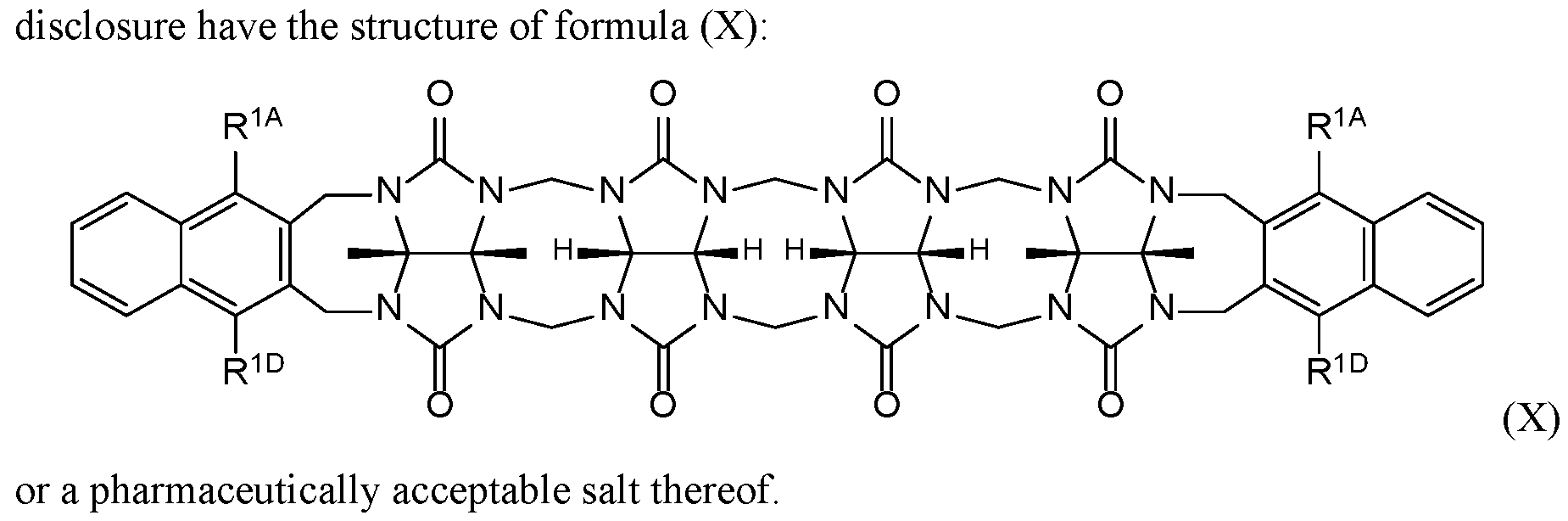


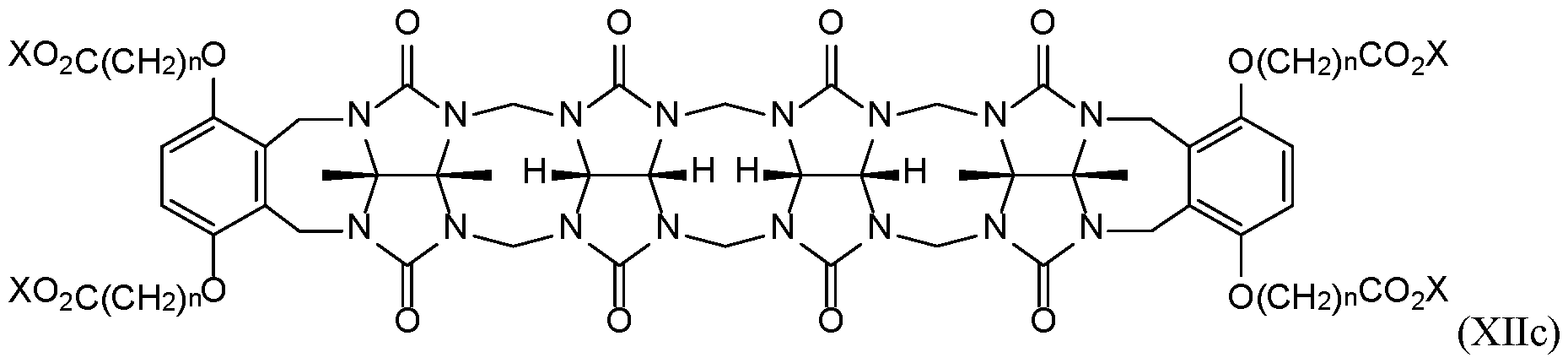


Claims
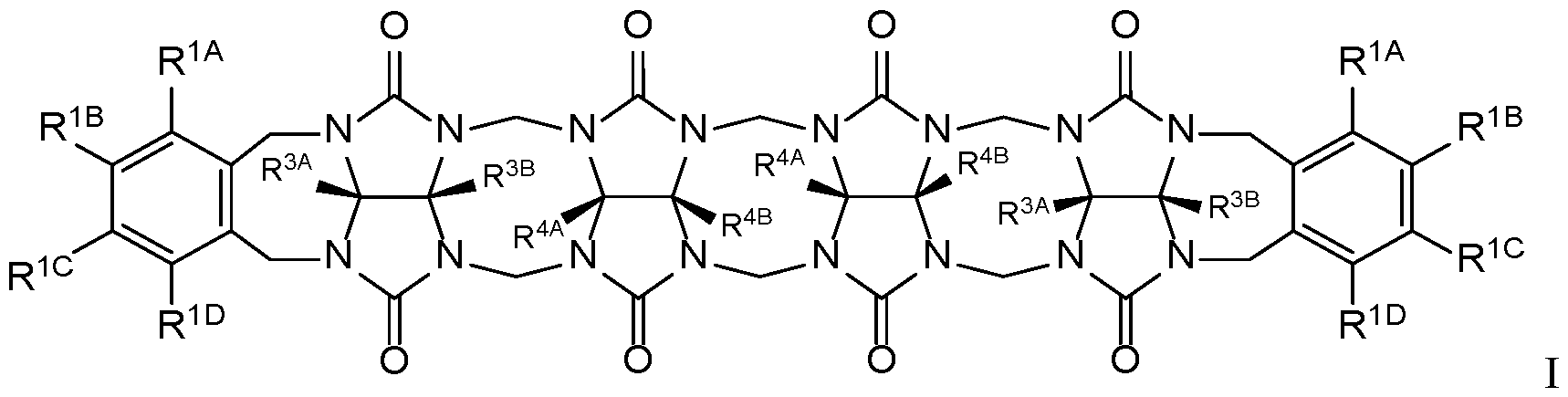


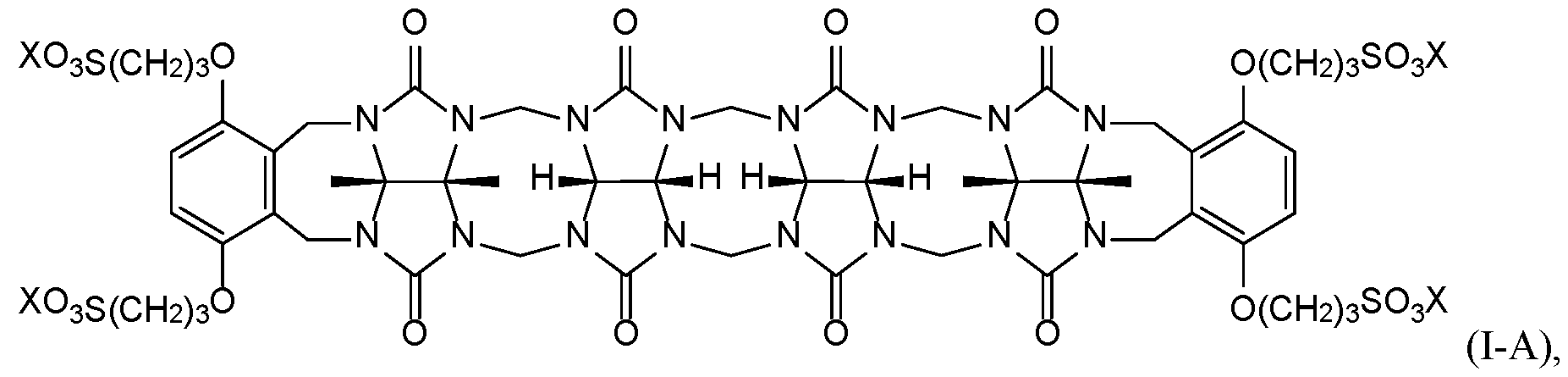

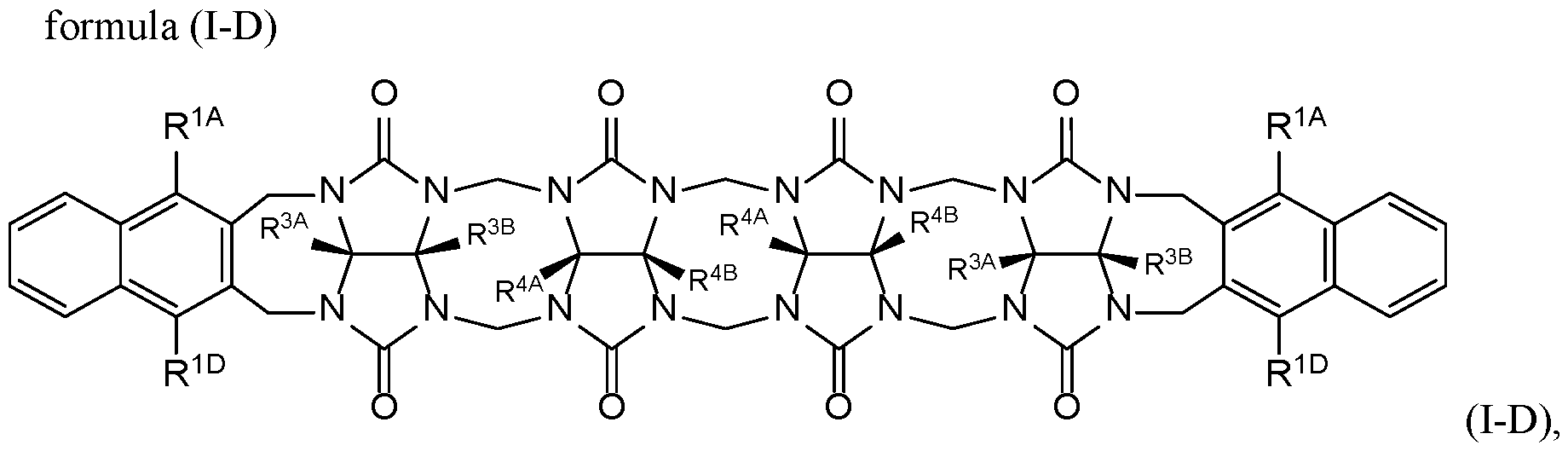


Priority Applications (6)
| Application Number | Priority Date | Filing Date | Title |
|---|---|---|---|
| IL325319A IL325319A (en) | 2023-06-16 | 2024-06-17 | Sequestrant compounds for alpha 2 adrenergic agonists |
| EP24824360.2A EP4727556A2 (en) | 2023-06-16 | 2024-06-17 | Sequestrant compounds for alpha 2 adrenergic agonists |
| AU2024303746A AU2024303746A1 (en) | 2023-06-16 | 2024-06-17 | Sequestrant compounds for alpha 2 adrenergic agonists |
| KR1020267001183A KR20260100270A (en) | 2023-06-16 | 2024-06-17 | Sequestering compound for alpha 2 adrenergic agonists |
| CN202480052857.XA CN121772926A (en) | 2023-06-16 | 2024-06-17 | Chelating compounds targeting α2-adrenergic agonists |
| JP2025573025A JP2026521005A (en) | 2023-06-16 | 2024-06-17 | Chorticoid compounds for ALPHA2 adrenaline agonists |
Applications Claiming Priority (2)
| Application Number | Priority Date | Filing Date | Title |
|---|---|---|---|
| US202363508716P | 2023-06-16 | 2023-06-16 | |
| US63/508,716 | 2023-06-16 |
Publications (2)
| Publication Number | Publication Date |
|---|---|
| WO2024259435A2 true WO2024259435A2 (en) | 2024-12-19 |
| WO2024259435A3 WO2024259435A3 (en) | 2025-05-08 |
Family
ID=93852728
Family Applications (1)
| Application Number | Title | Priority Date | Filing Date |
|---|---|---|---|
| PCT/US2024/034379 Ceased WO2024259435A2 (en) | 2023-06-16 | 2024-06-17 | Sequestrant compounds for alpha 2 adrenergic agonists |
Country Status (7)
| Country | Link |
|---|---|
| EP (1) | EP4727556A2 (en) |
| JP (1) | JP2026521005A (en) |
| KR (1) | KR20260100270A (en) |
| CN (1) | CN121772926A (en) |
| AU (1) | AU2024303746A1 (en) |
| IL (1) | IL325319A (en) |
| WO (1) | WO2024259435A2 (en) |
Cited By (1)
| Publication number | Priority date | Publication date | Assignee | Title |
|---|---|---|---|---|
| WO2025264689A3 (en) * | 2024-06-17 | 2026-02-19 | Clear Scientific, Inc. | Cucurbituril compounds |
Family Cites Families (1)
| Publication number | Priority date | Publication date | Assignee | Title |
|---|---|---|---|---|
| EP4284506A4 (en) * | 2021-02-01 | 2024-12-25 | Clear Scientific, Inc. | Sequestration compounds for treatment of substance use disorder and uses thereof |
-
2024
- 2024-06-17 EP EP24824360.2A patent/EP4727556A2/en active Pending
- 2024-06-17 KR KR1020267001183A patent/KR20260100270A/en active Pending
- 2024-06-17 AU AU2024303746A patent/AU2024303746A1/en active Pending
- 2024-06-17 JP JP2025573025A patent/JP2026521005A/en active Pending
- 2024-06-17 CN CN202480052857.XA patent/CN121772926A/en active Pending
- 2024-06-17 WO PCT/US2024/034379 patent/WO2024259435A2/en not_active Ceased
- 2024-06-17 IL IL325319A patent/IL325319A/en unknown
Cited By (1)
| Publication number | Priority date | Publication date | Assignee | Title |
|---|---|---|---|---|
| WO2025264689A3 (en) * | 2024-06-17 | 2026-02-19 | Clear Scientific, Inc. | Cucurbituril compounds |
Also Published As
| Publication number | Publication date |
|---|---|
| WO2024259435A3 (en) | 2025-05-08 |
| EP4727556A2 (en) | 2026-04-22 |
| AU2024303746A1 (en) | 2026-01-22 |
| CN121772926A (en) | 2026-03-31 |
| JP2026521005A (en) | 2026-06-25 |
| KR20260100270A (en) | 2026-06-29 |
| IL325319A (en) | 2026-02-01 |
Similar Documents
| Publication | Publication Date | Title |
|---|---|---|
| US6262081B1 (en) | Composition for and method of treating neurological disorders | |
| CA1200501A (en) | Nalbuphine - narcotic analgesic composition and method of producing analgesia | |
| PT897726E (en) | Antipruritic agent | |
| HU208079B (en) | Process for producing pharmaceutical compositions against injuries destroying nervous tissue | |
| US12569478B2 (en) | Sequestration compounds for treatment of substance use disorder and uses thereof | |
| PT1543010E (en) | N-substituted hydromorphones and the use thereof | |
| US5637314A (en) | Topical and systemic application of buspirone or derivatives thereof for treating atopic dermatitis | |
| BRPI0912112B1 (en) | pharmaceutical composition comprising compound having antagonistic activity at a2a adenosine receptor useful in suppressing analgesic tolerance | |
| EP4727556A2 (en) | Sequestrant compounds for alpha 2 adrenergic agonists | |
| CA3128327A1 (en) | A dosage regime and method for treating pulmonary arterial hypertension with rodatristat ethyl | |
| KR20150020160A (en) | Combination of muscarinic receptor antagonists and beta―3 adrenoceptor agonists for treating overactive bladder | |
| WO1993012789A1 (en) | Use of spiperone or spiperone derivatives as immunosuppressant agents | |
| RU2561873C2 (en) | Application of antagonists of opioid receptors in case of gastrointestinal tract diseases | |
| AU2006315854A1 (en) | Compositions and methods for treating CNS disorders | |
| KR102235772B1 (en) | Opioid receptor antagonist conjugates and uses thereof | |
| AU2021349680A1 (en) | Use of sphingosine-1-phosphate receptor agonist | |
| JP6550538B2 (en) | Podophyllotoxin derivatives and their use | |
| CN106176740B (en) | Anti-addiction medicinal uses of Corydalis | |
| WO2012033916A1 (en) | Method for treating chronic pain | |
| EP0690715B1 (en) | Topical and systemic application of buspirone or derivatives thereof for treatment of pathological conditions associated with immune responses | |
| BRPI1106713A2 (en) | pharmaceutical composition and its use | |
| WO2025264689A2 (en) | Cucurbituril compounds | |
| JP6702184B2 (en) | Hypoalbuminemia improver | |
| CN119606978A (en) | Diaryl glycoluril tetramer derivatives and uses thereof | |
| WO2004078177A1 (en) | Remedy for drug/substance dependence |
Legal Events
| Date | Code | Title | Description |
|---|---|---|---|
| 121 | Ep: the epo has been informed by wipo that ep was designated in this application |
Ref document number: 24824360 Country of ref document: EP Kind code of ref document: A2 |
|
| WWE | Wipo information: entry into national phase |
Ref document number: 325319 Country of ref document: IL |
|
| ENP | Entry into the national phase |
Ref document number: 2025573025 Country of ref document: JP Kind code of ref document: A |
|
| REG | Reference to national code |
Ref country code: BR Ref legal event code: B01A Ref document number: 112025028005 Country of ref document: BR |
|
| WWE | Wipo information: entry into national phase |
Ref document number: AU2024303746 Country of ref document: AU |
|
| WWE | Wipo information: entry into national phase |
Ref document number: 202690058 Country of ref document: EA |
|
| WWE | Wipo information: entry into national phase |
Ref document number: 2024824360 Country of ref document: EP Ref document number: 202617004385 Country of ref document: IN |
|
| NENP | Non-entry into the national phase |
Ref country code: DE |
|
| ENP | Entry into the national phase |
Ref document number: 2024824360 Country of ref document: EP Effective date: 20260116 |
|
| ENP | Entry into the national phase |
Ref document number: 2024303746 Country of ref document: AU Date of ref document: 20240617 Kind code of ref document: A |
|
| ENP | Entry into the national phase |
Ref document number: 2024824360 Country of ref document: EP Effective date: 20260116 |
|
| ENP | Entry into the national phase |
Ref document number: 2024824360 Country of ref document: EP Effective date: 20260116 |
|
| WWP | Wipo information: published in national office |
Ref document number: 325319 Country of ref document: IL |
|
| ENP | Entry into the national phase |
Ref document number: 2024824360 Country of ref document: EP Effective date: 20260116 |
|
| WWP | Wipo information: published in national office |
Ref document number: 202617004385 Country of ref document: IN |
|
| WWP | Wipo information: published in national office |
Ref document number: 2024824360 Country of ref document: EP |