WO2024258943A1 - Methods of using cyclic peptides for trapping interleukin-1 beta - Google Patents

Methods of using cyclic peptides for trapping interleukin-1 beta Download PDF

Info

Publication number
WO2024258943A1
WO2024258943A1 PCT/US2024/033570 US2024033570W WO2024258943A1 WO 2024258943 A1 WO2024258943 A1 WO 2024258943A1 US 2024033570 W US2024033570 W US 2024033570W WO 2024258943 A1 WO2024258943 A1 WO 2024258943A1
Authority
WO
WIPO (PCT)
Prior art keywords
compound
residue
bond
interaction
group
Prior art date
Legal status (The legal status is an assumption and is not a legal conclusion. Google has not performed a legal analysis and makes no representation as to the accuracy of the status listed.)
Ceased
Application number
PCT/US2024/033570
Other languages
French (fr)
Other versions
WO2024258943A8 (en
Inventor
Faben A. CRUZ
Thierry O. Fischmann
Zhuyan Guo
Sookhee Nicole Ha
Jennifer L. HICKEY
Jennifer Marie JOHNSTON
Hu-jung Julie LEE
Peter Orth
Christopher W. Plummer
Victor W. MAK
Dennis Danqing FENG
Stefania Colarusso
Ali Munaim YOUSIF
Francesca RAVONE
Current Assignee (The listed assignees may be inaccurate. Google has not performed a legal analysis and makes no representation or warranty as to the accuracy of the list.)
Merck Sharp and Dohme LLC
Original Assignee
Merck Sharp and Dohme LLC
Priority date (The priority date is an assumption and is not a legal conclusion. Google has not performed a legal analysis and makes no representation as to the accuracy of the date listed.)
Filing date
Publication date
Application filed by Merck Sharp and Dohme LLC filed Critical Merck Sharp and Dohme LLC
Priority to MX2025015070A priority Critical patent/MX2025015070A/en
Priority to AU2024304141A priority patent/AU2024304141A1/en
Priority to EP24824056.6A priority patent/EP4727569A1/en
Priority to KR1020267000534A priority patent/KR20260040131A/en
Publication of WO2024258943A1 publication Critical patent/WO2024258943A1/en
Publication of WO2024258943A8 publication Critical patent/WO2024258943A8/en
Anticipated expiration legal-status Critical
Ceased legal-status Critical Current

Links

Classifications

    • GPHYSICS
    • G01MEASURING; TESTING
    • G01NINVESTIGATING OR ANALYSING MATERIALS BY DETERMINING THEIR CHEMICAL OR PHYSICAL PROPERTIES
    • G01N33/00Investigating or analysing materials by specific methods not covered by groups G01N1/00 - G01N31/00
    • G01N33/48Biological material, e.g. blood, urine; Haemocytometers
    • G01N33/50Chemical analysis of biological material, e.g. blood, urine; Testing involving biospecific ligand binding methods; Immunological testing
    • G01N33/68Chemical analysis of biological material, e.g. blood, urine; Testing involving biospecific ligand binding methods; Immunological testing involving proteins, peptides or amino acids
    • G01N33/6863Cytokines, i.e. immune system proteins modifying a biological response such as cell growth proliferation or differentiation, e.g. TNF, CNF, GM-CSF, lymphotoxin, MIF or their receptors
    • G01N33/6869Interleukin
    • AHUMAN NECESSITIES
    • A61MEDICAL OR VETERINARY SCIENCE; HYGIENE
    • A61KPREPARATIONS FOR MEDICAL, DENTAL OR TOILETRY PURPOSES
    • A61K38/00Medicinal preparations containing peptides
    • AHUMAN NECESSITIES
    • A61MEDICAL OR VETERINARY SCIENCE; HYGIENE
    • A61PSPECIFIC THERAPEUTIC ACTIVITY OF CHEMICAL COMPOUNDS OR MEDICINAL PREPARATIONS
    • A61P29/00Non-central analgesic, antipyretic or antiinflammatory agents, e.g. antirheumatic agents; Non-steroidal antiinflammatory drugs [NSAID]
    • GPHYSICS
    • G01MEASURING; TESTING
    • G01NINVESTIGATING OR ANALYSING MATERIALS BY DETERMINING THEIR CHEMICAL OR PHYSICAL PROPERTIES
    • G01N2333/00Assays involving biological materials from specific organisms or of a specific nature
    • G01N2333/435Assays involving biological materials from specific organisms or of a specific nature from animals; from humans
    • G01N2333/52Assays involving cytokines
    • G01N2333/54Interleukins [IL]
    • G01N2333/545IL-1
    • GPHYSICS
    • G01MEASURING; TESTING
    • G01NINVESTIGATING OR ANALYSING MATERIALS BY DETERMINING THEIR CHEMICAL OR PHYSICAL PROPERTIES
    • G01N2500/00Screening for compounds of potential therapeutic value
    • G01N2500/02Screening involving studying the effect of compounds C on the interaction between interacting molecules A and B (e.g. A = enzyme and B = substrate for A, or A = receptor and B = ligand for the receptor)

Definitions

  • the Sequence Listing XML file submitted with this application is entitled “14463-089-228_SEQ_LISTING.xml”, was created on June 10, 2024, and is 46,471 bytes in size. 3.
  • FIELD [0003] The present disclosure relates to methods of using a compound, such as a cyclic peptide or compound of Formula (I), (II), (IIA), (III), (IIIA), or (IV), which binds to interleukin- 1 beta (IL-1 ⁇ ) to trap the IL-1 ⁇ from interacting with interleukin-1 receptor type I (IL-1R1). 4.
  • Interleukin-1 beta signals by binding to its cell-surface receptor interleukin-1 receptor type I (IL-1R1) through interactions between IL-1 ⁇ and three binding domains (D1, D2, D3) of IL-1R1.
  • the binding interaction of IL-1 ⁇ and IL-1R1 may be disrupted or inhibited by allosterically modifying the conformation of IL-1 ⁇ or by orthosterically binding to IL-1 ⁇ to competitively disrupt the binding interaction between IL-1 ⁇ and the D3 domain of IL-1R1.
  • IL-1 ⁇ Interleukin-1 beta signals by binding to its cell-surface receptor interleukin-1 receptor type I (IL-1R1) through interactions between IL-1 ⁇ and three binding domains (D1, D2, D3) of IL-1R1.
  • the binding interaction of IL-1 ⁇ and IL-1R1 may be disrupted or inhibited by allosterically modifying the conformation of IL-1 ⁇ or by orthosterically binding to IL-1 ⁇ to competitively disrupt the binding interaction between IL-1 ⁇ and the D3 domain
  • IL-1 ⁇ human interleukin- 1 beta
  • IL-1R1 human interleukin-1 receptor type I
  • a method of inhibiting binding of human interleukin-1 beta (IL-1 ⁇ ) to a human interleukin-1 receptor type I (IL-1R1) comprising contacting the IL-1 ⁇ with a compound or pharmaceutically acceptable salt thereof that binds to the IL-1 ⁇ at a binding pocket defined by amino acid residues Gly177-Leu178-Lys179-Glu180- Lys181-Asn182-Leu183-Tyr184 (SEQ ID NO:16) and Val201-Asp202-Pro203-Lys204-Asn205- Tyr206-Pro207 (SEQ ID NO:17) of the IL-1 ⁇ (SEQ ID NO:1).
  • the compound allosterically or orthosterically inhibits the binding of the IL-1 ⁇ to the IL-1R1. In some embodiments, the compound inhibits the binding of the IL-1 ⁇ to a D3 domain of IL-1R1 (SEQ ID NO:7). [0008] In some embodiments, the compound binds to one or both of residues Lys179 or Pro207 of the IL-1 ⁇ .
  • the compound comprises at least one moiety selected from: a) a pi-effect interaction moiety capable of accepting a cation-pi interaction from the sidechain of residue Lys179 of the IL-1 ⁇ ; or b) a pi-effect interaction moiety capable of accepting a polar-pi interaction from the backbone of residue Pro207 of the IL-1 ⁇ .
  • the binding pocket further comprises Val119, Arg120, and/or Ser121 of the IL-1 ⁇ .
  • the compound binds to one or more of Val119, Arg120, Ser121, Pro203, or Lys204 of the IL-1 ⁇ .
  • the compound comprises at least one or more moieties selected from: a) a H-bond interaction moiety capable of donating a H-bond to the backbone carbonyl of residue Val119 of the IL-1 ⁇ ; b) a pi-effect interaction moiety capable of accepting a cation-pi interaction from the sidechain of residue Arg120 of the IL-1 ⁇ ; c) a H-bond interaction moiety capable of donating a H-bond to the backbone carbonyl of residue Ser121 of the IL-1 ⁇ ; d) a H-bond interaction moiety capable of donating a H-bond to the backbone carbonyl of residue Pro203 of the IL-1 ⁇ ; or e) a H-bond interaction moiety capable of donating a H-bond to the backbone carbonyl of residue Lys204 of the IL-1 ⁇ .
  • a H-bond interaction moiety capable of donating a H-bond to the backbone carbonyl of residue Val119 of the IL-1 ⁇
  • the compound comprises at least one or more moieties selected from: a) a H-bond interaction moiety capable of donating a H-bond to the backbone carbonyl of residue Val119 of the IL-1 ⁇ ; b) a pi-effect interaction moiety capable of accepting a cation-pi interaction from the sidechain of residue Arg120 of the IL-1 ⁇ ; c) a H-bond interaction moiety capable of donating a H-bond to the backbone carbonyl of residue Ser269 of the IL-1 ⁇ ; d) a H-bond interaction moiety capable of accepting a H-bond to the backbone carbonyl of residue Ser269 of the IL-1 ⁇ ; or e) a basic moiety capable of an electrostatic interaction with the c- terminal carboxylic acid of the IL-1 ⁇ .
  • the compound comprises at least one moiety selected from: a) a H-bond interaction moiety capable of accepting a H-bond from the backbone NH of residue Arg120 of the IL-1 ⁇ ; b) a H-bond interaction moiety capable of accepting a H-bond from the sidechain of residue Arg120 of the IL-1 ⁇ ; c) a H-bond interaction moiety capable of accepting a H-bond from the backbone NH of residue Ser121 of the IL-1 ⁇ ; or d) a H-bond interaction moiety capable of accepting a H-bond from the sidechain of residue Lys204 of the IL-1 ⁇ . [0013] In some embodiments, the compound binds to Tyr206 of the IL-1 ⁇ .
  • the compound comprises a H-bond interaction moiety capable of donating a H- bond to the backbone carbonyl of residue Tyr206 of the IL-1 ⁇ .
  • the binding pocket further comprises Phe162 and/or Ser269 of the IL-1 ⁇ . The method of claim 20, wherein the compound binds to one or both of residues Phe162 or Ser269 of the IL-1 ⁇ .
  • the compound comprises one or more moieties selected from: a) a pi-effect interaction moiety capable of donating a polar-pi interaction to residue Phe162 of the IL-1 ⁇ ; b) a H-bond interaction moiety capable of accepting a H-bond from the sidechain of residue Ser269 of the IL-1 ⁇ ; or c) a pi-effect interaction moiety capable of accepting a polar-pi interaction from residue Ser269 of the IL-1 ⁇ .
  • the compound is a peptide.
  • the peptide is a cyclic peptide.
  • the peptide or cyclic peptide has a length of from 12 to 16 amino acid residues.
  • the compound has a molecular weight of from about 1200 Da to about 3000 Da, from about 1500 Da to 2500 Da, or from about 1750 to about 2250 Da.
  • a method of inhibiting binding of human IL-1 ⁇ to human IL-1R1 comprising contacting the IL-1 ⁇ with a compound that competes for binding to the IL-1R1, wherein the compound has a structure of Formula (I), (II), (IIA), (III), (IIIA), (IV), or a pharmaceutically acceptable salt thereof, wherein X 1 , X 2 , X 3 , A 1 , A 2 , R 1 -R 7 , R 8a , R 8b , R 9a , R 9b , R 10 , R 11 , R 12 , R 13a , R 13b , and R 14 are as herein described.
  • a method of inhibiting binding of human IL-1 ⁇ to human IL-1R1 comprising contacting the IL-1 ⁇ with a compound that competes for binding to the IL-1R1, wherein the compound is a peptide having a sequence selected from: SEQ ID NO:8, SEQ ID NO:9, SEQ ID NO:10, SEQ ID NO:11, SEQ ID NO:12, SEQ ID NO:13, SEQ ID NO:14, or SEQ ID NO:15, or a pharmaceutically acceptable salt thereof.
  • a method of inhibiting binding of human IL-1 ⁇ to human IL-1R1, comprising contacting the IL-1 ⁇ with a compound that competes for binding to the IL-1R1, wherein the compound is a peptide having a sequence selected from: Compound A, Compound B, Compound C, Compound D, Compound E, Compound F, Compound G, Compound H, or a pharmaceutically acceptable salt thereof. 6.
  • a compound that competes for binding to the IL-1R1 comprising contacting the IL-1 ⁇ with a compound that competes for binding to the IL-1R1, wherein the compound is a peptide having a sequence selected from: Compound A, Compound B, Compound C, Compound D, Compound E, Compound F, Compound G, Compound H, or a pharmaceutically acceptable salt thereof.
  • FIG.1 depicts a binding site that has been identified on IL-1 ⁇ at which a compound as described herein can bind at in order to inhibit or disrupt the binding of IL-1 ⁇ to IL-1R1.
  • the binding site shown is a lipophilic binding pocket located between the N-terminal and C-terminal domains of the tertiary structure of IL-1 ⁇ and is adjacent to the 3rd binding domain of IL-1R1.
  • FIGs.2A-2D depict the numbering scheme for the amino acid residues of certain macrocyclic peptides of Formula (I), (II), (III), and (IV), respectively, as described herein.
  • FIG.3 depicts a three-dimensional cartoon plot of Compound A (SEQ ID NO:8) of the disclosure when bound at the lipophilic binding pocket of IL-1 ⁇ , as determined by X-ray crystallography.
  • the side chains of amino acid positions 1, 2, 6, 7, and 10 of the macrocyclic 4 NAI-1540154773v1 peptide are shown using stick representations and labeled. Amino acid residues Arg120, Ser121, Lys179, and Lys204 of the IL-1 ⁇ are labeled.
  • FIGS.4A-4B depict two-dimensional diagrams of the binding interactions of Compound A (SEQ ID NO:8) to residues of the lipophilic binding pocket of IL-1 ⁇ , as determined by X-ray crystallography.
  • FIG.4A shows the binding interactions for the bottom portion (amino acids 1-7) of Compound A (SEQ ID NO:8) to residues of the binding pocket.
  • FIG.4B shows the binding interactions for the top portion (amino acids 8-14) of Compound A (SEQ ID NO:8) to residues of the binding pocket.
  • Hydrogen bond interactions between the compound and an IL-1 ⁇ residue (acceptors/donors) are represented using dashed arrows, in which the arrowhead indicates the H-bond acceptor.
  • Pi-effect interactions e.g., arene-H
  • FIG.5 depicts a three-dimensional cartoon plot of Compound B (SEQ ID NO:9) of the disclosure when bound at the lipophilic binding pocket of IL-1 ⁇ , as determined by X-ray crystallography.
  • the side chains of amino acid positions 1, 2, 6, 7, and 10 of the macrocyclic peptide are shown using stick representations and labeled. Amino acid residues Arg120, Ser121, Lys179, and Lys204 of the IL-1 ⁇ are labeled.
  • FIGS.6A-6B depict two-dimensional diagrams of the binding interactions of Compound B (SEQ ID NO:9) to residues of the lipophilic binding pocket of IL-1 ⁇ , as determined by X-ray crystallography.
  • FIG.6A shows the binding interactions for the bottom portion (amino acids 1-7) of Compound B (SEQ ID NO:9) to residues of the binding pocket.
  • FIG.6B shows the binding interactions for the top portion (amino acids 8-14) of Compound B (SEQ ID NO:9) to residues of the binding pocket.
  • Hydrogen bond interactions between the compound and an IL-1 ⁇ residue (acceptors/donors) are represented using dashed arrows, in which the arrowhead indicates the H-bond acceptor.
  • Pi-effect interactions e.g., arene-H
  • FIG.7 depicts a three-dimensional cartoon plot of Compound C (SEQ ID NO:10) of the disclosure when bound at the lipophilic binding pocket of IL-1 ⁇ , as determined by X-ray crystallography.
  • the side chains of amino acid positions 1, 2, 6, 7, and 10 of the macrocyclic peptide are shown using stick representations and labeled. Amino acid residues Arg120, Ser121, Lys179, and Lys204 of the IL-1 ⁇ are labeled. 5 NAI-1540154773v1
  • FIGS.8A-8B depict two-dimensional diagrams of the binding interactions of Compound C (SEQ ID NO:10) to residues of the lipophilic binding pocket of IL-1 ⁇ , as determined by X-ray crystallography.
  • FIG.8A shows the binding interactions for the bottom portion (amino acids 1-7) of Compound C (SEQ ID NO:10) to residues of the binding pocket.
  • FIG.8B shows the binding interactions for the top portion (amino acids 8-14) of Compound C (SEQ ID NO:10) to residues of the binding pocket.
  • Hydrogen bond interactions between the compound and an IL-1 ⁇ residue (acceptors/donors) are represented using dashed arrows, in which the arrowhead indicates the H-bond acceptor.
  • Pi-effect interactions e.g., arene-H
  • FIG.9 depicts a three-dimensional cartoon plot of Compound D (SEQ ID NO:11) of the disclosure when bound at the lipophilic binding pocket of IL-1 ⁇ , as determined by X-ray crystallography.
  • the side chains of amino acid positions 1, 2, 6, 7, and 10 of the macrocyclic peptide are shown using stick representations and labeled. Amino acid residues Arg120, Ser121, Lys179, and Lys204 of the IL-1 ⁇ are labeled.
  • FIGS.10A-10B depict two-dimensional diagrams of the binding interactions of Compound D (SEQ ID NO:11) to residues of the lipophilic binding pocket of IL-1 ⁇ , as determined by X-ray crystallography.
  • FIG.10A shows the binding interactions for the bottom portion (amino acids 1-7) of Compound D (SEQ ID NO:11) to residues of the binding pocket.
  • FIG.10B shows the binding interactions for the top portion (amino acids 8-14) of Compound D (SEQ ID NO:11) to residues of the binding pocket.
  • Hydrogen bond interactions between the compound and an IL-1 ⁇ residue (acceptors/donors) are represented using dashed arrows, in which the arrowhead indicates the H-bond acceptor.
  • Pi-effect interactions e.g., arene-H
  • dashed arrows having an H:benzene symbol are represented.
  • FIG.11 depicts a three-dimensional cartoon plot of Compound E (SEQ ID NO:12) of the disclosure when bound at the lipophilic binding pocket of IL-1 ⁇ , as determined by X-ray crystallography.
  • the side chains of amino acid positions 1, 2, 6, 7, and 10 of the macrocyclic peptide are shown using stick representations and labeled. Amino acid residues Arg120, Ser121, Lys179, and Lys204 of the IL-1 ⁇ are labeled.
  • FIGS.12A-12B depict two-dimensional diagrams of the binding interactions of Compound E (SEQ ID NO:12) to residues of the lipophilic binding pocket of IL-1 ⁇ , as determined by X-ray crystallography.
  • FIG.12A shows the binding interactions for the bottom 6 NAI-1540154773v1 portion (amino acids 1-7) of Compound E (SEQ ID NO:12) to residues of the binding pocket.
  • FIG.12B shows the binding interactions for the top portion (amino acids 8-14) of Compound E (SEQ ID NO:12) to residues of the binding pocket.
  • Hydrogen bond interactions between the compound and an IL-1 ⁇ residue (acceptors/donors) are represented using dashed arrows, in which the arrowhead indicates the H-bond acceptor.
  • Pi-effect interactions e.g., arene-H
  • dashed arrows having an H:benzene symbol are represented.
  • FIG.13 depicts a three-dimensional cartoon plot of the lipophilic binding pocket of IL-1 ⁇ when bound to Compound A (SEQ ID NO:8), Compound B (SEQ ID NO:9), Compound C (SEQ ID NO:10), Compound D (SEQ ID NO:11), and Compound E (SEQ ID NO:12) of the disclosure, as determined by X-ray crystallography and presented as an overlay.
  • the side chains of amino acid positions 1, 2, 6, 7, and 10 of the macrocyclic peptides are shown using stick representations and labeled. Amino acid residues Arg120, Ser121, Lys179, and Lys204 of the IL-1 ⁇ binding pocket are labeled.
  • FIG.14 depicts a three-dimensional cartoon plot of Compound F (SEQ ID NO:13) of the disclosure when bound at the lipophilic binding pocket of IL-1 ⁇ , as determined by X-ray crystallography.
  • the side chains of amino acid positions 1, 3, 6, 9, 10, and 15 of the macrocyclic peptide are shown using stick representations and labeled. Amino acid residues Arg120, Ser121, Lys179, and Lys204 of the IL-1 ⁇ binding pocket are labeled.
  • FIGS.15A-15B depict two-dimensional diagrams of the binding interactions of Compound F (SEQ ID NO:13) to residues of the lipophilic binding pocket of IL-1 ⁇ , as determined by X-ray crystallography.
  • FIG.15A shows the binding interactions for the bottom portion (amino acids 1-8) of Compound F (SEQ ID NO:13) to residues of the binding pocket.
  • FIG.15B shows the binding interactions for the top portion (amino acids 9-15) of Compound F (SEQ ID NO:13) to residues of the binding pocket.
  • Hydrogen bond interactions between the compound and an IL-1 ⁇ residue (acceptors/donors) are represented using dashed arrows, in which the arrowhead indicates the H-bond acceptor.
  • Pi-effect interactions e.g., arene-H
  • FIG.16 depicts a three-dimensional cartoon plot of Compound G (SEQ ID NO:14) of the disclosure when bound at the lipophilic binding pocket of IL-1 ⁇ , as determined by X-ray crystallography.
  • the side chains of amino acid positions 1, 2, 6, 7, and 10 of the macrocyclic 7 NAI-1540154773v1 peptide are shown using stick representations and labeled.
  • Amino acid residues Arg120, Ser121, Lys179, and Lys204 of the IL-1 ⁇ binding pocket are labeled.
  • FIGS.17A-17B depict two-dimensional diagrams of the binding interactions of Compound G (SEQ ID NO:14) to residues of the lipophilic binding pocket of IL-1 ⁇ , as determined by X-ray crystallography.
  • FIG.17A shows the binding interactions for the bottom portion (amino acids 1-7) of Compound G (SEQ ID NO:14) to residues of the binding pocket.
  • FIG.17B shows the binding interactions for the top portion (amino acids 8-14) of Compound G (SEQ ID NO:14) to residues of the binding pocket.
  • Hydrogen bond interactions between the compound and an IL-1 ⁇ residue are represented using dashed arrows, in which the arrowhead indicates the H-bond acceptor.
  • FIG.18 depicts a three-dimensional cartoon plot of Compound H (SEQ ID NO:15) of the disclosure when bound at the lipophilic binding pocket of IL-1 ⁇ , as determined by X-ray crystallography.
  • the side chains of amino acid positions 1, 2, 6, 7, and 10 of the macrocyclic peptide are shown using stick representations and labeled.
  • Amino acid residues Arg120, Ser121, Lys179, and Lys204 of the IL-1 ⁇ binding pocket are labeled.
  • FIGS.19A-19B depict two-dimensional diagrams of the binding interactions of Compound H (SEQ ID NO:15) to residues of the lipophilic binding pocket of IL-1 ⁇ , as determined by X-ray crystallography.
  • FIG.19A shows the binding interactions for the bottom portion (amino acids 1-7) of Compound H (SEQ ID NO:15) to residues of the binding pocket.
  • FIG.19B shows the binding interactions for the top portion (amino acids 8-13) of Compound H (SEQ ID NO:15) to residues of the binding pocket.
  • Hydrogen bond interactions between the compound and an IL-1 ⁇ residue are represented using dashed arrows, in which the arrowhead indicates the H-bond acceptor.
  • a concentration range of 1% to 10% (w/v) includes 0.9% (w/v) to 11% (w/v).
  • the use of a numerical range expressly includes all possible subranges, all individual numerical values within that range, including integers within such ranges and fractions of the values unless the context clearly indicates otherwise. [0045] Unless otherwise indicated, the term “at least” preceding a series of elements is to be understood to refer to every element in the series. Those skilled in the art will recognize or be able to ascertain using no more than routine experimentation, many equivalents to the specific embodiments of the methods provided herein. Such equivalents are intended to be encompassed by the invention.
  • the terms “comprises,” “comprising,” “includes,” “including,” “has,” “having,” “contains” or “containing,” or any other variation thereof, will be understood to imply the inclusion of a stated integer or group of integers but not the exclusion of any other integer or group of integers and are intended to be non-exclusive or open-ended.
  • a composition, a mixture, a process, a method, an article, or an apparatus that comprises a list of elements is not necessarily limited to only those elements but can include other elements not expressly listed or inherent to such composition, mixture, process, method, article, or apparatus.
  • “or” refers to an inclusive or and not to an exclusive or.
  • a condition A or B is satisfied by any one of the following: A is true 9 NAI-1540154773v1 (or present) and B is false (or not present), A is false (or not present) and B is true (or present), and both A and B are true (or present).
  • the conjunctive term “and/or” between multiple recited elements is understood as encompassing both individual and combined options. For instance, where two elements are conjoined by “and/or,” a first option refers to the applicability of the first element without the second. A second option refers to the applicability of the second element without the first. A third option refers to the applicability of the first and second elements together.
  • “subject” means any animal, preferably a mammal, most preferably a human.
  • mammals include, but are not limited to, cows, horses, sheep, pigs, cats, dogs, mice, rats, rabbits, guinea pigs, monkeys, humans, etc., more preferably a human.
  • the terms “about,” “approximately,” “generally,” “substantially,” and like terms, used herein when referring to a dimension or characteristic of a component of the methods provided herein, indicate that the described dimension/characteristic is not a strict boundary or parameter and does not exclude minor variations therefrom that are functionally the same or similar, as would be understood by one having ordinary skill in the art.
  • Decrease may be a statistically significant difference in the measured response between the test molecule and the control (or the vehicle), or a decrease in the measured response, such as a decrease of about 1.1, 1.2, 1.5, 2, 3, 4, 5, 6, 7, 8, 9, 10, 15, 20 or 30 fold or more, such as 500, 600, 700, 800, 900 or 1000 fold or more.
  • the terms “enhance,” “promote” or “increase,” refer generally to the ability of the test molecule to mediate a greater response (i.e., downstream effect) when compared to the response mediated by a control or a vehicle.
  • Enhance may be a statistically significant difference in the measured response between the test molecule and control (or vehicle), or an increase in the measured response, such as an increase of about 1.1, 1.2, 1.5, 2, 3, 4, 5, 6, 7, 8, 9, 10, 15, 20 or 30-fold or more, such as 500, 600, 700, 800, 900 or 1000-fold or more.
  • control or vehicle
  • Enhance may be a statistically significant difference in the measured response between the test molecule and control (or vehicle), or an increase in the measured response, such as an increase of about 1.1, 1.2, 1.5, 2, 3, 4, 5, 6, 7, 8, 9, 10, 15, 20 or 30-fold or more, such as 500, 600, 700, 800, 900 or 1000-fold or more.
  • recombinant refers to polynucleotides, polypeptides, vectors, viruses, and other macromolecules that are prepared, expressed, created, or isolated by recombinant means.
  • the terms “specifically binds,” “specific binding,” “specifically binding” or “binds” refer to a compound as described herein binding to interleukin-1 receptor type I (IL-1R1), for example, at a binding pocket of IL-1R1 or to a specific residue of IL-1R1.
  • IL-1R1 interleukin-1 receptor type I
  • subject includes any human or nonhuman animal. “Nonhuman animal” includes all vertebrates, e.g., mammals and non-mammals, such as nonhuman primates, sheep, dogs, cats, horses, cows, chickens, amphibians, reptiles, etc. The terms “subject” and “patient” can be used interchangeably herein.
  • a compound of the disclosure As used throughout this disclosure, “a compound of the disclosure”, “a compound of the present disclosure” and “a compound disclosed herein” are used interchangeably are to be understood to include the disclosed cyclic peptides and compounds of Formulas (I), (II), (IIA), (III), (IIIA), and (IV).
  • Reference to the compounds of Formula (I) includes the compounds of other generic formulas that fall within the scope of Formula (I) including, but not limited, to the compounds of Formula (IA).
  • Reference to the compounds of Formula (II) includes the compounds of other generic formulas that fall within the scope of Formula (II) including, but not limited to, the compounds of Formula (IIA).
  • Reference to the compounds of Formula (III) includes the compounds of other generic formulas that fall within the scope of Formula (III) including, but not limited to, the compounds of Formula (IIA).
  • Reference to the compounds of 11 NAI-1540154773v1 Formula (IV) includes the compounds of other generic formulas that fall within the scope of Formula (IV).
  • the compounds of Formulas (I), (II), (IIA), (III), (IIIA), and (IV) can form salts which are also within the scope of the present disclosure.
  • Reference to a compound of the disclosure (or a compound of Formula (I), (II), (IIA), (III), (IIIA), or (IV)) herein is understood to include reference to salts thereof, unless otherwise indicated.
  • salt(s) denotes acidic salts formed with inorganic and/or organic acids, as well as basic salts formed with inorganic and/or organic bases.
  • a compound of Formula (I), (II), (IIA), (III), (IIIA), or (IV) contains both a basic moiety, such as, but not limited to an amino group, pyrrolidine or imidazole, and an acidic moiety, such as, but not limited to a carboxylic acid, zwitterions (“inner salts”) may be formed and are included within the term “salt(s)" as used herein.
  • the salt is a pharmaceutically acceptable (i.e., non-toxic, physiologically acceptable) salt.
  • the salt is other than a pharmaceutically acceptable salt.
  • Salts of the compounds of Formula (I) may be formed, for example, by reacting a compound of Formula (I), (II), (IIA), (III), (IIIA), or (IV) with an amount of acid or base, such as an equivalent amount, in a medium such as one in which the salt precipitates or in an aqueous medium followed by lyophilization.
  • “Acyl” means an alkyl-C(O)- group, wherein alkyl is as defined below. The bond to the parent group is through the carbon atom of the carbonyl group.
  • Alkyl as well as other groups having the prefix “alk”, such as alkoxy, and the like, means carbon chains which may be linear or branched, or combinations thereof, containing the indicated number of carbon atoms.
  • a C 1 -C 6 alkyl means an alkyl group having one (i.e., methyl) up to 6 carbon atoms (i.e., hexyl).
  • linear alkyl groups have 1-6 carbon atoms and branched alkyl groups have 3-7 carbon atoms.
  • alkyl groups include methyl, ethyl, propyl, isopropyl, butyl, sec- and tert-butyl, pentyl, hexyl, heptyl, octyl, nonyl and the like.
  • Alkoxy and alkyl-O- are used interchangeably and refer to an alkyl group linked to oxygen.
  • Amino means a H 2 N- group. The bond to the parent group is through the nitrogen atom.
  • amino acid refers to naturally occurring ⁇ -amino acids and their stereoisomers, as well as unnatural amino acids (such as ⁇ -amino acids and substituted amino acids) and their 12 NAI-1540154773v1 stereoisomers.
  • amino acid residues have their conventional meaning.
  • G is glycine
  • W is tryptophan
  • A is alanine
  • S is serine
  • D isomers are designated by a “d” before the one letter code or amino acid name, such that for example dA is the D isomer of L-alanine.
  • Arene refers to an aryl or heteroaryl.
  • Aryl represents a monocyclic 6-membered or bicyclic 10- membered ring system, wherein at least one ring is aromatic, and all the ring atoms are carbon.
  • Bicyclic ring system refers to two joined rings. The rings may be fused, i.e., share two adjacent atoms, or “spirocyclic”, i.e., share only a single atom.
  • Carboxy means a HO 2 C- group.
  • Cycloalkyl means a saturated cyclic hydrocarbon radical.
  • the cycloalkyl group has 3-12 carbon atoms, forming 1-3 carbocyclic rings that are fused.
  • Examples of cycloalkyl include cyclopropyl, cyclobutyl, cyclopentyl, cyclohexyl, cycloheptyl, adamantyl, and the like.
  • “Fluoroalkyl” includes mono-substituted as well as multiple fluoro-substituted alkyl groups, up to perfluoro substituted alkyl.
  • Halogen or “halo”, unless otherwise indicated, includes fluorine (fluoro), chlorine (chloro), bromine (bromo) and iodine (iodo). In one embodiment, halo is fluoro (-F) or chloro (- Cl).
  • Heterocycloalkyl means a non-aromatic monocyclic, bicyclic, or tricyclic ring system comprising about 3 to about 10 ring atoms, preferably about 5 to about 10 ring atoms, in which one or more of the atoms in the ring system is an element other than carbon, for example nitrogen, oxygen or sulfur, alone or in combination. There are no adjacent oxygen and/or sulfur atoms present in the ring system.
  • heterocycloalkyls contain about 5 to about 6 ring atoms.
  • the prefix aza, oxa or thia before the heterocyclyl root name means that at least a nitrogen, oxygen or sulfur atom respectively is present as a ring atom.
  • the nitrogen or sulfur atom of the heterocycloalkyl can be optionally oxidized to 13 NAI-1540154773v1 the corresponding N-oxide, S-oxide or S,S-dioxide.
  • suitable monocyclic heterocyclyl rings include piperidyl, pyrrolidinyl, piperazinyl, morpholinyl, thiomorpholinyl, thiazolidinyl, 1,4-dioxanyl, tetrahydrofuranyl, tetrahydropyranyl, tetrahydrothiophenyl, and the like.
  • Heteroaryl refers to aromatic monocyclic, bicyclic, and tricyclic ring structures in which one or more atoms in the ring, the heteroatom(s), is an element other than carbon. Heteroatoms are typically O, S, or N atoms. Examples of heteroaromatic groups include pyridinyl, pyrimidinyl, pyrrolyl, pyridazinyl, isoxazolyl, thiazolyl, oxazolyl, indolyl, benzoxazolyl, benzothiazolyl, and imidazolyl.
  • any variable e.g., R C1
  • its definition on each occurrence is independent of its definition at every other occurrence.
  • Combinations of substituents and/or variables are permissible only if such combinations result in stable compounds.
  • substituents e.g., R C9
  • R C9 the various substituents, e.g., R C9 , are to be chosen in conformity with well- known principles of chemical structure connectivity and stability.
  • substitution by a named substituent is permitted on any atom in a ring (e.g., aryl, a heteroaryl ring, or a saturated heteroaryl ring) provided such ring substitution is chemically allowed and results in a stable compound.
  • a “stable” compound is a compound which can be prepared and isolated and whose structure and properties remain or can be caused to remain essentially unchanged for a period of time sufficient to allow use of the compound for the purposes described herein (e.g., therapeutic or prophylactic administration to a subject).
  • substituted shall be deemed to include multiple degrees of substitution by a named substituent.
  • the substituted compound can be independently substituted by one or more of the disclosed or claimed substituent moieties, singly or plurally.
  • independently substituted it is meant that the (two or more) substituents can be the same or different.
  • Some of the compounds described herein may exist as tautomers which have different points of attachment of hydrogen accompanied by one or more double bond shifts.
  • a ketone and its enol form are keto-enol tautomers.
  • the individual tautomers as well as mixtures thereof are encompassed with compounds of the present disclosure.
  • the atoms may exhibit their natural isotopic abundances, or one or more of the atoms may be artificially enriched in a particular isotope having the same atomic number, but an atomic mass or mass number different from the atomic mass or mass number predominantly found in nature.
  • isotopic forms of hydrogen include protium ( 1 H) and deuterium ( 2 H, also denoted herein as D).
  • Protium is the predominant hydrogen isotope found in nature. Enriching for deuterium may afford certain therapeutic advantages, such as increasing in vivo half-life or reducing dosage requirements or may provide a compound useful as a standard for characterization of biological samples.
  • Isotopically- enriched compounds of the disclosure can be prepared without undue experimentation by conventional techniques well known to those skilled in the art or by processes analogous to those described in the Schemes and Examples herein using appropriate isotopically-enriched reagents and/or intermediates.
  • pharmaceutically acceptable salts refers to salts prepared from pharmaceutically acceptable non-toxic bases or acids. When the compound of the present disclosure is acidic (or has a functional group which may be anionic), its corresponding salt can be conveniently prepared from pharmaceutically acceptable non-toxic bases, including inorganic bases and organic bases.
  • suitable inorganic cations include, but are not limited to, alkali metal ions such as Li + , Na + , and K + , alkaline earth metal cations such as Ca2 + , and Mg2 + , and other cations such as Al 3+ and Zn + .
  • suitable organic cations include, but are not limited to, ammonium ion (i.e., NH 4 + ) and substituted ammonium ions.
  • Examples of 15 NAI-1540154773v1 suitable substituted ammonium ions are those derived from methylamine, ethylamine, diethylamine, triethylamine and ethylenediamine.
  • salts of compounds of the present disclosure can be conveniently prepared from pharmaceutically acceptable non- toxic acids, including inorganic acids and organic acids.
  • acid addition salts include salts formed from hydrohalic acids (e.g., hydrochloric, hydrobromic, hydroiodic), formic acid, acetic acid, capric acid, and citric acids. Salts containing acetate, formate, caprate, chloride, or sodium salts are typical for use with the compounds of the present disclosure.
  • salts of compounds of the present disclosure can be formed by exchange well-known to those of ordinary skill in the art, such as by anion exchange, e.g., replacement of trifluoroacetate ions with chloride ions.
  • compounds of the present disclosure may exist in amorphous form and/or one or more crystalline forms, and as such all amorphous and crystalline forms and mixtures thereof of the compounds of Formula (I), (II), (IIA), (III), (IIIA), or (IV), including the Examples, are intended to be included within the scope of the present disclosure.
  • some of the compounds of the instant disclosure may form solvates with water (i.e., a hydrate) or common organic solvents such as, but not limited to, acetic acid or acetonitrile.
  • solvates and hydrates particularly the pharmaceutically acceptable solvates and hydrates, of the instant compounds are likewise encompassed within the scope of this disclosure, along with un-solvated and anhydrous forms.
  • Any pharmaceutically acceptable pro-drug modification of a compound of this disclosure which results in conversion in vivo to a compound within the scope of this disclosure is also within the scope of this disclosure.
  • the present disclosure also relates to processes for the preparation of the compounds of Formula (I), (II), (IIA), (III), (IIIA), or (IV), which are described in the following Examples and by which the compounds of the disclosure are obtainable.
  • a method of inhibiting the binding of interleukin-1 beta (IL-1 ⁇ ) to interleukin-1 receptor type I (IL-1R1) comprising contacting the IL-1 ⁇ with a compound as described herein or a pharmaceutically acceptable salt thereof.
  • IL-1 ⁇ interleukin-1 beta
  • IL-1R1 interleukin-1 receptor type I
  • a method of inhibiting binding of IL-1 ⁇ to IL- 1R comprising contacting the IL-1 ⁇ with a compound as described herein or pharmaceutically acceptable salt thereof that competes for binding to the IL-1R1 (e.g., the compound competes with IL-1 ⁇ for binding to IL-1R1.
  • a compound as described herein binds to IL-1 ⁇ at a binding pocket of IL-1 ⁇ , which inhibits the binding of IL-1 ⁇ to IL- 1R1.
  • the binding pocket of IL-1 ⁇ is a lipophilic binding pocket and/or hydrophobic binding pocket of the IL-1 ⁇ .
  • a compound as described herein inhibits binding of IL-1 ⁇ to the A-site of IL-1R1 (e.g., the A-site of IL-1R1 as described in Section 5.4).
  • inhibiting binding of IL-1 ⁇ to the A-site of IL-1R1 inhibits one or more biological functions of IL-1R1 (e.g., inhibits propagation of inflammation, for example the propagation of inflammation in a subject).
  • a compound as described herein inhibits or reduces binding of IL-1 ⁇ to the D1 and/or D2 domain of IL-1R1.
  • inhibiting binding of IL-1 ⁇ to the D1 and/or D2 domain of IL-1R1 inhibits one or more biological functions of IL-1R1 (e.g., inhibits propagation of inflammation, for example the propagation of inflammation in a subject).
  • a compound as described herein inhibits binding of IL-1 ⁇ to the B-site of IL-1R1 (e.g., the B-site of IL-1R1 as described in Section 5.4). In some embodiments, inhibiting binding of IL-1 ⁇ to the B-site of IL-1R1 inhibits one or more biological functions of IL-1R1 (e.g., inhibits propagation of inflammation, for example the propagation of inflammation in a subject). In some embodiments, a compound as described herein inhibits binding of IL-1 ⁇ to the D3 domain of IL-1R1.
  • inhibiting binding of IL-1 ⁇ to D3 domain of IL-1R1 inhibits one or more biological functions of IL-1R1 (e.g., inhibits propagation of inflammation, for example the propagation of inflammation in a subject).
  • a compound as described herein inhibits binding of IL-1 ⁇ to both the A-site and B-site bindings sites of IL-1R1.
  • inhibiting binding of IL-1 ⁇ to both the A-site and B-site bindings sites of IL-1R1 inhibits one or more biological functions of IL-1R1 (e.g., inhibits propagation of inflammation, for example the propagation of inflammation in a subject).
  • a compound 17 NAI-1540154773v1 as described herein inhibits binding of IL-1 ⁇ to the D1, D2, and D3 domains of IL-1R1. In some embodiments, inhibiting binding of IL-1 ⁇ to the D1, D2, and D3 domains of IL-1R1 inhibits one or more biological functions of IL-1R1 (e.g., inhibits propagation of inflammation, for example the propagation of inflammation in a subject). [0088] In some embodiments, a compound as described herein orthosterically inhibits the binding of IL-1 ⁇ to IL-1R1.
  • orthosteric inhibition of IL-1R1 comprises binding of a compound as described herein to an orthosteric site (e.g., primary binding site) of IL-1R1.
  • an orthosteric site e.g., primary binding site
  • an orthosteric site (e.g., primary binding site) is the active site of IL-1R1.
  • an orthosteric site (e.g., primary binding site) of IL-1R1 is a binding site of IL-1R1 (e.g., a binding site for a compound as described herein), which is the binding site of IL-1R1 that is specific for IL-1 ⁇ .
  • a compound as described herein allosterically inhibits the binding of IL-1 ⁇ to IL-1R1.
  • allosteric inhibition of IL-1R1 comprises binding of a compound as described herein to an allosteric site (e.g., secondary binding site) of IL-1R1.
  • an allosteric site e.g., secondary binding site
  • an allosteric site (e.g., secondary binding site) is not the active site of IL-1R1.
  • an allosteric site (e.g., secondary binding site) of IL-1R1 is a binding site of IL-1R1 (e.g., a binding site for a compound as described herein), which is not the binding site of IL-1R1 that is specific for IL-1 ⁇ .
  • the compound is a compound as described herein (e.g., or the Examples).
  • the compound is a compound of structural Formula (I), (II), (IIA), (III), (IIIA), (IV), or their pharmaceutically acceptable salts, wherein X 1 , X 2 , X 3 , A 1 , A 2 , R 1 -R 7 , R 8a , R 8b , R 9a , R 9b , R 10 , R 11 , R 12 , R 13a , R 13b , and R 14 are as herein described.
  • Interleukin-1 beta is a cytokine protein involved in inflammation.
  • IL-1 ⁇ is also known as: leukocytic pyrogen, leukocytic endogenous mediator, mononuclear cell factor, lymphocyte activating factor, IL1B, IL-1, IL1-BETA, IL1F2, or IL1beta.
  • the IL-1 ⁇ is encoded by the IL1B gene (e.g., human IL1B gene).
  • the precursor form of IL-1 ⁇ is cleaved by cytosolic caspase 1 (e.g., interleukin 1 beta convertase) to produce a mature form of IL-1 ⁇ and a cleaved propeptide.
  • cytosolic caspase 1 e.g., interleukin 1 beta convertase
  • the IL-1 ⁇ is a precursor form of IL-1 ⁇ .
  • the IL-1 ⁇ is a mature form of IL-1 ⁇ .
  • the mature form of IL-1 ⁇ does not comprise one or more or all of the amino acids of the propeptide of IL-1 ⁇ .
  • the IL-1 ⁇ (e.g., precursor IL-1 ⁇ , propeptide of IL-1 ⁇ , or mature IL-1 ⁇ ) is a human IL-1 ⁇ .
  • a precursor form of human IL-1 ⁇ comprises or consists of the amino acid sequence of the precursor form of human IL-1 ⁇ (e.g., amino acids 1-269) as set forth at UniProt Accession No. P01584.
  • a precursor form of human IL-1 ⁇ comprises or consists of the amino acid sequence of SEQ ID NO:1.
  • a propeptide of human IL-1 ⁇ comprises or consists of the amino acid sequence of the propeptide of human IL-1 ⁇ (e.g., amino acids 117-269) as set forth at UniProt Accession No. P01584.
  • a propeptide of human IL-1 ⁇ comprises or consists of the amino acid sequence of SEQ ID NO:2.
  • a mature form of human IL-1 ⁇ comprises or consists of the amino acid sequence of the mature form of human IL-1 ⁇ (e.g., amino acids 117-269) as set forth at UniProt Accession No. P01584.
  • a mature form of human IL-1 ⁇ comprises or consists of the amino acid sequence of SEQ ID NO:3.
  • TABLE 1 Exemplary amino acid sequences of the forms of human IL-1 ⁇ are shown below in TABLE 1.
  • Amino acid sequences for human IL-1 ⁇ Name Amino Acid Sequence H m n IL 1 ⁇ MAEVPELASEMMAYYSGNEDDLFFEADGPKQMKCSFQDLDLCPLDGGI IF L TL M I IF Q K specific amino acid residue number of the precursor form of IL-1 ⁇ may also refer to the corresponding residue of mature form of IL-1 ⁇ (e.g., residue Val119 of the precursor form of IL- 1 ⁇ refers to residue Val3 of the mature form of IL-1 ⁇ ).
  • the corresponding residue number of the 19 NAI-1540154773v1 mature form of IL-1 ⁇ may be determined by subtracting the number of amino acids of the cleaved propeptide of IL-1 ⁇ (e.g., 116 residues) from the specified residue number of the precursor form of IL-1 ⁇ . 7.3.1 IL-1 ⁇ Binding Pocket and Interaction Residues [0095]
  • a compound of the methods as described herein is capable of binding to IL-1 ⁇ at one or more binding pockets of the IL-1 ⁇ .
  • the binding pocket of IL-1 ⁇ is a lipophilic binding pocket of IL-1 ⁇ .
  • the binding pocket of IL-1 ⁇ is a hydrophobic binding pocket of IL-1 ⁇ .
  • the lipophilic or hydrophobic binding pocket of IL-1 ⁇ is recognizable from the primary sequence, secondary structure, or tertiary structure of the amino acid sequence of the IL-1 ⁇ .
  • the binding pocket of IL-1 ⁇ is the binding pocket of IL-1 ⁇ as shown in FIG.1.
  • the binding pocket of IL-1 ⁇ is a binding pocket for a compound according to Formula (I), (II), (IIA), (III), (IIIA), (IV) as described herein, or their pharmaceutically acceptable salts, wherein X1, X2, X3, A1, A2, R1-R7, R8a, R8b, R9a, R9b, R10, R11, R12, R13a, R13b, and R14 are as herein described, [0096]
  • the binding pocket of IL-1 ⁇ is defined by the residues of IL-1 ⁇ described herein as a binding pocket of IL-1 ⁇ (e.g., a binding pocket of IL-1 ⁇ located between the N-terminal and C-terminal domains of the tertiary structure of IL-1 ⁇ , e.g., as shown in FIG.1).
  • the binding pocket of IL-1 ⁇ is at or adjacent to a D3 domain of IL-1R1 in an IL-1 ⁇ /IL-1R1 complex.
  • an IL-1 ⁇ /IL-1R1 complex is a macromolecular complex of IL-1 ⁇ bound to IL-1R1 formed in the absence a compound that inhibits IL-1 ⁇ /IL-1R1 complex formation (e.g., a compound as described herein).
  • the binding pocket of IL-1 ⁇ comprises or consists of the amino acid residues of Gly177-Leu178-Lys179-Glu180-Lys181-Asn182-Leu183-Tyr184 (SEQ ID NO:16) and/or Val201-Asp202-Pro203-Lys204-Asn205-Tyr206-Pro207 (SEQ ID NO:17) of IL-1 ⁇ .
  • the binding pocket of IL-1 ⁇ comprises or consists of the amino acid residues 177-184 and 201-207 of the IL-1 ⁇ (SEQ ID NO:1).
  • the binding pocket of IL-1 ⁇ further comprises additional IL-1 ⁇ residues, such as those additional residues of the binding pocket of IL-1 ⁇ as described herein.
  • the binding between a residue of the binding pocket of IL-1 ⁇ and a compound as described herein is via a non-covalent interaction.
  • a non-covalent interaction as described herein may be donated by a residue of the binding pocket of the IL-1 ⁇ and accepted by the compound.
  • a non-covalent interaction as described herein may be donated by the compound and accepted by a residue of the binding pocket of the IL-1 ⁇ .
  • a pi-effect interaction may involve a cation from the binding pocket (e.g., a hydrogen from the backbone of a residue of the binding pocket) being donated to and accepted by a pi orbital of the compound, to form a cation-pi interaction.
  • Cation-pi interactions can occur between cationic sidechains of either a lysine or arginine and an aromatic.
  • a residue of the binding pocket of IL-1 ⁇ binds to a compound as described herein via a lipophilic interaction and/or hydrophobic interaction (e.g., minimization of non-polar surface area exposure to polar molecules).
  • a residue of the binding pocket of IL-1 ⁇ binds to a compound as described herein via an electrostatic interaction (e.g., Coulombic attraction interaction).
  • a residue of the binding pocket of IL-1 ⁇ binds to a compound as described herein via an ionic interaction (e.g., electrovalent interaction).
  • a residue of the binding pocket of IL-1 ⁇ binds to a compound as described herein via a hydrogen bond (H-bond) interaction (e.g., backbone or sidechain H-bond interaction).
  • a residue of the binding pocket of IL-1 ⁇ binds to a compound as described herein via a halogen bond interaction (e.g., sidechain halogen bond interaction).
  • a residue of the binding pocket of IL-1 ⁇ binds to a compound as described herein via a Van der Waals interaction (e.g., a dipole-dipole interaction; dipole-induced dipole interaction; or London dispersion forces).
  • a residue of the binding pocket of IL-1 ⁇ binds to a compound as described herein via a pi-effect interaction (e.g., a pi-pi interaction; CH-pi interaction; cation-pi interaction; anion-pi interaction; or polar-pi interaction) to a residue of the IL-1 ⁇ .
  • a pi-effect interaction is a stacking interaction (e.g., a pi-pi interaction).
  • the pi-effect interaction is a non-polar pi-effect interaction.
  • a polar-pi interaction is a polar hydrogen-pi interaction.
  • a polar-pi interaction is a polar nitrogen-pi 21 NAI-1540154773v1 interaction.
  • a non-covalent interaction may be characterized as more than one type of non-covalent interaction as described herein.
  • a residue of a binding pocket of IL-1 ⁇ as described herein binds to a compound at a functional group of a compound.
  • the functional group of the compound is a functional group on the sidechain or backbone moiety.
  • a functional group of the compound is an amino group (e.g., NH group, NH2 group, or NH3+ group), carbonyl group, carboxylate group, or a cyclic pi-system of the compound (e.g., an arene, aryl, or biaryl).
  • a residue of a binding pocket of IL-1 ⁇ as described herein binds to a compound at a site of the compound that is not a functional group of the compound.
  • a binding pocket of IL-1 ⁇ comprises one or more of the amino acids corresponding to residues 177-184 and 201-207 of the IL-1 ⁇ (SEQ ID NO:1) and optionally one or more additional residue of the IL-1 ⁇ .
  • the binding pocket of IL-1 ⁇ is defined by one or more of amino acid residues Gly177-Leu178-Lys179- Glu180-Lys181-Asn182-Leu183-Tyr184 (SEQ ID NO:16) and Val201-Asp202-Pro203-Lys204- Asn205-Tyr206-Pro207 (SEQ ID NO:17) (e.g., Gly177 through Tyr184 and Val201 through Pro207) of the IL-1 ⁇ (SEQ ID NO:1) and optionally one or more additional residue of the IL-1 ⁇ .
  • the one or more additional residue is selected from the group consisting of Val119, Arg120, Ser121, Phe162, and Ser269 of SEQ ID NO:1. In some embodiments, the one or more additional residue is selected from the group consisting of Val119, Arg120, Ser121, Phe162, Ser269, Ala117, Pro118, Leu122, Asn123, Ser159, and Phe266 of SEQ ID NO:1.
  • the binding pocket of the IL-1 ⁇ further comprises the amino acid corresponding to residue 119 of the IL-1 ⁇ (SEQ ID NO:1). In some embodiments, the binding pocket of IL-1 ⁇ is further defined by amino acid residue Val119 of the IL-1 ⁇ (SEQ ID NO:1).
  • the binding pocket of the IL-1 ⁇ further comprises the amino acid corresponding to residue 120 of the IL-1 ⁇ (SEQ ID NO:1). In some embodiments, the binding pocket of IL-1 ⁇ is further defined by amino acid residue Arg120 of the IL-1 ⁇ (SEQ ID NO:1). In some embodiments, the binding pocket of the IL-1 ⁇ further comprises the amino acid corresponding to residue 121 of the IL-1 ⁇ (SEQ ID NO:1). In some embodiments, the binding pocket of IL-1 ⁇ is further defined by amino acid residue Ser121 of the IL-1 ⁇ (SEQ ID NO:1).
  • the binding pocket of the IL-1 ⁇ further comprises the 22 NAI-1540154773v1 amino acid corresponding to residue 162 of the IL-1 ⁇ (SEQ ID NO:1). In some embodiments, the binding pocket of IL-1 ⁇ is further defined by amino acid residue Phe162 of the IL-1 ⁇ (SEQ ID NO:1). In some embodiments, the binding pocket of the IL-1 ⁇ further comprises the amino acid corresponding to residue 269 of the IL-1 ⁇ (SEQ ID NO:1). In some embodiments, the binding pocket of IL-1 ⁇ is further defined by amino acid residue Ser269 of the IL-1 ⁇ (SEQ ID NO:1).
  • the binding pocket of the IL-1 ⁇ further comprises the amino acid corresponding to residue 117 of the IL-1 ⁇ (SEQ ID NO:1). In some embodiments, the binding pocket of IL-1 ⁇ is further defined by amino acid residue Ala117 of the IL-1 ⁇ (SEQ ID NO:1). In some embodiments, the binding pocket of the IL-1 ⁇ further comprises the amino acid corresponding to residue 118 of the IL-1 ⁇ (SEQ ID NO:1). In some embodiments, the binding pocket of IL-1 ⁇ is further defined by amino acid residue Pro118 of the IL-1 ⁇ (SEQ ID NO:1). In some embodiments, the binding pocket of the IL-1 ⁇ further comprises the amino acid corresponding to residue 122 of the IL-1 ⁇ (SEQ ID NO:1).
  • the binding pocket of IL-1 ⁇ is further defined by amino acid residue Leu122 of the IL-1 ⁇ (SEQ ID NO:1). In some embodiments, the binding pocket of the IL-1 ⁇ further comprises the amino acid corresponding to residue 123 of the IL-1 ⁇ (SEQ ID NO:1). In some embodiments, the binding pocket of IL-1 ⁇ is further defined by amino acid residue Asn123 of the IL-1 ⁇ (SEQ ID NO:1). In some embodiments, the binding pocket of the IL-1 ⁇ further comprises the amino acid corresponding to residue 159 of the IL-1 ⁇ (SEQ ID NO:1). In some embodiments, the binding pocket of IL-1 ⁇ is further defined by amino acid residue Ser159 of the IL-1 ⁇ (SEQ ID NO:1).
  • the binding pocket of the IL-1 ⁇ further comprises the amino acid corresponding to residue 266 of the IL-1 ⁇ (SEQ ID NO:1). In some embodiments, the binding pocket of IL-1 ⁇ is further defined by amino acid residue Phe266 of the IL-1 ⁇ (SEQ ID NO:1). [00103] In some embodiments, the binding pocket of IL-1 ⁇ for a compound as described herein comprises or consists of one or more amino acids corresponding to residues selected from 119, 120, 121, 162, 179, 203, 204, 206, 207, or 269 of the IL-1 ⁇ (SEQ ID NO:1).
  • the binding pocket of IL-1 ⁇ for a compound as described herein comprises or consists of one or more amino acid residues selected from residues Val119, Arg120, Ser121, Phe162, Lys179, Pro203, Lys204, Tyr206, Pro207, or Ser269 of the IL-1 ⁇ (SEQ ID NO:1).
  • the binding pocket of IL-1 ⁇ for a compound as described herein comprises or consists of the amino acids corresponding to residues 119, 120, 121, 203, and 204 of the IL-1 ⁇ (SEQ ID NO:1).
  • the binding pocket of IL-1 ⁇ for a compound as described herein comprises or consists of residues Val119, Arg120, Ser121, Pro203, and Lys204 of the IL-1 ⁇ (SEQ ID NO:1).
  • the IL-1 ⁇ (SEQ ID NO:1) has no further interactions with the compound.
  • the binding pocket of IL-1 ⁇ for a compound as described herein comprises or consists of one, two, three, four, or five amino acids corresponding to residues selected from 162, 179, 206, 207 or 269 of the IL-1 ⁇ (SEQ ID NO:1).
  • the binding pocket of IL-1 ⁇ for a compound as described herein comprises or consists of one, two, three, four, or five residues selected from Phe162, Lys179, Tyr206, Pro207, or Ser269 of the IL-1 ⁇ (SEQ ID NO:1).
  • the binding pocket of IL-1 ⁇ for a compound as described herein comprises or consists of at least the amino acid corresponding to residue 179 and/or residue 207 of the IL- 1 ⁇ (SEQ ID NO:1).
  • the binding pocket of IL-1 ⁇ comprises at least the amino acid corresponding to residue Lys179 and/or Pro207 of the IL-1 ⁇ (SEQ ID NO:1).
  • the binding pocket of IL-1 ⁇ for a compound as described herein comprises or consists of the amino acids corresponding to residues 119, 120, 121, 179, 203, 204, 206, 207, and 269 of the IL-1 ⁇ (SEQ ID NO:1).
  • the binding pocket of IL-1 ⁇ for a compound as described herein comprises or consists of Val119, Arg120, Ser121, Lys179, Pro203, Lys204, Tyr206, Pro207, and Ser269 of the IL-1 ⁇ (SEQ ID NO:1).
  • the binding pocket of IL-1 ⁇ for a compound as described herein comprises or consists of the amino acids corresponding to residues 119, 120, 121, 179, 203, 204, and 206 of the IL-1 ⁇ (SEQ ID NO:1).
  • the binding pocket of IL-1 ⁇ for a compound as described herein comprises or consists of IL-1 ⁇ to Val119, Arg120, Ser121, Lys179, Pro203, and Lys204 of the IL-1 ⁇ (SEQ ID NO:1).
  • the binding pocket of IL-1 ⁇ for a compound as described herein comprises or consists of the amino acids corresponding to residues 119, 120, 121, 162, 179, 203, 204, 206, 207, and 269 of the IL-1 ⁇ (SEQ ID NO:1).
  • the binding pocket of IL-1 ⁇ for a compound as described herein comprises or consists of IL-1 ⁇ to Val119, Arg120, Ser121, Phe162, Lys179, Pro203, Lys204, Tyr206, Pro207, and Ser269 of the IL-1 ⁇ (SEQ ID NO:1).
  • the binding pocket of IL-1 ⁇ for a compound as described herein comprises or consists of the amino acids corresponding to residues 119, 120, 121, 179, 203, 204, 206, and 207 of the IL-1 ⁇ (SEQ ID NO:1).
  • the binding pocket of IL-1 ⁇ for a compound as described herein comprises or consists of IL-1 ⁇ to Val119, Arg120, Ser121, Lys179, Pro203, Lys204, Tyr206, and Pro207 of the IL-1 ⁇ (SEQ ID NO:1).
  • the binding of the compound at the binding pocket of IL-1 ⁇ to a specified residue is mediated by the backbone or sidechain of the specified residue (e.g., a backbone NH, backbone carbonyl, or sidechain functional group of the specified IL-1 ⁇ residue interacts with the compound).
  • one or more residues of the binding pocket of IL-1 ⁇ mediates a non-covalent interaction with a compound as described herein.
  • the one or more residues of IL-1 ⁇ mediating the interaction between the binding pocket and a compound as described herein is selected from Val119, Arg120, Ser121, Phe162, Lys179, Pro203, Lys204, Tyr206, Pro207, or Ser269.
  • a residue of the binding pocket of IL-1 ⁇ mediates a non- covalent interaction with a compound as described herein.
  • a residue of the binding pocket of IL-1 ⁇ mediates a lipophilic interaction and/or hydrophobic interaction with a compound as described herein.
  • a residue of the binding pocket of IL-1 ⁇ mediates an electrostatic interaction with a compound as described herein.
  • a residue of the binding pocket of IL-1 ⁇ e.g., Val119, Arg120, Ser121, Phe162, Lys179, Pro203, Lys204, Tyr206, Pro207, or Ser269 mediates an ionic interaction with a compound as described herein.
  • a residue of the binding pocket of IL-1 ⁇ mediates a hydrogen bond (H-bond) interaction with a compound as described herein.
  • a residue of the binding pocket of IL-1 ⁇ mediates a halogen bond interaction with a compound as described herein.
  • a residue of the binding pocket of IL-1 ⁇ mediates a Van der Waals interaction with a compound as described herein.
  • a residue of the binding pocket of IL-1 ⁇ mediates a Van der Waals interaction (e.g., a dipole-dipole interaction; dipole-induced dipole interaction; or London dispersion force) with a compound as described herein.
  • a residue of the binding pocket of IL-1 ⁇ mediates a pi-effect interaction (e.g., a pi-pi interaction; CH-pi interaction; cation-pi interaction; anion-pi interaction; or polar-pi interaction) with a compound as described herein.
  • a pi-effect interaction e.g., a pi-pi interaction; CH-pi interaction; cation-pi interaction; anion-pi interaction; or polar-pi interaction
  • a residue of the binding pocket of IL-1 ⁇ mediates more than one non-covalent interaction as described herein, which may be of different types.
  • residue Val119 of the IL-1 ⁇ mediates a hydrogen bond (H- bond) interaction with a compound as described herein.
  • residue Arg120 of the IL-1 ⁇ mediates a hydrogen bond (H-bond) interaction with a compound as described herein.
  • residue Ser121 of the IL-1 ⁇ mediates a hydrogen bond (H-bond) interaction with a compound as described herein.
  • residue Pro203 of the IL-1 ⁇ mediates a hydrogen bond (H-bond) interaction with a compound as described herein.
  • residue Lys204 of the IL-1 ⁇ mediates a hydrogen bond (H-bond) interaction with a compound as described herein.
  • residue Tyr206 of the IL-1 ⁇ mediates a hydrogen bond (H-bond) interaction with a compound as described herein.
  • residue Pro207 of the IL-1 ⁇ mediates a hydrogen bond (H-bond) interaction with a compound as described herein.
  • residue Ser269 of the IL-1 ⁇ mediates a hydrogen bond (H-bond) interaction with a compound as described herein.
  • Such hydrogen bond (H-bond) interactions may be mediated by the backbone (e.g., NH group or carbonyl group) or side chain (e.g., a functional group on the side chain, for example a carboxylate or OH group) of the IL-1 ⁇ residue.
  • residue Arg120 of the IL-1 ⁇ mediates a pi-effect (e.g., CH- pi, cation-pi, or polar-pi) interaction with a compound as described herein.
  • residue Phe162 of the IL-1 ⁇ mediates a pi-effect (e.g., CH-pi, cation-pi, or polar- pi) interaction with a compound as described herein.
  • residue Lys179 of the IL-1 ⁇ mediates a pi-effect (e.g., CH-pi, cation-pi, or polar-pi) interaction with a compound as described herein.
  • residue Pro207 of the IL-1 ⁇ mediates a pi-effect (e.g., 26 NAI-1540154773v1 CH-pi, cation-pi, or polar-pi) interaction with a compound as described herein.
  • residue Ser269 of the IL-1 ⁇ mediates a pi-effect (e.g., CH-pi, cation-pi, or polar- pi) interaction with a compound as described herein.
  • Such pi-effect (e.g., CH-pi, cation-pi, or polar-pi) interactions may be mediated by the backbone (e.g., NH group or carbonyl group) or side chain (e.g., a functional group on the side chain, for example a hydrogen, OH, or amine) of the IL-1 ⁇ residue.
  • residue Lys204 of the IL-1 ⁇ mediates an ionic interaction with a compound as described herein.
  • residue Ala117 of the IL-1 ⁇ mediates an ionic interaction with a compound as described herein.
  • residue Arg120 of the IL-1 ⁇ mediates an ionic interaction with a compound as described herein.
  • the binding pocket of IL-1 ⁇ comprises the residues of IL-1 ⁇ having a backbone or sidechain within five angstroms of the Van der Waals surface of Compound A when Compound A is bound to IL-1 ⁇ as determined by X-ray crystallography.
  • the binding pocket of IL-1 ⁇ comprises the residues of IL-1 ⁇ having a backbone or sidechain within five angstroms of the Van der Waals surface of Compound B when Compound B is bound to IL-1 ⁇ as determined by X-ray crystallography. In some embodiments, the binding pocket of IL-1 ⁇ comprises the residues of IL-1 ⁇ having a backbone or sidechain within five angstroms of the Van der Waals surface of Compound C when Compound C is bound to IL-1 ⁇ as determined by X-ray crystallography.
  • the binding pocket of IL-1 ⁇ comprises the residues of IL-1 ⁇ having a backbone or sidechain within five angstroms of the Van der Waals surface of Compound D when Compound D is bound to IL-1 ⁇ as determined by X-ray crystallography. In some embodiments, the binding pocket of IL-1 ⁇ comprises the residues of IL-1 ⁇ having a backbone or sidechain within five angstroms of the Van der Waals surface of Compound E when Compound E is bound to IL-1 ⁇ as determined by X-ray crystallography. [00115] In certain embodiments, the binding interactions between the IL-1 ⁇ and compound as described herein are as depicted in any one of figures disclosed herein.
  • Interleukin-1 receptor type I is a cytokine receptor for at least interleukin 1 alpha (IL-1 ⁇ ), interleukin 1 beta (IL-1 ⁇ ), and interleukin 1 receptor antagonist (IL-1RA).
  • IL-1R1 is also known as CD121A, D2S1473, IL-1R-alpha, IL1R1, P80, or interleukin 1 receptor type 1.
  • IL-1R1 is one of two forms of the interleukin-1 receptor (e.g., Type I and Type II).
  • IL-1R1 functions, inter alia, to propagate the inflammatory effects of interleukin-1 (IL-1).
  • the IL-1R1 is encoded by the IL1R1 gene (e.g., human IL1R1 gene).
  • the IL-1R1 is a human IL-1R1.
  • IL- 1R1 comprises or consists of the amino acid sequence of the full-length human IL-1R1 (e.g., amino acids 1-569) as set forth at I Accession No. P14778.
  • human IL- 1R1 comprises or consists of the amino acid sequence of SEQ ID NO:4.
  • Human IL-1R1 comprises an ectodomain comprising three Ig-like domains: domain 1 (D1), domain 2 (D2), and domain 3 (D3). As shown in FIG.1, IL-1R1 forms a tertiary structure that resembles a grasping hand in how it binds a cytokine (e.g., IL-1 ⁇ , IL-1 ⁇ , or IL-1RA).
  • cytokine e.g., IL-1 ⁇ , IL-1 ⁇ , or IL-1RA
  • the D1, D2, and D3 domains of IL-1R1 may form two distinct binding sites, the A-site of IL-1R1 and B-site of IL-1R1, which drive the interaction of IL-1R1 with IL-1 cytokines (e.g., IL-1 ⁇ ).
  • the two domains D1 and D2 of IL-1R1 may together form the A-site binding site of IL-1R1.
  • the D3 domain of IL-1R1 may form the B-site binding site of IL-1R1.
  • the D1 domain of IL-1R1 comprises or consists of the amino acid sequence of the Ig-like C2-type 1 domain of human IL-1R1 (e.g., amino acids 23-110) as set forth in UniProt Accession No. P14778.
  • the D1 domain of IL-1R1 comprises or consists of the amino acids 23-110 of SEQ ID NO:4.
  • the D1 domain of IL-1R1 comprises or consists of the amino acids sequence of SEQ ID NO:5.
  • the D2 domain of IL-1R1 comprises or consists of the amino acid sequence of the Ig-like C2-type 2 domain of human IL-1R1 (e.g., amino acids 118-210) as set forth in UniProt Accession No. P14778.
  • the D2 domain of IL-1R1 comprises or consists of amino acids 118-210 of SEQ ID NO:4.
  • the D2 domain of IL- 1R1 comprises or consists of the amino acid sequence of SEQ ID NO:6.
  • the D3 domain of IL-1R1 comprises or consists of the amino acid sequence of the Ig-like C2- type 3 domain of human IL-1R1 (e.g., amino acids 226-I set forth at UniProt Accession No. 28 NAI-1540154773v1 P14778.
  • the D3 domain of IL-1R1 comprises or consists of amino acids 226-328 of SEQ ID NO:4.
  • the D3 domain of IL-1R1 comprises or consists of the amino acid sequence of SEQ ID NO:6. Exemplary amino acid sequences of the full length human IL-1R1 and its D1, D2, and D3 domains are shown below in TABLE 2.
  • IL-1R1 amino acid sequences for human IL-1R1 Name Amino Acid Sequence Human IL-1R MKVLLRLICFIALLISSLEADKCKEREEKIILVSSANEIDVRPCPLNPNEHK NS E S T I V DI R IK A RI K G QL [00120]
  • IL-1R1 interleukin-1 receptor type I
  • a compound of the disclosure contacts IL-1 ⁇ to inhibit binding of the IL-1 ⁇ to IL-1R1.
  • a compound of the disclosure competes with the binding of IL-1 ⁇ to IL-1R1.
  • a compound as described herein inhibits binding of IL-1 ⁇ to the A-site of IL-1R1, which inhibits one or more biological functions of IL-1R1. In some embodiments, a compound as described herein inhibits binding of IL-1 ⁇ to the D1 and/or D2 domain of IL-1R1, which inhibits one or more biological functions of IL-1R1. In some embodiments, a compound as described herein inhibits binding of IL-1 ⁇ to the B-site of IL-1R1, which inhibits one or more biological functions of IL-1R1.
  • a compound 29 NAI-1540154773v1 as described herein inhibits binding of IL-1 ⁇ to the D3 domain of IL-1R1, which inhibits one or more biological functions of IL-1R1.
  • compound as described herein inhibits binding of IL-1 ⁇ to both the A-site and B-site of IL-1R1, which inhibits one or more biological functions of IL-1R1.
  • a compound as described herein inhibits binding of IL-1 ⁇ to the D1, D2, and D3 domains of IL-1R1, which inhibits one or more biological functions of IL-1R1.
  • the biological function of IL-1R1 is inflammation (e.g., in a subject).
  • the biological function of IL-1R1 is expression of IL-6. In some embodiments, the biological function of IL-1R1 is expression of c- reactive protein (CRP).
  • a compound as described herein is an orthosteric inhibitor of the binding of IL-1 ⁇ to IL-1R1. In some embodiments, the compound binds to an orthosteric site (e.g., primary binding site) of IL-1 ⁇ for IL-1R. In some embodiments, the compound binds to the active site of IL-1 ⁇ for IL-1R.
  • a compound as described herein is an allosteric inhibitor of the binding of IL-1 ⁇ to IL-1R1.
  • a compound as described herein is a peptide.
  • the peptide comprises or consists of an amino acid sequence having a length of from 9 to 28 amino acids (e.g., 9, 10, 11, 12, 13, 14, 15, 16, 17, 18, 19, 20, 21, 22, 23, 24, 25, 26, 27, or 28 amino acids).
  • the peptide comprises or consists of an amino acid sequence having a length of from 10 to 24 amino acid residues.
  • the peptide comprises or consists of an amino acid sequence having a length of from 11 to 20 amino acid residues. In some embodiments, the peptide comprises or consists of an amino acid sequence having a length of from 12 to 16 amino acid residues. In some embodiments, the peptide comprises or consists of an amino acid sequence having a length of from 13 to 15 amino acid residues. In some embodiments, the peptide comprises or consists of an amino acid sequence having a length of 14 amino acid residues. [00125] In some embodiments, the peptide is a cyclic peptide.
  • the cyclic peptide comprises or consists of an amino acid sequence having a length of from 9 to 28 amino acid residues (e.g., 9, 10, 11, 12, 13, 14, 15, 16, 17, 18, 19, 20, 21, 22, 23, 24, 25, 26, 27, 30 NAI-1540154773v1 or 28 amino acids). In some embodiments, the cyclic peptide comprises or consists of an amino acid sequence having a length of from 10 to 24 amino acid residues. In some embodiments, the cyclic peptide comprises or consists of an amino acid sequence having a length of from 11 to 20 amino acid residues. In some embodiments, the cyclic peptide comprises or consists of an amino acid sequence having a length of from 12 to 16 amino acid residues.
  • the cyclic peptide comprises or consists of an amino acid sequence having a length of from 13 to 15 amino acid residues. In some embodiments, the cyclic peptide comprises or consists of an amino acid sequence having a length of 14 amino acid residues. [00126] In some embodiments, the peptide is a macrocyclic peptide. In some embodiments, the cyclic peptide comprises or consists of an amino acid sequence having a length of from 9 to 28 amino acid residues (e.g., 9, 10, 11, 12, 13, 14, 15, 16, 17, 18, 19, 20, 21, 22, 23, 24, 25, 26, 27, or 28 amino acids). In some embodiments, the macrocyclic peptide comprises or consists of an amino acid sequence having a length of from 10 to 24 amino acid residues.
  • the macrocyclic peptide comprises or consists of an amino acid sequence having a length of from 11 to 20 amino acid residues. In some embodiments, the macrocyclic peptide comprises or consists of an amino acid sequence having a length of from 12 to 16 amino acid residues. In some embodiments, the macrocyclic peptide comprises or consists of an amino acid sequence having a length of from 13 to 15 amino acid residues. In some embodiments, the macrocyclic peptide comprises or consists of an amino acid sequence having a length of 14 amino acid residues.
  • a compound as described herein has a molecular weight of from about 1000 Da to about 3200 Da. In some embodiments, a compound as described herein (e.g., a peptide, cyclic peptide, or macrocyclic peptide) has a molecular weight of from about 1200 Da to about 3000 Da. In some embodiments, a compound as described herein (e.g., a peptide, cyclic peptide, or macrocyclic peptide) has a molecular weight of from about 1500 Da to about 2500 Da.
  • a compound as described herein has a molecular weight of from about 1750 Da to about 3000 Da. In some embodiments, a compound as described herein (e.g., a peptide, cyclic peptide, or macrocyclic peptide) has a molecular weight of about the molecular weight of Compound A, Compound B, Compound C, Compound D, or Compound E. 31 NAI-1540154773v1 [00128] In some embodiments, the compound is a compound as described herein (e.g., or the Examples).
  • a compound as described herein that binds to IL-1 ⁇ at a binding pocket as described herein is a lipophilic compound comprising one or more lipophilic moieties. In some embodiments, a compound as described herein that binds to IL-1 ⁇ at a binding pocket as described herein is hydrophobic compound comprising one or more hydrophobic moieties.
  • the compound has a structure of Formula (I), or a pharmaceutically acceptable salt thereof, wherein X 1 , X 2 , X 3 , A 1 , A 2 , R 1 - R 7 , R 8a , R 8b , R 9a , R 9b , R 10 , R 11 , R 12 , R 13a , R 13b , and R 14 are as herein described.
  • the compound has a structure of Formula (I): , or a pharmaceutically wherein: R1 is CH 3 C(O)NH-CH 2 CH 2 -O- or C1; C 1 is: (i) a 5- to 6-membered monocyclic aryl or heteroaryl, wherein said heteroaryl contains 1 to 2 heteroatoms selected from the group consisting of N, O, and S; or 32 NAI-1540154773v1 (ii) a 5- to 6-membered mono- or bicyclic, saturated cycloalkyl or heterocycloalkyl containing 1 to 2 heteroatoms selected from the group consisting of N, O, and S; or (iii) a 5- to 6-membered mono- or bicyclic cycloalkyl; w herein C 1 is unsubstituted or substituted by 1 to 3 R C1 substituents independently s elected from the group consisting of halo, C 1 -C 3 al
  • the compound is a compound of Formula (I), wherein: R5 is amino, H 2 N(CH 2 ) n -, H 2 NC(O)-(CH 2 ) n -, C5, or C5-CH 2 -, C 5 is: (i) a 5- to 6-membered monocyclic aryl or heteroaryl, wherein said heteroaryl contains 1 to 2 heteroatoms selected from the group consisting of N, O, and S: (ii) a 9- to 10-membered bicyclic aryl or heteroaryl, wherein said bicyclic heteroaryl contains 1 to 3 heteroatoms selected from the group consisting of N, O, and S; (iii) a 5- to 6-memberered monocyclic or 9-to 10-membered heterocycloalkyl, wherein said heterocycloalkyl is saturated or partially unsaturated, and contains 1 to 2 heteroatoms selected from the group consisting of N, O, and S; or (
  • the compound of Formula (I) has the structural Formula (IA): .
  • C 1 is phenyl, pyrimidyl, or piperazinyl, wherein C 1 is unsubstituted or substituted by 1 to 2 R C1 substituents;
  • R 3 is naphthyl or indolyl, wherein R 3 is unsubstituted or substituted by 1 to 2 R 3a substituents;
  • C 5 is phenyl, pyridyl, pyrimidyl, naphthyl, indolyl, 7-azaindolyl, indazolyl, 2,3-dihydroindolyl, piperidinyl, tetrahydropyranyl, or cyclohexyl, wherein C 5 is unsubstituted or substituted by 1 t
  • the compound is a compound of Formula (I), wherein: R 1 is C 1 wherein C 1 is phenyl, pyrimidyl, or piperazinyl, wherein C 1 is unsubstituted or substituted by 1 to 2 R C1 substituents; R 3 is naphthyl or indolyl, wherein R 3 is unsubstituted or substituted by 1 to 2 R 3a substituents; C 5 is phenyl, pyridyl, pyrimidyl, naphthyl, indolyl, 7-azaindolyl, indazolyl, 2,3-dihydroindolyl, piperidinyl, tetrahydropyranyl, or cyclohexyl, wherein C 5 is unsubstituted or substituted by 1 t o 2 R C5 substituents; C 6 is t
  • the compound is a compound of Formula (I), wherein: X 1 and X 2 are C(H); and R 1 is phenyl substituted by carboxy.
  • the compound is a compound of Formula (I), wherein: X 1 and X 2 are C(H); and R 1 is CH 3 C(O)NH-CH 2 CH 2 -O-.
  • the compound is a compound of Formula (I), wherein R 2 is H.
  • the compound is a compound of Formula (I), wherein R 3 is indolyl substituted by one halo.
  • the compound is a compound of Formula (I), wherein R 3 is naphthyl.
  • the compound is a compound of Formula (I), wherein R4 is HO 2 C-(CH 2 ) m -. 37 NAI-1540154773v1
  • the compound is a compound of Formula (I), wherein X 3 is C(H).
  • the compound is a compound of Formula (I), ( CH 2 ) n -, indole, 7-azaindole, naphthyl or pyridyl.
  • the compound is a compound of Formula (I), wherein R5 is H 2 N(CH 2 ) n -, indole, naphthyl or pyridyl.
  • the compound is a compound of Formula (I), wherein R6 is H, HOCH 2 -, C 2 -C 5 alkyl or H 2 N(CH 2 ) p -.
  • the compound is a compound of Formula (I), wherein R6 is C 2 -C 5 alkyl or H 2 N(CH 2 ) p -.
  • the compound is a compound of Formula (I), wherein R 7 is H.
  • the compound is a compound of Formula (I), wherein: R 8a is methyl or H 2 NCH 2 CH 2 -; and R 8b is H. [00148] In some embodiments of a method as described herein, the compound is a compound of Formula (I), wherein R 9b is . [00149] In some embodiments herein, the compound is a compound of Formula (I), wherein R 9b is .
  • the compound is a compound of Formula (I), wherein A 1 is selected from the group consisting of HO 2 C-, H 2 NC(O)-, CH 3 C(O)N(H)-, H 2 NS(O) 2 -, CH 3 S(O) 2 N(H)-, tetrazolyl, and 5-oxo oxadiazolyl.
  • a 1 is selected from the group consisting of HO 2 C-, H 2 NC(O)-, CH 3 C(O)N(H)-, H 2 NS(O) 2 -, CH 3 S(O) 2 N(H)-, tetrazolyl, and 5-oxo oxadiazolyl.
  • a 1 is selected from the group consisting of HO 2 C-, H 2 NC(O)-, CH 3 C(O)N(H)-, H 2 NS(O) 2 -, CH 3 S(O) 2 N(H)-, tetrazolyl, and 5-oxo o
  • a 2 is selected from the group consisting of HO 2 C-, H 2 NC(O)-, CH 3 C(O)N(H)-, H 2 NS(O) 2 -, CH 3 S(O) 2 N(H)-, tetrazolyl, and 5-oxo oxadiazolyl.
  • R 10 is H
  • R 11 is H, F or Cl.
  • the compound is a compound of Formula (I), wherein A 1 and A 2 are both HO 2 C- (i.e., carboxy).
  • the compound is a compound of Formula (I), wherein: R1 is 4-CH 3 C(O)-piperazin-1-yl, CH 3 C(O)NH-CH 2 CH 2 -O-, 5-CO 2 H-pyrimidin-2-yl, or 4- CO 2 H-phenyl; R2 is H, ethyl, benzyl, or phenyl-CH 2 CH 2 -; R 3 is naphth-1-yl, 4-fluoroindol-3-yl, or 4-chloroindol-3-yl; R4 is methyl, HO 2 C-(CH 2 ) m -, or H 2 NC(O)-(CH 2 ) m -; R5 is amino, H 2 N
  • the compound is a compound of Formula (I), wherein: R1 is 4-CH 3 C(O)-piperazin-1-yl, CH 3 C(O)NH-CH 2 CH 2 -O-, 5-CO 2 H-pyrimidin-2-yl, or 4- CO 2 H-phenyl; R2 is H, ethyl, benzyl, or phenyl-CH 2 CH 2 -; R 3 is naphth-1-yl, 4-fluoroindol-3-yl, or 4-chloroindol-3-yl; R4 is methyl, HO 2 C-(CH 2 ) m -, or H 2 N(O)C-(CH 2 ) m -; R5 is amino, H 2 N(CH 2 ) n -, naphth-1-yl, indol-3-yl, 7-aza-indol-3-yl, indazol-1-yl, 2,
  • the compound has a structure of Formula (II): , or a R1 is CH 3 C(O)NH-CH 2 CH 2 -O- or C 1 is: (i) a 5- to 6-membered monocyclic aryl or heteroaryl, wherein said heteroaryl contains 1 to 2 heteroatoms selected from the group consisting of N, O, and S; or (ii) a 5- to 6-membered mono- or bicyclic, saturated cycloalkyl or heterocycloalkyl containing 1 to 2 heteroatoms selected from the group consisting of N, O, and S; or (iii) a 5- to 6-membered mono- or bicyclic cycloalkyl; w herein C 1 is unsubstituted or substituted by 1 to 3 R C1 substituents independently s elected from the group consisting of halo, C 1 -C 3 alkyl, C 1 -C 3 fluoroalkyl,
  • the compound is a compound of Formula (II), wherein: R 1 is C 1 wherein C 1 is: (i) a 5- to 6-membered monocyclic aryl or heteroaryl, wherein said heteroaryl contains 1 to 2 heteroatoms selected from the group consisting of N, O, and S; or (ii) a 5- to 6-membered mono- or bicyclic, saturated cycloalkyl or heterocycloalkyl containing 1 to 2 heteroatoms selected from the group consisting of N, O, and S; or (iii) a 5- to 6-membered mono- or bicyclic cycloalkyl; w herein C 1 is unsubstituted or substituted by 1 to 3 R C1 substituents independently s elected from the group consisting of halo, C 1 -C 3 alkyl, C 1 -C 3 fluoroalkyl, HO 2 C-, C 1 - C 3 alkoxy, and
  • the compound is a compound of Formula (II), wherein: X 1 and X 2 are C(H); and R 1 is phenyl substituted by carboxy. [00159] In some embodiments of a method as described herein, the compound is a compound of Formula (II), wherein R 3 is indolyl substituted by one halo. [00160] In some embodiments of a method as described herein, the compound is a compound of Formula (II), wherein R6 is H, HOCH 2 -, C 2 -C 5 alkyl or H 2 N(CH 2 ) p -.
  • the compound is a compound of Formula (II), wherein R6 is C 2 -C 5 alkyl or H 2 N(CH 2 ) p -.
  • the compound is a compound of Formula (II), wherein: R 8a is methyl or H 2 NCH 2 CH 2 -; and R 8b is H.
  • the compound is a compound of Formula (II), wherein R C14 is halo.
  • the compound has a structure of Formula (IIA): 47 NAI-1540154773v1
  • s d is a compound of Formula (II), wherein: R 1 is C 1 wherein C 1 is phenyl unsubstituted or substituted by 1 to 2 R C1 substituents; R 3 is naphthyl or indolyl, wherein R 3 is unsubstituted or substituted by 1 to 2 R 3a substituents; R 4a and R 4b are independently C1-C3 alkyl; R5 is hydroxyl, amino, H 2 N(CH 2 ) n -, H 2 NC(O)-(CH 2 ) n -, CH 3 C(O)NH-, or CH 3 C(O)NH(CH 2 ) n -; R6 is H, C 1 -C 5 alkyl, H 2 N(CH 2 ) p -, H 2 NC(O)(CH 2 ) p -, HOCH 2 -, (CH 3 ) 2 NCH 2 -, or H 3 CO- (CH 2 )
  • the compound has a structure of Formula (III): , or a R1 is CH 3 C(O)NH-CH 2 CH 2 -O- or C 1 is: (i) a 5- to 6-membered monocyclic aryl or heteroaryl, wherein said heteroaryl contains 1 to 2 heteroatoms selected from the group consisting of N, O, and S; or (ii) a 5- to 6-membered mono- or bicyclic, saturated cycloalkyl or heterocycloalkyl containing 1 to 2 heteroatoms selected from the group consisting of N, O, and S; or (iii) a 5- to 6-membered mono- or bicyclic cycloalkyl; 49 NAI-1540154773v1 wherein C 1 is unsubstituted or substituted by 1 to 3 R C1 substituents independently s elected from the group consisting of halo, C 1 -C 3 alkyl, C 1 -C 3 flu
  • the compound is a compound of Formula (III), wherein: R 1 is C 1 wherein C 1 is: (i) a 5- to 6-membered monocyclic aryl or heteroaryl, wherein said heteroaryl contains 1 to 2 heteroatoms selected from the group consisting of N, O, and S; or (ii) a 5- to 6-membered mono- or bicyclic, saturated cycloalkyl or heterocycloalkyl containing 1 to 2 heteroatoms selected from the group consisting of N, O, and S; or (iii) a 5- to 6-membered mono- or bicyclic cycloalkyl; w herein C 1 is unsubstituted or substituted by 1 to 3 R C1 substituents independently s elected from the group consisting of halo, C 1 -C 3 alkyl, C 1 -C 3 fluoroalkyl, HO 2 C-, C 1 -C 3 alkoxy, and C
  • R 1 is C 1 wherein C 1 is phenyl unsubstituted or substituted by 1 to 2 R C1 substituents;
  • R2 is H or C 1 -C 3 alkyl;
  • R 3 is naphthyl or indolyl, wherein R 3 is unsubstituted or substituted by 1 to 2 R 3a substituents;
  • R4 is C 1 -C 3 alkyl, HO 2 C-(CH 2 ) m -, H 2 NC(O)-(CH 2 ) m -, (CH 3 ) 2 NC(O)-(CH 2 ) m -, or tetrazolyl-(CH 2 ) m -;
  • R 5 is C 5 or C 5 -CH2-, wherein C 5 is naphthyl or indolyl unsubstituted or substituted by 1 to 2 R C5 substituents;
  • R6 is H,
  • the compound is a compound of Formula (III), wherein: X 1 and X 2 are C(H); and R 1 is phenyl substituted by carboxy.
  • the compound is a compound of Formula (III), wherein R 2 is H.
  • the compound is a compound of Formula (III), wherein R 3 is indolyl substituted by one halo.
  • the compound is a compound of Formula (III), wherein R4 is HO 2 C-(CH 2 ) m -.
  • the compound is a compound of Formula (III), wherein X 3 is C(H).
  • the compound is a compound of Formula (III), wherein R5 is H 2 N(CH 2 ) n -, indole, 7-azaindole, naphthyl or pyridyl.
  • the compound is a compound of Formula (III), wherein R5 is H 2 N(CH 2 ) n -, indole, naphthyl or pyridyl.
  • the compound is a compound of Formula (III), wherein R 6 is H.
  • the compound is a compound of Formula (III), wherein R 8b is absent and R 8a and R 7 are attached to form a pyrrolidinyl substituted by 1 to 2 R C8a substituents.
  • the compound is a compound of Formula (III), wherein R 9a and R 9b are attached to form a pyrrolidinyl substituted by 1 to 2 R C9ab substituents.
  • the compound is a compound of Formula (III), wherein R C98a is hydroxyl. 56 NAI-1540154773v1
  • the compound is a compound of Formula (III), wherein R C9ab is C1-C3-1,1’-biphenyl.
  • the compound is a compound of Formula (III), wherein A 1 is -CO 2 H.
  • the compound is a compound of Formula (III), wherein A 2 is -CO 2 H.
  • the compound has a structure of Formula (IV): , or a R1 is CH 3 C(O)NH-CH 2 CH 2 -O- or C1;
  • C 1 is: (i) a 5- to 6-membered monocyclic aryl or heteroaryl, wherein said heteroaryl contains 1 to 2 heteroatoms selected from the group consisting of N, O, and S; or (ii) a 5- to 6-membered mono- or bicyclic, saturated cycloalkyl or heterocycloalkyl containing 1 to 2 heteroatoms selected from the group consisting of N, O, and S; or (iii) a 5- to 6-membered mono- or bicyclic cycloalkyl; 57 NAI-1540154773v1 wherein C 1 is unsubstituted or substituted by 1 to 3 R C1 substituents independently s elected from the group consisting of halo, C 1 -C 3 alkyl, C 1
  • the compound is a compound of Formula (IV), wherein: R1 is CH 3 C(O)NH-CH 2 CH 2 -O-; R 2 is heteroaryl-(CH 2 ) m -C(O)-, wherein said heteroaryl is a 5- to 6-membered monocyclic heteroaryl containing 1 to 2 heteroatoms selected from the group consisting of N, O, and S, w herein R 2 is unsubstituted or substituted by 1 to 2 R C2 substituents; R 3 is a 9- to 10-membered bicyclic aryl or heteroaryl, wherein said heteroaryl contains 1 to 2 heteroatoms selected from the group consisting of N, O, and S; w herein R 3 is unsubstituted or substituted by 1 to 3 R 3a substituents independently selected f rom the group consisting of halo, C 1 -C 3 alkyl, C 1 -C 3 fluoroalky
  • the compound is a compound of Formula (IV), wherein: R1 is CH 3 C(O)NH-CH 2 CH 2 -O-; R2 is benzyl, pyridinyl-(CH 2 ) m -C(O)-, or phenyl-CH 2 CH 2 -, wherein said heteroaryl is a 5- to 6- membered monocyclic heteroaryl containing 1 to 2 heteroatoms selected from the group c onsisting of N, O, and S, wherein R 2 is unsubstituted or substituted by 1 to 3 R C2 substituents independently selected from the group consisting of halo, C 1 -C 3 alkyl, C 1 -C 3 f luoroalkyl, HO 2 C-, C 1 -C 3 alkoxy, and C 2 -C 3 acyl; R 3 is naphthyl or indolyl, wherein R 3 is unsubstit
  • the compound is a compound of Formula (IV), wherein: X 1 and X 2 are C(H); and R 1 is CH 3 C(O)NH-CH 2 CH 2 -O-.
  • the compound is a compound of Formula (IV), wherein R2 is, pyridinyl-(CH 2 ) 2 -C(O)-.
  • the compound is a compound of Formula (IV), wherein R 3 is naphthyl.
  • the compound is a compound of Formula (IV), wherein R4 is HO 2 C-(CH 2 ) m -.
  • the compound is a compound of Formula (IV), wherein X 3 is C(H).
  • the compound is a compound of Formula (IV), wherein R5 is H 2 N(CH 2 ) n -, indole, 7-azaindole, naphthyl or pyridyl.
  • the compound is a compound of Formula (IV), wherein R5 is H 2 N(CH 2 ) n -, indole, naphthyl or pyridyl.
  • the compound is a compound of Formula (IV), wherein R 6 is H.
  • the compound is a compound of Formula (IV), wherein R 7 is H.
  • the compound is a compound of Formula (IV), wherein R 9a is methyl.
  • the compound is a compound of Formula (IV), wherein R 9b is butyl.
  • the compound is a compound of Formula (IV), wherein A 1 is -CO 2 H.
  • the compound is a compound of Formula (IV), wherein A 2 is -CO 2 H.
  • the compound is a compound of Formula (I), wherein the compound is selected from the group consisting of SEQ ID NOS:8, 9, 10, 11, 12, 13, 14, 15.
  • the compound is a peptide (e.g., macrocyclic peptide) comprising the amino acid sequence of SEQ ID NO:8.
  • the compound is Compound A.
  • the compound is a peptide (e.g., macrocyclic peptide) comprising the amino acid sequence of SEQ ID NO:9.
  • the compound is Compound B.
  • the compound is a peptide (e.g., macrocyclic peptide) comprising the amino acid sequence of SEQ ID NO:10.
  • the compound is Compound C.
  • the compound is a peptide (e.g., macrocyclic peptide) comprising the amino acid sequence of SEQ ID NO:11.
  • the compound is Compound D.
  • the compound is a peptide (e.g., macrocyclic peptide) comprising the amino acid sequence of SEQ ID NO:12.
  • the compound is Compound E.
  • the compound is a peptide (e.g., macrocyclic peptide) comprising the amino acid sequence of SEQ ID NO:13.
  • the compound is Compound F.
  • the compound is a peptide (e.g., macrocyclic peptide) 63 NAI-1540154773v1 comprising the amino acid sequence of SEQ ID NO:14.
  • the compound is Compound G.
  • the compound is a peptide (e.g., macrocyclic peptide) comprising the amino acid sequence of SEQ ID NO:15.
  • the compound is Compound H.
  • a compound as described herein binds to IL-1 ⁇ at one or more binding pockets of IL-1 ⁇ . In some embodiments, a compound as described herein binds at a lipophilic binding pocket and/or hydrophobic binding pocket of the IL-1 ⁇ . [00204] In some embodiments, a compound as described herein binds to IL-1 ⁇ at the residues of IL-1 ⁇ described herein as a binding pocket of IL-1 ⁇ (e.g., a binding pocket of IL-1 ⁇ located between the N-terminal and C-terminal domains of IL-1 ⁇ ).
  • a compound as described herein binds to a binding pocket of IL-1 ⁇ that is at or adjacent to the D3 domain of IL-1R1 when IL-1 ⁇ is complexed with IL-1R1.
  • a compound as described herein binds to IL-1 ⁇ at a binding pocket comprising or consisting of the amino acid residues of Gly177-Leu178-Lys179-Glu180-Lys181-Asn182-Leu183-Tyr184 (SEQ ID NO:16) and/or Val201-Asp202-Pro203-Lys204-Asn205-Tyr206-Pro207 (SEQ ID NO:17) of IL-1 ⁇ .
  • a compound as described herein binds at a binding pocket of IL-1 ⁇ to all of the residues recited for the binding pocket of IL-1 ⁇ . In some embodiments, a compound as described herein binds at a binding pocket of IL-1 ⁇ to one or more but not all of the residues recited for the binding pocket of IL-1 ⁇ . In some embodiments, a compound as described herein binds at a binding pocket of IL-1 ⁇ comprising additional IL-1 ⁇ residues (e.g., additional residues of the binding pocket described herein).
  • a compound as described herein binds at the binding pocket of IL-1 ⁇ via a non-covalent interaction between a moiety of the compound and a residue of the binding pocket.
  • a moiety of the compound is capable of donating or accepting a non-covalent interaction as described herein.
  • a non-covalent interaction as described herein may be donated by a residue of the binding pocket of the IL-1 ⁇ 64 NAI-1540154773v1 (e.g., the backbone or sidechain of the residue) and accepted by the compound (e.g., a moiety of the compound).
  • a non-covalent interaction as described herein may be donated by the compound (e.g., a moiety of the compound) and accepted by a residue of the binding pocket of the IL-1 ⁇ (e.g., the backbone or sidechain of the residue).
  • a hydrogen bond (H-bond) interaction may involve a hydrogen being donated by the compound (e.g., a moiety of the compound) to and accepted by a residue of the binding pocket, to form a H- bond interaction.
  • a moiety of the compound is a functional group of the compound (e.g., as described herein).
  • a moiety of the compound comprises multiple functional groups of the compound (e.g., as described herein).
  • a compound as described herein binds at the binding pocket of IL-1 ⁇ via a lipophilic interaction and/or hydrophobic interaction (e.g., minimization of non-polar surface area exposure to polar molecules) to a residue of the IL-1 ⁇ .
  • a compound as described herein comprises a lipophilic interaction moiety and/or hydrophobic interaction moiety capable of accepting a lipophilic and/or hydrophobic interaction from a residue (e.g., a backbone or sidechain of a residue) of a binding site of IL-1 ⁇ as described herein.
  • a compound as described herein comprises a lipophilic interaction moiety and/or hydrophobic interaction moiety capable of donating a lipophilic and/or hydrophobic interaction to a residue (e.g., a backbone or sidechain of a residue) of a binding site of IL-1 ⁇ as described herein.
  • a compound as described herein binds at the binding pocket of IL-1 ⁇ through an electrostatic interaction (e.g., Coulombic attraction interaction) to a residue of the IL-1 ⁇ .
  • a compound as described herein comprises an electrostatic interaction moiety capable of accepting an electrostatic interaction from a residue (e.g., a backbone or sidechain of a residue) of a binding site of IL-1 ⁇ as described herein.
  • a compound as described herein comprises an electrostatic interaction moiety capable of donating an electrostatic interaction to a residue (e.g., a backbone or sidechain of a residue) of a binding site of IL-1 ⁇ as described herein.
  • a compound as described herein binds at the binding pocket of IL-1 ⁇ through an ionic interaction (e.g., electrovalent interaction) to a residue of the IL-1 ⁇ .
  • a compound as described herein comprises an ionic interaction moiety capable of accepting an ionic interaction from a residue (e.g., a backbone or sidechain of a residue) of a binding site of IL-1 ⁇ as described herein.
  • a compound as described herein comprises an ionic interaction 65 NAI-1540154773v1 moiety capable of donating an ionic interaction to a residue (e.g., a backbone or sidechain of a residue) of a binding site of IL-1 ⁇ as described herein.
  • a compound as described herein binds at the binding pocket of IL-1 ⁇ through a hydrogen bond (H-bond) interaction (e.g., backbone or sidechain H-bond interaction) to a residue of the IL-1 ⁇ .
  • H-bond hydrogen bond
  • a compound as described herein comprises a H-bond interaction moiety capable of accepting a H-bond interaction from a residue (e.g., a backbone or sidechain of a residue) of a binding site of IL-1 ⁇ as described herein.
  • a compound as described herein comprises a H-bond interaction moiety capable of donating a H-bond interaction to a residue (e.g., a backbone or sidechain of a residue) of a binding site of IL-1 ⁇ as described herein.
  • a compound as described herein binds at the binding pocket of IL-1 ⁇ through a halogen bond interaction (e.g., sidechain halogen bond interaction) to a residue of the IL-1 ⁇ .
  • a compound as described herein comprises a halogen bond interaction moiety capable of accepting a halogen bond interaction from a residue (e.g., a backbone or sidechain of a residue) of a binding site of IL-1 ⁇ as described herein.
  • a compound as described herein comprises a halogen bond interaction moiety capable of donating a halogen bond interaction to a residue (e.g., a backbone or sidechain of a residue) of a binding site of IL-1 ⁇ as described herein.
  • a compound as described herein binds at the binding pocket of IL-1 ⁇ through a Van der Waals interaction (e.g., a dipole-dipole interaction; dipole-induced dipole interaction; or London dispersion forces) to a residue of the IL-1 ⁇ .
  • a compound as described herein comprises a Van der Waals interaction moiety capable of accepting a Van der Waals interaction from a residue (e.g., a backbone or sidechain of a residue) of a binding site of IL-1 ⁇ as described herein.
  • a compound as described herein comprises a Van der Waals interaction moiety capable of donating a Van der Waals interaction to a residue (e.g., a backbone or sidechain of a residue) of a binding site of IL-1 ⁇ as described herein.
  • a compound as described herein binds at the binding pocket of IL-1 ⁇ through a pi-effect interaction (e.g., a pi-pi interaction; CH-pi interaction; cation-pi interaction; anion-pi interaction; or polar-pi interaction) to a residue of the IL-1 ⁇ .
  • a pi-effect interaction e.g., a pi-pi interaction; CH-pi interaction; cation-pi interaction; anion-pi interaction; or polar-pi interaction
  • a compound as described herein comprises a pi-effect interaction moiety capable of accepting a pi-effect interaction from a residue (e.g., a backbone or sidechain of a residue) of a binding site of IL-1 ⁇ as described herein.
  • a compound as described herein comprises a pi- 66 NAI-1540154773v1 effect interaction moiety capable of donating a pi-effect interaction to a residue (e.g., a backbone or sidechain of a residue) of a binding site of IL-1 ⁇ as described herein.
  • the pi-effect interaction is a stacking interaction (e.g., a pi-pi interaction).
  • the pi-effect interaction is a non-polar pi-effect interaction. In some embodiments, the pi-effect interaction is a CH-pi interaction. In some embodiments, the pi-effect interaction is a polar-pi interaction. In some embodiments, the polar-pi interaction is a polar hydrogen-pi interaction. In some embodiments, a polar-pi interaction is a polar nitrogen-pi interaction. In some embodiments, the pi-effect interaction may be characterized as more than one type of pi-effect interaction as described herein. In some embodiments, the non-covalent interaction may be characterized as more than one type of non-covalent interaction as described herein.
  • the non-covalent interaction moiety e.g., lipophilic interaction moiety, hydrophobic interaction moiety, electrostatic interaction moiety, ionic interaction moiety, H-bond interaction moiety, halogen bond interaction moiety, Van der Waals interaction moiety, or pi-effect interaction moiety
  • the non-covalent interaction moiety comprises a functional group of the compound, or a moiety, group, or substituent of the compound as described herein.
  • the non-covalent interaction moiety is an NH group, NH 2 group, NH 3 group, lone pair of electrons, OH group, carbonyl, carboxylate, arene (e.g., aryl or biaryl), an atom such as H, N, O, F, Cl, or another group or atom defined herein or elsewhere as interacting non- covalently.
  • common donor and acceptor atoms for a H-bond non-covalent interaction include the period 2 elements, such as nitrogen (N), oxygen (O), and fluorine (F).
  • a compound as described herein binds at a binding pocket of IL-1 ⁇ comprising one or more of the amino acids corresponding to residues 177-184 and 201- 207 of the IL-1 ⁇ (SEQ ID NO:1).
  • a compound as described herein binds at a binding pocket of IL-1 ⁇ defined by amino acid residues Gly177-Leu178-Lys179-Glu180- Lys181-Asn182-Leu183-Tyr184 (SEQ ID NO:16) and Val201-Asp202-Pro203-Lys204-Asn205- Tyr206-Pro207 (SEQ ID NO:17) (e.g., Gly177 through Tyr184 and Val201 through Pro207) of the IL-1 ⁇ (SEQ ID NO:1).
  • a compound as described herein binds to one or both of the amino acids corresponding to residues selected from 179 or 207 of the IL-1 ⁇ (SEQ ID NO:1). In some embodiments, a compound as described herein binds to one or both of the amino acid residues Lys179 or Pro207 of the IL-1 ⁇ (SEQ ID NO:1). In some embodiments, the compound 67 NAI-1540154773v1 binds to one or both of the Lys179 or Pro207 via a moiety capable of interacting via a pi-effect interaction (e.g., accepting a pi-effect interaction) with residue Lys179 and/or residue Pro207.
  • a pi-effect interaction e.g., accepting a pi-effect interaction
  • the moiety capable of interacting via a pi-effect interaction from residue Pro207 comprises an arene moiety. In some embodiments, the moiety capable of interacting via a pi-effect interaction from residue Pro207 comprises a biaryl moiety. In some embodiments, the biaryl moiety is a 9- to 10-membered bicyclic aryl or heteroaryl. In some embodiments, the heteroaryl contains 1 to 2 heteroatoms selected from the group consisting of N, O, and S.
  • the 9- to 10-membered bicyclic aryl or heteroaryl is unsubstituted or substituted by 1 to 3 substituents independently selected from the group consisting of halo, C1- C3 alkyl, C1-C3 fluoroalkyl, hydroxy, and C1-C3 alkoxy.
  • the biaryl moiety is a substituted or unsubstituted indole or naphthyl.
  • a compound as described herein binds to IL-1 ⁇ at a binding pocket of IL-1 ⁇ that further comprises the amino acid corresponding to residue 119 of the IL-1 ⁇ (SEQ ID NO:1).
  • a compound as described herein binds to IL-1 ⁇ at a binding pocket of IL-1 ⁇ that is further defined by amino acid residue Val119 of the IL-1 ⁇ (SEQ ID NO:1). In some embodiments, a compound as described herein binds to IL-1 ⁇ at a binding pocket of IL-1 ⁇ that further comprises the amino acid corresponding to residue 120 of the IL-1 ⁇ (SEQ ID NO:1). In some embodiments, a compound as described herein binds to IL- 1 ⁇ at a binding pocket of IL-1 ⁇ that is further defined by amino acid residue Arg120 of the IL-1 ⁇ (SEQ ID NO:1).
  • a compound as described herein binds to IL-1 ⁇ at a binding pocket of IL-1 ⁇ that further comprises the amino acid corresponding to residue 121 of the IL-1 ⁇ (SEQ ID NO:1). In some embodiments, a compound as described herein binds to IL- 1 ⁇ at a binding pocket of IL-1 ⁇ that is further defined by amino acid residue Ser121 of the IL-1 ⁇ (SEQ ID NO:1). In some embodiments, a compound as described herein binds to IL-1 ⁇ at a binding pocket of IL-1 ⁇ that further comprises the amino acid corresponding to residue 203 of the IL-1 ⁇ (SEQ ID NO:1).
  • a compound as described herein binds to IL- 1 ⁇ at a binding pocket of IL-1 ⁇ that is further defined by amino acid residue Pro203 of the IL-1 ⁇ (SEQ ID NO:1). In some embodiments, a compound as described herein binds to IL-1 ⁇ at a binding pocket of IL-1 ⁇ that further comprises the amino acid corresponding to residue 204 of the IL-1 ⁇ (SEQ ID NO:1). In some embodiments, a compound as described herein binds to IL- 68 NAI-1540154773v1 1 ⁇ at a binding pocket of IL-1 ⁇ that is further defined by amino acid residue Lys204 of the IL-1 ⁇ (SEQ ID NO:1).
  • a compound as described herein binds to IL-1 ⁇ at a binding pocket that further comprises the amino acid corresponding to residue 162 of the IL-1 ⁇ (SEQ ID NO:1). In some embodiments, a compound as described herein binds to IL-1 ⁇ at a binding pocket that is further defined by amino acid residue Phe162 of the IL-1 ⁇ (SEQ ID NO:1). In some embodiments, a compound as described herein binds to IL-1 ⁇ at a binding pocket that further comprises the amino acid corresponding to residue 206 of the IL-1 ⁇ (SEQ ID NO:1).
  • a compound as described herein binds to IL-1 ⁇ at a binding pocket that is further defined by amino acid residue Tyr206 of the IL-1 ⁇ (SEQ ID NO:1). In some embodiments, a compound as described herein binds to IL-1 ⁇ at a binding pocket that further comprises the amino acid corresponding to residue 269 of the IL-1 ⁇ (SEQ ID NO:1). In some embodiments, a compound as described herein binds to IL-1 ⁇ at a binding pocket that is further defined by amino acid residue Ser269 of the IL-1 ⁇ (SEQ ID NO:1).
  • a compound as described herein binds to IL-1 ⁇ at a binding pocket that further comprises the amino acid corresponding to residue 117 of the IL-1 ⁇ (SEQ ID NO:1). In some embodiments, a compound as described herein binds to IL-1 ⁇ at a binding pocket that is further defined by amino acid residue Ala117 of the IL-1 ⁇ (SEQ ID NO:1). In some embodiments, a compound as described herein binds to IL-1 ⁇ at a binding pocket that further comprises the amino acid corresponding to residue 118 of the IL-1 ⁇ (SEQ ID NO:1).
  • a compound as described herein binds to IL-1 ⁇ at a binding pocket that is further defined by amino acid residue Pro118 of the IL-1 ⁇ (SEQ ID NO:1). In some embodiments, a compound as described herein binds to IL-1 ⁇ at a binding pocket that further comprises the amino acid corresponding to residue 122 of the IL-1 ⁇ (SEQ ID NO:1). In some embodiments, a compound as described herein binds to IL-1 ⁇ at a binding pocket that is further defined by amino acid residue Leu122 of the IL-1 ⁇ (SEQ ID NO:1).
  • a compound as described herein binds to IL-1 ⁇ at a binding pocket that further comprises the amino acid corresponding to residue 123 of the IL-1 ⁇ (SEQ ID NO:1). In some embodiments, a compound as described herein binds to IL-1 ⁇ at a binding pocket that is further defined by amino acid residue Asn123 of the IL-1 ⁇ (SEQ ID NO:1). In some embodiments, a compound as described herein binds to IL-1 ⁇ at a binding pocket that further comprises the 69 NAI-1540154773v1 amino acid corresponding to residue 159 of the IL-1 ⁇ (SEQ ID NO:1).
  • a compound as described herein binds to IL-1 ⁇ at a binding pocket that is further defined by amino acid residue Ser159 of the IL-1 ⁇ (SEQ ID NO:1). In some embodiments, a compound as described herein binds to IL-1 ⁇ at a binding pocket that further comprises the amino acid corresponding to residue 266 of the IL-1 ⁇ (SEQ ID NO:1). In some embodiments, a compound as described herein binds to IL-1 ⁇ at a binding pocket that is further defined by amino acid residue Phe266 of the IL-1 ⁇ (SEQ ID NO:1).
  • a compound as described herein binds at the binding pocket of IL-1 ⁇ to one or more amino acids corresponding to residues selected from 119, 120, 121, 162, 179, 203, 204, 206, 207, or 269 of the IL-1 ⁇ (SEQ ID NO:1). In some embodiments, a compound as described herein binds at the binding pocket of IL-1 ⁇ to one or more amino acid residues selected from residues Val119, Arg120, Ser121, Phe162, Lys179, Pro203, Lys204, Tyr206, Pro207, or Ser269 of the IL-1 ⁇ (SEQ ID NO:1).
  • a compound as described herein binds at the binding pocket of IL-1 ⁇ to the amino acids corresponding to residues 119, 120, 121, 203, and 204 of the IL-1 ⁇ (SEQ ID NO:1). In certain embodiments, a compound as described herein binds at the binding pocket of IL-1 ⁇ to residues Val119, Arg120, Ser121, Pro203, and Lys204 of the IL-1 ⁇ (SEQ ID NO:1). In certain embodiments, the compound has no further binding interactions with the IL-1 ⁇ (SEQ ID NO:1).
  • the compound further binds at the binding pocket of IL-1 ⁇ to one, two, three, four, or five amino acids corresponding to residues selected from 162, 179, 206, 207 or 269 of the IL-1 ⁇ (SEQ ID NO:1). In certain embodiments, the compound further binds at the binding pocket of IL-1 ⁇ to one, two, three, four, or five residues selected from Phe162, Lys179, Tyr206, Pro207, or Ser269 of the IL-1 ⁇ (SEQ ID NO:1). In certain embodiments, a compound as described herein binds to IL-1 ⁇ at a binding pocket to at least the amino acid corresponding to residue 179 and/or residue 207 of the IL-1 ⁇ (SEQ ID NO:1).
  • a compound as described herein binds to IL-1 ⁇ at a binding pocket that to at least the amino acid corresponding to residue Lys179 and/or Pro207 of the IL-1 ⁇ (SEQ ID NO:1). [00215] In certain embodiments, a compound as described herein binds at the binding pocket of IL-1 ⁇ to the amino acids corresponding to residues 119, 120, 121, 179, 203, 204, 206, 207, and 269 of the IL-1 ⁇ (SEQ ID NO:1).
  • a compound as described herein binds at the binding pocket of IL-1 ⁇ to residues Val119, Arg120, Ser121, Lys179, Pro203, and Lys204 of the IL-1 ⁇ (SEQ ID NO:1). [00217] In certain embodiments, a compound as described herein binds at the binding pocket of IL-1 ⁇ to the amino acids corresponding to residues 119, 120, 121, 162, 179, 203, 204, 206, 207, and 269 of the IL-1 ⁇ (SEQ ID NO:1).
  • a compound as described herein binds at the binding pocket of IL-1 ⁇ to residues Val119, Arg120, Ser121, Phe162, Lys179, Pro203, Lys204, Tyr206, Pro207, and Ser269 of the IL-1 ⁇ (SEQ ID NO:1). [00218] In certain embodiments, a compound as described herein binds at the binding pocket of IL-1 ⁇ to the amino acids corresponding to residues 119, 120, 121, 179, 203, 204, 206, and 207 of the IL-1 ⁇ (SEQ ID NO:1).
  • a compound as described herein binds at the binding pocket of IL-1 ⁇ to residues Val119, Arg120, Ser121, Lys179, Pro203, Lys204, Tyr206, and Pro207 of the IL-1 ⁇ (SEQ ID NO:1). [00219] In some embodiments, the binding of the compound at the binding pocket of IL-1 ⁇ to a specified residue is mediated by the interaction of a moiety or functional group of a compound with the backbone or sidechain of the specified residue of IL-1 ⁇ . In some embodiments, a compound as described herein binds to one or more residues of the binding pocket of IL-1 ⁇ via a non-covalent interaction.
  • a compound as described herein binds to one or more residues of IL-1 ⁇ selected from Val119, Arg120, Ser121, Phe162, Lys179, Pro203, Lys204, Tyr206, Pro207, or Ser269. [00220] In some embodiments, a compound as described herein binds at the binding pocket of IL-1 ⁇ to a residue of IL-1 ⁇ via a lipophilic interaction and/or hydrophobic interaction mediated by a lipophilic interaction moiety and/or hydrophobic interaction moiety of the compound. In some embodiments, a compound as described herein binds at the binding pocket of IL-1 ⁇ to a residue of IL-1 ⁇ via an electrostatic interaction mediated by an electrostatic interaction moiety of the compound.
  • a compound as described herein binds at the binding pocket of IL-1 ⁇ to a residue of IL-1 ⁇ via an ionic interaction mediated by an ionic interaction 71 NAI-1540154773v1 moiety of the compound. In some embodiments, a compound as described herein binds at the binding pocket of IL-1 ⁇ to a residue of IL-1 ⁇ via a hydrogen bond (H-bond) interaction mediated by a H-bond interaction moiety of the compound. In some embodiments, a compound as described herein binds at the binding pocket of IL-1 ⁇ to a residue of IL-1 ⁇ via a halogen bond interaction mediated by a halogen bond interaction moiety of the compound.
  • a compound as described herein binds at the binding pocket of IL-1 ⁇ to a residue of IL-1 ⁇ via a Van der Waals interaction (e.g., a dipole-dipole interaction; dipole-induced dipole interaction; or London dispersion force) mediated by a Van der Waals interaction moiety of the compound.
  • a compound as described herein binds at the binding pocket of IL-1 ⁇ to a residue of IL-1 ⁇ via a pi-effect interaction (e.g., a pi-pi interaction; CH-pi interaction; cation-pi interaction; anion-pi interaction; or polar-pi interaction) mediated by a pi- effect interaction moiety of the compound.
  • the moiety of the compound comprises one or more functional groups of the compound (e.g., as described herein).
  • a compound as described herein binds at the binding pocket of IL-1 ⁇ to a residue of IL-1 ⁇ via more than one non-covalent interaction as described herein, which may be of different types.
  • a moiety of the compound binds to a residue of IL-1 ⁇ via more than one non-covalent interaction as described herein, which may be of different types.
  • a compound as described herein binds at the binding pocket of IL-1 ⁇ defined the amino acid residues Gly177-Leu178-Lys179-Glu180-Lys181-Asn182-Leu183- Tyr184 (SEQ ID NO:16) and Val201-Asp202-Pro203-Lys204-Asn205-Tyr206-Pro207 (SEQ ID NO:17) (e.g., Gly177 through Tyr184 and Val201 through Pro207) of the IL-1 ⁇ (SEQ ID NO:1).
  • the compound binds to at least one additional residue of an IL-1 ⁇ binding pocket as described herein.
  • a compound as described herein binds at the binding pocket of IL-1 ⁇ as described herein to one or more residues selected from Val119, Arg120, Ser121, Phe162, Lys179, Pro203, Lys204, Tyr206, Pro207, or Ser269. [00222] In certain embodiments, a compound as described herein binds to residue Val119 of the IL-1 ⁇ via a hydrogen bond (H-bond) interaction. In certain embodiments, a compound as described herein binds to residue Arg120 of the IL-1 ⁇ via a hydrogen bond (H-bond) interaction. In certain embodiments, a compound as described herein binds to residue Ser121 of the IL-1 ⁇ via a hydrogen bond (H-bond) interaction.
  • a compound as described herein binds to residue Pro203 of the IL-1 ⁇ via a hydrogen bond (H-bond) interaction.
  • a compound as described herein binds to residue Lys204 of the IL-1 ⁇ via a hydrogen bond (H-bond) interaction.
  • a compound as described herein binds to residue Tyr206 of the IL-1 ⁇ via a hydrogen bond (H-bond) interaction.
  • a compound as described herein binds to residue Pro207 of the IL-1 ⁇ via a hydrogen bond (H-bond) interaction.
  • a compound as described herein binds to residue Ser269 of the IL-1 ⁇ via a hydrogen bond (H-bond) interaction.
  • the hydrogen bond (H-bond) interaction is mediated by a NH group, carbonyl group, carboxylate group, oxygen, or other functional group of the compound (e.g., as described herein).
  • a compound as described herein binds to residue Arg120 of the IL-1 ⁇ via a pi-effect (e.g., CH-pi, cation-pi, or polar-pi) interaction.
  • a compound as described herein binds to residue Phe162 of the IL-1 ⁇ via a pi-effect (e.g., CH-pi, cation-pi, or polar-pi) interaction. In certain embodiments, a compound as described herein binds to residue Arg179 of the IL-1 ⁇ via a pi-effect (e.g., CH-pi, cation-pi, or polar-pi) interaction. In certain embodiments, a compound as described herein binds to residue Pro207 of the IL-1 ⁇ via a pi-effect (e.g., CH-pi, cation-pi, or polar-pi) interaction.
  • a pi-effect e.g., CH-pi, cation-pi, or polar-pi
  • a compound as described herein binds to residue Ser269 of the IL-1 ⁇ via a pi-effect (e.g., CH-pi, cation-pi, or polar-pi) interaction.
  • the pi-effect (e.g., CH-pi, cation-pi, or polar-pi) interaction is mediated a functional group of the compound (e.g., a functional group as described herein).
  • a compound as described herein binds to residue Lys204 of the IL-1 ⁇ via an ionic interaction.
  • a compound as described herein binds to residue Ala117 of the IL-1 ⁇ via an ionic interaction.
  • a compound as described herein binds to residue Arg120 of the IL-1 ⁇ via an ionic interaction. Such ionic interactions may be mediated a functional group of the compound (e.g., as described herein).
  • the binding interactions between the compound and IL-1 ⁇ are as depicted in any one of figures disclosed herein.
  • 73 NAI-1540154773v1 8.
  • Certain macrocyclic peptides used in the examples provided herein include the following compounds: 74 NAI-1540154773v1
  • Step 1 To a stirred solution of NiCl 2 -glyme (0.918 g, 4.18 mmol) in DMA (100 mL) was added 1,10-phenanthroline (0.905 g, 4.18 mmol) at rt under nitrogen atmosphere.
  • Step 2 To a stirred solution of tert-butyl (S)-2-((((9H-fluoren-9- yl)methoxy)carbonyl)amino)-3-(6-chloropyridin-3-yl)propanoate (5 g, 10.48 mmol) in DCM (5 mL) was added TFA (10 mL) at rt. The solution was stirred at 25 °C for 1 h.
  • Step 3 To a stirred solution of (S)-2-((((9H-fluoren-9-yl)methoxy)carbonyl)amino)- 3-(6-chloropyridin-3-yl)propanoic acid (3 g, 7.09 mmol) in THF (25 mL) and water (5 mL) were added (4-(tert-butoxycarbonyl)phenyl)boronic acid (1.890 g, 8.51 mmol) and K 3 PO 4 (7.53 g, 35.5 mmol) at 25 °C under nitrogen. The resultant solution was stirred at 25 °C for 10 min.
  • Step 1 To a stirred solution of (((9H-fluoren-9-yl)methoxy)carbonyl)-L-homoserine (15 g, 43.9 mmol) in DCM (200 mL) at rt was added tert-butyl (Z)-N,N'- diisopropylcarbamimidate (35.2 g, 176 mmol). The solution was stirred at 30 °C for 4 h. The 86 NAI-1540154773v1 solid was filtered out and the filtrate was concentrated under reduced pressure.
  • Step 2 To a stirred solution of PPh 3 (12.67 g, 48.3 mmol) and 1H-imidazole (4.38 g, 64.4 mmol) in DCM (200 mL) was added I 2 (12.26 g, 48.3 mmol) at rt under nitrogen atmosphere. The mixture was stirred at rt for 10 min. Tert-butyl (((9H-fluoren-9- yl)methoxy)carbonyl)-L-homoserinate (12.8 g, 32.2 mmol) was added to the mixture and stirred at 25 °C for 2 h.
  • Step 3 To a stirred solution of 1,10-phenanthroline (1.083 g, 6.01 mmol) in DMA (300 mL) was added NiCl 2 -glyme (1.321 g, 6.01 mmol) at rt under argon atmosphere. The mixture was stirred at 50 °C for 1 h then cooled to rt.
  • tert-butyl (S)-2-((((9H-fluoren-9- yl)methoxy)carbonyl)amino)-4-iodobutanoate (15.25 g, 30.1 mmol), 5-bromonicotinonitrile (5.5 g, 30.1 mmol), TBAI (15.25 g, 30.1 mmol) and zinc (3.93 g, 60.1 mmol) were added to the mixture at rt and stirred at 35 °C for 2.5 h. The mixture was cooled to rt and diluted with water (500 mL) and EtOAc (800 mL). The solid was filtered out and the organic layer was separated.
  • Step 4 To a stirred solution of tert-butyl (S)-2-((((9H-fluoren-9- yl)methoxy)carbonyl)amino)-4-(5-cyanopyridin-3-yl)butanoate (7.5 g, 15.51 mmol) in DCM (50 mL) was added TFA (100 mL) at rt. The solution was stirred at 25 °C for 3 h then concentrated under reduced pressure.
  • Step 2 To a mixture of 1-(tert-butyl) 2-methyl (2S,4R)-4-((4- nitrophenyl)sulfonamido)pyrrolidine-1,2-dicarboxylate (17 g, 39.6 mmol) in DCM (60 mL) was added TFA (30 mL, 389 mmol) at ambient temperature. The reaction was stirred at ambient temperature for 2 h then concentrated under vacuum to afford methyl (2S,4R)-4-((4- nitrophenyl)sulfonamido)pyrrolidine-2-carboxylate. MS ESI calculated for C 12 H 16 N 3 O 6 S [M + H ] + 330.07, found 330.10.
  • Step 3 To a solution of methyl (2S,4R)-4-((4-nitrophenyl)sulfonamido)pyrrolidine-2- carboxylate (18.5 g, 39.3 mmol) in THF (150 mL) and water (150 mL) were added NaHCO 3 (16.52 g, 197 mmol) and Alloc-OSu (5.46 mL, 35.4 mmol) at ambient temperature. The reaction was stirred at ambient temperature for 4 h then diluted with water (100 mL) and extracted with EtOAc (3 x 250 mL). The organic layers were combined, washed with brine (2 x 150 mL), dried over anhydrous Na 2 SO 4 , and filtered.
  • Step 4 To a solution of 1-allyl 2-methyl (2S,4R)-4-((4- nitrophenyl)sulfonamido)pyrrolidine-1,2-dicarboxylate (8.1 g, 19.59 mmol) in DMF (100 mL) were added (bromomethyl)benzene (4.02 g, 23.51 mmol) and K 2 CO 3 (8.12 g, 58.8 mmol) at ambient temperature. The reaction was stirred at ambient temperature for 4 h, then quenched with water (100 mL) and extracted with EtOAc (3 x 250 mL).
  • Step 5 To a solution of 1-allyl 2-methyl (2S,4R)-4-((N-benzyl-4- nitrophenyl)sulfonamido)pyrrolidine-1,2-dicarboxylate (9.3 g, 18.47 mmol) in DMF (40 mL) were added 4-methoxybenzenethiol (3.11 g, 22.16 mmol) and K 2 CO 3 (7.66 g, 55.4 mmol) at ambient temperature. The reaction was stirred at ambient temperature for 1 h, then diluted with water (100 mL) and extracted with EtOAc (3 x 150 mL).
  • Step 6 To a solution of 1-allyl 2-methyl (2S,4R)-4-(benzylamino)pyrrolidine-1,2- dicarboxylate (4.5 g, 12.72 mmol) in DCM (40 mL) were added Boc 2 O (4.16 g, 19.08 mmol) and TEA (5.32 mL, 38.2 mmol) at ambient temperature. The reaction was stirred at ambient temperature for 4 h then quenched with water (30 mL) and extracted with EtOAc (3 x 200 mL). The organic layers were combined, washed with brine (2 x 100 mL), dried over anhydrous Na 2 SO 4 , and filtered. The filtrate was concentrated under vacuum.
  • Step 7 To a mixture of 1-allyl 2-methyl (2S,4R)-4-(benzyl(tert- butoxycarbonyl)amino)pyrrolidine-1,2-dicarboxylate (3 g, 5.73 mmol) in THF (15 mL) was added LiOH (11.47 mL, 11.47 mmol, 1 M in water) at 0 °C. The reaction was stirred at ambient temperature for 2 h, then acidified with aqueous HCl to pH 3 ⁇ 4 and extracted with EtOAc (3 x 150 mL). The organic layers were combined, washed with brine (2 x 80 mL), dried over anhydrous Na 2 SO 4 , and filtered.
  • LiOH 11.47 mL, 11.47 mmol, 1 M in water
  • Step 8 To a mixture of (2S,4R)-1-((allyloxy)carbonyl)-4-(benzyl(tert- butoxycarbonyl)amino)pyrrolidine-2-carboxylic acid (2.6 g, 5.46 mmol) in DCM (150 mL) were added AcOH (0.751 mL, 13.11 mmol) and Pd(Ph 3 P) 4 (0.126 g, 0.109 mmol) at ambient temperature. And then to the reaction was added Bu 3 SnH (1.749 g, 6.01 mmol).
  • Step 9 To a mixture of (2S,4R)-4-(benzyl(tert-butoxycarbonyl)amino)pyrrolidine-2- carboxylic acid (3.2 g, 4.99 mmol) in THF (50 mL) and water (50 mL) was added NaHCO 3 (2.098 g, 24.97 mmol) to a pH of 8 ⁇ 9. And then Fmoc-OSu (1.516 g, 4.49 mmol) was added to the reaction. The resulting mixture was stirred at ambient temperature for 4 h then acidified with aqueous HCl to pH 3 ⁇ 4 and extracted with EtOAc (3 x 200 mL).
  • Step 2 To a 3-neck round-bottom flask was added (2S,3R)-benzyl 2-((((9H-fluoren- 9-yl)methoxy)carbonyl)amino)-3-hydroxybutanoate (125 g, 1.00 eq.) and DCE (750 mL) with an inert atmosphere of nitrogen.
  • Step 3 To a 3-neck round-bottom flask was placed 2-((((9H-fluoren-9-yl) methoxy) carbonyl)amino)-3-iodobutanoate, 1-iodonaphthalene (42.2 g, 1.20 eq.), TBAI (76.7 g, 1.50 eq.), Zn (19.0 g, 2.10 eq.) and DMA (750 mL).
  • Step 4 143 g of (2S)-benzyl 2-((((9H-fluoren-9-yl) methoxy) carbonyl) amino)-3- (naphthalen-1-yl)butanoate was separated by SFC. The organic phase was concentrated under vacuum at 35 °C. [00258] Peak 1: (2S,3R)-benzyl 2-((((9H-fluoren-9-yl)methoxy)carbonyl) amino)-3- (naphthalene-1-yl)butanoate.
  • Peak 2 (2S,3S)-benzyl 2-((((9H-fluoren- 9-yl)methoxy) carbonyl) amino)-3-(naphthalen-1-yl)butanoate.
  • Step 5 To a 3-neck round-bottom flask was added (2S,3S)-benzyl 2-((((9H-fluoren- 9-yl) methoxy) carbonyl)amino)-3-(naphthalen-1-yl)butanoate (40.0 g, 1.00 eq.) and THF (200 mL). 10% wet Pd/C (7.00 g) was added, and the reaction was purged 3 times with H 2 and stirred at 25 °C for 12 h under H 2 (15 psi). The reaction was filtered through a celite pad and concentrated under vacuum at 35 °C. The crude product was triturated with PE at 25 °C for 1 h.
  • Step 1 To a stirred solution of methyl (tert-butoxycarbonyl)-L-tyrosinate (10.0 g, 33.9 mmol), benzyl (2-bromoethyl)carbamate (26.2 g, 102 mmol) and TBAB (5.46 g, 16.93 mmol) in DMF (150 mL) was added potassium carbonate (14.04 g, 102 mmol) at rt. The mixture was then stirred at 50 °C for 24 h. The mixture was cooled to rt, quenched with water (250 mL), and extracted with EtOAc (2 x 500 mL).
  • Step 2 To a stirred solution of methyl (S)-3-(4-(2- (((benzyloxy)carbonyl)amino)ethoxy)phenyl)-2-((tert-butoxycarbonyl)amino)propanoate (16.0 g, 33.9 mmol) and acetic anhydride (6.39 mL, 67.7 mmol) in THF (200 mL) was added Pd/C (3.60 g, 33.9 mmol, dry, 10%wt) at rt under nitrogen atmosphere. The mixture was degassed with hydrogen 3 times and stirred at 20 °C for 4 h.
  • Step 3 To a stirred solution of methyl (S)-3-(4-(2-acetamidoethoxy)phenyl)-2-((tert- butoxycarbonyl)amino)propanoate (12.5 g, 32.9 mmol) THF (100 mL) was added lithium hydroxide (65.7 mL, 65.7 mmol, 1 N in water) at rt. The solution was stirred at 20 °C for 2 h. The pH of the solution was adjusted to 3 with 1 N HCl. The aqueous layer was extracted with EtOAc (2 x 250 mL).
  • Step 4 To a stirred solution of (S)-3-(4-(2-acetamidoethoxy)phenyl)-2-((tert- butoxycarbonyl)amino)propanoic acid (12.5 g, 30.7 mmol) in THF (20 mL) was added 4 N HCl in dioxane (200 mL) at rt. The solution was stirred at 20 °C for 1 h. The solvent was concentrated under reduced pressure.
  • Step 5 To a stirred mixture of (S)-3-(4-(2-acetamidoethoxy)phenyl)-2- aminopropanoic acid hydrochloride (9.50 g, 25.1 mmol) and NaHCO 3 (10.54 g, 126 mmol) in THF (100 mL) and water (100 mL) was added Fmoc-OSu (7.62 g, 22.59 mmol) at rt. The mixture was stirred at 20 °C for 1 h. The pH value of the solution was adjusted to 3 with 1 N HCl. The aqueous phase was extracted with EtOAc (2 x 500 mL).
  • Step 1 To a mixture of (4-fluorobenzyl)triphenylphosphonium chloride (17.82 g, 43.8 mmol) in THF (30 mL) was added potassium 2-methylpropan-2-olate (4.92 g, 43.8 mmol) under argon. The reaction was stirred at room temperature for1 h. To the mixture was added a solution of di-tert-butyl (R)-4-oxopyrrolidine-1,2-dicarboxylate (5 g, 17.52 mmol) in THF (20 mL). The reaction was stirred at room temperature for 2 h.
  • Step 2 To a mixture of di-tert-butyl (R,E)-4-(4-fluorobenzylidene)pyrrolidine-1,2- dicarboxylate (5 g, 13.25 mmol) in MeOH (50 mL) was added Raney Ni (1.2 g, 20.45 mmol) at room temperature under argon. The suspension was degassed under vacuum and purged with H 2 several times; the reaction solution was stirred for 6 h at room temperature under 2 atm H 2 . LCMS showed major was product. The resulting solution was filtrated.
  • Step 3 To a stirred solution of di-tert-butyl (2R)-4-(4-fluorobenzyl)pyrrolidine-1,2- dicarboxylate (4.5 g, 11.86 mmol) in TFA (10 mL) and DCM (25 mL) at room temperature. The solution was stirred at room temperature for 1 h.
  • Step 4 tert-butyl (2R)-4-(4-fluorobenzyl)pyrrolidine-2-carboxylate (2.8 g, 10.02 mmol) was separated by Prep-SFC with the following conditions: Column: Lux Cellulose-4, 4.6*50 mm, 3 ⁇ m; Mobile Phase A: Hex(0.1%NH 3 . H 2 O), Mobile Phase B: MeOH Preparative; Flow rate: 1.0 mL/min; Gradient: 30% B; Column Temperature: 25 °C; Back Pressure: 100 bar; 190 nm; RT1:3.42 min; RT2: 4.16 min.
  • Step 5 The solution of tert-butyl (2R,4R)-4-(4-fluorobenzyl)pyrrolidine-2- carboxylate (2.1 g, 7.52 mmol) in CH 2 Cl 2 (10 mL) and TFA (10.00 mL) was stirred at 25 °C for 3 hours. The reaction progress was monitored by LCMS. The reaction mixture was concentrated in vacuo to give crude (2R,4R)-4-(4-fluorobenzyl)pyrrolidine-2-carboxylic acid (1.678 g, ⁇ 7.52 mmol, 100 % yield) as a yellow solid. MS ESI calculated for C 12 H 15 FNO 2 [M + H] + 224.11, found 224.15.
  • Step 6 To a solution of (2R,4R)-4-(4-fluorobenzyl)pyrrolidine-2-carboxylic acid (1.678 g, 7.52 mmol) in THF (10 mL) and Water (10.00 mL) were added Sodium bicarbonate (3.95 g, 47.0 mmol) and N-(9-fluorenylmethoxycarbonyloxy)succinimide (2.86 g, 8.47 mmol) at room temperature. The reaction mixture was stirred at room temperature for 16 h then extracted with Ethyl acetate (3 x 200 mL). The combined organic layer was washed with brine (3 x 100 mL), dried over anhydrous Na 2 SO 4 and filtrated.
  • the side chain protecting groups used were: tert-butyl (tBu) for S, hY, Bip4CO2H, Phe4COOH, F4pcCCA, F4ptCCA, F4bcpA; tert-butoxy-carbonyl (Boc) for Dap, dDab, dK, dOrn, K, Prot4NH2, dDap, daMeDab; and, ⁇ -methylpentyl ester (OMpe) for D.
  • Fmoc-protected amino acids were typically obtained from vendors such as Sigma- Aldrich, Novabiochem, Chem-Impex, and Combi-Block.
  • H-Gly-loaded 2-chlorotrityl resin 200-400 mesh, 0.79 mmol/g loading, 1% cross- linked polystyrene, Novabiochem was used for synthesis. All the amino acids were dissolved at a 0.2 M concentration in DMF (N,N-dimethylformamide). The amino acids were activated with equimolar amounts of Oxyma (0.5 M in DMF), and a 2-fold molar excess of DIC solution (1.0 M in DMF). Alternatively, amino acids were dissolved at a 0.125 M concentration in DMF (N,N-dimethylformamide).
  • the amino acids were activated with equimolar amounts of 103 NAI-1540154773v1 Oxyma Pure solution (0.125 M in DMF; with 0.05 M DIEA), and a 2-fold molar excess of DIC solution (0.25 M in DMF). Reactions were typically performed at the 25 ⁇ mol scale. [00277] Every synthesis cycle included: Fmoc-amino acid deprotection by 20% piperidine in DMF (90 °C microwave assisted heating, 2 min) and coupling (potentially repeated twice for difficult couplings) with Fmoc-protected amino acid/DIC/Oxyma (5, 5, and 10 eq respectively; 90 °C microwave assisted heating, 2 min or 4 min).
  • H-Gly-loaded 2-chlorotrityl resin 200-400 mesh, 0.79 mmol/g loading, 1% cross-linked polystyrene, Novabiochem
  • All the amino acids were dissolved at a 0.2 M concentration in 1:1 DMF:NMP. Reactions were typically performed at the 12 ⁇ mol scale. [00279] Every synthesis cycle included: (1) Coupling (repeated twice) with Fmoc-protected amino acid/HATU/DIPEA (4, 4 and 8 eq, respectively; rt; 15 min).
  • HPLC Purification was performed by preparative reversed-phase high performance liquid chromatography (RP-HPLC) on Waters X-Bridge Prep C18 OBD Prep column (130 ⁇ , 5 pm, column size 19 * 100 mm) using a Waters MS-Directed AutoPurification HPLC/MS system.
  • IL-1 ⁇ 20 ⁇ L was added to a 384- well collagen-coated plate (Corning 354664) and pre-incubated at ambient temperature for 1 h with 200 nL of compound dispensed using an ECHO 555 liquid handler.
  • Human lung fibroblast MRC5 cells (ATCC CCL-171) were added at a density of 3000 cells / 20 ⁇ L per well.
  • the cells were prepared by passaging three times in growth medium, EMEM (ATCC 30-2003) with 10% fetal bovine serum (Gibco 16140-071), 1X penicillin/streptomycin (Gibco 15070-063), 1X NEAA (Gibco 11140-050), 1X GlutaMax (Gibco 35050-061), and 1X sodium pyruvate (Gibco 11360-070) in collagen-coated T175 flasks (Greiner 661950) and harvested in seeding medium after 5 minutes of 0.25% trypsin-EDTA (Gibco 25200-056) digestion.
  • the 384-well collagen- coated plate containing a final volume of 40 ⁇ L, was incubated at 37 °C, 5% CO 2 overnight. 5 ⁇ L of the conditioned medium was transferred to a 384-well AlphaLISA plate (PerkinElmer 6005350) for detection of IL-6 using the human AlphaLISA IL-6 kit (PerkinElmer AL223F) as per the manufacturer’s protocol. 20 ⁇ L of the acceptor bead/biotinylated antibody mix was added to the 384-well AlphaLISA plate and incubated for 1 h at ambient temperature. The donor bead mix was protected from light and 25 ⁇ L was added to the plate and incubated for 30 minutes at ambient temperature.
  • the AlphaLISA plate was read on an EnVision multimode plate reader (Perkin Elmer model 2104) using the AlphaScreen setting (laser excitation at 680 nm and emission at 570 nm). Dose response curves and IC 50 values were analyzed using a 4- parameter logistic equation in Spotfire software (Tibco, Palo Alto, CA).
  • MRC IC50s The amino acid sequences, biological activities (MRC IC50s), calculated monoisotopic masses, molecular formulas, calculated molecular weights and mass spectral data ([M+H]+ or [M+2H]/2+) of compound A-H (SEQ ID NOS:8, 9, 10, 11, 12, 13, 14, and 15) are provided below in TABLE 4.
  • IL-1 ⁇ was recombinantly expressed and purified by chromatography.
  • the ligand e.g., Compound A
  • the ligand was dissolved in 100% deuterated DMSO at a concentration of 100 mM and diluted 50-fold with the IL-1 ⁇ protein sample at 20 mg/ml to achieve approximately a 2-to-1 ligand to protein molar ratio.
  • a cryoprotectant solution at a pH and a precipitant concentration matching the crystallization conditions and augmented with 20% v/v glycerol was added to the crystallization drop.
  • the crystals were then harvested with a LithoLoop (Molecular Dimensions) and flash-frozen in liquid nitrogen.
  • IMCA Industrial Macromolecular Consortium Association
  • APS Advanced Photon Source
  • CLS Canadian Light Source
  • FIG.3 A three-dim A bound at the lipophilic binding pocket of IL-1 ⁇ is shown in FIG.3, which depicts the side chains of amino acid positions 1, 2, 6, 7, and 10 of the macrocyclic peptide using stick representations. Amino acid residues Arg120, Ser121, Lys179, and Lys204 of the IL-1 ⁇ are labeled.
  • An overlay of the Compound A/IL-1 ⁇ complex with other compounds complexed with IL-1 ⁇ is shown in FIG.13.
  • FIGS.4A-4B A two-dimensional representation of the contact map of Compound A and IL-1 ⁇ residue interactions is shown in FIGS.4A-4B.
  • FIG.4A shows the binding interactions for the bottom portion (amino acids 1-7) of Compound A to residues of the binding pocket.
  • FIG.4B shows the binding interactions for the top portion (amino acids 8-14) of Compound A to residues of the binding pocket.
  • 8.4 EXAMPLE 4 CRYSTALLOGRAPHIC CHARACTERIZATION OF A COMPOUND B/IL-1B COMPLEX
  • Co-crystals of IL-1 ⁇ and Compound B were prepared and analyzed in accordance with the protocol of Example 3 (e.g., the crystallography methods of Section 8.3).
  • Crystallographic parameters for the Compound B/IL-1 ⁇ complex are shown below in TABLE 6. [00293] TABLE 6: Crystallographic parameters for Compound B/IL-1 ⁇ complex Parameter Compound B 109 NAI-1540154773v1 Parameter Compound B # of non-H atoms 2761 [00294] A three-dim B bound at the lipophilic binding pocket of IL-1 ⁇ is shown in FIG.5, which depicts the side chains of amino acid positions 1, 2, 6, 7, and 10 of the macrocyclic peptide using stick representations. Amino acid residues Arg120, Ser121, Lys179, and Lys204 of the IL-1 ⁇ are labeled.
  • FIG.13 An overlay of the Compound B/IL-1 ⁇ complex with other compounds complexed with IL-1 ⁇ is shown in FIG.13.
  • FIGS.6A-6B A two-dimensional representation of the contact map of Compound B and IL-1 ⁇ residue interactions is shown in FIGS.6A-6B.
  • FIG.6A shows the binding interactions for the bottom portion (amino acids 1-7) of Compound B to residues of the binding pocket.
  • FIG.6B shows the binding interactions for the top portion (amino acids 8-14) of Compound B to residues of the binding pocket.
  • FIG.7 depicts the side chains of amino acid positions 1, 2, 6, 7, and 10 of the macrocyclic peptide using stick representations. Amino acid residues Arg120, Ser121, Lys179, and Lys204 of the IL-1 ⁇ are labeled.
  • FIG.13 An overlay of the Compound C/IL-1 ⁇ complex with other compounds complexed with IL-1 ⁇ is shown in FIG.13.
  • FIGS.8A-8B A two-dimensional representation of the contact map of Compound C and IL-1 ⁇ residue interactions is shown in FIGS.8A-8B.
  • FIG.8A shows the binding interactions for the bottom portion (amino acids 1-7) of Compound C to residues of the binding pocket.
  • FIG.8B shows the binding interactions for the top portion (amino acids 8-14) of Compound C to residues of the binding pocket.
  • 8.6 EXAMPLE 6 CRYSTALLOGRAPHIC CHARACTERIZATION OF A COMPOUND D/IL-1B COMPLEX
  • Co-crystals of IL-1 ⁇ and Compound D were prepared and analyzed in accordance with the protocol of Example 3 (e.g., the crystallography methods of Section 8.3).
  • TABLE 8 Crystallographic parameters for Compound D/IL-1 ⁇ complex 111 NAI-1540154773v1 Parameter Compound D R-work 29.9
  • FIG.9 A three-dim D bound at the lipophilic binding pocket of IL-1 ⁇ is shown in FIG.9, which depicts the side chains of amino acid positions 1, 2, 6, 7, and 10 of the macrocyclic peptide using stick representations. Amino acid residues Arg120, Ser121, Lys179, and Lys204 of the IL-1 ⁇ are labeled.
  • An overlay of the Compound D/IL-1 ⁇ complex with other compounds complexed with IL-1 ⁇ is shown in FIG.13.
  • FIGS.10A-10B A two-dimensional representation of the contact map of Compound D and IL-1 ⁇ residue interactions is shown in FIGS.10A-10B.
  • FIG.10A shows the binding interactions for the bottom portion (amino acids 1-7) of Compound D to residues of the binding pocket.
  • FIG.10B shows the binding interactions for the top portion (amino acids 8-14) of Compound D to residues of the binding pocket.
  • 8.7 EXAMPLE 7 CRYSTALLOGRAPHIC CHARACTERIZATION OF A COMPOUND E/IL-1B COMPLEX
  • Co-crystals of IL-1 ⁇ and Compound E prepared and analyzed in accordance with the protocol of Example 3 (e.g., the crystallography methods of Section 8.3).
  • FIG.11 A three-dim E bound at the lipophilic binding pocket of IL-1 ⁇ is shown in FIG.11, which depicts the side chains of amino acid positions 1, 2, 6, 7, and 10 of the macrocyclic peptide using stick representations. Amino acid residues Arg120, Ser121, Lys179, and Lys204 of the IL-1 ⁇ are labeled. An overlay of the Compound E/IL-1 ⁇ complex with other compounds complexed with IL-1 ⁇ is shown in FIG.13.
  • FIG.13 An overlay of the Compound E/IL-1 ⁇ complex with other compounds complexed with IL-1 ⁇ is shown in FIG.13.
  • FIGS.12A-12B A two-dimensional representation of the contact map of Compound E and IL-1 ⁇ residue interactions is shown in FIGS.12A-12B.
  • FIG.12A shows the binding interactions for the bottom portion (amino acids 1-7) of Compound E to residues of the binding pocket.
  • FIG.12B shows the binding interactions for the top portion (amino acids 8-14) of Compound E to residues of the binding pocket.
  • FIG.14 A three-dim bound at the lipophilic binding pocket of IL-1 ⁇ is shown in FIG.14, which depicts the side chains of amino acid positions 1, 3, 6, 7, 10, and 15 of the macrocyclic peptide using stick representations. Amino acid residues Arg120, Ser121, Lys179, and Lys204 of the IL-1 ⁇ are labeled.
  • FIGS.15A-15B A two-dimensional representation of the contact map of Compound F and IL-1 ⁇ residue interactions is shown in FIGS.15A-15B.
  • FIG.15A shows the binding interactions for the bottom portion (amino acids 1-7) of Compound F to residues of the binding pocket.
  • FIG.15B shows the binding interactions for the top portion (amino acids 8-13) of Compound F to residues of the binding pocket.
  • EXAMPLE 9 CRYSTALLOGRAPHIC CHARACTERIZATION OF A COMPOUND G/IL-1B COMPLEX
  • Co-crystals of IL-1 ⁇ and Compound G prepared and analyzed in accordance with the protocol of Example 3 (e.g., the crystallography methods of Section 8.3).
  • the crystallographic parameters for the Compound G/IL-1 ⁇ complex are shown below in TABLE 11.
  • FIG.16 A three-dim bound at the lipophilic binding pocket of IL-1 ⁇ is shown in FIG.16, which depicts the side chains of amino acid positions 1, 2, 6, 7, and 10 of the macrocyclic peptide using stick representations. Amino acid residues Arg120, Ser121, Lys179, and Lys204 of the IL-1 ⁇ are labeled.
  • FIGS.17A-17B A two-dimensional representation of the contact map of Compound G and IL-1 ⁇ residue interactions is shown in FIGS.17A-17B.
  • FIG.17A shows the binding interactions for the bottom portion (amino acids 1-7) of Compound F to residues of the binding pocket.
  • FIG.17B shows the binding interactions for the top portion (amino acids 8-14) of Compound G to residues of the binding pocket.
  • EXAMPLE 10 CRYSTALLOGRAPHIC CHARACTERIZATION OF A COMPOUND H/IL-1B COMPLEX
  • Co-crystals of IL-1 ⁇ and Compound H prepared and analyzed in accordance with the protocol of Example 3 (e.g., the crystallography methods of Section 8.3).
  • the crystallographic parameters for the Compound H/IL-1 ⁇ complex are shown below in TABLE 12.
  • FIG.18 A three-dim bound at the lipophilic binding pocket of IL-1 ⁇ is shown in FIG.18, which depicts the side chains of amino acid positions 1, 2, 6, 7, and 10 of the macrocyclic peptide using stick representations. Amino acid residues Arg120, Ser121, Lys179, and Lys204 of the IL-1 ⁇ are labeled.
  • FIGS.19A-19B A two-dimensional representation of the contact map of Compound H and IL-1 ⁇ residue interactions is shown in FIGS.19A-19B.
  • FIG.19A shows the binding interactions for the bottom portion (amino acids 1-8) of Compound F to residues of the binding pocket.
  • FIG.19B shows the binding interactions for the top portion (amino acids 9-15) of Compound G to residues of the binding pocket.

Landscapes

  • Health & Medical Sciences (AREA)
  • Life Sciences & Earth Sciences (AREA)
  • Engineering & Computer Science (AREA)
  • Immunology (AREA)
  • Molecular Biology (AREA)
  • Chemical & Material Sciences (AREA)
  • Biomedical Technology (AREA)
  • Hematology (AREA)
  • Cell Biology (AREA)
  • Urology & Nephrology (AREA)
  • Medicinal Chemistry (AREA)
  • General Health & Medical Sciences (AREA)
  • Proteomics, Peptides & Aminoacids (AREA)
  • Analytical Chemistry (AREA)
  • Food Science & Technology (AREA)
  • Physics & Mathematics (AREA)
  • Microbiology (AREA)
  • Biochemistry (AREA)
  • Biotechnology (AREA)
  • General Physics & Mathematics (AREA)
  • Pathology (AREA)
  • Peptides Or Proteins (AREA)
  • Animal Behavior & Ethology (AREA)
  • Pharmacology & Pharmacy (AREA)
  • Public Health (AREA)
  • Veterinary Medicine (AREA)
  • Gastroenterology & Hepatology (AREA)
  • Bioinformatics & Cheminformatics (AREA)
  • Epidemiology (AREA)
  • Rheumatology (AREA)
  • Chemical Kinetics & Catalysis (AREA)
  • General Chemical & Material Sciences (AREA)
  • Nuclear Medicine, Radiotherapy & Molecular Imaging (AREA)
  • Organic Chemistry (AREA)
  • Pain & Pain Management (AREA)

Abstract

Provided are methods of using a compound that binds to interleukin- 1 beta (IL- 1β) at a binding pocket of IL- 1β identified herein, which traps the IL- 1β and inhibits its interaction with interleukin- 1 receptor type I (IL-1R1).

Description

Attorney Docket No.14463-089-228 METHODS OF USING CYCLIC PEPTIDES FOR TRAPPING INTERLEUKIN-1 BETA 1. CROSS-REFERENCE TO RELATED APPLICATIONS [0001] This application claims the benefit of U.S. Provisional Patent Application Nos. 63/507,984, filed June 13, 2023, and 63/612,878, filed December 20, 2023, the disclosure of each of which is incorporated by reference herein in its entirety. 2. SEQUENCE LISTING [0002] This application contains a computer readable Sequence Listing which has been submitted in XML file format with this application, the entire content of which is incorporated by reference herein in its entirety. The Sequence Listing XML file submitted with this application is entitled “14463-089-228_SEQ_LISTING.xml”, was created on June 10, 2024, and is 46,471 bytes in size. 3. FIELD [0003] The present disclosure relates to methods of using a compound, such as a cyclic peptide or compound of Formula (I), (II), (IIA), (III), (IIIA), or (IV), which binds to interleukin- 1 beta (IL-1β) to trap the IL-1β from interacting with interleukin-1 receptor type I (IL-1R1). 4. BACKGROUND [0004] Interleukin-1 beta (IL-1β) signals by binding to its cell-surface receptor interleukin-1 receptor type I (IL-1R1) through interactions between IL-1β and three binding domains (D1, D2, D3) of IL-1R1. The binding interaction of IL-1β and IL-1R1 may be disrupted or inhibited by allosterically modifying the conformation of IL-1β or by orthosterically binding to IL-1β to competitively disrupt the binding interaction between IL-1β and the D3 domain of IL-1R1. There is an ongoing need for continued development of compounds that are allosteric and/or orthosteric inhibitors of IL-1β−induced IL-1R1 signaling. 1 NAI-1540154773v1 5. SUMMARY [0005] In one aspect, provided herein is a method of inhibiting binding of human interleukin- 1 beta (IL-1β) to a human interleukin-1 receptor type I (IL-1R1), comprising contacting the IL- 1β with a compound or pharmaceutically acceptable salt thereof that binds to a lipophilic binding pocket of the IL-1β (SEQ ID NO:1). [0006] In another aspect, provided herein is a method of inhibiting binding of human interleukin-1 beta (IL-1β) to a human interleukin-1 receptor type I (IL-1R1), comprising contacting the IL-1β with a compound or pharmaceutically acceptable salt thereof that binds to the IL-1β at a binding pocket defined by amino acid residues Gly177-Leu178-Lys179-Glu180- Lys181-Asn182-Leu183-Tyr184 (SEQ ID NO:16) and Val201-Asp202-Pro203-Lys204-Asn205- Tyr206-Pro207 (SEQ ID NO:17) of the IL-1β (SEQ ID NO:1). [0007] In some embodiments, the compound allosterically or orthosterically inhibits the binding of the IL-1β to the IL-1R1. In some embodiments, the compound inhibits the binding of the IL-1β to a D3 domain of IL-1R1 (SEQ ID NO:7). [0008] In some embodiments, the compound binds to one or both of residues Lys179 or Pro207 of the IL-1β. In some embodiments, the compound comprises at least one moiety selected from: a) a pi-effect interaction moiety capable of accepting a cation-pi interaction from the sidechain of residue Lys179 of the IL-1β; or b) a pi-effect interaction moiety capable of accepting a polar-pi interaction from the backbone of residue Pro207 of the IL-1β. [0009] In some embodiments, the binding pocket further comprises Val119, Arg120, and/or Ser121 of the IL-1β. In some embodiments, the compound binds to one or more of Val119, Arg120, Ser121, Pro203, or Lys204 of the IL-1β. [0010] In some embodiments, the compound comprises at least one or more moieties selected from: a) a H-bond interaction moiety capable of donating a H-bond to the backbone carbonyl of residue Val119 of the IL-1β; b) a pi-effect interaction moiety capable of accepting a cation-pi interaction from the sidechain of residue Arg120 of the IL-1β; c) a H-bond interaction moiety capable of donating a H-bond to the backbone carbonyl of residue Ser121 of the IL-1β; d) a H-bond interaction moiety capable of donating a H-bond to the backbone carbonyl of residue Pro203 of the IL-1β; or e) a H-bond interaction moiety capable of donating a H-bond to the backbone carbonyl of residue Lys204 of the IL-1β. 2 NAI-1540154773v1 [0011] In some embodiments, the compound comprises at least one or more moieties selected from: a) a H-bond interaction moiety capable of donating a H-bond to the backbone carbonyl of residue Val119 of the IL-1β; b) a pi-effect interaction moiety capable of accepting a cation-pi interaction from the sidechain of residue Arg120 of the IL-1β; c) a H-bond interaction moiety capable of donating a H-bond to the backbone carbonyl of residue Ser269 of the IL-1β; d) a H-bond interaction moiety capable of accepting a H-bond to the backbone carbonyl of residue Ser269 of the IL-1β; or e) a basic moiety capable of an electrostatic interaction with the c- terminal carboxylic acid of the IL-1β. [0012] In some embodiments, the compound comprises at least one moiety selected from: a) a H-bond interaction moiety capable of accepting a H-bond from the backbone NH of residue Arg120 of the IL-1β; b) a H-bond interaction moiety capable of accepting a H-bond from the sidechain of residue Arg120 of the IL-1β; c) a H-bond interaction moiety capable of accepting a H-bond from the backbone NH of residue Ser121 of the IL-1β; or d) a H-bond interaction moiety capable of accepting a H-bond from the sidechain of residue Lys204 of the IL-1β. [0013] In some embodiments, the compound binds to Tyr206 of the IL-1β. In some embodiments, the compound comprises a H-bond interaction moiety capable of donating a H- bond to the backbone carbonyl of residue Tyr206 of the IL-1β. [0014] In some embodiments, the binding pocket further comprises Phe162 and/or Ser269 of the IL-1β. The method of claim 20, wherein the compound binds to one or both of residues Phe162 or Ser269 of the IL-1β. [0015] In some embodiments, the compound comprises one or more moieties selected from: a) a pi-effect interaction moiety capable of donating a polar-pi interaction to residue Phe162 of the IL-1β; b) a H-bond interaction moiety capable of accepting a H-bond from the sidechain of residue Ser269 of the IL-1β; or c) a pi-effect interaction moiety capable of accepting a polar-pi interaction from residue Ser269 of the IL-1β. [0016] In some embodiments, the compound is a peptide. In some embodiments, the peptide is a cyclic peptide. In some embodiments, the peptide or cyclic peptide has a length of from 12 to 16 amino acid residues. [0017] In some embodiments, the compound has a molecular weight of from about 1200 Da to about 3000 Da, from about 1500 Da to 2500 Da, or from about 1750 to about 2250 Da. 3 NAI-1540154773v1 [0018] In another aspect, provided herein is a method of inhibiting binding of human IL-1β to human IL-1R1, comprising contacting the IL-1β with a compound that competes for binding to the IL-1R1, wherein the compound has a structure of Formula (I), (II), (IIA), (III), (IIIA), (IV), or a pharmaceutically acceptable salt thereof, wherein X 1 , X 2 , X 3 , A 1 , A 2 , R 1 -R 7 , R 8a , R 8b , R 9a , R 9b , R 10 , R 11 , R 12 , R 13a , R 13b , and R 14 are as herein described. [0019] In another aspect, provided herein is a method of inhibiting binding of human IL-1β to human IL-1R1, comprising contacting the IL-1β with a compound that competes for binding to the IL-1R1, wherein the compound is a peptide having a sequence selected from: SEQ ID NO:8, SEQ ID NO:9, SEQ ID NO:10, SEQ ID NO:11, SEQ ID NO:12, SEQ ID NO:13, SEQ ID NO:14, or SEQ ID NO:15, or a pharmaceutically acceptable salt thereof. [0020] In another aspect, provided herein is a method of inhibiting binding of human IL-1β to human IL-1R1, comprising contacting the IL-1β with a compound that competes for binding to the IL-1R1, wherein the compound is a peptide having a sequence selected from: Compound A, Compound B, Compound C, Compound D, Compound E, Compound F, Compound G, Compound H, or a pharmaceutically acceptable salt thereof. 6. BRIEF DESCRIPTION OF THE DRAWINGS [0021] The foregoing summary, as well as the following detailed description of specific embodiments of the present application, will be better understood when read in conjunction with the appended drawings. It should be understood, however, that the application is not limited to the precise embodiments shown in the drawings. [0022] FIG.1 depicts a binding site that has been identified on IL-1β at which a compound as described herein can bind at in order to inhibit or disrupt the binding of IL-1β to IL-1R1. The binding site shown is a lipophilic binding pocket located between the N-terminal and C-terminal domains of the tertiary structure of IL-1β and is adjacent to the 3rd binding domain of IL-1R1. [0023] FIGs.2A-2D depict the numbering scheme for the amino acid residues of certain macrocyclic peptides of Formula (I), (II), (III), and (IV), respectively, as described herein. [0024] FIG.3 depicts a three-dimensional cartoon plot of Compound A (SEQ ID NO:8) of the disclosure when bound at the lipophilic binding pocket of IL-1β, as determined by X-ray crystallography. The side chains of amino acid positions 1, 2, 6, 7, and 10 of the macrocyclic 4 NAI-1540154773v1 peptide are shown using stick representations and labeled. Amino acid residues Arg120, Ser121, Lys179, and Lys204 of the IL-1β are labeled. [0025] FIGS.4A-4B depict two-dimensional diagrams of the binding interactions of Compound A (SEQ ID NO:8) to residues of the lipophilic binding pocket of IL-1β, as determined by X-ray crystallography. FIG.4A shows the binding interactions for the bottom portion (amino acids 1-7) of Compound A (SEQ ID NO:8) to residues of the binding pocket. FIG.4B shows the binding interactions for the top portion (amino acids 8-14) of Compound A (SEQ ID NO:8) to residues of the binding pocket. Hydrogen bond interactions between the compound and an IL-1β residue (acceptors/donors) are represented using dashed arrows, in which the arrowhead indicates the H-bond acceptor. Pi-effect interactions (e.g., arene-H) are represented with dashed arrows having an H:benzene symbol. [0026] FIG.5 depicts a three-dimensional cartoon plot of Compound B (SEQ ID NO:9) of the disclosure when bound at the lipophilic binding pocket of IL-1β, as determined by X-ray crystallography. The side chains of amino acid positions 1, 2, 6, 7, and 10 of the macrocyclic peptide are shown using stick representations and labeled. Amino acid residues Arg120, Ser121, Lys179, and Lys204 of the IL-1β are labeled. [0027] FIGS.6A-6B depict two-dimensional diagrams of the binding interactions of Compound B (SEQ ID NO:9) to residues of the lipophilic binding pocket of IL-1β, as determined by X-ray crystallography. FIG.6A shows the binding interactions for the bottom portion (amino acids 1-7) of Compound B (SEQ ID NO:9) to residues of the binding pocket. FIG.6B shows the binding interactions for the top portion (amino acids 8-14) of Compound B (SEQ ID NO:9) to residues of the binding pocket. Hydrogen bond interactions between the compound and an IL-1β residue (acceptors/donors) are represented using dashed arrows, in which the arrowhead indicates the H-bond acceptor. Pi-effect interactions (e.g., arene-H) are represented with dashed arrows having an H:benzene symbol. [0028] FIG.7 depicts a three-dimensional cartoon plot of Compound C (SEQ ID NO:10) of the disclosure when bound at the lipophilic binding pocket of IL-1β, as determined by X-ray crystallography. The side chains of amino acid positions 1, 2, 6, 7, and 10 of the macrocyclic peptide are shown using stick representations and labeled. Amino acid residues Arg120, Ser121, Lys179, and Lys204 of the IL-1β are labeled. 5 NAI-1540154773v1 [0029] FIGS.8A-8B depict two-dimensional diagrams of the binding interactions of Compound C (SEQ ID NO:10) to residues of the lipophilic binding pocket of IL-1β, as determined by X-ray crystallography. FIG.8A shows the binding interactions for the bottom portion (amino acids 1-7) of Compound C (SEQ ID NO:10) to residues of the binding pocket. FIG.8B shows the binding interactions for the top portion (amino acids 8-14) of Compound C (SEQ ID NO:10) to residues of the binding pocket. Hydrogen bond interactions between the compound and an IL-1β residue (acceptors/donors) are represented using dashed arrows, in which the arrowhead indicates the H-bond acceptor. Pi-effect interactions (e.g., arene-H) are represented with dashed arrows having an H:benzene symbol. [0030] FIG.9 depicts a three-dimensional cartoon plot of Compound D (SEQ ID NO:11) of the disclosure when bound at the lipophilic binding pocket of IL-1β, as determined by X-ray crystallography. The side chains of amino acid positions 1, 2, 6, 7, and 10 of the macrocyclic peptide are shown using stick representations and labeled. Amino acid residues Arg120, Ser121, Lys179, and Lys204 of the IL-1β are labeled. [0031] FIGS.10A-10B depict two-dimensional diagrams of the binding interactions of Compound D (SEQ ID NO:11) to residues of the lipophilic binding pocket of IL-1β, as determined by X-ray crystallography. FIG.10A shows the binding interactions for the bottom portion (amino acids 1-7) of Compound D (SEQ ID NO:11) to residues of the binding pocket. FIG.10B shows the binding interactions for the top portion (amino acids 8-14) of Compound D (SEQ ID NO:11) to residues of the binding pocket. Hydrogen bond interactions between the compound and an IL-1β residue (acceptors/donors) are represented using dashed arrows, in which the arrowhead indicates the H-bond acceptor. Pi-effect interactions (e.g., arene-H) are represented with dashed arrows having an H:benzene symbol. [0032] FIG.11 depicts a three-dimensional cartoon plot of Compound E (SEQ ID NO:12) of the disclosure when bound at the lipophilic binding pocket of IL-1β, as determined by X-ray crystallography. The side chains of amino acid positions 1, 2, 6, 7, and 10 of the macrocyclic peptide are shown using stick representations and labeled. Amino acid residues Arg120, Ser121, Lys179, and Lys204 of the IL-1β are labeled. [0033] FIGS.12A-12B depict two-dimensional diagrams of the binding interactions of Compound E (SEQ ID NO:12) to residues of the lipophilic binding pocket of IL-1β, as determined by X-ray crystallography. FIG.12A shows the binding interactions for the bottom 6 NAI-1540154773v1 portion (amino acids 1-7) of Compound E (SEQ ID NO:12) to residues of the binding pocket. FIG.12B shows the binding interactions for the top portion (amino acids 8-14) of Compound E (SEQ ID NO:12) to residues of the binding pocket. Hydrogen bond interactions between the compound and an IL-1β residue (acceptors/donors) are represented using dashed arrows, in which the arrowhead indicates the H-bond acceptor. Pi-effect interactions (e.g., arene-H) are represented with dashed arrows having an H:benzene symbol. [0034] FIG.13 depicts a three-dimensional cartoon plot of the lipophilic binding pocket of IL-1β when bound to Compound A (SEQ ID NO:8), Compound B (SEQ ID NO:9), Compound C (SEQ ID NO:10), Compound D (SEQ ID NO:11), and Compound E (SEQ ID NO:12) of the disclosure, as determined by X-ray crystallography and presented as an overlay. The side chains of amino acid positions 1, 2, 6, 7, and 10 of the macrocyclic peptides are shown using stick representations and labeled. Amino acid residues Arg120, Ser121, Lys179, and Lys204 of the IL-1β binding pocket are labeled. [0035] FIG.14 depicts a three-dimensional cartoon plot of Compound F (SEQ ID NO:13) of the disclosure when bound at the lipophilic binding pocket of IL-1β, as determined by X-ray crystallography. The side chains of amino acid positions 1, 3, 6, 9, 10, and 15 of the macrocyclic peptide are shown using stick representations and labeled. Amino acid residues Arg120, Ser121, Lys179, and Lys204 of the IL-1β binding pocket are labeled. [0036] FIGS.15A-15B depict two-dimensional diagrams of the binding interactions of Compound F (SEQ ID NO:13) to residues of the lipophilic binding pocket of IL-1β, as determined by X-ray crystallography. FIG.15A shows the binding interactions for the bottom portion (amino acids 1-8) of Compound F (SEQ ID NO:13) to residues of the binding pocket. FIG.15B shows the binding interactions for the top portion (amino acids 9-15) of Compound F (SEQ ID NO:13) to residues of the binding pocket. Hydrogen bond interactions between the compound and an IL-1β residue (acceptors/donors) are represented using dashed arrows, in which the arrowhead indicates the H-bond acceptor. Pi-effect interactions (e.g., arene-H) are represented with dashed arrows having an H:benzene symbol. [0037] FIG.16 depicts a three-dimensional cartoon plot of Compound G (SEQ ID NO:14) of the disclosure when bound at the lipophilic binding pocket of IL-1β, as determined by X-ray crystallography. The side chains of amino acid positions 1, 2, 6, 7, and 10 of the macrocyclic 7 NAI-1540154773v1 peptide are shown using stick representations and labeled. Amino acid residues Arg120, Ser121, Lys179, and Lys204 of the IL-1β binding pocket are labeled. [0038] FIGS.17A-17B depict two-dimensional diagrams of the binding interactions of Compound G (SEQ ID NO:14) to residues of the lipophilic binding pocket of IL-1β, as determined by X-ray crystallography. FIG.17A shows the binding interactions for the bottom portion (amino acids 1-7) of Compound G (SEQ ID NO:14) to residues of the binding pocket. FIG.17B shows the binding interactions for the top portion (amino acids 8-14) of Compound G (SEQ ID NO:14) to residues of the binding pocket. Hydrogen bond interactions between the compound and an IL-1β residue (acceptors/donors) are represented using dashed arrows, in which the arrowhead indicates the H-bond acceptor. Pi-effect interactions (e.g., arene-H) are represented with dashed arrows having an H:benzene symbol. [0039] FIG.18 depicts a three-dimensional cartoon plot of Compound H (SEQ ID NO:15) of the disclosure when bound at the lipophilic binding pocket of IL-1β, as determined by X-ray crystallography. The side chains of amino acid positions 1, 2, 6, 7, and 10 of the macrocyclic peptide are shown using stick representations and labeled. Amino acid residues Arg120, Ser121, Lys179, and Lys204 of the IL-1β binding pocket are labeled. [0040] FIGS.19A-19B depict two-dimensional diagrams of the binding interactions of Compound H (SEQ ID NO:15) to residues of the lipophilic binding pocket of IL-1β, as determined by X-ray crystallography. FIG.19A shows the binding interactions for the bottom portion (amino acids 1-7) of Compound H (SEQ ID NO:15) to residues of the binding pocket. FIG.19B shows the binding interactions for the top portion (amino acids 8-13) of Compound H (SEQ ID NO:15) to residues of the binding pocket. Hydrogen bond interactions between the compound and an IL-1β residue (acceptors/donors) are represented using dashed arrows, in which the arrowhead indicates the H-bond acceptor. Pi-effect interactions (e.g., arene-H) are represented with dashed arrows having an H:benzene symbol. 7. DETAILED DESCRIPTION 7.1 DEFINITIONS [0041] Various publications, articles and patents are cited or described in the background and throughout the specification; each of these references is herein incorporated by reference in its entirety. Discussion of documents, acts, materials, devices, articles or the like which has been 8 NAI-1540154773v1 included in the present specification is for the purpose of providing context for the invention. Such discussion is not an admission that any or all of these matters form part of the prior art with respect to any inventions disclosed or claimed. [0042] Unless defined otherwise, all technical and scientific terms used herein have the same meaning as commonly understood to one of ordinary skill in the art to which this invention pertains. Otherwise, certain terms used herein have the meanings as set forth in the specification. [0043] It must be noted that as used herein and in the appended claims, the singular forms “a,” “an,” and “the” include plural reference unless the context clearly dictates otherwise. [0044] Unless otherwise stated, any numerical values, such as a concentration or a concentration range described herein, are to be understood as being modified in all instances by the term “about.” Thus, a numerical value typically includes ± 10% of the recited value. For example, a concentration of 1 mg/mL includes 0.9 mg/mL to 1.1 mg/mL. Likewise, a concentration range of 1% to 10% (w/v) includes 0.9% (w/v) to 11% (w/v). As used herein, the use of a numerical range expressly includes all possible subranges, all individual numerical values within that range, including integers within such ranges and fractions of the values unless the context clearly indicates otherwise. [0045] Unless otherwise indicated, the term “at least” preceding a series of elements is to be understood to refer to every element in the series. Those skilled in the art will recognize or be able to ascertain using no more than routine experimentation, many equivalents to the specific embodiments of the methods provided herein. Such equivalents are intended to be encompassed by the invention. [0046] As used herein, the terms “comprises,” “comprising,” “includes,” “including,” “has,” “having,” “contains” or “containing,” or any other variation thereof, will be understood to imply the inclusion of a stated integer or group of integers but not the exclusion of any other integer or group of integers and are intended to be non-exclusive or open-ended. For example, a composition, a mixture, a process, a method, an article, or an apparatus that comprises a list of elements is not necessarily limited to only those elements but can include other elements not expressly listed or inherent to such composition, mixture, process, method, article, or apparatus. Further, unless expressly stated to the contrary, “or” refers to an inclusive or and not to an exclusive or. For example, a condition A or B is satisfied by any one of the following: A is true 9 NAI-1540154773v1 (or present) and B is false (or not present), A is false (or not present) and B is true (or present), and both A and B are true (or present). [0047] As used herein, the conjunctive term “and/or” between multiple recited elements is understood as encompassing both individual and combined options. For instance, where two elements are conjoined by “and/or,” a first option refers to the applicability of the first element without the second. A second option refers to the applicability of the second element without the first. A third option refers to the applicability of the first and second elements together. Any one of these options is understood to fall within the meaning, and therefore satisfy the requirement of the term “and/or” as used herein. Concurrent applicability of more than one of the options is also understood to fall within the meaning, and therefore satisfy the requirement of the term “and/or.” [0048] As used herein, the term “consists of,” or variations such as “consist of” or “consisting of,” as used throughout the specification and claims, indicate the inclusion of any recited integer or group of integers, but that no additional integer or group of integers can be added to the specified method, structure, or composition. [0049] As used herein, the term “consists essentially of,” or variations such as “consist essentially of” or “consisting essentially of,” as used throughout the specification and claims, indicate the inclusion of any recited integer or group of integers, and the optional inclusion of any recited integer or group of integers that do not materially change the basic or novel properties of the specified method, structure, or composition. See M.P.E.P. § 2111.03. [0050] As used herein, “subject” means any animal, preferably a mammal, most preferably a human. The term “mammal” as used herein, encompasses any mammal. Examples of mammals include, but are not limited to, cows, horses, sheep, pigs, cats, dogs, mice, rats, rabbits, guinea pigs, monkeys, humans, etc., more preferably a human. [0051] It should also be understood that the terms “about,” “approximately,” “generally,” “substantially,” and like terms, used herein when referring to a dimension or characteristic of a component of the methods provided herein, indicate that the described dimension/characteristic is not a strict boundary or parameter and does not exclude minor variations therefrom that are functionally the same or similar, as would be understood by one having ordinary skill in the art. At a minimum, such references that include a numerical parameter would include variations that, using mathematical and industrial principles accepted in the art (e.g., rounding, measurement or other systematic errors, manufacturing tolerances, etc.), would not vary the least significant digit. 10 NAI-1540154773v1 [0052] The terms “decrease,” “lower” or “reduce,” refer generally to the ability of a test molecule to mediate a reduced response (i.e., downstream effect) when compared to the response mediated by a control or a vehicle. Decrease may be a statistically significant difference in the measured response between the test molecule and the control (or the vehicle), or a decrease in the measured response, such as a decrease of about 1.1, 1.2, 1.5, 2, 3, 4, 5, 6, 7, 8, 9, 10, 15, 20 or 30 fold or more, such as 500, 600, 700, 800, 900 or 1000 fold or more. [0053] The terms “enhance,” “promote” or “increase,” refer generally to the ability of the test molecule to mediate a greater response (i.e., downstream effect) when compared to the response mediated by a control or a vehicle. Enhance may be a statistically significant difference in the measured response between the test molecule and control (or vehicle), or an increase in the measured response, such as an increase of about 1.1, 1.2, 1.5, 2, 3, 4, 5, 6, 7, 8, 9, 10, 15, 20 or 30-fold or more, such as 500, 600, 700, 800, 900 or 1000-fold or more. [0054] The term “recombinant” refers to polynucleotides, polypeptides, vectors, viruses, and other macromolecules that are prepared, expressed, created, or isolated by recombinant means. [0055] The terms “specifically binds,” “specific binding,” “specifically binding” or “binds” refer to a compound as described herein binding to interleukin-1 receptor type I (IL-1R1), for example, at a binding pocket of IL-1R1 or to a specific residue of IL-1R1. [0056] The term “subject” includes any human or nonhuman animal. “Nonhuman animal” includes all vertebrates, e.g., mammals and non-mammals, such as nonhuman primates, sheep, dogs, cats, horses, cows, chickens, amphibians, reptiles, etc. The terms “subject” and “patient” can be used interchangeably herein. [0057] As used throughout this disclosure, “a compound of the disclosure”, “a compound of the present disclosure” and “a compound disclosed herein” are used interchangeably are to be understood to include the disclosed cyclic peptides and compounds of Formulas (I), (II), (IIA), (III), (IIIA), and (IV). Reference to the compounds of Formula (I) includes the compounds of other generic formulas that fall within the scope of Formula (I) including, but not limited, to the compounds of Formula (IA). Reference to the compounds of Formula (II) includes the compounds of other generic formulas that fall within the scope of Formula (II) including, but not limited to, the compounds of Formula (IIA). Reference to the compounds of Formula (III) includes the compounds of other generic formulas that fall within the scope of Formula (III) including, but not limited to, the compounds of Formula (IIA). Reference to the compounds of 11 NAI-1540154773v1 Formula (IV) includes the compounds of other generic formulas that fall within the scope of Formula (IV). The compounds of Formulas (I), (II), (IIA), (III), (IIIA), and (IV) can form salts which are also within the scope of the present disclosure. Reference to a compound of the disclosure (or a compound of Formula (I), (II), (IIA), (III), (IIIA), or (IV)) herein is understood to include reference to salts thereof, unless otherwise indicated. The term "salt(s)", as employed herein, denotes acidic salts formed with inorganic and/or organic acids, as well as basic salts formed with inorganic and/or organic bases. In addition, when a compound of Formula (I), (II), (IIA), (III), (IIIA), or (IV) contains both a basic moiety, such as, but not limited to an amino group, pyrrolidine or imidazole, and an acidic moiety, such as, but not limited to a carboxylic acid, zwitterions ("inner salts") may be formed and are included within the term "salt(s)" as used herein. In one embodiment, the salt is a pharmaceutically acceptable (i.e., non-toxic, physiologically acceptable) salt. In another embodiment, the salt is other than a pharmaceutically acceptable salt. Salts of the compounds of Formula (I) may be formed, for example, by reacting a compound of Formula (I), (II), (IIA), (III), (IIIA), or (IV) with an amount of acid or base, such as an equivalent amount, in a medium such as one in which the salt precipitates or in an aqueous medium followed by lyophilization. [0058] “Acyl” means an alkyl-C(O)- group, wherein alkyl is as defined below. The bond to the parent group is through the carbon atom of the carbonyl group. [0059] “Alkyl”, as well as other groups having the prefix “alk”, such as alkoxy, and the like, means carbon chains which may be linear or branched, or combinations thereof, containing the indicated number of carbon atoms. For instance, a C 1 -C 6 alkyl means an alkyl group having one (i.e., methyl) up to 6 carbon atoms (i.e., hexyl). In particular embodiments, linear alkyl groups have 1-6 carbon atoms and branched alkyl groups have 3-7 carbon atoms. Examples of alkyl groups include methyl, ethyl, propyl, isopropyl, butyl, sec- and tert-butyl, pentyl, hexyl, heptyl, octyl, nonyl and the like. [0060] “Alkoxy” and “alkyl-O-” are used interchangeably and refer to an alkyl group linked to oxygen. [0061] “Amino” means a H2N- group. The bond to the parent group is through the nitrogen atom. [0062] "Amino acid" refers to naturally occurring α-amino acids and their stereoisomers, as well as unnatural amino acids (such as β-amino acids and substituted amino acids) and their 12 NAI-1540154773v1 stereoisomers. In the sequences given for the peptides (compounds) according to the present disclosure, the amino acid residues have their conventional meaning. Thus, "G" is glycine, "W" is tryptophan, "A" is alanine, "S" is serine, and so on. It is to be understood that "D" isomers are designated by a “d” before the one letter code or amino acid name, such that for example dA is the D isomer of L-alanine. Amino acid residues not encompassed by the foregoing have the definitions provided in the Table in the Examples section below. [0063] "Arene,” as used herein, refers to an aryl or heteroaryl. [0064] “Aryl”, as used herein, represents a monocyclic 6-membered or bicyclic 10- membered ring system, wherein at least one ring is aromatic, and all the ring atoms are carbon. [0065] “Bicyclic ring system” refers to two joined rings. The rings may be fused, i.e., share two adjacent atoms, or “spirocyclic”, i.e., share only a single atom. [0066] “Carboxy” means a HO2C- group. The bond to the parent group is through the carbon atom of the carbonyl component. [0067] “Cycloalkyl” means a saturated cyclic hydrocarbon radical. In particular embodiments, the cycloalkyl group has 3-12 carbon atoms, forming 1-3 carbocyclic rings that are fused. Examples of cycloalkyl include cyclopropyl, cyclobutyl, cyclopentyl, cyclohexyl, cycloheptyl, adamantyl, and the like. [0068] “Fluoroalkyl” includes mono-substituted as well as multiple fluoro-substituted alkyl groups, up to perfluoro substituted alkyl. For example, fluoromethyl, 1,1-difluoroethyl, trifluoromethyl or 1,1,1,2,2-pentafluorobutyl are included. [0069] “Halogen” or “halo”, unless otherwise indicated, includes fluorine (fluoro), chlorine (chloro), bromine (bromo) and iodine (iodo). In one embodiment, halo is fluoro (-F) or chloro (- Cl). [0070] “Heterocycloalkyl” means a non-aromatic monocyclic, bicyclic, or tricyclic ring system comprising about 3 to about 10 ring atoms, preferably about 5 to about 10 ring atoms, in which one or more of the atoms in the ring system is an element other than carbon, for example nitrogen, oxygen or sulfur, alone or in combination. There are no adjacent oxygen and/or sulfur atoms present in the ring system. In some embodiments, heterocycloalkyls contain about 5 to about 6 ring atoms. The prefix aza, oxa or thia before the heterocyclyl root name means that at least a nitrogen, oxygen or sulfur atom respectively is present as a ring atom. In some embodiments, the nitrogen or sulfur atom of the heterocycloalkyl can be optionally oxidized to 13 NAI-1540154773v1 the corresponding N-oxide, S-oxide or S,S-dioxide. Non-limiting examples of suitable monocyclic heterocyclyl rings include piperidyl, pyrrolidinyl, piperazinyl, morpholinyl, thiomorpholinyl, thiazolidinyl, 1,4-dioxanyl, tetrahydrofuranyl, tetrahydropyranyl, tetrahydrothiophenyl, and the like. [0071] “Heteroaryl” refers to aromatic monocyclic, bicyclic, and tricyclic ring structures in which one or more atoms in the ring, the heteroatom(s), is an element other than carbon. Heteroatoms are typically O, S, or N atoms. Examples of heteroaromatic groups include pyridinyl, pyrimidinyl, pyrrolyl, pyridazinyl, isoxazolyl, thiazolyl, oxazolyl, indolyl, benzoxazolyl, benzothiazolyl, and imidazolyl. [0072] When any variable (e.g., R C1 ) occurs more than one time in any constituent or in Formula (I), (II), (IIA), (III), (IIIA), or (IV) or other generic formulas herein, its definition on each occurrence is independent of its definition at every other occurrence. Combinations of substituents and/or variables are permissible only if such combinations result in stable compounds. In choosing compounds of the present disclosure, one of ordinary skill in the art will recognize that the various substituents, e.g., R C9 , are to be chosen in conformity with well- known principles of chemical structure connectivity and stability. Unless expressly stated to the contrary, substitution by a named substituent is permitted on any atom in a ring (e.g., aryl, a heteroaryl ring, or a saturated heteroaryl ring) provided such ring substitution is chemically allowed and results in a stable compound. A “stable” compound is a compound which can be prepared and isolated and whose structure and properties remain or can be caused to remain essentially unchanged for a period of time sufficient to allow use of the compound for the purposes described herein (e.g., therapeutic or prophylactic administration to a subject). [0073] The term “substituted” shall be deemed to include multiple degrees of substitution by a named substituent. Where multiple substituent moieties are disclosed or claimed, the substituted compound can be independently substituted by one or more of the disclosed or claimed substituent moieties, singly or plurally. By independently substituted, it is meant that the (two or more) substituents can be the same or different. [0074] Unless expressly depicted or described otherwise, variables depicted in a structural formula with a “floating” bond, are permitted on any available carbon atom in the ring to which the variable is attached. When a moiety is noted as being “optionally substituted” in Formula (I), (II), (IIA), (III), (IIIA), or (IV) or any embodiment thereof, it means that Formula (I), (II), (IIA), 14 NAI-1540154773v1 (III), (IIIA), or (IV) or the embodiment thereof encompasses compounds that contain the noted substituent (or substituents) on the moiety and also compounds that do not contain the noted substituent (or substituents) on the moiety. [0075] The wavy line , as used herein, indicates a point of attachment to the rest of the compound.
Figure imgf000017_0001
[0076] Some of the compounds described herein may exist as tautomers which have different points of attachment of hydrogen accompanied by one or more double bond shifts. For example, a ketone and its enol form are keto-enol tautomers. The individual tautomers as well as mixtures thereof are encompassed with compounds of the present disclosure. [0077] In the compounds of the disclosure, the atoms may exhibit their natural isotopic abundances, or one or more of the atoms may be artificially enriched in a particular isotope having the same atomic number, but an atomic mass or mass number different from the atomic mass or mass number predominantly found in nature. The present disclosure as described and claimed herein is meant to include all suitable isotopic variations of the compounds of the disclosure and embodiments thereof. For example, different isotopic forms of hydrogen (H) include protium ( 1 H) and deuterium ( 2 H, also denoted herein as D). Protium is the predominant hydrogen isotope found in nature. Enriching for deuterium may afford certain therapeutic advantages, such as increasing in vivo half-life or reducing dosage requirements or may provide a compound useful as a standard for characterization of biological samples. Isotopically- enriched compounds of the disclosure can be prepared without undue experimentation by conventional techniques well known to those skilled in the art or by processes analogous to those described in the Schemes and Examples herein using appropriate isotopically-enriched reagents and/or intermediates. [0078] The term "pharmaceutically acceptable salts" refers to salts prepared from pharmaceutically acceptable non-toxic bases or acids. When the compound of the present disclosure is acidic (or has a functional group which may be anionic), its corresponding salt can be conveniently prepared from pharmaceutically acceptable non-toxic bases, including inorganic bases and organic bases. Examples of suitable inorganic cations include, but are not limited to, alkali metal ions such as Li + , Na + , and K + , alkaline earth metal cations such as Ca2 + , and Mg2 + , and other cations such as Al 3+ and Zn + . Examples of suitable organic cations include, but are not limited to, ammonium ion (i.e., NH4 +) and substituted ammonium ions. Examples of 15 NAI-1540154773v1 suitable substituted ammonium ions are those derived from methylamine, ethylamine, diethylamine, triethylamine and ethylenediamine. When a compound of the present disclosure is basic, its corresponding salt can be conveniently prepared from pharmaceutically acceptable non- toxic acids, including inorganic acids and organic acids. Example of such acid addition salts include salts formed from hydrohalic acids (e.g., hydrochloric, hydrobromic, hydroiodic), formic acid, acetic acid, capric acid, and citric acids. Salts containing acetate, formate, caprate, chloride, or sodium salts are typical for use with the compounds of the present disclosure. In some embodiments, salts of compounds of the present disclosure can be formed by exchange well-known to those of ordinary skill in the art, such as by anion exchange, e.g., replacement of trifluoroacetate ions with chloride ions. [0079] Furthermore, compounds of the present disclosure may exist in amorphous form and/or one or more crystalline forms, and as such all amorphous and crystalline forms and mixtures thereof of the compounds of Formula (I), (II), (IIA), (III), (IIIA), or (IV), including the Examples, are intended to be included within the scope of the present disclosure. In addition, some of the compounds of the instant disclosure may form solvates with water (i.e., a hydrate) or common organic solvents such as, but not limited to, acetic acid or acetonitrile. Such solvates and hydrates, particularly the pharmaceutically acceptable solvates and hydrates, of the instant compounds are likewise encompassed within the scope of this disclosure, along with un-solvated and anhydrous forms. [0080] Any pharmaceutically acceptable pro-drug modification of a compound of this disclosure which results in conversion in vivo to a compound within the scope of this disclosure is also within the scope of this disclosure. [0081] The present disclosure also relates to processes for the preparation of the compounds of Formula (I), (II), (IIA), (III), (IIIA), or (IV), which are described in the following Examples and by which the compounds of the disclosure are obtainable. 7.2 METHODS [0082] In one aspect, provided herein is a method of inhibiting the binding of interleukin-1 beta (IL-1β) to interleukin-1 receptor type I (IL-1R1), comprising contacting the IL-1β with a compound as described herein or a pharmaceutically acceptable salt thereof. 16 NAI-1540154773v1 [0083] In another aspect, provided herein is a method of inhibiting binding of IL-1β to IL- 1R, comprising contacting the IL-1β with a compound as described herein or pharmaceutically acceptable salt thereof that competes for binding to the IL-1R1 (e.g., the compound competes with IL-1β for binding to IL-1R1. [0084] In some embodiments of a method as described herein, a compound as described herein binds to IL-1β at a binding pocket of IL-1β, which inhibits the binding of IL-1β to IL- 1R1. In some embodiments, the binding pocket of IL-1β is a lipophilic binding pocket and/or hydrophobic binding pocket of the IL-1β. [0085] In some embodiments of a method as described herein, a compound as described herein inhibits binding of IL-1β to the A-site of IL-1R1 (e.g., the A-site of IL-1R1 as described in Section 5.4). In some embodiments, inhibiting binding of IL-1β to the A-site of IL-1R1 inhibits one or more biological functions of IL-1R1 (e.g., inhibits propagation of inflammation, for example the propagation of inflammation in a subject). In some embodiments, a compound as described herein inhibits or reduces binding of IL-1β to the D1 and/or D2 domain of IL-1R1. In some embodiments, inhibiting binding of IL-1β to the D1 and/or D2 domain of IL-1R1 inhibits one or more biological functions of IL-1R1 (e.g., inhibits propagation of inflammation, for example the propagation of inflammation in a subject). [0086] In some embodiments of a method as described herein, a compound as described herein inhibits binding of IL-1β to the B-site of IL-1R1 (e.g., the B-site of IL-1R1 as described in Section 5.4). In some embodiments, inhibiting binding of IL-1β to the B-site of IL-1R1 inhibits one or more biological functions of IL-1R1 (e.g., inhibits propagation of inflammation, for example the propagation of inflammation in a subject). In some embodiments, a compound as described herein inhibits binding of IL-1β to the D3 domain of IL-1R1. In some embodiments, inhibiting binding of IL-1β to D3 domain of IL-1R1 inhibits one or more biological functions of IL-1R1 (e.g., inhibits propagation of inflammation, for example the propagation of inflammation in a subject). [0087] In some embodiments of a method as described herein, a compound as described herein inhibits binding of IL-1β to both the A-site and B-site bindings sites of IL-1R1. In some embodiments, inhibiting binding of IL-1β to both the A-site and B-site bindings sites of IL-1R1 inhibits one or more biological functions of IL-1R1 (e.g., inhibits propagation of inflammation, for example the propagation of inflammation in a subject). In some embodiments, a compound 17 NAI-1540154773v1 as described herein inhibits binding of IL-1β to the D1, D2, and D3 domains of IL-1R1. In some embodiments, inhibiting binding of IL-1β to the D1, D2, and D3 domains of IL-1R1 inhibits one or more biological functions of IL-1R1 (e.g., inhibits propagation of inflammation, for example the propagation of inflammation in a subject). [0088] In some embodiments, a compound as described herein orthosterically inhibits the binding of IL-1β to IL-1R1. In some embodiments, orthosteric inhibition of IL-1R1 comprises binding of a compound as described herein to an orthosteric site (e.g., primary binding site) of IL-1R1. In some embodiments, an orthosteric site (e.g., primary binding site) is the active site of IL-1R1. In some embodiments, an orthosteric site (e.g., primary binding site) of IL-1R1 is a binding site of IL-1R1 (e.g., a binding site for a compound as described herein), which is the binding site of IL-1R1 that is specific for IL-1β. [0089] In some embodiments, a compound as described herein allosterically inhibits the binding of IL-1β to IL-1R1. In some embodiments, allosteric inhibition of IL-1R1 comprises binding of a compound as described herein to an allosteric site (e.g., secondary binding site) of IL-1R1. In some embodiments, an allosteric site (e.g., secondary binding site) is not the active site of IL-1R1. In some embodiments, an allosteric site (e.g., secondary binding site) of IL-1R1 is a binding site of IL-1R1 (e.g., a binding site for a compound as described herein), which is not the binding site of IL-1R1 that is specific for IL-1β. [0090] In some embodiments of the methods described herein, the compound is a compound as described herein (e.g., or the Examples). In some embodiments, the compound is a compound of structural Formula (I), (II), (IIA), (III), (IIIA), (IV), or their pharmaceutically acceptable salts, wherein X 1 , X 2 , X 3 , A 1 , A 2 , R 1 -R 7 , R 8a , R 8b , R 9a , R 9b , R 10 , R 11 , R 12 , R 13a , R 13b , and R 14 are as herein described. 7.3 INTERLEUKIN-1 BETA (IL-1Β) [0091] Interleukin-1 beta (IL-1β) is a cytokine protein involved in inflammation. In some embodiments, IL-1β is also known as: leukocytic pyrogen, leukocytic endogenous mediator, mononuclear cell factor, lymphocyte activating factor, IL1B, IL-1, IL1-BETA, IL1F2, or IL1beta. In some embodiments, the IL-1β is encoded by the IL1B gene (e.g., human IL1B gene). The precursor form of IL-1β is cleaved by cytosolic caspase 1 (e.g., interleukin 1 beta convertase) to produce a mature form of IL-1β and a cleaved propeptide. 18 NAI-1540154773v1 [0092] In some embodiments, the IL-1β is a precursor form of IL-1β. In some embodiments, the IL-1β is a mature form of IL-1β. In some embodiments, the mature form of IL-1β does not comprise one or more or all of the amino acids of the propeptide of IL-1β. In some embodiments, the IL-1β (e.g., precursor IL-1β, propeptide of IL-1β, or mature IL-1β) is a human IL-1β. In some embodiments, a precursor form of human IL-1β comprises or consists of the amino acid sequence of the precursor form of human IL-1β (e.g., amino acids 1-269) as set forth at UniProt Accession No. P01584. In some embodiments, a precursor form of human IL-1β comprises or consists of the amino acid sequence of SEQ ID NO:1. In some embodiments, a propeptide of human IL-1β comprises or consists of the amino acid sequence of the propeptide of human IL-1β (e.g., amino acids 117-269) as set forth at UniProt Accession No. P01584. In some embodiments, a propeptide of human IL-1β comprises or consists of the amino acid sequence of SEQ ID NO:2. In some embodiments, a mature form of human IL-1β comprises or consists of the amino acid sequence of the mature form of human IL-1β (e.g., amino acids 117-269) as set forth at UniProt Accession No. P01584. In some embodiments, a mature form of human IL-1β comprises or consists of the amino acid sequence of SEQ ID NO:3. Exemplary amino acid sequences of the forms of human IL-1β are shown below in TABLE 1. [0093] TABLE 1: Amino acid sequences for human IL-1β Name Amino Acid Sequence H m n IL 1β MAEVPELASEMMAYYSGNEDDLFFEADGPKQMKCSFQDLDLCPLDGGI IF L TL M I IF Q K
Figure imgf000021_0001
specific amino acid residue number of the precursor form of IL-1β may also refer to the corresponding residue of mature form of IL-1β (e.g., residue Val119 of the precursor form of IL- 1β refers to residue Val3 of the mature form of IL-1β). The corresponding residue number of the 19 NAI-1540154773v1 mature form of IL-1β may be determined by subtracting the number of amino acids of the cleaved propeptide of IL-1β (e.g., 116 residues) from the specified residue number of the precursor form of IL-1β. 7.3.1 IL-1β Binding Pocket and Interaction Residues [0095] A compound of the methods as described herein is capable of binding to IL-1β at one or more binding pockets of the IL-1β. In some embodiments, the binding pocket of IL-1β is a lipophilic binding pocket of IL-1β. In some embodiments, the binding pocket of IL-1β is a hydrophobic binding pocket of IL-1β. In some embodiments, the lipophilic or hydrophobic binding pocket of IL-1β is recognizable from the primary sequence, secondary structure, or tertiary structure of the amino acid sequence of the IL-1β. In some embodiments, the binding pocket of IL-1β is the binding pocket of IL-1β as shown in FIG.1. In some embodiments, the binding pocket of IL-1β is a binding pocket for a compound according to Formula (I), (II), (IIA), (III), (IIIA), (IV) as described herein, or their pharmaceutically acceptable salts, wherein X1, X2, X3, A1, A2, R1-R7, R8a, R8b, R9a, R9b, R10, R11, R12, R13a, R13b, and R14 are as herein described, [0096] In some embodiments, the binding pocket of IL-1β is defined by the residues of IL-1β described herein as a binding pocket of IL-1β (e.g., a binding pocket of IL-1β located between the N-terminal and C-terminal domains of the tertiary structure of IL-1β, e.g., as shown in FIG.1). In some embodiments, the binding pocket of IL-1β is at or adjacent to a D3 domain of IL-1R1 in an IL-1β/IL-1R1 complex. In some embodiments, an IL-1β/IL-1R1 complex is a macromolecular complex of IL-1β bound to IL-1R1 formed in the absence a compound that inhibits IL-1β/IL-1R1 complex formation (e.g., a compound as described herein). [0097] In some embodiments, the binding pocket of IL-1β comprises or consists of the amino acid residues of Gly177-Leu178-Lys179-Glu180-Lys181-Asn182-Leu183-Tyr184 (SEQ ID NO:16) and/or Val201-Asp202-Pro203-Lys204-Asn205-Tyr206-Pro207 (SEQ ID NO:17) of IL-1β. In some embodiments, the binding pocket of IL-1β comprises or consists of the amino acid residues 177-184 and 201-207 of the IL-1β (SEQ ID NO:1). In some embodiments, when a compound as described herein binds at a binding pocket of IL-1β, all of the residues recited for the binding pocket of IL-1β are bound by the compound. In some embodiments, when a compound as described herein binds at a binding pocket of IL-1β, one or more but not all of the 20 NAI-1540154773v1 residues recited for the binding pocket of IL-1β are bound by the compound. In some embodiments, the binding pocket of IL-1β further comprises additional IL-1β residues, such as those additional residues of the binding pocket of IL-1β as described herein. [0098] In some embodiments, the binding between a residue of the binding pocket of IL-1β and a compound as described herein is via a non-covalent interaction. In some embodiments, a non-covalent interaction as described herein may be donated by a residue of the binding pocket of the IL-1β and accepted by the compound. In some embodiments, a non-covalent interaction as described herein may be donated by the compound and accepted by a residue of the binding pocket of the IL-1β. For example, a pi-effect interaction may involve a cation from the binding pocket (e.g., a hydrogen from the backbone of a residue of the binding pocket) being donated to and accepted by a pi orbital of the compound, to form a cation-pi interaction. Cation-pi interactions can occur between cationic sidechains of either a lysine or arginine and an aromatic. In some embodiments, a residue of the binding pocket of IL-1β binds to a compound as described herein via a lipophilic interaction and/or hydrophobic interaction (e.g., minimization of non-polar surface area exposure to polar molecules). In some embodiments, a residue of the binding pocket of IL-1β binds to a compound as described herein via an electrostatic interaction (e.g., Coulombic attraction interaction). In some embodiments, a residue of the binding pocket of IL-1β binds to a compound as described herein via an ionic interaction (e.g., electrovalent interaction). In some embodiments, a residue of the binding pocket of IL-1β binds to a compound as described herein via a hydrogen bond (H-bond) interaction (e.g., backbone or sidechain H-bond interaction). In some embodiments, a residue of the binding pocket of IL-1β binds to a compound as described herein via a halogen bond interaction (e.g., sidechain halogen bond interaction). In some embodiments, a residue of the binding pocket of IL-1β binds to a compound as described herein via a Van der Waals interaction (e.g., a dipole-dipole interaction; dipole-induced dipole interaction; or London dispersion forces). In some embodiments, a residue of the binding pocket of IL-1β binds to a compound as described herein via a pi-effect interaction (e.g., a pi-pi interaction; CH-pi interaction; cation-pi interaction; anion-pi interaction; or polar-pi interaction) to a residue of the IL-1β. In some embodiments, a pi-effect interaction is a stacking interaction (e.g., a pi-pi interaction). In some embodiments, the pi-effect interaction is a non-polar pi-effect interaction. In some embodiments, a polar-pi interaction is a polar hydrogen-pi interaction. In some embodiments, a polar-pi interaction is a polar nitrogen-pi 21 NAI-1540154773v1 interaction. In some embodiments, a non-covalent interaction may be characterized as more than one type of non-covalent interaction as described herein. [0099] In some embodiments, a residue of a binding pocket of IL-1β as described herein binds to a compound at a functional group of a compound. In some embodiments, the functional group of the compound is a functional group on the sidechain or backbone moiety. In some embodiments, a functional group of the compound is an amino group (e.g., NH group, NH2 group, or NH3+ group), carbonyl group, carboxylate group, or a cyclic pi-system of the compound (e.g., an arene, aryl, or biaryl). In some embodiments, a residue of a binding pocket of IL-1β as described herein binds to a compound at a site of the compound that is not a functional group of the compound. [00100] In some embodiments, a binding pocket of IL-1β comprises one or more of the amino acids corresponding to residues 177-184 and 201-207 of the IL-1β (SEQ ID NO:1) and optionally one or more additional residue of the IL-1β. In some embodiments, the binding pocket of IL-1β is defined by one or more of amino acid residues Gly177-Leu178-Lys179- Glu180-Lys181-Asn182-Leu183-Tyr184 (SEQ ID NO:16) and Val201-Asp202-Pro203-Lys204- Asn205-Tyr206-Pro207 (SEQ ID NO:17) (e.g., Gly177 through Tyr184 and Val201 through Pro207) of the IL-1β (SEQ ID NO:1) and optionally one or more additional residue of the IL-1β. In some embodiments, the one or more additional residue is selected from the group consisting of Val119, Arg120, Ser121, Phe162, and Ser269 of SEQ ID NO:1. In some embodiments, the one or more additional residue is selected from the group consisting of Val119, Arg120, Ser121, Phe162, Ser269, Ala117, Pro118, Leu122, Asn123, Ser159, and Phe266 of SEQ ID NO:1. [00101] In some embodiments, the binding pocket of the IL-1β further comprises the amino acid corresponding to residue 119 of the IL-1β (SEQ ID NO:1). In some embodiments, the binding pocket of IL-1β is further defined by amino acid residue Val119 of the IL-1β (SEQ ID NO:1). In some embodiments, the binding pocket of the IL-1β further comprises the amino acid corresponding to residue 120 of the IL-1β (SEQ ID NO:1). In some embodiments, the binding pocket of IL-1β is further defined by amino acid residue Arg120 of the IL-1β (SEQ ID NO:1). In some embodiments, the binding pocket of the IL-1β further comprises the amino acid corresponding to residue 121 of the IL-1β (SEQ ID NO:1). In some embodiments, the binding pocket of IL-1β is further defined by amino acid residue Ser121 of the IL-1β (SEQ ID NO:1). In some embodiments, the binding pocket of the IL-1β further comprises the 22 NAI-1540154773v1 amino acid corresponding to residue 162 of the IL-1β (SEQ ID NO:1). In some embodiments, the binding pocket of IL-1β is further defined by amino acid residue Phe162 of the IL-1β (SEQ ID NO:1). In some embodiments, the binding pocket of the IL-1β further comprises the amino acid corresponding to residue 269 of the IL-1β (SEQ ID NO:1). In some embodiments, the binding pocket of IL-1β is further defined by amino acid residue Ser269 of the IL-1β (SEQ ID NO:1). [00102] In some embodiments, the binding pocket of the IL-1β further comprises the amino acid corresponding to residue 117 of the IL-1β (SEQ ID NO:1). In some embodiments, the binding pocket of IL-1β is further defined by amino acid residue Ala117 of the IL-1β (SEQ ID NO:1). In some embodiments, the binding pocket of the IL-1β further comprises the amino acid corresponding to residue 118 of the IL-1β (SEQ ID NO:1). In some embodiments, the binding pocket of IL-1β is further defined by amino acid residue Pro118 of the IL-1β (SEQ ID NO:1). In some embodiments, the binding pocket of the IL-1β further comprises the amino acid corresponding to residue 122 of the IL-1β (SEQ ID NO:1). In some embodiments, the binding pocket of IL-1β is further defined by amino acid residue Leu122 of the IL-1β (SEQ ID NO:1). In some embodiments, the binding pocket of the IL-1β further comprises the amino acid corresponding to residue 123 of the IL-1β (SEQ ID NO:1). In some embodiments, the binding pocket of IL-1β is further defined by amino acid residue Asn123 of the IL-1β (SEQ ID NO:1). In some embodiments, the binding pocket of the IL-1β further comprises the amino acid corresponding to residue 159 of the IL-1β (SEQ ID NO:1). In some embodiments, the binding pocket of IL-1β is further defined by amino acid residue Ser159 of the IL-1β (SEQ ID NO:1). In some embodiments, the binding pocket of the IL-1β further comprises the amino acid corresponding to residue 266 of the IL-1β (SEQ ID NO:1). In some embodiments, the binding pocket of IL-1β is further defined by amino acid residue Phe266 of the IL-1β (SEQ ID NO:1). [00103] In some embodiments, the binding pocket of IL-1β for a compound as described herein comprises or consists of one or more amino acids corresponding to residues selected from 119, 120, 121, 162, 179, 203, 204, 206, 207, or 269 of the IL-1β (SEQ ID NO:1). In some embodiments, the binding pocket of IL-1β for a compound as described herein comprises or consists of one or more amino acid residues selected from residues Val119, Arg120, Ser121, Phe162, Lys179, Pro203, Lys204, Tyr206, Pro207, or Ser269 of the IL-1β (SEQ ID NO:1). 23 NAI-1540154773v1 [00104] In certain embodiments, the binding pocket of IL-1β for a compound as described herein comprises or consists of the amino acids corresponding to residues 119, 120, 121, 203, and 204 of the IL-1β (SEQ ID NO:1). In certain embodiments, the binding pocket of IL-1β for a compound as described herein comprises or consists of residues Val119, Arg120, Ser121, Pro203, and Lys204 of the IL-1β (SEQ ID NO:1). In certain embodiments, the IL-1β (SEQ ID NO:1) has no further interactions with the compound. In certain embodiments, the binding pocket of IL-1β for a compound as described herein comprises or consists of one, two, three, four, or five amino acids corresponding to residues selected from 162, 179, 206, 207 or 269 of the IL-1β (SEQ ID NO:1). In certain embodiments, the binding pocket of IL-1β for a compound as described herein comprises or consists of one, two, three, four, or five residues selected from Phe162, Lys179, Tyr206, Pro207, or Ser269 of the IL-1β (SEQ ID NO:1). In certain embodiments, the binding pocket of IL-1β for a compound as described herein comprises or consists of at least the amino acid corresponding to residue 179 and/or residue 207 of the IL- 1β (SEQ ID NO:1). In certain embodiments, the binding pocket of IL-1β comprises at least the amino acid corresponding to residue Lys179 and/or Pro207 of the IL-1β (SEQ ID NO:1). [00105] In certain embodiments, the binding pocket of IL-1β for a compound as described herein comprises or consists of the amino acids corresponding to residues 119, 120, 121, 179, 203, 204, 206, 207, and 269 of the IL-1β (SEQ ID NO:1). In certain embodiments, the binding pocket of IL-1β for a compound as described herein comprises or consists of Val119, Arg120, Ser121, Lys179, Pro203, Lys204, Tyr206, Pro207, and Ser269 of the IL-1β (SEQ ID NO:1). [00106] In certain embodiments, the binding pocket of IL-1β for a compound as described herein comprises or consists of the amino acids corresponding to residues 119, 120, 121, 179, 203, 204, and 206 of the IL-1β (SEQ ID NO:1). In certain embodiments, the binding pocket of IL-1β for a compound as described herein comprises or consists of IL-1β to Val119, Arg120, Ser121, Lys179, Pro203, and Lys204 of the IL-1β (SEQ ID NO:1). [00107] In certain embodiments, the binding pocket of IL-1β for a compound as described herein comprises or consists of the amino acids corresponding to residues 119, 120, 121, 162, 179, 203, 204, 206, 207, and 269 of the IL-1β (SEQ ID NO:1). In certain embodiments, the binding pocket of IL-1β for a compound as described herein comprises or consists of IL-1β to Val119, Arg120, Ser121, Phe162, Lys179, Pro203, Lys204, Tyr206, Pro207, and Ser269 of the IL-1β (SEQ ID NO:1). 24 NAI-1540154773v1 [00108] In certain embodiments, the binding pocket of IL-1β for a compound as described herein comprises or consists of the amino acids corresponding to residues 119, 120, 121, 179, 203, 204, 206, and 207 of the IL-1β (SEQ ID NO:1). In certain embodiments, the binding pocket of IL-1β for a compound as described herein comprises or consists of IL-1β to Val119, Arg120, Ser121, Lys179, Pro203, Lys204, Tyr206, and Pro207 of the IL-1β (SEQ ID NO:1). [00109] In some embodiments, the binding of the compound at the binding pocket of IL-1β to a specified residue is mediated by the backbone or sidechain of the specified residue (e.g., a backbone NH, backbone carbonyl, or sidechain functional group of the specified IL-1β residue interacts with the compound). In some embodiments, one or more residues of the binding pocket of IL-1β mediates a non-covalent interaction with a compound as described herein. In some embodiments, the one or more residues of IL-1β mediating the interaction between the binding pocket and a compound as described herein is selected from Val119, Arg120, Ser121, Phe162, Lys179, Pro203, Lys204, Tyr206, Pro207, or Ser269. [00110] In some embodiments, a residue of the binding pocket of IL-1β (e.g., Val119, Arg120, Ser121, Phe162, Lys179, Pro203, Lys204, Tyr206, Pro207, or Ser269) mediates a non- covalent interaction with a compound as described herein. In some embodiments, a residue of the binding pocket of IL-1β (e.g., Val119, Arg120, Ser121, Phe162, Lys179, Pro203, Lys204, Tyr206, Pro207, or Ser269) mediates a lipophilic interaction and/or hydrophobic interaction with a compound as described herein. In some embodiments, a residue of the binding pocket of IL-1β (e.g., Val119, Arg120, Ser121, Phe162, Lys179, Pro203, Lys204, Tyr206, Pro207, or Ser269) mediates an electrostatic interaction with a compound as described herein. In some embodiments, a residue of the binding pocket of IL-1β (e.g., Val119, Arg120, Ser121, Phe162, Lys179, Pro203, Lys204, Tyr206, Pro207, or Ser269) mediates an ionic interaction with a compound as described herein. In some embodiments, a residue of the binding pocket of IL-1β (e.g., Val119, Arg120, Ser121, Phe162, Lys179, Pro203, Lys204, Tyr206, Pro207, or Ser269) mediates a hydrogen bond (H-bond) interaction with a compound as described herein. In some embodiments, a residue of the binding pocket of IL-1β (e.g., Val119, Arg120, Ser121, Phe162, Lys179, Pro203, Lys204, Tyr206, Pro207, or Ser269) mediates a halogen bond interaction with a compound as described herein. In some embodiments, a residue of the binding pocket of IL-1β (e.g., Val119, Arg120, Ser121, Phe162, Lys179, Pro203, Lys204, Tyr206, Pro207, or Ser269) mediates a Van der Waals interaction with a compound as described herein. In some 25 NAI-1540154773v1 embodiments, a residue of the binding pocket of IL-1β (e.g., Val119, Arg120, Ser121, Phe162, Lys179, Pro203, Lys204, Tyr206, Pro207, or Ser269) mediates a Van der Waals interaction (e.g., a dipole-dipole interaction; dipole-induced dipole interaction; or London dispersion force) with a compound as described herein. In some embodiments, a residue of the binding pocket of IL-1β (e.g., Val119, Arg120, Ser121, Phe162, Lys179, Pro203, Lys204, Tyr206, Pro207, or Ser269) mediates a pi-effect interaction (e.g., a pi-pi interaction; CH-pi interaction; cation-pi interaction; anion-pi interaction; or polar-pi interaction) with a compound as described herein. In some embodiments, a residue of the binding pocket of IL-1β (e.g., Val119, Arg120, Ser121, Phe162, Lys179, Pro203, Lys204, Tyr206, Pro207, or Ser269) mediates more than one non-covalent interaction as described herein, which may be of different types. [00111] In certain embodiments, residue Val119 of the IL-1β mediates a hydrogen bond (H- bond) interaction with a compound as described herein. In certain embodiments, residue Arg120 of the IL-1β mediates a hydrogen bond (H-bond) interaction with a compound as described herein. In certain embodiments, residue Ser121 of the IL-1β mediates a hydrogen bond (H-bond) interaction with a compound as described herein. In certain embodiments, residue Pro203 of the IL-1β mediates a hydrogen bond (H-bond) interaction with a compound as described herein. In certain embodiments, residue Lys204 of the IL-1β mediates a hydrogen bond (H-bond) interaction with a compound as described herein. In certain embodiments, residue Tyr206 of the IL-1β mediates a hydrogen bond (H-bond) interaction with a compound as described herein. In certain embodiments, residue Pro207 of the IL-1β mediates a hydrogen bond (H-bond) interaction with a compound as described herein. In certain embodiments, residue Ser269 of the IL-1β mediates a hydrogen bond (H-bond) interaction with a compound as described herein. Such hydrogen bond (H-bond) interactions may be mediated by the backbone (e.g., NH group or carbonyl group) or side chain (e.g., a functional group on the side chain, for example a carboxylate or OH group) of the IL-1β residue. [00112] In certain embodiments, residue Arg120 of the IL-1β mediates a pi-effect (e.g., CH- pi, cation-pi, or polar-pi) interaction with a compound as described herein. In certain embodiments, residue Phe162 of the IL-1β mediates a pi-effect (e.g., CH-pi, cation-pi, or polar- pi) interaction with a compound as described herein. In certain embodiments, residue Lys179 of the IL-1β mediates a pi-effect (e.g., CH-pi, cation-pi, or polar-pi) interaction with a compound as described herein. In certain embodiments, residue Pro207 of the IL-1β mediates a pi-effect (e.g., 26 NAI-1540154773v1 CH-pi, cation-pi, or polar-pi) interaction with a compound as described herein. In certain embodiments, residue Ser269 of the IL-1β mediates a pi-effect (e.g., CH-pi, cation-pi, or polar- pi) interaction with a compound as described herein. Such pi-effect (e.g., CH-pi, cation-pi, or polar-pi) interactions may be mediated by the backbone (e.g., NH group or carbonyl group) or side chain (e.g., a functional group on the side chain, for example a hydrogen, OH, or amine) of the IL-1β residue. [00113] In certain embodiments, residue Lys204 of the IL-1β mediates an ionic interaction with a compound as described herein. In certain embodiments, residue Ala117 of the IL-1β mediates an ionic interaction with a compound as described herein. In certain embodiments, residue Arg120 of the IL-1β mediates an ionic interaction with a compound as described herein. Such ionic interactions may be mediated by the backbone (e.g., NH group or carbonyl group) or side chain (e.g., a functional group on the side chain) of the IL-1β residue. [00114] In some embodiments, the binding pocket of IL-1β comprises the residues of IL-1β having a backbone or sidechain within five angstroms of the Van der Waals surface of Compound A when Compound A is bound to IL-1β as determined by X-ray crystallography. In some embodiments, the binding pocket of IL-1β comprises the residues of IL-1β having a backbone or sidechain within five angstroms of the Van der Waals surface of Compound B when Compound B is bound to IL-1β as determined by X-ray crystallography. In some embodiments, the binding pocket of IL-1β comprises the residues of IL-1β having a backbone or sidechain within five angstroms of the Van der Waals surface of Compound C when Compound C is bound to IL-1β as determined by X-ray crystallography. In some embodiments, the binding pocket of IL-1β comprises the residues of IL-1β having a backbone or sidechain within five angstroms of the Van der Waals surface of Compound D when Compound D is bound to IL-1β as determined by X-ray crystallography. In some embodiments, the binding pocket of IL-1β comprises the residues of IL-1β having a backbone or sidechain within five angstroms of the Van der Waals surface of Compound E when Compound E is bound to IL-1β as determined by X-ray crystallography. [00115] In certain embodiments, the binding interactions between the IL-1β and compound as described herein are as depicted in any one of figures disclosed herein. 27 NAI-1540154773v1 7.4 INTERLEUKIN-1 RECEPTOR TYPE I (IL-1R1) [00116] Interleukin-1 receptor type I (IL-1R1) is a cytokine receptor for at least interleukin 1 alpha (IL-1α), interleukin 1 beta (IL-1β), and interleukin 1 receptor antagonist (IL-1RA). In some embodiments, IL-1R1 is also known as CD121A, D2S1473, IL-1R-alpha, IL1R1, P80, or interleukin 1 receptor type 1. IL-1R1 is one of two forms of the interleukin-1 receptor (e.g., Type I and Type II). IL-1R1 functions, inter alia, to propagate the inflammatory effects of interleukin-1 (IL-1). In some embodiments, the IL-1R1 is encoded by the IL1R1 gene (e.g., human IL1R1 gene). [00117] In some embodiments, the IL-1R1 is a human IL-1R1. In some embodiments, IL- 1R1 comprises or consists of the amino acid sequence of the full-length human IL-1R1 (e.g., amino acids 1-569) as set forth at I Accession No. P14778. In some embodiments, human IL- 1R1 comprises or consists of the amino acid sequence of SEQ ID NO:4. Human IL-1R1 comprises an ectodomain comprising three Ig-like domains: domain 1 (D1), domain 2 (D2), and domain 3 (D3). As shown in FIG.1, IL-1R1 forms a tertiary structure that resembles a grasping hand in how it binds a cytokine (e.g., IL-1α, IL-1β, or IL-1RA). The D1, D2, and D3 domains of IL-1R1 may form two distinct binding sites, the A-site of IL-1R1 and B-site of IL-1R1, which drive the interaction of IL-1R1 with IL-1 cytokines (e.g., IL-1β). The two domains D1 and D2 of IL-1R1 may together form the A-site binding site of IL-1R1. The D3 domain of IL-1R1 may form the B-site binding site of IL-1R1. [00118] In some embodiments, the D1 domain of IL-1R1 comprises or consists of the amino acid sequence of the Ig-like C2-type 1 domain of human IL-1R1 (e.g., amino acids 23-110) as set forth in UniProt Accession No. P14778. In some embodiments, the D1 domain of IL-1R1 comprises or consists of the amino acids 23-110 of SEQ ID NO:4. In some embodiments, the D1 domain of IL-1R1 comprises or consists of the amino acids sequence of SEQ ID NO:5. In some embodiments, the D2 domain of IL-1R1 comprises or consists of the amino acid sequence of the Ig-like C2-type 2 domain of human IL-1R1 (e.g., amino acids 118-210) as set forth in UniProt Accession No. P14778. In some embodiments, the D2 domain of IL-1R1 comprises or consists of amino acids 118-210 of SEQ ID NO:4. In some embodiments, the D2 domain of IL- 1R1 comprises or consists of the amino acid sequence of SEQ ID NO:6. In some embodiments, the D3 domain of IL-1R1 comprises or consists of the amino acid sequence of the Ig-like C2- type 3 domain of human IL-1R1 (e.g., amino acids 226-I set forth at UniProt Accession No. 28 NAI-1540154773v1 P14778. In some embodiments, the D3 domain of IL-1R1 comprises or consists of amino acids 226-328 of SEQ ID NO:4. In some embodiments, the D3 domain of IL-1R1 comprises or consists of the amino acid sequence of SEQ ID NO:6. Exemplary amino acid sequences of the full length human IL-1R1 and its D1, D2, and D3 domains are shown below in TABLE 2. [00119] TABLE 2: Amino acid sequences for human IL-1R1 Name Amino Acid Sequence Human IL-1R MKVLLRLICFIALLISSLEADKCKEREEKIILVSSANEIDVRPCPLNPNEHK NS E S T I V DI R IK A RI K G QL
Figure imgf000031_0001
[00120] Provided herein are compounds for inhibiting the binding of interleukin-1 beta (IL- 1β) to interleukin-1 receptor type I (IL-1R1). In some embodiments, a compound of the disclosure contacts IL-1β to inhibit binding of the IL-1β to IL-1R1. In some embodiments, a compound of the disclosure competes with the binding of IL-1β to IL-1R1. [00121] In some embodiments, a compound as described herein inhibits binding of IL-1β to the A-site of IL-1R1, which inhibits one or more biological functions of IL-1R1. In some embodiments, a compound as described herein inhibits binding of IL-1β to the D1 and/or D2 domain of IL-1R1, which inhibits one or more biological functions of IL-1R1. In some embodiments, a compound as described herein inhibits binding of IL-1β to the B-site of IL-1R1, which inhibits one or more biological functions of IL-1R1. In some embodiments, a compound 29 NAI-1540154773v1 as described herein inhibits binding of IL-1β to the D3 domain of IL-1R1, which inhibits one or more biological functions of IL-1R1. In some embodiments, compound as described herein inhibits binding of IL-1β to both the A-site and B-site of IL-1R1, which inhibits one or more biological functions of IL-1R1. In some embodiments, a compound as described herein inhibits binding of IL-1β to the D1, D2, and D3 domains of IL-1R1, which inhibits one or more biological functions of IL-1R1. In some embodiments, the biological function of IL-1R1 is inflammation (e.g., in a subject). In some embodiments, the biological function of IL-1R1 is expression of IL-6. In some embodiments, the biological function of IL-1R1 is expression of c- reactive protein (CRP). [00122] In some embodiments, a compound as described herein is an orthosteric inhibitor of the binding of IL-1β to IL-1R1. In some embodiments, the compound binds to an orthosteric site (e.g., primary binding site) of IL-1β for IL-1R. In some embodiments, the compound binds to the active site of IL-1β for IL-1R. [00123] In some embodiments, a compound as described herein is an allosteric inhibitor of the binding of IL-1β to IL-1R1. In some embodiments, the compound binds to an allosteric site (e.g., secondary binding site) of IL-1β for IL-1R. In some embodiments, the compound does not bind to the active site of IL-1β for IL-1R. [00124] In some embodiments, a compound as described herein is a peptide. In some embodiments, the peptide comprises or consists of an amino acid sequence having a length of from 9 to 28 amino acids (e.g., 9, 10, 11, 12, 13, 14, 15, 16, 17, 18, 19, 20, 21, 22, 23, 24, 25, 26, 27, or 28 amino acids). In some embodiments, the peptide comprises or consists of an amino acid sequence having a length of from 10 to 24 amino acid residues. In some embodiments, the peptide comprises or consists of an amino acid sequence having a length of from 11 to 20 amino acid residues. In some embodiments, the peptide comprises or consists of an amino acid sequence having a length of from 12 to 16 amino acid residues. In some embodiments, the peptide comprises or consists of an amino acid sequence having a length of from 13 to 15 amino acid residues. In some embodiments, the peptide comprises or consists of an amino acid sequence having a length of 14 amino acid residues. [00125] In some embodiments, the peptide is a cyclic peptide. In some embodiments, the cyclic peptide comprises or consists of an amino acid sequence having a length of from 9 to 28 amino acid residues (e.g., 9, 10, 11, 12, 13, 14, 15, 16, 17, 18, 19, 20, 21, 22, 23, 24, 25, 26, 27, 30 NAI-1540154773v1 or 28 amino acids). In some embodiments, the cyclic peptide comprises or consists of an amino acid sequence having a length of from 10 to 24 amino acid residues. In some embodiments, the cyclic peptide comprises or consists of an amino acid sequence having a length of from 11 to 20 amino acid residues. In some embodiments, the cyclic peptide comprises or consists of an amino acid sequence having a length of from 12 to 16 amino acid residues. In some embodiments, the cyclic peptide comprises or consists of an amino acid sequence having a length of from 13 to 15 amino acid residues. In some embodiments, the cyclic peptide comprises or consists of an amino acid sequence having a length of 14 amino acid residues. [00126] In some embodiments, the peptide is a macrocyclic peptide. In some embodiments, the cyclic peptide comprises or consists of an amino acid sequence having a length of from 9 to 28 amino acid residues (e.g., 9, 10, 11, 12, 13, 14, 15, 16, 17, 18, 19, 20, 21, 22, 23, 24, 25, 26, 27, or 28 amino acids). In some embodiments, the macrocyclic peptide comprises or consists of an amino acid sequence having a length of from 10 to 24 amino acid residues. In some embodiments, the macrocyclic peptide comprises or consists of an amino acid sequence having a length of from 11 to 20 amino acid residues. In some embodiments, the macrocyclic peptide comprises or consists of an amino acid sequence having a length of from 12 to 16 amino acid residues. In some embodiments, the macrocyclic peptide comprises or consists of an amino acid sequence having a length of from 13 to 15 amino acid residues. In some embodiments, the macrocyclic peptide comprises or consists of an amino acid sequence having a length of 14 amino acid residues. [00127] In some embodiments, a compound as described herein (e.g., a peptide, cyclic peptide, or macrocyclic peptide) has a molecular weight of from about 1000 Da to about 3200 Da. In some embodiments, a compound as described herein (e.g., a peptide, cyclic peptide, or macrocyclic peptide) has a molecular weight of from about 1200 Da to about 3000 Da. In some embodiments, a compound as described herein (e.g., a peptide, cyclic peptide, or macrocyclic peptide) has a molecular weight of from about 1500 Da to about 2500 Da. In some embodiments, a compound as described herein (e.g., a peptide, cyclic peptide, or macrocyclic peptide) has a molecular weight of from about 1750 Da to about 3000 Da. In some embodiments, a compound as described herein (e.g., a peptide, cyclic peptide, or macrocyclic peptide) has a molecular weight of about the molecular weight of Compound A, Compound B, Compound C, Compound D, or Compound E. 31 NAI-1540154773v1 [00128] In some embodiments, the compound is a compound as described herein (e.g., or the Examples). In some embodiments, a compound as described herein that binds to IL-1β at a binding pocket as described herein is a lipophilic compound comprising one or more lipophilic moieties. In some embodiments, a compound as described herein that binds to IL-1β at a binding pocket as described herein is hydrophobic compound comprising one or more hydrophobic moieties. [00129] In some embodiments of a method as described herein, the compound has a structure of Formula (I), or a pharmaceutically acceptable salt thereof, wherein X 1 , X 2 , X 3 , A 1 , A 2 , R 1- R 7 , R 8a , R 8b , R 9a , R 9b , R 10 , R 11 , R 12 , R 13a , R 13b , and R 14 are as herein described. [00130] In some embodiments of a method as described herein, the compound has a structure of Formula (I): , or a pharmaceutically
Figure imgf000034_0001
wherein: R1 is CH 3 C(O)NH-CH 2 CH 2 -O- or C1; C1 is: (i) a 5- to 6-membered monocyclic aryl or heteroaryl, wherein said heteroaryl contains 1 to 2 heteroatoms selected from the group consisting of N, O, and S; or 32 NAI-1540154773v1 (ii) a 5- to 6-membered mono- or bicyclic, saturated cycloalkyl or heterocycloalkyl containing 1 to 2 heteroatoms selected from the group consisting of N, O, and S; or (iii) a 5- to 6-membered mono- or bicyclic cycloalkyl; wherein C 1 is unsubstituted or substituted by 1 to 3 R C1 substituents independently selected from the group consisting of halo, C 1 -C 3 alkyl, C 1 -C 3 fluoroalkyl, carboxy, C 1 -C 3 alkoxy, and C 2 -C 3 acyl; R2 is H, C 1 -C 3 alkyl, benzyl, or phenyl-CH 2 CH 2 -; R3 is a 9- to 10-membered bicyclic aryl or heteroaryl, wherein said heteroaryl contains 1 to 2 heteroatoms selected from the group consisting of N, O, and S; wherein R 3 is unsubstituted or substituted by 1 to 3 R 3a substituents independently selected from the group consisting of halo, C 1 -C 3 alkyl, C 1 -C 3 fluoroalkyl, hydroxy and C 1 -C 3 alkoxy; R4 is C 1 -C 3 alkyl, HO 2 C-(CH 2 ) m -, H 2 NC(O)-(CH 2 ) m -, (CH 3 ) 2 NC(O)-(CH 2 ) m -, or tetrazolyl-(CH 2 ) m -; R5 is amino, H 2 N(CH 2 ) n -, H 2 NC(O)-(CH 2 ) n -, CH 3 C(O)NH-, CH 3 C(O)NH(CH 2 ) n -, C5, or C5-CH2-, C5 is: (i) a 5- to 6-membered monocyclic aryl or heteroaryl, wherein said heteroaryl contains 1 to 2 heteroatoms selected from the group consisting of N, O, and S; (ii) a 9- to 10-membered bicyclic aryl or heteroaryl, wherein said bicyclic heteroaryl contains 1 to 3 heteroatoms selected from the group consisting of N, O, and S; (iii) a 5- to 6-membered monocyclic or 9-to 10-membered heterocycloalkyl, wherein said heterocycloalkyl is saturated or partially unsaturated, and contains 1 to 2 heteroatoms selected from the group consisting of N, O, and S; (iv) a 5- to 6-membered monocyclic cycloalkyl; or (v) 2,3-dihydroindolyl; wherein C 5 is unsubstituted or substituted by 1 to 3 R C5 substituents independently
Figure imgf000035_0001
from the group consisting of halo, amino, hydroxy, C 1 -C 3 alkyl, C 1 -C 3 33 NAI-1540154773v1 fluoroalkyl, C 1 -C 3 alkoxy, H 2 N-(CH 2 ) k -, H 2 NC(O)-(CH 2 ) k -, H 2 C=CH-CH 2 O-, and phenyl; R6 is H, C 1 -C 5 alkyl, H 2 N(CH 2 ) p -, HOCH 2 -, (CH 3 ) 2 NCH 2 -, H 3 CO-(CH 2 ) q -, or C6-CH 2 -; C6 is 5- or 6-membered monocyclic, saturated heterocycloalkyl containing 1 to 2 heteroatoms selected from the group consisting of N, O, and S; and wherein C6 is unsubstituted or substituted by 1 to 3 R C6 substituents independently selected from the group consisting of halo, C 1 -C 3 alkyl, C 1 -C 3 fluoroalkyl, hydroxy and C 1 -C 3 alkoxy; R7 is H or C 1 -C 3 alkyl; R8a is H, C 1 -C 5 alkyl, HOCH 2 -, H 2 N(CH 2 ) r -, (CH 3 ) 3 N+(CH 2 ) r -,or CH 3 C(O)NH(CH 2 ) r -; R8b is H or C1-C3 alkyl; R 9a is H or C1-C3 alkyl; R9b is H, C 1 -C 5 alkyl, C9-CH 2 -, or C9-CH 2 CH 2 -; C9 is: (i) a 5- to 6-membered monocyclic aryl or heteroaryl, wherein said heteroaryl contains 1 to 2 heteroatoms selected from the group consisting of N, O, and S; or (ii) a 5- to 6-membered monocyclic, saturated cycloalkyl or heterocycloalkyl, wherein the heterocycloalkyl contains 1 to 2 heteroatoms selected from the group consisting of N, O, and S; wherein C 9 is unsubstituted or substituted by 1 to 3 R C9 substituents independently selected from the group consisting of halo, amino, hydroxy, cyano, C 1 -C 3 alkyl, C 1 -C 3 fluoroalkyl, C 1 -C 3 alkoxy, H 2 N-(CH 2 ) k -, H 2 NC(O)-(CH 2 ) k -, H 2 NCH 2 CH 2 O-, CH 3 C(O)NH-CH 2 CH 2 O-, and morpholinyl-CH 2 CH 2 O-; R10 is H, halo, or C1-C3 alkyl; R11 is H, halo, or C1-C3 alkyl; each occurrence of subscript k is independently 1 or 2; subscript m is 1 or 2; subscript n is 1, 2, 3, or 4; subscript p is 1, 2, 3, or 4; 34 NAI-1540154773v1 subscript q is 1 or 2; subscript r is 1, 2, 3, or 4; X 1 , X 2 , and X 3 are independently C(H) or N; and A1 and A2 are independently selected from the group consisting of HO2C-, H2NC(O)-, CH 3 C(O)N(H)-, H 2 NS(O) 2 -, CH 3 S(O) 2 N(H)-, tetrazolyl, and 5-oxo oxadiazolyl. [00131] In some embodiments of a method as described herein, the compound is a compound of Formula (I), wherein: R5 is amino, H 2 N(CH 2 ) n -, H 2 NC(O)-(CH 2 ) n -, C5, or C5-CH 2 -, C5 is: (i) a 5- to 6-membered monocyclic aryl or heteroaryl, wherein said heteroaryl contains 1 to 2 heteroatoms selected from the group consisting of N, O, and S: (ii) a 9- to 10-membered bicyclic aryl or heteroaryl, wherein said bicyclic heteroaryl contains 1 to 3 heteroatoms selected from the group consisting of N, O, and S; (iii) a 5- to 6-memberered monocyclic or 9-to 10-membered heterocycloalkyl, wherein said heterocycloalkyl is saturated or partially unsaturated, and contains 1 to 2 heteroatoms selected from the group consisting of N, O, and S; or (iv) 2,3-dihydroindolyl; wherein C 5 is unsubstituted or substituted by 1 to 3 R C5 substituents independently selected from the group consisting of halo, amino, hydroxy, C 1 -C 3 alkyl, C 1 -C 3 fluoroalkyl, C 1 -C 3 alkoxy, H 2 N-(CH 2 ) k -, H 2 NC(O)-(CH 2 ) k -, H 2 C=CH-CH 2 O-, and phenyl; R6 is H, C 2 -C 5 alkyl, H 2 N(CH 2 ) p -, HOCH 2 -, (CH 3 ) 2 NCH 2 -, H 3 CO-(CH 2 ) q -, or C6-CH 2 -; R8a is H, C 1 -C 3 alkyl, HOCH 2 -, or H 2 N(CH 2 ) r -; R 9a is H; R9b is H, C 1 -C 3 alkyl, C9-CH 2 -, or C9-CH 2 CH 2 -; R 10 is H; R 11 is H; subscript p is 1, 2, or 3; and subscript r is 2, 3, or 4. 35 NAI-1540154773v1 [00132] In some embodiments of a method as described herein, the compound of Formula (I) has the structural Formula (IA): . [00133] In
Figure imgf000038_0001
is a compound of Formula (I), wherein: C 1 is phenyl, pyrimidyl, or piperazinyl, wherein C 1 is unsubstituted or substituted by 1 to 2 R C1 substituents; R 3 is naphthyl or indolyl, wherein R 3 is unsubstituted or substituted by 1 to 2 R 3a substituents; C5 is phenyl, pyridyl, pyrimidyl, naphthyl, indolyl, 7-azaindolyl, indazolyl, 2,3-dihydroindolyl, piperidinyl, tetrahydropyranyl, or cyclohexyl, wherein C5 is unsubstituted or substituted by 1 to 2 R C5 substituents; C 6 is tetrahydropyranyl or morpholinyl; wherein C 6 is unsubstituted or substituted by 1 to 2 R C6 substituents; and C 9a is H or methyl; C 9b is phenyl, pyridyl, cyclohexyl, morpholinyl, or piperidinyl, wherein C 9 is unsubstituted or substituted by 1 to 2 R C9 substituents. 36 NAI-1540154773v1 [00134] In some embodiments of a method as described herein, the compound is a compound of Formula (I), wherein: R 1 is C 1 wherein C 1 is phenyl, pyrimidyl, or piperazinyl, wherein C 1 is unsubstituted or substituted by 1 to 2 R C1 substituents; R 3 is naphthyl or indolyl, wherein R 3 is unsubstituted or substituted by 1 to 2 R 3a substituents; C5 is phenyl, pyridyl, pyrimidyl, naphthyl, indolyl, 7-azaindolyl, indazolyl, 2,3-dihydroindolyl, piperidinyl, tetrahydropyranyl, or cyclohexyl, wherein C5 is unsubstituted or substituted by 1 to 2 R C5 substituents; C 6 is tetrahydropyranyl or morpholinyl; wherein C 6 is unsubstituted or substituted by 1 to 2 R C6 substituents; and C 9a is H or methyl; C9b is phenyl, pyridyl, cyclohexyl, morpholinyl, or piperidinyl, wherein C9 is unsubstituted or substituted by 1 to 2 R C9 substituents. [00135] In some embodiments of a method as described herein, the compound is a compound of Formula (I), wherein: X1 and X 2 are C(H); and R 1 is phenyl substituted by carboxy. [00136] In some embodiments of a method as described herein, the compound is a compound of Formula (I), wherein: X1 and X 2 are C(H); and R1 is CH 3 C(O)NH-CH 2 CH 2 -O-. [00137] In some embodiments of a method as described herein, the compound is a compound of Formula (I), wherein R 2 is H. [00138] In some embodiments of a method as described herein, the compound is a compound of Formula (I), wherein R 3 is indolyl substituted by one halo. [00139] In some embodiments of a method as described herein, the compound is a compound of Formula (I), wherein R 3 is naphthyl. [00140] In some embodiments of a method as described herein, the compound is a compound of Formula (I), wherein R4 is HO 2 C-(CH 2 ) m -. 37 NAI-1540154773v1 [00141] In some embodiments of a method as described herein, the compound is a compound of Formula (I), wherein X 3 is C(H). [00142] In some embodiments of a method as described herein, the compound is a compound of Formula (I),
Figure imgf000040_0001
(CH 2 ) n -, indole, 7-azaindole, naphthyl or pyridyl. [00143] In some embodiments of a method as described herein, the compound is a compound of Formula (I), wherein R5 is H 2 N(CH 2 ) n -, indole, naphthyl or pyridyl. [00144] In some embodiments of a method as described herein, the compound is a compound of Formula (I), wherein R6 is H, HOCH 2 -, C 2 -C 5 alkyl or H 2 N(CH 2 ) p -. [00145] In some embodiments of a method as described herein, the compound is a compound of Formula (I), wherein R6 is C 2 -C 5 alkyl or H 2 N(CH 2 ) p -. [00146] In some embodiments of a method as described herein, the compound is a compound of Formula (I), wherein R 7 is H. [00147] In some embodiments of a method as described herein, the compound is a compound of Formula (I), wherein: R8a is methyl or H 2 NCH 2 CH 2 -; and R8b is H. [00148] In some embodiments of a method as described herein, the compound is a compound of Formula (I), wherein R 9b is . [00149] In some embodiments
Figure imgf000040_0002
herein, the compound is a compound of Formula (I), wherein R 9b is . [00150] In some embodiments of a
Figure imgf000040_0003
herein, the compound is a compound of Formula (I), wherein A1 is selected from the group consisting of HO2C-, H2NC(O)-, CH 3 C(O)N(H)-, H 2 NS(O) 2 -, CH 3 S(O) 2 N(H)-, tetrazolyl, and 5-oxo oxadiazolyl. Persons 38 NAI-1540154773v1 skilled in chemistry will recognize that such moieties in the amino acid residue can be shown by the following substructures: . [00151]
Figure imgf000041_0001
a compound of Formula (I), wherein A2 is selected from the group consisting of HO2C-, H2NC(O)-, CH 3 C(O)N(H)-, H 2 NS(O) 2 -, CH 3 S(O) 2 N(H)-, tetrazolyl, and 5-oxo oxadiazolyl. Persons skilled in chemistry will recognize that such moieties in the amino acid residue can be shown by the following substructures: . NAI-1540154773v1
Figure imgf000041_0002
[00152] In some embodiments of a method as described herein, the compound is a compound of Formula (I), wherein: R10 is H; and R 11 is H, F or Cl. [00153] In some embodiments of a method as described herein, the compound is a compound of Formula (I), wherein A1 and A2 are both HO2C- (i.e., carboxy). [00154] In some embodiments of a method as described herein, the compound is a compound of Formula (I), wherein: R1 is 4-CH 3 C(O)-piperazin-1-yl, CH 3 C(O)NH-CH 2 CH 2 -O-, 5-CO 2 H-pyrimidin-2-yl, or 4- CO 2 H-phenyl; R2 is H, ethyl, benzyl, or phenyl-CH 2 CH 2 -; R 3 is naphth-1-yl, 4-fluoroindol-3-yl, or 4-chloroindol-3-yl; R4 is methyl, HO 2 C-(CH 2 ) m -, or H 2 NC(O)-(CH 2 ) m -; R5 is amino, H 2 N(CH 2 ) n -, naphth-1-yl, indol-3-yl, 7-aza-indol-3-yl, indazol-1-yl, 2,3-dihydroindol-1-yl, pyrid-3-yl, pyrid-4-yl, piperidin-4-yl, 3-aminomethylphenyl, 4-aminomethylphenyl, 3-aminophenyl, 4-aminophenyl, phenyl, pyrid-4-yl-CH2-, pyrimidin-5-yl, tetrahydropyran-4-yl-, H 2 NC(O)-(CH 2 ) 2 -, 3-biphenyl, 3-CH 2 =CH-CH 2 O-phenyl, CH 3 C(O)NH-, CH 3 C(O)NH(CH 2 ) 3 -, or cyclohexyl; R6 is H, (CH 3 ) 2 CHCH 2 -, (CH 3 ) 3 CCH 2 -, H 2 N(CH 2 ) p -, HOCH 2 -, H 3 CCH 2 CH 2 -, morpholin-4- yl-CH 2 -, tetrahydropyran-4-yl-CH 2 -, (CH 3 ) 2 NCH 2 -, or H 3 CO-(CH 2 ) q -; R 7 is H or methyl; R8a is H, methyl, HOCH 2 -, H 2 N(CH 2 ) r -, (CH 3 ) 3 NCH 2 CH 2 -, or CH 3 C(O)NH(CH 2 ) 4 -; R 8b is H or methyl; R 9a is H or methyl; R9b is H, methyl, H 3 CCH 2 CH 2 CH 2 -, 4-HO-phenyl-CH 2 CH 2 -, phenyl-CH 2 CH 2 -, cyclohexyl-CH 2 CH 2 -, 5-NC-pyrid-3-yl-CH 2 CH 2 -, 4-F 3 C-phenyl-CH 2 -, 3-F 3 C-phenyl-CH 2 -, 2-F 3 C-phenyl-CH 2 -, morpholin-4-yl-CH 2 CH 2 O-phenyl-CH 2 -, 4-aminophenyl-CH 2 -, 4,4-difluorocyclohexyl-CH 2 -, 4-H 2 NCH 2 CH 2 O-phenyl-CH 2 -, 40 NAI-1540154773v1 4-H 2 NCH 2 CH 2 O-pyrid-3-yl-CH 2 -, piperidin-4-yl-CH 2 -, or 4-CH 3 C(O)NH-CH 2 CH 2 O-phenyl-CH 2 -; R 10 is H, fluoro, or methyl; R 11 is H, fluoro, or chloro; A 1 and A 2 are both HO2C-; and X 1 , X 2 , and X 3 are C(H). [00155] In some embodiments of a method as described herein, the compound is a compound of Formula (I), wherein: R1 is 4-CH 3 C(O)-piperazin-1-yl, CH 3 C(O)NH-CH 2 CH 2 -O-, 5-CO 2 H-pyrimidin-2-yl, or 4- CO 2 H-phenyl; R2 is H, ethyl, benzyl, or phenyl-CH 2 CH 2 -; R 3 is naphth-1-yl, 4-fluoroindol-3-yl, or 4-chloroindol-3-yl; R4 is methyl, HO 2 C-(CH 2 ) m -, or H 2 N(O)C-(CH 2 ) m -; R5 is amino, H 2 N(CH 2 ) n -, naphth-1-yl, indol-3-yl, 7-aza-indol-3-yl, indazol-1-yl, 2,3- dihydroindol-1-yl, pyrid-3-yl, pyrid-4-yl, piperidin-4-yl, 3-aminomethylphenyl, 4- aminomethylphenyl, 3-aminophenyl, 4-aminophenyl, phenyl, pyrid-4-yl-CH2-, pyrimidin-5- yl, tetrahydropyran-4-yl-, H 2 N(O)C-(CH 2 ) 2 -, 3-biphenyl, or 3-CH 2 =CH-CH 2 O-phenyl, R6 is H, (CH 3 ) 2 CHCH 2 -, H 2 N(CH 2 ) p -, HOCH 2 -, H3CCH 2 CH 2 -, morpholin-4-yl-CH 2 -, tetrahydropyran-4-yl-CH 2 -, (CH 3 ) 2 NCH 2 -, or H3CO-(CH 2 )q-; R 7 is H or methyl; R8a is H, methyl, HOCH 2 -, or H 2 N(CH 2 ) r -; R 8b is H or methyl; R 9a is H; R9b is H, methyl, 4-HO-phenyl-CH 2 CH 2 -, phenyl-CH 2 CH 2 -, 5-NC-pyrid-3-yl-CH 2 CH 2 -, 4- F 3 C-phenyl-CH 2 -, 3-F 3 C-phenyl-CH 2 -, 2-F 3 C-phenyl-CH 2 -, morpholin-4-yl-CH 2 CH 2 O-phenyl-CH 2 -, 4-aminophenyl-CH 2 -, 4,4-difluorocyclohexyl-CH 2 -, 4-H 2 NCH 2 CH 2 O-phenyl-CH 2 -, 41 NAI-1540154773v1 4-H 2 NCH 2 CH 2 O-pyrid-3-yl-CH 2 -, piperidin-4-yl-CH 2 -, or 4-CH 3 C(O)NH-CH 2 CH 2 O-phenyl-CH 2 -; R 10 and R 11 are both H; and A 1 and A 2 are both HO2C-. [00156] In some embodiments of a method as described herein, the compound has a structure of Formula (II): , or a
Figure imgf000044_0001
R1 is CH 3 C(O)NH-CH 2 CH 2 -O- or C1 is: (i) a 5- to 6-membered monocyclic aryl or heteroaryl, wherein said heteroaryl contains 1 to 2 heteroatoms selected from the group consisting of N, O, and S; or (ii) a 5- to 6-membered mono- or bicyclic, saturated cycloalkyl or heterocycloalkyl containing 1 to 2 heteroatoms selected from the group consisting of N, O, and S; or (iii) a 5- to 6-membered mono- or bicyclic cycloalkyl; wherein C 1 is unsubstituted or substituted by 1 to 3 R C1 substituents independently selected from the group consisting of halo, C 1 -C 3 alkyl, C 1 -C 3 fluoroalkyl, HO 2 C-, C 1 -C 3 alkoxy, and C 2 -C 3 acyl; 42 NAI-1540154773v1 R3 is a 9- to 10-membered bicyclic aryl or heteroaryl, wherein said heteroaryl contains 1 to 2 heteroatoms selected from the group consisting of N, O, and S; wherein R 3 is unsubstituted or substituted by 1 to 3 R 3a substituents independently selected from the group consisting of halo, C 1 -C 3 alkyl, C 1 -C 3 fluoroalkyl, hydroxy and C 1 -C 3 alkoxy; R4a and R4b are independently C 1 -C 3 alkyl, HO 2 C-(CH 2 ) m -, H 2 NC(O)-(CH 2 ) m -, (CH 3 ) 2 NC(O)-(CH 2 ) m -, or tetrazolyl-(CH 2 ) m -; R5 is hydroxyl, amino, H 2 N(CH 2 ) n -, H 2 NC(O)-(CH 2 ) n -, CH 3 C(O)NH-, CH 3 C(O)NH(CH 2 ) n -, C5 , or C 5 -CH2-, C 5 is: (i) a 5- to 6-membered monocyclic aryl or heteroaryl, wherein said heteroaryl contains 1 to 2 heteroatoms selected from the group consisting of N, O, and S; (ii) a 9- to 10-membered bicyclic aryl or heteroaryl, wherein said bicyclic heteroaryl contains 1 to 3 heteroatoms selected from the group consisting of N, O, and S; (iii) a 5- to 6-membered monocyclic or 9-to 10-membered heterocycloalkyl, wherein said heterocycloalkyl is saturated or partially unsaturated, and contains 1 to 2 heteroatoms selected from the group consisting of N, O, and S; (iv) a 5- to 6-membered monocyclic cycloalkyl; or (v) 2,3-dihydroindolyl; wherein C 5 is unsubstituted or substituted by 1 to 3 R C5 substituents independently
Figure imgf000045_0001
from the group consisting of halo, amino, hydroxy, C 1 -C 3 alkyl, C 1 -C 3 fluoroalkyl, C 1 -C 3 alkoxy, H 2 N-(CH 2 ) k -, H 2 NC(O)-(CH 2 ) k -, H 2 C=CH-CH 2 O-, and phenyl; R6 is H, C 1 -C 5 alkyl, H 2 N(CH 2 ) p -, H 2 NC(O)(CH 2 ) p -, HOCH 2 -, (CH 3 ) 2 NCH 2 -, H 3 CO- (CH 2 ) q -, or C6-CH 2 -; C6 is 5- or 6-membered monocyclic, saturated heterocycloalkyl containing 1 to 2 heteroatoms selected from the group consisting of N, O, and S; and wherein C6 is unsubstituted or substituted by 1 to 3 R C6 substituents independently selected from 43 NAI-1540154773v1 the group consisting of halo, C 1 -C 3 alkyl, C 1 -C 3 fluoroalkyl, hydroxy and C 1 -C 3 alkoxy; R7 is H or C 1 -C 3 alkyl; R8a is H, C 1 -C 5 alkyl, HOCH 2 -, H 2 N(CH 2 ) r -, (CH 3 ) 3 N+(CH 2 ) r -,or CH 3 C(O)NH(CH 2 ) r -; R9a is H or C1-C3 alkyl; R9b is H, C 1 -C 5 alkyl, C9-CH 2 -, or C9-CH 2 CH 2 -; C9 is: (i) a 5- to 6-membered monocyclic aryl or heteroaryl, wherein said heteroaryl contains 1 to 2 heteroatoms selected from the group consisting of N, O, and S; or (ii) a 5- to 6-membered monocyclic, saturated cycloalkyl or heterocycloalkyl, wherein the heterocycloalkyl contains 1 to 2 heteroatoms selected from the group consisting of N, O, and S; wherein C 9 is unsubstituted or substituted by 1 to 3 R C9 substituents independently selected from the group consisting of halo, amino, hydroxy, cyano, C 1 -C 3 alkyl, C 1 -C 3 fluoroalkyl, C 1 -C 3 alkoxy, H 2 N-(CH 2 ) k -, H 2 NC(O)-(CH 2 ) k -, H 2 NCH 2 CH 2 O-, CH 3 C(O)NH-CH 2 CH 2 O-, and morpholinyl-CH 2 CH 2 O-; R10 is H, halo, or C1-C3 alkyl; R11 is H, halo, or C1-C3 alkyl; R 12 is halo; R 13a and R 13b are independently H or C1-C3 alkyl; R 14 is C1-C5 alkyl-; C 14 is: (i) a 5- to 6-membered monocyclic aryl or heteroaryl, wherein said heteroaryl contains 1 to 2 heteroatoms selected from the group consisting of N, O, and S; or (ii) a 5- to 6-membered monocyclic, saturated cycloalkyl or heterocycloalkyl, wherein the heterocycloalkyl contains 1 to 2 heteroatoms selected from the group consisting of N, O, and S; wherein C 14 is unsubstituted or substituted by 1 to 3 R C14 substituents independently selected from the group consisting of halo, amino, hydroxy, cyano, 44 NAI-1540154773v1 C 1 -C 3 alkyl, C 1 -C 3 fluoroalkyl, C 1 -C 3 alkoxy, H 2 N-(CH 2 ) k -, H 2 NC(O)- (CH 2 ) k -, H 2 NCH 2 CH 2 O-, CH 3 C(O)NH-CH 2 CH 2 O-, and morpholinyl- CH 2 CH 2 O-; each occurrence of subscript k is independently 1 or 2; subscript m is 1 or 2; subscript n is 1, 2, 3, or 4; subscript p is 1, 2, 3, or 4; subscript q is 1 or 2; subscript r is 1, 2, 3, or 4; X 1 and X 2 are independently C(H) or N; and A1 is selected from the group consisting of HO 2 C-, H 2 NC(O)-, CH 3 C(O)N(H)-, H 2 NS(O) 2 -, CH 3 S(O) 2 N(H)-, tetrazolyl, and 5-oxo oxadiazolyl. [00157] In some embodiments of a method as described herein, the compound is a compound of Formula (II), wherein: R 1 is C 1 wherein C 1 is: (i) a 5- to 6-membered monocyclic aryl or heteroaryl, wherein said heteroaryl contains 1 to 2 heteroatoms selected from the group consisting of N, O, and S; or (ii) a 5- to 6-membered mono- or bicyclic, saturated cycloalkyl or heterocycloalkyl containing 1 to 2 heteroatoms selected from the group consisting of N, O, and S; or (iii) a 5- to 6-membered mono- or bicyclic cycloalkyl; wherein C 1 is unsubstituted or substituted by 1 to 3 R C1 substituents independently selected from the group consisting of halo, C 1 -C 3 alkyl, C 1 -C 3 fluoroalkyl, HO 2 C-, C 1- C 3 alkoxy, and C 2 -C 3 acyl; R3 is a 9- to 10-membered bicyclic aryl or heteroaryl, wherein said heteroaryl contains 1 to 2 heteroatoms selected from the group consisting of N, O, and S; wherein R3 is unsubstituted or substituted by 1 to 3 R 3a substituents independently selected from the group consisting of halo, C 1 -C 3 alkyl, C 1 -C 3 fluoroalkyl, hydroxy and C 1 -C 3 alkoxy; R4a and R4b are independently C 1 -C 3 alkyl, HO 2 C-(CH 2 ) m -, H 2 NC(O)-(CH 2 ) m -, (CH 3 ) 2 NC(O)-(CH 2 ) m -, or tetrazolyl-(CH 2 ) m -; 45 NAI-1540154773v1 R5 is hydroxyl, amino, H 2 N(CH 2 ) n -, H 2 NC(O)-(CH 2 ) n -, CH 3 C(O)NH-, or CH 3 C(O)NH(CH 2 ) n -; R6 is H, C 1 -C 5 alkyl, H 2 N(CH 2 ) p -, H 2 NC(O)(CH 2 ) p -, HOCH 2 -, (CH 3 ) 2 NCH 2 -, or H 3 CO- (CH 2 ) q -, R7 is H or C 1 -C 3 alkyl; R8a is H or C1-C5 alkyl; R9a is H or C1-C3 alkyl; R9b is H or C1-C5 alkyl; R10 is H, halo, or C1-C3 alkyl; R11 is H, halo, or C1-C3 alkyl; R 12 is halo; R 13a and R 13b are independently H or C1-C3 alkyl; R 14 is C1-C5 alkyl-C 14 ; wherein C 14 is: (i) a 5- to 6-membered monocyclic aryl or heteroaryl, wherein said heteroaryl contains 1 to 2 heteroatoms selected from the group consisting of N, O, and S; or (ii) a 5- to 6-membered monocyclic, saturated cycloalkyl or heterocycloalkyl, wherein the heterocycloalkyl contains 1 to 2 heteroatoms selected from the group consisting of N, O, and S; wherein C 14 is unsubstituted or substituted by 1 to 3 R C14 substituents independently selected from the group consisting of halo, amino, hydroxy, cyano, C 1 -C 3 alkyl, C 1 -C 3 fluoroalkyl, C 1 -C 3 alkoxy, H 2 N-(CH 2 ) k -, H 2 NC(O)-(CH 2 ) k -, H 2 NCH 2 CH 2 O-, CH 3 C(O)NH-CH 2 CH 2 O-, and morpholinyl-CH 2 CH 2 O-; each occurrence of subscript k is independently 1 or 2; subscript m is 1 or 2; subscript n is 1, 2, 3, or 4; subscript p is 1, 2, 3, or 4; subscript q is 1 or 2; subscript r is 1, 2, 3, or 4; 46 NAI-1540154773v1 X 1 and X 2 are independently C(H) or N; and A1 is selected from the group consisting of HO 2 C-, H 2 NC(O)-, CH 3 C(O)N(H)-, H 2 NS(O) 2 -, CH 3 S(O) 2 N(H)-, tetrazolyl, and 5-oxo oxadiazolyl. [00158] In some embodiments of a method as described herein, the compound is a compound of Formula (II), wherein: X1 and X 2 are C(H); and R 1 is phenyl substituted by carboxy. [00159] In some embodiments of a method as described herein, the compound is a compound of Formula (II), wherein R3 is indolyl substituted by one halo. [00160] In some embodiments of a method as described herein, the compound is a compound of Formula (II), wherein R6 is H, HOCH 2 -, C 2 -C 5 alkyl or H 2 N(CH 2 ) p -. [00161] In some embodiments of a method as described herein, the compound is a compound of Formula (II), wherein R6 is C 2 -C 5 alkyl or H 2 N(CH 2 ) p -. [00162] In some embodiments of a method as described herein, the compound is a compound of Formula (II), wherein: R8a is methyl or H 2 NCH 2 CH 2 -; and R8b is H. [00163] In some embodiments of a method as described herein, the compound is a compound of Formula (II), wherein R C14 is halo. [00164] In some embodiments of a method as described herein, the compound has a structure of Formula (IIA): 47 NAI-1540154773v1
A). [00165] In s d is a compound of Formula (II), wherein: R 1 is C 1 wherein C 1 is phenyl unsubstituted or substituted by 1 to 2 R C1 substituents; R 3 is naphthyl or indolyl, wherein R 3 is unsubstituted or substituted by 1 to 2 R 3a substituents; R 4a and R 4b are independently C1-C3 alkyl; R5 is hydroxyl, amino, H 2 N(CH 2 ) n -, H 2 NC(O)-(CH 2 ) n -, CH 3 C(O)NH-, or CH 3 C(O)NH(CH 2 ) n -; R6 is H, C 1 -C 5 alkyl, H 2 N(CH 2 ) p -, H 2 NC(O)(CH 2 ) p -, HOCH 2 -, (CH 3 ) 2 NCH 2 -, or H 3 CO- (CH 2 ) q -, R 7 is H; R 8a is H; R 9a is H; R 9b is H; R 10 is H; R 11 is H; R 12 is halo; R 13a and R 13b are independently H or C1-C3 alkyl; R 14 is C1-C5 alkyl-phenyl unsubstituted or substituted by 1 to 2 R C14 substituents; 48 NAI-1540154773v1 subscript n is 1, 2, 3, or 4; subscript p is 1, 2, 3, or 4; X 1 and X 2 are independently C(H) or N; and A1 is selected from the group consisting of HO 2 C-, H 2 NC(O)-, and CH 3 C(O)N(H)-. [00166] In some embodiments of a method as described herein, the compound has a structure of Formula (III): , or a
Figure imgf000051_0001
R1 is CH 3 C(O)NH-CH 2 CH 2 -O- or C1 is: (i) a 5- to 6-membered monocyclic aryl or heteroaryl, wherein said heteroaryl contains 1 to 2 heteroatoms selected from the group consisting of N, O, and S; or (ii) a 5- to 6-membered mono- or bicyclic, saturated cycloalkyl or heterocycloalkyl containing 1 to 2 heteroatoms selected from the group consisting of N, O, and S; or (iii) a 5- to 6-membered mono- or bicyclic cycloalkyl; 49 NAI-1540154773v1 wherein C 1 is unsubstituted or substituted by 1 to 3 R C1 substituents independently selected from the group consisting of halo, C 1 -C 3 alkyl, C 1 -C 3 fluoroalkyl, HO 2 C-, C 1 -C 3 alkoxy, and C 2 -C 3 acyl; R2 is H, C 1 -C 3 alkyl, benzyl, or phenyl-CH 2 CH 2 -; R3 is a 9- to 10-membered bicyclic aryl or heteroaryl, wherein said heteroaryl contains 1 to 2 heteroatoms selected from the group consisting of N, O, and S; wherein R 3 is unsubstituted or substituted by 1 to 3 R 3a substituents independently selected from the group consisting of halo, C 1 -C 3 alkyl, C 1 -C 3 fluoroalkyl, hydroxy and C 1 -C 3 alkoxy; R4 is C 1 -C 3 alkyl, HO 2 C-(CH 2 ) m -, H 2 NC(O)-(CH 2 ) m -, (CH 3 ) 2 NC(O)-(CH 2 ) m -, or tetrazolyl-(CH 2 ) m -; R5 is amino, H 2 N(CH 2 ) n -, H 2 NC(O)-(CH 2 ) n -, CH 3 C(O)NH-, CH 3 C(O)NH(CH 2 ) n -, C5, or C5-CH2-, C5 is: (i) a 5- to 6-membered monocyclic aryl or heteroaryl, wherein said heteroaryl contains 1 to 2 heteroatoms selected from the group consisting of N, O, and S; (ii) a 9- to 10-membered bicyclic aryl or heteroaryl, wherein said bicyclic heteroaryl contains 1 to 3 heteroatoms selected from the group consisting of N, O, and S; (iii) a 5- to 6-membered monocyclic or 9-to 10-membered heterocycloalkyl, wherein said heterocycloalkyl is saturated or partially unsaturated, and contains 1 to 2 heteroatoms selected from the group consisting of N, O, and S; (iv) a 5- to 6-membered monocyclic cycloalkyl; or (v) 2,3-dihydroindolyl; wherein C 5 is unsubstituted or substituted by 1 to 3 R C5 substituents independently
Figure imgf000052_0001
from the group consisting of halo, amino, hydroxy, C 1 -C 3 alkyl, C 1 -C 3 fluoroalkyl, C 1 -C 3 alkoxy, H 2 N-(CH 2 ) k -, H 2 NC(O)-(CH 2 ) k -, H 2 C=CH-CH 2 O-, and phenyl; R6 is H, C 1 -C 5 alkyl, H 2 N(CH 2 ) p -, HOCH 2 -, (CH 3 ) 2 NCH 2 -, H 3 CO-(CH 2 ) q -, or C6-CH 2 -; 50 NAI-1540154773v1 C6 is 5- or 6-membered monocyclic, saturated heterocycloalkyl containing 1 to 2 heteroatoms selected from the group consisting of N, O, and S; and wherein C6 is unsubstituted or substituted by 1 to 3 R C6 substituents independently selected from
Figure imgf000053_0001
the group consisting of halo, C 1 -C 3 alkyl, C 1 -C 3 fluoroalkyl, hydroxy C 3 alkoxy; R7 is H or C 1 -C 3 alkyl; R8a is H, C 1 -C 5 alkyl, HOCH 2 -, H 2 N(CH 2 ) r -, (CH 3 ) 3 N+(CH 2 ) r -,or CH 3 C(O)NH(CH 2 ) r -; R8b is H or C1-C3 alkyl; or R 8b is absent and R 8a and R 7 are attached to form a 5- to 6-membered monocyclic, saturated cycloalkyl or heterocycloalkyl, wherein the heterocycloalkyl contains 1 to 2 heteroatoms selected from the group consisting of N, O, and S, wherein the 5- to 6-membered monocyclic, saturated cycloalkyl or heterocycloalkyl is unsubstituted or substituted by 1 to 3 R C8a substituents independently selected from the group consisting of halo, amino, hydroxy, cyano, C 1 -C 3 alkyl, C 1 -C 3 fluoroalkyl, C 1 -C 3 alkoxy, H 2 N-(CH 2 ) k -, H 2 NC(O)-(CH 2 ) k -, H 2 NCH 2 CH 2 O-, CH 3 C(O)NH-CH 2 CH 2 O-, and morpholinyl-CH 2 CH 2 O-; R9a is H or C1-C3 alkyl; R9b is H, C 1 -C 5 alkyl, C9-CH 2 -, or C9-CH 2 CH 2 -; C9 is: (i) a 5- to 6-membered monocyclic aryl or heteroaryl, wherein said heteroaryl contains 1 to 2 heteroatoms selected from the group consisting of N, O, and S; or (ii) a 5- to 6-membered monocyclic, saturated cycloalkyl or heterocycloalkyl, wherein the heterocycloalkyl contains 1 to 2 heteroatoms selected from the group consisting of N, O, and S; wherein C 9 is unsubstituted or substituted by 1 to 3 R C9 substituents independently selected from the group consisting of halo, amino, hydroxy, cyano, C 1 -C 3 alkyl, C 1 -C 3 fluoroalkyl, C 1 -C 3 alkoxy, H 2 N-(CH 2 ) k -, H 2 NC(O)-(CH 2 ) k -, H 2 NCH 2 CH 2 O-, CH 3 C(O)NH-CH 2 CH 2 O-, and morpholinyl-CH 2 CH 2 O-; or R 9a and R 9b are attached to form a 5- to 6-membered monocyclic, saturated cycloalkyl or heterocycloalkyl, wherein the heterocycloalkyl contains 1 to 2 heteroatoms selected from the 51 NAI-1540154773v1 group consisting of N, O, and S, wherein the 5- to 6-membered monocyclic, saturated cycloalkyl or heterocycloalkyl is unsubstituted or substituted by 1 to 3 R C9ab substituents independently selected from the group consisting of halo, amino, hydroxy, cyano, C 1 -C 3 alkyl, C 1 -C 3 fluoroalkyl, C 1 -C 3 -1,1’-biphenyl, C 1 -C 3 alkoxy, H 2 N-(CH 2 ) k -, H 2 NC(O)-(CH 2 ) k -, H 2 NCH 2 CH 2 O-, CH 3 C(O)NH-CH 2 CH 2 O-, and morpholinyl-CH 2 CH 2 O-; R10 is H, halo, or C1-C3 alkyl; R11 is H, halo, or C1-C3 alkyl; each occurrence of subscript k is independently 1 or 2; subscript m is 1 or 2; subscript n is 1, 2, 3, or 4; subscript p is 1, 2, 3, or 4; subscript q is 1 or 2; subscript r is 1, 2, 3, or 4; X 1 , X 2 , and X 3 are independently C(H) or N; and A1 and A2 are independently selected from the group consisting of HO2C-, H2NC(O)-, CH 3 C(O)N(H)-, H 2 NS(O) 2 -, CH 3 S(O) 2 N(H)-, tetrazolyl, and 5-oxo oxadiazolyl. [00167] In some embodiments of a method as described herein, the compound is a compound of Formula (III), wherein: R 1 is C 1 wherein C 1 is: (i) a 5- to 6-membered monocyclic aryl or heteroaryl, wherein said heteroaryl contains 1 to 2 heteroatoms selected from the group consisting of N, O, and S; or (ii) a 5- to 6-membered mono- or bicyclic, saturated cycloalkyl or heterocycloalkyl containing 1 to 2 heteroatoms selected from the group consisting of N, O, and S; or (iii) a 5- to 6-membered mono- or bicyclic cycloalkyl; wherein C 1 is unsubstituted or substituted by 1 to 3 R C1 substituents independently selected from the group consisting of halo, C 1 -C 3 alkyl, C 1 -C 3 fluoroalkyl, HO 2 C-, C 1 -C 3 alkoxy, and C 2 -C 3 acyl; R2 is H or C 1 -C 3 alkyl; 52 NAI-1540154773v1 R3 is a 9- to 10-membered bicyclic aryl or heteroaryl, wherein said heteroaryl contains 1 to 2 heteroatoms selected from the group consisting of N, O, and S; wherein R 3 is unsubstituted or substituted by 1 to 3 R 3a substituents independently selected from the group consisting of halo, C 1 -C 3 alkyl, C 1 -C 3 fluoroalkyl, hydroxy and C 1 -C 3 alkoxy; R4 is C 1 -C 3 alkyl, HO 2 C-(CH 2 ) m -, H 2 NC(O)-(CH 2 ) m -, (CH 3 ) 2 NC(O)-(CH 2 ) m -, or tetrazolyl-(CH 2 ) m -; R 5 is C 5 or C 5 -CH2-, wherein C 5 is: (i) a 5- to 6-
Figure imgf000055_0001
monocyclic aryl or heteroaryl, wherein said heteroaryl contains 1 to 2 heteroatoms selected from the group consisting of N, O, and S; (ii) a 9- to 10-membered bicyclic aryl or heteroaryl, wherein said bicyclic heteroaryl contains 1 to 3 heteroatoms selected from the group consisting of N, O, and S; (iii) a 5- to 6-membered monocyclic or 9-to 10-membered heterocycloalkyl, wherein said heterocycloalkyl is saturated or partially unsaturated, and contains 1 to 2 heteroatoms selected from the group consisting of N, O, and S; (iv) a 5- to 6-membered monocyclic cycloalkyl; (v) 2,3-dihydroindolyl; wherein C 5 is unsubstituted or substituted by 1 to 3 R C5 substituents independently
Figure imgf000055_0002
from the group consisting of halo, amino, hydroxy, C 1 -C 3 alkyl, C 1 -C 3 fluoroalkyl, C 1 -C 3 alkoxy, H 2 N-(CH 2 ) k -, H 2 NC(O)-(CH 2 ) k -, H 2 C=CH-CH 2 O-, and phenyl; R6 is H, C 1 -C 5 alkyl, H 2 N(CH 2 ) p -, HOCH 2 -, (CH 3 ) 2 NCH 2 -, or H 3 CO-(CH 2 ) q -; R7 is H or C 1 -C 3 alkyl; R8a is H or C1-C5 alkyl; R8b is H or C1-C3 alkyl; or R 8b is absent and R 8a and R 7 are attached to form a 5- to 6-membered monocyclic, saturated cycloalkyl or heterocycloalkyl, wherein the heterocycloalkyl contains 1 to 2 heteroatoms selected from the group consisting of N, O, and S, wherein the 5- to 6-membered monocyclic, saturated cycloalkyl or heterocycloalkyl is unsubstituted or substituted by 1 to 3 R C8a substituents 53 NAI-1540154773v1 independently selected from the group consisting of halo, amino, hydroxy, cyano, C 1 -C 3 alkyl, C 1 -C 3 fluoroalkyl, C 1 -C 3 alkoxy, H 2 N-(CH 2 ) k -, H 2 NC(O)-(CH 2 ) k -, H 2 NCH 2 CH 2 O-, CH 3 C(O)NH-CH 2 CH 2 O-, and morpholinyl-CH 2 CH 2 O-; R9a is H or C1-C3 alkyl; R9b is H or C1-C5 alkyl; or R 9a and R 9b are attached to form a 5- to 6-membered monocyclic, saturated cycloalkyl or heterocycloalkyl, wherein the heterocycloalkyl contains 1 to 2 heteroatoms selected from the group consisting of N, O, and S, wherein the 5- to 6-membered monocyclic, saturated cycloalkyl or heterocycloalkyl is unsubstituted or substituted by 1 to 3 R C9ab substituents independently selected from the group consisting of halo, amino, hydroxy, cyano, C 1 -C 3 alkyl, C 1 -C 3 fluoroalkyl, C 1 -C 3 -1,1’-biphenyl, C 1 -C 3 alkoxy, H 2 N-(CH 2 ) k -, H 2 NC(O)-(CH 2 ) k -, H 2 NCH 2 CH 2 O-, CH 3 C(O)NH-CH 2 CH 2 O-, and morpholinyl-CH 2 CH 2 O-; R10 is H, halo, or C1-C3 alkyl; R11 is H, halo, or C1-C3 alkyl; each occurrence of subscript k is independently 1 or 2; subscript m is 1 or 2; subscript n is 1, 2, 3, or 4; subscript p is 1, 2, 3, or 4; subscript q is 1 or 2; subscript r is 1, 2, 3, or 4; X 1 , X 2 , and X 3 are independently C(H) or N; and A1 and A2 are independently selected from the group consisting of HO2C-, H2NC(O)-, CH 3 C(O)N(H)-, H 2 NS(O) 2 -, CH 3 S(O) 2 N(H)-, tetrazolyl, and 5-oxo oxadiazolyl. [00168] In some embodiments of a method as described herein, the compound has a structure of Formula (IIIA): 54 NAI-1540154773v1
A). [00169] In som und is a compound of Formula (III), w ere n: R 1 is C 1 wherein C 1 is phenyl unsubstituted or substituted by 1 to 2 R C1 substituents; R2 is H or C 1 -C 3 alkyl; R 3 is naphthyl or indolyl, wherein R 3 is unsubstituted or substituted by 1 to 2 R 3a substituents; R4 is C 1 -C 3 alkyl, HO 2 C-(CH 2 ) m -, H 2 NC(O)-(CH 2 ) m -, (CH 3 ) 2 NC(O)-(CH 2 ) m -, or tetrazolyl-(CH 2 ) m -; R 5 is C 5 or C 5 -CH2-, wherein C 5 is naphthyl or indolyl unsubstituted or substituted by 1 to 2 R C5 substituents; R6 is H, C 1 -C 5 alkyl, H 2 N(CH 2 ) p -, HOCH 2 -, (CH 3 ) 2 NCH 2 -, or H 3 CO-(CH 2 ) q -; R 8b is absent and R 8a and R 7 are attached to form a pyrrolidinyl unsubstituted or substituted by 1 to 2 R C8a substituents; R 9a and R 9b are attached to form a pyrrolidinyl unsubstituted or substituted by 1 to 2 R C9ab substituents; R10 is H or C1-C3 alkyl; R11 is H or C1-C3 alkyl; subscript m is 1 or 2; 55 NAI-1540154773v1 X 1 , X 2 , and X 3 are independently C(H) or N; and A1 and A2 are independently selected from the group consisting of HO2C-, H2NC(O)-, or CH 3 C(O)N(H)-. [00170] In some embodiments of a method as described herein, the compound is a compound of Formula (III), wherein: X1 and X 2 are C(H); and R 1 is phenyl substituted by carboxy. [00171] In some embodiments of a method as described herein, the compound is a compound of Formula (III), wherein R 2 is H. [00172] In some embodiments of a method as described herein, the compound is a compound of Formula (III), wherein R3 is indolyl substituted by one halo. [00173] In some embodiments of a method as described herein, the compound is a compound of Formula (III), wherein R4 is HO 2 C-(CH 2 ) m -. [00174] In some embodiments of a method as described herein, the compound is a compound of Formula (III), wherein X 3 is C(H). [00175] In some embodiments of a method as described herein, the compound is a compound of Formula (III), wherein R5 is H 2 N(CH 2 ) n -, indole, 7-azaindole, naphthyl or pyridyl. [00176] In some embodiments of a method as described herein, the compound is a compound of Formula (III), wherein R5 is H 2 N(CH 2 ) n -, indole, naphthyl or pyridyl. [00177] In some embodiments of a method as described herein, the compound is a compound of Formula (III), wherein R 6 is H. [00178] In some embodiments of a method as described herein, the compound is a compound of Formula (III), wherein R 8b is absent and R 8a and R 7 are attached to form a pyrrolidinyl substituted by 1 to 2 R C8a substituents. [00179] In some embodiments of a method as described herein, the compound is a compound of Formula (III), wherein R 9a and R 9b are attached to form a pyrrolidinyl substituted by 1 to 2 R C9ab substituents. [00180] In some embodiments of a method as described herein, the compound is a compound of Formula (III), wherein R C98a is hydroxyl. 56 NAI-1540154773v1 [00181] In some embodiments of a method as described herein, the compound is a compound of Formula (III), wherein R C9ab is C1-C3-1,1’-biphenyl. [00182] In some embodiments of a method as described herein, the compound is a compound of Formula (III), wherein A1 is -CO2H. [00183] In some embodiments of a method as described herein, the compound is a compound of Formula (III), wherein A2 is -CO2H. [00184] In some embodiments of a method as described herein, the compound has a structure of Formula (IV): , or a
Figure imgf000059_0001
R1 is CH 3 C(O)NH-CH 2 CH 2 -O- or C1; C1 is: (i) a 5- to 6-membered monocyclic aryl or heteroaryl, wherein said heteroaryl contains 1 to 2 heteroatoms selected from the group consisting of N, O, and S; or (ii) a 5- to 6-membered mono- or bicyclic, saturated cycloalkyl or heterocycloalkyl containing 1 to 2 heteroatoms selected from the group consisting of N, O, and S; or (iii) a 5- to 6-membered mono- or bicyclic cycloalkyl; 57 NAI-1540154773v1 wherein C 1 is unsubstituted or substituted by 1 to 3 R C1 substituents independently selected from the group consisting of halo, C 1 -C 3 alkyl, C 1 -C 3 fluoroalkyl, HO 2 C-, C 1 -C 3 alkoxy, and C 2 -C 3 acyl; R2 is H, C 1 -C 3 alkyl, benzyl, heteroaryl-(CH 2 ) m -C(O)-, or phenyl-CH 2 CH 2 -, wherein said heteroaryl is a 5- to 6-membered monocyclic heteroaryl containing 1 to 2 heteroatoms selected from the group consisting of N, O, and S, wherein R2 is unsubstituted or substituted by 1 to 3 RC2 substituents independently selected from the group consisting of halo, C 1 -C 3 alkyl, C 1 -C 3 fluoroalkyl, HO 2 C-, C 1 -C 3 alkoxy, and C 2 -C 3 acyl; R3 is a 9- to 10-membered bicyclic aryl or heteroaryl, wherein said heteroaryl contains 1 to 2 heteroatoms selected from the group consisting of N, O, and S; wherein R 3 is unsubstituted or substituted by 1 to 3 R 3a substituents independently selected from the group consisting of halo, C 1 -C 3 alkyl, C 1 -C 3 fluoroalkyl, hydroxy and C 1 -C 3 alkoxy; R4 is C 1 -C 3 alkyl, HO 2 C-(CH 2 ) m -, H 2 NC(O)-(CH 2 ) m -, (CH 3 ) 2 NC(O)-(CH 2 ) m -, or tetrazolyl-(CH 2 ) m -; R5 is amino, H 2 N(CH 2 ) n -, H 2 NC(O)-(CH 2 ) n -, CH 3 C(O)NH-, CH 3 C(O)NH(CH 2 ) n -, C5, or C5-CH2-, C5 is: (i) a 5- to 6-membered monocyclic aryl or heteroaryl, wherein said heteroaryl contains 1 to 2 heteroatoms selected from the group consisting of N, O, and S; (ii) a 9- to 10-membered bicyclic aryl or heteroaryl, wherein said bicyclic heteroaryl contains 1 to 3 heteroatoms selected from the group consisting of N, O, and S; (iii) a 5- to 6-membered monocyclic or 9-to 10-membered heterocycloalkyl, wherein said heterocycloalkyl is saturated or partially unsaturated, and contains 1 to 2 heteroatoms selected from the group consisting of N, O, and S; (iv) a 5- to 6-membered monocyclic cycloalkyl; (v) 2,3-dihydroindolyl; wherein C 5 is unsubstituted or substituted by 1 to 3 R C5 substituents independently
Figure imgf000060_0001
from the group consisting of halo, amino, hydroxy, C 1 -C 3 alkyl, C 1 -C 3 58 NAI-1540154773v1 fluoroalkyl, C 1 -C 3 alkoxy, H 2 N-(CH 2 ) k -, H 2 NC(O)-(CH 2 ) k -, H 2 C=CH-CH 2 O-, and phenyl; R6 is H, C 1 -C 5 alkyl, H 2 N(CH 2 ) p -, HOCH 2 -, (CH 3 ) 2 NCH 2 -, H 3 CO-(CH 2 ) q -, or C6-CH 2 -; C6 is 5- or 6-membered monocyclic, saturated heterocycloalkyl containing 1 to 2 heteroatoms selected from the group consisting of N, O, and S; and wherein C6 is unsubstituted or substituted by 1 to 3 R C6 substituents independently selected from the group consisting of halo, C 1 -C 3 alkyl, C 1 -C 3 fluoroalkyl, hydroxy and C 1 -C 3 alkoxy; R7 is H or C 1 -C 3 alkyl; R8a is H, C 1 -C 5 alkyl, HOCH 2 -, H 2 N(CH 2 ) r -, (CH 3 ) 3 N+(CH 2 ) r -,or CH 3 C(O)NH(CH 2 ) r -; R8b is H or C1-C3 alkyl; R 9a is H or C1-C3 alkyl; R9b is H, C 1 -C 5 alkyl, C9-CH 2 -, or C9-CH 2 CH 2 -; C9 is: (i) a 5- to 6-membered monocyclic aryl or heteroaryl, wherein said heteroaryl contains 1 to 2 heteroatoms selected from the group consisting of N, O, and S; or (ii) a 5- to 6-membered monocyclic, saturated cycloalkyl or heterocycloalkyl, wherein the heterocycloalkyl contains 1 to 2 heteroatoms selected from the group consisting of N, O, and S; wherein C 9 is unsubstituted or substituted by 1 to 3 R C9 substituents independently selected from the group consisting of halo, amino, hydroxy, cyano, C 1 -C 3 alkyl, C 1 -C 3 fluoroalkyl, C 1 -C 3 alkoxy, H 2 N-(CH 2 ) k -, H 2 NC(O)-(CH 2 ) k -, H 2 NCH 2 CH 2 O-, CH 3 C(O)NH-CH 2 CH 2 O-, and morpholinyl-CH 2 CH 2 O-; R10 is H, halo, or C1-C3 alkyl; R11 is H, halo, or C1-C3 alkyl; each occurrence of subscript k is independently 1 or 2; subscript m is 1 or 2; subscript n is 1, 2, 3, or 4; subscript p is 1, 2, 3, or 4; 59 NAI-1540154773v1 subscript q is 1 or 2; subscript r is 1, 2, 3, or 4; X 1 , X 2 , and X 3 are independently C(H) or N; and A1 and A2 are independently selected from the group consisting of HO2C-, H2NC(O)-, CH 3 C(O)N(H)-, H 2 NS(O) 2 -, CH 3 S(O) 2 N(H)-, tetrazolyl, and 5-oxo oxadiazolyl. [00185] In some embodiments of a method as described herein, the compound is a compound of Formula (IV), wherein: R1 is CH 3 C(O)NH-CH 2 CH 2 -O-; R2 is heteroaryl-(CH2)m-C(O)-, wherein said heteroaryl is a 5- to 6-membered monocyclic heteroaryl containing 1 to 2 heteroatoms selected from the group consisting of N, O, and S, wherein R 2 is unsubstituted or substituted by 1 to 2 R C2 substituents; R3 is a 9- to 10-membered bicyclic aryl or heteroaryl, wherein said heteroaryl contains 1 to 2 heteroatoms selected from the group consisting of N, O, and S; wherein R 3 is unsubstituted or substituted by 1 to 3 R 3a substituents independently selected from the group consisting of halo, C 1 -C 3 alkyl, C 1 -C 3 fluoroalkyl, hydroxy and C 1 -C 3 alkoxy; R4 is C 1 -C 3 alkyl, HO 2 C-(CH 2 ) m -, H 2 NC(O)-(CH 2 ) m -, (CH 3 ) 2 NC(O)-(CH 2 ) m -, or tetrazolyl-(CH 2 ) m -; R 5 is C 5 or C 5 -CH2-, wherein C 5 is: (i) a 5- to 6-membered monocyclic aryl or heteroaryl, wherein said heteroaryl contains 1 to 2 heteroatoms selected from the group consisting of N, O, and S; (ii) a 9- to 10-membered bicyclic aryl or heteroaryl, wherein said bicyclic heteroaryl contains 1 to 3 heteroatoms selected from the group consisting of N, O, and S; (iii) a 5- to 6-membered monocyclic or 9-to 10-membered heterocycloalkyl, wherein said heterocycloalkyl is saturated or partially unsaturated, and contains 1 to 2 heteroatoms selected from the group consisting of N, O, and S; (iv) a 5- to 6-membered monocyclic cycloalkyl; (v) 2,3-dihydroindolyl; 60 NAI-1540154773v1 wherein C 5 is unsubstituted or substituted by 1 to 3 R C5 substituents independently selected from the group consisting of halo, amino, hydroxy, C 1 -C 3 alkyl, C 1 -C 3 fluoroalkyl, C 1 -C 3 alkoxy, H 2 N-(CH 2 ) k -, H 2 NC(O)-(CH 2 ) k -, H 2 C=CH-CH 2 O-, and phenyl; R6 is H or C 1 -C 5 alkyl; R7 is H or C 1 -C 3 alkyl; R8a is H or C1-C5 alkyl; R8b is H or C1-C3 alkyl; R9a is H or C1-C3 alkyl; R9b is H or C1-C5 alkyl; R10 is H, halo, or C1-C3 alkyl; R11 is H, halo, or C 1 -C 3 alkyl; each occurrence of subscript k is independently 1 or 2; subscript m is 1 or 2; X 1 , X 2 , and X 3 are independently C(H) or N; and A1 and A2 are independently selected from the group consisting of HO2C-, H2NC(O)-, CH 3 C(O)N(H)-, H 2 NS(O) 2 -, CH 3 S(O) 2 N(H)-, tetrazolyl, and 5-oxo oxadiazolyl. [00186] In some embodiments of a method as described herein, the compound is a compound of Formula (IV), wherein: R1 is CH 3 C(O)NH-CH 2 CH 2 -O-; R2 is benzyl, pyridinyl-(CH 2 ) m -C(O)-, or phenyl-CH 2 CH 2 -, wherein said heteroaryl is a 5- to 6- membered monocyclic heteroaryl containing 1 to 2 heteroatoms selected from the group consisting of N, O, and S, wherein R 2 is unsubstituted or substituted by 1 to 3 R C2 substituents independently selected from the group consisting of halo, C 1 -C 3 alkyl, C 1 -C 3 fluoroalkyl, HO 2 C-, C 1 -C 3 alkoxy, and C 2 -C 3 acyl; R 3 is naphthyl or indolyl, wherein R 3 is unsubstituted or substituted by 1 to 2 R 3a substituents; R4 is C 1 -C 3 alkyl, HO 2 C-(CH 2 ) m -, H 2 NC(O)-(CH 2 ) m -, (CH 3 ) 2 NC(O)-(CH 2 ) m -, or tetrazolyl-(CH 2 ) m -; 61 NAI-1540154773v1 R 5 is C 5 or C 5 -CH2-, wherein C 5 is naphthyl or indolyl unsubstituted or substituted by 1 to 2 R C5 substituents; R6 is H or C 1 -C 5 alkyl; R7 is H or C 1 -C 3 alkyl; R8a is H or C1-C5 alkyl; R8b is H or C1-C3 alkyl; R9a is H or C1-C3 alkyl; R9b is H or C1-C5 alkyl; R10 is H or C1-C3 alkyl; R11 is H or C1-C3 alkyl; subscript m is 1 or 2; X 1 , X 2 , and X 3 are independently C(H) or N; and A1 and A2 are independently selected from the group consisting of HO2C-, H2NC(O)-, CH 3 C(O)N(H)-, H 2 NS(O) 2 -, CH 3 S(O) 2 N(H)-, tetrazolyl, and 5-oxo oxadiazolyl. [00187] In some embodiments of a method as described herein, the compound is a compound of Formula (IV), wherein: X1 and X 2 are C(H); and R1 is CH 3 C(O)NH-CH 2 CH 2 -O-. [00188] In some embodiments of a method as described herein, the compound is a compound of Formula (IV), wherein R2 is, pyridinyl-(CH 2 ) 2 -C(O)-. [00189] In some embodiments of a method as described herein, the compound is a compound of Formula (IV), wherein R 3 is naphthyl. [00190] In some embodiments of a method as described herein, the compound is a compound of Formula (IV), wherein R4 is HO 2 C-(CH 2 ) m -. [00191] In some embodiments of a method as described herein, the compound is a compound of Formula (IV), wherein X 3 is C(H). [00192] In some embodiments of a method as described herein, the compound is a compound of Formula (IV), wherein R5 is H 2 N(CH 2 ) n -, indole, 7-azaindole, naphthyl or pyridyl. 62 NAI-1540154773v1 [00193] In some embodiments of a method as described herein, the compound is a compound of Formula (IV), wherein R5 is H 2 N(CH 2 ) n -, indole, naphthyl or pyridyl. [00194] In some embodiments of a method as described herein, the compound is a compound of Formula (IV), wherein R 6 is H. [00195] In some embodiments of a method as described herein, the compound is a compound of Formula (IV), wherein R 7 is H. [00196] In some embodiments of a method as described herein, the compound is a compound of Formula (IV), wherein R 9a is methyl. [00197] In some embodiments of a method as described herein, the compound is a compound of Formula (IV), wherein R 9b is butyl. [00198] In some embodiments of a method as described herein, the compound is a compound of Formula (IV), wherein A1 is -CO2H. [00199] In some embodiments of a method as described herein, the compound is a compound of Formula (IV), wherein A2 is -CO2H. [00200] In some embodiments of a method as described herein, the compound is a compound of Formula (I), wherein the compound is selected from the group consisting of SEQ ID NOS:8, 9, 10, 11, 12, 13, 14, 15. [00201] In some embodiments, the compound is a peptide (e.g., macrocyclic peptide) comprising the amino acid sequence of SEQ ID NO:8. In some embodiments, the compound is Compound A. In some embodiments, the compound is a peptide (e.g., macrocyclic peptide) comprising the amino acid sequence of SEQ ID NO:9. In some embodiments, the compound is Compound B. In some embodiments, the compound is a peptide (e.g., macrocyclic peptide) comprising the amino acid sequence of SEQ ID NO:10. In some embodiments, the compound is Compound C. In some embodiments, the compound is a peptide (e.g., macrocyclic peptide) comprising the amino acid sequence of SEQ ID NO:11. In some embodiments, the compound is Compound D. In some embodiments, the compound is a peptide (e.g., macrocyclic peptide) comprising the amino acid sequence of SEQ ID NO:12. In some embodiments, the compound is Compound E. In some embodiments, the compound is a peptide (e.g., macrocyclic peptide) comprising the amino acid sequence of SEQ ID NO:13. In some embodiments, the compound is Compound F. In some embodiments, the compound is a peptide (e.g., macrocyclic peptide) 63 NAI-1540154773v1 comprising the amino acid sequence of SEQ ID NO:14. In some embodiments, the compound is Compound G. In some embodiments, the compound is a peptide (e.g., macrocyclic peptide) comprising the amino acid sequence of SEQ ID NO:15. In some embodiments, the compound is Compound H. [00202] While not being bound by any specific theory, the Applicant believes that the compounds of the disclosure trap interleukin-1β, prevent signaling through the IL-1 receptor and hence reduce the downstream markers IL-6 and CRP. 7.5.1 Compound Interactions with IL-1β [00203] In some embodiments, a compound as described herein binds to IL-1β at one or more binding pockets of IL-1β. In some embodiments, a compound as described herein binds at a lipophilic binding pocket and/or hydrophobic binding pocket of the IL-1β. [00204] In some embodiments, a compound as described herein binds to IL-1β at the residues of IL-1β described herein as a binding pocket of IL-1β (e.g., a binding pocket of IL-1β located between the N-terminal and C-terminal domains of IL-1β). In some embodiments, a compound as described herein binds to a binding pocket of IL-1β that is at or adjacent to the D3 domain of IL-1R1 when IL-1β is complexed with IL-1R1. In some embodiments, a compound as described herein binds to IL-1β at a binding pocket comprising or consisting of the amino acid residues of Gly177-Leu178-Lys179-Glu180-Lys181-Asn182-Leu183-Tyr184 (SEQ ID NO:16) and/or Val201-Asp202-Pro203-Lys204-Asn205-Tyr206-Pro207 (SEQ ID NO:17) of IL-1β. In some embodiments, a compound as described herein binds at a binding pocket of IL-1β to all of the residues recited for the binding pocket of IL-1β. In some embodiments, a compound as described herein binds at a binding pocket of IL-1β to one or more but not all of the residues recited for the binding pocket of IL-1β. In some embodiments, a compound as described herein binds at a binding pocket of IL-1β comprising additional IL-1β residues (e.g., additional residues of the binding pocket described herein). [00205] In some embodiments, a compound as described herein binds at the binding pocket of IL-1β via a non-covalent interaction between a moiety of the compound and a residue of the binding pocket. In some embodiments, a moiety of the compound is capable of donating or accepting a non-covalent interaction as described herein. In some embodiments, a non-covalent interaction as described herein may be donated by a residue of the binding pocket of the IL-1β 64 NAI-1540154773v1 (e.g., the backbone or sidechain of the residue) and accepted by the compound (e.g., a moiety of the compound). In some embodiments, a non-covalent interaction as described herein may be donated by the compound (e.g., a moiety of the compound) and accepted by a residue of the binding pocket of the IL-1β (e.g., the backbone or sidechain of the residue). For example, a hydrogen bond (H-bond) interaction may involve a hydrogen being donated by the compound (e.g., a moiety of the compound) to and accepted by a residue of the binding pocket, to form a H- bond interaction. In some embodiments, a moiety of the compound is a functional group of the compound (e.g., as described herein). In some embodiments, a moiety of the compound comprises multiple functional groups of the compound (e.g., as described herein). [00206] In some embodiments, a compound as described herein binds at the binding pocket of IL-1β via a lipophilic interaction and/or hydrophobic interaction (e.g., minimization of non-polar surface area exposure to polar molecules) to a residue of the IL-1β. In some embodiments, a compound as described herein comprises a lipophilic interaction moiety and/or hydrophobic interaction moiety capable of accepting a lipophilic and/or hydrophobic interaction from a residue (e.g., a backbone or sidechain of a residue) of a binding site of IL-1β as described herein. In some embodiments, a compound as described herein comprises a lipophilic interaction moiety and/or hydrophobic interaction moiety capable of donating a lipophilic and/or hydrophobic interaction to a residue (e.g., a backbone or sidechain of a residue) of a binding site of IL-1β as described herein. In some embodiments, a compound as described herein binds at the binding pocket of IL-1β through an electrostatic interaction (e.g., Coulombic attraction interaction) to a residue of the IL-1β. In some embodiments, a compound as described herein comprises an electrostatic interaction moiety capable of accepting an electrostatic interaction from a residue (e.g., a backbone or sidechain of a residue) of a binding site of IL-1β as described herein. In some embodiments, a compound as described herein comprises an electrostatic interaction moiety capable of donating an electrostatic interaction to a residue (e.g., a backbone or sidechain of a residue) of a binding site of IL-1β as described herein. In some embodiments, a compound as described herein binds at the binding pocket of IL-1β through an ionic interaction (e.g., electrovalent interaction) to a residue of the IL-1β. In some embodiments, a compound as described herein comprises an ionic interaction moiety capable of accepting an ionic interaction from a residue (e.g., a backbone or sidechain of a residue) of a binding site of IL-1β as described herein. In some embodiments, a compound as described herein comprises an ionic interaction 65 NAI-1540154773v1 moiety capable of donating an ionic interaction to a residue (e.g., a backbone or sidechain of a residue) of a binding site of IL-1β as described herein. In some embodiments, a compound as described herein binds at the binding pocket of IL-1β through a hydrogen bond (H-bond) interaction (e.g., backbone or sidechain H-bond interaction) to a residue of the IL-1β. In some embodiments, a compound as described herein comprises a H-bond interaction moiety capable of accepting a H-bond interaction from a residue (e.g., a backbone or sidechain of a residue) of a binding site of IL-1β as described herein. In some embodiments, a compound as described herein comprises a H-bond interaction moiety capable of donating a H-bond interaction to a residue (e.g., a backbone or sidechain of a residue) of a binding site of IL-1β as described herein. In some embodiments, a compound as described herein binds at the binding pocket of IL-1β through a halogen bond interaction (e.g., sidechain halogen bond interaction) to a residue of the IL-1β. In some embodiments, a compound as described herein comprises a halogen bond interaction moiety capable of accepting a halogen bond interaction from a residue (e.g., a backbone or sidechain of a residue) of a binding site of IL-1β as described herein. In some embodiments, a compound as described herein comprises a halogen bond interaction moiety capable of donating a halogen bond interaction to a residue (e.g., a backbone or sidechain of a residue) of a binding site of IL-1β as described herein. In some embodiments, a compound as described herein binds at the binding pocket of IL-1β through a Van der Waals interaction (e.g., a dipole-dipole interaction; dipole-induced dipole interaction; or London dispersion forces) to a residue of the IL-1β. In some embodiments, a compound as described herein comprises a Van der Waals interaction moiety capable of accepting a Van der Waals interaction from a residue (e.g., a backbone or sidechain of a residue) of a binding site of IL-1β as described herein. In some embodiments, a compound as described herein comprises a Van der Waals interaction moiety capable of donating a Van der Waals interaction to a residue (e.g., a backbone or sidechain of a residue) of a binding site of IL-1β as described herein. In some embodiments, a compound as described herein binds at the binding pocket of IL-1β through a pi-effect interaction (e.g., a pi-pi interaction; CH-pi interaction; cation-pi interaction; anion-pi interaction; or polar-pi interaction) to a residue of the IL-1β. In some embodiments, a compound as described herein comprises a pi-effect interaction moiety capable of accepting a pi-effect interaction from a residue (e.g., a backbone or sidechain of a residue) of a binding site of IL-1β as described herein. In some embodiments, a compound as described herein comprises a pi- 66 NAI-1540154773v1 effect interaction moiety capable of donating a pi-effect interaction to a residue (e.g., a backbone or sidechain of a residue) of a binding site of IL-1β as described herein. In some embodiments, the pi-effect interaction is a stacking interaction (e.g., a pi-pi interaction). In some embodiments, the pi-effect interaction is a non-polar pi-effect interaction. In some embodiments, the pi-effect interaction is a CH-pi interaction. In some embodiments, the pi-effect interaction is a polar-pi interaction. In some embodiments, the polar-pi interaction is a polar hydrogen-pi interaction. In some embodiments, a polar-pi interaction is a polar nitrogen-pi interaction. In some embodiments, the pi-effect interaction may be characterized as more than one type of pi-effect interaction as described herein. In some embodiments, the non-covalent interaction may be characterized as more than one type of non-covalent interaction as described herein. [00207] In some embodiments, the non-covalent interaction moiety (e.g., lipophilic interaction moiety, hydrophobic interaction moiety, electrostatic interaction moiety, ionic interaction moiety, H-bond interaction moiety, halogen bond interaction moiety, Van der Waals interaction moiety, or pi-effect interaction moiety) of the compound comprises a functional group of the compound, or a moiety, group, or substituent of the compound as described herein. In some embodiments, the non-covalent interaction moiety is an NH group, NH 2 group, NH 3 group, lone pair of electrons, OH group, carbonyl, carboxylate, arene (e.g., aryl or biaryl), an atom such as H, N, O, F, Cl, or another group or atom defined herein or elsewhere as interacting non- covalently. For example, common donor and acceptor atoms for a H-bond non-covalent interaction include the period 2 elements, such as nitrogen (N), oxygen (O), and fluorine (F). [00208] In some embodiments, a compound as described herein binds at a binding pocket of IL-1β comprising one or more of the amino acids corresponding to residues 177-184 and 201- 207 of the IL-1β (SEQ ID NO:1). In some embodiments, a compound as described herein binds at a binding pocket of IL-1β defined by amino acid residues Gly177-Leu178-Lys179-Glu180- Lys181-Asn182-Leu183-Tyr184 (SEQ ID NO:16) and Val201-Asp202-Pro203-Lys204-Asn205- Tyr206-Pro207 (SEQ ID NO:17) (e.g., Gly177 through Tyr184 and Val201 through Pro207) of the IL-1β (SEQ ID NO:1). [00209] In some embodiments, a compound as described herein binds to one or both of the amino acids corresponding to residues selected from 179 or 207 of the IL-1β (SEQ ID NO:1). In some embodiments, a compound as described herein binds to one or both of the amino acid residues Lys179 or Pro207 of the IL-1β (SEQ ID NO:1). In some embodiments, the compound 67 NAI-1540154773v1 binds to one or both of the Lys179 or Pro207 via a moiety capable of interacting via a pi-effect interaction (e.g., accepting a pi-effect interaction) with residue Lys179 and/or residue Pro207. In some embodiments, the moiety capable of interacting via a pi-effect interaction from residue Pro207 comprises an arene moiety. In some embodiments, the moiety capable of interacting via a pi-effect interaction from residue Pro207 comprises a biaryl moiety. In some embodiments, the biaryl moiety is a 9- to 10-membered bicyclic aryl or heteroaryl. In some embodiments, the heteroaryl contains 1 to 2 heteroatoms selected from the group consisting of N, O, and S. In some embodiments, the 9- to 10-membered bicyclic aryl or heteroaryl is unsubstituted or substituted by 1 to 3 substituents independently selected from the group consisting of halo, C1- C3 alkyl, C1-C3 fluoroalkyl, hydroxy, and C1-C3 alkoxy. In some embodiments, the biaryl moiety is a substituted or unsubstituted indole or naphthyl. [00210] In some embodiments, a compound as described herein binds to IL-1β at a binding pocket of IL-1β that further comprises the amino acid corresponding to residue 119 of the IL-1β (SEQ ID NO:1). In some embodiments, a compound as described herein binds to IL-1β at a binding pocket of IL-1β that is further defined by amino acid residue Val119 of the IL-1β (SEQ ID NO:1). In some embodiments, a compound as described herein binds to IL-1β at a binding pocket of IL-1β that further comprises the amino acid corresponding to residue 120 of the IL-1β (SEQ ID NO:1). In some embodiments, a compound as described herein binds to IL- 1β at a binding pocket of IL-1β that is further defined by amino acid residue Arg120 of the IL-1β (SEQ ID NO:1). In some embodiments, a compound as described herein binds to IL-1β at a binding pocket of IL-1β that further comprises the amino acid corresponding to residue 121 of the IL-1β (SEQ ID NO:1). In some embodiments, a compound as described herein binds to IL- 1β at a binding pocket of IL-1β that is further defined by amino acid residue Ser121 of the IL-1β (SEQ ID NO:1). In some embodiments, a compound as described herein binds to IL-1β at a binding pocket of IL-1β that further comprises the amino acid corresponding to residue 203 of the IL-1β (SEQ ID NO:1). In some embodiments, a compound as described herein binds to IL- 1β at a binding pocket of IL-1β that is further defined by amino acid residue Pro203 of the IL-1β (SEQ ID NO:1). In some embodiments, a compound as described herein binds to IL-1β at a binding pocket of IL-1β that further comprises the amino acid corresponding to residue 204 of the IL-1β (SEQ ID NO:1). In some embodiments, a compound as described herein binds to IL- 68 NAI-1540154773v1 1β at a binding pocket of IL-1β that is further defined by amino acid residue Lys204 of the IL-1β (SEQ ID NO:1). [00211] In some embodiments, a compound as described herein binds to IL-1β at a binding pocket that further comprises the amino acid corresponding to residue 162 of the IL-1β (SEQ ID NO:1). In some embodiments, a compound as described herein binds to IL-1β at a binding pocket that is further defined by amino acid residue Phe162 of the IL-1β (SEQ ID NO:1). In some embodiments, a compound as described herein binds to IL-1β at a binding pocket that further comprises the amino acid corresponding to residue 206 of the IL-1β (SEQ ID NO:1). In some embodiments, a compound as described herein binds to IL-1β at a binding pocket that is further defined by amino acid residue Tyr206 of the IL-1β (SEQ ID NO:1). In some embodiments, a compound as described herein binds to IL-1β at a binding pocket that further comprises the amino acid corresponding to residue 269 of the IL-1β (SEQ ID NO:1). In some embodiments, a compound as described herein binds to IL-1β at a binding pocket that is further defined by amino acid residue Ser269 of the IL-1β (SEQ ID NO:1). [00212] In some embodiments, a compound as described herein binds to IL-1β at a binding pocket that further comprises the amino acid corresponding to residue 117 of the IL-1β (SEQ ID NO:1). In some embodiments, a compound as described herein binds to IL-1β at a binding pocket that is further defined by amino acid residue Ala117 of the IL-1β (SEQ ID NO:1). In some embodiments, a compound as described herein binds to IL-1β at a binding pocket that further comprises the amino acid corresponding to residue 118 of the IL-1β (SEQ ID NO:1). In some embodiments, a compound as described herein binds to IL-1β at a binding pocket that is further defined by amino acid residue Pro118 of the IL-1β (SEQ ID NO:1). In some embodiments, a compound as described herein binds to IL-1β at a binding pocket that further comprises the amino acid corresponding to residue 122 of the IL-1β (SEQ ID NO:1). In some embodiments, a compound as described herein binds to IL-1β at a binding pocket that is further defined by amino acid residue Leu122 of the IL-1β (SEQ ID NO:1). In some embodiments, a compound as described herein binds to IL-1β at a binding pocket that further comprises the amino acid corresponding to residue 123 of the IL-1β (SEQ ID NO:1). In some embodiments, a compound as described herein binds to IL-1β at a binding pocket that is further defined by amino acid residue Asn123 of the IL-1β (SEQ ID NO:1). In some embodiments, a compound as described herein binds to IL-1β at a binding pocket that further comprises the 69 NAI-1540154773v1 amino acid corresponding to residue 159 of the IL-1β (SEQ ID NO:1). In some embodiments, a compound as described herein binds to IL-1β at a binding pocket that is further defined by amino acid residue Ser159 of the IL-1β (SEQ ID NO:1). In some embodiments, a compound as described herein binds to IL-1β at a binding pocket that further comprises the amino acid corresponding to residue 266 of the IL-1β (SEQ ID NO:1). In some embodiments, a compound as described herein binds to IL-1β at a binding pocket that is further defined by amino acid residue Phe266 of the IL-1β (SEQ ID NO:1). [00213] In some embodiments, a compound as described herein binds at the binding pocket of IL-1β to one or more amino acids corresponding to residues selected from 119, 120, 121, 162, 179, 203, 204, 206, 207, or 269 of the IL-1β (SEQ ID NO:1). In some embodiments, a compound as described herein binds at the binding pocket of IL-1β to one or more amino acid residues selected from residues Val119, Arg120, Ser121, Phe162, Lys179, Pro203, Lys204, Tyr206, Pro207, or Ser269 of the IL-1β (SEQ ID NO:1). [00214] In certain embodiments, a compound as described herein binds at the binding pocket of IL-1β to the amino acids corresponding to residues 119, 120, 121, 203, and 204 of the IL-1β (SEQ ID NO:1). In certain embodiments, a compound as described herein binds at the binding pocket of IL-1β to residues Val119, Arg120, Ser121, Pro203, and Lys204 of the IL-1β (SEQ ID NO:1). In certain embodiments, the compound has no further binding interactions with the IL-1β (SEQ ID NO:1). In certain embodiments, the compound further binds at the binding pocket of IL-1β to one, two, three, four, or five amino acids corresponding to residues selected from 162, 179, 206, 207 or 269 of the IL-1β (SEQ ID NO:1). In certain embodiments, the compound further binds at the binding pocket of IL-1β to one, two, three, four, or five residues selected from Phe162, Lys179, Tyr206, Pro207, or Ser269 of the IL-1β (SEQ ID NO:1). In certain embodiments, a compound as described herein binds to IL-1β at a binding pocket to at least the amino acid corresponding to residue 179 and/or residue 207 of the IL-1β (SEQ ID NO:1). In certain embodiments, a compound as described herein binds to IL-1β at a binding pocket that to at least the amino acid corresponding to residue Lys179 and/or Pro207 of the IL-1β (SEQ ID NO:1). [00215] In certain embodiments, a compound as described herein binds at the binding pocket of IL-1β to the amino acids corresponding to residues 119, 120, 121, 179, 203, 204, 206, 207, and 269 of the IL-1β (SEQ ID NO:1). In certain embodiments, a compound as described herein
Figure imgf000072_0001
binds at the binding pocket of IL-1β to residues Val119, Arg120, Ser121, Lys179, Pro203, Lys204, Tyr206, Pro207, and Ser269 of the IL-1β (SEQ ID NO:1). [00216] In certain embodiments, a compound as described herein binds at the binding pocket of IL-1β to the amino acids corresponding to residues 119, 120, 121, 179, 203, 204, and 206 of the IL-1β (SEQ ID NO:1). In certain embodiments, a compound as described herein binds at the binding pocket of IL-1β to residues Val119, Arg120, Ser121, Lys179, Pro203, and Lys204 of the IL-1β (SEQ ID NO:1). [00217] In certain embodiments, a compound as described herein binds at the binding pocket of IL-1β to the amino acids corresponding to residues 119, 120, 121, 162, 179, 203, 204, 206, 207, and 269 of the IL-1β (SEQ ID NO:1). In certain embodiments, a compound as described herein binds at the binding pocket of IL-1β to residues Val119, Arg120, Ser121, Phe162, Lys179, Pro203, Lys204, Tyr206, Pro207, and Ser269 of the IL-1β (SEQ ID NO:1). [00218] In certain embodiments, a compound as described herein binds at the binding pocket of IL-1β to the amino acids corresponding to residues 119, 120, 121, 179, 203, 204, 206, and 207 of the IL-1β (SEQ ID NO:1). In certain embodiments, a compound as described herein binds at the binding pocket of IL-1β to residues Val119, Arg120, Ser121, Lys179, Pro203, Lys204, Tyr206, and Pro207 of the IL-1β (SEQ ID NO:1). [00219] In some embodiments, the binding of the compound at the binding pocket of IL-1β to a specified residue is mediated by the interaction of a moiety or functional group of a compound with the backbone or sidechain of the specified residue of IL-1β. In some embodiments, a compound as described herein binds to one or more residues of the binding pocket of IL-1β via a non-covalent interaction. In some embodiments, a compound as described herein binds to one or more residues of IL-1β selected from Val119, Arg120, Ser121, Phe162, Lys179, Pro203, Lys204, Tyr206, Pro207, or Ser269. [00220] In some embodiments, a compound as described herein binds at the binding pocket of IL-1β to a residue of IL-1β via a lipophilic interaction and/or hydrophobic interaction mediated by a lipophilic interaction moiety and/or hydrophobic interaction moiety of the compound. In some embodiments, a compound as described herein binds at the binding pocket of IL-1β to a residue of IL-1β via an electrostatic interaction mediated by an electrostatic interaction moiety of the compound. In some embodiments, a compound as described herein binds at the binding pocket of IL-1β to a residue of IL-1β via an ionic interaction mediated by an ionic interaction 71 NAI-1540154773v1 moiety of the compound. In some embodiments, a compound as described herein binds at the binding pocket of IL-1β to a residue of IL-1β via a hydrogen bond (H-bond) interaction mediated by a H-bond interaction moiety of the compound. In some embodiments, a compound as described herein binds at the binding pocket of IL-1β to a residue of IL-1β via a halogen bond interaction mediated by a halogen bond interaction moiety of the compound. In some embodiments, a compound as described herein binds at the binding pocket of IL-1β to a residue of IL-1β via a Van der Waals interaction (e.g., a dipole-dipole interaction; dipole-induced dipole interaction; or London dispersion force) mediated by a Van der Waals interaction moiety of the compound. In some embodiments, a compound as described herein binds at the binding pocket of IL-1β to a residue of IL-1β via a pi-effect interaction (e.g., a pi-pi interaction; CH-pi interaction; cation-pi interaction; anion-pi interaction; or polar-pi interaction) mediated by a pi- effect interaction moiety of the compound. In some embodiments, the moiety of the compound comprises one or more functional groups of the compound (e.g., as described herein). In some embodiments, a compound as described herein binds at the binding pocket of IL-1β to a residue of IL-1β via more than one non-covalent interaction as described herein, which may be of different types. In some embodiments, a moiety of the compound binds to a residue of IL-1β via more than one non-covalent interaction as described herein, which may be of different types. [00221] In some embodiments, a compound as described herein binds at the binding pocket of IL-1β defined the amino acid residues Gly177-Leu178-Lys179-Glu180-Lys181-Asn182-Leu183- Tyr184 (SEQ ID NO:16) and Val201-Asp202-Pro203-Lys204-Asn205-Tyr206-Pro207 (SEQ ID NO:17) (e.g., Gly177 through Tyr184 and Val201 through Pro207) of the IL-1β (SEQ ID NO:1). In some embodiments, the compound binds to at least one additional residue of an IL-1β binding pocket as described herein. In some embodiments, a compound as described herein binds at the binding pocket of IL-1β as described herein to one or more residues selected from Val119, Arg120, Ser121, Phe162, Lys179, Pro203, Lys204, Tyr206, Pro207, or Ser269. [00222] In certain embodiments, a compound as described herein binds to residue Val119 of the IL-1β via a hydrogen bond (H-bond) interaction. In certain embodiments, a compound as described herein binds to residue Arg120 of the IL-1β via a hydrogen bond (H-bond) interaction. In certain embodiments, a compound as described herein binds to residue Ser121 of the IL-1β via a hydrogen bond (H-bond) interaction. In certain embodiments, a compound as described herein binds to residue Pro203 of the IL-1β via a hydrogen bond (H-bond) interaction. In certain 72 NAI-1540154773v1 embodiments, a compound as described herein binds to residue Lys204 of the IL-1β via a hydrogen bond (H-bond) interaction. In certain embodiments, a compound as described herein binds to residue Tyr206 of the IL-1β via a hydrogen bond (H-bond) interaction. In certain embodiments, a compound as described herein binds to residue Pro207 of the IL-1β via a hydrogen bond (H-bond) interaction. In certain embodiments, a compound as described herein binds to residue Ser269 of the IL-1β via a hydrogen bond (H-bond) interaction. In embodiments, the hydrogen bond (H-bond) interaction is mediated by a NH group, carbonyl group, carboxylate group, oxygen, or other functional group of the compound (e.g., as described herein). [00223] In certain embodiments, a compound as described herein binds to residue Arg120 of the IL-1β via a pi-effect (e.g., CH-pi, cation-pi, or polar-pi) interaction. In certain embodiments, a compound as described herein binds to residue Phe162 of the IL-1β via a pi-effect (e.g., CH-pi, cation-pi, or polar-pi) interaction. In certain embodiments, a compound as described herein binds to residue Arg179 of the IL-1β via a pi-effect (e.g., CH-pi, cation-pi, or polar-pi) interaction. In certain embodiments, a compound as described herein binds to residue Pro207 of the IL-1β via a pi-effect (e.g., CH-pi, cation-pi, or polar-pi) interaction. In certain embodiments, a compound as described herein binds to residue Ser269 of the IL-1β via a pi-effect (e.g., CH-pi, cation-pi, or polar-pi) interaction. In some embodiments, the pi-effect (e.g., CH-pi, cation-pi, or polar-pi) interaction is mediated a functional group of the compound (e.g., a functional group as described herein). [00224] In certain embodiments, a compound as described herein binds to residue Lys204 of the IL-1β via an ionic interaction. In certain embodiments, a compound as described herein binds to residue Ala117 of the IL-1β via an ionic interaction. In certain embodiments, a compound as described herein binds to residue Arg120 of the IL-1β via an ionic interaction. Such ionic interactions may be mediated a functional group of the compound (e.g., as described herein). [00225] In certain embodiments, the binding interactions between the compound and IL-1β are as depicted in any one of figures disclosed herein. 73 NAI-1540154773v1 8. EXAMPLES 8.1 EXAMPLE 1: EXEMPLARY COMPOUNDS THAT BIND TO IL-1B [00226] Certain macrocyclic peptides used in the examples provided herein include the following compounds:
Figure imgf000076_0001
74 NAI-1540154773v1
NAI-1540154773v1
Figure imgf000077_0001
NAI-1540154773v1
NAI-1540154773v1 COOH N
Figure imgf000080_0001
8.2 EXAMPLE 2: EXEMPLARY SYNTHESIS OF CERTAIN COMPOUNDS THAT BIND TO IL1B [00227] The compounds described herein can be prepared according to the procedures of the following schemes and examples, using appropriate materials and are further exemplified by the following specific examples. The examples also include methods for testing such compounds in cellular assays. The compounds illustrated in the examples are not, however, to be construed as forming the only genus that is considered as the disclosure. [00228] The examples further illustrate details for the preparation of the compounds of the present disclosure. Those skilled in the art will readily understand that known variations of the conditions and processes of the following preparative procedures can be used to prepare these compounds. For instance, in some cases, the order of carrying out the steps of reaction schemes may be varied to facilitate the reaction or to avoid unwanted reaction products. Starting materials and intermediates for the final compounds are purchased, made from known 78 NAI-1540154773v1 procedures, or as otherwise illustrated. The examples are provided for the purpose of further illustration only and are not intended to be limitations on the disclosure. [00229] NMR data were obtained on a 300 MHz or 400 MHz instrument in CDCl3, DMSO- d6 , or Methanol-d 4 with the chemical shifts reported relative to tetramethylsilane standard. Resonance signals are reported by the following abbreviations: s = singlet, d = doublet, t = triplet, q = quartet, dd = doublet of doublets, m = multiplet or overlap of non-equivalent resonances. Coupling constants (J) are reported in Hertz (Hz). [00230] Throughout the synthetic schemes and examples, abbreviations and acronyms may be used with the following meanings in TABLE 3 unless otherwise indicated: [00231] TABLE 3: Abbreviations Abbreviation Definition 1Nal 3-(1-Naphthyl)-l-alanine
Figure imgf000081_0001
79 NAI-1540154773v1 Abbreviation Definition Dap L-2,3-diaminopropionic acid 1-
Figure imgf000082_0001
80 NAI-1540154773v1 Abbreviation Definition MeOH Methanol
Figure imgf000083_0001
81 NAI-1540154773v1 Abbreviation Definition rpm Revolutions per minute
Figure imgf000084_0001
[00232] The amino acids used to synthesize the Final Compounds as described in Section 8.2.2 may be prepared by the following methods and are also commercially available. 82 NAI-1540154773v1 8.2.1.1 Synthetic Scheme 1
Figure imgf000085_0001
butoxycarbonyl)phenyl)pyridin-3-yl)propanoic acid [00233] Step 1: To a stirred solution of NiCl2-glyme (0.918 g, 4.18 mmol) in DMA (100 mL) was added 1,10-phenanthroline (0.905 g, 4.18 mmol) at rt under nitrogen atmosphere. The resulted solution was stirred at 50 °C for 1 h.2-Chloro-5-iodopyridine (5 g, 20.88 mmol), tert- butyl (R)-2-((((9H-fluoren-9-yl)methoxy)carbonyl)amino)-3-iodopropanoate (12.36 g, 25.06 mmol), TBAI (8.01 g, 20.88 mmol) and Zn (2.73 g, 41.8 mmol) were added to the mixture above at rt and the resulted mixture was stirred at 25 °C for 2 h. The reaction was quenched with H2O (200 mL), extracted with EtOAc (2 x 500 mL). The combined organic layer was washed with brine (3 x 200 mL), dried over anhydrous Na 2 SO 4 , and filtered. The filtrate was concentrated under reduced pressure and the residue was purified by silica gel column chromatography, eluted with 0 - 30% EtOAc in PE to give tert-butyl (S)-2-((((9H-fluoren-9- 83 NAI-1540154773v1 yl)methoxy)carbonyl)amino)-3-(6-chloropyridin-3-yl)propanoate. MS ESI calculated for C 27 H 28 ClN 2 O 4 [M + H]+ 479.17, found 479.20. [00234] Step 2: To a stirred solution of tert-butyl (S)-2-((((9H-fluoren-9- yl)methoxy)carbonyl)amino)-3-(6-chloropyridin-3-yl)propanoate (5 g, 10.48 mmol) in DCM (5 mL) was added TFA (10 mL) at rt. The solution was stirred at 25 °C for 1 h. The solvent was concentrated under reduced pressure and the residue was purified by RP-flash with the following conditions: Column: Flash C18 (330 g); Mobile Phase A: water (0.1% TFA), Mobile Phase B: MeCN; (Gradient: 5% B hold 5 min, up to 30% B within 15 min, 30% B hold 5 min; up to 95% B within 20 min, 95% B hold 10 min); Flow rate: 90 mL/min; Detector: UV 210 nm; RT = 40 min. The product-containing fractions were collected and evaporated in vacuo to give (S)-2- ((((9H-fluoren-9-yl)methoxy)carbonyl)amino)-3-(6-chloropyridin-3-yl)propanoic acid. MS ESI calculated for C 23 H 20 ClN 2 O 4 [M + H]+ 423.10, found 423.10. [00235] Step 3: To a stirred solution of (S)-2-((((9H-fluoren-9-yl)methoxy)carbonyl)amino)- 3-(6-chloropyridin-3-yl)propanoic acid (3 g, 7.09 mmol) in THF (25 mL) and water (5 mL) were added (4-(tert-butoxycarbonyl)phenyl)boronic acid (1.890 g, 8.51 mmol) and K 3 PO 4 (7.53 g, 35.5 mmol) at 25 °C under nitrogen. The resultant solution was stirred at 25 °C for 10 min. Pd(dtbpf)Cl2 (0.694 g, 1.064 mmol) was added to the solution and the mixture was then stirred at 60 °C for 16 h. The reaction was cooled to rt and quenched with H2O (200 mL) and extracted with EtOAc (2 x 500 mL). The combined organic layer was washed with brine (3 x 200 mL), dried over anhydrous Na 2 SO 4 , and filtered. The filtrate was concentrated under reduced pressure and the residue was purified by RP-flash with the following conditions: Column: Flash C18 (330 g); Mobile Phase A: water (0.1% TFA), Mobile Phase B: MeCN; (Gradient: 5% B hold 5 min, up to 60% B within 15 min, 60% B hold 15 min; up to 95% B within 10 min, 95% B hold 10 min); Flow rate: 90 mL/min; Detector: UV 210 nm; RT = 55 min. The product-containing fractions were collected and evaporated in vacuo to give (S)-2-((((9H-fluoren-9- yl)methoxy)carbonyl)amino)-3-(6-(4-(tert-butoxycarbonyl)phenyl)pyridin-3-yl)propanoic acid. MS ESI calculated for C 34 H 33 N 2 O 6 [M + H]+ 565.23, found 565.15; 1H NMR (400 MHz, Methanol-d4) δ 8.66 (d, J = 1.9 Hz, 1H), 8.12 - 8.07 (m, 3H), 7.99 - 7.92 (m, 3H), 7.77 (d, J = 7.5 Hz, 2H), 7.59 - 7.56 (m, 2H), 7.37 - 7.33 (m, 2H), 7.30 - 7.22 (m, 2H), 4.60 - 4.56 (m, 1H), 4.29 - 4.27 (m, 2H), 4.14 - 4.10 (m, 1H), 3.45 - 3.41 (m, 1H), 3.14 - 3.10 (m, 1H), 1.62 (s, 9H). 84 NAI-1540154773v1 8.2.1.2 Synthetic Scheme 2
Figure imgf000087_0002
- 4-yl)propanoic acid
Figure imgf000087_0001
[00236] Argon gas was bubbled through a mixture of (S)-2-((((9H-fluoren- yl)methoxy)carbonyl)amino)-3-(4-bromophenyl)propanoic acid (6 g, 12.87 mmol), (4-(tert- butoxycarbonyl)phenyl)boronic acid (4.29 g, 19.30 mmol) and K 3 PO 4 (8.19 g, 38.6 mmol) in THF (40 mL) for 10 min, then [1,1'-bis(di-tert-butylphosphino)ferrocene]dichloropalladium (II) (0.839 g, 1.287 mmol) was added. After the resulting mixture was stirred at 50 °C for 16 h, it was diluted with EtOAc (300 mL) and washed with aqueous saturated NaHCO3 (3 x 80 mL), brine (2 x 40 mL), dried over Na 2 SO 4 and filtered. The filtrate was concentrated under reduced pressure. The residue was purified by silica gel column chromatography, eluted with gradient 0% - 50% EtOAc in PE. The product-containing fractions were collected and roto-evaporated in vacuo. The residue was re-purified by combi-Flash with the following conditions: Column: Column: C18 gel column (330 g), 20-35 μm; Mobile Phase A: 0.5% aq. TFA; Mobile Phase B: 85 NAI-1540154773v1 MeCN; (Gradient: 0% B hold 10 min, up to 62.3% B within 25 min, 62.3% B hold 6.2 min; up to 95% B within 2 min, 95% B hold 10 min); Flow rate: 90 mL/min; Detector: UV 254 & 210 nm; RT: 32.32 min. The product-containing fractions were collected and concentrated under reduced pressure to afford (S)-2-((((9H-fluoren-9-yl)methoxy)carbonyl)amino)-3-(4'-(tert- butoxycarbonyl)-[1,1'-biphenyl]-4-yl)propanoic acid. MS ESI calculated for C 35 H 34 NO 6 [M + 1]+ 564.23, found 564.15.1H NMR (300 MHz, Methanol-d4) δ 7.97 - 7.95 (m, 2H), 7.78 - 7.76 (m, 2H), 7.61 - 7.53 (m, 6H), 7.38 - 7.21 (m, 2H), 4.51 - 4.11 (m, 4H), 3.32 - 3.25 (m, 1H), 3.03 - 2.95 (m, 1H), 1.61 (s, 9H). 8.2.1.3 Synthetic Scheme 3
Figure imgf000088_0001
Figure imgf000088_0003
Figure imgf000088_0002
Figure imgf000088_0004
[00237] Step 1: To a stirred solution of (((9H-fluoren-9-yl)methoxy)carbonyl)-L-homoserine (15 g, 43.9 mmol) in DCM (200 mL) at rt was added tert-butyl (Z)-N,N'- diisopropylcarbamimidate (35.2 g, 176 mmol). The solution was stirred at 30 °C for 4 h. The 86 NAI-1540154773v1 solid was filtered out and the filtrate was concentrated under reduced pressure. The residue was purified by a silica gel column chromatography, eluted with 0 - 32% EtOAc in PE to afford tert- butyl (((9H-fluoren-9-yl)methoxy)carbonyl)-L-homoserinate. MS ESI calculated for C 23 H 28 NO 5 [M + H]+ 398.19, found 398.15. 1H NMR (300 MHz, CDCl 3 ) δ 7.81 - 7.74 (m, 2H), 7.64 - 7.56 (m, 2H), 7.45 - 7.37 (m, 2H), 7.37 - 7.28 (m, 2H), 5.61 (d, J = 7.7 Hz, 1H), 4.54 - 4.32 (m, 3H), 4.22 (t, J = 6.9 Hz, 1H), 3.76 - 3.52 (m, 2H), 2.25 - 2.07 (m, 1H), 1.71 - 1.55 (m, 1H), 1.48 (s, 9H). [00238] Step 2: To a stirred solution of PPh3 (12.67 g, 48.3 mmol) and 1H-imidazole (4.38 g, 64.4 mmol) in DCM (200 mL) was added I2 (12.26 g, 48.3 mmol) at rt under nitrogen atmosphere. The mixture was stirred at rt for 10 min. Tert-butyl (((9H-fluoren-9- yl)methoxy)carbonyl)-L-homoserinate (12.8 g, 32.2 mmol) was added to the mixture and stirred at 25 °C for 2 h. The solvent was concentrated under reduced pressure and the residue was purified by silica gel column chromatography, eluted with 0 - 18% EtOAc in PE to afford tert- butyl (S)-2-((((9H-fluoren-9-yl)methoxy)carbonyl)amino)-4-iodobutanoate. MS ESI calculated for C 23 H 26 INO 4 Na [M + Na]+ 530.09 found 530.20. 1H NMR (300 MHz, CDCl 3 ) δ 7.83 - 7.71 (m, 2H), 7.65 - 7.56 (m, 2H), 7.47 - 7.36 (m, 2H), 7.36 - 7.28 (m, 2H), 5.35 (d, J = 8.3 Hz, 1H), 4.52 - 4.35 (m, 2H), 4.34 - 4.16 (m, 2H), 3.21 - 3.04 (m, 2H), 2.52 - 2.32 (m, 1H), 2.28 - 2.07 (m, 1H), 1.48 (s, 9H). [00239] Step 3: To a stirred solution of 1,10-phenanthroline (1.083 g, 6.01 mmol) in DMA (300 mL) was added NiCl2-glyme (1.321 g, 6.01 mmol) at rt under argon atmosphere. The mixture was stirred at 50 °C for 1 h then cooled to rt. Then tert-butyl (S)-2-((((9H-fluoren-9- yl)methoxy)carbonyl)amino)-4-iodobutanoate (15.25 g, 30.1 mmol), 5-bromonicotinonitrile (5.5 g, 30.1 mmol), TBAI (15.25 g, 30.1 mmol) and zinc (3.93 g, 60.1 mmol) were added to the mixture at rt and stirred at 35 °C for 2.5 h. The mixture was cooled to rt and diluted with water (500 mL) and EtOAc (800 mL). The solid was filtered out and the organic layer was separated. The organic layer was washed with brine (3 x 150 mL), dried over anhydrous Na 2 SO 4 , and filtered. The filtrate was concentrated under reduced pressure and the residue was purified by a silica gel column chromatography, eluted with 0 - 40% EtOAc in PE to afford tert-butyl (S)-2- ((((9H-fluoren-9-yl)methoxy)carbonyl)amino)-4-(5-cyanopyridin-3-yl)butanoate. MS ESI calculated for C 29 H 30 N 3 O 4 [M + H]+ 484.22, found 484.20. 1H NMR (300 MHz, CDCl 3 ) δ 87 NAI-1540154773v1 8.75 (s, 1H), 8.66 (s, 1H), 7.87 - 7.71 (m, 3H), 7.61 (d, J = 7.4 Hz, 2H), 7.47 - 7.28 (m, 4H), 5.40 (d, J = 7.8 Hz, 1H), 4.55 - 4.37 (m, 2H), 4.36 - 4.18 (m, 2H), 2.85 - 2.59 (m, 2H), 2.26 - 2.08 (m, 1H), 2.02 - 1.82 (m, 1H), 1.49 (s, 9H). [00240] Step 4: To a stirred solution of tert-butyl (S)-2-((((9H-fluoren-9- yl)methoxy)carbonyl)amino)-4-(5-cyanopyridin-3-yl)butanoate (7.5 g, 15.51 mmol) in DCM (50 mL) was added TFA (100 mL) at rt. The solution was stirred at 25 °C for 3 h then concentrated under reduced pressure. The residue was purified by RP-flash with the following conditions: C18 column, 330 g, 5% -5% in 10 min, 5% - 55% in 40 min, 55% -55% in 10 min, MeCN in water (0.05% TFA) to give (S)-2-((((9H-fluoren-9-yl)methoxy)carbonyl)amino)-4-(5- cyanopyridin-3-yl)butanoic acid. MS ESI calculated for C 25 H 22 N 3 O 4 [M + H]+ 428.15, found 428.05.1H NMR (400 MHz, DMSO-d6) δ 12.78 (br, 1H), 8.87 (s, 1H), 8.75 (s, 1H), 8.18 (s, 1H), 7.92 - 7.90 (m, 2H), 7.76 - 7.73 (m, 3H), 7.44 - 7.33 (m, 4H), 4.39 - 4.20 (m, 3H), 3.94 - 3.89 (m, 1H), 2.79 - 2.67 (m, 2H), 2.09 - 1.89 (m, 2H). 8.2.1.4 Synthetic Scheme 4
Figure imgf000090_0001
( ((9H-fluoren-9-yl)methoxy)carbonyl)-4-(benzylamino)pyrrolidine-2-carboxylic acid [00241] Step 1: To a mixture of 1-(tert-butyl) 2-methyl (2S,4R)-4-aminopyrrolidine-1,2- dicarboxylate (10 g, 40.9 mmol) in DCM (100 mL) were added TEA (14.26 mL, 102 mmol) and NsCl (10.89 g, 49.1 mmol) at rt. The reaction was stirred at rt for 4 h. The resulting solution was quenched with water (150 mL) and extracted with EtOAc (3 x 300 mL). The organic layers were combined, washed with brine (2 x 150 mL), dried over anhydrous Na 2 SO 4 , and filtered. The filtrate was concentrated in vacuum. The residue was purified by silica gel chromatography, eluting with a gradient of EtOAc in PE from 0% to 45% afford 1-(tert-butyl) 2-methyl (2S,4R)-4- ((4-nitrophenyl)sulfonamido)pyrrolidine-1,2-dicarboxylate. MS ESI calculated for C 17 H 24 N 3 O 8 S [M + H - Boc]+ 330.12, found 330.10. 1H NMR (400 MHz, CDCl 3 ) δ 8.18 - 8.16 (m, 1H), 7.91 - 7.87 (m, 1H), 7.79 - 7.75 (m, 2H), 4.40 - 4.29 (m, 1H), 4.18 - 4.15 (m, 1H), 3.72 (s, 3H), 3.66 - 3.62 (m, 1H), 3.26 - 3.19 (m, 1H), 2.29 - 2.15 (m, 2H), 1.38 (s, 9H). [00242] Step 2: To a mixture of 1-(tert-butyl) 2-methyl (2S,4R)-4-((4- nitrophenyl)sulfonamido)pyrrolidine-1,2-dicarboxylate (17 g, 39.6 mmol) in DCM (60 mL) was added TFA (30 mL, 389 mmol) at ambient temperature. The reaction was stirred at ambient temperature for 2 h then concentrated under vacuum to afford methyl (2S,4R)-4-((4- nitrophenyl)sulfonamido)pyrrolidine-2-carboxylate. MS ESI calculated for C 12 H 16 N 3 O 6 S [M + H ] + 330.07, found 330.10. [00243] Step 3: To a solution of methyl (2S,4R)-4-((4-nitrophenyl)sulfonamido)pyrrolidine-2- carboxylate (18.5 g, 39.3 mmol) in THF (150 mL) and water (150 mL) were added NaHCO3 (16.52 g, 197 mmol) and Alloc-OSu (5.46 mL, 35.4 mmol) at ambient temperature. The reaction was stirred at ambient temperature for 4 h then diluted with water (100 mL) and extracted with EtOAc (3 x 250 mL). The organic layers were combined, washed with brine (2 x 150 mL), dried over anhydrous Na 2 SO 4 , and filtered. The filtrate was concentrated in vacuum. The residue was purified by silica gel chromatography, eluting with a gradient of EtOAc in PE from 0% to 89 NAI-1540154773v1 55% to afford 1-allyl 2-methyl (2S,4R)-4-((4-nitrophenyl)sulfonamido)pyrrolidine-1,2- dicarboxylate. MS ESI calculated for C 16 H 20 N 3 O 8 S [M + H]+ 414.09, found 413.95. 1H NMR (300 MHz, CDCl3) δ 8.18 - 8.15 (m, 1H), 7.91 - 7.88 (m, 1H), 7.82 - 7.77 (m, 2H), 5.84 - 5.70 (m, 1H), 5.30 - 5.16 (m, 2H), 4.58 - 4.52 (m, 2H), 4.50 - 4.48 (m, 1H), 4.47 - 4.15 (m, 1H), 3.78 - 3.73 (m, 4H), 3.32 - 3.28 (m, 1H), 2.30 - 2.19 (m, 2H). [00244] Step 4: To a solution of 1-allyl 2-methyl (2S,4R)-4-((4- nitrophenyl)sulfonamido)pyrrolidine-1,2-dicarboxylate (8.1 g, 19.59 mmol) in DMF (100 mL) were added (bromomethyl)benzene (4.02 g, 23.51 mmol) and K 2 CO 3 (8.12 g, 58.8 mmol) at ambient temperature. The reaction was stirred at ambient temperature for 4 h, then quenched with water (100 mL) and extracted with EtOAc (3 x 250 mL). The organic layers were combined, washed with brine (4 x 200 mL), dried over anhydrous Na 2 SO 4 , and filtered. The filtrate was concentrated under vacuum. The residue was purified by silica gel chromatography, eluting with a gradient of EtOAc in PE from 0% to 55% to afford 1-allyl 2-methyl (2S,4R)-4- ((N-benzyl-4-nitrophenyl)sulfonamido)pyrrolidine-1,2-dicarboxylate. MS ESI calculated for C 23 H 26 N 3 O 8 S [M + H]+ 504.14, found 504.20. 1H NMR (300 MHz, CDCl 3 ) δ 7.88 - 7.84 (m, 1H), 7.68 - 7.67 (m, 2H), 7.66 - 7.55 (m, 1H), 7.29 - 7.23 (m, 5H), 5.85 - 5.75 (m, 1H), 5.25 - 5.18 (m, 2H), 4.19 - 4.15 (m, 6H), 3.73 - 3.25 (m, 5H), 2.23 - 2.15 (m, 2H). [00245] Step 5: To a solution of 1-allyl 2-methyl (2S,4R)-4-((N-benzyl-4- nitrophenyl)sulfonamido)pyrrolidine-1,2-dicarboxylate (9.3 g, 18.47 mmol) in DMF (40 mL) were added 4-methoxybenzenethiol (3.11 g, 22.16 mmol) and K 2 CO 3 (7.66 g, 55.4 mmol) at ambient temperature. The reaction was stirred at ambient temperature for 1 h, then diluted with water (100 mL) and extracted with EtOAc (3 x 150 mL). The organic layers were combined, washed with brine (2 x 100 mL), dried over anhydrous Na 2 SO 4 , and filtered. The residue was purified by RP-flash with the following conditions: Column: Flash C18 (330 g); Mobile Phase A: water (0.05% TFA), Mobile Phase B: MeCN; (Gradient: 5% B hold 5 min, up to 32% B within 15 min, 32% B hold 6 min; up to 95% B within 5 min, 95% B hold 5 min); Flow rate: 90 mL/min; Detector: UV 210 nm; RT = 36 min. The product-containing fractions were collected and concentrated in vacuum to give 1-allyl 2-methyl (2S,4R)-4- (benzylamino)pyrrolidine-1,2-dicarboxylate. MS ESI calculated for C 17 H 23 N 2 O 4 [M + H]+ 90 NAI-1540154773v1 319.16, found 319.10.1H NMR (300 MHz, CDCl3) δ 7.39 - 7.34 (m, 5H), 5.90 - 5.85 (m, 1H), 5.32 - 5.17 (m, 2H), 4.60 - 4.36 (m, 3H), 3.96 - 3.57 (m, 8H), 2.07 - 1.99 (m, 2H). [00246] Step 6: To a solution of 1-allyl 2-methyl (2S,4R)-4-(benzylamino)pyrrolidine-1,2- dicarboxylate (4.5 g, 12.72 mmol) in DCM (40 mL) were added Boc2O (4.16 g, 19.08 mmol) and TEA (5.32 mL, 38.2 mmol) at ambient temperature. The reaction was stirred at ambient temperature for 4 h then quenched with water (30 mL) and extracted with EtOAc (3 x 200 mL). The organic layers were combined, washed with brine (2 x 100 mL), dried over anhydrous Na 2 SO 4 , and filtered. The filtrate was concentrated under vacuum. The residue was purified by silica gel chromatography, eluting with a gradient of EtOAc in PE from 0% to 40% to afford 1- allyl 2-methyl (2S,4R)-4-(benzyl(tert-butoxycarbonyl)amino)pyrrolidine-1,2-dicarboxylate. MS ESI calculated for C 22 H 31 N 2 O 6 [M + H]+ 419.21, found 419.15. 1H NMR (300 MHz, CDCl 3 ) δ 7.34 - 7.15 (m, 5H), 5.90 - 5.85 (m, 1H), 5.25 - 5.18 (m, 2H), 4.58 - 4.32 (m, 6H), 3.74 - 3.44 (m, 5H), 2.49 - 2.38 (m, 1H), 2.12 - 1.99 (m, 1H), 1.42 (s, 9H). [00247] Step 7: To a mixture of 1-allyl 2-methyl (2S,4R)-4-(benzyl(tert- butoxycarbonyl)amino)pyrrolidine-1,2-dicarboxylate (3 g, 5.73 mmol) in THF (15 mL) was added LiOH (11.47 mL, 11.47 mmol, 1 M in water) at 0 °C. The reaction was stirred at ambient temperature for 2 h, then acidified with aqueous HCl to pH 3~4 and extracted with EtOAc (3 x 150 mL). The organic layers were combined, washed with brine (2 x 80 mL), dried over anhydrous Na 2 SO 4 , and filtered. The filtrate was concentrated under vacuum to afford (2S,4R)- 1-((allyloxy)carbonyl)-4-(benzyl(tert-butoxycarbonyl)amino)pyrrolidine-2-carboxylic acid. MS ESI calculated for C 21 H 29 N 2 O 6 [M + H]+ 405.19, found 405.30. 1H NMR (300 MHz, CDCl 3 ) δ 7.35 - 7.14 (m, 5H), 5.89 - 5.75 (m, 1H), 5.14 - 5.19 (m, 2H), 4.61 - 4.30 (m, 6H), 3.82 - 3.32 (m, 2H), 2.47 - 2.18 (m, 2H), 1.42 (s, 9H). [00248] Step 8: To a mixture of (2S,4R)-1-((allyloxy)carbonyl)-4-(benzyl(tert- butoxycarbonyl)amino)pyrrolidine-2-carboxylic acid (2.6 g, 5.46 mmol) in DCM (150 mL) were added AcOH (0.751 mL, 13.11 mmol) and Pd(Ph 3 P) 4 (0.126 g, 0.109 mmol) at ambient temperature. And then to the reaction was added Bu3SnH (1.749 g, 6.01 mmol). After the reaction was stirred at ambient temperature for 4 h, it was concentrated under reduced pressure to afford (2S,4R)-4-(benzyl(tert-butoxycarbonyl)amino)pyrrolidine-2-carboxylic acid. MS ESI calculated for C 17 H 25 N 2 O 4 [M + H]+ 321.17, found 321.15. 91 NAI-1540154773v1 [00249] Step 9: To a mixture of (2S,4R)-4-(benzyl(tert-butoxycarbonyl)amino)pyrrolidine-2- carboxylic acid (3.2 g, 4.99 mmol) in THF (50 mL) and water (50 mL) was added NaHCO3 (2.098 g, 24.97 mmol) to a pH of 8~9. And then Fmoc-OSu (1.516 g, 4.49 mmol) was added to the reaction. The resulting mixture was stirred at ambient temperature for 4 h then acidified with aqueous HCl to pH 3~4 and extracted with EtOAc (3 x 200 mL). The organic layers were combined, washed with brine (2 x 100 mL), dried over anhydrous Na 2 SO 4 , and filtered. The filtrate was concentrated under vacuum to afford crude product. The residue was purified by RP- flash with the following conditions: Column: Flash C18 (330 g); Mobile Phase A: water (0.05% TFA), Mobile Phase B: MeCN; (Gradient: 5% B hold 5 min, up to 70% B within 25 min, 70% B hold 8 min; up to 95% B within 2 min, 95% B hold 5 min); Flow rate: 90 mL/min; Detector: UV 210 nm; RT = 45 min. The product-containing fractions were collected and concentrated in vacuum to give (2S,4R)-1-(((9H-fluoren-9-yl)methoxy)carbonyl)-4-(benzyl(tert- butoxycarbonyl)amino)pyrrolidine-2-carboxylic acid. MS ESI calculated for C 32 H 35 N 2 O 6 [M + H] + 543.24, found 543.20. 1 H NMR (400 MHz, DMSO-d6) δ 12.93 (s, 2H), 7.88 (d, J = 7.6 Hz, 2H), 7.61 - 7.57 (m, 2H), 7.43 - 7.18 (m, 9H), 4.43 - 4.15 (m, 8H), 3.53 - 3.25 (m, 2H), 2.51 - 2.50 (m, 1H), 2.03 - 1.92 (m, 1H), 1.37 (s, 2H). 8.2.1.5 Synthetic Scheme 5
Figure imgf000094_0001
92 NAI-1540154773v1 [00250] Into a 1-L 3-necked round-bottom flask purged and maintained with an inert atmosphere of nitrogen, was placed 4-fluoro-1H-indole (10 g, 1.00 eq.), L-threonine (10.6 g, 1.20 eq.), DMSO (100 mL), potassium phosphate buffer (0.2 M, 300 mL, pH = 7.4). The reaction mixture was heated to 65 °C, then PfTrpB-7E6 (2.5 g, 25 wt.%) and 3-hydroxy-2-methyl-5- ([phosphonooxy]methyl)-4-pyridinecarboxaldehyde (0.078 g, 0.004 eq.) were added. The resulting solution was stirred overnight at 65 °C. The mixture was then cooled to rt and used directly in the next step. [00251] Into the above reaction mixture, THF (100 mL), sodium carbonate (23.56 g, 3.0 eq.) and 2,5-dioxopyrrolidin-1-yl 9H-fluoren-9-ylmethyl carbonate (29.96 g, 1.20 eq.) were added at 0 °C. The resulting solution was stirred overnight at rt. The pH was adjusted to 4 by 3 M HCl and the solid precipitate was filtered away. The resulting solution was extracted with EtOAc (3 x 500 mL). The organic fractions were combined, and washed with brine (1 L), dried over anhydrous sodium sulfate, and concentrated under vacuum. The mixture was applied onto a silica gel column with MeOH:DCM = 1:5. HPLC-MS: (ES, m/z): [M+1]: 459. 1H NMR (300 MHz, DMSO-d6) δ 12.60 (s, 1H), 11.15 (s, 1H), 7.87 (d, J = 7.6 Hz, 2H), 7.76 – 7.49 (m, 3H), 7.47 – 7.34 (m, 2H), 7.34 – 7.16 (m, 4H), 7.03 (td, J = 7.9, 5.0 Hz, 1H), 6.73 (dd, J = 11.8, 7.7 Hz, 1H), 4.36 (t, J = 8.5 Hz, 1H), 4.31 – 4.02 (m, 3H), 3.51 (q, J = 7.4 Hz, 1H), 1.31 (d, J = 7.0 Hz, 4H), 0.78 (s, 1H). 8.2.1.6 Synthetic Scheme 6
Figure imgf000095_0001
- 93 NAI-1540154773v1 [00252] Into a 1-L 3-necked round-bottom flask purged and maintained with an inert atmosphere of nitrogen, was placed 4-chloro-1H-indole (10g, 1.00 eq.), L-threonine (14.09 g, 1.8 eq.), DMSO (100 mL), potassium phosphate buffer (0.2 M, 300 mL, PH = 7.4), the reaction mixture was heated to 65 °C, then PfTrpB-7E6 (7.5g, 25 wt.%) and 3-hydroxy-2-methyl-5- ([phosphonooxy]methyl)-4-pyridinecarboxaldehyde (174 mg, 0.01 eq.) were added. The resulting solution was stirred for 36 h at 65 °C. The mixture was then cooled to rt and used directly in the next step. [00253] Into the above reaction mixture, THF (100 mL), sodium carbonate (20.9 g, 3.0 eq.) and 2,5-dioxopyrrolidin-1-yl 9H-fluoren-9-ylmethyl carbonate (31.0 g, 1.40 eq.) were added at 0 °C. The resulting solution was stirred overnight at rt. The pH was adjusted to 4 by 3 M HCl, and the solid precipitate was filtered away. The resulting solution was extracted with EtOAc (3 x 500 mL). The organic fractions were combined, and washed with brine (1 L), dried over anhydrous sodium sulfate, and concentrated under vacuum. HPLC-MS: (ES, m/z): [M+1]: 475 8.2.1.7 Synthetic Scheme 7
Figure imgf000096_0001
sbMe1Nal 94 NAI-1540154773v1 -(naphthalen-1-yl)butanoic acid [00254] Step 1: To a solution of (2S,3R)-2-((((9H-fluoren-9-yl)methoxy)carbonyl)amino)-3- hydroxybutanoic acid (250 g, 1.00 eq.) in DMF (1.5 L) was added benzyl bromide (250 g, 2.00 eq.) dropwise at 20 °C. Then, cesium carbonate (477 g, 2.00 eq.) was added, and the solution was stirred at 20°C for 3 h. The reaction was poured into ice H2O (3 L) and extracted with EtOAc (500 mL x 3). The organic phase was washed with 3% LiCl solution (500 mL x 2) and brine (500 mL), dried over sodium sulfate and concentrated under vacuum at 40 °C. The crude product was triturated with methyl tert-butyl ether:PE = 6:1.1H NMR (400 MHz, CDCl3): δ 7.77 (d, J = 7.6 Hz , 1H), 7.40 (d, J = 8.0 Hz, 1H), 7.31-7.36 (m, 10H), 5.65-5.71 m, 1H), 5.13- 5.31 (m, 3H), 4.39-4.43 (m, 3H), 4.22-4.25 (m, 1H), 1.25 (d, J = 6.4 Hz, 3H) [00255] Step 2: To a 3-neck round-bottom flask was added (2S,3R)-benzyl 2-((((9H-fluoren- 9-yl)methoxy)carbonyl)amino)-3-hydroxybutanoate (125 g, 1.00 eq.) and DCE (750 mL) with an inert atmosphere of nitrogen. The reaction was cooled to 0 °C followed by the addition of NIS (195 g, 3.00 eq.) and PPh3 (228 g, 3.00 eq.). The temperature was raised to 50 °C and the reaction mixture was stirred for 3 h. The reaction was poured into ice H2O (500 mL) and extracted with DCM (500 mL x 2). The organic phase was dried over sodium sulfate and concentrated under vacuum at 40°C. The residue was purified by silica gel column chromatography (PE/EtOAc =1/0 to 0/1). 1H NMR (400 MHz, CDCl3): δ 7.78 (d, J = 7.6 Hz, 2H), 7.68 (d, J = 7.2 Hz, 2H), 7.33-7.43 (m, 9H), 5.27-5.68 (m, 1H), 5.21-5.23 (m, 2H), 4.39- 4.52 (m, 3H), 4.25-4.38 (m, 1H), 1.91-1.95 (m, 3H). [00256] Step 3: To a 3-neck round-bottom flask was placed 2-((((9H-fluoren-9-yl) methoxy) carbonyl)amino)-3-iodobutanoate, 1-iodonaphthalene (42.2 g, 1.20 eq.), TBAI (76.7 g, 1.50 eq.), Zn (19.0 g, 2.10 eq.) and DMA (750 mL). To a second 3-neck round-bottom flask was placed picolinimidamide.2HCl (42.2 g, 1.20 eq.), NiCl2.glyme (7.61 g, 0.25 eq.) and DMA (750 mL) at 95 NAI-1540154773v1 25 °C. Under argon, the contents of the second flask were added to the first flask. The resulting mixture was then stirred for 12 h at 25 °C. The reaction was poured into ice H2O (3 L) and extracted with EtOAc (1 L x 2). The organic phase was dried over sodium sulfate and concentrated under vacuum at 40 °C. The crude product was purified by reversed-phase HPLC (MeCN:H2O). HPLC-MS: [M+23]: 564. 1H NMR (400 MHz, CDCl3) δ: 8.17-8.24 (m, 1H), 8.15-8.17 (m, 1H), 7.77-7.87 (m, 2H), 7.76-7.77 (m, 4H), 7.30-7.41 (m, 10H), 5.30-5.38 (m, 1H), 4.96-5.04 (m, 3H), 4.85-4.87 (m, 1H), 4.30-4.34 (m, 1H), 4.18-4.26 (m, 4H), 1.43-1.45 (m, 3H). [00257] Step 4: 143 g of (2S)-benzyl 2-((((9H-fluoren-9-yl) methoxy) carbonyl) amino)-3- (naphthalen-1-yl)butanoate was separated by SFC. The organic phase was concentrated under vacuum at 35 °C. [00258] Peak 1: (2S,3R)-benzyl 2-((((9H-fluoren-9-yl)methoxy)carbonyl) amino)-3- (naphthalene-1-yl)butanoate. 1H NMR (400 MHz, DMSO-d6): δ 8.11-8.12 (m, 2H), 8.10-8.11 (m, 1H), 7.88-7.90 (m, 2H), 7.54-7.88 (m, 1H), 7.44-7.53 (m, 2H), 7.42-7.44 (m, 4H), 7.33-7.42 (m, 3H), 7.27-7.33 (m, 6H), 7.08-7.09 (m, 2H), 4.91-4.94 (m, 1H), 4.79- 4.82 (m, 1H), 4.58 (t, J = 8.0 Hz), 4.17-4.25 (m, 4H), 1.39 (d, J = 6.8 Hz, 3H). Peak 2: (2S,3S)-benzyl 2-((((9H-fluoren- 9-yl)methoxy) carbonyl) amino)-3-(naphthalen-1-yl)butanoate. 1H NMR (400 MHz, DMSO- d6): δ 7.92-8.15 (m, 1H), 7.86-7.92 (m, 1H), 7.84-7.86 (m, 1H), 7.57-7.84 (m, 2H), 7.56-7.57 (m, 1H), 7.41-7.54 (m, 4H), 7.30-7.38 (m, 4H), 7.27-7.30 (m, 7H), 5.08-5.14 (m, 2H), 4.65 (t, J = 8.0 Hz), 4.23-4.26 (m, 1H), 4.05-4.18 (m, 3H), 1.30 (d, J = 6.8 Hz, 3H). [00259] Step 5: To a 3-neck round-bottom flask was added (2S,3S)-benzyl 2-((((9H-fluoren- 9-yl) methoxy) carbonyl)amino)-3-(naphthalen-1-yl)butanoate (40.0 g, 1.00 eq.) and THF (200 mL). 10% wet Pd/C (7.00 g) was added, and the reaction was purged 3 times with H2 and stirred at 25 °C for 12 h under H 2 (15 psi). The reaction was filtered through a celite pad and concentrated under vacuum at 35 °C. The crude product was triturated with PE at 25 °C for 1 h. After filtration, the filter cake was dissolved in MeCN (100 mL) and concentrated under vacuum at 35 °C to remove residual solvent. HPLC-MS: [M+23]: 474. 1H NMR (400 MHz, DMSO-d6) δ 12.78 (s, 1H), 8.23 (d, J = 7.6 Hz, 1H), 7.86-7.88 (m, 1H), 7.80-7.86 (m, 2H), 7.61-7.80 (m, 2H), 7.55-7.59 (m, 4H), 7.481-7.55 (m, 1H), 7.40-7.48 (m, 3H), 7.27-7.29 (m, 2H), 4.28-4.60 (m, 1H), 4.24-4.28 (m, 1H), 4.17-4.24 (m, 2H), 4.04-4.15 (m, 1H), 1.36 (d, J = 6.8 Hz, 3H). 96 NAI-1540154773v1 8.2.1.8 Synthetic Scheme 8
Figure imgf000099_0001
[00260] Step 1: To a stirred solution of methyl (tert-butoxycarbonyl)-L-tyrosinate (10.0 g, 33.9 mmol), benzyl (2-bromoethyl)carbamate (26.2 g, 102 mmol) and TBAB (5.46 g, 16.93 mmol) in DMF (150 mL) was added potassium carbonate (14.04 g, 102 mmol) at rt. The mixture was then stirred at 50 °C for 24 h. The mixture was cooled to rt, quenched with water (250 mL), and extracted with EtOAc (2 x 500 mL). The combined organic layers were washed with brine (3 x 150 mL), dried over anhydrous sodium sulfate, and filtered. The filtrate was concentrated under reduced pressure, and the residue was purified by silica gel column chromatography, eluted with 0 - 30% EtOAc in PE. MS ESI calculated for C 25 H 32 N 2 O 7 [M + Na]+ 495.22, found 495.10; 1H NMR (300 MHz, CDCl3) δ 7.38 - 7.32 (m, 5H), 7.04 (d, J = 8.4 97 NAI-1540154773v1 Hz, 2H), 6.81 (d, J = 8.4 Hz, 2H), 5.31 (br, 1H), 5.21 (s, 2H), 4.97 (br, 1H), 4.56 - 4.53 (m, 1H), 4.03 (t, J = 5.0 Hz, 2H), 3.72 (s, 3H), 3.64 - 3.58 (m, 2H), 3.06 - 3.01 (m, 2H), 1.43 (s, 9H). [00261] Step 2: To a stirred solution of methyl (S)-3-(4-(2- (((benzyloxy)carbonyl)amino)ethoxy)phenyl)-2-((tert-butoxycarbonyl)amino)propanoate (16.0 g, 33.9 mmol) and acetic anhydride (6.39 mL, 67.7 mmol) in THF (200 mL) was added Pd/C (3.60 g, 33.9 mmol, dry, 10%wt) at rt under nitrogen atmosphere. The mixture was degassed with hydrogen 3 times and stirred at 20 °C for 4 h. DIPEA (17.74 mL, 102 mmol) was added to the mixture and stirred at 20 °C for 1 h. The mixture was filtered, and the filtrate was concentrated under reduced pressure. The residue was purified by silica gel column chromatography, eluted with 0 - 3% MeOH in DCM. MS ESI calculated for C 19 H 28 N 2 O 6 [M + Na]+ 403.19, found 403.10; 1H NMR (300 MHz, CDCl3) δ 7.05 (d, J = 8.4 Hz, 2H), 6.85 - 6.80 (m, 2H), 5.99 (br, 1H), 5.32 (br, 1H), 4.99 - 4.97 (m, 1H), 4.02 (t, J = 5.0 Hz, 2H), 3.72 (s, 3H), 3.69 - 3.63 (m, 2H), 3.10 - 2.89 (m, 2H), 2.02 (s, 3H), 1.42 (s, 9H). [00262] Step 3: To a stirred solution of methyl (S)-3-(4-(2-acetamidoethoxy)phenyl)-2-((tert- butoxycarbonyl)amino)propanoate (12.5 g, 32.9 mmol) THF (100 mL) was added lithium hydroxide (65.7 mL, 65.7 mmol, 1 N in water) at rt. The solution was stirred at 20 °C for 2 h. The pH of the solution was adjusted to 3 with 1 N HCl. The aqueous layer was extracted with EtOAc (2 x 250 mL). The combined organic layers were washed with brine (150 mL), dried over anhydrous sodium sulfate, filtered, and concentrated under reduced pressure. MS ESI [M + H] + : 367.10. [00263] Step 4: To a stirred solution of (S)-3-(4-(2-acetamidoethoxy)phenyl)-2-((tert- butoxycarbonyl)amino)propanoic acid (12.5 g, 30.7 mmol) in THF (20 mL) was added 4 N HCl in dioxane (200 mL) at rt. The solution was stirred at 20 °C for 1 h. The solvent was concentrated under reduced pressure. MS ESI [M + H] + : 267.05. [00264] Step 5: To a stirred mixture of (S)-3-(4-(2-acetamidoethoxy)phenyl)-2- aminopropanoic acid hydrochloride (9.50 g, 25.1 mmol) and NaHCO3 (10.54 g, 126 mmol) in THF (100 mL) and water (100 mL) was added Fmoc-OSu (7.62 g, 22.59 mmol) at rt. The mixture was stirred at 20 °C for 1 h. The pH value of the solution was adjusted to 3 with 1 N HCl. The aqueous phase was extracted with EtOAc (2 x 500 mL). The combined organic layers were washed with brine (150 mL), dried over anhydrous sodium bicarbonate, and filtered. The filtrate was concentrated under reduced pressure, and the residue was recrystallized from EtOAc 98 NAI-1540154773v1 (200 mL). The solid was collected by filtration and dried under vacuum. MS ESI [M + H]+: 489.05; 1H NMR (300 MHz, Methanol-d4) δ 7.79 (d, J = 7.6 Hz, 2H), 7.62-7.57 (m, 2H), 7.42- 7.26 (m, 4H), 7.17-7.14 (m, 2H), 6.83 (d, J = 8.4 Hz, 2H), 4.41-4.31 (m, 2H), 4.29-4.10 (m, 2H), 3.96 (t, J = 4.8 Hz, 2H), 3.51 (t, J = 5.4 Hz, 2H), 3.19-3.13 (m, 1H), 2.92-2.84 (m, 1H), 1.94 (s, 3H). 8.2.1.9 Synthetic Scheme 9
Figure imgf000101_0001
acid [00265] Step 1: To a mixture of (4-fluorobenzyl)triphenylphosphonium chloride (17.82 g, 43.8 mmol) in THF (30 mL) was added potassium 2-methylpropan-2-olate (4.92 g, 43.8 mmol) under argon. The reaction was stirred at room temperature for1 h. To the mixture was added a solution of di-tert-butyl (R)-4-oxopyrrolidine-1,2-dicarboxylate (5 g, 17.52 mmol) in THF (20 mL). The reaction was stirred at room temperature for 2 h. The resulting solution was quenched with water (50 mL) and extracted with ethyl acetate (3 x 300 mL). The organic layers 99 NAI-1540154773v1 were combined, washed with brine (2 x 50 mL), dried over anhydrous sodium sulfate and filtrated. The filtrate was concentrated in vacuo and the residue was purified by silica gel chromatography, eluted with a gradient of ethyl acetate: petroleum ether – 0:1 to 1:5 to afford di- tert-butyl (R, E)-4-(4-fluorobenzylidene)pyrrolidine-1,2-dicarboxylate (4.8 g, 12.72 mmol, 73% yield) as a colorless oil. MS ESI calculated for C 21 H 29 FNO 4 [M + H]+ 378.21, found 378.20. [00266] Step 2: To a mixture of di-tert-butyl (R,E)-4-(4-fluorobenzylidene)pyrrolidine-1,2- dicarboxylate (5 g, 13.25 mmol) in MeOH (50 mL) was added Raney Ni (1.2 g, 20.45 mmol) at room temperature under argon. The suspension was degassed under vacuum and purged with H 2 several times; the reaction solution was stirred for 6 h at room temperature under 2 atm H 2 . LCMS showed major was product. The resulting solution was filtrated. The filtrate was concentrated in vacuo to afford di-tert-butyl (2R)-4-(4-fluorobenzyl)pyrrolidine-1,2- dicarboxylate (4.5 g, 11.86 mmol, 90% yield) as a colorless oil. MS ESI calculated for C 21 H 31 FNO 4 [M + H]+ 380.22, found 380.20. [00267] Step 3: To a stirred solution of di-tert-butyl (2R)-4-(4-fluorobenzyl)pyrrolidine-1,2- dicarboxylate (4.5 g, 11.86 mmol) in TFA (10 mL) and DCM (25 mL) at room temperature. The solution was stirred at room temperature for 1 h. The solvent was concentrated under reduced pressure and the residue was purified by RP flash with the following conditions: Column: Flash C 18 (330 g); Mobile Phase A: water (0.1% TFA), Mobile Phase B: ACN; (Gradient: 5% B hold 5 min, up to 42% B within 15 min, 42% B hold 5 min; up to 95% B within 5 min, 95% B hold 5 min); Flow rate: 90 mL/min; Detector: UV 210 nm; RT = 26 min. The product-containing fractions were collected and roto-evaporated in vacuo to give tert-butyl (2R)-4-(4- fluorobenzyl)pyrrolidine-2-carboxylate (2.8 g, 10.02 mmol, 85% yield) as a light yellow oil. MS ESI calculated for C 16 H 23 FNO 2 [M + H]+ 280.17, found 280.25. [00268] Step 4: tert-butyl (2R)-4-(4-fluorobenzyl)pyrrolidine-2-carboxylate (2.8 g, 10.02 mmol) was separated by Prep-SFC with the following conditions: Column: Lux Cellulose-4, 4.6*50 mm, 3 µm; Mobile Phase A: Hex(0.1%NH3 .H2O), Mobile Phase B: MeOH Preparative; Flow rate: 1.0 mL/min; Gradient: 30% B; Column Temperature: 25 °C; Back Pressure: 100 bar; 190 nm; RT1:3.42 min; RT2: 4.16 min. The fractions of first peak (RT1: 3.42 min) were collected and roto-evaporated in vacuo to give tert-butyl (2R,4S)-4-(4-fluorobenzyl)pyrrolidine- 2-carboxylate (300 mg, 1.074 mmol, 11% yield) as a yellow oil. MS ESI calculated for 100 NAI-1540154773v1 C 16 H 23 FNO 2 [M + H]+ 280.17, found 280.25. The fractions of second peak (RT2: 4.16min) were collected and roto-evaporated in vacuo to give tert-butyl (2R,4R)-4-(4- fluorobenzyl)pyrrolidine-2-carboxylate (2.1 g, 7.52 mmol, 75% yield) as a yellow oil. MS ESI calculated for C 16 H 23 FNO 2 [M + H]+ 280.17, found 280.25. 1H NMR (400 MHz, Methanol- d4) δ 7.25 - 7.21 (m, 2H), 7.05 - 7.01 (m, 2H), 4.35 - 4.31 (m, 1`H), 3.43 - 3.39 (m, 1H), 3.08 - 3.03 (m, 1H), 2.78 - 2.77 (m, 2H), 2.76 - 2.72 (m, 1H), 2.48 - 2.47 (m, 1H), 1.77 - 1.74 (m, 1H), 1.52 (s, 9H). [00269] Step 5: The solution of tert-butyl (2R,4R)-4-(4-fluorobenzyl)pyrrolidine-2- carboxylate (2.1 g, 7.52 mmol) in CH 2 Cl 2 (10 mL) and TFA (10.00 mL) was stirred at 25 °C for 3 hours. The reaction progress was monitored by LCMS. The reaction mixture was concentrated in vacuo to give crude (2R,4R)-4-(4-fluorobenzyl)pyrrolidine-2-carboxylic acid (1.678 g, ~ 7.52 mmol, 100 % yield) as a yellow solid. MS ESI calculated for C 12 H 15 FNO 2 [M + H] + 224.11, found 224.15. [00270] Step 6: To a solution of (2R,4R)-4-(4-fluorobenzyl)pyrrolidine-2-carboxylic acid (1.678 g, 7.52 mmol) in THF (10 mL) and Water (10.00 mL) were added Sodium bicarbonate (3.95 g, 47.0 mmol) and N-(9-fluorenylmethoxycarbonyloxy)succinimide (2.86 g, 8.47 mmol) at room temperature. The reaction mixture was stirred at room temperature for 16 h then extracted with Ethyl acetate (3 x 200 mL). The combined organic layer was washed with brine (3 x 100 mL), dried over anhydrous Na 2 SO 4 and filtrated. The filtrate was concentrated and was purified by Column: Flash C 18 (120 g); Mobile Phase A: water (0.1% TFA), Mobile Phase B: ACN; (Gradient: 5% B hold 5 min, up to 65% B within 25 min, 65% B hold 2.6 min; up to 95% B within 2 min, 95% B hold 5 min); Flow rate: 70 mL/min; Detector: UV 210 nm; RT = 26 min. The product-containing fractions were collected and roto-evaporated in vacuo to give (2R,4R)-1- (((9H-fluoren-9-yl)methoxy)carbonyl)-4-(4-fluorobenzyl)pyrrolidine-2-carboxylic acid (2.6866 g, 6.03 mmol, 80% yield) as a white solid. MS ESI calculated for C 27 H 25 FNO 4 [M + H]+ 446.18, found 446.25.1H NMR (300 MHz, Methanol-d4) δ 7.78 - 7.71 (m, 2H), 7.63 - 7.53 (m, 2H), 7.39 - 7.26 (m, 4H), 7.21 - 7.14 (m, 2H), 7.07 - 6.97 (m, 2H), 4.39 - 4.37 (m, 1H), 4.32 - 4.14 (m, 3H), 3.68 - 3.32 (m, 1H), 3.22 - 2.96 (m, 1H), 2.71 - 2.37 (m, 2H), 2.43 - 2.36 (m, 2H), 1.81 - 1.62 (m, 1H). 101 NAI-1540154773v1 8.2.2 Preparation of Final Compounds: A. Generalized Procedure for Synthesizing Linear Peptide Precursors [00271] Peptides in TABLE 4 were synthesized using standard solid-phase synthesis using Fmoc/tBu chemistry as exemplified in Chan, W.C.; White, P.D. “Fmoc Solid-Phase Synthesis: a Practical Approach”, Oxford University Press, Oxford, 2000; Steward, J.; Young, J. “Solid Phase Peptide Synthesis”, Pierce Chemical Company, Rockford, 1984.; Benoiton, N.L. “Chemistry of Peptide Synthesis”, CRC Press, New York, 2006; and Lloyd-Williams, P.; Albericio, F.; Giralt, E. “Chemical Approaches to the Synthesis of Peptides and Proteins”, CRC Press, New York, 1997. [00272] During peptide chain elongation, the α-amino group of each amino acid was protected with a 9H-fluoren-9-ylmethoxycarbonyl group (Fmoc). To avoid any side reactions during the chain elongation steps, any reactive amino acid side chains also carry acid-labile protecting groups, effectively masking the reactive groups until removal upon treatment with strong acid. After completion of each coupling step, the Fmoc group of the N-terminal amino acid was removed with piperidine or 4-methylpiperidine and the resin was thoroughly washed to prepare for the coupling of the subsequent Fmoc-protected amino acid derivative. [00273] The side chain protecting groups used were: tert-butyl (tBu) for S, hY, Bip4CO2H, Phe4COOH, F4pcCCA, F4ptCCA, F4bcpA; tert-butoxy-carbonyl (Boc) for Dap, dDab, dK, dOrn, K, Prot4NH2, dDap, daMeDab; and, β-methylpentyl ester (OMpe) for D. [00274] Fmoc-protected amino acids were typically obtained from vendors such as Sigma- Aldrich, Novabiochem, Chem-Impex, and Combi-Block. 102 NAI-1540154773v1 B. Synthetic Procedures used to Prepare Cyclic Peptides Synthetic Scheme
Figure imgf000105_0001
Figure imgf000105_0002
[00275] Peptides were synthesized on a Liberty Blue™ synthesizer from CEM Corporation, using standard solid-phase synthesis using Fmoc/tBu chemistry as summarized above in Scheme 25. N,N'-Diisopropylcarbodiimide (DIC) with ethyl cyano(hydroxyimino)acetate (Oxyma) were used as coupling agents to form the amide bond between the free amino terminus of the resin- bound protected peptide and the carboxylic acid of the Fmoc-protected amino acid. [00276] H-Gly-loaded 2-chlorotrityl resin (200-400 mesh, 0.79 mmol/g loading, 1% cross- linked polystyrene, Novabiochem) was used for synthesis. All the amino acids were dissolved at a 0.2 M concentration in DMF (N,N-dimethylformamide). The amino acids were activated with equimolar amounts of Oxyma
Figure imgf000105_0003
(0.5 M in DMF), and a 2-fold molar excess of DIC solution (1.0 M in DMF). Alternatively, amino acids were dissolved at a 0.125 M concentration in DMF (N,N-dimethylformamide). The amino acids were activated with equimolar amounts of 103 NAI-1540154773v1 Oxyma Pure solution (0.125 M in DMF; with 0.05 M DIEA), and a 2-fold molar excess of DIC solution (0.25 M in DMF). Reactions were typically performed at the 25 µmol scale. [00277] Every synthesis cycle included: Fmoc-amino acid deprotection by 20% piperidine in DMF (90 °C microwave assisted heating, 2 min) and coupling (potentially repeated twice for difficult couplings) with Fmoc-protected amino acid/DIC/Oxyma (5, 5, and 10 eq respectively; 90 °C microwave assisted heating, 2 min or 4 min). Cycles of Fmoc deprotection and Fmoc- protected amino acid coupling were repeated with the desired monomers until the full linear peptide was formed. Solid-Phase Synthesis of Peptides Protocol B [00278] Alternatively, peptides were synthesized on a Biotage® Syro II peptide synthesizer using standard solid-phase synthesis using Fmoc/tBu chemistry as summarized above in Scheme 25. HATU with DIPEA were used as coupling agents to create the amide bond between the free amino terminus of the resin-bound protected peptide and the carboxylic acid of the Fmoc- protected amino acid. H-Gly-loaded 2-chlorotrityl resin (200-400 mesh, 0.79 mmol/g loading, 1% cross-linked polystyrene, Novabiochem) was used for synthesis. All the amino acids were dissolved at a 0.2 M concentration in 1:1 DMF:NMP. Reactions were typically performed at the 12 µmol scale. [00279] Every synthesis cycle included: (1) Coupling (repeated twice) with Fmoc-protected amino acid/HATU/DIPEA (4, 4 and 8 eq, respectively; rt; 15 min). The mixture was filtered, and the peptidyl resin was washed with DMF (2 x 1 mL); (2) Fmoc deprotection (repeated three times): 20% 4-methyl piperidine in DMF (1 mL; rt; 3 min). The mixture was filtered, and the peptidyl resin was washed with DMF (4 x 1 mL). Cycles of Fmoc deprotection and Fmoc- protected amino acid coupling were repeated with the desired monomers until the full linear peptide was formed. Selective Cleavage of Protected Peptide and Macrolactamization [00280] For the cleavage of the protected linear peptide from the solid support, the peptidyl resin (~16 mg) was treated with 25% hexafluoroisopropanol (HFIP) in DCM for 20 min at rt, filtered, and the solvent was removed under reduced pressure. The resulting residue was dissolved in DMF (5 mL). HATU (0.44 eq) and DIPEA (2.5 eq) were added. The mixture was stirred for 5 min at rt. Then an additional 0.66 eq of HATU was added. Upon completion of the macrolactamization, monitored by UPLC-MS, the solvent was removed under reduced pressure. 104 NAI-1540154773v1 Final side chain deprotection [00281] A solution of TFA/H2O/TIS (90/8/2, v/v/v, 1 mL) was added to the crude protected cyclic peptide. The mixture was stirred for 10 min at rt. Cold diethyl ether (15 mL) was added to the solution. The peptide was precipitated by centrifugation (3200 rpm, -10 °C). The precipitate was washed with diethyl ether (2 x 10 mL) and dried under vacuum overnight to give the crude deprotected cyclic peptide as a solid. HPLC Purification [00282] Purification was performed by preparative reversed-phase high performance liquid chromatography (RP-HPLC) on Waters X-Bridge Prep C18 OBD Prep column (130 Å, 5 pm, column size 19 * 100 mm) using a Waters MS-Directed AutoPurification HPLC/MS system. Mobile phase: (A) 0.16% TFA in HPLC water and (B) 0.16% TFA in HPLC acetonitrile; flow rate: 25 mL/min; UV wavelength λ = 215 nm; gradient: 25-50% B over 5 min. Alternatively purification was performed on Waters CSH-C18 Column (19 x 250mm, 5 µM) using an Agilent, with 1290 infinity II preparative LC system and LC-MSD XT mass spectrometer. Mobile phase: (A) 0.1% formic acid in HPLC water and (B) 0.1% formic acid in HPLC acetonitrile; flow rate: 25 mL/min; UV wavelength λ = 215 nm; gradient: 20% B over 2.5 min, 55% B over 2.5-20 min. UV absorbing fractions containing the target m/z ions were collected and the fractions containing product were confirmed by LC/MS. [00283] Confirmation of identity and purity assessment of final compounds were performed by UPLC-MS, which was measured by a reverse phase Waters Acquity UPLC-MS system. Column: Waters XSelect CSH C18 Column (130 Å, 2.5 µm, column size 2.1 * 50 mm). Mobile phase: (A) 0.05% TFA in HPLC water and (B) 0.05% TFA in HPLC acetonitrile; injection volume: 1 µL; flow rate: 1 mL/min; UV wavelength λ = 215 nm; gradient: 5-100% B in 5 min. Lyophilization of combined fractions containing pure peptide resulted in the final cyclized product as a powder. 8.2.3 Biological Assays: Procedure for IL-6 Assay in MRC5 cells [00284] The inhibition of IL-1β induced IL-6 secretion was evaluated in MRC5 cells. Recombinant human IL-1β (BioLegend 579404) at 2X EC 80 concentration was prepared in seeding medium, EMEM (ATCC 30-2003) with 0.025% BSA (Sigma A9576), 1X 10⁵ NAI-1540154773v1 penicillin/streptomycin (Gibco 15070-063), 1X NEAA (Gibco 11140-050), 1X GlutaMax (Gibco 35050-061), and 1X sodium pyruvate (Gibco 11360-070). 20 µL of IL-1β was added to a 384- well collagen-coated plate (Corning 354664) and pre-incubated at ambient temperature for 1 h with 200 nL of compound dispensed using an ECHO 555 liquid handler. Human lung fibroblast MRC5 cells (ATCC CCL-171) were added at a density of 3000 cells / 20 µL per well. The cells were prepared by passaging three times in growth medium, EMEM (ATCC 30-2003) with 10% fetal bovine serum (Gibco 16140-071), 1X penicillin/streptomycin (Gibco 15070-063), 1X NEAA (Gibco 11140-050), 1X GlutaMax (Gibco 35050-061), and 1X sodium pyruvate (Gibco 11360-070) in collagen-coated T175 flasks (Greiner 661950) and harvested in seeding medium after 5 minutes of 0.25% trypsin-EDTA (Gibco 25200-056) digestion. The 384-well collagen- coated plate, containing a final volume of 40 µL, was incubated at 37 °C, 5% CO2 overnight. 5 µL of the conditioned medium was transferred to a 384-well AlphaLISA plate (PerkinElmer 6005350) for detection of IL-6 using the human AlphaLISA IL-6 kit (PerkinElmer AL223F) as per the manufacturer’s protocol. 20 µL of the acceptor bead/biotinylated antibody mix was added to the 384-well AlphaLISA plate and incubated for 1 h at ambient temperature. The donor bead mix was protected from light and 25 µL was added to the plate and incubated for 30 minutes at ambient temperature. The AlphaLISA plate was read on an EnVision multimode plate reader (Perkin Elmer model 2104) using the AlphaScreen setting (laser excitation at 680 nm and emission at 570 nm). Dose response curves and IC 50 values were analyzed using a 4- parameter logistic equation in Spotfire software (Tibco, Palo Alto, CA). [00285] The amino acid sequences, biological activities (MRC IC50s), calculated monoisotopic masses, molecular formulas, calculated molecular weights and mass spectral data ([M+H]+ or [M+2H]/2+) of compound A-H (SEQ ID NOS:8, 9, 10, 11, 12, 13, 14, and 15) are provided below in TABLE 4. 106 NAI-1540154773v1 n o i + + + + + + + +
Figure imgf000109_0001
C I - - - - - - - AA - A - - L - A - -p G b i - - - - G- e d HM- G - e MYG- - -l G- - d- G- - a - HA - Np a HNh- HD- a F G- - G - D l p G - - l N HD-l L - HD-l D - OW- 4 HD-l W i Ha - e l Od D Od O 1 O Oa W n O - B ONW- N O- - O- A C - C W- ON- OAB C 2 1 e ec C 4 D- 4 P C D- d- O C 4 H O C 4 H C 1 H C 4 - b n e l a HN 4 e F L - 4 W e 2 4 W e 2 4 e e 2 e i 4 c O h o C 4 H 2 HO C e H r 4 W 2 M e OC 4 4 Mb Oa- e h u P NT C h 4 q - 1 e a l 5 l P - W- K e h O P Mb CYe 4 h - h P MO b C Y h M P - b O S CY 4 h- P A - - l F P e d h C t - P Mb 4 p o r e h P S-y C y 4 l G e S W- MA- a P e H 3 W H b - M2 - S OW- - p 2 i A - S B d W- - 4 2 p i h W- - n p i A a 4 B B d P 4 W e G - - WS - - i P - - 2 B- P p i 2 HW- 3 B- H 2 S H - 2 h H b S - C c H- G c HB- HH- G - b H M a c HG- Oc O C GN2 O 2 O 2 O 2 4 p i A N N 4 - AN 4 G - 2 O N - 2 b D- AN 4 A 4 t o AH-p i C CHC 4 4 CHB t t o A e N t t o A C 4 t o A e O S- QN p N i 4 p i 4 p N 4 - E r r P M E r r e P 4 p r M C 4 F 4 - t t S E r o e r r N MP t d E r N 4 P N t d e d B t o i t Gy y M i P r B - B o r T N T N B N p i c o y P T N d y T o r 1 P v 3 P G P d d d B r P 7 7 4 5 D. 1 0 I O 0 1 4 5 N 8 9 1 1 2 1 3 1 4 1 5 1 1- I A N 8.3 EXAMPLE 3: CRYSTALLOGRAPHIC CHARACTERIZATION OF A COMPOUND A/IL-1B COMPLEX Crystallography Protocol [00287] IL-1β was recombinantly expressed and purified by chromatography. For co- crystallization, the ligand (e.g., Compound A) was dissolved in 100% deuterated DMSO at a concentration of 100 mM and diluted 50-fold with the IL-1β protein sample at 20 mg/ml to achieve approximately a 2-to-1 ligand to protein molar ratio. After 1 h incubation, the sample was divided into 2 aliquots, and a solution of 125 mM zinc chloride solution was added to one of the aliquots to a final concentration of 1 mM. Broad screening of crystallization conditions was performed using commercially available screens at 18 °C. Screening set-up was performed using a Mosquito (TTP Labtech) dispensing 200 nL of sample solution with or without exogenous zinc in two separate sub-wells, to which 100-200 nL of precipitant solution was added. The mixture was incubated at 18 °C in a RockImager (Formulatrix). Crystals appeared between a time period of 2 to 45 days. For flash-freezing and data collection, a cryoprotectant solution at a pH and a precipitant concentration matching the crystallization conditions and augmented with 20% v/v glycerol was added to the crystallization drop. The crystals were then harvested with a LithoLoop (Molecular Dimensions) and flash-frozen in liquid nitrogen. [00288] Data collection was performed either at the Industrial Macromolecular Consortium Association (IMCA) beamline at the Advanced Photon Source (APS), or at the macromolecular crystallography beam line at the Canadian Light Source (CLS). Data were processed using the autoPROC (Global Phasing) software with calls to XDS, POINTLESS (CCP4) and STARANISO (Global Phasing) for integration, space group determination and scaling, respectively. The structure was solved by molecular replacement using the MOLREP program (CCP4). Structures were refined using COOT (CCP4) and autoBUSTER (Global Phasing). The crystallographic parameters for the Compound A/IL-1β complex are shown below in TABLE 5. [00289] TABLE 5: Crystallographic parameters for Compound A/IL-1β complex Parameter Compound A
Figure imgf000110_0001
108 NAI-1540154773v1 Parameter Compound A # ligands atom 600 [00290] A three-dim A bound at the lipophilic
Figure imgf000111_0001
binding pocket of IL-1β is shown in FIG.3, which depicts the side chains of amino acid positions 1, 2, 6, 7, and 10 of the macrocyclic peptide using stick representations. Amino acid residues Arg120, Ser121, Lys179, and Lys204 of the IL-1β are labeled. An overlay of the Compound A/IL-1β complex with other compounds complexed with IL-1β is shown in FIG.13. [00291] A two-dimensional representation of the contact map of Compound A and IL-1β residue interactions is shown in FIGS.4A-4B. FIG.4A shows the binding interactions for the bottom portion (amino acids 1-7) of Compound A to residues of the binding pocket. FIG.4B shows the binding interactions for the top portion (amino acids 8-14) of Compound A to residues of the binding pocket. 8.4 EXAMPLE 4: CRYSTALLOGRAPHIC CHARACTERIZATION OF A COMPOUND B/IL-1B COMPLEX [00292] Co-crystals of IL-1β and Compound B were prepared and analyzed in accordance with the protocol of Example 3 (e.g., the crystallography methods of Section 8.3). The crystallographic parameters for the Compound B/IL-1β complex are shown below in TABLE 6. [00293] TABLE 6: Crystallographic parameters for Compound B/IL-1β complex Parameter Compound B
Figure imgf000111_0002
109 NAI-1540154773v1 Parameter Compound B # of non-H atoms 2761 [00294] A three-dim
Figure imgf000112_0001
B bound at the lipophilic binding pocket of IL-1β is shown in FIG.5, which depicts the side chains of amino acid positions 1, 2, 6, 7, and 10 of the macrocyclic peptide using stick representations. Amino acid residues Arg120, Ser121, Lys179, and Lys204 of the IL-1β are labeled. An overlay of the Compound B/IL-1β complex with other compounds complexed with IL-1β is shown in FIG.13. [00295] A two-dimensional representation of the contact map of Compound B and IL-1β residue interactions is shown in FIGS.6A-6B. FIG.6A shows the binding interactions for the bottom portion (amino acids 1-7) of Compound B to residues of the binding pocket. FIG.6B shows the binding interactions for the top portion (amino acids 8-14) of Compound B to residues of the binding pocket. 8.5 EXAMPLE 5: CRYSTALLOGRAPHIC CHARACTERIZATION OF A COMPOUND C/IL-1B COMPLEX [00296] Co-crystals of IL-1β and Compound C were prepared and analyzed in accordance with the protocol of Example 3 (e.g., the crystallography methods of Section 8.3). The crystallographic parameters for the Compound C/IL-1β complex are shown below in TABLE 7. [00297] TABLE 7: Crystallographic parameters for Compound C/IL-1β complex 110 NAI-1540154773v1 Parameter Compound C R-work 30.6 [00298] A three-dim C bound at the lipophilic
Figure imgf000113_0001
binding pocket of IL-1β is shown in FIG.7, which depicts the side chains of amino acid positions 1, 2, 6, 7, and 10 of the macrocyclic peptide using stick representations. Amino acid residues Arg120, Ser121, Lys179, and Lys204 of the IL-1β are labeled. An overlay of the Compound C/IL-1β complex with other compounds complexed with IL-1β is shown in FIG.13. [00299] A two-dimensional representation of the contact map of Compound C and IL-1β residue interactions is shown in FIGS.8A-8B. FIG.8A shows the binding interactions for the bottom portion (amino acids 1-7) of Compound C to residues of the binding pocket. FIG.8B shows the binding interactions for the top portion (amino acids 8-14) of Compound C to residues of the binding pocket. 8.6 EXAMPLE 6: CRYSTALLOGRAPHIC CHARACTERIZATION OF A COMPOUND D/IL-1B COMPLEX [00300] Co-crystals of IL-1β and Compound D were prepared and analyzed in accordance with the protocol of Example 3 (e.g., the crystallography methods of Section 8.3). The crystallographic parameters for the Compound D/IL-1β complex are shown below in TABLE 8. [00301] TABLE 8: Crystallographic parameters for Compound D/IL-1β complex 111 NAI-1540154773v1 Parameter Compound D R-work 29.9 [00302] A three-dim D bound at the lipophilic
Figure imgf000114_0001
binding pocket of IL-1β is shown in FIG.9, which depicts the side chains of amino acid positions 1, 2, 6, 7, and 10 of the macrocyclic peptide using stick representations. Amino acid residues Arg120, Ser121, Lys179, and Lys204 of the IL-1β are labeled. An overlay of the Compound D/IL-1β complex with other compounds complexed with IL-1β is shown in FIG.13. [00303] A two-dimensional representation of the contact map of Compound D and IL-1β residue interactions is shown in FIGS.10A-10B. FIG.10A shows the binding interactions for the bottom portion (amino acids 1-7) of Compound D to residues of the binding pocket. FIG.10B shows the binding interactions for the top portion (amino acids 8-14) of Compound D to residues of the binding pocket. 8.7 EXAMPLE 7: CRYSTALLOGRAPHIC CHARACTERIZATION OF A COMPOUND E/IL-1B COMPLEX [00304] Co-crystals of IL-1β and Compound E prepared and analyzed in accordance with the protocol of Example 3 (e.g., the crystallography methods of Section 8.3). The crystallographic parameters for the Compound E/IL-1β complex are shown below in TABLE 9. 112 NAI-1540154773v1 [00305] TABLE 9: Crystallographic parameters for Compound E/IL-1β complex Parameter Compound E R-work 25.1 [00306] A three-dim E bound at the lipophilic
Figure imgf000115_0001
binding pocket of IL-1β is shown in FIG.11, which depicts the side chains of amino acid positions 1, 2, 6, 7, and 10 of the macrocyclic peptide using stick representations. Amino acid residues Arg120, Ser121, Lys179, and Lys204 of the IL-1β are labeled. An overlay of the Compound E/IL-1β complex with other compounds complexed with IL-1β is shown in FIG.13. An overlay of the Compound E/IL-1β complex with other compounds complexed with IL-1β is shown in FIG.13. [00307] A two-dimensional representation of the contact map of Compound E and IL-1β residue interactions is shown in FIGS.12A-12B. FIG.12A shows the binding interactions for the bottom portion (amino acids 1-7) of Compound E to residues of the binding pocket. FIG.12B shows the binding interactions for the top portion (amino acids 8-14) of Compound E to residues of the binding pocket. 113 NAI-1540154773v1 8.8 EXAMPLE 8: CRYSTALLOGRAPHIC CHARACTERIZATION OF A COMPOUND F/IL-1B COMPLEX [00308] Co-crystals of IL-1β and Compound F prepared and analyzed in accordance with the protocol of Example 3 (e.g., the crystallography methods of Section 8.3). The crystallographic parameters for the Compound F/IL-1β complex are shown below in TABLE 10. [00309] TABLE 10: Crystallographic parameters for Compound F/IL-1β complex Parameter Compound F R-work 252 [00310] A three-dim
Figure imgf000116_0001
bound at the lipophilic binding pocket of IL-1β is shown in FIG.14, which depicts the side chains of amino acid positions 1, 3, 6, 7, 10, and 15 of the macrocyclic peptide using stick representations. Amino acid residues Arg120, Ser121, Lys179, and Lys204 of the IL-1β are labeled. [00311] A two-dimensional representation of the contact map of Compound F and IL-1β residue interactions is shown in FIGS.15A-15B. FIG.15A shows the binding interactions for the bottom portion (amino acids 1-7) of Compound F to residues of the binding pocket. FIG.15B shows the binding interactions for the top portion (amino acids 8-13) of Compound F to residues of the binding pocket. 114 NAI-1540154773v1 8.9 EXAMPLE 9: CRYSTALLOGRAPHIC CHARACTERIZATION OF A COMPOUND G/IL-1B COMPLEX [00312] Co-crystals of IL-1β and Compound G prepared and analyzed in accordance with the protocol of Example 3 (e.g., the crystallography methods of Section 8.3). The crystallographic parameters for the Compound G/IL-1β complex are shown below in TABLE 11. [00313] TABLE 11: Crystallographic parameters for Compound G/IL-1β complex Parameter Compound G R-work 218 [00314] A three-dim
Figure imgf000117_0001
bound at the lipophilic binding pocket of IL-1β is shown in FIG.16, which depicts the side chains of amino acid positions 1, 2, 6, 7, and 10 of the macrocyclic peptide using stick representations. Amino acid residues Arg120, Ser121, Lys179, and Lys204 of the IL-1β are labeled. [00315] A two-dimensional representation of the contact map of Compound G and IL-1β residue interactions is shown in FIGS.17A-17B. FIG.17A shows the binding interactions for the bottom portion (amino acids 1-7) of Compound F to residues of the binding pocket. FIG.17B shows the binding interactions for the top portion (amino acids 8-14) of Compound G to residues of the binding pocket. 115 NAI-1540154773v1 8.10 EXAMPLE 10: CRYSTALLOGRAPHIC CHARACTERIZATION OF A COMPOUND H/IL-1B COMPLEX [00316] Co-crystals of IL-1β and Compound H prepared and analyzed in accordance with the protocol of Example 3 (e.g., the crystallography methods of Section 8.3). The crystallographic parameters for the Compound H/IL-1β complex are shown below in TABLE 12. [00317] TABLE 12: Crystallographic parameters for Compound H/IL-1β complex Parameter Compound H R-work 201 [00318] A three-dim
Figure imgf000118_0001
bound at the lipophilic binding pocket of IL-1β is shown in FIG.18, which depicts the side chains of amino acid positions 1, 2, 6, 7, and 10 of the macrocyclic peptide using stick representations. Amino acid residues Arg120, Ser121, Lys179, and Lys204 of the IL-1β are labeled. [00319] A two-dimensional representation of the contact map of Compound H and IL-1β residue interactions is shown in FIGS.19A-19B. FIG.19A shows the binding interactions for the bottom portion (amino acids 1-8) of Compound F to residues of the binding pocket. FIG.19B shows the binding interactions for the top portion (amino acids 9-15) of Compound G to residues of the binding pocket. 116 NAI-1540154773v1

Claims

CLAIMS WHAT IS CLAIMED: 1. A method of inhibiting binding of human interleukin-1 beta (IL-1β) to a human interleukin-1 receptor type I (IL-1R1), comprising contacting the IL-1β with a compound or pharmaceutically acceptable salt thereof that binds to the IL-1β at a binding pocket defined by amino acid residues Gly177-Leu178-Lys179-Glu180-Lys181-Asn182- Leu183-Tyr184 (SEQ ID NO:16) and Val201-Asp202-Pro203-Lys204-Asn205-Tyr206- Pro207 (SEQ ID NO:17) of the IL-1β (SEQ ID NO:1).
2. The method of claim 1, wherein the compound allosterically inhibits the binding of the IL-1β to the IL-1R1.
3. The method of claim 1 or 2, wherein the compound orthosterically inhibits the binding of the IL-1β to the IL-1R1.
4. The method of any one of claims 1-3, wherein the compound inhibits the binding of the IL-1β to a D3 domain of IL-1R1 (SEQ ID NO:7).
5. The method of any one of claims 1-4, wherein the compound binds to one or both of residues Lys179 or Pro207 of the IL-1β.
6. The method of claim 5, wherein the compound comprises at least one moiety selected from: a) a pi-effect interaction moiety capable of accepting a cation-pi interaction from the sidechain of residue Lys179 of the IL-1β; b) a pi-effect interaction moiety capable of accepting a polar-pi interaction from the backbone of residue Pro207 of the IL-1β.
7. The method of claim 6, wherein: a) the pi-effect interaction moiety capable of accepting the cation-pi interaction from residue Lys179 is an arene; b) the pi-effect interaction moiety capable of accepting the polar-pi interaction from residue Pro207 is an arene. 117 NAI-1540154773v1
8. The method of claim 7, wherein the one or more arenes are biaryl moieties.
9. The method of claim 8, wherein the one or more biaryl moieties comprises a 9- to 10- membered bicyclic aryl or heteroaryl, wherein said heteroaryl contains 1 to 2 heteroatoms selected from the group consisting of N, O, and S; wherein the 9- to 10-membered bicyclic aryl or heteroaryl is unsubstituted or substituted by 1 to 3 substituents independently selected from the group consisting of halo, C 1 -C 3 alkyl, C 1 -C 3 fluoroalkyl, hydroxy, and C 1 -C 3 alkoxy.
10. The method of claim 8 or 9, wherein the one or more biaryl moieties comprises a substituted or unsubstituted indole or naphthyl.
11. The method of any one of claims 1-10, wherein the binding pocket further comprises Val119, Arg120, Ser121, and/or Ser269 of the IL-1β.
12. The method of any one of claims 1-10, wherein the binding pocket further comprises Val119, Arg120, and/or Ser121 of the IL-1β.
13. The method of any one of claims 1-11, wherein the compound binds to one or more of Val119, Arg120, Ser121, Pro203, Lys204, and Ser269 of the IL-1β.
14. The method of claim 13, wherein the compound comprises at least one or more moieties selected from: a) a H-bond interaction moiety capable of donating a H-bond to the backbone carbonyl of residue Val119 of the IL-1β; b) a pi-effect interaction moiety capable of accepting a cation-pi interaction from the sidechain of residue Arg120 of the IL-1β; c) a H-bond interaction moiety capable of donating a H-bond to the backbone carbonyl of residue Ser121 of the IL-1β; d) a H-bond interaction moiety capable of donating a H-bond to the backbone carbonyl of residue Pro203 of the IL-1β; or e) a H-bond interaction moiety capable of donating a H-bond to the backbone carbonyl of residue Lys204 of the IL-1β. 118 NAI-1540154773v1
15. The method of claim 13, wherein the compound comprises at least one or more moieties selected from a) a H-bond interaction moiety capable of donating a H-bond to the backbone carbonyl of residue Val119 of the IL-1β; b) a pi-effect interaction moiety capable of accepting a cation-pi interaction from the sidechain of residue Arg120 of the IL-1β; c) c) a H-bond interaction moiety capable of donating a H-bond to the backbone carbonyl of residue Ser269 of the IL-1β; d) d) a H-bond interaction moiety capable of accepting a H-bond to the backbone carbonyl of residue Ser269 of the IL-1β; or e) e) a basic moiety capable of an electrostatic interaction with the c-terminal carboxylic acid of the IL-1β.
16. The method of claim 14, wherein: a) the H-bond donor moiety capable of donating the H-bond to the backbone carbonyl of residue Val119 of the IL-1β comprises a backbone NH group; b) the pi-effect interaction moiety capable of accepting the cation-pi interaction from the sidechain of residue Arg120 of the IL-1β comprises an arene; c) the H-bond donor moiety capable of donating the H-bond to the backbone carbonyl of residue Ser121 of the IL-1β comprises a backbone NH group; d) the H-bond donor moiety capable of donating the H-bond to the backbone carbonyl of residue Pro203 of the IL-1β comprises a backbone NH group; e) the H-bond donor moiety capable of donating the H-bond to the backbone carbonyl of residue Lys204 of the IL-1β comprises a sidechain NH3 + or NH2 + group.
17. The method of any one of claims 13-16, wherein the compound comprises at least one moiety selected from: a) a H-bond interaction moiety capable of accepting a H-bond from the backbone NH of residue Arg120 of the IL-1β; b) a H-bond interaction moiety capable of accepting a H-bond from the sidechain of residue Arg120 of the IL-1β; 119 NAI-1540154773v1 c) a H-bond interaction moiety capable of accepting a H-bond from the backbone NH of residue Ser121 of the IL-1β; or d) a H-bond interaction moiety capable of accepting a H-bond from the sidechain of residue Lys204 of the IL-1β.
18. The method of claim 17, wherein: a) the H-bond interaction moiety capable of accepting the H-bond from the backbone NH of residue Arg120 of the IL-1β comprises a carbonyl group; b) the H-bond interaction moiety capable of accepting a H-bond from the sidechain of residue Arg120 of the IL-1β comprises a carboxylate group; c) the H-bond interaction moiety capable of accepting the H-bond from the backbone NH of residue Ser121 of the IL-1β comprises a carbonyl group; or d) the H-bond interaction moiety capable of accepting the H-bond from the sidechain of residue Lys204 of the IL-1β comprises a carbonyl group or a carboxylate group.
19. The method of any one of claims 1-18, wherein the compound binds to Tyr206 of the IL- 1β.
20. The method of claim 19, wherein the compound comprises a H-bond interaction moiety capable of donating a H-bond to the backbone carbonyl of residue Tyr206 of the IL-1β.
21. The method of claim 20, wherein the H-bond interaction moiety capable of donating the H-bond to the backbone carbonyl of residue Tyr206 of the IL-1β comprises a backbone NH group.
22. The method of any one of claims 1-21, wherein the binding pocket further comprises Phe162 and/or Ser269 of the IL-1β.
23. The method of claim 22, wherein the compound binds to one or both of residues Phe162 or Ser269 of the IL-1β.
24. The method of claim 23, wherein the compound comprises one or more moieties selected from: 120 NAI-1540154773v1 a) a pi-effect interaction moiety capable of donating a polar-pi interaction to residue Phe162 of the IL-1β; b) a H-bond interaction moiety capable of accepting a H-bond from the sidechain of residue Ser269 of the IL-1β; or c) a pi-effect interaction moiety capable of accepting a polar-pi interaction from residue Ser269 of the IL-1β.
25. The method of claim 24, wherein a) the pi-effect interaction moiety capable of donating a polar-pi interaction to residue Phe162 of the IL-1β comprises a backbone NH moiety; b) the H-bond interaction moiety capable of accepting the H-bond from the sidechain OH of residue Ser269 of the IL-1β comprises an oxygen; or c) the pi-effect interaction moiety capable of accepting the polar-pi interaction from residue Ser269 of the IL-1β comprises an arene.
26. The method of any one of claims 1-25, wherein the compound is a peptide.
27. The method of claim 26, wherein the peptide is a cyclic peptide.
28. The method of claim 27, wherein the cyclic peptide has a length of from 12 to 16 amino acid residues.
29. The method of any one of claims 1-28, wherein the compound has a molecular weight of from about 1200 Da to about 3000 Da, from about 1500 Da to 2500 Da, or from about 1750 to about 2250 Da.
30. A method of inhibiting binding of human IL-1β to human IL-1R1, comprising contacting the IL-1β with a compound that competes for binding to the IL-1R1, wherein the compound has a structure of Formula (I): 121 NAI-1540154773v1
(I), wherein: R1 is CH 3 C(O)NH-CH 2 CH 2 -O- or C1; C1 is: (i) a 5- to 6-membered monocyclic aryl or heteroaryl, wherein said heteroaryl contains 1 to 2 heteroatoms selected from the group consisting of N, O, and S; or (ii) a 5- to 6-membered mono- or bicyclic, saturated cycloalkyl or heterocycloalkyl containing 1 to 2 heteroatoms selected from the group consisting of N, O, and S; or (iii) a 5- to 6-membered mono- or bicyclic cycloalkyl; wherein C 1 is unsubstituted or substituted by 1 to 3 R C1 substituents independently selected from the group consisting of halo, C 1 -C 3 alkyl, C 1 -C 3 fluoroalkyl, carboxy, C 1 -C 3 alkoxy, and C 2 -C 3 acyl; R2 is H, C 1 -C 3 alkyl, benzyl, or phenyl-CH 2 CH 2 -; R3 is a 9- to 10-membered bicyclic aryl or heteroaryl, wherein said heteroaryl contains 1 to 2 heteroatoms selected from the group consisting of N, O, and S; 122 NAI-1540154773v1 wherein R 3 is unsubstituted or substituted by 1 to 3 R 3a substituents independently selected from the group consisting of halo, C 1 -C 3 alkyl, C 1 -C 3 fluoroalkyl, hydroxy and C 1 -C 3 alkoxy; R4 is C 1 -C 3 alkyl, HO 2 C-(CH 2 ) m -, H 2 NC(O)-(CH 2 ) m -, (CH 3 ) 2 NC(O)-(CH 2 ) m -, or tetrazolyl-(CH 2 ) m -; R5 is amino, H 2 N(CH 2 ) n -, H 2 NC(O)-(CH 2 ) n -, CH 3 C(O)NH-, CH 3 C(O)NH(CH 2 ) n -, C5, or C5-CH2-, C5 is: (i) a 5- to 6-membered monocyclic aryl or heteroaryl, wherein said heteroaryl contains 1 to 2 heteroatoms selected from the group consisting of N, O, and S; (ii) a 9- to 10-membered bicyclic aryl or heteroaryl, wherein said bicyclic heteroaryl contains 1 to 3 heteroatoms selected from the group consisting of N, O, and S; (iii) a 5- to 6-membered monocyclic or 9-to 10-membered heterocycloalkyl, wherein said heterocycloalkyl is saturated or partially unsaturated, and contains 1 to 2 heteroatoms selected from the group consisting of N, O, and S; (iv) a 5- to 6-membered monocyclic cycloalkyl; or (v) 2,3-dihydroindolyl; wherein C 5 is unsubstituted or substituted by 1 to 3 R C5 substituents independently selected from the group consisting of halo, amino, hydroxy, C 1 -C 3 alkyl, C 1 -C 3 fluoroalkyl, C 1 -C 3 alkoxy, H 2 N-(CH 2 ) k -, H 2 NC(O)-(CH 2 ) k -, H 2 C=CH-CH 2 O-, and phenyl; R6 is H, C 1 -C 5 alkyl, H 2 N(CH 2 ) p -, HOCH 2 -, (CH 3 ) 2 NCH 2 -, H 3 CO-(CH 2 ) q -, or C6-CH 2 -; C6 is 5- or 6-membered monocyclic, saturated heterocycloalkyl containing 1 to 2 heteroatoms selected from the group consisting of N, O, and S; and wherein C6 is unsubstituted or substituted by 1 to 3 R C6 substituents independently selected from the group consisting of halo, C 1 -C 3 alkyl, C 1 -C 3 fluoroalkyl, hydroxy and C 1 -C 3 alkoxy; R7 is H or C 1 -C 3 alkyl; R8a is H, C 1 -C 5 alkyl, HOCH 2 -, H 2 N(CH 2 ) r -, (CH 3 ) 3 N+(CH 2 ) r -,or CH 3 C(O)NH(CH 2 ) r -; 123 NAI-1540154773v1 R8b is H or C1-C3 alkyl; R9a is H or C1-C3 alkyl; R9b is H, C 1 -C 5 alkyl, C9-CH 2 -, or C9-CH 2 CH 2 -; C9 is: (i) a 5- to 6-membered monocyclic aryl or heteroaryl, wherein said heteroaryl contains 1 to 2 heteroatoms selected from the group consisting of N, O, and S; or (ii) a 5- to 6-membered monocyclic, saturated cycloalkyl or heterocycloalkyl, wherein the heterocycloalkyl contains 1 to 2 heteroatoms selected from the group consisting of N, O, and S; wherein C 9 is unsubstituted or substituted by 1 to 3 R C9 substituents independently selected from the group consisting of halo, amino, hydroxy, cyano, C 1 -C 3 alkyl, C 1 -C 3 fluoroalkyl, C 1 -C 3 alkoxy, H 2 N-(CH 2 ) k -, H 2 NC(O)-(CH 2 ) k -, H 2 NCH 2 CH 2 O-, CH 3 C(O)NH-CH 2 CH 2 O-, and morpholinyl-CH 2 CH 2 O-; R10 is H, halo, or C1-C3 alkyl; R11 is H, halo, or C1-C3 alkyl; each occurrence of subscript k is independently 1 or 2; subscript m is 1 or 2; subscript n is 1, 2, 3, or 4; subscript p is 1, 2, 3, or 4; subscript q is 1 or 2; subscript r is 1, 2, 3, or 4; X 1 , X 2 , and X 3 are independently C(H) or N; and A1 and A2 are independently selected from the group consisting of HO2C-, H2NC(O)-, CH 3 C(O)N(H)-, H 2 NS(O) 2 -, CH 3 S(O) 2 N(H)-, tetrazolyl, and 5-oxo oxadiazolyl; or a pharmaceutically acceptable salt thereof.
31. A method of inhibiting binding of human IL-1β to human IL-1R1, comprising contacting the IL-1β with a compound that competes for binding to the IL-1R1, wherein the compound is a peptide having a sequence selected from: 124 NAI-1540154773v1 a) Bip4CO2H-W-Phe4COOH-G-Prot4NH2-SbMe1Nal-D-dNMeA-G-Bip4CO2H- AlaTHP4-Dap-dA-h3Pal5CN (SEQ ID NO:8); b) Bip4CO2H-W-Phe4COOH-G-Prot4NH2-SbMeW4F-D-dNMeA-G-Bip4CO2H- K-L-dA-hY (SEQ ID NO:9); c) TyrEtNAc-W-Phe4COOH-G-Prot4NH2-SbMeW4Cl-D-dNMeA-G-Bip4CO2H- 1Nal-L-dA-hY (SEQ ID NO:10); d) TyrEtNAc-W-Phe4COOH-G-Prot4NH2-SbMeW4Cl-D-dNMeA-G-Bip4CO2H- W-L-dA-hY (SEQ ID NO:11); or e) Bip4CO2H-W-Phe4COOH-G-Prot4NHBn-SbMe1Nal-D-dNMeA-G-Bip4CO2H- W-Dap-dA-hY (SEQ ID NO:12); f) Bip4CO2H-4Pal-Phe4COOH-G-Proc4F-SbMeW4F-Aib-A-W-Aib-S-Q-Dab-G- dProc4Bn4F (SEQ ID NO:13); g) TyrEtNAc-W-Phe4COOH-G-Prot4NH2-SbMeW4Cl-D-dNMeA-G-Bip4CO2H- W-G-dProt4OH-Prot4CH2Bip (SEQ ID NO:14); h) TyrEtNAc-W-Phe4COOH-G-Prot4NHCO3Py-SbMe1Nal-D-dPip-G-Bip4CO2H- W-deNC2NH2Gly-aMeNle (SEQ ID NO:15); or a pharmaceutically acceptable salt thereof. 125 NAI-1540154773v1
32. A method of inhibiting binding of human IL-1β to human IL-1R1, comprising contacting the IL-1β with a compound that competes for binding to the IL-1R1, wherein the compound has a structural formula of: a)
Figure imgf000128_0001
126 NAI-1540154773v1 b)
Figure imgf000129_0001
127 NAI-1540154773v1 c)
Figure imgf000130_0001
128 NAI-1540154773v1 d)
Figure imgf000131_0001
129 NAI-1540154773v1 e)
Figure imgf000132_0001
130 NAI-1540154773v1 f)
Figure imgf000133_0001
131 NAI-1540154773v1 g)
Figure imgf000134_0001
132 NAI-1540154773v1 h) N
Figure imgf000135_0001
or a pharmaceutically acceptable salt thereof. 133 NAI-1540154773v1
PCT/US2024/033570 2023-06-13 2024-06-12 Methods of using cyclic peptides for trapping interleukin-1 beta Ceased WO2024258943A1 (en)

Priority Applications (4)

Application Number Priority Date Filing Date Title
MX2025015070A MX2025015070A (en) 2023-06-13 2024-06-12 METHODS OF USING CYCLIC PEPTIDES TO TRAP INTERLEUKIN-1 BETA
AU2024304141A AU2024304141A1 (en) 2023-06-13 2024-06-12 Methods of using cyclic peptides for trapping interleukin-1 beta
EP24824056.6A EP4727569A1 (en) 2023-06-13 2024-06-12 Methods of using cyclic peptides for trapping interleukin-1 beta
KR1020267000534A KR20260040131A (en) 2023-06-13 2024-06-12 Method of using cyclic peptides to capture interleukin-1 beta

Applications Claiming Priority (4)

Application Number Priority Date Filing Date Title
US202363507984P 2023-06-13 2023-06-13
US63/507,984 2023-06-13
US202363612878P 2023-12-20 2023-12-20
US63/612,878 2023-12-20

Publications (2)

Publication Number Publication Date
WO2024258943A1 true WO2024258943A1 (en) 2024-12-19
WO2024258943A8 WO2024258943A8 (en) 2025-04-10

Family

ID=93852592

Family Applications (1)

Application Number Title Priority Date Filing Date
PCT/US2024/033570 Ceased WO2024258943A1 (en) 2023-06-13 2024-06-12 Methods of using cyclic peptides for trapping interleukin-1 beta

Country Status (5)

Country Link
EP (1) EP4727569A1 (en)
KR (1) KR20260040131A (en)
AU (1) AU2024304141A1 (en)
MX (1) MX2025015070A (en)
WO (1) WO2024258943A1 (en)

Cited By (3)

* Cited by examiner, † Cited by third party
Publication number Priority date Publication date Assignee Title
JP2025505490A (en) * 2022-06-15 2025-02-28 メルク・シャープ・アンド・ドーム・エルエルシー Cyclic peptides for capturing interleukin-1 beta - Patent Application 20070223333
WO2025106386A1 (en) * 2023-11-14 2025-05-22 Merck Sharp & Dohme Llc A cyclic peptide for trapping interleukin-1 beta
WO2025128805A1 (en) * 2023-12-15 2025-06-19 Merck Sharp & Dohme Llc A cyclic peptide il-1beta trap for the treatment of atherosclerosis and inflammatory disorders

Citations (5)

* Cited by examiner, † Cited by third party
Publication number Priority date Publication date Assignee Title
US20140004125A1 (en) * 2005-06-21 2014-01-02 Xoma Technology Ltd. Il-1beta binding antibodies and fragments thereof
US20190048072A1 (en) * 2017-06-22 2019-02-14 Novartis Ag USE OF IL-1beta BINDING ANTIBODIES
US20220089724A1 (en) * 2019-01-29 2022-03-24 Autolus Limited Treatment of neurotoxicity and/or cytokine release syndrome
US20220144906A1 (en) * 2018-03-22 2022-05-12 Bioasis Technologies, Inc. Bifunctional blood brain therapies for interleukin-1 related diseases
US20220220195A1 (en) * 2012-11-05 2022-07-14 Cell Medica Inc. Antibody to human il-1 beta

Patent Citations (5)

* Cited by examiner, † Cited by third party
Publication number Priority date Publication date Assignee Title
US20140004125A1 (en) * 2005-06-21 2014-01-02 Xoma Technology Ltd. Il-1beta binding antibodies and fragments thereof
US20220220195A1 (en) * 2012-11-05 2022-07-14 Cell Medica Inc. Antibody to human il-1 beta
US20190048072A1 (en) * 2017-06-22 2019-02-14 Novartis Ag USE OF IL-1beta BINDING ANTIBODIES
US20220144906A1 (en) * 2018-03-22 2022-05-12 Bioasis Technologies, Inc. Bifunctional blood brain therapies for interleukin-1 related diseases
US20220089724A1 (en) * 2019-01-29 2022-03-24 Autolus Limited Treatment of neurotoxicity and/or cytokine release syndrome

Cited By (4)

* Cited by examiner, † Cited by third party
Publication number Priority date Publication date Assignee Title
JP2025505490A (en) * 2022-06-15 2025-02-28 メルク・シャープ・アンド・ドーム・エルエルシー Cyclic peptides for capturing interleukin-1 beta - Patent Application 20070223333
JP7645434B2 (en) 2022-06-15 2025-03-13 メルク・シャープ・アンド・ドーム・エルエルシー Cyclic peptides for capturing interleukin-1 beta - Patent Application 20070223333
WO2025106386A1 (en) * 2023-11-14 2025-05-22 Merck Sharp & Dohme Llc A cyclic peptide for trapping interleukin-1 beta
WO2025128805A1 (en) * 2023-12-15 2025-06-19 Merck Sharp & Dohme Llc A cyclic peptide il-1beta trap for the treatment of atherosclerosis and inflammatory disorders

Also Published As

Publication number Publication date
AU2024304141A1 (en) 2026-01-08
KR20260040131A (en) 2026-03-23
MX2025015070A (en) 2026-02-03
WO2024258943A8 (en) 2025-04-10
EP4727569A1 (en) 2026-04-22

Similar Documents

Publication Publication Date Title
EP4727569A1 (en) Methods of using cyclic peptides for trapping interleukin-1 beta
KR102855963B1 (en) Peptide macrocycles against Acinetobacter baumannii
CN115666575B (en) Compounds and uses thereof
KR102820455B1 (en) Method for preparing a compound for inhibiting SHP2 activity
TW201943712A (en) Multifunctional compound, preparation method therefor, and application thereof in pharmaceuticals
JP7100034B2 (en) Polycyclic peptides and their preparation methods
CN116867785A (en) Compounds and their uses
CN113993845A (en) N-(phenyl)-indole-3-sulfonamide derivatives and related compounds as GPR17 modulators for the treatment of CNS disorders such as multiple sclerosis
MX2014014622A (en) Pyrrolo[2,1-f][1,2,4]triazine compound, and preparation method and application thereof.
TW201326143A (en) Modulator of G protein coupled MAS receptor and treatment of related diseases
JP2022078188A (en) Cyclic peptide multimer targeting α4β7 integrin
HUT71397A (en) Process for producing peptide derivates
KR20210040064A (en) (R)-4-(1-(1-(4-(trifluoromethyl)benzyl)pyrrolidine-2-carboxamide)cyclopropyl benzoic acid as EP4 receptor antagonist
WO2022135610A1 (en) Tetracyclic compound, pharmaceutical composition thereof and use thereof
CN107001342B (en) Novel compounds
WO2019136112A1 (en) Inhibitors of indoleamine 2,3-dioxygenase and methods of their use
HUT52525A (en) Process for producing retroviral proteaz-inhibitors and pharmaceutical compositions containing them as active components
KR20240004646A (en) Heterocyclic compounds that can activate STING
KR20260007614A (en) Preparation of peptide inhibitors of interleukin-23 receptor and their uses
SG172803A1 (en) Derivatives of 2-pyridin-2-yl-pyrazol-3(2h)-one, preparation and therapeutic use thereof as hif activators
CA3136535A1 (en) Benzo- and pyrido-pyrazoles as protein kinase inhibitors
RU2750702C1 (en) CRYSTALLINE AND SALT FORMS OF THE TGF-βR1 INHIBITOR AND THE METHOD OF OBTAINING THEM
CN110325527B (en) Sulfonamides as inhibitors of extracellular citrate uptake
CN110028508B (en) Antitumor diazo bicyclic apoptosis protein inhibitor
JP2007513928A (en) Somatostatin receptor subtype 1 (SSTR1) active compounds and their use in therapy

Legal Events

Date Code Title Description
121 Ep: the epo has been informed by wipo that ep was designated in this application
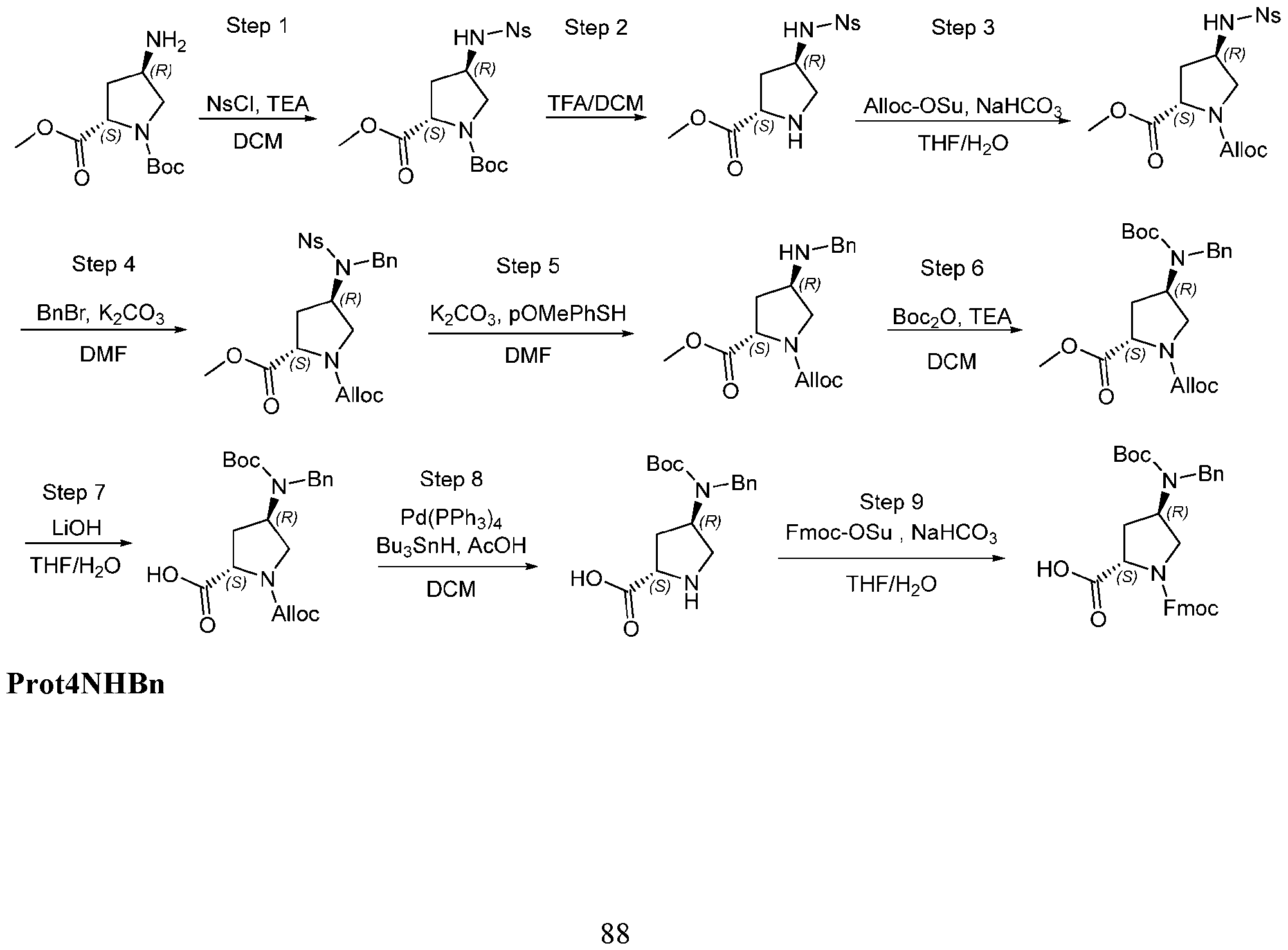
Ref document number: 24824056

Country of ref document: EP

Kind code of ref document: A1

WWE Wipo information: entry into national phase

Ref document number: AU2024304141

Country of ref document: AU

WWE Wipo information: entry into national phase

Ref document number: MX/A/2025/015070

Country of ref document: MX

ENP Entry into the national phase

Ref document number: 2024304141

Country of ref document: AU

Date of ref document: 20240612

Kind code of ref document: A

WWE Wipo information: entry into national phase

Ref document number: 2024824056

Country of ref document: EP

NENP Non-entry into the national phase

Ref country code: DE

ENP Entry into the national phase

Ref document number: 2024824056

Country of ref document: EP

Effective date: 20260113

ENP Entry into the national phase

Ref document number: 2024824056

Country of ref document: EP

Effective date: 20260113

ENP Entry into the national phase

Ref document number: 2024824056

Country of ref document: EP

Effective date: 20260113

WWP Wipo information: published in national office

Ref document number: MX/A/2025/015070

Country of ref document: MX

ENP Entry into the national phase

Ref document number: 2024824056

Country of ref document: EP

Effective date: 20260113

WWP Wipo information: published in national office

Ref document number: 2024824056

Country of ref document: EP