WO2024256554A1 - Heterocyclic compounds and their use in the treatment of mycobacterial infections - Google Patents
Heterocyclic compounds and their use in the treatment of mycobacterial infections Download PDFInfo
- Publication number
- WO2024256554A1 WO2024256554A1 PCT/EP2024/066402 EP2024066402W WO2024256554A1 WO 2024256554 A1 WO2024256554 A1 WO 2024256554A1 EP 2024066402 W EP2024066402 W EP 2024066402W WO 2024256554 A1 WO2024256554 A1 WO 2024256554A1
- Authority
- WO
- WIPO (PCT)
- Prior art keywords
- thiazole
- compound
- thieno
- pharmaceutically acceptable
- acceptable salt
- Prior art date
- Legal status (The legal status is an assumption and is not a legal conclusion. Google has not performed a legal analysis and makes no representation as to the accuracy of the status listed.)
- Ceased
Links
Classifications
-
- C—CHEMISTRY; METALLURGY
- C07—ORGANIC CHEMISTRY
- C07D—HETEROCYCLIC COMPOUNDS
- C07D513/00—Heterocyclic compounds containing in the condensed system at least one hetero ring having nitrogen and sulfur atoms as the only ring hetero atoms, not provided for in groups C07D463/00, C07D477/00 or C07D499/00 - C07D507/00
- C07D513/02—Heterocyclic compounds containing in the condensed system at least one hetero ring having nitrogen and sulfur atoms as the only ring hetero atoms, not provided for in groups C07D463/00, C07D477/00 or C07D499/00 - C07D507/00 in which the condensed system contains two hetero rings
- C07D513/04—Ortho-condensed systems
-
- A—HUMAN NECESSITIES
- A61—MEDICAL OR VETERINARY SCIENCE; HYGIENE
- A61K—PREPARATIONS FOR MEDICAL, DENTAL OR TOILETRY PURPOSES
- A61K31/00—Medicinal preparations containing organic active ingredients
- A61K31/33—Heterocyclic compounds
- A61K31/395—Heterocyclic compounds having nitrogen as a ring hetero atom, e.g. guanethidine or rifamycins
- A61K31/41—Heterocyclic compounds having nitrogen as a ring hetero atom, e.g. guanethidine or rifamycins having five-membered rings with two or more ring hetero atoms, at least one of which being nitrogen, e.g. tetrazole
- A61K31/425—Thiazoles
- A61K31/429—Thiazoles condensed with heterocyclic ring systems
-
- A—HUMAN NECESSITIES
- A61—MEDICAL OR VETERINARY SCIENCE; HYGIENE
- A61K—PREPARATIONS FOR MEDICAL, DENTAL OR TOILETRY PURPOSES
- A61K31/00—Medicinal preparations containing organic active ingredients
- A61K31/33—Heterocyclic compounds
- A61K31/395—Heterocyclic compounds having nitrogen as a ring hetero atom, e.g. guanethidine or rifamycins
- A61K31/495—Heterocyclic compounds having nitrogen as a ring hetero atom, e.g. guanethidine or rifamycins having six-membered rings with two or more nitrogen atoms as the only ring heteroatoms, e.g. piperazine or tetrazines
- A61K31/496—Non-condensed piperazines containing further heterocyclic rings, e.g. rifampin, thiothixene or sparfloxacin
-
- A—HUMAN NECESSITIES
- A61—MEDICAL OR VETERINARY SCIENCE; HYGIENE
- A61K—PREPARATIONS FOR MEDICAL, DENTAL OR TOILETRY PURPOSES
- A61K31/00—Medicinal preparations containing organic active ingredients
- A61K31/33—Heterocyclic compounds
- A61K31/395—Heterocyclic compounds having nitrogen as a ring hetero atom, e.g. guanethidine or rifamycins
- A61K31/535—Heterocyclic compounds having nitrogen as a ring hetero atom, e.g. guanethidine or rifamycins having six-membered rings with at least one nitrogen and one oxygen as the ring hetero atoms, e.g. 1,2-oxazines
- A61K31/5375—1,4-Oxazines, e.g. morpholine
- A61K31/5377—1,4-Oxazines, e.g. morpholine not condensed and containing further heterocyclic rings, e.g. timolol
-
- A—HUMAN NECESSITIES
- A61—MEDICAL OR VETERINARY SCIENCE; HYGIENE
- A61K—PREPARATIONS FOR MEDICAL, DENTAL OR TOILETRY PURPOSES
- A61K45/00—Medicinal preparations containing active ingredients not provided for in groups A61K31/00 - A61K41/00
- A61K45/06—Mixtures of active ingredients without chemical characterisation, e.g. antiphlogistics and cardiaca
-
- A—HUMAN NECESSITIES
- A61—MEDICAL OR VETERINARY SCIENCE; HYGIENE
- A61P—SPECIFIC THERAPEUTIC ACTIVITY OF CHEMICAL COMPOUNDS OR MEDICINAL PREPARATIONS
- A61P31/00—Antiinfectives, i.e. antibiotics, antiseptics, chemotherapeutics
- A61P31/04—Antibacterial agents
- A61P31/06—Antibacterial agents for tuberculosis
-
- C—CHEMISTRY; METALLURGY
- C07—ORGANIC CHEMISTRY
- C07D—HETEROCYCLIC COMPOUNDS
- C07D519/00—Heterocyclic compounds containing more than one system of two or more relevant hetero rings condensed among themselves or condensed with a common carbocyclic ring system not provided for in groups C07D453/00 or C07D455/00
-
- A—HUMAN NECESSITIES
- A61—MEDICAL OR VETERINARY SCIENCE; HYGIENE
- A61K—PREPARATIONS FOR MEDICAL, DENTAL OR TOILETRY PURPOSES
- A61K2300/00—Mixtures or combinations of active ingredients, wherein at least one active ingredient is fully defined in groups A61K31/00 - A61K41/00
Definitions
- the invention relates to a compound or a pharmaceutically acceptable salt thereof, compositions containing them, including combinations with at least one additional therapeutic agent and their use in therapy, for example in the treatment of mycobacterial infections or in the treatment of diseases caused by mycobacterium, such as tuberculosis.
- Background to the invention Nearly ten million people are infected with tuberculosis (TB) each year, causing an estimated 1.6 million deaths each year, according to a report published by The World Health Organisation in 2022. If untreated the death rate is approximately 50% (from WHO).
- TB is treated using combination therapies of three or more drugs.
- the treatment of TB often requires therapy using multiple drugs.
- the standard treatment currently used for drug-susceptible TB is a combination of isoniazid, rifampicin, pyrazinamide and ethambutol, which patients are required to take for two months, followed by isoniazid and rifampicin, only, for a further four months.
- Multidrug-resistant TB is defined as resistance to at least isoniazid and rifampicin, the two most powerful first-line anti-TB medicines, and extensively drug-resistant TB (XDR-TB) is a form of MDR-TB that is also resistant to at least one fluoroquinolone and any of the second–line anti-TB injectable agents (i.e. amikacin, kanamycin or capreomycin), the two most important classes of medicines in the MDR-TB regimen.
- XDR-TB extensively drug-resistant TB
- MDR-TB is a form of MDR-TB that is also resistant to at least one fluoroquinolone and any of the second–line anti-TB injectable agents (i.e. amikacin, kanamycin or capreomycin), the two most important classes of medicines in the MDR-TB regimen.
- compositions comprising (a) the compound of Formula (I) or pharmaceutically acceptable salt thereof, and (b) a pharmaceutically acceptable excipient.
- kit comprising the compound of Formula (I) or a pharmaceutically acceptable salt thereof, or the pharmaceutical composition the second aspect, and instructions for administering to a human in need thereof.
- it is for use in the treatment of a mycobacterial infection (or a disease caused by infection with a mycobacterium).
- a compound of Formula (I) or a pharmaceutically acceptable salt thereof in the manufacture of a medicament for use in the treatment of a mycobacterial infection or a disease caused by infection with a mycobacterium.
- a compound of Formula (I) or a pharmaceutically acceptable salt thereof wherein R1, R2 and X are as
- X is -Y(CH2)n-* or -Y-cyclobutyl-*, wherein * represents the point of attachment of R1.
- Y is attached to the thienodiazole.
- X is -Y(CH2)n-*.
- X is -Y(CH2)n-*, Y is -O- and n is 0 or 1.
- R1 is selected from the group consisting of cyclopropyl, 2-oxa-5- azabicyclo[2.2.1]heptan-5-yl, 6-oxa-3-azabicyclo[3.1.1]heptan-3-yl, 2-methyl-morpholin4-yl, 2,2- dimethyl-morpholin-4-yl, 3-methyl-4-(oxetan-3-yl)piperazin-1-yl, 4-(morpholin-4-yl)piperidin-1-yl, 2-oxaspiro[3.3]heptan-6-yl, tetrahydrofuran-3-yl morpholin-4-yl, methyl 2-methyl-piperazin-4-yl- 1-carboxylate, and methyl pyrrolidin-3-yl-1-carboxylate
- -XR1 is selected from the group consisting of cyclopropyl, 2-oxa-5- azabicyclo[2.2.1]heptan-5-yl, 6-oxa-3-azabicyclo
- R2 is C3-6cycloalkyl optionally substituted with C1-6alkyl, or C1-6haloalkyl.
- R2 is selected from the group consisting of 2-methylcyclopropyl, 3- methylcyclobutyl, 3-difluoromethyl-cyclobutyl, cyclobutyl, spiro[2.3]hexanyl, and 5-methyl- pyridin-2-yl.
- R2 is selected from the group consisting of 2- methylcyclopropyl, 3-methylcyclobutyl, cyclobutyl, spiro[2.3]hexanyl, and 5-methyl-pyridin-2-yl.
- R2 is selected from the group consisting of 2-methylcyclopropyl, 3- methylcyclobutyl, 3-difluoromethyl-cyclobutyl, cyclobutyl, spiro[2.3]hexanyl. In some embodiments, R2 is selected from the group consisting of 2-methylcyclopropyl, 3- methylcyclobutyl, cyclobutyl, spiro[2.3]hexanyl. In some embodiments, R2 is C3-4 cycloalkyl, optionally substituted with methyl. In some embodiments, R2 is selected from 2- methylcyclopropyl, 3-methylcyclobutyl and cyclobutyl.
- R2 is selected from 2-methylcyclopropyl and cyclobutyl. In some embodiments, R2 is 2-methylcyclopropyl. It will be appreciated that a compound of Formula (I) may exist in different tautomeric forms. All possible tautomers, and pharmaceutically acceptable salts thereof, are contemplated to be within the scope of the present invention.
- the compound of Formula (I) or pharmaceutically acceptable salt thereof may be in crystalline or amorphous forms. Furthermore, some of the crystalline forms may exist as polymorphs, all of which are included within the scope of the present invention. The most thermodynamically stable polymorphic form or forms of a compound of Formula (I) or a pharmaceutically acceptable salt thereof are of particular interest.
- Polymorphic forms of a compound of Formula (I) or a pharmaceutically acceptable salt thereof may be characterised and differentiated using a number of conventional analytical techniques, including, but not limited to, X-ray powder diffraction (XRPD), infrared spectroscopy (IR), Raman spectroscopy, differential scanning calorimetry (DSC), thermogravimetric analysis (TGA) and solid- state nuclear magnetic resonance (ssNMR).
- XRPD X-ray powder diffraction
- IR infrared spectroscopy
- Raman spectroscopy Raman spectroscopy
- DSC differential scanning calorimetry
- TGA thermogravimetric analysis
- ssNMR solid- state nuclear magnetic resonance
- Alkyl includes, but is not limited to, methyl, ethyl, n-propyl, iso-propyl, n-butyl, iso-butyl, t-butyl, pentyl and hexyl.
- Cycloalkyl refers to a saturated hydrocarbon mono or bicyclic ring or a saturated spiro-linked bicyclic hydrocarbon ring, having 3, 4, 5, 6 , 7, 8 , 9 or 10 member atoms in the ring. Suitable examples of cycloalkyl include, but are not limited to, cyclopropyl, cyclobutyl, cyclohexyl, spiro[2.3]hexyl.
- Halo refers to a halogen radical, for example, fluoro, chloro, bromo, or iodo.
- haloalkyl refers to an alkyl group in which one or more hydrogens are replaced by a halogen atom.
- halo- substituted in relation to a cycloalkyl or heterocyclyl refers to a cycloalkyl or heterocyclyl group in which one or more hydrogens are replaced by a halogen atom.
- C5-6heteroaryl refers to a monocyclic aromatic group having 5 or 6 member atoms, including 1, 2, 3 or 4 heteroatoms independently selected from nitrogen, sulphur and oxygen.
- C5-6heteroaryl examples include, but are not limited to, furanyl, thienyl, pyrrolyl, imidazolyl, pyrazolyl, triazolyl, tetrazolyl, thiazolyl, oxazolyl, isoxazolyl, oxadiazolyl, thiadiazolyl, isothiazolyl, pyridinyl, pyridazinyl, pyrazinyl, pyrimidinyl and triazinyl.
- Heteroatom refers to a nitrogen, sulfur, or oxygen atom.
- Heterocyclyl refers to a non-aromatic heterocyclic monocyclic or bicyclic ring system or a non- aromatic spiro-linked bicyclic ring system, containing 4, 5, 6, 7, 8, 9 or 10 ring member atoms, including one heteroatom and optionally containing a further heteroatom selected from nitrogen, oxygen or sulphur.
- heterocyclyl groups include, but are not limited to, azetidinyl, oxetanyl, thietanyl, pyrrolidinyl, pyrrolinyl, pyrazolidinyl, pyrazolinyl, imidazolidinyl, imidazolinyl, oxazolinyl, thiazolinyl, tetrahydrofuranyl, dihydrofuranyl, 1,3-dioxolanyl, piperidinyl, piperazinyl, homopiperazinyl, tetrahydropyranyl, dihydropyranyl, tetrahydrothiopyranyl, 1,3-dioxanyl, 1,4- dioxanyl, 1,3-oxathiolanyl, 1,3-oxathianyl, 1,3-dithianyl, 1,4-oxathiolanyl, 1,4-oxathianyl, 1,4-o
- heterocyclyl groups include 2-oxa-5-azabicyclo[2.2.1]heptanyl, 6-oxa-3-azabicyclo [3.1.1]heptanyl, morpholinyl, piperazinyl, oxetanyl, piperidinyl, 2-oxaspiro[3.3]heptanyl, and tetrahydrofuranyl.
- 4-7-membered heterocyclyl refers to a non-aromatic heterocyclic ring system containing 4, 5, 6 or 7 ring member atoms, including one heteroatom and optionally containing a further heteroatom selected from nitrogen, oxygen or sulphur.
- Examples of “4-7-membered heterocyclyl” groups include, but are not limited to pyrrolidinyl, 2-oxa-5- azabicyclo[2.2.1]heptanyl, 6-oxa-3-azabicyclo [3.1.1]heptanyl, morpholinyl, piperazinyl, piperidinyl, 2-oxaspiro[3.3]heptanyl, and tetrahydrofuranyl.
- “6-7-membered heterocyclyl” refers to a non-aromatic heterocyclic ring system containing 6 or 7 ring member atoms, including one heteroatom and optionally containing a further heteroatom selected from nitrogen, oxygen or sulphur.
- 6-7-membered heterocyclyl groups include, but are not limited to 2-oxa- 5-azabicyclo[2.2.1]heptanyl, 6-oxa-3-azabicyclo [3.1.1]heptanyl, morpholinyl, piperazinyl, piperidinyl, and 2-oxaspiro[3.3]heptanyl.
- “Substituted” in reference to a group indicates that a hydrogen atom attached to a member atom within a group is replaced. It should be understood that the term “substituted” includes the implicit provision that such substitution be in accordance with the permitted valence of the substituted atom and the substituent and that the substitution results in a stable compound (i.e.
- a single atom may be substituted with more than one substituent as long as such substitution is in accordance with the permitted valence of the atom.
- Suitable substituents are defined herein for each substituted or optionally substituted group. It will be understood that a phrase such as "a compound of Formula (I) or a pharmaceutically acceptable salt thereof" is intended to encompass the compound of Formula (I), a pharmaceutically acceptable salt or solvate of the compound of Formula (I), or any pharmaceutically acceptable combination of these.
- a compound of Formula (I) or a pharmaceutically acceptable salt thereof encompasses a pharmaceutically acceptable salt of a compound of Formula (I) which is present as a solvate, and this phrase also encompasses a mixture of a compound of Formula (I) and a pharmaceutically acceptable salt of a compound of Formula (I). It is to be further understood that references herein to a compound of Formula (I) or a pharmaceutically acceptable salt thereof includes a compound of Formula (I) as a free base or as a pharmaceutically acceptable salt thereof.
- pharmaceutically acceptable refers to those compounds (including salts), materials, compositions, and dosage forms which are, within the scope of sound medical judgment, suitable for use in contact with the tissues of human beings and animals without excessive toxicity, irritation, or other problem or complication, commensurate with a reasonable benefit/risk ratio.
- Pharmaceutically acceptable salts include, amongst others, those described in Berge, J. Pharm.
- suitable pharmaceutically acceptable salts of the compound of Formula (I) can be formed, which include acid or base addition salts. Acid addition salts may be formed by reaction with the appropriate acid, optionally in a suitable solvent such as an organic solvent, to give the salt which can be isolated by crystallisation and filtration.
- Base addition salts may be formed by reaction with the appropriate base, optionally in a suitable solvent such as an organic solvent, to give the salt which can be isolated by crystallisation and filtration.
- Representative pharmaceutically acceptable acid addition salts include, but are not limited to, 4- acetamidobenzoate, acetate, adipate, alginate, ascorbate, aspartate, benzenesulfonate (besylate), benzoate, bisulfate, bitartrate, butyrate, calcium edetate, camphorate, camphorsulfonate (camsylate), caprate (decanoate), caproate (hexanoate), caprylate (octanoate), cinnamate, citrate, cyclamate, digluconate, 2,5-dihydroxybenzoate, disuccinate, dodecylsulfate (estolate), edetate (ethylenediaminetetraacetate), estolate (lauryl sulfate),
- Representative pharmaceutically acceptable base addition salts include, but are not limited to, aluminium, 2-amino-2-(hydroxymethyl)-1,3-propanediol (TRIS, tromethamine), arginine, benethamine (N-benzylphenethylamine), benzathine (N,N’-dibenzylethylenediamine), bis-(2- hydroxyethyl)amine, bismuth, calcium, chloroprocaine, choline, clemizole (1-p chlorobenzyl-2- pyrrolildine-1’-ylmethylbenzimidazole), cyclohexylamine, dibenzylethylenediamine, diethylamine, diethyltriamine, dimethylamine, dimethylethanolamine, dopamine, ethanolamine, ethylenediamine, L-histidine, iron, isoquinoline, lepidine, lithium, lysine, magnesium, meglumine (N-methylglucamine), piperazine, piperidine,
- the term “therapeutically effective amount” means any amount which, as compared to a corresponding subject who has not received such amount, results in improved treatment, healing, prevention, or amelioration of a disease, disorder, or side effect, or a decrease in the rate of advancement of a disease or disorder.
- An appropriate “therapeutically effective amount” will depend upon a number of factors including, for example, the age and weight of the subject, the precise condition requiring treatment and its severity, the nature of the formulation, and the route of administration, and will ultimately be at the discretion of the attendant physician.
- the compound of Formula (I) may contain at least one asymmetric centres (also referred to as a chiral centres) and may, therefore, exist as individual enantiomers, diastereoisomers, or other stereoisomeric forms, or as mixtures thereof.
- Particular compounds of Formula (I) are: Example 1 N S O O N S HN 2-((1S,4S)-2-oxa-5-azabicyclo[2.2.1]heptan-5-yl)-N-((1S,2S)-2- methylcyclopropyl)thieno[2,3-d]thiazole-5-carboxamide
- Example 1 N S O O N S HN 2-((1S,4S)-2-oxa-5-azabicyclo[2.2.1]heptan-5-yl)-N-((1S,2S)-2- methylcyclopropyl)thieno[2,3-d]thiazole-5-carboxamide
- Example 11 Example 2
- Example 12 Example 5
- Example 6 Example 3
- Example 9 Example 4
- Example 7 Example 14
- Example 13 Example 10
- Example 15 70349WO01
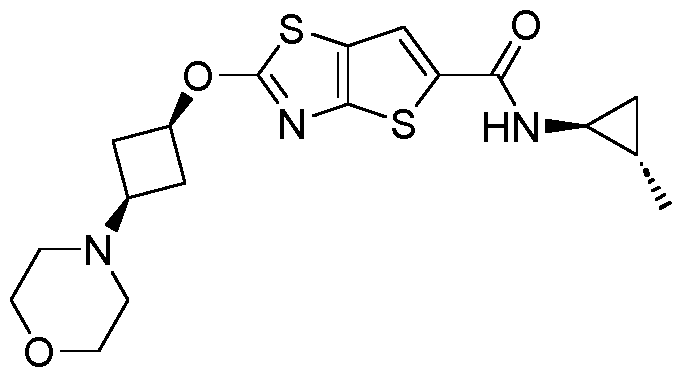
- Example 16 N-((1S,2S)-2-methylcyclopropyl)-2-((1S,3R)-3-morpholinocyclobutoxy)thieno[2,3-d]thiazole-5- carboxamide
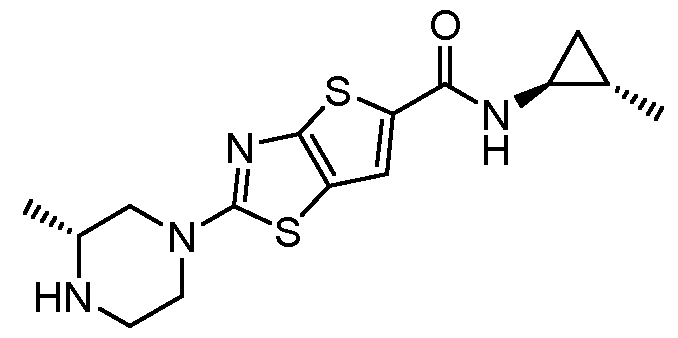
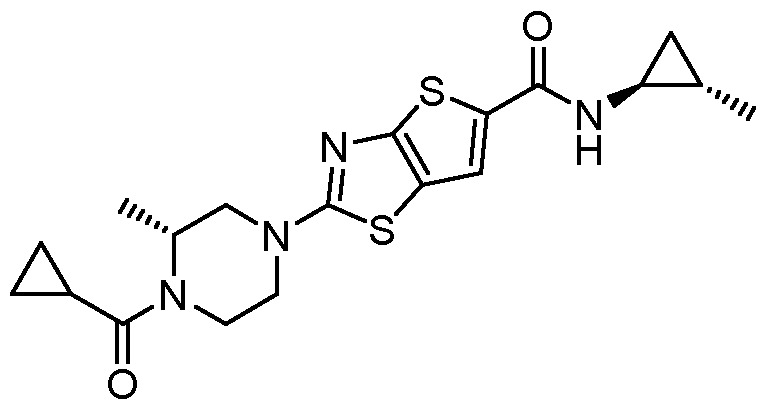
- Example 17 methyl (R)-2-methyl-4-(5-(((1S,2S)-2-methylcyclopropyl)carbamoyl)thieno[2,3-d]thiazol-2- yl)piperazine-1-carboxylate
- Example 18 methyl (R)-3-((5-(cyclobutylcarbamoyl)thieno[2,3-d]thiazol-2-yl)oxy)pyrrolidine-1-carboxylate
- the compound of Formula (I) or a pharmaceutically acceptable salt thereof may be made by a variety of methods, including standard chemistry.
- the general procedures which can be used to synthesise the compound of Formula (I) are described in reaction Schemes 1 to 6 below and are further illustrated in the Examples.
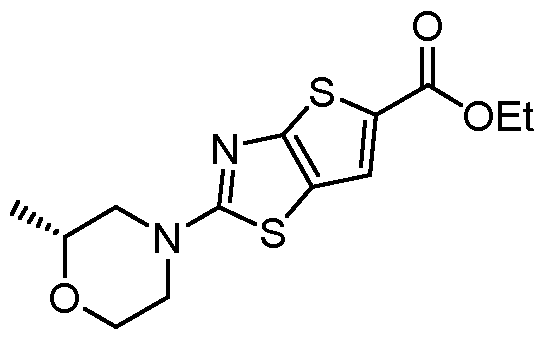
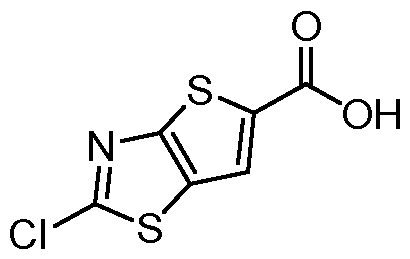
- Preparation of the compound of Formula (I) The compounds of Formula (Ia) may be prepared according to Scheme 1 by an amine displacement reaction of 1, dissolved in a suitable solvent, for example acetonitrile with an amine of the formula R1R2NH and triethylamine. The reaction is carried out at a suitable temperature, for example ambient to produce compounds of Formula 2. Bicycle ring formation is achieved by displacement of the 4-chloro of 2 with ethylmercaptoacetate dissolved in a suitable solvent, for example, dimethylsulfoxide and triethylamine.
- the reaction is carried out in a microwave reactor, at a suitable temperature, for example 100 o C.
- the resulting product hydrolysed by treatment with a suitable base, for example, sodium ethoxide or lithium hydroxide monohydrate dissolved in a suitable solvent, for example ethanol or methanol.
- the reaction is carried out at a suitable temperature, for example ambient to 50 o C to produce compounds of Formula 3.
- An amidation reaction on the acid of Formula 3 with the appropriate amine and 1-ethyl-3-(3- dimethylaminopropyl)carbodiimide is carried out in an suitable solvent, for example pyridine.
- the reaction is a carried out at a suitable temperature, for example, ambient to afford compounds of the Formula Ia.
- compounds of Formula Ia may be prepared according to Scheme 2.
- the aldehyde of 1 is protected as the corresponding acetal by the addition of ethylene glycol and p- toluenesulfonic acid monohydrate dissolved in a suitable solvent, for example toluene.
- the reaction is carried out at a suitable temperature, for example 110 o C to produce compounds of Formula 4.
- Displacement of the 2-chloro from of Formula 4 is achieved by treatment with n-butyllithium dissolved in a suitable solvent, for example tetrahydrofuran.
- the reaction is carried out at a suitable temperature, for example -78 o C.
- Dimethylsulfide added and the reaction allowed to warm to ambient temperature to produce compounds of Formula 5.
- Bicycle ring formation is achieved by displacement of the 4-chloro of 5 with ethylmercaptoacetate dissolved in a suitable solvent, for example, acetonitrile with an appropriate base, for example potassium carbonate.
- a suitable solvent for example, acetonitrile
- the reaction is carried out at a suitable temperature, for example 60 o C to produce compounds of the Formula 6.
- An oxidation reaction of the methyl thiol of Formula 6 with meta-chloroperoxybenzoic acid dissolved in a suitable solvent, for example dichloromethane is carried out at a suitable temperature, for example, ambient to produce compounds of the Formula 7.
- An amine displacement reaction of the sulfoxide of 7 with the appropriate amine and diisopropylethylamine dissolved in a suitable solvent, for example acetonitrile is carried out at a suitable temperature, for example 120 o C
- hydrolysis of the produce from this reaction is achieved by treatment with the appropriate base, for example lithium hydroxide monohydrate dissolved in a suitable solvent, for example tetrahydrofuran and water.
- the reaction is carried out at a suitable temperature, for example 60 o C to produce compounds of the Formula 3.
- An amidation reaction on the acid of Formula 3 with the appropriate amine and 1-ethyl-3-(3-dimethylaminopropyl)carbodiimide is carried out in a suitable solvent, for example pyridine.
- the reaction is a carried out at a suitable temperature, for example, ambient to afford compounds of the Formula Ia.
- Compounds of Formula Ib may be prepared according to Scheme 3 by an amine displacement reaction on the sulfoxide of 7 with the appropriate amine and diisopropylethylamine dissolved in a suitable solvent, for example, acetonitrile.
- the reaction is carried out in a microwave reactor, at a suitable temperature, for example 120 o C to produce compounds of the Formula 8.
- the reaction is carried out at suitable temperature, for example, ambient, the resulting product is treated with lithium hydroxide monohydrate, dissolved in a suitable solvent, for example tetrahydrofuran and water.
- a suitable temperature for example 60 o C to produce compounds of Formula 9.
- An amidation reaction on the acid of Formula 9 with the appropriate amine and 1-ethyl-3-(3- dimethylaminopropyl)carbodiimide dissolved in a suitable solvent, for example pyridine is a carried out at a suitable temperature, for example, ambient to afford compounds of the Formula Ib.
- Compounds of Formula Ic may be prepared according to Scheme 4.
- the reaction is carried out at a suitable temperature, for example, ambient.
- the reaction is carried out at a suitable temperature, for example, ambient to produce compounds of the Formula 11.
- the reaction is carried out in a microwave reactor, at a suitable temperature, for example 120 o C to produce compounds of the Formula 12.
- the reaction is carried out at a suitable temperature, for example ambient to afford compounds of the Formula Ic.
- HN Compounds of Formula Id and Ie may be prepared according to Scheme 5 by an amidation reaction of 7 dissolved in isopropylalcohol and aqueous ammonia.
- the reaction is carried out a suitable temperature, for example 120 o C to produce compounds of the Formula 13.
- the reaction is carried out at a suitable temperature, for example 40-72 o C.
- the resulting product is treated with lithium hydroxide monohydrate, dissolved in a suitable solvent, for example tetrahydrofuran and water and reacted at a suitable temperature, for example ambient to produce compounds of the Formular 14.
- the reaction is carried out at a suitable temperature, for example, ambient to produce compounds of the Formula 15.
- the reaction is carried out at a suitable temperature, for example 60 o C to produce compounds of Formula Id.
- an oxygen displacement reaction on 15 with the appropriate alkyl alcohol and sodium hydride dissolved in a suitable solvent, for example N,N-dimethylformamide introduced an alkoxy compound.
- the reaction is carried out at a suitable temperature, for example ambient to produce compounds of the Formula Ie.
- Step 1 C uCl 2, tBuONO
- compounds of Formula If may be prepared according to Scheme 6.
- the reaction is carried out at a suitable temperature, for example, ambient to produce compounds of the Formula 18.
- the reaction is carried out at a suitable temperature, for example ambient to produce compounds of the Formula 19.
- the reaction is carried out at a suitable temperature, for example ambient to afford compounds of the Formula 20.
- the reaction is carried out at a suitable temperature, for example ambient to afford compounds of the Formula If. 70349WO01 Scheme 6 Methods of Use
- the invention relates to a compound of Formula (I), or a pharmaceutically acceptable salt thereof, for use in therapy.
- the invention relates to a compound of Formula (I), or a pharmaceutically acceptable salt thereof, for use in the treatment of a mycobacterial infection.
- a mycobacterial infection is one caused by infection with a mycobacterium.
- the mycobacterium may be a member of one of the following groups of mycobacterium: Mycobacterium tuberculosis complex (MTC), Mycobacterium avium complex (MAC), Mycobacterium gordonae clade, Mycobacterium kansasii clade, Mycobacterium chelonae clade, Mycobacterium fortuitum clade, Mycobacterium parafortuitum clade or Mycobacterium vaccae clade.
- MTC Mycobacterium tuberculosis complex
- MAC Mycobacterium avium complex
- Mycobacterium gordonae clade Mycobacterium kansasii clade
- Mycobacterium chelonae clade My
- the mycobacterium may also be Mycobacterium ulcerans or Mycobacterium leprae.
- the mycobacterium is a member of the Mycobacterium tuberculosis complex (MTC).
- MTC Mycobacterium tuberculosis complex
- Mycobacterium tuberculosis complex include Mycobacterium tuberculosis, Mycobacterium africanum, Mycobacterium bovis, Mycobacterium bovis BCG, Mycobacterium canetti, Mycobacterium caprae, Mycobacterium microti and Mycobacterium pinnipedi. These mycobacteria are causative agents of human and animal tuberculosis. Mycobacterium tuberculosis is the major cause of human tuberculosis.
- the infection is a Mycobacterium tuberculosis infection.
- the mycobacterial infection is caused by infection with Mycobacterium tuberculosis.
- Mycobacterium avium complex include Mycobacterium avium, Mycobacterium avium paratuberculosis, Mycobacterium avium silaticum, Mycobacterium avium hominissuis, Mycobacterium columbiense and Mycobacterium indicus pranii.
- Members of Mycobacterium gordonae clade include Mycobacterium asiaticum and Mycobacterium gordonae.
- Mycobacterium kansasii clade include Mycobacterium gastri and Mycobacterium kansasii.
- Members of Mycobacterium chelonae clade include Mycobacterium abscessus, Mycobacterium bolletii and Mycobacterium chelonae.
- Mycobacterium fortuitum clade include Mycobacterium boenickei, Mycobacterium brisbanense, Mycobacterium cosmeticum, Mycobacterium fortuitum, Mycobacterium fortuitum subspecies acetamidolyticum, Mycobacterium houstonense, Mycobacterium mageritense, Mycobacterium neworleansense, Mycobacterium peregrinum, Mycobacterium porcinum, Mycobacterium senegalense and Mycobacterium septicum.
- Mycobacterium parafortuitum clade include Mycobacterium austroafricanum, Mycobacterium diernhoferi, Mycobacterium frederiksbergense, Mycobacterium hodleri, Mycobacterium neoaurum and Mycobacterium parafortuitum.
- the mycobacterial infection may be caused by infection with a mycobacterium selected from the following: Mycobacterium tuberculosis, Mycobacterium africanum, Mycobacterium bovis, Mycobacterium bovis BCG, Mycobacterium canetti, Mycobacterium caprae, Mycobacterium microti, Mycobacterium pinnipedii, Mycobacterium avium, Mycobacterium avium paratuberculosis, Mycobacterium avium silaticum, Mycobacterium avium hominissuis, Mycobacterium columbiense, Mycobacterium indicus pranii, Mycobacterium asiaticum, Mycobacterium gordonae, Mycobacterium gastri, Mycobacterium kansasii, Mycobacterium abscessus, Mycobacterium bolletii, Mycobacterium chelonae, Mycobacterium boenickei, Mycobacterium brisbanense, Mycobacterium cosmeticum, Myco
- the invention relates to a compound of Formula (I), or a pharmaceutically acceptable salt thereof, for use in the treatment of a disease caused by infection with a mycobacterium, where the mycobacterium is selected from those hereinbefore described.
- Diseases caused by infection with a mycobacterium include, but are not limited to, tuberculosis (e.g. from Mycobacterium tuberculosis), leprosy (e.g. from Mycobacterium leprae), Johne's disease (e.g. from Mycobacterium avium subspecies paratuberculosis), Buruli or Bairnsdale ulcer (e.g. from Mycobacterium ulceran), Crohn's disease (e.g.
- Mycobacterium avium subspecies paratuberculosis pulmonary disease or pulmonary infection
- pneumonia bursa
- synovial tendon sheaths
- localized abscess lymphadenitis
- skin and soft tissue infections Lady Windermere syndrome (e.g. from Mycobacterium avium complex (MAC)), MAC lung disease, disseminated Mycobacterium avium complex (DMAC), disseminated Mycobacterium avium intraceullulare complex (DMAIC), hot-tub lung (e.g. from Mycobacterium avium complex), MAC mastitis, MAC pyomyositis, or granuloma disease.
- MAC Mycobacterium avium complex
- DMAC disseminated Mycobacterium avium complex
- DMAIC disseminated Mycobacterium avium intraceullulare complex
- hot-tub lung e.g. from Mycobacterium avium complex
- the disease is tuberculosis.
- a compound of Formula (I), or a pharmaceutically acceptable salt thereof for use in the treatment of tuberculosis.
- the invention relates to a method of treatment of a mycobacterial infection in a mammal in need thereof, said treatment comprising administering to said mammal a therapeutically effective amount of a compound of Formula (I), or pharmaceutically acceptable salt thereof.
- a mycobacterial infection is one caused by infection with a mycobacterium.
- the mycobacterium is as hereinbefore described.
- the invention relates to a method of treatment of a Mycobacterium tuberculosis infection.
- the invention relates to a method of treatment of a disease caused by infection with a mycobacterium in a mammal in need thereof, said treatment comprising administering to said mammal a therapeutically effective amount of a compound of Formula (I), or a pharmaceutically acceptable salt thereof.
- the disease is tuberculosis. Therefore, also described herein is a method of treatment of tuberculosis in a mammal in need thereof, said treatment comprising administering to said mammal a therapeutically effective amount of a compound of Formula (I), or a pharmaceutically acceptable salt thereof.
- the mammal is a human.
- the invention relates to use of a compound of Formula (I), or a pharmaceutically acceptable salt thereof, in the manufacture of a medicament for use in the treatment of a mycobacterial infection or a disease caused by infection with a mycobacterium. Also described herein is the use of a compound of Formula (I), or a pharmaceutically acceptable salt thereof, in the manufacture of a medicament for use in the treatment of tuberculosis.
- Formulations The compound of Formula (I) or pharmaceutically acceptable salt thereof will normally, but not necessarily, be formulated into pharmaceutical formulations prior to administration to a patient. Accordingly, in another aspect there is provided a pharmaceutical formulation comprising a compound of Formula (I), or a pharmaceutically acceptable salt thereof, and a pharmaceutically acceptable excipient.
- compositions may be administered by any appropriate route, for example by the oral (including buccal or sublingual), inhaled, intranasal, topical (including buccal, sublingual or transdermal), parenteral (including subcutaneous, intramuscular, intravenous or intradermal) route.
- oral including buccal or sublingual
- inhaled including buccal or sublingual
- topical including buccal, sublingual or transdermal
- parenteral including subcutaneous, intramuscular, intravenous or intradermal
- pharmaceutical compositions are administered via an oral route of administration.
- Suitable pharmaceutically acceptable excipients include the following types of excipients: carriers, diluents, fillers, binders, disintegrants, lubricants, glidants, granulating agents, coating agents, wetting agents, solvents, co-solvents, suspending agents, emulsifiers, sweetners, flavouring agents, flavour-masking agents, colouring agents, anti-caking agents, humectants, chelating agents, plasticisers, viscosity increasing agents, antioxidants, preservatives, stabilisers, surfactants and buffering agents.
- compositions may be presented in unit dose forms containing a predetermined amount of active ingredient per unit dose.
- Preferred unit dosage compositions are those containing a daily dose or sub-dose, or an appropriate fraction thereof, of an active ingredient. Such unit doses may therefore be administered more than once a day.
- Preferred unit dosage compositions are those containing a daily dose or sub-dose (for administration more than once a day), as herein above recited, or an appropriate fraction thereof, of an active ingredient.
- a compound of Formula (I) or pharmaceutically acceptable salt thereof when used in the treatment of tuberculosis, they may be employed alone or in combination with a further therapeutic agent, such as a further anti-mycobacterial agent, in particular a further anti-tuberculosis agent and/or antiviral agent, including antiretroviral agents.
- a further therapeutic agent such as a further anti-mycobacterial agent, in particular a further anti-tuberculosis agent and/or antiviral agent, including antiretroviral agents.
- the present invention relates to a combination of (a) a compound of Formula (I) or a pharmaceutically acceptable salt thereof, and (b) a further anti-tuberculosis agent.
- the combination comprises two, three, four, five, six or seven additional anti- tuberculosis agents.
- the further anti-tuberculosis agent is an agent in development, approved or recommended for the treatment of tuberculosis and may be selected from isoniazid, rifampin, pyrazinamide, ethambutol, moxifloxacin, rifapentine, clofazimine, ethionamide, prothionamide, isoxyl, thiacetazone, a diarylquinoline such as bedaquiline (TMC207) or TBAJ-587, nitroimidazo-oxazine PA-824, delamanid (OPC-67683), an oxazolidinone such as linezolid, tedizolid, radezolid, Rinzolid (PNU- 100480), posizolid (AZD-5847) or TBI-223, EMB analogue SQ109, OPC-167832, GSK3036656 (also known as GSK070), GSK2556286, GSK3211830, a benzothia
- a combination according to the present invention may further comprise an antiviral agent, including an antitretroviral agents.
- the composition further comprises a therapeutically effective amount at least one other agent used for treatment of AIDS or HIV infection selected from nucleoside HIV reverse transcriptase inhibitors, non-nucleoside HIV reverse transcriptase inhibitors, HIV protease inhibitors, HIV fusion inhibitors, HIV attachment inhibitors, CCR5 inhibitors, CXCR4 inhibitors, HIV budding or maturation inhibitors, and HIV integrase inhibitors, and a pharmaceutically acceptable carrier.
- Such antiretroviral agents may be selected from abacavir, atazanavir, bictegravir, cabotegravir, darunavir, delavirdine, didanosine, dideoxyinosine, dolutegravir, doravirine, efavirenz, elvitegravir, emtricitabine, etavirine, fosamprenavir, fostemsavir, indinavir, slatravir, lamivudine, lopinavir, maraviroc, nelfinavir, nevirapine, raltegravir, rilpiverine, ritonavir, saquinavir, stavudine, tipranavir, tenofovir, tenofovir alafenamide, tenofovir disoproxil fumarate, zalcitabine, and zidovudine.
- a pharmaceutical composition comprising (a) a compound of Formula (I) or a pharmaceutically acceptable salt thereof, as herein described, together with (b) a further anti-tuberculosis agent and (c) optionally an antiviral agent including antiretroviral agents, and (d) one or more pharmaceutically acceptable excipients, as herein described.
- a compound of Formula (I) or a pharmaceutically acceptable salt thereof and further therapeutic agent may be administered together in a unitary pharmaceutical composition including both compounds or separately in separate pharmaceutical compositions, each including one of the compounds in a sequential manner. Such sequential administration may be close in time (e.g. simultaneously) or remote in time.
- the compounds are administered in the same dosage form, e.g. one compound may be administered topically and the other compound may be administered orally.
- the amount of a compound of Formula (I) or pharmaceutically acceptable salt thereof and the further therapeutically active agent(s) and the relative timings of administration will be selected in order to achieve the desired combined therapeutic effect.
- the two compounds When combined in the same composition it will be appreciated that the two compounds must be stable and compatible with each other and the other components of the composition and may be formulated for administration. When formulated separately they may be provided in any convenient composition, conveniently, in such a manner as known for such compounds in the art. The combinations may be presented as a combination kit.
- kits or kit of parts as used herein is meant the pharmaceutical composition or compositions that are used to administer the combination according to the invention.
- the combination kit can contain both compounds in a single pharmaceutical composition, such as a tablet, or in separate pharmaceutical compositions.
- the combination kit will contain each compound in separate pharmaceutical compositions either in a single package in separate pharmaceutical compositions in separate packages.
- the combination kit can also be provided by instruction, such as dosage and administration instructions.
- dosage and administration instructions can be of the kind that are provided to a doctor, for example by a drug product label, or they can be of the kind that are provided by a doctor, such as instructions to a patient.
- each compound may be repeated one or more times.
- sequential administration may be close in time or remote in time.
- administration of the other agent several minutes to several dozen minutes after the administration of the first agent, and administration of the other agent several hours to several days after the administration of the first agent are included, wherein the lapse of time is not limited, For example, one agent may be administered once a day, and the other agent may be administered 2 or 3 times a day, or one agent may be administered once a week, and the other agent may be administered once a day and the like.
- the other therapeutic ingredients(s) may be used in the form of salts, for example as alkali metal or amine salts or as acid addition salts, or prodrugs, or as esters, for example lower alkyl esters, or as solvates, for example hydrates, to optimise the activity and/or stability and/or physical characteristics, such as solubility, of the therapeutic ingredient.
- the therapeutic ingredients may be used in optically pure form. When combined in the same composition it will be appreciated that the two compounds must be stable and compatible with each other and the other components of the composition and may be formulated for administration.
- Signal splitting patterns are described as singlet (s), doublet (d), triplet (t), quartet (q), multiplet (m), broad (br), or a combination thereof.
- Coupling constants (J) are quoted to the nearest 0.1 Hz. All temperatures reported are in degress centrigrade.
- Low resolution electrospray (ES) mass spectra were recorded on either an Advion Compact Mass Spectrometer (CMS; model ExpressIon CMS), connected to Dionex Ultimate 3000 UPLC system with diode array detector; or a Shimadzu LCMS 2020 Mass Spectrometer, connected to Shimadzu Nexera HPLC system with diode array detector.
- CMS Advion Compact Mass Spectrometer
- Shimadzu LCMS 2020 Mass Spectrometer connected to Shimadzu Nexera HPLC system with diode array detector.
- High resolution electrospray (ES) mass spectra were recorded on either a Bruker MicroToF Mass Spectrometer, connected to Dionex U3000 HPLC system with diode array detector; or a Waters Mass Spectrometer (Waters Xevo QToF MS), connected to Aquity UPLC system with diode array detector.
- HPLC chromatographic separations were conducted using a Waters XBridge C18 column, 2.1 x 50mm, 3.5 ⁇ m particle size; Waters XSelect 2.1 x 30mm, 2.5 ⁇ m particle size; or a Thermo Hypersil Gold column, 50 x 2.1 mm, 1.9 ⁇ m particle size.
- the compounds were eluted with a gradient of 2 to 98% acetonitrile/water with either 0.05% or 0.01% formic acid; or with a gradient of 5 to 95% acetonitrile/water with either 0.1% ammonia or 0.1% formic acid.
- the reaction was stirred at rt for 16 h.
- the reaction diluted with water (30 mL) and extracted with EtOAc (3 x 30 mL).
- the combined organics were washed with brine, dried over MgSO4, and concentrated in vacuo.
- the pale brown solid obtained was dissolved in ethanol (60 mL) and NaOEt (34.8 mL, 17.91 mmol) was added dropwise with stirring and the reaction stirred at room temperature for 4 h.
- the reaction quenched with a small amount of water ( ⁇ 5 mL) and the solvent concentrated in vacuo.
- the residue was triturated with water but the solid dissolved in the water.
- the aqueous was re-dissolved in water (30 mL) and washed with EtOAc (30 mL).
- the reaction was diluted with water (10 mL) and extracted with EtOAc (3 x 15 mL). The organics were combined, washed with brine and dried over MgSO4 and evaporated in vacuo.
- the pale brown oil obtained was dissolved in ethanol (4 mL) and NaOEt (20% Wt in EtOH, 3.29 mL, 1.69 mmol) added dropwise and the reaction was stirred at rt for 30 min. The reaction was quenched with a small amount of water ( ⁇ 1 mL) and the solvent removed in vacuo.
- reaction was stirred at 0 °C for a further 30 min, allowed to warm to rt and stirred at rt for 2 h then quenched with 1 M sodium sulfite (25 mL) and stirred for 16 h.
- the reaction was diluted with 1 N NaOH (50 mL), stirred for 15 min, partitioned and the organic phase washed with 1M NaOH (50 mL) and passed through a hydrophobic frit, concentrated in vacuo to give crude product which was purified by flash chromatography (0-4% MeOH in DCM) to give (5.83 g) as an off-white solid. The solid was heated to reflux in EtOH (50 mL) for 1 h.
- the reaction heated to 72 °C and stirred for 15 min, cooled to rt and partitioned between EtOAc (100 mL) and sat NH4Cl (100 mL) and the mixture filtered through celite and washed with DCM (50 mL). The filtrate and washings were combined and partitioned. The organic phase washed with sat. NH4Cl (50 mL), passed through a hydrophobic frit, and concentrated in vacuo.
- the crude product was dissolved in mixture of MeOH/DCM (1:1, 20 mL) and then loaded evenly onto 2 x 10 g SCX-2 columns. The columns were each washed with MeOH (80 mL) and then the desired product was eluted with 3.5 N NH3 in MeOH (80 mL).
- Example 1 2-((1S,4S)-2-Oxa-5-azabicyclo[2.2.1]heptan-5-yl)-N-((1S,2S)-2- methylcyclopropyl)thieno[2,3-d]thiazole-5-carboxamide a containing EDC (1.55 g, 8.08 mmol) and 2-((1S,4S)-2-oxa-5- azabicyclo[2.2.1]heptan-5-yl)thieno[2,3-d]thiazole-5-carboxylic acid (1.14 mg, 4.04 mmol, Intermediate 3a), and 2-methylcyclopropanamine (287 mg, 4.04 mmol) in MeCN (8 mL) was added pyridine (2 mL).
- the reaction was stirred at rt for 16 h.
- the reaction was concentrated in vacuo and partitioned between DCM (20 mL) and sat. NaHCO3 (10 mL).
- the mixture was passed through a phase separator and the organic phase was concentrated in vacuo to give crude product.
- the crude product was purified by flash chromatography (0-5% MeOH in DCM) to give desired product (189 mg, 0.54 mmol, 80%) as an orange/brown solid.
- Example 4 N-((1S,2S)-2-Methylcyclopropyl)-2-(4-morpholinopiperidin-1- yl)thieno[2,3-d]thiazole-5-carboxamide To a mg, mmol) and 2-(4-morpholino-1-piperidyl)thieno[2,3- d]thiazole-5-carboxylic acid (1.00 g, 2.83 mmol, Intermediate 3d) in MeCN (30 mL) and pyridine (15 mL) was added portionwise over 15 min (1S,2S)-2-Methylcyclopropan-1-amine hydrochloride (457 mg, 4.24 mmol). The reaction was stirred at rt for 16 h.
- the reaction was concentrated in vacuo and partitioned between DCM (50 mL), MeOH (5 mL) and NaOH (0.5 M, 40 mL). The mixture was separated and the organic phase passed through a hydrophobic frit and concentrated in vacuo. The crude product was then dry-loaded onto silica and purified by flash chromatography (0-15% MeOH in DCM) to give desired product as a cream coloured solid (1.07 g). The solid was suspended in EtOH (20 mL) and heated to reflux.
- Example 7 2-((R)-3-Methyl-4-(oxetan-3-yl)piperazin-1-yl)-N-((1r,3R)-3- methylcyclobutyl)thieno[2,3-d]thiazole-5-carboxamide O mmol) and 2-[(3R)-3-methyl-4-(oxetan-3-yl)piperazin-1- yl]thieno[2,3-d]thiazole-5-carboxylic acid (1.00 g, 2.95 mmol, Intermediate 9a) in MeCN (30 mL) was added Pyridine (15mL) and the reaction was stirred at rt for 10 min.
- trans-3-Methylcyclobutan-1-amine.HCl (466 mg, 3.83 mmol) and the mixture stirred at rt for 16 h, concentrated in vacuo and partitioned between DCM (50 mL) and sat NaHCO3 (50 mL). then washed with sat. brine (50 mL) the organic phase was passed through a hydrophobic frit.
- Example 8 (R)-2-(3-Methyl-4-(oxetan-3-yl)piperazin-1-yl)-N-(spiro[2.3]hexan-5- yl)thieno[2,3-d]thiazole-5-carboxamide
- EDC 68 mg, 0.35 mmol
- 2-[(3R)-3-methyl-4-(oxetan-3-yl)piperazin-1- yl]thieno[2,3-d]thiazole-5-carboxylic acid 100 mg, 0.29 mmol, Intermediate 9a
- the solids were suspended in DCM (11 mL) and 1- methylimidazole (750 ⁇ L, 12.10mmol) was added. The mixture was stirred for 15 min to give a light brown solution and then TCFH (806 mg, 2.87 mmol) was added. The reaction vial was crimped to seal and heated at 40 °C for 16 h. The reaction was concentrated in vacuo, dry-loaded directly onto silica and purified by flash chromatography (0-5% MeOH in DCM) to give an impure yellow solid. The solid was suspended in EtOH (10 mL), heated to reflux, and stirred for 1 h. The resultant suspension was then cooled to rt and filtered.
- Example 12 N-Cyclobutyl-2-cyclopropylthieno[2,3-d]thiazole-5-carboxamide N- [2,3-d]thiazole-5-carboxamide (101 mg, 0.356 mmol, Intermediate 15b) and Xantphos Pd G3 (35 mg, 0.036 mmol) in THF (5 mL) at room temperature was degassed with three vacuum/N2 cycles, then treated with cyclopropylzinc bromide (0.5 M in THF, 1.5 mL, 0.75 mmol) dropwise to give an orange solution.
- Example 14 2-((2-Oxaspiro[3.3]heptan-6-yl)oxy)-N-((1S,2S)-2- methylcyclopropyl)thieno[2,3-d]thiazole-5-carboxamide
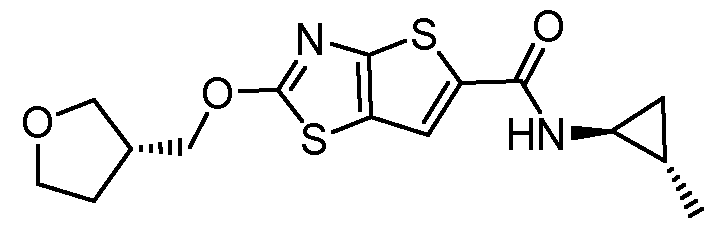
- Example 15 N-((1S,2S)-2-methylcyclopropyl)-2-(((R)-tetrahydrofuran-3- yl)methoxy)thieno[2,3-d]thiazole-5-carboxamide To mg, 0.92 mmol) in a suspension of DMF (0.5 mL) was added [(3S)-tetrahydrofuran-3-yl]methanol (106 ⁇ L, 1.10 mmol).
- Example 17 Methyl (R)-2-methyl-4-(5-(((1S,2S)-2-methylcyclopropyl)carbamoyl) thieno[2,3-d]thiazol-2-yl)piperazine-1-carboxylate
- DCM DCM
- DIPEA 145 ⁇ L, 1.07 mmol
- methyl chloroformate 45 ⁇ L, 0.58 mmol
- Example 18 Methyl (R)-3-((5-(Cyclobutylcarbamoyl)thieno[2,3-d]thiazol-2-yl)oxy) pyrrolidine-1-carboxylate
- a -N- 2-(pyrrolidin-3-yloxy)thieno[2,3-d]thiazole-5-carboxamide 113 mg, 0.35 mmol, Intermediate 20b
- diisopropylethylamine 120 ⁇ L, 0.69 mmol
- DCM 2-(pyrrolidin-3-yloxy)thieno[2,3-d]thiazole-5-carboxamide
- Intracellular Assay 2 Mycobacterium tuberculosis in vitro H37Rv in human macrophages THP-1 Inhibition Assay (Intracellular Assay) (1) Intracellular screening is a valuable tool for identifying new antituberculosis compounds that are active in human macrophages. This ex-vivo assay may represent physiological conditions that mimic disease and take into consideration the favorable contribution of host cells. Procedure was carried out as described in Sorrentino, F. et al. (2016) Antimicrob. Agents Chemother.
- HepG2 in vitro cytotoxicity assay (2, 3) Actively growing HepG2 cells were removed from a T-175 TC flask using 5 mL Eagle’s MEM (containing 10 % FBS, 1 % NEAA, 1 % penicillin/ streptomycin) and dispersed in the medium by >zthan 50 % confluent at the time of harvesting. Cell suspension was added to 500 ⁇ L of the same medium at a final density of 1.23105 cells/mL. This cell suspension was dispensed (25 ⁇ L, 3000 cells per well) into 384- well clear-bottom plates using a Multidrop Combi dispenser.
- the screening compounds Prior to addition of the cell suspension, the screening compounds (250 nL) were pre- dispensed into the plates with an EchoH liquid handler. Plates were incubated for 48 h at 37uC, 5% CO2. After incubation, plates equilibrated at room temperature for 30 min before proceeding to develop the luminescent signal.
- the signal developer, CellTiter-GloH Reagent was allowed to equilibrate at room temperature for 30 min and added to the plates (25 ⁇ L per well) using a Multidrop Combi dispenser. Plates were left for 10 min at room temperature for stabilization and then read using a ViewLux. Results of Assay 3 are provided in Table 1.
- Assay 4 Acute Mycobacterium tuberculosis in vivo assay (4) Specific pathogen-free, 8-10 week-old female C57BL/6 mice were purchased from Envigo Laboratories and were allowed to acclimate for one week. Mice were intratracheally infected with approximately 100.000 CFU/mouse (Mycobacterium tuberculosis H37Rv). Moxifloxacin was used as an interassay control. Example 1 and Moxifloxacin were administered once a day via oral from day 1 to day 8 after infection, both included. Moxifloxacin was administered at 30 mg/kg in Captisol 20% and Examples 1 and 3-6 were administered in 1% Methylcellulose at doses from 1 to 300 mg/kg.
- mice were eat and drink ad libitum. Lungs were harvested on day 9 after infection. All lung lobes were aseptically removed, homogenized and frozen. Homogenates were unfrozen and plated in 10% OADC-Middlebrook7H11 medium + 0.4% activated charcoal for 18 days at 37oC. Blood samples were obtained at different time points from infected mice to measure the blood levels of the tested compounds. Animals were euthanized by CO2. All animal studies were ethically reviewed and carried out in accordance with European Directive 2010/63/EU and the GSK Policy on the Care, Welfare and Treatment of Animals. Results of Assay 4 are provided in Table 2.
- Example 1 Chronic Mycobacterium tuberculosis in vivo assay (5)
- Example 1 was evaluated in a chronic murine model of infection at 150 and 300 mg/kg as described in Lenaerts, A. J., Gruppo, V., Marietta, K. S., Johnson, C. M., Driscoll, D. K., Tompkins, N. M., Rose, J. D., Reynolds, R. C. & I. M. Orme. 2005.
- AAC. 49(6):2294-301 Preclinical testing of the nitroimidazopyran PA-824 for activity against Mycobacterium tuberculosis in a series of in vitro and in vivo models.
- Example 1 Treatment lasted for 4 weeks (dosed 5 days/week) and Example 1 gave a >4 log10 reduction in colony forming units in lung compared to an untreated control.
- Results of Assay 5 are provided in Table 2.
- Biological Activity conclusion In light of the results of the above-described extracellular assay 1, intracellular assay 2, cytotoxicity assay 3, acute in vivo assay 4 and chronic in vivo assay 5, it is concluded that Examples 1-15 exhibit good activity against Mycobacterium tuberculosis.
- REFERENCES 1.- Sorrentino, F. et al. (2016) Antimicrob. Agents Chemother.60 (1), 640-645. 2.- Lilian HJ Richter et al.
Landscapes
- Health & Medical Sciences (AREA)
- Chemical & Material Sciences (AREA)
- Organic Chemistry (AREA)
- Animal Behavior & Ethology (AREA)
- Pharmacology & Pharmacy (AREA)
- Veterinary Medicine (AREA)
- Public Health (AREA)
- Medicinal Chemistry (AREA)
- General Health & Medical Sciences (AREA)
- Life Sciences & Earth Sciences (AREA)
- Epidemiology (AREA)
- Oncology (AREA)
- Communicable Diseases (AREA)
- Pulmonology (AREA)
- Nuclear Medicine, Radiotherapy & Molecular Imaging (AREA)
- General Chemical & Material Sciences (AREA)
- Chemical Kinetics & Catalysis (AREA)
- Pharmaceuticals Containing Other Organic And Inorganic Compounds (AREA)
Abstract
Description












Claims


Priority Applications (4)
| Application Number | Priority Date | Filing Date | Title |
|---|---|---|---|
| AU2024304329A AU2024304329A1 (en) | 2023-06-14 | 2024-06-13 | Heterocyclic compounds and their use in the treatment of mycobacterial infections |
| KR1020267000818A KR20260022423A (en) | 2023-06-14 | 2024-06-13 | Heterocyclic compounds and their use in the treatment of mycobacterial infections |
| EP24735517.5A EP4727950A1 (en) | 2023-06-14 | 2024-06-13 | Heterocyclic compounds and their use in the treatment of mycobacterial infections |
| CN202480037055.1A CN121399138A (en) | 2023-06-14 | 2024-06-13 | Heterocyclic compounds and their use in the treatment of mycobacterial infections |
Applications Claiming Priority (2)
| Application Number | Priority Date | Filing Date | Title |
|---|---|---|---|
| EP23179123.7 | 2023-06-14 | ||
| EP23179123 | 2023-06-14 |
Publications (1)
| Publication Number | Publication Date |
|---|---|
| WO2024256554A1 true WO2024256554A1 (en) | 2024-12-19 |
Family
ID=86776426
Family Applications (1)
| Application Number | Title | Priority Date | Filing Date |
|---|---|---|---|
| PCT/EP2024/066402 Ceased WO2024256554A1 (en) | 2023-06-14 | 2024-06-13 | Heterocyclic compounds and their use in the treatment of mycobacterial infections |
Country Status (5)
| Country | Link |
|---|---|
| EP (1) | EP4727950A1 (en) |
| KR (1) | KR20260022423A (en) |
| CN (1) | CN121399138A (en) |
| AU (1) | AU2024304329A1 (en) |
| WO (1) | WO2024256554A1 (en) |
Citations (1)
| Publication number | Priority date | Publication date | Assignee | Title |
|---|---|---|---|---|
| EP3157904B1 (en) * | 2014-06-20 | 2020-11-18 | Institut Pasteur Korea | Anti-infective compounds |
-
2024
- 2024-06-13 AU AU2024304329A patent/AU2024304329A1/en active Pending
- 2024-06-13 EP EP24735517.5A patent/EP4727950A1/en active Pending
- 2024-06-13 KR KR1020267000818A patent/KR20260022423A/en active Pending
- 2024-06-13 CN CN202480037055.1A patent/CN121399138A/en active Pending
- 2024-06-13 WO PCT/EP2024/066402 patent/WO2024256554A1/en not_active Ceased
Patent Citations (1)
| Publication number | Priority date | Publication date | Assignee | Title |
|---|---|---|---|---|
| EP3157904B1 (en) * | 2014-06-20 | 2020-11-18 | Institut Pasteur Korea | Anti-infective compounds |
Non-Patent Citations (11)
| Title |
|---|
| "Handbook of Pharmaceutical Salts; Properties, Selection and Use", 2011, WILEY-VCH/VHCA |
| "Pharmaceutically acceptable salts", BERGE, J. PHARM. SCI., vol. 1977, no. 66, pages 1 - 19 |
| "Remington: The Science and Practice of Pharmacy", 2006 |
| CROUCH, S.P. ET AL.: "The use of ATP bioluminescence as a measure of cell proliferation and cytotoxicity", J IMMUNOL METHODS, vol. 160, no. 1, 15 March 1993 (1993-03-15), pages 81 - 8, XP023653002, DOI: 10.1016/0022-1759(93)90011-U |
| FLYNN, J. L.CHAN, J., ANNU. REV. IMMUNOL., vol. 19, 2001, pages 93 - 129 |
| JIN GUANGHAI ET AL: "Discovery of thienothiazolocarboxamide analogues as novel anti-tubercular agent", BIOORGANIC & MEDICINAL CHEMISTRY, ELSEVIER, AMSTERDAM, NL, vol. 28, no. 23, 3 October 2020 (2020-10-03), XP086403207, ISSN: 0968-0896, [retrieved on 20201003], DOI: 10.1016/J.BMC.2020.115797 * |
| LENAERTS, A. J.GRUPPO, V.MARIETTA, K. S.JOHNSON, C. M.DRISCOLL, D. K.TOMPKINS, N. M.ROSE, J. D.REYNOLDS, R. C.I. M. ORME, AAC, vol. 49, no. 6, 2005, pages 2294 - 301 |
| LENAERTS, A. J.GRUPPO, V.MARIETTA, K. S.JOHNSON, C. M.DRISCOLL, D. K.TOMPKINS, N. M.ROSE, J. D.REYNOLDS, R. C.I. M. ORME: "Preclinical testing of the nitroimidazopyran PA-824 for activity against Mycobacterium tuberculosis in a series of in vitro and in vivo models", AAC, vol. 49, no. 6, 2005, pages 2294 - 301 |
| LILIAN HJ RICHTER ET AL., TOXICOL LETTERS, vol. 301, 2019, pages 79 - 89 |
| RULLAS, J ET AL., AAC, vol. 54, no. 5, May 2010 (2010-05-01), pages 2262 - 4 |
| SORRENTINO, F. ET AL., ANTIMICROB. AGENTS CHEMOTHER., vol. 60, no. 1, 2016, pages 640 - 645 |
Also Published As
| Publication number | Publication date |
|---|---|
| CN121399138A (en) | 2026-01-23 |
| EP4727950A1 (en) | 2026-04-22 |
| KR20260022423A (en) | 2026-02-19 |
| AU2024304329A1 (en) | 2025-11-27 |
Similar Documents
| Publication | Publication Date | Title |
|---|---|---|
| JP7379467B2 (en) | RIP1 inhibitor compounds and methods for making and using the same | |
| TWI603977B (en) | Compounds and compositions as kinase inhibitors | |
| JP2017538766A (en) | Fused ring heteroaryl compounds and uses as TRK inhibitors | |
| JP7352294B2 (en) | Antagonist of muscarinic acetylcholine receptor M4 | |
| JP2025519219A (en) | Azaquinolinone derivatives, process for their preparation and use thereof | |
| WO2014068099A1 (en) | Amino-substituted imidazo[1,2-a]pyridinecarboxamides and their use | |
| AU2017210567A1 (en) | Tricyclic benzoxaborole compounds and uses thereof | |
| KR20240024060A (en) | Extended Dosage Regimen for Integrin Inhibitors | |
| CN107001329A (en) | Compounds and compositions as kinase inhibitors | |
| AU2016217508A1 (en) | Benzoxaborole compounds and uses thereof | |
| HUE029876T2 (en) | Anti-malarial agents | |
| JP2017516800A (en) | New compounds | |
| CN110997680B (en) | Novel compound | |
| CN110546133A (en) | Anti-fibrotic compounds | |
| AU2024304329A1 (en) | Heterocyclic compounds and their use in the treatment of mycobacterial infections | |
| JP5938533B2 (en) | Azaindole derivatives | |
| US20240400562A1 (en) | Compounds and compositions for treating conditions associated with lpa receptor activity | |
| US20250188092A1 (en) | Rifamycin analogs | |
| US11253499B2 (en) | Compounds | |
| WO2025235754A1 (en) | Covalent craf inhibitors and uses thereof | |
| JP2025539698A (en) | Novel cyanopyridine KHK inhibitor compounds | |
| EA052543B1 (en) | STAT3 INHIBITOR PRODRUGS |
Legal Events
| Date | Code | Title | Description |
|---|---|---|---|
| 121 | Ep: the epo has been informed by wipo that ep was designated in this application |
Ref document number: 24735517 Country of ref document: EP Kind code of ref document: A1 |
|
| WWE | Wipo information: entry into national phase |
Ref document number: AU2024304329 Country of ref document: AU |
|
| ENP | Entry into the national phase |
Ref document number: 2024304329 Country of ref document: AU Date of ref document: 20240613 Kind code of ref document: A |
|
| WWE | Wipo information: entry into national phase |
Ref document number: 202517126932 Country of ref document: IN |
|
| REG | Reference to national code |
Ref country code: BR Ref legal event code: B01A Ref document number: 112025027720 Country of ref document: BR |
|
| WWP | Wipo information: published in national office |
Ref document number: 202517126932 Country of ref document: IN |
|
| ENP | Entry into the national phase |
Ref document number: 1020267000818 Country of ref document: KR Free format text: ST27 STATUS EVENT CODE: A-0-1-A10-A15-NAP-PA0105 (AS PROVIDED BY THE NATIONAL OFFICE) |
|
| WWE | Wipo information: entry into national phase |
Ref document number: 1020267000818 Country of ref document: KR |
|
| WWE | Wipo information: entry into national phase |
Ref document number: 2024735517 Country of ref document: EP Ref document number: 2026100417 Country of ref document: RU |
|
| NENP | Non-entry into the national phase |
Ref country code: DE |
|
| ENP | Entry into the national phase |
Ref document number: 2024735517 Country of ref document: EP Effective date: 20260114 |
|
| ENP | Entry into the national phase |
Ref document number: 2024735517 Country of ref document: EP Effective date: 20260114 |
|
| ENP | Entry into the national phase |
Ref document number: 2024735517 Country of ref document: EP Effective date: 20260114 |
|
| ENP | Entry into the national phase |
Ref document number: 2024735517 Country of ref document: EP Effective date: 20260114 |
|
| WWP | Wipo information: published in national office |
Ref document number: 1020267000818 Country of ref document: KR |
|
| WWP | Wipo information: published in national office |
Ref document number: 2026100417 Country of ref document: RU |
|
| WWP | Wipo information: published in national office |
Ref document number: 2024735517 Country of ref document: EP |