WO2024254677A1 - Synthesis of functional and clinically practical ester-free vinyl monomers for applications in dentistry - Google Patents
Synthesis of functional and clinically practical ester-free vinyl monomers for applications in dentistry Download PDFInfo
- Publication number
- WO2024254677A1 WO2024254677A1 PCT/CA2024/050748 CA2024050748W WO2024254677A1 WO 2024254677 A1 WO2024254677 A1 WO 2024254677A1 CA 2024050748 W CA2024050748 W CA 2024050748W WO 2024254677 A1 WO2024254677 A1 WO 2024254677A1
- Authority
- WO
- WIPO (PCT)
- Prior art keywords
- dental
- compound
- alkyl
- monomeric compound
- monomers
- Prior art date
- Legal status (The legal status is an assumption and is not a legal conclusion. Google has not performed a legal analysis and makes no representation as to the accuracy of the status listed.)
- Ceased
Links
Classifications
-
- C—CHEMISTRY; METALLURGY
- C07—ORGANIC CHEMISTRY
- C07C—ACYCLIC OR CARBOCYCLIC COMPOUNDS
- C07C271/00—Derivatives of carbamic acids, i.e. compounds containing any of the groups, the nitrogen atom not being part of nitro or nitroso groups
- C07C271/06—Esters of carbamic acids
- C07C271/08—Esters of carbamic acids having oxygen atoms of carbamate groups bound to acyclic carbon atoms
- C07C271/10—Esters of carbamic acids having oxygen atoms of carbamate groups bound to acyclic carbon atoms with the nitrogen atoms of the carbamate groups bound to hydrogen atoms or to acyclic carbon atoms
- C07C271/20—Esters of carbamic acids having oxygen atoms of carbamate groups bound to acyclic carbon atoms with the nitrogen atoms of the carbamate groups bound to hydrogen atoms or to acyclic carbon atoms to carbon atoms of hydrocarbon radicals substituted by nitrogen atoms not being part of nitro or nitroso groups
-
- A—HUMAN NECESSITIES
- A61—MEDICAL OR VETERINARY SCIENCE; HYGIENE
- A61K—PREPARATIONS FOR MEDICAL, DENTAL OR TOILETRY PURPOSES
- A61K6/00—Preparations for dentistry
- A61K6/20—Protective coatings for natural or artificial teeth, e.g. sealings, dye coatings or varnish
-
- A—HUMAN NECESSITIES
- A61—MEDICAL OR VETERINARY SCIENCE; HYGIENE
- A61K—PREPARATIONS FOR MEDICAL, DENTAL OR TOILETRY PURPOSES
- A61K6/00—Preparations for dentistry
- A61K6/30—Compositions for temporarily or permanently fixing teeth or palates, e.g. primers for dental adhesives
-
- A—HUMAN NECESSITIES
- A61—MEDICAL OR VETERINARY SCIENCE; HYGIENE
- A61K—PREPARATIONS FOR MEDICAL, DENTAL OR TOILETRY PURPOSES
- A61K6/00—Preparations for dentistry
- A61K6/80—Preparations for artificial teeth, for filling teeth or for capping teeth
- A61K6/884—Preparations for artificial teeth, for filling teeth or for capping teeth comprising natural or synthetic resins
- A61K6/887—Compounds obtained by reactions only involving carbon-to-carbon unsaturated bonds
-
- C—CHEMISTRY; METALLURGY
- C07—ORGANIC CHEMISTRY
- C07C—ACYCLIC OR CARBOCYCLIC COMPOUNDS
- C07C271/00—Derivatives of carbamic acids, i.e. compounds containing any of the groups, the nitrogen atom not being part of nitro or nitroso groups
- C07C271/06—Esters of carbamic acids
- C07C271/08—Esters of carbamic acids having oxygen atoms of carbamate groups bound to acyclic carbon atoms
- C07C271/10—Esters of carbamic acids having oxygen atoms of carbamate groups bound to acyclic carbon atoms with the nitrogen atoms of the carbamate groups bound to hydrogen atoms or to acyclic carbon atoms
- C07C271/22—Esters of carbamic acids having oxygen atoms of carbamate groups bound to acyclic carbon atoms with the nitrogen atoms of the carbamate groups bound to hydrogen atoms or to acyclic carbon atoms to carbon atoms of hydrocarbon radicals substituted by carboxyl groups
Definitions
- This disclosure relates to the synthesis of functional and clinically practical ester-free vinyl monomers for applications in dentistry.
- dental caries have continued to increase with an extended aging population and its subsequent tooth retention 1 2 . Specifically, caries have been reported to occur in as much as 19% of adults over the age of 45 3 , and show particular recurrence among groups of socioeconomic disadvantage and those with pre-existing risk factors such as periodontal disease.
- the restoration of dental caries is most commonly achieved using dental resin composite (composed of monomers and filler) that are bonded to the tooth using adhesive materials (mainly monomers), which account for over 160 million restoration procedures annually in the United States at an approximate $20B cost 4-6 .
- the dental polymer resins used in these restorations and adhesives, particularly in North America, have replaced traditionally used amalgam restorations due to improved aesthetics, minimized invasiveness, and minimized toxicity concerns.
- Dental sealants used to seal deep anatomical fissures to prevent the development of occlusal caries are based on similar concepts and compositions 7 .
- crosslinkable dental resin monomers without the use of ester-dependent methacrylates.
- Such crosslinkable moieties have included styrene, thiol-ene, methacrylamide (MAA) and acrylamides (AA).
- MAA methacrylamide
- AA acrylamides
- Gonzalez-Bonet et al. developed an ester-free styrene-based monomer that was completely resistant to enzymatic hydrolysis 13 .
- this monomer possessed poor UV curing kinetics, with further iterative blends all requiring the re-introduction of some amount of the original ester- methacrylate-based monomers to provide suitable setting 14 .
- the latter mitigation brings the field back to where it started with the issue of ester- containing monomers still being an issue.
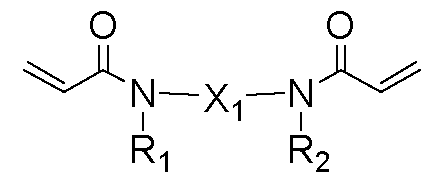
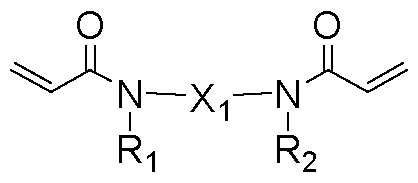
- R1 and R2 may be different alkyl.
- R1 and R2 may be the same alkyl.
- R1 and R2 may be independently C1 , C2, C3 or C4 alkyl.
- R1 and R2 may be C1 and X1 may be (A), so that the compound is:
- R1 and R2 may be C2 and X1 may be (A), so that the compound is: R1 and R2 may be C1 and X1 may be (B), so that the compound is:
- R1 and R2 may be C2 and X1 may be (B), so that the compound is:
- R1 and R2 are C3 and X1 may be (A), so that the compound is:
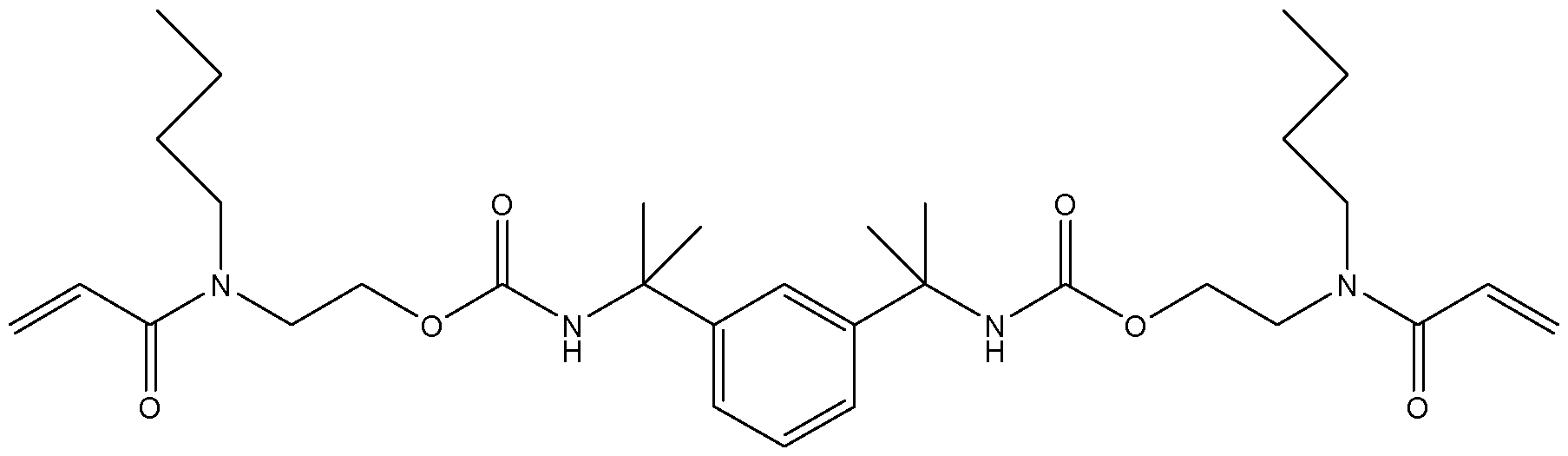
- R1 and R2 may be linear C4 and X1 may be (A), so that the compound is:
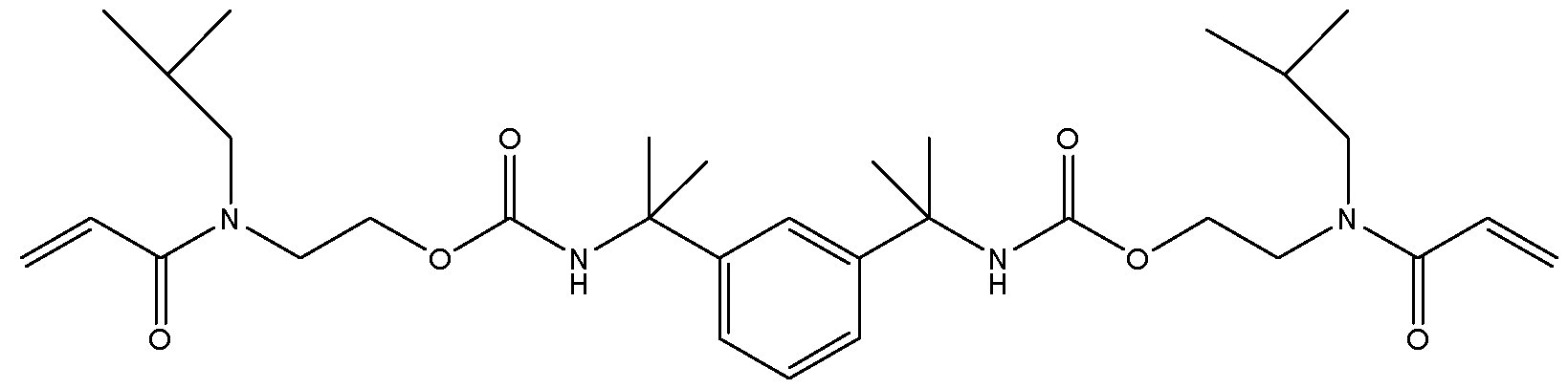
- R1 and R2 may be branched C4 and X1 may be (A), so that the compound is:
- R1 and R2 may be C3 and X1 may be (B), so that the compound is:
- R1 and R2 may be linear C4 and X1 may (B), so that the compound is: R1 and R2 may be branched C4 and X1 may be (B), so that the compound
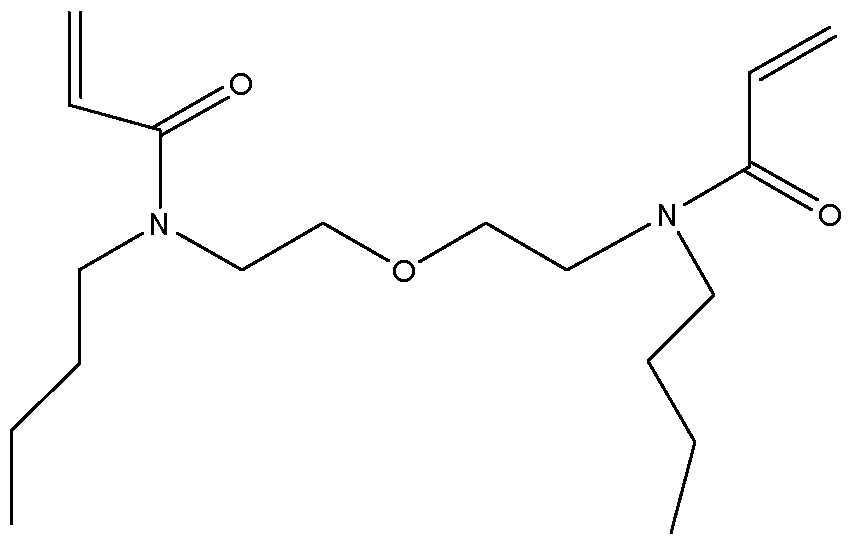
- the present disclosure provides a monomeric compound of formula (II): wherein O is oxygen, N is nitrogen, R1 and R2 are alky, and n is in a range from 1 to about 5.
- R1 and R2 may be independently C2, C3, C4 alkyl.
- R1 and R2 may be different alkyl.
- R1 and R2 may be the same alkyl.
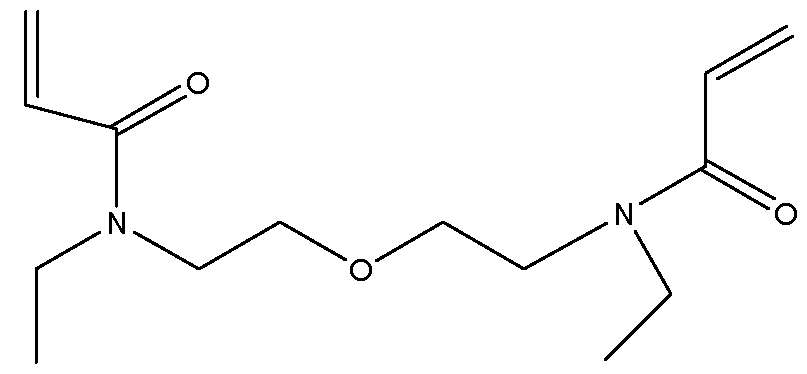
- R1 and R2 may be C2 alkyl and n is 2, so that the compound is:
- R1 and R2 may be C1 alkyl and n may be 1 , so that the compound is:
- R1 and R2 may be C1 alkyl and n may be 2, so that the compound is:
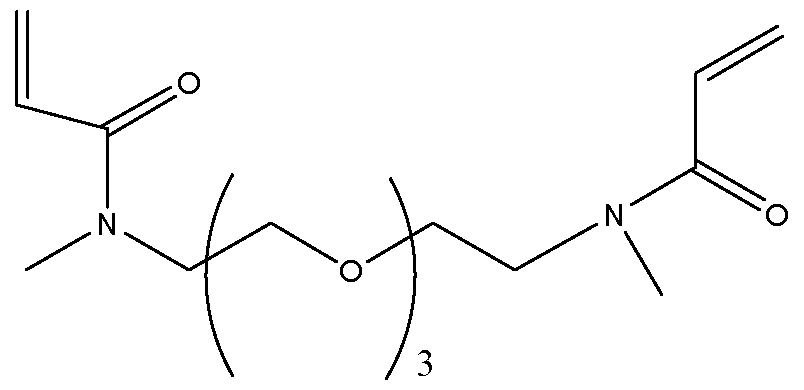
- R1 and R2 may be C1 alkyl and n may be 3, so that the compound is:
- R1 and R2 may be C1 alkyl and n may be 4, so that the compound is:
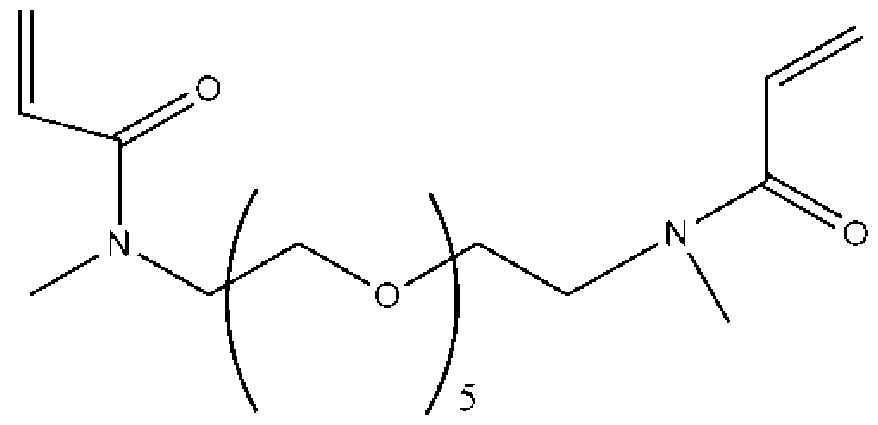
- R1 and R2 may be C1 alkyl and n may be 5, so that the compound is:
- R1 and R2 may be C2 alkyl and n may be 1 , so that the compound is:
- R1 and R2 may be C2 alkyl and n may 2, so that the compound is: and R2 may be C2 alkyl and n may be 3, so that the compound is:
- R1 and R2 may be C2 alkyl and n may be 4, so that the compound is:
- R1 and R2 may be C2 alkyl and n may be 5, so that the compound is:
- R1 and R2 may be C3 alkyl and n may be 1 , so that the compound is:
- R1 and R2 may be C3 alkyl and n may be 2, so that the compound is:
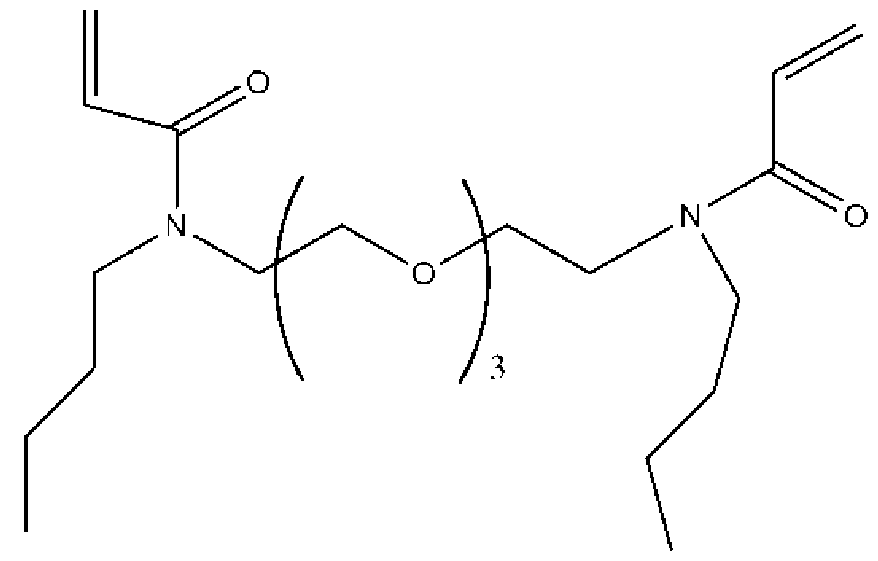
- R1 and R2 may be C3 alkyl and n may be 3, so that the compound is:
- R1 and R2 may be C3 alkyl and n may be 4, so that the compound is:
- R1 and R2 may be C3 alkyl and n may be 5, so that the compound is:
- R1 and R2 may be linear C4 alkyl and n may be 1 , so that the compound is:
- R1 and R2 may be linear C4 alkyl and n may be 2, so that the compound is: and R2 may be linear C4 alkyl and n may be 3, so that the compound is: and R2 may be linear C4 alkyl and n may be 4, so that the compound is: and R2 may be linear C4 alkyl and n may be 5, so that the compound is:
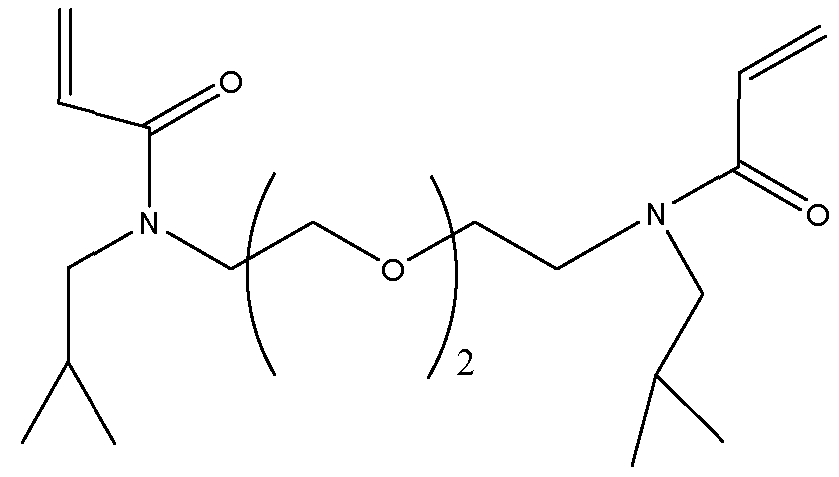
- R1 and R2 may be branched C4 alkyl and n may be 1 , so that the compound is: R1 and R2 may be branched C4 alkyl and n may be 2, so that the compound is:
- R1 and R2 may be branched C4 alkyl and n may be 3, so that the compound is:
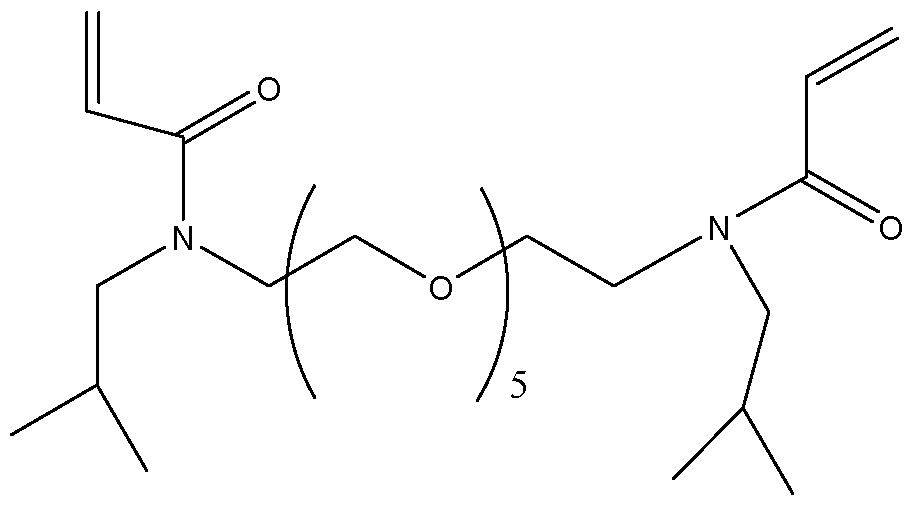
- R1 and R2 may be branched C4 alkyl and n may be 4, so that the compound is: R1 and R2 may be branched C4 alkyl and n may be 5, so that the compound is:
- the present disclosure provides a dental resin that comprises at least one monomeric compound of formula (I) wherein R1 and R2 are independently alkyl and X1 is a monomeric compound of formula (II): wherein O is oxygen, N is nitrogen, R1 and R2 are alky, and n is in a range from 1 to about 5.
- the dental resin may comprise at least on monomeric compound of of formula (I) wherein R1 and R2 are independently alkyl and X1 is a monomeric compound of formula (II): wherein O is oxygen, N is nitrogen, R1 and R2 are alky, and n is in a range from 1 to about 5.
- the dental resin may comprise at least one monomeric compound selected within the group consisting of the compound
- the dental resin wherein the at least one monomeric compound may be 3BM alone, 3BE alone, 3BLDI alone, combination of 3BM and 3BE, combination of 3BM and 3BLDI, combination of 3BE and 3BLDI or combination of 3BM, 3BE and 3BLDI.
- the dental resin wherein the at least one monomeric compound may be 3BE, 3TE or a combination thereof.
- the dental resin composition may further comprise one or more polymerization initiators.
- the dental resin composition may further comprise at least one polymerization inhibitor and/or stabilizer.
- the dental resin composition wherein the one or more polymerization initiators may be selected from the group of camphorquinone (CQ); trimethylbenzoyl-diphenyl-phosphine oxide (TPO); Ethyl-4-dimethylamino benzoate (EDMAB); 2,2-Dimethoxy-2-phenylacetophenone (DMPA); Bisacylphosphine oxide (BAPO); 1-Phenyl-1 ,2-propanedione (PPD); phosphine oxide compounds, including naphthacene (APO), 9-anthracene (APO), and bisacylphosphine oxide (BAPO); 1- phenyl-1 ,2-propanedione (PPD); thioxanthone (TX) and its derivatives; a dibenzoyl germanium derivative, benzoyltrimethylgermane (BTG), dibenzoyldiethylgermane; hexaarylbiimidazole derivatives; a si
- the dental resin composition wherein the one or more polymerization initiators may be a combination of polymerization initiators selected from the group consisting of of camphorquinone/ethyl-4-(dimethylamino)benzoate (EDMAB), camphorquinone/2-(dimethylamino)ethyl methacrylate (DMAEMA)), DMPA/DPI- PF6, CQ/PPD, CQ/DMAEMA, CQ/EDMAB, CQ/DMAEMA/PDIHP, CQ/EDMAB/DPIHP or initiators containing ,bis-(4-methoxybenzoyl)diethyl germane, or phenylbis(2,4,6-trimethylbenzoyl) phosphine oxide (BAPO ).
- EDMAB camphorquinone/ethyl-4-(dimethylamino)benzoate
- DMAEMA camphorquinone/2-(dimethylamino)ethyl methacryl
- the dental resin composition wherein the one or more polymerization inhibitors may be selected from the group consisting 4-tert-butylcatechol (TBC), 4- methoxyphenol (MEHQ), butylated hydroxytoluene (BHT) and hydroquinone (HQ), inhibitors of the class of phenols, aryl amines, phenylenediamines, N,N- dialkylhydroxylamines, m-nitro-p-cresol, 2,6-dinitro-p-cresol, and nitroxides, 2,2,6,6-tetramethylpiperidin-1-yl)oxyl or (2,2,6,6-tetramethylpiperidin-1- yl)oxidanyl),2,4-dinitrophenol (DNP) and 2,4-dinitro-6-sec-butyl phenol (DNBP), and wherein the one or more stabilizers may be selected from the group consisting of 2,6-di-tert-butyl-p-cresol, hydroquinone, 4-methoxy
- the dental resin composition wherein the dental based plurifuntionalized methacrylate monomers may be any one or combination of bisphenol A-glycidyl methacrylate (BisGMA), ethoxylated bisphenol A glycol dimethacrylate (BisEMA), urethane dimethacrylate (UDMA), triethylene glycol dimethacrylate (TEGDMA), 2- hydroxyethyl methacrylate (HEMA).
- BisGMA bisphenol A-glycidyl methacrylate
- BisEMA ethoxylated bisphenol A glycol dimethacrylate
- UDMA urethane dimethacrylate
- TEGDMA triethylene glycol dimethacrylate
- HEMA 2- hydroxyethyl methacrylate
- the present disclosure provides a dental adhesive composition comprising a dental resin composition and a solvent.
- the dental adhesive composition wherein the solvent may be any one or combination of water, ethanol, acetone, DMSO.
- the dental filler composite may comprise a dental resin composition and filler materials.
- the dental filler composite wherein the filler materials may be inorganic filler materials, organic filler materials or a combination thereof.
- the present disclosure provides a dental adhesive composition that comprises at least one monomeric compound of formula (I) wherein R1 and R2 are independently alkyl and X1 is (A), or one or more polymerization initiators; at least one polymerization inhibitor and/or stabilizer; dental based pluri-functionalized methacrylate monomers and/or methacrylate oligomers; and/or solvent.
- the dental adhesive composition further may comprise a monomeric compound of formula (II): wherein O is oxygen, N is nitrogen, R1 and R2 are alkyl; and n is in a range from 1 to about 5.
- the present disclosure provides a dental filler composite that comprises at least one monomeric compound of formula (I) wherein R1 and R2 are independently alkyl and X1 is one or more polymerization initiators; at least one polymerization inhibitor and/or stabilizer; dental based pluri-functionalized methacrylate monomers and/or methacrylate oligomers; and inorganic and/or organic filler materials.
- the dental filler composite may further comprise a monomeric compound of formula (II): wherein O is oxygen, N is nitrogen, R1 and R2 are alkyl; and n is in a range from 1 to about 5.
- the present disclosure provides a dental sealant composition that comprises a dental resin composition and a solvent.
- the dental sealant composition may further comprise up to about 60 wt% or less of inorganic and/or organic filler materials.
- the dental sealant composition wherein the amount of filler may be 50% or less, 40% or less, 30% or less, 20 % or less, 10% or less, or 5% or less.
- the present disclosure provides a dental adhesive composition that comprises a dental sealant composite comprising at least one monomeric compound of formula (I) wherein R1 and R2 are independently alkyl and X1 is one or more polymerization initiators; at least one polymerization inhibitor and/or stabilizer; dental based plurifuntionalized methacrylate monomers and/or methacrylate oligomers; and a solvent.
- a dental sealant composite comprising at least one monomeric compound of formula (I) wherein R1 and R2 are independently alkyl and X1 is one or more polymerization initiators; at least one polymerization inhibitor and/or stabilizer; dental based plurifuntionalized methacrylate monomers and/or methacrylate oligomers; and a solvent.
- the dental sealant may further comprise a monomeric compound of formula
- the dental sealant composition may further comprise up to 60 wt% or less of inorganic and/or organic filler materials.
- the dental sealant composition wherein the amount of filler may be 50% or less, 40% or less, 30% or less, 20 % or less, 10% or less, or 5% or less.
- Figure 2 shows the formulas for the experimental acrylamide-based monomers generated in this study.
- Monomers 2TE and DEPBAM were previously synthesized by others, and were used as relative control examples of earlier acrylamides 24 .
- Figure 3A shows the degree of double bond conversion (DC) measured by ATR-FTIR of developed resin blends. ** represents significant differences (p ⁇ 0.05) in DC.
- Figure 3B shows the degree of double bond conversion (DC) measured by ATR-FTIR of select single monomer resins. ** represents significant differences (p ⁇ 0.05) in DC.
- FIG 4A shows the quantified water contact angle (WCA) of developed resin blends. ** represents significant differences (p ⁇ 0.05) in WCA.
- Figure 4B shows water uptake (Swell %) of selected cured resin specimens. * represents significant differences in swelling compared to control material composed of Bis/TEGDMA.
- Figure 5 shows the measured surface hardness of cured resin specimens. ** represents significant differences (p ⁇ 0.05) in Knoop hardness number (KHV).
- Figure 6A shows residual monomer versus time. Monomer degradation was conducted over 3 days in simulated human salivary esterase (SHSE) and PBS.
- SHSE human salivary esterase
- Figure 6B shows resin surface hardness degradation, following immersion in SHSE or PBS for 0 and 14 days. ** represents significant differences (p ⁇ 0.05) in surface hardness from day 0.
- Figure 7 shows the cytotoxicity of evaluated resin monomers against human gingival fibroblasts (HGFs) as measured using WST-1 assay. ** represents significant differences (p ⁇ 0.05) in MN compared to the negative control culture.
- Figure 8A shows the cytostasis observed for each monomer test concentration.
- Figure 8B shows he percentage of micronuclei (MN) observed in human gingival fibroblasts (HGFs) following exposure to experimental monomer test concentrations. ** represents significant differences (p ⁇ 0.05) in MN compared to the negative control culture.
- Figure 9A shows the flexural strength of cured resin composite bar specimens as measured by three-point bending test.
- MA methacrylate
- BisGMA and TEGDMA 60:40 wt% with identical filler loading and type (microfill, 60 wt%) to that of the experimental composite formulated with 60 and 40wt% of 3BE and 3TE, respectively.
- Commercial control used was 3M FiltekTM Z250 flowable composite.
- Figure 9B shows the flexural modulus of cured resin composite bar specimens as measured by three-point bending test.
- MA methacrylate
- BisGMA and TEGDMA 60:40 wt% with identical filler loading and type (microfill, 60 wt%) to that of the experimental composite formulated with 60 and 40wt% of 3BE and 3TE, respectively.
- Commercial control used was 3M FiltekTM Z250 flowable composite.
- Figure 10A shows the microtensile bond strength (pTBS) of composite/dentin bar specimens bonded using both experimental adhesive made with the novel monomers, and compared to a commercial 3-step adhesive systems.
- Commercial 3-step used was 3MTM AdperTM ScotchbondTM.
- Figure 10B shows the interfacial fracture toughness (Kic) of composite/dentin miniature short-rod specimens bonded using both the experimental adhesives system, and compared to a commercial 3-step adhesive system both before and following enzymatic aging in simulated human salivary esterase for up to 6 months.
- Commercial 3-step used was 3MTM AdperTM ScotchbondTM.
- the terms “comprises”, “comprising”, “includes” and “including” are to be construed as being inclusive and open ended, and not exclusive. Specifically, when used in this specification including claims, the terms “comprises”, “comprising”, “includes” and “including” and variations thereof mean the specified features, steps or components are included. These terms are not to be interpreted to exclude the presence of other features, steps or components.
- the coordinating conjunction “and/or” is meant to be a selection between a logical disjunction and a logical conjunction of the adjacent words, phrases, or clauses.
- the phrase “X and/or Y” is meant to be interpreted as “one or both of X and Y” wherein X and Y are any word, phrase, or clause.
- HEMAM N-(2-hydroxyethyl)-N-methyl acrylamide
- DEPBAM N,N-Dimethyl-1 ,3-bis(acrylamido)propane
- 1 ,8-Bis(acrylamido)-3,6-dioxaoctane(2TE) 24 were synthesized according to the literature.
- NMR spectra were recorded on a B-400 spectrometer (Bruker Avance III, 1 H: 400 MHz, 13 C: 101 MHz) using CDCI3, Acetone-d6 (Sigma Aldrich), and DMSO-d6 (Sigma Aldrich) all containing tetramethylsilane (TMS) as an internal standard. Partition coefficients (log P) were calculated for each molecule using ChemDraw (ChemBioDraw Ultra, v14, Perkin Elmer, Waltham, MA, USA).
- 3TE was synthesized under two-phase Shotten-Baumann conditions. First, p3TE (33 mmol) was added to a chilled round bottom flask in a mixture (2:1) of CHCI 3 and water. Next, acryloyl chloride (94 mmol) dissolved in CHCI 3 , and K2CO 3 (13g) dissolved in water were added simultaneously to the stirred reaction vessel at 0°C over 30 minutes. Following an hour under cooling, the reaction was stirred for an additional 2 hours at room temperature.
- LDI (21 .86 mmol) and 27.61 mg of DBDL was dissolved in 25 mL of DMAc in a round bottom flask under an inert environment (N2).
- a solution of BHIB (10.40 mmol) in 25 mL of DMAc was added dropwise and allowed to react for 2 hours at 50°C.
- a solution of N-(2-hydroxyethyl)-N- acrylamide (21 .86 mmol) in 20 mL DMAc was added dropwise to the reaction and the reaction was allowed to progress for an additional 20 hours.
- the product was isolated through precipitation in cold diethyl ether (2 x 1000 mL) followed by removal of residual solvent under reduced pressure. The product was isolated as a pale-yellow solid at a yield of -39%.
- TMXDI 28.65 mmol
- HEMAM 65.90 mmol
- DBDTL 0.11 mmol
- BHT 50 mg
- Single and multi-component resins were prepared in this study. Monomers that are defined as structural included: 3-LDI, 3BM, 3BE, and BisGMA (relative commercial control). Monomers used as diluents included 2TE, DEPBAM, 3TE and TEGDMA (relative commercial control). The multi-component resins evaluated included combinations of 3BE and DEPBAM, 3BE and 3TE, and BisGMA and TEGDMA (Bis/TEGDMA) in a 60:40 structurakdiluent (wt%) ratio.
- ATR-FTIR attenuated total reflectance Fourier transform infrared spectroscopy
- a Perkin Elmer Spectrum One Perkin Elmer, Shelton, CT, USA
- a ZnSe/Diamond Crystal Universal ATR accessory Perkin Elmer
- Transmission spectra of the unreacted solutions and cured films were acquired by scanning the samples 16 times over a range of 4000-550 cm -1 .
- Peak fitting and peak height measurements were performed using GRAMS/AI spectroscopy software (Thermo Scientific, Tewksbury, MA, USA).
- the vinyl stretches of 1644 cm' 1 and 1638 cm' 1 were used to calculate conversions for acrylamide and methacrylate monomers, respectively.
- Thin discs of sample resin materials were prepared using the same components and methods as described above.
- the water advancing and receding contact angles were measured on the surface of cured specimens using a contact angle goniometer (NRL Model 100-00, Rame-Hart, Inc., Mountain Lakes, NJ, USA). All measurements were conducted using MilliQ water, deposited using a micro-syringe.
- the contact angle was measured from both sides of the droplet, with the average of the two constituting a single measurement. For each material, 3 specimens were used with at least 5 drops per specimen. Samples were also characterized for their water uptake. This was assessed using an analytical balance with accuracy of ⁇ 0.0001 g (Mettler AT 201 , Fisher Scientific, USA).
- the microhardness of resin specimens was carried out using a microhardness tester with a Knoop indenter (Tukon 300, Acco Industries Inc., Wilson instruments division, Bridgeport CT, USA) with an indentation load of 10 g and dwell time of 30 seconds. Indentation sizes were determined using a 10 X objective and measured along the long axis of indentation. Knoop Hardness Numbers (KHN) were calculated by the instrument using the known quantities and calibrations provided by the operator. Reported KHN were representative of five repetitive measurements. The known uncertainty with the testing apparatus is 5%, and reports values to be compared within this study but not across studies (due to the inherent uncertainty across different testing devices from one lab to another). Biodegradation
- Simulated human salivary esterase was prepared as a representative oral enzymatic solution by mixing CE and PCE in PBS to obtain a solution possessing 20 units(U)/mL CE and 0.01 U/mL PCE activity, respectively.
- a study determining the enzymatic stability was conducted to determine replenishment schedules. Based on the stability study, to maintain SHSE activity, media was replaced daily over the first 5 days of incubation and thereafter the media was replenished through the addition of a small volume (1 :10) of concentrated SHSE (56U/ml CE and 0.0175U/ml PCE) every 5th day for the remainder of the incubation period.
- Monomers were prepared in MeOH to a concentration of 1 x 10' 4 M. Monomer solutions were then added to PBS or to SHSE at 2 vol% MeOH. This MeOH content was previously shown not to affect enzyme activity. Protein containing solutions were sterile filtered using a 0.22 pm syringe filter (Millipore SLGP033RS) prior their addition to monomer solutions. At specific time points (0, 1 , 2, and 3 days), 500 pL samples of the incubating solution was collected, replaced, and added to an equal volume of MeOH to denature the enzyme and cease hydrolysis. Samples were filtered using a 0.22 pm syringe filter and the supernatant was then collected and stored at -20°C until UPLC analysis.
- Millipore SLGP033RS 0.22 pm syringe filter
- Cured resins and composite formulations were prepared in the form of discs as described above. All cured specimens were vacuum dried at 60°C for 24 hours prior to biodegradation analysis. Prior to incubation in either PBS or SHSE, cured samples were pre-incubated in a diluted (1 :10 with DPBS) penicillin-streptomycin solution (Gibco 15140-122) for 48 hours at 37°C to decontaminate samples and minimize subsequent bacterial contamination. This step also readily removes unreacted monomer. Following preincubation, the antibiotic solution was removed and replaced with either 1 mL of PBS or filtered SHSE and incubated at 37°C.
- DPBS penicillin-streptomycin solution
- the degradation products from monomer and cured specimen incubations were analyzed using an ultra-performance liquid chromatography-tandem mass spectrometry (UPLC-MS/MS), Acquity H-class with C18 column, coupled to a Xevo G2-XS Q-ToF MS with electro-spray ionization source, and quantified with QuanLynx analysis software, all from Waters, Mississauga, ON.
- the polar mobile phase was prepared from HPLC-grade water (18 MQ resistivity) and HPLC grade solvents which included HPLC grade methanol (Caledon Laboratories LTD, Georgetown, ON, Canada) and 2 mM ammonium acetate 99.999% buffered solution (Aldrich, Milwaukee, Wl, USA).
- a gradient method used in this study in which A: methanol and B: 10 mM ammonium acetate buffer adjusted to a pH of 3.2 with hydrochloric acid run in isocratic flow of 75% A 25% B for 15 minutes.
- HGFs Human gingival fibroblasts
- HGFs were chosen as a representative cell type for cytotoxicity assessment given their abundant prevalence in gingival tissues. HGFs were cultured at 37°C and 5% CO2 in Dulbecco’s Modified Eagle’s Medium (DMEM; GibcoBRL) supplemented with 10% fetal bovine serum, and 100 U/mL penicillin/streptomycin. The media was changed every 2-3 days with cells being trypsinized at 80-90% confluency.
- DMEM Dulbecco’s Modified Eagle’s Medium
- HGFs (1 x 10 5 ) were pre- attached in a 24 well polystyrene plate for 24 h. Following attachment, cells were subjected to test concentrations of resin monomers diluted with media containing cytokinesis-block reagent cytochalasin-B (3 pg/mL) and incubated for 24 hrs. Following the exposure period, the test media was aspirated, rinsed twice with PBS, and further incubated in growth media supplemented with cytochalasin-B for an additional 24 h. To maintain the fibroblastic cell morphology, cells were fixed directly on the 24 well plates using 5% formalin solution in PBS.
- HGFs exposed to control and experimental monomers were evaluated to establish an appropriate concentration range for genotoxic evaluations.
- HGFs (2 x 10 4 ) were pre-attached to a 96 well plate for 24 h. Following attachment, cells were subjected to test concentrations of resin monomers diluted with media and incubated for 24 hrs.
- test concentrations of resin monomers diluted with media and incubated for 24 hrs.
- the viability HGFs cultured was evaluated by adding 150 pL of HGF cell suspension (2 x 10 4 ) to each preconditioned well for 48 hrs.
- the metabolic activity of HGFs was quantified using a WST-1 assay (Roche Diagnostics, Laval, Quebec, Canada).
- the WST-1 reagent was prepared in a 1 :10 dilution with DMEM.
- 10 pL of WST-1 solution was added to the 96-well plate.
- the plate was then incubated at 37°C with 5% CO2 for 1 h.
- the plate was read using the VersaMaxTM tunable microplate reader at an absorbance of 450 nm and a background reading of 650 nm. The absorbance from the control wells was subtracted from all readings.
- amide-containing moieties such as in the case of acrylamides
- amide-containing moieties has been utilized consistently for pharmaceutical agents and biomedical devices to modulate drug release and degradation rate 2728 .
- the use of optimally stable tertiary acrylamides should provide minimal reactivity via catalyzed hydrolysis.
- acrylamides were chosen over methacrylamides as methacrylamides would preclude the use of the stable tertiary amide moieties, given their ability to effect reactivity due to steric effects.
- 2TE was synthesized to evaluate the physical differences between secondary (2TE) and tertiary (3TE) acrylamides, but each having similar backbones.
- 2TE a secondary acrylamide with two H-bonding sites proved to be solid at room temperature, whereas 3TE was a low viscosity fluid at room temperature.
- the state difference of these two monomers illustrates the importance N-alkylation in the development of acrylamide-based diluents.
- the structural monomer 3BLDI was a solid at room temperature and poorly soluble in all acrylamide diluents.
- the solid nature of the monomer was attributed to its strong H bonding character and bulky structure.
- the degree of double bond conversion (DC) was used to assess the network formation for cured resin specimens developed in this study.
- a low DC is indicative of poor network formation and may lead to poor mechanical properties and monomer leaching from cured materials. It has been well documented that the advancement of novel clinical dental materials has been challenged by trying to advance candidate materials that had poor potential for readily achieving good DC 23 .
- the degree of conversion for eight synthesized resin combinations were evaluated and are summarized in Figure 3A. All single component resins had a statistically similar (p > 0.05) DC (69-77%), despite their varying chemistries. Resins composed solely of bulky structural monomers (such as 3BM and 3BE) were quite viscous and were anticipated, based on previous literature, to exhibit poor monomer mobility during curing 29 .
- resins composed solely of highly flowable diluent monomers were expected to show a rapid onset of vitrification which would also limit high DC.
- Multi-monomer resins are featured in almost all commercial resin-based products in order to tailor handling characteristics, curing performance, and the final properties of cured resin specimens. Accordingly, two component resins (Bis/TEGDMA (commercial control), 3BE + DEPBAM, 3BE + 3TE) consisting of structural and diluent monomers were evaluated as well.
- Single component resins specimens of DEPBAM and 3BM presented the most wettable surfaces and the highest degree of water uptake, with an average WCA of 29 and 32°, and average water uptake of 22 and 21 %, respectively.
- 3BE was the most water-stable single component resin evaluated, presenting a WCA and water uptake (43° and 3%, respectively) (p > 0.05) similar to MA resin specimens Bis/TEGDMA, and TEGDMA.
- the two-component resin 3BE+3TE presented the highest WCA (54°) and lowest water uptake (3%) of the resins developed in this study, also performing similarly to MA resin specimens.
- single component 3BE resins had statistically similar (p > 0.05) hardness (23 KHV) to that of flexible single component 3TE resins and TEGDMA, and this can be most likely explained by their statistically similar DC.
- HGF cultures isolated from different human donors have been shown to have different absolute sensitivities to resin monomers - necessitating the evaluation of toxicity thresholds of well studied monomers (such as BisGMA and TEGDMA) in addition to experimental systems before conducting genotoxic studies 35 .
- well studied monomers such as BisGMA and TEGDMA
- BisGMA has been previously identified as a potential genotoxic agent, being shown to cause elevated cytotoxicity and genotoxicity to that of other traditionally used water-soluble MA monomers such as TEGDMA. Both experimental monomers (3BE and 3TE) did not present a dose-dependent or statistically greater MN frequency at any tested concentrations following 24-hour exposure period indicating that they are unlikely to be genotoxic.
- Monomers were developed based on ester-free and hydrolytically stable chemistries which could be used in the development of novel resin formulations and their related composites.
- Two of the developed monomers (3BE and 3TE) showed significant promise as alternative resins to that of MA controls BisGMA and TEGMDA.
- 3BE+3TE resins cured resins had statistically similar (p ⁇ 0.05) DC, WCA, water uptake, surface hardness, and cytocompatibility compared to traditional MA derivatives controls, but were far more stable in the presence of SHSE.
- 3BE and 3TE monomers remained stable and cured resin specimens maintained surface hardness under enzymatic challenge, whereas MA controls suffered significant monomer and surface degradation.
- Another example of dental materials formulations that contain resins blended with a range of other agents includes fissure sealants, see https://www.ada.org/en/resources/research/science-and-research-institute/oral-health- topics/dentai-seaiants which range in concentrations of monomeric/oligomeric resins to achieve very low viscosity materials that can penetrate into the crevices of tooth surface fissures, typically in one of three formulation types: 1 ) Resin modified glass ionomers (composites or resins containing classical fluoride based glass ionomers, typically with more ionomer than resin component); 2) Poly-acid modified resins, where monomers of the type described in this current disclosure are covalently coupled to the ionomeric oligomers; 3) pure composite resin based systems which contain little or no ionomeric materials, are formulated with resins of types described in this disclosure, but have antimicrobial agents such as fluoride releasing agents within them, and
- Monomers used in composites yield comparable flexural strength and flexural modulus (measured by three-point bending test) to those of an in-house simulation of commercial monomers (In-house methacrylate (MA) composite was formulated using BisGMA and TEGDMA) with identical filler loading and type (microfill, 60 wt%) to that of the experimental composite. This indicates that by incorporating the new low-hydrolysable monomers we did not compromise flexural and strength and modulus of the composites. ( Figures 9A and 9B).
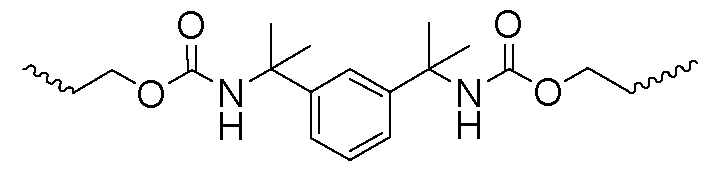
- the novel monomeric compound has the genus structure of formula (I), wherein R1 and R2 are independently alkyl and X1 has either structure (A) or structure (B):
- R1 and R2 may be independently C1 , C2, C3 or C4 alkyl.
- the alkyl may be linear or branched.
- R1 and R2 may be distinct or alternatively the same alkyl.
- R1 and R2 are C1 alkyl and X1 is A resulting in compound 3BM.
- R1 and R2 are C2 alkyl and X1 is A resulting in compound 3BE.
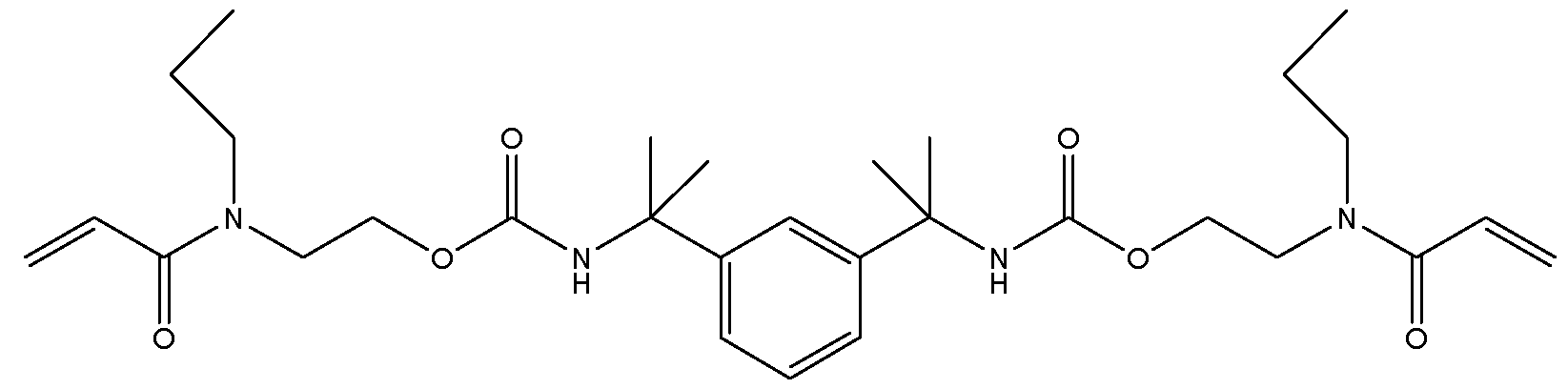
- R1 and R2 are C1 alkyl and X1 is B resulting in compound 3BLDI.
- R1 and R2 may be C2 and X1 may be B resulting in the following compound.
- R1 and R2 may be C3 and X1 may be A resulting in the following compound. According to an embodiment, R1 and R2 may be linear C4 and X1 may be A resulting in the following compound.
- R1 and R2 may be branched C4 and X1 may be A resulting in the following compound.
- R1 and R2 may be C3 and X1 may be B resulting in the following compound.
- R1 and R2 may be linear C4 and X1 may be B resulting in the following compound,
- R1 and R2 may be branched C4 and X1 may be B resulting in the following compound.
- the novel monomeric compound has the genus structure of formula (II), wherein R1 and R2 are independently alkyl and n is in a range from 1 to about 5.
- R1 and R2 may be independently C1 , C2, C3 or C4 alkyl.
- the alkyl may be linear or branched.
- R1 and R2 may be distinct or alternatively the same alkyl.
- R1 and R2 are C2 alkyl and n is 2 resulting in compound 3TE
- R1 and R2 may be C1 alkyl and n may be 1 resulting in the following compound.
- R1 and R2 may be C1 alkyl and n may be 2 resulting in the following compound.
- R1 and R2 may be C1 alkyl and n may be 3 resulting in the following compound. According to an embodiment, R1 and R2 may be C1 alkyl and n may be 4 resulting in the following compound.
- R1 and R2 may be C1 alkyl and n may be 5 resulting in the following compound. According to an embodiment, R1 and R2 may be C2 alkyl and n may be 1 resulting in the following compound.
- R1 and R2 may be C2 alkyl and may be 2 resulting in the following compound.
- R1 and R2 may be C2 alkyl and may be 3 resulting in the following compound.
- R1 and R2 may be C2 alkyl and may be 4 resulting in compound: According to an embodiment, R1 and R2 may be C2 alkyl and n may be 5 resulting in the following compound.
- R1 and R2 may be C3 alkyl and n may be 1 resulting in the following compound.
- R1 and R2 may be C3 alkyl and n may be 2 resulting in the following compound.
- R1 and R2 may be C3 alkyl and n may be 3 resulting in the following compound.
- R1 and R2 may be C3 alkyl and n may be 4 resulting in the following compound.
- R1 and R2 may be C3 alkyl and n may be 5 resulting in compound:
- R1 and R2 may be linear C4 alkyl and n may be 1 resulting in the following compound.
- R1 and R2 may be linear C4 alkyl and n may be 2 resulting in the following compound.
- R1 and R2 may be linear C4 alkyl and n may be 3 resulting in the following compound.
- R1 and R2 may be linear C4 alkyl and n may be 4 resulting in the following compound.
- R1 and R2 may be C4 linear alkyl and n may be 5 resulting in the following compound. According to an embodiment, R1 and R2 may be branched C4 alkyl and n may be 1 resulting in the following compound.
- R1 and R2 may be branched C4 alkyl and n may be 2 resulting in the following compound.
- R1 and R2 may be branched C4 alkyl and n may be 3 resulting in the following compound. According to an embodiment, R1 and R2 may be branched C4 alkyl and n may be 4 resulting in the following compound.
- R1 and R2 may be C4 branched alkyl and n may be 5 resulting in the following compound.
- a dental resin may comprise at least one monomeric compound of Formula I and/or one monomeric compound or formula II.
- a dental resin may comprise at least one monomeric compound of Formula I in combination with one monomeric compound of Formula II.
- the dental resin comprises at least one monomeric compound of Formula I selected within the group consisting of
- the dental resin may comprise 3BM alone, 3BE alone, 3BLDI alone, combination of 3BM and 3BE, combination of 3BM and 3BLDI, combination of 3BE and 3BLDI or combination of 3BM, 3BE and 3BLDI.
- the dental resin may comprise at least one monomeric compound of formula I 1 is 3BE, 3TE or a combination thereof.
- the dental resin may further comprise one or more polymerization initiators.
- the polymerization initiators may be selected from the the group of camphorquinone (CQ); trimethylbenzoyl-diphenyl-phosphine oxide (TPO); Ethyl-4-dimethylamino benzoate (EDMAB); 2,2-Dimethoxy-2- phenylacetophenone (DMPA); Bisacylphosphine oxide (BAPO); 1-Phenyl-1 ,2- propanedione (PPD); phosphine oxide compounds, including naphthacene (APO), 9-anthracene (APO), and bisacylphosphine oxide (BAPO); 1 -phenyl-1 ,2- propanedione (PPD); thioxanthone (TX) and its derivatives; a dibenzoyl germanium derivative, benzoyltrimethylgermane (BTG), dibenzoyldiethylgermane; hexaarylbiimi
- the one or more polymerization initiators may be combination of polymerization initiators selected from the group consisting of of camphorquinone/ethyl-4-(dimethylamino)benzoate (EDMAB), camphorquinone/2-(dimethylamino)ethyl methacrylate (DMAEMA)), DMPA/DPI- PF6, CQ/PPD, CQ/DMAEMA, CQ/EDMAB, CQ/DMAEMA/PDIHP, CQ/EDMAB/DPIHP or initiators containing ,bis-(4-methoxybenzoyl)diethyl germane, or phenylbis(2,4,6-trimethylbenzoyl) phosphine oxide (BAPO).
- EDMAB camphorquinone/ethyl-4-(dimethylamino)benzoate
- DMAEMA camphorquinone/2-(dimethylamino)ethyl methacrylate
- BAPO phenyl
- the dental resin may further comprise at least one polymerization inhibitor and/or stabilizer.
- the one or more polymerization inhibitors are selected from the group consisting 4-tert-butylcatechol (TBC), 4- methoxyphenol (MEHQ), butylated hydroxytoluene (BHT) and hydroquinone (HQ), inhibitors of the class of phenols, aryl amines, phenylenediamines, N,N- dialkylhydroxylamines, m-nitro-p-cresol, 2,6-dinitro-p-cresol, and nitroxides,
- TBC 4-tert-butylcatechol
- MEHQ 4- methoxyphenol
- BHT butylated hydroxytoluene
- HQ hydroquinone
- the dental resin composition may further comprise plurifuntionalized methacrylate monomers and/or methacrylate oligomers.
- the plurifunctionalized methacrylate monomers may be dental-based plurifunctionalized methacrylate monomers.
- the dental based plurifuntionalized methacrylate monomers may be any one or combination of bisphenol A-glycidyl methacrylate (BisGMA), ethoxylated bisphenol A glycol dimethacrylate (BisEMA), urethane dimethacrylate (UDMA), triethylene glycol dimethacrylate (TEGDMA), 2-hydroxyethyl methacrylate (HEMA).
- the dental resin may be combined with a solvent resulting in a dental adhesive composition.
- the solvent may be any one or combination of water, ethanol, acetone, DMSO.
- filler materials may be combined with the dental resin resulting in a dental filler composite.
- the filler materials may be inorganic filler materials, organic filler materials or a combination thereof.
- a dental adhesive composition may comprise at least one monomeric compound of formula (I) wherein R1 and R2 are independently alkyl and X1 is one or more polymerization initiators, at least one polymerization inhibitor and/or stabilizer; dental based plurifuntionalized methacrylate monomers and/or methacrylate oligomers; and a solvent.
- R1 and R2 are independently alkyl and X1 is one or more polymerization initiators, at least one polymerization inhibitor and/or stabilizer; dental based plurifuntionalized methacrylate monomers and/or methacrylate oligomers; and a solvent.
- the dental adhesive composition may further comprise a monomeric compound of formula (II): wherein O is oxygen, N is nitrogen, R1 and R2 are alkyl; and n is in a range from 1 to about 5.
- a dental filler composite may comprise at least one monomeric compound of formula (I) wherein R1 and R2 are independently alkyl and X1 is one or more polymerization initiators; at least one polymerization inhibitor and/or stabilizer, dental based plurifuntionalized methacrylate monomers and/or methacrylate oligomers and inorganic and/or organic filler materials.
- the dental filler may further comprise a monomeric compound of formula (II): wherein O is oxygen, N is nitrogen, R1 and R2 are alkyl; and n is in a range from 1 to about 5.
- the dental resin composition may be combined with a solvent resulting in a dental sealant composition.
- the dental sealant composition may further comprise up to 60 wt% or less of inorganic and/or organic filler materials.
- the dental sealant composition may comprise fillers in the amount of 50% or less, 40% or less, 30% or less, 20 % or less, 10% or less, or 5% or less.
- a dental sealant composition may comprise at least one monomeric compound of formula (I) wherein R1 and R2 are independently alkyl and X1 is (A), or one or more polymerization initiators, at least one polymerization inhibitor and/or stabilizer, dental based plurifuntionalized methacrylate monomers and/or methacrylate oligomers, and a solvent.
- the dental sealant may further comprise a monomeric compound of formula (II): wherein O is oxygen, N is nitrogen, R1 and R2 are alkyl; and n is in a range from 1 to about 5.
- the dental sealant composition may further comprise up to 60 wt% or less of inorganic and/or organic filler materials.
- the dental sealant composition may comprise fillers in the amount of 50% or less, 40% or less, 30% or less, 20 % or less, 10% or less, or 5% or less.
- fillers in the amount of 50% or less, 40% or less, 30% or less, 20 % or less, 10% or less, or 5% or less.
- Embodiment 1 A monomeric compound of formula (I) wherein R1 and R2 are independently alkyl and X1 is
- Embodiment 2 The monomeric compound of embodiment 1 wherein R1 and R1
- R2 are different alkyl.
- Embodiment 3 The monomeric compound of embodiment 1 wherein R1 and R1
- R2 are the same alkyl.
- Embodiment 4 The monomeric compound of embodiment 1 wherein R1 and R1
- R2 are independently C1 , C2, C3 or C4 alkyl.
- Embodiment 5 The monomeric compound of embodiment 1 , wherein for R1 and R2 are C1 and X1 is (A), the compound is:
- Embodiment 6 The monomeric compound of embodiment 1 , wherein for R1 and R2 are C2 and X1 is (A), the compound is:
- Embodiment 7 The monomeric compound of embodiment 1 , wherein for R1 and R2 are C1 and X1 is (B), the compound is:
- Embodiment 8 The monomeric compound of embodiment 1 , wherein for R1 and R2 are C2 and X1 is (B), the compound is: Embodiment 9. The monomeric compound of embodiment 1 , wherein for R1 and R2 are C3 and X1 is (A), the compound is:
- Embodiment 10 The monomeric compound of embodiment 1 , wherein for R1 and R2 are linear C4 and X1 is (A), the compound is:
- Embodiment 11 The monomeric compound of embodiment 1 , wherein for R1 and R2 are branched C4 and X1 is (A), the compound is: Embodiment 12. The monomeric compound of embodiment 1 , wherein for R1 and R2 are C3 and X1 is (B), the compound is:
- Embodiment 13 The monomeric compound of embodiment 1 , wherein for R1 and R2 are linear C4 and X1 is (B), the compound is:
- Embodiment 14 The monomeric compound of embodiment 1 , wherein for R1 and R2 are branched C4 and X1 is (B), the compound is:
- Embodiment 15 A monomeric compound of formula (II): wherein O is oxygen, N is nitrogen, R1 and R2 are alky, and n is in a range from 1 to about 5.
- Embodiment 16 The monomeric compound of embodiment 15 wherein R1 and R2 are alky, and n is in a range from 1 to about 5.
- R2 are independently C2, C3, C4 alkyl.
- Embodiment 17 The monomeric compound of embodiment 16 wherein R1 and R2 are different alkyl.
- Embodiment 18 The monomeric compound of embodiment 16 wherein R1 and R2 are the same alkyl.
- Embodiment 19 The monomeric compound of embodiment 15 wherein R1 and R1
- R2 are C2 alkyl and n is 2, the compound is:
- Embodiment 20 The monomeric compound of embodiment 15 wherein R1 and R1
- R2 are C1 alkyl and n is 1 , the compound is:
- Embodiment 21 The monomeric compound of embodiment 15 wherein R1 and
- R2 are C1 alkyl and n is 2, the compound is: Embodiment 22.
- R2 are C1 alkyl and n is 3, the compound is:
- Embodiment 23 The monomeric compound of embodiment 15 wherein R1 and R1
- R2 are C1 alkyl and n is 4, the compound is:
- Embodiment 24 The monomeric compound of embodiment 15 wherein R1 and R1
- R2 are C1 alkyl and n is 5, the compound is:
- Embodiment 25 The monomeric compound of embodiment 15 wherein R1 and R1
- R2 are C2 alkyl and n is 1 , the compound is: Embodiment 26.
- R2 are C2 alkyl and n is 2, the compound is:
- Embodiment 27 The monomeric compound of embodiment 15 wherein R1 and R1
- R2 are C2 alkyl and n is 3, the compound is: Embodiment 28.
- R2 are C2 alkyl and n is 4, the compound is:
- Embodiment 29 The monomeric compound of embodiment 15 wherein R1 and R2 are C2 alkyl and n is 5, the compound is:
- Embodiment 30 The monomeric compound of embodiment 15 wherein R1 and R1
- R2 are C3 alkyl and n is 1 , the compound is: Embodiment 31.
- R2 are C3 alkyl and n is 2, the compound is:
- Embodiment 32 The monomeric compound of embodiment 15 wherein R1 and R1
- R2 are C3 alkyl and n is 3, the compound is: Embodiment 33.
- R2 are C3 alkyl and n is 4, the compound is:
- Embodiment 34 The monomeric compound of embodiment 15 wherein R1 and R1
- R2 are C3 alkyl and n is 5, the compound is:
- Embodiment 35 The monomeric compound of embodiment 15 wherein R1 and R2 are linear C4 alkyl and n is 1 , the compound is:
- Embodiment 36 The monomeric compound of embodiment 15 wherein R1 and R1
- R2 are linear C4 alkyl and n is 2, the compound is:
- Embodiment 37 The monomeric compound of embodiment 15 wherein R1 and R1
- R2 are linear C4 alkyl and n is 3, the compound is:
- Embodiment 38 The monomeric compound of embodiment 15 wherein R1 and R1
- R2 are linear C4 alkyl and n is 4, the compound is:
- Embodiment 39 The monomeric compound of embodiment 15 wherein R1 and R1
- R2 are linear C4 alkyl and n is 5, the compound is: Embodiment 40.
- R2 are branched C4 alkyl and n is 1 , the compound is:
- Embodiment 41 The monomeric compound of embodiment 15 wherein R1 and R2 are branched C4 alkyl and n is 2, the compound is:
- Embodiment 42 The monomeric compound of embodiment 15 wherein R1 and R1
- R2 are branched C4 alkyl and n is 3, the compound is:
- Embodiment 43 The monomeric compound of embodiment 15 wherein R1 and R1
- R2 are branched C4 alkyl and n is 4, the compound is:
- Embodiment 44 The monomeric compound of embodiment 15 wherein R1 and R1
- R2 are branched C4 alkyl and n is 5, the compound is:
- Embodiment 45 A dental resin composition comprising at least one monomeric compound of embodiment 1 and/or embodiment 15.
- Embodiment 46 The dental resin of embodiment 13 comprising at least on monomeric compound of embodiment 1 and the compound of embodiment 15.
- Embodiment 47 The dental resin of embodiment 46 wherein the at least one monomeric compound of embodiment 1 is selected within the group consisting of the compound of embodiment 15 is
- Embodiment 48 The dental resin of embodiment 47 wherein the at least one monomeric compound of embodiment 1 is 3BM alone, 3BE alone, 3BLDI alone, combination of 3BM and 3BE, combination of 3BM and 3BLDI, combination of 3BE and 3BLDI or combination of 3BM, 3BE and 3BLDI.
- Embodiment 49 The dental resin of embodiment 48 wherein the at least one monomeric compound of embodiment 1 is 3BE, 3TE or a combination thereof.
- Embodiment 50 The dental resin composition of embodiment 15 further comprising one or more polymerization initiators.
- Embodiment 51 The dental resin composition of embodiment 50, further comprising at least one polymerization inhibitor and/or stabilizer.
- Embodiment 52 The dental resin composition of embodiments 50 or 51 , wherein the one or more polymerization initiators are selected from the group of camphorquinone (CQ); trimethylbenzoyl-diphenyl-phosphine oxide (TPO); Ethyl-4- dimethylamino benzoate (EDMAB); 2,2-Dimethoxy-2-phenylacetophenone (DMPA); Bisacylphosphine oxide (BAPO); 1-Phenyl-1 ,2-propanedione (PPD); phosphine oxide compounds, including naphthacene (APO), 9-anthracene (APO), and bisacylphosphine oxide (BAPO); 1-phenyl-1 ,2-propanedione (PPD); thioxanthone (TX) and its derivatives; a dibenzoyl germanium derivative, benzoyltrimethylgermane (BTG), dibenzoyldiethylgermane; hexaarylbi
- Embodiment 53 The dental resin composition of embodiments 50 or 51 , wherein the one or more polymerization initiators is a combination of polymerization initiators selected from the group consisting of of camphorquinone/ethyl-4- (dimethylamino)benzoate (EDMAB), camphorquinone/2-(dimethylamino)ethyl methacrylate (DMAEMA)), DMPA/DPI-PF6, CQ/PPD, CQ/DMAEMA, CQ/EDMAB, CQ/DMAEMA/PDIHP, CQ/EDMAB/DPIHP or initiators containing ,bis-(4- methoxybenzoyl)diethyl germane, or phenylbis(2,4,6-trimethylbenzoyl) phosphine oxide (BAPO ).
- EDMAB camphorquinone/2-(dimethylamino)ethyl methacrylate
- BAPO phenylbis(2,4,6-trimethyl
- Embodiment 54 The dental resin composition of embodiment 51 , wherein the one or more polymerization inhibitors are selected from the group consisting 4-tert- butylcatechol (TBC), 4-methoxyphenol (MEHQ), butylated hydroxytoluene (BHT) and hydroquinone (HQ), inhibitors of the class of phenols, aryl amines, phenylenediamines, N,N-dialkylhydroxylamines, m-nitro-p-cresol, 2,6-dinitro-p- cresol, and nitroxides, 2,2,6,6-tetramethylpiperidin-1-yl)oxyl or (2, 2,6,6- tetramethylpiperidin-1-yl)oxidanyl),2,4-dinitrophenol (DNP) and 2,4-dinitro-6-sec- butyl phenol (DNBP), and wherein the one or more stabilizers are selected from the group consisting of 2,6-di-tert-butyl-p-cresol, hydro
- Embodiment 55 The dental resin composition of any one of embodiments 45 to 54, further comprising dental based plurifuntionalized methacrylate monomers and/or methacrylate oligomers.
- Embodiment 56 The dental resin composition of embodiment 55, wherein the dental based plurifuntionalized methacrylate monomers are any one or combination of bisphenol A-glycidyl methacrylate (BisGMA), ethoxylated bisphenol A glycol dimethacrylate (BisEMA), urethane dimethacrylate (UDMA), triethylene glycol dimethacrylate (TEGDMA), 2-hydroxyethyl methacrylate (HEMA).
- BisGMA bisphenol A-glycidyl methacrylate
- BisEMA ethoxylated bisphenol A glycol dimethacrylate
- UDMA urethane dimethacrylate
- TEGDMA triethylene glycol dimethacrylate
- HEMA 2-hydroxyethyl methacrylate
- Embodiment 57 A dental adhesive composition comprising a dental resin composition of any one of embodiments 45 to 56 and a solvent.
- Embodiment 58 The dental adhesive composition of embodiment 57, wherein the solvent is any one or combination of water, ethanol, acetone, DMSO.
- Embodiment 59 A dental filler composite comprising a dental resin composition of any one of embodiment 45 to 56 and filler materials.
- Embodiment 60 The dental filler composite of embodiment 59 wherein the filler materials is inorganic filler materials, organic filler materials or a combination thereof.
- a dental adhesive composition comprising: at least one monomeric compound of formula (I) wherein R1 and R2 are independently alkyl and X1 is one or more polymerization initiators; at least one polymerization inhibitor and/or stabilizer; dental based plurifuntionalized methacrylate monomers and/or methacrylate oligomers; and a solvent.
- Embodiment 62 The dental adhesive composition of embodiment 61 further comprising a monomeric compound of formula (II): wherein O is oxygen, N is nitrogen, R1 and R2 are alkyl; and n is in a range from 1 to about 5.
- a dental filler composite comprising: at least one monomeric compound of formula (I) wherein R1 and R2 are independently alkyl and X1 is one or more polymerization initiators; at least one polymerization inhibitor and/or stabilizer; dental based plurifuntionalized methacrylate monomers and/or methacrylate oligomers; and inorganic and/or organic filler materials.
- Embodiment 64 The dental filler composite of embodiment 63, further comprising: a monomeric compound of formula (II): wherein O is oxygen, N is nitrogen, R1 and R2 are alkyl; and n is in a range from 1 to about 5.
- Embodiment 65 A dental sealant composition comprising a dental resin composition of any one of embodiments 45 to 56 and a solvent.
- Embodiment 66 The dental sealant composition of embodiment 65 further comprising up to about 60 wt% or less of inorganic and/or organic filler materials.
- Embodiment 67 The dental sealant composition of embodiment 66 wherein the amount of filler is 50% or less, 40% or less, 30% or less, 20 % or less, 10% or less, or 5% or less.
- Embodiment 68 A dental sealant composite comprising: at least one monomeric compound of formula (I) wherein R1 and R2 are independently alkyl and X1 is (A), or one or more polymerization initiators; at least one polymerization inhibitor and/or stabilizer; dental based plurifuntionalized methacrylate monomers and/or methacrylate oligomers; and a solvent.
- Embodiment 69 The dental sealant of embodiment 68 further comprising: a monomeric compound of formula (II): wherein O is oxygen, N is nitrogen, R1 and R2 are alkyl; and n is in a range from 1 to about 5.
- Embodiment 70 The dental sealant composition of embodiment 68 or 69 further comprising up to 60 wt% or less of inorganic and/or organic filler materials.
- Embodiment 71 The dental sealant composition of embodiment 70 wherein the amount of filler is 50% or less, 40% or less, 30% or less, 20 % or less, 10% or less, or 5% or less.
Landscapes
- Health & Medical Sciences (AREA)
- Chemical & Material Sciences (AREA)
- Organic Chemistry (AREA)
- Oral & Maxillofacial Surgery (AREA)
- Epidemiology (AREA)
- Life Sciences & Earth Sciences (AREA)
- Animal Behavior & Ethology (AREA)
- General Health & Medical Sciences (AREA)
- Public Health (AREA)
- Veterinary Medicine (AREA)
- Plastic & Reconstructive Surgery (AREA)
- Organic Low-Molecular-Weight Compounds And Preparation Thereof (AREA)
Abstract
Description























Claims


Priority Applications (1)
| Application Number | Priority Date | Filing Date | Title |
|---|---|---|---|
| EP24822137.6A EP4724420A1 (en) | 2023-06-12 | 2024-06-04 | Synthesis of functional and clinically practical ester-free vinyl monomers for applications in dentistry |
Applications Claiming Priority (4)
| Application Number | Priority Date | Filing Date | Title |
|---|---|---|---|
| US202363472458P | 2023-06-12 | 2023-06-12 | |
| US63/472,458 | 2023-06-12 | ||
| GBGB2308789.3A GB202308789D0 (en) | 2023-06-13 | 2023-06-13 | Synthesis of functional and clinically practical ester-free vinyl monomers for applications in dentistry |
| GB2308789.3 | 2023-06-13 |
Publications (1)
| Publication Number | Publication Date |
|---|---|
| WO2024254677A1 true WO2024254677A1 (en) | 2024-12-19 |
Family
ID=87291509
Family Applications (1)
| Application Number | Title | Priority Date | Filing Date |
|---|---|---|---|
| PCT/CA2024/050748 Ceased WO2024254677A1 (en) | 2023-06-12 | 2024-06-04 | Synthesis of functional and clinically practical ester-free vinyl monomers for applications in dentistry |
Country Status (3)
| Country | Link |
|---|---|
| EP (1) | EP4724420A1 (en) |
| GB (1) | GB202308789D0 (en) |
| WO (1) | WO2024254677A1 (en) |
Citations (5)
| Publication number | Priority date | Publication date | Assignee | Title |
|---|---|---|---|---|
| US20150094392A1 (en) * | 2012-03-30 | 2015-04-02 | Kuraray Noritake Dental Inc. | One-part dental adhesive |
| US20150274855A1 (en) * | 2014-03-31 | 2015-10-01 | Johnson & Johnson Vision Care, Inc. | Silicone acrylamide copolymer |
| US20150274854A1 (en) * | 2014-03-31 | 2015-10-01 | Johnson & Johnson Vision Care, Inc. | Silicone acrylamide copolymer |
| US20210047450A1 (en) * | 2018-03-08 | 2021-02-18 | Oregon Health & Science University | Methacrylamide adhesive systems |
| US20230026650A1 (en) * | 2019-12-12 | 2023-01-26 | Dentsply Sirona Inc. | Dental resin modified glass-ionomer composition and kit comprising said composition |
-
2023
- 2023-06-13 GB GBGB2308789.3A patent/GB202308789D0/en active Pending
-
2024
- 2024-06-04 EP EP24822137.6A patent/EP4724420A1/en active Pending
- 2024-06-04 WO PCT/CA2024/050748 patent/WO2024254677A1/en not_active Ceased
Patent Citations (5)
| Publication number | Priority date | Publication date | Assignee | Title |
|---|---|---|---|---|
| US20150094392A1 (en) * | 2012-03-30 | 2015-04-02 | Kuraray Noritake Dental Inc. | One-part dental adhesive |
| US20150274855A1 (en) * | 2014-03-31 | 2015-10-01 | Johnson & Johnson Vision Care, Inc. | Silicone acrylamide copolymer |
| US20150274854A1 (en) * | 2014-03-31 | 2015-10-01 | Johnson & Johnson Vision Care, Inc. | Silicone acrylamide copolymer |
| US20210047450A1 (en) * | 2018-03-08 | 2021-02-18 | Oregon Health & Science University | Methacrylamide adhesive systems |
| US20230026650A1 (en) * | 2019-12-12 | 2023-01-26 | Dentsply Sirona Inc. | Dental resin modified glass-ionomer composition and kit comprising said composition |
Non-Patent Citations (2)
| Title |
|---|
| PEDANO ET AL.: "Experimental resin-modified calcium-silicate cement containing N-(2-hydroxyethyl) acrylamide monomer for pulp tissue engineering", MATERIALS SCIENCE & ENGINEERING: C, vol. 126, 27 April 2021 (2021-04-27), pages 112105, XP086588140, Retrieved from the Internet <URL:https://doi.org/10.1016/j.msec.2021.112105> DOI: 10.1016/j.msec.2021.112105 * |
| RODRIGUES ET AL.: "Acrylamides and methacrylamides as alternative monomers for dental adhesive s.", DENTAL MATERIALS, vol. 34, no. 11, November 2018 (2018-11-01), pages 1634 - 1644, XP085513041, Retrieved from the Internet <URL:https://doi.org/10.1016/j.dental.2018.08.296> DOI: 10.1016/j.dental.2018.08.296 * |
Also Published As
| Publication number | Publication date |
|---|---|
| GB202308789D0 (en) | 2023-07-26 |
| EP4724420A1 (en) | 2026-04-15 |
Similar Documents
| Publication | Publication Date | Title |
|---|---|---|
| Santerre et al. | Relation of dental composite formulations to their degradation and the release of hydrolyzed polymeric-resin-derived products | |
| Moszner et al. | A partially aromatic urethane dimethacrylate as a new substitute for Bis-GMA in restorative composites | |
| JP6634071B2 (en) | Polymerizable monomers for dental materials, compositions, adhesive dental materials, and kits | |
| Fugolin et al. | Antibacterial, ester-free monomers: Polymerization kinetics, mechanical properties, biocompatibility and anti-biofilm activity | |
| JP6514686B2 (en) | Polymerizable monomer for dental materials | |
| ES2597904T3 (en) | Carbamate methacrylate monomers and their use in dental applications | |
| CN101217927A (en) | Dental compositions containing hybrid monomers | |
| Klee et al. | Monomers for low shrinking composites, 2. Synthesis of branched methacrylates and their application in dental composites | |
| US20090247660A1 (en) | Novel monomer for dental compositions | |
| JP2008156356A (en) | Dental composite having tricyclo [5.2.1.02.6] decane derivative | |
| US10501562B2 (en) | Co-initiator and co-monomer for use in preparing polymer related compositions, methods of manufacture, and methods of use | |
| Fugolin et al. | Synthesis of di-and triacrylamides with tertiary amine cores and their evaluation as monomers in dental adhesive interfaces | |
| Tauscher et al. | Evaluation of alternative monomers to HEMA for dental applications | |
| Song et al. | Synthesis and evaluation of novel dental monomer with branched carboxyl acid group | |
| EP3603606B1 (en) | Adhesive monomer for dental material | |
| Sinha et al. | Vinyl sulfonamide based thermosetting composites via thiol-Michael polymerization | |
| EP3988592A1 (en) | Monomer composition production method, material composition, monomer composition, curable composition, and molded article | |
| EP4724420A1 (en) | Synthesis of functional and clinically practical ester-free vinyl monomers for applications in dentistry | |
| Fugolin et al. | Effect of side-group methylation on the performance of methacrylamides and methacrylates for dentin hybridization | |
| González-López et al. | Photopolymerizable dental composite resins with lower shrinkage stress and improved hydrolytic and hygroscopic behavior with a urethane monomer used as an additive | |
| JP2014189504A (en) | Dental polymerizable composition | |
| JP4746440B2 (en) | Fluoroalkyl group-containing chain polymer compound and dental composition containing the same | |
| US7501457B2 (en) | Dental materials based on multicyclic allyl sulphides | |
| EP3604318B1 (en) | Phosphorus-containing compound | |
| WO2019173080A1 (en) | Methacrylamide adhesive systems |
Legal Events
| Date | Code | Title | Description |
|---|---|---|---|
| 121 | Ep: the epo has been informed by wipo that ep was designated in this application |
Ref document number: 24822137 Country of ref document: EP Kind code of ref document: A1 |
|
| WWE | Wipo information: entry into national phase |
Ref document number: 2024822137 Country of ref document: EP |
|
| NENP | Non-entry into the national phase |
Ref country code: DE |
|
| ENP | Entry into the national phase |
Ref document number: 2024822137 Country of ref document: EP Effective date: 20260112 |
|
| ENP | Entry into the national phase |
Ref document number: 2024822137 Country of ref document: EP Effective date: 20260112 |
|
| ENP | Entry into the national phase |
Ref document number: 2024822137 Country of ref document: EP Effective date: 20260112 |
|
| ENP | Entry into the national phase |
Ref document number: 2024822137 Country of ref document: EP Effective date: 20260112 |
|
| WWP | Wipo information: published in national office |
Ref document number: 2024822137 Country of ref document: EP |