WO2024252580A1 - 順序性判定装置、順序性判定方法、およびプログラム - Google Patents
順序性判定装置、順序性判定方法、およびプログラム Download PDFInfo
- Publication number
- WO2024252580A1 WO2024252580A1 PCT/JP2023/021226 JP2023021226W WO2024252580A1 WO 2024252580 A1 WO2024252580 A1 WO 2024252580A1 JP 2023021226 W JP2023021226 W JP 2023021226W WO 2024252580 A1 WO2024252580 A1 WO 2024252580A1
- Authority
- WO
- WIPO (PCT)
- Prior art keywords
- order
- item
- determination device
- evaluation
- order determination
- Prior art date
- Legal status (The legal status is an assumption and is not a legal conclusion. Google has not performed a legal analysis and makes no representation as to the accuracy of the status listed.)
- Ceased
Links
Images




Classifications
-
- G—PHYSICS
- G06—COMPUTING OR CALCULATING; COUNTING
- G06N—COMPUTING ARRANGEMENTS BASED ON SPECIFIC COMPUTATIONAL MODELS
- G06N5/00—Computing arrangements using knowledge-based models
- G06N5/04—Inference or reasoning models
Definitions
- One aspect of the present invention relates to an order determination device, an order determination method, and a program.
- Ordering is an expression that shows the relationship between two items. For example, in the process of human development, when item A is acquired followed by item B, this is often expressed in fields such as developmental psychology as "there is an order of item A ⁇ item B.” It is hoped that analyzing ordering will lead to elucidation of the mechanisms of human cognitive development and learning.
- Non-Patent Document 1 discusses investigating whether two items (item A, item B) occur in each individual of a population.
- existing methods can only be applied to items with a binary evaluation value, that is, occurrence/absence. In other words, they can only evaluate the order between items with a binary evaluation value.
- the relationship of order can also occur in items with three or more discrete values or continuous evaluation values.
- a method is required that can evaluate order even for items with three or more evaluation values.
- This invention was made in light of the above circumstances, and aims to provide a technology that can evaluate the order between items that have three or more evaluation values.
- An order determination device includes a data processing unit, an order determination unit, and a strength evaluation unit.
- the data processing unit collects evaluation values of a first item related to an individual and evaluation values of a second item different from the first item across a plurality of individuals.
- the order determination unit determines the order between the first item and the second item based on the evaluation values.
- the strength evaluation unit evaluates the strength of the order relationship in the determined order.
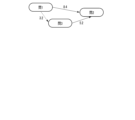
- FIG. 1 is a functional block diagram showing an example of an order determination device according to an embodiment.
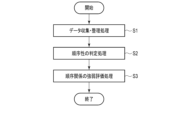
- FIG. 2 is a flowchart showing an example of a processing procedure of the order determination device 100 shown in FIG.
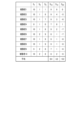
- FIG. 3 is a diagram for explaining the data collection and organization process.
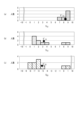
- FIG. 4 is a diagram for explaining the data collection and organization process.
- FIG. 5 is a flow chart showing the procedure of the ⁇ order determination process>.
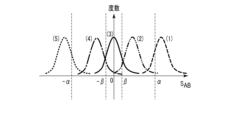
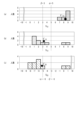
- FIG. 6 is a graph plotting SAB against frequency.
- FIG. 7 is a diagram showing an example relating to the process of evaluating the strength of order.
- FIG. 8 is a graph showing an example of the results for the case of FIG.
- FIG. 9 is a diagram for explaining the process of evaluating the strength of order in the case of two values.
- FIG. 10 is a diagram for explaining the process of evaluating the strength of order in the case of two values.
- FIG. 1 is a functional block diagram showing an example of an order determination device according to an embodiment.
- the order determination device 100 is a computer including a processor 11 and a storage unit 12.
- the storage unit 12 stores a program including instructions for causing the computer to function as the order determination device 100.
- the processor 11 includes a data processing unit 11a, an order determination unit 11b, and a strength evaluation unit 11c as processing functions according to the embodiment.
- the data processing unit 11a collects, across a plurality of individuals, evaluation values of a first item related to the individuals and evaluation values of a second item different from the first item.
- the evaluation values can be real numbers with three or more values (discrete values and continuous values).
- the order determining unit 11b determines the order between the first item and the second item based on the evaluation value.
- the strength evaluation unit 11c evaluates the strength of the order relationship in the determined order.
- FIG. 2 is a flowchart showing an example of a processing procedure of the order determination device 100 shown in FIG. (Step S1) ⁇ Data collection and organization>
- Step S2 ⁇ Order Determination Process>
- the order determining device 100 calculates the center S'AB of the distribution of the evaluation values SAB , and determines whether there is order and whether there is a tendency for a chronological relationship according to the value of S'AB .
- Step S3 Processing for evaluating the strength of order relationships>
- the order determination device 100 evaluates the magnitude of the absolute value
- the order determination device 100 collects evaluation values (S A , S B ) for each individual for two items (item A, item B). If data collection is also performed on an item other than items A and B (e.g., item C), it is possible to determine not only the order between items A and B, but also the order between items A and C and between items B and C. There is no limit to the number of items investigated in one experiment.
- the order determination device 100 performs a conversion such that a larger evaluation value indicates a better result, for example by taking the reciprocal. Furthermore, if necessary, the order determination device 100 performs conversion so that arithmetic operations can be performed between S A and S B. For example, a Likert scale may be converted into a numerical value.
- S AB is an index indicating how well the performance of item A is compared to the performance of item B.
- the order determination device 100 calculates the center of distribution S' AB of S AB .
- Figures 3 and 4 are diagrams for explaining the ⁇ Data collection and organization process>. For example, consider administering a test consisting of three questions (questions 1 to 3) with a maximum score of 10 points to 10 subjects. When the scores of each subject are as shown in Figure 3, the graphs (a), (b), and (c) in Figure 4 are obtained using the average value as an example of the value that indicates the center of the distribution.
- Fig. 5 is a flow chart showing the procedure of the ⁇ order determination process>.
- the order determination device 100 uses S'AB to determine the relationship between item A and item B as shown in Fig. 5.
- ⁇ , ⁇ are any real numbers that satisfy 0 ⁇ .
- the order determination device 100 compares the threshold value ⁇ with S'AB (step S11), and if S'AB is greater than ⁇ (YES), determines that there is an order of item A ⁇ item B (1) (step S12). If the answer is No in step S11, the order determination device 100 determines whether S'AB is greater than the threshold value ⁇ and equal to or less than ⁇ (step S13). If the answer is Yes, the order determination device 100 determines that there is a tendency of item A before item B (2) (step S14).
- step S15 the order determination device 100 judges whether S'AB is equal to or greater than - ⁇ and equal to or less than ⁇ (step S15). If the answer is Yes, the order determination device 100 judges that there is no order (3) (step S16). If the answer is No in step S15, the order determination device 100 judges whether S'AB is equal to or greater than - ⁇ and equal to or less than - ⁇ (step S17). If the answer is Yes, the order determination device 100 judges that there is a tendency of item B before and item A after (4) (step S18). If the answer is No in step S17, the order determination device 100 judges that there is an order of item B ⁇ item A (5) (step S19).
- the threshold value may be increased to evaluate the relationship in more detail.
- the threshold value may be set to ⁇ only to determine whether or not there is an order.
- FIG. 6 is a graph plotting SAB against frequency, which corresponds to each of the cases (1) to (5) in FIG.
- the order determination device 100 evaluates the magnitude of the absolute value
- FIG. 7 is a diagram showing an example of the process for evaluating the strength of order.
- (Regarding Question 1 and Question 2) There is a sequence of Question 1 ⁇ Question 2.
- (Regarding Questions 1 and 3) There is a tendency for question 1 to come first, and question 3 to come later.
- (Regarding Questions 2 and 3) There is a sequence of Question 3 ⁇ Question 2.
- Fig. 8 is a graph showing an example of the results for the case of Fig. 7.
- the strength of the sequential relationship is evaluated as follows: [Question 1 ⁇ Question 2] > [Question 3 ⁇ Question 2] > [Previous: Question 1, Next: Question 3].
- FIGS. 9 and 10 are diagrams for explaining the process of evaluating the strength of order in the case of two values.
- the center S' AB of the distribution of evaluation values S AB is calculated, and the presence or absence of order and the presence or absence of a tendency for anterior-posterior relationships is judged according to the value of S' AB .
- is evaluated as the strength of order, and even when it is judged that there is no order, the strength of the posterior relationship is evaluated.
- This procedure makes it possible to evaluate the order between items with evaluation values of three or more discrete values and continuous values. This makes it possible to evaluate order for a variety of data, and ultimately to perform a more detailed analysis of human cognitive development and the mechanisms of learning.
- the embodiment it is possible to evaluate not only whether there is a sequence, but also whether there is a tendency for a chronological relationship and the strength of the sequence. This makes it possible to analyze relationships that could not be analyzed with existing technology. Furthermore, by evaluating the strength of the sequence, it is possible to compare sequence relationships. In other words, by performing an analysis using the distribution of the differences in the evaluation values, it becomes possible to evaluate the sequence between items that have evaluation values of three or more discrete values and continuous values. Furthermore, this method can also be applied to items that have evaluation values of two values.
- this invention is not limited to the above-described embodiment.
- this invention is not limited to the above-described embodiment as it is, and in the implementation stage, the components can be modified and embodied without departing from the gist of the invention.
- various inventions can be formed by appropriate combinations of multiple components disclosed in the above-described embodiment. For example, some components may be deleted from all the components shown in the embodiment. Furthermore, components from different embodiments may be appropriately combined.
- Processor 11a Data processing unit 11b: Order determination unit 11c: Strength evaluation unit 12: Memory unit 100: Order determination device.
Landscapes
- Engineering & Computer Science (AREA)
- Theoretical Computer Science (AREA)
- Computing Systems (AREA)
- Data Mining & Analysis (AREA)
- Evolutionary Computation (AREA)
- Physics & Mathematics (AREA)
- Computational Linguistics (AREA)
- General Engineering & Computer Science (AREA)
- General Physics & Mathematics (AREA)
- Mathematical Physics (AREA)
- Software Systems (AREA)
- Artificial Intelligence (AREA)
- Management, Administration, Business Operations System, And Electronic Commerce (AREA)
Abstract
この発明の一態様に係る順序性判定装置は、データ処理部と、順序性判定部と、強弱評価部とを具備する。データ処理部は、個体に関する第1項目の評価値と、前記第1項目とは異なる第2項目の評価値とを複数の個体にわたって収集する。順序性判定部は、評価値に基づいて、前記第1項目と前記第2項目との間の順序性を判定する。強弱評価部は、判定された順序性における順序関係の強弱を評価する。
Description
この発明の一態様は、順序性判定装置、順序性判定方法、およびプログラムに関する。
順序性(ordering)は、2つの項目の間の関係を示す表現の一つである。例えば、人の発達の過程において項目Aが獲得された後に項目Bが獲得されることを、発達心理学等の分野では「項目A→項目Bの順序がある」と表現することが多い。順序性を分析することで、人の認知発達や学習のメカニズムの解明につながることが期待されている。
非特許文献1では、ある個体群に対して、各個体において2つの項目(項目A、項目B)が発生するか否かについて調査することが議論されている。しかしながら既存の手法は、発生有り/発生無しという、2値の評価値を持つ項目に適用することしかできなかった。つまり、2値の評価値を持つ項目間の順序性を評価することしかできなかった。
Peter W. Airasian and William M. Bart: Ordering Theory: A New and Useful Measurement Model, Educational Technology, Vol. 13, No. 5 (May, 1973), pp. 56-60.
順序性という関係は、3値以上の離散値や、あるいは連続値の評価値を持つ項目においても発生しうる。例えば、10点満点の2つの設問に関して、どちらの設問が先に理解されるかという順序性を表現するには、3値以上の評価値を持つ項目に対しても順序性を評価できる手法が求められる。
この発明は上記事情によりなされたもので、3値以上の評価値を有する項目間の順序性を評価することの可能な技術を提供しようとするものである。
この発明の一態様に係る順序性判定装置は、順序性判定装置は、データ処理部と、順序性判定部と、強弱評価部とを具備する。データ処理部は、個体に関する第1項目の評価値と、前記第1項目とは異なる第2項目の評価値とを複数の個体にわたって収集する。順序性判定部は、評価値に基づいて、前記第1項目と前記第2項目との間の順序性を判定する。強弱評価部は、判定された順序性における順序関係の強弱を評価する。
この発明の一態様によれば、3値以上の評価値を有する項目間の順序性を評価することが可能になる。
図1は、実施形態に係わる順序性判定装置の一例を示す機能ブロック図である。図1において、順序性判定装置100は、プロセッサ11、および記憶部12を備えるコンピュータである。記憶部12は、コンピュータを順序性判定装置100として機能させるための命令を含むプログラムを記憶する。プロセッサ11は、実施形態に係わる処理機能としてデータ処理部11a、順序性判定部11b、および強弱評価部11cを備える。
データ処理部11aは、個体に関する第1項目の評価値と、第1項目とは異なる第2項目の評価値とを複数の個体にわたって収集する。ここで、評価値としては、3値以上の実数(離散値および連続値)を使用することができる。
順序性判定部11bは、評価値に基づいて、第1項目と第2項目との間の順序性を判定する。
強弱評価部11cは、判定された順序性における順序関係の強弱を評価する。
順序性判定部11bは、評価値に基づいて、第1項目と第2項目との間の順序性を判定する。
強弱評価部11cは、判定された順序性における順序関係の強弱を評価する。
図2は、図1に示される順序性判定装置100の処理手順の一例を示すフローチャートである。
(ステップS1)
<データ収集・整理処理>
ステップS1において、順序性判定装置100は、複数の個体のそれぞれについて、互いに異なる2項目(項目A、項目B)の評価値SA、SBのデータを収集する。そして、順序性判定装置100は、新たな評価値SAB=SA-SBを算出する。
(ステップS1)
<データ収集・整理処理>
ステップS1において、順序性判定装置100は、複数の個体のそれぞれについて、互いに異なる2項目(項目A、項目B)の評価値SA、SBのデータを収集する。そして、順序性判定装置100は、新たな評価値SAB=SA-SBを算出する。
(ステップS2)
<順序性判定処理>
ステップS2において、順序性判定装置100は、評価値SABの分布の中心S′ABを算出し、S′ABの値に応じて、順序性の有無、および、前後関係の傾向の有無を判定する。
<順序性判定処理>
ステップS2において、順序性判定装置100は、評価値SABの分布の中心S′ABを算出し、S′ABの値に応じて、順序性の有無、および、前後関係の傾向の有無を判定する。
(ステップS3)
<順序関係の強弱評価処理>
ステップS3において、順序性判定装置100は、S′ABの絶対値|S′AB|の大きさを順序性の強さとして評価する。ここで、順序性がないと判定された場合、順序性判定装置100は項目A,B間の前後関係の強弱を評価する。
<順序関係の強弱評価処理>
ステップS3において、順序性判定装置100は、S′ABの絶対値|S′AB|の大きさを順序性の強さとして評価する。ここで、順序性がないと判定された場合、順序性判定装置100は項目A,B間の前後関係の強弱を評価する。
ステップS1~ステップS3の各処理について詳しく説明する。
<データ収集・整理処理>
順序性判定装置100は、2つの項目(項目A、項目B)について、それぞれの評価値(SA、SB)を個体ごとに収集する。データ収集において、項目A、B以外の項目(例えば項目C)についてもデータ収集を行っていた場合、項目A、B間の順序性だけでなく、項目A、C間、項目B、C間の順序性も判定することができる。ここで、一度の実験において調査する項目数に制限はない。
<データ収集・整理処理>
順序性判定装置100は、2つの項目(項目A、項目B)について、それぞれの評価値(SA、SB)を個体ごとに収集する。データ収集において、項目A、B以外の項目(例えば項目C)についてもデータ収集を行っていた場合、項目A、B間の順序性だけでなく、項目A、C間、項目B、C間の順序性も判定することができる。ここで、一度の実験において調査する項目数に制限はない。
評価値が大きい方が悪い結果である場合、順序性判定装置100は、逆数を取る等の処理により、評価値が大きい方が良い結果となるような変換を行う。
また、必要であれば、順序性判定装置100は、SA、SB間で四則演算が可能となるような変換を行う。例えば、リッカート尺度を数値に変換するなどの手法がある。
また、必要であれば、順序性判定装置100は、SA、SB間で四則演算が可能となるような変換を行う。例えば、リッカート尺度を数値に変換するなどの手法がある。
順序性判定装置100は、SAB=SA-SBを算出し、SABを順序性の評価指標とする。ここで、SABは、項目Bの出来に対して項目Aの出来がどれくらい良いかを示す指標である。順序性判定装置100は、SABの分布の中心S′ABを算出する。
図3および図4は、<データ収集・整理処理>について説明するための図である。例えば10人の被験者に対し、10点満点の3つの設問(問1~問3)からなるテストを実施することを考える。各被験者のスコアが図3の結果になった場合、分布の中心を示す値の一例として平均値を用いて、図4の(a)、(b)、(c)の各グラフが得られる。
図5は、<順序性判定処理>における手順を示すフローチャートである。順序性判定装置100は、S′ABを用いて、項目Aと項目Bの関係を図5のように判定する。ここで、→α,βは、0<β<αを満たす任意の実数である。
図5において、順序性判定装置100は、閾値αとS′ABとを比較し(ステップS11)、S′ABがαより大きければ(YES)、項目A→項目Bの順序性がある(1)と判定する(ステップS12)。ステップS11でNoならば、順序性判定装置100は、S′ABが閾値βより大きく、かつα以下であるかを判定する(ステップS13)。Yesであれば、順序性判定装置100は、前:項目A、後:項目Bの傾向有り(2)と判定する(ステップS14)。
ステップS13でNoならば、順序性判定装置100は、S′ABが-β以上で、かつβ以下であるかを判定する(ステップS15)。Yesであれば、順序性判定装置100は、順序性無し(3)と判定する(ステップS16)。ステップS15でNoならば、順序性判定装置100は、S′ABが-α以上で、かつ-β以下であるかを判定する(ステップS17)。Yesであれば、順序性判定装置100は、前:項目B、後:項目Aの傾向有り(4)と判定する(ステップS18)。ステップS17でNoならば、順序性判定装置100は、項目B→項目Aの順序性がある(5)と判定する(ステップS19)。
以上の手順において、さらに閾値を増やして、より詳細な関係性の評価を行っても良い。あるいは逆に、閾値をαのみとし、順序性の有無のみを判定しても良い。
図6は、SABを度数に対してプロットしたグラフである。図5の各ケース(1)~(5)に対応するグラフとなっていることが示される。
<順序性の強弱評価処理>
図2のステップS3において、順序性判定装置100は、S′ABの絶対値|S′AB|の大きさを順序関係の強さとして評価する。絶対値が大きいほど順序性が強い(逆転が起きにくい)関係である。データ収集にかかる実験で、項目A、項目B以外の項目(例えば項目C)についても調査を行っていた場合、順序性判定装置100は、|S′AB|、|S′AC|、|S′BC|に関しても比較・分析を行う。
図2のステップS3において、順序性判定装置100は、S′ABの絶対値|S′AB|の大きさを順序関係の強さとして評価する。絶対値が大きいほど順序性が強い(逆転が起きにくい)関係である。データ収集にかかる実験で、項目A、項目B以外の項目(例えば項目C)についても調査を行っていた場合、順序性判定装置100は、|S′AB|、|S′AC|、|S′BC|に関しても比較・分析を行う。
図7は、<順序性の強弱評価処理>に係わる一つの事例を示す図である。図3、図4のデータについて、α=5,β=3として順序性を判定すると、次の結果を得る。
(問1・問2に関して)
問1→問2の順序性がある。
(問1・問3に関して)
前:問1、後:問3の傾向がある。
(問2・問3に関して)
問3→問2の順序性がある。
(問1・問2に関して)
問1→問2の順序性がある。
(問1・問3に関して)
前:問1、後:問3の傾向がある。
(問2・問3に関して)
問3→問2の順序性がある。
図8は、図7の事例についての結果の一例を示すグラフである。図8(a)、(b)は、図4のグラフの横軸に対して閾値β=3、α=5を設定したもので、図8(c)は、図4のグラフの横軸に対して閾値-β=-3、-α=-5を設定したものである。
順序関係の強さは、[問1→問2]>[問3→問2]>[前:問1、後:問3]と評価される。
順序関係の強さは、[問1→問2]>[問3→問2]>[前:問1、後:問3]と評価される。
図9および図10は、2値の場合の<順序性の強弱評価処理>について説明するための図である。2値の評価値を持つデータで構成された図9のデータセットに実施形態の手法を適用すると、図10の判定結果が得られる。
以上述べたように、実施形態では、各個体について、2項目(項目A、項目B)の評価値SA、SBのデータを収集し、その後、新たな評価値SAB=SA-SBを算出する。また、評価値SABの分布の中心S′ABを算出し、S′ABの値に応じて、順序性の有無、前後関係の傾向の有無を判定する。さらに、|S′AB|の大きさを順序性の強さとして評価し、順序性がないと判定された場合においても、前後関係の強弱を評価するようにした。
このような手順により、3値以上の離散値および連続値の評価値を持つ項目間の順序性を評価することが可能になる。従って、多様なデータに関して順序性を評価することが可能になり、ひいては、人の認知発達や学習のメカニズムについてより詳細に分析することが可能となる。
また、実施形態によれば、順序性の有無だけではなく、前後関係の傾向の有無や、順序性の強弱についても評価することができる。これにより、既存の技術では分析できなかった関係性を分析することが可能になる。また、順序性の強弱を評価することで、順序関係同士の比較を実施することができる。すなわち、評価値の差の分布を用いた分析を行うことで、3値以上の離散値および連続値の評価値を持つ項目間の順序性を評価することが可能になる。さらに、この手法は、2値の評価値を持つ項目についても適用することができる。
これらのことから、実施形態によれば、3値以上の評価値を有する項目間の順序性を評価することが可能になる。また、より多様なデータに関して順序性を評価することが可能になり、人の認知発達や学習のメカニズムについてより詳細に分析することが可能になる。ひいては、認知発達や学習のメカニズムに沿った教材やカリキュラムの開発が可能になる。
なお、この発明は上記実施の形態に限定されるものではない。すなわち、この発明は、上記実施形態そのままに限定されるものではなく、実施段階ではその要旨を逸脱しない範囲で構成要素を変形して具体化できる。また、上記実施形態に開示されている複数の構成要素の適宜な組み合せにより種々の発明を形成できる。例えば、実施形態に示される全構成要素から幾つかの構成要素を削除してもよい。さらに、異なる実施形態に亘る構成要素を適宜組み合せてもよい。
11…プロセッサ
11a…データ処理部
11b…順序性判定部
11c…強弱評価部
12…記憶部
100…順序性判定装置。
11a…データ処理部
11b…順序性判定部
11c…強弱評価部
12…記憶部
100…順序性判定装置。
Claims (8)
- 個体に関する第1項目の評価値と、前記第1項目とは異なる第2項目の評価値とを複数の個体にわたって収集するデータ処理部と、
前記評価値に基づいて、前記第1項目と前記第2項目との間の順序性を判定する順序性判定部と、
前記判定された順序性における順序関係の強弱を評価する強弱評価部とを具備する、順序性判定装置。 - 前記データ処理部は、任意の2項目について前記個体ごとの評価値を収集し、前記個体ごとの評価値の差の分布の中心を示す値を算出する、請求項1に記載の順序性判定装置。
- 前記順序性判定部は、3値以上の実数を評価値として前記順序性を判定する、請求項2に記載の順序性判定装置。
- 前記順序性判定部は、前記分布の中心を示す値に基づいて前記順序性を判定する、請求項2に記載の順序性判定装置。
- 前記順序性判定部は、前記評価値に関する複数の閾値を使用して前記第1項目と前記第2項目との間の順序性を判定する、請求項1に記載の順序性判定装置。
- 前記強弱評価部は、前記分布の中心を示す値の絶対値を用いて前記強弱を評価する、請求項2に記載の順序性判定装置。
- コンピュータが、個体に関する第1項目の評価値と、前記第1項目とは異なる第2項目の評価値とを複数の個体にわたって収集する過程と、
前記コンピュータが、前記評価値に基づいて、前記第1項目と前記第2項目との間の順序性を判定する過程と、
コンピュータが、前記判定された順序性における順序関係の強弱を評価する過程とを具備する、順序性判定方法。 - コンピュータを、請求項1乃至6のいずれか1項に記載の順序性判定装置として機能させる命令を含む、プログラム。
Priority Applications (2)
| Application Number | Priority Date | Filing Date | Title |
|---|---|---|---|
| JP2025525544A JPWO2024252580A1 (ja) | 2023-06-07 | 2023-06-07 | |
| PCT/JP2023/021226 WO2024252580A1 (ja) | 2023-06-07 | 2023-06-07 | 順序性判定装置、順序性判定方法、およびプログラム |
Applications Claiming Priority (1)
| Application Number | Priority Date | Filing Date | Title |
|---|---|---|---|
| PCT/JP2023/021226 WO2024252580A1 (ja) | 2023-06-07 | 2023-06-07 | 順序性判定装置、順序性判定方法、およびプログラム |
Publications (1)
| Publication Number | Publication Date |
|---|---|
| WO2024252580A1 true WO2024252580A1 (ja) | 2024-12-12 |
Family
ID=93795359
Family Applications (1)
| Application Number | Title | Priority Date | Filing Date |
|---|---|---|---|
| PCT/JP2023/021226 Ceased WO2024252580A1 (ja) | 2023-06-07 | 2023-06-07 | 順序性判定装置、順序性判定方法、およびプログラム |
Country Status (2)
| Country | Link |
|---|---|
| JP (1) | JPWO2024252580A1 (ja) |
| WO (1) | WO2024252580A1 (ja) |
-
2023
- 2023-06-07 WO PCT/JP2023/021226 patent/WO2024252580A1/ja not_active Ceased
- 2023-06-07 JP JP2025525544A patent/JPWO2024252580A1/ja active Pending
Non-Patent Citations (3)
| Title |
|---|
| HAJIME YAMASHITA: "An Analysis Method of Instruction and Cognition Structure Applying Fuzzy Graphs", DENSHI JOHO TSUSHIN GAKKAI RONBUNSHI, D-1 - TRANSACTIONS OF THEIEICE, PART D-1, DENSHI JOHO TSUSHIN GAKKAI, TOKYO, JP, vol. J74-D1, no. 2, 25 February 1991 (1991-02-25), JP , pages 88 - 94, XP009560693, ISSN: 0915-1915 * |
| KASAMATSU, MIHO ET AL. : "A34-4 Estimation of the Developmental Stage based on the Recognition of the Scene of Picture Book Reading and Order of Developmental Stages", 14TH FORUM ON DATA ENGINEERING AND INFORMATION MANAGEMENT - THE 20TH ANNUAL CONFERENCE OF THE DATABASE SOCIETY OF JAPAN (DEIM FORUM 2022), vol. 20, 1 January 2022 (2022-01-01), pages 1 - 8, XP009560055 * |
| RYOSUKE KONISHI, YUSUKE TAKAHASHI, YASUSHI KIYOKI: "A Dynamic and Personalized Curriculum-Generation Method Analyzing Causality and Dependency between Learning Objects", IEICE TECHNICAL RESEARCH REPORT, DE, IEICE, JP, vol. 108, no. 329 (DE2008-61), 1 December 2008 (2008-12-01), JP, pages 21 - 27, XP009560690 * |
Also Published As
| Publication number | Publication date |
|---|---|
| JPWO2024252580A1 (ja) | 2024-12-12 |
Similar Documents
| Publication | Publication Date | Title |
|---|---|---|
| Soprano et al. | The many dimensions of truthfulness: Crowdsourcing misinformation assessments on a multidimensional scale | |
| Bulteel et al. | VAR (1) based models do not always outpredict AR (1) models in typical psychological applications. | |
| Li et al. | Modelling and analysing the dynamics of disease progression from cross-sectional studies | |
| Terry et al. | Generalising the drift rate distribution for linear ballistic accumulators | |
| US20160148109A1 (en) | System for Motion Analytics and Method for Analyzing Motion | |
| WO2017041651A1 (zh) | 一种用户数据分类的方法和设备 | |
| Huo et al. | A hierarchical multi-unidimensional IRT approach for analyzing sparse, multi-group data for integrative data analysis | |
| CN112819232A (zh) | 一种基于打卡数据的人流量特征预测方法及装置 | |
| Fraile-Parra et al. | LENs for analyzing the quality of life of people with intellectual disability | |
| Kevane et al. | Improving reverse correlation analysis of faces: Diagnostics of order effects, runs, rater agreement, and image pairs | |
| CN113889274A (zh) | 一种孤独症谱系障碍的风险预测模型构建方法及装置 | |
| Nordgaard et al. | Assessment of forensic findings when alternative explanations have different likelihoods—“Blame-the-brother”-syndrome | |
| Pierce et al. | Evaluating the correspondence between expert visual analysis and quantitative methods. | |
| JP6964722B1 (ja) | サービス評価システム | |
| Gobov et al. | Examining software quality concept: business analysis perspective | |
| Böckenholt | Measuring change: Mixed Markov models for ordinal panel data | |
| Goniwada | Data Analysis | |
| CN116453690A (zh) | 一种心理健康程度评价方法、装置及可存储介质 | |
| Immanuel et al. | Performance Fuzzy Decision Model for Evaluating Employees’ Work-from-Home Performance | |
| Riyadi | The Comparison of Decision Tree and Naive Bayes Algorithms in Classifying Heart Disease | |
| Godmann et al. | Toward a principled Bayesian workflow in semantics: A tutorial | |
| CN111985897A (zh) | 运用人才大数据构建职业画像数据模型的方法及装置 | |
| Fitrianto et al. | Comparing Several Missing Data Estimation Methods in Linear Regression; Real Data Example and A Simulation Study | |
| CN113553816B (zh) | 一种基于智能模型小数据量样本自动优化量表的方法及装置 | |
| Darweesh et al. | Effect of missing values on the matching item in the graded model |
Legal Events
| Date | Code | Title | Description |
|---|---|---|---|
| 121 | Ep: the epo has been informed by wipo that ep was designated in this application |
Ref document number: 23940681 Country of ref document: EP Kind code of ref document: A1 |
|
| ENP | Entry into the national phase |
Ref document number: 2025525544 Country of ref document: JP Kind code of ref document: A |
|
| NENP | Non-entry into the national phase |
Ref country code: DE |