WO2024252510A1 - ノッキング予測方法、ノッキング予測装置、燃焼装置の設計方法、動力発生装置の設計方法、車両の設計方法及び燃料の設計方法 - Google Patents
ノッキング予測方法、ノッキング予測装置、燃焼装置の設計方法、動力発生装置の設計方法、車両の設計方法及び燃料の設計方法 Download PDFInfo
- Publication number
- WO2024252510A1 WO2024252510A1 PCT/JP2023/020935 JP2023020935W WO2024252510A1 WO 2024252510 A1 WO2024252510 A1 WO 2024252510A1 JP 2023020935 W JP2023020935 W JP 2023020935W WO 2024252510 A1 WO2024252510 A1 WO 2024252510A1
- Authority
- WO
- WIPO (PCT)
- Prior art keywords
- knocking
- prediction
- fuel
- prediction method
- flame
- Prior art date
- Legal status (The legal status is an assumption and is not a legal conclusion. Google has not performed a legal analysis and makes no representation as to the accuracy of the status listed.)
- Ceased
Links
Images



Classifications
-
- F—MECHANICAL ENGINEERING; LIGHTING; HEATING; WEAPONS; BLASTING
- F02—COMBUSTION ENGINES; HOT-GAS OR COMBUSTION-PRODUCT ENGINE PLANTS
- F02D—CONTROLLING COMBUSTION ENGINES
- F02D45/00—Electrical control not provided for in groups F02D41/00 - F02D43/00
Definitions
- the knocking prediction method is a knocking prediction method for predicting knocking that may occur in a premixed combustion field, and in a characteristic diagram showing the relationship between normalized temperature and normalized fuel mass fraction of the fuel, a fuel with a Lewis number greater than 1 is deemed to have a possibility of knocking, and a fuel with a Lewis number less than 1 is deemed to have no possibility of knocking.
- the knocking prediction method is a knocking prediction method for predicting knocking that may occur in a premixed combustion field, and includes a calculation step for sequentially calculating the combustion speed when the inlet temperature is gradually increased by one-dimensional steady-state analysis of the premixed combustion field, a determination step for determining whether the combustion speed cannot be obtained because a flame cannot exist in the premixed combustion field, and an occurrence condition acquisition step for acquiring the inlet temperature corresponding to the last acquired combustion speed as the occurrence condition of the knocking.
- the knocking prediction method according to the fourth aspect of the present disclosure is the knocking prediction method according to the third aspect, in which the calculation step calculates the size of the area including the unburned mixture, the flame reaction zone, and the burned gas in the premixed combustion field by reducing it to the limit that the flame can contain.
- the knocking prediction method according to the fifth aspect of the present disclosure is the knocking prediction method according to the third or fourth aspect, which predicts fuels with Lewis numbers greater than 1.
- the knocking prediction device is the knocking prediction device according to the first aspect, in which the calculation means calculates the size of the area including the unburned mixture, the flame reaction zone, and the burned gas in the premixed combustion field by reducing it to the limit that can be contained by the flame.
- the method for designing a combustion device according to the first aspect of the present disclosure is to design a combustion device based on the knocking occurrence conditions estimated based on the knocking prediction method according to the third or fourth aspect.
- the method for designing a power generating device according to the first aspect of the present disclosure is to design a power generating device based on the knocking occurrence conditions estimated based on the knocking prediction method according to the third or fourth aspect.
- the fuel design method according to the first aspect of the present disclosure is to design the fuel based on the knocking occurrence conditions estimated based on the knocking prediction method according to the third or fourth aspect.
- a knocking prediction method it is possible to provide a knocking prediction method, a knocking prediction device, a combustion device design method, a power generation device design method, a vehicle design method, and a fuel design method that can further improve accuracy. Furthermore, according to the present disclosure, it is possible to provide a design method for a combustion device, a power generating device, a vehicle, and a fuel, which are capable of improving the substantial performance of the fuel.
- FIG. 4 is a flowchart illustrating a knock prediction method according to an embodiment of the present disclosure.
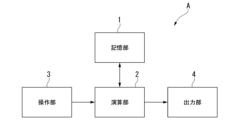
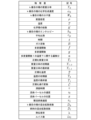
- 1 is a block diagram showing a functional configuration of a knocking prediction device according to an embodiment of the present disclosure. 1 is a list of various physical quantities used in the theoretical explanation of an embodiment of the present disclosure.
- FIG. 4 is a first characteristic diagram showing a knocking prediction characteristic in the embodiment of the present disclosure.
- FIG. 4 is a second characteristic diagram showing a knocking prediction characteristic in the embodiment of the present disclosure.
- FIG. 11 is a third characteristic diagram showing a knocking prediction characteristic in the embodiment of the present disclosure.
- FIG. 4 is a characteristic diagram showing a comparative example of a knocking prediction method according to an embodiment of the present disclosure.
- FIG. 1 is a flowchart showing a knocking prediction method according to the present embodiment.
- This flowchart shows a procedure for acquiring a flame propagation limit temperature, which is a condition for the occurrence of knocking, that is, an initial temperature at which knocking occurs, for a premixed combustion field (combustion chamber) in which a premixed mixture of fuel and air (oxidizer) is ignited by a compulsory means such as spark ignition and combusted.
- This flowchart also shows an overview of the processing steps of a knocking prediction program (simulation program) executed by a specific computer.
- the knocking prediction method according to this embodiment is realized by information processing (simulation) using a computer.
- FIG. 2 is a block diagram showing the functional configuration of the knocking prediction device A according to this embodiment.
- the knocking prediction device A includes at least a storage unit 1 that stores a knocking prediction program in advance, a calculation unit 2 that executes the knocking prediction program, an operation unit 3 that inputs an operator's operation instructions to the calculation unit 2, and an output unit 4 that outputs the calculation result of the calculation unit 2, i.e., the above-mentioned flame propagation limit temperature (initial temperature), to the outside.
- the above-mentioned flame propagation limit temperature initial temperature
- memory unit 1, calculation unit 2, and operation unit 3 constitute the calculation means in this disclosure. Details will be described later, but memory unit 1, calculation unit 2, and operation unit 3 work together to sequentially calculate the combustion speed when the inlet temperature is gradually increased by one-dimensional steady-state analysis of the premixed combustion field.
- the memory unit 1, the calculation unit 2, and the operation unit 3 in the knocking prediction device A constitute the determination means in this disclosure. That is, the memory unit 1, the calculation unit 2, and the operation unit 3 work together to determine whether or not it has become impossible to obtain the combustion speed because a flame can no longer exist in the premixed combustion field.
- the calculation means of the knocking prediction device A according to this embodiment corresponds to the calculation step in the knocking prediction method according to this embodiment.
- the determination means of the knocking prediction device A according to this embodiment corresponds to the determination step in the knocking prediction method according to this embodiment.
- the raw condition acquisition means of the knocking prediction device A according to this embodiment corresponds to the occurrence condition acquisition step in the knocking prediction method according to this embodiment.
- the premixed combustion field in this embodiment is a combustion field that corresponds to the combustion chamber of an internal combustion engine (prime mover), such as a gasoline engine installed in a vehicle as a power generating device.
- an internal combustion engine such as a gasoline engine installed in a vehicle as a power generating device.
- measures such as lowering the compression ratio are taken to prevent knocking, that is, to prevent spontaneous ignition of unburned gas.
- the above-mentioned internal combustion engine includes direct injection engines and engines with a pre-chamber.
- the knocking prediction method according to this embodiment relates to a design method for a combustion device equipped with a premixed combustion field (combustion chamber), a power generating device (prime mover), a vehicle, etc. Furthermore, the knocking prediction method according to this embodiment also relates to a design method for a fuel that burns in a premixed combustion field.
- the knocking prediction method is based on the premise that when a time-space transformation of a flame is applied to a premixed combustion field, the temporal changes in normalized fuel mass fraction and normalized temperature in zero-dimensional homogeneous ignition are equivalent to the spatial changes in a one-dimensional laminar premixed flame.
- this knocking prediction method is based on the theoretical basis of the equivalence between the temporal changes in normalized fuel mass fraction and normalized temperature in zero-dimensional homogeneous ignition and the spatial changes in one-dimensional laminar premixed flames.
- Equation (1) and (2) are the governing equations for zero-dimensional homogeneous ignition using normalized fuel mass fraction and temperature. These governing equations (1) and (2) are the conservation laws of energy and chemical species under constant pressure and constant enthalpy, and are given by the mass fraction of the kth species, the chemical production rate of the kth species, the molecular weight of the kth species, the mass density, the temperature, the total number of chemical species, the enthalpy of the kth species, the average specific heat, and time.
- the mass density is given by the gas equation of state used for the interconversion of pressure, density, and temperature, as shown in the following equation (3). Note that R in this equation of state (3) is the universal gas constant.
- a candidate for the multivariate function f in equations (8) and (10) is the normalized temperature.
- a candidate for the multivariate function g can be the normalized fuel mass fraction in the case of the single-step chemical reaction model in equation (8), or the normalized progress variable in the case of the multi-step chemical reaction model in equation (10).
- equations (15) and (16) are transformed using equation (19), the following equations (20) and (21) are obtained. Furthermore, equation (17) can be rewritten as the following equation (22) using the parcel's position. Furthermore, the relationship shown in equation (23) holds based on equation (22).
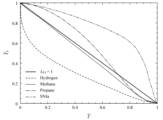
- Figure 4 is a characteristic diagram showing the relationship between zero-dimensional homogeneous ignition and one-dimensional laminar premixed flame in a premixed combustion field when hydrogen, methane, propane and SNIa are used as fuel.
- SNIa represents the carbon state in the nuclear combustion process of Type Ia supernova and has a very high Lewis number.
- Hydrogen, methane and propane have Lewis numbers of 0.36, 0-96 and 1.95.
- the consumption of the normalized fuel mass fraction at a given normalized temperature can be considered as the progress of the combustion reaction.
- the progress of the combustion reaction is in the following order: fuel with a Lewis number less than 1, fuel with a Lewis number of 1 (zero-dimensional homogeneous ignition), and fuel with a Lewis number greater than 1.
- Such a simulation corresponds to the knocking prediction method according to this embodiment. Furthermore, this simulation is the processing operation of the knocking prediction device according to this embodiment, that is, information processing executed by the calculation unit 2 based on the knocking prediction program pre-stored in the storage unit 1.
- Calculation unit 2 uses the temperature, pressure, fuel type, and equivalence ratio input in step S1 and gradually increases the inlet temperature (calculation start temperature) to perform a one-dimensional steady-state analysis (calculation process) to calculate the flame propagation limit temperature for each fuel (step S2).
- the calculation unit 2 performs a convergence judgment (judgment process) for each calculation of the burning rate for a certain inlet temperature (calculation start temperature) (step S3). That is, in step S3, the calculation unit 2 judges whether or not the burning rate cannot be obtained because a flame can no longer exist in the premixed combustion field. Then, if the judgment result in step S3 is "convergence," the calculation unit 2 sets the inlet temperature even higher and executes the burning rate calculation.
- step S4 occurrence condition acquisition process.
- the calculation unit 2 acquires the flame propagation limit temperature (inlet temperature) corresponding to the last acquired combustion speed as the occurrence condition for knocking.
- the calculation unit 2 then outputs the simulation result including the flame propagation limit temperature acquired in this manner as the occurrence condition for knocking to the output unit 4.
- Figure 5 shows an example of this simulation result (one-dimensional steady-state analysis result), that is, a calculation result including the knocking occurrence conditions output by the calculation unit 2 to the output unit 4.
- Figure 6 shows an example of the relationship between the inlet temperature and the combustion speed of the premixed combustion field based on such a simulation result.
- Figure 6 shows that for hydrogen fuel, the burning rate increases with increasing inlet or initial temperature, and a propagating flame exists even at an inlet temperature of 3000 K.
- Figure 6 also shows that for n-heptane fuel, the burning rate increases with increasing inlet temperature, but a propagating flame cannot exist above 1270 K.
- the theoretical basis for this embodiment is that it theoretically shows that the relationship between normalized fuel mass fraction and normalized temperature is equivalent for zero-dimensional homogeneous ignition and one-dimensional laminar premixed flames, whose Lewis number after space-time transformation is 1, and that the Lewis number is a physical quantity that determines the existence of a premixed flame structure near the explosive transition of the flame in a premixed combustion field.
- Figure 7 shows a comparative example of this embodiment.
- this comparative example is the result of calculating the "Livengood-Wu integral" using direct numerical simulation (DNS).
- DNS direct numerical simulation
- the "Livengood-Wu integral” causes auto-ignition (knocking) when the time integral value becomes 1.
- knocking prediction method and knocking prediction device have high knocking prediction accuracy, which provides great benefits to the design of combustion devices, power generation devices (internal combustion engines), vehicles, fuels, etc.
- the knocking prediction method and knocking prediction device make it possible to estimate the margin for knocking that should be considered in the design of combustion devices, power generating devices, vehicles, etc. more narrowly than ever before.
- the knocking prediction method and knocking prediction device can provide a method for designing a combustion device, a method for designing a power generation device, and a method for designing a vehicle that can improve the performance of a combustion device, a power generation device, a vehicle, etc.
- this embodiment predicts knocking of the fuel to be evaluated based on a one-dimensional steady-state analysis (simulation) of the fuel to be evaluated. Therefore, this disclosure is not limited to pure-substance fuels, but can be applied to multi-substance fuels that are mixtures of multiple components, as long as one-dimensional steady-state analysis (simulation) is possible.
- This disclosure can be used in knocking prediction methods, knocking prediction devices, combustion device design methods, power generation device design methods, vehicle design methods, and fuel design methods.
- a Knocking prediction device 1 Storage unit 2 Calculation unit 3 Operation unit 4 Output unit
Landscapes
- Engineering & Computer Science (AREA)
- Chemical & Material Sciences (AREA)
- Combustion & Propulsion (AREA)
- Mechanical Engineering (AREA)
- General Engineering & Computer Science (AREA)
- Combined Controls Of Internal Combustion Engines (AREA)
Abstract
本開示は、精度をより向上させることが可能なノッキング予測方法の提供を目的とする。 本開示は、予混合燃焼場で発生し得るノッキングを予測するノッキング予測方法であって、予混合燃焼場において、ゼロ次元均質点火における正規化燃料質量分率及び正規化温度の時間的変化と1次元層流予混合火炎における空間的変化とが等価であるという知見に基づいてノッキングを予測する、という手段を採用する。
Description
本開示は、ノッキング予測方法、ノッキング予測装置、燃焼装置の設計方法、動力発生装置の設計方法、車両の設計方法及び燃料の設計方法に関する。
周知のようにガソリン・エンジン等、予混合燃焼方式の内燃機関では、ノッキングの抑制が設計上の重要課題である。ノッキングは、燃焼室内の未燃ガスが自着火することによって発生する衝撃波を伴う現象であり、エンジンを破損する可能性がある。内燃機関の設計では、燃焼室の圧力及び温度(圧縮比)をノッキングが発生しないように下げることが行われる。
一方、ノッキング予測方法として、「Livengood-Wu積分」が周知である。この「Livengood-Wu積分」は、燃焼室内の圧力及び温度を変化させた際の着火遅れ時間を見積もって時間積分していく手法であり、時間積分値が「1」になった時に自着火つまりノッキングが発生するというものである。「Livengood-Wu積分」は、下記特許文献1、2等に示すように実機エンジンの設計において広く利用されている
ところで、「Livengood-Wu積分」は簡便な手法であり、ノッキング(自着火)の発生をある程度予測できるものの、その予測精度は必ずしも十分なものとは言えない。動力発生装置として機能する内燃機関の能力を最大限利用するためには、「Livengood-Wu積分」よりも予測精度が高いノッキング予測方法の確立が切望されている。
本開示は、上述した事情に鑑みてなされたものであり、精度をより向上させることが可能なノッキング予測方法及びノッキング予測装置の提供を目的とする。
また、本開示は、燃焼装置、動力発生装置、車両の設計方法及び燃料の実質的な性能を高めることが可能な燃焼装置の設計方法、動力発生装置の設計方法、車両の設計方法及び燃料の設計方法の提供を目的とする。
また、本開示は、燃焼装置、動力発生装置、車両の設計方法及び燃料の実質的な性能を高めることが可能な燃焼装置の設計方法、動力発生装置の設計方法、車両の設計方法及び燃料の設計方法の提供を目的とする。
本開示の第1の態様に係るノッキング予測方法は、予混合燃焼場で発生し得るノッキングを予測するノッキング予測方法であって、前記予混合燃焼場において、ゼロ次元均質点火における正規化燃料質量分率及び正規化温度の時間的変化と1次元層流予混合火炎における空間的変化とが等価であるという知見に基づいてノッキングを予測するものである。
本開示の第2の態様に係るノッキング予測方法は、予混合燃焼場で発生し得るノッキングを予測するノッキング予測方法であって、正規化温度と燃料の正規化燃料質量分率との関係を示す特性図において、ルイス数が1より大きい燃料を前記ノッキングの可能性があるとし、前記ルイス数が1より小さい燃料を前記ノッキングの可能性がないとするものである。
本開示の第3の態様に係るノッキング予測方法は、予混合燃焼場で発生し得るノッキングを予測するノッキング予測方法であって、前記予混合燃焼場の1次元定常解析によって入口温度を徐々に増加させた場合の燃焼速度を順次計算する計算工程と、前記予混合燃焼場に火炎が存在できなくなるために前記燃焼速度が取得不能になったか否かを判定する判定工程と、最後に取得された前記燃焼速度に対応する前記入口温度を前記ノッキングの発生条件として取得する発生条件取得工程とを有するものである。
本開示の第4の態様に係るノッキング予測方法は、第3の態様に係るノッキング予測方法において、前記計算工程では、前記予混合燃焼場における未燃混合気、火炎の反応帯及び既燃焼気体を含む領域の大きさを、火炎が包含できる限界まで小さくして計算するものである。
本開示の第5の態様に係るノッキング予測方法は、第3又は第4の態様に係るノッキング予測方法において、ルイス数が1より大きい燃料を予測対象とするものである。
本開示の第1の態様に係るノッキング予測装置は、予混合燃焼場で発生し得るノッキングを予測するノッキング予測装置であって、前記予混合燃焼場の1次元定常解析によって入口温度を徐々に増加させた場合の燃焼速度を順次計算する計算手段と、前記予混合燃焼場に火炎が存在できなくなるために前記燃焼速度が取得不能になったか否かを判定する判定手段と、最後に取得された前記燃焼速度に対応する前記入口温度を前記ノッキングの発生条件として取得する発生条件取得手段とを備えるものである。
本開示の第2の態様に係るノッキング予測装置は、第1の態様に係るノッキング予測装置において、前記計算手段は、前記予混合燃焼場における未燃混合気、火炎の反応帯及び既燃焼気体を含む領域の大きさを、火炎が包含できる限界まで小さくして計算するものである。
本開示の第3の態様に係るノッキング予測装置は、第1又は第2の態様に係るノッキング予測装置において、前記計算手段は、ルイス数が1より大きい燃料を計算対象とするものである。
本開示の第1の態様に係る燃焼装置の設計方法は、第3又は第4の態様に係るノッキング予測方法に基づいて推定されたノッキングの発生条件に基づいて燃焼装置を設計するというものである。
本開示の第1の態様に係る動力発生装置の設計方法は、第3又は第4の態様に係るノッキング予測方法に基づいて推定されたノッキングの発生条件に基づいて動力発生装置を設計するというものである。
本開示の第1の態様に係る車両の設計方法は、第3又は第4の態様に係るノッキング予測方法に基づいて推定されたノッキングの発生条件に基づいて車両を設計するというものである。
本開示の第1の態様に係る燃料の設計方法は、第3又は第4の態様に係るノッキング予測方法に基づいて推定されたノッキングの発生条件に基づいて燃料を設計するというものである。
本開示によれば、精度をより向上させることが可能なノッキング予測方法、ノッキング予測装置、燃焼装置の設計方法、動力発生装置の設計方法、車両の設計方法及び燃料の設計方法を提供することが可能である。
また、本開示によれば、燃焼装置、動力発生装置、車両の設計方法及び燃料の実質的な性能を高めることが可能な燃焼装置の設計方法、動力発生装置の設計方法、車両の設計方法及び燃料の設計方法を提供することが可能である。
また、本開示によれば、燃焼装置、動力発生装置、車両の設計方法及び燃料の実質的な性能を高めることが可能な燃焼装置の設計方法、動力発生装置の設計方法、車両の設計方法及び燃料の設計方法を提供することが可能である。
以下、図面を参照して、本開示の実施形態について説明する。
図1は、本実施形態に係るノッキング予測方法を示すフローチャートである。このフローチャートは、燃料と空気(酸化剤)とからなる予混合気を火花点火のような強制的な手段により着火させることにより燃焼させる予混合燃焼場(燃焼室)について、ノッキングの発生条件である火炎伝播限界温度つまりノッキングが発生する初期温度の取得手順を示している。
図1は、本実施形態に係るノッキング予測方法を示すフローチャートである。このフローチャートは、燃料と空気(酸化剤)とからなる予混合気を火花点火のような強制的な手段により着火させることにより燃焼させる予混合燃焼場(燃焼室)について、ノッキングの発生条件である火炎伝播限界温度つまりノッキングが発生する初期温度の取得手順を示している。
また、このフローチャートは、所定のコンピュータによって実行されるノッキング予測プログラム(シミュレーションプログラム)の処理手順の概要を示すものである。すなわち、本実施形態に係るノッキング予測方法は、コンピュータを用いた情報処理(シミュレーション)によって実現されるものである。
本実施形態に係るノッキング予測方法を実行するコンピュータつまり上記ノッキング予測プログラムが搭載されたコンピュータは、本実施形態に係るノッキング予測装置である。すなわち、本実施形態に係るノッキング予測装置は、ノッキング予測プログラムを実行することにより、予混合燃焼場におけるノッキングの発生条件を出力する装置である。
図2は、本実施形態に係るノッキング予測装置Aの機能構成を示すブロック図である。ノッキング予測装置Aは、図2に示すように、ノッキング予測プログラムを予め記憶する記憶部1、ノッキング予測プログラムを実行する演算部2、演算部2に作業者の操作指示を入力する操作部3、演算部2の演算結果つまり上記火炎伝播限界温度(初期温度)を外部に出力する出力部4を少なくとも備えている。
ノッキング予測装置Aの構成要素のうち、記憶部1、演算部2及び操作部3は、本開示における計算手段を構成している。詳細については後述するが、記憶部1、演算部2及び操作部3は、協働することにより、予混合燃焼場の1次元定常解析によって入口温度を徐々に増加させた場合の燃焼速度を順次計算する。
また、ノッキング予測装置Aにおける記憶部1、演算部2及び操作部3は、本開示における判定手段を構成している。すなわち、記憶部1、演算部2及び操作部3は、協働することにより、予混合燃焼場に火炎が存在できなくなるために燃焼速度が取得不能になったか否かを判定する。
さらに、ノッキング予測装置Aにおける記憶部1、演算部2及び操作部3は、本開示における発生条件取得手段を構成している。すなわち、記憶部1、演算部2及び操作部3は、協働することにより、最後に取得された燃焼速度に対応する入口温度(火炎伝播限界温度)をノッキングの発生条件として取得する。
ここで、本実施形態に係るノッキング予測装置Aの計算手段は、本実施形態に係るノッキング予測方法における計算工程に対応する。また、本実施形態に係るノッキング予測装置Aの判定手段は、本実施形態に係るノッキング予測方法における判定工程に対応する。さらに、本実施形態に係るノッキング予測装置Aの生条件取得手段は、本実施形態に係るノッキング予測方法における発生条件取得工程に対応する。
本実施形態における予混合燃焼場は、例えば車両に動力発生装置として搭載されるガソリン・エンジン等の内燃機関(原動機)の燃焼室に相当する燃焼場である。ガソリン・エンジン等の設計においては、ノッキングが発生しないように、つまり未燃ガスの自着火が発生しないように圧縮比を下げる等の対策が施される。なお、上記内燃機関には、直噴エンジンや副室を有するエンジンが含まれる。
すなわち、本実施形態に係るノッキング予測方法は、予混合燃焼場(燃焼室)を備える燃焼装置、動力発生装置(原動機)及び車両等の設計方法に関係するものである。また、本実施形態に係るノッキング予測方法は、予混合燃焼場で燃焼する燃料の設計方法にも関係するものである。
このような本実施形態に係るノッキング予測方法は、予混合燃焼場に火炎の時空間変換が適用される場合において、ゼロ次元均質点火における正規化燃料質量分率及び正規化温度の時間的変化が1次元層流予混合火炎における空間的変化と等価であることを前提としている。
すなわち、このノッキング予測方法は、ゼロ次元均質点火における正規化燃料質量分率及び正規化温度の時間的変化と1次元層流予混合火炎における空間的変化との等価性に関する理論的根拠に基づくものである。
この理論的根拠によれば、予混合燃焼場の予熱域における正規化燃料質量分率の低下の度合いは、燃料のルイス数が1未満、ルイス数が1(=点火)、ルイス数が1より大の順で速くなる。さらに、爆発的遷移付近の予熱域における自着火は、1より大きいルイス数を有する1次元層流予混合火炎に対してのみ起こり得ることが導き出される。
すなわち、火炎伝播の時間変化は、予混合燃焼場において圧縮された予混合気又は衝撃波と同程度の大きさである。また、予混合燃焼場における燃料のルイス数は、予混合火炎構造の存在を決定づける物理量であることがわかる。
以下では、本実施形態に係るノッキング予測方法の理論的根拠について説明する。なお、図3は、以下の理論説明で取り扱う各種物理量の一覧表である。
下式(1)、(2)は、正規化燃料質量分率及び温度を用いたゼロ次元均質点火の支配方程式である。この支配方程式(1)、(2)は、一定圧力及び一定エンタルピー下におけるエネルギー及び化学種の保存則であり、k番目の種の質量分率、k番目の種の化学生成速度、k番目の種の分子量、質量密度、温度、化学種の総数、k番目の種のエンタルピー、平均比熱及び時間によって与えられる。

また、質量密度は、下式(3)に示すように、圧力、密度及び温度の相互変換に使用される気体の状態方程式として与えられる。なお、この状態方程式(3)におけるRは普遍的なガス定数である。

ここで、多変量関数fからのLegendre変換を考える。温度、質量密度、質量分率及び時間を変数としてガス混合物の特性を示す多変量関数fの全微分は下式(4)で与えられる。

この式(4)において多変量関数fの温度に対する偏微分を「a」と置くと、下式(5)に示す多変量関数gが得られる。また、この多変量関数gの全微分は、上記a、質量密度、質量分率、時間を変数とする下式(6)のように表される。そして、多変量関数gの全微分は、式(6)に基づいて下式(7)のように表される。

さらに、このような式(6)と式(7)との比較に基づいて式(8)が得られる。また、上記式(5)については式(9)に示すように定義することができるので、多変量関数fと多変量関数gとの間には式(10)に示す関係が成立する。

ここで、式(8)及び式(10)における多変量関数fの候補は、正規化温度である。また、多変量関数gの候補は、式(8)のシングルステップ化学反応モデルの場合における正規化燃料質量分率、又は式(10)のマルチステップ化学反応モデルの場合における正規化進捗変数が考えられる。
ある時間における多変量関数f又は多変量関数gが決定されると、予混合燃焼場における予混合気の特性を表す変数(時間、質量密度及び燃料質量分率)が全て決定可能であると仮定すると、すなわち多変量関数f及び多変量関数gが時間方向にのみ依存すると仮定すると、上式(8)、(10)は偏微分式から常微分式に書き換えることができる。
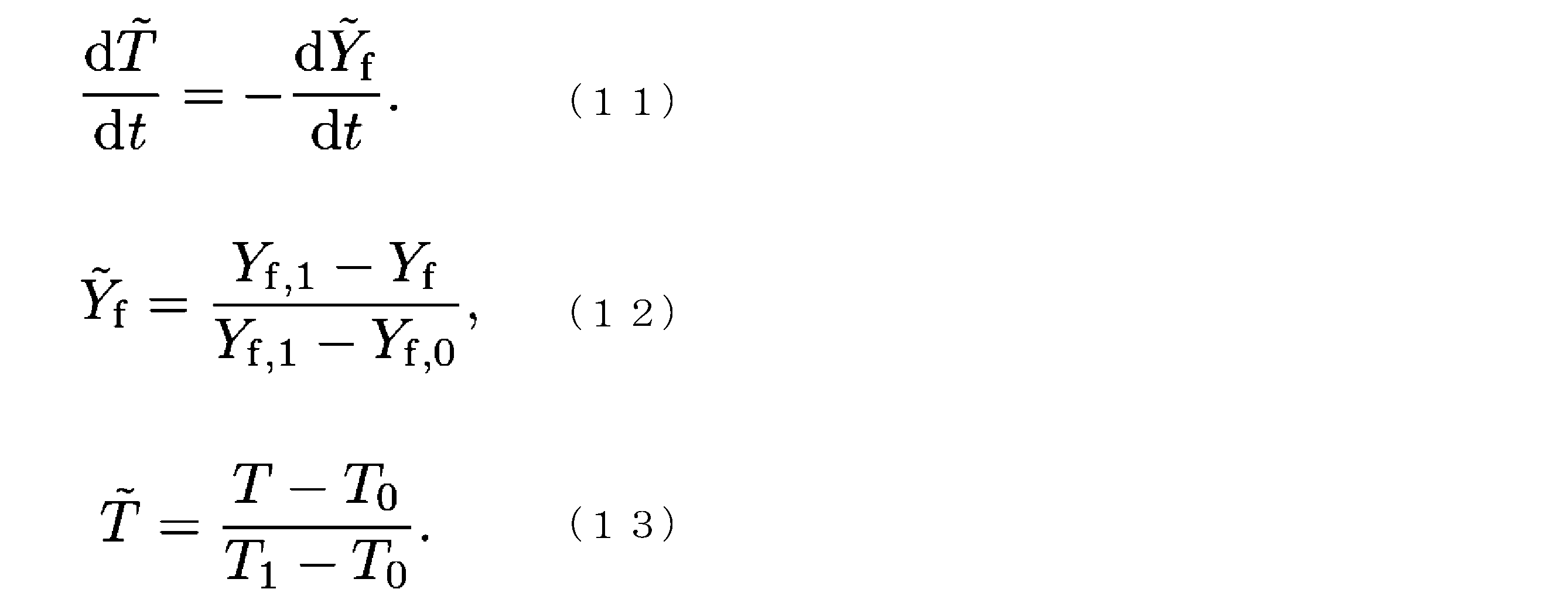
この結果、正規化温度が多変量関数fとして適用され、また正規化燃料質量分率が多変量関数gとして適用される場合、上式(8)は正規化温度の時間変化と正規化燃料質量分率の時間変化との関係を示す下式(11)のように表される。なお、正規化温度は、初期温度と最終温度とをパラメータとする下式(12)によって定義される。正規化燃料質量分率は、初期燃料質量分率と最終燃料質量分率とをパラメータとする下式(13)によって定義される。
また、正規化温度が多変量関数fとして適用され、多段階化学反応モデルの正規化進行変数が多変量関数gとして適用される場合には、上式(10)は正規化温度の時間変化と正規化進行変数の時間変化との関係を示す下式(14)のように表される。

ここで、Legendre変換を可能にするためには、正規化温度、正規化燃料質量分率及び正規化進行変数は凸関数でなければならず、また正規化温度の全微分は0より大きな値、正規化燃料質量分率の全微分は0より小さな値、また正規化進行変数の全微分は0より大きな値でなければならない。この制約条件は、常にシングルステップ化学反応モデルに当てはまり、通常ではマルチステップ化学反応モデルにも当てはまる。
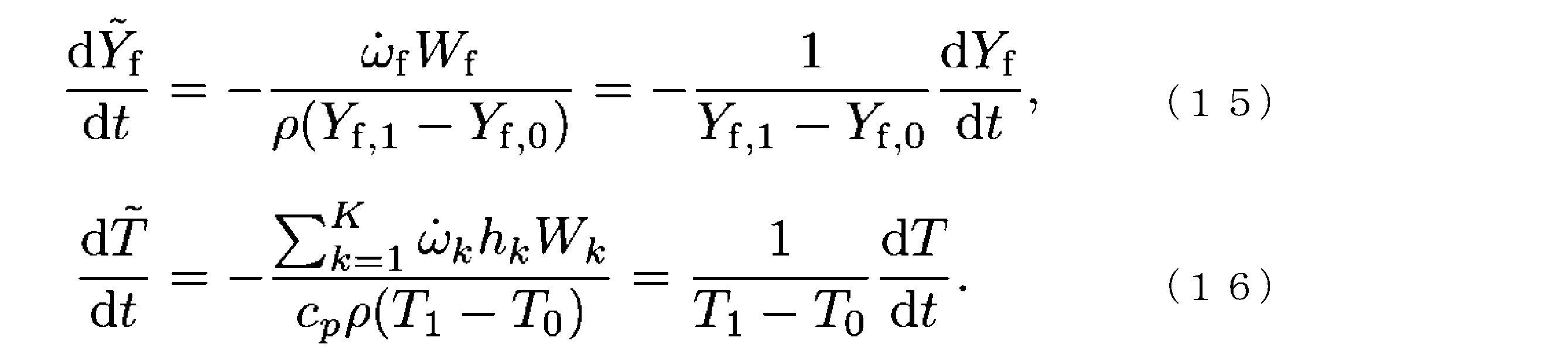
以下の説明では、説明を簡潔にするために正規化燃料質量分率を多変量関数g とし、正規化進行変数については符号を単に反転させる。正規化温度及び正規化燃料質量分率は、いずれかが決定されると残りの全ての変数が決定される。この前提に基づくと、式(1)、(2)は、正規化温度及び正規化燃料質量分率を用いた下式(15)、(16)のように書換えられる。
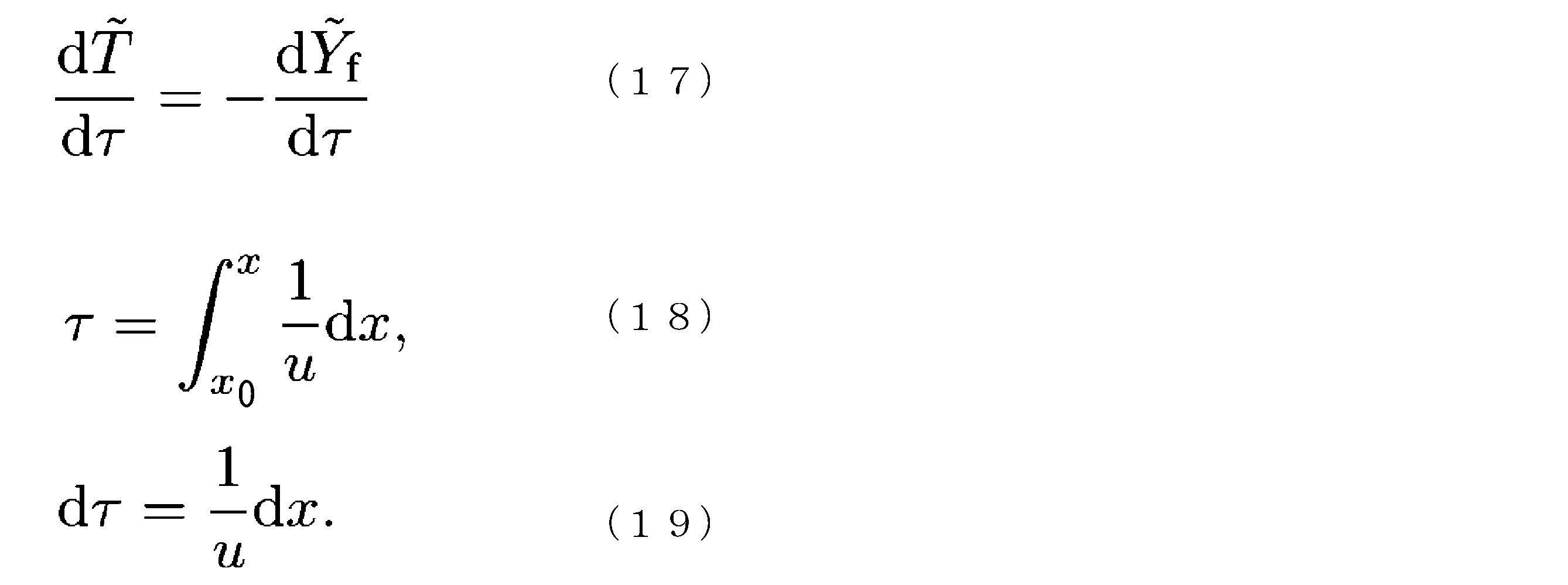
上述した式(11)に示されるように正規化温度と正規化燃料質量分率との関係は時間とは無関係である。したがって、式(11)は、滞留時間を用いることにより以下のように書き換えることができる。なお、滞留時間は、流体パーセルの速度と流体パーセルの位置からなる下式(18)によって定義されるものであり、流体小包が制御容積内で費やした総時間である。このような滞留時間の全微分は、下式(19)によって表される。
この式(19)を用いて式(15)、(16)を変形すると、下式(20)、(21)が得られる。また、式(17)は、パーセルの位置を用いることにより下式(22)のように書き換えることができる。さらに、この式(22)に基づいて式(23)に示す関係が成立する。

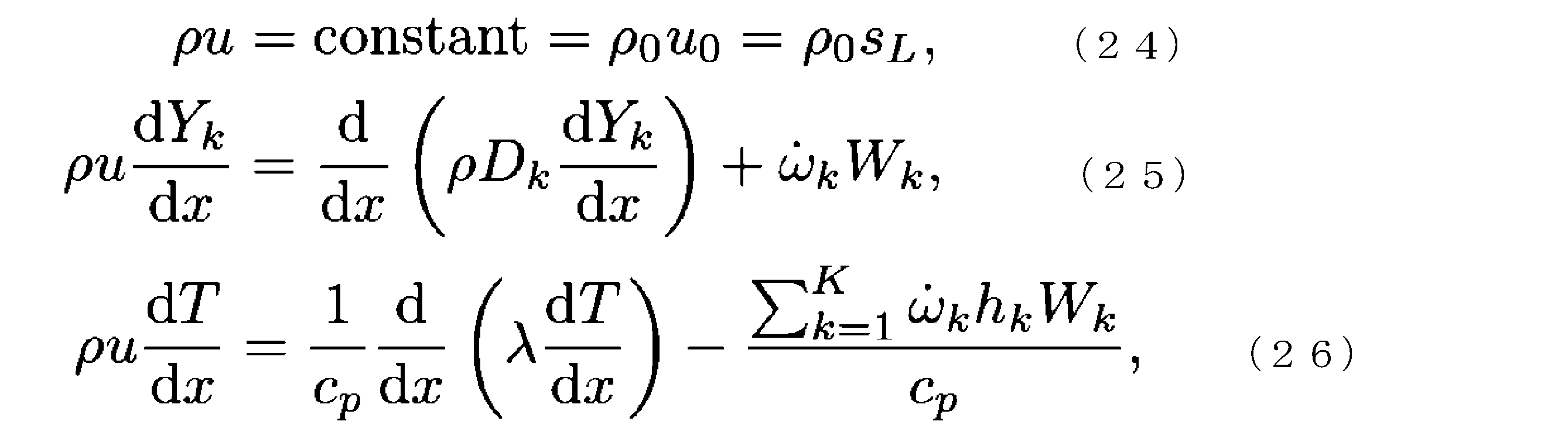
一方、1次元層流予混合火炎の保存方程式は、層流燃焼速度、k番目の種の混合拡散係数及び予混合気の熱伝導率からなる下式(24)~(26)によって与えられる。また、式(25)、(26)については、正規化温度及び正規化燃料質量分率を用いることにより下式(27)、(28)のように書き換えることができる。

式(22)、(23)を式(27)に代入することにより下式(29)が得られる。この式(29)を式(28)と比較するとわかるように、両式の違いは右辺の第1項のみである。

ここで、燃料のルイス数は下式(30)によって定義される。このルイス数に着目して式(28)、(29)を対比すると、両式はルイス数が1のとき等しくなることがわかる。すなわち、ルイス数が1の燃料について、ゼロ次元均質点火における正規化燃料質量分率及び正規化温度の時間的変化と1次元層流予混合火炎における空間的変化とは等価である。

図4は、水素、メタン、プロパン及びSNIaを燃料とした場合の予混合燃焼場におけるゼロ次元均質点火と1次元層流予混合火炎との関係を示す特性図である。SNIaは、Ia型超新星の核燃焼過程における炭素状態を示すものであり、非常に高いルイス数を有する。水素、メタン及びプロパンは、0.36、0-96及び1.95のルイス数を有する。
上述したように、ルイス数が1の燃料では、正規化燃料質量分率及び正規化温度によって示されるゼロ次元均質点火は、正規化燃料質量分率及び正規化温度によって示される1次元層流予混合火炎に等しい。また、ルイス数が1より小さい燃料は、1次元層流予混合火炎のプロファイルは、ルイス数が1の燃料(ゼロ次元均質点火)のプロファイルよりも下に凸状である。
一方、ルイス数が1より大きい燃料では、プロファイルは、ルイス数が1の燃料(ゼロ次元均質点火)のプロファイルより上に凸状であり、熱放出が高い火炎の高温領域(反応域)において、ルイス数が1の燃料(ゼロ次元均質点火)のプロファイルと交差する可能性がある。
これは、ルイス数が1より小さい燃料では、燃料の物質拡散係数が熱拡散係数よりも大きいために、燃料は加熱されるよりも優先的に拡散されることを示している。これに対して、ルイス数が1より大きい燃料では、燃料の熱拡散係数が物質拡散係数よりも大きいために、燃料は拡散されるよりも優先的に加熱される。
すなわち、ルイス数が1より大きい燃料において拡散されるよりも優先的に加熱されるという事項は、周知の技術的知見に合致する。温度と燃料質量分率との間の関係に対するルイス数の影響は、周知のBuckmasterの書籍において理論的に論じられており、図4の特性はその理論と一致している。
以下では、予混合燃焼場についてルイス数の影響が明らかな比較的低温の領域(予熱域)について検討する。なお、この検討では周知のソレット効果及びデュファー効果は無視できると仮定する。
図4の特性図において、所定の正規化温度における正規化燃料質量分率の消費は、燃焼反応の進行度合いとみなすことができる。すなわち、燃焼反応の進行度合いは、ルイス数が1より小さい燃料、ルイス数が1の燃料(ゼロ次元均質点火)、ルイス数が1より大きい燃料の順となる。
ルイス数が1より小さい燃料では、予熱域における自己着火(ノッキング)は発生しない。すなわち、予混合燃焼場における初期温度及び初期圧力が非常に高い場合であっても、1次元層流予混合火炎が存在し得る。これに対して、ルイス数が1より大きい燃料では、予熱域において自己着火(ノッキング)が発生する可能性がある。すなわち、予混合燃焼場における初期温度及び初期圧力によっては、1次元層流予混合火炎が存在し得ない。
例えば、燃料の1つであるガソリンは、ルイス数が1より大きいので、未燃ガス領域が火炎伝播を不可能にする温度及び圧力まで上昇するたびに自己着火(ノッキング)が発生することが予想される。すなわち、衝撃波の背後の火炎の特性時間が点火時と同程度の大きさであるため、火炎伝播から爆轟への遷移に影響を及ぼし得る。また、ガソリンでは、ルイス数が1を超えているので、火炎伝播ができない衝撃波の背後の領域が存在する可能性がある。
ゼロ次元均質点火及び1次元層流予混合火炎について、定圧及び定エンタルピーを条件として2種類の予混合気、つまりルイス数が1よりも小さい水素と空気との予混合気(水素燃料)及びルイス数が1よりも大きいn-ヘプタンと空気との予混合気(n-ヘプタン燃料)についてシミュレーション(1次元定常解析)を行った。
このシミュレーションでは、周知の多段階化学反応モデルを用いることによりゼロ次元均質点火及び1次元層流予混合火炎の1次元定常解析を行った。水素燃料の多段階化学反応モデルは、周知のUT-JAXAモデルであり、n-ヘプタン燃料の多段階化学反応モデルは、周知のReduced(簡略化された)SIPモデルである。
このシミュレーションでは、Legendre変換を維持するために、正規化温度及び正規化燃料質量分率は凸関数でなければならないので、計算領域をできるだけ短くしなければない。したがって、このシミュレーションでは、予混合燃焼場における未燃混合気、火炎の反応帯及び既燃焼気体を含む領域の大きさを、火炎が包含できる限界まで小さく設定する。なお、圧力及び当量比の数値条件(初期条件)は、例えば0.1MPa及び1.0の固定値である。
また、このシミュレーションでは、1次元層流予混合火炎の1次元定常解析を入口温度を300~3000Kまで100K刻みで変化させることによって行った。計算領域を減少させても計算の失敗が確認された場合には、入口温度を1K刻みで変化させることによって数値計算を実行した。
さらに、このシミュレーションでは、1次元層流予混合火炎の1次元定常解析を実施した後、1次元層流予混合火炎を計算し得る初期温度を使用して、ゼロ次元均質点火の数値計算を実施した。
このようなシミュレーション(1次元定常解析)は、本実施形態に係るノッキング予測方法に相当するものである。また、このシミュレーションは、本実施形態に係るノッキング予測装置の処理動作つまり記憶部1に予め記憶されたノッキング予測プログラムに基づいて演算部2が実行する情報処理である。
すなわち、本実施形態に係るノッキング予測方法では、最初に作業者が操作部3を操作することによってシミュレーションに必要な初期条件である温度、圧力、また水素燃料やn-ヘプタン燃料等の燃料種及び当量比を演算部2に入力する(ステップS1)。
演算部2は、ステップS1で入力された温度、圧力、燃料種及び当量比を用いるとともに入口温度(計算開始温度)を徐々に増加させて1次元定常解析(計算工程)を実行することにより、各燃料に関する火炎伝播限界温度を計算する(ステップS2)。
この1次元定常解析は、1次元予混合火炎構造を一意の解になる最も狭い計算領域になるまで火炎前方及び火炎後方を縮める収束計算である。すなわち、演算部2は、予混合燃焼場の1次元定常解析によって入口温度を徐々に増加させた場合の燃焼速度を順次計算するが、入口温度の設定値に応じて燃焼速度の計算が収束する場合と発散する場合とがある。
演算部2は、ある入口温度(計算開始温度)に関する対する燃焼速度の計算毎に収束判定(判定工程)を行う(ステップS3)。すなわち、ステップS3において、演算部2は、予混合燃焼場に火炎が存在できなくなるために燃焼速度が取得不能になったか否かを判定する。そして、演算部2は、ステップS3の判定結果が「収束」の場合、入口温度をさらに高く設定して燃焼速度の計算を実行する。
一方、演算部2は、ステップS3の判定結果が「発散」の場合には、前回の燃焼速度の計算に対応する入口温度を火炎伝播限界温度に設定する(ステップS4:発生条件取得工程)。すなわち、演算部2は、最後に取得された燃焼速度に対応する火炎伝播限界温度(入口温度)をノッキングの発生条件として取得する。そして、演算部2は、このようにして取得した火炎伝播限界温度をノッキングの発生条件として含むシミュレーション結果を出力部4に出力する。
図5は、このシミュレーション結果(1次元定常解析結果)つまり演算部2が出力部4に出力するノッキングの発生条件を含む計算結果の一例である。また。図6は、このようなシミュレーション結果に基づく予混合燃焼場の入口温度と燃焼速度との関係の一例である。
図6は、水素燃料の場合、燃焼速度は入口または初期温度の上昇と共に増加し、3000Kの入口温度でも伝播火炎が存在することを示している。また、この図6は、n-ヘプタン燃料の場合、燃焼速度は入口温度の上昇と共に増加するが、伝播火炎は1270Kを超えて存在することができないことを示している。
すなわち、本実施形態における理論的根拠は、正規化燃料質量分率と正規化温度との関係が空間-時間変換後のルイス数が1を有するゼロ次元均質点火及び1次元層流予混合火炎について等価であることが理論的に示すものであり、またルイス数が予混合燃焼場における火炎の爆発的遷移付近の予混合火炎構造の存在を決定づける物理量であることを理論的に示すものである。
ルイス数が1よりも小さい燃料の1次元層流予混合火炎について、予熱域において点火は起こらず、よって火炎構造は常に存在する。これに対して、ルイス数が1よりも大きい燃料の1次元層流予混合火炎については、予熱域で発火する可能性があり、温度がある閾値より高い場合には、火炎構造が存在しない。
換言すると、点火及び火炎の特徴的な時間が衝撃波の背後またはSIエンジンの爆発的遷移と同程度の大きさである場合、点火及び火炎についてはルイス数を介して論じられるべきである。
図7は、本実施形態の比較例である。すなわち、この比較例は、直接数値計算(DNS)による「Livengood-Wu積分」の計算結果である。なお、直接数値計算(DNS)が予混合燃焼場の燃焼状態を精度よくシミュレートするものであることは周知事項である。また、周知のように、「Livengood-Wu積分」は、時間積分値が1になった時に自着火(ノッキング)が発生するというものである。
しかしながら、この計算結果によれば、時間積分値が1になった時点(CFI)ではノッキングが発生していない。この計算結果によれば、ノッキングの発生は、時間積分値が1を超えた以降の時点(KO)である。したがって、「Livengood-Wu積分」に基づくノッキング予測方法は、精度の面で問題を含んでいる。
これに対して、本実施形態によれば、ルイス数が1の燃料についてゼロ次元均質点火における正規化燃料質量分率及び正規化温度の時間的変化と1次元層流予混合火炎における空間的変化とは等価であるという知見に基づくので、精度が「Livengood-Wu積分」より高い。すなわち、本実施形態によれば、精度をより向上させることが可能なノッキング予測方法及びノッキング予測装置を提供することが可能である。
また、本実施形態に係るノッキング予測方法及びノッキング予測装置は、ノッキングの予測精度が高いので燃焼装置、動力発生装置(内燃機関)、車両及び燃料等の設計に対して多大な恩恵をもたらすものである。
例えば燃焼装置の設計分野では、ノッキングによる装置の破損を回避するために熱エネルギーの回収率をある程度犠牲にせざるを得ない。また、動力発生装置(内燃機関)及び車両の設計分野では、ノッキングによる装置の破損を回避するために出力をある程度犠牲にせざるを得ない。
このような燃焼装置、動力発生装置(内燃機関)及び車両等の設計分野では、ノッキングの予測精度が向上することによって熱エネルギーの回収率及び出力の犠牲分を縮小することが可能となる。すなわち、本実施形態に係るノッキング予測方法及びノッキング予測装置によれば、燃焼装置、動力発生装置及び車両等の設計で考慮されるべきノッキングに対する余裕度をこれまでよりも狭く見積もることが可能となる。
したがって、本実施形態に係るノッキング予測方法及びノッキング予測装置で推定されたノッキングの発生条件に基づいて燃焼装置、動力発生装置(内燃機関)及び車両等を設計することにより、燃焼装置、動力発生装置(内燃機関)及び車両等の性能を向上させる設計を実現することが可能である。
このような本実施形態に係るノッキング予測方法及びノッキング予測装置によれば、燃焼装置、動力発生装置及び車両等の性能を高めることが可能な燃焼装置の設計方法、動力発生装置の設計方法及び車両の設計方法を提供することが可能である。
なお、このような燃焼装置の設計方法、動力発生装置の設計方法及び車両の設計方法では、ルイス数が1より大きい燃料を予測対象(計算対象)とすることが考えられる。すなわち、図4の特性図に示すように、ルイス数が1より小さい燃料はノッキングが発生する虞がないので、予測対象(計算対象)から除外してもよい。
さらには、本実施形態に係るノッキング予測方法及びノッキング予測装置によれば、燃料の種別毎にノッキングを精度高く予測することが可能なので、ノッキングを回避するような燃料の設計に寄与することができる。したがって、本実施形態に係るノッキング予測方法及びノッキング予測装置によれば、燃料の性能を高めることが可能な燃料の設定方法を提供することが可能である。
ここで、本実施形態では、ノッキング予測の評価対象燃料の一例として、「Hydrogen(水素)」や「n-Heptane(へプタン)」等、単成分の燃料(純物質燃料)について本開示の有効性を説明した。しかしながら、本開示は、メタンやプロパン等、他の純物質燃料についても適用可能である。
また、本実施形態は、評価対象燃料に関する1次元定常解析(シミュレーション)に基づいて評価対象燃料のノッキングを予測するものである。したがって、本開示は、1次元定常解析(シミュレーション)が可能なものであれば、純物質燃料に限定されず、複数の成分が混合する多物質燃料に適用することが可能である。
周知のように、燃料の1次元定常解析(シミュレーション)を実行するためには、燃料の燃焼現象に関与する化学種と当該化学種に基づく素反応とを特定する必要がある。現時点で化学種と素反応とが特定されている燃料には、例えばSIP(革新的燃焼技術)サロゲート化学反応機構において定義された5種までの成分からなるサロゲート燃料がある。SIPサロゲート化学反応機構では、6種以上の成分からなる多物質燃料については化学種と素反応とが特定されていない状況である。
しかしながら、6種以上の成分からなる多物質燃料についても、今後、化学種及び素反応の特定が十分に期待される。すなわち、6種以上の成分からなる多物質燃料についても、化学種と素反応とが特定されて1次元定常解析(シミュレーション)が可能となることが十分に想定され、本開示に基くノッキング予測が十分に可能になると推測される。
本開示は、ノッキング予測方法、ノッキング予測装置、燃焼装置の設計方法、動力発生装置の設計方法、車両の設計方法及び燃料の設計方法に利用することができる。
A ノッキング予測装置
1 記憶部
2 演算部
3 操作部
4 出力部
1 記憶部
2 演算部
3 操作部
4 出力部
Claims (12)
- 予混合燃焼場で発生し得るノッキングを予測するノッキング予測方法であって、
前記予混合燃焼場において、ゼロ次元均質点火における正規化燃料質量分率及び正規化温度の時間的変化と1次元層流予混合火炎における空間的変化とが等価であるという知見に基づいてノッキングを予測するノッキング予測方法。 - 予混合燃焼場で発生し得るノッキングを予測するノッキング予測方法であって、
正規化温度と燃料の正規化燃料質量分率との関係を示す特性図において、ルイス数が1より大きい燃料を前記ノッキングの可能性があるとし、前記ルイス数が1より小さい燃料を前記ノッキングの可能性がないとするノッキング予測方法。 - 予混合燃焼場で発生し得るノッキングを予測するノッキング予測方法であって、
前記予混合燃焼場の1次元定常解析によって入口温度を徐々に増加させた場合の燃焼速度を順次計算する計算工程と、
前記予混合燃焼場に火炎が存在できなくなるために前記燃焼速度が取得不能になったか否かを判定する判定工程と、
最後に取得された前記燃焼速度に対応する前記入口温度を前記ノッキングの発生条件として取得する発生条件取得工程と
を有するノッキング予測方法。 - 前記計算工程では、前記予混合燃焼場における未燃混合気、火炎の反応帯及び既燃焼気体を含む領域の大きさを、火炎が包含できる限界まで小さくして計算する請求項3に記載のノッキング予測方法。
- ルイス数が1より大きい燃料を予測対象とする請求項3又は4に記載のノッキング予測方法。
- 予混合燃焼場で発生し得るノッキングを予測するノッキング予測装置であって、
前記予混合燃焼場の1次元定常解析によって入口温度を徐々に増加させた場合の燃焼速度を順次計算する計算手段と、
前記予混合燃焼場に火炎が存在できなくなるために前記燃焼速度が取得不能になったか否かを判定する判定手段と、
最後に取得された前記燃焼速度に対応する前記入口温度を前記ノッキングの発生条件として取得する発生条件取得手段と
を備えるノッキング予測装置。 - 前記計算手段は、前記予混合燃焼場における未燃混合気、火炎の反応帯及び既燃焼気体を含む領域の大きさを、火炎が包含できる限界まで小さくして計算する請求項6に記載のノッキング予測装置。
- 前記計算手段は、ルイス数が1より大きい燃料を計算対象とする請求項6又は7に記載のノッキング予測装置。
- 請求項3又は4に記載のノッキング予測方法に基づいて推定されたノッキングの発生条件に基づいて燃焼装置を設計する燃焼装置の設計方法。
- 請求項3又は4に記載のノッキング予測方法に基づいて推定されたノッキングの発生条件に基づいて動力発生装置を設計する動力発生装置の設計方法。
- 請求項3又は4に記載のノッキング予測方法に基づいて推定されたノッキングの発生条件に基づいて車両を設計する車両の設計方法。
- 請求項3又は4に記載のノッキング予測方法に基づいて推定されたノッキングの発生条件に基づいて燃料を設計する燃料の設計方法。
Priority Applications (4)
| Application Number | Priority Date | Filing Date | Title |
|---|---|---|---|
| PCT/JP2023/020935 WO2024252510A1 (ja) | 2023-06-06 | 2023-06-06 | ノッキング予測方法、ノッキング予測装置、燃焼装置の設計方法、動力発生装置の設計方法、車両の設計方法及び燃料の設計方法 |
| PCT/JP2024/020120 WO2024253047A1 (ja) | 2023-06-06 | 2024-05-31 | ノッキング予測方法、ノッキング予測装置、エンジン制御装置、車両、燃焼装置の設計方法、動力発生装置の設計方法、車両の設計方法及び燃料の設計方法 |
| CN202480037229.4A CN121241194A (zh) | 2023-06-06 | 2024-05-31 | 爆震预测方法、爆震预测装置、发动机控制装置、车辆、燃烧装置的设计方法、动力产生装置的设计方法、车辆的设计方法以及燃料的设计方法 |
| JP2025526095A JPWO2024253047A1 (ja) | 2023-06-06 | 2024-05-31 |
Applications Claiming Priority (1)
| Application Number | Priority Date | Filing Date | Title |
|---|---|---|---|
| PCT/JP2023/020935 WO2024252510A1 (ja) | 2023-06-06 | 2023-06-06 | ノッキング予測方法、ノッキング予測装置、燃焼装置の設計方法、動力発生装置の設計方法、車両の設計方法及び燃料の設計方法 |
Publications (1)
| Publication Number | Publication Date |
|---|---|
| WO2024252510A1 true WO2024252510A1 (ja) | 2024-12-12 |
Family
ID=93795329
Family Applications (2)
| Application Number | Title | Priority Date | Filing Date |
|---|---|---|---|
| PCT/JP2023/020935 Ceased WO2024252510A1 (ja) | 2023-06-06 | 2023-06-06 | ノッキング予測方法、ノッキング予測装置、燃焼装置の設計方法、動力発生装置の設計方法、車両の設計方法及び燃料の設計方法 |
| PCT/JP2024/020120 Ceased WO2024253047A1 (ja) | 2023-06-06 | 2024-05-31 | ノッキング予測方法、ノッキング予測装置、エンジン制御装置、車両、燃焼装置の設計方法、動力発生装置の設計方法、車両の設計方法及び燃料の設計方法 |
Family Applications After (1)
| Application Number | Title | Priority Date | Filing Date |
|---|---|---|---|
| PCT/JP2024/020120 Ceased WO2024253047A1 (ja) | 2023-06-06 | 2024-05-31 | ノッキング予測方法、ノッキング予測装置、エンジン制御装置、車両、燃焼装置の設計方法、動力発生装置の設計方法、車両の設計方法及び燃料の設計方法 |
Country Status (3)
| Country | Link |
|---|---|
| JP (1) | JPWO2024253047A1 (ja) |
| CN (1) | CN121241194A (ja) |
| WO (2) | WO2024252510A1 (ja) |
Cited By (1)
| Publication number | Priority date | Publication date | Assignee | Title |
|---|---|---|---|---|
| CN119647344A (zh) * | 2024-12-17 | 2025-03-18 | 中国科学技术大学 | 一种基于进化算法的简化化学反应动力学模型构建方法 |
Citations (2)
| Publication number | Priority date | Publication date | Assignee | Title |
|---|---|---|---|---|
| JP2008031916A (ja) * | 2006-07-28 | 2008-02-14 | Toyota Motor Corp | 内燃機関の自着火予測装置 |
| CN112345259A (zh) * | 2020-10-20 | 2021-02-09 | 同济大学 | 一种基于爆震自识别的汽油机虚拟标定方法 |
Family Cites Families (3)
| Publication number | Priority date | Publication date | Assignee | Title |
|---|---|---|---|---|
| JP4376799B2 (ja) * | 2005-01-19 | 2009-12-02 | 株式会社日立製作所 | 内燃機関の点火時期制御装置 |
| JP2007332934A (ja) * | 2006-06-19 | 2007-12-27 | Toyota Central Res & Dev Lab Inc | 火花点火式内燃機関の最適点火時期設定方法及び火花点火式内燃機関の最適点火時期設定装置 |
| CN113673089B (zh) * | 2021-07-23 | 2024-04-19 | 东风汽车集团股份有限公司 | 一种发动机性能确定方法、装置以及电子设备 |
-
2023
- 2023-06-06 WO PCT/JP2023/020935 patent/WO2024252510A1/ja not_active Ceased
-
2024
- 2024-05-31 JP JP2025526095A patent/JPWO2024253047A1/ja active Pending
- 2024-05-31 CN CN202480037229.4A patent/CN121241194A/zh active Pending
- 2024-05-31 WO PCT/JP2024/020120 patent/WO2024253047A1/ja not_active Ceased
Patent Citations (2)
| Publication number | Priority date | Publication date | Assignee | Title |
|---|---|---|---|---|
| JP2008031916A (ja) * | 2006-07-28 | 2008-02-14 | Toyota Motor Corp | 内燃機関の自着火予測装置 |
| CN112345259A (zh) * | 2020-10-20 | 2021-02-09 | 同济大学 | 一种基于爆震自识别的汽油机虚拟标定方法 |
Non-Patent Citations (2)
| Title |
|---|
| LAPALME DENIS; LEMAIRE ROMAIN; SEERS PATRICE: "Assessment of the method for calculating the Lewis number of H2/CO/CH4mixtures and comparison with experimental results", INTERNATIONAL JOURNAL OF HYDROGEN ENERGY, ELSEVIER, AMSTERDAM, NL, vol. 42, no. 12, 11 March 2017 (2017-03-11), AMSTERDAM, NL, pages 8314 - 8328, XP085008031, ISSN: 0360-3199, DOI: 10.1016/j.ijhydene.2017.01.099 * |
| YOUHI MORII; KAORU MARUTA: "What connects ignition and deflagration? -- On explosive transition of deflagration", ARXIV.ORG, CORNELL UNIVERSITY LIBRARY, 201 OLIN LIBRARY CORNELL UNIVERSITY ITHACA, NY 14853, 18 January 2023 (2023-01-18), 201 Olin Library Cornell University Ithaca, NY 14853, XP091415012 * |
Cited By (2)
| Publication number | Priority date | Publication date | Assignee | Title |
|---|---|---|---|---|
| CN119647344A (zh) * | 2024-12-17 | 2025-03-18 | 中国科学技术大学 | 一种基于进化算法的简化化学反应动力学模型构建方法 |
| CN119647344B (zh) * | 2024-12-17 | 2025-09-02 | 中国科学技术大学 | 一种基于进化算法的简化化学反应动力学模型构建方法 |
Also Published As
| Publication number | Publication date |
|---|---|
| WO2024253047A1 (ja) | 2024-12-12 |
| JPWO2024253047A1 (ja) | 2024-12-12 |
| CN121241194A (zh) | 2025-12-30 |
Similar Documents
| Publication | Publication Date | Title |
|---|---|---|
| Yıldız et al. | Zero-dimensional single zone engine modeling of an SI engine fuelled with methane and methane-hydrogen blend using single and double Wiebe Function: A comparative study | |
| Pan et al. | The role of low temperature chemistry in combustion mode development under elevated pressures | |
| Liang et al. | The use of dynamic adaptive chemistry in combustion simulation of gasoline surrogate fuels | |
| Zhang et al. | Explosion behavior of methane–dimethyl ether/air mixtures | |
| Abbe et al. | A study on the 0D phenomenological model for diesel engine simulation: Application to combustion of Neem methyl esther biodiesel | |
| Pirouzpanah et al. | Comparison of thermal and radical effects of EGR gases on combustion process in dual fuel engines at part loads | |
| Almutairi et al. | Modelling of hydrogen-blended dual-fuel combustion using flamelet-generated manifold and preferential diffusion effects | |
| Wu et al. | A skeletal chemical kinetic mechanism for gasoline and gasoline/ethanol blend surrogates for engine CFD applications | |
| Salehi et al. | Conditional moment closure modelling for HCCI with temperature inhomogeneities | |
| Flynn et al. | Minimum engine flame temperature impacts on diesel and spark-ignition engine NOx production | |
| Qu et al. | Effects of partial fuel cracking on the forced ignition and spherical flame propagation in ammonia/air mixtures | |
| Martz et al. | A computational study and correlation of premixed isooctane–air laminar reaction front properties under spark ignited and spark assisted compression ignition engine conditions | |
| Farhan et al. | Impact of combustion chamber wall temperature on knock in HCNG-fueled SI engines: a regression-based knock intensity correlation | |
| Hann et al. | A Quasi-Dimensional SI Burn Rate Model for Predicting the Effects of Changing Fuel, Air-Fuel-Ratio, EGR and Water Injection | |
| Kakoee et al. | Development of a reduced chemical kinetic mechanism for biodiesel/natural gas mixture | |
| Salehi et al. | A comparative study of conditional moment closure modelling for ignition of iso-octane and n-heptane in thermally stratified mixtures | |
| WO2024253047A1 (ja) | ノッキング予測方法、ノッキング予測装置、エンジン制御装置、車両、燃焼装置の設計方法、動力発生装置の設計方法、車両の設計方法及び燃料の設計方法 | |
| Liu et al. | A zero-dimensional combustion model with reduced kinetics for SI engine knock simulation | |
| Chu et al. | An extended G-equation formulation for simulating thermodiffusively unstable hydrogen flames | |
| Hong et al. | Modeling of diesel combustion, soot and NO emissions based on a modified eddy dissipation concept | |
| Chin et al. | Development and validation of a reduced DME mechanism applicable to various combustion modes in internal combustion engines | |
| Tougri et al. | Knocking prediction in internal combustion engines via thermodynamic modeling: preliminary results and comparison with experimental data | |
| Bunting et al. | Performance evaluation and optimization of diesel fuel properties and chemistry in an HCCI engine | |
| Yusaf | A quasi one-dimensional simulation of a 4 stroke spark ignition hydrogen fuelled engine | |
| Nishii et al. | Study on automatic adaptation for Control-oriented model of advanced diesel engine |
Legal Events
| Date | Code | Title | Description |
|---|---|---|---|
| 121 | Ep: the epo has been informed by wipo that ep was designated in this application |
Ref document number: 23940616 Country of ref document: EP Kind code of ref document: A1 |
|
| NENP | Non-entry into the national phase |
Ref country code: DE |
|
| 122 | Ep: pct application non-entry in european phase |
Ref document number: 23940616 Country of ref document: EP Kind code of ref document: A1 |