WO2024251856A1 - Photocleavable lipid oligonucleotides and their use - Google Patents
Photocleavable lipid oligonucleotides and their use Download PDFInfo
- Publication number
- WO2024251856A1 WO2024251856A1 PCT/EP2024/065552 EP2024065552W WO2024251856A1 WO 2024251856 A1 WO2024251856 A1 WO 2024251856A1 EP 2024065552 W EP2024065552 W EP 2024065552W WO 2024251856 A1 WO2024251856 A1 WO 2024251856A1
- Authority
- WO
- WIPO (PCT)
- Prior art keywords
- compound
- tba
- pharmaceutically acceptable
- compound according
- acceptable salt
- Prior art date
- Legal status (The legal status is an assumption and is not a legal conclusion. Google has not performed a legal analysis and makes no representation as to the accuracy of the status listed.)
- Ceased
Links
Classifications
-
- C—CHEMISTRY; METALLURGY
- C07—ORGANIC CHEMISTRY
- C07H—SUGARS; DERIVATIVES THEREOF; NUCLEOSIDES; NUCLEOTIDES; NUCLEIC ACIDS
- C07H21/00—Compounds containing two or more mononucleotide units having separate phosphate or polyphosphate groups linked by saccharide radicals of nucleoside groups, e.g. nucleic acids
- C07H21/04—Compounds containing two or more mononucleotide units having separate phosphate or polyphosphate groups linked by saccharide radicals of nucleoside groups, e.g. nucleic acids with deoxyribosyl as saccharide radical
-
- C—CHEMISTRY; METALLURGY
- C12—BIOCHEMISTRY; BEER; SPIRITS; WINE; VINEGAR; MICROBIOLOGY; ENZYMOLOGY; MUTATION OR GENETIC ENGINEERING
- C12N—MICROORGANISMS OR ENZYMES; COMPOSITIONS THEREOF; PROPAGATING, PRESERVING, OR MAINTAINING MICROORGANISMS; MUTATION OR GENETIC ENGINEERING; CULTURE MEDIA
- C12N15/00—Mutation or genetic engineering; DNA or RNA concerning genetic engineering, vectors, e.g. plasmids, or their isolation, preparation or purification; Use of hosts therefor
- C12N15/09—Recombinant DNA-technology
- C12N15/11—DNA or RNA fragments; Modified forms thereof; Non-coding nucleic acids having a biological activity
- C12N15/115—Aptamers, i.e. nucleic acids binding a target molecule specifically and with high affinity without hybridising therewith ; Nucleic acids binding to non-nucleic acids, e.g. aptamers
-
- C—CHEMISTRY; METALLURGY
- C12—BIOCHEMISTRY; BEER; SPIRITS; WINE; VINEGAR; MICROBIOLOGY; ENZYMOLOGY; MUTATION OR GENETIC ENGINEERING
- C12N—MICROORGANISMS OR ENZYMES; COMPOSITIONS THEREOF; PROPAGATING, PRESERVING, OR MAINTAINING MICROORGANISMS; MUTATION OR GENETIC ENGINEERING; CULTURE MEDIA
- C12N2310/00—Structure or type of the nucleic acid
- C12N2310/10—Type of nucleic acid
- C12N2310/16—Aptamers
-
- C—CHEMISTRY; METALLURGY
- C12—BIOCHEMISTRY; BEER; SPIRITS; WINE; VINEGAR; MICROBIOLOGY; ENZYMOLOGY; MUTATION OR GENETIC ENGINEERING
- C12N—MICROORGANISMS OR ENZYMES; COMPOSITIONS THEREOF; PROPAGATING, PRESERVING, OR MAINTAINING MICROORGANISMS; MUTATION OR GENETIC ENGINEERING; CULTURE MEDIA
- C12N2310/00—Structure or type of the nucleic acid
- C12N2310/30—Chemical structure
- C12N2310/35—Nature of the modification
- C12N2310/351—Conjugate
Definitions
- the present invention relates to modified lipid oligonucleotides comprising a photocleavable linker and their use in medical treatments, in particular treatments involving antiproliferative activity against cancer cells, anticoagulant activity, antiviral activity or activity against heart failure.
- nucleic acids can adopt multiple three-dimensional supramolecular structures.
- the guanine-rich regions which are known for their ability to stabilize G-quadruplex (G4) in the presence of cations, are involved in the regulation of key cellular processes, including the replication, transcription and translation (I.
- G4s display many different secondary structures and topologies made of one and up to four DNA (or RNA) strands assembled with different strand directions, loop topologies, length etc (S. Burge et al., Nucleic Acids Res. 2006, 34, 5402–5415). Cations which are found sandwiched between G-tetrads are necessary to stabilize the G4 structures.
- the coordination cage that is formed upon folding preferentially binds K + for geometrical as well as thermodynamical reasons. Importantly, the change in the nature of the cation is the primary cause of change in the conformation of G4-prone sequences (E.
- G4-forming sequences can usually fold into an equilibrated mixture of different G4 self- assemblies and/or multimers, a property known as polymorphism (A. M. Varizhuk et al., Nucleic Acids Res. 2018, 46, 8978–8992; M. M. Dailey et al., Nucleic Acids Res. 2010, 38, 4877–4888). If not controlled, the polymorphic nature of G4 self-assemblies clearly impedes the development of G4-based nanotechnologies wherein the extraordinary over the supramolecular folding of the G4 is crucial.
- G4 agents are active under a single topology (H. Weisshoff et al., Heliyon 2020, 6, e05421).
- a well-known example is the thrombin-binding aptamer (TBA), which interacts strongly with its target protein only under its antiparallel conformation (I. Russo Krauss et al., Nucleic Acids Res. 2012, 40, 8119–8128; A. Avino et al., Curr. Pharm. Des.2012, 18, 2036–2047; C. Riccardi et al., Pharmacol. Ther.2021, 217, 107649).
- TAA thrombin-binding aptamer
- the TBA aptamer has been shown to fold unequivocally into an active antiparallel conformation, in part because of its short (15-mer) oligonucleotide sequence.
- the control of naturally occurring biological processes that capitalize on a designated G4 fold are mediated mainly through the recruitment of chaperone-like proteins (A. Pipier et al., Sci. Rep. 2021, 11, 13469).
- Subtle chemical alterations of oligonucleotide sequences have been shown to elicit drastic G4 conformational changes (A. Maity et al., Nucleic Acids Res. 2020, 48, 3315–3327).
- These compounds have the advantage of spontaneously self-assembling and switching from the conventional antiparallel aptameric fold at low ionic strength to the parallel, inactive, conformation of the oligonucleotide strands, in particular TBA oligonucleotide strands, in physiologically relevant conditions.
- the latter parallel conformation can be readily and chemo-selectively switched back to the anti-parallel native aptamer conformation upon light irradiation.
- modified lipid oligonucleotides are thus of particular interest to improve the pharmacodynamical profile of the unmodified oligonucleotides.
- the invention therefore relates to a compound of Formula I, compounds of general Formula II, or their pharmaceutically acceptable salts thereof, as well as methods of use of such compounds of Formula II or compositions comprising such compounds of Formula II in medical treatments, in particular treatments involving antiproliferative activity against cancer cells, anticoagulant activity, antiviral activity or activity against heart failure.
- the invention provides a compound of Formula I: or a pharmaceutically acceptable salt thereof.
- the invention also relates to a compound of Formula II: or a pharmaceutically acceptable salt thereof, wherein is an oligonucleotide; A is a saturated or unsaturated, linear or branched, hydrocarbon chain comprising from 1 to 22 carbon atoms or wherein B is an optionally substituted nucleobase, selected from the group consisting of purine nucleobases, pyrimidine nucleobases, and non-natural monocyclic or bicyclic heterocyclic nucleobases wherein each cycle comprises from 4 to 7 atoms; L 1 and L 2 are independently selected from H and a saturated or unsaturated, linear or branched, hydrocarbon chain comprising from 1 to 22 carbon atoms; with the proviso that L 1 and L 2 are not both H.
- A is a saturated or unsaturated, linear or branched, hydrocarbon chain comprising from 1 to 22 carbon atoms or wherein B is an optionally substituted nucleobase, selected from the group consisting of purine nucleobases, pyr
- the present invention provides a pharmaceutical composition
- a pharmaceutical composition comprising a compound of Formula II, or a pharmaceutically acceptable salt thereof, and at least one pharmaceutically acceptable carrier, diluent, excipient, and/or adjuvant.
- the invention also relates to the compound of Formula II, or a pharmaceutically acceptable salt thereof, for use in the treatment of cancer.
- the invention also relates to the compound of Formula II, or a pharmaceutically acceptable salt thereof, for use in the treatment of viral infections.
- the invention also relates to the compound of Formula II, or a pharmaceutically acceptable salt thereof, for use as an anticoagulant.
- the invention also relates to the compound of Formula II, or a pharmaceutically acceptable salt thereof, for use in the treatment of heart failure.
- the present invention relates to a compound of Formula I: or a pharmaceutically acceptable salt thereof.
- the compound of Formula I can be prepared by different ways with reactions known by the person skilled in the art.
- the compound of formula I may be prepared by the following successive steps: i. reaction of 1-(5-hydroxy-2-nitrophenyl)ethan-1-one with 2-bromoethanol in the presence of a base, in particular potassium carbonate; ii. reaction of the product obtained in step i) with dimethoxytrityl chloride; iii. reduction of the product obtained in step ii), in particular with sodium borohydride; iv.
- the invention also relates to compounds of Formula II: or a pharmaceutically acceptable salt thereof, wherein is an oligonucleotide; A is a saturated or unsaturated, linear or branched, hydrocarbon chain comprising from 1 to 22 carbon atoms or wherein B is an optionally substituted nucleobase, selected from the group consisting of purine nucleobases, pyrimidine nucleobases, and non-natural monocyclic or bicyclic heterocyclic nucleobases wherein each cycle comprises from 4 to 7 atoms; L 1 and L 2 are independently selected from H and a saturated or unsaturated, linear or branched, hydrocarbon chain comprising from 1 to 22 carbon atoms; with the proviso that L 1 and L 2 are not both H.
- oligonucleotide refers to a nucleic acid sequence, 3’-5’ or 5’-3’ oriented, in particular 5’-3’ oriented, which may be single- or double-stranded, in particular single-stranded.
- the oligonucleotide used in the context of the invention may in particular be DNA or RNA, more particularly DNA.
- the oligonucleotide used in the context of the invention may be further modified, preferably chemically modified, in order to increase the stability and/or therapeutic efficiency of the oligonucleotides in vivo.
- the oligonucleotide used in the context of the invention may comprise modified nucleotides.
- Chemical modifications may occur at three different sites: (i) at phosphate groups, (ii) on the sugar moiety, and/or (iii) on the entire backbone structure of the oligonucleotide.
- the oligonucleotides may be employed as phosphorothioate derivatives (replacement of a non-bridging phosphoryl oxygen atom with a sulfur atom) which have increased resistance to nuclease digestion.
- 2’-Methoxyethyl (MOE) modification (such as the modified backbone commercialized by ISIS Pharmaceuticals) is also effective.
- the oligonucleotide used in the context of the invention may comprise completely, partially or in combination, modified nucleotides which are derivatives with substitutions at the 2’ position of the sugar, in particular with the following chemical modifications: O-methyl group (2’-O-Me) substitution, 2-methoxyethyl group (2’- O-MOE) substitution, fluoro group (2’-fluoro) substitution, chloro group (2’-Cl) substitution, bromo group (2’-Br) substitution, cyanide group (2'-CN) substitution, trifluoromethyl group (2’-CF 3 ) substitution, OCF 3 group (2’-OCF 3 ) substitution, OCN group (2’-OCN) substitution, O-alkyl group (2’-O-alkyl) substitution, S-alkyl group (2’-S-alkyl) substitution, N-alkyl group (2’-N-akyl) substitution, O-alkenyl group (2’-O-alkenyl) substitution, S-alkeny
- the oligonucleotide used in the context of the invention may comprise completely or partially modified nucleotides wherein the ribose moiety is used to produce locked nucleic acid (LNA), in which a covalent bridge is formed between the 2’ oxygen and the 4’ carbon of the ribose, fixing it in the 3’-endo configuration.
- LNA locked nucleic acid
- the oligonucleotide used in the context of the invention may comprise modified nucleotides selected from the group consisting of LNA, 2’-OMe analogs, 2’-phosphorothioate analogs, 2’-fluoro analogs, 2’-Cl analogs, 2’-Br analogs, 2’-CN analogs, 2’-CF 3 analogs, 2’-OCF3 analogs, 2’-OCN analogs, 2’-O-alkyl analogs, 2’-S-alkyl analogs, 2’-N-alkyl analogs, 2’-O-alkenyl analogs, 2’-S-alkenyl analogs, 2’-N-alkenyl analogs, 2’-SOCH3 analogs, 2’-SO2CH3 analogs, 2’-ONO2 analogs, 2’-NO2 analogs, 2’-N3 analogs, 2’-NH2 analogs and combinations thereof.
- the modified nucleotides are selected from the group consisting of LNA, 2’-OMe analogs, 2’- phosphorothioate analogs and 2’-fluoro analogs.
- the oligonucleotide used in the context of the invention may typically have from 1 to 100 nucleotides, in particular 5 to 50 nucleotides, for example 12 to 35 nucleotides, from 12 to 30, from 12 to 25, from 12 to 22, from 12 to 20, from 12 to 18, or about 15 nucleotides.
- the oligonucleotide used in the context of the invention may consist of the thrombin-binding aptamer (TBA) having the sequence of SEQ ID NO: 1 (5’- GGTTGGTGTGGTTGG-3’).
- TAA thrombin-binding aptamer
- the oligonucleotide used in the context of the invention may consist of the sequence of SEQ ID NO: 1 (5’-GGTTGGTGTGGTTGG-3’).
- Particular compounds of Formula II, or pharmaceutically acceptable salts or solvates thereof are those wherein one or more of and A are defined as follows: is an oligonucleotide; in particular is an oligonucleotide comprising, in particular consisting of, a sequence from 1 to 100 nucleotides, particularly from 5 to 50 nucleotides, for example 12 to 35 nucleotides, from 12 to 30, from 12 to 25, from 12 to 22, from 12 to 20, from 12 to 18; more particularly is an oligonucleotide consisting of the sequence of SEQ ID NO: 1 (5’-GGTTGGTGTGGTTGG-3’); in a particular example, is a G-quadruplex forming sequence; A is a saturated or unsaturated, linear or branched, hydrocarbon chain comprising from 1 to wherein B is an optionally substituted nucleobase, selected from the group consisting of purine nucleobases, pyrimidine nucleobases, and non-natural monocyclic or bicyclic heterocyclic nu
- the compounds of Formula II are those wherein A wherein B, L 1 and L 2 are as defined above.
- the compounds of Formula II are those wherein A is C6-C20-alkyl; in particular A is C10-C20 alkyl; more particularly A is C12-C18-alkyl; still more particularly A is n-octadecyl.
- the compounds of Formula II are those wherein A is and L 1 and L 2 are C6-C20-alkyl; in particular L 1 and L 2 are C10-C20 alkyl; more particularly L 1 and L 2 are C12-C18-alkyl; still more particularly L 1 and L 2 are n-pentadecyl.
- the compounds of Formula II are those wherein A is and B is uracil. In one embodiment, the compounds of Formula II are those wherein A and L 2 are n-pentadecyl and B is uracil. In one embodiment, the compounds of Formula II are those wherein is a G- quadruplex forming sequence. In one embodiment, the compounds of Formula II are those wherein is SEQ ID NO: 1 (5’-GGTTGGTGTGGTTGG-3’). Particularly preferred compound of Formula II are those listed hereafter: .
- the compound of Formula II can be prepared by different ways with reactions known by the person skilled in the art, in particular by using phosphoramidite chemistry with the compound of Formula I as starting material, as described by the examples.
- the compound of formula II may be prepared by the following successive steps: (i) synthesizing the oligonucleotide; (ii) reacting the oligonucleotide obtained in step (i) with the compound of formula I; (iii) modifying the oligonucleotide obtained in step (ii) by reaction with a suitable reactant comprising one or two saturated or unsaturated, in particular saturated, linear or branched, in particular linear, hydrocarbon chains comprising from 1 to 22 carbon atoms, in particular from 6 to 20 carbon atoms, more particularly from 12 to 18 carbon atoms; (iv) recovering the compound of Formula II.
- Steps (i), (ii) and (iii) are generally carried out using a coupling methodology.
- steps (i), (ii) and (iii) are carried out using the phosphoramidite methodology, which is well-known for the synthesis of oligonucleotides.
- the reactant used in step (iii) comprises a phosphoramidite group.
- a “phosphoramidite group” refers to a monoamide of a phosphite diester moiety, which can be represented as follows: >N–P(–O–)2.
- the reactant used in step (iii) is preferably of formula III: III wherein A is as defined above in Formula II.
- A is a saturated or unsaturated, linear or branched, hydrocarbon chain comprising from 1 to 22 carbon atoms or in particular A is C6-C20-alkyl or more particularly A is C10-C20 alkyl or ; still more particularly A is C12- C18-alkyl or even more particularly A is n-octadecyl or even more particularly A is wherein B is an optionally substituted nucleobase, selected from the group consisting of purine nucleobases, pyrimidine nucleobases, and non-natural monocyclic or bicyclic heterocyclic nucleobases wherein each cycle comprises from 4 to 7 atoms; in particular B is a unsubstituted nucleobase selected from the group consisting of uracil, thymine, adenine, guanine, cytosine, 6-methoxypurine, 7-methylguanine, xanthine, 5,6- dihydr
- the compounds of Formula III are those wherein A wherein B, L 1 and L 2 are as defined above.
- the compounds of Formula III are those wherein A is C6-C20-alkyl; in particular A is C10-C20 alkyl; more particularly A is C12-C18-alkyl; still more particularly A is n-octadecyl.
- the compounds of Formula III are those wherein A is and L 1 and L 2 are C6-C20-alkyl; in particular L 1 and L 2 are C10-C20 alkyl; more particularly L 1 and L 2 are C12-C18-alkyl; still more particularly L 1 and L 2 are n-pentadecyl.
- the compounds of Formula III are those wherein A is and B is uracil. In one embodiment, the compounds of Formula III are those wherein A is L 1 and L 2 are n-pentadecyl and B is uracil.
- step (ii) is generally carried out in the presence of a coupling agent, such as N-benzylthiotetrazole, which activates the phosphoramidite.
- Step (iii) is generally carried out in the presence of a coupling agent, such as N- benzylthiotetrazole, which activates the phosphoramidite.
- a coupling agent such as N- benzylthiotetrazole, which activates the phosphoramidite.
- the compound of Formula II is then obtained according to usual procedures well-known in the framework of oligonucleotides synthesis.
- the compounds of Formula II are indeed capable of spontaneously self-assembling and switching from the conventional antiparallel aptameric fold at low ionic strength to the parallel, inactive, conformation of the oligonucleotide strands, in particular TBA oligonucleotide strands, in physiologically relevant conditions.
- the latter parallel conformation can be readily and chemo-selectively switched back to the anti-parallel native aptamer conformation upon light irradiation.
- the light irradiation, or photocleavage can be performed according to any method known by the person skilled in the art.
- the light irradiation is performed by exposing the compounds of Formula II under UV light at 350 nm for 1 min to 12 h, in particular for 10 min to 6 h, more particularly for 20 min to 4 h, still more particularly for 30 min to 3 h, even more particularly for 1 h.
- the compound of the invention in its parallel conformation is thermally stable in both intra- and extracellular fluids and folds back into the active antiparallel aptamer, in particular TBA aptamer, once photo-cleaved only in extracellular environments where the targeted thrombin protein is located. Fewer intracellular off-target effects are then to be expected with the modified oligonucleotide of the invention compared to an unmodified oligonucleotide.
- a compound of the present invention or a pharmaceutically acceptable salt or solvate thereof, for use in treating cancer.
- the invention thus also relates to a compound of the present invention, in particular a compound of Formula II, or any of its embodiments as defined above, or a pharmaceutically acceptable salt or solvate thereof, for use in treating cancer.
- the cancer is pancreatic cancer.
- the invention also relates to a method of treating cancer, in particular, pancreatic cancer, comprising the administration of a therapeutically effective amount of a compound of Formula II, or a pharmaceutically acceptable salt or solvate thereof, to a patient in need of such treatment.
- the patient is a warm-blooded animal, more preferably a human.
- the invention further provides the use of a compound of Formula II, or a pharmaceutically acceptable salt or solvates thereof, for the manufacture of a medicament for use in treating cancer, in particular pancreatic cancer.
- the patient is a warm-blooded animal, more preferably a human.
- the compounds of the invention are also useful in the treatment of viral infections.
- a compound of the present invention for use in treating viral infections.
- the invention thus also relates to a compound of the present invention, in particular a compound of Formula II, or any of its embodiments as defined above, or a pharmaceutically acceptable salt or solvate thereof, for use in treating viral infections.
- the viral infections may be selected from infectious diseases with DNA pathogens or RNA pathogens. More particularly, the viral infection may be COVID-19.
- the invention also relates to a method of treating viral infections, in particular infectious diseases with DNA pathogens or RNA pathogens, more particularly COVID-19, comprising the administration of a therapeutically effective amount of a compound of Formula II, or a pharmaceutically acceptable salt or solvate thereof, to a patient in need of such treatment.
- the patient is a warm-blooded animal, more preferably a human.
- the invention further provides the use of a compound of Formula II, or a pharmaceutically acceptable salt or solvates thereof, for the manufacture of a medicament for use in treating viral infections, in particular in particular infectious diseases with DNA pathogens or RNA pathogens, more particularly COVID-19.
- the patient is a warm-blooded animal, more preferably a human.
- the compounds of the invention are also useful as an anticoagulant.
- the aptamer in particular the TBA aptamer of SEQ ID NO: 1 (5’-GGTTGGTGTGGTTGG-3’), interacts with the exosite I of human alpha-thrombin, which is the binding site of fibrinogen, and thus acts as an anti-coagulant agent inhibiting the activation of fibrinogen as well as platelet aggregation.
- a compound of the present invention, or a pharmaceutically acceptable salt or solvate thereof, for use as an anticoagulant for use as an anticoagulant.
- the invention thus also relates to a compound of the present invention, in particular a compound of Formula II, or any of its embodiments as defined above, or a pharmaceutically acceptable salt or solvate thereof, for use as an anticoagulant.
- the invention also relates to a method of treating blood coagulation, comprising the administration of a therapeutically effective amount of a compound of Formula II, or a pharmaceutically acceptable salt or solvate thereof, to a patient in need of such treatment.
- the patient is a warm-blooded animal, more preferably a human.
- the invention further provides the use of a compound of Formula II, or a pharmaceutically acceptable salt or solvates thereof, for the manufacture of a medicament for use as an anticoagulant.
- the patient is a warm-blooded animal, more preferably a human.
- the compounds of the invention are also useful in the treatment of heart failure.
- a compound of the present invention, or a pharmaceutically acceptable salt or solvate thereof, for use in treating heart failure is provided.
- the invention thus also relates to a compound of the present invention, in particular a compound of Formula II, or any of its embodiments as defined above, or a pharmaceutically acceptable salt or solvate thereof, for use in treating heart failure.
- the invention also relates to a method of treating heart failure, comprising the administration of a therapeutically effective amount of a compound of Formula II, or a pharmaceutically acceptable salt or solvate thereof, to a patient in need of such treatment.
- the patient is a warm-blooded animal, more preferably a human.
- the invention further provides the use of a compound of Formula II, or a pharmaceutically acceptable salt or solvates thereof, for the manufacture of a medicament for use in treating heart failure.
- the patient is a warm-blooded animal, more preferably a human.
- the compound of the invention or the compound for use according to the invention may be administered as a pharmaceutical formulation in a therapeutically effective amount by any of the accepted modes of administration, preferably by intravenous or oral route.
- Therapeutically effective amount ranges are typically from 0.1 to 50 000 ⁇ g/kg of body weight daily, preferably from 1000 to 40000 ⁇ g/kg of body weight daily, depending upon numerous factors such as the severity of the disease to be treated, the age and relative health of the subject, the potency of the compound, the route and the form of administration, the indication towards which the administration is directed, and the preferences and experience of the medical practitioner involved.
- One of ordinary skill in the art of treating such diseases will be able in reliance upon personal knowledge, to ascertain a therapeutically effective amount of the anticancer agent of the present invention for a given cancer.
- the compounds of the invention, their pharmaceutical acceptable salts or solvates may be administered as part of a combination therapy.
- compositions and medicaments which contain, in addition to a compound of the present invention, a pharmaceutically acceptable salt or solvate thereof as active ingredient, additional therapeutic agents and/or active ingredients.
- Such multiple drug regimens often referred to as combination therapy, may be used in the treatment of cancer, particularly those defined above.
- the methods of treatment and pharmaceutical compositions of the present invention may employ the compounds of the invention or their pharmaceutical acceptable salts or solvates thereof in the form of monotherapy, but said methods and compositions may also be used in the form of multiple therapy in which one or more compounds of the invention or their pharmaceutically acceptable salts or solvates are co-administered in combination with one or more other therapeutic agents.
- the methods of treatment and pharmaceutical compositions of the present invention may employ the compounds of the present invention, or their pharmaceutical acceptable salts or solvates thereof, in combination with radiation therapy.
- the compounds of the invention, their pharmaceutical acceptable salts or solvates may be administered in combination with radiation therapy.
- radiation therapies include, but are not limited to, external beam radiation therapy, brachytherapy and systemic radioisotope therapy.
- the invention also provides a pharmaceutical composition
- a pharmaceutical composition comprising a compound of the present invention, preferably a compound of Formula II and any of its embodiments, or any of its subformulae as defined above, or a pharmaceutically acceptable salt or solvate thereof, and at least one pharmaceutically acceptable carrier, diluent, excipient and/or adjuvant.
- the invention also covers pharmaceutical compositions which contain, in addition to a compound of the present invention, a pharmaceutically acceptable salt or solvate thereof as active ingredient, additional therapeutic agents and/or active ingredients.
- the invention also provides a compound of the invention, in particular a compound of Formula II or a pharmaceutically acceptable salt or solvate thereof, for use in a therapeutic treatment in humans or animals, in particular in humans.
- Another object of this invention is a medicament comprising at least one compound of the invention, or a pharmaceutically acceptable salt or solvate thereof, as active ingredient.
- the compounds of the invention may be formulated as a pharmaceutical preparation comprising at least one compound of the invention and at least one pharmaceutically acceptable carrier, diluent, excipient and/or adjuvant, and optionally one or more further pharmaceutically active compounds.
- such a formulation may be in a form suitable for oral administration, for parenteral administration (such as by intravenous, intramuscular or subcutaneous injection or intravenous infusion), for topical administration (including ocular), cerebral administration, for administration by inhalation, by a skin patch, by an implant, by a suppository, etc.
- parenteral administration such as by intravenous, intramuscular or subcutaneous injection or intravenous infusion
- topical administration including ocular
- cerebral administration for administration by inhalation, by a skin patch, by an implant, by a suppository, etc.
- suitable administration forms — which may be solid, semi-solid or liquid, depending on the manner of administration – as well as methods and carriers, diluents and excipients for use in the preparation thereof, will be clear to the skilled person; reference is made to the latest edition of Remington’s Pharmaceutical Sciences.
- the compound of the invention or a pharmaceutical composition comprising a compound of the invention can be administered orally in the form of tablets, coated tablets, pills, capsules, soft gelatin capsules, oral powders, granules, ovules, elixirs, solutions or suspensions, which may contain flavouring or colouring agents, for immediate-, delayed-, modified-, sustained-, pulsed- or controlled-release applications.
- the tablets may contain excipients such as microcrystalline cellulose, lactose, sodium citrate, calcium carbonate, dibasic calcium phosphate and glycine, a disintegrant such as starch (preferably corn, potato or tapioca starch), sodium starch glycollate, croscarmellose sodium and certain complex silicates, a binder such as polyvinylpyrrolidone, hydroxypropylmethylcellulose (HPMC), hydroxypropylcellulose (HPC), sucrose, gelatin and acacia, a lubricant such as magnesium stearate, stearic acid, glyceryl behenate.
- solid compositions of a similar type may also be employed as fillers in hard gelatin capsules.
- Preferred excipients in this regard include lactose, saccharose, sorbitol, mannitol, potato starch, corn starch, amylopectin, cellulose derivatives or gelatin.
- Hard gelatin capsules may contain granules of the compound of the invention.
- Soft gelatin capsules may be prepared with capsules containing the compound of the invention, vegetable oil, waxes, fat, or other suitable vehicle for soft gelatin capsules.
- the acceptable vehicle can be an oleaginous vehicle, such as a long chain triglyceride vegetable oil (e.g. corn oil).
- Dispersible powders and granules suitable for preparation of an aqueous suspension by the addition of water may contain the active ingredient in a mixture with dispersing agents, wetting agents, and suspending agents and one or more preservatives. Additional excipients, for example sweetening, flavouring and colouring agents, may also be present. These compositions may be preserved by the addition of an anti-oxidant such as ascorbic acid.
- Liquid dosage forms for oral administration may include pharmaceutically acceptable, solutions, emulsions, suspensions, syrups, and elixirs containing inert diluents commonly used in the art, such as water or an oleaginous vehicle. Liquid dosage form may be presented as a dry product for constitution with water or other suitable vehicle before use.
- compositions may also comprise adjuvants, such as wetting agents, emulsifying and suspending agents, complexing agents such as 2-hydroxypropyl-beta-cyclodextrin, sulfobutylether-beta-cylodextrin, and sweetening, flavouring, perfuming agents, colouring matter or dyes with diluents such as water, ethanol, propylene glycol and glycerin, and combinations thereof.
- adjuvants such as wetting agents, emulsifying and suspending agents, complexing agents such as 2-hydroxypropyl-beta-cyclodextrin, sulfobutylether-beta-cylodextrin, and sweetening, flavouring, perfuming agents, colouring matter or dyes with diluents such as water, ethanol, propylene glycol and glycerin, and combinations thereof.
- These compositions may be preserved by the addition of an anti-
- the compound of the invention may be milled using known milling procedures such as wet milling to obtain a particle size appropriate for tablet formation and for other formulation types.
- examples of such administration include one or more of: intravenously, intraarterially, intraperitoneally, intrathecally, intraventricularly, intraurethrally, intrasternally, intracranially, intramuscularly or subcutaneously administering the agent; and/or by using infusion techniques.
- the compound of the invention can be administered via the parenteral route with a readily available or a depot-type formulation.
- compositions for the parenteral administration of a readily available formulation may be in the form of a sterile injectable aqueous or oleagenous solution or suspension in a non-toxic parenterally-acceptable diluent or solvent and may contain formulatory agents such as suspending, stabilising dispersing, wetting and/or complexing agents such as cyclodextrin e.g. 2-hydroxypropyl-beta-cyclodextrin, sulfobutylether-beta- cylodextrin.
- the depot-type formulation for the parenteral administration may be prepared by conventional techniques with pharmaceutically acceptable excipient including without being limited to, biocompatible and biodegradable polymers (e.g.
- poly( ⁇ -caprolactone), poly(ethylene oxide), poly(glycolic acid), poly[(lactic acid)-co-(glycolic acid)...)], poly(lactic acid)...), non-biodegradable polymers e.g. ethylene vinylacetate copolymer, polyurethane, polyester(amide), polyvinyl chloride
- aqueous and non-aqueous vehicles e.g. water, sesame oil, cottonseed oil, soybean oil, castor oil, almond oil, oily esters, ethyl alcohol or fractionated vegetable oils, propylene glycol, DMSO, THF, 2-pyrrolidone, N- methylpyrrolidinone, N-vinylpyrrolidinone... ).
- the active ingredient may be in dry form such as a powder, crystalline or freeze-dried solid for constitution with a suitable vehicle.
- suitable parenteral formulations under sterile conditions is readily accomplished by standard pharmaceutical techniques well known to those skilled in the art.
- the compound of the present invention can be administered intranasally or by inhalation and is conveniently delivered in the form of a dry powder inhaler or an aerosol spray presentation from a pressurised container, pump, spray or nebuliser with the use of a suitable propellant, e.g. dichlorodifluoromethane, trichlorofluoromethane, dichlorotetrafluoroethane, (for example from Ineos Fluor), carbon dioxide or other suitable gas.
- a suitable propellant e.g. dichlorodifluoromethane, trichlorofluoromethane, dichlorotetrafluoroethane, (for example from Ineos Fluor), carbon dioxide or other suitable gas.
- the dosage unit may be determined by providing a valve to deliver a metered amount.
- the pressurised container, pump, spray or nebuliser may contain a solution or suspension of the active compound.
- Capsules and cartridges (made, for example, from gelatin) for use in an inhaler or insufflator may be formulated to contain a powder mix of the compound and a suitable powder base such as lactose or starch.
- a suitable powder base such as lactose or starch.
- the compound or salt of formula I is in a particle-size-reduced form, and more preferably the size-reduced form is obtained or obtainable by micronisation.
- the preferable particle size of the size-reduced (e.g. micronised) compound or salt or solvate is defined by a D50 value of about 0.5 to about 50 microns (for example as measured using laser diffraction).
- the compound of the present invention can be administered in the form of a suppository or pessary, or it may be applied topically in the form of a gel, hydrogel, lotion, solution, cream, ointment or dusting powder.
- the compound of the present invention may also be dermally or transdermally administered, for example, by the use of a skin patch. They may also be administered by the pulmonary or rectal routes. It may also be administered by the ocular route.
- the compound can be formulated as micronised suspensions in isotonic, pH adjusted, sterile saline, or, preferably, as solutions in isotonic, pH adjusted, sterile saline, optionally in combination with a preservative such as a benzylalkonium chloride. Alternatively, it may be formulated in an ointment such as petrolatum.
- the agent of the present invention can be formulated as a suitable ointment containing the active compound suspended or dissolved in, for example, a mixture with one or more of the following: mineral oil, liquid petrolatum, white petrolatum, propylene glycol, polyoxyethylene, polyoxypropylene compound, emulsifying wax and water.
- it can be formulated as a suitable lotion or cream, suspended or dissolved in, for example, a mixture of one or more of the following: mineral oil, sorbitan monostearate, a polyethylene glycol, liquid paraffin, polysorbate 60, cetyl esters wax, cetearyl alcohol, 2-octyldodecanol, benzyl alcohol and water.
- any reference to compounds of the invention herein means the compounds as such as well as their pharmaceutically acceptable salts and solvates.
- the terms used are to be construed in accordance with the following definitions, unless indicated otherwise.
- alkyl by itself or as part of another substituent refers to a hydrocarbyl group of Formula CnH2n+1 wherein n is a number greater than or equal to 1.
- Alkyl groups may thus comprise 1 or more carbon atoms and generally, according to this invention comprise from 1 to 22, more preferably from 6 to 20 carbon atoms, still more preferably from 10 to 20 carbon atoms, and even more preferably from 12 to 18 carbon atoms. Alkyl groups within the meaning of the invention may be linear or branched.
- alkyl groups include but are not limited to methyl, ethyl, n-propyl, isopropyl, n-butyl, isobutyl, sec-butyl, tert- butyl, n-pentyl, neopentyl, isopentyl, sec-pentyl, tert-pentyl, n-hexyl, neohexyl, isohexyl, sec-hexyl, tert-hexyl, n-heptyl, n-octyl, n-nonyl, n-decyl, n-undecyl, n-dodecyl, n- pentadecyl, n-octadecyl.
- alkyl groups in the context of the invention include n-pentadecyl and n-octadecyl.
- the compounds of the invention containing a basic functional group may be in the form of pharmaceutically acceptable salts.
- Pharmaceutically acceptable salts of the compounds of the invention containing one or more basic functional groups include in particular the acid addition salts thereof. Suitable acid addition salts are formed from acids which form non- toxic salts.
- Examples include the acetate, adipate, aspartate, benzoate, besylate, bicarbonate/carbonate, bisulphate/sulphate, borate, camsylate, cinnamate, citrate, cyclamate, edisylate, esylate, formate, fumarate, gluceptate, gluconate, glucuronate, hexafluorophosphate, hibenzate, hydrochloride/chloride, hydrobromide/bromide, hydroiodide/iodide, isethionate, lactate, malate, maleate, malonate, mesylate, methylsulphate, naphthylate, 2-napsylate, nicotinate, nitrate, orotate, oxalate, palmitate, pamoate, phosphate/hydrogen phosphate/dihydrogen phosphate, pyroglutamate, saccharate, stearate, succinate, tannate,
- Pharmaceutically acceptable salts of compounds of Formula I and subformulae may for example be prepared as follows: (i) reacting the compound of Formula I or any of its subformulae with the desired acid; or (ii) converting one salt of the compound of Formula I or any of its subformulae to another by reaction with an appropriate acid or by means of a suitable ion exchange column. All these reactions are typically carried out in solution.
- the salt may precipitate from solution and be collected by filtration or may be recovered by evaporation of the solvent.
- the degree of ionization in the salt may vary from completely ionized to almost non-ionized.
- solvate is used herein to describe a molecular complex comprising the compound of the invention and one or more pharmaceutically acceptable solvent molecules, for example, ethanol.
- solvent for example, ethanol.
- hydrate is employed when said solvent is water.
- the compounds of the invention include compounds of the invention as hereinbefore defined, including all polymorphs and crystal habits thereof, prodrugs and isomers thereof (including optical, geometric and tautomeric isomers) and isotopically-labelled compounds of the invention.
- pharmaceutically acceptable salts are preferred, it should be noted that the invention in its broadest sense also includes non-pharmaceutically acceptable salts, which may for example be used in the isolation and/or purification of the compounds of the invention.
- salts formed with optically active acids or bases may be used to form diastereoisomeric salts that can facilitate the separation of optically active isomers of the compounds of the invention.
- patient refers to a warm-blooded animal, more preferably a human, who/which is awaiting or receiving medical care or is or will be the object of a medical procedure.
- human refers to subjects of both genders and at any stage of development (i.e. neonate, infant, juvenile, adolescent, adult). In one embodiment, the human is an adolescent or adult, preferably an adult.
- cancer refers to the physiological condition in subjects that is characterized by unregulated or dysregulated cell growth with the potential to invade or spread to other parts of the body.
- cancer includes solid tumors and blood born tumors, whether malignant or benign.
- cancer examples include, but are not limited to: Acinar adenocarcinoma, acinar carcinoma, acral-lentiginous melanoma, actinic keratosis, adenocarcinoma, adenocystic carcinoma, adenosquamous carcinoma, adnexal carcinoma, adrenal rest tumor, adrenocortical carcinoma, aldosterone secreting carcinoma, alveolar soft part sarcoma, amelanotic melanoma, ameloblastic thyroid carcinoma, angiosarcoma, apocrine carcinoma, Askin’s tumor, astrocytoma, basal cell carcinoma, basaloid carcinoma, basosquamous cell carcinoma, biliary cancer, bone cancer, bone marrow cancer, botryoid sarcoma, brain cancer, breast cancer, bronchioalveolar carcinoma, bronchogenic adenocarcinoma, bronchogenic carcinoma, carcinoma ex pleomorphic adenom
- FIGURES Figure 1 (A) Chemical structure of the photocleavable phosphoramidite derivative 5. (B) The photocleavable linker (grey) is incorporated in between the 5’ extremity of the oligonucleotide sequence and the ketal nucleolipid moiety. (C) Modified TBA sequences used in this study.
- FIG. 1 Photo irradiation at 350 nm provides the non-lipidic TBA sequence with a phosphate at its 5’end and an O-nitrosoacetophenone lipid by-product.
- Figure 2 (A) CD of the anti-parallel to parallel G4 conformational switch in K-TBA at 40°C triggered by KCl titration (5 (G curve) ⁇ 75 mM (B curve), last curve (75 mM) at 60°C). (B) Photo-induced conformational switch at 37°C from parallel (B curve) to the original antiparallel (G curve) TBA conformation.
- FIG. 5 CD of K-PC-TBA in extracellular saline conditions, partially photocleaved sample without thrombin (A), with thrombin (B), with thrombin and no photocleavage as a control (C). K-PC-TBA photocleavage reaction at 37°C (light grey) and measurement of the same samples at 4°C (black).
- the thrombin stabilizes the antiparallel conformation of the TBA sequence at 37°C (no difference observed in the CD spectrum at 4 and 37°C in B in the presence of the protein) whereas the same conformation is destabilized to a great extent in the absence of the thrombin at 37°C in comparison to 0°C (black and yellow curves in A).
- the thrombin is also not capable of promoting the conformational switch of TBA from parallel to anti-parallel G4 when the lipid is 1) not cleaved (C, in the absence of photocleavage) and 2) cleaved (no clear difference in relative intensity for the antiparallel fold compared to the starting parallel fold in the presence or the absence of the thrombin in A and B).
- FIG. 6 CD experiments of the photocleavage reactions of K-PC-TBA in extracellular (top) and intracellular salts conditions (bottom).
- the photolysis reaction is carried out at 0°C to preserve the original parallel conformation of the TBA strands and the CD spectra are recorded at 4°C to prevent the partial melting of the parallel conformations of the G4 following photolysis (R curves). Accordingly, the recovery of the original antiparallel conformation of TBA requires heat to observe the full switch (G curves).
- Figure 7 CD-melting experiments of the parallel fold (extracted at 260 nm) of K-PC-TBA (A) and of the antiparallel fold (extracted at 295 nm) of PC-TBA as a control (B) before (dashed lines) and after (plain lines) photocleavage.
- B and G curves were obtained with extracellular salts concentrations;
- R and Y curves were obtained with intracellular salts concentrations.
- the ⁇ T M are marked in each case to show the difference in melting temperatures between intra- and extracellular conditions for the photocleaved products.
- the photocleaved parallel fold of K-PC-TBA remains stable at temperatures under 60°C in the intracellular buffer (plain R curve, A).
- the melting of the same conformer starts at temperature around 30°C in extracellular conditions: the partial melting of the parallel fold of the photocleaved 5'PO3-TBA seems to be required to observe the switch from the parallel back to the original antiparallel conformation of the TBA. While the melting profile obtained with the control PC-TBA that lacks the lipid give smooth transitions, the K-PC- TBA (in the presence of the lipid) give rough profiles probably as a result of the heterogeneity in the population of the parallel G4s of K-PC-TBA. Hence, the melting profile of 5'PO3-TBA (after photolysis of the lipid segment of K-PC-TBA) is smoother compared to the original K-PC-TBA profile.
- Oligonucleotide samples were prepared using 3.5 kD vivacon membrane (Sartorius) for dialysis against 50 mM ammonium acetate (Sigma-Aldrich). Spectra show multi-charged ions (M-z)/z obtained in the negative mode. Measured experimental monoisotopic masses were determined using the value of the first peak of the isotope distribution.
- PAGE / agarose electrophoresis Electrophoresis experiments were performed according to standard procedures with 1% agarose gels. PAGE were carried out with 15% polyacrylamide gels (acrylamide-bis acrylamide 19:1, 40% w/v) and run with a 150V limiting tension for native PAGE experiments. Dynamic light scattering (DLS).
- DLS Dynamic light scattering
- Particle size was determined using a Zetasizer 3000 HAS MALVERN. Experiments were realized with samples containing different concentration of lipid oligonucleotides dissolved in distilled water or phosphate buffer. Measurements were performed at 25°C. Circular Dichroism. CD spectra and CD-monitored melting curves were recorded on JASCO 1500 spectrometer equipped with a Peltier-type temperature control system. CD spectra were recorded from 220 nm to 335 nm at 25 °C with a data pitch of 0.2 nm, a band width of 2 nm, a response of 0.5 s and a scanning speed of 100 nm/min. The resulting spectra were the averages of two accumulations.
- the oligonucleotide samples were prepared with 10 mM phosphate buffer at 5 ⁇ M at different saline concentrations. The sample solutions were annealed for 5 min at 90 °C, then kept at RT for 2h prior analysis. CD melting experiments were performed overnight from 10 °C to 90 °C. Melting curves were extracted at 265 nm and 295 nm. The holder was used as control sensor and the cell was used as monitor sensor. A temperature gradient of 0.5 °C/min and a data pitch of 0.5 nm were used. Scanning speed was 200 nm/min. 2. Synthesis of photo-cleavable phosphoramidite Photo-cleavable phosphoramidite was synthesized according to the following reaction scheme.
- Compound 7 Compound 6 was dried over P 2 O 5 overnight under reduced pressure before use. Diisopropylethylamine (0.052 mL, 0.299 mmol), 6 (97mg, 0.149 mmol) and 2-Cyanoethyl N,N- diisopropylchlorophosphoramidite were dissolved in 3 mL dichloromethane and the solution stirred at room temperature for 1 h. Sodium bicarbonate 0.1 M (3 mL) was poured into the flask and the aqueous phase extracted with dichloromethane. Flash chromatography (Hexane/AcOEt/TEA 70/25/5) afforded 90 mg (69%) of the desired phosphoramidite as a white solid.
- oligonucleotides were synthesized at 1 ⁇ molar scale on an H8 (K&A Labs, Germany) on automated synthesizer according to the ⁇ -phosphoramidite methodology.
- the phosphoramidites 7 and 8 Prior to use, the phosphoramidites 7 and 8 were dried over P2O5 overnight and then dissolved in dry CH2Cl2/CH3CN 1/1 to a 0.1 M concentration (lipidic phosphoramidites do not dissolve in pure acetonitrile). N-benzylthiotetrazole was used for activation of the phosphoramidite prior to coupling.
- the phosphoramidite 7 and 8 were manually coupled at the 5’ end of sequence on the solid support by passing (via syringes) the activator and the phosphoramidite solution (0.5 mL) back and forth several times for 10 min.
- the crude LONs were dissolved in 0.5 mL of water and purified on a semi-preparative C4-reverse phase HPLC column (Macherey Nagel, Nucleosil, 5 ⁇ m, 250 mm), flow rate: 5 mL/min, using buffer A (0.1M triethylammonium acetate pH 7.1 / CH3CN (95/5, V/V)) and buffer B 0.1M triethylammonium acetate pH 7.1 / CH3CN (20/80, V/V).
- buffer A 0.1M triethylammonium acetate pH 7.1 / CH3CN (95/5, V/V)
- buffer B 0.1M triethylammonium acetate pH 7.1 / CH3CN (20/80, V/V).
- the LONs eluted after 6.5 min.
- the LON containing fractions were pooled and evaporated to dryness and dissolved in autoclaved milliQ water.
- K-PC-TBA The ketal-lipid double chain C15 modified TBA featuring a photocleavable linker at the 5’ end
- a ketal-lipid modified TBA not featuring a photocleavable linker at the 5’ end was synthesized as a control according to the general procedure for the synthesis of Lipid- Oligonucleotides starting from TBA which was reacted with compound 7.
- ESI-MS Calculated: 5462.283; Found.: 5462.174. 4.6.
- EXAMPLE 2 (C18-PC-TBA) The lipid single chain C18 modified TBA featuring a photocleavable linker at the 5’ end (C18-PC-TBA) was synthesized according to the general procedure for the synthesis of Lipid-Oligonucleotides starting from TBA which was reacted with compound 5, and then with compound 8.
- Photocleavage The photocleavage reactions of the oligonucleotide samples used for CD investigations were carried out for 1 h at 350 nm using a classical UV lamp (Model: CAMAG TL-900) used for TLC. The reactions were performed either at room temperature or in ice.
- K-PC- TBA modified oligonucleotide of EXAMPLE 1
- the oligonucleotide TBA was obtained as a H2PO3 salt (H2PO3-TBA).
- ESI-MS Calculated: 4803.754; Found.: 4803.633. 5.2.
- Photocleavage of modified oligonucleotide of EXAMPLE 2 The photocleavage was performed on modified oligonucleotide of EXAMPLE 2 (C18-PC- TBA) according to the above general procedure for photocleavage.
- the oligonucleotide TBA was obtained as a H 2 PO 3 salt (H 2 PO 3 -TBA) identical as for EXAMPLE 1.
- ESI-MS analysis was also identical as for EXAMPLE 1. 6. Results
- the parallel folds formed from K-PC-TBA thus constitute attractive TBA prodrugs that can be further evaluated for their ability to release the aptameric antiparallel active fold of the TBA following a photo-switch hereafter simply referred as "photo-switch" (Erreur ! Source du rijn introuvable.B).
- photo-switch Two different biologically relevant scenarios mimicking either extra- or intracellular fluids were then tested. These conditions primarily differ in the concentration of potassium present in each buffer: KCl is present at 140 and 5 mM inside cells and in extracellular fluids respectively. K + constituting one of the best G4-binder, this difference was expected to have a great impact on the stability of the different G4 folds.
- the parallel prodrug spontaneously self-assembles under physiologically relevant conditions (>50 mM salt concentrations) and 2) following photocleavage, it folds back to the active TBA drug at 37°C only in extracellular environments where the targeted thrombin protein is present.
- the effect the target thrombin protein has on the photo-switch was investigated. Thrombin has indeed been shown to assist the folding of the antiparallel TBA. Consequently, thrombin was expected to assist and ease the photo-switch.
- thrombin effectively stabilizes the native antiparallel form of the photocleaved 5’PO3--TBA as evidenced by a higher intensity signal in CD for the antiparallel signal in the presence in comparison to the absence of the protein ( Figure 6).
- no photo-switch in the presence of the intracellular buffer at 37°C
- acceleration of the photo-switch of any sort in the presence of the extracellular buffer at 20°C where a slow kinetic of switch is observable
Landscapes
- Health & Medical Sciences (AREA)
- Life Sciences & Earth Sciences (AREA)
- Chemical & Material Sciences (AREA)
- Engineering & Computer Science (AREA)
- Genetics & Genomics (AREA)
- Molecular Biology (AREA)
- Organic Chemistry (AREA)
- Biomedical Technology (AREA)
- Biotechnology (AREA)
- Biochemistry (AREA)
- General Engineering & Computer Science (AREA)
- Bioinformatics & Cheminformatics (AREA)
- Wood Science & Technology (AREA)
- Zoology (AREA)
- General Health & Medical Sciences (AREA)
- Microbiology (AREA)
- Plant Pathology (AREA)
- Physics & Mathematics (AREA)
- Biophysics (AREA)
- Pharmaceuticals Containing Other Organic And Inorganic Compounds (AREA)
Abstract
The inventors have now succeeded in developing modified lipid oligonucleotides. These compounds have the advantage of spontaneously self-assembling and switching from the conventional antiparallel aptameric fold at low ionic strength to the parallel, inactive, conformation of the oligonucleotide strands, in particular TBA oligonucleotide strands, in physiologically relevant conditions. The latter parallel conformation can be readily and chemo-selectively switched back to the anti-parallel native aptamer conformation upon light irradiation. Such modified lipid oligonucleotides are thus of particular interest to improve the pharmacodynamical profile of the unmodified oligonucleotides. The present invention thus relates to modified lipid oligonucleotides comprising a photocleavable linker and their use in medical treatments, in particular treatments involving antiproliferative activity against cancer cells, anticoagulant activity, antiviral activity or activity against heart failure.
Description
MODIFIED OLIGONUCLEOTIDES AND THEIR USE The present invention relates to modified lipid oligonucleotides comprising a photocleavable linker and their use in medical treatments, in particular treatments involving antiproliferative activity against cancer cells, anticoagulant activity, antiviral activity or activity against heart failure. BACKGROUND OF THE INVENTION In parallel to classical DNA double helices that capitalize on canonical complementary interactions, nucleic acids can adopt multiple three-dimensional supramolecular structures. Among these structures, the guanine-rich regions, which are known for their ability to stabilize G-quadruplex (G4) in the presence of cations, are involved in the regulation of key cellular processes, including the replication, transcription and translation (I. Frasson et al., Int. J. Biol. Macromol.2022, 204, 89–102). G4s display many different secondary structures and topologies made of one and up to four DNA (or RNA) strands assembled with different strand directions, loop topologies, length etc (S. Burge et al., Nucleic Acids Res. 2006, 34, 5402–5415). Cations which are found sandwiched between G-tetrads are necessary to stabilize the G4 structures. The coordination cage that is formed upon folding preferentially binds K+ for geometrical as well as thermodynamical reasons. Importantly, the change in the nature of the cation is the primary cause of change in the conformation of G4-prone sequences (E. Largy et al., Met. Ions Life Sci.2016, 16, 203–258). Moreover, individual G4- forming sequences can usually fold into an equilibrated mixture of different G4 self- assemblies and/or multimers, a property known as polymorphism (A. M. Varizhuk et al., Nucleic Acids Res. 2018, 46, 8978–8992; M. M. Dailey et al., Nucleic Acids Res. 2010, 38, 4877–4888). If not controlled, the polymorphic nature of G4 self-assemblies clearly impedes the development of G4-based nanotechnologies wherein the exquisite control over the supramolecular folding of the G4 is crucial. Likewise, most therapeutic G4 agents are active under a single topology (H. Weisshoff et al., Heliyon 2020, 6, e05421). A well-known example is the thrombin-binding aptamer (TBA), which interacts strongly with its target protein only under its antiparallel conformation (I. Russo Krauss et al., Nucleic Acids Res. 2012, 40, 8119–8128; A. Avino et al., Curr. Pharm. Des.2012, 18, 2036–2047; C. Riccardi et al., Pharmacol. Ther.2021, 217, 107649). Remarkably, the TBA aptamer has been shown
to fold unequivocally into an active antiparallel conformation, in part because of its short (15-mer) oligonucleotide sequence. On the other hand, the control of naturally occurring biological processes that capitalize on a designated G4 fold are mediated mainly through the recruitment of chaperone-like proteins (A. Pipier et al., Sci. Rep. 2021, 11, 13469). Subtle chemical alterations of oligonucleotide sequences have been shown to elicit drastic G4 conformational changes (A. Maity et al., Nucleic Acids Res. 2020, 48, 3315–3327). For instance, a change in conformation from antiparallel to parallel were induced following modifications of the sugar from ribose to deoxyribose in specific guanosine residues (C.-F. Tang et al., J. Am. Chem. Soc. 2006, 128, 5966–5973). These results were interpreted in terms of the more favorable anti conformation adopted by the guanine-ribose bond that favor parallel G4 folds. Consequently, the conformational landscape accessible to a single G4- prone sequence at equilibrium is often wide and further dependent on the thermodynamic or kinetic control during the annealing process (F. Rosu et al., Nucleic Acids Res. 2010, 38, 5217–5225; L. Joly et al., Chem. Commun. 2012, 48, 8386–8388). Changes in the environment of the oligonucleotide were also shown to induce alternative G4 topologies like for instance in the presence of dehydrating agent, the so-called crowding effect (D. Miyoshi et al., Biochemistry 2002, 41, 15017–15024; D. Miyoshi et al., J. Am. Chem. Soc.2006, 128, 7957–7963; T. Fujimoto et al., J. Phys. Chem. B 2013, 117, 963–972). From the literature, it clearly appears that the artificial control over the morphology of G4 structures is clearly challenging and rely on the profound chemical modification of the original oligonucleotide sequence: addition of a photo-responsive moiety (A. Heckel et al., J. Am. Chem. Soc. 2005, 127, 822–823; J. Ramos-Soriano et al., JACS Au 2021, 1, 1516– 1526), chemical cross-linking (M. M. Dailey et al., Nucleic Acids Res. 2010, 38, 4877– 4888), or by way of a “forced-strand approach” (O. Mendoza et al., Chem. Eur. J.2015, 21, 6732–6739). As of the naturally occurring G4s, recent developments show several opportunities for developing new therapeutic strategies targeting these structures (P. Kharel et al., WIREs RNA 2020, 11, DOI 10.1002/wrna.1568; C. Nakanishi et al., Biochem. Biophys. Res. Commun. 2020, 531, 45–50). Alternatively, artificial G4-based therapeutic agents have been designed that can elicit different biological mechanisms (S. Cogoi et al., Sci. Rep. 2016, 6, 38468; G.
Miglietta et al., ACS Med. Chem. Lett. 2015, 6, 1179–1183; J. Carvalho et al., Trends Mol. Med. 2020, 26, 848–861, or used in different biomedical approaches (J. Figueiredo et al., Molecules 2021, 26, 6164; A. Datta et al., Cytogenet. Genome Res. 2021, 161, 285–296; M. Métifiot et al., Nucleic Acids Res. 2014, 42, 12352–12366). Thus, there is a need for G4 structures that can be switched “on demand” between an inactive form and a biologically relevant conformation via an external stimulus, in particular light irradiation. SUMMARY OF THE INVENTION The inventors have now succeeded in developing modified lipid oligonucleotides comprising a photocleavable linker. These compounds have the advantage of spontaneously self-assembling and switching from the conventional antiparallel aptameric fold at low ionic strength to the parallel, inactive, conformation of the oligonucleotide strands, in particular TBA oligonucleotide strands, in physiologically relevant conditions. The latter parallel conformation can be readily and chemo-selectively switched back to the anti-parallel native aptamer conformation upon light irradiation. Such modified lipid oligonucleotides are thus of particular interest to improve the pharmacodynamical profile of the unmodified oligonucleotides. The invention therefore relates to a compound of Formula I, compounds of general Formula II, or their pharmaceutically acceptable salts thereof, as well as methods of use of such compounds of Formula II or compositions comprising such compounds of Formula II in medical treatments, in particular treatments involving antiproliferative activity against cancer cells, anticoagulant activity, antiviral activity or activity against heart failure. In a general aspect, the invention provides a compound of Formula I:
or a pharmaceutically acceptable salt thereof. The invention also relates to a compound of Formula II:
 or a pharmaceutically acceptable salt thereof, wherein
 is an oligonucleotide;
A is a saturated or unsaturated, linear or branched, hydrocarbon chain comprising from 1 to 22 carbon atoms or
is an oligonucleotide;
A is a saturated or unsaturated, linear or branched, hydrocarbon chain comprising from 1 to 22 carbon atoms or
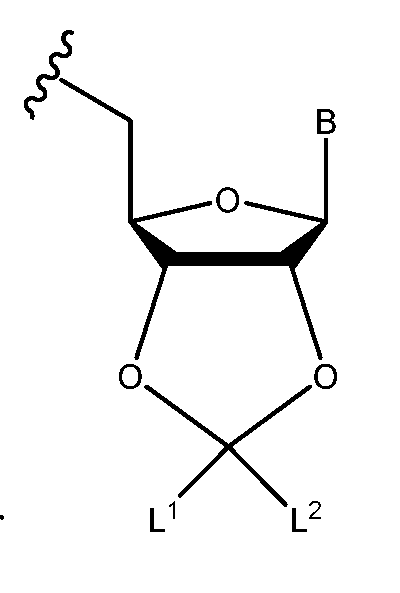 wherein B is an optionally substituted nucleobase, selected from the group consisting of purine nucleobases, pyrimidine nucleobases, and non-natural monocyclic or bicyclic heterocyclic nucleobases wherein each cycle comprises from 4 to 7 atoms; L1 and L2 are independently selected from H and a saturated or unsaturated, linear or branched, hydrocarbon chain comprising from 1 to 22 carbon atoms; with the proviso that L1 and L2 are not both H. In another aspect, the present invention provides a pharmaceutical composition comprising a compound of Formula II, or a pharmaceutically acceptable salt thereof, and at least one pharmaceutically acceptable carrier, diluent, excipient, and/or adjuvant. The invention also relates to the compound of Formula II, or a pharmaceutically acceptable salt thereof, for use in the treatment of cancer. The invention also relates to the compound of Formula II, or a pharmaceutically acceptable salt thereof, for use in the treatment of viral infections. The invention also relates to the compound of Formula II, or a pharmaceutically acceptable salt thereof, for use as an anticoagulant. The invention also relates to the compound of Formula II, or a pharmaceutically acceptable salt thereof, for use in the treatment of heart failure.
DETAILED DESCRIPTION OF THE INVENTION The present invention relates to a compound of Formula I:
wherein B is an optionally substituted nucleobase, selected from the group consisting of purine nucleobases, pyrimidine nucleobases, and non-natural monocyclic or bicyclic heterocyclic nucleobases wherein each cycle comprises from 4 to 7 atoms; L1 and L2 are independently selected from H and a saturated or unsaturated, linear or branched, hydrocarbon chain comprising from 1 to 22 carbon atoms; with the proviso that L1 and L2 are not both H. In another aspect, the present invention provides a pharmaceutical composition comprising a compound of Formula II, or a pharmaceutically acceptable salt thereof, and at least one pharmaceutically acceptable carrier, diluent, excipient, and/or adjuvant. The invention also relates to the compound of Formula II, or a pharmaceutically acceptable salt thereof, for use in the treatment of cancer. The invention also relates to the compound of Formula II, or a pharmaceutically acceptable salt thereof, for use in the treatment of viral infections. The invention also relates to the compound of Formula II, or a pharmaceutically acceptable salt thereof, for use as an anticoagulant. The invention also relates to the compound of Formula II, or a pharmaceutically acceptable salt thereof, for use in the treatment of heart failure.
DETAILED DESCRIPTION OF THE INVENTION The present invention relates to a compound of Formula I:
 or a pharmaceutically acceptable salt thereof. The compound of Formula I can be prepared by different ways with reactions known by the person skilled in the art. In particular, the compound of formula I may be prepared by the following successive steps: i. reaction of 1-(5-hydroxy-2-nitrophenyl)ethan-1-one with 2-bromoethanol in the presence of a base, in particular potassium carbonate; ii. reaction of the product obtained in step i) with dimethoxytrityl chloride; iii. reduction of the product obtained in step ii), in particular with sodium borohydride; iv. reaction of the product obtained in step iii) with a phosphitylation agent, in particular with 2-cyanoethyl N,N-diisopropylchlorophosphoramidite. As detailed above, the invention also relates to compounds of Formula II:
or a pharmaceutically acceptable salt thereof, wherein
or a pharmaceutically acceptable salt thereof. The compound of Formula I can be prepared by different ways with reactions known by the person skilled in the art. In particular, the compound of formula I may be prepared by the following successive steps: i. reaction of 1-(5-hydroxy-2-nitrophenyl)ethan-1-one with 2-bromoethanol in the presence of a base, in particular potassium carbonate; ii. reaction of the product obtained in step i) with dimethoxytrityl chloride; iii. reduction of the product obtained in step ii), in particular with sodium borohydride; iv. reaction of the product obtained in step iii) with a phosphitylation agent, in particular with 2-cyanoethyl N,N-diisopropylchlorophosphoramidite. As detailed above, the invention also relates to compounds of Formula II:
or a pharmaceutically acceptable salt thereof, wherein
 is an oligonucleotide; A is a saturated or unsaturated, linear or branched, hydrocarbon chain comprising from 1 to 22 carbon atoms or
 wherein B is an optionally substituted nucleobase, selected from the group consisting of purine nucleobases, pyrimidine nucleobases, and non-natural monocyclic or bicyclic heterocyclic nucleobases wherein each cycle comprises from 4 to 7 atoms; L1 and L2 are independently selected from H and a saturated or unsaturated, linear or branched, hydrocarbon chain comprising from 1 to 22 carbon atoms; with the proviso that L1 and L2 are not both H.
As used herein, the term “oligonucleotide” refers to a nucleic acid sequence, 3’-5’ or 5’-3’ oriented, in particular 5’-3’ oriented, which may be single- or double-stranded, in particular single-stranded. The oligonucleotide used in the context of the invention may in particular be DNA or RNA, more particularly DNA. The oligonucleotide used in the context of the invention may be further modified, preferably chemically modified, in order to increase the stability and/or therapeutic efficiency of the oligonucleotides in vivo. In particular, the oligonucleotide used in the context of the invention may comprise modified nucleotides. Chemical modifications may occur at three different sites: (i) at phosphate groups, (ii) on the sugar moiety, and/or (iii) on the entire backbone structure of the oligonucleotide. For example, the oligonucleotides may be employed as phosphorothioate derivatives (replacement of a non-bridging phosphoryl oxygen atom with a sulfur atom) which have increased resistance to nuclease digestion. 2’-Methoxyethyl (MOE) modification (such as the modified backbone commercialized by ISIS Pharmaceuticals) is also effective. Additionally or alternatively, the oligonucleotide used in the context of the invention may comprise completely, partially or in combination, modified nucleotides which are derivatives with substitutions at the 2’ position of the sugar, in particular with the following chemical modifications: O-methyl group (2’-O-Me) substitution, 2-methoxyethyl group (2’- O-MOE) substitution, fluoro group (2’-fluoro) substitution, chloro group (2’-Cl) substitution, bromo group (2’-Br) substitution, cyanide group (2'-CN) substitution, trifluoromethyl group (2’-CF3) substitution, OCF3 group (2’-OCF3) substitution, OCN group (2’-OCN) substitution, O-alkyl group (2’-O-alkyl) substitution, S-alkyl group (2’-S-alkyl) substitution, N-alkyl group (2’-N-akyl) substitution, O-alkenyl group (2’-O-alkenyl) substitution, S-alkenyl group (2’-S- alkenyl) substitution, N-alkenyl group (2’-N-alkenyl) substitution, SOCH3 group (2’- SOCH3) substitution, SO2CH3 group (2’-SO2CH3) substitution, ONO2 group (2’-ONO2) substitution, NO2 group (2’-NO2) substitution, N3 group (2’-N3) substitution and/or NH2 group (2’-NH2) substitution. Additionally or alternatively, the oligonucleotide used in the context of the invention may comprise completely or partially modified nucleotides wherein the ribose moiety is used to produce locked nucleic acid (LNA), in which a covalent bridge is formed between the 2’
oxygen and the 4’ carbon of the ribose, fixing it in the 3’-endo configuration. These constructs are extremely stable in biological medium, able to activate RNase H and form tight hybrids with complementary RNA and DNA. Accordingly, in an embodiment, the oligonucleotide used in the context of the invention may comprise modified nucleotides selected from the group consisting of LNA, 2’-OMe analogs, 2’-phosphorothioate analogs, 2’-fluoro analogs, 2’-Cl analogs, 2’-Br analogs, 2’-CN analogs, 2’-CF3 analogs, 2’-OCF3 analogs, 2’-OCN analogs, 2’-O-alkyl analogs, 2’-S-alkyl analogs, 2’-N-alkyl analogs, 2’-O-alkenyl analogs, 2’-S-alkenyl analogs, 2’-N-alkenyl analogs, 2’-SOCH3 analogs, 2’-SO2CH3 analogs, 2’-ONO2 analogs, 2’-NO2 analogs, 2’-N3 analogs, 2’-NH2 analogs and combinations thereof. More preferably, the modified nucleotides are selected from the group consisting of LNA, 2’-OMe analogs, 2’- phosphorothioate analogs and 2’-fluoro analogs. The oligonucleotide used in the context of the invention may typically have from 1 to 100 nucleotides, in particular 5 to 50 nucleotides, for example 12 to 35 nucleotides, from 12 to 30, from 12 to 25, from 12 to 22, from 12 to 20, from 12 to 18, or about 15 nucleotides. In a particular example, the oligonucleotide used in the context of the invention may consist of the thrombin-binding aptamer (TBA) having the sequence of SEQ ID NO: 1 (5’- GGTTGGTGTGGTTGG-3’). In other words, the oligonucleotide used in the context of the invention may consist of the sequence of SEQ ID NO: 1 (5’-GGTTGGTGTGGTTGG-3’). Particular compounds of Formula II, or pharmaceutically acceptable salts or solvates thereof, are those wherein one or more of
wherein B is an optionally substituted nucleobase, selected from the group consisting of purine nucleobases, pyrimidine nucleobases, and non-natural monocyclic or bicyclic heterocyclic nucleobases wherein each cycle comprises from 4 to 7 atoms; L1 and L2 are independently selected from H and a saturated or unsaturated, linear or branched, hydrocarbon chain comprising from 1 to 22 carbon atoms; with the proviso that L1 and L2 are not both H.
As used herein, the term “oligonucleotide” refers to a nucleic acid sequence, 3’-5’ or 5’-3’ oriented, in particular 5’-3’ oriented, which may be single- or double-stranded, in particular single-stranded. The oligonucleotide used in the context of the invention may in particular be DNA or RNA, more particularly DNA. The oligonucleotide used in the context of the invention may be further modified, preferably chemically modified, in order to increase the stability and/or therapeutic efficiency of the oligonucleotides in vivo. In particular, the oligonucleotide used in the context of the invention may comprise modified nucleotides. Chemical modifications may occur at three different sites: (i) at phosphate groups, (ii) on the sugar moiety, and/or (iii) on the entire backbone structure of the oligonucleotide. For example, the oligonucleotides may be employed as phosphorothioate derivatives (replacement of a non-bridging phosphoryl oxygen atom with a sulfur atom) which have increased resistance to nuclease digestion. 2’-Methoxyethyl (MOE) modification (such as the modified backbone commercialized by ISIS Pharmaceuticals) is also effective. Additionally or alternatively, the oligonucleotide used in the context of the invention may comprise completely, partially or in combination, modified nucleotides which are derivatives with substitutions at the 2’ position of the sugar, in particular with the following chemical modifications: O-methyl group (2’-O-Me) substitution, 2-methoxyethyl group (2’- O-MOE) substitution, fluoro group (2’-fluoro) substitution, chloro group (2’-Cl) substitution, bromo group (2’-Br) substitution, cyanide group (2'-CN) substitution, trifluoromethyl group (2’-CF3) substitution, OCF3 group (2’-OCF3) substitution, OCN group (2’-OCN) substitution, O-alkyl group (2’-O-alkyl) substitution, S-alkyl group (2’-S-alkyl) substitution, N-alkyl group (2’-N-akyl) substitution, O-alkenyl group (2’-O-alkenyl) substitution, S-alkenyl group (2’-S- alkenyl) substitution, N-alkenyl group (2’-N-alkenyl) substitution, SOCH3 group (2’- SOCH3) substitution, SO2CH3 group (2’-SO2CH3) substitution, ONO2 group (2’-ONO2) substitution, NO2 group (2’-NO2) substitution, N3 group (2’-N3) substitution and/or NH2 group (2’-NH2) substitution. Additionally or alternatively, the oligonucleotide used in the context of the invention may comprise completely or partially modified nucleotides wherein the ribose moiety is used to produce locked nucleic acid (LNA), in which a covalent bridge is formed between the 2’
oxygen and the 4’ carbon of the ribose, fixing it in the 3’-endo configuration. These constructs are extremely stable in biological medium, able to activate RNase H and form tight hybrids with complementary RNA and DNA. Accordingly, in an embodiment, the oligonucleotide used in the context of the invention may comprise modified nucleotides selected from the group consisting of LNA, 2’-OMe analogs, 2’-phosphorothioate analogs, 2’-fluoro analogs, 2’-Cl analogs, 2’-Br analogs, 2’-CN analogs, 2’-CF3 analogs, 2’-OCF3 analogs, 2’-OCN analogs, 2’-O-alkyl analogs, 2’-S-alkyl analogs, 2’-N-alkyl analogs, 2’-O-alkenyl analogs, 2’-S-alkenyl analogs, 2’-N-alkenyl analogs, 2’-SOCH3 analogs, 2’-SO2CH3 analogs, 2’-ONO2 analogs, 2’-NO2 analogs, 2’-N3 analogs, 2’-NH2 analogs and combinations thereof. More preferably, the modified nucleotides are selected from the group consisting of LNA, 2’-OMe analogs, 2’- phosphorothioate analogs and 2’-fluoro analogs. The oligonucleotide used in the context of the invention may typically have from 1 to 100 nucleotides, in particular 5 to 50 nucleotides, for example 12 to 35 nucleotides, from 12 to 30, from 12 to 25, from 12 to 22, from 12 to 20, from 12 to 18, or about 15 nucleotides. In a particular example, the oligonucleotide used in the context of the invention may consist of the thrombin-binding aptamer (TBA) having the sequence of SEQ ID NO: 1 (5’- GGTTGGTGTGGTTGG-3’). In other words, the oligonucleotide used in the context of the invention may consist of the sequence of SEQ ID NO: 1 (5’-GGTTGGTGTGGTTGG-3’). Particular compounds of Formula II, or pharmaceutically acceptable salts or solvates thereof, are those wherein one or more of
 and A are defined as follows: is an oligonucleotide; in particular is an oligonucleotide comprising, in particular consisting of, a sequence from 1 to 100 nucleotides, particularly from 5 to 50 nucleotides, for example 12 to 35 nucleotides, from 12 to 30, from 12 to 25, from 12 to 22, from 12 to 20, from 12 to 18; more particularly is an oligonucleotide consisting
of the sequence of SEQ ID NO: 1 (5’-GGTTGGTGTGGTTGG-3’); in a particular example, is a G-quadruplex forming sequence; A is a saturated or unsaturated, linear or branched, hydrocarbon chain comprising from 1 to
and A are defined as follows: is an oligonucleotide; in particular is an oligonucleotide comprising, in particular consisting of, a sequence from 1 to 100 nucleotides, particularly from 5 to 50 nucleotides, for example 12 to 35 nucleotides, from 12 to 30, from 12 to 25, from 12 to 22, from 12 to 20, from 12 to 18; more particularly is an oligonucleotide consisting
of the sequence of SEQ ID NO: 1 (5’-GGTTGGTGTGGTTGG-3’); in a particular example, is a G-quadruplex forming sequence; A is a saturated or unsaturated, linear or branched, hydrocarbon chain comprising from 1 to
 wherein
B is an optionally substituted nucleobase, selected from the group consisting of purine nucleobases, pyrimidine nucleobases, and non-natural monocyclic or bicyclic heterocyclic nucleobases wherein each cycle comprises from 4 to 7 atoms; in particular B is a unsubstituted nucleobase selected from the group consisting of uracil, thymine, adenine, guanine, cytosine, 6-methoxypurine, 7-methylguanine, xanthine, 5,6- dihydrouracil, 5-methylcytosine, 5-hydroxymethylcytosine and hypoxanthine; more particularly B is a unsubstituted nucleobase selected from the group consisting of uracil, thymine, adenine, cytosine, 6-methoxypurine and hypoxanthine; still more particularly B is uracil; L1 and L2 are independently selected from H and a saturated or unsaturated, in particular saturated, linear or branched, in particular linear, hydrocarbon chain comprising from 1 to 22 carbon atoms, in particular from 6 to 20 carbon atoms, more particularly from 12 to 18 carbon atoms; in particular L1 and L2 are independently selected from H and C6- C20-alkyl; more particularly L1 and L2 are independently selected from H and C10-C20 alkyl; still more particularly L1 and L2 are C12-C18-alkyl; even more particularly L1 and L2 are n-pentadecyl; with the proviso that L1 and L2 are not both H. In one embodiment, the compounds of Formula II are those wherein A
wherein
B is an optionally substituted nucleobase, selected from the group consisting of purine nucleobases, pyrimidine nucleobases, and non-natural monocyclic or bicyclic heterocyclic nucleobases wherein each cycle comprises from 4 to 7 atoms; in particular B is a unsubstituted nucleobase selected from the group consisting of uracil, thymine, adenine, guanine, cytosine, 6-methoxypurine, 7-methylguanine, xanthine, 5,6- dihydrouracil, 5-methylcytosine, 5-hydroxymethylcytosine and hypoxanthine; more particularly B is a unsubstituted nucleobase selected from the group consisting of uracil, thymine, adenine, cytosine, 6-methoxypurine and hypoxanthine; still more particularly B is uracil; L1 and L2 are independently selected from H and a saturated or unsaturated, in particular saturated, linear or branched, in particular linear, hydrocarbon chain comprising from 1 to 22 carbon atoms, in particular from 6 to 20 carbon atoms, more particularly from 12 to 18 carbon atoms; in particular L1 and L2 are independently selected from H and C6- C20-alkyl; more particularly L1 and L2 are independently selected from H and C10-C20 alkyl; still more particularly L1 and L2 are C12-C18-alkyl; even more particularly L1 and L2 are n-pentadecyl; with the proviso that L1 and L2 are not both H. In one embodiment, the compounds of Formula II are those wherein A
 wherein B, L1 and L2 are as defined above. In one embodiment, the compounds of Formula II are those wherein A is C6-C20-alkyl; in particular A is C10-C20 alkyl; more particularly A is C12-C18-alkyl; still more particularly A is n-octadecyl.
In one embodiment, the compounds of Formula II are those wherein A is and L1 and L2 are C6-C20-alkyl; in particular L1 and L2 are C10-C20 alkyl; more particularly L1 and L2 are C12-C18-alkyl; still more particularly L1 and L2 are n-pentadecyl. In one embodiment, the compounds of Formula II are those wherein A is
wherein B, L1 and L2 are as defined above. In one embodiment, the compounds of Formula II are those wherein A is C6-C20-alkyl; in particular A is C10-C20 alkyl; more particularly A is C12-C18-alkyl; still more particularly A is n-octadecyl.
In one embodiment, the compounds of Formula II are those wherein A is and L1 and L2 are C6-C20-alkyl; in particular L1 and L2 are C10-C20 alkyl; more particularly L1 and L2 are C12-C18-alkyl; still more particularly L1 and L2 are n-pentadecyl. In one embodiment, the compounds of Formula II are those wherein A is
 and B is uracil. In one embodiment, the compounds of Formula II are those wherein A
 and L2 are n-pentadecyl and B is uracil. In one embodiment, the compounds of Formula II are those wherein
 is a G- quadruplex forming sequence. In one embodiment, the compounds of Formula II are those wherein
 is SEQ ID NO: 1 (5’-GGTTGGTGTGGTTGG-3’).
Particularly preferred compound of Formula II are those listed hereafter:
is SEQ ID NO: 1 (5’-GGTTGGTGTGGTTGG-3’).
Particularly preferred compound of Formula II are those listed hereafter:
 . The compound of Formula II, or any of its embodiments and subformula, can be prepared by different ways with reactions known by the person skilled in the art, in particular by using phosphoramidite chemistry with the compound of Formula I as starting material, as described by the examples.
In particular, the compound of formula II may be prepared by the following successive steps: (i) synthesizing the oligonucleotide; (ii) reacting the oligonucleotide obtained in step (i) with the compound of formula I; (iii) modifying the oligonucleotide obtained in step (ii) by reaction with a suitable reactant comprising one or two saturated or unsaturated, in particular saturated, linear or branched, in particular linear, hydrocarbon chains comprising from 1 to 22 carbon atoms, in particular from 6 to 20 carbon atoms, more particularly from 12 to 18 carbon atoms; (iv) recovering the compound of Formula II. Steps (i), (ii) and (iii) are generally carried out using a coupling methodology. According to a preferred embodiment, steps (i), (ii) and (iii) are carried out using the phosphoramidite methodology, which is well-known for the synthesis of oligonucleotides. In particular, the reactant used in step (iii) comprises a phosphoramidite group. A “phosphoramidite group” refers to a monoamide of a phosphite diester moiety, which can be represented as follows: >N–P(–O–)2. The reactant used in step (iii) is preferably of formula III:
. The compound of Formula II, or any of its embodiments and subformula, can be prepared by different ways with reactions known by the person skilled in the art, in particular by using phosphoramidite chemistry with the compound of Formula I as starting material, as described by the examples.
In particular, the compound of formula II may be prepared by the following successive steps: (i) synthesizing the oligonucleotide; (ii) reacting the oligonucleotide obtained in step (i) with the compound of formula I; (iii) modifying the oligonucleotide obtained in step (ii) by reaction with a suitable reactant comprising one or two saturated or unsaturated, in particular saturated, linear or branched, in particular linear, hydrocarbon chains comprising from 1 to 22 carbon atoms, in particular from 6 to 20 carbon atoms, more particularly from 12 to 18 carbon atoms; (iv) recovering the compound of Formula II. Steps (i), (ii) and (iii) are generally carried out using a coupling methodology. According to a preferred embodiment, steps (i), (ii) and (iii) are carried out using the phosphoramidite methodology, which is well-known for the synthesis of oligonucleotides. In particular, the reactant used in step (iii) comprises a phosphoramidite group. A “phosphoramidite group” refers to a monoamide of a phosphite diester moiety, which can be represented as follows: >N–P(–O–)2. The reactant used in step (iii) is preferably of formula III:
 III wherein A is as defined above in Formula II. Particular compounds of Formula III are those wherein A is defined as follows:
A is a saturated or unsaturated, linear or branched, hydrocarbon chain comprising from 1 to 22 carbon atoms or
III wherein A is as defined above in Formula II. Particular compounds of Formula III are those wherein A is defined as follows:
A is a saturated or unsaturated, linear or branched, hydrocarbon chain comprising from 1 to 22 carbon atoms or
 in particular A is C6-C20-alkyl or
 more particularly A is C10-C20 alkyl or ; still more particularly A is C12-
 C18-alkyl or
 even more particularly A is n-octadecyl or
 even more particularly A is
 wherein B is an optionally substituted nucleobase, selected from the group consisting of purine nucleobases, pyrimidine nucleobases, and non-natural monocyclic or bicyclic heterocyclic nucleobases wherein each cycle comprises from 4 to 7 atoms; in particular
B is a unsubstituted nucleobase selected from the group consisting of uracil, thymine, adenine, guanine, cytosine, 6-methoxypurine, 7-methylguanine, xanthine, 5,6- dihydrouracil, 5-methylcytosine, 5-hydroxymethylcytosine and hypoxanthine; more particularly B is a unsubstituted nucleobase selected from the group consisting of uracil, thymine, adenine, cytosine, 6-methoxypurine and hypoxanthine; still more particularly B is uracil; L1 and L2 are independently selected from H and a saturated or unsaturated, in particular saturated, linear or branched, in particular linear, hydrocarbon chain comprising from 1 to 22 carbon atoms, in particular from 6 to 20 carbon atoms, more particularly from 12 to 18 carbon atoms; in particular L1 and L2 are independently selected from H and C6- C20-alkyl; more particularly L1 and L2 are independently selected from H and C10-C20 alkyl; still more particularly L1 and L2 are C12-C18-alkyl; even more particularly L1 and L2 are n-pentadecyl; with the proviso that L1 and L2 are not both H. In one embodiment, the compounds of Formula III are those wherein A
wherein B is an optionally substituted nucleobase, selected from the group consisting of purine nucleobases, pyrimidine nucleobases, and non-natural monocyclic or bicyclic heterocyclic nucleobases wherein each cycle comprises from 4 to 7 atoms; in particular
B is a unsubstituted nucleobase selected from the group consisting of uracil, thymine, adenine, guanine, cytosine, 6-methoxypurine, 7-methylguanine, xanthine, 5,6- dihydrouracil, 5-methylcytosine, 5-hydroxymethylcytosine and hypoxanthine; more particularly B is a unsubstituted nucleobase selected from the group consisting of uracil, thymine, adenine, cytosine, 6-methoxypurine and hypoxanthine; still more particularly B is uracil; L1 and L2 are independently selected from H and a saturated or unsaturated, in particular saturated, linear or branched, in particular linear, hydrocarbon chain comprising from 1 to 22 carbon atoms, in particular from 6 to 20 carbon atoms, more particularly from 12 to 18 carbon atoms; in particular L1 and L2 are independently selected from H and C6- C20-alkyl; more particularly L1 and L2 are independently selected from H and C10-C20 alkyl; still more particularly L1 and L2 are C12-C18-alkyl; even more particularly L1 and L2 are n-pentadecyl; with the proviso that L1 and L2 are not both H. In one embodiment, the compounds of Formula III are those wherein A
 wherein B, L1 and L2 are as defined above. In one embodiment, the compounds of Formula III are those wherein A is C6-C20-alkyl; in particular A is C10-C20 alkyl; more particularly A is C12-C18-alkyl; still more particularly A is n-octadecyl.
In one embodiment, the compounds of Formula III are those wherein A is and L1 and L2 are C6-C20-alkyl; in particular L1 and L2 are C10-C20 alkyl; more particularly L1 and L2 are C12-C18-alkyl; still more particularly L1 and L2 are n-pentadecyl. In one embodiment, the compounds of Formula III are those wherein A is
wherein B, L1 and L2 are as defined above. In one embodiment, the compounds of Formula III are those wherein A is C6-C20-alkyl; in particular A is C10-C20 alkyl; more particularly A is C12-C18-alkyl; still more particularly A is n-octadecyl.
In one embodiment, the compounds of Formula III are those wherein A is and L1 and L2 are C6-C20-alkyl; in particular L1 and L2 are C10-C20 alkyl; more particularly L1 and L2 are C12-C18-alkyl; still more particularly L1 and L2 are n-pentadecyl. In one embodiment, the compounds of Formula III are those wherein A is
 and B is uracil. In one embodiment, the compounds of Formula III are those wherein A is
 L1 and L2 are n-pentadecyl and B is uracil. When the reactant comprises a phosphoramidite group, step (ii) is generally carried out in the presence of a coupling agent, such as N-benzylthiotetrazole, which activates the phosphoramidite. The oligonucleotide synthesized in step (i), advantageously comprising an OH 5’ end, is then added and the coupling occurs. Step (iii) is generally carried out in the presence of a coupling agent, such as N- benzylthiotetrazole, which activates the phosphoramidite. The modified oligonucleotide
synthesized in step (ii), advantageously comprising an OH 3’ end, is then added and the coupling occurs. The compound of Formula II is then obtained according to usual procedures well-known in the framework of oligonucleotides synthesis. The compounds of Formula II are indeed capable of spontaneously self-assembling and switching from the conventional antiparallel aptameric fold at low ionic strength to the parallel, inactive, conformation of the oligonucleotide strands, in particular TBA oligonucleotide strands, in physiologically relevant conditions. The latter parallel conformation can be readily and chemo-selectively switched back to the anti-parallel native aptamer conformation upon light irradiation. The light irradiation, or photocleavage, can be performed according to any method known by the person skilled in the art. In particular, the light irradiation is performed by exposing the compounds of Formula II under UV light at 350 nm for 1 min to 12 h, in particular for 10 min to 6 h, more particularly for 20 min to 4 h, still more particularly for 30 min to 3 h, even more particularly for 1 h. The compound of the invention in its parallel conformation is thermally stable in both intra- and extracellular fluids and folds back into the active antiparallel aptamer, in particular TBA aptamer, once photo-cleaved only in extracellular environments where the targeted thrombin protein is located. Fewer intracellular off-target effects are then to be expected with the modified oligonucleotide of the invention compared to an unmodified oligonucleotide. The development of stimuli responsive modified oligonucleotides is of high interest for several medical treatments, in particular for treatments involving antiproliferative activity against cancer cells, anticoagulant activity, antiviral activity or activity against heart failure. The compounds of the invention are therefore useful in the treatment of cancers. Thus, in one embodiment, there is provided a compound of the present invention, or a pharmaceutically acceptable salt or solvate thereof, for use in treating cancer. The invention thus also relates to a compound of the present invention, in particular a compound of Formula II, or any of its embodiments as defined above, or a pharmaceutically
acceptable salt or solvate thereof, for use in treating cancer. In particular, the cancer is pancreatic cancer. In other terms, the invention also relates to a method of treating cancer, in particular, pancreatic cancer, comprising the administration of a therapeutically effective amount of a compound of Formula II, or a pharmaceutically acceptable salt or solvate thereof, to a patient in need of such treatment. Preferably the patient is a warm-blooded animal, more preferably a human. The invention further provides the use of a compound of Formula II, or a pharmaceutically acceptable salt or solvates thereof, for the manufacture of a medicament for use in treating cancer, in particular pancreatic cancer. Preferably the patient is a warm-blooded animal, more preferably a human. The compounds of the invention are also useful in the treatment of viral infections. Thus, in one embodiment, there is provided a compound of the present invention, or a pharmaceutically acceptable salt or solvate thereof, for use in treating viral infections. The invention thus also relates to a compound of the present invention, in particular a compound of Formula II, or any of its embodiments as defined above, or a pharmaceutically acceptable salt or solvate thereof, for use in treating viral infections. In particular, the viral infections may be selected from infectious diseases with DNA pathogens or RNA pathogens. More particularly, the viral infection may be COVID-19. In other terms, the invention also relates to a method of treating viral infections, in particular infectious diseases with DNA pathogens or RNA pathogens, more particularly COVID-19, comprising the administration of a therapeutically effective amount of a compound of Formula II, or a pharmaceutically acceptable salt or solvate thereof, to a patient in need of such treatment. Preferably the patient is a warm-blooded animal, more preferably a human. The invention further provides the use of a compound of Formula II, or a pharmaceutically acceptable salt or solvates thereof, for the manufacture of a medicament for use in treating viral infections, in particular in particular infectious diseases with DNA pathogens or RNA
pathogens, more particularly COVID-19. Preferably the patient is a warm-blooded animal, more preferably a human. The compounds of the invention are also useful as an anticoagulant. Indeed, the aptamer, in particular the TBA aptamer of SEQ ID NO: 1 (5’-GGTTGGTGTGGTTGG-3’), interacts with the exosite I of human alpha-thrombin, which is the binding site of fibrinogen, and thus acts as an anti-coagulant agent inhibiting the activation of fibrinogen as well as platelet aggregation. Thus, in one embodiment, there is provided a compound of the present invention, or a pharmaceutically acceptable salt or solvate thereof, for use as an anticoagulant. The invention thus also relates to a compound of the present invention, in particular a compound of Formula II, or any of its embodiments as defined above, or a pharmaceutically acceptable salt or solvate thereof, for use as an anticoagulant. In other terms, the invention also relates to a method of treating blood coagulation, comprising the administration of a therapeutically effective amount of a compound of Formula II, or a pharmaceutically acceptable salt or solvate thereof, to a patient in need of such treatment. Preferably the patient is a warm-blooded animal, more preferably a human. The invention further provides the use of a compound of Formula II, or a pharmaceutically acceptable salt or solvates thereof, for the manufacture of a medicament for use as an anticoagulant. Preferably the patient is a warm-blooded animal, more preferably a human. The compounds of the invention are also useful in the treatment of heart failure. Thus, in one embodiment, there is provided a compound of the present invention, or a pharmaceutically acceptable salt or solvate thereof, for use in treating heart failure. The invention thus also relates to a compound of the present invention, in particular a compound of Formula II, or any of its embodiments as defined above, or a pharmaceutically acceptable salt or solvate thereof, for use in treating heart failure.
In other terms, the invention also relates to a method of treating heart failure, comprising the administration of a therapeutically effective amount of a compound of Formula II, or a pharmaceutically acceptable salt or solvate thereof, to a patient in need of such treatment. Preferably the patient is a warm-blooded animal, more preferably a human. The invention further provides the use of a compound of Formula II, or a pharmaceutically acceptable salt or solvates thereof, for the manufacture of a medicament for use in treating heart failure. Preferably the patient is a warm-blooded animal, more preferably a human. According to the present invention, the compound of the invention or the compound for use according to the invention may be administered as a pharmaceutical formulation in a therapeutically effective amount by any of the accepted modes of administration, preferably by intravenous or oral route. Therapeutically effective amount ranges are typically from 0.1 to 50 000 µg/kg of body weight daily, preferably from 1000 to 40000 µg/kg of body weight daily, depending upon numerous factors such as the severity of the disease to be treated, the age and relative health of the subject, the potency of the compound, the route and the form of administration, the indication towards which the administration is directed, and the preferences and experience of the medical practitioner involved. One of ordinary skill in the art of treating such diseases will be able in reliance upon personal knowledge, to ascertain a therapeutically effective amount of the anticancer agent of the present invention for a given cancer. According to one embodiment, the compounds of the invention, their pharmaceutical acceptable salts or solvates may be administered as part of a combination therapy. Thus, are included within the scope of the present invention embodiments comprising co- administration of, and compositions and medicaments which contain, in addition to a compound of the present invention, a pharmaceutically acceptable salt or solvate thereof as active ingredient, additional therapeutic agents and/or active ingredients. Such multiple drug regimens, often referred to as combination therapy, may be used in the treatment of cancer, particularly those defined above. Thus, the methods of treatment and pharmaceutical compositions of the present invention may employ the compounds of the invention or their pharmaceutical acceptable salts or
solvates thereof in the form of monotherapy, but said methods and compositions may also be used in the form of multiple therapy in which one or more compounds of the invention or their pharmaceutically acceptable salts or solvates are co-administered in combination with one or more other therapeutic agents. In one embodiment, the methods of treatment and pharmaceutical compositions of the present invention may employ the compounds of the present invention, or their pharmaceutical acceptable salts or solvates thereof, in combination with radiation therapy. According to this embodiment, the compounds of the invention, their pharmaceutical acceptable salts or solvates may be administered in combination with radiation therapy. Thus, there is provided a compound of Formula II and any of its embodiments, or any of its subformulae as defined above, for use in the treatment of cancers as defined above in combination with radiation therapy. Such radiation therapies include, but are not limited to, external beam radiation therapy, brachytherapy and systemic radioisotope therapy. The invention also provides a pharmaceutical composition comprising a compound of the present invention, preferably a compound of Formula II and any of its embodiments, or any of its subformulae as defined above, or a pharmaceutically acceptable salt or solvate thereof, and at least one pharmaceutically acceptable carrier, diluent, excipient and/or adjuvant. As indicated above, the invention also covers pharmaceutical compositions which contain, in addition to a compound of the present invention, a pharmaceutically acceptable salt or solvate thereof as active ingredient, additional therapeutic agents and/or active ingredients. The invention also provides a compound of the invention, in particular a compound of Formula II or a pharmaceutically acceptable salt or solvate thereof, for use in a therapeutic treatment in humans or animals, in particular in humans. Another object of this invention is a medicament comprising at least one compound of the invention, or a pharmaceutically acceptable salt or solvate thereof, as active ingredient. Generally, for pharmaceutical use, the compounds of the invention may be formulated as a pharmaceutical preparation comprising at least one compound of the invention and at least one pharmaceutically acceptable carrier, diluent, excipient and/or adjuvant, and optionally one or more further pharmaceutically active compounds.
By means of non-limiting examples, such a formulation may be in a form suitable for oral administration, for parenteral administration (such as by intravenous, intramuscular or subcutaneous injection or intravenous infusion), for topical administration (including ocular), cerebral administration, for administration by inhalation, by a skin patch, by an implant, by a suppository, etc. Such suitable administration forms – which may be solid, semi-solid or liquid, depending on the manner of administration – as well as methods and carriers, diluents and excipients for use in the preparation thereof, will be clear to the skilled person; reference is made to the latest edition of Remington’s Pharmaceutical Sciences. For example, the compound of the invention or a pharmaceutical composition comprising a compound of the invention can be administered orally in the form of tablets, coated tablets, pills, capsules, soft gelatin capsules, oral powders, granules, ovules, elixirs, solutions or suspensions, which may contain flavouring or colouring agents, for immediate-, delayed-, modified-, sustained-, pulsed- or controlled-release applications. The tablets may contain excipients such as microcrystalline cellulose, lactose, sodium citrate, calcium carbonate, dibasic calcium phosphate and glycine, a disintegrant such as starch (preferably corn, potato or tapioca starch), sodium starch glycollate, croscarmellose sodium and certain complex silicates, a binder such as polyvinylpyrrolidone, hydroxypropylmethylcellulose (HPMC), hydroxypropylcellulose (HPC), sucrose, gelatin and acacia, a lubricant such as magnesium stearate, stearic acid, glyceryl behenate. Solid compositions of a similar type may also be employed as fillers in hard gelatin capsules. Preferred excipients in this regard include lactose, saccharose, sorbitol, mannitol, potato starch, corn starch, amylopectin, cellulose derivatives or gelatin. Hard gelatin capsules may contain granules of the compound of the invention. Soft gelatin capsules may be prepared with capsules containing the compound of the invention, vegetable oil, waxes, fat, or other suitable vehicle for soft gelatin capsules. As an example, the acceptable vehicle can be an oleaginous vehicle, such as a long chain triglyceride vegetable oil (e.g. corn oil). Dispersible powders and granules suitable for preparation of an aqueous suspension by the addition of water may contain the active ingredient in a mixture with dispersing agents, wetting agents, and suspending agents and one or more preservatives. Additional excipients,
for example sweetening, flavouring and colouring agents, may also be present. These compositions may be preserved by the addition of an anti-oxidant such as ascorbic acid. Liquid dosage forms for oral administration may include pharmaceutically acceptable, solutions, emulsions, suspensions, syrups, and elixirs containing inert diluents commonly used in the art, such as water or an oleaginous vehicle. Liquid dosage form may be presented as a dry product for constitution with water or other suitable vehicle before use. Such compositions may also comprise adjuvants, such as wetting agents, emulsifying and suspending agents, complexing agents such as 2-hydroxypropyl-beta-cyclodextrin, sulfobutylether-beta-cylodextrin, and sweetening, flavouring, perfuming agents, colouring matter or dyes with diluents such as water, ethanol, propylene glycol and glycerin, and combinations thereof. These compositions may be preserved by the addition of an anti- oxidant such as butylated hydroxyanisol or alpha-tocopherol. Finely divided powder of the compound of the invention may be prepared for example by micronisation or by processes known in the art. The compound of the invention may be milled using known milling procedures such as wet milling to obtain a particle size appropriate for tablet formation and for other formulation types. If the compound of the present invention is administered parenterally, then examples of such administration include one or more of: intravenously, intraarterially, intraperitoneally, intrathecally, intraventricularly, intraurethrally, intrasternally, intracranially, intramuscularly or subcutaneously administering the agent; and/or by using infusion techniques. The compound of the invention can be administered via the parenteral route with a readily available or a depot-type formulation. The pharmaceutical compositions for the parenteral administration of a readily available formulation may be in the form of a sterile injectable aqueous or oleagenous solution or suspension in a non-toxic parenterally-acceptable diluent or solvent and may contain formulatory agents such as suspending, stabilising dispersing, wetting and/or complexing agents such as cyclodextrin e.g. 2-hydroxypropyl-beta-cyclodextrin, sulfobutylether-beta- cylodextrin.
The depot-type formulation for the parenteral administration may be prepared by conventional techniques with pharmaceutically acceptable excipient including without being limited to, biocompatible and biodegradable polymers (e.g. poly(β-caprolactone), poly(ethylene oxide), poly(glycolic acid), poly[(lactic acid)-co-(glycolic acid)...)], poly(lactic acid)...), non-biodegradable polymers (e.g. ethylene vinylacetate copolymer, polyurethane, polyester(amide), polyvinyl chloride...) aqueous and non-aqueous vehicles (e.g. water, sesame oil, cottonseed oil, soybean oil, castor oil, almond oil, oily esters, ethyl alcohol or fractionated vegetable oils, propylene glycol, DMSO, THF, 2-pyrrolidone, N- methylpyrrolidinone, N-vinylpyrrolidinone... ). Alternatively, the active ingredient may be in dry form such as a powder, crystalline or freeze-dried solid for constitution with a suitable vehicle. The preparation of suitable parenteral formulations under sterile conditions is readily accomplished by standard pharmaceutical techniques well known to those skilled in the art. As indicated, the compound of the present invention can be administered intranasally or by inhalation and is conveniently delivered in the form of a dry powder inhaler or an aerosol spray presentation from a pressurised container, pump, spray or nebuliser with the use of a suitable propellant, e.g. dichlorodifluoromethane, trichlorofluoromethane, dichlorotetrafluoroethane, (for example from Ineos Fluor), carbon dioxide or other suitable gas. In the case of a pressurised aerosol, the dosage unit may be determined by providing a valve to deliver a metered amount. The pressurised container, pump, spray or nebuliser may contain a solution or suspension of the active compound. Capsules and cartridges (made, for example, from gelatin) for use in an inhaler or insufflator may be formulated to contain a powder mix of the compound and a suitable powder base such as lactose or starch. For compositions suitable and/or adapted for inhaled administration, it is preferred that the compound or salt of formula I is in a particle-size-reduced form, and more preferably the size-reduced form is obtained or obtainable by micronisation. The preferable particle size of the size-reduced (e.g. micronised) compound or salt or solvate is defined by a D50 value of about 0.5 to about 50 microns (for example as measured using laser diffraction). Alternatively, the compound of the present invention can be administered in the form of a suppository or pessary, or it may be applied topically in the form of a gel, hydrogel, lotion,
solution, cream, ointment or dusting powder. The compound of the present invention may also be dermally or transdermally administered, for example, by the use of a skin patch. They may also be administered by the pulmonary or rectal routes. It may also be administered by the ocular route. For ophthalmic use, the compound can be formulated as micronised suspensions in isotonic, pH adjusted, sterile saline, or, preferably, as solutions in isotonic, pH adjusted, sterile saline, optionally in combination with a preservative such as a benzylalkonium chloride. Alternatively, it may be formulated in an ointment such as petrolatum. For topical application to the skin, the agent of the present invention can be formulated as a suitable ointment containing the active compound suspended or dissolved in, for example, a mixture with one or more of the following: mineral oil, liquid petrolatum, white petrolatum, propylene glycol, polyoxyethylene, polyoxypropylene compound, emulsifying wax and water. Alternatively, it can be formulated as a suitable lotion or cream, suspended or dissolved in, for example, a mixture of one or more of the following: mineral oil, sorbitan monostearate, a polyethylene glycol, liquid paraffin, polysorbate 60, cetyl esters wax, cetearyl alcohol, 2-octyldodecanol, benzyl alcohol and water. DEFINITIONS The definitions and explanations below are for the terms as used throughout the entire application, including both the specification and the claims. Unless otherwise stated, any reference to compounds of the invention herein, means the compounds as such as well as their pharmaceutically acceptable salts and solvates. When describing the compounds of the invention, the terms used are to be construed in accordance with the following definitions, unless indicated otherwise. The term “alkyl” by itself or as part of another substituent refers to a hydrocarbyl group of Formula CnH2n+1 wherein n is a number greater than or equal to 1. Alkyl groups may thus comprise 1 or more carbon atoms and generally, according to this invention comprise from 1 to 22, more preferably from 6 to 20 carbon atoms, still more preferably from 10 to 20 carbon atoms, and even more preferably from 12 to 18 carbon atoms. Alkyl groups within
the meaning of the invention may be linear or branched. Examples of alkyl groups include but are not limited to methyl, ethyl, n-propyl, isopropyl, n-butyl, isobutyl, sec-butyl, tert- butyl, n-pentyl, neopentyl, isopentyl, sec-pentyl, tert-pentyl, n-hexyl, neohexyl, isohexyl, sec-hexyl, tert-hexyl, n-heptyl, n-octyl, n-nonyl, n-decyl, n-undecyl, n-dodecyl, n- pentadecyl, n-octadecyl. Particular examples of alkyl groups in the context of the invention include n-pentadecyl and n-octadecyl. The compounds of the invention containing a basic functional group may be in the form of pharmaceutically acceptable salts. Pharmaceutically acceptable salts of the compounds of the invention containing one or more basic functional groups include in particular the acid addition salts thereof. Suitable acid addition salts are formed from acids which form non- toxic salts. Examples include the acetate, adipate, aspartate, benzoate, besylate, bicarbonate/carbonate, bisulphate/sulphate, borate, camsylate, cinnamate, citrate, cyclamate, edisylate, esylate, formate, fumarate, gluceptate, gluconate, glucuronate, hexafluorophosphate, hibenzate, hydrochloride/chloride, hydrobromide/bromide, hydroiodide/iodide, isethionate, lactate, malate, maleate, malonate, mesylate, methylsulphate, naphthylate, 2-napsylate, nicotinate, nitrate, orotate, oxalate, palmitate, pamoate, phosphate/hydrogen phosphate/dihydrogen phosphate, pyroglutamate, saccharate, stearate, succinate, tannate, tartrate, tosylate, trifluoroacetate and xinofoate salts. Pharmaceutically acceptable salts of compounds of Formula I and subformulae may for example be prepared as follows: (i) reacting the compound of Formula I or any of its subformulae with the desired acid; or (ii) converting one salt of the compound of Formula I or any of its subformulae to another by reaction with an appropriate acid or by means of a suitable ion exchange column. All these reactions are typically carried out in solution. The salt may precipitate from solution and be collected by filtration or may be recovered by evaporation of the solvent. The degree of ionization in the salt may vary from completely ionized to almost non-ionized.
The term “solvate” is used herein to describe a molecular complex comprising the compound of the invention and one or more pharmaceutically acceptable solvent molecules, for example, ethanol. The term “hydrate” is employed when said solvent is water. The compounds of the invention include compounds of the invention as hereinbefore defined, including all polymorphs and crystal habits thereof, prodrugs and isomers thereof (including optical, geometric and tautomeric isomers) and isotopically-labelled compounds of the invention. In addition, although generally, with respect to the salts of the compounds of the invention, pharmaceutically acceptable salts are preferred, it should be noted that the invention in its broadest sense also includes non-pharmaceutically acceptable salts, which may for example be used in the isolation and/or purification of the compounds of the invention. For example, salts formed with optically active acids or bases may be used to form diastereoisomeric salts that can facilitate the separation of optically active isomers of the compounds of the invention. The term “patient” refers to a warm-blooded animal, more preferably a human, who/which is awaiting or receiving medical care or is or will be the object of a medical procedure. The term “human” refers to subjects of both genders and at any stage of development (i.e. neonate, infant, juvenile, adolescent, adult). In one embodiment, the human is an adolescent or adult, preferably an adult. The term “cancer” as used herein refers to the physiological condition in subjects that is characterized by unregulated or dysregulated cell growth with the potential to invade or spread to other parts of the body. The term “cancer” includes solid tumors and blood born tumors, whether malignant or benign. Examples of cancer include, but are not limited to: Acinar adenocarcinoma, acinar carcinoma, acral-lentiginous melanoma, actinic keratosis, adenocarcinoma, adenocystic carcinoma, adenosquamous carcinoma, adnexal carcinoma, adrenal rest tumor, adrenocortical carcinoma, aldosterone secreting carcinoma, alveolar soft part sarcoma, amelanotic melanoma, ameloblastic thyroid carcinoma, angiosarcoma,
apocrine carcinoma, Askin’s tumor, astrocytoma, basal cell carcinoma, basaloid carcinoma, basosquamous cell carcinoma, biliary cancer, bone cancer, bone marrow cancer, botryoid sarcoma, brain cancer, breast cancer, bronchioalveolar carcinoma, bronchogenic adenocarcinoma, bronchogenic carcinoma, carcinoma ex pleomorphic adenoma, cervical cancer, chloroma, cholangiocellular carcinoma, chondrosarcoma, choriocarcinoma, choroid plexus carcinoma, clear cell adenocarcinoma, colon cancer, colorectal cancer, comedocarcinoma, cortisol-producing carcinoma, cylindrical cell carcinoma, dedifferentiated liposarcoma, ductal adenocarcinoma of the prostate, ductal carcinoma, ductal carcinoma in situ, duodenal cancer, eccrine carcinoma, embryonal carcinoma, endometrial carcinoma, endometrial stromal carcinoma, epithelioid sarcoma, esophageal cancer, Ewing’s sarcoma, exophytic carcinoma, fibroblastic sarcoma, fibrocarcinoma, fibrolamellar carcinoma, fibrosarcoma, follicular thyroid carcinoma, gallbladder cancer, gastric adenocarcinoma, giant cell carcinoma, giant cell sarcoma, giant cell tumor of bone, glioma, glioblastoma or glioblastoma multiforme, granulose cell carcinoma, head & neck cancer, hemangioma, hemangiosarcoma, hepatoblastoma, hepatocellular carcinoma, Hürthle cell carcinoma, ileal cancer, infiltrating lobular carcinoma, inflammatory carcinoma of the breast, intraductal carcinoma, intraepidermal carcinoma, jejuna cancer, Kaposi’s sarcoma, Krukenberg’s tumor, Kulchitsky cell carcinoma, Kupffer cell sarcoma, large cell carcinoma, larynx cancer, lentigo maligna melanoma, liposarcoma, liver cancer, lobular carcinoma, lobular carcinoma in situ, lung cancer, lymphoepithelioma, lymphoepithelioma, lymphosarcoma, malignant melanoma, medullary carcinoma, medullary thyroid carcinoma, medulloblastoma, meningeal carcinoma, Merkel cell carcinoma, micropapillary carcinoma, mixed cell sarcoma, mucinous carcinoma, mucoepidermoid carcinoma, mucosal melanoma, myxoid liposarcoma, myxosarcoma, nasopharyngeal carcinoma, nephroblastoma, neuroblastoma, nodular melanoma, non-clear cell renal cancer, non-small cell lung cancer, oat cell carcinoma, ocular melanoma, oral cancer, osteoid carcinoma, osteosarcoma, ovarian cancer, Paget’s carcinoma, pancreatic cancer, pancreatoblastoma, papillary adenocarcinoma, papillary carcinoma, papillary thyroid carcinoma, pelvic cancer, periampullary carcinoma, phyllodes tumor, pituitary cancer, pleomorphic liposarcoma, pleuropulmonary blastoma, primary intraosseous carcinoma, prostate cancer, rectal cancer, renal cell carcinoma, retinoblastoma, rhabdomyosarcoma, round cell liposarcoma, scar cancer, schistosomal bladder cancer, schneiderian carcinoma, sebaceous carcinoma, signet-ring cell carcinoma,
skin cancer, small cell lung cancer, small cell osteosarcoma, soft tissue sarcoma, splindle cell carcinoma, spindle cell sarcoma, squamous cell carcinoma, stomach cancer, superficial spreading melanoma, synovial sarcoma, telangiectatic sarcoma, terminal duct carcinoma, testicular cancer, thyroid cancer, transitional cell carcinoma, tubular carcinoma, tumorigenic melanoma, undifferentiated carcinoma, urachal adenocarcinoma, urinary bladder cancer, uterine cancer, uterine corpus carcinoma, uveal melanoma, aginal cancer, cerrucous carcinoma, villous carcinoma, well-differentiated liposarcoma, Wilm’s tubor or yolk sac tumor. A particular example of cancer according to the invention includes pancreatic cancer. The present invention will be better understood with reference to the following examples and figures. These examples are intended to be representative of specific embodiments of the invention, and are not intended as limiting the scope of the invention. FIGURES Figure 1: (A) Chemical structure of the photocleavable phosphoramidite derivative 5. (B) The photocleavable linker (grey) is incorporated in between the 5’ extremity of the oligonucleotide sequence and the ketal nucleolipid moiety. (C) Modified TBA sequences used in this study. (D) Photo irradiation at 350 nm provides the non-lipidic TBA sequence with a phosphate at its 5’end and an O-nitrosoacetophenone lipid by-product. Figure 2: (A) CD of the anti-parallel to parallel G4 conformational switch in K-TBA at 40°C triggered by KCl titration (5 (G curve) → 75 mM (B curve), last curve (75 mM) at 60°C). (B) Photo-induced conformational switch at 37°C from parallel (B curve) to the original antiparallel (G curve) TBA conformation. (C) Denaturing PAGE showing the end products of the photocleavage reaction with: 1: K-TBA (negative control), 2 & 3: K-PC-TBA, 4: PC- TBA, 5: TBA. Figure 3: (A) The CD analyses of TBA at 50 mM KCl (B curve) and K-TBA at 5 mM (V curve) exhibit anti-parallel folds. The switch to parallel folds is observed for K-TBA at 50 mM KCl (G curve); (B) CD titration at 40°C of K-PC-TBA with NaCl (left) or KCl (right): the switch takes place at the same concentration of salt around 10 mM. (C) CD of K-TBA in the presence of different concentrations of KCl (left), NaCl (center), LiCl (right), melting
at 95°C before analysis. The low intensity signals with LiCl is due to the low TM of the G4s with this salt. Figure 4: Dynamic light scattering of K-PC-TBA (35 µM) in phosphate buffer (KPi) pH 7.4 in the presence of 5 mM KCl. (A) Size distribution by number and (B) the associated correlation coefficient curves. The superposition of six measurements is shown and show very good reproducibility in the measurements. Micellar aggregates around 10nm in diameter are formed from K-PC-TBA at concentrations where the anti-parallel fold of the aptamer is still present (before the salt-induced switch). Figure 5: CD of K-PC-TBA in extracellular saline conditions, partially photocleaved sample without thrombin (A), with thrombin (B), with thrombin and no photocleavage as a control (C). K-PC-TBA photocleavage reaction at 37°C (light grey) and measurement of the same samples at 4°C (black). The thrombin stabilizes the antiparallel conformation of the TBA sequence at 37°C (no difference observed in the CD spectrum at 4 and 37°C in B in the presence of the protein) whereas the same conformation is destabilized to a great extent in the absence of the thrombin at 37°C in comparison to 0°C (black and yellow curves in A). The thrombin is also not capable of promoting the conformational switch of TBA from parallel to anti-parallel G4 when the lipid is 1) not cleaved (C, in the absence of photocleavage) and 2) cleaved (no clear difference in relative intensity for the antiparallel fold compared to the starting parallel fold in the presence or the absence of the thrombin in A and B). Figure 6: CD experiments of the photocleavage reactions of K-PC-TBA in extracellular (top) and intracellular salts conditions (bottom). The photolysis reaction is carried out at 0°C to preserve the original parallel conformation of the TBA strands and the CD spectra are recorded at 4°C to prevent the partial melting of the parallel conformations of the G4 following photolysis (R curves). Accordingly, the recovery of the original antiparallel conformation of TBA requires heat to observe the full switch (G curves). Figure 7: CD-melting experiments of the parallel fold (extracted at 260 nm) of K-PC-TBA (A) and of the antiparallel fold (extracted at 295 nm) of PC-TBA as a control (B) before (dashed lines) and after (plain lines) photocleavage. B and G curves were obtained with extracellular salts concentrations; R and Y curves were obtained with intracellular salts
concentrations. The ∆TM are marked in each case to show the difference in melting temperatures between intra- and extracellular conditions for the photocleaved products. The photocleaved parallel fold of K-PC-TBA remains stable at temperatures under 60°C in the intracellular buffer (plain R curve, A). In contrast, the melting of the same conformer starts at temperature around 30°C in extracellular conditions: the partial melting of the parallel fold of the photocleaved 5'PO3-TBA seems to be required to observe the switch from the parallel back to the original antiparallel conformation of the TBA. While the melting profile obtained with the control PC-TBA that lacks the lipid give smooth transitions, the K-PC- TBA (in the presence of the lipid) give rough profiles probably as a result of the heterogeneity in the population of the parallel G4s of K-PC-TBA. Hence, the melting profile of 5'PO3-TBA (after photolysis of the lipid segment of K-PC-TBA) is smoother compared to the original K-PC-TBA profile. EXAMPLES ABBREVIATIONS ACN: acetonitrile; DCM: dichloromethane; DMAP: 4-dimethylaminopyridine; DMF: N,N-dimethylformamide; DMT or DMTr: 4,4′-dimethoxytrityl; DMTCl: 4,4′-dimethoxytrityl chloride; eq.: equivalent; ESI: electrospray ionization; HPLC: high-performance liquid chromatography; HRMS: high resolution mass spectrometry;
NMR: nuclear magnetic resonance; ON: oligonucleotide; ppm: parts per million; RT: room temperature; TEA: triethylamine; THF: tetrahydrofurane; TLC: thin-layer chromatography; UV: ultraviolet. SYNTHESIS 1. Reagents and Materials Reactions requiring anhydrous conditions were conducted with dry solvents under an inert atmosphere (argon). All other solvents or commercially available chemicals (Fluka, SigmaAldrich, Alfa-Aesar) were used as received. Phosphitylation agent was purchased from LINK and sealed under nitrogen in glass blisters. Analytical thin layer chromatography (TLC) was carried out on aluminum-baked silica gel 60 F254 pre-coated plates (Merck) visualized by UV light (254 nm) and/or revealed with 10% conc. H2SO4 solution in ethanol or 1% aqueous KMnO4 followed by heating. Column chromatography was performed on silica gel (0.043-0.063 mm). Compounds were characterized by 1H, 13C, 31P experiments on Bruker Avance 300 (1H: 300 MHz, 13C: 75 MHz, 31P: 122 MHz) spectrometer. Chemical shifts (δ) are given in parts per million (ppm) and peak multiplicity is reported as follow: s= singlet, bs= broad singlet, d= doublet, t= triplet, m= multiplet. High Resolution Mass Spectrometry was performed on a Waters Q-TOF 2 (IECB, Bordeaux, France). Mass analysis. ESI mass spectrometry analysis was carried out on a Thermo Fisher Q- Exactive. Oligonucleotide samples were prepared using 3.5 kD vivacon membrane (Sartorius) for dialysis against 50 mM ammonium acetate (Sigma-Aldrich). Spectra show
multi-charged ions (M-z)/z obtained in the negative mode. Measured experimental monoisotopic masses were determined using the value of the first peak of the isotope distribution. PAGE / agarose electrophoresis. Electrophoresis experiments were performed according to standard procedures with 1% agarose gels. PAGE were carried out with 15% polyacrylamide gels (acrylamide-bis acrylamide 19:1, 40% w/v) and run with a 150V limiting tension for native PAGE experiments. Dynamic light scattering (DLS). Particle size was determined using a Zetasizer 3000 HAS MALVERN. Experiments were realized with samples containing different concentration of lipid oligonucleotides dissolved in distilled water or phosphate buffer. Measurements were performed at 25°C. Circular Dichroism. CD spectra and CD-monitored melting curves were recorded on JASCO 1500 spectrometer equipped with a Peltier-type temperature control system. CD spectra were recorded from 220 nm to 335 nm at 25 °C with a data pitch of 0.2 nm, a band width of 2 nm, a response of 0.5 s and a scanning speed of 100 nm/min. The resulting spectra were the averages of two accumulations. The oligonucleotide samples were prepared with 10 mM phosphate buffer at 5 μM at different saline concentrations. The sample solutions were annealed for 5 min at 90 °C, then kept at RT for 2h prior analysis. CD melting experiments were performed overnight from 10 °C to 90 °C. Melting curves were extracted at 265 nm and 295 nm. The holder was used as control sensor and the cell was used as monitor sensor. A temperature gradient of 0.5 °C/min and a data pitch of 0.5 nm were used. Scanning speed was 200 nm/min. 2. Synthesis of photo-cleavable phosphoramidite Photo-cleavable phosphoramidite was synthesized according to the following reaction scheme.
L1 and L2 are n-pentadecyl and B is uracil. When the reactant comprises a phosphoramidite group, step (ii) is generally carried out in the presence of a coupling agent, such as N-benzylthiotetrazole, which activates the phosphoramidite. The oligonucleotide synthesized in step (i), advantageously comprising an OH 5’ end, is then added and the coupling occurs. Step (iii) is generally carried out in the presence of a coupling agent, such as N- benzylthiotetrazole, which activates the phosphoramidite. The modified oligonucleotide
synthesized in step (ii), advantageously comprising an OH 3’ end, is then added and the coupling occurs. The compound of Formula II is then obtained according to usual procedures well-known in the framework of oligonucleotides synthesis. The compounds of Formula II are indeed capable of spontaneously self-assembling and switching from the conventional antiparallel aptameric fold at low ionic strength to the parallel, inactive, conformation of the oligonucleotide strands, in particular TBA oligonucleotide strands, in physiologically relevant conditions. The latter parallel conformation can be readily and chemo-selectively switched back to the anti-parallel native aptamer conformation upon light irradiation. The light irradiation, or photocleavage, can be performed according to any method known by the person skilled in the art. In particular, the light irradiation is performed by exposing the compounds of Formula II under UV light at 350 nm for 1 min to 12 h, in particular for 10 min to 6 h, more particularly for 20 min to 4 h, still more particularly for 30 min to 3 h, even more particularly for 1 h. The compound of the invention in its parallel conformation is thermally stable in both intra- and extracellular fluids and folds back into the active antiparallel aptamer, in particular TBA aptamer, once photo-cleaved only in extracellular environments where the targeted thrombin protein is located. Fewer intracellular off-target effects are then to be expected with the modified oligonucleotide of the invention compared to an unmodified oligonucleotide. The development of stimuli responsive modified oligonucleotides is of high interest for several medical treatments, in particular for treatments involving antiproliferative activity against cancer cells, anticoagulant activity, antiviral activity or activity against heart failure. The compounds of the invention are therefore useful in the treatment of cancers. Thus, in one embodiment, there is provided a compound of the present invention, or a pharmaceutically acceptable salt or solvate thereof, for use in treating cancer. The invention thus also relates to a compound of the present invention, in particular a compound of Formula II, or any of its embodiments as defined above, or a pharmaceutically
acceptable salt or solvate thereof, for use in treating cancer. In particular, the cancer is pancreatic cancer. In other terms, the invention also relates to a method of treating cancer, in particular, pancreatic cancer, comprising the administration of a therapeutically effective amount of a compound of Formula II, or a pharmaceutically acceptable salt or solvate thereof, to a patient in need of such treatment. Preferably the patient is a warm-blooded animal, more preferably a human. The invention further provides the use of a compound of Formula II, or a pharmaceutically acceptable salt or solvates thereof, for the manufacture of a medicament for use in treating cancer, in particular pancreatic cancer. Preferably the patient is a warm-blooded animal, more preferably a human. The compounds of the invention are also useful in the treatment of viral infections. Thus, in one embodiment, there is provided a compound of the present invention, or a pharmaceutically acceptable salt or solvate thereof, for use in treating viral infections. The invention thus also relates to a compound of the present invention, in particular a compound of Formula II, or any of its embodiments as defined above, or a pharmaceutically acceptable salt or solvate thereof, for use in treating viral infections. In particular, the viral infections may be selected from infectious diseases with DNA pathogens or RNA pathogens. More particularly, the viral infection may be COVID-19. In other terms, the invention also relates to a method of treating viral infections, in particular infectious diseases with DNA pathogens or RNA pathogens, more particularly COVID-19, comprising the administration of a therapeutically effective amount of a compound of Formula II, or a pharmaceutically acceptable salt or solvate thereof, to a patient in need of such treatment. Preferably the patient is a warm-blooded animal, more preferably a human. The invention further provides the use of a compound of Formula II, or a pharmaceutically acceptable salt or solvates thereof, for the manufacture of a medicament for use in treating viral infections, in particular in particular infectious diseases with DNA pathogens or RNA
pathogens, more particularly COVID-19. Preferably the patient is a warm-blooded animal, more preferably a human. The compounds of the invention are also useful as an anticoagulant. Indeed, the aptamer, in particular the TBA aptamer of SEQ ID NO: 1 (5’-GGTTGGTGTGGTTGG-3’), interacts with the exosite I of human alpha-thrombin, which is the binding site of fibrinogen, and thus acts as an anti-coagulant agent inhibiting the activation of fibrinogen as well as platelet aggregation. Thus, in one embodiment, there is provided a compound of the present invention, or a pharmaceutically acceptable salt or solvate thereof, for use as an anticoagulant. The invention thus also relates to a compound of the present invention, in particular a compound of Formula II, or any of its embodiments as defined above, or a pharmaceutically acceptable salt or solvate thereof, for use as an anticoagulant. In other terms, the invention also relates to a method of treating blood coagulation, comprising the administration of a therapeutically effective amount of a compound of Formula II, or a pharmaceutically acceptable salt or solvate thereof, to a patient in need of such treatment. Preferably the patient is a warm-blooded animal, more preferably a human. The invention further provides the use of a compound of Formula II, or a pharmaceutically acceptable salt or solvates thereof, for the manufacture of a medicament for use as an anticoagulant. Preferably the patient is a warm-blooded animal, more preferably a human. The compounds of the invention are also useful in the treatment of heart failure. Thus, in one embodiment, there is provided a compound of the present invention, or a pharmaceutically acceptable salt or solvate thereof, for use in treating heart failure. The invention thus also relates to a compound of the present invention, in particular a compound of Formula II, or any of its embodiments as defined above, or a pharmaceutically acceptable salt or solvate thereof, for use in treating heart failure.
In other terms, the invention also relates to a method of treating heart failure, comprising the administration of a therapeutically effective amount of a compound of Formula II, or a pharmaceutically acceptable salt or solvate thereof, to a patient in need of such treatment. Preferably the patient is a warm-blooded animal, more preferably a human. The invention further provides the use of a compound of Formula II, or a pharmaceutically acceptable salt or solvates thereof, for the manufacture of a medicament for use in treating heart failure. Preferably the patient is a warm-blooded animal, more preferably a human. According to the present invention, the compound of the invention or the compound for use according to the invention may be administered as a pharmaceutical formulation in a therapeutically effective amount by any of the accepted modes of administration, preferably by intravenous or oral route. Therapeutically effective amount ranges are typically from 0.1 to 50 000 µg/kg of body weight daily, preferably from 1000 to 40000 µg/kg of body weight daily, depending upon numerous factors such as the severity of the disease to be treated, the age and relative health of the subject, the potency of the compound, the route and the form of administration, the indication towards which the administration is directed, and the preferences and experience of the medical practitioner involved. One of ordinary skill in the art of treating such diseases will be able in reliance upon personal knowledge, to ascertain a therapeutically effective amount of the anticancer agent of the present invention for a given cancer. According to one embodiment, the compounds of the invention, their pharmaceutical acceptable salts or solvates may be administered as part of a combination therapy. Thus, are included within the scope of the present invention embodiments comprising co- administration of, and compositions and medicaments which contain, in addition to a compound of the present invention, a pharmaceutically acceptable salt or solvate thereof as active ingredient, additional therapeutic agents and/or active ingredients. Such multiple drug regimens, often referred to as combination therapy, may be used in the treatment of cancer, particularly those defined above. Thus, the methods of treatment and pharmaceutical compositions of the present invention may employ the compounds of the invention or their pharmaceutical acceptable salts or
solvates thereof in the form of monotherapy, but said methods and compositions may also be used in the form of multiple therapy in which one or more compounds of the invention or their pharmaceutically acceptable salts or solvates are co-administered in combination with one or more other therapeutic agents. In one embodiment, the methods of treatment and pharmaceutical compositions of the present invention may employ the compounds of the present invention, or their pharmaceutical acceptable salts or solvates thereof, in combination with radiation therapy. According to this embodiment, the compounds of the invention, their pharmaceutical acceptable salts or solvates may be administered in combination with radiation therapy. Thus, there is provided a compound of Formula II and any of its embodiments, or any of its subformulae as defined above, for use in the treatment of cancers as defined above in combination with radiation therapy. Such radiation therapies include, but are not limited to, external beam radiation therapy, brachytherapy and systemic radioisotope therapy. The invention also provides a pharmaceutical composition comprising a compound of the present invention, preferably a compound of Formula II and any of its embodiments, or any of its subformulae as defined above, or a pharmaceutically acceptable salt or solvate thereof, and at least one pharmaceutically acceptable carrier, diluent, excipient and/or adjuvant. As indicated above, the invention also covers pharmaceutical compositions which contain, in addition to a compound of the present invention, a pharmaceutically acceptable salt or solvate thereof as active ingredient, additional therapeutic agents and/or active ingredients. The invention also provides a compound of the invention, in particular a compound of Formula II or a pharmaceutically acceptable salt or solvate thereof, for use in a therapeutic treatment in humans or animals, in particular in humans. Another object of this invention is a medicament comprising at least one compound of the invention, or a pharmaceutically acceptable salt or solvate thereof, as active ingredient. Generally, for pharmaceutical use, the compounds of the invention may be formulated as a pharmaceutical preparation comprising at least one compound of the invention and at least one pharmaceutically acceptable carrier, diluent, excipient and/or adjuvant, and optionally one or more further pharmaceutically active compounds.
By means of non-limiting examples, such a formulation may be in a form suitable for oral administration, for parenteral administration (such as by intravenous, intramuscular or subcutaneous injection or intravenous infusion), for topical administration (including ocular), cerebral administration, for administration by inhalation, by a skin patch, by an implant, by a suppository, etc. Such suitable administration forms – which may be solid, semi-solid or liquid, depending on the manner of administration – as well as methods and carriers, diluents and excipients for use in the preparation thereof, will be clear to the skilled person; reference is made to the latest edition of Remington’s Pharmaceutical Sciences. For example, the compound of the invention or a pharmaceutical composition comprising a compound of the invention can be administered orally in the form of tablets, coated tablets, pills, capsules, soft gelatin capsules, oral powders, granules, ovules, elixirs, solutions or suspensions, which may contain flavouring or colouring agents, for immediate-, delayed-, modified-, sustained-, pulsed- or controlled-release applications. The tablets may contain excipients such as microcrystalline cellulose, lactose, sodium citrate, calcium carbonate, dibasic calcium phosphate and glycine, a disintegrant such as starch (preferably corn, potato or tapioca starch), sodium starch glycollate, croscarmellose sodium and certain complex silicates, a binder such as polyvinylpyrrolidone, hydroxypropylmethylcellulose (HPMC), hydroxypropylcellulose (HPC), sucrose, gelatin and acacia, a lubricant such as magnesium stearate, stearic acid, glyceryl behenate. Solid compositions of a similar type may also be employed as fillers in hard gelatin capsules. Preferred excipients in this regard include lactose, saccharose, sorbitol, mannitol, potato starch, corn starch, amylopectin, cellulose derivatives or gelatin. Hard gelatin capsules may contain granules of the compound of the invention. Soft gelatin capsules may be prepared with capsules containing the compound of the invention, vegetable oil, waxes, fat, or other suitable vehicle for soft gelatin capsules. As an example, the acceptable vehicle can be an oleaginous vehicle, such as a long chain triglyceride vegetable oil (e.g. corn oil). Dispersible powders and granules suitable for preparation of an aqueous suspension by the addition of water may contain the active ingredient in a mixture with dispersing agents, wetting agents, and suspending agents and one or more preservatives. Additional excipients,
for example sweetening, flavouring and colouring agents, may also be present. These compositions may be preserved by the addition of an anti-oxidant such as ascorbic acid. Liquid dosage forms for oral administration may include pharmaceutically acceptable, solutions, emulsions, suspensions, syrups, and elixirs containing inert diluents commonly used in the art, such as water or an oleaginous vehicle. Liquid dosage form may be presented as a dry product for constitution with water or other suitable vehicle before use. Such compositions may also comprise adjuvants, such as wetting agents, emulsifying and suspending agents, complexing agents such as 2-hydroxypropyl-beta-cyclodextrin, sulfobutylether-beta-cylodextrin, and sweetening, flavouring, perfuming agents, colouring matter or dyes with diluents such as water, ethanol, propylene glycol and glycerin, and combinations thereof. These compositions may be preserved by the addition of an anti- oxidant such as butylated hydroxyanisol or alpha-tocopherol. Finely divided powder of the compound of the invention may be prepared for example by micronisation or by processes known in the art. The compound of the invention may be milled using known milling procedures such as wet milling to obtain a particle size appropriate for tablet formation and for other formulation types. If the compound of the present invention is administered parenterally, then examples of such administration include one or more of: intravenously, intraarterially, intraperitoneally, intrathecally, intraventricularly, intraurethrally, intrasternally, intracranially, intramuscularly or subcutaneously administering the agent; and/or by using infusion techniques. The compound of the invention can be administered via the parenteral route with a readily available or a depot-type formulation. The pharmaceutical compositions for the parenteral administration of a readily available formulation may be in the form of a sterile injectable aqueous or oleagenous solution or suspension in a non-toxic parenterally-acceptable diluent or solvent and may contain formulatory agents such as suspending, stabilising dispersing, wetting and/or complexing agents such as cyclodextrin e.g. 2-hydroxypropyl-beta-cyclodextrin, sulfobutylether-beta- cylodextrin.
The depot-type formulation for the parenteral administration may be prepared by conventional techniques with pharmaceutically acceptable excipient including without being limited to, biocompatible and biodegradable polymers (e.g. poly(β-caprolactone), poly(ethylene oxide), poly(glycolic acid), poly[(lactic acid)-co-(glycolic acid)...)], poly(lactic acid)...), non-biodegradable polymers (e.g. ethylene vinylacetate copolymer, polyurethane, polyester(amide), polyvinyl chloride...) aqueous and non-aqueous vehicles (e.g. water, sesame oil, cottonseed oil, soybean oil, castor oil, almond oil, oily esters, ethyl alcohol or fractionated vegetable oils, propylene glycol, DMSO, THF, 2-pyrrolidone, N- methylpyrrolidinone, N-vinylpyrrolidinone... ). Alternatively, the active ingredient may be in dry form such as a powder, crystalline or freeze-dried solid for constitution with a suitable vehicle. The preparation of suitable parenteral formulations under sterile conditions is readily accomplished by standard pharmaceutical techniques well known to those skilled in the art. As indicated, the compound of the present invention can be administered intranasally or by inhalation and is conveniently delivered in the form of a dry powder inhaler or an aerosol spray presentation from a pressurised container, pump, spray or nebuliser with the use of a suitable propellant, e.g. dichlorodifluoromethane, trichlorofluoromethane, dichlorotetrafluoroethane, (for example from Ineos Fluor), carbon dioxide or other suitable gas. In the case of a pressurised aerosol, the dosage unit may be determined by providing a valve to deliver a metered amount. The pressurised container, pump, spray or nebuliser may contain a solution or suspension of the active compound. Capsules and cartridges (made, for example, from gelatin) for use in an inhaler or insufflator may be formulated to contain a powder mix of the compound and a suitable powder base such as lactose or starch. For compositions suitable and/or adapted for inhaled administration, it is preferred that the compound or salt of formula I is in a particle-size-reduced form, and more preferably the size-reduced form is obtained or obtainable by micronisation. The preferable particle size of the size-reduced (e.g. micronised) compound or salt or solvate is defined by a D50 value of about 0.5 to about 50 microns (for example as measured using laser diffraction). Alternatively, the compound of the present invention can be administered in the form of a suppository or pessary, or it may be applied topically in the form of a gel, hydrogel, lotion,
solution, cream, ointment or dusting powder. The compound of the present invention may also be dermally or transdermally administered, for example, by the use of a skin patch. They may also be administered by the pulmonary or rectal routes. It may also be administered by the ocular route. For ophthalmic use, the compound can be formulated as micronised suspensions in isotonic, pH adjusted, sterile saline, or, preferably, as solutions in isotonic, pH adjusted, sterile saline, optionally in combination with a preservative such as a benzylalkonium chloride. Alternatively, it may be formulated in an ointment such as petrolatum. For topical application to the skin, the agent of the present invention can be formulated as a suitable ointment containing the active compound suspended or dissolved in, for example, a mixture with one or more of the following: mineral oil, liquid petrolatum, white petrolatum, propylene glycol, polyoxyethylene, polyoxypropylene compound, emulsifying wax and water. Alternatively, it can be formulated as a suitable lotion or cream, suspended or dissolved in, for example, a mixture of one or more of the following: mineral oil, sorbitan monostearate, a polyethylene glycol, liquid paraffin, polysorbate 60, cetyl esters wax, cetearyl alcohol, 2-octyldodecanol, benzyl alcohol and water. DEFINITIONS The definitions and explanations below are for the terms as used throughout the entire application, including both the specification and the claims. Unless otherwise stated, any reference to compounds of the invention herein, means the compounds as such as well as their pharmaceutically acceptable salts and solvates. When describing the compounds of the invention, the terms used are to be construed in accordance with the following definitions, unless indicated otherwise. The term “alkyl” by itself or as part of another substituent refers to a hydrocarbyl group of Formula CnH2n+1 wherein n is a number greater than or equal to 1. Alkyl groups may thus comprise 1 or more carbon atoms and generally, according to this invention comprise from 1 to 22, more preferably from 6 to 20 carbon atoms, still more preferably from 10 to 20 carbon atoms, and even more preferably from 12 to 18 carbon atoms. Alkyl groups within
the meaning of the invention may be linear or branched. Examples of alkyl groups include but are not limited to methyl, ethyl, n-propyl, isopropyl, n-butyl, isobutyl, sec-butyl, tert- butyl, n-pentyl, neopentyl, isopentyl, sec-pentyl, tert-pentyl, n-hexyl, neohexyl, isohexyl, sec-hexyl, tert-hexyl, n-heptyl, n-octyl, n-nonyl, n-decyl, n-undecyl, n-dodecyl, n- pentadecyl, n-octadecyl. Particular examples of alkyl groups in the context of the invention include n-pentadecyl and n-octadecyl. The compounds of the invention containing a basic functional group may be in the form of pharmaceutically acceptable salts. Pharmaceutically acceptable salts of the compounds of the invention containing one or more basic functional groups include in particular the acid addition salts thereof. Suitable acid addition salts are formed from acids which form non- toxic salts. Examples include the acetate, adipate, aspartate, benzoate, besylate, bicarbonate/carbonate, bisulphate/sulphate, borate, camsylate, cinnamate, citrate, cyclamate, edisylate, esylate, formate, fumarate, gluceptate, gluconate, glucuronate, hexafluorophosphate, hibenzate, hydrochloride/chloride, hydrobromide/bromide, hydroiodide/iodide, isethionate, lactate, malate, maleate, malonate, mesylate, methylsulphate, naphthylate, 2-napsylate, nicotinate, nitrate, orotate, oxalate, palmitate, pamoate, phosphate/hydrogen phosphate/dihydrogen phosphate, pyroglutamate, saccharate, stearate, succinate, tannate, tartrate, tosylate, trifluoroacetate and xinofoate salts. Pharmaceutically acceptable salts of compounds of Formula I and subformulae may for example be prepared as follows: (i) reacting the compound of Formula I or any of its subformulae with the desired acid; or (ii) converting one salt of the compound of Formula I or any of its subformulae to another by reaction with an appropriate acid or by means of a suitable ion exchange column. All these reactions are typically carried out in solution. The salt may precipitate from solution and be collected by filtration or may be recovered by evaporation of the solvent. The degree of ionization in the salt may vary from completely ionized to almost non-ionized.
The term “solvate” is used herein to describe a molecular complex comprising the compound of the invention and one or more pharmaceutically acceptable solvent molecules, for example, ethanol. The term “hydrate” is employed when said solvent is water. The compounds of the invention include compounds of the invention as hereinbefore defined, including all polymorphs and crystal habits thereof, prodrugs and isomers thereof (including optical, geometric and tautomeric isomers) and isotopically-labelled compounds of the invention. In addition, although generally, with respect to the salts of the compounds of the invention, pharmaceutically acceptable salts are preferred, it should be noted that the invention in its broadest sense also includes non-pharmaceutically acceptable salts, which may for example be used in the isolation and/or purification of the compounds of the invention. For example, salts formed with optically active acids or bases may be used to form diastereoisomeric salts that can facilitate the separation of optically active isomers of the compounds of the invention. The term “patient” refers to a warm-blooded animal, more preferably a human, who/which is awaiting or receiving medical care or is or will be the object of a medical procedure. The term “human” refers to subjects of both genders and at any stage of development (i.e. neonate, infant, juvenile, adolescent, adult). In one embodiment, the human is an adolescent or adult, preferably an adult. The term “cancer” as used herein refers to the physiological condition in subjects that is characterized by unregulated or dysregulated cell growth with the potential to invade or spread to other parts of the body. The term “cancer” includes solid tumors and blood born tumors, whether malignant or benign. Examples of cancer include, but are not limited to: Acinar adenocarcinoma, acinar carcinoma, acral-lentiginous melanoma, actinic keratosis, adenocarcinoma, adenocystic carcinoma, adenosquamous carcinoma, adnexal carcinoma, adrenal rest tumor, adrenocortical carcinoma, aldosterone secreting carcinoma, alveolar soft part sarcoma, amelanotic melanoma, ameloblastic thyroid carcinoma, angiosarcoma,
apocrine carcinoma, Askin’s tumor, astrocytoma, basal cell carcinoma, basaloid carcinoma, basosquamous cell carcinoma, biliary cancer, bone cancer, bone marrow cancer, botryoid sarcoma, brain cancer, breast cancer, bronchioalveolar carcinoma, bronchogenic adenocarcinoma, bronchogenic carcinoma, carcinoma ex pleomorphic adenoma, cervical cancer, chloroma, cholangiocellular carcinoma, chondrosarcoma, choriocarcinoma, choroid plexus carcinoma, clear cell adenocarcinoma, colon cancer, colorectal cancer, comedocarcinoma, cortisol-producing carcinoma, cylindrical cell carcinoma, dedifferentiated liposarcoma, ductal adenocarcinoma of the prostate, ductal carcinoma, ductal carcinoma in situ, duodenal cancer, eccrine carcinoma, embryonal carcinoma, endometrial carcinoma, endometrial stromal carcinoma, epithelioid sarcoma, esophageal cancer, Ewing’s sarcoma, exophytic carcinoma, fibroblastic sarcoma, fibrocarcinoma, fibrolamellar carcinoma, fibrosarcoma, follicular thyroid carcinoma, gallbladder cancer, gastric adenocarcinoma, giant cell carcinoma, giant cell sarcoma, giant cell tumor of bone, glioma, glioblastoma or glioblastoma multiforme, granulose cell carcinoma, head & neck cancer, hemangioma, hemangiosarcoma, hepatoblastoma, hepatocellular carcinoma, Hürthle cell carcinoma, ileal cancer, infiltrating lobular carcinoma, inflammatory carcinoma of the breast, intraductal carcinoma, intraepidermal carcinoma, jejuna cancer, Kaposi’s sarcoma, Krukenberg’s tumor, Kulchitsky cell carcinoma, Kupffer cell sarcoma, large cell carcinoma, larynx cancer, lentigo maligna melanoma, liposarcoma, liver cancer, lobular carcinoma, lobular carcinoma in situ, lung cancer, lymphoepithelioma, lymphoepithelioma, lymphosarcoma, malignant melanoma, medullary carcinoma, medullary thyroid carcinoma, medulloblastoma, meningeal carcinoma, Merkel cell carcinoma, micropapillary carcinoma, mixed cell sarcoma, mucinous carcinoma, mucoepidermoid carcinoma, mucosal melanoma, myxoid liposarcoma, myxosarcoma, nasopharyngeal carcinoma, nephroblastoma, neuroblastoma, nodular melanoma, non-clear cell renal cancer, non-small cell lung cancer, oat cell carcinoma, ocular melanoma, oral cancer, osteoid carcinoma, osteosarcoma, ovarian cancer, Paget’s carcinoma, pancreatic cancer, pancreatoblastoma, papillary adenocarcinoma, papillary carcinoma, papillary thyroid carcinoma, pelvic cancer, periampullary carcinoma, phyllodes tumor, pituitary cancer, pleomorphic liposarcoma, pleuropulmonary blastoma, primary intraosseous carcinoma, prostate cancer, rectal cancer, renal cell carcinoma, retinoblastoma, rhabdomyosarcoma, round cell liposarcoma, scar cancer, schistosomal bladder cancer, schneiderian carcinoma, sebaceous carcinoma, signet-ring cell carcinoma,
skin cancer, small cell lung cancer, small cell osteosarcoma, soft tissue sarcoma, splindle cell carcinoma, spindle cell sarcoma, squamous cell carcinoma, stomach cancer, superficial spreading melanoma, synovial sarcoma, telangiectatic sarcoma, terminal duct carcinoma, testicular cancer, thyroid cancer, transitional cell carcinoma, tubular carcinoma, tumorigenic melanoma, undifferentiated carcinoma, urachal adenocarcinoma, urinary bladder cancer, uterine cancer, uterine corpus carcinoma, uveal melanoma, aginal cancer, cerrucous carcinoma, villous carcinoma, well-differentiated liposarcoma, Wilm’s tubor or yolk sac tumor. A particular example of cancer according to the invention includes pancreatic cancer. The present invention will be better understood with reference to the following examples and figures. These examples are intended to be representative of specific embodiments of the invention, and are not intended as limiting the scope of the invention. FIGURES Figure 1: (A) Chemical structure of the photocleavable phosphoramidite derivative 5. (B) The photocleavable linker (grey) is incorporated in between the 5’ extremity of the oligonucleotide sequence and the ketal nucleolipid moiety. (C) Modified TBA sequences used in this study. (D) Photo irradiation at 350 nm provides the non-lipidic TBA sequence with a phosphate at its 5’end and an O-nitrosoacetophenone lipid by-product. Figure 2: (A) CD of the anti-parallel to parallel G4 conformational switch in K-TBA at 40°C triggered by KCl titration (5 (G curve) → 75 mM (B curve), last curve (75 mM) at 60°C). (B) Photo-induced conformational switch at 37°C from parallel (B curve) to the original antiparallel (G curve) TBA conformation. (C) Denaturing PAGE showing the end products of the photocleavage reaction with: 1: K-TBA (negative control), 2 & 3: K-PC-TBA, 4: PC- TBA, 5: TBA. Figure 3: (A) The CD analyses of TBA at 50 mM KCl (B curve) and K-TBA at 5 mM (V curve) exhibit anti-parallel folds. The switch to parallel folds is observed for K-TBA at 50 mM KCl (G curve); (B) CD titration at 40°C of K-PC-TBA with NaCl (left) or KCl (right): the switch takes place at the same concentration of salt around 10 mM. (C) CD of K-TBA in the presence of different concentrations of KCl (left), NaCl (center), LiCl (right), melting
at 95°C before analysis. The low intensity signals with LiCl is due to the low TM of the G4s with this salt. Figure 4: Dynamic light scattering of K-PC-TBA (35 µM) in phosphate buffer (KPi) pH 7.4 in the presence of 5 mM KCl. (A) Size distribution by number and (B) the associated correlation coefficient curves. The superposition of six measurements is shown and show very good reproducibility in the measurements. Micellar aggregates around 10nm in diameter are formed from K-PC-TBA at concentrations where the anti-parallel fold of the aptamer is still present (before the salt-induced switch). Figure 5: CD of K-PC-TBA in extracellular saline conditions, partially photocleaved sample without thrombin (A), with thrombin (B), with thrombin and no photocleavage as a control (C). K-PC-TBA photocleavage reaction at 37°C (light grey) and measurement of the same samples at 4°C (black). The thrombin stabilizes the antiparallel conformation of the TBA sequence at 37°C (no difference observed in the CD spectrum at 4 and 37°C in B in the presence of the protein) whereas the same conformation is destabilized to a great extent in the absence of the thrombin at 37°C in comparison to 0°C (black and yellow curves in A). The thrombin is also not capable of promoting the conformational switch of TBA from parallel to anti-parallel G4 when the lipid is 1) not cleaved (C, in the absence of photocleavage) and 2) cleaved (no clear difference in relative intensity for the antiparallel fold compared to the starting parallel fold in the presence or the absence of the thrombin in A and B). Figure 6: CD experiments of the photocleavage reactions of K-PC-TBA in extracellular (top) and intracellular salts conditions (bottom). The photolysis reaction is carried out at 0°C to preserve the original parallel conformation of the TBA strands and the CD spectra are recorded at 4°C to prevent the partial melting of the parallel conformations of the G4 following photolysis (R curves). Accordingly, the recovery of the original antiparallel conformation of TBA requires heat to observe the full switch (G curves). Figure 7: CD-melting experiments of the parallel fold (extracted at 260 nm) of K-PC-TBA (A) and of the antiparallel fold (extracted at 295 nm) of PC-TBA as a control (B) before (dashed lines) and after (plain lines) photocleavage. B and G curves were obtained with extracellular salts concentrations; R and Y curves were obtained with intracellular salts
concentrations. The ∆TM are marked in each case to show the difference in melting temperatures between intra- and extracellular conditions for the photocleaved products. The photocleaved parallel fold of K-PC-TBA remains stable at temperatures under 60°C in the intracellular buffer (plain R curve, A). In contrast, the melting of the same conformer starts at temperature around 30°C in extracellular conditions: the partial melting of the parallel fold of the photocleaved 5'PO3-TBA seems to be required to observe the switch from the parallel back to the original antiparallel conformation of the TBA. While the melting profile obtained with the control PC-TBA that lacks the lipid give smooth transitions, the K-PC- TBA (in the presence of the lipid) give rough profiles probably as a result of the heterogeneity in the population of the parallel G4s of K-PC-TBA. Hence, the melting profile of 5'PO3-TBA (after photolysis of the lipid segment of K-PC-TBA) is smoother compared to the original K-PC-TBA profile. EXAMPLES ABBREVIATIONS ACN: acetonitrile; DCM: dichloromethane; DMAP: 4-dimethylaminopyridine; DMF: N,N-dimethylformamide; DMT or DMTr: 4,4′-dimethoxytrityl; DMTCl: 4,4′-dimethoxytrityl chloride; eq.: equivalent; ESI: electrospray ionization; HPLC: high-performance liquid chromatography; HRMS: high resolution mass spectrometry;
NMR: nuclear magnetic resonance; ON: oligonucleotide; ppm: parts per million; RT: room temperature; TEA: triethylamine; THF: tetrahydrofurane; TLC: thin-layer chromatography; UV: ultraviolet. SYNTHESIS 1. Reagents and Materials Reactions requiring anhydrous conditions were conducted with dry solvents under an inert atmosphere (argon). All other solvents or commercially available chemicals (Fluka, SigmaAldrich, Alfa-Aesar) were used as received. Phosphitylation agent was purchased from LINK and sealed under nitrogen in glass blisters. Analytical thin layer chromatography (TLC) was carried out on aluminum-baked silica gel 60 F254 pre-coated plates (Merck) visualized by UV light (254 nm) and/or revealed with 10% conc. H2SO4 solution in ethanol or 1% aqueous KMnO4 followed by heating. Column chromatography was performed on silica gel (0.043-0.063 mm). Compounds were characterized by 1H, 13C, 31P experiments on Bruker Avance 300 (1H: 300 MHz, 13C: 75 MHz, 31P: 122 MHz) spectrometer. Chemical shifts (δ) are given in parts per million (ppm) and peak multiplicity is reported as follow: s= singlet, bs= broad singlet, d= doublet, t= triplet, m= multiplet. High Resolution Mass Spectrometry was performed on a Waters Q-TOF 2 (IECB, Bordeaux, France). Mass analysis. ESI mass spectrometry analysis was carried out on a Thermo Fisher Q- Exactive. Oligonucleotide samples were prepared using 3.5 kD vivacon membrane (Sartorius) for dialysis against 50 mM ammonium acetate (Sigma-Aldrich). Spectra show
multi-charged ions (M-z)/z obtained in the negative mode. Measured experimental monoisotopic masses were determined using the value of the first peak of the isotope distribution. PAGE / agarose electrophoresis. Electrophoresis experiments were performed according to standard procedures with 1% agarose gels. PAGE were carried out with 15% polyacrylamide gels (acrylamide-bis acrylamide 19:1, 40% w/v) and run with a 150V limiting tension for native PAGE experiments. Dynamic light scattering (DLS). Particle size was determined using a Zetasizer 3000 HAS MALVERN. Experiments were realized with samples containing different concentration of lipid oligonucleotides dissolved in distilled water or phosphate buffer. Measurements were performed at 25°C. Circular Dichroism. CD spectra and CD-monitored melting curves were recorded on JASCO 1500 spectrometer equipped with a Peltier-type temperature control system. CD spectra were recorded from 220 nm to 335 nm at 25 °C with a data pitch of 0.2 nm, a band width of 2 nm, a response of 0.5 s and a scanning speed of 100 nm/min. The resulting spectra were the averages of two accumulations. The oligonucleotide samples were prepared with 10 mM phosphate buffer at 5 μM at different saline concentrations. The sample solutions were annealed for 5 min at 90 °C, then kept at RT for 2h prior analysis. CD melting experiments were performed overnight from 10 °C to 90 °C. Melting curves were extracted at 265 nm and 295 nm. The holder was used as control sensor and the cell was used as monitor sensor. A temperature gradient of 0.5 °C/min and a data pitch of 0.5 nm were used. Scanning speed was 200 nm/min. 2. Synthesis of photo-cleavable phosphoramidite Photo-cleavable phosphoramidite was synthesized according to the following reaction scheme.
 Compound 2: 1-(5-(2-hydroxyethoxy)-2-nitrophenyl)ethan-1-one
 1-(5-hydroxy-2-nitrophenyl)ethan-1-one, (1 g, 5.52 mmol), 2-bromoethanol (0.69 g, 5.52 mmol), and potassium carbonate (3.81 g, 27.6 mmol) were dissolved in DMF (15 mL) and stirred overnight at 75 °C. DMF was evaporated and extracted with ethyl acetate and water twice. Organic layer was washed with water (3 × 20 mL). The product was dried with sodium sulfate and dried under vacuum. Compound was purified by eluting ethyl acetate and petroleum benzine (3:7-100 ethyl acetate) to obtain compound 2 (0.4g, 33%). 1H NMR (300 MHz, CDCl3): δ (ppm) 8.17-8.14 (d, J = 9.2 Hz, 1H,H-3), 7.06-7.02 (dd, J = 9.2 Hz, 2.7Hz, 1H, H-6), 6.83-6.82 (d, J = 2.7 Hz 1H, H-4), 4.22-4.19 (t, J = 6 Hz, 2H, H- 7), 4.04-4.01 (t, J = 6Hz, 2H, H8), 2.54 (s, 3H, COCH3). 13C NMR (75 MHz, CDCl3): δ (ppm) 200.09 (CO), 163.48 (C5), 141.21 (C2), 127.12 (C1,C3), 115.32 (C4), 112.53 (C6), 70.36 (C7), 60.95 (C7), 30.40 (COCH3). Compound 3:
A solution of 1-(5-(2-hydroxyethoxy)-2-nitrophenyl)ethan-1-one (0.3 g, 1.3 mmol), DMTCl (0.59 g, 1.69 mmol) and DMAP (0.016g, 0.13 mmol) in anhydrous pyridine (3 mL) was stirred at room temperature under nitrogen atmosphere for overnight. Pyridine evaporated under reduced pressure. Crude mixture was then diluted with dichloromethane (10 mL) and washed with 5% sodium bicarbonate solution followed by brine (5 mL each). Organic extract was dried over sodium sulfate. The compound was purified by eluting pet. benzine, ethyl acetate and triethyl amine (20-50% + 0.5 triethylamine) to obtain compound 3 (0.650g, 92%). 1H NMR (300 MHz, CDCl3): δ (ppm) 8.16 (d, J = 9.2 Hz, 1H, H-3), 7.48-7.47 (m, 2H, H- 6, H-4), 7.35-6.99 (m, 13H, DMT), 4.24-4.19 (m, 2H, H-7), 3.79 (s, 6H, 2CH3), 3.51-3.48 (m, 2H, H-8), 2.54 (s, 3H, COCH3). 13C NMR (75 MHz, CDCl3): δ (ppm) 200.11 (CO), 178.14 (C5), 126.92 (C3), 115.42 (C4), 112.64 (C6), 163.87, 158.63, 158.59, 144.63, 141.25, 138.13, 135.79, 130.05, 129.15, 128.12, 127.89, 127.07, 113.18, 86.42 (DMT), 68.75 (C7), 61.91 (C8), 55.25 (2 O-C; DMT), 30.41 (OC-C). Compound 4:
1-(5-hydroxy-2-nitrophenyl)ethan-1-one, (1 g, 5.52 mmol), 2-bromoethanol (0.69 g, 5.52 mmol), and potassium carbonate (3.81 g, 27.6 mmol) were dissolved in DMF (15 mL) and stirred overnight at 75 °C. DMF was evaporated and extracted with ethyl acetate and water twice. Organic layer was washed with water (3 × 20 mL). The product was dried with sodium sulfate and dried under vacuum. Compound was purified by eluting ethyl acetate and petroleum benzine (3:7-100 ethyl acetate) to obtain compound 2 (0.4g, 33%). 1H NMR (300 MHz, CDCl3): δ (ppm) 8.17-8.14 (d, J = 9.2 Hz, 1H,H-3), 7.06-7.02 (dd, J = 9.2 Hz, 2.7Hz, 1H, H-6), 6.83-6.82 (d, J = 2.7 Hz 1H, H-4), 4.22-4.19 (t, J = 6 Hz, 2H, H- 7), 4.04-4.01 (t, J = 6Hz, 2H, H8), 2.54 (s, 3H, COCH3). 13C NMR (75 MHz, CDCl3): δ (ppm) 200.09 (CO), 163.48 (C5), 141.21 (C2), 127.12 (C1,C3), 115.32 (C4), 112.53 (C6), 70.36 (C7), 60.95 (C7), 30.40 (COCH3). Compound 3:
A solution of 1-(5-(2-hydroxyethoxy)-2-nitrophenyl)ethan-1-one (0.3 g, 1.3 mmol), DMTCl (0.59 g, 1.69 mmol) and DMAP (0.016g, 0.13 mmol) in anhydrous pyridine (3 mL) was stirred at room temperature under nitrogen atmosphere for overnight. Pyridine evaporated under reduced pressure. Crude mixture was then diluted with dichloromethane (10 mL) and washed with 5% sodium bicarbonate solution followed by brine (5 mL each). Organic extract was dried over sodium sulfate. The compound was purified by eluting pet. benzine, ethyl acetate and triethyl amine (20-50% + 0.5 triethylamine) to obtain compound 3 (0.650g, 92%). 1H NMR (300 MHz, CDCl3): δ (ppm) 8.16 (d, J = 9.2 Hz, 1H, H-3), 7.48-7.47 (m, 2H, H- 6, H-4), 7.35-6.99 (m, 13H, DMT), 4.24-4.19 (m, 2H, H-7), 3.79 (s, 6H, 2CH3), 3.51-3.48 (m, 2H, H-8), 2.54 (s, 3H, COCH3). 13C NMR (75 MHz, CDCl3): δ (ppm) 200.11 (CO), 178.14 (C5), 126.92 (C3), 115.42 (C4), 112.64 (C6), 163.87, 158.63, 158.59, 144.63, 141.25, 138.13, 135.79, 130.05, 129.15, 128.12, 127.89, 127.07, 113.18, 86.42 (DMT), 68.75 (C7), 61.91 (C8), 55.25 (2 O-C; DMT), 30.41 (OC-C). Compound 4:
 Sodium borohydride (0.136 g, 3.6 mmol) was added in small portions to a solution of a compound 3 (0.633 g, 1.2 mmol) in methanol (6 mL) and 1,4-dioxane (4 mL). The mixture was stirred at room temperature for 30 min. After 30 min, solvent was evaporated by using a vacuum evaporator. The residue was diluted with ethyl acetate (2×10 mL), washed with water (5 mL) and brine (5 mL). The organic phase was dried over Na2SO4 and concentrated
in vacuo to yield desired alcohol 4 (0.565g, 89%). Crude compound was used for the next reaction. 1H NMR (300 MHz, CDCl3): δ (ppm) 8.05 (d, J = 9.1 Hz, 1H, H-3), 7.48 (d, J = 7.1 Hz, 2H, H-6, H4), 7.42-7.14 (m, 9H, DMT), 6.93-6.79 (m, 5H, DMT), 5.56 (q, J = 6.3 Hz, 1H, CH- OH), 4.26-4.23 (m, 2H, C-7), 4.08-3.99 (m, 1H), 3.80 (s, 6H, 2 CH3), 3.51-3.48 (m, 2H, C- 8), 1.56 (d, J = 6.3 Hz, 3H, CH3). 13C NMR (75 MHz, CDCl3): δ (ppm) 163.41 (C5), 158.60, 158.52, 144.72, 139.49, 135.91, 130.18, 130.07, 129.14, 128.15, 127.86, 127.78, 127.56, 127.07, 126.86, 113.63, 113.45, 113.14 (DMT), 112.67 (C4), 112.60 (C6), 86.31 (C, DMT), 69.89 (C7), 68.20 (C-OH), 67.07 (C8), 55.23 (2 OC, DMT), 24.24 (CH3). Compound 5:
Sodium borohydride (0.136 g, 3.6 mmol) was added in small portions to a solution of a compound 3 (0.633 g, 1.2 mmol) in methanol (6 mL) and 1,4-dioxane (4 mL). The mixture was stirred at room temperature for 30 min. After 30 min, solvent was evaporated by using a vacuum evaporator. The residue was diluted with ethyl acetate (2×10 mL), washed with water (5 mL) and brine (5 mL). The organic phase was dried over Na2SO4 and concentrated
in vacuo to yield desired alcohol 4 (0.565g, 89%). Crude compound was used for the next reaction. 1H NMR (300 MHz, CDCl3): δ (ppm) 8.05 (d, J = 9.1 Hz, 1H, H-3), 7.48 (d, J = 7.1 Hz, 2H, H-6, H4), 7.42-7.14 (m, 9H, DMT), 6.93-6.79 (m, 5H, DMT), 5.56 (q, J = 6.3 Hz, 1H, CH- OH), 4.26-4.23 (m, 2H, C-7), 4.08-3.99 (m, 1H), 3.80 (s, 6H, 2 CH3), 3.51-3.48 (m, 2H, C- 8), 1.56 (d, J = 6.3 Hz, 3H, CH3). 13C NMR (75 MHz, CDCl3): δ (ppm) 163.41 (C5), 158.60, 158.52, 144.72, 139.49, 135.91, 130.18, 130.07, 129.14, 128.15, 127.86, 127.78, 127.56, 127.07, 126.86, 113.63, 113.45, 113.14 (DMT), 112.67 (C4), 112.60 (C6), 86.31 (C, DMT), 69.89 (C7), 68.20 (C-OH), 67.07 (C8), 55.23 (2 OC, DMT), 24.24 (CH3). Compound 5:
 To a solution of compound 4 (0.517 g, 0.97 mmol) in anhydrous dichloromethane (6 mL) was added N, N-diisopropylethylamine (0.631 g, 4.88 mmol) and stirred for 5 min. To this solution 2-cyanoethyl N,N-diisopropylchlorophosphoramidite (0.347 g, 1.46 mmol) was slowly added and the reaction mixture was stirred for 5 h. Solvent was evaporated to dryness and residue was dissolved in ethyl acetate (20 mL), which was washed with 10% sodium bicarbonate followed by brine (15 mL each). Organic extract was dried over anhydrous Na2SO4, filtered and evaporated. The compound was purified by eluting pet. Benzine, ethyl acetate and triethylamine (20-50% + 0.5 triethylamine) to obtain phoshoramidite 5 as a white foam (0.35, 49%). 1H NMR (300 MHz, CDCl3): δ (ppm) 8.07 (dd, J = 9.1, 3.3 Hz, 1H, H-3), 7.50 (d, J = 7.1 Hz, 2H; H-6, H4), 7.43-7.21 (m, 9H, DMT), 6.94-6.82 (m, 5H, DMT), 5.82-5.66 (m, 1H, CH-O), 4.31-4.18 (m, 2H, H-7), 3.82 (s, 6H, 2 CH3), 3.93-3.42 (m, 6H, 2 NHCH, 2 P-O-
CH2, H-8), 2.81-2.38 (m, 2H,CH2CN), 1.60 (d, J = 6.3 Hz, 3H, CH3), 1.26-0.94 (m, 12H, 2 N-CH-CH3). 13C NMR (75 MHz, CDCl3): δ (ppm) 163.28, 163.28, 163.24, 158.53, 158.53, 144.75, 139.94, 139.94, 135.94, 135.90, 135.90, 130.07, 128.15, 127.86, 127.37, 127.26, 126.86, 113.65, 113.36, 113.13, 86.22, 68.20, 61.98, 58.73, 58.59, 58.47, 58.32, 55.24, 43.26, 43.09, 24.78, 24.68, 24.52, 24.43, 24.34, 24.25, 20.43, 20.34, 20.26, 20.16. 31P NMR (121 MHz, CDCl3): δ (ppm) 150.66, 150.57, 10.44, 10.42. 3. Synthesis of lipid phosphoramidites 3.1. Lipid ketal double chain C15 uridine phosphoramidite
To a solution of compound 4 (0.517 g, 0.97 mmol) in anhydrous dichloromethane (6 mL) was added N, N-diisopropylethylamine (0.631 g, 4.88 mmol) and stirred for 5 min. To this solution 2-cyanoethyl N,N-diisopropylchlorophosphoramidite (0.347 g, 1.46 mmol) was slowly added and the reaction mixture was stirred for 5 h. Solvent was evaporated to dryness and residue was dissolved in ethyl acetate (20 mL), which was washed with 10% sodium bicarbonate followed by brine (15 mL each). Organic extract was dried over anhydrous Na2SO4, filtered and evaporated. The compound was purified by eluting pet. Benzine, ethyl acetate and triethylamine (20-50% + 0.5 triethylamine) to obtain phoshoramidite 5 as a white foam (0.35, 49%). 1H NMR (300 MHz, CDCl3): δ (ppm) 8.07 (dd, J = 9.1, 3.3 Hz, 1H, H-3), 7.50 (d, J = 7.1 Hz, 2H; H-6, H4), 7.43-7.21 (m, 9H, DMT), 6.94-6.82 (m, 5H, DMT), 5.82-5.66 (m, 1H, CH-O), 4.31-4.18 (m, 2H, H-7), 3.82 (s, 6H, 2 CH3), 3.93-3.42 (m, 6H, 2 NHCH, 2 P-O-
CH2, H-8), 2.81-2.38 (m, 2H,CH2CN), 1.60 (d, J = 6.3 Hz, 3H, CH3), 1.26-0.94 (m, 12H, 2 N-CH-CH3). 13C NMR (75 MHz, CDCl3): δ (ppm) 163.28, 163.28, 163.24, 158.53, 158.53, 144.75, 139.94, 139.94, 135.94, 135.90, 135.90, 130.07, 128.15, 127.86, 127.37, 127.26, 126.86, 113.65, 113.36, 113.13, 86.22, 68.20, 61.98, 58.73, 58.59, 58.47, 58.32, 55.24, 43.26, 43.09, 24.78, 24.68, 24.52, 24.43, 24.34, 24.25, 20.43, 20.34, 20.26, 20.16. 31P NMR (121 MHz, CDCl3): δ (ppm) 150.66, 150.57, 10.44, 10.42. 3. Synthesis of lipid phosphoramidites 3.1. Lipid ketal double chain C15 uridine phosphoramidite
 Compound 6: 2’,3’-O-16-hentriacontanyliden-uridine
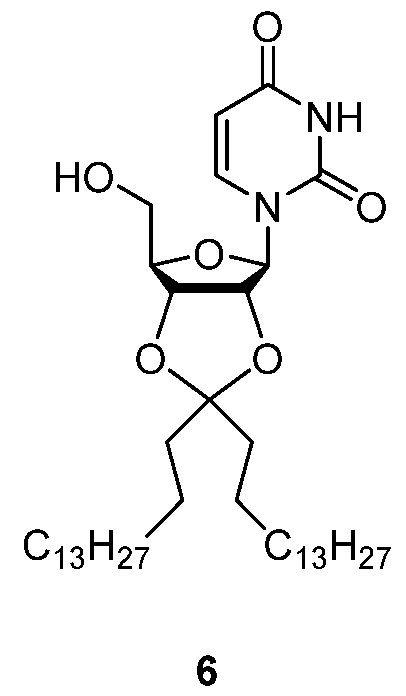 Palmitone (1 g, 2.22 mmol) was added to a mixture of dry THF (20 mL), uridine (2.70 g, 11.11 mmol.), TsOH (0.42 g, 2.22 mmol) and triethylorthoformate (1.85 mL, 11.11 mmol.). The solution was refluxed for 1 day, quenched with triethylamine (0.6 mL) and poured into a solution of H2O (50 mL), ice (50 g) and NaHCO3 (4 g) then stirred for 15 min. The organic phase was dried over Na2SO4 and concentrated in vacuo. The remaining solid was triturated in MeOH to give compound 6 (0.74 g, 49 %) as a white powder. 1H NMR (300.13 MHz, CDCl3): δ (ppm) 0.87 (t, J = 6.6Hz, 6 H, 2CH3), 1.24 (m, 48H, 24CH2), 1.41 (m, 4H, 2CH3CH2), 1.56 (m, 2H, CCH2), 1.73 (m, 2H, CCH2), 3.05 (m, 1H, OH), 3.80 (dd, J = 12.0 Hz, J = 3.6 Hz, 1H, H5’), 3.91 (dd, J = 12.0 Hz, J = 2.7 Hz 1H, H5’), 4.28 (m, 1H, H4’), 4.95 (dd, J = 6.6Hz, J = 3.6Hz, 1H, H3’), 5.04 (dd, J = 6.6 Hz, J = 2.7 Hz, 1H, H2’), 5.55 (d, J = 2.7 Hz, 1H, H1’), 5.72 (d, J = 8.1 Hz, 1H, CH), 7.33 (d, J = 8.1 Hz, 1H, CH), 9.43 (m, 1H, NH). 13C NMR (75.47 MHz, CDCl3): δ (ppm) 14,10 (CH3), 22.70 (CH2), 23.54 (CH2), 24.15 (CH2), 29.33-29.81 (CH2), 31.89 (CH2), 36.85 (CH2COO), 36.98 (CH2COO), 62.65 (C5’), 80.29 (C4’), 83.84 (C3’), 87.29 (C2’), 96.34 (C1’), 102.56 (CH), 118.39 (OCO), 143.16 (CH), 150.32 (CO), 163.33 (CO). FAB MS ([M+H] + = 677). Compound 7:
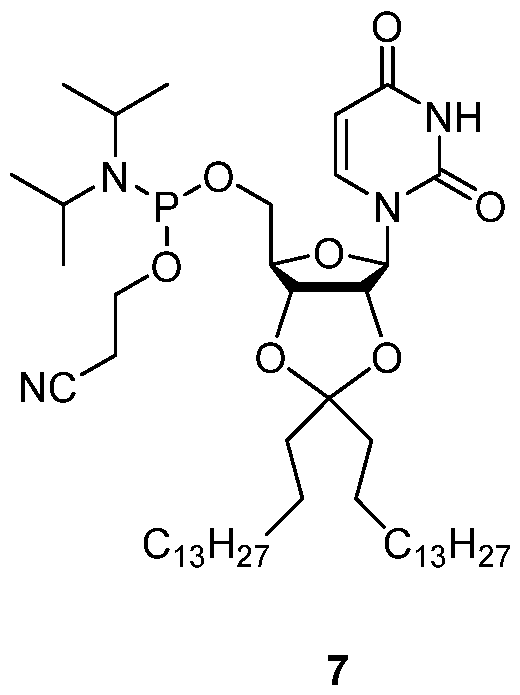 Compound 6 was dried over P2O5 overnight under reduced pressure before use. Diisopropylethylamine (0.052 mL, 0.299 mmol), 6 (97mg, 0.149 mmol) and 2-Cyanoethyl N,N- diisopropylchlorophosphoramidite were dissolved in 3 mL dichloromethane and the solution stirred at room temperature for 1 h. Sodium bicarbonate 0.1 M (3 mL) was poured into the flask and the aqueous phase extracted with dichloromethane. Flash chromatography (Hexane/AcOEt/TEA 70/25/5) afforded 90 mg (69%) of the desired phosphoramidite as a white solid. 1H NMR (300.13 MHz, CDCl3): δ (ppm) 0.88 (t, J = 6.6 Hz, 6 H, 2CH3), 1.19 (m, 12H, iPr), 1.27 (m, 50H, 25 CH2), 1.43 (m, 2H, CH2), 1.56 (m, 2H, CH2), 1.74 (m, 2H, CH2), 2.65 (m, 2H, iPr), 3.60 (m, 2H, CH2CN), 3.85 (m, 4H, OCH2, H5’), 4.36 (m, 1H, H4’), 4.83 (m, 2H, H2’,3’), 5.72 (d, J = 8.1 Hz, 1H, CH), 5.81 (s, 1H, H1’, dia1), 5.90 (s, 0.5H, H1’, dia2), 7.48 (d, J = 8.1 Hz, 0.5H, CH, dia1), 7.57 (d, J = 8.1 Hz, 0.5H, CH, dia2). ESI MS ([M-H]- = 876). 3.2. Lipid single chain C18 phosphoramidite
 Compound 8 is commercially available and was obtained from Glen Research. 4. Synthesis of modified oligonucleotides The modified oligonucleotides according to the invention are synthesized according to the following general scheme:
The photo-cleavable linker (compound 5) was added at the 5’ end of the sequence before the lipid conjugates. The lipid chains (double chain or single chain) were conjugated at the 5’ end of the oligonucleotide. 4.1. General procedure for the synthesis of oligonucleotides The oligonucleotides were synthesized at 1 µmolar scale on an H8 (K&A Labs, Germany) on automated synthesizer according to the β-phosphoramidite methodology. 4.2. Automated DNA synthesis and purification of Lipid-Oligonucleotides (LONs). LONs were synthesized using the phosphoramidite methodology on an automated Expedite 8909 DNA synthesizer at the µmol scale on 1000 Å primer support (loading: 30-100 μmol/g, Link technologies, Synbase Control Pore Glass). Prior to use, the phosphoramidites 7 and 8 were dried over P2O5 overnight and then dissolved in dry CH2Cl2/CH3CN 1/1 to a 0.1 M concentration (lipidic phosphoramidites do not dissolve in pure acetonitrile). N-benzylthiotetrazole was used for activation of the phosphoramidite prior to coupling. The phosphoramidite 7 and 8 were manually coupled at the 5’ end of sequence on the solid support by passing (via syringes) the activator and the phosphoramidite solution (0.5 mL) back and forth several times for 10 min. Cleavage from the solid support and base deprotection was achieved using 1
mL of a saturated aqueous NH4OH solution for 4 h at 55°C. The supernatant was collected and the CPG beads were washed 3 times with 200 µL of milliQ water. The solutions were pooled and evaporated (speed vac). The crude LONs were dissolved in 0.5 mL of water and purified on a semi-preparative C4-reverse phase HPLC column (Macherey Nagel, Nucleosil, 5 µm, 250 mm), flow rate: 5 mL/min, using buffer A (0.1M triethylammonium acetate pH 7.1 / CH3CN (95/5, V/V)) and buffer B 0.1M triethylammonium acetate pH 7.1 / CH3CN (20/80, V/V). The LONs eluted after 6.5 min. The LON containing fractions were pooled and evaporated to dryness and dissolved in autoclaved milliQ water. The (L)ONs were then dialyzed against a 10 mM LiCl solution (not to favor G4 formation) followed by water. Yields were acceptable following this protocol (15-30% yield after purification of the crude material). 4.3. TBA An oligonucleotide (TBA) was synthetised according to the general procedure for the synthesis of oligonucleotides and having the following sequence: SEQ ID NO: 1 (5’- GGTTGGTGTGGTTGG-3’). ESI-MS: Calculated: 4723.788; Found.: 4723.763. 4.4. EXAMPLE 1 (K-PC-TBA)
Compound 8 is commercially available and was obtained from Glen Research. 4. Synthesis of modified oligonucleotides The modified oligonucleotides according to the invention are synthesized according to the following general scheme:
The photo-cleavable linker (compound 5) was added at the 5’ end of the sequence before the lipid conjugates. The lipid chains (double chain or single chain) were conjugated at the 5’ end of the oligonucleotide. 4.1. General procedure for the synthesis of oligonucleotides The oligonucleotides were synthesized at 1 µmolar scale on an H8 (K&A Labs, Germany) on automated synthesizer according to the β-phosphoramidite methodology. 4.2. Automated DNA synthesis and purification of Lipid-Oligonucleotides (LONs). LONs were synthesized using the phosphoramidite methodology on an automated Expedite 8909 DNA synthesizer at the µmol scale on 1000 Å primer support (loading: 30-100 μmol/g, Link technologies, Synbase Control Pore Glass). Prior to use, the phosphoramidites 7 and 8 were dried over P2O5 overnight and then dissolved in dry CH2Cl2/CH3CN 1/1 to a 0.1 M concentration (lipidic phosphoramidites do not dissolve in pure acetonitrile). N-benzylthiotetrazole was used for activation of the phosphoramidite prior to coupling. The phosphoramidite 7 and 8 were manually coupled at the 5’ end of sequence on the solid support by passing (via syringes) the activator and the phosphoramidite solution (0.5 mL) back and forth several times for 10 min. Cleavage from the solid support and base deprotection was achieved using 1
mL of a saturated aqueous NH4OH solution for 4 h at 55°C. The supernatant was collected and the CPG beads were washed 3 times with 200 µL of milliQ water. The solutions were pooled and evaporated (speed vac). The crude LONs were dissolved in 0.5 mL of water and purified on a semi-preparative C4-reverse phase HPLC column (Macherey Nagel, Nucleosil, 5 µm, 250 mm), flow rate: 5 mL/min, using buffer A (0.1M triethylammonium acetate pH 7.1 / CH3CN (95/5, V/V)) and buffer B 0.1M triethylammonium acetate pH 7.1 / CH3CN (20/80, V/V). The LONs eluted after 6.5 min. The LON containing fractions were pooled and evaporated to dryness and dissolved in autoclaved milliQ water. The (L)ONs were then dialyzed against a 10 mM LiCl solution (not to favor G4 formation) followed by water. Yields were acceptable following this protocol (15-30% yield after purification of the crude material). 4.3. TBA An oligonucleotide (TBA) was synthetised according to the general procedure for the synthesis of oligonucleotides and having the following sequence: SEQ ID NO: 1 (5’- GGTTGGTGTGGTTGG-3’). ESI-MS: Calculated: 4723.788; Found.: 4723.763. 4.4. EXAMPLE 1 (K-PC-TBA)
The ketal-lipid double chain C15 modified TBA featuring a photocleavable linker at the 5’ end (K-PC-TBA) was synthesized according to the general procedure for the synthesis of Lipid-Oligonucleotides starting from TBA which was reacted with compound 5, and then with compound 7. ESI-MS: Calculated: 5751.318; Found.: 5751.292. 4.5. COMPARATIVE EXAMPLE 1 (K-TBA)
A ketal-lipid modified TBA not featuring a photocleavable linker at the 5’ end (K-TBA) was synthesized as a control according to the general procedure for the synthesis of Lipid- Oligonucleotides starting from TBA which was reacted with compound 7. ESI-MS: Calculated: 5462.283; Found.: 5462.174. 4.6. EXAMPLE 2 (C18-PC-TBA)
 The lipid single chain C18 modified TBA featuring a photocleavable linker at the 5’ end (C18-PC-TBA) was synthesized according to the general procedure for the synthesis of Lipid-Oligonucleotides starting from TBA which was reacted with compound 5, and then with compound 8. ESI-MS: Calculated: 5345.071; Found.: 5345.031. 4.7. COMPARATIVE EXAMPLE 2 (C18-TBA)
 The lipid single chain C18 modified TBA not featuring a photocleavable linker at the 5’ end (C18-TBA) was synthesized as a control according to the general procedure for the synthesis of Lipid-Oligonucleotides starting from TBA which was reacted with compound 8. ESI-MS: Calculated: 5056.036; Found.: 5055.974. 5. Photocleavage The photocleavage reactions of the oligonucleotide samples used for CD investigations were carried out for 1 h at 350 nm using a classical UV lamp (Model: CAMAG TL-900) used for TLC. The reactions were performed either at room temperature or in ice. 5.1. Photocleavage of modified oligonucleotide of EXAMPLE 1
The photocleavage was performed on modified oligonucleotide of EXAMPLE 1 (K-PC- TBA) according to the above general procedure for photocleavage. The oligonucleotide TBA was obtained as a H2PO3 salt (H2PO3-TBA). ESI-MS: Calculated: 4803.754; Found.: 4803.633. 5.2. Photocleavage of modified oligonucleotide of EXAMPLE 2 The photocleavage was performed on modified oligonucleotide of EXAMPLE 2 (C18-PC- TBA) according to the above general procedure for photocleavage. The oligonucleotide TBA was obtained as a H2PO3 salt (H2PO3-TBA) identical as for EXAMPLE 1. ESI-MS analysis was also identical as for EXAMPLE 1. 6. Results The photolytic cleavage at λ=350 nm provides a release of the non-lipidic TBA and the O- nitrosoacetophenone byproduct. As observed by mass spectrometry this photoreaction yields the TBA sequence bearing a phosphate at its 5’-end (Figure 1). The first conformational switch i.e. the one triggered by salts hereafter simply referred as "switch" (first antiparallel to parallel switch) was investigated first. Interestingly, the mere lipidation of the TBA sequence is not sufficient to induce any switch as evidenced by the antiparallel signature of K-TBA in the CD spectrum at low salt concentrations (Erreur ! Source du renvoi introuvable.A). An increase in the concentration of salts is required to observe the switch (Erreur ! Source du renvoi introuvable.A and 3). The switch is observed for concentrations in salts above ca. 20 mM, irrespective of the nature of the alkaline-earth cation used (Li+, Na+ or K+, Figure 3). The switch is therefore more likely driven by the ionic strength of the aqueous solution rather than a change in any putative G4 topology known to be sensitive to the nature of the cation. Salting out effects are also unlikely given the low concentration of salts involved in the transition. On the other hand, micellar aggregates of K-TBA at low salt concentrations are visible by dynamic light scattering (Figure 4). Accordingly, the absence of switch at low ionic strength is interpreted as the consequence of electrostatic repulsions between the polyanionic antiparallel TBA
strands present in the corona of the micelle. The electrostatic repulsion is gradually screened upon titration with salts so that the TBA strands of K-TBA are more likely to interact and switch to the observed parallel conformers. These results constitute an example of truly interconverting G4 conformers following titration with the exact same cation present at millimolar, physiologically relevant, concentrations. Interestingly, the TBA strands involved in K-(PC-)TBA parallel conformers 1) exhibit a higher melting temperature relative to the unmodified antiparallel TBA in the same conditions and 2) are not capable of interacting with the target thrombin protein as evidenced by the absence of change in the CD spectrum upon incubation with the protein (Figure 5). The parallel folds formed from K-PC-TBA thus constitute attractive TBA prodrugs that can be further evaluated for their ability to release the aptameric antiparallel active fold of the TBA following a photo-switch hereafter simply referred as "photo-switch" (Erreur ! Source du renvoi introuvable.B). Two different biologically relevant scenarios mimicking either extra- or intracellular fluids were then tested. These conditions primarily differ in the concentration of potassium present in each buffer: KCl is present at 140 and 5 mM inside cells and in extracellular fluids respectively. K+ constituting one of the best G4-binder, this difference was expected to have a great impact on the stability of the different G4 folds. This trend was clearly confirmed with the parallel folds of K-PC-TBA with an impressive ΔT1/2 (before photocleavage) of ca. 25°C (60 vs 85 °C respectively in extra- and intracellular environments, Figure 6 and 7). Moreover, thrombin being an extracellular protein, we primarily focused our investigations toward the photocleavage of K-PC-TBA in extracellular conditions. The antiparallel fold of TBA is efficiently recovered following light exposure at 350 nm at 37°C to further mimic biological conditions. Interestingly, when carried out at 4°C and even though the photocleavage of K-PC-TBA readily takes place (Erreur ! Source du renvoi introuvable.C), the parallel conformation of TBA stands still at this temperature. The photo- switch is therefore endothermic. The energetic barrier is even higher when the photo-switch takes place in the presence of intracellular salts: the photocleaved TBA strands in their parallel conformation remains stable even at 37°C (Figure 7A). Even if not required per se, the partial melting of the parallel folds seems to constitute a prerequisite to observe the switch to the native antiparallel TBA. Hence, T1/2 around 43°C (with partial melting at 37°C)
and 74°C (>> 37°C) were observed for the parallel TBA self-assemblies after photocleavage in the presence of the extra- and intracellular buffers respectively (Figure 7). Overall, these results suggest that the lipidated TBA platform meets all the specifications of a prodrug i.e. 1) the parallel prodrug spontaneously self-assembles under physiologically relevant conditions (>50 mM salt concentrations) and 2) following photocleavage, it folds back to the active TBA drug at 37°C only in extracellular environments where the targeted thrombin protein is present. Finally, the effect the target thrombin protein has on the photo-switch was investigated. Thrombin has indeed been shown to assist the folding of the antiparallel TBA. Consequently, thrombin was expected to assist and ease the photo-switch. On one hand, thrombin effectively stabilizes the native antiparallel form of the photocleaved 5’PO3--TBA as evidenced by a higher intensity signal in CD for the antiparallel signal in the presence in comparison to the absence of the protein (Figure 6). One the other hand, no photo-switch (in the presence of the intracellular buffer at 37°C) or acceleration of the photo-switch of any sort (in the presence of the extracellular buffer at 20°C where a slow kinetic of switch is observable) are noticed in the presence of the protein. These results suggest that following photolysis, the parallel folds of TBA are kinetically trapped and exhibit a high energetic barrier to overcome to fold back to the original antiparallel aptamer and that thrombin does not ease the photo-switch although it actually binds the final aptameric structure.
The lipid single chain C18 modified TBA not featuring a photocleavable linker at the 5’ end (C18-TBA) was synthesized as a control according to the general procedure for the synthesis of Lipid-Oligonucleotides starting from TBA which was reacted with compound 8. ESI-MS: Calculated: 5056.036; Found.: 5055.974. 5. Photocleavage The photocleavage reactions of the oligonucleotide samples used for CD investigations were carried out for 1 h at 350 nm using a classical UV lamp (Model: CAMAG TL-900) used for TLC. The reactions were performed either at room temperature or in ice. 5.1. Photocleavage of modified oligonucleotide of EXAMPLE 1
The photocleavage was performed on modified oligonucleotide of EXAMPLE 1 (K-PC- TBA) according to the above general procedure for photocleavage. The oligonucleotide TBA was obtained as a H2PO3 salt (H2PO3-TBA). ESI-MS: Calculated: 4803.754; Found.: 4803.633. 5.2. Photocleavage of modified oligonucleotide of EXAMPLE 2 The photocleavage was performed on modified oligonucleotide of EXAMPLE 2 (C18-PC- TBA) according to the above general procedure for photocleavage. The oligonucleotide TBA was obtained as a H2PO3 salt (H2PO3-TBA) identical as for EXAMPLE 1. ESI-MS analysis was also identical as for EXAMPLE 1. 6. Results The photolytic cleavage at λ=350 nm provides a release of the non-lipidic TBA and the O- nitrosoacetophenone byproduct. As observed by mass spectrometry this photoreaction yields the TBA sequence bearing a phosphate at its 5’-end (Figure 1). The first conformational switch i.e. the one triggered by salts hereafter simply referred as "switch" (first antiparallel to parallel switch) was investigated first. Interestingly, the mere lipidation of the TBA sequence is not sufficient to induce any switch as evidenced by the antiparallel signature of K-TBA in the CD spectrum at low salt concentrations (Erreur ! Source du renvoi introuvable.A). An increase in the concentration of salts is required to observe the switch (Erreur ! Source du renvoi introuvable.A and 3). The switch is observed for concentrations in salts above ca. 20 mM, irrespective of the nature of the alkaline-earth cation used (Li+, Na+ or K+, Figure 3). The switch is therefore more likely driven by the ionic strength of the aqueous solution rather than a change in any putative G4 topology known to be sensitive to the nature of the cation. Salting out effects are also unlikely given the low concentration of salts involved in the transition. On the other hand, micellar aggregates of K-TBA at low salt concentrations are visible by dynamic light scattering (Figure 4). Accordingly, the absence of switch at low ionic strength is interpreted as the consequence of electrostatic repulsions between the polyanionic antiparallel TBA
strands present in the corona of the micelle. The electrostatic repulsion is gradually screened upon titration with salts so that the TBA strands of K-TBA are more likely to interact and switch to the observed parallel conformers. These results constitute an example of truly interconverting G4 conformers following titration with the exact same cation present at millimolar, physiologically relevant, concentrations. Interestingly, the TBA strands involved in K-(PC-)TBA parallel conformers 1) exhibit a higher melting temperature relative to the unmodified antiparallel TBA in the same conditions and 2) are not capable of interacting with the target thrombin protein as evidenced by the absence of change in the CD spectrum upon incubation with the protein (Figure 5). The parallel folds formed from K-PC-TBA thus constitute attractive TBA prodrugs that can be further evaluated for their ability to release the aptameric antiparallel active fold of the TBA following a photo-switch hereafter simply referred as "photo-switch" (Erreur ! Source du renvoi introuvable.B). Two different biologically relevant scenarios mimicking either extra- or intracellular fluids were then tested. These conditions primarily differ in the concentration of potassium present in each buffer: KCl is present at 140 and 5 mM inside cells and in extracellular fluids respectively. K+ constituting one of the best G4-binder, this difference was expected to have a great impact on the stability of the different G4 folds. This trend was clearly confirmed with the parallel folds of K-PC-TBA with an impressive ΔT1/2 (before photocleavage) of ca. 25°C (60 vs 85 °C respectively in extra- and intracellular environments, Figure 6 and 7). Moreover, thrombin being an extracellular protein, we primarily focused our investigations toward the photocleavage of K-PC-TBA in extracellular conditions. The antiparallel fold of TBA is efficiently recovered following light exposure at 350 nm at 37°C to further mimic biological conditions. Interestingly, when carried out at 4°C and even though the photocleavage of K-PC-TBA readily takes place (Erreur ! Source du renvoi introuvable.C), the parallel conformation of TBA stands still at this temperature. The photo- switch is therefore endothermic. The energetic barrier is even higher when the photo-switch takes place in the presence of intracellular salts: the photocleaved TBA strands in their parallel conformation remains stable even at 37°C (Figure 7A). Even if not required per se, the partial melting of the parallel folds seems to constitute a prerequisite to observe the switch to the native antiparallel TBA. Hence, T1/2 around 43°C (with partial melting at 37°C)
and 74°C (>> 37°C) were observed for the parallel TBA self-assemblies after photocleavage in the presence of the extra- and intracellular buffers respectively (Figure 7). Overall, these results suggest that the lipidated TBA platform meets all the specifications of a prodrug i.e. 1) the parallel prodrug spontaneously self-assembles under physiologically relevant conditions (>50 mM salt concentrations) and 2) following photocleavage, it folds back to the active TBA drug at 37°C only in extracellular environments where the targeted thrombin protein is present. Finally, the effect the target thrombin protein has on the photo-switch was investigated. Thrombin has indeed been shown to assist the folding of the antiparallel TBA. Consequently, thrombin was expected to assist and ease the photo-switch. On one hand, thrombin effectively stabilizes the native antiparallel form of the photocleaved 5’PO3--TBA as evidenced by a higher intensity signal in CD for the antiparallel signal in the presence in comparison to the absence of the protein (Figure 6). One the other hand, no photo-switch (in the presence of the intracellular buffer at 37°C) or acceleration of the photo-switch of any sort (in the presence of the extracellular buffer at 20°C where a slow kinetic of switch is observable) are noticed in the presence of the protein. These results suggest that following photolysis, the parallel folds of TBA are kinetically trapped and exhibit a high energetic barrier to overcome to fold back to the original antiparallel aptamer and that thrombin does not ease the photo-switch although it actually binds the final aptameric structure.
Claims
CLAIMS 1. A compound of Formula I:
 or a pharmaceutically acceptable salt thereof.
2. A compound of Formula II:
 or a pharmaceutically acceptable salt thereof, wherein is an oligonucleotide;
A is a saturated or unsaturated, linear or branched, hydrocarbon chain comprising from 1 to 22 carbon atoms
or a pharmaceutically acceptable salt thereof, wherein is an oligonucleotide;
A is a saturated or unsaturated, linear or branched, hydrocarbon chain comprising from 1 to 22 carbon atoms
 wherein B is an optionally substituted nucleobase, selected from the group consisting of purine nucleobases, pyrimidine nucleobases, and non-natural monocyclic or bicyclic heterocyclic nucleobases wherein each cycle comprises from 4 to 7 atoms; L1 and L2 are independently selected from H and a saturated or unsaturated, linear or branched, hydrocarbon chain comprising from 1 to 22 carbon atoms; with the proviso that L1 and L2 are not both H.
3. The compound according to claim 2, wherein

4. The compound according to claim 3, wherein L1 and L2 are independently selected from H and C6-C20-alkyl, in particular L1 and L2 are independently selected from H and C10- C20 alkyl, more particularly L1 and L2 are C12-C18-alkyl, still more particularly L1 and L2 are n-pentadecyl.
5. The compound according to claim 3 or 4, wherein B is uracil.
6. The compound according to claim 2, wherein A is C6-C20-alkyl, in particular A is C10- C20 alkyl, more particularly A is C12-C18-alkyl, still more particularly A is n-octadecyl.
7. The compound according to any one of claims 2 to 6, wherein
 oligonucleotide comprising a sequence from 1 to 100 nucleotides.
8. The compound according to any one of claims 2 to 7, wherein
 oligonucleotide of SEQ ID NO:1 (5’-GGT-TGG-TGT-GGT-TGG-3’).
9. The compound according to claim 2, selected from the group consisting of:

.
10. A pharmaceutical composition comprising a compound according to any one of claims 2 to 9, or a pharmaceutically acceptable salt thereof, and at least one pharmaceutically acceptable carrier, diluent, excipient and/or adjuvant.
11. A compound according to any one of claims 2 to 9, or a pharmaceutically acceptable salt thereof, for use in a therapeutic treatment in humans or animals.
12. A compound according to any one of claims 2 to 9, or a pharmaceutically acceptable salt thereof, for use in the treatment of cancer, in particular pancreatic cancer.
13. A compound according to any one of claims 2 to 9, or a pharmaceutically acceptable salt thereof, for use in the treatment of viral infections.
14. A compound according to any one of claims 2 to 9, or a pharmaceutically acceptable salt thereof, for use as an anticoagulant.
15. A compound according to any one of claims 2 to 9, or a pharmaceutically acceptable salt thereof, for use in the treatment of heart failure.
Applications Claiming Priority (2)
| Application Number | Priority Date | Filing Date | Title |
|---|---|---|---|
| EP23305901 | 2023-06-06 | ||
| EP23305901.3 | 2023-06-06 |
Publications (1)
| Publication Number | Publication Date |
|---|---|
| WO2024251856A1 true WO2024251856A1 (en) | 2024-12-12 |
Family
ID=87158047
Family Applications (1)
| Application Number | Title | Priority Date | Filing Date |
|---|---|---|---|
| PCT/EP2024/065552 Ceased WO2024251856A1 (en) | 2023-06-06 | 2024-06-06 | Photocleavable lipid oligonucleotides and their use |
Country Status (1)
| Country | Link |
|---|---|
| WO (1) | WO2024251856A1 (en) |
Citations (1)
| Publication number | Priority date | Publication date | Assignee | Title |
|---|---|---|---|---|
| US6818394B1 (en) * | 1996-11-06 | 2004-11-16 | Sequenom, Inc. | High density immobilization of nucleic acids |
-
2024
- 2024-06-06 WO PCT/EP2024/065552 patent/WO2024251856A1/en not_active Ceased
Patent Citations (1)
| Publication number | Priority date | Publication date | Assignee | Title |
|---|---|---|---|---|
| US6818394B1 (en) * | 1996-11-06 | 2004-11-16 | Sequenom, Inc. | High density immobilization of nucleic acids |
Non-Patent Citations (29)
| Title |
|---|
| A. AVINO ET AL., CURR. PHARM. DES., vol. 18, 2012, pages 2036 - 2047 |
| A. DATTA ET AL., CYTOGENET. GENOME RES., vol. 161, 2021, pages 285 - 296 |
| A. HECKEL ET AL., J. AM. CHEM. SOC., vol. 127, 2005, pages 822 - 823 |
| A. M. VARIZHUK ET AL., NUCLEIC ACIDS RES., vol. 46, 2018, pages 8978 - 8992 |
| A. MAITY ET AL., NUCLEIC ACIDS RES., vol. 48, 2020, pages 3315 - 3327 |
| A. PIPIER ET AL., SCI. REP., vol. 11, 2021, pages 13469 |
| ALEXANDER HECKEL ET AL: "Light Regulation of Aptamer Activity: An Anti-Thrombin Aptamer with Caged Thymidine Nucleobases", JOURNAL OF THE AMERICAN CHEMICAL SOCIETY, vol. 127, no. 3, 1 January 2005 (2005-01-01), pages 822 - 823, XP055160741, ISSN: 0002-7863, DOI: 10.1021/ja043285e * |
| BRUNE VIALET ET AL: "Controlling G-quadruplex formation via lipid modification of oligonucleotide sequences", CHEMICAL COMMUNICATIONS, vol. 53, no. 84, 1 January 2017 (2017-01-01), UK, pages 11560 - 11563, XP055587908, ISSN: 1359-7345, DOI: 10.1039/C7CC05693A * |
| C. NAKANISHI ET AL., BIOCHEM. BIOPHYS. RES. COMMUN., vol. 531, 2020, pages 45 - 50 |
| C. RICCARDI ET AL., PHARMACOL. THER., vol. 217, 2021, pages 107649 |
| D. MIYOSHI ET AL., BIOCHEMISTRY, vol. 41, 2002, pages 15017 - 15024 |
| D. MIYOSHI ET AL., J. AM. CHEM. SOC., vol. 128, 2006, pages 7957 - 7963 |
| E. LARGY ET AL., MET. IONS LIFE SCI., vol. 16, 2016, pages 203 - 258 |
| G. MIGLIETTA ET AL., ACS MED. CHEM. LETT., vol. 6, 2015, pages 1179 - 1183 |
| H. WEISSHOFF ET AL., HELIYON, vol. 6, 2020, pages 05421 |
| I. FRASSON ET AL., INT. J. BIOL. MACROMOL., vol. 204, 2022, pages 89 - 102 |
| I. RUSSO KRAUSS ET AL., NUCLEIC ACIDS RES., vol. 40, 2012, pages 8119 - 8128 |
| J. CARVALHO ET AL., TRENDS MOL. MED., vol. 26, 2020, pages 848 - 861 |
| J. FIGUEIREDO ET AL., MOLECULES, vol. 26, 2021, pages 6164 |
| J. RAMOS-SORIANO ET AL., JACS AU, vol. 1, 2021, pages 1516 - 1526 |
| JAYAPAL P ET AL: "Structure-activity relationships of a caged thrombin binding DNA aptamer: Insight gained from molecular dynamics simulation studies", JOURNAL OF STRUCTURAL BIOLOGY, ACADEMIC PRESS, UNITED STATES, vol. 166, no. 3, 1 June 2009 (2009-06-01), pages 241 - 250, XP026086426, ISSN: 1047-8477, [retrieved on 20090311], DOI: 10.1016/J.JSB.2009.01.010 * |
| L. JOLY ET AL., CHEM. COMMUN., vol. 48, 2012, pages 8386 - 8388 |
| M. M. DAILEY ET AL., NUCLEIC ACIDS RES., vol. 38, 2010, pages 5217 - 5225 |
| M. MÉTIFIOT ET AL., NUCLEIC ACIDS RES., vol. 42, 2014, pages 12352 - 12366 |
| O. MENDOZA ET AL., CHEM. EUR. J., vol. 21, 2015, pages 6732 - 6739 |
| P. KHAREL ET AL., WIRES RNA, vol. 11, 2020 |
| S. BURGE ET AL., NUCLEIC ACIDS RES., vol. 34, 2006, pages 5402 - 5415 |
| S. COGOI ET AL., SCI. REP., vol. 6, 2016, pages 38468 |
| T. FUJIMOTO ET AL., J. PHYS. CHEM. B, vol. 117, 2013, pages 963 - 972 |
Similar Documents
| Publication | Publication Date | Title |
|---|---|---|
| JP6758335B2 (en) | Modified oligonucleotides for telomerase inhibition | |
| JP5998326B2 (en) | Novel nucleic acid prodrugs and methods of use thereof | |
| JP2022000023A (en) | Oligonucleotide compositions and methods thereof | |
| JP2022033738A (en) | Antisense nucleic acid | |
| JP7190794B2 (en) | Complex of nucleic acid medicine and hyperbranched lipid | |
| JP7263236B2 (en) | Novel bicyclic nucleosides and oligomers prepared therefrom | |
| JP2023537499A (en) | Systemic delivery of oligonucleotides | |
| TWI709406B (en) | Oligonucleotide compositions and methods of making the same | |
| WO2012074038A1 (en) | Modified single-strand polynucleotide | |
| TW202123973A (en) | Conjugate of galnac-oligonucleotide for delivery to liver and manufacturing method thereof | |
| TW202043470A (en) | Rnai agents for inhibiting expression of hif-2 alpha (epas1), compositions thereof, and methods of use | |
| KR20250140080A (en) | siRNA, conjugates thereof, pharmaceutical compositions and uses thereof for inhibiting expression of the cell-programmed death-ligand 1 gene | |
| CN116615542A (en) | Systemic delivery of oligonucleotides | |
| IL271788B1 (en) | Compounds and methods for trans-membrane delivery of molecules | |
| TW202237848A (en) | Tau-targeting oligonucleotide gapmers | |
| AU2024280172A1 (en) | Novel double-stranded sirna, conjugate thereof, and use thereof | |
| CN121568699A (en) | SIRNA, SIRNA-containing conjugates, pharmaceutical compositions and uses thereof | |
| AU2015255202B2 (en) | Novel nucleic acid prodrugs and methods of use thereof | |
| CA3292696A1 (en) | Novel double-stranded sirna, conjugate thereof, and use thereof | |
| WO2025223229A1 (en) | Double-stranded oligonucleotide comprising lipid-modified monomer and use thereof | |
| HK40131592A (en) | Sirna, conjugate which contain sirna, pharmaceutical composition and uses thereof | |
| WO2026061330A1 (en) | Extrahepatic delivery drug and use thereof | |
| WO2025232840A1 (en) | Galnac derivative and oligonucleotide conjugate thereof | |
| HK40102389A (en) | Oligonucleotide compositions and methods of making the same | |
| JP2025529338A (en) | Carbocyclic nucleosides, oligonucleotides, their production methods and medical uses |
Legal Events
| Date | Code | Title | Description |
|---|---|---|---|
| 121 | Ep: the epo has been informed by wipo that ep was designated in this application |
Ref document number: 24731931 Country of ref document: EP Kind code of ref document: A1 |
|
| NENP | Non-entry into the national phase |
Ref country code: DE |