WO2024251739A1 - Novel use of an ileal bile acid transporter inhibitor for the treatment of pruritus - Google Patents
Novel use of an ileal bile acid transporter inhibitor for the treatment of pruritus Download PDFInfo
- Publication number
- WO2024251739A1 WO2024251739A1 PCT/EP2024/065346 EP2024065346W WO2024251739A1 WO 2024251739 A1 WO2024251739 A1 WO 2024251739A1 EP 2024065346 W EP2024065346 W EP 2024065346W WO 2024251739 A1 WO2024251739 A1 WO 2024251739A1
- Authority
- WO
- WIPO (PCT)
- Prior art keywords
- pruritus
- treatment
- itch
- nash
- mash
- Prior art date
- Legal status (The legal status is an assumption and is not a legal conclusion. Google has not performed a legal analysis and makes no representation as to the accuracy of the status listed.)
- Ceased
Links
Classifications
-
- A—HUMAN NECESSITIES
- A61—MEDICAL OR VETERINARY SCIENCE; HYGIENE
- A61K—PREPARATIONS FOR MEDICAL, DENTAL OR TOILETRY PURPOSES
- A61K31/00—Medicinal preparations containing organic active ingredients
- A61K31/33—Heterocyclic compounds
- A61K31/395—Heterocyclic compounds having nitrogen as a ring hetero atom, e.g. guanethidine or rifamycins
- A61K31/495—Heterocyclic compounds having nitrogen as a ring hetero atom, e.g. guanethidine or rifamycins having six-membered rings with two or more nitrogen atoms as the only ring heteroatoms, e.g. piperazine or tetrazines
- A61K31/4995—Pyrazines or piperazines forming part of bridged ring systems
-
- A—HUMAN NECESSITIES
- A61—MEDICAL OR VETERINARY SCIENCE; HYGIENE
- A61K—PREPARATIONS FOR MEDICAL, DENTAL OR TOILETRY PURPOSES
- A61K31/00—Medicinal preparations containing organic active ingredients
- A61K31/33—Heterocyclic compounds
- A61K31/395—Heterocyclic compounds having nitrogen as a ring hetero atom, e.g. guanethidine or rifamycins
- A61K31/55—Heterocyclic compounds having nitrogen as a ring hetero atom, e.g. guanethidine or rifamycins having seven-membered rings, e.g. azelastine, pentylenetetrazole
- A61K31/554—Heterocyclic compounds having nitrogen as a ring hetero atom, e.g. guanethidine or rifamycins having seven-membered rings, e.g. azelastine, pentylenetetrazole having at least one nitrogen and one sulfur as ring hetero atoms, e.g. clothiapine, diltiazem
-
- A—HUMAN NECESSITIES
- A61—MEDICAL OR VETERINARY SCIENCE; HYGIENE
- A61K—PREPARATIONS FOR MEDICAL, DENTAL OR TOILETRY PURPOSES
- A61K31/00—Medicinal preparations containing organic active ingredients
- A61K31/70—Carbohydrates; Sugars; Derivatives thereof
- A61K31/7042—Compounds having saccharide radicals and heterocyclic rings
-
- A—HUMAN NECESSITIES
- A61—MEDICAL OR VETERINARY SCIENCE; HYGIENE
- A61K—PREPARATIONS FOR MEDICAL, DENTAL OR TOILETRY PURPOSES
- A61K38/00—Medicinal preparations containing peptides
- A61K38/04—Peptides having up to 20 amino acids in a fully defined sequence; Derivatives thereof
- A61K38/05—Dipeptides
-
- A—HUMAN NECESSITIES
- A61—MEDICAL OR VETERINARY SCIENCE; HYGIENE
- A61P—SPECIFIC THERAPEUTIC ACTIVITY OF CHEMICAL COMPOUNDS OR MEDICINAL PREPARATIONS
- A61P1/00—Drugs for disorders of the alimentary tract or the digestive system
- A61P1/16—Drugs for disorders of the alimentary tract or the digestive system for liver or gallbladder disorders, e.g. hepatoprotective agents, cholagogues, litholytics
-
- A—HUMAN NECESSITIES
- A61—MEDICAL OR VETERINARY SCIENCE; HYGIENE
- A61P—SPECIFIC THERAPEUTIC ACTIVITY OF CHEMICAL COMPOUNDS OR MEDICINAL PREPARATIONS
- A61P17/00—Drugs for dermatological disorders
- A61P17/04—Antipruritics
Definitions
- the present invention relates to an IBAT inhibitor for use in the treatment of pruritus in certain chronic liver diseases such as non-alcoholic fatty liver disease (NAFLD) [newly reclassified as metabolic dysfunction-associated steatotic liver disease (MASLD)] which encompasses nonalcoholic fatty liver (NAFL) and non-alcoholic steatohepatitis (NASH) [newly reclassified as metabolic dysfunction-associated steatohepatitis (MASH)] with or without cirrhosis, and methods of treatment of pruritus in NAFLD (or MASLD), including NAFL and NASH (or MASH) with or without cirrhosis, comprising administering to said human a therapeutically effective amount of an IBAT inhibitor, for example linerixibat.
- NAFLD nonalcoholic fatty liver disease
- NASH non-alcoholic steatohepatitis
- MASH metabolic dysfunction-associated steatohepatitis
- Pruritus is a well-recognised and characterised symptom of chronic, cholestatic liver diseases such as primary biliary cholangitis (PBC) and primary sclerosing cholangitis (PSC) and is known to impact quality of life (QoL).
- PBC primary biliary cholangitis
- PSC primary sclerosing cholangitis
- QoL quality of life
- Cholestatic pruritus is a common often debilitating condition that significantly impairs day- to-day functioning, including sleep latency and disturbance, fatigue, depression, and suicidal ideation (Younossi, Kiwi et al. 2000; Montagnese, Nsemi et al. 2013; Hegade, Bolier et al. 2016; Jin and Khan 2016; Hbnig, Herder et al. 2018, Hegade, Mells et al 2019, Mayo MJ, Dig Dis Sci. 2023 Mar; 68(3):995-1005).
- OCA Obeticholic acid
- UDCA ursodeoxycholic acid
- 'NAFLD' refers to non-alcoholic fatty liver disease, and until very recently has been used to describe the histological spectrum of steatosis to steatohepatitis with its subtypes 'NAFL' (non-alcoholic fatty liver (simple steatosis)) and 'NASH' (Non-alcoholic steatohepatitis).
- 'MASLD' refers to metabolic dysfunction associated steatotic liver disease, and represents the new classification of the 'NAFLD' disease [Hepatology 78(6) 1966-1986], that is, the MASLD disease was formerly largely classified using the term NAFLD.
- 'MASH' refers to metabolic dysfunction-associated steatohepatitis and is the 'replacement term' for NASH (M.E. Rinella, V. Lazarus, V. Ratziu et al. Annals of Hepatology 29 (2024) 101133).
- IBAT ileal bile acid transporter
- ASBT apical sodium-dependent bile acid transporter
- IBAT inhibitors block the enterohepatic circulation of bile acids, thereby reducing circulating bile acid levels and increasing fecal bile acid excretion (Lancet. 2017;389(10074): 1114-1123).
- the molecular IBAT inhibitors maralixibat (LIVMARLI) and odevixibat (BYLVAY) were recently approved by the FDA for the treatment of cholestatic pruritus in Alagille syndrome and pediatric familial intrahepatic cholestasis (PFIC), respectively.
- Linerixibat a minimally absorbed oral small molecule IBAT inhibitor, showed significant improvements in pruritus and also reduction of serum concentration of bile acids and autotaxin (the enzyme that produces lysophosphatidic acid) versus placebo in a phase 2a and phase 2b studies of patients with PBC (Hegade, Kendrick et al. 2017) (Levy 2022 Clin Gastroenterol Hepatol. 2022, available online https://doi.Org/10.1016/j.cgh.2022.10.032).
- the phase 2b GLIMMER study (NCT02966834) is the largest randomized investigational study of PBC patients with cholestatic pruritus to date.
- CLDs chronic liver diseases
- pruritus in other chronic liver diseases is not well-recognised; this is emphasised by the limited literature in this context.
- CLDs chronic liver diseases
- An effective treatment for pruritus in HepB, HepC, AIH and NAFLD (or MASLD), for example NASH (or MASH), is expected to significantly improve the quality of life in those patients with a pruritus component in such CLDs.
- an effective treatment for pruritus in HepB, HepC, AIH and NAFLD (or MASLD), for example NASH (or MASH) is highly desirable.
- an IBAT inhibitor for use in the treatment of pruritus in NAFLD (or MASLD).
- an IBAT inhibitor for use in the treatment of cholestatic pruritus in NAFLD (or MASLD).
- a method of treatment of pruritus in NAFLD (or MASLD) in a human in need thereof comprising administering to said human a therapeutically effective amount of an IBAT inhibitor.
- a method of treatment of cholestatic pruritus in NAFLD (or MASLD) in a human in need thereof comprising administering to said human a therapeutically effective amount of an IBAT inhibitor.
- FIG. 1 is a 5D-Itch Plot of Natural History Study Results for NASH (or MASH), PBC, PSC and AIH vs Non-Cholestatic Prior Art Pruritus Conditions, from Example 2a
- FIG. la is the same 5D-Itch Plot of Natural History Study Results as Fig 1. showing data for NASH (or MASH) and PBC only shows the same 5D-Itch Plot of Natural History Study Results, for NASH (or MASH) and PBC only
- FIG. 2 is a Sankey diagram showing change in itch severity over time in NASH (or MASH) and PBC, from Example 1
- FIG. 3 is a plot of individual Bayesian estimate of TSBA change from baseline AUC0-24 with change in weekly itch score over a 12-week treatment period of PBC patients, from Example 5
- FIG. 4A is a plot of ATX Least Squares mean ratio to baseline at Week 16 in itch responders versus non-responders treated with 40/90 mg BID linerixibat or placebo, of PBC patients from Example 6
- FIG. 4B is a plot of ATX Least Squares mean ratio of linerixibat versus placebo treatment in itch responders and non-responders, of PBC patients from Example 6
- Pruritus can be measured using different rating scales such as: i) 0-10-point Numerical Rating Scale (NRS): The patient-reported NRS scale measures intensity or severity of itch (rather than frequency of itch).
- NRS Numerical Rating Scale
- the use of NRS in the measurement of pruritus in PBC “Development and adaptation of patient-reported outcome measures for patients who experience itch associated with primary biliary cholangitis.” J Patient Rep Outcomes. 2019;3(l):2.
- ii) 5D Itch Scale Elman et al., "The 5-D itch scale: a new measure of pruritus.” Br J Dermatol. 2010 Mar; 162(3):587-93.
- the 5-D itch scale is a multidimensional patient-reported questionnaire designed to measure the following five dimensions: degree, duration, direction, disability and distribution. iii) For patients with PBC: PBC-40 (PBC-40): Jacoby et al., "Development, validation, and evaluation of the PBC-40, a disease specific health related quality of life measure for primary biliary cirrhosis.” Gut. 2005 Nov;54(ll): 1622-9.
- the six domains of PBC-40, a patient-reported questionnaire relate to fatigue, emotional, social, and cognitive function, general symptoms, and itch.
- itch severity There are no well-established physical or physiological markers of pruritus severity or treatment efficacy associated with cholestatic liver disease that can be observed or measured.
- the rating of itch is subjective, and each participant is likely to have a distinct response to any treatment for cholestatic pruritus. Therefore, patient-reported outcomes (PRO) are the best way to assess itch severity and measure a treatment effect.
- Treatment effect may be measured by examining the change of itch from baseline when administering a treatment and comparing it with change of itch from baseline when administering a placebo. Alternatively, one can compare the number of patients classified as a responder on a given treatment, with the number on placebo, wherein a responder is defined as a participant that improves by, or more than, the predefined responder.
- the pruritus component in patients suffering from a CLD such as HepB, HepC, AIH and NAFLD (or MASLD), for example NASH (or MASH)
- a CLD such as HepB, HepC, AIH and NAFLD (or MASLD), for example NASH (or MASH)
- NASH NASH
- NASH NASH
- NASH MASH
- Non-alcoholic fatty liver disease NASH
- Non-alcoholic steatohepatitis NASH
- MASLD Metabolic dysfunction associated steatotic liver disease
- MASH metabolic dysfunction associated steatohepatitis
- Non-alcoholic fatty liver disease (newly classified as metabolic dysfunction associated steatotic liver disease (MASLD)) is the fastest growing cause of chronic liver disease and the leading cause of cirrhosis and hepatocellular carcinoma and a growing indication for liver transplantation worldwide.
- MASLD is the new term employed to refer to steatotic liver disease related to systemic metabolic dysregulation, and encompasses patients who have hepatic steatosis and have at least one of five cardiometabolic risk factors.
- the term NAFLD was until very recently used to describe the histological spectrum of steatosis to steatohepatitis with its subtypes NAFL and NASH.
- NAFLD encompasses a disease continuum and exists in two clinical entities; nonalcoholic fatty liver (NAFL, simple steatosis) and non-alcoholic steatohepatitis (NASH), with or without cirrhosis.
- NAFL nonalcoholic fatty liver
- NASH non-alcoholic steatohepatitis
- NASH is characterised by necroinflammation and faster fibrosis progression than simple steatosis, i.e.
- NASH (or MASH) is considered a progressive liver disease with a significant risk for development of cirrhosis and liver-related morbidities and mortality. Furthermore, in late stages of certain chronic liver diseases including NASH, cholestatic features may be observed (Eur J Clin Invest 2013; 43 (10): 1069-1083). Currently, it is estimated that 25% of the world population have NAFLD (or MASLD), 20%-30% of patients with NAFLD (or MASLD) will have NASH (or MASH) and that 10%-15% of these can progress to cirrhosis (Armandi A and Bugianesi E. Liver International. 2021;41(Suppl. l):78-82).
- ALD Alcoholic liver disease
- NRS numerical rating scale - 0-10 scale ranges from no itch (0) to worst imaginable itch (10). Itch of any severity defined as NRS >1, moderate-severe itch as NRS >4
- VAS Visual analogue scale - 10-cm-long horizontal line ranges from "no itch” (0cm) to "worst imaginable itch” (10cm)
- NASH-CHECK A NASH disease-specific patient-reported outcome (PRO) measure which includes 0-10 itch scale, similar to the NRS.
- 5D itch scale ranges from 5-25. No itch (5-8), mild (9-11), moderate (12-17), severe (18-25).
- CLDQ-NASH Chronic Liver Disease Questionnaire-NASH - a disease-specific PRO measure which includes a single itch item with response options ranging from 1 ("all of the time") to 7 ("none of the time”); clinically significant itch is defined as a score of ⁇ 4
- Hepatitis B is an infection of the liver which is caused by the hepatitis B virus (HBV) which can result in acute or chronic infection.
- Acute liver damage is caused mainly by the protective immune response, which destroys virus-infected liver cells. In the absence of an immune response sufficient to clear the virus, the infection becomes chronic (Fattovich 2003).
- Chronic HBV infection is defined as persistence of hepatitis B surface antigen (HBsAg) for 6 months or more after acute infection HBV.
- Chronic HBV infection is associated with an increased risk of liver fibrosis, cirrhosis and hepatocellular carcinoma (HCC) and associated mortality risks (NICE 2013, Tang, Covert et al. 2018).
- HCC cirrhosis and hepatocellular carcinoma
- NICE 2013, Tang, Covert et al. 2018 In late stages of certain chronic liver diseases including HepB, cholestatic features may be observed (Eur J Clin Invest 2013; 43 (10): 1069-1083).
- the main goal of therapy in HepB is to improve survival and quality of life by preventing disease progression, and consequently development of HCC.
- the long-term administration of a nucleoside analogue, e.g., entecavir, tenofovir disoproxil or tenofovir alafenamide represents the treatment of choice.
- Pegylated interferon-alfa treatment can also be considered in mild to moderate chronic hepatitis B patients (European Association for the Study of the Liver. Electronic address and European Association for the Study of the 2017, Terrault, Lok et al. 2018).
- NRS numerical rating scale - 0-10 scale ranges from no itch (0) to worst imaginable itch (10). Itch of any severity defined as NRS >1, moderate-severe itch as NRS >4
- VAS Visual analogue scale - 10-cm-long horizontal line ranges from "no itch” (0cm) to "worst imaginable itch” (10cm)
- VRS Verbal rating scale consists of a list of phrases that describe increasing levels of pruritus intensity: no pruritus, mild pruritus, moderate pruritus, severe pruritus, and very severe pruritus.
- Chronic hepatitis C virus (HCV) infection can lead to progressive liver disease with the development of liver cirrhosis and HCC, possibly accounting for up to 0.5 million deaths every year (Wedemeyer, Dore et al. 2015). Around 30% of infected persons spontaneously clear the virus within 6 months of infection without any treatment. The remaining 70% will develop chronic HCV infection. Globally, an estimated 71 million people have chronic hepatitis C virus infection (WHO 2019). In late stages of certain chronic liver diseases including HepC, cholestatic features may be observed (Eur J Clin Invest 2013; 43 (10): 1069-1083).
- Genotype 1 (subtype la and lb) is by far the most prevalent genotype worldwide. It is mainly transmitted by the parenteral route, although it may be also transmitted by sexual intercourse and by the mother-to-child route (Zaltron, Spinetti et al. 2012).
- HCV-related liver disease has advanced considerably during the last couple of decades.
- the primary goal of HCV therapy is to cure the infection, i.e. to achieve a sustained virological response (SVR) defined as undetectable HCV RNA after treatment completion (Journal of Hepatology 2020 vol. 73, 1170-1218).
- SVR sustained virological response
- the WHO recommends the use of direct-acting antiviral (DAA) regimens for the treatment of all persons with hepatitis C infection (Guidelines for the care and treatment of persons diagnosed with chronic hepatitis C virus infection, World Health Organization 2018). Overall, DAA regimens successfully cure HCV infection in >95% of treated persons (Ann Intern Med 2017;166:637-648) (Hepatology, VOL. 71, NO. 2, 2020).
- Pruritus is reported to affect between 15 and 58% of patients with chronic HCV or between 8 and 42% if restricted to moderate-severe itch based on cross-sectional studies reported in the published literature, below.
- NRS numerical rating scale - 0-10 scale ranges from no itch (0) to worst imaginable itch (10). Itch of any severity defined as NRS >1, moderate-severe itch as NRS >4
- VAS Visual analogue scale - 10-cm-long horizontal line ranges from "no itch” (0cm) to "worst imaginable itch” (10cm)
- VRS Verbal rating scale consists of a list of phrases that describe increasing levels of pruritus intensity: no pruritus, mild pruritus, moderate pruritus, severe pruritus, and very severe pruritus.
- AIH Autoimmune hepatitis
- AIH The diagnosis of AIH is based on histological abnormalities (interface hepatitis), characteristic clinical and laboratory findings (elevated serum aspartate aminotransferase [AST] and alanine aminotransferase [ALT] levels and increased serum IgG concentration), and the presence of one or more characteristic autoantibodies.
- histological abnormalities interface hepatitis
- characteristic clinical and laboratory findings elevated serum aspartate aminotransferase [AST] and alanine aminotransferase [ALT] levels and increased serum IgG concentration
- AST elevated serum aspartate aminotransferase
- ALT alanine aminotransferase
- AIH can have cholestatic features that are outside the codified diagnostic criteria. These features have uncertain effects on the clinical presentation and progression of disease. Patients with AIH can have antimitochondrial antibodies and coincidental bile duct injury or loss (2%— 13% of patients), focal biliary strictures and dilations based on cholangiography (2%- 11%), or histologic changes of bile duct injury or loss in the absence of other features (5%-ll%).
- AIH is asymptomatic in 25%-34% of patients. Easy fatigability is the main complaint in 85% of patients, and jaundice may be present.
- the objectives of first-line therapy are to improve symptoms, control hepatic inflammation, achieve biochemical remission, prevent disease progression, and promote the regression of fibrosis at the lowest risk of drug-induced complication.
- the ideal laboratory response is normalization of serum ALT, AST, and IgG levels.
- Medication to induce remission consists of either high dose corticosteroids alone or in combination with azathioprine. Histological features of NAFLD (or MASLD) are present in 17%-30% of adult patients with AIH, and concurrent NAFLD (or MASLD) may influence response to therapy (Hepatology, Vol. 72, No. 2, 2020).
- Pruritus is reported to affect between 4 and 55% of patients with AIH or between 18 and 42% if restricted to moderate-severe or significant itch.
- VAS Visual analogue scale - 10-cm-long horizontal line ranges from "no itch” (0cm) to "worst imaginable itch” (10cm)
- VRS Verbal rating scale consists of a list of phrases that describe increasing levels of pruritus intensity: no pruritus, mild pruritus, moderate pruritus, severe pruritus, and very severe pruritus.
- Biomarkers in pruritus Bile Acids and Autotaxin
- Bile acids are a major component of bile and play an essential role in emulsification and absorption of dietary fats and fat-soluble vitamins. Bile acids are also signalling molecules that are involved in regulation of their own biosynthesis as well as energy, glucose, and lipid metabolism by acting on various BA receptors. The liver synthesizes the primary BAs cholic acid and chenodeoxycholic acid which are readily conjugated with glycine or taurine.
- the secondary BAs deoxycholic acid and lithocholic acid, and tertiary bile acids such as ursodeoxycholic acid, are derived from primary BAs in the large intestine by the action of enzymes produced by commensal bacteria and may also be converted to glycine or taurine conjugates.
- the resulting BA pool, consisting of primary, secondary, conjugated and unconjugated BA species is optimally balanced to facilitate multiple biological functions.
- the BA pool composition can be represented by numerous methods including, but not limited to total serum bile acid (TSBA); total primary conjugated BAs, total secondary conjugated BAs, total primary BAs, total secondary BAs (Adams 2020 Liv Internat 40, 1356), molar concentration ratios of total primary to total secondary BAs (Jiao 2018 Gut, 67, 1881-1891); molar concentration ratios of total conjugated to total unconjugated BAs (Puri 2018 Hepatol 67(2) 534; Chen 2020 Clin Rev Allergy & Immunol, 58, 25- 38); molar concentration ratios of total cholic acid to total chenodeoxycholic acid (Jurate 2017 16(4) 569-573); molar concentration ratios of total glycine conjugates to total taurine conjugates (Yara 2019 GastroHep, 1, 302-310) ; wherein 'total' is the sum of multiple unconjugated (parent) and/or conjugated BAs [Fiorucci, et
- the BA pool is efficiently utilized and recycled by a process known as enterohepatic recirculation, such that BAs travel from the liver through the bile and gallbladder into the small intestine.
- the primary and conjugated BAs are then mostly absorbed in the terminal ileum by the action of the ileal bile acid transporter (IBAT), also known as apical sodium-dependent bile acid transporter (ASBT), whereas secondary and unconjugated BAs are passively absorbed in the colon.
- IBAT ileal bile acid transporter
- ASBT apical sodium-dependent bile acid transporter
- secondary and unconjugated BAs are passively absorbed in the colon.
- the BAs are transported back to the liver via the hepatic portal vein and various other transporters.
- the systemic BA pool i.e. serum concentration of all BAs
- serum concentration of BAs or TSBA is low because BAs are effectively restricted to enterohepatic recirculation.
- Inhibition of IBAT by the inhibitor molecule linerixibat in adult PBC patients results in lowered conjugated and total serum BAs, by preferential and increased clearance of primary and conjugated BAs through the intestine into the faeces, thereby lowering the overall burden of high BA concentrations in the enterohepatic recirculation and associated spill-over into the systemic circulation of patients with cholestatic pruritus [Hegade et al. Lancet 2017, 389, 1114-1123. Hegade et al. Liver International, 2019, 39, 967-975].
- NASH NASH
- MASH MASH
- Example 4 herein now newly demonstrates that increases of TSBA in NAFLD (or MASLD), particularly NASH (or MASH) correlate with reported itch severity.
- AIH Autoimmune Hepatitis
- AILD autoimmune liver disease
- TSBA and specific conjugated bile acids were found to be elevated in a Chinese AIH cohort [Lian et al., Hepatobiliary Pancreat Dis Int 2015 (Aug 15), Vol 14 (4): 413-421],
- ATX Autotaxin
- ATX activity correlates significantly with intensity of pruritus but it is predominantly increased in pruritus of cholestasis and not in pruritus of other origins [Gastroenterology 2010; 139:1008-18; Hepatology 2012;56: 139 00].
- ATX is not excreted into bile [Gastroenterology 2010; 139:1008- 1848]
- interruption of the enterohepatic circulation e.g. by nasobiliary drainage and IBAT inhibition, decreases both circulating ATX levels and pruritus scores
- IBAT ileal bile acid transporter
- ASBT apical sodiumdependent bile acid transporter
- the present disclosure herein supports the fact that the pruritus experienced by patients with CLDs such as HepB, HepC, AIH and NAFLD (or MASLD), for example NASH (or MASH), resembles that of cholestatic itch and thus may be potentially cholestatic in nature or bile-acid induced, the pruritus is expected to be treatable with a therapy known to treat pruritus in cholestatic liver diseases , for example treatment of the pruritus with an IBAT inhibitor.
- CLDs such as HepB, HepC, AIH and NAFLD (or MASLD), for example NASH (or MASH)
- Example 4 now newly demonstrates that increases of TSBA in NAFLD (or MASLD), particularly NASH (or MASH) correlate with reported itch severity, the pruritus is expected to be treatable with a therapy known to reduce bile acid levels, for example treatment of the pruritus with an IBAT inhibitor.
- an IBAT inhibitor for use in the treatment of pruritus in NAFLD (or MASLD).
- a method of treatment of pruritus in NAFLD (or MASLD) in a human in need thereof comprising administering to said human a therapeutically effective amount of an IBAT inhibitor.
- an IBAT inhibitor for use in the treatment of cholestatic pruritus in NAFLD (or MASLD).
- a method of treatment of cholestatic pruritus in NAFLD (or MASLD) in a human in need thereof comprising administering to said human a therapeutically effective amount of an IBAT inhibitor.
- an IBAT inhibitor for use in the treatment of pruritus in HepB, for example cholestatic pruritus in HepB.
- an IBAT inhibitor for use in the treatment of pruritus in HepC, for example cholestatic pruritus in HepC.
- an IBAT inhibitor for use in the treatment of pruritus in AIH for example cholestatic pruritus in AIH.
- a method of treatment of pruritus in AIH for example cholestatic pruritus in AIH in a human in need thereof, comprising administering to said human a therapeutically effective amount of an IBAT inhibitor.
- an IBAT inhibitor in the manufacture of a medicament for use in the treatment of pruritus in NAFLD (or MASLD). In another aspect there is provided the use of an IBAT inhibitor in the manufacture of a medicament for use in the treatment of cholestatic pruritus in NAFLD (or MASLD).
- the IBAT inhibitor is an antibody.
- antibody is used herein in the broadest sense to refer to molecules with an immunoglobulin-like domain (for example IgG, IgM, IgA, IgD or IgE) and includes monoclonal, recombinant, polyclonal, chimeric, human, humanized, multispecific antibodies, including bispecific antibodies, and heteroconjugate antibodies; a single variable domain (e.g., a domain antibody (DAB)), antigen binding antibody fragments, Fab, F(abQ2, Fv, disulphide linked Fv, single chain Fv, disulphide-linked scFv, diabodies, TANDABS, etc. and modified versions of any of the foregoing (for a summary of alternative "antibody” formats see Holliger and Hudson, Nature Biotechnology, 2005, Vol 23, No. 9, 1126-1136).
- the IBAT inhibitor is a small molecule.
- the IBAT inhibitor for use in the present invention is selected from: maralixibat, volixibat, odevixibat, elobixibat, linerixibat, Albireo A-3907 and CJ-14199 (by CJ Healthcare); or a pharmaceutically acceptable salt, solvate or crystalline form thereof.
- the IBAT inhibitor for use in the present invention is selected from: maralixibat, volixibat, odevixibat, elobixibat, linerixibat and Albireo A-3907; or a pharmaceutically acceptable salt or crystalline form thereof.
- the IBAT inhibitor for use in the present invention is present as the free acid.
- IBAT inhibitor for use in the present invention is present in salt form.
- maralixibat may be present in salt form, e.g., maralixibat chloride.
- the IBAT inhibitor for use in the present invention, or the IBAT inhibitor used in the methods of treatment of the present invention is present in crystalline form.
- IBAT inhibitors for example linerixibat
- linerixibat have been shown to reduce serum bile acid concentration.
- linerixibat treatment results in a decrease in total serum bile acids which correlates with itch reduction in patients with cholestatic pruritus in PBC
- an IBAT inhibitor for use in the treatment of pruritus in NASH (or MASH), for example cholestatic pruritus in NASH (or MASH).
- an IBAT inhibitor for use in the treatment of pruritus in NAFL, for example cholestatic pruritus in NAFL.
- an IBAT inhibitor for use in the treatment of pruritus in NAFLD (or MASLD), for example cholestatic pruritus in NAFLD (or MASLD).
- an IBAT inhibitor in the manufacture of a medicament for use in the treatment of pruritus in NASH (or MASH).
- an IBAT inhibitor in the manufacture of a medicament for use in the treatment of cholestatic pruritus in NASH (or MASH).
- an IBAT inhibitor in the manufacture of a medicament for use in the treatment of pruritus in NAFL.
- an IBAT inhibitor in the manufacture of a medicament for use in the treatment of cholestatic pruritus in NAFL.
- an IBAT inhibitor in the manufacture of a medicament for use in the treatment of pruritus in NAFLD (or MASLD).
- an IBAT inhibitor in the manufacture of a medicament for use in the treatment of cholestatic pruritus in NAFLD (or MASLD).
- an IBAT inhibitor for use in the treatment of pruritus in noncirrhotic NASH (or MASH), for example cholestatic pruritus in noncirrhotic NASH (or MASH).
- an IBAT inhibitor for use in the treatment of pruritus in NASH (or MASH) with cirrhosis, for example cholestatic pruritus in NASH (or MASH) with cirrhosis.
- a method of treatment of pruritus in NASH (or MASH) with cirrhosis for example cholestatic pruritus in NASH (or MASH), with cirrhosis in a human in need thereof, comprising administering to said human a therapeutically effective amount of an IBAT inhibitor.
- IBAT inhibitor linerixibat
- linerixibat is a minimally absorbed oral small molecule, showed significant improvements in pruritus versus placebo in a phase 2a study of patients with PBC and reduces absorption of bile acids in the terminal ileum and increases faecal bile acid excretion [Al-Dury S, Marschall HU. Front Pharmacol 2018;9:931 and Hegade VS, et al. Lancet 2017;389:1114-23].
- the phase 2b GLIMMER study (NCT02966834) is the largest randomized investigational study of PBC patients with cholestatic pruritus to date.
- Linerixibat is the INN and USAN name for this compound, which is also known as GSK2330672, sometimes abbreviated as GSK672.
- the IUPAC name for the compound is rac-3- ((((3R,5R)-3-butyl-3-ethyl-7-methoxy-l,l-dioxido-5-phenyl-2, 3,4,5- tetrahydrobenzo[f][l,4]thiazepin-8-yl)methyl)amino)pentanedioic acid. It has the structure: Patent publication WO 2011/137135 discloses linerixibat among other compounds. WO 2011/137135 also discloses methods of synthesis of the compound.
- an IBAT inhibitor for use in the present invention, or in a method of treatment of the present invention, wherein the IBAT inhibitor is linerixibat or a pharmaceutically acceptable salt or crystalline form thereof.
- an IBAT inhibitor for use in the present invention, or in a method of treatment of the present invention, wherein the IBAT inhibitor is linerixibat free acid.
- Linerixibat has been demonstrated to be generally well tolerated in clinical studies to date, within both the type 2 diabetes mellitus (T2DM) population [Nunez DJ, et al. Diabetes Obes Metab 2016;18(7):654-662] as well as in the PBC population which have included compensated cirrhotic patients [Levy 2022 Clin Gastroenterol and Hep, online: https://doi.Org/10.1016/j.cgh.2022.10.032].
- T2DM type 2 diabetes mellitus
- Linerixibat that may be of value to NASH (or MASH) patients include reductions in fasting glucose and LDL cholesterol as demonstrated in the T2DM population.
- Example 5 we now demonstrate that change in TSBA over the study treatment period correlates significantly with, and can be predictive of, improvement in itch in patients with PBC.
- Example 6 we now demonstrate that serum ATX and FGF-19 may function as biomarkers of itch response to linerixibat treatment, and that reductions in these biomarkers are associated with clinical response in patients with PBC and pruritus.
- linerixibat or a pharmaceutically acceptable salt or crystalline form thereof for use in the treatment of pruritus in NASH (or MASH), for example cholestatic pruritus in NASH (or MASH).
- linerixibat in the manufacture of a medicament for use in the treatment of pruritus, for example cholestatic pruritus, in NASH (or MASH).
- linerixibat or a pharmaceutically acceptable salt or crystalline form thereof for use in the treatment of pruritus in NAFL, for example cholestatic pruritus in NAFL.
- a method of treatment of pruritus in NAFL for example cholestatic pruritus in NAFL, in a human in need thereof, comprising administering to said human a therapeutically effective amount of or a pharmaceutically acceptable salt or crystalline form thereof.
- linerixibat or a pharmaceutically acceptable salt or crystalline form thereof for use in the treatment of pruritus in NAFLD (or MASLD), for example cholestatic pruritus in NAFLD (or MASLD).
- linerixibat in the manufacture of a medicament for use in the treatment of pruritus, for example cholestatic pruritus, in NAFLD (or MASLD).
- linerixibat or a pharmaceutically acceptable salt or crystalline form thereof for use in the treatment of pruritus in noncirrhotic NASH (or MASH), for example cholestatic pruritus in noncirrhotic NASH (or MASH).
- linerixibat in the manufacture of a medicament for use in the treatment of pruritus, for example cholestatic pruritus, in noncirrhotic NASH (or MASH).
- linerixibat or a pharmaceutically acceptable salt or crystalline form thereof for use in the treatment of pruritus in NASH (or MASH) with cirrhosis, for example cholestatic pruritus in NASH (or MASH)with cirrhosis.
- a method of treatment of pruritus in NASH (or MASH)with cirrhosis for example cholestatic pruritus in NASH (or MASH) with cirrhosis, in a human in need thereof, comprising administering to said human a therapeutically effective amount of or a pharmaceutically acceptable salt or crystalline form thereof.
- linerixibat in the manufacture of a medicament for use in the treatment of pruritus, for example cholestatic pruritus, in NASH (or MASH) with cirrhosis.
- Linerixibat can exist in amorphous or crystalline forms, disclosed in patent publication WO 2011/137135 and patent application PCT/EP2021/078734. Accordingly, in one embodiment the IBAT inhibitor for use in the present invention, or in a method of treatment of the present invention, is linerixibat in crystalline form.
- the crystalline form of linerixibat may comprise one or more polymorphic crystalline forms.
- Linerixibat may be present in crystalline form I as disclosed in WO 2011/137135 and patent application PCT/EP2021/078734.
- linerixibat is present in a mixture of crystalline forms I and III as disclosed in patent application PCT/EP2021/078734. In another embodiment, linerixibat is in amorphous form.
- PPAR peroxisome proliferator-activated receptor
- PPAR peroxisome proliferator-activated receptor
- agonists include selective activators of PPAR alpha, PPAR delta, and/or activators of both alpha and delta PPAR isoforms, and/or non- selective so-called "pan"-PPAR activators.
- PPAR agonists have the potential to lower serum bile acids and reduce itch in PBC.
- PPAR agonists include, but are not limited to, seladelpar, elafibranor, bezafibrate, and lanafibranor.
- treatment of a patient experiencing or suffering from pruritus in NAFLD (or MASLD), including NASH (or MASH), with a PPAR agonist which reduces serum bile acid concentration may reduce itch severity.
- an PPAR agonist for use in the treatment of pruritus in HepB, for example cholestatic pruritus in HepB.
- NAFLD or MASLD
- NASH or MASH
- an FGF-19 analogue for use in the treatment of pruritus in NAFLD (or MASLD), for example treatment of cholestatic pruritus in NAFLD (or MASLD) or treatment of pruritus in NASH (or MASH).
- a method of treatment of pruritus in NAFLD (or MASLD)in a human in need thereof comprising administering to said human a therapeutically effective amount of an FGF-19 analogue.
- said treatment of pruritus in NAFLD (or MASLD) is the treatment of cholestatic pruritus in NAFLD (or MASLD) or the treatment of pruritus in NASH (or MASH).
- an FGF-19 analogue for use in the treatment of pruritus in HepB, for example cholestatic pruritus in HepB.
- a method of treatment of pruritus in HepB for example cholestatic pruritus in HepB in a human in need thereof, comprising administering to said human a therapeutically effective amount of an FGF-19 analogue.
- an FGF-19 analogue for use in the treatment of pruritus in HepC for example cholestatic pruritus in HepC.
- a method of treatment of pruritus in HepC for example cholestatic pruritus in HepC, in a human in need thereof, comprising administering to said human a therapeutically effective amount of an FGF-19 analogue.
- an FGF-19 analogue for use in the treatment of pruritus in AIH, for example cholestatic pruritus in AIH.
- a method of treatment of pruritus in AIH for example cholestatic pruritus in AIH in a human in need thereof, comprising administering to said human a therapeutically effective amount of an FGF-19 analogue.
- treatment of the underlying CLD condition does not necessarily lead to a reduction of pruritus and in some cases treatment of the underlying disease results in treatment emergent pruritus or an exacerbation of the associated pruritus.
- Example 2a described herein is a comparison of the itch experienced in PBC, PSC, AIH, HepB, HepC, and NASH (or MASH) conditions in the natural history study of Example 1 with itch reported in the literature in conditions where the itch is known not to be cholestatic in nature (namely itch in a hemodialysis patient population, a patient population with atopic dermatitis and a clinical trial patient population with uremic pruritus).
- the comparison is shown in the form of a 5D-Itch Plot.
- Example 3 and Example 3a provide evidence that the itch experienced by patients suffering from HepB, HepC, AIH, DILI, NASH (or MASH) or NAFL (or MASLD) is not qualitatively different from that in PSC or PBC, which are known cholestatic conditions. Therefore, pruritus in these conditions, particularly HepB, HepC, AIH, NASH (or MASH) and NAFL (or MASLD), may be amenable to treatment with an IBAT inhibitor.
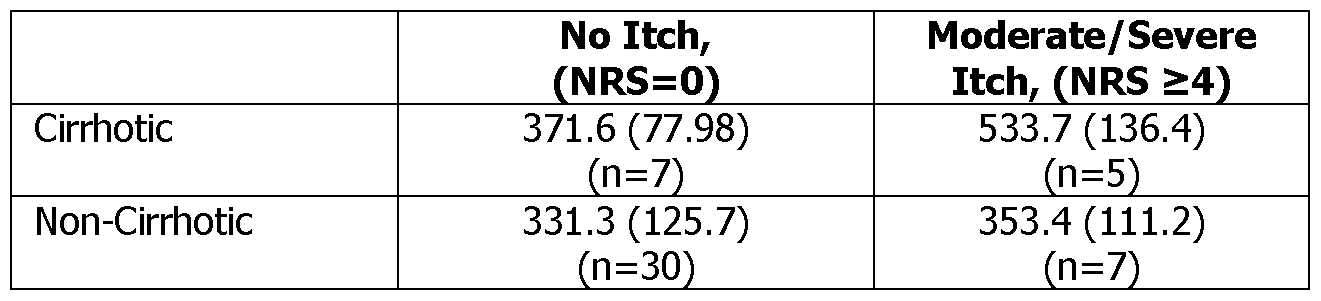
- Example 4 described herein is a study characterising the burden and clinical trajectory of pruritus in primary sclerosing cholangitis (PSC) and non-PBC/PSC chronic liver disease including NAFLD (or MASLD)/NASH (or MASH).
- the results of the study of Example 4 support the finding that bile acids and autotaxin increase with itch severity in NAFLD (or MASLD), including NASH (or MASH).
- bile acids alone or together with autotaxin may play a role in the pathogenesis of pruritus in NASH (or MASH). Therefore, pruritus in NASH (or MASH) may be amenable to treatment with an IBAT inhibitor.
- Example 5 herein is an analysis of the relationship between linerixibat dose and change in TSBA over time, and change in pruritus in subjects with PBC.
- linerixibat treatment leads to rapid and dose-dependent reductions in TSBA.
- Baseline TSBA levels do not correlate with on-treatment change in NRS itch score, suggesting they do not predict linerixibat response.
- change in TSBA over the treatment period correlates significantly with, and can be predictive of, improvement in itch in patients with PBC.
- Example 6 herein is an analysis of the association between itch response and changes in ATX and FGF-19 biomarker levels following linerixibat treatment in patients with cholestatic pruritus associated with PBC.
- serum ATX and FGF-19 may function as biomarkers of itch response to linerixibat treatment. Reductions in these biomarkers are found to be associated with clinical response in patients with PBC and pruritus.
- IBAT inhibitor for example linerixibat or a pharmaceutically acceptable salt thereof, for use in treatment or in the methods of treatment as described herein:
- the IBAT inhibitor for example linerixibator a pharmaceutically acceptable salt thereof, is administered in an amount of between 3mg and lOOmg, twice daily, for example between 30mg and lOOmg twice daily.
- the IBAT inhibitor for example linerixibat or a pharmaceutically acceptable salt thereof, is administered in an amount of approximately 90mg, twice daily. In one embodiment, the IBAT inhibitor, for example linerixibat or a pharmaceutically acceptable salt thereof, is administered in an amount of approximately 40mg, twice daily.
- IBAT inhibitor such as linerixibat or a pharmaceutically acceptable salt thereof, for use in treatment or in the methods of treatment as described herein:
- the IBAT inhibitor in respect of an IBAT inhibitor for use in treatment or in the methods of treatment as described herein, is administered orally.
- the IBAT inhibitor is formulated into a solid dosage form such as a capsule or tablet. In one embodiment, the IBAT inhibitor is formulated into a tablet. In one embodiment, the IBAT inhibitor is administered as an immediate release formulation such as an immediate release tablet. In another embodiment, the tablet further comprises filler, disintegrant, and lubricant.
- a suitable tablet is a tablet comprising an IBAT inhibitor, microcrystalline cellulose, and magnesium stearate.
- Another example of a suitable tablet is a tablet comprising an IBAT inhibitor, microcrystalline cellulose, magnesium stearate and croscarmellose sodium.
- the tablet comprises from 5 to 100 mg of an IBAT inhibitor. In one embodiment, the tablet comprises from 20 to 90 mg of an IBAT inhibitor. In another embodiment, the tablet comprises 80 mg of an IBAT inhibitor. In another embodiment, the tablet comprises 90 mg of an IBAT inhibitor. In another embodiment, the tablet comprises 45 mg of an IBAT inhibitor. In another embodiment, the tablet comprises 40 mg of an IBAT inhibitor. In another embodiment, the tablet comprises 20 mg of an IBAT inhibitor.
- any particular dose can be administered in a single tablet or oral dosage form or multiple tablets or other oral dosage form.
- a dose of 40 mg could be administered as a single 40 mg tablet, or two 20 mg tablets, or four 10 mg tablets, or eight 5 mg tablets, or for example a 20 mg and two 10 mg tablets.
- an IBAT inhibitor for use in the treatment of pruritus in NAFLD or MASLD.
- an IBAT inhibitor for use in the treatment of pruritus in NAFLD.
- an IBAT inhibitor for use in the treatment of pruritus in MASLD.
- an IBAT inhibitor for use in the treatment of cholestatic pruritus in NAFLD or MASLD.
- an IBAT inhibitor for use in the treatment of cholestatic pruritus in NAFLD.
- an IBAT inhibitor for use in the treatment of cholestatic pruritus in MASLD for use in the treatment of cholestatic pruritus in MASLD.
- a method of treatment of pruritus in NAFLD or MASLD in a human in need thereof comprising administering to said human a therapeutically effective amount of an IBAT inhibitor.
- a method of treatment of pruritus in NAFLD in a human in need thereof comprising administering to said human a therapeutically effective amount of an IBAT inhibitor.
- a method of treatment of pruritus in MASLD in a human in need thereof comprising administering to said human a therapeutically effective amount of an IBAT inhibitor.
- a method of treatment of cholestatic pruritus in NAFLD or MASLD in a human in need thereof comprising administering to said human a therapeutically effective amount of an IBAT inhibitor.
- a method of treatment of cholestatic pruritus in NAFLD in a human in need thereof comprising administering to said human a therapeutically effective amount of an IBAT inhibitor.
- a method of treatment of cholestatic pruritus in MASLD in a human in need thereof comprising administering to said human a therapeutically effective amount of an IBAT inhibitor.
- the IBAT inhibitor is selected from: maralixibat, volixibat, odevixibat, elobixibat, linerixibat and Albireo A-3907; or a pharmaceutically acceptable salt or crystalline form thereof.
- the IBAT inhibitor is linerixibat or a pharmaceutically acceptable salt or crystalline form thereof.
- the IBAT inhibitor for use according to the first or second aspect, or the first embodiment is linerixibat or a pharmaceutically acceptable salt or crystalline form thereof.
- the NAFLD or MASLD is NASH or MASH. In another embodiment, the NAFLD is NASH. In another embodiment, the MASLD is MASH. In a further embodiment, the NAFLD is NAFL. In another embodiment of the invention, the NAFLD or MASLD is noncirrhotic NASH or MASH. In a further embodiment, the NAFLD is noncirrhotic NASH. In another embodiment, the MASLD is noncirrhotic MASH.
- the NAFLD or MASLD NASH or MASH with cirrhosis In another embodiment of the invention, the NAFLD or MASLD NASH or MASH with cirrhosis. In a further embodiment, the NAFLD is NASH with cirrhosis. In another embodiment, the MASLD is MASH with cirrhosis.
- the IBAT inhibitor is present as the free acid.
- the IBAT inhibitor is present in crystalline form.
- the pruritus is moderate to severe, for example >4 as measured on the NRS scale.
- the pruritus is moderate to severe, for example in a patient with cirrhosis having a TSBA level of about 34.
- the pruritus is moderate to severe, for example in a patient without cirrhosis having a TSBA level of about 11.
- NAFL non-alcoholic fatty liver simple steatosis
- itch The characteristics and nature of itch were gathered and evaluated in respect of certain of the nine CLDs, namely across some of the cholestatic CLDs and CLDs having cholestatic features (PBC, PSC, AIH) as compared with itch in patients with NASH (or MASH), HepB, HepC and DILI which are CLDs that are not typically considered to be cholestatic.
- Table 1 illustrates that at screening, approximately 69% of NASH (or MASH) patients reported having pruritus with 46% reporting moderate to severe worst itch within the previous 3 months.
- Table 2 illustrates the frequency of experiencing itch >2 days in the last 2 weeks or scratching enough to make skin raw on on >2 days in the last 2 weeks by CLD.
- NASH (or MASH) patients with pruritus had a similar frequency of experiencing itch or scratching enough to make skin raw compared to patients with pruritus from cholestatic liver disease or a liver disease with cholestatic features (PBC, PSC and AIH), as well as patients with other CLDs and pruritus.
- Table 3 illustrates the similar qualitative nature of the type of itch experienced by patients with NASH (or MASH), and those with a cholestatic liver disease or with a liver disease having cholestatic features (PBC, PSC and AIH) when participants were asked to select which descriptors of itch applied to their experience of itch as a result of a chronic liver disease.
- the itch related to NASH (or MASH) appears to be similar to the other known cholestatic itch conditions with the majority of participants identifying the itch as a 'deep' and 'urgent' itch.
- Descriptors such as 'bugs crawling' and 'relentless' were also common experiences between diseases with itch that is known to be cholestatic and itch in NASH (or MASH).
- the type of itch was identified across all conditions as being different to the type of itch experienced with 'hives'.
- scratching did not alleviate the itch for a substantial proportion of patients across all liver diseases.
- these descriptors of itch are similar to those used by patients with PBC in external, published studies (Vander Does, Levy et al. 2022; Rishe, Azarm et al. 2008).
- Table 4 demonstrates that similar proportions of patients reported that their itch was worse mostly at night or equally during the day or night across liver diseases.
- Table 5 illustrates that heat, certain clothing and stress worsen itch in both patients with cholestatic liver disease (PBC, PSC, AIH) and in patients with NASH (or MASH) in the natural history study described above.
- Figure 2 illustrates that pruritus was largely persistent through 6 months of follow-up for NASH (or MASH) patients and PBC patients, particularly for those with moderate to severe itch.
- Data collected from this study demonstrated that antihistamine and topical therapies are commonly used by patients with NASH (or MASH) to treat their pruritus, and although some improvement in pruritus is observed with these therapies, the reduction in pruritus was generally found to be insufficient, suggesting this patient population is actively seeking treatment for their itch.
- Table 1 Screened patients reporting any pruritus or moderate to severe pruritus in the previous 3 months; overall and across cholestatic (PBC, PSC, AIH) liver diseases and patients with NASH (or MASH), Hep B, Hep C, or DILI
- Table 2 Enrolled patients experiencing itch >2 days in the last 2 weeks or scratching enough to make skin raw on on >2 days in the last 2 weeks; overall and across cholestatic (PBC, PSC, AIH) liver diseases and patients with NASH (or MASH), Hep B, Hep C, or DILI.
- Table 3 Patient experience of itch across cholestatic (PBC, PSC, AIH) liver diseases and patients with NASH (or MASH), Hep B, Hep C, or DILI.
- Table 4 Diurnal manifestations of itch across cholestatic (PBC, PSC, AIH) liver diseases and patients with NASH (or MASH), Hep B, Hep C, or DILI.
- Table 5 Factors reported to worsen itch across cholestatic (PBC, PSC, AIH) liver diseases and patients with NASH (or MASH), Hep B, Hep C, or DILI.
- Figure 1 shows a 5D-Itch Plot of Natural History Study Results for HepB, HepC, NASH (or MASH), PBC, PSC and AIH vs non-cholestatic prior art pruritus conditions (pruritus in hemodialysis, uremic pruritus and atopic dermatitis).
- Figure la shows the same 5D-Itch Plot of Natural History Study Results, for NASH (or MASH) and PBC only.
- Example 1 Participants in the natural history study of Example 1 completed the 5D-Itch measure using the 5D Itch Scale referenced hereinabove, that is, they completed the questionnaire provided in: 5D Itch Scale: Elman et al., "The 5-D itch scale: a new measure of pruritus.” Br J Dermatol. 2010 Mar;162(3):587-93. The estimates presented are unadjusted, and patients and do not account for differences in liver disease duration or demographics between CLDs. Therefore, when comparing the five scores across domains for the different liver diseases, more emphasis is placed on degree and duration domains as these two domains capture the itch experience best in terms of severity and frequency, which are both key when assessing symptoms.
- the values obtained from this evaluation are plotted against 5D-Itch measure values obtained from a targeted prior art search in which the 5D-Itch measure has been used for conditions where the itch is known not to be cholestatic in nature, namely pruritus in a hemodialysis patient population, a patient population with atopic dermatitis and a clinical trial patient population with uremic pruritus. All comparisons with these prior art studies are from non- interventional studies and all itch severities are included (mild, moderate and severe itch).
- Example 1 itch data from HepB, HepC and NASH (or MASH), as well as from PBC, PSC and AIH conditions from the natural history study are included in Figure 1, since the itch associated with the latter group of conditions is known to be cholestatic in nature or have cholestatic features.
- the non-cholestatic itch experienced in the three non-cholestatic conditions from the prior art is notably different in terms of degree, duration and distribution from the cholestatic pruritus conditions.
- itch in NASH (or MASH) HepB and HepC is similar to PSC, PBC and AIH in terms of degree and direction.
- itch impact was comparable across many 5-D itch domains, including duration, degree, and direction.
- CLD chronic liver disease
- Example 3 A very similar separate study to Example 3 was also conducted during the course of the drug development program in the pruritus in PBC, a recognized cholestatic condition. The primary objective of this study was to confirm saturation of concepts of interest and cognitively test the English versions of the PRO measures selected for use in PBC. A total of 15 participants were recruited in the US and an additional 5 were English speaking Canadians. Study subjects were all adults between 18 and 80 years of age, with a self-reported formal diagnosis of PBC, and pruritus of at least moderate intensity during the past eight weeks.
- Table 8 illustrates itch severity across the whole CLD population in the qualitative study of Example 3. Mean worst itch scores over the past 8 weeks were either 7 or 8 depending on country (range 4-10). In the PBC qualitative study Example 3a, the mean worst itch score was 89 on a 0-100 NRS (Range 50-100), Table 9. Table 8. Participant characteristics of CLD sample - itch severity
- Example 3a In patients with PBC in Example 3a the most common location for itching as discovered through coding was legs, affecting 15 (75.0%) subjects, followed by arms (13 or 65.0%), torso - including back, abdomen, and chest (12 or 60.0%), and feet (10 or 50.0%).
- Table 10 shows the frequency of subject expressions of itch associated with specific location. The patterns of itch are similar between PBC and CLD with the legs, arms and torso being the most commonly effected areas.
- the itch experienced across the different CLDs is observed to be similar.
- PSC is widely accepted to be a cholestatic liver disease and AIH has cholestatic features; certain other CLDs studied including HepB, HepC, NASH (or MASH) and NAFL (or MASLD) are not classically considered to be cholestatic.
- the itch associated with the CLDs in Example 3 is not found to be qualitatively different to that experienced in PBC in Example 3a, and therefore there is reason to believe that the CLD itch, for example in AIH, HepB, HepC, NASH (or MASH) and NAFL (or MASLD), is qualitatively similar to PBC itch, which is widely accepted to be cholestatic in nature. Therefore, pruritus in CLDs such as AIH, HepB, HepC, NASH (or MASH) and NAFL (or MASLD) may be amenable to treatment with an IBAT inhibitor.
- This ongoing observational cohort study contains both cross-sectional and longitudinal assessments in patients with PSC, NAFLD (or MASLD)/NASH (or MASH), chronic HBV, chronic HCV, AIH, and DILI.
- Cross-sectional data from patients with irritable bowel disease alone, as well as from healthy volunteers, will also be collected.
- Patient assessments are aligned with routine standard of care clinical visits (minimum of 2 measurements, for up to 48 weeks).
- NAFLD or MASLD
- NASH or MASH
- the co-primary objectives of this study are: a) determine the proportion of patients with NAFLD (or MASLD)/NASH (or MASH) who suffer with pruritus and b) to quantify pruritus intensity, and how this varies as per the inherent clinical course of NAFLD (or MASLD)/NASH (or MASH).
- the NRS scale and 5-D Itch Score were used to assess prevalence and severity of pruritus.
- the 5-D itch scale is a multidimensional questionnaire designed to measure the five dimensions: degree, duration, direction, disability and distribution and the NRS scale measures intensity or severity of itch, rather than frequency of itch.
- NAFLD neurodegenerative disease
- Linerixibat treatment leads to rapid and dose-dependent reductions in TSBA.
- Baseline TSBA levels do not correlate with on-treatment change in NRS itch score, suggesting they do not predict linerixibat response.
- Change in TSBA over the double-blind treatment period correlates significantly with, and can be predictive of, improvement in itch in patients with PBC.
- the Phase 2b, placebo-controlled, dose-ranging GLIMMER study (NCT02966834) enrolled 147 adult patients with PBC and pruritus (Levy 2022 Clin Gastroenterol Hepatol. 2022, available online https://doi.Org/10.1016/j.cgh.2022.10.032). Patients were randomized to receive linerixibat or placebo for 12 weeks (Weeks 4-16). Patients reported itch on a 0-10 numerical rating scale. As patient numbers were too low to analyse biomarkers in individual dose groups, the two twice daily (BID) dose groups, 40 and 90 mg BID which showed a greater response in pharmacodynamic markers compared to once daily dosing, were combined.
- BID twice daily
- Serum ATX and FGF-19 levels were compared post hoc in patients receiving linerixibat 40/90 mg BID or placebo, at baseline versus Week 16, in itch responders and non-responders. Responder analysis from individual dose groups is not shown. Itch responders were defined as patients with a monthly itch score improvement of >2 at Week 16 compared with baseline.
- Serum ATX and FGF-19 may function as biomarkers of itch response to linerixibat treatment. Reductions in these biomarkers are associated with clinical response in patients with PBC and pruritus.
- Kido-Nakahara M., T. Nakahara, N. Furusyo, S. Shimoda, K. Kotoh, M. Kato, J. Hayashi, T. Koyanagi and M. Furue (2019).
Landscapes
- Health & Medical Sciences (AREA)
- Life Sciences & Earth Sciences (AREA)
- Veterinary Medicine (AREA)
- Pharmacology & Pharmacy (AREA)
- Chemical & Material Sciences (AREA)
- Public Health (AREA)
- Medicinal Chemistry (AREA)
- General Health & Medical Sciences (AREA)
- Animal Behavior & Ethology (AREA)
- Epidemiology (AREA)
- Engineering & Computer Science (AREA)
- Bioinformatics & Cheminformatics (AREA)
- Organic Chemistry (AREA)
- Nuclear Medicine, Radiotherapy & Molecular Imaging (AREA)
- General Chemical & Material Sciences (AREA)
- Gastroenterology & Hepatology (AREA)
- Chemical Kinetics & Catalysis (AREA)
- Dermatology (AREA)
- Immunology (AREA)
- Proteomics, Peptides & Aminoacids (AREA)
- Molecular Biology (AREA)
- Acyclic And Carbocyclic Compounds In Medicinal Compositions (AREA)
Abstract
Description


Claims
Priority Applications (3)
| Application Number | Priority Date | Filing Date | Title |
|---|---|---|---|
| JP2025571345A JP2026520031A (en) | 2023-06-06 | 2024-06-04 | Novel use of ileal bile acid transporter inhibitors for the treatment of pruritus |
| EP24731867.8A EP4724071A1 (en) | 2023-06-06 | 2024-06-04 | Novel use of an ileal bile acid transporter inhibitor for the treatment of pruritus |
| CN202480037869.5A CN121263187A (en) | 2023-06-06 | 2024-06-04 | New use of ileal bile acid transporter inhibitors for treating pruritus |
Applications Claiming Priority (2)
| Application Number | Priority Date | Filing Date | Title |
|---|---|---|---|
| US202363506433P | 2023-06-06 | 2023-06-06 | |
| US63/506,433 | 2023-06-06 |
Publications (1)
| Publication Number | Publication Date |
|---|---|
| WO2024251739A1 true WO2024251739A1 (en) | 2024-12-12 |
Family
ID=91465295
Family Applications (1)
| Application Number | Title | Priority Date | Filing Date |
|---|---|---|---|
| PCT/EP2024/065346 Ceased WO2024251739A1 (en) | 2023-06-06 | 2024-06-04 | Novel use of an ileal bile acid transporter inhibitor for the treatment of pruritus |
Country Status (4)
| Country | Link |
|---|---|
| EP (1) | EP4724071A1 (en) |
| JP (1) | JP2026520031A (en) |
| CN (1) | CN121263187A (en) |
| WO (1) | WO2024251739A1 (en) |
Citations (4)
| Publication number | Priority date | Publication date | Assignee | Title |
|---|---|---|---|---|
| WO2011137135A1 (en) | 2010-04-27 | 2011-11-03 | Glaxosmithkline Llc | Chemical compounds |
| WO2016020785A1 (en) | 2014-08-05 | 2016-02-11 | Glaxosmithkline Intellectual Property (No. 2) Limited | Synthesis of benzothiazepines |
| WO2018002827A1 (en) | 2016-06-27 | 2018-01-04 | Glaxosmithkline Intellectual Property (No.2) Limited | Synthetic methods |
| US10093697B2 (en) * | 2010-11-04 | 2018-10-09 | Albireo Ab | IBAT inhibitors for the treatment of liver diseases |
-
2024
- 2024-06-04 JP JP2025571345A patent/JP2026520031A/en active Pending
- 2024-06-04 EP EP24731867.8A patent/EP4724071A1/en active Pending
- 2024-06-04 WO PCT/EP2024/065346 patent/WO2024251739A1/en not_active Ceased
- 2024-06-04 CN CN202480037869.5A patent/CN121263187A/en active Pending
Patent Citations (4)
| Publication number | Priority date | Publication date | Assignee | Title |
|---|---|---|---|---|
| WO2011137135A1 (en) | 2010-04-27 | 2011-11-03 | Glaxosmithkline Llc | Chemical compounds |
| US10093697B2 (en) * | 2010-11-04 | 2018-10-09 | Albireo Ab | IBAT inhibitors for the treatment of liver diseases |
| WO2016020785A1 (en) | 2014-08-05 | 2016-02-11 | Glaxosmithkline Intellectual Property (No. 2) Limited | Synthesis of benzothiazepines |
| WO2018002827A1 (en) | 2016-06-27 | 2018-01-04 | Glaxosmithkline Intellectual Property (No.2) Limited | Synthetic methods |
Non-Patent Citations (106)
| Title |
|---|
| "AASLD 2020 Poster Abstracts", HEPATOLOGY, JOHN WILEY & SONS, INC, US, vol. 72, 1 November 2020 (2020-11-01), Hepatology. 72:1A-130A, November 2020, pages 131A - 1159A, XP071565756, ISSN: 0270-9139, DOI: 10.1002/HEP.31579 * |
| "EASL 2017 Clinical Practice Guidelines on the management of hepatitis B virus infection", J HEPATOL, vol. 67, no. 2, 2017, pages 370 - 398 |
| "Management of cholestatic liver diseases", J HEPATOL, vol. 51, no. 2, 2009, pages 237 - 267 |
| ABDOLLAHI, MM. SOMI, JOURNAL OF GASTROENTEROLOGY AND HEPATOLOGY, vol. 28, 2013, pages 167 |
| AL-DURY SMARSCHALL HU, FRONT PHARMACOL, vol. 9, 2018, pages 931 |
| ANN INTERN MED, vol. 166, 2017, pages 637 - 648 |
| BERGASA, N. V.J. K. MEHLMANE. A. JONES: "Pruritus and fatigue in primary biliary cirrhosis", BAILLIERES BEST PRACT RES CLIN GASTROENTEROL, vol. 14, no. 4, 2000, pages 643 - 655 |
| BIERNACKA, AD. NIZYRISKIM. INGLOTA. REICH: "Assessment of pruritus in patients with viral hepatitis B and C", PRZEQLAD DERMATOLOGICZNY, vol. 105, no. 2, 2018, pages 264 - 272 |
| BOEHLIG, AF. GERHARDTD. PETROFFF. VAN BOEMMELT. BERGV. BLANKT. KARLASJ. WIEGAND: "Prevalence of Pruritus and Association with Anxiety and Depression in Patients with Nonalcoholic Fatty Liver Disease", BIOMEDICINES, vol. 10, no. 2, 2022, pages 451 |
| CACOUB, PT. POYNARDP. GHILLANIF. CHARLOTTEM. OLIVIJ. C. PIETTEP. OPOLON: "Extrahepatic manifestations of chronic hepatitis C. MULTIVIRC Group. Multidepartment Virus C", ARTHRITIS RHEUM, vol. 42, no. 10, 1999, pages 2204 - 2212 |
| CAUSSEY ET AL., GUT, vol. 68, no. 10, 2019, pages 1884 - 1892 |
| CHEN ET AL., CLIN REVS ALLERGY & IMMUNOLOGY, vol. 58, no. 1, February 2020 (2020-02-01), pages 25 - 38 |
| CHEN, CLIN REV ALLERGY & IMMUNOL, vol. 58, 2020, pages 25 - 38 |
| CLIN GASTROENTEROL HEPATOL., 2022 |
| DI CAULA ET AL.: "Bile Acid Physiology", ANN. HEPATOLOGY, vol. 16, no. S1, 2017, pages s4 - s14 |
| DIG DIS SCI, vol. 60, 2015, pages 3318 - 3328 |
| ELMAN ET AL.: "The 5-D itch scale: a new measure of pruritus", BR J DERMATOL, vol. 162, no. 3, March 2010 (2010-03-01), pages 587 - 93, XP055091238, DOI: 10.1111/j.1365-2133.2009.09586.x |
| EUROPEAN JOURNAL OF GASTROENTEROLOGY & HEPATOLOGY, vol. 26, December 2014 (2014-12-01), pages 1374 - 1379 |
| EVON, D. MH. H. S. LINM. KHALILIR. J. FONTANAC. YIMA. S. WAHEDM. W. FRIEDJ. H. HOOFNAGLEJ. NIUA. JAVAID: "Patient-reported outcomes in a large North American cohort living with chronic hepatitis B virus: a cross-sectional analysis", ALIMENTARY PHARMACOLOGY AND THERAPEUTICS, vol. 51, no. 4, 2020, pages 457 - 468 |
| FATTOVICH, G: "Natural history of hepatitis B", J HEPATOL, vol. 39, no. 1, 2003, pages 50 - 58 |
| FIORUCCI ET AL.: "Bile acids and their receptors in metabolic disorders", PROGRESS IN LIPID RESEARCH, vol. 82, 2021, pages 101094 |
| FIORUCCI, SM. BIAGIOLIE. DISTRUTTI: "Future trends in the treatment of non-alcoholic steatohepatitis", PHARMACOLOGICAL RESEARCH, vol. 134, 2018, pages 289 - 298, XP085437486, DOI: 10.1016/j.phrs.2018.07.014 |
| FOSTER, CJ. BAKIS. NIKIRKS. WILLIAMSN. D. PARIKHE. B. TAPPER: "Comprehensive Health-State Utilities in Contemporary Patients With Cirrhosis", HEPATOLOGY COMMUNICATIONS, vol. 4, no. 11, 2020, pages 852 - 858 |
| FUJINO, HM. TANAKAM. IMAMURAK. MORIOA. ONOT. NAKAHARAE. MURAKAMIT. KAWAOKAS. TAKAHASHID. MIKI: "Pruritus in patients with chronic liver disease and serum autotaxin levels in patients with primary biliary cholangitis", BMC GASTROENTEROL, vol. 19, no. 1, 2019, pages 169 |
| GASTROENTEROLOGY, vol. 139, 2010, pages 1008 - 1848 |
| GORDON, VR. ADHIKARYV. APPLEBYD. DASJ. DAYT. DELAHOOKES. DIXOND. ELPHICKC. HARDIEB. HOEROLDT: "Diagnosis, presentation and initial severity of Autoimmune Hepatitis (AIH) in patients attending 28 hospitals in the UK", LIVER INTERNATIONAL, vol. 38, no. 9, 2018, pages 1686 - 1695 |
| GUNSAR, FB. GURSELF. YILMAZI. TURANF. TEKINZ. KARASUG. ERSOZU. S. AKARCA: "Clinical presentations of autoimmune hepatitis", HEPATOLOGY INTERNATIONAL, vol. 10, no. 1, 2016, pages S180 |
| HEGADE ET AL., LIVER INTERNATIONAL, vol. 39, 2019, pages 967 - 975 |
| HEGADE, V. SG. F. MELLSH. FISHERS. KENDRICKJ. DIBELLOK. GILCHRISTG. J. ALEXANDERG. M. HIRSCHFIELDR. N. SANDFORDD. E. J. JONES: "Pruritus Is Common and Undertreated in Patients With Primary Biliary Cholangitis in the United Kingdom", CLIN GASTROENTEROL HEPATOL, vol. 17, no. 7, 2019, pages 1379 - 1387 |
| HEGADE, V. SR. BOLIERR. P. J. OUDE ELFERINKU. BEUERSS. KENDRICKD. E. J. JONES: "A systematic approach to the management of cholestatic pruritus in primary biliary cirrhosis", FRONTLINE GASTROENTEROLOGY, vol. 7, no. 3, 2016, pages 158 - 166, XP055564100, DOI: 10.1136/flgastro-2015-100618 |
| HEGADE, V. SS. F. KENDRICKR. L. DOBBINSS. R. MILLERD. THOMPSOND. RICHARDSJ. STOREYG. E. DUKESM. CORRIGANR. P. J. OUDE ELFERINK: "Effect of ileal bile acid transporter inhibitor GSK2330672 on pruritus in primary biliary cholangitis: a double-blind, randomised, placebo-controlled, crossover, phase 2a study", LANCET, vol. 389, no. 10074, 2017, pages 1114 - 1123, XP029946669, DOI: 10.1016/S0140-6736(17)30319-7 |
| HEPATOLOGY, vol. 56, 2012, pages 1391 - 1400 |
| HEPATOLOGY., vol. 69, no. 1, 2019, pages 394 - 419 |
| HOLLIGERHUDSON, NATURE BIOTECHNOLOGY, vol. 23, no. 9, 2005, pages 1126 - 1136 |
| HÖNIG, SB. HERDERA. KAUTZC. TRAUTWEINA. KREMER: "Pruritus strongly reduces quality of life in PBC patients-real life data from a large national survey", JOURNAL OF HEPATOLOGY, vol. 68, 2018, pages S216 |
| J BIOL CHEM., vol. 277, 2002, pages 39436 - 39442 |
| J. MED. CHEM, vol. 56, no. 5094-5114, 2013, pages 10 |
| J. ORG. CHEM., vol. 78, 2013, pages 12726 - 12734 |
| JACOBY ET AL.: "Development, validation, and evaluation of the PBC-40, a disease specific health related quality of life measure for primary biliary cirrhosis", GUT, vol. 54, no. 11, November 2005 (2005-11-01), pages 1622 - 9 |
| JIAO, GUT, vol. 67, 2018, pages 1881 - 1891 |
| JIN, X. YT. M. KHAN: "Quality of life among patients suffering from cholestatic liver disease-induced pruritus: A systematic review", J FORMOS MED ASSOC, vol. 115, no. 9, 2016, pages 689 - 702, XP029683229, DOI: 10.1016/j.jfma.2016.05.006 |
| JOURNAL OF HEPATOLOGY, vol. 62, 2015, pages 897 - 904 |
| JOURNAL OF HEPATOLOGY, vol. 73, 2020, pages 1170 - 1218 |
| JURATE, vol. 16, no. 4, 2017, pages 569 - 573 |
| KARATZA E ET AL., J HEPATOL, vol. 78, no. S1, 2023, pages S367 |
| KARATZA ET AL., EASL POSTER, 2023, Retrieved from the Internet <URL:https:jjwww.postersessiononline.euj173580348_eujcongresosjILC2023jaulaj-TOP_62_ILC2023.pdf> |
| KIDO-NAKAHARA, MT. NAKAHARAN. FURUSYOS. SHIMODAK. KOTOHM. KATOJ. HAYASHIT. KOYANAGIM. FURUE: "Pruritus in chronic liver disease: A questionnaire survey on 216 patients", ACTA DERMATO-VENEREOLOGICA, vol. 99, no. 2, 2019, pages 220 - 221 |
| KOAY, L. BC. Y. LINS. L. TSAIC. LEEC. N. LINM. J. SHEUH. T. KUOC. S. SUN: "Type 1 autoimmune hepatitis in Taiwan: Diagnosis using the revised criteria of the International Autoimmune Hepatitis Group", DIGESTIVE DISEASES AND SCIENCES, vol. 51, no. 11, 2006, pages 1978 - 1984, XP019448514, DOI: 10.1007/s10620-005-9068-y |
| KREMER, A. ER. P. J. OUDE ELFERINKU. BEUERS: "Pathophysiology and current management of pruritus in liver disease", CLINICS AND RESEARCH IN HEPATOLOGY AND GASTROENTEROLOGY, vol. 35, no. 2, 2011, pages 89 - 97 |
| KREMER, A. EU. BEUERSR. P. J. OUDE-ELFERINKT. PUSL: "Pathogenesis and treatment of pruritus in cholestasis", DRUGS, vol. 68, no. 15, 2008, pages 2163 - 2182, XP009127082, DOI: 10.2165/00003495-200868150-00006 |
| LANCET., vol. 389, no. 10074, 2017, pages 1114 - 1123 |
| LANGEDIJK, JA ET AL.: "Cholestasis-Associated Pruritus and its Pruritogens", FRONTIERS IN MEDICINE, vol. 8, 2021, pages 639674 |
| LEVY C ET AL., CLIN GASTROENTEROL HEPATOL, vol. S1542-3565, no. 22, 2022, pages 01021 - 7 |
| LEVY CYNTHIA ET AL: "GLIMMER: A Randomized Phase 2b Dose-Ranging Trial of Linerixibat in Primary Biliary Cholangitis Patients With Pruritus", CLINICAL GASTROENTEROLOGY AND HEPATOLOGY, ELSEVIER, AMSTERDAM, NL, vol. 21, no. 7, 4 November 2022 (2022-11-04), pages 1902, XP087342780, ISSN: 1542-3565, [retrieved on 20221104], DOI: 10.1016/J.CGH.2022.10.032 * |
| LEVY, 2022 CLIN GASTROENTEROL HEPATOL, 2022, Retrieved from the Internet <URL:https://doi.org/10.1016/j.cgh.2022.10.032> |
| LEVY, CLIN GASTROENTEROL AND HEP, 2022, Retrieved from the Internet <URL:https://doi.org/10.1016/j.cgh.2022.10.032> |
| LI MING ET AL: "Apical sodium-dependent bile acid transporter, drug target for bile acid related diseases and delivery target for prodrugs: Current and future challenges", PHARMACOLOGY & THERAPEUTICS, vol. 212, 20 March 2020 (2020-03-20), GB, pages 107539, XP093193822, ISSN: 0163-7258, DOI: 10.1016/j.pharmthera.2020.107539 * |
| LIAN ET AL., HEPATOBILIARY PANCREAT DIS INT, vol. 14, no. 4, 15 August 2015 (2015-08-15), pages 413 - 421 |
| LIBERAL, RE. L. KRAWITTJ. M. VIERLINGM. P. MANNSG. MIELI-VERGANID. VERGANI: "Cutting edge issues in autoimmune hepatitis", J AUTOIMMUN, vol. 75, 2016, pages 6 - 19 |
| LINDOR, K. DC. L. BOWLUSJ. BOYERC. LEVYM. MAYO: "Primary Biliary Cholangitis: 2018 Practice Guidance from the American Association for the Study of Liver Diseases", HEPATOLOGY, vol. 69, no. 1, 2019, pages 394 - 419, XP071563662, DOI: 10.1002/hep.30145 |
| LIVER INT., vol. 39, 2019, pages 967 - 75 |
| M.E. RINELLAJ.V. LAZARUSV. RATZIU ET AL., ANNALS OF HEPATOLOGY, vol. 29, 2024, pages 101133 |
| MANNS, M. PA. W. LOHSED. VERGANI: "Autoimmune hepatitis--Update 2015", J HEPATOL, vol. 62, 2015, pages 100 - 111 |
| MATSUI MASAHIRO ET AL: "Ileal Bile Acid Transporter Inhibitor Improves Hepatic Steatosis by Ameliorating Gut Microbiota Dysbiosis in NAFLD Model Mice", MBIO, vol. 12, no. 4, 6 July 2021 (2021-07-06), US, pages 1 - 15, XP093193908, ISSN: 2150-7511, DOI: 10.1128/mBio.01155-21 * |
| MATYE DAVID J. ET AL: "Combined ASBT Inhibitor and FGF15 Treatment Improves Therapeutic Efficacy in Experimental Nonalcoholic Steatohepatitis", CMGH CELLULAR AND MOLECULAR GASTROENTEROLOGY AND HEPATOLOGY, vol. 12, no. 3, 7 May 2021 (2021-05-07), pages 1001 - 1019, XP093193789, ISSN: 2352-345X, DOI: 10.1016/j.jcmgh.2021.04.013 * |
| MAYO MJ ET AL.: "Impact of Pruritus on Quality of Life and Current Treatment Patterns in Patients with Primary Biliary Cholangitis", DIG DIS SCI, vol. 68, no. 3, March 2023 (2023-03-01), pages 995 - 1005 |
| MELLS ET AL., MAYO MJ, DIG DIS SCI. 2023 MAR, vol. 68, no. 3, 2019, pages 995 - 1005 |
| MIELI-VERGANI, GD. VERGANIA. J. CZAJAM. P. MANNSE. L. KRAWITTJ. M. VIERLINGA. W. LOHSEA. J. MONTANO-LOZA: "Autoimmune hepatitis", NATURE REVIEWS DISEASE PRIMERS, vol. 4, no. 1, 2018, pages 18017 |
| MONTAGNESE, SL. M. NSEMIN. CAZZAGONS. FACCHINIL. COSTAN. V. BERGASAP. AMODIOA. FLOREANI: "Sleep-Wake profiles in patients with primary biliary cirrhosis", LIVER INTERNATIONAL, vol. 33, no. 2, 2013, pages 203 - 209 |
| MURATORI, PA. FABBRIC. LALANNEM. LENZIL. MURATORI: "Autoimmune liver disease and concomitant extrahepatic autoimmune disease", EUR J GASTROENTEROL HEPATOL, vol. 27, no. 10, 2015, pages 1175 - 1179 |
| NEUSCHWANDER ET AL., LANCET, vol. 385, 2015, pages 956 - 65 |
| NEVINS ET AL., N ENGL. J MED, vol. 375, 2016, pages 631 - 643 |
| NICE, HEPATITIS B (CHRONIC): DIAGNOSIS AND MANAGEMENT, 2013 |
| NUNEZ DJ ET AL., DIABETES OBES METAB, vol. 18, no. 7, 2016, pages 654 - 662 |
| OEDA, SH. TAKAHASHIH. YOSHIDAY. OGAWAK. IMAJOM. YONEDAY. KOSHIYAMAM. ONOH. HYOGOT. KAWAGUCHI: "Prevalence of pruritus in patients with chronic liver disease: A multicenter study", HEPATOLOGY RESEARCH, vol. 48, no. 3, 2018, pages E252 - E262 |
| PAIS RMAUREL T, J. CLIN. MED, vol. 10, 2021, pages 1161 |
| PBC: "Development and adaptation of patient-reported outcome measures for patients who experience itch associated with primary biliary cholangitis", J PATIENT REP, vol. 3, no. 1, 2019, pages 2 |
| PERRYMAN, SG. SREEPATIN. CHALASANIC. LAMMERT: "Fatigue and itch are associated with less biochemical response in treated autoimmune hepatitis", AMERICAN JOURNAL OF GASTROENTEROLOGY, vol. 109, 2014, pages S137 - S138 |
| PIECHOTA J. CLIN. MED, vol. 9, 2020, pages 1361 |
| POWELL, E. EV. W. WONGM. RINELLA: "Non-alcoholic fatty liver disease", LANCET, vol. 397, no. 10290, 2021, pages 2212 - 2224, XP086596453, DOI: 10.1016/S0140-6736(20)32511-3 |
| PROTEOME RES., vol. 20, 2021, pages 2340 - 2351 |
| PURI PDAITA KJOYCE A ET AL.: "The presence and severity of non-alcoholic steatohepatitis is associated with specific changes in circulating bile acids", HEPATOLOGY, vol. 67, no. 2, 2018, pages 534 - 548 |
| PURI, HEPATOL, vol. 67, no. 2, 2018, pages 534 |
| RAO ANURADHA ET AL: "Inhibition of ileal bile acid uptake protects against nonalcoholic fatty liver disease in high-fat diet-fed mice", SCIENCE TRANSLATIONAL MEDICINE, vol. 8, no. 357, 21 September 2016 (2016-09-21), pages 1 - 27, XP093193873, ISSN: 1946-6234, DOI: 10.1126/scitranslmed.aaf4823 * |
| RISHE, EA. AZARMN. V. BERGASA: "Itch in primary biliary cirrhosis: A patients' perspective", ACTA DERMATO-VENEREOLOGICA, vol. 88, no. 1, 2008, pages 34 - 37 |
| SAMER AL-DURY ET AL: "Ileal Bile Acid Transporter Inhibition for the Treatment of Chronic Constipation, Cholestatic Pruritus, and NASH", FRONTIERS IN PHARMACOLOGY, vol. 9, 1 January 2018 (2018-01-01), pages 1 - 8, XP055732829, DOI: 10.3389/fphar.2018.00931 * |
| SCI REP, vol. 8, 2018, pages 6658 |
| SUN ET AL., FRONTIERS IN MEDICINE, vol. 8, October 2021 (2021-10-01) |
| SUZUKI, KM. TAMANOY. KATAYAMAT. KUNIYOSHIK. KAGAWAH. TAKADAK. SUZUKI: "Study of pruritus in chronic hepatitis C patients", WORLD JOURNAL OF GASTROENTEROLOGY, vol. 20, no. 47, 2014, pages 17877 - 17882 |
| TANG, COVERT ET AL.: "In late stages of certain chronic liver diseases including HepB, cholestatic features may be observed", EUR J CLIN INVEST 2013, vol. 43, no. 10, 2018, pages 1069 - 1083 |
| TANG, L. S. YE. COVERTE. WILSONS. KOTTILIL: "Chronic Hepatitis B infection a review", JAMA - JOURNAL OF THE AMERICAN MEDICAL ASSOCIATION, vol. 319, no. 17, 2018, pages 1802 - 1813 |
| TERRAULT, N. AA. S. F. LOKB. J. MCMAHONK. M. CHANGJ. P. HWANG, M. MJONAS, R. SBROWN, JRN. H. BZOWEJJ. B. WONG: "Update on Prevention, Diagnosis, and Treatment of Chronic Hepatitis B: AASLD 2018 Hepatitis B Guidance", CLIN LIVER DIS (HOBOKEN, vol. 12, no. 1, 2018, pages 33 - 34 |
| VANDER DOES, AC. LEVYG. YOSIPOVITCH: "Cholestatic Itch: Our Current Understanding of Pathophysiology and Treatments", AM J CLIN DERMATOL, vol. 23, 2022, pages 647 - 659 |
| WEDEMEYER, HG. J. DOREJ. W. WARD: "Estimates on HCV disease burden worldwide - filling the gaps", J VIRAL HEPAT, vol. 22, 2015, pages 1 - 5 |
| WERNER, MS. WALLERSTEDTS. LINDGRENS. ALMERE. BJORNSSONA. BERGQUISTH. PRYTZH. SANDBERG-GERTZÉNR. HULTCRANTZP. SANGFELT: "Characteristics and long-term outcome of patients with autoimmune hepatitis related to the initial treatment response", SCANDINAVIAN JOURNAL OF GASTROENTEROLOGY, vol. 45, no. 4, 2010, pages 457 - 467 |
| WHALLEY, DJ. TWISSL. DOWARDM. M. BALPC. BRASSA. TIETZJ. LOEFFLERP. LOPEZE. J. LAWITZA. J. SANYAL: "A novel patient-reported outcome measure indicates low burden of treatment among patients with nonalcoholic steatohepatitis: Interim results from a phase 2 trial of tropifexor", HEPATOLOGY, vol. 72, no. 2, 2020, pages 1005A - 1986 |
| WHO, W. H. O, GUIDELINES FOR THE SCREENING, CARE AND TREATMENT OF PERSONS WITH CHRONIC HEPATITIS C INFECTION, 2016 |
| WHO, W. H. O, HEPATITIS C, 2019, Retrieved from the Internet <URL:www.who.int/news-room/fact-sheets/detail/hepatitis-c> |
| WHO: "In late stages of certain chronic liver diseases including HepC, cholestatic features may be observed", EUR J CLIN INVEST, vol. 43, no. 10, 2013, pages 1069 - 1083 |
| YAMAUCHI RYO ET AL: "Elobixibat, an ileal bile acid transporter inhibitor, ameliorates non-alcoholic steatohepatitis in mice", HEPATOLOGY INTERNATIONAL, SPRINGER INDIA, INDIA, vol. 15, no. 2, 4 January 2021 (2021-01-04), pages 392 - 404, XP037462202, ISSN: 1936-0533, [retrieved on 20210104], DOI: 10.1007/S12072-020-10107-0 * |
| YARA, GASTROHEP, vol. 1, 2019, pages 302 - 310 |
| YERRAGORLA, PD. NEKKALAPUDIN. V. BERGASA: "Characterization of patients with primary biliary cholangitis(PBC) and autoimmune hepatitis(AIH) attended in a community hospital in East Harlem, New York", HEPATOLOGY, vol. 66, 2017, pages 200A |
| YOUNOSSI, Z. MM. L. KIWIN. BOPARAIL. L. PRICEG. GUYATT: "Cholestatic liver diseases and health-related quality of life", AM J GASTROENTEROL, vol. 95, no. 2, 2000, pages 497 - 502 |
| YOUNOSSI, ZQ. ANSTEEV. W. S. WONGM. TRAUNERM. CAMARGOZ. GOODMANL. HENRYM. STEPANOVAM. ROMERO-GOMEZR. MYERS: "High prevalence of fatigue and pruritus in patients with advanced fibrosis due to nonalcoholic steatohepatitis (Nash): The impact on patient-reported outcomes (Pros", DIABETES, 2020, pages 69 |
| YULIN WU ET AL: "Discovery of a Highly Potent, Nonabsorbable Apical Sodium-Dependent Bile Acid Transporter Inhibitor (GSK2330672) for Treatment of Type 2 Diabetes", JOURNAL OF MEDICINAL CHEMISTRY, AMERICAN CHEMICAL SOCIETY, US, vol. 56, no. 12, 16 May 2013 (2013-05-16), pages 5094 - 5114, XP002743678, ISSN: 0022-2623, [retrieved on 20130606], DOI: 10.1021/JM400459M * |
| ZALTRON, SA. SPINETTIL. BIASIC. BAIGUERAF. CASTELLI: "Chronic HCV infection: epidemiological and clinical relevance", BMC INFECT DIS, vol. 12, 2012, pages S2, XP021120298, DOI: 10.1186/1471-2334-12-S2-S2 |
Also Published As
| Publication number | Publication date |
|---|---|
| EP4724071A1 (en) | 2026-04-15 |
| CN121263187A (en) | 2026-01-02 |
| JP2026520031A (en) | 2026-06-19 |
Similar Documents
| Publication | Publication Date | Title |
|---|---|---|
| Andriulli et al. | Declining prevalence and increasing awareness of HCV infection in Italy: A population-based survey in five metropolitan areas | |
| Newsome et al. | Volixibat in adults with non-alcoholic steatohepatitis: 24-week interim analysis from a randomized, phase II study | |
| Papatheodoridis et al. | Incidence and predictors of hepatocellular carcinoma in Caucasian chronic hepatitis B patients receiving entecavir or tenofovir | |
| Hidese et al. | Association of obesity with cognitive function and brain structure in patients with major depressive disorder | |
| Piche et al. | Effect of ondansetron, a 5-HT3 receptor antagonist, on fatigue in chronic hepatitis C: a randomised, double blind, placebo controlled study | |
| Bowlus et al. | Safety, tolerability, and efficacy of maralixibat in adults with primary sclerosing cholangitis: Open-label pilot study | |
| Bregenzer et al. | Management of hepatitis C in decentralised versus centralised drug substitution programmes and minimally invasive point-of-care tests to close gaps in the HCV cascade | |
| Hamaguchi et al. | Incidence and risk factors for herpes zoster in patients undergoing liver transplantation | |
| Zheng et al. | Risk factors for osteoporosis in liver cirrhosis patients measured by transient elastography | |
| Fuochi et al. | Main factors influencing long-term outcomes of liver transplantation in 2022 | |
| Pfeifer et al. | Effect of Ritonavir on 99mTechnetium–Mebrofenin Disposition in Humans: A Semi‐PBPK Modeling and In Vitro Approach to Predict Transporter‐Mediated DDIs | |
| Yagi et al. | Is patient-reported outcome improved by nalfurafine hydrochloride in patients with primary biliary cholangitis and refractory pruritus? A post-marketing, single-arm, prospective study | |
| Palacios et al. | Incidence of and risk factors for insulin resistance in treatment-naive HIV-infected patients 48 weeks after starting highly active antiretroviral therapy | |
| Lee et al. | Effect of nucleos (t) ide analogue therapy on risk of intrahepatic cholangiocarcinoma in patients with chronic hepatitis B | |
| Khanna et al. | Novel strategies and therapeutic options for the management of primary biliary cholangitis | |
| Akyüz et al. | Cryptogenic liver cirrhosis and hepatitis E virus (HEV): are they related? | |
| Adiwidjaja et al. | Physiologically based pharmacokinetic (PBPK) model predictions of disease mediated changes in drug disposition in patients with nonalcoholic fatty liver disease (NAFLD) | |
| Himes et al. | Meconium tenofovir concentrations and growth and bone outcomes in prenatally tenofovir exposed HIV-uninfected children | |
| Huang et al. | The effect of statins on the risk of anti-tuberculosis drug-induced liver injury among patients with active tuberculosis: A cohort study | |
| CN117255688A (en) | Grasinoron used to treat fatigue or cognitive impairment in patients with liver disease | |
| Zhang et al. | Sacubitril/valsartan-induced liver injury: A case report and literature review | |
| Cai et al. | Limited sampling strategy for estimating mycophenolic acid exposure on day 7 post-transplant for two mycophenolate mofetil formulations derived from 20 Chinese renal transplant recipients | |
| EP4724071A1 (en) | Novel use of an ileal bile acid transporter inhibitor for the treatment of pruritus | |
| Ivashkin et al. | Safety and effectiveness of essential phospholipids paste in patients with non-alcoholic fatty liver disease or viral hepatitis | |
| Lunsford et al. | Lubiprostone: evaluation of the newest medication for the treatment of adult women with constipation-predominant irritable bowel syndrome |
Legal Events
| Date | Code | Title | Description |
|---|---|---|---|
| 121 | Ep: the epo has been informed by wipo that ep was designated in this application |
Ref document number: 24731867 Country of ref document: EP Kind code of ref document: A1 |
|
| ENP | Entry into the national phase |
Ref document number: 2025571345 Country of ref document: JP Kind code of ref document: A |
|
| WWE | Wipo information: entry into national phase |
Ref document number: 2025571345 Country of ref document: JP |
|
| REG | Reference to national code |
Ref country code: BR Ref legal event code: B01A Ref document number: 112025026812 Country of ref document: BR |
|
| WWE | Wipo information: entry into national phase |
Ref document number: 2024731867 Country of ref document: EP |
|
| NENP | Non-entry into the national phase |
Ref country code: DE |
|
| ENP | Entry into the national phase |
Ref document number: 2024731867 Country of ref document: EP Effective date: 20260107 |
|
| ENP | Entry into the national phase |
Ref document number: 2024731867 Country of ref document: EP Effective date: 20260107 |
|
| ENP | Entry into the national phase |
Ref document number: 2024731867 Country of ref document: EP Effective date: 20260107 |
|
| ENP | Entry into the national phase |
Ref document number: 2024731867 Country of ref document: EP Effective date: 20260107 |
|
| ENP | Entry into the national phase |
Ref document number: 2024731867 Country of ref document: EP Effective date: 20260107 |
|
| WWP | Wipo information: published in national office |
Ref document number: 2024731867 Country of ref document: EP |