WO2024246749A1 - Single piece intraocular lens with integrally coupled haptics - Google Patents
Single piece intraocular lens with integrally coupled haptics Download PDFInfo
- Publication number
- WO2024246749A1 WO2024246749A1 PCT/IB2024/055173 IB2024055173W WO2024246749A1 WO 2024246749 A1 WO2024246749 A1 WO 2024246749A1 IB 2024055173 W IB2024055173 W IB 2024055173W WO 2024246749 A1 WO2024246749 A1 WO 2024246749A1
- Authority
- WO
- WIPO (PCT)
- Prior art keywords
- acrylate
- meth
- formula
- compound
- weight percent
- Prior art date
- Legal status (The legal status is an assumption and is not a legal conclusion. Google has not performed a legal analysis and makes no representation as to the accuracy of the status listed.)
- Ceased
Links
Classifications
-
- G—PHYSICS
- G02—OPTICS
- G02B—OPTICAL ELEMENTS, SYSTEMS OR APPARATUS
- G02B1/00—Optical elements characterised by the material of which they are made; Optical coatings for optical elements
- G02B1/04—Optical elements characterised by the material of which they are made; Optical coatings for optical elements made of organic materials, e.g. plastics
- G02B1/041—Lenses
- G02B1/043—Contact lenses
-
- A—HUMAN NECESSITIES
- A61—MEDICAL OR VETERINARY SCIENCE; HYGIENE
- A61F—FILTERS IMPLANTABLE INTO BLOOD VESSELS; PROSTHESES; DEVICES PROVIDING PATENCY TO, OR PREVENTING COLLAPSING OF, TUBULAR STRUCTURES OF THE BODY, e.g. STENTS; ORTHOPAEDIC, NURSING OR CONTRACEPTIVE DEVICES; FOMENTATION; TREATMENT OR PROTECTION OF EYES OR EARS; BANDAGES, DRESSINGS OR ABSORBENT PADS; FIRST-AID KITS
- A61F2/00—Filters implantable into blood vessels; Prostheses, i.e. artificial substitutes or replacements for parts of the body; Appliances for connecting them with the body; Devices providing patency to, or preventing collapsing of, tubular structures of the body, e.g. stents
- A61F2/02—Prostheses implantable into the body
- A61F2/14—Eye parts, e.g. lenses or corneal implants; Artificial eyes
- A61F2/16—Intraocular lenses
Definitions
- IOLs intraocular lenses
- IOLs typically include a central optical part, whose overall contour is circular, and a haptic part, which is disposed at the periphery of the optical part and is intended to be positioned so as to stabilize the implant.
- Current manufacturing of IOLs utilizes lathing to produce the optical surface from a preformed blank.
- a current limitation of the lathing process is the inability to utilize multiple materials within and outside the optic zone outside of gross lamination or assembly methods.
- the balance of optical properties and mechanical requirements of the haptics limits the overall material choices for a single piece IOL.
- the present disclosure provides an ophthalmic device.
- the ophthalmic device comprises a lens, inlay, outlay, or insert selected from an intraocular implant or lens, a contact lens, a corneal inlay, a corneal outlay, and a corneal insert.
- the ophthalmic device is an intraocular implant or lens.
- the present disclosure provides a method for making an ophthalmic device, the method comprising the steps of: (a) providing (b) selectively curing the mixture to form an ophthalmic device.
- the selective curing is performed using stereolithographic printing. In certain embodiments, the selective curing is performed using in-gel printing. In certain embodiments of either method, the method further comprises the step of extracting the ophthalmic device with a solvent. In certain embodiments, the method further comprises the step of hydrating the extracted ophthalmic device with at least one aqueous Attorney Docket No. JSV7183WOPCT1 solution. In more particular embodiments, the method further comprises a step of sterilizing the ophthalmic device.
- reactive monomer mixture refers to a mixture of components (both reactive and non-reactive) which are mixed together and when subjected to polymerization conditions, form the presently disclosed compositions and ophthalmic devices.
- the reactive mixture may include reactive components such as monomers, macromers, prepolymers, cross-linkers, initiators, diluents, and additional components, including, but not limited to, wetting agents, release agents, dyes, light absorbing compounds, such as ultraviolet-high energy visible light (UV/HEV) absorbers, pigments, dyes and photochromic compounds, any of which may be reactive or non-reactive but are capable of being retained within the resulting biomedical device, e.g., an ophthalmic device, as well as active components, including pharmaceutical and nutraceutical compounds, and any diluents.
- UV/HEV ultraviolet-high energy visible light
- concentrations of components of the reactive mixture are given in weight % of all components in the reaction mixture, excluding diluent. When diluents are used their concentrations are given as weight % based upon the amount of all components in the reaction mixture and the diluent.
- Attorney Docket No. JSV7183WOPCT1 "Reactive components" are the components in the reactive monomer mixture which become part of the structure of the polymeric network of the resulting composition, by covalent bonding or hydrogen bonding. Diluents and processing aids which do not become part of the structure of the polymer are not reactive components.
- the term "(meth)” designates optional methyl substitution.
- a term such as “(meth)acrylates” denotes both methacrylates and acrylates; and a term such as “(meth)acrylamidess” denotes both methacrylamides and acrylamides.
- the term “(meth)acryl” is inclusive of both (meth)acrylates and (meth)acrylamides.
- n in the generic formula [***] n
- the formula should be interpreted to represent the number average molecular weight of the macromolecule.
- the term "individual” includes humans and non-human vertebrates.
- the term “biomedical device” refers to any article that is designed to be used while either in or on mammalian tissues or fluids, and preferably in or on human tissue or fluids. Examples of these devices include but are not limited to wound dressings, sealants, tissue fillers, drug delivery systems, coatings, adhesion prevention barriers, catheters, implants, stents, and ophthalmic devices such as intraocular implants, intraocular lenses, and contact lenses.
- the biomedical devices may be ophthalmic devices, particularly ophthalmic implants or ophthalmic lenses made from the reactive monomer compositions described herein.
- ocular surface includes the surface and glandular epithelia of the cornea, conjunctiva, lacrimal gland, accessory lacrimal glands, nasolacrimal duct and meibomian gland, and their apical and basal matrices, puncta and adjacent or related structures, including eyelids linked as a functional system by both continuity of epithelia, by innervation, and the endocrine and immune systems.
- ophthalmic device refers to any device which resides in or on the eye or any part of the eye, including the ocular surface.
- ophthalmic devices can provide optical correction, cosmetic enhancement, vision enhancement, therapeutic benefit (for example as bandages) or Attorney Docket No. JSV7183WOPCT1 delivery of active components such as pharmaceutical and nutraceutical components, or a combination of any of the foregoing.
- ophthalmic devices include but are not limited to lenses, optical and ocular inserts, including but not limited to punctal plugs, and the like.
- “Lenses” include soft contact lenses, hard contact lenses, hybrid contact lenses, intraocular lenses, and overlay lenses.
- the ophthalmic device may comprise an intraocular implant, intraocular lens, or contact lens.
- contact lens refers to an ophthalmic device that can be placed on the cornea of an individual's eye.
- the contact lens may provide corrective, cosmetic, or therapeutic benefit, including wound healing, the delivery of drugs or nutraceuticals, diagnostic evaluation or monitoring, ultraviolet (UV) light absorbing, visible (VIS) light or glare reduction, or any combination thereof.
- a contact lens can be of any appropriate material known in the art and can be a soft lens, a hard lens, or a hybrid lens containing at least two distinct portions with different physical, mechanical, or optical properties, such as modulus, water content, light transmission, or combinations thereof.
- “Intraocular lens” refers to a lens implanted in an eye.
- the intraocular lens is implanted in the eye to replace an existing crystalline lens (such as, for example, because the existing lens has been clouded over by a cataract, or as a form of refractive surgery to change the eye's optical power).
- Target macromolecule means the macromolecule being synthesized from the reactive monomer mixture comprising monomers, macromers, prepolymers, cross-linkers, initiators, additives, diluents, and the like.
- polymerizable compound means a compound containing one or more polymerizable groups. The term encompasses, for instance, monomers, macromers, oligomers, prepolymers, cross-linkers, and the like.
- Polymerizable groups are groups that can undergo chain growth polymerization, such as free radical and/or ionic polymerization (e.g., cationic polymerization), for example a carbon- carbon double bond which can polymerize when subjected to radical polymerization initiation conditions.
- free radical polymerizable groups include (meth)acrylates, styrenes, vinyl ethers, (meth)acrylamides, N-vinyllactams, N-vinylamides, O-vinylcarbamates, O-vinylcarbonates, and other vinyl groups.
- the free radical polymerizable groups comprise (meth)acrylate, (meth)acrylamide, N-vinyllactam, N-vinylamide, and styryl functional Attorney Docket No. JSV7183WOPCT1 groups, and mixtures of any of the foregoing. More preferably, the free radical polymerizable groups comprise (meth)acrylates, (meth)acrylamides, and mixtures thereof.
- the polymerizable group may be unsubstituted or substituted. For instance, the nitrogen atom in (meth)acrylamide may be bonded to a hydrogen, or the hydrogen may be replaced with alkyl or cycloalkyl (which themselves may be further substituted).
- a “monomer” is a mono-functional molecule which can undergo chain growth polymerization, and in particular, free radical polymerization, thereby creating a repeating unit in the chemical structure of the target macromolecule. Some monomers have di-functional impurities that can act as cross-linking agents.
- a “hydrophilic monomer” is a monomer which yields a clear single phase solution when mixed with deionized water at 25°C at a concentration of 5 weight percent.
- a “hydrophilic component” is a monomer, macromer, prepolymer, initiator, cross-linker, additive, or polymer which yields a clear single phase solution when mixed with deionized water at 25°C at a concentration of 5 weight percent.
- a “hydrophobic component” is a monomer, macromer, prepolymer, initiator, cross-linker, additive, or polymer which is slightly soluble or insoluble in deionized water at 25°C.
- a “macromolecule” is an organic compound having a number average molecular weight of greater than 1500 Daltons and may be reactive or non-reactive.
- a “macromonomer” or “macromer” is a macromolecule that has one group that can undergo chain growth polymerization, and in particular, free radical polymerization, thereby creating a repeating unit in the chemical structure of the target macromolecule.
- the chemical structure of the macromer is different than the chemical structure of the target macromolecule, that is, the repeating unit of the macromer’s pendent group is different than the repeating unit of the target macromolecule or its main chain.
- the difference between a monomer and a macromer is merely one of chemical structure, molecular weight, and molecular weight distribution of the pendent group.
- the patent literature occasionally defines monomers as polymerizable compounds having relatively low molecular weights of about 1,500 Daltons or less, which inherently includes some macromers.
- mPDMS monomethacryloxypropyl terminated mono-n-butyl terminated polydimethylsiloxane
- OH-mPDMS mono-(2-hydroxy-3-methacryloxypropyl)- propyl ether terminated mono-n-butyl terminated polydimethylsiloxane
- a “polymer” is a target macromolecule composed of the repeating units of the monomers used during polymerization.
- a "homopolymer” is a polymer made from one monomer; a “copolymer” is a polymer made from two or more monomers; a “terpolymer” is a polymer made from three monomers.
- a “block copolymer” is composed of compositionally different blocks or segments. Diblock copolymers have two blocks. Triblock copolymers have three blocks. "Comb or graft copolymers” are made from at least one macromer.
- a "repeating unit” is the smallest group of atoms in a polymer that corresponds to the polymerization of a specific monomer or macromer.
- a copolymer may be depicted via a partial chemical formula: — [XX]x—[YY]y—, wherein XX and YY are polymerized monomer units, and x and y represent the relative amounts of each monomer used to make the polymer. Unless specified to the contrary, depiction of polymer in this fashion does not convey any particle monomer sequence; polymers may be block copolymers, alternating copolymers, random copolymer, etc.
- an “initiator” is a molecule that can decompose into radicals which can subsequently react with a monomer to initiate a free radical polymerization reaction.
- a thermal initiator decomposes at a certain rate depending on the temperature; typical examples are azo compounds such as 1,1’-azobisisobutyronitrile and 4,4’-azobis(4-cyanovaleric acid), peroxides such as benzoyl peroxide, tert-butyl peroxide, tert-butyl hydroperoxide, tert-butyl peroxybenzoate, dicumyl peroxide, and lauroyl peroxide, peracids such as peracetic acid and potassium persulfate as well as various redox systems.
- a photo-initiator decomposes by a photochemical process; typical examples are derivatives of benzil, benzoin, acetophenone, benzophenone, camphorquinone, and mixtures thereof as well as various monoacyl and bisacyl phosphine oxides and combinations thereof.
- a "cross-linking agent” or “cross-linking compound” is a di-functional or multi- functional monomer or macromer which can undergo polymerization at two or more locations on Attorney Docket No. JSV7183WOPCT1 the molecule, thereby creating branch points and a polymeric network.
- a "prepolymer” is a reaction product of monomers which contains remaining polymerizable groups capable of undergoing further reaction to form a polymer.
- the terms "reactive mixture” and “reactive monomer mixture” refer to the mixture of components (both retained and non-retained) which are mixed together and, when subjected to polymerization conditions, result in formation of a polymeric network as well as biomedical devices, ophthalmic devices, intraocular implants, contact lenses, and intraocular lenses made therefrom.
- the reactive mixture may comprise retained components such as monomers, macromers, prepolymers, cross-linkers, and initiators, additives such as wetting agents, polymers, dyes, light absorbing compounds such as UV/HEV absorbers, pigments, photochromic compounds, pharmaceutical compounds, and/or nutraceutical compounds, any of which may be reactive or non-reactive but are capable of being retained within the resulting biomedical device.
- the reactive mixture may also contain non-retained components which are intended to be removed from the device prior to its use, such as diluents. It will be appreciated that a wide range of additives may be added based upon the biomedical device which is made and its intended use.
- Concentrations of components of the reactive mixture are expressed as weight percentages of all retained components in the reactive mixture, therefore excluding non-retained components such as diluent. When diluents are used, their concentrations are expressed as weight percentages based upon the amount of all components in the reactive mixture (including the diluent).
- "Retained components” are the polymerizable compounds (such as monomers, macromers, oligomers, prepolymers, and cross-linkers) in the reactive mixture, as well as any other components in the reactive mixture which are intended to substantially remain in the polymeric network after polymerization and all work-up steps (such as extraction steps) and packaging steps have been completed.
- Retained components may be retained in the polymeric network by covalent bonding, hydrogen bonding, electrostatic interactions, the formation of interpenetrating polymeric networks, or any other means.
- Components that are intended to release from the biomedical device once it is in use are still considered “retained components.”
- pharmaceutical or nutraceutical components in a contact lens which are intended to be released during wear are considered “retained components.”
- Components that are intended to Attorney Docket No. JSV7183WOPCT1 be removed from the polymeric network during the manufacturing process (e.g., by extraction), such as diluents, are “non-retained components.”
- multi-functional refers to a component having two or more polymerizable groups.
- alkyl or “aliphatic” are used interchangeably herein and refer to an optionally substituted linear or branched alkyl group containing the indicated number of carbon atoms. If no number is indicated, then alkyl (including any optional substituents on alkyl) may contain any of 1 to 16 carbon atoms, including 1, 2, 3, 4, 5, 6, 7, 8, 9, 10, 11, 12, 13, 14, 15, and 16 carbon atoms.
- the alkyl group contains 1 to 10 carbon atoms, including 1, 2, 3, 4, 5, 6, 7, 8, 9, and 10 carbon atoms, alternatively 1 to 8 carbon atoms, including 1, 2, 3, 4, 5, 6, 7, and 8 carbon atoms, alternatively 1 to 6 carbon atoms, including 1, 2, 3, and 4 carbon atoms, or alternatively 1 to 4 carbon atoms, including 1, 2, 3, and 4.
- alkyl include methyl, ethyl, propyl, isopropyl, butyl, iso-, sec- and tert-butyl, pentyl, hexyl, heptyl, 3-ethylbutyl, and the like.
- alkyl examples include 1, 2, or 3 groups independently selected from hydroxy, amino, amido, oxa, carboxy, alkyl carboxy, carbonyl, alkoxy, thioalkyl, carbamate, carbonate, halogen, phenyl, benzyl, and combinations thereof.
- Alkylene means a divalent alkyl group, such as -CH2-, -CH2CH2-, -CH2CH2CH2-, -CH2CH(CH3)CH2-, and - CH 2 CH 2 CH 2 CH 2 -.
- Haloalkyl refers to an alkyl group as defined above substituted with one or more halogen atoms, where each halogen is independently F, Cl, Br or I.
- a preferred halogen is F.
- Preferred haloalkyl groups contain 1-6 carbons, more preferably 1-4 carbons, and still more preferably 1-2 carbons.
- Haloalkyl includes perhaloalkyl groups, such as -CF 3 - or -CF 2 CF 3 -.
- Haloalkylene means a divalent haloalkyl group, such as -CH2CF2-.
- Hydroxy refers to an -OH group.
- “Hydroxyalkyl” refers to an alkyl group, as defined herein, substituted with at least one hydroxy group.
- hydroxyalkyl include, but are not limited to, hydroxymethyl, 2-hydroxyethyl, 3-hydroxypropyl, 2,3-dihydroxypropyl, 2,3-dihydroxypentyl, 4- hydroxybutyl, 2-ethyl-4-hydroxyheptyl, 3,4-dihydroxybutyl, and 5-hydroxypentyl.
- Cycloalkyl or “cycloaliphatic” are used interchangeably herein and refer to an optionally substituted cyclic hydrocarbon containing the indicated number of ring carbon atoms.
- cycloalkyl may contain 3 to 20 ring carbon atoms (e.g., 3 to 12 ring carbon atoms).
- Cycloaliphatic groups can be monocyclic, bicyclic, tricyclic, bridged, fused, and/or spirocyclic. Cycloaliphatic groups can also have one or more double bonds, provided that the group is not fully aromatic.
- Preferred monocyclic cycloaliphatic groups are C3-C8 cycloalkyl groups, C3-C7 cycloalkyl, more preferably C4-C7 cycloalkyl, and still more preferably C5-C6 cycloalkyl.
- cycloalkyl examples include cyclopropyl, cyclobutyl, cyclopentyl, cyclohexyl, cycloheptyl and cyclooctyl.
- substituents on cycloalkyl include 1, 2, or 3 groups independently selected from alkyl, hydroxy, amino, amido, oxa, carbonyl, alkoxy, thioalkyl, amido, carbamate, carbonate, halo, phenyl, benzyl, and combinations thereof.
- Cycloalkylene means a divalent cycloalkyl group, such as 1,2-cyclohexylene, 1,3- cyclohexylene, or 1,4- cyclohexylene.
- Heterocycloalkyl refers to a cycloalkyl ring or ring system as defined above in which at least one ring carbon has been replaced with a heteroatom selected from nitrogen, oxygen, and sulfur.
- the heterocycloalkyl ring is optionally fused to or otherwise attached to other heterocycloalkyl rings and/or non-aromatic hydrocarbon rings and/or phenyl rings.
- Preferred heterocycloalkyl groups have from 5 to 7 members. More preferred heterocycloalkyl groups have 5 or 6 members.
- Heterocycloalkylene means a divalent heterocycloalkyl group.
- Aryl refers to an optionally substituted aromatic hydrocarbon ring system containing at least one aromatic ring.
- the aryl group contains the indicated number of ring carbon atoms. If no number is indicated, then aryl may contain 6 to 14 ring carbon atoms.
- the aromatic ring may optionally be fused or otherwise attached to other aromatic hydrocarbon rings or non-aromatic hydrocarbon rings.
- aryl groups include phenyl, naphthyl, and biphenyl. Preferred examples of aryl groups include phenyl.
- substituents on aryl include 1, 2, or 3 groups independently selected from alkyl, hydroxy, amino, amido, oxa, carboxy, alkyl carboxy, carbonyl, alkoxy, thioalkyl, carbamate, carbonate, halo, phenyl, benzyl, and combinations thereof.
- Arylene means a divalent aryl group, for example 1,2-phenylene, 1,3-phenylene, or 1,4-phenylene.
- Arylalkyl refers to an aryl group, as defined herein, appended to the parent molecular moiety through an alkyl group, as defined herein. Representative examples of arylalkyl include phenylmethyl (i.e. benzyl), phenylethyl, and phenylpropyl.
- Attorney Docket No. JSV7183WOPCT1 "Heteroaryl" refers to an aryl ring or ring system, as defined above, in which at least one ring carbon atom has been replaced with a heteroatom selected from nitrogen, oxygen, and sulfur.
- the heteroaryl ring may be fused or otherwise attached to one or more heteroaryl rings, aromatic or nonaromatic hydrocarbon rings or heterocycloalkyl rings.
- heteroaryl groups include pyridyl, furyl, and thienyl.
- Heteroarylene means a divalent heteroaryl group.
- Alkoxy refers to an alkyl group attached to the parent molecular moiety through an oxygen bridge. Examples of alkoxy groups include, for instance, methoxy, ethoxy, propoxy and isopropoxy.
- Thioalkyl means an alkyl group attached to the parent molecule through a sulfur bridge.
- thioalkyl groups include, for instance, methylthio, ethylthio, n-propylthio and iso-propylthio.
- Aryloxy refers to an aryl group attached to a parent molecular moiety through an oxygen bridge. Examples include phenoxy.
- Arylthio refers to an aryl group attached to a parent molecular moiety through a sulfur bridge. Examples include phenylthiol.
- Cyclic alkoxy means a cycloalkyl group attached to the parent moiety through an oxygen bridge.
- Alkylamine refers to an alkyl group attached to the parent molecular moiety through an -NH bridge.
- Alkyleneamine means a divalent alkylamine group, such as -CH 2 CH 2 NH-.
- siloxanyl refers to a structure having at least one Si-O-Si bond.
- siloxanyl group means a group having at least one Si-O-Si group (i.e. a siloxane group)
- siloxanyl compound means a compound having at least one Si-O-Si group.
- Siloxanyl encompasses monomeric (e.g., Si-O-Si) as well as oligomeric/polymeric structures (e.g., -[Si- O]n-, where n is 2 or more).
- the silicone-containing component may comprise one or more polymerizable compounds of Formula A: wherein: Attorney Docket No. JSV7183WOPCT1 at least one R A is a group of formula Rg-L- wherein Rg is a polymerizable group and L is a linking group, and the remaining R A are each independently: a. R g -L-, b.
- C1-C16 alkyl optionally substituted with one or more hydroxy, amino, amido, oxa, carboxy, alkyl carboxy, carbonyl, alkoxy, amido, carbamate, carbonate, halo, phenyl, benzyl, or combinations thereof, c.
- C 3 -C 12 cycloalkyl optionally substituted with one or more alkyl, hydroxy, amino, amido, oxa, carbonyl, alkoxy, amido, carbamate, carbonate, halo, phenyl, benzyl, or combinations thereof, d.
- a C 6 -C 14 aryl group optionally substituted with one or more alkyl, hydroxy, amino, amido, oxa, carboxy, alkyl carboxy, carbonyl, alkoxy, amido, carbamate, carbonate, halo, phenyl, benzyl, or combinations thereof, e. halo, f. alkoxy, cyclic alkoxy, or aryloxy, g. siloxy, h.
- alkyleneoxy-alkyl or alkoxy-alkyleneoxy-alkyl such as polyethyleneoxyalkyl, polypropyleneoxyalkyl, or poly(ethyleneoxy-co-propyleneoxyalkyl), or a monovalent siloxane chain comprising from 1 to 100 siloxane repeat units optionally substituted with alkyl, alkoxy, hydroxy, amino, oxa, carboxy, alkyl carboxy, alkoxy, amido, carbamate, halo or combinations thereof; and n is from 0 to 500 or from 0 to 200, or from 0 to 100, or from 0 to 20, where it is understood that when n is other than 0, n is a distribution having a mode equal to a stated value.
- the SiO units may carry the same or different R A substituents and if different R A substituents are present, the n groups may be in random or block configuration.
- three R A may each comprise a polymerizable group, alternatively two R A may each comprise a polymerizable group, or alternatively one R A may comprise a polymerizable group.
- silyl refers to a structure of formula R3Si- and "siloxy” refers to a structure of formula R3Si-O-, where each R in silyl or siloxy is independently selected from trimethylsiloxy, C1-C8 alkyl (preferably C 1 -C 3 alkyl, more preferably ethyl or methyl), and C 3 -C 8 cycloalkyl.
- Alkyleneoxy refers to groups of the general formula -(alkylene-O)p- or -(O-alkylene)p-, wherein alkylene is as defined above, and p is from 1 to 200, or from 1 to 100, or from 1 to 50, or from 1 to 25, or from 1 to 20, or from 1 to 10, wherein each alkylene is independently optionally substituted with one or more groups independently selected from hydroxyl, halo (e.g., fluoro), amino, amido, ether, carbonyl, carboxyl, and combinations thereof. If p is greater than 1, then each alkylene may be the same or different and the alkyleneoxy may be in block or random configuration.
- alkyleneoxy When alkyleneoxy forms a terminal group in a molecule, the terminal end of the alkyleneoxy may, for instance, be a hydroxy or alkoxy (e.g., HO-[CH2CH2O]p- or CH3O-[CH2CH2O]p-).
- alkyleneoxy examples include polyethyleneoxy, polypropyleneoxy, polybutyleneoxy, and poly(ethyleneoxy-co-propyleneoxy).
- "Oxaalkylene” refers to an alkylene group as defined above where one or more non- adjacent CH2 groups have been substituted with an oxygen atom, such as -CH 2 CH 2 OCH(CH 3 )CH 2 -.
- Thiaalkylene refers to an alkylene group as defined above where one or more non-adjacent CH 2 groups have been substituted with a sulfur atom, such as -CH2CH2SCH(CH3)CH2-.
- the term "linking group” refers to a moiety that links a polymerizable group to the parent molecule.
- the linking group may be any moiety that is compatible with the compound of which it is a part, and that does not undesirably interfere with the polymerization of the compound, is stable under the polymerization conditions as well as the conditions for the processing and storage of the final product.
- the linking group may be a bond, or it may comprise one or more alkylene, haloalkylene, amide, amine, alkyleneamine, carbamate, ester (-CO2-), arylene, heteroarylene, cycloalkylene, heterocycloalkylene, alkyleneoxy, oxaalkylene, thiaalkylene, haloalkyleneoxy (alkyleneoxy substituted with one or more halo groups, e.g., - OCF2-, -OCF2CF2-, -OCF2CH2-), siloxanyl, alkylenesiloxanyl, or combinations thereof.
- the linking group may optionally be substituted with 1 or more substituent groups.
- Suitable substituent groups may include those independently selected from alkyl, halo (e.g., fluoro), hydroxyl, HO-alkyleneoxy, MeO-alkyleneoxy, siloxanyl, siloxy, siloxy-alkyleneoxy-, siloxy- alkylene-alkyleneoxy- (where more than one alkyleneoxy groups may be present and wherein Attorney Docket No. JSV7183WOPCT1 each methylene in alkylene and alkyleneoxy is independently optionally substituted with hydroxyl), ether, amine, carbonyl, carbamate, and combinations thereof.
- the linking group may also be substituted with a polymerizable group, such as (meth)acrylate (in addition to the polymerizable group to which the linking group is linked).
- Preferred linking groups include C1-C8 alkylene (preferably C2-C6 alkylene) and C1-C8 oxaalkylene (preferably C 2 -C 6 oxaalkylene), each of which is optionally substituted with 1 or 2 groups independently selected from hydroxyl and siloxy.
- Preferred linking groups also include carboxylate, amide, C1-C8 alkylene-carboxylate-C1-C8 alkylene, or C1-C8 alkylene-amide-C1-C8 alkylene.
- the moieties may be present in any order.
- L is indicated as being -alkylene-cycloalkylene-
- Rg-L may be either Rg- alkylene-cycloalkylene-, or R g -cycloalkylene-alkylene-.
- the listing order represents the preferred order in which the moieties appear in the compound starting from the terminal polymerizable group (Rg or Pg) to which the linking group is attached.
- R g -L is preferably R g - alkylene-cycloalkylene-.
- EWG electron withdrawing group
- Examples of EWGs include, but are not limited to, cyano, amide, ester, keto, or aldehyde.
- a preferred EWG is cyano (CN).
- light absorbing compound refers to a chemical material that absorbs light within the visible spectrum (e.g., in the 380 to 780 nm range).
- a “high energy radiation absorber,” “UV/HEV absorber,” “UV/HEV absorbing compound,” or “high energy light absorbing compound” is a chemical material that absorbs various wavelengths of ultraviolet light, high energy visible light, or both.
- a material's ability to absorb certain wavelengths of light can be determined by measuring its UV/VIS transmission spectrum. Compounds that exhibit no absorption at a particular wavelength will exhibit substantially 100 percent transmission at that wavelength. Conversely, compounds that completely absorb at a particular wavelength will exhibit substantially 0 % transmission at that wavelength. If the amount of a material's transmission is indicated as a percentage for a particular wavelength range, it is to be Attorney Docket No. JSV7183WOPCT1 understood that the material exhibits the percent transmission at all wavelengths within that range.
- an “optional substituent” examples include, without limitation, C1-C6 alkyl, C1-C6 alkoxy, C1-C6 thioalkyl, C3-C7 cycloalkyl, aryl, halo, hydroxy, amino, NR 4 R 5 , benzyl, SO3H, or SO3Na, wherein R 4 and R 5 are independently H or C 1 -C 6 alkyl.
- the foregoing substituents may be optionally substituted by an optional substituent (which, unless otherwise indicated, is preferably not further substituted).
- alkyl may be substituted by halo (resulting, for instance, in CF3). Unless otherwise indicated, ratios, percentages, parts, and the like are by weight.
- the reactive monomer mixtures disclosed herein include at least one polyamide.
- polyamide refers to polymers and copolymers comprising repeating units containing amide groups.
- the polyamide may comprise cyclic amide groups, acyclic amide groups and combinations thereof, and may be any polyamide known to those of skill in the art.
- Acyclic polyamides comprise pendant acyclic amide groups and are capable of association with hydroxyl groups.
- Cyclic polyamides comprise cyclic amide groups and are capable of association with hydroxyl groups.
- Abbe number also known as the V-number or constringence of a transparent material, is a measure of the material’s dispersion, i.e., variation of refractive index versus wavelength, with high values of V indicating low dispersion.
- the Abbe number of a material is defined as: ; where n D , n F and n C are the refractive at the wavelengths of the Fraunhofer D-, F- and C- spectral lines (589.3 nm, 486.1 nm and 656.3 nm respectively).
- Refractive index is defined as: ; where c is the speed of light in a vacuum and v is the phase velocity of light in the medium.
- T(g) refers to glass transition temperature, which may be determined on a DSC Q2000 TA instrument at heating rates of 10°C/minute and cooling rates of 5°C/minute under a nitrogen gas atmosphere. The glass transition temperatures are determined from the first and second heating scans (1 st scan and 2 nd scan, respectively).
- the “interface” refers to the portion of the lens wherein the optic polymer is covalently bonded to the haptic polymer.
- Each block copolymer includes a transition zone wherein a chain of optic polymer units extend into the optic portion, and chain of haptic polymer units monomeric units extend into the haptic portion. The interface is defined by the presence of these transition zones.
- the single piece intraocular lenses of the present invention can be prepared by providing an optic portion derived from the polymerization of an optic polymer. This process results in an optic portion with residual reactive functional groups on the surface of the optic.
- the optic polymer system and haptic polymer are distinguished in one or more ways, for example in some implementations the one or more of monomers used to make the haptic polymer system are not used to make the optic polymer system, and vice versa.
- the haptic polymer system can be a crosslinked polymer, while the optic polymer is not crosslinked.
- the haptic polymer and the optic polymer can each be crosslinked polymers, but the crosslinking density is not the same.
- “differently crosslinked” and “crosslinked differently” includes embodiments in which one system is crosslinked and the other is not, embodiments in which both systems are crosslinked at different crosslinking densities, and embodiments in which the systems are crosslinked using different crosslinking agents.
- the haptic includes one or more polymers and/or crosslinked polymers that is not of optical quality and therefore cannot be present in the optic.
- the haptic polymer system has a different T(g) than the optic polymer system.
- the haptic polymer system is stiffer than the optic polymer system.
- the optic polymer can have a T (g) from -20°C. to 37°C., from - 10°C. to 37°C., from 0°C. to 37°C., from 0°C. to 30°C., from 0°C. to 20°C., from 0°C. to 10°C., from -10°C. to 10°C., from -10°C. to 5°C., or from -5°C. to 10°C.
- the haptic polymer can have a T (g) that is 5-10°C. greater than the optic polymer T(g). In some implementations, the haptic polymer can have a T(g) that is 2- 5°C. greater than the optic polymer T (g) . In some implementations, the haptic polymer can have a T (g) that is 10-20°C. greater than the optic polymer T (g) . In some implementations, the haptic polymer can have a T(g) that is 5-15°C. greater than the optic polymer T(g). In some implementations, the haptic polymer can have a T(g) that is 15-30°C. greater than the optic polymer T (g) .
- the haptic polymer system has a different refractive index than the optic polymer system.
- the optic polymer system will exhibit a refractive index of at least 1.45 and an Abbe number of at least 39.
- the haptic polymer system does not directly modulate light received by the eye, it can have lower refractive indices or Abbe numbers without diminishing the optical performance of the IOL.
- the haptic Attorney Docket No. JSV7183WOPCT1 polymer system can have a refractive index that is 90% or less, 75% or less, 50% or less, 25% or less, 10% or less, or 2% or less the refractive index of the optical polymer system.
- the interface portion can be a relatively minor part of the entire IOL.
- the interface has a width that is 5% or less the diameter of the optic.
- the interface can have a width that is 2% or less, 1% or less, 0.5% or less, 0.25% or less, 0.1% or less, 0.05% or less, or 0.01% or less the diameter of the optic.
- “diameter” refers to the longest axis across the surface of the optic.
- width refers to axis parallel to the diameter of the optic portion. Thickness is the axis perpendicular to the diameter of the optic.
- the thickness of the interface will be about the same as the thickness of the optic.
- the single piece IOLs disclosed herein may have encircling haptic system or an open loop haptic system.
- the haptic polymer system includes a poly(thiol-ene), a poly(meth)acrylate, a copolymer thereof, or a combination thereof.
- the haptic polymer system may include a crosslinked poly(thiol-ene), crosslinked poly(meth)acrylate, or a combination thereof.
- the crosslinked poly(thiol-ene) may be a click-crosslinked poly(thiol-ene) and the crosslinked poly(meth)acrylate may be a click-crosslinked poly(meth)acrylate.
- a click crosslinked polymer is one in which the crosslinking has been performed via click chemistry, either a [2,3] cycloaddition such as azide/alkyne cycloaddition or with a different 1,3 dipole such as nitrone, nitrile oxide, diazo, acyl diazo, and azoxy, tetrazine/alkene inverse demand Diels Alder cycloaddition.
- the click crosslinked polymer is crosslinked via a linker having a heterocyclic ring, for example a 1,2,3 triazine, 1,2 diazine, 1,2 diazole, 1,2 oxazole.
- the crosslinked poly(thiol-ene) may be a thiol-crosslinked poly(thiol-ene) and the crosslinked poly(meth)acrylate may be a thiol-crosslinked poly(meth)acrylate.
- a thiol-crosslinked polymer is one in which the crosslinking is performed by reacting a thiol with an appropriate alkene or alkyne, for example an allyl compound, a (meth)acryl compound, and the like.
- a thiol-crosslinked poly(meth)acrylate can be prepared by crosslinking a poly(meth)acrylate having thiol groups with a thiol crosslinking compound.
- Suitable thiol crosslinking compounds are those having two or more thiol-reactive Attorney Docket No. JSV7183WOPCT1 functional groups, for instance (meth)acryl groups, norbornenyl groups, allyl groups, propargyl groups, maleimide groups, or a combination thereof.
- poly(meth)acrylate having thiol groups can be prepared by polymerizing a mixture including a compound of Formula (1C) and Formula (2C): wherein: R c1 is selected from H and CH 3 ; X c1 is selected from O and NH, R c2 is a polyether, aliphatic, or cycloaliphatic group; R c3 is selected from H and CH 3 ; X c2 is selected from O and NH, and R c4 is a polyether, aliphatic, or cycloaliphatic group; wherein R c4 does not contain a thiol group.
- R c1 is selected from H and CH 3
- X c1 is selected from O and NH
- R c2 is a polyether, aliphatic, or cycloaliphatic group
- R c4 is a polyether, aliphatic, or cycloaliphatic group
- R c4 does not contain a thiol group.
- the poly(meth)acrylate having thiol groups may be represented by the formula: HS R c2 , wherein x and y denote the ratio of and Formula (2C).
- the ratio of the compound of Formula (1C) to compound of Formula (2C) is from 1:100 to 1:1, from 1:100 to 1:70, from 1:100 to 1:50, from 1:100 to 1:25, from 1:75 to 1:25, from 1:75 to 1:50, or from 1:50 to 1:25.
- the poly(meth)acrylate having thiol groups is formed from a mixture having the compounds of Formula (1C) and (2C) as the only reactive monomers.
- the mixture can include additional monomer compounds, for example, a compound of Formula (3C) [Formula (3C)], wherein: R c5 is selected from H and CH3; X c3 is selected from O and NH, R c6 is a polyether, aliphatic, or cycloaliphatic group; provided that the compound of Formula (3C) is different than the compound of Formula (2C) Additional mono (meth)acryl compounds can be included in the mixture as well.
- a compound of Formula (3C) [Formula (3C) [Formula (3C)]
- R c5 is selected from H and CH3
- X c3 is selected from O and NH
- R c6 is a polyether, aliphatic, or cycloaliphatic group
- Additional mono (meth)acryl compounds can be included in the mixture as well.
- the poly(meth)acrylate having thiol groups is crosslinked with a compound of Formula (C*): X c* -R c* -X c* [Formula (C*)], wherein R c* is a polyether, aliphatic, or cycloaliphatic group, and X c* has the formula: , X c** is R c** is selected from H and CH3.
- the ratio of the compound of Formula (1C) to compound of Formula (C*) is from 5:1 to 1:5, from 2:1 to 1:2, from 5:1 to 1:1, from 5:2.5 to 1:1, from 2.5:1 to 1:1, from 1:2.5 to 1:1, from 1:5 to 1:2.5, or from 1:5 to 1:1.
- the compound of Formula (C*) is triallyl cyanurate, divinyl benzene, ethylene glycol di(meth)acrylate, diethylene glycol di(meth)acrylate, triethylene glycol di(meth)acrylate, tetraethylene glycol di(meth)acrylate, trimethylolpropane tri(meth)acrylate, glycerol tri(meth)acrylate, methylene bis(meth)acrylamide, pentaerythritol tetra(meth)acrylate, poly(ethylene glycol) di(meth)acrylate.
- the haptic polymer system comprises a thiol-Michael polymer.
- Thiol-Michael polymers are those formed via reaction of thiol monomer having at least two thiol Attorney Docket No. JSV7183WOPCT1 group with a Michael monomer having at least two ⁇ , ⁇ -unsaturated systems, e.g., ⁇ , ⁇ - unsaturated carbonyl, ⁇ , ⁇ -unsaturated nitrile, ⁇ , ⁇ -unsaturated sulfone, etc.
- the thiol monomer can have 2, 3, 4, 5, or 6 thiol groups.
- the thiol monomer includes one or more compounds selected from: , In certain implementations, the thiol monomer includes a compound having the formula: , wherein n’ is from 3-10, and a , In certain Formula (1T) to the compound of Formula (2T) is from 100:1 to 1:100, from 100:1 to 1:1, from 50:1 to 1:1, from 25:1 to 1:1, from 10:1 to 1:1, from 5:1 to 1:1, from 2.5:1 to 1:1, from 100:1 to 50:1, from 75:1 to 25:1, from 50:1 to 25:1, from 50:1 to 10:1, from 10:1 to 5:1, from 10:1 to 2.5:1, from 5:1 to 2.5:1, from 10:1 to 1:10, from 5:1 to 1:5, from 2.5:1 to 1:2.5, from 1:1 to 1:2.5, from 1:1 to 1:10, from 1:1 to 1:25, from 1:1 to 50:1 from 1:25 to 50:1, from 1:50 to 1:100, from 1:25 to 1:75, from
- the Michael monomer can include a compound having 2, 3, 4, 5, or 6 (meth)acryl groups, for example 2, 3, 4, 5, or 6 (meth)acrylate groups, 2, 3, 4, 5, or 6 (meth)acrylamide groups.
- the Michael monomer include a compound having the formula: or a combination wherein R m has the formula: , wherein R mm is H or CH3; m is independently from 0-100, preferably 1-5, 1-10, 5-10, 5-25, 10-50, or 25-50; and Z 1 is null, O, NH.
- the Michael monomer can include ethylene glycol di(meth)acrylate, diethylene glycol di(meth)acrylate, triethylene glycol di(meth)acrylate, tetraethylene glycol di(meth)acrylate, trimethylolpropane tri(meth)acrylate, glycerol tri(meth)acrylate, methylene bis(meth)acrylamide, pentaerythritol tetra(meth)acrylate, poly(ethylene glycol) di(meth)acrylate, or a combination thereof.
- the mole ratio Michael monomer to the thiol monomer can be from 10:1 to 1:10, from 10:1 to 5:1, from 5:1 to 1:1, from 5:1 to 2.5:1, from 2.5:1 to 1:1., from 2:1 to 1:2, from 1:1 to 1:2.5, from 1:2.5 to 1:5, from 1:1 to 1:5, from 1:5 to 1:10, or from 1:1 to 1:10.
- the ratios above relate to the combined total of each Michael compound and/or thiol compound.
- single piece IOLs having multiple distinct haptic polymer systems.
- the haptic system can include a core haptic polymer system and a shell haptic polymer system.
- the shell covers at least a portion of the core, and in some implementations the shell completely encapsulates the core.
- the shell Attorney Docket No. JSV7183WOPCT1 haptic polymer is a biostable, biocompatible polymer system; because the core is partially or completely shielded from living tissue a considerably wider variety of polymer systems can be included.
- the core haptic polymer can be formed from different monomers than the shell haptic polymer system.
- the core haptic polymer can be differently crosslinked than the shell haptic polymer system.
- the core haptic polymer system is not crosslinked and the shell haptic polymer system is crosslinked. In some implementations both the core and shell haptic polymer systems are crosslinked, and the shell haptic polymer has greater crosslinking density than the core haptic polymer system. In some implementations the shell haptic polymer system is crosslinked by a different crosslinking compound than the core haptic polymer system. In some embodiments, the shell haptic polymer system can have a different T(g) than the haptic core polymer system. In certain embodiments, the T (g) of the haptic core polymer system can be less than the T(g) of the haptic shell polymer system, for example at least 5°C.
- the haptic polymer system can include one or more therapeutic agents.
- the therapeutic agent can be present in one polymer system but not the other.
- the therapeutic agent may be present in the core haptic polymer system but not the shell haptic polymer system.
- the therapeutic agent may be covalently bonded to the core haptic polymer system, or it may be dispersed (i.e., non-covalently associated) within the core haptic polymer system.
- Exemplary therapeutic agents include antimicrobial agents such as antibacterial and antibiotic agents , antifungal agents , antiviral agents , anti - inflammatory agents , growth factors , analgesics , anesthetics , tissue matrix degeneration inhibitors , anti - cancer agents , hemostatic agents , other agents that elicit a biological response and combinations thereof.
- antimicrobial agents such as antibacterial and antibiotic agents , antifungal agents , antiviral agents , anti - inflammatory agents , growth factors , analgesics , anesthetics , tissue matrix degeneration inhibitors , anti - cancer agents , hemostatic agents , other agents that elicit a biological response and combinations thereof.
- Non - limiting examples of antimicrobial agents include Ionic Silver, Aminoglycosides, Streptomycin, Polypeptides, Bacitracin, Triclosan, Tetracyclines, Doxycycline, Minocycline, Demeclocycline, Tetracycline, Oxytetracycline, Chloramphenicol, Nitrofurans, Furazolidone, Nitrofurantoin, Beta - lactams, Penicillins, Amoxicillin, Amoxicillin + Clavulanic Acid, Azlocillin, Flucloxacillin, Ticarcillin,Piperacillin + tazobactam, Tazocin, Biopiper TZ , Zosyn, Carbapenems, Imipenem, Meropenem, Ertapenem, Doripenem, Biapenem, Panipenem / Attorney Docket No.
- JSV7183WOPCT1 betamipron, Quinolones, Ciprofloxacin, Enoxacin, Gatifloxacin, Gemifloxacin, Levofloxacin, Lomefloxacin, Moxifloxacin, Nalidixic Acid, Norfloxacin, Sulfonamides, Mafenide, Sulfacetamide, Sulfadiazine, Silver Sulfadiazine, Sulfadimethoxine, Sulfamethizole, Sulfamethoxazole, Sulfasalazine, Sulfisoxazole, Bactrim, Prontosil, Ansamycins, Geldanamycin, Herbimycin, Fidaxomicin, Glycopeptides, Teicoplanin, Vancomycin, Telavancin, Dalbavancin, Oritavancin, Lincosamides, Clindamycin, Lincomycin, Lipopeptide, Daptomycin
- Non - limiting examples of antifungal agents include Triclosan, Polyenes Amphotericin B Candicidin, Filipin, Hamycin, Natamycin, Nystatin, Rimocidin, Azoles, Imidazole, Triazole, Thiazole, Allylamines, Amorolfin, Butenafine, Naftifine, Terbinafine, Echinocandins, Anidulafungin, Caspofungin, Micafungin, Ciclopirox, and Benzoic Acid .
- Non - limiting examples of antiviral agents include uncoating inhibitors such as, for example, mantadine, Rimantadine, Pleconaril; reverse transcriptase inhibitors such as, for example, Acyclovir, Lamivudine, Antisenses, Fomivirsen, Morpholinos, Ribozymes, Rifampicin; and virucidals such as, for example, Cyanovirin - N , Griffithsin, Scytovirin, a - Lauroyl - L - arginine ethyl ester ( LAE ), and Ionic Silver
- Non - limiting examples of anti – inflammatory agents include non - steroidal anti - inflammatory agents ( e.g.
- Salicylates Aspirin , Diflunisal , Propionic Acid Derivatives, Ibuprofen, Naproxen, Fenoprofen, and Loxoprofen ), acetic acid derivatives (e.g., Tolmetin, Sulindac, and Diclofenac) , enolic acid derivatives (e.g., Piroxicam, Meloxicam, Droxicam, and Lornoxicam ), anthranilic acid derivatives (e.g.
- Mefenamic Acid Meclofenamic Acid, and Flufenamic Acid
- selective COX - 2 inhibitors e.g., Celecoxib ( Celebrex ), Parecoxib, Rofecoxib ( Vioxx ), Sulfonanilides, Nimesulide, and Clonixin
- immune selective anti - inflammatory derivatives e.g. , corticosteroids (e.g. , Dexamethasone ), and iNOS inhibitors.
- growth factors include those that are cell signaling molecules that stimulate cell growth, healing, remodeling, proliferation, and differentiation.
- Exemplary growth factors can be short - ranged ( paracrine ), long ranged ( endocrine ), or self - stimulating ( autocrine ).
- Further examples of the growth factors include growth hormones (e.g., a Attorney Docket No. JSV7183WOPCT1 recombinant growth factor, Nutropin, Humatrope, Genotropin, Norditropin, Saizen, Omnitrope, and a biosynthetic growth factor), Epidermal Growth Factor ( EGF ) (e.g., inhibitors, Gefitinib, Erlotinib, Afatinib, and Cetuximab), heparin - binding EGF like growth factors (e.g., Epiregulin, Betacellulin, Amphiregulin, and Epigen), Transforming Growth Factor alpha (TGF - a), Neuroregulin 1-4, Fibroblast Growth Factors (FGFs) (e.g., FGF1-2, FGF2, FGF11-14, FGF
- cytokines such as Granulocyte Macrophage Colony Stimulating Factors (GM - CSFs) (e.g., inhibitors that inhibit inflammatory responses, and GM - CSF that has been manufactured using recombinant DNA technology and via recombinant yeast - derived sources), Granulocyte Colony Stimulating Factors (G - CSF) (e.g., Filgrastim, Lenograstim, and Neupogen), Tissue Growth Factor Beta (TGFB ), Leptin , and interleukins (ILs) (e.g., IL-1a , IL-1b, Canakinumab, IL-2, Aldesleukin, Interking, Denileukin Diftitox, IL-3, IL-6, IL-8, IL-10, IL-11, and Oprelvekin).
- ILs interleukins
- the non-limiting examples of the growth factors further include erythropoietin (e.g., Darbepoetin, Epocept, Dynepo, Epomax, Neo Recormon, Silapo, and Retacrit).
- erythropoietin e.g., Darbepoetin, Epocept, Dynepo, Epomax, Neo Recormon, Silapo, and Retacrit
- analgesics include Narcotics, Opioids, Morphine, Codeine, Oxycodone, Hydrocodone, Buprenorphine, Tramadol, Non - Narcotics, Paracetamol, acetaminophen, NSAIDS, and Flupirtine.
- anesthetics include local anesthetics (e.g., Lidocaine, Benzocaine, and Ropivacaine) and general anesthetic.
- Non-limiting examples of tissue matrix degradation inhibitors that inhibit the action of metalloproteinases (MMPs) and other proteases include MMP inhibitors (e.g., exogenous MMP inhibitors, hydroxamate - based MMP inhibitors, Batimastat ( BB - 94 ), Ilomastat ( GM6001 ), Marimastat ( BB2516 ), Thiols, Periostat (Doxycycline), Squaric Acid, BB - 1101, Hydroxyureas, Hydrazines, Endogenous, Carbamoylphosphates, Beta Lactams, and tissue Inhibitors of MMPs (TIMPs)).
- MMP inhibitors e.g., exogenous MMP inhibitors, hydroxamate - based MMP inhibitors, Batimastat ( BB - 94 ), Ilomastat ( GM6001 ), Marimastat ( BB2516 ), Thiols, Periostat (Doxycycline
- Non-limiting examples of anti-cancer agentsin include monoclonial antibodies, bevacizumab (Avastin), cellular/chemoattractants, alkylating agents (e.g., Bifunctional, Attorney Docket No. JSV7183WOPCT1 Cyclophosphamide, Mechlorethamine, Chlorambucil, Melphalan, Monofunctional, Nitrosoureas and Temozolomide), anthracyclines (e.g., Daunorubicin, Doxorubicin, Epirubicin, Idarubicin, Mitoxantrone, and Valrubicin ), cytoskeletal disrupters (e.g., Paclitaxel and Docetaxel), epothilone agents that limit cell division by inhibiting microtubule function, inhibitor agents that block various enzymes needed for cell division or certain cell functions, histone deacetylase inhibitors (e.g., Vorinostat and Romidepsin), opoisomerase I inhibitors (
- nucleotide analogs e.g. , Azacitidine, Azathioprine, Capecitabine, Cytarabine, Doxifluridine, Fluorouracil, 5-FU, Adrucil, Carac, Efudix, Efudex, Fluoroplex, Gemcitabine, Hydroxyurea, Mercaptopurine, and Tioguanine
- peptide antibiotic agents that cleave DNA and disrupt DNA unwinding / winding
- platinum - based anti - neoplastic agents that cross link DNA which inhibits DNA repair and / or synthesis e.g., Carboplatin, Cisplatin, Oxaliplatin, and Eloxatin
- retinoids e.g., Tretinoin, Alitretinoin, and Be
- Exemplary medicants also include agents that passively contribute to wound healing such as, for example, nutrients, oxygen expelling agents, amino acids, collageno synthetic agents, Glutamine, Insulin, Butyrate, and Dextran.
- Exemplary medicants also include anti-adhesion agents, non-limiting examples of which include Hyaluronic acid /Carboxymethyl cellulose (seprafilm), Oxidized Regenerated Cellulose (Interceed), and Icodextrin 4 % (Extraneal, Adept) .
- Attorney Docket No. JSV7183WOPCT1 The types of optics that may be deployed in the single-piece IOLs is not particularly limited.
- the optic polymer system includes a poly(meth)acrylate, a silicone, or a combination thereof.
- exemplary silicones include those derived from precursor compositions including a vinyl functionalized siloxane. The skilled person recognizes that these types of polymer systems inherently present reactive functional groups at their boundaries which may be used to form the block copolymers at the interface.
- the optic polymers can be made by free radical polymerization of a reactive monomer mixture comprising: (A) (i) at least one cycloaliphatic (meth)acrylate; (ii) at least one aromatic (meth)acrylate; (iii) at least one aliphatic (meth)acrylate; and (iv) at least one cross-linking agent; wherein the composition (B) (i) at least one cycloaliphatic (meth)acrylate; (ii) at least one aliphatic (meth)acrylate; and (iii) at least one cross-linking agent; wherein the composition exhibits a refractive index of at least 1.45 and an Abbe number of at least 39 (hereinafter “Composition (B)”); (C) (i) at least one hydrophobic monomer; (ii) at least one acrylate monomer of the following formula (I): wherein R 1 is selected from hydrogen R 2 is a non-aromatic moiety having at least one carbon
- composition (A) the presently disclosed subject matter provides a composition, referred to herein as “Composition (A),” made by free radical polymerization of a reactive monomer mixture comprising: (a) at least one cycloaliphatic (meth)acrylate; (b) at least one aromatic (meth)acrylate; (c) at least one aliphatic (meth)acrylate; and (d) at least one cross- linking agent; wherein the composition exhibits a refractive index of at least 1.45 and an Abbe number of at least 39.
- a reactive monomer mixture comprising: (a) at least one cycloaliphatic (meth)acrylate; (b) at least one aromatic (meth)acrylate; (c) at least one aliphatic (meth)acrylate; and (d) at least one cross- linking agent; wherein the composition exhibits a refractive index of at least 1.45 and an Abbe number of at least 39.
- the at least one cycloaliphatic (meth)acrylate comprises a cycloaliphatic group having between one and four cycloaliphatic rings.
- the cycloaliphatic group has one cycloaliphatic ring.
- the cycloaliphatic ring may be a C3-C8 cycloalkyl group, a C3-C7 cycloalkyl group, a C4-C7 cycloalkyl group, or a C5-C6 cycloalkyl group.
- the at least one cycloaliphatic (meth)acrylate has at least one cycloaliphatic group comprising at least one carbon-carbon double bond.
- the cycloaliphatic (meth)acrylate is selected from cyclohexyl (meth)acrylate, cyclohexyl PEG (meth)acrylate derivatives, cyclohexyl (meth)acrylate derivatives, cyclopentyl (meth)acrylate, cyclohexylmethyl (meth)acrylate, 2-cyclohexylethyl (meth)acrylate, 3- cyclohexylpropyl (meth)acrylate, norbornyl (meth)acrylate, norbornyl PEG (meth)acrylate derivatives, isobornyl (meth)acrylate, isobornyl derivatives, norbornyl derivatives, ((1R,2S,4R)- bicyclo[2.2.1]hept-5-en-2-yl)methyl (meth)acrylate, ethylene glycol dicyclopentenyl ether (meth)acrylate, poly(ethylene glycol) dicyclopentenyl ether
- the cycloaliphatic (meth)acrylate is selected from cyclohexyl (meth)acrylate, cyclopentyl (meth)acrylate, cyclohexylmethyl (meth)acrylate, 2-cyclohexylethyl (meth)acrylate, 3-cyclohexylpropyl (meth)acrylate, ethylene glycol dicyclopentenyl ether (meth)acrylate, and any combination thereof.
- the cycloaliphatic (meth)acrylate is selected from cyclohexyl acrylate, cyclohexylmethyl acrylate, cyclohexylmethyl methacrylate, 2- Attorney Docket No.
- JSV7183WOPCT1 cyclohexylethylacrylate, 2-cyclohexylethyl methacrylate, 3-cyclohexylpropylacrylate, ethylene glycol dicyclopentenyl ether acrylate, and any combination thereof.
- the cycloaliphatic (meth)acrylate is selected from cyclohexyl acrylate, cyclohexylmethyl acrylate, 2- cyclohexylethylacrylate, 3-cyclohexylpropylacrylate, and any combination thereof.
- the cycloaliphatic (meth)acrylate is selected from cyclohexylmethyl acrylate, cyclohexylmethyl methacrylate, ethylene glycol dicyclopentenyl ether acrylate, and any combination thereof. In some embodiments, the cycloaliphatic (meth)acrylate is selected from 2- cyclohexylethyl acrylate, 2-cyclohexylethyl methacrylate, ethylene glycol dicyclopentenyl ether acrylate, and any combination thereof. In some embodiments, the at least one cycloaliphatic (meth)acrylate is cyclohexyl acrylate.
- the at least one cycloaliphatic (meth)acrylate is cyclohexylmethyl acrylate. In some embodiments, the at least one cycloaliphatic (meth)acrylate is 2-cyclohexylethyl acrylate. In some embodiments, the at least one cycloaliphatic (meth)acrylate is ethylene glycol dicyclopentenyl ether acrylate.
- the cycloaliphatic (meth)acrylate does not include a substituent (e.g., a hydroxy substituent) on the cycloaliphatic moiety or anywhere else on the monomer (e.g., in a monomer such as 2-cyclohexylethyl (meth)acrylate, the monomer does not include a substituent such as a hydroxy substituent on either the cyclohexyl moiety or the ethyl moiety).
- a substituent e.g., a hydroxy substituent
- the reactive monomer mixture of Composition (A) comprises the at least one cycloaliphatic (meth)acrylate in amount between about 20 and about 80 weight percent, including about 20, 25, 30, 35, 40, 45, 50, 55, 60, 65, 70, 75, and 80 weight percent, between about 40 and about 80 weight percent, including about 40, 45, 50, 55, 60, 65, 70, 75, and 80 weight percent, or between about 60 and about 80 weight percent, including about 60, 65, 70, 75, and 80 weight percent.
- the weight percent of the at least one cycloaliphatic (meth)acrylate present in the reactive monomer mixture is calculated excluding a diluent.
- the at least one aromatic (meth)acrylate is a (meth)acrylate comprising at least one aryl group.
- the aryl group is a phenyl group.
- the aryl group can be present in the aromatic (meth)acrylate as part of an arylalkyl group (e.g., benzyl, 2-phenylethyl, 3-phenylpropyl, or 4- phenylbutyl), an aryloxyalkyl group (e.g., phenoxymethyl, 2-phenoxyethyl, or 3- phenoxypropyl), or an arylthioalkyl group (e.g., phenylthiomethyl, 2-phenylthioethyl, or 3- Attorney Docket No.
- an arylalkyl group e.g., benzyl, 2-phenylethyl, 3-phenylpropyl, or 4- phenylbutyl
- an aryloxyalkyl group e.
- the at least one aromatic (meth)acrylate is selected from 2-phenylethyl (meth)acrylate, 2-phenoxyethyl (meth)acrylate, 3-phenylpropyl (meth)acrylate, 4-phenylbutyl (meth)acrylate, 3-phenoxypropyl (meth)acrylate, 1,3- bis(phenylthio)-2-propyl (meth)acrylate, poly(ethylene glycol) phenyl ether (meth)acrylate, and any combination thereof.
- the aromatic (meth)acrylate is selected from 2- phenylethyl (meth)acrylate, 2-phenoxyethyl (meth)acrylate, 3-phenylpropyl (meth)acrylate, 3- phenoxypropyl (meth)acrylate, 1,3-bis(phenylthio)-2-propyl (meth)acrylate, poly(ethylene glycol) phenyl ether (meth)acrylate, and any combination thereof.
- the aromatic (meth)acrylate is a combination of 2-phenylethyl acrylate and 2-phenylethyl methacrylate.
- the at least one aromatic (meth)acrylate is 2-phenylethyl acrylate.
- the at least one aromatic (meth)acrylate is 2-phenylethyl methacrylate. In some embodiments, the aromatic (meth)acrylate is 3-phenylpropyl acrylate. In some embodiments, the aromatic (meth)acrylate is 4-phenylbutyl acrylate. In some embodiments, the at least one aromatic (meth)acrylate has at least one aliphatic group comprising at least one carbon-carbon double bond. In some embodiments, the at least one aromatic (meth)acrylate is cinnamyl (meth)acrylate.
- the reactive monomer mixture of Composition (A) comprises the at least one aromatic (meth)acrylate in an amount between about 5 and about 50 weight percent, including about 5, 10, 15, 20, 25, 30, 35, and 40 eight percent, between about 10 and about 40 weight percent, including about 10, 15, 20, 25, 30, 35, and 40 weight percent, or between about 15 and about 40 weight percent, including about 15, 20, 25, 30, 35, and 40 weight percent.
- the weight percent of the at least one aromatic (meth)acrylate present in the reactive monomer mixture is calculated excluding a diluent.
- the cycloaliphatic (meth)acrylate(s) and the aromatic (meth)acrylate(s) are present in the reactive monomer mixture in a ratio of about 95:5 to about 30:70, about 90:10 to about 40:60, or about 90:10 to about 45:55.
- the cycloaliphatic (meth)acrylate(s) and the aromatic (meth)acrylate(s) are present in the reactive monomer mixture in a ratio of about 95:5, about 90:10, about 85:15, about 80:20, about 75:25, about 70:30, about 65:35, about 60:40, about 55:45, about 50:50, about 45:55, about 40:60, about 35:65, or about 30:70.
- the at least one aliphatic (meth)acrylate comprises a linear or branched alkyl group containing between 1 and 25 carbon atoms (a C1-C25 alkyl group), including C 1 , C 2 , C 3 , C 4 , C 5 , C 6 , C 7 , C 8 , C 9 , C 10 , C 11 , C 12 , C 13 , C 14 , C 15 , C 16 , C 17 , C18, C19, C20, C21, C22, C23, C24, and C25.
- a linear or branched alkyl group containing between 1 and 25 carbon atoms including C 1 , C 2 , C 3 , C 4 , C 5 , C 6 , C 7 , C 8 , C 9 , C 10 , C 11 , C 12 , C 13 , C 14 , C 15 , C 16 , C 17 , C18, C19, C20, C21, C22, C23, C24
- the aliphatic (meth)acrylate is a C1-C20 alkyl (meth)acrylate, including C1, C2, C3, C4, C5, C6, C7, C8, C9, C10, C11, C12, C13, C 14 , C 15 , C 16 , C 17 , C 18 , C 19 , and C 20 alkyl (meth)acrylate.
- the C 1 -C 20 alkyl (meth)acrylate is selected from the group consisting of ethyl (meth)acrylate, n-butyl (meth)acrylate, iso-butyl (meth)acrylate, t-butyl (meth)acrylate, n-hexyl (meth)acrylate, 2- ethylhexyl (meth)acrylate, octyl (meth)acrylate, iso-decyl (meth)acrylate, heptadecyl (meth)acrylate, dodecyl (meth)acrylate, 2-propylheptyl (meth)acrylate, stearyl (meth)acrylate, and any combination thereof.
- the aliphatic (meth)acrylate comprises a linear alkyl group containing between 4 and 8 carbon atoms (a C4-C8 linear alkyl group), including 4, 5, 6 ,7 and 8 carbon atoms.
- the aliphatic (meth)acrylate is n-hexyl acrylate.
- the at least one aliphatic (meth)acrylate has at least one aliphatic group comprising at least one carbon-carbon double bond.
- the reactive monomer mixture of Composition (A) comprises the at least one aliphatic (meth)acrylate in an amount between 1 and 40 weight percent, including about 1, 5, 10, 15, 20, 25, 30, 35, and 40 weight percent, between about 1 and about 20 weight percent, including about 1, 5, 10, 15, and 20 weight percent, or between about 1 and about 10 weight percent, including about 1, 2, 3, 4, 5, 6, 7, 8, 9, and 10 weight percent.
- the weight percent of the at least one aliphatic (meth)acrylate present in the reactive monomer mixture is calculated excluding a diluent.
- the at least one cross-linking agent is selected from the group consisting of a non-cycloaliphatic cross-linking agent, a cycloaliphatic cross- linking agent, and any combination thereof.
- the at least one cross- linking agent is a non-cycloaliphatic cross-linking agent selected from ethylene glycol di(meth)acrylate, diethylene glycol di(meth)acrylate, triethylene glycol di(meth)acrylate, tetraethylene glycol di(meth)acrylate, trimethylolpropane tri(meth)acrylate, glycerol tri(meth)acrylate, triallyl cyanurate, methylene bis(meth)acrylamide, poly(ethylene glycol) di(meth)acrylate, bis(2-hydropropyl (meth)acrylate) terminated polydimethylsiloxanes, and any Attorney Docket No.
- the non-cycloaliphatic cross-linking agent is ethylene glycol dimethacrylate.
- the at least one cross-linking agent is a cycloaliphatic cross-linking agent comprising a cycloaliphatic group having between one and four cycloaliphatic rings.
- the cycloaliphatic cross-linking agent is tricyclo[5.2.1.0 2,6 ]decanedimethanol di(meth)acrylate (e.g., tricyclo[5.2.1.0 2,6 ]decanedimethanol diacrylate).
- the reactive monomer mixture of Composition (A) comprises the cycloaliphatic cross-linking agent in an amount between about 1 and about 20 weight percent, including about 1, 2, 3, 4, 5, 6, 7, 8, 9, 10, 11, 12, 13, 14, 15, 16, 17, 18, 19, and 20 weight percent, between about 3 and about 15 weight percent, including about 3, 4, 5, 6, 7, 8, 9, 10, 11, 12, 13, 14, and 15 weight percent, or between about 3 and about 10 weight percent, including about 3, 4, 5, 6, 7, 8, 9, and 10 weight percent.
- the weight percent of the cycloaliphatic cross-linking agent present in the reactive monomer mixture is calculated excluding a diluent.
- the reactive monomer mixture further comprises a polyamide.
- the at least one polyamide is selected from poly(vinyl pyrrolidone), poly(N-vinyl-N-methyl acetamide), poly(N-vinyl acetamide), poly(dimethyl acrylamide), and a copolymer or a mixture thereof.
- the at least one polyamide is selected from poly(vinyl pyrrolidone) and poly(N-vinyl-N-methyl acetamide).
- the at least one polyamide is a copolymer.
- the reactive monomer mixture of Composition (A) comprises the at least one polyamide in an amount between about 0.1 weight percent and about 5 weight percent, including about 0.1, 0.5, 1, 2, 3, 4, and 5 weight percent, between about 0.5 weight percent and about 3 weight percent, including about 0.5, 1, 2, and 3 weight percent, or between about 0.5 weight percent and about 2 weight percent, including about 0.5, 1, and 2 weight percent.
- the weight percent of the at least one polyamide present in the reactive monomer mixture is calculated excluding a diluent.
- the reactive monomer mixture of Composition (A) further comprises at least one hydroxy silicone monomer.
- the reactive monomer mixture of Composition (A) further comprises at least one hydroxy silicone monomer.
- the at least one Attorney Docket No. JSV7183WOPCT1 hydroxy silicone monomer comprises mono-n-butyl terminated mono-(2-hydroxy-3- methacryloxypropyloxy)-propyl terminated polydimethylsiloxane, 3-(3-(1,1,1,3,5,5,5- heptamethyltrisiloxan-3-yl)propoxy)-2-hydroxypropyl methacrylate, 3-(3-(1,5-di-tert-butyl- 1,1,3,5,5-pentamethyltrisiloxan-3-yl)propoxy)-2-hydroxypropyl methacrylate, or any combination thereof.
- the reactive monomer mixture of Composition (A) comprises the hydroxy silicone monomer in an amount between about 1 and about 25 weight percent, including about 1, 5, 10, 15, 20, and 25 weight percent, between about 5 and about 20 weight percent, including about 5, 6, 7, 8, 9, 10, 11, 12, 13, 14, 15, 16, 17, 18, 19, and 20 weight percent, or between about 10 and about 20 weight percent, including 10, 11, 13, 13, 14, 15, 16, 17, 18, 19, and 20 weight percent.
- the weight percent of the hydroxy silicone monomer present in the reactive monomer mixture is calculated excluding a diluent.
- the reactive monomer mixture of Composition (A) further comprises at least one hydroxyalkyl (meth)acrylate.
- the hydroxyalkyl (meth)acrylate comprises a linear, branched, or cyclic hydroxyalkyl group having between 1 and 25 carbon atoms (a C 1 -C 25 alkyl group), including C 1 , C 2 , C 3 , C 4 , C 5 , C 6 , C 7 , C 8 , C 9 , C 10 , C 11 , C 12 , C 13 , C 14 , C 15 , C 16 , C 17 , C 18 , C 19 , C 20 , C 21 , C 22 , C 23 , C 24 , and C 25 .
- the hydroxyalkyl (meth)acrylate is selected from 2-hydroxyethyl (meth)acrylate, 2-hydroxypropyl (meth)acrylate, 3-hydroxypropyl (meth)acrylate, 2,3-dihydroxypropyl (meth)acrylate, 4- hydroxybutyl (meth)acrylate, 1,1-dimethyl-2-hydroxyethyl (meth)acrylate, and any combination thereof.
- the hydroxyalkyl (meth)acrylate is 4-hydroxybutyl acrylate or 2- hydroxyethyl methacrylate.
- the hydroxyalkyl (meth)acrylate is 4- hydroxybutyl acrylate.
- the hydroxyalkyl (meth)acrylate is 2-hydroxyethyl methacrylate.
- the reactive monomer mixture of Composition (A) comprises the hydroxyalkyl (meth)acrylate in an amount between about 1 and about 25 weight percent, including about 1, 5, 10, 15, 20, and 25 weight percent, between about 5 and about 20 weight percent, including about 5, 6, 7, 8, 9, 10, 11, 12, 13, 14, 15, 16, 17, 18, 19, and 20 weight percent, or between about 10 and about 20 weight percent, including 10, 11, 13, 13, 14, 15, 16, 17, 18, 19, and 20 weight percent.
- the weight percent of the hydroxyalkyl (meth)acrylate present in the reactive monomer mixture is calculated excluding a diluent. Attorney Docket No.
- the reactive monomer mixture of Composition (A) does not include a hydroxyalkyl (meth)acrylate. In some embodiments, the reactive monomer mixture of Composition (A) further comprises at least one UV/HEV absorbing compound.
- the UV/HEV absorbing compound may take the form of Formula Formula II wherein: m and n are independently 0, 1, 2, 3, or 4; T is a bond, O, or NR; X is O, S, NR, SO, or SO2; Y is a linking group; P g is a polymerizable group; R at each occurrence is independently H, C1-C6 alkyl, cycloalkyl, heterocycloalkyl, aryl, heteroaryl, or Y-Pg; R 1 and R 2 , when present, are independently at each occurrence C 1 -C 6 alkyl, C 1 -C 6 alkoxy, C1-C6 thioalkyl, C3-C7 cycloalkyl, aryl (preferably unsubstituted phenyl or phenyl substituted with alkyl or halo), halo, hydroxy, amino, NR 3 R 4 , or benzyl, wherein R 3 and R 4 are independently
- Compounds of Formula II preferably contain one or two Y-P g groups. More preferably, the compounds contain one Y-P g group.
- the at least one UV/HEV absorbing compound is a compound of Formula II, 2-(2 ⁇ -hydroxy-5-methacrylyloxyethylphenyl)-2H-benzotriazole, 2-(2-cyano-2-(9H- thioxanthen-9-ylidene)acetamido)ethyl methacrylate, 2-(2-cyano-2-(9H-xanthen-9- Attorney Docket No.
- the at least one UV/HEV absorbing compound is 2-(2-cyano-2-(9H-thioxanthen-9- ylidene)acetamido)ethyl methacrylate.
- the at least one UV/HEV absorbing compound is 3-(3-(tert-butyl)-5-(5-chloro-2H-benzo[d][1,2,3]triazol-2-yl)-4- hydroxyphenyl)propyl methacrylate.
- the reactive monomer mixture of Composition (A) comprises the at least one UV/HEV absorbing compound in an amount between about 0.1 and about 5 weight percent, including about 0.1, 0.5, 1, 2, 3, 4, and 5 weight percent, between about 1 and about 4 weight percent, including about 1, 2, 3, and 4 weight percent, or between about 1 and about 3 weight percent, including about 1, 2, and 3 weight percent.
- the weight percent of the at least one UV/HEV absorbing compound present in the reactive monomer mixture is calculated excluding a diluent.
- the reactive monomer mixture of Composition (A) further comprises at least one hydrophilic monomer.
- the hydrophilic monomer is selected from vinyl pyrrolidone, N-vinyl-N-methyl acetamide, N-methyl methacrylamide, N- vinyl acetamide, N,N-dimethyl acrylamide, N-hydroxyethylacrylamide, N-(2- hydroxypropyl)acrylamide, N-(3-hydroxypropyl)acrylamide, N-(2- hydroxyethyl)(meth)acrylamide, N-(2-hydroxypropyl)(meth)acrylamide, and N-(3- hydroxypropyl)(meth)acrylamide, poly(ethylene glycol) methyl ether (meth)acrylate, poly(ethylene glycol) (meth)acrylate, and any combination thereof.
- the hydrophilic monomer has at least one aliphatic group having at least one double bond.
- the reactive monomer mixture of Composition (A) does not include a hydrophilic monomer.
- Composition (A) further comprises at least one diluent in the reactive monomer mixture.
- Composition (A) has a water content of between about 0 weight percent and about 15 weight percent, including about 0, 0.1, 0.5, 1, 2, 3, 4, 5, 6, 7, 8, 9, 10, 11, 12, 13, 14, and 15 weight percent, between about 1 weight percent and about 10 weight percent, including about 1, 2, 3, 4, 5, 6, 7, 8, 9, and 10 weight percent, or between about 1 weight percent Attorney Docket No.
- Composition (A) has a refractive index of at least 1.45 and an Abbe number of at least 45. In other embodiments, Composition (A) has a refractive index of at least 1.48 and an Abbe number of at least 50. In yet other embodiments, Composition (A) has a refractive index of at least 1.50 and an Abbe number of at least 50.
- the indicated refractive index and the indicated Abbe number are measured when the material is in a dry state at 25 °C.
- the free radical polymerization is a photopolymerization using a bisacylphosphine oxide initiator.
- the initiator is bis(2,4,6-trimethylbenzoyl)-phenylphosphineoxide.
- composition (B) made by free radical polymerization of a reactive monomer mixture comprising: (a) at least one cycloaliphatic (meth)acrylate; (b) at least one aliphatic (meth)acrylate; and (c) at least one cross-linking agent; wherein the composition exhibits a refractive index of at least 1.45 and an Abbe number of at least 39.
- the at least one cycloaliphatic (meth)acrylate comprises a cycloaliphatic group having between one and four cycloaliphatic rings.
- the cycloaliphatic group has one cycloaliphatic ring.
- the cycloaliphatic ring may be a C 3 -C 8 cycloalkyl group, a C 3 -C 7 cycloalkyl group, a C 4 -C 7 cycloalkyl group, or a C 5 -C 6 cycloalkyl group.
- the at least one cycloaliphatic (meth)acrylate has at least one cycloaliphatic group comprising at least one carbon-carbon double bond.
- the cycloaliphatic (meth)acrylate is selected from cyclohexyl (meth)acrylate, cyclohexyl PEG (meth)acrylate derivatives, cyclohexyl (meth)acrylate derivatives, cyclopentyl (meth)acrylate, cyclohexylmethyl (meth)acrylate, 2-cyclohexylethyl (meth)acrylate, 3- cyclohexylpropyl (meth)acrylate, norbornyl (meth)acrylate, isobornyl (meth)acrylate, isobornyl derivatives, norbornyl derivatives, ((1R,2S,4R)-bicyclo[2.2.1]hept-5-en-2-yl)methyl (meth)acrylate, ethylene glycol dicyclopentenyl ether (meth)acrylate, poly(ethylene) glycol Attorney Docket No.
- the cycloaliphatic (meth)acrylate is selected from cyclohexyl (meth)acrylate, cyclopentyl (meth)acrylate, cyclohexylmethyl (meth)acrylate, 2-cyclohexylethyl (meth)acrylate, 3-cyclohexylpropyl (meth)acrylate, and any combination thereof.
- the cycloaliphatic (meth)acrylate is selected from cyclohexyl acrylate, cyclohexylmethyl acrylate, 2-cyclohexylethylacrylate, 3-cyclohexylpropylacrylate, and ethylene glycol dicyclopentenyl ether acrylate.
- the cycloaliphatic (meth)acrylate is selected from cyclohexyl acrylate, cyclohexylmethyl acrylate, 2-cyclohexylethylacrylate, and 3- cyclohexylpropylacrylate.
- the cycloaliphatic (meth)acrylate is cyclohexyl acrylate.
- the cycloaliphatic (meth)acrylate is cyclohexylmethyl acrylate.
- the cycloaliphatic (meth)acrylate is 2-cyclohexylethyl acrylate.
- the cycloaliphatic (meth)acrylate is ethylene glycol dicyclopentenyl ether acrylate. In some embodiments, the cycloaliphatic (meth)acrylate does not include a substituent (e.g., a hydroxy substituent) on the cycloaliphatic moiety or anywhere else on the monomer (e.g., in a monomer such as 2-cyclohexylethyl (meth)acrylate, the monomer does not include a substituent such as a hydroxy substituent on either the cyclohexyl moiety or the ethyl moiety).
- a substituent e.g., a hydroxy substituent
- the reactive monomer mixture of Composition (B) comprises the at least one cycloaliphatic (meth)acrylate in amount between about 20 and about 80 weight percent, including about 20, 25, 30, 35, 40, 45, 50, 55, 60, 65, 70, 75, and 80 weight percent, between about 40 and about 80 weight percent, including about 40, 45, 50, 55, 60, 65, 70, 75, and 80 weight percent, or between about 60 and about 80 weight percent, including about 60, 65, 70, 75, and 80 weight percent.
- the weight percent of the at least one cycloaliphatic (meth)acrylate present in the reactive monomer mixture is calculated excluding a diluent. Attorney Docket No.
- the at least one aliphatic (meth)acrylate comprises a linear or branched alkyl group containing between 1 and 25 carbon atoms (a C1-C25 alkyl group) , including C 1 , C 2 , C 3 , C 4 , C 5 , C 6 , C 7 , C 8 , C 9 , C 10 , C 11 , C 12 , C 13 , C 14 , C 15 , C 16 , C 17 , C18, C19, C20, C21, C22, C23, C24, and C25.
- the aliphatic (meth)acrylate is a C1-C20 alkyl (meth)acrylate, including C1, C2, C3, C4, C5, C6, C7, C8, C9, C10, C11, C12, C13, C 14 , C 15 , C 16 , C 17 , C 18 , C 19 , and C 20 alkyl (meth)acrylate.
- the C 1 -C 20 alkyl (meth)acrylate is selected from the group consisting of ethyl (meth)acrylate, n-butyl (meth)acrylate, iso-butyl (meth)acrylate, t-butyl (meth)acrylate, n-hexyl (meth)acrylate, 2- ethylhexyl (meth)acrylate, octyl (meth)acrylate, iso-decyl (meth)acrylate, heptadecyl (meth)acrylate, dodecyl (meth)acrylate, 2-propylheptyl (meth)acrylate, stearyl (meth)acrylate, and any combination thereof.
- the aliphatic (meth)acrylate comprises a linear or branched alkyl group containing between 4 and 8 carbon atoms (a C4-C8 linear alkyl group), including 4, 5, 6, 7, and 8 carbon atoms.
- the aliphatic (meth)acrylate is isobutyl acrylate or n-hexyl acrylate.
- the reactive monomer mixture of Composition (B) comprises the at least one aliphatic (meth)acrylate in an amount between 1 and 40 weight percent, between about 1 and about 20 weight percent, or between about 1 and about 10 weight percent.
- the weight percent of the at least one aliphatic (meth)acrylate present in the reactive monomer mixture is calculated excluding a diluent.
- the at least one cross-linking agent is selected from the group consisting of a non-cycloaliphatic cross-linking agent, a cycloaliphatic cross- linking agent, and any combination thereof.
- the at least one cross- linking agent is a non-cycloaliphatic cross-linking agent selected from ethylene glycol di(meth)acrylate, diethylene glycol di(meth)acrylate, triethylene glycol di(meth)acrylate, tetraethylene glycol di(meth)acrylate, trimethylolpropane tri(meth)acrylate, glycerol tri(meth)acrylate, triallyl cyanurate, methylene bis(meth)acrylamide, poly(ethylene glycol) di(meth)acrylate, bis(2-hydropropyl (meth)acrylate) terminated polydimethylsiloxanes, and any combination thereof.
- ethylene glycol di(meth)acrylate diethylene glycol di(meth)acrylate
- triethylene glycol di(meth)acrylate triethylene glycol di(meth)acrylate
- tetraethylene glycol di(meth)acrylate trimethylolpropane tri(meth)acrylate
- the non-cycloaliphatic cross-linking agent is ethylene glycol dimethacrylate.
- the at least one cross-linking agent is a cycloaliphatic cross-linking agent comprising a cycloaliphatic group having between one and four cycloaliphatic rings.
- the cycloaliphatic cross-linking Attorney Docket No. JSV7183WOPCT1 agent is tricyclo[5.2.1.0 2,6 ]decanedimethanol di(meth)acrylate (e.g., tricyclo[5.2.1.0 2,6 ]decanedimethanol diacrylate).
- the reactive monomer mixture of Composition (B) comprises the cycloaliphatic cross-linking agent in an amount between about 1 and about 20 weight percent, including about 1, 5, 10, 15, and 20 weight percent, between about 3 and about 15 weight percent, including 3, 4, 5, 6, 7, 8, 9, 10, 11, 12, 13, 14, and 15, or between about 3 and about 10 weight percent, including 3, 4, 5, 6, 7, 8, 9, and 10 weight percent.
- the weight percent of the cycloaliphatic cross-linking agent present in the reactive monomer mixture is calculated excluding a diluent.
- the reactive monomer mixture of Composition (B) further comprises an aromatic (meth)acrylate.
- the aromatic (meth)acrylate is a (meth)acrylate comprising at least one aryl group.
- the aryl group is a phenyl group.
- the aryl group can be present in the aromatic (meth)acrylate as part of an arylalkyl group (e.g., benzyl, 2-phenylethyl, 3-phenylpropyl or 4- phenylpropyl), an aryloxyalkyl group (e.g., phenoxymethyl, 2-phenoxyethyl, or 3- phenoxypropyl), or an arylthioalkyl group (e.g., phenylthiomethyl, 2-phenylthioethyl, or 3- phenylthiopropyl).
- an arylalkyl group e.g., benzyl, 2-phenylethyl, 3-phenylpropyl or 4- phenylpropyl
- an aryloxyalkyl group e.g
- the aromatic (meth)acrylate is selected from 2- phenylethyl (meth)acrylate, 2-phenoxyethyl (meth)acrylate, 3-phenylpropyl (meth)acrylate, 3- phenoxypropyl (meth)acrylate, 1,3-bis(phenylthio)-2-propyl (meth)acrylate, poly(ethylene glycol) phenyl ether (meth)acrylate, and any combination thereof.
- the aromatic (meth)acrylate is selected from 2-phenylethyl (meth)acrylate, 2-phenoxyethyl (meth)acrylate, 3-phenylpropyl (meth)acrylate, 3-phenoxypropyl (meth)acrylate, 1,3- bis(phenylthio)-2-propyl (meth)acrylate, poly(ethylene glycol) phenyl ether (meth)acrylate, and any combination thereof.
- the aromatic (meth)acrylate is 2-phenylethyl acrylate.
- the aromatic (meth)acrylate is 2-phenylethyl methacrylate.
- the aromatic (meth)acrylate is 3-phenylpropyl acrylate. In some embodiments, the aromatic (meth)acrylate is 4-phenylbutyl acrylate. In some embodiments, the reactive monomer mixture of Composition (B) comprises the aromatic (meth)acrylate in an amount between about 5 and about 50 weight percent, including about 5, 10, 15, 20, 25, 30, 35, 40, 45, and 50 weight percent, between about 10 and about 40 weight percent, including about 10, 15, 20, 25, 30, 35, and 40 weight percent, or between about Attorney Docket No. JSV7183WOPCT1 15 and about 40 weight percent, including about 15, 20, 25, 30, 35, and 40 weight percent.
- the weight percent of the at least one aromatic (meth)acrylate present in the reactive monomer mixture is calculated excluding a diluent.
- Composition (B) does not include an aromatic monomer such as an aromatic (meth)acrylate.
- the reactive monomer mixture of Composition (B) further comprises at least one hydrophilic monomer.
- the hydrophilic monomer is selected from vinyl pyrrolidone, N-vinyl-N-methyl acetamide, N-methyl methacrylamide, N- vinyl acetamide, N,N-dimethyl acrylamide, N-hydroxyethylacrylamide, N-(2- hydroxypropyl)acrylamide, N-(3-hydroxypropyl)acrylamide, N-(2- hydroxyethyl)(meth)acrylamide, N-(2-hydroxypropyl)(meth)acrylamide, N-(3- hydroxypropyl)(meth)acrylamide, poly(ethylene glycol) methyl ether (meth)acrylate, poly(ethylene glycol) (meth)acrylate, and any combination thereof.
- the hydrophilic monomer has at least one aliphatic group having at least one double bond.
- the reactive monomer mixture of Composition (B) does not include a hydrophilic monomer.
- the reactive monomer mixture of Composition (B) further comprises at least one hydroxyalkyl (meth)acrylate.
- the hydroxyalkyl (meth)acrylate comprises a linear, branched, or cyclic hydroxyalkyl group having between 1 and 25 carbon atoms (a C 1 -C 25 alkyl group) , including C 1 , C 2 , C 3 , C 4 , C 5 , C 6 , C 7 , C 8 , C 9 , C 10 , C 11 , C12, C13, C14, C15, C16, C17, C18, C19, C20, C21, C22, C23, C24, and C25.
- the hydroxyalkyl (meth)acrylate is selected from 2-hydroxyethyl (meth)acrylate, 2-hydroxypropyl (meth)acrylate, 3-hydroxypropyl (meth)acrylate, 4-hydroxybutyl (meth)acrylate, and any combination thereof.
- the hydroxyalkyl (meth)acrylate is 4-hydroxybutyl acrylate or 2-hydroxyethyl methacrylate.
- the hydroxyalkyl (meth)acrylate is 4-hydroxybutyl acrylate.
- the hydroxyalkyl (meth)acrylate is 2-hydroxyethyl methacrylate.
- the reactive monomer mixture of Composition (B) comprises the hydroxyalkyl (meth)acrylate in an amount between about 1 and about 25 weight percent, including about 1, 5, 10, 15, 20, and 20 weight percent, between about 5 and about 20 weight percent, including about 5, 6, 7, 8, 9, 10, 11, 12, 13, 14, 15, 16, 17, 18, 19, and 20 weight Attorney Docket No. JSV7183WOPCT1 percent, or between about 10 and about 20 weight percent, including about 10, 11, 12, 13, 14, 15, 16, 17, 18, 19, and 20 weight percent.
- the weight percent of the hydroxyalkyl (meth)acrylate present in the reactive monomer mixture is calculated excluding a diluent.
- the reactive monomer mixture of Composition (B) does not include a hydroxyalkyl (meth)acrylate.
- the reactive monomer mixture of Composition (B)further comprises a polyamide.
- the at least one polyamide is selected from poly(vinyl pyrrolidone), poly(N-vinyl N-methyl acetamide), poly(N-vinyl acetamide), poly(dimethyl acrylamide), and a copolymer or a mixture thereof.
- the at least one polyamide is selected from poly(vinyl pyrrolidone) and poly(N-vinyl N-methyl acetamide).
- the at least one polyamide is a copolymer.
- the reactive monomer mixture of Composition (B) comprises the at least one polyamide in an amount between about 0.1 weight percent and about 5 weight percent, including about 0.1, 0.5, 1, 2, 3, 4, and 5 weight percent, between about 0.5 weight percent and about 3 weight percent, including about 0.5, 1, 2, and 3 weight percent, or between about 0.5 weight percent and about 2 weight percent, including about 0.5, 1, and 2 weight percent.
- the weight percent of the at least one polyamide present in the reactive monomer mixture is calculated excluding a diluent.
- the reactive monomer mixture of Composition (B) further comprises at least one UV/HEV absorbing compound.
- the UV/HEV absorbing compound may take the form of Formula II: wherein: m and n are independently 0, 1, 2, 3, or 4; T is a bond, O, or NR; Attorney Docket No. JSV7183WOPCT1 X is O, S, NR, SO, or SO2; Y is a linking group; P g is a polymerizable group; R at each occurrence is independently H, C1-C6 alkyl, cycloalkyl, heterocycloalkyl, aryl, heteroaryl, or Y-Pg; R 1 and R 2 , when present, are independently at each occurrence C 1 -C 6 alkyl, C 1 -C 6 alkoxy, C 1 -C 6 thioalkyl, C 3 -C 7 cycloalkyl, aryl (preferably unsubstituted phenyl or phenyl substituted with alkyl or halo), halo, hydroxy, amino, NR 3 R 4
- Compounds of Formula II preferably contain one or two Y-Pg groups. More preferably, the compounds contain one Y-P g group.
- the at least one UV/HEV absorbing compound is a compound of Formula II, is 2-(2 ⁇ -hydroxy-5-methacrylyloxyethylphenyl)-2H-benzotriazole, 2-(2-cyano-2- (9H-thioxanthen-9-ylidene)acetamido)ethyl methacrylate, 2-(2-cyano-2-(9H-xanthen-9- ylidene)acetamido)ethyl methacrylate, 2-(2-cyano-2-(10-methylacridin-9(10H)- ylidene)acetamido)ethyl methacrylate, 3-(3-(tert-butyl)-5-(5-chloro-2H-benzo[d][1,2,3]triazol-2- yl)-4-hydroxyphenyl
- the at least one UV/HEV absorbing compound is 2-(2-cyano-2-(9H-thioxanthen-9- ylidene)acetamido)ethyl methacrylate. In certain embodiments, the at least one UV/HEV absorbing compound is 3-(3-(tert-butyl)-5-(5-chloro-2H-benzo[d][1,2,3]triazol-2-yl)-4- hydroxyphenyl)propyl methacrylate.
- the reactive monomer mixture of Composition (B) comprises the at least one UV/HEV absorbing compound in an amount between about 0.1 and about 5 weight percent, including about 0.1, 0.5, 1, 2, 3, 4, and 5 weight percent, between about 1 and about 4 weight percent, including about 1, 2, 3, and 4 weight percent, or between about 1 and about 3 weight percent, including about 1, 2, and 3 weight percent.
- the weight percent of the at least one UV/HEV absorbing compound present in the reactive monomer mixture is calculated excluding a diluent.
- Attorney Docket No. JSV7183WOPCT1 the reactive monomer mixture of Composition (B) further comprises at least one diluent in the reactive monomer mixture.
- the reactive monomer mixture of Composition (B) has a water content of between about 0 weight percent and about 15 weight percent, including about 0, 0.1, 0.5, 1, 2, 3, 4, 5, 6, 7, 8, 9, 10, 11, 12, 13, 14, and 15 weight percent, between about 1 weight percent and about 10 weight percent, including about 1, 2, 3, 4, 5, 6, 7, 8, 9, and 10 weight percent, or between about 1 weight percent and about 8 weight percent, including about 1, 2, 3, 4, 5, 6, 7, and 8 weight percent, or between about 0.5 and less than 5 weight percent, including 0.5, 1.0, 1.5, 2.0, 2.5, 3.0, 3.5, 4.0, and 4.5 weight percent.
- the water content is measured when the material is hydrated at 37 °C.
- the reactive monomer mixture of Composition (B) has a refractive index of at least 1.45 and an Abbe number of at least 45. In other embodiments, Composition (B) has a refractive index of at least 1.48 and an Abbe number of at least 50. In yet other embodiments, Composition (B) has a refractive index of at least 1.50 and an Abbe number of at least 50. In some embodiments, the indicated refractive index and the indicated Abbe number are measured when the material is in a dry state at 25 °C. In some embodiments of Composition (B), the free radical polymerization is a photopolymerization using a bisacylphosphine oxide initiator.
- composition (C) made by free radical polymerization of a reactive monomer mixture comprising: (a) at least one hydrophobic monomer; (b) at least one acrylate monomer of the following formula (I): wherein R 1 is selected from hydrogen R 2 is a non-aromatic moiety having at least one carbon-carbon double bond; and (c) at least one cross-linking agent.
- the hydrophobic monomer is a hydrophobic (meth)acrylate monomer.
- the hydrophobic (meth)acrylate is selected from Attorney Docket No. JSV7183WOPCT1 an aliphatic (meth)acrylate, an aromatic (meth)acrylate, a cycloaliphatic (meth)acrylate, and any combination thereof.
- the hydrophobic (meth)acrylate is an aliphatic (meth)acrylate.
- the aliphatic (meth)acrylate comprises a linear or branched alkyl group containing between 1 and 18 carbon atoms (a C1-C18 alkyl group), including C1, C2, C3, C4, C5, C 6 , C 7 , C 8 , C 9 , C 10 , C 11 , C 12 , C 13 , C 14 , C 15 , C 16 , C 17 , and C 18 alkyl (meth)acrylate.
- the C 1 -C 18 alkyl (meth)acrylate is selected from the group consisting of ethyl (meth)acrylate, n-butyl (meth)acrylate, iso-butyl (meth)acrylate, t-butyl (meth)acrylate, n- hexyl (meth)acrylate, 2-ethylhexyl (meth)acrylate, octyl (meth)acrylate, iso-decyl (meth)acrylate, heptadecyl (meth)acrylate, dodecyl (meth)acrylate, 2-propylheptyl (meth)acrylate, stearyl (meth)acrylate, and any combination thereof.
- the aliphatic (meth)acrylate comprises a linear alkyl group containing between 4 and 8 carbon atoms (a C 4 -C 8 linear alkyl group). In some embodiments, the aliphatic (meth)acrylate is n-hexyl acrylate. In some embodiments, the hydrophobic (meth)acrylate is an aromatic (meth)acrylate. In some embodiments, the aromatic (meth)acrylate is a (meth)acrylate comprising at least one aryl group. In some embodiments, the aryl group is a phenyl group.
- the aryl group can be present in the aromatic (meth)acrylate as part of an arylalkyl group (e.g., benzyl, 2- phenylethyl, 3-phenylpropyl, or 4-phenylbutyl), an aryloxyalkyl group (e.g., phenoxymethyl, 2- phenoxyethyl, or 3-phenoxypropyl), or an arylthioalkyl group (e.g., phenylthiomethyl, 2- phenylthioethyl, or 3-phenylthiopropyl).
- an arylalkyl group e.g., benzyl, 2- phenylethyl, 3-phenylpropyl, or 4-phenylbutyl
- an aryloxyalkyl group e.g., phenoxymethyl, 2- phenoxyethyl, or 3-phenoxypropyl
- an arylthioalkyl group e.g., phen
- the aromatic (meth)acrylate is selected from 2-phenylethyl (meth)acrylate, 2-phenoxyethyl (meth)acrylate, 3-phenylpropyl (meth)acrylate, 4-phenylbutyl (meth)acrylate, 3-phenoxypropyl (meth)acrylate, 1,3- bis(phenylthio)-2-propyl (meth)acrylate, poly(ethylene glycol) phenyl ether (meth)acrylate, and any combination thereof.
- the aromatic (meth)acrylate is selected from 2- phenylethyl (meth)acrylate, 2-phenoxyethyl (meth)acrylate, 3-phenylpropyl (meth)acrylate, 3- phenoxypropyl (meth)acrylate, 1,3-bis(phenylthio)-2-propyl (meth)acrylate, poly(ethylene glycol) phenyl ether (meth)acrylate, and any combination thereof.
- the aromatic (meth)acrylate is 2-phenylethyl acrylate.
- the aromatic (meth)acrylate is 2-phenylethyl methacrylate.
- the aromatic (meth)acrylate is a combination of 2-phenylethyl acrylate and 2-phenylethyl methacrylate.
- the aromatic (meth)acrylate is 3-phenylpropyl acrylate.
- the aromatic (meth)acrylate is 4-phenylbutyl acrylate.
- the hydrophobic (meth)acrylate is a cycloaliphatic (meth)acrylate.
- the cycloaliphatic (meth)acrylate comprises a cycloaliphatic group having between one and four cycloaliphatic rings.
- the cycloaliphatic group has one cycloaliphatic ring.
- the cycloaliphatic ring may be a C 3 -C 8 cycloalkyl group, a C 3 -C 7 cycloalkyl group, a C 4 -C 7 cycloalkyl group, or a C 5 -C 6 cycloalkyl group.
- the at least one cycloaliphatic (meth)acrylate has at least one cycloaliphatic group comprising at least one carbon-carbon double bond.
- the cycloaliphatic (meth)acrylate is selected from cyclohexyl (meth)acrylate, cyclohexyl PEG (meth)acrylate derivatives, cyclohexyl (meth)acrylate derivatives, cyclopentyl (meth)acrylate, cyclohexylmethyl (meth)acrylate, 2-cyclohexylethyl (meth)acrylate, 3-cyclohexylpropyl (meth)acrylate, norbornyl (meth)acrylate, isobornyl (meth)acrylate, isobornyl derivatives, norbornyl derivatives, ((1R,2S,4R)-bicyclo[2.2.1]hept-5-en-2-yl)methyl (meth)acrylate, ethylene glycol dicyclopentenyl ether (meth)acrylate, poly(ethylene) glycol dicyclopentenyl ether (meth)acrylate, 2,2-bis(cyclopent-1-
- the cycloaliphatic (meth)acrylate is selected from cyclohexyl (meth)acrylate, cyclopentyl (meth)acrylate, cyclohexylmethyl (meth)acrylate, 2-cyclohexylethyl (meth)acrylate, 3-cyclohexylpropyl (meth)acrylate, and any combination thereof.
- the cycloaliphatic (meth)acrylate is cyclohexyl acrylate.
- the cycloaliphatic (meth)acrylate is cyclohexylmethyl acrylate.
- the cycloaliphatic (meth)acrylate is 2-cyclohexylethyl acrylate. In some embodiments, the cycloaliphatic (meth)acrylate is ethylene glycol dicyclopentenyl ether acrylate. In some embodiments, the cycloaliphatic (meth)acrylate does not include a substituent (e.g., a hydroxy substituent) on the cycloaliphatic moiety or anywhere else on the monomer Attorney Docket No.
- a substituent e.g., a hydroxy substituent
- Composition (C) also includes at least one acrylate monomer of formula (I): wherein R 1 is selected from and wherein R 2 is a non-aromatic moiety having at least one carbon-
- R 1 is hydrogen.
- R 2 is methyl.
- R 2 comprises an alkenyl or cycloalkenyl moiety.
- R 2 comprises a cyclopentenyl, cyclopentadienyl, cyclohexenyl, cyclohexadienyl, bicyclo[2.2.1]hept-5-en-2-yl, 3a,4,5,6,7,7a- hexahydro-1H-4,7-methanoindenyl, styryl, cinnamyl, or allyl moiety.
- the acrylate monomer of formula (I) is selected from ethylene glycol dicyclopentenyl ether (meth)acrylate, ((1R,2S,4R)-bicyclo[2.2.1]hept-5-en-2- yl)methyl acrylate, 2-(((3aS,4R,6S,7R,7aR)-3a,4,5,6,7,7a-hexahydro-1H-4,7-methanoinden-6- yl)oxy)ethyl acrylate, poly(ethylene glycol) dicyclopentenyl ether (meth)acrylate, 2,2- bis(cyclopent-1-en-1-yloxy)ethyl (meth)acrylate, (3aS,4S,5R,7S,7aS)-3a,4,5,6,7,7a-hexahydro- 1H-4,7-methanoinden-5-yl acrylate, 2-(cyclopenta-2,4-dien-1-yl
- the reactive monomer mixture of Composition (C) further comprises a hydroxyl-containing monomer.
- the hydroxyl-containing monomer is a hydroxyalkyl (meth)acrylate.
- the hydroxyalkyl (meth)acrylate comprises a linear, branched, or cyclic hydroxyalkyl group having between 1 and 25 carbon atoms (a C1-C25 alkyl group), including C1, C2, C3, C4, C5, C6, C7, C8, C9, C10, C11, C12, C13, C14, C15, C16, C17, C18, C19, C20, C21, C22, C23, C24, and C25.
- the hydroxyalkyl (meth)acrylate is selected from 2-hydroxyethyl (meth)acrylate, 2-hydroxypropyl Attorney Docket No. JSV7183WOPCT1 (meth)acrylate, 3-hydroxypropyl (meth)acrylate, 4-hydroxybutyl (meth)acrylate, and any combination thereof.
- the hydroxyalkyl (meth)acrylate is 2- hydroxyethyl methacrylate or 4-hydroxybutyl acrylate.
- the hydroxyalkyl (meth)acrylate is 2-hydroxyethyl methacrylate.
- the hydroxyl-containing monomer is a hydroxysilicone monomer.
- the hydroxysilicone monomer is selected from 3-(3-(1,1,1,3,5,5,5- heptamethyltrisiloxan-3-yl)propoxy)-2-hydroxypropyl methacrylate (SiMAA), mono-n-butyl terminated monomethacryloxypropyl terminated polydimethylsiloxane (mPDMS), and mono-(2- hydroxy-3-methacryloxypropyl)-propyl ether terminated mono-n-butyl terminated polydimethylsiloxane (OH-mPDMS).
- the reactive monomer mixture of Composition (C) further comprises at least one hydrophilic monomer.
- the hydrophilic monomer is selected from vinyl pyrrolidone, N-vinyl-N-methyl acetamide, N-methyl methacrylamide, N- vinyl acetamide, N,N-dimethyl acrylamide, N-hydroxyethylacrylamide, N-(2- hydroxypropyl)acrylamide, N-(3-hydroxypropyl)acrylamide, N-(2- hydroxyethyl)(meth)acrylamide, N-(2-hydroxypropyl)(meth)acrylamide, N-(3- hydroxypropyl)(meth)acrylamide, poly(ethylene glycol) methyl ether (meth)acrylate, poly(ethylene glycol) (meth)acrylate, and any combination thereof.
- the hydrophilic monomer has at least one aliphatic group having at least one double bond.
- the at least one cross-linking agent is selected from the group consisting of a non-cycloaliphatic cross-linking agent, a cycloaliphatic cross- linking agent, and any combination thereof.
- the at least one cross- linking agent is a non-cycloaliphatic cross-linking agent selected from ethylene glycol di(meth)acrylate, diethylene glycol di(meth)acrylate, triethylene glycol di(meth)acrylate, tetraethylene glycol di(meth)acrylate, trimethylolpropane tri(meth)acrylate, glycerol tri(meth)acrylate, triallyl cyanurate, methylene bis(meth)acrylamide, poly(ethylene glycol) di(meth)acrylate, bis(2-hydropropyl (meth)acrylate) terminated polydimethylsiloxanes, and any combination thereof.
- ethylene glycol di(meth)acrylate diethylene glycol di(meth)acrylate
- triethylene glycol di(meth)acrylate triethylene glycol di(meth)acrylate
- tetraethylene glycol di(meth)acrylate trimethylolpropane tri(meth)acrylate
- the non-cycloaliphatic cross-linking agent is ethylene glycol dimethacrylate.
- the at least one cross-linking agent is a cycloaliphatic cross-linking agent comprising a cycloaliphatic group having between one and four cycloaliphatic rings.
- the cycloaliphatic cross-linking Attorney Docket No. JSV7183WOPCT1 agent is tricyclo[5.2.1.0 2,6 ]decanedimethanol di(meth)acrylate (e.g., tricyclo[5.2.1.0 2,6 ]decanedimethanol diacrylate).
- the reactive monomer mixture of Composition (C) comprises the cycloaliphatic cross-linking agent in an amount between about 1 and about 20 weight percent, including about 1, 5, 10, 15, and 20 weight percent, between about 3 and about 15 weight percent, including about 3, 4, 5, 6, 7, 8, 9, 10, 11, 12, 13, 14, and 15 weight percent, or between about 3 and about 10 weight percent, including about 3, 4, 5, 6, 7, 8, 9, and 10 weight percent.
- the weight percent of the cycloaliphatic cross-linking agent present in the reactive monomer mixture is calculated excluding a diluent.
- the cross-linking agent has formula: , 17, 18, 19, 20, 21, 22, 23, 24, 25, 26, 27, 28, 29, 30, 31, 32, 33, 34, 35, 36, 37, 38, 39, 40, 41, 42, 43, 44, 45, 46, 47, 48, 49, and 50.
- n is 15, 16, 17, 18, 19, 20, 21, 22, 23, 24, or 25.
- n is 20.
- the reactive monomer mixture comprises the cross-linking agent in an amount of about 15% to about 22% by weight, or between about 16% to about 20% by weight.
- the cross-linking agent is present in the reactive monomer mixture in an amount of about 18% by weight.
- the reactive monomer mixture further comprises a polyamide.
- the at least one polyamide is selected from poly(vinyl pyrrolidone), poly(N-vinyl-N-methyl acetamide), poly(N-vinyl acetamide), poly(dimethyl acrylamide), and a copolymer or a mixture thereof.
- the at least one polyamide is selected from poly(vinyl pyrrolidone) and poly(N-vinyl-N-methyl acetamide).
- the at least one polyamide is a copolymer.
- the reactive monomer mixture of Composition (C) comprises the at least one polyamide in an amount between about 0.1 weight percent and about 5 weight percent, including about 0.1, 0.5, 1, 2, 3, 4, and 5 weight percent, between about 0.5 weight percent and about 3 weight percent, including about 0.5, 1, 2, and 3 weight percent, or between about 0.5 weight percent and about 2 weight percent, including about 0.5, 1, and 2 weight Attorney Docket No. JSV7183WOPCT1 percent.
- the weight percent of the at least one polyamide present in the reactive monomer mixture is calculated excluding a diluent.
- Composition (C) further comprises at least one UV/HEV absorbing compound in the reactive monomer mixture.
- the UV/HEV absorbing compound may take the form of Formula II: wherein: m and n are independently 0, 1, 2, 3, or 4; T is a bond, O, or NR; X is O, S, NR, SO, or SO2; Y is a linking group; P g is a polymerizable group; R at each occurrence is independently H, C1-C6 alkyl, cycloalkyl, heterocycloalkyl, aryl, heteroaryl, or Y-Pg; R 1 and R 2 , when present, are independently at each occurrence C 1 -C 6 alkyl, C 1 -C 6 alkoxy, C1-C6 thioalkyl, C3-C7 cycloalkyl, aryl (preferably unsubstituted phenyl or phenyl substituted with alkyl or halo), halo, hydroxy, amino, NR 3 R 4 , or benzyl, wherein R 3 and R 4 are independently
- Compounds of Formula II preferably contain one or two Y-Pg groups. More preferably, the compounds contain one Y-P g group.
- the at least one UV/HEV absorbing compound is a compound of Formula II, 2-(2 ⁇ -hydroxy-5-methacrylyloxyethylphenyl)-2H-benzotriazole, 2-(2-cyano-2-(9H- thioxanthen-9-ylidene)acetamido)ethyl methacrylate, 2-(2-cyano-2-(9H-xanthen-9- ylidene)acetamido)ethyl methacrylate, 2-(2-cyano-2-(10-methylacridin-9(10H)- Attorney Docket No.
- the at least one UV/HEV absorbing compound is 2-(2-cyano-2-(9H-thioxanthen-9- ylidene)acetamido)ethyl methacrylate.
- the at least one UV/HEV absorbing compound is 3-(3-(tert-butyl)-5-(5-chloro-2H-benzo[d][1,2,3]triazol-2-yl)-4- hydroxyphenyl)propyl methacrylate.
- the reactive monomer mixture of Composition (C) comprises the at least one UV/HEV absorbing compound in an amount between about 0.1 and about 5 weight percent, including about 0.1, 0.5, 1, 2, 3, 4, and 5 weight percent, between about 1 and about 4 weight percent, including about 1, 2, 3, and 4 weight percent, or between about 1 and about 3 weight percent, including about 1, 2, and 3 weight percent.
- the weight percent of the at least one UV/HEV absorbing compound present in the reactive monomer mixture is calculated excluding a diluent.
- Composition (C) further comprises at least one diluent in the reactive monomer mixture.
- Composition (C) has a water content of between about 0 weight percent and about 15 weight percent, including about 0, 0.1, 0.5, 1, 2, 3, 4, 5, 6, 7, 8, 9, 10, 11, 12, 13, 14, and 15 weight percent, between about 1 weight percent and about 10 weight percent, including about 1, 2, 3, 4, 5, 6, 7, 8, 9, and 10 weight percent, or between about 1 weight percent and about 8 weight percent, including about 1, 2, 3, 4, 5, 6, 7, and 8 weight percent, or between about 0.5 and less than 5 weight percent, including 0.5, 1.0, 1.5, 2.0, 2.5, 3.0, 3.5, 4.0, and 4.5 weight percent.
- the water content is measured when the material is hydrated at 37 °C.
- Composition (C) has a refractive index of at least 1.45 and an Abbe number of at least 45. In other embodiments, Composition (C) has a refractive index of at least 1.48 and an Abbe number of at least 50. In yet other embodiments, Composition (C) has a refractive index of at least 1.50 and an Abbe number of at least 50. In some embodiments, the indicated refractive index and the indicated Abbe number are measured when the material is in a dry state at 25 °C. Attorney Docket No. JSV7183WOPCT1 In some embodiments of Composition (C), the free radical polymerization is a photopolymerization using a bisacylphosphine oxide initiator.
- composition (D) the presently disclosed subject matter provides a composition, referred to herein as “Composition (D),” made by free radical polymerization of a reactive monomer mixture comprising: (i) at least one cycloaliphatic (meth)acrylate monomer containing more than one cycloaliphatic ring; (ii) at least one monomer selected from hydrophilic monomers and hydroxyalkyl (meth)acrylate monomers, and any combinations thereof; and (iii) at least one cross-linking agent (“Composition (D)”) ; wherein the composition exhibits a refractive index of at least 1.45 and an Abbe number of at least 39.
- Composition (D) cross-linking agent
- the at least one cycloaliphatic (meth)acrylate monomer containing more than one cycloaliphatic ring includes two or more separate monocyclic cycloaliphatic rings. In some embodiments, the at least one cycloaliphatic (meth)acrylate monomer containing more than one cycloaliphatic ring includes a single bicyclic, tricyclic, bridged, fused, and/or spirocyclic cycloaliphatic ring system. In some embodiments, the at least one cycloaliphatic (meth)acrylate monomer containing more than one cycloaliphatic ring has at least one cycloaliphatic group comprising at least one carbon-carbon double bond.
- the cycloaliphatic (meth)acrylate monomer containing more than one cycloaliphatic ring is selected from norbornyl (meth)acrylate, isobornyl (meth)acrylate, isobornyl derivatives, norbornyl derivatives, ((1R,2S,4R)-bicyclo[2.2.1]hept-5-en-2-yl)methyl (meth)acrylate, ethylene glycol dicyclopentenyl ether (meth)acrylate, poly(ethylene) glycol dicyclopentenyl ether (meth)acrylate, 2,2-bis(cyclopent-1-en-1-yloxy)ethyl (meth)acrylate, 2-(((3aR,4R,5S,7R,7aR)- octahydro-1H-4,7-methanoinden-5-yl)oxy)ethyl acrylate, 2-(((3aS,4R,6S,7R,7aR)-3
- the at least one cycloaliphatic (meth)acrylate monomer containing more than one cycloaliphatic ring is ethylene glycol dicyclopentenyl ether acrylate.
- the cycloaliphatic (meth)acrylate containing more than one cycloaliphatic ring does not include a substituent (e.g., a hydroxy substituent) on the cycloaliphatic moiety or anywhere else on the monomer.
- the reactive monomer mixture of Composition (D) comprises the cycloaliphatic (meth)acrylate monomer containing more than one cycloaliphatic ring in an amount between about 40 and about 90 weight percent, including about 40, 45, 50, 55, 60, 65, 70, 75, 80, 85, and 90 weight percent, between about 50 and about 80 weight percent, including about 50, 55, 60, 65, 70, 75, and 80 weight percent, or between about 50 and about 70 weight percent, including about 50, 51, 52, 53, 54, 55, 56, 57, 58, 59, 60, 61, 62, 63, 64, 65, 66, 67, 68, 69, and 70 weight percent.
- the weight percent of the cycloaliphatic (meth)acrylate monomer containing more than one cycloaliphatic ring present in the reactive monomer mixture is calculated excluding a diluent.
- the reactive monomer mixture of Composition (D) comprises at least one hydrophilic monomer.
- the at least one hydrophilic monomer is selected from vinyl pyrrolidone, N-vinyl-N-methyl acetamide, N-methyl methacrylamide, N- vinyl acetamide, N,N-dimethyl acrylamide, N-hydroxyethylacrylamide, N-(2- hydroxypropyl)acrylamide, N-(3-hydroxypropyl)acrylamide, N-(2- hydroxyethyl)(meth)acrylamide, N-(2-hydroxypropyl)(meth)acrylamide, and N-(3- hydroxypropyl)(meth)acrylamide, poly(ethylene glycol) methyl ether (meth)acrylate, poly(ethylene glycol) (meth)acrylate, and any combination thereof.
- the hydrophilic monomer is a poly(ethylene glycol)-containing monomer.
- the poly(ethylene glycol)-containing monomer is selected from poly(ethylene glycol) methyl ether (meth)acrylate and poly(ethylene glycol) (meth)acrylate.
- the poly(ethylene glycol)-containing monomer is poly(ethylene glycol) methacrylate.
- the poly(ethylene glycol)-containing monomer is poly(ethylene glycol) methyl ether methacrylate.
- the reactive monomer mixture of Composition (D) comprises a combination of poly(ethylene glycol) methacrylate and poly(ethylene glycol) methyl ether methacrylate.
- the poly(ethylene glycol)-containing monomer has a number-average molecular weight (M n ) of about 200 g/mol to about 400 g/mol, including 200 g/mol, 220 g/mol, 240 g/mol, 260 g/mol, 280 g/mol, 300 g/mol, 320 g/mol, 340 g/mol, 360 g/mol, 380 g/mol, and 400 g/mol.
- M n number-average molecular weight
- the poly(ethylene glycol)-containing monomer has formula: , wherein R a and R b are each and methyl, and m is an integer from 2 to 25, including 2, 3, 4, 5, 6, 7, 8, 9, 10, 11, 12, 13, 14, 15, 16, 17, 18, 19, 20, 21, 22, 23, 24, and 25.
- R a is hydrogen.
- R a is methyl.
- R b is hydrogen.
- R b is methyl.
- R a is methyl and R b is hydrogen.
- R a is methyl and R b is methyl.
- m is an integer from 2 to 8, including 2, 3, 4, 5, 6, 7, and 8.
- the reactive monomer mixture of Composition (D) comprises the at least one hydrophilic monomer (e.g., the poly(ethylene glycol)-containing monomer) in amount between about 1 and about 40 weight percent, including about 1, 2, 3, 4, 5, 6, 7, 8, 9, 10, 11, 12, 13, 14, 15, 16, 17, 18, 19, 20, 21, 22, 23, 24, 25, 26, 27, 28, 29, 30, 31, 32, 33, 34, 35, 36, 37, 38, 39, and 40 weight percent, between about 10 and about 30 weight percent, including about 10, 11, 12, 13, 14, 15, 16, 17, 18, 19, 20, 21, 22, 23, 24, 25, 26, 27, 28, 29, and 30 weight percent, between about 12 and about 22 weight percent, including about 12, 13, 14, 15, 16, 17, 18, 19, 20, 21, and 22 weight percent, or between about 14 and about 20 weight percent, including about 14, 15, 16, 17, 18, 19, and 20 weight percent.
- the at least one hydrophilic monomer e.g., the poly(ethylene glycol)-containing monomer
- the weight Attorney Docket No. JSV7183WOPCT1 percent of the at least one hydrophilic monomer (e.g., the poly(ethylene glycol)-containing monomer) present in the reactive monomer mixture is calculated excluding a diluent.
- the reactive monomer mixture of Composition (D) comprises at least one hydroxyalkyl (meth)acrylate monomer.
- the hydroxyalkyl (meth)acrylate comprises a linear, branched, or cyclic hydroxyalkyl group having between 1 and 25 carbon atoms (a C 1 -C 25 alkyl group), including C 1 , C 2 , C 3 , C 4 , C 5 , C 6 , C 7 , C 8 , C 9 , C 10 , C 11 , C 12 , C 13 , C 14 , C 15 , C 16 , C 17 , C 18 , C 19 , C 20 , C 21 , C 22 , C 23 , C 24 , and C 25 .
- the hydroxyalkyl (meth)acrylate is selected from 2-hydroxyethyl (meth)acrylate, 2-hydroxypropyl (meth)acrylate, 3-hydroxypropyl (meth)acrylate, 2,3-dihydroxypropyl (meth)acrylate, 4- hydroxybutyl (meth)acrylate, 1,1-dimethyl-2-hydroxyethyl (meth)acrylate, and any combination thereof.
- the hydroxyalkyl (meth)acrylate is 4-hydroxybutyl acrylate or 2- hydroxyethyl methacrylate.
- the hydroxyalkyl (meth)acrylate is 4- hydroxybutyl acrylate.
- the hydroxyalkyl (meth)acrylate is 2-hydroxyethyl methacrylate.
- the reactive monomer mixture of Composition (D) comprises the hydroxyalkyl (meth)acrylate in an amount between about 1 and about 10 weight percent, including about 1, 2, 3, 4, 5, 6, 7, 8, 9, and 10 weight percent, between about 2 and about 8 weight percent, including about 2, 3, 4, 5, 6, 7, and 8 weight percent, or between about 4 and about 6 weight percent, including 4, 5, and 6 weight percent.
- the weight percent of the hydroxyalkyl (meth)acrylate present in the reactive monomer mixture is calculated excluding a diluent.
- the reactive monomer mixture of Composition (D) comprises a combination of a hydrophilic monomer and a hydroxyalkyl (meth)acrylate monomer.
- the reactive monomer mixture comprises a combination of a poly(ethylene glycol)-containing monomer and a hydroxyalkyl (meth)acrylate monomer.
- the reactive monomer mixture comprises a combination of poly(ethylene glycol) methyl ether (meth)acrylate and 2-hydroxyethyl (meth)acrylate.
- the reactive monomer mixture comprises a combination of poly(ethylene glycol) (meth)acrylate and 2-hydroxyethyl (meth)acrylate.
- Composition (D) is made by free radical polymerization of a reactive monomer mixture comprising: (i) at least one cycloaliphatic (meth)acrylate monomer Attorney Docket No. JSV7183WOPCT1 containing more than one cycloaliphatic ring; (ii) at least one poly(ethylene glycol)-containing monomer; and (iii) at least one cross-linking agent.
- Composition (D) is made by free radical polymerization of a reactive monomer mixture comprising: (i) at least one cycloaliphatic (meth)acrylate monomer containing more than one cycloaliphatic ring; (ii) at least one poly(ethylene glycol)-containing monomer selected from poly(ethylene glycol) (meth)acrylate and poly(ethylene glycol) methyl ether (meth)acrylate; and (iii) at least one cross- linking agent.
- Composition (D) is made by free radical polymerization of a reactive monomer mixture comprising: (i) an ethylene glycol dicyclopentenyl ether (meth)acrylate monomer; (ii) at least one monomer selected from hydrophilic monomers and hydroxyalkyl (meth)acrylate monomers, and any combinations thereof; and (iii) at least one cross-linking agent.
- Composition (D) is made by free radical polymerization of a reactive monomer mixture comprising: (i) an ethylene glycol dicyclopentenyl ether (meth)acrylate monomer; (ii) at least one poly(ethylene glycol)-containing monomer; and (iii) at least one cross-linking agent.
- Composition (D) is made by free radical polymerization of a reactive monomer mixture comprising: (i) an ethylene glycol dicyclopentenyl ether (meth)acrylate monomer; (ii) at least one poly(ethylene glycol)-containing monomer selected from poly(ethylene glycol) (meth)acrylate and poly(ethylene glycol) methyl ether (meth)acrylate; and (iii) at least one cross-linking agent.
- the reactive monomer mixture of Composition (D) further comprises at least one cycloaliphatic (meth)acrylate containing one cycloaliphatic ring.
- the at least one cycloaliphatic (meth)acrylate containing one cycloaliphatic ring comprises a cycloaliphatic group having at least one carbon-carbon double bond.
- the cycloaliphatic ring may be a C3-C8 cycloalkyl group, a C3-C7 cycloalkyl group, a C4-C7 cycloalkyl group, or a C 5 -C 6 cycloalkyl group.
- the cycloaliphatic (meth)acrylate containing one cycloaliphatic ring is selected from cyclohexyl (meth)acrylate, cyclohexyl PEG (meth)acrylate derivatives, cyclohexyl (meth)acrylate derivatives, cyclopentyl (meth)acrylate, cyclohexylmethyl (meth)acrylate, 2-cyclohexylethyl (meth)acrylate, 3- cyclohexylpropyl (meth)acrylate, and any combination thereof.
- the cycloaliphatic (meth)acrylate containing one cycloaliphatic ring is selected from cyclohexyl Attorney Docket No. JSV7183WOPCT1 acrylate, cyclohexylmethyl acrylate, 2-cyclohexylethyl acrylate, 2-cyclohexylethyl methacrylate, 3-cyclohexylpropyl acrylate, and any combination thereof.
- the cycloaliphatic (meth)acrylate containing one cycloaliphatic ring is selected from cyclohexyl acrylate, cyclohexyl methyl acrylate, 2-cyclohexylethyl acrylate, and 3-cyclohexylpropyl acrylate.
- the cycloaliphatic (meth)acrylate is cyclohexyl acrylate.
- the cycloaliphatic (meth)acrylate containing one cycloaliphatic ring is cyclohexylmethyl acrylate.
- the cycloaliphatic (meth)acrylate containing one cycloaliphatic ring is cyclohexylmethyl methacrylate. In some embodiments, the cycloaliphatic (meth)acrylate containing one cycloaliphatic ring is 2-cyclohexylethyl acrylate. In some embodiments, the cycloaliphatic (meth)acrylate containing one cycloaliphatic ring is 2- cyclohexylethyl methacrylate. In some embodiments, the combination thereof is a combination of cyclohexylmethyl acrylate and cyclohexylmethyl methacrylate.
- the combination thereof is a combination of 2-cyclohexylethyl acrylate and 2-cyclohexylethyl methacrylate.
- the cycloaliphatic (meth)acrylate does not include a substituent (e.g., a hydroxy substituent) on the cycloaliphatic moiety or anywhere else on the monomer (e.g., in a monomer such as 2-cyclohexylethyl (meth)acrylate, the monomer does not include a substituent such as a hydroxy substituent on either the cyclohexyl moiety or the ethyl moiety).
- the reactive monomer mixture of Composition (D) comprises the at least one cycloaliphatic (meth)acrylate containing one aliphatic ring in amount between about 10 and about 25 weight percent, including about 10, 11, 12, 13, 14, 15, 16, 17, 18, 19, 20, 21, 22, 23, 24, and 25 weight percent, between about 10 and about 20 weight percent, including about 10, 11, 12, 13, 14, 15, 16, 17, 18, 19, and 20 weight percent, or between about 12 and about 15 weight percent, including about 12, 13, 14, and 15 weight percent.
- the weight percent of the at least one cycloaliphatic (meth)acrylate present in the reactive monomer mixture is calculated excluding a diluent.
- the reactive monomer mixture of Composition (D) further comprises at least one aromatic (meth)acrylate.
- the at least one aromatic (meth)acrylate is a (meth)acrylate comprising at least one aryl group.
- the aryl group is a phenyl group.
- the aryl group can be present in the aromatic (meth)acrylate as part of an arylalkyl group (e.g., benzyl, 2-phenylethyl, 3-phenylpropyl, or 4- Attorney Docket No.
- JSV7183WOPCT1 phenylbutyl an aryloxyalkyl group (e.g., phenoxymethyl, 2-phenoxyethyl, or 3- phenoxypropyl), or an arylthioalkyl group (e.g., phenylthiomethyl, 2-phenylthioethyl, or 3- phenylthiopropyl).
- the at least one aromatic (meth)acrylate is selected from 2-phenylethyl (meth)acrylate, 2-phenoxyethyl (meth)acrylate, 3-phenylpropyl (meth)acrylate, 4-phenylbutyl (meth)acrylate, 3-phenoxypropyl (meth)acrylate, 1,3- bis(phenylthio)-2-propyl (meth)acrylate, poly(ethylene glycol) phenyl ether (meth)acrylate, and any combination thereof.
- the aromatic (meth)acrylate is selected from 2- phenylethyl (meth)acrylate, 2-phenoxyethyl (meth)acrylate, 3-phenylpropyl (meth)acrylate, 3- phenoxypropyl (meth)acrylate, 1,3-bis(phenylthio)-2-propyl (meth)acrylate, poly(ethylene glycol) phenyl ether (meth)acrylate, and any combination thereof.
- the at least one aromatic (meth)acrylate is selected from 2-phenylethyl acrylate, 2-phenylethyl methacrylate, 3-phenylpropyl acrylate, and 4-phenylbutyl acrylate.
- the at least one aromatic (meth)acrylate is 2-phenylethyl acrylate. In some embodiments, the at least one aromatic (meth)acrylate is 2-phenylethyl methacrylate. In some embodiments, the aromatic (meth)acrylate is 3-phenylpropyl acrylate. In some embodiments, the aromatic (meth)acrylate is 4-phenylbutyl acrylate. In some embodiments, the combination thereof is a combination of 2- phenylethyl acrylate and 2-phenylethyl methacrylate. In some embodiments, the combination thereof is a combination of 2-phenylethyl acrylate and 3-phenylpropyl acrylate.
- the combination thereof is a combination of 2-phenylethyl methacrylate and 3- phenylpropyl acrylate.
- the at least one aromatic (meth)acrylate has at least one aliphatic group comprising at least one carbon-carbon double bond.
- the at least one aromatic (meth)acrylate is cinnamyl (meth)acrylate.
- the reactive monomer mixture of Composition (D) comprises the at least one aromatic (meth)acrylate in amount between about 7 and about 25 weight percent, including about 7, 8, 9, 10, 11, 12, 13, 14, 15, 16, 17, 18, 19, 20, 21, 22, 23, 24, and 25 weight percent, between about 10 and about 20 weight percent, including about 10, 11, 12, 13, 14, 15, 16, 17, 18, 19, and 20 weight percent, or between about 12 and about 15 weight percent, including about 12, 13, 14, and 15 weight percent.
- the weight percent of the at least one aromatic (meth)acrylate present in the reactive monomer mixture is calculated excluding a diluent.
- the reactive monomer mixture of Composition (D) does not include an aromatic monomer such as an aromatic (meth)acrylate.
- the at least one cross-linking agent is selected from the group consisting of a non-cycloaliphatic cross-linking agent, a cycloaliphatic cross- linking agent, and any combination thereof.
- the at least one cross- linking agent is a non-cycloaliphatic cross-linking agent selected from ethylene glycol di(meth)acrylate, diethylene glycol di(meth)acrylate, triethylene glycol di(meth)acrylate, tetraethylene glycol di(meth)acrylate, trimethylolpropane tri(meth)acrylate, glycerol tri(meth)acrylate, triallyl cyanurate, methylene bis(meth)acrylamide, poly(ethylene glycol) di(meth)acrylate, bis(2-hydropropyl (meth)acrylate) terminated polydimethylsiloxanes, and any combination thereof.
- ethylene glycol di(meth)acrylate diethylene glycol di(meth)acrylate
- triethylene glycol di(meth)acrylate triethylene glycol di(meth)acrylate
- tetraethylene glycol di(meth)acrylate trimethylolpropane tri(meth)acrylate
- the non-cycloaliphatic cross-linking agent is ethylene glycol dimethacrylate.
- the at least one cross-linking agent is a cycloaliphatic cross-linking agent comprising a cycloaliphatic group having between one and four cycloaliphatic rings.
- the cycloaliphatic cross-linking agent is tricyclo[5.2.1.0 2,6 ]decanedimethanol di(meth)acrylate (e.g., tricyclo[5.2.1.0 2,6 ]decanedimethanol diacrylate).
- the reactive monomer mixture of Composition (D) comprises the cross-linking agent in an amount between about 1 and about 20 weight percent, including about 1, 5, 10, 15, and 20 weight percent, between about 3 and about 15 weight percent, including about 3, 4, 5, 6, 7, 8, 9, 10, 11, 12, 13, 14, and 15 weight percent, or between about 3 and about 10 weight percent, including about 3, 4, 5, 6, 7, 8, 9, and 10 weight percent.
- the weight percent of the cycloaliphatic cross-linking agent present in the reactive monomer mixture is calculated excluding a diluent.
- the cross-linking agent has formula: , n an 17, 18, 19, 20, 21, 22, 23, 24, 25, 26, 27, 28, 29, 30, 31, 32, 33, 34, 35, 36, 37, 38, 39, 40, 41, 42, 43, 44, 45, 46, 47, 48, 49, and 50.
- n is 15, 16, 17, 18, 19, 20, 21, 22, 23, 24, or Attorney Docket No. JSV7183WOPCT1 25.
- n is 20.
- the reactive monomer mixture comprises the cross-linking agent in an amount of about 15% to about 22% by weight, or between about 16% to about 20% by weight.
- the cross-linking agent is present in the reactive monomer mixture in an amount of about 18% by weight.
- the reactive monomer mixture further comprises a polyamide.
- the at least one polyamide is selected from poly(vinyl pyrrolidone), poly(N-vinyl-N-methyl acetamide), poly(N-vinyl acetamide), poly(dimethyl acrylamide), and a copolymer or a mixture thereof.
- the at least one polyamide is selected from poly(vinyl pyrrolidone) and poly(N-vinyl-N-methyl acetamide).
- the at least one polyamide is a copolymer.
- the reactive monomer mixture of Composition (D) comprises the at least one polyamide in an amount between about 0.1 weight percent and about 5 weight percent, including about 0.1, 0.5, 1, 2, 3, 4, and 5 weight percent, between about 0.5 weight percent and about 3 weight percent, including about 0.5, 1, 2, and 3 weight percent, or between about 0.5 weight percent and about 2 weight percent, including about 0.5, 1, and 2 weight percent.
- the weight percent of the at least one polyamide present in the reactive monomer mixture is calculated excluding a diluent.
- Composition (D) further comprises at least one UV/HEV absorbing compound in the reactive monomer mixture.
- the UV/HEV absorbing compound may take the form of Formula II: wherein: m and n are independently 0, 1, 2, 3, or 4; T is a bond, O, or NR; X is O, S, NR, SO, or SO 2 ; Y is a linking group; Attorney Docket No.
- JSV7183WOPCT1 Pg is a polymerizable group;
- R at each occurrence is independently H, C1-C6 alkyl, cycloalkyl, heterocycloalkyl, aryl, heteroaryl, or Y-P g ;
- R 1 and R 2 when present, are independently at each occurrence C1-C6 alkyl, C1-C6 alkoxy, C1-C6 thioalkyl, C3-C7 cycloalkyl, aryl (preferably unsubstituted phenyl or phenyl substituted with alkyl or halo), halo, hydroxy, amino, NR 3 R 4 , or benzyl, wherein R 3 and R 4 are independently H or C 1 -C 6 alkyl, or two adjacent R 1 or R 2 groups, together with the carbon atoms to which they are attached, combine to form a cycloalkyl or aryl ring; and EWG is an electron withdrawing group.
- Compounds of Formula II preferably contain one or two Y-P g groups. More preferably, the compounds contain one Y-Pg group.
- the at least one UV/HEV absorbing compound is a compound of Formula II, 2-(2 ⁇ -hydroxy-5-methacrylyloxyethylphenyl)-2H-benzotriazole, 2-(2-cyano-2-(9H- thioxanthen-9-ylidene)acetamido)ethyl methacrylate, 2-(2-cyano-2-(9H-xanthen-9- ylidene)acetamido)ethyl methacrylate, 2-(2-cyano-2-(10-methylacridin-9(10H)- ylidene)acetamido)ethyl methacrylate, 3-(3-(tert-butyl)-5-(5-chloro-2H-benzo[d][1,2,3]triazol-2- yl)-4-hydroxypheny
- the at least one UV/HEV absorbing compound is 2-(2-cyano-2-(9H-thioxanthen-9- ylidene)acetamido)ethyl methacrylate. In certain embodiments, the at least one UV/HEV absorbing compound is 3-(3-(tert-butyl)-5-(5-chloro-2H-benzo[d][1,2,3]triazol-2-yl)-4- hydroxyphenyl)propyl methacrylate.
- the reactive monomer mixture of Composition (D) comprises the at least one UV/HEV absorbing compound in an amount between about 0.1 and about 5 weight percent, including about 0.1, 0.5, 1, 2, 3, 4, and 5 weight percent, between about 1 and about 4 weight percent, including about 1, 2, 3, and 4 weight percent, or between about 1 and about 3 weight percent, including about 1, 2, and 3 weight percent.
- the weight percent of the at least one UV/HEV absorbing compound present in the reactive monomer mixture is calculated excluding a diluent.
- Composition (D) further comprises at least one diluent in the reactive monomer mixture. Attorney Docket No.
- Composition (D) has a water content of between about 0 weight percent and about 15 weight percent, including about 0, 0.1, 0.5, 1, 2, 3, 4, 5, 6, 7, 8, 9, 10, 11, 12, 13, 14, and 15 weight percent, between about 1 weight percent and about 10 weight percent, including about 1, 2, 3, 4, 5, 6, 7, 8, 9, and 10 weight percent, or between about 1 weight percent and about 8 weight percent, including about 1, 2, 3, 4, 5, 6, 7, and 8 weight percent, or between about 0.5 and less than 5 weight percent, including 0.5, 1.0, 1.5, 2.0, 2.5, 3.0, 3.5, 4.0, and 4.5 weight percent.
- the water content is measured when the material is hydrated at 37 °C.
- Composition (D) has a refractive index of at least 1.45 and an Abbe number of at least 45. In other embodiments, Composition (D) has a refractive index of at least 1.48 and an Abbe number of at least 50. In yet other embodiments, Composition (D) has a refractive index of at least 1.50 and an Abbe number of at least 50. In some embodiments, the indicated refractive index and the indicated Abbe number are measured when the material is in a dry state at 25 °C. In some embodiments of Composition (D), the free radical polymerization is a photopolymerization using a bisacylphosphine oxide initiator.
- composition (E) the presently disclosed subject matter provides a composition, referred to herein as “Composition (E),” made by free radical polymerization of a reactive monomer mixture comprising: (i) at least one hydrophobic monomer; (ii) at least one monomer selected from a hydrophilic monomers hydroxyalkyl (meth)acrylate monomers, and any combinations thereof; and (iii) a tricyclo[5.2.1.0 2,6 ]decanedimethanol di(meth)acrylate cross- linking agent; wherein the composition exhibits a refractive index of at least 1.45 and an Abbe number of at least 39.
- the hydrophobic monomer is a hydrophobic (meth)acrylate monomer.
- the hydrophobic (meth)acrylate is selected from a cycloaliphatic (meth)acrylate, an aliphatic (meth)acrylate, an aromatic (meth)acrylate, and any combination thereof.
- the hydrophobic (meth)acrylate is a cycloaliphatic (meth)acrylate.
- the cycloaliphatic (meth)acrylate comprises Attorney Docket No. JSV7183WOPCT1 a cycloaliphatic group having between one and four cycloaliphatic rings.
- the cycloaliphatic group has one cycloaliphatic ring.
- the cycloaliphatic ring may be a C3-C8 cycloalkyl group, a C 3 -C 7 cycloalkyl group, a C 4 -C 7 cycloalkyl group, or a C 5 -C 6 cycloalkyl group.
- the cycloaliphatic (meth)acrylate has at least one cycloaliphatic group comprising at least one carbon-carbon double bond.
- the cycloaliphatic (meth)acrylate is selected from cyclohexyl (meth)acrylate, cyclohexyl PEG (meth)acrylate derivatives, cyclohexyl (meth)acrylate derivatives, cyclopentyl (meth)acrylate, cyclohexylmethyl (meth)acrylate, 2-cyclohexylethyl (meth)acrylate, 3-cyclohexylpropyl (meth)acrylate, norbornyl (meth)acrylate, isobornyl (meth)acrylate, isobornyl derivatives, norbornyl derivatives, ((1R,2S,4R)-bicyclo[2.2.1]hept-5-en-2-yl)methyl (meth)acrylate, ethylene glycol dicyclopentenyl ether (meth)acrylate, poly(ethylene) glycol dicyclopentenyl ether (meth)acrylate, 2,2-bis(cyclopent-1-
- the cycloaliphatic (meth)acrylate is selected from cyclohexyl (meth)acrylate, cyclopentyl (meth)acrylate, cyclohexylmethyl (meth)acrylate, 2-cyclohexylethyl (meth)acrylate, 3-cyclohexylpropyl (meth)acrylate, and any combination thereof.
- the cycloaliphatic (meth)acrylate is selected from cyclohexyl acrylate, cyclohexylmethyl acrylate, cyclohexylmethyl methacrylate, 2-cyclohexylethyl acrylate, 2-cyclohexylethyl methacrylate, ethylene glycol dicyclopentenyl ether (meth)acrylate, and any combination thereof.
- the cycloaliphatic (meth)acrylate is cyclohexyl acrylate.
- the cycloaliphatic (meth)acrylate is cyclohexylmethyl acrylate.
- the cycloaliphatic (meth)acrylate is 2-cyclohexylethyl acrylate. In some embodiments, the cycloaliphatic (meth)acrylate is ethylene glycol dicyclopentenyl ether acrylate. In some embodiments, the cycloaliphatic (meth)acrylate does not include a substituent (e.g., a hydroxy substituent) on the cycloaliphatic moiety or anywhere else on the monomer Attorney Docket No.
- a substituent e.g., a hydroxy substituent
- JSV7183WOPCT1 (e.g., in a monomer such as 2-cyclohexylethyl (meth)acrylate, the monomer does not include a substituent such as a hydroxy substituent on either the cyclohexyl moiety or the ethyl moiety).
- the reactive monomer mixture of Composition (E) comprises the cycloaliphatic (meth)acrylate monomer in an amount between about 40 and about 90 weight percent, including about 40, 45, 50, 55, 60, 65, 70, 75, 80, 85, and 90 weight percent, between about 50 and about 80 weight percent, including about 50, 55, 60, 65, 70, 75, and 80 weight percent, or between about 50 and about 70 weight percent, including about 50, 51, 52, 53, 54, 55, 56, 57, 58, 59, 60, 61, 62, 63, 64, 65, 66, 67, 68, 69, and 70 weight percent.
- the weight percent of the cycloaliphatic (meth)acrylate monomer present in the reactive monomer mixture is calculated excluding a diluent.
- the hydrophobic (meth)acrylate is an aliphatic (meth)acrylate.
- the aliphatic (meth)acrylate comprises a linear or branched alkyl group containing between 1 and 18 carbon atoms (a C 1 -C 18 alkyl group), including C 1 , C 2 , C 3 , C 4 , C 5 , C6, C7, C8, C9, C10, C11, C12, C13, C14, C15, C16, C17, and C18 alkyl (meth)acrylate.
- the C1-C18 alkyl (meth)acrylate is selected from the group consisting of ethyl (meth)acrylate, n-butyl (meth)acrylate, iso-butyl (meth)acrylate, t-butyl (meth)acrylate, n- hexyl (meth)acrylate, 2-ethylhexyl (meth)acrylate, octyl (meth)acrylate, iso-decyl (meth)acrylate, heptadecyl (meth)acrylate, dodecyl (meth)acrylate, 2-propylheptyl (meth)acrylate, stearyl (meth)acrylate, and any combination thereof.
- the aliphatic (meth)acrylate comprises a linear alkyl group containing between 4 and 8 carbon atoms (a C4-C8 linear alkyl group). In some embodiments, the aliphatic (meth)acrylate is n-hexyl acrylate. In some embodiments, the reactive monomer mixture of Composition (E) comprises the aliphatic (meth)acrylate in an amount between about 1 and about 20 weight percent, including about 1, 5, 10, 15, and 20 weight percent, or between about 1 and about 10 weight percent, including about 1, 2, 3, 4, 5, 6, 7, 8, 9, and 10 weight percent.
- the weight percent of the aliphatic (meth)acrylate present in the reactive monomer mixture is calculated excluding a diluent.
- the hydrophobic (meth)acrylate is an aromatic (meth)acrylate.
- the aromatic (meth)acrylate is a (meth)acrylate comprising at least one aryl group.
- the aryl group is a phenyl group.
- JSV7183WOPCT1 group can be present in the aromatic (meth)acrylate as part of an arylalkyl group (e.g., benzyl, 2- phenylethyl, 3-phenylpropyl, or 4-phenylbutyl), an aryloxyalkyl group (e.g., phenoxymethyl, 2- phenoxyethyl, or 3-phenoxypropyl), or an arylthioalkyl group (e.g., phenylthiomethyl, 2- phenylthioethyl, or 3-phenylthiopropyl).
- an arylalkyl group e.g., benzyl, 2- phenylethyl, 3-phenylpropyl, or 4-phenylbutyl
- an aryloxyalkyl group e.g., phenoxymethyl, 2- phenoxyethyl, or 3-phenoxypropyl
- an arylthioalkyl group e.g
- the aromatic (meth)acrylate is selected from 2-phenylethyl (meth)acrylate, 2-phenoxyethyl (meth)acrylate, 3-phenylpropyl (meth)acrylate, 4-phenylbutyl (meth)acrylate, 3-phenoxypropyl (meth)acrylate, 1,3- bis(phenylthio)-2-propyl (meth)acrylate, poly(ethylene glycol) phenyl ether (meth)acrylate, and any combination thereof.
- the aromatic (meth)acrylate is selected from 2- phenylethyl (meth)acrylate, 2-phenoxyethyl (meth)acrylate, 3-phenylpropyl (meth)acrylate, 3- phenoxypropyl (meth)acrylate, 1,3-bis(phenylthio)-2-propyl (meth)acrylate, poly(ethylene glycol) phenyl ether (meth)acrylate, and any combination thereof.
- the aromatic (meth)acrylate is 2-phenylethyl acrylate.
- the aromatic (meth)acrylate is 2-phenylethyl methacrylate.
- the aromatic (meth)acrylate is a combination of 2-phenylethyl acrylate and 2-phenylethyl methacrylate. In some embodiments, the aromatic (meth)acrylate is 3-phenylpropyl acrylate. In some embodiments, the aromatic (meth)acrylate is 4-phenylbutyl acrylate.
- the reactive monomer mixture of Composition (E) comprises the aromatic (meth)acrylate in amount between about 7 and about 25 weight percent, including about 7, 8, 9, 10, 11, 12, 13, 14, 15, 16, 17, 18, 19, 20, 21, 22, 23, 24, and 25 weight percent, between about 10 and about 20 weight percent, including about 10, 11, 12, 13, 14, 15, 16, 17, 18, 19, and 20 weight percent, or between about 12 and about 15 weight percent, including about 12, 13, 14, and 15 weight percent.
- the weight percent of aromatic (meth)acrylate present in the reactive monomer mixture is calculated excluding a diluent.
- the reactive monomer mixture of Composition (E) comprises at least one hydrophilic monomer.
- the reactive monomer mixture of Composition (E) comprises at least one hydrophilic monomer selected from vinyl pyrrolidone, N-vinyl-N-methyl acetamide, N-methyl methacrylamide, N-vinyl acetamide, N,N-dimethyl acrylamide, N- hydroxyethylacrylamide, N-(2-hydroxypropyl)acrylamide, N-(3-hydroxypropyl)acrylamide, N- (2-hydroxyethyl)(meth)acrylamide, N-(2-hydroxypropyl)(meth)acrylamide, N-(3- hydroxypropyl)(meth)acrylamide, poly(ethylene glycol) methyl ether (meth)acrylate, poly(ethylene glycol) (meth)acrylate, and any combination thereof.
- hydrophilic monomer selected from vinyl pyrrolidone, N-vinyl-N-methyl acetamide, N-methyl methacrylamide, N-vinyl acetamide, N,N-dimethyl acrylamide
- the at least one hydrophilic monomer is a poly(ethylene glycol)- containing monomer.
- the poly(ethylene glycol)-containing monomer is selected from poly(ethylene glycol) methyl ether (meth)acrylate and poly(ethylene glycol) (meth)acrylate.
- the poly(ethylene glycol)-containing monomer is poly(ethylene glycol) methacrylate.
- the poly(ethylene glycol)-containing monomer is poly(ethylene glycol) methyl ether methacrylate.
- the reactive monomer mixture of Composition (E) comprises a combination of poly(ethylene glycol) methacrylate and poly(ethylene glycol) methyl ether methacrylate.
- the poly(ethylene glycol)-containing monomer has a number- average molecular weight (M n ) of about 200 g/mol to about 1000 g/mol, including 200 g/mol, 220 g/mol, 240 g/mol, 260 g/mol, 280 g/mol, 300 g/mol, 320 g/mol, 340 g/mol, 360 g/mol, 380 g/mol, 400 g/mol, 420 g/mol, 440 g/mol, 460 g/mol, 480 g/mol, 500 g/mol, 520 g/mol, 540 g/mol, 560 g/mol, 580 g/mol, 600 g/mol, 620 g/mol, 640 g/mol, 660 g/
- the poly(ethylene glycol)-containing monomer has a number-average molecular weight (M n ) of about 200 g/mol to about 400 g/mol, including 200 g/mol, 220 g/mol, 240 g/mol, 260 g/mol, 280 g/mol, 300 g/mol, 320 g/mol, 340 g/mol, 360 g/mol, 380 g/mol, and 400 g/mol.
- M n number-average molecular weight
- the poly(ethylene glycol)-containing monomer has formula: , wherein R a and R b are each and methyl, and m is an integer from 2 to 25, including 2, 3, 4, 5, 6, 7, 8, 9, 10, 11, 12, 13, 14, 15, 16, 17, 18, 19, 20, 21, 22, 23, 24, and 25.
- R a is hydrogen.
- R a is methyl.
- R b is hydrogen.
- R b is methyl.
- R a is methyl and R b is hydrogen.
- R a is methyl and R b is methyl.
- m is an integer from 2 to 8, including 2, 3, 4, 5, 6, 7, and 8.
- the hydrophilic monomer is selected from 2-hydroxyethyl (meth)acrylate, 2-hydroxypropyl (meth)acrylate, 3-hydroxypropyl (meth)acrylate, 2,3- Attorney Docket No. JSV7183WOPCT1 dihydroxypropyl (meth)acrylate, 4-hydroxybutyl acrylate.
- the hydrophilic monomer is selected from 2-hydroxyethyl methacrylate and 4-hydroxybutyl acrylate.
- the hydrophilic monomer is 4-hydroxybutyl acrylate.
- the reactive monomer mixture of Composition (D) comprises a combination of a poly(ethylene glycol)-containing monomer and a hydrophilic monomer selected from 2-hydroxyethyl (meth)acrylate, 2-hydroxypropyl (meth)acrylate, 3-hydroxypropyl (meth)acrylate, 2,3-dihydroxypropyl (meth)acrylate, 4-hydroxybutyl acrylate.
- the reactive monomer mixture of Composition (D) comprises a combination of a poly(ethylene glycol) (meth)acrylate monomer and 2-hydroxyethyl (meth)acrylate.
- the reactive monomer mixture of Composition (D) comprises a combination of poly(ethylene glycol) methacrylate and 2-hydroxyethyl methacrylate. In some embodiments, the reactive monomer mixture of Composition (D) comprises a combination of poly(ethylene glycol) methyl ether methacrylate and 2-hydroxyethyl methacrylate.
- the reactive monomer mixture of Composition (E) comprises the at least one hydrophilic monomer (e.g., the poly(ethylene glycol)-containing monomer) in amount between about 1 and about 40 weight percent, including about 1, 2, 3, 4, 5, 6, 7, 8, 9, 10, 11, 12, 13, 14, 15, 16, 17, 18, 19, 20, 21, 22, 23, 24, 25, 26, 27, 28, 29, 30, 31, 32, 33, 34, 35, 36, 37, 38, 39, and 40 weight percent, between about 10 and about 30 weight percent, including about 10, 11, 12, 13, 14, 15, 16, 17, 18, 19, 20, 21, 22, 23, 24, 25, 26, 27, 28, 29, and 30 weight percent, between about 12 and about 22 weight percent, including about 12, 13, 14, 15, 16, 17, 18, 19, 20, 21, and 22 weight percent, between about 14 and about 20 weight percent, including about 14, 15, 16, 17, 18, 19, and 20 weight percent, between about 1 and about 10 weight percent, including about 1, 2, 3, 4, 5, 6, 7, 8, 9, and 10 weight percent, between about 2 and about 8 weight percent, including about 2, 3, 4, 5, 6, 7, and 8 weight percent, or between about 4 and about 6 weight percent, including about 4, 5, and
- the weight percent of the at least one hydrophilic monomer (e.g., the poly(ethylene glycol)- containing monomer) present in the reactive monomer mixture is calculated excluding a diluent.
- the tricyclo[5.2.1.0 2,6 ]decanedimethanol di(meth)acrylate cross- linking agent is tricyclo[5.2.1.0 2,6 ]decanedimethanol diacrylate.
- the reactive monomer mixture of Composition (E) comprises the tricyclo[5.2.1.0 2,6 ]decanedimethanol di(meth)acrylate cross-linking agent (e.g., Attorney Docket No.
- the weight percent of the tricyclo[5.2.1.0 2,6 ]decanedimethanol di(meth)acrylate cross-linking agent present in the reactive monomer mixture is calculated excluding a diluent.
- the reactive monomer mixture of Composition (E) comprises: (i) ethylene glycol dicyclopentenyl ether acrylate; (ii) a hydrophilic monomer selected from the group consisting of poly(ethylene glycol) methacrylate, poly(ethylene glycol) methyl ether methacrylate, 2-hydroxyethyl methacrylate, and any combination thereof; and (iii) a tricyclo[5.2.1.0 2,6 ]decanedimethanol diacrylate cross-linking agent; wherein the composition exhibits a refractive index of at least 1.45 and an Abbe number of at least 39.
- the reactive monomer mixture further comprises a polyamide.
- the at least one polyamide is selected from poly(vinyl pyrrolidone), poly(N-vinyl-N-methyl acetamide), poly(N-vinyl acetamide), poly(dimethyl acrylamide), and a copolymer or a mixture thereof.
- the at least one polyamide is selected from poly(vinyl pyrrolidone) and poly(N-vinyl-N-methyl acetamide).
- the at least one polyamide is a copolymer.
- the reactive monomer mixture of Composition (E) comprises the at least one polyamide in an amount between about 0.1 weight percent and about 5 weight percent, including about 0.1, 0.5, 1, 2, 3, 4, and 5 weight percent, between about 0.5 weight percent and about 3 weight percent, including about 0.5, 1, 2, and 3 weight percent, or between about 0.5 weight percent and about 2 weight percent, including about 0.5, 1, and 2 weight percent.
- the weight percent of the at least one polyamide present in the reactive monomer mixture is calculated excluding a diluent.
- Composition (E) further comprises at least one UV/HEV absorbing compound in the reactive monomer mixture.
- the UV/HEV absorbing compound may take the form of Formula II: Attorney Docket No. JSV7183WOPCT1 wherein: m and n are independently 0, 1, 2, 3, or 4; T is a bond, O, or NR; X is O, S, NR, SO, or SO 2 ; Y is a linking group; Pg is a polymerizable group; R at each occurrence is independently H, C 1 -C 6 alkyl, cycloalkyl, heterocycloalkyl, aryl, heteroaryl, or Y-P g ; R 1 and R 2 , when present, are independently at each occurrence C1-C6 alkyl, C1-C6 alkoxy, C1-C6 thioalkyl, C3-C7 cycloalkyl, aryl (preferably unsubstituted phenyl or phenyl substituted with alkyl or halo), halo, hydroxy, amino, NR 3 R 4 ,
- Compounds of Formula II preferably contain one or two Y-Pg groups. More preferably, the compounds contain one Y-Pg group.
- the at least one UV/HEV absorbing compound is a compound of Formula II, 2-(2 ⁇ -hydroxy-5-methacrylyloxyethylphenyl)-2H-benzotriazole, 2-(2-cyano-2-(9H- thioxanthen-9-ylidene)acetamido)ethyl methacrylate, 2-(2-cyano-2-(9H-xanthen-9- ylidene)acetamido)ethyl methacrylate, 2-(2-cyano-2-(10-methylacridin-9(10H)- ylidene)acetamido)ethyl methacrylate, 3-(3-(tert-butyl)-5-(5-chloro-2H-benzo[d][1,2,3]triazol-2- yl)-4-hydroxyphenyl
- the at least one UV/HEV absorbing compound is 2-(2-cyano-2-(9H-thioxanthen-9- ylidene)acetamido)ethyl methacrylate.
- the at least one UV/HEV Attorney Docket No. JSV7183WOPCT1 absorbing compound is 3-(3-(tert-butyl)-5-(5-chloro-2H-benzo[d][1,2,3]triazol-2-yl)-4- hydroxyphenyl)propyl methacrylate.
- the reactive monomer mixture of Composition (E) comprises the at least one UV/HEV absorbing compound in an amount between about 0.1 and about 5 weight percent, including about 0.1, 0.5, 1, 2, 3, 4, and 5 weight percent, between about 1 and about 4 weight percent, including about 1, 2, 3, and 4 weight percent, or between about 1 and about 3 weight percent, including about 1, 2, and 3 weight percent.
- the weight percent of the at least one UV/HEV absorbing compound present in the reactive monomer mixture is calculated excluding a diluent.
- Composition (E) further comprises at least one diluent in the reactive monomer mixture.
- Composition (E) has a water content of between about 0 weight percent and about 15 weight percent, including about 0, 0.1, 0.5, 1, 2, 3, 4, 5, 6, 7, 8, 9, 10, 11, 12, 13, 14, and 15 weight percent, between about 1 weight percent and about 10 weight percent, including about 1, 2, 3, 4, 5, 6, 7, 8, 9, and 10 weight percent, or between about 1 weight percent and about 8 weight percent, including about 1, 2, 3, 4, 5, 6, 7, and 8 weight percent, or between about 0.5 and less than 5 weight percent, including 0.5, 1.0, 1.5, 2.0, 2.5, 3.0, 3.5, 4.0, and 4.5 weight percent.
- the water content is measured when the material is hydrated at 37 °C.
- Composition (E) has a refractive index of at least 1.45 and an Abbe number of at least 45. In other embodiments, Composition (E) has a refractive index of at least 1.48 and an Abbe number of at least 50. In yet other embodiments, Composition (E) has a refractive index of at least 1.50 and an Abbe number of at least 50. In some embodiments, the indicated refractive index and the indicated Abbe number are measured when the material is in a dry state at 25 °C. In some embodiments of Composition (E), the free radical polymerization is a photopolymerization using a bisacylphosphine oxide initiator.
- the initiator is bis(2,4,6-trimethylbenzoyl)-phenylphosphineoxide.
- the optic portion may be prepared by the method comprising: (a) providing any one of Composition (A), Composition (B), Composition (C), Composition (D), or Composition (E); and (b) forming an optic.
- the presently disclosed subject matter provides a Attorney Docket No. JSV7183WOPCT1 method for making an optic, the method comprising: (a) preparing a blank from any one of Composition (A), Composition (B), Composition (C), Composition (D), or Composition (E); and (b) machining an optic from the blank.
- the presently disclosed subject matter provides a method for making an optic, the method comprising molding an optic from any one of Composition (A), Composition (B), Composition (C), Composition (D), or Composition (E).
- the presently disclosed subject matter provides a method for making an optic, the method comprising molding an optic from any one of Composition (A), Composition (B), Composition (C), Composition (D), or Composition (E), and then refining the surface via lathing.
- the method further comprises the step of extracting the optic with a solvent.
- the method further comprises the step of hydrating the extracted optic with at least one aqueous solution.
- the method further comprises an irradiation step using a laser, which in certain embodiments, is a two photon laser, which in more certain embodiments, is a femtosecond two photon laser
- a laser which in certain embodiments, is a two photon laser, which in more certain embodiments, is a femtosecond two photon laser
- the single piece IOLs of the present invention may be prepared by additive manufacturing processes, including stereolithographic printing, inverted stereolithographic printing, in-gel printing, or a combination thereof.
- Stereolithography is a process by which light, which may be produced by a projector or a laser, for example, a UV laser, is focused on a cross-section of a precursor composition, that is, a fluid monomer resin. The light selectively cures a layer of the resin to form a solid structure.
- the single piece IOL is prepared by a stereolithographic process including the steps of providing the optic on an elevator platform in vat containing a haptic precursor composition, where in the haptic precursor composition includes monomer compounds suitable for preparing the haptic polymers described herein.
- the haptic precursor system includes compounds of Formula (1C) and Formula (2C): Attorney Docket No.
- JSV7183WOPCT1 [Formula (1C)] [Formula (2C)] wherein: R c1 is selected from H and CH3; X c1 is selected from O and NH, R c2 is a polyether, aliphatic, or cycloaliphatic group; R c3 is selected from H and CH 3 ; X c2 is selected from O and NH, and R c4 is a polyether, aliphatic, or cycloaliphatic group; wherein R c4 does not contain a thiol group.
- the mole ratio of the compound of Formula (1C) to compound of Formula (2C) is from 1:100 to 1:1, from 1:100 to 1:70, from 1:100 to 1:50, from 1:100 to 1:25, from 1:75 to 1:25, from 1:75 to 1:50, or from 1:50 to 1:25.
- the haptic precursor system can further include a compound of Formula (3C) [Formula (3C)], wherein: R c5 is selected from H and CH 3 ; X c3 is selected from O and NH, R c6 is a polyether, aliphatic, or cycloaliphatic group; provided that the compound of Formula (3C) is different than the compound of Formula (2C)
- the haptic precursor can also include a compound of Formula (C*): X c* -R c* -X c* [Formula (C*)], wherein R c* is a polyether, aliphatic, or cycloaliphatic group, and X c* has the formula: , X c** is R c** is selected from H and CH3.
- the ratio of the compound of Formula (1C) to compound of Formula (C*) is from 5:1 to 1:5, from 2:1 to 1:2, from 5:1 to 1:1, from 5:2.5 to 1:1, from 2.5:1 to 1:1, from 1:2.5 to 1:1, from 1:5 to 1:2.5, or from 1:5 to 1:1.
- the compound of Formula (C*) is triallyl cyanurate, divinyl benzene, ethylene glycol di(meth)acrylate, diethylene glycol di(meth)acrylate, triethylene glycol di(meth)acrylate, tetraethylene glycol di(meth)acrylate, trimethylolpropane tri(meth)acrylate, glycerol tri(meth)acrylate, methylene bis(meth)acrylamide, pentaerythritol tetra(meth)acrylate, poly(ethylene glycol) di(meth)acrylate.
- the haptic precursor may further include one or more photoinitiators.
- Suitable photoinitiators include diphenyl(2,4,6-trimethylbenzoyl)phosphine oxide (TPO), an acetophenone derivative (such as dimethoxyphenylacetophenone), benzophenone, phenylbis(2,4,6-trimethylbenzoyl)phosphine oxide (BAPO), and 2-(4-methoxystyryl)-4,6- bis(trichloromethyl)-1,3,5-triazine.
- TPO diphenyl(2,4,6-trimethylbenzoyl)phosphine oxide
- BAPO phenylbis(2,4,6-trimethylbenzoyl)phosphine oxide
- 2-(4-methoxystyryl)-4,6- bis(trichloromethyl)-1,3,5-triazine 2-(4-methoxystyryl)-4,6- bis(trichloromethyl)-1,3,5-triazine.
- the photoinitiator may be present in an amount from 0.01-5 wt.% or the precursor composition, for instance from 0.01-0.1 wt.%, from 0.05-0.5 wt.%, from 0.5-1.5%, from 1-2 wt.%, or from 1-5 wt.%.
- the haptic precursor can include two thiol-containing compounds, a di-thiol of Formula (1T): [Formula (1T)], Attorney Docket No.
- the haptic precursor includes one or more compounds selected from: , In certain implementations, the haptic precursor includes a compound having the formula: , Attorney Docket No. JSV7183WOPCT1 wherein n’ is from 3-10, and a compound having the formula: , In certain Formula (1T) to the compound of Formula (2T) is from 100:1 to 1:100, from 100:1 to 1:1, from 50:1 to 1:1, from 25:1 to 1:1, from 10:1 to 1:1, from 5:1 to 1:1, from 2.5:1 to 1:1, from 100:1 to 50:1, from 75:1 to 25:1, from 50:1 to 25:1, from 50:1 to 10:1, from 10:1 to 5:1, from 10:1 to 2.5:1, from 5:1 to 2.5:1, from 10:1 to 1:10, from 5:1 to 1:5, from 2.5:1 to 1:2.5, from 1:1 to 1:2.5, from 1:1 to 1:10, from 1:1 to 1:25, from 1:1 to 50:1 from 1:25 to 50:1, from 1:
- the haptic precursor can include a compound having 2, 3, 4, 5, or 6 (meth)acryl groups, for example 2, 3, 4, 5, or 6 (meth)acrylate groups, 2, 3, 4, 5, or 6 (meth)acrylamide groups.
- the haptic precursor include a compound having the formula: R m R m or a combination wherein R m has the formula: , wherein R mm is H or CH3; m is independently from 0-100, preferably 1-5, 1-10, 5-10, 5-25, 10-50, or 25-50; and Z 1 is null, O, NH.
- the haptic precursor can include ethylene glycol di(meth)acrylate, diethylene glycol di(meth)acrylate, triethylene glycol di(meth)acrylate, Attorney Docket No. JSV7183WOPCT1 tetraethylene glycol di(meth)acrylate, trimethylolpropane tri(meth)acrylate, glycerol tri(meth)acrylate, methylene bis(meth)acrylamide, pentaerythritol tetra(meth)acrylate, poly(ethylene glycol) di(meth)acrylate, or a combination thereof.
- the mole ratio (meth)acryl monomer to the thiol monomer can be from 10:1 to 1:10, from 10:1 to 5:1, from 5:1 to 1:1, from 5:1 to 2.5:1, from 2.5:1 to 1:1., from 2:1 to 1:2, from 1:1 to 1:2.5, from 1:2.5 to 1:5, from 1:1 to 1:5, from 1:5 to 1:10, or from 1:1 to 1:10.
- the ratios above relate to the combined total of each Michael compound and/or thiol compound.
- the haptic precursor is selectively irradiated at and/or adjacent to the edge of the optic to initiate photopolymerisation and therefore selectively form block copolymers defining the interface region. Further irradiation of the haptic precursor can be used to further polymerize the monomers and form the haptic portion. After a thin layer of the interface and haptic portions are formed, the elevator platform is adjusted and the process repeated multiple times to form the single piece IOL. Upon completion, the printed product (i.e., a printed lens) may be washed with a solvent to remove unreacted monomer. The product may be further heated to further cure the haptic and/or optic polymers.
- the printed product can be heated to a temperature from 50- 100° C., from 50-75° C., or from 75-100° C., for a period of 1-24 hours, 1-6 hours, 6-12 hours, 12-18 hours, or 18-24 hours.
- the method further comprises a step of sterilizing the single piece IOL.
- the single piece IOL may be sterilized by known means such as, but not limited to, autoclaving.
- the compositions described herein have been designed so that they are capable of being folded so that the intraocular lens can be inserted into the eye of an individual through a small incision. In some instances that incision will be less than 2.5 mm; in some instances that incision will be less than 2mm.
- the haptic portion of the lens provides the required support for the implant or lens in the eye after insertion and unfolding of the lens and tends to help stabilize the position of the lens after insertion and the closure of the incision.
- the shape of the haptic portion design is not particularly limited and can be any desired configuration, for example, either a plate type or graduated thickness spiral filaments, also known as a C-loop design.
- Attorney Docket No. JSV7183WOPCT1 The optic portion of the intraocular lens can be approximately 2-6 mm in diameter prior to hydration. The 2-6 mm diameter is fairly standard in the art and is generally chosen to cover the pupil in its fully dilated state under naturally occurring conditions.
- the intraocular lens can further include one or more non-optical haptic components extending away from the outermost peripheral surface of the optic portion.
- the haptic components can be of any desired shape, for example, graduated spiral filaments or flat plate sections and are used to support the lens within the posterior chamber of the eye. Lenses having any desired design configuration can be fabricated. Should the intraocular lens include other components besides the optical and haptic portions, such other portions can be made of a polymer as are the haptic and optic portions, or if desired, another material.
- the intraocular implants lenses may be inserted into the eye in any manner known in the art.
- the intraocular lens may be folded prior to insertion into the eye using an intraocular lens inserter or by small, thin forceps of the type typically used by ophthalmic surgeons. After the implant or lens is in the targeted location, it is released to unfold. As is well known in the art, typically the lens that is to be replaced is removed prior to insertion of the intraocular lens.
- the intraocular lens of the presently disclosed subject matter can be made of a generally physiologically inert soft polymeric material that is capable of providing a clear, transparent, refractive lens body even after folding and unfolding.
- the foldable intraocular lens of the presently disclosed subject matter can be inserted into any eye by injection whereby the mechanically compliant material is folded and forced through a small tube such as a 1 mm to 3 mm inner diameter tube.
Landscapes
- Physics & Mathematics (AREA)
- General Physics & Mathematics (AREA)
- Optics & Photonics (AREA)
- Prostheses (AREA)
Abstract
Description


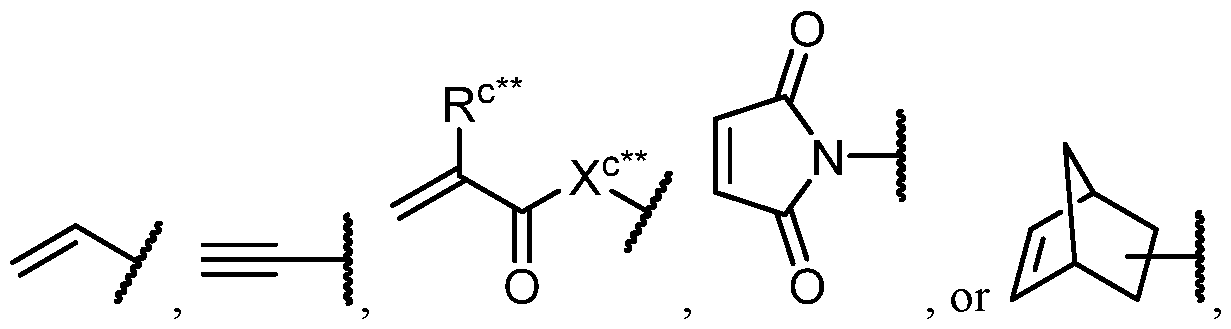


Claims


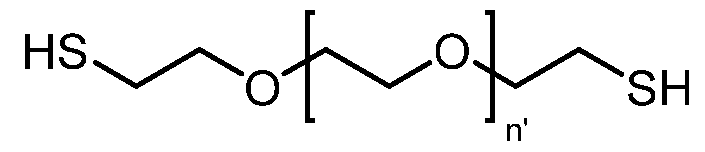


Priority Applications (2)
| Application Number | Priority Date | Filing Date | Title |
|---|---|---|---|
| AU2024281519A AU2024281519A1 (en) | 2023-06-01 | 2024-05-28 | Single piece intraocular lens with integrally coupled haptics |
| EP24731664.9A EP4720729A1 (en) | 2023-06-01 | 2024-05-28 | Single piece intraocular lens with integrally coupled haptics |
Applications Claiming Priority (2)
| Application Number | Priority Date | Filing Date | Title |
|---|---|---|---|
| US202363505659P | 2023-06-01 | 2023-06-01 | |
| US63/505,659 | 2023-06-01 |
Publications (1)
| Publication Number | Publication Date |
|---|---|
| WO2024246749A1 true WO2024246749A1 (en) | 2024-12-05 |
Family
ID=91432584
Family Applications (1)
| Application Number | Title | Priority Date | Filing Date |
|---|---|---|---|
| PCT/IB2024/055173 Ceased WO2024246749A1 (en) | 2023-06-01 | 2024-05-28 | Single piece intraocular lens with integrally coupled haptics |
Country Status (3)
| Country | Link |
|---|---|
| EP (1) | EP4720729A1 (en) |
| AU (1) | AU2024281519A1 (en) |
| WO (1) | WO2024246749A1 (en) |
Citations (5)
| Publication number | Priority date | Publication date | Assignee | Title |
|---|---|---|---|---|
| EP1961431A1 (en) * | 1997-12-02 | 2008-08-27 | Hoya Corporation | Intraocular lenses and process for producing molded-in type intraocular lenses |
| US7857848B2 (en) * | 2005-05-05 | 2010-12-28 | Key Medical Technologies, Inc. | Infinite refractive index gradient (IRIG) polymers for ocular implant and contact lens applications |
| US8216310B2 (en) * | 2007-09-28 | 2012-07-10 | Abbott Medical Optics Inc. | Polymer compositions suitable for intraocular lenses and related methods |
| US20180011222A1 (en) | 2016-07-06 | 2018-01-11 | Johnson & Johnson Vision Care, Inc. | Silicone hydrogels comprising polyamides |
| US20180009922A1 (en) | 2016-07-06 | 2018-01-11 | Johnson & Johnson Vision Care, Inc. | Silicone hydrogels comprising high levels of polyamides |
-
2024
- 2024-05-28 EP EP24731664.9A patent/EP4720729A1/en active Pending
- 2024-05-28 AU AU2024281519A patent/AU2024281519A1/en active Pending
- 2024-05-28 WO PCT/IB2024/055173 patent/WO2024246749A1/en not_active Ceased
Patent Citations (5)
| Publication number | Priority date | Publication date | Assignee | Title |
|---|---|---|---|---|
| EP1961431A1 (en) * | 1997-12-02 | 2008-08-27 | Hoya Corporation | Intraocular lenses and process for producing molded-in type intraocular lenses |
| US7857848B2 (en) * | 2005-05-05 | 2010-12-28 | Key Medical Technologies, Inc. | Infinite refractive index gradient (IRIG) polymers for ocular implant and contact lens applications |
| US8216310B2 (en) * | 2007-09-28 | 2012-07-10 | Abbott Medical Optics Inc. | Polymer compositions suitable for intraocular lenses and related methods |
| US20180011222A1 (en) | 2016-07-06 | 2018-01-11 | Johnson & Johnson Vision Care, Inc. | Silicone hydrogels comprising polyamides |
| US20180009922A1 (en) | 2016-07-06 | 2018-01-11 | Johnson & Johnson Vision Care, Inc. | Silicone hydrogels comprising high levels of polyamides |
Non-Patent Citations (1)
| Title |
|---|
| "Compendium of Polymer Terminology and Nomenclature", 2008 |
Also Published As
| Publication number | Publication date |
|---|---|
| AU2024281519A1 (en) | 2026-01-22 |
| EP4720729A1 (en) | 2026-04-08 |
Similar Documents
| Publication | Publication Date | Title |
|---|---|---|
| AU2023204633B2 (en) | Intraocular lens materials and components | |
| US12071497B2 (en) | High refractive index, high Abbe compositions | |
| US11958923B2 (en) | Compositions with high refractive index and abbe number | |
| US11795252B2 (en) | Compositions with high refractive index and Abbe number | |
| EP4720729A1 (en) | Single piece intraocular lens with integrally coupled haptics | |
| US20260110920A1 (en) | Materials and methods for light adjustable ophthalmic devices | |
| HK40038411A (en) | High reactive index, high abbe compositions |
Legal Events
| Date | Code | Title | Description |
|---|---|---|---|
| 121 | Ep: the epo has been informed by wipo that ep was designated in this application |
Ref document number: 24731664 Country of ref document: EP Kind code of ref document: A1 |
|
| WWE | Wipo information: entry into national phase |
Ref document number: AU2024281519 Country of ref document: AU |
|
| WWE | Wipo information: entry into national phase |
Ref document number: 2024731664 Country of ref document: EP |
|
| NENP | Non-entry into the national phase |
Ref country code: DE |
|
| ENP | Entry into the national phase |
Ref document number: 2024731664 Country of ref document: EP Effective date: 20260102 |
|
| ENP | Entry into the national phase |
Ref document number: 2024731664 Country of ref document: EP Effective date: 20260102 |
|
| ENP | Entry into the national phase |
Ref document number: 2024281519 Country of ref document: AU Date of ref document: 20240528 Kind code of ref document: A |
|
| ENP | Entry into the national phase |
Ref document number: 2024731664 Country of ref document: EP Effective date: 20260102 |
|
| ENP | Entry into the national phase |
Ref document number: 2024731664 Country of ref document: EP Effective date: 20260102 |
|
| ENP | Entry into the national phase |
Ref document number: 2024731664 Country of ref document: EP Effective date: 20260102 |
|
| WWP | Wipo information: published in national office |
Ref document number: 2024731664 Country of ref document: EP |