WO2024240607A1 - Laundry composition - Google Patents
Laundry composition Download PDFInfo
- Publication number
- WO2024240607A1 WO2024240607A1 PCT/EP2024/063589 EP2024063589W WO2024240607A1 WO 2024240607 A1 WO2024240607 A1 WO 2024240607A1 EP 2024063589 W EP2024063589 W EP 2024063589W WO 2024240607 A1 WO2024240607 A1 WO 2024240607A1
- Authority
- WO
- WIPO (PCT)
- Prior art keywords
- composition
- acid
- formula
- composition according
- weight
- Prior art date
- Legal status (The legal status is an assumption and is not a legal conclusion. Google has not performed a legal analysis and makes no representation as to the accuracy of the status listed.)
- Ceased
Links
Classifications
-
- C—CHEMISTRY; METALLURGY
- C11—ANIMAL OR VEGETABLE OILS, FATS, FATTY SUBSTANCES OR WAXES; FATTY ACIDS THEREFROM; DETERGENTS; CANDLES
- C11D—DETERGENT COMPOSITIONS; USE OF SINGLE SUBSTANCES AS DETERGENTS; SOAP OR SOAP-MAKING; RESIN SOAPS; RECOVERY OF GLYCEROL
- C11D1/00—Detergent compositions based essentially on surface-active compounds; Use of these compounds as a detergent
- C11D1/38—Cationic compounds
- C11D1/62—Quaternary ammonium compounds
-
- C—CHEMISTRY; METALLURGY
- C11—ANIMAL OR VEGETABLE OILS, FATS, FATTY SUBSTANCES OR WAXES; FATTY ACIDS THEREFROM; DETERGENTS; CANDLES
- C11D—DETERGENT COMPOSITIONS; USE OF SINGLE SUBSTANCES AS DETERGENTS; SOAP OR SOAP-MAKING; RESIN SOAPS; RECOVERY OF GLYCEROL
- C11D3/00—Other compounding ingredients of detergent compositions covered in group C11D1/00
- C11D3/0005—Other compounding ingredients characterised by their effect
- C11D3/001—Softening compositions
- C11D3/0015—Softening compositions liquid
-
- C—CHEMISTRY; METALLURGY
- C11—ANIMAL OR VEGETABLE OILS, FATS, FATTY SUBSTANCES OR WAXES; FATTY ACIDS THEREFROM; DETERGENTS; CANDLES
- C11D—DETERGENT COMPOSITIONS; USE OF SINGLE SUBSTANCES AS DETERGENTS; SOAP OR SOAP-MAKING; RESIN SOAPS; RECOVERY OF GLYCEROL
- C11D3/00—Other compounding ingredients of detergent compositions covered in group C11D1/00
- C11D3/48—Medical, disinfecting agents, disinfecting, antibacterial, germicidal or antimicrobial compositions
Definitions
- the present invention relates to transparent fabric conditioners. of the Invention
- Transparent fabric conditioners are desirable for some groups of consumers. However formulating transparent fabric conditioners is challenging. Quaternary ammonium compounds which are commonly used as fabric softening actives are inherently unstable, often leading to cloudy or hazy formulations. It is a challenge for formulators to produce a fabric softening composition which is stable, transparent and effective at softening fabrics. The addition of preservatives to such formulations provides additional challenges for stability, particularly clarity.
- a transparent fabric conditioner comprising: a) Quaternary ammonium compound; b) Isothiazolinone derivatives.
- compositions described herein comprise quaternary ammonium compounds.
- the quaternary ammonium compound comprises compounds obtained by reacting: i) a mixture of at least one dicarboxylic acid of formula (I)
- X preferably represents a group having 2 to 8 carbons, X preferably represents a hydroxy-substituted linear or branched alkyl or alkylene. More preferably, X represents ethan-1 ,2-diyl, propan-1 , 2-diyl, propan-1 , 3-diyl, butan-1 ,4-diyl, hexan- 1 ,4-diyl, or cyclohexan-1 ,4-diyl, particularly preferably X represents butan-1 , 4-diyl. Even more preferably the dicarboxylic acid is selected from: succinic acid, maleic acid, glutaric acid, adipic acid and combinations thereof. Most preferably the dicarboxylic acid comprises adipic acid.
- R1CO preferably represents an aliphatic, linear, or branched acyl residue having 6 to 22 carbon atoms.
- the monocarboxylic acid is selected from caproic acid, caprylic acid, 2-ethylhexanoic acid, capric acid, lauric acid, isotridecanoic acid, myristic acid, palmitic acid, palmoleic acid, stearic acid, isostearic acid, oleic acid, elaidic acid, petroselic acid, linoleic acid, linolenic acid, 2-octyldodecanoic acid, eleostearic acid, arachidic acid, gadoleic acid, behenic acid, erucic acid, coconut fatty acid, palm fatty acid, palm kernel fatty acid, tallow fatty acid and combinations thereof.
- the monocarboxylic acid is selected from: Stearic acid, isostearic acid, palmitic acid, myristic acid, lauric acid, capric acid, caprylic acid, 2-ethylhexanoic acid, 2-octyldodecanoic acid, caproic acid, oleic acid, linoleic acid, and linolenic acid, coconut fatty acid, palm fatty acid, palm kernel fatty acid, tallow fatty acid and combinations thereof.
- the dicarboxylic acid of formula (I) is selected from: succinic acid, maleic acid, glutaric acid, adipic acid, and combinations thereof and the monocarboxylic acid of formula (II) is selected from: stearic acid, isostearic acid, palmitic acid, myristic acid, lauric acid, capric acid, caprylic acid, 2-ethylhexanoic acid, 2-octyldodecanoic acid, caproic acid, oleic acid, linoleic acid, linolenic acid, partially-hydrogenated coconut fatty acid, palm fatty acid, palm kernel fatty acid, tallow fatty acid and combinations thereof.
- the alkanolamines of formula (III), preferably contain a hydroxyalkane residue (alkanol residue) having 2 to 6 carbon atoms, preferably 2 to 4 carbon atoms.
- alkanolamines of formula (III) comprises triethanolamine.
- the monocarboxylic acids (of formula II) and the dicarboxylic acids (of formula I) may be used in the molar ratio of from about 1:10 to about 10:1. It has, however, proven advantageous to use a molar ratio of from about 1 :1 to about 4:1 and, in particular, from about 1.5:1 to about 3:1.
- Manufacturing methods for preparing the esterquats used according to the present disclosure are generally known in the prior art. In particular, the method of preparation comprises the steps of esterification and quatanization.
- the at least one cationic compound comprises or is composed of an esterquat compound of formula (IV) wherein,
- X is a saturated or unsaturated hydrocarbon residue having 1 to 10 carbon atoms preferably butan-1 ,4-diyl A is a (C2 to C6) alkanediyl group, preferably ethan-1 ,2-diyl
- R1 is a (C2 to C4) hydroxyalkyl group or a (C6 to C22) acyloxy (C2 to C4) alkyl group, preferably 2-hydroxyethyl or 2-((C6 to C22) acyloxy)ethyl;
- R2 is methyl or ethyl
- R3 and R4-independently are a hydrogen atom or a (C6 to C22) acyl group; n is 1 or 2; and
- Z- is an anion, preferably methyl sulphate
- At least one of the groups R1 , R3, or R4 comprises a (C6 to C22) acyl residue.
- compositions described herein preferably comprise 1 to 80 wt.% fabric softening active by weight of the composition. More preferably 1.5 to 50 wt.% fabric softening active and even more preferably 2 to 20 wt.% fabric softening active by weight of the composition.
- the formulation has a light transmission of 60 to 100%, more preferably 60 to 100%, even more preferably 70 to 100% and most preferably 80 to 90%.
- the light transmission is measured at 25°C and can suitably be measured using a TurbiscanOLAB ex.
- Formulaction Scientific Instruments with a 880 nm wavelength and a glass vials having a diameter of 25 mm and height of 55mm.
- compositions of the present invention comprise isothiazolinone derivatives.
- the isothiazolinone derivatives are preferably selected from: benzisothiazolinone (BIT), methylisothiazolinone (MIT), chloroisothiazolinone (CIT), or combinations thereof. Most preferably benzisothiazolinone (BIT).
- the compositions comprise 0.0001 to 1 wt.% isothiazolinone derivatives by weight of the composition, preferably 0.001 to 0.5 wt.% and most preferably 0.005 to 0.2 wt.% by weight of the composition.
- the composition comprises 0.0001 to 1 wt.% benzisothiazolinone (BIT) by weight of the composition, more preferably 0.001 to 0.5 wt.% and most preferably 0.005 to 0.2 wt.% benzisothiazolinone (BIT) by weight of the composition.
- BIT benzisothiazolinone
- compositions described herein preferably comprise emulsifier.
- the compositions comprise 0.2 to 20 wt.% emulsifier by weight of the composition, more preferably 0.5 to 10 wt.% emulsifier and most preferably 0.7 to 5 wt.% emulsifier by weight of the composition.
- the emulsifier preferably has an HLB value of at least about 12.0, preferably at least about 13.0, further preferably at least about 14.0, and most preferably at least about 15.0.
- HLB hydrophilic-lipophilic balance
- the emulsifier may be selected from:
- fatty alcohols, fatty acids, alkyl phenols, alkylamines, or triglycerides Preferably the fatty alcohols, fatty acids, alkyl phenols, alkylamines have a C 8 to 22 carbon chain;
- alkyl and/or alkenyl oligoglycosides having 8 to 22 carbon atoms in the alk(en)yl residue and ethoxylated analogs thereof;
- the emulsifier is selected from the addition products of ethylene oxide and/or propylene oxide to linear fatty alcohols, fatty acids, alkyl phenols, alkylamines, or triglycerides.
- the fatty alcohols, fatty acids, alkyl phenols, alkylamines have a C 8 to 22 carbon chain.
- emulsifier comprises 6 to 100 moles of ethoxylation, more preferably 12 to 80, and even more preferably 20 to 60 moles of ethoxylation. Most preferably the emulsifier comprises about 40 moles of ethoxylation (i.e. 35 to 45 moles of ethoxylation).
- the emulsifier is the addition product of a triglyceride. More preferably, the triglyceride is fully saturated. Full saturation may be naturally occurring or may be achieved by hydrogenation.
- the triglyceride chains comprise alcohol groups.
- Preferred sources of triglyceride are plant oils and combinations thereof.
- the triglycerides are sourced from the following oils: almond, argan, babassu, borage, camelina, canola, castor, chia, cherry, coconut, corn, cotton, coffee, Cuphea Viscosissima , flax (linseed), grape, hemp, hepar, jatropha, jojoba, Lesquerella Fendleri, Moringa Oleifera, macadamia, mango, mustard, neem, olive, palm, palm kernal, perilla, rapeseed, safflower, sesame, shea, stillingia, soybean, sunflower, tonka bean, tung and combinations thereof. Most preferably castor oil.
- the emulsifier comprises PEG-40 hydrogenated castor oil.
- the emulsifier enhances the transparency of the formulations.
- compositions described herein preferably comprise thickening agents.
- the thickening agents are selected from hydrophilic silicas, polysaccharides, polyethylene glycol monoesters and diesters of fatty acids, polyacrylates, polyacrylamides, polyvinyl alcohol, polyvinylpyrrolidone, surfactants, electrolytes and combinations thereof.
- the thickening agent is selected from polymeric thickening agents, such as polysaccharides, polyethylene glycol monoesters and diesters of fatty acids, polyacrylates, polyacrylamides, polyvinyl alcohol, polyvinylpyrrolidone and combinations thereof.
- polymeric thickening agents such as polysaccharides, polyethylene glycol monoesters and diesters of fatty acids, polyacrylates, polyacrylamides, polyvinyl alcohol, polyvinylpyrrolidone and combinations thereof.
- the thickening agent is selected from non-ionic polymer, most preferably the thickening agent is selected from: hydroxyethyl cellulose (HEC), hydroxypropyl cellulose (HPC), hydroxypropyl methylcellulose (HPMC), methylcellulose (MC), guar, guar derivatives and mixtures thereof.
- HEC hydroxyethyl cellulose
- HPMC hydroxypropyl cellulose
- HPMC hydroxypropyl methylcellulose
- MC methylcellulose
- guar guar derivatives and mixtures thereof.
- the compositions described herein preferably comprise 0.01 to 4 wt.% thickening agent by weight of the composition, more preferably 0.05 to 2 wt.% thickening agent.
- compositions of the present invention preferably comprises 0.1 to 30 wt. % perfume. More preferably the compositions comprise 0.5 to 20 wt.% perfume materials, even more preferably 1 to 15 wt.% perfume materials.
- Useful perfume components may include materials of both natural and synthetic origin. They include single compounds and mixtures. Specific examples of such components may be found in the current literature, e.g., in Fenaroli's Handbook of Flavor Ingredients, 1975, CRC Press; Synthetic Food Adjuncts, 1947 by M. B. Jacobs, edited by Van Nostrand; or Perfume and Flavor Chemicals by S. Arctander 1969, Montclair, N.J. (USA). These substances are well known to the person skilled in the art of perfuming, flavouring, and/or aromatizing consumer products.
- Particularly preferred perfume components are blooming perfume components and substantive perfume components.
- Blooming perfume components are defined by a boiling point less than 250°C and a LogP or greater than 2.5.
- Substantive perfume components are defined by a boiling point greater than 250°C and a LogP greater than 2.5. Boiling point is measured at standard pressure (760 mm Hg).
- a perfume composition will comprise a mixture of blooming and substantive perfume components.
- the perfume composition may comprise other perfume components.
- perfume components it is commonplace for a plurality of perfume components to be present in a free oil perfume composition.
- compositions for use in the present invention it is envisaged that there will be three or more, preferably four or more, more preferably five or more, most preferably six or more different perfume components.
- An upper limit of 300 perfume components may be applied.
- a method of preserving a transparent fabric conditioner In one aspect of the present invention is provided a method of preserving a transparent fabric conditioner. This method ensures that the transparency of the fabric conditioner formulation is maintained. The method involves the inclusion isothiazolinone derivatives in a transparent fabric conditioner as described herein. Examples
- Table 1 formulations The formulations were prepared by first preparing a pre-mix of the quaternary amonium compound and the PEG 40 hydrogenated castor oil. Water was then heated to 65°C and the hydroxylethyl cellulose powder slowly added to the water with mixing. The minors and the preservative were then added, followed by the premix of quaternary ammonium compound and PEG 40 hydrogenated castor oil. Mixing continued and cool of the mixture started. The perfume was added at 45°C. Finally, the mixture was cooled to room temperature.
- Example 1 remained transparent, while the other samples became cloudy. This can be seen in figure 1 by the visibility of the base of the sample pot. In figure 2 the same label was stuck to the base of the sample pots the label in Example 1 was significantly clearer than the labels in the other samples, demonstrating a significantly more transparent formulation.
Landscapes
- Chemical & Material Sciences (AREA)
- Life Sciences & Earth Sciences (AREA)
- Engineering & Computer Science (AREA)
- Chemical Kinetics & Catalysis (AREA)
- Oil, Petroleum & Natural Gas (AREA)
- Wood Science & Technology (AREA)
- Organic Chemistry (AREA)
- Treatments For Attaching Organic Compounds To Fibrous Goods (AREA)
Abstract
A transparent fabric conditioner composition comprising: quaternary ammonium compound and isothiazolinone derivatives.
Description
LAUNDRY COMPOSITION
Field of the Invention
The present invention relates to transparent fabric conditioners.
 of the Invention
Transparent fabric conditioners are desirable for some groups of consumers. However formulating transparent fabric conditioners is challenging. Quaternary ammonium compounds which are commonly used as fabric softening actives are inherently unstable, often leading to cloudy or hazy formulations. It is a challenge for formulators to produce a fabric softening composition which is stable, transparent and effective at softening fabrics. The addition of preservatives to such formulations provides additional challenges for stability, particularly clarity.
Summary of the Invention
It has been found that by careful selection of the preservative, a stable transparent fabric conditioner can be produced.
Accordingly in a first aspect of the present invention is provided a transparent fabric conditioner comprising: a) Quaternary ammonium compound; b) Isothiazolinone derivatives.
In a further aspect of the present invention is provided a method of preserving a transparent fabric conditioner composition comprising a fabric softening active by the inclusion isothiazolinone derivatives.
Detailed of the Invention
These and other aspects, features and advantages will become apparent to those of ordinary skill in the art from a reading of the following detailed description and the appended claims. For the avoidance of doubt, any feature of one aspect of the present invention may be utilised in any other aspect of the invention. The word “comprising” is intended to mean “including” but not necessarily “consisting of” or “composed of.” In other words, the listed steps or options need not be exhaustive. It is noted that the examples given in the description below are intended to clarify the invention and are not intended to limit the invention to those examples per se. Similarly, all percentages are weight/weight percentages unless otherwise indicated. Except in the operating and comparative examples, or where otherwise explicitly indicated, all numbers in this description indicating amounts of material or conditions of reaction, physical properties of materials and/or use are to be understood as modified by the word “about”. Numerical ranges expressed in the format "from x to y" are understood to include x and y. When for a specific feature multiple preferred ranges are described in the format "from x to y", it is understood that all ranges combining the different endpoints are also contemplated.
The compositions described herein comprise quaternary ammonium compounds. Preferably the quaternary ammonium compound comprises compounds obtained by reacting: i) a mixture of at least one dicarboxylic acid of formula (I)

Formula (I) wherein X represents a saturated or unsaturated hydrocarbon residue having 1 to 8 carbon atoms, and at least one monocarboxylic acid of formula (II)
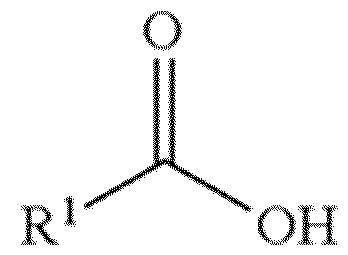 Formula (II)
wherein R1 represents a saturated or unsaturated hydrocarbon residue having 5 to 21 carbon atoms, with ii) at least one tertiary amine of formula (III)
 Formula (III) wherein R2, R3, and R4 independently represent a C2 to Ce hydroxyalkyl group, preferably 2-hydroxyethyl, and then reacting the resulting product with iii) at least one quaternizing agent for quaternizing at least one amino group contained in the reaction product.
In the dicarboxylic acid of formula (I), X preferably represents a group having 2 to 8 carbons, X preferably represents a hydroxy-substituted linear or branched alkyl or alkylene. More preferably, X represents ethan-1 ,2-diyl, propan-1 , 2-diyl, propan-1 , 3-diyl, butan-1 ,4-diyl, hexan- 1 ,4-diyl, or cyclohexan-1 ,4-diyl, particularly preferably X represents butan-1 , 4-diyl. Even more preferably the dicarboxylic acid is selected from: succinic acid, maleic acid, glutaric acid, adipic acid and combinations thereof. Most preferably the dicarboxylic acid comprises adipic acid.
In the monocarboxylic acids of formula (II), R1CO preferably represents an aliphatic, linear, or branched acyl residue having 6 to 22 carbon atoms. Preferably the monocarboxylic acid is selected from caproic acid, caprylic acid, 2-ethylhexanoic acid, capric acid, lauric acid, isotridecanoic acid, myristic acid, palmitic acid, palmoleic acid, stearic acid, isostearic acid, oleic acid, elaidic acid, petroselic acid, linoleic acid, linolenic acid, 2-octyldodecanoic acid, eleostearic acid, arachidic acid, gadoleic acid, behenic acid, erucic acid, coconut fatty acid, palm fatty acid, palm kernel fatty acid, tallow fatty acid and combinations thereof. Industrial mixtures thereof which are produced, for example, during the pressurized cleavage of natural fats and oils, during the reduction of aldehydes from the Roelen oxo synthesis, or the dimerization of unsaturated fatty acids may also be used. More preferably the monocarboxylic acid is selected
from: Stearic acid, isostearic acid, palmitic acid, myristic acid, lauric acid, capric acid, caprylic acid, 2-ethylhexanoic acid, 2-octyldodecanoic acid, caproic acid, oleic acid, linoleic acid, and linolenic acid, coconut fatty acid, palm fatty acid, palm kernel fatty acid, tallow fatty acid and combinations thereof.
Preferably the dicarboxylic acid of formula (I) is selected from: succinic acid, maleic acid, glutaric acid, adipic acid, and combinations thereof and the monocarboxylic acid of formula (II) is selected from: stearic acid, isostearic acid, palmitic acid, myristic acid, lauric acid, capric acid, caprylic acid, 2-ethylhexanoic acid, 2-octyldodecanoic acid, caproic acid, oleic acid, linoleic acid, linolenic acid, partially-hydrogenated coconut fatty acid, palm fatty acid, palm kernel fatty acid, tallow fatty acid and combinations thereof.
The alkanolamines of formula (III), preferably contain a hydroxyalkane residue (alkanol residue) having 2 to 6 carbon atoms, preferably 2 to 4 carbon atoms. Preferably the alkanolamines of formula (III) comprises triethanolamine.
The monocarboxylic acids (of formula II) and the dicarboxylic acids (of formula I) may be used in the molar ratio of from about 1:10 to about 10:1. It has, however, proven advantageous to use a molar ratio of from about 1 :1 to about 4:1 and, in particular, from about 1.5:1 to about 3:1. Manufacturing methods for preparing the esterquats used according to the present disclosure are generally known in the prior art. In particular, the method of preparation comprises the steps of esterification and quatanization.
In an especially preferred embodiment, the at least one cationic compound comprises or is composed of an esterquat compound of formula (IV)
 wherein,
X is a saturated or unsaturated hydrocarbon residue having 1 to 10 carbon atoms preferably butan-1 ,4-diyl
A is a (C2 to C6) alkanediyl group, preferably ethan-1 ,2-diyl
R1 is a (C2 to C4) hydroxyalkyl group or a (C6 to C22) acyloxy (C2 to C4) alkyl group, preferably 2-hydroxyethyl or 2-((C6 to C22) acyloxy)ethyl;
R2 is methyl or ethyl;
R3 and R4-independently are a hydrogen atom or a (C6 to C22) acyl group; n is 1 or 2; and
Z- is an anion, preferably methyl sulphate;
And wherein, at least one of the groups R1 , R3, or R4 comprises a (C6 to C22) acyl residue.
The compositions described herein preferably comprise 1 to 80 wt.% fabric softening active by weight of the composition. More preferably 1.5 to 50 wt.% fabric softening active and even more preferably 2 to 20 wt.% fabric softening active by weight of the composition.
For the purposes of the present invention, transparency is measured by light transmission. Preferably the formulation has a light transmission of 60 to 100%, more preferably 60 to 100%, even more preferably 70 to 100% and most preferably 80 to 90%. The light transmission is measured at 25°C and can suitably be measured using a TurbiscanOLAB ex. Formulaction Scientific Instruments, with a 880 nm wavelength and a glass vials having a diameter of 25 mm and height of 55mm.
The compositions of the present invention comprise isothiazolinone derivatives. The isothiazolinone derivatives are preferably selected from: benzisothiazolinone (BIT), methylisothiazolinone (MIT), chloroisothiazolinone (CIT), or combinations thereof. Most preferably benzisothiazolinone (BIT). The compositions comprise 0.0001 to 1 wt.% isothiazolinone derivatives by weight of the composition, preferably 0.001 to 0.5 wt.% and most preferably 0.005 to 0.2 wt.% by weight of the composition. More preferably the composition comprises 0.0001 to 1 wt.% benzisothiazolinone (BIT) by weight of the composition, more preferably 0.001 to 0.5 wt.% and most preferably 0.005 to 0.2 wt.% benzisothiazolinone (BIT) by weight of the composition.
The compositions described herein preferably comprise emulsifier. Preferably the compositions comprise 0.2 to 20 wt.% emulsifier by weight of the composition, more preferably 0.5 to 10 wt.% emulsifier and most preferably 0.7 to 5 wt.% emulsifier by weight of the composition.
The emulsifier preferably has an HLB value of at least about 12.0, preferably at least about 13.0, further preferably at least about 14.0, and most preferably at least about 15.0. The term "HLB" (hydrophilic-lipophilic balance) defines the hydrophilic and lipophilic components of corresponding classes of substances (which here are emulsifiers) in a range of values from about 1 to about 20 according to the following formula (Griffin, Classification of surface active agents by HLB, J. Soc. Cosmet. Chem. 1 , 1949):
HLB = 20 x (1-(/W7//W)) where M = molar mass of the entire molecule and M1 = molar mass of the lipophilic component of the molecule
The emulsifier may be selected from:
(i) the addition products of ethylene oxide and/or propylene oxide to linear fatty alcohols, fatty acids, alkyl phenols, alkylamines, or triglycerides. Preferably the fatty alcohols, fatty acids, alkyl phenols, alkylamines have a C 8 to 22 carbon chain;
(ii) alkyl and/or alkenyl oligoglycosides having 8 to 22 carbon atoms in the alk(en)yl residue and ethoxylated analogs thereof;
(iii) partial esters of glycerol and/or sorbitol with unsaturated, linear or saturated, branched fatty acids and/or hydroxycarboxylic acids, and adducts thereof with ethylene oxide;
(iv) partial esters of polyglycerol, polyethylene glycol, trimethylolpropane, pentaerythritol, sugar alcohols, alkyl glucosides, and polyglucosides with saturated and/or unsaturated, linear or branched fatty acids and/or hydroxycarboxylic acids, and adducts thereof with ethylene oxide;
(v) mixed esters of pentaerythritol, fatty acids, citric acid, fatty alcohol, methyl glucose and polyols,
(vi) mono-, di- and trialkyl phosphates, and also mono-, di- and/or tri-PEG alkyl phosphates and salts thereof;
(vii) lanolin alcohol;
(viii) polysiloxane-polyalkyl-polyether copolymers and corresponding derivatives;
(ix) polyalkylene glycols;
(x) any combinations of ingredients (i) to (ix).
Preferably the emulsifier is selected from the addition products of ethylene oxide and/or propylene oxide to linear fatty alcohols, fatty acids, alkyl phenols, alkylamines, or triglycerides. Preferably the fatty alcohols, fatty acids, alkyl phenols, alkylamines have a C 8 to 22 carbon chain.
Preferably emulsifier comprises 6 to 100 moles of ethoxylation, more preferably 12 to 80, and even more preferably 20 to 60 moles of ethoxylation. Most preferably the emulsifier comprises about 40 moles of ethoxylation (i.e. 35 to 45 moles of ethoxylation).
Preferably the emulsifier is the addition product of a triglyceride. More preferably, the triglyceride is fully saturated. Full saturation may be naturally occurring or may be achieved by hydrogenation. Preferably the triglyceride chains comprise alcohol groups. Preferred sources of triglyceride are plant oils and combinations thereof. Preferably the triglycerides are sourced from the following oils: almond, argan, babassu, borage, camelina, canola, castor, chia, cherry, coconut, corn, cotton, coffee, Cuphea Viscosissima , flax (linseed), grape, hemp, hepar, jatropha, jojoba, Lesquerella Fendleri, Moringa Oleifera, macadamia, mango, mustard, neem, olive, palm, palm kernal, perilla, rapeseed, safflower, sesame, shea, stillingia, soybean, sunflower, tonka bean, tung and combinations thereof. Most preferably castor oil.
Most preferably the emulsifier comprises PEG-40 hydrogenated castor oil. The emulsifier enhances the transparency of the formulations.
The compositions described herein preferably comprise thickening agents. Preferably the thickening agents are selected from hydrophilic silicas, polysaccharides, polyethylene glycol monoesters and diesters of fatty acids, polyacrylates, polyacrylamides, polyvinyl alcohol, polyvinylpyrrolidone, surfactants, electrolytes and combinations thereof.
More preferably the thickening agent is selected from polymeric thickening agents, such as polysaccharides, polyethylene glycol monoesters and diesters of fatty acids, polyacrylates, polyacrylamides, polyvinyl alcohol, polyvinylpyrrolidone and combinations thereof.
Even more preferably the thickening agent is selected from non-ionic polymer, most preferably the thickening agent is selected from: hydroxyethyl cellulose (HEC), hydroxypropyl cellulose (HPC), hydroxypropyl methylcellulose (HPMC), methylcellulose (MC), guar, guar derivatives and mixtures thereof.
The compositions described herein preferably comprise 0.01 to 4 wt.% thickening agent by weight of the composition, more preferably 0.05 to 2 wt.% thickening agent.
The compositions of the present invention preferably comprises 0.1 to 30 wt. % perfume. More preferably the compositions comprise 0.5 to 20 wt.% perfume materials, even more preferably 1 to 15 wt.% perfume materials.
Useful perfume components may include materials of both natural and synthetic origin. They include single compounds and mixtures. Specific examples of such components may be found in the current literature, e.g., in Fenaroli's Handbook of Flavor Ingredients, 1975, CRC Press; Synthetic Food Adjuncts, 1947 by M. B. Jacobs, edited by Van Nostrand; or Perfume and Flavor Chemicals by S. Arctander 1969, Montclair, N.J. (USA). These substances are well known to the person skilled in the art of perfuming, flavouring, and/or aromatizing consumer products.
Particularly preferred perfume components are blooming perfume components and substantive perfume components. Blooming perfume components are defined by a boiling point less than 250°C and a LogP or greater than 2.5. Substantive perfume components are defined by a boiling point greater than 250°C and a LogP greater than 2.5. Boiling point is measured at standard pressure (760 mm Hg). Preferably a perfume composition will comprise a mixture of blooming and substantive perfume components. The perfume composition may comprise other perfume components.
It is commonplace for a plurality of perfume components to be present in a free oil perfume composition. In the compositions for use in the present invention it is envisaged that there will be three or more, preferably four or more, more preferably five or more, most preferably six or more different perfume components. An upper limit of 300 perfume components may be applied.
In one aspect of the present invention is provided a method of preserving a transparent fabric conditioner. This method ensures that the transparency of the fabric conditioner formulation is maintained. The method involves the inclusion isothiazolinone derivatives in a transparent fabric conditioner as described herein.
Examples
Table 1: formulations
 The formulations were prepared by first preparing a pre-mix of the quaternary amonium compound and the PEG 40 hydrogenated castor oil. Water was then heated to 65°C and the hydroxylethyl cellulose powder slowly added to the water with mixing. The minors and the preservative were then added, followed by the premix of quaternary ammonium compound and PEG 40 hydrogenated castor oil. Mixing continued and cool of the mixture started. The perfume was added at 45°C. Finally, the mixture was cooled to room temperature.
The samples were placed in clear vials and stored at 5°C and 40°C for 10 weeks. Images of these samples are provided in Figure 1 (5°C) and Figure 2 (40°C). Example 1 remained transparent, while the other samples became cloudy. This can be seen in figure 1 by the visibility of the base of the sample pot. In figure 2 the same label was stuck to the base of the sample pots the label in Example 1 was significantly clearer than the labels in the other samples, demonstrating a significantly more transparent formulation.
Claims
Claims
1) A transparent fabric conditioner composition comprising: a) quaternary ammonium compound; b) isothiazolinone derivatives selected from: Benzisothiazolinone (BIT), Methylisothiazolinone (MIT), Chloroisothiazolinone (CIT), or combinations thereof.
2) A composition according to any preceding claim, wherein the isothiazolinone derivative is Benzisothiazolinone (BIT).
3) A composition according to any preceding claim, wherein the composition comprises 0.0001 to 1 wt.% isothiazolinone derivatives.
4) A composition according to any preceding claim, wherein the isothiazolinone is selected from benzisothiazolinone.
5) A composition according to any preceding claim, wherein the quaternary compound is obtained by reacting: i) a mixture of at least one dicarboxylic acid of formula (I)

Formula (I) wherein X represents a saturated or unsaturated hydrocarbon residue having 1 to 8 carbon atoms, and at least one monocarboxylic acid of formula (II)
 Formula (II) wherein R1 represents a saturated or unsaturated hydrocarbon residue having 5 to 21 carbon atoms, with ii) at least one tertiary amine of formula (III)
 Formula (III) wherein R2, R3, and R4 independently represent a C2 to Ce hydroxyalkyl group, preferably 2-hydroxyethyl, and then reacting the resulting product with iii) at least one quaternizing agent for quaternizing at least one amino group contained in the reaction product.
6) A composition according to any preceding claim, wherein the quaternary ammonium compound has the formula:
 wherein,
X is a saturated or unsaturated hydrocarbon residue having 1 to 10 carbon atoms;
A is a (C2 to C6) alkanediyl group;
R1 is a (C2 to C4) hydroxyalkyl group or a (C6 to C22) acyloxy (C2 to C4) alkyl group;
R2 is methyl or ethyl;
R3 and R4-independently are a hydrogen atom or a (C6 to C22) acyl group; n is 1 or 2; and
Z- is an anion,
And wherein, at least one of the groups R1 , R3, or R4 comprises a (C6 to C22) acyl residue.
7) A composition according to any preceding claim, wherein the composition comprises 1 to 80 wt.% fabric softening active by weight of the composition.
8) A composition according to any preceding claim, wherein the composition comprises 0.2 to 20 wt.% emulsifier by weight of the composition.
9) A composition according to any preceding claim, wherein the composition comprises 0.01 to 4 wt.% thickening agent by weight of the composition.
10) A composition according to any preceding claim, wherein the composition comprises 0.1 to 30 wt. % perfume by weight of the composition.
11) A method of preserving a transparent fabric conditioner composition comprising a fabric softening active by the inclusion isothiazolinone derivatives.
Applications Claiming Priority (2)
| Application Number | Priority Date | Filing Date | Title |
|---|---|---|---|
| EP23175416 | 2023-05-25 | ||
| EP23175416.9 | 2023-05-25 |
Publications (1)
| Publication Number | Publication Date |
|---|---|
| WO2024240607A1 true WO2024240607A1 (en) | 2024-11-28 |
Family
ID=86603986
Family Applications (1)
| Application Number | Title | Priority Date | Filing Date |
|---|---|---|---|
| PCT/EP2024/063589 Ceased WO2024240607A1 (en) | 2023-05-25 | 2024-05-16 | Laundry composition |
Country Status (1)
| Country | Link |
|---|---|
| WO (1) | WO2024240607A1 (en) |
Citations (5)
| Publication number | Priority date | Publication date | Assignee | Title |
|---|---|---|---|---|
| EP0305065A2 (en) * | 1987-08-26 | 1989-03-01 | The Clorox Company | Isotropic fabric softener composition containing fabric mildewstat |
| EP1392806B1 (en) * | 2001-05-11 | 2005-12-07 | Reckitt Benckiser N.V. | Method for softening fabrics |
| WO2013156371A1 (en) * | 2012-04-17 | 2013-10-24 | Unilever Plc | Improvements relating to fabric conditioners |
| WO2014174272A1 (en) * | 2013-04-24 | 2014-10-30 | Intelligent Fabric Technologies Plc | Fabric softener |
| US20170218304A1 (en) * | 2014-07-25 | 2017-08-03 | Henkel Ag & Co. Kgaa | Transparent textile care agent |
-
2024
- 2024-05-16 WO PCT/EP2024/063589 patent/WO2024240607A1/en not_active Ceased
Patent Citations (5)
| Publication number | Priority date | Publication date | Assignee | Title |
|---|---|---|---|---|
| EP0305065A2 (en) * | 1987-08-26 | 1989-03-01 | The Clorox Company | Isotropic fabric softener composition containing fabric mildewstat |
| EP1392806B1 (en) * | 2001-05-11 | 2005-12-07 | Reckitt Benckiser N.V. | Method for softening fabrics |
| WO2013156371A1 (en) * | 2012-04-17 | 2013-10-24 | Unilever Plc | Improvements relating to fabric conditioners |
| WO2014174272A1 (en) * | 2013-04-24 | 2014-10-30 | Intelligent Fabric Technologies Plc | Fabric softener |
| US20170218304A1 (en) * | 2014-07-25 | 2017-08-03 | Henkel Ag & Co. Kgaa | Transparent textile care agent |
Non-Patent Citations (1)
| Title |
|---|
| GRIFFIN: "Classification of surface active agents by HLB", J. SOC. COSMET. CHEM, vol. 1, 1949 |
Similar Documents
| Publication | Publication Date | Title |
|---|---|---|
| EP1136471B1 (en) | Esters derived from alkanolamines, dicarboxylic acids and fatty alcohols and the cationic surfactants obtainable therefrom. | |
| EP2553067B1 (en) | Fabric softener active composition | |
| JP4420359B2 (en) | Quaternary ammonium compounds with high diester content from triethanolamine (alkyl fatty acid esters) | |
| CN102869757B (en) | Fabric sofetening composition | |
| KR101016929B1 (en) | MDA ester quarts with high monoesters blended with TEA quarts | |
| EP3894529B1 (en) | Fabric conditioner compositions | |
| US6562780B2 (en) | Esters derived from alkanolamines, dicarboxylic acids and fatty alcohols and the cationic surfactants obtainable therefrom | |
| ES2358046T3 (en) | SOFTENING FABRIC COMPOSITION. | |
| JP7422125B2 (en) | Esterquat composition | |
| US12606774B2 (en) | Methyl ester ethoxylates with a mixture of C18 monounsaturated and C18 unsaturated/polyunsaturated alkyl groups | |
| WO2023166043A1 (en) | Softener formulations for maintaining or improving moisture wicking | |
| KR20240161656A (en) | Transparent softener formulation | |
| TWI454572B (en) | Liquid detergent composition for clothing | |
| HU214101B (en) | Liquid softener composition for fabrics | |
| KR20240160157A (en) | Dispersible softener formulations and unit dosages | |
| US6680290B1 (en) | Clear softening formulations including alkoxylated additives | |
| WO2026052461A1 (en) | Laundry composition | |
| EP1198548A2 (en) | Clear softening formulations including alkoxylated additives | |
| WO2025201755A1 (en) | Laundry composition | |
| CN101878288B (en) | Laundry product | |
| CN120548354A (en) | Laundry compositions | |
| EP4520812A1 (en) | Softener formulations comprising mixtures of cationic surfactants | |
| EP4520810A1 (en) | Use of a mixture of cationic surfactants to disperse a quaternary ester ammonium component in water | |
| CN101878287A (en) | Laundry product |
Legal Events
| Date | Code | Title | Description |
|---|---|---|---|
| 121 | Ep: the epo has been informed by wipo that ep was designated in this application |
Ref document number: 24729192 Country of ref document: EP Kind code of ref document: A1 |
|
| NENP | Non-entry into the national phase |
Ref country code: DE |
|
| 122 | Ep: pct application non-entry in european phase |
Ref document number: 24729192 Country of ref document: EP Kind code of ref document: A1 |