WO2024238366A1 - Reactive compositions that include acid functional compounds and compositions derived therefrom - Google Patents
Reactive compositions that include acid functional compounds and compositions derived therefrom Download PDFInfo
- Publication number
- WO2024238366A1 WO2024238366A1 PCT/US2024/028877 US2024028877W WO2024238366A1 WO 2024238366 A1 WO2024238366 A1 WO 2024238366A1 US 2024028877 W US2024028877 W US 2024028877W WO 2024238366 A1 WO2024238366 A1 WO 2024238366A1
- Authority
- WO
- WIPO (PCT)
- Prior art keywords
- compound
- reactive composition
- composition
- reactive
- carboxylic acid
- Prior art date
- Legal status (The legal status is an assumption and is not a legal conclusion. Google has not performed a legal analysis and makes no representation as to the accuracy of the status listed.)
- Ceased
Links
Classifications
-
- C—CHEMISTRY; METALLURGY
- C09—DYES; PAINTS; POLISHES; NATURAL RESINS; ADHESIVES; COMPOSITIONS NOT OTHERWISE PROVIDED FOR; APPLICATIONS OF MATERIALS NOT OTHERWISE PROVIDED FOR
- C09D—COATING COMPOSITIONS, e.g. PAINTS, VARNISHES OR LACQUERS; FILLING PASTES; CHEMICAL PAINT OR INK REMOVERS; INKS; CORRECTING FLUIDS; WOODSTAINS; PASTES OR SOLIDS FOR COLOURING OR PRINTING; USE OF MATERIALS THEREFOR
- C09D175/00—Coating compositions based on polyureas or polyurethanes; Coating compositions based on derivatives of such polymers
- C09D175/04—Polyurethanes
-
- C—CHEMISTRY; METALLURGY
- C08—ORGANIC MACROMOLECULAR COMPOUNDS; THEIR PREPARATION OR CHEMICAL WORKING-UP; COMPOSITIONS BASED THEREON
- C08G—MACROMOLECULAR COMPOUNDS OBTAINED OTHERWISE THAN BY REACTIONS ONLY INVOLVING UNSATURATED CARBON-TO-CARBON BONDS
- C08G18/00—Polymeric products of isocyanates or isothiocyanates
- C08G18/06—Polymeric products of isocyanates or isothiocyanates with compounds having active hydrogen
- C08G18/08—Processes
- C08G18/0804—Manufacture of polymers containing ionic or ionogenic groups
- C08G18/0819—Manufacture of polymers containing ionic or ionogenic groups containing anionic or anionogenic groups
- C08G18/0823—Manufacture of polymers containing ionic or ionogenic groups containing anionic or anionogenic groups containing carboxylate salt groups or groups forming them
-
- C—CHEMISTRY; METALLURGY
- C08—ORGANIC MACROMOLECULAR COMPOUNDS; THEIR PREPARATION OR CHEMICAL WORKING-UP; COMPOSITIONS BASED THEREON
- C08G—MACROMOLECULAR COMPOUNDS OBTAINED OTHERWISE THAN BY REACTIONS ONLY INVOLVING UNSATURATED CARBON-TO-CARBON BONDS
- C08G18/00—Polymeric products of isocyanates or isothiocyanates
- C08G18/06—Polymeric products of isocyanates or isothiocyanates with compounds having active hydrogen
- C08G18/08—Processes
- C08G18/0838—Manufacture of polymers in the presence of non-reactive compounds
- C08G18/0842—Manufacture of polymers in the presence of non-reactive compounds in the presence of liquid diluents
- C08G18/0847—Manufacture of polymers in the presence of non-reactive compounds in the presence of liquid diluents in the presence of solvents for the polymers
- C08G18/0852—Manufacture of polymers in the presence of non-reactive compounds in the presence of liquid diluents in the presence of solvents for the polymers the solvents being organic
-
- C—CHEMISTRY; METALLURGY
- C08—ORGANIC MACROMOLECULAR COMPOUNDS; THEIR PREPARATION OR CHEMICAL WORKING-UP; COMPOSITIONS BASED THEREON
- C08G—MACROMOLECULAR COMPOUNDS OBTAINED OTHERWISE THAN BY REACTIONS ONLY INVOLVING UNSATURATED CARBON-TO-CARBON BONDS
- C08G18/00—Polymeric products of isocyanates or isothiocyanates
- C08G18/06—Polymeric products of isocyanates or isothiocyanates with compounds having active hydrogen
- C08G18/08—Processes
- C08G18/0838—Manufacture of polymers in the presence of non-reactive compounds
- C08G18/0842—Manufacture of polymers in the presence of non-reactive compounds in the presence of liquid diluents
- C08G18/0861—Manufacture of polymers in the presence of non-reactive compounds in the presence of liquid diluents in the presence of a dispersing phase for the polymers or a phase dispersed in the polymers
- C08G18/0866—Manufacture of polymers in the presence of non-reactive compounds in the presence of liquid diluents in the presence of a dispersing phase for the polymers or a phase dispersed in the polymers the dispersing or dispersed phase being an aqueous medium
-
- C—CHEMISTRY; METALLURGY
- C08—ORGANIC MACROMOLECULAR COMPOUNDS; THEIR PREPARATION OR CHEMICAL WORKING-UP; COMPOSITIONS BASED THEREON
- C08G—MACROMOLECULAR COMPOUNDS OBTAINED OTHERWISE THAN BY REACTIONS ONLY INVOLVING UNSATURATED CARBON-TO-CARBON BONDS
- C08G18/00—Polymeric products of isocyanates or isothiocyanates
- C08G18/06—Polymeric products of isocyanates or isothiocyanates with compounds having active hydrogen
- C08G18/08—Processes
- C08G18/10—Prepolymer processes involving reaction of isocyanates or isothiocyanates with compounds having active hydrogen in a first reaction step
-
- C—CHEMISTRY; METALLURGY
- C08—ORGANIC MACROMOLECULAR COMPOUNDS; THEIR PREPARATION OR CHEMICAL WORKING-UP; COMPOSITIONS BASED THEREON
- C08G—MACROMOLECULAR COMPOUNDS OBTAINED OTHERWISE THAN BY REACTIONS ONLY INVOLVING UNSATURATED CARBON-TO-CARBON BONDS
- C08G18/00—Polymeric products of isocyanates or isothiocyanates
- C08G18/06—Polymeric products of isocyanates or isothiocyanates with compounds having active hydrogen
- C08G18/08—Processes
- C08G18/10—Prepolymer processes involving reaction of isocyanates or isothiocyanates with compounds having active hydrogen in a first reaction step
- C08G18/12—Prepolymer processes involving reaction of isocyanates or isothiocyanates with compounds having active hydrogen in a first reaction step using two or more compounds having active hydrogen in the first polymerisation step
-
- C—CHEMISTRY; METALLURGY
- C08—ORGANIC MACROMOLECULAR COMPOUNDS; THEIR PREPARATION OR CHEMICAL WORKING-UP; COMPOSITIONS BASED THEREON
- C08G—MACROMOLECULAR COMPOUNDS OBTAINED OTHERWISE THAN BY REACTIONS ONLY INVOLVING UNSATURATED CARBON-TO-CARBON BONDS
- C08G18/00—Polymeric products of isocyanates or isothiocyanates
- C08G18/06—Polymeric products of isocyanates or isothiocyanates with compounds having active hydrogen
- C08G18/28—Polymeric products of isocyanates or isothiocyanates with compounds having active hydrogen characterised by the compounds used containing active hydrogen
- C08G18/2805—Compounds having only one group containing active hydrogen
- C08G18/2815—Monohydroxy compounds
- C08G18/283—Compounds containing ether groups, e.g. oxyalkylated monohydroxy compounds
-
- C—CHEMISTRY; METALLURGY
- C08—ORGANIC MACROMOLECULAR COMPOUNDS; THEIR PREPARATION OR CHEMICAL WORKING-UP; COMPOSITIONS BASED THEREON
- C08G—MACROMOLECULAR COMPOUNDS OBTAINED OTHERWISE THAN BY REACTIONS ONLY INVOLVING UNSATURATED CARBON-TO-CARBON BONDS
- C08G18/00—Polymeric products of isocyanates or isothiocyanates
- C08G18/06—Polymeric products of isocyanates or isothiocyanates with compounds having active hydrogen
- C08G18/28—Polymeric products of isocyanates or isothiocyanates with compounds having active hydrogen characterised by the compounds used containing active hydrogen
- C08G18/2805—Compounds having only one group containing active hydrogen
- C08G18/2815—Monohydroxy compounds
- C08G18/2845—Monohydroxy epoxy compounds
-
- C—CHEMISTRY; METALLURGY
- C08—ORGANIC MACROMOLECULAR COMPOUNDS; THEIR PREPARATION OR CHEMICAL WORKING-UP; COMPOSITIONS BASED THEREON
- C08G—MACROMOLECULAR COMPOUNDS OBTAINED OTHERWISE THAN BY REACTIONS ONLY INVOLVING UNSATURATED CARBON-TO-CARBON BONDS
- C08G18/00—Polymeric products of isocyanates or isothiocyanates
- C08G18/06—Polymeric products of isocyanates or isothiocyanates with compounds having active hydrogen
- C08G18/28—Polymeric products of isocyanates or isothiocyanates with compounds having active hydrogen characterised by the compounds used containing active hydrogen
- C08G18/30—Low-molecular-weight compounds
- C08G18/32—Polyhydroxy compounds; Polyamines; Hydroxyamines
- C08G18/3203—Polyhydroxy compounds
- C08G18/3206—Polyhydroxy compounds aliphatic
-
- C—CHEMISTRY; METALLURGY
- C08—ORGANIC MACROMOLECULAR COMPOUNDS; THEIR PREPARATION OR CHEMICAL WORKING-UP; COMPOSITIONS BASED THEREON
- C08G—MACROMOLECULAR COMPOUNDS OBTAINED OTHERWISE THAN BY REACTIONS ONLY INVOLVING UNSATURATED CARBON-TO-CARBON BONDS
- C08G18/00—Polymeric products of isocyanates or isothiocyanates
- C08G18/06—Polymeric products of isocyanates or isothiocyanates with compounds having active hydrogen
- C08G18/28—Polymeric products of isocyanates or isothiocyanates with compounds having active hydrogen characterised by the compounds used containing active hydrogen
- C08G18/30—Low-molecular-weight compounds
- C08G18/32—Polyhydroxy compounds; Polyamines; Hydroxyamines
- C08G18/3225—Polyamines
- C08G18/325—Polyamines containing secondary or tertiary amino groups
-
- C—CHEMISTRY; METALLURGY
- C08—ORGANIC MACROMOLECULAR COMPOUNDS; THEIR PREPARATION OR CHEMICAL WORKING-UP; COMPOSITIONS BASED THEREON
- C08G—MACROMOLECULAR COMPOUNDS OBTAINED OTHERWISE THAN BY REACTIONS ONLY INVOLVING UNSATURATED CARBON-TO-CARBON BONDS
- C08G18/00—Polymeric products of isocyanates or isothiocyanates
- C08G18/06—Polymeric products of isocyanates or isothiocyanates with compounds having active hydrogen
- C08G18/28—Polymeric products of isocyanates or isothiocyanates with compounds having active hydrogen characterised by the compounds used containing active hydrogen
- C08G18/30—Low-molecular-weight compounds
- C08G18/32—Polyhydroxy compounds; Polyamines; Hydroxyamines
- C08G18/3271—Hydroxyamines
- C08G18/3275—Hydroxyamines containing two hydroxy groups
-
- C—CHEMISTRY; METALLURGY
- C08—ORGANIC MACROMOLECULAR COMPOUNDS; THEIR PREPARATION OR CHEMICAL WORKING-UP; COMPOSITIONS BASED THEREON
- C08G—MACROMOLECULAR COMPOUNDS OBTAINED OTHERWISE THAN BY REACTIONS ONLY INVOLVING UNSATURATED CARBON-TO-CARBON BONDS
- C08G18/00—Polymeric products of isocyanates or isothiocyanates
- C08G18/06—Polymeric products of isocyanates or isothiocyanates with compounds having active hydrogen
- C08G18/28—Polymeric products of isocyanates or isothiocyanates with compounds having active hydrogen characterised by the compounds used containing active hydrogen
- C08G18/30—Low-molecular-weight compounds
- C08G18/34—Carboxylic acids; Esters thereof with monohydroxyl compounds
-
- C—CHEMISTRY; METALLURGY
- C08—ORGANIC MACROMOLECULAR COMPOUNDS; THEIR PREPARATION OR CHEMICAL WORKING-UP; COMPOSITIONS BASED THEREON
- C08G—MACROMOLECULAR COMPOUNDS OBTAINED OTHERWISE THAN BY REACTIONS ONLY INVOLVING UNSATURATED CARBON-TO-CARBON BONDS
- C08G18/00—Polymeric products of isocyanates or isothiocyanates
- C08G18/06—Polymeric products of isocyanates or isothiocyanates with compounds having active hydrogen
- C08G18/28—Polymeric products of isocyanates or isothiocyanates with compounds having active hydrogen characterised by the compounds used containing active hydrogen
- C08G18/30—Low-molecular-weight compounds
- C08G18/34—Carboxylic acids; Esters thereof with monohydroxyl compounds
- C08G18/348—Hydroxycarboxylic acids
-
- C—CHEMISTRY; METALLURGY
- C08—ORGANIC MACROMOLECULAR COMPOUNDS; THEIR PREPARATION OR CHEMICAL WORKING-UP; COMPOSITIONS BASED THEREON
- C08G—MACROMOLECULAR COMPOUNDS OBTAINED OTHERWISE THAN BY REACTIONS ONLY INVOLVING UNSATURATED CARBON-TO-CARBON BONDS
- C08G18/00—Polymeric products of isocyanates or isothiocyanates
- C08G18/06—Polymeric products of isocyanates or isothiocyanates with compounds having active hydrogen
- C08G18/28—Polymeric products of isocyanates or isothiocyanates with compounds having active hydrogen characterised by the compounds used containing active hydrogen
- C08G18/40—High-molecular-weight compounds
- C08G18/48—Polyethers
- C08G18/4833—Polyethers containing oxyethylene units
- C08G18/4837—Polyethers containing oxyethylene units and other oxyalkylene units
- C08G18/4841—Polyethers containing oxyethylene units and other oxyalkylene units containing oxyethylene end groups
-
- C—CHEMISTRY; METALLURGY
- C08—ORGANIC MACROMOLECULAR COMPOUNDS; THEIR PREPARATION OR CHEMICAL WORKING-UP; COMPOSITIONS BASED THEREON
- C08G—MACROMOLECULAR COMPOUNDS OBTAINED OTHERWISE THAN BY REACTIONS ONLY INVOLVING UNSATURATED CARBON-TO-CARBON BONDS
- C08G18/00—Polymeric products of isocyanates or isothiocyanates
- C08G18/06—Polymeric products of isocyanates or isothiocyanates with compounds having active hydrogen
- C08G18/28—Polymeric products of isocyanates or isothiocyanates with compounds having active hydrogen characterised by the compounds used containing active hydrogen
- C08G18/40—High-molecular-weight compounds
- C08G18/48—Polyethers
- C08G18/4854—Polyethers containing oxyalkylene groups having four carbon atoms in the alkylene group
-
- C—CHEMISTRY; METALLURGY
- C08—ORGANIC MACROMOLECULAR COMPOUNDS; THEIR PREPARATION OR CHEMICAL WORKING-UP; COMPOSITIONS BASED THEREON
- C08G—MACROMOLECULAR COMPOUNDS OBTAINED OTHERWISE THAN BY REACTIONS ONLY INVOLVING UNSATURATED CARBON-TO-CARBON BONDS
- C08G18/00—Polymeric products of isocyanates or isothiocyanates
- C08G18/06—Polymeric products of isocyanates or isothiocyanates with compounds having active hydrogen
- C08G18/70—Polymeric products of isocyanates or isothiocyanates with compounds having active hydrogen characterised by the isocyanates or isothiocyanates used
- C08G18/72—Polyisocyanates or polyisothiocyanates
- C08G18/74—Polyisocyanates or polyisothiocyanates cyclic
- C08G18/75—Polyisocyanates or polyisothiocyanates cyclic cycloaliphatic
- C08G18/751—Polyisocyanates or polyisothiocyanates cyclic cycloaliphatic containing only one cycloaliphatic ring
- C08G18/752—Polyisocyanates or polyisothiocyanates cyclic cycloaliphatic containing only one cycloaliphatic ring containing at least one isocyanate or isothiocyanate group linked to the cycloaliphatic ring by means of an aliphatic group
- C08G18/753—Polyisocyanates or polyisothiocyanates cyclic cycloaliphatic containing only one cycloaliphatic ring containing at least one isocyanate or isothiocyanate group linked to the cycloaliphatic ring by means of an aliphatic group containing one isocyanate or isothiocyanate group linked to the cycloaliphatic ring by means of an aliphatic group having a primary carbon atom next to the isocyanate or isothiocyanate group
- C08G18/755—Polyisocyanates or polyisothiocyanates cyclic cycloaliphatic containing only one cycloaliphatic ring containing at least one isocyanate or isothiocyanate group linked to the cycloaliphatic ring by means of an aliphatic group containing one isocyanate or isothiocyanate group linked to the cycloaliphatic ring by means of an aliphatic group having a primary carbon atom next to the isocyanate or isothiocyanate group and at least one isocyanate or isothiocyanate group linked to a secondary carbon atom of the cycloaliphatic ring, e.g. isophorone diisocyanate
-
- C—CHEMISTRY; METALLURGY
- C08—ORGANIC MACROMOLECULAR COMPOUNDS; THEIR PREPARATION OR CHEMICAL WORKING-UP; COMPOSITIONS BASED THEREON
- C08G—MACROMOLECULAR COMPOUNDS OBTAINED OTHERWISE THAN BY REACTIONS ONLY INVOLVING UNSATURATED CARBON-TO-CARBON BONDS
- C08G18/00—Polymeric products of isocyanates or isothiocyanates
- C08G18/06—Polymeric products of isocyanates or isothiocyanates with compounds having active hydrogen
- C08G18/70—Polymeric products of isocyanates or isothiocyanates with compounds having active hydrogen characterised by the isocyanates or isothiocyanates used
- C08G18/72—Polyisocyanates or polyisothiocyanates
- C08G18/74—Polyisocyanates or polyisothiocyanates cyclic
- C08G18/75—Polyisocyanates or polyisothiocyanates cyclic cycloaliphatic
- C08G18/758—Polyisocyanates or polyisothiocyanates cyclic cycloaliphatic containing two or more cycloaliphatic rings
-
- C—CHEMISTRY; METALLURGY
- C08—ORGANIC MACROMOLECULAR COMPOUNDS; THEIR PREPARATION OR CHEMICAL WORKING-UP; COMPOSITIONS BASED THEREON
- C08G—MACROMOLECULAR COMPOUNDS OBTAINED OTHERWISE THAN BY REACTIONS ONLY INVOLVING UNSATURATED CARBON-TO-CARBON BONDS
- C08G18/00—Polymeric products of isocyanates or isothiocyanates
- C08G18/06—Polymeric products of isocyanates or isothiocyanates with compounds having active hydrogen
- C08G18/70—Polymeric products of isocyanates or isothiocyanates with compounds having active hydrogen characterised by the isocyanates or isothiocyanates used
- C08G18/72—Polyisocyanates or polyisothiocyanates
- C08G18/77—Polyisocyanates or polyisothiocyanates having heteroatoms in addition to the isocyanate or isothiocyanate nitrogen and oxygen or sulfur
- C08G18/78—Nitrogen
- C08G18/79—Nitrogen characterised by the polyisocyanates used, these having groups formed by oligomerisation of isocyanates or isothiocyanates
- C08G18/791—Nitrogen characterised by the polyisocyanates used, these having groups formed by oligomerisation of isocyanates or isothiocyanates containing isocyanurate groups
- C08G18/792—Nitrogen characterised by the polyisocyanates used, these having groups formed by oligomerisation of isocyanates or isothiocyanates containing isocyanurate groups formed by oligomerisation of aliphatic and/or cycloaliphatic isocyanates or isothiocyanates
-
- C—CHEMISTRY; METALLURGY
- C08—ORGANIC MACROMOLECULAR COMPOUNDS; THEIR PREPARATION OR CHEMICAL WORKING-UP; COMPOSITIONS BASED THEREON
- C08G—MACROMOLECULAR COMPOUNDS OBTAINED OTHERWISE THAN BY REACTIONS ONLY INVOLVING UNSATURATED CARBON-TO-CARBON BONDS
- C08G18/00—Polymeric products of isocyanates or isothiocyanates
- C08G18/06—Polymeric products of isocyanates or isothiocyanates with compounds having active hydrogen
- C08G18/70—Polymeric products of isocyanates or isothiocyanates with compounds having active hydrogen characterised by the isocyanates or isothiocyanates used
- C08G18/72—Polyisocyanates or polyisothiocyanates
- C08G18/77—Polyisocyanates or polyisothiocyanates having heteroatoms in addition to the isocyanate or isothiocyanate nitrogen and oxygen or sulfur
- C08G18/78—Nitrogen
- C08G18/79—Nitrogen characterised by the polyisocyanates used, these having groups formed by oligomerisation of isocyanates or isothiocyanates
- C08G18/797—Nitrogen characterised by the polyisocyanates used, these having groups formed by oligomerisation of isocyanates or isothiocyanates containing carbodiimide and/or uretone-imine groups
-
- C—CHEMISTRY; METALLURGY
- C08—ORGANIC MACROMOLECULAR COMPOUNDS; THEIR PREPARATION OR CHEMICAL WORKING-UP; COMPOSITIONS BASED THEREON
- C08G—MACROMOLECULAR COMPOUNDS OBTAINED OTHERWISE THAN BY REACTIONS ONLY INVOLVING UNSATURATED CARBON-TO-CARBON BONDS
- C08G18/00—Polymeric products of isocyanates or isothiocyanates
- C08G18/06—Polymeric products of isocyanates or isothiocyanates with compounds having active hydrogen
- C08G18/70—Polymeric products of isocyanates or isothiocyanates with compounds having active hydrogen characterised by the isocyanates or isothiocyanates used
- C08G18/72—Polyisocyanates or polyisothiocyanates
- C08G18/80—Masked polyisocyanates
- C08G18/8003—Masked polyisocyanates masked with compounds having at least two groups containing active hydrogen
- C08G18/8006—Masked polyisocyanates masked with compounds having at least two groups containing active hydrogen with compounds of C08G18/32
- C08G18/8009—Masked polyisocyanates masked with compounds having at least two groups containing active hydrogen with compounds of C08G18/32 with compounds of C08G18/3203
- C08G18/8022—Masked polyisocyanates masked with compounds having at least two groups containing active hydrogen with compounds of C08G18/32 with compounds of C08G18/3203 with polyols having at least three hydroxy groups
-
- C—CHEMISTRY; METALLURGY
- C08—ORGANIC MACROMOLECULAR COMPOUNDS; THEIR PREPARATION OR CHEMICAL WORKING-UP; COMPOSITIONS BASED THEREON
- C08G—MACROMOLECULAR COMPOUNDS OBTAINED OTHERWISE THAN BY REACTIONS ONLY INVOLVING UNSATURATED CARBON-TO-CARBON BONDS
- C08G18/00—Polymeric products of isocyanates or isothiocyanates
- C08G18/06—Polymeric products of isocyanates or isothiocyanates with compounds having active hydrogen
- C08G18/83—Chemically modified polymers
- C08G18/85—Chemically modified polymers by azo compounds
Definitions
- the reactive compositions when they are curable, they can be use as coatings, adhesives, and sealants for a wide variety of industrial applications such as automotive, protective, marine, commercial transportation, consumer electronics, and many others for decorative and functional applications.
- a reactive composition that includes a first compound containing from 1 to 12, such as from 1 to 10, or from 1 to 6, or from 1 to 5 or from 1 to 4 carboxylic acid functional groups according to structure (I): 24014811A1 where R 1 can be a C1 to C6, such as a C1 to C4 or C1 to C3 linear or branched alkyl group and X can be O, S or NR 2 , where R 2 can be H, methyl, ethyl, propyl or isopropyl.
- the reactive composition also includes a second compound that includes a functional group reactive with the carboxylic acid functional groups in the first compound.
- the present disclosure also provides compositions derived from the reactive composition and methods of making and using the reactive composition and compositions derived therefrom. DETAILED DESCRIPTION [0005]
- all numbers expressing, for example, quantities of ingredients used in the specification and claims are to be understood as being modified in all instances by the term “about”.
- any numerical range recited herein is intended to include all sub-ranges subsumed therein.
- a range of “1 to 10” is intended to include all sub-ranges between (and including) the recited 24014811A1 minimum value of 1 and the recited maximum value of 10, that is, having a minimum value equal to or greater than 1 and a maximum value of equal to or less than 10.
- the use of the singular includes the plural and plural encompasses the singular, unless specifically stated otherwise.
- the use of “or” means “and/or” unless specifically stated otherwise, even though “and/or” may be explicitly used in certain instances.
- ambient conditions of temperature and pressure are ambient temperature (20-25°C, such as 23°C) and standard pressure of 101.3 kPa (1 atm) at a relative humidity in the air of 35% to 75%, such as 55%.
- acid value on solids refers to a quantified acidity of a given chemical substance based on the milligrams (mg) of potassium hydroxide (KOH) required to neutralize the acidic constituents in 1 gram of the non-volatile components according to ASTM D 4662-15.
- actinic radiation refers to electromagnetic radiation capable of initiating photochemical reactions, such as, without limitation, UVB and UVC radiation (180–315 nm) and near-UV radiant energy in the 320–380 nm (or 400 nm) range.
- ARE ambient reactive extrusion
- ARE may use coreactive compositions; that is, at least two components that react with each other (i.e., are “coreactive”), as a nonlimiting example a first compound containing a carboxylic acid functional group and a second compound containing a functional group reactive with the carboxylic acid functional group, when extruded in combination and/or succession, chemically react with one another to form a curable composition.
- the curable composition may thereafter cure under cure conditions, such as exposure to heat, actinic radiation, catalysts, addition of curing agents-post 24014811A1 extrusion, and the like to form an article, including a portion of an article of manufacture.
- amine refers to a group in a molecule generally conforming to the structure -NR2, where each R can independently be H or a carbon- based group. When both of the R groups are H, the amine is a “primary amine”, when one of the R groups is H, the amine is a “secondary amine”, and when both of the R groups are carbon-based groups, the amine is a “tertiary amine”.
- ASTM refers to publications of ASTM International, West Conshohocken, PA.
- the term “aziridine” refers to a molecule that includes one or more heterocyclic three-member ring moieties containing one nitrogen atom.
- the terms “backbone” and “polymer backbone” refer to the main chain of monomeric “repeat units” making up the main chain of a polymer.
- the terms “blocking group” or “blocked” refer to reacting a functional group with a molecule resulting in a derivative of the functional group that can be reversed, producing the original functional group. Blocking groups can be used, as a nonlimiting example, to reduce the activity of a group in a one-component system to increase its shelf life.
- a nonlimiting example of a blocking group includes reacting a carboxylic acid group with a lower alkyl alcohol to provide the corresponding ester.
- base molecule or similar terms, refers to a non- polymeric carbon based molecule that can optionally include hetero atoms that can include pendant functional groups.
- carbbodiimide refers to a molecule containing a moiety the structure: —N ⁇ C ⁇ N—.
- a “polycarbodiimide” refers to a molecule having more than one such moiety.
- catalyst refers to a substance that increases the rate of a chemical reaction without itself undergoing any permanent chemical change.
- chiral center refers to an atom in a low molecular weight molecule (less than 2,000 g/mol) that has four different atoms or groups attached to it.
- a molecule includes multiple chiral centers and all of the chiral centers are of opposite R/S configuration between two “stereoisomers” (same molecular formula, same connectivity, different arrangement of atoms in space), they are “enantiomers”. If at least one, but not all of the chiral centers are opposite between two 24014811A1 stereoisomers, they are “diastereomers”.
- Enantiomers are mirror images of each other and non-superimposable, diastereomers are not mirror images of each other and are non-superimposable.
- a “racemic mixture” is a 50:50 mixture of two enantiomers.
- coating refers to the finished product resulting from applying one or more coating compositions to a substrate and forming the coating, as a nonlimiting example by curing.
- a primer coat, basecoat or color coat layer and clear coat layer can comprise part of a coating.
- the term “coating layer” is used to refer to the result of applying one or more coating compositions on a substrate in one or more applications of such one or more coating compositions.
- a single coating layer referred to as a “color coat” or “topcoat” can be used to provide the function of both a basecoat and a clearcoat and can comprise the result of two or more applications of a color coat coating composition.
- coating composition refers to a composition that forms a protective and/or decorative layer on a substrate and can be a one- component, two-component or multicomponent composition.
- colorant refers to any substance that imparts color and/or other opacity and/or other visual effect to a coating composition and can include, without limitation dyes and pigments.
- the transitional term “comprising” (and other comparable terms, e.g ., “containing” and “including”) is “open-ended” and open to the inclusion of unspecified matter. Although described in terms of “comprising”, the terms “consisting essentially of’ and “consisting of’ are also within the scope of the disclosure.
- the terms “crosslinker” and “crosslinking agent”, used interchangeably, refers to a molecule or polymer containing functional groups that are reactive with the crosslinking-functional group of the polymers and/or resins in the coating composition.
- crosslinking-functional group refers to functional groups that are positioned in a molecule or the backbone of a polymer, often, in a group pendant from the backbone of the polymer, terminally positioned on the backbone of the polymer, or combinations thereof, wherein such 24014811A1 functional groups are capable of reacting with other crosslinking-functional groups or separate crosslinking agents during curing to produce a crosslinked coating.
- the terms “curable”, “cure”, and the like, as a nonlimiting example, as used in connection with a coating composition refer to at least a portion of the components that make up the coating composition are polymerizable and/or crosslinkable, via a covalent bond-forming reaction, when, as a nonlimiting example, exposed to higher temperatures or ultraviolet radiation.
- the terms “cyclic compound” and “cyclic moiety” refer to a molecule or portion of a molecule in which one or more series of atoms in the molecule are connected to form a ring.
- the term “dye” refers to a colored substance, in many cases an organic compound, that can chemically bond to a substrate or another component in a coating composition.
- the term “curing agent” refers to a compound that is able to participate in a chemical reaction that results in crosslinking and/or polymerization between monomers, oligomers, and/or polymers.
- the term “elastomer” refers to a material, that can include long chainlike molecules (at least 100 carbon atoms long), or polymers, that are capable of recovering at least part of their original shape after being stretched.
- end group refers to a functional group positioned at an end of a polymer backbone or at an end of an aliphatic chain.
- epoxy refers to a molecule that includes one or more glycidyl or oxirane groups.
- diepoxy refers to a molecule that includes two epoxy groups.
- epoxy-terminated compound refers to a molecule where the epoxy group is at an end of the molecule.
- Epoxy equivalent weight (EEW) can be determined according to ASTM D1652-11 (2019) and unless otherwise indicated reported as g/eq.
- filler refers to substances solid at ambient temperature added to various materials such as coatings, adhesives, sealants, plastics, rubber, glass, and/or metals that can make them easier to apply, mold, shape and/or enhance certain properties of the material while ensuring the stability of the material.
- Nonlimiting examples of fillers include minerals such as calcium carbonate, silica, clay, kaolin and carbon black. 24014811A1
- flash or flash off refers to removal of solvents, that allow an applied coating composition to remain in a liquid state, to evaporate.
- free-radical catalyst and free-radical initiator refer to compounds that decompose into free radicals and cause reactions to occur.
- free radical initiators include azo initiators such as 2,2'- azobis(isobutyronitrile) (AIBN), peroxides such as benzoyl peroxide (BPO), and redox initiators such as persulfate salts.
- Suitable actinic radiation activated, or photoinitiators include, without limitation, (Norrish) Type I and Type II photoinitiators, such those available under the tradename OMNIRAD from IGM Resins.
- hetero atom refers to atoms along the main chain of a carbon-based base molecule or polymer that are not carbon, as nonlimiting examples, oxygen in a polyether molecule or sulfur in a thioether molecule.
- (hydroxylalkyl) urea refers to molecules that contain a single urea group, at least two hydroxyl groups, and have at least two carbon atoms disposed between the urea group and each of the hydroxyl groups.
- hydroxyl functional compound refers to an organic compound containing one or more hydroxyl (-OH) groups.
- isocyanate equivalent weight and “NCO equivalent weight” refer to, unless otherwise stated, the isocyanate (NCO) equivalent weight (in grams per equivalent; g/eq) determined using ASTM D2572-19 (Standard Methods of Isocyanate Groups in Urethane Materials or Prepolymers) revised as described herein.
- isocyanate reactive compound refers to a molecule that includes at least one group, such as, without limitation, hydroxyl, primary or secondary amine and/or thiol, that is reactive with an isocyanate group.
- the term “low molecular weight molecule” refers to molecules that do not fit the definition of a polymer or oligomer and typically have a molecular weight of less than 2,000 g/mol.
- the term “mercaptopropionic acid’ unless otherwise specified, refers to either or both of 3-mercaptopropionic acid and 2- mercaptopropionic acid. 24014811A1
- the term “(meth)acrylate” and like terms refer to molecules and moieties derived from acrylic acid, acrylate esters, methacrylic acid, methacrylate esters, or both.
- molecular weight refers to a weight average molecular weight (“Mw”) as determined by gel permeation chromatography (GPC) using appropriate polystyrene standards. If a number average molecular weight (“Mn”) is specified, the weight is determined in the same GPC manner, while calculating a number average from the thus obtained polymer molecular weight distribution data. Mn refers to the total weight of a material divided by the number of molecules in the material and can be determined using gel permeation chromatography. Unless otherwise noted, Mw and Mn are in units of g/mol.
- the term “monomer” refers to a molecule that can react together with other monomer molecules, through polymerization processes, to form a larger polymer chain or three-dimensional network.
- multi component refers to a coating composition that includes a first component that contains crosslinkable resins, a second component that contains crosslinking agents and additional components that may or may not contain crosslinkable resins or crosslinking agents, where the components are maintained separately until just prior to use.
- the crosslinkable resins and crosslinking agents are capable of reacting when combined to form a thermoset composition.
- the multi component coating composition does not include additional components, it is a two-component or 2-K coating composition.
- one component As used herein the terms “one component”, “1-K” and “1-pack” refer to a coating composition where all of the coating components are maintained in the same package after manufacture, during shipping and storage and are maintained in the same container after manufacture, during storage, and the like, and may remain stable (not substantially react or gel) for longer than 1 month at conditions of 40- 120°F (4-49°C) at 0-95% relative humidity, such as longer than 3 months, longer than 6 months, longer than 9 months, or longer than 12 months.
- organic filler refers to carbon containing or naturally derived materials that can be added to other materials, such as polymers and plastics, to act as a filler and/or alter their properties.
- organic solvent refers to carbon-based substances capable of dissolving or dispersing other substances.
- oxazoline refers to molecules that include a derivative of a five-membered heterocyclic organic moiety with the formula C3H5NO.
- pendant group and “side group” refer to a group of atoms or functional group attached to a backbone chain of a base molecule or polymer.
- pigment refers to a colored material, often an inorganic compound, that is insoluble in a solvent at ambient conditions.
- polymer includes homopolymers (formed from one monomer) and copolymers that are formed from two or more different monomers or that comprise two or more distinct repeat units. Further, the term “polymer” includes prepolymers, and oligomers.
- polymer backbone refers to the atoms or monomeric repeat units arranged in a long chain and does not include pendant groups.
- polymeric composition refers to a compound or resin that includes at least one polymer and/or at least one other material.
- polyol refers to a compound having two or more hydroxyl groups, such as two, three or four hydroxyl groups.
- poly refers to two or more.
- a polyisocyanate refers to a compound that includes two or more isocyanate groups and a polyol refers to a compound that includes two or more hydroxyl groups.
- the term “powder composition” refers to a reactive composition that includes solid particulates and less than 10 wt.%, based on the weight of the powder composition, of water or solvent.
- the term “rheology modifier” refers to a material that alters the rheological properties of a fluid composition to which it is added.
- ring units refers to the number of atoms in a ring structure.
- cyclohexane, benzene and pyridine would have six ring units.
- one ring unit would be the hetero atom nitrogen.
- the term “sealant” refers to a material used for sealing a substrate so as to make it airtight or watertight, such that air or water do not infiltrate to the substrate..
- the term “reactive composition” refers to a combination or mixture that includes a first compound containing a functional group and a second compound containing a functional group capable of undergoing a chemical reaction with the functional group in the first compound.
- the term “solids” refers to the non-volatile (does not evaporate at ambient conditions) portion of a composition.
- solvent resistance refers to evaluating the degree of cure of a coating film by determining the film’s resistance to a specified solvent.
- the solvent used is methyl ethyl ketone (MEK) and the method disclosed herein evaluates the film’s resistance or degree of cure as “MEK double rubs”.
- substrate refers to an article surface to be coated and can refer to a coating layer that has been previously disposed on an article, which is also considered a substrate.
- solvent refers to a substance capable of dissolving or dispersing other substances at ambient conditions.
- terminal group and “end group” refer to a moiety or functional group attached at an end of a carbon chain (“terminal position”).
- thermosetting means a polymer or resin that has functional groups that react with functional groups in a crosslinking agent or another polymer or molecule to form a network material, irreversibly transforming the “soft” polymer to a more rigid form.
- Thermosetting in many cases refers to resins that “set” irreversibly upon curing or crosslinking, wherein the polymer chains of the resins are joined together by covalent bonds. Once cured or crosslinked, a thermosetting resin will not melt upon the application of heat and is insoluble in solvents.
- thermoplastic refers to polymers and resins that are not joined by covalent bonds and, thereby, can undergo liquid flow upon heating and can be soluble in certain solvents.
- total neutralization refers to complete neutralization where all the H+ ions from an acid, such as a carboxylic acid are neutralized by the same amount of a base.
- total solids or “solids” or “solids content” refers to the solids content as determined in accordance with ASTM D2369-20.
- thioether group refers to a functional group characterized by a sulfur atom bonded to two carbon atoms of any hybridization.
- thiol refers to a molecule that includes one or more -SH groups.
- polythiol refers to a molecule that includes two or more thiol groups.
- “ultraviolet radiation” and “ultraviolet light” refer to electromagnetic radiation capable of initiating photochemical reactions, such as, without limitation, UVB and UVC radiation (180–315 nm) and near-UV radiant energy in the 320–380 nm (or 400 nm) range.
- the term “Viscosity” refers to a value determined at 23°C and ambient pressure and reflects a fluid’s resistance to flow when subjected to a shear stress and/or a shear strain; viscosity can be measured using a Brookfield Viscometer (AMETEK.Inc.) using spindle No.7 at 50 rpm.
- the reactive composition according to this disclosure includes: a first compound containing from 1 to 12, such as from 1 to 10, or from 1 to 6, or from 1 to 5 or from 1 to 4 carboxylic acid functional groups according to structure (I): where R 1 can be a C 1 to C 6 , such as a C 1 to C 4 or C 1 to C 3 linear or branched alkyl group and X is O, S or NR 2 , wherein R 2 is H, methyl, ethyl, propyl or isopropyl; and a second compound that includes a functional group reactive with the carboxylic acid functional groups in the first compound.
- the activity of the first compound that includes acid functional groups can be enhanced if the acid functional group is in close proximity, i.e. within1 to 6, such as 1-4, or 1-3 carbon 24014811A1 atoms of a urethane, urea, thiourea, or thiourethane group compared with a first compound where the acid functional groups are spaced greater than 6 carbon atoms from a urethane, urea, thiourea, or thiourethane group or that do not include a urethane, urea, thiourea, or thiourethane group.
- the first compound can be molecular, or non-polymeric, or it can be a polymer. As such the first compound can include a base molecule and/or a polymer backbone.
- the first compound can be a liquid at ambient conditions or have a melting point of at least about 30 °C, such as at least about 50 °C, or at least about 80 °C and can be up to about 120 °C, such as up to about 110 °C or up to about 100 °C or within any range using any two of the foregoing values as endpoints, such as from 30 °C to 120 °C, or from 30 °C to 110 °C, or from 50 °C to 100 °C.
- the first compound when it is non-polymeric, it can have a molecular weight of less than 2,000 g/mol, such as less than 1,500 g/mol, or less than 1,000 g/mol, or less than 750 g/mol, or less than 500 g/mol, where molecular weight is determined by summing the atomic weights of the individual atoms making up the first compound.
- the base molecule can include a molecular chain of from 6 to 60, such as from 6 to 50, or from 6 to 40 linear, branched, cyclic and/or aromatic carbon atoms and can optionally include a hetero atom such as O, S or NR 5 , where R 5 is H, methyl, ethyl, propyl or isopropyl.
- the carboxylic acid functional groups in the first compound can be an end group or pendant from the base molecule.
- the base molecule can include a cyclic moiety containing from 5 to 14, such as from 6 to 12 or 6 to 10 ring units, wherein, optionally some of the ring units contain a hetero atom and the remaining ring units comprise carbon.
- the first compound may additionally include, hydroxyl groups, thiol groups, or any combination of the foregoing.
- first compound contains one or more carboxylic acid groups and can be a polymer.
- the acid value of the first compound may be determined using a Metrohm 798 MPT Titrino automatic titrator, manufactured by Metrohm AG, according to ASTM D4662-15.
- the value may be then divided by the content of solids to result in acid value on solids.
- the present polymer can have an acid value of from 10 mg KOH to 250 mg KOH, such as from 20 mg KOH to 225 mg KOH, or from 25 mg KOH to 200 mg KOH on solids according to ASTM D 4662-15.
- the carboxylic acid functional group can be a reaction product of an isocyanate or polyisocyanate and a compound that includes a carboxylic acid group and a hydroxyl, a carboxylic acid group and a thiol and/or a carboxylic acid group and an amine.
- the first compound can include, without limitation, a reaction product of isophorone diisocyanate and mercapto propionic acid, a reaction product of isophorone diisocyanate trimer and mercapto propionic acid, a reaction product of hexamethylene diisocyanate trimer and mercapto propionic acid, a reaction product of dicyclohexylmethane diisocyanate and mercapto propionic acid, a reaction product of hexane diisocyanate and mercapto propionic acid, a reaction product of tetramethylxylylene diisocyanate and mercapto propionic acid, a reaction product of isophorone diisocyanate and hydroxypropionic acid, a reaction product of Isophorone diisocyanate trimer and hydroxypropionic acid, a reaction product of hexamethylene diisocyanate trimer and hydroxypropionic acid, a reaction product of dicyclohe
- the polymer can have a weight average molecular weight of from 2,000 g/mol to 50,000 g/mol, such as from 2,500 g/mol to 40,000 g/mol, or from 3,000 g/mol to 30,000 g/mol determined by gel permeation chromatography using polystyrene standards.
- the reactive composition of the present disclosure may include an amount of the first compound of from 10 wt. %, such as from 15 wt. %, such as from 20 wt. %, such as from 30 wt. %, such as from 40 wt. %, such as from 50 wt. %, or from 60 wt.
- % up to 85 wt. % such as up to 85 wt. %, such as up to 80 wt. %, or up to 70 wt. %, or within any range using any two of the foregoing values as endpoints, such as from 10 wt. % to 85 wt. %, or from 15 wt. % to 85 wt. %, or from 20 wt. % to 80 wt. %, or from 30 wt. % to 80 wt. %, or from 30 wt. % to 70 wt. %, or from 40 wt. % to 70 wt. %,or from 50 wt. % to 80 wt.
- the reactive composition according to the present disclosure includes a second compound that includes a functional group reactive with the carboxylic acid functional groups in the first compound.
- the functional group in the second compound can include, without limitation, a carbodiimide, an epoxy, a hydroxyl, a 24014811A1 thiol, a primary amine, a secondary amine, a hydroxyl amine, an oxazoline, hydroxyalkyl amide, hydroxyalkyl urea, and/or an aziridine functional group.
- the second compound can be molecular, or non-polymeric, or it can be a polymer. As such the second compound can include a base molecule and/or a polymer backbone.
- the second compound can be a liquid at ambient conditions or have a melting point of at least about 30 °C, such as at least about 50 °C, or at least about 80 °C and can be up to about 120 °C, such as up to about 110 °C or up to about 100 °C or within any range using any two of the foregoing values as endpoints, such as from 30 °C to 120 °C, or from 30 °C to 110 °C, or from 50 °C to 100 °C.
- the second compound when it is non-polymeric, it can have a molecular weight of less than 2,000 g/mol, such as less than 1,500 g/mol, or less than 1,000 g/mol, or less than 750 g/mol, or less than 500 g/mol, where molecular weight is determined by summing the atomic weights of the individual atoms making up the second compound.
- the second compound can include resorcinol diglycidyl ether, 1,3,5-triglycidyl isocyanurate, neopentyl glycol diglycidyl ether, 1,6- hexanediol diglycidyl ether, glycerol, polyglycidyl ether, hydrogenated bisphenol A diglycidyl ether, bisphenol A diglycidyl ether, trimethyl propane polyglycidyl ether, pentaerythritol polyglycidyl ether, sorbitol polyglycidyl ether, polypropylene glycol diglycidyl ether, propylene imine-based polyaziridine, trimethylolpropane tris(2- methyl-1-aziridine propionate), ethylene imine-based polyaziridine, trimethylolpropane tris(2-methyl-1-aziridine propionate, tetramethylol
- the second compound can include, without limitation, an epoxy functional compound that includes a structure according to structure (II): where R 1 can be a C1 to C6, such as a C1 to C4 or C1 to C3 linear or branched alkyl group and X can be O, S or NR 2 , wherein R 2 can be H, methyl, ethyl, propyl or isopropyl; each R 3 and R 4 can independently be a H, a C1 to C5 linear or branched alkyl group, a base molecule containing a molecular chain of from 6 to 60, such as from 6 to 50, or from 6 to 40 linear, branched, cyclic and/or aromatic carbon atoms, and/or a polymer backbone and can optionally include a hetero atom such as O, S or NR 5 , wherein R 5 can be H, methyl, ethyl, propyl or isopropyl, optionally wherein one R 3 and R 4 can form
- Each R 3 and R 4 can independently optionally include a hetero atom such as O, S or NR 6 , where R 6 is H, methyl, ethyl, propyl or isopropyl.
- the epoxy functional compound can be an end group and/or pendant from the polymer backbone and/or the base molecule. [0097] As indicate above, and not being limited to any single theory, the activity of the first compound that includes acid functional groups can be enhanced if the acid functional group is in close proximity of a urethane, urea, thiourea or thiourethane or urea group.
- the activity of the second compound that includes epoxy functional groups can be enhanced if the epoxy functional group is in close proximity of a urethane, urea, thiourea, or thiourethane group. When combined, it is believed that the enhanced activity allows the first and second compounds to react or cure at lower temperatures.
- the second compound can include a polymer containing urethane, urea, thiourea, or thiourethane repeat groups, (meth)acrylate repeat groups, ester repeat groups, amide repeat groups, and/or carbonate repeat groups.
- the polymer can have a weight average molecular weight of from greater than 2,000 g/mol to 50,000 g/mol, such as from 2,500 g/mol to 40,000 g/mol, or from 3,000 g/mol to 30,000 g/mol determined by gel permeation chromatography using polystyrene standards.
- the reactive composition of the present disclosure may include an amount of the second compound of from 15 wt. %, such as from 20 wt. %, such as from 30 wt. %, such as from 40 wt. %, such as from 50 wt. %, or from 60 wt. % up to 90 wt.
- % such as up to 85 wt. %, such as up to 80 wt. %, or up to 70 wt. %, or within any range using any two of the foregoing values as endpoints, such as from 15 wt. % to 90 wt. %, or from 15 wt. % to 85 wt. %, or from 20 wt. % to 80 wt. %, or from 30 wt. % to 80 wt. %, or from 30 wt. % to 70 wt. %, or from 40 wt. % to 70 wt. %,or from 50 wt. % to 80 wt. %, or from 60 wt.
- the reactive composition of the present disclosure may include a mixture that includes a stoichiometric ratio of carboxylic acid groups in the first compound to functional groups reactive with the carboxylic acid functional groups in the second compound of from 1:10 to 10:1, such as from 1:7 to 7:1, or from 1:5 to 5:1, or from 1:4 to 4:1, or from 1:3 to 3:1, or from 1:2 to 2:1 or from 1.0:1.3 to 1.3:1.0.
- the reactive composition according to the present disclosure can include a catalyst.
- the catalyst can include zinc, a phosphine, an amine, a quaternary ammonium group, a phosphonium, and/or a quaternary phosphonium group.
- the reactive composition includes a catalyst, it can initiate a reaction between the first compound and the functional groups of the second compound or make the reaction able to proceed under a modified rate. The catalyst is not consumed by the reaction.
- the amine can be a tertiary amine, such as an aromatic amine such as imidazole and/or pyridine, and/or an aliphatic amine such as diisopropyl ethyl amine, 1,4-diazabicyclo[2.2.2]octane, 1,8- diazabicyclo[5.4.0]undec-7-ene, and/or triethyl amine.
- the reactive composition of the present disclosure may be derived from a reaction mixture that includes an amount of catalyst of from 0.05 wt. %, such as from 0.1 wt. %, or from 0.25 wt. % up to 2 wt.
- wt. % such as up to 1.5 wt. %, or up to 1 wt. %, 24014811A1 or within any range using any two of the foregoing values as endpoints, such as from 0.05 wt. % to 2 wt. %, or from 0.1 wt. % to 1.5 wt. %, or from 0.25 wt. % to 1 wt. %, where wt. % is based on the weight of the reactive composition. III.
- the reactive compositions described herein react and/or cure at a faster rate and/or when less energy is applied, such as at a lower temperature, than a composition that does not include a compound that includes the carboxylic acid functional groups according to structure (I) of the first compound, such as where the acid functional groups are spaced greater than 6 carbon atoms from a urethane, urea, thiourea, or thiourethane group or that do not include a urethane, urea, thiourea, or thiourethane group.
- the reactive compositions described herein react and/or cure as described, they can react more completely, i.e., more or all of the carboxylic acid functional groups according to structure (I) react with the functional group reactive with the carboxylic acid functional groups in the second compound, which can lead to, as a nonlimiting example, better solvent resistance as reflected in a higher MEK double rub score when compared with compositions that do not include a compound that includes the carboxylic acid functional groups according to structure (I) of the first compound.
- A. Reactive Composition [0107] As indicated above, the compositions described herein can include a reaction product of the first compound and the second compound of the reactive composition.
- the first compound and the second compound react at a faster rate and/or at a lower temperature compared to reactive compositions that do not include a first compound containing a carboxylic acid functional group in close proximity to a urethane, urea, thiourea, or thiourethane group, as in structure (I), as described above.
- the reaction product of the first compound and the second compound of the reactive composition can be a low molecular weight molecule and have a molecular weight of less than 2,000, such as less than 1,500, or less than 1,000, or less than 750, or less than 500 g/mol.
- the reaction product of the first compound and the second compound of the reactive composition is a polymer
- the polymer can have a weight average 24014811A1 molecular weight of from greater than 2,000 to 50,000, such as from 2,500 to 40,000, or from 3,000 to 30,000 g/mol determined by gel permeation chromatography using polystyrene standards.
- the reactive composition can be a curable composition.
- the first compound includes at least two carboxylic acid groups as shown in structure (I) and the second compound includes at least two functional groups reactive with the carboxylic acid functional groups.
- the first compound when the reactive composition is a curable composition the first compound can include more than two carboxylic acid groups and/or the second compound can include more than two functional groups reactive with the carboxylic acid functional groups.
- the composition can be a thermosetting composition.
- the reactive composition can be in the form of a liquid composition or a powder composition.
- i. Powder composition When the reactive composition is in the form of a powder, at ambient temperature, the reactive composition includes solid particulates.
- the powder composition can be a curable composition as described above and includes the first compound and the second compound.
- the powder composition includes no more than 10 wt.%, such as no more than 5 wt.% or no more than 2 wt.% of a solvent and can be essentially free (less than 1 wt.%), substantially free (less than 0.1 wt.%) or completely free (undetectable by FTIR) of solvent based on the weight of the powder composition.
- the powder composition can include oligomers and/or polymers as described above.
- the 24014811A1 oligomers and/or polymers can have a glass transition temperature of from 20 °C to 100 °C, such as from 30 °C to 90 °C, or from 40 °C to 80 °C, determined by Differential Scanning Calorimetry.
- the glass transition temperature of the oligomers and/or polymers is more than the aforementioned minimum value, the powder composition can be crushed and/or ground and easily made into a powder composition.
- Liquid composition [0115]
- the reactive composition can include a solvent, such as an organic solvent and/or water.
- the liquid composition can be a curable composition as described above and includes the first compound and the second compound.
- the reactive composition when the reactive composition is a liquid composition, it can be free of solvents when the reactive composition is a liquid at ambient conditions. In this instance, the liquid composition is termed “solvent free”.
- the reactive composition can include from 30 to 80 wt.% solvent, such as from 30 to 70 wt.% solvent, or from 40 to 60 wt.% solvent based on the weight of the reactive composition, where the solvent includes water and/or organic solvent.
- Suitable organic solvents that can be included in the solvent include, but are not limited to ester, ketone, glycol ether, alcohol, hydrocarbon or mixtures thereof.
- Suitable ester solvents can include alkyl acetates such as ethyl acetate, n-butyl acetate, n-hexyl acetate, and mixtures thereof.
- Suitable ketone solvents may include methyl ethyl ketone, methyl isobutyl ketone, and mixtures thereof.
- Suitable hydrocarbon solvents may include toluene, xylene, aromatic hydrocarbons, and aliphatic hydrocarbons such as hexane, heptanes, and nonane.
- the liquid composition may include an amount of organic solvent of from 0 wt. %, such as from 10 wt. %, or from 20 wt. % and up to 60 wt.
- wt. % such as up to 50 wt. %, or up to 40 wt. % or within any range using any two of the foregoing values as endpoints, such as from 0 wt. % to 60 wt. %, or from 10 wt. % to 50 wt. %, or from 20 wt. % to 40 wt. %, where wt. % is based on a total weight of the liquid composition.
- the liquid composition can include a neutralizing amine at a level of from 40-120 %, or from 40-80 %, or from 40-90 % or from 60-100 %, or from 80-90% total 24014811A1 neutralization, based on the number of acid groups in the reactive composition.
- “Neutralizing amine” and like terms indicate an amine that may be utilized to neutralize at least some of the compound that includes acid functional groups, such as to make the compound more water soluble.
- Suitable neutralizing amines may include ammonia.
- Suitable neutralizing amines may include secondary amines, such as diethyl amine.
- suitable neutralizing amines may include tertiary amines, such as triethyl amine, triethylamine, tributylamine, dimethylethanolamine, triethanolamine, 1, 4-diazabicyclo [2.2.2]octane, 1, 8-diazabicylco[5.4.0]undec-7-ene, tripropylamine, and diisopropylethylamine.
- the neutralizing amine can include, without limitation, a tertiary amine, ammonia, and combinations thereof.
- the neutralizing amine can be present in an amount necessary to at least partially neutralize the acid groups in the first compound.
- a 100 percent neutralization means that the mole ratio of neutralizing amine to acid groups is 1:1.
- the reactive composition of the present disclosure may further include one or more additives.
- additives can include solvents, surfactants, surface agents, catalysts, water, colorants including pigments and/or dyes, plasticizers, antioxidants, hindered amine light stabilizers, UV light absorbers and stabilizers, surfactants, flow control agents, thixotropic agents, fillers, organic cosolvents, reactive diluents, leveling agents, defoamers, grind vehicles, and other customary auxiliaries.
- the reactive composition or compositions that include the reaction product derived therefrom can be in the form of a low molecular weight composition, coating composition, an adhesive composition or a sealant composition. i.
- the low molecular weight composition can be useful for, as nonlimiting examples, pharmaceutical and/or non-curable applications, where the reactive composition can be used as is or act as an intermediate allowing for the synthesis of desired or target compounds.
- 24014811A1 The low molecular weight composition can include a reaction product of the reactive compositions described herein.
- the low molecular weight reaction product can have a molecular weight of less than 2,000, such as less than 1,500, or less than 1,000, or less than 750, or less than 500 g/mol.
- the low molecular weight composition can include a chiral center and the composition can include stereoisomers, diastereomers, and enantiomers and/or can be a racemic mixture.
- Adhesive As noted above, the present disclosure provides a reactive composition suitable for use as an adhesive. When used as an adhesive, the reactive composition can be in the form of a 1K (“One-Component), 2K (“Two-Component”) or a multi component adhesive composition that can be used to bond together two substrate materials for a wide variety of potential applications in which the bond between the substrate materials provides particular mechanical properties related to elongation, tensile strength, lap shear strength, T-peel strength, modulus, or impact peel strength.
- the adhesive When the adhesive is a 1K composition, the first compound and/or the second compound can be blocked.
- the adhesive can be applied to either one or both of the materials being bonded. The pieces are aligned and pressure and spacers may be added to control bond thickness.
- the present adhesives can be curable compositions as described above.
- the compound that includes acid groups and the compound that includes groups reactive with the acid group such as a carbodiimide, an epoxy, a hydroxyl, a thiol, a primary amine, a secondary amine, a hydroxyl amine, an oxazoline, a hydroxyalkyl amide, a hydroxyalkyl urea, and/or an aziridine functional group
- the adhesive can be cured using an external source such as an oven (or other thermal means) or through the use of actinic radiation (UV light, etc.).
- Suitable substrate materials that can be bonded by the present adhesive compositions include, but are not limited to, materials such as, metals or metal alloys, natural materials such as wood, polymeric materials such as hard plastics, or composite materials. 24014811A1 iii. Sealant [0128] Reactive compositions and curable compositions of the present disclosure can be advantageously used as sealants, and in particular, as sealants where low temperature (less than 20 °C) flexibility and resistance to fuel are desirable attributes.
- Reactive compositions and curable compositions of the present disclosure can be prepared by combining a first component that includes the compound that includes acid groups and a second component that includes the compound that includes groups reactive with the acid group, such as a carbodiimide, an epoxy, a hydroxyl, a thiol, a primary amine, a secondary amine, a hydroxyl amine, an oxazoline, hydroxyalkyl amide, hydroxyalkyl urea, and/or an aziridine functional group containing compound.
- the sealant is a 1K composition
- the first compound and/or the second compound can be blocked.
- the first and second components can be combined in a desired ratio using, for example, meter mix equipment fitted with a dynamic mix head.
- Reactive compositions and curable compositions of the present disclosure can be useful as sealants for sealing metal surfaces, such as welded junctions of metal automotive panels, and/or Mil-C and/or AMS surfaces including stainless steel, aluminum, and/or Alcalad surfaces.
- Reactive compositions and curable compositions of the present disclosure can be applied to a surface by any means known to those skilled in the art and as appropriate for a particular application including extruding, pressing, grouting, caulking, spreading, and the like.
- Reactive compositions and curable compositions of the present disclosure can be cured according to recommended procedures as can be determined by one skilled in the art as nonlimiting examples, at ambient temperature.
- the reactive compositions and curable compositions can be reacted at a minimum temperature of less than 0° C, such as at a minimum temperature of ⁇ 10° C, or at a minimum temperature of ⁇ 20° C. 24014811A1 iv.
- Coating Composition [0133]
- the reactive composition of the present disclosure may be applied as a coating composition to an article or substrate using spray coating, roller coating, coil coating, dip coating, precision coating, or spin coating techniques.
- the reactive composition may be deposited over at least a part of a surface of the article and cured to form a cured layer.
- the coating composition can be used in a method of coating a substrate that includes applying the reactive composition over at least a part of a substrate using spray coating, roller coating, coil coating, dip coating, precision coating, or spin coating techniques and curing the reactive composition to form a cured layer.
- the coating composition can be in the form of a 1K (“One-Component), 2K (“Two-Component”) or a multi component coating composition. When the coating composition is a 1K composition, the first compound and/or the second compound can be blocked.
- the coating composition can include one or more layers of a multi-layer coating.
- the present coating composition can be a primer coat, a basecoat or color coat layer and/or a clear coat layer.
- the coating composition can be a primer coat and/or a topcoat.
- the coating composition can be flashed at a temperature of from 10 °C to 80 °C, such as from 20 °C to 60 °C, such as from 20 °C to 40 °C for from 5 to 60 minutes, such as from 5 to 60 minutes, such as from 5 to 30 minutes.
- the curable compositions of the present disclosure may be curable at a temperatures of from 0 °C, such as from 20 °C, or from 40 °C, or from 60 °C, or from 80 °C, or from 100 °C and up to 120 °C, such as up to 140 °C, or up to 160 °C, or up to 215 °C, or up to 225 °C, or up to 240 °C, or up to 260 °C, or within any range using any two of the foregoing values as endpoints, such as from 0 °C to 260 °C, or from 20 °C to 240 °C, or from 40 °C to 225 °C, or from 60 °C to 225 °C, or from 80 °C to 215 °C, or from 100 °C to 215 °C.
- the curable compositions can be cured for from 5 seconds to 48 hours, such as from 5 seconds to 24 hours, or from 10 seconds to 12 hours, or from 1 minute to 12 hours, or from 1.5 minutes to 12 hours, or from 1.75 minutes to 12 hours.
- the applied curable composition can be flashed at 10 °C to 80 °C, such as from 20 °C to 60 °C, such as 24014811A1 from 20 °C to 40 °C, such as ambient (20 °C) temperature to 40 °C, for from 5 to 60 minutes, such as from 5 to 30 minutes.
- the time and temperature used for curing will be adjusted according to the needs of the particular application.
- the application can include coil coatings which can be cured for short times at high temperatures, as a nonlimiting example, for 5 to 20 seconds at 180 to 220 °C.
- Another nonlimiting example may be an automotive application where curable compositions of the present disclosure may be cured at a temperature of from 80°C to 140 °C for from 10 minutes to 1 hour.
- the curable compositions of the present disclosure may be cured at a temperature of rom 0 to 80 °C for from 5 minutes to 48 hours.
- the coating composition can be a curable composition formed as described above and can exhibit increased resistance to solvents as compared to coatings derived from compositions that do not include a first compound according to structure (I) and optionally a second compound according to structure (II).
- a substrate coated with the coating composition may be subjected to a solvent resistance test as described below.
- a solvent resistance test may be performed by placing a test panel on a flat table or other suitable flat, firm surface. Two sterile gauze pads may be affixed over the end of a one-pound Ball-Peen hammer.
- the gauze may be affixed such that it is snugly held in place with a rubber band and has four layers of gauze over the end of the hammer with no wrinkles.
- the gauze is saturated with an appropriate solvent, such as methyl ethyl ketone (MEK), for the substrate being tested.
- MEK methyl ethyl ketone
- the gauze is re-saturated every 25 double rubs.
- the substrate coated with the curable composition is immediately rubbed with the saturated gauze over the test area using a back-and-forth stroke of 2-4 inches. The weight of the hammer controls the downward pressure.
- the back-and-forth strokes may be continued, counting one “double rub” for each forward and backward motion completed until the bare substrate is exposed in the center of the strip where the rubs are performed or until 100 double rubs are achieved.
- 24014811A1 The number of “double rubs” are recorded as the test result (MEK double rubs). The gauze should be removed and replaced with new gauze in between each sample tested.
- the coating composition according to the present disclosure (coatings derived from compositions that include a first compound according to structure (I) and optionally a second compound according to structure (II)) can exhibit increased resistance to solvents as indicated by MEK double rubs compared to coatings derived from compositions that do not include a first compound according to structure (I) or a second compound according to structure (II).
- v. Three-Dimensional Printing [0148]
- the reactive composition described herein can be used to make an article of manufacture by ambient reactive extrusion (three-dimensional printing). The article can be made using the first compound and the second compound described above.
- the reactive and/or curable compositions described above can be suitable for use with ambient reactive extrusion (ARE) can be used according to the present disclosure.
- ARE ambient reactive extrusion
- the co-reactive components are chosen by one skilled in the art and include the first compound and the second compound in order to result in the desired curable composition from which to formulate the article.
- Articles according to the present disclosure are additively manufactured by extruding the curable composition onto a surface, such as a build platform.
- the reactive composition may be in an at least partially reacted state at the time of extrusion and thereafter fully react and cure to form a layer of the curable composition.
- successive layers of the same and/or different curable compositions can be deposited, forming additional layers of material.
- the combination of layers forms the article.
- the curable composition may be at least partially reacted when the first compound and the second compound come together, such as in a mixing volume, just prior to extrusion.
- the two co-reactive compounds can be premixed before extrusion and treated in a way to arrest the reaction between the co-reactive compounds, such as by freezing the composition after mixing.
- 24014811A1 It may be desirable to select the chemistry of each layer of the deposited curable composition such that covalent bonds between successive layers are formed.
- Different portions of the article can be printed from different curable compositions (e.g., a first curable composition printed to form a first portion of the object such as a base portion, an internal structure, etc., and a second curable composition printed to form a second portion of the object); depending on the chemical reactivity between the different curable compositions, covalent bonds might also form between different materials.
- curable compositions e.g., a first curable composition printed to form a first portion of the object such as a base portion, an internal structure, etc.
- second curable composition printed to form a second portion of the object
- An article may be printed so as to have a rigid portion (unable to bend without breaking) and a flexible portion (does not break when initially bent), a rigid portion and a foam-like portion (curable composition includes voids), a tactile portion (textured) and a rigid and/or flexible portion, two or more portions that include different densities, one or more conductive portions, one or more thermally/electrically conductive (allows heat or electricity to travel through) portions, two or more different colors, two or more different rheological profiles, two or more different materials that include different affinities for water and/or solvent(s), and the like.
- the article may also be printed such that the curable compositions are deposited onto existing articles (e.g., other thermosets and/or thermoplastics, metals, woods, composite materials, ceramics, etc.).
- existing articles e.g., other thermosets and/or thermoplastics, metals, woods, composite materials, ceramics, etc.
- Ambient manufacturing as described herein may result in an object having higher strength, particularly along the Z (e.g., vertical) axis, as compared to other extruded or printed parts due to the covalent bonding between the printed layers. Strong intralayer and interlayer covalent bonding results in not only stronger parts, but also in more uniform part geometries; that is, less print lines and/or portion differentials.
- the present disclosure therefore provides the ability to form, in one process, objects having multiple substrates and/or portions that include different compositions.
- the article can form at least part of a vehicle, an article of manufacture, a consumer electronic device, a consumer appliance, a pavement, a road marking or a structure, such as a component of modular housing.
- the reactive composition can be applied as multiple layers, where a first reactive composition can be applied as a first layer and a second reactive composition can be applied to a surface of the first reactive composition, making up 24014811A1 a second layer.
- the first reactive composition and/or the second reactive composition include the first compound and the second compound.
- the viscosity of the first and second reactive compositions can be from 1 cps to 1,000,000 cps, such as from 250 cps to 500,000 cps, from 300 cps to 100,000 cps or from 500 to 50,000 cps determined at 23 °C using a Brookfield Viscometer (AMETEK.Inc.) using spindle No.7 at 50 rpm.
- ASPECTS [0157] Aspect 1.
- a reactive composition that comprises: a first compound that comprises from 1 to 12 carboxylic acid functional groups according to structure (I): where R 1 is a C1 to C6, such as a C1 to C4 or C1 to C3 linear or branched alkyl group and X is O, S or NR 2 , where R 2 is H, methyl, ethyl, propyl or isopropyl; and a second compound that comprises a functional group reactive with the carboxylic acid functional groups in the first compound.
- R 1 is a C1 to C6, such as a C1 to C4 or C1 to C3 linear or branched alkyl group and X is O, S or NR 2 , where R 2 is H, methyl, ethyl, propyl or isopropyl
- R 2 is H, methyl, ethyl, propyl or isopropyl
- a second compound that comprises a functional group reactive with the carboxylic acid functional groups in the first compound.
- a reactive composition that comprises: a first compound that comprises from 1 to 10 carboxylic acid functional groups according to structure (I): where R 1 is a C 1 to C 6 , such as a C 1 to C 4 or C 1 to C 3 linear or branched alkyl group and X is O, S or NR 2 , where R 2 is H, methyl, ethyl, propyl or isopropyl; and 24014811A1 a second compound that comprises a functional group reactive with the carboxylic acid functional groups in the first compound.
- R 1 is a C 1 to C 6 , such as a C 1 to C 4 or C 1 to C 3 linear or branched alkyl group and X is O, S or NR 2 , where R 2 is H, methyl, ethyl, propyl or isopropyl
- 24014811A1 a second compound that comprises a functional group reactive with the carboxylic acid functional groups in the first compound.
- a reactive composition that comprises: a first compound that comprises from 1 to 6 carboxylic acid functional groups according to structure (I): where R 1 is a C1 to C6, such as a C1 to C4 or C1 to C3 linear or branched alkyl group and X is O, S or NR 2 , where R 2 is H, methyl, ethyl, propyl or isopropyl; and a second compound that comprises a functional group reactive with the carboxylic acid functional groups in the first compound.
- R 1 is a C1 to C6, such as a C1 to C4 or C1 to C3 linear or branched alkyl group and X is O, S or NR 2 , where R 2 is H, methyl, ethyl, propyl or isopropyl
- a second compound that comprises a functional group reactive with the carboxylic acid functional groups in the first compound.
- a reactive composition that comprises: a first compound that comprises from 1 to 5 carboxylic acid functional groups according to structure (I): where R 1 is a C 1 to C 6 , such as a C 1 to C 4 or C 1 to C 3 linear or branched alkyl group and X is O, S or NR 2 , where R 2 is H, methyl, ethyl, propyl or isopropyl; and a second compound that comprises a functional group reactive with the carboxylic acid functional groups in the first compound.
- R 1 is a C 1 to C 6 , such as a C 1 to C 4 or C 1 to C 3 linear or branched alkyl group and X is O, S or NR 2 , where R 2 is H, methyl, ethyl, propyl or isopropyl
- a second compound that comprises a functional group reactive with the carboxylic acid functional groups in the first compound.
- a reactive composition that comprises: a first compound that comprises from 1 to 4 carboxylic acid functional groups according to structure (I): 24014811A1 where R 1 is a C 1 to C 6 , such as a C 1 to C 4 or C 1 to C 3 linear or branched alkyl group and X is O, S or NR 2 , where R 2 is H, methyl, ethyl, propyl or isopropyl; and a second compound that comprises a functional group reactive with the carboxylic acid functional groups in the first compound.
- R 1 is a C 1 to C 6 , such as a C 1 to C 4 or C 1 to C 3 linear or branched alkyl group and X is O, S or NR 2 , where R 2 is H, methyl, ethyl, propyl or isopropyl; and a second compound that comprises a functional group reactive with the carboxylic acid functional groups in the first compound.
- R 1 is a C1 to C4, or C1 to C3
- the first compound comprises a polymer backbone and/or a base molecule that comprises a molecular chain of from 6 to 60, such as from 6 to 50, or from 6 to 40 linear, branched, cyclic and/or aromatic carbon atoms and can optionally comprise a hetero atom comprising O, S or NR 5 , where R 5 is H, methyl, ethyl, propyl or isopropyl and where the carboxylic acid functional groups are comprised as an end group and/or a pendant group from the polymer backbone and/or the base molecule.
- Aspect 9 The reactive composition according to aspect 8, where the base molecule comprises a cyclic moiety containing from 6 to 12 or 6 to 10 ring units
- Aspect 10 The reactive composition according to any preceding aspect, where the first compound comprises a polymer containing a carboxylic acid group and has an acid value of from 10 mg KOH to 250 mg KOH on solids according to ASTM D 4662-15. [0167] Aspect 11.
- the reactive composition according to any preceding aspect where the first compound comprises a polymer containing a carboxylic acid group and has an acid value of from 20 mg KOH to 225 mg KOH, such as from 25 mg KOH to 200 mg KOH on solids according to ASTM D 4662-15. 24014811A1 [0168] Aspect 12.
- the reactive composition according to any preceding aspect, where the carboxylic acid functional group is the reaction product of an isocyanate and a compound containing a carboxylic acid group and a hydroxyl, a carboxylic acid group and a thiol and/or a carboxylic acid group and an amine. [0169] Aspect 13.
- the first compound comprises a reaction product of isophorone diisocyanate and mercapto propionic acid, a reaction product of isophorone diisocyanate trimer and mercapto propionic acid, a reaction product of hexamethylene diisocyanate trimer and mercapto propionic acid, a reaction product of dicyclohexylmethane diisocyanate and mercapto propionic acid, a reaction product of hexane diisocyanate and mercapto propionic acid, a reaction product of tetramethylxylylene diisocyanate and mercapto propionic acid, a reaction product of isophorone diisocyanate and hydroxypropionic acid, a reaction product of Isophorone diisocyanate trimer and hydroxypropionic acid, a reaction product of hexamethylene diisocyanate trimer and hydroxypropionic acid, a reaction product of dicycl
- Aspect 14 The reactive composition according to any preceding aspect, where the first compound comprises a polymer containing urethane repeat groups, urea repeat groups, thiourea repeat groups, thiourethane repeat groups, (meth)acrylate repeat groups, ester repeat groups, amide repeat groups, and/or carbonate repeat groups.
- Aspect 15 The reactive composition according to any preceding aspect, where the first compound is present at from 10 wt. % to 85 wt.%, where wt. % is based on total resin solids.
- Aspect 16 The reactive composition according to any preceding aspect, where the first compound is present at from 15 wt. % to 85 wt. %, such as from 20 wt.
- the second compound comprises a carbodiimide, an epoxy, a hydroxyl, a thiol, a primary amine, a secondary amine, a hydroxyl amine, an oxazoline, hydroxyalkyl amide, hydroxyalkyl urea, and/or an aziridine functional group.
- the second compound comprises resorcinol diglycidyl ether, 1,3,5-triglycidyl isocyanurate, neopentyl glycol diglycidyl ether, 1,6-hexanediol diglycidyl ether, glycerol, polyglycidyl ether, hydrogenated bisphenol A diglycidyl ether, bisphenol A diglycidyl ether, trimethyl propane polyglycidyl ether, pentaerythritol polyglycidyl ether, sorbitol polyglycidyl ether, polypropylene glycol diglycidyl ether, propylene imine-based polyaziridine, trimethylolpropane tris(2-methyl-1-aziridine propionate), ethylene imine-based polyaziridine, trimethylolpropane tris(2-methyl-1-aziridine propionate, tetramethylolme
- Aspect 19 The reactive composition according to any preceding aspect, wherein the second compound comprises an epoxy functional compound that comprises a structure according to structure (II): where R 1 is a C1 to C6 linear or branched alkyl group and X is O, S or NR 2 , wherein R 2 is H, methyl, ethyl, propyl or isopropyl; where each R 3 and R 4 can independently be a H, a C1 to C5 linear or branched alkyl group, a base molecule comprising a molecular chain of from 6 to 60 linear, branched, cyclic and/or aromatic carbon atoms, and/or a polymer backbone and can optionally comprise a hetero atom comprising O, S or NR 5 , wherein R 5 is H, methyl, ethyl, propyl or isopropyl, optionally wherein one R 3 and R 4 can form part of a polymer backbone and/or a base molecule comprising a mo
- Aspect 20 The reactive composition according to Aspect 19, where R 1 is a C 1 to C 4, such as a C 1 to C 3 linear or branched alkyl group.
- Aspect 21 The reactive composition according to Aspect 19, where the base molecule of each R 3 and R 4 comprisies a molecular chain of from 6 to 50, such as from 6 to 40 linear, branched, cyclic and/or aromatic carbon atoms. 24014811A1 [0178] Aspect 22.
- Aspect 19 The reactive composition according to Aspect 19, where the optional one R 3 and R 4 form a base molecule comprising a molecular chain of from 6 to 50, such as from 6 to 40 linear, branched, cyclic and/or aromatic carbon atoms, [0179] Aspect 23.
- Aspect 24 The reactive composition according to any preceding aspect, where the second compound is present at from 15 wt. % to 90 wt.
- Aspect 25 The reactive composition according to any preceding aspect, where the second compound is present at from 15 wt. % to 85 wt. %, such as from 20 wt. % to 80 wt. %, or from 30 wt. % to 80 wt. %, or from 30 wt. % to 70 wt. %, or from 40 wt. % to 70 wt. %,or from 50 wt. % to 80 wt. %, or from 60 wt. % to 70 wt. %, where wt. % is based on total resin solids.
- Aspect 26 The reactive composition according to any preceding aspect further comprising a catalyst.
- Aspect 27 The reactive composition according to aspect 26, where the catalyst comprises zinc, a phosphine, an amine, a quaternary ammonium group, a phosphonium, and/or a quaternary phosphonium group.
- Aspect 28 The reactive composition according to aspect 26, where the catalyst comprises zinc, a phosphine, an amine, a quaternary ammonium group, a phosphonium, and/or a quaternary phosphonium group.
- Aspect 29 The reactive composition according to any of aspects 18 through 20, comprising an amount of catalyst of from 0.05 wt.% to 2 wt.%, where wt. % is based on the weight of the reactive composition.
- Aspect 31 The reactive composition according to any preceding aspect, where the first compound comprises at least two carboxylic acid groups and the 24014811A1 second compound comprises at least two functional groups reactive with the carboxylic acid functional groups.
- Aspect 32 The reactive composition according to any preceding aspect, where the reactive composition is a curable composition.
- Aspect 34 The reactive composition according to any preceding aspect in the form of a powder composition.
- Aspect 35 The reactive composition according to any preceding aspect in the form of a liquid composition.
- Aspect 36 The reactive composition according to any preceding aspect in the form of a one-component composition or a multi-component composition, such as a two-component composition, where the first compound is in one component and the second compound is in a different component.
- Aspect 38 The reactive composition according to any of aspects 35 through 37, where the liquid composition is a liquid at ambient conditions and is solvent free or the liquid composition comprises from 20 to 80 wt.% solvent, such as from 30 to 70 wt.% solvent, or from 40 to 60 wt.% solvent based on the weight of the reactive composition, where the solvent comprises water and/or organic solvent.
- Aspect 39 The reactive composition according to any of aspects 35 through 38, where the liquid composition comprises from 30 to 70 wt.% solvent, such as from 40 to 60 wt.% solvent based on the weight of the reactive composition, where the solvent comprises water and/or organic solvent.
- Aspect 40 The reactive composition according to any of aspects 35 through 39, further comprising a neutralizing amine at a level of from 40-120 % total neutralization, based on the number of acid groups in the reactive composition.
- Aspect 41 The reactive composition according to any of aspects 35 through 40, further comprising a neutralizing amine at a level of from 40-80 %, such 24014811A1 as from 40-90 % or from 60-100 %, or from 80-90% total neutralization, based on the number of acid groups in the reactive composition.
- Aspect 42 The reactive composition according to either aspect 40 or aspect 41, where the neutralizing amine comprises a tertiary amine, ammonia, and combinations thereof.
- Aspect 43 The reactive composition according to any preceding aspect in the form of a coating composition, an adhesive composition or a sealant composition.
- Aspect 44 The reactive composition according to any preceding aspect where a stoichiometric ratio of carboxylic acid groups in the first compound to functional groups reactive with the carboxylic acid groups in the second compound is from 1:10 to 10:1.
- Aspect 45 The reactive composition according to any preceding aspect where a stoichiometric ratio of carboxylic acid groups in the first compound to functional groups reactive with the carboxylic acid groups in the second compound is from 1:10 to 10:1.
- a composition that comprises a reaction product of the reactive composition according to any preceding aspect is from 1:7 to 7:1, such as from 1:5 to 5:1, or from 1:4 to 4:1, or from 1:3 to 3:1, or from 1:2 to 2:1 or from 1.0:1.3 to 1.3:1.0.
- Aspect 46. A composition that comprises a reaction product of the reactive composition according to any preceding aspect.
- Aspect 47. The composition according to aspect 46, where the reaction product has a molecular weight of less than 2,000 g/mol.
- composition according to aspect 46 where the reaction product has a molecular weight of less than 1,500, such as less than 1,000, or less than 750, or less than 500 g/mol.
- Aspect 49 The composition according to any of aspects 46 through 48, where the reaction product comprises a chiral center, a stereoisomer, an enantiomer, and/or diastereomer.
- Aspect 50 The composition according to any of aspects 46 through 49, where the composition is a racemic mixture.
- Aspect 51 The composition according to Aspect 46, where the reaction product is a polymer having a weight average molecular weight of from 2,000 to 50,000 g/mol determined by gel permeation chromatography using polystyrene standards.
- Aspect 52 The composition according to Aspect 46, where the reaction product is a polymer having a weight average molecular weight of from 2,500 to 40,000, such as from 3,000 to 30,000 g/mol determined by gel permeation chromatography using polystyrene standards.
- Aspect 53 A method of coating a substrate that comprises applying the reactive composition of any one of aspects 1-45 over at least a part of a substrate using spray coating, roller coating, coil coating, dip coating, precision coating, or spin coating techniques and curing the reactive composition to form a cured layer.
- Aspect 54 Aspect 54.
- Aspect 55 The method according to either of aspects 53 or 54, where the reactive composition is reacted at a temperatures of from 0 °C to 260 °C for from 5 seconds to 168 hours. [0212] Aspect 56.
- Aspect 58 The method according to any of aspects 53 through 56, where prior to reacting the reactive composition, it is flashed at a temperature of from 10 °C to 80 °C for from 5 to 60 minutes.
- Aspect 58 The method according to any of aspects 53 through 56, where prior to reacting the reactive composition, it is flashed at a temperature of from 20 °C to 60 °C, such as from 20 °C to 40 °C for from 5 to 30 minutes.
- Aspect 59 The method according to any of aspects 53 through 58, where the reactive composition reacts when less energy is applied, such as at a lower temperature, than a composition that does not comprise a compound that comprises the carboxylic acid functional groups according to structure (I).
- Aspect 61 The method according to any of aspects 53 through 60, where the reactive composition comprises a first compound that comprises structure (I) and a second compound that comprises structure (II) and reacts when less energy is applied, such as at a lower temperature, than a composition that either does not comprise a compound that comprises the carboxylic acid functional group according to structure (I) or comprises a compound that comprises the carboxylic acid functional group according to structure (I) but not a second compound that comprises structure (II). [0218] Aspect 62.
- Aspect 63 A method of making the composition according to any of aspects 53 through 61 that comprises reacting the reactive composition at a temperatures of from 0 °C to 260 °C, for from 5 seconds to 48 hours, to provide the reaction product. [0220] Aspect 64.
- a method of making the composition according to any of aspects 53 through 61 that comprises reacting the reactive composition at a temperatures of 20 °C to 240 °C, such as from 40 °C to 225 °C, or from 60 °C to 225 °C, or from 80 °C to 215 °C, or from 100 °C to 215 °C for from 5 minutes to 24 hours, such as from 10 minutes to 12 hours, or from 10 minutes to 12 hours, or from 20 minutes to 12 hours, or from 15 minutes to 12 hours to provide the reaction product.
- Aspect 65 An article that comprises the reactive composition of any of aspects 1 through 45 deposited over at least a part of a surface of an article.
- Aspect 66 An article that comprises the reactive composition of any of aspects 1 through 45 deposited over at least a part of a surface of an article.
- Aspect 67 The article according to aspect 66, where the article forms at least part of a vehicle, an article of manufacture, a consumer electronic device, a consumer appliance, a pavement, a road marking or a structure, such as a component of modular housing. 24014811A1 [0224] Aspect 68. The article according to either of aspects 66 or 67, where the reactive composition is applied as multiple layers, where a first reactive composition is applied as a first layer; and where a second reactive composition is applied to a surface of the first reactive composition, making up a second layer. [0225] Aspect 69.
- Aspect 70 The article according to any of aspects 66 through 68, where the viscosity of the first and second reactive compositions is from 1 cps to 1,000,000 cps, determined at 23 °C.
- Aspect 70 The article according to any of aspects 66 through 68, where the viscosity of the first and second reactive compositions is from 250 cps to 500,000 cps, such as from 300 cps to 100,000 cps or from 500 to 50,000 cps determined at 23 °C.
- Aspect 71 Aspect 71.
- a method of improving the reactivity of a carboxylic acid functional group with a group that is reactive with the carboxylic acid functional group comprising: reacting a first compound according to structure (I) in aspect 1, with a second compound that comprises a functional group reactive with the carboxylic acid functional group in the first compound; where the rate of reaction of the first compound and the second compound is higher when the first compound comprises a carboxylic acid functional group according to structure (I) compared with the rate of reaction when first compound does not comprise a carboxylic acid functional group according to structure (I) where the acid functional groups are spaced greater than 6 carbon atoms from a urethane, urea, thiourea, or thiourethane group or that do not include a urethane, urea, thiourea, or thiourethane group.
- a method of improving the reactivity of a carboxylic acid functional group with a group that is reactive with the carboxylic acid functional group comprising: reacting a first compound according to structure (I) in aspect 2, with a second compound that comprises a functional group reactive with the carboxylic acid functional group in the first compound; 24014811A1 where the rate of reaction of the first compound and the second compound is higher when the first compound comprises a carboxylic acid functional group according to structure (I) compared with the rate of reaction when first compound does not comprise a carboxylic acid functional group according to structure (I) where the acid functional groups are spaced greater than 6 carbon atoms from a urethane, urea, thiourea, or thiourethane group or that do not include a urethane, urea, thiourea, or thiourethane group.
- a method of improving the reactivity of a carboxylic acid functional group with a group that is reactive with the carboxylic acid functional group comprising: reacting a first compound according to structure (I) in aspect 3, with a second compound that comprises a functional group reactive with the carboxylic acid functional group in the first compound; where the rate of reaction of the first compound and the second compound is higher when the first compound comprises a carboxylic acid functional group according to structure (I) compared with the rate of reaction when first compound does not comprise a carboxylic acid functional group according to structure (I) where the acid functional groups are spaced greater than 6 carbon atoms from a urethane, urea, thiourea, or thiourethane group or that do not include a urethane, urea, thiourea, or thiourethane group.
- a method of improving the reactivity of a carboxylic acid functional group with a group that is reactive with the carboxylic acid functional group comprising: reacting a first compound according to structure (I) in aspect 4, with a second compound that comprises a functional group reactive with the carboxylic acid functional group in the first compound; where the rate of reaction of the first compound and the second compound is higher when the first compound comprises a carboxylic acid functional group according to structure (I) compared with the rate of reaction when first compound does not comprise a carboxylic acid functional group according to structure (I) where the acid functional groups are spaced greater than 6 24014811A1 carbon atoms from a urethane, urea, thiourea, or thiourethane group or that do not include a urethane, urea, thiourea, or thiourethane group.
- a method of improving the reactivity of a carboxylic acid functional group with a group that is reactive with the carboxylic acid functional group comprising: reacting a first compound according to structure (I) in aspect 5, with a second compound that comprises a functional group reactive with the carboxylic acid functional group in the first compound.
- the rate of reaction of the first compound and the second compound is higher when the first compound comprises a carboxylic acid functional group according to structure (I) compared with the rate of reaction when first compound does not comprise a carboxylic acid functional group according to structure (I) where the acid functional groups are spaced greater than 6 carbon atoms from a urethane, urea, thiourea, or thiourethane group or that do not include a urethane, urea, thiourea, or thiourethane group; where the rate of reaction of the first compound and the second compound is higher when the first compound comprises a carboxylic acid functional group according to structure (I) compared with the rate of reaction when first compound does not comprise a carboxylic acid functional group according to structure (I) where the acid functional groups are spaced greater than 6 carbon atoms from a urethane, urea, thiourea, or thiourethane group or that do not include a urethane, urea, thioure
- Aspect 76 The method according to any of aspects 71 through 75, where the first compound comprises a carboxylic acid functional group according to structure (I), and the second compound comprises an epoxy functional group according to structure (II) in aspect 19; where the rate of reaction of the first compound and the second compound is higher when the first compound comprises a carboxylic acid functional group according to structure (I) and the second compound comprises an epoxy functional group according to structure (II), compared with the rate of reaction when first compound 24014811A1 does not comprise a carboxylic acid functional group according to structure (I) where the acid functional groups are spaced greater than 6 carbon atoms from a urethane, urea, thiourea, or thiourethane group or that do not include a urethane, urea, thiourea, or thiourethane group, or the second compound does not comprise an epoxy functional group according to structure (II) where the epoxy functional groups are spaced greater than 6 carbon atoms from a urethane
- Aspect 77 A method of improving the completeness of reacting a first compound having carboxylic acid functional groups with a second compound having functional group reactive with the carboxylic acid functional groups, where the first compound comprises carboxylic acid functional groups according to structure (I), and where more or all of the carboxylic acid functional groups according to structure (I) react with the functional group reactive with the carboxylic acid functional groups in the second compound compared to using a compound that does not comprise carboxylic acid functional groups according to structure (I).
- Aspect 78 Aspect 78.
- 24014811A1 EXAMPLES [0235] Aspects of the present disclosure are further illustrated by reference to the following examples. It will be apparent to those skilled in the art that many modifications, both to materials, and methods, may be practiced without departing from the scope of the disclosure.
- Example 1 Preparation of Acid Polyurethane according to this disclosure
- An acid polyurethane, PU-1 was prepared according to the formulation of Table 1.
- the reaction was held at 90 °C until the NCO was undetectable as measured by transmission Fourier Transform Infrared (FTIR) spectroscopy.
- the final polyurethane had a measured solid content of 43.6 wt.% and a measured epoxy equivalent weight of 339 g/eq on resin solids.
- the NCO equivalent weight was measured (1286 g/eq, theory 1290 g/eq).
- the reaction was cooled to 50 °C.
- Charge 2 was added and reaction was allowed to exotherm. Once the exotherm subsided the reaction was held at 65 °C until the NCO level was undetectable as measured by Fourier Transform Infrared (FTIR) Spectroscopy.
- Charge 3 was added.
- the reaction was heated to 80 °C and held until the cyclic anhydride was undetectable via FTIR.
- An aqueous dispersion was produced by adding Charge 4 and Charge 5.
- the final dispersion had a measured solids content of 37.7 wt.%, measured acid value of 87 mg KOH/g on resins solids.
- PUD-2 A polyurethane dispersion (PUD-2) was prepared according to the formulation of Table 7. [0249] To a four necked reaction flask outfitted with a stirrer, gas inlet, thermometer and condenser was added the contents of Charge 1 and was heated to 50 °C allowing the reaction to exotherm. After the exotherm subsided the reaction was held at 75 °C for one hour. The NCO equivalent weight was measured (theory 1268 g/eq, measured 1391 g/eq).
- the reaction was cooled to 50 °C by the assistance of adding Charge 2.
- Charge 3 was added followed by Charge 4 letting the reaction exotherm. Once the exotherm had subsided, the reaction was held at 60 °C until NCO was undetectable as measured by FTIR.
- Charge 5 was added and the reaction was held at 80 °C until the anhydride peak did not change as measured by FTIR.
- the final polyurethane had a measured solids content of 74.2 wt.% and a measured acid value of 93.3 mg/KOH on resin solids.
- PUD-3 A polyurethane dispersion (PUD-3) was prepared according to the formulation of Table 8. [0251] To a four necked reaction flask outfitted with a stirrer, gas inlet, thermometer and condenser was added the contents of Charge 1. After the exotherm subsided, the temperature was raised to 80 °C and held for 3 hours. The NCO equivalent weight was measured (1831g/eq, theory 1799 g/eq). The reaction was cooled to 50 °C. Charge 2 was added and reaction was allowed to exotherm.
- the final polyurethane had a measured solids content of 56.0 wt.% and a measured acid value of 78.1 mg/KOH on resin solids.
- 24014811A1 Table 9: Polyurethane Dispersion PUD-4 1 Available from BASF
- Example 10 Preparation of Polyurethane Dispersion according to this disclosure PUD-5 [0254] A polyurethane was prepared according to the formulation of Table 5. [0255] To a four necked reaction flask outfitted with a stirrer, gas inlet, thermometer and condenser was added the contents of Charge 1. After the exotherm subsided, the temperature was raised to 80 °C and held for 5 hours. The NCO equivalent weight was measured (1350 g/eq, theory 1290 g/eq).
- PUD-6 A polyurethane dispersion (PUD-6) was prepared according to the formulation of Table 11. [0257] To a four necked reaction flask outfitted with a stirrer, gas inlet, thermometer and condenser was added the contents of Charge 1. After the exotherm subsided, the temperature was raised to 75 °C and held for 5 hours. The NCO equivalent weight was measured (1312 g/eq, theory 1290 g/eq). The reaction was cooled to 65 °C. Charge 2 was added followed by Charge 3.
- the reaction was held until the measured isocyanate value was greater than 384 g/eq.
- the reaction was cooled to room temperature which was facilitated by adding Charge 2.
- the resulting NCO prepolymer had a measured isocyanate value of 532 g/eq and 66.3 wt.% solids.
- a portion of the NCO prepolymer and Charge 3 were heated to 70 °C and held for 1 hour.
- Charge 4 followed by Charge 5 were added and the reaction was held at 80 °C until the NCO was undetectable via IR analysis.
- the reaction was dispersed by adding Charge 6.
- the dispersed materials had a solids content of 34.2 wt.% and a theory carbodiimide equivalent weight of 646 g/eq on resin solids.
- reaction was heated to 90 °C. After the exotherm subsided, the reaction was held at 90 °C until the NCO was undetectable as measured by transmission Fourier Transform Infrared (FTIR) spectroscopy. The volatile content was removed under vacuum distillation resulting in a final polyurethane with a measured epoxy equivalent weight of 362 g/eq.
- FTIR transmission Fourier Transform Infrared
- Epoxy Polyurethane PU-5 7 Available from Evonik Industries, cycloaliphatic polyisocyanate based on isophorone diisocyanate, comprises an isocyanurate ring and an NCO-functionality of 3-4
- Example 14 Preparation of Epoxy Urethane PU-6 [0262] An epoxy polyurethane, PU-6, was prepared according to the formulation of Table 14. [0263] To a four necked reaction flask outfitted with a stirrer, gas inlet, thermometer and condenser was added the contents of Charge 1 followed by Charge 2. The reaction was heated to 80 °C.
- reaction was held at 80 °C until the NCO was undetectable as measured by transmission Fourier Transform Infrared (FTIR) spectroscopy resulting in a final polyurethane with a measured solid content of 83.8 wt.% and an epoxy equivalent weight of 191 g/eq on resin solids.
- FTIR transmission Fourier Transform Infrared
- Example 15 Liquid Coatings Curable Compositions [0264]
- Example (Ex.) clear coating composition was prepared by mixing an A side and a B side. For the A side, the components of Table 15 were weighed and placed into a scintillation vial and mixed until homogenous. For the B side, the components of Table 15 were weighed and placed into a separate scintillation vial. All material amounts are in terms of weight percent unless otherwise specified.
- Table 18 Powder coating curable compositions 1 Available from EMS-GRILTECH (Sumter, SC USA )
- Table 19 Gel time of powder coating curable compositions ND – not determined [0270] As can be seen in Table 19, Ex. E, which includes PU-2, gels at 20 seconds as compared to Ex. F which does not contain an acid in close proximity to a urethane takes 1 minute. Both formulations were reacted with the same common crosslinker used in powder coatings, triglycidyl isocyanurate (TGIC). Further, even at cure 24014811A1 temperatures down to 150 °C, Ex. E gels at 1 minute 15 seconds, over 4 times faster than Ex. F. Also seen in Table 19, Ex.
- Ex. G which includes PU-2, gels at 1 minute as compared to Ex. H which does not contain an acid in close proximity to a urethane takes 1 minute 50 seconds. Both formulations were reacted with the same common crosslinker used in powder coatings, hydroxyalkylamide (Primid XL552). Further, even at cure temperatures down to 150 °C, Ex. G gels at 6 minutes, over 2 times faster than Ex. H.
- the acid containing material was dissolved in DowanolTM PM Glycol Ether (available from The Dow Chemical Company, Midland, MI, USA) prior to the epoxy containing material and DABCO 33LV (available from Sigma-Aldrich Inc. St. Louis, MO, USA) being added and mixed. Initial acid value and epoxy equivalent weight were recorded for each mixture.5.0 grams of material was weighed out on a 70 millimeter diameter aluminum pan. The pans were baked in a 100 °C oven for 1 hour and allowed to sit for at ambient conditions for an additional day before calculating wt.% solids of the reacted composition based off of total remaining mass compared to known starting composition solids, an acid value (mg KOH), and epoxy equivalent weight in g/eq (Table 21).
- DowanolTM PM Glycol Ether available from The Dow Chemical Company, Midland, MI, USA
- DABCO 33LV available from Sigma-Aldrich Inc. St. Louis, MO, USA
- Example 18 Curable Composition Including Carbodiimide
- Curable compositions were prepared according to the formulations of Table 22. The polyurethane dispersion, water, and silicone surfactant were mixed in a 20 ml glass scintillation vial before Carbodilite V-02-L2 (available from Nisshinbo Chemical) was added and thoroughly stirred. The formulas were sprayed using a SataJet 4000 B HVLP with a WSB fluid tip on to 4” x 12” steel substrate which was precoated with an ED7100 electrocoat primer (available from ACT Test Panels LLC (Hillsdale, MI)) which had been processed and baked according to the manufacture’s recommendations. The films were flashed at ambient conditions for 15 minutes before being baked in a 60 °C oven for 40 minutes. Each coated panel was allowed to sit for 7 days at ambient conditions before being subjected to solvent resistance testing.
- Curable Composition Ex. N-P 15 BYK348 available from BYK. 16 Carbodilite V-02-L2 available from Nisshinbo Chemical. 17 Carbodilite E-09S available from Nisshinbo Chemical Example 19: Curable Composition Including Epoxy [0276] Curable compositions were prepared according to the formulations of Table 23. [0277] The polyurethane dispersion, water, and silicone surfactant were mixed before Denacol EX 614B (available from Nagase America LLC) was added and thoroughly stirred.
- Example D through F were drawn down using a 8 mil gap square applicator on to 4” x 12” steel substrate which was precoated with an ED6421HE electrocoat primer (available from ACT Test Panels LLC (Hillsdale, MI)), or with an ED7100 electrocoat primer (available from ACT Test Panels LLC (Hillsdale, MI)).
- the films were flashed at ambient conditions for 15 minutes before being baked in a 140 °C oven for 60 minutes.
- Example G was applied using #26 wire drawdown bar over a .0080-inch-thick 5182-H48 aluminum substrate pretreated with Cr-VI Henkel 702 Pretreatment (Available from Alcoa Weirton, WV).
Landscapes
- Chemical & Material Sciences (AREA)
- Organic Chemistry (AREA)
- Health & Medical Sciences (AREA)
- Chemical Kinetics & Catalysis (AREA)
- Medicinal Chemistry (AREA)
- Polymers & Plastics (AREA)
- Engineering & Computer Science (AREA)
- Manufacturing & Machinery (AREA)
- Dispersion Chemistry (AREA)
- General Chemical & Material Sciences (AREA)
- Life Sciences & Earth Sciences (AREA)
- Materials Engineering (AREA)
- Wood Science & Technology (AREA)
- Paints Or Removers (AREA)
- Polyurethanes Or Polyureas (AREA)
- Organic Low-Molecular-Weight Compounds And Preparation Thereof (AREA)
- Acyclic And Carbocyclic Compounds In Medicinal Compositions (AREA)
Abstract
Description


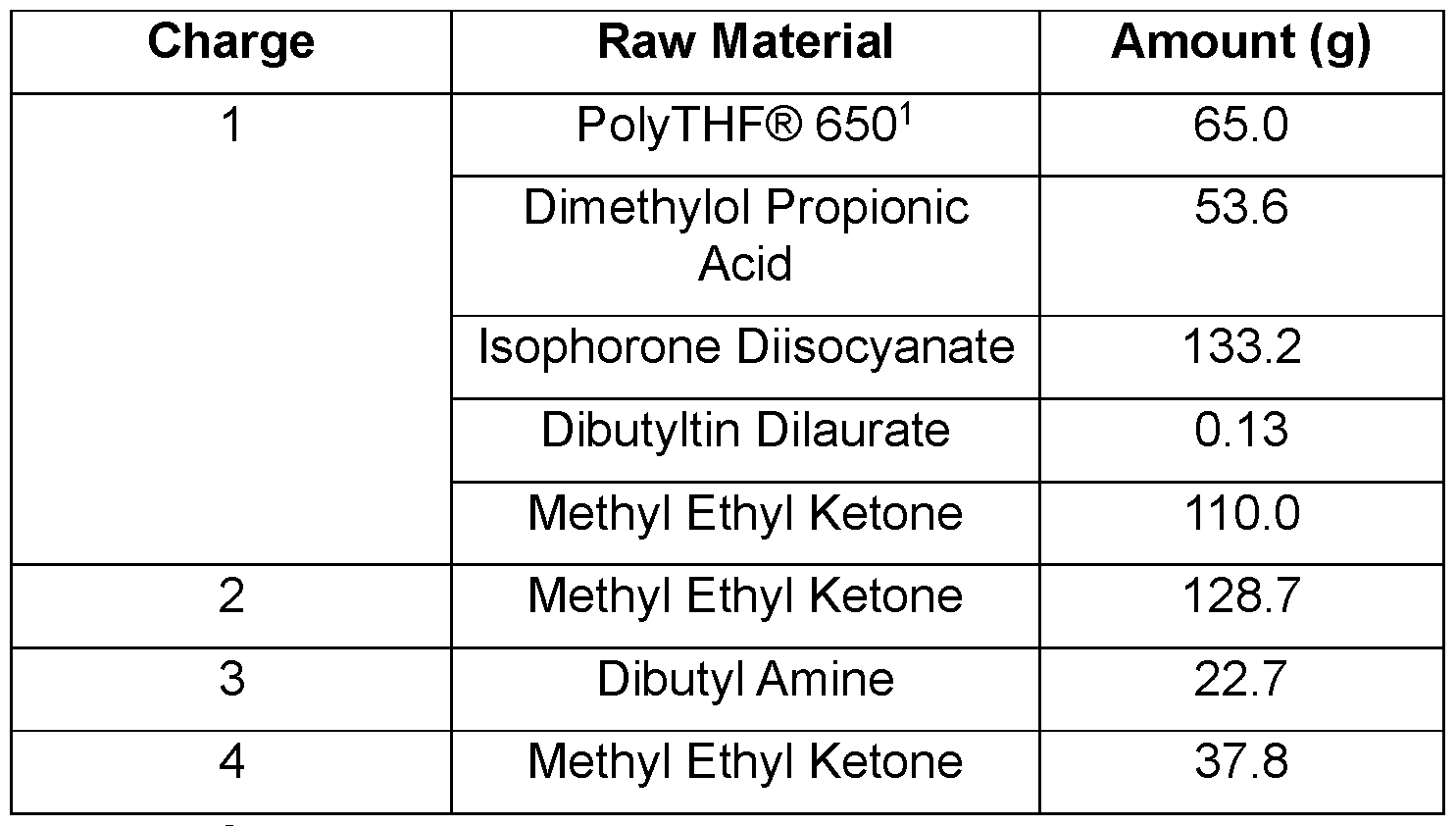


Claims


Priority Applications (5)
| Application Number | Priority Date | Filing Date | Title |
|---|---|---|---|
| KR1020257041091A KR20260007623A (en) | 2023-05-12 | 2024-05-10 | Reactive composition comprising an acid-functional compound and composition derived therefrom |
| AU2024273082A AU2024273082A1 (en) | 2023-05-12 | 2024-05-10 | Reactive compositions that include acid functional compounds and compositions derived therefrom |
| CN202480045914.1A CN121511267A (en) | 2023-05-12 | 2024-05-10 | Reactive compositions comprising acid-functionalized compounds and compositions derived therefrom |
| EP24731167.3A EP4709772A1 (en) | 2023-05-12 | 2024-05-10 | Reactive compositions that include acid functional compounds and compositions derived therefrom |
| MX2025013521A MX2025013521A (en) | 2023-05-12 | 2025-11-12 | Reactive compositions that include acid functional compounds and compositions derived therefrom |
Applications Claiming Priority (8)
| Application Number | Priority Date | Filing Date | Title |
|---|---|---|---|
| US202363502003P | 2023-05-12 | 2023-05-12 | |
| US202363501999P | 2023-05-12 | 2023-05-12 | |
| US202363502014P | 2023-05-12 | 2023-05-12 | |
| US63/501,999 | 2023-05-12 | ||
| US63/502,014 | 2023-05-12 | ||
| US63/502,003 | 2023-05-12 | ||
| US202463644078P | 2024-05-08 | 2024-05-08 | |
| US63/644,078 | 2024-05-08 |
Publications (1)
| Publication Number | Publication Date |
|---|---|
| WO2024238366A1 true WO2024238366A1 (en) | 2024-11-21 |
Family
ID=91376899
Family Applications (1)
| Application Number | Title | Priority Date | Filing Date |
|---|---|---|---|
| PCT/US2024/028877 Ceased WO2024238366A1 (en) | 2023-05-12 | 2024-05-10 | Reactive compositions that include acid functional compounds and compositions derived therefrom |
Country Status (6)
| Country | Link |
|---|---|
| EP (1) | EP4709772A1 (en) |
| KR (1) | KR20260007623A (en) |
| CN (1) | CN121511267A (en) |
| AU (1) | AU2024273082A1 (en) |
| MX (1) | MX2025013521A (en) |
| WO (1) | WO2024238366A1 (en) |
Citations (4)
| Publication number | Priority date | Publication date | Assignee | Title |
|---|---|---|---|---|
| US5371167A (en) * | 1992-01-27 | 1994-12-06 | Basf Corporation | Carboxyl-functional compound for curable coating composition |
| US20110217471A1 (en) * | 2010-03-02 | 2011-09-08 | Schwendeman Irina G | One-component, ambient curable waterborne coating compositions, related methods and coated substrates |
| US20120220718A1 (en) * | 2009-11-23 | 2012-08-30 | E.I. Du Pont De Nemours And Company | Ink-jet ink comprising cross-linked pigment dispersion based on polyurethane dispersants |
| US20220332910A1 (en) * | 2019-10-29 | 2022-10-20 | Toyobo Co., Ltd. | Laminated polyester film |
-
2024
- 2024-05-10 AU AU2024273082A patent/AU2024273082A1/en active Pending
- 2024-05-10 EP EP24731167.3A patent/EP4709772A1/en active Pending
- 2024-05-10 CN CN202480045914.1A patent/CN121511267A/en active Pending
- 2024-05-10 WO PCT/US2024/028877 patent/WO2024238366A1/en not_active Ceased
- 2024-05-10 KR KR1020257041091A patent/KR20260007623A/en active Pending
-
2025
- 2025-11-12 MX MX2025013521A patent/MX2025013521A/en unknown
Patent Citations (4)
| Publication number | Priority date | Publication date | Assignee | Title |
|---|---|---|---|---|
| US5371167A (en) * | 1992-01-27 | 1994-12-06 | Basf Corporation | Carboxyl-functional compound for curable coating composition |
| US20120220718A1 (en) * | 2009-11-23 | 2012-08-30 | E.I. Du Pont De Nemours And Company | Ink-jet ink comprising cross-linked pigment dispersion based on polyurethane dispersants |
| US20110217471A1 (en) * | 2010-03-02 | 2011-09-08 | Schwendeman Irina G | One-component, ambient curable waterborne coating compositions, related methods and coated substrates |
| US20220332910A1 (en) * | 2019-10-29 | 2022-10-20 | Toyobo Co., Ltd. | Laminated polyester film |
Also Published As
| Publication number | Publication date |
|---|---|
| KR20260007623A (en) | 2026-01-14 |
| CN121511267A (en) | 2026-02-10 |
| EP4709772A1 (en) | 2026-03-18 |
| AU2024273082A1 (en) | 2025-12-04 |
| MX2025013521A (en) | 2026-02-03 |
Similar Documents
| Publication | Publication Date | Title |
|---|---|---|
| ES2228176T3 (en) | CURABLE COMPOSITIONS THAT INCLUDE ACETOACETOXI AND IMINA FUNCTIONALITY. | |
| CA2276838C (en) | Compound and coating compositions for adhesion to olefinic substrates | |
| US12065540B2 (en) | Thiol-containing composition | |
| RU2440375C2 (en) | Oligomeric urethane acrylates, synthesis method and use thereof | |
| EP3268440B1 (en) | Thiolene-based compositions with extended pot life | |
| US8828303B2 (en) | Methods for polymerizing films in-situ using a radiation source | |
| JP2016060778A (en) | Polyisocyanate composition, coating composition and coating method | |
| CN105026054A (en) | Methods and compositions for coating substrates | |
| JP7206101B2 (en) | Polyisocyanate composition, coating composition and coating film | |
| CN102471614B (en) | For tackifier and the coating composition bonding with alkene base material | |
| MXPA01011674A (en) | Process for coating olefinic substrates. | |
| JPWO2020204089A1 (en) | Thermosetting resin composition, coating film forming method and cured coating film | |
| US6630204B2 (en) | Coating with functionalized rubber, crosslinker, accelerator/catalyst and vulcanizer | |
| US20220162375A1 (en) | Two component coating compositions | |
| US11859079B2 (en) | Glycerol-based epoxy resins | |
| EP4709772A1 (en) | Reactive compositions that include acid functional compounds and compositions derived therefrom | |
| JP2019023291A (en) | Isocyanate composition, coating composition, coat, and coated article | |
| WO2024238357A1 (en) | Method of improving the reactivity of compositions that include epoxy functional compounds and compositions derived therefrom | |
| CN101395194B (en) | Coatings containing non-linear polysiloxanes with improved adhesion properties | |
| CN114302928B (en) | Acetyl Michael addition curable coating compositions | |
| KR101365053B1 (en) | Two―component type thermosetting coating composition | |
| JP2019516002A (en) | Aqueous resin composition, aqueous paint and article having cured coating of the aqueous paint | |
| EP3166983A1 (en) | Curable film-forming compositions and method of mitigating dirt build-up on a substrate | |
| CN114302929B (en) | Coating compositions curable by thiomichael addition | |
| JP5125100B2 (en) | Method for producing acrylic polymer having polymerizable unsaturated bond |
Legal Events
| Date | Code | Title | Description |
|---|---|---|---|
| 121 | Ep: the epo has been informed by wipo that ep was designated in this application |
Ref document number: 24731167 Country of ref document: EP Kind code of ref document: A1 |
|
| WWE | Wipo information: entry into national phase |
Ref document number: 202517108031 Country of ref document: IN |
|
| ENP | Entry into the national phase |
Ref document number: 2025565912 Country of ref document: JP Kind code of ref document: A |
|
| WWE | Wipo information: entry into national phase |
Ref document number: 2025565912 Country of ref document: JP |
|
| WWE | Wipo information: entry into national phase |
Ref document number: MX/A/2025/013521 Country of ref document: MX |
|
| WWE | Wipo information: entry into national phase |
Ref document number: AU2024273082 Country of ref document: AU |
|
| ENP | Entry into the national phase |
Ref document number: 2024273082 Country of ref document: AU Date of ref document: 20240510 Kind code of ref document: A |
|
| ENP | Entry into the national phase |
Ref document number: 1020257041091 Country of ref document: KR Free format text: ST27 STATUS EVENT CODE: A-0-1-A10-A15-NAP-PA0105 (AS PROVIDED BY THE NATIONAL OFFICE) |
|
| WWE | Wipo information: entry into national phase |
Ref document number: 1020257041091 Country of ref document: KR |
|
| WWE | Wipo information: entry into national phase |
Ref document number: 2024731167 Country of ref document: EP |
|
| NENP | Non-entry into the national phase |
Ref country code: DE |
|
| ENP | Entry into the national phase |
Ref document number: 2024731167 Country of ref document: EP Effective date: 20251212 |
|
| WWP | Wipo information: published in national office |
Ref document number: 202517108031 Country of ref document: IN |
|
| ENP | Entry into the national phase |
Ref document number: 2024731167 Country of ref document: EP Effective date: 20251212 |
|
| ENP | Entry into the national phase |
Ref document number: 2024731167 Country of ref document: EP Effective date: 20251212 |
|
| ENP | Entry into the national phase |
Ref document number: 2024731167 Country of ref document: EP Effective date: 20251212 |
|
| ENP | Entry into the national phase |
Ref document number: 2024731167 Country of ref document: EP Effective date: 20251212 |
|
| WWP | Wipo information: published in national office |
Ref document number: 1020257041091 Country of ref document: KR |
|
| ENP | Entry into the national phase |
Ref document number: 2024731167 Country of ref document: EP Effective date: 20251212 |
|
| ENP | Entry into the national phase |
Ref document number: 2024731167 Country of ref document: EP Effective date: 20251212 |
|
| ENP | Entry into the national phase |
Ref document number: 2024731167 Country of ref document: EP Effective date: 20251212 |
|
| WWP | Wipo information: published in national office |
Ref document number: MX/A/2025/013521 Country of ref document: MX |
|
| ENP | Entry into the national phase |
Ref document number: 2024731167 Country of ref document: EP Effective date: 20251212 |
|
| WWP | Wipo information: published in national office |
Ref document number: 2024731167 Country of ref document: EP |