WO2024229262A1 - Narrow-spectrum antibiotic compounds and uses thereof - Google Patents
Narrow-spectrum antibiotic compounds and uses thereof Download PDFInfo
- Publication number
- WO2024229262A1 WO2024229262A1 PCT/US2024/027486 US2024027486W WO2024229262A1 WO 2024229262 A1 WO2024229262 A1 WO 2024229262A1 US 2024027486 W US2024027486 W US 2024027486W WO 2024229262 A1 WO2024229262 A1 WO 2024229262A1
- Authority
- WO
- WIPO (PCT)
- Prior art keywords
- compound
- baumannii
- oxazine
- benzo
- piperidin
- Prior art date
- Legal status (The legal status is an assumption and is not a legal conclusion. Google has not performed a legal analysis and makes no representation as to the accuracy of the status listed.)
- Ceased
Links
Classifications
-
- A—HUMAN NECESSITIES
- A61—MEDICAL OR VETERINARY SCIENCE; HYGIENE
- A61K—PREPARATIONS FOR MEDICAL, DENTAL OR TOILETRY PURPOSES
- A61K31/00—Medicinal preparations containing organic active ingredients
- A61K31/33—Heterocyclic compounds
- A61K31/395—Heterocyclic compounds having nitrogen as a ring hetero atom, e.g. guanethidine or rifamycins
- A61K31/535—Heterocyclic compounds having nitrogen as a ring hetero atom, e.g. guanethidine or rifamycins having six-membered rings with at least one nitrogen and one oxygen as the ring hetero atoms, e.g. 1,2-oxazines
- A61K31/536—Heterocyclic compounds having nitrogen as a ring hetero atom, e.g. guanethidine or rifamycins having six-membered rings with at least one nitrogen and one oxygen as the ring hetero atoms, e.g. 1,2-oxazines ortho- or peri-condensed with carbocyclic ring systems
-
- A—HUMAN NECESSITIES
- A61—MEDICAL OR VETERINARY SCIENCE; HYGIENE
- A61K—PREPARATIONS FOR MEDICAL, DENTAL OR TOILETRY PURPOSES
- A61K31/00—Medicinal preparations containing organic active ingredients
- A61K31/33—Heterocyclic compounds
- A61K31/395—Heterocyclic compounds having nitrogen as a ring hetero atom, e.g. guanethidine or rifamycins
- A61K31/535—Heterocyclic compounds having nitrogen as a ring hetero atom, e.g. guanethidine or rifamycins having six-membered rings with at least one nitrogen and one oxygen as the ring hetero atoms, e.g. 1,2-oxazines
- A61K31/537—Heterocyclic compounds having nitrogen as a ring hetero atom, e.g. guanethidine or rifamycins having six-membered rings with at least one nitrogen and one oxygen as the ring hetero atoms, e.g. 1,2-oxazines spiro-condensed or forming part of bridged ring systems
-
- A—HUMAN NECESSITIES
- A61—MEDICAL OR VETERINARY SCIENCE; HYGIENE
- A61P—SPECIFIC THERAPEUTIC ACTIVITY OF CHEMICAL COMPOUNDS OR MEDICINAL PREPARATIONS
- A61P31/00—Antiinfectives, i.e. antibiotics, antiseptics, chemotherapeutics
- A61P31/04—Antibacterial agents
-
- C—CHEMISTRY; METALLURGY
- C07—ORGANIC CHEMISTRY
- C07D—HETEROCYCLIC COMPOUNDS
- C07D498/00—Heterocyclic compounds containing in the condensed system at least one hetero ring having nitrogen and oxygen atoms as the only ring hetero atoms
- C07D498/02—Heterocyclic compounds containing in the condensed system at least one hetero ring having nitrogen and oxygen atoms as the only ring hetero atoms in which the condensed system contains two hetero rings
- C07D498/10—Spiro-condensed systems
Definitions
- the present disclosure relates to the field of antibiotics, and in particular, to narrow-spectrum antibiotic compounds against Acinetobacter baumannii and uses thereof.
- Acinetobacter baumannii is a nosocomial Gram-negative pathogen that often displays multidrug-resistance due to its robust outer membrane and its abi li ty to acquire and retain extracellular DNA 1 that frequently encodes antibiotic resistance genes. Moreover, it can survive for prolonged durations on surfaces and is resistant to desiccation.
- Discovering fundamentally novel antibiotics against A. baumannii has proven challenging through conventional screening approaches. Indeed, most new antibiotics that achieve clinical use are analogs of existing classes 2 . However, while structural analogs of existing antibiotic classes may satisfy short-term clinical needs, their long-term efficacy is inherently limited due to the high prevalence of existing resistance determinants 3 .
- new antibiotic discovery efforts should focus on identifying novel chemotypes with mechanisms of action that are unique relative to existing antibiotics. Such compounds are likely to have prolonged utilify, given that the probability of pre-existing clinical resistance is low [0004]
- Machine learning methods allow for the rapid exploration of vast chemical/sequence spaces in silico, increasing the probability of discovering desirable new chemotypes with antibacterial activity, particularly against challenging pathogens like A. baumannii.
- typical high throughput screening programs are limited to testing a few million molecules for antibacterial activity 7 at the largest scales 4 .
- contemporary' algorithmic approaches can assess hundreds of millions to billions of molecules for antibacterial properties.
- R 1 - R 3 are independently selected from H. OH, CH 3 , C 2 H 5 , NO 2 , CN. halogen, alkoxy (e.g., methoxy), or trifluoromethyl, with at least one and more typically two, and quite possibly all three of R 1 - R 3 being H;
- R 4 and R 5 are independently selected from H, OH, halogen, or amine (e.g., primary amine), with none, more typically one, and possibly both of R 4 and R 3 being H;
- R 6 is C 1 -C 3 alkyl or alkylene
- R 7 is H or C 1 -C 3 alkyl or alkylene.
- R 1 and R 3 are H.
- R 2 is selected from H, OH, CH 3 , C 2 H 5 , NO 2 , halogen, alkoxy, or trifluoromethyl or any sub-combination thereof.
- R 2 is selected from H, methoxy, halogen, or trifluoromethyl or any sub-combination thereos.
- R 4 is H.
- R 5 is selected from H, OH, halogen or primary amine, and more typically from H or halogen, with one or both of R 4 and R 5 being H.
- R 6 is C 1 -C 2 alkyl.
- R 6 is C 2 alkyl
- R 7 is H or C 1 -C 2 alkyl.
- R 7 is H.
- At least one of one of R 1 - R 5 is a halogen selected from F, Br, or Cl.
- at least one of one of R 1 - R 5 is a halogen selected from F or Cl.
- the compound having structure I is selected from: l'-(4-(trifluoromethyl)phenethyl)spiro[benzo[d][1,3]oxazine-4,4'-piperidin]-2(1H)- one,
- the compound having structure I or any other compound disclosed herein is combined with a pharmaceutically acceptable carrier or vehicle to form a pharmaceutical composition.
- FIG. 1 A is a schematic of aspects of compound discovery using machine learning to aid in guiding discover ⁇ ';
- FIG. IB is a graph of growth inhibition of A. baumannii in accordance w ith an aspect of the present disclosure
- FIG. 1C is a graph of activity predictions using machine learning according to an aspect of the present disclosure
- FIG. ID is a plot of data useful in a machine learning model according to an aspect of the present disclosure
- FIG. IE is a graph of growth inhibition of A. baumannii in accordance with an aspect of the present disclosure
- FIG. IF is a graph of activity' against A. baumannii in accordance with an aspect of the present disclosure
- FIG. 1G is another graph of activity against A. baumannii in accordance with an aspect of the present disclosure.
- FIG. 2A is a graph of growth inhibition of A. baumannii in accordance with an aspect of the present disclosure
- FIG. 2B is a graph of growth inhibition of A. baumannii in accordance w ith an aspect of the present disclosure
- FIG. 2C is a graph of growth inhibition of P. aeruginosa in accordance with an aspect of the present disclosure
- FIG. 2D is a graph of growth inhibition of S. aureus in accordance with an aspect of the present disclosure
- FIG. 2E is a map of growth inhibition in human skin and gut in accordance with an aspect of the present disclosure
- FIG. 3A is graph of growth inhibition of multiple microbes in accordance with an aspect of the present disclosure.
- FIG. 3B is a depiction of the structure of microbes in accordance with an aspect of the present disclosure.
- FIG. 3C is a graph of sequencing in accordance with an aspect of the present disclosure.
- FIG. 3D is a graph of growth inhibition of A baumannii in accordance with an aspect of the present disclosure.
- FIG. 3E is a quantification of expression in accordance with an aspect of the present disclosure.
- FIG. 3F depicts fluorescence micrographs of A. baumannii in accordance with an aspect of the present disclosure
- FIG. 4A is a graph of results of dorsal wound infection model in accordance with an aspect of the present disclosure.
- FIG. 4B provides representative images of the dorsal surface in accordance with an aspect of the present disclosure
- FIG. 5A is a plot of screening data in accordance with an aspect of the present disclosure.
- FIG. 5B depicts graphs of grow th inhibition data in accordance with an aspect of the present disclosure
- FIG. 5C is a graph of growth inhibition of A. baumannii in accordance with an aspect of the present disclosure
- FIG. 5D is a graph of growth kinetics of A. baumannii cells in accordance with the present disclosure.
- FIG. 6A is a graph of growth inhibition of A. baumannii in accordance with an aspect of the present disclosure
- FIG. 6B is a graph of growth inhibition of B. breve in accordance with an aspect of the present disclosure.
- FIG. 6C is a graph of growth inhibition of B. longum in accordance with an aspect of the present disclosure.
- FIG. 6D is a graph of growth inhibition of E. lenta in accordance w ith an aspect of the present disclosure
- FIGs. 7A-7H are graph of growth inhibition of A. baumannii by multiple different antibiotics in accordance with an aspect the present disclosure
- FIG. 71 and 7J are structural predictions in accordance with an aspect the present disclosure.
- FIG. 7K provides graphs of RNA sequencing of A. baumannii in accordance with an aspect of the present disclosure
- FIG. 7L is a graph of growth inhibition of A. baumannii in accordance with an aspect of the present disclosure.
- FIG. 7M provides graphs of quantifications in accordance with an aspect of the present disclosure.
- the term “comprising” and its derivatives, as used herein, are intended to be open ended terms that specify the presence of the stated features, elements, components, groups, integers, and/or steps, but do not exclude the presence of other unstated features, elements, components, groups, integers and/or steps.
- the foregoing also applies to words having similar meanings such as the terms, “including”, “having” and their derivatives.
- the term “consisting” and its derivatives, as used herein, are intended to be closed terms that specify the presence of the stated features, elements, components, groups, integers, and/or steps, but exclude the presence of other unstated features, elements, components, groups, integers and/or steps.
- the second component as used herein is chemically different from the other components or first component.
- a “third” component is different from the other, first, and second components, and further enumerated or “additional” components are similarly different.
- suitable means that the selection of the particular compound or conditions would depend on the specific synthetic manipulation to be performed or composition to be prepared, the identity of the molecule(s) to be transformed and/or the specific use for the compound, but the selection would be well within the skill of a person trained in the art.
- cell refers to a single cell or a plurality of cells and includes a cell either in a cell culture or in a subject.
- treating refers to an approach for obtaining beneficial or desired results, including clinical results.
- beneficial or desired clinical results include, but are not limited to alleviation or amelioration of one or more symptoms or conditions, arresting development of disease, diminishment of extent of disease, stabilized (i.e. not worsening) state of disease, preventing spread of disease, delay or slowing of disease progression, amelioration or palliation of the disease state, including regression of the disease, diminishment of the reoccurrence of disease, and remission (whether partial or total), whether detectable or undetectable.
- Treatment may also refer to prolonging survival as compared to expected survival if not receiving treatment.
- Treating” and “treatment” as used herein also include prophylactic treatment.
- the effect may be prophylactic in terms of completely or partially preventing a disease or symptom thereof and/or may be therapeutic in terms of affecting a partial or complete cure for a disease and/or symptoms of the disease.
- a subject with early cancer can be treated to prevent progression, or alternatively a subject in remission can be treated to prevent recurrence.
- Prophylactic treatment includes preventing the disease or a symptom of a disease from occurring in a subject which may be predisposed to the disease but has not yet been diagnosed as having it (e.g., including diseases that may be associated with or caused by a primary disease).
- Treating may refer to any indicia of success in the treatment or amelioration or prevention of an infection, including any objective or subjective parameter such as abatement; remission; diminishing of symptoms; or making the disease condition more tolerable to the patient; slowing in the rate of degeneration or decline; or making the final point of degeneration less debilitating.
- the treatment or amelioration of symptoms is based on one or more objective or subjective parameters; including the results of an examination by a physician. Accordingly, the term "treating" includes the administration of the methods of the present disclosure to prevent, delay, alleviate, arrest or inhibit development of the symptoms or conditions associated with diseases.
- subject includes all members of the animal kingdom including mammals such as a mouse, a rat, a dog and a human. Thus, the methods and uses of the present disclosure are applicable to both human therapy and veterinary applications.
- pharmaceutically acceptable means compatible with the treatment of subjects, for example humans.
- pharmaceutically acceptable carrier means a non-toxic solvent, dispersant, excipient, adjuvant or other material which is mixed with the active ingredient in order to permit the formation of a pharmaceutical composition, i.e., a dosage form capable of administration to a subject.
- salt means either an acid addition salt or a base addition salt which is suitable for, or compatible with the treatment of subjects.
- solvate means a compound, or a salt and/or prodrug of a compound, wherein molecules of a suitable solvent are incorporated in the crystal lattice.
- a suitable solvent is physiologically tolerable at the dosage administered.
- prodrug means a compound, or salt and/or solvate of a compound, that, after administration, is converted into an active drug.
- administering refers to the placement of a compound, one of more compounds or a pharmaceutical composition thereof, as disclosed herein into a cell, either in cell culture or in a subject, by a method or route which results in at least partial delivery to a desired site.
- the compounds and compositions disclosed herein can be administered by any appropriate route which results in an effective treatment in the subject. Possible routes of administration of the compounds and pharmaceutical compositions disclosed herein include, but are not limited to, topical, intravenous, intraperitoneal, intramuscular, subcutaneous, transdermal, oral, buccal, sublingual, intranasal, or rectal routes of administration, or a combination thereof.
- the term “effective amount” or “therapeutically effective amount” means an amount of a compound, or one or more compounds, of the disclosure that is effective, at dosages and for periods of time necessary to achieve the desired result.
- the present disclosure provides compounds (i.e., antimicrobial compounds) for inhibiting grow th of Acinetobacter baumannii.
- the compounds are defined according to Structure I as follows:
- Substructure I allows for multiple variations in an embodiment I as follows:
- R 1 - R 3 are independently selected from H. OH, CH 3 , C 2 H 5 , NO 2 , CN, halogen, alkoxy (e.g., methoxy), or trifluoromethyl, with at least one and more typically two, and quite possibly all three of R 1 - R 3 being H; and/or
- R 4 and R 5 are independently selected from H. OH, halogen or amine (e.g., primary amine), with none or more typically one or even possibly both of R 4 and R 5 being H; and/or
- R 6 is C 1 -C 3 alkyl or alkylene
- R 7 is H or C 1 -C 3 alkyd or alkylene.
- R 1 and R 3 are H
- R 2 is selected from H, OH. CH 3 . C 2 H 5 , NO 2 , halogen, alkoxy (e.g.. methoxy), or trifluoromethyl, and more typically from H, methoxy, halogen or trifluoromethyl, or any sub-combination thereof;
- R 4 is H
- R 5 is selected from H, OH, halogen or amine (e.g., primary amine), and more typically from H or halogen, with none or more ty pically one or both of R 4 and R 5 being H; and/or
- R 6 is C 1 -C 2 alkyl and ty pically C2 alkyl; and/or
- R 7 is H or C 1 -C 2 alkyl and typically H.
- any one or combination of R 1 - R 5 is halogen
- the halogen is typically selected from F, Br, or Cl.
- any one or combination of R 1 - R 5 can be specifically defined as F, Br, or Cl.
- R 2 is or is selected from F or Cl and/or R 4 is or is selected from F or Cl.
- a compound for inhibiting growth of an Acinetobacter baumannii bacterium particularly a compound of substructure I, selected from:
- the compound is as follows: also referred to as abaucin.
- Additional compounds provided in the present disclosure for inhibiting growth of an Acinetobacter baumcmnii bacterium selected from:
- the compounds of the present disclosure can be in any salt form possible unless otherwise stated.
- One desirable salt form for the compounds is a hydrochloride (HC1) salt form.
- the compounds of the present disclosure typically exhibit a desirable minimum inhibitory concentration (MIC) against A. Baumannii. particularly A. baumannii ATCC 17978, as calculated in accordance with the present disclosure.
- MIC minimum inhibitory concentration
- Such MIC is typically no greater than 64 pg/inl, more ty pically no greater than 32 pg/ml, even more typically no greater than 16 pg/ml or even possibly no greater than 8 pg/ml or 2 Pg/ml.
- the compounds of the present disclosure may be suitably formulated in a conventional manner into compositions using one or more carriers. Accordingly, the present disclosure includes a composition comprising one or more compounds of the disclosure and a carrier. The compounds of the disclosure may be suitably formulated into pharmaceutical compositions for administration to subjects in a biologically compatible form suitable for administration in vivo. Accordingly, the present disclosure also includes a composition comprising one of more compounds disclosed herein, or a pharmaceutically acceptable salt, solvate and/or prodrug thereof, and a pharmaceutically acceptable carrier or vehicle. Conventional procedures and ingredients for the selection and preparation of suitable compositions are described, for example, in Remington’s Pharmaceutical Sciences (2000 - 20th edition) and in The United States Pharmacopeia: The National Formulary (USP 24 NF19) published in 1999.
- suitable pharmaceutically acceptable carriers include, but are not limited to, inert solid fillers or diluents and sterile aqueous or organic solutions.
- Pharmaceutically acceptable carriers are well known to those skilled in the art and include, but are not limited to, aqueous and non-aqueous solutions.
- Pharmaceutically acceptable carriers can be aqueous or non- aqueous solutions, suspensions and emulsions.
- non-aqueous solvents suitable for use in the present disclosure include, but are not limited to, propylene glycol, polyethylene glycol, vegetable oils such as olive oil, and injectable organic esters such as ethyl oleate.
- Aqueous carriers suitable for use in the present disclosure include, but are not limited to, water, ethanol, alcoholic/aqueous solutions, glycerol, emulsions or suspensions, including saline and buffered media.
- Compounds of the disclosure may also be coupled with soluble polymers as targetable drug carriers.
- soluble polymers can include polyvinylpyrrolidone, pyran copolymer, polyhydroxypropylmethacrylamide-phenol, polyhydroxy- ethylaspartarmde-phenol, or polyethyleneoxide-polylysine substituted with palmitoyl residues.
- compounds of the disclosure may be coupled to a class of biodegradable polymers useful in achieving controlled release of a drug, for example, polylactic acid, polyglycolic acid, copolymers of polylactic and polyglycolic acid, polyepsilon caprolactone, polyhydroxy butyric acid, polyorthoesters, polyacetals, polydihydropyrans, polycyanoacrylates and crosslinked or amphipathic block copolymers of hydrogels.
- biodegradable polymers useful in achieving controlled release of a drug, for example, polylactic acid, polyglycolic acid, copolymers of polylactic and polyglycolic acid, polyepsilon caprolactone, polyhydroxy butyric acid, polyorthoesters, polyacetals, polydihydropyrans, polycyanoacrylates and crosslinked or amphipathic block copolymers of hydrogels.
- the pharmaceutical composition will comprise from about 0.05 wt% to about 99 wt% or about 0.10 wt% to about 70 wt%, of the active ingredient (one or more compounds of the disclosure), and from about 1 wt% to about 99.95 wt% or about 30 wt% to about 99.90 wt% of one or more pharmaceutically acceptable carriers, all percentages by weight being based on the total composition.
- Salts of the compounds of the disclosure are generally formed by dissolving the neutral compound in an inert organic solvent and adding either the desired acid or base and isolating the resulting salt by either filtration or other known means.
- the formation of solvates of the compounds of the disclosure will vary depending on the compound and the solvate. In general, solvates are formed by dissolving the compound in the appropriate solvent and isolating the solvate by cooling or using an antisolvent. The solvate is typically dried or azeotroped under ambient conditions. The selection of suitable conditions to form a particular solvate can be made by a person skilled in the art. Examples of suitable solvents are ethanol, water and the like. When water is the solvent, the molecule is referred to as a “hydrate”.
- Prodrugs of the compounds of the present disclosure may be, for example, conventional esters formed with available hydroxy, thiol, amino or carboxyl groups.
- available hydroxy or amino groups may be acylated using an activated acid in the presence of a base, and optionally, in inert solvent (e.g. an acid chloride in pyridine).
- inert solvent e.g. an acid chloride in pyridine.
- Some common esters which have been utilized as prodrugs are phenyl esters, aliphatic (C1-C24) esters, acyloxymethyl esters, carbamates and amino acid esters.
- a transformation of a group or substituent into another group or substituent by chemical manipulation can be conducted on any intermediate or final product on the synthetic path toward the final product, in which the possible type of transformation is limited only by inherent incompatibility of other functionalities carried by the molecule at that stage to the conditions or reagents employed in the transformation.
- Such inherent incompatibilities, and ways to circumvent them by carry ing out appropriate transformations and synthetic steps in a suitable order will be readily understood to one skilled in the art. Examples of transformations are given herein, and it is to be understood that the described transformations are not limited only to the generic groups or substituents for which the transformations are exemplified.
- a method for inhibiting growth of an Acinetobacter baumannii bacterium comprising contacting the bacterium with an effective amount of a compound disclosed herein or a pharmaceutically acceptable salt, solvate and/or prodrug thereof.
- Acinetobacter baumannii bacterial infection comprising administering an effective amount of a compound disclosed herein or a pharmaceutically acceptable salt, solvate and/or prodrug thereof, to a subject in need thereof.
- the subject is a mammal. In some embodiments, the subject is a human.
- Effective amounts may vary according to factors such as the disease state, age, sex and/or weight of the subject.
- the amount of a given compound that will correspond to such an amount will van depending upon various factors, such as the given drug or compound, the pharmaceutical formulation, the route of administration, the type of condition, disease or disorder, the identity of the subject being treated, and the like, but can nevertheless be routinely determined by one skilled in the art.
- the effective amount is one that following treatment therewith manifests as an improvement in or reduction of any disease symptom.
- a compound of the disclosure may be formulated in a physiologically or pharmaceutically acceptable form and administered by any suitable route known in the art including, for example, oral and parenteral routes of administration.
- parenteral may include intravenous (such as by injection), intra-arterial, intraperitoneal, subcutaneous, intramuscular, intrathecal transepithelial, nasal, intrapulmonary (for example, by use of an aerosol), rectal and topical (including the use of a patch or other transdermal delivery device) modes of administration.
- Administration of a compound of the disclosure may comprise a single administration, or a plurality of administrations at continuous or distinct intervals over a selected period of time.
- the pharmaceutical forms suitable for injectable use include sterile aqueous solutions or dispersions and sterile powders for the extemporaneous preparation of sterile injectable solutions or dispersions. In all cases, the form must be sterile and must be fluid to the extent that easy syringability exists.
- a compound of the disclosure may be orally administered, for example, with an inert diluent or with an assimilable edible carrier, or it may be enclosed in harder soft-shell gelatin capsules, or it may be compressed into tablets, or it may be incorporated directly with the food of the diet.
- the compound may be incorporated with excipient and used in the form of ingestible tablets, buccal tablets, troches, capsules, caplets, pellets, granules, lozenges, chewing gum, powders, syrups, elixirs, wafers, aqueous solutions and suspensions, and the like.
- carriers that are used include lactose, com starch, sodium citrate and salts of phosphoric acid.
- Pharmaceutically acceptable excipients include binding agents (e.g., pregelatinized maize starch, polyvinylpyrrolidone or hydroxypropyl methylcellulose); fillers (e.g., lactose, microcrystalline cellulose or calcium phosphate); lubricants (e.g., magnesium stearate, talc or silica); disintegrants (e.g., potato starch or sodium starch glycolate); or wetting agents (e.g., sodium lauryl sulphate).
- binding agents e.g., pregelatinized maize starch, polyvinylpyrrolidone or hydroxypropyl methylcellulose
- fillers e.g., lactose, microcrystalline cellulose or calcium phosphate
- lubricants e.g., magnesium stearate, talc or silica
- disintegrants e.g.
- Oral dosage forms also include modified release, for example immediate release and timed-release, fonnulations.
- modified-release formulations include, for example, sustained-release (SR), extended-release (ER, XR, or XL), time-release or timed-release, controlled-release (CR), or continuous-release (CR or Contin), employed, for example, in the form of a coated tablet, an osmotic delivery 7 device, a coated capsule, a microencapsulated microsphere, an agglomerated particle, e.g., as of molecular sieving type particles, or, a fine hollow permeable fiber bundle, or chopped hollow permeable fibers, agglomerated or held in a fibrous packet.
- Timed-release compositions can be formulated, e g.
- Liposome delivery 7 systems include, for example, small unilamellar vesicles, large unilamellar vesicles and multilamellar vesicles. Liposomes can be formed from a variety of phospholipids, such as cholesterol, stearylamine or phosphatidylcholines.
- useful carriers or diluents include lactose and dried com starch.
- Liquid preparations for oral administration may take the fomr of, for example, solutions, syrups or suspensions, or they are suitably presented as a dry product for constitution with water or other suitable vehicle before use.
- aqueous suspensions and/or emulsions are administered orally, the compound of the disclosure is suitably suspended or dissolved in an oily phase that is combined with emulsifying and/or suspending agents. If desired, certain sweetening and/or flavoring and/or coloring agents may be added.
- Such liquid preparations for oral administration may be prepared by conventional means with pharmaceutically acceptable additives such as suspending agents (e g., sorbitol syrup, methyl cellulose or hydrogenated edible fats); emulsifying agents (e.g., lecithin or acacia); non-aqueous vehicles (e.g., almond oil, oily esters or ethyl alcohol); and preservatives (e.g., methyl or propyl p- hydroxybenzoates or sorbic acid).
- suspending agents e g., sorbitol syrup, methyl cellulose or hydrogenated edible fats
- emulsifying agents e.g., lecithin or acacia
- non-aqueous vehicles e.g., almond oil, oily esters or ethyl alcohol
- preservatives e.g., methyl or propyl p- hydroxybenzoates or sorbic acid.
- Useful diluents include lactose
- the compounds of the disclosure may be formulated for parenteral administration by injection, including using conventional catheterization techniques or infusion.
- Formulations for injection may be presented in unit dosage form, e.g., in ampoules or in multi-dose containers, with an added preservative.
- the compositions may take such forms as sterile suspensions, solutions or emulsions in oily or aqueous vehicles, and may contain formulating agents such as suspending, stabilizing and/or dispersing agents. In all cases, the form must be sterile and must be fluid to the extent that easy syringability exists.
- compounds of the disclosure are suitably in a sterile powder form for reconstitution with a suitable vehicle, e.g., sterile pyrogen- free water, before use.
- a compound of the disclosure may be administered as a topical composition, such as. but not limited to, a solution, gel. cream, lotion, liquid suspension, aerosol, nebulized spray, ointment, drops or patch.
- a compound and/or composition of the disclosure is administered topically.
- a compound and/or composition of the disclosure is administered as a topical cream.
- compositions for nasal administration may conveniently be formulated as aerosols, drops, gels and powders.
- the compounds of the disclosure are conveniently delivered in the form of a solution, dry powder formulation or suspension from a pump spray container that is squeezed or pumped by the patient or as an aerosol spray presentation from a pressurized container or a nebulizer.
- Aerosol formulations typically comprise a solution or fine suspension of the active substance in a physiologically acceptable aqueous or non-aqueous solvent and are usually presented in single or multidose quantities in sterile form in a sealed container, which can take the form of a cartridge or refill for use with an atomising device.
- the sealed container may be a unitary dispensing device such as a single dose nasal inhaler or an aerosol dispenser fitted with a metering valve which is intended for disposal after use.
- the dosage form comprises an aerosol dispenser, it will contain a propellant which can be a compressed gas such as compressed air or an organic propellant such as fluorochlorohydrocarbon. Suitable propellants include but are not limited to dichlorodifluoromethane, trichlorofluoromethane, dichlorotetrafluoroethane, heptafluoroalkanes, carbon dioxide or another suitable gas.
- the dosage unit is suitably determined by providing a valve to deliver a metered amount.
- the pressurized container or nebulizer may contain a solution or suspension of the active compound.
- Capsules and cartridges made, for example, from gelatin
- an inhaler or insufflator may be formulated containing a powder mix of a compound of the disclosure and a suitable powder base such as lactose or starch.
- the aerosol dosage forms can also take the form of a pump-atomizer.
- FIGs. 1A-1G show machine learning-guided discovery 7 of compounds
- FIG. 1A -7,500 molecules were screened for those that inhibited the grow th of A. baumannii (left funnel), trained a directed message passing deep neural network with this growth inhibition dataset, and performed predictions (top funnel) on the Drug Repurposing Hub for structurally novel molecules with activity 7 against A. baumannii (bottom funnel);
- FIG. IB growth inhibition of A. baumannii ATCC 17978 by a collection of 7,684 small molecules at 50 pM - shown is the mean of two biological replicates; lower dots represent actives, w ith the hit cut-off defined as one standard deviation below 7 the mean of the dataset;
- FIG. 1C rank-ordered prediction scores of molecules within the Drug Repurposing Hub by the trained model: molecules with prediction scores >0.2 were considered as preliminary candidates for experimental validation;
- FIG. ID a t- distributed stochastic neighbour embedding (tSNE) plot showing the chemical relationship between the training dataset, the prediction set, and abaucin;
- FIG. IE growth inhibition of A. baumannii by abaucin in LB medium conducted in biological duplicate; error bars represent absolute range of measurements and the structure of abaucin is shown;
- FIG. IF killing of A.
- FIGs. 2A-2E show abaucin has a narrow phylogenetic spectrum of antibacterial activity in exemplary embodiments of the disclosure:
- FIG. 2A growth inhibition of 41 multi drug-resistant clinical A. baumannii isolates by abaucin - drug concentrations are shown as fold-MIC based on the MIC of abaucin against A. baumannii ATCC 17978 and each dot represents a different clinical strain (mean OD of two biologically independent replicates), while black bars show the mean growth inhibition of the entire panel at each abaucin concentration;
- FIG. 2B is the same parameters as (FIG. 2A), except using 24 carbapenem-resistant Enterobacteriaceae clinical isolates;
- FIG. 2A growth inhibition of 41 multi drug-resistant clinical A. baumannii isolates by abaucin - drug concentrations are shown as fold-MIC based on the MIC of abaucin against A. baumannii ATCC 17978 and each dot represents a different clinical strain (mean OD of
- FIG. 2C is the same parameters as (FIG. 2A), except using 24 multidrug-resistant P. aeruginosa clinical isolates;
- FIG. 2D is the same parameters as (FIG. 2A), except using 14 S. aureus clinical isolates;
- FIG. 2C is the same parameters as (FIG. 2A), except using 14 S. aureus clinical isolates;
- 2E heat map showing mean growth inhibition of a panel of human gut commensal species (left) and human skin commensal species (right) by abaucin at Ox, lx, lOx, 20x MIC (left to right), ampicillin (A) at 128 pg/ml, and ciprofloxacin (C) at 2 pg/ml - darker grey indicates more growth inhibition as analyzed by optical density (Actino is Actinobacteriota, Bact is Bacteroidota, Fermi is Fermicutes, Proteo is Proteobacteria, Verruco is Verrucomicrobiota) conducted in biological duplicate.
- FIGs. 3A-3F shows abaucin inhibits lipoprotein trafficking in A. baumannii in exemplary embodiments of the disclosure:
- FIG. 3A growth inhibition of wildtype A. baumannii, two independent abaucin-resistant mutants with the A362T mutation in LolE (2,901,674 C— >T), a mutant with the Y394F mutation in LolE (2,901,577 T— >A). and a mutant with an intergenic mutation (2,902,955 G— >A) upstream of LolE conducted in biological duplicate and error bars represent absolute range of measurements (all strains were grown in LB medium);
- FIG. 3B structure of the LolCDE complex from E.
- FIG. 3D growth inhibition of A. baumannii harboring an empty CRISPRi vector, or three distinct sgRNAs targeting lolE conducted in biological duplicate and error bars represent absolute range of measurements (all strains were grown in LB medium with induction using aTc to knock down lolE),'
- FIG. 3E qPCR quantifying the expression of lolE relative to the housekeeping gene rpoD in all four abaucin resistant mutants, normalized to wildtype A.
- FIG. 3F fluorescence micrographs of wildtype A. baumannii treated with abaucin: from left to right, cells were treated with no drug, 1 pg/ml abaucin, 1 .5 pg/ml abaucin, or 2 pg/ml abaucin prior to imaging.
- FIGs. 4A-4B shows abaucin can suppress A. baumannii infection in a wound model in exemplary embodiments of the disclosure: (FIG. 4A) in a dorsal wound infection model, mice were infected with A.
- FIGs. 5A-5D show model training data and predictions in exemplary embodiments of the disclosure:
- FIG. 5A replicate plot showing primary screening data of 7,684 small molecules for those that inhibited the growth of A. baumannii ATCC 17978 in LB medium at 50 pM.
- FIG. 5A replicate plot showing primary screening data of 7,684 small molecules for those that inhibited the growth of A. baumannii ATCC 17978 in LB medium at 50 pM.
- FIGs. 6A-6D show antibacterial activity of abaucin against human commensal species in exemplary embodiments of the disclosure: (FIG. 6A) growth inhibition of A. baumannii ATCC 17978 by ampicillin and ciprofloxacin in LB medium conducted in biological duplicate; error bars represent absolute range of measurements; (FIG. 6B) grow th inhibition of B. breve by abaucin conducted in biological duplicate; error bars represent absolute range of measurements; (FIG. 6C) Growth inhibition of B. longum by abaucin conducted in biological duplicate; error bars represent absolute range of measurements; (FIG. 6D) non-validated growth inhibition of E. lenta by abaucin conducted in biological duplicate; error bars represent absolute range of measurements.
- FIGs. 7A-7M shows abaucin mechanism of action in exemplary embodiments of the disclosure:
- FIGs. 7A-7H growth inhibition of wildtype A. baumannii (WT) and the four independent abaucin-resistant mutants by a collection of diverse antibiotics - from left to right for each plot, the mutants are: A362T isolate 1, Y394F. intergenic. and A362T isolate 2; experiments were conducted in biological duplicate;
- FIG. 71 structural prediction of wildtype A. baumannii LolE using RoseTTAFold (bottom), with the structural error estimate of each amino acid (top); position 362 is highlighted at 700 and resides in a disordered region of the protein;
- FIG. 7A-7H growth inhibition of wildtype A. baumannii (WT) and the four independent abaucin-resistant mutants by a collection of diverse antibiotics - from left to right for each plot, the mutants are: A362T isolate 1, Y394F. intergenic. and A362T isolate 2
- FIG. 7J same as (FIG 71). except with the Y362T abaucin-resistant mutant of LolE at 702;
- FIG. 7K RNA sequencing of wildtype A. baumannii treated with 5x MIC abaucin for 4.5 hr (top) or 6 hr (bottom) shown as the mean of biological duplicates; transcript abundance is normalized to no-drug control cultures grown in identical conditions; vertical black lines show statistical significance cut-off values;
- FIG. 7L growth inhibition of A. baumannii harboring an empty CRISPRi vector, or three distinct sgRNAs targeting lolE conducted in biological duplicate; error bars represent absolute range of measurements (all strains were grow n in LB medium without induction);
- FIG. 7K RNA sequencing of wildtype A. baumannii treated with 5x MIC abaucin for 4.5 hr (top) or 6 hr (bottom) shown as the mean of biological duplicates; transcript abundance is normalized to no-drug control cultures grown in identical conditions; vertical black
- A. baumannii ATCC 17978 was grown in 2 ml LB medium overnight at 37°C with shaking. Cells were diluted 1/10,000 into fresh LB and 99 pl of cells was added to each well of a 96-well flat-bottom plate (Coming). Next, 1 pl of a 5 mM stock of each molecule from a collection of 7,684 small molecules (FDA-approved drugs and molecules from screening collections from the Broad Institute) was added, in duplicate, using an Agilent Bravo liquid handling system. The final screening concentration was 50 pM. Plates were then incubated in sealed plastic bags at 37°C for 16 hr and subsequently read at 600 nm using a SpectraMax M3 plate reader to quantify cell growth.
- Model training and predictions A directed message passing neural network (Chemprop), like other message passing neural networks, leams to predict molecular properties directly from the graph structure of molecules, where atoms are represented as nodes and bonds are represented as edges. For every' molecule in the training dataset, the molecular graph corresponding to each compound’s SMILES string was reconstructed and the set of atoms and bonds was determined using the open- source package RDKit 19 . Next, a feature vector was initialized for each atom and bond, as described previously 5 .
- the model applies a series of message passing steps where it aggregates information from neighboring atoms and bonds to build a representation of local chemistry.
- every bond’s featurization is updated by summing the featurization of neighboring atoms and bonds, applying a single neural network layer, adding the bond’s previous featurization, and then applying ReLU activation.
- the learned featurizations across the molecule are summed to produce a single featurization for the whole molecule.
- this featurization is subjected to a feed-forward neural network that outputs a prediction of the property of interest - in this case, antibiotic activity against A. baumannii.
- two model enhancements were employed: molecule-level features and ensembling, as described herein.
- Molecule-level features The message passing approach is ideal for extracting features of local chemistry within a larger molecule. However, it can struggle to extract global molecular features for larger molecules when the number of messagepassing steps performed is less than the longest path through the molecule. To address this limitation, the molecular representation that is learned during message passing was concatenated with 200 additional molecule-level features computed using RDKit.
- the model was applied to the updated Drug Repurposing Hub, consisting of 6,680 compounds, many of which occupy a unique chemical space relative to that on which the model was trained.
- the model was evaluated on the training set of 7,684 molecules without ensembling to understand the performance of a single model.
- the dataset was randomly split into 80% training data, 10% validation data, and 10% test data.
- the model was then trained on these data for 30 epochs (where an epoch is defined as a single pass through all the training data) and evaluated on the validation data at the end of each epoch.
- Tanimoto similarity was used to quantify the chemical relationship between molecules in the training dataset and prediction dataset.
- the Tanimoto similarity between two molecules is a measure of the proportion of shared chemical substructures.
- the Tanimoto similarity is a number between 0 and 1, where 0 represents no shared substructures and 1 represents all substructures are shared.
- cells were treated with abaucin and incubated in LB for 6 hours as described above (100 pl final volume). Cells were then pelleted in plates by centrifugation at 4000 x g for 15 min at 4°C and washed in ice-cold PBS. After washing, cells were resuspended in 100 pl fresh LB, diluted 1/1,000 in fresh 100 pl LB, and grown at 37°C in a Biotek Synergy Hl plate reader. Plates were read at 600 nm every 20 minutes for 16 hours.
- the two-fold concentrated cultures were then inoculated into 96-well plates (50 pl) containing twofold concentrated antibiotics (50 pl).
- the final culture volume was 100 pl.
- plates were sealed with breathable membranes (Breathe-Easy) and incubated at 37°C without shaking for 24 hr.
- the two-fold concentrated cultures (50 pl) were then inoculated into 96- well plates containing the two-fold concentrated antibiotics (50 pl) to achieve a final volume of 100 pl. Plates were sealed with breathable membranes (Breathe-Easy) and incubated at 37°C without shaking for 48 hr under 5% CO2. After incubation, plates were read at 600 nm using a Biotek Synergy Hl plate reader.
- A. baumannii ATCC 17978 was grown in 2 ml LB medium overnight at 37°C with shaking. ⁇ 1 x 10 8 CFU in 100 pl liquid LB was deposited onto solid LB plates supplemented with abaucin at varying concentrations ranging from 2 pg/ml to 10 pg/ml. Plates were incubated at 37°C and monitored every’ 24 hr for the emergence of abaucin suppressor mutants. Upon the emergence of colonies, these were purified by re-streaking onto solid LB and solid LB supplemented with abaucin at the same concentration from which the colonies were originally harvested.
- A. baumannii ATCC 17978 was grown in 2 ml LB medium overnight at 37°C with shaking. Cells were diluted 1/10,000 into 50 ml fresh LB and grown to mid-log at 37°C with shaking, at which time cultures were supplemented with 5x MIC (10 pg/ml) abaucin or no drug and grown for an additional 3 hr, 4.5 hr, or 6 hr. After the required durations of incubation post-treatment, 2 ml samples were harvested and flash-frozen on liquid nitrogen. cDNA library construction and sequencing for these samples were performed by Genewiz. Paired-end sequence data in FASTQ file format were aligned to the transcripts of CP053098.
- a cut-off of log2(FC) > 1.5 and padj ⁇ 0.01 was defined to identify differentially expressed genes, as highlighted in the volcano plots.
- differentially expressed A baumannii transcripts for which no gene name was identified in CP053098.1, CP053099.1, or CP053100.1 were subject to blastp analysis against E. coli MG1655 (https://blast.ncbi.nlm.nih.gov/).
- A. baumannii proteins with E-values ⁇ 10' 50 , percent identify 7 > 40%, and query 7 coverage > 80% to annotated E. coli proteins were binned and GO-enriched with EcoCyc Pathway Tools 48 50 using the Fisher exact test for statistical significance of GO term enrichment.
- CRISPRi LolE knockdown Three independent 20 base pair sgRNAs targeting lolE (sgRNAlolE-1 - 5 -TAAACGTAAGCCAAGCGAAT-3’ ; sgRNAlolE- 2 - 5 -CAAATTCTTCACAATGTCAT-3’ ; sgRNAlolE-3 - 5 -
- TTTAAGTGAGTCGAGGCTAC-3 were designed using predictive software 51 to maximize on-target activity and minimize off-targeting binding in A. baumannii ATCC 17978.
- sgRNAs were then cloned into pFD152 (Addgene plasmid 125546; provided by David Bikard) using a single-step golden gate assembly reaction, as described previously 52 .
- sgRNA sequences were verified using Sanger sequencing and constructs were subsequently transformed into A. baumannii ATCC 17978 for downstream experiments.
- pFD152 was selected in A. baumannii using spectinomycin (250 pg/ml in liquid media; 500 pg/ml on solid media).
- A. baumannii ATCC 17978 harboring pFD152, pFD152-sgRNAlolE-l, pFD152-sgRNAlolE-2 or pFD152- sgRNAlolE-3 were grown overnight in LB medium, diluted 1/10,000 into fresh LB, and grown mid-log phase (OD ⁇ 0.2) at 37°C.
- Anhydrotetracy cline (aTc) was added to the subcultures at a final concentration of 1 pg/ml to induce knockdown of lolE expression and cultures were incubated for an additional 2.5 hr at 37°C with shaking. Following this induction period, cultures were back-diluted to the equivalent optical density of 1/10,000 of a dense culture and introduced to varying concentrations of abaucin and 0.5 pg/ml of aTc. MICs were then determined as described above.
- RNA integrity was assessed through agarose gel electrophoresis.
- cDNA synthesis the High-Capacity cDNA Reverse Transcription Kit (Applied Biosystems ThermoFisher) was used as specified by the manufacturer's instructions.
- the cDNA was then amplified with iTaq Universal SYBR Green Supermix (Bio-Rad) via a Bio-Rad CFX96 (Bio-Rad) following the manufacturer's instructions.
- the target amplification efficiency was evaluated by generating a standard curve with dilutions of cDNA (>95% amplification efficiency for each primer pair).
- A. baumannii ATCC 17978 was grown overnight in 2 ml LB medium and diluted 1/10,000 into fresh LB. In 96-w ell flat-bottom plates, cells w ere then introduced to compound at the indicated concentrations, in final volumes of 100 pl. Plates were grown to mid-exponential phase in a Biotek Epoch 2 plate reader with shaking at 37°C. Cell suspensions were transferred to a poly-lysine coated 0. 17mm glass-bottom imaging plate (Brooks Scientific), and incubated with FM 4-64 (1 pg/ml final concentration) and DAPI (0.2 pg/ml final concentration) probes for 10 minutes in the dark.
- mice were relocated at random from housing cages to single-occupancy control or treatment cages. No animals were excluded from analysis, and blinding was considered unnecessary.
- Six- to eight-week-old female C57BL/6N mice were pretreated with 150 mg/kg (day T-4) and 100 mg/kg (day T-l) of cyclophosphamide to render mice neutropenic.
- day T-4 mice were anesthetized using isoflurane and administered buprenorphine as an analgesic at 0.1 mg/kg intraperitoneally.
- NMR spectra were recorded at 25°C either using a Bruker NEO 400 ('H at 400 MHz and DEPTQ 13 C at 101 MHz) or a Bruker AVIII 700 fH at 700 MHz, DEPTQ 13 C at 176 MHz, 19 F at 659 MHz). Chemical shifts in 1 H NMR, 13 C NMR and 19 F spectra are reported in parts per million (ppm) with reference to residual solvents or internal standards as follows: MeOD- ⁇ A (referenced to 4.87 ppm for ’H and 49.00 ppm for 13 C), CDCL (referenced to 7.26 ppm for 'l l and 77.16 ppm for 13 C).
- Method A The crude mixture was purified by column chromatography using a gradient of hexanes and ethyl acetate (EtOAc) as eluent. The purified compound was then dissolved in minimal EtOAc and stirred in 0.5 mL of 4.0 M HCl/dioxane for 30 minutes to yield the HC1 salt. Compound S3 was concentrated down and then freeze dried (via lyophilizer) from a mixture of water and acetonitrile (MeCN) ( 1 : 3) to produce a fine powder.
- EtOAc ethyl acetate
- Method B The crude mixture was purified by preparative HPLC using a gradient of 0.1% formic acid in water and acetonitrile as eluent. The purified compound was dissolved in minimal methanol and then stirred in 0.5 mL of 4.0 M HCl/dioxane for 30 minutes to yield the HC1 salt. The compound was concentrated down and then freeze dried (via lyophilizer) from a mixture of I LO/MeCN (1 :3) to produce a fine powder.
- this dataset was used to train a binary classifier to predict whether structurally novel molecules may display activity against A. baumannii.
- a directed message passing neural network architecture was leveraged, which translates the graph structure of a molecule into a continuous vector 18 (FIG. 1A).
- This type of model operates by passing messages along bonds that encode information about neighboring atoms and bonds. By applying this message passing operation repeatedly, the model constructs higher-level bond messages that contain information about multiatom substructures within the chemical. The highest-level bond messages are then combined into a single continuous vector representing the entire molecule.
- This learned representation was augmented with molecular features computed by RDKit 19 , yielding a hybrid molecular representation with both learned features and computed molecular- level features.
- the algorithm’s robustness was further increased by using an ensemble of 10 classifiers.
- the final model achieved an area under the precision-recall curve of 0.337 ⁇ 0.088 and area under the receiver-operating characteristic curve of 0.792 ⁇ 0.042, providing confidence in leveraging the model for predictions in new chemical spaces.
- >80% growth inhibition is a significantly more stringent cut-off than that used for model training, which was a conventional one standard deviation below the mean grow th of the dataset, or -20% growth inhibition.
- This stringent >80% growth inhibition cut-off was applied to efficiently prioritize the most potent predicted molecules on which to conduct further experimentation. For reference, if a hit cut-off of 20% growth inhibition was defined for prediction selection - similar to that used for model training - 41 molecules would be classified as active predictions. The 240 molecules with the lowest prediction scores were also tested and it was observed that none displayed antibacterial activity as defined by >80% grow th inhibition, emphasizing the discriminatory utility of the model. Furthermore, testing the 240 molecules with the highest prediction scores, without considering Tanimoto nearest neighbor similarity' to training set “actives”, resulted in 40 molecules that passed the stringent >80% growth inhibition cut-off, indicating that the model has high predictive value over traditional chemical screening.
- the nine priority molecules were subsequently assessed to remove (a) those with major structural features that are observed in known antibiotics; (b) those with reported antibacterial activity from the scientific or patent literature; and (c) those with possible non-specific membrane activity as assessed by the presence of acyclic aliphatic moieties.
- This structure-based filtering resulted in the retention of two molecules - abaucin and serdemetan.
- Abaucin is a well-studied CCR2-selective chemokine receptor antagonist 20,21 that displayed a minimum inhibitory concentration (MIC) of ⁇ 2 pg/ml against A. baumannii ATCC 17978 (FIGS.
- serdemetan 22,23 is an antagonist of the transcription factor HDM2 that displayed an MIC of ⁇ 32 pg/ml. Given that abaucin was substantially more potent at inhibiting the growth of A. baumannii. subsequent investigations focused on this molecule.
- abaucin displayed its antibacterial efficacy through inhibition of a biological process that was maximally active during growth and division 24 , consistent with most known antibiotics 25 .
- abaucin is not membrane active via physical disruption of the phospholipid bilayer, a mechanism of action that was deliberately avoided during the prediction filtering process. Indeed, membrane-active molecules generally retain bactericidal efficacy in nutrient-deplete conditions 24 .
- ABAUCIN has a narrow phylogenetic spectrum of antibacterial activity.
- growth inhibitory activity was next tested against clinical isolates of A. baumannii.
- 41 strains of A. baumannii were acquired from the Center for Disease Control and Prevention Antibiotic Resistance Isolate Bank (ARIsolate Bank) (Table 1), and tested abaucin at a range of concentrations below and above MIC. Remarkably, it was observed that abaucin could overcome all intrinsic and acquired resistance mechanisms within the 4. baumannii isolates from this diverse clinical strain library (FIG. 3A, Table 1).
- Bifidobacterium is a Gram-positive genus that is phylogenetically divergent from Gram-negative Acinetobacter, it is likely that the lower potency activity of abaucin against Bifidobacterium is through a mechanism that is unrelated to that in Acinetobacter.
- This statement is elaborated below; [00194] ABAUCIN inhibits lipoprotein trafficking in A. baumannii.
- A. baumannii selectivity displayed by abaucin the mechanism underlying its narrow-spectrum functionality was next elucidated.
- abaucin-resistant mutants were first selected for using wildtype A. baumannii growing on solid media supplemented with vary ing concentrations of abaucin.
- a baumannii LolE position A362 is homologous to E. coli LolE position 1365, which resides near the acyl chains of the nascent lipoprotein during transport 17 .
- the structure of A baumannii LolE was predicted using RoseTTAFold 30,31 (FIGs. 7I-7J) and it was observed that 46 LolE position A362 is near EcLolE position 1365 in space, and both are adjacent to the accommodated acyl chains of the nascent lipoprotein (FIG. 3B).
- RNA sequencing datasets are GSE214305 - GSM6603484, GSM6603485, GSM6603486, GSM6603487, GSM6603488, GSM6603489, GSM6603490.
- CpxAR plays a principal role in monitoring lipoprotein trafficking from the inner membrane to the outer membrane in Gram-negative bacteria 34 .
- CpxA autophosphorylates upon associated membrane stress, prior to phosphotransfer to the transcriptional regulator CpxR and subsequent transcriptional remodelling to restore envelope homeostasis 32 .
- ABAUCIN can suppress A. baumannii in a wound infection model.
- A. baumannii is a problematic nosocomial pathogen that survives for prolonged periods on surfaces and has the ability to accumulate extracellular DNA 1 , including antibiotic resistance genes 38 .
- A. baumannii is a major cause of multi drug-resistant infections in wounded military personnel 39 .
- mice were sacrificed at 25 hr post-infection, and tissue was aseptically dissected then plated to quantify A. baumannii viability.
- ⁇ 6.9 x 10 8 CFU/g w ere retrieved at the experimental endpoint and it was observed that the wounded tissues displayed significant inflammation.
- ABAUCIN- treated mice carried ⁇ 4.0 x 10 7 CFU/g - nearly identical to the pre-treated infection control mice - and abaucin-treated tissues displayed markedly less inflammation (FIGs. 4A and 4B). These data show that abaucin can effectively suppress an A. baumannii wound infection, consistent w ith its effect on A. baumannii viability 7 in vitro (FIG. IF).
- Lipoprotein trafficking is a highly sought-after antibiotic target that has yet to be perturbed by clinically used antibacterial drugs, w'hich is advantageous towards increasing the duration of clinical utility 7 of molecules that disrupt this process.
- the observations herein - that abaucin displays narrow-spectrum activity 7 through perturbation of LolE-mediated lipoprotein trafficking - can be explained, at least in part, due to the divergence of the A. baumannii Lol system relative to most other Gram-negative species 16 .
- the inner membrane-associated lipoprotein transport machinery consists of LolC, LolD, and LolE in an asymmetric multi-protein complex.
- A. baumannii encodes a symmetric inner membrane complex containing LolD and two copies of LolE (also termed LolF), without LolC.
- Table 5 Minimum inhibitory concentration (MIC) of ABAUCIN analogs against a panel of bacterial species. Growth inhibition of bacterial species by ABAUCIN and analogs thereof. Cells were grown in LB in the presence of varying concentrations of each molecule at 37°C and the MIC of each was determined. The strains shown are E. coll BW25113, P. aeruginosa PA01, S'. aureus RN4220, and A. baumannii ATCC 17978. Experiments were conducted in biological duplicate and resulted in identical MIC values.
- Table 7 Human skin commensal strain panel. [00210] Table 8. Frequency of resistance to ABAUCIN. Wildtype A. baumannii was streaked onto solid media supplemented with vary ing concentrations of ABAUCIN for the noted durations, and emergent colonies were counted to quantify frequency of resistance as noted in the table. Dashed cells show conditions where lawns of J. baumannii was observed on the solid media plate.
- Landrum, G. RDKit A software suite for cheminformatics, computational chemi stry, and predictive modeling.
Landscapes
- Health & Medical Sciences (AREA)
- Chemical & Material Sciences (AREA)
- Organic Chemistry (AREA)
- Animal Behavior & Ethology (AREA)
- Veterinary Medicine (AREA)
- Public Health (AREA)
- Medicinal Chemistry (AREA)
- General Health & Medical Sciences (AREA)
- Pharmacology & Pharmacy (AREA)
- Life Sciences & Earth Sciences (AREA)
- Epidemiology (AREA)
- Oncology (AREA)
- Nuclear Medicine, Radiotherapy & Molecular Imaging (AREA)
- General Chemical & Material Sciences (AREA)
- Chemical Kinetics & Catalysis (AREA)
- Communicable Diseases (AREA)
- Pharmaceuticals Containing Other Organic And Inorganic Compounds (AREA)
Abstract
The present disclosure relates to narrow-spectrum antibiotic compounds, compositions and uses thereof for inhibiting growth of an Acinetobacter baumannii bacterium and/or treating an Acinetobacter baumannii bacterial infection.
Description
NARROW-SPECTRUM ANTIBIOTIC COMPOUNDS AND USES THEREOF
RELATED APPLICATION
[0001] This application claims priority to U.S. Provisional Patent Application Serial No. 63/463,751, filed May 3. 2023.
FIELD
[0002] The present disclosure relates to the field of antibiotics, and in particular, to narrow-spectrum antibiotic compounds against Acinetobacter baumannii and uses thereof.
BACKGROUND
[0003] Acinetobacter baumannii is a nosocomial Gram-negative pathogen that often displays multidrug-resistance due to its robust outer membrane and its abi li ty to acquire and retain extracellular DNA1 that frequently encodes antibiotic resistance genes. Moreover, it can survive for prolonged durations on surfaces and is resistant to desiccation. Discovering fundamentally novel antibiotics against A. baumannii has proven challenging through conventional screening approaches. Indeed, most new antibiotics that achieve clinical use are analogs of existing classes2. However, while structural analogs of existing antibiotic classes may satisfy short-term clinical needs, their long-term efficacy is inherently limited due to the high prevalence of existing resistance determinants3. Ideally, new antibiotic discovery efforts should focus on identifying novel chemotypes with mechanisms of action that are unique relative to existing antibiotics. Such compounds are likely to have prolonged utilify, given that the probability of pre-existing clinical resistance is low
[0004] Machine learning methods allow for the rapid exploration of vast chemical/sequence spaces in silico, increasing the probability of discovering desirable new chemotypes with antibacterial activity, particularly against challenging pathogens like A. baumannii. As a reference, typical high throughput screening programs are limited to testing a few million molecules for antibacterial activity7 at the largest scales4. Contrarily, contemporary' algorithmic approaches can assess hundreds of millions to billions of molecules for antibacterial properties. For example, Stokes et al5 applied a message passing neural network trained on grow th inhibition of lab strain Escherichia coli to discover novel broad spectrum small molecule antibacterial compounds. In a complementary7 application, Ma et al6 applied multiple natural language processing neural netw ork models to predict broad spectrum antimicrobial peptides encoded in the human gut microbiome. These, and other important studies (detailed in 7) showcase the importance of machine learning approaches towards the discovery of structurally and functionally novel antibiotic candidates.
[0005] Beyond simply discovering structurally and functionally novel antibiotics, a largely unmet need exists for the application of narrow spectrum therapies that target specific bacterial species. Such antibiotics are beneficial for two reasons8: first, the rate at which resistance to narrow spectrum agents would disseminate is likely lower than conventional broad-spectrum agents, since narrow spectrum drugs do not impose a universal selective pressure that favors the wide propagation of resistance determinants. Second, narrow7 spectrum antibiotics would not disrupt the ecology7 of the microbiota during treatment. Indeed, dysbiosis has been associated with a wide array of poor health outcomes, including infectious diseases9, inflammatory bowel diseases10, metabolic diseases11, neuropsychiatric disorders12, and cancer13. For instance,
Clostridioides difficile infections are prime examples of opportunistic infections resulting from antibiotic-induced dysbiosis, causing upwards of 224,000 infections in hospitalized patients and 13,000 deaths in the US alone in 201714.
[0006] An opportunity exists to apply contemporary machine learning methods to discover structurally and functionally novel antibiotics that specifically target challenging pathogens, with A baumannii being a prime candidate.
SUMMARY
[0007] In the present disclosure, -7,500 molecules were screened for those that inhibited the growth of A. baumannii in vitro. A neural network was trained with this growth inhibition dataset and in silico predictions were performed for structurally novel molecules with activity7 against A. baumannii. Through this approach, antibacterial compounds with narrow-spectrum activity against A. baumannii were discovered. Further investigations revealed that this compound perturbs lipoprotein trafficking through a mechanism involving lipoprotein release complex - inner membrane subunit (LolE). Moreover, it could control an .4. baumannii infection in a murine wound model.
[0008] Accordingly, provided is a compound for inhibiting growth of an Acinetobacter baumannii bacterium, the compound having Structure I as follows:

R1 - R3 are independently selected from H. OH, CH3, C2H5, NO2, CN. halogen, alkoxy (e.g., methoxy), or trifluoromethyl, with at least one and more typically two, and quite possibly all three of R1 - R3 being H;
R4 and R5 are independently selected from H, OH, halogen, or amine (e.g., primary amine), with none, more typically one, and possibly both of R4 and R3 being H;
R6 is C1 -C3 alkyl or alkylene; and
R7 is H or C1 -C3 alkyl or alkylene.
[0009] According to an additional or alternative aspect of the present disclosure, for the compound having structure I, R1 and R3 are H.
[0010] According to an additional or alternative aspect of the present disclosure, for the compound having structure I, R2 is selected from H, OH, CH3, C2H5, NO2, halogen, alkoxy, or trifluoromethyl or any sub-combination thereof.
[0011] According to an additional or alternative aspect of the present disclosure, for the compound having structure I, R2 is selected from H, methoxy, halogen, or trifluoromethyl or any sub-combination thereos.
[0012] According to an additional or alternative aspect of the present disclosure, for the compound having structure I, R4 is H.
[0013] According to an additional or alternative aspect of the present disclosure, for the compound having structure I, R5 is selected from H, OH, halogen or primary amine, and more typically from H or halogen, with one or both of R4 and R5 being H.
[0014] According to an additional or alternative aspect of the present disclosure, for the compound having structure I, R6 is C1 -C2 alkyl.
[0015] According to an additional or alternative aspect of the present disclosure, for the compound having structure I, R6 is C2 alkyl.
[0016] According to an additional or alternative aspect of the present disclosure, for the compound having structure I, R7 is H or C1 -C2 alkyl.
[0017] According to an additional or alternative aspect of the present disclosure, for the compound having structure I, R7 is H.
[0018] According to an additional or alternative aspect of the present disclosure, for the compound having structure I, at least one of one of R1 - R5 is a halogen selected from F, Br, or Cl.
[0019] According to an additional or alternative aspect of the present disclosure, for the compound having structure I, wherein at least one of one of R1 - R5 is a halogen selected from F or Cl.
[0020] According to an additional or alternative aspect of the present disclosure, for the compound having structure I, the compound is selected from:
 l'-(4-(trifluoromethyl)phenethyl)spiro[benzo[d][1,3]oxazine-4,4'-piperidin]-2(1H)- one,


1 '-(4-nitrophenelhyl)spiro[benzo[d][1,3] oxazine-4, 4'-piperi din] -2( 1H(-one.
 l'-(4-chlorophenethyl)spiro[benzo[d][1,3]oxazine-4,4'-piperidin]-2(1H)-one,


4-(2-(2-oxo- 1.2-dihy drospiro[benzo[d][1,3] oxazine-4, 4'-piperidin] - 1 y 1 )ethy 1 )benzonitril e.


1 '-(4-nitrobenzyl)spiro [benzo[d][1,3] oxazine-4, 4'-piperi din] -2(1H)-one.

, and/or
 l'-(3-phenylpropyl)spiro[benzo[d][1,3]oxazine-4,4'-piperidin]-2(1H)-one,
or a pharmaceutically acceptable salt, solvate and/or prodrug thereof.
l'-(3-phenylpropyl)spiro[benzo[d][1,3]oxazine-4,4'-piperidin]-2(1H)-one,
or a pharmaceutically acceptable salt, solvate and/or prodrug thereof.
[0021] According to an additional or alternative aspect of the present disclosure, for the compound having structure I or any other compound disclosed herein, the compound is combined with a pharmaceutically acceptable carrier or vehicle to form a pharmaceutical composition.
[0022] According to an additional or alternative aspect of the present disclosure, for the compound having structure I or any compound disclosed herein, there is provided a method for inhibiting growth of an Acinetobacter baumannii bacterium, comprising contacting the bacterium with an effective amount of such compound.
[0023] According to an additional or alternative aspect of the present disclosure, for the compound having structure I or any compound disclosed herein, there is provided a method of treating an Acinetobacter baumannii bacterial infection comprising administering an effective amount of such compound to a subject in need thereof.
[0024] According to an additional or alternative aspect of the present disclosure, for the compound having structure I or any compound disclosed herein, there is provided a use of such compound to inhibit growth of an Acinetobacter baumannii bacterium.
[0025] According to an additional or alternative aspect of the present disclosure, for the compound having structure I or any compound disclosed herein, there is provided a use of such compound to treat or prevent an Acinetobacter baumannii bacterial infection.
BRIEF DESCRIPTION OF THE DRAWINGS
[0026] Certain embodiments of the disclosure will be described in greater detail with reference to the attached drawings, a brief description of which follows:
[0027] FIG. 1 A is a schematic of aspects of compound discovery using machine learning to aid in guiding discover}';
[0028] FIG. IB is a graph of growth inhibition of A. baumannii in accordance w ith an aspect of the present disclosure;
[0029] FIG. 1C is a graph of activity predictions using machine learning according to an aspect of the present disclosure;
[0030] FIG. ID is a plot of data useful in a machine learning model according to an aspect of the present disclosure;
[0031] FIG. IE is a graph of growth inhibition of A. baumannii in accordance with an aspect of the present disclosure;
[0032] FIG. IF is a graph of activity' against A. baumannii in accordance with an aspect of the present disclosure;
[0033] FIG. 1G is another graph of activity against A. baumannii in accordance with an aspect of the present disclosure;
[0034] FIG. 2A is a graph of growth inhibition of A. baumannii in accordance with an aspect of the present disclosure;
[0035] FIG. 2B is a graph of growth inhibition of A. baumannii in accordance w ith an aspect of the present disclosure;
[0036] FIG. 2C is a graph of growth inhibition of P. aeruginosa in accordance with an aspect of the present disclosure;
[0037] FIG. 2D is a graph of growth inhibition of S. aureus in accordance with an aspect of the present disclosure;
[0038] FIG. 2E is a map of growth inhibition in human skin and gut in accordance with an aspect of the present disclosure;
[0039] FIG. 3A is graph of growth inhibition of multiple microbes in accordance with an aspect of the present disclosure;
[0040] FIG. 3B is a depiction of the structure of microbes in accordance with an aspect of the present disclosure;
[0041] FIG. 3C is a graph of sequencing in accordance with an aspect of the present disclosure;
[0042] FIG. 3D is a graph of growth inhibition of A baumannii in accordance with an aspect of the present disclosure;
[0043] FIG. 3E is a quantification of expression in accordance with an aspect of the present disclosure;
[0044] FIG. 3F depicts fluorescence micrographs of A. baumannii in accordance with an aspect of the present disclosure;
[0045] FIG. 4A is a graph of results of dorsal wound infection model in accordance with an aspect of the present disclosure;
[0046] FIG. 4B provides representative images of the dorsal surface in accordance with an aspect of the present disclosure;
[0047] FIG. 5A is a plot of screening data in accordance with an aspect of the present disclosure;
[0048] FIG. 5B depicts graphs of grow th inhibition data in accordance with an aspect of the present disclosure;
[0049] FIG. 5C is a graph of growth inhibition of A. baumannii in accordance with an aspect of the present disclosure;
[0050] FIG. 5D is a graph of growth kinetics of A. baumannii cells in accordance with the present disclosure;
[0051] FIG. 6A is a graph of growth inhibition of A. baumannii in accordance with an aspect of the present disclosure;
[0052] FIG. 6B is a graph of growth inhibition of B. breve in accordance with an aspect of the present disclosure;
[0053] FIG. 6C is a graph of growth inhibition of B. longum in accordance with an aspect of the present disclosure;
[0054] FIG. 6D is a graph of growth inhibition of E. lenta in accordance w ith an aspect of the present disclosure;
[0055] FIGs. 7A-7H are graph of growth inhibition of A. baumannii by multiple different antibiotics in accordance with an aspect the present disclosure;
[0056] FIG. 71 and 7J are structural predictions in accordance with an aspect the present disclosure;
[0057] FIG. 7K provides graphs of RNA sequencing of A. baumannii in accordance with an aspect of the present disclosure;
[0058] FIG. 7L is a graph of growth inhibition of A. baumannii in accordance with an aspect of the present disclosure;
[0059] FIG. 7M provides graphs of quantifications in accordance with an aspect of the present disclosure.
DETAILED DESCRIPTION
I. DEFINITIONS
[0060] Unless otherwise indicated, the definitions and embodiments described in this and other sections are intended to be applicable to all embodiments and aspects of the present disclosure herein described for which they are suitable as would be understood by a person skilled in the art. It is also to be understood that the terminology used herein is for the purpose of describing particular aspects only and is not intended to be limiting.
[0061 ] In understanding the scope of the present disclosure, the term “comprising” and its derivatives, as used herein, are intended to be open ended terms that specify the presence of the stated features, elements, components, groups, integers, and/or steps, but do not exclude the presence of other unstated features, elements, components, groups, integers and/or steps. The foregoing also applies to words having similar meanings such as the terms, “including”, “having” and their derivatives. The term “consisting” and its derivatives, as used herein, are intended to be closed terms that specify the presence of the stated features, elements, components, groups, integers, and/or steps, but exclude the presence of other unstated features, elements, components, groups, integers and/or steps. The term “consisting essentially of’, as used herein, is intended to specify the presence of the stated features, elements, components, groups, integers, and/or steps as well as those that do not materially affect the basic and novel characteristic(s) of features, elements, components, groups, integers, and/or steps.
[0062] Terms of degree such as “substantially”, “about” and “approximately” as used herein mean a reasonable amount of deviation of the modified term such that the
end result is not significantly changed. These terms of degree should be construed as including a deviation of at least 5% of the modified term if this deviation would not negate the meaning of the word it modifies. The modifier “about” used in connection with a quantity7 is inclusive of the stated value and has the meaning dictated by the context (e.g., it includes the degree of error associated with measurement of the particular quantity ). In addition, all ranges disclosed herein are inclusive of the endpoints and also any intermediate range points, whether explicitly stated or not, and the endpoints are independently combinable with each other.
[0063] As used in this disclosure, the singular forms “a”, “an” and “the” include plural references unless the content clearly dictates otherwise. For example, an embodiment including “an antibiotic” should be understood to present certain aspects with one antibiotic or two or more additional antibiotics.
[0064] In embodiments comprising an “additional” or “second” component, such as an additional or second antibiotic, the second component as used herein is chemically different from the other components or first component. A “third” component is different from the other, first, and second components, and further enumerated or “additional” components are similarly different.
[0065] The term “and/or” as used herein means that the listed items are present, or used, individually or in combination. In effect, this term means that "at least one of’ or "one or more” of the listed items is used or present.
[0066] The term “or” as used herein is intended to include “and” unless the context clearly indicates otherwise
[0067] The abbreviation, “e.g.” is derived from the Latin exempli gratia and is used herein to indicate a non-limiting example. Thus, the abbreviation “e.g.” is synonymous with the term “for example.”
[0068] The term “suitable” as used herein means that the selection of the particular compound or conditions would depend on the specific synthetic manipulation to be performed or composition to be prepared, the identity of the molecule(s) to be transformed and/or the specific use for the compound, but the selection would be well within the skill of a person trained in the art.
[0069] The term “cell” as used herein refers to a single cell or a plurality of cells and includes a cell either in a cell culture or in a subject.
[0070] The term “treating” or “treatment” and the like as used herein, and as is well understood in the art, refers to an approach for obtaining beneficial or desired results, including clinical results. Beneficial or desired clinical results include, but are not limited to alleviation or amelioration of one or more symptoms or conditions, arresting development of disease, diminishment of extent of disease, stabilized (i.e. not worsening) state of disease, preventing spread of disease, delay or slowing of disease progression, amelioration or palliation of the disease state, including regression of the disease, diminishment of the reoccurrence of disease, and remission (whether partial or total), whether detectable or undetectable. “Treating” and “treatment” may also refer to prolonging survival as compared to expected survival if not receiving treatment. “Treating” and “treatment” as used herein also include prophylactic treatment. The effect may be prophylactic in terms of completely or partially preventing a disease or symptom thereof and/or may be therapeutic in terms of affecting a partial or complete cure for a disease and/or symptoms of the disease. For example, a subject with early
cancer can be treated to prevent progression, or alternatively a subject in remission can be treated to prevent recurrence. Prophylactic treatment includes preventing the disease or a symptom of a disease from occurring in a subject which may be predisposed to the disease but has not yet been diagnosed as having it (e.g., including diseases that may be associated with or caused by a primary disease).
[0071] Treating may refer to any indicia of success in the treatment or amelioration or prevention of an infection, including any objective or subjective parameter such as abatement; remission; diminishing of symptoms; or making the disease condition more tolerable to the patient; slowing in the rate of degeneration or decline; or making the final point of degeneration less debilitating. The treatment or amelioration of symptoms is based on one or more objective or subjective parameters; including the results of an examination by a physician. Accordingly, the term "treating" includes the administration of the methods of the present disclosure to prevent, delay, alleviate, arrest or inhibit development of the symptoms or conditions associated with diseases.
[0072] The term “subject” as used herein includes all members of the animal kingdom including mammals such as a mouse, a rat, a dog and a human. Thus, the methods and uses of the present disclosure are applicable to both human therapy and veterinary applications.
[0073] The term “pharmaceutically acceptable” as used herein means compatible with the treatment of subjects, for example humans.
[0074] The tenn “pharmaceutically acceptable carrier” as used herein means a non-toxic solvent, dispersant, excipient, adjuvant or other material which is mixed with
the active ingredient in order to permit the formation of a pharmaceutical composition, i.e., a dosage form capable of administration to a subject.
[0075] The term ‘'pharmaceutically acceptable salt” as used herein means either an acid addition salt or a base addition salt which is suitable for, or compatible with the treatment of subjects.
[0076] The term “solvate” as used herein means a compound, or a salt and/or prodrug of a compound, wherein molecules of a suitable solvent are incorporated in the crystal lattice. A suitable solvent is physiologically tolerable at the dosage administered.
[0077] The term “prodrug” as used herein means a compound, or salt and/or solvate of a compound, that, after administration, is converted into an active drug.
[0078] The term '‘administering” or “administration” and the like as used herein refers to the placement of a compound, one of more compounds or a pharmaceutical composition thereof, as disclosed herein into a cell, either in cell culture or in a subject, by a method or route which results in at least partial delivery to a desired site. The compounds and compositions disclosed herein can be administered by any appropriate route which results in an effective treatment in the subject. Possible routes of administration of the compounds and pharmaceutical compositions disclosed herein include, but are not limited to, topical, intravenous, intraperitoneal, intramuscular, subcutaneous, transdermal, oral, buccal, sublingual, intranasal, or rectal routes of administration, or a combination thereof.
[0079] As used herein, the term “effective amount” or “therapeutically effective amount” means an amount of a compound, or one or more compounds, of the disclosure
that is effective, at dosages and for periods of time necessary to achieve the desired result.
II. Compounds, Compositions, Methods and Uses of the Disclosure
[0080] Herein, -7,500 molecules were screened for those that inhibited the growth of A. baumannii in vitro. A message passing neural network was trained with this growth inhibition dataset and performed predictions on the Drug Repurposing Hub15 for structurally novel molecules with activity against A. baumannii. Through this approach, antibacterial compounds with narrow-spectrum activity against A. baumannii were discovered, which could overcome intrinsic and acquired resistance mechanisms in clinical isolates. Further mechanistic investigations revealed that these compounds perturb lipoprotein trafficking through a mechanism involving LolE, a functionally conserved protein that contributes to shuttling lipoproteins from the inner membrane to the outer membrane16 17. Moreover, these compounds were able to control an A. baumannii infection in a murine wound model.
[0081] Accordingly, the present disclosure provides compounds (i.e., antimicrobial compounds) for inhibiting grow th of Acinetobacter baumannii. In one embodiment, the compounds are defined according to Structure I as follows:

[0082] Compounds having Structure I have been found to have particularly desirable activity against A baumannii but are not so limited unless specifically stated.
[0083] Substructure I allows for multiple variations in an embodiment I as follows:
R1 - R3 are independently selected from H. OH, CH3, C2H5, NO2, CN, halogen, alkoxy (e.g., methoxy), or trifluoromethyl, with at least one and more typically two, and quite possibly all three of R1 - R3 being H; and/or
R4 and R5 are independently selected from H. OH, halogen or amine (e.g., primary amine), with none or more typically one or even possibly both of R4 and R5 being H; and/or
R6 is C1 -C3 alkyl or alkylene; and/or
R7 is H or C1 -C3 alkyd or alkylene.
[0084] Substructure I further allows for multiple variations and/or further definition in embodiment I with any one or any combination of the following:
R1 and R3 are H;
R2 is selected from H, OH. CH3. C2H5, NO2, halogen, alkoxy (e.g.. methoxy), or trifluoromethyl, and more typically from H, methoxy, halogen or trifluoromethyl, or any sub-combination thereof;
R4 is H;
R5 is selected from H, OH, halogen or amine (e.g., primary amine), and more typically from H or halogen, with none or more ty pically one or both of R4 and R5 being H; and/or
R6 is C1 -C2 alkyl and ty pically C2 alkyl; and/or
R7 is H or C1 -C2 alkyl and typically H.
[0085] Within Substructure I, when any one or combination of R1 - R5 is halogen, the halogen is typically selected from F, Br, or Cl. Thus, any one or combination of R1 - R5 can be specifically defined as F, Br, or Cl. In examples, R2 is or is selected from F or Cl and/or R4 is or is selected from F or Cl.
[0086] It is understood that substructure I as well as compounds disclosed herein include all stereoisomers thereof, unless otherwise specifically stated.
[0087] Accordingly, provided in the present disclosure is a compound for inhibiting growth of an Acinetobacter baumannii bacterium, particularly a compound of substructure I, selected from:


6-chloro4'-(4-(trifluoromethyl)phenethyl)spiro[benzo[d][1,3]oxazine-4,4'-piperidin]-
2(1H)-one,


6-fluoro-r-(4-(trifluoromethyl)phenethyl)spiro[benzo[d][1,3]oxazine-4,4'-piperidin]-
2(1H)-one.


4-(2-(2-oxo-l,2-dihydrospiro[benzo[d][1,3]oxazine-4.4'-piperidin]-r- yl)ethyl)benzonitrile,
 r-(4-(trifluoromethyl)benzyl)spiro[benzo[d][1,3]oxazine-4,4'-piperidin]-2(1H)-one,

1 '-(4-nitrobenzyl)spiro [benzo[d][1,3] oxazine-4,4'-piperidin] -2(1H)-one,

1'4-isopropylbenzyl)spiro[benzo[d][1,3]oxazine-4,4'-piperidin]-2(1H)-one
, and/or
 l'-(3-phenylpropyl)spiro[benzo[d][l,3]oxazine-4,4'-piperidin]-2(1H)-one, or a phannaceutically acceptable salt, solvate and/or prodrug thereof.
[0088] In some preferred embodiments, the compound is as follows:
 also referred to as abaucin.
[0089] Additional compounds provided in the present disclosure for inhibiting growth of an Acinetobacter baumcmnii bacterium selected from:


[0090] It is contemplated that these additional or alternative compounds can be used in any of the ways and can be combined with other ingredients in the same manner as any of the compounds of Structure I.
[0091] When provided in salt form, the compounds of the present disclosure can be in any salt form possible unless otherwise stated. One desirable salt form for the compounds is a hydrochloride (HC1) salt form.
[0092] The compounds of the present disclosure typically exhibit a desirable minimum inhibitory concentration (MIC) against A. Baumannii. particularly A.
baumannii ATCC 17978, as calculated in accordance with the present disclosure. Such MIC is typically no greater than 64 pg/inl, more ty pically no greater than 32 pg/ml, even more typically no greater than 16 pg/ml or even possibly no greater than 8 pg/ml or 2 Pg/ml.
[0093] The compounds of the present disclosure may be suitably formulated in a conventional manner into compositions using one or more carriers. Accordingly, the present disclosure includes a composition comprising one or more compounds of the disclosure and a carrier. The compounds of the disclosure may be suitably formulated into pharmaceutical compositions for administration to subjects in a biologically compatible form suitable for administration in vivo. Accordingly, the present disclosure also includes a composition comprising one of more compounds disclosed herein, or a pharmaceutically acceptable salt, solvate and/or prodrug thereof, and a pharmaceutically acceptable carrier or vehicle. Conventional procedures and ingredients for the selection and preparation of suitable compositions are described, for example, in Remington’s Pharmaceutical Sciences (2000 - 20th edition) and in The United States Pharmacopeia: The National Formulary (USP 24 NF19) published in 1999.
[0094] In some embodiments, suitable pharmaceutically acceptable carriers include, but are not limited to, inert solid fillers or diluents and sterile aqueous or organic solutions. Pharmaceutically acceptable carriers are well known to those skilled in the art and include, but are not limited to, aqueous and non-aqueous solutions. Pharmaceutically acceptable carriers can be aqueous or non- aqueous solutions, suspensions and emulsions. Examples of non-aqueous solvents suitable for use in the present disclosure include, but are not limited to, propylene glycol, polyethylene glycol,
vegetable oils such as olive oil, and injectable organic esters such as ethyl oleate. Aqueous carriers suitable for use in the present disclosure include, but are not limited to, water, ethanol, alcoholic/aqueous solutions, glycerol, emulsions or suspensions, including saline and buffered media.
[0095] Compounds of the disclosure may also be coupled with soluble polymers as targetable drug carriers. Such polymers can include polyvinylpyrrolidone, pyran copolymer, polyhydroxypropylmethacrylamide-phenol, polyhydroxy- ethylaspartarmde-phenol, or polyethyleneoxide-polylysine substituted with palmitoyl residues. Furthermore, compounds of the disclosure may be coupled to a class of biodegradable polymers useful in achieving controlled release of a drug, for example, polylactic acid, polyglycolic acid, copolymers of polylactic and polyglycolic acid, polyepsilon caprolactone, polyhydroxy butyric acid, polyorthoesters, polyacetals, polydihydropyrans, polycyanoacrylates and crosslinked or amphipathic block copolymers of hydrogels.
[0096] In some embodiments, depending on the mode of administration, the pharmaceutical composition will comprise from about 0.05 wt% to about 99 wt% or about 0.10 wt% to about 70 wt%, of the active ingredient (one or more compounds of the disclosure), and from about 1 wt% to about 99.95 wt% or about 30 wt% to about 99.90 wt% of one or more pharmaceutically acceptable carriers, all percentages by weight being based on the total composition.
[0097] Salts of the compounds of the disclosure are generally formed by dissolving the neutral compound in an inert organic solvent and adding either the desired acid or base and isolating the resulting salt by either filtration or other known means.
[0098] The formation of solvates of the compounds of the disclosure will vary depending on the compound and the solvate. In general, solvates are formed by dissolving the compound in the appropriate solvent and isolating the solvate by cooling or using an antisolvent. The solvate is typically dried or azeotroped under ambient conditions. The selection of suitable conditions to form a particular solvate can be made by a person skilled in the art. Examples of suitable solvents are ethanol, water and the like. When water is the solvent, the molecule is referred to as a “hydrate”.
[0099] Prodrugs of the compounds of the present disclosure may be, for example, conventional esters formed with available hydroxy, thiol, amino or carboxyl groups. For example, available hydroxy or amino groups may be acylated using an activated acid in the presence of a base, and optionally, in inert solvent (e.g. an acid chloride in pyridine). Some common esters which have been utilized as prodrugs are phenyl esters, aliphatic (C1-C24) esters, acyloxymethyl esters, carbamates and amino acid esters.
[00100] Throughout the processes described herein it is to be understood that, where appropriate, suitable protecting groups will be added to, and subsequently removed from, the various reactants and intermediates in a manner that will be readily understood by one skilled in the art. Conventional procedures for using such protecting groups as well as examples of suitable protecting groups are described, for example, in “Protective Groups in Organic Synthesis”, T.W. Green, P.G.M. Wuts, Wiley- Interscience, New York, (1999). It is also to be understood that a transformation of a group or substituent into another group or substituent by chemical manipulation can be conducted on any intermediate or final product on the synthetic path toward the final product, in which the possible type of transformation is limited only by inherent
incompatibility of other functionalities carried by the molecule at that stage to the conditions or reagents employed in the transformation. Such inherent incompatibilities, and ways to circumvent them by carry ing out appropriate transformations and synthetic steps in a suitable order, will be readily understood to one skilled in the art. Examples of transformations are given herein, and it is to be understood that the described transformations are not limited only to the generic groups or substituents for which the transformations are exemplified. References and descriptions of other suitable transformations are given in “Comprehensive Organic Transformations - A Guide to Functional Group Preparations” R.C. Larock, VHC Publishers, Inc. (1989). References and descriptions of other suitable reactions are described in textbooks of organic chemistry7, for example, "'Advanced Organic Chemistry” , March, 4th ed. McGraw Hill (1992) or, "'Organic Synthesis", Smith, McGraw Hill, (1994). Techniques for purification of intermediates and final products include, for example, straight and reversed phase chromatography on column or rotating plate, recrystallisation, distillation and liquid-liquid or solid-liquid extraction, which will be readily understood by one skilled in the art.
[00101] In another aspect of the disclosure, provided is a method for inhibiting growth of an Acinetobacter baumannii bacterium, comprising contacting the bacterium with an effective amount of a compound disclosed herein or a pharmaceutically acceptable salt, solvate and/or prodrug thereof.
[00102] In a further aspect of the disclosure, provided is a method of treating an
Acinetobacter baumannii bacterial infection comprising administering an effective amount of a compound disclosed herein or a pharmaceutically acceptable salt, solvate and/or prodrug thereof, to a subject in need thereof.
[00103] In some embodiments, the subject is a mammal. In some embodiments, the subject is a human.
[00104] Effective amounts may vary according to factors such as the disease state, age, sex and/or weight of the subject. The amount of a given compound that will correspond to such an amount will van depending upon various factors, such as the given drug or compound, the pharmaceutical formulation, the route of administration, the type of condition, disease or disorder, the identity of the subject being treated, and the like, but can nevertheless be routinely determined by one skilled in the art. The effective amount is one that following treatment therewith manifests as an improvement in or reduction of any disease symptom.
[00105] In vivo administration of a compound and/or composition of the disclosure can be accomplished by any suitable method and technique presently or prospectively known to those skilled in the art. For example, a compound of the disclosure may be formulated in a physiologically or pharmaceutically acceptable form and administered by any suitable route known in the art including, for example, oral and parenteral routes of administration. As used herein, the term parenteral may include intravenous (such as by injection), intra-arterial, intraperitoneal, subcutaneous, intramuscular, intrathecal transepithelial, nasal, intrapulmonary (for example, by use of an aerosol), rectal and topical (including the use of a patch or other transdermal delivery device) modes of administration. Administration of a compound of the disclosure may comprise a single administration, or a plurality of administrations at continuous or distinct intervals over a selected period of time.
[00106] The pharmaceutical forms suitable for injectable use include sterile aqueous solutions or dispersions and sterile powders for the extemporaneous
preparation of sterile injectable solutions or dispersions. In all cases, the form must be sterile and must be fluid to the extent that easy syringability exists.
[00107] A compound of the disclosure may be orally administered, for example, with an inert diluent or with an assimilable edible carrier, or it may be enclosed in harder soft-shell gelatin capsules, or it may be compressed into tablets, or it may be incorporated directly with the food of the diet. For oral therapeutic administration, the compound may be incorporated with excipient and used in the form of ingestible tablets, buccal tablets, troches, capsules, caplets, pellets, granules, lozenges, chewing gum, powders, syrups, elixirs, wafers, aqueous solutions and suspensions, and the like. In the case of tablets, carriers that are used include lactose, com starch, sodium citrate and salts of phosphoric acid. Pharmaceutically acceptable excipients include binding agents (e.g., pregelatinized maize starch, polyvinylpyrrolidone or hydroxypropyl methylcellulose); fillers (e.g., lactose, microcrystalline cellulose or calcium phosphate); lubricants (e.g., magnesium stearate, talc or silica); disintegrants (e.g., potato starch or sodium starch glycolate); or wetting agents (e.g., sodium lauryl sulphate). The tablets may be coated by methods well known in the art. In the case of tablets, capsules, caplets, pellets or granules for oral administration, pH sensitive enteric coatings, such as Eudragits™ designed to control the release of active ingredients are optionally used. Oral dosage forms also include modified release, for example immediate release and timed-release, fonnulations. Examples of modified-release formulations include, for example, sustained-release (SR), extended-release (ER, XR, or XL), time-release or timed-release, controlled-release (CR), or continuous-release (CR or Contin), employed, for example, in the form of a coated tablet, an osmotic delivery7 device, a coated capsule, a microencapsulated microsphere, an agglomerated particle, e.g., as of
molecular sieving type particles, or, a fine hollow permeable fiber bundle, or chopped hollow permeable fibers, agglomerated or held in a fibrous packet. Timed-release compositions can be formulated, e g. liposomes or those wherein the active compound is protected with differentially degradable coatings, such as by microencapsulation, multiple coatings, etc. Liposome delivery7 systems include, for example, small unilamellar vesicles, large unilamellar vesicles and multilamellar vesicles. Liposomes can be formed from a variety of phospholipids, such as cholesterol, stearylamine or phosphatidylcholines. For oral administration in a capsule form, useful carriers or diluents include lactose and dried com starch.
[00108] Liquid preparations for oral administration may take the fomr of, for example, solutions, syrups or suspensions, or they are suitably presented as a dry product for constitution with water or other suitable vehicle before use. When aqueous suspensions and/or emulsions are administered orally, the compound of the disclosure is suitably suspended or dissolved in an oily phase that is combined with emulsifying and/or suspending agents. If desired, certain sweetening and/or flavoring and/or coloring agents may be added. Such liquid preparations for oral administration may be prepared by conventional means with pharmaceutically acceptable additives such as suspending agents (e g., sorbitol syrup, methyl cellulose or hydrogenated edible fats); emulsifying agents (e.g., lecithin or acacia); non-aqueous vehicles (e.g., almond oil, oily esters or ethyl alcohol); and preservatives (e.g., methyl or propyl p- hydroxybenzoates or sorbic acid). Useful diluents include lactose and high molecular weight polyethylene glycols.
[00109] It is also possible to freeze-dry the compounds of the disclosure and use the lyophilizates obtained, for example, for the preparation of products for injection.
[00110] The compounds of the disclosure may be formulated for parenteral administration by injection, including using conventional catheterization techniques or infusion. Formulations for injection may be presented in unit dosage form, e.g., in ampoules or in multi-dose containers, with an added preservative. The compositions may take such forms as sterile suspensions, solutions or emulsions in oily or aqueous vehicles, and may contain formulating agents such as suspending, stabilizing and/or dispersing agents. In all cases, the form must be sterile and must be fluid to the extent that easy syringability exists. Alternatively, compounds of the disclosure are suitably in a sterile powder form for reconstitution with a suitable vehicle, e.g., sterile pyrogen- free water, before use.
[00111] A compound of the disclosure may be administered as a topical composition, such as. but not limited to, a solution, gel. cream, lotion, liquid suspension, aerosol, nebulized spray, ointment, drops or patch. In some embodiments, a compound and/or composition of the disclosure is administered topically. In some embodiments, a compound and/or composition of the disclosure is administered as a topical cream.
[00112] Compositions for nasal administration may conveniently be formulated as aerosols, drops, gels and powders. For intranasal administration or administration by inhalation, the compounds of the disclosure are conveniently delivered in the form of a solution, dry powder formulation or suspension from a pump spray container that is squeezed or pumped by the patient or as an aerosol spray presentation from a pressurized container or a nebulizer. Aerosol formulations typically comprise a solution or fine suspension of the active substance in a physiologically acceptable aqueous or non-aqueous solvent and are usually presented in single or multidose quantities in sterile form in a sealed container, which can take the form of a cartridge or refill for use
with an atomising device. Alternatively, the sealed container may be a unitary dispensing device such as a single dose nasal inhaler or an aerosol dispenser fitted with a metering valve which is intended for disposal after use. Where the dosage form comprises an aerosol dispenser, it will contain a propellant which can be a compressed gas such as compressed air or an organic propellant such as fluorochlorohydrocarbon. Suitable propellants include but are not limited to dichlorodifluoromethane, trichlorofluoromethane, dichlorotetrafluoroethane, heptafluoroalkanes, carbon dioxide or another suitable gas. In the case of a pressurized aerosol, the dosage unit is suitably determined by providing a valve to deliver a metered amount. The pressurized container or nebulizer may contain a solution or suspension of the active compound. Capsules and cartridges (made, for example, from gelatin) for use in an inhaler or insufflator may be formulated containing a powder mix of a compound of the disclosure and a suitable powder base such as lactose or starch. The aerosol dosage forms can also take the form of a pump-atomizer.
[00113] In another aspect of the disclosure, provided is the use of a compound disclosed herein to inhibit growth of an Acinetobacter baumannii bacterium.
[00114] In a further aspect of the disclosure, provided is the use of a compound disclosed herein or a pharmaceutically acceptable salt pharmaceutically acceptable salt, solvate and/or prodrug thereof, to treat or prevent an Acinetobacter baumannii bacterial infection.
[00115] DRAWINGS
[00116] FIGs. 1A-1G show machine learning-guided discovery7 of compounds
(e.g., abaucin) in exemplary7 embodiments of the disclosure: (FIG. 1A) -7,500
molecules were screened for those that inhibited the grow th of A. baumannii (left funnel), trained a directed message passing deep neural network with this growth inhibition dataset, and performed predictions (top funnel) on the Drug Repurposing Hub for structurally novel molecules with activity7 against A. baumannii (bottom funnel); (FIG. IB) growth inhibition of A. baumannii ATCC 17978 by a collection of 7,684 small molecules at 50 pM - shown is the mean of two biological replicates; lower dots represent actives, w ith the hit cut-off defined as one standard deviation below7 the mean of the dataset; (FIG. 1C) rank-ordered prediction scores of molecules within the Drug Repurposing Hub by the trained model: molecules with prediction scores >0.2 were considered as preliminary candidates for experimental validation; (FIG. ID) a t- distributed stochastic neighbour embedding (tSNE) plot showing the chemical relationship between the training dataset, the prediction set, and abaucin; (FIG. IE) growth inhibition of A. baumannii by abaucin in LB medium conducted in biological duplicate; error bars represent absolute range of measurements and the structure of abaucin is shown; (FIG. IF) killing of A. baumannii by abaucin in nutrient-replete conditions (LB) at vary ing concentrations after incubation for 1.5 hr, 3 hr, 4.5 hr, and 6 hr conducted in biological duplicate; error bars represent absolute range of measurements; (FIG. 1G) killing of A. baumannii by abaucin in nutrient-deplete conditions (PBS) at varying concentrations after incubation for 1.5 hr, 3 hr, 4.5 hr, and 6 hr conducted in biological duplicate; error bars represent absolute range of measurements.
[00117] FIGs. 2A-2E show abaucin has a narrow phylogenetic spectrum of antibacterial activity in exemplary embodiments of the disclosure: (FIG. 2A) growth inhibition of 41 multi drug-resistant clinical A. baumannii isolates by abaucin - drug
concentrations are shown as fold-MIC based on the MIC of abaucin against A. baumannii ATCC 17978 and each dot represents a different clinical strain (mean OD of two biologically independent replicates), while black bars show the mean growth inhibition of the entire panel at each abaucin concentration; (FIG. 2B) is the same parameters as (FIG. 2A), except using 24 carbapenem-resistant Enterobacteriaceae clinical isolates; (FIG. 2C) is the same parameters as (FIG. 2A), except using 24 multidrug-resistant P. aeruginosa clinical isolates; (FIG. 2D) is the same parameters as (FIG. 2A), except using 14 S. aureus clinical isolates; (FIG. 2E) heat map showing mean growth inhibition of a panel of human gut commensal species (left) and human skin commensal species (right) by abaucin at Ox, lx, lOx, 20x MIC (left to right), ampicillin (A) at 128 pg/ml, and ciprofloxacin (C) at 2 pg/ml - darker grey indicates more growth inhibition as analyzed by optical density (Actino is Actinobacteriota, Bact is Bacteroidota, Fermi is Fermicutes, Proteo is Proteobacteria, Verruco is Verrucomicrobiota) conducted in biological duplicate.
[00118] FIGs. 3A-3F shows abaucin inhibits lipoprotein trafficking in A. baumannii in exemplary embodiments of the disclosure: (FIG. 3A) growth inhibition of wildtype A. baumannii, two independent abaucin-resistant mutants with the A362T mutation in LolE (2,901,674 C— >T), a mutant with the Y394F mutation in LolE (2,901,577 T— >A). and a mutant with an intergenic mutation (2,902,955 G— >A) upstream of LolE conducted in biological duplicate and error bars represent absolute range of measurements (all strains were grown in LB medium); (FIG. 3B) structure of the LolCDE complex from E. coli (AcLolC at 300; AcLolD at 302; AcLolE at 304), with the predicted structure of A. baumannii LolE overlay ed (A b LolE at 306) - the highlighted region shows the position of the A362T mutation of 4 b LolE and the
homologous position in E. coli (1365) and the grey ribbon shows the position of the nascent acyl chain of the bound lipoprotein; (FIG. 3C) RNA sequencing of wildtype A. baumannii treated with 5x MIC ABAUCIN for 3 hr show n as the mean of biological duplicates - transcript abundance in drug-treated samples is normalized to no-drug control cultures grown in identical conditions - vertical black lines show statistical significance cut-off values; (FIG. 3D) growth inhibition of A. baumannii harboring an empty CRISPRi vector, or three distinct sgRNAs targeting lolE conducted in biological duplicate and error bars represent absolute range of measurements (all strains were grown in LB medium with induction using aTc to knock down lolE),' (FIG. 3E) qPCR quantifying the expression of lolE relative to the housekeeping gene rpoD in all four abaucin resistant mutants, normalized to wildtype A. baumannii conducted in biological duplicate with technical triplicates; bar height represents mean normalized expression; (FIG. 3F) fluorescence micrographs of wildtype A. baumannii treated with abaucin: from left to right, cells were treated with no drug, 1 pg/ml abaucin, 1 .5 pg/ml abaucin, or 2 pg/ml abaucin prior to imaging.
[00119] FIGs. 4A-4B shows abaucin can suppress A. baumannii infection in a wound model in exemplary embodiments of the disclosure: (FIG. 4A) in a dorsal wound infection model, mice were infected with A. baumannii ATCC 17978 (—6.5 x 10⁶ CFU) and after 1 hr of infection, mice were treated with vehicle (n=6) or 4% abaucin (n=6) over 24 hr; bacterial load from wound tissue after treatment (25 hr post-infection) was determined by selective plating; pre-Tx represents the bacterial load at time of initial treatment (n=5); black lines represent mean ± standard deviation of the bacterial load for each group; ns means not statistically significant; ** means p<0.005 using unpaired t test with Welch’s correction; (FIG. 4B) representative images of the dorsal surface of
mice prior to infection (t=0), after 24 hr of treatment with vehicle, and after 24 hr of treatment with ABAUCIN (inflammation seen in the vehicle control is shown with arrows).
[00120] FIGs. 5A-5D show model training data and predictions in exemplary embodiments of the disclosure: (FIG. 5A) replicate plot showing primary screening data of 7,684 small molecules for those that inhibited the growth of A. baumannii ATCC 17978 in LB medium at 50 pM. (FIG. 5B) rank-ordered growth inhibition data of the prioritized 240 molecules from the prediction set that were selected for empirical validation (top); rank-ordered growth inhibition data of the 240 predicted molecules with the lowest prediction score (middle): rank-ordered growth inhibition data of the 240 predicted molecules with the highest prediction score that were not found in the training dataset (bottom) conducted in biological duplicate: error bars represent absolute range of measurements and dashed horizontal line represents the stringent hit cut-off of >80% growth inhibition at 50 pM; (FIG. 5C) growth inhibition of A. baumannii by abaucin and serdemetan in LB medium conducted in biological duplicate; error bars represent absolute range of measurements; the structure of serdemetan is shown; (FIG. 5D) growth kinetics of A. baumannii cells after treatment with abaucin at varying concentrations for 6 hours conducted in biological duplicate; error bars represent absolute range of measurements.
[00121] FIGs. 6A-6D show antibacterial activity of abaucin against human commensal species in exemplary embodiments of the disclosure: (FIG. 6A) growth inhibition of A. baumannii ATCC 17978 by ampicillin and ciprofloxacin in LB medium conducted in biological duplicate; error bars represent absolute range of measurements; (FIG. 6B) grow th inhibition of B. breve by abaucin conducted in biological duplicate;
error bars represent absolute range of measurements; (FIG. 6C) Growth inhibition of B. longum by abaucin conducted in biological duplicate; error bars represent absolute range of measurements; (FIG. 6D) non-validated growth inhibition of E. lenta by abaucin conducted in biological duplicate; error bars represent absolute range of measurements.
[00122] FIGs. 7A-7M shows abaucin mechanism of action in exemplary embodiments of the disclosure: (FIGs. 7A-7H) growth inhibition of wildtype A. baumannii (WT) and the four independent abaucin-resistant mutants by a collection of diverse antibiotics - from left to right for each plot, the mutants are: A362T isolate 1, Y394F. intergenic. and A362T isolate 2; experiments were conducted in biological duplicate; (FIG. 71) structural prediction of wildtype A. baumannii LolE using RoseTTAFold (bottom), with the structural error estimate of each amino acid (top); position 362 is highlighted at 700 and resides in a disordered region of the protein; (FIG. 7J) same as (FIG 71). except with the Y362T abaucin-resistant mutant of LolE at 702; (FIG. 7K) RNA sequencing of wildtype A. baumannii treated with 5x MIC abaucin for 4.5 hr (top) or 6 hr (bottom) shown as the mean of biological duplicates; transcript abundance is normalized to no-drug control cultures grown in identical conditions; vertical black lines show statistical significance cut-off values; (FIG. 7L) growth inhibition of A. baumannii harboring an empty CRISPRi vector, or three distinct sgRNAs targeting lolE conducted in biological duplicate; error bars represent absolute range of measurements (all strains were grow n in LB medium without induction); (FIG.
7M) qPCR quantifying the expression of lolE relative to the housekeeping gene gltA (left) and gyrB (right) in all four abaucin resistant mutants, normalized to wildtype A.
baumannii conducted in biological duplicate with technical triplicates; bar height represents mean expression.
[00123] EXAMPLES
[00124] The following non-limiting examples are illustrative of the present disclosure. Specific elements of the examples are for descriptive purposes only and are not intended to limit the scope of the invention. Those skilled in the art could develop equivalent methods and utilize comparable materials that are within the scope of the invention.
Example 1.
[00125] Methods
[00126] Training data acquisition. A. baumannii ATCC 17978 was grown in 2 ml LB medium overnight at 37°C with shaking. Cells were diluted 1/10,000 into fresh LB and 99 pl of cells was added to each well of a 96-well flat-bottom plate (Coming). Next, 1 pl of a 5 mM stock of each molecule from a collection of 7,684 small molecules (FDA-approved drugs and molecules from screening collections from the Broad Institute) was added, in duplicate, using an Agilent Bravo liquid handling system. The final screening concentration was 50 pM. Plates were then incubated in sealed plastic bags at 37°C for 16 hr and subsequently read at 600 nm using a SpectraMax M3 plate reader to quantify cell growth. Plate data were normalized based on the interquartile mean of each plate prior to binarization into ‘'active” and “non-active” categories for model training. Active molecules were defined as those that resulted in growth at least 1 o below the mean growth of the entire dataset.
[00127] Model training and predictions. A directed message passing neural network (Chemprop), like other message passing neural networks, leams to predict molecular properties directly from the graph structure of molecules, where atoms are represented as nodes and bonds are represented as edges. For every' molecule in the training dataset, the molecular graph corresponding to each compound’s SMILES string was reconstructed and the set of atoms and bonds was determined using the open- source package RDKit19. Next, a feature vector was initialized for each atom and bond, as described previously5.
[00128] The model applies a series of message passing steps where it aggregates information from neighboring atoms and bonds to build a representation of local chemistry. On each step of message passing, every bond’s featurization is updated by summing the featurization of neighboring atoms and bonds, applying a single neural network layer, adding the bond’s previous featurization, and then applying ReLU activation. After a defined number of message-passing steps, the learned featurizations across the molecule are summed to produce a single featurization for the whole molecule. Lastly, this featurization is subjected to a feed-forward neural network that outputs a prediction of the property of interest - in this case, antibiotic activity against A. baumannii. To augment the architecture described here, two model enhancements were employed: molecule-level features and ensembling, as described herein.
[00129] Molecule-level features - The message passing approach is ideal for extracting features of local chemistry within a larger molecule. However, it can struggle to extract global molecular features for larger molecules when the number of messagepassing steps performed is less than the longest path through the molecule. To address
this limitation, the molecular representation that is learned during message passing was concatenated with 200 additional molecule-level features computed using RDKit.
[00130] Ensembling - Ensembling was used to further improve model performance, where several copies of the same model architecture with different random initial weights are trained and their predictions are averaged. Here, an ensemble of 10 models, with each model trained on a unique split of the training dataset, was used.
[00131] After model building and training on the 7,684-molecule training dataset (with -6.2% active examples), the model was applied to the updated Drug Repurposing Hub, consisting of 6,680 compounds, many of which occupy a unique chemical space relative to that on which the model was trained. First, the model was evaluated on the training set of 7,684 molecules without ensembling to understand the performance of a single model. Here, the dataset was randomly split into 80% training data, 10% validation data, and 10% test data. The model was then trained on these data for 30 epochs (where an epoch is defined as a single pass through all the training data) and evaluated on the validation data at the end of each epoch. Once training was complete, the model parameters that performed best on the validation data were used and the model was tested on the test data. 10-fold cross-validation was run by repeating this procedure with 10 different splits by systematically dividing training, validation, and test sets such that all molecules appeared at equal proportions across all sets over the course of training iterations. After a model performance that was acceptable for the prediction task was achieved, predictions were conducted on the Drug Repurposing
Hub.
[00132] The model had the following hyperparameters: number of messagepassing steps = 3; neural network hidden size = 300; number of feed-forward layers = 2; dropout probability' = 0.
[00133] Structural analysis. Tanimoto similarity was used to quantify the chemical relationship between molecules in the training dataset and prediction dataset. The Tanimoto similarity between two molecules is a measure of the proportion of shared chemical substructures. To compute Tanimoto similarity, Morgan fingerprints were first made for each molecule using radius = 2 and 2,048-bit fingerprint vectors. Morgan fingerprints were computed using RDKit. Tanimoto similarity was then computed as the number of chemical substructures contained in both molecules divided by the total number of unique chemical substructures in either molecule. The Tanimoto similarity is a number between 0 and 1, where 0 represents no shared substructures and 1 represents all substructures are shared. For t-SNE analysis, plots were created using the implementation of t-distributed stochastic neighbour embedding by scikit-leam43. Herein, RDKit was first used to compute Morgan fingerprints for each molecule as described above. Then t-SNE was used with the Jaccard distance metric to reduce the data from 2,048 dimensions to the two dimensions that are plotted. Jaccard distance is Tanimoto distance, which is defined as: Tanimoto distance = 1 - Tanimoto similarity'. Therefore, the distance between the points in a two-dimensional t-SNE plot is a representation of the Tanimoto similarity of those molecules, where greater distance between molecules indicates lower Tanimoto similarity. Scikit-leam default values were used for all t-SNE parameters besides the distance metric.
[00134] Pathogen growth inhibition. Cells were grorvn overnight in 2 ml LB medium and diluted 1/10,000 into fresh LB. In 96-well flat-bottom plates (Coming),
cells were then introduced to compound at a final concentration of 50 pM, or to compound at two-fold serial dilutions, in final volumes of 100 pl. Plates were then incubated at 37°C until untreated control cultures reached stationary phase, at which time plates were read at 600 nm using a SpectraMax M3 plate reader. The incubation time required to reach stationary phase differed slightly between strains. For abaucin analog spectrum of coverage assays, the laboratory strains were E. coli BW25113, S. aureus RN4220, and P. aeruginosa PA01. Clinical isolate panels were curated from the CDC ARIsolate Bank and assayed in LB as described above.
[00135] Bacterial cell killing. Cells were grown overnight in 2 ml LB medium and diluted 1/10.000 into fresh LB. In 96-well flat-bottom plates (Coming), cells were grown to the required density (100 pl final volume) at 37°C, at which time compound was added at the indicated concentration and cultures were incubated for the required duration. Cells were then pelleted in plates by centrifugation at 4000 x g for 15 min at 4°C and washed in ice-cold PBS. After washing, cells were 10-fold serially diluted in PBS and plated on LB to quantify cell viability. In experiments where cells were incubated with antibiotic in nutrient-deplete conditions, cells were grown to the required density in LB media at 37°C. washed in PBS, and subsequently resuspended in PBS prior to the addition of compound (100 pl final volume). After cultures were incubated for the required duration at 37°C, cells were pelleted in plates by centrifugation at 4000 x g for 15 min at 4°C and washed in ice-cold PBS. After washing, cells were 10-fold serially diluted in PBS and plated on LB to quantify cell viability.
For post-treatment regrowth experiments, cells were treated with abaucin and incubated in LB for 6 hours as described above (100 pl final volume). Cells were then pelleted in plates by centrifugation at 4000 x g for 15 min at 4°C and washed in ice-cold PBS.
After washing, cells were resuspended in 100 pl fresh LB, diluted 1/1,000 in fresh 100 pl LB, and grown at 37°C in a Biotek Synergy Hl plate reader. Plates were read at 600 nm every 20 minutes for 16 hours.
[00136] Commensal species growth inhibition. For analysis of commensal species from the human gut, strains were grown from frozen stock on brain heart infusion (BHI) agar supplemented with 0.5 g/L L-cysteine, 10 mg/L hemin, and 1 mg/L vitamin K (BHI3). Single colonies were picked, transferred to 96-well plates containing liquid BHI3 and grown for 24 hr at 37°C. Antibiotics (ampicillin, ciprofloxacin, and abaucin) were arrayed in BHI3 broth at two-fold the final desired concentrations, and pre-reduced in an anaerobic environment overnight. Liquid bacterial cultures were standardized to two-fold the desired optical density (ODsoo = 0.02). The two-fold concentrated cultures were then inoculated into 96-well plates (50 pl) containing twofold concentrated antibiotics (50 pl). The final antibiotic concentrations were ampicillin = 128 pg/ml; ciprofloxacin = 0.25 pg/ml; abaucin = 2 pg/ml, 20 pg/ml, and 40 pg/ml. The final culture volume was 100 pl. After inoculation, plates were sealed with breathable membranes (Breathe-Easy) and incubated at 37°C without shaking for 24 hr. After incubation the plates were read at 600nm using Biotek Synergy Hl plate reader. All bacterial strains were grown and incubated in a Coy Laboratory Vinyl Anaerobic Chamber (5% CO2, 2% H2, 93% N2). All media was pre-reduced under anaerobic conditions for at least 4 hr before use. For analysis of commensal skin species in aerobic conditions, strains were grown from frozen on BHI3 agar and incubated at 37°C for 24 hr. Single colonies were picked and transferred to 96-well plates containing liquid BHI3, which were then incubated at 37°C without shaking for 24 hr. Liquid cultures were then standardized to ODeoo = 0.02 (two-fold the final optical density ).
Antibiotics (ampicillin, ciprofloxacin, and abaucin) were arrayed in BHI3 broth at twofold the final concentrations (the final antibiotic concentrations were ampicillin = 128 pg/ml; ciprofloxacin = 0.25 pg/ml; abaucin = 2 pg/ml, 20 pg/ml, and 40 pg/ml). The two-fold concentrated cultures (50 pl) were then inoculated into 96- well plates containing the two-fold concentrated antibiotics (50 pl) to achieve a final volume of 100 pl. Plates were sealed with breathable membranes (Breathe-Easy) and incubated at 37°C without shaking for 48 hr under 5% CO2. After incubation, plates were read at 600 nm using a Biotek Synergy Hl plate reader.
[00137] Suppressor mutant evolution and sequencing. A. baumannii ATCC 17978 was grown in 2 ml LB medium overnight at 37°C with shaking. ~1 x 10⁸ CFU in 100 pl liquid LB was deposited onto solid LB plates supplemented with abaucin at varying concentrations ranging from 2 pg/ml to 10 pg/ml. Plates were incubated at 37°C and monitored every’ 24 hr for the emergence of abaucin suppressor mutants. Upon the emergence of colonies, these were purified by re-streaking onto solid LB and solid LB supplemented with abaucin at the same concentration from which the colonies were originally harvested. This was to assess mutational stability and purify the abaucin -resistant strains. Four independent abaucin-resistant strains were subsequently selected for whole genome sequencing. Chromosomal DNA from each mutant and wildtype A. baumannii ATCC 17978 was purified using a Gentra Puregene DNA isolation kit (Qiagen). DNA (chromosomal and plasmid) was sequenced on an Illumina MiSeq platfonn and reads were aligned to the reference A. baumannii ATCC 17978 genome (CP053098.1; CP053099.1; CP053100.1) using Breseq44 to identify the mutations conferring resistance to abaucin. For frequency of resistance quantification, 1.1 x 10⁸ CFU of A. baumannii ATCC 17978 in 100 pl liquid LB w as deposited onto solid LB
plates supplemented with abaucin at the noted concentrations. After 24 hr, 48 hr, and 72 hr of incubation at 37°C, colonies were counted, and these values were divided by [1.1 x 10⁸] to quantify frequency of resistance.
[00138] Transcriptomic analysis. A. baumannii ATCC 17978 was grown in 2 ml LB medium overnight at 37°C with shaking. Cells were diluted 1/10,000 into 50 ml fresh LB and grown to mid-log at 37°C with shaking, at which time cultures were supplemented with 5x MIC (10 pg/ml) abaucin or no drug and grown for an additional 3 hr, 4.5 hr, or 6 hr. After the required durations of incubation post-treatment, 2 ml samples were harvested and flash-frozen on liquid nitrogen. cDNA library construction and sequencing for these samples were performed by Genewiz. Paired-end sequence data in FASTQ file format were aligned to the transcripts of CP053098. 1 (A. baumannii ATCC 17978 chromosome), CP053099.1 (A. baumannii ATCC 17978 plasmid 1), and CP053100.1 (A. baumannii ATCC 17978 plasmid 2). mRNA abundances were then quantified as transcripts per million using the kallisto (version 0.46.2)45 '’quant" function, and the parameter ”-b 100" with paired-end reads. All downstream analyses were performed using R (version 4.1.0)46. Expression differences between abaucin- treated samples and non-treated controls were quantified using the DESeq2 pipeline (version 1.34.0)47. A cut-off of log2(FC) > 1.5 and padj <0.01 was defined to identify differentially expressed genes, as highlighted in the volcano plots. For gene ontology (GO) enrichment, differentially expressed A baumannii transcripts for which no gene name was identified in CP053098.1, CP053099.1, or CP053100.1 were subject to blastp analysis against E. coli MG1655 (https://blast.ncbi.nlm.nih.gov/). A. baumannii proteins with E-values < 10'50, percent identify7 > 40%, and query7 coverage > 80% to
annotated E. coli proteins were binned and GO-enriched with EcoCyc Pathway Tools48 50 using the Fisher exact test for statistical significance of GO term enrichment.
[00139] CRISPRi LolE knockdown. Three independent 20 base pair sgRNAs targeting lolE (sgRNAlolE-1 - 5 -TAAACGTAAGCCAAGCGAAT-3’ ; sgRNAlolE- 2 - 5 -CAAATTCTTCACAATGTCAT-3’ ; sgRNAlolE-3 - 5 -
TTTAAGTGAGTCGAGGCTAC-3’) were designed using predictive software51 to maximize on-target activity and minimize off-targeting binding in A. baumannii ATCC 17978. sgRNAs were then cloned into pFD152 (Addgene plasmid 125546; provided by David Bikard) using a single-step golden gate assembly reaction, as described previously52. sgRNA sequences were verified using Sanger sequencing and constructs were subsequently transformed into A. baumannii ATCC 17978 for downstream experiments. pFD152 was selected in A. baumannii using spectinomycin (250 pg/ml in liquid media; 500 pg/ml on solid media). To determine whether LolE knockdown enhanced the growth inhibitor}’ potency of abaucin, A. baumannii ATCC 17978 harboring pFD152, pFD152-sgRNAlolE-l, pFD152-sgRNAlolE-2 or pFD152- sgRNAlolE-3 were grown overnight in LB medium, diluted 1/10,000 into fresh LB, and grown mid-log phase (OD ~ 0.2) at 37°C. Anhydrotetracy cline (aTc) was added to the subcultures at a final concentration of 1 pg/ml to induce knockdown of lolE expression and cultures were incubated for an additional 2.5 hr at 37°C with shaking. Following this induction period, cultures were back-diluted to the equivalent optical density of 1/10,000 of a dense culture and introduced to varying concentrations of abaucin and 0.5 pg/ml of aTc. MICs were then determined as described above.
[00140] Quantitative reverse transcription (qRT)-PCR. Wildtype A. baumannii ATCC 17978 and the resistant mutants were grown in 3 ml LB medium
overnight at 37°C with shaking. Cells were diluted 1/10,000 into 15 ml fresh LB and grown to mid-log at 37°C with shaking, at which time cells were pelleted by centrifugation at 4000 x g for 15 min at 4°C and frozen for ~2 hours. Cells were lysed in 100 pl of 1 mg/ml lysozy me and incubated at room temperature for 10 min. RNA was isolated using the RNEasy Mini Kit (Qiagen), with some modifications. Briefly, to each sample, 3.5 pl of 2-mercaptoethanol, 250 pl of RLT buffer, and 250 pl of 95% ethanol was added. 700 pl of each sample was then loaded onto a spin column and incubated at room temperature for 5 min. The sample was centrifuged at 8,000 x g for 1 min. The column was washed with 700 pl RW1 buffer and centrifuged at 8,000 x g for 1 min. The column was washed with 700 pl RPE buffer and centrifuged at 8,000 x g for 2 min. The column was washed again with 500 pl RPE buffer and centrifuged at 8,000 x g for 2 min. The column was transferred to a new collection tube and incubated at room temperature for 5 min. The empty column was centrifuged at 13,000 x g for 2 mins to remove any remaining liquid and incubated at room temperature for 5 min. The column was then placed into a fresh 1.5 ml microcentrifuge tube and 45 ul of RNase- free water was added to the centre of the column and incubated at room temperature for 5 min. To elute RNA, the column was centrifuged at 8,000 x g for 2 min. RNA was subject to DNase I treatment for 10 min at room temperature. The resulting RNA was quantified using a Nanodrop. Next, the RNA integrity was assessed through agarose gel electrophoresis. For cDNA synthesis, the High-Capacity cDNA Reverse Transcription Kit (Applied Biosystems ThermoFisher) was used as specified by the manufacturer's instructions. The cDNA was then amplified with iTaq Universal SYBR Green Supermix (Bio-Rad) via a Bio-Rad CFX96 (Bio-Rad) following the manufacturer's instructions. The target amplification efficiency was evaluated by
generating a standard curve with dilutions of cDNA (>95% amplification efficiency for each primer pair). Primers lolE195F + lolE195R w ere used to amplify lolE.' rpoD182F + rpoD182R, gltl 88F + gltl88R, and gyrB196F + gyrB196R were used to amplify the house keeping genes rpoD, gltA, and gyrB. Triple technical replicates were examined per biological sample, with controls omitting reverse-transcriptase to verify a lack of genomic DNA contamination, and cDNA to verify the absence of external nucleic acid contamination and primer dimer formation. Transcript level of lolE from each mutant was evaluated using the comparative 2'AACt method to the wild-type strain, normalizing to the 2'AACt value of housekeeping genes.
1O1E195F - 5 -CAGCTGGAGATGGAGTCGCT-3’
1O1E195R - 5 -TGGTGACGGGTATTGACCCT-3’ rpoD182F - 5’-ACATGGCCGTAATAGCCCTGA-3’ rpoD182F - 5’-CCATACGGCCACGACGT ACT-3’ gltl 88F - 5 -GCGACAGCTTCATGCGAGTC-3’ gltl88R - 5’-TGAGCACGAACTTTCGCATCG-3’ gyrB196F - 5 -ATTAGTGCTGATGCGCCTGC-3’ gyrB196R - 5’-CTTGATCCGCCCATTGCTGG-3‘
[00141] Structural protein prediction. The wdldtype A. baumannii protein sequence of interest (the protein in which abaucin resistance mutations were observed) was first aligned against the UniProt/SwissProt database53 using blastp (version 2. 13.0+)54’55 through the NCBI blast platform (https://blast.ncbi.nlm.nih.gov/), and a multiple sequence alignment was obtained. This alignment identified the E. coli K12
LolE protein as a homologue with E-value = 6 x IO'88. Next, the E. coli LolE protein, the A baumannii wildtype LolE protein, and the A. baumannii abaucin -resistant A362T mutant LolE protein were aligned using locally installed Geneious Prime software (version 2021.2.2) (https://wwwv.geneious.com); a “global alignment with free end gaps’" w as applied as the alignment ty pe and “blosum62” w as applied as the cost matrix, with parameters gap open penalty7 = 12; gap extension penalty7 = 3; and refinement iterations = 2. The structure of the wildtype A. baumannii LolE protein and A362T mutant protein sequences were then predicted with RoseTTAfold30 through the Robetta platform (https://robetta.bakerlab.org/). The protein structure of the wildtype E. coli LolCDE in complex with a lipoprotein w as obtained from the study7 by Tang et al11, accession code PDB:7ARH. The structures of the wildtype A. baumannii LolE protein and the LolCDE complex were then aligned with Maestro (version 12.9.137) from Schrodinger and ChimeraX (version 1.3rc202112020528)56’57. In Maestro, the default structural alignment parameters were used. With ChimeraX, the "Needleman-Wunsch" alignment algorithm with “blosum62” as the similarity7 matrix was used, with parameters “bb” as chain pairing; 0.3 as SS fraction; 1 as gap extend; 18/18/6 as gap open (HH/SS/other); and 2 as iteration cutoff. Final figures of structural alignments were generated with ChimeraX (version 1.3rc202112020528)36’57.
[00142] Quantitative microscopy. A. baumannii ATCC 17978 was grown overnight in 2 ml LB medium and diluted 1/10,000 into fresh LB. In 96-w ell flat-bottom plates, cells w ere then introduced to compound at the indicated concentrations, in final volumes of 100 pl. Plates were grown to mid-exponential phase in a Biotek Epoch 2 plate reader with shaking at 37°C. Cell suspensions were transferred to a poly-lysine coated 0. 17mm glass-bottom imaging plate (Brooks Scientific), and incubated with FM
4-64 (1 pg/ml final concentration) and DAPI (0.2 pg/ml final concentration) probes for 10 minutes in the dark. Samples were imaged using a Nikon Eclipse Ti inverted microscope at 1 OOx magnification, and cell widths were assessed using Nikon Elements software. Cell widths for each untreated or treated sample were summarized in R using the density function to explore population shifts in cell swelling as a function of drug concentration.
[00143] Animal models. Mouse model experiments were conducted according to the guidelines set by the Canadian Council on Animal Care, using protocols approved by the Animal Review Ethics Board and McMaster University under Animal Use Protocol #20-12-41. Before infection, mice were relocated at random from housing cages to single-occupancy control or treatment cages. No animals were excluded from analysis, and blinding was considered unnecessary. Six- to eight-week-old female C57BL/6N mice were pretreated with 150 mg/kg (day T-4) and 100 mg/kg (day T-l) of cyclophosphamide to render mice neutropenic. On day T-0, mice were anesthetized using isoflurane and administered buprenorphine as an analgesic at 0.1 mg/kg intraperitoneally. A 2 cm2 abrasion on the dorsal surface of the mouse was inflicted through tape-stripping to the basal layer of the epidermis using approximately 30-35 pieces of autoclave tape. Mice were immediately infected with ~6.5 x 10⁶ CFU A. baumannii ATCC 17978 directly pipetted onto the wound bed. The infection was left to establish for one hr prior to the first treatment with Glaxal Base supplemented with vehicle (1.65% DMSO) or abaucin (4% w/v). Mice (n=5 or 6) were treated 1 hr, 2 hr,
3 hr, 4 hr, 6 hr, 10 hr, 21 hr, and 24 hr post-infection with -10-20 pl Glaxal Base w ith abaucin (treatment) or DMSO (control). Mice were euthanized at experimental endpoint (25 hr post-infection) and wound tissue was collected, homogenized in
phosphate buffered saline, and plated on solid LB medium supplemented with chloramphenicol to quantify bacterial load. For chemical preparation, abaucin was weighed and solubilized in 1.65% DMSO and then added to a predetermined amount of Glaxal Base to a final concentration of 4% w/v. The solution was mixed thoroughly to ensure even distribution of compound in the carrier. For control groups, the same amount of vehicle (DMSO) was measured and mixed through Glaxal Base.
[00144] Chemical synthesis. Reagents, substrates, and solvents were purchased from commercial suppliers and used without purification unless otherwise specified. Reaction progress was monitored by analytical thin-layer chromatography, which involved precoated aluminum-backed plates (silica gel F254 SiliCycle Inc.), visualized under UV light. Purification of compounds were carried out either by an automated flash chromatography system (Teledyne CombiFlash Rf 200) on silica gel (40-60 pM particle size) or by Preparative HPLC (Agilent 1290 Infinity II Preparative LCMSD) on a Prep-C18 column (5 pm. 50 x 30.0 mm). NMR spectra were recorded at 25°C either using a Bruker NEO 400 ('H at 400 MHz and DEPTQ 13C at 101 MHz) or a Bruker AVIII 700 fH at 700 MHz, DEPTQ 13C at 176 MHz, 19F at 659 MHz). Chemical shifts in 1 H NMR, 13C NMR and 19F spectra are reported in parts per million (ppm) with reference to residual solvents or internal standards as follows: MeOD-<A (referenced to 4.87 ppm for ’H and 49.00 ppm for 13C), CDCL (referenced to 7.26 ppm for 'l l and 77.16 ppm for 13C). Coupling constants (J) are reported in hertz and peak multiplicities are reported using the following abbreviations: m = multiplet; s = singlet; d = doublet; t = triplet; q = quartet; dd = doublet of doublets, td = triplet of doublets.

[00145] General procedure - A solution of spirocycle SI (1 equiv.) in dry DMF (0.1 M) with phenethyl bromide S2 (1.5 equiv.) and potassium carbonate (K2CO3, 3 equiv.) was stirred at room temperature for 16 hr. The mixture was poured into water (25 mL) and extracted with EtOAc (2 x 25 mL). The organic layers were combined and washed with 10% aq. LiCl (2 x 50 mL), followed by a brine wash and then dried over MgSO4. The crude mixture was concentrated in vacuo and purified by Method A or Method B (described below), as specified.
[00146] Method A - The crude mixture was purified by column chromatography using a gradient of hexanes and ethyl acetate (EtOAc) as eluent. The purified compound was then dissolved in minimal EtOAc and stirred in 0.5 mL of 4.0 M HCl/dioxane for 30 minutes to yield the HC1 salt. Compound S3 was concentrated down and then freeze dried (via lyophilizer) from a mixture of water and acetonitrile (MeCN) ( 1 : 3) to produce a fine powder.
[00147] Method B - The crude mixture was purified by preparative HPLC using a gradient of 0.1% formic acid in water and acetonitrile as eluent. The purified compound was dissolved in minimal methanol and then stirred in 0.5 mL of 4.0 M HCl/dioxane for 30 minutes to yield the HC1 salt. The compound was concentrated down and then freeze dried (via lyophilizer) from a mixture of I LO/MeCN (1 :3) to produce a fine powder.

[00148] The general procedure was employed with spiro[benzo[d] l,3-oxazine- 4.4'-piperidine]-2-one HC1 (0.698 g. 2.74 mmol), 1 -(2-bromoethyl)-4- (trifluoromethyl)benzene (1.04 g, 4.11 mmol). K.2CO3 (1.16 g. 8.39 mmol) in DMF (25 mL). Reaction was worked up after 16 hr. The crude mixture was purified as per Method A to yield Compound 1 (ABAUCIN) as a white powder.
[00149] Yield = 0.313 g, 0.733 mmol, 27%; R/ = 0.67 (10% MeOH in CH2C12);
[00150] H NMR (400 MHz, MeOD) 8 7.63 (d, J = 8.0 Hz, 2H), 7.49 (d, J = 8.0 Hz, 2H), 7.36 - 7.23 (m, 2H), 7.12 (td, J= 7.6, 1.2 Hz, 1H), 6.92 (dd, J = 7.9, 1.1 Hz, 1H), 3.20 (d, J= 11.9 Hz, 2H), 3.11 - 2.85 (m, 6H), 2.38 - 2. 12 (m, 4H);
[00151] 13C NMR (176 MHz, MeOD) 8 153.2, 144.9, 136.1, 130.5 (3C), 129.9
(q, J= 32.2 Hz), 126.5 (q, J= 3.6 Hz, 2C), 125.8, 125.8 (q, J= 271.0 Hz, CF3), 124.8, 124.4, 115.7, 81.2, 60.0, 49.2 (2C), 35.3 (2C), 33.1.

[00152] The general procedure was employed with 6-chlorospiro[lH-3,l- benzoxazine-4,4'-piperidine]-2-one (0.118 g, 0.467 mmol), l-(2-bromoethyl)-4-
(trifluoromethyl)benzene (0. 182 g, 0.719 mmol), K2CO3 (0.200 g, 1.45 mmol) in DMF (5 mL). Reaction was worked up after 16 hr. The crude mixture was purified as per Method B to yield Compound 2 as a white powder.
[00153] Yield = 0.0456 g, 0.0988 mmol, 21 %; Ry = 0.76 (10% MeOH in CH2CI2);
[00154] H NMR (700 MHz, MeOD) 57.69 (d, J= 7.7 Hz. 2H), 7.58 (d, J= 7.8 Hz, 2H), 7.44 - 7.30 (m, 2H), 6.96 (d, J= 8.4 Hz, 1H), 3.81 - 3.69 (m, 2H), 3.53 (d, J = 11.8 Hz, 4H), 3.33 - 3.25 (m, 2H), 2.48 (m, 4H);
[00155] 13C NMR (176 MHz, MeOD) 6 151.7, 142.2, 135.0, 131.0, 130.7 (2C),
130.6 (q, J= 32.2 Hz), 129.9, 126.9 (q, J= 3.5 Hz, 2C), 125.9, 125.7 (q, J = 271.0 Hz), 124.9, 117.5, 79.0, 58.6, 49.3 (2C), 33.8 (2C), 31.1.

[00156] The general procedure was employed with spiro[benzo[d] l,3-oxazine- 4,4'-piperidine]-2-one HC1 (0.114 g, 0.524 mmol), 2-bromoethylbenzene (0.145 g, 0.785 mmol), K2CO3 (0.217 g, 1.57 mmol) in DMF (5 mL). Reaction was worked up after 16 hr. The crude mixture was purified as per Method B to yield Compound 3 as a white powder.
[00157] Yield = 0.0475 g, 0.132 mmol, 25%; R/= 0.64 (10% MeOH in CH2CI2);
[00158] 1 H NMR (400 MHz, MeOD) 8 7.44 - 7.20 (m, 7H), 7. 14 (td, J = 7.6,
1.2 Hz, 1H), 6.93 (dd, J= 8.0, 1.1 Hz, 1H), 3.46 (dt, J= 12.2, 2.6 Hz, 2H), 3.29 - 3.19
(m, 4H), 3.12 - 3.02 (m, 2H), 2.52 - 2.20 (m, 4H);
[00159] 13C NMR (176 MHz, MeOD) 8 152.7, 138.8, 136.1 , 130.8, 129.9 (2C),
129.8 (2C), 128.0, 125.0, 124.9, 124.4, 115.8, 80.3, 59.7, 49.1 (2C), 34.4 (2C), 32.3.

[00160] The general procedure was employed with 6-fluorospiro[lH-3,l- benzoxazine-4.4'-piperidine]-2-one (0.109 g, 0.461 mmol), l-(2-bromoethyl)-4- (trifluoromethyl)benzene (0. 175 g. 0.692 mmol), K2CO3 (0. 181 g. 1.31 mmol) in DMF (5 mL). Reaction was worked up after 16 hr. The crude mixture was purified as per Method B to yield Compound 4 as a white powder.
[00161] Yield = 0.0582 g, 0.131 mmol, 28%; R/= 0.71 (10% MeOH in CH2CI2);
[00162] H NMR (400 MHz, MeOD) 8 7.69 (d, J = 7.9 Hz, 2H), 7.58 (d, J = 7.9 Hz, 2H), 7.21 - 7.09 (m, 2H), 6.98 (dd, J = 8.7, 4.6 Hz, 1H), 3.81 - 3.67 (m, 2H), 3.53 (d, J = 11.1 Hz, 4H), 3.37 - 3.21 (m, 3H), 2.55 (td, J = 14.2, 13.4, 4.3 Hz, 2H), 2.42 (d, J = 15.0 Hz, 2H);
[00163] 13C NMR (176 MHz, MeOD) 8 160.5 (d, J = 241.4 Hz, Ar-F), 151.9,
142.2, 132.4, 130.7 (2C), 130.6 (q, J= 32. 1 Hz), 126.9 (q, J= 3.5 Hz, CF3), 125.9 (d, J
= 7.1 Hz), 125.7 (q, J = 271.1 Hz, 2C), 117.7 (d, J = 23.3 Hz), 117.5 (d, J = 8.0 Hz), 111.7 (d, J= 25.6 Hz), 79.0, 58.6, 49.3 (2C), 33.7 (2C), 31.1.

Compound 5
[00164] The general procedure was employed with substitution of the base to triethylamine. Spiro[benzo[d]l,3-oxazine-4,4'-piperidine]-2-one HCI (0.0598 g, 0.235 mmol), 4-methylphenethyl bromide (0.105 g, 0.527 mmol), tri ethylamine (0.0713 g, 0.705 mmol) in DMF (15 mL). Reaction was worked up after 16 hr. The crude mixture was purified as per Method A to yield Compound 5 as an off-white powder.
[00165] Yield: 0.0205 g, 0.0550 mmol, 23%; R/= 0.51 (10% MeOH in CH2CI2);
[00166] ‘H NMR (400 MHz, CDCI3) 6 8.87 (s, 1H), 7.27 - 7.22 (m, 1H), 7.18 (dd, J= 7.8, 1.4 Hz, 1H), 7.11 (s, 4H), 7.07 (td, J= 7.6, 1.2 Hz, 1H), 6.87 (dd, J= 7.9, 1.1 Hz, 1H), 2.96 - 2.91 (m, 2H), 2.86 - 2.79 (m, 2H), 2.76 - 2.66 (m, 4H), 2.33 (s, 3H), 2.20 - 2. 14 (m, 4H);
[00167] 13C NMR (101 MHz, CDCh) 6 152.5. 137.2, 135.7. 134.5, 129.3 (2C).
129.2, 128.7 (2C), 125.4, 123.9. 123.4, 114.8, 81.8, 60.7, 48.3 (2C). 35.6 (2C). 33.5,
21.2.

Compound 6
[00168] The general procedure was employed with substitution of the base to triethylamine. Spiro[benzo[d] l,3-oxazine-4.4'-piperidine]-2-one HCI (0.0533 g, 0.209 mmol), 4-methoxyphenethyl bromide (0.149 g, 0.693 mmol), tri ethylamine (0.0632 g, 0.625 mmol) in DMF (15 mL). Reaction was worked up after 16 hr. The crude mixture was purified as per Method A to yield Compound 6 as an off-white powder.
[00169] Yield: 0.0292 g, 0.0750 mmol, 36%; R/ = 0.59 (10% MeOH in CH2C12);
[00170] H NMR (400 MHz, CDCh) 6 8.98 (s, 1H), 7.27 - 7.21 (m, 1H), 7.18 (dd. J = 7.8, 1.4 Hz, 1H). 7.16 - 7.11 (m, 2H). 7.07 (td. J = 7.6. 1.2 Hz. 1H). 6.88 (dd. J= 7.9. 1.1 Hz. 1H), 6.86 - 6.82 (m, 2H), 3.79 (s, 3H). 2.97 - 2.90 (m. 2H), 2.85 - 2.78 (m. 2H), 2.77 - 2.65 (m, 4H), 2.26 - 2. 13 (m, 4H);
[00171] 13C NMR (101 MHz, CDCh) 6 158.1, 152.6, 134.5, 132.3, 129.7 (2C),
129.2, 125.4, 123.9, 123.4, 114.8, 114.0 (2C), 81.7, 60.7, 55.4, 48.3 (2C), 35.6 (2C),
32.9.

Compound 7
[00172] The general procedure was employed with substitution of the base to triethylamine. Spiro[benzo[d]l,3-oxazine-4,4'-piperidine]-2-one HC1 (0.0526 g, 0.207 mmol), 4-fluorophenethyl bromide (0.137 g, 0.675 mmol), tri ethylamine (0.0632 g, 0.625 mmol) in DMF (15 mL). Reaction was worked up after 16 hr. The crude mixture was purified as per Method A to yield Compound 7 as an off-white powder.
[00173] Yield: 0.0277 g, 0.0735 mmol, 36%; R/ = 0.49 (10% MeOH in CH2CI2);
[00174] 1 H NMR (400 MHz, CDCh) 8 9.00 (s, 1H). 7.28 - 7.22 (m, 1H). 7. 17
(ddd, J= 8.7, 5.0, 2.2 Hz, 3H), 7.07 (td, J= 7.6, 1.2 Hz, 1H), 7.01 - 6.94 (m, 2H), 6.88 (dd, J= 7.9, 1.1 Hz, 1H), 3.01 - 2.89 (m, 2H), 2.86 - 2.78 (m, 2H). 2.78 - 2.63 (m. 4H), 2.19 - 2.16 (m, 4H);
[00175] 13C NMR (101 MHz, CDCh) 8 161.6 (d, J = 243.8 Hz, Ar-F), 152.6,
135.9 (d, J= 3.3 Hz), 134.5, 130.2 (d, J= 7.8 Hz, 2C), 129.2, 125.3, 123.9, 123.4, 115.3 (d, .7= 21.1 Hz, 2C), 1 14.8, 81.7, 60.4, 48.3 (2C), 35.5 (2C), 33.0.

[00176] The general procedure was employed with substitution of the base to triethylamine. Spiro[benzo[d]l,3-oxazine-4,4'-piperidine]-2-one HC1 (0.0531 g, 0.208 mmol), 4-nitrophenethyl bromide (0.101 g, 0.439 mmol), triethylamine (0.0632 g, 0.625 mmol) in DMF (15 mL). Reaction was worked up after 16 hr. The crude mixture was purified as per Method A to yield Compound 8 as an off-white powder.
[00177] Yield: 0.0116 g, 0.0287 mmol, 14%; Ry= 0.54 (10% MeOH in CH2C12);
[00178] H NMR (700 MHz, MeOD) 8 8.33 - 8.15 (m, 2H), 7.71 - 7.57 (m, 2H), 7.35 (td, J= 7.7, 1.3 Hz, 1H), 7.29 (dd, J= 7.8, 1.3 Hz, 1H), 7.16 (Id, J= 7.6, 1.1 Hz, 1H), 6.95 (dd, .7 = 8.0, 1.1 Hz, 1H), 3.74 - 3.71 (m, 2H), 3.58 - 3.53 (m, 4H), 3.33 - 3.30 (m, 2H), 2.51 - 2.46 (m, 2H), 2.44 - 2.40 (m, 2H);
[00179] 13C NMR (176 MHz, MeOD) 8 152.2, 148.8, 145.3, 136.1, 131.2 (2C),
131.1, 125.0, 125.0 (2C). 124.3, 124.1, 116.0, 79.2, 58.3, 49.3 (2C), 34.0 (2C), 31.1.

[00180] The general procedure was employed with substitution of the base to triethylamine. Spiro[benzo[d]l,3-oxazine-4,4'-piperidine]-2-one HC1 (0.0534 g, 0.210 mmol), 4-chlorophenethyl bromide (0.138 g, 0.629 mmol), triethylamine (0.0639 g, 0.631 mmol) in DMF (15 rnL). Reaction was worked up after 16 hr. The crude mixture was purified as per Method A to yield Compound 9 as an off-white powder.
[00181] Yield: 0.0202 g, 0.0514 mmol, 24%; R/ = 0.59 (10% MeOH in CH2C12);
[00182] H NMR (400 MHz, CDCh) 8 8.72 (s, 1H). 7.31 - 7.22 (m, 3H). 7.18 (dd. J = 7.9, 1.4 Hz, 1H). 7.16 - 7.13 (m, 2H). 7.08 (td, J= 7.6, 1.2 Hz. 1H), 6.86 (dd, J = 7.9. 1.1 Hz, 1H). 2.93 - 2.91 (m, 2H), 2.86 - 2.79 (m, 2H), 2.77 - 2.65 (m, 4H), 2.18 - 2.16 (m, 4H);
[00183] 13C NMR (101 MHz, CDCh) 6 152.4, 138.8, 134.4, 132.0, 130.2 (2C),
129.2, 128.7 (2C), 125.3, 123.9, 123.4, 114.8, 81.6, 60.2, 48.3 (2C), 35.5 (2C), 33.2.
[00184] Results
[00185] Machine learning-guided discovery of abaucin. Recent work has highlighted the utility of machine learning in discovering novel antibacterial molecules using E. coll K12 as a model organism5. Building off this prior research, a message passing deep neural network18 was applied to discover new antibiotics against A. baumannii, a problematic nosocomial Gram-negative pathogen that commonly displays multidrug resistance and, increasingly, pan-drug resistance (FIG. 1A). A diverse collection of 7,684 small molecules was first screened at 50 pM for those that inhibited the growth of A. baumannii ATCC 17978 in LB medium (FIG. IB, FIG. 5A Figure 2a). This chemical collection consisted of both off-patent drugs (2,341 molecules) and synthetic chemicals (5,343 molecules) curated from various high-throughput screening sub-libraries at the Broad Institute. Using a conventional hit cut-off of one standard deviation below the mean growth of the entire dataset, this resulted in 480 molecules being defined as “active” and 7,204 being defined as “inactive”.
[00186] Next, this dataset was used to train a binary classifier to predict whether structurally novel molecules may display activity against A. baumannii. Briefly, a directed message passing neural network architecture was leveraged, which translates the graph structure of a molecule into a continuous vector18 (FIG. 1A). This type of model operates by passing messages along bonds that encode information about neighboring atoms and bonds. By applying this message passing operation repeatedly, the model constructs higher-level bond messages that contain information about multiatom substructures within the chemical. The highest-level bond messages are then
combined into a single continuous vector representing the entire molecule. This learned representation was augmented with molecular features computed by RDKit19, yielding a hybrid molecular representation with both learned features and computed molecular- level features. The algorithm’s robustness was further increased by using an ensemble of 10 classifiers. The final model achieved an area under the precision-recall curve of 0.337 ± 0.088 and area under the receiver-operating characteristic curve of 0.792 ± 0.042, providing confidence in leveraging the model for predictions in new chemical spaces.
[00187] After model training, the ensemble of 10 RDKit-augmented models was applied to identify antibacterial molecules with activity against A. baumannii from the updated Drug Repurposing Hub15, consisting of 6,680 molecules at various stages of preclinical and clinical investigation. This chemical library was selected as a proof-of- concept due to the structural diversity inherent to this collection, as well as the favorable cytotoxicity’ and drug-like properties that are observed for many Drug Repurposing Hub molecules. Herein, prediction scores for each compound were determined (FIG. 1C), molecules were ranked based on their probability of displaying growth inhibition against A. baumannii, and strongly predicted molecules with structures that were different from training dataset “actives’’ were prioritized for in vitro antibacterial validation. Importantly, this process of perfonning predictions and prioritizing molecules for validation was completed within a couple of hours. A message passing neural network model that was not augmented with RDKit features was also trained and applied as a baseline reference. This model did not perform as well as the RDKit- augmented primary model, achieving an area under the precision-recall curve of 0.266 ± 0.070 and area under the receiver-operating characteristic curve of 0.756 ± 0.050. The
reduced performance of the model omitting RDKit features highlights the importance of these computable molecular features in maximizing predictive uti li ty in the context of the training dataset.
[00188] Using a prediction score threshold of >0.2 (FIG. 1 C) and subsequently filtering these predicted compounds based on a Tanimoto nearest neighbor similarity of <0.3 to molecules that were “active” in the training dataset, 240 priority molecules were identified that met these highly stringent criteria. These molecules were acquired and tested against A baumannii at a concentration of 50 pM in LB medium - the same conditions in which the training data were acquired. Using another stringent cut-off of >80% growth inhibition, it was observed that nine of the tested molecules displayed antibacterial activity against A. baumannii. emphasizing the ability of this model to generalize to compounds that are highly divergent from the chemical space on which the model was trained. It is to be noted that >80% growth inhibition is a significantly more stringent cut-off than that used for model training, which was a conventional one standard deviation below the mean grow th of the dataset, or -20% growth inhibition. This stringent >80% growth inhibition cut-off was applied to efficiently prioritize the most potent predicted molecules on which to conduct further experimentation. For reference, if a hit cut-off of 20% growth inhibition was defined for prediction selection - similar to that used for model training - 41 molecules would be classified as active predictions. The 240 molecules with the lowest prediction scores were also tested and it was observed that none displayed antibacterial activity as defined by >80% grow th inhibition, emphasizing the discriminatory utility of the model. Furthermore, testing the 240 molecules with the highest prediction scores, without considering Tanimoto nearest neighbor similarity' to training set “actives”, resulted in 40 molecules that passed the
stringent >80% growth inhibition cut-off, indicating that the model has high predictive value over traditional chemical screening.
[00189] The nine priority molecules were subsequently assessed to remove (a) those with major structural features that are observed in known antibiotics; (b) those with reported antibacterial activity from the scientific or patent literature; and (c) those with possible non-specific membrane activity as assessed by the presence of acyclic aliphatic moieties. This structure-based filtering resulted in the retention of two molecules - abaucin and serdemetan. Abaucin is a well-studied CCR2-selective chemokine receptor antagonist20,21 that displayed a minimum inhibitory concentration (MIC) of~2 pg/ml against A. baumannii ATCC 17978 (FIGS. 1D-1E); serdemetan22,23 is an antagonist of the transcription factor HDM2 that displayed an MIC of ~32 pg/ml. Given that abaucin was substantially more potent at inhibiting the growth of A. baumannii. subsequent investigations focused on this molecule.
[00190] Upon further experimentation with abaucin to assess A. baumannii viability after treatment, modest bactericidal activity against A. baumannii in LB medium was observed (FIG. IF). Indeed, upon removal of abaucin from A. baumannii cultures in vitro after 6 hours of treatment, A. baumannii regrowth was observed, wherein the apparent lag period increased with increasing concentrations of abaucin (FIG. 5D). No discernable activity w as observed in nutrient-deplete phosphate-buffered saline (PBS) (FIG. 1G). Collectively, these data suggest that abaucin displayed its antibacterial efficacy through inhibition of a biological process that was maximally active during growth and division24, consistent with most known antibiotics25. These data also suggest that abaucin is not membrane active via physical disruption of the phospholipid bilayer, a mechanism of action that was deliberately avoided during the
prediction filtering process. Indeed, membrane-active molecules generally retain bactericidal efficacy in nutrient-deplete conditions24.
[00191] ABAUCIN has a narrow phylogenetic spectrum of antibacterial activity. After probing the activity of abaucin against A. baumannii ATCC 17978, growth inhibitory activity was next tested against clinical isolates of A. baumannii. Herein, 41 strains of A. baumannii were acquired from the Center for Disease Control and Prevention Antibiotic Resistance Isolate Bank (ARIsolate Bank) (Table 1), and tested abaucin at a range of concentrations below and above MIC. Remarkably, it was observed that abaucin could overcome all intrinsic and acquired resistance mechanisms within the 4. baumannii isolates from this diverse clinical strain library (FIG. 3A, Table 1).
[00192] Next, the phylogenetic spectrum of activity displayed by abaucin was investigated by testing this compound against 24 carbapenem-resistant Enterobacteriaceae strains (Table 2), 24 Pseudomonas aeruginosa strains (Table 3), and 14 Staphylococcus aureus strains (Table 4), all from the ARIsolate Bank (antibiogram data can be found at https://wwwTi.cdc.gov/arisolatebank/). In stark contrast to the observations with A. baumannii, abaucin did not display any growth inhibitory activity against these pathogenic species up to 20x the MIC in A. baumannii ATCC 17978 (FIGs. 2B=2D). In the context of clinical bacterial pathogens, these data provide strong evidence that abaucin has narrow-spectrum antibacterial activity', which is advantageous towards decreasing the inter-pathogen dissemination of resistance. A modest collection of structural analogs of abaucin displayed varying levels of activity against A. baumannii but avoided any discernable activity against lab strains of the bacterial species mentioned above (Table 5). This initial structure-activity relationship
investigation provides strong support that exploration of the chemical space around abaucin towards developing a medicinal chemistry optimized narrow-spectrum antibiotic against A. baumannii is feasible without being hampered by broad spectrum antibacterial activity.
[00193] Given these observations, it was hypothesized that abaucin would display minimal growth inhibitory activity against human commensal species. Indeed, currently employed antibiotics often induce dysbiosis during treatment26, resulting in a wide array of complications, including secondary infections caused by opportunistic pathogens - C. difficile gut infections being a common example27. To test this hypothesis, panels of 34 diverse human gut commensal isolates (Table 6) and 19 diverse human skin commensal isolates (Table 7) were curated, then the growth inhibitory properties of abaucin were tested at varying concentrations, as well as ampicillin and ciprofloxacin at their respective MIC concentrations in A. baumannii ATCC 17978. As expected, ampicillin and ciprofloxacin displayed antibacterial activity across a wide range of commensal isolates, whereas abaucin largely avoided growth inhibition of commensal species, even up to 20x MIC (FIG. 2E). Indeed, of the 53 isolates tested, abaucin only displayed bona fide growth inhibition against the gut isolates Bifidobacterium breve and /?, longum, and this occurred above the MIC observed in A. baumannii ATCC 17978 (FIGs. 6B-6D). Given that Bifidobacterium is a Gram-positive genus that is phylogenetically divergent from Gram-negative Acinetobacter, it is likely that the lower potency activity of abaucin against Bifidobacterium is through a mechanism that is unrelated to that in Acinetobacter. This statement is elaborated below;
[00194] ABAUCIN inhibits lipoprotein trafficking in A. baumannii. Given the A. baumannii selectivity displayed by abaucin, the mechanism underlying its narrow-spectrum functionality was next elucidated. To this end, abaucin-resistant mutants were first selected for using wildtype A. baumannii growing on solid media supplemented with vary ing concentrations of abaucin. Using 4 pg/ml and 5 pg/ml, abaucin-resistant clones that did not display cross-resistance to functionally diverse antibiotics were isolated (FIG. 3A, FIGs. 7A-7H). Whole genome sequencing of four independent isolates revealed mutations in or upstream of the gene encoding LolE, an essential inner membrane protein involved in lipoprotein trafficking that has become a target of strong interest for novel Gram-negative antibiotic development16, 17,28. GenBank accession numbers for sequencing of abaucin resistant mutants are: Banklt2629921 - OP677864, OP677865, OP677866, OP677867. Two mutants (Y394F and an upstream G to A mutation) displayed 4-fold resistance to abaucin relative to wildtype A. baumannii, and two independent mutants contained an identical A362T mutation that resulted in 16-fold resistance. It is noted that the frequency of resistance to abaucin in vitro is 10‘8 - 10'7 (Table 8), largely consistent with known antibiotics that target a single protein29. Interestingly, A baumannii LolE position A362 is homologous to E. coli LolE position 1365, which resides near the acyl chains of the nascent lipoprotein during transport17. The structure of A baumannii LolE was predicted using RoseTTAFold30,31 (FIGs. 7I-7J) and it was observed that 46 LolE position A362 is near EcLolE position 1365 in space, and both are adjacent to the accommodated acyl chains of the nascent lipoprotein (FIG. 3B).
[00195] These mutational data, combined with in silico structural insights, provided evidence suggesting that abaucin may disrupt lipoprotein accommodation and
transport facilitated by LolE. To further explore the hypothesis that abaucin was interfering with lipoprotein trafficking, wildtype A baumannii was treated with 5x MIC of abaucin, or no compound, for vary ing durations and the cells were subjected to RNA sequencing. A transcriptomics approach would afford systems-level insight that could provide additional indirect evidence to support or negate the initial mechanistic hypothesis. GEO accession numbers for RNA sequencing datasets are GSE214305 - GSM6603484, GSM6603485, GSM6603486, GSM6603487, GSM6603488, GSM6603489, GSM6603490. After sequencing, differential expression analyses was performed between the no-drug control cultures and the abaucin-treated cultures to quantify up- and down-regulated transcripts. Differentially abundant transcripts were then clustered based on gene ontology (GO) term to identify the biological processes that most significantly changed due to abaucin exposure. Through this method, it was observed that abaucin caused a downregulation of genes involved in the aerobic electron transport chain and transmembrane ion transport (FIG. 3C and FIG. 7K). This transcriptional response is consistent with activation of the Cpx two-component envelope stress response that has been well-characterized in the model bacterium E. coli32-33. Indeed, CpxAR plays a principal role in monitoring lipoprotein trafficking from the inner membrane to the outer membrane in Gram-negative bacteria34. When lipoprotein trafficking is perturbed, CpxA autophosphorylates upon associated membrane stress, prior to phosphotransfer to the transcriptional regulator CpxR and subsequent transcriptional remodelling to restore envelope homeostasis32. These transcriptomics data further strengthen the hypothesis that abaucin displays antibacterial efficacy through perturbation of Lol complex-mediated lipoprotein trafficking. It is noted that the A. baumannii Lol system has not yet been thoroughly
explored, necessitating interpretation of these data in the context of the better-studied
E. coli model.
[00196] With mutational, in silico structural, and transcriptional data providing support that abaucin perturbs lipoprotein trafficking, modulation of LolE expression based on changing abaucin potency was next investigated. First, it was hypothesized that the MIC of abaucin would decrease with decreased LolE expression35. To test this, A. baumannii was engineered with an inducible CRISPRi system using three distinct guide RNAs targeting 4ALolE. As expected, induction of the CRISPRi construct resulted in 4-8-fold decreased abaucin MIC relative to an empty vector control with no guide RNA (FIG. 3D). Uninduced cells with or without LolE-targeting guide RNAs all displayed identical abaucin sensitivities (FIG. 7L). Next, it was hypothesized that the abaucin-resistant mutant with the upstream intergenic mutation may be conferring resistance through increased expression of lolE - multicopy suppression-mediated resistance36. This is the inverse experiment to that described above. To test this hypothesis, qPCR was performed on all four independent abaucin-resistant mutants, as well as the wildtype parent strain of A. baumannii, and observed that the mutant carrying the upstream G to A mutation displayed ~4-fold increased expression of lolE relative to all other strains tested (FIG. 3E, FIG. 7M). This 4-fold increase in lolE expression parallels the 4-fold increase in abaucin MIC observed relative to wildtype A. baumannii. Collectively, these data are consistent with the mechanistic model that abaucin targets LolE-mediated lipoprotein trafficking.
[00197] Prior work has shown that inhibition of lipoprotein transport in E. coli results in abnormal cell morphology characterized by significant bacterial cell swelling and loss of nucleoid condensation37. It w as hypothesized that abaucin treatment would
result in similar morphological features in A. baumannii. Therefore, wildtype A. baumannii was subjected to increasing concentrations of abaucin and imaged these cells using fluorescence microscopy. Here, A. baumannii cells were stained with DAPI and FM4-64, respectively, to visualize DNA and the cell envelope. Consistent with prior work in E. coli, abaucin-treated A. baumannii cells displayed increased swelling and a loss of intracellular nucleoid condensation as a function of concentration (FIG. 3F). These data provide compelling phenotypic support that abaucin disrupts lipoprotein trafficking.
[00198] ABAUCIN can suppress A. baumannii in a wound infection model. A. baumannii is a problematic nosocomial pathogen that survives for prolonged periods on surfaces and has the ability to accumulate extracellular DNA1, including antibiotic resistance genes38. Indeed, A. baumannii is a major cause of multi drug-resistant infections in wounded military personnel39. These data showing that abaucin inhibited the growth of a wide array of multidrug-resistant clinical isolates of A. baumannii - including pan-resistant strains - provided confidence that abaucin may be used to treat such problematic wound infections. To test the in vivo efficacy of abaucin, a wound infection was established on the dorsal surface of neutropenic C57BL/6 mice using A. baumannii ATCC 17978 (~6.5 x 10⁶ CFU inoculum) and allowed the bacterial population to expand for one hour. Mice were subsequently treated with Glaxal Base Moisturizing Cream supplemented with vehicle (1.65% DMSO) or abaucin (4% w/v). Application of vehicle or abaucin occurred at 2 hr, 3 hr, 4 hr, 6 hr, 10 hr, 21 hr, and 24 hr post-infection. Mice were sacrificed at 25 hr post-infection, and tissue was aseptically dissected then plated to quantify A. baumannii viability. In vehicle-treated mice, ~6.9 x 10⁸ CFU/g w ere retrieved at the experimental endpoint and it was observed
that the wounded tissues displayed significant inflammation. Contrarily, ABAUCIN- treated mice carried ~4.0 x 10⁷ CFU/g - nearly identical to the pre-treated infection control mice - and abaucin-treated tissues displayed markedly less inflammation (FIGs. 4A and 4B). These data show that abaucin can effectively suppress an A. baumannii wound infection, consistent w ith its effect on A. baumannii viability7 in vitro (FIG. IF).
[00199] Discussion
[00200] Structurally and functionally novel antibiotics are urgently needed for A. baumannii, which is notoriously difficult to eradicate due to its ability to uptake and retain antibiotic resistance determinants1. Moreover, species-selective antibiotics hold promise to limit the horizontal dissemination of resistance determinants and decrease the likelihood of dysbiosis during treatment8. The machine learning-guided discovery of abaucin highlights the utility7 of algorithmic approaches to discover novel antibacterial molecules against A. baumannii and provides the field with a promising new7 narrow-spectrum molecular scaffold to address one of the world’s most challenging Gram-negative pathogens. Lipoprotein trafficking is a highly sought-after antibiotic target that has yet to be perturbed by clinically used antibacterial drugs, w'hich is advantageous towards increasing the duration of clinical utility7 of molecules that disrupt this process. Importantly, the observations herein - that abaucin displays narrow-spectrum activity7 through perturbation of LolE-mediated lipoprotein trafficking - can be explained, at least in part, due to the divergence of the A. baumannii Lol system relative to most other Gram-negative species16. Specifically, in most Gram-negative organisms, the inner membrane-associated lipoprotein transport machinery consists of LolC, LolD, and LolE in an asymmetric multi-protein complex. A. baumannii, on the
other hand, encodes a symmetric inner membrane complex containing LolD and two copies of LolE (also termed LolF), without LolC.
[00201] Provided below are compound of the present disclosure together with their respective inhibition curve relative to A. Baumannii with the X-axis representing concentration in ug/ml and the Y-axis representing spectrophotometer measurement at optical density (OD) 600 nm (OD600).


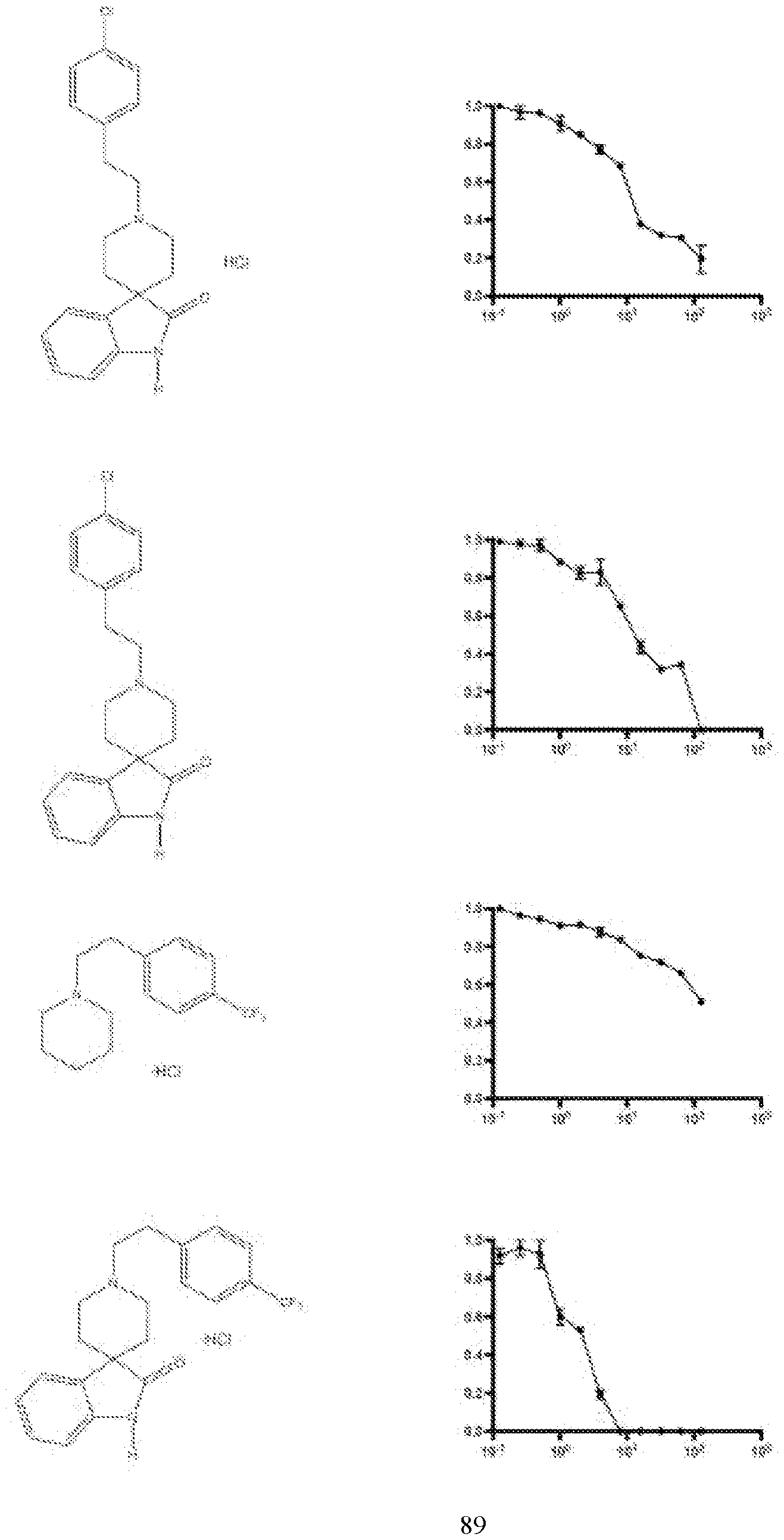
[00203] Table 1 A. baumannii strains tested against abaucin.


[00204] Table 2. Carbapenem-resistant Enterobacteriaceae (CRE) strains tested against abaucin.
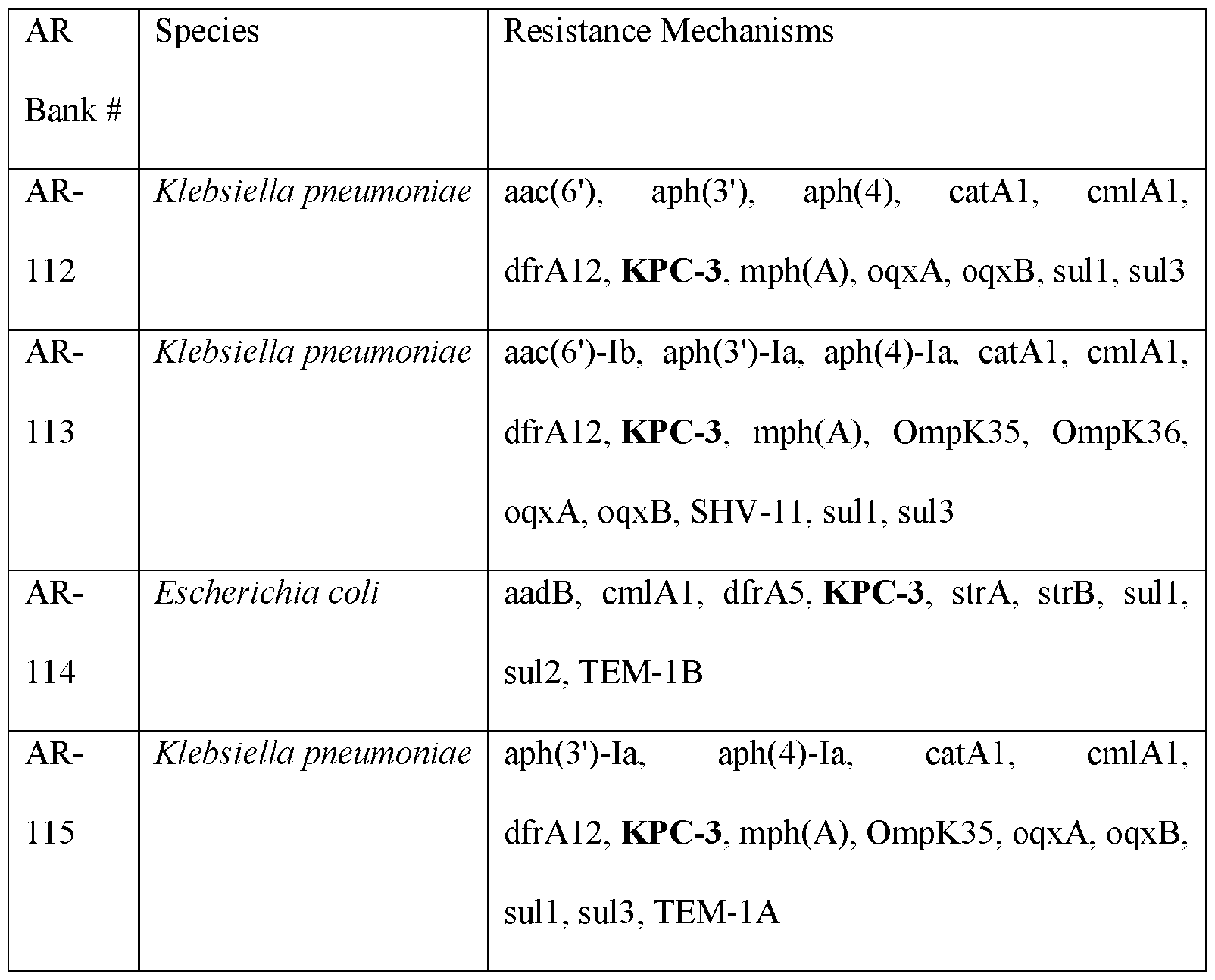


[00205] Table 3. P. aeruginosa strains tested against abaucin.


[00206] Table 4 5. aureus strains tested against abaucin.

[00207] Table 5. Minimum inhibitory concentration (MIC) of ABAUCIN analogs against a panel of bacterial species. Growth inhibition of bacterial species by ABAUCIN and analogs thereof. Cells were grown in LB in the presence of varying concentrations of each molecule at 37°C and the MIC of each was determined. The strains shown are E. coll BW25113, P. aeruginosa PA01, S'. aureus RN4220, and A.
baumannii ATCC 17978. Experiments were conducted in biological duplicate and resulted in identical MIC values.


[00208] Table 6. Human gut commensal strain panel.


[00209] Table 7 Human skin commensal strain panel.
 [00210] Table 8. Frequency of resistance to ABAUCIN. Wildtype A. baumannii was streaked onto solid media supplemented with vary ing concentrations of ABAUCIN for the noted durations, and emergent colonies were counted to quantify frequency of resistance as noted in the table. Dashed cells show conditions where lawns of J. baumannii was observed on the solid media plate.
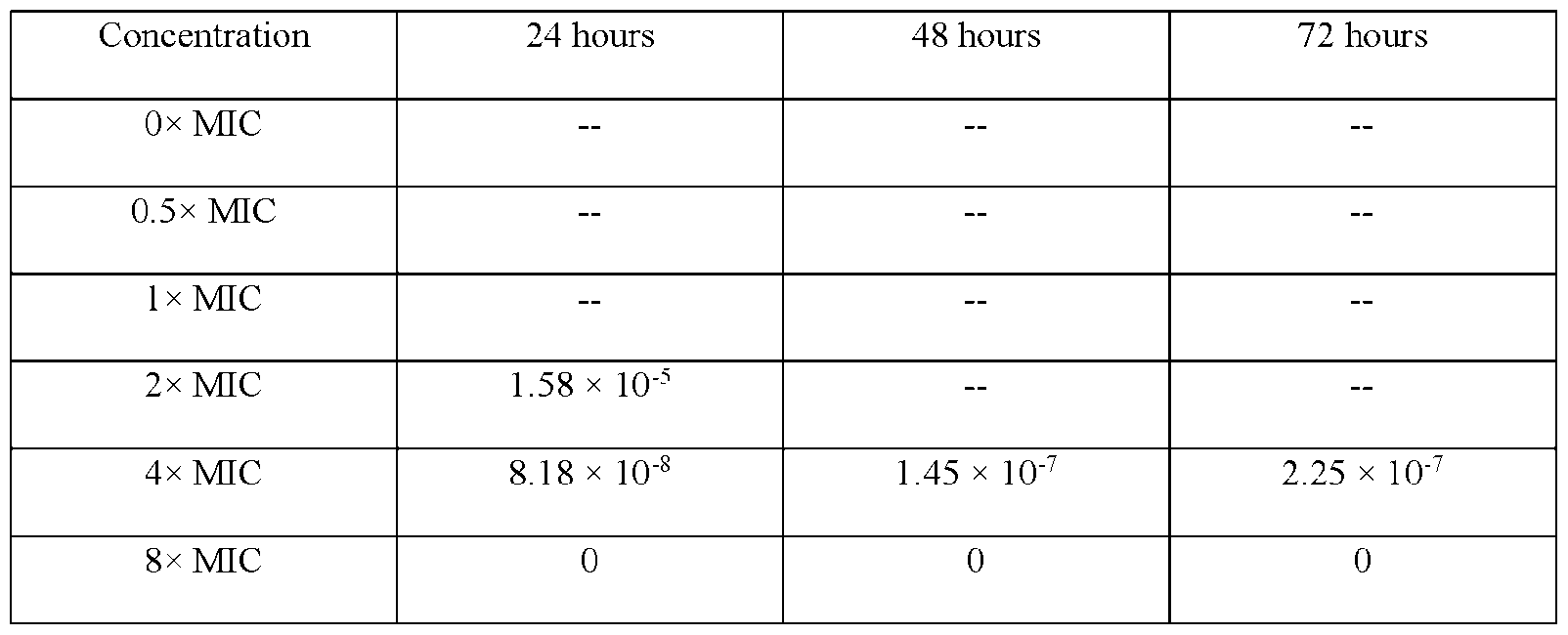
[00211] REFERENCES
[00212] 1. Antunes, L. C. S., Visca, P. & Towner, K. J. Acinetobacter baumannii: evolution of a global pathogen. Pathog. Dis. 71, 292-301 (2014).
[00213] 2. World Health Organization. 2020 antibacterial agents in clinical and preclinical development: an overview and analysis.
[00214] 3. Walsh, C. Where will new antibiotics come from? Nat. Rev.
Microbiol. 1, 65-70 (2003).
[00215] 4. Tommasi, R., Brown. D. G., Walkup, G. K., Manchester, J. I. &
Miller, A. A. ESKAPEing the labyrinth of antibacterial discovery. Nat. Rev. Drug Discov. 14, 529-542 (2015).
[00216] 5. Stokes, J. M. et al. A Deep Learning Approach to Antibiotic
Discovery'. Cell 180, 688-702.el3 (2020).
[00217] 6. Ma, Y. et al. Identification of antimicrobial peptides from the human gut microbiome using deep learning. Nat. Biotechnol. 40, 921-931 (2022).
[00218] 7. Lluka, T. & Stokes, J. M. Antibiotic discovery' in the artificial intelligence era. Ann. N. Y. Acad. Sci. 1519, 74-93 (2023).
[00219] 8. Melander, R. J., Zurawski, D. V. & Melander, C. Narrow-
Spectrum Antibacterial Agents. Medchemcomm 9, 12-21 (2018).
[00220] 9. Theriot, C. M. et al. Antibiotic-induced shifts in the mouse gut microbiome and metabolome increase susceptibility7 to Clostridium difficile infection. Nat. Commun. 5, 3114 (2014).
[00221] 10. Willing, B. P. et al. A pyrosequencing study in twins shows that gastrointestinal microbial profiles vary with inflammatory bowel disease phenotypes. Gastroenterology! 139, 1844-1854. el (2010).
[00222] 11. Tumbaugh, P. J. et al. An obesity-associated gut microbiome with increased capacity for energy harvest. Nature 444, 1027-1031 (2006).
[00223] 12. Kelly, J. R. et al. Transferring the blues: Depression-associated gut microbiota induces neurobehavioural changes in the rat. J. Psychiatr. Res. 82, 109- 118 (2016).
[00224] 13. Wu, N. et al. Dysbiosis signature of fecal microbiota in colorectal cancer patients. Microb. Ecol. 66. 462-470 (2013).
[00225] 14. Lee. H. S., Plechot, K., Gohil, S. & Le, J. Clostridium difficile:
Diagnosis and the Consequence of Over Diagnosis. Infect. Dis. Ther. 10, 687-697 (2021).
[00226] 15. Corsello, S. M. et al. The Drug Repurposing Hub: a nextgeneration drug library and information resource. Nat. Med. 23. 405-408 (2017).
[00227] 16. Kaplan, E., Greene, N. P., Crow, A. & Koronakis, V. Insights into bacterial lipoprotein trafficking from a structure of LolA bound to the LolC periplasmic domain. Proc. Natl. Acad. Set. U. S. A. 115, E7389-E7397 (2018).
[00228] 17. Tang, X. et al. Structural basis for bacterial lipoprotein relocation by the transporter LolCDE. Nat. Struct. Mol. Biol. 28, 347-355 (2021).
[00229] 18. Yang, K. et al. Analyzing Learned Molecular Representations for Property Prediction. J. Chem. Inf. Model. 59, 3370-3388 (2019).
[00230] 19. Landrum, G. RDKit: A software suite for cheminformatics, computational chemi stry, and predictive modeling.
[00231] 20. Seok, S. J. et al. Blockade of CCL2/CCR2 signalling ameliorates diabetic nephropathy in db/db mice. Nephrol. Dial. Transplant. 28, 1700-1710 (2013).
[00232] 21. Cerri, C. et al. The Chemokine CCL2 Mediates the Seizureenhancing Effects of Systemic Inflammation. J. Neurosci. 36, 3777-3788 (2016).
[00233] 22. Chargari, C. et al. Preclinical assessment of JNJ-26854165
(Serdemetan), a novel tryptamine compound with radiosensitizing activity in vitro and in tumor xenografts. Cancer Lett. 312, 209-218 (2011).
[00234] 23. Lehman, J. A. et al. Serdemetan antagonizes the Mdm2-HIFla axis leading to decreased levels of glycolytic enzymes. PLoS One 8, e74741 (2013).
[00235] 24. Stokes, J. M.. Lopatkin, A. J.. Lobritz, M. A. & Collins, J. J.
Bacterial Metabolism and Antibiotic Efficacy. Cell Metab. 30, 251-259 (2019).
[00236] 25. Zheng, E. J., Stokes, J. M. & Collins, J. J. Eradicating Bacterial
Persisters with Combinations of Strongly and Weakly Metabolism-Dependent Antibiotics. Cell Chem. Biol. 27 , 1544-1552.e3 (2020).
[00237] 26. Francino, M. P. Antibiotics and the Human Gut Microbiome:
Dysbioses and Accumulation of Resistances. Front. Microbiol. 6, 1543 (2016).
[00238] 27. Smits, W. K., Lyras, D., Lacy, D. B., Wilcox, M. H. & Kuijper,
E. J. Clostridium difficile infection. Nat. Rev. Dis. Primers 2, 16020 (2016).
[00239] 28. Sharma, S. et al. Mechanism of LolCDE as a molecular extruder of bacterial triacylated lipoproteins. Nat. Commun. 12, 4687 (2021).
[00240] 29. Nicholson, W. L. & Maughan, H. The Spectrum of Spontaneous
Rifampin Resistance Mutations in the rpoB Gene of Bacillus subtilis 168 Spores Differs from That of Vegetative Cells and Resembles That of Mycobacterium tuberculosis . J. Bacterial. 184, 4936-4940 (2002).
[00241] 30. Baek, M. et al. Accurate prediction of protein structures and interactions using a three-track neural network. Science 373, 871-876 (2021).
[00242] 31. Buel, G. R. & Walters, K. J. Can AlphaFold2 predict the impact of missense mutations on structure? Nat. Struct. Mol. Biol. 29, 1-2 (2022).
[00243] 32. Raivio, T. L., Leblanc, S. K. D. & Price, N. L. The Escherichia coli Cpx envelope stress response regulates genes of diverse function that impact antibiotic resistance and membrane integrity. J. Bacteriol. 195, 2755-2767 (2013).
[00244] 33. Guest. R. L., Wang. J., Wong, J. L. & Raivio, T. L. A Bacterial
Stress Response Regulates Respiratory Protein Complexes To Control Envelope Stress
Adaptation. J. Bacteriol. 199, e00153-17 (2017).
[00245] 34. Delhaye, A., Laloux, G., Collet, J.-F. The Lipoprotein NlpE Is a
Cpx Sensor That Serves as a Sentinel for Protein Sorting and Folding Defects in the Escherichia coli Envelope. J. Bacterial. 201, e00611-18 (2019).
[00246] 35. Peters, J. M. et al. A Comprehensive, CRISPR-based Functional
Analysis of Essential Genes in Bacteria. Cell 165, 1493-1506 (2016).
[00247] 36. Pathania, R. et al. Chemical genomics in Escherichia coli identifies an inhibitor of bacterial lipoprotein targeting. Nat. Chem. Biol. 5, 849-856 (2009).
[00248] 37. McLeod, S. M. etal. Small-molecule inhibitors of gram-negative lipoprotein trafficking discovered by phenotypic screening. J. Bacterial. 197, 1075- 1082 (2015).
[00249] 38. Manchanda, V., Sanchaita, S. & Singh, N. Multidrug resistant acinetobacter. J. Glob. Infect. Dis. 2, 291-304 (2010).
[00250] 39. Davis, K. A., Moran, K. A., McAllister, C. K. & Gray, P. J.
Multidrug-resistant Acinetobacter extremity infections in soldiers. Emerg. Infect. Dis. 11, 1218-1224 (2005).
[00251] 40. Jin, W. et al. Deep learning identifies synergistic drug combinations fortreating COVID-19. Proc. Natl. Acad. Sci. U. S. A. 118, e2105070118 (2021).
[00252] 41. Preuer, K. et al. DeepSynergy: predicting anti-cancer drug synergy with Deep Learning. Bioinformatics 34. 1538-1546 (2018).
[00253] 42. Jin, W., Barzilay. R. & Jaakkola, T. Junction Tree Variational
Autoencoder for Molecular Graph Generation. Proceedings of the 35th International
Conference on Machine Learning (2018).
[00254] 43. Pedregosa, F. et al. Scikit-leam: Machine learning in Python.
Journal of Machine Learning Research 12, 2825-2830 (2011).
[00255] 44. Deatherage, D. E. & Barrick, J. E. Identification of mutations in laboratory-evolved microbes from next-generation sequencing data using breseq. Methods Mol. Biol. 1151, 165-188 (2014).
[00256] 45. Bray, N. L., Pimentel, H., Melsted, P. & Pachter, L. Near- optimal probabilistic RNA-seq quantification. Nat. Biotechnol. 34, 525-527 (2016).
[00257] 46. Ihaka, R. & Gentleman, R. R: A Language for Data Analysis and
Graphics. J. Comput. Graph. Stat. 5, 299-314 (1996).
[00258] 47. Love, M. I., Huber, W. & Anders, S. Moderated estimation of fold change and dispersion for RNA-seq data with DESeq2. Genome Biol. 15, 550 (2014).
[00259] 48. Karp, P. D. Pathway databases: a case study in computational symbolic theories. Science 293, 2040-2044 (2001 ).
[00260] 49. Keseler, I. M. et al. EcoCyc: fusing model organism databases with systems biology. Nucleic Acids Res. 41, D605-612 (2013).
[00261] 50. Karp, P. D. et al. Pathway Tools version 19.0 update: software for pathway/genome informatics and systems biology. Brief. Bioinform. 17, 877-890 (2016).
[00262] 51. Calvo-Villamanan, A. et al. On- target activity predictions enable improved CRISPR-dCas9 screens in bacteria. Nucleic Acids Res. 48, e64 (2020).
[00263] 52. Depardieu, F. & Bikard, D. Gene silencing with CRISPRi in bacteria and optimization of dCas9 expression levels. Methods 172. 61-75 (2020).
[00264] 53. UniProt Consortium. UniProt: the universal protein knowledgebase in 2021. Nucleic Acids Res. 49, D480-D489 (2021).
[00265] 54. Altschul, S. F. et al. Gapped BLAST and PSI-BLAST: a new generation of protein database search programs. Nucleic Acids Res. 25, 3389-3402 (1997).
[00266] 55. Altschul, S. F. et al. Protein database searches using compositionally adjusted substitution matrices. FEBS J. 272, 5101-5109 (2005).
[00267] 56. Goddard, T. D. et al. UCSF ChimeraX: Meeting modem challenges in visualization and analysis. Protein Sci. 27, 14-25 (2018).
[00268] 57. Pettersen, E. F. et al. UCSF ChimeraX: Structure visualization for researchers, educators, and developers. Protein Sci. 30, 70-82 (2021).
[00269] While the present disclosure has been described with reference to examples, it is to be understood that the scope of the claims should not be limited by the embodiments set forth in the examples but should be given the broadest interpretation consistent with the description as a whole.
[00270] All publications, patents and patent applications are herein incorporated by reference in their entirety to the same extent as if each individual publication, patent or patent application was specifically and individually indicated to be incorporated by reference in its entirety. Where a term in the present disclosure is found to be defined differently in a document incorporated herein by reference, the definition provided herein is to serve as the definition for the term.
Claims
1. A compound for inhibiting growth of an Acinetobacter baumannii bacterium, the compound having Structure I as follows:
 or a pharmaceutically acceptable salt, solvate and/or prodrug thereof; wherein:
R1 - R3 are independently selected from H. OH, CH3, C2H5, NO2, CN. halogen, alkoxy (e.g., methoxy), or trifluoromethyl, with at least one and more typically two, and quite possibly all three of R1 - R3 being H;
R4 and R5 are independently selected from H, OH, halogen or amine, with none or more ty pically one or both of R4 and R5 being H;
R6 is C1 -C3 alkyl or alkylene; and
R7 is H or C1 -C3 alkyl or alkylene.
2. A compound as in claim 1, wherein R1 and R3 are H.
3. A compound as in claim 1 or 2, wherein R2 is selected from H, OH, CHg, C2H5, NO2, halogen, alkoxy or trifluoromethyl.
4. A compound as in claim 1, 2 or 3, wherein R2 is selected from H, methoxy, halogen or trifluoromethyl.
5. A compound as in any one of claims 1 through 4, wherein R4 is H.
6. A compound as in any one of claims 1 through 5, wherein R5 is selected from H, OH, halogen or primary amine, or from H or halogen, with one or both of R4 and R5 being H.
7. A compound as in any one of claims 1 through 6, wherein R6 is C1 -C2 alkyl.
8. A compound as in any one of claims 1 through 7, wherein R6 is C2 alkyl.
9. A compound as in any one of claims 1 through 8, wherein R7 is H or C1 -C2 alkyl.
10. A compound as in any one of claims 1 through 9, wherein R7 is H.
11. A compound as in any one of claims 1 through 10, wherein at least one of one of R1 - R5 is a halogen selected from F, Br, or Cl.
12. A compound as in any one of claims 1 through 11, wherein at least one of one of R1 - R5 is a halogen selected from F or Cl.
13. A compound as in any one of claim 1 through 12, wherein the compound exhibits a minimum inhibitory concentration (MIC) against A. Baumannii, particularly A. baumannii ATCC 17978 of no greater than 64 pg/ml, more typically no greater than 32 pg/ml, even more typically no greater than 16 pg/ml or even possibly no greater than 8 pg/ml or 2 pg/ml.
14. A compound as recited in claim 1 or, where appropriate, any one of claims 2 through 13, wherein the compound is selected from:
 r-(4-(trifluoromethyl)phenethyl)spiro[benzo[<7|[l,3]oxazine-4,4,-piperidin]-2(1H)- one,


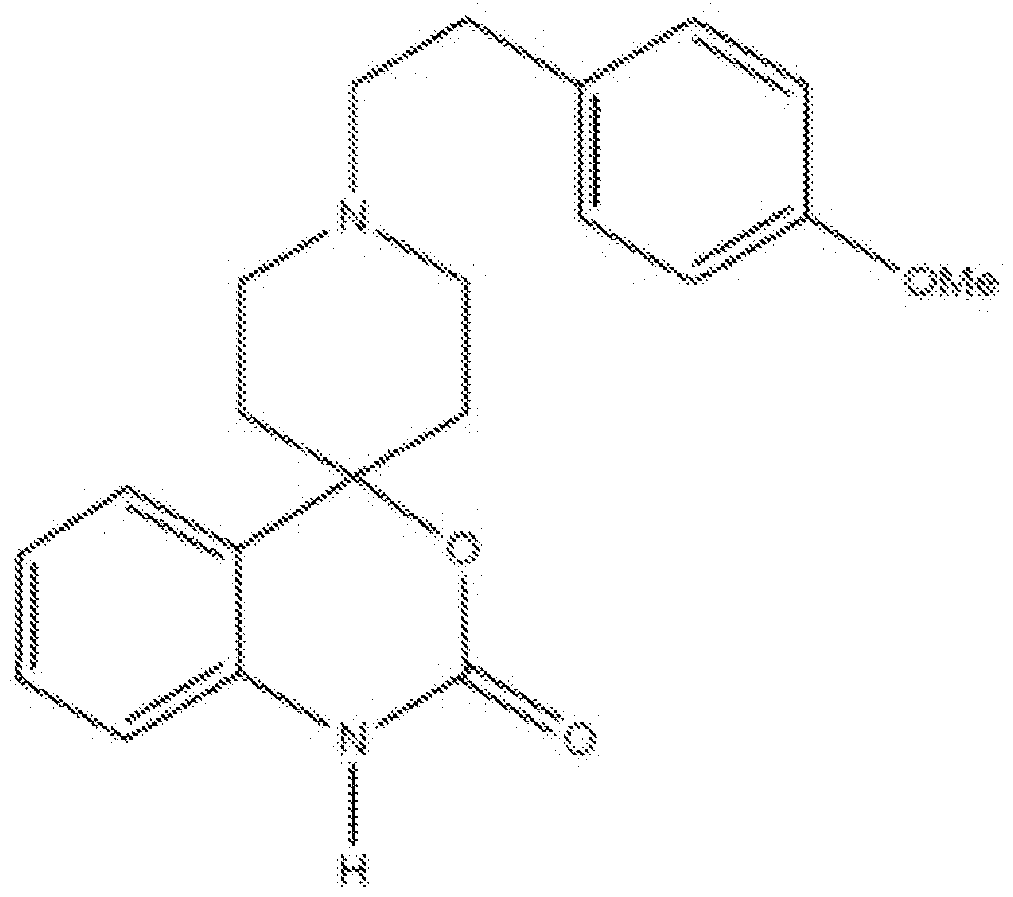


4-(2-(2-oxo- 1.2-dihy drospiro[benzo [d][1,3] oxazine-4, 4'-piperidin] - 1 y 1 )ethy 1 )benzonitril e.


1 '-(4-nitrobenzyl)spiro [benzo [d][1,,3]oxazine-4, 4'-piperidin] -2(1H)-one.

, or
 l'-(3-phenylpropyl)spiro[benzo[d][1,3]oxazine-4,4'-piperidin]-2(1H)-one; or a pharmaceutically acceptable salt, solvate and/or prodrug thereof.
15. A compound as in any one of claims 1 through 14, wherein the compound is provided as a HC1 salt.
16. A composition comprising a compound of any one of claims 1 through 15, or a phannaceutically acceptable salt, solvate and/or prodrug thereof, and a pharmaceutically acceptable carrier or vehicle.
17. A method for inhibiting growth of an Acinetobacter baumannii bacterium, compnsing contacting the bacterium with an effective amount of a compound of any one of claims 1 through 16, or a pharmaceutically acceptable salt, solvate and/or prodrug thereof.
18. A method of treating an Acinetobacter baumannii bacterial infection comprising administering an effective amount of a compound of any one of claims 1 through 14, or a pharmaceutically acceptable salt, solvate and/or prodrug thereof, to a subject in need thereof.
19. Use of a compound of any one of claims 1 through 14, or a pharmaceutically acceptable salt phannaceutically acceptable salt, solvate and/or prodrug thereof, to inhibit growth of an Acinetobacter baumannii bacterium.
20. Use of a compound of any one of claims 1 through 14, or a pharmaceutically acceptable salt pharmaceutically acceptable salt, solvate and/or prodrug thereof, to treat or prevent an Acinetobacter baumannii bacterial infection.
Applications Claiming Priority (2)
| Application Number | Priority Date | Filing Date | Title |
|---|---|---|---|
| US202363463751P | 2023-05-03 | 2023-05-03 | |
| US63/463,751 | 2023-05-03 |
Publications (1)
| Publication Number | Publication Date |
|---|---|
| WO2024229262A1 true WO2024229262A1 (en) | 2024-11-07 |
Family
ID=91335087
Family Applications (1)
| Application Number | Title | Priority Date | Filing Date |
|---|---|---|---|
| PCT/US2024/027486 Ceased WO2024229262A1 (en) | 2023-05-03 | 2024-05-02 | Narrow-spectrum antibiotic compounds and uses thereof |
Country Status (1)
| Country | Link |
|---|---|
| WO (1) | WO2024229262A1 (en) |
Citations (2)
| Publication number | Priority date | Publication date | Assignee | Title |
|---|---|---|---|---|
| WO2008021375A2 (en) * | 2006-08-15 | 2008-02-21 | Vertex Pharmaceuticals Incorporated | Modulators of muscarinic receptors |
| BR102016030039A2 (en) * | 2016-12-20 | 2018-07-17 | Uniao Brasileira De Educacao E Assistencia Mantenedora Da Pucrs | pharmaceutical composition, use of the pharmaceutical composition, method of treating disease associated with microbial infections and process of preparing a compound |
-
2024
- 2024-05-02 WO PCT/US2024/027486 patent/WO2024229262A1/en not_active Ceased
Patent Citations (2)
| Publication number | Priority date | Publication date | Assignee | Title |
|---|---|---|---|---|
| WO2008021375A2 (en) * | 2006-08-15 | 2008-02-21 | Vertex Pharmaceuticals Incorporated | Modulators of muscarinic receptors |
| BR102016030039A2 (en) * | 2016-12-20 | 2018-07-17 | Uniao Brasileira De Educacao E Assistencia Mantenedora Da Pucrs | pharmaceutical composition, use of the pharmaceutical composition, method of treating disease associated with microbial infections and process of preparing a compound |
Non-Patent Citations (63)
| Title |
|---|
| "Advanced Organic Chemistry", 1992, MCGRAW HILL |
| "GenBank", Database accession no. OP677867 |
| "Remington's Pharmaceutical Sciences", 2000 |
| "UniProt Consortium. UniProt: the universal protein knowledgebase in 2021", NUCLEIC ACIDS RES., vol. 49, 2021, pages D480 - D489 |
| ALTSCHUL, S. F. ET AL.: "Gapped BLAST and PSI-BLAST: a new generation of protein database search programs", NUCLEIC ACIDS RES., vol. 25, 1997, pages 3389 - 3402, XP002905950, DOI: 10.1093/nar/25.17.3389 |
| ALTSCHUL, S. F. ET AL.: "Protein database searches using compositionally adjusted substitution matrices", FEBS J., vol. 272, 2005, pages 5101 - 5109 |
| ANTUNES, L. C. S.VISCA, P.TOWNER, K. J.: "Acinetobacter baumannii: evolution of a global pathogen", PATHOG. DIS., vol. 71, 2014, pages 292 - 301 |
| BAEK, M. ET AL.: "Accurate prediction of protein structures and interactions using a three-track neural network", SCIENCE, vol. 373, 2021, pages 871 - 876, XP055963200, DOI: 10.1126/science.abj8754 |
| BRAY, N. L.PIMENTEL, H.MELSTED, P.PACHTER, L.: "Near-optimal probabilistic RNA-seq quantification", NAT. BIOTECHNOL., vol. 34, 2016, pages 525 - 527 |
| BUEL, G. R.WALTERS, K. J.: "Can AlphaFold2 predict the impact of missense mutations on structure?", NAT. STRUCT. MOL. BIOL., vol. 29, 2022, pages 1 - 2, XP037669943, DOI: 10.1038/s41594-021-00714-2 |
| CALVO-VILLAMANAN, A. ET AL.: "On-target activity predictions enable improved CRISPR-dCas9 screens in bacteria", NUCLEIC ACIDS RES., vol. 48, 2020, pages e64 |
| CERRI, C. ET AL.: "The Chemokine CCL2 Mediates the Seizure-enhancing Effects of Systemic Inflammation", J. NEUROSCI., vol. 36, 2016, pages 3777 - 3788 |
| CHARGARI, C. ET AL.: "Preclinical assessment of JNJ-26854165 (Serdemetan), a novel tryptamine compound with radiosensitizing activity in vitro and in tumor xenografts", CANCER LETT., vol. 312, 2011, pages 209 - 218 |
| CORSELLO, S. M. ET AL.: "The Drug Repurposing Hub: a next-generation drug library and information resource", NAT. MED., vol. 23, 2017, pages 405 - 408 |
| DAVIS, K. A.MORAN, K. A.MCALLISTER, C. K.GRAY, P. J.: "Multidrug-resistant Acinetobacter extremity infections in soldiers", EMERG. INFECT. DIS., vol. 11, 2005, pages 1218 - 1224 |
| DEATHERAGE, D. E.BARRICK, J. E.: "Identification of mutations in laboratory-evolved microbes from next-generation sequencing data using breseq", METHODS MOL. BIOL., vol. 1151, 2014, pages 165 - 188 |
| DELHAYE, A.LALOUX, G.COLLET, J.-F.: "The Lipoprotein NlpE Is a Cpx Sensor That Serves as a Sentinel for Protein Sorting and Folding Defects in the Escherichia coli Envelope", J. BACTERIOL., vol. 201, 2019, pages e00611 - 18 |
| DEPARDIEU, F.BIKARD, D.: "Gene silencing with CRISPRi in bacteria and optimization of dCas9 expression levels", METHODS, vol. 172, 2020, pages 61 - 75, XP086083217, DOI: 10.1016/j.ymeth.2019.07.024 |
| FRANCINO, M. P.: "Antibiotics and the Human Gut Microbiome: Dysbioses and Accumulation of Resistances", FRONT. MICROBIOL., vol. 6, 2016, pages 1543 |
| GODDARD, T. D. ET AL.: "UCSF ChimeraX: Meeting modem challenges in visualization and analysis", PROTEIN SCI., vol. 27, 2018, pages 14 - 25 |
| GUEST, R. L.WANG, J.WONG, J. L.RAIVIO, T. L.: "A Bacterial Stress Response Regulates Respiratory Protein Complexes To Control Envelope Stress Adaptation", J. BACTERIOL., vol. 199, 2017, pages e00153 - 17 |
| IHAKA, R.GENTLEMAN, R.: "R: A Language for Data Analysis and Graphics", J. COMPUT. GRAPH. STAT., vol. 5, 1996, pages 299 - 314 |
| JIN, W. ET AL.: "Deep learning identifies synergistic drug combinations for treating COVID-19", PROC. NATL. ACAD. SCI. U. S. A., vol. 118, 2021, pages e2105070118, XP055865748, DOI: 10.1073/pnas.2105070118 |
| JIN, W.BARZILAY. R.JAAKKOLA, T.: "Junction Tree Variational Autoencoder for Molecular Graph Generation", PROCEEDINGS OF THE 35TH INTERNATIONAL CONFERENCE ON MACHINE LEARNING, 2018 |
| KAPLAN, E.GREENE, N. P.CROW, A.KORONAKIS, V.: "Insights into bacterial lipoprotein trafficking from a structure of LolA bound to the LolC periplasmic domain", PROC. NATL. ACAD. SCI. U. S. A., vol. 115, 2018, pages E7389 - E7397 |
| KARP, P. D. ET AL.: "Pathway Tools version 19.0 update: software for pathway/genome informatics and systems biology", BRIEF. BIOINFORM., vol. 17, 2016, pages 877 - 890 |
| KARP, P. D.: "Pathway databases: a case study in computational symbolic theories", SCIENCE, vol. 293, 2001, pages 2040 - 2044, XP002355600, DOI: 10.1126/science.1064621 |
| KELLY, J. R. ET AL.: "Transferring the blues: Depression-associated gut microbiota induces neurobehavioural changes in the rat", J. PSYCHIATR. RES., vol. 82, 2016, pages 109 - 118, XP029727706, DOI: 10.1016/j.jpsychires.2016.07.019 |
| KESELER, I. M. ET AL.: "EcoCyc: fusing model organism databases with systems biology", NUCLEIC ACIDS RES., vol. 41, 2013, pages D605 - 612 |
| LEE, H. S.PLECHOT, K.GOHIL, S.LE, J.: "Clostridium difficile: Diagnosis and the Consequence of Over Diagnosis", INFECT. DIS. THER., vol. 10, 2021, pages 687 - 697 |
| LEHMAN, J. A. ET AL.: "Serdemetan antagonizes the Mdm2-HIF1α axis leading to decreased levels of glycolytic enzymes", PLOS ONE, vol. 8, 2013, pages e74741 |
| LIU GARY ET AL: "Deep learning-guided discovery of an antibiotic targeting Acinetobacter baumannii", NATURE CHEMICAL BIOLOGY, vol. 19, no. 11, 25 May 2023 (2023-05-25), New York, pages 1342 - 1350, XP093194757, ISSN: 1552-4450, Retrieved from the Internet <URL:https://www.nature.com/articles/s41589-023-01349-8> DOI: 10.1038/s41589-023-01349-8 * |
| LLUKA, T.STOKES, J. M.: "Antibiotic discovery in the artificial intelligence era", ANN. N. Y. ACAD. SCI., vol. 1519, 2023, pages 74 - 93 |
| LOVE, M. I.HUBER, W.ANDERS, S.: "Moderated estimation of fold change and dispersion for RNA-seq data with DESeq2", GENOME BIOL., vol. 15, 2014, pages 550, XP021210395, DOI: 10.1186/s13059-014-0550-8 |
| MA, Y. ET AL.: "Identification of antimicrobial peptides from the human gut microbiome using deep leaming", NAT. BIOTECHNOL., vol. 40, 2022, pages 921 - 931, XP037897849, DOI: 10.1038/s41587-022-01226-0 |
| MANCHANDA, V.SANCHAITA, S.SINGH, N: "Multidrug resistant acinetobacter", J. GLOB. INFECT. DIS., vol. 2, 2010, pages 291 - 304 |
| MCLEOD, S. M. ET AL.: "Small-molecule inhibitors of gram-negative lipoprotein trafficking discovered by phenotypic screening", J. BACTERIOL., vol. 197, 2015, pages 1075 - 1082 |
| MELANDER, R. J.ZURAWSKI, D. V.MELANDER, C.: "Narrow-Spectrum Antibacterial Agents", MEDCHEMCOMM, vol. 9, 2018, pages 12 - 21 |
| NICHOLSON, W. L.MAUGHAN, H.: "The Spectrum of Spontaneous Rifampin Resistance Mutations in the rpoB Gene of Bacillus subtilis 168 Spores Differs from That of Vegetative Cells and Resembles That of Mycobacterium tuberculosis.", J. BACTERIOL., vol. 184, 2002, pages 4936 - 4940, XP002236290, DOI: 10.1128/JB.184.17.4936-4940.2002 |
| PATHANIA, R. ET AL.: "Chemical genomics in Escherichia coli identifies an inhibitor of bacterial lipoprotein targeting", NAT. CHEM. BIOL., vol. 5, 2009, pages 849 - 856 |
| PEDREGOSA, F. ET AL.: "Scikit-learn: Machine learning in Python", JOURNAL OF ACHINE LEARNING RESEARCH, vol. 12, 2011, pages 2825 - 2830 |
| PETERS, J. M. ET AL.: "A Comprehensive, CRISPR-based Functional Analysis of Essential Genes in Bacteria", CELL, vol. 165, 2016, pages 1493 - 1506, XP029567375, DOI: 10.1016/j.cell.2016.05.003 |
| PETTERSEN, E. F. ET AL.: "UCSF ChimeraX: Structure visualization for researchers, educators, and developers", PROTEIN SCI., vol. 30, 2021, pages 70 - 82 |
| PREUER, K. ET AL.: "DeepSynergy: predicting anti-cancer drug synergy with Deep Leaming", BIOINFORMATICS, vol. 34, 2018, pages 1538 - 1546, XP093093746, DOI: 10.1093/bioinformatics/btx806 |
| R.C. LAROCK: "Comprehensive Organic Transformations - A Guide to Functional Group Preparations", 1989, VHC PUBLISHERS, INC. |
| RAIVIO, T. L.LEBLANC, S. K. D.PRICE, N. L.: "The Escherichia coli Cpx envelope stress response regulates genes of diverse function that impact antibiotic resistance and membrane integrity", J. BACTERIOL., vol. 195, 2013, pages 2755 - 2767 |
| SEOK, S. J. ET AL.: "Blockade of CCL2/CCR2 signalling ameliorates diabetic nephropathy in db/db mice", NEPHROL. DIAL. TRANSPLANT., vol. 28, 2013, pages 1700 - 1710 |
| SHARMA, S. ET AL.: "Mechanism of LolCDE as a molecular extruder of bacterial triacylated lipoproteins", NAT. COMMUN., vol. 12, 2021, pages 4687 |
| SMITH: "Organic Synthesis", 1994, MCGRAW HILL |
| SMITS, W. K.LYRAS, D.LACY, D. B.WILCOX, M. HKUIJPER, E. J.: "Clostridium difficile infection", NAT. REV. DIS. PRIMERS, vol. 2, 2016, pages 16020 |
| STOKES, J. M. ET AL.: "A Deep Learning Approach to Antibiotic Discovery", CELL, vol. 180, 2020, pages 688 - 702 |
| STOKES, J. M.LOPATKIN, A. J.LOBRITZ, M. A.COLLINS, J. J.: "Bacterial Metabolism and Antibiotic Efficacy", CELL METAB., vol. 30, 2019, pages 251 - 259, XP085793123, DOI: 10.1016/j.cmet.2019.06.009 |
| T.W. GREENP.G.M. WUTS: "The United States Pharmacopeia: The National Formulary", 1999, WILEY-INTERSCIENCE |
| TANG, X. ET AL.: "Structural basis for bacterial lipoprotein relocation by the transporter LolCDE", NAT. STRUCT. MOL. BIOL., vol. 28, 2021, pages 347 - 355, XP037424477, DOI: 10.1038/s41594-021-00573-x |
| THERIOT, C. M. ET AL.: "Antibiotic-induced shifts in the mouse gut microbiome and metabolome increase susceptibility to Clostridium difficile infection", NAT. COMMUN., vol. 5, 2014, pages 3114 |
| TOMMASI, R.BROWN, D. G.WALKUP, G. K.MANCHESTER, J. I.MILLER, A. A.: "ESKAPEing the labyrinth of antibacterial discover", NAT. REV. DRUG DISCOV., vol. 14, 2015, pages 529 - 542 |
| TURNBAUGH, P. J. ET AL.: "An obesity-associated gut microbiome with increased capacity for energy harvest", NATURE, vol. 444, 2006, pages 1027 - 1031, XP002510854, DOI: 10.1038/nature05414 |
| WALSH, C.: "Where will new antibiotics come from?", NAT. REV. MICROBIOL., vol. 1, 2003, pages 65 - 70 |
| WILLING, B. P. ET AL.: "A pyrosequencing study in twins shows that gastrointestinal microbial profiles vary with inflammatory bowel disease phenotypes", GASTROENTEROLOGY, vol. 139, 2010, pages 1844 - 1854, XP055550814, DOI: 10.1053/j.gastro.2010.08.049 |
| WORLD HEALTH ORGANIZATION, ANTIBACTERIAL AGENTS IN CLINICAL AND PRECLINICAL DEVELOPMENT: AN OVERVIEW AND ANALYSIS, 2020 |
| WU, N. ET AL.: "Dysbiosis signature of fecal microbiota in colorectal cancer patients", MICROB. ECOL., vol. 66, 2013, pages 462 - 470, XP055133734, DOI: 10.1007/s00248-013-0245-9 |
| YANG, K. ET AL.: "Analyzing Learned Molecular Representations for Property Prediction", J. CHEM. INF. MODEL., vol. 59, 2019, pages 3370 - 3388, XP093154815, DOI: 10.1021/acs.jcim.9b00237 |
| ZHENG, E. J.STOKES, J. M.COLLINS, J. J.: "Eradicating Bacterial Persisters with Combinations of Strongly and Weakly Metabolism-Dependent Antibiotics", CELL CHEM. BIOL., vol. 27, 2020, pages 1544 - 1552 |
Similar Documents
| Publication | Publication Date | Title |
|---|---|---|
| Liu et al. | Deep learning-guided discovery of an antibiotic targeting Acinetobacter baumannii | |
| Bachman et al. | Genome-wide identification of Klebsiella pneumoniae fitness genes during lung infection | |
| Tsai et al. | Targeting two-component systems uncovers a small-molecule inhibitor of Salmonella virulence | |
| Jenul et al. | Pyochelin biotransformation by Staphylococcus aureus shapes bacterial competition with Pseudomonas aeruginosa in polymicrobial infections | |
| Li et al. | Discovery and bioactivity of the novel lasso peptide microcin Y | |
| Hequet et al. | 1‐(1H‐indol‐3‐yl) ethanamine derivatives as potent Staphylococcus aureus NorA efflux pump inhibitors | |
| Tsylents et al. | Iron uptake pathway of Escherichia coli as an entry route for peptide nucleic acids conjugated with a siderophore mimic | |
| JP2011529502A (en) | Antimalarial compounds | |
| Uria-Nickelsen et al. | Novel topoisomerase inhibitors: microbiological characterisation and in vivo efficacy of pyrimidines | |
| DeJarnette et al. | Identification of inhibitors of fungal fatty acid biosynthesis | |
| Li et al. | Analysis of AcrB in Klebsiella pneumoniae reveals natural variants promoting enhanced multidrug resistance | |
| Mangiaterra et al. | The natural alkaloid berberine can reduce the number of Pseudomonas aeruginosa tolerant cells | |
| Russo et al. | Repurposed dihydroorotate dehydrogenase inhibitors with efficacy against drug-resistant Acinetobacter baumannii | |
| Lu et al. | Discovery of a novel polymyxin adjuvant against multidrug-resistant gram-negative bacteria through oxidative stress modulation | |
| US9867879B2 (en) | Methods for use of small molecule activators of hem-Y / protoporphyrinogen oxidase (PPO) | |
| Wang et al. | Biocontrol of methicillin-resistant Staphylococcus aureus using a virulent bacteriophage derived from a temperate one | |
| Limwongyut et al. | Amidine-based cationic conjugated oligoelectrolytes with antimicrobial activity against Pseudomonas aeruginosa biofilms | |
| WO2024229262A1 (en) | Narrow-spectrum antibiotic compounds and uses thereof | |
| Varela et al. | Bacterial resistance mechanisms and inhibitors of multidrug efflux pumps belonging to the major facilitator superfamily of solute transport systems | |
| Pan et al. | Discovery of a novel sea snake antimicrobial peptide Hydrostatin-AMP3 with dual-mechanism against multidrug-resistant Klebsiella pneumoniae | |
| Kirk et al. | Distribution and comparative genomic analysis of antimicrobial gene clusters found in Pantoea | |
| Kyei-Baffour et al. | Second-generation aryl isonitrile compounds targeting multidrug-resistant Staphylococcus aureus | |
| Guo et al. | Tn5AraOut mutagenesis for the identification of Yersinia pestis genes involved in resistance towards cationic antimicrobial peptides | |
| EP3596089B1 (en) | Antibacterial compounds | |
| Gong et al. | Ferric uptake regulator (fur) affects the pathogenicity of Aeromonas veronii TH0426 by regulating flagellar assembly and biofilm formation |
Legal Events
| Date | Code | Title | Description |
|---|---|---|---|
| 121 | Ep: the epo has been informed by wipo that ep was designated in this application |
Ref document number: 24730139 Country of ref document: EP Kind code of ref document: A1 |
|
| NENP | Non-entry into the national phase |
Ref country code: DE |