WO2024225445A1 - Crystalline form of delgocitinib - Google Patents
Crystalline form of delgocitinib Download PDFInfo
- Publication number
- WO2024225445A1 WO2024225445A1 PCT/JP2024/016473 JP2024016473W WO2024225445A1 WO 2024225445 A1 WO2024225445 A1 WO 2024225445A1 JP 2024016473 W JP2024016473 W JP 2024016473W WO 2024225445 A1 WO2024225445 A1 WO 2024225445A1
- Authority
- WO
- WIPO (PCT)
- Prior art keywords
- crystalline form
- composition
- crystalline
- janus kinase
- item
- Prior art date
- Legal status (The legal status is an assumption and is not a legal conclusion. Google has not performed a legal analysis and makes no representation as to the accuracy of the status listed.)
- Ceased
Links
Images
Classifications
-
- C—CHEMISTRY; METALLURGY
- C07—ORGANIC CHEMISTRY
- C07D—HETEROCYCLIC COMPOUNDS
- C07D487/00—Heterocyclic compounds containing nitrogen atoms as the only ring hetero atoms in the condensed system, not provided for by groups C07D451/00 - C07D477/00
-
- A—HUMAN NECESSITIES
- A61—MEDICAL OR VETERINARY SCIENCE; HYGIENE
- A61P—SPECIFIC THERAPEUTIC ACTIVITY OF CHEMICAL COMPOUNDS OR MEDICINAL PREPARATIONS
- A61P37/00—Drugs for immunological or allergic disorders
Definitions
- the present invention relates to a crystalline form of the Janus kinase (JAK) inhibitor 3-((3S,4R)-3-methyl-6-(7H-pyrrolo[2,3-d]pyrimidin-4-yl)-1,6-diazaspiro[3.4]octan-1-yl)-3-oxopropanenitrile (Compound A, delgocitinib), as well as compositions thereof, methods of preparation thereof, and methods of use thereof.
- JK Janus kinase
- Janus kinase (JAK) inhibitors are of current interest for the treatment of various diseases including autoimmune diseases, inflammatory diseases, and cancer.
- Ruxolitinib has been approved by the U.S. Food & Drug Administration (FDA) for the treatment of primary myelofibrosis and polycythemia vera (PV), and tofacitinib has been approved for the treatment of rheumatoid arthritis.
- FDA U.S. Food & Drug Administration
- PV polycythemia vera
- tofacitinib has been approved for the treatment of rheumatoid arthritis.
- Other JAK inhibitors are in the literature.
- Drug compounds like, for example, Compound A are typically combined with other pharmaceutically acceptable ingredients to form compositions suitable for administration to patients.
- Solid formulations often require that the drug compound have workable solid state characteristics such as stability to heat and humidity, ease of handling, and other characteristics that facilitate preparation of solid dosage forms. Accordingly, there is an ongoing need for solid forms of existing drug molecules.
- the crystalline form of Compound A described herein is directed toward this end.
- the present invention is directed to, inter alia, crystalline Form ⁇ of 3-((3S,4R)-3-methyl-6-(7H-pyrrolo[2,3-d]pyrimidin-4-yl)-1,6-diazaspiro[3.4]octan-1-yl)-3-oxopropanenitrile (Compound A, delgocitinib).
- the present invention is further directed to pharmaceutical compositions comprising one or more crystalline forms or compositions of the invention.
- the present invention is further directed to methods of preparing the crystalline form of the invention.
- the present invention is further directed to methods of inhibition of Janus kinase comprising contacting a crystalline form of the invention with a Janus kinase.
- the present invention is further directed to a method of treating or preventing a disease in a patient comprising administering to a patient a therapeutically effective amount of a crystalline form or composition of the invention.
- the present invention is further directed to a crystalline form or composition of the invention for use in prophylaxis or therapy.
- the present invention is further directed to use of a crystalline form or composition of the invention for the preparation of a medicament for use in therapy or prophylaxis.
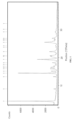
- FIG. 1 shows the X-ray powder diffraction (XRPD) pattern of Form ⁇ .
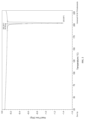
- FIG. 2 shows the differential scanning calorimetry (DSC) of Form ⁇ .
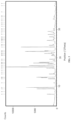
- FIG. 3 shows the XRPD pattern of Compound A hydrate.
- the present invention provides, inter alia, a crystalline form of 3-((3S,4R)-3-methyl-6-(7H-pyrrolo[2,3-d]pyrimidin-4-yl)-1,6-diazaspiro[3.4]octan-1-yl)-3-oxopropanenitrile which is an inhibitor of Janus kinase (JAK) and is useful in the treatment of various diseases associated with Janus kinase upregulation or overexpression.
- the Janus kinase is Janus kinase 3 (JAK3), Janus kinase 2 (JAK2), Janus kinase 1 (JAK1), or Tyrosine kinase 2 (TYK2).
- the crystalline form of the invention inhibits JAK3. In some embodiments, the crystalline form of the invention inhibits JAK2. In some embodiments, the crystalline form of the invention inhibits JAK1. In some embodiments, the crystalline form of the invention inhibits TYK2.
- Item 1 A crystalline form of 3-((3S,4R)-3-methyl-6-(7H-pyrrolo[2,3-d]pyrimidin-4-yl)-1,6-diazaspiro[3.4]octan-1-yl)-3-oxopropanenitrile having Form ⁇ .
- Item 2. The crystalline form of Item 1, having an X-ray powder diffraction pattern comprising a characteristic peak, in terms of 2 ⁇ (°), at about 8.8.
- Item 3 The crystalline form of Item 1, having an X-ray powder diffraction pattern comprising two or more characteristic peaks, in terms of 2 ⁇ (°), selected from about 8.8, about 18.2, and about 20.4.
- the crystalline form of Item 1 having an X-ray powder diffraction pattern comprising three or more characteristic peaks, in terms of 2 ⁇ (°), selected from about 8.8, about 13.2, about 14.4, about 16.0, about 17.0, about 17.6, about 18.2, about 20.4, about 20.7, about 22.1 and about 25.5.
- Item 5 The crystalline form of any one of Items 1 to 4, having a DSC thermogram which is characterized by an endothermic peak at about 204°C.
- a method of preparing the crystalline form of any one of Items 1 to 10, comprising crystallizing 3-((3S,4R)-3-methyl-6-(7H-pyrrolo[2,3-d]pyrimidin-4-yl)-1,6-diazaspiro[3.4]octan-1-yl)-3-oxopropanenitrile from a solvent, wherein the crystallizing is performed at a temperature from 90 to 120°C.
- Item 12. The method of Item 11 wherein the solvent comprises chlorobenzene.
- Item 13. Crystalline Form ⁇ prepared by the method of Item 11 or 12.
- Item 14. A composition of crystalline 3-((3S,4R)-3-methyl-6-(7H-pyrrolo[2,3-d]pyrimidin-4-yl)-1,6-diazaspiro[3.4]octan-1-yl)-3-oxopropanenitrile comprising Form ⁇ and Form ⁇ .
- Item 15. The composition of Item 14 consisting essentially of Form ⁇ and Form ⁇ .
- Item 16 The composition of Item 14 or 15, wherein Form ⁇ is present in an amount of about 1 to about 50% w/w with respect to Form ⁇ .
- Item 18. The composition of Item 14 or 15, wherein Form ⁇ is present in an amount of about 1 to about 10% w/w with respect to Form ⁇ .
- Item 19. The composition of Item 14 or 15, wherein Form ⁇ is present in an amount of about 1 to about 5% w/w with respect to Form ⁇ .
- Item 20. A pharmaceutical composition comprising the crystalline form of any one of Items 1-10 and 13, or a composition of any one of Items 14 to 19, and a pharmaceutically acceptable carrier.
- Item 21. The pharmaceutical composition of Item 20 further comprising a second therapeutic agent.
- the pharmaceutical composition of Item 20 or 21 which is suitable for oral, parenteral, pulmonary, local, or topical administration.
- Item 23 The pharmaceutical composition of Item 20 or 21 which is suitable for topical administration.
- Item 24 The pharmaceutical composition of Item 20 or 21 in the form of a tablet, capsule, pill, powder, or ointment.
- Item 25 The pharmaceutical composition of Item 20 or 21 in the form of a powder suitable for reconstitution in liquid for IV, IM, or SC administration.
- Item 26 The pharmaceutical composition of Item 20 or 21, further comprising white soft paraffin, hard paraffin, squalene, or a mixture thereof.
- Item 27 The pharmaceutical composition of Item 27.
- a method for inhibiting Janus kinase comprising contacting the Janus kinase with a crystalline form of any one of Items 1-10 and 13, or a composition of any one of Items 14 to 26.
- a method for treating or preventing a disease selected from organ transplant rejection, graft versus host reaction after transplantation, autoimmune disease, allergic diseases, and chronic myeloproliferative disease comprising administering to a mammal a therapeutically effective amount of the crystalline form of any one of Items 1-10 and 13, or a composition of any one of Items 14 to 26. Item 33.
- a method for treating or preventing rheumatoid arthritis, psoriasis, alopecia areata, dry eye, atopic dermatitis, eczema, hand eczema or chronic hand eczema comprising administering to a mammal a therapeutically effective amount of the crystalline form of any one of Items 1-10 and 13, or a composition of any one of Items 14 to 26.
- Item 34 The crystalline form of any one of Items 1-10 and 13, or a composition of any one of Items 14 to 26, for use as a pharmaceutically active ingredient.
- Item 35 The crystalline form of any one of Items 1-10 and 13, or a composition of any one of Items 14 to 26, for use as a pharmaceutically active ingredient.
- the crystalline form of any one of Items 1-10 and 13, or a composition of any one of Items 14 to 26, for use in the treatment or prevention of rheumatoid arthritis, psoriasis, alopecia areata, dry eye, atopic dermatitis, eczema, hand eczema or chronic hand eczema.
- Item 37 The crystalline form of any one of Items 1-10 and 13, or a composition of any one of Items 14 to 26, for use in the treatment or prevention of organ transplant rejection, graft versus host reaction after transplantation, autoimmune disease, allergic diseases, or chronic myeloproliferative disease.
- Use of the crystalline form of any one of Items 1-10 and 13, or a composition of any one of Items 14 to 26 in the manufacture of a medicament for treating or preventing rheumatoid arthritis, psoriasis, alopecia areata, dry eye, atopic dermatitis, eczema, hand eczema or chronic hand eczema.
- crystalline form is meant to refer to a certain lattice configuration of a crystalline substance.
- Different crystalline forms of the same substance typically have different crystalline lattices (e.g., unit cells) and different physical properties attributed to their different crystalline lattices, and in some instances, have different water or solvent content.
- the different crystalline lattices can be identified by solid state characterization methods such as by X-ray powder diffraction (XRPD). Other characterization methods such as differential scanning calorimetry (DSC), thermogravimetric analysis (TGA), dynamic vapor sorption (DVS), solid state NMR and the like further help identify the crystalline form as well as help determine stability and solvent/water content.
- Different crystalline forms of a particular substance can include both anhydrous forms of that substance and solvated/hydrated forms of that substance, where each of the anhydrous forms and solvated/hydrated forms are distinguished from each other by different XRPD patterns, thereby signifying different crystalline lattices.
- a single crystalline form e.g., identified by a unique XRPD pattern
- An XRPD pattern of diffractions is typically considered a fingerprint of a particular crystalline form. It is well known that the relative intensities of the XRPD peaks can vary depending on, inter alia, the sample preparation technique, crystal size distribution, the sample mounting procedure, and the particular instrument employed. In some instances, new peaks may be observed or existing peaks may disappear, depending on the type of the machine or the settings (for example, whether a Ni filter is used or not). Moreover, instrument variation and other factors can affect the 2-theta values.
- peak assignments such as those reported herein, can vary by ⁇ 0.2°, ⁇ 0.1° or ⁇ 0.04° (2-theta), and the term “substantially” as used in the context of XRPD herein is meant to encompass the above-mentioned variations.
- temperature readings in connection with DSC, TGA, or other thermal experiments can vary about ⁇ 3°C depending on the instrument, particular settings, sample preparation, etc.
- temperature values such as those reported herein, can vary by ⁇ 3°C, and a crystalline form reported herein having a DSC thermogram or other thermogram “substantially” as shown in any of the Figures is understood to accommodate such variation.
- Form ⁇ The present invention provides a crystalline form of 3-((3S,4R)-3-methyl-6-(7H-pyrrolo[2,3-d]pyrimidin-4-yl)-1,6-diazaspiro[3.4]octan-1-yl)-3-oxopropanenitrile (Compound A) having Form ⁇ .
- the crystalline form corresponding to Form ⁇ is believed to be anhydrous as evidenced by, for example, DSC.
- Form ⁇ has an X-ray powder diffraction pattern comprising a characteristic peak, in terms of 2 ⁇ (°), at about 8.8. In further embodiments, Form ⁇ has an X-ray powder diffraction pattern comprising two or more characteristic peaks, in terms of 2 ⁇ (°), selected from about 8.8, about 18.2, and about 20.4. In yet further embodiments, Form ⁇ has an X-ray powder diffraction pattern comprising three or more characteristic peaks, in terms of 2 ⁇ (°), selected from about 8.8, about 13.2, about 14.4, about 16.0, about 17.0, about 17.6, about 18.2, about 20.4, about 20.7, about 22.1 and about 25.5.
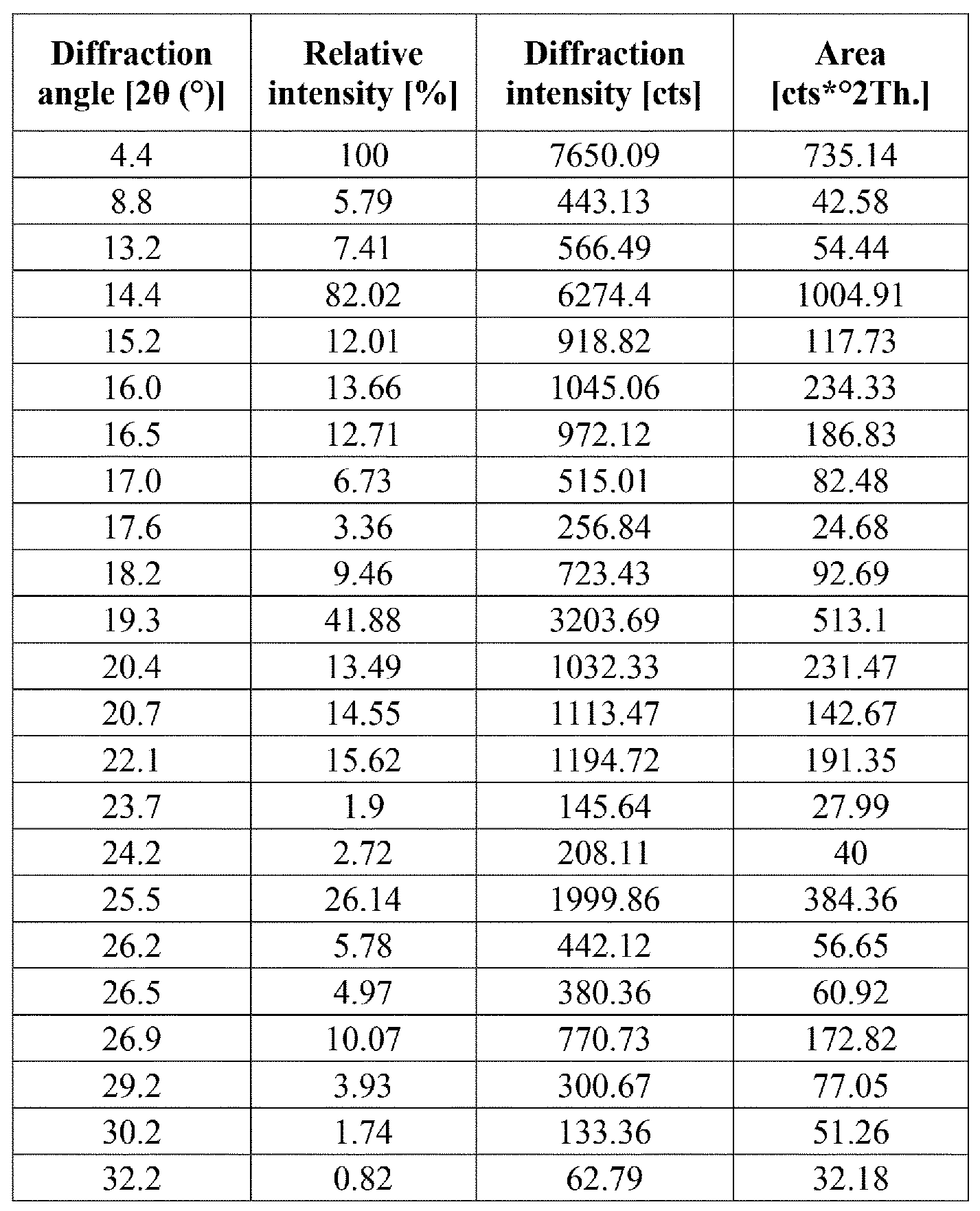
- Form ⁇ has an X-ray powder diffraction pattern comprising three or more characteristic peaks, in terms of 2 ⁇ (°), selected from any of the peaks listed in Table 2 (see Example 1). In yet further embodiments, Form ⁇ has an XRPD pattern substantially as shown in Figure 1.
- Form ⁇ can have a purity level of at least about 50%, at least about 75%, at least about 85%, at least about 90%, or at least about 95%. In some embodiments, Form ⁇ is substantially pure.
- the present invention further provides Form ⁇ prepared by any one of the methods described.
- Compound A in addition to Form ⁇ , Compound A can be prepared and obtained as crystalline Form ⁇ , ⁇ , or ⁇ , which are described in PTL 3. Accordingly, the present invention provides mixtures of two or more of Forms ⁇ , ⁇ , ⁇ , and ⁇ of Compound A.
- the present invention provides a composition of crystalline 3-((3S,4R)-3-methyl-6-(7H-pyrrolo[2,3-d]pyrimidin-4-yl)-1,6-diazaspiro[3.4]octan-1-yl)-3-oxopropanenitrile (Compound A) comprising Form ⁇ and Form ⁇ .
- Form ⁇ is present in an amount of about 1 to about 50% w/w with respect to Form ⁇ .
- Form ⁇ is present in an amount of about 1 to about 20% w/w with respect to Form ⁇ .
- Form ⁇ is present in an amount of about 1 to about 10% w/w with respect to Form ⁇ .
- Form ⁇ is present in an amount of about 1 to about 5% w/w with respect to Form ⁇ .
- the composition comprises Form ⁇ and Form ⁇ and is substantially free of other crystalline forms of Compound A.
- the composition comprising Form ⁇ and Form ⁇ further comprises Form ⁇ .
- the composition comprising Form ⁇ and Form ⁇ further comprises Form ⁇ .
- the composition consists essentially of Form ⁇ and Form ⁇ .
- the present invention provides a composition of crystalline 3-((3S,4R)-3-methyl-6-(7H-pyrrolo[2,3-d]pyrimidin-4-yl)-1,6-diazaspiro[3.4]octan-1-yl)-3-oxopropanenitrile (Compound A) comprising both Form ⁇ and Form ⁇ .
- Form ⁇ is present in an amount of about 1 to about 50% w/w with respect to Form ⁇ .
- Form ⁇ is present in an amount of about 1 to about 20% w/w with respect to Form ⁇ .
- Form ⁇ is present in an amount of about 1 to about 10% w/w with respect to Form ⁇ .
- Form ⁇ is present in an amount of about 1 to about 5% w/w with respect to Form ⁇ .
- the composition comprises Form ⁇ and Form ⁇ and is substantially free of other crystalline forms of Compound A.
- the composition comprising Form ⁇ and Form ⁇ further comprises Form ⁇ .
- the composition comprising Form ⁇ and Form ⁇ further comprises Form ⁇ .
- the composition consists essentially of Form ⁇ and Form ⁇ .
- the present invention further provides compositions containing Form ⁇ and one or more other substances.
- the composition contains at least about 50%, at least about 70%, at least about 80%, at least about 90%, at least about 95%, at least about 97%, at least about 98%, or at least about 99%, by weight of Form ⁇ .
- compositions and Uses The crystalline form of the invention can be prepared as pharmaceutical compositions which comprise a crystalline form of the invention, or a composition of the invention, together with at least one pharmaceutically acceptable carrier (or excipient).
- the pharmaceutical composition is suitable for oral, parenteral, pulmonary, local, or topical administration.
- the pharmaceutical composition is in the form of an oral preparation such as tablet, capsule, granule, powder, lozenge, syrup, emulsion, suspension, or a parenteral preparation such as external preparation, suppository, injection, drop, nasal drug, pulmonary drug.
- the pharmaceutical composition is suitable for topical application, such as an ointment, cream, lotion.
- the pharmaceutical compositions of the present invention may be prepared by mixing a crystalline form of the invention, or a composition of the invention, with at least one or more pharmaceutically acceptable carriers in appropriate amounts according to known methods in the medicinal preparation field.
- the amount of Compound A in the pharmaceutical composition depends on its dosage forms, dosage amounts, etc., and can be, for example, about 0.1 to 100% by weight of the composition.
- the pharmaceutical compositions of the present invention can be, for example, in the form of a tablet, capsule, pill, powder, or ointment.
- the pharmaceutical compositions of the present invention can be in the form of a powder suitable for reconstitution in liquid for intravenous (IV), intramuscular (IM), or subcutaneous (SC) administration.
- the pharmaceutical compositions of the present invention may further comprise a second therapeutic agent.
- the “pharmaceutically acceptable carrier” includes various conventional organic or inorganic carrier substances for pharmaceutical materials, e.g., a diluent, a disintegrant, a binder, a fluidizer, and a lubricant for solid preparations, a solvent, a solubilizing agent, a suspending agent, a tonicity agent, a buffer, and a soothing agent for liquid preparations, and a base, an emulsifier, a humectant, a stabilizer, a stabilizing agent, a dispersant, a plasticizer, a pH regulator, an absorption promoter, a gelling agent, an antiseptic, a filler, a resolvent, a solubilizing agent, and a suspending agent for semisolid preparations.
- an additive including a preserving agent, an antioxidant agent, a colorant, and a sweetening agent may be used, if needed.
- diluents include lactose, sucrose, D-mannitol, D-sorbitol, cornstarch, dextrin, microcrystalline cellulose, crystalline cellulose, carmellose, carmellose calcium, sodium carboxymethyl starch, low-substituted hydroxypropylcellulose, gum arabic, etc.
- disintegrants examples include carmellose, carmellose calcium, carmellose sodium, sodium carboxymethyl starch, croscarmellose sodium, crospovidone, low-substituted hydroxypropylcellulose, hydroxypropylmethylcellulose, crystalline cellulose, etc.
- binders examples include hydroxypropylcellulose, hydroxypropylmethylcellulose, povidone, crystalline cellulose, sucrose, dextrin, starch, gelatin, carmellose sodium, gum arabic, etc.
- fluidizers examples include light anhydrous silicic acid, magnesium stearate, etc.
- lubricants examples include magnesium stearate, calcium stearate, talc, etc.
- Examples of a solvent medium include purified water, ethanol, propylene glycol, macrogol, sesame oil, corn oil, olive oil, etc.
- solubilizing agent examples include propylene glycol, D-mannitol, benzyl benzoate, ethanol, triethanolamine, sodium carbonate, sodium citrate, etc.
- suspending agents examples include benzalkonium chloride, carmellose, hydroxypropylcellulose, propylene glycol, povidone, methylcellulose, glyceryl monostearate, etc.
- tonicity agents examples include glucose, D-sorbitol, sodium chloride, D-mannitol, etc.
- buffers include sodium hydrogen phosphate, sodium acetate, sodium carbonate, sodium citrate, etc.
- Examples of soothing agents include benzyl alcohol, etc.
- preserving agents include ethyl paraoxybenzoate, chlorobutanol, benzyl alcohol, sodium dehydroacetate, sorbic acid, etc.
- antioxidant agents examples include sodium sulfite, ascorbic acid, etc.
- colorants examples include food dye (e.g., Food Red No. 2 or 3, Food Yellow No. 4 or 5, etc.), ⁇ -carotene, etc.
- sweetening agents examples include saccharin sodium, dipotassium glycyrrhizinate, aspartame, etc.
- compositions of the present invention may be orally or parenterally (e.g., locally, rectally, intravenously, etc.) administered to a patient such as a non-human mammal (e.g., mice, rats, hamsters, guinea pigs, rabbits, cats, dogs, pigs, cows, horses, sheep, monkeys, etc.) or to human beings in a therapeutically effective amount for the treatment or prevention of disease.
- a patient such as a non-human mammal (e.g., mice, rats, hamsters, guinea pigs, rabbits, cats, dogs, pigs, cows, horses, sheep, monkeys, etc.) or to human beings in a therapeutically effective amount for the treatment or prevention of disease.
- a patient such as a non-human mammal (e.g., mice, rats, hamsters, guinea pigs, rabbits, cats, dogs, pigs, cows, horses, sheep, monkey
- the dose for orally administering to adult patients can be, for example, in the range from about 1 mg to 1 g per day.
- the dose may be administered at one time or in several divided doses.
- the carrier can comprise white soft paraffin, hard paraffin, squalene, or a combination thereof.
- White soft paraffin, hard paraffin and squalene may be combined at a blend ratio of 70 to 90% by weight, 5 to 10% by weight and 5 to 20% by weight, respectively.
- An example preparation contains Compound A, white soft paraffin, 5 ⁇ 2% by weight of hard paraffin and 10 ⁇ 2% by weight of squalene.
- a topical agent can be applied, for example, by application, inunction or spraying depending on the dosage form, etc.
- An application amount of the topical agent to the affected area can be selected depending on the content of the active ingredient, etc., and the topical agent can be applied, for example, at a time or in several divided amounts per day. In some embodiments, application is once daily or twice daily.
- compositions can be prepared in accordance with acceptable pharmaceutical procedures, such as, for example, those described in Remingtons Pharmaceutical Sciences, 17th edition, ed. Alfonoso R. Gennaro, Mack Publishing Company, Easton, PA (1985), which is incorporated herein by reference in its entirety.
- the crystalline form of the invention can be used in a method for inhibiting a Janus kinase, such as inhibiting JAK3, JAK2, JAK1, or a combination thereof, comprising contacting the crystalline form of the invention with the Janus kinase.
- the Janus kinase is Janus kinase 3 (JAK3), Janus kinase 2 (JAK2), Janus kinase 1 (JAK1), or Tyrosine kinase 2 (TYK2).
- the contacting can occur in vitro or in vivo.
- the crystalline forms or compositions of the invention may be used as the active ingredient in a method of treating or preventing one or more of the following diseases in a patient: (a) organ transplant rejection, or graft versus host reaction after transplantation; (b) autoimmune diseases including rheumatoid arthritis, psoriasis, psoriatic arthritis, multiple sclerosis, ulcerative colitis, Crohn’s disease, systemic lupus erythematosus, type I diabetes, myasthenia gravis, Castleman’s disease, juvenile idiopathic arthritis, dry eye; and (c) allergic diseases including asthma, atopic dermatitis, rhinitis.
- the crystalline forms of the invention may be used as the active ingredient of a therapeutic or preventive agent for rheumatoid arthritis, psoriasis, alopecia areata, dry eye, atopic dermatitis, eczema, hand eczema, or chronic hand eczema.
- the crystalline forms of the invention may be used as the active ingredient of a therapeutic or preventive agent for chronic myeloproliferative diseases including polycythemia vera, primary myelofibrosis, essential thrombocythemia, etc.
- terapéuticaally effective amount of the compound as used herein means an amount sufficient to cure, alleviate or partially arrest the clinical manifestations of a given disease and its complications. An amount adequate to accomplish this is defined as “therapeutically effective amount”. Effective amounts for each purpose will depend on the severity of the disease or injury as well as the weight and general state of the subject.
- treating includes amelioration of a symptom, prevention of an aggravation, maintenance of a remission, prevention of an exacerbation, and prevention of a recurrence.
- the term “treating” may also include the delaying of the progression of the disease, disorder or condition, the amelioration, alleviation or relief of symptoms and complications, and/or cure or elimination of the disease, disorder or condition.
- treating may also mean the management and care of a patient for the purpose of combating the disease, condition or disorder.
- preventing refers to suppressing occurrence of a symptom.
- contacting refers to the bringing together of indicated moieties in an in vitro system or an in vivo system.
- “contacting” a Janus kinase or “contacting” a cell with a crystalline form of Compound A includes the administration of a crystalline form of Compound A to an individual or patient, such as a human.
- the crystalline forms of the invention can be administered to a patient in combination with a therapeutically effective amount of one or more additional therapeutic agents.
- the crystalline form of the invention can be administered concurrently (e.g., together) with the additional therapeutic agent (e.g., in a single fixed-dosage form or in separate dosage forms).
- the crystalline form of the invention and additional therapeutic agent can be administered to a patient sequentially.
- the additional therapeutic agent is administered while the crystalline form of the invention exerts its therapeutic effect, or vice versa.
- Example 1 Preparation and Characterization of Compound A, Form ⁇
- Compound A, crystalline Form ⁇ (2.0 g) was dissolved in 130 mL of chlorobenzene at 130°C.
- a small amount of form ⁇ was added as seed crystals to the mixture at 114°C and the mixture was stirred at 99°C - 114°C for 1 hour.
- the mixture was cooled gradually and stirred for 1 hour below 30°C.
- the precipitated crystals were collected by filtration and washed with 4 mL of chlorobenzene. Wet crystals were dried under reduced pressure at room temperature for 16 hours and 1.91 g of form ⁇ was obtained.
- Compound A hydrate (50 mg) was heated at 175°C for 1 hour under an argon atmosphere. After cooling to room temperature, form ⁇ was obtained as solidified crystals.
- Compound A hydrate can be prepared according to the following procedure. Compound A, crystalline Form ⁇ (2.0 g) was mixed with 40 mL of water. The resultant slurry was stirred for 3 days at room temperature. The insoluble crystals were filtered and washed with 20 mL of water. The wet crystals were dried under reduced pressure at room temperature and 1.89 g of Compound A hydrate was obtained.
- X-Ray Powder Diffraction (XRPD) Form ⁇ and Compound A hydrate were characterized by XRPD using a Spectris Co.,Ltd. PANalytical instrument Model Number: X’Pert Pro under the following data acquisition parameters.
- DSC Differential Scanning Calorimetry
Landscapes
- Chemical & Material Sciences (AREA)
- Organic Chemistry (AREA)
- Health & Medical Sciences (AREA)
- Nuclear Medicine, Radiotherapy & Molecular Imaging (AREA)
- Pharmacology & Pharmacy (AREA)
- Chemical Kinetics & Catalysis (AREA)
- General Chemical & Material Sciences (AREA)
- Medicinal Chemistry (AREA)
- Bioinformatics & Cheminformatics (AREA)
- Engineering & Computer Science (AREA)
- Immunology (AREA)
- Life Sciences & Earth Sciences (AREA)
- Animal Behavior & Ethology (AREA)
- General Health & Medical Sciences (AREA)
- Public Health (AREA)
- Veterinary Medicine (AREA)
- Pharmaceuticals Containing Other Organic And Inorganic Compounds (AREA)
Abstract
The present invention relates to a crystalline form of the Janus kinase (JAK) inhibitor 3-((3S,4R)-3-methyl-6-(7H-pyrrolo[2,3-d]pyrimidin-4-yl)-1,6-diazaspiro[3.4]octan-1-yl)-3-oxopropanenitrile (Compound A), as well as compositions thereof, methods of preparation thereof, and methods of use thereof.
Description
The present invention relates to a crystalline form of the Janus kinase (JAK) inhibitor 3-((3S,4R)-3-methyl-6-(7H-pyrrolo[2,3-d]pyrimidin-4-yl)-1,6-diazaspiro[3.4]octan-1-yl)-3-oxopropanenitrile (Compound A, delgocitinib), as well as compositions thereof, methods of preparation thereof, and methods of use thereof.
Janus kinase (JAK) inhibitors are of current interest for the treatment of various diseases including autoimmune diseases, inflammatory diseases, and cancer. Ruxolitinib has been approved by the U.S. Food & Drug Administration (FDA) for the treatment of primary myelofibrosis and polycythemia vera (PV), and tofacitinib has been approved for the treatment of rheumatoid arthritis. Other JAK inhibitors are in the literature. The compound 3-((3S,4R)-3-methyl-6-(7H-pyrrolo[2,3-d]pyrimidin-4-yl)-1,6-diazaspiro[3.4]octan-1-yl)-3-oxopropanenitrile (Compound A, delgocitinib) (see structure below) is an example of a spirocyclic JAK inhibitor reported in PTL 1 and PTL 2.

Drug compounds like, for example, Compound A are typically combined with other pharmaceutically acceptable ingredients to form compositions suitable for administration to patients. Solid formulations often require that the drug compound have workable solid state characteristics such as stability to heat and humidity, ease of handling, and other characteristics that facilitate preparation of solid dosage forms. Accordingly, there is an ongoing need for solid forms of existing drug molecules. The crystalline form of Compound A described herein is directed toward this end.
[PTL 1] US 2011/0136778 A1
[PTL 2] WO 2017/006968 A1
[PTL 3] US 11,339,181 B2
[PTL 2] WO 2017/006968 A1
[PTL 3] US 11,339,181 B2
The present invention is directed to, inter alia, crystalline Form δ of 3-((3S,4R)-3-methyl-6-(7H-pyrrolo[2,3-d]pyrimidin-4-yl)-1,6-diazaspiro[3.4]octan-1-yl)-3-oxopropanenitrile (Compound A, delgocitinib).
The present invention is further directed to pharmaceutical compositions comprising one or more crystalline forms or compositions of the invention.
The present invention is further directed to methods of preparing the crystalline form of the invention.
The present invention is further directed to methods of inhibition of Janus kinase comprising contacting a crystalline form of the invention with a Janus kinase.
The present invention is further directed to a method of treating or preventing a disease in a patient comprising administering to a patient a therapeutically effective amount of a crystalline form or composition of the invention.
The present invention is further directed to a crystalline form or composition of the invention for use in prophylaxis or therapy.
The present invention is further directed to use of a crystalline form or composition of the invention for the preparation of a medicament for use in therapy or prophylaxis.
The present invention provides, inter alia, a crystalline form of 3-((3S,4R)-3-methyl-6-(7H-pyrrolo[2,3-d]pyrimidin-4-yl)-1,6-diazaspiro[3.4]octan-1-yl)-3-oxopropanenitrile which is an inhibitor of Janus kinase (JAK) and is useful in the treatment of various diseases associated with Janus kinase upregulation or overexpression. In some embodiments, the Janus kinase is Janus kinase 3 (JAK3), Janus kinase 2 (JAK2), Janus kinase 1 (JAK1), or Tyrosine kinase 2 (TYK2). In some embodiments, the crystalline form of the invention inhibits JAK3. In some embodiments, the crystalline form of the invention inhibits JAK2. In some embodiments, the crystalline form of the invention inhibits JAK1. In some embodiments, the crystalline form of the invention inhibits TYK2.
One aspect of the present invention is as follows:
Item 1. A crystalline form of 3-((3S,4R)-3-methyl-6-(7H-pyrrolo[2,3-d]pyrimidin-4-yl)-1,6-diazaspiro[3.4]octan-1-yl)-3-oxopropanenitrile having Form δ.
Item 2. The crystalline form of Item 1, having an X-ray powder diffraction pattern comprising a characteristic peak, in terms of 2θ (°), at about 8.8.
Item 3. The crystalline form of Item 1, having an X-ray powder diffraction pattern comprising two or more characteristic peaks, in terms of 2θ (°), selected from about 8.8, about 18.2, and about 20.4.
Item 4. The crystalline form of Item 1, having an X-ray powder diffraction pattern comprising three or more characteristic peaks, in terms of 2θ (°), selected from about 8.8, about 13.2, about 14.4, about 16.0, about 17.0, about 17.6, about 18.2, about 20.4, about 20.7, about 22.1 and about 25.5.
Item 5. The crystalline form of any one of Items 1 to 4, having a DSC thermogram which is characterized by an endothermic peak at about 204°C.
Item 6. The crystalline form of any one of Items 1 to 5, having a purity of at least about 50%.
Item 7. The crystalline form of any one of Items 1 to 5, having a purity of at least about 75%.
Item 8. The crystalline form of any one of Items 1 to 5, having a purity of at least about 85%.
Item 9. The crystalline form of any one of Items 1 to 5, having a purity of at least about 90%.
Item 10. The crystalline form of any one of Items 1 to 5, having a purity of at least about 95%.
Item 11. A method of preparing the crystalline form of any one of Items 1 to 10, comprising crystallizing 3-((3S,4R)-3-methyl-6-(7H-pyrrolo[2,3-d]pyrimidin-4-yl)-1,6-diazaspiro[3.4]octan-1-yl)-3-oxopropanenitrile from a solvent, wherein the crystallizing is performed at a temperature from 90 to 120°C.
Item 12. The method of Item 11 wherein the solvent comprises chlorobenzene.
Item 13. Crystalline Form δ prepared by the method of Item 11 or 12.
Item 14. A composition of crystalline 3-((3S,4R)-3-methyl-6-(7H-pyrrolo[2,3-d]pyrimidin-4-yl)-1,6-diazaspiro[3.4]octan-1-yl)-3-oxopropanenitrile comprising Form α and Form δ.
Item 15. The composition of Item 14 consisting essentially of Form α and Form δ.
Item 16. The composition of Item 14 or 15, wherein Form δ is present in an amount of about 1 to about 50% w/w with respect to Form α.
Item 17. The composition of Item 14 or 15, wherein Form δ is present in an amount of about 1 to about 20% w/w with respect to Form α.
Item 18. The composition of Item 14 or 15, wherein Form δ is present in an amount of about 1 to about 10% w/w with respect to Form α.
Item 19. The composition of Item 14 or 15, wherein Form δ is present in an amount of about 1 to about 5% w/w with respect to Form α.
Item 20. A pharmaceutical composition comprising the crystalline form of any one of Items 1-10 and 13, or a composition of any one of Items 14 to 19, and a pharmaceutically acceptable carrier.
Item 21. The pharmaceutical composition ofItem 20 further comprising a second therapeutic agent.
Item 22. The pharmaceutical composition ofItem 20 or 21 which is suitable for oral, parenteral, pulmonary, local, or topical administration.
Item 23. The pharmaceutical composition ofItem 20 or 21 which is suitable for topical administration.
Item 24. The pharmaceutical composition ofItem 20 or 21 in the form of a tablet, capsule, pill, powder, or ointment.
Item 25. The pharmaceutical composition of Item 20 or 21 in the form of a powder suitable for reconstitution in liquid for IV, IM, or SC administration.
Item 26. The pharmaceutical composition ofItem 20 or 21, further comprising white soft paraffin, hard paraffin, squalene, or a mixture thereof.
Item 27. A method for inhibiting Janus kinase, comprising contacting the Janus kinase with a crystalline form of any one of Items 1-10 and 13, or a composition of any one of Items 14 to 26.
Item 28. The method of Item 27, wherein the Janus kinase is Janus kinase 3 (JAK3).
Item 29. The method of Item 27, wherein the Janus kinase is Janus kinase 2 (JAK2).
Item 30. The method of Item 27, wherein the Janus kinase is Janus kinase 1 (JAK1).
Item 31. The method of Item 27, wherein the Janus kinase is Tyrosine kinase 2 (TYK2).
Item 32. A method for treating or preventing a disease selected from organ transplant rejection, graft versus host reaction after transplantation, autoimmune disease, allergic diseases, and chronic myeloproliferative disease, comprising administering to a mammal a therapeutically effective amount of the crystalline form of any one of Items 1-10 and 13, or a composition of any one of Items 14 to 26.
Item 33. A method for treating or preventing rheumatoid arthritis, psoriasis, alopecia areata, dry eye, atopic dermatitis, eczema, hand eczema or chronic hand eczema comprising administering to a mammal a therapeutically effective amount of the crystalline form of any one of Items 1-10 and 13, or a composition of any one of Items 14 to 26.
Item 34. The crystalline form of any one of Items 1-10 and 13, or a composition of any one of Items 14 to 26, for use as a pharmaceutically active ingredient.
Item 35. The crystalline form of any one of Items 1-10 and 13, or a composition of any one of Items 14 to 26, for use in the treatment or prevention of organ transplant rejection, graft versus host reaction after transplantation, autoimmune disease, allergic diseases, or chronic myeloproliferative disease.
Item 36. The crystalline form of any one of Items 1-10 and 13, or a composition of any one of Items 14 to 26, for use in the treatment or prevention of rheumatoid arthritis, psoriasis, alopecia areata, dry eye, atopic dermatitis, eczema, hand eczema or chronic hand eczema.
Item 37. Use of the crystalline form of any one of Items 1-10 and 13, or a composition of any one of Items 14 to 26 in the manufacture of a medicament for treating or preventing a disease selected from organ transplant rejection, graft versus host reaction after transplantation, autoimmune disease, allergic diseases, and chronic myeloproliferative disease.
Item 38. Use of the crystalline form of any one of Items 1-10 and 13, or a composition of any one of Items 14 to 26 in the manufacture of a medicament for treating or preventing rheumatoid arthritis, psoriasis, alopecia areata, dry eye, atopic dermatitis, eczema, hand eczema or chronic hand eczema.
Item 1. A crystalline form of 3-((3S,4R)-3-methyl-6-(7H-pyrrolo[2,3-d]pyrimidin-4-yl)-1,6-diazaspiro[3.4]octan-1-yl)-3-oxopropanenitrile having Form δ.
Item 2. The crystalline form of Item 1, having an X-ray powder diffraction pattern comprising a characteristic peak, in terms of 2θ (°), at about 8.8.
Item 3. The crystalline form of Item 1, having an X-ray powder diffraction pattern comprising two or more characteristic peaks, in terms of 2θ (°), selected from about 8.8, about 18.2, and about 20.4.
Item 4. The crystalline form of Item 1, having an X-ray powder diffraction pattern comprising three or more characteristic peaks, in terms of 2θ (°), selected from about 8.8, about 13.2, about 14.4, about 16.0, about 17.0, about 17.6, about 18.2, about 20.4, about 20.7, about 22.1 and about 25.5.
Item 5. The crystalline form of any one of Items 1 to 4, having a DSC thermogram which is characterized by an endothermic peak at about 204°C.
Item 6. The crystalline form of any one of Items 1 to 5, having a purity of at least about 50%.
Item 7. The crystalline form of any one of Items 1 to 5, having a purity of at least about 75%.
Item 8. The crystalline form of any one of Items 1 to 5, having a purity of at least about 85%.
Item 9. The crystalline form of any one of Items 1 to 5, having a purity of at least about 90%.
Item 11. A method of preparing the crystalline form of any one of Items 1 to 10, comprising crystallizing 3-((3S,4R)-3-methyl-6-(7H-pyrrolo[2,3-d]pyrimidin-4-yl)-1,6-diazaspiro[3.4]octan-1-yl)-3-oxopropanenitrile from a solvent, wherein the crystallizing is performed at a temperature from 90 to 120°C.
Item 12. The method of Item 11 wherein the solvent comprises chlorobenzene.
Item 13. Crystalline Form δ prepared by the method of Item 11 or 12.
Item 14. A composition of crystalline 3-((3S,4R)-3-methyl-6-(7H-pyrrolo[2,3-d]pyrimidin-4-yl)-1,6-diazaspiro[3.4]octan-1-yl)-3-oxopropanenitrile comprising Form α and Form δ.
Item 15. The composition of Item 14 consisting essentially of Form α and Form δ.
Item 16. The composition of Item 14 or 15, wherein Form δ is present in an amount of about 1 to about 50% w/w with respect to Form α.
Item 17. The composition of Item 14 or 15, wherein Form δ is present in an amount of about 1 to about 20% w/w with respect to Form α.
Item 18. The composition of Item 14 or 15, wherein Form δ is present in an amount of about 1 to about 10% w/w with respect to Form α.
Item 19. The composition of Item 14 or 15, wherein Form δ is present in an amount of about 1 to about 5% w/w with respect to Form α.
Item 21. The pharmaceutical composition of
Item 22. The pharmaceutical composition of
Item 23. The pharmaceutical composition of
Item 24. The pharmaceutical composition of
Item 26. The pharmaceutical composition of
Item 27. A method for inhibiting Janus kinase, comprising contacting the Janus kinase with a crystalline form of any one of Items 1-10 and 13, or a composition of any one of Items 14 to 26.
Item 28. The method of Item 27, wherein the Janus kinase is Janus kinase 3 (JAK3).
Item 29. The method of Item 27, wherein the Janus kinase is Janus kinase 2 (JAK2).
Item 31. The method of Item 27, wherein the Janus kinase is Tyrosine kinase 2 (TYK2).
Item 32. A method for treating or preventing a disease selected from organ transplant rejection, graft versus host reaction after transplantation, autoimmune disease, allergic diseases, and chronic myeloproliferative disease, comprising administering to a mammal a therapeutically effective amount of the crystalline form of any one of Items 1-10 and 13, or a composition of any one of Items 14 to 26.
Item 33. A method for treating or preventing rheumatoid arthritis, psoriasis, alopecia areata, dry eye, atopic dermatitis, eczema, hand eczema or chronic hand eczema comprising administering to a mammal a therapeutically effective amount of the crystalline form of any one of Items 1-10 and 13, or a composition of any one of Items 14 to 26.
Item 34. The crystalline form of any one of Items 1-10 and 13, or a composition of any one of Items 14 to 26, for use as a pharmaceutically active ingredient.
Item 35. The crystalline form of any one of Items 1-10 and 13, or a composition of any one of Items 14 to 26, for use in the treatment or prevention of organ transplant rejection, graft versus host reaction after transplantation, autoimmune disease, allergic diseases, or chronic myeloproliferative disease.
Item 36. The crystalline form of any one of Items 1-10 and 13, or a composition of any one of Items 14 to 26, for use in the treatment or prevention of rheumatoid arthritis, psoriasis, alopecia areata, dry eye, atopic dermatitis, eczema, hand eczema or chronic hand eczema.
Item 37. Use of the crystalline form of any one of Items 1-10 and 13, or a composition of any one of Items 14 to 26 in the manufacture of a medicament for treating or preventing a disease selected from organ transplant rejection, graft versus host reaction after transplantation, autoimmune disease, allergic diseases, and chronic myeloproliferative disease.
Item 38. Use of the crystalline form of any one of Items 1-10 and 13, or a composition of any one of Items 14 to 26 in the manufacture of a medicament for treating or preventing rheumatoid arthritis, psoriasis, alopecia areata, dry eye, atopic dermatitis, eczema, hand eczema or chronic hand eczema.
As used herein, “crystalline form” is meant to refer to a certain lattice configuration of a crystalline substance. Different crystalline forms of the same substance typically have different crystalline lattices (e.g., unit cells) and different physical properties attributed to their different crystalline lattices, and in some instances, have different water or solvent content. The different crystalline lattices can be identified by solid state characterization methods such as by X-ray powder diffraction (XRPD). Other characterization methods such as differential scanning calorimetry (DSC), thermogravimetric analysis (TGA), dynamic vapor sorption (DVS), solid state NMR and the like further help identify the crystalline form as well as help determine stability and solvent/water content.
Different crystalline forms of a particular substance can include both anhydrous forms of that substance and solvated/hydrated forms of that substance, where each of the anhydrous forms and solvated/hydrated forms are distinguished from each other by different XRPD patterns, thereby signifying different crystalline lattices. In some instances, a single crystalline form (e.g., identified by a unique XRPD pattern) can have variable water or solvent content, where the lattice remains substantially unchanged (as does the XRPD pattern) despite the compositional variation with respect to water and/or solvent.
An XRPD pattern of diffractions (peaks) is typically considered a fingerprint of a particular crystalline form. It is well known that the relative intensities of the XRPD peaks can vary depending on, inter alia, the sample preparation technique, crystal size distribution, the sample mounting procedure, and the particular instrument employed. In some instances, new peaks may be observed or existing peaks may disappear, depending on the type of the machine or the settings (for example, whether a Ni filter is used or not). Moreover, instrument variation and other factors can affect the 2-theta values. Thus, peak assignments, such as those reported herein, can vary by ± 0.2°, ± 0.1° or ± 0.04° (2-theta), and the term “substantially” as used in the context of XRPD herein is meant to encompass the above-mentioned variations.
In the same way, temperature readings in connection with DSC, TGA, or other thermal experiments can vary about ± 3°C depending on the instrument, particular settings, sample preparation, etc. Thus, temperature values, such as those reported herein, can vary by ± 3°C, and a crystalline form reported herein having a DSC thermogram or other thermogram “substantially” as shown in any of the Figures is understood to accommodate such variation.
Form δ
The present invention provides a crystalline form of 3-((3S,4R)-3-methyl-6-(7H-pyrrolo[2,3-d]pyrimidin-4-yl)-1,6-diazaspiro[3.4]octan-1-yl)-3-oxopropanenitrile (Compound A) having Form δ. The crystalline form corresponding to Form δ is believed to be anhydrous as evidenced by, for example, DSC.
The present invention provides a crystalline form of 3-((3S,4R)-3-methyl-6-(7H-pyrrolo[2,3-d]pyrimidin-4-yl)-1,6-diazaspiro[3.4]octan-1-yl)-3-oxopropanenitrile (Compound A) having Form δ. The crystalline form corresponding to Form δ is believed to be anhydrous as evidenced by, for example, DSC.
In some embodiments, Form δ has an X-ray powder diffraction pattern comprising a characteristic peak, in terms of 2θ (°), at about 8.8. In further embodiments, Form δ has an X-ray powder diffraction pattern comprising two or more characteristic peaks, in terms of 2θ (°), selected from about 8.8, about 18.2, and about 20.4. In yet further embodiments, Form δ has an X-ray powder diffraction pattern comprising three or more characteristic peaks, in terms of 2θ (°), selected from about 8.8, about 13.2, about 14.4, about 16.0, about 17.0, about 17.6, about 18.2, about 20.4, about 20.7, about 22.1 and about 25.5. In yet further embodiments, Form δ has an X-ray powder diffraction pattern comprising three or more characteristic peaks, in terms of 2θ (°), selected from any of the peaks listed in Table 2 (see Example 1). In yet further embodiments, Form δ has an XRPD pattern substantially as shown in Figure 1.
In some embodiments, Form δ has a DSC thermogram which is characterized by an endothermic peak at about 204°C. In yet further embodiments, Form δ has a DSC thermogram substantially as shown in Figure 2.
Form δ can have a purity level of at least about 50%, at least about 75%, at least about 85%, at least about 90%, or at least about 95%. In some embodiments, Form δ is substantially pure.
Form δ can be prepared by crystallizing 3-((3S,4R)-3-methyl-6-(7H-pyrrolo[2,3-d]pyrimidin-4-yl)-1,6-diazaspiro[3.4]octan-1-yl)-3-oxopropanenitrile (Compound A) from solvent. For example, Compound A (e.g., as Form α) can be combined with solvent to form a solution or slurry, from which crystals of Form δ are obtained. In some embodiments, the solvent includes an aromatic solvent such as chlorobenzene. In some embodiments, Compound A can be combined with solvent and heated to a temperature from 90 to 120°C, preferably from 95 to 115°C, more preferably 100-110°C. After heating, the mixture can be cooled, such as to about room temperature (e.g., about 23°C), or a temperature between about 20°C and 30°C, to provide the Form δ crystalline product.
The present invention further provides Form δ prepared by any one of the methods described.
Compositions
In addition to Form δ, Compound A can be prepared and obtained as crystalline Form α, β, or γ, which are described in PTL 3. Accordingly, the present invention provides mixtures of two or more of Forms α, β, γ, and δ of Compound A.
In addition to Form δ, Compound A can be prepared and obtained as crystalline Form α, β, or γ, which are described in PTL 3. Accordingly, the present invention provides mixtures of two or more of Forms α, β, γ, and δ of Compound A.
In some embodiments, the present invention provides a composition of crystalline 3-((3S,4R)-3-methyl-6-(7H-pyrrolo[2,3-d]pyrimidin-4-yl)-1,6-diazaspiro[3.4]octan-1-yl)-3-oxopropanenitrile (Compound A) comprising Form α and Form δ. In some embodiments, Form δ is present in an amount of about 1 to about 50% w/w with respect to Form α. In further embodiments, Form δ is present in an amount of about 1 to about 20% w/w with respect to Form α. In yet further embodiments, Form δ is present in an amount of about 1 to about 10% w/w with respect to Form α. And in yet further embodiments, Form δ is present in an amount of about 1 to about 5% w/w with respect to Form α. In some embodiments, the composition comprises Form α and Form δ and is substantially free of other crystalline forms of Compound A. In further embodiments, the composition comprising Form α and Form δ further comprises Form β. In further embodiments, the composition comprising Form α and Form δ further comprises Form γ. In some embodiments, the composition consists essentially of Form α and Form δ.
Additionally, the present invention provides a composition of crystalline 3-((3S,4R)-3-methyl-6-(7H-pyrrolo[2,3-d]pyrimidin-4-yl)-1,6-diazaspiro[3.4]octan-1-yl)-3-oxopropanenitrile (Compound A) comprising both Form β and Form δ. In some embodiments, Form δ is present in an amount of about 1 to about 50% w/w with respect to Form β. In further embodiments, Form δ is present in an amount of about 1 to about 20% w/w with respect to Form β. In yet further embodiments, Form δ is present in an amount of about 1 to about 10% w/w with respect to Form β. And in yet further embodiments, Form δ is present in an amount of about 1 to about 5% w/w with respect to Form β. In some embodiments, the composition comprises Form β and Form δ and is substantially free of other crystalline forms of Compound A. In further embodiments, the composition comprising Form β and Form δ further comprises Form α. In further embodiments, the composition comprising Form β and Form δ further comprises Form γ. In some embodiments, the composition consists essentially of Form β and Form δ.
Additionally, the present invention provides a composition of crystalline 3-((3S,4R)-3-methyl-6-(7H-pyrrolo[2,3-d]pyrimidin-4-yl)-1,6-diazaspiro[3.4]octan-1-yl)-3-oxopropanenitrile (Compound A) comprising both Form γ and Form δ. In some embodiments, Form δ is present in an amount of about 1 to about 50% w/w with respect to Form γ. In further embodiments, Form δ is present in an amount of about 1 to about 20% w/w with respect to Form γ. In yet further embodiments, Form δ is present in an amount of about 1 to about 10% w/w with respect to Form γ. And in yet further embodiments, Form δ is present in an amount of about 1 to about 5% w/w with respect to Form γ. In some embodiments, the composition comprises Form γ and Form δ and is substantially free of other crystalline forms of Compound A. In further embodiments, the composition comprising Form γ and Form δ further comprises Form α. In further embodiments, the composition comprising Form γ and Form δ further comprises Form β. In some embodiments, the composition consists essentially of Form γ and Form δ.
The present invention further provides compositions containing Form δ and one or more other substances. In some embodiments, the composition contains at least about 50%, at least about 70%, at least about 80%, at least about 90%, at least about 95%, at least about 97%, at least about 98%, or at least about 99%, by weight of Form δ.
Pharmaceutical Compositions and Uses
The crystalline form of the invention can be prepared as pharmaceutical compositions which comprise a crystalline form of the invention, or a composition of the invention, together with at least one pharmaceutically acceptable carrier (or excipient). In one embodiment, the pharmaceutical composition is suitable for oral, parenteral, pulmonary, local, or topical administration. In some embodiments, the pharmaceutical composition is in the form of an oral preparation such as tablet, capsule, granule, powder, lozenge, syrup, emulsion, suspension, or a parenteral preparation such as external preparation, suppository, injection, drop, nasal drug, pulmonary drug. In some embodiments, the pharmaceutical composition is suitable for topical application, such as an ointment, cream, lotion.
The crystalline form of the invention can be prepared as pharmaceutical compositions which comprise a crystalline form of the invention, or a composition of the invention, together with at least one pharmaceutically acceptable carrier (or excipient). In one embodiment, the pharmaceutical composition is suitable for oral, parenteral, pulmonary, local, or topical administration. In some embodiments, the pharmaceutical composition is in the form of an oral preparation such as tablet, capsule, granule, powder, lozenge, syrup, emulsion, suspension, or a parenteral preparation such as external preparation, suppository, injection, drop, nasal drug, pulmonary drug. In some embodiments, the pharmaceutical composition is suitable for topical application, such as an ointment, cream, lotion.
The pharmaceutical compositions of the present invention may be prepared by mixing a crystalline form of the invention, or a composition of the invention, with at least one or more pharmaceutically acceptable carriers in appropriate amounts according to known methods in the medicinal preparation field. The amount of Compound A in the pharmaceutical composition depends on its dosage forms, dosage amounts, etc., and can be, for example, about 0.1 to 100% by weight of the composition. The pharmaceutical compositions of the present invention can be, for example, in the form of a tablet, capsule, pill, powder, or ointment. In some embodiments, the pharmaceutical compositions of the present invention can be in the form of a powder suitable for reconstitution in liquid for intravenous (IV), intramuscular (IM), or subcutaneous (SC) administration. Additionally, the pharmaceutical compositions of the present invention may further comprise a second therapeutic agent.
The “pharmaceutically acceptable carrier” includes various conventional organic or inorganic carrier substances for pharmaceutical materials, e.g., a diluent, a disintegrant, a binder, a fluidizer, and a lubricant for solid preparations, a solvent, a solubilizing agent, a suspending agent, a tonicity agent, a buffer, and a soothing agent for liquid preparations, and a base, an emulsifier, a humectant, a stabilizer, a stabilizing agent, a dispersant, a plasticizer, a pH regulator, an absorption promoter, a gelling agent, an antiseptic, a filler, a resolvent, a solubilizing agent, and a suspending agent for semisolid preparations. Further, an additive including a preserving agent, an antioxidant agent, a colorant, and a sweetening agent may be used, if needed.
Examples of diluents include lactose, sucrose, D-mannitol, D-sorbitol, cornstarch, dextrin, microcrystalline cellulose, crystalline cellulose, carmellose, carmellose calcium, sodium carboxymethyl starch, low-substituted hydroxypropylcellulose, gum arabic, etc.
Examples of disintegrants include carmellose, carmellose calcium, carmellose sodium, sodium carboxymethyl starch, croscarmellose sodium, crospovidone, low-substituted hydroxypropylcellulose, hydroxypropylmethylcellulose, crystalline cellulose, etc.
Examples of binders include hydroxypropylcellulose, hydroxypropylmethylcellulose, povidone, crystalline cellulose, sucrose, dextrin, starch, gelatin, carmellose sodium, gum arabic, etc.
Examples of fluidizers include light anhydrous silicic acid, magnesium stearate, etc.
Examples of lubricants include magnesium stearate, calcium stearate, talc, etc.
Examples of a solvent medium include purified water, ethanol, propylene glycol, macrogol, sesame oil, corn oil, olive oil, etc.
Examples of a solubilizing agent include propylene glycol, D-mannitol, benzyl benzoate, ethanol, triethanolamine, sodium carbonate, sodium citrate, etc.
Examples of suspending agents include benzalkonium chloride, carmellose, hydroxypropylcellulose, propylene glycol, povidone, methylcellulose, glyceryl monostearate, etc.
Examples of tonicity agents include glucose, D-sorbitol, sodium chloride, D-mannitol, etc.
Examples of buffers include sodium hydrogen phosphate, sodium acetate, sodium carbonate, sodium citrate, etc.
Examples of soothing agents include benzyl alcohol, etc.
Examples of preserving agents include ethyl paraoxybenzoate, chlorobutanol, benzyl alcohol, sodium dehydroacetate, sorbic acid, etc.
Examples of antioxidant agents include sodium sulfite, ascorbic acid, etc.
Examples of colorants include food dye (e.g., Food Red No. 2 or 3, Food Yellow No. 4 or 5, etc.), β-carotene, etc.
Examples of sweetening agents include saccharin sodium, dipotassium glycyrrhizinate, aspartame, etc.
The pharmaceutical compositions of the present invention may be orally or parenterally (e.g., locally, rectally, intravenously, etc.) administered to a patient such as a non-human mammal (e.g., mice, rats, hamsters, guinea pigs, rabbits, cats, dogs, pigs, cows, horses, sheep, monkeys, etc.) or to human beings in a therapeutically effective amount for the treatment or prevention of disease. The term “mammal” is meant to include both human and non-human mammalian subjects. A dose of the pharmaceutical composition depends on the subjects, diseases, conditions, dosage forms, administration routes. The dose for orally administering to adult patients (body weight: about 60 kg) who are suffering from organ transplant rejection, graft versus host reaction after transplantation, autoimmune disease or allergic disease, etc. can be, for example, in the range from about 1 mg to 1 g per day. The dose may be administered at one time or in several divided doses.
For topical pharmaceutical compositions, the carrier (or diluent) can comprise white soft paraffin, hard paraffin, squalene, or a combination thereof. White soft paraffin, hard paraffin and squalene may be combined at a blend ratio of 70 to 90% by weight, 5 to 10% by weight and 5 to 20% by weight, respectively. An example preparation contains Compound A, white soft paraffin, 5 ± 2% by weight of hard paraffin and 10 ± 2% by weight of squalene.
A topical agent can be applied, for example, by application, inunction or spraying depending on the dosage form, etc. An application amount of the topical agent to the affected area can be selected depending on the content of the active ingredient, etc., and the topical agent can be applied, for example, at a time or in several divided amounts per day. In some embodiments, application is once daily or twice daily.
Pharmaceutical compositions can be prepared in accordance with acceptable pharmaceutical procedures, such as, for example, those described in Remingtons Pharmaceutical Sciences, 17th edition, ed. Alfonoso R. Gennaro, Mack Publishing Company, Easton, PA (1985), which is incorporated herein by reference in its entirety.
The crystalline form of the invention can be used in a method for inhibiting a Janus kinase, such as inhibiting JAK3, JAK2, JAK1, or a combination thereof, comprising contacting the crystalline form of the invention with the Janus kinase. In some embodiments, the Janus kinase is Janus kinase 3 (JAK3), Janus kinase 2 (JAK2), Janus kinase 1 (JAK1), or Tyrosine kinase 2 (TYK2). The contacting can occur in vitro or in vivo.
The crystalline forms or compositions of the invention may be used as the active ingredient in a method of treating or preventing one or more of the following diseases in a patient:
(a) organ transplant rejection, or graft versus host reaction after transplantation;
(b) autoimmune diseases including rheumatoid arthritis, psoriasis, psoriatic arthritis, multiple sclerosis, ulcerative colitis, Crohn’s disease, systemic lupus erythematosus, type I diabetes, myasthenia gravis, Castleman’s disease, juvenile idiopathic arthritis, dry eye; and
(c) allergic diseases including asthma, atopic dermatitis, rhinitis.
In some embodiments, the crystalline forms of the invention may be used as the active ingredient of a therapeutic or preventive agent for rheumatoid arthritis, psoriasis, alopecia areata, dry eye, atopic dermatitis, eczema, hand eczema, or chronic hand eczema.
The crystalline forms of the invention may be used as the active ingredient of a therapeutic or preventive agent for chronic myeloproliferative diseases including polycythemia vera, primary myelofibrosis, essential thrombocythemia, etc.
The term “therapeutically effective amount” of the compound as used herein means an amount sufficient to cure, alleviate or partially arrest the clinical manifestations of a given disease and its complications. An amount adequate to accomplish this is defined as “therapeutically effective amount”. Effective amounts for each purpose will depend on the severity of the disease or injury as well as the weight and general state of the subject.
The term “treating” as used herein includes amelioration of a symptom, prevention of an aggravation, maintenance of a remission, prevention of an exacerbation, and prevention of a recurrence. The term “treating” may also include the delaying of the progression of the disease, disorder or condition, the amelioration, alleviation or relief of symptoms and complications, and/or cure or elimination of the disease, disorder or condition.
The term “treating” may also mean the management and care of a patient for the purpose of combating the disease, condition or disorder.
The term “preventing” refers to suppressing occurrence of a symptom.
As used herein, the term “contacting” refers to the bringing together of indicated moieties in an in vitro system or an in vivo system. For example, “contacting” a Janus kinase or “contacting” a cell with a crystalline form of Compound A includes the administration of a crystalline form of Compound A to an individual or patient, such as a human.
As used herein, the term “individual” or “patient,” used interchangeably, refers to mammals, and particularly humans.
Combination Therapies
The crystalline forms of the invention can be administered to a patient in combination with a therapeutically effective amount of one or more additional therapeutic agents. The crystalline form of the invention can be administered concurrently (e.g., together) with the additional therapeutic agent (e.g., in a single fixed-dosage form or in separate dosage forms). Similarly, the crystalline form of the invention and additional therapeutic agent can be administered to a patient sequentially. For example, the additional therapeutic agent is administered while the crystalline form of the invention exerts its therapeutic effect, or vice versa.
The crystalline forms of the invention can be administered to a patient in combination with a therapeutically effective amount of one or more additional therapeutic agents. The crystalline form of the invention can be administered concurrently (e.g., together) with the additional therapeutic agent (e.g., in a single fixed-dosage form or in separate dosage forms). Similarly, the crystalline form of the invention and additional therapeutic agent can be administered to a patient sequentially. For example, the additional therapeutic agent is administered while the crystalline form of the invention exerts its therapeutic effect, or vice versa.
In order that the invention disclosed herein may be more efficiently understood, examples are provided below. It should be understood that these examples are for illustrative purposes only and are not to be construed as limiting the invention in any manner.
General Experimental
Compound A was prepared by the synthetic method as described in PTL 2 as well as in PTL 3. Crystalline form α, form β, and form γ can be prepared according to the methods described in PTL 3.
Compound A was prepared by the synthetic method as described in PTL 2 as well as in PTL 3. Crystalline form α, form β, and form γ can be prepared according to the methods described in PTL 3.
Example 1
Preparation and Characterization of Compound A, Form δ
Compound A, crystalline Form α (2.0 g) was dissolved in 130 mL of chlorobenzene at 130°C. A small amount of form δ was added as seed crystals to the mixture at 114°C and the mixture was stirred at 99°C - 114°C for 1 hour. The mixture was cooled gradually and stirred for 1 hour below 30°C. The precipitated crystals were collected by filtration and washed with 4 mL of chlorobenzene. Wet crystals were dried under reduced pressure at room temperature for 16 hours and 1.91 g of form δ was obtained.
Alternative preparation of Compound A, Form δ
Compound A hydrate (50 mg) was heated at 175°C for 1 hour under an argon atmosphere. After cooling to room temperature, form δ was obtained as solidified crystals.
Compound A hydrate can be prepared according to the following procedure. Compound A, crystalline Form α (2.0 g) was mixed with 40 mL of water. The resultant slurry was stirred for 3 days at room temperature. The insoluble crystals were filtered and washed with 20 mL of water. The wet crystals were dried under reduced pressure at room temperature and 1.89 g of Compound A hydrate was obtained.
X-Ray Powder Diffraction (XRPD)
Form δ and Compound A hydrate were characterized by XRPD using a Spectris Co.,Ltd. PANalytical instrument Model Number: X’Pert Pro under the following data acquisition parameters.
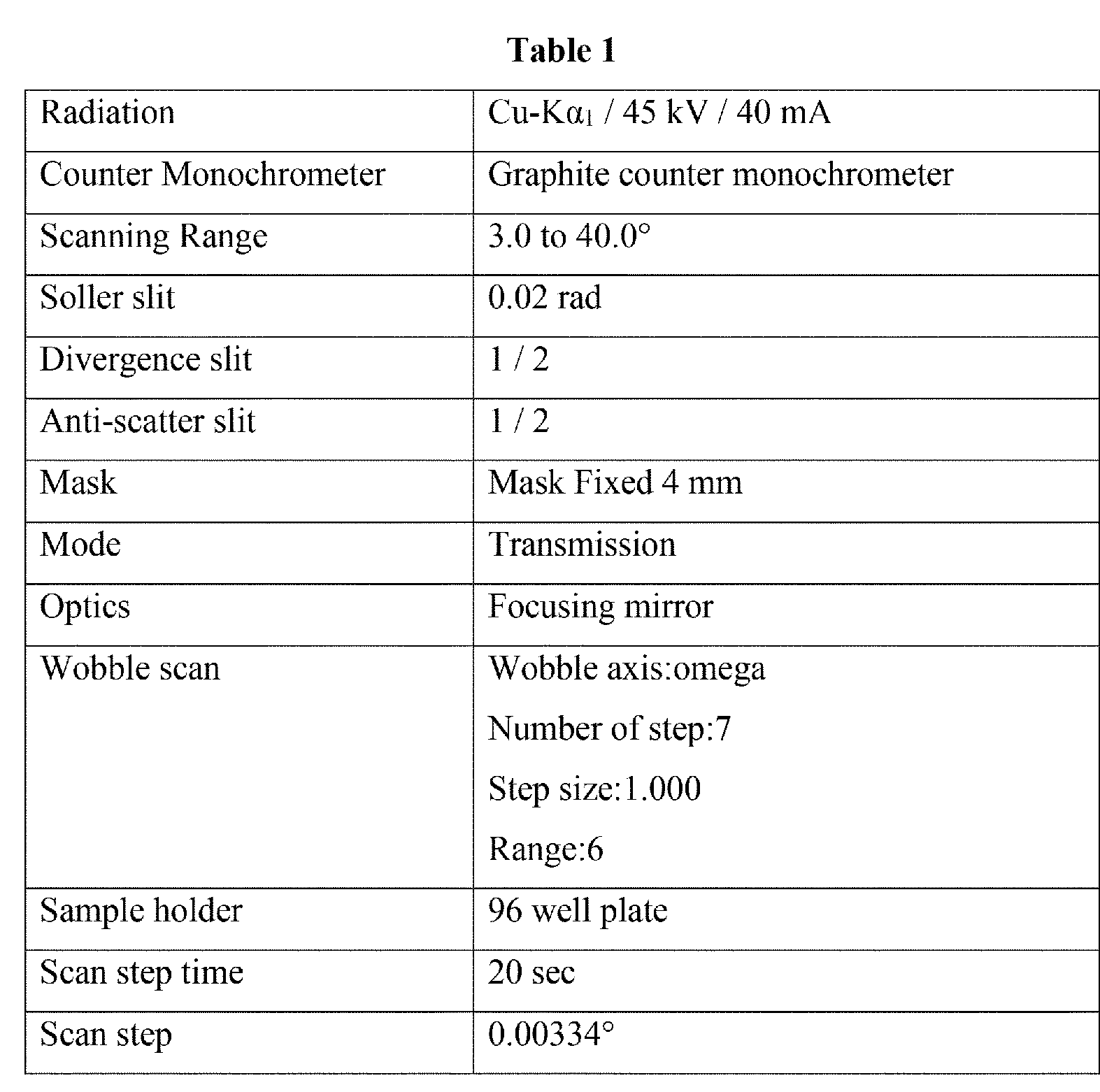
Form δ and Compound A hydrate were characterized by XRPD using a Spectris Co.,Ltd. PANalytical instrument Model Number: X’Pert Pro under the following data acquisition parameters.
The XRPD pattern for Form δ is shown in Figure 1 and the corresponding data is provided below in Table 2.
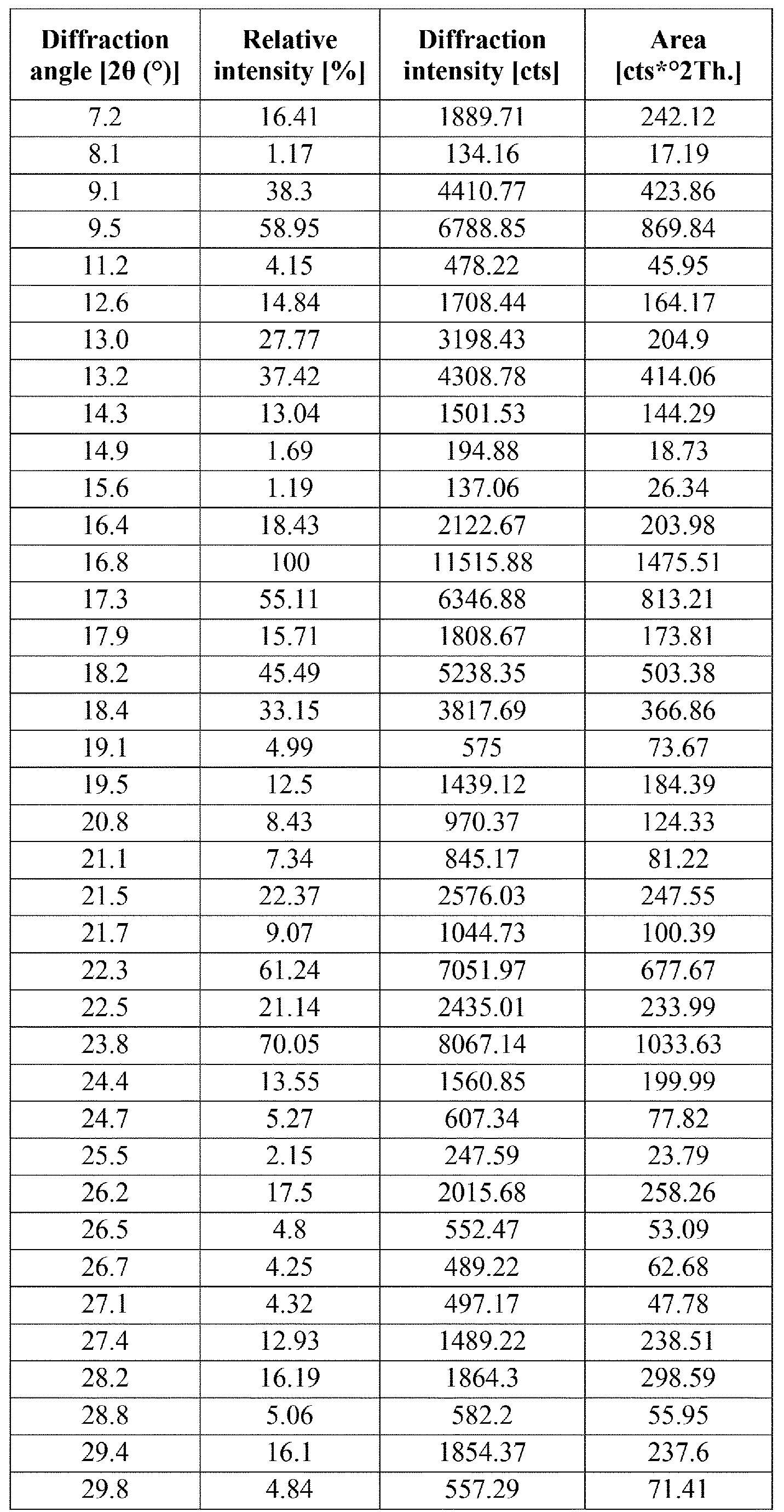
The XRPD pattern data for Compound A hydrate is shown in Figure 3 and the corresponding data is provided below in Table 3.

Differential Scanning Calorimetry (DSC)
DSC data was collected on a TA Instruments Model Number Q2000 instrument with the following parameters:
Sample size: approximately, 3 mg
Pan: sealed aluminum pan
Range: 25-230°C
Heating Rate: 2°C/min under nitrogen gas flow.
The DSC thermogram for Form δ is provided in Figure 2, showing a single endothermic event having a peak of 204°C and onset of 202°C.
Various modifications of the invention, in addition to those described herein, will be apparent to those skilled in the art from the foregoing description. Such modifications are also intended to fall within the scope of the appended claims. Each reference, including all patent, patent applications, and publications, cited in the present application is incorporated herein by reference in its entirety.
Claims (36)
- A crystalline form of 3-((3S,4R)-3-methyl-6-(7H-pyrrolo[2,3-d]pyrimidin-4-yl)-1,6-diazaspiro[3.4]octan-1-yl)-3-oxopropanenitrile having Form δ.
- The crystalline form of claim 1, having an X-ray powder diffraction pattern comprising a characteristic peak, in terms of 2θ (°), at about 8.8.
- The crystalline form of claim 1, having an X-ray powder diffraction pattern comprising two or more characteristic peaks, in terms of 2θ (°), selected from about 8.8, about 18.2, and about 20.4.
- The crystalline form of claim 1, having an X-ray powder diffraction pattern comprising three or more characteristic peaks, in terms of 2θ (°), selected from about 8.8, about 13.2, about 14.4, about 16.0, about 17.0, about 17.6, about 18.2, about 20.4, about 20.7, about 22.1 and about 25.5.
- The crystalline form of any one of claims 1 to 4, having a DSC thermogram which is characterized by an endothermic peak at about 204°C.
- The crystalline form of any one of claims 1 to 5, having a purity of at least about 50%.
- The crystalline form of any one of claims 1 to 5, having a purity of at least about 75%.
- The crystalline form of any one of claims 1 to 5, having a purity of at least about 85%.
- The crystalline form of any one of claims 1 to 5, having a purity of at least about 90%.
- The crystalline form of any one of claims 1 to 5, having a purity of at least about 95%.
- A method of preparing the crystalline form of any one of claims 1 to 10, comprising crystallizing 3-((3S,4R)-3-methyl-6-(7H-pyrrolo[2,3-d]pyrimidin-4-yl)-1,6-diazaspiro[3.4]octan-1-yl)-3-oxopropanenitrile from a solvent, wherein the crystallizing is performed at a temperature from 90 to 120°C.
- The method of claim 11 wherein the solvent comprises chlorobenzene.
- Crystalline Form δ prepared by the method of claim 11 or 12.
- A composition of crystalline 3-((3S,4R)-3-methyl-6-(7H-pyrrolo[2,3-d]pyrimidin-4-yl)-1,6-diazaspiro[3.4]octan-1-yl)-3-oxopropanenitrile comprising Form α and Form δ.
- The composition of claim 14 consisting essentially of Form α and Form δ.
- The composition of claim 14 or 15, wherein Form δ is present in an amount of about 1 to about 50% w/w with respect to Form α.
- The composition of claim 14 or 15, wherein Form δ is present in an amount of about 1 to about 20% w/w with respect to Form α.
- The composition of claim 14 or 15, wherein Form δ is present in an amount of about 1 to about 10% w/w with respect to Form α.
- The composition of claim 14 or 15, wherein Form δ is present in an amount of about 1 to about 5% w/w with respect to Form α.
- A pharmaceutical composition comprising the crystalline form of any one of claims 1-10 and 13, or a composition of any one of claims 14 to 19, and a pharmaceutically acceptable carrier.
- The pharmaceutical composition of claim 20 further comprising a second therapeutic agent.
- The pharmaceutical composition of claim 20 or 21 which is suitable for oral, parenteral, pulmonary, local, or topical administration.
- The pharmaceutical composition of claim 20 or 21 which is suitable for topical administration.
- The pharmaceutical composition of claim 20 or 21 in the form of a tablet, capsule, pill, powder, or ointment.
- The pharmaceutical composition of claim 20 or 21 in the form of a powder suitable for reconstitution in liquid for IV, IM, or SC administration.
- The pharmaceutical composition of claim 20 or 21, further comprising white soft paraffin, hard paraffin, squalene, or a mixture thereof.
- A method for inhibiting Janus kinase, comprising contacting the Janus kinase with a crystalline form of any one of claims 1-10 and 13, or a composition of any one of claims 14 to 26.
- The method of claim 27, wherein the Janus kinase is Janus kinase 3 (JAK3).
- The method of claim 27, wherein the Janus kinase is Janus kinase 2 (JAK2).
- The method of claim 27, wherein the Janus kinase is Janus kinase 1 (JAK1).
- The method of claim 27, wherein the Janus kinase is Tyrosine kinase 2 (TYK2).
- A method for treating or preventing a disease selected from organ transplant rejection, graft versus host reaction after transplantation, autoimmune disease, allergic diseases, and chronic myeloproliferative disease, comprising administering to a mammal a therapeutically effective amount of the crystalline form of any one of claims 1-10 and 13, or a composition of any one of claims 14 to 26.
- A method for treating or preventing rheumatoid arthritis, psoriasis, alopecia areata, dry eye, atopic dermatitis, eczema, hand eczema or chronic hand eczema comprising administering to a mammal a therapeutically effective amount of the crystalline form of any one of claims 1-10 and 13, or a composition of any one of claims 14 to 26.
- The crystalline form of any one of claims 1-10 and 13, or a composition of any one of claims 14 to 26, for use as a pharmaceutically active ingredient.
- The crystalline form of any one of claims 1-10 and 13, or a composition of any one of claims 14 to 26, for use in the treatment or prevention of organ transplant rejection, graft versus host reaction after transplantation, autoimmune disease, allergic diseases, or chronic myeloproliferative disease.
- The crystalline form of any one of claims 1-10 and 13, or a composition of any one of claims 14 to 26, for use in the treatment or prevention of rheumatoid arthritis, psoriasis, alopecia areata, dry eye, atopic dermatitis, eczema, hand eczema or chronic hand eczema.
Applications Claiming Priority (2)
| Application Number | Priority Date | Filing Date | Title |
|---|---|---|---|
| US202363462405P | 2023-04-27 | 2023-04-27 | |
| US63/462,405 | 2023-04-27 |
Publications (1)
| Publication Number | Publication Date |
|---|---|
| WO2024225445A1 true WO2024225445A1 (en) | 2024-10-31 |
Family
ID=91129431
Family Applications (1)
| Application Number | Title | Priority Date | Filing Date |
|---|---|---|---|
| PCT/JP2024/016473 Ceased WO2024225445A1 (en) | 2023-04-27 | 2024-04-26 | Crystalline form of delgocitinib |
Country Status (1)
| Country | Link |
|---|---|
| WO (1) | WO2024225445A1 (en) |
Citations (3)
| Publication number | Priority date | Publication date | Assignee | Title |
|---|---|---|---|---|
| US20110136778A1 (en) | 2009-07-31 | 2011-06-09 | Japan Tobacco Inc. | Nitrogen-containing spirocyclic compounds and pharmaceutical uses thereof |
| WO2017006968A1 (en) | 2015-07-07 | 2017-01-12 | 日本たばこ産業株式会社 | Method for producing 7h-pyrrolo[2, 3-d]pyrimidine derivative and intermediate thereof |
| WO2018117153A1 (en) * | 2016-12-21 | 2018-06-28 | Japan Tobacco Inc. | Crystalline forms of a janus kinase inhibitor |
-
2024
- 2024-04-26 WO PCT/JP2024/016473 patent/WO2024225445A1/en not_active Ceased
Patent Citations (3)
| Publication number | Priority date | Publication date | Assignee | Title |
|---|---|---|---|---|
| US20110136778A1 (en) | 2009-07-31 | 2011-06-09 | Japan Tobacco Inc. | Nitrogen-containing spirocyclic compounds and pharmaceutical uses thereof |
| WO2017006968A1 (en) | 2015-07-07 | 2017-01-12 | 日本たばこ産業株式会社 | Method for producing 7h-pyrrolo[2, 3-d]pyrimidine derivative and intermediate thereof |
| WO2018117153A1 (en) * | 2016-12-21 | 2018-06-28 | Japan Tobacco Inc. | Crystalline forms of a janus kinase inhibitor |
Non-Patent Citations (2)
| Title |
|---|
| "Remingtons Pharma ceutical Sciences", 1985, MACK PUBLISHING COMPANY |
| MINO R CAIRA ED - MONTCHAMP JEAN-LUC: "CRYSTALLINE POLYMORPHISM OF ORGANIC COMPOUNDS", TOPICS IN CURRENT CHEMISTRY; [TOPICS IN CURRENT CHEMISTRY], SPRINGER, BERLIN, DE, vol. 198, 1 January 1998 (1998-01-01), pages 163 - 208, XP001156954, ISSN: 0340-1022, [retrieved on 19990226], DOI: 10.1007/3-540-69178-2_5 * |
Similar Documents
| Publication | Publication Date | Title |
|---|---|---|
| TWI808108B (en) | Crystalline forms of n-(4-(4-(cyclopropylmethyl)piperazine-1-carbonyl)phenyl)quinoline-8-sulfonamide | |
| JP2023533040A (en) | Salts and Forms of WEE1 Inhibitors | |
| JP7710223B2 (en) | Substituted pyrrolotriazine compounds and pharmaceutical compositions thereof and their uses | |
| AU2008215384B2 (en) | Crystalline forms of thiazolidinedione compound and its manufacturing method | |
| JP2024161449A (en) | Crystalline forms of Janus kinase inhibitors | |
| KR20210038848A (en) | Pharmaceutically acceptable salts of sepiapterin | |
| WO2023041055A1 (en) | Kif18a inhibitor | |
| CN115385893A (en) | With pyridine acyl piperidine 5-HT 1F Compositions and methods relating to agonists | |
| CN114262322A (en) | Apoptosis inhibitor and preparation method and application thereof | |
| KR20250153212A (en) | Polymorphs as protein kinase Mek inhibitors, and methods for preparing and using the same | |
| CN118439992A (en) | Solid forms of 2- (5- (4- (2-morpholinoethoxy) phenyl) pyridin-2-yl) -N-benzyl acetamide | |
| KR101208956B1 (en) | Erlotinib dichloroacetate and anti-cancer agent comprising the same | |
| EP3315493B1 (en) | Phenyl amino pyrimidine compound or polymorph of salt thereof | |
| WO2021047528A1 (en) | Maleate of nicotinyl alcohol ether derivative, crystal form thereof, and application thereof | |
| EP4554946A1 (en) | Salts of n-[4-(4-[[2-(dimethylamino)ethyl]amino]-3-methyl-1h-pyrazolo[3,4-d]pyrimidin-6-yl)-2-fluorophenyl]-2,5-difluorobenzenesulfonamide and crystalline forms thereof | |
| EP3912971B1 (en) | Cholinesterase inhibitor polymorph and application thereof | |
| CA3101143A1 (en) | Salt form | |
| EP4553078A1 (en) | 5h-pyrrolo[2,3-d]pyrimidin-6(7h)-one and crystal of salt thereof | |
| EP3967692A1 (en) | Crystal polymorphism of pi3k inhibitor and method for preparing same | |
| AU2024320769A1 (en) | Crystal form vi of acrylamide compound, and preparation method therefor and use thereof | |
| NZ531073A (en) | 1,2-dihydro-2-oxo-1,8-naphthyridine derivative | |
| CN114685512A (en) | Ibutotinib-nicotinic acid eutectic crystal and preparation method thereof | |
| JPWO2003087091A1 (en) | New crystals of quinoxalinedione derivative anhydride | |
| HK40076742A (en) | Novel salt of terphenyl compound | |
| BR112020003865A2 (en) | pharmaceutical compositions comprising sepiapterin and their uses |
Legal Events
| Date | Code | Title | Description |
|---|---|---|---|
| 121 | Ep: the epo has been informed by wipo that ep was designated in this application |
Ref document number: 24726768 Country of ref document: EP Kind code of ref document: A1 |
|
| NENP | Non-entry into the national phase |
Ref country code: DE |
|
| 122 | Ep: pct application non-entry in european phase |
Ref document number: 24726768 Country of ref document: EP Kind code of ref document: A1 |