WO2024224474A1 - アルコール検出装置 - Google Patents
アルコール検出装置 Download PDFInfo
- Publication number
- WO2024224474A1 WO2024224474A1 PCT/JP2023/016253 JP2023016253W WO2024224474A1 WO 2024224474 A1 WO2024224474 A1 WO 2024224474A1 JP 2023016253 W JP2023016253 W JP 2023016253W WO 2024224474 A1 WO2024224474 A1 WO 2024224474A1
- Authority
- WO
- WIPO (PCT)
- Prior art keywords
- alcohol
- alcohol sensor
- doors
- state
- vehicle
- Prior art date
- Legal status (The legal status is an assumption and is not a legal conclusion. Google has not performed a legal analysis and makes no representation as to the accuracy of the status listed.)
- Ceased
Links
Images





Classifications
-
- B—PERFORMING OPERATIONS; TRANSPORTING
- B60—VEHICLES IN GENERAL
- B60K—ARRANGEMENT OR MOUNTING OF PROPULSION UNITS OR OF TRANSMISSIONS IN VEHICLES; ARRANGEMENT OR MOUNTING OF PLURAL DIVERSE PRIME-MOVERS IN VEHICLES; AUXILIARY DRIVES FOR VEHICLES; INSTRUMENTATION OR DASHBOARDS FOR VEHICLES; ARRANGEMENTS IN CONNECTION WITH COOLING, AIR INTAKE, GAS EXHAUST OR FUEL SUPPLY OF PROPULSION UNITS IN VEHICLES
- B60K28/00—Safety devices for propulsion-unit control, specially adapted for, or arranged in, vehicles, e.g. preventing fuel supply or ignition in the event of potentially dangerous conditions
- B60K28/02—Safety devices for propulsion-unit control, specially adapted for, or arranged in, vehicles, e.g. preventing fuel supply or ignition in the event of potentially dangerous conditions responsive to conditions relating to the driver
- B60K28/06—Safety devices for propulsion-unit control, specially adapted for, or arranged in, vehicles, e.g. preventing fuel supply or ignition in the event of potentially dangerous conditions responsive to conditions relating to the driver responsive to incapacity of driver
-
- G—PHYSICS
- G01—MEASURING; TESTING
- G01N—INVESTIGATING OR ANALYSING MATERIALS BY DETERMINING THEIR CHEMICAL OR PHYSICAL PROPERTIES
- G01N1/00—Sampling; Preparing specimens for investigation
- G01N1/02—Devices for withdrawing samples
Definitions
- This disclosure relates to an alcohol detection device capable of detecting alcohol contained in a vehicle occupant's breath.
- Patent Document 1 discloses a device that, if the driver's door is open, prompts the driver to close the door to perform an alcohol detection.
- the alcohol detection device includes an alcohol sensor and a control circuit.
- the alcohol sensor is capable of detecting alcohol components contained in the breath of a vehicle occupant.
- the control circuit is capable of controlling the alcohol sensor not to perform an initialization operation while one or more of the multiple doors are open based on the detection result of a door sensor capable of detecting the open/closed state of multiple doors in the vehicle, and is capable of controlling the alcohol sensor to perform an initialization operation after all of the multiple doors are closed.
- the alcohol detection device includes an alcohol sensor and a control circuit.
- the alcohol sensor is capable of detecting alcohol components contained in the breath of a vehicle occupant.
- the control circuit is capable of controlling the alcohol sensor not to perform an initialization operation while one or more of the multiple doors are in an unlocked state based on the detection result of a door lock sensor capable of detecting the lock state of multiple doors in the vehicle, and is capable of controlling the alcohol sensor to perform an initialization operation after all of the multiple doors are locked.
- FIG. 1 is an explanatory diagram illustrating an example configuration of a vehicle according to an embodiment of the present disclosure.
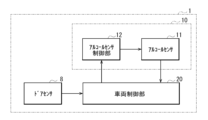
- FIG. 2 is a block diagram showing an example of the configuration of the vehicle shown in FIG.
- FIG. 3 is an explanatory diagram showing an example of the configuration of a passenger compartment in the vehicle shown in FIG.
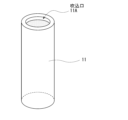
- FIG. 4 is an explanatory diagram showing an example of the configuration of the alcohol sensor shown in FIG.
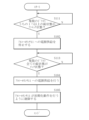
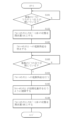
- FIG. 5 is a flowchart showing an example of the operation of the alcohol detection device shown in FIG.
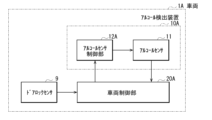
- FIG. 6 is a block diagram showing an example of the configuration of a vehicle according to a modified example.
- FIG. 7 is a flowchart showing an example of the operation of the alcohol detection device shown in FIG. FIG.
- FIG. 8A is an explanatory diagram showing one operation state of an alcohol sensor according to another modified example.
- FIG. 8B is an explanatory diagram showing another operating state of the alcohol sensor according to the other modified example.
- FIG. 9 is a flowchart showing an example of an operation of the alcohol detection device according to another modified example.
- FIG. 1 and 2 show an example of the configuration of a vehicle 1 provided with an alcohol detection device according to an embodiment.
- the vehicle 1 includes an alcohol detection device 10, a door sensor 8, and a vehicle control unit 20.
- the alcohol detection device 10 has an alcohol sensor 11 and an alcohol sensor control unit 12.
- the alcohol sensor 11 is configured to detect the alcohol components contained in the driver's breath. For example, the alcohol sensor 11 detects the alcohol components contained in the driver's breath by the driver blowing into an inlet 11A (described later) of the alcohol sensor 11.
- the alcohol sensor 11 is made ready for use by performing an initialization operation that adjusts the so-called zero point. In other words, the alcohol sensor 11 is calibrated by this initialization operation, and becomes able to detect alcohol components with high detection accuracy.
- the initialization operation of the alcohol sensor 11 is controlled by the alcohol sensor control unit 12.
- the alcohol sensor control unit 12 is configured to control the operation of the alcohol sensor 11 based on instructions from the vehicle control unit 20. Specifically, the alcohol sensor control unit 12 controls the operation of the alcohol sensor 11 based on the open/closed state of each of the multiple doors in the vehicle 1, as described below.
- the door sensor 8 is configured to detect the open/closed state of each of the multiple doors in the vehicle 1.
- the multiple doors include, for example, the driver's door, the passenger door, the left and right rear doors, and the rear gate.
- the door sensor 8 is configured to supply the detection results regarding the open/closed state of each of the multiple doors to the vehicle control unit 20.
- the vehicle control unit 20 includes, for example, an ECU (Electronic Control Unit) and is configured to control the vehicle 1.
- the vehicle control unit 20 supplies information about the open/closed state of each of the multiple doors to the alcohol sensor control unit 12 based on the detection result of the door sensor 8.
- the vehicle control unit 20 also drives the vehicle 1 when the amount of alcohol contained in the driver's breath is equal to or less than a predetermined amount based on the detection result of the alcohol sensor 11.
- the vehicle control unit 20 also prevents the vehicle 1 from driving when the amount of alcohol contained in the driver's breath is greater than a predetermined amount.
- the vehicle control unit 20 prevents the start of a power source such as an engine or a motor when the amount of alcohol contained in the driver's breath is greater than a predetermined amount, for example.
- FIG. 3 shows an example of the configuration of the passenger compartment of vehicle 1.
- This vehicle 1 is a vehicle in which the driver's seat is on the right side. However, this is not limited to this, and the driver's seat may be on the left side.
- Vehicle 1 is equipped with a door 31, a door mirror 33, a front window 34, a side window 35, a front pillar 36, and a center pillar 37.
- Door 31 is a door on the side of vehicle 1, and is used by the driver to get in and out of the vehicle.
- alcohol sensor 11 is attached to the inner panel of door 31 that faces the passenger compartment.
- FIG. 4 shows an example of the configuration of the alcohol sensor 11.
- the alcohol sensor 11 has an inlet 11A.
- the alcohol sensor 11 detects the alcohol content contained in the breath of a driver seated in the driver's seat by blowing into the inlet 11A.
- the door mirror 33 is provided on the outer surface of the door 31.
- the front window 34 is provided at the front of the passenger compartment of the vehicle 1.
- the side window 35 is provided on the door 31.
- the front pillar 36 supports the roof of the vehicle 1 at the end of the front window 34.
- the center pillar 37 supports the roof of the vehicle 1 near the center of the side of the vehicle 1.
- the alcohol sensor control unit 12 controls the operation of the alcohol sensor 11 so that the alcohol sensor 11 does not perform an initialization operation, for example, during a period when one or more of the multiple doors of the vehicle 1 are open.
- the alcohol sensor control unit 12 then controls the operation of the alcohol sensor 11 so that the alcohol sensor 11 performs an initialization operation, for example, after all of the multiple doors of the vehicle 1 are closed.
- This allows the alcohol detection device 10 to perform an initialization operation when the door is closed, without being affected by, for example, impacts associated with opening and closing the door, wind pressure, or changes in air pressure inside the vehicle.
- the alcohol detection device 10 is able to improve detection accuracy.
- the alcohol sensor 11 corresponds to a specific example of an "alcohol sensor” in one embodiment of the present disclosure.
- the alcohol sensor control unit 12 corresponds to a specific example of a "control circuit” in one embodiment of the present disclosure.
- the vehicle 1 corresponds to a specific example of a "vehicle” in one embodiment of the present disclosure.
- the alcohol sensor 11 detects the alcohol components contained in the breath of the driver.
- the alcohol sensor control unit 12 controls the operation of the alcohol sensor 11 based on an instruction from the vehicle control unit 20.
- the door sensor 8 detects the open/closed state of each of the multiple doors in the vehicle 1.
- the vehicle control unit 20 supplies information on the open/closed state of each of the multiple doors to the alcohol sensor control unit 12 based on the detection result of the door sensor 8.
- the vehicle control unit 20 allows the vehicle 1 to run when the amount of alcohol components contained in the breath of the driver is equal to or less than a predetermined amount, and prevents the vehicle 1 from running when the amount of alcohol components contained in the breath of the driver is greater than the predetermined amount.
- (Detailed operation) 5 shows an example of an operation of the alcohol detection device 10.
- Information on the open/closed state of each of the doors of the vehicle 1 is supplied to the alcohol detection device 10 from the vehicle control unit 20.
- the alcohol detection device 10 controls the operation of the alcohol sensor 11 based on this information. This operation will be described in detail below.
- the alcohol sensor control unit 12 checks whether one or more of the multiple doors are open based on the information on the open/closed state of each of the multiple doors supplied from the vehicle control unit 20 (step S101). If all of the multiple doors are closed ("N" in step S101), the alcohol sensor control unit 12 repeats the process of step S101 until one or more of the multiple doors is open.
- step S101 If at least one of the multiple doors is open in step S101 ("Y" in step S101), the alcohol sensor control unit 12 stops the power supply to the alcohol sensor 11 (step S102). In this way, the operation mode of the alcohol detection device 10 becomes a standby mode in which it waits for the detection of alcohol components.
- the alcohol sensor control unit 12 checks whether all of the multiple doors are closed based on the information on the open/closed state of each of the multiple doors supplied from the vehicle control unit 20 (step S103). If one or more of the multiple doors are still open ("N" in step S103), the alcohol sensor control unit 12 repeats the process of step S103 until all of the multiple doors are closed.
- step S103 If all of the doors are closed in step S103 ("Y" in step S103), the alcohol sensor control unit 12 supplies power to the alcohol sensor 11 (step S104).
- the alcohol sensor control unit 12 controls the operation of the alcohol sensor 11 so that the alcohol sensor 11 performs an initialization operation (step S105).
- the alcohol sensor 11 is calibrated by this initialization operation, and can detect alcohol components with high detection accuracy. In this way, the operation mode of the alcohol detection device 10 becomes a detection mode capable of detecting alcohol components.
- the vehicle control unit 20 allows the vehicle 1 to run if the amount of alcohol content in the driver's breath is equal to or less than a predetermined amount, and prevents the vehicle 1 from running if the amount of alcohol content in the driver's breath is greater than the predetermined amount.
- the alcohol sensor control unit 12 may, for example, supply power to the alcohol sensor 11 during the period until the vehicle 1 starts to drive, or may supply power to the alcohol sensor 11 continuously while the vehicle 1 is driving.
- the vehicle control unit 20 may, for example, when the amount of alcohol contained in the driver's breath while driving reaches or exceeds a predetermined amount, give a predetermined warning to the driver and then stop the power source such as the engine or motor. In this way, the alcohol detection device 10 can stop the vehicle 1 from driving even if, for example, the driver drinks alcohol after starting to drive.
- the alcohol detection device 10 is provided with an alcohol sensor 11 capable of detecting alcohol components contained in the breath of an occupant of the vehicle 1, and an alcohol sensor control unit 12 that can control the alcohol sensor 11 not to perform an initialization operation while one or more of the multiple doors are open based on the detection results of a door sensor 8 capable of detecting the open/closed state of the multiple doors of the vehicle 1, and can control the alcohol sensor 11 to perform an initialization operation after all of the multiple doors are closed.
- the initialization operation when the alcohol sensor 11 performs an initialization operation with the door open, the initialization operation may not be performed correctly depending on environmental conditions such as wind. Also, for example, when the alcohol sensor 11 performs an initialization operation when the door is opened or closed, the initialization operation may not be performed correctly due to, for example, the impact, wind pressure, or change in air pressure inside the vehicle that accompanies the opening and closing of the door. If the initialization operation is not performed correctly in this way, the calibration of the alcohol sensor 11 may be insufficient, and the detection accuracy of the alcohol detection device 10 may decrease.
- the power supply to the alcohol sensor 11 is stopped during a period when one or more of the multiple doors are open, so that the alcohol sensor 11 does not perform an initialization operation. Then, after all of the multiple doors are closed, power is supplied to the alcohol sensor 11, and the alcohol sensor 11 performs an initialization operation.
- the alcohol detection device 10 for example, the alcohol sensor 11 performs an initialization operation after all of the multiple doors are closed, so that the initialization operation can be performed at a timing when the environment is stable after, for example, impacts, wind pressure, and changes in air pressure inside the vehicle occur due to the opening and closing of the doors.
- the alcohol detection device 10 properly calibrates the alcohol sensor 11, so that the detection accuracy of alcohol components can be improved.
- the alcohol sensor control unit 12 can stop the power supply to the alcohol sensor 11 during a period when one or more of the multiple doors are open, and can supply power to the alcohol sensor 11 during a period when all of the multiple doors are closed.
- the alcohol sensor 11 can be prevented from operating during a period when one or more of the multiple doors are open, so that the possibility of the detection accuracy being reduced due to environmental factors such as wind can be reduced.
- power is supplied to the alcohol sensor 11 and the alcohol sensor 11 performs an initialization operation, so that, for example, the initialization operation can be performed immediately before the driver blows into the air inlet 11A.
- the initialization operation and the alcohol component detection operation can be performed during a short period when environmental conditions such as temperature are kept constant after all of the multiple doors are closed, so that the detection accuracy of the alcohol components can be improved.
- an alcohol sensor capable of detecting alcohol components contained in the breath of a vehicle occupant
- an alcohol sensor control unit that can control the alcohol sensor not to perform an initialization operation during a period when one or more of the multiple doors are open based on the detection results of a door sensor capable of detecting the open/closed state of multiple doors in the vehicle, and can control the alcohol sensor 11 to perform an initialization operation after all of the multiple doors are closed, thereby improving the detection accuracy of alcohol components.
- the alcohol sensor control unit is capable of stopping the power supply to the alcohol sensor when one or more of the multiple doors are open, and is capable of supplying power to the alcohol sensor when all of the multiple doors are closed, thereby improving the accuracy of alcohol component detection.
- the operation of the alcohol sensor 11 is controlled based on the open/closed state of the door, but this is not limited to this. Instead, for example, the operation of the alcohol sensor 11 may be controlled based on the lock state of the door.
- the vehicle 1A according to this modification will be described in detail below.
- FIG. 6 shows an example of the configuration of a vehicle 1A.
- the vehicle 1A is equipped with an alcohol detection device 10A, a door lock sensor 9, and a vehicle control unit 20A.
- the alcohol detection device 10A has an alcohol sensor control unit 12A.
- the alcohol sensor control unit 12A is configured to control the operation of the alcohol sensor 11 based on instructions from the vehicle control unit 20A.
- the alcohol sensor control unit 12A is configured to control the operation of the alcohol sensor 11 based on the lock state of each of the multiple doors in the vehicle 1.
- the door lock sensor 9 is configured to detect the lock state of each of the multiple doors in the vehicle 1.
- the door lock sensor 9 is configured to supply the detection results regarding the lock state of each of the multiple doors to the vehicle control unit 20A.
- the vehicle control unit 20A is configured to control the vehicle 1A.
- the vehicle control unit 20A supplies information about the lock state of each of the multiple doors to the alcohol sensor control unit 12A based on the detection result of the door lock sensor 9. Furthermore, based on the detection result of the alcohol sensor 11, the vehicle control unit 20A allows the vehicle 1 to run when the amount of alcohol components contained in the driver's breath is equal to or less than a predetermined amount, and does not allow the vehicle 1 to run when the amount of alcohol components contained in the driver's breath is greater than the predetermined amount.
- FIG. 7 shows an example of the operation of the alcohol detection device 10A.
- the alcohol sensor control unit 12A checks whether one or more of the multiple doors are unlocked based on the information on the lock status of each of the multiple doors supplied from the vehicle control unit 20A (step S111). If all of the multiple doors are locked ("N" in step S111), the alcohol sensor control unit 12A repeats the process of step S111 until one or more of the multiple doors are unlocked.
- step S111 If at least one of the doors is unlocked in step S111 ("Y" in step S111), the alcohol sensor control unit 12A stops the power supply to the alcohol sensor 11 (step S102). In this way, the operation mode of the alcohol detection device 10A becomes a standby mode in which it waits for the detection of alcohol components.
- the alcohol sensor control unit 12A checks whether all of the multiple doors are locked based on the information on the lock status of each of the multiple doors supplied from the vehicle control unit 20A (step S113). If one or more of the multiple doors are still unlocked ("N" in step S113), the alcohol sensor control unit 12A repeats the process of step S113 until all of the multiple doors are locked.
- step S113 If all of the lock states of the multiple doors are locked in step S113 ("Y" in step S113), the alcohol sensor control unit 12A supplies power to the alcohol sensor 11 (step S104).
- the alcohol sensor control unit 12A controls the operation of the alcohol sensor 11 so that the alcohol sensor 11 performs an initialization operation (step S105).
- the alcohol sensor 11 is calibrated by this initialization operation, and is able to detect alcohol components with high detection accuracy. In this way, the operation mode of the alcohol detection device 10 becomes a detection mode capable of detecting alcohol components.
- the alcohol detection device 10A includes an alcohol sensor 11 capable of detecting alcohol components contained in the breath of an occupant of the vehicle 1A, and an alcohol sensor control unit 12A capable of controlling the alcohol sensor 11 not to perform an initialization operation while one or more of the multiple doors are in an unlocked state based on the detection result of a door lock sensor 9 capable of detecting the lock state of the multiple doors of the vehicle 1A, and capable of controlling the alcohol sensor to perform an initialization operation after all of the multiple doors are locked.
- the alcohol sensor 11 performs an initialization operation after all of the multiple doors are locked, so that the initialization operation can be performed at a timing when the environment is stable after, for example, impacts, wind pressure, and changes in air pressure inside the vehicle occur due to the opening and closing of the doors, and therefore the detection accuracy of alcohol components can be improved.
- the alcohol sensor 11 detects the alcohol component contained in the breath of the driver blown into the blowing port 11A.
- the alcohol sensor 11 may have a cover 11B capable of covering the blowing port 11A.
- the cover 11B can be in either a closed state (closed state SA) in which the blowing port 11A is covered, or an open state (open state SB) in which the blowing port 11A is exposed, as shown in Fig. 8B.
- the alcohol sensor 11 can detect, for example, the alcohol component contained in the breath of the driver blown into the blowing port 11A.
- the blowing port 11A of the alcohol sensor 11 is not exposed, so that, for example, the possibility of rain entering the inside of the alcohol sensor 11 can be reduced.
- the state of the cover 11B is set, for example, based on an instruction from the alcohol sensor control unit 12.
- FIG. 9 shows an example of the operation of the alcohol detection device 10 according to this modified example.
- the alcohol sensor control unit 12 in this modified example checks whether one or more of the multiple doors are open based on the information on the open/closed state of each of the multiple doors supplied from the vehicle control unit 20 (step S101). If all of the multiple doors are closed ("N" in step S101), the alcohol sensor control unit 12 repeats the process of step S101 until one or more of the multiple doors is open.
- step S101 If at least one of the multiple doors is open in step S101 ("Y" in step S101), the alcohol sensor control unit 12 in this modified example sets the cover 11B of the alcohol sensor 11 to the closed state SA (step S122).
- the alcohol sensor control unit 12 stops the power supply to the alcohol sensor 11 (step S102).
- the operation mode of the alcohol detection device 10A becomes a standby mode in which it waits for the detection of alcohol components.
- the alcohol sensor 11 can be protected, for example, to prevent rain from entering the inside of the alcohol sensor 11.
- the alcohol sensor control unit 12 checks whether all of the multiple doors are closed based on the information on the open/closed state of each of the multiple doors supplied from the vehicle control unit 20 (step S103). If one or more of the multiple doors are still open ("N" in step S103), the alcohol sensor control unit 12 repeats the process of step S103 until all of the multiple doors are closed.
- step S103 If all of the doors are closed in step S103 ("Y" in step S103), the alcohol sensor control unit 12 supplies power to the alcohol sensor 11 (step S104).
- the alcohol sensor control unit 12 controls the operation of the alcohol sensor 11 so that the alcohol sensor 11 performs an initialization operation (step S105).
- the alcohol sensor 11 is calibrated by this initialization operation, and can detect alcohol components with high detection accuracy.
- the alcohol sensor control unit 12 sets the cover 11B of the alcohol sensor 11 to the open state SB (step S126). In this way, the operation mode of the alcohol detection device 10 becomes a detection mode capable of detecting alcohol components.
- air inlet 11A corresponds to a specific example of an "air inlet” in one embodiment of the present disclosure.
- Cover 11B corresponds to a specific example of a "cover” in one embodiment of the present disclosure.
- Closed state SA corresponds to a specific example of a "first state” in one embodiment of the present disclosure.
- Open state SB corresponds to a specific example of a "second state” in one embodiment of the present disclosure.
- the alcohol sensor 11 has an inlet 11A through which the occupant can blow breath, and a cover 11B that is provided on the inlet 11A and can be in a closed state SA that covers the inlet 11A or an open state SB that exposes the inlet 11A.
- the alcohol sensor control unit 12 is capable of setting the state of the cover to the closed state SA during a period when one or more of the multiple doors are open, and is capable of setting the state of the cover to the open state SB during a period when all of the multiple doors are closed. This makes it possible to reduce the possibility of rain getting inside the alcohol sensor 11, for example, and to protect the alcohol sensor 11.
- the alcohol sensor 11 is attached to the inner panel of the door 31, but the present invention is not limited to this. Instead of this, for example, the alcohol sensor 11 may be attached inside the door 31. Specifically, for example, the alcohol sensor 11 may be attached in a space between an outer panel facing the outside of the vehicle 1 and an inner panel facing the passenger compartment of the vehicle 1. Also, for example, the alcohol sensor 11 may be made removable from the inner panel of the door 31. Also, for example, the alcohol sensor 11 may be attached to another part inside the vehicle 1.
- the present technology is applied to a vehicle with the driver's seat on the right side, but the present technology is not limited to this, and may instead be applied to a vehicle with the driver's seat on the left side, for example.
- An alcohol sensor capable of detecting an alcohol component contained in the breath of a vehicle occupant; and a control circuit capable of controlling the alcohol sensor not to perform an initialization operation during a period when one or more of the plurality of doors are open based on a detection result of a door sensor capable of detecting the open/closed state of a plurality of doors in the vehicle, and capable of controlling the alcohol sensor to perform the initialization operation after all of the plurality of doors are closed.
- the alcohol sensor includes: An inlet through which the occupant can blow the exhaled air; a cover that is provided on the air inlet and can be in a first state that covers the air inlet or a second state that exposes the air inlet;
- the control circuit includes: The cover may be in the first state during a period in which one or more of the plurality of doors is in an open state;
- the control circuit includes: During a period in which one or more of the plurality of doors are open, power supply to the alcohol sensor may be stopped; The alcohol detection device according to (1) or (2), wherein power can be supplied to the alcohol sensor after all of the plurality of doors are closed.
- An alcohol sensor capable of detecting an alcohol component contained in the breath of a vehicle occupant; and a control circuit capable of controlling the alcohol sensor not to perform an initialization operation during a period in which one or more of the plurality of doors are in an unlocked state based on a detection result of a door lock sensor capable of detecting the lock state of a plurality of doors in the vehicle, and capable of controlling the alcohol sensor to perform the initialization operation after all of the plurality of doors are locked.
- the alcohol sensor includes: An inlet through which the occupant can blow the exhaled air; a cover that is provided on the air inlet and can be in a first state that covers the air inlet or a second state that exposes the air inlet;
- the control circuit includes: The cover may be in the first state during a period in which the lock state of one or more of the plurality of doors is in an unlocked state,
- the alcohol detection device according to (4), wherein the cover is capable of being put in the second state during a period in which all of the lock states of the plurality of doors are in the locked state.
- the control circuit includes: During a period in which one or more of the plurality of doors are in an unlocked state, power supply to the alcohol sensor may be stopped, The alcohol detection device according to (4) or (5), wherein power can be supplied to the alcohol sensor after all of the lock states of the plurality of doors are set to the locked state.
- the alcohol sensor control unit 12 shown in FIG. 2 can be implemented by a circuit including at least one semiconductor integrated circuit, such as at least one processor (e.g., a central processing unit (CPU)), at least one application specific integrated circuit (ASIC) and/or at least one field programmable gate array (FPGA).
- the at least one processor can be configured to execute all or part of the various functions in the alcohol sensor control unit 12 shown in FIG. 2 by reading instructions from at least one non-transitory and tangible computer-readable medium.
- Such media can take various forms, including, but not limited to, various magnetic media such as hard disks, various optical media such as CDs or DVDs, and various semiconductor memories (i.e., semiconductor circuits) such as volatile or non-volatile memories.
- Volatile memories can include DRAM and SRAM.
- Non-volatile memories can include ROM and NVRAM.
- the ASIC is an integrated circuit (IC) specialized to execute all or part of the various functions in the alcohol sensor control unit 12 shown in FIG. 2.
- the FPGA is an integrated circuit designed to be configurable after manufacture to execute all or part of the various functions of the alcohol sensor control unit 12 shown in FIG. 2.
Landscapes
- Chemical & Material Sciences (AREA)
- Engineering & Computer Science (AREA)
- Immunology (AREA)
- Pathology (AREA)
- Analytical Chemistry (AREA)
- Biochemistry (AREA)
- General Health & Medical Sciences (AREA)
- General Physics & Mathematics (AREA)
- Physics & Mathematics (AREA)
- Life Sciences & Earth Sciences (AREA)
- Health & Medical Sciences (AREA)
- Combustion & Propulsion (AREA)
- Transportation (AREA)
- Mechanical Engineering (AREA)
- Auxiliary Drives, Propulsion Controls, And Safety Devices (AREA)
- Investigating Or Analyzing Materials By The Use Of Fluid Adsorption Or Reactions (AREA)
- Investigating Or Analysing Biological Materials (AREA)
Priority Applications (3)
| Application Number | Priority Date | Filing Date | Title |
|---|---|---|---|
| PCT/JP2023/016253 WO2024224474A1 (ja) | 2023-04-25 | 2023-04-25 | アルコール検出装置 |
| DE112023006270.6T DE112023006270T5 (de) | 2023-04-25 | 2023-04-25 | Alkoholdetektionsvorrichtung |
| JP2025516347A JPWO2024224474A1 (https=) | 2023-04-25 | 2023-04-25 |
Applications Claiming Priority (1)
| Application Number | Priority Date | Filing Date | Title |
|---|---|---|---|
| PCT/JP2023/016253 WO2024224474A1 (ja) | 2023-04-25 | 2023-04-25 | アルコール検出装置 |
Publications (1)
| Publication Number | Publication Date |
|---|---|
| WO2024224474A1 true WO2024224474A1 (ja) | 2024-10-31 |
Family
ID=93256068
Family Applications (1)
| Application Number | Title | Priority Date | Filing Date |
|---|---|---|---|
| PCT/JP2023/016253 Ceased WO2024224474A1 (ja) | 2023-04-25 | 2023-04-25 | アルコール検出装置 |
Country Status (3)
| Country | Link |
|---|---|
| JP (1) | JPWO2024224474A1 (https=) |
| DE (1) | DE112023006270T5 (https=) |
| WO (1) | WO2024224474A1 (https=) |
Citations (6)
| Publication number | Priority date | Publication date | Assignee | Title |
|---|---|---|---|---|
| JPS49127332A (https=) * | 1973-04-09 | 1974-12-05 | ||
| JPH0418341U (https=) * | 1990-06-02 | 1992-02-17 | ||
| JP2010047055A (ja) * | 2008-08-19 | 2010-03-04 | Denso Corp | 車両用アルコール検知システム |
| JP2010167826A (ja) * | 2009-01-20 | 2010-08-05 | Fujitsu Ten Ltd | 車両の遠隔装置 |
| JP2011240854A (ja) * | 2010-05-19 | 2011-12-01 | Toyota Motor Corp | 車両用制御システム |
| CN106405123A (zh) * | 2016-11-22 | 2017-02-15 | 上海谘微信息技术发展有限公司 | 一种酒精计量口哨 |
Family Cites Families (1)
| Publication number | Priority date | Publication date | Assignee | Title |
|---|---|---|---|---|
| JP2009258872A (ja) | 2008-04-15 | 2009-11-05 | Denso Corp | 飲酒運転防止装置 |
-
2023
- 2023-04-25 DE DE112023006270.6T patent/DE112023006270T5/de active Pending
- 2023-04-25 JP JP2025516347A patent/JPWO2024224474A1/ja active Pending
- 2023-04-25 WO PCT/JP2023/016253 patent/WO2024224474A1/ja not_active Ceased
Patent Citations (6)
| Publication number | Priority date | Publication date | Assignee | Title |
|---|---|---|---|---|
| JPS49127332A (https=) * | 1973-04-09 | 1974-12-05 | ||
| JPH0418341U (https=) * | 1990-06-02 | 1992-02-17 | ||
| JP2010047055A (ja) * | 2008-08-19 | 2010-03-04 | Denso Corp | 車両用アルコール検知システム |
| JP2010167826A (ja) * | 2009-01-20 | 2010-08-05 | Fujitsu Ten Ltd | 車両の遠隔装置 |
| JP2011240854A (ja) * | 2010-05-19 | 2011-12-01 | Toyota Motor Corp | 車両用制御システム |
| CN106405123A (zh) * | 2016-11-22 | 2017-02-15 | 上海谘微信息技术发展有限公司 | 一种酒精计量口哨 |
Also Published As
| Publication number | Publication date |
|---|---|
| DE112023006270T5 (de) | 2026-04-23 |
| JPWO2024224474A1 (https=) | 2024-10-31 |
Similar Documents
| Publication | Publication Date | Title |
|---|---|---|
| JP5454909B2 (ja) | 可動部材の駆動装置 | |
| EP1844964B1 (en) | Glas temperature detecting system, window fog detecting system, air-conditioning system for vehicles, and window fog detecting method | |
| US10906375B2 (en) | Method for controlling a ventilation system for a vehicle interior | |
| EP2202107B1 (en) | Air conditioning system for vehicle | |
| CN112389359B (zh) | 检测车辆中的乘客的设备和方法 | |
| US11639203B2 (en) | Airflow adjusting apparatus | |
| CN109664734B (zh) | 车门装置 | |
| JPH1134637A (ja) | 車両用空調装置 | |
| US12024232B2 (en) | Variable vehicle fender garnish structure and control method thereof | |
| WO2024224474A1 (ja) | アルコール検出装置 | |
| CN111630243A (zh) | 用于运行机动车的车身盖的驱动系统的方法 | |
| US20240361298A1 (en) | Vehicle | |
| KR20110132924A (ko) | 차량의 액티브 에어 플랩 제어 시스템 및 방법 | |
| US12545275B2 (en) | Vehicle | |
| JP6086377B2 (ja) | 車両用ドア制御装置 | |
| JP7102896B2 (ja) | 車両用空調装置およびその制御方法 | |
| JP7428466B2 (ja) | 車両用空調制御装置 | |
| CN116018626A (zh) | 用于车辆的内部空间监控的系统和方法 | |
| US20250368102A1 (en) | Vehicle control apparatus and method thereof | |
| JP2004276883A (ja) | 車両用空調装置 | |
| JP7845809B2 (ja) | 空調制御装置 | |
| JP2007063893A (ja) | 車両用ドア制御装置 | |
| KR20050105305A (ko) | 자동차용 아웃사이드미러의 도어개방시 후방시계확보 방법 | |
| JP2008143336A (ja) | 車両騒音制御装置および伝達特性同定方法 | |
| KR20220125492A (ko) | 차량의 음주측정 시스템 및 이의 제어 방법 |
Legal Events
| Date | Code | Title | Description |
|---|---|---|---|
| 121 | Ep: the epo has been informed by wipo that ep was designated in this application |
Ref document number: 23935255 Country of ref document: EP Kind code of ref document: A1 |
|
| WWE | Wipo information: entry into national phase |
Ref document number: 2025516347 Country of ref document: JP |
|
| WWE | Wipo information: entry into national phase |
Ref document number: 112023006270 Country of ref document: DE |