WO2024204715A1 - バクテリオファージ、組成物、及びサルモネラ属細菌の防除方法 - Google Patents
バクテリオファージ、組成物、及びサルモネラ属細菌の防除方法 Download PDFInfo
- Publication number
- WO2024204715A1 WO2024204715A1 PCT/JP2024/013049 JP2024013049W WO2024204715A1 WO 2024204715 A1 WO2024204715 A1 WO 2024204715A1 JP 2024013049 W JP2024013049 W JP 2024013049W WO 2024204715 A1 WO2024204715 A1 WO 2024204715A1
- Authority
- WO
- WIPO (PCT)
- Prior art keywords
- phage
- seq
- bacteriophage
- sequence
- base sequence
- Prior art date
- Legal status (The legal status is an assumption and is not a legal conclusion. Google has not performed a legal analysis and makes no representation as to the accuracy of the status listed.)
- Ceased
Links
Images


Classifications
-
- C—CHEMISTRY; METALLURGY
- C12—BIOCHEMISTRY; BEER; SPIRITS; WINE; VINEGAR; MICROBIOLOGY; ENZYMOLOGY; MUTATION OR GENETIC ENGINEERING
- C12N—MICROORGANISMS OR ENZYMES; COMPOSITIONS THEREOF; PROPAGATING, PRESERVING, OR MAINTAINING MICROORGANISMS; MUTATION OR GENETIC ENGINEERING; CULTURE MEDIA
- C12N7/00—Viruses; Bacteriophages; Compositions thereof; Preparation or purification thereof
-
- A—HUMAN NECESSITIES
- A01—AGRICULTURE; FORESTRY; ANIMAL HUSBANDRY; HUNTING; TRAPPING; FISHING
- A01N—PRESERVATION OF BODIES OF HUMANS OR ANIMALS OR PLANTS OR PARTS THEREOF; BIOCIDES, e.g. AS DISINFECTANTS, AS PESTICIDES OR AS HERBICIDES; PEST REPELLANTS OR ATTRACTANTS; PLANT GROWTH REGULATORS
- A01N63/00—Biocides, pest repellants or attractants, or plant growth regulators containing microorganisms, viruses, microbial fungi, animals or substances produced by, or obtained from, microorganisms, viruses, microbial fungi or animals, e.g. enzymes or fermentates
- A01N63/40—Viruses, e.g. bacteriophages
-
- A—HUMAN NECESSITIES
- A01—AGRICULTURE; FORESTRY; ANIMAL HUSBANDRY; HUNTING; TRAPPING; FISHING
- A01P—BIOCIDAL, PEST REPELLANT, PEST ATTRACTANT OR PLANT GROWTH REGULATORY ACTIVITY OF CHEMICAL COMPOUNDS OR PREPARATIONS
- A01P1/00—Disinfectants; Antimicrobial compounds or mixtures thereof
-
- A—HUMAN NECESSITIES
- A23—FOODS OR FOODSTUFFS; TREATMENT THEREOF, NOT COVERED BY OTHER CLASSES
- A23K—FODDER
- A23K10/00—Animal feeding-stuffs
- A23K10/10—Animal feeding-stuffs obtained by microbiological or biochemical processes
- A23K10/16—Addition of microorganisms or extracts thereof, e.g. single-cell proteins, to feeding-stuff compositions
-
- A—HUMAN NECESSITIES
- A23—FOODS OR FOODSTUFFS; TREATMENT THEREOF, NOT COVERED BY OTHER CLASSES
- A23L—FOODS, FOODSTUFFS OR NON-ALCOHOLIC BEVERAGES, NOT OTHERWISE PROVIDED FOR; PREPARATION OR TREATMENT THEREOF
- A23L33/00—Modifying nutritive qualities of foods; Dietetic products; Preparation or treatment thereof
- A23L33/10—Modifying nutritive qualities of foods; Dietetic products; Preparation or treatment thereof using additives
-
- A—HUMAN NECESSITIES
- A61—MEDICAL OR VETERINARY SCIENCE; HYGIENE
- A61K—PREPARATIONS FOR MEDICAL, DENTAL OR TOILETRY PURPOSES
- A61K35/00—Medicinal preparations containing materials or reaction products thereof with undetermined constitution
- A61K35/66—Microorganisms or materials therefrom
- A61K35/76—Viruses; Subviral particles; Bacteriophages
-
- A—HUMAN NECESSITIES
- A61—MEDICAL OR VETERINARY SCIENCE; HYGIENE
- A61P—SPECIFIC THERAPEUTIC ACTIVITY OF CHEMICAL COMPOUNDS OR MEDICINAL PREPARATIONS
- A61P31/00—Antiinfectives, i.e. antibiotics, antiseptics, chemotherapeutics
- A61P31/04—Antibacterial agents
-
- A—HUMAN NECESSITIES
- A61—MEDICAL OR VETERINARY SCIENCE; HYGIENE
- A61P—SPECIFIC THERAPEUTIC ACTIVITY OF CHEMICAL COMPOUNDS OR MEDICINAL PREPARATIONS
- A61P43/00—Drugs for specific purposes, not provided for in groups A61P1/00-A61P41/00
-
- C—CHEMISTRY; METALLURGY
- C07—ORGANIC CHEMISTRY
- C07K—PEPTIDES
- C07K14/00—Peptides having more than 20 amino acids; Gastrins; Somatostatins; Melanotropins; Derivatives thereof
- C07K14/005—Peptides having more than 20 amino acids; Gastrins; Somatostatins; Melanotropins; Derivatives thereof from viruses
-
- C—CHEMISTRY; METALLURGY
- C12—BIOCHEMISTRY; BEER; SPIRITS; WINE; VINEGAR; MICROBIOLOGY; ENZYMOLOGY; MUTATION OR GENETIC ENGINEERING
- C12Q—MEASURING OR TESTING PROCESSES INVOLVING ENZYMES, NUCLEIC ACIDS OR MICROORGANISMS; COMPOSITIONS OR TEST PAPERS THEREFOR; PROCESSES OF PREPARING SUCH COMPOSITIONS; CONDITION-RESPONSIVE CONTROL IN MICROBIOLOGICAL OR ENZYMOLOGICAL PROCESSES
- C12Q1/00—Measuring or testing processes involving enzymes, nucleic acids or microorganisms; Compositions therefor; Processes of preparing such compositions
- C12Q1/70—Measuring or testing processes involving enzymes, nucleic acids or microorganisms; Compositions therefor; Processes of preparing such compositions involving virus or bacteriophage
-
- C—CHEMISTRY; METALLURGY
- C12—BIOCHEMISTRY; BEER; SPIRITS; WINE; VINEGAR; MICROBIOLOGY; ENZYMOLOGY; MUTATION OR GENETIC ENGINEERING
- C12N—MICROORGANISMS OR ENZYMES; COMPOSITIONS THEREOF; PROPAGATING, PRESERVING, OR MAINTAINING MICROORGANISMS; MUTATION OR GENETIC ENGINEERING; CULTURE MEDIA
- C12N2795/00—Bacteriophages
- C12N2795/00011—Details
- C12N2795/00021—Viruses as such, e.g. new isolates, mutants or their genomic sequences
-
- C—CHEMISTRY; METALLURGY
- C12—BIOCHEMISTRY; BEER; SPIRITS; WINE; VINEGAR; MICROBIOLOGY; ENZYMOLOGY; MUTATION OR GENETIC ENGINEERING
- C12N—MICROORGANISMS OR ENZYMES; COMPOSITIONS THEREOF; PROPAGATING, PRESERVING, OR MAINTAINING MICROORGANISMS; MUTATION OR GENETIC ENGINEERING; CULTURE MEDIA
- C12N2795/00—Bacteriophages
- C12N2795/00011—Details
- C12N2795/00032—Use of virus as therapeutic agent, other than vaccine, e.g. as cytolytic agent
-
- Y—GENERAL TAGGING OF NEW TECHNOLOGICAL DEVELOPMENTS; GENERAL TAGGING OF CROSS-SECTIONAL TECHNOLOGIES SPANNING OVER SEVERAL SECTIONS OF THE IPC; TECHNICAL SUBJECTS COVERED BY FORMER USPC CROSS-REFERENCE ART COLLECTIONS [XRACs] AND DIGESTS
- Y02—TECHNOLOGIES OR APPLICATIONS FOR MITIGATION OR ADAPTATION AGAINST CLIMATE CHANGE
- Y02A—TECHNOLOGIES FOR ADAPTATION TO CLIMATE CHANGE
- Y02A50/00—TECHNOLOGIES FOR ADAPTATION TO CLIMATE CHANGE in human health protection, e.g. against extreme weather
- Y02A50/30—Against vector-borne diseases, e.g. mosquito-borne, fly-borne, tick-borne or waterborne diseases whose impact is exacerbated by climate change
Definitions
- the present invention relates to a bacteriophage, a composition containing the same, and a method for controlling Salmonella bacteria using the same.
- Salmonella bacteria are one of the main causes of food poisoning, infecting humans and animals such as livestock and causing salmonellosis, including diarrhea. Salmonella bacteria are present in the digestive tracts of humans and animals such as livestock, and cause contamination by being excreted in feces. Infection with Salmonella bacteria often occurs through the ingestion of food, drink, or feed contaminated with Salmonella bacteria.
- Non-Patent Document 1 Non-Patent Document 1
- Bacteriophage (often abbreviated simply as "phage” in this specification) is a general term for viruses that infect only bacteria. After adsorbing to the host target bacterium, many phages inject their own DNA into the bacterium and self-amplify using the bacterial translation mechanism. Furthermore, they disseminate the amplified phages by lysing the bacterium, and repeatedly infect new target bacteria (Non-Patent Document 2).
- phages that are lytic to Salmonella bacteria are described in Patent Documents 1 and 2.
- Phages that lyse Salmonella bacteria can be used, for example, to control Salmonella bacteria in poultry and pig farming, and to detect and control Salmonella bacteria in the food industry (Non-Patent Document 3).
- products that contain phages that are lytic to Salmonella bacteria include BAFASAL R (Proteon Pharmaceuticals), a feed additive for preventing Salmonella infection in chickens, and SalmoFresh TM (intralytics) and PhageGuard (Micreos), which are food processing preparations that sterilize Salmonella bacteria in food (Non-Patent Document 4).
- one of the characteristics required for the phage used in the lytic composition is that it has a wide host range for Salmonella bacteria. Phages with a wide host range are desirable because they can be applied to a variety of plant diseases and have a wide range of applications.
- one of the objectives of this disclosure is to provide a bacteriophage that has a broad host range for Salmonella bacteria.
- the present inventors isolated novel phages from natural wastewater and soil using a method for detecting lytic plaques formed on soft agar medium in which Salmonella bacteria were cultured, evaluated the lytic activity of the phages against various Salmonella bacteria, and analyzed their genome sequences. As a result, it was revealed that three specific bacteriophages have broad-spectrum lytic activity against Salmonella bacteria, specifically, lytic activity against S. Enteritidis, S. Typhimurium, S. Infantis, S. Montevideo, and S. Javiana.
- the present invention was completed based on the above research and development results, and specifically provides the following exemplary embodiments.
- a bacteriophage having lytic activity against bacteria of the genus Salmonella having genomic DNA including a gene encoding a tail tip protein having a recognizing activity against a target bacterium, the tail tip protein having an amino acid sequence represented by any one of the following (a) to (c): (a) the amino acid sequence shown in SEQ ID NO:8; (b) an amino acid sequence in which one or more amino acids have been added, deleted, and/or substituted in the amino acid sequence shown in SEQ ID NO:8; (c) an amino acid sequence having 99% or more sequence identity with the amino acid sequence shown in SEQ ID NO:8.
- the gene encoding the tail tip protein comprises any of the nucleotide sequences shown in (d) to (f) below: (d) a base sequence represented by SEQ ID NO:9; (e) a base sequence in which one or more bases have been added, deleted, and/or substituted in the base sequence shown in SEQ ID NO:9; (f) a base sequence having 95% or more sequence identity to the base sequence shown in SEQ ID NO:9.
- the bacteriophage according to (1) or (2) whose genomic DNA sequence comprises any of the nucleotide sequences shown in (g) to (k) below: (g) a base sequence represented by any one of SEQ ID NOs: 10 to 12; (h) a base sequence represented by any one of SEQ ID NOs: 10 to 12 in which one or more bases have been added, deleted, and/or substituted in a base sequence other than the base sequence of the gene; (i) a nucleotide sequence shown in any one of SEQ ID NOs: 10 to 12, which has a sequence identity of 80% or more with a nucleotide sequence other than the nucleotide sequence of the gene; (j) a base sequence in which one or more bases are added, deleted, and/or substituted in the base sequence shown in any one of SEQ ID NOs: 10 to 12; (k) a nucleotide sequence having 90% or more sequence identity to any of the nucleotide sequences shown in SEQ ID NOs: 10 to 12.
- a composition comprising the bacteriophage according to any one of (1) to (4).
- the composition according to (5) which is a composition for controlling S. Enteritidis, S. Typhimurium, S. Infantis, S. Montevideo, and S. Javiana.
- composition according to (5) or (6) which is a food, drink, or feed.
- composition according to (5) or (6) which is a cleaning agent, a disinfectant, a bactericide, or a sanitizer.
- (11) The composition according to any one of (5) to (10), further comprising another bacteriophage exhibiting lytic activity against Salmonella bacteria.
- (12) A method for controlling bacteria of the genus Salmonella, comprising a contacting step of contacting a target of application with the bacteriophage according to any one of (1) to (4) or the composition according to any one of (5) to (11).
- a method for treating or preventing an infection caused by Salmonella bacteria in a subject comprising administering to the subject the bacteriophage according to any one of (1) to (4) or the composition according to any one of (5) to (11).
- a method for identifying Salmonella bacteria comprising: a culturing step of culturing a test bacterium isolated from a specimen suspected of containing a Salmonella bacterium to obtain a culture; a mixing step of mixing the culture with a bacteriophage according to any one of (1) to (4) to obtain a mixture; The method includes: a mixture culturing step of culturing the mixture under predetermined conditions; and a determination step of determining that the test bacterium is a Salmonella bacterium when the test bacterium is lysed after the mixture culturing step.
- the present invention can provide a bacteriophage that has a broad host range against Salmonella bacteria.
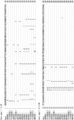
- Example 1 shows the lytic activity of the first bacteriophage obtained in Example 1.
- A shows a photograph of an agar plate after static culture in which Salmonella bacteria were spread on the agar plate, and the first phage purification solution was dropped onto the plate.
- B is a plate diagram corresponding to A, showing the strain ID of the Salmonella bacteria spread on each plate and the position of the dropped phage purification solution.
- a shows the position of the purification solution of the phage having the genomic DNA sequence of SEQ ID NO: 7.
- 1 shows the lytic activity of the first bacteriophage obtained in Example 1.
- A shows a photograph of an agar plate after static culture in which Salmonella bacteria were spread on the agar plate, and the first phage purification solution was dropped on the plate.
- B shows a plate diagram corresponding to A, showing the strain ID of the Salmonella bacteria spread on each plate and the position of the dropped phage purification solution.
- a, b, c, d, e, f, and g indicate the positions of the purification solution of the phage having the genomic DNA sequences of SEQ ID NOs: 1, 2, 3, 4, 5, 6, and 7, respectively.
- 1 shows the lytic activity of the second bacteriophage obtained in Example 2.
- A shows a photograph of an agar plate after static culture in which Salmonella bacteria were spread on the agar plate, and the second phage purified solution was dropped on the plate.
- B is a plate diagram corresponding to A, showing the strain ID of the Salmonella bacteria spread on each plate and the position of the dropped phage purified solution.
- a shows the position of the purified solution of the phage having the genomic DNA sequence of SEQ ID NO: 10.
- FIG. 4 is a graph showing the lytic activity of the second bacteriophage obtained in Example 2, following FIG. 1 shows the lytic activity of the second bacteriophage obtained in Example 2.
- A shows a photograph of an agar plate after static culture in which Salmonella bacteria were spread on the agar plate, and the second phage purification solution was dropped on the plate.
- B shows a plate diagram corresponding to A, showing the strain ID of the Salmonella bacteria spread on each plate and the position of the dropped phage purification solution.
- B shows the positions of the purification solution of the phage having the genomic DNA sequences of SEQ ID NOs: 10, 11, and 12, respectively.
- 1 shows the lytic activity of the third bacteriophage obtained in Example 3.
- A shows a photograph of an agar plate after culture in which Salmonella bacteria (S. Typhimurium) were spread on the agar plate, and the third phage purified solution was dropped and cultured statically.
- B is a plate diagram corresponding to A, showing the strain ID of the Salmonella bacteria (S. Typhimurium) spread on each plate and the position of the dropped phage purified solution.
- a shows the position of the purified solution of the phage having the genomic DNA sequence of SEQ ID NO: 13.
- A shows a photograph of an agar plate after static culture in which Salmonella bacteria were spread on the agar plate, and the fourth phage purification solution was dropped on the plate.
- B is a plate diagram corresponding to A, showing the strain ID of the Salmonella bacteria spread on each plate and the position of the dropped phage purification solution.
- a shows the position of the purification solution of the phage having the genomic DNA sequence of SEQ ID NO: 14.
- 1 shows the lytic activity of the fifth bacteriophage obtained in Example 5.
- A shows a photograph of an agar plate after static culture in which Salmonella bacteria were spread on the agar plate, and the first phage purification solution was dropped on the plate.
- B shows a plate diagram corresponding to A, showing the strain ID of the Salmonella bacteria spread on each plate and the position of the dropped phage purification solution.
- a shows the position of the purification solution of the phage having the genomic DNA sequence of SEQ ID NO: 17.
- 1 shows the lytic activity of the sixth bacteriophage obtained in Example 6.
- A shows a photograph of an agar plate after static culture in which Salmonella bacteria were spread on the agar plate, and the sixth phage purified solution was dropped onto the plate.
- B shows a plate diagram corresponding to A, showing the strain ID of the Salmonella bacteria spread on each plate and the position of the dropped phage purified solution.
- B shows the position of the purified solution of the phage having the genomic DNA sequence of SEQ ID NO: 20.
- 1 shows the lytic activity of the seventh bacteriophage obtained in Example 7.
- A shows a photograph of an agar plate after static culture in which Salmonella bacteria were spread on the agar plate, and the seventh phage purified solution was dropped onto the plate.
- B is a plate diagram corresponding to A, showing the strain ID of the Salmonella bacteria spread on each plate and the position of the dropped phage purified solution.
- a shows the position of the purified solution of the phage having the genomic DNA sequence of SEQ ID NO: 23.
- Example 1 shows an alignment of the query sequence (the amino acid sequence of the tail tip protein of the obtained second phage (SEQ ID NO: 8)) and the searched sequences in Example 2.
- 1 shows the multiple alignment carried out in Example 6. Following FIG. 12A, the multiple alignment carried out in Example 6 is shown. Continuing from FIG. 12B, the multiple alignment carried out in Example 6 is shown.
- the first aspect of the present invention is a bacteriophage that exhibits lytic activity against Salmonella bacteria.
- the bacteriophage of the present invention can exhibit lytic activity against S. Enteritidis, S. Typhimurium, S. Infantis, S. Montevideo, and S. Javana.
- the bacteriophage of the present invention has a genomic DNA sequence that includes a gene encoding a tail tip protein consisting of a specific amino acid sequence.
- the bacteriophage of the present invention can lyse and control Salmonella bacteria as target bacteria.
- lysis refers to the phenomenon of destroying the cell membrane of bacteria. Bacteria die as a result of lysis. Lysis begins when a phage specifically adsorbs to a target bacterium and injects its own DNA into the cell of the target bacterium via its tail. The phage then uses the bacterial translation mechanism to replicate itself and produce a large amount of progeny phages, which are then lysed and released into the outside world.
- lytic agent refers to an agent that contains a bacteriophage that has lytic activity against a target bacterium.
- the lytic agent may be a lytic agent for specifically lysing a target bacterium (a target bacterium-specific lytic agent).
- the lytic agent may be the bacteriophage itself.
- bacteria refers to one of the major lineages of organisms that, along with archaea and eukaryotes, divide the entire kingdom of life into three parts. Bacteria are made up of cells without a nucleus, and can replicate themselves if they have a source of nutrition.
- target bacteria refers to host bacteria that can be targeted by the phage constituting the bacteriolytic agent of the present invention or the phage contained in the composition of the present invention. Specifically, for example, it is a bacterium having a membrane surface receptor on the outer cell membrane that is recognized by the phage. Alternatively, for example, it is a bacterium having a membrane surface receptor on the outer cell membrane that is recognized by a tail fiber protein, tail tip protein, tail spike protein, or tail tube protein consisting of a specific amino acid sequence.
- the "membrane surface receptor” is a site where, for example, the tail and tail fibers of the phage bind, and is composed of proteins, lipopolysaccharides, pili, etc. present in the outer layer of the bacterial outer membrane.
- the target bacteria is particularly Salmonella bacteria.
- Salmonella bacteria refers to bacteria belonging to the genus Salmonella. Salmonella bacteria are classified into two species, Salmonella enterica and Salmonella bongori, and the former is further divided into six subspecies, ssp. enterica, ssp. salamae, ssp. arizonae, ssp. diarizonae, ssp. houtenae, and ssp. indica. Salmonella bacteria are also divided into serotypes based on two types of surface structures: somatic antigens (also called O antigens) and flagellar antigens (also called H antigens).
- somatic antigens also called O antigens
- flagellar antigens also called H antigens
- the subspecies and serotype of Salmonella bacteria are indicated by adding "subspecies” (ssp.) and "serovar” (or “serotype") after the name of the bacteria.
- the name of Salmonella bacteria may be abbreviated by adding the serotype after "S.”
- S. enterica ssp. enterica serovar Typhimurium may be abbreviated to "S. Typhimurium.”
- the smallest unit of classification is the strain, which refers to a population of cells that are considered to be genetically uniform.
- Salmonella bacteria include, for example, S. Enteritidis (Salmonella enterica ssp. enterica serovar Enteritidis), S. Typhimurium (Salmonella enterica ssp. enterica serovar Typhimurium), S. Newport, S. Javiana (Salmonella enterica ssp. enterica serovar Javiana), S. Heidelberg, and S. Infantis (Salmonella enterica ssp. enterica serovar Infantis), S. Saintpaul, S. Muenchen, S. Montevideo (Salmonella enterica ssp. enterica serovar Montevideo), S. Braenderup, S. Oranienburg, S. Thompson, S. Mississippi, S.
- S. Enteritidis lytic agent refers to a lytic agent for lysing Salmonella bacteria.
- S. Enteritidis lytic agent refers to a lytic agent for lysing S. Enteritidis.
- the S. Enteritidis lytic agent may be a lytic agent for specifically lysing S. Enteritidis (an S. Enteritidis-specific lytic agent).
- S. Montevideo lytic agent refers to a lytic agent for lysing S. Montevideo.
- the S. Montevideo lytic agent may be a lytic agent for specifically lysing S. Montevideo (an S. Montevideo-specific lytic agent).
- Typhimurium lytic agent refers to a lytic agent for lysing S. Typhimurium.
- the S. Typhimurium lytic agent may be a lytic agent for specifically lysing S. Typhimurium (S. Typhimurium specific lytic agent).
- control of bacteria means killing bacteria and/or inhibiting bacterial growth.
- multidrug resistance means resistance to multiple antibacterial agents (e.g., antibiotics).
- Antibacterial agents include, but are not limited to, ampicillin, chloramphenicol, streptomycin, sulfa drugs, tetracycline, kanamycin, sulfamethoxazole/trimethoprim, cefazolin, cefotaxime, nalidixic acid, and gentamicin.
- bacteriophage (as mentioned above, often abbreviated simply as “phage”) is a general term for viruses that infect bacteria.
- a typical phage is composed of three parts: a head, a tail, and tail fiber.
- the head is composed of a capsomere, which is an outer coat protein, and is made of a capsid (virus shell) with an icosahedral structure, and contains the phage's genomic DNA in its internal space.
- the tail has a tubular structure composed of a tail tube protein and a sheath protein that covers it. One end of the tail is connected to the head, and the other end is connected to the tail fiber.
- the tail functions as an introduction tube that injects the genomic DNA of the head into the cell of the host bacterium.
- the tail fiber is composed of several fibrous structures made of tail fiber protein.
- the tail and tail fibers are responsible for host recognition and adsorption functions, recognizing receptors present on the outer membrane surface of the host bacterium and adsorbing to the cell surface. Phages have extremely high host specificity, a characteristic based on the function of the tail and tail fibers. More specifically, one of the following proteins plays a central role in their function: tail fiber protein, tail tube protein, tail tip protein, or tail spike protein.
- tail fiber protein refers to a protein that constitutes the tail fiber of a phage, as described above.
- Tail fiber proteins are known to play an important role in the specificity of the host recognition and adsorption ability of the tail and tail fibers (Nobrega F.L. et al., Nat. Rev. Microbiol., 2018, 16:760-773). Therefore, novel phages that have characteristics in tail fiber proteins have extremely high utility value, since even if the host bacterium is the same as that of a known phage, the host recognition site is different, and therefore the phage can exhibit bacteriolytic activity even in bacteria that have resistance to infection by known phages.
- tail fiber gene refers to a gene contained in the phage genomic DNA that encodes the tail fiber protein.
- tail tube protein refers to a protein that constitutes the tubular structure of the tail of a phage, as described above. It is known that tail tube proteins interact with tail fibers and, together with the tail fibers, play an important role in the specificity of host recognition and adsorption ability (Maozhi Hu, et al., 2020, 9:1, 855-867). Tail tube proteins include tail tube fiber protein A and tail tube protein B.
- Tail tube protein A is a protein that forms a ring at the lower part of the tubular structure of the tail and interacts with the tail fiber.
- “Tail tube protein B” is a protein that forms the lower end of the tubular structure of the tail and binds to a receptor present on the outer membrane surface of the host bacterium.
- tail tube gene refers to a gene contained in the genomic DNA of a phage and encoding the tail tube protein.
- Tail tube protein A gene refers to the gene encoding tail tube protein A
- tail tube protein B gene refers to the gene encoding tail tube protein B.
- tail tip protein refers to a protein that constitutes the tip of the tail of a phage. Its sharp structure plays a role in penetrating the cell wall of the host bacterium, but as mentioned above, it also has the function of binding to a receptor on the host bacterium. Because the tail tip protein has the function of binding to a receptor on the host bacterium, it is known to play an important role in host recognition and adsorption (Nobrega F.L. et al., Nat. Rev. Microbiol., 2018, 16:760-773).
- tailtip gene refers to a gene contained in the phage genomic DNA that encodes the tailtip protein.
- tail spike protein refers to a protein that constitutes the tip of the tail of a phage, and as described above, has the function of binding to a receptor on the host bacterium.
- a dish-shaped structure tail plate
- the tail spike protein forms a spike-like structure at the bottom of the plate. Since the tail spike protein has the function of binding to the receptor on the host bacterium, it is known to play an important role in host recognition and adsorption ability (Nobrega F.L. et al., Nat. Rev. Microbiol., 2018, 16:760-773).
- tail spike gene refers to a gene contained in the phage genomic DNA that encodes the tail spike protein.
- a phage does not necessarily have all of the above-mentioned tail fiber gene, tail tube gene, tail tip gene, and tail spike gene.
- a phage may contain one, two, three, or all four of the tail fiber gene, tail tube gene, tail tip gene, and tail spike gene.
- lytic phages refers to an enzyme that cuts a polynucleotide chain within a polynucleotide chain.
- lytic phages take over the life support mechanisms of the host bacterium by various means, allowing only their own replication, but are known to shut down replication of the host genome at the same time. Although the details of this mechanism are still unclear, it has long been known that degradation of the host genome by phage-derived nuclease is involved (Warren et al., Journal of Virology, Vol. 2, No. 4, 1968). Therefore, it is thought that lytic phage endonucleases are involved in the mechanism that shuts down replication of the host genome.
- phages do not infect eukaryotes, drugs using phages are harmless to humans, animals, and plants.
- the life cycle of a phage can be broadly divided into a "lytic cycle,” a "lysogenic cycle,” and a “lytic/lysogenic cycle.”
- the phage incorporates its own DNA into the bacterial chromosome without lysing the target bacterium, and grows along with the growth of the bacterium.
- the phage grows by itself within the host bacterial cell, then lyses the host bacterium and releases a large amount of progeny phages.
- the phage of the present invention may be a phage that undergoes a lytic cycle or a lytic/lysogenic cycle.
- multiple refers to 2 to 10, for example, 2 to 7, 2 to 5, 2 to 4, or 2 to 3.
- base sequence identity is a numerical value indicating the proportion of sites with the same type of base within the comparison range of two base sequences. Base sequence identity can be calculated by aligning the two base sequences so that the base match within the comparison range is the highest, even if the lengths of the two base sequences are different.
- BLAST can be used in various software and web services. For example, the genetic information processing software GENETYX (https://www.genetyx.co.jp/) and the NCBI BLAST server (https://blast.ncbi.nlm.nih.gov/Blast.cgi) can be used to easily calculate base sequence identity.
- FASTA In addition to BLAST, there is also an algorithm called FASTA, which can be used if it can calculate a reasonable identity. It is also possible to analyze the identity of base sequences using an analysis algorithm such as MUMmer. Note that, depending on the software or analysis server, an index indicating sequence identity may be indicated by Average Nucleotide Identity (ANI), etc., and these may also be used. Note that, in the above software or web service, when a long base sequence such as phage genome DNA is aligned, the comparison range may be automatically determined, and the sequence identity in the comparison range may be calculated. Therefore, the above sequence identity may be present in the range automatically aligned by the above software or web service.
- ANI Average Nucleotide Identity
- the query sequence and the subject sequence are automatically aligned in the maximum range that can be aligned, the comparison range is determined, the sequence identity in the comparison range is calculated, and the ratio of the comparison range to the entire range of the query sequence may be calculated as a value called Query Cover.
- the sequence identity in the entire range of the aligned base sequences can be estimated based on the results.
- the Query Cover value multiplied by the sequence identity value in the comparison range can be used as the estimated value of the sequence identity in the entire range.
- further corrections such as including the expected sequence identity in the range other than the aligned range can be made.
- the phage genomic DNA when packaged, it can be linear or circular.
- the genomic DNA is fragmented, and then the base sequences of the individual fragments are read and the sequences are determined through analysis that connects them.
- they are often connected without placing a reference genomic DNA sequence (de novo assembly). Therefore, it is difficult to determine the start and end of the analyzed genome unambiguously (Merrill, B.D., et al. BMC Genomics, 2016 17, 679). Therefore, the start and end of the genome sequences to be compared may be different, and this is automatically taken into account in analyses using software or analysis servers.
- highly stringent conditions refers to environmental conditions that make it difficult for non-specific hybridization to occur. Under highly stringent conditions, a hybrid can be formed with a nucleic acid having a target base sequence, but a hybrid cannot be substantially formed with a nucleic acid having a non-specific base sequence.
- highly stringent conditions refer to conditions with a low salt concentration and high temperature.
- a low salt concentration is, for example, 15 to 750 mM, preferably 15 to 500 mM, 15 to 300 mM, or 15 to 200 mM.
- a high temperature is, for example, 50 to 68°C, or 55 to 70°C.
- a specific example of highly stringent conditions is a condition in which washing after hybridization is performed at 65°C with 0.1xSSC and 0.1% SDS.
- amino acid sequence identity refers to a numerical value that indicates the proportion of sites in which the type of amino acid residue is the same within the comparison range of two amino acid sequences. Even if the lengths of the two amino acid sequences are different, amino acid sequence identity can be calculated by aligning the sequences so that the degree of amino acid identity within the comparison range is the highest.
- a representative algorithm for such analysis is BLAST. BLAST can be used in various software and web services.
- amino acid sequence identity can be easily calculated using genetic information processing software GENETYX (https://www.genetyx.co.jp/) and the NCBI BLAST server (https://blast.ncbi.nlm.nih.gov/Blast.cgi).
- GENETYX https://www.genetyx.co.jp/
- NCBI BLAST server https://blast.ncbi.nlm.nih.gov/Blast.cgi
- FASTA an algorithm that can be used if it can calculate a reasonable identity.
- amino acid substitution preferably refers to substitution within a conservative amino acid group that has similar properties such as charge, side chain, polarity, and aromaticity among the 20 types of amino acids that constitute natural proteins. Examples include substitution within the uncharged polar amino acid group (Gly, Asn, Gln, Ser, Thr, Cys, Tyr) with a low polarity side chain, the branched chain amino acid group (Leu, Val, Ile), the neutral amino acid group (Gly, Ile, Val, Leu, Ala, Met, Pro), the neutral amino acid group with a hydrophilic side chain (Asn, Gln, Thr, Ser, Tyr, Cys), the acidic amino acid group (Asp, Glu), the basic amino acid group (Arg, Lys, His), and the aromatic amino acid group (Phe, Tyr, Trp). Substitutions may be present in one type alone or in two or more types. Amino acid substitutions within these groups are preferred because they are known to be less likely to cause changes
- the bacteriophage of the present invention is a phage having the following configuration (hereinafter, in the present invention, referred to as "second phage") that has lytic activity against bacteria of the genus Salmonella.
- the second phage has genomic DNA that includes a gene encoding a tail tip protein that has a specific amino acid sequence and has the activity of recognizing the target bacterium.
- the inventors discovered three phages that have lytic activity against Salmonella bacteria, and identified the tailtip protein (SEQ ID NO: 8) and tailtip gene (SEQ ID NO: 9) from the genomic DNA sequences of these phages (SEQ ID NOs: 10 to 12, respectively).
- the sequence identity of the genomic sequences of the three phages was 99%, and the amino acid sequences of the tailtip proteins were as shown in SEQ ID NO: 8, which were completely identical to each other.
- the tailtip protein consists of the amino acid sequence shown in SEQ ID NO: 8, which is composed of 637 amino acid residues.
- the tailtip protein consisting of the amino acid sequence shown in SEQ ID NO: 8 can realize extremely useful host specificity that is specific to Salmonella bacteria and also exhibits a wide range of bacteriolytic activity against various bacterial species within the Salmonella genus.
- tailtip protein of the present invention has an amino acid sequence represented by any one of the following (a) to (c): (a) the amino acid sequence shown in SEQ ID NO:8; (b) an amino acid sequence in which one or more amino acids have been added, deleted, and/or substituted in the amino acid sequence shown in SEQ ID NO:8; (c) an amino acid sequence having 99% or more sequence identity with the amino acid sequence shown in SEQ ID NO:8.
- sequence identity defined in (c) is preferably 99.1% or more, 99.2% or more, 99.3% or more, 99.4% or more, 99.5% or more, 99.6% or more, 99.7% or more, 99.8% or more, or 99.9% or more.
- the amino acid at the position corresponding to the 258th amino acid in SEQ ID NO:8 of the tailtip protein is phenylalanine and/or the amino acid at the position corresponding to the 617th amino acid in SEQ ID NO:8 is serine. Note that the position numbers are expressed with the initiating methionine as the first position.
- tailtip Gene The gene encoding the tailtip protein comprises any of the following base sequences (d) to (f): (d) a base sequence represented by SEQ ID NO:9; (e) a base sequence in which one or more bases have been added, deleted, and/or substituted in the base sequence shown in SEQ ID NO:9; (f) a base sequence having 95% or more sequence identity to the base sequence shown in SEQ ID NO:9.
- the base sequence may be a base sequence that hybridizes under highly stringent conditions to a base sequence complementary to the base sequence shown in SEQ ID NO:9.
- sequence identity defined in (f) is preferably 96% or more, 97% or more, 98% or more, or 99% or more.
- the second bacteriophage has genomic DNA which includes a gene encoding a tail tip protein.
- the genomic DNA sequence includes any of the nucleotide sequences shown in (g) to (k) below: (g) a base sequence represented by any one of SEQ ID NOs: 10 to 12; (h) a base sequence represented by any one of SEQ ID NOs: 10 to 12 in which one or more bases have been added, deleted, and/or substituted in a base sequence other than the base sequence of the gene; (i) a base sequence having 80% or more sequence identity with a base sequence other than the gene base sequence in any of SEQ ID NOs: 10 to 12; (j) a base sequence in which one or more bases are added, deleted, and/or substituted in the base sequence shown in any one of SEQ ID NOs: 10 to 12; (k) a nucleotide sequence having 90% or more sequence identity to any of the nucleotide sequences shown in SEQ ID NOs: 10 to 12.
- sequence identity defined in (i) is 81% or more, 82% or more, 83% or more, 84% or more, 85% or more, 86% or more, 87% or more, 88% or more, 89% or more, 90% or more, 90.5% or more, 91.0% or more, 91.5% or more, 92.0% or more, 92.5% or more, 93.0% or more, 93.5% or more, 94.0% or more, 94.5% or more, 95.
- the base sequence defined in (i) is, in other words, a base sequence in which the sequence identity of the base sequence other than the gene corresponding to the gene in the base sequence shown in any one of SEQ ID NOs: 10 to 12 is 80% or more.
- sequence identity defined in (k) is preferably 90.5% or more, 91.0% or more, 91.5% or more, 92.0% or more, 92.5% or more, 93.0% or more, 93.5% or more, 94.0% or more, 94.5% or more, 95.0% or more, 95.5% or more, 96.0% or more, 96.5% or more, 97.0% or more, 97.5% or more, 98.0% or more, 98.5% or more, 99.0% or more, 99.1% or more, 99.2% or more, 99.3% or more, 99.4% or more, 99.5% or more, 99.6% or more, 99.7% or more, 99.8% or more, or 99.9% or more.
- the second phage is characterized by having a genomic DNA sequence containing a specific base sequence, and exhibits bacteriolytic activity against the target bacterium.
- the genomic DNA sequence possessed by the second phage includes a base sequence shown in any of SEQ ID NOs: 10 to 12 (113946 bp, 113936 bp, and 113949 bp, respectively), a base sequence in which one or more bases have been added, deleted, and/or substituted in the base sequence shown in any of SEQ ID NOs: 10 to 12, a base sequence which is 80% or more, 81% or more, 82% or more, 83% or more, 84% or more, 85% or more, 86% or more, 87% or more, 88% or more, 89% or more, 90% or more, or 90.5% or more of the base sequence shown in any of SEQ ID NOs: 10 to 12,
- Examples of such genomic DNA sequences include those containing base sequences with sequence identity of 91.0% or more, 91.5% or more, 92.0% or
- the second phage can exhibit bacteriolytic activity against a wide variety of bacterial species of the genus Salmonella, and therefore can effectively control Salmonella bacteria.
- the second phage is also useful for treating or preventing food poisoning.
- the second phage has a wide host range, and therefore can effectively cover the diversity of target bacteria. Therefore, the usefulness of a phage that exhibits bacteriolytic activity against a wide variety of bacterial species, such as the bacteriophage of the present invention, is extremely high.
- a second aspect of the present invention is a composition comprising a second phage, particularly a composition for controlling bacteria of the genus Salmonella.
- the composition of the present invention is characterized in that it comprises the bacteriophage described in the first aspect.
- the target bacteria is particularly bacteria of the genus Salmonella, in particular S. Enteritidis, S. Typhimurium, S. Infantis, S. Montevideo, and S. Javiana.
- composition of the present invention can provide pharmaceutical compositions, additives (e.g., food and drink additives, feed additives, drinking water additives), food and drink, feed, cleaning agents, disinfectants, bactericides, sanitizers, etc. that are safe for the human body and non-hazardous to the environment and capable of controlling target bacteria.
- additives e.g., food and drink additives, feed additives, drinking water additives
- food and drink e.g., feed additives, drinking water additives
- cleaning agents e.g., disinfectants, bactericides, sanitizers, etc.
- composition (1) Essential Active Ingredient contains the bacteriophage described in the first aspect as an essential active ingredient.
- the composition of the present invention can lyse and control target bacteria by using this active ingredient.
- the amount of bacteriophage in the composition of the present invention depends on various conditions such as the use of the composition, the subject of use, the method of use, the formulation, and the type of bacteria to be lysed, but it is preferable that the amount is sufficient for the bacteriophage to contact and infect the target bacteria in the subject of use.
- the amount of bacteriophage in the composition of the present invention can be an amount effective for the bacteriophage in the composition of the present invention to control the target bacteria within the scope of common technical knowledge in the field.
- the titer of the phage in the composition of the present invention can be, for example, 1 x 10 1 to 1 x 10 15 pfu/mL, 1 x 10 3 to 1 x 10 13 pfu/mL, 1 x 10 5 to 1 x 10 11 pfu/mL, or 1 x 10 7 to 1 x 10 9 pfu/mL.
- composition of the present invention may contain one or more other active ingredients having the same pharmacological action as the bacteriophage and/or a different pharmacological action, provided that the lytic activity of the bacteriophage is not affected.
- the type of other active ingredient is not important.
- the other active ingredient may be, for example, a phage having lytic activity against the same bacteria as the target bacteria of the bacteriophage described in the first embodiment and/or a different bacteria.
- a phage may be, for example, a phage having lytic activity against bacteria of the genus Salmonella.
- Examples of phages having lytic activity against bacteria of the genus Salmonella include the following phages Nos. 1 and 3 to 7. Phages Nos. 1 and 3 to 7 may be used alone or in combination of two or more types.
- the first phage has lytic activity against Salmonella bacteria and has the following configuration:
- the first phage has a genomic DNA sequence that includes a specific base sequence.
- the first phage has a genomic DNA sequence that includes or consists of any of the base sequences shown in (a) to (c) below: (a) a nucleotide sequence represented by any one of SEQ ID NOs: 1 to 7; (b) a base sequence in which one or more bases have been added, deleted, and/or substituted in any of the base sequences shown in SEQ ID NOs: 1 to 7; (c) a nucleotide sequence having 99% or more sequence identity to any of the nucleotide sequences shown in SEQ ID NOs: 1 to 7.
- the third phage has lytic activity against Salmonella bacteria and has the following configuration.
- the third phage has genomic DNA containing a specific base sequence.
- the third phage has genomic DNA that contains or consists of any of the base sequences shown in (a) to (c) below.
- the fourth phage has a lytic activity against Salmonella bacteria and has the following configuration.
- the fourth phage has a genomic DNA sequence including a specific base sequence.
- the fourth phage has a genomic DNA sequence that includes or consists of any of the base sequences shown in (a) to (c) below.
- the fifth phage has lytic activity against Salmonella bacteria and has the following structure.
- the fifth phage has genomic DNA including a gene encoding an endonuclease having a specific amino acid sequence and endonuclease activity.
- the endonuclease in the fifth phage has an amino acid sequence shown in any one of the following (a) to (c): (a) the amino acid sequence shown in SEQ ID NO: 15; (b) an amino acid sequence in which one or more amino acids have been added, deleted, and/or substituted in the amino acid sequence shown in SEQ ID NO: 15; (c) an amino acid sequence having 90% or more sequence identity with the amino acid sequence shown in SEQ ID NO:15.
- the gene encoding the endonuclease includes, for example, any of the nucleotide sequences shown in (d) to (f) below: (D) a base sequence represented by SEQ ID NO: 16; (e) a base sequence in which one or more bases have been added, deleted, and/or substituted in the base sequence shown in SEQ ID NO: 16; (f) a nucleotide sequence having 90% or more sequence identity with the nucleotide sequence shown in SEQ ID NO: 16.
- the base sequence may be a base sequence that hybridizes under highly stringent conditions to a base sequence complementary to the base sequence shown in SEQ ID NO:16.
- the fifth phage has a genomic DNA containing a gene encoding an endonuclease.
- the genomic DNA sequence contains or consists of any of the nucleotide sequences shown in (g) to (k) below: (g) a base sequence represented by SEQ ID NO: 17; (h) a base sequence represented by SEQ ID NO: 17 in which one or more bases have been added, deleted, and/or substituted in a base sequence other than the base sequence of the gene; (i) a base sequence having 80% or more sequence identity with a base sequence other than the gene base sequence in the base sequence shown in SEQ ID NO: 17; (j) a base sequence in which one or more bases are added, deleted, and/or substituted in the base sequence represented by SEQ ID NO: 17; (k) a base sequence having 90% or more sequence identity to the base sequence shown in SEQ ID NO: 17.
- the base sequence defined in (i) is, in other words, a base sequence in which the sequence identity of the base sequence other than the gene corresponding to the gene in the base sequence shown in SEQ ID NO: 17 is 80% or more.
- the fifth phage is characterized by having a genomic DNA sequence containing a specific base sequence, and exhibits bacteriolytic activity against a target bacterium.
- the genomic DNA sequence possessed by the fifth phage include the base sequence shown in SEQ ID NO: 17 (47,638 bp), a base sequence in which one or more bases have been added, deleted, and/or substituted in the base sequence shown in SEQ ID NO: 17, and a genomic DNA sequence containing a base sequence having 90% or more sequence identity with the base sequence shown in SEQ ID NO: 17.
- the sixth phage has lytic activity against bacteria of the genus Salmonella and has the following configuration.
- the sixth phage has genomic DNA including a gene encoding a tail fiber protein consisting of a specific amino acid sequence and having recognition activity for a target bacterium.
- the tail fiber protein in the sixth phage consists of any of the amino acid sequences shown in (a) to (c) below: (a) the amino acid sequence shown in SEQ ID NO: 18; (b) an amino acid sequence in which one or more amino acids have been added, deleted, and/or substituted in the amino acid sequence shown in SEQ ID NO: 18; (c) an amino acid sequence having 99% or more sequence identity to the amino acid sequence shown in SEQ ID NO:18.
- the amino acid corresponding to position 211 is Val
- the amino acid corresponding to position 321 is Val
- the amino acid corresponding to position 485 is Val
- the amino acid corresponding to position 533 is Ala
- the amino acid corresponding to position 577 is Ser
- the amino acid corresponding to position 583 is Ser. Note that the position numbers are expressed with the start methionine as the first position.
- the gene encoding the tail fiber protein includes, for example, any of the nucleotide sequences shown in (d) to (f) below: (D) a base sequence represented by SEQ ID NO: 19; (e) a base sequence in which one or more bases have been added, deleted, and/or substituted in the base sequence shown in SEQ ID NO: 19; (f) a base sequence having 97% or more sequence identity to the base sequence shown in SEQ ID NO: 19.
- the base sequence may be a base sequence that hybridizes under highly stringent conditions to a base sequence complementary to the base sequence shown in SEQ ID NO:19.
- the sixth phage has genomic DNA including a gene encoding a tail fiber protein.
- the genomic DNA sequence includes, for example, any of the nucleotide sequences shown in (g) to (k) below: (g) a base sequence represented by SEQ ID NO: 20; (h) a base sequence represented by SEQ ID NO: 20 in which one or more bases have been added, deleted, and/or substituted in a base sequence other than the base sequence of the gene; (i) a base sequence having 90% or more sequence identity with a base sequence other than the gene base sequence in the base sequence shown in SEQ ID NO: 20; (j) a base sequence in which one or more bases are added, deleted, and/or substituted in the base sequence represented by SEQ ID NO: 20; (k) a base sequence having 95% or more sequence identity to the base sequence shown in SEQ ID NO: 20.
- the base sequence defined in (i) is, in other words, a base sequence in which the sequence identity of the base sequence other than the gene corresponding to the gene in the base sequence shown in SEQ ID NO:20 is 90% or more.
- the sixth phage is characterized by having a genomic DNA sequence containing a specific base sequence, and exhibits bacteriolytic activity against target bacteria.
- the genomic DNA sequence possessed by the sixth phage include the base sequence shown in SEQ ID NO: 20 (each 40,784 bp), a base sequence in which one or more bases have been added, deleted, and/or substituted in the base sequence shown in SEQ ID NO: 20, and a genomic DNA sequence containing a base sequence having 90% or more sequence identity to the base sequence shown in SEQ ID NO: 20.
- the seventh phage comprises a seventh phage having the following configuration and having bacteriolytic activity against Salmonella bacteria.
- the seventh phage comprises genomic DNA comprising a gene encoding a tail spike protein having a specific amino acid sequence and recognition activity for a target bacterium.
- the tail spike protein in the present invention comprises the amino acid sequence shown in SEQ ID NO: 21.
- the gene encoding the tail spike protein comprises, for example, the base sequence shown in SEQ ID NO: 22.
- the seventh bacteriophage has genomic DNA that includes a gene encoding a tailspike protein.
- the genomic DNA sequence includes or consists of any of the nucleotide sequences shown in (a) to (e) below: (a) a base sequence represented by SEQ ID NO: 23; (b) a base sequence represented by SEQ ID NO: 23 in which one or more bases have been added, deleted, and/or substituted to a base sequence other than the base sequence of the gene; (c) a nucleotide sequence having 99% or more sequence identity with a nucleotide sequence other than the nucleotide sequence of the gene in the nucleotide sequence shown in SEQ ID NO: 23; (d) a base sequence in which one or more bases are added, deleted, and/or substituted in the base sequence represented by SEQ ID NO: 23; (e) a nucleotide sequence having 99% or more sequence identity to the nucleotide sequence shown in SEQ ID NO:23.
- the base sequence defined in (c) is, in other words, a base sequence in which the sequence identity of the base sequence other than the gene corresponding to the gene in the base sequence shown in SEQ ID NO:23 is 99% or more.
- the seventh phage is characterized by having a genomic DNA sequence that includes a specific base sequence, and exhibits bacteriolytic activity against a target bacterium.
- the genomic DNA sequence of the seventh phage include the base sequence shown in SEQ ID NO: 23 (39162 bp), a base sequence in which one or more bases have been added, deleted, and/or substituted in the base sequence shown in SEQ ID NO: 23, and a genomic DNA sequence that includes a base sequence that has 99.0% or more sequence identity to the base sequence shown in SEQ ID NO: 23.
- sequence identity in this specification is not particularly limited. Specifically, for example, the sequence identity is 80% or more, 81% or more, 82% or more, 83% or more, 84% or more, 85% or more, 86% or more, 87% or more, 88% or more, 89% or more, 90.0% or more, 90.5% or more, 91.0% or more, 91.5% or more, 92.0% or more, 92.5% or more, 93.0% or more, 93.5% or more, 94.0% or more, 94.5% or more, relative to the reference sequence.
- sequence identity may be 95.0% or more, 95.5% or more, 96.0% or more, 96.5% or more, 97.0% or more, 97.5% or more, 98.0% or more, 98.5% or more, 99.0% or more, 99.1% or more, 99.2% or more, 99.3% or more, 99.4% or more, 99.5% or more, 99.6% or more, 99.7% or more, 99.8% or more, or 99.9% or more.
- composition of the present invention may, for example, contain, in addition to the bacteriophage described in the first aspect, at least one phage selected from the group consisting of phages 1 and 3 to 7 above in combination as an active ingredient.
- a phage that targets a different bacterium from the bacteriophage described in the first embodiment can be expected to have a synergistic or complementary effect on lytic activity when combined with the bacteriophage described in the first embodiment.
- composition of the present invention may further contain non-active ingredients, such as carriers (such as solid carriers and liquid carriers), excipients, surfactants, emulsifiers, binders, disintegrants, lubricants, solubilizers, suspending agents, coating agents, colorants, flavorings, preservatives, stabilizers, isotonicity agents, chelating agents, thickening agents, viscosity enhancers, buffers, pH adjusters, and the like, provided that they do not affect the lytic activity of the bacteriophage described in the first aspect.
- carriers such as solid carriers and liquid carriers
- excipients such as solid carriers and liquid carriers
- surfactants such as solid carriers and liquid carriers
- binders such as solid carriers and liquid carriers
- disintegrants such as binders, disintegrants, lubricants, solubilizers, suspending agents, coating agents, colorants, flavorings, preservatives, stabilizers, isotonicity agents, chelating agents, thickening agents
- Targets for application of the composition of the present invention include, but are not limited to, livestock farms such as chicken farms, pig farms, ranches, and dairy farms (including, for example, houses, cages, soil, and the like); food, drink, or feed; food, drink, or feed processing plants or feed manufacturing plants; food, drink, or feed processing equipment; food, drink, or feed containers; and any vertebrate including humans, livestock (horses, cows, sheep, goats, pigs, chickens, and the like), pet animals (dogs, cats, rabbits, birds, and the like), and laboratory animals (mice, rats, monkeys, and the like).
- livestock farms such as chicken farms, pig farms, ranches, and dairy farms (including, for example, houses, cages, soil, and the like)
- food, drink, or feed include, but are not limited to, livestock farms such as chicken farms, pig farms, ranches, and dairy farms (including, for example, houses, cages, soil, and the like); food, drink, or feed; food,
- composition of the present invention may be in the form of a pharmaceutical composition, an additive (e.g., a food and drink additive, a feed additive, or a drinking water additive), a food and drink, a feed, a cleaning agent, a disinfectant, a bactericide, or a sanitizer.
- an additive e.g., a food and drink additive, a feed additive, or a drinking water additive
- a food and drink e.g., a feed additive, or a drinking water additive
- a food and drink e.g., a feed additive, or a drinking water additive
- a food and drink e.g., a feed additive, or a drinking water additive
- a food and drink e.g., a feed additive, or a drinking water additive
- a food and drink e.g., a feed additive, or a drinking water additive
- a cleaning agent e.g., a cleaning agent, a disinfectant, a bactericide,
- composition of the present invention may be a pharmaceutical composition.
- the pharmaceutical composition of the present invention can be used, for example, to control a target bacterium in a subject.
- the pharmaceutical composition of the present invention can also be used, for example, to treat or prevent an infection caused by the target bacterium.
- the target bacterium is particularly a Salmonella bacterium, in particular S. Enteritidis, S. Typhimurium, S. Infantis, S. Montevideo, and S. Javiana.
- infection caused by bacteria of the genus Salmonella refers to a disease caused by bacteria of the genus Salmonella, and is also called Salmonella infection or salmonellosis. Symptoms of infection caused by bacteria of the genus Salmonella include fever, abdominal pain, diarrhea, nausea, vexation, vomiting, bacteremia, and the like. An infection caused by bacteria of the genus Salmonella may be, for example, food poisoning.
- the pharmaceutical composition of the present invention may further comprise, in addition to the bacteriophage according to the first aspect, pharma- ceutically acceptable non-active ingredients (i.e., pharmaceutical excipients) as described above.
- the pharmaceutical composition of the present invention may be formulated in any dosage form, such as solid preparations such as tablets, granules, powders, pills, and capsules; liquid preparations such as liquids, suspensions, and syrups; gels, aerosols, and the like.
- solid preparations such as tablets, granules, powders, pills, and capsules
- liquid preparations such as liquids, suspensions, and syrups
- gels, aerosols, and the like When the pharmaceutical composition is used as a liquid preparation, it can also be formulated as a dry product intended to be reconstituted with, for example, physiological saline immediately before use.
- the pharmaceutical composition of the present invention can be appropriately formulated with the bacteriophage described in the first aspect, and the amount of the bacteriophage can be changed depending on the dosage form, the severity of the target disease, and the like.
- the subjects to which the pharmaceutical composition of the present invention is administered may be any vertebrate including humans, livestock (horses, cows, sheep, goats, pigs, chickens, etc.), pets (dogs, cats, rabbits, birds, etc.), and laboratory animals (mice, rats, monkeys, etc.), and is preferably humans.
- Routes of administration of the pharmaceutical composition of the present invention include, but are not limited to, oral, intravenous, rectal, vaginal, and topical administration.
- the dosage of the pharmaceutical composition of the present invention can be appropriately determined taking into consideration various factors such as the administration route and the age, weight, and symptoms of the subject.
- the pharmaceutical composition of the present invention may be administered once or multiple times at intervals of several hours to several months.
- the composition of the present invention may be a food and beverage additive.
- the food and beverage additive of the present invention can be used, for example, to control target bacteria in food and beverage.
- the food and beverage additive of the present invention can also be used to impart a specific action (control action of target bacteria or treatment or prevention action of infectious disease caused by target bacteria) to food and beverage by adding it to food and beverage.
- the target bacteria is particularly Salmonella bacteria, particularly S. Enteritidis, S. Typhimurium, S. Infantis, S. Montevideo, and S. Javiana.
- the food and beverage additive of the present invention may further contain, in addition to the bacteriophage according to the first aspect, the above-mentioned non-active ingredients that are acceptable for the production of food and beverages.
- the food and beverage additive of the present invention may be in the form of a liquid, gel, or dry powder.
- the types of food and beverage to which the food and beverage additive of the present invention is to be added are as described in "(4) Food and beverage".
- the food and beverage additive of the present invention can be added to, applied to, or sprayed onto a food or beverage by any suitable method available to a person skilled in the art.
- the food and beverage additive of the present invention may be mixed into the ingredients of the food or beverage during the production of the food or beverage.
- composition of the present invention may be a feed additive or a drinking water additive.
- the feed additive or drinking water additive of the present invention may be used, for example, when raising livestock.
- the feed additive or drinking water additive of the present invention can be used, for example, to control target bacteria in feed or drinking water.
- the feed additive or drinking water additive of the present invention can also be used to impart a specific effect (control effect against target bacteria or therapeutic or preventive effect against infection caused by target bacteria) to feed or drinking water by adding it to the feed or drinking water.
- the target bacteria is particularly bacteria of the genus Salmonella, in particular S. Enteritidis, S. Typhimurium, S. Infantis, S. Montevideo, and S. Javiana.
- the feed additive of the present invention may further contain, in addition to the bacteriophage described in the first aspect, the above-mentioned inactive ingredients that are acceptable for the manufacture of feed.
- the feed additive of the present invention may be in the form of a liquid, gel or dry powder.
- the types of feed to which the feed additive of the present invention is added are as described in "(5) Feed.”
- the feed additive of the present invention can be added to, applied to, or sprayed onto the feed by any suitable method available to one of skill in the art.
- the feed additive of the present invention can be mixed into the feed ingredients during the manufacture of the feed.
- the drinking water additive of the present invention may be in the form of a liquid, gel, or dry powder.
- the drinking water to which the drinking water additive of the present invention is added may be, for example, tap water, well water, groundwater, rainwater, etc., and is not particularly limited.
- the drinking water may contain other components (e.g., antibiotics, etc.).
- the drinking water additive of the present invention can be added to drinking water by any suitable method available to one of skill in the art.
- the drinking water additive of the present invention can be mixed with drinking water in a suitable container or in a water supply system.
- the composition of the present invention may be a food or drink.
- the food and drink of the present invention can be used, for example, to control target bacteria in a subject.
- the food and drink of the present invention can also be used, for example, to treat or prevent infectious diseases caused by target bacteria.
- the target bacteria is particularly Salmonella bacteria, particularly S. Enteritidis, S. Typhimurium, S. Infantis, S. Montevideo, and S. Javiana.
- the infectious disease caused by the target bacteria can be, for example, food poisoning.
- the food and beverage of the present invention may further contain the above-mentioned non-active ingredients that are acceptable for the production of the food and beverage in addition to the bacteriophage described in the first aspect.
- the food and drink of the present invention may be in any form, such as fresh food (vegetables, fruits, meat, seafood, grains, etc.), processed food, side dishes, confectionery, seasonings, beverages, functional foods, etc.
- Functional foods include, for example, foods for specified health uses (including conditionally designated foods for specified health uses), foods with functional claims, foods with health functions including foods with nutrient functions, foods for special dietary uses, dietary supplements, health supplements, supplements (for example, tablets, coated tablets, sugar-coated tablets, capsules, liquids, and other dosage forms), beauty foods (for example, diet foods), etc.
- the food and drink may also be prepared in any form, such as solids, liquids, mixtures, suspensions, pastes, gels, powders, granules, capsules, etc.
- the food and drink of the present invention may contain the bacteriophage described in the first aspect by any appropriate method available to a person skilled in the art. Specifically, the food and drink of the present invention may contain a bacteriophage encapsulated in a capsule, may contain a bacteriophage wrapped in an edible film or an edible coating agent, or may be formed into any shape such as a tablet after mixing (adding) a suitable excipient to the bacteriophage.
- the food and drink of the present invention may be produced by processing a composition containing the bacteriophage of the present invention and other food ingredients.
- the food and drink of the present invention may also be produced, for example, by mixing (adding) the bacteriophage to various foods (drinks, liquid foods, foods for the sick, nutritional foods, frozen foods, processed foods, other commercially available foods, etc.).
- the composition of the present invention may be a feed.
- the feed of the present invention can be used, for example, to control target bacteria in a subject.
- the feed of the present invention can also be used, for example, to treat or prevent infection caused by target bacteria.
- the target bacteria is particularly Salmonella bacteria, particularly S. Enteritidis, S. Typhimurium, S. Infantis, S. Montevideo, and S. Javiana.
- the infection caused by the target bacteria can be, for example, food poisoning.
- the feed of the present invention may further contain, in addition to the bacteriophage described in the first aspect, the above-mentioned inactive ingredients that are acceptable for the manufacture of the feed.
- the feed of the present invention includes, but is not limited to, grass, straw, Japanese silver grass, hay, silage, grains (corn, barley, wheat, rice, etc.), compound feed, food by-products (soybean pulp, beer lees, bread crumbs, etc.), etc.
- the feed may also be prepared in any form, such as a solid, liquid, mixture, suspension, paste, gel, powder, granule, capsule, etc.
- the feed of the present invention may contain the bacteriophage described in the first aspect by any suitable method available to a person skilled in the art.
- the feed of the present invention may contain the bacteriophage encapsulated in an edible film or edible coating agent, or may be formed into any shape such as a tablet after mixing (adding) a suitable excipient to the bacteriophage.
- the feed of the present invention may be produced by processing a composition containing the bacteriophage of the present invention and other feed ingredients.
- the feed of the present invention may also be produced, for example, by mixing (adding) the bacteriophage to various feeds.
- the composition of the present invention may be a cleaning agent, disinfectant, bactericide, or sanitizer.
- cleaning agent refers to a composition intended to remove dirt from an application target.
- disinfectant refers to a composition intended to reduce pathogenic microorganisms in an application target to a harmless level.
- bactericide refers to a composition intended to kill bacteria in an application target.
- sanitizer refers to a composition intended to reduce bacteria in an application target.
- the cleaning agent, disinfectant, bactericide, or sanitizer of the present invention can be used, for example, to control target bacteria in an application target.
- the target bacteria is particularly Salmonella bacteria, in particular S. Enteritidis, S. Typhimurium, S. Infantis, S. Montevideo, and S. Javiana.
- the cleaner, disinfectant, bactericide, or sanitizer of the present invention may be in the form of a liquid, gel, or dry powder.
- Subjects to which the cleaning agent, disinfectant, bactericide, or sanitizer of the present invention is applied include, but are not limited to, livestock breeding sites such as chicken farms, pig farms, ranches, and dairy farms (including, for example, houses, cages, soil, etc.); food, drink, or feed; food, drink, or feed processing plants or feed manufacturing plants; food, drink, or feed processing equipment; food, drink, or feed containers; any vertebrate including humans, livestock (horses, cows, sheep, goats, pigs, chickens, etc.), pets (dogs, cats, rabbits, birds, etc.), and laboratory animals (mice, rats, monkeys, etc.).
- livestock breeding sites such as chicken farms, pig farms, ranches, and dairy farms (including, for example, houses, cages, soil, etc.); food, drink, or feed; food, drink, or feed processing plants or feed manufacturing plants; food, drink, or feed processing equipment; food, drink, or feed containers; any vertebrate including humans, livestock (horses
- the cleaning agent, disinfectant, bactericide, or sanitizer of the present invention can be used, for example, by adding, applying, spraying, or scattering the agent on the subject of application.
- the cleaning agent, disinfectant, bactericide, or sanitizer of the present invention can also be used, for example, by immersing the subject of application.
- Target bacteria control method 3-1 is a method for controlling target bacteria.
- the target bacteria control method of the present invention is characterized in that the bacteriophage described in the first aspect or the composition described in the second aspect is used to control the target bacteria.
- the target bacteria is particularly Salmonella bacteria, particularly S. Enteritidis, S. Typhimurium, S. Infantis, S. Montevideo, and S. Javiana.
- the control method of the present invention can control the target bacteria in the subject of application.
- the method for controlling a target bacterium of the present invention includes a contact step as an essential step.
- the "contact step” is a step of contacting the bacteriophage according to the first aspect or the composition according to the second aspect with an application target.
- contact refers to direct contact between the bacteriophage described in the first embodiment or the composition described in the second embodiment and the target of application. More specifically, it refers to contact between the bacteriophage described in the first embodiment or the bacteriophage described in the first embodiment in the composition described in the second embodiment, i.e., the phage, and the target of application, preferably a site that may be contaminated by the target bacterium.
- the purpose of this step is to infect the target bacterium with the phage, which is the active ingredient, thereby lysing the target bacterium. As a result, a control effect against the target bacterium can be exerted.
- the subject of application is as described in the second embodiment.
- the contact step can be carried out, for example, by adding, applying, spraying or scattering the bacteriophage described in the first aspect or the composition described in the second aspect (particularly a pharmaceutical composition, food and drink additive, feed additive, drinking water additive, cleaning agent, disinfectant, bactericide or sanitizer) to the target of application, or by immersing the target of application in the bacteriophage described in the first aspect or the composition described in the second aspect (particularly a pharmaceutical composition, food and drink additive, feed additive, drinking water additive, cleaning agent, disinfectant, bactericide or sanitizer).
- the contact step can also be carried out by administering the composition described in the second embodiment (particularly a pharmaceutical composition, food or drink, or feed) to the subject of application.
- a fourth aspect of the present invention is a method for treating or preventing an infection caused by a Salmonella bacterium as a target bacterium.
- the treatment or prevention method of the present invention is characterized in that the bacteriophage described in the first aspect or the composition described in the second aspect is used to treat or prevent an infection caused by the target bacterium.
- the therapeutic or preventive method of the present invention includes an administration step as an essential step.
- the "administration step” is a step of administering the bacteriophage according to the first aspect or the composition according to the second aspect to a subject.
- the target bacterium is particularly a Salmonella bacterium, in particular S. Enteritidis, S. Typhimurium, S. Infantis, S. Montevideo, and S. Javiana.
- the fifth aspect of the present invention is a method for identifying bacteria of the genus Salmonella, particularly S. Enteritidis, S. Typhimurium, S. Infantis, S. Montevideo, and S. Javiana.
- the identification method of the present invention is characterized in that it identifies bacteria of the genus Salmonella (particularly S. Enteritidis, S. Typhimurium, S. Infantis, S. Montevideo, and S. Javiana) by utilizing the lytic activity of the bacteriophage described in the first aspect against bacteria of the genus Salmonella.
- the present invention makes it possible to determine whether or not an unidentified bacterium is a Salmonella bacterium, and to identify it.
- the identification method of the present invention includes a culturing step, a mixing step, a mixture culturing step, and a determination step as essential steps, and an isolation step as a selection step. Each step will be described below.
- Isolation step is a step of isolating a test bacterium from a specimen suspected of containing a Salmonella bacterium. This step is a selection step and may be performed as necessary.
- Test bacteria refers to bacteria that are subjected to the identification method of the present invention, and whose species has not been identified.
- the sample may be feces, food, drink, or feed, or it may be a swab sample taken from livestock farms, food and drink processing plants, feed manufacturing plants, etc.
- the specimen can be streaked directly onto an agar medium for isolation and culture. After isolation and culture, the test bacteria can be isolated by picking a single colony. If the amount of Salmonella bacteria in the specimen is expected to be low (e.g., when the specimen is food or a swab), the specimen can be placed in a medium for enrichment culture, and the culture liquid can then be streaked onto an agar medium for isolation and culture. After isolation and culture, the test bacteria can be isolated in the same manner as above. If the Salmonella bacteria are expected to be damaged or dormant (e.g., when the specimen is processed food), a pre-enrichment culture can be further performed before the enrichment culture.
- a pre-enrichment culture can be further performed before the enrichment culture.
- the "culturing step” is a step of culturing the isolated test bacterium to obtain a culture.
- the method for culturing the test bacterium may be a method known in the art.
- a "culture” is something obtained by culturing a test bacterium, and may be either liquid or solid.
- test bacteria are unidentified, so it is desirable to use a medium capable of culturing a wide range of bacteria as the medium used in this process.
- a medium capable of culturing at least the Salmonella bacteria that are the target bacteria to be identified in the present invention is used.
- Such a medium may contain, for example, one or more components selected from protein enzymatic hydrolysates such as peptone and tryptone, biological extracts such as potato dextrose and yeast extract, amino acids such as glutamic acid or salts thereof, sugars such as glucose, sucrose and lactose, and inorganic salts such as sodium chloride, magnesium chloride, potassium dihydrogen phosphate and sodium thiosulfate.
- Specific media and compositions include LB medium (Lysogeny Broth medium; a standard medium containing tryptone, yeast extract, and sodium chloride), DHL medium (Desoxycholate Hydrogen Sulfide Lactose medium; a medium for Enterobacteriaceae containing desoxycholate, etc.), SS medium (Salmonella-Shigella medium; a selective medium for Salmonella and Shigella bacteria containing meat extract, peptone, etc.), and RV medium (Rappaport-Vassiliadis medium; a Salmonella bacteria enrichment medium containing peptone, etc.).
- the isolated test bacteria are seeded in the medium and cultured under appropriate culture conditions.
- the culture conditions are, for example, 20-40°C, 20-30°C, 22-28°C, or 24-26°C.
- a culture can be obtained by culturing with stirring. There is no limitation on the culture time, but it is sufficient to culture until the turbidity at 600 nm reaches about 1.0. This process results in a culture of the test bacteria.
- the culture may also be a multi-stage culture of two or more stages. For example, a soft agar-containing liquid medium can be added to the culture liquid obtained after culture in a liquid medium, poured onto a solid medium such as an agar medium to solidify, and then further cultured.
- the “mixing step” is a step of mixing the culture obtained in the culturing step with the bacteriophage according to the first aspect to obtain a mixture.
- the “mixture” refers to a mixture of culture and bacteriophage, and may be either liquid or solid.
- the bacteriophage described in the first embodiment may be in a solid state, or may be administered in a liquid state suspended in water or a liquid medium.
- the volume ratio of culture to bacteriophage may be 1:9, 2:8, 3:7, 4:6, 5:5, 6:4, 7:3, 8:2, or 9:1.
- the culture and bacteriophage may be thoroughly mixed by stirring or the like.
- the bacteriophage may be dropped onto a solid culture such as a gel surface, and the two may be mixed on the solid medium to obtain a mixture.
- the "mixture cultivation step” is a step of culturing the mixture under predetermined conditions.
- a soft agar-containing liquid medium can be added to the mixture, poured onto a solid medium such as an agar medium, allowed to solidify, and then further cultured.
- the basic procedure of this step is similar to that of the culturing step described above.
- this step although not limited thereto, it is preferable to carry out culturing based on the so-called plaque assay method so as to make it easier to confirm the presence or absence of lysis of the test bacterium by the bacteriophage in the determination step described below.
- a part of the mixture is mixed with a soft agar medium of the same composition, and then, before the soft agar medium solidifies, it is poured onto an agar medium of the same composition and spread over the entire medium. Thereafter, it is cultured under the same conditions as in the culturing step described above.
- the "determination step” is a step of determining that the test bacterium is a bacterium of the genus Salmonella when the test bacterium is lysed after the culture step.
- the determination of the presence or absence of bacteriolysis may be made based on the presence or absence of plaque formation. If plaque is present on the solidified soft agar medium spread on the agar medium after the above-mentioned mixture culture process, this indicates that the test bacterium has been lysed by infection with the bacteriophage of the present invention. Therefore, the test bacterium in this case can be determined to be a Salmonella bacterium. On the other hand, if the test bacterium grows over the entire agar medium and no plaque is present at all, it can be determined that the test bacterium is not a Salmonella bacterium.
- a negative control in which the mixture is mixed with a medium not containing bacteriophage during the mixture culture process, and/or a positive control in which identified Salmonella bacteria are used in the culture process instead of the test bacteria may be prepared at the same time, and it may be confirmed that no plaques are formed in the negative control, and that plaques are observed in the positive control.
- Salmonella bacteria of the present invention it is possible to identify whether or not Salmonella bacteria are the cause of, for example, food poisoning, diarrhea, vomiting, etc. Furthermore, according to the method for identifying Salmonella bacteria of the present invention, it is possible to detect the presence or absence of contamination with Salmonella bacteria.
- the strain IDs in the table are identification numbers given in this specification.
- the serotype of each strain in the table was identified based on the results of an agglutination test using Salmonella diagnostic immune serum (Denka Seiken) and the Kaufmann-White antigen structure table. If necessary, the serotype is also confirmed by genetic analysis methods such as PFGE (pulsed-field gel electrophoresis) and PCR (polymerase chain reaction).
- a liquid medium (LB Broth) was used in which 10 g of tryptone, 5 g of yeast extract, and 10 g of sodium chloride were dissolved in 1 L of H2O and autoclaved.
- an agar medium (referred to as "LB Agar”) was used as the agar medium, which was prepared by adding 15 g of agar per 1 L to the LB Broth and autoclaving it.
- a soft agar medium to be layered on the top layer of the agar medium a soft agar medium (referred to as "LB Top Agar") was used, which was prepared by adding 5 g of agarose per 1 L to the LB Broth and autoclaving it.
- the soft agar medium was stored at about 50°C and used as needed.
- Each of the above strains in a dry powder state was suspended in 0.1 mL of LB Broth, then streak culture was performed in LB Agar at 25°C to isolate single colonies.
- the isolated colonies were inoculated into LB Broth and cultured with shaking at 25°C to prepare a preculture solution.
- the preculture solution was inoculated into LB Broth and cultured at 25°C for 10 to 30 hours until the turbidity (Optical Density 600 nm) reached approximately 1.0.
- the culture solution after culture was used as is as the bacterial solution.
- Phage isolation and purification The novel phages were isolated from natural wastewater or soil obtained in Japan.
- the phages were isolated based on the conventional plaque assay method.
- wastewater from ponds, lakes, etc., or wastewater obtained by suspending soil in water was filtered through a 0.45 ⁇ m filter to prepare a phage-containing liquid.
- equal amounts of the bacteria liquid and the phage-containing liquid were mixed and left at room temperature for about 10 minutes.
- 0.2 mL of the bacteria/phage mixture was added to 3 mL of LB Top Agar, quickly mixed with a vortex mixer, and then poured onto the LB Agar. After the LB Top Agar solidified, the mixture was allowed to stand at 25° C. for about 12 hours.
- a lytic plaque was formed on the lawn of bacteria formed by the culture. Then, the gel of the plaque portion was aspirated using a tip-cut tip, and a phage having lytic activity against Salmonella bacteria was isolated. The phage was then purified by repeating this procedure using a phage-containing liquid containing a high concentration of the isolated phages instead of the wastewater.
- the isolated phages were suspended in SM Buffer and passed through a 0.2 ⁇ m filter to recover the phage-containing solution.
- This phage-containing solution was mixed with the bacterial solution under the above conditions, and the phages were isolated again. This procedure was repeated several times to further purify the phages.
- the composition of SM Buffer is shown in the table below.
- Phage Amplification and Purification In order to amplify and purify the isolated and purified phages, a plate lysate (PL) method, which is an amplification method using a plaque assay method, was performed. A bacteria/phage mixture was prepared so that many plaques would form on LB Agar, and then mixed with LB Top Agar and spread on LB Agar and cultured. Then, 3 mL SM Buffer was added to the LB Top Agar on which the plaques had formed, and the mixture was shaken at 25°C for about 30 minutes, and the supernatant was passed through a 0.2 ⁇ m filter to recover a recovery liquid containing the phages.
- PL plate lysate
- the concentration of the phage purified solution is generally expressed as a titer [PFU/mL] based on the number of plaques (Plaque Forming Unit, PFU) in the plaque assay method, and is an index of bacteriolytic activity.
- PFU Protein Forming Unit
- the host range of the phage was evaluated by the spot test method. 0.1 mL of the bacterial solution was added to 3 mL of LB Top Agar, mixed, and poured into LB Agar to spread and solidify over the entire plate. As the bacterial solution, the bacterial solution of each Salmonella bacterium prepared in each Example was used. Then, about 5 ⁇ L of the purified phage solution was dropped onto the plate, and the plate was incubated at 25° C. for about 12 hours. If the area where the phage was dropped on the plate on which the lawn of bacteria was formed became clear in a circular shape (diameter about 1 cm), it was determined that the dropped phage had bacteriolytic activity against that strain.
- phage genomic DNA The genome of the phage was extracted using TURBO DNA-free TM kit (Thermo Fisher Scientific). The host bacterium-derived genomic DNA, which is a contaminant, was removed by processing according to the manual attached to the kit. Then, the phage shell molecule was decomposed by Proteinase K treatment using NucleoSpin (registered trademark) Virus (Machery-Nagel) according to the attached manual. After genomic DNA purification using a silica spin column, a phage genomic DNA solution was prepared.
- the concentration of genomic DNA was measured using Qubit dsDNA HS Assay kit (Thermo Fisher Scientific), and 50 ⁇ L of genomic DNA solution was prepared so that the final concentration was 0.2 ng / ⁇ L.
- Nextera XT DNA Library Prep (Illumina)
- the phage genome was fragmented and an adapter sequence was added by PCR according to the attached manual.
- Agilent High Sensitivity DNA Kit (Agilent Technologies)
- electrophoresis was performed using Bioanalyzer (Agilent Technologies), the average bp size of the sample was measured, and the concentration of the DNA fragment was determined.
- Miseq Reagent kit (Illumina)
- a measurement sample was prepared by processing according to the attached manual, and measurement was performed using the next-generation sequencer Miseq (Illumina).
- the obtained data was preprocessed (trimmed, etc.) using CLC genomics workbench (Qiagen), and then de novo assembly was performed to obtain a contig sequence corresponding to the genome sequence of the phage.
- Example 1 Isolation of the first bacteriophage and its lytic activity (the purpose) To isolate a novel bacteriophage having lytic activity against Salmonella bacteria, and to verify its lytic activity against Salmonella bacteria.
- S. Enteritidis is the serotype most frequently detected in human food poisoning (Oh and Park, J. Microbiol. Biotechnol. (2017), 27(12), 2075-2088). Therefore, the first phage is particularly useful for treating or preventing food poisoning in humans, for example. In addition, the first phage exhibited lytic activity specific to S. Enteritidis, and is therefore particularly useful for identifying S. Enteritidis.
- Genome Analysis of the First Phage The genomic DNA sequence of the first phage was determined and analyzed.
- Example 2 Isolation of a second bacteriophage and its lytic activity (the purpose) To isolate a novel bacteriophage having lytic activity against Salmonella bacteria, and to verify its lytic activity against Salmonella bacteria.
- the three types of second phages obtained in this example exhibited lytic activity against various bacterial strains, and exhibited lytic activity against all of the tested bacterial strains, S. Enteritidis, S. Typhimurium, S. Infantis, S. Montevideo, and S. Javiana. All of these bacterial strains are serotypes that are frequently detected in human food poisoning. Therefore, the second phages are particularly useful, for example, for treating or preventing human food poisoning.
- Genome Analysis of the Second Phage The genomic DNA sequence of the second phage was determined and analyzed.
- the genomic DNA sequences (SEQ ID NOs: 10-12) of the three phages obtained were used to search for similar DNA sequences and confirm sequence identity using the NCBI BLAST server (https://blast.ncbi.nlm.nih.gov/Blast.cgi).
- NCBI BLAST server https://blast.ncbi.nlm.nih.gov/Blast.cgi.
- the base sequence with the highest identity was the genome sequence of Salmonella phage S124 (GenBank accession number: NC_048013.1), with an overall sequence identity of 79.14% (Query Cover/Per.Ident value: 83%/95.36%).
- the sequences of the tailtip proteins of both were compared.
- the tailtip protein genes were identified from the three phages obtained.
- the RAST server https://rast.nmpdr.org/
- the PHASTER server https://phaster.ca/
- amino acid sequence of "HCH9411546.1” is shown in SEQ ID NO: 24
- amino acid sequence of "YP_009966103.1” is shown in SEQ ID NO: 25
- amino acid sequence of "YP_009194791.1” is shown in SEQ ID NO: 26
- amino acid sequence of "YP_009806053.1” is shown in SEQ ID NO: 27.
- sequences other than S124 have no detailed information on the host range or are pro-phages.
- the 258th F (Phe) and the 617th S (Ser) in the query sequence are unique amino acid residues found only in the query sequence, unlike the corresponding residues in the four known sequences. It is presumed that the features in these sequences are linked to the lytic activity of the second phage against a wide range of serotypes.
- Example 3 Isolation of a third bacteriophage and its lytic activity (the purpose) To isolate a novel bacteriophage having lytic activity against Salmonella bacteria, and to verify its lytic activity against Salmonella bacteria.
- S. Typhimurium is also known to be resistant to drugs and to be resistant to antibiotics.
- the S. Typhimurium used in this example has been confirmed to be resistant to multiple antibiotics.
- ST1 is resistant to S/Su, ST4 to A/C/S/Su/T, ST2 to A/C/Su, and ST3 to A/S/Su/T (Tamamura Yukino, "Molecular epidemiological study of bovine Salmonella enterica subsp. enterica serovar Typhimurium," Doctoral thesis, Rakuno Gakuen University, 2015).
- A stands for ampicillin, C for chloramphenicol, S for streptomycin, Su for sulfa drugs, and T for tetracycline. Therefore, the third phage can effectively control S. Typhimurium, which is resistant to antibiotics due to its drug resistance, and is particularly useful for treating or preventing food poisoning in humans.
- Example 4 Isolation of the fourth bacteriophage and its lytic activity (the purpose) To isolate a novel bacteriophage having lytic activity against Salmonella bacteria, and to verify its lytic activity against Salmonella bacteria.
- Example 5 Isolation of the fifth bacteriophage and its lytic activity (the purpose) To isolate a novel bacteriophage having lytic activity against Salmonella bacteria, and to verify its lytic activity against Salmonella bacteria.
- the fifth phage obtained in this example showed very high bacteriolytic activity against S. Typhimurium.
- the bacteriolytic activity against other serotypes of Salmonella bacteria, including S. Enteritidis, was examined using a similar method, but the fifth phage did not show bacteriolytic activity against other serotypes of Salmonella bacteria.
- a gene encoding an endonuclease (2434th to 3000th positions of SEQ ID NO: 17) is present.
- the amino acid sequence of the endonuclease and the base sequence encoding it are shown in SEQ ID NOs: 15 and 16, respectively.
- Nucleases are known to be involved in the mechanism of shutting down the replication of the host genome. Therefore, it was suggested that the fifth phage having the above endonuclease gene can efficiently shut down the replication of the host genome, and therefore has high bacteriolytic activity.
- the fifth phage was shown to be a novel phage that has a novel endonuclease gene.
- Example 6 Isolation of the sixth bacteriophage and its lytic activity (the purpose) To isolate a novel bacteriophage having lytic activity against Salmonella bacteria, and to verify its lytic activity against Salmonella bacteria.
- FIG. 9 An example of the results is shown in Figure 9.
- One type of sixth phage obtained in this example exhibited lytic activity against multiple bacterial strains tested, specifically against the bacterial strains S. Enteritidis, S. Typhimurium, and S. Javana. All of these bacterial strains are serotypes that are frequently detected in human food poisoning. Therefore, the sixth phage is particularly useful, for example, for treating or preventing human food poisoning.
- sequences with an amino acid sequence length of 684 residues, the same as that of the tail fiber protein of the sixth phage, and with a sequence identity of 95% or more were extracted by searching, and multiple alignment was performed.
- the results are shown in Figures 12A, 12B, and 12C.
- the phage names, sequence identity, Genbank access codes, sequence numbers assigned in this specification, and reactive serotypes (with a particular focus on Enteritidis and Typhimurium) of the sequences used in the alignment, which were confirmed from registration information and literature information, are shown in the table below.
- the tail fiber protein of the sixth phage has several unique amino acid residues that are different from all other sequences: Val at position 211 (all others are Ile), Val at position 321 (all others are Ile), Val at position 485 (all others are Ile or Met), Ala at position 533 (all others are Ser), Ser at position 577 (all others are Gly), and Ser at position 583 (all others are Gly). It is surprising that many of these sites are highly conserved in the tail fiber proteins of other phages, yet have different amino acid residues, and this is thought to be linked to the characteristic host range of the sixth phage.
- the genomic DNA sequence of the sixth phage was also searched on the BLAST server, and the highest sequence identity was found to be with Salmonella phage GRNsp27, with a sequence identity of 94.64% (Cover 95%/Identity 99.62%).
- GENETYX https://www.genetyx.co.jp/
- the identity of 29733-34770 which corresponds to the area around the tail fiber protein gene (32468-34522)
- was low at 87% (see table below). This suggests that the sixth phage is a novel phage whose gene region related to host recognition is significantly different from known phages.
- Example 7 Isolation of the seventh bacteriophage and its lytic activity (the purpose) To isolate a novel bacteriophage having lytic activity against Salmonella bacteria, and to verify its lytic activity against Salmonella bacteria.
- a seventh phage purified solution was prepared according to the method described above in the section "Amplification and purification of phage" and the titer was measured. The titer was confirmed to be 10 8 PFU/mL or more.
- the seventh phage obtained in this example showed lytic activity against S. Enteritidis, but did not show lytic activity against S. Typhimurium, S. Infantis, S. Montevideo, or S. Javiana.
- S. Enteritidis is the serotype most frequently detected in human food poisoning (Oh and Park, J. Microbiol. Biotechnol. (2017), 27(12), 2075-2088). Therefore, the seventh phage is particularly useful, for example, for treating or preventing human food poisoning.
- the seventh phage showed lytic activity specifically against S. Enteritidis, it is possible to predict the lytic activity of S. It is particularly useful for identifying Enteritidis.
- the host range of SPN9CC is clearly different from that of the seventh phage that shows bacteriolytic activity specifically against S. Enteritidis. Therefore, as a result of comparing the amino acid sequences of proteins important for host recognition of the seventh phage and SPN9CC, differences were observed in the amino acid sequences of the tail spike protein. Therefore, it was shown that the difference in the amino acid sequence of the tail spike protein is the cause of the difference in the host range of both phages.
- the gene encoding the tail spike protein was present at positions 30879 to 32882 of the genome DNA sequence of the seventh phage.
- the amino acid sequence of the tail spike protein possessed by the seventh phage is shown in SEQ ID NO: 21, and the base sequence encoding it is shown in SEQ ID NO: 22.
Landscapes
- Life Sciences & Earth Sciences (AREA)
- Health & Medical Sciences (AREA)
- Chemical & Material Sciences (AREA)
- Engineering & Computer Science (AREA)
- Organic Chemistry (AREA)
- General Health & Medical Sciences (AREA)
- Zoology (AREA)
- Microbiology (AREA)
- Virology (AREA)
- Wood Science & Technology (AREA)
- Medicinal Chemistry (AREA)
- Biochemistry (AREA)
- Biotechnology (AREA)
- Genetics & Genomics (AREA)
- Bioinformatics & Cheminformatics (AREA)
- General Chemical & Material Sciences (AREA)
- Animal Behavior & Ethology (AREA)
- Molecular Biology (AREA)
- Chemical Kinetics & Catalysis (AREA)
- Polymers & Plastics (AREA)
- Proteomics, Peptides & Aminoacids (AREA)
- Veterinary Medicine (AREA)
- Immunology (AREA)
- Pharmacology & Pharmacy (AREA)
- Public Health (AREA)
- Plant Pathology (AREA)
- General Engineering & Computer Science (AREA)
- Mycology (AREA)
- Biomedical Technology (AREA)
- Nuclear Medicine, Radiotherapy & Molecular Imaging (AREA)
- Environmental Sciences (AREA)
- Pest Control & Pesticides (AREA)
- Food Science & Technology (AREA)
- Biophysics (AREA)
- Physics & Mathematics (AREA)
- Nutrition Science (AREA)
- Epidemiology (AREA)
- Analytical Chemistry (AREA)
- Animal Husbandry (AREA)
- Agronomy & Crop Science (AREA)
Priority Applications (2)
| Application Number | Priority Date | Filing Date | Title |
|---|---|---|---|
| EP24780810.8A EP4692334A1 (en) | 2023-03-31 | 2024-03-29 | Bacteriophage, composition, and method for controlling bacteria belonging to genus salmonella |
| JP2025511265A JPWO2024204715A1 (https=) | 2023-03-31 | 2024-03-29 |
Applications Claiming Priority (2)
| Application Number | Priority Date | Filing Date | Title |
|---|---|---|---|
| JP2023057035 | 2023-03-31 | ||
| JP2023-057035 | 2023-03-31 |
Publications (1)
| Publication Number | Publication Date |
|---|---|
| WO2024204715A1 true WO2024204715A1 (ja) | 2024-10-03 |
Family
ID=92906879
Family Applications (1)
| Application Number | Title | Priority Date | Filing Date |
|---|---|---|---|
| PCT/JP2024/013049 Ceased WO2024204715A1 (ja) | 2023-03-31 | 2024-03-29 | バクテリオファージ、組成物、及びサルモネラ属細菌の防除方法 |
Country Status (3)
| Country | Link |
|---|---|
| EP (1) | EP4692334A1 (https=) |
| JP (1) | JPWO2024204715A1 (https=) |
| WO (1) | WO2024204715A1 (https=) |
Citations (6)
| Publication number | Priority date | Publication date | Assignee | Title |
|---|---|---|---|---|
| WO2013027146A1 (en) | 2011-08-25 | 2013-02-28 | Proteon Pharmaceuticals S.A. | The method of obtaining a strain of bacteriofage, specific strains of bacteriophage and use thereof |
| JP2014217336A (ja) | 2013-05-09 | 2014-11-20 | サラヤ株式会社 | サルモネラ属菌に対して溶菌性を示す新規バクテリオファージ、及びそれを含有する組成物 |
| JP2015525061A (ja) * | 2012-05-07 | 2015-09-03 | マイクレオス ビー.ブイ. | サルモネラの生物的防除のための及び食品の製造若しくは加工におけるバクテリオファージ |
| US20190321423A1 (en) | 2016-11-30 | 2019-10-24 | Intron Biotechnology, Inc. | Escherichia coli bacteriophage esc-cop-9 and use for inhibiting proliferation of pathogenic escherichia coli thereof |
| JP2022503765A (ja) * | 2018-09-24 | 2022-01-12 | ユニバーシティ オブ レスター | 治療用バクテリオファージ |
| JP2023057035A (ja) | 2021-10-08 | 2023-04-20 | ゼネラル エレクトリック レノバブレス エスパーニャ, エセ.エレ. | 風力タービン発電機及び風力タービンのハブを回転させる方法 |
-
2024
- 2024-03-29 EP EP24780810.8A patent/EP4692334A1/en active Pending
- 2024-03-29 WO PCT/JP2024/013049 patent/WO2024204715A1/ja not_active Ceased
- 2024-03-29 JP JP2025511265A patent/JPWO2024204715A1/ja active Pending
Patent Citations (6)
| Publication number | Priority date | Publication date | Assignee | Title |
|---|---|---|---|---|
| WO2013027146A1 (en) | 2011-08-25 | 2013-02-28 | Proteon Pharmaceuticals S.A. | The method of obtaining a strain of bacteriofage, specific strains of bacteriophage and use thereof |
| JP2015525061A (ja) * | 2012-05-07 | 2015-09-03 | マイクレオス ビー.ブイ. | サルモネラの生物的防除のための及び食品の製造若しくは加工におけるバクテリオファージ |
| JP2014217336A (ja) | 2013-05-09 | 2014-11-20 | サラヤ株式会社 | サルモネラ属菌に対して溶菌性を示す新規バクテリオファージ、及びそれを含有する組成物 |
| US20190321423A1 (en) | 2016-11-30 | 2019-10-24 | Intron Biotechnology, Inc. | Escherichia coli bacteriophage esc-cop-9 and use for inhibiting proliferation of pathogenic escherichia coli thereof |
| JP2022503765A (ja) * | 2018-09-24 | 2022-01-12 | ユニバーシティ オブ レスター | 治療用バクテリオファージ |
| JP2023057035A (ja) | 2021-10-08 | 2023-04-20 | ゼネラル エレクトリック レノバブレス エスパーニャ, エセ.エレ. | 風力タービン発電機及び風力タービンのハブを回転させる方法 |
Non-Patent Citations (13)
| Title |
|---|
| "GenBank", Database accession no. JF900176.1 |
| DATABASE UNIPROTKB 1 March 2015 (2015-03-01), ANONYMOUS: "A0A0A7TXK0 · A0A0A7TXK0_9CAUD", XP093216549, retrieved from UNIPROT Database accession no. A0A0A7TXK0 * |
| DATABASE UNIPROTKB 10 October 2018 (2018-10-10), ANONYMOUS: "A0A2Z5HST2 · A0A2Z5HST2_9CAUD", XP093216558, retrieved from UNIPROT Database accession no. A0A2Z5HST2 * |
| JUN-HYUN OH ET AL., J. MICROBIOL. BIOTECHNOL., vol. 27, no. 12, 2017, pages 2075 - 2088 |
| KATARZYNA ZBIKOWSKA ET AL., ANIMALS, vol. 10, 2020, pages 872 |
| MERRILL, B.D. ET AL., BMC GENOMICS, vol. 17, 2016, pages 679 |
| MUTUSAMY PRASANNA, BANGA SINGH KIRNPAL KAUR, SU YIN LEE, PETERSEN BENT, SICHERITZ-PONTEN THOMAS, CLOKIE MARTHA R. J., LOKE STELLA,: "Phenotypic Characterization and Comparative Genomic Analysis of Novel Salmonella Bacteriophages Isolated from a Tropical Rainforest", INTERNATIONAL JOURNAL OF MOLECULAR SCIENCES, vol. 24, no. 4, 1 January 2023 (2023-01-01), Basel, CH , pages 1 - 15, XP093216545, ISSN: 1422-0067, DOI: 10.3390/ijms24043678 * |
| NOBREGA F.L. ET AL., NAT. REV. MICROBIOL., vol. 16, 2018, pages 760 - 773 |
| SHARMA S. ET AL., FOLIA MICROBIOL., vol. 62, 2017, pages 17 - 55 |
| SHIN, APPLIED AND ENVIRONMENTAL MICROBIOLOGY, vol. 80, no. 1, 2014, pages 374 - 384 |
| SHUAI WEI ET AL., MICROORGANISMS, vol. 7, 2019, pages 570 |
| WARREN, JOURNAL OF VIROLOGY, vol. 2, no. 4, 1968 |
| YUKINO TAMAMURA: "a thesis for doctoral degree", 2015, RAKUNO GAKUEN UNIVERSITY, article "Molecular epidemiological analysis of Salmonella enterica subsp. enterica serovar Typhimurium isolated from cattle" |
Also Published As
| Publication number | Publication date |
|---|---|
| JPWO2024204715A1 (https=) | 2024-10-03 |
| EP4692334A1 (en) | 2026-02-11 |
Similar Documents
| Publication | Publication Date | Title |
|---|---|---|
| CN105176932B (zh) | 利用对大肠杆菌具有广泛抗菌活性的噬菌体防止及处理大肠杆菌感染的方法 | |
| Samanta et al. | Virulence repertoire, characterization, and antibiotic resistance pattern analysis of Escherichia coli isolated from backyard layers and their environment in India | |
| CN113583972A (zh) | 一株可降低抗生素耐药性的大肠杆菌噬菌体及其应用 | |
| KR102203679B1 (ko) | 신규한 엔테로코커스 패시움 균 특이 박테리오파지 ef44 및 이를 포함하는 항균 조성물 | |
| KR102193499B1 (ko) | 신규한 바실러스 세레우스 균 특이 박테리오파지 bc13 및 이를 포함하는 항균 조성물 | |
| Da et al. | Characterization of fliR-deletion mutant Δ fliR from Vibrio alginolyticus and the evaluation as a live attenuated vaccine | |
| KR102341100B1 (ko) | 신규한 살모넬라균 특이 박테리오파지 ss1 및 이를 포함하는 항균 조성물 | |
| Carter et al. | Pathogenicity assessment of Shiga toxin-producing Escherichia coli strains isolated from wild birds in a major agricultural region in California | |
| KR20180042748A (ko) | 신규한 포도상구균 특이 박테리오파지 sa7 및 이를 포함하는 항균 조성물 | |
| KR102193477B1 (ko) | 신규한 살모넬라 균 특이 박테리오파지 st20 및 이를 포함하는 항균 조성물 | |
| KR102193495B1 (ko) | 신규한 아시네토박터 바우마니 균 특이 박테리오파지 ab63 및 이를 포함하는 항균 조성물 | |
| WO2024204715A1 (ja) | バクテリオファージ、組成物、及びサルモネラ属細菌の防除方法 | |
| KR102016921B1 (ko) | 신규한 살모넬라균 특이 박테리오파지 se131 및 이를 포함하는 항균 조성물 | |
| WO2024204717A1 (ja) | バクテリオファージ、サルモネラ属細菌溶菌剤、組成物、及びサルモネラ属細菌の防除方法 | |
| WO2024204716A1 (ja) | バクテリオファージ、サルモネラ属細菌溶菌剤、組成物、及びサルモネラ属細菌の防除方法 | |
| El-Demerdash et al. | Diarrheic syndrome in broiler and some wild birds caused by Escherichia coli | |
| Kala et al. | New host record of Vibrio anguillarum associated with haemorrhagic septicaemia in golden mahseer, Tor putitora (Hamilton, 1822) from India | |
| Abdullah et al. | Isolation and molecular characterization of Escherichia coli from goat of apparently healthy and clinical cases | |
| Amini et al. | Identification of a lytic bacteriophage against clinical isolates of Salmonella typhimurium in turkey poults | |
| KR102037398B1 (ko) | 신규한 살모넬라균 특이 박테리오파지 sg102 및 이를 포함하는 항균 조성물 | |
| KR101842673B1 (ko) | 신규한 살모넬라균 특이 박테리오파지 se1 및 이를 포함하는 항균 조성물 | |
| Shah | Molecular Characterization and Virulence Gene Profile of Entero-Pathogenic and Shiga-Toxin Producing Escherichia coli from Food of Animal Origin and Environmental Sources | |
| SHAILENDRA | CHARACTERIZATION OF Salmonella ISOLATED FROM IN CAPTIVE WILD ANIMALS FOR VIRULENCE AND ANTIMICROBIAL RESISTANCE | |
| Mubita | Diversity of salmonella isolates from wildlife and domestic animals in selected areas of Zambia. | |
| Debbarma | Isolation, characterization and activity testing of bacteriophage against Shiga toxin producing E. coli (STEC) of bovine origin |
Legal Events
| Date | Code | Title | Description |
|---|---|---|---|
| 121 | Ep: the epo has been informed by wipo that ep was designated in this application |
Ref document number: 24780810 Country of ref document: EP Kind code of ref document: A1 |
|
| ENP | Entry into the national phase |
Ref document number: 2025511265 Country of ref document: JP Kind code of ref document: A |
|
| WWE | Wipo information: entry into national phase |
Ref document number: 2025511265 Country of ref document: JP |
|
| WWE | Wipo information: entry into national phase |
Ref document number: 2024780810 Country of ref document: EP |
|
| NENP | Non-entry into the national phase |
Ref country code: DE |
|
| ENP | Entry into the national phase |
Ref document number: 2024780810 Country of ref document: EP Effective date: 20251031 |
|
| ENP | Entry into the national phase |
Ref document number: 2024780810 Country of ref document: EP Effective date: 20251031 |
|
| ENP | Entry into the national phase |
Ref document number: 2024780810 Country of ref document: EP Effective date: 20251031 |
|
| ENP | Entry into the national phase |
Ref document number: 2024780810 Country of ref document: EP Effective date: 20251031 |
|
| ENP | Entry into the national phase |
Ref document number: 2024780810 Country of ref document: EP Effective date: 20251031 |
|
| ENP | Entry into the national phase |
Ref document number: 2024780810 Country of ref document: EP Effective date: 20251031 |
|
| ENP | Entry into the national phase |
Ref document number: 2024780810 Country of ref document: EP Effective date: 20251031 |
|
| ENP | Entry into the national phase |
Ref document number: 2024780810 Country of ref document: EP Effective date: 20251031 |
|
| WWP | Wipo information: published in national office |
Ref document number: 2024780810 Country of ref document: EP |