WO2024202097A1 - 推奨材料検索システム、推奨材料検索方法およびプログラム - Google Patents
推奨材料検索システム、推奨材料検索方法およびプログラム Download PDFInfo
- Publication number
- WO2024202097A1 WO2024202097A1 PCT/JP2023/029481 JP2023029481W WO2024202097A1 WO 2024202097 A1 WO2024202097 A1 WO 2024202097A1 JP 2023029481 W JP2023029481 W JP 2023029481W WO 2024202097 A1 WO2024202097 A1 WO 2024202097A1
- Authority
- WO
- WIPO (PCT)
- Prior art keywords
- recommended
- search
- materials
- processor
- program
- Prior art date
- Legal status (The legal status is an assumption and is not a legal conclusion. Google has not performed a legal analysis and makes no representation as to the accuracy of the status listed.)
- Ceased
Links
Images





Classifications
-
- B—PERFORMING OPERATIONS; TRANSPORTING
- B29—WORKING OF PLASTICS; WORKING OF SUBSTANCES IN A PLASTIC STATE IN GENERAL
- B29C—SHAPING OR JOINING OF PLASTICS; SHAPING OF MATERIAL IN A PLASTIC STATE, NOT OTHERWISE PROVIDED FOR; AFTER-TREATMENT OF THE SHAPED PRODUCTS, e.g. REPAIRING
- B29C45/00—Injection moulding, i.e. forcing the required volume of moulding material through a nozzle into a closed mould; Apparatus therefor
- B29C45/17—Component parts, details or accessories; Auxiliary operations
- B29C45/76—Measuring, controlling or regulating
-
- G—PHYSICS
- G06—COMPUTING OR CALCULATING; COUNTING
- G06F—ELECTRIC DIGITAL DATA PROCESSING
- G06F16/00—Information retrieval; Database structures therefor; File system structures therefor
- G06F16/90—Details of database functions independent of the retrieved data types
-
- G—PHYSICS
- G06—COMPUTING OR CALCULATING; COUNTING
- G06F—ELECTRIC DIGITAL DATA PROCESSING
- G06F16/00—Information retrieval; Database structures therefor; File system structures therefor
- G06F16/90—Details of database functions independent of the retrieved data types
- G06F16/903—Querying
-
- G—PHYSICS
- G06—COMPUTING OR CALCULATING; COUNTING
- G06Q—INFORMATION AND COMMUNICATION TECHNOLOGY [ICT] SPECIALLY ADAPTED FOR ADMINISTRATIVE, COMMERCIAL, FINANCIAL, MANAGERIAL OR SUPERVISORY PURPOSES; SYSTEMS OR METHODS SPECIALLY ADAPTED FOR ADMINISTRATIVE, COMMERCIAL, FINANCIAL, MANAGERIAL OR SUPERVISORY PURPOSES, NOT OTHERWISE PROVIDED FOR
- G06Q50/00—Information and communication technology [ICT] specially adapted for implementation of business processes of specific business sectors, e.g. utilities or tourism
- G06Q50/04—Manufacturing
Definitions
- the present invention relates to a recommended material search system, a recommended material search method, and a program.
- the present invention claims priority to Japanese Patent Application No. 2023-049551, filed on March 27, 2023, and the contents of that application are incorporated by reference into this application in designated countries where incorporation by reference to literature is permitted.
- Patent Document 1 discloses a molding condition determination support device that estimates the molten state of resin in a cavity. Specifically, Patent Document 1 describes the device as including "a feature amount generation unit that generates a group of feature amounts related to detection data based on detection data detected during molding by a sensor attached to the injection molding machine, an identification parameter value calculation unit that calculates resin state identification parameters that represent the molten state of resin corresponding to each feature amount based on the group of feature amounts and the group of control parameter values, and a group acquisition unit that acquires groups of molten states of resin by applying multivariate analysis with resin state identification as an explanatory variable based on the resin state identification parameter values.”
- the molding condition determination support device in Patent Document 1 groups the molten state of the resin in the cavity and determines the amount of correction to the injection molding conditions according to the group.
- the technology in this document is related to the determination of injection molding conditions, and does not take into account the selection of candidate materials at an earlier stage. Therefore, it is difficult to solve the above problems using the technology in Patent Document 1.
- the present invention was made in consideration of the above problems, and aims to enable the selection of more appropriate candidate materials while taking into account molding quality.
- a recommended material search system for solving the above problems is a recommended material search system having one or more processors and one or more memory resources, the memory resource storing a material search program, and executing the material search program, the processor searches for recommended materials using predetermined physical property evaluation items and physical property values as search conditions, determines a recommendation rank for the recommended materials based on a comparison of the similarity between the molding quality of the searched recommended materials and the molding quality of a reference material, and outputs a search result in which the recommended materials are associated with the recommendation ranks.
- the present invention makes it possible to select more appropriate recommended materials that take molding quality into consideration.
- FIG. 1 is a diagram showing an example of an overall configuration of a recommended material search system.
- FIG. 1 is a diagram showing an example of a schematic configuration of a recommended material search device.
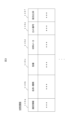
- FIG. 11 is a diagram showing an example of material information.
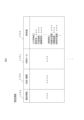
- FIG. 4 is a diagram showing an example of physical property information.
- FIG. 13 is a diagram showing an example of a formula and a graph used to calculate liquidity.
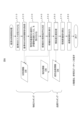
- FIG. 11 is a flow diagram showing an example of a recommended material search process.
- FIG. 11 is a flow diagram showing an example of a similarity comparison process.
- FIG. 13 is a diagram showing an example of a data plot of a reference material and a candidate material.
- FIG. 13 is a diagram showing an example of distribution of forming quality of a standardized reference material and a candidate material.
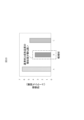
- 11 is a diagram showing an example of the relationship between the Euclidean distance between a reference material and a candidate material and the similarity of molding quality.
- FIG. 11 is a diagram showing
- the computer executes the program using a processor (e.g., CPU: Central Processing Unit, GPU: Graphics Processing Unit) and performs the processing defined in the program while using storage resources (e.g., memory resources) and interface devices (e.g., communication ports). Therefore, the processor may be the entity that executes the processing performed by the program.
- a processor e.g., CPU: Central Processing Unit, GPU: Graphics Processing Unit
- storage resources e.g., memory resources
- interface devices e.g., communication ports
- the subject of processing performed by executing a program may be a controller, device, system, computer, or node having a processor.
- the subject of processing performed by executing a program may be a calculation unit (processing unit), and may include a dedicated circuit that performs specific processing.
- a dedicated circuit is, for example, an FPGA (Field Programmable Gate Array), an ASIC (Application Specific Integrated Circuit), a CPLD (Complex Programmable Logic Device), etc.
- the program may also be installed on the computer from a program source.
- the program source may be, for example, a program distribution server or a computer-readable storage medium.
- the program distribution server may include a processor and a storage resource that stores the program to be distributed, and the processor of the program distribution server may distribute the program to be distributed to other computers.
- two or more programs may be realized as one program, and one program may be realized as two or more programs.
- the recommended material search system includes a recommended material search device and an external device, and searches for materials that have a high similarity to the molding quality of a reference material as recommended materials.
- the recommended material search system is capable of searching for various types of materials, but in this embodiment, materials used in injection molding (e.g. recycled materials such as resin and plastic materials) are used as an example for explanation.
- the recommended material search system is used to select suitable candidate materials (hereinafter sometimes referred to as “candidate materials,” “recommended materials,” or “recommended materials”) that can be used to manufacture a target product, for example, when a manufacturer is attempting to change from a material currently in use to another material (e.g., recycled material).
- the recommended material search device accepts input of, for example, materials currently being used in the manufacture of a product or materials expected to be used as reference materials (hereinafter sometimes referred to as "reference materials").
- reference materials materials currently being used in the manufacture of a product or materials expected to be used as reference materials
- the recommended material search device narrows down the candidate materials based on the values of physical properties that the search user places importance on, and then determines the recommended ranking of the candidate materials in order of their molding quality being closest to the reference material, and outputs the results as search results.
- This type of recommended material search system can select materials with similar molding quality to the materials used in current products as candidate materials and present the search results to manufacturers, etc. In other words, the system can realize the selection of more appropriate recommended materials that take molding quality into consideration.
- FIG. 1 is a diagram showing an example of the overall configuration of a recommended material search system 1000.
- the recommended material search device 100 acquires material data (e.g., material information and physical property information) from an external device 10 such as a computer of a material manufacturer or a recycler, and stores the data in a database.
- the recommended material search device 100 also receives a search request for a candidate material from the external device 10, which is, for example, a computer of a manufacturer.
- the recommended material search device 100 also searches for suitable candidate materials from a database using predetermined information (e.g., physical property information and molding quality information), and outputs a search result with a recommendation ranking based on the similarity to a reference material.
- predetermined information e.g., physical property information and molding quality information
- ⁇ General configuration of recommended material search device 100> 2 is a diagram showing an example of a schematic configuration of the recommended material searching device 100.
- the recommended material searching device 100 (processor system) is connected to an external device 10 so as to be able to communicate with each other via, for example, a communication cable or a predetermined communication network (for example, the Internet, a LAN (Local Area Network) or a WAN (Wide Area Network)) N.
- a communication cable or a predetermined communication network for example, the Internet, a LAN (Local Area Network) or a WAN (Wide Area Network) N.
- the external device 10 is a device that transmits various information to the recommended material search device 100.
- the external device 10 is, for example, a computer of a material manufacturer or a recycler, and transmits material data to the recommended material search device 100. (e.g., material information, physical property information, etc.)
- the external device 10 is a device that issues search requests to the recommended material search device 100 and displays search results.
- the external device 10 corresponds to a computer of a business entity, such as a manufacturer, that uses the search service provided by this system.
- the recommended material searching device 100 is a processor system that executes various processes by having the processor 20 read programs and various information stored in the memory resource 30. Specifically, the recommended material searching device 100 executes a recommended material searching process that searches for a recommended material (candidate material) that has a similar forming quality to a reference material. The details of this process will be described later.
- the recommended material search device 100 is, for example, a server computer, a cloud server, or a personal computer, and is a system that includes at least one of these computers.
- the recommended material search device 100 has a processor 20, a memory resource 30, an NI (Network Interface Device) 40, and a UI (User Interface Device) 50.
- NI Network Interface Device
- UI User Interface Device
- the processor 20 is an arithmetic device that reads the program 210 stored in the memory resource 30 and executes the processing corresponding to the program 210.
- Examples of the processor 20 include a microprocessor 20, a CPU (Central Processing Unit), a GPU (Graphics Processing Unit), an FPGA (Field Programmable Gate Array), or other semiconductor devices capable of performing calculations.
- Memory resource 30 is a storage device that stores various types of information.
- memory resource 30 is a non-volatile or volatile storage medium such as RAM (Random Access Memory) or ROM (Read Only Memory).
- RAM Random Access Memory
- ROM Read Only Memory
- memory resource 30 may also be a rewritable storage medium such as a flash memory, a hard disk, or an SSD (Solid State Drive), or a USB (Universal Serial Bus) memory, a memory card, or a hard disk.
- the NI 40 is a communication device that communicates information with the external device 10.
- the NI 40 communicates information with the external device 10 via a predetermined communication network N, such as a LAN or the Internet. Unless otherwise specified below, it is assumed that information communication between the recommended material search device 100 and the external device 10 is performed via the NI 40.
- the UI 50 is an input device that inputs instructions from the user (operator) to the recommended material search device 100, and an output device that outputs information generated by the recommended material search device 100.
- input devices include a keyboard, a touch panel, a pointing device such as a mouse, and a voice input device such as a microphone.
- output devices include, for example, displays, printers, and voice synthesizers.
- user operations on the recommended material search device 100 are assumed to be performed via the UI 50.
- each configuration, function, processing means, etc. of the recommended material search device 100 may be realized in part or in whole by hardware, for example by designing it as an integrated circuit. Furthermore, the recommended material search device 100 may also realize each function in part or in whole by software, or by a combination of software and hardware. Furthermore, the recommended material search device 100 may use hardware having fixed circuits, or may use hardware having at least some of the circuits that are changeable.
- the recommended material search device 100 can also realize a system by having a user (operator) implement some or all of the functions and processes realized by each program.
- the programs executed by the recommended material search device 100 may be stored in a non-volatile storage medium that can be read by the device.
- the programs stored in the non-volatile storage medium may be directly read by the recommended material search device 100, or a processor system for program distribution may read the programs from the medium and then transmit (distribute) the programs to the recommended material search device 100.
- Examples of non-volatile storage media include the non-volatile memory described as the memory resource 30, but other optical disk media may also be used.
- the material information DB 110 is a database that stores material information.
- the material information includes information about various materials (including virgin materials and recycled materials) used in the manufacture of products.
- identification information 110a, material name/type 110b, model number 110c, material manufacturer 110d, lot number 110e, and blending ratio 110f are registered in association with each other.
- FIG. 3 shows an example of material information.
- identification information 110a is information for uniquely identifying materials registered in each record of the material information.
- Name/type 110b is information indicating the name and type of material (for example, type of resin or plastic material).
- Model number 110c, material manufacturer 110d, and lot number 110e are information indicating the material model number, material manufacturer, and lot number, respectively.
- Mixing ratio 110f is information indicating, for example, the mixing ratio of virgin material to recycled material.
- the physical property information DB 120 is a database that stores physical property information.
- the physical property information includes the physical property values of each material. Specifically, the physical property information includes identification information 120a and the name of the material. A type 120b, a material manufacturer 120c, and a physical property value 120d are registered in association with each other.
- FIG. 4 shows an example of physical property information.
- identification information 120a is information that uniquely identifies a material, and corresponds to the identification information of the material information.
- Name/type 120b and material manufacturer 120c are information that respectively indicate the name and type of the material, and the manufacturer of the material.
- the physical property values 120d are information about the physical properties of each material, and physical properties such as mechanical properties and thermal properties and their values are registered.
- mechanical properties include, for example, elastic modulus, tensile strength, and impact properties
- thermal properties include, for example, crystallization temperature, melting temperature, and thermal deformation temperature. Note that these physical properties are only examples, and in addition to the above examples, various types of physical properties and their values are registered in the physical property information.
- the molding quality information DB 130 is a database that stores molding quality information.
- the molding quality information includes information on molding quality, such as the fluidity (viscosity characteristic amount) and shrinkage of a material. In the present embodiment, the following description will be given taking the fluidity and shrinkage as examples of molding quality.
- Fluidity is information that indicates the fluidity of a material, and is calculated, for example, based on the output value from a pressure sensor when prototyping test pieces using an injection molding machine.
- Shrinkage is information that indicates the shrinkage of a material, and is obtained, for example, based on dimensional measurements of the test pieces.
- Such prototypes are made multiple times (e.g., 10 times) for each combination of material type, model number, material manufacturer, and lot number, and the values related to fluidity and shrinkage are registered in the molding quality information each time.
- Figure 5 shows an example of a formula and graph used to calculate fluidity (viscosity characteristic).
- the graph shows the relationship between the sensor pressure P and time t when the speed is controlled at a constant speed from the speed control start time tint to the end time tvend, and pressure control is performed with variable pressure after tvend.
- the viscosity characteristic ( ⁇ index) is the characteristic of the speed controlled section (tint to tvend).
- the value of fluidity (viscosity characteristic) is calculated based on the following formula (1).
- P(t) represents the total sensor pressure over time t.
- the values of fluidity and shrinkage are registered in the molding quality information in association with the material identification information (corresponding to the identification information in the material information) and the number of prototypes (e.g., nth time).
- the environmental information DB 140 is a database that stores environmental information.
- the environmental information includes information related to environmental load, such as the amount of carbon dioxide emissions.
- information on environmental load and identification information of materials are registered in association with each other.
- the material search program 211 is a program for searching for recommended materials (candidate materials). Specifically, the material search program 211 executes a recommended material search process. More specifically, the material search program 211 searches a database for candidate materials and outputs the search results with a recommendation ranking based on the similarity with the forming quality of a reference material.
- ⁇ Processing Description> 6 is a flow diagram showing an example of a recommended material search process. This process is executed by the processor 20 that has read the material search program 211 when the recommended material search device 100 receives a search request for a recommended material from the external device 10.
- the processor 20 accepts input of the reference material from the external device 10 (step S10). Specifically, the processor 20 accepts input of, for example, the name and type of the reference material from a search user of the external device 10.
- the processor 20 acquires the material information of the reference material that has been input (step S20). Specifically, the processor 20 retrieves the corresponding material information from the material information DB 110 based on the name and type of the input reference material. The processor 20 also acquires the corresponding physical property information and molding quality information from the physical property information DB 120 and molding quality information DB 130, respectively, based on the identification information 110a of the retrieved material information.
- the processor 20 accepts the selection of a physical property evaluation item and the input of an evaluation physical property value (step S30). Specifically, the processor 20 accepts the selection of a physical property evaluation item that the search user places importance on from among a plurality of physical property evaluation items that correspond to the physical property values 120d in the physical property information of the reference material, such as the elastic modulus in mechanical properties and the crystallization temperature in thermal properties. For example, if the elastic modulus, tensile strength, and melting temperature are registered as the physical property values 120d in the physical property information of the reference material, the processor 20 accepts the selection of the physical property evaluation items that the search user places importance on from among these (e.g., tensile strength and melting temperature).
- the processor 20 accepts the selection of the physical property evaluation items that the search user places importance on from among these (e.g., tensile strength and melting temperature).
- the processor 20 also accepts input of evaluation property values for the selected physical property evaluation items. For example, if modulus of elasticity and crystallization temperature are selected as physical property evaluation items, the processor 20 accepts the numerical range of modulus of elasticity and crystallization temperature desired (accepted) by the search user as the evaluation property value.
- the processor 20 determines search conditions for the candidate materials (step S40). Specifically, the processor 20 determines the input physical property evaluation items and evaluation physical property values as search conditions for the candidate materials.
- the processor 20 may also include the type of reference material in the search conditions. By including the type of reference material as a search condition, the processor 20 can narrow the search range to a narrower range, thereby reducing the processing load.
- the processor 20 executes a search for candidate materials (step S50). Specifically, the processor 20 searches the physical property information DB 120 and the material information DB 110 based on the search conditions, and identifies candidate materials that satisfy the search conditions. Note that typically, multiple candidate materials that satisfy the search conditions are identified.
- the processor 20 executes a similarity comparison process (step S60). Specifically, the processor 20 compares the similarity between the reference material and the candidate material based on the Euclidean distance between the two materials.
- FIG. 7 is a flow diagram showing an example of a similarity comparison process.
- the processor 20 generates a data plot of the reference material and the candidate material (step S061). Specifically, the processor 20 generates a data plot of the reference material and the candidate material based on predetermined quality evaluation items. More specifically, the processor 20 generates a data plot in which the shrinkage of each of the reference material and the candidate material is quality evaluation item 1 (horizontal axis) and the fluidity is quality evaluation item 2 (vertical axis).
- Figure 8 shows an example of a data plot for a reference material and a candidate material. As shown in the figure, even if the reference material and candidate materials are materials with the same lot number, there is some variation in the molding quality for each measurement. For this reason, the data plot is represented by a cloud of points that show the variation (distribution) of molding quality for each of the reference material and candidate materials.
- the processor 20 standardizes the reference material and the candidate materials based on the statistics (step S062).
- the data plots are data in which the values of the quality evaluation items for different types of materials are expressed as a point cloud, and therefore the absolute values are not consistent. Therefore, the processor 20 uses the data plots to standardize the reference material and the candidate materials based on statistics such as the average value and standard deviation of the materials.
- the normalization is performed using the following equations (2) and (3).
- X'Ai indicates the position of candidate material A in the horizontal direction after standardization.
- XAi indicates the plot position of candidate material A in the horizontal direction before standardization.
- Xo indicates the average value in the horizontal direction of the reference material before standardization.
- ⁇ xo indicates the standard deviation in the horizontal direction of the reference material before standardization.
- Y'Ai indicates the position of the candidate material A in the vertical axis direction after standardization.
- YAi indicates the plot position of the candidate material A in the vertical axis direction before standardization.
- Yo indicates the average value in the vertical axis direction of the reference material before standardization.
- ⁇ yo indicates the standard deviation in the vertical axis direction of the reference material before standardization.
- equations (2) and (3) are used to normalize other candidate materials in a similar manner.
- Figure 9 shows an example of the distribution of forming quality for standardized reference material and candidate materials. Standardization quantifies the variation in forming quality for the reference material and each candidate material, making them mutually comparable.
- the processor 20 calculates the Euclidean distance used in the similarity comparison (step S063). Specifically, the processor 20 calculates the Euclidean distance between the point group (cluster) of the reference material and the point group (cluster) of the candidate material using a known method such as the group averaging method. The calculation of the Euclidean distance d is performed using the following formula (4).
- the above formula (4) represents the sum of the distances of all the standardized plotted points.
- n indicates the number of plots of candidate material A.
- m indicates the number of plots of the reference material.
- i and j are subscripts indicating a point of the sum.
- the formula (4) is also used in the case of other candidate materials.
- the processor 20 compares the similarity between the reference material and the candidate materials (step S64). Specifically, the processor 20 compares the similarity between the reference material and each candidate material based on the magnitude of the Euclidean distance. More specifically, the processor 20 evaluates that the closer the Euclidean distance, the higher the similarity. This is because the similarity is proportional to the Euclidean distance between the reference material and the recommended material, which becomes comparable by standardizing the molding quality.
- the processor 20 also determines the recommendation order of the candidate materials based on the comparison of the similarities (step S65). Specifically, the processor 20 determines the recommendation order of the candidate materials by assigning a higher recommendation order to the materials with higher similarities.
- FIG. 10 is a diagram showing an example of the relationship between the Euclidean distance between a reference material and a candidate material, and the similarity of molding quality.
- the example shown shows that the Euclidean distance from the reference material is closest to the candidate material B, C, and A in that order.
- the processor 20 evaluates the candidate materials B, C, and A in order as having the highest similarity to the molding quality of the reference material, and determines the recommended ranking of each candidate material according to this order.
- step S70 ( Figure 6).
- the processor 20 calculates the environmental impact based on the environmental information (step S70). Specifically, the processor 20 identifies the corresponding environmental information based on the identification information of the candidate material. The processor 20 also uses the identified environmental information to calculate the environmental impact related to a specific environmental load, such as the amount of carbon dioxide emissions. Note that the environmental impact may be the numerical value related to the environmental load registered in the environmental information.
- the processor 20 outputs the search results (step S80). Specifically, the processor 20 generates search results that associate material information for each candidate material with a recommendation ranking, and outputs (transmits) the search results to the search user's computer.
- the processor 20 may also include physical property information and molding quality information for the candidate materials in the search results.
- This type of recommended material search system makes it possible to select more appropriate recommended materials that take molding quality into consideration.
- the recommended material search device quantifies the variation in molding quality such as fluidity and shrinkage, and determines the recommended order by comparing the similarity between the standardized reference material and the candidate materials. Therefore, the recommended material search system can search for recommended materials with appropriate molding quality similar to the molding quality of the reference material.
- search results include information about the environmental impact of the recommended materials, so search users can select suitable materials while also taking the environmental impact into consideration.
- the recommended material search device 100 may also add the cost of the recommended material to the search results.
- the cost-related information may be managed, for example, by linking it to various materials in the material information.
- the search user can select a suitable material by referring to the cost of the recommended material in addition to the similarity to the reference material and the environmental impact.
- the above embodiment was described on the assumption that the material information DB 110, the physical property information DB 120, the molding quality DB, and the environmental information DB 140 are stored in advance in the memory resource 30, but these databases may be stored in another computer (e.g., a cloud server). That is, in this case, the recommended material search system 1000 includes a computer (cloud server) that stores the databases.
- the recommended material search device 100 searches for and acquires the target material information, physical property information, molding quality information, and environmental information from the database of the computer (cloud server) when executing the recommended material search process.
- a recommended material search system configured in this way can also enable the selection of more appropriate recommended materials that take molding quality into consideration.
- the present invention is not limited to the above-mentioned embodiments and modifications, but includes various other embodiments and modifications.
- the above-mentioned embodiments have been described in detail to clearly explain the present invention, and are not necessarily limited to those having all of the configurations described.
- it is possible to replace part of the configuration of one embodiment with the configuration of another embodiment or modification and it is also possible to add the configuration of another embodiment to the configuration of one embodiment.
- control lines and information lines are those that are considered necessary for the explanation, and do not necessarily show all the control lines and information lines in the product. In reality, it can be considered that almost all components are interconnected.
Landscapes
- Engineering & Computer Science (AREA)
- Theoretical Computer Science (AREA)
- Databases & Information Systems (AREA)
- General Physics & Mathematics (AREA)
- Physics & Mathematics (AREA)
- Business, Economics & Management (AREA)
- General Engineering & Computer Science (AREA)
- Data Mining & Analysis (AREA)
- Manufacturing & Machinery (AREA)
- Human Resources & Organizations (AREA)
- Primary Health Care (AREA)
- Health & Medical Sciences (AREA)
- Economics (AREA)
- General Health & Medical Sciences (AREA)
- Mechanical Engineering (AREA)
- Marketing (AREA)
- Computational Linguistics (AREA)
- Strategic Management (AREA)
- Tourism & Hospitality (AREA)
- General Business, Economics & Management (AREA)
- Management, Administration, Business Operations System, And Electronic Commerce (AREA)
- Injection Moulding Of Plastics Or The Like (AREA)
- Information Retrieval, Db Structures And Fs Structures Therefor (AREA)
Abstract
Description
図1は、推奨材料検索システム1000の全体構成の一例を示した図である。図示するように、推奨材料検索装置100は、例えば、材料メーカやリサイクラの計算機といった外部装置10から材料データ(例えば、材料情報や物性情報など)を取得し、データベースに格納する。また、推奨材料検索装置100は、例えば、製造メーカの計算機である外部装置10から候補材の検索要求を受け付ける。また、推奨材料検索装置100は、所定情報(例えば、物性情報や成形品質情報)を用いて好適な候補材をデータベースから検索し、基準材との類似度に基づく推奨順位を付帯した検索結果を出力する。
図2は、推奨材料検索装置100の概略構成の一例を示した図である。図示するように、推奨材料検索装置100(プロセッサシステム)は、例えば通信ケーブルや所定の通信ネットワーク(例えば、インターネット、LAN(Local Area Network)あるいはWAN(Wide Area Network)など)Nにより外部装置10と相互通信可能に接続されている。
外部装置10は、推奨材料検索装置100へ各種の情報を送信する装置である。この場合、外部装置10は、例えば材料メーカやリサイクラの計算機であって、推奨材料検索装置100に対して材料データ(例えば、材料情報や物性情報など)を送信する。
推奨材料検索装置100は、メモリリソース30に格納されたプログラムや各種の情報をプロセッサ20が読み込むことにより、様々な処理を実行するプロセッサシステムである。具体的には、推奨材料検索装置100は、基準材の成形品質に類似する推奨材(候補材)を検索する推奨材料検索処理を実行する。なお、当該処理の詳細については後述する。
材料情報DB110は、材料情報を格納しているデータベースである。材料情報には、製品の製造に用いられる各種の材料(バージン材や再生材を含む)に関する情報が登録されている。具体的には、材料情報には、識別情報110aと、材料の名称・種類110bと、型番110cと、材料メーカ110dと、ロット番号110eと、配合比率110fと、が対応付けられて登録されている。
物性情報DB120は、物性情報を格納しているデータベースである。物性情報には、各材料の物性値が登録されている。具体的には、物性情報には、識別情報120aと、材料の名称・種類120bと、材料メーカ120cと、物性値120dと、が対応付けられて登録されている。
成形品質情報DB130は、成形品質情報を格納しているデータベースである。成形品質情報には、例えば、材料の流動性(粘性特徴量)や収縮性など、成形品質に関する情報が登録されている。なお、本実施形態では、流動性および収縮性を成形品質の一例として以下の説明を行う。

環境情報DB140は、環境情報を格納しているデータベースである。なお、環境情報には、環境負荷に関する情報であって、例えば二酸化炭素の排出量などを示す情報が登録されている。具体的には、環境情報には、環境負荷に関する情報と、材料の識別情報(材料情報の識別情報に対応)と、が対応付けられて登録されている。
材料検索プログラム211は、推奨材料(候補材)を検索するプログラムである。具体的には、材料検索プログラム211は、推奨材料検索処理を実行する。より具体的には、材料検索プログラム211は、データベースから候補材を検索し、基準材の成形品質との類似度に基づく推奨順位を付帯した検索結果を出力する。
図6は、推奨材料検索処理の一例を示したフロー図である。当該処理は、推奨材料検索装置100が推奨材料の検索要求を外部装置10から受け付けると、材料検索プログラム211を読み込んだプロセッサ20により実行される。



Claims (13)
- 1以上のプロセッサと、1以上のメモリリソースと、を有する推奨材料検索システムであって、
前記メモリリソースは、材料検索プログラムを記憶し、
前記材料検索プログラムを実行することで、前記プロセッサは、
所定の物性評価項目および物性値を検索条件として推奨材を検索し、
検索された前記推奨材の成形品質と、基準材の成形品質と、の類似度の比較に基づき前記推奨材の推奨順位を決定し、
前記推奨材に前記推奨順位を対応付けた検索結果を出力する
ことを特徴とする推奨材料検索システム。 - 請求項1に記載の推奨材料検索システムであって、
前記成形品質は、前記推奨材および前記基準材の流動性および収縮性を示す情報である
ことを特徴とする推奨材料検索システム。 - 請求項1に記載の推奨材料検索システムであって、
前記プロセッサは、
前記成形品質の統計量に基づき前記推奨材および前記基準材を基準化し、基準化後の前記推奨材と前記基準材との類似度を比較する
ことを特徴とする推奨材料検索システム。 - 請求項3に記載の推奨材料検索システムであって、
前記プロセッサは、
前記基準化後の前記推奨材のクラスタと前記基準材のクラスタとの間のユークリッド距離に基づき類似度を比較し、
前記ユークリッド距離が近いほど類似度が高いと評価し、
前記基準材との類似度が高い前記推奨材に高い推奨順位を付与する
ことを特徴とする推奨材料検索システム。 - 請求項1に記載の推奨材料検索システムであって、
前記プロセッサは、
前記推奨材の環境負荷を計算し、前記検索結果に含める
ことを特徴とする推奨材料検索システム。 - 請求項1に記載の推奨材料検索システムであって、
前記プロセッサは、
前記基準材に関する物性情報の中から対応する物性評価項目の選択と、物性値の入力を受け付けて、前記推奨材を検索する
ことを特徴とする推奨材料検索システム。 - 請求項1に記載の推奨材料検索システムであって、
前記基準材は、製品に使用している現行の材料または使用を想定している材料であり、
前記推奨材は、再生材である
ことを特徴とする推奨材料検索システム。 - 1以上のプロセッサと、1以上のメモリリソースと、を有する推奨材料検索システムが行う推奨材料検索方法であって、
前記メモリリソースは、材料検索プログラムを記憶し、
前記材料検索プログラムを実行することで、前記プロセッサは、
所定の物性評価項目および物性値を検索条件として推奨材を検索するステップと、
検索された前記推奨材の成形品質と、基準材の成形品質と、の類似度の比較に基づき前記推奨材の推奨順位を決定するステップと、
前記推奨材に前記推奨順位を対応付けた検索結果を出力するステップと、を行う
ことを特徴とする推奨材料検索方法。 - 請求項8に記載の推奨材料検索方法であって、
前記プロセッサは、
前記推奨材の推奨順位を決定するステップにおいて、
前記成形品質の統計量に基づき前記推奨材および前記基準材を基準化するステップと、
基準化後の前記推奨材と前記基準材との類似度を比較するステップと、を行う
ことを特徴とする推奨材料検索方法。 - 請求項9に記載の推奨材料検索方法であって、
前記プロセッサは、
前記推奨材の推奨順位を決定するステップにおいて、
前記基準化後の前記推奨材のクラスタと前記基準材のクラスタとの間のユークリッド距離に基づき類似度を比較するステップを行い、
前記ユークリッド距離が近いほど類似度が高いと評価し、
前記基準材との類似度が高い前記推奨材に高い推奨順位を付与する
ことを特徴とする推奨材料検索方法。 - 1以上のプロセッサと、1以上のメモリリソースと、を有する推奨材料検索システムの前記プロセッサが前記メモリリソースから読み込んで実行するプログラムであって、
前記メモリリソースは、材料検索プログラムを記憶し、
前記プロセッサが実行する前記材料検索プログラムは、
所定の物性評価項目および物性値を検索条件として推奨材を検索し、
検索された前記推奨材の成形品質と、基準材の成形品質と、の類似度の比較に基づき前記推奨材の推奨順位を決定し、
前記推奨材に前記推奨順位を対応付けた検索結果を出力する
ことを特徴とするプログラム。 - 請求項11に記載のプログラムであって、
前記プロセッサが実行する前記材料検索プログラムは、
前記成形品質の統計量に基づき前記推奨材および前記基準材を基準化し、基準化後の前記推奨材と前記基準材との類似度を比較する
ことを特徴とするプログラム。 - 請求項12に記載のプログラムであって、
前記プロセッサが実行する前記材料検索プログラムは、
前記基準化後の前記推奨材のクラスタと前記基準材のクラスタとの間のユークリッド距離に基づき類似度を比較し、
前記ユークリッド距離が近いほど類似度が高いと評価し、
前記基準材との類似度が高い前記推奨材に高い推奨順位を付与する
ことを特徴とするプログラム。
Priority Applications (1)
| Application Number | Priority Date | Filing Date | Title |
|---|---|---|---|
| CN202380088404.8A CN120418792A (zh) | 2023-03-27 | 2023-08-15 | 推荐材料检索系统、推荐材料检索方法以及程序 |
Applications Claiming Priority (2)
| Application Number | Priority Date | Filing Date | Title |
|---|---|---|---|
| JP2023-049551 | 2023-03-27 | ||
| JP2023049551A JP2024138846A (ja) | 2023-03-27 | 2023-03-27 | 推奨材料検索システム、推奨材料検索方法およびプログラム |
Publications (1)
| Publication Number | Publication Date |
|---|---|
| WO2024202097A1 true WO2024202097A1 (ja) | 2024-10-03 |
Family
ID=92904644
Family Applications (1)
| Application Number | Title | Priority Date | Filing Date |
|---|---|---|---|
| PCT/JP2023/029481 Ceased WO2024202097A1 (ja) | 2023-03-27 | 2023-08-15 | 推奨材料検索システム、推奨材料検索方法およびプログラム |
Country Status (3)
| Country | Link |
|---|---|
| JP (1) | JP2024138846A (ja) |
| CN (1) | CN120418792A (ja) |
| WO (1) | WO2024202097A1 (ja) |
Families Citing this family (1)
| Publication number | Priority date | Publication date | Assignee | Title |
|---|---|---|---|---|
| AU2019355546B2 (en) | 2018-10-04 | 2022-09-22 | Cutsforth, Inc. | System and method for monitoring the status of one or more components of an electrical machine |
Citations (3)
| Publication number | Priority date | Publication date | Assignee | Title |
|---|---|---|---|---|
| CN1388460A (zh) * | 2001-05-29 | 2003-01-01 | 塑网科技股份有限公司 | 智能选择产品的方法 |
| JP2003203172A (ja) * | 2002-01-09 | 2003-07-18 | Hitachi Ltd | 樹脂材料発注納品支援システム及び発注サービス |
| JP2008165715A (ja) * | 2007-01-05 | 2008-07-17 | Nikon Corp | 流動解析システム |
-
2023
- 2023-03-27 JP JP2023049551A patent/JP2024138846A/ja active Pending
- 2023-08-15 WO PCT/JP2023/029481 patent/WO2024202097A1/ja not_active Ceased
- 2023-08-15 CN CN202380088404.8A patent/CN120418792A/zh active Pending
Patent Citations (3)
| Publication number | Priority date | Publication date | Assignee | Title |
|---|---|---|---|---|
| CN1388460A (zh) * | 2001-05-29 | 2003-01-01 | 塑网科技股份有限公司 | 智能选择产品的方法 |
| JP2003203172A (ja) * | 2002-01-09 | 2003-07-18 | Hitachi Ltd | 樹脂材料発注納品支援システム及び発注サービス |
| JP2008165715A (ja) * | 2007-01-05 | 2008-07-17 | Nikon Corp | 流動解析システム |
Non-Patent Citations (1)
| Title |
|---|
| ANONYMOUS: "Web-only ProductAlternative resin search engine ", PLASTICS TODAY (ACCESSED VIA THE WAYBACK MACHINE), 24 June 2021 (2021-06-24), XP093218912, Retrieved from the Internet <URL:https://web.archive.org/web/20210624025402/https://www.plasticstoday.com/web-only-productalternative-resin-search-engine> * |
Also Published As
| Publication number | Publication date |
|---|---|
| CN120418792A (zh) | 2025-08-01 |
| JP2024138846A (ja) | 2024-10-09 |
Similar Documents
| Publication | Publication Date | Title |
|---|---|---|
| US20220215133A1 (en) | Digital build package for manufacturing a product design | |
| KR102285242B1 (ko) | 스크류 형상 추정 장치, 스크류 형상 추정 방법 및 스크류 형상 추정 프로그램 | |
| JP4098539B2 (ja) | プロファイル情報の推薦方法、プログラム及び装置 | |
| JP2020087446A (ja) | 樹脂成形解析方法、プログラムおよび記録媒体 | |
| JP2010049693A (ja) | 製造設計及び工程分析システム | |
| CN108537249B (zh) | 一种密度峰值聚类的工业过程数据聚类方法 | |
| WO2024202097A1 (ja) | 推奨材料検索システム、推奨材料検索方法およびプログラム | |
| Bedi et al. | Multifactor optimization of FDM process parameters for development of rapid tooling using SiC/Al2O3-reinforced LDPE filament | |
| Kang et al. | Metamodel-based design optimization of injection molding process variables and gates of an automotive glove box for enhancing its quality | |
| Vinodh et al. | Parametric optimization of 3D printing process using MCDM method | |
| Athawale et al. | Selection of industrial robots using compromise ranking method | |
| CN115335205A (zh) | 装置、方法以及程序 | |
| JP2024107846A (ja) | 射出成形支援システム、射出成形支援方法、射出成形機およびプログラム | |
| Birosz et al. | Concurrent shape and build orientation optimization for FDM additive manufacturing using the principal stress lines (PSL) | |
| WO2020100726A1 (ja) | 樹脂成形解析方法、プログラムおよび記録媒体 | |
| Zhai et al. | Runner sizing in multiple cavity injection mould by non-dominated sorting genetic algorithm | |
| Yang et al. | A study on the practical application of the integrated ANN system for manufacturing the target quality of the injection molded product | |
| Yu et al. | Offline prediction of process windows for robust injection molding | |
| Liu et al. | A study on decision making of cutting stock with frustum of cone bars | |
| Herzog et al. | Comprehensive Surrogate Models for Predicting the Melt Conveying Characteristics of Channel Segments in High‐Performance Single‐Screw Extruders | |
| Huang et al. | Robust parameter search for IC tray injection molding using regrind resin | |
| Eifler et al. | Toward meaningful manufacturing variation data in design–feature based description of variation in manufacturing processes | |
| WO2026088898A1 (ja) | 材料検索・プロセス推薦装置、材料検索・プロセス推薦方法、および、プログラム | |
| Kumar | An application of Taguchi’s technique to improve the accuracy of rapid prototyped FDM parts | |
| KR102862062B1 (ko) | 시뮬레이션 장치, 시뮬레이션 방법 및 시뮬레이션 프로그램 |
Legal Events
| Date | Code | Title | Description |
|---|---|---|---|
| 121 | Ep: the epo has been informed by wipo that ep was designated in this application |
Ref document number: 23930729 Country of ref document: EP Kind code of ref document: A1 |
|
| WWE | Wipo information: entry into national phase |
Ref document number: 202380088404.8 Country of ref document: CN |
|
| WWP | Wipo information: published in national office |
Ref document number: 202380088404.8 Country of ref document: CN |
|
| NENP | Non-entry into the national phase |
Ref country code: DE |
|
| 122 | Ep: pct application non-entry in european phase |
Ref document number: 23930729 Country of ref document: EP Kind code of ref document: A1 |