WO2024201743A1 - 情報処理装置、情報処理方法、記憶媒体 - Google Patents
情報処理装置、情報処理方法、記憶媒体 Download PDFInfo
- Publication number
- WO2024201743A1 WO2024201743A1 PCT/JP2023/012632 JP2023012632W WO2024201743A1 WO 2024201743 A1 WO2024201743 A1 WO 2024201743A1 JP 2023012632 W JP2023012632 W JP 2023012632W WO 2024201743 A1 WO2024201743 A1 WO 2024201743A1
- Authority
- WO
- WIPO (PCT)
- Prior art keywords
- logical
- information processing
- upper bound
- logical constraints
- processing method
- Prior art date
- Legal status (The legal status is an assumption and is not a legal conclusion. Google has not performed a legal analysis and makes no representation as to the accuracy of the status listed.)
- Ceased
Links
Images




Classifications
-
- G—PHYSICS
- G06—COMPUTING OR CALCULATING; COUNTING
- G06N—COMPUTING ARRANGEMENTS BASED ON SPECIFIC COMPUTATIONAL MODELS
- G06N5/00—Computing arrangements using knowledge-based models
- G06N5/04—Inference or reasoning models
Definitions
- This disclosure relates to an information processing device, an information processing method, and a storage medium.
- Abduction is a reasoning method that takes an observation formula and background knowledge, and outputs the best hypothesis (a solution hypothesis) among the formulas (hypotheses) that are consistent with the background knowledge and that deductively derive the observation formula, based on a function (evaluation function) that expresses the merits of each candidate as a real value.
- Non-Patent Document 1 which enumerates best hypothesis candidates (candidate hypotheses) from an observation logical formula and background knowledge, converts the problem of searching for the best hypothesis from those candidates into an equivalent constrained combinatorial optimization problem such as an integer linear programming problem, and obtains the best hypothesis using an external solver.
- the constraints (logical constraints) that each candidate hypothesis must satisfy to ensure consistency with the background knowledge are enumerated at the same time as the candidate hypotheses are enumerated, and when an external solver is used to search for an optimal solution, these are expressed as constraints in the target constrained combinatorial optimization problem, ensuring that the optimal solution obtained is consistent.
- Non-Patent Document 2 Another existing method for handling logical constraints in abductive reasoning is a method shown in Non-Patent Document 2, which does not enumerate logical constraints when enumerating candidate hypotheses, but instead obtains a provisional solution using an external solver and then judges whether the solution is inconsistent with the logical constraints.
- the logical constraints related to the transitive laws that hold between equivalence relations among the logical constraints are the target, and the logical constraints are not enumerated when enumerating candidate hypotheses, but rather an external solver is used to obtain a provisional solution, and the equivalence relations that hold in the solution are judged for consistency with the logical constraints related to the transitive laws, and if it is confirmed that the solution is inconsistent, the solution is output as the optimal solution.
- the logical constraint is added as a constraint in the constrained combinatorial problem being solved by the external solver, and a provisional solution is obtained again by the external solver.
- This type of inference method is called Cutting Plane Inference.
- Cutting Plane Inference only targets specific types of logical constraints that have been determined in advance. Therefore, there is a problem in that calculation speed drops significantly in cases where a large number of types of logical constraints that are not the target of Cutting Plane Inference are listed. On the other hand, it is possible to target all logical constraints to Cutting Plane Inference, but in that case, it is necessary to run an external solver multiple times to obtain a provisional solution until a consistent solution is obtained, which is also inefficient.
- the objective of this disclosure is to provide an information processing device that can solve the problem described above, that is, the decrease in computational efficiency in abductive reasoning.
- An information processing device includes: a generation unit for generating candidate hypotheses based on the observation formula and background knowledge; a determination unit that calculates an upper bound on the number of logical constraints that the candidate hypothesis should satisfy based on an observation logical formula and background knowledge, and determines a processing method for the logical constraints when performing abductive reasoning in accordance with the calculated upper bound; an inference unit that processes the logical constraints in the determined processing method to perform a hypothetical inference on the candidate hypotheses; Equipped with The structure is as follows.
- an information processing method includes: generating candidate hypotheses based on the observation formula and the background knowledge; calculating an upper bound on the number of logical constraints that the candidate hypothesis should satisfy based on the observation logical formula and background knowledge, and determining a method for processing the logical constraints when performing abductive reasoning in accordance with the calculated upper bound; processing the logical constraints in the determined processing manner to perform abductive inference on the candidate hypotheses;
- the structure is as follows.
- a program includes: generating candidate hypotheses based on the observation formula and the background knowledge; calculating an upper bound on the number of logical constraints that the candidate hypothesis should satisfy based on the observation logical formula and background knowledge, and determining a method for processing the logical constraints when performing abductive reasoning in accordance with the calculated upper bound; processing the logical constraints in the determined processing manner to perform abductive inference on the candidate hypotheses; Have a computer carry out the process,
- the structure is as follows.
- this disclosure can improve the computational efficiency in abductive reasoning.
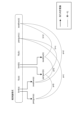
- FIG. 2 is a block diagram showing a configuration of the information processing device disclosed in FIG. 1 .
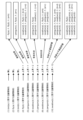
- FIG. 2 is a diagram showing a process performed by the information processing device disclosed in FIG. 1 .
- FIG. 2 is a diagram showing a process performed by the information processing device disclosed in FIG. 1 .
- FIG. 2 is a diagram showing a process performed by the information processing device disclosed in FIG. 1 .
- FIG. 11 is a block diagram showing a hardware configuration of an information processing device according to a second embodiment of the present disclosure.
- FIG. 11 is a block diagram showing a configuration of an information processing device according to a second embodiment of the present disclosure.
- Fig. 1 is a diagram for explaining the configuration of an information processing device
- Fig. 2 to Fig. 4 are diagrams for explaining the processing operation of the information processing device.
- the information processing device in this embodiment has a function of performing hypothetical inference to derive the best solution that is consistent with background knowledge from candidate hypotheses based on observation logical formulas.
- the information processing device in this embodiment can be applied to applications such as explanation generation and situation understanding using background knowledge and observation information. More specifically, the information processing device can be applied to medical systems, automatic systems that perform legal consultations, risk detection, and the like.
- the information processing device is composed of one or more information processing devices each having a calculation device and a storage device. As shown in FIG. 1, the information processing device is composed of a candidate hypothesis generation unit 1, a constraint processing method determination unit 2, a constraint enumeration unit 3, a candidate hypothesis conversion unit 4, an optimal solution search unit 5, and a consistency determination unit 6. Each function of the candidate hypothesis generation unit 1, the constraint processing method determination unit 2, the constraint enumeration unit 3, the candidate hypothesis conversion unit 4, the optimal solution search unit 5, and the consistency determination unit 6 can be realized by the calculation device executing a program for realizing each function stored in the storage device.
- the information processing device is also configured by storing an observation logical formula D1, background knowledge D2, a candidate hypothesis set D3, a logical constraint set D4, and a solution hypothesis D5 in the storage device. Each component will be described in detail below.
- the candidate hypothesis generation unit 1 receives an observation formula D1 and background knowledge D2 as inputs, and outputs a candidate hypothesis set D3.
- the observation formula D1 is a conjunction of first-order predicate logic literals that express observation information.
- a first-order predicate logic literal is either an atomic formula in first-order predicate logic or its negation.
- the background knowledge D2 is a set of inference rules. Inference rules are generally expressed as Horn clauses in first-order predicate logic. More specifically, a candidate hypothesis consisting only of an observation formula is used as an initial element, and an operation of generating a new candidate hypothesis by applying an inference rule to the candidate hypothesis is repeated until no new operation can be performed.
- the operation used at this time is basically that in the existing method, but other methods can also be used.
- the candidate hypothesis set D3 is a set of candidate hypotheses output by the candidate hypothesis generation unit 1. Each candidate hypothesis is expressed as a conjunction of first-order predicate logic literals.
- the constraint processing method determination unit 2 determines the processing method for the logical constraints to be satisfied in each of the candidate hypotheses included in the candidate hypothesis set D3.
- the processing method for the logical constraints a first processing method in which logical constraints are listed in advance together with the hypothesis candidates as described in the above-mentioned non-patent document 1, and a second processing method in which the consistency of the logical constraints of the candidate hypotheses is judged after the fact as described in the non-patent document 2, are set.
- the constraint processing method determination unit 2 calculates an upper bound on the number of logical constraints to be satisfied by the candidate hypotheses based on the observation logical formula and background knowledge, and determines whether to process the logical constraints when performing hypothetical inference by one of the above processing methods according to the calculated upper bound. At this time, the constraint processing method determination unit 2 determines the first processing method when the upper bound on the number of logical constraints calculated for the logical constraints is less than the set threshold, and determines the second processing method when the upper bound on the number of logical constraints calculated for the logical constraints is equal to or greater than the set threshold.
- the constraint processing method determination unit 2 determines that the number of logical constraints is small based on a preset criterion, it decides to adopt a first processing method that pre-enumerates logical constraints, and when the number of logical constraints is determined to be large based on a preset criterion, it decides to adopt a second processing method that does not pre-enumerate logical constraints but instead makes a post-determination.
- the constraint processing method determination unit 2 calculates the upper bound of the number of logical constraints, for example, as follows. First, the constraint processing method determination unit 2 focuses on each first-order predicate logic literal included in the observation logical formula, and calculates an upper bound of the number of sets of logical constraints related to the first-order predicate logic literal of interest. At this time, the constraint processing method determination unit 2 calculates the upper bound based on background knowledge including the first-order predicate logic literal of interest and the first-order predicate logic literal in the observation logical formula.
- the constraint processing method determination unit 2 identifies background knowledge including the first-order predicate logic literal of interest, and calculates the upper bound based on the number of combinations of first-order predicate logic literals in the observation logical formula that correspond to the first-order predicate logic literal included in the identified background knowledge. Note that the method of calculating the upper bound of the number of logical constraints by the constraint processing method determination unit 2 will be described in detail later.
- the constraint enumeration unit 3 (inference unit) enumerates the logical constraints that must be satisfied by each candidate hypothesis included in the candidate hypothesis set D3. That is, the constraint enumeration unit 3 enumerates the logical constraints when the constraint processing method determination unit 2 described above has decided to process the logical constraints using the first processing method.
- the constraint enumeration unit 3 then stores the enumerated logical constraints in a logical constraint set D4.
- the logical constraint set D4 is a set of logical constraints that must be satisfied by each candidate hypothesis. Each logical constraint is generally expressed as a conjunction of combinations that must not be satisfied among the first-order predicate logic literals that make up the candidate hypotheses.
- the candidate hypothesis conversion unit 4 receives the candidate hypothesis set D3 and the constraint set D4 as input, and outputs a constrained combinatorial optimization problem equivalent to a procedure for selecting the best candidate hypothesis that satisfies all constraints from the candidate hypothesis set.
- the conversion procedure used here basically uses the existing method described above, but other methods can also be used.
- the optimal solution search unit 5 receives as input the constrained combinatorial optimization problem generated by the candidate hypothesis conversion unit 4, and searches for the optimal solution to it using an external solver.
- This solution is the optimal solution to the constrained combinatorial optimization problem, but since it does not take into account all logical constraints, the candidate hypothesis selected by this solution is treated as a provisional solution hypothesis for abductive reasoning.
- the consistency determination unit 6 determines whether the provisional solution obtained by the optimal solution search unit 5 satisfies the logical constraints determined to be the second processing method described above in the constraint processing method determination unit 2, i.e., the logical constraints that are the subject of Cutting Plane Inference. If the provisional solution satisfies all of these logical constraints, this solution is output as a solution hypothesis D5. On the other hand, if there is an unsatisfied logical constraint, that logical constraint is added to the logical constraint set D4, and the process is looped back to the optimal solution search unit 5.
- the best hypothesis D5 is the candidate hypothesis included in the candidate hypothesis set D3 that satisfies all the logical constraints that need to be satisfied and is the best based on the evaluation function.
- the candidate hypothesis generation unit 1 generates a new candidate hypothesis by selecting and applying one applicable operation to an initial state candidate hypothesis consisting of only an observation logical formula.
- the operations that can be performed here are backward chaining and unification.
- Backward chaining is an operation that applies a rule contained in background knowledge to an existing candidate hypothesis backwards, and generates a new candidate hypothesis by matching the consequent of the rule (right side, conclusion) with a literal in the candidate hypothesis and adding a literal corresponding to the antecedent (left side, premise).
- Unification is a method that targets a pair of literals with the same predicate in an existing candidate hypothesis, and generates a new candidate hypothesis by adding an equivalence relationship between arguments so that the literals are identical.
- the candidate hypotheses generated by the candidate hypothesis generation unit 1 are stored in the candidate hypothesis set D3. An example of generating candidate hypotheses will be described later with reference to Figures 2 and 3 in the explanation of a specific example.
- the constraint processing method determination unit 2 determines the processing method for the logical constraints to be satisfied in each of the candidate hypotheses included in the candidate hypothesis set D3. More specifically, this process determines whether the logical constraints should be enumerated by the constraint enumeration unit 3, or whether the logical constraints should not be enumerated and should be judged by the consistency judgment unit 6 as the subject of Cutting Plane Inference. Any method may be used as the criterion for this judgment, but basically the upper bound of the number of logical constraints that can be enumerated is evaluated and the decision is made based on whether or not this value exceeds some threshold value. An example of the evaluation of the upper bound of logical constraints will be explained later in the explanation of a specific example with reference to Figures 2 and 3.
- the constraint enumeration unit 3 enumerates the logical constraints that should be satisfied for each candidate hypothesis. This process is basically the same as the existing method described above, and is realized by searching for combinations of literals that contradict each rule contained in the background knowledge and each literal contained in the candidate hypothesis.
- the enumerated logical constraints are stored in a logical constraint set D4.
- the candidate hypothesis conversion unit 4 outputs the corresponding constrained combinatorial optimization problem from the candidate hypothesis set D3 and the logical constraint set D4.
- the constrained combinatorial optimization problem that is output is expressed as an integer linear programming problem, but it may also be expressed as something else, such as a weighted satisfiability maximization problem.
- the variables in the combinatorial optimization problem correspond to the presence or absence of a literal in the candidate hypothesis, and the constraints in the combinatorial optimization problem are used to represent the logical constraints in the candidate hypothesis, prerequisites arising from the evaluation function, and the like.
- the objective function in the combinatorial optimization problem is designed to be equivalent to the evaluation function in abductive reasoning.
- the optimal solution search unit 5 searches for and outputs a tentative solution hypothesis from the candidate hypothesis set D3. This process is realized by using an external solver according to the type of problem output by the candidate hypothesis conversion unit 4. According to the method based on Non-Patent Document 1, an optimal solution is obtained using a solver for an integer linear programming problem, and the candidate hypothesis corresponding to the optimal solution is used as a tentative solution hypothesis.
- the consistency determination unit 6 determines whether the tentative solution obtained by the optimal solution search unit 5 satisfies the logical constraints that were the subject of Cutting Plane Inference in the constraint processing method determination unit 2. If the tentative solution satisfies all of these logical constraints, this solution is output as the best hypothesis D5. On the other hand, if there is an unsatisfied logical constraint, that logical constraint is added to the logical constraint set D4 and the process is looped back to the optimal solution search unit 5. This loop is repeated until a solution that satisfies all logical constraints is obtained or until all logical constraints have been added to the logical constraint set D4.
- the candidate hypothesis generation unit 1 generates a set of candidate hypotheses from the observation logical formula and background knowledge. More specifically, starting with a candidate hypothesis consisting only of the observation logical formula as the initial state, a set of candidate hypotheses is constructed by applying backward inference operations and unification operations as shown in Figure 3. In this way, candidate hypotheses such as those shown in Figure 3 are generated.
- the constraint processing method determination unit 2 determines a processing method for the logical constraints that each candidate hypothesis must satisfy.
- a processing method is determined for the logical constraints for each group defined by some criteria. For example, if the literals included in the candidate hypotheses are sorted by the order in which they appear, and then "logical constraints that include a specific literal and are composed only of literals that appeared before the appearance of that literal" are listed as one group, the logical constraints for the candidate hypotheses shown in Figure 3 are processed as groups as shown in Figure 4.
- the constraint processing method determination unit 2 estimates the upper limit of the number of enumerations for each group, and determines how to handle the group of logical constraints based on this value.
- the constraint enumeration unit 3 enumerates specific combinations of literals for the group of logical constraints that were the subject of pre-enumeration in the constraint processing method determination unit.
- the logical constraints for the candidate hypotheses shown in FIG. 3 are enumerated as shown in FIG. 4.
- the candidate hypothesis conversion unit 4 expresses and outputs a procedure for searching for the best hypothesis among the candidate hypotheses that are included in the candidate hypothesis set D3 and do not satisfy the combinations included in the logical constraint set D4 as a constrained combinatorial optimization problem.
- the procedure for searching for the best hypothesis is expressed as an equivalent integer linear programming problem.
- the optimal solution search unit 5 receives the constrained combinatorial optimization problem as an input from the candidate hypothesis conversion unit, searches for the best hypothesis, and outputs it. According to the method of Non-Patent Document 1, an integer linear programming problem is received as an input, and the best hypothesis is searched for by solving it using an external integer linear programming problem solver.
- the consistency determination unit 6 determines whether the best hypothesis obtained by the optimal solution search unit 5 is consistent with the logical constraints that were the subject of Cutting Plane Inference in the constraint processing method determination unit, and if it is consistent, outputs the hypothesis as the solution hypothesis D5. On the other hand, if a contradictory logical constraint is found, the logical constraint is added to the logical constraint set D4, and the process is looped to the optimal solution search unit 5.
- logical constraint (10) on the literal swallow(b) is verified for consistency by determining whether there is a combination of this literal with other literals included in the best hypothesis that contradicts the inference rules.
- the combination swallow(b) ⁇ !fly(b) contradicts the inference rules, so this combination is added to logical constraint set D4 as a logical constraint, and the process is looped again to optimal solution search unit 5.
- the second effect is that inference processing in hypothetical reasoning can be performed more efficiently than existing methods in terms of both memory and computation time. This is because, due to the first effect mentioned above, logical constraints that have a large number of enumerations are subject to Cutting Plane Inference, eliminating the need to explicitly enumerate those logical constraints, which would otherwise consume a large amount of memory and computation time.
- the third effect is that the entire abductive reasoning procedure can be performed more efficiently than existing methods in terms of both memory and calculation time. This is because the second effect mentioned above reduces the memory and calculation time required to enumerate logical constraints, and the second effect reduces the number of constraints in the constrained combinatorial optimization problem given to the solver, thereby reducing the memory and calculation time in the procedure of searching for an optimal solution by an external solver.
- Fig. 5 to Fig. 6 are block diagrams showing the configuration of an information processing device in embodiment 2. Note that this embodiment shows an outline of the configuration of the information processing device described in the above embodiment.
- the information processing device 100 is configured as a general information processing device, and is equipped with the following hardware configuration, as an example.
- ⁇ CPU Central Processing Unit
- ROM Read Only Memory
- RAM Random Access Memory
- Program group 104 loaded into RAM 103
- a storage device 105 for storing the program group 104
- a drive device 106 that reads and writes data from and to a storage medium 110 outside the information processing device.
- a communication interface 107 that connects to a communication network 111 outside the information processing device
- Input/output interface 108 for inputting and outputting data
- a bus 109 that connects each component
- FIG. 5 shows an example of the hardware configuration of the information processing device 100, and the hardware configuration of the information processing device is not limited to the above-mentioned case.
- the information processing device may be configured with a part of the above-mentioned configuration, such as not having the drive device 106.
- the information processing device may use a GPU (Graphic Processing Unit), a DSP (Digital Signal Processor), an MPU (Micro Processing Unit), an FPU (Floating point number Processing Unit), a PPU (Physics Processing Unit), a TPU (Tensor Processing Unit), a quantum processor, a microcontroller, or a combination of these.
- the information processing device 100 can be equipped with the generation unit 121, the determination unit 122, and the inference unit 123 shown in FIG. 6 by having the CPU 101 acquire and execute the program group 104.
- the program group 104 is stored in the storage device 105 or the ROM 102 in advance, for example, and the CPU 101 loads the program group 104 into the RAM 103 and executes it as necessary.
- the program group 104 may be supplied to the CPU 101 via the communication network 111, or may be stored in the storage medium 110 in advance, and the drive device 106 may read out the program and supply it to the CPU 101.
- the generation unit 121, the determination unit 122, and the inference unit 123 described above may be constructed with dedicated electronic circuits for realizing such means.
- the generation unit 121 generates candidate hypotheses based on the observation logical formula and background knowledge.
- the determination unit 122 calculates an upper bound on the number of logical constraints that a candidate hypothesis must satisfy based on the observation logical formula and background knowledge, and determines a processing method for the logical constraints when performing hypothetical inference according to the calculated upper bound. For example, the determination unit 122 determines, according to the calculated upper bound, either one of the first processing method for listing logical constraints in advance, or a second processing method for ex post determining the consistency of the logical constraints of the candidate hypothesis. At this time, the determination unit 122 calculates an upper bound for each predicate included in the observation logical formula based on the background knowledge including the predicate and the observation logical formula.
- the inference unit 123 processes the logical constraints using the determined processing method and performs hypothetical inference on the candidate hypotheses.
- Non-transitory computer readable medium includes various types of tangible storage medium.
- Examples of non-transitory computer readable medium include magnetic recording media (e.g., flexible disks, magnetic tapes, hard disk drives), magneto-optical recording media (e.g., magneto-optical disks), CD-ROM (Read Only Memory), CD-R, CD-R/W, and semiconductor memory (e.g., mask ROM, PROM (Programmable ROM), EPROM (Erasable PROM), flash ROM, RAM (Random Access Memory)).
- the program may also be supplied to a computer by various types of transitory computer readable medium. Examples of transitory computer readable medium include electrical signals, optical signals, and electromagnetic waves.
- the temporary computer-readable medium can provide the program to the computer via a wired communication path, such as an electric wire or optical fiber, or via a wireless communication path.
- the present disclosure has been described above with reference to the above-mentioned embodiments, but the present disclosure is not limited to the above-mentioned embodiments.
- Various modifications that can be understood by a person skilled in the art can be made to the configuration and details of the present disclosure within the scope of the present disclosure.
- at least one or more of the functions of the generation unit 121, the determination unit 122, and the inference unit 123 described above may be executed by an information processing device installed and connected anywhere on the network, that is, they may be executed by so-called cloud computing.
- (Appendix 1) a generation unit for generating candidate hypotheses based on the observation formula and background knowledge; a determination unit that calculates an upper bound on the number of logical constraints that the candidate hypothesis should satisfy based on an observation logical formula and background knowledge, and determines a processing method for the logical constraints when performing hypothetical reasoning in accordance with the calculated upper bound; an inference unit that processes the logical constraints in the determined processing method to perform a hypothetical inference on the candidate hypotheses;
- An information processing device comprising: (Appendix 2) 2. The information processing device according to claim 1, the determination unit determines, according to the calculated upper bound, one of a first processing method for enumerating the logical constraints in advance and a second processing method for ex post determining whether the candidate hypothesis is consistent with the logical constraints.
- Information processing device (Appendix 3) 3. The information processing device according to claim 2, the determination unit determines the first processing method when the calculated upper bound value is less than a preset threshold value, and determines the second processing method when the calculated upper bound value is equal to or greater than the threshold value.
- Information processing device. (Appendix 4) An information processing device according to any one of claims 1 to 3, the determination unit calculates an upper bound on the number of the logical constraints for each set of the logical constraints organized based on a predicate included in the observation logical formula, and determines the processing method for each set of the logical constraints in accordance with the calculated upper bound; the inference unit processes the logical constraints in the set in the processing method determined for each set of logical constraints, and performs a hypothetical inference on the candidate hypothesis.
- Information processing device (Appendix 5) 5. The information processing device according to claim 1, the determination unit calculates, for each predicate included in the observation logical formula, an upper bound on the number of the logical constraints associated with the predicate, and determines the processing method for the logical constraints in accordance with the calculated upper bound; the inference unit processes the logical constraint related to the predicate in the processing method determined for each predicate, and performs a hypothetical inference on the candidate hypothesis. Information processing device. (Appendix 6) 6. The information processing device according to claim 5, the determination unit calculates, for each predicate included in the observation logical formula, the upper bound based on the background knowledge including the predicate and the observation logical formula. Information processing device. (Appendix 7) 7.
- the determination unit for each antecedent predicate included in the observation logical formula, identifies the background knowledge including the predicate, and calculates the upper bound based on the number of combinations of the antecedent predicate in the observation logical formula corresponding to the antecedent predicate included in the identified background knowledge.
- Information processing device for each antecedent predicate included in the observation logical formula, identifies the background knowledge including the predicate, and calculates the upper bound based on the number of combinations of the antecedent predicate in the observation logical formula corresponding to the antecedent predicate included in the identified background knowledge.
- the information processing method further comprising: calculating an upper bound on the number of the logical constraints for each set of the logical constraints organized based on a predicate included in the observation logical formula, and determining the processing method for each set of the logical constraints in accordance with the calculated upper bound; processing the logical constraints in the set by the processing method determined for each set of logical constraints, thereby performing abductive inference on the candidate hypotheses; Information processing methods.
- (Appendix 12) generating candidate hypotheses based on the observation formula and the background knowledge; calculating an upper bound on the number of logical constraints that the candidate hypothesis should satisfy based on the observation logical formula and background knowledge, and determining a method for processing the logical constraints when performing abductive reasoning in accordance with the calculated upper bound; processing the logical constraints in the determined processing manner to perform abductive inference on the candidate hypotheses;
- a computer-readable storage medium that stores a program for causing a computer to execute processing.
Landscapes
- Engineering & Computer Science (AREA)
- Theoretical Computer Science (AREA)
- Computing Systems (AREA)
- Data Mining & Analysis (AREA)
- Evolutionary Computation (AREA)
- Physics & Mathematics (AREA)
- Computational Linguistics (AREA)
- General Engineering & Computer Science (AREA)
- General Physics & Mathematics (AREA)
- Mathematical Physics (AREA)
- Software Systems (AREA)
- Artificial Intelligence (AREA)
- Information Retrieval, Db Structures And Fs Structures Therefor (AREA)
Abstract
Description
観測論理式及び背景知識に基づいて候補仮説を生成する生成部と、
観測論理式及び背景知識に基づいて前記候補仮説が充足すべき論理制約の数の上界を算出し、算出した前記上界に応じて仮説推論を行う際における前記論理制約の処理方式を決定する決定部と、
決定された前記処理方式にて前記論理制約を処理して前記候補仮説に対する仮説推論を行う推論部と、
を備えた、
という構成をとる。
観測論理式及び背景知識に基づいて候補仮説を生成し、
観測論理式及び背景知識に基づいて前記候補仮説が充足すべき論理制約の数の上界を算出し、算出した前記上界に応じて仮説推論を行う際における前記論理制約の処理方式を決定し、
決定された前記処理方式にて前記論理制約を処理して前記候補仮説に対する仮説推論を行う、
という構成をとる。
観測論理式及び背景知識に基づいて候補仮説を生成し、
観測論理式及び背景知識に基づいて前記候補仮説が充足すべき論理制約の数の上界を算出し、算出した前記上界に応じて仮説推論を行う際における前記論理制約の処理方式を決定し、
決定された前記処理方式にて前記論理制約を処理して前記候補仮説に対する仮説推論を行う、
処理をコンピュータに実行させる、
という構成をとる。
本開示の第1の実施形態を、図1乃至図4を参照して説明する。図1は、情報処理装置の構成を説明するための図であり、図2乃至図4は、情報処理装置の処理動作を説明するための図である。
本実施形態における情報処理装置は、観測論理式による候補仮説から、背景知識と無矛盾な最良な解を導く仮説推論を行う機能を有する。これにより、本実施形態における情報処理装置は、例えば、背景知識と観測情報を用いた説明生成や状況理解などの用途に適用できる。より具体的には、医療システムや法律相談、リスク検知などを行う自動システムに適用できる。
次に、上述した情報処理装置の動作を、図1を参照して説明する。
次に、具体例を用いて上述した情報処理装置の動作を説明する。ここでは、図2に示すような観測論理式および背景知識に対して仮説推論を行う場合を考える。
以上のように、上述した情報処理装置によると、まず、第一の効果として、論理制約ごとの処理方式を、状況に応じて適切なものを選択できる。その理由は、個々の論理制約を列挙する前に、列挙される数の上界などを評価することによって、Cutting Plane Inferenceの対象とすべきかどうかを判定することができるためである。経験的に、列挙される論理制約の数が多いほどCutting Plane Inferenceの恩恵が強くなるため、列挙数の上界を判定基準として対象を選別することで、Cutting Plane Inferenceの恩恵を強く得られるような論理制約のみをその対象にすることができる。
次に、本開示の第2の実施形態を、図5乃至図6を参照して説明する。図5乃至図6は、実施形態2における情報処理装置の構成を示すブロック図である。なお、本実施形態では、上述した実施形態で説明した情報処理装置の構成の概略を示している。
・CPU(Central Processing Unit)101(演算装置)
・ROM(Read Only Memory)102(記憶装置)
・RAM(Random Access Memory)103(記憶装置)
・RAM103にロードされるプログラム群104
・プログラム群104を格納する記憶装置105
・情報処理装置外部の記憶媒体110の読み書きを行うドライブ装置106
・情報処理装置外部の通信ネットワーク111と接続する通信インタフェース107
・データの入出力を行う入出力インタフェース108
・各構成要素を接続するバス109
上記実施形態の一部又は全部は、以下の付記のようにも記載されうる。以下、本開示における情報処理装置、情報処理方法、プログラムの構成の概略を説明する。但し、本開示は、以下の構成に限定されない。
(付記1)
観測論理式及び背景知識に基づいて候補仮説を生成する生成部と、
観測論理式及び背景知識に基づいて前記候補仮説が充足すべき論理制約の数の上界を算出し、算出した前記上界に応じて仮説推論を行う際における前記論理制約の処理方式を決定する決定部と、
決定された前記処理方式にて前記論理制約を処理して前記候補仮説に対する仮説推論を行う推論部と、
を備えた情報処理装置。
(付記2)
付記1に記載の情報処理装置であって、
前記決定部は、算出した前記上界に応じて、前記論理制約を事前に列挙する第一の前記処理方式と、前記候補仮説の前記論理制約に対する無矛盾性を事後判定する第二の前記処理方式と、のうち、いずれか一方の前記処理方式を決定する、
情報処理装置。
(付記3)
付記2に記載の情報処理装置であって、
前記決定部は、算出した前記上界の値が予め設定された閾値未満である場合に、前記第一の処理方式を決定し、算出した前記上界の値が前記閾値以上である場合に、前記第二の処理方式を決定する、
情報処理装置。
(付記4)
付記1乃至3のいずれかに記載の情報処理装置であって、
前記決定部は、前記観測論理式に含まれる述語に基づいてまとめられた前記論理制約の集合毎に前記論理制約の数の前記上界を算出し、算出した前記上界の数に応じて前記論理制約の集合毎に前記処理方式を決定し、
前記推論部は、前記論理制約の集合毎に決定した前記処理方式にて当該集合内の前記論理制約を処理して前記候補仮説に対する仮説推論を行う、
情報処理装置。
(付記5)
付記1乃至4のいずれかに記載の情報処理装置であって、
前記決定部は、前記観測論理式に含まれる述語毎に、当該述語に関連する前記論理制約の数の前記上界を算出し、算出した前記上界に応じて前記論理制約の前記処理方式を決定し、
前記推論部は、前記述語毎に決定した前記処理方式にて当該述語に関連する前記論理制約を処理して前記候補仮説に対する仮説推論を行う、
情報処理装置。
(付記6)
付記5に記載の情報処理装置であって、
前記決定部は、前記観測論理式に含まれる前記述語毎に、当該述語を含む前記背景知識と前記観測論理式とに基づいて前記上界を算出する、
情報処理装置。
(付記7)
付記6に記載の情報処理装置であって、
前記決定部は、前記観測論理式に含まれる前記述語毎に、当該述語を含む前記背景知識を特定し、特定した前記背景知識に含まれる前記述語に対応する前記観測論理式内の前記述語の組み合わせの数に基づいて前記上界を算出する、
情報処理装置。
(付記8)
観測論理式及び背景知識に基づいて候補仮説を生成し、
観測論理式及び背景知識に基づいて前記候補仮説が充足すべき論理制約の数の上界を算出し、算出した前記上界に応じて仮説推論を行う際における前記論理制約の処理方式を決定し、
決定された前記処理方式にて前記論理制約を処理して前記候補仮説に対する仮説推論を行う、
情報処理方法。
(付記9)
付記8に記載の情報処理方法であって、
算出した前記上界に応じて、前記論理制約を事前に列挙する第一の前記処理方式と、前記候補仮説の前記論理制約に対する無矛盾性を事後判定する第二の前記処理方式と、のうち、いずれか一方の前記処理方式を決定する、
情報処理方法。
(付記10)
付記8又は9に記載の情報処理方法であって、
前記観測論理式に含まれる述語に基づいてまとめられた前記論理制約の集合毎に前記論理制約の数の前記上界を算出し、算出した前記上界の数に応じて前記論理制約の集合毎に前記処理方式を決定し、
前記論理制約の集合毎に決定した前記処理方式にて当該集合内の前記論理制約を処理して前記候補仮説に対する仮説推論を行う、
情報処理方法。
(付記11)
付記8乃至10のいずれかに記載の情報処理方法であって、
前記観測論理式に含まれる述語毎に、当該述語に関連する前記論理制約の数の前記上界を算出し、算出した前記上界に応じて前記論理制約の前記処理方式を決定し、
前記述語毎に決定した前記処理方式にて当該述語に関連する前記論理制約を処理して前記候補仮説に対する仮説推論を行う、
情報処理方法。
(付記12)
観測論理式及び背景知識に基づいて候補仮説を生成し、
観測論理式及び背景知識に基づいて前記候補仮説が充足すべき論理制約の数の上界を算出し、算出した前記上界に応じて仮説推論を行う際における前記論理制約の処理方式を決定し、
決定された前記処理方式にて前記論理制約を処理して前記候補仮説に対する仮説推論を行う、
処理をコンピュータに実行させるためのプログラムを記憶したコンピュータにて読み取り可能な記憶媒体。
2 制約処理方式決定部
3 制約列挙部
4 候補仮説変換部
5 最適探索部
6 無矛盾性判定部
D1 観測論理式
D2 背景知識
D3 候補仮説集合
D4 論理制約集合
D5 解仮説
100 情報処理装置
101 CPU
102 ROM
103 RAM
104 プログラム群
105 記憶装置
106 ドライブ装置
107 通信インタフェース
108 入出力インタフェース
109 バス
110 記憶媒体
111 通信ネットワーク
121 生成部
122 決定部
123 推論部
Claims (12)
- 観測論理式及び背景知識に基づいて候補仮説を生成する生成部と、
観測論理式及び背景知識に基づいて前記候補仮説が充足すべき論理制約の数の上界を算出し、算出した前記上界に応じて仮説推論を行う際における前記論理制約の処理方式を決定する決定部と、
決定された前記処理方式にて前記論理制約を処理して前記候補仮説に対する仮説推論を行う推論部と、
を備えた情報処理装置。 - 請求項1に記載の情報処理装置であって、
前記決定部は、算出した前記上界に応じて、前記論理制約を事前に列挙する第一の前記処理方式と、前記候補仮説の前記論理制約に対する無矛盾性を事後判定する第二の前記処理方式と、のうち、いずれか一方の前記処理方式を決定する、
情報処理装置。 - 請求項2に記載の情報処理装置であって、
前記決定部は、算出した前記上界の値が予め設定された閾値未満である場合に、前記第一の処理方式を決定し、算出した前記上界の値が前記閾値以上である場合に、前記第二の処理方式を決定する、
情報処理装置。 - 請求項1に記載の情報処理装置であって、
前記決定部は、前記観測論理式に含まれる述語に基づいてまとめられた前記論理制約の集合毎に前記論理制約の数の前記上界を算出し、算出した前記上界の数に応じて前記論理制約の集合毎に前記処理方式を決定し、
前記推論部は、前記論理制約の集合毎に決定した前記処理方式にて当該集合内の前記論理制約を処理して前記候補仮説に対する仮説推論を行う、
情報処理装置。 - 請求項1に記載の情報処理装置であって、
前記決定部は、前記観測論理式に含まれる述語毎に、当該述語に関連する前記論理制約の数の前記上界を算出し、算出した前記上界に応じて前記論理制約の前記処理方式を決定し、
前記推論部は、前記述語毎に決定した前記処理方式にて当該述語に関連する前記論理制約を処理して前記候補仮説に対する仮説推論を行う、
情報処理装置。 - 請求項5に記載の情報処理装置であって、
前記決定部は、前記観測論理式に含まれる前記述語毎に、当該述語を含む前記背景知識と前記観測論理式とに基づいて前記上界を算出する、
情報処理装置。 - 請求項6に記載の情報処理装置であって、
前記決定部は、前記観測論理式に含まれる前記述語毎に、当該述語を含む前記背景知識を特定し、特定した前記背景知識に含まれる前記述語に対応する前記観測論理式内の前記述語の組み合わせの数に基づいて前記上界を算出する、
情報処理装置。 - 観測論理式及び背景知識に基づいて候補仮説を生成し、
観測論理式及び背景知識に基づいて前記候補仮説が充足すべき論理制約の数の上界を算出し、算出した前記上界に応じて仮説推論を行う際における前記論理制約の処理方式を決定し、
決定された前記処理方式にて前記論理制約を処理して前記候補仮説に対する仮説推論を行う、
情報処理方法。 - 請求項8に記載の情報処理方法であって、
算出した前記上界に応じて、前記論理制約を事前に列挙する第一の前記処理方式と、前記候補仮説の前記論理制約に対する無矛盾性を事後判定する第二の前記処理方式と、のうち、いずれか一方の前記処理方式を決定する、
情報処理方法。 - 請求項8に記載の情報処理方法であって、
前記観測論理式に含まれる述語に基づいてまとめられた前記論理制約の集合毎に前記論理制約の数の前記上界を算出し、算出した前記上界の数に応じて前記論理制約の集合毎に前記処理方式を決定し、
前記論理制約の集合毎に決定した前記処理方式にて当該集合内の前記論理制約を処理して前記候補仮説に対する仮説推論を行う、
情報処理方法。 - 請求項8に記載の情報処理方法であって、
前記観測論理式に含まれる述語毎に、当該述語に関連する前記論理制約の数の前記上界を算出し、算出した前記上界に応じて前記論理制約の前記処理方式を決定し、
前記述語毎に決定した前記処理方式にて当該述語に関連する前記論理制約を処理して前記候補仮説に対する仮説推論を行う、
情報処理方法。 - 観測論理式及び背景知識に基づいて候補仮説を生成し、
観測論理式及び背景知識に基づいて前記候補仮説が充足すべき論理制約の数の上界を算出し、算出した前記上界に応じて仮説推論を行う際における前記論理制約の処理方式を決定し、
決定された前記処理方式にて前記論理制約を処理して前記候補仮説に対する仮説推論を行う、
処理をコンピュータに実行させるためのプログラムを記憶したコンピュータにて読み取り可能な記憶媒体。
Priority Applications (2)
| Application Number | Priority Date | Filing Date | Title |
|---|---|---|---|
| PCT/JP2023/012632 WO2024201743A1 (ja) | 2023-03-28 | 2023-03-28 | 情報処理装置、情報処理方法、記憶媒体 |
| JP2025509362A JPWO2024201743A1 (ja) | 2023-03-28 | 2023-03-28 |
Applications Claiming Priority (1)
| Application Number | Priority Date | Filing Date | Title |
|---|---|---|---|
| PCT/JP2023/012632 WO2024201743A1 (ja) | 2023-03-28 | 2023-03-28 | 情報処理装置、情報処理方法、記憶媒体 |
Publications (1)
| Publication Number | Publication Date |
|---|---|
| WO2024201743A1 true WO2024201743A1 (ja) | 2024-10-03 |
Family
ID=92903567
Family Applications (1)
| Application Number | Title | Priority Date | Filing Date |
|---|---|---|---|
| PCT/JP2023/012632 Ceased WO2024201743A1 (ja) | 2023-03-28 | 2023-03-28 | 情報処理装置、情報処理方法、記憶媒体 |
Country Status (2)
| Country | Link |
|---|---|
| JP (1) | JPWO2024201743A1 (ja) |
| WO (1) | WO2024201743A1 (ja) |
Citations (3)
| Publication number | Priority date | Publication date | Assignee | Title |
|---|---|---|---|---|
| WO2021245726A1 (ja) * | 2020-06-01 | 2021-12-09 | 日本電気株式会社 | 情報処理装置、情報処理方法、及びコンピュータ読み取り可能な記録媒体 |
| WO2022049706A1 (ja) * | 2020-09-03 | 2022-03-10 | 日本電気株式会社 | 仮説推論装置、仮説推論方法及び非一時的なコンピュータ可読媒体 |
| WO2022180729A1 (ja) * | 2021-02-25 | 2022-09-01 | 日本電気株式会社 | 推論装置、推論方法、及び、記録媒体 |
-
2023
- 2023-03-28 WO PCT/JP2023/012632 patent/WO2024201743A1/ja not_active Ceased
- 2023-03-28 JP JP2025509362A patent/JPWO2024201743A1/ja active Pending
Patent Citations (3)
| Publication number | Priority date | Publication date | Assignee | Title |
|---|---|---|---|---|
| WO2021245726A1 (ja) * | 2020-06-01 | 2021-12-09 | 日本電気株式会社 | 情報処理装置、情報処理方法、及びコンピュータ読み取り可能な記録媒体 |
| WO2022049706A1 (ja) * | 2020-09-03 | 2022-03-10 | 日本電気株式会社 | 仮説推論装置、仮説推論方法及び非一時的なコンピュータ可読媒体 |
| WO2022180729A1 (ja) * | 2021-02-25 | 2022-09-01 | 日本電気株式会社 | 推論装置、推論方法、及び、記録媒体 |
Non-Patent Citations (1)
| Title |
|---|
| YAMAMOTO KAZETO, NAOYA INOUE, KENTARO INUI: "Boosting Abductive Reasoning with Functional Literals", JOURNAL OF NATURAL LANGUAGE PROCESSING., vol. 23, no. 3, 1 June 2016 (2016-06-01), JAPAN , pages 267 - 298, XP055913772, ISSN: 1340-7619 * |
Also Published As
| Publication number | Publication date |
|---|---|
| JPWO2024201743A1 (ja) | 2024-10-03 |
Similar Documents
| Publication | Publication Date | Title |
|---|---|---|
| Zhao et al. | Synthesizing barrier certificates using neural networks | |
| Sanchez-Stern et al. | Generating correctness proofs with neural networks | |
| JP6598981B2 (ja) | データ処理グラフのコンパイル | |
| Garcia et al. | HyPLC: Hybrid programmable logic controller program translation for verification | |
| WO2018229877A1 (ja) | 仮説推論装置、仮説推論方法、及びコンピュータ読み取り可能な記録媒体 | |
| Maheswari et al. | Combined genetic and simulated annealingapproach for test case prioritization | |
| CN117972732A (zh) | 基于多特征融合的智能合约漏洞检测方法及系统 | |
| Bofill et al. | Solving the multi-mode resource-constrained project scheduling problem with SMT | |
| Kriegel et al. | NextClosures: Parallel Computation of the Canonical Base. | |
| CN116341634B (zh) | 神经结构搜索模型的训练方法、装置及电子设备 | |
| Bandyopadhyay et al. | A path construction algorithm for translation validation using PRES+ models | |
| JP7529022B2 (ja) | 情報処理装置、情報処理方法、及びプログラム | |
| Nakayama et al. | Deduction system for decision logic based on partial semantics | |
| WO2024201743A1 (ja) | 情報処理装置、情報処理方法、記憶媒体 | |
| Zeng et al. | Aware: Adaptive distributed training with computation, communication and position awareness for deep learning model | |
| Biere et al. | Experimenting with SAT solvers in Vampire | |
| JP7452674B2 (ja) | 仮説推論装置、仮説推論方法及び仮説推論プログラム | |
| CN115617609B (zh) | 一种监控数据的处理方法及装置 | |
| CN108710912B (zh) | 基于二分类机器学习的时序逻辑近似模型检测方法及系统 | |
| Madavan | On improving efficiency of differential evolution for aerodynamic shape optimization applications | |
| JP7322966B2 (ja) | 情報処理装置、情報処理方法及びプログラム | |
| Froessl et al. | An Efficient Algorithm for Real-Time Symbolic Model Checking. | |
| Papacchini et al. | Terminating minimal model generation procedures for propositional modal logics | |
| JP7544261B2 (ja) | 仮説推論装置、仮説推論方法及びプログラム | |
| Abdelkader et al. | A Novel Approach for Enhancing Code Smell Detection Using Random Convolutional Kernel Transform |
Legal Events
| Date | Code | Title | Description |
|---|---|---|---|
| 121 | Ep: the epo has been informed by wipo that ep was designated in this application |
Ref document number: 23930383 Country of ref document: EP Kind code of ref document: A1 |
|
| ENP | Entry into the national phase |
Ref document number: 2025509362 Country of ref document: JP Kind code of ref document: A |
|
| WWE | Wipo information: entry into national phase |
Ref document number: 2025509362 Country of ref document: JP |
|
| NENP | Non-entry into the national phase |
Ref country code: DE |
|
| 122 | Ep: pct application non-entry in european phase |
Ref document number: 23930383 Country of ref document: EP Kind code of ref document: A1 |