WO2024190862A1 - 硬化性組成物、及びその硬化体 - Google Patents
硬化性組成物、及びその硬化体 Download PDFInfo
- Publication number
- WO2024190862A1 WO2024190862A1 PCT/JP2024/009967 JP2024009967W WO2024190862A1 WO 2024190862 A1 WO2024190862 A1 WO 2024190862A1 JP 2024009967 W JP2024009967 W JP 2024009967W WO 2024190862 A1 WO2024190862 A1 WO 2024190862A1
- Authority
- WO
- WIPO (PCT)
- Prior art keywords
- group
- compound
- aromatic
- composition
- mass
- Prior art date
- Legal status (The legal status is an assumption and is not a legal conclusion. Google has not performed a legal analysis and makes no representation as to the accuracy of the status listed.)
- Ceased
Links
Classifications
-
- C—CHEMISTRY; METALLURGY
- C08—ORGANIC MACROMOLECULAR COMPOUNDS; THEIR PREPARATION OR CHEMICAL WORKING-UP; COMPOSITIONS BASED THEREON
- C08F—MACROMOLECULAR COMPOUNDS OBTAINED BY REACTIONS ONLY INVOLVING CARBON-TO-CARBON UNSATURATED BONDS
- C08F210/00—Copolymers of unsaturated aliphatic hydrocarbons having only one carbon-to-carbon double bond
-
- C—CHEMISTRY; METALLURGY
- C08—ORGANIC MACROMOLECULAR COMPOUNDS; THEIR PREPARATION OR CHEMICAL WORKING-UP; COMPOSITIONS BASED THEREON
- C08F—MACROMOLECULAR COMPOUNDS OBTAINED BY REACTIONS ONLY INVOLVING CARBON-TO-CARBON UNSATURATED BONDS
- C08F4/00—Polymerisation catalysts
- C08F4/42—Metals; Metal hydrides; Metallo-organic compounds; Use thereof as catalyst precursors
- C08F4/44—Metals; Metal hydrides; Metallo-organic compounds; Use thereof as catalyst precursors selected from light metals, zinc, cadmium, mercury, copper, silver, gold, boron, gallium, indium, thallium, rare earths or actinides
- C08F4/60—Metals; Metal hydrides; Metallo-organic compounds; Use thereof as catalyst precursors selected from light metals, zinc, cadmium, mercury, copper, silver, gold, boron, gallium, indium, thallium, rare earths or actinides together with refractory metals, iron group metals, platinum group metals, manganese, rhenium technetium or compounds thereof
- C08F4/62—Refractory metals or compounds thereof
- C08F4/64—Titanium, zirconium, hafnium or compounds thereof
- C08F4/659—Component covered by group C08F4/64 containing a transition metal-carbon bond
- C08F4/6592—Component covered by group C08F4/64 containing a transition metal-carbon bond containing at least one cyclopentadienyl ring, condensed or not, e.g. an indenyl or a fluorenyl ring
Definitions
- the present invention relates to a curable composition and its cured product.
- Fluorine-based resins such as perfluoroethylene have the characteristics of excellent low dielectric constant, low dielectric loss, and excellent heat resistance, but they are difficult to mold and form into films, and there are also issues with adhesion to the copper foil of wiring, making them difficult to apply to multilayer substrates, etc.
- substrates and insulating materials made of post-curing resins such as epoxy resins, unsaturated polyester resins, polyimide resins, and phenolic resins have been widely used due to their heat resistance and ease of handling, but their dielectric constants and dielectric losses are relatively high, and improvements are needed as insulating materials for high frequencies (Patent Document 1).
- Patent Document 3 shows a cured body made of an ethylene-olefin (aromatic vinyl compound)-aromatic polyene copolymer and a non-polar vinyl compound copolymer that are obtained from a specific coordination polymerization catalyst and have a specific composition and blend.
- aromatic polyene divininylbenzene
- Cured bodies obtained from similar olefin-aromatic vinyl compound-aromatic polyene copolymers and compositions with auxiliary materials, etc. are characterized by low dielectric constants and low dielectric loss tangents (Patent Documents 4 and 5).
- Patent Documents 4 and 5 the olefin-aromatic vinyl compound-aromatic polyene copolymer specifically described is relatively soft, and in order to harden it is necessary to add a large amount of other hard auxiliary materials or inorganic fillers.
- this copolymer according to the conventional technology has many polymer end structures due to its dendritic (tree-like) structure, and the molecular design for improving heat resistance and durability is complicated due to the end structure specific to cationic polymerization contained therein.
- compositions are intended to harden when used, they are usually in an unhardened state (liquid, viscous liquid, varnish, etc.) during storage, distribution, and preparation.
- unhardened state liquid, viscous liquid, varnish, etc.
- there is a problem of an increase in high molecular weight components increase in ⁇ Mw/Mn. This is presumably due to polymerization occurring at an unintended time.
- the present invention provides the following various specific aspects.
- a composition comprising:
- composition of claim 1 further comprising one or more selected from the group consisting of olefin monomers, aromatic vinyl compound monomers, and aromatic polyene monomers.
- Aspect 3 The composition according to aspect 1 or 2, wherein the (A) olefin-aromatic vinyl compound-aromatic polyene copolymer satisfies the following conditions (1) to (4): (1) The number average molecular weight of the copolymer is 5,000 or more and 100,000 or less. (2) The aromatic vinyl compound monomer unit is an aromatic vinyl compound having 8 to 20 carbon atoms, and the content of the aromatic vinyl compound monomer unit is 0% by mass or more and 70% by mass or less.
- the aromatic polyene monomer unit is one or more selected from polyenes having 5 to 20 carbon atoms and having a plurality of vinyl groups and/or vinylene groups in the molecule, and the content of the vinyl groups and/or vinylene groups derived from the aromatic polyene monomer unit is 1.5 or more and less than 20 per number average molecular weight.
- the olefin monomer unit is one or more olefins selected from olefins having from 2 to 20 carbon atoms, and the total of the olefin monomer units, aromatic vinyl compound monomer units and aromatic polyene monomer units is 100 mass %.
- Aspect 4 The composition according to any one of aspects 1 to 3, wherein the mass of the component (B) is 1% or less of the mass of the component (A).
- Aspect 5 The composition of any one of the preceding aspects, wherein the (B) component comprises a cocatalyst.
- Aspect 6 The composition of any one of aspects 1 to 5, wherein the (B) component comprises a catalyst.
- Aspect 7 The composition according to any one of aspects 1 to 6, wherein the component (B) includes a compound containing one or more elements selected from the group consisting of boron and aluminum.
- Aspect 8 The composition according to any one of aspects 1 to 7, wherein the concentration of the component (C) relative to the component (A) is 10 ppm or more and 10,000 ppm or less.
- Aspect 9 The composition according to any one of aspects 1 to 8, wherein the component (C) comprises an alicyclic nitroxy radical compound.
- Aspect 12 preparing a raw material including an olefin monomer, an aromatic vinyl compound monomer, and an aromatic polyene monomer; A transition metal compound represented by the following general formula (I): (wherein M is zirconium or hafnium; Cp1 and Cp2 are cyclopentadienyl groups having no substituents, or cyclopentadienyl groups having one or two alkyl substituents having no cyclic structure.
- M is zirconium or hafnium
- Cp1 and Cp2 are cyclopentadienyl groups having no substituents, or cyclopentadienyl groups having one or two alkyl substituents having no cyclic structure.
- Cp1 and Cp2 may be the same or different, and one of the Cp1 and Cp2 groups may be an indenyl group having no substituents, or an indenyl group having one or two alkyl substituents having no cyclic structure;
- Y is a carbon, silicon, germanium, or boron atom having a bond with Cp1 and Cp2 and having a hydrogen atom or a substituent, and the substituents may be different or the same and may have a cyclic structure;
- Each X is independently selected from the group consisting of hydrogen, halogen, an alkyl group, and an aryl group, or two Xs combine to form a diene group.
- a method for producing a composition comprising:
- the present invention has the effect of suppressing undesired increases in molecular weight without impeding the curing properties of the composition.
- the term “sheet” also includes the concept of "film.”
- the term “sheet” also includes the concept of "sheet.”
- the term “composition” includes the concept of "varnish.” That is, a composition that is particularly liquid is described as a varnish.
- the term “interlayer insulating material” includes the concept of an interlayer adhesive. In this specification, a numerical range includes its lower limit and upper limit unless otherwise specified.
- composition provided by one embodiment of the present invention is characterized by containing (A) an olefin-aromatic vinyl compound-aromatic polyene copolymer (hereinafter also simply referred to as "copolymer"), (B) a compound containing one or more elements selected from the group consisting of boron, aluminum, zirconium, and hafnium, and (C) a polymerization inhibitor which is a nitroxy radical compound.
- copolymer an olefin-aromatic vinyl compound-aromatic polyene copolymer
- B a compound containing one or more elements selected from the group consisting of boron, aluminum, zirconium, and hafnium
- C a polymerization inhibitor which is a nitroxy radical compound.
- the composition may further comprise an olefin monomer, an aromatic vinyl compound monomer, an aromatic polyene monomer, and/or a polymer or copolymer thereof.
- These monomers are preferably curable (crosslinkable), i.e., have a polymerizable functional group (e.g., a (meth)acryloyl group, a vinyl group, a vinylene group, etc.).
- the component (A) may include an olefin-aromatic vinyl compound-aromatic polyene copolymer that satisfies one or more of the following conditions, and more preferably satisfies all of the following conditions.
- the number average molecular weight of the copolymer is 5,000 or more and 100,000 or less.
- the aromatic vinyl compound monomer unit is an aromatic vinyl compound having 8 to 20 carbon atoms, and the content of the aromatic vinyl compound monomer unit is 0% by mass or more and 70% by mass or less, preferably more than 0% by mass and 70% by mass or less.
- the aromatic polyene is one or more selected from polyenes having 5 to 20 carbon atoms and having a plurality of vinyl groups and/or vinylene groups in the molecule, and the content of the vinyl groups and/or vinylene groups derived from the aromatic polyene monomer units is 1.5 or more and less than 20 per number average molecular weight.
- the olefin monomer unit is one or more olefins selected from olefins having from 2 to 20 carbon atoms, and the total of the olefin monomer units, aromatic vinyl compound monomer units and aromatic polyene monomer units is 100 mass %.
- Such copolymers include aromatic vinyl compound-aromatic polyene copolymers (which may contain olefins).
- aromatic vinyl compound-aromatic polyene copolymers include styrene-divinylbenzene copolymer, ethylene-styrene-divinylbenzene copolymer, ethylene-propylene-styrene-divinylbenzene copolymer, ethylene-1-hexene-styrene-divinylbenzene copolymer, and ethylene-1-octene-styrene-divinylbenzene copolymer.
- the (B) component may be any compound containing one or more elements selected from the group consisting of boron, aluminum, zirconium, and hafnium, and may preferably be a catalyst and/or a co-catalyst. In a preferred embodiment, the (B) component may be a catalytic amount of a co-catalyst. In a preferred embodiment, the amount of the (B) component may be appropriately set according to the desired performance, and is not particularly limited, but may be preferably 1% or less of the mass of the (A) component, more preferably 0.5% or less, and even more preferably 0.1% or less. The lower limit of the (B) component is not particularly limited, but may be, for example, 0.001% or more or 0.01% or more of the mass of the (A) component.
- component (B) is a promoter
- the mass of the promoter is preferably 1% or less of the mass of component (A), more preferably 0.5% or less, and even more preferably 0.1% or less.
- component (B) examples include organic boron compounds that can be used as promoters.
- organic boron compounds include, but are not limited to, tris(perfluorophenyl)borane (FAB), tritium tetra(perfluorophenyl)borate (TRI-FABA, also known as triphenylmethylium tetrakis(pentafluorophenyl)borate, tritium tetrakis(pentafluorophenyl)borate), etc.
- component (B) is an organoaluminum compound.
- organoaluminum compounds include, but are not limited to, methylaluminoxane (also called methylalumoxane or MAO), modified methylaluminoxane (also called modified MAO or MMAO), solid polymethylaluminoxane (also called SMAO), and the like. These are commercially available from Tosoh Finechem under the trade names TMAO-312, TMAO-211, TMAO-212, MMAO-3A, TMAO-341, and solid MAO. Furthermore, alkylaluminum compounds such as triisobutylaluminum and triethylaluminum may also be included in such cocatalysts.
- Cp1 and Cp2 are cyclopentadienyl groups having no substituents, or cyclopentadienyl groups having one or two alkyl substituents (preferably having 1 to 3 carbon atoms) having no cyclic structure.
- Cp1 and Cp2 may be the same or different.
- One of the Cp1 and Cp2 groups may be an indenyl group having no substituents, or an indenyl group having one or two alkyl substituents (preferably having 1 to 3 carbon atoms) having no cyclic structure.
- Y is an element selected from carbon, silicon, germanium, or boron having a bond to Cp1 and Cp2 and a hydrogen atom or a substituent, and the substituents (preferably alkyl groups, phenyl groups, etc.) may be different or the same and may have a cyclic structure (cyclohexyl structure, etc.).
- Each X is independently selected from the group consisting of hydrogen, halogen, an alkyl group, and an aryl group, or two Xs combine to form a diene group.
- Such transition metal compounds include, but are not limited to, for example, dimethylmethylenebiscyclopentadienylzirconium dichloride, diphenylmethylenebiscyclopentadienylzirconium dichloride, dimethylmethylene(cyclopentadienyl)(1-indenyl)zirconium dichloride, diphenylmethylene(cyclopentadienyl)(1-indenyl)zirconium dichloride, etc.
- catalysts or co-catalysts may include those described in European Patent Application Publication No. 0872492A2, Japanese Patent Application Publication No. 11-130808, Japanese Patent Application Publication No. 9-309925, International Publication No. 00/20426, European Patent Application Publication No. 0985689, Japanese Patent Application Publication No. 6-184179, etc.
- the content of the (B) component can be set appropriately depending on the desired performance and is not particularly limited, but may be preferably 1 part by mass or less per 100 parts by mass of the combined total of the (A) and (B) components, more preferably 0.1 part by mass or less, even more preferably in the range of 0.0001 to 0.1 parts by mass, and even more preferably in the range of 0.001 to 0.1 parts by mass.
- the content of the catalyst in the (B) component can be set appropriately depending on the desired performance and is not particularly limited, but may be preferably in the range of 0.00001 to 0.1 parts by mass, and even more preferably in the range of 0.0001 to 0.01 parts by mass, per 100 parts by mass of the combined total of the (A) and (B) components.
- the content of the promoter in component (B) can be set appropriately according to the desired performance and is not particularly limited, but is preferably in the range of 0.00001 to 0.1 parts by mass, more preferably in the range of 0.0001 to 0.01 parts by mass, and even more preferably in the range of 0.005 to 0.05 parts by mass, per 100 parts by mass of the total of components (A) and (B).
- Component (C) is a nitroxy radical compound that can be used as a polymerization inhibitor.
- room temperature refers to normal temperature as defined in JIS Z8703:1983, that is, 20 ⁇ 15°C.
- the polymerization reaction temperature conditions depend on the raw materials used, but refer to temperatures in the range of 100 to 300°C, preferably around 200°C.
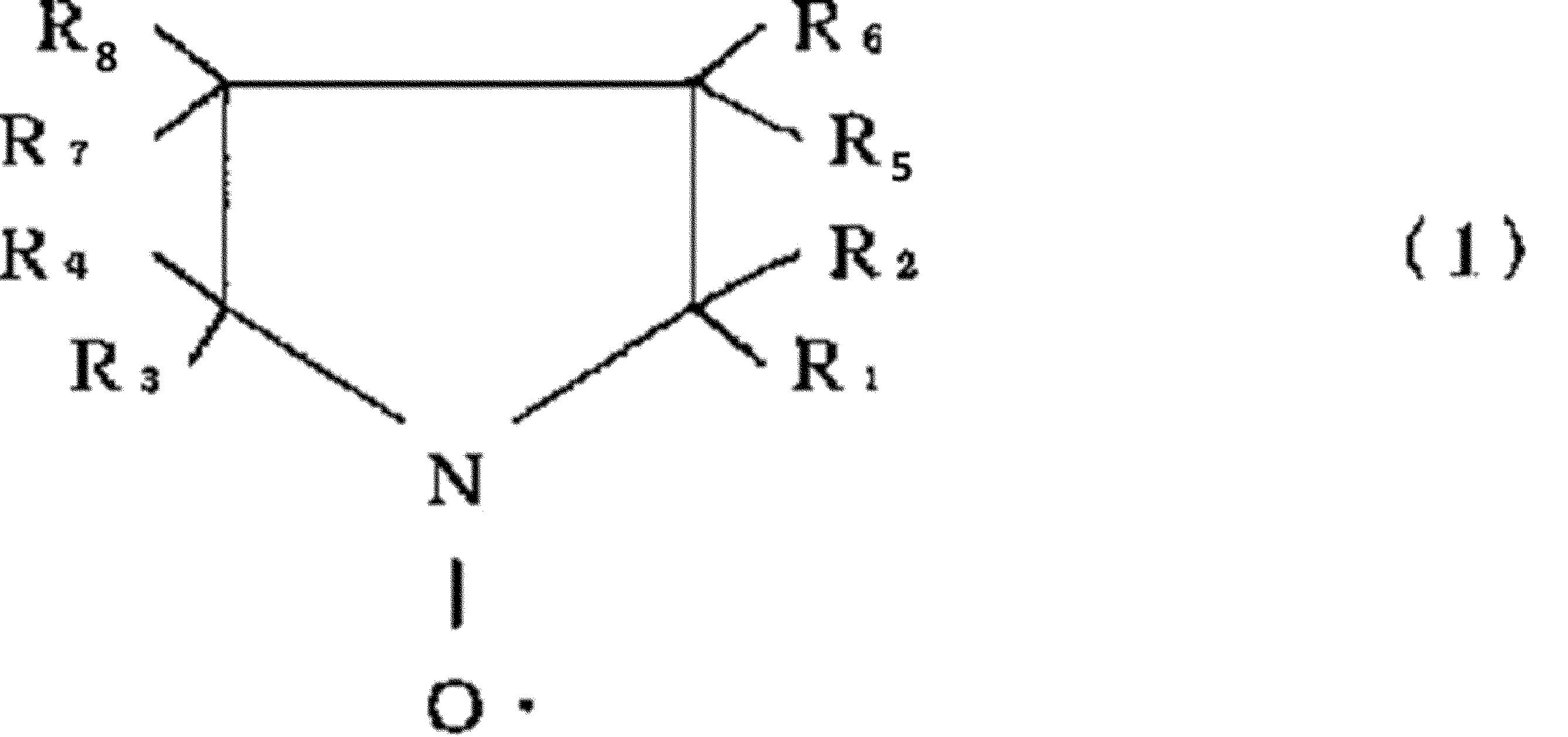
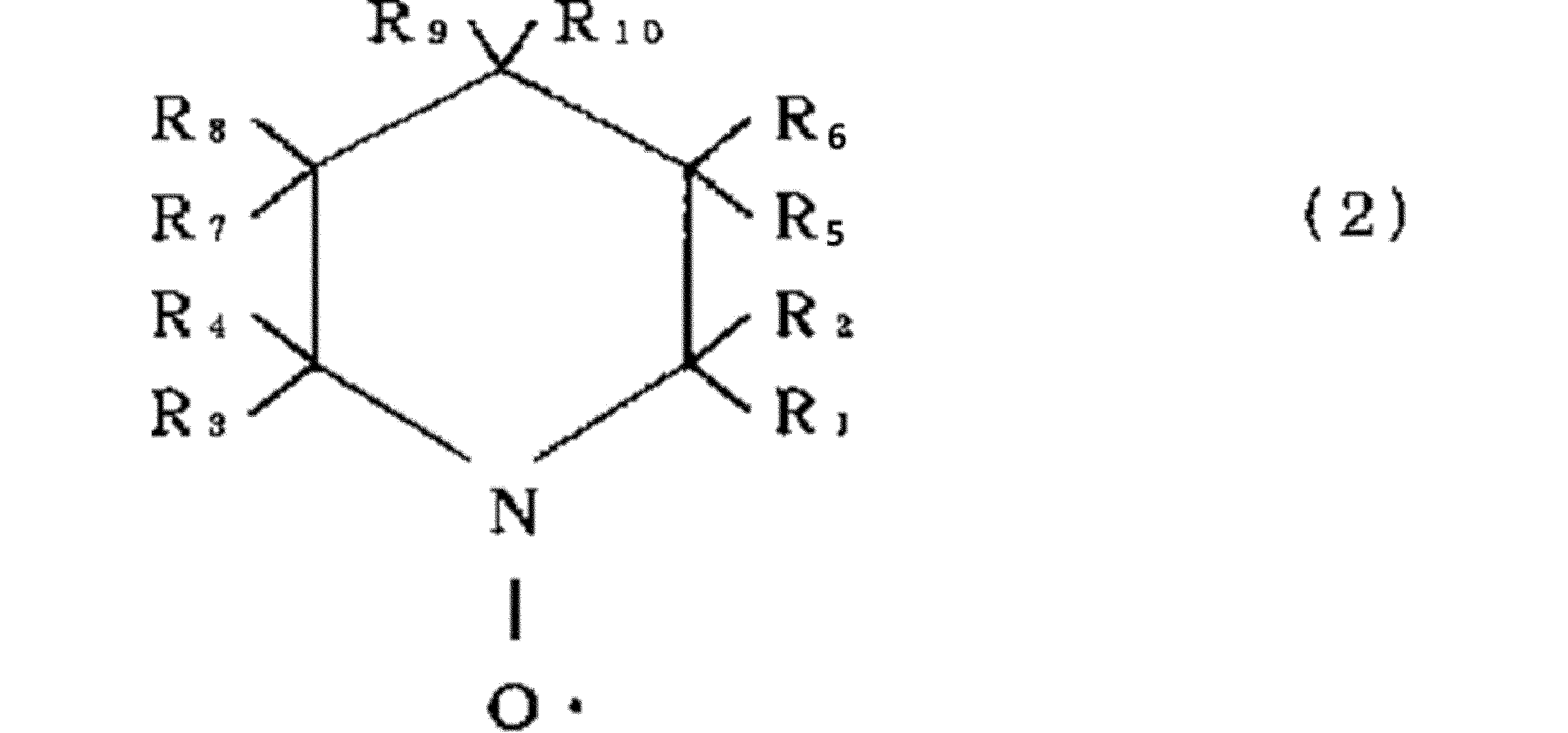
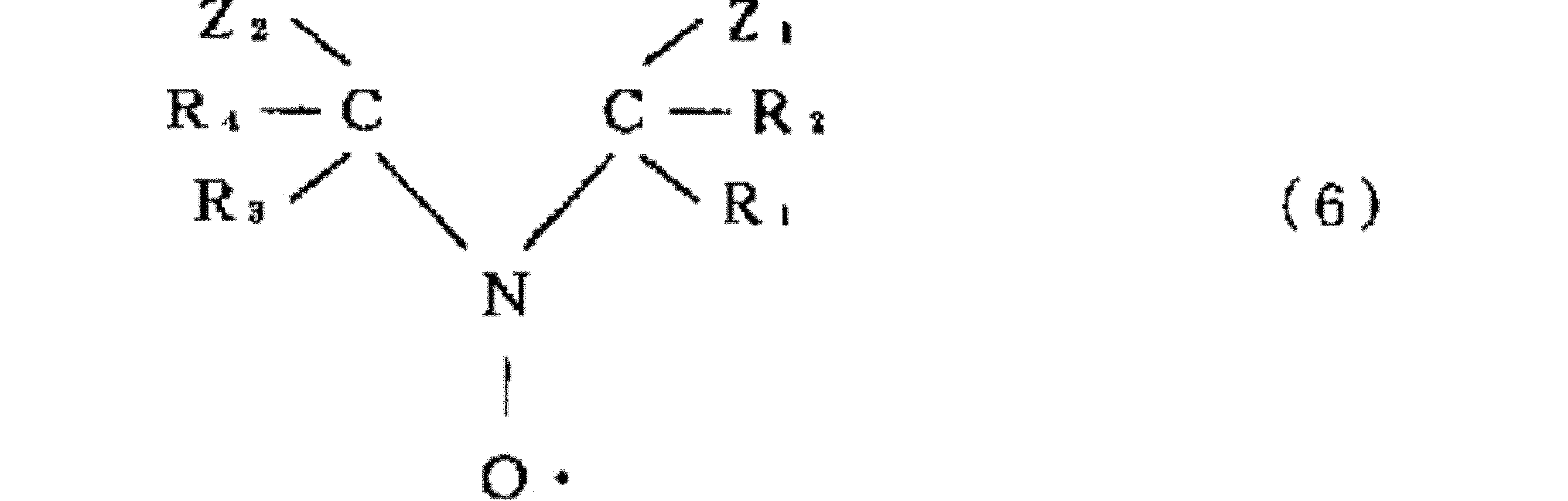
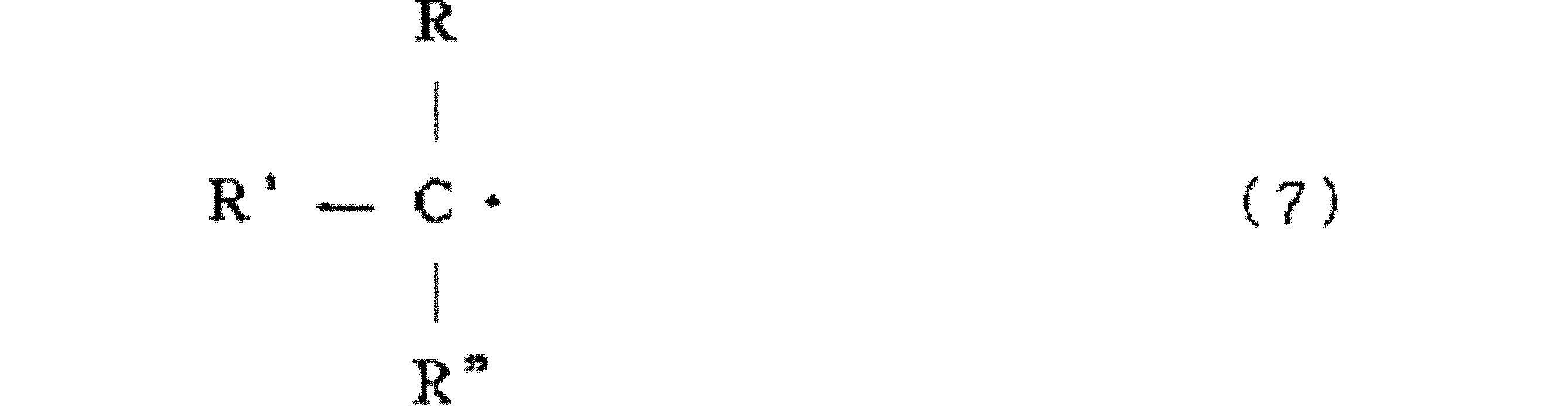
- component (C) examples include those having any of the following structural formulas:
- R 1 , R 2 , R 3 , R 4 , Z 1 , and Z 2 may each independently be one selected from a saturated or unsaturated, linear, branched, or cyclic hydrocarbon group having 1 to 12 carbon atoms, an ester group (-COOR) having 1 to 12 carbon atoms, and an alkoxy group (-OR) having 1 to 12 carbon atoms, and may be the same or different.
- R 5 , R 6 , R 7 , R 8 , R 9 , and R 10 may each independently be one selected from a saturated or unsaturated, linear, branched, or cyclic hydrocarbon group having 1 to 12 carbon atoms, an ester group (-COOR) having 1 to 12 carbon atoms, an alkoxy group (-OR) having 1 to 12 carbon atoms, hydrogen, a hydroxy group (-OH), a carboxylic acid group (-COOH), and a sulfonic acid group (-SO 3 H), and may be the same or different.
- n may be 1 to 10, preferably 1 to 6.
- R, R', and R" may be the same or different and may be one selected from a saturated or unsaturated, linear, branched, or cyclic hydrocarbon group having 1 to 12 carbon atoms, an ester group (-COOR) having 1 to 12 carbon atoms, an alkoxy group (-OR) having 1 to 12 carbon atoms, hydrogen, a hydroxy group (-OH), a carboxylic acid group (-COOH), and a cyano group (-CN).
- component (C) include 4-hydroxy-2,2,6,6-tetramethylpiperidine 1-oxyl free radical (H-TEMPO), 4-amino-2,2,6,6-tetramethylpiperidine 1-oxyl free radical (N-TEMPO), 4-oxo-2,2,6,6-tetramethylpiperidine 1-oxyl free radical (O-TEMPO), 4-methoxy-2,2,6,6-tetramethylpiperidine 1-oxyl free radical (M-TEMPO), 2,2,6,6-tetramethyl-1-piperidinyloxy free radical, 2,2,5,5-tetramethyl-1-
- free radicals include pyrrolidinyloxy free radical, 4-hydroxy-2,2,6,6-tetramethyl-1-piperidinyloxy free radical, 3-carbamoyl-2,2,5,5-tetramethylpyrrolidin-1-yloxy free radical, di-tert-butylnitroxy free radical, 2,6-di-tert-butyl- ⁇ -(3,5-di-
- the content of component (C) can be set appropriately depending on the desired performance, and is not particularly limited, but the concentration relative to component (A) may be preferably 10 ppm or more and 10,000 ppm or less, and more preferably 100 ppm or more and 5,000 ppm or less.
- Nitroxyl radical compounds have stable radicals with a structure derived from a nitroso group, and their hydrogen radical trapping effect is greater than that of nitroso compounds and other polymerization inhibitors. It is believed that even if they are added in an amount that would have been considered excessive in the past (for example, an amount of about 10 to 100 ppm relative to component (A)), they will have a polymerization inhibitory effect.
- the bond between the trapped carbon radical and the nitroxy radical compound is cleaved at high temperatures (for example, around 200°C), even if they are added in an amount that would have been excessive in the past (for example, an amount of 2000 ppm to 10000 ppm relative to component (A)), they will volatilize at the temperature at which the polymerization reaction occurs (for example, around 200°C), and it is believed that a remarkable effect of not inhibiting polymerization at the originally desired timing can be obtained.
- component (C) may be a non-aromatic nitroxy radical compound, more preferably an alicyclic nitroxy radical compound, i.e., a compound having a saturated heterocycle. If component (C) does not have an aromatic ring, it is believed that the above-mentioned effect of cleavage at high temperatures is more easily exhibited. Furthermore, alicyclic nitroxy radical compounds are believed to have a bulky structure, which makes them even more effective than other nitroxy radical compounds.
- the effect of this embodiment is a synergistic effect obtained from the specific combination of components (B) and (C).
- the olefin monomer unit refers to one or more compounds (units) selected from ⁇ -olefins having 2 to 20 carbon atoms and cyclic olefins having 5 to 20 carbon atoms, which are substantially free of oxygen, nitrogen, and halogens and are composed of carbon and hydrogen.
- ⁇ -olefins having 2 to 20 carbon atoms include, but are not limited to, ethylene, propylene, 1-butene, 1-hexene, 1-octene, 1-decene, 1-dodecene, 4-methyl-1-pentene, and 3,5,5-trimethyl-1-hexene.
- cyclic olefins having 5 to 20 carbon atoms include, but are not limited to, norbornene and cyclopentene.
- a preferred olefin monomer unit may be a combination of ethylene and an ⁇ -olefin other than ethylene or a cyclic olefin.
- the olefin monomer unit may include one or more compounds selected from the group consisting of ethylene and ⁇ -olefins having 3 or more carbon atoms.
- aromatic vinyl compound monomer unit refers to an aromatic vinyl compound (unit) having 8 to 20 carbon atoms.
- aromatic vinyl compound monomer units include, but are not limited to, styrene, paramethylstyrene, paraisobutylstyrene, various vinylnaphthalenes, and various vinylanthracenes.
- aromatic polyene monomer unit refers to a polyene compound (unit) having 5 to 20 carbon atoms and having multiple vinyl and/or vinylene groups in its molecule.
- aromatic polyene monomer unit include, but are not limited to, various ortho-, meta-, and para-divinylbenzenes or mixtures thereof, divinylnaphthalene, divinylanthracene, p-2-propenylstyrene, p-3-butenylstyrene, and other compounds having an aromatic vinyl structure, substantially free of oxygen, nitrogen, and halogens, and composed of carbon and hydrogen.
- bifunctional aromatic vinyl compounds described in JP-A-2004-087639 such as 1,2-bis(vinylphenyl)ethane (abbreviation: BVPE)
- BVPE 1,2-bis(vinylphenyl)ethane
- various ortho-, meta-, and para-divinylbenzenes or mixtures thereof are preferably used, and a mixture of meta-divinylbenzene and para-divinylbenzene may be preferably used.
- these divinylbenzenes are referred to as divinylbenzenes.
- divinylbenzenes are preferred because they have high curing efficiency and are easy to cure when curing.
- the content of vinyl groups and/or vinylene groups (preferably vinyl groups) derived from aromatic polyene monomer units may be 1.5 or more and less than 20, preferably 2 or more and less than 7 per number average molecular weight.
- the content of vinyl groups and/or vinylene groups is 1.5 or more, the crosslinking efficiency is high, and a cured product with sufficient crosslinking density tends to be easily obtained.
- the vinyl group content derived from aromatic polyene units (divinylbenzene units) per number average molecular weight in the copolymer can be obtained, for example, by comparing the number average molecular weight (Mn) calculated in terms of standard polystyrene obtained by a GPC (gel permeation chromatography) method known to those skilled in the art with the vinyl group content derived from aromatic polyene units obtained by 1 H-NMR measurement.
- Mn number average molecular weight
- the vinyl group content derived from aromatic polyene units (divinylbenzene units) in the copolymer is 0.6% by mass by comparing the intensity of each peak area obtained by 1 H-NMR measurement, and the number average molecular weight converted into standard polystyrene by GPC measurement is 49,000
- the molecular weight of the vinyl group derived from the aromatic polyene units in the number average molecular weight is the product of these, 299, which is divided by the formula weight of the vinyl group, 130, to obtain 2.3.
- the vinyl group content derived from aromatic polyene units per number average molecular weight in this copolymer is determined to be 2.3.
- the assignment of peaks obtained by 1 H-NMR measurement of the copolymer is known from literature.
- a method of determining the composition of the copolymer from a comparison of the peak areas obtained by 1 H-NMR measurement is also known.
- it is also possible to improve the accuracy of the composition by adding data on the peak areas and ratios of 13 C-NMR spectrum measured in a known quantitative mode to the method by 1 H-NMR measurement.
- the content of divinylbenzene units in the copolymer is determined from the peak intensity (measured by 1 H-NMR) of the vinyl group derived from the divinylbenzene unit. That is, the content of divinylbenzene units is determined from the content of vinyl groups derived from the divinylbenzene units, assuming that one vinyl group is derived from one divinylbenzene unit in the copolymer.
- the number average molecular weight (Mn) and weight average molecular weight (Mw) in this specification are calculated as standard polystyrene equivalent molecular weights obtained by GPC (gel permeation chromatography).
- the composition may further comprise one or more of the following: (a) a curing agent; (b) one or more resins selected from the group consisting of a hydrocarbon-based elastomer, a polyether-based resin, and an aromatic polyene-based resin; (c) a monomer; (d) an olefin-aromatic vinyl compound-aromatic polyene copolymer other than the above-mentioned copolymer, which satisfies all of the following conditions (i) to (iv): (i) the number average molecular weight of the copolymer is 500 or more and less than 100,000; (ii)
- the aromatic vinyl compound monomer unit is an aromatic vinyl compound having 8 to 20 carbon atoms, and the content of the aromatic vinyl compound monomer unit is 70 mass% or less, preferably more than 0 mass% and 70 mass% or less.
- the aromatic polyene is one or more selected from polyenes having 5 to 20 carbon atoms and having a plurality of vinyl groups and/or vinylene groups in the molecule, and the content of the vinyl groups and/or vinylene groups derived from the aromatic polyene monomer units is 1.5 or more and less than 20 per number average molecular weight.
- the olefin monomer unit is one or more selected from olefins having from 2 to 20 carbon atoms, the content of the olefin monomer unit is 30 mass% or more, and the total of the olefin monomer unit, aromatic vinyl compound monomer unit, and aromatic polyene monomer unit is 100 mass%.
- curing agent that may be contained in the present composition
- a known curing agent that can be used for polymerization or curing of aromatic polyenes and aromatic vinyl compounds.
- curing agents include radical polymerization initiators (radical generators), cationic polymerization initiators, and anionic polymerization initiators.
- radical polymerization initiators can be used, but the type is not particularly limited.
- organic peroxides (peroxides), azo polymerization initiators, etc. can be freely selected depending on the application and conditions.
- a catalog listing organic peroxides can be downloaded from the NOF Corporation website, for example, https://www.nof.co.jp/business/chemical/chemical-product01.
- organic peroxides listed in the catalogs of Fujifilm Wako Pure Chemical Industries, Ltd. and Tokyo Chemical Industry Co., Ltd. can also be used.
- a known photopolymerization initiator using light, ultraviolet light, or radiation can also be used as a curing agent.
- photopolymerization initiators include photoradical polymerization initiators, photocationic polymerization initiators, and photoanionic polymerization initiators.
- photopolymerization initiators can be obtained, for example, from Tokyo Chemical Industry Co., Ltd.
- curing by radiation or electron beam itself is also possible.
- crosslinking and curing can be performed by thermal polymerization of the raw materials contained without using a curing agent.
- the amount of curing agent used there is no particular limit to the amount of curing agent used, but for example, 0.01 to 10 parts by mass of the curing agent may be used for 100 parts by mass of the present compound, which is a copolymer.
- a curing agent such as a peroxide or azo-based polymerization initiator
- the curing process is carried out at an appropriate temperature and time, taking into account its half-life.
- the conditions can be determined according to the curing agent, but generally a temperature range of about 50°C to 200°C is appropriate.
- the amount of the hydrocarbon-based elastomer that may be contained in the present composition can be appropriately set depending on the desired performance, and is not particularly limited, but is preferably 1 to 200 parts by mass, more preferably 1 to 100 parts by mass, and most preferably 1 to 50 parts by mass, relative to 100 parts by mass of the present compound, which is a copolymer.
- the number average molecular weight of the hydrocarbon-based elastomer is preferably 100 to 100,000, and more preferably 1,000 to 4,500.
- hydrocarbon-based elastomer examples include, but are not limited to, a single or multiple elastomers selected from ethylene-based or propylene-based elastomers, conjugated diene-based polymers, block copolymers or random copolymers of aromatic vinyl compounds-conjugated dienes, and hydrogenated products thereof.
- Examples of the ethylene-based elastomer include ethylene- ⁇ -olefin copolymers such as ethylene-octene copolymer and ethylene-1-hexene copolymer, EPR, EPDM, etc., and examples of the propylene-based elastomer include atactic polypropylene, low stereoregular polypropylene, propylene- ⁇ -olefin copolymers such as propylene-1-butene copolymer, etc., but are not particularly limited thereto.
- Conjugated diene polymers include, but are not limited to, polybutadiene and 1,2-polybutadiene.
- aromatic vinyl compound-conjugated diene block or random copolymers and their hydrogenated products (hydrogenated products) include, but are not limited to, SBS, SIS, SEBS, SEPS, SEEPS, SEEBS, etc., which can be suitably used.
- 1,2-polybutadiene can be obtained, for example, from Nippon Soda Co., Ltd. under the product names of liquid polybutadiene: B-1000, 2000, and 3000.
- an example of a copolymer containing a 1,2-polybutadiene structure which can be suitably used is "Ricon 100" by TOTAL CRAY VALLEY.
- the amount used may be in the range of 150 parts by mass or less, more preferably 1 to 30 parts by mass, and most preferably 1 to 20 parts by mass, per 100 parts by mass of the present compound, which is a copolymer, from the viewpoint of the handleability and moldability of the present composition in an uncured state (handleability as a thermoplastic resin).
- polyether-based resins examples include polyphenylene ether and polyether.
- polyphenylene ether commercially available known polyphenylene ethers can be used, and the type is not particularly limited.
- the number average molecular weight of the polyphenylene ether is arbitrary and can be appropriately set according to the desired performance, and is not particularly limited, but considering the moldability of the composition, the number average molecular weight (Mn) is preferably 10,000 or less, most preferably 5,000 or less. The number average molecular weight may be preferably 500 or more.
- the molecular end of the polyether resin such as polyphenylene ether is modified with a functional group.
- the polyether resin such as polyphenylene ether has multiple functional groups in one molecule, and for example, the polyether resin may be a modified polyphenylene ether.
- the functional group include radically polymerizable functional groups and functional groups such as epoxy groups, and preferably radically polymerizable functional groups.
- a vinyl group is preferable.
- the vinyl group one or more of the group consisting of an allyl group, a (meth)acryloyl group, and an aromatic vinyl group are preferable, one or more of the group consisting of a (meth)acryloyl group and an aromatic vinyl group are more preferable, and an aromatic vinyl group is most preferable.
- a bifunctional polyphenylene ether in which both ends of the molecular chain are modified with a radically polymerizable functional group is particularly preferable.
- polyphenylene ethers examples include Noryl (trademark) SA9000 from SABIC (modified polyphenylene ether having methacryloyl groups at both ends, number average molecular weight 2200) and bifunctional polyphenylene ether oligomer (OPE-2St, modified polyphenylene ether having vinylbenzyl groups at both ends, number average molecular weight 1200) from Mitsubishi Gas Chemical Company, Inc. Allylated PPE from Asahi Kasei Corporation can also be used. Of these, the bifunctional polyphenylene ether oligomer (OPE-2St) from Mitsubishi Gas Chemical Company, Inc. can be preferably used.
- polyether resin aromatic polyether (ELPAC HC-F series) from JSR Corporation can also be used.
- the amount of polyether resin such as polyphenylene ether used in this composition can be set appropriately according to the desired performance and is not particularly limited, but is preferably 1 to 200 parts by mass, more preferably 1 to 100 parts by mass, per 100 parts by mass of component (A).
- the amount of the aromatic polyene resin used in the composition can be appropriately set according to the desired performance and is not particularly limited, but is preferably 1 to 200 parts by mass, more preferably 1 to 100 parts by mass, and most preferably 1 to 50 parts by mass, relative to 100 parts by mass of the present compound, which is a copolymer.
- the use of the aromatic polyene resin in an amount within these preferred numerical ranges is preferable in order to prevent a decrease in adhesion to other members and a decrease in toughness.
- the amount of the monomer that may be contained in the composition may be preferably 100 parts by mass or less relative to 100 parts by mass of the copolymer, and the composition may be substantially free of monomers.
- the monomer is a monomer that can be polymerized by either radical polymerization, cationic polymerization, or anionic polymerization, and is preferably a monomer that can be radically polymerized.
- the molecular weight is preferably 5000 or less, more preferably less than 5000, more preferably 1000 or less, more preferably less than 1000, even more preferably 500 or less, and even more preferably less than 500.
- the monomer may include a monomer having the same structure as the monomer unit of the above-mentioned "aromatic vinyl compound” or "aromatic polyene". Also preferably, the monomer may include the following polar monomer.
- the content of the monomer that may be contained in the present composition can be appropriately set depending on the desired performance, and is not particularly limited.
- the content of the monomer that may be contained in the present composition may be preferably 500 parts by mass or less, more preferably 50 to 300 parts by mass, and even more preferably in the range of 100 to 200 parts by mass, relative to 100 parts by mass of the component (A) which is the above-mentioned copolymer.
- the amount of the polar monomer that may be contained in the composition can be appropriately set according to the desired performance, and is not particularly limited, but may be preferably 100 parts by mass or less, more preferably 0.1 to 20 parts by mass, and even more preferably 0.1 to 10 parts by mass, relative to 100 parts by mass of the copolymer. By using an amount in this preferred numerical range, the effect of preventing the dielectric constant and dielectric loss tangent of the obtained cured body from becoming too high tends to be obtained.
- the polar monomer is a monomer having one or more atoms selected from oxygen, nitrogen, phosphorus, and sulfur in the molecule.
- the polar monomer that can be suitably used preferably has a molecular weight of less than 5000, more preferably less than 1000, and even more preferably less than 500.
- a polar monomer that can be polymerized by a radical polymerization initiator is preferable.
- examples of polar monomers include, but are not limited to, various maleimides, bismaleimides, maleic anhydride, triallyl isocyanurate, glycidyl (meth)acrylate, tri(meth)acrylic isocyanurate, trimethylolpropane tri(meth)acrylate, etc.
- Maleimides and bismaleimides that can be used in this embodiment are described in, for example, International Publication No.
- maleimide group-containing compounds may be used as polyamino bismaleimide compounds from the viewpoints of solubility in organic solvents, high frequency characteristics, high adhesion to conductors, moldability of prepregs, etc.
- the polyamino bismaleimide compounds can be obtained, for example, by subjecting a compound having two maleimide groups at the terminals to a Michael addition reaction with an aromatic diamine compound having two primary amino groups in the molecule.
- polar monomer having a multifunctional group of two or more functional groups examples include bismaleimides, triallyl isocyanurate (TAIC), trimethylolpropane tri(meth)acrylate, etc.
- the present composition may contain one or more olefin-aromatic vinyl compound-aromatic polyene copolymers other than the above-mentioned copolymers, and may satisfy any of the following conditions.
- the number average molecular weight of the copolymer is 500 or more and less than 100,000.
- the aromatic vinyl compound monomer unit is an aromatic vinyl compound having 8 to 20 carbon atoms, and the content of the aromatic vinyl compound monomer unit is 70 mass% or less, preferably more than 0 mass% and 70 mass% or less.
- the aromatic polyene monomer unit is one or more selected from polyenes having 5 to 20 carbon atoms and having a plurality of vinyl groups and/or vinylene groups in the molecule, and the content of the vinyl groups and/or vinylene groups derived from the aromatic polyene monomer unit is 1.5 or more and less than 20 per number average molecular weight.
- the olefin monomer unit is one or more selected from olefins having 2 to 20 carbon atoms, the content of the olefin monomer unit is 30 mass% or more, and the total of the olefin monomer unit, aromatic vinyl compound monomer unit, and aromatic polyene monomer unit is 100 mass%.
- Such other copolymers may be those described, for example, in WO 2021/112087, WO 2021/112088, and WO 2022/014599.
- Such other olefin-aromatic vinyl compound-aromatic polyene copolymers that satisfy all of the above-mentioned specific conditions tend to be soft and exhibit low dielectric constants and low dielectric tangents, so by combining them with the above-mentioned copolymer, this compound, to form a composition, it is possible to obtain a cured body with a low dielectric constant and low dielectric tangent that covers a wide range of physical properties.
- the composition can be produced by applying a known production method, and the production method is not particularly limited.
- the composition can be produced based on the methods described in JP 2009-161743 A, JP 2010-280771 A, WO 00/37517, etc.
- a transition metal compound represented by the following general formula (I) can be added as a catalyst to a raw material containing an olefin monomer, an aromatic vinyl compound monomer, and an aromatic polyene monomer.
- M is zirconium or hafnium
- Cp1 and Cp2 are cyclopentadienyl groups having no substituents, or cyclopentadienyl groups having one or two alkyl substituents having no cyclic structure.
- Cp1 and Cp2 may be the same or different, and one of the Cp1 and Cp2 groups may be an indenyl group having no substituents, or an indenyl group having one or two alkyl substituents having no cyclic structure;
- Y is a carbon, silicon, germanium, or boron atom having a bond with Cp1 and Cp2 and having a hydrogen atom or a substituent, and the substituents may be different or the same and may have a cyclic structure;
- Each X is independently selected from the group consisting of hydrogen, halogen, an alkyl group, and an aryl group, or two Xs combine to form a diene group.
- a varnish containing the above-mentioned composition and a solvent can be provided.
- a varnish is a material that is liquid when it contains a solvent.
- the varnish has an appropriate viscosity as described above and is a viscous liquid.
- the varnish can be applied, impregnated, filled, or dropped onto other materials by an appropriate method, and the solvent can be removed to form a molded product.
- the varnish can then be cured with heat or light to obtain the desired cured product.
- Such properties are useful because they can be used for various transfer molding (pressure molding), for application on or between substrates or semiconductor device materials, or for forming into sheets or films by extrusion lamination or spin coating, and then cured to form insulating films or insulating layers.
- the polymerization liquid used to manufacture the present compound which is a copolymer (which generally contains, in addition to the present compound, which is a copolymer, solvents used in polymerization such as toluene, ethylbenzene, cyclohexane, and methylcyclohexane, residual monomers such as styrene and divinylbenzene, residual monomers such as olefin monomers, catalysts, and cocatalyst components) can also be used as a varnish as is.
- solvents used in polymerization such as toluene, ethylbenzene, cyclohexane, and methylcyclohexane
- residual monomers such as styrene and divinylbenzene
- residual monomers such as olefin monomers, catalysts, and cocatalyst components
- a varnish can also be obtained by distilling off part or all of the solvent and residual monomers from the present polymerization liquid under reduced pressure, and diluting it with the above-mentioned solvent as necessary. That is, the varnish may contain residual monomers from the polymerization or the solvent used in the polymerization.
- ⁇ Solvent> An appropriate solvent may be added to the composition as necessary.
- the amount of the solvent is not particularly limited.
- the solvent is used to adjust the viscosity and fluidity of the composition.
- a solvent is preferably used.
- a solvent having a boiling point of a certain degree or higher is preferred, since a high boiling point under atmospheric pressure, i.e., low volatility, leads to a uniform thickness of the applied film.
- the boiling point is preferably about 75° C. or higher under atmospheric pressure, more preferably 100° C. or higher and 300° C. or lower, and even more preferably 130° C. or higher and 300° C. or lower.
- a solvent known in the art can be used, and is not particularly limited, but for example, cyclohexane, cyclohexanone, methyl ethyl ketone (MEK), toluene, ethylbenzene, xylene, mesitylene, tetralin, acetone, limonene, mixed alkanes, mixed aromatic solvents, etc. can be used.
- the amount of the solvent used in the composition of the present embodiment can be appropriately set depending on the desired performance, and is arbitrary; however, it is preferably 5 to 500 parts by mass, more preferably 10 to 400 parts by mass, and most preferably 50 to 370 parts by mass, per 100 parts by mass of component (A).
- methyl ethyl ketone (MEK) can be used as the solvent.
- composition and varnish may contain additives that are commonly used in resins in the industry, such as antioxidants, weathering agents, light stabilizers, lubricants, compatibilizers, and antistatic agents, to the extent that they do not impair the desired effects or purposes.
- additives that are commonly used in resins in the industry, such as antioxidants, weathering agents, light stabilizers, lubricants, compatibilizers, and antistatic agents, to the extent that they do not impair the desired effects or purposes.
- the composition and varnish of this embodiment are obtained by mixing, dissolving, or melting the various additives described above, and any known method can be used for mixing, dissolving, and melting.
- the composition can be mixed by known mixing methods, such as a twin-screw mixer, various rolls, various kneaders, etc. Also, when the composition is a varnish, it may be mixed by adding it to the varnish and stirring.
- a cured product of the above-mentioned composition or varnish can also be provided.
- the cured product can be used to manufacture CCL substrates, FCCL substrates, interlayer insulation materials, or coverlays.
- the composition is particularly suitable as an electrical insulation material for high-frequency signals.
- the shape of the molded article obtained from the composition is arbitrary. These compositions can exhibit the properties of a thermoplastic resin. Therefore, under conditions that do not cause crosslinking, the composition can be molded into a shape such as a sheet, tube, strip, or pellet in a substantially uncured state by a known molding method for a thermoplastic resin, such as extrusion molding, injection molding, press molding, or inflation molding, and then crosslinked (cured).
- a thermoplastic resin such as extrusion molding, injection molding, press molding, or inflation molding
- cured cured
- a porous substrate, woven fabric, or nonwoven fabric can be impregnated with the varnish and the solvent can be removed to obtain a composite. It can also be dropped onto a substrate and the solvent can be removed to form, for example, a hemispherical shape.
- the sheet may be uncured (semi-cured) to the extent that it can maintain the sheet shape, or it may be completely cured.
- the degree of curing of the composition can be quantitatively measured by a known dynamic viscoelasticity measurement method (DMA, Dynamic Mechanical Analysis).
- the molded article obtained from the present composition can be cured by a known method, taking into consideration the curing conditions (temperature, time, pressure) of the raw materials and curing agent contained therein.
- the curing agent used is a peroxide
- the curing conditions can be determined by taking into consideration the half-life temperature and the like disclosed for each peroxide.
- the cured product of the molded article obtained from the present composition etc. is sufficiently cured, and the gel content (gel fraction) measured in accordance with ASTM is not particularly limited, but may be 90 mass% or more.
- the dielectric loss tangent is not particularly limited, but is preferably 0.003 or less, more preferably 0.002 or less, and even more preferably 0.001 or less. More specifically, the dielectric loss tangent may be 0.00063 or less.
- CCL substrates In one embodiment of the present invention, it is also possible to provide CCL substrates, FCCL substrates, interlayer insulating materials, coverlays, etc., that contain the above-mentioned cured product.
- Example 1 to 7 and Comparative Examples 1 to 8 were prepared based on the raw material blends (shown in parts by weight in the tables) shown in the following tables.
- the copolymers were produced based on the production methods described in JP 2009-161743 A and JP 2010-280771 A.
- Dimethylmethylenebiscyclopentadienylzirconium dichloride (referred to as "Zr catalyst” in the table) was used as the catalyst.
- Tritium tetrakis(pentafluorophenyl)borate (“TRI-FABA” manufactured by Tosoh Finechem Co., Ltd.) was used as the co-catalyst.
- Polymerization inhibitors include 4-hydroxy-2,2,6,6-tetramethylpiperidine 1-oxyl free radical (H-TEMPO, manufactured by Tokyo Chemical Industry Co., Ltd.), 4-amino-2,2,6,6-tetramethylpiperidine 1-oxyl free radical (N-TEMPO, manufactured by Tokyo Chemical Industry Co., Ltd.), 4-oxo-2,2,6,6-tetramethylpiperidine 1-oxyl free radical (O-TEMPO, manufactured by Tokyo Chemical Industry Co., Ltd.), and 4-methoxy
- the following reagents were used: 2,2,6,6-tetramethylpiperidine 1-oxyl free radical (M-TEMPO, manufactured by Tokyo Chemical Industry Co., Ltd.), 2-[1-(2-hydroxy-3,5-di-tert-pentylphenyl)ethyl]-4,6-di-tert-pentylphenyl acetate (Sumitomo Chemical Co., Ltd. "Sumilizer GS”), and N-nitrosophenylhydroxyl
- Toluene was used as the solvent.
- Styrene (St), divinylbenzene (DVB), and ethylene (Et) were used as the raw monomers, and a polymerization vessel with a capacity of 10 L and equipped with a stirrer and a jacket for heating and cooling was used to add the above catalyst and co-catalyst and polymerize to obtain a polymerization liquid.
- the composition of the polymerization liquid is as shown in the table.
- a polymerization inhibitor was added to the polymerization liquid, which was then heated to 80°C for the time shown in the table and concentrated while stirring. For each example, the concentration time by heating was changed and the rate of increase in Mw was compared.
- copolymer compound and composition obtained above were analyzed by the following methods.
- the molecular weight of the copolymer was determined by measuring the weight average molecular weight (Mw) in terms of standard polystyrene using a GPC (gel permeation chromatography) method, and then calculating the increase rate therefrom. The measurement was carried out under the following conditions. Column: Two TSK-GEL MultiporeHXL-M ⁇ 7.8 ⁇ 300 mm (Tosoh Corporation) columns were connected in series. Column temperature: 40°C Solvent: THF (tetrahydrofuran) Flow rate: 1.0 ml/min Detector: RI detector
- the obtained composition was poured into a silicon mold (frame length 7 cm, width 7 cm, thickness 0.5 mm, 1.0 mm, or 2.0 mm) on a Teflon (registered trademark) sheet placed on a glass plate, air-dried, and then further dried in a vacuum dryer at 60°C for 3 hours or more to obtain an uncured sheet. Furthermore, a Teflon sheet and SUS mold were placed under a load of 5 MPa in a press, and heat treatment was performed at 120°C for 30 minutes, 150°C for 30 minutes, and then 200°C for 120 minutes. The Teflon sheet and SUS mold were then removed to obtain a cured sheet.
- the dielectric loss tangent was measured using a cavity resonator perturbation method (Agilent Technologies 8722ES network analyzer, Keysight Technologies split cylinder resonator 40 GHz) at 23° C. and 40 GHz using a sample of 0.2 mm ⁇ 25 mm ⁇ 30 mm cut out from the sheet.
- Comparative Examples 2 and 8 which used a polymerization inhibitor other than a nitroxy radical compound, the storage modulus at 25° C. was deteriorated.
- the cured sheet was soft, and it was impossible to measure the dielectric constant and dielectric loss tangent.
Landscapes
- Chemical & Material Sciences (AREA)
- Health & Medical Sciences (AREA)
- Chemical Kinetics & Catalysis (AREA)
- Medicinal Chemistry (AREA)
- Polymers & Plastics (AREA)
- Organic Chemistry (AREA)
- Crystallography & Structural Chemistry (AREA)
- Engineering & Computer Science (AREA)
- Materials Engineering (AREA)
- Addition Polymer Or Copolymer, Post-Treatments, Or Chemical Modifications (AREA)
- Compositions Of Macromolecular Compounds (AREA)
Abstract
Description
(A)オレフィン-芳香族ビニル化合物-芳香族ポリエン共重合体と、
(B)ホウ素、アルミニウム、ジルコニウム、及びハフニウムからなる群から選択される一種以上の元素を含んだ化合物と、
(C)ニトロキシラジカル化合物である重合禁止剤と、
を含有する組成物。
オレフィン単量体、芳香族ビニル化合物単量体、及び芳香族ポリエン単量体からなる群から選択される一種以上をさらに含む、態様1に記載の組成物。
前記(A)オレフィン-芳香族ビニル化合物-芳香族ポリエン共重合体が、下記(1)~(4)の条件を満たす、態様1又は2に記載の組成物。
(1)共重合体の数平均分子量が5000以上10万以下である。
(2)芳香族ビニル化合物単量体単位が、炭素数8以上20以下の芳香族ビニル化合物であり、芳香族ビニル化合物単量体単位の含量が0質量%以上70質量%以下である。
(3)芳香族ポリエン単量体単位が、分子内にビニル基及び/又はビニレン基を複数有する炭素数5以上20以下のポリエンから選ばれる一種以上であり、かつ芳香族ポリエン単量体単位に由来するビニル基及び/又はビニレン基の含有量が数平均分子量あたり1.5個以上20個未満である。
(4)オレフィン単量体単位が炭素数2以上20以下のオレフィンから選ばれる単数又は複数であり、オレフィン単量体単位と芳香族ビニル化合物単量体単位と芳香族ポリエン単量体単位の合計が100質量%である。
前記(B)成分の質量が、前記(A)成分の質量の1%以下である、態様1~3のいずれかに記載の組成物。
前記(B)成分が助触媒を含む、態様1~4のいずれかに記載の組成物。
前記(B)成分が触媒を含む、態様1~5のいずれかに記載の組成物。
前記(B)成分が、ホウ素及びアルミニウムからなる群から選択される一種以上の元素を含んだ化合物を含む、態様1~6のいずれかに記載の組成物。
前記(A)成分に対する前記(C)成分の濃度が、10ppm以上10000ppm以下である、態様1~7のいずれかに記載の組成物。
前記(C)成分が、脂環式ニトロキシラジカル化合物を含む、態様1~8のいずれかに記載の組成物。
態様1~9のいずれか一項に記載の組成物の硬化体。
態様10に記載の硬化体を含む、CCL基板、FCCL基板、層間絶縁材、又はカバーレイ。
オレフィン単量体と、芳香族ビニル化合物単量体と、芳香族ポリエン単量体とを含んだ原料を用意するステップと、
下記の一般式(I)で表される遷移金属化合物であって、

Cp1、Cp2は置換基を有しないシクロペンタジエニル基であるか、又は環状構造を有しないアルキル置換基を1個又は2個有するシクロペンタジエニル基である。Cp1とCp2は互いに同一であっても異なっていてもよく、またCp1、Cp2基のうちひとつは置換基を有しないインデニル基であるか、又は環状構造を有しないアルキル置換基を1個又は2個有するインデニル基であってもよく、
またYは、Cp1、Cp2と結合を有し、水素原子若しくは置換基を有する炭素、珪素、ゲルマニウム、又はホウ素であり、置換基は互いに異なっていても同一でもよく、環状構造を有していてもよく、
Xはそれぞれ独立に、水素、ハロゲン、アルキル基、及びアリール基からなる群から選択されるか、又は、2つのXが結合してジエン基を構成する。)
という触媒と、有機アルミニウム化合物及びホウ素化合物からなる群から選択される一種以上を含む助触媒と、を用意するステップと、
前記原料、前記触媒、前記助触媒、及び、ニトロキシラジカル化合物である前記重合禁止剤を混合し、前記触媒及び前記助触媒からなる活性種を形成し、前記原料のシングルサイト配位重合反応を開始するステップと、
を含む、組成物の製造方法。
本明細書においてシートとは、フィルムの概念をも包含するものとする。また、本明細書においてフィルムと記載されていても、シートの概念をも包含するものとする。本明細書において、組成物とは、ワニスを包含する概念である。すなわち、組成物のうち特に液状であるものをワニスと記載している。本明細書において、層間絶縁材は層間接着剤の概念を含む。本明細書において、数値範囲は、別段の断わりが無いかぎりはその下限値及び上限値を含むものとする。
(1)共重合体の数平均分子量が5000以上10万以下である。
(2)芳香族ビニル化合物単量体単位が、炭素数8以上20以下の芳香族ビニル化合物であり、芳香族ビニル化合物単量体単位の含量が0質量%以上70質量%以下、好ましくは0質量%を超え70質量%以下である。
(3)芳香族ポリエンが、分子内にビニル基及び/又はビニレン基を複数有する炭素数5以上20以下のポリエンから選ばれる一種以上であり、かつ芳香族ポリエン単量体単位に由来するビニル基及び/又はビニレン基の含有量が数平均分子量あたり1.5個以上20個未満である。
(4)オレフィン単量体単位が炭素数2以上20以下のオレフィンから選ばれる単数又は複数であり、オレフィン単量体単位と芳香族ビニル化合物単量体単位と芳香族ポリエン単量体単位の合計が100質量%である。

Cp1、Cp2は置換基を有しないシクロペンタジエニル基であるか、又は環状構造を有しないアルキル置換基(好ましくは炭素数が1~3個)を1個又は2個有するシクロペンタジエニル基である。Cp1とCp2は互いに同一であっても異なっていてもよい。またCp1、Cp2基のうちひとつは置換基を有しないインデニル基であるか、又は環状構造を有しないアルキル置換基(好ましくは炭素数が1~3個)を1個又は2個有するインデニル基であってもよい。
Yは、Cp1、Cp2と結合を有し、水素原子若しくは置換基を有する炭素、珪素、ゲルマニウム、又は硼素から選択される元素であり、置換基(好ましくはアルキル基若しくはフェニル基等)は互いに異なっていても同一でもよく、環状構造(シクロヘキシル構造等)を有していてもよい。
Xはそれぞれ独立に水素、ハロゲン、アルキル基、及びアリール基からなる群から選択されるか、又は、2つのXが結合してジエン基を構成するものである。


(a)硬化剤
(b)炭化水素系エラストマー、ポリエーテル系樹脂、芳香族ポリエン系樹脂から選ばれる単数又は複数の樹脂
(c)単量体
(d)下記(i)~(iv)の条件をすべて満たす、上記の共重合体とは別のオレフィン-芳香族ビニル化合物-芳香族ポリエン共重合体
(i)共重合体の数平均分子量が500以上10万未満である。
(ii)芳香族ビニル化合物単量体単位が、炭素数8以上20以下の芳香族ビニル化合物であり、芳香族ビニル化合物単量体単位の含量が70質量%以下、好ましくは0質量%を超え70質量%以下である。
(iii)芳香族ポリエンが、分子内にビニル基及び/又はビニレン基を複数有する炭素数5以上20以下のポリエンから選ばれる一種以上であり、かつ芳香族ポリエン単量体単位に由来するビニル基及び/又はビニレン基の含有量が数平均分子量あたり1.5個以上20個未満である。
(iv)オレフィン単量体単位が炭素数2以上20以下のオレフィンから選ばれる単数又は複数であり、オレフィン単量体単位の含量が30質量%以上であり、前記オレフィン単量体単位と芳香族ビニル化合物単量体単位と芳香族ポリエン単量体単位の合計が100質量%である。
本組成物が含んでよい硬化剤としては、従来から芳香族ポリエン、芳香族ビニル化合物の重合、又は硬化に使用できる公知の硬化剤を用いることが可能である。このような硬化剤には、ラジカル重合開始剤(ラジカル発生剤)、カチオン重合開始剤、アニオン重合開始剤が例示できるが、好ましくはラジカル重合開始剤を用いることができるが、その種類は特に限定されない。さらに好ましくは、有機過酸化物系(パーオキサイド)、アゾ系重合開始剤等であり、用途、条件に応じて自由に選択できる。有機過酸化物が掲載されたカタログは日油社ホームページ、例えばhttps://www.nof.co.jp/business/chemical/chemical-product01からダウンロ-ド可能である。また、富士フイルム和光純薬社や東京化成工業社のカタログ等にも記載されている有機過酸化物も使用可能である。また公知の光、紫外線、放射線を用いる光重合開始剤を硬化剤として用いることもできる。光重合開始剤としては、光ラジカル重合開始剤、光カチオン重合開始剤、又は光アニオン重合開始剤が挙げられる。このような光重合開始剤は例えば東京化成工業社から入手できる。さらに、放射線あるいは電子線そのものによる硬化も可能である。また、硬化剤を含まず、含まれる原料の熱重合による架橋、硬化を行うことも可能である。
本組成物が含んでよい炭化水素系エラストマーの使用量は、所望性能に応じて適宜設定することができ、特に限定されないが、共重合体である本化合物100質量部に対し、1~200質量部が好ましく、1~100質量部がより好ましく、1~50質量部が最も好ましい。炭化水素系エラストマーとしては、数平均分子量が100以上100000以下であることが好ましく、1000以上4500以下であることがより好ましい。炭化水素系エラストマーとして好ましくは、エチレン系やプロピレン系のエラストマー、共役ジエン系重合体や芳香族ビニル化合物-共役ジエン系のブロック共重合体又はランダム共重合体、及びこれらの水素化物(水添物)から選ばれる単数又は複数のエラストマー等が例示できるが、これらに特に限定されない。エチレン系エラストマーとしては、エチレン-オクテン共重合体やエチレン-1-ヘキセン共重合体等のエチレン-αオレフィン共重合体、EPR、EPDM等が挙げられ、プロピレン系エラストマーとしては、アタクティックポリプロピレン、低立体規則性のポリプロピレン、プロピレン-1-ブテン共重合体等のプロピレン-αオレフィン共重合体等が挙げられるが、これらに特に限定されない。
本組成物が含んでよいポリエーテル系樹脂としては、例えばポリフェニレンエーテルやポリエーテルが挙げられる。ポリフェニレンエーテルとしては、市販の公知のポリフェニレンエーテルを用いることができ、その種類は特に限定されない。ポリフェニレンエーテルの数平均分子量は任意であり、所望性能に応じて適宜設定することができ、特に限定されないが、組成物の成形加工性を考慮すると、数平均分子量(Mn)は好ましくは1万以下、最も好ましくは5000以下である。数平均分子量は好ましくは500以上であってよい。
本組成物が含んでよい芳香族ポリエン系樹脂とは、日鉄ケミカル&マテリアル社製、ジビニルベンゼン系反応性多分岐共重合体(PDV)を包含する。このようなPDVは、例えば文献「多官能芳香族ビニル共重合体の合成とそれを用いた新規IPN型低誘電損失材料の開発」(川辺 正直、エレクトロニクス実装学会誌 p125、Vol.12 No.2(2009))等に記載されている。本組成物に用いる芳香族ポリエン系樹脂の使用量は、所望性能に応じて適宜設定することができ、特に限定されないが、共重合体である本化合物100質量部に対し、1~200質量部が好ましく、1~100質量部がより好ましく、1~50質量部が最も好ましい。芳香族ポリエン系樹脂のこれら好ましい数値範囲内の量の使用は、他の部材との接着性の低下や靱性の低下を防ぐために好ましい。
本組成物が含んでよい単量体の使用量は、上記の共重合体100質量部に対し、好ましくは100質量部以下であってよく、また本組成物は実質的に単量体を含まなくてもよい。本明細書において単量体とは、ラジカル重合、カチオン重合、アニオン重合のいずれかで重合可能な単量体で有り、好ましくはラジカル重合可能な単量体である。その分子量は5000以下が好ましく、5000未満が好ましく、1000以下がより好ましく、1000未満がより好ましく、500以下がさらに好ましく、500未満がさらに好ましい。単量体としては上述した「芳香族ビニル化合物」や「芳香族ポリエン」の単量体単位と同じ構造の単量体を含んでもよい。また好ましくは、単量体は下記の極性単量体を含んでもよい。本組成物が含んでよい単量体の含有量について、所望性能に応じて適宜設定することができ、特に限定されないが、上記の共重合体である(A)成分100質量部に対して、好ましくは500質量部以下であってよく、より好ましくは50~300質量部であってよく、さらに好ましくは100~200質量部の範囲であってよい。
本組成物が含んでよい極性単量体の使用量は、所望性能に応じて適宜設定することができ、特に限定されないが、上記共重合体100質量部に対し、好ましくは100質量部以下であってよく、より好ましくは0.1~20質量部であってよく、さらに好ましくは0.1~10質量部の範囲であってよい。この好ましい数値範囲の量の使用により、得られる硬化体の誘電率や誘電正接が高くなりすぎない効果が得られる傾向にある。本明細書において極性単量体とは、分子内に酸素、窒素、リン、硫黄から選ばれる単数又は複数の原子を有する単量体である。好適に用いることができる極性単量体としては、分子量5000未満が好ましく、1000未満がより好ましく、500未満がさらに好ましい。極性単量体としては、ラジカル重合開始剤により重合させることが可能な極性単量体が好ましい。極性単量体としては、各種のマレイミド類、ビスマレイミド類、無水マレイン酸、トリアリルイソシアヌレート、グリシジル(メタ)アクリレート、トリ(メタ)アクリルイソシアヌレート、トリメチロールプロパントリ(メタ)アクリレート等が挙げられるが、これらに特に限定されない。本実施形態に使用可能なマレイミド類、ビスマレイミド類は、例えば国際公開第2016/114287号や特開2008-291227号等に記載されており、例えば大和化成工業社、日本化薬社、Designer molecules inc社から購入できる。また信越化学工業社製ビスマレイミド系樹脂「SLK」も用いることができる。これらマレイミド基含有化合物は、有機溶剤への溶解性、高周波特性、導体との高接着性、プリプレグの成形性等の観点から、ビスマレイミド類が好ましい。これらマレイミド基含有化合物は、有機溶媒への溶解性、高周波特性、導体との高接着性、プリプレグの成形性等の観点から、ポリアミノビスマレイミド化合物として用いてもよい。ポリアミノビスマレイミド化合物は、例えば、末端に2個のマレイミド基を有する化合物と分子中に2個の一級アミノ基を有する芳香族ジアミン化合物とをマイケル付加反応させることにより得ることができる。少量の添加で高い架橋効率を得ようとする場合、二官能基以上の多官能基を有する極性単量体の使用が好ましく、そのような極性単量体としては、ビスマレイミド類、トリアリルイソシアヌレート(TAIC)、トリメチロールプロパントリ(メタ)アクリレート等が例示できる。
本組成物は、上述した共重合体とは別のオレフィン-芳香族ビニル化合物-芳香族ポリエン共重合体から選ばれる単数又は複数を含んでもよく、下記条件のいずれかを満たしてよい。
(i)共重合体の数平均分子量が500以上10万未満である。
(ii)芳香族ビニル化合物単量体単位が、炭素数8以上20以下の芳香族ビニル化合物であり、芳香族ビニル化合物単量体単位の含量が70質量%以下、好ましくは0質量%を超え70質量%以下である。
(iii)芳香族ポリエン単量体単位が、分子内にビニル基及び/又はビニレン基を複数有する炭素数5以上20以下のポリエンから選ばれる一種以上であり、かつ芳香族ポリエン単量体単位に由来するビニル基及び/又はビニレン基の含有量が数平均分子量あたり1.5個以上20個未満である。
(iv)オレフィン単量体単位が炭素数2以上20以下のオレフィンから選ばれる単数又は複数であり、前記オレフィン単量体単位の含量が30質量%以上であり、前記オレフィン単量体単位と芳香族ビニル化合物単量体単位と芳香族ポリエン単量体単位の合計が100質量%である。
本組成物は、公知の製法を適用して製造することができ、その製造方法は特に限定されない。例えば特開2009-161743号公報、特開2010-280771号公報、国際公開第00/37517号等に記載されている方法に基づいて製造可能である。また、遷移金属化合物と助触媒とから構成されるシングルサイト配位重合触媒を用いると、効率よくオレフィン-芳香族ビニル化合物-芳香族ポリエン共重合体を製造できるため好ましい。当該製造方法では、オレフィン単量体と、芳香族ビニル化合物単量体と、芳香族ポリエン単量体とを含んだ原料に対して、下記の一般式(I)で表される遷移金属化合物を触媒として添加できる。

Cp1、Cp2は置換基を有しないシクロペンタジエニル基であるか、又は環状構造を有しないアルキル置換基を1個又は2個有するシクロペンタジエニル基である。Cp1とCp2は互いに同一であっても異なっていてもよく、またCp1、Cp2基のうちひとつは置換基を有しないインデニル基であるか、又は環状構造を有しないアルキル置換基を1個又は2個有するインデニル基であってもよく、
またYは、Cp1、Cp2と結合を有し、水素原子若しくは置換基を有する炭素、珪素、ゲルマニウム、又はホウ素であり、置換基は互いに異なっていても同一でもよく、環状構造を有していてもよく、
Xはそれぞれ独立に、水素、ハロゲン、アルキル基、及びアリール基からなる群から選択されるか、又は、2つのXが結合してジエン基を構成する。
本発明に係るある実施形態では、上述した組成物と、溶剤と、を含んだワニスも提供できる。なお、本明細書では、溶剤を含むことで特に液状となるものをワニスと称する。
本組成物に対し、必要に応じて適切な溶剤(溶媒)を添加してもよい。また、その使用量は、特に限定されない。溶剤は、組成物の粘度、流動性を調節するために用いる。特に、本実施形態の樹脂組成物がワニス状の場合、溶剤が好ましく使用される。溶剤としては、大気圧下での沸点が高いと、すなわち揮発性が低いと、塗布した膜の厚さが均一になるため、ある程度以上の沸点を有する溶剤が好ましい。沸点は、大気圧下で概ね75℃以上が好ましく、より好ましくは100℃以上300℃以下、さらに好ましくは130℃以上300℃以下である。溶剤としては、当業界で公知のものを用いることができ、特に限定されないが、例えば、シクロヘキサン、シクロヘキサノン、メチルエチルケトン(MEK)、トルエン、エチルベンゼン、キシレン、メシチレン、テトラリン、アセトン、リモネン、混合アルカン、混合芳香族系溶媒等が用いられる。本実施形態の組成物に用いる溶剤の使用量は、所望性能に応じて適宜設定することができ、任意であるが、(A)成分100質量部に対し、5~500質量部が好ましく、10~400質量部がより好ましく、50~370質量部が最も好ましい。
本組成物等から得られる成形体の形状は任意である。これら組成物は、熱可塑性樹脂の性状を示すことができる。そのため、架橋を起こさない条件下、熱可塑性樹脂としての公知の成形加工方法、例えば押出成形、射出成形、プレス成形、インフレーション成形等により、実質的に未硬化の状態でシート、チューブ、短冊、ペレット等の形状に成形でき、その後架橋(硬化)させることができる。例えば組成物がワニスの場合、基材上に塗布した後に溶剤を加熱、減圧、風乾等により除去することにより、一般にシートやフィルム状の成形体となる。これらの方法で未硬化のシート、フィルムを得ることができる。また、多孔性の基材や織布、不織布に、本ワニスを含浸させ溶剤を除去し、複合体を得ることもできる。基材上に滴下し、溶剤を除去することで例えば半球状の形状とすることもできる。シートは、シート形状を維持できる程度に未硬化(半硬化)であるか、又は完全硬化後のものであってもよい。組成物の硬化の程度は、公知の動的粘弾性測定法(DMA、Dynamic Mechanical Analysis)により定量的に測定可能である。
本組成物等から得られる成形体の硬化は、含まれる原料や硬化剤の硬化条件(温度、時間、圧力)を参考に、公知の方法で硬化を行うことができる。用いられる硬化剤が過酸化物の場合は、過酸化物ごとに開示されている半減期温度等を参考に硬化条件を決定することができる。
実施例1~7及び比較例1~8は、下記表に記載の原料配合(表中に質量部で記載)に基づいて調製した。


共重合体の分子量は、GPC(ゲルパーミエーションクロマトグラフィー)法を用いて標準ポリスチレン換算の重量平均分子量(Mw)を求め、そこからその増加率を求めた。測定は以下の条件で行った。
カラム:TSK-GEL MultiporeHXL-M φ7.8×300mm(東ソー社製)を2本直列に繋いで用いた。
カラム温度:40℃
溶媒:THF(テトラヒドロフラン)
送液流量:1.0ml/min
検出器:RI検出器
誘電正接は空洞共振器摂動法(アジレント・テクノロジー社製8722ES型ネットワークアナライザー、キーサイト・テクノロジー株式会社製スプリットシリンダ共振器 40GHz)を使用し、シートから切り出した0.2mm×25mm×30mmのサンプルを用い、23℃、40GHzでの値を測定した。
動的粘弾性測定装置(レオメトリックス社RSA-III)を使用し、周波数1Hz、温度領域20℃~+300℃の範囲で測定した。厚み約0.2mmのフィルムから測定用サンプル(3mm×40mm)を切り出し測定し、25℃における貯蔵弾性率を求めた。測定に関わる主要測定パラメ-タ-は以下の通りである。
測定周波数1Hz
昇温速度3℃/分
サンプル測定長13mm
Test Type = Dynamic Temperature Ramp (DTempRamp)
Initial Static Force 5.0g
Auto Tension Sensitivity 1.0g
Max Auto Tension Rate 0.033mm/s
Max Applied Strain 1.5%
Min Allowed Force 1.0g
歪み 0.1%
Claims (12)
- (A)オレフィン-芳香族ビニル化合物-芳香族ポリエン共重合体と、
(B)ホウ素、アルミニウム、ジルコニウム、及びハフニウムからなる群から選択される一種以上の元素を含んだ化合物と、
(C)ニトロキシラジカル化合物である重合禁止剤と、
を含有する組成物。 - オレフィン単量体、芳香族ビニル化合物単量体、及び芳香族ポリエン単量体からなる群から選択される一種以上をさらに含む、請求項1に記載の組成物。
- 前記(A)オレフィン-芳香族ビニル化合物-芳香族ポリエン共重合体が、下記(1)~(4)の条件を満たす、請求項1に記載の組成物。
(1)共重合体の数平均分子量が5000以上10万以下である。
(2)芳香族ビニル化合物単量体単位が、炭素数8以上20以下の芳香族ビニル化合物であり、芳香族ビニル化合物単量体単位の含量が0質量%以上70質量%以下である。
(3)芳香族ポリエン単量体単位が、分子内にビニル基及び/又はビニレン基を複数有する炭素数5以上20以下のポリエンから選ばれる一種以上であり、かつ芳香族ポリエン単量体単位に由来するビニル基及び/又はビニレン基の含有量が数平均分子量あたり1.5個以上20個未満である。
(4)オレフィン単量体単位が炭素数2以上20以下のオレフィンから選ばれる単数又は複数であり、オレフィン単量体単位と芳香族ビニル化合物単量体単位と芳香族ポリエン単量体単位の合計が100質量%である。 - 前記(B)成分の質量が、前記(A)成分の質量の1%以下である、請求項1に記載の組成物。
- 前記(B)成分が助触媒を含む、請求項1に記載の組成物。
- 前記(B)成分が触媒を含む、請求項1に記載の組成物。
- 前記(B)成分が、ホウ素及びアルミニウムからなる群から選択される一種以上の元素を含んだ化合物を含む、請求項1に記載の組成物。
- 前記(A)成分に対する前記(C)成分の濃度が、10ppm以上10000ppm以下である、請求項1に記載の組成物。
- 前記(C)成分が、脂環式ニトロキシラジカル化合物を含む、請求項1に記載の組成物。
- 請求項1~9のいずれか一項に記載の組成物の硬化体。
- 請求項10に記載の硬化体を含む、CCL基板、FCCL基板、層間絶縁材、又はカバーレイ。
- オレフィン単量体と、芳香族ビニル化合物単量体と、芳香族ポリエン単量体とを含んだ原料を用意するステップと、
下記の一般式(I)で表される遷移金属化合物であって、

Cp1、Cp2は置換基を有しないシクロペンタジエニル基であるか、又は環状構造を有しないアルキル置換基を1個又は2個有するシクロペンタジエニル基である。Cp1とCp2は互いに同一であっても異なっていてもよく、またCp1、Cp2基のうちひとつは置換基を有しないインデニル基であるか、又は環状構造を有しないアルキル置換基を1個又は2個有するインデニル基であってもよく、
またYは、Cp1、Cp2と結合を有し、水素原子若しくは置換基を有する炭素、珪素、ゲルマニウム、又はホウ素であり、置換基は互いに異なっていても同一でもよく、環状構造を有していてもよく、
Xはそれぞれ独立に、水素、ハロゲン、アルキル基、及びアリール基からなる群から選択されるか、又は、2つのXが結合してジエン基を構成する。)
という触媒と、有機アルミニウム化合物及びホウ素化合物からなる群から選択される一種以上を含む助触媒と、を用意するステップと、
前記原料、前記触媒、前記助触媒、及び、ニトロキシラジカル化合物である前記重合禁止剤を混合し、前記触媒及び前記助触媒からなる活性種を形成し、前記原料のシングルサイト配位重合反応を開始するステップと、
を含む、組成物の製造方法。
Priority Applications (2)
| Application Number | Priority Date | Filing Date | Title |
|---|---|---|---|
| JP2025506926A JPWO2024190862A1 (ja) | 2023-03-16 | 2024-03-14 | |
| CN202480018760.7A CN120882763A (zh) | 2023-03-16 | 2024-03-14 | 固化性组合物及其固化体 |
Applications Claiming Priority (2)
| Application Number | Priority Date | Filing Date | Title |
|---|---|---|---|
| JP2023-042178 | 2023-03-16 | ||
| JP2023042178 | 2023-03-16 |
Publications (1)
| Publication Number | Publication Date |
|---|---|
| WO2024190862A1 true WO2024190862A1 (ja) | 2024-09-19 |
Family
ID=92755290
Family Applications (1)
| Application Number | Title | Priority Date | Filing Date |
|---|---|---|---|
| PCT/JP2024/009967 Ceased WO2024190862A1 (ja) | 2023-03-16 | 2024-03-14 | 硬化性組成物、及びその硬化体 |
Country Status (4)
| Country | Link |
|---|---|
| JP (1) | JPWO2024190862A1 (ja) |
| CN (1) | CN120882763A (ja) |
| TW (1) | TW202442712A (ja) |
| WO (1) | WO2024190862A1 (ja) |
Citations (4)
| Publication number | Priority date | Publication date | Assignee | Title |
|---|---|---|---|---|
| JP2009114186A (ja) * | 2007-11-02 | 2009-05-28 | Evonik Degussa Gmbh | オレフィン系不飽和モノマーを安定化する方法 |
| JP2014507533A (ja) * | 2011-02-03 | 2014-03-27 | ナルコ カンパニー | エチレン性不飽和モノマのための多成分重合阻害剤 |
| JP2018080248A (ja) * | 2016-11-16 | 2018-05-24 | デンカ株式会社 | 熱可塑性エラストマー組成物、それを用いた成形体及び医療用チューブ |
| WO2022014599A1 (ja) * | 2020-07-15 | 2022-01-20 | デンカ株式会社 | 組成物及び硬化体 |
-
2024
- 2024-03-14 JP JP2025506926A patent/JPWO2024190862A1/ja active Pending
- 2024-03-14 WO PCT/JP2024/009967 patent/WO2024190862A1/ja not_active Ceased
- 2024-03-14 CN CN202480018760.7A patent/CN120882763A/zh active Pending
- 2024-03-15 TW TW113109750A patent/TW202442712A/zh unknown
Patent Citations (4)
| Publication number | Priority date | Publication date | Assignee | Title |
|---|---|---|---|---|
| JP2009114186A (ja) * | 2007-11-02 | 2009-05-28 | Evonik Degussa Gmbh | オレフィン系不飽和モノマーを安定化する方法 |
| JP2014507533A (ja) * | 2011-02-03 | 2014-03-27 | ナルコ カンパニー | エチレン性不飽和モノマのための多成分重合阻害剤 |
| JP2018080248A (ja) * | 2016-11-16 | 2018-05-24 | デンカ株式会社 | 熱可塑性エラストマー組成物、それを用いた成形体及び医療用チューブ |
| WO2022014599A1 (ja) * | 2020-07-15 | 2022-01-20 | デンカ株式会社 | 組成物及び硬化体 |
Also Published As
| Publication number | Publication date |
|---|---|
| JPWO2024190862A1 (ja) | 2024-09-19 |
| TW202442712A (zh) | 2024-11-01 |
| CN120882763A (zh) | 2025-10-31 |
Similar Documents
| Publication | Publication Date | Title |
|---|---|---|
| JP7569392B2 (ja) | 組成物及び硬化体 | |
| TW202406952A (zh) | 清漆及其硬化體 | |
| JP7652996B2 (ja) | 共重合体、その製造方法及び共重合体を含む硬化体 | |
| JP7627379B2 (ja) | 共重合体、組成物、ワニス、及びそれらの硬化体 | |
| WO2024190869A1 (ja) | 硬化性組成物、及びその硬化体 | |
| CN120882763A (zh) | 固化性组合物及其固化体 | |
| JP7780002B2 (ja) | 組成物 | |
| WO2024190873A1 (ja) | 組成物、及びその硬化体 | |
| WO2024190872A1 (ja) | 化合物、共重合体、組成物、ワニス、及びそれらの硬化体 | |
| JP7664498B1 (ja) | 未硬化シート及びその硬化体 | |
| JP2025188046A (ja) | オレフィン-芳香族ビニル化合物-芳香族ポリエン共重合体及びその製造方法、当該共重合体を含有する組成物、並びにこれらの硬化体 | |
| EP4417413A1 (en) | Multilayer structure including insulating layer | |
| WO2026009775A1 (ja) | 共重合体、共重合体を含む組成物およびその硬化体 | |
| WO2026009942A1 (ja) | 共重合体組成物及び硬化体 | |
| WO2026009941A1 (ja) | 樹脂組成物、その硬化方法、及び硬化体 |
Legal Events
| Date | Code | Title | Description |
|---|---|---|---|
| 121 | Ep: the epo has been informed by wipo that ep was designated in this application |
Ref document number: 24770965 Country of ref document: EP Kind code of ref document: A1 |
|
| ENP | Entry into the national phase |
Ref document number: 2025506926 Country of ref document: JP Kind code of ref document: A |
|
| WWE | Wipo information: entry into national phase |
Ref document number: 2025506926 Country of ref document: JP |
|
| WWE | Wipo information: entry into national phase |
Ref document number: 202480018760.7 Country of ref document: CN |
|
| NENP | Non-entry into the national phase |
Ref country code: DE |
|
| WWP | Wipo information: published in national office |
Ref document number: 202480018760.7 Country of ref document: CN |
|
| 122 | Ep: pct application non-entry in european phase |
Ref document number: 24770965 Country of ref document: EP Kind code of ref document: A1 |