WO2024190332A1 - 樹脂物性値予測装置及び樹脂物性値の予測方法 - Google Patents
樹脂物性値予測装置及び樹脂物性値の予測方法 Download PDFInfo
- Publication number
- WO2024190332A1 WO2024190332A1 PCT/JP2024/006175 JP2024006175W WO2024190332A1 WO 2024190332 A1 WO2024190332 A1 WO 2024190332A1 JP 2024006175 W JP2024006175 W JP 2024006175W WO 2024190332 A1 WO2024190332 A1 WO 2024190332A1
- Authority
- WO
- WIPO (PCT)
- Prior art keywords
- resin
- physical property
- property value
- process data
- time
- Prior art date
- Legal status (The legal status is an assumption and is not a legal conclusion. Google has not performed a legal analysis and makes no representation as to the accuracy of the status listed.)
- Ceased
Links
Images




Classifications
-
- G—PHYSICS
- G05—CONTROLLING; REGULATING
- G05B—CONTROL OR REGULATING SYSTEMS IN GENERAL; FUNCTIONAL ELEMENTS OF SUCH SYSTEMS; MONITORING OR TESTING ARRANGEMENTS FOR SUCH SYSTEMS OR ELEMENTS
- G05B23/00—Testing or monitoring of control systems or parts thereof
- G05B23/02—Electric testing or monitoring
-
- G—PHYSICS
- G16—INFORMATION AND COMMUNICATION TECHNOLOGY [ICT] SPECIALLY ADAPTED FOR SPECIFIC APPLICATION FIELDS
- G16C—COMPUTATIONAL CHEMISTRY; CHEMOINFORMATICS; COMPUTATIONAL MATERIALS SCIENCE
- G16C60/00—Computational materials science, i.e. ICT specially adapted for investigating the physical or chemical properties of materials or phenomena associated with their design, synthesis, processing, characterisation or utilisation
Definitions
- the present invention relates to a resin physical property value prediction device and a resin physical property value prediction method.
- Patent Document 1 there was a technique for estimating the evaluation value of product quality in a multi-item batch production process in which a variety of products are produced using similar processes using specified equipment (see, for example, Patent Document 1).
- process variables such as temperature, pressure, tensile speed, oxygen concentration, pH, and humidity are used as explanatory variables, and objective variables such as pressure resistance, thickness, component ratio of the substance, temperature, brightness, viscosity, and molecular weight are estimated.
- the present invention aims to provide a resin property value prediction device and a resin property value prediction method that can accurately predict resin property values when predicting resin property values using process data whose values change over time.
- One aspect of the present invention is a resin property value prediction device that predicts resin property values from information about reactant raw materials and time-series process data during a polymerization reaction in a process in which a resin polymerization reaction is performed in a batch-type reaction tank, and that includes a storage unit that stores information about the reactant raw materials and time-series process data during the polymerization reaction in a past production in association with the resin property values, which are corresponding measured data; a preprocessing unit that performs preprocessing on the time-series process data; a model creation unit that creates a learning model using the preprocessed data as training data; and a calculation unit that calculates resin property values using the learned model created by the model creation unit based on the raw material blend amounts and process data in the reaction currently in progress.
- the preprocessing performed by the preprocessing unit is a process of extracting the mutual similarity between multiple pieces of the time-series process data as a feature.
- the similarity is extracted using the DTW (Dynamic Time Warping) method.
- the pre-processing unit extracts the similarity as a feature after smoothing the time-series process data.
- the model creation unit selects a method that reduces the difference from the measured property value from among any of the following algorithms: Lasso regression (Least Absolute Shrinkage and Selection Operator), Ridge regression, or Partial Least Squares Regression (PLS regression, Partial Least Squares Regression), and updates the regression parameters within the algorithm during the selection process.
- Lasso regression Least Absolute Shrinkage and Selection Operator
- Ridge regression Ridge regression
- Partial Least Squares Regression PLS regression, Partial Least Squares Regression
- the resin composition for which the calculation unit calculates the resin property values is an acrylic resin
- the resin property values calculated by the calculation unit include at least one of viscosity, amount of non-volatile components, and amount of residual monomer.
- one aspect of the present invention is a resin property value prediction device according to any one of (1) to (6) above, further comprising a candidate generation unit that generates process data from the current time onward in a resin polymerization reaction that is in progress, and a future property value calculation unit that calculates resin property values by inputting the raw material blend amounts and the process data generated by the candidate generation unit into a learning model created by the model creation unit.
- the future physical property value calculation unit calculates a plurality of resin physical property values
- the candidate generation unit generates future process data candidates that are candidates for future process data based on the plurality of resin physical property values calculated by the future physical property value calculation unit
- the device further includes a process data determination unit that determines whether or not a resin physical property value set as a target value can be realized based on the progress of the physical property values calculated based on the future process data candidates generated by the candidate generation unit.
- one aspect of the present invention is a method for predicting resin physical property values from information on reaction raw materials and time-series process data during a polymerization reaction in a process of performing a resin polymerization reaction in a batch-type reaction tank, the method comprising: a storage step for storing information on the reaction raw materials and time-series process data during the polymerization reaction in a past production in association with the resin physical property values, which are the corresponding measured data; a preprocessing step for preprocessing the time-series process data; a model creation step for creating a learning model using the preprocessed data as training data; and a calculation step for calculating the resin physical property values using the learned model created by the model creation step, based on the raw material blend amounts and process data in the reaction currently in progress.
- the present invention provides a resin property value prediction device and a resin property value prediction method that can accurately predict resin property values when predicting resin property values using process data whose values change over time.
- FIG. 2 is a functional configuration diagram showing an example of a functional configuration of a resin property value prediction device according to the first embodiment.
- FIG. 4 is a diagram for explaining an example of sampling timing during a resin polymerization reaction according to the first embodiment.
- FIG. 4 is a diagram illustrating an example of a change over time in time-series process data according to the first embodiment.
- 6A and 6B are diagrams illustrating changes in a dropping speed when the smoothing process according to the first embodiment is applied to the dropping speed.
- 4 is a diagram showing an example of conditions for acquiring teacher data in a learning stage of the resin property prediction device according to the first embodiment.
- FIG. FIG. 4 is a first diagram showing a prediction result of the resin property value prediction device according to the first embodiment.
- FIG. 4 is a second diagram showing the prediction result of the resin property value prediction device according to the first embodiment.
- FIG. 11 is a functional configuration diagram showing an example of a functional configuration of a resin property value prediction device according to a second embodiment.
- the resin physical property value prediction device and the resin physical property value prediction method according to the present embodiment are used to measure the properties of a resin composition in a resin polymerization process.
- the resin composition that is the subject of the resin property value prediction device and resin property value prediction method according to this embodiment broadly includes polymers such as homopolymers and copolymers.
- the resin composition may be a thermoplastic resin or a thermosetting resin.
- Thermoplastic resins are not particularly limited, but examples include polypropylene (PP), polyethylene (PE), ABS resin, polyvinyl chloride (PVC), acrylic resin, polyester resin, polystyrene resin (PS), urethane resin (PU), polyphenylene sulfide resin (PPS), etc.
- the resin composition is an acrylic resin, and a solution containing the acrylic resin (hereinafter, the form of the solution containing the resin composition is also referred to as a "resin product”) is used to perform the prediction.
- the resin property value prediction device and resin property value prediction method according to this embodiment are applied to a process in which a resin polymerization reaction is performed in a batch-type reaction tank.
- the resin property value prediction device and resin property value prediction method according to this embodiment predict resin property values from information on reaction raw materials and time-series process data during the polymerization reaction.
- reaction raw materials used in a process in which a resin polymerization reaction is performed in a batch-type reaction tank include monomers, initiators, and solvents.
- Examples of time-series process data during the polymerization reaction include reaction liquid temperature, heat medium temperature, raw material input amount, pressure, etc. It is preferable that the time-series process data during the polymerization reaction be data that can be easily obtained from manufacturing equipment.
- the properties of the resin composition that are the subject of the resin property value prediction device and resin property value prediction method according to this embodiment may specifically be polymer property values.
- Polymer property values broadly include the amount of non-volatile components (NV; Non-Volatile), viscosity (Gardner viscosity), and the amount of residual monomer (residual monomer concentration), and it is preferable that at least one of these is included.
- the physical properties of the resin composition according to this embodiment are not limited to the above-mentioned example, and may be measured by a method other than the measurement method described below.
- the method for measuring the amount of non-volatile components is explained below.
- a sample of the resin composition is placed in an aluminum dish whose weight has been measured beforehand, and the weight is measured.
- the resin composition is then diluted to 20 wt% (weight percent) by adding a dilution solvent containing toluene and methanol, and heated in an oven heated to 108°C for one hour to remove the volatile components.
- the weight of the resin composition residue remaining on the aluminum dish after heating is measured, and the amount of non-volatile components is calculated from the difference with the weight before heating.
- the viscosity measurement method is explained below. First, a certain amount of the sampled resin composition is added to a Gardner bubble viscosity tube and sealed. The temperature of the resin composition is adjusted by immersing the sealed viscosity tube in a water bath controlled at 25°C. After that, the bubble rise speed is compared to determine the closest standard viscosity sample, and the value is converted into a numerical value using a standard viscosity conversion table.
- the sampled resin composition is diluted to 0.5 wt% using N,N-dimethylformamide to prepare a measurement sample.
- the amount of monomer in the resin composition is measured using gas chromatography with an FID detector.
- the amount of residual monomer is measured from the total amount of all monomers.
- FIG. 1 a resin property prediction device 1 according to a first embodiment of the present invention will be described with reference to FIGS. 1 to 9.
- FIG. 1 a resin property prediction device 1 according to a first embodiment of the present invention will be described with reference to FIGS. 1 to 9.
- FIG. 1 is a functional configuration diagram showing an example of the functional configuration of a resin property prediction device according to embodiment 1.
- the resin property prediction device 1 comprises a storage unit 10, a preprocessing unit 20, a model creation unit 30, an in-progress data acquisition unit 40, and a calculation unit 50.
- Each of these functional units is realized, for example, using electronic circuits.
- each functional unit may include internal storage means such as a semiconductor memory or a magnetic hard disk device as necessary.
- each function may be realized by a computer and software.
- the resin property value prediction device and resin property value prediction method according to this embodiment predict resin property values using machine learning.
- the configuration used in the learning stage and the configuration used in the inference stage are respectively explained.
- the configuration used in the learning stage is explained.
- a memory unit 10 In the learning stage, a memory unit 10, a preprocessing unit 20, and a model creation unit 30 are used.
- the memory unit 10 stores performance data of data measured in the past.
- Performance data is data in which explanatory variables X and corresponding objective variables Y are associated with each other.
- the explanatory variables X are process data used in the production of the resin composition, and specifically, examples of the explanatory variables X include information on the reacting raw materials used in the past production and time-series process data during the polymerization reaction.
- the time-series process data during the polymerization reaction may be the reaction liquid temperature, the heat transfer medium temperature, and the amount of raw materials input.
- the objective variables Y are resin physical property values that are actual measurement data measured from samples sampled when the resin composition is produced using the corresponding process data, and specifically, examples of the non-volatile component amount, viscosity, and amount of residual monomer are given.
- the preprocessing unit 20 performs preprocessing on the data input to the machine learning algorithm. Preprocessing is performed both in the learning stage and in the inference stage. In the learning stage, the preprocessing unit 20 may perform preprocessing on either the explanatory variable X or the target variable Y.
- the preprocessing according to this embodiment is applied to at least the time-series process data contained in the explanatory variable X.
- the preprocessing according to this embodiment also includes at least a synchronization process.
- the time required for production of the time-series process data may differ for each batch process.
- the sampling time, reaction time, raw material dripping time, etc. may also differ for each batch process.
- the synchronization process synchronizes the time-series process data by performing dynamic time warping.
- An example of the synchronization process may be a process of extracting similarity between multiple pieces of time-series process data as a feature.
- the pre-processing performed by the pre-processing unit 20 may be a process of extracting mutual similarity between multiple pieces of time-series process data as a feature.
- the extracted similarity is passed to the model creation unit 30.
- the similarity may be between the pieces of data, or may be similarity with a predetermined sample data (golden sample).
- the similarity extracted by the synchronization process may be extracted by dynamic time warping (DTW).
- DTW dynamic time warping
- Dynamic time warping is a method used to measure the similarity between time series data, and a detailed explanation of this method will be omitted.
- the pre-processing according to this embodiment may also include a smoothing process.
- the smoothing process is applied to the time-series process data included in the explanatory variable X among the data input to the machine learning algorithm.
- the dripping speed of the raw material among the time-series process data is a value calculated based on a value read visually by an operator who measures the dripping amount every 5 minutes using a balance. Therefore, the dripping speed of the raw material is obtained manually by the operator and may include errors.
- the reaction liquid temperature may include minute fluctuations.
- the smoothing process is performed to reduce the influence on the measurement results based on such errors and fluctuations.
- the smoothing process may be performed by calculating a weighted moving average, for example.
- the smoothing process does not necessarily have to be performed. For example, it may be better to perform smoothing process on the non-volatile component amount and the residual monomer amount among the explanatory variables X, but it may be better not to perform smoothing process on the viscosity. Therefore, the pre-processing unit 20 may perform smoothing process on a predetermined explanatory variable X. When performing smoothing process, the pre-processing unit 20 may extract the similarity as a feature after smoothing process on the time-series process data.
- the preprocessing according to this embodiment may also include logarithmic conversion processing.
- Logarithmic conversion may be performed on the objective variable Y, for example. Depending on the type of objective variable Y, it may be better to perform logarithmic conversion.
- performing logarithmic conversion processing on the resin physical property values may increase the prediction error of the resin physical property values. In other words, performing logarithmic conversion processing on the resin physical property values may or may not improve accuracy. Therefore, whether or not to apply logarithmic conversion processing may be determined depending on the type of physical property value.
- the model creation unit 30 creates a learning model using the data that has been preprocessed on the data stored in the storage unit 10 as teacher data. In other words, the model creation unit 30 can also be said to create a learning model by supervised learning.
- the model creation unit 30 may create a learning model using a method such as Lasso regression (Last Absolute Shrinkage and Selection Operator), Ridge regression, or Partial Least Squares Regression (PLS regression, Partial Least Squares Regression). It is preferable that the model creation unit 30 creates a learning model using a suitable method among Lasso regression, Ridge regression, and Partial Least Squares Regression. Specifically, the model creation unit 30 may select a method that reduces the difference from the measured physical property values from among any of the algorithms of Lasso regression, Ridge regression, and Partial Least Squares Regression, and update the regression parameters within the algorithm during the selection process.
- Lasso regression Lasst Absolute Shrinkage and Selection Operator
- Ridge regression or Partial Least Squares Regression
- PLS regression Partial Least Squares Regression
- the learning model created by the model creation unit 30 in the learning stage the ongoing data acquisition unit 40, and the calculation unit 50 are used.
- the in-progress data acquisition unit 40 acquires process data of the currently in-progress manufacturing process during the inference stage.
- Examples of the process data acquired by the in-progress data acquisition unit 40 include information on the reaction raw materials and time-series process data during the polymerization reaction.
- the time-series process data during the polymerization reaction may include the reaction liquid temperature, the heat transfer medium temperature, and the amount of raw materials input.
- the calculation unit 50 calculates the resin physical property values using the trained model created by the model creation unit 30 based on the amounts of raw materials mixed in the reaction currently in progress and the process data.
- the resin composition for which the calculation unit 50 calculates the resin physical property values may specifically be an acrylic resin.
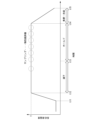
- FIG. 2 is a diagram for explaining an example of sampling timing during the resin polymerization reaction according to embodiment 1.
- FIG. 2 shows the change in temperature of the polymerization reaction tank over time, with the temperature of the polymerization reaction tank on the vertical axis and time on the horizontal axis.
- the resin polymerization reaction is carried out using a polymerization reaction tank.
- the polymerization reaction tank is, for example, a reaction vessel not shown in the figure, and the temperature of the sample stored in the reaction vessel is controlled by injecting steam or the like into the reaction vessel.
- the temperature of the polymerization reaction tank refers to the temperature of the reaction vessel itself, or the temperature inside the reaction vessel.
- the temperature of the sample stored in the reaction vessel may also be controlled by submerging the reaction vessel in a specified temperature-regulated oil bath.
- the temperature inside the reaction vessel is increased.
- the temperature reaches a predetermined reaction temperature T.
- a dripping process is carried out in which the monomer and polymerization initiator are dripped. Since this polymerization reaction is an exothermic reaction, the temperature of the sample stored in the reaction vessel is maintained by adding cooling water or lowering the oil bath temperature as necessary. The dripping process may take, for example, five hours. The time required for the dripping process may differ for each batch. During the dripping process, for example, one sampling is carried out. In the example shown in the figure, the first sampling is carried out once during the dripping process.
- the monomers used to produce the acrylic resin are not particularly limited, and any known monomers can be used.
- Examples of monomers include acrylic acid, alkyl acrylate, methacrylic acid, and alkyl methacrylate.
- the polymerization initiator used in producing the acrylic resin is not particularly limited, and any known initiator can be used.
- examples of polymerization initiators that can be used include persulfates such as ammonium persulfate and potassium persulfate; hydrogen peroxide; azo compounds; and organic oxides such as (2-ethylhexanoyl)(tert-butyl)peroxide.
- radicals are generated in the initiation reaction due to thermal decomposition of the polymerization initiator, etc.
- the radicals generated in the above-mentioned initiation reaction react sequentially with monomers to generate polymer radicals, and the polymer radicals further react with monomers to generate acrylic resin as a resin composition.
- a hold step is performed from time t13 to time t14, in which the temperature is maintained at a predetermined temperature.
- This hold step is a period during which the remaining monomer and polymerization initiator are consumed.
- the hold step may last, for example, four hours.
- the time required for the hold step may vary from batch to batch.
- multiple samplings are performed, for example, every hour. In the example shown in the figure, a total of six samplings are performed during the hold step. By performing multiple samplings during this hold step, the viscosity of the resin composition can be measured, for example.
- a dilution and cooling step is carried out from time t14 to time t15, and the temperature inside the reaction vessel is cooled. Sampling after this dilution and cooling step is carried out to measure, for example, the NV value of the resin composition, thereby confirming whether the product meets the specifications.
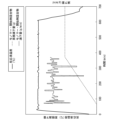
- FIG. 3 is a diagram showing an example of the change over time in the time series process data according to the first embodiment.
- the horizontal axis represents time, and the change over time in each time series process data is shown.
- the vertical axis represents temperature [°C] for the reaction liquid temperature, weight [g] for the cumulative amount of monomer-initiator mixture dripped, and weight per minute [g/min] for the amount of monomer-initiator mixture dripped.
- Times t11 to t15 shown in the figure correspond to FIG. 2. That is, from time t11 to time t12 is the process of increasing the temperature inside the reaction vessel, from time t12 to time t13 is the dripping process, from time t13 to time t14 is the hold process, and from time t14 to time t14 is the dilution and cooling process.
- the amount of monomer-initiator mixture dripped and the cumulative amount of monomer-initiator mixture dripped are time-series process data that change only in the dripping process.
- the amount of monomer/initiator mixture dripped is the average value of the amount dripped every 5 minutes measured by the operator on a balance.
- the drip amount is measured by the operator visually reading the scale. Therefore, the amount of monomer/initiator mixture dripped may have a time error due to the measurement being taken every 5 minutes, and a measurement error due to the operator visually reading the scale. Therefore, in this embodiment, a smoothing process is performed by performing preprocessing using the preprocessing unit 20.
- the sampling timing is indicated by a circle in the figure. In the example shown in the figure, sampling is performed seven times at irregular intervals. The sampling timing differs for each batch. Furthermore, the reaction time and the raw material dropping time also differ for each batch. Therefore, in this embodiment, the time-series process data is synchronized by performing preprocessing using the preprocessing unit 20.
- FIG. 4 is a diagram showing the change when the smoothing process according to the first embodiment is applied to the drip rate.
- the smoothing process is performed to remove the error factors described above (time error based on the measurement cycle and measurement error caused by the operator performing the measurement). The error factors can be reduced by the smoothing process.
- FIG. 4(A) and FIG. 4(B) show the change in drip rate with the horizontal axis representing time [min] and the vertical axis representing the drip rate per minute [g/min].
- FIG. 4(A) shows the drip rate per minute [g/min] before the smoothing process is performed
- FIG. 4(B) shows the drip rate per minute [g/min] after the smoothing process is performed.
- the smoothing process may be performed by calculating a moving average.
- the moving average may be, for example, a weighted moving average.
- the smoothing process may use other methods such as a simple moving average as long as it can reduce error factors.
- the smoothing process may also be called a smoothing process. As shown in the figure, it can be seen that the time series data is smoothed before and after the smoothing process.
- the time-series process data explained with reference to Figure 3 differs for each batch (lot). Each batch is operated to meet the target temperature and drip rate, but the process time differs slightly. Synchronization processing adjusts process data of different lengths like this.
- the DTW method dynamic time warping method
- the DTW method (dynamic time warping method) allows the similarity between different batches of time-series process data to be calculated. If the two pieces of time-series process data are identical, the similarity is 0, and the more different the shapes of the time-series process data are, the greater the similarity.
- the model creation unit 30 uses the similarity calculated from the time-series process data in this way as part of the explanatory variable X to perform learning and inference.
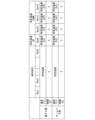
- FIG. 5 is a diagram showing an example of conditions for acquiring teacher data in the learning stage of the resin property prediction device according to embodiment 1.
- basic conditions data for eight lots, Run1 to Run8, is acquired.
- the reaction is carried out while maintaining a predetermined temperature T in both the dripping process and the holding process.
- the dripping process lasts for five hours, and the holding process lasts for four hours.
- Run 9 to Run 12 are conditions where the reaction liquid temperature is increased; specifically, the temperature is increased by 5°C from the predetermined temperature T in both the dripping process and the hold process.
- Run 10 to Run 12 are conditions where the reaction liquid temperature is decreased. Specifically, in Run 10, the temperature is decreased by 5°C from the predetermined temperature T in both the dripping process and the hold process. In Run 11 and Run 12, the temperature is decreased by 10°C from the predetermined temperature T in both the dripping process and the hold process.
- the resin property value prediction device 1 learns using the data acquired under such basic conditions and changed conditions as teacher data.
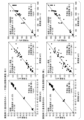
- FIG. 6 is a first diagram showing the prediction results of the resin physical property prediction device according to the first embodiment.
- FIG. 7 is a second diagram showing the prediction results of the resin physical property prediction device according to the first embodiment.
- the horizontal axis shows the actual measured value
- the vertical axis shows the predicted value by the resin physical property prediction device 1
- the error and the coefficient of determination R2 are calculated.
- the machine learning algorithm for determining the NV value and viscosity is lasso
- the machine learning algorithm for determining the residual monomer concentration is ElasticNet. Note that these machine learning algorithms may be configured so that a suitable one is appropriately selected by the model creation unit 30.
- FIGS. 6(A) to 6(C) show an example of inference using a learning model trained based only on the basic conditions described above.
- FIGS. 6(D) to 6(F) show an example of inference using a learning model trained based on the basic conditions described above and also on modified conditions that include temperature.
- Figures 6(A) and 6(D) show the results for the NV value
- Figures 6(B) and 6(E) show the results for the residual monomer concentration
- Figures 6(C) and 6(F) show the results for the viscosity.
- the average error rate is ⁇ 0.83 [%], and the coefficient of determination R2 is 0.99.
- the average error rate is ⁇ 1.33 [%], and the coefficient of determination R2 is 0.99.
- the residual monomer concentration shown in FIG. 6(B) the average error rate is ⁇ 7.4 [%], and the coefficient of determination R2 is 0.94.
- the residual monomer concentration shown in FIG. 6(E) the average error rate is ⁇ 8.6 [%], and the coefficient of determination R2 is 0.94.
- the viscosity shown in FIG. 6(C) the average error rate is ⁇ 15.4 [%], and the coefficient of determination R2 is 0.91.
- the average error rate is ⁇ 18.6 [%], and the coefficient of determination R2 is 0.83.
- Figure 7 shows the results of an experiment to see the change in prediction accuracy when smoothing processing is performed or not.
- Figures 7(A) and 7(D) show the results of the NV value
- Figures 7(B) and 7(E) show the results of the residual monomer concentration
- Figures 7(C) and 7(F) show the results of the viscosity.
- Figures 7(A) to 7(C) show the results when smoothing processing is performed.
- Figures 7(D) to 7(F) show the results when smoothing processing is not performed.
- Figures 7(A) to 7(C) use the same results as Figures 6(A) to 6(C).
- the average error rate is ⁇ 1.00 [%], and the coefficient of determination R2 is 0.99. Therefore, it can be said that the prediction accuracy of the NV value in FIG. 7(A) where smoothing processing was performed is higher than that in FIG. 7(D) where smoothing processing was not performed.
- the residual monomer concentration shown in FIG. 7(E) the average error rate is ⁇ 13.3 [%], and the coefficient of determination R2 is 0.87. Therefore, it can be said that the prediction accuracy of the residual monomer concentration in FIG. 7(B) where smoothing processing was performed is higher than that in FIG. 7(E) where smoothing processing was not performed. Looking at the viscosity shown in FIG.
- the prediction accuracy of the NV value and residual monomer concentration is higher when smoothing processing is performed. Furthermore, the prediction accuracy of the viscosity is higher when smoothing processing is not performed. Therefore, whether or not to perform preprocessing by the preprocessing unit 20 may be determined depending on the type of resin property value to be measured.
- the resin property value prediction device 1 predicts the resin property value from information on the reacting raw materials and time-series process data during the polymerization reaction in a process of performing a resin polymerization reaction in a batch-type reaction tank.
- the resin property value prediction device 1 includes a storage unit 10, and stores information on the reacting raw materials when manufactured in the past and time-series process data during the polymerization reaction in association with the resin property value, which is the corresponding actual measurement data.
- the resin property value prediction device 1 also includes a pre-processing unit 20, and performs pre-processing on the time-series process data.
- the pre-processing includes at least a synchronization process of the time-series process data.
- the resin property value prediction device 1 also includes a model creation unit 30, and creates a learning model using the pre-processed data as teacher data.
- the resin property value prediction device 1 also includes a calculation unit 50, and calculates the resin property value using the learned model created by the model creation unit 30 based on the blending amount of the raw materials in the reaction currently in progress and the process data. That is, according to this embodiment, after the synchronization process of the time-series process data, learning and inference are performed. Therefore, according to the resin property value prediction device 1, when predicting a resin property value using process data whose values change over time, the resin property value can be predicted with high accuracy.
- the preprocessing performed by the preprocessing unit 20 is a process of extracting the mutual similarity between multiple pieces of time-series process data as a feature. Furthermore, according to the embodiment described above, the similarity is extracted by the DTW method. In other words, according to the resin physical property value prediction device 1, since the time-series process data is learned based on the similarity, even if the sizes of the multiple pieces of process data are different, the resin physical property value can be predicted with high accuracy.
- the pre-processing unit 20 smoothes the time-series process data and then extracts the similarity as a feature. Therefore, according to this embodiment, even if the time-series process data contains errors, it is possible to accurately predict the resin property values.
- the model creation unit 30 selects a method that reduces the difference from the measured physical property value from among any of the algorithms of Lasso regression, Ridge regression, and partial least squares regression, and updates the regression parameters within the algorithm during the selection process. Therefore, the resin physical property value prediction device 1 can perform inference using a learning model created using a more suitable machine learning algorithm. Therefore, the resin physical property value prediction device 1 can accurately predict the resin physical property value when predicting the resin physical property value using process data whose values change over time.
- the resin composition for which the calculation unit 50 calculates the resin physical property values is an acrylic resin
- the resin physical property values calculated by the calculation unit include at least one of the viscosity, the amount of non-volatile components, and the amount of remaining monomers. Therefore, according to this embodiment, when predicting resin physical property values such as viscosity, the amount of non-volatile components, and the amount of remaining monomers using process data whose values change over time, it is possible to accurately predict the resin physical property values.
- a second embodiment will be described with reference to FIG. 8.
- future (e.g., 30 minutes later) physical property values are predicted. That is, the second embodiment differs from the first embodiment in that future physical property values are predicted from a resin polymerization reaction currently in progress.
- a plurality of objective variables Y are calculated when the parameters of the explanatory variable X are varied, and it is determined how the explanatory variable X should be set to obtain more suitable physical property values, and feedback may be provided to use suitable parameters.
- FIG. 8 is a functional configuration diagram showing an example of the functional configuration of a resin property value prediction device according to embodiment 2.
- the resin property value prediction device 1A differs from the resin property value prediction device 1 in that it further includes a candidate generation unit 60, a future property value calculation unit 70, and a process data determination unit 80.
- components similar to those of the resin property value prediction device 1 may be denoted by similar reference numerals and description thereof may be omitted.
- the candidate generation unit 60 generates process data from the current time onward in the resin polymerization reaction that is in progress.
- the process data from the current time onward generated by the candidate generation unit 60 becomes candidates for future process data. Therefore, the process data from the current time onward generated by the candidate generation unit 60 can also be called future process data candidates.
- the candidate generation unit 60 can also generate multiple future process data candidates.
- the multiple future process data candidates generated by the candidate generation unit 60 are preprocessed by the preprocessing unit 20, and inference is performed using the learning model created by the model creation unit 30.
- the future physical property value calculation unit 70 calculates the resin physical property value by inputting the blending amount of the raw materials and the process data generated by the candidate generation unit 60 into the learning model created by the model creation unit.
- the resin physical property value calculated by the future physical property value calculation unit 70 can be said to be the resin physical property value when a resin polymerization reaction is performed using the future process data candidate.
- the future physical property value calculation unit 70 calculates multiple resin physical property values.
- the candidate generation unit 60 may further generate future process data candidates based on the multiple resin physical property values calculated by the future physical property value calculation unit 70.
- the future process data candidates generated based on the multiple resin physical property values calculated by the future physical property value calculation unit 70 may be those that can obtain more suitable resin physical property values.
- the resin physical property value prediction device 1A further includes a process data determination unit 80, which determines whether or not the resin physical property value set as the target value can be realized. Specifically, the process data determination unit 80 determines whether or not the resin physical property value set as the target value can be realized based on the trend of the physical property value calculated based on the future process data candidates generated by the candidate generation unit 60.
- the target value may be determined in advance and stored in the storage unit 10, or may be calculated based on the current resin physical property value.
- the candidate generation unit 60 may further raise or lower the process data based on the trend of the physical property value obtained as a result of raising or lowering the process data.
- the resin property value prediction device 1A includes the candidate generation unit 60, and generates process data from the current time onward in a resin polymerization reaction in progress.
- the resin property value prediction device 1A also includes the future property value calculation unit 70, and calculates resin property values by inputting the blending amounts of raw materials and the process data generated by the candidate generation unit 60 into a learning model created by the model creation unit 30.
- the resin property value prediction device 1A can predict future (e.g., 30 minutes later) property values.
- the future physical property value calculation unit 70 calculates multiple resin physical property values
- the candidate generation unit 60 generates future process data candidates, which are candidates for future process data, based on the multiple resin physical property values calculated by the future physical property value calculation unit 70.
- the resin physical property value prediction device 1A determines whether or not a resin physical property value set as a target value can be realized based on the progress of the physical property values calculated based on the future process data candidates generated by the candidate generation unit 60. Therefore, according to this embodiment, it is possible to swing the future process data candidates up and down and select a more suitable candidate, thereby achieving the desired resin physical property value.
- each part of the resin property prediction device 1 in the above-mentioned embodiment may be realized by recording a program for realizing these functions on a computer-readable recording medium, and reading and executing the program recorded on the recording medium into a computer system.
- the "computer system” here includes hardware such as the OS and peripheral devices.
- Computer-readable recording media refers to portable media such as optical magnetic disks, ROMs, and CD-ROMs, as well as storage units such as hard disks built into computer systems.
- “computer-readable recording media” may also include devices that dynamically store programs for a short period of time, such as communication lines when transmitting programs over a network such as the Internet, and devices that store programs for a fixed period of time, such as volatile memory within a computer system that serves as a server or client in such cases.
- the above programs may also be ones that realize some of the functions described above, or may be ones that can realize the functions described above in combination with programs already recorded in the computer system.
- 1...Resin property value prediction device 10...Memory unit, 20...Preprocessing unit, 30...Model creation unit, 40...In-progress data acquisition unit, 50...Calculation unit, 60...Candidate generation unit, 70...Future property value calculation unit, 80...Process data judgment unit
Landscapes
- Engineering & Computer Science (AREA)
- Computing Systems (AREA)
- Theoretical Computer Science (AREA)
- Physics & Mathematics (AREA)
- General Physics & Mathematics (AREA)
- Automation & Control Theory (AREA)
- Life Sciences & Earth Sciences (AREA)
- Bioinformatics & Cheminformatics (AREA)
- Bioinformatics & Computational Biology (AREA)
- Testing And Monitoring For Control Systems (AREA)
- Management, Administration, Business Operations System, And Electronic Commerce (AREA)
Abstract
樹脂物性値予測装置は、バッチ式反応槽によって樹脂重合反応を行うプロセスにおいて、反応原料に関する情報及び重合反応中の時系列プロセスデータから樹脂物性値を予測する樹脂物性値予測装置であって、過去に製造された際の前記反応原料に関する情報及び重合反応中の時系列プロセスデータと、対応する実測データである樹脂物性値とを対応付けて記憶する記憶部と、前記時系列プロセスデータに対して前処理を行う前処理部と、前処理が行われたデータを教師データとして学習モデルを作成するモデル作成部と、現在進行している反応における原料の配合量とプロセスデータに基づき、前記モデル作成部により作成された学習済みモデルを用いて樹脂物性値を算出する算出部とを備える。
Description
本発明は、樹脂物性値予測装置及び樹脂物性値の予測方法に関する。
本願は、2023年3月15日に日本に出願された特願2023-041016について優先権を主張し、その内容をここに援用する。
本願は、2023年3月15日に日本に出願された特願2023-041016について優先権を主張し、その内容をここに援用する。
従来、所定の設備を用いて、類似するプロセスにより多品種の製品を生産する多品種バッチ生産プロセスにおいて、製品の品質の評価値を推定する技術があった(例えば、特許文献1を参照)。特許文献1に記載されたような技術によれば、温度、圧力、引張速度、酸素濃度、pH及び湿度等のプロセス変数を説明変数とし、目的変数である耐圧強度、厚み、存在の成分比、温度、輝度、粘度及び分子量等を推定する。
一方、少量多品種生産を行ういわゆるバッチプラントでは、一品種について取得可能なデータ量が少ないこと、時刻ごとにプラントの状態が変化する非定常プロセスであること、及び製品品質がプロセスの履歴全体の影響を受けること等の特徴を挙げることができる。このような特徴を有するバッチプラントでは、製品品質の品質管理が困難である。精度よく製品品質の品質管理を実施するため、予測データと品質データとの誤差に基づいて機械学習モデルのパラメータを更新する技術があった(例えば、特許文献2を参照)。
ここで、上述したような技術によれば、バッチ式反応槽によって行われる樹脂重合反応プロセスにおいて、機械学習アルゴリズムを用いて、反応液温度や、熱媒温度及び反応原料の投入量等のプロセスデータから樹脂物性値を予測することができるかもしれない。しかしながら、これらプロセスデータは、経時的に変化する値であるという特徴を有する。更に、各工程に要する時間には、バッチごとのばらつきがある。したがって、このような時間的にばらつきがあるプロセスデータを用いて取得された樹脂物性値を教師データとして機械学習モデルを作成した場合、樹脂物性値の推定精度を上げることは容易でなかった。
そこで本発明は、経時的に値が変化するプロセスデータを用いて樹脂物性値を予測する際に、精度よく樹脂物性値を予測することができる樹脂物性値予測装置及び樹脂物性値の予測方法を提供することを目的とする。
(1)本発明の一態様は、バッチ式反応槽によって樹脂重合反応を行うプロセスにおいて、反応原料に関する情報及び重合反応中の時系列プロセスデータから樹脂物性値を予測する樹脂物性値予測装置であって、過去に製造された際の前記反応原料に関する情報及び重合反応中の時系列プロセスデータと、対応する実測データである樹脂物性値とを対応付けて記憶する記憶部と、前記時系列プロセスデータに対して前処理を行う前処理部と、前処理が行われたデータを教師データとして学習モデルを作成するモデル作成部と、現在進行している反応における原料の配合量とプロセスデータに基づき、前記モデル作成部により作成された学習済みモデルを用いて樹脂物性値を算出する算出部と、を備える樹脂物性値予測装置である。
(2)また、本発明の一態様は、上記(1)に記載の樹脂物性値予測装置において、前記前処理部により行われる前処理とは、複数の前記時系列プロセスデータについて、互いの類似度を特徴量として抽出する処理である。
(3)また、本発明の一態様は、上記(2)に記載の樹脂物性値予測装置において、前記類似度は、DTW(Dynamic Time Warping)法により抽出されるものである。
(4)また、本発明の一態様は、上記(2)又は(3)に記載の樹脂物性値予測装置において、前記前処理部は、前記時系列プロセスデータを平滑化処理した後に、前記類似度を特徴量として抽出するものである。
(5)また、本発明の一態様は、上記(1)から(4)のいずれかに記載の樹脂物性値予測装置において、前記モデル作成部は、ラッソ回帰(Lasso;Least Absolute Shrinkage and Selection Operator)、リッジ回帰(Ridge Regression)、又は部分的最小二乗回帰(PLS回帰、Partial Least Squares Regression)のうちいずれかのアルゴリズムから、実測物性値との差異が小さくなる手法を選定し、選定過程においてアルゴリズム内部の回帰パラメータを更新するものである。
(6)また、本発明の一態様は、上記(1)から(5)のいずれかに記載の樹脂物性値予測装置において、前記算出部が樹脂物性値の算出対象とする樹脂組成物は、アクリル樹脂であり、前記算出部により算出される樹脂物性値は、粘度、不揮発成分量、残存モノマー量の少なくとも1つを含むものである。
(7)また、本発明の一態様は、上記(1)から(6)のいずれかに記載の樹脂物性値予測装置において、反応途中の樹脂重合反応における現時点以降のプロセスデータを生成する候補生成部と、原料の配合量と、前記候補生成部により生成されたプロセスデータとを、前記モデル作成部により作成された学習モデルに入力することにより、樹脂物性値を算出する将来物性値算出部と、を更に備えるものである。
(8)また、本発明の一態様は、上記(7)に記載の樹脂物性値予測装置において、前記将来物性値算出部は、複数の樹脂物性値を算出し、前記候補生成部は、前記将来物性値算出部により算出された複数の樹脂物性値に基づき、将来のプロセスデータの候補である将来プロセスデータ候補を生成し、前記候補生成部により生成された将来プロセスデータ候補に基づき算出された物性値の推移に基づき、目標値として定められた樹脂物性値を実現できるか否かを判定するプロセスデータ判定部を更に備えるものである。
(9)また、本発明の一態様は、バッチ式反応槽によって樹脂重合反応を行うプロセスにおいて、反応原料に関する情報及び重合反応中の時系列プロセスデータから樹脂物性値を予測する樹脂物性値の予測方法であって、過去に製造された際の前記反応原料に関する情報及び重合反応中の時系列プロセスデータと、対応する実測データである樹脂物性値とを対応付けて記憶する記憶工程と、前記時系列プロセスデータに対して前処理を行う前処理工程と、前処理が行われたデータを教師データとして学習モデルを作成するモデル作成工程と、現在進行している反応における原料の配合量とプロセスデータとに基づき、前記モデル作成工程により作成された学習済みモデルを用いて樹脂物性値を算出する算出工程と、を有する樹脂物性値の予測方法である。
本発明によれば、経時的に値が変化するプロセスデータを用いて樹脂物性値を予測する際に、精度よく樹脂物性値を予測することができる樹脂物性値予測装置及び樹脂物性値の予測方法を提供することができる。
[実施形態]
まず、本実施形態に係る樹脂物性値予測装置及び樹脂物性値の予測方法の前提となる事項について説明する。本実施形態に係る樹脂物性値予測装置及び樹脂物性値の予測方法は、樹脂の重合プロセスにおいて、樹脂組成物の物性測定に用いられる。
まず、本実施形態に係る樹脂物性値予測装置及び樹脂物性値の予測方法の前提となる事項について説明する。本実施形態に係る樹脂物性値予測装置及び樹脂物性値の予測方法は、樹脂の重合プロセスにおいて、樹脂組成物の物性測定に用いられる。
本実施形態に係る樹脂物性値予測装置及び樹脂物性値の予測方法の対象となる樹脂組成物とは、ホモポリマー、コポリマー等の高分子が広く含まれる。また、樹脂組成物は、熱可塑性樹脂であってもよいし、熱硬化性樹脂であってもよい。熱可塑性樹脂としては、特に制限されないが、例えばポリプロピレン(PP)、ポリエチレン(PE)、ABS樹脂、ポリ塩化ビニル(PVC)、アクリル樹脂、ポリエステル樹脂、ポリスチレン樹脂(PS)、ウレタン樹脂(PU)、ポリフェニレンサルファイド樹脂(PPS)等が挙げられる。以下の実施形態においては、一例として、樹脂組成物がアクリル樹脂であり、該アクリル樹脂を含む溶液(以下、樹脂組成物を含む溶液の形態を「樹脂生成物」ともいう)を用いて予測を行う場合を説明する。
本実施形態に係る樹脂物性値予測装置及び樹脂物性値の予測方法は、バッチ式反応槽によって樹脂重合反応を行うプロセスに適用される。本実施形態に係る樹脂物性値予測装置及び樹脂物性値の予測方法は、反応原料に関する情報及び重合反応中の時系列プロセスデータから樹脂物性値を予測する。バッチ式反応槽によって樹脂重合反応を行うプロセスに用いられる反応原料の一例としては、モノマー、開始剤及び溶剤等を例示することができる。重合反応中の時系列プロセスデータの一例としては、反応液温度、熱媒温度、及び原料投入量、圧力等を例示することができる。重合反応中の時系列プロセスデータは、製造設備から容易に得られるデータであることが好適である。
本実施形態に係る樹脂物性値予測装置及び樹脂物性値の予測方法の対象となる樹脂組成物の物性とは、具体的には、ポリマー物性値であってもよい。ポリマー物性値には、不揮発成分(NV;Non-Volatile)量、粘度(ガードナー粘度)、及び残存モノマー量(残存モノマー濃度)等が広く含まれ、これらのうち少なくともいずれか1つが含まれていることが好適である。
以下、本実施形態に係る樹脂物性値の測定方法の一例について説明する。なお、本実施形態に係る樹脂組成物の物性は上述した一例に限定されず、以下に説明する測定方法以外の方法により測定されてもよい。
不揮発成分量の測定方法について説明する。まず、サンプリングした樹脂組成物を、事前に重量を測定したアルミ皿に採取し、重量を測定する。その後、トルエンとメタノールとを含む希釈溶剤を加えることにより20[wt%(ウェイトパーセント)]に希釈し、108[℃]に加熱したオーブンを用いて1時間加熱し、揮発成分を除去する。加熱後にアルミ皿に残留した樹脂組成物残渣の重量を測定し、加熱前重量との差分から不揮発成分量を測定する。
粘度の測定方法について説明する。まず、サンプリングした樹脂組成物をガードナー気泡粘度管へ一定量加えて密閉する。密閉した粘度管を25[℃]に管理した水浴中に漬けることにより樹脂組成物の温度を調節する。その後、気泡上昇速度を比較することで最も近い標準粘度サンプルを判定し、標準粘度換算表を用いて数値化する。
残存モノマー量の測定方法について説明する。まず、サンプリングした樹脂組成物を0.5[wt%]にN,N-ジメチルホルムアミドを用いて希釈し、測定試料を調製する。FID検出器を有するガスクロマトグラフィーを用いて樹脂組成物中のモノマー量を測定する。全モノマーの合計量から、残存モノマー量を測定する。
[実施形態1]
以下、本発明の実施形態1に係る樹脂物性値予測装置1について、図1から図9の各図を参照しながら説明する。
以下、本発明の実施形態1に係る樹脂物性値予測装置1について、図1から図9の各図を参照しながら説明する。
図1は、実施形態1に係る樹脂物性値予測装置の機能構成の一例を示す機能構成図である。同図を参照しながら、樹脂物性値予測装置1の機能構成の一例について説明する。樹脂物性値予測装置1は、記憶部10と、前処理部20と、モデル作成部30と、進行中データ取得部40と、算出部50とを備える。これらの各機能部は、例えば、電子回路を用いて実現される。また、各機能部は、必要に応じて、半導体メモリや磁気ハードディスク装置などといった記憶手段を内部に備えてよい。また、各機能を、コンピュータおよびソフトウェアによって実現するようにしてもよい。
本実施形態に係る樹脂物性値予測装置及び樹脂物性値の予測方法は、機械学習により樹脂物性値の予測を行う。以下、学習段階において用いられる構成と、推論段階において用いられる構成とをそれぞれ説明する。まず、学習段階において用いられる構成について説明する。学習段階においては、記憶部10と、前処理部20と、モデル作成部30とが用いられる。
記憶部10は、過去に測定されたデータの実績データを記憶する。実績データとは、説明変数Xと、対応する目的変数Yとが対応付けられたデータである。説明変数Xとしては、樹脂組成物の製造に用いられるプロセスデータであり、具体的には、過去に製造された際の反応原料に関する情報と、重合反応中の時系列プロセスデータとを例示することができる。重合反応中の時系列プロセスデータは、具体的には、反応液温度、熱媒温度、及び原料投入量等であってもよい。目的変数Yとしては、対応するプロセスデータを用いて樹脂組成物を製造する際に、サンプリングされた試料から実測された実測データである樹脂物性値であり、具体的には、不揮発成分量、粘度、及び残存モノマー量等を例示することができる。
前処理部20は、機械学習アルゴリズムに入力されるデータに対して前処理を行う。前処理は、学習段階においても、推論段階においても行われる。学習段階において、前処理部20は、説明変数X及び目的変数Yのいずれに対しても前処理を行ってもよい。本実施形態に係る前処理は、少なくとも、説明変数Xに含まれる時系列プロセスデータに適用される。また、本実施形態に係る前処理には、少なくとも同期処理が含まれている。ここで、時系列プロセスデータは、バッチプロセスごとに、製造に要した時間が異なる場合がある。また、バッチプロセスごとに、サンプリングを行った時間や、反応時間、原料滴下時間等も異なる場合がある。同期処理とは、動的時間伸縮をすることにより、時系列プロセスデータの同期を行うものである。
同期処理の一例としては、複数の時系列プロセスデータについて、類似度を特徴量として抽出する処理であってもよい。換言すれば、前処理部20により行われる前処理とは、複数の時系列プロセスデータについて、互いの類似度を特徴量として抽出する処理であってもよい。この場合、抽出された類似度が、モデル作成部30に渡される。類似度は、互いの類似度であってもよいし、所定のサンプルデータ(ゴールデンサンプル)との類似度であってもよい。
より具体的には、同期処理により抽出される類似度は、動的時間伸縮法(DTW法;Dynamic Time Warping)により抽出されるものであってもよい。動的時間伸縮法は、時系列データ同士の類似度を測る際に用いられている手法であり、詳細についての説明は省略する。
また、本実施形態に係る前処理は、平滑化処理が含まれていてもよい。平滑化処理は、機械学習アルゴリズムに入力されるデータのうち、説明変数Xに含まれる時系列プロセスデータに適用される。ここで、時系列プロセスデータのうち、原料の滴下速度は、例えば、オペレータが5分毎の滴下量を天秤で計測し、目視で読み取った値に基づき算出される値である。したがって、原料の滴下速度の取得には、オペレータによる手作業が介在し、誤差が含まれる場合がある。また、反応液温度には、微小な変動が含まれることがある。平滑化処理は、このような誤差や変動に基づく測定結果への影響を低減させるために行われるものである。平滑化処理は、例えば加重移動平均を演算することにより行われてもよい。
なお、本実施形態において平滑化処理は、必ずしも行われなくてもよい。例えば、説明変数Xのうち、不揮発成分量、残存モノマー量については平滑化処理を行った方が良い場合があるが、粘度については平滑化処理を行わない方が良い場合がある。したがって、前処理部20は、所定の説明変数Xに対して平滑化処理を行うものであってもよい。前処理部20は、平滑化処理を行う場合、時系列プロセスデータを平滑化処理した後に、類似度を特徴量として抽出するものであってもよい。
また、本実施形態に係る前処理は、対数変換処理が含まれていてもよい。対数変換は、例えば目的変数Yに対して行われてもよい。ここで、目的変数Yの種類によっては、対数変換が行われた方がよい場合がある。一方、樹脂物性値を対数変換処理することにより、樹脂物性値の予測誤差が拡大する場合もある。すなわち、樹脂物性値の対数変換処理を行った場合、精度向上する場合としない場合とがある。したがって、対数変換処理は、物性値の種類に応じて、適用するか否かが決定されてもよい。
モデル作成部30は、記憶部10に記憶されたデータに対して前処理が行われたデータを教師データとして、学習モデルを作成する。すなわち、モデル作成部30は、教師有り学習により学習モデルを作成するということもできる。
モデル作成部30は、ラッソ回帰(Lasso;Least Absolute Shrinkage and Selection Operator)、リッジ回帰(Ridge Regression)、又は部分的最小二乗回帰(PLS回帰、Partial Least Squares Regression)等の手法を用いて学習モデルを作成してもよい。また、モデル作成部30は、ラッソ回帰、リッジ回帰、又は部分的最小二乗回帰のうち、いずれか好適な手法を用いて学習モデルを作成することが好適である。具体的には、モデル作成部30は、ラッソ回帰、リッジ回帰、又は部分的最小二乗回帰のうちいずれかのアルゴリズムから、実測物性値との差異が小さくなる手法を選定し、選定過程においてアルゴリズム内部の回帰パラメータを更新するものであってもよい。
次に、推論段階において用いられる構成について説明する。推論段階においては、学習段階において、モデル作成部30により作成された学習モデルと、進行中データ取得部40と、算出部50とが用いられる。
進行中データ取得部40は、推論段階において、現在進行中の製造プロセスの、プロセスデータを取得する。進行中データ取得部40が取得するプロセスデータとしては、反応原料に関する情報と、重合反応中の時系列プロセスデータとを例示することができる。重合反応中の時系列プロセスデータには、具体的には、反応液温度、熱媒温度、及び原料投入量等が含まれていてもよい。
算出部50は、現在進行している反応における原料の配合量と、プロセスデータとに基づき、モデル作成部30により作成された学習済みモデルを用いて、樹脂物性値を算出する。算出部50が樹脂物性値の算出対象とする樹脂組成物は、具体的には、アクリル樹脂であってもよい。
図2は、実施形態1に係る樹脂重合反応中のサンプリングタイミングの一例について説明するための図である。同図を参照しながら、実施形態1に係る樹脂重合反応工程におけるサンプリングタイミングの一例について説明する。同図には、重合反応槽の温度を縦軸、時間を横軸として、重合反応槽の温度の時間変化を示す。
樹脂重合反応は、重合反応槽を用いて行われる。重合反応槽とは、例えば不図示の反応容器であり、当該反応容器にスチーム等を噴射することにより、反応容器内に格納された試料の温度を制御する。このとき、重合反応槽の温度とは、反応容器それ自体の温度であるか、或いは反応容器内の温度を指す。また、反応容器を温度調整された所定のオイルバスに沈めることにより、反応容器内に格納された試料の温度を制御してもよい。
先ず、時刻t11において、反応容器内の温度を上昇させる。時刻t12において、温度が所定の反応温度Tに到達する。
時刻t12から時刻t13において、モノマー及び重合開始剤を滴下する滴下工程が行われる。本重合反応は発熱反応であるため、必要に応じて冷却水を投入したり、オイルバス温度を下げたりすることにより、反応容器内に格納された試料の温度を維持する。滴下工程は、例えば5時間であってもよい。なお、滴下工程に要する時間は、バッチごとに異なっていてもよい。滴下工程中、例えば1回のサンプリングが行われる。図示する一例では、滴下工程の中で、一度、最初のサンプリングが行われる。
アクリル樹脂を生成する際に用いられるモノマーとしては、特に限定されず、公知のものを用いることができる。モノマーとしては、例えばアクリル酸、アクリル酸アルキル、メタクリル酸、メタクリル酸アルキルなどを挙げることができる。
アクリル樹脂を生成する際に用いられる重合開始剤としては、特に限定されず、公知のものを用いることができる。重合開始剤としては、過硫酸アンモニウム、過硫酸カリウムなどの過硫酸塩;過酸化水素;アゾ化合物;(2-エチルヘキサノイル)(tert-ブチル)ペルオキシドなどの有機酸化物を使用することができる。
上記滴下工程において、開始反応では重合開始剤の熱分解等によりラジカルが生成される。成長反応では、上記開始反応で生成したラジカルが順次モノマーと反応して重合体ラジカルが生成され、更に、重合体ラジカルとモノマーとが反応することにより、樹脂組成物としてのアクリル樹脂が生成される。
滴下終了後、時刻t13から時刻t14において、温度を所定の温度に保持するホールド工程が行われる。このホールド工程は、残モノマーや重合開始剤の消費が行われる期間となる。ホールド工程は、例えば4時間であってもよい。なお、ホールド工程に要する時間は、バッチごとに異なっていてもよい。ホールド工程中、例えば1時間ごとに複数回のサンプリングが行われる。図示する一例では、ホールド工程の期間中、合計6回のサンプリングが行われる。本ホールド工程中の複数回のサンプリングにより、例えば樹脂組成物の粘度を測定することができる。
ホールド工程の後、時刻t14から時刻t15において、希釈・冷却工程が行われ、反応容器内の温度が冷却される。本希釈・冷却工程後のサンプリングにより、例えば樹脂組成物のNV値を測定することで、製品としてのスペックインを確認する。
図3は、実施形態1に係る時系列プロセスデータの時間ごとの変化の一例について示す図である。同図を参照しながら、図2において説明した樹脂重合反応において得られた時系列プロセスデータの時間ごとの変化の一例について説明する。同図には、横軸を時間として、各時系列プロセスデータの時間ごとの変化を示す。縦軸は、反応液温度については温度[℃]であり、モノマー・開始剤混合物累積滴下量については重量[g]であり、モノマー・開始剤混合物滴下量については1分あたりの重量[g/min]である。
図中に示された時刻t11乃至時刻t15は、図2に対応するものである。すなわち、時刻t11から時刻t12は、反応容器内の温度を上昇させる工程であり、時刻t12から時刻t13は、滴下工程であり、時刻t13から時刻t14は、ホールド工程であり、時刻t14から時刻t14は、希釈・冷却工程である。モノマー・開始剤混合物滴下量、及びモノマー・開始剤混合物累積滴下量については、滴下工程でのみ変化する時系列プロセスデータである。
ここで、モノマー・開始剤混合物滴下量は、5分ごとの滴下量をオペレータが天秤で計測した平均値を採用している。滴下量の計測は、オペレータが目視で目盛りを読み取るものである。したがって、モノマー・開始剤混合物滴下量には、5分ごとの計測であるための時間的誤差と、オペレータが目視で目盛りを読み取るための計測誤差が存在する可能性がある。したがって、本実施形態においては、前処理部20により前処理を行うことにより、平滑化処理を行う。
ここで、サンプリングタイミングを図中に丸で示す。図中に示す一例では、不定期に、7回のサンプリングを行っている。サンプリングタイミングは、バッチごとに異なるものである。また、反応時間及び原料滴下時間も、バッチごとに異なるものである。したがって、本実施形態においては、前処理部20により前処理を行うことにより、時系列プロセスデータの同期処理を行う。
図4は、実施形態1に係る平滑化処理を滴下速度に適用した場合の変化について示す図である。同図を参照しながら、平滑化処理の一例について説明する。平滑化処理は、上述したような誤差要因(計測周期に基づく時間的誤差と、オペレータが測定を行うことによる計測誤差)を取り除くために行われる。平滑化処理により、当該誤差要因を低減することができる。図4(A)及び図4(B)は、いずれも横軸を時間[min]、縦軸を1分あたりの滴下量[g/min]として、滴下速度の変化を示したものである。図4(A)は、平滑化処理を行う前における1分あたりの滴下量[g/min]を示したものであり、図4(B)は、平滑化処理を行った後における1分あたりの滴下量[g/min]を示したものである。
平滑化処理は、移動平均を演算することにより行われてもよい。移動平均は、例えば加重移動平均(重み付き移動平均)であってもよい。なお、平滑化処理では、誤差要因を低減することができればよく、単純移動平均等その他の方法が用いられてもよい。また、当該平滑化処理は、スムージング処理ということもできる。図示するように、平滑化処理の前後では、時系列データが平滑化されていることが分かる。
次に、時系列プロセスデータの同期処理の一例について説明する。
図3を参照しながら説明した時系列プロセスデータは、バッチごと(ロットごと)に異なるものである。各バッチは、目標とする温度や滴下速度を満たすように運転されるが、工程時間は微妙に異なる。このように長さが違うプロセスデータを、調整するのが同期処理である。なお、同期処理には、例えばDTW法(動的時間伸縮法)が用いられてもよい。
DTW法(動的時間伸縮法)によると、バッチごとに異なる時系列プロセスデータ同士の類似度を算出できる。2つの時系列プロセスデータが互いに同一であれば類似度は0であり、時系列プロセスデータ同士の形状が互いに異なるほど、類似度は大きくなる。
実際の処理においては、時系列プロセスデータ同士を総当たりで類似度を算出する。モデル作成部30は、このように時系列プロセスデータから算出された類似度を、説明変数Xの一部に使用して、学習及び推論を行う。
次に、図5から図7を参照しながら、樹脂物性値予測装置を用いて、樹脂物性値の学習及び推論(予測)を行った結果について説明する。
図5は、実施形態1に係る樹脂物性値予測装置の学習段階における教師データの取得条件の一例について示す図である。まず、同図を参照しながら、樹脂物性値予測装置1の学習段階における教師データの取得条件の一例について説明する。図示する一例では、基本条件として、Run1乃至Rnu8の8ロット分のデータを取得する。基本条件において、具体的には滴下工程とホールド工程ともに、所定温度Tに維持され反応が行われる。滴下工程は5時間、ホールド工程は4時間である。
また、温度を上下に振った条件として、Run9乃至Rnu12の4ロット分のデータを取得する。Run9は、反応液温度を上昇させた場合の条件であり、具体的には滴下工程とホールド工程ともに、所定温度Tに対して5℃上昇させている。また、Run10乃至Run12は、反応液温度を低下させた場合の条件である。具体的には、Run10は滴下工程とホールド工程ともに、所定温度Tに対して5℃低下させている。Run11とRun12は滴下工程とホールド工程ともに、所定温度Tに対して10℃低下させている。樹脂物性値予測装置1は、このような基本条件及び変更条件において取得されたデータを教師データとして学習を行う。
図6は、実施形態1に係る樹脂物性値予測装置の予測結果について示す第1の図である。図7は、実施形態1に係る樹脂物性値予測装置の予測結果について示す第2の図である。図6及び図7は、横軸に実際の測定値を、縦軸に樹脂物性値予測装置1による予測値を取り、誤差及び決定係数R2を算出したものである。NV値及び粘度を求めるための機械学習アルゴリズムはlassoを用い、残モノマー濃度を求めるための機械学習アルゴリズムはElasticNetを用いている。なお、これら機械学習アルゴリズムは、モデル作成部30により適宜好適なものが選択されるような構成であってもよい。
図6(A)乃至図6(C)は、上述した基本条件のみに基づき学習された学習モデルを用いて推論を行った場合の一例について示す。図6(D)乃至図6(F)は、上述した基本条件に加え、更に温度を振った変更条件に基づき学習された学習モデルを用いて推論を行った場合の一例について示す。
図6(A)及び図6(D)は、NV値の結果を示し、図6(B)及び図6(E)は、残モノマー濃度の結果を示し、図6(C)及び図6(F)は、粘度の結果を示す。図6(A)及び図6(D)、すなわちNV値を推定する際には、平滑化処理を行い、対数変換を行わなかった。また、図6(B)、図6(C)、図6(E)、及び図6(F)は、平滑化処理及び対数変換をいずれも行った。
図6(A)に示すNV値を見てみると、平均誤差率が±0.83[%]であり、決定係数R2が0.99である。図6(D)に示すNV値を見てみると、平均誤差率が±1.33[%]であり、決定係数R2が0.99である。図6(B)に示す残モノマー濃度を見てみると、平均誤差率が±7.4[%]であり、決定係数R2が0.94である。図6(E)に示す残モノマー濃度を見てみると、平均誤差率が±8.6[%]であり、決定係数R2が0.94である。図6(C)に示す粘度を見てみると、平均誤差率が±15.4[%]であり、決定係数R2が0.91である。図6(F)に示す粘度を見てみると、平均誤差率が±18.6[%]であり、決定係数R2が0.83である。
図7は、平滑化処理の実施の有無を変えた場合における予測精度の変化を見るための実験結果である。図7(A)及び図7(D)は、NV値の結果を示し、図7(B)及び図7(E)は、残モノマー濃度の結果を示し、図7(C)及び図7(F)は、粘度の結果を示す。図7(A)乃至図7(C)は、平滑化処理を行った場合における結果を示す図である。図7(D)乃至図7(F)は、平滑化処理を行わなかった場合における結果を示す図である。図7(A)乃至図7(C)は、図6(A)乃至図6(C)と同様の結果を用いている。図7(A)及び図7(D)、すなわちNV値を推定する際には、対数変換を行わなかった。また、図7(B)、図7(C)、図7(E)、及び図7(F)は、対数変換をいずれも行った。
図7(D)に示すNV値を見てみると、平均誤差率が±1.00[%]であり、決定係数R2が0.99である。したがって、NV値については、平滑化処理を行った図7(A)の方が、平滑化処理を行わなかった図7(D)と比べて、予測精度が高いということができる。図7(E)に示す残モノマー濃度を見てみると、平均誤差率が±13.3[%]であり、決定係数R2が0.87である。したがって、残モノマー濃度については、平滑化処理を行った図7(B)の方が、平滑化処理を行わなかった図7(E)と比べて、予測精度が高いということができる。図7(F)に示す粘度を見てみると、平均誤差率が±12.8[%]であり、決定係数R2が0.95である。したがって、粘度については、平滑化処理を行わなかった図7(F)の方が、平滑化処理を行なった図7(C)と比べて、予測精度が高いということができる。
すなわち、NV値及び残モノマー濃度については、平滑化処理を行った方が、予測精度が高くなる。また、粘度については、平滑化処理を行わなかった方が、予測精度が高くなる。したがって、前処理部20により前処理を行うか否かは、測定対象となる樹脂物性値の種類に応じて決定されてもよい。
[実施形態1のまとめ]
以上説明した実施形態によれば、樹脂物性値予測装置1は、バッチ式反応槽によって樹脂重合反応を行うプロセスにおいて、反応原料に関する情報及び重合反応中の時系列プロセスデータから樹脂物性値を予測する。樹脂物性値予測装置1は、記憶部10を備えることにより、過去に製造された際の反応原料に関する情報及び重合反応中の時系列プロセスデータと、対応する実測データである樹脂物性値とを対応付けて記憶する。また、樹脂物性値予測装置1は、前処理部20を備えることにより、時系列プロセスデータに対して、前処理を行う。前処理には、少なくとも時系列プロセスデータの同期処理が含まれる。また、樹脂物性値予測装置1は、モデル作成部30を備えることにより、前処理が行われたデータを教師データとして学習モデルを作成する。また、樹脂物性値予測装置1は、算出部50を備えることにより、現在進行している反応における原料の配合量とプロセスデータに基づき、モデル作成部30により作成された学習済みモデルを用いて樹脂物性値を算出する。すなわち、本実施形態によれば、時系列プロセスデータを同期処理した後、学習及び推論を行う。したがって、樹脂物性値予測装置1によれば、経時的に値が変化するプロセスデータを用いて樹脂物性値を予測する際に、精度よく樹脂物性値を予測することができる。
以上説明した実施形態によれば、樹脂物性値予測装置1は、バッチ式反応槽によって樹脂重合反応を行うプロセスにおいて、反応原料に関する情報及び重合反応中の時系列プロセスデータから樹脂物性値を予測する。樹脂物性値予測装置1は、記憶部10を備えることにより、過去に製造された際の反応原料に関する情報及び重合反応中の時系列プロセスデータと、対応する実測データである樹脂物性値とを対応付けて記憶する。また、樹脂物性値予測装置1は、前処理部20を備えることにより、時系列プロセスデータに対して、前処理を行う。前処理には、少なくとも時系列プロセスデータの同期処理が含まれる。また、樹脂物性値予測装置1は、モデル作成部30を備えることにより、前処理が行われたデータを教師データとして学習モデルを作成する。また、樹脂物性値予測装置1は、算出部50を備えることにより、現在進行している反応における原料の配合量とプロセスデータに基づき、モデル作成部30により作成された学習済みモデルを用いて樹脂物性値を算出する。すなわち、本実施形態によれば、時系列プロセスデータを同期処理した後、学習及び推論を行う。したがって、樹脂物性値予測装置1によれば、経時的に値が変化するプロセスデータを用いて樹脂物性値を予測する際に、精度よく樹脂物性値を予測することができる。
また、以上説明した実施形態によれば、前処理部20により行われる前処理とは、複数の時系列プロセスデータについて、互いの類似度を特徴量として抽出する処理である。また、以上説明した実施形態によれば、類似度は、DTW法により抽出される。すなわち、樹脂物性値予測装置1によれば、時系列プロセスデータを類似度に基づき学習するため、複数のプロセスデータのサイズが異なる場合であっても、精度よく樹脂物性値を予測することができる。
また、以上説明した実施形態によれば、前処理部20は、時系列プロセスデータを平滑化処理した後に、類似度を特徴量として抽出する。したがって、本実施形態によれば、時系列プロセスデータに、誤差が含まれている場合であっても、精度よく樹脂物性値を予測することができる。
また、以上説明した実施形態によれば、モデル作成部30は、ラッソ回帰、リッジ回帰、又は部分的最小二乗回帰のうちいずれかのアルゴリズムから、実測物性値との差異が小さくなる手法を選定し、選定過程においてアルゴリズム内部の回帰パラメータを更新する。したがって、樹脂物性値予測装置1によれば、より好適な機械学習アルゴリズムを用いて作成された学習モデルを用いた推論を行うことができる。よって、樹脂物性値予測装置1によれば、経時的に値が変化するプロセスデータを用いて樹脂物性値を予測する際に、精度よく樹脂物性値を予測することができる。
また、以上説明した実施形態によれば、算出部50が樹脂物性値の算出対象とする樹脂組成物は、アクリル樹脂であり、算出部により算出される樹脂物性値は、粘度、不揮発成分量、残存モノマー量の少なくとも1つを含むものである。したがって、本実施形態によれば、経時的に値が変化するプロセスデータを用いて、粘度、不揮発成分量、残存モノマー量等の樹脂物性値を予測する際に、精度よく樹脂物性値を予測することができる。
[実施形態2]
次に、図8を参照しながら、実施形態2について説明する。実施形態2においては、将来(例えば30分後)の物性値を予測する。すなわち、実施形態2においては、現在進行中の樹脂重合反応から、将来の物性値を予測する点において、実施形態1とは異なる。また、実施形態2においては、説明変数Xのパラメータを振った場合における複数の目的変数Yを算出し、説明変数Xの値をどのようにすれば、より好適な物性値が得られるかを判定し、好適なパラメータを用いるようフィードバックを行ってもよい。
次に、図8を参照しながら、実施形態2について説明する。実施形態2においては、将来(例えば30分後)の物性値を予測する。すなわち、実施形態2においては、現在進行中の樹脂重合反応から、将来の物性値を予測する点において、実施形態1とは異なる。また、実施形態2においては、説明変数Xのパラメータを振った場合における複数の目的変数Yを算出し、説明変数Xの値をどのようにすれば、より好適な物性値が得られるかを判定し、好適なパラメータを用いるようフィードバックを行ってもよい。
図8は、実施形態2に係る樹脂物性値予測装置の機能構成の一例を示す機能構成図である。同図を参照しながら、実施形態2に係る樹脂物性値予測装置1Aの機能構成の一例について説明する。樹脂物性値予測装置1Aは、候補生成部60と、将来物性値算出部70と、プロセスデータ判定部80とを更に備える点において、樹脂物性値予測装置1とは異なる。樹脂物性値予測装置1Aの説明において、樹脂物性値予測装置1と同様の構成については、同様の符号を付すことにより、説明を省略する場合がある。
候補生成部60は、反応途中の樹脂重合反応における現時点以降のプロセスデータを生成する。候補生成部60により生成される現時点以降のプロセスデータは、将来のプロセスデータの候補となるものである。したがって、候補生成部60により生成される現時点以降のプロセスデータは、将来プロセスデータ候補ということもできる。また、候補生成部60は、将来プロセスデータ候補を複数生成することもできる。候補生成部60により生成された複数の将来プロセスデータ候補は、前処理部20により前処理が行われ、モデル作成部30により作成された学習モデルを用いて推論が行われる。
将来物性値算出部70は、原料の配合量と、候補生成部60により生成されたプロセスデータとを、モデル作成部により作成された学習モデルに入力することにより、樹脂物性値を算出する。すなわち、将来物性値算出部70により算出される樹脂物性値は、仮に将来プロセスデータ候補を用いて樹脂重合反応を行った場合における樹脂物性値であるということもできる。候補生成部60により複数の将来プロセスデータ候補が生成された場合、将来物性値算出部70は、複数の樹脂物性値を算出する。この場合、候補生成部60は、将来物性値算出部70により算出された複数の樹脂物性値に基づき、更に将来プロセスデータ候補を生成してもよい。将来物性値算出部70により算出された複数の樹脂物性値に基づき生成される将来プロセスデータ候補は、より好適な樹脂物性値を得ることができるものであってもよい。
また、樹脂物性値予測装置1Aは、更にプロセスデータ判定部80を備えることにより、目標値として定められた樹脂物性値を実現できるか否かを判定する。プロセスデータ判定部80は、具体的には、候補生成部60により生成された将来プロセスデータ候補に基づき算出された物性値の推移に基づき、目標値として定められた樹脂物性値を実現できるか否かを判定する。目標値は、予め定められて記憶部10に記憶されていてもよいし、現在の樹脂物性値に基づき算出されるものであってもよい。また、候補生成部60は、プロセスデータを上下に振った結果として得られた物性値の推移に基づき、更にプロセスデータを上下に振ってもよい。
[実施形態2のまとめ]
以上説明した実施形態によれば、樹脂物性値予測装置1Aは、候補生成部60を備えることにより、反応途中の樹脂重合反応における現時点以降のプロセスデータを生成する。また、樹脂物性値予測装置1Aは、将来物性値算出部70を備えることにより、原料の配合量と、候補生成部60により生成されたプロセスデータとを、モデル作成部30により作成された学習モデルに入力することにより、樹脂物性値を算出する。樹脂物性値予測装置1Aは、このような構成を採用することにより、将来(例えば30分後)の物性値を予測することができる。
以上説明した実施形態によれば、樹脂物性値予測装置1Aは、候補生成部60を備えることにより、反応途中の樹脂重合反応における現時点以降のプロセスデータを生成する。また、樹脂物性値予測装置1Aは、将来物性値算出部70を備えることにより、原料の配合量と、候補生成部60により生成されたプロセスデータとを、モデル作成部30により作成された学習モデルに入力することにより、樹脂物性値を算出する。樹脂物性値予測装置1Aは、このような構成を採用することにより、将来(例えば30分後)の物性値を予測することができる。
また、以上説明した実施形態によれば、将来物性値算出部70は、複数の樹脂物性値を算出し、候補生成部60は、将来物性値算出部70により算出された複数の樹脂物性値に基づき、将来のプロセスデータの候補である将来プロセスデータ候補を生成する。また、樹脂物性値予測装置1Aは、プロセスデータ判定部80を更に備えることにより、候補生成部60により生成された将来プロセスデータ候補に基づき算出された物性値の推移に基づき、目標値として定められた樹脂物性値を実現できるか否かを判定する。したがって、本実施形態によれば、将来プロセスデータ候補を上下に振り、より好適な候補を選択することができ、目的とする樹脂物性値を達成することができる。
なお、上述した実施形態における樹脂物性値予測装置1が備える各部の機能の全体あるいはその機能の一部は、これらの機能を実現するためのプログラムをコンピュータにより読み取り可能な記録媒体に記録して、この記録媒体に記録されたプログラムをコンピュータシステムに読み込ませ、実行することによって実現してもよい。なお、ここでいう「コンピュータシステム」とは、OSや周辺機器等のハードウェアを含むものとする。
また、「コンピュータにより読み取り可能な記録媒体」とは、光磁気ディスク、ROM、CD-ROM等の可搬媒体、コンピュータシステムに内蔵されるハードディスク等の記憶部のことをいう。さらに、「コンピュータにより読み取り可能な記録媒体」とは、インターネット等のネットワークを介してプログラムを送信する場合の通信線のように、短時間の間、動的にプログラムを保持するもの、その場合のサーバやクライアントとなるコンピュータシステム内部の揮発性メモリのように、一定時間プログラムを保持しているものも含んでもよい。また、上記プログラムは、前述した機能の一部を実現するためのものであってもよく、さらに前述した機能をコンピュータシステムにすでに記録されているプログラムとの組み合わせで実現できるものであってもよい。
各実施形態における各構成及びそれらの組み合わせ等は一例であり、本発明の趣旨を逸脱しない範囲で、構成の付加、省略、置換、およびその他の変更が可能である。また、本発明は各実施形態によって限定されることはなく、請求項(クレーム)の範囲によってのみ限定される。
本発明によれば、経時的に値が変化するプロセスデータを用いて樹脂物性値を予測する際に、精度よく樹脂物性値を予測することができる。
1…樹脂物性値予測装置、10…記憶部、20…前処理部、30…モデル作成部、40…進行中データ取得部、50…算出部、60…候補生成部、70…将来物性値算出部、80…プロセスデータ判定部
Claims (9)
- バッチ式反応槽によって樹脂重合反応を行うプロセスにおいて、反応原料に関する情報及び重合反応中の時系列プロセスデータから樹脂物性値を予測する樹脂物性値予測装置であって、
過去に製造された際の前記反応原料に関する情報及び重合反応中の時系列プロセスデータと、対応する実測データである樹脂物性値とを対応付けて記憶する記憶部と、
前記時系列プロセスデータに対して前処理を行う前処理部と、
前処理が行われたデータを教師データとして学習モデルを作成するモデル作成部と、
現在進行している反応における原料の配合量とプロセスデータに基づき、前記モデル作成部により作成された学習済みモデルを用いて樹脂物性値を算出する算出部と、
を備える樹脂物性値予測装置。 - 前記前処理部により行われる前処理とは、複数の前記時系列プロセスデータについて、互いの類似度を特徴量として抽出する処理である、
請求項1に記載の樹脂物性値予測装置。 - 前記類似度は、DTW(Dynamic Time Warping)法により抽出される、
請求項2に記載の樹脂物性値予測装置。 - 前記前処理部は、前記時系列プロセスデータを平滑化処理した後に、前記類似度を特徴量として抽出する、
請求項2又は請求項3に記載の樹脂物性値予測装置。 - 前記モデル作成部は、ラッソ回帰(Lasso;Least Absolute Shrinkage and Selection Operator)、リッジ回帰(Ridge Regression)、又は部分的最小二乗回帰(PLS回帰、Partial Least Squares Regression)のうちいずれかのアルゴリズムから、実測物性値との差異が小さくなる手法を選定し、選定過程においてアルゴリズム内部の回帰パラメータを更新する、
請求項1又は請求項2に記載の樹脂物性値予測装置。 - 前記算出部が樹脂物性値の算出対象とする樹脂組成物は、アクリル樹脂であり、
前記算出部により算出される樹脂物性値は、粘度、不揮発成分量、残存モノマー量の少なくとも1つを含む、
請求項1又は請求項2に記載の樹脂物性値予測装置。 - 反応途中の樹脂重合反応における現時点以降のプロセスデータを生成する候補生成部と、
原料の配合量と、前記候補生成部により生成されたプロセスデータとを、前記モデル作成部により作成された学習モデルに入力することにより、樹脂物性値を算出する将来物性値算出部と、
を更に備える請求項1又は請求項2に記載の樹脂物性値予測装置。 - 前記将来物性値算出部は、複数の樹脂物性値を算出し、
前記候補生成部は、前記将来物性値算出部により算出された複数の樹脂物性値に基づき、将来のプロセスデータの候補である将来プロセスデータ候補を生成し、
前記候補生成部により生成された将来プロセスデータ候補に基づき算出された物性値の推移に基づき、目標値として定められた樹脂物性値を実現できるか否かを判定するプロセスデータ判定部を更に備える、
請求項7に記載の樹脂物性値予測装置。 - バッチ式反応槽によって樹脂重合反応を行うプロセスにおいて、反応原料に関する情報及び重合反応中の時系列プロセスデータから樹脂物性値を予測する樹脂物性値の予測方法であって、
過去に製造された際の前記反応原料に関する情報及び重合反応中の時系列プロセスデータと、対応する実測データである樹脂物性値とを対応付けて記憶する記憶工程と、
前記時系列プロセスデータに対して前処理を行う前処理工程と、
前処理が行われたデータを教師データとして学習モデルを作成するモデル作成工程と、
現在進行している反応における原料の配合量とプロセスデータとに基づき、前記モデル作成工程により作成された学習済みモデルを用いて樹脂物性値を算出する算出工程と、
を有する樹脂物性値の予測方法。
Applications Claiming Priority (2)
| Application Number | Priority Date | Filing Date | Title |
|---|---|---|---|
| JP2023-041016 | 2023-03-15 | ||
| JP2023041016A JP7630538B2 (ja) | 2023-03-15 | 2023-03-15 | 樹脂物性値予測装置及び樹脂物性値の予測方法 |
Publications (1)
| Publication Number | Publication Date |
|---|---|
| WO2024190332A1 true WO2024190332A1 (ja) | 2024-09-19 |
Family
ID=92755490
Family Applications (1)
| Application Number | Title | Priority Date | Filing Date |
|---|---|---|---|
| PCT/JP2024/006175 Ceased WO2024190332A1 (ja) | 2023-03-15 | 2024-02-21 | 樹脂物性値予測装置及び樹脂物性値の予測方法 |
Country Status (2)
| Country | Link |
|---|---|
| JP (1) | JP7630538B2 (ja) |
| WO (1) | WO2024190332A1 (ja) |
Citations (5)
| Publication number | Priority date | Publication date | Assignee | Title |
|---|---|---|---|---|
| JP2015509710A (ja) * | 2012-02-16 | 2015-04-02 | オックスフォード ナノポール テクノロジーズ リミテッド | ポリマーの測定の解析 |
| JP2018112903A (ja) * | 2017-01-12 | 2018-07-19 | 横河電機株式会社 | プラント運転支援装置、プラント運転支援方法、プラント運転支援プログラム及び記録媒体 |
| JP2021043325A (ja) * | 2019-09-11 | 2021-03-18 | 東京応化工業株式会社 | 情報処理システム、情報処理装置、情報処理方法及びプログラム |
| WO2022202978A1 (ja) * | 2021-03-25 | 2022-09-29 | 日本ペイントコーポレートソリューションズ株式会社 | 樹脂の製造方法および製造装置 |
| JP2023507082A (ja) * | 2019-12-18 | 2023-02-21 | ダウ グローバル テクノロジーズ エルエルシー | 分析データに基づく特徴付けのための機械視覚 |
Family Cites Families (1)
| Publication number | Priority date | Publication date | Assignee | Title |
|---|---|---|---|---|
| KR102816634B1 (ko) * | 2021-08-24 | 2025-06-05 | (주)브릭 | 쉐이프릿 기반 예측 모델의 학습 방법 및 쉐이프릿 기반 예측 모델을 이용한 예측 방법 |
-
2023
- 2023-03-15 JP JP2023041016A patent/JP7630538B2/ja active Active
-
2024
- 2024-02-21 WO PCT/JP2024/006175 patent/WO2024190332A1/ja not_active Ceased
Patent Citations (5)
| Publication number | Priority date | Publication date | Assignee | Title |
|---|---|---|---|---|
| JP2015509710A (ja) * | 2012-02-16 | 2015-04-02 | オックスフォード ナノポール テクノロジーズ リミテッド | ポリマーの測定の解析 |
| JP2018112903A (ja) * | 2017-01-12 | 2018-07-19 | 横河電機株式会社 | プラント運転支援装置、プラント運転支援方法、プラント運転支援プログラム及び記録媒体 |
| JP2021043325A (ja) * | 2019-09-11 | 2021-03-18 | 東京応化工業株式会社 | 情報処理システム、情報処理装置、情報処理方法及びプログラム |
| JP2023507082A (ja) * | 2019-12-18 | 2023-02-21 | ダウ グローバル テクノロジーズ エルエルシー | 分析データに基づく特徴付けのための機械視覚 |
| WO2022202978A1 (ja) * | 2021-03-25 | 2022-09-29 | 日本ペイントコーポレートソリューションズ株式会社 | 樹脂の製造方法および製造装置 |
Also Published As
| Publication number | Publication date |
|---|---|
| JP7630538B2 (ja) | 2025-02-17 |
| JP2024131014A (ja) | 2024-09-30 |
Similar Documents
| Publication | Publication Date | Title |
|---|---|---|
| Tsen et al. | Predictive control of quality in batch polymerization using hybrid ANN models | |
| EP2019977A1 (en) | A method and apparatus for fuzzy logic control enhancing advanced process control performance | |
| Khayyam et al. | Dynamic prediction models and optimization of polyacrylonitrile (PAN) stabilization processes for production of carbon fiber | |
| US20230119336A1 (en) | Prediction device, calculation device, manufacturing device, and manufacturing method | |
| KR20220112681A (ko) | 정보 처리 장치, 기록 매체 및 프로세스 조건 탐색 방법 | |
| CN1495584A (zh) | 基于模型控制的设备快速测试 | |
| WO2020175418A1 (ja) | 予測制御開発装置、予測制御開発方法、及び予測制御開発プログラム | |
| JP2005339498A (ja) | 品質制御装置およびその制御方法、品質制御プログラム、並びに該プログラムを記録した記録媒体 | |
| JP7302134B2 (ja) | 物性情報推測方法、物性情報推測モデル生成方法、物性情報推測装置、物性情報推測モデル生成装置、物性情報推測プログラム、及び物性情報推測モデル生成プログラム | |
| JP7630538B2 (ja) | 樹脂物性値予測装置及び樹脂物性値の予測方法 | |
| US12429378B2 (en) | Resin property value prediction apparatus, learning apparatus, and method for predicting resin property value | |
| Gerlinger et al. | Dynamic Optimization and Non‐linear Model Predictive Control to Achieve Targeted Particle Morphologies | |
| JP7669693B2 (ja) | 化学反応における活性化エネルギーの学習装置及び予測装置 | |
| CN116225100B (zh) | 一种封闭高温腔体内温度控制方法、装置和设备 | |
| Shi et al. | Advances in calculation of kinetic parameters in free-radical polymerization by data-driven methods | |
| CN119626418B (zh) | 利用多模态大模型辅助材料合成的方法、系统及存储介质 | |
| CN119861190B (zh) | 一种水性树脂质量在线检测方法 | |
| WO2022264885A1 (ja) | 予測装置、製造装置及び予測方法 | |
| Zhao et al. | Improved calibration investigation using phase-wise local and cumulative quality interpretation and prediction | |
| TWI795155B (zh) | 建立製程預測模型的方法及系統 | |
| Skålén et al. | Nonlinear MPC for grade transitions in an industrial LDPE tubular reactor | |
| JP7168118B1 (ja) | 検量装置、検量方法および検量プログラム | |
| Duran-Villalobos et al. | Iterative learning modelling and control of batch fermentation processes | |
| CN113724795B (zh) | 萃余过氧化氢浓度计算方法、装置、存储介质及处理器 | |
| CN115860450A (zh) | 一种基于状态空间模型的预测控制方法、装置及介质 |
Legal Events
| Date | Code | Title | Description |
|---|---|---|---|
| 121 | Ep: the epo has been informed by wipo that ep was designated in this application |
Ref document number: 24770445 Country of ref document: EP Kind code of ref document: A1 |
|
| NENP | Non-entry into the national phase |
Ref country code: DE |
|
| 122 | Ep: pct application non-entry in european phase |
Ref document number: 24770445 Country of ref document: EP Kind code of ref document: A1 |