WO2024185697A1 - ポリヌクレオチド連結産物の製造方法 - Google Patents
ポリヌクレオチド連結産物の製造方法 Download PDFInfo
- Publication number
- WO2024185697A1 WO2024185697A1 PCT/JP2024/007795 JP2024007795W WO2024185697A1 WO 2024185697 A1 WO2024185697 A1 WO 2024185697A1 JP 2024007795 W JP2024007795 W JP 2024007795W WO 2024185697 A1 WO2024185697 A1 WO 2024185697A1
- Authority
- WO
- WIPO (PCT)
- Prior art keywords
- polynucleotide
- hydrogen atom
- group
- alkyl group
- carbon atoms
- Prior art date
- Legal status (The legal status is an assumption and is not a legal conclusion. Google has not performed a legal analysis and makes no representation as to the accuracy of the status listed.)
- Ceased
Links
Images








Classifications
-
- A—HUMAN NECESSITIES
- A61—MEDICAL OR VETERINARY SCIENCE; HYGIENE
- A61K—PREPARATIONS FOR MEDICAL, DENTAL OR TOILETRY PURPOSES
- A61K48/00—Medicinal preparations containing genetic material which is inserted into cells of the living body to treat genetic diseases; Gene therapy
-
- C—CHEMISTRY; METALLURGY
- C07—ORGANIC CHEMISTRY
- C07H—SUGARS; DERIVATIVES THEREOF; NUCLEOSIDES; NUCLEOTIDES; NUCLEIC ACIDS
- C07H1/00—Processes for the preparation of sugar derivatives
-
- C—CHEMISTRY; METALLURGY
- C07—ORGANIC CHEMISTRY
- C07H—SUGARS; DERIVATIVES THEREOF; NUCLEOSIDES; NUCLEOTIDES; NUCLEIC ACIDS
- C07H21/00—Compounds containing two or more mononucleotide units having separate phosphate or polyphosphate groups linked by saccharide radicals of nucleoside groups, e.g. nucleic acids
- C07H21/02—Compounds containing two or more mononucleotide units having separate phosphate or polyphosphate groups linked by saccharide radicals of nucleoside groups, e.g. nucleic acids with ribosyl as saccharide radical
-
- C—CHEMISTRY; METALLURGY
- C12—BIOCHEMISTRY; BEER; SPIRITS; WINE; VINEGAR; MICROBIOLOGY; ENZYMOLOGY; MUTATION OR GENETIC ENGINEERING
- C12N—MICROORGANISMS OR ENZYMES; COMPOSITIONS THEREOF; PROPAGATING, PRESERVING, OR MAINTAINING MICROORGANISMS; MUTATION OR GENETIC ENGINEERING; CULTURE MEDIA
- C12N15/00—Mutation or genetic engineering; DNA or RNA concerning genetic engineering, vectors, e.g. plasmids, or their isolation, preparation or purification; Use of hosts therefor
- C12N15/09—Recombinant DNA-technology
- C12N15/10—Processes for the isolation, preparation or purification of DNA or RNA
Definitions
- the present disclosure relates to a method for producing a polynucleotide ligation product, a method for purifying a polynucleotide, and a polynucleotide containing a hydrophobic tag.
- nucleic acid medicines have been attracting attention as the next generation of medicines following antibody drugs and small molecule drugs.
- mRNA drugs are being used as vaccines against the new coronavirus, and have attracted a lot of public interest amid the COVID-19 pandemic.
- Patent Document 1 studies a technology for purifying nucleotides with a desired 5'-end structure by introducing a hydrophobic protecting group to the 5'-end side of the nucleotides.
- mRNA drugs are composed of, in order from the 5' end of the RNA, a cap structure (5' cap), a 5' untranslated region (5' UTR), a translated region, a 3' untranslated region (3' UTR), and a poly A tail.
- a cap structure (5' cap)
- 5' UTR 5' untranslated region
- 3' UTR 3' untranslated region
- poly A tail a poly A tail
- mRNA is synthesized by transcribing from the 5'-end cap structure to the 3'UTR using DNA as a template (in vitro transcription: IVT), and then adding a polyA tail.
- IVT in vitro transcription
- the IVT method it is difficult to control the 3'-end sequence and the length of the polyA tail to be added. Therefore, when synthesizing mRNA using the conventional IVT method, it is difficult to obtain homogeneous mRNA, especially mRNA with a controlled structure on the 3'-end side.
- RNA In addition, in mRNA medicines, it is important to prepare long-chain RNA with high purity.
- One method for preparing long-chain polynucleotides is to link multiple polynucleotide fragments. When attempting to obtain long-chain polynucleotides by linking polynucleotide fragments, it is extremely difficult to quantitatively proceed with the linkage reaction, and therefore the reaction system after the linkage reaction contains a mixture of the desired polynucleotide linkage product and unreacted polynucleotide fragments. For this reason, in this method, it is necessary to purify the desired polynucleotide linkage product after the linkage reaction of the polynucleotide fragments.
- the inventors' main objective was to provide a technique that allows for easy preparation and/or purification of desired polynucleotide ligation products.
- the inventors discovered that it is possible to easily prepare and/or isolate a desired polynucleotide ligation product by using a polynucleotide fragment containing a hydrophobic tag in a ligation reaction. They then made further improvements and completed the present disclosure.
- the polynucleotide fragment (A) has the general formula (1): [In the formula, k represents an integer of 1 or more.
- R YA represents a k-valent group obtained by removing k atoms or groups from a polynucleotide.
- R A may be the same or different and is represented by the general formula (2): (wherein R 1A represents an alkyl group; R 2A represents a hydrogen atom or an alkyl group; one of R 3A and R 5A represents a nitro group, and the other represents a hydrogen atom, an alkyl group, or an alkoxy group; R 4A , R 6A , and R 7A are the same or different and represent a hydrogen atom, an alkyl group, or an alkoxy group (provided that when R 3A is a nitro group, R 4A and R 7A represent a hydrogen atom); and R XA represents a linker.) and
- the polynucleotide fragment (B) has the general formula (3): [In the formula, m represents an integer of 1 or more.
- R YB represents an m-valent group obtained by removing m atoms or groups from a polynucleotide.
- R B may be the same or different and is represented by the general formula (4): (wherein R 1B represents an alkyl group; R 2B represents a hydrogen atom or an alkyl group; one of R 3B and R 5B represents a nitro group, and the other represents a hydrogen atom, an alkyl group, or an alkoxy group; R 4B , R 6B , and R 7B may be the same or different and represent a hydrogen atom, an alkyl group, or an alkoxy group (provided that when R 3B is a nitro group, R 4B and R 7B represent a hydrogen atom); and R XB represents a linker).
- Item 3. Item 3.
- Item 4. Item 4. The method according to any one of Items 1 to 3, wherein R A is bound to at least one of the nucleotides located 1 to 30 bases from the 3'-terminus of R YA .
- the linker R XA in the polynucleotide fragment (A) and the linker R XB in the polynucleotide fragment (B) are the same or different and each represent a single bond, —O—CH 2 —, —O—C( ⁇ O)—, —C( ⁇ O)—, —O—(CH 2 ) n —R 8 —, or —O—C( ⁇ O)—(CH 2 ) n —R 8 —, where n represents an integer of 1 or more, and R 8 represents a group represented by the general formula (5): ( X1 and X2 are the same or different and each represents O or S).
- the polynucleotide fragment (A) has the general formula (1): [In the formula, k represents an integer of 1 or more. R YA represents a k-valent group obtained by removing k atoms or groups from a polynucleotide.
- R A may be the same or different and is represented by the general formula (2): (wherein R 1A represents an alkyl group having 1 to 30 carbon atoms; R 2A represents a hydrogen atom or an alkyl group having 1 to 10 carbon atoms; one of R 3A and R 5A represents a nitro group, and the other represents a hydrogen atom, an alkyl group having 1 to 10 carbon atoms, or an alkoxy group having 1 to 10 carbon atoms; R 4A , R 6A , and R 7A are the same or different and represent a hydrogen atom, an alkyl group having 1 to 10 carbon atoms, or an alkoxy group having 1 to 10 carbon atoms (however, when R 3A is a nitro group, R 4A and R 7A represent a hydrogen atom); and R XA represents a linker.) and
- the polynucleotide fragment (B) has the general formula (3): [In the formula, m represents an integer of 1 or more.
- R YB may be the same or different and represent an m-valent group obtained by removing m atoms or groups from a polynucleotide.
- R B represents the general formula (4): (wherein R 1B represents an alkyl group having 1 to 30 carbon atoms; R 2B represents a hydrogen atom or an alkyl group having 1 to 10 carbon atoms; one of R 3B and R 5B represents a nitro group, and the other represents a hydrogen atom, an alkyl group having 1 to 10 carbon atoms, or an alkoxy group having 1 to 10 carbon atoms; R 4B , R 6B , and R 7B are the same or different and represent a hydrogen atom, an alkyl group having 1 to 10 carbon atoms, or an alkoxy group having 1 to 10 carbon atoms (when R 3B is a nitro group, R 4B and R 7B represent a hydrogen atom); and R XB represents a linker.) Item 9.
- Item 10. The method according to any one of Items 1 to 9, wherein the polynucleotide ligation product has a base length of 20 to 2000 bases.
- Item 11. Item 11.
- the reaction system in the step ( ⁇ ) contains a polynucleotide having a sequence complementary to at least a portion of the polynucleotide fragment (A) and a sequence complementary to at least a portion of the polynucleotide fragment (B).
- Item 12. Item 12.
- R A may be the same or different and is represented by the general formula (2): (wherein R 1A represents an alkyl group; R 2A represents a hydrogen atom or an alkyl group; one of R 3A and R 5A represents a nitro group, and the other represents a hydrogen atom, an alkyl group, or an alkoxy group; R 4A , R 6A , and R 7A are the same or different and represent a hydrogen atom, an alkyl group, or an alkoxy group (provided that when R 3A is a nitro group, R 4A and R 7A represent a hydrogen atom); and R XA represents a linker.) and A polynucleotide in which R A is bound to at least one nucleotide located 1 to 30 bases from the 3' end of R YA .
- Item 14 The polynucleotide according to Item 13, wherein R A is bound to at least one nucleotide located 1 to 30 bases from the 5'-terminus of R YA .
- R 1A represents an alkyl group having 1 to 30 carbon atoms
- R 2A represents a hydrogen atom or an alkyl group having 1 to 10 carbon atoms
- one of R 3A and R 5A is a nitro group, and the other is a hydrogen atom, an alkyl group having 1 to 10 carbon atoms, or an alkoxy group having 1 to 10 carbon atoms
- Item 15 Item 14.
- R 4A , R 6A , and R 7A are the same or different and each represent a hydrogen atom, an alkyl group having 1 to 10 carbon atoms, or an alkoxy group having 1 to 10 carbon atoms (provided that when R 3A is a nitro group, R 4A and R 7A each represent a hydrogen atom).
- R 4A , R 6A , and R 7A are the same or different and each represent a hydrogen atom, an alkyl group having 1 to 10 carbon atoms, or an alkoxy group having 1 to 10 carbon atoms (provided that when R 3A is a nitro group, R 4A and R 7A each represent a hydrogen atom).
- the linker R XA may be the same or different and is a single bond, —O—CH 2 —, —O—C( ⁇ O)—, —C( ⁇ O)—, —O—(CH 2 ) n —R 8 —, or —O—C( ⁇ O)—(CH 2 ) n —R 8 —, where n is an integer of 1 or more.
- R 8 is a group represented by the general formula (5): ( X1 and X2 are the same or different and each represents O or S), which is a divalent group.
- the polynucleotide according to any one of Items 13 to 17, which is an mRNA drug.
- Item 19 A method for producing an RNA ligation product, comprising: Step ( ⁇ ): Linking an RNA fragment (A) containing a hydrophobic tag to an RNA fragment (B) containing a hydrophobic tag; step ( ⁇ ): purifying the RNA ligation product based on the degree of hydrophobicity of the ligation product; and step ( ⁇ ): removing the hydrophobic tag,
- the reaction system includes a polynucleotide having a sequence complementary to at least a portion of the RNA fragment (A) and a sequence complementary to at least a portion of the RNA fragment (B);
- the RNA fragment (A) has the general formula (1): [In the formula, k represents an integer of 1 or more.
- R YA represents a k-valent group obtained by removing k atoms or groups from RNA.
- R A may be the same or different and is represented by the general formula (2): (wherein R 1A represents an alkyl group; R 2A represents a hydrogen atom or an alkyl group; one of R 3A and R 5A represents a nitro group, and the other represents a hydrogen atom, an alkyl group, or an alkoxy group; R 4A , R 6A , and R 7A are the same or different and represent a hydrogen atom, an alkyl group, or an alkoxy group (provided that when R 3A is a nitro group, R 4A and R 7A represent a hydrogen atom); and R XA represents a linker.) and
- the RNA fragment (B) is represented by the general formula (3): [In the formula, m represents an integer of 1 or more.
- R YB represents an m-valent group obtained by removing m atoms or groups from RNA.
- R B may be the same or different and is represented by the general formula (4): (wherein R 1B represents an alkyl group; R 2B represents a hydrogen atom or an alkyl group; one of R 3B and R 5B represents a nitro group, and the other represents a hydrogen atom, an alkyl group, or an alkoxy group; R 4B , R 6B , and R 7B may be the same or different and represent a hydrogen atom, an alkyl group, or an alkoxy group (provided that when R 3B is a nitro group, R 4B and R 7B represent a hydrogen atom); and R XB represents a linker).
- RNA fragment represented by The step ( ⁇ ) includes a separation step by liquid chromatography, and The step ( ⁇ ) includes a step of removing a hydrophobic tag by light irradiation and/or a step of removing a hydrophobic tag by reduction treatment.
- Methods for producing RNA ligation products Item 20.
- the linker R XA in the RNA fragment (A) and the linker R XB in the RNA fragment (B) are the same or different and each represent a single bond, —O—CH 2 —, —O—C( ⁇ O)—, —C( ⁇ O)—, —O—(CH 2 ) n —R 8 —, or —O—C( ⁇ O)—(CH 2 ) n —R 8 —, where n represents an integer of 1 or more.
- R 8 represents a group represented by the general formula (5): (X 1 and X 2 are the same or different and each represents O or S). Item 21.
- the RNA fragment (A) has the general formula (1): [In the formula, k represents an integer of 1 or more.
- R YA represents a k-valent group obtained by removing k atoms or groups from RNA.
- R A may be the same or different and is represented by the general formula (2): (wherein R 1A represents an alkyl group having 1 to 30 carbon atoms; R 2A represents a hydrogen atom or an alkyl group having 1 to 10 carbon atoms; one of R 3A and R 5A represents a nitro group, and the other represents a hydrogen atom, an alkyl group having 1 to 10 carbon atoms, or an alkoxy group having 1 to 10 carbon atoms; R 4A , R 6A , and R 7A are the same or different and represent a hydrogen atom, an alkyl group having 1 to 10 carbon atoms, or an alkoxy group having 1 to 10 carbon atoms (however, when R 3A is a nitro group, R 4A and R 7A represent a hydrogen atom); and R XA represents a linker.) and The RNA fragment (B) is represented by the general
- R YB may be the same or different and represent an m-valent group obtained by removing m atoms or groups from RNA.
- R B represents a general formula (4): (wherein R 1B represents an alkyl group having 1 to 30 carbon atoms; R 2B represents a hydrogen atom or an alkyl group having 1 to 10 carbon atoms; one of R 3B and R 5B represents a nitro group, and the other represents a hydrogen atom, an alkyl group having 1 to 10 carbon atoms, or an alkoxy group having 1 to 10 carbon atoms; R 4B , R 6B , and R 7B are the same or different and represent a hydrogen atom, an alkyl group having 1 to 10 carbon atoms, or an alkoxy group having 1 to 10 carbon atoms (when R 3B is a nitro group, R 4B and R 7B represent a hydrogen atom); and R XB represents a linker.) Item 21.
- RNA fragment is represented by the formula: Item 22.
- R A may be the same or different and is represented by the general formula (2): (In the formula: R 1A represents an alkyl group having 1 to 30 carbon atoms, R 2A represents a hydrogen atom or an alkyl group having 1 to 10 carbon atoms, one of R 3A and R 5A represents a nitro group, and the other represents a hydrogen atom, an alkyl group having 1 to 10 carbon atoms, or an alkoxy group having 1 to 10 carbon atoms; R 4A , R 6A , and R 7A are the same or different and each represents a hydrogen atom, an alkyl group having 1 to 10 carbon atoms, or an alkoxy group having 1 to 10 carbon atoms (provided that when R 3A is a nitro group, R 4A and R 7A each represent a hydrogen atom).
- R XA represents a linker.
- R XA represents a group represented by the following formula. ] It is expressed as R A is bound to at least one nucleotide located 1 to 30 bases from the 3' end of R YA , and An RNA in which R A is bound to at least one of the nucleotides located 1 to 30 bases from the 5' end of R YA . Item 23.
- the linker R XA may be the same or different and is a single bond, —O—CH 2 —, —O—C( ⁇ O)—, —C( ⁇ O)—, —O—(CH 2 ) n —R 8 —, or —O—C( ⁇ O)—(CH 2 ) n —R 8 —, where n is an integer of 1 or more.
- R 8 is a group represented by the general formula (5): ( X1 and X2 are the same or different and each represents O or S), which is a divalent group.
- an mRNA drug is composed of, in order from the 5' end of the RNA, a cap structure (5' cap), a 5' untranslated region (5' UTR), a translation region, a 3' untranslated region (3' UTR), and a poly A chain.
- a cap structure (5' cap)
- 5' UTR 5' untranslated region
- 3' UTR 3' untranslated region
- homogeneous mRNA can be obtained with high purity by linking RNA fragments containing hydrophobic tags and purifying them based on the degree of hydrophobicity.
- the hydrophobic tag can be removed under mild conditions, it is possible to link further RNA fragments after removing the hydrophobic tag from the purified ligated product.
- the steps of linking RNA fragments, purifying the ligated product, and removing the hydrophobic tag can be repeated until an RNA ligated product of the desired length is obtained ( Figure 1).
- FIG. 1 shows an outline of a method for preparing and purifying a polynucleotide ligation product using the technology of the present disclosure.
- the right side of the figure shows the expected peak fluctuations when reverse-phase HPLC is performed at each stage.
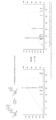
- 1 shows the results of reverse-phase HPLC before and after the reduction treatment carried out in Test Example 2.
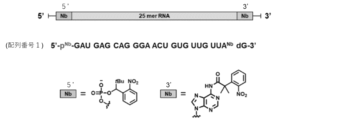
- 2 shows 25-mer RNA having CPR-Nb at the 5′-end and Compound 26 at the 3′-end, which was synthesized using an automatic nucleic acid synthesizer in Test Example 3.
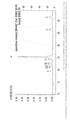
- the results of reverse phase HPLC of the 25mer RNA obtained in Test Example 3, in which CPR-Nb was introduced at the 5' end and Compound 26 was introduced at the 3' end, are shown.
- RNA having hydrophobic tags at the 5' end and 3' end indicates the peak of the target product (RNA having hydrophobic tags at the 5' end and 3' end). The other peaks are considered to represent the target product from which at least one hydrophobic tag has been removed.
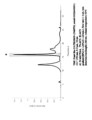
- the target product shown in FIG. 4 was fractionated and subjected to reverse phase HPLC again, and the results are shown below. 1 shows the results of reverse-phase HPLC after the target RNA fractionated in Test Example 3 was irradiated with ultraviolet light.
- Test Example 5-1 The sequence encoding NanoLucTM luciferase (Promega) transcribed in Test Example 5-1 is shown.
- the reverse-phase HPLC results of the target product after separation (*) and the product after separation and irradiation with ultraviolet light (*') in Test Example 5-1 are shown.
- the results of denaturing PAGE performed in Test Example 5-1 are shown below.
- the sequence of the RNA containing a polyA tail synthesized in Test Example 5-2-1 is shown below.
- PS represents a phosphorothioate group.
- the results of separating the polyA-containing RNA synthesized in Test Example 5-2-1 by reverse-phase HPLC are shown below. * indicates the peak of the target product.
- the results of denaturing PAGE of the target product (*) after separation, performed in Test Example 5-2-1, are shown below.
- the reverse-phase HPLC results of the target product after separation (*) and the product after separation and irradiation with UV light (*') in Test Example 5-2-1 are shown.
- the results of reverse-phase HPLC before and after post-modification performed in Test Example 5-2-3 are shown.
- the results before post-modification are the same as those shown in Figure 18.
- the left figure shows the results before post-modification, and the right figure shows the results after post-modification.
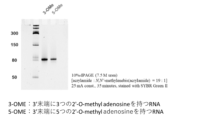
- Test Example 5-2-3 The results of denaturing PAGE performed in Test Example 5-2-3 are shown below.
- 3-OME RNA with three 2'-O-methyl adenosines at the 3' end.
- 5-OME RNA with five 2'-O-methyl adenosines at the 3' end.
- An overview of Test Example 5-2 is shown below.
- the results of reverse phase HPLC (before separation and UV irradiation) performed in Test Example 5-3 are shown below.
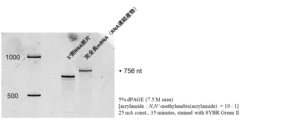
- the results of denaturing PAGE performed in Test Example 5-3 are shown below. From the left, the lanes are a marker, a 5' RNA fragment, and a full-length mRNA (RNA ligation product).
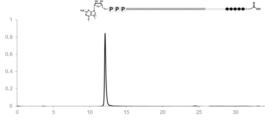
- Test Example 5-3 The results of reverse-phase HPLC (fractionation and after UV irradiation) performed in Test Example 5-3 are shown below.
- the results of Test Example 5-4 are shown.
- the structures at the bottom of the graph indicate the structures of the 3'-terminal side of each RNA used in Test Example 5-4.
- the present disclosure preferably includes, but is not limited to, a method for producing a polynucleotide ligation product, a method for purifying a polynucleotide ligation product, and a polynucleotide containing a hydrophobic tag, and the like, and the present disclosure includes everything disclosed in the present specification and recognizable by a person skilled in the art.
- the method for producing a polynucleotide ligation product encompassed by the present disclosure includes a step of ligating polynucleotide fragments containing hydrophobic tags (sometimes referred to as step ( ⁇ ) in the present disclosure).
- polynucleotide and “nucleic acid” are used interchangeably and refer to a polymer of two or more nucleotides of any length.
- polynucleotide also includes “polynucleotide derivatives.”
- polynucleotide in this disclosure includes polynucleotides that contain nucleotide derivatives; polynucleotides in which the bonds between nucleotides are different from the usual ones; and nucleotide derivatives, and further includes polynucleotides in which the bonds between nucleotides are different from the usual ones.
- polynucleotide derivatives include those that have been subjected to known chemical modifications.
- the phosphate residues of each nucleotide can be replaced with chemically modified phosphate residues such as phosphorothioate (PS), methylphosphonate, and phosphorodithioate.
- PS phosphorothioate
- methylphosphonate methylphosphonate
- phosphorodithioate methylphosphonate
- the hydroxyl group at the 2nd position of the sugar (ribose) can also be replaced with -OR (R represents, for example, CH3(2'-O-Me), CH2CH2OCH3(2'-O-MOE), CH2CH2NHC(NH)NH2, CH2CONHCH3, CH2CH2CN, etc.).
- the base portion (pyrimidine, purine) can be chemically modified, for example by introducing a methyl group or a cationic functional group at the 5th position of the pyrimidine base, or by replacing the carbonyl group at the 2nd position with a thiocarbonyl.
- polynucleotide derivatives include, but are not limited to, those in which the phosphate moiety or hydroxyl moiety is modified with, for example, biotin, an amino group, a lower alkylamine group, an acetyl group, etc.
- BNA which is a nucleotide in which the 2' oxygen and 4' carbon of the sugar moiety are crosslinked to fix the conformation of the sugar moiety to N-type
- BNA LNA
- nucleic acid bases that make up nucleotides include not only typical bases in DNA and RNA (adenine (A), uracil (U), guanine (G), cytosine (C), etc.), but also other bases such as hypoxanthine (I) and modified bases.
- Modified bases include, for example, pseudouracil, 3-methyluracil, dihydrouracil, 5-alkylcytosine (e.g., 5-methylcytosine), 5-alkyluracil (e.g., 5-ethyluracil), 5-halouracil (5-bromouracil), 6-azapyrimidine, 6-alkylpyrimidine (6-methyluracil), 4-acetylcytosine, 5-(carboxyhydroxymethyl)uracil, 5-carboxymethylaminomethyl-2-thiouracil, 5-carboxymethylaminomethyluracil, 1-methyladenine, 1-methylhypoxanthine (I), 1-methyluracil, 1-methylcytosine ...
- 5-alkylcytosine e.g., 5-methylcytosine
- 5-alkyluracil e.g., 5-ethyluracil
- 5-halouracil e.g., 6-azapyrimidine
- 6-alkylpyrimidine 6-methyluracil
- Examples include xanthine, 2,2-dimethylguanine, 3-methylcytosine, 2-methyladenine, 2-methylguanine, N6-methyladenine, 7-methylguanine, 5-methoxyaminomethyl-2-thiouracil, 5-methylaminomethyluracil, 5-methylcarbonylmethyluracil, 5-methyloxyuracil, 5-methyl-2-thiouracil, 2-methylthio-N6-isopentenyladenine, uracil-5-oxyacetic acid, 2-thiocytosine, purine, 2-aminopurine, isoguanine, indole, imidazole, and xanthine.
- RNA is particularly preferred, from the viewpoint that the technology disclosed herein is highly necessary and that the technology disclosed herein can provide a polynucleotide with excellent functions.
- polynucleotide fragment refers to a polynucleotide that is a substrate for the ligation reaction described below.
- polynucleotide ligation product refers to the product of the ligation reaction. Therefore, when ligation reactions are performed successively, the "polynucleotide ligation product" generated by the first ligation reaction can be called the “polynucleotide fragment" in the subsequent ligation reaction.
- polynucleotide (a), polynucleotide (b), and polynucleotide (c) are ligated in order, in the first ligation reaction, polynucleotide (a) and polynucleotide (b) correspond to the "polynucleotide fragment" of this disclosure, and polynucleotide (a+b) formed by ligating polynucleotide (a) and polynucleotide (b) corresponds to the "polynucleotide ligation product" of this disclosure.
- polynucleotide (a+b) and polynucleotide (c) correspond to the "polynucleotide fragment", and polynucleotide (a+b) and polynucleotide (c) correspond to the "polynucleotide ligation product".
- the "ligation reaction” in the present disclosure is not particularly limited as long as it is a reaction in which two or more polynucleotides are linked (i.e., an intermolecular reaction between polynucleotides), and may be a chemical synthesis ligation reaction or an enzymatic ligation reaction.
- An example of a chemical synthesis ligation reaction is a ligation reaction performed using a commercially available automated nucleic acid synthesizer.
- An example of an enzymatic ligation reaction is a ligation reaction using a DNA ligase such as T4 DNA ligase, E.
- the "ligation reaction” in the present disclosure is preferably an enzymatic ligation reaction, more preferably a ligation reaction using an RNA ligase, and particularly preferably a ligation reaction using T4 RNA ligase 2.
- the "ligation reaction” in the present disclosure is preferably a ligation reaction in which a new phosphodiester bond is generated.
- the ligation reaction is typically carried out in a solution (preferably further containing a template) containing multiple types (e.g., 2 to 5 types, 2 to 3 types, or 2 types) of polynucleotide fragments to be ligated and an enzyme (e.g., ligase).
- the reaction temperature is not particularly limited as long as it is a temperature at which the enzyme activity can be exerted, and is, for example, 10 to 80°C, 15 to 50°C, 15 to 40°C, or 15 to 35°C.
- the reaction time is not particularly limited as long as a detectable level of ligation product is produced, and is, for example, 1 to 48 hours, or 4 to 24 hours.
- the reaction system includes a polynucleotide having a sequence complementary to at least a portion of the polynucleotide fragment (A) described below, and a sequence complementary to at least a portion of the polynucleotide fragment (B) described below.
- the polynucleotide functions as a "template” in the ligation reaction, and can improve the efficiency of the ligation reaction. More specifically, polynucleotide fragment (A) and polynucleotide fragment (B) anneal to complementary sites of the template, bringing the ends of both polynucleotide fragments into close proximity. Therefore, for example, when the above-mentioned ligation reaction is an enzymatic ligation reaction, the efficiency of the reaction in which the enzyme ligates the ends of both polynucleotide fragments can be improved.
- the 3'-terminal sequences of the RNA fragments obtained by the IVT method are not homogenous.
- the other RNA fragment will be ligated only to the 3'-end of the RNA fragment with the desired sequence.
- the presence of a template in the reaction system can suppress the production of ligation products with unintended sequences.
- the method for preparing the polynucleotide fragments used in the present disclosure is not particularly limited, and may be a conventionally known method or a method that can be easily derived from a conventionally known method.
- the polynucleotide fragments may be chemically synthesized using a commercially available automated nucleic acid synthesizer, or may be enzymatically synthesized using a polynucleotide template encoding a desired sequence and a polynucleotide synthesizing enzyme, or multiple polynucleotides may be linked together.
- polynucleotide synthesizing enzymes include DNA polymerase and RNA polymerase.
- a (mono- or poly)nucleotide derivative may be used as a raw material or substrate for the synthesis, and the polynucleotide may be modified after synthesis.
- the length of the polynucleotide fragments subjected to the ligation reaction is not particularly limited as long as the effect of the present disclosure is not inhibited.
- the length may be 2 to 100,000 bases or 5 to 50,000 bases, preferably 10 to 10,000 bases, more preferably 15 to 5,000 bases, and particularly preferably 20 to 1,000 bases.
- the upper or lower limit of the range may be 25, 30, 35, 40, 45, 50, 60, 70, 80, 90, 100, 200, 300, 400, 500, 600, 700, 800, 900, 1000, 2000, 3000, 4000, 5000, 6000, 7000, 8000, 9000, 10000, 20000, 30000, 40000, 50000, 60000, 70000, 80000, or 90000 base lengths.
- the length of the polynucleotide ligation product obtained by the ligation reaction is not particularly limited as long as the effect of the present disclosure is not inhibited.
- it may be 5 to 200,000 bases long, or 10 to 100,000 bases long, preferably 20 to 50,000 bases long, more preferably 50 to 10,000 bases long, and particularly preferably 100 to 5,000 bases long.
- the upper or lower limit of the range may be 25, 30, 35, 40, 45, 50, 60, 70, 80, 90, 100, 200, 300, 400, 500, 600, 700, 800, 900, 1000, 2000, 3000, 4000, 5000, 6000, 70000, 80000, 9000, 10000, 200000, 300000, 400000, 500000, 600000, 700000, 800000, or 900000 base lengths.
- the method for producing a polynucleotide ligation product encompassed by the present disclosure includes a step of ligating the following polynucleotide fragment (A) and the following polynucleotide fragment (B):
- R A may be the same or different and is represented by the following general formula (2): (wherein R 1A represents an alkyl group; R 2A represents a hydrogen atom or an alkyl group; one of R 3A and R 5A represents a nitro group, and the other represents a hydrogen atom, an alkyl group, or an alkoxy group; R 4A , R 6A , and R 7A may be the same or different and represent a hydrogen atom, an alkyl group, or an alkoxy group (provided that when R 3A is a nitro group, R 4A and R 7A represent a hydrogen atom); and R XA represents a linker.)
- hydrophobic tag The structure of the above general formula (2) or (4) excluding the linker may be specifically referred to as a "hydrophobic tag" in this disclosure.
- k is an integer of 1 or more, and is not particularly limited as long as the effects of the present disclosure are achieved.
- k may be 1 to 100, or 1 to 50, preferably 1 to 20, more preferably 1 to 10, and particularly preferably 1 to 5.
- the upper or lower limit of the range may be 2, 3, 4, 5, 6, 7, 8, 9, 10, 11, 12, 13, 14, 15, 16, 17, 18, 19, 20, 21, 22, 23, 24, 25, 26, 27, 28, 29, 30, 35, 40, or 45.
- the above description of k is incorporated by reference into m. Note that k and m may be the same or different.
- R 1A is not particularly limited as long as it is an alkyl group. It may be a straight chain alkyl group or a branched chain alkyl group.
- the number of carbon atoms is not particularly limited, and may be, for example, 1 to 30 carbon atoms, preferably 1 to 20, more preferably 1 to 10, and particularly preferably 1 to 5.
- the upper or lower limit of the range may be 2, 3, 4, 5, 6, 7, 8, 9, 10, 11, 12, 13, 14, 15, 16, 17, 18, 19, 20, 21, 22, 23, 24, 25, 26, 27, 28, or 29.
- R 1A and R 1B may be the same or different.
- R 2A is not particularly limited as long as it is a hydrogen atom or an alkyl group, but is preferably a hydrogen atom.
- R 2A When R 2A is an alkyl group, it may be a straight chain alkyl group or a branched chain alkyl group.
- the number of carbon atoms is not particularly limited, and may be, for example, 1 to 10 carbon atoms, preferably 1 to 5 carbon atoms, and more preferably 1 to 4 carbon atoms.
- the upper or lower limit of the range may be 2, 3, 4, 5, 6, 7, 8, or 9.
- R 2A is incorporated by reference into R 2B .
- R 2A and R 2B may be the same or different.
- R 3A or R 5A represents a nitro group, and the other represents a hydrogen atom, an alkyl group, or an alkoxy group.
- R 3A is a nitro group
- the hydrophobic tag has an o-nitrobenzyl skeleton.
- R 5A is a nitro group
- the hydrophobic tag has a p-nitrobenzyl skeleton.
- the structure represented by general formula (6) is referred to as an o-nitrobenzyl skeleton
- the structure represented by general formula (7) is referred to as a p-nitrobenzyl skeleton.
- the polynucleotide fragment of the present disclosure is preferably such that R 3A is a nitro group, that is, the hydrophobic tag has an o-nitrobenzyl skeleton.
- R 3A and R 5A the one that is not a nitro group is not particularly limited as long as it is a hydrogen atom, an alkyl group, or an alkoxy group, but is preferably a hydrogen atom.
- it When it is an alkyl group, it may be a straight chain alkyl group or a branched chain alkyl group.
- When it is an alkoxy group it may be a straight chain alkoxy group or a branched chain alkoxy group.
- the number of carbon atoms is not particularly limited, and may be, for example, 1 to 10 carbon atoms, preferably 1 to 5, and more preferably 1 to 4.
- the upper or lower limit of the range may be 2, 3, 4, 5, 6, 7, 8, or 9.
- the above description of R 3A and R 5A is incorporated by reference into R 3B and R 5B . Note that R 3A and R 3B , and R 5A and R 5B may be the same or different.
- R 4A , R 6A , and R 7A are the same or different and represent a hydrogen atom, an alkyl group, or an alkoxy group, but when R 3A is a nitro group, R 4A and R 7A represent a hydrogen atom.
- R 4A , R 6A , and R 7A are preferably hydrogen atoms.
- they When they are alkyl groups, they may be linear alkyl groups or branched alkyl groups.
- the number of carbon atoms is not particularly limited, and may be, for example, 1 to 10 carbon atoms, preferably 1 to 5, and more preferably 1 to 4.
- the upper or lower limit of the range may be 2, 3, 4, 5, 6, 7, 8, or 9.
- R 4A , R 6A , and R 7A are incorporated by reference in R 4B , R 6B , and R 7B .
- R 4A and R 4B , R 6A and R 6B , and R 7A and R 7B may be the same or different.
- alkyl groups include methyl, ethyl, n-propyl, isopropyl, n-butyl, isobutyl, tert-butyl, sec-butyl, n-pentyl, neopentyl, n-hexyl, and 3-methylpentyl groups.
- alkoxy groups include methoxy, ethoxy, n-propoxy, isopropoxy, n-butoxy, isobutoxy, sec-butoxy, and tert-butoxy groups.
- R XA represents a linker, and its structure is not particularly limited as long as the hydrophobic tag can be removed in the hydrophobic tag removal step described below.
- R8 represents a general formula (5): ( X1 and X2 are the same or different and are O or S). The above description of R XA is incorporated by reference into R XB .
- R XA and R XB may be the same or different.
- RYA represents a k-valent group obtained by removing k atoms or groups from a polynucleotide.
- polynucleotide in the present disclosure includes “polynucleotide derivatives".
- RYA may be a k-valent group obtained by removing k atoms or groups from a polynucleotide derivative.
- examples of the polynucleotide derivative include those modified by alkylation such as methylation.
- R YB represents an m-valent group obtained by removing m atoms or groups from a polynucleotide.
- R YB may be an m-valent group obtained by removing m atoms or groups from a polynucleotide derivative, and examples of the polynucleotide derivative include those modified by alkylation such as methylation.
- Atoms or groups to be removed from a polynucleotide include, for example, phosphate groups, hydroxyl groups or hydrogen atoms that make up phosphate groups, hydroxyl groups or hydrogen atoms in sugar moieties, amino groups or hydrogen atoms in nucleic acid bases, etc.
- R A is bound to at least one of the nucleotides located 1 to 30 bases from the 3'-terminus of R YA .
- the polynucleotide fragment (A) of the present disclosure has at least one hydrophobic tag located 1 to 30 bases from the 3'-terminus.
- the polynucleotide fragment (A) has the hydrophobic tag located 1 to 20 bases from the 3'-terminus, more preferably located 1 to 10 bases, and particularly preferably located 1 to 5 bases.
- the polynucleotide fragment (A) has the hydrophobic tag at the 3'-terminus.
- the upper or lower limit of the range may be 2, 3, 4, 5, 6, 7, 8, 9, 10, 11, 12, 13, 14, 15, 16, 17, 18, 19, 20, 21, 22, 23, 24, 25, 26, 27, 28, or 29.
- R B is bound to at least one of the nucleotides located 1 to 30 bases from the 5'-end of R YB .
- the polynucleotide fragment (B) of the present disclosure has at least one hydrophobic tag located 1 to 30 bases from the 5'-end.
- a step of purifying a polynucleotide ligation product based on the degree of hydrophobicity from the viewpoint of increasing the purification efficiency, it is more preferable that the polynucleotide fragment (B) has the hydrophobic tag located 1 to 20 bases from the 5'-end, even more preferably located 1 to 10 bases, and particularly preferably located 1 to 5 bases. From the same viewpoint, and further from the viewpoint of the production efficiency of the polynucleotide fragment (B), it is preferable that the polynucleotide fragment (B) has the hydrophobic tag at the 3'-end.
- the upper or lower limit of the range may be 2, 3, 4, 5, 6, 7, 8, 9, 10, 11, 12, 13, 14, 15, 16, 17, 18, 19, 20, 21, 22, 23, 24, 25, 26, 27, 28, or 29.
- the polynucleotide fragment (A) preferably contains a coding sequence for a polypeptide, and also preferably contains a 5' untranslated region (5'UTR) in addition to the coding sequence.
- the polynucleotide fragment (B) preferably contains a polyA region (a region formed by linking multiple nucleotides (e.g., 3 to 500 bases, preferably 10 to 300 bases, more preferably 20 to 250 bases) in which the nucleic acid base is adenine).
- the method for producing a polynucleotide ligation product encompassed by the present disclosure preferably further comprises a step of purifying the polynucleotide ligation product based on the degree of hydrophobicity of the ligation product (sometimes referred to as step ( ⁇ ) in the present disclosure).
- the method used in step ( ⁇ ) is not particularly limited as long as it is capable of separating compounds according to the degree of hydrophobicity, and a known method or a method that can be easily conceived of from a known method can be employed. Examples of such methods include liquid chromatography and membrane separation.
- Step ( ⁇ ) preferably comprises a separation step by liquid chromatography, more preferably a separation step by reversed-phase liquid chromatography, and particularly preferably a separation step by reversed-phase high-performance liquid chromatography (reverse-phase HPLC).
- the packing material packed in the column preferably contains an alkyl group having 1 to 40 carbon atoms as a bonded phase.
- the number of carbon atoms in the alkyl group may be 2 to 30, preferably 3 to 20, more preferably 4 to 18, and particularly preferably 4 to 8.
- the upper or lower limit of the range may be 2, 3, 4, 5, 6, 7, 8, 9, 10, 11, 12, 13, 14, 15, 16, 17, 18, 19, 20, 21, 22, 23, 24, 25, 26, 27, 28, 29, 30, 31, 32, 33, 34, 35, 36, 37, 38, or 39.
- An example of a column packed with a packing material containing an alkyl group having 4 carbon atoms as a bonded phase is YMC-Triart Bio C4 (YMC).
- the mobile phase used in reversed-phase liquid chromatography is not particularly limited as long as it is capable of separating compounds according to the degree of hydrophobicity, and may be, for example, water or an organic solvent such as methanol or acetonitrile (ACN). Gradient elution may also be performed by continuously changing the water/organic solvent ratio.
- the temperature at which the chromatography is performed is also not particularly limited, and may be, for example, about 10 to 50°C, or about 15 to 40°C, preferably about 20 to 30°C, and more preferably about 25°C.
- the method for producing a polynucleotide ligation product encompassed by the present disclosure preferably further comprises a step of removing the hydrophobic tag by light irradiation and/or a step of removing the hydrophobic tag by reduction treatment (sometimes referred to as step ( ⁇ ) in the present disclosure).
- the site to be removed in step ( ⁇ ) is not particularly limited as long as it contains a hydrophobic tag. Thus, the site to be removed may or may not contain the linker.
- the hydrophobic tag of the present disclosure has an o-nitrobenzyl skeleton or a p-nitrobenzyl skeleton.
- the hydrophobic tag can be detached by light irradiation or reduction treatment.
- the hydrophobic tag has a p-nitrobenzyl skeleton, the hydrophobic tag is not detached by light irradiation, but can be detached by reduction treatment.
- the polynucleotide ligation product contains both a hydrophobic tag having an o-nitrobenzyl skeleton and a hydrophobic tag having a p-nitrobenzyl skeleton, it is possible to "separate" them by first irradiating them with light to selectively detach the hydrophobic tag having the o-nitrobenzyl skeleton, and then performing reduction treatment to detach the hydrophobic tag having the p-nitrobenzyl skeleton.
- the conditions of the light irradiation are not particularly limited as long as the hydrophobic tag can be removed, and can be appropriately set depending on the properties of the hydrophobic tag, etc.
- light having a wavelength of 300 nm to 400 nm may be irradiated at a light intensity of 0.5 to 10 mW/ cm2 for about 1 to 60 minutes.
- the conditions for the reduction treatment are not particularly limited as long as the hydrophobic tag can be released, and can be set appropriately depending on the properties of the hydrophobic tag.
- the reduction treatment can be performed by incubating the sample in a 1 to 1000 mM sodium dithionite solution at 20 to 45°C for 10 to 60 minutes.
- hydrophobicity of a polynucleotide from which the hydrophobic tag has been detached decreases (i.e., hydrophilicity increases)
- this can be used to confirm the detachment of the hydrophobic tag. For example, if the retention time in reverse-phase HPLC of a sample after step ( ⁇ ) is shorter than that of a sample before step ( ⁇ ), it can be determined that the hydrophobic tag has been detached.
- the polynucleotide linkage product obtained by the manufacturing method of the present disclosure may be an mRNA drug.
- an mRNA drug is composed of, in order from the 5' end of the RNA, a cap structure (5' cap), a 5' untranslated region (5' UTR), a translation region, a 3' untranslated region (3' UTR), and a polyA chain.
- a polynucleotide linkage product having a homogeneous structure from the 5' cap to the polyA chain is obtained.
- the expression efficiency (translation efficiency) of the target protein in the body must be highly controlled.
- the structure of the terminal side of the mRNA greatly affects the stability and translation efficiency of the mRNA. Therefore, it can be said that the polynucleotide linkage product obtained by the manufacturing method of the present disclosure, in which the structure from the 5' cap to the polyA chain is highly controlled, is suitable as an mRNA drug.
- Test Example 1 Synthesis of Hydrophobic Tag An amidite compound (compound 26) for the hydrophobic tag to be introduced at the 3' end was synthesized. The synthesis scheme is shown below.
- Test Example 2 Elimination reaction of nitrobenzyl moiety by reduction treatment
- nitrobenzyl moiety refers to a moiety having an o-nitrobenzyl skeleton or a p-nitrobenzyl skeleton.
- Test Example 3 Evaluation of stability and hydrophobicity of compound 26
- the present inventors synthesized RNA with compound 26 introduced at the 3' end using an automatic nucleic acid synthesizer, and evaluated its stability and hydrophobicity. Specifically, RNA with CPR-Nb introduced at the 5' end of 25mer RNA and compound 26 introduced at the 3' end was synthesized using an automatic nucleic acid synthesizer. The structure of the synthesized RNA is shown in FIG. 3 (SEQ ID NO: 1). The structure of CPR-Nb is also shown below. In FIG.
- RNA was introduced into RNA using 2-cyanoethyl (2,2-dimethyl-1-(2-nitrophenyl)propyl) diisopropylphosphoramidite, and A Nb was introduced into RNA using 5'-O-dimethoxytrityl- N 6 -[2-nitrobenzyl(dimethyl)carbonyl]-adenosine and 2'-O-(t-butyldimethylsilyl)-3'-O-[(2-cyanoethyl)-(N,N-diisopropyl)]-phosphoramidite (compound 26).
- Test Example 4 Purification of RNA ligation product by hydrophobic tag
- the inventors ligated a polynucleotide fragment having a hydrophobic tag at the 5' end with a polynucleotide fragment having a hydrophobic tag at the 3' end, and evaluated the hydrophobicity of the ligation product.
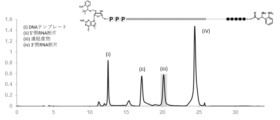
- the outline is shown in FIG. 7. Specifically, a 25mer RNA fragment having a hydrophobic tag at the 5' end ((ii) in FIG. 7), a 25mer RNA fragment having a hydrophobic tag at the 3' end ((iii) in FIG. 7), a DNA template having a sequence complementary to each of the polynucleotide fragments ((i) in FIG.
- Test Example 5 Purification of mRNA using a hydrophobic tag
- the present inventors investigated preparing mRNA by ligating RNA fragments having hydrophobic tags, and purifying the mRNA by the hydrophobic tag.
- mRNA was prepared and purified through the following three steps.
- Step 1 Using a plasmid DNA containing the target sequence as a template, the 5'-end cap structure to the 3'UTR is prepared by the IVT method.
- Second step A sequence containing a polyA tail is chemically synthesized using an automatic nucleic acid synthesizer, and then a hydrophobic tag is introduced to its end.
- Step 3 The RNAs obtained in steps 1 and 2 are ligated to prepare full-length mRNA, which is then purified by reverse-phase HPLC. An overview is shown in Figure 9.
- Test Example 5-1 Transcription synthesis of target RNA (first step)
- methods for introducing a cap structure into mRNA include the co-transcriptional introduction method using ARCA (anti-reverse cap analog) and the post-transcriptional introduction method using a capping enzyme.
- ARCA anti-reverse cap analog
- NTPs nucleotide triphosphates
- the transcriptionally synthesized 5' triphosphate RNA becomes the substrate for the capping enzyme, and the cap structure is enzymatically introduced, but the reaction efficiency of the post-transcriptional introduction method is not stable because it is an enzymatic reaction.
- the present inventors performed a transcription reaction using a "Pure Cap analog" that is a conventional ARCA with a hydrophobic tag introduced as a substrate.
- a transcription reaction is performed using a Pure Cap analog as a substrate, the transcription product is obtained as a mixture of capped RNA and uncapped RNA. Since capped RNA has a hydrophobic tag but uncapped RNA does not, capped RNA can be isolated by reversed-phase HPLC.
- Figure 10 The structures of ARCA and Pure Cap analog are shown below.
- RNA (671mer) was performed using "Pure Cap analog".
- a transcription reaction solution containing Pure Cap analog, ATP, UTP, GTP, CTP, template DNA, and T7 RNA polymerase was prepared and incubated at 37°C for 2 hours.
- recombinant DNase was added and incubated at 37°C for 30 minutes.
- the reaction solution was extracted with TE-saturated phenol and chloroform, and then vigorously mixed to remove the resulting proteinaceous insoluble matter.
- RNA was isolated by reversed-phase HPLC ( Figures 12 and 13) (YMC-Triart Bio C4 (TB30S05-2546PTH, serial#101DA90001) 4.6 ⁇ 250 mm, S-5 ⁇ m, 30 nm, A: 50 mM TEAA, 5% ACN, B: ACN, gradient: [B%] 0 ⁇ 20% (0 ⁇ 20 min.), flow rate: 1.0 mL/min., detection wavelength: 260 nm, column temperature: 50°C). There was a 2-minute difference in retention time between capped and uncapped RNA in reversed-phase HPLC, which was confirmed to be sufficient to isolate capped RNA.
- Test Example 5-2 Chemical synthesis of polyA tail and post-modification of 3' end (2nd step) 5-2-1. Chemical synthesis of polyA chain RNA containing polyA chain was chemically synthesized using an automatic nucleic acid synthesizer. During chemical synthesis, three 2'-O-methyl adenosines and a phosphorothioate group were introduced at the 3' end of the RNA. The RNA sequence is shown in Figure 15 (SEQ ID NO: 3). The 5' end of the synthesized RNA was phosphorylated using the above-mentioned CPR-Nb. Then, RNA bound to CPR-Nb was isolated by reversed-phase HPLC ( Figure 16).
- bromoacetic acid derivative (2,2-dimethyl-1-(2-nitrophenyl)propyl 2-bromoacetate) As shown in the following scheme, bromoacetyl bromide was reacted with nitrobenzyl alcohol to synthesize the bromoacetic acid derivative (2,2-dimethyl-1-(2-nitrophenyl)propyl 2-bromoacetate).
- Nitrobenzyl alcohol (100 mg, 0.478 mmol, 1.0 eq.) was dissolved in acetonitrile (4.00 mL). N,N-diisopropylethylamine (DIPEA) (166 ⁇ L, 0.956 mmol, 2.0 eq.) and 2-bromoacetyl bromide (248 ⁇ L, 2.87 mmol, 6.0 eq.) were added to this solution and stirred at 50° C. for 6 h. The reaction mixture was diluted with ethyl acetate and washed with water and saturated brine. The organic layer was dried over Na 2 SO 4 and concentrated.
- DIPEA N,N-diisopropylethylamine
- 2-bromoacetyl bromide (248 ⁇ L, 2.87 mmol, 6.0 eq.
- RNA obtained in 5-2-1 and the bromoacetic acid derivative obtained in 5-2-2 were incubated in DMF at room temperature for 2 hours.
- the results of reversed-phase HPLC before and after the reaction are shown in Figure 19.
- the retention time of the sample after the reaction was about 10 minutes longer than that of the sample before the reaction. From the above results, it was confirmed that a hydrophobic tag was introduced at the 3' end of the synthesized RNA (post-modification of 3' end).
- RNA with five 2'-O-methyl adenosines at the 3' end was synthesized in the same manner and used in Test Examples 5-3 and 5-4 described below.
- RNA with non-methylated polyA was synthesized in the same manner and used in Test Example 5-4 described below.
- RNA length of the post-modification samples was confirmed by denaturing PAGE (Figure 20).
- An overview of the above test example 5-2 is shown in Figure 21.
- Test Example 5-3 Ligation of RNA fragments and isolation and purification by reversed-phase HPLC (third step) Ligation was performed with T4 RNA ligase 2 using the RNA fragments transcribed and synthesized in Test Example 5-1 and the RNA fragments containing polyA chemically synthesized in Test Example 5-2.
- the 3'-terminal sequences of the RNA fragments obtained by the IVT method are not homogeneous. However, by performing ligation in the presence of a template strand, it is expected that the RNA fragments containing polyA will be ligated only to the 3'-terminal of the RNA fragments having the desired sequence.
- RNA fragments transcribed and synthesized in Test Example 5-1 (ii in Figure 22), the RNA fragments containing polyA chemically synthesized in Test Example 5-2 (iv in Figure 22), the DNA templates having sequences complementary to the RNA fragments (i in Figure 22), and T4 RNA ligase 2 were mixed and incubated at 25°C for 2 hours. After ligation, the reaction solution was extracted with TE-saturated phenol and chloroform, and the resulting proteinaceous insoluble matter was removed by vigorously mixing. The aqueous layer was extracted with chloroform, and after desalting by alcohol precipitation, reverse-phase HPLC and denaturing PAGE were performed. The results are shown in Figures 22 and 23.
- RNA fragments with three 2'-O-methyl adenosines at the 3' end, RNA fragments with five 2'-O-methyl adenosines at the 3' end, and RNA fragments in which the polyA was not methylated were obtained.
- the results when using an RNA fragment with five 2'-O-methyl adenosines at the 3' end are described as a representative example, but the same procedure was also performed on an RNA fragment with three 2'-O-methyl adenosines at the 3' end and an RNA fragment in which the polyA was not methylated.
- the inventors irradiated the full-length mRNA (RNA ligation product) obtained by the above procedure with UV light, and then analyzed it by reverse-phase HPLC (Figure 24).
- the retention time of the full-length mRNA after UV light irradiation was about 3 minutes shorter than the retention time before UV light irradiation.
- the full-length mRNA after UV light irradiation showed a single peak ( Figure 24). From the above, it was found that the nitrobenzyl portion containing the hydrophobic tag is highly efficiently detached from the full-length mRNA by UV light irradiation.
- the present inventors evaluated the translation efficiency in cells for the following mRNAs: mRNA obtained by the conventional transcription synthesis method using ARCA (i in FIG. 25); mRNA obtained by ligating the 5'-end fragment adjusted by the IVT method and the 3'-end fragment prepared by an automatic nucleic acid synthesizer with RNA ligase, as obtained in Test Example 5-3 (no purification by reverse-phase HPLC after ligation, (ii) and (iii) in FIG.
- each mRNA encodes NanoLuc (trademark) luciferase (Promega).
- the Nano-GloTM Luciferase Assay System was used to evaluate the translation efficiency using luminescence intensity as an index.
- the translation efficiency was evaluated by the following procedure.
- Day 1 HeLa cells were seeded at 2.0 ⁇ 10 4 cells/100 ⁇ L in a 96-well plate.
- Day 2 20 ng/well of mRNA was transfected using LipofectamineTM Messenger MAX (Thermo Fisher Scientific). After incubation at 37° C. for 5 hours, luciferase assay was performed using Nano-GloTM Luciferase Assay System (Promega). The results are shown in FIG. 25.
- the translation efficiency of mRNA that was purified by reverse-phase HPLC using a hydrophobic tag added to the 3' end after linking the 5'-end fragment and the 3'-end fragment was approximately 14.9 times higher than the translation efficiency of mRNA that was not purified by reverse-phase HPLC after linking, and approximately 3.7 times higher than the translation efficiency of mRNA obtained by the conventional transcription synthesis method.
- an mRNA drug is composed of, in order from the 5' end of the RNA, a cap structure (5' cap), a 5' untranslated region (5' UTR), a translation region, a 3' untranslated region (3' UTR), and a poly A chain.
- a cap structure (5' cap)
- 5' UTR 5' untranslated region
- 3' UTR 3' untranslated region
- homogeneous mRNA can be obtained with high purity by linking RNA fragments containing hydrophobic tags and purifying them based on the degree of hydrophobicity.
- the hydrophobic tag can be removed under mild conditions, it is possible to link further RNA fragments after removing the hydrophobic tag from the purified ligated product.
- the steps of linking RNA fragments, purifying the ligated product, and removing the hydrophobic tag can be repeated until an RNA ligated product of the desired length is obtained. Therefore, the technology disclosed herein can be particularly suitable for use in the production of mRNA pharmaceuticals, which require the preparation of long RNA with high purity.
- Hydrophobic tags with an o-nitrobenzyl skeleton can be removed by either light irradiation or reduction treatment.
- hydrophobic tags with a p-nitrobenzyl skeleton cannot be removed by light irradiation, but can be removed by reduction treatment.
- hydrophobic tags with an o-nitrobenzyl skeleton and hydrophobic tags with a p-nitrobenzyl skeleton separately, it is possible to "selectively remove" the hydrophobic tags by light irradiation and reduction treatment.
Landscapes
- Chemical & Material Sciences (AREA)
- Health & Medical Sciences (AREA)
- Life Sciences & Earth Sciences (AREA)
- Engineering & Computer Science (AREA)
- Genetics & Genomics (AREA)
- Organic Chemistry (AREA)
- Biotechnology (AREA)
- Molecular Biology (AREA)
- General Health & Medical Sciences (AREA)
- Biochemistry (AREA)
- Zoology (AREA)
- Wood Science & Technology (AREA)
- Bioinformatics & Cheminformatics (AREA)
- General Engineering & Computer Science (AREA)
- Biomedical Technology (AREA)
- Medicinal Chemistry (AREA)
- Crystallography & Structural Chemistry (AREA)
- Physics & Mathematics (AREA)
- Veterinary Medicine (AREA)
- Biophysics (AREA)
- Public Health (AREA)
- Plant Pathology (AREA)
- Animal Behavior & Ethology (AREA)
- Microbiology (AREA)
- Epidemiology (AREA)
- Pharmacology & Pharmacy (AREA)
- Saccharide Compounds (AREA)
Priority Applications (1)
| Application Number | Priority Date | Filing Date | Title |
|---|---|---|---|
| JP2025505306A JPWO2024185697A1 (https=) | 2023-03-03 | 2024-03-01 |
Applications Claiming Priority (2)
| Application Number | Priority Date | Filing Date | Title |
|---|---|---|---|
| JP2023-033032 | 2023-03-03 | ||
| JP2023033032 | 2023-03-03 |
Publications (1)
| Publication Number | Publication Date |
|---|---|
| WO2024185697A1 true WO2024185697A1 (ja) | 2024-09-12 |
Family
ID=92675056
Family Applications (1)
| Application Number | Title | Priority Date | Filing Date |
|---|---|---|---|
| PCT/JP2024/007795 Ceased WO2024185697A1 (ja) | 2023-03-03 | 2024-03-01 | ポリヌクレオチド連結産物の製造方法 |
Country Status (2)
| Country | Link |
|---|---|
| JP (1) | JPWO2024185697A1 (https=) |
| WO (1) | WO2024185697A1 (https=) |
Citations (4)
| Publication number | Priority date | Publication date | Assignee | Title |
|---|---|---|---|---|
| WO2009113709A1 (ja) * | 2008-03-11 | 2009-09-17 | 国立大学法人東京大学 | 粘着末端を有するdna断片の調製方法 |
| WO2021020562A1 (ja) * | 2019-07-31 | 2021-02-04 | 国立研究開発法人科学技術振興機構 | プライマー及びこれを用いた二本鎖dnaの製造装置並びに二本鎖dnaの製造方法 |
| WO2023277168A1 (ja) * | 2021-06-30 | 2023-01-05 | 協和キリン株式会社 | ポリヌクレオチド及び医薬組成物 |
| WO2023282245A1 (ja) * | 2021-07-05 | 2023-01-12 | 国立研究開発法人科学技術振興機構 | ヌクレオチド類の精製方法及びヌクレオチド類の精製装置並びに疎水性試薬及び疎水性基質 |
-
2024
- 2024-03-01 JP JP2025505306A patent/JPWO2024185697A1/ja active Pending
- 2024-03-01 WO PCT/JP2024/007795 patent/WO2024185697A1/ja not_active Ceased
Patent Citations (4)
| Publication number | Priority date | Publication date | Assignee | Title |
|---|---|---|---|---|
| WO2009113709A1 (ja) * | 2008-03-11 | 2009-09-17 | 国立大学法人東京大学 | 粘着末端を有するdna断片の調製方法 |
| WO2021020562A1 (ja) * | 2019-07-31 | 2021-02-04 | 国立研究開発法人科学技術振興機構 | プライマー及びこれを用いた二本鎖dnaの製造装置並びに二本鎖dnaの製造方法 |
| WO2023277168A1 (ja) * | 2021-06-30 | 2023-01-05 | 協和キリン株式会社 | ポリヌクレオチド及び医薬組成物 |
| WO2023282245A1 (ja) * | 2021-07-05 | 2023-01-12 | 国立研究開発法人科学技術振興機構 | ヌクレオチド類の精製方法及びヌクレオチド類の精製装置並びに疎水性試薬及び疎水性基質 |
Non-Patent Citations (3)
| Title |
|---|
| ALFRED STUTZ; CLAUDIA HÖBARTNER; STEFAN PITSCH: "Novel Fluoride‐Labile Nucleobase‐Protecting Groups for the Synthesis of 3′(2′)‐O‐Aminoacylated RNA Sequences", HELVETICA CHIMICA ACTA, vol. 83, no. 9, 25 September 2000 (2000-09-25), Hoboken, USA, pages 2477 - 2503, XP071268288, ISSN: 0018-019X, DOI: 10.1002/1522-2675(20000906)83:9<2477::AID-HLCA2477>3.0.CO;2-9 * |
| LI WU; FEN PEI; JINHAO ZHANG; JUNZHOU WU; MENGKE FENG; YUAN WANG; HONGWEI JIN; LIANGREN ZHANG; XINJING TANG: "Synthesis of Site‐Specifically Phosphate‐Caged siRNAs and Evaluation of Their RNAi Activity and Stability", CHEMISTRY - A EUROPEAN JOURNAL, vol. 20, no. 38, 1 August 2014 (2014-08-01), DE, pages 12114 - 12122, XP071841232, ISSN: 0947-6539, DOI: 10.1002/chem.201403430 * |
| SANEYOSHI HISAO, NAKAMURA KODAI, TERASAWA KAZUMA, ONO AKIRA: "Development of Bioreduction Labile Protecting Groups for the 2′-Hydroxyl Group of RNA", ORGANIC LETTERS, vol. 22, no. 15, 7 August 2020 (2020-08-07), US , pages 6006 - 6009, XP055914525, ISSN: 1523-7060, DOI: 10.1021/acs.orglett.0c02086 * |
Also Published As
| Publication number | Publication date |
|---|---|
| JPWO2024185697A1 (https=) | 2024-09-12 |
Similar Documents
| Publication | Publication Date | Title |
|---|---|---|
| US8309707B2 (en) | RNA synthesis-phosphoramidites for synthetic RNA in the reverse direction, and application in convenient introduction of ligands, chromophores and modifications of synthetic RNA at the 3′-end | |
| US8859755B2 (en) | Method for preparing ribonucleoside phosphorothioate | |
| JP4236812B2 (ja) | オリゴヌクレオチド類似体 | |
| JP5689054B2 (ja) | Rna化学合成方法 | |
| TWI837122B (zh) | 單股rna的製造方法 | |
| JP3893057B2 (ja) | 新規な核酸塩基対 | |
| EP4397668A1 (en) | Mrna cap analogue and use thereof | |
| US20240327444A1 (en) | Method for Purifying Nucleotides, Device for Purifying Nucleotides, Hy-Drophobic Reagent, and Hydrophobic Substrate | |
| JP2013520438A (ja) | 逆方向合成rnaのためのホスホルアミダイト | |
| JPWO2001005801A1 (ja) | 新規な核酸塩基対 | |
| FR2607507A1 (fr) | Nouveaux derives a-d-oligonucleotides, leur preparation et leur emploi | |
| WO1998003532A1 (en) | Base-protected nucleotide analogs with protected thiol groups | |
| CN100558739C (zh) | 合成被保护的3’-氨基核苷单体 | |
| US5674856A (en) | Modified oligodeoxyribonucleoditides | |
| WO2002018406A1 (en) | Alkylated hexitol nucleoside analogues and oligomers thereof | |
| WO2024185697A1 (ja) | ポリヌクレオチド連結産物の製造方法 | |
| WO2002079215A1 (en) | Building blocks for the solution phase synthesis of oligonucleotides | |
| US11110114B2 (en) | Dinucleotides | |
| US20250388617A1 (en) | Double-stranded rna comprising nucleotide analog capable of reducing off-target toxicity | |
| US11104700B2 (en) | Oligonucleotides | |
| EP0931090B1 (en) | Improved chimeric oligonucleotide vectors | |
| WO2021024467A1 (ja) | 一本鎖rnaの製造方法 | |
| JP7723848B2 (ja) | mRNAキャップ類似体及びその用途 | |
| HK1184164B (en) | Phosphoramidites for synthetic rna in the reverse direction |
Legal Events
| Date | Code | Title | Description |
|---|---|---|---|
| 121 | Ep: the epo has been informed by wipo that ep was designated in this application |
Ref document number: 24767065 Country of ref document: EP Kind code of ref document: A1 |
|
| DPE2 | Request for preliminary examination filed before expiration of 19th month from priority date (pct application filed from 20040101) | ||
| ENP | Entry into the national phase |
Ref document number: 2025505306 Country of ref document: JP Kind code of ref document: A |
|
| WWE | Wipo information: entry into national phase |
Ref document number: 2025505306 Country of ref document: JP |
|
| NENP | Non-entry into the national phase |
Ref country code: DE |
|
| 122 | Ep: pct application non-entry in european phase |
Ref document number: 24767065 Country of ref document: EP Kind code of ref document: A1 |