WO2024180992A1 - 情報処理装置、情報処理方法及び情報処理プログラム - Google Patents
情報処理装置、情報処理方法及び情報処理プログラム Download PDFInfo
- Publication number
- WO2024180992A1 WO2024180992A1 PCT/JP2024/003085 JP2024003085W WO2024180992A1 WO 2024180992 A1 WO2024180992 A1 WO 2024180992A1 JP 2024003085 W JP2024003085 W JP 2024003085W WO 2024180992 A1 WO2024180992 A1 WO 2024180992A1
- Authority
- WO
- WIPO (PCT)
- Prior art keywords
- user
- information
- information processing
- menstrual
- providing
- Prior art date
- Legal status (The legal status is an assumption and is not a legal conclusion. Google has not performed a legal analysis and makes no representation as to the accuracy of the status listed.)
- Ceased
Links
Images

Classifications
-
- G—PHYSICS
- G06—COMPUTING OR CALCULATING; COUNTING
- G06Q—INFORMATION AND COMMUNICATION TECHNOLOGY [ICT] SPECIALLY ADAPTED FOR ADMINISTRATIVE, COMMERCIAL, FINANCIAL, MANAGERIAL OR SUPERVISORY PURPOSES; SYSTEMS OR METHODS SPECIALLY ADAPTED FOR ADMINISTRATIVE, COMMERCIAL, FINANCIAL, MANAGERIAL OR SUPERVISORY PURPOSES, NOT OTHERWISE PROVIDED FOR
- G06Q30/00—Commerce
- G06Q30/02—Marketing; Price estimation or determination; Fundraising
- G06Q30/0282—Rating or review of business operators or products
-
- G—PHYSICS
- G16—INFORMATION AND COMMUNICATION TECHNOLOGY [ICT] SPECIALLY ADAPTED FOR SPECIFIC APPLICATION FIELDS
- G16H—HEALTHCARE INFORMATICS, i.e. INFORMATION AND COMMUNICATION TECHNOLOGY [ICT] SPECIALLY ADAPTED FOR THE HANDLING OR PROCESSING OF MEDICAL OR HEALTHCARE DATA
- G16H20/00—ICT specially adapted for therapies or health-improving plans, e.g. for handling prescriptions, for steering therapy or for monitoring patient compliance
Definitions
- the present invention relates to an information processing device, an information processing method, and an information processing program.
- QOL quality of life
- the conventional technology described above only selects sanitary products to be recommended to users, and cannot be said to be able to suggest to users how to relieve menstrual pain using a specific device.
- This application was made in consideration of the above, and aims to suggest to users how to relieve menstrual pain using a specified device.
- the information processing device is characterized by having an estimation unit that estimates a menstrual cycle of a user based on user information about the user, and a provision unit that provides the user with suggested information regarding suggestions for relieving menstrual pain using a specified device based on the menstrual cycle estimated by the estimation unit.
- a suggestion can be made to the user about relieving menstrual pain using a specific device.
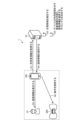
- FIG. 1 is a diagram illustrating an example of information processing according to an embodiment.
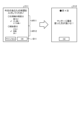
- FIG. 2 is a diagram (1) showing an example of a screen of the user terminal 100 according to the embodiment.
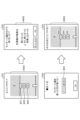
- FIG. 3 is a diagram (2) showing an example of a screen of the user terminal 100 according to the embodiment.
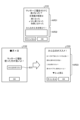
- FIG. 4 is a diagram (3) showing an example of a screen of the user terminal 100 according to the embodiment.
- FIG. 5 is a diagram (4) showing an example of a screen of the user terminal 100 according to the embodiment.
- FIG. 6 is a diagram (5) showing an example of a screen of the user terminal 100 according to the embodiment.
- FIG. 7 is a diagram (6) showing an example of a screen of the user terminal 100 according to the embodiment.
- FIG. 1 is a diagram illustrating an example of information processing according to an embodiment.
- FIG. 2 is a diagram (1) showing an example of a screen of the user terminal 100 according to the embodiment.
- FIG. 3 is a diagram (2) showing an example of a screen of the user terminal 100
- FIG. 8 is a diagram illustrating an example of the configuration of an information processing device 10 according to the embodiment.
- FIG. 9 is a diagram showing an example of the device information database 31 according to the embodiment.
- FIG. 10 is a diagram showing an example of the user information database 32 according to the embodiment.
- FIG. 11 is a flowchart showing an example of the flow of information processing executed by the information processing device 10 according to the embodiment.
- FIG. 12 is a diagram illustrating an example of a hardware configuration.
- Aspect 1 is characterized by having an estimation unit that estimates a menstrual cycle of a user based on user information about the user, and a provision unit that provides the user with suggested information regarding suggestions for relieving menstrual pain using a specified device based on the menstrual cycle estimated by the estimation unit.
- one example of a technology that improves the quality of life of users by providing information about sanitary products is a technology that selects one or more sanitary products to be recommended to a user based on physiological information about the user's use of sanitary products, and issues an instruction to deliver at least one of the selected sanitary products to the user.
- a technology merely selects the sanitary products to be recommended to the user, and cannot be said to be able to suggest to the user how to relieve menstrual pain using a device such as a massager.
- aspect 1 it is possible to provide the user with suggested information regarding suggestions for relieving menstrual pain using a specific device based on the user's menstrual cycle, and therefore it is possible to suggest to the user ways to relieve menstrual pain using a device such as a massager in accordance with the user's menstrual cycle.
- the suggested information indicating the timing for using the device is provided.
- the massager may not be usable.
- the massager when using a massager to relieve menstrual pain, the massager is attached to the lower abdomen, so if menstrual pain occurs while out and about, the user may be concerned about the gazes of those around them and may not be able to immediately attach the massager.
- the user can wear special shorts or the like before going out, or attach the massager before going out, thereby improving convenience.
- the suggested information is provided at the timing of using the device based on the menstrual cycle.
- suggested information indicating how to use the device e.g., massage intensity, position to wear the device, etc.
- a determination unit is further provided that determines the position where the user wears the device based on the user information, and the proposed information indicating the position determined by the determination unit is provided.
- aspect 4 it is possible to provide information indicating the appropriate position for wearing the device depending on the user's body type, etc., thereby enhancing the effectiveness of the device in relieving menstrual pain.
- the position where the user wears the device is identified based on the position where a similar user, whose user information is similar to that of the user, wears the device.
- the location where the similar user wears the device is identified based on the relationship between the location where the similar user wears the device and the results of using the device.
- aspect 6 when a user similar to the user wears the device, information can be provided indicating the positions that were effective in relieving menstrual pain, thereby improving the effectiveness of the device in relieving menstrual pain.
- the proposed information indicating instructions regarding the operation of the device is provided based on the user information.
- the proposed information is provided that indicates instructions regarding the operation of the device based on the usage status of the device by a similar user whose user information is similar to that of the user.
- the proposed information is provided, which indicates instructions regarding the operation of the device, based on the relationship between the usage status of the device by the similar user and the results of using the device.
- an estimation unit is further provided that estimates the degree to which the device has relieved the user's menstrual pain based on information related to the user's usage of the device, and provides the suggested information based on the degree estimated by the estimation unit.
- Fig. 1 is a diagram showing an example of the information processing according to the embodiment. Note that in Fig. 1, the information processing according to the embodiment is realized by the information processing device 10 according to the present embodiment.
- the information processing system 1 includes an information processing device 10, a user terminal 100, and a device 200. They are connected to each other via a network N (see FIG. 8, for example) in a wired or wireless manner so as to be able to communicate with each other.
- the network N is, for example, a wide area network (WAN) such as the Internet.
- WAN wide area network
- the information processing system 1 shown in FIG. 1 may include multiple information processing devices 10, multiple user terminals 100, and multiple devices 200.
- the information processing device 10 shown in FIG. 1 is an information processing device that performs information processing according to the embodiment, and is realized, for example, by a server device or a cloud system.
- the information processing device 10 provides the user with suggested information regarding suggestions for relieving menstrual pain using the device 200.
- the user terminal 100 shown in FIG. 1 is an information processing device used by a user.
- the user terminal 100 can be realized, for example, by a smartphone, a tablet terminal, a notebook PC (Personal Computer), a desktop PC, a mobile phone, or a PDA (Personal Digital Assistant).
- the user terminal 100 also displays information distributed by the information processing device 10 or the like using a web browser or application.
- the user terminal 100 is a smartphone used by user U1.
- menstrual management app for managing menstrual information that is pre-installed on user terminal 100, and registers various menstrual-related information in this menstrual management app. Then, based on such information, information processing device 10 performs various information processes described below in order to reduce menstrual pain and the physical and mental burden associated with menstruation using device 200.
- the information processing device 10 may be a device that distributes information to be displayed in a menstrual management app installed in the user terminal 100 or an application related to various other services to the information processing device 10.
- the information processing device 10 may be a server that distributes the application data itself.
- the information processing device 10 may also function as a distribution device that distributes control information to the user terminal 100.
- the control information is described, for example, in a script language such as JavaScript (registered trademark) or a style sheet language such as CSS (Cascading Style Sheets). Note that the application itself distributed from the information processing device 10 may be regarded as control information.
- the device 200 shown in FIG. 1 is a device used for the purpose of relieving menstrual pain of a user, and is realized by a massager (e.g., a low-frequency therapy device, EMS (Electrical Muscle Stimulation), etc.).
- a massager e.g., a low-frequency therapy device, EMS (Electrical Muscle Stimulation), etc.
- the device 200 is attached to the user by being stored in a pocket provided on dedicated shorts or the like worn by the user.
- the device 200 is also attached to the user by clipping the shorts or the like worn by the user with a clip or the like that the device has.
- the device 200 also controls the operation of the device itself (e.g., the intensity of the massage, whether or not the heat function is operating, the intensity of the heat function, etc.) based on the user's operation on the operation unit of the device itself, control information transmitted from the information processing device 10 or the user terminal 100, etc.
- the device itself e.g., the intensity of the massage, whether or not the heat function is operating, the intensity of the heat function, etc.
- the user terminal 100 may be regarded as the same as the user U1.
- the user U1 may also be read as the user terminal 100.
- identification information for identifying the device 200 used by user U1 is managed in association with user U1 in the information processing device 10.
- the information processing device 10 acquires user information about the user U1 from the user terminal 100 (step S1). For example, the information processing device 10 acquires user information indicating the physical characteristics (e.g., height, weight, etc.) of the user U1, age, body temperature, past menstruation start dates, and physical condition (e.g., body temperature records, degree of menstrual pain, amount of menstrual blood, etc.) input via a menstrual management app.
- the physical characteristics e.g., height, weight, etc.
- age body temperature
- past menstruation start dates e.g., a condition
- physical condition e.g., body temperature records, degree of menstrual pain, amount of menstrual blood, etc.
- the information processing device 10 estimates the menstrual cycle of the user U1 based on the user information (step S2). For example, the information processing device 10 estimates the menstrual cycle of the user U1 based on the age of the user U1, the interval between the start dates of past menstruation, etc.
- the information processing device 10 determines the content of the proposed information indicating the usage mode of the device 200 and the timing of providing the proposed information based on the user information and menstrual cycle of the user U1 (step S3). For example, the information processing device 10 determines the position to wear the device 200 (area below the navel, side, lower back, etc., or a specific location such as 2 cm below the navel) according to the user information (physique (height, weight, abdominal circumference, chest circumference, etc.) and the location where the pain occurs (lower abdomen, back, lower back, etc.)), instructions regarding the operation of the device 200 (e.g., instructions regarding the past use of the device 200) according to the user information (physique (height, weight, abdominal circumference, chest circumference, etc.) and the location where the pain occurs (lower abdomen, back, lower back, etc.)), instructions regarding the operation of the device 200 according to the user information (degree of menstrual pain, amount of menstrual blood, date and time of onset of pain including men
- the timing of using the device 200 for example, the start date of the next period as the date of onset of pain estimated from the past pain occurrence history, or the day a specified number of days before the start date of the period, a suggestion of a time period of use that is effective for pain
- the information processing device 10 determines the position at which the device 200 is worn and instructions regarding the operation of the device 200 based on the position at which a similar user whose user information is similar to that of the user U1 (for example, a similar user whose height, weight, age, waist circumference, chest circumference, location of pain, degree of menstrual pain, date and time of onset of pain including menstrual pain, pain relief method, amount of menstrual blood, constitution, etc. are similar to those of the user U1) wears the device 200 and the instructions of the operation performed by the similar user on the device 200.
- a similar user whose height, weight, age, waist circumference, chest circumference, location of pain, degree of menstrual pain, date and time of onset of pain including menstrual pain, pain relief method, amount of menstrual blood, constitution, etc. are similar to those of the user U1
- wears the device 200 and the instructions of the operation performed by the similar user on the device 200 wears the device 200 and the instructions of the operation performed by the similar user on the
- the information processing device 10 receives feedback on the use of the device 200 from the similar user, and when the similar user responds that her menstrual pain has improved by using the device 200, determines the content of the suggested information based on the position at which the device 200 is worn and the instructions of the operation performed on the device 200.
- the information processing device 10 determines the position where the similar user wore the device 200 as the position where user U1 will wear the device 200.
- the information processing device 10 determines the instruction of the operation performed by the similar user on the device 200 as the instruction that user U1 will perform on the device 200.
- the information processing device 10 determines the timing for providing the suggested information according to the menstrual cycle, but the present invention is not limited to this example.
- the information processing device 10 may determine the timing for providing the suggested information according to the timing for using the device 200, which is included in the content of the suggested information.
- the timing for using the device 200 is the expected start date of menstruation
- the information processing device 10 may provide the suggested information on the day before the expected start date of menstruation, or at a specified time (for example, in the morning hours) on the expected start date of menstruation.
- the information processing device 10 may provide the user with suggested information regarding the use of the device 200 and information regarding the user's menstruation.
- the information processing device 10 may suggest to the user suggested information including the expected start date of menstruation, which is an example of menstrual information, and the start date of use of the device 200 and information regarding the functions to be used, thereby enabling the user to consider using the device while understanding their own menstruation.
- the information processing device 10 provides the user terminal 100 with suggested information based on the timing determined in step S3 (step S4).
- the information processing device 10 provides, as suggested information, information on the usage mode of the device 200, the start date of the next menstruation, information on items to be used with the device 200, and the like, at a timing a predetermined period before the start date of the next menstruation.
- the information processing device 10 provides suggested information proposing wearing the shorts on the start date of the next menstruation.
- the information processing device 10 also provides suggested information proposing wearing shorts or the like suitable for the position where the device 200 is to be worn (for example, information proposing wearing high-waisted shorts when the device 200 is worn in the upper part of the lower abdomen).
- the information processing device 10 also provides suggested information proposing going out wearing the device 200 on the start date of the next menstruation.
- the information processing device 10 provides suggested information indicating the usage mode of the device 200 on the first day of the next menstruation (in other words, the timing when the device 200 will be used).
- the user terminal 100 displays the suggested information on the screen of the user terminal 100 (step S5). Then, the user terminal 100 controls the operation of the device 200 (step S6). For example, the user terminal 100 displays the suggested information on the screen via a menstrual management app. Then, the user terminal 100 controls the operation of the device 200 in response to an operation from the user U1. As a specific example, the user terminal 100 displays a screen for inputting whether or not the user agrees to instruct the device 200 to perform the operation indicated by the suggested information. Then, when an operation indicating agreement is performed, the user terminal 100 instructs the device 200 to perform the operation indicated by the suggested information. The user terminal 100 may control the device 200 based on information such as the intensity of the massage or the intensity of the heat function input by the user U1.
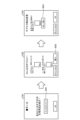
- FIG. 2 is a diagram (1) showing an example of a screen of the user terminal 100 according to the embodiment.
- the user terminal 100 displays a screen C11 for inputting the current physical condition of the user U1 via the menstrual management app.
- the user terminal 100 displays the screen C11 including an area AR11 for inputting the current level of menstrual pain, an area AR12 for inputting the current level of menstrual blood flow, and a button B11 for instructing the transmission of the information input in areas AR11 and AR12 to the information processing device 10.
- the information processing device 10 determines whether or not the device 200 should be used based on the information. For example, if the level of menstrual pain and the level of menstrual blood flow are above a certain level (for example, if the level of menstrual pain is "slightly painful” or “very painful” and the level of menstrual blood flow is "normal” or “heavy"), the information processing device 10 determines that user U1 should use the device 200 and causes the user terminal 100 to display a screen C12 suggesting the use of the device 200.
- the information processing device 10 may display on the screen C12 information such as the massage intensity of the device 200 according to the level of menstrual pain, the intensity of the heat function, etc., and information regarding suggestions for using sanitary products according to the level of menstrual blood flow.
- the information processing device 10 may receive feedback from the user U1 indicating the position where the device 200 is worn and the results of using the device 200.
- the information processing device 10 may provide suggestion information indicating the degree of recommendation of each position for wearing the device 200, based on the feedback indicating the position where each user wears the device 200 and the results of using the device 200.
- FIG. 3 is a diagram (2) showing an example of a screen of the user terminal 100 according to the embodiment.
- the user terminal 100 displays a screen C21 for the user U1 to input the position where the device 200 is worn via the menstrual management app.
- the user terminal 100 displays the screen C21 including an area AR21 that shows a schematic representation of the lower abdomen, and buttons B21 to B23 that respectively correspond to the areas #1 to #3 of the lower abdomen where the device 200 is worn.
- buttons B21 to B23 when any of buttons B21 to B23 is pressed, the user terminal 100 transitions screen C21 to screen C22 for inputting the results of using device 200 in the area corresponding to the selected button. For example, the user terminal 100 displays screen C22 including area AR22 for inputting the degree to which menstrual pain has been alleviated as a result of using device 200. Then, the user terminal 100 transmits feedback to the information processing device 10 indicating the area where user U1 has worn device 200 and the degree to which menstrual pain has been alleviated.
- the information processing device 10 receives the above feedback from each user, provides suggested information based on this feedback to the user terminal 100, and displays it on the screen.
- the user terminal 100 displays a button B24 on a screen C23 showing information suggesting the use of the device 200, for instructing the display of the part of the body where the user U1 should wear the device 200. Then, when the button B24 is pressed, the user terminal 100 transitions from the screen C23 to the screen C24.
- the user terminal 100 displays a screen C24 including an area AR23 that displays the percentage of similar users who wear the device 200 on body part #1, the percentage of similar users who wear the device 200 on body part #2, and the percentage of similar users who wear the device 200 on body part #3 among similar users whose user information is similar to that of user U1.
- the user terminal 100 displays in area AR23 the percentage of similar users who wear the device 200 on body part #1, the percentage of similar users who wear the device 200 on body part #2, and the percentage of similar users who wear the device 200 on body part #3 among similar users who input the degree to which their menstrual pain has been relieved as "easier" or "slightly easier.”
- the area where device 200 is attached is not limited to areas #1 to #3, but may be any area.
- device 200 may be attached to the back, not limited to the lower abdomen.
- FIG. 4 is a diagram (3) showing an example of a screen of the user terminal 100 according to the embodiment.
- the user terminal 100 displays a screen C31 for inputting the efforts made by the user U1 when wearing the device 200 via the menstrual management app.
- the user terminal 100 displays the screen C31 including an area AR31 for inputting the degree to which menstrual pain has been alleviated, and an area AR32 for inputting text information indicating the efforts made by the user U1 to alleviate menstrual pain. Then, feedback indicating the degree to which menstrual pain has been alleviated and the text information is transmitted to the information processing device 10.
- the information processing device 10 also receives the above feedback from each user, provides suggested information based on this feedback to the user terminal 100, and displays it on the screen.
- the user terminal 100 displays a button B31 on screen C32 showing information suggesting the use of device 200, to instruct the display of ideas other users have come up with to relieve menstrual pain. Then, when button B31 is pressed, the user terminal 100 transitions screen C32 to screen C33.
- the user terminal 100 displays a screen C33 including an area AR33 that displays text information (e.g., the part of the body where the device 200 is attached, or the items used with the device 200) entered by a similar user whose user information is similar to that of user U1.
- text information e.g., the part of the body where the device 200 is attached, or the items used with the device 200
- the user terminal 100 displays in area AR33 text information entered by a similar user who entered the degree to which her menstrual pain had been alleviated as "easier" or "a little easier.”
- FIG. 5 is a diagram (4) showing an example of a screen of the user terminal 100 according to the embodiment.
- the user terminal 100 displays, via the menstrual management app, a screen C41 showing information suggesting the use of sanitary products used by other users.
- the user terminal 100 displays a button B41 on screen C41 for instructing the display of the sanitary products. Then, when button B41 is pressed, the user terminal 100 transitions screen C41 to screen C42.
- the user terminal 100 displays a screen C42 showing sanitary products indicated by the above text information entered by another user.
- the user terminal 100 displays sanitary products indicated by text information entered by a similar user whose user information is similar to that of user U1.
- buttons B42 and B43 When button B42 is pressed, the user terminal 100 may transition screen C42 to a purchase screen for product #2 in a specified e-commerce service.
- the information processing device 10 may further cause the user terminal 100 to display information based on the usage status (usage status) of the device 200 by the user U1.
- usage status usage status
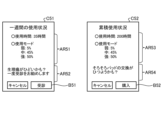
- FIG. 6 is a diagram (5) showing an example of a screen of the user terminal 100 according to the embodiment.
- the information processing device 10 acquires the usage status of the device 200 from the device 200 or the user terminal 100 associated with the device 200.
- the information processing device 10 acquires the usage status such as the usage time of the device 200 by the user U1 and the usage mode (degree of massage intensity). Then, when the usage status satisfies a predetermined condition, the information processing device 10 provides information according to the satisfied condition to the user terminal 100 via a menstrual management app and displays it on the screen.
- the information processing device 10 determines that the user U1's menstrual pain is severe and that she may be suffering from some kind of illness, and causes the user terminal 100 to display a screen C51.
- the user terminal 100 displays a screen C51 including an area AR51 displaying the usage status of the device 200, an area AR52 displaying information suggesting a visit to a hospital, and a button B51 for indicating a desire to visit a hospital.
- the button B51 is pressed, the user terminal 100 transitions the screen C51 to a screen for making an appointment to visit a hospital.
- the user terminal 100 may provide information suggesting taking medicine, not limited to a suggestion to visit a hospital.
- the information processing device 10 determines that a part of the device 200 (e.g., electrode pads) needs to be replaced, and causes the user terminal 100 to display a screen C52.
- a part of the device 200 e.g., electrode pads
- the user terminal 100 displays a screen C51 including an area AR53 displaying the usage status of the device 200, an area AR54 displaying information suggesting replacement of a part of the device 200, and a button B52 for indicating a desire to purchase the part.
- the button B52 is pressed, the user terminal 100 transitions the screen C52 to a parts purchase screen in a predetermined e-commerce service.
- the device 200 may be rented by the user U1 from a specific facility (e.g., a convenience store or the workplace of the user U1).
- a specific facility e.g., a convenience store or the workplace of the user U1.
- FIG. 7 is a diagram (6) showing an example of a screen of the user terminal 100 according to the embodiment.
- user U1 wishes to rent device 200
- he or she visits a specified facility, launches the menstrual management app on the user terminal 100, and displays a screen C61 for instructing the user to rent device 200.
- user terminal 100 displays screen C61 including a button B61 for instructing the user to rent device 200.
- button B61 when button B61 is pressed, the user terminal 100 transitions from screen C61 to screen C62.
- the user terminal 100 with screen C62 displayed is held up to a wireless reader or the like of equipment (dispenser, etc.) for renting devices 200 in the facility, and the authentication information of user U1 is read, allowing user U1 to rent the device 200 dispensed from the equipment.
- equipment dispenser, etc.
- the information processing device 10 estimates the menstrual cycle of the user, and provides the user with suggestion information regarding suggestions for relieving menstrual pain using the device 200 based on the estimated menstrual cycle. This allows the information processing device 10 according to the embodiment to suggest to the user relief of menstrual pain using a specified device.
- Timing of using device 200 In the example of Fig. 1, the timing for using the device 200 is the start date of the next menstruation, but the timing for menstrual cramps to occur is not limited to the start date of menstruation and varies from person to person. Therefore, the information processing device 10 may acquire user information indicating the start date of menstruation and the date on which the user U1 actually experienced menstrual cramps, and determine the timing for using the device 200 based on the start date of menstruation and the date.
- the information processing device 10 determines the timing for using the device 200 to be two days after the start date of the next menstruation, which is determined based on the estimated menstrual cycle.
- the information processing device 10 may provide suggested information indicating the probability of menstrual pain occurring on each date included in a specified period (e.g., the period from two days before the start of the next period to two days after the start of the next period) based on the start date of the period and the date on which the user U1 actually experienced menstrual pain.
- a specified period e.g., the period from two days before the start of the next period to two days after the start of the next period
- the information processing device 10 may provide suggested information indicating the date and time period when menstrual cramps will next occur as the timing to use the device 200, based on the start date of menstruation and the date and time period when the user U1 actually experienced menstrual cramps.
- the information processing device 10 may estimate the degree of relief of menstrual pain of the user U1 by the device 200 based on information on the usage status of the device 200, and provide suggested information based on the estimated degree. For example, the information processing device 10 estimates the degree of relief of menstrual pain based on the usage time of the device 200 by the user U1, the intensity of the massage, and feedback from the user U1 on the use of the device 200.
- the information processing device 10 estimates that the shorter the usage time of the device 200, the higher the degree of relief by the device 200.
- the information processing device 10 estimates that the weaker the massage of the device 200, the higher the degree of relief by the device 200. Then, the information processing device 10 provides suggested information indicating the degree of estimation.
- the information processing device 10 may provide suggested information indicating the usage mode of the device 200 (e.g., information for improving the effect of the device 200). For example, the information processing device 10 provides suggested information indicating the position where a similar user, whose user information is similar to that of user U1, wears the device 200, or the instructions of the operation performed by the similar user on the device 200. Furthermore, the information processing device 10 provides suggested information indicating information based on feedback from similar users.
- the information processing device 10 may learn various models so that when various physiological states such as menstrual state and menstrual pain state estimated from menstrual information and the usage manner in which each user used the device 200 (for example, the date and time of use, the usage time, the massage intensity, the position where the device is worn, etc.) are input, the information processing device 10 outputs various usage results such as whether menstrual pain was alleviated and the degree of alleviation as a result of using the device 200 in that usage manner.
- various physiological states such as menstrual state and menstrual pain state estimated from menstrual information and the usage manner in which each user used the device 200 (for example, the date and time of use, the usage time, the massage intensity, the position where the device is worn, etc.) are input
- the information processing device 10 outputs various usage results such as whether menstrual pain was alleviated and the degree of alleviation as a result of using the device 200 in that usage manner.
- the information processing device 10 may input various candidates of usage manners for the current physiological state of the user, estimate whether menstrual pain can be alleviated when the device 200 is used in each usage manner, identify candidates of usage manners that alleviate menstrual pain and candidates of usage manners that provide a high degree of alleviation of menstrual pain, and provide these candidates to the user.
- the user terminal 100 may communicate with the information processing device 10 via the device 200.
- the device 200 may communicate directly with the information processing device 10 without going through the user terminal 100, receive control information related to the operation of the device 200, and perform the operation.
- the user terminal 100 may instruct the device 200 to operate based on the usage mode indicated by the proposal information, without displaying the proposal information. For example, the user terminal 100 instructs the device 200 to operate as indicated by the proposal information at the timing indicated by the proposal information.
- the processing by the information processing device 10 described above may be performed by the user terminal 100.
- the user terminal 100 acquires user information of the user U1, estimates the menstrual cycle of the user U1, determines the content of the proposed information indicating the usage mode of the device 200 and the timing for providing the proposed information, and displays the proposed information at the determined timing.
- the user terminal 100 then instructs the device 200 to operate.
- the information processing device 10 may provide a subscription service related to the provision of the device 200, consumables included in the device 200, and items used with the device 200.
- the information processing device 10 provides a subscription service related to the provision of consumables such as electrode pads for the device 200, items worn by the user U1 when wearing the device 200 (for example, shorts and sanitary products), and sanitary products used with the device 200.
- the information processing device 10 provides proposal information indicating a usage mode of the device 200 based on the items provided to the user U1 in the subscription service.
- the information processing device 10 provides proposal information indicating which part of the shorts and sanitary products the device 200 should be worn on for the user U1 in the subscription service.
- the subscription service provided by the information processing device 10 may be one that user U1 subscribes to personally, or may be one that an organization to which user U1 belongs subscribes and is provided to user U1 as an employee benefit or the like.
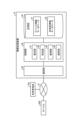
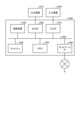
- Fig. 8 is a diagram showing an example of the configuration of the information processing device 10 according to an embodiment. As shown in Fig. 8, the information processing device 10 has a communication unit 20, a storage unit 30, and a control unit 40.
- the communication unit 20 is realized by, for example, a network interface card (NIC) etc.
- the communication unit 20 is connected to the network N by wire or wirelessly, and transmits and receives information between the user terminal 100, the device 200, etc.
- the storage unit 30 is realized by, for example, a semiconductor memory element such as a random access memory (RAM) or a flash memory, or a storage device such as a hard disk or an optical disk. As shown in FIG. 8, the storage unit 30 has a device information database 31 and a user information database 32.
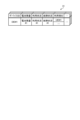
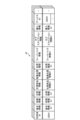
- Fig. 9 is a diagram showing an example of the device information database 31 according to an embodiment.
- the device information database 31 has items such as "device ID”, "battery level”, “usage status (usage status)”, “fault status”, and "user ID”.
- Device ID indicates identification information for identifying device 200.
- Battery remaining indicates the remaining battery power of device 200.
- Usage status indicates the usage status of device 200, and stores information indicating, for example, the usage time (usage time) and usage mode of device 200.
- Failure status indicates the fault status of device 200.
- User ID indicates identification information for identifying the user associated with device 200 (in other words, the user who uses device 200).
- Figure 9 shows an example in which the device identified by the device ID "DID#1" has a remaining battery level of "battery level #1", a usage status of "usage status #1”, a fault status of "fault status #1", and the user ID of the associated user is "UID#1".
- FIG. 10 is a diagram showing an example of the user information database 32 according to an embodiment.
- the user information database 32 has items such as "user ID”, “basic information”, “physical condition information”, “menstrual information”, “sanitary product information”, “wearing position information”, “usage history”, “feedback information”, “subscription information”, “purchase information”, and “device ID”.
- “User ID” indicates identification information for identifying a user.
- “Basic information” indicates basic information about the user, and for example, information such as the user's height, weight, and age is stored.
- “Physical condition information” indicates the physical condition of the user.
- “Menstrual information” indicates information about the user's menstruation, and for example, information such as the start date of the user's menstruation and menstrual cycle is stored.
- “Menstrual product information” indicates information about the sanitary products used by the user (for example, sanitary products provided to the user in the subscription service used by the user).
- “Wearing position information” indicates the position where the user wears device 200.
- “Usage history” indicates the user's usage history of device 200.
- “Feedback information” indicates feedback from the user regarding the use of the device, and for example, information such as the results of the user's use of device 200 (for example, the degree of relief of menstrual pain), the position where device 200 is worn, the contents of instructions to device 200, and text information indicating ingenuity is stored.
- “Subscription information” indicates information about the subscription service used by the user, and stores, for example, information about the contents of the subscription service contract and the products provided to the user.
- “Purchase information” indicates information about the products (such as sanitary products) purchased by the user.
- “Device ID” indicates identification information for identifying the device 200 associated with the user (in other words, the device 200 used by the user).
- FIG. 10 shows an example in which the basic information of a user identified by user ID “UID#1" is “basic information #1", physical condition information is “physical condition information #1”, menstrual information is “menstrual information #1”, sanitary product information is “sanitary product information #1”, wearing position information is “wearing position information #1”, usage history is “usage history #1”, feedback information is “feedback information #1”, subscription information is “subscription information #1”, and purchase information is “purchase information #1", and the device used by the user is identified by device ID "DID#1".
- the control unit 40 is a controller, and is realized, for example, by a central processing unit (CPU) or a micro processing unit (MPU) executing various programs stored in a storage device inside the information processing device 10 using a RAM as a working area.
- the control unit 40 is also a controller, and is realized, for example, by an integrated circuit such as an application specific integrated circuit (ASIC) or a field programmable gate array (FPGA).
- ASIC application specific integrated circuit
- FPGA field programmable gate array
- the control unit 40 according to the embodiment has an estimation unit 41, a specification unit 42, an inference unit 43, and a provision unit 44, and realizes or executes the functions and actions of information processing described below.
- the estimation unit 41 estimates the menstrual cycle of a user based on user information about the user. For example, in the example of Fig. 1, the estimation unit 41 refers to the user information database 32 and estimates the menstrual cycle of the user U1 based on the user information.
- the identification unit 42 identifies the position where the user wears the device based on the user information. For example, in the example of Fig. 1, the identification unit 42 refers to the user information database 32 and determines (identifies) the position where the device 200 is worn according to the user information of the user U1.
- the identification unit 42 may also identify the position where the user wears the device based on the position where a similar user, whose user information is similar to the user, wears the device. For example, in the example of FIG. 1, the identification unit 42 identifies the position where user U1 wears the device 200 based on the position where a similar user, whose user information is similar to user U1, wears the device 200.
- the identification unit 42 may also identify the position where the user will wear the device based on the relationship between the position where the similar user wore the device and the result of using the device. For example, in the example of FIG. 1, when the similar user responds that her menstrual pain improved by using device 200, the identification unit 42 identifies the position where the similar user wore device 200 as the position where user U1 will wear device 200.
- the estimation unit 43 estimates the degree to which the device has relieved the user's menstrual pain, based on information on the usage status of the device by the user. For example, in the example of FIG. 1, the estimation unit 43 refers to the user information database 32 and estimates the degree to which the device 200 has relieved the user U1's menstrual pain, based on information on the usage status of the device 200.
- the providing unit 44 provides the user with proposal information regarding proposals for relieving menstrual pain using a predetermined device, based on the menstrual cycle estimated by the estimating unit 41. For example, in the example of FIG. 1 , the providing unit 44 provides information regarding the usage mode of the device 200 and items to be used together with the device 200.
- the providing unit 44 may also provide suggested information indicating the timing for using the device. For example, in the example of FIG. 1, the providing unit 44 provides suggested information indicating the start date of the next menstruation.
- the providing unit 44 may also provide suggested information on the timing of using the device based on the menstrual cycle. For example, in the example of FIG. 1, the providing unit 44 provides suggested information indicating the usage mode of the device 200 on the first day of the next menstruation.
- the providing unit 44 may also provide suggested information indicating the position identified by the identifying unit 42.
- the providing unit 44 provides suggested information indicating the position at which the device 200 is to be worn.
- the providing unit 44 may also provide suggested information indicating instructions regarding the operation of the device based on the user information. For example, in the example of FIG. 1, the providing unit 44 provides suggested information indicating instructions regarding the operation of the device 200 determined according to the user information.
- the providing unit 44 may also provide suggested information indicating instructions regarding device operations based on the usage of the device by similar users whose user information is similar to that of the user. For example, in the example of FIG. 1, the providing unit 44 provides suggested information indicating the instructions for the operation performed by similar users on the device 200 as instructions to be performed by user U1 on the device 200.
- the providing unit 44 may also provide suggested information indicating instructions regarding device operation based on the relationship between the device usage status by similar users and the results of using the device. For example, in the example of FIG. 1, when a similar user responds that her menstrual pain has improved by using device 200, the providing unit 44 provides suggested information indicating the instructions for the operation performed by the similar user on device 200 as instructions to be performed by user U1 on device 200.
- the providing unit 44 may also provide suggested information based on the degree estimated by the estimating unit 43. For example, in the example of FIG. 1, the providing unit 44 provides suggested information based on the degree to which the device 200 has relieved the menstrual pain of the user U1.
- the providing unit 44 may provide suggested information on a proposed method of relieving menstrual pain without using a device. For example, in the example of FIG. 1, if the percentage of times the device 200 is operated in the "strong" usage mode during a one-week period is equal to or greater than a predetermined threshold, the providing unit 44 provides information indicating that the user U1's menstrual pain is severe and that she may be developing some kind of illness, and suggests that she visit a hospital.
- providing unit 44 may provide (suggest) to the user information regarding communication with other users who use device 200 in a similar manner (e.g., link information or introduction to applications/websites that have a bulletin board function or a message function that allows interaction with other users) or information regarding social systems that can be used for menstrual discomfort, etc.
- a similar manner e.g., link information or introduction to applications/websites that have a bulletin board function or a message function that allows interaction with other users
- social systems that can be used for menstrual discomfort
- the providing unit 44 may also provide the difference between the usage status of the user and that of other users by using information indicating the usage status of the device 200 for each user. For example, the providing unit 44 generates a graph or other figure indicating the average usage time, number of usages, and usage timing (number of days before the start of menstruation, number of days after the start of non-menstruation, etc.) of the device 200 of other users who have similar attributes to the user (age, place of residence, occupation, height, weight, menstrual cycle (number of days of menstrual period and non-menstrual period, average number of days of menstrual period in each month, variation), whether or not they have given birth, etc.), and provides the user with the average usage time, number of usages, and usage timing of the device 200 of the user.
- a graph or other figure indicating the average usage time, number of usages, and usage timing (number of days before the start of menstruation, number of days after the start of non-menstruation, etc.) of the device 200 of
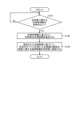
- Fig. 11 is a flowchart showing an example of the flow of information processing executed by the information processing device 10 according to the embodiment.
- the information processing device 10 determines whether or not user information about the user has been acquired (step S101). If the user information has not been acquired (step S101; No), the information processing device 10 waits until the user information is acquired. On the other hand, if the user information has been acquired (step S101; Yes), the information processing device 10 estimates the user's menstrual cycle based on the user information (step S102). Next, the information processing device 10 provides the user with suggested information regarding suggestions for relieving menstrual pain using a specified device based on the estimated menstrual cycle (step S103), and ends the process.
- the information processing device 10 may have an acquisition unit that acquires physiological information, which is information regarding the user's physiology, and may provide the user with suggested information regarding suggestions for relieving menstrual pain using a specified device based on the physiological information.
- physiological information which is information regarding the user's physiology
- menstrual information includes, for example, the start date of menstruation, history of the end date of menstruation, the estimated start date of the next menstruation, the amount and condition of menstrual blood and vaginal discharge, the type and number of sanitary products used, the type and size of shorts or underwear, physical condition (degree or presence of nausea, dizziness, headache, menstrual pain, abdominal pain, fatigue, fever, excretion, etc.), psychological state (degree or presence of irritability, uneasiness, depression, anxiety, etc.).
- menstrual information may be information that includes the recording date and time of each state, the occurrence date and time of each state, the use date and time of an item, etc.
- the information processing device 10 may suggest suggested information based on the relationship between menstrual information and the presence or absence of pain for the user and the degree of pain.
- the menstrual information may be input by the user, or may be information estimated by the information processing device 10, another information processing device, an application, etc.
- obtaining menstrual information includes accepting input of menstrual information by the user, or obtaining information from a memory unit of a device including the information processing device 10, the user terminal 100, the device 200, and other information processing devices (including receiving information sent from a device, requesting information from a device and receiving information in response, etc.).
- information related to menstruation may be included in the above-mentioned user information, and each process executed based on the user information may be interpreted as being executed based on information related to menstruation.
- the process in which the providing unit 44 provides suggested information based on the start date of menstruation may be interpreted as a process in which suggested information is provided based on the start date of menstruation, which is information related to menstruation.
- the user information may be information detected by a sensor in a device or the like, or information calculated based on the detected information.
- body temperature may be measured using information from a thermometer in a wearable device, and menstrual days may be estimated and recorded based on changes in body temperature.
- the acquisition of information including user information, etc., and the provision of information including suggested information, etc. may be performed via a dedicated application installed on the user terminal 100, or via a general-purpose application such as an SNS or a browser.
- the device 200 may be configured to be used to acquire information including user information, etc., and to provide information including suggested information, etc.
- the acquisition of information including user information, etc., and the provision of information including suggested information, etc. may also be performed using an apparatus or device other than the user terminal 100 or device 200.
- each component of each device shown in the figure is a functional concept, and does not necessarily have to be physically configured as shown in the figure.
- the specific form of distribution and integration of each device is not limited to that shown in the figure, and all or part of them can be functionally or physically distributed and integrated in any unit depending on various loads, usage conditions, etc.
- FIG. 12 is a diagram showing an example of a hardware configuration.
- the computer 1000 is connected to an output device 1010 and an input device 1020, and a calculation device 1030, a cache 1040, a memory 1050, an output IF (Interface) 1060, an input IF 1070, and a network IF 1080 are connected by a bus 1090.
- the arithmetic unit 1030 operates based on programs stored in the cache 1040 and memory 1050, programs read from the input unit 1020, and the like, and executes various processes.
- the cache 1040 is a cache such as a RAM that temporarily stores data used by the arithmetic unit 1030 for various calculations.
- the memory 1050 is a storage device in which data used by the arithmetic unit 1030 for various calculations and various databases are registered, and is a memory realized by a ROM (Read Only Memory), HDD (Hard Disk Drive), flash memory, etc.
- the output IF 1060 is an interface for transmitting information to be output to an output device 1010 that outputs various types of information, such as a monitor or printer, and may be realized, for example, by a connector conforming to a standard such as USB (Universal Serial Bus), DVI (Digital Visual Interface), or HDMI (registered trademark) (High Definition Multimedia Interface).
- the input IF 1070 is an interface for receiving information from various input devices 1020, such as a mouse, keyboard, scanner, etc., and may be realized, for example, by a USB.
- the input device 1020 may be realized by a device that reads information from an optical recording medium such as a CD (Compact Disc), a DVD (Digital Versatile Disc), or a PD (Phase change rewritable Disk), a magneto-optical recording medium such as an MO (Magneto-Optical disk), a tape medium, a magnetic recording medium, or a semiconductor memory.
- an optical recording medium such as a CD (Compact Disc), a DVD (Digital Versatile Disc), or a PD (Phase change rewritable Disk), a magneto-optical recording medium such as an MO (Magneto-Optical disk), a tape medium, a magnetic recording medium, or a semiconductor memory.
- MO Magneto-optical disk
- the network IF 1080 has the function of receiving data from other devices via the network N and sending it to the arithmetic device 1030, and also transmitting data generated by the arithmetic device 1030 to other devices via the network N.
- the arithmetic unit 1030 controls the output device 1010 and the input device 1020 via the output IF 1060 and the input IF 1070.
- the arithmetic unit 1030 loads a program from the input device 1020 or the memory 1050 onto the cache 1040 and executes the loaded program.
- the arithmetic unit 1030 of the computer 1000 realizes the functions of the control unit 40 by executing the program loaded onto the cache 1040.
- Information processing device 10 Information processing device 20 Communication unit 30 Storage unit 31 Device information database 32 User information database 40 Control unit 41 Estimation unit 42 Identification unit 43 Prediction unit 44 Provision unit 100 User terminal 200 Device
Landscapes
- Engineering & Computer Science (AREA)
- Business, Economics & Management (AREA)
- Strategic Management (AREA)
- Accounting & Taxation (AREA)
- Development Economics (AREA)
- Finance (AREA)
- Physics & Mathematics (AREA)
- Theoretical Computer Science (AREA)
- Economics (AREA)
- Marketing (AREA)
- Entrepreneurship & Innovation (AREA)
- General Business, Economics & Management (AREA)
- General Physics & Mathematics (AREA)
- Game Theory and Decision Science (AREA)
- Health & Medical Sciences (AREA)
- Epidemiology (AREA)
- General Health & Medical Sciences (AREA)
- Medical Informatics (AREA)
- Primary Health Care (AREA)
- Public Health (AREA)
- Medical Treatment And Welfare Office Work (AREA)
- Management, Administration, Business Operations System, And Electronic Commerce (AREA)
Abstract
Description
〔1.情報処理の一例について〕
図1を用いて、本実施形態の情報処理装置等により実現される情報処理を説明する。図1は、実施形態に係る情報処理の一例を示す図である。なお、図1では、本実施形態に係る情報処理装置10によって、実施形態に係る情報処理などが実現されるものとする。
なお、上述した処理は一例に過ぎず、情報処理装置10は、様々な情報を用いて様々な処理を行ってもよい。この点について、以下例示を列挙する。
図1の例において、デバイス200を利用するタイミングを次の生理開始日としたが、生理痛が発生するタイミングは生理開始日に限らず、個人差がある。したがって、情報処理装置10は、生理開始日と、実際に利用者U1に生理痛が発生した日付とを示す利用者情報を取得し、生理開始日と、当該日付とに基づいて、デバイス200を利用するタイミングを決定してもよい。例えば、利用者U1が生理開始日から2日後に生理痛が発生する傾向にある場合、情報処理装置10は、推定した生理周期に基づき特定した次の生理開始日の2日後を、デバイス200を利用するタイミングと決定する。
図1の例において、情報処理装置10は、デバイス200の利用状況に関する情報に基づいて、デバイス200による利用者U1の生理痛の緩和の度合いを推測し、推測した度合いに基づく提案情報を提供してもよい。例えば、情報処理装置10は、利用者U1によるデバイス200の使用時間や、マッサージの強度、デバイス200の利用に対する利用者U1からのフィードバックに基づいて、生理痛の緩和の度合いを推測する。具体的な例を挙げると、情報処理装置10は、利用者U1がデバイス200を利用した時間が所定の閾値を下回る状態で生理痛が緩和した程度を「楽になった」、若しくは、「少し楽になった」と入力した場合に、デバイス200の使用時間が短いほど、デバイス200による緩和の度合いが高いと推測する。また、情報処理装置10は、利用者U1がデバイス200を利用した際のマッサージの強度が所定の閾値をしたまわる状態で生理痛が緩和した程度を「楽になった」、若しくは、「少し楽になった」と入力した場合に、デバイス200のマッサージが弱いほど、デバイス200による緩和の度合いが高いと推測する。そして、情報処理装置10は、推測した度合いを示す提案情報を提供する。
図1の例において、利用者端末100は、デバイス200を介して情報処理装置10と通信してもよい。また、デバイス200は、利用者端末100を介さずに情報処理装置10と直接通信し、デバイス200の動作に関する制御情報を受信し、動作を行ってもよい。
図1の例において、情報処理装置10は、デバイス200や、デバイス200に含まれる消耗品、デバイス200とともに使用する物品の提供に関するサブスクリプションサービスを提供してもよい。例えば、情報処理装置10は、デバイス200の電極パッド等の消耗品や、デバイス200を装着する際に利用者U1が着用する物品(例えば、ショーツや、生理用品)、デバイス200とともに使用する生理用品の提供に関するサブスクリプションサービスを提供する。そして、情報処理装置10は、サブスクリプションサービスにおいて利用者U1に提供した物品に基づくデバイス200の利用態様を示す提案情報を提供する。具体的な例を挙げると、情報処理装置10は、サブスクリプションサービスにおいて利用者U1に提供したショーツや、生理用品に対し、どの部位にデバイス200を装着するかを示す提案情報を提供する。
次に、図8を用いて、情報処理装置10の構成について説明する。図8は、実施形態に係る情報処理装置10の構成例を示す図である。図8に示すように、情報処理装置10は、通信部20と、記憶部30と、制御部40とを有する。
通信部20は、例えば、NIC(Network Interface Card)等によって実現される。そして、通信部20は、ネットワークNと有線または無線で接続され、利用者端末100、デバイス200等との間で情報の送受信を行う。
記憶部30は、例えば、RAM(Random Access Memory)、フラッシュメモリ(Flash Memory)等の半導体メモリ素子、または、ハードディスク、光ディスク等の記憶装置によって実現される。図8に示すように、記憶部30は、デバイス情報データベース31と、利用者情報データベース32とを有する。
デバイス情報データベース31は、デバイス200に関する各種の情報を記憶する。ここで、図9を用いて、デバイス情報データベース31が記憶する情報の一例を説明する。図9は、実施形態に係るデバイス情報データベース31の一例を示す図である。図9の例において、デバイス情報データベース31は、「デバイスID」、「電池残量」、「利用状況(使用状況)」、「故障状況」、「利用者ID」といった項目を有する。
利用者情報データベース32は、利用者に関する各種の情報を記憶する。ここで、図10を用いて、利用者情報データベース32が記憶する情報の一例を説明する。図10は、実施形態に係る利用者情報データベース32の一例を示す図である。図10の例において、利用者情報データベース32は、「利用者ID」、「基本情報」、「体調情報」、「生理情報」、「生理用品情報」、「装着位置情報」、「利用履歴」、「フィードバック情報」、「サブスクリプション情報」、「購入情報」、「デバイスID」といった項目を有する。
制御部40は、コントローラ(controller)であり、例えば、CPU(Central Processing Unit)やMPU(Micro Processing Unit)等によって、情報処理装置10内部の記憶装置に記憶されている各種プログラムがRAMを作業領域として実行されることにより実現される。また、制御部40は、コントローラであり、例えば、ASIC(Application Specific Integrated Circuit)やFPGA(Field Programmable Gate Array)等の集積回路により実現される。実施形態に係る制御部40は、図8に示すように、推定部41と、特定部42と、推測部43と、提供部44とを有し、以下に説明する情報処理の機能や作用を実現または実行する。
推定部41は、利用者に関する利用者情報に基づいて、当該利用者の生理周期を推定する。例えば、図1の例において、推定部41は、利用者情報データベース32を参照し、利用者情報に基づいて、利用者U1の生理周期を推定する。
特定部42は、利用者情報に基づいて、利用者がデバイスを装着する位置を特定する。例えば、図1の例において、特定部42は、利用者情報データベース32を参照し、利用者U1の利用者情報に応じたデバイス200を装着する位置を決定(特定)する。
推測部43は、利用者によるデバイスの利用状況に関する情報に基づいて、デバイスによる利用者の生理痛の緩和の度合いを推測する。例えば、図1の例において、推測部43は、利用者情報データベース32を参照し、デバイス200の利用状況に関する情報に基づいて、デバイス200による利用者U1の生理痛の緩和の度合いを推測する。
提供部44は、推定部41により推定された生理周期に基づいて、所定のデバイスを用いた生理痛の緩和の提案に関する提案情報を利用者に提供する。例えば、図1の例において、提供部44は、デバイス200の利用態様やデバイス200と共に使用する物品に関する情報を提供する。
次に、図11を用いて、実施形態に係る情報処理装置10が実行する情報処理の手順について説明する。図11は、実施形態に係る情報処理装置10が実行する情報処理の流れの一例を示すフローチャートである。
上述した情報処理装置10は、上記実施形態以外にも種々の異なる形態にて実施されてよい。
例えば、情報処理装置10は、利用者の生理に関する情報である生理情報を取得する取得部を有し、当該生理情報に基づいて、所定のデバイスを用いた生理痛の緩和の提案に関する提案情報を当該利用者に提供するようにしてもよい。
上記実施形態において説明した各処理のうち、自動的に行われるものとして説明した処理の全部または一部を手動的に行うこともでき、逆に、手動的に行われるものとして説明した処理の全部または一部を公知の方法で自動的に行うこともできる。この他、上記文章中や図面中で示した処理手順、具体的名称、各種のデータやパラメータを含む情報については、特記する場合を除いて任意に変更することができる。例えば、各図に示した各種情報は、図示した情報に限られない。
また、上述した実施形態に情報処理装置10や、利用者端末100、デバイス200は、例えば図12に示すような構成のコンピュータ1000によって実現される。図12は、ハードウェア構成の一例を示す図である。コンピュータ1000は、出力装置1010、入力装置1020と接続され、演算装置1030、キャッシュ1040、メモリ1050、出力IF(Interface)1060、入力IF1070、ネットワークIF1080がバス1090により接続される。
10 情報処理装置
20 通信部
30 記憶部
31 デバイス情報データベース
32 利用者情報データベース
40 制御部
41 推定部
42 特定部
43 推測部
44 提供部
100 利用者端末
200 デバイス
Claims (13)
- 利用者に関する利用者情報に基づいて、当該利用者の生理周期を推定する推定部と、
前記推定部により推定された生理周期に基づいて、所定のデバイスを用いた生理痛の緩和の提案に関する提案情報を前記利用者に提供する提供部と
を有することを特徴とする情報処理装置。 - 前記提供部は、
前記デバイスを利用するタイミングを示す前記提案情報を提供する
ことを特徴とする請求項1に記載の情報処理装置。 - 前記提供部は、
前記生理周期に基づいて、前記デバイスを利用するタイミングで前記提案情報を提供する
ことを特徴とする請求項1に記載の情報処理装置。 - 前記利用者情報に基づいて、前記利用者が前記デバイスを装着する位置を特定する特定部
をさらに有し、
前記提供部は、
前記特定部により特定された位置を示す前記提案情報を提供する
ことを特徴とする請求項1に記載の情報処理装置。 - 前記特定部は、
利用者情報が前記利用者と類似する類似利用者が前記デバイスを装着した位置に基づいて、前記利用者が前記デバイスを装着する位置を特定する
ことを特徴とする請求項4に記載の情報処理装置。 - 前記特定部は、
前記類似利用者が前記デバイスを装着した位置と、前記デバイスを利用した結果との関係性に基づいて、前記利用者が前記デバイスを装着する位置を特定する
ことを特徴とする請求項5に記載の情報処理装置。 - 前記提供部は、
前記利用者情報に基づいて、前記デバイスの動作に関する指示を示す前記提案情報を提供する
ことを特徴とする請求項1に記載の情報処理装置。 - 前記提供部は、
前記利用者情報が前記利用者と類似する類似利用者による前記デバイスの利用状況に基づいて、前記デバイスの動作に関する指示を示す前記提案情報を提供する
ことを特徴とする請求項7に記載の情報処理装置。 - 前記提供部は、
前記類似利用者による前記デバイスの利用状況と、前記デバイスを利用した結果との関係性に基づいて、前記デバイスの動作に関する指示を示す前記提案情報を提供する
ことを特徴とする請求項8に記載の情報処理装置。 - 前記利用者による前記デバイスの利用状況に関する情報に基づいて、前記デバイスによる前記利用者の生理痛の緩和の度合いを推測する推測部
をさらに有し、
前記提供部は、
前記推測部により推測された度合いに基づく前記提案情報を提供する
ことを特徴とする請求項1に記載の情報処理装置。 - 前記提供部は、
前記利用者による前記デバイスの利用状況に関する情報が所定の条件を満たす場合は、前記デバイスを用いずに生理痛を緩和する手法の提案に関する前記提案情報を提供する
ことを特徴とする請求項1に記載の情報処理装置。 - コンピュータが実行する情報処理方法であって、
利用者に関する利用者情報に基づいて、当該利用者の生理周期を推定する推定工程と、
前記推定工程により推定された生理周期に基づいて、所定のデバイスを用いた生理痛の緩和の提案に関する提案情報を前記利用者に提供する提供工程と
を含むことを特徴とする情報処理方法。 - 利用者に関する利用者情報に基づいて、当該利用者の生理周期を推定する推定手順と、
前記推定手順により推定された生理周期に基づいて、所定のデバイスを用いた生理痛の緩和の提案に関する提案情報を前記利用者に提供する提供手順と
をコンピュータに実行させることを特徴とする情報処理プログラム。
Priority Applications (1)
| Application Number | Priority Date | Filing Date | Title |
|---|---|---|---|
| CN202480016011.0A CN120883282A (zh) | 2023-03-02 | 2024-01-31 | 信息处理装置、信息处理方法以及信息处理程序 |
Applications Claiming Priority (2)
| Application Number | Priority Date | Filing Date | Title |
|---|---|---|---|
| JP2023031847A JP2024123985A (ja) | 2023-03-02 | 2023-03-02 | 情報処理装置、情報処理方法及び情報処理プログラム |
| JP2023-031847 | 2023-03-02 |
Publications (1)
| Publication Number | Publication Date |
|---|---|
| WO2024180992A1 true WO2024180992A1 (ja) | 2024-09-06 |
Family
ID=92589597
Family Applications (1)
| Application Number | Title | Priority Date | Filing Date |
|---|---|---|---|
| PCT/JP2024/003085 Ceased WO2024180992A1 (ja) | 2023-03-02 | 2024-01-31 | 情報処理装置、情報処理方法及び情報処理プログラム |
Country Status (3)
| Country | Link |
|---|---|
| JP (1) | JP2024123985A (ja) |
| CN (1) | CN120883282A (ja) |
| WO (1) | WO2024180992A1 (ja) |
Families Citing this family (1)
| Publication number | Priority date | Publication date | Assignee | Title |
|---|---|---|---|---|
| JP7892227B1 (ja) * | 2026-01-26 | 2026-07-21 | 株式会社ネクイノ | プログラム、情報処理装置、方法及びシステム |
Citations (1)
| Publication number | Priority date | Publication date | Assignee | Title |
|---|---|---|---|---|
| JP2022031603A (ja) * | 2020-07-07 | 2022-02-21 | ユニ・チャーム株式会社 | 情報処理装置、情報処理方法、情報処理プログラム及び端末装置 |
-
2023
- 2023-03-02 JP JP2023031847A patent/JP2024123985A/ja active Pending
-
2024
- 2024-01-31 CN CN202480016011.0A patent/CN120883282A/zh active Pending
- 2024-01-31 WO PCT/JP2024/003085 patent/WO2024180992A1/ja not_active Ceased
Patent Citations (1)
| Publication number | Priority date | Publication date | Assignee | Title |
|---|---|---|---|---|
| JP2022031603A (ja) * | 2020-07-07 | 2022-02-21 | ユニ・チャーム株式会社 | 情報処理装置、情報処理方法、情報処理プログラム及び端末装置 |
Also Published As
| Publication number | Publication date |
|---|---|
| JP2024123985A (ja) | 2024-09-12 |
| CN120883282A (zh) | 2025-10-31 |
Similar Documents
| Publication | Publication Date | Title |
|---|---|---|
| Craig et al. | Risk-adjusted/neuroprotective care services in the NICU: the elemental role of the neonatal therapist (OT, PT, SLP) | |
| Tinetti et al. | Evaluation of restorative care vs usual care for older adults receiving an acute episode of home care | |
| Gentry et al. | The biopsychosocial model: Application to occupational therapy practice | |
| Scott et al. | Mixed-methods analysis of factors impacting use of a postoperative mHealth app | |
| JP6415403B2 (ja) | 提案装置、提案方法および提案プログラム | |
| KR20190079157A (ko) | 온라인 기반의 건강 관리 방법 및 장치 | |
| AU2020102115A4 (en) | MCHO- Blockchain Technology: MEDICINE, CLINICAL TEST AND HEALTHCARE OBSERVATION USING BLOCKCHAIN TECHNOLOGY | |
| Carel et al. | “How do you feel?”: oscillating perspectives in the clinic | |
| Jeffs et al. | Wearable monitors for patients following discharge from an intensive care unit: practical lessons learnt from an observational study | |
| Cohen et al. | The potential of object-relations theory for improving engagement with health apps | |
| Abramson | Enhancing patient participation: Clinical strategies in the discharge planning process | |
| Lichen et al. | Non-pharmacologic interventions improve comfort and experience among older adults in the Emergency Department | |
| JP7287902B2 (ja) | 処方されたデバイス及びサービスの評価 | |
| CN113707315B (zh) | 一种面向社区的健康监测管理的方法和系统 | |
| Panagopoulos et al. | Utilizing a homecare platform for remote monitoring of patients with idiopathic pulmonary fibrosis | |
| JP2020194346A (ja) | 医療機関選定支援装置 | |
| Kellett | What is the ideal triage process and the resources it requires? | |
| JP7683439B2 (ja) | 生理周期予測装置、生理周期予測方法、生理周期予測プログラムおよび生理周期予測システム | |
| JP2024123985A (ja) | 情報処理装置、情報処理方法及び情報処理プログラム | |
| Findlay et al. | Family-based treatment of children and adolescents with anorexia nervosa: Guidelines for the community physician | |
| CN117894457A (zh) | 信息处理装置、信息处理方法、存储介质及信息处理系统 | |
| JP6819979B1 (ja) | 医療看護提供方法、システムおよびプログラム | |
| Gaumer et al. | Chiropractic users and nonusers: differences in use, attitudes, and willingness to use nonmedical doctors for primary care | |
| Bowles | Measuring quality: an evaluation of a nurse-led stoma care outpatient clinic | |
| JP6976528B2 (ja) | 情報管理装置及びコンピュータプログラム |
Legal Events
| Date | Code | Title | Description |
|---|---|---|---|
| 121 | Ep: the epo has been informed by wipo that ep was designated in this application |
Ref document number: 24763477 Country of ref document: EP Kind code of ref document: A1 |
|
| WWE | Wipo information: entry into national phase |
Ref document number: 202480016011.0 Country of ref document: CN |
|
| NENP | Non-entry into the national phase |
Ref country code: DE |
|
| WWP | Wipo information: published in national office |
Ref document number: 202480016011.0 Country of ref document: CN |
|
| 122 | Ep: pct application non-entry in european phase |
Ref document number: 24763477 Country of ref document: EP Kind code of ref document: A1 |