WO2024162266A1 - 粘着シート - Google Patents
粘着シート Download PDFInfo
- Publication number
- WO2024162266A1 WO2024162266A1 PCT/JP2024/002668 JP2024002668W WO2024162266A1 WO 2024162266 A1 WO2024162266 A1 WO 2024162266A1 JP 2024002668 W JP2024002668 W JP 2024002668W WO 2024162266 A1 WO2024162266 A1 WO 2024162266A1
- Authority
- WO
- WIPO (PCT)
- Prior art keywords
- weight
- less
- meth
- parts
- acrylate
- Prior art date
- Legal status (The legal status is an assumption and is not a legal conclusion. Google has not performed a legal analysis and makes no representation as to the accuracy of the status listed.)
- Ceased
Links
Images
Classifications
-
- C—CHEMISTRY; METALLURGY
- C09—DYES; PAINTS; POLISHES; NATURAL RESINS; ADHESIVES; COMPOSITIONS NOT OTHERWISE PROVIDED FOR; APPLICATIONS OF MATERIALS NOT OTHERWISE PROVIDED FOR
- C09J—ADHESIVES; NON-MECHANICAL ASPECTS OF ADHESIVE PROCESSES IN GENERAL; ADHESIVE PROCESSES NOT PROVIDED FOR ELSEWHERE; USE OF MATERIALS AS ADHESIVES
- C09J4/00—Adhesives based on organic non-macromolecular compounds having at least one polymerisable carbon-to-carbon unsaturated bond ; adhesives, based on monomers of macromolecular compounds of groups C09J183/00 - C09J183/16
- C09J4/06—Organic non-macromolecular compounds having at least one polymerisable carbon-to-carbon unsaturated bond in combination with a macromolecular compound other than an unsaturated polymer of groups C09J159/00 - C09J187/00
-
- C—CHEMISTRY; METALLURGY
- C08—ORGANIC MACROMOLECULAR COMPOUNDS; THEIR PREPARATION OR CHEMICAL WORKING-UP; COMPOSITIONS BASED THEREON
- C08F—MACROMOLECULAR COMPOUNDS OBTAINED BY REACTIONS ONLY INVOLVING CARBON-TO-CARBON UNSATURATED BONDS
- C08F222/00—Copolymers of compounds having one or more unsaturated aliphatic radicals, each having only one carbon-to-carbon double bond, and at least one being terminated by a carboxyl radical and containing at least one other carboxyl radical in the molecule; Salts, anhydrides, esters, amides, imides, or nitriles thereof
- C08F222/10—Esters
- C08F222/1006—Esters of polyhydric alcohols or polyhydric phenols
-
- C—CHEMISTRY; METALLURGY
- C08—ORGANIC MACROMOLECULAR COMPOUNDS; THEIR PREPARATION OR CHEMICAL WORKING-UP; COMPOSITIONS BASED THEREON
- C08F—MACROMOLECULAR COMPOUNDS OBTAINED BY REACTIONS ONLY INVOLVING CARBON-TO-CARBON UNSATURATED BONDS
- C08F265/00—Macromolecular compounds obtained by polymerising monomers on to polymers of unsaturated monocarboxylic acids or derivatives thereof as defined in group C08F20/00
- C08F265/04—Macromolecular compounds obtained by polymerising monomers on to polymers of unsaturated monocarboxylic acids or derivatives thereof as defined in group C08F20/00 on to polymers of esters
- C08F265/06—Polymerisation of acrylate or methacrylate esters on to polymers thereof
-
- C—CHEMISTRY; METALLURGY
- C08—ORGANIC MACROMOLECULAR COMPOUNDS; THEIR PREPARATION OR CHEMICAL WORKING-UP; COMPOSITIONS BASED THEREON
- C08F—MACROMOLECULAR COMPOUNDS OBTAINED BY REACTIONS ONLY INVOLVING CARBON-TO-CARBON UNSATURATED BONDS
- C08F4/00—Polymerisation catalysts
- C08F4/28—Oxygen or compounds releasing free oxygen
- C08F4/32—Organic compounds
- C08F4/34—Per-compounds with one peroxy-radical
-
- C—CHEMISTRY; METALLURGY
- C09—DYES; PAINTS; POLISHES; NATURAL RESINS; ADHESIVES; COMPOSITIONS NOT OTHERWISE PROVIDED FOR; APPLICATIONS OF MATERIALS NOT OTHERWISE PROVIDED FOR
- C09J—ADHESIVES; NON-MECHANICAL ASPECTS OF ADHESIVE PROCESSES IN GENERAL; ADHESIVE PROCESSES NOT PROVIDED FOR ELSEWHERE; USE OF MATERIALS AS ADHESIVES
- C09J11/00—Features of adhesives not provided for in group C09J9/00, e.g. additives
- C09J11/02—Non-macromolecular additives
- C09J11/04—Non-macromolecular additives inorganic
-
- C—CHEMISTRY; METALLURGY
- C09—DYES; PAINTS; POLISHES; NATURAL RESINS; ADHESIVES; COMPOSITIONS NOT OTHERWISE PROVIDED FOR; APPLICATIONS OF MATERIALS NOT OTHERWISE PROVIDED FOR
- C09J—ADHESIVES; NON-MECHANICAL ASPECTS OF ADHESIVE PROCESSES IN GENERAL; ADHESIVE PROCESSES NOT PROVIDED FOR ELSEWHERE; USE OF MATERIALS AS ADHESIVES
- C09J11/00—Features of adhesives not provided for in group C09J9/00, e.g. additives
- C09J11/02—Non-macromolecular additives
- C09J11/06—Non-macromolecular additives organic
-
- C—CHEMISTRY; METALLURGY
- C09—DYES; PAINTS; POLISHES; NATURAL RESINS; ADHESIVES; COMPOSITIONS NOT OTHERWISE PROVIDED FOR; APPLICATIONS OF MATERIALS NOT OTHERWISE PROVIDED FOR
- C09J—ADHESIVES; NON-MECHANICAL ASPECTS OF ADHESIVE PROCESSES IN GENERAL; ADHESIVE PROCESSES NOT PROVIDED FOR ELSEWHERE; USE OF MATERIALS AS ADHESIVES
- C09J201/00—Adhesives based on unspecified macromolecular compounds
-
- C—CHEMISTRY; METALLURGY
- C09—DYES; PAINTS; POLISHES; NATURAL RESINS; ADHESIVES; COMPOSITIONS NOT OTHERWISE PROVIDED FOR; APPLICATIONS OF MATERIALS NOT OTHERWISE PROVIDED FOR
- C09J—ADHESIVES; NON-MECHANICAL ASPECTS OF ADHESIVE PROCESSES IN GENERAL; ADHESIVE PROCESSES NOT PROVIDED FOR ELSEWHERE; USE OF MATERIALS AS ADHESIVES
- C09J4/00—Adhesives based on organic non-macromolecular compounds having at least one polymerisable carbon-to-carbon unsaturated bond ; adhesives, based on monomers of macromolecular compounds of groups C09J183/00 - C09J183/16
-
- C—CHEMISTRY; METALLURGY
- C09—DYES; PAINTS; POLISHES; NATURAL RESINS; ADHESIVES; COMPOSITIONS NOT OTHERWISE PROVIDED FOR; APPLICATIONS OF MATERIALS NOT OTHERWISE PROVIDED FOR
- C09J—ADHESIVES; NON-MECHANICAL ASPECTS OF ADHESIVE PROCESSES IN GENERAL; ADHESIVE PROCESSES NOT PROVIDED FOR ELSEWHERE; USE OF MATERIALS AS ADHESIVES
- C09J7/00—Adhesives in the form of films or foils
- C09J7/30—Adhesives in the form of films or foils characterised by the adhesive composition
- C09J7/38—Pressure-sensitive adhesives [PSA]
-
- C—CHEMISTRY; METALLURGY
- C09—DYES; PAINTS; POLISHES; NATURAL RESINS; ADHESIVES; COMPOSITIONS NOT OTHERWISE PROVIDED FOR; APPLICATIONS OF MATERIALS NOT OTHERWISE PROVIDED FOR
- C09J—ADHESIVES; NON-MECHANICAL ASPECTS OF ADHESIVE PROCESSES IN GENERAL; ADHESIVE PROCESSES NOT PROVIDED FOR ELSEWHERE; USE OF MATERIALS AS ADHESIVES
- C09J7/00—Adhesives in the form of films or foils
- C09J7/30—Adhesives in the form of films or foils characterised by the adhesive composition
- C09J7/38—Pressure-sensitive adhesives [PSA]
- C09J7/381—Pressure-sensitive adhesives [PSA] based on macromolecular compounds obtained by reactions involving only carbon-to-carbon unsaturated bonds
- C09J7/385—Acrylic polymers
Definitions
- the present invention relates to a pressure-sensitive adhesive sheet.
- This application claims priority based on Japanese Patent Application No. 2023-011970, filed on January 30, 2023, the entire contents of which are incorporated herein by reference.
- adhesives also called pressure-sensitive adhesives; the same applies below
- adhesives are in a soft solid (viscoelastic) state at temperatures around room temperature, and have the property of easily adhering to an adherend when pressure is applied.
- Adhesives are widely used in various fields in the form of a supported adhesive sheet having an adhesive layer on a support, or in the form of a support-less adhesive sheet without a support, due to the ease of application to an adherend. Some such adhesives are used by adhering to an adherend, and are removed from the adherend after their adhesive purpose has been fulfilled.
- Prior art documents disclosing this type of conventional technology include Patent Documents 1 to 4.
- Patent Documents 1 to 4 disclose thermosetting adhesives.
- Adhesives used in applications where the adhesive is peeled off from an adherend are required to have good adhesion while attached to the adherend, and to have the ability to be easily peeled off from the adherend after the adhesive has completed its purpose.
- an adhesive applied to an adherend that is to be heat-treated to have easy peelability, so that it can be easily peeled off from the adherend after being heated while attached to the adherend.
- an adherend such as glass, metal, or resin is heated at high temperatures while the adhesive is attached to it, the adhesive adheres to the surface of the adherend, increasing the peeling force (heavy peeling), which may cause problems such as reduced peelability and the generation of adhesive residue.
- Non-Patent Documents 1 and 2 which describe that various polymers have an adhesive force when heated.
- thermosetting adhesives such as those described in Patent Documents 1 to 4
- the adhesive is not able to reduce the peeling force or suppress the increase in peeling force due to the adhesive hardening, and it is not possible to have stable easy peelability after high-temperature heating.
- thermosetting adhesives In light of this background, the present inventors have focused on thermosetting adhesives and conducted research and development based on a design concept different from that of the past, and as a result have succeeded in obtaining an adhesive that has easy peelability (heat-resistant peelability) even after being attached to an adherend and heated at high temperatures.
- heat-resistant peelability can also be called heat-resistant peelability, since it is easy to peel even after heat treatment, which usually increases the peeling force.
- adhesive sheets with such heat-resistant peelability and heat-resistant peelability will be applied to various applications due to their usefulness. However, in various applications, the situations and methods in which the adhesive sheet is used are different, and not only the adherend but also the applied heat treatment conditions (temperature, time, etc.) may differ.
- the heat treatment temperature for easy peeling may be about 180°C for 1 hour, but there may also be cases where a lower heating temperature and shorter heating time are applied due to restrictions on the usage situation, adherend, etc. Under such heat treatment conditions with limited heating temperature and heating time, even an adhesive that exhibits sufficient peelability after 180°C heat treatment for 1 hour may not exhibit sufficient heat peelability, and there is concern that adhesive residue may be left behind during peeling, contaminating the adherend.
- the present invention was created in consideration of the above circumstances, and aims to provide an adhesive sheet that has heat-peelability and can be used under a wide range of heat treatment conditions, including heat treatment conditions with limited heating temperature and heating time.
- a pressure-sensitive adhesive sheet having a pressure-sensitive adhesive layer is provided.
- the pressure-sensitive adhesive layer includes a polymer, a polyfunctional monomer, and a thermal polymerization initiator.
- the pressure-sensitive adhesive sheet also has a post-heat peel strength reduction rate S 150-5 and a post-heat peel strength reduction rate S 180-120 of 50% or more.
- the pressure-sensitive adhesive sheet satisfying the above configuration and characteristics has a sufficiently reduced peel strength after heating under both heat treatment conditions of about 150 ° C. for 5 minutes and heat treatment conditions of about 180 ° C.
- the pressure-sensitive adhesive sheet has a peel strength N0 from the glass plate of 2.0 N/20 mm or more.
- a pressure-sensitive adhesive sheet having the above peel strength N0 has good adhesion while adhered to an adherend, and can be easily peeled from the adherend by heat treatment under specified conditions.
- the thermal polymerization initiator includes a peroxide-based polymerization initiator.
- a peroxide-based initiator as the thermal polymerization initiator, it is possible to preferably exhibit heat peelability even in heat treatments with limited heating temperatures and heating times, in other words, over a wide range of heat treatment conditions.
- the content of the crosslinking agent in the adhesive layer is 0.9 parts by weight or less per 100 parts by weight of the polymer. If the adhesive layer does not contain a crosslinking agent, or if it does contain a crosslinking agent, the amount of crosslinking agent in the adhesive layer is limited to a predetermined amount or less, so that easy peelability due to heat can be preferably exhibited even in heat treatments with limited heating temperatures and heating times, in other words, over a wide range of heat treatment conditions.
- the pressure-sensitive adhesive sheet has a post-heat peel strength reduction rate S 130-5 of 50% or more.
- a pressure-sensitive adhesive sheet that satisfies the above characteristics can have easy peelability upon heating even in a heat treatment with more limited heating temperature and heating time, in other words, in a wider range of heat treatment conditions.
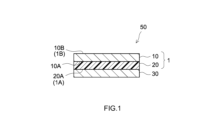
- FIG. 1 is a cross-sectional view showing a schematic example of an adhesive sheet.
- the "base polymer” of an adhesive refers to the main component of the rubber-like polymer contained in the adhesive.
- the rubber-like polymer refers to a polymer that exhibits rubber elasticity in a temperature range around room temperature.
- the "main component” refers to a component that is contained in an amount of more than 50% by weight, unless otherwise specified.
- acrylic polymer refers to a polymer that contains, as a monomer unit constituting the polymer, a monomer unit derived from a monomer having at least one (meth)acryloyl group in one molecule.
- an acrylic polymer is defined as a polymer that contains a monomer unit derived from an acrylic monomer.
- acrylic monomer refers to a monomer having at least one (meth)acryloyl group in one molecule.
- (meth)acryloyl group refers collectively to acryloyl groups and methacryloyl groups. Therefore, the concept of acrylic monomer here can include both monomers having an acryloyl group (acrylic monomers) and monomers having a methacryloyl group (methacrylic monomers).
- (meth)acrylic acid refers collectively to acrylic acid and methacrylic acid
- (meth)acrylate refers collectively to acrylate and methacrylate. The same applies to other similar terms.
- weight may be read as “mass.”
- % by weight may be read as “% by mass”
- parts by weight may be read as “parts by mass.”
- the adhesive sheet disclosed herein is configured to include an adhesive layer.
- the adhesive sheet may be a substrate-attached adhesive sheet having the above-mentioned adhesive layer on one or both sides of a non-releasable substrate (support substrate), or may be a substrate-less adhesive sheet (i.e., an adhesive sheet without a non-releasable substrate.
- the adhesive sheet is made of an adhesive layer) having the above-mentioned adhesive layer held by a release liner.
- the concept of the adhesive sheet here may include those called adhesive tapes, adhesive labels, adhesive films, etc.
- the adhesive sheet disclosed herein may be in the form of a roll or a sheet. Alternatively, the adhesive sheet may be in the form of an adhesive sheet further processed into various shapes.
- the adhesive sheet 1 has an adhesive surface 1A, and is in the form of a one-sided adhesive sheet in which an adhesive layer 20 is provided on one surface 10A of a sheet-like base layer (support base) 10.
- the adhesive sheet 1 is used by attaching the surface 20A of the adhesive layer 20, which is the adhesive surface 1A, to an adherend.
- the back surface 10B of the base layer 10 (the surface opposite to the one surface 10A) is also the back surface 1B of the adhesive sheet 1, and constitutes the outer surface of the adhesive sheet 1.
- the adhesive sheet 1 before use may be in the form of an adhesive sheet 50 with a release liner, in which the adhesive surface 1A is protected by a release liner 30, at least the adhesive layer 20 side of which is the release surface.
- the adhesive sheet may have a configuration in which the other surface (back surface) 10B of the base layer 10 is the release surface, and the adhesive layer 20 is in contact with the back surface by rolling up the adhesive sheet 1 into a roll, thereby protecting the surface (adhesive surface 1A).
- the adhesive sheet disclosed herein has a peel strength reduction rate S 150-5 after heating at 150° C. for 5 minutes and a peel strength reduction rate S 180-120 after heating at 180° C. for 120 minutes, which are both 50% or more.
- An adhesive sheet satisfying the above characteristics can have heat peelability that corresponds to a wide range of heat treatment conditions, including heat treatment conditions in which the heating temperature and heating time are limited.
- the peel strength reduction rate S 150-5 after heating may be 60% or more, 70% or more, 80% or more, 90% or more, 95% or more, or 98% or more.
- the peel strength reduction rate S 180-120 after heating may be 60% or more, 70% or more, 80% or more, 90% or more, 95% or more, or 98% or more.
- the upper limit of the peel strength reduction rate S 150-5 and S 180-120 is 100% or less (eg, less than 100%), and may be 99% or less.
- the pressure-sensitive adhesive sheet preferably has a peel strength reduction rate S 140-5 of 50% or more after heating at 140° C. for 5 minutes, and may be 60% or more, 70% or more, 80% or more, 90% or more, 95% or more, or 98% or more.
- the pressure-sensitive adhesive sheet has a peel strength reduction rate S 130-5 of 50% or more after heating at 130° C. for 5 minutes, and may be 60% or more, 70% or more, 80% or more, 90% or more, 95% or more, or 98% or more.
- the pressure-sensitive adhesive sheet has a peel strength reduction rate S 120-5 of 50% or more after heating at 120° C.
- a pressure-sensitive adhesive sheet having a post-heat peel strength reduction rate S 140-5 , further a post-heat peel strength reduction rate S 130-5 , and further a post-heat peel strength reduction rate S 120-5 of 50% or more has heat peelability and heat resistance under heat treatment conditions equivalent to the corresponding heating temperature and heating time, and can have heat peelability and heat resistance even under heat treatment conditions with more limited heating temperature and heating time, in other words, under wider heat treatment conditions.
- the upper limit of the post-heat peel strength reduction rates S 120-5 , S 130-5 , and S 140-5 is 100% or less (for example, less than 100%), and may be 99% or less.
- the PSA sheet disclosed herein may have a peel strength reduction rate S 160-5 after heating at 160° C. for 5 minutes, a peel strength reduction rate S 170-5 after heating at 170° C. for 5 minutes, a peel strength reduction rate S 180-5 after heating at 180° C. for 5 minutes, and a peel strength reduction rate S 180-60 after heating at 180° C. for 60 minutes, each of which may be 50% or more (e.g., 60% or more, 70% or more, 80% or more, 90% or more, or 95% or more, or even 98% or more).
- the upper limits of the peel strength reduction rates after heating S 160-5 , S 170-5 , S 180-5 , and S 180-60 are 100% or less (e.g., less than 100%) and may be 99% or less.
- the above-mentioned post-heat peel strength reduction rate S T-m is determined by substituting the pre-heat peel strength N 0 [N/20 mm] and the post-heat peel strength N T-m [N/20 mm] described below into the following formula.
- S T-m [%] (1-(N T-m /N 0 )) x 100
- N T-m representing the peel strength after heating indicates the heat treatment conditions (heating temperature and heating time) performed before the measurement of the peel strength, where T means the heating temperature [°C] and m means the heating time [min].
- T and m mean the heating temperature T [°C] and heating time m [min] corresponding to T and m of the peel strength after heating N T-m , respectively.
- Other peel strength reduction rates S T-m after heating are calculated in the same manner.
- the above-mentioned post-heating peel force reduction rates (and therefore the pre-heating peel force N 0 , each post-heating peel force, and their relative relationships, which will be described later) can be realized and adjusted by selecting the types and amounts of the polymer (monomer composition, etc.) contained in the pressure-sensitive adhesive layer, the polyfunctional monomer, and the thermal polymerization initiator, combinations of these, and also by selecting the presence or absence of a crosslinking agent, and selecting the type and amount used, etc.
- the pressure-sensitive adhesive sheet has a pre-heat peel strength N 0 against a glass plate of 0.5 N/20 mm or more, and may be 1.0 N/20 mm or more (e.g., more than 1.0 N/20 mm), or may be 1.5 N/20 mm or more.
- the peel strength N 0 is 2.0 N/20 mm or more, 2.5 N/20 mm or more, 3.0 N/20 mm or more, 3.5 N/20 mm or more, 4.0 N/20 mm or more, or 4.5 N/20 mm or more.
- a pressure-sensitive adhesive sheet having the above peel strength N 0 has good adhesion while it is adhered to an adherend, and can be easily peeled off from the adherend by heat treatment under predetermined conditions.
- the peel force N 0 may be 5.0 N/20 mm or more, 8.0 N/20 mm or more, 10.0 N/20 mm or more, or 12 N/20 mm or more (for example, 13 N/20 mm or more).
- the upper limit of the peel force N 0 is appropriately set according to the required adhesion, so it is not limited to a specific range, and may be, for example, about 30 N/20 mm or less, about 20 N/20 mm or less, about 10 N/20 mm or less, or about 5 N/20 mm or less.
- the peel force N 0 specifically refers to the peel strength against a glass plate measured under conditions of a peel angle of 180 degrees and a speed of 300 mm/min in an environment of 23 ° C. and 50% RH.
- the peel force N 0 is more specifically measured by the method described in the examples described below.
- the adhesive sheet is suitable for a post-heat peel strength N 150-5 against a glass plate measured under an environment of 23 ° C. and 50% RH after heating at 150 ° C. for 5 minutes, and preferably 1.0 N / 20 mm or less.
- the adhesive sheet exhibiting the above post-heat peel strength N 150-5 has heat peelability and further has heat resistance peelability after heat treatment, and can preferably satisfy the above post-heat peel strength reduction rate S 150-5 .
- the post-heat peel strength N 150-5 is less than 1.0 N / 20 mm, and may be 0.5 N / 20 mm or less, 0.3 N / 20 mm or less, 0.2 N / 20 mm or less, or 0.1 N / 20 mm or less.
- the lower limit of the post-heat peel strength N 150-5 may be 0.0 N/20 mm, or may be 0.01 N/20 mm or more (for example, 0.1 N/20 mm or more).
- the pressure-sensitive adhesive sheet is suitable for a post-heat peel strength N 180-120 against a glass plate measured under an environment of 23 ° C. and 50% RH after heating at 180 ° C. for 120 minutes, and preferably 1.0 N / 20 mm or less.
- a pressure-sensitive adhesive sheet exhibiting the above post-heat peel strength N 180-120 has heat peelability and further has heat-resistant peelability after heat treatment, and can preferably satisfy the above post-heat peel strength reduction rate S 180-120 .
- the post-heat peel strength N 180-120 is less than 1.0 N / 20 mm, and may be 0.5 N / 20 mm or less, 0.3 N / 20 mm or less, 0.2 N / 20 mm or less, or 0.1 N / 20 mm or less.
- the lower limit of the post-heating peel force N 180-120 may be 0.0 N/20 mm, or may be 0.01 N/20 mm or more (for example, 0.1 N/20 mm or more).
- the PSA sheet has a post-heat peel strength N 140-5 against a glass plate, measured in an environment of 23°C and 50% RH after heating at 140°C for 5 minutes, of preferably less than 2.0 N/20 mm, more preferably 1.0 N/20 mm or less (e.g., less than 1.0 N/20 mm), and may be 0.5 N/20 mm or less, 0.3 N/20 mm or less, 0.2 N/20 mm or less, or 0.1 N/20 mm or less.
- the adhesive sheet has a post-heat peel strength N 130-5 against a glass plate measured in an environment of 23 ° C. and 50% RH after heating at 130 ° C.
- the adhesive sheet has a post-heat peel strength N 120-5 against a glass plate measured in an environment of 23 ° C. and 50% RH after heating at 120 ° C.
- a PSA sheet exhibiting the above post-heat peel strength N 140-5 , further N 130-5 , or N 120-5 has heat peelability and heat resistance (easy peelability) under heat treatment conditions equivalent to the corresponding heating temperature and heating time, and can preferably satisfy the above post-heat peel strength reduction rate S 140-5 , further S 130-5 , or S 120-5 .
- the lower limit of the post-heat peel strength N 120-5 , further N 130-5 , or N 140-5 may be 0.0 N/20 mm, or may be 0.01 N/20 mm or more (e.g., 0.1 N/20 mm or more).
- the pressure-sensitive adhesive sheet disclosed herein has a post-heating peel strength N 160-5 against a glass plate, measured in an environment of 23°C and 50% RH after heating at 160°C for 5 minutes, a post-heating peel strength N 170-5 against a glass plate, measured in an environment of 23°C and 50% RH after heating at 170°C for 5 minutes, a post-heating peel strength N 180-5 against a glass plate, measured in an environment of 23°C and 50% RH after heating at 180°C for 5 minutes, and a post-heating peel strength N 180-5 against a glass plate, measured in an environment of 23°C and 50% RH after heating at 180°C for 60 minutes.
- Each of N 160-5 , N 170-5 , N 180-5 and N 180-60 may be less than 2.0 N/20 mm, 1.0 N/20 mm or less (e.g., less than 1.0 N/20 mm), 0.5 N/20 mm or less, 0.3 N/20 mm or less, 0.2 N/20 mm or less, or 0.1 N/20 mm or less.
- the lower limit of the post-heat peel forces N 160-5 , N 170-5 , N 180-5 and N 180-60 may be 0.0 N/20 mm or more (e.g., 0.1 N/20 mm or more).
- each post-heat peel strength N T-m refers to the peel strength against a glass plate measured under conditions of 23°C, 50% RH, a peel angle of 180°, and a peel speed of 300 mm/min after heat treatment at a heating temperature of T°C and a heating time of m minutes in a state where the tape is attached to an adherend. More specifically, each post-heat peel strength N T-m is measured by the method described in the Examples below.
- post-heat peel force reduction rate and post-heat peel force represent the characteristics of the adhesive sheet disclosed herein, but do not limit the manner in which this adhesive sheet can be used.
- the type of adhesive is not particularly limited.
- the adhesive layer may contain one or more of various rubber-like polymers such as acrylic polymers, rubber polymers (e.g., natural rubber, synthetic rubber, mixtures thereof, etc.), polyester polymers, urethane polymers, polyether polymers, silicone polymers, polyamide polymers, and fluorine polymers that can be used in the field of adhesives.
- the above polymers may be used as base polymers in adhesives and function as structural polymers that form the adhesive. From the viewpoint of adhesive performance, cost, etc., an adhesive containing an acrylic polymer or a rubber polymer as a base polymer may be preferably adopted. Among them, an adhesive (acrylic adhesive) having an acrylic polymer with excellent heat resistance as a base polymer is preferable.
- acrylic adhesives and adhesive layers made of such adhesives i.e., adhesive sheets having acrylic adhesive layers, but it is not intended to limit the adhesive layers disclosed herein to acrylic adhesive layers.
- the acrylic polymer is an acrylic polymer in which more than 50% by weight of the monomer components constituting the polymer is an acrylic monomer.
- the proportion of the acrylic monomer in the monomer components is suitably 60% by weight or more, preferably 70% by weight or more, more preferably 80% by weight or more, and even more preferably 85% by weight or more, and may be, for example, 90% by weight or more.
- the upper limit of the proportion of the acrylic monomer in the monomer components constituting the acrylic polymer is 100% by weight, and the proportion of the acrylic monomer may be, for example, 98% by weight or less, 95% by weight or less, or 92% by weight or less, from the viewpoint of obtaining the effect of using a non-acrylic monomer.
- the acrylic monomer may be used alone or in combination of two or more kinds.
- the monomer component includes an alkoxy group-containing (meth)acrylate.
- An acrylic polymer that includes an alkoxy group-containing (meth)acrylate as a monomer component tends to be more compatible with, for example, the polyfunctional monomer described below.
- the alkoxy group-containing (meth)acrylate can be used alone or in combination of two or more.
- alkoxy group-containing (meth)acrylates include alkoxyalkyl (meth)acrylates such as methoxyethyl (meth)acrylate, 3-methoxypropyl (meth)acrylate, 2-ethoxyethyl (meth)acrylate, propoxyethyl (meth)acrylate, butoxyethyl (meth)acrylate, and ethoxypropyl (meth)acrylate; alkoxy(poly)alkylene glycol (meth)acrylates such as methoxydiethylene glycol (meth)acrylate, methoxydipropylene glycol (meth)acrylate, ethoxydiethylene glycol (meth)acrylate, ethoxydipropylene glycol (meth)acrylate, methoxypolyethylene glycol (meth)acrylate, methoxypolypropylene glycol (meth)acrylate, ethoxypolyethylene glycol (meth)acrylate, and ethoxypolyprop
- alkoxyalkyl (meth)acrylates are preferred, and among these, alkoxyalkyl (meth)acrylates having an alkoxy group with 1 to 4 carbon atoms (e.g., 1, 2 or 3 carbon atoms) are more preferred, with methoxyethyl (meth)acrylate being particularly preferred.
- the content of the alkoxy group-containing (meth)acrylate in the monomer component constituting the acrylic polymer is not particularly limited. From the viewpoint of effectively obtaining the effect of using the alkoxy group-containing (meth)acrylate, the content of the alkoxy group-containing (meth)acrylate in the monomer component is usually about 1% by weight or more, for example, 10% by weight or more, 30% by weight or more, or 50% by weight or more.
- the content of the alkoxy group-containing (meth)acrylate in the monomer component is, for example, more than 50% by weight, preferably 60% by weight or more, more preferably 70% by weight or more, and even more preferably 80% by weight or more, from the viewpoint of adhesive properties such as adhesive strength and compatibility with polyfunctional monomers.
- the upper limit of the content of the alkoxy group-containing (meth)acrylate in the above monomer component is 100% by weight or less, and in some embodiments, from the viewpoint of obtaining the effect of other copolymerizable monomers such as functional group-containing monomers, the content of the alkoxy group-containing (meth)acrylate is advantageously about 99% by weight or less, and may be 95% by weight or less, 93% by weight or less, or 90% by weight or less.
- the monomer component constituting the acrylic polymer may contain a chain alkyl (meth)acrylate having a linear or branched alkyl group having 1 to 20 carbon atoms at the ester end.
- a chain alkyl (meth)acrylate having an alkyl group having X to Y carbon atoms at the ester end may be referred to as a "C X-Y alkyl (meth)acrylate”.
- chain is used to mean both linear and branched.
- the chain alkyl (meth)acrylates may be used alone or in combination of two or more.
- C 1-20 alkyl (meth)acrylates include methyl (meth)acrylate, ethyl (meth)acrylate, propyl (meth)acrylate, isopropyl (meth)acrylate, n-butyl (meth)acrylate, isobutyl (meth)acrylate, s-butyl (meth)acrylate, t-butyl (meth)acrylate, pentyl (meth)acrylate, isopentyl (meth)acrylate, hexyl (meth)acrylate, heptyl (meth)acrylate, octyl (meth)acrylate, isooctyl (meth)acrylate, and 2-ethylhexyl.
- the C 4-20 alkyl (meth)acrylate it is preferable to use at least a C 4-20 alkyl (meth)acrylate, and more preferable to use at least a C 4-18 alkyl (meth)acrylate.
- the C 4-8 alkyl (meth)acrylate may be used alone or in combination of two or more.
- an acrylic polymer containing one or both of n-butyl acrylate (BA) and 2-ethylhexyl acrylate (2EHA) as the monomer component is preferable, and an acrylic polymer containing at least 2EHA is particularly preferable.
- a C 1-20 alkyl (meth)acrylate is used, a C 7-12 alkyl (meth)acrylate may be preferably used.
- the C 7-12 alkyl (meth)acrylate may be used alone or in combination of two or more.
- a C 7-10 alkyl acrylate is preferred, a C 7-9 alkyl acrylate is more preferred, and a C 8 alkyl acrylate is even more preferred.
- the proportion of the C4-20 alkyl (meth)acrylate preferably a C4-8 alkyl (meth)acrylate or a C7-12 alkyl (meth)acrylate, more preferably a C7-10 alkyl acrylate, even more preferably a C7-9 alkyl acrylate, and particularly preferably a C8 alkyl acrylate; the same applies hereinafter unless otherwise specified
- the above C1-20 alkyl (meth)acrylate is not particularly limited, and in some embodiments, it is, for example, preferably 10% by weight or more, more preferably 20% by weight or more, and may be 25% by weight or more.
- the proportion of the C4-20 alkyl (meth)acrylate in the above C1-20 alkyl (meth)acrylate may be 50% by weight or more, 70% by weight or more, or 90% by weight or more (for example 95% by weight or more).
- the upper limit of the proportion of the C4-20 alkyl (meth)acrylate in the C1-20 alkyl (meth)acrylate is 100% by weight, and in some embodiments, it may be, for example, 80% by weight or less, 60% by weight or less, less than 50% by weight, or 30% by weight or less.
- the monomer component contains a C 1-3 alkyl (meth)acrylate as the C 1-20 alkyl (meth)acrylate.
- the C 1-3 alkyl (meth)acrylate may be used alone or in combination of two or more.
- An acrylic polymer containing a C 1-3 alkyl (meth)acrylate as a monomer component is likely to provide a pressure-sensitive adhesive having good adhesive properties (adhesive strength, etc.) and cohesive strength.
- a C 1-2 alkyl (meth)acrylate may be preferably used.
- a suitable example of a C 1-3 alkyl (meth)acrylate is methyl acrylate (MA).
- the proportion of the C1-3 alkyl (meth)acrylate (preferably a C1-2 alkyl (meth)acrylate, more preferably MA; the same applies below unless otherwise specified) in the C1-20 alkyl (meth)acrylate is not particularly limited, and in some embodiments, it is suitably, for example, 10% by weight or more, more preferably 30% by weight or more, may be 50% by weight or more, or may be 70% by weight or more.
- the upper limit of the proportion of the C1-3 alkyl (meth)acrylate in the C1-20 alkyl (meth)acrylate is 100% by weight, and in some embodiments, it may be, for example, 90% by weight or less, 75% by weight or less, less than 50% by weight, or 30% by weight or less.
- the content of C 1-20 alkyl (meth)acrylate in the monomer component constituting the acrylic polymer is not particularly limited. From the viewpoint of effectively obtaining the effect of using C 1-20 alkyl (meth)acrylate, the content of C 1-20 alkyl (meth)acrylate in the monomer component is usually about 1% by weight or more, for example, it may be 10% by weight or more, 30% by weight or more, or 50% by weight or more.
- the content of C 1-20 alkyl (meth)acrylate in the monomer component is, for example, more than 50% by weight, preferably 60% by weight or more, more preferably 70% by weight or more, even more preferably 80% by weight or more, and may be 85% by weight or more, from the viewpoint of adhesive properties such as adhesive strength.
- the upper limit of the content of C 1-20 alkyl (meth)acrylate in the monomer component is 100% by weight or less, and in terms of obtaining the effect of other copolymerizable monomers such as functional group-containing monomers, in some embodiments, the content of the C 1-20 alkyl (meth)acrylate is advantageously about 99% by weight or less, and may be 95% by weight or less, 93% by weight or less, or 90% by weight or less. In some other embodiments, the content of the C 1-20 alkyl (meth)acrylate may be about 70% by weight or less, 50% by weight or less (e.g., less than 50% by weight), 30% by weight or less, 10% by weight or less, 1% by weight or less, or 0.1% by weight or less.
- the monomer component may be substantially free of C 1-20 alkyl (meth)acrylate.
- a monomer composition in which the amount of C 1-20 alkyl (meth)acrylate is limited or which is substantially free of C 1-20 alkyl (meth)acrylate can be employed when an alkoxy group-containing (meth)acrylate is included (typically when included as a main component).
- the range of the content of the C 1-20 alkyl (meth)acrylate may be the range of the content of each of the above-mentioned C 4-20 alkyl (meth)acrylate, C 4-18 alkyl (meth)acrylate, C 4-8 alkyl (meth)acrylate, C 4-8 alkyl acrylate, C 7-12 alkyl (meth)acrylate, C 7-10 alkyl acrylate, C 7-9 alkyl acrylate, C 8 alkyl acrylate, BA, 2EHA, C 1-3 alkyl (meth)acrylate, C 1-2 alkyl (meth)acrylate, and MA, which are included in the C 1-20 alkyl (meth)acrylate.
- the monomer components constituting the acrylic polymer preferably contain other monomers other than the above alkoxyalkyl (meth)acrylate and linear alkyl (meth)acrylate.
- Such other monomers may be monomers (copolymerizable monomers) that are copolymerizable with the alkoxyalkyl (meth)acrylate and linear alkyl (meth)acrylate.
- monomers having polar groups e.g., carboxy groups, hydroxyl groups, nitrogen atom-containing rings, etc.
- Monomers having polar groups can be useful for introducing crosslinking points into the acrylic polymer and for increasing the cohesive strength of the adhesive.
- the other monomers can be used alone or in combination of two or more.
- Non-limiting examples of other monomers include the following: Carboxy group-containing monomers: for example, acrylic acid, methacrylic acid, carboxyethyl (meth)acrylate, carboxypentyl (meth)acrylate, itaconic acid, maleic acid, fumaric acid, crotonic acid, isocrotonic acid, and the like.
- Acid anhydride group-containing monomers for example, maleic anhydride, itaconic anhydride.
- Hydroxyl group-containing monomers for example, hydroxyalkyl (meth)acrylates such as 2-hydroxyethyl (meth)acrylate, 2-hydroxypropyl (meth)acrylate, 2-hydroxybutyl (meth)acrylate, 3-hydroxypropyl (meth)acrylate, 4-hydroxybutyl (meth)acrylate, 6-hydroxyhexyl (meth)acrylate, 8-hydroxyoctyl (meth)acrylate, 10-hydroxydecyl (meth)acrylate, 12-hydroxylauryl (meth)acrylate, and (4-hydroxymethylcyclohexyl)methyl (meth)acrylate.
- hydroxyalkyl (meth)acrylates such as 2-hydroxyethyl (meth)acrylate, 2-hydroxypropyl (meth)acrylate, 2-hydroxybutyl (meth)acrylate, 3-hydroxypropyl (meth)acrylate, 4-hydroxybutyl (meth)acrylate, 6-hydroxyhexyl (meth)acrylate, 8-hydroxyocty
- Monomers containing a sulfonic acid group or a phosphoric acid group for example, styrenesulfonic acid, allylsulfonic acid, sodium vinylsulfonate, 2-(meth)acrylamido-2-methylpropanesulfonic acid, (meth)acrylamidopropanesulfonic acid, sulfopropyl (meth)acrylate, (meth)acryloyloxynaphthalenesulfonic acid, 2-hydroxyethylacryloylphosphate, and the like.
- Epoxy group-containing monomers for example, epoxy group-containing acrylates such as glycidyl (meth)acrylate and 2-ethyl glycidyl ether (meth)acrylate, allyl glycidyl ether, and glycidyl ether (meth)acrylate.
- Cyano group-containing monomers for example, acrylonitrile, methacrylonitrile, etc.
- Isocyanate group-containing monomers for example, 2-isocyanatoethyl (meth)acrylate.
- Amide group-containing monomers for example, (meth)acrylamide; N,N-dialkyl(meth)acrylamides such as N,N-dimethyl(meth)acrylamide, N,N-diethyl(meth)acrylamide, N,N-dipropyl(meth)acrylamide, N,N-diisopropyl(meth)acrylamide, N,N-di(n-butyl)(meth)acrylamide, and N,N-di(t-butyl)(meth)acrylamide; N-monoalkyl(meth)acrylamides such as N-ethyl(meth)acrylamide, N-isopropyl(meth)acrylamide, N-butyl(meth)acrylamide, and N-n-butyl(meth)acrylamide; N-vinyl carboxylic acid amides such as N-vinylacetamide; monomers having a hydroxyl group and an amide group, for example, N-(2-hydroxyeth
- Amino group-containing monomers for example, aminoethyl (meth)acrylate, N,N-dimethylaminoethyl (meth)acrylate, t-butylaminoethyl (meth)acrylate.
- Monomers having a nitrogen atom-containing ring for example, N-vinyl-2-pyrrolidone, N-methylvinylpyrrolidone, N-vinylpyridine, N-vinylpiperidone, N-vinylpyrimidine, N-vinylpiperazine, N-vinylpyrazine, N-vinylpyrrole, N-vinylimidazole, N-vinyloxazole, N-(meth)acryloyl-2-pyrrolidone, N-(meth)acryloylpiperidine, N-(meth)acryloylpyrrolidone N-vinyl morpholine, N-(meth)acryloylmorpholine, N-vinyl morpholine, N-vinyl-3-morpholinone, N-vinyl-2-caprolactam, N-vinyl-1,3-oxazin-2-one, N-vinyl-3,5-morpholinedione, N-vinyl
- Monomers having a succinimide skeleton for example, N-(meth)acryloyloxymethylene succinimide, N-(meth)acryloyl-6-oxyhexamethylene succinimide, N-(meth)acryloyl-8-oxyhexamethylene succinimide, and the like.
- Maleimides for example, N-cyclohexylmaleimide, N-isopropylmaleimide, N-laurylmaleimide, N-phenylmaleimide, and the like.
- Itaconimides for example, N-methylitaconimide, N-ethylitaconimide, N-butylitaconimide, N-octylitaconimide, N-2-ethylhexylitaconimide, N-cyclohexylitaconimide, N-laurylitaconimide, and the like.
- Aminoalkyl (meth)acrylates for example, aminoethyl (meth)acrylate, N,N-dimethylaminoethyl (meth)acrylate, N,N-diethylaminoethyl (meth)acrylate, and t-butylaminoethyl (meth)acrylate.
- Alkoxysilyl group-containing monomers for example, 3-(meth)acryloxypropyltrimethoxysilane, 3-(meth)acryloxypropyltriethoxysilane, 3-(meth)acryloxypropylmethyldimethoxysilane, 3-(meth)acryloxypropylmethyldiethoxysilane.
- Vinyl esters for example, vinyl acetate, vinyl propionate, etc.
- Vinyl ethers for example, vinyl alkyl ethers such as methyl vinyl ether and ethyl vinyl ether.
- Aromatic vinyl compounds for example, styrene, ⁇ -methylstyrene, vinyltoluene, etc.
- Olefins For example, ethylene, butadiene, isoprene, isobutylene, etc.
- (Meth)acrylic acid esters having an alicyclic hydrocarbon group for example, cyclopentyl (meth)acrylate, cyclohexyl (meth)acrylate, isobornyl (meth)acrylate, dicyclopentanyl (meth)acrylate, adamantyl (meth)acrylate, and the like.
- (Meth)acrylic acid esters having an aromatic hydrocarbon group for example, phenyl (meth)acrylate, phenoxyethyl (meth)acrylate, benzyl (meth)acrylate, and the like.
- heterocycle-containing (meth)acrylates such as tetrahydrofurfuryl (meth)acrylate, halogen atom-containing (meth)acrylates such as vinyl chloride and fluorine atom-containing (meth)acrylates, silicon atom-containing (meth)acrylates such as silicone (meth)acrylate, and (meth)acrylic acid esters obtained from alcohols derived from terpene compounds.
- the amount used is not particularly limited, but it is appropriate that it be 0.01% by weight or more of the total monomer components. From the viewpoint of better exerting the effect of using the other monomers, the amount of the other monomers used may be 0.1% by weight or more of the total monomer components, or may be 0.5% by weight or more. Also, from the viewpoint of making it easier to balance the adhesive properties, it is appropriate that the amount of the other monomers used is 50% by weight or less of the total monomer components, and preferably 40% by weight or less.
- the monomer component constituting the acrylic polymer may contain a monomer having a nitrogen atom.
- the use of a monomer having a nitrogen atom can increase the cohesive strength of the pressure-sensitive adhesive and preferably improve the adhesive strength.
- the monomer having a nitrogen atom may be used alone or in combination of two or more.
- a suitable example of the monomer having a nitrogen atom is a monomer having a nitrogen atom-containing ring.
- the monomer having a nitrogen atom and the monomer having a nitrogen atom-containing ring may be one of those exemplified above, for example, a monomer represented by the general formula (1): N-vinyl cyclic amides represented by the following formula can be used.
- R 1 is a divalent organic group, specifically -(CH 2 ) n -.
- n is an integer of 2 to 7 (preferably 2, 3 or 4).
- N-vinyl-2-pyrrolidone (NVP) can be preferably used.
- N,N-dialkyl (meth)acrylamides such as (meth)acrylamide and N,N-dimethyl (meth)acrylamide
- N-monoalkyl (meth)acrylamides such as N-isopropyl (meth)acrylamide
- N-hydroxyalkyl (meth)acrylamides such as N-(2-hydroxyethyl)acrylamide (HEAA); N-acryloylmorpholine (ACMO); alkoxy diacetone (meth)acrylamide; vinyl formamide; vinyl acetamide; and the like.
- NVP, HEAA, and ACMO are more preferable.
- the amount of the monomer having a nitrogen atom (preferably a monomer having a nitrogen atom-containing ring) used is not particularly limited, and may be, for example, 1% by weight or more, or 3% by weight or more of the total monomer components. In some embodiments, the amount of the monomer having a nitrogen atom used in the monomer components is preferably 5% by weight or more, more preferably 7% by weight or more, and even more preferably 9% by weight or more. In other embodiments, the amount of the monomer having a nitrogen atom used in the monomer components may be 10% by weight or more, 12% by weight or more, or 15% by weight or more. The more the amount of the monomer having a nitrogen atom used, the more the cohesive strength of the adhesive tends to improve.
- the amount of the monomer having a nitrogen atom used is suitably, for example, 40% by weight or less of the total monomer components, and may be 35% by weight or less, 30% by weight or less, or 25% by weight or less. In some embodiments, the amount of the monomer having a nitrogen atom used may be, for example, 20% by weight or less, 15% by weight or less, or 12% by weight or less of the total monomer components.
- the monomer component may contain a hydroxyl group-containing monomer.
- a hydroxyl group-containing monomer can adjust the cohesive strength and crosslink density of the adhesive, improving the adhesive strength.
- examples of the hydroxyl group-containing monomer that can be used include those exemplified above, and for example, 2-hydroxyethyl acrylate (HEA) and 4-hydroxybutyl acrylate (4HBA) can be preferably used.
- the hydroxyl group-containing monomer can be used alone or in combination of two or more types.
- the amount used is not particularly limited, and may be, for example, 0.01% by weight or more of the total monomer components, 0.1% by weight or more, or 0.5% by weight or more.
- the amount of the hydroxyl group-containing monomer used is 1% by weight or more of the total monomer components, more preferably 2% by weight or more, even more preferably 3% by weight or more, and may be, for example, 5% by weight or more.
- the amount of the hydroxyl group-containing monomer used is, for example, 40% by weight or less of the total monomer components, and is preferably 30% by weight or less, more preferably 20% by weight or less, even more preferably 10% by weight or less, and may be 7% by weight or less.
- the monomer component of the acrylic polymer is a monomer having a polar group (polar group-containing monomer) that is a combination of a monomer having a nitrogen atom (e.g., an amide group-containing monomer such as (meth)acrylamide, a monomer having a nitrogen atom-containing ring such as NVP) and a hydroxyl group-containing monomer (e.g., HEA, 4HBA).
- a polar group-containing monomer that is a combination of a monomer having a nitrogen atom (e.g., an amide group-containing monomer such as (meth)acrylamide, a monomer having a nitrogen atom-containing ring such as NVP) and a hydroxyl group-containing monomer (e.g., HEA, 4HBA).
- the weight ratio ( A N /A OH ) of the amount of the monomer having a nitrogen atom A N to the amount of the hydroxyl group-containing monomer A OH is not particularly limited, and may be, for example, 0.1 or more, 0.5 or more, 1.0 or more, 1.2 or more, 1.5 or more, or 1.8 or more.
- the weight ratio (A N /A OH ) may be, for example, 10 or less, 5 or less, 3 or less, or 2.5 or less.
- the monomer component includes a carboxyl group-containing monomer.
- suitable examples of the carboxyl group-containing monomer include acrylic acid (AA) and methacrylic acid (MAA).
- the carboxyl group-containing monomer may be used alone or in combination of two or more. For example, AA and MAA may be used in combination.
- the amount of the carboxyl group-containing monomer used may be, for example, 0.01% by weight or more, 0.05% by weight or more, 0.1% by weight or more, 0.3% by weight or more, or 0.5% by weight or more of the total monomer components. In some embodiments, the amount of the carboxyl group-containing monomer used may be 1% by weight or more, 3% by weight or more, 6% by weight or more, or 8% by weight or more of the total monomer components.
- the cohesive strength of the adhesive tends to improve as the amount of the carboxyl group-containing monomer used increases.
- the proportion of the carboxyl group-containing monomer may be, for example, 20% by weight or less, 15% by weight or less, 10% by weight or less, 5% by weight or less, 3% by weight or less, 2% by weight or less, or 1% by weight or less (e.g., less than 1% by weight).
- an acrylic polymer having an ethylenically unsaturated group which will be described later
- a monomer having a functional group (functional group A) that can react with a functional group (functional group B) of a compound having an ethylenically unsaturated group which will be described later.
- the type of the other monomer is determined by the above-mentioned compound type.
- the other monomer having functional group A for example, a carboxy group-containing monomer, an epoxy group-containing monomer, a hydroxyl group-containing monomer, and an isocyanate group-containing monomer are preferable, and a hydroxyl group-containing monomer is particularly preferable.
- a hydroxyl group-containing monomer as the other monomer, the acrylic polymer has a hydroxyl group.
- an isocyanate group-containing monomer as the compound having an ethylenically unsaturated group, the hydroxyl group of the acrylic polymer reacts with the isocyanate group of the compound, and the ethylenically unsaturated group derived from the compound is introduced into the acrylic polymer.
- the amount of the other monomers is appropriately set to about 1% by weight or more of the total monomer components from the viewpoint of the adhesive properties such as thermosetting property and cohesive strength, and is preferably about 5% by weight or more, more preferably about 10% by weight or more, and may be about 12% by weight or more.
- the amount of the other monomers is appropriately set to about 40% by weight or less of the total monomer components, and is preferably about 30% by weight or less, more preferably about 25% by weight or less, and may be about 20% by weight or less (e.g., 15% by weight or less).
- the acrylic polymer may contain, as another monomer component, a polyfunctional monomer having at least two polymerizable functional groups (typically radically polymerizable functional groups) having an unsaturated double bond, such as a (meth)acryloyl group or a vinyl group.
- a polyfunctional monomer typically radically polymerizable functional groups having an unsaturated double bond
- the polyfunctional monomer can be used as a crosslinking agent.
- the polyfunctional monomer there are no particular limitations on the polyfunctional monomer, and for example, one suitable one from among those exemplified as the polyfunctional monomers contained in the adhesive layer described below can be used alone or in combination of two or more suitable ones.
- the amount of polyfunctional monomer used is not particularly limited, and can be appropriately set so that the purpose of using the polyfunctional monomer is achieved.
- the amount of polyfunctional monomer used can be about 3% by weight or less of the monomer component, preferably about 2% by weight or less, and more preferably about 1% by weight or less (e.g., about 0.5% by weight or less).
- the lower limit of the amount used is not particularly limited as long as it is greater than 0% by weight.
- the effect of using the polyfunctional monomer can be appropriately achieved by setting the amount of polyfunctional monomer used to about 0.001% by weight or more of the monomer component (e.g., about 0.01% by weight or more).
- the method for obtaining the acrylic polymer is not particularly limited, and various polymerization methods known as methods for synthesizing acrylic polymers, such as solution polymerization, emulsion polymerization, bulk polymerization, suspension polymerization, and photopolymerization, can be appropriately adopted.
- solution polymerization can be preferably adopted.
- a monomer supply method when performing solution polymerization a lump-sum charging method in which all monomer raw materials are supplied at once, a continuous supply (dropping) method, a divided supply (dropping) method, and the like can be appropriately adopted.
- the polymerization temperature can be appropriately selected depending on the type of monomer and solvent used, the type of polymerization initiator, and the like, and can be, for example, about 20°C to 170°C (typically about 40°C to 140°C).
- the solvent (polymerization solvent) used in solution polymerization can be appropriately selected from conventionally known organic solvents.
- aromatic compounds such as toluene (typically aromatic hydrocarbons); acetate esters such as ethyl acetate; aliphatic or alicyclic hydrocarbons such as hexane and cyclohexane; halogenated alkanes such as 1,2-dichloroethane; lower alcohols such as isopropyl alcohol (for example, monohydric alcohols having 1 to 4 carbon atoms); ethers such as tert-butyl methyl ether; ketones such as methyl ethyl ketone; etc.
- the initiator used for polymerization can be appropriately selected from conventionally known polymerization initiators depending on the type of polymerization method. For example, but not limited to, azo-based polymerization initiators, peroxide-based polymerization initiators, redox-based polymerization initiators formed by combining peroxides with reducing agents, substituted ethane-based polymerization initiators, etc. can be used.
- the polymerization initiator for example, one or more types can be selected from those exemplified as the thermal polymerization initiators added to the adhesive layer described below.
- the amount of the polymerization initiator used is not particularly limited and may be a normal amount depending on the polymerization method and polymerization mode. For example, about 0.001 to 5 parts by weight (typically about 0.01 to 2 parts by weight, e.g., about 0.01 to 1 part by weight) of the polymerization initiator can be used per 100 parts by weight of the total monomer components to be polymerized.
- the molecular weight of the polymer (e.g., acrylic polymer) is not particularly limited and can be set in an appropriate range according to the required performance.
- the weight average molecular weight (Mw) of the polymer is suitably about 1 ⁇ 10 4 or more, for example, about 10 ⁇ 10 4 or more.
- Mw weight average molecular weight
- the Mw may be 20 ⁇ 10 4 or more, 30 ⁇ 10 4 or more, about 40 ⁇ 10 4 or more, about 50 ⁇ 10 4 or more, for example, about 55 ⁇ 10 4 or more, from the viewpoint of obtaining heat resistance and good adhesiveness.
- the upper limit of the Mw of the polymer is not particularly limited, and may be, for example, about 1000 ⁇ 10 4 or less, or about 100 ⁇ 10 4 or less.
- Mw refers to a value calculated in terms of standard polystyrene obtained by gel permeation chromatography (GPC).
- GPC gel permeation chromatography
- a model named "HLC-8320GPC” (column: TSKgelGMH-H(S), manufactured by Tosoh Corporation) may be used.
- a polymer having an ethylenically unsaturated group such as an acryloyl group, a methacryloyl group, a vinyl group, or an allyl group may be used as the polymer.
- the adhesive containing the polymer having an ethylenically unsaturated group in addition to the heat curing by the polyfunctional monomer described later, the ethylenically unsaturated group of the polymer is reacted during heating, so that the adhesive is heat cured and can obtain better heat peelability.
- the desired heat peelability, heat resistance, and even the peel force reduction rate after heating can be realized by using a smaller amount of polyfunctional monomer.
- the polymer having an ethylenically unsaturated group for example, a polymer having an ethylenically unsaturated group in a side chain can be used.
- the monomer component of the polymer having an ethylenically unsaturated group one or more of the monomer components exemplified as the monomer components of the above polymer can be used within the above content range.
- the amount of ethylenically unsaturated groups in a polymer having ethylenically unsaturated groups is not particularly limited, and from the viewpoint of thermosetting properties, etc., it is appropriate to make it 0.01 mmol per 1 g of polymer (hereinafter also referred to as mmol/g) or more, and it may be 0.1 mmol/g or more, or 0.5 mmol/g or more.
- the amount of ethylenically unsaturated groups in the above polymer is appropriate to be 10.0 mmol/g or less, and may be 5.0 mmol/g or less, 3.0 mmol/g or less, 2.5 mmol/g or less, or 2.0 mmol/g or less.
- the amount of ethylenically unsaturated groups in a polymer is measured by the following method, for example, when the ethylenically unsaturated groups are (meth)acryloyl groups.
- 0.25 mg of the polymer to be measured is dissolved in 50 mL of THF (tetrahydrofuran), and 15 mL of methanol is added to obtain a solution.
- 10 mL of 4N aqueous sodium hydroxide solution is added to the above solution to obtain a mixed solution.
- the above mixed solution is stirred at a liquid temperature of 40° C. for 2 hours.
- 10.2 mL of 4N methanesulfonic acid solution is added to the above mixed solution and stirred.
- An example of a method for measuring the content of ethylenically unsaturated groups other than (meth)acryloyl groups is a method for measuring the bromine number in accordance with JIS K2605: 1996.
- the content of ethylenically unsaturated groups other than (meth)acryloyl groups is determined by converting the number of grams of bromine ( Br2 ) added to 100 g of the polymer to be measured into the number of moles of bromine ( Br2 ) added to 1 g of the polymer.
- the method of introducing an ethylenically unsaturated group into a polymer is not particularly limited.
- a method of reacting (typically condensation or addition reaction) a compound having an ethylenically unsaturated group and a functional group (functional group B) capable of reacting with the functional group (functional group A) introduced into the acrylic polymer by copolymerization, so that the ethylenically unsaturated group does not disappear can be preferably adopted.
- combinations of functional group A and functional group B include a combination of a carboxy group and an epoxy group, a combination of a carboxy group and an aziridyl group, and a combination of a hydroxyl group and an isocyanate group.
- a combination of a hydroxyl group and an isocyanate group is preferred.
- a combination in which the acrylic polymer has a hydroxyl group and the above compound has an isocyanate group is particularly preferred.
- the compound having an ethylenically unsaturated group may have a functional group B capable of reacting with functional group A, as described above.
- Suitable examples of such compounds include the isocyanate group-containing monomers (isocyanate group-containing compounds) given as examples of other monomers that may be used in the polymerization of acrylic polymers. Among these, 2-(meth)acryloyloxyethyl isocyanate is more preferred.
- An acrylic polymer having an ethylenically unsaturated group can be obtained by reacting the isocyanate group of the isocyanate group-containing compound having an ethylenically unsaturated group with the hydroxyl group of the acrylic polymer to form a bond (specifically a urethane bond).
- the amount of the compound having an ethylenically unsaturated group (e.g., an isocyanate group-containing monomer) added is not particularly limited, but from the viewpoint of reactivity with the functional group A (e.g., a hydroxyl group) in the polymer, the molar ratio (M A /M B ) of the moles of the functional group A (M A ) to the moles of the functional group B (isocyanate group) (M B ) may be set in the range of about 0.5 to 2 (e.g., 1 to 1.5).
- the content of the polymer having an ethylenically unsaturated group in the adhesive layer is not particularly limited.
- the amount of the polymer having an ethylenically unsaturated group used is suitably about 10% by weight or more of the total polymer (specifically, base polymer) contained in the adhesive layer, and may be about 50% by weight or more (e.g., more than 50% by weight), 70% by weight or more, 90% by weight or more, 95% by weight or more, or 99 to 100% by weight.
- the base polymer contained in the adhesive layer may consist essentially of a polymer having an ethylenically unsaturated group.
- the polymer used is a polymer that is substantially free of ethylenically unsaturated groups such as acryloyl groups, methacryloyl groups, vinyl groups, and allyl groups (the amount of ethylenically unsaturated groups is less than 0.01 mmol/g).
- the amount of such polymer used is suitably about 10% by weight or more of the entire polymer (specifically, base polymer) contained in the adhesive layer, and may be about 50% by weight or more (e.g., more than 50% by weight), 70% by weight or more, 90% by weight or more, 95% by weight or more, or 99 to 100% by weight.
- the base polymer contained in the adhesive layer may be substantially composed of a polymer that is substantially free of ethylenically unsaturated groups.
- the adhesive layer contains a polyfunctional monomer in addition to the polymer.
- a polyfunctional monomer included in the adhesive (layer) in a pre-reacted (unreacted) state.
- the polyfunctional monomer included in the adhesive reacts with the thermal polymerization initiator described below during heat treatment under predetermined conditions, reducing the adhesive strength and realizing easy peeling upon heating.
- a thermosetting adhesive having heat resistance and easy peeling even after heat treatment can be formed. More specifically, when the adhesive is usually attached to the adherend and heated at a high temperature, it is adsorbed to the surface of the adherend.
- the adhesive strength to the adherend is strengthened, resulting in heavy peeling.
- the reaction radiation polymerization reaction
- the reaction proceeds quickly during heating, and the adhesive can be cured prior to the adhesive being adsorbed to the adherend. This can reduce the adhesive strength to the adherend.
- the adhesive strength of the adhesive to the adherend does not increase and is maintained within a predetermined range, so the adhesive can exhibit excellent heat peelability.
- the polyfunctional monomer can be used alone or in combination of two or more types.
- a polyfunctional monomer refers to a polymerizable compound having two or more ethylenically unsaturated groups in one molecule, and includes those called oligomers.
- the above ethylenically unsaturated groups function as polymerizable functional groups (typically radically polymerizable functional groups).
- Examples of ethylenically unsaturated groups that polyfunctional monomers have include, but are not limited to, acryloyl groups, methacryloyl groups, vinyl groups, and allyl groups. Suitable examples of ethylenically unsaturated groups include acryloyl groups and methacryloyl groups. Of these, acryloyl groups are preferred.
- a compound having two or more acryloyl groups and/or methacryloyl groups may be referred to as a polyfunctional acrylic monomer.
- a compound having two or more vinyl groups may be referred to as a polyfunctional vinyl monomer.
- the number of ethylenically unsaturated groups contained in one molecule of the polyfunctional monomer is suitably 3 or more, preferably 4 or more, more preferably 5 or more, and may be 6 or more.
- the more ethylenically unsaturated groups in the polyfunctional monomer the better the curing property when heated, and the easier it is to obtain easy peeling by heating.
- a polyfunctional monomer having a larger number of ethylenically unsaturated groups (functional groups) can obtain easy peeling by heating with a relatively small amount of use. This is advantageous because it also leads to a reduction in the amount of outgassing derived from the polyfunctional monomer.
- the upper limit of the number of ethylenically unsaturated groups in one molecule of the polyfunctional monomer is not limited to a specific range, and may be, for example, 50 or less, 40 or less, 30 or less, 20 or less, or 15 or less. In some embodiments, the number of ethylenically unsaturated groups in one molecule of the polyfunctional monomer may be, for example, 10 or less, 8 or less, or 6 or less.
- a polyfunctional monomer having the above number of ethylenically unsaturated groups is easy to achieve both good adhesion and easy peeling by heating, and also tends to have excellent storage stability.
- polyfunctional acrylate monomers having two or more ethylenically unsaturated groups or polyfunctional vinyl monomers can be used.
- polyfunctional acrylate monomers can be preferably used.
- polyfunctional acrylate monomers tend to be compatible and easily exhibit desired properties when used in combination with acrylic polymers.
- the polyfunctional acrylate monomers and polyfunctional vinyl monomers can each be used alone or in combination of two or more.
- Multifunctional monomers include 1,6-hexanediol di(meth)acrylate, 1,12-dodecanediol di(meth)acrylate, ethylene glycol di(meth)acrylate, propylene glycol di(meth)acrylate, diethylene glycol di(meth)acrylate, triethylene glycol di(meth)acrylate, polyethylene glycol di(meth)acrylate, dipropylene glycol di(meth)acrylate, tripropylene glycol di(meth)acrylate, polypropylene glycol di(meth)acrylate, neopentyl glycol di(meth)acrylate, pentaerythritol di(meth)acrylate, allyl (meth)acrylate, alkylene oxide modified bisphenol A di(meth)acrylate, alkylene oxide modified neopentyl glycol di(meth)acrylate, tricyclodecane dimethanol di(meth)acrylate, dimethylol dicyclopenta
- difunctional monomers such as trimethylolpropane tri(meth)acrylate, trimethylolpropane ethoxy tri(meth)acrylate, glycerin propoxy triacrylate, tetramethylolmethane tri(meth)acrylate, and pentaerythritol tri(meth)acrylate; tetrafunctional monomers such as pentaerythritol alkoxy tetra(meth)acrylate, ditrimethylolpropane tetra(meth)acrylate, and pentaerythritol tetra(meth)acrylate.
- pentafunctional monomers such as sorbitol penta(meth)acrylate and dipentaerythritol penta(meth)acrylate; hexafunctional monomers such as dipentaerythritol hexa(meth)acrylate, sorbitol hexa(meth)acrylate, alkylene oxide modified hexa(meth)acrylate, and caprolactone modified dipentaerythritol hexa(meth)acrylate; and di- or higher functional epoxy acrylates, polyester acrylates, and urethane acrylates.
- preferred examples include 1,6-hexanediol di(meth)acrylate, trimethylolpropane tri(meth)acrylate, and dipentaerythritol hexa(meth)acrylate.
- dipentaerythritol hexa(meth)acrylate is particularly preferred.
- the molecular weight of the polyfunctional monomer may be, for example, 150 or more, 250 or more, 300 or more, 350 or more, 400 or more, 450 or more, or 500 or more.
- the molecular weight of the polyfunctional monomer is usually about 100,000 or less, for example, about 10,000 or less (e.g., less than 10,000) is appropriate, 5,000 or less (e.g., less than 5,000) is preferable, 1,500 or less, 1,000 or less (e.g., less than 1,000), 800 or less, or 600 or less.
- the use of a polyfunctional monomer having a molecular weight in the above range can be advantageous, for example, in terms of the preparation and coating properties of the adhesive composition.
- the above molecular weight is a molecular weight calculated from the manufacturer's nominal value or molecular structure.
- Mw weight average molecular weight
- a polyfunctional monomer having a weight loss rate of 1% or less (specifically 1.0% or less) at 180°C in TGA (thermogravimetric analysis) under a temperature rise condition of 10°C/min is used as the polyfunctional monomer.
- a polyfunctional monomer having heat resistance such that the weight loss rate at 180°C is 1% or less hereinafter also referred to as a "heat-resistant polyfunctional monomer"
- the adhesive layer has heat-resistant peelability based on the use of the polyfunctional monomer, while suppressing outgas generation during heating.
- the heat-resistant polyfunctional monomer it is possible to achieve both heat-resistant peelability and reduced outgassing.
- the 180°C heat-resistant weight loss rate of the heat-resistant polyfunctional monomer is 0.9% or less, more preferably 0.8% or less, even more preferably 0.7% or less, particularly preferably 0.6% or less, and may be 0.5% or less.
- the lower limit of the weight loss rate of the heat-resistant multifunctional monomer at 180°C is theoretically 0%, and may be 0.1% or more in practice, 0.2% or more, or 0.3% or more.
- TMPTA trimethylolpropane triacrylate
- DPHA dipentaerythritol hexaacrylate
- the heat-resistant multifunctional monomer may be used alone or in combination of two or more kinds.
- the weight loss rate of a polyfunctional monomer when heated to 180°C can be measured using a differential thermal analyzer (manufactured by TA Instruments, product name "Discovery TGA”) under measurement conditions of a temperature rise of 10°C/min, in an air atmosphere, and at a flow rate of 25 mL/min.
- a differential thermal analyzer manufactured by TA Instruments, product name "Discovery TGA”
- the content of the heat-resistant polyfunctional monomer in the adhesive layer is not particularly limited. In some embodiments, the content may be approximately 1 part by weight or more, 5 parts by weight or more, and preferably 10 parts by weight or more, per 100 parts by weight of the polymer (specifically, the base polymer, preferably an acrylic polymer) contained in the adhesive layer.
- the appropriate amount of the heat-resistant polyfunctional monomer may vary depending on its molecular weight, the number of functional groups, etc., but in some preferred embodiments, from the viewpoint of easy peeling upon heating, the amount of the heat-resistant polyfunctional monomer per 100 parts by weight of the polymer is 20 parts by weight or more, and is preferably 30 parts by weight or more, and may be 40 parts by weight or more, 50 parts by weight or more, 60 parts by weight or more, 70 parts by weight or more, 80 parts by weight or more, 90 parts by weight or more, or 100 parts by weight or more.
- the upper limit of the content of the heat-resistant polyfunctional monomer in the adhesive layer is not particularly limited, and may be set to achieve the desired adhesive properties.
- the amount of the heat-resistant polyfunctional monomer relative to 100 parts by weight of the polymer is suitably about 200 parts by weight or less, preferably 160 parts by weight or less, more preferably 150 parts by weight or less, and even more preferably 140 parts by weight or less, and may be 120 parts by weight or less, 90 parts by weight or less, or 70 parts by weight or less.
- the amount of the heat-resistant polyfunctional monomer relative to 100 parts by weight of the polymer may be about 50 parts by weight or less (for example, less than 50 parts by weight).
- the amount of the heat-resistant polyfunctional monomer limited in this way can be preferably adopted in an embodiment in which a polymer having an ethylenically unsaturated group is used.
- the content of the polyfunctional monomer in the adhesive layer is not particularly limited. In some embodiments, the content may be about 1 part by weight or more, 5 parts by weight or more, and preferably 10 parts by weight or more, per 100 parts by weight of the polymer (specifically, the base polymer, preferably an acrylic polymer) contained in the adhesive layer.
- the appropriate amount of the polyfunctional monomer may vary depending on its molecular weight, the number of functional groups, etc., but in some preferred embodiments, from the viewpoint of easy peeling upon heating, the amount of the polyfunctional monomer per 100 parts by weight of the above polymer is 20 parts by weight or more, appropriately 30 parts by weight or more, 40 parts by weight or more, 50 parts by weight or more, 60 parts by weight or more, 70 parts by weight or more, 80 parts by weight or more, 90 parts by weight or more, or 100 parts by weight or more.
- the polyfunctional monomer contained in the adhesive layer reacts quickly when heated, and the adhesive layer is thermally cured, thereby realizing easy peeling upon heating.
- the upper limit of the content of the polyfunctional monomer in the adhesive layer is not particularly limited, and can be set to achieve the desired adhesive properties.
- the amount of the polyfunctional monomer relative to 100 parts by weight of the polymer is appropriately set to about 200 parts by weight or less, preferably 160 parts by weight or less, more preferably 150 parts by weight or less, and even more preferably 140 parts by weight or less, and may be 120 parts by weight or less, 90 parts by weight or less, or 70 parts by weight or less.
- the amount of the polyfunctional monomer relative to 100 parts by weight of the polymer may be about 50 parts by weight or less (for example, less than 50 parts by weight).
- the amount of the polyfunctional monomer limited in this way can be preferably adopted in an embodiment in which a polymer having an ethylenically unsaturated group is used.
- the adhesive layer contains a thermal polymerization initiator in addition to the polymer and the polyfunctional monomer.
- the thermal polymerization initiator refers to a polymerization initiator that generates radicals by heating.
- the thermal polymerization initiator reacts with the polyfunctional monomer during heat treatment under predetermined conditions, reducing the adhesive strength and realizing easy peeling by heating.
- a thermosetting adhesive having heat-resistant easy peeling property even after heat treatment can be formed.
- thermal polymerization initiator one or more suitable materials that can satisfy the desired rate of decrease in peel strength after heating can be selected and used from various thermal polymerization initiators such as peroxide-based polymerization initiators, azo-based polymerization initiators, redox-based polymerization initiators that are a combination of peroxide and a reducing agent, and substituted ethane-based polymerization initiators. Among them, it is preferable to use a peroxide-based polymerization initiator.
- a peroxide-based initiator As the thermal polymerization initiator, it is easy to obtain heat peelability and heat-resistant peelability even in heat treatments with limited heating temperatures and heating times (specifically, heat treatments below 180°C, more specifically, heat treatments between 120°C and 170°C), in other words, under a wide range of heating treatment conditions, and the desired rate of decrease in peel strength after heating can be preferably achieved.
- One of the reasons for this is the high initiation efficiency of peroxide-based polymerization initiators (particularly, organic peroxide-based polymerization initiators).
- the peroxide-based polymerization initiator generates a radical (-O.) by cleaving -O-O- of the compound.
- any of organic peroxides such as diacyl peroxides, peroxy esters, peroxy dicarbonates, monoperoxy carbonates, peroxy ketals, dialkyl peroxides, hydroperoxides, and ketone peroxides, or hydrogen peroxide can be used. Of these, organic peroxides are preferably used.
- a suitable example of a peroxide-based polymerization initiator is a benzoyl peroxide-based compound (typically dibenzoyl peroxide (BPO)) having a benzoyl group that may have a substituent.
- BPO dibenzoyl peroxide
- the peroxide-based polymerization initiators can be used alone or in combination of two or more.
- peroxide polymerization initiators include BPO, 1,1-di(t-hexylperoxy)cyclohexane, cyclohexanone peroxide, 3,3,5-trimethylcyclohexanone peroxide, methylcyclohexanone peroxide, 1,1-bis(t-butylperoxy)-3,3,5-trimethylcyclohexane, 1,1-bis(t-butylperoxy)cyclohexane, n-butyl-4,4-bis(t-butylperoxy)valerate, cumene hydroperoxide, 2,5-dimethylhexane-2,5-dihydroperoxide, 1,3-bis(t- butylperoxy)-m-isopropylbenzene, 2,5-dimethyl-2,5-di(t-butylperoxy)hexane, diisopropylbenzene hydroperoxide, t-butylcumyl peroxide,
- the content of the peroxide-based polymerization initiator in the adhesive layer is not particularly limited, and in some embodiments, it is appropriate to set the content to 0.1 parts by weight or more per 100 parts by weight of the polymer (specifically, the base polymer, e.g., an acrylic polymer) contained in the adhesive layer, preferably 0.2 parts by weight or more, more preferably 0.3 parts by weight or more, and even more preferably 0.4 parts by weight or more, and may be 0.5 parts by weight or more.
- the base polymer e.g., an acrylic polymer
- the amount of the peroxide-based polymerization initiator per 100 parts by weight of the polymer may be, for example, about 10 parts by weight or less, or about 5 parts by weight or less.
- the amount of the peroxide-based polymerization initiator relative to 100 parts by weight of the polymer is suitably 3 parts by weight or less (less than 3 parts by weight), preferably 2.5 parts by weight or less, more preferably 2.0 parts by weight or less, even more preferably 1.5 parts by weight or less, particularly preferably less than 1.2 parts by weight (e.g., 1.1 parts by weight or less), and may be 1.0 parts by weight or less (e.g., less than 1.0 parts by weight), 0.9 parts by weight or less, 0.8 parts by weight or less, 0.7 parts by weight or less, or 0.6 parts by weight or less.
- the total amount of the peroxide-based polymerization initiator within a predetermined range, it is possible to preferably realize a pressure-sensitive adhesive having efficient thermosetting and easy peeling by heating while obtaining adhesive properties such as adhesive strength and storage stability.
- the content of the peroxide-based polymerization initiator in the adhesive layer can also be specified by its relative relationship with the polyfunctional monomer.
- the amount of the peroxide-based polymerization initiator per 100 parts by weight of the polyfunctional monomer is appropriately set to 0.1 parts by weight or more from the viewpoint of the frequency of collision with the ethylenically unsaturated group of the polyfunctional monomer, and is preferably 0.2 parts by weight or more, more preferably 0.3 parts by weight or more, and even more preferably 0.4 parts by weight or more, and may be 0.5 parts by weight or more.
- the amount of the peroxide-based polymerization initiator per 100 parts by weight of the polyfunctional monomer may be, for example, about 10 parts by weight or less, or may be approximately 5 parts by weight or less.
- the amount of the peroxide-based polymerization initiator relative to 100 parts by weight of the polyfunctional monomer is suitably 3 parts by weight or less (less than 3 parts by weight), preferably 2.5 parts by weight or less, more preferably 2.0 parts by weight or less, even more preferably 1.5 parts by weight or less, particularly preferably less than 1.2 parts by weight (e.g., 1.1 parts by weight or less), and may be 1.0 parts by weight or less (e.g., less than 1.0 parts by weight), 0.9 parts by weight or less, 0.8 parts by weight or less, 0.7 parts by weight or less, or 0.6 parts by weight or less.
- the relative relationship of the amount of the peroxide-based polymerization initiator relative to the amount of the polyfunctional monomer can be preferably applied.
- the adhesive layer may contain only a peroxide-based polymerization initiator as a thermal polymerization initiator, or may contain a peroxide-based polymerization initiator and a thermal polymerization initiator (non-peroxide-based polymerization initiator) different from the peroxide-based polymerization initiator.
- the effect of using the peroxide-based polymerization initiator can be maximized, and by utilizing the high initiation efficiency of the peroxide-based polymerization initiator (specifically, an organic peroxide-based polymerization initiator), for example, even when the amount of polyfunctional monomer used is relatively small, sufficient thermal curing tends to be achieved, and even in a heat treatment in which the heating temperature and heating time are limited, for example, easy peeling by heating tends to be easily achieved.
- the peroxide-based polymerization initiator specifically, an organic peroxide-based polymerization initiator
- the action and characteristics based on the non-peroxide-based polymerization initiator can be utilized.
- the ratio of the peroxide-based polymerization initiator to the entire thermal polymerization initiator contained in the adhesive layer is suitably about 10% by weight or more, and from the viewpoint of effectively exerting the effect of the peroxide-based polymerization initiator, it is preferably 30% by weight or more, more preferably 40% by weight or more, and even more preferably 50% by weight or more (e.g., more than 50% by weight), and may be 55% by weight or more, or may be 60% by weight or more.
- the ratio of the peroxide-based polymerization initiator to the entire thermal polymerization initiator is, for example, about 65% by weight or more, may be 75% by weight or more, may be 85% by weight or more, may be 95% by weight or more, or may be 99% by weight or more.
- the upper limit of the ratio of the peroxide-based polymerization initiator to the entire thermal polymerization initiator is 100% by weight, and in some embodiments, it may be, for example, 90% by weight or less, 80% by weight or less, 70% by weight or less, or 60% by weight or less.
- non-peroxide polymerization initiators used together with peroxide polymerization initiators can be used, for example, azo polymerization initiators, redox polymerization initiators formed by a combination of peroxide and a reducing agent, substituted ethane polymerization initiators, etc.
- persulfates such as potassium persulfate and ammonium persulfate
- azo compounds such as 2,2'-azobisisobutyronitrile (AIBN), 2,2'-azobis(N-butyl-2-methylpropionamide), and 2,2'-azobis(2,4,4-trimethylpentane)
- substituted ethane initiators such as phenyl-substituted ethane
- redox initiators formed by a combination of peroxide and a reducing agent such as a combination of persulfate and sodium hydrogen sulfite, or a combination of peroxide and sodium ascorbate; etc.
- These non-peroxide polymerization initiators can be used alone or in combination of two or more.
- a thermal polymerization initiator having a 10-hour half-life temperature of, for example, 50°C or higher may be preferably used.
- the 10-hour half-life temperature of a polymerization initiator refers to the temperature at which the concentration of the initiator is reduced to half in 10 hours, and is used as an index representing the decomposition rate of the polymerization initiator and the thermal decomposition (radical generation) at a specified temperature.
- the nominal value described in the manufacturer's catalog or the like is used as the 10-hour half-life temperature of the thermal polymerization initiator.
- a value measured using an appropriate solvent e.g., toluene
- the thermal decomposition of the thermal polymerization initiator in the adhesive and the thermal decomposition in the solvent are not the same, a thermal polymerization initiator having a high 10-hour half-life temperature tends to have excellent heat resistance and storage stability.
- the 10-hour half-life temperature of the thermal polymerization initiator may be 55°C or higher, 60°C or higher, 65°C or higher, or 70°C or higher.
- the upper limit of the 10-hour half-life temperature of the thermal polymerization initiator is, for example, 150° C. or less, and is suitably 120° C. or less.
- the 10-hour half-life temperature of the thermal polymerization initiator is suitably about 100° C. or less (for example, less than 100° C.), and may be 95° C. or less, 90° C. or less, 85° C. or less, or 80° C. or less.
- the amount of thermal polymerization initiator contained in the adhesive layer is not particularly limited, and in some embodiments, it is appropriate to make it 0.1 parts by weight or more per 100 parts by weight of the polymer (specifically, the base polymer, for example, an acrylic polymer) contained in the adhesive layer, and it is preferably 0.2 parts by weight or more, more preferably 0.3 parts by weight or more, and even more preferably 0.4 parts by weight or more, and may be 0.5 parts by weight or more.
- the content of the thermal polymerization initiator may be, for example, about 10 parts by weight or less, or may be approximately 5 parts by weight or less.
- the amount of the peroxide-based polymerization initiator relative to 100 parts by weight of the polymer is suitably 3 parts by weight or less (less than 3 parts by weight), preferably 2.5 parts by weight or less, more preferably 2.0 parts by weight or less, even more preferably 1.5 parts by weight or less, particularly preferably less than 1.2 parts by weight (e.g., 1.1 parts by weight or less), and may be 1.0 parts by weight or less (e.g., less than 1.0 parts by weight), 0.9 parts by weight or less, 0.8 parts by weight or less, 0.7 parts by weight or less, or 0.6 parts by weight or less.
- the content of the thermal polymerization initiator within a predetermined range, it is possible to preferably realize a pressure-sensitive adhesive having efficient thermosetting and easy peeling by heating while obtaining adhesive properties such as adhesive strength and storage stability.
- the content of the thermal polymerization initiator in the adhesive layer can also be determined by its relative relationship with the polyfunctional monomer.
- the amount of the thermal polymerization initiator per 100 parts by weight of the polyfunctional monomer is appropriately set to 0.1 parts by weight or more from the viewpoint of the frequency of collision with the ethylenically unsaturated group of the polyfunctional monomer, and is preferably 0.2 parts by weight or more, more preferably 0.3 parts by weight or more, and even more preferably 0.4 parts by weight or more, and may be 0.5 parts by weight or more.
- the amount of the thermal polymerization initiator per 100 parts by weight of the polyfunctional monomer may be, for example, about 10 parts by weight or less, or may be approximately 5 parts by weight or less.
- the amount of the thermal polymerization initiator relative to 100 parts by weight of the polyfunctional monomer is 3 parts by weight or less (less than 3 parts by weight), preferably 2.5 parts by weight or less, more preferably 2.0 parts by weight or less, even more preferably 1.5 parts by weight or less, particularly preferably less than 1.2 parts by weight (e.g., 1.1 parts by weight or less), and may be 1.0 parts by weight or less (e.g., less than 1.0 parts by weight), 0.9 parts by weight or less, 0.8 parts by weight or less, 0.7 parts by weight or less, or 0.6 parts by weight or less.
- the relative relationship of the amount of the thermal polymerization initiator relative to the amount of the polyfunctional monomer can be preferably applied.
- the total proportion of the above-mentioned polymer (specifically, base polymer, for example, acrylic polymer), polyfunctional monomer (for example, polyfunctional acrylic monomer) and thermal polymerization initiator (preferably peroxide-based polymerization initiator) in the entire adhesive layer is suitably 50% by weight or more (for example, more than 50% by weight and less than 100% by weight) from the viewpoint of effectively exerting the peel strength reduction by heating and realizing the desired peel strength reduction rate after heating, and is preferably 70% by weight or more, more preferably 80% by weight or more, and even more preferably 90% by weight or more, and may be 95% by weight or more, 98% by weight or more, or 99% by weight or more (for example, 99 to 100% by weight).
- base polymer for example, acrylic polymer
- polyfunctional monomer for example, polyfunctional acrylic monomer
- thermal polymerization initiator preferably peroxide-based polymerization initiator
- the adhesive composition used to form the adhesive layer may contain a crosslinking agent as necessary, mainly for the purpose of crosslinking within the adhesive layer or between the adhesive layer and its adjacent surface.
- the crosslinking agent is typically contained in the adhesive layer in a form after crosslinking reaction. The use of the crosslinking agent allows the cohesive strength of the adhesive layer to be appropriately adjusted.
- crosslinking agent is not particularly limited, and can be selected from conventionally known crosslinking agents so that the crosslinking agent exerts an appropriate crosslinking function within the adhesive layer, for example, depending on the composition of the adhesive.
- crosslinking agents that can be used include isocyanate-based crosslinking agents, epoxy-based crosslinking agents, oxazoline-based crosslinking agents, aziridine-based crosslinking agents, carbodiimide-based crosslinking agents, melamine-based crosslinking agents, urea-based crosslinking agents, metal alkoxide-based crosslinking agents, metal chelate-based crosslinking agents, metal salt-based crosslinking agents, hydrazine-based crosslinking agents, and amine-based crosslinking agents.
- isocyanate-based crosslinking agents epoxy-based crosslinking agents, oxazoline-based crosslinking agents, aziridine-based crosslinking agents, and carbodiimide-based crosslinking agents are preferred, and isocyanate-based crosslinking agents are particularly preferred.
- a polyfunctional isocyanate compound having two or more functionalities can be used.
- aromatic isocyanates such as tolylene diisocyanate, xylene diisocyanate, polymethylene polyphenyl diisocyanate, tris(p-isocyanatophenyl)thiophosphate, and diphenylmethane diisocyanate
- alicyclic isocyanates such as isophorone diisocyanate
- aliphatic isocyanates such as hexamethylene diisocyanate.
- isocyanate adducts such as trimethylolpropane/tolylene diisocyanate trimer adduct (manufactured by Tosoh Corporation, product name “Coronate L”), trimethylolpropane/hexamethylene diisocyanate trimer adduct (manufactured by Tosoh Corporation, product name “Coronate HL”), hexamethylene diisocyanate isocyanurate (manufactured by Tosoh Corporation, product name "Coronate HX”), and trimethylolpropane/xylylene diisocyanate adduct (manufactured by Mitsui Chemicals, Inc., product name "Takenate D-110N”), etc.
- isocyanate adducts such as trimethylolpropane/tolylene diisocyanate trimer adduct (manufactured by Tosoh Corporation, product name “Coronate L”), trimethylolprop
- epoxy crosslinking agent those having two or more epoxy groups in one molecule can be used without any particular restrictions.
- Epoxy crosslinking agents having 3 to 5 epoxy groups in one molecule are preferred.
- Specific examples of epoxy crosslinking agents include N,N,N',N'-tetraglycidyl-m-xylylenediamine, 1,3-bis(N,N-diglycidylaminomethyl)cyclohexane, 1,6-hexanediol diglycidyl ether, polyethylene glycol diglycidyl ether, polyglycerol polyglycidyl ether, etc.
- epoxy crosslinking agents include Mitsubishi Gas Chemical Company's product names “TETRAD-X” and “TETRAD-C”, DIC Corporation's product name “Epicron CR-5L”, Nagase ChemteX Corporation's product name "Denacol EX-512", Nissan Chemical Industries' product name “TEPIC-G”, etc.
- any agent having one or more oxazoline groups in one molecule can be used without any particular limitation.
- the aziridine crosslinking agent include trimethylolpropane tris[3-(1-aziridinyl)propionate], trimethylolpropane tris[3-(1-(2-methyl)aziridinylpropionate)], and the like.
- the carbodiimide crosslinking agent a low molecular weight compound or a high molecular weight compound having two or more carbodiimide groups can be used.
- an isocyanate-based crosslinking agent is used as the crosslinking agent.
- the isocyanate-based crosslinking agent can easily form an adhesive having good heat peelability while exhibiting a good balance of adhesive properties such as adhesive strength and cohesive strength.
- the isocyanate-based crosslinking agent can be used alone or in combination of two or more.
- the amount of isocyanate-based crosslinking agent used is preferably less than 1 part by weight per 100 parts by weight of the polymer (specifically, the base polymer, for example, an acrylic polymer) contained in the adhesive layer.
- the crosslinking density is appropriately suppressed, and at such a crosslinking density, the polyfunctional monomer and the thermal polymerization initiator frequently collide with each other during heat treatment, heat curing progresses, and heat peelability and heat resistance are expressed, and it is believed that the desired post-heat peel strength reduction rate is realized. It is to be noted that the technology disclosed herein is not limited to the above considerations.
- the amount of the isocyanate-based crosslinking agent used relative to 100 parts by weight of the polymer is 0.9 parts by weight or less, may be 0.8 parts by weight or less, may be 0.7 parts by weight or less, may be 0.6 parts by weight or less, may be 0.5 parts by weight or less, may be 0.4 parts by weight or less, may be 0.3 parts by weight or less, may be 0.2 parts by weight or less, or may be 0.1 parts by weight or less.
- the amount of the isocyanate-based crosslinking agent used there is a tendency that high adhesive strength is easily obtained.
- the amount of the isocyanate-based crosslinking agent used can be, for example, 0.01 parts by weight or more relative to 100 parts by weight of the polymer, and in some preferred embodiments, it may be 0.05 parts by weight or more, may be 0.1 parts by weight or more, may be 0.3 parts by weight or more, or may be 0.5 parts by weight or more.
- the amount used (the total amount when two or more crosslinking agents are used) may be more than 0 parts by weight relative to 100 parts by weight of the polymer (specifically, the base polymer, e.g., an acrylic polymer) contained in the adhesive layer, from the viewpoint of realizing an adhesive that exhibits adhesive properties such as adhesive strength and cohesive strength in a well-balanced manner, and may be, for example, 0.001 parts by weight or more, or may be 0.01 parts by weight or more.
- the amount of crosslinking agent used relative to 100 parts by weight of the polymer may be 0.05 parts by weight or more, 0.1 parts by weight or more, 0.3 parts by weight or more, or 0.5 parts by weight or more.
- the upper limit of the amount of crosslinking agent used may vary depending on the type of crosslinking agent used, so is not limited to a specific range, but it is preferable that the amount is limited to a predetermined amount or less from the viewpoint of realizing good heat peelability and heat resistance, and thus realizing the desired post-heat peel strength reduction rate.
- the amount of crosslinking agent used the crosslinking density is appropriately suppressed, and at such a crosslinking density, the polyfunctional monomer and the thermal polymerization initiator frequently collide with each other during heat treatment, and heat curing proceeds, and heat peelability and heat resistance are developed, and the desired post-heat peel strength reduction rate is realized. Note that the technology disclosed herein is not limited to the above considerations.
- the amount of crosslinking agent used is suitably less than 10 parts by weight relative to 100 parts by weight of the polymer, and in some embodiments, it is preferably less than 5 parts by weight, and may be less than 3 parts by weight. In some embodiments, the amount of crosslinking agent used is suitably less than 1 part by weight relative to 100 parts by weight of the polymer, and is preferably 0.9 parts by weight or less, and may be 0.8 parts by weight or less, 0.7 parts by weight or less, 0.6 parts by weight or less, 0.5 parts by weight or less, 0.4 parts by weight or less, 0.3 parts by weight or less, 0.2 parts by weight or less, or 0.1 parts by weight or less.
- the amount of crosslinking agent used it tends to be easier to achieve high adhesive strength.
- a crosslinking catalyst may be used to promote the crosslinking reaction more effectively.
- crosslinking catalysts include metal-based crosslinking catalysts such as tetra-n-butyl titanate, tetraisopropyl titanate, nursem ferric, butyltin oxide, and dioctyltin dilaurate.
- the amount of the crosslinking catalyst used is not particularly limited.
- the amount of the crosslinking catalyst used may be, for example, approximately 0.0001 parts by weight or more, approximately 0.001 parts by weight or more, or approximately 0.005 parts by weight or more, relative to 100 parts by weight of the polymer (specifically, the base polymer, for example, an acrylic polymer) contained in the adhesive layer, and may be approximately 1 part by weight or less, approximately 0.1 parts by weight or less, or approximately 0.05 parts by weight or less.
- the adhesive composition used to form the adhesive layer may contain a compound that generates keto-enol tautomerism as a crosslinking retarder, if desired.
- a compound that generates keto-enol tautomerism may be preferably used in an adhesive composition that contains an isocyanate-based crosslinking agent or an adhesive composition that can be used by blending an isocyanate-based crosslinking agent. This can provide an effect of extending the pot life of the adhesive composition.
- various ⁇ -dicarbonyl compounds can be used as the compound that causes keto-enol tautomerization.
- ⁇ -diketones such as acetylacetone and 2,4-hexanedione
- acetoacetates such as methyl acetoacetate and ethyl acetoacetate
- propionylacetates such as ethyl propionylacetate
- isobutyrylacetates such as ethyl isobutyrylacetate
- malonic acid esters such as methyl malonate and ethyl malonate; and the like.
- preferred compounds include acetylacetone and acetoacetates.
- the compounds that cause keto-enol tautomerization can be used alone or in combination of two or more.
- the amount of the compound that causes keto-enol tautomerization used may be, for example, 0.1 parts by weight or more and 20 parts by weight or less, and appropriately 0.5 parts by weight or more and 15 parts by weight or less, and can be, for example, 1 part by weight or more and 10 parts by weight or less, or may be 1 part by weight or more and 5 parts by weight or less, relative to 100 parts by weight of the polymer (specifically, the base polymer, e.g., an acrylic polymer) contained in the pressure-sensitive adhesive layer.
- the polymer specifically, the base polymer, e.g., an acrylic polymer
- the adhesive layer may contain one or more monofunctional monomers containing one ethylenically unsaturated group in one molecule, if desired.
- the monofunctional monomer is used within a range that does not impair the effects of the technology disclosed herein.
- the monofunctional monomer a known monofunctional acrylate monomer or vinyl monomer may be used.
- the content of the monofunctional monomer in the adhesive layer is suitably about 100 parts by weight or less (0 parts by weight or more and 100 parts by weight or less. For example, less than 100 parts by weight) relative to 100 parts by weight of the polyfunctional monomer, and may be less than 50 parts by weight, less than 30 parts by weight, less than 10 parts by weight, or less than 1 part by weight.
- the technology disclosed herein can be implemented in an embodiment in which the adhesive layer does not substantially contain a monofunctional monomer.
- the adhesive layer may contain, as necessary, various additives that are common in the field of adhesives, such as tackifiers, silane coupling agents, peel strength regulators (surfactants, etc.), viscosity regulators (e.g. thickeners), leveling agents, plasticizers, fillers, colorants such as pigments and dyes, stabilizers, preservatives, antiaging agents, etc.
- various additives those that are conventionally known can be used in the usual manner, and they do not particularly characterize the present invention, so detailed explanations will be omitted.
- the technology disclosed herein can achieve desired adhesive properties such as adhesive strength without using a tackifier.
- the content of the tackifier in the adhesive layer can be, for example, less than 10 parts by weight, or even less than 5 parts by weight, relative to 100 parts by weight of the polymer (specifically, the base polymer, for example, an acrylic polymer) contained in the adhesive layer.
- the content of the tackifier may be less than 1 part by weight (for example, less than 0.5 parts by weight), or less than 0.1 parts by weight (0 parts by weight or more and less than 0.1 parts by weight).
- the adhesive layer may be free of a tackifier.
- the technique disclosed herein can be preferably implemented using a solvent-based pressure-sensitive adhesive composition.
- the above-mentioned solvent-based pressure-sensitive adhesive composition is a pressure-sensitive adhesive composition in a form containing a pressure-sensitive adhesive-forming component in an organic solvent.
- the solvent-based pressure-sensitive adhesive composition typically contains a solution polymer of a monomer component, a polyfunctional monomer, a thermal polymerization initiator, and optionally other additives.
- the effect of the technique disclosed herein can be effectively exhibited in a form having a solvent-based pressure-sensitive adhesive (layer).
- the solvent contained in the solvent-based pressure-sensitive adhesive composition can be appropriately selected from conventionally known organic solvents.
- any one solvent selected from aromatic compounds such as toluene (typically aromatic hydrocarbons); esters such as ethyl acetate and butyl acetate; aliphatic or alicyclic hydrocarbons such as hexane and cyclohexane; halogenated alkanes such as 1,2-dichloroethane; lower alcohols such as isopropyl alcohol (for example, monohydric alcohols having 1 to 4 carbon atoms); ethers such as tert-butyl methyl ether; ketones such as methyl ethyl ketone; and the like, or a mixed solvent of two or more solvents can be used.
- aromatic compounds such as toluene (typically aromatic hydrocarbons); esters such as ethyl acetate and butyl acetate; aliphatic or alicyclic hydrocarbons such as hexane and cyclohexane; halogenated alkanes such as 1,2-dichloroe
- the adhesive layer disclosed herein can be formed by a conventionally known method.
- the adhesive composition is applied (e.g., coated) to a suitable surface, and then a curing treatment is appropriately performed to form the adhesive in the form of a layer (adhesive layer).
- the curing means e.g., drying, crosslinking, polymerization, cooling, etc.
- the adhesive can typically be formed by drying (preferably further crosslinking) the composition.
- a method can be adopted in which an adhesive composition is applied to a surface (release surface) having releasability, and then the adhesive composition is cured to form an adhesive layer on the surface.
- a method direct method
- an adhesive composition is directly applied (typically coated) to the substrate and cured to form an adhesive layer.
- a method transfer method
- an adhesive composition is applied to a surface (release surface) having releasability, cured to form an adhesive layer on the surface, and the adhesive layer is transferred to a substrate.
- the release surface can be the surface of a release liner, the back surface of a substrate that has been treated for release, or the like.
- the adhesive layer disclosed herein is typically formed continuously, but is not limited to such a form, and may be an adhesive layer formed in a regular or random pattern such as dots or stripes.
- the pressure-sensitive adhesive composition can be applied using a known or commonly used coater such as a gravure roll coater, a reverse roll coater, a kiss roll coater, a dip roll coater, a die coater, a bar coater, a knife coater, a spray coater, etc.
- the pressure-sensitive adhesive composition may be applied by impregnation, a curtain coating method, or the like.
- the adhesive composition is preferably dried under heating.
- the drying temperature is not particularly limited, but can be, for example, about 40 to 100 ° C., and is usually preferably about 60 to 80 ° C.
- drying at the above temperature for example, drying for about 1 to 10 minutes, more specifically, drying for about 3 to 7 minutes
- the solvent volatilization is in progress, so that in the adhesive composition containing a polyfunctional monomer and a thermal polymerization initiator, the reaction of the polyfunctional monomer and the deactivation of the thermal polymerization initiator are negligible.
- aging may be performed for the purpose of adjusting the component migration in the adhesive layer, progressing the crosslinking reaction, and relaxing distortion that may exist in the substrate or the adhesive layer.
- the thickness of the adhesive layer is not particularly limited.
- the thickness of the adhesive layer is usually 1 ⁇ m or more, may be 2 ⁇ m or more, or may be 3 ⁇ m or more.
- the greater the thickness of the adhesive layer the greater the tendency for the adhesive force to the adherend to improve.
- the thickness of the adhesive layer is 5 ⁇ m or more, may be 7 ⁇ m or more, or may be 9 ⁇ m or more.
- the upper limit of the thickness of the adhesive layer is, for example, appropriately set to about 200 ⁇ m or less, may be 100 ⁇ m or less (for example, less than 100 ⁇ m), or may be 50 ⁇ m or less.
- the thickness of the adhesive layer is 40 ⁇ m or less, may be 30 ⁇ m or less (for example, less than 30 ⁇ m), may be 20 ⁇ m or less, or may be 15 ⁇ m or less.
- the adhesive sheet disclosed herein may include a substrate layer.
- Various sheet-like substrates can be used as the substrate (layer) that supports (backs) the adhesive layer.
- the substrate may be a resin film, paper, cloth, rubber sheet, foam sheet, metal foil, or a composite thereof.
- the resin film include polyolefin films such as polyethylene (PE), polypropylene (PP), and ethylene-propylene copolymer; polyester films such as polyethylene terephthalate (PET) and polyethylene naphthalate (PEN); vinyl chloride resin films; vinyl acetate resin films; polyamide resin films; fluororesin films; cellophane; and the like.
- the resin film include resin films formed from one or more engineering plastics (which may be super engineering plastics) such as polyphenylene sulfide resins, polysulfone resins, polyethersulfone resins, polyetheretherketone resins, polyarylate resins, polyamideimide resins, and polyimide resins.
- engineering plastics is preferred from the viewpoint of heat resistance.
- paper include Japanese paper, craft paper, glassine paper, fine paper, synthetic paper, topcoated paper, etc.
- cloth include woven fabrics and nonwoven fabrics made of various fibrous materials, either alone or in combination.
- fibrous materials include cotton, staple fiber, Manila hemp, pulp, rayon, acetate fiber, polyester fiber, polyvinyl alcohol fiber, polyamide fiber, polyolefin fiber, etc.
- rubber sheets include natural rubber sheets and butyl rubber sheets.
- foam sheets include foamed polyurethane sheets and foamed polychloroprene rubber sheets.
- metal foils include aluminum foil and copper foil.
- a resin film having a predetermined rigidity (strength) and excellent processability and handling properties is used as the substrate (layer).
- a polyester film is used as the resin film substrate.
- the term "resin film” typically refers to a non-porous film, and typically refers to a resin film that does not substantially contain air bubbles (void-free). Therefore, the resin film is a concept that is distinguished from foam films and nonwoven fabrics.
- the density of the resin film that can be used as the substrate can be about 0.85 to 1.50 g/cm 3 (for example, 0.90 g/cm 3 to 1.20 g/cm 3 , typically 0.92 g/cm 3 to 1.05 g/cm 3 ).
- the resin film may have a single layer structure or a multilayer structure of two or more layers (for example, a three-layer structure).
- the base layer (e.g., a resin film) can contain known additives such as light stabilizers, antioxidants, antistatic agents, colorants (dyes, pigments, etc.), fillers, slip agents, and antiblocking agents, as necessary.
- additives such as light stabilizers, antioxidants, antistatic agents, colorants (dyes, pigments, etc.), fillers, slip agents, and antiblocking agents, as necessary.
- the amount of additives to be added is not particularly limited, and can be set appropriately depending on the application, etc.
- the method for producing the resin film is not particularly limited.
- conventional resin film molding methods such as extrusion molding, inflation molding, T-die casting molding, and calendar roll molding can be appropriately used.
- the substrate layer may be substantially composed of a resin film.
- the substrate layer may include an auxiliary layer in addition to the resin film.
- the auxiliary layer include an optical property adjusting layer (e.g., a colored layer, an anti-reflection layer), a printed layer or a laminate layer for imparting a desired appearance, an antistatic layer, an undercoat layer, a release layer, and other surface treatment layers.
- the thickness of the base layer is not particularly limited and can be appropriately selected depending on the purpose, but can generally be 1 to 500 ⁇ m. From the viewpoints of processability, handling, workability, etc., the thickness of the base layer is suitably 2 ⁇ m or more (for example, 3 ⁇ m or more, typically 5 ⁇ m or more), and may be approximately 7 ⁇ m or more, or may be 10 ⁇ m or more. In addition, the thickness of the base layer is suitably approximately 200 ⁇ m or less, and from the viewpoints of weight reduction and thinness, it is preferably approximately 100 ⁇ m or less, more preferably approximately 50 ⁇ m or less, and may be 30 ⁇ m or less, 20 ⁇ m or less, or 15 ⁇ m or less. When the thickness of the base layer is reduced, the flexibility of the adhesive sheet and its ability to follow the surface shape of the adherend tend to improve.
- the surface of the base layer facing the adhesive layer may be subjected to conventional surface treatments such as corona treatment, plasma treatment, ultraviolet irradiation treatment, acid treatment, alkali treatment, application of a primer, etc., as necessary. Such surface treatments may be treatments for improving the adhesion between the base layer and the adhesive layer, in other words, the anchoring ability of the adhesive layer to the base layer.
- the composition of the primer is not particularly limited, and may be appropriately selected from known ones.
- the thickness of the undercoat layer is not particularly limited, but is, for example, appropriately about 0.01 ⁇ m to 1 ⁇ m, and preferably about 0.1 ⁇ m to 1 ⁇ m.
- the back surface of the base layer may be subjected to the various surface treatments described above, antistatic treatment, etc.
- the total thickness of the adhesive sheet disclosed herein (which may include an adhesive layer and a base layer, but does not include a release liner) is not particularly limited, and is suitably in the range of about 5 to 1000 ⁇ m.
- the total thickness of the adhesive sheet may be 10 ⁇ m or more, 15 ⁇ m or more, or 20 ⁇ m or more, from the viewpoints of adhesive properties, handling, and the like.
- the total thickness of the adhesive sheet may be 30 ⁇ m or more, 40 ⁇ m or more, or 50 ⁇ m or more.
- the total thickness of the adhesive sheet is 500 ⁇ m or less, or may be 300 ⁇ m or less.
- the total thickness of the adhesive sheet is 100 ⁇ m or less (e.g., less than 100 ⁇ m), more preferably 80 ⁇ m or less, or may be 70 ⁇ m or less. Reducing the thickness of the adhesive sheet is advantageous in terms of thinning, miniaturization, weight reduction, resource saving, and the like.
- the release liner used in the pressure-sensitive adhesive sheet disclosed herein is not particularly limited, and may be, for example, a release liner in which the surface of a liner substrate such as a resin film or paper is release-treated, or a release liner made of a low-adhesion material such as a fluorine-based polymer (polytetrafluoroethylene, etc.) or a polyolefin-based resin (polyethylene, polypropylene, etc.).
- a silicone-based or long-chain alkyl-based release treating agent may be used.
- a release-treated resin film may be preferably used as the release liner.
- a method for peeling a pressure-sensitive adhesive sheet attached to an adherend from the adherend includes a step of subjecting the adherend to a heat treatment at a temperature higher than 100° C., and then peeling the pressure-sensitive adhesive sheet from the adherend.
- the pressure-sensitive adhesive sheet disclosed herein has heat-peelability (heat-resistant peelability) and can have heat-peelability even in a heat treatment with limited heating temperature and heating time, so that it can be easily peeled from the adherend after being exposed to heating at over 100° C.
- the temperature of the heat treatment for the adherend to which the adhesive sheet is attached may be about 110°C or higher, about 120°C or higher, about 130°C or higher, about 140°C or higher, about 150°C or higher, about 160°C or higher, or 170°C or higher.
- the upper limit of the heat treatment temperature may vary depending on the purpose of the heat treatment, the heat resistance of the adherend, etc., but is generally about 260°C or lower, about 250°C or lower, 230°C or lower, 200°C or lower, or 180°C or lower.
- the heat treatment temperature may be less than 180°C, 170°C or lower, 160°C or lower, 150°C or lower, 140°C or lower, 130°C or lower, or 120°C or lower.
- the heat-peelability can be exhibited even in a heat treatment with a limited heating temperature as described above.
- the time of the heat treatment is not particularly limited, and may be within 10 hours, within 5 hours, or within 3 hours, but in some preferred embodiments, from the viewpoint of the efficiency of the heating process, it may be within 1 hour, within 30 minutes, within 15 minutes, within 10 minutes, or within 5 minutes.
- the adhesive is thermally cured by the above-mentioned short-time heat treatment, and the adhesive can exhibit easy peeling by heating.
- the time of the heat treatment may be 1 minute or more, 3 minutes or more, 5 minutes or more, 7 minutes or more, or 9 minutes or more. In some embodiments, the time of the heat treatment may be 10 minutes or more, 30 minutes or more, 60 minutes or more, more than 1 hour, more than 3 hours, more than 4 hours, or more than 5 hours.
- the adhesive sheet disclosed herein the adhesive is thermally cured by the heat treatment at the above-mentioned heating temperature, the peeling force is reduced, and even if the heated state continues for a long time, an increase in the peeling force (heavy peeling) does not occur or is suppressed. Therefore, it is possible to maintain heat peelability (heat-resistant peelability) even after a long period of heat treatment.
- the heat treatment time There is no particular upper limit to the heat treatment time, but from the viewpoint of the efficiency of the heating process, it may be within 10 hours, within 5 hours, or within 3 hours.
- the adhesive sheet disclosed herein can be adapted to a wide range of heat treatment conditions, including heat treatment conditions with limited heating temperature and heating time, and is therefore useful with a wide range of applications with fewer restrictions on heat treatment conditions.
- the use of the adhesive sheet disclosed herein is not particularly limited.
- the adhesive sheet disclosed herein has heat-peelability that can be used under a wide range of heat treatment conditions, including heat treatment conditions with limited heating temperature and heating time, and can be used as an adhesive sheet for various applications requiring heat-peelability, such as applications in which the adhesive sheet is peeled off from an adherend using such heating.
- the adhesive sheet can be preferably used in applications in which the adhesive sheet is exposed to heat of more than 100°C (for example, about 120°C or more and 260°C or less) while attached to the adherend. Examples of such applications include masking applications in which the adhesive sheet is required to have heat resistance, temporary fixing applications, and protective applications.
- the adhesive sheet disclosed herein can be preferably used as a process material that is fixed to an adherend and peeled off in the manufacturing process of electronic devices and electronic components.
- a suitable application of the adhesive sheet disclosed herein can be used for manufacturing semiconductor elements.
- the adhesive sheet can be preferably used as a wafer fixing sheet that fixes the wafer to a fixing plate in semiconductor wafer processing (typically silicon wafer processing).
- the adhesive sheet disclosed herein can be preferably used as a protective sheet that protects the wafer in the above-mentioned wafer processing.
- adhesive sheets having heat resistance and easy peeling properties are preferably used.
- the adhesive sheet disclosed herein can also be applied to optical applications requiring heat resistance. More specifically, the adhesive sheet disclosed herein can be used as an optical adhesive sheet used for applications such as bonding optical members (for bonding optical members) and manufacturing applications of products (optical products) using the optical members.
- the optical member refers to a member having optical properties (for example, polarizing, light refraction, light scattering, light reflectivity, light transmittance, light absorption, light diffraction, optical rotation, visibility, etc.).
- the type of material to be attached (adherend material) disclosed herein is not particularly limited.
- the adhesive sheet disclosed herein can be used for fixing and protecting various members and materials.
- the adherend material include glass such as alkali glass and non-alkali glass; metal materials such as stainless steel (SUS) and aluminum; ceramic materials such as alumina and silica; resin materials such as polyester resins such as PET, acrylic resins, ABS resins, polycarbonate resins, polystyrene resins, transparent polyimide resins, and the like.
- Suitable examples of the adherend material include glass materials such as alkali glass and semiconductor wafers.
- the above glass material can be, for example, a glass plate having a surface partially provided with a transparent conductive film (e.g., an ITO (indium tin oxide) film) or an FPC (flexible printed circuit board), as used in tablet computers, mobile phones, organic LEDs (light-emitting diodes), and the like.
- a transparent conductive film e.g., an ITO (indium tin oxide) film
- FPC flexible printed circuit board
- a pressure-sensitive adhesive sheet having a pressure-sensitive adhesive layer contains a polymer, a polyfunctional monomer, and a thermal polymerization initiator,
- the peel strength reduction rate after heating S 150-5 and S 180-120 are both 50% or more,
- N 150-5 is the post-heat peel strength N 150-5 [N/20 mm] against a glass plate measured under an environment of 23° C. and 50% RH after heating at 150° C. for 5 minutes.
- the peel strength reduction rate after heating S 130-5 is 50% or more
- N 0 is the peel strength N 0 [N/20 mm] against a glass plate measured under an environment of 23° C. and 50% RH
- N 130-5 is the post-heat peel strength N 130-5 [N/20 mm] against a glass plate measured under an environment of 23° C. and 50% RH after heating at 130° C. for 5 minutes.
- the pressure-sensitive adhesive sheet according to any one of [1] to [4] above, which is calculated from the above formula.
- a method for removing the pressure-sensitive adhesive sheet according to any one of [1] to [7] above that has been attached to an adherend comprising the steps of: A peeling method comprising the steps of: subjecting the adherend to which the pressure-sensitive adhesive sheet has been attached to a heat treatment at a temperature higher than 100°C; and then peeling the pressure-sensitive adhesive sheet from the adherend.
- ⁇ Evaluation method> (Peeling force before heating N 0 )
- the adhesive sheet is cut to a size of 20 mm wide and 100 mm long, and the adhesive surface of the adhesive sheet is pressed and bonded to an alkaline glass plate (manufactured by Matsunami Glass Industry Co., Ltd., thickness 1.35 mm, blue plate edge polished product) as an adherend under an environment of 23 ° C. and 50% RH by rolling a 2 kg roller back and forth once.
- the alkaline glass plate with the adhesive sheet attached thereto is left to stand for 6 hours and used as an evaluation sample.
- the evaluation sample is set in a tensile tester under an environment of 23 ° C.
- the peel strength (pre-heat peel force N 0 ) [N/20 mm width] is measured when the adhesive sheet is peeled off from the adherend under the conditions of a peel angle of 180 degrees and a speed of 300 mm/min.
- a product name "EZ-S 500N” manufactured by Shimadzu Co., Ltd. or an equivalent product can be used.
- the measurement can be performed by backing the non-measurement side with a PET film.
- the evaluation sample is set in a tensile tester in the same environment, and the peel strength (post-heat peel strength N T-m ) [N / 20 mm width] is measured when the pressure-sensitive adhesive sheet is peeled off from the adherend under the conditions of a peel angle of 180 degrees and a speed of 300 mm / min.
- the adherend, tensile tester, and other items are the same as those for the measurement of pre-heat peel strength N 0 .
- N T-m representing the peel strength after heating
- T and m respectively mean the heating temperature T [° C.] and the heating time m [min.] in the heat treatment carried out before the measurement of the peel strength.
- the peel strength after heating measured after heating at a temperature of 120° C. for 5 minutes is expressed as N 120-5 .
- S T-m [%] (1-(N T-m /N 0 )) x 100
- T and m mean the heating temperature T [° C.] and heating time m [min.] corresponding to T and m of the post-heat peel strength reduction rate N T-m , respectively.
- the post-heat peel strength reduction rate of the post-heat peel strength N 120-5 measured after heat treatment at a temperature of 120° C. for 5 minutes relative to the peel strength N 0 is represented as S 120-5 .
- Example 1 Preparation of Pressure-Sensitive Adhesive Composition
- MEA methoxyethyl acrylate
- NDP N-vinyl-2-pyrrolidone
- 4HBA 4-hydroxybutyl acrylate
- acrylic acid AA
- the adhesive composition obtained above was applied to the release surface of a commercially available PET release liner and dried at 80° C. for 5 minutes to form an adhesive layer having a thickness of 10 ⁇ m.
- a PET film having a thickness of 50 ⁇ m was laminated to this adhesive layer to produce an adhesive sheet (single-sided adhesive sheet with substrate) according to this example.
- the adhesive surface of the adhesive sheet was protected by a release liner.
- Examples 2 to 5 and Comparative Examples 1 to 4> Except for changing the amount of crosslinking agent and the type and amount of thermal polymerization initiator as shown in Tables 1 and 2, the adhesive compositions for each example were prepared in the same manner as in Example 1, and the resulting adhesive compositions were used to produce single-sided adhesive sheets with substrates for each example in the same manner as in Example 1.
- AIBN represents 2,2'-azobisisobutyronitrile (10-hour half-life temperature: 65°C)
- VAm-110 represents an azo polymerization initiator manufactured by Fujifilm Wako Pure Chemical Industries, Ltd.
- VR-110 represents an azo polymerization initiator manufactured by Fujifilm Wako Pure Chemical Industries, Ltd. (product name "VR-110”, 2,2'-azobis(2,4,4-trimethylpentane), 10-hour half-life temperature: 110°C).
- Example 6 Except for changing the monomer components to 25 parts of 2-ethylhexyl acrylate (2EHA), 65 parts of methyl acrylate (MA) and 10 parts of AA, a solution containing acrylic polymer B was obtained in the same manner as in the preparation of acrylic polymer A. Except for using a solution of acrylic polymer B instead of the solution of acrylic polymer A, a solvent-based pressure-sensitive adhesive composition was prepared in the same manner as in Example 4, and a substrate-attached single-sided pressure-sensitive adhesive sheet according to this example was produced using the obtained pressure-sensitive adhesive composition.
- 2EHA 2-ethylhexyl acrylate
- MA methyl acrylate
- AA methyl acrylate
- Example 7 A reaction vessel equipped with a cooling tube, a nitrogen introduction tube, a thermometer and a stirrer was charged with 100 parts of MEA, 25 parts of acryloylmorpholine (ACMO), 22 parts of hydroxyethyl acrylate (HEA), and 65 parts of toluene as a polymerization solvent, and 0.2 parts of benzoyl peroxide was added as a thermal polymerization initiator to carry out a polymerization reaction (solution polymerization) at 61 ° C. for 6 hours under a nitrogen atmosphere to obtain a solution containing acrylic polymer c.
- MEA acryloylmorpholine
- HOA hydroxyethyl acrylate
- benzoyl peroxide was added as a thermal polymerization initiator to carry out a polymerization reaction (solution polymerization) at 61 ° C. for 6 hours under a nitrogen atmosphere to obtain a solution containing acrylic polymer c.
- the pressure-sensitive adhesive sheets according to Examples 1 to 7 had peel strength reduction rates S 150-5 after heating at 150° C. for 5 minutes and S 180-120 after heating at 180° C. for 120 minutes of 50% or more, more specifically, both peel strength reduction rates S 150-5 and S 180-120 were 98% or more, and more specifically, the peel strength reduction rates after heating were 50% or more in the entire range of heating temperatures from 120° C. to 180° C.
- the peel strength reduction rates S 180-120 after heating at 180° C. for 120 minutes were 50% or more, but the peel strength increased after heating at 150° C. for 5 minutes, and the peel strength reduction rate S 150-5 showed a negative value. This increase in peel strength was also confirmed when heated up to 180° C. (see peel strength reduction rate S 180-5 ).
- Adhesive sheet 1A Adhesive surface 1B Back surface 10 Base layer 10A One surface 10B Other surface 20 Adhesive layer 20A Adhesive surface 30 Release liner 50 Adhesive sheet with release liner
Landscapes
- Chemical & Material Sciences (AREA)
- Organic Chemistry (AREA)
- Chemical Kinetics & Catalysis (AREA)
- Health & Medical Sciences (AREA)
- Medicinal Chemistry (AREA)
- Polymers & Plastics (AREA)
- Engineering & Computer Science (AREA)
- Materials Engineering (AREA)
- Inorganic Chemistry (AREA)
- Adhesives Or Adhesive Processes (AREA)
- Adhesive Tapes (AREA)
Priority Applications (3)
| Application Number | Priority Date | Filing Date | Title |
|---|---|---|---|
| JP2024574892A JPWO2024162266A1 (https=) | 2023-01-30 | 2024-01-29 | |
| CN202480006774.7A CN120476186A (zh) | 2023-01-30 | 2024-01-29 | 粘合片材 |
| KR1020257028566A KR20250141203A (ko) | 2023-01-30 | 2024-01-29 | 점착 시트 |
Applications Claiming Priority (2)
| Application Number | Priority Date | Filing Date | Title |
|---|---|---|---|
| JP2023-011970 | 2023-01-30 | ||
| JP2023011970 | 2023-01-30 |
Publications (1)
| Publication Number | Publication Date |
|---|---|
| WO2024162266A1 true WO2024162266A1 (ja) | 2024-08-08 |
Family
ID=92146726
Family Applications (1)
| Application Number | Title | Priority Date | Filing Date |
|---|---|---|---|
| PCT/JP2024/002668 Ceased WO2024162266A1 (ja) | 2023-01-30 | 2024-01-29 | 粘着シート |
Country Status (5)
| Country | Link |
|---|---|
| JP (1) | JPWO2024162266A1 (https=) |
| KR (1) | KR20250141203A (https=) |
| CN (1) | CN120476186A (https=) |
| TW (1) | TW202438621A (https=) |
| WO (1) | WO2024162266A1 (https=) |
Citations (6)
| Publication number | Priority date | Publication date | Assignee | Title |
|---|---|---|---|---|
| JP2003231875A (ja) * | 2001-11-15 | 2003-08-19 | Sekisui Chem Co Ltd | 接着性物質、接着性物質の剥離方法及び粘着テープ |
| JP2007152869A (ja) * | 2005-12-08 | 2007-06-21 | Sekisui Chem Co Ltd | 極薄金属箔付き粘着テープ |
| JP2008169307A (ja) * | 2007-01-12 | 2008-07-24 | Toyo Ink Mfg Co Ltd | 粘着剤組成物及びこれを用いた粘着シート |
| JP2016204617A (ja) * | 2015-04-28 | 2016-12-08 | 日本合成化学工業株式会社 | 薬液保護用粘着シート用熱硬化性粘着剤組成物、これを架橋させてなる薬液保護用粘着シート用粘着剤、薬液保護用粘着シート及び薬液保護用粘着シートの使用方法 |
| WO2020162330A1 (ja) * | 2019-02-06 | 2020-08-13 | 日東電工株式会社 | 粘着シート |
| JP2021095526A (ja) * | 2019-12-18 | 2021-06-24 | ライオン・スペシャリティ・ケミカルズ株式会社 | 再剥離粘着剤組成物および粘着シート |
Family Cites Families (3)
| Publication number | Priority date | Publication date | Assignee | Title |
|---|---|---|---|---|
| JPH10209087A (ja) | 1997-01-16 | 1998-08-07 | Toyo Chem Co Ltd | 半導体ウエハ固定用シート及びチツプピツクアツプ方法 |
| US9855734B2 (en) | 2012-08-10 | 2018-01-02 | Sekisui Chemical Co., Ltd. | Wafer processing method |
| JP7139141B2 (ja) | 2017-06-13 | 2022-09-20 | マクセル株式会社 | 両面粘着テープ、及び薄膜部材と支持部材との積層体 |
-
2024
- 2024-01-29 KR KR1020257028566A patent/KR20250141203A/ko active Pending
- 2024-01-29 CN CN202480006774.7A patent/CN120476186A/zh active Pending
- 2024-01-29 WO PCT/JP2024/002668 patent/WO2024162266A1/ja not_active Ceased
- 2024-01-29 JP JP2024574892A patent/JPWO2024162266A1/ja active Pending
- 2024-01-29 TW TW113103303A patent/TW202438621A/zh unknown
Patent Citations (6)
| Publication number | Priority date | Publication date | Assignee | Title |
|---|---|---|---|---|
| JP2003231875A (ja) * | 2001-11-15 | 2003-08-19 | Sekisui Chem Co Ltd | 接着性物質、接着性物質の剥離方法及び粘着テープ |
| JP2007152869A (ja) * | 2005-12-08 | 2007-06-21 | Sekisui Chem Co Ltd | 極薄金属箔付き粘着テープ |
| JP2008169307A (ja) * | 2007-01-12 | 2008-07-24 | Toyo Ink Mfg Co Ltd | 粘着剤組成物及びこれを用いた粘着シート |
| JP2016204617A (ja) * | 2015-04-28 | 2016-12-08 | 日本合成化学工業株式会社 | 薬液保護用粘着シート用熱硬化性粘着剤組成物、これを架橋させてなる薬液保護用粘着シート用粘着剤、薬液保護用粘着シート及び薬液保護用粘着シートの使用方法 |
| WO2020162330A1 (ja) * | 2019-02-06 | 2020-08-13 | 日東電工株式会社 | 粘着シート |
| JP2021095526A (ja) * | 2019-12-18 | 2021-06-24 | ライオン・スペシャリティ・ケミカルズ株式会社 | 再剥離粘着剤組成物および粘着シート |
Also Published As
| Publication number | Publication date |
|---|---|
| CN120476186A (zh) | 2025-08-12 |
| TW202438621A (zh) | 2024-10-01 |
| KR20250141203A (ko) | 2025-09-26 |
| JPWO2024162266A1 (https=) | 2024-08-08 |
Similar Documents
| Publication | Publication Date | Title |
|---|---|---|
| JP7558649B2 (ja) | 光学用粘着剤組成物およびその利用 | |
| JP6830753B2 (ja) | 積層体、タッチパネル、積層体形成キット、及び、透明導電性フィルムの屈曲耐性を向上する方法 | |
| CN107033793B (zh) | 粘合片和带剥离薄膜的粘合片 | |
| WO2024024860A1 (ja) | 粘着シートおよび粘着シートの剥離方法 | |
| JP2020176242A (ja) | 粘着シートおよびその利用 | |
| WO2024162266A1 (ja) | 粘着シート | |
| WO2025023118A1 (ja) | 粘着シート | |
| WO2024162267A1 (ja) | 粘着シート | |
| WO2025023119A1 (ja) | 粘着シート | |
| WO2025023120A1 (ja) | 部材の分離方法および粘着シート | |
| WO2024024861A1 (ja) | 粘着シートおよび粘着シートの剥離方法 | |
| WO2025205623A1 (ja) | 粘着シート、構造体、構造体の製造方法および方法 | |
| WO2025205625A1 (ja) | 粘着シート、構造体、構造体の製造方法および方法 | |
| JP7733975B2 (ja) | 粘着シートおよびその利用 | |
| WO2024024862A1 (ja) | 接合体、接合体の解体方法および接合体に用いられる熱硬化性粘着剤 | |
| WO2025205624A1 (ja) | 粘着シート、構造体、構造体の製造方法および方法 | |
| WO2025070423A1 (ja) | 重合方法および粘着剤の硬化方法 | |
| WO2025182631A1 (ja) | 粘着シート | |
| WO2024038798A1 (ja) | 粘着剤付き部材の解体方法 | |
| CN116806249A (zh) | 粘合剂组合物、粘合片材、粘合剂组合物的制造方法以及对水或水蒸气的存在进行检测的方法 | |
| WO2020262340A1 (ja) | 粘着シートおよびその利用 |
Legal Events
| Date | Code | Title | Description |
|---|---|---|---|
| 121 | Ep: the epo has been informed by wipo that ep was designated in this application |
Ref document number: 24750215 Country of ref document: EP Kind code of ref document: A1 |
|
| WWE | Wipo information: entry into national phase |
Ref document number: 2024574892 Country of ref document: JP |
|
| WWE | Wipo information: entry into national phase |
Ref document number: 202480006774.7 Country of ref document: CN |
|
| WWP | Wipo information: published in national office |
Ref document number: 202480006774.7 Country of ref document: CN |
|
| ENP | Entry into the national phase |
Ref document number: 1020257028566 Country of ref document: KR Free format text: ST27 STATUS EVENT CODE: A-0-1-A10-A15-NAP-PA0105 (AS PROVIDED BY THE NATIONAL OFFICE) |
|
| NENP | Non-entry into the national phase |
Ref country code: DE |
|
| 122 | Ep: pct application non-entry in european phase |
Ref document number: 24750215 Country of ref document: EP Kind code of ref document: A1 |