WO2024158044A1 - Protein with cx1x2c motif and uses thereof - Google Patents
Protein with cx1x2c motif and uses thereof Download PDFInfo
- Publication number
- WO2024158044A1 WO2024158044A1 PCT/JP2024/002332 JP2024002332W WO2024158044A1 WO 2024158044 A1 WO2024158044 A1 WO 2024158044A1 JP 2024002332 W JP2024002332 W JP 2024002332W WO 2024158044 A1 WO2024158044 A1 WO 2024158044A1
- Authority
- WO
- WIPO (PCT)
- Prior art keywords
- domain
- protein
- seq
- erdj5
- derived
- Prior art date
- Legal status (The legal status is an assumption and is not a legal conclusion. Google has not performed a legal analysis and makes no representation as to the accuracy of the status listed.)
- Ceased
Links
Images

Classifications
-
- C—CHEMISTRY; METALLURGY
- C12—BIOCHEMISTRY; BEER; SPIRITS; WINE; VINEGAR; MICROBIOLOGY; ENZYMOLOGY; MUTATION OR GENETIC ENGINEERING
- C12N—MICROORGANISMS OR ENZYMES; COMPOSITIONS THEREOF; PROPAGATING, PRESERVING, OR MAINTAINING MICROORGANISMS; MUTATION OR GENETIC ENGINEERING; CULTURE MEDIA
- C12N9/00—Enzymes; Proenzymes; Compositions thereof; Processes for preparing, activating, inhibiting, separating or purifying enzymes
- C12N9/0004—Oxidoreductases (1.)
- C12N9/0051—Oxidoreductases (1.) acting on a sulfur group of donors (1.8)
-
- C—CHEMISTRY; METALLURGY
- C12—BIOCHEMISTRY; BEER; SPIRITS; WINE; VINEGAR; MICROBIOLOGY; ENZYMOLOGY; MUTATION OR GENETIC ENGINEERING
- C12Y—ENZYMES
- C12Y108/00—Oxidoreductases acting on sulfur groups as donors (1.8)
- C12Y108/01—Oxidoreductases acting on sulfur groups as donors (1.8) with NAD+ or NADP+ as acceptor (1.8.1)
- C12Y108/01008—Protein-disulfide reductase (1.8.1.8), i.e. thioredoxin
Definitions
- the present disclosure relates to methods for reducing aberrant disulfide bond formation in misfolded proteins during recombinant production of proteins.
- the present disclosure relates to a modified ER resident protein comprising at least one and not more than three redox active domain(s) each comprising a CX 1 X 2 C motif, wherein the CX 1 X 2 C motif is selected or derived from a CX 1 X 2 C motif of a Thioredoxin (Tx) domain of a protein disulfide isomerase (PDI) family member protein, as well as to methods using said protein.
- the present disclosure also relates to nucleic acid expression constructs encoding the modified ER resident proteins.
- the present disclosure also includes uses of the modified ER resident proteins comprising a CX 1 X 2 C motif in treatment of a disease or disorder caused by accumulation of misfolded proteins.
- recombinant proteins are produced by culturing prokaryotic, eukaryotic or mammalian cells, engineered to produce a target protein of interest by introducing the nucleic acids that encodes said target protein into the cells.
- Mammalian cells are the dominant cell expression system of choice for production of secretory proteins of clinical applications such as antibodies.
- the endoplasmic reticulum In eukaryotic cells, the endoplasmic reticulum (ER) is responsible for folding and/or assembly of secretory and membrane proteins, which constitute approximately one-third of entire proteins synthesized in the cell. During the folding process, proteins in the ER can be subjected to post-translational modifications such as glycosylation, disulfide bond formation etc., further leading to its maturation into its functional tertiary or quaternary state. This series of processes are monitored via a quality control process by resident molecular chaperones and folding enzymes. In situations where native polypeptide chains are terminally misfolded, they are translocated out of the ER to the cytosol for degradation in a process known as ER-associated degradation (ERAD).
- ESD ER-associated degradation
- NPL 1 The human protein disulfide isomerase gene family, Hum Genomics. 2012 Jul 5; 6(1):6.
- NPL 2 Uncovering methods for the prevention of protein aggregation and improvement of product quality in a transient expression system, Cell Culture and Tissue Engineering. 2015; 31(1), 258-267.
- NPL 3 Protein Folding in the Endoplasmic Reticulum Cold Spring Harb Perspect Biol. 2013 May; 5(5): a013201.
- NPL 4 Characterisation of an ERAD pathway for nonglycosylated BiP substrates, which require Herp, Mol Cell. 2007; 28(4): 544-554.
- NPL 5 Structural Basis of an ERAD Pathway Mediated by the ER-Resident Protein Disulfide Reductase ERdj5, Mol Cell. 2011 Feb 18;41(4):432-44.
- NPL 6 The endoplasmic reticulum HSP40 co-chaperone ERdj3/DNAJB11 assembles and functions as a tetramer, The EMBO Journal. 2017; 36: 2296-2309.
- NPL 7 ERdj3, a stress-inducible endoplasmic reticulum DnaJ homologue, serves as a cofactor for BiP's interactions with unfolded substrates, Mol Biol Cell. 2005 Jan; 16(1): 40-50.
- NPL 8 A J-protein co-chaperone recruits BiP to monomerise IRE1 and repress the unfolded protein response, Cell. 2017; 171(7), 1625-1637.
- ERdj4 and ERdj5 are required for Endoplasmic Reticulum-associated Protein Degradation of misfolded surfactant protein C, Mol Biol Cell. 2008; 19(6): 2349-2680.
- NPL 10 The endoplasmic reticulum (ER) chaperone BiP is a master regulator of ER functions: Getting by with a little help from ERdj friends, J. Biol. Chem.
- NPL 11 ERdj5 Is Required as a Disulfide Reductase for Degradation of Misfolded Proteins in the ER, Science. 2008 Jul 25;321(5888):569-72.
- NPL 12 The Highly Dynamic Nature of ERdj5 Is Key to Efficient Elimination of Aberrant Protein Oligomers through ER-Associated Degradation, Structure. 2017 Jun 6;25(6):846-857.e4.
- NPL 13 Structural and molecular basis of ZNRF3/RNF43 transmembrane ubiquitin ligase inhibition by the Wnt agonist R-spondin. Nature Comms (2013) 4 (2787).
- recombinant proteins are produced via cell cultures where eukaryotic or prokaryotic cells are engineered to produce target proteins via expression vectors comprising genes encoding said target proteins.
- Proteins in their primary state will undergo protein folding into their secondary state (such as alpha-helices and beta sheets) followed by acquiring their final active configuration also known as tertiary state which is essential for it to exhibit its biological activity.
- the protein folding of nascent polypeptides starts co-translationally.
- cytosolic proteins In the case of cytosolic proteins, the folding takes place when it enters the cytosolic space from ribosomes, while in the case of secretory proteins the folding takes place in the ER lumen when it is translocated into the ER lumen through SEC61 translocon channel co-translationally.
- the ER lumen where secretory and membrane protein folding/assembly mainly occurs, is a highly oxidised environment where low molecular weight oxidants are generated and accumulated, which makes it suitable for disulfide bond formation by abundant ER resident oxidoreductases like PDI protein family members (NPL 1).
- the present disclosure relates inter alia to proteins, especially modified ER resident proteins comprising at least one and not more than three redox active domain(s) each comprising a CX 1 X 2 C motif, wherein each of X 1 and X 2 is selected from H, S, G, P, R, D, T, Q, A, M, F, Y, C, E, I, K, L, N, V, or W, and wherein said proteins has greater disulfide reducing activity compared to a corresponding naturally occurring protein.
- the present disclosure also relates to the use of said proteins in methods of reducing aberrant disulfide bond formation in misfolded proteins or protein aggregates as well as in treatment of a disease or disorder caused by accumulation of misfolded proteins.
- a modified endoplasmic reticulum (ER) resident protein comprising at least one redox active domain comprising a CX 1 X 2 C motif, wherein each of X 1 and X 2 is selected from H, S, G, P, R, D, T, Q, A, M, F, Y, C, E, I, K, L, N, V, or W.
- ER endoplasmic reticulum
- [A3] The protein of [A2], wherein the one or more deleted domain(s) occur(s) in the (i) N-terminal region, (ii) C-terminal region, (iii) combination of N- and C-terminal regions, (iv) one or more region(s) within the N- and C-terminal regions while retaining both N- and C-terminal regions, or (v) any combination(s) of (i) to (iv).
- [A4] The protein of any of [A1] to [A3], wherein the modified protein is a partial protein.
- [A5] The protein of any of [A1] to [A4], wherein the protein is of a shorter amino acid sequence length when compared to its corresponding unmodified ER protein.
- [A6] The protein of [A4] or [A5], wherein the protein comprises not more than three redox active domains.
- [A7] The protein of any of [A4] to [A6], wherein the protein comprises not more than two redox active domains.
- [A8] The protein of any of [A4] to [A7], wherein the protein comprises two redox active domains.
- [A9] The protein of [A8], wherein each of the redox active domains are identical.
- [A10] The protein of [A8], wherein each of the redox active domains are different from each other.
- [A11] The protein of any of [A1] to [A6], wherein the protein comprises three redox active domains.
- [A12] The protein of [A11], wherein all three redox active domains are identical, or wherein all three redox active domains are different, or wherein the first and second redox active domains from the N-terminus of the protein is identical to each other, or wherein the second and third redox active domains from the N-terminus of the protein is identical to each other, or wherein the first and third redox active domains from the N-terminus of the protein is identical to each other.
- [A13] The protein of any of [A1] to [A3], wherein the protein comprises the modified ER resident partial protein of any of [A4] to [A12] and additional redox active domains.
- [A19] The protein of any of [A1] to [A18], further comprising a domain selected from a domain derived from a J-domain of the ERdj5 protein (SEQ ID NO: 3), a domain derived from a J-domain of the ERdj4 protein (SEQ ID NO: 2), or a domain derived from a J-domain of the ERdj3 protein (SEQ ID NO: 1).
- [A21] The protein of any of [A1] to [A20], further comprising a J-domain selected from a J-domain of an ERdj5 protein (SEQ ID NO: 3), a J-domain of an ERdj4 protein (SEQ ID NO: 2), or a J-domain of an ERdj3 protein (SEQ ID NO: 1).
- [A22] The protein of any of [A1] to [A21], wherein the CX 1 X 2 C motif is selected or derived from a CX 1 X 2 C motif of a thioredoxin (Tx) domain of a protein disulfide isomerase (PDI) family member protein.
- PDI protein disulfide isomerase
- [A23] The protein of [A22], wherein the PDI family member protein is selected from the group consisting of: DNAJC10 (ERdj5), AGR2, AGR3, TXNDC12, CASQ1, CASQ2, ERP27, ERP29, ERP44, P4HB, PDIA2, PDIA3, PDIA4, PDIA5, PDIA6, PDILT, TMX1, TMX2, TMX3, TMX4 or TXNDC5 (EndoPDI).
- [A24] The protein of [A22] or [A23], wherein the CX 1 X 2 C motif is selected or derived from a CX 1 X 2 C motif of a Tx domain of a ERdj5 protein (SEQ ID NO: 3).
- [A27] The protein of [A26], wherein X 1 is selected from H, S, G, or P, and X 2 is selected from H, or P.
- [A28] The protein of any of [A1] to [A26], wherein the selected or derived CX 1 X 2 C motif is selected from the group consisting of the following: (a) CSHC (SEQ ID NO: 46); (b) CPPC (SEQ ID NO: 47); (c) CHPC (SEQ ID NO: 48); (d) CGPC (SEQ ID NO: 49); (e) CGAC (SEQ ID NO: 50); (f) CGHC (SEQ ID NO: 51); (g) CTHC (SEQ ID NO: 52); (h) CSMC (SEQ ID NO: 53); (i) CPHC (SEQ ID NO: 54); (j) CPAC (SEQ ID NO: 55); and (k) CPSC (SEQ ID NO: 56).
- [A29] The protein of any of [A1] to [A28], wherein the protein is represented, from the N-terminus to the C-terminus, by the following general formula (II): J1-R1-R2-R3-R4-R5-R6-R7-R8 (II), wherein, J1 is the J-domain; and each of R1, R2, R3, R4, R5, R6, R7 and R8 is the redox active domain, and wherein any of J1, R2, R3, R4, R5, R6, R7 and/or R8 may be absent.
- general formula (II) J1-R1-R2-R3-R4-R5-R6-R7-R8 (II), wherein, J1 is the J-domain; and each of R1, R2, R3, R4, R5, R6, R7 and R8 is the redox active domain, and wherein any of J1, R2, R3, R4, R5, R6, R7 and/or R8 may be absent.
- [A30] The protein of any of [A1] to [A28], wherein the protein is represented, from the N-terminus to the C-terminus, by the following general formula (II-1): J1-L1-R1-L2-R2-L3-R3-L4-R4-L5-R5-L6-R6-L7-R7-L8-R8 (II-1), wherein, J1 is the J-domain; and each of R1, R2, R3, R4, R5, R6, R7 and R8 is the redox active domain, and wherein any of J1, R2, R3, R4, R5, R6, R7 and/or R8 may be absent; and wherein each of L1, L2, L3, L4, L5, L6, L7 and L8 is a linker and/or may be absent.
- II-1 J1-L1-R1-L2-R2-L3-R3-L4-R4-L5-R5-L6-R6-L7-R7-L8-
- [A31] The protein of any of [A1] to [A30], wherein each of R1, R2, R3, R4, R5, R6, R7 or R8 is selected or derived from a Tx1 domain, a Tx2 domain, a Tx3 domain, or a Tx4 domain of an ERdj5 protein (SEQ ID NO: 3).
- [A32] The protein of [A31], wherein a Tx1 derived, Tx2 derived, Tx3 derived, or Tx4 derived domain of an ERdj5 protein (SEQ ID NO: 3) has substantially the same disulfide reducing activity as its corresponding Tx1, Tx2, Tx3, or Tx4 domain of the ERdj5 protein (SEQ ID NO: 3).
- [A33] The protein of [A32], wherein the Tx1 derived, Tx2 derived, Tx3 derived, or Tx4 derived domain of ERdj5 protein (SEQ ID NO: 3) comprises one or more amino acid modification(s) to a corresponding Tx1 domain, Tx2 domain, Tx3 domain, or Tx4 domain of the ERdj5 protein (SEQ ID NO: 3).
- R1-R2-R3 of the general formula (II) is selected from the groups (i) to (xxix) consisting of the following: (i) R1 is a Tx3 domain, R2 is a Tx4 domain and R3 is absent; (ii) R1 is a Tx4 domain, R2 is a Tx3 domain and R3 is absent; (iii) R1 is a Tx2 domain, R2 is a Tx3 domain and R3 is absent; (iii) R1 is a Tx2 domain, R2 is a Tx3 domain and R3 is absent; (iv) R1 is a Tx3 domain, R2 is a Tx2 domain and R3 is absent; (v) R1 is a Tx2 domain, R2 is a Tx3 domain and R3 is a Tx4 domain; (vi) R1 is a Tx2 domain, R2 is a Tx4 domain and R3 is selected from the groups (i) to (xxix) consisting of
- [A35] The protein of [A34], wherein the Tx derived domain is selected from the group consisting of the following: a) an amino acid sequence that is at least 50%, 60%, 70%, 80%, 90%, 95%, 96%, 97%, 98%, 99% identical to SEQ ID NO: 8; b) an amino acid sequence that is at least 50%, 60%, 70%, 80%, 90%, 95%, 96%, 97%, 98%, 99% identical to SEQ ID NO: 9; c) an amino acid sequence that is at least 50%, 60%, 70%, 80%, 90%, 95%, 96%, 97%, 98%, 99% identical to SEQ ID NO: 10; and d) an amino acid sequence that is at least 50%, 60%, 70%, 80%, 90%, 95%, 96%, 97%, 98%, 99% identical to SEQ ID NO: 11.
- [A36] The protein of [A35], wherein the Tx derived domain is selected from SEQ ID NO: 12, SEQ ID NO: 13, SEQ ID NO: 14, or SEQ ID NO: 15.
- [A37] The protein of any of [A1] to [A36], wherein the protein is an isolated protein.
- [A38] The protein of any of [A1] to [A37], wherein the protein has greater disulfide reducing activity compared to wildtype ERdj5 protein (SEQ ID NO: 3).
- [A39] The protein of any of [A29] to [A38], wherein the protein is or comprises an ERdj5 partial protein.
- [A40] The protein of any of [A1] to [A39], wherein the molecular weight of said protein is lower than or higher than wildtype ERdj5 protein (SEQ ID NO: 3).
- [A41] The protein of any of [A1] to [A40], wherein the protein is capable of decreasing misfolded proteins or protein aggregates.
- [A42] The protein of any of [A23] to [A41], wherein the ERdj5 protein is selected from the group consisting of SEQ ID NO: 3, SEQ ID NO: 4, SEQ ID NO: 5, SEQ ID NO: 6 or SEQ ID NO: 7.
- [A44] The protein of any of [A39] to [A43], wherein the one or more deleted domain(s) is selected from the group consisting of J-domain, Tx1, Txb1, Txb2, Tx2, Tx3 or Tx4 of ERdj5 (SEQ ID NO: 3).
- [B1] A composition comprising a protein of any of [A1] to [A44].
- [B2] A polynucleotide encoding the protein of any of [A1] to [A44].
- [B3] A host cell or cell-free protein synthesis system comprising the polynucleotide of [B2].
- [B4] The host cell of [B3], wherein the host cell is selected from a prokaryotic cell or eukaryotic cell.
- [B5] The host cell of [B4], wherein the eukaryotic cell is selected from a yeast, an insect, or a mammalian cell.
- [B6] The host cell of [B5], wherein the mammalian cell is selected from the group consisting of a BaF/3 cell, a Chinese Hamster Ovary (CHO) cell, a COS cell, a Vero cell, an SP2/0 cell, an NS/0 myeloma cell, a human embryonic kidney (HEK-293) cell, a baby hamster kidney (BHK) cell, a HeLa cell, a human B cell, a CV-l/EBNA cell, an L cell, a 3T3 cell, an HEPG2 cell, a PerC6 cell, or an MDCK cell.
- a BaF/3 cell a Chinese Hamster Ovary (CHO) cell
- COS cell a Vero cell
- an SP2/0 cell an SP2/0 cell
- an NS/0 myeloma cell a human embryonic kidney (HEK-293) cell
- BHK baby hamster kidney
- HeLa HeLa cell
- human B cell a human B cell
- [B7] A method of producing a recombinant protein comprising expressing the protein in a cell-free protein synthesis system of [B3], or culturing the host cell of any of [B3] to [B6] under suitable culture conditions, followed by purifying and recovering the protein from said host cell.
- [B8] A method of promoting the reduction of aberrant disulfide bonds in a protein comprising expressing the protein in the presence of the protein of any of [A1] to [A44].
- [B9] A method of promoting the decrease of misfolded proteins or protein aggregates comprising expressing the protein in the presence of the protein of any of [A1] to [A44].
- [B10] A method of decreasing the share of misfolded proteins or promoting degradation of misfolded proteins, comprising expressing the protein in the presence of the protein of any of [A1] to [A44].
- [B11] Use of the protein of any of [A1] to [A44] or of the polynucleotide of [B2] for promoting the reduction of aberrant disulfide bonds in a protein, promoting the decrease of misfolded proteins or protein aggregates, or for decreasing the share of misfolded proteins or promoting degradation of misfolded proteins.
- [B12] A method of promoting the reduction of aberrant disulfide bonds in a protein, promoting the decrease of misfolded proteins or protein aggregates, or decreasing misfolded proteins or protein aggregates in the production of a desired protein comprising: (a) preparing a vector encoding the desired protein and the protein of any of [A1] to [A44], (b) introducing the vector in step (a) in a host cell or cell-free protein synthesis system, (c) culturing and expanding the host cell or step (b) in suitable culture conditions to obtain a cell population producing the desired protein, or producing the desired protein in the cell-free protein synthesis system, and (d) purifying and recovering the desired protein.
- [B13] The method according to any of [B9], [B11] or [B12], wherein the percentage decrease of protein aggregates produced when the protein is expressed in the presence of the ER protein of any of [A1] to [A44], compared to when the protein is expressed in the absence of said ER protein is at least 10%, 20%, 30%, 40%, 50%, 60%, 70%, 80%, 90% or 100%.
- a method of increasing protein yield of a protein comprising expressing the protein in the presence of the ER protein of any of [A1] to [A44].
- [B15] The method according to [B14], wherein the increase in protein yield in the presence of the ER protein of any of [A1] to [A44] is at least 10%, 20%, 30%, 40%, 50%, 60%, 70%, 80%, 90% or 100%, compared to when the protein is expressed in the absence of said ER protein.
- [B16] The method according to any of [B7] to [B15], further co-expressing an oxidative protein disulfide isomerase family member in cell-free protein synthesis system of [B3], or host cell of any of [B3] to [B6].
- [B17] The method according to any of [B7] to [B16], wherein the recombinant protein is a therapeutic protein or diagnostic protein.
- [B18] The method according to [B7] to [B17], wherein the protein is a soluble protein, membrane protein or a secreted protein.
- [B19] The method according to [B7] to [B18], wherein the protein is a cytokine, chemokine, receptor protein, transmembrane protein, antibody, or a fragment thereof.
- [B20] The method according to [B7] to [B19], wherein the protein is an antibody, antibody fragment, or antibody derivative.
- a method of producing a purified protein comprising expressing the protein in the presence of the protein of any of [A1] to [A44].
- [C1] A kit for promoting the reduction of aberrant disulfide bonds in a protein in a step of recombinant protein production or purification comprising the ER protein of any of [A1] to [A44] as active ingredient.
- [C2] A kit for promoting the decrease of misfolded proteins or protein aggregates in a step of protein production or purification comprising the ER protein of any [A1] to [A44] as active ingredient.
- [C3] A kit for decreasing misfolded proteins or promoting degradation of misfolded proteins in a step of protein production or purification comprising the ER protein of any of [A1] to [A44] as active ingredient.
- [C4] A kit for increasing protein yield in a step of protein production or purification comprising the ER protein of any of [A1] to [A44] as active ingredient.
- [C5] A pharmaceutical composition comprising the ER protein of any of [A1] to [A44] or the polynucleotide of [B2].
- [C6] A pharmaceutical composition comprising the ER protein of any of [A1] to [A44] or the polynucleotide of [B2] for use as a medicament.
- [C7] A pharmaceutical composition comprising the ER protein of any of any of [A1] to [A44] or the polynucleotide of [B2] for use in a treatment of a disease or disorder caused by accumulation of a misfolded protein.
- [C8] Use of a pharmaceutical composition comprising the ER protein of any of [A1] to [A44] or the polynucleotide of [B2] in the manufacture of a medicament for the treatment of a disease or disorder caused by accumulation of a misfolded protein.
- [C9] A method of treating an individual having a disease or disorder caused by accumulation of a misfolded protein comprising administering an effective amount of the pharmaceutical composition comprising the ER protein of any of [A1] to [A44] or administering an effective amount of the polynucleotide of [B2].
- [C10] A protein obtained by the method according to any one of preceding [B5] to [B21].
- [C11] Use of the protein of [C10] for promoting the reduction of aberrant disulfide bonds in a protein, promoting the decrease of misfolded proteins or protein aggregates, or for decreasing the share of misfolded proteins or promoting degradation of misfolded proteins.
- a protein comprising at least one and not more than three domain(s) each comprising a CX 1 X 2 C motif, wherein each of X 1 and X 2 is selected from H, S, G, P, R, D, T, Q, A, M, F, Y, C, E, I, K, L, N, V, or W.
- [D2] The protein of [D1] wherein the protein further comprises a domain selected from a domain derived from a J-domain of the ERdj5 protein (SEQ ID NO: 3), a domain derived from a J-domain of the ERdj4 protein (SEQ ID NO: 2), or a domain derived from a J-domain of the ERdj3 protein (SEQ ID NO: 1).
- [D3] The protein of any of [D1] or [D2], wherein the CX 1 X 2 C motif is selected or derived from a CX 1 X 2 C motif of a Thioredoxin (Tx) domain of a protein disulfide isomerase (PDI) family member protein, in particular an ERdj5 protein, more in particular the ERdj5 protein of SEQ ID NO: 3.
- PDI protein disulfide isomerase
- [D4] The protein of [D3], wherein the CX 1 X 2 C motif is selected from the group consisting of the following: (a) CSHC (SEQ ID NO: 46); (b) CPPC (SEQ ID NO: 47); (c) CHPC (SEQ ID NO: 48); (d) CGPC (SEQ ID NO: 49); (e) CGAC (SEQ ID NO: 50); (f) CGHC (SEQ ID NO: 51); (g) CTHC (SEQ ID NO: 52); (h) CSMC (SEQ ID NO: 53); (i) CPHC (SEQ ID NO: 54); (j) CPAC (SEQ ID NO: 55); and (k) CPSC (SEQ ID NO: 56).
- [D5] The protein of any of [D1] to [D4], wherein the protein is represented, from the N-terminus to the C-terminus, by the following general formula (I): J1-L1-R1-L2-R2-L3-R3 (I), wherein J1 is a domain as defined in [D2]; and each of R1, R2 and R3 is a domain as defined in [D1], wherein any of J1, R2 and/or R3 may be absent, and wherein each of L1, L2, and L3 is a linker and/or may be absent.
- J1-L1-R1-L2-R2-L3-R3 J1-L1-R1-L2-R2-L3-R3
- [D6] The protein of [D5], wherein each of R1, R2 or R3 is selected or derived from a Tx1 domain, a Tx2 domain, a Tx3 domain, or a Tx4 domain of the ERdj5 protein (SEQ ID NO: 3).
- [D7] The protein of [D6], wherein each of R1, R2 or R3 (i) has substantially the same disulfide reducing activity as its corresponding Tx1, Tx2, Tx3, or Tx4 domain of the ERdj5 protein, and/or (ii) comprises one or more amino acid modification(s) to the corresponding Tx1 domain, Tx2 domain, Tx3 domain, or Tx4 domain of the ERdj5 protein.
- R1-R2-R3 of the general formula (I) is selected from the following groups (i) to (xxix): (i) R1 is a Tx3 domain, R2 is a Tx4 domain and R3 is absent; (ii) R1 is a Tx4 domain, R2 is a Tx3 domain and R3 is absent; (iii) R1 is a Tx2 domain, R2 is a Tx3 domain and R3 is absent; (iv) R1 is a Tx3 domain, R2 is a Tx2 domain and R3 is absent; (v) R1 is a Tx2 domain, R2 is a Tx3 domain and R3 is a Tx4 domain; (vi) R1 is a Tx2 domain, R2 is a Tx4 domain and R3 is a Tx3 domain; (vii) R1 is a Tx3 domain, R2 is a Tx2 domain and R
- any of the Tx1-, Tx2-, Tx3-, or Tx4-derived domains is selected from the group consisting of the following: a) an amino acid sequence that is at least 80% identical to SEQ ID NO: 8; b) an amino acid sequence that is at least 80% identical to SEQ ID NO: 9; c) an amino acid sequence that is at least 80% identical to SEQ ID NO: 10; and d) an amino acid sequence that is at least 80% identical to SEQ ID NO: 11.
- [D14] A host cell or cell-free protein synthesis system comprising the polynucleotide of [D13].
- a BaF/3 cell a Chinese Hamster Ovary (CHO) cell, a COS cell, a Vero cell, an SP2/0 cell, an NS/0 myeloma cell, a human embryonic kidney (HEK-293) cell,
- [D16] A method of producing a recombinant protein comprising expressing the protein in a cell-free protein synthesis system of [D14], or of culturing the host cell of [D14] or [D15] under suitable culture conditions, followed by purifying and recovering the protein from said host cell.
- [D17] A method of promoting the reduction of aberrant disulfide bonds in a protein of interest comprising expressing the protein in the presence of the protein of any of [D1] to [D11].
- [D18] A method of promoting the decrease of misfolded proteins or protein aggregates comprising expressing a protein of interest in the presence of the protein of any of [D1] to [D11].
- [D19] A method of decreasing the share of misfolded proteins or promoting degradation of misfolded proteins, comprising expressing a protein of interest in the presence of the protein of any of [D1] to [D11].
- [D20] Use of the protein of any of [D1] to [D11] or of the polynucleotide of [D13] for promoting the reduction of aberrant disulfide bonds in a protein of interest, promoting the decrease of misfolded proteins or protein aggregates, or for decreasing the share of misfolded proteins or promoting degradation of misfolded proteins.
- the protein as indicated in any of [D1] to [D20] may be preferably a modified endoplasmic reticulum (ER) resident protein as defined above or below.
- ER endoplasmic reticulum
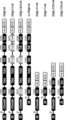
- Figure 1 shows constructs for protein expression.
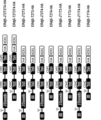
- Figure 1A-1, 1A-2, and 1A-3 show schematic diagrams for the domain structure of the ERdj5 constructs used. The name of each construct is shown in the right of each diagram.
- Black box represents native domains as described, while striped box represents the modified domain, and the white box represent the artificial sequence such as tags.
- the Tx1-Tx4 domains are active thioredoxin domains with CX 1 X 2 C motif, while the Txb1 and Txb2 domains are inactive thioredoxin domains that lost CX 1 X 2 C motif during evolution.
- Each sequence of the CX 1 X 2 C motif including the modified sequence is shown above each box.
- the amino acid sequences KDEL is an ER retention sequence shown in SEQ ID NO: 41.
- the amino acid sequence CSHC is the CX 1 X 2 C motif sequence of native Tx1 domain (SEQ ID NO: 46)
- CPPC is the CX 1 X 2 C motif sequence of native Tx2 domain (SEQ ID NO: 47)
- CHPC is the CX 1 X 2 C motif sequence of native Tx3 domain (SEQ ID NO: 48)
- CGPC is the CX 1 X 2 C motif sequence of native Tx4 domain (SEQ ID NO: 49).
- the amino acid sequence SSHS is the CX 1 X 2 C motif sequence of modified Tx1 domain (SEQ ID NO: 57)
- SPPS is the CX 1 X 2 C motif sequence of modified Tx2 domain
- SHPS is the CX 1 X 2 C motif sequence of modified Tx3 domain
- SGPS is the CX 1 X 2 C motif sequence of modified Tx4 domain (SEQ ID NO: 60).
- Figure 1A-2 is a continuation of Figure 1A-1.
- the amino acid sequences KDEL is an ER retention sequence shown in SEQ ID NO: 41.
- the amino acid sequence CSHC is the CX 1 X 2 C motif sequence of native Tx1 domain (SEQ ID NO: 46)
- CPPC is the CX 1 X 2 C motif sequence of native Tx2 domain (SEQ ID NO: 47)
- CHPC is the CX 1 X 2 C motif sequence of native Tx3 domain (SEQ ID NO: 48)
- CGPC is the CX 1 X 2 C motif sequence of native Tx4 domain (SEQ ID NO: 49).
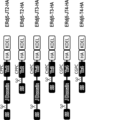
- Figure 1A-3 is a continuation of Figure 1A-3.
- the amino acid sequences KDEL is an ER retention sequence shown in SEQ ID NO: 41.
- the amino acid sequence CPPC is the CX 1 X 2 C motif sequence of native Tx2 domain (SEQ ID NO: 47), CHPC is the CX 1 X 2 C motif sequence of native Tx3 domain (SEQ ID NO: 48), and CGPC is the CX 1 X 2 C motif sequence of native Tx4 domain (SEQ ID NO: 49).
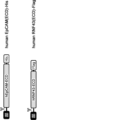
- Figure 1B shows schematic diagrams of the protein substrates used. Numbers correspond to the residue numbers based on the amino acid sequence SEQ ID NO: 42 and SEQ ID NO: 43.
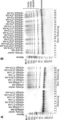
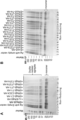
- Figure 2 shows the result obtained by co-expressing ERdj5 constructs with human EpCAM(ECD)-His.Human EpCAM(ECD)-His was co-expressed with ERdj5 variants as described.
- FIG. 4 shows constructs for protein expression.Schematic diagrams for the domain structure of the ERdj5 constructs comprising J-domain from ERdj4 used are shown. The name of each construct is shown in the right of each diagram. Black box represents native domains as described, while white box represents the artificial sequence such as tags.
- the Tx3 and Tx4 domains are active thioredoxin domains with CX 1 X 2 C motif. Each sequence of the CX 1 X 2 C motif is shown above each box.
- the amino acid sequences KDEL is an ER retention sequence shown in SEQ ID NO: 41.
- the amino acid sequence CHPC is the CX 1 X 2 C motif sequence of native Tx3 domain (SEQ ID NO: 48), and CGPC is the CX 1 X 2 C motif sequence of native Tx4 domain (SEQ ID NO: 49).
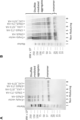
- Figure 5 shows the result obtained by co-expressing ERdj5 constructs comprising J-domain from ERdj4 with human EpCAM(ECD)-His and Human RNF43(ECD)-Flag.
- (A) Human EpCAM(ECD)-His was co-expressed with ERdj5 constructs comprising J-domain from ERdj4 as described. Empty vector was used for control. Conditioned media was analyzed under non-reducing conditions with western blot using anti-His antibody.
- Size of each molecular weight marker is shown to the left of the image showing the bands representing the monomer and disulfide-linked aggregates.
- Human RNF43(ECD)-Flag was co-expressed with ERdj5 constructs comprising J-domain from ERdj4 as described. Empty vector was used for control. Conditioned media was analyzed under non-reducing conditions with western blot using anti-Flag antibody. Size of each molecular weight marker is shown to the left of the image showing the bands representing the monomer and disulfide-linked aggregates.
- the term “reduction” is used to refer to the reduction of one or more disulfide bonds of the protein or antibody.
- the terms “emicizumab reduction” is used interchangeably with the term “emicizumab disulfide bond reduction” and the term “antibody (Ab) reduction” is used interchangeably with the term “antibody (Ab) disulfide bond reduction.”
- reduction or “disulfide bond reduction” are used in the broadest sense and include complete and partial reduction and reduction of some or all of the disulfide bonds, interchain or intrachain, present in a protein such as an antibody.
- protein refers to a sequence of amino acids for which the chain length is sufficient to produce the higher levels of tertiary and/or quaternary structure. This is to distinguish from “peptides" or other small molecular weight drugs that do not have such structure.
- the protein herein will have a molecular weight of at least about 10-20 kDa, preferably at least about 10 kDa.
- proteins encompassed within the definition herein include all mammalian proteins, in particular, therapeutic and diagnostic proteins, such as therapeutic and diagnostic antibodies, and, in general proteins that contain one or more disulfide bonds, including multi-chain polypeptides comprising one or more inter- and/or intrachain disulfide bonds.
- partial protein refers to a part of a protein, or a portion or a fragment, or a region, or a share, or a proportion, or a percentage, or a fraction, or a section, or a segment, or a piece, of a whole or complete protein, and refers to a protein derived from but comprising a shorter amino acid sequence length or having a lower molecular weight than the wild type, or naturally occurring counterpart of the same protein so long as they exhibit the biological activity of the wild type, or naturally occurring counterpart. It is not required that the partial protein has the same degree of biological activity as the full protein.
- the partial protein refers also to a part of a protein that is a biologically functional (definition see below) fragment of a protein.
- the protein of the present disclosure is preferably a modified protein resident in the endoplasmic reticulum (ER), also referred herein as “modified ER resident protein", or “modified ER protein”, and a partial protein thereof, also referred to herein as "modified ER partial protein”.
- ER endoplasmic reticulum
- protein domain is used in the broadest sense herein, and refers to a fragment, or a region, or a portion of the protein's polypeptide chain that is self-stabilizing and that folds independently from the rest of the polypeptide chain.
- therapeutic protein or “therapeutic polypeptide” as used herein, refers to a protein that is used in the treatment of a disease, regardless of its indication or mechanism of action.
- therapeutic antibody refers to an antibody that is used in the treatment of disease. A therapeutic antibody may have various mechanisms of action.
- diagnostic protein refers to a protein that is used in the diagnosis of a disease.
- diagnostic antibody refers to an antibody that is used as a diagnostic reagent for a disease.
- the diagnostic antibody may bind to a target antigen that is specifically associated with, or shows increased expression in, a particular disease.
- the diagnostic antibody may be used, for example, to detect a target in a biological sample from a patient, or in diagnostic imaging of disease sites, such as tumours, in a patient.
- antibody is used in the broadest sense and encompasses various antibody structures, including but not limited to monoclonal antibodies, polyclonal antibodies, multispecific antibodies (e.g., bispecific antibodies), and antibody fragments so long as they exhibit the desired antigen-binding activity.
- antibody fragment refers to a molecule other than an intact antibody that comprises a portion of an intact antibody that binds the antigen to which the intact antibody binds.
- antibody fragments include but are not limited to Fv, Fab, Fab', Fab'-SH, F(ab')2; diabodies; linear antibodies; single-chain antibody molecules (e.g. scFv); and multispecific antibodies formed from antibody fragments.
- a "biologically functional fragment" of a protein comprises only a portion of an intact, or naturally occurring protein, wherein the portion retains at least one, and as many as most or all, of the functions normally associated with that portion when present in an intact, or naturally occurring protein.
- a biologically functional fragment of a PDI protein comprises a thioredoxin domain and thus retains the disulphide reducing ability.
- redox active domain refers to a protein domain, which is a region of a polypeptide chain with a compact three-dimensional configuration that possesses the enzymatic activity to catalyze redox reactions through thiol-disulfide exchange.
- the redox active domain is capable of enzymatic activity to reduce disulfides in proteins.
- the redox active domain comprises a "CX 1 X 2 C" active site motif that catalyzes redox reactions through thiol-disulfide exchanges.
- CX 1 X 2 C used in reference to a motif refers to a site active in reducing disulfide bonds, or an active site comprising disulfide bond reducing activity.
- disulfide bond reducing activity or “reduction in disulfide bonds”, or “reduction in aberrant disulfide bonds” are used herein, in the broadest sense, and include the ability to completely or partially reduce some or all of the disulfide bonds, interchain or intrachain, present in a protein such as an antibody, and further includes disulfide bonds in misfolded proteins or protein aggregates.
- protein misfolding refers to defective or undesirable mis-steps in a protein's conventional folding process, that result in a protein that is unable to assume its native configuration.
- the term also includes all processes that cause a protein in its nascent state to fold into an incorrect configuration, regardless of whether said incorrect configuration remains capable of assuming its native biological function.
- misfolded protein refers to a protein that is not in its native configuration when folded. Such a non-native configuration can be spontaneous, or can be an outcome of external influences, such as cysteine oxidation, defective protein folding surveillance or quality control process, aberrant post-translational modifications, abnormal interaction with another protein such as PrP C -PrP Sc interaction, or from genetic mutations. Consequently, the protein adopts a defective or undesirable configuration, and therefore would likely be unable to exhibit its normal biological activity or expected physiological activity. Often, the misfolded protein has the propensity to form or maintain unwanted associations with other proteins to form aggregates. Such defective or undesirable proteins or protein aggregates may possess different immunogenicity compared to their correctly folded counterparts.
- misfolded protein or a protein aggregate generally comprises a single or multiple intrachain or interchain disulfide bond(s), wherein said disulfide bond is an aberrantly or erroneously formed disulfide bond.
- misfolded protein includes all misfolded forms of a protein, including transient states of a protein, i.e. a protein that is partially unfolded while undergoing the folding process, and includes aggregates during the folding process.
- protein aggregate or “aggregated protein”, may be used interchangeably, and as used herein, refers broadly to a complex or oligomer made up of one or more types of proteins that associate or assemble.
- the association or assembly are typically induced by abnormal or improper non-covalent interactions between the proteins and include, without limitation, intra- or inter-, protein associations or assembly.
- the protein aggregate or aggregated protein is typically characterised by an altered three-dimensional conformation of the complexed protein units with respect to each protein unit and may have low solubility in aqueous solutions.
- a protein aggregate is a complex resulting from an abnormal or undesired interaction of a surface exposed cysteine residue on one protein with another surface exposed cysteine residue on a neighbouring protein (i.e.
- a protein aggregate is a result of a complex made up of the abnormal or undesirable interaction of a cysteine residue and another cysteine residue within the same protein (i.e. intra-protein association).
- the protein aggregate or aggregated protein also includes aggregates resulting from misfolding of proteins.
- aberrant or “erroneous” are used interchangeably, and as used herein, refer to abnormal, unexpected, unpredictable, or undesirable disulfide bond formation, both inter-chain or intra-chain, within a protein, or between proteins, that would otherwise in normal circumstances serve to guide or direct a protein to fold and attain its native configuration or its association or assembly into a complex.
- aberrant or erroneous disulfide bonds therefore erode or decrease the proteins' ability to fold and attain its native configuration or to associate or assemble into a complex, resulting in misfolded proteins or protein aggregates.
- Percent (%) amino acid sequence identity with respect to a reference polypeptide sequence is defined as the percentage of amino acid residues in a candidate sequence that are identical with the amino acid residues in the reference polypeptide sequence, after aligning the sequences and introducing gaps, if necessary, to achieve the maximum percent sequence identity, and not considering any conservative substitutions as part of the sequence identity. Alignment for purposes of determining percent amino acid sequence identity can be achieved in various ways that are within the skill in the art, for instance, using publicly available computer software such as BLAST, BLAST-2, ALIGN or Megalign (DNASTAR) software. Those skilled in the art can determine appropriate parameters for aligning sequences, including any algorithms needed to achieve maximal alignment over the full length of the sequences being compared.
- % amino acid sequence identity values are generated using the sequence comparison computer program ALIGN-2.
- the ALIGN-2 sequence comparison computer program was authored by Genentech, Inc., and the source code has been filed with user documentation in the U.S. Copyright Office, Washington D.C., 20559, where it is registered under U.S. Copyright Registration No. TXU510087.
- the ALIGN-2 program is publicly available from Genentech, Inc., South San Francisco, Calif., or may be compiled from the source code.
- the ALIGN-2 program should be compiled for use on a UNIX operating system, preferably digital UNIX V4.0D. All sequence comparison parameters are set by the ALIGN-2 program and do not vary.
- the % amino acid sequence identity of a given amino acid sequence A to, with, or against a given amino acid sequence B is calculated as follows: 100 times the fraction X/Y where X is the number of amino acid residues scored as identical matches by the sequence alignment program ALIGN-2 in that program's alignment of A and B, and where Y is the total number of amino acid residues in B.
- the % amino acid sequence identity of A to B will not equal the % amino acid sequence identity of B to A.
- all % amino acid sequence identity values used herein are obtained as described in the immediately preceding paragraph using the ALIGN-2 computer program. Those skilled in the art will follow that the preceding paragraphs are mutatis mutandis applicable to nucleotides.
- modified when used in relation to a protein means the introduction of modifications, or changes to the protein, such as, one or more amino acid modifications, wherein modifications include substitutions, insertions, or deletions to a naturally occurring or wildtype protein.
- the modified protein comprises one or more amino acid modifications to a naturally occurring or wildtype protein and comprises an amino acid sequence that is not identical to that of a naturally occurring or wildtype protein.
- transformation of a cellular organism, cell, or cell line with exogenous nucleic acid means introducing exogenous nucleic acid into the target cell so that the exogenous nucleic acid is replicable, either as an extrachromosomal element or by chromosomal integration.
- Transfection of a cell or organism with exogenous nucleic acid refers to the taking up of exogenous nucleic acid, e.g., an expression vector, by the cell or organism whether or not any coding sequences are in fact expressed.
- host cell refers to cells into which exogenous nucleic acid has been introduced, including the progeny of such cells.
- Host cells include “transformants” and “transformed cells,” which include the primary transformed cell and progeny derived therefrom without regard to the number of passages. Progeny may not be completely identical in nucleic acid content to a parent cell, but may contain mutations. Mutant progeny that has the same function or biological activity as screened or selected for in the originally transformed cell are included herein.
- the "host cells” used in the present disclosure generally are prokaryotic or eukaryotic hosts. Typical prokaryotic host cells include various strains of E. coli.
- Typical eukaryotic host cells are mammalian, such as Chinese hamster ovary cells or cells of human origin.
- the introduced nucleic acid sequence may be from the same species as the host cell, of a different species from the host cell, or it may be a hybrid nucleic acid sequence, containing some foreign and some homologous DNA.
- cell-free protein synthesis system refers to in vitro synthesis of polypeptides in a reaction mix comprising cell-free extracts and/or defined reagents.
- the reaction mix comprises (1) template DNA or mRNA encoding the target protein and (2) cell-free extracts or reagents necessary for the synthesis, e.g. ribosomes, uncharged tRNAs, tRNAs charged with unnatural amino acids, polymerases, transcriptional factors, tRNA synthetases, enzyme co-factors, cellular components essential for proper protein folding, etc.
- vector refers to a nucleic acid molecule capable of propagating another nucleic acid to which it is linked.
- the term includes the vector as a self-replicating nucleic acid structure as well as the vector incorporated into the genome of a host cell into which it has been introduced.
- Certain vectors are capable of directing the expression of nucleic acids to which they are operatively linked.
- operatively linked refers to the nucleic acid being placed into a functional relationship with another nucleic acid sequence. Such vectors are referred to herein as "expression vectors.”
- polynucleotide refers to an isolated nucleic acid molecule or construct, e.g. messenger RNA (mRNA), virally-derived RNA, or plasmid DNA (pDNA).
- mRNA messenger RNA
- pDNA virally-derived RNA
- a polynucleotide may comprise a conventional phosphodiester bond or a non-conventional bond (e.g. an amide bond, such as found in peptide nucleic acids (PNA).
- PNA peptide nucleic acids
- nucleic acid molecule refers to any one or more nucleic acid segments, e.g. DNA or RNA fragments, present in a polynucleotide.
- isolated may refer to both proteins, or polypeptides, nucleic acid molecules or polynucleotides.
- isolated when used in reference to nucleic acid molecule or polynucleotide refers to a nucleic acid molecule, DNA or RNA, which has been removed from its native environment.
- a recombinant polynucleotide encoding a polypeptide contained in a vector is considered isolated for the purposes of the present disclosure.
- Further examples of an isolated polynucleotide include recombinant polynucleotides maintained in heterologous host cells or purified (partially or substantially) polynucleotides in solution.
- An isolated polynucleotide includes a polynucleotide molecule contained in cells that ordinarily contain the polynucleotide molecule, but the polynucleotide molecule is present extra chromosomally or at a chromosomal location that is different from its natural chromosomal location.
- Isolated RNA molecules include in vivo or in vitro RNA transcripts of the present disclosure, as well as positive and negative strand forms, and double-stranded forms. Isolated polynucleotides or nucleic acids according to the present disclosure further include such molecules produced synthetically.
- a polynucleotide or a nucleic acid may be or may include a regulatory element such as a promoter, ribosome binding site, or a transcription terminator.
- a regulatory element such as a promoter, ribosome binding site, or a transcription terminator.
- isolated when used in reference to proteins or polypeptides, including antibodies, refers to that which has been identified and separated and/or recovered from a component from its natural environment. Contaminant components of its natural environment are materials that would typically interfere with diagnostic or therapeutic uses of the protein or polypeptide, and may include enzymes, hormones, and other proteinaceous or non-proteinaceous solutes.
- the protein or polypeptide will be purified to homogeneity by one of the methods described below or known to the skilled person, such as for example, SDS-PAGE under non-reducing or reducing conditions.
- a protein or an antibody is purified to greater than 95% or 99% purity as determined by, for example, electrophoretic (e.g., SDS-PAGE, isoelectric focusing (IEF), capillary electrophoresis) or chromatographic (e.g., size exclusion, ion exchange, hydrophobic interaction, or reverse phase).
- electrophoretic e.g., SDS-PAGE, isoelectric focusing (IEF), capillary electrophoresis
- chromatographic e.g., size exclusion, ion exchange, hydrophobic interaction, or reverse phase.
- purified means that a molecule is present in a sample at a concentration of at least 80-90% by weight of the sample in which it is contained.
- the protein, including antibodies, which is purified is preferably essentially pure and desirably essentially homogeneous (i.e. free from contaminating proteins etc.).
- An "essentially pure” protein means a protein composition comprising at least about 90% by weight of the protein, based on total weight of the composition, preferably at least about 95% by weight.
- An "essentially homogeneous” protein means a protein composition comprising at least about 99% by weight of protein, based on total weight of the composition.
- chromatography refers to the process by which a solute of interest in a mixture is separated from other solutes in a mixture as a result of differences in rates at which the individual solutes of the mixture migrate through a stationary medium under the influence of a moving phase, or in bind and elute processes, or in flow-through processes.
- Commonly used chromatographic methods include, without limitation, one or more of affinity chromatography, ion exchange chromatography, hydrophobic interaction, size exclusion, mixed mode (i.e. combination) chromatography and non-affinity chromatography.
- treatment refers to clinical intervention in an attempt to alter the natural course of the individual being treated, and can be performed either for prophylaxis or during the course of clinical pathology.
- Treatment refers to both therapeutic treatment and prophylactic or preventative measures. Desirable effects of treatment include, but are not limited to, preventing occurrence or recurrence of a disease, alleviation of symptoms, diminishment of any direct or indirect pathological consequences of the disease, preventing metastasis, decreasing the rate of disease progression, amelioration or palliation of the disease state, and remission or improved prognosis.
- antibodies of the present disclosure are used to delay development of a disease or to slow the progression of a disease.
- a “disease or disorder” as used herein broadly refers to any condition that would benefit from treatment with a therapeutic protein. This includes chronic and acute disorders or diseases including those pathological conditions which predisposes the mammal to the disease or disorder in question.
- disorders to be treated herein include protein misfolding diseases, also known as proteopathies, or proteinophathies, or protein conformational disorders.
- an "individual” or “subject” is a mammal.
- “Mammal” for purposes of treatment refers to any animal classified as a mammal, include, but are not limited to, domesticated animals (e.g., cows, sheep, cats, dogs, and horses), primates (e.g., humans and non-human primates such as monkeys), rabbits, and rodents (e.g., mice and rats).
- domesticated animals e.g., cows, sheep, cats, dogs, and horses
- primates e.g., humans and non-human primates such as monkeys
- rabbits e.g., mice and rats
- rodents e.g., mice and rats
- composition refers to a preparation which is in such form as to permit the biological activity of an active ingredient contained therein to be effective, and which contains no additional components which are unacceptably toxic to a subject to which the formulation would be administered.
- a “pharmaceutically acceptable carrier” refers to an ingredient in a pharmaceutical composition, other than an active ingredient, which is nontoxic to a subject.
- a pharmaceutically acceptable carrier includes, but is not limited to, a buffer, excipient, stabilizer, or preservative.
- BiP helps maintain newly synthesised proteins that enter the ER in a state conducive for protein folding and assembly. While molecular chaperones work to promote proper folding, there is also another team of proteins dedicated to remove proteins that nonetheless become misfolded. In the case of aberrantly folded proteins, BiP helps to facilitate their translocation out of the ER to be degraded subsequently by proteasomes. Hence, this process occurring in the ER has often been labelled as the quality control process which is responsible for the verification of proper protein folding, sorting the properly folded proteins for transportation to the Golgi complex for maturation or the misfolded proteins to the proteasome for degradation (NPL 3).
- the endoplasmic reticulum associated protein degradation (ERAD) pathway is a process where misfolded proteins of the ER are designated for degradation by proteasomes. It has been suggested that when retrotranslocating the terminally misfolded protein from the ER lumen to the cytosol for degradation, at least partial unfolding of the protein, including disulfide bond reduction is required (NPL 4).
- ERdj5 is known to have the disulfide bond reducing activity and has been suggested for its role in the ERAD pathway (NPL 5). ERdj5 also belongs to the ERdj family protein which has a unique domain named J-domain for interaction with BiP.
- ERdj3 ERdj4, and ERdj5 are said to be involved cooperatively through interaction with the BiP complex in deciding whether to further fold or give up and degrade the nascent proteins in the ER.
- J-domain relates to a domain being capable of binding to BiP.
- the J-domain of the present invention may be a J-domain of a ERdj protein or may be derived from such a domain.
- ERdj3 (UniProtKB Accession No. Q9UBS4-1) of SEQ ID NO: 1, comprises from the N- to C-terminus, a J-domain and a flexible Gly/Phe-rich domain (G/F), a bifurcated substrate binding domain I (Ia and Ib), a Cys-rich domain II, and a C-terminal dimerization domain III (NPL 6). It has been reported that ERdj3 is a co-chaperone that binds directly to unfolded proteins that are substrates for ERAD and nascent unfolded proteins via interactions with BiP, but dissociates from the BiP-unfolded protein complex before folding is complete (NPL 7).
- ERdj4 (UniProtKB Accession No. Q9UBS3-1) of SEQ ID NO: 2, comprises from the N- to C-terminus, a J-domain and a targeting domain (NPL 8). It has been postulated that the ERdj4 is also involved in the ERAD pathway (NPL 9).
- ERdj5 (UniProtKB Accession No. Q8IXB1-1) of SEQ ID NO: 3 comprises, from the N- to C-terminus, a J-domain that has the ability to bind BiP and four tandemly positioned thioredoxin (Tx) domains, i.e. redox active domains, Tx1, Tx2, Tx3 and Tx4, comprising CX 1 X 2 C motifs.
- the ERdj5 protein is represented from the N- to C-terminus as follows: J-domain, Tx1 domain, Txb1 domain, Txb2 domain; Tx2 domain, Tx3 domain; and Tx4 domain.
- ERdj5 (Q8IXB1-2) of SEQ ID NO: 4 and ERdj5 (Q8IXB1-3) of SEQ ID NO: 5 are isoforms of ERdj5 (Q8IXB1-1).
- reference to a Tx domain of an ERdj5 protein includes a reference to any of the three isoforms of ERdj5, and additionally to ERdj5 mouse of SEQ ID NO: 6, and ERdj5 rat of SEQ ID NO: 7, due to the high sequence homology of the Tx domains across the isoforms and species.
- reference to a Tx domain of an ERdj5 protein refers to a reference to ERdj5 (Q8IXB1-1) of SEQ ID NO: 3.
- the Tx enzyme system composed of Tx, thioredoxin reductase (TxR) and NADPH, is a hydrogen donor system for reduction of disulfide bonds in proteins.
- Tx is a small monomeric protein with a CX 1 X 2 C active site motif that catalyses many redox reactions through thiol-disulfide exchange.
- the oxidized Tx can be reduced by NADPH via TxR.
- the reduced Tx is then able to catalyse the reduction of disulfides in proteins.
- Each of the four thioredoxin domains of ERdj5 comprises a different CX 1 X 2 C active site motif, namely, CSHC (Tx1, SEQ ID NO: 46), CPPC (Tx2, SEQ ID NO: 47), CHPC (Tx3, SEQ ID NO: 48), CGPC (Tx4, SEQ ID NO: 49).
- CSHC Tx1, SEQ ID NO: 46
- CPPC Tx2, SEQ ID NO: 47
- CHPC Tx3, SEQ ID NO: 48
- CGPC Tx4, SEQ ID NO: 49.
- ERdj5 wildtype, or mutant ERdj5 comprising the full-length protein with a single or double CX 1 X 2 C motif(s) active and rest silenced, promotes the degradation of misfolded proteins in the expressing cell (PTL 1).
- modified ER resident proteins, or partial proteins comprising at least one redox active domain comprising a CX 1 X 2 C motif, wherein the CX 1 X 2 C motif is selected or derived from one of the PDI family member's Tx domain, preferably selected or derived from an ERdj5 Tx domain, possesses disulfide bond reducing activity whose level of activity is similar or in some instances superior, to wildtype (i.e. full length) ERdj5 protein of SEQ ID NO: 3.
- the present disclosure relates to the provision of such proteins capable of providing a disulfide bond reducing activity that is similar or superior to the wildtype ERdj5 of SEQ ID NO: 3 and uses thereof.
- the present disclosure relates inter alia to a modified endoplasmic reticulum (ER) resident protein, or partial protein, capable of providing a disulfide bond reducing activity that is similar or superior to the wildtype ERdj5 protein (SEQ ID NO: 3) and uses thereof.
- Uses of the protein include promotion of the reduction of aberrant disulfide bonds in a protein, promotion of the decrease of misfolded proteins or protein aggregates, or to decrease the share of misfolded proteins or promotion of degradation of misfolded proteins.
- the present disclosure also relates to methods of promoting the reduction of aberrant disulfide bonds in a protein, promoting the decrease of misfolded proteins or protein aggregates, or decreasing the share of misfolded proteins or promoting degradation of misfolded proteins comprising expressing the protein in the presence of the modified ER resident protein, or partial protein.
- the present disclosure relates to a modified endoplasmic reticulum (ER) resident protein, or a modified ER resident partial protein.
- the modified ER resident partial protein of the present disclosure is a protein wherein one or more domain(s) of a corresponding unmodified ER resident protein, i.e. a naturally occurring, or wild type, or full-length ER resident protein is/are deleted, truncated or removed.
- the resultant protein is a partial protein or incomplete protein, due to the deletion, truncation or removal of certain domains from the naturally occurring, or wild type, or full-length ER resident protein, and comprises a shorter amino acid sequence length, or a lower molecular weight than a corresponding unmodified ER protein, i.e.
- the one or more domain(s) may occur in the (i) N-terminal region, (ii) C-terminal region, (iii) combination of N- and C-terminal regions, (iv) one or more region(s) between the N- and C-terminal regions while retaining both N- and C-terminal regions, or (v) any combination(s) of (i) to (iv).
- the one or more domain(s) that is deleted from the naturally occurring, or wild type, or full-length ER resident protein may be any domain in the broadest sense that is encompassed by the term "protein domain" as discussed above.
- the present disclosure includes a modified ER resident partial protein wherein more than one domain is deleted, and wherein the domains that have been deleted are adjacent to each other.
- the present disclosure also includes a modified ER resident partial protein wherein more than one domain is deleted, and wherein the domains are not adjacent to each other.
- the modified ER resident partial protein is one where one or more domains has or have been deleted from the amino-terminal (or N-terminal) end of a naturally occurring, or wild type, or full-length ER resident protein. In one embodiment, the modified ER resident partial protein is one where one or more domains has or have been deleted from the carboxyl-terminal (or C-terminal) end of a naturally occurring, or wild type, or full-length ER resident protein. In one embodiment, the modified ER resident partial protein is one where one or more domains has or have been deleted from both the amino-terminal (or N-terminal) and the carboxyl-terminal (or C-terminal) end of a naturally occurring, or wild type, or full-length ER resident protein.
- the modified ER resident partial protein is one where one or more domains has or have been deleted from a region inbetween the amino-terminal (or N-terminal) and the carboxyl-terminal (or C-terminal) end, while retaining both the amino-terminal (or N-terminal) and the carboxyl-terminal (or C-terminal) ends of a naturally occurring, or wild type, or full-length ER resident protein.
- the modified ER resident partial protein is a result of the deletion of a combination of regions selected from the amino-terminal (or N-terminal) region, the carboxyl-terminal (or C-terminal) region, both the amino- and carboxyl- (N- and C-terminal) regions, and one or more region(s) between the amino- and carboxyl- (N- and C-terminal) regions while retaining both amino- and carboxyl- (N- and C-terminal) regions.
- the modified ER resident partial protein comprises at least one but not more than two redox active domains, wherein each of the redox active domains are identical, or wherein each of the redox active domains are different.
- the protein comprises at least one but not more than three redox active domains, wherein each of the redox active domains are identical, or wherein each of the redox active domains are different, or wherein the first and second redox active domains from the N-terminus of the protein is identical to each other, or wherein the second and third redox active domains from the N-terminus of the protein is identical to each other, or wherein the first and third redox active domains from the N-terminus of the protein is identical to each other.
- the modified partial protein comprises two redox active domains, wherein each of the redox active domains are identical, or wherein each of the redox active domains are different from each other.
- the modified partial protein comprises three redox active domains, wherein all three redox active domains are identical, or wherein all three redox active domains are different, or wherein the first and second redox active domains from the N-terminus of the protein is identical to each other, or wherein the second and third redox active domains from the N-terminus of the protein is identical to each other, or wherein the first and third redox active domains from the N-terminus of the protein is identical to each other.
- the modified partial protein consists of two redox active domains, wherein each of the redox active domains are identical, or wherein each of the redox active domains are different from each other. In one embodiment, the modified partial protein consists of three redox active domains, wherein all three redox active domains are identical, or wherein all three redox active domains are different, or wherein the first and second redox active domains from the N-terminus of the protein is identical to each other, or wherein the second and third redox active domains from the N-terminus of the protein is identical to each other, or wherein the first and third redox active domains from the N-terminus of the protein is identical to each other.
- the modified ER resident protein is of a longer amino acid sequence length or a larger molecular weight than a corresponding unmodified ER protein, i.e. the naturally occurring, or wild type, or full-length ER resident protein.
- the protein comprises more than three redox active domains.
- the protein comprises more than three redox active domains and less than eight redox active domains, wherein each of, or more than one of the redox active domains are identical, or wherein each of, or more than one of the redox active domains are different, or wherein two, three or four adjacent redox active domains are identical, and wherein said two, three or four adjacent redox active domains are repeated in tandem.
- the modified ER resident protein comprises a modified ER resident partial protein, wherein one or more domain(s) of a corresponding unmodified ER resident protein, i.e. a naturally occurring, or wild type, or full-length ER resident protein is/are deleted, truncated or removed, and additional redox active domains. Accordingly, the modified ER resident protein incorporates the features of the modified ER resident partial protein as described in the present disclosure.
- the protein of the present invention and / or disclosure may further comprise a J-domain selected from or derived from the J-domain of an ERdj5 of SEQ ID NO: 3, the J-domain of an ERdj4 of SEQ ID NO: 2, or the J-domain of an ERdj3 of SEQ ID NO: 1.
- the modified ER protein or partial ER protein in the present disclosure further comprises the J-domain, wherein the J-domain is located, without limitation thereto, at a N-terminus region, C-terminus region or in a region between the N-terminus and the C-terminus regions, with respect to the at least one redox active domain or the at least one ERdj5 Tx domain.
- the modified ER resident partial protein comprises at least one redox active domain.
- the redox active domain comprises a CX 1 X 2 C motif, wherein the CX 1 X 2 C motif is selected or derived from a CX 1 X 2 C motif of a thioredoxin (Tx) domain of a protein disulfide isomerase (PDI) family member protein.
- Tx thioredoxin
- PDI protein disulfide isomerase
- the redox active domain consists of a CX 1 X 2 C motif, wherein the CX 1 X 2 C motif is selected or derived from a CX 1 X 2 C motif of a thioredoxin (Tx) domain of a protein disulfide isomerase (PDI) family member protein.
- Tx thioredoxin
- PDI protein disulfide isomerase
- the PDI family member protein is selected from the group consisting of: DNAJC10 (ERdj5), AGR2, AGR3, TXNDC12, CASQ1, CASQ2, ERP27, ERP29, ERP44, P4HB, PDIA2, PDIA3, PDIA4, PDIA5, PDIA6, PDILT, TMX1, TMX2, TMX3, TMX4 or TXNDC5 (EndoPDI).
- the CX 1 X 2 C motif is selected or derived from a CX 1 X 2 C motif of a Tx domain of a ERdj5 protein of SEQ ID NO: 3.
- the redox active domain comprises a CX 1 X 2 C motif, wherein each of X 1 and X 2 is selected from amino acids selected from the group consisting of H, S, G, P, R, D, T, Q, A, M, F, Y, C, E, I, K, L, N, V, or W.
- the redox active domain comprises a CX 1 X 2 C motif, wherein X 1 is selected from H, S, G, P, R, T, or Q, and X 2 is selected from H, P, S, A, M, F, or Y.
- the redox active domain comprises a CX 1 X 2 C motif, wherein X 1 is selected from H, S, G, or P, and X 2 is selected from H, or P.
- the selected or derived CX 1 X 2 C motif is selected from the group consisting of the following: (a) CSHC (SEQ ID NO: 46); (b) CPPC (SEQ ID NO: 47); (c) CHPC (SEQ ID NO: 48); (d) CGPC (SEQ ID NO: 49); (e) CGAC (SEQ ID NO: 50); (f) CGHC (SEQ ID NO: 51); (g) CTHC (SEQ ID NO: 52); (h) CSMC (SEQ ID NO: 53); (i) CPHC (SEQ ID NO: 54); (j) CPAC (SEQ ID NO: 55); and (k) CPSC (SEQ ID NO: 56).
- the individual letters in (a) to (k) denote amino acids in the single letter code.
- the selection of amino acid of X 1 and X 2 is not particularly limited so long as the redox active domain is capable of functioning as a redox active domain.
- the term "derived from”, in its broadest sense, means that the respective peptide, protein, domain or motif comprises amino acids from the peptide, protein, domain or motif it is derived from, but wherein some amino acids may have been modified, replaced or removed.
- the term "derived from” means that the respective peptide, protein, domain or motif has a sequence homology of 70 %- 99 % to the peptide, protein, domain or motif it is derived from, in particular 70, 71, 72, 73, 74, 75, 76, 77, 78, 79, 80, 81, 82, 83, 84, 85, 86, 87, 88, 89, 90, 91, 92, 93, 94, 95, 96, 97 98, or 99 %.
- the activity of such a redox active domain can be measured by its disulfide bond reducing activity.
- the disulfide bond reducing activity can be confirmed by comparing the amount of protein aggregates or misfolded proteins when a desired protein is expressed in the presence of the modified ER protein, or partial protein, of the present disclosure compared to the same protein when it is expressed in the absence of said modified ER protein.
- a decrease in misfolded proteins or protein aggregates refers to a decrease or reduction in the amount, a lesser amount or lower amount of misfolded proteins or protein aggregates, when a desired protein is expressed in the presence of the modified ER protein, or partial protein, of the present disclosure compared to the same desired protein when it is expressed in the absence of said modified ER protein, or partial protein.
- the term also encompasses a lower propensity or tendency of a protein to misfold, or a lesser frequency with which a protein misfolds, or a lesser likelihood to form protein aggregates.
- the amount of protein aggregates or misfolded proteins when a desired protein is expressed in the presence of the modified ER protein, or partial protein, of the present disclosure is at least 10%, or 20%, or 30%, or 40%, or 50%, or 60%, or 70%, or 80%, or 90%, or 91%, or 92%, or 93%, or 94%, or 95%, or 96%, or 97%, or 98%, or 99%, or slightly lesser than 100% compared to the same desired protein when it is expressed in the absence of said modified ER protein, or partial protein.
- the difference in amount may be of any degree, as long as the amount of misfolded proteins or protein aggregates when a desired protein is expressed in the presence of the modified ER protein, or partial protein, of the present disclosure compared to the same protein when it is expressed in the absence of said modified ER protein is lower or less in the former than in the latter.
- the decrease in misfolded protein or decrease in protein aggregates is directly proportional to the disulfide bond reducing activity of the modified ER protein, i.e. the greater the decrease in misfolded protein or protein aggregates, the higher the disulfide bond reducing activity.
- the decrease in misfolded proteins or protein aggregates may be expressed in other comparative units, e.g. fold changes, or as suitably employed by the skilled person.
- the decrease may also be presented in other manners suitable for the comparison of the amount of misfolded proteins or protein aggregates when a desired protein is expressed in the presence of the modified ER protein, or partial protein, of the present disclosure compared to the same protein when it is expressed in the absence of said modified ER protein.
- the decrease in misfolded proteins or protein aggregates can be assayed using various methods known in the art, such as for example, gel electrophoresis, sodium dodecyl sulphate-polyacrylamide gel electrophoresis (SDS-PAGE), western blotting, immunoblotting, silver staining and commassie blue staining.
- the decrease in misfolded proteins or protein aggregates is assayed using SDS-PAGE followed by western blotting as described in Examples.
- any suitable biomolecular assays known to the skilled person capable of measuring or comparing the decrease in misfolded proteins or protein aggregates including assays capable of measuring or comparing protein size, such as for example, size exclusion chromatography (SEC), size exclusion chromatography high performance liquid chromatography (SEC-HPLC), analytical ultracentrifugation (AUC), multi-angle light scattering size exclusion chromatography (MALS-SEC), dynamic light scattering (DLS), and nanoparticle tracking analysis (NTA) are considered to be included within the scope of the present disclosure and may be suitably employed by the skilled person.
- SEC size exclusion chromatography
- SEC-HPLC size exclusion chromatography high performance liquid chromatography
- AUC analytical ultracentrifugation
- MALS-SEC multi-angle light scattering size exclusion chromatography
- DLS dynamic light scattering
- NTA nanoparticle tracking analysis
- the modified ER resident partial protein is represented, from the N-terminus to the C-terminus, by the following general formula (I): J1-L1-R1-L2-R2-L3-R3 (I), wherein, J1 is the J-domain as defined above, or wherein J1 is optionally absent; and each of R1, R2 and R3 is the redox active domain as defined above, and wherein any of J1, R2 and/or R3 may be/is absent, and wherein each of L1, L2 and L3 is a linker and/or may be/is absent.
- the modified ER resident partial protein is represented, from the N-terminus to the C-terminus, by the following general formula (I): J1-L1-R1-L2-R2-L3-R3 (I), wherein each of L1, L2 and L3 is a linker and/or may be/is absent, and wherein, (i) J1 is selected from a J-domain of an ERdj5 (SEQ ID NO: 3), a J-domain of an ERdj4 (SEQ ID NO: 2), or a J-domain of an ERdj3 (SEQ ID NO: 1), or wherein J1 is optionally absent; and (ii) Each of R1, R2 or R3 is a redox active domain comprising a CX 1 X 2 C motif, wherein each of X 1 and X 2 is selected from H, S, G, P, R, D, T, Q, A, M, F, Y, C, E, I, K, L, N, V, or W
- the modified ER resident partial protein is represented, from the N-terminus to the C-terminus, by the general formula (III): J1-L1-R1-L2-R2 (III), wherein each of L1, and L2 is a linker and/or may be/is absent, and wherein, (i) J1 is selected from a J-domain of an ERdj5 (SEQ ID NO: 3), a J-domain of an ERdj4 (SEQ ID NO: 2), or a J-domain of an ERdj3 (SEQ ID NO: 1), or wherein J1 is optionally absent; and (ii) Each of R1 and R2 is a redox active domain comprising a CX 1 X 2 C motif, wherein each of X 1 and X 2 is selected from H, S, G, P, R, D, T, Q, A, M, F, Y, C, E, I, K, L, N, V, or W.
- the modified ER resident partial protein is represented, from the N-terminus to the C-terminus, by the general formula (IV): J1-L1-R1 (IV), wherein L1 is a linker and/or may be/is absent, and wherein, (i) J1 is selected from a J-domain of an ERdj5 (SEQ ID NO: 3), a J-domain of an ERdj4 (SEQ ID NO: 2), or a J-domain of an ERdj3 (SEQ ID NO: 1), or wherein J1 is optionally absent; and (ii) R1 is a redox active domain comprising a CX 1 X 2 C motif, wherein each of X 1 and X 2 is selected from H, S, G, P, R, D, T, Q, A, M, F, Y, C, E, I, K, L, N, V, or W.
- J1-L1-R1 IV
- L1 is a linker and/or may be/is
- the modified ER resident protein or partial protein is represented, from the N-terminus to the C-terminus, by the following general formula (II-1): J1-L1-R1-L2-R2-L3-R3-L4-R4-L5-R5-L6-R6-L7-R7-L8-R8 (II-1), wherein each of L1, L2, L3, L4, L5, L6, L7, and L8 is a linker and/or may be/is absent, and wherein, J1 is the J-domain as defined above, or wherein J1 is optionally absent; and each of R1, R2, R3, R4, R5, R6, R7 and R8 is the redox active domain as defined above, and wherein any of J1, R2, R3, R4, R5, R6, R7 and/or R8 may be/is absent.
- II-1 J1-L1-R1-L2-R2-L3-R3-L4-R4-L5-R5-L6-R6-L
- the modified ER resident protein or partial protein is represented, from the N-terminus to the C-terminus, by the following general formula (V): J1-L1-R1-L2-R2-L3-R3-L4-R4-L5-R5-L6-R6-L7-R7-L8-R8 (V), wherein each of L1, L2, L3, L4, L5, L6, L7, and L8 is a linker and/or may be/is absent, and wherein, J1 is the J-domain as defined above, or wherein J1 is optionally absent; and each of R1, R2, R3, R4, R5, R6, R7 and R8 is the redox active domain as defined above, and wherein R5, R6, R7 and/or R8 may be/is absent.
- V general formula
- the modified ER resident protein or partial protein is represented, from the N-terminus to the C-terminus, by the general formula (VI): J1-L1-R1-L2-R2-L3-R3-L4-R4 (VI), wherein each of L1, L2, L3 and L4 is a linker and/or may be/is absent, and wherein, (i) J1 is selected from a J-domain of an ERdj5 (SEQ ID NO: 3), a J-domain of an ERdj4 (SEQ ID NO: 2), or a J-domain of an ERdj3 (SEQ ID NO: 1), or wherein J1 is optionally absent; and (ii) Each of R1, R2, R3, or R4 is a redox active domain comprising a CX 1 X 2 C motif, wherein each of X 1 and X 2 is selected from H, S, G, P, R, D, T, Q, A, M, F, Y, C, E, I
- the modified ER resident protein is represented, from the N-terminus to the C-terminus, by the general formula (VII): J1-L1-R1-L2-R2-L3-R3-L4-R4-L5-R5 (VII), Wherein each of L1, L2, L3, L4 and L5 is a linker and/or may be/is absent, and wherein, (i) J1 is selected from a J-domain of an ERdj5 (SEQ ID NO: 3), a J-domain of an ERdj4 (SEQ ID NO: 2), or a J-domain of an ERdj3 (SEQ ID NO: 1), or wherein J1 is optionally absent; and (ii) Each of R1, R2, R3, R4, or R5 is a redox active domain comprising a CX 1 X 2 C motif, wherein each of X 1 and X 2 is selected from H, S, G, P, R, D, T, Q, A, M, F
- the modified ER resident protein is represented, from the N-terminus to the C-terminus, by the general formula (VIII): J1-L1-R1-L2-R2-L3-R3-L4-R4-L5-R5-L6-R6 (VIII), wherein each of L1, L2, L3, L4, L5 and L6 is a linker and/or may be/is absent, and wherein, (i) J1 is selected from a J-domain of an ERdj5 (SEQ ID NO: 3), a J-domain of an ERdj4 (SEQ ID NO: 2), or a J-domain of an ERdj3 (SEQ ID NO: 1), or wherein J1 is optionally absent; and (ii) Each of R1, R2, R3, R4, R5, or R6 is a redox active domain comprising a CX 1 X 2 C motif, wherein each of X 1 and X 2 is selected from H, S, G, P, R, D
- the modified ER resident protein is represented, from the N-terminus to the C-terminus, by the general formula (IX): J1-L1-R1-L2-R2-L3-R3-L4-R4-L5-R5-L6-R6-L7-R7 (IX), wherein each of L1, L2, L3, L4, L5, L6 and L7 is a linker and/or may be/is absent, and wherein, (i) J1 is selected from a J-domain of an ERdj5 (SEQ ID NO: 3), a J-domain of an ERdj4 (SEQ ID NO: 2), or a J-domain of an ERdj3 (SEQ ID NO: 1), or wherein J1 is optionally absent; and (ii) Each of R1, R2, R3, R4, R5, R6, or R7 is a redox active domain comprising a CX 1 X 2 C motif, wherein each of X 1 and X 2 is selected from H
- the modified ER resident protein is represented, from the N-terminus to the C-terminus, by the general formula (X): J1-L1-R1-L2-R2-L3-R3-L4-R4-L5-R5-L6-R6-L7-R7-L8-R8 (X), wherein each of L1, L2, L3, L4, L5, L6, L7, and L8 is a linker and/or may be/is absent, and wherein, (i) J1 is selected from a J-domain of an ERdj5 (SEQ ID NO: 3), a J-domain of an ERdj4 (SEQ ID NO: 2), or a J-domain of an ERdj3 (SEQ ID NO: 1), or wherein J1 is optionally absent; and (ii) Each of R1, R2, R3, R4, R5, R6, R7, or R8 is a redox active domain comprising a CX 1 X 2 C motif, wherein each of
- the modified ER resident partial protein consists of said domains and linkers.
- the J and/ or the R domains may be separated by a linker.
- the domains may be linked by a peptide bond, i.e. the linker may be absent.
- a "linker” as used herein may be any molecule which is suitable for connecting peptide domains, preferably without substantially affecting the functional activity of the domains in the protein or the protein itself (for example without affecting the functional activity of the domains or the protein for more than 10% or 5%) or without substantially affecting the structural formation of the redox active domains in the final assembly of the protein.
- the linker may be an organic molecule, in particular a polymeric organic molecule.
- the linker may be an amino acid, an oligopeptide with a length of 2-10 amino acids or a polypeptide with a length greater than 10 amino acids, possibly 10-20 amino acids.
- the protein as disclosed herein may contain further amino acids, preferably 1-5 amino acids.
- said amino acids may not substantially affect the functional activity of the domains in the protein or the protein itself (for example without affecting the functional activity of the domains or the protein for more than 10% or 5%) or may not substantially affect the structural formation of the redox active domains in the final assembly of the protein.
- each of X 1 and X 2 of the CX 1 X 2 C motif of each of R1 to R8 of general formulas (I) to (X) is selected from H, S, G, P, R, D, T, Q, A, M, F or Y.
- X 1 is selected from H, S, G, P, R, T, or Q
- X 2 is selected from H, P, S, A, M, F, or Y.
- X 1 is selected from H, S, G, or P
- X 2 is selected from H, or P.
- the CX 1 X 2 C motif of each of R1, R2 and/or R3 of general formulas (I), (II), (II-1), (III), (IV), (V), (VI), (VII), (VIII), (IX) or (X) is selected from the group consisting of the following: (a) CSHC (SEQ ID NO: 46); (b) CPPC (SEQ ID NO: 47); (c) CHPC (SEQ ID NO: 48); (d) CGPC (SEQ ID NO: 49); (e) CGAC (SEQ ID NO: 50); (f) CGHC (SEQ ID NO: 51); (g) CTHC (SEQ ID NO: 52); (h) CSMC (SEQ ID NO: 53); (i) CPHC (SEQ ID NO: 54); (j) CPAC (SEQ ID NO: 55); and (k) CPSC (SEQ ID NO: 56).
- the single letter above in (a) to (k) denote amino acids in the single letter code.
- each of R1, R2 and R3 is identical, or each of R1, R2 and R3 is different, or wherein R1 and R2 is identical, or wherein R2 and R3 is identical, or wherein R1 and R3 is identical.
- R1 and R2 are identical, or R1 and R2 are different.
- each of R1, R2, R3, R4, R5, R6, R7 and R8 is identical, or each of R1, R2, R3, R4, R5, R6, R7 and R8 is different, or more than one of R1, R2, R3, R4, R5, R6, R7 and R8 is identical, or more than one of R1, R2, R3, R4, R5, R6, R7 and R8 is different.
- more than two, or more than three, or more than four, or more than five or more than six, or more than seven of R1, R2, R3, R4, R5, R6, R7 and R8 are identical.
- the modified ER resident protein may be represented by J1-R1-R2-R1-R2-R1-R2-R1-R2R1-R2R3-R1-R2-R3-R4-R5, or J1-R1-R2-R3-R4-R5-R4-R5, or J1-R1-R2-R1-R2-R3-R4-R5-R6, or J1-R1-R2-R1-R2-R3-R4-R1-R2, or J1-R1-R2-R1-R2-R1-R2-R3-R4, or J1-R1-R2-R3-R1-R2-R3, or J1-R1-R2-R3-R4-R1-R2-R
- each of R1, R2, R3, R4, R5, R6, R7 or R8 is selected or derived from a Tx1 domain, a Tx2 domain, a Tx3 domain, or a Tx4 domain of an ERdj5 protein of SEQ ID NO: 3.
- Each of a Tx1-derived, Tx2-derived, Tx3-derived, or Tx4-derived domain of ERdj5 protein of SEQ ID NO: 3 comprises one or more amino acid modification(s) to a corresponding Tx1 domain, Tx2 domain, Tx3 domain, or Tx4 domain of the ERdj5 protein of SEQ ID NO: 3.
- Each of a Tx1-derived domain, or a Tx2-derived domain, or a Tx3-derived domain, or a Tx4-derived domain has preferably substantially the same disulfide reducing activity as its corresponding Tx1, Tx2, Tx3, or Tx4 domain of the ERdj5 protein of SEQ ID NO: 3.
- each of R1, R2 or R3 of general formula (I), to (X) is selected or derived from a Tx1 domain, a Tx2 domain, a Tx3 domain, or a Tx4 domain of an ERdj5 protein of SEQ ID NO: 3, and wherein, R1-R2-R3 is selected from the groups (i) to (xxix) consisting of the following: (i) R1 is a Tx3 domain, R2 is a Tx4 domain and R3 is absent; (ii) R1 is a Tx4 domain, R2 is a Tx3 domain and R3 is absent; (iii) R1 is a Tx2 domain, R2 is a Tx3 domain and R3 is absent; (iv) R1 is a Tx3 domain, R2 is a Txx3 domain, R2 is a Txx3 domain, R2 is a Tx3 domain and R3 is absent; (iv) R1 is a Tx3 domain, R2 is
- a "Tx-derived domain” is a thioredoxin domain derived or modified from a corresponding naturally occurring, or wild-type thioredoxin domain, wherein one or more amino acid modification(s) has been performed on said naturally occurring, or wild-type thioredoxin domain but said modifications do not alter or affect the function of the derived domain to catalyze the reduction of disulfides in proteins, for example, wherein the one or more amino acid modification(s) is/are performed in a region of the naturally occurring, or wild-type thioredoxin domain excluding its CX 1 X 2 C active site motif.
- amino acid residues that may be selected for modification include, but are not limited to, any amino acid residues or combination of amino acid residues residing in the naturally occurring, or wild-type thioredoxin domain other than the CX 1 X 2 C active site motif.
- the number of amino acid modifications comprised in a Tx-derived domain is not particularly limited so long as the Tx-derived domain retains substantially the same disulfide reducing activity as the corresponding naturally occurring, or wild-type thioredoxin domain from which it was derived.
- the Tx-derived domain in the present disclosure comprises an amino acid sequence that is not identical to the naturally occurring, or wild-type thioredoxin domain.
- the Tx-derived domain comprises an amino acid sequence that is at least 50%, 60%, 70%, 80%, 90%, 95%, 96%, 97%, 98%, 99%, 99.1%, 99.2%, 99.3%, 99.4%, 99.5%, 99.6% 99.7%, 99.8% or 99.9% identical to that of the naturally occurring, or wild-type thioredoxin domain.
- the Tx-derived domain is selected from the group consisting of the following: a) an amino acid sequence that is at least 50%, 60%, 70%, 80%, 90%, 95%, 96%, 97%, 98%, 99% identical to SEQ ID NO: 8; b) an amino acid sequence that is at least 50%, 60%, 70%, 80%, 90%, 95%, 96%, 97%, 98%, 99% identical to SEQ ID NO: 9; c) an amino acid sequence that is at least 50%, 60%, 70%, 80%, 90%, 95%, 96%, 97%, 98%, 99% identical to SEQ ID NO: 10; and d) an amino acid sequence that is at least 50%, 60%, 70%, 80%, 90%, 95%, 96%, 97%, 98%, 99% identical to SEQ ID NO: 11.
- the Tx1-derived domain may have the sequence as shown in SEQ ID NO: 12
- the Tx2-derived domain has the sequence as shown in SEQ ID NO: 13
- the Tx3-derived domain may have the sequence as shown in SEQ ID NO: 14
- / or the Tx4-derived domain may have the sequence as shown in SEQ ID NO: 15.
- the Tx-derived domain is selected from SEQ ID NO: 12, SEQ ID NO: 13, SEQ ID NO: 14, or SEQ ID NO: 15.
- the modified ER resident partial protein is a PDI family member protein wherein one or more domain(s) of a naturally occurring, or wild type, or full-length PDI protein is/are deleted, wherein the PDI family member protein is selected from the group consisting of: DNAJC10 (ERdj5), AGR2, AGR3, TXNDC12, CASQ1, CASQ2, ERP27, ERP29, ERP44, P4HB, PDIA2, PDIA3, PDIA4, PDIA5, PDIA6, PDILT, TMX1, TMX2, TMX3, TMX4 or TXNDC5 (EndoPDI).
- the modified ER resident partial protein is an ERdj5 protein, and wherein the one or more deleted domain(s) is selected from the group consisting of J-domain, Tx1, Txb1, Txb2, Tx2, Tx3 or Tx4 of ERdj5 of SEQ ID NO: 3.
- the ERdj5 protein is selected from the group consisting of SEQ ID NO: 3, SEQ ID NO: 4, SEQ ID NO: 5, SEQ ID NO: 6, or SEQ ID NO: 7.
- the protein comprises or consists of one of the following (a) to (u): a) an amino acid sequence that is at least 70%, 80%, or 90% or 100% identical to SEQ ID NO: 19; b) an amino acid sequence that is at least 70%, 80%, or 90% or 100% identical to SEQ ID NO: 20; c) an amino acid sequence that is at least 70%, 80%, or 90% or 100% identical to SEQ ID NO: 21; d) an amino acid sequence that is at least 70%, 80%, or 90% or 100% identical to SEQ ID NO: 22; e) an amino acid sequence that is at least 70%, 80%, or 90% or 100% identical to SEQ ID NO: 23; f) an amino acid sequence that is at least 70%, 80%, or 90% or 100% identical to SEQ ID NO: 24; g) an amino acid sequence that is at least 70%, 80%, or 90% or 100% identical to SEQ ID NO: 25; h) an amino acid sequence that is at least 70%, 80%, or 90% or 100% identical to SEQ ID NO: 26;
- the present disclosure concerns the modified ER resident protein, or partial protein, that has greater disulfide reducing activity compared to a naturally occurring, or wildtype, or full length ERdj5 of SEQ ID NO: 3.
- the modified ER resident protein, or partial protein is capable of reducing aberrant disulfide bond formation in a misfolded protein, or capable of decreasing misfolded proteins or protein aggregates, or promotes the degradation of misfolded protein, or promotes the decrease of protein aggregates.
- the present disclosure also concerns use of the said protein, for promoting the reduction of aberrant disulfide bonds in a protein, promoting the decrease of misfolded proteins or protein aggregates, or for decreasing the share of misfolded proteins or promoting degradation of misfolded proteins.
- the present disclosure also concerns a method for the reduction of aberrant disulfide bond formation in a misfolded protein, a method for promoting the decrease of protein aggregates, and a method of decreasing the share of misfolded proteins or promoting degradation of misfolded proteins during recombinant protein production.
- the disclosure concerns the methods during recombinant protein production by co-expressing the desired target protein with the modified ER protein, or partial protein, having a disulfide bond reducing activity comprising at least one redox active domain comprising a CX 1 X 2 C motif selected or derived from one of the PDI family member's Tx domain, in particular selected or derived from one of ERdj5 Tx domain.
- the modified ER protein, or partial protein, of the present disclosure is capable of providing a disulfide bond reducing activity that is similar or superior to the wildtype ERdj5 of SEQ ID NO: 3.
- the modified ER resident partial protein of the present disclosure is a modified ERdj5 partial protein.
- an ERdj5 partial protein refers to an ERdj5 protein whose expression results in an ERdj5 protein that assumes a lower molecular weight than the full length, or wildtype, or naturally occurring ERdj5 protein (SEQ ID NO: 3).
- the ERdj5 partial protein may assume a lower molecular weight due to truncation, deletion, or removal of certain polypeptide regions from full length ERdj5 which results in a partial protein of ERdj5, e.g.
- an ERdj5 partial protein refers to one in which one or more subunits, or one or more domains have been removed from the amino-terminal (or N-terminal) end of the ERdj5 protein. In one embodiment, an ERdj5 partial protein refers to one in which one or more subunits, or one or more domains have been removed from the carboxyl-terminal (or C-terminal) end of the ERdj5 protein.
- an ERdj5 partial protein refers to one in which one or more subunits, or one or more domains have been removed from both the amino-terminal (or N-terminal) and carboxyl-terminal (or C-terminal) ends of the ERdj5 protein. In one embodiment, an ERdj5 partial protein refers to one in which one or more subunits, or one or more domains have been removed from the middle region while retaining N- and C-terminal ends of the ERdj5 protein. In one embodiment, an ERdj5 partial protein refers to one that comprises a combination of any of the aforementioned embodiments.
- the modified ERdj5 partial protein comprises one or more domain(s) that has been deleted from a wildtype ERdj5 protein (SEQ ID NO: 3), wherein the one or more deleted domain(s) is selected from the group consisting of J-domain, Tx1, Txb1, Txb2, Tx2, Tx3 or Tx4 of ERdj5 (SEQ ID NO: 3).
- the modified ERdj5 partial protein may compose of only the J-domain and at least one Tx-derived domain, e.g. Tx3-derived domain, or Tx4-derived domain. In such an example, all remaining domains, i.e.
- Tx1, Txb1, Txb2, Tx2, Tx3 or Tx4 of the wildtype ERdj5 protein (SEQ ID NO: 3) has been deleted.
- the present disclosure includes any of such combinations that may be envisaged by the skilled person so long as the modified ERdj5 partial protein possesses disulfide reducing activity.
- the modified ERdj5 partial protein comprises at least one and not more than three Tx-derived domains. In one embodiment, the modified ERdj5 partial protein comprises two Tx-derived domains, and wherein both domains are identical. In one embodiment, the modified ERdj5 partial protein comprises two Tx-derived domains, and wherein the domains are different from one another. In one embodiment, the modified ERdj5 partial protein comprises three Tx-derived domains. In one embodiment, all three domains are identical. In one embodiment, all three domains are different. In one embodiment, two of the three domains are identical, and wherein the first and second domains are identical, or wherein the first and third domains are identical, or wherein the second and third domains are identical.
- the modified ERdj5 partial protein further comprises a J-domain that is selected from a J-domain of an ERdj5 (SEQ ID NO: 3), a J-domain of an ERdj4 (SEQ ID NO: 2), or a J-domain of an ERdj3 (SEQ ID NO: 1).
- the modified partial ERdj5 protein consists of at least one, but not more than three redox active domains, wherein each domain comprises a CX 1 X 2 C motif as described herein. In one embodiment, the modified partial ERdj5 protein consists of at least one, but not more than three Tx-derived domains from ERdj5 (SEQ ID NO: 3).
- the modified partial ERdj5 protein consists of at least two or more ERdj5 Tx-derived domains, which includes any order or arrangement of said domains, and repeated expression of domains, and wherein such order or arrangement of, and repeated expression of domains is not particularly limited, so long as the modified ER partial protein is capable of providing a disulfide bond reducing activity that is similar or superior, to the wildtype ERdj5 (SEQ ID NO: 3).
- the modified ERdj5 protein consists of the modified partial ERdj5 protein and additional redox active domains as described herein. In one embodiment, the modified ERdj5 protein consists of at least three, but not more than eight Tx-derived domains from ERdj5 (SEQ ID NO: 3).
- the modified ERdj5 protein consists of at least four or more ERdj5 Tx-derived domains, which includes any order or arrangement of said domains, and repeated expression of domains, and wherein such order or arrangement of, and repeated expression of domains is not particularly limited, so long as the modified ER protein is capable of providing a disulfide bond reducing activity that is similar or superior, to the wildtype ERdj5 (SEQ ID NO: 3).
- the protein of the present disclosure when co-expressed as a construct with the desired protein during recombinant protein expression, promotes the decrease of misfolded proteins or protein aggregates, or promotes the reduction of aberrant disulfide bond formation in a misfolded protein, or decreases misfolded proteins or promotes the degradation of protein aggregates.
- the protein when co-expressed as a construct with the desired protein during recombinant protein expression increases protein yield.
- the protein of the present disclosure is capable of providing a disulfide bond reducing activity that is similar or superior to the wildtype ERdj5 of SEQ ID NO: 3.
- the present disclosure relates to a method of promoting the reduction of aberrant disulfide bonds in a protein comprising expressing the desired protein in the presence of the protein of the present disclosure. In one aspect, the present disclosure relates to a method of promoting the decrease of misfolded proteins or protein aggregates comprising expressing the desired protein in the presence of the protein of the present disclosure. In one aspect, the present disclosure relates to a method of decreasing misfolded proteins or promoting degradation of misfolded proteins comprising expressing the desired protein in the presence of the protein of the present disclosure.
- the present disclosure relates to a method for promoting the decrease of misfolded proteins or protein aggregates, or promoting the reduction of aberrant disulfide bonds, or decreasing misfolded proteins or promoting degradation of misfolded proteins in the production of a desired protein comprising: a) preparing a vector comprising a first DNA fragment encoding the protein of the present disclosure and a second DNA fragment encoding the desired protein, b) introducing the vectors in step (a) in a host cell or a cell-free protein synthesis system, c) culturing and expanding the host cell in step (b) in suitable culture conditions to obtain a cell population producing the desired protein, or producing the desired protein in the cell-free protein synthesis system, and d) purifying and recovering the desired protein.
- the present disclosure relates to a method of increasing protein yield when expressing the protein in the presence of the protein of the present disclosure.
- the present disclosure relates to a method of increasing protein yield in recombinant protein production, comprising: ai) preparing a vector comprising a first DNA fragment encoding the protein of the present disclosure and a second DNA fragment encoding the desired protein, or aii) preparing a vector comprising a first DNA fragment encoding the protein of the present disclosure, a second DNA fragment encoding an oxidative protein disulfide isomerase family member protein and a third DNA fragment encoding the desired protein, b) introducing the vectors in step (ai) or (aii) in a host cell or a cell-free protein synthesis system, c) culturing and expanding the host cell in step (b) in suitable culture conditions to obtain a cell population producing the desired protein, or producing the desired protein in the cell-free protein synthesis system, and d) purifying and recovering the desired protein.
- the increase in protein yield corresponds to an increment of at least or equivalent to 1%, 2%, 3%, 4%, 5%, 6%, 7%, 8%, 9%, 10%, 15%, 20%, 25%, 30%, 35%, 40%, 45%, 50%, 55%, 60%, 65%, 70%, 75%, 80%, 85%, 90%, 95% or 100% increase when the desired protein is expressed in the presence of the protein of the present disclosure when compared to when the desired protein is expressed in the absence of said protein.
- the increase in yield may be of any percentage, as long as the amount of desired protein expressed in the presence of the protein of the present disclosure compared to the same protein when it is expressed in the absence of said protein is higher, or more in the former than in the latter.
- the increase in protein yield may be expressed in other comparative units, e.g. fold changes, or as suitably employed by the skilled person.
- the increase may also be presented in other manners suitable for the comparison of the amount of the desired protein when it is expressed in the presence of the protein of the present disclosure compared to the same protein when it is expressed in the absence of said protein.
- the increase can be assayed using various protein quantification methods known in the art, such as for example, Bradford assay, Bovine Serum Albumin (BSA) assay, enzyme-linked immunosorbent assay (ELISA), gel electrophoresis, sodium dodecyl sulphate-polyacrylamide gel electrophoresis (SDS-PAGE), western blotting, immunoblotting, silver staining and commassie blue staining.
- BSA Bovine Serum Albumin
- ELISA enzyme-linked immunosorbent assay
- SDS-PAGE sodium dodecyl sulphate-polyacrylamide gel electrophoresis
- western blotting immunoblotting
- silver staining and commassie blue staining.
- recombinant production of proteins The recombinant proteins described herein can be produced by well-known techniques of recombinant DNA technology.
- a recombinant protein may be prepared by incorporating a polynucleotide encoding the protein in an appropriate expression vector, introducing the vector into an appropriate host cell, collecting the resultant transformant, extracting a crude protein, and then purifying the protein by chromatography.
- mRNA is isolated from cells, tissues or the like expressing the protein of interest.
- the total RNA is prepared by known methods, for example, the guanidine ultracentrifugation method (Chirgwin, J. M. et al., Biochemistry (1979) 18, 5294-5299), the AGPC method (Chomczynski, P. and Sacchi, N., Anal. Biochem. (1987) 162, 156-159) or the like, and then mRNA is purified from the total RNA using mRNA Purification Kit (Pharmacia), etc.
- mRNA may be prepared directly using QuickPrep mRNA Purification Kit (Pharmacia).
- cDNA is synthesized using a reverse transcriptase.
- cDNA may be synthesized using a kit such as AMY Reverse Transcriptase First-Strand cDNA Synthesis Kit (SEIKAGAKU CORPORATION). It is also possible to synthesize and amplify cDNA according to the 5'-RACE method (Frohman, M. A. et al., Proc. Natl. Acad. Sci. USA (1988) 85, 8998-9002; Belyaysky, A. et al., Nucleic Acids Res. (1989) 17, 2919-2932) using 5'-Ampli FINDER RACE Kit (Clontech) and polymerase chain reaction (PCR) with primers.
- 5'-RACE method Frohman, M. A. et al., Proc. Natl. Acad. Sci. USA (1988) 85, 8998-9002; Belyaysky, A. et al., Nu
- a DNA fragment of interest is prepared from the resultant PCR product and ligated to a vector DNA to thereby prepare a recombinant vector.
- the vector is introduced into a host (e.g., E. coli), followed by selection of resultant colonies to thereby obtain a desired recombinant vector.
- the nucleotide sequence of the DNA of interest may be confirmed by a known method such as the dideoxynucleotide chain termination method.
- the vector is then introduced into host cells or cell-free synthesis systems useful for producing a desired protein.
- the protein thus obtained can be isolated from the inside of the host cell or from its outside (e.g., medium), and purified to a substantially pure and homogeneous protein. Isolation and purification of proteins can be performed using conventional isolation and purification methods for proteins and are not limited in any way. For example, proteins can be isolated and purified by appropriate selection and combination of various tools and techniques known in the art.
- Cell-free protein synthesis systems for expressing a desired protein in a method of the present disclosure are not particularly limited, and include both general classifications, cell extract-based and purified enzyme-based.
- the cell extract-based approach utilises the removal of components from within a whole cell for subsequent exogenous use while the purified enzyme-based approach utilises purified components of the agents involved in the synthesis process.
- cell-free protein synthesis systems include Premium ONE Expression Kit (CellFree Sciences), Premium PLUS Expression Kit (CellFree Sciences), Protein Research Kit S16 (CellFree Sciences), Protein Research Kit G16 (CellFree Sciences), Protein Research Kit H16 (CellFree Sciences), WEPRO7240 Core Kit (CellFree Sciences), WEPRO7240G Core Kit (CellFree Sciences), WEPRO7240H Core Kit (CellFree Sciences), Cell-Free Protein Synthesis All-in-One kit (NUProtein), Cell-Free Protein Synthesis kit (CLASSIC) (NUProtein), Reticulocyte Lysate (PRL) System (Promega), Nuclease-Treated, Flexi (registered trademark) Rabbit Reticulocyte Lysate System (Promega), Wheat Germ Extract (Promega), TnT (registered trademark) Coupled Reticulocyte Lysate System (Promega), TnT (registered trademark) Quick Coupled Transcription/Translation Systems (Promega), TnT (registered trademark) T7
- the host cells for expressing a desired protein in a method of the present disclosure are not particularly limited, and include prokaryotic, yeast, or higher eukaryotic cells, but mammalian cells are preferred.
- the mammalian cells to be used can be cells derived from any mammals including primates such as humans and chimpanzees, and rodents such as mice, rats and hamsters.
- host cells include, but are not limited to, BaF/3 cells, CHO cells, COS cells, Vero cells, SP2/O cells, cell lines derived from mouse myeloma (NS0), baby hamster kidney (BHK), human embryonic kidney (HEK-293) and human retinal cells, such as the PER.C6 (registered trademark) cell line, HeLa cells, human B cells, CV-l/EBNA cells, L cells, 3T3 cells, HEPG2 cells, or MDCK cells and their derivative cell lines.
- the recombinant host cell can also be a prokaryotic host cell, such as a bacterial cell, including without limitation, E. coli cells.
- CHO and HEK-293 cells are preferred for the purpose of high expression.
- the cells suitable for introducing a desired gene are preferred, such as DHFR-CHO cells which are CHO cells deficient in the DHFR gene (Proc. Natl. Acad. Sci. USA (1980) 77, 4216-4220) and CHO K-1 cells (Proc. Natl. Acad. Sci. USA (1968) 60, 1275).
- DHFR-CHO cells which are CHO cells deficient in the DHFR gene (Proc. Natl. Acad. Sci. USA (1980) 77, 4216-4220) and CHO K-1 cells (Proc. Natl. Acad. Sci. USA (1968) 60, 1275).
- the cell lines CHO-DG44, CHO-DXB11, CHO-K1, and CHO-S are preferred.
- yeast host cells such as common baker's yeast or Saccharomyces cerevisiae
- suitable vectors include episomally-replicating vectors based on the 2-micron plasmid, integration vectors, and yeast artificial chromosome (YAC) vectors.
- yeast suitable for recombinant production of heterologous proteins include Schizosaccharomyces pombe (Beach and Nurse, Nature, 290: 140 (1981); EP 139,383 published 2 May 1985); Kluyveromyces hosts (U.S. Pat. No.
- K. lactis MW98-8C, CBS683, CBS4574; Louvencourt et al., J. Bacteriol., 737 (1983)
- K. fragilis ATCC 12,424)
- K. bulgaricus ATCC 16,045)
- K. wickeramii ATCC 24,178
- K. waltii ATCC 56,500
- K. drosophilarum ATCC 36,906; Van den Berg et al., Bio/Technology, 8: 135 (1990)
- K. thermotolerans K.
- Aspergillus hosts such as A. nidulans (Ballance et al., Biochem. Biophys. Res. Commun., 112: 284 289 (1983); Tilburn et al., Gene, 26: 205 221 (1983); Yelton et al., Proc. Natl. Acad. Sci. USA, 81: 1470 1474 (1984)) and A. niger (Kelly and Hynes, EMBO J., 4: 475 479 (1985)).
- Methylotropic yeasts are suitable herein and include, but are not limited to, yeast capable of growth on methanol selected from the genera consisting of Hansenula, Candida, Kloeckera, Pichia, Saccharomyces, Torulopsis, and Rhodotorula.
- yeast capable of growth on methanol selected from the genera consisting of Hansenula, Candida, Kloeckera, Pichia, Saccharomyces, Torulopsis, and Rhodotorula.
- a list of specific species that are exemplary of this class of yeasts may be found in C. Anthony, The Biochemistry of Methylotrophs, 269 (1982). Expression systems for the listed and other yeasts are well known in the art and/or are commercially available.
- suitable vectors include baculoviral vectors.
- suitable expression vectors include vectors derived from the Ti plasmid of Agrobacterium tumefaciens.
- Prokaryotic host cells suitable for expressing antibodies and other proteins include Archaebacteria and Eubacteria, such as Gram-negative or Gram-positive organisms.
- useful bacteria include Escherichia (e.g., E. coli), Bacilli (e.g., B. subtilis), Enterobacteria, Pseudomonas species (e.g., P. aeruginosa), Salmonella typhimurium, Serratia marcescans, Klebsiella, Proteus, Shigella, Rhizobia, Vitreoscilla, or Paracoccus.
- gram-negative cells are used. Examples of E.
- coli strains include strain BL21 (DE3) (ATCC Deposit No. PTA-5073), strain JM109 (ATCC Deposit No. 53323), strain K12 DH108 (ATCC Deposit No. 207214), DH5 Alpha (ATCC Deposit No. 68233), XL1Blue (ATCC Deposit No. PTA-1980), strain W3110 (Bachmann, Cellular and Molecular Biology, vol. 2 (Washington, D.C.: American Society for Microbiology, 1987), pp. 1190-1219; ATCC Deposit No.
- strain 33D3 having genotype W3110 Delta-fhuA (Delta-tonA) ptr3 lac Iq lacL8 Delta-ompT-Delta-(nmpc-fepE) degP41 kanR (U.S. Pat. No. 5,639,635).
- Other strains and derivatives thereof such as E. coli 294 (ATCC 31,446), E. coli B, E. coli chi 1776 (ATCC 31,537) and E. coli RV308(ATCC 31,608) are also suitable. These examples are illustrative rather than limiting.
- vectors into host cells can be performed by various methods, including a calcium phosphate method, a DEAE-dextran method, a method using DOTAP cationic ribosomes (Boehringer Mannheim), electroporation, and lipofection, or any other suitable method known to the skilled artisan.
- mammalian host cells are preferred.
- the mammalian host cells used to produce the desired proteins of the present disclosure can be cultured in a variety of media.
- Commercially available media such as D-MEM (Dulbecco's Modified Eagle Medium), D-MEM/F-12 1:1 Mixture (Dulbecco's Modified Eagle Medium: Nutrient Mixture F-12), MEM-alpha (Modified Eagle Medium-Alpha), RPMI1640, CHO-SSFMII (Invitrogen), CHO-SF (Sigma-Aldrich), EX-CELL 301 (JRH biosciences), CD-CHO (Invitrogen), IS CHOV (Irvine Scientific), PF-ACF-CHO (Sigma-Aldrich), Expi293 Expression Medium (ThermoFisher), Opti-MEM (Opti-Modified Eagle Medium) (ThermoFisher), FreeStyle 293 Expression Medium (ThermoFisher), FreeStyle
- any of the media described in Ham and Wallace (1979), Meth. in Enz. 58:44, Barnes and Sato (1980), Anal. Biochem. 102:255, U.S. Pat. No. 4,767,704; 4,657,866; 4,927,762; or 4,560,655; WO 90/03430; WO 87/00195; U.S. Pat. No. Re. 30,985; or U.S. Pat. No. 5,122,469, may be used as culture media for the host cells.
- any of these media may be supplemented as necessary with hormones and/or other growth factors (such as insulin, transferrin, or epidermal growth factor), salts (such as sodium chloride, calcium, magnesium, and phosphate), buffers (such as HEPES), nucleosides (such as adenosine and thymidine), antibiotics (such as Gentamycin TM drug), trace elements (defined as inorganic compounds usually present at final concentrations in the micromolar range), and glucose or an equivalent energy source.
- growth factors such as insulin, transferrin, or epidermal growth factor
- salts such as sodium chloride, calcium, magnesium, and phosphate
- buffers such as HEPES
- nucleosides such as adenosine and thymidine
- antibiotics such as Gentamycin TM drug
- trace elements defined as inorganic compounds usually present at final concentrations in the micromolar range
- glucose or an equivalent energy source glucose or an equivalent energy source.
- any other necessary supplements may also be included at appropriate concentrations that would be known to those skilled in the art.
- the culture conditions such as temperature, pH, and the like, are those previously used with the host cell selected for expression and will be apparent to the ordinarily skilled artisan.
- the desired protein secreted from cultured cells in a medium can be harvested from the culture solution by a conventional method.
- the desired protein can also be harvested from a host cell lysate by a conventional method.
- the desired protein can be harvested by removing cells and cell fragments from the cell culture solution or the cell lysate typically by centrifugation and then applying common protein isolation and purification techniques such as salting-out (e.g., ammonium sulphate fractionation), alcohol precipitation (e.g., ethanol precipitation), PEG, electrophoresis, ion exchange chromatography, ultracentrifugation, gel filtration, hydrophobic interaction chromatography, reversed phase chromatography, and affinity chromatography.
- salting-out e.g., ammonium sulphate fractionation
- alcohol precipitation e.g., ethanol precipitation
- PEG electrophoresis
- ion exchange chromatography ultracentrifugation
- gel filtration hydrophobic interaction chromatography
- protein A chromatography is used advantageously but this is not the sole example.
- antibodies can be separated according to their immunoglobulin class or fractionated based on their antigen affinity.
- the desired proteins can be purified by known methods used in the purification of ordinary proteins. For example, by appropriately selecting and combining an affinity column such as a Protein A column, a chromatographic column, a filter, an ultrafiltration, a salting-out, a dialysis, and the like, a protein can be separated and purified (Antibodies A Laboratory Manual. Ed Harlow, David Lane, Cold Spring Harbour Laboratory, 1988). Chromatography (such as ion exchange, reversed phase, hydrophobic interaction or gel filtration chromatography, or affinity chromatography in which an antibody to the desired protein of interest is fixed in a column) or a combination of these chromatographic techniques.
- an affinity column such as a Protein A column, a chromatographic column, a filter, an ultrafiltration, a salting-out, a dialysis, and the like.
- Chromatography such as ion exchange, reversed phase, hydrophobic interaction or gel filtration chromatography, or affinity chromatography in which an antibody to the desired protein of interest is fixed in
- a protocol for the production, recovery and purification of recombinant proteins or antibodies in mammalian cells may include the following steps: cells may be cultured in a flask or in a stirred tank bioreactor system and a fed batch culture procedure, or perfusion culture procedure is employed.
- a fed batch culture the mammalian host cells and culture medium are supplied to a culturing vessel initially and additional culture nutrients are fed, continuously or in discrete increments, to the culture during culturing, with or without periodic cell and/or product harvest before termination of culture.
- the fed batch culture can include, for example, a semi-continuous fed batch culture, wherein periodically whole culture (including cells and medium) is removed and replaced by fresh medium.
- Fed batch culture is distinguished from simple batch culture in which all components for cell culturing (including the cells and all culture nutrients) are supplied to the culturing vessel at the start of the culturing process.
- Fed batch culture can be further distinguished from perfusion culturing insofar as the supernatant is not removed from the culturing vessel during the process.
- perfusion culturing can be employed, wherein the cells are restrained in the culture by, e.g., filtration, encapsulation, anchoring to microcarriers etc. and the culture medium is continuously or intermittently introduced and removed from the culturing vessel.
- proteins are purified.
- chromatography techniques separate mixtures of proteins on the basis of their charge, degree of hydrophobicity, or size.
- chromatography resins are available for each of these techniques, allowing accurate tailoring of the purification scheme to the particular protein involved.
- the essence of each of these separation methods is that proteins can be caused either to move at different rates down a long column, achieving a physical separation that increases as they pass further down the column, or to adhere selectively to the separation medium, being then differentially eluted by different solvents.
- the desired protein is separated from impurities when the impurities specifically adhere to the column, and the protein of interest does not, that is, the protein of interest is present in the "flow-through.”
- purification of recombinant proteins from the cell culture of mammalian host cells may include one or more affinity (e.g. protein A) and/or ion exchange chromatographic steps.
- the methods of the present disclosure are used to reduce aberrant disulfide bond formation in misfolded proteins, decrease misfolded proteins or protein aggregates, or promote degradation of misfolded proteins in a method of recombinant protein production.
- the present disclosure also includes a method of increasing protein yield in a method of recombinant protein production.
- the methods of the present disclosure are useful during the production of proteins, such as antigens, antibodies and fragments thereof, antibody conjugates and other proteins, comprising a single or multiple cysteine residues, or single or multiple inter-chain or intra-chain disulfide bonds, or a protein comprising N- or O-glycosylation sites.
- the recombinantly expressed protein is a eukaryotic protein, in particular, a protein comprising a single or multiple cysteine residues, or single or multiple inter-chain or intra-chain disulfide bonds, or a protein comprising N- or O-glycosylation sites.
- the protein may be, for example, an antigen, or an antibody or an antibody fragment thereof. Antibody fragments are not limited as long as they retain a biologically functional fragment of the corresponding antibody.
- the protein may also be, for example, a protein that retains biological activity and is capable of an improvement or prevention of any disease, disorder, or condition susceptible to the administration of said protein, such as for example, a therapeutic protein.
- the protein may also be, for example, a protein that is capable of detecting a target in a biological sample from a patient, or in diagnostic imaging of disease sites, such as tumours, in a patient, such as for example, a diagnostic protein.
- the desired protein is not particularly limited and may be any protein, including antigens and their antibodies such as natural antibodies, antibody fragments, minibodies, chimeric antibodies, humanised antibodies and bispecific antibodies (for example, anti-IL-6 receptor antibodies, anti-IL-6 antibodies, anti-glypican-3 antibodies, anti-CD3 antibodies, antiCD20 antibodies, anti-GPIIb/llla antibodies, anti-TNF antibodies, anti-CD25 antibodies, anti-EGFR antibodies, anti-Her2/neu antibodies, anti-RSV antibodies, antiCD33 antibodies, anti-CD52 antibodies, anti-lgE antibodies, anti-CD11a antibodies, anti-VEGF antibodies, anti-VLA4 antibodies, anti-NR10 (IL-31RA) antibodies, anti-ganglioside GM3 antibodies, anti-TPO receptor agonist antibodies, coagulation factor Vlll-substituting antibodies, anti-IL-31 receptor antibodies, anti-HLA antibodies, anti-AXL antibodies, anti-CXCR4 antibodies, bispecific antibodies to factors IX and X), anti-RNF43
- the desired protein is an antibody.
- the antibody may bind to any protein, including, without limitation, a member of the HER receptor family, such as HER1 (EGFR), HER2, HER3 and HER4; CD proteins such as CD3, CD4, CD8, CD19, CD20, CD21, CD22, and CD34; cell adhesion molecules such as LFA-1, Mol, p150,95, VLA-4, ICAM-1, VCAM and av/p3 integrin including either alpha or beta or subunits thereof (e.g.
- anti-CD11a, anti-CD 18 or anti-CD11b antibodies growth factors such as vascular endothelial growth factor (VEGF); IgE; blood group antigens; flk2/flt3 receptor; obesity (OB) receptor; and protein C.
- VEGF vascular endothelial growth factor
- IgE IgE
- blood group antigens flk2/flt3 receptor
- OB obesity receptor
- protein C protein C.
- exemplary proteins include growth hormone (GH), including human growth hormone (hGH) and bovine growth hormone (bGH); growth hormone releasing factor; parathyroid hormone; thyroid stimulating hormone; lipoproteins; alpha-1-antitrypsin; insulin A-chain; insulin B-chain; proinsulin; follicle stimulating hormone; calcitonin; luteinizing hormone; glucagon; clotting factors such as factor IX, factor X, factor VIIIC, factor , tissue factor, and von Willebrands factor; anti-clotting factors such as Protein C; atrial natriuretic factor; lung surfactant; a plasminogen activator, such as urokinase or tissue-type plasminogen activator (t-PA); bombazine; thrombin; tumour necrosis factor-alpha and -beta; enkephalinase; RANTES (regulated on activation normally T-cell expressed and secreted); human macrophage inflammatory protein (MIP-1-alpha); serum albumin such
- Ubiquitin E3 ligase ring finger protein 43 is a single-pass type 1 transmembrane protein.
- RNF43 has been suggested as a negative feedback regulator of the Wnt signalling pathway.
- the RNF43 gene consists of 10 exons spanning approximately 63.9 kBp on chromosome 17, at cytogenetic location 17q22. Transcription of the human RNF43 locus yields a spliced 4.6 kBp mature mRNA transcript (NM_017763), encoding a 783 amino acid preprotein (NP_060233).
- the mature RNF43 protein is predicted to contain 174 amino acids in the extracellular domain (amino acids 24-197 of NP_060233), a 21 amino acid helical transmembrane domain (amino acids 198-218 of NP_060233), and a 565 amino acid cytoplasmic domain (amino acids 219-783 of NP_060233), a portion of which comprises the atypical RING domain zinc finger (amino acids 272-313 of NP_060233) from which the protein derives its name.
- Patents and patent publications concerning RNF43 and anti-RNF43 antibodies include U.S. Pat. Nos. US20200123256A1, US20170073430A1, etc.
- EpCAM Epithelial cell adhesion molecule
- proteins comprising single or multiple cysteine residues, or comprising single or multiple intra-chain or inter-chain disulfide bonds, or comprising N- or O-glycosylation sites
- methods of the present disclosure find utility in the manufacturing of other polypeptides/proteins containing cysteine residues.
- tissue plasminogen activators such as human tissue plasminogen activator (ht-PA, alteplase, ACTIVASE (registered trademark)), a thrombolytic agent for the treatment of myocardial infarction
- a TNKase TM ht-PA variant with extended half-life and fibrin specificity for single-bolus administration
- rhGH recombinant human growth hormone
- rhGH somatropin
- NUTROPIN registered trademark
- PROTROPIN registered trademark
- DNase I recombinant human deoxyribonuclease I
- biologically important proteins within the scope of the present disclosure include growth hormone, including human growth hormone and bovine growth hormone; growth hormone releasing factor; parathyroid hormone; thyroid stimulating hormone; lipoproteins; alpha-1-antitrypsin; insulin A-chain; insulin B-chain; proinsulin; follicle stimulating hormone; calcitonin; luteinizing hormone; glucagon; clotting factors such as factor VIIIC, factor X, factor IX, tissue factor, and von Willebrands factor; anti-clotting factors such as Protein C; atrial natriuretic factor; lung surfactant; a plasminogen activator, such as urokinase or human urine or tissue-type plasminogen activator (t-PA); bombesin; thrombin; hemopoietic growth factor; tumour necrosis factor-alpha and -beta; enkephalinase; RANTES (regulated on activation normally T-cell expressed and secreted); human macrophage inflammatory protein (MIP-1
- a disease or disorder caused by accumulation of a misfolded protein refers to numerous misfolding diseases that occur when a normally folded protein misfolds due to pathologic conditions, resulting in misfolded aggregates. These proteins may be cell surface expressing proteins, extracellular proteins or proteins secreted into cytosol.
- Several neurodegenerative diseases have been associated with neural deposits of misfolded protein aggregates, such as tau and the Abeta fragment of the amyloid precursor protein (APP) in Alzheimer's disease; superoxide dismutase-1 (SOD1) in amyotrophic lateral sclerosis; and alpha-synuclein in Parkinson's disease and Lewy body disease.
- prion proteins which are misfolded proteins having the ability to transmit their misfolded confirmation onto other proteins have also been involved in other diseases such as in Creutzfeldt-Jakob disease (CJD) of sporadic and familial origin, Gerstmann-Straussler-Scheinker syndrome (GSS), kuru, and fatal familial insomnia (FFI).
- Misfolding diseases are not limited to neurodegenerative or prion diseases, and further includes other diseases or disorders such as amyloidosis. These include, for example, misfolding and protein aggregation of thyroid hormone carrier protein transthyretin (TTR), both hereditary or non-hereditary, or accumulations in various tissues and organs like kidney and heart. Renal accumulation of beta-2 microglobulin amyloid deposits has been reported for patients on protracted haemodialysis for kidney failure.
- TTR thyroid hormone carrier protein transthyretin
- a disease or disorder caused by accumulation of a misfolded protein includes protein misfolding diseases, also known as proteopathies, or proteinopathies, or protein conformational disorders. These types of diseases occur when certain function of cells, tissues or organs in the body are disrupted by structurally abnormal proteins. These proteins usually did not attain their normal configuration due to missteps in the folding process. Such proteins may lose their original function or they may gain new function which can be detrimental to other cells, tissues or organs.
- a non-exhaustive list of protein misfolding diseases and the corresponding major aggregating protein include Alpha-1 antitrypsin (AAT) deficiency, Alzheimer's disease (Amyloid beta peptide; Abeta), Tauopathies (Tau protein), Cerebral beta-amyloid angiopathy (Amyloid beta peptide; Abeta), Retinal ganglion cell degeneration in glaucoma (Amyloid beta peptide; Abeta), Parkinson's disease and other synucleinopathies (alpha-synuclein), Frontotemporal lobar degeneration (FTLD) (TDP-43), Frontotemporal lobar degeneration - Fused in Sarcoma (FTLD-FUS) (FUS protein), Amyotrophic lateral sclerosis ALS (Superoxide dismutase, TDP-43, FUS, C9ORF72, ubiquilin-2 (UBQLN2)), Huntington's disease and other trinucleotide repeat disorders
- the protein of the present disclosure, or the vector comprising a polynucleotide encoding the said protein, for use as a medicament is provided.
- the protein of the present disclosure, or the vector comprising a polynucleotide encoding said protein, for use in treating a disease or disorder caused by accumulation of a misfolded protein is provided.
- the protein of the present disclosure, or the vector comprising a polynucleotide encoding said protein for use in a method of treatment is provided.
- the disclosure provides the protein of the present disclosure, or the vector comprising a polynucleotide encoding said protein, for use in a method of treating an individual having a disease or disorder comprising administering to the individual an effective amount of the protein of the present disclosure, or the vector comprising a polynucleotide encoding the said protein.
- the method further comprises administering to the individual an effective amount of at least one additional therapeutic agent, e.g., as described below.
- An "individual" according to any of the above embodiments is preferably a human.
- the disclosure provides the use of the protein of the present disclosure, or the vector comprising a polynucleotide encoding said protein, in the manufacture or preparation of a medicament.
- the medicament is for the treatment of a disease or disorder caused by accumulation of a misfolded protein.
- the medicament is for use in a method of treating a disease or disorder caused by accumulation of a misfolded protein comprising administering to an individual having a disease or disorder an effective amount of the medicament.
- the method further comprises administering to the individual an effective amount of at least one additional therapeutic agent, e.g., as described below.
- the medicament is for decreasing protein aggregates or misfolded proteins.
- the medicament is for use in a method of decreasing protein aggregates or misfolded proteins in an individual comprising administering to the individual an effective amount of the medicament to decrease protein aggregates or misfolded proteins.
- An "individual" according to any of the above embodiments may be a human.
- the disclosure provides a method for treating a disease or disorder caused by accumulation of a misfolded protein.
- the method comprises administering to an individual having such disease or disorder caused by accumulation of a misfolded protein an effective amount of the protein of the present disclosure, or the vector comprising a polynucleotide encoding said protein.
- the method further comprises administering to the individual an effective amount of at least one additional therapeutic agent, as described below.
- An "individual" according to any of the above embodiments may be a human.
- the disclosure provides a method for decreasing protein aggregates or misfolded proteins in an individual.
- the method comprises administering to the individual an effective amount of the protein of the present disclosure, or the vector comprising a polynucleotide encoding said protein, to decrease protein aggregates or misfolded proteins.
- an "individual" is a human.
- the disclosure provides pharmaceutical compositions comprising any of the protein of the present disclosure, or the vector comprising a polynucleotide encoding said protein, provided herein, e.g., for use in any of the above therapeutic methods.
- a pharmaceutical composition comprises any of the protein of the present disclosure, or the vector comprising a polynucleotide encoding said protein, provided herein and a pharmaceutically acceptable carrier.
- a pharmaceutical composition comprises any of the protein of the present disclosure, or the vector comprising a polynucleotide encoding said protein, provided herein and at least one additional therapeutic agent, e.g., as described below.
- the protein of the present disclosure, or the vector comprising a polynucleotide encoding said protein, provided herein can be used either alone or in combination with other agents in a therapy.
- the protein of the present disclosure, or the vector comprising a polynucleotide encoding said protein, provided herein may be co-administered with at least one additional therapeutic agent.
- an additional therapeutic agent is an agent that suppresses protein aggregation or promote disaggregation of protein aggregates.
- molecular chaperone HSP70/110/J complex can suppress aggregation and promote disaggregation of amorphous as well as disease-associated amyloid aggregates such as alpha-synclein and mutant huntingtin (Rampelt et al., 2012; Gao et al., 2015; Nillegoda et al., 2015; Scior et al., 2018).
- combination therapies noted above encompass combined administration (where two or more therapeutic agents are included in the same or separate formulations), and separate administration, in which case, administration of the protein of the present disclosure, or the vector comprising a polynucleotide encoding said protein, provided herein can occur prior to, simultaneously, and/or following, administration of the additional therapeutic agent or agents.
- administration of the protein of the present disclosure, or the vector comprising a polynucleotide encoding said protein, and administration of an additional therapeutic agent occur simultaneously.
- co-expression of the protein of the present disclosure, provided herein and the additional therapeutic agent is preferred, i.e. polynucleotides encoding said protein, and the additional therapeutic agent is constructed within a single expression vector.
- the vector comprising a polynucleotide encoding the protein of the present disclosure, provided herein is administered to treat, inhibit or prevent a disease or disorder caused by the accumulation of a misfolded protein, by way of gene therapy.
- Gene therapy refers to therapy performed by the administration to a subject of an expressed or expressible nucleic acid.
- the nucleic acids produce their encoded protein that mediates a therapeutic effect. Any of the methods for gene therapy available can be used according to the present disclosure. Exemplary methods are described below.
- the vector comprises nucleic acid sequences encoding the protein of the present disclosure, provided herein, said nucleic acid sequences being part of expression vectors that express the protein of the present disclosure, or fragments thereof in a suitable host.
- nucleic acid sequences have promoters operably linked to the protein coding region, said promoter being inducible or constitutive.
- Delivery of the nucleic acids into a patient may be either direct, in which case the patient is directly exposed to the nucleic acid or nucleic acid-carrying vectors, or indirect, in which case, cells are first transformed with the nucleic acids in vitro, then transplanted into the patient. These two approaches are known, respectively, as in vivo or ex vivo gene therapy.
- the nucleic acid sequences are directly administered in vivo, where it is expressed to produce the encoded product.
- This can be accomplished by any of numerous methods known in the art, e.g., by constructing them as part of an appropriate nucleic acid expression vector and administering it so that they become intracellular, e.g., by infection using defective or attenuated retroviral or other viral vectors (see U.S. Pat. No.
- microparticle bombardment e.g., a gene gun; Biolistic, Dupont
- coating lipids or cell-surface receptors or transfecting agents, encapsulation in liposomes, microparticles, or microcapsules, or by administering them in linkage to a peptide which is known to enter the nucleus, by administering it in linkage to a ligand subject to receptor-mediated endocytosis (see, e.g., Wu, et al., J Biol Chem 262:4429 (1987)) (which can be used to target cell types specifically expressing the receptors), etc.
- nucleic acid-ligand complexes can be formed in which the ligand comprises a fusogenic viral peptide to disrupt endosomes, allowing the nucleic acid to avoid lysosomal degradation.
- the nucleic acid can be targeted in vivo for cell specific uptake and expression, by targeting a specific receptor (see, e.g., PCT Publications WO 92/06180; WO 92/22635; WO92/20316; WO93/14188, WO 93/20221).
- the nucleic acid can be introduced intracellularly and incorporated within host cell DNA for expression, by homologous recombination (Koller, et al., Proc Natl Acad Sci USA 86:8932 (1989); Zijlstra, et al., Nature 342:435 (1989)).
- viral vectors that contain nucleic acid sequences encoding the protein of the present disclosure, provided herein are used.
- a retroviral vector can be used (see Miller, et al., Meth Enzymol 217:581 (1993)). These retroviral vectors contain the components necessary for the correct packaging of the viral genome and integration into the host cell DNA.
- the nucleic acid sequences encoding the protein of the present disclosure, to be used in gene therapy are cloned into one or more vectors, which facilitate the delivery of the gene into a patient.
- retroviral vectors More detail about retroviral vectors can be found in Boesen, et al., Biotherapy 6:291 (1994), which describes the use of a retroviral vector to deliver the mdr1 gene to hematopoietic stem cells in order to make the stem cells more resistant to chemotherapy.
- Other references illustrating the use of retroviral vectors in gene therapy are: Clowes, et al., J Clin Invest 93:644 (1994); Kiem, et al., Blood 83:1467 (1994); Salmons, et al., Human Gene Therapy 4:129 (1993); and Grossman, et al., Curr Opin Gen and Dev 3:110 (1993).
- Adenoviruses are other viral vectors that can be used in gene therapy. Adenoviruses are especially attractive vehicles for delivering genes to respiratory epithelia. Adenoviruses naturally infect respiratory epithelia where they cause a mild disease. Other targets for adenovirus-based delivery systems are the liver, the central nervous system, endothelial cells (such as prostate cells) and muscle. Adenoviruses have the advantage of being capable of infecting non-dividing cells (Kozarsky and Wilson, 1993, Current Opinion in Genetics and Development 3:499-503). The use of adenovirus vectors to transfer genes to the respiratory epithelia of rhesus monkeys has been demonstrated by Bout et al., 1994, Human Gene Therapy 5:3-10.
- Adeno-associated virus has also been proposed for use in gene therapy (Walsh et al., 1993, Proc. Soc. Exp. Biol. Med. 204:289-300).
- Another approach to gene therapy involves transferring a gene to cells in tissue culture by such methods as electroporation, lipofection, calcium phosphate mediated transfection, or viral infection.
- the method of transfer includes the transfer of a selectable marker to the cells. The cells are then placed under selection to isolate those cells that have taken up and are expressing the transferred gene. Those cells are then delivered to a patient.
- the nucleic acid is introduced into a cell prior to administration in vivo of the resulting recombinant cell.
- introduction can be carried out by any method known in the art, including but not limited to transfection, electroporation, microinjection, infection with a viral or bacteriophage vector containing the nucleic acid sequences, cell fusion, chromosome-mediated gene transfer, microcell-mediated gene transfer, spheroplast fusion, etc.
- Recombinant blood cells e.g., hematopoietic stem or progenitor cells
- Recombinant blood cells are preferably administered intravenously.
- the amount of cells envisioned for use depends on the desired effect, patient state, etc., and can be determined by one skilled in the art.
- Cells into which a nucleic acid can be introduced for purposes of gene therapy encompass any desired, available cell type, and include but are not limited to epithelial cells, endothelial cells, keratinocytes, fibroblasts, muscle cells, hepatocytes; blood cells such as T lymphocytes (including CAR-T cells), B lymphocytes, monocytes, macrophages, neutrophils, eosinophils, megakaryocytes, granulocytes; various stem or progenitor cells, in particular hematopoietic stem or progenitor cells, e.g., as obtained from bone marrow, umbilical cord blood, peripheral blood, fetal liver, etc.
- the cell used for gene therapy is autologous to the patient.
- Nucleic acid sequences encoding the protein of the present disclosure are introduced into the cells such that they are expressible by the cells or their progeny, and the recombinant cells are then administered in vivo for therapeutic effect.
- stem or progenitor cells are used. Any stem and/or progenitor cells which can be isolated and maintained in vitro can potentially be used in accordance with this embodiment of the present disclosure (see e.g.
- the present disclosure includes a protein obtained by a method comprising co-expressing the desired protein with the protein of the present disclosure, wherein such methods have been extensively described in the present disclosure.
- kits in one aspect, the present disclosure provides a kit for gene transfection or gene editing, for example, nucleofection, viral transfection, electroporation, or CPRISR.
- the present disclosure provides a kit comprising one or more containers filled with one or more of the proteins of the present disclosure, or vector comprising the polynucleotide encoding said protein, provided herein as the active ingredient.
- the protein of the present disclosure, or vector encoding said protein may be provided in a suitable container. Suitable containers include, for example, bottles, vials, test tubes, and may be formed from a variety of materials such as glass or plastic.
- the protein of the present disclosure, or vector encoding said protein may be in a solution of an appropriate solvent or buffer.
- the kit further includes protein or vector encoding a protein that enhances or promotes cell transfection such as a non-naturally occurring protein that enhances or promotes membrane fusion of a liposome carrier with a cell membrane in a suitable solvent or buffer.
- Transfection agents and transfection-enhancing agents can also be provided in a variety of pharmaceutical compositions along with the kit of the present disclosure.
- the kit of the present disclosure may further comprise a plurality of containers, each in close confinement of the other of one or more container means such as vials, bottles and the like.
- Each of these containers comprises components or a mixture of components needed to perform transfection.
- These containers may optionally include one or more components selected from any cargo molecules such as, e.g., nucleic acids (preferably one or more expression vectors, DNA molecules, RNA molecules or RNAi molecules), cells, , lipid-aggregate forming compounds, transfection enhancers, biologically active substances, etc.
- any of the above protein of the present disclosure i.e. modified ER protein, or partial ER protein, vector, compositions comprising the protein or vector, their use in methods of recombinant protein production, kits or therapeutic methods or uses may be carried out using any other suitable ER protein having the same disulfide bond reducing capacity.
- the present invention or disclosure also relates to a protein comprising at least one and not more than three domain(s) each comprising a CX 1 X 2 C motif, wherein each of X 1 and X 2 is selected from H, S, G, P, R, D, T, Q, A, M, F, Y, C, E, I, K, L, N, V, or W.
- the present invention or disclosure also relates to a protein which consists of at least one and not more than three domain(s) each comprising a CX 1 X 2 C motif, wherein each of X 1 and X 2 is selected from H, S, G, P, R, D, T, Q, A, M, F, Y, C, E, I, K, L, N, V, or W.
- a “domain” is a stretch of amino acids, which may be further defined in the following.
- protein and "CX 1 X 2 C motif” may be defined as discussed above.
- the protein herein will have a molecular weight of at least about 10-20 kDa, preferably at least about 10 kDa.
- proteins encompassed within the definition herein include all mammalian proteins, in particular, therapeutic and diagnostic proteins, such as therapeutic and diagnostic antibodies, and, in general proteins that contain one or more disulfide bonds, including multi-chain polypeptides comprising one or more inter- and/or intrachain disulfide bonds.
- CX 1 X 2 C used in reference to a motif refers to a site active in reducing disulfide bonds, or an active site comprising disulfide bond reducing activity.
- disulfide bond reducing activity or “reduction in disulfide bonds”, or “reduction in aberrant disulfide bonds” are used herein, in the broadest sense, and include the ability to completely or partially reduce some or all of the disulfide bonds, interchain or intrachain, present in a protein such as an antibody, and further includes disulfide bonds in misfolded proteins or protein aggregates.
- the "CX 1 X 2 C motif”, in the protein of the invention, may be part of a redox active domain.
- the term "redox active domain”, as used herein, refers to a protein domain, which is a region of a polypeptide chain with a compact three-dimensional configuration that possess the enzymatic activity to catalyze redox reactions through thiol-disulfide exchange.
- the redox active domain is capable of enzymatic activity to reduce disulfides in proteins.
- the redox active domain comprises a "CX 1 X 2 C" active site motif that catalyzes redox reactions through thiol-disulfide exchanges.
- the protein is a modified endoplasmic reticulum (ER) resident protein or a partial modified endoplasmic reticulum (ER) resident protein as defined above.
- ER endoplasmic reticulum
- ER partial modified endoplasmic reticulum
- modified endoplasmic reticulum (ER) resident protein or “partial modified endoplasmic reticulum (ER) resident protein” are given above in the embodiment section [A1] to [A44] above as well as in the corresponding passages in the above general description.
- the protein of the present invention and / or disclosure may further comprise a domain selected from a domain derived from a J-domain of the ERdj5 protein (SEQ ID NO: 3), a domain derived from a J-domain of the ERdj4 protein (SEQ ID NO: 2), or a domain derived from a J-domain of the ERdj3 protein (SEQ ID NO: 1).
- J-domain relates to a domain being capable of binding to BiP.
- the J-domain of the present invention may be a J-domain of a ERdj protein or may be derived from such a domain.
- the term "derived from”, in its broadest sense, means that the respective peptide, protein, domain or motif comprises amino acids from the peptide, protein, domain or motif it is derived from, but wherein some amino acids may have been modified, replaced or removed.
- the term "derived from” means that the respective peptide, protein, domain or motif has a sequence homology of 70 %- 99 % to the peptide, protein, domain or motif it is derived from, in particular 70, 71, 72, 73, 74, 75, 76, 77, 78, 79, 80, 81, 82, 83, 84, 85, 86, 87, 88, 89, 90, 91, 92, 93, 94, 95, 96, 97 98, or 99 %.
- the CX 1 X 2 C motif may be selected or derived from a CX 1 X 2 C motif of a Thioredoxin (Tx) domain of a protein disulfide isomerase (PDI) family member protein, in particular an ERdj5 protein, more in particular the ERdj5 protein of SEQ ID NO:3.
- Tx Thioredoxin
- PDI protein disulfide isomerase
- the CX 1 X 2 C motif may further be selected from the group consisting of the following: (a) CSHC (SEQ ID NO: 46); (b) CPPC (SEQ ID NO: 47); (c) CHPC (SEQ ID NO: 48); (d) CGPC (SEQ ID NO: 49); (e) CGAC (SEQ ID NO: 50); (f) CGHC (SEQ ID NO: 51); (g) CTHC (SEQ ID NO: 52); (h) CSMC (SEQ ID NO: 53); (i) CPHC (SEQ ID NO: 54); (j) CPAC (SEQ ID NO: 55); and (k) CPSC (SEQ ID NO: 56).
- the individual letters in (a) to (k) denote amino acids in the single letter code.
- the protein may be represented, from the N-terminus to the C-terminus, by the following general formula (I): J1-L1-R1-L2-R2-L3-R3 (I), wherein J1 is a domain as defined above; and each of R1, R2 and R3 is a domain as defined above or below, wherein any of J1, R2 and/or R3 may be absent, and wherein each of L1, L2, and L3 is a linker as defined above and / or may be absent.
- general formula (I) J1-L1-R1-L2-R2-L3-R3 (I), wherein J1 is a domain as defined above; and each of R1, R2 and R3 is a domain as defined above or below, wherein any of J1, R2 and/or R3 may be absent, and wherein each of L1, L2, and L3 is a linker as defined above and / or may be absent.
- the protein consists of said domains and linkers.
- the R1, R2 and R3 domain is a redox active domain as defined above.
- Each of R1, R2 or R3 may be selected or derived from a Tx1 domain, a Tx2 domain, a Tx3 domain, or a Tx4 domain of the ERdj5 protein (SEQ ID NO: 3). Said domains are also defined above.
- Each of R1, R2 or R3 may have substantially the same disulfide reducing activity as its corresponding Tx1, Tx2, Tx3, or Tx4 domain of the ERdj5 protein, and / or (ii) comprises one or more amino acid modification(s) to the corresponding Tx1 domain, Tx2 domain, Tx3 domain, or Tx4 domain of the ERdj5 protein. Said activities are as defined above.
- R1-R2-R3 of the general formula (I) may be selected from the following groups (i) to (xxix): (i) R1 is a Tx3 domain, R2 is a Tx4 domain and R3 is absent; (ii) R1 is a Tx4 domain, R2 is a Tx3 domain and R3 is absent; (iii) R1 is a Tx2 domain, R2 is a Tx3 domain and R3 is absent; (iv) R1 is a Tx3 domain, R2 is a Tx2 domain and R3 is absent; (v) R1 is a Tx2 domain, R2 is a Tx3 domain and R3 is a Tx4 domain; (vi) R1 is a Tx2 domain, R2 is a Tx4 domain and R3 is a Tx3 domain; (vii) R1 is a Tx3 domain, R2 is a Tx2 domain and R3 is a Tx4 domain; (viii) R1 is a
- any of the Tx1-, Tx2-, Tx3-, or Tx4-derived domains may be selected from the group consisting of the following: a) an amino acid sequence that is at least 80% identical to SEQ ID NO: 8; b) an amino acid sequence that is at least 80% identical to SEQ ID NO: 9; c) an amino acid sequence that is at least 80% identical to SEQ ID NO: 10; and d) an amino acid sequence that is at least 80% identical to SEQ ID NO: 11.
- the Tx1 derived domain may have the sequence as shown in SEQ ID NO: 12
- the Tx2 derived domain has the sequence as shown in SEQ ID NO: 13
- the Tx3 derived domain may have the sequence as shown in SEQ ID NO: 14
- / or the Tx4 derived domain may have the sequence as shown in SEQ ID NO: 15.
- the protein as disclosed herein may be an isolated protein.
- the present invention and / or disclosure also relates to a composition, in particular a pharmaceutical composition comprising a protein as disclosed herein.
- the present invention and / or disclosure also relates to a polynucleotide encoding the protein as disclosed herein.
- the definition of the term polynucleotide may be as above.
- the present invention and / or disclosure also relates to a host cell or cell-free protein synthesis system comprising the polynucleotide as disclosed above.
- the host cell and cell free protein synthesis system are defined above.
- the host cell may be selected from the group consisting of a BaF/3 cell, a Chinese Hamster Ovary (CHO) cell, a COS cell, a Vero cell, an SP2/0 cell, an NS/0 myeloma cell, a human embryonic kidney (HEK-293) cell, a baby hamster kidney (BHK) cell, a HeLa cell, a human B cell, a CV-l/EBNA cell, an L cell, a 3T3 cell, an HEPG2 cell, a PerC6 cell, or an MDCK cell.
- the present invention and / or disclosure also relates to a method of producing a recombinant protein comprising expressing the protein in a cell-free protein synthesis system as defined above, or culturing the host cell as defined above under suitable culture conditions, followed by purifying and recovering the protein from said host cell.
- a method of producing a recombinant protein comprising expressing the protein in a cell-free protein synthesis system as defined above, or culturing the host cell as defined above under suitable culture conditions, followed by purifying and recovering the protein from said host cell.
- ERdj5 is one of the PDI family members that also belongs to the ERdj family.
- the ERdj family comprises seven family members, each of them is reportedly responsible for various roles, in particular, ERdj3, ERdj4 and ERdj5 were described as having ERAD-related secretory protein processing roles.
- ERdj4 and ERdj5 proteins have been recognised for their role in promoting ERAD of misfolded proteins.
- NPL 4 narrow retrotranslocon channel
- ERdj5 has been reported to play a role acting as a disulfide reductase for the degradation of misfolded proteins in the ER (NPL 5, 11, 12 and PTL1). These studies evaluated the role of ERdj5 to reduce improper disulfide bond formation and decrease protein misfolding. Meanwhile, use of the J-domain of ERdj3 in a method of increasing protein expression was also disclosed (PTL 2). It was observed that ERdj5 mutants in which only Tx3 and/or Tx4 domain(s) remain active demonstrated similar levels of reductase activity to that of wildtype and the Tx3 and Tx4 domains were concluded as the primary reductase domains of ERdj5. It is noted that, in all the ERdj5 mutant constructs described above, the full length (i.e. wild type) ERdj5 was expressed in entirety with some domains silenced (PTL1, NPL 5).
- the modified proteins of the present disclosure that comprises or consists of at least one redox active domain having a CX 1 X 2 C motif selected or derived from one of the PDI family members, such as an ERdj5 Tx domain, demonstrated enhanced disulfide bond reducing activity compared to wildtype ERdj5 or the ERdj5 mutants described above, wherein one or more domain(s) were silenced, suggesting that full length expression of ERdj5 protein is not essential in order to retain its function in reducing aberrant disulfide bond formation in misfolded proteins. Moreover, it is observed that the proteins of the present disclosure more efficiently reduced aberrant disulfide bond formation in misfolded proteins.
- the present invention and / or disclosure also relates to a method of promoting the reduction of aberrant disulfide bonds in a protein comprising expressing the protein in the presence of the protein of the invention.
- the present invention and / or disclosure also relates to a method of promoting the decrease of misfolded proteins or protein aggregates comprising expressing the protein in the presence of the protein of the invention.
- the present invention and / or disclosure also relates to a method of decreasing the share of misfolded proteins or promoting degradation of misfolded proteins, comprising expressing the protein in the presence of the protein of the invention.
- the present invention and / or disclosure also relates to the use of the protein as defined above or of the polynucleotide as defined above for promoting the reduction of aberrant disulfide bonds in a protein, promoting the decrease of misfolded proteins or protein aggregates, or for decreasing the share of misfolded proteins or promoting degradation of misfolded proteins. Said terms have also been defined above.
- ERdj5 protein and ERdj5 partial protein constructs 1-1 Mammalian expression vector constructions All human ERdj5 constructs for mammalian cell expression were designed and cloned into an in-house mammalian expression vector backbone with EF1 promotor and OriP sequence (pBEFO).
- expression vectors for full-length wild-type human ERdj5 (ERdj5-HA) (SEQ ID NO: 16), full-length human ERdj5 with inactive Tx2, Tx3, and Tx4 (ERdj5-C1-HA) or with inactive Tx1 and Tx2 (ERdj5-C3C4-HA) (NPL 5), or various combinations of Tx domains derived from human ERdj5 with or without J domain from human ERdj5 on its N-terminus were prepared ( Figure 1A-1, 1A-2, and 1A-3).
- constructs contain native signal sequence in the N-terminus, HA tag (SEQ ID NO: 40) followed by ER retention sequence (SEQ ID NO: 41) in the C-terminus.
- Table 1 summarises the protein sequences of the expressed ERdj5 constructs.
- ERdj5 expression and analysis by Western Blot Proteins of interest were transiently co-expressed with or without ERdj5 proteins or partial proteins at the plasmid ratio of 9:1 in FreeStyle293-F cell line using the FreeStyle 293 expression system (Thermo Fisher, Carlsbad, CA, USA) following manufacturer's instruction.
- ERdj5 expression plasmid was replaced with the empty vector.
- Cells and conditioned media (CM) were harvested at the fifth day of transfection.
- CM conditioned media
- Newly designed constructs decreased disulfide-linked oligomerization when co-expressed with proteins of interest 2-1
- Recombinant human EpCAM-His was co-expressed with the designed human ERdj5 partial proteins of Table 1.
- Expression and disulfide-linked oligomerization status of human EpCAM-His was analysed by WB using anti-His antibody (Invitrogen, Cat. 37-2900) under non-reducing or reducing condition.
- HMW high molecular weight
- the present inventors discovered that the direct fusion of Tx 3 and Tx 4 domains to the J domain to result in a shorter construct (ERdj5-JT3T4-HA) rather than silencing Tx1 and Tx2domains within the wildtype full length construct (ERdj5-C3C4-HA) was more effective in decreasing disulfide-linked aggregates when such ERdj5 partial proteins were co-expressed with a protein of interest.
- ERdj5-JT3T4-HA (Lane 19, A of Fig. 2) exhibited lesser disulfide-linked HMW laddered bands than ERdj5-C3C4-HA (Lane 16, A of Fig. 2).
- ERdj5-JT3T4-HA (Lane 19, A of Fig. 2 and Lane 5, B of Fig. 2)
- ERdj5-JT2T3T4-HA (Lane 6, B of Fig. 2)
- ERdj5-JT2T3-HA (Lane 8, B of Fig. 2)
- ERdj5-JT2T4-HA (Lane 10, B of Fig.
- a single Tx domain such as Tx 2 or Tx 3 with J domain fused at the N-terminus, i.e. ERdj5-JT2-HA (lane 16, B of Fig. 2) and ERdj5-JT3-HA (lane 18, B of Fig. 2), also showed significant reduction of HMW laddered bands of human EpCAM-His as compared to the co-expression of the full-length human ERdj5 (lane 4, B of Fig. 2). The level of decrease of HMW laddered bands of human EpCAM-His between ERdj5-JT2-HA (lane 16, B of Fig.
- ERdj5-JT3-HA (lane 18, B of Fig. 2) and ERdj5-JT3-HA (lane 18, B of Fig. 2) is notably comparable to that of earlier discussed constructs ERdj5-JT3T4-HA (Lane 19, A of Fig. 2 and Lane 5, B of Fig. 2), ERdj5-JT2T3T4-HA (Lane 6, B of Fig. 2), ERdj5-JT2T3-HA (Lane 8, B of Fig. 2), and ERdj5-JT2T4-HA (Lane 10, B of Fig. 2).
- ERdj5-JT3T4-HA (Lane 10, A of Fig. 3) exhibited lesser disulfide-linked HMW laddered bands than ERdj5-C3C4-HA (Lane 7, A of Fig. 3), which in this case exhibited more disulfide-linked HMW laddered bands than ERdj5-HA (Lane 4, A of Fig. 3), wherein the amount of disulfide-linked HMW laddered bands in decreasing order is ERdj5-C3C4-HA, Erdj5-HA and ERdj5-JT3T4-HA when comparing these 3 constructs.
- ERdj5-JT3T4-HA Lane 10, A of Fig. 3 and Lane 3, B of Fig. 3
- ERdj5-T3T4-HA Lane 11, A of Fig. 3
- ERdj5-JT1T3-HA Lane 10, B of Fig. 3
- ERdj5-T1T3-HA Lane 11, B of Fig. 3
- ERdj5-JT3-HA Lane 16, B of Fig. 3
- disulfide mediated aggregates as compared to the full-length human ERdj5 (Lane 4, A of Fig. 3 and Lane 2, B of Fig. 3).
- Two of the above-mentioned constructs, ERdj5-JT3T4-HA and ERdj5-JT3-HA had significant decrement of disulfide-linked aggregates.
- the present inventors also surprisingly noted that the ERdj5 constructs that performed well to decrease disulfide-linked aggregates in Example 2-1, such as, ERdj5-JT3T4-HA, ERdj5-JT2T3T4-HA, ERdj5-JT2T3-HA, ERdj5-JT2T4-HA, ERdj5-JT2-HA and ERdj5-JT3-HA, did not performed as well when designed without the J domain, namely these constructs ERdj5-T3T4-HA (Lane 20, A of Fig.
- ERdj5 constructs that performed well to decrease disulfide-linked aggregates such as ERdj5-JT2T3T4-HA, ERdj5-JT2T3-HA, ERdj5-JT2T4-HA, ERdj5-JT3-HA, and ERdj5-JT4-HA, did not performed as well when designed without the J domain, namely these constructs ERdj5-T2T3T4-HA (Lane 5, B of Fig. 3), ERdj5-T2T3-HA (Lane 7, B of Fig.
- ERdj5-T2T4-HA (Lane 9, B of Fig. 3), ERdj5-T3-HA (Lane 17, B of Fig. 3), and ERdj5-T4-HA (Lane 19, B of Fig. 3) had only marginal effect in decreasing disulfide-linked aggregates compared to their counterparts with J domain.
- BiP binding immunoglobulin protein
- ERdj5 protein and partial protein constructs thereof comprising J-domain of ERdj4 4-1 Mammalian expression vector constructions
- All human ERdj5 constructs for mammalian cell expression were designed and cloned into an in-house mammalian expression vector backbone with EF1 promotor and OriP sequence (pBEFO).
- the J-domain of ERdj5-JT3-HA (SEQ ID NO: 36) was modified by replacing the J-domain with the J-domain of human ERdj4. This modified construct is referred to as cJ4JL_J5T3-HA (SEQ ID NO: 44).
- ERdj5-JT4-HA (SEQ ID NO: 38) was also modified by replacing the J-domain with the J-domain of human ERdj4 and this construct is referred to as cJ4J_J5T4-HA (SEQ ID NO: 45) ( Figure 4).
- cJ4J_J5T4-HA SEQ ID NO: 45
- Figure 4 To create an expression vector for human EpCAM-His, DNA sequence encoding human EpCAM extracellular region 1-265 residue with C-terminal His-tag (SEQ ID NO: 42) was cloned into pBEFO.
- extracellular domain (ECD) of human RNF43 (residue 1-197) with a Flag-tag at the C-terminus (human RNF43(ECD)-Flag, SEQ ID NO: 43) was also cloned into pBEFO.
- Example 3 it was shown that the presence of J-domain before the active Tx domain plays a crucial role for the reduction of disulfide linked aggregates of proteins like EpCAM and RNF43.
- the same observation of reduction of disulfide linked aggregates of EpCAM and RNF43 was made while these proteins were co-expressed with the constructs in Table 2, wherein their J-domains had been replaced with the J-domain of ERdj4.
- cJ4JL_J5T4-HA (Lane 8, B of Fig. 5), in which the J-domain of ERdj5 had been swapped with the J-domain of ERdj4, appeared to be more effective in reducing the disulfide-linked aggregates when compared to ERdj5-JT4-HA (Lane 7, B of Fig. 5).
Landscapes
- Chemical & Material Sciences (AREA)
- Organic Chemistry (AREA)
- Life Sciences & Earth Sciences (AREA)
- Health & Medical Sciences (AREA)
- Engineering & Computer Science (AREA)
- Bioinformatics & Cheminformatics (AREA)
- Zoology (AREA)
- Wood Science & Technology (AREA)
- Genetics & Genomics (AREA)
- Biochemistry (AREA)
- General Health & Medical Sciences (AREA)
- General Engineering & Computer Science (AREA)
- Medicinal Chemistry (AREA)
- Molecular Biology (AREA)
- Biomedical Technology (AREA)
- Biotechnology (AREA)
- Microbiology (AREA)
- Peptides Or Proteins (AREA)
Abstract
The present disclosure relates to methods for reducing aberrant disulfide bond formation in misfolded proteins during recombinant production of proteins. In a non-limiting aspect, the present disclosure relates to a modified ER resident protein comprising at least one and not more than three redox active domain(s) each comprising a CX1X2C motif, wherein the CX1X2C motif is selected or derived from a CX1X2C motif of a Thioredoxin (Tx) domain of a protein disulfide isomerase (PDI) family member protein, and further comprises a J-domain selected or derived from an ER protein, as well as to methods using said protein. The present disclosure also relates to nucleic acid expression constructs encoding the modified ER resident proteins. The present disclosure also includes uses of the modified ER resident proteins comprising a CX1X2C motif in treatment of a disease or disorder caused by accumulation of misfolded proteins.
Description
The present disclosure relates to methods for reducing aberrant disulfide bond formation in misfolded proteins during recombinant production of proteins. In a non-limiting aspect, the present disclosure relates to a modified ER resident protein comprising at least one and not more than three redox active domain(s) each comprising a CX1X2C motif, wherein the CX1X2C motif is selected or derived from a CX1X2C motif of a Thioredoxin (Tx) domain of a protein disulfide isomerase (PDI) family member protein, as well as to methods using said protein. The present disclosure also relates to nucleic acid expression constructs encoding the modified ER resident proteins. The present disclosure also includes uses of the modified ER resident proteins comprising a CX1X2C motif in treatment of a disease or disorder caused by accumulation of misfolded proteins.
Over the past decade, with the advance of the pharmaceutical industry, the demand for recombinantly produced proteins have risen exceedingly. This has led to similar advancements in the field of research and studies regarding methods to improve recombinant protein production. However, the production of recombinant proteins still faces much challenges. One of these include ensuring proper protein folding to obtain the desired recombinant protein, especially when the protein of interest contains cysteine residues that have the propensity to form disulfide bonds. It is essential that a protein maintains conformation, i.e. preserves its tertiary structure, in order for its function to be preserved.
In general, recombinant proteins are produced by culturing prokaryotic, eukaryotic or mammalian cells, engineered to produce a target protein of interest by introducing the nucleic acids that encodes said target protein into the cells. Mammalian cells are the dominant cell expression system of choice for production of secretory proteins of clinical applications such as antibodies.
In eukaryotic cells, the endoplasmic reticulum (ER) is responsible for folding and/or assembly of secretory and membrane proteins, which constitute approximately one-third of entire proteins synthesized in the cell. During the folding process, proteins in the ER can be subjected to post-translational modifications such as glycosylation, disulfide bond formation etc., further leading to its maturation into its functional tertiary or quaternary state. This series of processes are monitored via a quality control process by resident molecular chaperones and folding enzymes. In situations where native polypeptide chains are terminally misfolded, they are translocated out of the ER to the cytosol for degradation in a process known as ER-associated degradation (ERAD).
[PTL 1] JP2008-161185
[PTL 2] WO2014/089375
[PTL 2] WO2014/089375
[NPL 1] The human protein disulfide isomerase gene family, Hum Genomics. 2012 Jul 5; 6(1):6.
[NPL 2] Uncovering methods for the prevention of protein aggregation and improvement of product quality in a transient expression system, Cell Culture and Tissue Engineering. 2015; 31(1), 258-267.
[NPL 3] Protein Folding in the Endoplasmic Reticulum Cold Spring Harb Perspect Biol. 2013 May; 5(5): a013201.
[NPL 4] Characterisation of an ERAD pathway for nonglycosylated BiP substrates, which require Herp, Mol Cell. 2007; 28(4): 544-554.
[NPL 5] Structural Basis of an ERAD Pathway Mediated by the ER-Resident Protein Disulfide Reductase ERdj5, Mol Cell. 2011 Feb 18;41(4):432-44.
[NPL 6] The endoplasmic reticulum HSP40 co-chaperone ERdj3/DNAJB11 assembles and functions as a tetramer, The EMBO Journal. 2017; 36: 2296-2309.
[NPL 7] ERdj3, a stress-inducible endoplasmic reticulum DnaJ homologue, serves as a cofactor for BiP's interactions with unfolded substrates, Mol Biol Cell. 2005 Jan; 16(1): 40-50.
[NPL 8] A J-protein co-chaperone recruits BiP to monomerise IRE1 and repress the unfolded protein response, Cell. 2017; 171(7), 1625-1637.
[NLP 9] ERdj4 and ERdj5 are required for Endoplasmic Reticulum-associated Protein Degradation of misfolded surfactant protein C, Mol Biol Cell. 2008; 19(6): 2349-2680.
[NPL 10] The endoplasmic reticulum (ER) chaperone BiP is a master regulator of ER functions: Getting by with a little help from ERdj friends, J. Biol. Chem. (2019) 294(6) 2098-2108
[NPL 11] ERdj5 Is Required as a Disulfide Reductase for Degradation of Misfolded Proteins in the ER, Science. 2008 Jul 25;321(5888):569-72.
[NPL 12] The Highly Dynamic Nature of ERdj5 Is Key to Efficient Elimination of Aberrant Protein Oligomers through ER-Associated Degradation, Structure. 2017 Jun 6;25(6):846-857.e4.
[NPL 13] Structural and molecular basis of ZNRF3/RNF43 transmembrane ubiquitin ligase inhibition by the Wnt agonist R-spondin. Nature Comms (2013) 4 (2787).
In general, recombinant proteins are produced via cell cultures where eukaryotic or prokaryotic cells are engineered to produce target proteins via expression vectors comprising genes encoding said target proteins. Proteins in their primary state will undergo protein folding into their secondary state (such as alpha-helices and beta sheets) followed by acquiring their final active configuration also known as tertiary state which is essential for it to exhibit its biological activity. The protein folding of nascent polypeptides starts co-translationally. In the case of cytosolic proteins, the folding takes place when it enters the cytosolic space from ribosomes, while in the case of secretory proteins the folding takes place in the ER lumen when it is translocated into the ER lumen through SEC61 translocon channel co-translationally. The ER lumen, where secretory and membrane protein folding/assembly mainly occurs, is a highly oxidised environment where low molecular weight oxidants are generated and accumulated, which makes it suitable for disulfide bond formation by abundant ER resident oxidoreductases like PDI protein family members (NPL 1). As a result, there is a higher rate of spontaneous protein-protein interaction that causes non-native cross-linking of proteins via disulfide bonds especially when the protein has poor property making it intrinsically harder to fold and/or when there are free sulfhydryl group(s) exposed to the surface of the protein. When such cross-linked proteins with non-native disulfide bond are subjected to SDS-PAGE, laddered or smeary phenotypes are typically observed (NPL 2).
Often times, such protein aggregates are unfortunately not useful in the cells and are targeted for degradation. Similarly, endogenously or exogenously expressed proteins would lose their utility in downstream applications once they become misfolded or form protein aggregates. It is especially important to protect and retain the right disulfide bonds during the protein maturation process in order for proteins to attain the proper configuration that is necessary to confer the right biological activity. In addition, when performing protein purification for such proteins, the yield of monomeric protein generally decreases dramatically since majority of the proteins are aggregated. Therefore, it is important to find ways to avoid aberrant disulfide bond formation which results in misfolded proteins and protein aggregation.
The present disclosure relates inter alia to proteins, especially modified ER resident proteins comprising at least one and not more than three redox active domain(s) each comprising a CX1X2C motif, wherein each of X1 and X2 is selected from H, S, G, P, R, D, T, Q, A, M, F, Y, C, E, I, K, L, N, V, or W, and wherein said proteins has greater disulfide reducing activity compared to a corresponding naturally occurring protein.
The present disclosure also relates to the use of said proteins in methods of reducing aberrant disulfide bond formation in misfolded proteins or protein aggregates as well as in treatment of a disease or disorder caused by accumulation of misfolded proteins.
Exemplary embodiments
The present disclosure is based on such findings, and specifically includes the exemplary embodiments described below.
[A1] A modified endoplasmic reticulum (ER) resident protein comprising at least one redox active domain comprising a CX1X2C motif, wherein each of X1 and X2 is selected from H, S, G, P, R, D, T, Q, A, M, F, Y, C, E, I, K, L, N, V, or W.
[A2] The protein of [A1], wherein one or more domain(s) has been deleted from its corresponding unmodified ER protein.
[A3] The protein of [A2], wherein the one or more deleted domain(s) occur(s) in the (i) N-terminal region, (ii) C-terminal region, (iii) combination of N- and C-terminal regions, (iv) one or more region(s) within the N- and C-terminal regions while retaining both N- and C-terminal regions, or (v) any combination(s) of (i) to (iv).
[A4] The protein of any of [A1] to [A3], wherein the modified protein is a partial protein.
[A5] The protein of any of [A1] to [A4], wherein the protein is of a shorter amino acid sequence length when compared to its corresponding unmodified ER protein.
[A6] The protein of [A4] or [A5], wherein the protein comprises not more than three redox active domains.
[A7] The protein of any of [A4] to [A6], wherein the protein comprises not more than two redox active domains.
[A8] The protein of any of [A4] to [A7], wherein the protein comprises two redox active domains.
[A9] The protein of [A8], wherein each of the redox active domains are identical.
[A10] The protein of [A8], wherein each of the redox active domains are different from each other.
[A11] The protein of any of [A1] to [A6], wherein the protein comprises three redox active domains.
[A12] The protein of [A11], wherein all three redox active domains are identical, or wherein all three redox active domains are different, or wherein the first and second redox active domains from the N-terminus of the protein is identical to each other, or wherein the second and third redox active domains from the N-terminus of the protein is identical to each other, or wherein the first and third redox active domains from the N-terminus of the protein is identical to each other.
[A13] The protein of any of [A1] to [A3], wherein the protein comprises the modified ER resident partial protein of any of [A4] to [A12] and additional redox active domains.
[A14] The protein of [A13], wherein the protein comprises more than three redox active domains.
[A15] The protein of [A14], wherein the protein comprises eight or less redox active domains.
[A16] The protein of any of [A13] to [A15], wherein each of, or more than one of the redox active domains are identical.
[A17] The protein of any of [A13] to [A15], wherein each of, or more than one of the redox active domains are different from each other.
[A18] The protein of any of [A13] to [A17], wherein two, three or four adjacent redox active domains are identical, and wherein said two, three or four adjacent redox active domains are repeated in tandem.
[A19] The protein of any of [A1] to [A18], further comprising a domain selected from a domain derived from a J-domain of the ERdj5 protein (SEQ ID NO: 3), a domain derived from a J-domain of the ERdj4 protein (SEQ ID NO: 2), or a domain derived from a J-domain of the ERdj3 protein (SEQ ID NO: 1).
[A20] The protein of [A19], wherein the domain (i) has substantially the same activity as its corresponding J-domain of the ERdj5 protein, or J-domain of the ERdj4 protein, or J-domain of the ERdj3 protein, and/or (ii) comprises one or more amino acid modification(s) to the corresponding J-domain of the ERdj5 protein, or J-domain of the ERdj4 protein, or J-domain of the ERdj3 protein.
[A21] The protein of any of [A1] to [A20], further comprising a J-domain selected from a J-domain of an ERdj5 protein (SEQ ID NO: 3), a J-domain of an ERdj4 protein (SEQ ID NO: 2), or a J-domain of an ERdj3 protein (SEQ ID NO: 1).
[A22] The protein of any of [A1] to [A21], wherein the CX1X2C motif is selected or derived from a CX1X2C motif of a thioredoxin (Tx) domain of a protein disulfide isomerase (PDI) family member protein.
[A23] The protein of [A22], wherein the PDI family member protein is selected from the group consisting of: DNAJC10 (ERdj5), AGR2, AGR3, TXNDC12, CASQ1, CASQ2, ERP27, ERP29, ERP44, P4HB, PDIA2, PDIA3, PDIA4, PDIA5, PDIA6, PDILT, TMX1, TMX2, TMX3, TMX4 or TXNDC5 (EndoPDI).
[A24] The protein of [A22] or [A23], wherein the CX1X2C motif is selected or derived from a CX1X2C motif of a Tx domain of a ERdj5 protein (SEQ ID NO: 3).
[A25] The protein of [A24], wherein each of X1 and X2 is selected from H, S, G, P, R, D, T, Q, A, M, F or Y.
[A26] The protein of [A25], wherein X1 is selected from H, S, G, P, R, T, or Q, and X2 is selected from H, P, S, A, M, F, or Y.
[A27] The protein of [A26], wherein X1 is selected from H, S, G, or P, and X2 is selected from H, or P.
[A28] The protein of any of [A1] to [A26], wherein the selected or derived CX1X2C motif is selected from the group consisting of the following:
(a) CSHC (SEQ ID NO: 46);
(b) CPPC (SEQ ID NO: 47);
(c) CHPC (SEQ ID NO: 48);
(d) CGPC (SEQ ID NO: 49);
(e) CGAC (SEQ ID NO: 50);
(f) CGHC (SEQ ID NO: 51);
(g) CTHC (SEQ ID NO: 52);
(h) CSMC (SEQ ID NO: 53);
(i) CPHC (SEQ ID NO: 54);
(j) CPAC (SEQ ID NO: 55); and
(k) CPSC (SEQ ID NO: 56).
[A29] The protein of any of [A1] to [A28], wherein the protein is represented, from the N-terminus to the C-terminus, by the following general formula (II):
J1-R1-R2-R3-R4-R5-R6-R7-R8 (II),
wherein,
J1 is the J-domain; and each of R1, R2, R3, R4, R5, R6, R7 and R8 is the redox active domain, and wherein any of J1, R2, R3, R4, R5, R6, R7 and/or R8 may be absent.
[A30] The protein of any of [A1] to [A28], wherein the protein is represented, from the N-terminus to the C-terminus, by the following general formula (II-1):
J1-L1-R1-L2-R2-L3-R3-L4-R4-L5-R5-L6-R6-L7-R7-L8-R8 (II-1),
wherein,
J1 is the J-domain; and each of R1, R2, R3, R4, R5, R6, R7 and R8 is the redox active domain, and wherein any of J1, R2, R3, R4, R5, R6, R7 and/or R8 may be absent; and wherein each of L1, L2, L3, L4, L5, L6, L7 and L8 is a linker and/or may be absent.
[A31] The protein of any of [A1] to [A30], wherein each of R1, R2, R3, R4, R5, R6, R7 or R8 is selected or derived from a Tx1 domain, a Tx2 domain, a Tx3 domain, or a Tx4 domain of an ERdj5 protein (SEQ ID NO: 3).
[A32] The protein of [A31], wherein a Tx1 derived, Tx2 derived, Tx3 derived, or Tx4 derived domain of an ERdj5 protein (SEQ ID NO: 3) has substantially the same disulfide reducing activity as its corresponding Tx1, Tx2, Tx3, or Tx4 domain of the ERdj5 protein (SEQ ID NO: 3).
[A33] The protein of [A32], wherein the Tx1 derived, Tx2 derived, Tx3 derived, or Tx4 derived domain of ERdj5 protein (SEQ ID NO: 3) comprises one or more amino acid modification(s) to a corresponding Tx1 domain, Tx2 domain, Tx3 domain, or Tx4 domain of the ERdj5 protein (SEQ ID NO: 3).
[A34] The protein of any of [A29] to [A33], wherein R4, R5, R6, R7 and R8 of the general formula (II) is absent, and wherein R1-R2-R3 of the general formula (II) is selected from the groups (i) to (xxix) consisting of the following:
(i) R1 is a Tx3 domain, R2 is a Tx4 domain and R3 is absent;
(ii) R1 is a Tx4 domain, R2 is a Tx3 domain and R3 is absent;
(iii) R1 is a Tx2 domain, R2 is a Tx3 domain and R3 is absent;
(iv) R1 is a Tx3 domain, R2 is a Tx2 domain and R3 is absent;
(v) R1 is a Tx2 domain, R2 is a Tx3 domain and R3 is a Tx4 domain;
(vi) R1 is a Tx2 domain, R2 is a Tx4 domain and R3 is a Tx3 domain;
(vii) R1 is a Tx3 domain, R2 is a Tx2 domain and R3 is a Tx4 domain;
(viii) R1 is a Tx3 domain, R2 is a Tx4 domain and R3 is a Tx2 domain;
(ix) R1 is a Tx4 domain, R2 is a Tx2 domain and R3 is a Tx3 domain;
(x) R1 is a Tx4 domain, R2 is a Tx3 domain and R3 is a Tx2 domain;
(xi) R1 is aTx 3 domain, R2 is absent and R3 is absent;
(xii) R1 is aTx 2 domain, R2 is absent and R3 is absent;
(xiii) R1 is aTx 4 domain, R2 is absent and R3 is absent;
(xiv) R1 is a Tx1 domain, R2 is a Tx4 domain and R3 is absent;
(xv) R1 is a Tx4 domain, R2 is a Tx1 domain and R3 is absent;
(xvi) R1 is a Tx1 domain, R2 is a Tx3 domain and R3 is absent;
(xvii) R1 is a Tx3 domain, R2 is a Tx1 domain and R3 is absent;
(xviii) R1 is a Tx1 domain, R2 is a Tx3 domain and R3 is a Tx4 domain;
(xix) R1 is a Tx1 domain, R2 is a Tx4 domain and R3 is a Tx3 domain;
(xx) R1 is a Tx3 domain, R2 is a Tx1 domain and R3 is a Tx4 domain;
(xxi) R1 is a Tx3 domain, R2 is a Tx4 domain and R3 is a Tx1 domain;
(xxii) R1 is a Tx4 domain, R2 is a Tx1 domain and R3 is a Tx3 domain;
(xxiii) R1 is a Tx4 domain, R2 is a Tx3 domain and R3 is a Tx1 domain;
(xxiv) R1 is a Tx1 domain, R2 is a Tx3 domain and R3 is a Tx2 domain;
(xxv) R1 is a Tx1 domain, R2 is a Tx2 domain and R3 is a Tx3 domain;
(xxvi) R1 is a Tx3 domain, R2 is a Tx1 domain and R3 is a Tx2 domain;
(xxvii) R1 is a Tx3 domain, R2 is a Tx2 domain and R3 is a Tx1 domain;
(xxviii) R1 is a Tx2 domain, R2 is a Tx1 domain and R3 is a Tx3 domain;
(xxix) R1 is a Tx2 domain, R2 is a Tx3 domain and R3 is a Tx1 domain; and
wherein each of Tx1, Tx2, Tx3, or Tx4 domain within each group (i) to (xxix) is either Tx1, Tx2, Tx3, Tx4 domain of ERdj5 protein (SEQ ID NO: 3) or Tx1 derived, Tx2 derived, Tx3 derived or Tx4 derived domain of ERdj5 protein (SEQ ID NO: 3).
[A35] The protein of [A34], wherein the Tx derived domain is selected from the group consisting of the following:
a) an amino acid sequence that is at least 50%, 60%, 70%, 80%, 90%, 95%, 96%, 97%, 98%, 99% identical to SEQ ID NO: 8;
b) an amino acid sequence that is at least 50%, 60%, 70%, 80%, 90%, 95%, 96%, 97%, 98%, 99% identical to SEQ ID NO: 9;
c) an amino acid sequence that is at least 50%, 60%, 70%, 80%, 90%, 95%, 96%, 97%, 98%, 99% identical to SEQ ID NO: 10; and
d) an amino acid sequence that is at least 50%, 60%, 70%, 80%, 90%, 95%, 96%, 97%, 98%, 99% identical to SEQ ID NO: 11.
[A36] The protein of [A35], wherein the Tx derived domain is selected from SEQ ID NO: 12, SEQ ID NO: 13, SEQ ID NO: 14, or SEQ ID NO: 15.
[A37] The protein of any of [A1] to [A36], wherein the protein is an isolated protein.
[A38] The protein of any of [A1] to [A37], wherein the protein has greater disulfide reducing activity compared to wildtype ERdj5 protein (SEQ ID NO: 3).
[A39] The protein of any of [A29] to [A38], wherein the protein is or comprises an ERdj5 partial protein.
[A40] The protein of any of [A1] to [A39], wherein the molecular weight of said protein is lower than or higher than wildtype ERdj5 protein (SEQ ID NO: 3).
[A41] The protein of any of [A1] to [A40], wherein the protein is capable of decreasing misfolded proteins or protein aggregates.
[A42] The protein of any of [A23] to [A41], wherein the ERdj5 protein is selected from the group consisting of SEQ ID NO: 3, SEQ ID NO: 4, SEQ ID NO: 5, SEQ ID NO: 6 or SEQ ID NO: 7.
[A43] The protein of any of [A1] to [A42], wherein the protein comprises one of the following (a) to (u):
a) an amino acid sequence that is at least 70%, 80%, or 90% or 100% identical to SEQ ID NO: 19;
b) an amino acid sequence that is at least 70%, 80%, or 90% or 100% identical to SEQ ID NO: 20;
c) an amino acid sequence that is at least 70%, 80%, or 90% or 100% identical to SEQ ID NO: 21;
d) an amino acid sequence that is at least 70%, 80%, or 90% or 100% identical to SEQ ID NO: 22;
e) an amino acid sequence that is at least 70%, 80%, or 90% or 100% identical to SEQ ID NO: 23;
f) an amino acid sequence that is at least 70%, 80%, or 90% or 100% identical to SEQ ID NO: 24;
g) an amino acid sequence that is at least 70%, 80%, or 90% or 100% identical to SEQ ID NO: 25;
h) an amino acid sequence that is at least 70%, 80%, or 90% or 100% identical to SEQ ID NO: 26;
i) an amino acid sequence that is at least 70%, 80%, or 90% or 100% identical to SEQ ID NO: 27;
j) an amino acid sequence that is at least 70%, 80%, or 90% or 100% identical to SEQ ID NO: 28;
k) an amino acid sequence that is at least 70%, 80%, or 90% or 100% identical to SEQ ID NO: 29;
l) an amino acid sequence that is at least 70%, 80%, or 90% or 100% identical to SEQ ID NO: 30;
m) an amino acid sequence that is at least 70%, 80%, or 90% or 100% identical to SEQ ID NO: 31;
n) an amino acid sequence that is at least 70%, 80%, or 90% or 100% identical to SEQ ID NO: 32;
o) an amino acid sequence that is at least 70%, 80%, or 90% or 100% identical to SEQ ID NO: 33;
p) an amino acid sequence that is at least 70%, 80%, or 90% or 100% identical to SEQ ID NO: 34;
q) an amino acid sequence that is at least 70%, 80%, or 90% or 100% identical to SEQ ID NO: 35;
r) an amino acid sequence that is at least 70%, 80%, or 90% or 100% identical to SEQ ID NO: 36;
s) an amino acid sequence that is at least 70%, 80%, or 90% or 100% identical to SEQ ID NO: 37;
t) an amino acid sequence that is at least 70%, 80%, or 90% or 100% identical to SEQ ID NO: 38; and
u) an amino acid sequence that is at least 70%, 80%, or 90% or 100% identical to SEQ ID NO: 39.
[A44] The protein of any of [A39] to [A43], wherein the one or more deleted domain(s) is selected from the group consisting of J-domain, Tx1, Txb1, Txb2, Tx2, Tx3 or Tx4 of ERdj5 (SEQ ID NO: 3).
The present disclosure is based on such findings, and specifically includes the exemplary embodiments described below.
[A1] A modified endoplasmic reticulum (ER) resident protein comprising at least one redox active domain comprising a CX1X2C motif, wherein each of X1 and X2 is selected from H, S, G, P, R, D, T, Q, A, M, F, Y, C, E, I, K, L, N, V, or W.
[A2] The protein of [A1], wherein one or more domain(s) has been deleted from its corresponding unmodified ER protein.
[A3] The protein of [A2], wherein the one or more deleted domain(s) occur(s) in the (i) N-terminal region, (ii) C-terminal region, (iii) combination of N- and C-terminal regions, (iv) one or more region(s) within the N- and C-terminal regions while retaining both N- and C-terminal regions, or (v) any combination(s) of (i) to (iv).
[A4] The protein of any of [A1] to [A3], wherein the modified protein is a partial protein.
[A5] The protein of any of [A1] to [A4], wherein the protein is of a shorter amino acid sequence length when compared to its corresponding unmodified ER protein.
[A6] The protein of [A4] or [A5], wherein the protein comprises not more than three redox active domains.
[A7] The protein of any of [A4] to [A6], wherein the protein comprises not more than two redox active domains.
[A8] The protein of any of [A4] to [A7], wherein the protein comprises two redox active domains.
[A9] The protein of [A8], wherein each of the redox active domains are identical.
[A10] The protein of [A8], wherein each of the redox active domains are different from each other.
[A11] The protein of any of [A1] to [A6], wherein the protein comprises three redox active domains.
[A12] The protein of [A11], wherein all three redox active domains are identical, or wherein all three redox active domains are different, or wherein the first and second redox active domains from the N-terminus of the protein is identical to each other, or wherein the second and third redox active domains from the N-terminus of the protein is identical to each other, or wherein the first and third redox active domains from the N-terminus of the protein is identical to each other.
[A13] The protein of any of [A1] to [A3], wherein the protein comprises the modified ER resident partial protein of any of [A4] to [A12] and additional redox active domains.
[A14] The protein of [A13], wherein the protein comprises more than three redox active domains.
[A15] The protein of [A14], wherein the protein comprises eight or less redox active domains.
[A16] The protein of any of [A13] to [A15], wherein each of, or more than one of the redox active domains are identical.
[A17] The protein of any of [A13] to [A15], wherein each of, or more than one of the redox active domains are different from each other.
[A18] The protein of any of [A13] to [A17], wherein two, three or four adjacent redox active domains are identical, and wherein said two, three or four adjacent redox active domains are repeated in tandem.
[A19] The protein of any of [A1] to [A18], further comprising a domain selected from a domain derived from a J-domain of the ERdj5 protein (SEQ ID NO: 3), a domain derived from a J-domain of the ERdj4 protein (SEQ ID NO: 2), or a domain derived from a J-domain of the ERdj3 protein (SEQ ID NO: 1).
[A20] The protein of [A19], wherein the domain (i) has substantially the same activity as its corresponding J-domain of the ERdj5 protein, or J-domain of the ERdj4 protein, or J-domain of the ERdj3 protein, and/or (ii) comprises one or more amino acid modification(s) to the corresponding J-domain of the ERdj5 protein, or J-domain of the ERdj4 protein, or J-domain of the ERdj3 protein.
[A21] The protein of any of [A1] to [A20], further comprising a J-domain selected from a J-domain of an ERdj5 protein (SEQ ID NO: 3), a J-domain of an ERdj4 protein (SEQ ID NO: 2), or a J-domain of an ERdj3 protein (SEQ ID NO: 1).
[A22] The protein of any of [A1] to [A21], wherein the CX1X2C motif is selected or derived from a CX1X2C motif of a thioredoxin (Tx) domain of a protein disulfide isomerase (PDI) family member protein.
[A23] The protein of [A22], wherein the PDI family member protein is selected from the group consisting of: DNAJC10 (ERdj5), AGR2, AGR3, TXNDC12, CASQ1, CASQ2, ERP27, ERP29, ERP44, P4HB, PDIA2, PDIA3, PDIA4, PDIA5, PDIA6, PDILT, TMX1, TMX2, TMX3, TMX4 or TXNDC5 (EndoPDI).
[A24] The protein of [A22] or [A23], wherein the CX1X2C motif is selected or derived from a CX1X2C motif of a Tx domain of a ERdj5 protein (SEQ ID NO: 3).
[A25] The protein of [A24], wherein each of X1 and X2 is selected from H, S, G, P, R, D, T, Q, A, M, F or Y.
[A26] The protein of [A25], wherein X1 is selected from H, S, G, P, R, T, or Q, and X2 is selected from H, P, S, A, M, F, or Y.
[A27] The protein of [A26], wherein X1 is selected from H, S, G, or P, and X2 is selected from H, or P.
[A28] The protein of any of [A1] to [A26], wherein the selected or derived CX1X2C motif is selected from the group consisting of the following:
(a) CSHC (SEQ ID NO: 46);
(b) CPPC (SEQ ID NO: 47);
(c) CHPC (SEQ ID NO: 48);
(d) CGPC (SEQ ID NO: 49);
(e) CGAC (SEQ ID NO: 50);
(f) CGHC (SEQ ID NO: 51);
(g) CTHC (SEQ ID NO: 52);
(h) CSMC (SEQ ID NO: 53);
(i) CPHC (SEQ ID NO: 54);
(j) CPAC (SEQ ID NO: 55); and
(k) CPSC (SEQ ID NO: 56).
[A29] The protein of any of [A1] to [A28], wherein the protein is represented, from the N-terminus to the C-terminus, by the following general formula (II):
J1-R1-R2-R3-R4-R5-R6-R7-R8 (II),
wherein,
J1 is the J-domain; and each of R1, R2, R3, R4, R5, R6, R7 and R8 is the redox active domain, and wherein any of J1, R2, R3, R4, R5, R6, R7 and/or R8 may be absent.
[A30] The protein of any of [A1] to [A28], wherein the protein is represented, from the N-terminus to the C-terminus, by the following general formula (II-1):
J1-L1-R1-L2-R2-L3-R3-L4-R4-L5-R5-L6-R6-L7-R7-L8-R8 (II-1),
wherein,
J1 is the J-domain; and each of R1, R2, R3, R4, R5, R6, R7 and R8 is the redox active domain, and wherein any of J1, R2, R3, R4, R5, R6, R7 and/or R8 may be absent; and wherein each of L1, L2, L3, L4, L5, L6, L7 and L8 is a linker and/or may be absent.
[A31] The protein of any of [A1] to [A30], wherein each of R1, R2, R3, R4, R5, R6, R7 or R8 is selected or derived from a Tx1 domain, a Tx2 domain, a Tx3 domain, or a Tx4 domain of an ERdj5 protein (SEQ ID NO: 3).
[A32] The protein of [A31], wherein a Tx1 derived, Tx2 derived, Tx3 derived, or Tx4 derived domain of an ERdj5 protein (SEQ ID NO: 3) has substantially the same disulfide reducing activity as its corresponding Tx1, Tx2, Tx3, or Tx4 domain of the ERdj5 protein (SEQ ID NO: 3).
[A33] The protein of [A32], wherein the Tx1 derived, Tx2 derived, Tx3 derived, or Tx4 derived domain of ERdj5 protein (SEQ ID NO: 3) comprises one or more amino acid modification(s) to a corresponding Tx1 domain, Tx2 domain, Tx3 domain, or Tx4 domain of the ERdj5 protein (SEQ ID NO: 3).
[A34] The protein of any of [A29] to [A33], wherein R4, R5, R6, R7 and R8 of the general formula (II) is absent, and wherein R1-R2-R3 of the general formula (II) is selected from the groups (i) to (xxix) consisting of the following:
(i) R1 is a Tx3 domain, R2 is a Tx4 domain and R3 is absent;
(ii) R1 is a Tx4 domain, R2 is a Tx3 domain and R3 is absent;
(iii) R1 is a Tx2 domain, R2 is a Tx3 domain and R3 is absent;
(iv) R1 is a Tx3 domain, R2 is a Tx2 domain and R3 is absent;
(v) R1 is a Tx2 domain, R2 is a Tx3 domain and R3 is a Tx4 domain;
(vi) R1 is a Tx2 domain, R2 is a Tx4 domain and R3 is a Tx3 domain;
(vii) R1 is a Tx3 domain, R2 is a Tx2 domain and R3 is a Tx4 domain;
(viii) R1 is a Tx3 domain, R2 is a Tx4 domain and R3 is a Tx2 domain;
(ix) R1 is a Tx4 domain, R2 is a Tx2 domain and R3 is a Tx3 domain;
(x) R1 is a Tx4 domain, R2 is a Tx3 domain and R3 is a Tx2 domain;
(xi) R1 is a
(xii) R1 is a
(xiii) R1 is a
(xiv) R1 is a Tx1 domain, R2 is a Tx4 domain and R3 is absent;
(xv) R1 is a Tx4 domain, R2 is a Tx1 domain and R3 is absent;
(xvi) R1 is a Tx1 domain, R2 is a Tx3 domain and R3 is absent;
(xvii) R1 is a Tx3 domain, R2 is a Tx1 domain and R3 is absent;
(xviii) R1 is a Tx1 domain, R2 is a Tx3 domain and R3 is a Tx4 domain;
(xix) R1 is a Tx1 domain, R2 is a Tx4 domain and R3 is a Tx3 domain;
(xx) R1 is a Tx3 domain, R2 is a Tx1 domain and R3 is a Tx4 domain;
(xxi) R1 is a Tx3 domain, R2 is a Tx4 domain and R3 is a Tx1 domain;
(xxii) R1 is a Tx4 domain, R2 is a Tx1 domain and R3 is a Tx3 domain;
(xxiii) R1 is a Tx4 domain, R2 is a Tx3 domain and R3 is a Tx1 domain;
(xxiv) R1 is a Tx1 domain, R2 is a Tx3 domain and R3 is a Tx2 domain;
(xxv) R1 is a Tx1 domain, R2 is a Tx2 domain and R3 is a Tx3 domain;
(xxvi) R1 is a Tx3 domain, R2 is a Tx1 domain and R3 is a Tx2 domain;
(xxvii) R1 is a Tx3 domain, R2 is a Tx2 domain and R3 is a Tx1 domain;
(xxviii) R1 is a Tx2 domain, R2 is a Tx1 domain and R3 is a Tx3 domain;
(xxix) R1 is a Tx2 domain, R2 is a Tx3 domain and R3 is a Tx1 domain; and
wherein each of Tx1, Tx2, Tx3, or Tx4 domain within each group (i) to (xxix) is either Tx1, Tx2, Tx3, Tx4 domain of ERdj5 protein (SEQ ID NO: 3) or Tx1 derived, Tx2 derived, Tx3 derived or Tx4 derived domain of ERdj5 protein (SEQ ID NO: 3).
[A35] The protein of [A34], wherein the Tx derived domain is selected from the group consisting of the following:
a) an amino acid sequence that is at least 50%, 60%, 70%, 80%, 90%, 95%, 96%, 97%, 98%, 99% identical to SEQ ID NO: 8;
b) an amino acid sequence that is at least 50%, 60%, 70%, 80%, 90%, 95%, 96%, 97%, 98%, 99% identical to SEQ ID NO: 9;
c) an amino acid sequence that is at least 50%, 60%, 70%, 80%, 90%, 95%, 96%, 97%, 98%, 99% identical to SEQ ID NO: 10; and
d) an amino acid sequence that is at least 50%, 60%, 70%, 80%, 90%, 95%, 96%, 97%, 98%, 99% identical to SEQ ID NO: 11.
[A36] The protein of [A35], wherein the Tx derived domain is selected from SEQ ID NO: 12, SEQ ID NO: 13, SEQ ID NO: 14, or SEQ ID NO: 15.
[A37] The protein of any of [A1] to [A36], wherein the protein is an isolated protein.
[A38] The protein of any of [A1] to [A37], wherein the protein has greater disulfide reducing activity compared to wildtype ERdj5 protein (SEQ ID NO: 3).
[A39] The protein of any of [A29] to [A38], wherein the protein is or comprises an ERdj5 partial protein.
[A40] The protein of any of [A1] to [A39], wherein the molecular weight of said protein is lower than or higher than wildtype ERdj5 protein (SEQ ID NO: 3).
[A41] The protein of any of [A1] to [A40], wherein the protein is capable of decreasing misfolded proteins or protein aggregates.
[A42] The protein of any of [A23] to [A41], wherein the ERdj5 protein is selected from the group consisting of SEQ ID NO: 3, SEQ ID NO: 4, SEQ ID NO: 5, SEQ ID NO: 6 or SEQ ID NO: 7.
[A43] The protein of any of [A1] to [A42], wherein the protein comprises one of the following (a) to (u):
a) an amino acid sequence that is at least 70%, 80%, or 90% or 100% identical to SEQ ID NO: 19;
b) an amino acid sequence that is at least 70%, 80%, or 90% or 100% identical to SEQ ID NO: 20;
c) an amino acid sequence that is at least 70%, 80%, or 90% or 100% identical to SEQ ID NO: 21;
d) an amino acid sequence that is at least 70%, 80%, or 90% or 100% identical to SEQ ID NO: 22;
e) an amino acid sequence that is at least 70%, 80%, or 90% or 100% identical to SEQ ID NO: 23;
f) an amino acid sequence that is at least 70%, 80%, or 90% or 100% identical to SEQ ID NO: 24;
g) an amino acid sequence that is at least 70%, 80%, or 90% or 100% identical to SEQ ID NO: 25;
h) an amino acid sequence that is at least 70%, 80%, or 90% or 100% identical to SEQ ID NO: 26;
i) an amino acid sequence that is at least 70%, 80%, or 90% or 100% identical to SEQ ID NO: 27;
j) an amino acid sequence that is at least 70%, 80%, or 90% or 100% identical to SEQ ID NO: 28;
k) an amino acid sequence that is at least 70%, 80%, or 90% or 100% identical to SEQ ID NO: 29;
l) an amino acid sequence that is at least 70%, 80%, or 90% or 100% identical to SEQ ID NO: 30;
m) an amino acid sequence that is at least 70%, 80%, or 90% or 100% identical to SEQ ID NO: 31;
n) an amino acid sequence that is at least 70%, 80%, or 90% or 100% identical to SEQ ID NO: 32;
o) an amino acid sequence that is at least 70%, 80%, or 90% or 100% identical to SEQ ID NO: 33;
p) an amino acid sequence that is at least 70%, 80%, or 90% or 100% identical to SEQ ID NO: 34;
q) an amino acid sequence that is at least 70%, 80%, or 90% or 100% identical to SEQ ID NO: 35;
r) an amino acid sequence that is at least 70%, 80%, or 90% or 100% identical to SEQ ID NO: 36;
s) an amino acid sequence that is at least 70%, 80%, or 90% or 100% identical to SEQ ID NO: 37;
t) an amino acid sequence that is at least 70%, 80%, or 90% or 100% identical to SEQ ID NO: 38; and
u) an amino acid sequence that is at least 70%, 80%, or 90% or 100% identical to SEQ ID NO: 39.
[A44] The protein of any of [A39] to [A43], wherein the one or more deleted domain(s) is selected from the group consisting of J-domain, Tx1, Txb1, Txb2, Tx2, Tx3 or Tx4 of ERdj5 (SEQ ID NO: 3).
[B1] A composition comprising a protein of any of [A1] to [A44].
[B2] A polynucleotide encoding the protein of any of [A1] to [A44].
[B3] A host cell or cell-free protein synthesis system comprising the polynucleotide of [B2].
[B4] The host cell of [B3], wherein the host cell is selected from a prokaryotic cell or eukaryotic cell.
[B5] The host cell of [B4], wherein the eukaryotic cell is selected from a yeast, an insect, or a mammalian cell.
[B6] The host cell of [B5], wherein the mammalian cell is selected from the group consisting of a BaF/3 cell, a Chinese Hamster Ovary (CHO) cell, a COS cell, a Vero cell, an SP2/0 cell, an NS/0 myeloma cell, a human embryonic kidney (HEK-293) cell, a baby hamster kidney (BHK) cell, a HeLa cell, a human B cell, a CV-l/EBNA cell, an L cell, a 3T3 cell, an HEPG2 cell, a PerC6 cell, or an MDCK cell.
[B7] A method of producing a recombinant protein comprising expressing the protein in a cell-free protein synthesis system of [B3], or culturing the host cell of any of [B3] to [B6] under suitable culture conditions, followed by purifying and recovering the protein from said host cell.
[B8] A method of promoting the reduction of aberrant disulfide bonds in a protein comprising expressing the protein in the presence of the protein of any of [A1] to [A44].
[B9] A method of promoting the decrease of misfolded proteins or protein aggregates comprising expressing the protein in the presence of the protein of any of [A1] to [A44].
[B10] A method of decreasing the share of misfolded proteins or promoting degradation of misfolded proteins, comprising expressing the protein in the presence of the protein of any of [A1] to [A44].
[B11] Use of the protein of any of [A1] to [A44] or of the polynucleotide of [B2] for promoting the reduction of aberrant disulfide bonds in a protein, promoting the decrease of misfolded proteins or protein aggregates, or for decreasing the share of misfolded proteins or promoting degradation of misfolded proteins.
[B12] A method of promoting the reduction of aberrant disulfide bonds in a protein, promoting the decrease of misfolded proteins or protein aggregates, or decreasing misfolded proteins or protein aggregates in the production of a desired protein comprising:
(a) preparing a vector encoding the desired protein and the protein of any of [A1] to [A44],
(b) introducing the vector in step (a) in a host cell or cell-free protein synthesis system,
(c) culturing and expanding the host cell or step (b) in suitable culture conditions to obtain a cell population producing the desired protein, or producing the desired protein in the cell-free protein synthesis system, and
(d) purifying and recovering the desired protein.
[B13] The method according to any of [B9], [B11] or [B12], wherein the percentage decrease of protein aggregates produced when the protein is expressed in the presence of the ER protein of any of [A1] to [A44], compared to when the protein is expressed in the absence of said ER protein is at least 10%, 20%, 30%, 40%, 50%, 60%, 70%, 80%, 90% or 100%.
[B14] A method of increasing protein yield of a protein comprising expressing the protein in the presence of the ER protein of any of [A1] to [A44].
[B15] The method according to [B14], wherein the increase in protein yield in the presence of the ER protein of any of [A1] to [A44] is at least 10%, 20%, 30%, 40%, 50%, 60%, 70%, 80%, 90% or 100%, compared to when the protein is expressed in the absence of said ER protein.
[B16] The method according to any of [B7] to [B15], further co-expressing an oxidative protein disulfide isomerase family member in cell-free protein synthesis system of [B3], or host cell of any of [B3] to [B6].
[B17] The method according to any of [B7] to [B16], wherein the recombinant protein is a therapeutic protein or diagnostic protein.
[B18] The method according to [B7] to [B17], wherein the protein is a soluble protein, membrane protein or a secreted protein.
[B19] The method according to [B7] to [B18], wherein the protein is a cytokine, chemokine, receptor protein, transmembrane protein, antibody, or a fragment thereof.
[B20] The method according to [B7] to [B19], wherein the protein is an antibody, antibody fragment, or antibody derivative.
[B21] A method of producing a purified protein comprising expressing the protein in the presence of the protein of any of [A1] to [A44].
[C1] A kit for promoting the reduction of aberrant disulfide bonds in a protein in a step of recombinant protein production or purification comprising the ER protein of any of [A1] to [A44] as active ingredient.
[C2] A kit for promoting the decrease of misfolded proteins or protein aggregates in a step of protein production or purification comprising the ER protein of any [A1] to [A44] as active ingredient.
[C3] A kit for decreasing misfolded proteins or promoting degradation of misfolded proteins in a step of protein production or purification comprising the ER protein of any of [A1] to [A44] as active ingredient.
[C4] A kit for increasing protein yield in a step of protein production or purification comprising the ER protein of any of [A1] to [A44] as active ingredient.
[C5] A pharmaceutical composition comprising the ER protein of any of [A1] to [A44] or the polynucleotide of [B2].
[C6] A pharmaceutical composition comprising the ER protein of any of [A1] to [A44] or the polynucleotide of [B2] for use as a medicament.
[C7] A pharmaceutical composition comprising the ER protein of any of any of [A1] to [A44] or the polynucleotide of [B2] for use in a treatment of a disease or disorder caused by accumulation of a misfolded protein.
[C8] Use of a pharmaceutical composition comprising the ER protein of any of [A1] to [A44] or the polynucleotide of [B2] in the manufacture of a medicament for the treatment of a disease or disorder caused by accumulation of a misfolded protein.
[C9] A method of treating an individual having a disease or disorder caused by accumulation of a misfolded protein comprising administering an effective amount of the pharmaceutical composition comprising the ER protein of any of [A1] to [A44] or administering an effective amount of the polynucleotide of [B2].
[C10] A protein obtained by the method according to any one of preceding [B5] to [B21].
[C11] Use of the protein of [C10] for promoting the reduction of aberrant disulfide bonds in a protein, promoting the decrease of misfolded proteins or protein aggregates, or for decreasing the share of misfolded proteins or promoting degradation of misfolded proteins.
[D1] A protein comprising at least one and not more than three domain(s) each comprising a CX1X2C motif, wherein each of X1 and X2 is selected from H, S, G, P, R, D, T, Q, A, M, F, Y, C, E, I, K, L, N, V, or W.
[D2] The protein of [D1] wherein the protein further comprises a domain selected from a domain derived from a J-domain of the ERdj5 protein (SEQ ID NO: 3), a domain derived from a J-domain of the ERdj4 protein (SEQ ID NO: 2), or a domain derived from a J-domain of the ERdj3 protein (SEQ ID NO: 1).
[D3] The protein of any of [D1] or [D2], wherein the CX1X2C motif is selected or derived from a CX1X2C motif of a Thioredoxin (Tx) domain of a protein disulfide isomerase (PDI) family member protein, in particular an ERdj5 protein, more in particular the ERdj5 protein of SEQ ID NO: 3.
[D4] The protein of [D3], wherein the CX1X2C motif is selected from the group consisting of the following:
(a) CSHC (SEQ ID NO: 46);
(b) CPPC (SEQ ID NO: 47);
(c) CHPC (SEQ ID NO: 48);
(d) CGPC (SEQ ID NO: 49);
(e) CGAC (SEQ ID NO: 50);
(f) CGHC (SEQ ID NO: 51);
(g) CTHC (SEQ ID NO: 52);
(h) CSMC (SEQ ID NO: 53);
(i) CPHC (SEQ ID NO: 54);
(j) CPAC (SEQ ID NO: 55); and
(k) CPSC (SEQ ID NO: 56).
[D5] The protein of any of [D1] to [D4], wherein the protein is represented, from the N-terminus to the C-terminus, by the following general formula (I):
J1-L1-R1-L2-R2-L3-R3 (I),
wherein J1 is a domain as defined in [D2]; and each of R1, R2 and R3 is a domain as defined in [D1], wherein any of J1, R2 and/or R3 may be absent, and wherein each of L1, L2, and L3 is a linker and/or may be absent.
[D6] The protein of [D5], wherein each of R1, R2 or R3 is selected or derived from a Tx1 domain, a Tx2 domain, a Tx3 domain, or a Tx4 domain of the ERdj5 protein (SEQ ID NO: 3).
[D7] The protein of [D6], wherein each of R1, R2 or R3 (i) has substantially the same disulfide reducing activity as its corresponding Tx1, Tx2, Tx3, or Tx4 domain of the ERdj5 protein, and/or (ii) comprises one or more amino acid modification(s) to the corresponding Tx1 domain, Tx2 domain, Tx3 domain, or Tx4 domain of the ERdj5 protein.
[D8] The protein of any of [D6] or [D7], wherein R1-R2-R3 of the general formula (I) is selected from the following groups (i) to (xxix):
(i) R1 is a Tx3 domain, R2 is a Tx4 domain and R3 is absent;
(ii) R1 is a Tx4 domain, R2 is a Tx3 domain and R3 is absent;
(iii) R1 is a Tx2 domain, R2 is a Tx3 domain and R3 is absent;
(iv) R1 is a Tx3 domain, R2 is a Tx2 domain and R3 is absent;
(v) R1 is a Tx2 domain, R2 is a Tx3 domain and R3 is a Tx4 domain;
(vi) R1 is a Tx2 domain, R2 is a Tx4 domain and R3 is a Tx3 domain;
(vii) R1 is a Tx3 domain, R2 is a Tx2 domain and R3 is a Tx4 domain;
(viii) R1 is a Tx3 domain, R2 is a Tx4 domain and R3 is a Tx2 domain;
(ix) R1 is a Tx4 domain, R2 is a Tx2 domain and R3 is a Tx3 domain;
(x) R1 is a Tx4 domain, R2 is a Tx3 domain and R3 is a Tx2 domain;
(xi) R1 is aTx 3 domain, R2 is absent and R3 is absent;
(xii) R1 is aTx 2 domain, R2 is absent and R3 is absent;
(xiii) R1 is aTx 4 domain, R2 is absent and R3 is absent;
(xiv) R1 is a Tx1 domain, R2 is a Tx4 domain and R3 is absent;
(xv) R1 is a Tx4 domain, R2 is a Tx1 domain and R3 is absent;
(xvi) R1 is a Tx1 domain, R2 is a Tx3 domain and R3 is absent;
(xvii) R1 is a Tx3 domain, R2 is a Tx1 domain and R3 is absent;
(xviii) R1 is a Tx1 domain, R2 is a Tx3 domain and R3 is a Tx4 domain;
(xix) R1 is a Tx1 domain, R2 is a Tx4 domain and R3 is a Tx3 domain;
(xx) R1 is a Tx3 domain, R2 is a Tx1 domain and R3 is a Tx4 domain;
(xxi) R1 is a Tx3 domain, R2 is a Tx4 domain and R3 is a Tx1 domain;
(xxii) R1 is a Tx4 domain, R2 is a Tx1 domain and R3 is a Tx3 domain;
(xxiii) R1 is a Tx4 domain, R2 is a Tx3 domain and R3 is a Tx1 domain;
(xxiv) R1 is a Tx1 domain, R2 is a Tx3 domain and R3 is a Tx2 domain;
(xxv) R1 is a Tx1 domain, R2 is a Tx2 domain and R3 is a Tx3 domain;
(xxvi) R1 is a Tx3 domain, R2 is a Tx1 domain and R3 is a Tx2 domain;
(xxvii) R1 is a Tx3 domain, R2 is a Tx2 domain and R3 is a Tx1 domain;
(xxviii) R1 is a Tx2 domain, R2 is a Tx1 domain and R3 is a Tx3 domain;
(xxix) R1 is a Tx2 domain, R2 is a Tx3 domain and R3 is a Tx1 domain; and
wherein each of the Tx1, Tx2, Tx3, or Tx4 domains within each group (i) to (xxix) is either the Tx1, the Tx2, the Tx3, or the Tx4 domain of the ERdj5 protein, or a Tx1 derived, Tx2 derived, a Tx3 derived or a Tx4 derived domain of the ERdj5 protein.
[D9] The protein of [D8], wherein any of the Tx1-, Tx2-, Tx3-, or Tx4-derived domains is selected from the group consisting of the following:
a) an amino acid sequence that is at least 80% identical to SEQ ID NO: 8;
b) an amino acid sequence that is at least 80% identical to SEQ ID NO: 9;
c) an amino acid sequence that is at least 80% identical to SEQ ID NO: 10; and
d) an amino acid sequence that is at least 80% identical to SEQ ID NO: 11.
[D10] The protein of [D9], wherein the Tx1 derived domain has the sequence as shown in SEQ ID NO: 12, the Tx2 derived domain has the sequence as shown in SEQ ID NO: 13, the Tx3 derived domain has the sequence as shown in SEQ ID NO: 14, and / or the Tx4 derived domain has the sequence as shown in SEQ ID NO: 15.
[D11] The protein of any of one of [D1] to [D10], wherein the protein is an isolated protein.
[D12] A composition comprising a protein of any one of [D1] to [D11].
[D13] A polynucleotide encoding the protein of any one of [D1] to [D11].
[D14] A host cell or cell-free protein synthesis system comprising the polynucleotide of [D13].
[D15] The host cell of [D14], wherein the host cell is selected from the group consisting of a BaF/3 cell, a Chinese Hamster Ovary (CHO) cell, a COS cell, a Vero cell, an SP2/0 cell, an NS/0 myeloma cell, a human embryonic kidney (HEK-293) cell, a baby hamster kidney (BHK) cell, a HeLa cell, a human B cell, a CV-l/EBNA cell, an L cell, a 3T3 cell, an HEPG2 cell, a PerC6 cell, or an MDCK cell.
[D16] A method of producing a recombinant protein comprising expressing the protein in a cell-free protein synthesis system of [D14], or of culturing the host cell of [D14] or [D15] under suitable culture conditions, followed by purifying and recovering the protein from said host cell.
[D17] A method of promoting the reduction of aberrant disulfide bonds in a protein of interest comprising expressing the protein in the presence of the protein of any of [D1] to [D11].
[D18] A method of promoting the decrease of misfolded proteins or protein aggregates comprising expressing a protein of interest in the presence of the protein of any of [D1] to [D11].
[D19] A method of decreasing the share of misfolded proteins or promoting degradation of misfolded proteins, comprising expressing a protein of interest in the presence of the protein of any of [D1] to [D11].
[D20] Use of the protein of any of [D1] to [D11] or of the polynucleotide of [D13] for promoting the reduction of aberrant disulfide bonds in a protein of interest, promoting the decrease of misfolded proteins or protein aggregates, or for decreasing the share of misfolded proteins or promoting degradation of misfolded proteins.
[D2] The protein of [D1] wherein the protein further comprises a domain selected from a domain derived from a J-domain of the ERdj5 protein (SEQ ID NO: 3), a domain derived from a J-domain of the ERdj4 protein (SEQ ID NO: 2), or a domain derived from a J-domain of the ERdj3 protein (SEQ ID NO: 1).
[D3] The protein of any of [D1] or [D2], wherein the CX1X2C motif is selected or derived from a CX1X2C motif of a Thioredoxin (Tx) domain of a protein disulfide isomerase (PDI) family member protein, in particular an ERdj5 protein, more in particular the ERdj5 protein of SEQ ID NO: 3.
[D4] The protein of [D3], wherein the CX1X2C motif is selected from the group consisting of the following:
(a) CSHC (SEQ ID NO: 46);
(b) CPPC (SEQ ID NO: 47);
(c) CHPC (SEQ ID NO: 48);
(d) CGPC (SEQ ID NO: 49);
(e) CGAC (SEQ ID NO: 50);
(f) CGHC (SEQ ID NO: 51);
(g) CTHC (SEQ ID NO: 52);
(h) CSMC (SEQ ID NO: 53);
(i) CPHC (SEQ ID NO: 54);
(j) CPAC (SEQ ID NO: 55); and
(k) CPSC (SEQ ID NO: 56).
[D5] The protein of any of [D1] to [D4], wherein the protein is represented, from the N-terminus to the C-terminus, by the following general formula (I):
J1-L1-R1-L2-R2-L3-R3 (I),
wherein J1 is a domain as defined in [D2]; and each of R1, R2 and R3 is a domain as defined in [D1], wherein any of J1, R2 and/or R3 may be absent, and wherein each of L1, L2, and L3 is a linker and/or may be absent.
[D6] The protein of [D5], wherein each of R1, R2 or R3 is selected or derived from a Tx1 domain, a Tx2 domain, a Tx3 domain, or a Tx4 domain of the ERdj5 protein (SEQ ID NO: 3).
[D7] The protein of [D6], wherein each of R1, R2 or R3 (i) has substantially the same disulfide reducing activity as its corresponding Tx1, Tx2, Tx3, or Tx4 domain of the ERdj5 protein, and/or (ii) comprises one or more amino acid modification(s) to the corresponding Tx1 domain, Tx2 domain, Tx3 domain, or Tx4 domain of the ERdj5 protein.
[D8] The protein of any of [D6] or [D7], wherein R1-R2-R3 of the general formula (I) is selected from the following groups (i) to (xxix):
(i) R1 is a Tx3 domain, R2 is a Tx4 domain and R3 is absent;
(ii) R1 is a Tx4 domain, R2 is a Tx3 domain and R3 is absent;
(iii) R1 is a Tx2 domain, R2 is a Tx3 domain and R3 is absent;
(iv) R1 is a Tx3 domain, R2 is a Tx2 domain and R3 is absent;
(v) R1 is a Tx2 domain, R2 is a Tx3 domain and R3 is a Tx4 domain;
(vi) R1 is a Tx2 domain, R2 is a Tx4 domain and R3 is a Tx3 domain;
(vii) R1 is a Tx3 domain, R2 is a Tx2 domain and R3 is a Tx4 domain;
(viii) R1 is a Tx3 domain, R2 is a Tx4 domain and R3 is a Tx2 domain;
(ix) R1 is a Tx4 domain, R2 is a Tx2 domain and R3 is a Tx3 domain;
(x) R1 is a Tx4 domain, R2 is a Tx3 domain and R3 is a Tx2 domain;
(xi) R1 is a
(xii) R1 is a
(xiii) R1 is a
(xiv) R1 is a Tx1 domain, R2 is a Tx4 domain and R3 is absent;
(xv) R1 is a Tx4 domain, R2 is a Tx1 domain and R3 is absent;
(xvi) R1 is a Tx1 domain, R2 is a Tx3 domain and R3 is absent;
(xvii) R1 is a Tx3 domain, R2 is a Tx1 domain and R3 is absent;
(xviii) R1 is a Tx1 domain, R2 is a Tx3 domain and R3 is a Tx4 domain;
(xix) R1 is a Tx1 domain, R2 is a Tx4 domain and R3 is a Tx3 domain;
(xx) R1 is a Tx3 domain, R2 is a Tx1 domain and R3 is a Tx4 domain;
(xxi) R1 is a Tx3 domain, R2 is a Tx4 domain and R3 is a Tx1 domain;
(xxii) R1 is a Tx4 domain, R2 is a Tx1 domain and R3 is a Tx3 domain;
(xxiii) R1 is a Tx4 domain, R2 is a Tx3 domain and R3 is a Tx1 domain;
(xxiv) R1 is a Tx1 domain, R2 is a Tx3 domain and R3 is a Tx2 domain;
(xxv) R1 is a Tx1 domain, R2 is a Tx2 domain and R3 is a Tx3 domain;
(xxvi) R1 is a Tx3 domain, R2 is a Tx1 domain and R3 is a Tx2 domain;
(xxvii) R1 is a Tx3 domain, R2 is a Tx2 domain and R3 is a Tx1 domain;
(xxviii) R1 is a Tx2 domain, R2 is a Tx1 domain and R3 is a Tx3 domain;
(xxix) R1 is a Tx2 domain, R2 is a Tx3 domain and R3 is a Tx1 domain; and
wherein each of the Tx1, Tx2, Tx3, or Tx4 domains within each group (i) to (xxix) is either the Tx1, the Tx2, the Tx3, or the Tx4 domain of the ERdj5 protein, or a Tx1 derived, Tx2 derived, a Tx3 derived or a Tx4 derived domain of the ERdj5 protein.
[D9] The protein of [D8], wherein any of the Tx1-, Tx2-, Tx3-, or Tx4-derived domains is selected from the group consisting of the following:
a) an amino acid sequence that is at least 80% identical to SEQ ID NO: 8;
b) an amino acid sequence that is at least 80% identical to SEQ ID NO: 9;
c) an amino acid sequence that is at least 80% identical to SEQ ID NO: 10; and
d) an amino acid sequence that is at least 80% identical to SEQ ID NO: 11.
[D10] The protein of [D9], wherein the Tx1 derived domain has the sequence as shown in SEQ ID NO: 12, the Tx2 derived domain has the sequence as shown in SEQ ID NO: 13, the Tx3 derived domain has the sequence as shown in SEQ ID NO: 14, and / or the Tx4 derived domain has the sequence as shown in SEQ ID NO: 15.
[D11] The protein of any of one of [D1] to [D10], wherein the protein is an isolated protein.
[D12] A composition comprising a protein of any one of [D1] to [D11].
[D13] A polynucleotide encoding the protein of any one of [D1] to [D11].
[D14] A host cell or cell-free protein synthesis system comprising the polynucleotide of [D13].
[D15] The host cell of [D14], wherein the host cell is selected from the group consisting of a BaF/3 cell, a Chinese Hamster Ovary (CHO) cell, a COS cell, a Vero cell, an SP2/0 cell, an NS/0 myeloma cell, a human embryonic kidney (HEK-293) cell, a baby hamster kidney (BHK) cell, a HeLa cell, a human B cell, a CV-l/EBNA cell, an L cell, a 3T3 cell, an HEPG2 cell, a PerC6 cell, or an MDCK cell.
[D16] A method of producing a recombinant protein comprising expressing the protein in a cell-free protein synthesis system of [D14], or of culturing the host cell of [D14] or [D15] under suitable culture conditions, followed by purifying and recovering the protein from said host cell.
[D17] A method of promoting the reduction of aberrant disulfide bonds in a protein of interest comprising expressing the protein in the presence of the protein of any of [D1] to [D11].
[D18] A method of promoting the decrease of misfolded proteins or protein aggregates comprising expressing a protein of interest in the presence of the protein of any of [D1] to [D11].
[D19] A method of decreasing the share of misfolded proteins or promoting degradation of misfolded proteins, comprising expressing a protein of interest in the presence of the protein of any of [D1] to [D11].
[D20] Use of the protein of any of [D1] to [D11] or of the polynucleotide of [D13] for promoting the reduction of aberrant disulfide bonds in a protein of interest, promoting the decrease of misfolded proteins or protein aggregates, or for decreasing the share of misfolded proteins or promoting degradation of misfolded proteins.
The protein as indicated in any of [D1] to [D20] may be preferably a modified endoplasmic reticulum (ER) resident protein as defined above or below.
I. Definitions
In the present disclosure, in the context of proteins, including antibodies, in general, or with regard to any specific protein or antibody, the term "reduction" is used to refer to the reduction of one or more disulfide bonds of the protein or antibody. Thus, for example, the terms "emicizumab reduction" is used interchangeably with the term "emicizumab disulfide bond reduction" and the term "antibody (Ab) reduction" is used interchangeably with the term "antibody (Ab) disulfide bond reduction."
In the present disclosure, in the context of proteins, including antibodies, in general, or with regard to any specific protein or antibody, the term "reduction" is used to refer to the reduction of one or more disulfide bonds of the protein or antibody. Thus, for example, the terms "emicizumab reduction" is used interchangeably with the term "emicizumab disulfide bond reduction" and the term "antibody (Ab) reduction" is used interchangeably with the term "antibody (Ab) disulfide bond reduction."
The terms "reduction" or "disulfide bond reduction" are used in the broadest sense and include complete and partial reduction and reduction of some or all of the disulfide bonds, interchain or intrachain, present in a protein such as an antibody.
The term "protein" as used herein, in a preferred embodiment, refers to a sequence of amino acids for which the chain length is sufficient to produce the higher levels of tertiary and/or quaternary structure. This is to distinguish from "peptides" or other small molecular weight drugs that do not have such structure. Typically, the protein herein will have a molecular weight of at least about 10-20 kDa, preferably at least about 10 kDa. Examples of proteins encompassed within the definition herein include all mammalian proteins, in particular, therapeutic and diagnostic proteins, such as therapeutic and diagnostic antibodies, and, in general proteins that contain one or more disulfide bonds, including multi-chain polypeptides comprising one or more inter- and/or intrachain disulfide bonds.
The term "partial protein", as used herein, refers to a part of a protein, or a portion or a fragment, or a region, or a share, or a proportion, or a percentage, or a fraction, or a section, or a segment, or a piece, of a whole or complete protein, and refers to a protein derived from but comprising a shorter amino acid sequence length or having a lower molecular weight than the wild type, or naturally occurring counterpart of the same protein so long as they exhibit the biological activity of the wild type, or naturally occurring counterpart. It is not required that the partial protein has the same degree of biological activity as the full protein. As used herein, the partial protein refers also to a part of a protein that is a biologically functional (definition see below) fragment of a protein. In embodiments, the protein of the present disclosure is preferably a modified protein resident in the endoplasmic reticulum (ER), also referred herein as "modified ER resident protein", or "modified ER protein", and a partial protein thereof, also referred to herein as "modified ER partial protein".
The term "protein domain" is used in the broadest sense herein, and refers to a fragment, or a region, or a portion of the protein's polypeptide chain that is self-stabilizing and that folds independently from the rest of the polypeptide chain.
The term "therapeutic protein" or "therapeutic polypeptide" as used herein, refers to a protein that is used in the treatment of a disease, regardless of its indication or mechanism of action. The term "therapeutic antibody" as used herein, refers to an antibody that is used in the treatment of disease. A therapeutic antibody may have various mechanisms of action.
The term "diagnostic protein" as used herein, refers to a protein that is used in the diagnosis of a disease. The term "diagnostic antibody" refers to an antibody that is used as a diagnostic reagent for a disease. The diagnostic antibody may bind to a target antigen that is specifically associated with, or shows increased expression in, a particular disease. The diagnostic antibody may be used, for example, to detect a target in a biological sample from a patient, or in diagnostic imaging of disease sites, such as tumours, in a patient.
The term "antibody" is used in the broadest sense and encompasses various antibody structures, including but not limited to monoclonal antibodies, polyclonal antibodies, multispecific antibodies (e.g., bispecific antibodies), and antibody fragments so long as they exhibit the desired antigen-binding activity.
An "antibody fragment" refers to a molecule other than an intact antibody that comprises a portion of an intact antibody that binds the antigen to which the intact antibody binds. Examples of antibody fragments include but are not limited to Fv, Fab, Fab', Fab'-SH, F(ab')2; diabodies; linear antibodies; single-chain antibody molecules (e.g. scFv); and multispecific antibodies formed from antibody fragments.
A "biologically functional fragment" of a protein comprises only a portion of an intact, or naturally occurring protein, wherein the portion retains at least one, and as many as most or all, of the functions normally associated with that portion when present in an intact, or naturally occurring protein. In one embodiment, a biologically functional fragment of a PDI protein, comprises a thioredoxin domain and thus retains the disulphide reducing ability.
The term "redox active domain", as used herein, refers to a protein domain, which is a region of a polypeptide chain with a compact three-dimensional configuration that possesses the enzymatic activity to catalyze redox reactions through thiol-disulfide exchange. As used herein, the redox active domain is capable of enzymatic activity to reduce disulfides in proteins. In embodiments, the redox active domain comprises a "CX1X2C" active site motif that catalyzes redox reactions through thiol-disulfide exchanges. The term "CX1X2C" used in reference to a motif refers to a site active in reducing disulfide bonds, or an active site comprising disulfide bond reducing activity.
The terms "disulfide bond reducing activity" or "reduction in disulfide bonds", or "reduction in aberrant disulfide bonds" are used herein, in the broadest sense, and include the ability to completely or partially reduce some or all of the disulfide bonds, interchain or intrachain, present in a protein such as an antibody, and further includes disulfide bonds in misfolded proteins or protein aggregates.
The term "protein misfolding", as used herein, refers to defective or undesirable mis-steps in a protein's conventional folding process, that result in a protein that is unable to assume its native configuration. The term also includes all processes that cause a protein in its nascent state to fold into an incorrect configuration, regardless of whether said incorrect configuration remains capable of assuming its native biological function.
The term "misfolded protein" as used herein, refers to a protein that is not in its native configuration when folded. Such a non-native configuration can be spontaneous, or can be an outcome of external influences, such as cysteine oxidation, defective protein folding surveillance or quality control process, aberrant post-translational modifications, abnormal interaction with another protein such as PrPC-PrPSc interaction, or from genetic mutations. Consequently, the protein adopts a defective or undesirable configuration, and therefore would likely be unable to exhibit its normal biological activity or expected physiological activity. Often, the misfolded protein has the propensity to form or maintain unwanted associations with other proteins to form aggregates. Such defective or undesirable proteins or protein aggregates may possess different immunogenicity compared to their correctly folded counterparts. A misfolded protein or a protein aggregate generally comprises a single or multiple intrachain or interchain disulfide bond(s), wherein said disulfide bond is an aberrantly or erroneously formed disulfide bond. As used herein, "misfolded protein" includes all misfolded forms of a protein, including transient states of a protein, i.e. a protein that is partially unfolded while undergoing the folding process, and includes aggregates during the folding process.
The term "protein aggregate" or "aggregated protein", may be used interchangeably, and as used herein, refers broadly to a complex or oligomer made up of one or more types of proteins that associate or assemble. The association or assembly are typically induced by abnormal or improper non-covalent interactions between the proteins and include, without limitation, intra- or inter-, protein associations or assembly. The protein aggregate or aggregated protein is typically characterised by an altered three-dimensional conformation of the complexed protein units with respect to each protein unit and may have low solubility in aqueous solutions. In some embodiments, a protein aggregate is a complex resulting from an abnormal or undesired interaction of a surface exposed cysteine residue on one protein with another surface exposed cysteine residue on a neighbouring protein (i.e. inter-protein association). In some embodiments, a protein aggregate is a result of a complex made up of the abnormal or undesirable interaction of a cysteine residue and another cysteine residue within the same protein (i.e. intra-protein association). The protein aggregate or aggregated protein also includes aggregates resulting from misfolding of proteins.
The terms "aberrant" or "erroneous" are used interchangeably, and as used herein, refer to abnormal, unexpected, unpredictable, or undesirable disulfide bond formation, both inter-chain or intra-chain, within a protein, or between proteins, that would otherwise in normal circumstances serve to guide or direct a protein to fold and attain its native configuration or its association or assembly into a complex. As used herein, aberrant or erroneous disulfide bonds therefore erode or decrease the proteins' ability to fold and attain its native configuration or to associate or assemble into a complex, resulting in misfolded proteins or protein aggregates.
"Percent (%) amino acid sequence identity" with respect to a reference polypeptide sequence is defined as the percentage of amino acid residues in a candidate sequence that are identical with the amino acid residues in the reference polypeptide sequence, after aligning the sequences and introducing gaps, if necessary, to achieve the maximum percent sequence identity, and not considering any conservative substitutions as part of the sequence identity. Alignment for purposes of determining percent amino acid sequence identity can be achieved in various ways that are within the skill in the art, for instance, using publicly available computer software such as BLAST, BLAST-2, ALIGN or Megalign (DNASTAR) software. Those skilled in the art can determine appropriate parameters for aligning sequences, including any algorithms needed to achieve maximal alignment over the full length of the sequences being compared. For purposes herein, however, % amino acid sequence identity values are generated using the sequence comparison computer program ALIGN-2. The ALIGN-2 sequence comparison computer program was authored by Genentech, Inc., and the source code has been filed with user documentation in the U.S. Copyright Office, Washington D.C., 20559, where it is registered under U.S. Copyright Registration No. TXU510087. The ALIGN-2 program is publicly available from Genentech, Inc., South San Francisco, Calif., or may be compiled from the source code. The ALIGN-2 program should be compiled for use on a UNIX operating system, preferably digital UNIX V4.0D. All sequence comparison parameters are set by the ALIGN-2 program and do not vary.
In situations where ALIGN-2 is employed for amino acid sequence comparisons, the % amino acid sequence identity of a given amino acid sequence A to, with, or against a given amino acid sequence B (which can alternatively be phrased as a given amino acid sequence A that has or comprises a certain % amino acid sequence identity to, with, or against a given amino acid sequence B) is calculated as follows:
100 times the fraction X/Y
where X is the number of amino acid residues scored as identical matches by the sequence alignment program ALIGN-2 in that program's alignment of A and B, and
where Y is the total number of amino acid residues in B. It will be appreciated that where the length of amino acid sequence A is not equal to the length of amino acid sequence B, the % amino acid sequence identity of A to B will not equal the % amino acid sequence identity of B to A. Unless specifically stated otherwise, all % amino acid sequence identity values used herein are obtained as described in the immediately preceding paragraph using the ALIGN-2 computer program. Those skilled in the art will follow that the preceding paragraphs are mutatis mutandis applicable to nucleotides. The term "modified" when used in relation to a protein means the introduction of modifications, or changes to the protein, such as, one or more amino acid modifications, wherein modifications include substitutions, insertions, or deletions to a naturally occurring or wildtype protein. The modified protein comprises one or more amino acid modifications to a naturally occurring or wildtype protein and comprises an amino acid sequence that is not identical to that of a naturally occurring or wildtype protein.
The term "transformation" of a cellular organism, cell, or cell line with exogenous nucleic acid means introducing exogenous nucleic acid into the target cell so that the exogenous nucleic acid is replicable, either as an extrachromosomal element or by chromosomal integration. "Transfection" of a cell or organism with exogenous nucleic acid refers to the taking up of exogenous nucleic acid, e.g., an expression vector, by the cell or organism whether or not any coding sequences are in fact expressed.
The terms "host cell," "host cell line," and "host cell culture" are used interchangeably and refer to cells into which exogenous nucleic acid has been introduced, including the progeny of such cells. Host cells include "transformants" and "transformed cells," which include the primary transformed cell and progeny derived therefrom without regard to the number of passages. Progeny may not be completely identical in nucleic acid content to a parent cell, but may contain mutations. Mutant progeny that has the same function or biological activity as screened or selected for in the originally transformed cell are included herein. The "host cells" used in the present disclosure generally are prokaryotic or eukaryotic hosts. Typical prokaryotic host cells include various strains of E. coli. Typical eukaryotic host cells are mammalian, such as Chinese hamster ovary cells or cells of human origin. The introduced nucleic acid sequence may be from the same species as the host cell, of a different species from the host cell, or it may be a hybrid nucleic acid sequence, containing some foreign and some homologous DNA.
The term "cell-free protein synthesis system" refers to in vitro synthesis of polypeptides in a reaction mix comprising cell-free extracts and/or defined reagents. The reaction mix comprises (1) template DNA or mRNA encoding the target protein and (2) cell-free extracts or reagents necessary for the synthesis, e.g. ribosomes, uncharged tRNAs, tRNAs charged with unnatural amino acids, polymerases, transcriptional factors, tRNA synthetases, enzyme co-factors, cellular components essential for proper protein folding, etc.
The term "vector," as used herein, refers to a nucleic acid molecule capable of propagating another nucleic acid to which it is linked. The term includes the vector as a self-replicating nucleic acid structure as well as the vector incorporated into the genome of a host cell into which it has been introduced. Certain vectors are capable of directing the expression of nucleic acids to which they are operatively linked. The term "operatively linked" refers to the nucleic acid being placed into a functional relationship with another nucleic acid sequence. Such vectors are referred to herein as "expression vectors."
The term "polynucleotide" refers to an isolated nucleic acid molecule or construct, e.g. messenger RNA (mRNA), virally-derived RNA, or plasmid DNA (pDNA). A polynucleotide may comprise a conventional phosphodiester bond or a non-conventional bond (e.g. an amide bond, such as found in peptide nucleic acids (PNA). The term "nucleic acid molecule" refers to any one or more nucleic acid segments, e.g. DNA or RNA fragments, present in a polynucleotide.
The term "isolated", as used herein, may refer to both proteins, or polypeptides, nucleic acid molecules or polynucleotides. The term "isolated" when used in reference to nucleic acid molecule or polynucleotide refers to a nucleic acid molecule, DNA or RNA, which has been removed from its native environment. For example, a recombinant polynucleotide encoding a polypeptide contained in a vector is considered isolated for the purposes of the present disclosure. Further examples of an isolated polynucleotide include recombinant polynucleotides maintained in heterologous host cells or purified (partially or substantially) polynucleotides in solution. An isolated polynucleotide includes a polynucleotide molecule contained in cells that ordinarily contain the polynucleotide molecule, but the polynucleotide molecule is present extra chromosomally or at a chromosomal location that is different from its natural chromosomal location. Isolated RNA molecules include in vivo or in vitro RNA transcripts of the present disclosure, as well as positive and negative strand forms, and double-stranded forms. Isolated polynucleotides or nucleic acids according to the present disclosure further include such molecules produced synthetically. In addition, a polynucleotide or a nucleic acid may be or may include a regulatory element such as a promoter, ribosome binding site, or a transcription terminator. The term "isolated", when used in reference to proteins or polypeptides, including antibodies, refers to that which has been identified and separated and/or recovered from a component from its natural environment. Contaminant components of its natural environment are materials that would typically interfere with diagnostic or therapeutic uses of the protein or polypeptide, and may include enzymes, hormones, and other proteinaceous or non-proteinaceous solutes. In preferred embodiments, the protein or polypeptide will be purified to homogeneity by one of the methods described below or known to the skilled person, such as for example, SDS-PAGE under non-reducing or reducing conditions. In some embodiments, a protein or an antibody is purified to greater than 95% or 99% purity as determined by, for example, electrophoretic (e.g., SDS-PAGE, isoelectric focusing (IEF), capillary electrophoresis) or chromatographic (e.g., size exclusion, ion exchange, hydrophobic interaction, or reverse phase). For review of methods for assessment of antibody purity, see, e.g., Flatman et al., J. Chromatogr. B 848:79-87 (2007). The term "purified" as used herein, means that a molecule is present in a sample at a concentration of at least 80-90% by weight of the sample in which it is contained. The protein, including antibodies, which is purified is preferably essentially pure and desirably essentially homogeneous (i.e. free from contaminating proteins etc.). An "essentially pure" protein means a protein composition comprising at least about 90% by weight of the protein, based on total weight of the composition, preferably at least about 95% by weight. An "essentially homogeneous" protein means a protein composition comprising at least about 99% by weight of protein, based on total weight of the composition.
The term "chromatography" refers to the process by which a solute of interest in a mixture is separated from other solutes in a mixture as a result of differences in rates at which the individual solutes of the mixture migrate through a stationary medium under the influence of a moving phase, or in bind and elute processes, or in flow-through processes. Commonly used chromatographic methods include, without limitation, one or more of affinity chromatography, ion exchange chromatography, hydrophobic interaction, size exclusion, mixed mode (i.e. combination) chromatography and non-affinity chromatography.
As used herein, "treatment" (and grammatical variations thereof such as "treat" or "treating") refers to clinical intervention in an attempt to alter the natural course of the individual being treated, and can be performed either for prophylaxis or during the course of clinical pathology. "Treatment" refers to both therapeutic treatment and prophylactic or preventative measures. Desirable effects of treatment include, but are not limited to, preventing occurrence or recurrence of a disease, alleviation of symptoms, diminishment of any direct or indirect pathological consequences of the disease, preventing metastasis, decreasing the rate of disease progression, amelioration or palliation of the disease state, and remission or improved prognosis. In some embodiments, antibodies of the present disclosure are used to delay development of a disease or to slow the progression of a disease.
A "disease or disorder" as used herein, broadly refers to any condition that would benefit from treatment with a therapeutic protein. This includes chronic and acute disorders or diseases including those pathological conditions which predisposes the mammal to the disease or disorder in question. Non-limiting examples of disorders to be treated herein include protein misfolding diseases, also known as proteopathies, or proteinophathies, or protein conformational disorders.
As used herein, an "individual" or "subject" is a mammal. "Mammal" for purposes of treatment refers to any animal classified as a mammal, include, but are not limited to, domesticated animals (e.g., cows, sheep, cats, dogs, and horses), primates (e.g., humans and non-human primates such as monkeys), rabbits, and rodents (e.g., mice and rats). Preferably, the mammal is human.
The term "pharmaceutical composition" refers to a preparation which is in such form as to permit the biological activity of an active ingredient contained therein to be effective, and which contains no additional components which are unacceptably toxic to a subject to which the formulation would be administered.
A "pharmaceutically acceptable carrier" refers to an ingredient in a pharmaceutical composition, other than an active ingredient, which is nontoxic to a subject. A pharmaceutically acceptable carrier includes, but is not limited to, a buffer, excipient, stabilizer, or preservative.
II. Compositions, Methods and Uses of the Invention
The practice of the present disclosure will employ, unless otherwise indicated, conventional techniques of molecular biology and the like, which are within the skill of the art. Such techniques are explained fully in the literature. See e.g., Molecular Cloning: A Laboratory Manual, (J. Sambrook et al., Cold Spring Harbour Laboratory, Cold Spring Harbour, N.Y., 1989); Current Protocols in Molecular Biology (F. Ausubel et al., eds., 1987 updated); Essential Molecular Biology (T. Brown ed., IRL Press 1991); Gene Expression Technology (Goeddel ed., Academic Press 1991); Methods for Cloning and Analysis of Eukaryotic Genes (A. Bothwell et al., eds., Bartlett Publ. 1990); Gene Transfer and Expression (M. Kriegler, Stockton Press 1990); Recombinant DNA Methodology II (R. Wu et al., eds., Academic Press 1995); PCR: A Practical Approach (M. McPherson et al., IRL Press at Oxford University Press 1991); Oligonucleotide Synthesis (M. Gait ed., 1984); Cell Culture for Biochemists (R. Adams ed., Elsevier Science Publishers 1990); Gene Transfer Vectors for Mammalian Cells (J. Miller & M. Calos eds., 1987); Mammalian Cell Biotechnology (M. Butler ed., 1991); Animal Cell Culture (J. Pollard et al., eds., Humana Press 1990); Culture of Animal Cells, 2nd Ed. (R. Freshney et al., eds., Alan R. Liss 1987); Flow Cytometry and Sorting (M. Melamed et al., eds., Wiley-Liss 1990); the series Methods in Enzymology (Academic Press, Inc.); Wirth M. and Hauser H. (1993); Immunochemistry in Practice, 3rd edition, A. Johnstone & R. Thorpe, Blackwell Science, Cambridge, Mass., 1996; Techniques in Immunocytochemistry, (G. Bullock & P. Petrusz eds., Academic Press 1982, 1983, 1985, 1989); Handbook of Experimental Immunology, (D. Weir & C. Blackwell, eds.); Current Protocols in Immunology (J. Coligan et al., eds. 1991); Immunoassay (E. P. Diamandis & T. K. Christopoulos, eds., Academic Press, Inc., 1996); Goding (1986) Monoclonal Antibodies: Principles and Practice (2d ed) Academic Press, New York; Ed Harlow and David Lane, Antibodies A laboratory Manual, Cold Spring Harbour Laboratory, Cold Spring Harbour, N.Y., 1988; Antibody Engineering, 2nd edition (C. Borrebaeck, ed., Oxford University Press, 1995); and the series Annual Review of Immunology; the series Advances in Immunology.
The practice of the present disclosure will employ, unless otherwise indicated, conventional techniques of molecular biology and the like, which are within the skill of the art. Such techniques are explained fully in the literature. See e.g., Molecular Cloning: A Laboratory Manual, (J. Sambrook et al., Cold Spring Harbour Laboratory, Cold Spring Harbour, N.Y., 1989); Current Protocols in Molecular Biology (F. Ausubel et al., eds., 1987 updated); Essential Molecular Biology (T. Brown ed., IRL Press 1991); Gene Expression Technology (Goeddel ed., Academic Press 1991); Methods for Cloning and Analysis of Eukaryotic Genes (A. Bothwell et al., eds., Bartlett Publ. 1990); Gene Transfer and Expression (M. Kriegler, Stockton Press 1990); Recombinant DNA Methodology II (R. Wu et al., eds., Academic Press 1995); PCR: A Practical Approach (M. McPherson et al., IRL Press at Oxford University Press 1991); Oligonucleotide Synthesis (M. Gait ed., 1984); Cell Culture for Biochemists (R. Adams ed., Elsevier Science Publishers 1990); Gene Transfer Vectors for Mammalian Cells (J. Miller & M. Calos eds., 1987); Mammalian Cell Biotechnology (M. Butler ed., 1991); Animal Cell Culture (J. Pollard et al., eds., Humana Press 1990); Culture of Animal Cells, 2nd Ed. (R. Freshney et al., eds., Alan R. Liss 1987); Flow Cytometry and Sorting (M. Melamed et al., eds., Wiley-Liss 1990); the series Methods in Enzymology (Academic Press, Inc.); Wirth M. and Hauser H. (1993); Immunochemistry in Practice, 3rd edition, A. Johnstone & R. Thorpe, Blackwell Science, Cambridge, Mass., 1996; Techniques in Immunocytochemistry, (G. Bullock & P. Petrusz eds., Academic Press 1982, 1983, 1985, 1989); Handbook of Experimental Immunology, (D. Weir & C. Blackwell, eds.); Current Protocols in Immunology (J. Coligan et al., eds. 1991); Immunoassay (E. P. Diamandis & T. K. Christopoulos, eds., Academic Press, Inc., 1996); Goding (1986) Monoclonal Antibodies: Principles and Practice (2d ed) Academic Press, New York; Ed Harlow and David Lane, Antibodies A laboratory Manual, Cold Spring Harbour Laboratory, Cold Spring Harbour, N.Y., 1988; Antibody Engineering, 2nd edition (C. Borrebaeck, ed., Oxford University Press, 1995); and the series Annual Review of Immunology; the series Advances in Immunology.
Details of the invention
In general, newly synthesised secretory or membrane proteins in the cytoplasm enter the endoplasmic reticulum (ER) mainly in their primary state, largely unfolded. Within the ER, they encounter a series of processes directed by molecular chaperones and folding enzymes that assist their proper folding into secondary and tertiary states. Proteins fold into their secondary or tertiary forms by self-assembly. Molecular chaperones promote the efficient folding of proteins and proper protein assembly. One of the best studied molecular chaperones is the Binding immunoglobulin protein (BiP) also known as glucose-regulated protein 78 kDa (GRP78) or heat shock 70 kDa protein 5 (HSPA5). BiP helps maintain newly synthesised proteins that enter the ER in a state conducive for protein folding and assembly. While molecular chaperones work to promote proper folding, there is also another team of proteins dedicated to remove proteins that nonetheless become misfolded. In the case of aberrantly folded proteins, BiP helps to facilitate their translocation out of the ER to be degraded subsequently by proteasomes. Hence, this process occurring in the ER has often been labelled as the quality control process which is responsible for the verification of proper protein folding, sorting the properly folded proteins for transportation to the Golgi complex for maturation or the misfolded proteins to the proteasome for degradation (NPL 3).
In general, newly synthesised secretory or membrane proteins in the cytoplasm enter the endoplasmic reticulum (ER) mainly in their primary state, largely unfolded. Within the ER, they encounter a series of processes directed by molecular chaperones and folding enzymes that assist their proper folding into secondary and tertiary states. Proteins fold into their secondary or tertiary forms by self-assembly. Molecular chaperones promote the efficient folding of proteins and proper protein assembly. One of the best studied molecular chaperones is the Binding immunoglobulin protein (BiP) also known as glucose-regulated protein 78 kDa (GRP78) or heat shock 70 kDa protein 5 (HSPA5). BiP helps maintain newly synthesised proteins that enter the ER in a state conducive for protein folding and assembly. While molecular chaperones work to promote proper folding, there is also another team of proteins dedicated to remove proteins that nonetheless become misfolded. In the case of aberrantly folded proteins, BiP helps to facilitate their translocation out of the ER to be degraded subsequently by proteasomes. Hence, this process occurring in the ER has often been labelled as the quality control process which is responsible for the verification of proper protein folding, sorting the properly folded proteins for transportation to the Golgi complex for maturation or the misfolded proteins to the proteasome for degradation (NPL 3).
The endoplasmic reticulum associated protein degradation (ERAD) pathway is a process where misfolded proteins of the ER are designated for degradation by proteasomes. It has been suggested that when retrotranslocating the terminally misfolded protein from the ER lumen to the cytosol for degradation, at least partial unfolding of the protein, including disulfide bond reduction is required (NPL 4). Among PDI protein family members, ERdj5 is known to have the disulfide bond reducing activity and has been suggested for its role in the ERAD pathway (NPL 5). ERdj5 also belongs to the ERdj family protein which has a unique domain named J-domain for interaction with BiP. Among the ERdj family members, ERdj3, ERdj4, and ERdj5 are said to be involved cooperatively through interaction with the BiP complex in deciding whether to further fold or give up and degrade the nascent proteins in the ER.
In its broadest sense, the term "J-domain" relates to a domain being capable of binding to BiP. The J-domain of the present invention may be a J-domain of a ERdj protein or may be derived from such a domain.
ERdj3 (UniProtKB Accession No. Q9UBS4-1) of SEQ ID NO: 1, comprises from the N- to C-terminus, a J-domain and a flexible Gly/Phe-rich domain (G/F), a bifurcated substrate binding domain I (Ia and Ib), a Cys-rich domain II, and a C-terminal dimerization domain III (NPL 6). It has been reported that ERdj3 is a co-chaperone that binds directly to unfolded proteins that are substrates for ERAD and nascent unfolded proteins via interactions with BiP, but dissociates from the BiP-unfolded protein complex before folding is complete (NPL 7).
ERdj4 (UniProtKB Accession No. Q9UBS3-1) of SEQ ID NO: 2, comprises from the N- to C-terminus, a J-domain and a targeting domain (NPL 8). It has been postulated that the ERdj4 is also involved in the ERAD pathway (NPL 9).
ERdj5 (UniProtKB Accession No. Q8IXB1-1) of SEQ ID NO: 3 comprises, from the N- to C-terminus, a J-domain that has the ability to bind BiP and four tandemly positioned thioredoxin (Tx) domains, i.e. redox active domains, Tx1, Tx2, Tx3 and Tx4, comprising CX1X2C motifs. The ERdj5 protein is represented from the N- to C-terminus as follows: J-domain, Tx1 domain, Txb1 domain, Txb2 domain; Tx2 domain, Tx3 domain; and Tx4 domain. ERdj5 (Q8IXB1-2) of SEQ ID NO: 4 and ERdj5 (Q8IXB1-3) of SEQ ID NO: 5 are isoforms of ERdj5 (Q8IXB1-1). As used herein, reference to a Tx domain of an ERdj5 protein includes a reference to any of the three isoforms of ERdj5, and additionally to ERdj5 mouse of SEQ ID NO: 6, and ERdj5 rat of SEQ ID NO: 7, due to the high sequence homology of the Tx domains across the isoforms and species. Preferably, reference to a Tx domain of an ERdj5 protein refers to a reference to ERdj5 (Q8IXB1-1) of SEQ ID NO: 3.
In general, the Tx enzyme system, composed of Tx, thioredoxin reductase (TxR) and NADPH, is a hydrogen donor system for reduction of disulfide bonds in proteins. Tx is a small monomeric protein with a CX1X2C active site motif that catalyses many redox reactions through thiol-disulfide exchange. The oxidized Tx can be reduced by NADPH via TxR. The reduced Tx is then able to catalyse the reduction of disulfides in proteins. Each of the four thioredoxin domains of ERdj5 comprises a different CX1X2C active site motif, namely, CSHC (Tx1, SEQ ID NO: 46), CPPC (Tx2, SEQ ID NO: 47), CHPC (Tx3, SEQ ID NO: 48), CGPC (Tx4, SEQ ID NO: 49). It has been reported that through the J-domain's interaction with BiP, as well as ER degradation-enhancing alpha-mannosidase-like protein (EDEM), the ERdj5 helps efficiently direct aberrantly misfolded proteins out of the ER to the cytosol for degradation (NPL 5). It was also shown that expression of ERdj5 wildtype, or mutant ERdj5, comprising the full-length protein with a single or double CX1X2C motif(s) active and rest silenced, promotes the degradation of misfolded proteins in the expressing cell (PTL 1).
The present inventors have surprisingly discovered the presently disclosed modified ER resident proteins, or partial proteins, comprising at least one redox active domain comprising a CX1X2C motif, wherein the CX1X2C motif is selected or derived from one of the PDI family member's Tx domain, preferably selected or derived from an ERdj5 Tx domain, possesses disulfide bond reducing activity whose level of activity is similar or in some instances superior, to wildtype (i.e. full length) ERdj5 protein of SEQ ID NO: 3. The present disclosure relates to the provision of such proteins capable of providing a disulfide bond reducing activity that is similar or superior to the wildtype ERdj5 of SEQ ID NO: 3 and uses thereof.
The present disclosure relates inter alia to a modified endoplasmic reticulum (ER) resident protein, or partial protein, capable of providing a disulfide bond reducing activity that is similar or superior to the wildtype ERdj5 protein (SEQ ID NO: 3) and uses thereof. Uses of the protein include promotion of the reduction of aberrant disulfide bonds in a protein, promotion of the decrease of misfolded proteins or protein aggregates, or to decrease the share of misfolded proteins or promotion of degradation of misfolded proteins. The present disclosure also relates to methods of promoting the reduction of aberrant disulfide bonds in a protein, promoting the decrease of misfolded proteins or protein aggregates, or decreasing the share of misfolded proteins or promoting degradation of misfolded proteins comprising expressing the protein in the presence of the modified ER resident protein, or partial protein.
The present disclosure relates to a modified endoplasmic reticulum (ER) resident protein, or a modified ER resident partial protein. The modified ER resident partial protein of the present disclosure is a protein wherein one or more domain(s) of a corresponding unmodified ER resident protein, i.e. a naturally occurring, or wild type, or full-length ER resident protein is/are deleted, truncated or removed. The resultant protein is a partial protein or incomplete protein, due to the deletion, truncation or removal of certain domains from the naturally occurring, or wild type, or full-length ER resident protein, and comprises a shorter amino acid sequence length, or a lower molecular weight than a corresponding unmodified ER protein, i.e. the naturally occurring, or wild type, or full-length ER resident protein after the deletion, truncation or removal of certain domains of the polypeptide. The one or more domain(s) may occur in the (i) N-terminal region, (ii) C-terminal region, (iii) combination of N- and C-terminal regions, (iv) one or more region(s) between the N- and C-terminal regions while retaining both N- and C-terminal regions, or (v) any combination(s) of (i) to (iv). As used herein, the one or more domain(s) that is deleted from the naturally occurring, or wild type, or full-length ER resident protein may be any domain in the broadest sense that is encompassed by the term "protein domain" as discussed above. The present disclosure includes a modified ER resident partial protein wherein more than one domain is deleted, and wherein the domains that have been deleted are adjacent to each other. Alternatively, the present disclosure also includes a modified ER resident partial protein wherein more than one domain is deleted, and wherein the domains are not adjacent to each other.
In one embodiment, the modified ER resident partial protein is one where one or more domains has or have been deleted from the amino-terminal (or N-terminal) end of a naturally occurring, or wild type, or full-length ER resident protein. In one embodiment, the modified ER resident partial protein is one where one or more domains has or have been deleted from the carboxyl-terminal (or C-terminal) end of a naturally occurring, or wild type, or full-length ER resident protein. In one embodiment, the modified ER resident partial protein is one where one or more domains has or have been deleted from both the amino-terminal (or N-terminal) and the carboxyl-terminal (or C-terminal) end of a naturally occurring, or wild type, or full-length ER resident protein. In one embodiment, the modified ER resident partial protein is one where one or more domains has or have been deleted from a region inbetween the amino-terminal (or N-terminal) and the carboxyl-terminal (or C-terminal) end, while retaining both the amino-terminal (or N-terminal) and the carboxyl-terminal (or C-terminal) ends of a naturally occurring, or wild type, or full-length ER resident protein. In one embodiment, the modified ER resident partial protein is a result of the deletion of a combination of regions selected from the amino-terminal (or N-terminal) region, the carboxyl-terminal (or C-terminal) region, both the amino- and carboxyl- (N- and C-terminal) regions, and one or more region(s) between the amino- and carboxyl- (N- and C-terminal) regions while retaining both amino- and carboxyl- (N- and C-terminal) regions.
In one embodiment, the modified ER resident partial protein comprises at least one but not more than two redox active domains, wherein each of the redox active domains are identical, or wherein each of the redox active domains are different. In one embodiment, the protein comprises at least one but not more than three redox active domains, wherein each of the redox active domains are identical, or wherein each of the redox active domains are different, or wherein the first and second redox active domains from the N-terminus of the protein is identical to each other, or wherein the second and third redox active domains from the N-terminus of the protein is identical to each other, or wherein the first and third redox active domains from the N-terminus of the protein is identical to each other.
In one embodiment, the modified partial protein comprises two redox active domains, wherein each of the redox active domains are identical, or wherein each of the redox active domains are different from each other. In one embodiment, the modified partial protein comprises three redox active domains, wherein all three redox active domains are identical, or wherein all three redox active domains are different, or wherein the first and second redox active domains from the N-terminus of the protein is identical to each other, or wherein the second and third redox active domains from the N-terminus of the protein is identical to each other, or wherein the first and third redox active domains from the N-terminus of the protein is identical to each other.
In one embodiment, the modified partial protein consists of two redox active domains, wherein each of the redox active domains are identical, or wherein each of the redox active domains are different from each other. In one embodiment, the modified partial protein consists of three redox active domains, wherein all three redox active domains are identical, or wherein all three redox active domains are different, or wherein the first and second redox active domains from the N-terminus of the protein is identical to each other, or wherein the second and third redox active domains from the N-terminus of the protein is identical to each other, or wherein the first and third redox active domains from the N-terminus of the protein is identical to each other.
In one embodiment, the modified ER resident protein is of a longer amino acid sequence length or a larger molecular weight than a corresponding unmodified ER protein, i.e. the naturally occurring, or wild type, or full-length ER resident protein. In one embodiment, the protein comprises more than three redox active domains. In one embodiment, the protein comprises more than three redox active domains and less than eight redox active domains, wherein each of, or more than one of the redox active domains are identical, or wherein each of, or more than one of the redox active domains are different, or wherein two, three or four adjacent redox active domains are identical, and wherein said two, three or four adjacent redox active domains are repeated in tandem. For the avoidance of doubt, the modified ER resident protein comprises a modified ER resident partial protein, wherein one or more domain(s) of a corresponding unmodified ER resident protein, i.e. a naturally occurring, or wild type, or full-length ER resident protein is/are deleted, truncated or removed, and additional redox active domains. Accordingly, the modified ER resident protein incorporates the features of the modified ER resident partial protein as described in the present disclosure.
The protein of the present invention and / or disclosure may further comprise a J-domain selected from or derived from the J-domain of an ERdj5 of SEQ ID NO: 3, the J-domain of an ERdj4 of SEQ ID NO: 2, or the J-domain of an ERdj3 of SEQ ID NO: 1. In one embodiment, the modified ER protein or partial ER protein in the present disclosure further comprises the J-domain, wherein the J-domain is located, without limitation thereto, at a N-terminus region, C-terminus region or in a region between the N-terminus and the C-terminus regions, with respect to the at least one redox active domain or the at least one ERdj5 Tx domain. The location of J-domain is not particularly limited so long as the function of J-domain is retained (NPL10). In the present disclosure, the modified ER resident partial protein comprises at least one redox active domain. In one embodiment, the redox active domain comprises a CX1X2C motif, wherein the CX1X2C motif is selected or derived from a CX1X2C motif of a thioredoxin (Tx) domain of a protein disulfide isomerase (PDI) family member protein. In one embodiment, the redox active domain consists of a CX1X2C motif, wherein the CX1X2C motif is selected or derived from a CX1X2C motif of a thioredoxin (Tx) domain of a protein disulfide isomerase (PDI) family member protein. In one embodiment, the PDI family member protein is selected from the group consisting of: DNAJC10 (ERdj5), AGR2, AGR3, TXNDC12, CASQ1, CASQ2, ERP27, ERP29, ERP44, P4HB, PDIA2, PDIA3, PDIA4, PDIA5, PDIA6, PDILT, TMX1, TMX2, TMX3, TMX4 or TXNDC5 (EndoPDI). In one embodiment, the CX1X2C motif is selected or derived from a CX1X2C motif of a Tx domain of a ERdj5 protein of SEQ ID NO: 3. In one embodiment, the redox active domain comprises a CX1X2C motif, wherein each of X1 and X2 is selected from amino acids selected from the group consisting of H, S, G, P, R, D, T, Q, A, M, F, Y, C, E, I, K, L, N, V, or W. In one embodiment, the redox active domain comprises a CX1X2C motif, wherein X1 is selected from H, S, G, P, R, T, or Q, and X2 is selected from H, P, S, A, M, F, or Y. In one embodiment, the redox active domain comprises a CX1X2C motif, wherein X1 is selected from H, S, G, or P, and X2 is selected from H, or P. In one embodiment, the selected or derived CX1X2C motif is selected from the group consisting of the following: (a) CSHC (SEQ ID NO: 46); (b) CPPC (SEQ ID NO: 47); (c) CHPC (SEQ ID NO: 48); (d) CGPC (SEQ ID NO: 49); (e) CGAC (SEQ ID NO: 50); (f) CGHC (SEQ ID NO: 51); (g) CTHC (SEQ ID NO: 52); (h) CSMC (SEQ ID NO: 53); (i) CPHC (SEQ ID NO: 54); (j) CPAC (SEQ ID NO: 55); and (k) CPSC (SEQ ID NO: 56). The individual letters in (a) to (k) denote amino acids in the single letter code.
The selection of amino acid of X1 and X2 is not particularly limited so long as the redox active domain is capable of functioning as a redox active domain.
In the context of the present invention, the term "derived from", in its broadest sense, means that the respective peptide, protein, domain or motif comprises amino acids from the peptide, protein, domain or motif it is derived from, but wherein some amino acids may have been modified, replaced or removed. In a particular embodiment, the term "derived from" means that the respective peptide, protein, domain or motif has a sequence homology of 70 %- 99 % to the peptide, protein, domain or motif it is derived from, in particular 70, 71, 72, 73, 74, 75, 76, 77, 78, 79, 80, 81, 82, 83, 84, 85, 86, 87, 88, 89, 90, 91, 92, 93, 94, 95, 96, 97 98, or 99 %.
The activity of such a redox active domain can be measured by its disulfide bond reducing activity. The disulfide bond reducing activity can be confirmed by comparing the amount of protein aggregates or misfolded proteins when a desired protein is expressed in the presence of the modified ER protein, or partial protein, of the present disclosure compared to the same protein when it is expressed in the absence of said modified ER protein.
A decrease in misfolded proteins or protein aggregates refers to a decrease or reduction in the amount, a lesser amount or lower amount of misfolded proteins or protein aggregates, when a desired protein is expressed in the presence of the modified ER protein, or partial protein, of the present disclosure compared to the same desired protein when it is expressed in the absence of said modified ER protein, or partial protein. The term also encompasses a lower propensity or tendency of a protein to misfold, or a lesser frequency with which a protein misfolds, or a lesser likelihood to form protein aggregates. In one embodiment, the amount of protein aggregates or misfolded proteins when a desired protein is expressed in the presence of the modified ER protein, or partial protein, of the present disclosure, is at least 10%, or 20%, or 30%, or 40%, or 50%, or 60%, or 70%, or 80%, or 90%, or 91%, or 92%, or 93%, or 94%, or 95%, or 96%, or 97%, or 98%, or 99%, or slightly lesser than 100% compared to the same desired protein when it is expressed in the absence of said modified ER protein, or partial protein. The difference in amount may be of any degree, as long as the amount of misfolded proteins or protein aggregates when a desired protein is expressed in the presence of the modified ER protein, or partial protein, of the present disclosure compared to the same protein when it is expressed in the absence of said modified ER protein is lower or less in the former than in the latter. In one embodiment, the decrease in misfolded protein or decrease in protein aggregates is directly proportional to the disulfide bond reducing activity of the modified ER protein, i.e. the greater the decrease in misfolded protein or protein aggregates, the higher the disulfide bond reducing activity.
In one embodiment, the decrease in misfolded proteins or protein aggregates may be expressed in other comparative units, e.g. fold changes, or as suitably employed by the skilled person. The decrease may also be presented in other manners suitable for the comparison of the amount of misfolded proteins or protein aggregates when a desired protein is expressed in the presence of the modified ER protein, or partial protein, of the present disclosure compared to the same protein when it is expressed in the absence of said modified ER protein.
The decrease in misfolded proteins or protein aggregates can be assayed using various methods known in the art, such as for example, gel electrophoresis, sodium dodecyl sulphate-polyacrylamide gel electrophoresis (SDS-PAGE), western blotting, immunoblotting, silver staining and commassie blue staining. In one embodiment, the decrease in misfolded proteins or protein aggregates is assayed using SDS-PAGE followed by western blotting as described in Examples.
In addition to the methods described above, any suitable biomolecular assays known to the skilled person capable of measuring or comparing the decrease in misfolded proteins or protein aggregates, including assays capable of measuring or comparing protein size, such as for example, size exclusion chromatography (SEC), size exclusion chromatography high performance liquid chromatography (SEC-HPLC), analytical ultracentrifugation (AUC), multi-angle light scattering size exclusion chromatography (MALS-SEC), dynamic light scattering (DLS), and nanoparticle tracking analysis (NTA) are considered to be included within the scope of the present disclosure and may be suitably employed by the skilled person.
In one embodiment, the modified ER resident partial protein is represented, from the N-terminus to the C-terminus, by the following general formula (I):
J1-L1-R1-L2-R2-L3-R3 (I),
wherein,
J1 is the J-domain as defined above, or wherein J1 is optionally absent; and each of R1, R2 and R3 is the redox active domain as defined above, and wherein any of J1, R2 and/or R3 may be/is absent, and wherein each of L1, L2 and L3 is a linker and/or may be/is absent.
In one embodiment, the modified ER resident partial protein is represented, from the N-terminus to the C-terminus, by the following general formula (I):
J1-L1-R1-L2-R2-L3-R3 (I),
wherein each of L1, L2 and L3 is a linker and/or may be/is absent, and wherein,
(i) J1 is selected from a J-domain of an ERdj5 (SEQ ID NO: 3), a J-domain of an ERdj4 (SEQ ID NO: 2), or a J-domain of an ERdj3 (SEQ ID NO: 1), or wherein J1 is optionally absent; and
(ii) Each of R1, R2 or R3 is a redox active domain comprising a CX1X2C motif, wherein each of X1 and X2 is selected from H, S, G, P, R, D, T, Q, A, M, F, Y, C, E, I, K, L, N, V, or W, or wherein R2 and/or R3 is optionally absent.
In one embodiment, the modified ER resident partial protein is represented, from the N-terminus to the C-terminus, by the general formula (III):
J1-L1-R1-L2-R2 (III),
wherein each of L1, and L2 is a linker and/or may be/is absent, and wherein,
(i) J1 is selected from a J-domain of an ERdj5 (SEQ ID NO: 3), a J-domain of an ERdj4 (SEQ ID NO: 2), or a J-domain of an ERdj3 (SEQ ID NO: 1), or wherein J1 is optionally absent; and
(ii) Each of R1 and R2 is a redox active domain comprising a CX1X2C motif, wherein each of X1 and X2 is selected from H, S, G, P, R, D, T, Q, A, M, F, Y, C, E, I, K, L, N, V, or W.
In one embodiment, the modified ER resident partial protein is represented, from the N-terminus to the C-terminus, by the general formula (IV):
J1-L1-R1 (IV),
wherein L1 is a linker and/or may be/is absent, and wherein,
(i) J1 is selected from a J-domain of an ERdj5 (SEQ ID NO: 3), a J-domain of an ERdj4 (SEQ ID NO: 2), or a J-domain of an ERdj3 (SEQ ID NO: 1), or wherein J1 is optionally absent; and
(ii) R1 is a redox active domain comprising a CX1X2C motif, wherein each of X1 and X2 is selected from H, S, G, P, R, D, T, Q, A, M, F, Y, C, E, I, K, L, N, V, or W.
In one embodiment, the modified ER resident protein or partial protein is represented, from the N-terminus to the C-terminus, by the following general formula (II-1):
J1-L1-R1-L2-R2-L3-R3-L4-R4-L5-R5-L6-R6-L7-R7-L8-R8 (II-1),
wherein each of L1, L2, L3, L4, L5, L6, L7, and L8 is a linker and/or may be/is absent, and wherein,
J1 is the J-domain as defined above, or wherein J1 is optionally absent; and each of R1, R2, R3, R4, R5, R6, R7 and R8 is the redox active domain as defined above, and wherein any of J1, R2, R3, R4, R5, R6, R7 and/or R8 may be/is absent.
In one embodiment, the modified ER resident protein or partial protein is represented, from the N-terminus to the C-terminus, by the following general formula (V):
J1-L1-R1-L2-R2-L3-R3-L4-R4-L5-R5-L6-R6-L7-R7-L8-R8 (V),
wherein each of L1, L2, L3, L4, L5, L6, L7, and L8 is a linker and/or may be/is absent, and wherein,
J1 is the J-domain as defined above, or wherein J1 is optionally absent; and each of R1, R2, R3, R4, R5, R6, R7 and R8 is the redox active domain as defined above, and wherein R5, R6, R7 and/or R8 may be/is absent.
In one embodiment, the modified ER resident protein or partial protein is represented, from the N-terminus to the C-terminus, by the general formula (VI):
J1-L1-R1-L2-R2-L3-R3-L4-R4 (VI),
wherein each of L1, L2, L3 and L4 is a linker and/or may be/is absent, and wherein,
(i) J1 is selected from a J-domain of an ERdj5 (SEQ ID NO: 3), a J-domain of an ERdj4 (SEQ ID NO: 2), or a J-domain of an ERdj3 (SEQ ID NO: 1), or wherein J1 is optionally absent; and
(ii) Each of R1, R2, R3, or R4 is a redox active domain comprising a CX1X2C motif, wherein each of X1 and X2 is selected from H, S, G, P, R, D, T, Q, A, M, F, Y, C, E, I, K, L, N, V, or W.
In one embodiment, the modified ER resident protein is represented, from the N-terminus to the C-terminus, by the general formula (VII):
J1-L1-R1-L2-R2-L3-R3-L4-R4-L5-R5 (VII),
Wherein each of L1, L2, L3, L4 and L5 is a linker and/or may be/is absent, and wherein,
(i) J1 is selected from a J-domain of an ERdj5 (SEQ ID NO: 3), a J-domain of an ERdj4 (SEQ ID NO: 2), or a J-domain of an ERdj3 (SEQ ID NO: 1), or wherein J1 is optionally absent; and
(ii) Each of R1, R2, R3, R4, or R5 is a redox active domain comprising a CX1X2C motif, wherein each of X1 and X2 is selected from H, S, G, P, R, D, T, Q, A, M, F, Y, C, E, I, K, L, N, V, or W.
In one embodiment, the modified ER resident protein is represented, from the N-terminus to the C-terminus, by the general formula (VIII):
J1-L1-R1-L2-R2-L3-R3-L4-R4-L5-R5-L6-R6 (VIII),
wherein each of L1, L2, L3, L4, L5 and L6 is a linker and/or may be/is absent, and wherein,
(i) J1 is selected from a J-domain of an ERdj5 (SEQ ID NO: 3), a J-domain of an ERdj4 (SEQ ID NO: 2), or a J-domain of an ERdj3 (SEQ ID NO: 1), or wherein J1 is optionally absent; and
(ii) Each of R1, R2, R3, R4, R5, or R6 is a redox active domain comprising a CX1X2C motif, wherein each of X1 and X2 is selected from H, S, G, P, R, D, T, Q, A, M, F, Y, C, E, I, K, L, N, V, or W.
In one embodiment, the modified ER resident protein is represented, from the N-terminus to the C-terminus, by the general formula (IX):
J1-L1-R1-L2-R2-L3-R3-L4-R4-L5-R5-L6-R6-L7-R7 (IX),
wherein each of L1, L2, L3, L4, L5, L6 and L7 is a linker and/or may be/is absent, and wherein,
(i) J1 is selected from a J-domain of an ERdj5 (SEQ ID NO: 3), a J-domain of an ERdj4 (SEQ ID NO: 2), or a J-domain of an ERdj3 (SEQ ID NO: 1), or wherein J1 is optionally absent; and
(ii) Each of R1, R2, R3, R4, R5, R6, or R7 is a redox active domain comprising a CX1X2C motif, wherein each of X1 and X2 is selected from H, S, G, P, R, D, T, Q, A, M, F, Y, C, E, I, K, L, N, V, or W.
In one embodiment, the modified ER resident protein is represented, from the N-terminus to the C-terminus, by the general formula (X):
J1-L1-R1-L2-R2-L3-R3-L4-R4-L5-R5-L6-R6-L7-R7-L8-R8 (X),
wherein each of L1, L2, L3, L4, L5, L6, L7, and L8 is a linker and/or may be/is absent, and wherein,
(i) J1 is selected from a J-domain of an ERdj5 (SEQ ID NO: 3), a J-domain of an ERdj4 (SEQ ID NO: 2), or a J-domain of an ERdj3 (SEQ ID NO: 1), or wherein J1 is optionally absent; and
(ii) Each of R1, R2, R3, R4, R5, R6, R7, or R8 is a redox active domain comprising a CX1X2C motif, wherein each of X1 and X2 is selected from H, S, G, P, R, D, T, Q, A, M, F, Y, C, E, I, K, L, N, V, or W.
In a preferred embodiment, the modified ER resident partial protein consists of said domains and linkers.
According to each of the formula depicted above, the J and/ or the R domains may be separated by a linker. Alternately, the domains may be linked by a peptide bond, i.e. the linker may be absent.
A "linker" as used herein may be any molecule which is suitable for connecting peptide domains, preferably without substantially affecting the functional activity of the domains in the protein or the protein itself (for example without affecting the functional activity of the domains or the protein for more than 10% or 5%) or without substantially affecting the structural formation of the redox active domains in the final assembly of the protein. The linker may be an organic molecule, in particular a polymeric organic molecule. Alternatively, in a preferred embodiment, the linker may be an amino acid, an oligopeptide with a length of 2-10 amino acids or a polypeptide with a length greater than 10 amino acids, possibly 10-20 amino acids.
At N-terminal of the J1 domain and / or C-terminal of the last R domain, the protein as disclosed herein may contain further amino acids, preferably 1-5 amino acids. Preferably, said amino acids may not substantially affect the functional activity of the domains in the protein or the protein itself (for example without affecting the functional activity of the domains or the protein for more than 10% or 5%) or may not substantially affect the structural formation of the redox active domains in the final assembly of the protein.
In one embodiment, each of X1 and X2 of the CX1X2C motif of each of R1 to R8 of general formulas (I) to (X) is selected from H, S, G, P, R, D, T, Q, A, M, F or Y. In one embodiment, X1 is selected from H, S, G, P, R, T, or Q, and X2 is selected from H, P, S, A, M, F, or Y. In one embodiment, X1 is selected from H, S, G, or P, and X2 is selected from H, or P.
In one embodiment, the CX1X2C motif of each of R1, R2 and/or R3 of general formulas (I), (II), (II-1), (III), (IV), (V), (VI), (VII), (VIII), (IX) or (X) is selected from the group consisting of the following:
(a) CSHC (SEQ ID NO: 46);
(b) CPPC (SEQ ID NO: 47);
(c) CHPC (SEQ ID NO: 48);
(d) CGPC (SEQ ID NO: 49);
(e) CGAC (SEQ ID NO: 50);
(f) CGHC (SEQ ID NO: 51);
(g) CTHC (SEQ ID NO: 52);
(h) CSMC (SEQ ID NO: 53);
(i) CPHC (SEQ ID NO: 54);
(j) CPAC (SEQ ID NO: 55); and
(k) CPSC (SEQ ID NO: 56).
The single letter above in (a) to (k) denote amino acids in the single letter code.
In one embodiment, with respect to general formula (I), each of R1, R2 and R3 is identical, or each of R1, R2 and R3 is different, or wherein R1 and R2 is identical, or wherein R2 and R3 is identical, or wherein R1 and R3 is identical.
In one embodiment, with respect to general formula (III), R1 and R2 are identical, or R1 and R2 are different.
In one embodiment, with respect to general formula (II) and (II-1), each of R1, R2, R3, R4, R5, R6, R7 and R8 is identical, or each of R1, R2, R3, R4, R5, R6, R7 and R8 is different, or more than one of R1, R2, R3, R4, R5, R6, R7 and R8 is identical, or more than one of R1, R2, R3, R4, R5, R6, R7 and R8 is different. In one embodiment, more than two, or more than three, or more than four, or more than five or more than six, or more than seven of R1, R2, R3, R4, R5, R6, R7 and R8 are identical. In the embodiments wherein two, three or four adjacent R1, R2, R3, R4, R5, R6, R7 or R8 domains are identical, the said two, three or four adjacent domains can be repeated in tandem. Just for illustration and not limiting thereto, the modified ER resident protein may be represented by J1-R1-R2-R1-R2-R1-R2-R1-R2, or J1-R1-R2-R3-R1-R2-R3-R4-R5, or J1-R1-R2-R3-R4-R5-R4-R5, or J1-R1-R2-R1-R2-R3-R4-R5-R6, or J1-R1-R2-R1-R2-R3-R4-R1-R2, or J1-R1-R2-R1-R2-R1-R2-R3-R4, or J1-R1-R2-R3-R1-R2-R3, or J1-R1-R2-R3-R4-R1-R2-R3-R4.
With respect to general formulas (I) to (X), each of R1, R2, R3, R4, R5, R6, R7 or R8 is selected or derived from a Tx1 domain, a Tx2 domain, a Tx3 domain, or a Tx4 domain of an ERdj5 protein of SEQ ID NO: 3. Each of a Tx1-derived, Tx2-derived, Tx3-derived, or Tx4-derived domain of ERdj5 protein of SEQ ID NO: 3 comprises one or more amino acid modification(s) to a corresponding Tx1 domain, Tx2 domain, Tx3 domain, or Tx4 domain of the ERdj5 protein of SEQ ID NO: 3. Each of a Tx1-derived domain, or a Tx2-derived domain, or a Tx3-derived domain, or a Tx4-derived domain has preferably substantially the same disulfide reducing activity as its corresponding Tx1, Tx2, Tx3, or Tx4 domain of the ERdj5 protein of SEQ ID NO: 3.
In one embodiment, wherein R4 to R8 of the general formula (II), (II-1), (V), (VI), (VII), (VIII), (IX), or (X) is absent, each of R1, R2 or R3 of general formula (I), to (X) is selected or derived from a Tx1 domain, a Tx2 domain, a Tx3 domain, or a Tx4 domain of an ERdj5 protein of SEQ ID NO: 3, and wherein, R1-R2-R3 is selected from the groups (i) to (xxix) consisting of the following:
(i) R1 is a Tx3 domain, R2 is a Tx4 domain and R3 is absent;
(ii) R1 is a Tx4 domain, R2 is a Tx3 domain and R3 is absent;
(iii) R1 is a Tx2 domain, R2 is a Tx3 domain and R3 is absent;
(iv) R1 is a Tx3 domain, R2 is a Tx2 domain and R3 is absent;
(v) R1 is a Tx2 domain, R2 is a Tx3 domain and R3 is a Tx4 domain;
(vi) R1 is a Tx2 domain, R2 is a Tx4 domain and R3 is a Tx3 domain;
(vii) R1 is a Tx3 domain, R2 is a Tx2 domain and R3 is a Tx4 domain;
(viii) R1 is a Tx3 domain, R2 is a Tx4 domain and R3 is a Tx2 domain;
(ix) R1 is a Tx4 domain, R2 is a Tx2 domain and R3 is a Tx3 domain;
(x) R1 is a Tx4 domain, R2 is a Tx3 domain and R3 is a Tx2 domain;
(xi) R1 is aTx 3 domain, R2 is absent and R3 is absent;
(xii) R1 is aTx 2 domain, R2 is absent and R3 is absent;
(xiii) R1 is aTx 4 domain, R2 is absent and R3 is absent;
(xiv) R1 is a Tx1 domain, R2 is a Tx4 domain and R3 is absent;
(xv) R1 is a Tx4 domain, R2 is a Tx1 domain and R3 is absent;
(xvi) R1 is a Tx1 domain, R2 is a Tx3 domain and R3 is absent;
(xvii) R1 is a Tx3 domain, R2 is a Tx1 domain and R3 is absent;
(xviii) R1 is a Tx1 domain, R2 is a Tx3 domain and R3 is a Tx4 domain;
(xix) R1 is a Tx1 domain, R2 is a Tx4 domain and R3 is a Tx3 domain;
(xx) R1 is a Tx3 domain, R2 is a Tx1 domain and R3 is a Tx4 domain;
(xxi) R1 is a Tx3 domain, R2 is a Tx4 domain and R3 is a Tx1 domain;
(xxii) R1 is a Tx4 domain, R2 is a Tx1 domain and R3 is a Tx3 domain;
(xxiii) R1 is a Tx4 domain, R2 is a Tx3 domain and R3 is a Tx1 domain;
(xxiv) R1 is a Tx1 domain, R2 is a Tx3 domain and R3 is a Tx2 domain;
(xxv) R1 is a Tx1 domain, R2 is a Tx2 domain and R3 is a Tx3 domain;
(xxvi) R1 is a Tx3 domain, R2 is a Tx1 domain and R3 is a Tx2 domain;
(xxvii) R1 is a Tx3 domain, R2 is a Tx2 domain and R3 is a Tx1 domain;
(xxviii) R1 is a Tx2 domain, R2 is a Tx1 domain and R3 is a Tx3 domain;
(xxix) R1 is a Tx2 domain, R2 is a Tx3 domain and R3 is a Tx1 domain; and
wherein each of Tx1, Tx2, Tx3, or Tx4 domain within each group (i) to (xxix) is either Tx1, Tx2, Tx3, Tx4 domain of ERdj5 protein of SEQ ID NO: 3 or Tx1-derived, Tx2-derived, Tx3-derived or Tx4-derived domain of ERdj5 protein of SEQ ID NO: 3.
(i) R1 is a Tx3 domain, R2 is a Tx4 domain and R3 is absent;
(ii) R1 is a Tx4 domain, R2 is a Tx3 domain and R3 is absent;
(iii) R1 is a Tx2 domain, R2 is a Tx3 domain and R3 is absent;
(iv) R1 is a Tx3 domain, R2 is a Tx2 domain and R3 is absent;
(v) R1 is a Tx2 domain, R2 is a Tx3 domain and R3 is a Tx4 domain;
(vi) R1 is a Tx2 domain, R2 is a Tx4 domain and R3 is a Tx3 domain;
(vii) R1 is a Tx3 domain, R2 is a Tx2 domain and R3 is a Tx4 domain;
(viii) R1 is a Tx3 domain, R2 is a Tx4 domain and R3 is a Tx2 domain;
(ix) R1 is a Tx4 domain, R2 is a Tx2 domain and R3 is a Tx3 domain;
(x) R1 is a Tx4 domain, R2 is a Tx3 domain and R3 is a Tx2 domain;
(xi) R1 is a
(xii) R1 is a
(xiii) R1 is a
(xiv) R1 is a Tx1 domain, R2 is a Tx4 domain and R3 is absent;
(xv) R1 is a Tx4 domain, R2 is a Tx1 domain and R3 is absent;
(xvi) R1 is a Tx1 domain, R2 is a Tx3 domain and R3 is absent;
(xvii) R1 is a Tx3 domain, R2 is a Tx1 domain and R3 is absent;
(xviii) R1 is a Tx1 domain, R2 is a Tx3 domain and R3 is a Tx4 domain;
(xix) R1 is a Tx1 domain, R2 is a Tx4 domain and R3 is a Tx3 domain;
(xx) R1 is a Tx3 domain, R2 is a Tx1 domain and R3 is a Tx4 domain;
(xxi) R1 is a Tx3 domain, R2 is a Tx4 domain and R3 is a Tx1 domain;
(xxii) R1 is a Tx4 domain, R2 is a Tx1 domain and R3 is a Tx3 domain;
(xxiii) R1 is a Tx4 domain, R2 is a Tx3 domain and R3 is a Tx1 domain;
(xxiv) R1 is a Tx1 domain, R2 is a Tx3 domain and R3 is a Tx2 domain;
(xxv) R1 is a Tx1 domain, R2 is a Tx2 domain and R3 is a Tx3 domain;
(xxvi) R1 is a Tx3 domain, R2 is a Tx1 domain and R3 is a Tx2 domain;
(xxvii) R1 is a Tx3 domain, R2 is a Tx2 domain and R3 is a Tx1 domain;
(xxviii) R1 is a Tx2 domain, R2 is a Tx1 domain and R3 is a Tx3 domain;
(xxix) R1 is a Tx2 domain, R2 is a Tx3 domain and R3 is a Tx1 domain; and
wherein each of Tx1, Tx2, Tx3, or Tx4 domain within each group (i) to (xxix) is either Tx1, Tx2, Tx3, Tx4 domain of ERdj5 protein of SEQ ID NO: 3 or Tx1-derived, Tx2-derived, Tx3-derived or Tx4-derived domain of ERdj5 protein of SEQ ID NO: 3.
As used herein, a "Tx-derived domain" is a thioredoxin domain derived or modified from a corresponding naturally occurring, or wild-type thioredoxin domain, wherein one or more amino acid modification(s) has been performed on said naturally occurring, or wild-type thioredoxin domain but said modifications do not alter or affect the function of the derived domain to catalyze the reduction of disulfides in proteins, for example, wherein the one or more amino acid modification(s) is/are performed in a region of the naturally occurring, or wild-type thioredoxin domain excluding its CX1X2C active site motif. Examples of amino acid residues that may be selected for modification include, but are not limited to, any amino acid residues or combination of amino acid residues residing in the naturally occurring, or wild-type thioredoxin domain other than the CX1X2C active site motif. The number of amino acid modifications comprised in a Tx-derived domain is not particularly limited so long as the Tx-derived domain retains substantially the same disulfide reducing activity as the corresponding naturally occurring, or wild-type thioredoxin domain from which it was derived.
The Tx-derived domain in the present disclosure comprises an amino acid sequence that is not identical to the naturally occurring, or wild-type thioredoxin domain. In some embodiment, the Tx-derived domain comprises an amino acid sequence that is at least 50%, 60%, 70%, 80%, 90%, 95%, 96%, 97%, 98%, 99%, 99.1%, 99.2%, 99.3%, 99.4%, 99.5%, 99.6% 99.7%, 99.8% or 99.9% identical to that of the naturally occurring, or wild-type thioredoxin domain. In one embodiment, the Tx-derived domain is selected from the group consisting of the following:
a) an amino acid sequence that is at least 50%, 60%, 70%, 80%, 90%, 95%, 96%, 97%, 98%, 99% identical to SEQ ID NO: 8;
b) an amino acid sequence that is at least 50%, 60%, 70%, 80%, 90%, 95%, 96%, 97%, 98%, 99% identical to SEQ ID NO: 9;
c) an amino acid sequence that is at least 50%, 60%, 70%, 80%, 90%, 95%, 96%, 97%, 98%, 99% identical to SEQ ID NO: 10; and
d) an amino acid sequence that is at least 50%, 60%, 70%, 80%, 90%, 95%, 96%, 97%, 98%, 99% identical to SEQ ID NO: 11.
In particular, the Tx1-derived domain may have the sequence as shown in SEQ ID NO: 12, the Tx2-derived domain has the sequence as shown in SEQ ID NO: 13, the Tx3-derived domain may have the sequence as shown in SEQ ID NO: 14, and / or the Tx4-derived domain may have the sequence as shown in SEQ ID NO: 15.
In one embodiment, the Tx-derived domain is selected from SEQ ID NO: 12, SEQ ID NO: 13, SEQ ID NO: 14, or SEQ ID NO: 15.
In one embodiment, the modified ER resident partial protein is a PDI family member protein wherein one or more domain(s) of a naturally occurring, or wild type, or full-length PDI protein is/are deleted, wherein the PDI family member protein is selected from the group consisting of: DNAJC10 (ERdj5), AGR2, AGR3, TXNDC12, CASQ1, CASQ2, ERP27, ERP29, ERP44, P4HB, PDIA2, PDIA3, PDIA4, PDIA5, PDIA6, PDILT, TMX1, TMX2, TMX3, TMX4 or TXNDC5 (EndoPDI). In one embodiment, the modified ER resident partial protein is an ERdj5 protein, and wherein the one or more deleted domain(s) is selected from the group consisting of J-domain, Tx1, Txb1, Txb2, Tx2, Tx3 or Tx4 of ERdj5 of SEQ ID NO: 3.
In one embodiment, the ERdj5 protein is selected from the group consisting of SEQ ID NO: 3, SEQ ID NO: 4, SEQ ID NO: 5, SEQ ID NO: 6, or SEQ ID NO: 7.
In one embodiment, the protein comprises or consists of one of the following (a) to (u):
a) an amino acid sequence that is at least 70%, 80%, or 90% or 100% identical to SEQ ID NO: 19;
b) an amino acid sequence that is at least 70%, 80%, or 90% or 100% identical to SEQ ID NO: 20;
c) an amino acid sequence that is at least 70%, 80%, or 90% or 100% identical to SEQ ID NO: 21;
d) an amino acid sequence that is at least 70%, 80%, or 90% or 100% identical to SEQ ID NO: 22;
e) an amino acid sequence that is at least 70%, 80%, or 90% or 100% identical to SEQ ID NO: 23;
f) an amino acid sequence that is at least 70%, 80%, or 90% or 100% identical to SEQ ID NO: 24;
g) an amino acid sequence that is at least 70%, 80%, or 90% or 100% identical to SEQ ID NO: 25;
h) an amino acid sequence that is at least 70%, 80%, or 90% or 100% identical to SEQ ID NO: 26;
i) an amino acid sequence that is at least 70%, 80%, or 90% or 100% identical to SEQ ID NO: 27;
j) an amino acid sequence that is at least 70%, 80%, or 90% or 100% identical to SEQ ID NO: 28;
k) an amino acid sequence that is at least 70%, 80%, or 90% or 100% identical to SEQ ID NO: 29;
l) an amino acid sequence that is at least 70%, 80%, or 90% or 100% identical to SEQ ID NO: 30;
m) an amino acid sequence that is at least 70%, 80%, or 90% or 100% identical to SEQ ID NO: 31;
n) an amino acid sequence that is at least 70%, 80%, or 90% or 100% identical to SEQ ID NO: 32;
o) an amino acid sequence that is at least 70%, 80%, or 90% or 100% identical to SEQ ID NO: 33;
p) an amino acid sequence that is at least 70%, 80%, or 90% or 100% identical to SEQ ID NO: 34;
q) an amino acid sequence that is at least 70%, 80%, or 90% or 100% identical to SEQ ID NO: 35;
r) an amino acid sequence that is at least 70%, 80%, or 90% or 100% identical to SEQ ID NO: 36;
s) an amino acid sequence that is at least 70%, 80%, or 90% or 100% identical to SEQ ID NO: 37;
t) an amino acid sequence that is at least 70%, 80%, or 90% or 100% identical to SEQ ID NO: 38; and
u) an amino acid sequence that is at least 70%, 80%, or 90% or 100% identical to SEQ ID NO: 39.
The present disclosure concerns the modified ER resident protein, or partial protein, that has greater disulfide reducing activity compared to a naturally occurring, or wildtype, or full length ERdj5 of SEQ ID NO: 3. In one embodiment, the modified ER resident protein, or partial protein, is capable of reducing aberrant disulfide bond formation in a misfolded protein, or capable of decreasing misfolded proteins or protein aggregates, or promotes the degradation of misfolded protein, or promotes the decrease of protein aggregates. The present disclosure also concerns use of the said protein, for promoting the reduction of aberrant disulfide bonds in a protein, promoting the decrease of misfolded proteins or protein aggregates, or for decreasing the share of misfolded proteins or promoting degradation of misfolded proteins.
The present disclosure also concerns a method for the reduction of aberrant disulfide bond formation in a misfolded protein, a method for promoting the decrease of protein aggregates, and a method of decreasing the share of misfolded proteins or promoting degradation of misfolded proteins during recombinant protein production. In particular, the disclosure concerns the methods during recombinant protein production by co-expressing the desired target protein with the modified ER protein, or partial protein, having a disulfide bond reducing activity comprising at least one redox active domain comprising a CX1X2C motif selected or derived from one of the PDI family member's Tx domain, in particular selected or derived from one of ERdj5 Tx domain. The modified ER protein, or partial protein, of the present disclosure is capable of providing a disulfide bond reducing activity that is similar or superior to the wildtype ERdj5 of SEQ ID NO: 3.
In one embodiment, the modified ER resident partial protein of the present disclosure is a modified ERdj5 partial protein. As used herein, the term "an ERdj5 partial protein" refers to an ERdj5 protein whose expression results in an ERdj5 protein that assumes a lower molecular weight than the full length, or wildtype, or naturally occurring ERdj5 protein (SEQ ID NO: 3). The ERdj5 partial protein may assume a lower molecular weight due to truncation, deletion, or removal of certain polypeptide regions from full length ERdj5 which results in a partial protein of ERdj5, e.g. only the amino-terminal (N-terminal), or only the carboxyl-terminal (C-terminal), or without certain N- and C-terminals, or deletion of the middle region while retaining N- and C-terminals, or combinations of any of the above. In one embodiment, an ERdj5 partial protein refers to one in which one or more subunits, or one or more domains have been removed from the amino-terminal (or N-terminal) end of the ERdj5 protein. In one embodiment, an ERdj5 partial protein refers to one in which one or more subunits, or one or more domains have been removed from the carboxyl-terminal (or C-terminal) end of the ERdj5 protein. In one embodiment, an ERdj5 partial protein refers to one in which one or more subunits, or one or more domains have been removed from both the amino-terminal (or N-terminal) and carboxyl-terminal (or C-terminal) ends of the ERdj5 protein. In one embodiment, an ERdj5 partial protein refers to one in which one or more subunits, or one or more domains have been removed from the middle region while retaining N- and C-terminal ends of the ERdj5 protein. In one embodiment, an ERdj5 partial protein refers to one that comprises a combination of any of the aforementioned embodiments.
In one embodiment, the modified ERdj5 partial protein comprises one or more domain(s) that has been deleted from a wildtype ERdj5 protein (SEQ ID NO: 3), wherein the one or more deleted domain(s) is selected from the group consisting of J-domain, Tx1, Txb1, Txb2, Tx2, Tx3 or Tx4 of ERdj5 (SEQ ID NO: 3). Without being limited thereto, but by way of example, the modified ERdj5 partial protein may compose of only the J-domain and at least one Tx-derived domain, e.g. Tx3-derived domain, or Tx4-derived domain. In such an example, all remaining domains, i.e. Tx1, Txb1, Txb2, Tx2, Tx3 or Tx4 of the wildtype ERdj5 protein (SEQ ID NO: 3) has been deleted. The present disclosure includes any of such combinations that may be envisaged by the skilled person so long as the modified ERdj5 partial protein possesses disulfide reducing activity.
In one embodiment, the modified ERdj5 partial protein comprises at least one and not more than three Tx-derived domains. In one embodiment, the modified ERdj5 partial protein comprises two Tx-derived domains, and wherein both domains are identical. In one embodiment, the modified ERdj5 partial protein comprises two Tx-derived domains, and wherein the domains are different from one another. In one embodiment, the modified ERdj5 partial protein comprises three Tx-derived domains. In one embodiment, all three domains are identical. In one embodiment, all three domains are different. In one embodiment, two of the three domains are identical, and wherein the first and second domains are identical, or wherein the first and third domains are identical, or wherein the second and third domains are identical. In one embodiment, the modified ERdj5 partial protein further comprises a J-domain that is selected from a J-domain of an ERdj5 (SEQ ID NO: 3), a J-domain of an ERdj4 (SEQ ID NO: 2), or a J-domain of an ERdj3 (SEQ ID NO: 1).
In one embodiment, the modified partial ERdj5 protein consists of at least one, but not more than three redox active domains, wherein each domain comprises a CX1X2C motif as described herein. In one embodiment, the modified partial ERdj5 protein consists of at least one, but not more than three Tx-derived domains from ERdj5 (SEQ ID NO: 3). In one embodiment, the modified partial ERdj5 protein consists of at least two or more ERdj5 Tx-derived domains, which includes any order or arrangement of said domains, and repeated expression of domains, and wherein such order or arrangement of, and repeated expression of domains is not particularly limited, so long as the modified ER partial protein is capable of providing a disulfide bond reducing activity that is similar or superior, to the wildtype ERdj5 (SEQ ID NO: 3).
In one embodiment, the modified ERdj5 protein consists of the modified partial ERdj5 protein and additional redox active domains as described herein. In one embodiment, the modified ERdj5 protein consists of at least three, but not more than eight Tx-derived domains from ERdj5 (SEQ ID NO: 3). In one embodiment, the modified ERdj5 protein consists of at least four or more ERdj5 Tx-derived domains, which includes any order or arrangement of said domains, and repeated expression of domains, and wherein such order or arrangement of, and repeated expression of domains is not particularly limited, so long as the modified ER protein is capable of providing a disulfide bond reducing activity that is similar or superior, to the wildtype ERdj5 (SEQ ID NO: 3).
It is appreciated by the skilled artisan that the sections discussed below referring to the protein of the present disclosure refers to both the modified protein, or partial protein discussed above, and suitable adaptations (if necessary) would be readily undertaken by the skilled artisan in order to work the invention and/or disclosure.
In one embodiment, the protein of the present disclosure, when co-expressed as a construct with the desired protein during recombinant protein expression, promotes the decrease of misfolded proteins or protein aggregates, or promotes the reduction of aberrant disulfide bond formation in a misfolded protein, or decreases misfolded proteins or promotes the degradation of protein aggregates. In one embodiment, the protein when co-expressed as a construct with the desired protein during recombinant protein expression increases protein yield.
In one embodiment, the protein of the present disclosure is capable of providing a disulfide bond reducing activity that is similar or superior to the wildtype ERdj5 of SEQ ID NO: 3.
Methods for employing the invention
In one aspect, the present disclosure relates to a method of promoting the reduction of aberrant disulfide bonds in a protein comprising expressing the desired protein in the presence of the protein of the present disclosure. In one aspect, the present disclosure relates to a method of promoting the decrease of misfolded proteins or protein aggregates comprising expressing the desired protein in the presence of the protein of the present disclosure. In one aspect, the present disclosure relates to a method of decreasing misfolded proteins or promoting degradation of misfolded proteins comprising expressing the desired protein in the presence of the protein of the present disclosure.
In one aspect, the present disclosure relates to a method of promoting the reduction of aberrant disulfide bonds in a protein comprising expressing the desired protein in the presence of the protein of the present disclosure. In one aspect, the present disclosure relates to a method of promoting the decrease of misfolded proteins or protein aggregates comprising expressing the desired protein in the presence of the protein of the present disclosure. In one aspect, the present disclosure relates to a method of decreasing misfolded proteins or promoting degradation of misfolded proteins comprising expressing the desired protein in the presence of the protein of the present disclosure.
In one aspect, the present disclosure relates to a method for promoting the decrease of misfolded proteins or protein aggregates, or promoting the reduction of aberrant disulfide bonds, or decreasing misfolded proteins or promoting degradation of misfolded proteins in the production of a desired protein comprising:
a) preparing a vector comprising a first DNA fragment encoding the protein of the present disclosure and a second DNA fragment encoding the desired protein,
b) introducing the vectors in step (a) in a host cell or a cell-free protein synthesis system,
c) culturing and expanding the host cell in step (b) in suitable culture conditions to obtain a cell population producing the desired protein, or producing the desired protein in the cell-free protein synthesis system, and
d) purifying and recovering the desired protein.
In one aspect, the present disclosure relates to a method of increasing protein yield when expressing the protein in the presence of the protein of the present disclosure.
In one aspect, the present disclosure relates to a method of increasing protein yield in recombinant protein production, comprising:
ai) preparing a vector comprising a first DNA fragment encoding the protein of the present disclosure and a second DNA fragment encoding the desired protein, or
aii) preparing a vector comprising a first DNA fragment encoding the protein of the present disclosure, a second DNA fragment encoding an oxidative protein disulfide isomerase family member protein and a third DNA fragment encoding the desired protein,
b) introducing the vectors in step (ai) or (aii) in a host cell or a cell-free protein synthesis system,
c) culturing and expanding the host cell in step (b) in suitable culture conditions to obtain a cell population producing the desired protein, or producing the desired protein in the cell-free protein synthesis system, and
d) purifying and recovering the desired protein.
In one embodiment, the increase in protein yield corresponds to an increment of at least or equivalent to 1%, 2%, 3%, 4%, 5%, 6%, 7%, 8%, 9%, 10%, 15%, 20%, 25%, 30%, 35%, 40%, 45%, 50%, 55%, 60%, 65%, 70%, 75%, 80%, 85%, 90%, 95% or 100% increase when the desired protein is expressed in the presence of the protein of the present disclosure when compared to when the desired protein is expressed in the absence of said protein. The increase in yield may be of any percentage, as long as the amount of desired protein expressed in the presence of the protein of the present disclosure compared to the same protein when it is expressed in the absence of said protein is higher, or more in the former than in the latter. The increase in protein yield may be expressed in other comparative units, e.g. fold changes, or as suitably employed by the skilled person. The increase may also be presented in other manners suitable for the comparison of the amount of the desired protein when it is expressed in the presence of the protein of the present disclosure compared to the same protein when it is expressed in the absence of said protein.
The increase can be assayed using various protein quantification methods known in the art, such as for example, Bradford assay, Bovine Serum Albumin (BSA) assay, enzyme-linked immunosorbent assay (ELISA), gel electrophoresis, sodium dodecyl sulphate-polyacrylamide gel electrophoresis (SDS-PAGE), western blotting, immunoblotting, silver staining and commassie blue staining.
Recombinant production of proteins
The recombinant proteins described herein can be produced by well-known techniques of recombinant DNA technology.
The recombinant proteins described herein can be produced by well-known techniques of recombinant DNA technology.
A recombinant protein may be prepared by incorporating a polynucleotide encoding the protein in an appropriate expression vector, introducing the vector into an appropriate host cell, collecting the resultant transformant, extracting a crude protein, and then purifying the protein by chromatography.
In a one embodiment, mRNA is isolated from cells, tissues or the like expressing the protein of interest. For the isolation of mRNA, the total RNA is prepared by known methods, for example, the guanidine ultracentrifugation method (Chirgwin, J. M. et al., Biochemistry (1979) 18, 5294-5299), the AGPC method (Chomczynski, P. and Sacchi, N., Anal. Biochem. (1987) 162, 156-159) or the like, and then mRNA is purified from the total RNA using mRNA Purification Kit (Pharmacia), etc. Alternatively, mRNA may be prepared directly using QuickPrep mRNA Purification Kit (Pharmacia).
From the resultant mRNA, cDNA is synthesized using a reverse transcriptase. Alternatively, cDNA may be synthesized using a kit such as AMY Reverse Transcriptase First-Strand cDNA Synthesis Kit (SEIKAGAKU CORPORATION). It is also possible to synthesize and amplify cDNA according to the 5'-RACE method (Frohman, M. A. et al., Proc. Natl. Acad. Sci. USA (1988) 85, 8998-9002; Belyaysky, A. et al., Nucleic Acids Res. (1989) 17, 2919-2932) using 5'-Ampli FINDER RACE Kit (Clontech) and polymerase chain reaction (PCR) with primers.
A DNA fragment of interest is prepared from the resultant PCR product and ligated to a vector DNA to thereby prepare a recombinant vector. The vector is introduced into a host (e.g., E. coli), followed by selection of resultant colonies to thereby obtain a desired recombinant vector. The nucleotide sequence of the DNA of interest may be confirmed by a known method such as the dideoxynucleotide chain termination method.
The vector is then introduced into host cells or cell-free synthesis systems useful for producing a desired protein. The protein thus obtained can be isolated from the inside of the host cell or from its outside (e.g., medium), and purified to a substantially pure and homogeneous protein. Isolation and purification of proteins can be performed using conventional isolation and purification methods for proteins and are not limited in any way. For example, proteins can be isolated and purified by appropriate selection and combination of various tools and techniques known in the art.
Cell-free protein synthesis systems
The cell-free protein synthesis systems for expressing a desired protein in a method of the present disclosure are not particularly limited, and include both general classifications, cell extract-based and purified enzyme-based. The cell extract-based approach utilises the removal of components from within a whole cell for subsequent exogenous use while the purified enzyme-based approach utilises purified components of the agents involved in the synthesis process. Examples of cell-free protein synthesis systems include Premium ONE Expression Kit (CellFree Sciences), Premium PLUS Expression Kit (CellFree Sciences), Protein Research Kit S16 (CellFree Sciences), Protein Research Kit G16 (CellFree Sciences), Protein Research Kit H16 (CellFree Sciences), WEPRO7240 Core Kit (CellFree Sciences), WEPRO7240G Core Kit (CellFree Sciences), WEPRO7240H Core Kit (CellFree Sciences), Cell-Free Protein Synthesis All-in-One kit (NUProtein), Cell-Free Protein Synthesis kit (CLASSIC) (NUProtein), Reticulocyte Lysate (PRL) System (Promega), Nuclease-Treated, Flexi (registered trademark) Rabbit Reticulocyte Lysate System (Promega), Wheat Germ Extract (Promega), TnT (registered trademark) Coupled Reticulocyte Lysate System (Promega), TnT (registered trademark) Quick Coupled Transcription/Translation Systems (Promega), TnT (registered trademark) T7 Quick for PCR DNA (Promega), TnT (registered trademark) Coupled Wheat Germ (Promega), TnT (registered trademark) SP6 High-Yield Wheat Germ Protein Expression System (Promega) TnT (registered trademark) Insect Cell Extract Protein Expression System (Promega), E.coli S30 Extract System for Linear Templates (Promega), S30 T7 High-Yield Protein Expression System (Promega), FluoroTectTM GreenLys in vitro Translation Labelling System (Promega), TranscendTM Nonradioactive Translation Detection Systems (Promega), Musaibo-Kun N (Taiyo Nippon Sanso), Musaibo-Kun Start (Taiyo Nippon Sanso), Musaibo-Kun Si (Taiyo Nippon Sanso), Musaibo-Kun SiSS (Taiyo Nippon Sanso), Musaibo-Kun quick (Taiyo Nippon Sanso), Retic Lysate IVT Kit (ThermoFisher), 1-Step Human Coupled IVT Kit (ThermoFisher), 1-Step Human High Yield IVT Kit (ThermoFisher), 1-Step CHO High Yield IVT Kit (ThermoFisher).
The cell-free protein synthesis systems for expressing a desired protein in a method of the present disclosure are not particularly limited, and include both general classifications, cell extract-based and purified enzyme-based. The cell extract-based approach utilises the removal of components from within a whole cell for subsequent exogenous use while the purified enzyme-based approach utilises purified components of the agents involved in the synthesis process. Examples of cell-free protein synthesis systems include Premium ONE Expression Kit (CellFree Sciences), Premium PLUS Expression Kit (CellFree Sciences), Protein Research Kit S16 (CellFree Sciences), Protein Research Kit G16 (CellFree Sciences), Protein Research Kit H16 (CellFree Sciences), WEPRO7240 Core Kit (CellFree Sciences), WEPRO7240G Core Kit (CellFree Sciences), WEPRO7240H Core Kit (CellFree Sciences), Cell-Free Protein Synthesis All-in-One kit (NUProtein), Cell-Free Protein Synthesis kit (CLASSIC) (NUProtein), Reticulocyte Lysate (PRL) System (Promega), Nuclease-Treated, Flexi (registered trademark) Rabbit Reticulocyte Lysate System (Promega), Wheat Germ Extract (Promega), TnT (registered trademark) Coupled Reticulocyte Lysate System (Promega), TnT (registered trademark) Quick Coupled Transcription/Translation Systems (Promega), TnT (registered trademark) T7 Quick for PCR DNA (Promega), TnT (registered trademark) Coupled Wheat Germ (Promega), TnT (registered trademark) SP6 High-Yield Wheat Germ Protein Expression System (Promega) TnT (registered trademark) Insect Cell Extract Protein Expression System (Promega), E.coli S30 Extract System for Linear Templates (Promega), S30 T7 High-Yield Protein Expression System (Promega), FluoroTectTM GreenLys in vitro Translation Labelling System (Promega), TranscendTM Nonradioactive Translation Detection Systems (Promega), Musaibo-Kun N (Taiyo Nippon Sanso), Musaibo-Kun Start (Taiyo Nippon Sanso), Musaibo-Kun Si (Taiyo Nippon Sanso), Musaibo-Kun SiSS (Taiyo Nippon Sanso), Musaibo-Kun quick (Taiyo Nippon Sanso), Retic Lysate IVT Kit (ThermoFisher), 1-Step Human Coupled IVT Kit (ThermoFisher), 1-Step Human High Yield IVT Kit (ThermoFisher), 1-Step CHO High Yield IVT Kit (ThermoFisher).
Host cells
The host cells for expressing a desired protein in a method of the present disclosure are not particularly limited, and include prokaryotic, yeast, or higher eukaryotic cells, but mammalian cells are preferred. The mammalian cells to be used can be cells derived from any mammals including primates such as humans and chimpanzees, and rodents such as mice, rats and hamsters. Examples of host cells include, but are not limited to, BaF/3 cells, CHO cells, COS cells, Vero cells, SP2/O cells, cell lines derived from mouse myeloma (NS0), baby hamster kidney (BHK), human embryonic kidney (HEK-293) and human retinal cells, such as the PER.C6 (registered trademark) cell line, HeLa cells, human B cells, CV-l/EBNA cells, L cells, 3T3 cells, HEPG2 cells, or MDCK cells and their derivative cell lines. In other embodiments, the recombinant host cell can also be a prokaryotic host cell, such as a bacterial cell, including without limitation, E. coli cells. Commonly used host cells such as CHO, COS, 3T3, myeloma, BHK, HEK-293, HeLa and Vero cells are preferred, and CHO and HEK-293 cells are preferred for the purpose of high expression. For the purpose of preparing a desired protein, the cells suitable for introducing a desired gene are preferred, such as DHFR-CHO cells which are CHO cells deficient in the DHFR gene (Proc. Natl. Acad. Sci. USA (1980) 77, 4216-4220) and CHO K-1 cells (Proc. Natl. Acad. Sci. USA (1968) 60, 1275). As the foregoing CHO cells, the cell lines CHO-DG44, CHO-DXB11, CHO-K1, and CHO-S are preferred.
The host cells for expressing a desired protein in a method of the present disclosure are not particularly limited, and include prokaryotic, yeast, or higher eukaryotic cells, but mammalian cells are preferred. The mammalian cells to be used can be cells derived from any mammals including primates such as humans and chimpanzees, and rodents such as mice, rats and hamsters. Examples of host cells include, but are not limited to, BaF/3 cells, CHO cells, COS cells, Vero cells, SP2/O cells, cell lines derived from mouse myeloma (NS0), baby hamster kidney (BHK), human embryonic kidney (HEK-293) and human retinal cells, such as the PER.C6 (registered trademark) cell line, HeLa cells, human B cells, CV-l/EBNA cells, L cells, 3T3 cells, HEPG2 cells, or MDCK cells and their derivative cell lines. In other embodiments, the recombinant host cell can also be a prokaryotic host cell, such as a bacterial cell, including without limitation, E. coli cells. Commonly used host cells such as CHO, COS, 3T3, myeloma, BHK, HEK-293, HeLa and Vero cells are preferred, and CHO and HEK-293 cells are preferred for the purpose of high expression. For the purpose of preparing a desired protein, the cells suitable for introducing a desired gene are preferred, such as DHFR-CHO cells which are CHO cells deficient in the DHFR gene (Proc. Natl. Acad. Sci. USA (1980) 77, 4216-4220) and CHO K-1 cells (Proc. Natl. Acad. Sci. USA (1968) 60, 1275). As the foregoing CHO cells, the cell lines CHO-DG44, CHO-DXB11, CHO-K1, and CHO-S are preferred.
In addition to mammalian host cells, other eukaryotic organisms can be used as host cells for expression of the recombinant protein. For expression in yeast host cells, such as common baker's yeast or Saccharomyces cerevisiae, suitable vectors include episomally-replicating vectors based on the 2-micron plasmid, integration vectors, and yeast artificial chromosome (YAC) vectors. Other yeast suitable for recombinant production of heterologous proteins include Schizosaccharomyces pombe (Beach and Nurse, Nature, 290: 140 (1981); EP 139,383 published 2 May 1985); Kluyveromyces hosts (U.S. Pat. No. 4,943,529; Fleer et al., Bio/Technology, 2: 968 975 (1991)) such as, e.g., K. lactis (MW98-8C, CBS683, CBS4574; Louvencourt et al., J. Bacteriol., 737 (1983)), K. fragilis (ATCC 12,424), K. bulgaricus (ATCC 16,045), K. wickeramii (ATCC 24,178), K. waltii (ATCC 56,500), K. drosophilarum (ATCC 36,906; Van den Berg et al., Bio/Technology, 8: 135 (1990)), K. thermotolerans, and K. marxianus; yarrowia (EP 402,226); Pichia pastoris (EP183,070; Sreekrishna et al., J. Basic Microbiol., 28: 265 278 (1988)); Candida; Trichoderma reesia (EP 244,234); Neurospora crassa (Case et al., Proc. Natl. Acad. Sci. USA, 76: 5259 5263 (1979)); Schwanniomyces such as Schwanniomyces occidentalis (EP 394,538 published 31 Oct. 1990); and filamentous fungi such as, e.g., Neurospora, Penicillium, Tolypocladium (WO 91/00357 published 10 Jan. 1991), and Aspergillus hosts such as A. nidulans (Ballance et al., Biochem. Biophys. Res. Commun., 112: 284 289 (1983); Tilburn et al., Gene, 26: 205 221 (1983); Yelton et al., Proc. Natl. Acad. Sci. USA, 81: 1470 1474 (1984)) and A. niger (Kelly and Hynes, EMBO J., 4: 475 479 (1985)). Methylotropic yeasts are suitable herein and include, but are not limited to, yeast capable of growth on methanol selected from the genera consisting of Hansenula, Candida, Kloeckera, Pichia, Saccharomyces, Torulopsis, and Rhodotorula. A list of specific species that are exemplary of this class of yeasts may be found in C. Anthony, The Biochemistry of Methylotrophs, 269 (1982). Expression systems for the listed and other yeasts are well known in the art and/or are commercially available.
For expression in insect host cells, such as Sf9, Sf21, HighFive cells and their derivative cell lines, suitable vectors include baculoviral vectors. For expression in plant host cells, particularly dicotyledonous plant hosts, such as tobacco, suitable expression vectors include vectors derived from the Ti plasmid of Agrobacterium tumefaciens.
The methods of the present disclosure also extend to cultures of prokaryotic host cells. Prokaryotic host cells suitable for expressing antibodies and other proteins include Archaebacteria and Eubacteria, such as Gram-negative or Gram-positive organisms. Examples of useful bacteria include Escherichia (e.g., E. coli), Bacilli (e.g., B. subtilis), Enterobacteria, Pseudomonas species (e.g., P. aeruginosa), Salmonella typhimurium, Serratia marcescans, Klebsiella, Proteus, Shigella, Rhizobia, Vitreoscilla, or Paracoccus. In one embodiment, gram-negative cells are used. Examples of E. coli strains include strain BL21 (DE3) (ATCC Deposit No. PTA-5073), strain JM109 (ATCC Deposit No. 53323), strain K12 DH108 (ATCC Deposit No. 207214), DH5 Alpha (ATCC Deposit No. 68233), XL1Blue (ATCC Deposit No. PTA-1980), strain W3110 (Bachmann, Cellular and Molecular Biology, vol. 2 (Washington, D.C.: American Society for Microbiology, 1987), pp. 1190-1219; ATCC Deposit No. 27,325) and derivatives thereof, including strain 33D3 having genotype W3110 Delta-fhuA (Delta-tonA) ptr3 lac Iq lacL8 Delta-ompT-Delta-(nmpc-fepE) degP41 kanR (U.S. Pat. No. 5,639,635). Other strains and derivatives thereof, such as E. coli 294 (ATCC 31,446), E. coli B, E. coli chi 1776 (ATCC 31,537) and E. coli RV308(ATCC 31,608) are also suitable. These examples are illustrative rather than limiting. Methods for constructing derivatives of any of the above-mentioned bacteria having defined genotypes are known in the art and described in, for example, Bass et al., Proteins, 8:309-314 (1990). It is generally necessary to select the appropriate bacteria taking into consideration replicability of the replicon in the cells of a bacterium. For example, E. coli, Serratia, or Salmonella species can be suitably used as the host when well-known plasmids such as pBR322, pBR325, pACYC177, or pKN410 are used to supply the replicon. Typically, the host cell should secrete minimal amounts of proteolytic enzymes, and additional protease inhibitors may desirably be incorporated in the cell culture.
Introduction of vectors into host cells can be performed by various methods, including a calcium phosphate method, a DEAE-dextran method, a method using DOTAP cationic ribosomes (Boehringer Mannheim), electroporation, and lipofection, or any other suitable method known to the skilled artisan.
Culture conditions
In the present disclosure, in a preferred embodiment, mammalian host cells are preferred. The mammalian host cells used to produce the desired proteins of the present disclosure can be cultured in a variety of media. Commercially available media such as D-MEM (Dulbecco's Modified Eagle Medium), D-MEM/F-12 1:1 Mixture (Dulbecco's Modified Eagle Medium: Nutrient Mixture F-12), MEM-alpha (Modified Eagle Medium-Alpha), RPMI1640, CHO-SSFMII (Invitrogen), CHO-SF (Sigma-Aldrich), EX-CELL 301 (JRH biosciences), CD-CHO (Invitrogen), IS CHOV (Irvine Scientific), PF-ACF-CHO (Sigma-Aldrich), Expi293 Expression Medium (ThermoFisher), Opti-MEM (Opti-Modified Eagle Medium) (ThermoFisher), FreeStyle 293 Expression Medium (ThermoFisher), FreeStyle F17 Expression Medium (ThermoFisher), ExpiCHO Expression Medium (ThermoFisher), FreeStyle CHO Expression Medium (ThermoFisher), CellventoTM 4CHO-X Expansion Medium (Merck), CellventoTM CHO-110 Medium (Merck), CellventoTM CHO-100 Liquid Medium (Merck), CellventoTM CHO-110 Liquid Medium (Merck), CellventoTM CHO-200 Medium (Merck), CellventoTM CHO-210 Medium (Merck), CellventoTM CHO-220 Medium (Merck), CellventoTM CHO-200 Liquid Medium (Merck), CellventoTM CHO-210 Liquid Medium (Merck), CellventoTM CHO-220 Liquid Medium (Merck), CellventoTM Feed-200 (Merck), CellventoTM Feed-210 (Merck), CellventoTM Feed-220 (Merck), CellventoTM BHK-200 Cell Culture Medium (Merck) are suitable for culturing the host cells. In addition, any of the media described in Ham and Wallace (1979), Meth. in Enz. 58:44, Barnes and Sato (1980), Anal. Biochem. 102:255, U.S. Pat. No. 4,767,704; 4,657,866; 4,927,762; or 4,560,655; WO 90/03430; WO 87/00195; U.S. Pat. No. Re. 30,985; or U.S. Pat. No. 5,122,469, may be used as culture media for the host cells. Any of these media may be supplemented as necessary with hormones and/or other growth factors (such as insulin, transferrin, or epidermal growth factor), salts (such as sodium chloride, calcium, magnesium, and phosphate), buffers (such as HEPES), nucleosides (such as adenosine and thymidine), antibiotics (such as GentamycinTM drug), trace elements (defined as inorganic compounds usually present at final concentrations in the micromolar range), and glucose or an equivalent energy source. These examples are illustrative rather than limiting. Any other culture media appropriate for culture of the selected host cell may be selected and is within the means and knowledge of the skilled artisan.
In the present disclosure, in a preferred embodiment, mammalian host cells are preferred. The mammalian host cells used to produce the desired proteins of the present disclosure can be cultured in a variety of media. Commercially available media such as D-MEM (Dulbecco's Modified Eagle Medium), D-MEM/F-12 1:1 Mixture (Dulbecco's Modified Eagle Medium: Nutrient Mixture F-12), MEM-alpha (Modified Eagle Medium-Alpha), RPMI1640, CHO-SSFMII (Invitrogen), CHO-SF (Sigma-Aldrich), EX-CELL 301 (JRH biosciences), CD-CHO (Invitrogen), IS CHOV (Irvine Scientific), PF-ACF-CHO (Sigma-Aldrich), Expi293 Expression Medium (ThermoFisher), Opti-MEM (Opti-Modified Eagle Medium) (ThermoFisher), FreeStyle 293 Expression Medium (ThermoFisher), FreeStyle F17 Expression Medium (ThermoFisher), ExpiCHO Expression Medium (ThermoFisher), FreeStyle CHO Expression Medium (ThermoFisher), CellventoTM 4CHO-X Expansion Medium (Merck), CellventoTM CHO-110 Medium (Merck), CellventoTM CHO-100 Liquid Medium (Merck), CellventoTM CHO-110 Liquid Medium (Merck), CellventoTM CHO-200 Medium (Merck), CellventoTM CHO-210 Medium (Merck), CellventoTM CHO-220 Medium (Merck), CellventoTM CHO-200 Liquid Medium (Merck), CellventoTM CHO-210 Liquid Medium (Merck), CellventoTM CHO-220 Liquid Medium (Merck), CellventoTM Feed-200 (Merck), CellventoTM Feed-210 (Merck), CellventoTM Feed-220 (Merck), CellventoTM BHK-200 Cell Culture Medium (Merck) are suitable for culturing the host cells. In addition, any of the media described in Ham and Wallace (1979), Meth. in Enz. 58:44, Barnes and Sato (1980), Anal. Biochem. 102:255, U.S. Pat. No. 4,767,704; 4,657,866; 4,927,762; or 4,560,655; WO 90/03430; WO 87/00195; U.S. Pat. No. Re. 30,985; or U.S. Pat. No. 5,122,469, may be used as culture media for the host cells. Any of these media may be supplemented as necessary with hormones and/or other growth factors (such as insulin, transferrin, or epidermal growth factor), salts (such as sodium chloride, calcium, magnesium, and phosphate), buffers (such as HEPES), nucleosides (such as adenosine and thymidine), antibiotics (such as GentamycinTM drug), trace elements (defined as inorganic compounds usually present at final concentrations in the micromolar range), and glucose or an equivalent energy source. These examples are illustrative rather than limiting. Any other culture media appropriate for culture of the selected host cell may be selected and is within the means and knowledge of the skilled artisan.
Any other necessary supplements may also be included at appropriate concentrations that would be known to those skilled in the art. The culture conditions, such as temperature, pH, and the like, are those previously used with the host cell selected for expression and will be apparent to the ordinarily skilled artisan.
Purification and Recovery
The desired protein secreted from cultured cells in a medium can be harvested from the culture solution by a conventional method. Alternatively, the desired protein can also be harvested from a host cell lysate by a conventional method. To be specific, the desired protein can be harvested by removing cells and cell fragments from the cell culture solution or the cell lysate typically by centrifugation and then applying common protein isolation and purification techniques such as salting-out (e.g., ammonium sulphate fractionation), alcohol precipitation (e.g., ethanol precipitation), PEG, electrophoresis, ion exchange chromatography, ultracentrifugation, gel filtration, hydrophobic interaction chromatography, reversed phase chromatography, and affinity chromatography. In cases where the desired protein is an antibody, protein A chromatography is used advantageously but this is not the sole example. Furthermore, by using various affinity-based separation or fractionation methods, antibodies can be separated according to their immunoglobulin class or fractionated based on their antigen affinity.
The desired protein secreted from cultured cells in a medium can be harvested from the culture solution by a conventional method. Alternatively, the desired protein can also be harvested from a host cell lysate by a conventional method. To be specific, the desired protein can be harvested by removing cells and cell fragments from the cell culture solution or the cell lysate typically by centrifugation and then applying common protein isolation and purification techniques such as salting-out (e.g., ammonium sulphate fractionation), alcohol precipitation (e.g., ethanol precipitation), PEG, electrophoresis, ion exchange chromatography, ultracentrifugation, gel filtration, hydrophobic interaction chromatography, reversed phase chromatography, and affinity chromatography. In cases where the desired protein is an antibody, protein A chromatography is used advantageously but this is not the sole example. Furthermore, by using various affinity-based separation or fractionation methods, antibodies can be separated according to their immunoglobulin class or fractionated based on their antigen affinity.
The desired proteins, including the proteins of the present disclosure can be purified by known methods used in the purification of ordinary proteins. For example, by appropriately selecting and combining an affinity column such as a Protein A column, a chromatographic column, a filter, an ultrafiltration, a salting-out, a dialysis, and the like, a protein can be separated and purified (Antibodies A Laboratory Manual. Ed Harlow, David Lane, Cold Spring Harbour Laboratory, 1988). Chromatography (such as ion exchange, reversed phase, hydrophobic interaction or gel filtration chromatography, or affinity chromatography in which an antibody to the desired protein of interest is fixed in a column) or a combination of these chromatographic techniques.
A protocol for the production, recovery and purification of recombinant proteins or antibodies in mammalian cells, such as CHO cells, may include the following steps: cells may be cultured in a flask or in a stirred tank bioreactor system and a fed batch culture procedure, or perfusion culture procedure is employed. In a fed batch culture the mammalian host cells and culture medium are supplied to a culturing vessel initially and additional culture nutrients are fed, continuously or in discrete increments, to the culture during culturing, with or without periodic cell and/or product harvest before termination of culture. The fed batch culture can include, for example, a semi-continuous fed batch culture, wherein periodically whole culture (including cells and medium) is removed and replaced by fresh medium. Fed batch culture is distinguished from simple batch culture in which all components for cell culturing (including the cells and all culture nutrients) are supplied to the culturing vessel at the start of the culturing process. Fed batch culture can be further distinguished from perfusion culturing insofar as the supernatant is not removed from the culturing vessel during the process. Alternatively, perfusion culturing can be employed, wherein the cells are restrained in the culture by, e.g., filtration, encapsulation, anchoring to microcarriers etc. and the culture medium is continuously or intermittently introduced and removed from the culturing vessel.
Following which, proteins are purified. Once a solution containing the protein of interest has been obtained, its separation from the other proteins produced by the cell is usually attempted using a combination of different chromatography techniques. These techniques separate mixtures of proteins on the basis of their charge, degree of hydrophobicity, or size. Several different chromatography resins are available for each of these techniques, allowing accurate tailoring of the purification scheme to the particular protein involved. The essence of each of these separation methods is that proteins can be caused either to move at different rates down a long column, achieving a physical separation that increases as they pass further down the column, or to adhere selectively to the separation medium, being then differentially eluted by different solvents. In some cases, the desired protein is separated from impurities when the impurities specifically adhere to the column, and the protein of interest does not, that is, the protein of interest is present in the "flow-through." Thus, purification of recombinant proteins from the cell culture of mammalian host cells may include one or more affinity (e.g. protein A) and/or ion exchange chromatographic steps.
Methods for the production, recovery and purification of recombinant proteins from non-mammalian host cell cultures are also well known in the art. If the polypeptide is produced in a non-mammalian cell, e.g., a microorganism such as fungi or E. coli, the polypeptide will be recovered inside the cell or in the periplasmic space (Kipriyanov and Little, Molecular Biotechnology, 12: 173 201 (1999); Skerra and Pluckthun, Science, 240: 1038 1040 (1988)). Hence, it is necessary to release the protein from the cells to the extracellular medium by extraction such as cell lysis. Such disruption releases the entire contents of the cell into the homogenate, and in addition produces subcellular fragments that are difficult to remove due to their small size. These are generally removed by differential centrifugation or by filtration.
It is emphasized that the above methods described herein are only for illustration purposes. The methods of the present disclosure can be combined with any manufacturing process developed for the production, recovery and purification of recombinant proteins.
Protein
The methods of the present disclosure are used to reduce aberrant disulfide bond formation in misfolded proteins, decrease misfolded proteins or protein aggregates, or promote degradation of misfolded proteins in a method of recombinant protein production. The present disclosure also includes a method of increasing protein yield in a method of recombinant protein production. The methods of the present disclosure are useful during the production of proteins, such as antigens, antibodies and fragments thereof, antibody conjugates and other proteins, comprising a single or multiple cysteine residues, or single or multiple inter-chain or intra-chain disulfide bonds, or a protein comprising N- or O-glycosylation sites.
The methods of the present disclosure are used to reduce aberrant disulfide bond formation in misfolded proteins, decrease misfolded proteins or protein aggregates, or promote degradation of misfolded proteins in a method of recombinant protein production. The present disclosure also includes a method of increasing protein yield in a method of recombinant protein production. The methods of the present disclosure are useful during the production of proteins, such as antigens, antibodies and fragments thereof, antibody conjugates and other proteins, comprising a single or multiple cysteine residues, or single or multiple inter-chain or intra-chain disulfide bonds, or a protein comprising N- or O-glycosylation sites.
In the present disclosure, the recombinantly expressed protein is a eukaryotic protein, in particular, a protein comprising a single or multiple cysteine residues, or single or multiple inter-chain or intra-chain disulfide bonds, or a protein comprising N- or O-glycosylation sites. The protein may be, for example, an antigen, or an antibody or an antibody fragment thereof. Antibody fragments are not limited as long as they retain a biologically functional fragment of the corresponding antibody. The protein may also be, for example, a protein that retains biological activity and is capable of an improvement or prevention of any disease, disorder, or condition susceptible to the administration of said protein, such as for example, a therapeutic protein. The protein may also be, for example, a protein that is capable of detecting a target in a biological sample from a patient, or in diagnostic imaging of disease sites, such as tumours, in a patient, such as for example, a diagnostic protein.
The desired protein is not particularly limited and may be any protein, including antigens and their antibodies such as natural antibodies, antibody fragments, minibodies, chimeric antibodies, humanised antibodies and bispecific antibodies (for example, anti-IL-6 receptor antibodies, anti-IL-6 antibodies, anti-glypican-3 antibodies, anti-CD3 antibodies, antiCD20 antibodies, anti-GPIIb/llla antibodies, anti-TNF antibodies, anti-CD25 antibodies, anti-EGFR antibodies, anti-Her2/neu antibodies, anti-RSV antibodies, antiCD33 antibodies, anti-CD52 antibodies, anti-lgE antibodies, anti-CD11a antibodies, anti-VEGF antibodies, anti-VLA4 antibodies, anti-NR10 (IL-31RA) antibodies, anti-ganglioside GM3 antibodies, anti-TPO receptor agonist antibodies, coagulation factor Vlll-substituting antibodies, anti-IL-31 receptor antibodies, anti-HLA antibodies, anti-AXL antibodies, anti-CXCR4 antibodies, bispecific antibodies to factors IX and X), anti-RNF43 antibodies, anti-Epcam, anti-activin, anti-C1q complex antibodies and physiologically active proteins (for example, granulocyte colony stimulating factor (G-CSF), granulocyte macrophage colony-stimulating factor (GM-CSF), erythropoietin, interferon, interleukins such as IL-1 to IL-22, t-PA, urokinase, serum albumins, blood coagulation factors), and biologically active fragments or variants of any of the above-listed proteins.
In one aspect, the desired protein is an antibody. The antibody may bind to any protein, including, without limitation, a member of the HER receptor family, such as HER1 (EGFR), HER2, HER3 and HER4; CD proteins such as CD3, CD4, CD8, CD19, CD20, CD21, CD22, and CD34; cell adhesion molecules such as LFA-1, Mol, p150,95, VLA-4, ICAM-1, VCAM and av/p3 integrin including either alpha or beta or subunits thereof (e.g. anti-CD11a, anti-CD 18 or anti-CD11b antibodies); growth factors such as vascular endothelial growth factor (VEGF); IgE; blood group antigens; flk2/flt3 receptor; obesity (OB) receptor; and protein C. Other exemplary proteins include growth hormone (GH), including human growth hormone (hGH) and bovine growth hormone (bGH); growth hormone releasing factor; parathyroid hormone; thyroid stimulating hormone; lipoproteins; alpha-1-antitrypsin; insulin A-chain; insulin B-chain; proinsulin; follicle stimulating hormone; calcitonin; luteinizing hormone; glucagon; clotting factors such as factor IX, factor X, factor VIIIC, factor , tissue factor, and von Willebrands factor; anti-clotting factors such as Protein C; atrial natriuretic factor; lung surfactant; a plasminogen activator, such as urokinase or tissue-type plasminogen activator (t-PA); bombazine; thrombin; tumour necrosis factor-alpha and -beta; enkephalinase; RANTES (regulated on activation normally T-cell expressed and secreted); human macrophage inflammatory protein (MIP-1-alpha); serum albumin such as human serum albumin (HSA); mullerian-inhibiting substance; relaxin A-chain; relaxin B-chain; prorelaxin; mouse gonadotropin-associated peptide; DNase; inhibin; activin; receptors for hormones or growth factors; an integrin; protein A or D; rheumatoid factors; a neurotrophic factor such as bone-derived neurotrophic factor (BDNF), neurotrophin-3, -4, -5, or -6 (NT-3, NT-4, NT-5, or NT-6), or a nerve growth factor such as NGF-beta; platelet-derived growth factor (PDGF); fibroblast growth factor such as aFGF and bFGF; epidermal growth factor (EGF); transforming growth factor (TGF) such as TGF-alpha and TGF-beta, including TGF-beta 1, TGF-beta 2, TGF-beta 3, TGF-beta 4, or TGF-beta 5; insulin-like growth factor-I and -II (IGFI and IGF-II); des(1-3)-IGF-I (brain IGF-I); insulin-like growth factor binding proteins (IGFBPs); erythropoietin (EPO); thrombopoietin (TPO); osteoinductive factors; immunotoxins; a bone morphogenetic protein (BMP); an interferon such as interferon-alpha, -beta, and -gamma; colony stimulating factors (CSFs), e.g., M-CSF, GM-CSF, and G-CSF; interleukins (ILs), e.g., IL-1 to IL-22; EpCAM, RNF43, Activin, C1q complex proteins, superoxide dismutase; T-cell receptors; surface membrane proteins; decay accelerating factor (DAF); a viral antigen such as, for example, a portion of the AIDS envelope; transport proteins; homing receptors; addressins; regulatory proteins; immunoadhesins; antibodies; and biologically active fragments or variants of any of the above-listed polypeptides. Many other antibodies and/or other proteins may be used in accordance with the instant disclosure and the above lists are not meant to be limiting.
1. Antigens, antibody, antibody fragments and antibody conjugates
Ubiquitin E3 ligase ring finger protein 43 (RNF43) is a single-pass type 1 transmembrane protein. RNF43 has been suggested as a negative feedback regulator of the Wnt signalling pathway. In humans, the RNF43 gene consists of 10 exons spanning approximately 63.9 kBp on chromosome 17, at cytogenetic location 17q22. Transcription of the human RNF43 locus yields a spliced 4.6 kBp mature mRNA transcript (NM_017763), encoding a 783 amino acid preprotein (NP_060233). The mature RNF43 protein is predicted to contain 174 amino acids in the extracellular domain (amino acids 24-197 of NP_060233), a 21 amino acid helical transmembrane domain (amino acids 198-218 of NP_060233), and a 565 amino acid cytoplasmic domain (amino acids 219-783 of NP_060233), a portion of which comprises the atypical RING domain zinc finger (amino acids 272-313 of NP_060233) from which the protein derives its name. Patents and patent publications concerning RNF43 and anti-RNF43 antibodies include U.S. Pat. Nos. US20200123256A1, US20170073430A1, etc.
Ubiquitin E3 ligase ring finger protein 43 (RNF43) is a single-
Epithelial cell adhesion molecule (EpCAM) is a transmembrane glycoprotein mediating calcium-independent homotypic cell-cell adhesion in epithelia. It is also involved in cell signalling, migration, proliferation and differentiation. EpCAM is an attractive cancer target due to its overexpression in many different carcinomas including those of the breast, pancreas, esophagus, colon, and prostate (Went, et al., Hum. Pathol. 2004, 35 (1), 122-128). In humans, the EpCAM protein consists of 314 amino acids and is a transmembrane glycoprotein of approximately 40 kDa. The human EpCAM cDNA (NM_002354) and amino acid (NP_002345) sequences are known. Patents and patent publications concerning EpCAM and anti-EpCAM antibodies include U.S. Pat. Nos. US20140141454A1, US20150017230A1, US20180251524A1, US20160024207A1, etc.
2. Other proteins comprising single or multiple cysteine residues, or comprising single or multiple intra-chain or inter-chain disulfide bonds, or comprising N- or O-glycosylation sites
In addition to antibodies, the methods of the present disclosure find utility in the manufacturing of other polypeptides/proteins containing cysteine residues. Representative examples of such polypeptides include, without limitation, the following therapeutic proteins: tissue plasminogen activators (t-PAs), such as human tissue plasminogen activator (ht-PA, alteplase, ACTIVASE (registered trademark)), a thrombolytic agent for the treatment of myocardial infarction; a TNKaseTM, ht-PA variant with extended half-life and fibrin specificity for single-bolus administration; recombinant human growth hormone (rhGH, somatropin, NUTROPIN (registered trademark), PROTROPIN (registered trademark)) for the treatment of growth hormone deficiency in children and adults; and recombinant human deoxyribonuclease I (DNase I) for the treatment of cystic fibrosis (CF).
In addition to antibodies, the methods of the present disclosure find utility in the manufacturing of other polypeptides/proteins containing cysteine residues. Representative examples of such polypeptides include, without limitation, the following therapeutic proteins: tissue plasminogen activators (t-PAs), such as human tissue plasminogen activator (ht-PA, alteplase, ACTIVASE (registered trademark)), a thrombolytic agent for the treatment of myocardial infarction; a TNKaseTM, ht-PA variant with extended half-life and fibrin specificity for single-bolus administration; recombinant human growth hormone (rhGH, somatropin, NUTROPIN (registered trademark), PROTROPIN (registered trademark)) for the treatment of growth hormone deficiency in children and adults; and recombinant human deoxyribonuclease I (DNase I) for the treatment of cystic fibrosis (CF).
Examples of biologically important proteins within the scope of the present disclosure include growth hormone, including human growth hormone and bovine growth hormone; growth hormone releasing factor; parathyroid hormone; thyroid stimulating hormone; lipoproteins; alpha-1-antitrypsin; insulin A-chain; insulin B-chain; proinsulin; follicle stimulating hormone; calcitonin; luteinizing hormone; glucagon; clotting factors such as factor VIIIC, factor X, factor IX, tissue factor, and von Willebrands factor; anti-clotting factors such as Protein C; atrial natriuretic factor; lung surfactant; a plasminogen activator, such as urokinase or human urine or tissue-type plasminogen activator (t-PA); bombesin; thrombin; hemopoietic growth factor; tumour necrosis factor-alpha and -beta; enkephalinase; RANTES (regulated on activation normally T-cell expressed and secreted); human macrophage inflammatory protein (MIP-1-alpha); a serum albumin such as human serum albumin; Muellerian-inhibiting substance; relaxin A-chain; relaxin B-chain; prorelaxin; mouse gonadotropin-associated peptide; a microbial protein, such as beta-lactamase; DNase; IgE; a cytotoxic T-lymphocyte associated antigen (CTLA), such as CTLA-4; inhibin; activin; vascular endothelial growth factor (VEGF); receptors for hormones or growth factors; Protein A or D; rheumatoid factors; a neurotrophic factor such as bone-derived neurotrophic factor (BDNF), neurotrophin-3, -4, -5, or -6 (NT-3, NT-4, NT-5, or NT-6), or a nerve growth factor such as NGF-beta; platelet-derived growth factor (PDGF); fibroblast growth factor such as aFGF and bFGF; epidermal growth factor (EGF); transforming growth factor (TGF) such as TGF-alpha and TGF-beta, including TGF-beta 1, TGF-beta 2, TGF-beta 3, TGF-beta 4, or TGF-beta 5; insulin-like growth factor-I and -II (IGF-I and IGF-II); des(1-3)-IGF-I (brain IGF-I), insulin-like growth factor binding proteins; CD proteins such as CD3, CD4, CD8, CD19, CD20, CD34, and CD40; erythropoietin; osteoinductive factors; immunotoxins; a bone morphogenetic protein (BMP); an interferon such as interferon-alpha, -beta, and -gamma; colony stimulating factors (CSFs), e.g., MCSF, GM-CSF, and G-CSF; interleukins (ILs), e.g., IL-1 to IL-22; EpCAM; RNF43; Activin; C1q complex proteins; superoxide dismutase; T-cell receptors; surface membrane proteins; decay accelerating factor; viral antigen such as, for example, a portion of the AIDS envelope; transport proteins; homing receptors; addressins; regulatory proteins; integrins such as CD11a, CD11b, CD11c, CD18, an ICAM, VLA-4 and VCAM; a tumour associated antigen such as HER2, HER3 or HER4 receptor; and fragments of any of the above-listed polypeptides.
Compositions and Uses of the invention
Broadly, a disease or disorder caused by accumulation of a misfolded protein refers to numerous misfolding diseases that occur when a normally folded protein misfolds due to pathologic conditions, resulting in misfolded aggregates. These proteins may be cell surface expressing proteins, extracellular proteins or proteins secreted into cytosol. Several neurodegenerative diseases have been associated with neural deposits of misfolded protein aggregates, such as tau and the Abeta fragment of the amyloid precursor protein (APP) in Alzheimer's disease; superoxide dismutase-1 (SOD1) in amyotrophic lateral sclerosis; and alpha-synuclein in Parkinson's disease and Lewy body disease. Further, prion proteins which are misfolded proteins having the ability to transmit their misfolded confirmation onto other proteins have also been involved in other diseases such as in Creutzfeldt-Jakob disease (CJD) of sporadic and familial origin, Gerstmann-Straussler-Scheinker syndrome (GSS), kuru, and fatal familial insomnia (FFI). Misfolding diseases are not limited to neurodegenerative or prion diseases, and further includes other diseases or disorders such as amyloidosis. These include, for example, misfolding and protein aggregation of thyroid hormone carrier protein transthyretin (TTR), both hereditary or non-hereditary, or accumulations in various tissues and organs like kidney and heart. Renal accumulation of beta-2 microglobulin amyloid deposits has been reported for patients on protracted haemodialysis for kidney failure.
Broadly, a disease or disorder caused by accumulation of a misfolded protein refers to numerous misfolding diseases that occur when a normally folded protein misfolds due to pathologic conditions, resulting in misfolded aggregates. These proteins may be cell surface expressing proteins, extracellular proteins or proteins secreted into cytosol. Several neurodegenerative diseases have been associated with neural deposits of misfolded protein aggregates, such as tau and the Abeta fragment of the amyloid precursor protein (APP) in Alzheimer's disease; superoxide dismutase-1 (SOD1) in amyotrophic lateral sclerosis; and alpha-synuclein in Parkinson's disease and Lewy body disease. Further, prion proteins which are misfolded proteins having the ability to transmit their misfolded confirmation onto other proteins have also been involved in other diseases such as in Creutzfeldt-Jakob disease (CJD) of sporadic and familial origin, Gerstmann-Straussler-Scheinker syndrome (GSS), kuru, and fatal familial insomnia (FFI). Misfolding diseases are not limited to neurodegenerative or prion diseases, and further includes other diseases or disorders such as amyloidosis. These include, for example, misfolding and protein aggregation of thyroid hormone carrier protein transthyretin (TTR), both hereditary or non-hereditary, or accumulations in various tissues and organs like kidney and heart. Renal accumulation of beta-2 microglobulin amyloid deposits has been reported for patients on protracted haemodialysis for kidney failure.
The term, "a disease or disorder caused by accumulation of a misfolded protein", as used herein, includes protein misfolding diseases, also known as proteopathies, or proteinopathies, or protein conformational disorders. These types of diseases occur when certain function of cells, tissues or organs in the body are disrupted by structurally abnormal proteins. These proteins usually did not attain their normal configuration due to missteps in the folding process. Such proteins may lose their original function or they may gain new function which can be detrimental to other cells, tissues or organs. A non-exhaustive list of protein misfolding diseases and the corresponding major aggregating protein include Alpha-1 antitrypsin (AAT) deficiency, Alzheimer's disease (Amyloid beta peptide; Abeta), Tauopathies (Tau protein), Cerebral beta-amyloid angiopathy (Amyloid beta peptide; Abeta), Retinal ganglion cell degeneration in glaucoma (Amyloid beta peptide; Abeta), Parkinson's disease and other synucleinopathies (alpha-synuclein), Frontotemporal lobar degeneration (FTLD) (TDP-43), Frontotemporal lobar degeneration - Fused in Sarcoma (FTLD-FUS) (FUS protein), Amyotrophic lateral sclerosis ALS (Superoxide dismutase, TDP-43, FUS, C9ORF72, ubiquilin-2 (UBQLN2)), Huntington's disease and other trinucleotide repeat disorders (proteins with tandem glutamine expansions), Familial British dementia (ABri), Familial Danish dementia (ADan), Spinocerebellar ataxias (Ataxins with polyQ expansion), Spinocerebellar ataxia 17 (TATA box-binding protein with polyQ expansion), Hereditary cerebral hemorrhage with amyloidosis (Icelandic) (HCHWA-I) (Cystatin C), CADASIL (Notch3), Alexander disease (Glial fibrillary acidic protein GFAP), Pelizaeus-Merzbacher disease (Proteolipid protein PLP), Seipinopathies (Seipin), Familial amyloidotic neuropathy (Transthyretin), Senile systemic amyloidosis (Transthyretin), Serpinopathies (Serpins), AL (light chain) amyloidosis (primary systemic amyloidosis) (Monoclonal immunoglobulin light chains), AH (heavy chain) amyloidosis (Immunoglobulin heavy chains), AA (secondary) amyloidosis (Amyloid A protein), Familial Mediterranean fever (Fragments of serum amyloid A protein), Type II diabetes (Islet amyloid polypeptide (IAPP; amylin)), Aortic medial amyloidosis (Medin (lactadherin)), ApoAI amyloidosis (Apolipoprotein A), ApoAII amyloidosis (Apolipoprotein AII), ApoAIV amyloidosis (Apolipoprotein AIV), Familial amyloidosis of the Finnish type (FAF) (Gelsolin), Lysozyme amyloidosis (Lysozyme), Fibrinogen amyloidosis (Fibronogen), Dialysis amyloidosis (Beta-2 microglobulin), Spinal and bulbar muscular atrophy (androgen receptor with polyQ expansion), Hereditary dentatorubral-pallidoluysian atrophy (atrophin-1 with polyQ expansion), Inclusion body myositis/myopathy (Amyloid beta peptide; Abeta), Cataracts (Crystallins), Calcifying epithelial odontogenic tumours, Retinitis pigmentosa with rhodopsin mutations (Rhodopsin), Medullary thyroid carcinoma (Calcitonin), Cardiac atrial amyloidosis (Atrial natriuretic factor), Pituitary prolactinoma (Prolactin), Hereditary lattice corneal dystrophy (Keratoepithelin), Cutaneous lichen amyloidosis (Keratins), Mallory bodies (Keratin intermediate filament proteins), Corneal lactoferrin amyloidosis (Lactoferrin), Pulmonary alveolar proteinosis (Surfactant protein C; SP-C), Odontogenic (Pindborg) tumour amyloid (Odontogenic ameloblast-associated protein), Seminal vesicle amyloid (Semenogelin), Apolipoprotein C2 amyloidosis (Apolipoprotein C2; ApoC2), Apolipoprotein C3 amyloidosis (Apolipoprotein C3; ApoC3), Lect2 amyloidosis (Leukocyte chemotactic factor-2; Lect2), Insulin amyloidosis (Insulin), Galectin-7 amyloidosis (primary localised cutaneous amyloidosis) (Galectin-7; Gal7), Corneodesmosin amyloidosis (Corneodesmosin), Enfuvirtide amyloidosis (Enfuvirtide), Cystic fibrosis (Cystic fibrosis transmembrane conductance regulator (CFTR) protein), Sickle cell disease (Hemoglobin), Lewy body disease (Lewy bodies), Prion diseases (Prion protein) such as Spongiform encephalopathies, Creutzfeldt-Jakob disease, Gerstmann-Straussler-Scheinker syndrome, Kuru, and Fatal familial insomnia among others.
In one aspect, the protein of the present disclosure, or the vector comprising a polynucleotide encoding the said protein, for use as a medicament is provided. In further aspects, the protein of the present disclosure, or the vector comprising a polynucleotide encoding said protein, for use in treating a disease or disorder caused by accumulation of a misfolded protein is provided. In certain embodiments, the protein of the present disclosure, or the vector comprising a polynucleotide encoding said protein for use in a method of treatment is provided. In certain embodiments, the disclosure provides the protein of the present disclosure, or the vector comprising a polynucleotide encoding said protein, for use in a method of treating an individual having a disease or disorder comprising administering to the individual an effective amount of the protein of the present disclosure, or the vector comprising a polynucleotide encoding the said protein. In one such embodiment, the method further comprises administering to the individual an effective amount of at least one additional therapeutic agent, e.g., as described below. An "individual" according to any of the above embodiments is preferably a human.
In a further aspect, the disclosure provides the use of the protein of the present disclosure, or the vector comprising a polynucleotide encoding said protein, in the manufacture or preparation of a medicament. In one embodiment, the medicament is for the treatment of a disease or disorder caused by accumulation of a misfolded protein. In a further embodiment, the medicament is for use in a method of treating a disease or disorder caused by accumulation of a misfolded protein comprising administering to an individual having a disease or disorder an effective amount of the medicament. In one such embodiment, the method further comprises administering to the individual an effective amount of at least one additional therapeutic agent, e.g., as described below. In a further embodiment, the medicament is for decreasing protein aggregates or misfolded proteins. In a further embodiment, the medicament is for use in a method of decreasing protein aggregates or misfolded proteins in an individual comprising administering to the individual an effective amount of the medicament to decrease protein aggregates or misfolded proteins. An "individual" according to any of the above embodiments may be a human.
In a further aspect, the disclosure provides a method for treating a disease or disorder caused by accumulation of a misfolded protein. In one embodiment, the method comprises administering to an individual having such disease or disorder caused by accumulation of a misfolded protein an effective amount of the protein of the present disclosure, or the vector comprising a polynucleotide encoding said protein. In one such embodiment, the method further comprises administering to the individual an effective amount of at least one additional therapeutic agent, as described below. An "individual" according to any of the above embodiments may be a human.
In a further aspect, the disclosure provides a method for decreasing protein aggregates or misfolded proteins in an individual. In one embodiment, the method comprises administering to the individual an effective amount of the protein of the present disclosure, or the vector comprising a polynucleotide encoding said protein, to decrease protein aggregates or misfolded proteins. In one embodiment, an "individual" is a human.
In a further aspect, the disclosure provides pharmaceutical compositions comprising any of the protein of the present disclosure, or the vector comprising a polynucleotide encoding said protein, provided herein, e.g., for use in any of the above therapeutic methods. In one embodiment, a pharmaceutical composition comprises any of the protein of the present disclosure, or the vector comprising a polynucleotide encoding said protein, provided herein and a pharmaceutically acceptable carrier. In another embodiment, a pharmaceutical composition comprises any of the protein of the present disclosure, or the vector comprising a polynucleotide encoding said protein, provided herein and at least one additional therapeutic agent, e.g., as described below.
The protein of the present disclosure, or the vector comprising a polynucleotide encoding said protein, provided herein can be used either alone or in combination with other agents in a therapy. For instance, the protein of the present disclosure, or the vector comprising a polynucleotide encoding said protein, provided herein may be co-administered with at least one additional therapeutic agent. In certain embodiments, an additional therapeutic agent is an agent that suppresses protein aggregation or promote disaggregation of protein aggregates. Such an agent prevents misfolding, promotes protein refolding or reverses protein aggregation, for example, it has been reported that molecular chaperone HSP70/110/J complex can suppress aggregation and promote disaggregation of amorphous as well as disease-associated amyloid aggregates such as alpha-synclein and mutant huntingtin (Rampelt et al., 2012; Gao et al., 2015; Nillegoda et al., 2015; Scior et al., 2018).
Such combination therapies noted above encompass combined administration (where two or more therapeutic agents are included in the same or separate formulations), and separate administration, in which case, administration of the protein of the present disclosure, or the vector comprising a polynucleotide encoding said protein, provided herein can occur prior to, simultaneously, and/or following, administration of the additional therapeutic agent or agents. In one embodiment, administration of the protein of the present disclosure, or the vector comprising a polynucleotide encoding said protein, and administration of an additional therapeutic agent occur simultaneously. In one embodiment, co-expression of the protein of the present disclosure, provided herein and the additional therapeutic agent is preferred, i.e. polynucleotides encoding said protein, and the additional therapeutic agent is constructed within a single expression vector.
In one aspect of the disclosure, the vector comprising a polynucleotide encoding the protein of the present disclosure, provided herein, is administered to treat, inhibit or prevent a disease or disorder caused by the accumulation of a misfolded protein, by way of gene therapy. Gene therapy refers to therapy performed by the administration to a subject of an expressed or expressible nucleic acid. In this embodiment of the present disclosure, the nucleic acids produce their encoded protein that mediates a therapeutic effect. Any of the methods for gene therapy available can be used according to the present disclosure. Exemplary methods are described below. For general reviews of the methods of gene therapy, see Goldspiel, et al., Clinical Pharmacy 12:488 (1993); Wu, et al., Biotherapy 3:87 (1991); Tolstoshev, Ann Rev Pharmacol Toxicol 32:573 (1993); Mulligan, Science 260:926 (1993); Morgan, et al., Ann Rev Biochem 62:191 (1993); May, TIBTECH 11:155 (1993).
In one aspect, the vector comprises nucleic acid sequences encoding the protein of the present disclosure, provided herein, said nucleic acid sequences being part of expression vectors that express the protein of the present disclosure, or fragments thereof in a suitable host. In particular, such nucleic acid sequences have promoters operably linked to the protein coding region, said promoter being inducible or constitutive.
Delivery of the nucleic acids into a patient may be either direct, in which case the patient is directly exposed to the nucleic acid or nucleic acid-carrying vectors, or indirect, in which case, cells are first transformed with the nucleic acids in vitro, then transplanted into the patient. These two approaches are known, respectively, as in vivo or ex vivo gene therapy.
In a specific embodiment, the nucleic acid sequences are directly administered in vivo, where it is expressed to produce the encoded product. This can be accomplished by any of numerous methods known in the art, e.g., by constructing them as part of an appropriate nucleic acid expression vector and administering it so that they become intracellular, e.g., by infection using defective or attenuated retroviral or other viral vectors (see U.S. Pat. No. 4,980,286), or by direct injection of naked DNA, or by use of microparticle bombardment (e.g., a gene gun; Biolistic, Dupont), or coating with lipids or cell-surface receptors or transfecting agents, encapsulation in liposomes, microparticles, or microcapsules, or by administering them in linkage to a peptide which is known to enter the nucleus, by administering it in linkage to a ligand subject to receptor-mediated endocytosis (see, e.g., Wu, et al., J Biol Chem 262:4429 (1987)) (which can be used to target cell types specifically expressing the receptors), etc. In another embodiment, nucleic acid-ligand complexes can be formed in which the ligand comprises a fusogenic viral peptide to disrupt endosomes, allowing the nucleic acid to avoid lysosomal degradation. In yet another embodiment, the nucleic acid can be targeted in vivo for cell specific uptake and expression, by targeting a specific receptor (see, e.g., PCT Publications WO 92/06180; WO 92/22635; WO92/20316; WO93/14188, WO 93/20221). Alternatively, the nucleic acid can be introduced intracellularly and incorporated within host cell DNA for expression, by homologous recombination (Koller, et al., Proc Natl Acad Sci USA 86:8932 (1989); Zijlstra, et al., Nature 342:435 (1989)).
In a specific embodiment, viral vectors that contain nucleic acid sequences encoding the protein of the present disclosure, provided herein are used. For example, a retroviral vector can be used (see Miller, et al., Meth Enzymol 217:581 (1993)). These retroviral vectors contain the components necessary for the correct packaging of the viral genome and integration into the host cell DNA. The nucleic acid sequences encoding the protein of the present disclosure, to be used in gene therapy are cloned into one or more vectors, which facilitate the delivery of the gene into a patient. More detail about retroviral vectors can be found in Boesen, et al., Biotherapy 6:291 (1994), which describes the use of a retroviral vector to deliver the mdr1 gene to hematopoietic stem cells in order to make the stem cells more resistant to chemotherapy. Other references illustrating the use of retroviral vectors in gene therapy are: Clowes, et al., J Clin Invest 93:644 (1994); Kiem, et al., Blood 83:1467 (1994); Salmons, et al., Human Gene Therapy 4:129 (1993); and Grossman, et al., Curr Opin Gen and Dev 3:110 (1993).
Adenoviruses are other viral vectors that can be used in gene therapy. Adenoviruses are especially attractive vehicles for delivering genes to respiratory epithelia. Adenoviruses naturally infect respiratory epithelia where they cause a mild disease. Other targets for adenovirus-based delivery systems are the liver, the central nervous system, endothelial cells (such as prostate cells) and muscle. Adenoviruses have the advantage of being capable of infecting non-dividing cells (Kozarsky and Wilson, 1993, Current Opinion in Genetics and Development 3:499-503). The use of adenovirus vectors to transfer genes to the respiratory epithelia of rhesus monkeys has been demonstrated by Bout et al., 1994, Human Gene Therapy 5:3-10. Other instances of the use of adenoviruses in gene therapy can be found in Rosenfeld et al., 1991, Science 252:431-434; Rosenfeld et al., 1992, Cell 68:143-155; and Mastrangeli et al., 1993, J. Clin. Invest. 91:225-234. Adeno-associated virus (AAV) has also been proposed for use in gene therapy (Walsh et al., 1993, Proc. Soc. Exp. Biol. Med. 204:289-300).
Another approach to gene therapy involves transferring a gene to cells in tissue culture by such methods as electroporation, lipofection, calcium phosphate mediated transfection, or viral infection. Usually, the method of transfer includes the transfer of a selectable marker to the cells. The cells are then placed under selection to isolate those cells that have taken up and are expressing the transferred gene. Those cells are then delivered to a patient.
In this embodiment, the nucleic acid is introduced into a cell prior to administration in vivo of the resulting recombinant cell. Such introduction can be carried out by any method known in the art, including but not limited to transfection, electroporation, microinjection, infection with a viral or bacteriophage vector containing the nucleic acid sequences, cell fusion, chromosome-mediated gene transfer, microcell-mediated gene transfer, spheroplast fusion, etc. Numerous techniques are known in the art for the introduction of foreign genes into cells (see, e.g., Loeffler, et al., Meth Enzymol 217:599 (1993); Cohen, et al., Meth Enzymol 217:618 (1993); Cline, Pharmac Ther 29:69 (1985)) and may be used in accordance with the present disclosure, provided that the necessary developmental and physiological functions of the recipient cells are not disrupted. The technique should provide for the stable transfer of the nucleic acid to the cell, so that the nucleic acid is expressible by the cell and preferably heritable and expressible by its cell progeny.
The resulting recombinant cells can be delivered to a patient by various methods known in the art. Recombinant blood cells (e.g., hematopoietic stem or progenitor cells) are preferably administered intravenously. The amount of cells envisioned for use depends on the desired effect, patient state, etc., and can be determined by one skilled in the art.
Cells into which a nucleic acid can be introduced for purposes of gene therapy encompass any desired, available cell type, and include but are not limited to epithelial cells, endothelial cells, keratinocytes, fibroblasts, muscle cells, hepatocytes; blood cells such as T lymphocytes (including CAR-T cells), B lymphocytes, monocytes, macrophages, neutrophils, eosinophils, megakaryocytes, granulocytes; various stem or progenitor cells, in particular hematopoietic stem or progenitor cells, e.g., as obtained from bone marrow, umbilical cord blood, peripheral blood, fetal liver, etc.
In one embodiment, the cell used for gene therapy is autologous to the patient. Nucleic acid sequences encoding the protein of the present disclosure are introduced into the cells such that they are expressible by the cells or their progeny, and the recombinant cells are then administered in vivo for therapeutic effect. In a specific embodiment, stem or progenitor cells are used. Any stem and/or progenitor cells which can be isolated and maintained in vitro can potentially be used in accordance with this embodiment of the present disclosure (see e.g. PCT Publication WO 94/08598; Stemple, et al., Cell 71:973 (1992); Rheinwald, Meth Cell Bio 21A:229 (1980); Pittelkow, et al., Mayo Clinic Proc 61:771 (1986)).
In one embodiment, the present disclosure includes a protein obtained by a method comprising co-expressing the desired protein with the protein of the present disclosure, wherein such methods have been extensively described in the present disclosure.
Kit
In one aspect, the present disclosure provides a kit for gene transfection or gene editing, for example, nucleofection, viral transfection, electroporation, or CPRISR. In one aspect, the present disclosure provides a kit comprising one or more containers filled with one or more of the proteins of the present disclosure, or vector comprising the polynucleotide encoding said protein, provided herein as the active ingredient. The protein of the present disclosure, or vector encoding said protein, may be provided in a suitable container. Suitable containers include, for example, bottles, vials, test tubes, and may be formed from a variety of materials such as glass or plastic. The protein of the present disclosure, or vector encoding said protein, may be in a solution of an appropriate solvent or buffer. In one aspect, the kit further includes protein or vector encoding a protein that enhances or promotes cell transfection such as a non-naturally occurring protein that enhances or promotes membrane fusion of a liposome carrier with a cell membrane in a suitable solvent or buffer. Transfection agents and transfection-enhancing agents can also be provided in a variety of pharmaceutical compositions along with the kit of the present disclosure.
In one aspect, the present disclosure provides a kit for gene transfection or gene editing, for example, nucleofection, viral transfection, electroporation, or CPRISR. In one aspect, the present disclosure provides a kit comprising one or more containers filled with one or more of the proteins of the present disclosure, or vector comprising the polynucleotide encoding said protein, provided herein as the active ingredient. The protein of the present disclosure, or vector encoding said protein, may be provided in a suitable container. Suitable containers include, for example, bottles, vials, test tubes, and may be formed from a variety of materials such as glass or plastic. The protein of the present disclosure, or vector encoding said protein, may be in a solution of an appropriate solvent or buffer. In one aspect, the kit further includes protein or vector encoding a protein that enhances or promotes cell transfection such as a non-naturally occurring protein that enhances or promotes membrane fusion of a liposome carrier with a cell membrane in a suitable solvent or buffer. Transfection agents and transfection-enhancing agents can also be provided in a variety of pharmaceutical compositions along with the kit of the present disclosure.
The kit of the present disclosure may further comprise a plurality of containers, each in close confinement of the other of one or more container means such as vials, bottles and the like. Each of these containers comprises components or a mixture of components needed to perform transfection. These containers may optionally include one or more components selected from any cargo molecules such as, e.g., nucleic acids (preferably one or more expression vectors, DNA molecules, RNA molecules or RNAi molecules), cells, , lipid-aggregate forming compounds, transfection enhancers, biologically active substances, etc.
It is also understood that any of the above protein of the present disclosure, i.e. modified ER protein, or partial ER protein, vector, compositions comprising the protein or vector, their use in methods of recombinant protein production, kits or therapeutic methods or uses may be carried out using any other suitable ER protein having the same disulfide bond reducing capacity.
Further aspects and embodiments
For the following aspects and embodiments of the invention, all embodiments discussed above also apply.
For the following aspects and embodiments of the invention, all embodiments discussed above also apply.
The present invention or disclosure also relates to a protein comprising at least one and not more than three domain(s) each comprising a CX1X2C motif, wherein each of X1 and X2 is selected from H, S, G, P, R, D, T, Q, A, M, F, Y, C, E, I, K, L, N, V, or W.
The present invention or disclosure also relates to a protein which consists of at least one and not more than three domain(s) each comprising a CX1X2C motif, wherein each of X1 and X2 is selected from H, S, G, P, R, D, T, Q, A, M, F, Y, C, E, I, K, L, N, V, or W.
According to the invention, a "domain" is a stretch of amino acids, which may be further defined in the following.
The terms "protein" and "CX1X2C motif" may be defined as discussed above.
Typically, the protein herein will have a molecular weight of at least about 10-20 kDa, preferably at least about 10 kDa. Examples of proteins encompassed within the definition herein include all mammalian proteins, in particular, therapeutic and diagnostic proteins, such as therapeutic and diagnostic antibodies, and, in general proteins that contain one or more disulfide bonds, including multi-chain polypeptides comprising one or more inter- and/or intrachain disulfide bonds.
In particular, the term "CX1X2C" used in reference to a motif refers to a site active in reducing disulfide bonds, or an active site comprising disulfide bond reducing activity.
In particular, the terms "disulfide bond reducing activity" or "reduction in disulfide bonds", or "reduction in aberrant disulfide bonds" are used herein, in the broadest sense, and include the ability to completely or partially reduce some or all of the disulfide bonds, interchain or intrachain, present in a protein such as an antibody, and further includes disulfide bonds in misfolded proteins or protein aggregates.
The "CX1X2C motif", in the protein of the invention, may be part of a redox active domain. The term "redox active domain", as used herein, refers to a protein domain, which is a region of a polypeptide chain with a compact three-dimensional configuration that possess the enzymatic activity to catalyze redox reactions through thiol-disulfide exchange. As used herein, the redox active domain is capable of enzymatic activity to reduce disulfides in proteins. In embodiments, the redox active domain comprises a "CX1X2C" active site motif that catalyzes redox reactions through thiol-disulfide exchanges.
Preferably, the protein is a modified endoplasmic reticulum (ER) resident protein or a partial modified endoplasmic reticulum (ER) resident protein as defined above.
In particular, definitions of the terms "modified endoplasmic reticulum (ER) resident protein" or "partial modified endoplasmic reticulum (ER) resident protein" are given above in the embodiment section [A1] to [A44] above as well as in the corresponding passages in the above general description.
The protein of the present invention and / or disclosure may further comprise a domain selected from a domain derived from a J-domain of the ERdj5 protein (SEQ ID NO: 3), a domain derived from a J-domain of the ERdj4 protein (SEQ ID NO: 2), or a domain derived from a J-domain of the ERdj3 protein (SEQ ID NO: 1).
Said domains have been defined in further detail above.
In particular, in its broadest sense, the term "J-domain" relates to a domain being capable of binding to BiP. The J-domain of the present invention may be a J-domain of a ERdj protein or may be derived from such a domain.
In the context of the present invention, the term "derived from", in its broadest sense, means that the respective peptide, protein, domain or motif comprises amino acids from the peptide, protein, domain or motif it is derived from, but wherein some amino acids may have been modified, replaced or removed. In a particular embodiment, the term "derived from" means that the respective peptide, protein, domain or motif has a sequence homology of 70 %- 99 % to the peptide, protein, domain or motif it is derived from, in particular 70, 71, 72, 73, 74, 75, 76, 77, 78, 79, 80, 81, 82, 83, 84, 85, 86, 87, 88, 89, 90, 91, 92, 93, 94, 95, 96, 97 98, or 99 %.
The CX1X2C motif may be selected or derived from a CX1X2C motif of a Thioredoxin (Tx) domain of a protein disulfide isomerase (PDI) family member protein, in particular an ERdj5 protein, more in particular the ERdj5 protein of SEQ ID NO:3.
The CX1X2C motif may further be selected from the group consisting of the following:
(a) CSHC (SEQ ID NO: 46);
(b) CPPC (SEQ ID NO: 47);
(c) CHPC (SEQ ID NO: 48);
(d) CGPC (SEQ ID NO: 49);
(e) CGAC (SEQ ID NO: 50);
(f) CGHC (SEQ ID NO: 51);
(g) CTHC (SEQ ID NO: 52);
(h) CSMC (SEQ ID NO: 53);
(i) CPHC (SEQ ID NO: 54);
(j) CPAC (SEQ ID NO: 55); and
(k) CPSC (SEQ ID NO: 56).
The individual letters in (a) to (k) denote amino acids in the single letter code.
In particular, the protein may be represented, from the N-terminus to the C-terminus, by the following general formula (I):
J1-L1-R1-L2-R2-L3-R3 (I),
wherein J1 is a domain as defined above; and each of R1, R2 and R3 is a domain as defined above or below, wherein any of J1, R2 and/or R3 may be absent, and wherein each of L1, L2, and L3 is a linker as defined above and / or may be absent.
J1-L1-R1-L2-R2-L3-R3 (I),
wherein J1 is a domain as defined above; and each of R1, R2 and R3 is a domain as defined above or below, wherein any of J1, R2 and/or R3 may be absent, and wherein each of L1, L2, and L3 is a linker as defined above and / or may be absent.
In a preferred embodiment, the protein consists of said domains and linkers.
In particular, the R1, R2 and R3 domain is a redox active domain as defined above.
Each of R1, R2 or R3 may be selected or derived from a Tx1 domain, a Tx2 domain, a Tx3 domain, or a Tx4 domain of the ERdj5 protein (SEQ ID NO: 3). Said domains are also defined above.
Each of R1, R2 or R3 (i) may have substantially the same disulfide reducing activity as its corresponding Tx1, Tx2, Tx3, or Tx4 domain of the ERdj5 protein, and / or (ii) comprises one or more amino acid modification(s) to the corresponding Tx1 domain, Tx2 domain, Tx3 domain, or Tx4 domain of the ERdj5 protein. Said activities are as defined above.
R1-R2-R3 of the general formula (I) may be selected from the following groups (i) to (xxix):
(i) R1 is a Tx3 domain, R2 is a Tx4 domain and R3 is absent;
(ii) R1 is a Tx4 domain, R2 is a Tx3 domain and R3 is absent;
(iii) R1 is a Tx2 domain, R2 is a Tx3 domain and R3 is absent;
(iv) R1 is a Tx3 domain, R2 is a Tx2 domain and R3 is absent;
(v) R1 is a Tx2 domain, R2 is a Tx3 domain and R3 is a Tx4 domain;
(vi) R1 is a Tx2 domain, R2 is a Tx4 domain and R3 is a Tx3 domain;
(vii) R1 is a Tx3 domain, R2 is a Tx2 domain and R3 is a Tx4 domain;
(viii) R1 is a Tx3 domain, R2 is a Tx4 domain and R3 is a Tx2 domain;
(ix) R1 is a Tx4 domain, R2 is a Tx2 domain and R3 is a Tx3 domain;
(x) R1 is a Tx4 domain, R2 is a Tx3 domain and R3 is a Tx2 domain;
(xi) R1 is aTx 3 domain, R2 is absent and R3 is absent;
(xii) R1 is aTx 2 domain, R2 is absent and R3 is absent;
(xiii) R1 is aTx 4 domain, R2 is absent and R3 is absent;
(xiv) R1 is a Tx1 domain, R2 is a Tx4 domain and R3 is absent;
(xv) R1 is a Tx4 domain, R2 is a Tx1 domain and R3 is absent;
(xvi) R1 is a Tx1 domain, R2 is a Tx3 domain and R3 is absent;
(xvii) R1 is a Tx3 domain, R2 is a Tx1 domain and R3 is absent;
(xviii) R1 is a Tx1 domain, R2 is a Tx3 domain and R3 is a Tx4 domain;
(xix) R1 is a Tx1 domain, R2 is a Tx4 domain and R3 is a Tx3 domain;
(xx) R1 is a Tx3 domain, R2 is a Tx1 domain and R3 is a Tx4 domain;
(xxi) R1 is a Tx3 domain, R2 is a Tx4 domain and R3 is a Tx1 domain;
(xxii) R1 is a Tx4 domain, R2 is a Tx1 domain and R3 is a Tx3 domain;
(xxiii) R1 is a Tx4 domain, R2 is a Tx3 domain and R3 is a Tx1 domain;
(xxiv) R1 is a Tx1 domain, R2 is a Tx3 domain and R3 is a Tx2 domain;
(xxv) R1 is a Tx1 domain, R2 is a Tx2 domain and R3 is a Tx3 domain;
(xxvi) R1 is a Tx3 domain, R2 is a Tx1 domain and R3 is a Tx2 domain;
(xxvii) R1 is a Tx3 domain, R2 is a Tx2 domain and R3 is a Tx1 domain;
(xxviii) R1 is a Tx2 domain, R2 is a Tx1 domain and R3 is a Tx3 domain;
(xxix) R1 is a Tx2 domain, R2 is a Tx3 domain and R3 is a Tx1 domain; and
wherein each of the Tx1, Tx2, Tx3, or Tx4 domains within each group (i) to (xxix) is either the Tx1, the Tx2, the Tx3, or the Tx4 domain of the ERdj5 protein or a Tx1 derived, Tx2 derived, a Tx3 derived or a Tx4 derived domain of the ERdj5 protein.
(i) R1 is a Tx3 domain, R2 is a Tx4 domain and R3 is absent;
(ii) R1 is a Tx4 domain, R2 is a Tx3 domain and R3 is absent;
(iii) R1 is a Tx2 domain, R2 is a Tx3 domain and R3 is absent;
(iv) R1 is a Tx3 domain, R2 is a Tx2 domain and R3 is absent;
(v) R1 is a Tx2 domain, R2 is a Tx3 domain and R3 is a Tx4 domain;
(vi) R1 is a Tx2 domain, R2 is a Tx4 domain and R3 is a Tx3 domain;
(vii) R1 is a Tx3 domain, R2 is a Tx2 domain and R3 is a Tx4 domain;
(viii) R1 is a Tx3 domain, R2 is a Tx4 domain and R3 is a Tx2 domain;
(ix) R1 is a Tx4 domain, R2 is a Tx2 domain and R3 is a Tx3 domain;
(x) R1 is a Tx4 domain, R2 is a Tx3 domain and R3 is a Tx2 domain;
(xi) R1 is a
(xii) R1 is a
(xiii) R1 is a
(xiv) R1 is a Tx1 domain, R2 is a Tx4 domain and R3 is absent;
(xv) R1 is a Tx4 domain, R2 is a Tx1 domain and R3 is absent;
(xvi) R1 is a Tx1 domain, R2 is a Tx3 domain and R3 is absent;
(xvii) R1 is a Tx3 domain, R2 is a Tx1 domain and R3 is absent;
(xviii) R1 is a Tx1 domain, R2 is a Tx3 domain and R3 is a Tx4 domain;
(xix) R1 is a Tx1 domain, R2 is a Tx4 domain and R3 is a Tx3 domain;
(xx) R1 is a Tx3 domain, R2 is a Tx1 domain and R3 is a Tx4 domain;
(xxi) R1 is a Tx3 domain, R2 is a Tx4 domain and R3 is a Tx1 domain;
(xxii) R1 is a Tx4 domain, R2 is a Tx1 domain and R3 is a Tx3 domain;
(xxiii) R1 is a Tx4 domain, R2 is a Tx3 domain and R3 is a Tx1 domain;
(xxiv) R1 is a Tx1 domain, R2 is a Tx3 domain and R3 is a Tx2 domain;
(xxv) R1 is a Tx1 domain, R2 is a Tx2 domain and R3 is a Tx3 domain;
(xxvi) R1 is a Tx3 domain, R2 is a Tx1 domain and R3 is a Tx2 domain;
(xxvii) R1 is a Tx3 domain, R2 is a Tx2 domain and R3 is a Tx1 domain;
(xxviii) R1 is a Tx2 domain, R2 is a Tx1 domain and R3 is a Tx3 domain;
(xxix) R1 is a Tx2 domain, R2 is a Tx3 domain and R3 is a Tx1 domain; and
wherein each of the Tx1, Tx2, Tx3, or Tx4 domains within each group (i) to (xxix) is either the Tx1, the Tx2, the Tx3, or the Tx4 domain of the ERdj5 protein or a Tx1 derived, Tx2 derived, a Tx3 derived or a Tx4 derived domain of the ERdj5 protein.
Further, any of the Tx1-, Tx2-, Tx3-, or Tx4-derived domains may be selected from the group consisting of the following:
a) an amino acid sequence that is at least 80% identical to SEQ ID NO: 8;
b) an amino acid sequence that is at least 80% identical to SEQ ID NO: 9;
c) an amino acid sequence that is at least 80% identical to SEQ ID NO: 10; and
d) an amino acid sequence that is at least 80% identical to SEQ ID NO: 11.
In particular, the Tx1 derived domain may have the sequence as shown in SEQ ID NO: 12, the Tx2 derived domain has the sequence as shown in SEQ ID NO: 13, the Tx3 derived domain may have the sequence as shown in SEQ ID NO: 14, and / or the Tx4 derived domain may have the sequence as shown in SEQ ID NO: 15.
The protein as disclosed herein may be an isolated protein.
The present invention and / or disclosure also relates to a composition, in particular a pharmaceutical composition comprising a protein as disclosed herein.
The present invention and / or disclosure also relates to a polynucleotide encoding the protein as disclosed herein.
The definition of the term polynucleotide may be as above.
The definition of the term polynucleotide may be as above.
The present invention and / or disclosure also relates to a host cell or cell-free protein synthesis system comprising the polynucleotide as disclosed above.
The host cell and cell free protein synthesis system are defined above.
The host cell and cell free protein synthesis system are defined above.
In particular, the host cell may be selected from the group consisting of a BaF/3 cell, a Chinese Hamster Ovary (CHO) cell, a COS cell, a Vero cell, an SP2/0 cell, an NS/0 myeloma cell, a human embryonic kidney (HEK-293) cell, a baby hamster kidney (BHK) cell, a HeLa cell, a human B cell, a CV-l/EBNA cell, an L cell, a 3T3 cell, an HEPG2 cell, a PerC6 cell, or an MDCK cell.
The present invention and / or disclosure also relates to a method of producing a recombinant protein comprising expressing the protein in a cell-free protein synthesis system as defined above, or culturing the host cell as defined above under suitable culture conditions, followed by purifying and recovering the protein from said host cell.
Such methods are discussed in detail above.
Such methods are discussed in detail above.
As discussed already above, to minimize misfolding or aggregation of proteins in the ER, a large number of molecular chaperones and folding enzymes act to ensure the quality of the proteins before sending them to the targeted intracellular or extracellular locations through the secretory pathway. Nevertheless, protein misfolding cannot be completely eliminated. If the ER quality control system decides that the protein is terminally misfolded, such proteins are translocated out of the ER to the cytosol to be degraded subsequently by a pathway called ER associated degradation (ERAD). Protein disulfide isomerases (PDI) family member proteins are known to be one of such folding enzymes residing in the ER. While PDI family member proteins are generally known for their involvement as folding enzymes, a lesser-known function of PDI family member proteins include their ability to act as molecular chaperones. ERdj5 is one of the PDI family members that also belongs to the ERdj family. The ERdj family comprises seven family members, each of them is reportedly responsible for various roles, in particular, ERdj3, ERdj4 and ERdj5 were described as having ERAD-related secretory protein processing roles. In contrast to some conflicting reports for the involvement of ERdj3 in ERAD-related activities, ERdj4 and ERdj5 proteins have been recognised for their role in promoting ERAD of misfolded proteins. Of note, during the ERAD process, it was reported that disulfide bond reduction of the protein takes place to let the protein pass through narrow retrotranslocon channel (NPL 4), and involvement of ERdj5 was suggested (NPL 5).
ERdj5 has been reported to play a role acting as a disulfide reductase for the degradation of misfolded proteins in the ER ( NPL 5, 11, 12 and PTL1). These studies evaluated the role of ERdj5 to reduce improper disulfide bond formation and decrease protein misfolding. Meanwhile, use of the J-domain of ERdj3 in a method of increasing protein expression was also disclosed (PTL 2). It was observed that ERdj5 mutants in which only Tx3 and/or Tx4 domain(s) remain active demonstrated similar levels of reductase activity to that of wildtype and the Tx3 and Tx4 domains were concluded as the primary reductase domains of ERdj5. It is noted that, in all the ERdj5 mutant constructs described above, the full length (i.e. wild type) ERdj5 was expressed in entirety with some domains silenced (PTL1, NPL 5).
Importantly, the present inventors have surprisingly discovered that the modified proteins of the present disclosure, that comprises or consists of at least one redox active domain having a CX1X2C motif selected or derived from one of the PDI family members, such as an ERdj5 Tx domain, demonstrated enhanced disulfide bond reducing activity compared to wildtype ERdj5 or the ERdj5 mutants described above, wherein one or more domain(s) were silenced, suggesting that full length expression of ERdj5 protein is not essential in order to retain its function in reducing aberrant disulfide bond formation in misfolded proteins. Moreover, it is observed that the proteins of the present disclosure more efficiently reduced aberrant disulfide bond formation in misfolded proteins.
These findings enable the following methods and uses of the invention.
The present invention and / or disclosure also relates to a method of promoting the reduction of aberrant disulfide bonds in a protein comprising expressing the protein in the presence of the protein of the invention.
The present invention and / or disclosure also relates to a method of promoting the decrease of misfolded proteins or protein aggregates comprising expressing the protein in the presence of the protein of the invention.
The present invention and / or disclosure also relates to a method of decreasing the share of misfolded proteins or promoting degradation of misfolded proteins, comprising expressing the protein in the presence of the protein of the invention.
Said methods are defined in detail above.
To express the protein of the invention and the protein of interest, methods well known in the art including the methods discussed above can be used. By the claimed co-expression, the desired effect is achieved.
Accordingly, the present invention and / or disclosure also relates to the use of the protein as defined above or of the polynucleotide as defined above for promoting the reduction of aberrant disulfide bonds in a protein, promoting the decrease of misfolded proteins or protein aggregates, or for decreasing the share of misfolded proteins or promoting degradation of misfolded proteins. Said terms have also been defined above.
The present invention is, in the following, further explained in the following examples, which are intended to illustrate, but not to limit the present invention.
The following examples utilise ERdj5 protein constructs as exemplification of the modified ER partial proteins of the present disclosure. It is understood that various other embodiments may be practiced, given the general description provided above.
Design and expression of ERdj5 protein and ERdj5 partial protein constructs
1-1 Mammalian expression vector constructions
All human ERdj5 constructs for mammalian cell expression were designed and cloned into an in-house mammalian expression vector backbone with EF1 promotor and OriP sequence (pBEFO). In detail, expression vectors for full-length wild-type human ERdj5 (ERdj5-HA) (SEQ ID NO: 16), full-length human ERdj5 with inactive Tx2, Tx3, and Tx4 (ERdj5-C1-HA) or with inactive Tx1 and Tx2 (ERdj5-C3C4-HA) (NPL 5), or various combinations of Tx domains derived from human ERdj5 with or without J domain from human ERdj5 on its N-terminus were prepared (Figure 1A-1, 1A-2, and 1A-3). Of note, all constructs contain native signal sequence in the N-terminus, HA tag (SEQ ID NO: 40) followed by ER retention sequence (SEQ ID NO: 41) in the C-terminus. Table 1 summarises the protein sequences of the expressed ERdj5 constructs.
To create an expression vector for human EpCAM-His, DNA sequence encoding human EpCAM extracellular region 1-265 residue with C-terminal His-tag (human EpCAM(ECD)-His, SEQ ID NO: 42) was cloned into pBEFO. Similarly, extracellular domain (ECD) of human RNF43 (residue 1-197) with a Flag-tag at the C-terminus (human RNF43(ECD)-Flag, SEQ ID NO: 43) was also cloned into pBEFO (Figure 1B).
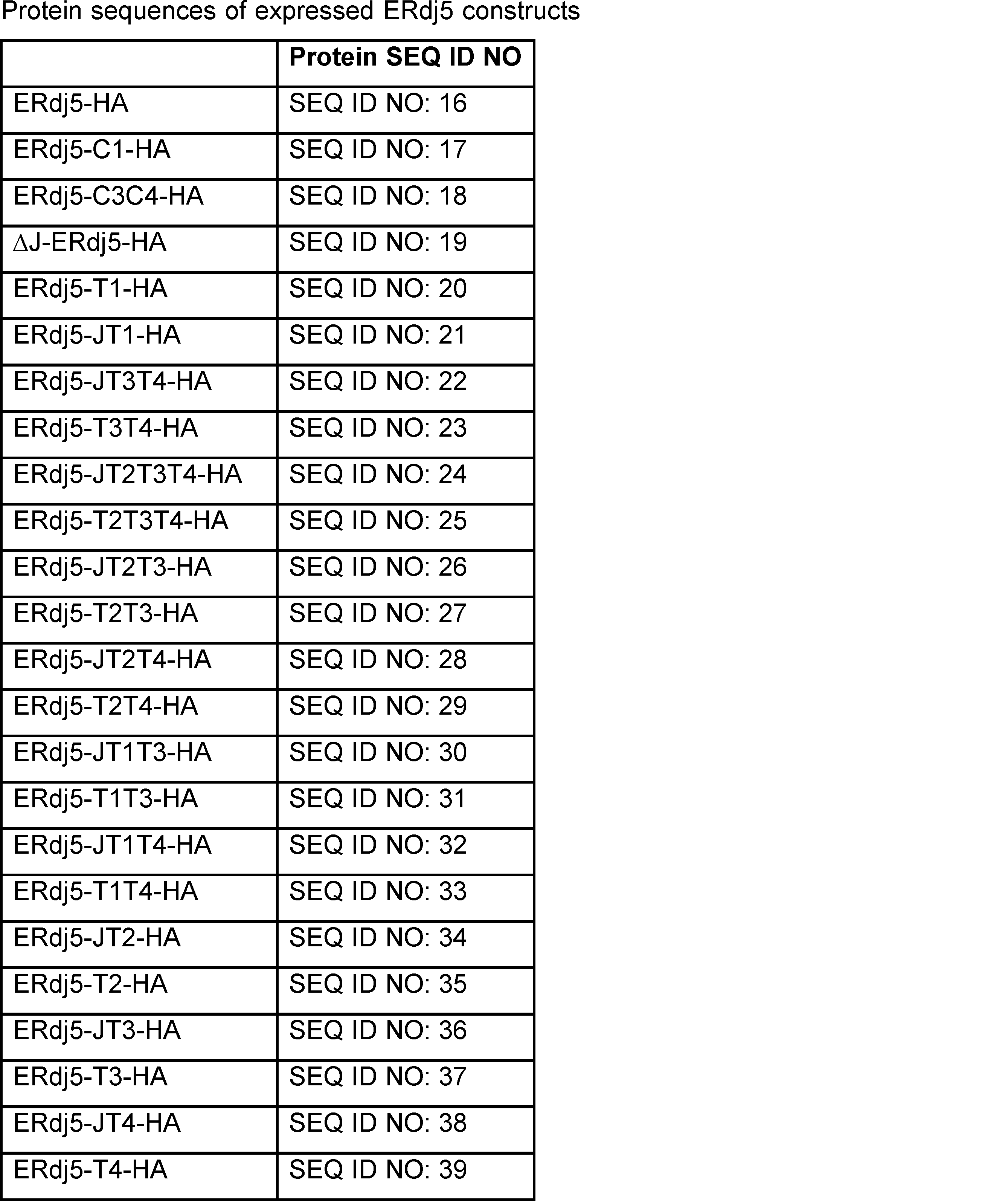
1-2 Protein expression and analysis by Western Blot
Proteins of interest (substrate) were transiently co-expressed with or without ERdj5 proteins or partial proteins at the plasmid ratio of 9:1 in FreeStyle293-F cell line using the FreeStyle 293 expression system (Thermo Fisher, Carlsbad, CA, USA) following manufacturer's instruction. As a control, ERdj5 expression plasmid was replaced with the empty vector. Cells and conditioned media (CM) were harvested at the fifth day of transfection. For the expression check of ERdj5 proteins, harvested cells were lysed with RIPA buffer (Thermo Fisher, Carlsbad, CA, USA) at 4 degrees C. Same protein amount of each lysate was subjected to SDS-PAGE under non-reducing conditions followed by western blot (WB) analysis using anti-HA antibody (Abcam, Cat. ab18181). On the other hand, substrate protein expression analysis was conducted with the CM by SDS-PAGE followed by WB analysis with anti-tag antibody under non-reducing or reducing conditions.
Proteins of interest (substrate) were transiently co-expressed with or without ERdj5 proteins or partial proteins at the plasmid ratio of 9:1 in FreeStyle293-F cell line using the FreeStyle 293 expression system (Thermo Fisher, Carlsbad, CA, USA) following manufacturer's instruction. As a control, ERdj5 expression plasmid was replaced with the empty vector. Cells and conditioned media (CM) were harvested at the fifth day of transfection. For the expression check of ERdj5 proteins, harvested cells were lysed with RIPA buffer (Thermo Fisher, Carlsbad, CA, USA) at 4 degrees C. Same protein amount of each lysate was subjected to SDS-PAGE under non-reducing conditions followed by western blot (WB) analysis using anti-HA antibody (Abcam, Cat. ab18181). On the other hand, substrate protein expression analysis was conducted with the CM by SDS-PAGE followed by WB analysis with anti-tag antibody under non-reducing or reducing conditions.
Newly designed constructs decreased disulfide-linked oligomerization when co-expressed with proteins of interest
2-1 Expression and disulfide-linked oligomerization analysis of human EpCAM-His with or without co-expression of human ERdj5 proteins or partial proteins
Recombinant human EpCAM-His was co-expressed with the designed human ERdj5 partial proteins of Table 1. Expression and disulfide-linked oligomerization status of human EpCAM-His was analysed by WB using anti-His antibody (Invitrogen, Cat. 37-2900) under non-reducing or reducing condition.
When human EpCAM-His was overexpressed alone without co-expression, in addition to the monomer band at around molecular weight of 30,000 ~ 37,000 Dalton, significant amount and degree of the high molecular weight (HMW) species were observed as a laddered pattern under non-reducing condition (Lane 12, A of Figure 2) in WB. As these HMW species disappeared under reducing condition (Lane 02, A of Figure 2), these HMW species must be linked via inter-molecule disulfide bonds. Thus, these HMW species are referred as disulfide linked aggregates. Co-expression of human EpCAM-His with full-length human ERdj5 (SEQ ID NO: 16) showed slight reduction of the disulfide-linked aggregates (Lane 13, A of Figure 2; Lane 4, B of Figure 2). This result is consistent with a study that showed that full-length human ERdj5 could reduce co-expressed proteins (PTL1, NPL 5). In the study, it was also shown that a mutant construct (ERdj5-C3C4-HA) where Tx 1 and Tx 2 domains were silenced exhibited the high reductase activity.
The present inventors discovered that the direct fusion of Tx 3 and Tx 4 domains to the J domain to result in a shorter construct (ERdj5-JT3T4-HA) rather than silencing Tx1 and Tx2domains within the wildtype full length construct (ERdj5-C3C4-HA) was more effective in decreasing disulfide-linked aggregates when such ERdj5 partial proteins were co-expressed with a protein of interest. ERdj5-JT3T4-HA (Lane 19, A of Fig. 2) exhibited lesser disulfide-linked HMW laddered bands than ERdj5-C3C4-HA (Lane 16, A of Fig. 2). Further, these newly engineered human ERdj5 constructs, such as ERdj5-JT3T4-HA (Lane 19, A of Fig. 2 and Lane 5, B of Fig. 2), ERdj5-JT2T3T4-HA (Lane 6, B of Fig. 2), ERdj5-JT2T3-HA (Lane 8, B of Fig. 2), and ERdj5-JT2T4-HA (Lane 10, B of Fig. 2), which has combinations of two to three Tx domains fused directly with the J domain on its N-terminus, all showed significant lessening of the disulfide-linked HMW laddered bands as compared to the co-expression of the full-length human ERdj5 (Lane 13, A of Fig. 2 and Lane 4, B of Fig. 2).
In addition, instead of combining two domains of Tx domains, a single Tx domain such as Tx 2 or Tx 3 with J domain fused at the N-terminus, i.e. ERdj5-JT2-HA (lane 16, B of Fig. 2) and ERdj5-JT3-HA (lane 18, B of Fig. 2), also showed significant reduction of HMW laddered bands of human EpCAM-His as compared to the co-expression of the full-length human ERdj5 (lane 4, B of Fig. 2). The level of decrease of HMW laddered bands of human EpCAM-His between ERdj5-JT2-HA (lane 16, B of Fig. 2) and ERdj5-JT3-HA (lane 18, B of Fig. 2) is notably comparable to that of earlier discussed constructs ERdj5-JT3T4-HA (Lane 19, A of Fig. 2 and Lane 5, B of Fig. 2), ERdj5-JT2T3T4-HA (Lane 6, B of Fig. 2), ERdj5-JT2T3-HA (Lane 8, B of Fig. 2), and ERdj5-JT2T4-HA (Lane 10, B of Fig. 2).
2-2 Expression and disulfide-linked oligomerization analysis of human RNF43(ECD)-Flag with or without co-expression of human ERdj5 proteins or partial proteins
The extracellular domain of human RNF43(ECD)-Flag was co-expressed transiently with the designed ERdj5 partial proteins. Expression and disulfide linked oligomerization status of human RNF43(ECD)-Flag was analysed by WB using anti-Flag antibody (Sigma, Cat. F1804) under non-reducing condition.
The extracellular domain of human RNF43(ECD)-Flag was co-expressed transiently with the designed ERdj5 partial proteins. Expression and disulfide linked oligomerization status of human RNF43(ECD)-Flag was analysed by WB using anti-Flag antibody (Sigma, Cat. F1804) under non-reducing condition.
When human RNF43(ECD)-Flag was overexpressed alone in the cells, doublet bands at around the molecular weight of ~25,000 was observed, which corresponds to monomer species (Lane 3, A of Figure 3). The rather thick doublet bands are most likely due to the glycosylation (NPL 13). Above the monomer band, significant amount of HMW species were observed in a mixture of laddered and smeared pattern (A of Figure 3). Similar to human EpCAM-His, co-expression of full-length human ERdj5 resulted in lowering of these HMW aggregates (compare Lanes 3 and 4, A of Figure 3).
Notably, ERdj5-JT3T4-HA (Lane 10, A of Fig. 3) exhibited lesser disulfide-linked HMW laddered bands than ERdj5-C3C4-HA (Lane 7, A of Fig. 3), which in this case exhibited more disulfide-linked HMW laddered bands than ERdj5-HA (Lane 4, A of Fig. 3), wherein the amount of disulfide-linked HMW laddered bands in decreasing order is ERdj5-C3C4-HA, Erdj5-HA and ERdj5-JT3T4-HA when comparing these 3 constructs. This result is consistent with the observation that direct fusion of Tx 3 and Tx 4 domains to the J domain in a shorter construct is more effective than silencing Tx 1 and Tx 2 domains within the wildtype full-length construct in decreasing disulfide-linked aggregates when such ERdj5 partial proteins were co-expressed with a protein of interest.
Again the newly engineered human ERdj5 partial proteins, such as ERdj5-JT3T4-HA (Lane 10, A of Fig. 3 and Lane 3, B of Fig. 3), ERdj5-T3T4-HA (Lane 11, A of Fig. 3), ERdj5-JT1T3-HA (Lane 10, B of Fig. 3), ERdj5-T1T3-HA (Lane 11, B of Fig. 3) and ERdj5-JT3-HA (Lane 16, B of Fig. 3), further decreased the disulfide mediated aggregates as compared to the full-length human ERdj5 (Lane 4, A of Fig. 3 and Lane 2, B of Fig. 3). Two of the above-mentioned constructs, ERdj5-JT3T4-HA and ERdj5-JT3-HA had significant decrement of disulfide-linked aggregates.
J-domain of ERdj5 supports decrease in disulfide-linked aggregates
The present inventors also surprisingly noted that the ERdj5 constructs that performed well to decrease disulfide-linked aggregates in Example 2-1, such as, ERdj5-JT3T4-HA, ERdj5-JT2T3T4-HA, ERdj5-JT2T3-HA, ERdj5-JT2T4-HA, ERdj5-JT2-HA and ERdj5-JT3-HA, did not performed as well when designed without the J domain, namely these constructs ERdj5-T3T4-HA (Lane 20, A of Fig. 2), ERdj5-T2T3T4-HA (Lane 7, B of Fig. 2), ERdj5-T2T3-HA (Lane 9, B of Fig. 2), ERdj5-T2T4-HA (Lane 11, B of Fig. 2), ERdj5-T2-HA (Lane 17, B of Fig. 2) and ERdj5-T3-HA (Lane 19, B of Fig. 2) had only marginal effect in decreasing disulfide-linked aggregates compared to their counterparts with J domain. This suggests that J domain plays an important role in significant decrement of aberrant disulfide-linked aggregates of human EpCAM-His.
The present inventors also surprisingly noted that the ERdj5 constructs that performed well to decrease disulfide-linked aggregates in Example 2-1, such as, ERdj5-JT3T4-HA, ERdj5-JT2T3T4-HA, ERdj5-JT2T3-HA, ERdj5-JT2T4-HA, ERdj5-JT2-HA and ERdj5-JT3-HA, did not performed as well when designed without the J domain, namely these constructs ERdj5-T3T4-HA (
The same observation is noted for human RNF43(ECD)-Flag co-expression. The ERdj5 constructs that performed well to decrease disulfide-linked aggregates such as ERdj5-JT2T3T4-HA, ERdj5-JT2T3-HA, ERdj5-JT2T4-HA, ERdj5-JT3-HA, and ERdj5-JT4-HA, did not performed as well when designed without the J domain, namely these constructs ERdj5-T2T3T4-HA (Lane 5, B of Fig. 3), ERdj5-T2T3-HA (Lane 7, B of Fig. 3), ERdj5-T2T4-HA (Lane 9, B of Fig. 3), ERdj5-T3-HA (Lane 17, B of Fig. 3), and ERdj5-T4-HA (Lane 19, B of Fig. 3) had only marginal effect in decreasing disulfide-linked aggregates compared to their counterparts with J domain.
This is in line with reports that observe that the J-domain comprised in each ERdj protein member is known to interact with the binding immunoglobulin protein (BiP). BiP not only facilitates protein folding as a "molecular chaperone", but also helps facilitate misfolded proteins to translocate out of the ER for subsequent degradation through interaction with ERdj4 or ERdj5 [NPL 10].
We have shown in above working examples that there are several newly designed human ERdj5 constructs that have significantly higher activity to reduce unwanted disulfide linked HMW aggregates of the substrate proteins when co-expressed, compared to the full-length human ERdj5. Furthermore, analysis of human EpCAM-His and human RNF43(ECD)-Flag revealed that addition of J domain enhanced the decrement of HMW aggregates of both substrates.
Design and expression of ERdj5 protein and partial protein constructs thereof comprising J-domain of ERdj4
4-1 Mammalian expression vector constructions
All human ERdj5 constructs for mammalian cell expression were designed and cloned into an in-house mammalian expression vector backbone with EF1 promotor and OriP sequence (pBEFO). In detail, the J-domain of ERdj5-JT3-HA (SEQ ID NO: 36) was modified by replacing the J-domain with the J-domain of human ERdj4. This modified construct is referred to as cJ4JL_J5T3-HA (SEQ ID NO: 44). Similarly, ERdj5-JT4-HA (SEQ ID NO: 38) was also modified by replacing the J-domain with the J-domain of human ERdj4 and this construct is referred to as cJ4J_J5T4-HA (SEQ ID NO: 45) (Figure 4).
To create an expression vector for human EpCAM-His, DNA sequence encoding human EpCAM extracellular region 1-265 residue with C-terminal His-tag (SEQ ID NO: 42) was cloned into pBEFO. Similarly, extracellular domain (ECD) of human RNF43 (residue 1-197) with a Flag-tag at the C-terminus (human RNF43(ECD)-Flag, SEQ ID NO: 43) was also cloned into pBEFO.

4-2 Protein expression and analysis by Western Blot
Proteins of interest (substrate) were transiently co-expressed with or without ERdj5 proteins or partial proteins at the plasmid ratio of 9:1 in FreeStyle293-F cell line using the FreeStyle 293 expression system (Thermo Fisher, Carlsbad, CA, USA) following manufacturer's instruction. As a control, ERdj5 expression plasmid was replaced with the empty vector. Cells and conditioned media (CM) were harvested at the fifth day of transfection. For the expression check of ERdj5 proteins, harvested cells were lysed with RIPA buffer (Thermo Fisher, Carlsbad, CA, USA) at 4 degrees C. Same protein amount of each lysate was subjected to SDS-PAGE under non-reducing conditions followed by western blot (WB) analysis using anti-HA antibody (Abcam, Cat. Ab18181). On the other hand, substrate protein expression analysis was conducted with the CM by SDS-PAGE followed by WB analysis with anti-tag antibody under non-reducing or reducing conditions.
Proteins of interest (substrate) were transiently co-expressed with or without ERdj5 proteins or partial proteins at the plasmid ratio of 9:1 in FreeStyle293-F cell line using the FreeStyle 293 expression system (Thermo Fisher, Carlsbad, CA, USA) following manufacturer's instruction. As a control, ERdj5 expression plasmid was replaced with the empty vector. Cells and conditioned media (CM) were harvested at the fifth day of transfection. For the expression check of ERdj5 proteins, harvested cells were lysed with RIPA buffer (Thermo Fisher, Carlsbad, CA, USA) at 4 degrees C. Same protein amount of each lysate was subjected to SDS-PAGE under non-reducing conditions followed by western blot (WB) analysis using anti-HA antibody (Abcam, Cat. Ab18181). On the other hand, substrate protein expression analysis was conducted with the CM by SDS-PAGE followed by WB analysis with anti-tag antibody under non-reducing or reducing conditions.
Constructs comprising J-domain of ERdj4 decreased disulfide-linked oligomerization when co-expressed with proteins of interest
Recombinant human EpCAM-His and human RNF43(ECD)-Flag were co-expressed with the designed human ERdj5 partial proteins of Table 2. Expression and disulfide-linked oligomerization status of human EpCAM-His and human RNF43(ECD)-Flag were analysed by WB using anti-His antibody (Invitrogen, Cat. 37-2900) or anti-Flag antibody (Sigma, Cat. F180) respectively; under non-reducing condition.
Recombinant human EpCAM-His and human RNF43(ECD)-Flag were co-expressed with the designed human ERdj5 partial proteins of Table 2. Expression and disulfide-linked oligomerization status of human EpCAM-His and human RNF43(ECD)-Flag were analysed by WB using anti-His antibody (Invitrogen, Cat. 37-2900) or anti-Flag antibody (Sigma, Cat. F180) respectively; under non-reducing condition.
In Example 3, it was shown that the presence of J-domain before the active Tx domain plays a crucial role for the reduction of disulfide linked aggregates of proteins like EpCAM and RNF43. In the present Example, the same observation of reduction of disulfide linked aggregates of EpCAM and RNF43 was made while these proteins were co-expressed with the constructs in Table 2, wherein their J-domains had been replaced with the J-domain of ERdj4.
As shown in A of Figure 5, when EpCAM-his was co-expressed with cJ4JL_J5T3-HA (Lane 6, A of Fig. 5) and ERdj5-JT3-HA (Lane 5, A of Fig. 5), both conditions showed lesser disulfide-linked aggregates compared to when EpCAM-his was co-expressed with full-length human ERdj5 (Lane 4, A of Fig. 5). Similarly, when EpCAM-his was co-expressed with cJ4J_J5T4-HA (Lane 8, A of Fig. 5) and ERdj5-JT4-HA (Lane 7, A of Fig. 5), both conditions showed lesser disulfide-linked aggregates compared to when EpCAM-his was co-expressed with full-length human ERdj5 (Lane 4, A of Fig. 5). As shown in B of Fig. 5, the same trend of reduced disulfide-linked aggregates was also observed when human RNF43(ECD)-Flag was co-expressed with the same constructs of Table 2.
Interestingly, cJ4JL_J5T4-HA (Lane 8, B of Fig. 5), in which the J-domain of ERdj5 had been swapped with the J-domain of ERdj4, appeared to be more effective in reducing the disulfide-linked aggregates when compared to ERdj5-JT4-HA (Lane 7, B of Fig. 5).
The results shown in Figure 5 demonstrate that the J-domain can be replaced with a J-domain from ERdj4, and suggest that the J-domain can be replaced with a J-domain selected from or derived from that of one of the ERdj family members (ERdj3, ERdj4 and ERdj5).
Claims (16)
- A protein comprising at least one and not more than three domain(s) each comprising a CX1X2C motif, wherein each of X1 and X2 is selected from H, S, G, P, R, D, T, Q, A, M, F, Y, C, E, I, K, L, N, V, or W.
- The protein of claim 1, wherein the protein further comprises a domain selected from a domain derived from a J-domain of the ERdj5 protein (SEQ ID NO: 3), a domain derived from a J-domain of the ERdj4 protein (SEQ ID NO: 2), or a domain derived from a J-domain of the ERdj3 protein (SEQ ID NO: 1).
- The protein of any of claim 1 or 2, wherein the CX1X2C motif is selected or derived from a CX1X2C motif of a Thioredoxin (Tx) domain of a protein disulfide isomerase (PDI) family member protein, in particular an ERdj5 protein, more in particular the ERdj5 protein of SEQ ID NO: 3.
- The protein of claim 3, wherein the CX1X2C motif is selected from the group consisting of the following:
(a) CSHC (SEQ ID NO: 46);
(b) CPPC (SEQ ID NO: 47);
(c) CHPC (SEQ ID NO: 48);
(d) CGPC (SEQ ID NO: 49);
(e) CGAC (SEQ ID NO: 50);
(f) CGHC (SEQ ID NO: 51);
(g) CTHC (SEQ ID NO: 52);
(h) CSMC (SEQ ID NO: 53);
(i) CPHC (SEQ ID NO: 54);
(j) CPAC (SEQ ID NO: 55); and
(k) CPSC (SEQ ID NO: 56). - The protein of any one of claims 1 to 4, wherein the protein is represented, from the N-terminus to the C-terminus, by the following general formula (I):
J1-L1-R1-L2-R2-L3-R3 (I),
wherein J1 is a domain as defined in claim 2; and each of R1, R2 and R3 is a domain as defined in claim 1, wherein any of J1, R2 and/or R3 may be absent, and wherein each of L1, L2, and L3 is a linker and/or may be absent. - The protein of claim 5, wherein each of R1, R2 or R3 is selected or derived from a Tx1 domain, a Tx2 domain, a Tx3 domain, or a Tx4 domain of the ERdj5 protein (SEQ ID NO: 3).
- The protein of claim 6, wherein each of R1, R2 or R3 (i) has substantially the same disulfide reducing activity as its corresponding Tx1, Tx2, Tx3, or Tx4 domain of the ERdj5 protein, and/or (ii) comprises one or more amino acid modification(s) to the corresponding Tx1 domain, Tx2 domain, Tx3 domain, or Tx4 domain of the ERdj5 protein.
- The protein of any of claim 6 or 7, wherein R1-R2-R3 of the general formula (I) is selected from the following groups (i) to (xxix):
(i) R1 is a Tx3 domain, R2 is a Tx4 domain and R3 is absent;
(ii) R1 is a Tx4 domain, R2 is a Tx3 domain and R3 is absent;
(iii) R1 is a Tx2 domain, R2 is a Tx3 domain and R3 is absent;
(iv) R1 is a Tx3 domain, R2 is a Tx2 domain and R3 is absent;
(v) R1 is a Tx2 domain, R2 is a Tx3 domain and R3 is a Tx4 domain;
(vi) R1 is a Tx2 domain, R2 is a Tx4 domain and R3 is a Tx3 domain;
(vii) R1 is a Tx3 domain, R2 is a Tx2 domain and R3 is a Tx4 domain;
(viii) R1 is a Tx3 domain, R2 is a Tx4 domain and R3 is a Tx2 domain;
(ix) R1 is a Tx4 domain, R2 is a Tx2 domain and R3 is a Tx3 domain;
(x) R1 is a Tx4 domain, R2 is a Tx3 domain and R3 is a Tx2 domain;
(xi) R1 is a Tx 3 domain, R2 is absent and R3 is absent;
(xii) R1 is a Tx 2 domain, R2 is absent and R3 is absent;
(xiii) R1 is a Tx 4 domain, R2 is absent and R3 is absent;
(xiv) R1 is a Tx1 domain, R2 is a Tx4 domain and R3 is absent;
(xv) R1 is a Tx4 domain, R2 is a Tx1 domain and R3 is absent;
(xvi) R1 is a Tx1 domain, R2 is a Tx3 domain and R3 is absent;
(xvii) R1 is a Tx3 domain, R2 is a Tx1 domain and R3 is absent;
(xviii) R1 is a Tx1 domain, R2 is a Tx3 domain and R3 is a Tx4 domain;
(xix) R1 is a Tx1 domain, R2 is a Tx4 domain and R3 is a Tx3 domain;
(xx) R1 is a Tx3 domain, R2 is a Tx1 domain and R3 is a Tx4 domain;
(xxi) R1 is a Tx3 domain, R2 is a Tx4 domain and R3 is a Tx1 domain;
(xxii) R1 is a Tx4 domain, R2 is a Tx1 domain and R3 is a Tx3 domain;
(xxiii) R1 is a Tx4 domain, R2 is a Tx3 domain and R3 is a Tx1 domain;
(xxiv) R1 is a Tx1 domain, R2 is a Tx3 domain and R3 is a Tx2 domain;
(xxv) R1 is a Tx1 domain, R2 is a Tx2 domain and R3 is a Tx3 domain;
(xxvi) R1 is a Tx3 domain, R2 is a Tx1 domain and R3 is a Tx2 domain;
(xxvii) R1 is a Tx3 domain, R2 is a Tx2 domain and R3 is a Tx1 domain;
(xxviii) R1 is a Tx2 domain, R2 is a Tx1 domain and R3 is a Tx3 domain;
(xxix) R1 is a Tx2 domain, R2 is a Tx3 domain and R3 is a Tx1 domain; and
wherein each of the Tx1, Tx2, Tx3, or Tx4 domains within each group (i) to (xxix) is either the Tx1, the Tx2, the Tx3, or the Tx4 domain of the ERdj5 protein or a Tx1 derived, Tx2 derived, a Tx3 derived or a Tx4 derived domain of the ERdj5 protein. - The protein of claim 8, wherein any of the Tx1-, Tx2-, Tx3-, or Tx4-derived domains is selected from the group consisting of the following:
a) an amino acid sequence that is at least 80% identical to SEQ ID NO: 8;
b) an amino acid sequence that is at least 80% identical to SEQ ID NO: 9;
c) an amino acid sequence that is at least 80% identical to SEQ ID NO: 10; and
d) an amino acid sequence that is at least 80% identical to SEQ ID NO: 11. - The protein of claim 9, wherein the Tx1 derived domain has the sequence as shown in SEQ ID NO: 12, the Tx2 derived domain has the sequence as shown in SEQ ID NO: 13, the Tx3 derived domain has the sequence as shown in SEQ ID NO: 14, and / or the Tx4 derived domain has the sequence as shown in SEQ ID NO: 15.
- The protein of any one of claims 1 to 10, wherein the protein is an isolated protein.
- A composition comprising the protein of any one of claims 1 to 11.
- A method of promoting the reduction of aberrant disulfide bonds in a protein of interest comprising expressing the protein in the presence of the protein of any of claims 1 to 11.
- A method of promoting the decrease of misfolded proteins or protein aggregates comprising expressing the protein of interest in the presence of the protein of any of claims 1 to 11.
- A method of decreasing the share of misfolded proteins or promoting degradation of misfolded proteins, comprising expressing the protein of interest in the presence of the protein of any of claims 1 to 11.
- Use of the protein of any of claims 1 to 11, or of a polynucleotide encoding the protein of any of claims 1 to 11, for promoting the reduction of aberrant disulfide bonds in a protein of interest, promoting the decrease of misfolded proteins or protein aggregates, or for decreasing the share of misfolded proteins or promoting degradation of misfolded proteins.
Applications Claiming Priority (2)
| Application Number | Priority Date | Filing Date | Title |
|---|---|---|---|
| EP23153814 | 2023-01-27 | ||
| EP23153814.1 | 2023-01-27 |
Publications (1)
| Publication Number | Publication Date |
|---|---|
| WO2024158044A1 true WO2024158044A1 (en) | 2024-08-02 |
Family
ID=85132933
Family Applications (1)
| Application Number | Title | Priority Date | Filing Date |
|---|---|---|---|
| PCT/JP2024/002332 Ceased WO2024158044A1 (en) | 2023-01-27 | 2024-01-26 | Protein with cx1x2c motif and uses thereof |
Country Status (1)
| Country | Link |
|---|---|
| WO (1) | WO2024158044A1 (en) |
Citations (2)
| Publication number | Priority date | Publication date | Assignee | Title |
|---|---|---|---|---|
| JP2008161185A (en) * | 2006-12-04 | 2008-07-17 | Locomogene Inc | Decomposition promotion technology of misfolded protein with endoplasmic reticulum reductase |
| US20100048677A1 (en) * | 2008-08-20 | 2010-02-25 | Mitchell W Beau | Regulation of Integrin Surface Expression |
-
2024
- 2024-01-26 WO PCT/JP2024/002332 patent/WO2024158044A1/en not_active Ceased
Patent Citations (2)
| Publication number | Priority date | Publication date | Assignee | Title |
|---|---|---|---|---|
| JP2008161185A (en) * | 2006-12-04 | 2008-07-17 | Locomogene Inc | Decomposition promotion technology of misfolded protein with endoplasmic reticulum reductase |
| US20100048677A1 (en) * | 2008-08-20 | 2010-02-25 | Mitchell W Beau | Regulation of Integrin Surface Expression |
Non-Patent Citations (2)
| Title |
|---|
| JAMES J GALLIGAN;DENNIS R PETERSEN: "The human protein disulfide isomerase gene family", HUMAN GENOMICS, BIOMED CENTRAL LTD, LONDON, UK, vol. 6, no. 1, 5 July 2012 (2012-07-05), London, UK , pages 6, XP021116163, ISSN: 1479-7364, DOI: 10.1186/1479-7364-6-6 * |
| POBRE KRISTINE FAYE, POET GREG J., HENDERSHOT LINDA M.: "The endoplasmic reticulum (ER) chaperone BiP is a master regulator of ER functions: Getting by with a little help from ERdj friends", JOURNAL OF BIOLOGICAL CHEMISTRY, AMERICAN SOCIETY FOR BIOCHEMISTRY AND MOLECULAR BIOLOGY, US, vol. 294, no. 6, 1 February 2019 (2019-02-01), US , pages 2098 - 2108, XP093195742, ISSN: 0021-9258, DOI: 10.1074/jbc.REV118.002804 * |
Similar Documents
| Publication | Publication Date | Title |
|---|---|---|
| EP3892628B1 (en) | Ultra-long acting insulin-fc fusion proteins and methods of use | |
| US20220213500A1 (en) | Expression Process | |
| Cromwell et al. | Protein aggregation and bioprocessing | |
| EP4073098B1 (en) | Ultra-long acting insulin-fc fusion proteins and methods of use | |
| KR100496356B1 (en) | Process for Controlling Sialylation of Proteins Produced by Mammalian Cell Culture | |
| US9676837B2 (en) | Collagen 7 and related methods | |
| EP2929045B1 (en) | Protein expression enhancing polypeptides | |
| US20230212249A1 (en) | Method for producing dual function proteins and its derivatives | |
| RU2346047C2 (en) | Chimeric polypeptide - growth hormone receptor antagonist, nucleic acid, expression vector, chimeric polypeptide application (versions), pharmaceutical composition, cell, method of obtaining chimeric polypeptide and method of treatment | |
| JP4991705B2 (en) | High level expression of recombinant antibodies in mammalian host cells | |
| US20050106222A1 (en) | Method to increase protein production in culture | |
| US20260103739A1 (en) | Composition comprising aflibercept and a variant thereof, and related methods and uses | |
| US12606602B2 (en) | Recombinant CCN domain proteins and fusion proteins | |
| HK1198657A1 (en) | Addition of iron to improve cell culture | |
| KR20220083784A (en) | Method for producing a fusion protein of serum albumin and growth hormone | |
| JP2025506146A (en) | Method for producing human analog insulin and its derivatives in mammalian cells | |
| CN102369213A (en) | Purification process | |
| US20180002401A1 (en) | Collagen 7 and related methods | |
| WO2022254319A1 (en) | Cell culture method for producing sfgfr3 polypeptide | |
| RU2801121C2 (en) | Production of alkaline phosphatases | |
| HK40065804A (en) | Parathyroid hormone variants | |
| HK1128308B (en) | Taurine transporter gene |
Legal Events
| Date | Code | Title | Description |
|---|---|---|---|
| 121 | Ep: the epo has been informed by wipo that ep was designated in this application |
Ref document number: 24747368 Country of ref document: EP Kind code of ref document: A1 |
|
| NENP | Non-entry into the national phase |
Ref country code: DE |
|
| 122 | Ep: pct application non-entry in european phase |
Ref document number: 24747368 Country of ref document: EP Kind code of ref document: A1 |