WO2024150357A1 - 空気調和機 - Google Patents
空気調和機 Download PDFInfo
- Publication number
- WO2024150357A1 WO2024150357A1 PCT/JP2023/000558 JP2023000558W WO2024150357A1 WO 2024150357 A1 WO2024150357 A1 WO 2024150357A1 JP 2023000558 W JP2023000558 W JP 2023000558W WO 2024150357 A1 WO2024150357 A1 WO 2024150357A1
- Authority
- WO
- WIPO (PCT)
- Prior art keywords
- inverter
- unit
- air conditioner
- output frequency
- drive control
- Prior art date
- Legal status (The legal status is an assumption and is not a legal conclusion. Google has not performed a legal analysis and makes no representation as to the accuracy of the status listed.)
- Ceased
Links
Images




Classifications
-
- F—MECHANICAL ENGINEERING; LIGHTING; HEATING; WEAPONS; BLASTING
- F24—HEATING; RANGES; VENTILATING
- F24F—AIR-CONDITIONING; AIR-HUMIDIFICATION; VENTILATION; USE OF AIR CURRENTS FOR SCREENING
- F24F11/00—Control or safety arrangements
- F24F11/88—Electrical aspects, e.g. circuits
Definitions
- This disclosure relates to an air conditioner that uses an inverter device that controls the speed of an electric motor.
- Conventional air conditioners include an air conditioner equipped with a motor drive power supply unit that performs control to reduce the inverter output frequency when the pulsating voltage of the bus voltage exceeds a predetermined value, in order to reduce the capacity of the smoothing capacitor that smoothes the pulsating components contained in the output of the rectifier that converts AC to DC, while ensuring its lifespan (see Patent Document 1).
- the air conditioner described in Patent Document 1 does not notify the user that the inverter output frequency is being intentionally reduced, even when the air conditioner is operating with the inverter output frequency reduced in order to reduce the capacity of the smoothing capacitor and ensure its lifespan. This causes a problem in that the user cannot know whether the air conditioner is intentionally suppressing the output through normal control operation, or whether the output has been reduced due to a malfunction.
- the present disclosure has been made in consideration of the above, and aims to provide an air conditioner that can notify the user of the cause of reduced output.
- the air conditioner according to the present disclosure includes a converter that rectifies AC voltage, a smoothing capacitor that smoothes the rectified voltage, a bus voltage detection unit that detects the smoothed bus voltage, a bus voltage pulsation detection unit that detects the pulsating voltage of the bus voltage, an inverter that generates a drive voltage from the bus voltage and supplies it to a motor, a drive control unit that performs pulse width modulation control of the inverter, and a notification unit that notifies the control state of the inverter by the drive control unit.
- the drive control unit performs control to suppress the output frequency of the inverter when the pulsating voltage is equal to or greater than a set threshold, and the notification unit notifies that the output frequency is being suppressed when the drive control unit is performing control to suppress the output frequency of the inverter.
- the air conditioner disclosed herein has the effect of being able to notify the user of the cause of the drop in output.
- FIG. 1 is a block diagram showing a configuration example of an air conditioner according to a first embodiment.
- FIG. 1 is a diagram showing an example of a method for notifying an air conditioner during output frequency suppression according to the first embodiment;
- FIG. 11 is a block diagram showing a configuration example of an air conditioner according to a second embodiment.
- FIG. 13 is a block diagram showing a configuration example of an air conditioner according to a third embodiment.
- FIG. 13 is a diagram showing a configuration example of a learning device provided in an air conditioner according to a third embodiment; A flowchart showing the processing procedure of the learning device shown in FIG. FIG.
- FIG. 13 is a diagram showing a configuration example of an inference device provided in an air conditioner according to a third embodiment.
- FIG. 13 is a block diagram showing a configuration example of an air conditioner according to a fourth embodiment.
- FIG. 1 is a diagram showing an example of hardware for implementing each unit that performs operations related to the control of an inverter of an air conditioner.
- FIG. 1 is a block diagram showing an example of the configuration of an air conditioner 100 according to embodiment 1.
- the air conditioner 100 is connected to an AC power source 1, and receives power from the AC power source 1 to perform air conditioning.
- the air conditioner 100 includes a power conversion unit 50 consisting of a reactor 2, a converter 3, a smoothing capacitor 4, and an inverter 7, a bus voltage detection unit 5, a bus voltage pulsation detection unit 6, a drive control unit 8, an alarm unit 9, and a compressor 10.
- the compressor 10 includes a motor 11.
- the motor 11 is connected to the inverter 7.
- the current flowing from the converter 3 to the smoothing capacitor 4 is current I1
- the current flowing from the smoothing capacitor 4 to the inverter 7 is current I2
- the current flowing into the smoothing capacitor 4 is current I3.
- the power conversion unit 50 converts the AC power supplied from the AC power source 1 into motor drive power, which is AC power for driving the motor 11 of the compressor 10.
- the bus voltage detection unit 5 detects the voltage across the smoothing capacitor 4 as the bus voltage.
- the bus voltage pulsation detection unit 6 detects the pulsation of the bus voltage detected by the bus voltage detection unit 5.
- the drive control unit 8 calculates the output voltage, phase, and frequency to be applied to the motor 11 of the compressor 10 using known formulas based on the pulsation of the bus voltage detected by the bus voltage pulsation detection unit 6 and signals from an inverter output current detection unit (not shown) and an inverter output frequency setting unit (not shown).
- the drive control unit 8 controls the inverter 7 by pulse width modulation (PWM) based on the calculated output voltage, phase, and frequency.
- PWM pulse width modulation
- the drive control unit 8 generates a PWM signal for driving the inverter 7 so as to produce the required air conditioning capacity of the air conditioner 100 and the required drive torque when the compressor 10 is driven, and outputs it to the inverter 7.
- the inverter output current detection unit detects the current flowing from the inverter 7 to the motor 11 and outputs a signal indicating the detection result to the drive control unit 8.
- the inverter output frequency setting unit also outputs a signal indicating the setting result of the output frequency of the compressor 10 to the drive control unit 8.
- the output frequency of the compressor 10 is set based on the target temperature of the space to be air-conditioned by the air conditioner 100.
- the target temperature is specified, for example, by a user of the air conditioner 100.
- the notification unit 9 notifies the outside of the control state of the inverter 7 by the drive control unit 8. For example, when the drive control unit 8 is performing control to suppress the output of the inverter 7, the notification unit 9 notifies this.
- the notification by the notification unit 9 is not limited to the control state of the inverter 7.
- the notification unit 9 may notify the content of an operational abnormality that occurs in the air conditioner 100, or may notify the air conditioner 100 of a malfunction.
- the arrangement of the components of the power conversion unit 50 shown in FIG. 1 is one example, and the arrangement of the components is not limited to the example shown in FIG. 1.
- the reactor 2 may be arranged after the converter 3. Also, it may have a function of boosting the bus voltage.
- the converter 3 may be given the function of boosting the bus voltage.
- the smoothing capacitor 4 that constitutes the power conversion unit 50 must be used under conditions where the temperature and voltage across both ends are within a specified range; if the specified range is exceeded, degradation will progress and the lifespan will be shortened.
- the above specified range will be referred to as the guaranteed operating range.
- the drive control unit 8 can control the inverter 7 so that the input current I1 from the converter 3 to the smoothing capacitor 4 and the output current I2 from the smoothing capacitor 4 to the inverter 7 are equal. By controlling in this way, the ripple current I3 can be reduced and deterioration of the smoothing capacitor 4 can be suppressed.
- the drive control unit 8 needs to control the inverter 7 taking this ripple component into account.
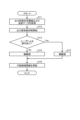
- the drive control unit 8 performs control according to the flowchart shown in FIG. 2 to suppress deterioration of the smoothing capacitor 4. Furthermore, when an operation for suppressing deterioration of the smoothing capacitor 4 (hereinafter sometimes referred to as a deterioration suppression operation) is being performed, the user is notified that the deterioration suppression operation is in progress.
- FIG. 2 is a flowchart showing an example of an operation for protecting the smoothing capacitor 4 of the air conditioner 100 according to the first embodiment.
- the bus voltage detection unit 5 detects the bus voltage (step S1), and the bus voltage pulsation detection unit 6 detects the bus voltage pulsation (step S2).
- the detection result of the bus voltage pulsation by the bus voltage pulsation detection unit 6 is referred to as the pulsation voltage value ⁇ V.
- the drive control unit 8 checks whether the pulsating voltage value ⁇ V is equal to or greater than a predetermined threshold value (step S3).
- the threshold value used in step S3 is set based on the relationships between the pulsating voltage value ⁇ V, the ripple current I3, and the degree of deterioration of the smoothing capacitor 4, which are found, for example, by simulation or the like.
- the threshold value is set to a value that keeps the temperature of the smoothing capacitor 4 within the guaranteed operating range. In other words, the threshold value is set to a value that keeps the temperature of the smoothing capacitor 4 from exceeding the upper limit of the guaranteed operating range.
- step S3: Yes If the pulsating voltage value ⁇ V is equal to or greater than the threshold value (step S3: Yes), the drive control unit 8 starts suppressing the output frequency of the inverter 7 so that the pulsating voltage value ⁇ V is less than the threshold value (step S4). This suppresses the ripple current I3 and brings it within the guaranteed operating range, enabling operation with reduced deterioration of the smoothing capacitor 4. On the other hand, if the pulsating voltage value ⁇ V is less than the threshold value (step S3: No), the drive control unit 8 ends suppression of the output frequency of the inverter 7 (step S6).
- a dead zone is provided between the threshold value for starting output frequency suppression and the threshold value for ending output frequency suppression, so that the output frequency suppression is controlled so as not to react too sensitively.
- the drive control unit 8 After starting to suppress the output frequency of the inverter 7 in step S4, the drive control unit 8 starts notifying the user that the output frequency is being suppressed (step S5). That is, while the output frequency of the inverter 7 is being suppressed, the drive control unit 8 outputs a signal to the notification unit 9 to notify the user that the output frequency of the inverter 7 is being suppressed due to an overcurrent in the smoothing capacitor 4.
- step S6 After ending the output frequency suppression of the inverter 7 in step S6, the drive control unit 8 ends the notification that the output frequency is being suppressed (step S7).
- the notification method by the notification unit 9 may be, for example, as shown in FIG. 3, lighting or blinking of an LED 91 provided on the remote control 90 of the air conditioner 100, display on the liquid crystal screen 92, etc.
- FIG. 3 is a diagram showing an example of a notification method during output frequency suppression of the air conditioner 100 according to the first embodiment. Notification during output frequency suppression may be performed by voice. Notification may be performed by combining display and voice. As shown in FIG. 3, display on the liquid crystal screen 92 is performed by, for example, characters 93. The display by the characters 93 may be any content that indicates that the output frequency is being suppressed, and does not have to directly indicate the suppression of the output frequency of the inverter 7. Also, an icon 94 may be displayed instead of characters. A symbol indicating that the output frequency is being suppressed may be displayed. Notification by displaying characters or the like may be performed by the main body of the air conditioner 100.
- the notification unit 9 may notify the user when it detects a failure in the smoothing capacitor 4, but the content of the notification will be different.
- the air conditioner 100 determines whether or not it is necessary to suppress the output frequency of the inverter 7 based on the pulsation of the bus voltage, which is the voltage across the smoothing capacitor 4, in order to suppress deterioration of the smoothing capacitor 4, and if it is necessary to suppress the output frequency, it suppresses the output frequency and notifies the user that the output frequency is being suppressed.
- the air conditioner 100 when the output frequency of the inverter 7 is in a state where it is being suppressed, the user can know whether this is due to a malfunction of the air conditioner 100 or whether the suppression of the output frequency is due to a protective operation of the device.
- the protective operation of suppressing the output frequency of the inverter 7 to prevent deterioration of the smoothing capacitor 4 and the notification operation to the user during output suppression are described as being applied to an air conditioner, but it goes without saying that the above protective operation and notification operation can also be applied to other devices configured to drive a motor with an inverter.
- Embodiment 2 Next, an air conditioner according to embodiment 2 will be described. Descriptions of configurations and operations common to embodiment 1 will be omitted, and only differences will be described.
- FIG. 4 is a block diagram showing an example of the configuration of an air conditioner 100a according to the second embodiment.
- the air conditioner 100a has a configuration in which a recording unit 12 is added to the air conditioner 100 according to the first embodiment shown in FIG. 1.
- the recording unit 12 is realized, for example, by a volatile or non-volatile semiconductor memory such as a flash memory built into a microprocessor or an EEPROM (registered trademark) (Electrically Erasable Programmable Read-Only Memory).
- the recording unit 12 may also be realized by using a recording device available in a cloud service on the Internet.
- the recording unit 12 records a control log, which is a log of the control operation of the inverter 7 by the drive control unit 8.
- the control log includes, for example, the voltage of the AC power source 1, the pulsating voltage value ⁇ V detected by the bus voltage pulsation detection unit 6, the output current and output frequency of the inverter 7, the time when the notification unit 9 started to notify that the output frequency was being suppressed and the notification time, and environmental information.
- the notification time is the length of time that the notification unit 9 made the notification.
- the control log may include the end time of the notification instead of the notification time.
- the environmental information is, for example, at least one of weather conditions, indoor temperature, and outdoor temperature. This makes it possible to investigate and analyze at a later date what the situation was when the output frequency of the inverter 7 was suppressed.
- the air conditioner 100a has a means for externally checking the control log recorded by the recording unit 12, for example, an interface for connecting a communication cable.
- the air conditioner 100a may have a wireless communication function, and may be configured so that the control log can be externally checked using the wireless communication function.
- Embodiment 3 Next, an air conditioner according to embodiment 3 will be described. Descriptions of configurations and operations common to embodiment 1 will be omitted, and only differences will be described.
- FIG. 5 is a block diagram showing an example of the configuration of an air conditioner 100b according to the third embodiment.
- the air conditioner 100b has a configuration in which a temperature detection unit 13, a learning device 20, a learned model storage unit 30, and an inference device 40 are added to the air conditioner 100 according to the first embodiment shown in FIG. 1.
- the temperature detection unit 13 is realized, for example, by a temperature sensor.
- the temperature detection unit 13 may be composed of multiple temperature sensors each installed in different locations. In other words, the temperature detection unit 13 may be configured to be able to detect temperatures at multiple locations.
- the air conditioner 100b has a function of connecting to an external network, and the drive control unit 8 is configured to be able to communicate with an external server 60 via the network.
- the threshold value used by the drive control unit 8 when determining whether or not to suppress the output frequency of the inverter 7 is changed according to the usage environment of the air conditioner 100b.
- This threshold value is generated by the learning device 20, and is determined by the inference device 40 using the learned model stored in the learned model storage unit 30.
- the learning device 20 generates a learned model for inferring a threshold value used when the drive control unit 8 determines whether or not to suppress the output frequency of the inverter 7.
- the learned model storage unit 30 acquires and stores the learned model generated by the learning device 20.
- the inference device 40 uses the learned model stored in the learned model storage unit 30 to infer a threshold value used in the control operation of the inverter 7 by the drive control unit 8.
- the learning device 20, the trained model storage unit 30, and the inference device 40 are provided inside the air conditioner 100b, but some or all of these may be provided outside the air conditioner 100b and connected to the air conditioner 100b via a network or the like. Some or all of the learning device 20, the trained model storage unit 30, and the inference device 40 may exist on a cloud server.
- the operation of the air conditioner 100b will be explained, dividing it into a learning phase in which the learning device 20 generates a trained model, and an utilization phase in which the inference device 40 infers a threshold value using the trained model.
- ⁇ Learning Phase> 6 is a diagram showing an example of the configuration of the learning device 20 provided in the air conditioner 100b according to the third embodiment.
- the learning device 20 includes a data acquisition unit 21 and a model generation unit 22.
- the model generation unit 22 includes a reward calculation unit 23 and a function update unit 24.
- the data acquisition unit 21 acquires the threshold values and temperature data held in the drive control unit 8 and used in the output frequency suppression control of the inverter 7 as learning data.
- the temperature data refers to one or more of the following data: the room temperature of the room in which the air conditioner 100b is installed, the outside temperature, and the weather conditions.
- the weather conditions refer to predicted values such as the weather, maximum temperature, and minimum temperature in the location in which the air conditioner 100b is installed.
- the data acquisition unit 21 acquires the room temperature and outside temperature from the temperature detection unit 13, and acquires the weather conditions from the external server 60.
- the model generation unit 22 learns the thresholds under each temperature condition based on the thresholds and temperature data acquired as learning data by the data acquisition unit 21. In other words, the model generation unit 22 generates a learned model for inferring the thresholds used by the drive control unit 8 in the output frequency suppression control of the inverter 7 from the temperature data of the air conditioner 100b.
- the thresholds used by the drive control unit 8 in the output frequency suppression control of the inverter 7 may be referred to as the "output suppression determination thresholds.”
- the learning algorithm used by the model generation unit 22 may be a known algorithm such as supervised learning, unsupervised learning, semi-supervised learning, or reinforcement learning.
- reinforcement learning an agent (acting subject) in a certain environment observes the current state (environmental parameters) and decides on an action to be taken. The environment changes dynamically due to the agent's actions, and the agent is given a reward according to the change in the environment. The agent repeats this process and learns the course of action that will obtain the most reward through a series of actions.
- Q-learning and TD-learning are known as representative methods of reinforcement learning.
- a general update formula for the action value function Q(s, a) is expressed as the following formula (1).
- s t represents the state of the environment at time t
- a t represents an action at time t.
- r t+1 represents the reward obtained due to the change in state
- ⁇ represents the discount rate
- ⁇ represents the learning coefficient. Note that ⁇ is in the range of 0 ⁇ 1, and ⁇ is in the range of 0 ⁇ 1.
- the output suppression judgment threshold is the action a t
- temperature data such as weather conditions, room temperature, and outside air temperature is the state s t .
- the model generation unit 22 learns the best action a t in the state s t at time t.
- the update formula expressed by the above formula (1) increases the action value Q if the action value Q of the action a with the highest Q value at time t+1 is greater than the action value Q of the action a executed at time t, and decreases the action value Q in the opposite case.
- the action value function Q(s, a) is updated so that the action value Q of the action a at time t approaches the best action value at time t+1.
- the best action value in a certain environment is propagated sequentially to the action value in the previous environment.
- the reward calculation unit 23 calculates the reward based on the output suppression judgment threshold and temperature data acquired by the data acquisition unit 21 as learning data. Specifically, the reward calculation unit 23 calculates the reward r based on whether or not the user operates the air conditioner 100b during the period in which the drive control unit 8 suppresses the output frequency of the inverter 7. For example, the reward calculation unit 23 increases the reward r (e.g., gives a reward of "1") if there is no user operation during the above period, and decreases the reward r (e.g., gives a reward of "-1") if there is a user operation.
- the user operation used to calculate the reward r is the operation to change the set temperature. In other words, the reward calculation unit 23 decreases the reward r when an operation to change the set temperature is performed, and increases the reward r when an operation other than the operation to change the set temperature is performed or when no operation is performed.
- the function update unit 24 updates the function for determining the output suppression determination threshold in accordance with the reward calculated by the reward calculation unit 23.
- the function update unit 24 outputs the learned model created by updating the function to the learned model storage unit 30.
- the action value function Q(s t , a t ) expressed by the above formula (1) is used as a function for determining the output suppression determination threshold.
- the learned model storage unit 30 stores the action value function Q(s t , a t ) updated by the function update unit 24, that is, the learned model.
- Fig. 7 is a flowchart showing the processing procedure of the learning device 20 shown in Fig. 6. The operation of the learning device 20 for updating the action value function (s t , a t ) will be described with reference to the flowchart of Fig. 7.
- the data acquisition unit 21 acquires the output suppression determination threshold and temperature data as learning data (step S11).
- the drive control unit 8 determines that the pulsation of the bus voltage is equal to or greater than the threshold value, and starts suppressing the output frequency of the inverter 7 (step S12).
- the model generating unit 22 updates the action value function (s t , a t ) based on the output suppression determination threshold and the temperature data included in the learning data.
- the model generation unit 22 checks whether or not there is an operation by the user (step S13). For example, the model generation unit 22 checks whether or not a user operation is received before the drive control unit 8 ends the output frequency suppression of the inverter 7. The model generation unit 22 may check whether or not a user operation is received before a predetermined time has elapsed since the drive control unit 8 started suppressing the output frequency of the inverter 7.
- step S13: No If there is no operation by the user (step S13: No), the reward calculation unit 23 increases the reward (step S14). If there is an operation by the user (step S13: Yes), the reward calculation unit 23 decreases the reward (step S15).
- the function update unit 24 updates the action value function Q(s t , a t ) stored in the trained model storage unit 30 based on the reward after the reward calculation unit 23 has increased or decreased the reward (step S16).
- the updated action value function Q(s t , a t ) is stored in the trained model storage unit 30 as a trained model.
- the learning device 20 repeatedly executes the above steps S11 to S16, and updates the action value function Q(s t , a t ) stored as the learned model in the learned model storage unit 30.
- FIG. 8 is a diagram showing an example of the configuration of an inference device 40 provided in an air conditioner 100b according to the third embodiment.
- the inference device 40 includes a data acquisition unit 41 and an inference unit 42.
- the data acquisition unit 41 acquires the above-mentioned temperature data, i.e., temperature data consisting of one or more of the following data: room temperature, outside temperature, and weather conditions. Like the data acquisition unit 21 of the above-mentioned learning device 20, the data acquisition unit 41 acquires the room temperature and outside temperature from the temperature detection unit 13, and acquires the weather conditions from the external server 60.
- the inference unit 42 uses the learned model stored in the learned model storage unit 30 to infer an output suppression judgment threshold suitable for the usage environment of the air conditioner 100b indicated by the temperature data acquired by the data acquisition unit 41. In other words, by inputting the temperature data into this learned model, the inference unit 42 infers a threshold for determining whether or not the drive control unit 8 should suppress the output frequency of the inverter 7 when the air conditioner 100b is used in the usage environment indicated by the temperature data.
- the output suppression judgment threshold is inferred using the trained model generated by the model generation unit 22 of the air conditioner 100b.
- FIG. 9 is a flowchart showing the processing procedure of the inference device 40 shown in FIG. 8. The operation of the inference device 40 for inferring the output suppression determination threshold will be described with reference to the flowchart in FIG. 9.
- the data acquisition unit 41 acquires temperature data from one or both of the temperature detection unit 13 and the external server 60 (step S21).
- the inference unit 42 inputs the temperature data acquired by the data acquisition unit 41 into the learned model stored in the learned model storage unit 30, and obtains the associated output from the learned model to infer an output suppression judgment threshold (step S22).
- the learned model stored in the learned model storage unit 30 infers an output suppression judgment threshold suitable for the usage environment of the air conditioner 100b based on the input temperature data.
- the inference unit 42 finishes inferring the output suppression judgment threshold, it outputs the output suppression judgment threshold obtained by the inference to the drive control unit 8 (step S23).
- the drive control unit 8 updates the threshold value used in the suppression control of the output frequency of the inverter 7 based on the output suppression judgment threshold value output from the inference unit 42 of the inference device 40 (step S24). In other words, the drive control unit 8 sets the output suppression judgment threshold value output from the inference unit 42 as the threshold value used in the suppression control of the output frequency of the inverter 7.
- the air conditioner 100b adjusts the threshold value used by the drive control unit 8 in the process of determining whether or not to suppress the output frequency of the inverter 7 to suit the environment in which the air conditioner is used, thereby making it possible to suppress deterioration of the smoothing capacitor 4 while preventing a loss of comfort for the user using the air conditioner 100b.
- the learning device 20 generates a trained model using learning data obtained from one air conditioner 100b, but this is not limited to the above.
- the data acquisition unit 21 of the learning device 20 may acquire learning data from multiple air conditioners, and the model generation unit 22 may learn the output suppression judgment threshold.
- the data acquisition unit 21 may acquire learning data from multiple air conditioners used in the same area, or may acquire learning data from multiple air conditioners operating independently in different areas.
- the model generation unit 22 may learn the relationship between the temperature data and the output suppression judgment threshold using learning data acquired from multiple air conditioners used in the same area, and generate a trained model, or may learn the relationship between the temperature data and the output suppression judgment threshold using learning data acquired from multiple air conditioners operating independently in different areas, and generate a trained model.
- the learning device 20 may also add or remove air conditioners from which learning data is collected to or from the targets during the process. Furthermore, a learning device that has learned the relationship between temperature data and the output suppression judgment threshold for a certain air conditioner may be applied to another air conditioner, and the learned model may be updated by re-learning the relationship between temperature data and the output suppression judgment threshold for the other air conditioner.
- the above-mentioned temperature detection unit 13, learning device 20, learned model storage unit 30, and inference device 40 are added to the air conditioner 100 according to embodiment 1, but the above-mentioned temperature detection unit 13, learning device 20, learned model storage unit 30, and inference device 40 may also be added to the air conditioner 100a according to embodiment 2.
- the learning device 20 may perform machine learning using the control log recorded by the recording unit 12 to generate the above-mentioned learned model.
- Embodiment 4 Next, an air conditioner according to embodiment 4 will be described. Descriptions of configurations and operations common to embodiment 1 will be omitted, and only differences will be described.
- FIG. 10 is a block diagram showing an example of the configuration of an air conditioner 100c according to the fourth embodiment.
- the air conditioner 100c has a configuration in which an operation unit 15 is added to the air conditioner 100 according to the first embodiment shown in FIG. 1.
- the operation unit 15 of the air conditioner 100c accepts an operation to forcibly terminate the output suppression of the inverter 7.
- the operation unit 15 includes a button that allows the user to perform this operation.
- the drive control unit 8 terminates the suppression of the output frequency of the inverter 7 and starts normal control, that is, control that does not suppress the output frequency of the inverter 7 even if the pulsation of the bus voltage is above a specified threshold. This allows the user to prioritize the output of the air conditioner 100c over the life of the smoothing capacitor 4.
- the display of the button by which the operation unit 15 receives the operation does not need to directly suggest the forced termination of the output suppression, and may display, for example, "power mode".
- an operation unit 15 is added to the air conditioner 100 according to the first embodiment, allowing the user to forcibly terminate the output suppression of the inverter 7.
- an operation unit 15 may be added to the air conditioner 100a according to the second embodiment or the air conditioner 100b according to the third embodiment, allowing the user to forcibly terminate the output suppression of the inverter 7.
- Embodiment 5 Next, an air conditioner according to embodiment 5 will be described. Explanations of the configuration and operation common to embodiment 1 will be omitted, and only differences will be described.
- the configuration of the air conditioner according to this embodiment is the same as that of embodiment 4 (see FIG. 10).
- the notification unit 9 notifies the user when suppression of the output frequency of the inverter 7 begins.
- the notification unit 9 does not issue a notification when suppression of the output frequency of the inverter 7 begins, but rather starts to notify the user when the operation unit 15 receives a specific operation while the output frequency of the inverter 7 is being suppressed.
- a specific operation is, for example, pressing and holding two or more different buttons.
- the notification unit 9 may be configured to notify different contents before and after the specific operation is performed. For example, from the time when the drive control unit 8 starts suppressing the output frequency of the inverter 7 until the operation unit 15 accepts the specific operation, the notification unit 9 may notify the user of the contents described in the first embodiment using FIG. 3, and after the operation unit 15 accepts the specific operation, the notification unit 9 may start notifying the user of information required for inspection and repair.
- the air conditioners 100a and 100b described in the second and third embodiments may be configured to include an operation unit 15 and initiate an alert when a specific operation is performed while the output frequency of the inverter 7 is suppressed.
- bus voltage detection unit 5 bus voltage pulsation detection unit 6
- drive control unit 8 notification unit 9
- recording unit 12 temperature detection unit 13, operation unit 15, learning device 20, learned model storage unit 30, and inference device 40.
- FIG. 11 is a diagram showing an example of hardware that realizes each unit that performs operations related to the control of the inverter 7 of the air conditioner.
- the bus voltage pulsation detection unit 6, the drive control unit 8, the notification unit 9, and the recording unit 12 can be realized by the processor 101, memory 102, the display unit 103, and the communication unit 104 shown in FIG. 11.
- An example of the processor 101 is a CPU (also called a central processing unit, processing unit, arithmetic unit, microprocessor, microcomputer, or DSP (Digital Signal Processor)) or a system LSI (Large Scale Integration).
- An example of the memory 102 is a non-volatile or volatile semiconductor memory such as RAM (Random Access Memory), ROM (Read Only Memory), flash memory, magnetic disk, etc.
- An example of the display unit 103 is a liquid crystal monitor, a display, etc.
- An example of the communication unit 104 is a wireless LAN (Local Area Network) adapter, etc.
- the busbar voltage pulsation detection unit 6 and the drive control unit 8 are realized by the processor 101 executing a program for operating as each of these units.
- the program for operating as the busbar voltage pulsation detection unit 6 and the drive control unit 8 is stored in advance in the memory 102.
- the processor 101 reads out this program from the memory 102 and executes it to operate as the busbar voltage pulsation detection unit 6 and the drive control unit 8.
- the notification unit 9 is realized by the display device 103.
- the recording unit 12 is realized by the memory 102.
- the notification unit 9 may be realized by an LED, an audio output device, etc. instead of the display device 103.
- the communication device 104 is used when the drive control unit 8 communicates with the external server 60 shown in FIG. 5.
- the bus voltage detection unit 5 is realized by a voltage sensor or the like.
- the temperature detection unit 13 is realized by a temperature sensor or the like.
- the operation unit 15 is realized by a keypad or the like.
- the learning device 20 and the inference device 40 are realized by a processor and a memory similar to the processor 101 and the memory 102 shown in FIG. 11, respectively.
- the trained model storage unit 30 is realized by a non-volatile or volatile semiconductor memory such as a RAM, a ROM, a flash memory, a magnetic disk, etc.
Landscapes
- Engineering & Computer Science (AREA)
- Chemical & Material Sciences (AREA)
- Combustion & Propulsion (AREA)
- Mechanical Engineering (AREA)
- General Engineering & Computer Science (AREA)
- Control Of Ac Motors In General (AREA)
- Inverter Devices (AREA)
Priority Applications (2)
| Application Number | Priority Date | Filing Date | Title |
|---|---|---|---|
| PCT/JP2023/000558 WO2024150357A1 (ja) | 2023-01-12 | 2023-01-12 | 空気調和機 |
| JP2024569931A JPWO2024150357A1 (https=) | 2023-01-12 | 2023-01-12 |
Applications Claiming Priority (1)
| Application Number | Priority Date | Filing Date | Title |
|---|---|---|---|
| PCT/JP2023/000558 WO2024150357A1 (ja) | 2023-01-12 | 2023-01-12 | 空気調和機 |
Publications (1)
| Publication Number | Publication Date |
|---|---|
| WO2024150357A1 true WO2024150357A1 (ja) | 2024-07-18 |
Family
ID=91896526
Family Applications (1)
| Application Number | Title | Priority Date | Filing Date |
|---|---|---|---|
| PCT/JP2023/000558 Ceased WO2024150357A1 (ja) | 2023-01-12 | 2023-01-12 | 空気調和機 |
Country Status (2)
| Country | Link |
|---|---|
| JP (1) | JPWO2024150357A1 (https=) |
| WO (1) | WO2024150357A1 (https=) |
Cited By (1)
| Publication number | Priority date | Publication date | Assignee | Title |
|---|---|---|---|---|
| JPWO2024176384A1 (https=) * | 2023-02-22 | 2024-08-29 |
Citations (10)
| Publication number | Priority date | Publication date | Assignee | Title |
|---|---|---|---|---|
| JP2000184778A (ja) * | 1998-12-11 | 2000-06-30 | Matsushita Electric Ind Co Ltd | インバータ装置 |
| JP2007259629A (ja) * | 2006-03-24 | 2007-10-04 | Mitsubishi Electric Corp | 電動機駆動用電源装置および空気調和装置 |
| JP2008232452A (ja) * | 2007-03-16 | 2008-10-02 | Matsushita Electric Ind Co Ltd | 空調装置およびそのプログラム |
| JP2012251710A (ja) * | 2011-06-02 | 2012-12-20 | Mitsubishi Electric Corp | 空気調和システムおよびその制御方法 |
| JP2014157683A (ja) * | 2013-02-14 | 2014-08-28 | Mitsubishi Electric Corp | 電気機器、及び誘導加熱調理器 |
| JP2017101922A (ja) * | 2017-03-08 | 2017-06-08 | 株式会社Nttファシリティーズ | 水冷式空調システムおよび水冷式空調システムの運転制御方法 |
| WO2018168672A1 (ja) * | 2017-03-15 | 2018-09-20 | 太陽誘電株式会社 | 管理装置、空調管理システム及び空調管理方法 |
| JP2020014035A (ja) * | 2018-07-13 | 2020-01-23 | 日立グローバルライフソリューションズ株式会社 | 動作解析表示システム |
| JP2021107745A (ja) * | 2019-12-27 | 2021-07-29 | ダイキン工業株式会社 | 出力抑制制御状態の解除方法、プログラム、及び空調システム |
| WO2021250770A1 (ja) * | 2020-06-09 | 2021-12-16 | 三菱電機株式会社 | 空気調和装置の制御のための学習装置および推論装置 |
-
2023
- 2023-01-12 JP JP2024569931A patent/JPWO2024150357A1/ja active Pending
- 2023-01-12 WO PCT/JP2023/000558 patent/WO2024150357A1/ja not_active Ceased
Patent Citations (10)
| Publication number | Priority date | Publication date | Assignee | Title |
|---|---|---|---|---|
| JP2000184778A (ja) * | 1998-12-11 | 2000-06-30 | Matsushita Electric Ind Co Ltd | インバータ装置 |
| JP2007259629A (ja) * | 2006-03-24 | 2007-10-04 | Mitsubishi Electric Corp | 電動機駆動用電源装置および空気調和装置 |
| JP2008232452A (ja) * | 2007-03-16 | 2008-10-02 | Matsushita Electric Ind Co Ltd | 空調装置およびそのプログラム |
| JP2012251710A (ja) * | 2011-06-02 | 2012-12-20 | Mitsubishi Electric Corp | 空気調和システムおよびその制御方法 |
| JP2014157683A (ja) * | 2013-02-14 | 2014-08-28 | Mitsubishi Electric Corp | 電気機器、及び誘導加熱調理器 |
| JP2017101922A (ja) * | 2017-03-08 | 2017-06-08 | 株式会社Nttファシリティーズ | 水冷式空調システムおよび水冷式空調システムの運転制御方法 |
| WO2018168672A1 (ja) * | 2017-03-15 | 2018-09-20 | 太陽誘電株式会社 | 管理装置、空調管理システム及び空調管理方法 |
| JP2020014035A (ja) * | 2018-07-13 | 2020-01-23 | 日立グローバルライフソリューションズ株式会社 | 動作解析表示システム |
| JP2021107745A (ja) * | 2019-12-27 | 2021-07-29 | ダイキン工業株式会社 | 出力抑制制御状態の解除方法、プログラム、及び空調システム |
| WO2021250770A1 (ja) * | 2020-06-09 | 2021-12-16 | 三菱電機株式会社 | 空気調和装置の制御のための学習装置および推論装置 |
Cited By (1)
| Publication number | Priority date | Publication date | Assignee | Title |
|---|---|---|---|---|
| JPWO2024176384A1 (https=) * | 2023-02-22 | 2024-08-29 |
Also Published As
| Publication number | Publication date |
|---|---|
| JPWO2024150357A1 (https=) | 2024-07-18 |
Similar Documents
| Publication | Publication Date | Title |
|---|---|---|
| CN106485343B (zh) | 机械学习装置及方法、寿命预测装置及电动机系统 | |
| EP2251614B1 (en) | Air conditioning system and device for predicting building air conditioning facility power consumption amount | |
| EP3306770B1 (en) | Method and apparatus for controlling power supply | |
| US20170117841A1 (en) | Machine learning apparatus and method learning predicted life of power device, and life prediction apparatus and motor driving apparatus including machine learning apparatus | |
| WO2024150357A1 (ja) | 空気調和機 | |
| CN113890179A (zh) | 一种供电方法及装置 | |
| CN107289577B (zh) | 发电机供电空调器控制方法、控制系统和空调器 | |
| CN103503263A (zh) | 机器设备的需求控制装置 | |
| JP4661640B2 (ja) | 空調制御システム | |
| CN111103554B (zh) | 一种掉电检测方法、装置、电路系统及计算机存储介质 | |
| KR101566621B1 (ko) | 긴급 상황 발생 대응을 위한 인버터 운전 제어 시스템 | |
| CN106291174B (zh) | 一种寿命获得方法、装置、电子设备及服务器 | |
| CN112297755A (zh) | 驻车空调的频率控制方法、驻车空调、存储介质及装置 | |
| JP5236177B2 (ja) | 環境制御システム | |
| JP5639721B2 (ja) | 省エネ診断装置およびそれを用いた省エネ診断システム | |
| JP2012122723A (ja) | 空気調和システム、制御方法及びプログラム | |
| JP2011190963A (ja) | 空気調和システム、制御方法及びプログラム | |
| EP2306213B1 (en) | Power saving system for household electric appliance | |
| JPH0861247A (ja) | 空気調和機の運転制御装置およびその方法 | |
| WO2018150726A1 (ja) | 無停電電源装置 | |
| JP7026702B2 (ja) | 制御システム、制御方法、及び、プログラム | |
| JPWO2024150357A5 (https=) | ||
| JP7682306B2 (ja) | 空気調和システム、空調制御装置および空調制御方法 | |
| KR20160031216A (ko) | 무정전 전원공급장치 및 그 제어방법, 이를 수행하기 위한 기록매체 | |
| CN119298410B (zh) | 一种车载无线充电器温度与功率动态调节方法及系统 |
Legal Events
| Date | Code | Title | Description |
|---|---|---|---|
| 121 | Ep: the epo has been informed by wipo that ep was designated in this application |
Ref document number: 23915979 Country of ref document: EP Kind code of ref document: A1 |
|
| WWE | Wipo information: entry into national phase |
Ref document number: 2024569931 Country of ref document: JP |
|
| NENP | Non-entry into the national phase |
Ref country code: DE |
|
| 122 | Ep: pct application non-entry in european phase |
Ref document number: 23915979 Country of ref document: EP Kind code of ref document: A1 |