WO2024094844A1 - Oral formulation of n-pyridinyl acetamide derivative for treating interstitial lung disease - Google Patents
Oral formulation of n-pyridinyl acetamide derivative for treating interstitial lung disease Download PDFInfo
- Publication number
- WO2024094844A1 WO2024094844A1 PCT/EP2023/080652 EP2023080652W WO2024094844A1 WO 2024094844 A1 WO2024094844 A1 WO 2024094844A1 EP 2023080652 W EP2023080652 W EP 2023080652W WO 2024094844 A1 WO2024094844 A1 WO 2024094844A1
- Authority
- WO
- WIPO (PCT)
- Prior art keywords
- azd5055
- dosage unit
- oral dosage
- dose
- unit according
- Prior art date
- Legal status (The legal status is an assumption and is not a legal conclusion. Google has not performed a legal analysis and makes no representation as to the accuracy of the status listed.)
- Ceased
Links
Classifications
-
- A—HUMAN NECESSITIES
- A61—MEDICAL OR VETERINARY SCIENCE; HYGIENE
- A61K—PREPARATIONS FOR MEDICAL, DENTAL OR TOILETRY PURPOSES
- A61K31/00—Medicinal preparations containing organic active ingredients
- A61K31/33—Heterocyclic compounds
- A61K31/395—Heterocyclic compounds having nitrogen as a ring hetero atom, e.g. guanethidine or rifamycins
- A61K31/495—Heterocyclic compounds having nitrogen as a ring hetero atom, e.g. guanethidine or rifamycins having six-membered rings with two or more nitrogen atoms as the only ring heteroatoms, e.g. piperazine or tetrazines
- A61K31/4965—Non-condensed pyrazines
- A61K31/497—Non-condensed pyrazines containing further heterocyclic rings
-
- A—HUMAN NECESSITIES
- A61—MEDICAL OR VETERINARY SCIENCE; HYGIENE
- A61K—PREPARATIONS FOR MEDICAL, DENTAL OR TOILETRY PURPOSES
- A61K31/00—Medicinal preparations containing organic active ingredients
- A61K31/33—Heterocyclic compounds
- A61K31/395—Heterocyclic compounds having nitrogen as a ring hetero atom, e.g. guanethidine or rifamycins
- A61K31/435—Heterocyclic compounds having nitrogen as a ring hetero atom, e.g. guanethidine or rifamycins having six-membered rings with one nitrogen as the only ring hetero atom
- A61K31/44—Non condensed pyridines; Hydrogenated derivatives thereof
- A61K31/4427—Non condensed pyridines; Hydrogenated derivatives thereof containing further heterocyclic ring systems
- A61K31/4439—Non condensed pyridines; Hydrogenated derivatives thereof containing further heterocyclic ring systems containing a five-membered ring with nitrogen as a ring hetero atom, e.g. omeprazole
-
- A—HUMAN NECESSITIES
- A61—MEDICAL OR VETERINARY SCIENCE; HYGIENE
- A61K—PREPARATIONS FOR MEDICAL, DENTAL OR TOILETRY PURPOSES
- A61K45/00—Medicinal preparations containing active ingredients not provided for in groups A61K31/00 - A61K41/00
- A61K45/06—Mixtures of active ingredients without chemical characterisation, e.g. antiphlogistics and cardiaca
-
- A—HUMAN NECESSITIES
- A61—MEDICAL OR VETERINARY SCIENCE; HYGIENE
- A61K—PREPARATIONS FOR MEDICAL, DENTAL OR TOILETRY PURPOSES
- A61K47/00—Medicinal preparations characterised by the non-active ingredients used, e.g. carriers or inert additives; Targeting or modifying agents chemically bound to the active ingredient
- A61K47/02—Inorganic compounds
-
- A—HUMAN NECESSITIES
- A61—MEDICAL OR VETERINARY SCIENCE; HYGIENE
- A61K—PREPARATIONS FOR MEDICAL, DENTAL OR TOILETRY PURPOSES
- A61K47/00—Medicinal preparations characterised by the non-active ingredients used, e.g. carriers or inert additives; Targeting or modifying agents chemically bound to the active ingredient
- A61K47/06—Organic compounds, e.g. natural or synthetic hydrocarbons, polyolefins, mineral oil, petrolatum or ozokerite
- A61K47/08—Organic compounds, e.g. natural or synthetic hydrocarbons, polyolefins, mineral oil, petrolatum or ozokerite containing oxygen, e.g. ethers, acetals, ketones, quinones, aldehydes, peroxides
- A61K47/12—Carboxylic acids; Salts or anhydrides thereof
-
- A—HUMAN NECESSITIES
- A61—MEDICAL OR VETERINARY SCIENCE; HYGIENE
- A61K—PREPARATIONS FOR MEDICAL, DENTAL OR TOILETRY PURPOSES
- A61K47/00—Medicinal preparations characterised by the non-active ingredients used, e.g. carriers or inert additives; Targeting or modifying agents chemically bound to the active ingredient
- A61K47/06—Organic compounds, e.g. natural or synthetic hydrocarbons, polyolefins, mineral oil, petrolatum or ozokerite
- A61K47/08—Organic compounds, e.g. natural or synthetic hydrocarbons, polyolefins, mineral oil, petrolatum or ozokerite containing oxygen, e.g. ethers, acetals, ketones, quinones, aldehydes, peroxides
- A61K47/14—Esters of carboxylic acids, e.g. fatty acid monoglycerides, medium-chain triglycerides, parabens or PEG fatty acid esters
-
- A—HUMAN NECESSITIES
- A61—MEDICAL OR VETERINARY SCIENCE; HYGIENE
- A61K—PREPARATIONS FOR MEDICAL, DENTAL OR TOILETRY PURPOSES
- A61K47/00—Medicinal preparations characterised by the non-active ingredients used, e.g. carriers or inert additives; Targeting or modifying agents chemically bound to the active ingredient
- A61K47/30—Macromolecular organic or inorganic compounds, e.g. inorganic polyphosphates
- A61K47/36—Polysaccharides; Derivatives thereof, e.g. gums, starch, alginate, dextrin, hyaluronic acid, chitosan, inulin, agar or pectin
- A61K47/38—Cellulose; Derivatives thereof
-
- A—HUMAN NECESSITIES
- A61—MEDICAL OR VETERINARY SCIENCE; HYGIENE
- A61K—PREPARATIONS FOR MEDICAL, DENTAL OR TOILETRY PURPOSES
- A61K47/00—Medicinal preparations characterised by the non-active ingredients used, e.g. carriers or inert additives; Targeting or modifying agents chemically bound to the active ingredient
- A61K47/30—Macromolecular organic or inorganic compounds, e.g. inorganic polyphosphates
- A61K47/36—Polysaccharides; Derivatives thereof, e.g. gums, starch, alginate, dextrin, hyaluronic acid, chitosan, inulin, agar or pectin
- A61K47/40—Cyclodextrins; Derivatives thereof
-
- A—HUMAN NECESSITIES
- A61—MEDICAL OR VETERINARY SCIENCE; HYGIENE
- A61K—PREPARATIONS FOR MEDICAL, DENTAL OR TOILETRY PURPOSES
- A61K9/00—Medicinal preparations characterised by special physical form
- A61K9/0012—Galenical forms characterised by the site of application
- A61K9/0019—Injectable compositions; Intramuscular, intravenous, arterial, subcutaneous administration; Compositions to be administered through the skin in an invasive manner
-
- A—HUMAN NECESSITIES
- A61—MEDICAL OR VETERINARY SCIENCE; HYGIENE
- A61K—PREPARATIONS FOR MEDICAL, DENTAL OR TOILETRY PURPOSES
- A61K9/00—Medicinal preparations characterised by special physical form
- A61K9/0012—Galenical forms characterised by the site of application
- A61K9/0053—Mouth and digestive tract, i.e. intraoral and peroral administration
-
- A—HUMAN NECESSITIES
- A61—MEDICAL OR VETERINARY SCIENCE; HYGIENE
- A61K—PREPARATIONS FOR MEDICAL, DENTAL OR TOILETRY PURPOSES
- A61K9/00—Medicinal preparations characterised by special physical form
- A61K9/10—Dispersions; Emulsions
-
- A—HUMAN NECESSITIES
- A61—MEDICAL OR VETERINARY SCIENCE; HYGIENE
- A61K—PREPARATIONS FOR MEDICAL, DENTAL OR TOILETRY PURPOSES
- A61K9/00—Medicinal preparations characterised by special physical form
- A61K9/20—Pills, tablets, discs, rods
- A61K9/2004—Excipients; Inactive ingredients
- A61K9/2009—Inorganic compounds
-
- A—HUMAN NECESSITIES
- A61—MEDICAL OR VETERINARY SCIENCE; HYGIENE
- A61K—PREPARATIONS FOR MEDICAL, DENTAL OR TOILETRY PURPOSES
- A61K9/00—Medicinal preparations characterised by special physical form
- A61K9/20—Pills, tablets, discs, rods
- A61K9/2004—Excipients; Inactive ingredients
- A61K9/2022—Organic macromolecular compounds
- A61K9/205—Polysaccharides, e.g. alginate, gums; Cyclodextrin
- A61K9/2054—Cellulose; Cellulose derivatives, e.g. hydroxypropyl methylcellulose
-
- A—HUMAN NECESSITIES
- A61—MEDICAL OR VETERINARY SCIENCE; HYGIENE
- A61K—PREPARATIONS FOR MEDICAL, DENTAL OR TOILETRY PURPOSES
- A61K9/00—Medicinal preparations characterised by special physical form
- A61K9/20—Pills, tablets, discs, rods
- A61K9/28—Dragees; Coated pills or tablets, e.g. with film or compression coating
-
- A—HUMAN NECESSITIES
- A61—MEDICAL OR VETERINARY SCIENCE; HYGIENE
- A61P—SPECIFIC THERAPEUTIC ACTIVITY OF CHEMICAL COMPOUNDS OR MEDICINAL PREPARATIONS
- A61P11/00—Drugs for disorders of the respiratory system
-
- A—HUMAN NECESSITIES
- A61—MEDICAL OR VETERINARY SCIENCE; HYGIENE
- A61K—PREPARATIONS FOR MEDICAL, DENTAL OR TOILETRY PURPOSES
- A61K2300/00—Mixtures or combinations of active ingredients, wherein at least one active ingredient is fully defined in groups A61K31/00 - A61K41/00
Definitions
- the present disclosure relates to oral formulations of an n-pyridinyl acetamide derivative, and the use of such formulations in the treatment of interstitial lung diseases.
- Interstitial lung diseases are a group of rare diffuse parenchymal lung disorders associated with substantial morbidity and mortality that share common clinical and pathophysiological features, but also demonstrate a diverse etiology, and prognosis (Olsen et al 2018). ILDs affect the interstitium or the connective tissue stroma that separates the epithelial and endothelial barriers in the lungs.
- ILDs are divided into 5 broad clinical categories: ILDs related to distinct primary diseases (eg, sarcoidosis), ILDs related to environmental exposures (eg, hypersensitivity pneumonitis), ILDs induced by drugs or irradiation, ILDs associated with connective tissue diseases (eg, scleroderma and rheumatoid arthritis), and idiopathic interstitial pneumonias (eg, idiopathic pulmonary fibrosis, IPF).
- ILDs are heterogeneous, they have common genetic risk factors and shared downstream pathways leading to fibrogenesis.
- IPF is the most common and lethal.
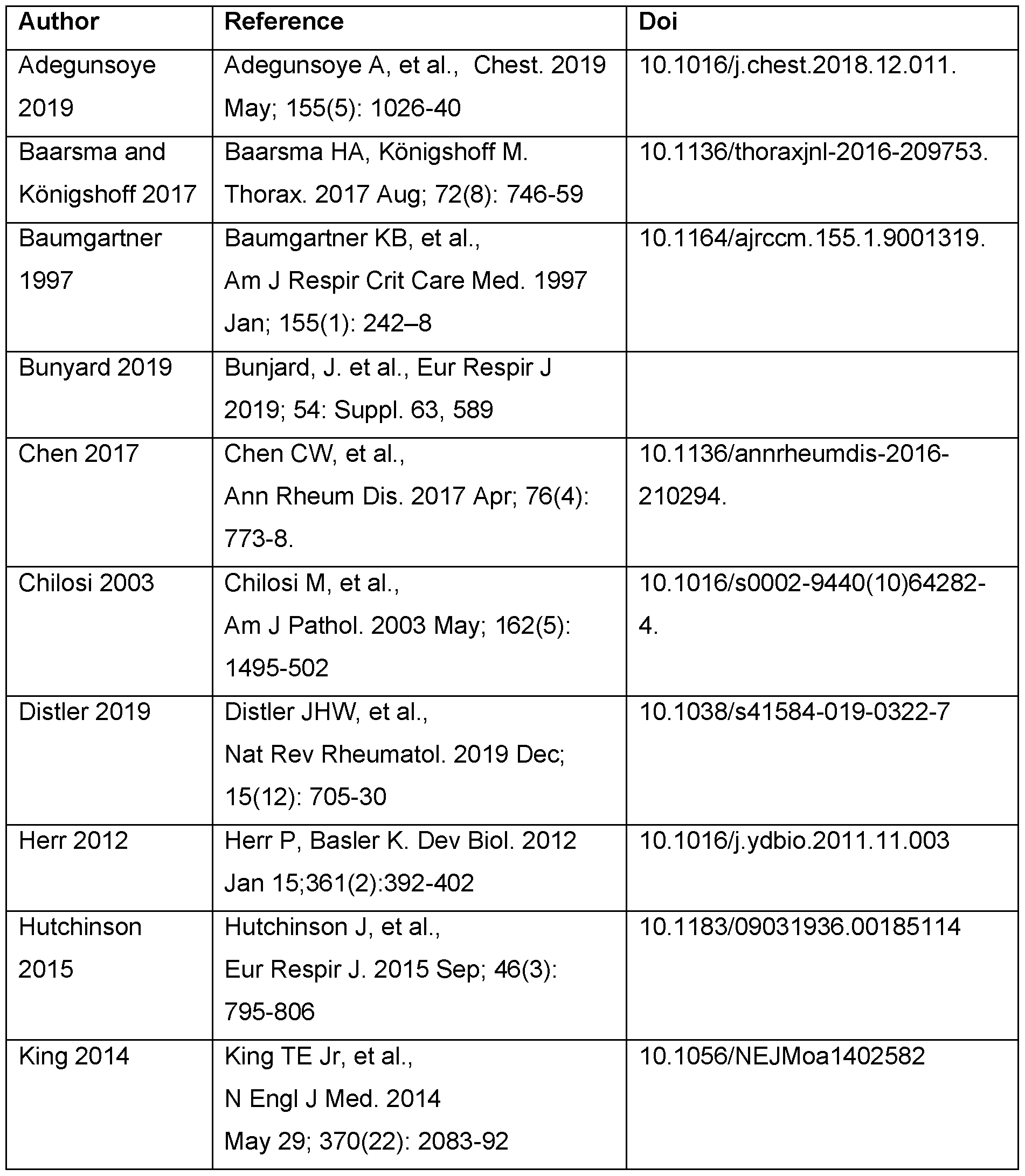
- the incidence of IPF has risen over time and a conservative estimate of the incidence in Europe and North America is 3 to 9 cases per 100000 people per year (Hutchinson 2015).
- IPF generally presents in individuals over the age of 50 years and is more common in men than women (Richeldi 2017).
- Smoking cigarettes is a known risk factor (Baumgartner 1997).
- IPF is characterized by the deposition of excessive amounts of extracellular matrix proteins in the lungs, which replaces the normal architecture of the distal lung and impairs gas exchange leading to progressive exertional dyspnea and decline in lung function, and ultimately to respiratory failure and death (Richeldi 2017).
- Idiopathic pulmonary fibrosis is characterized pathologically by the pattern of usual interstitial pneumonitis and the presence of pathognomonic clusters of activated (myo)fibroblasts (fibroblastic foci). Although the etiology of IPF is still unclear, it is thought to be due to repetitive epithelial injury in genetically susceptible individuals inducing an aberrant wound healing response. This is characterized by excessive and abnormal epithelial repair, (myo)fibroblast activation driven by increased production of pro-fibrotic growth factors such as TGF-p, epithelial-to-mesenchymal transition, interstitial collagen deposition by (myo)fibroblasts, and immune cell dysfunction including the accumulation of pro-fibrotic macrophages in the lung (Richeldi 2017).
- pro-fibrotic growth factors such as TGF-p, epithelial-to-mesenchymal transition, interstitial collagen deposition by (myo)fibroblasts, and immune cell dysfunction including the accumulation of pro-fibrotic macrophages in the lung
- ILDs other than I PF also develop a progressive fibrosing phenotype associated with decline in lung function, worsening symptoms and QoL, and early mortality.
- ILDs associated with autoimmune diseases such as rheumatoid arthritis-associated interstitial lung disease (RA- ILD) and systemic sclerosis-associated interstitial lung disease (SSc-ILD), chronic hypersensitivity pneumonitis, chronic sarcoidosis, exposure-related ILDs such as silicosis, and unclassifiable idiopathic interstitial pneumonia (Wollin 2019).
- RA- ILD rheumatoid arthritis-associated interstitial lung disease
- SSc-ILD systemic sclerosis-associated interstitial lung disease
- chronic hypersensitivity pneumonitis chronic sarcoidosis
- exposure-related ILDs such as silicosis
- unclassifiable idiopathic interstitial pneumonia (Wollin 2019).
- Tocilizumab (a monoclonal antibody directed against the IL-6 receptor) has been shown to slow progression of lung disease in the subset of ILD patients with SSc-ILD (Khanna 2020) and has recently been approved to treat this disease.
- SSc-ILD SSc-ILD
- none of the approved anti-fibrotic therapies relieves symptoms, halts lung function decline, or restores normal lifespan in patients with IPF or other ILD-PF.
- therapies that are more effective and better tolerated for patients with IPF and other ILD- PF.
- WNT ligands are glycoproteins that are secreted by various cells and bind to extracellular receptors including WNT ligands, the ligands then bind to receptors including the 10 members of the Frizzled receptor family (FZD) and their co-receptors (LRP5/6). Binding of WNT ligands to FZD and LRP5/6 can trigger either canonical or non-canonical WNT signalling (Baarsma and Kdnigshoff 2017). The LEF/TCF family triggers downstream expression of pro-fibrotic genes in multiple cellular culprits involved in the pathogenesis of IPF including alveolar epithelial cells, (myo)fibroblasts, and alveolar macrophages.
- TGF-p can activate canonical WNT signalling in lung and skin fibroblasts, with nuclear translocation of p-catenin and increased transcription of WNT target genes. Further activation of WNT signalling by TGF-p occurs via downregulation of endogenous WNT antagonists (Distler 2019).
- Non-canonical WNT signalling follows binding of specific WNTs (eg, WNT 4 and 5a) to FZD receptors, but is independent of LRP5/6 co-receptors.
- Non-canonical WNT signalling results in activation of intracellular signalling molecules involved in planar cell polarity, calcium/calmodulin- dependent protein kinase II and other less well-defined pathways (Baarsma and Kdnigshoff 2017). However, WNT signalling is complex and an individual WNT scan can activate both the canonical and non-canonical pathways.
- Enhanced WNT signalling contributes to the pathogenesis of IPF; antibody mediated inhibition of WISP-1 reduces pulmonary fibrosis in bleomycin-treated mice by altering alveolar epithelial cell function and reprogramming and reducing fibroblast activation (Kdnigshoff 2009). Unbiased gene expression profiling in IPF lung tissue identified a WNT signature (Kdnigshoff 2008). In addition, canonical WNT signalling is elevated in various cells in the lungs of IPF patients and in the lungs of experimental animals with pulmonary fibrosis.
- WNT1 , 7B, 10B, FZD2, FDZ3, and p-catenin, LEF1 , and WISP-1 genes is elevated in the lungs of patients with IPF versus healthy controls (Kdnigshoff 2008). Increased staining for WNT1 and 3A has been detected in bronchial and alveolar epithelial cells and increased nuclear staining for p-catenin has been detected in bronchiolar epithelial cells and fibroblasts in fibroblastic foci (Kdnigshoff 2008, Chilosi 2003). Furthermore, increased WNT 10A expression in the lungs has been related to poorer survival rates in patients with IPF (Oda 2016).
- mice genetically deficient in LRP5 were protected from bleomycin-induced pulmonary fibrosis (Lam 2014).
- Non-canonical WNT signalling also contributes to the pathogenesis of IPF.
- Transforming growth factor-B has been shown to drive secretion of non-canonical WNTs.
- WNT5A a non-canonical WNT ligand
- TGF-p TGF-p
- WNT5B signals via FZD8 in a p-catenin independent fashion.
- FZD8 There is high-level expression of FZD8 in IPF lungs and expression levels correlate with disease progression (Lam 2014). Genetic silencing of FZD8 reduces pro-fibrotic signalling in fibroblasts in vitro and bleomycin-mediated pulmonary fibrosis in mice (Spanjer 2016)
- WNT5a protein levels were elevated in plasma samples from RA-ILD patients compared with non-RA-ILD patients, and levels positively correlated with the plasma level of rheumatoid factor (Yu 2019). Higher plasma levels of WNT5A were also found in patients with UIP than those with nonspecific interstitial pneumonia and other ILD patterns. RA-ILD disease severity was correlated with the circulating WNT5a levels as assessed by high- resolution computed tomography-UIP scores (Yu 2019).
- a method of treating interstitial lung disease in a subject in need thereof comprising orally administering to the subject AZD5055 in a dose of between 5 and 35 mg per day.
- This dose may be delivered in a single dosage unit, or in multiple dosage units.
- an oral dosage unit which comprises AZD5055 in an amount of between 2.5 and 35 mg.
- AZD5055 refers to a compound with the chemical name 2-[4-(2-methyl-4- pyridyl)pyrrolo[3,2-c]pyridin-1-yl]-N-(5-pyrazin-2-yl-2-pyridyl)acetamide and structure shown below:
- AZD5055 also known as RXC006
- RXC006 porcupine
- Porcupine (PORCN) is a membrane-bound O- acyltransferase required for and dedicated to palmitoylation of all Wnt ligands, an essential step in the processing of Wnt ligands for secretion (Herr 2012).
- WNT signalling makes critical contributions to the pathogenesis of ILD-PF via activities on multiple key cell types implicated in the pathogenesis of these diseases.
- AZD5055 is expected to inhibit WNT signalling in epithelial cells, fibroblasts, and alveolar macrophages in the lungs of patients with IPF and other ILD-PF and thereby limit the progression of pulmonary fibrosis and improve quality of life and survival in patients with these diseases.
- Preliminary studies of AZD5055 show that it reduces bleomycin-mediated fibrosis in the lungs of rats, carbon tetrachloride-induced hepatic fibrosis in mice, and renal fibrosis in a UUO model in mice (Bunyard 2019).
- AZD5055 The synthesis of AZD5055 is described in W02016/055790 (compound ID No. 23), the contents of which are hereby incorporated by reference in their entirety.
- a free base AZD5055 is administered to a subject.
- crystalline AZD5055 is administered to a subject.
- proton pump inhibitor refers to a class of medications that cause a profound and prolonged reduction of stomach acid production. They do so by irreversibly inhibiting the stomach's H7K + ATPase proton pump.
- proton pump inhibitors include: Omeprazole; Lansoprazole; Dexlansoprazole; Esomeprazole; Pantoprazole; Rabeprazole; and llaprazole.
- rabeprazole refers to a compound with the chemical name (RS)-2-([4-(3- methoxypropoxy)-3-methylpyridin-2-yl]methylsulfinyl)-1 H-benzo[dJimidazole and structure shown below:
- nintedanib refers to a compound with the chemical name methyl (3Z)-3- ⁇ [(4- ⁇ methyl[(4-methylpiperazin-1-yl)acetyl]amino ⁇ phenyl)amino](phenyl)methylidene ⁇ -2-oxo-2,3- dihydro-1 H-indole-6-carboxylate and structure shown below:
- the language “treat,” “treating” and “treatment” includes the reduction or inhibition of enzyme or protein activity related to PORCN or WNT in a subject, amelioration of one or more symptoms of interstitial lung diseases, such as idiopathic pulmonary fibrosis in a subject, or the slowing or delaying of progression of interstitial lung diseases, such as idiopathic pulmonary fibrosis in a subject.
- the language “treat,” “treating” and “treatment” also includes the reduction or inhibition of the growth of clusters of activated (myo)fibroblasts in a subject.
- inhibitor includes a decrease in the baseline activity of a biological activity or process.
- subject includes warm-blooded mammals, for example, primates, dogs, cats, rabbits, rats, and mice.
- the subject is a primate, for example, a human.
- the subject is suffering from interstitial lung diseases, such as idiopathic pulmonary fibrosis.
- a method of treating interstitial lung disease in a subject in need thereof comprising orally administering to the subject AZD5055 in a dose of between 5 and 35 mg per day.
- AZD5055 for use in the treatment of an interstitial lung disease, the method comprising the oral administration of AZD5055 in a dose of between 5 and 35 mg per day. Additionally disclosed is the use of AZD5055 in the manufacture of a medicament for the treatment of interstitial lung disease by oral administration of a dose of between 5 and 35 mg per day.
- the dose per day is between 10 and 30 mg per day, or 15 and 25 mg per day.
- AZD5055 is administered in a dose of 5mg per day, about 10 mg per day, about 15 mg per day, about 20 mg per day, about 25 mg per day, about 30 mg per day or 35mg per day. In some embodiments, AZD5055 is administered in a dose of about 5 mg per day, about 10 mg per day, about 15 mg per day, about 20 mg per day, about 25 mg per day, about 30 mg per day or about 35mg per day. In some embodiments, AZD5055 is administered in a dose of about 5 mg per day. In some embodiments, AZD5055 is administered in a dose of about 15 mg per day.
- the dose per day may be 5mg, 6mg, 7mg, 8mg, 9mg, 10mg, 11mg, 12mg, 13mg, 14mg, 15mg, 16mg, 17mg, 18mg, 19mg, 20mg, 21mg, 22mg, 23mg, 24mg, 25mg, 26mg, 27mg, 28mg, 29mg, 30mg, 31mg, 32mg, 33mg, 34mg or 35mg.
- AZD5055 is administered once a day (QD).
- AZD5055 is administered in a dose of 5mg QD, about 10 mg QD, about 15 mg QD, about 20 mg QD, about 25 mg QD, about 30 mg QD or 35 mg QD. In some embodiments, AZD5055 is administered in a dose of about 5mg QD, about 10 mg QD, about 15 mg QD, about 20 mg QD, about 25 mg QD, about 30 mg QD or 35 mg QD. In some embodiments, AZD5055 is administered in a dose of about 5 mg QD. In some embodiments, AZD5055 is administered in a dose of about 15 mg QD.
- AZD5055 is administered twice a day (BID). In some embodiments, AZD5055 is administered in a dose of 2.5mg BID, about 5 mg BID, about 7.5 mg BID, about 10 mg BID, about 12.5 mg BID, about 15 mg BID or 17.5 mg BID. In some embodiments, AZD5055 is administered in a dose of about 2.5mg BID, about 5 mg BID, about 7.5 mg BID, about 10 mg BID, about 12.5 mg BID, about 15 mg BID or about 17.5 mg BID.
- AZD5055 is continuously administered in the treatment cycle.
- continuous refers to administration of a therapeutic agent, e.g. AZD5055, at regular intervals without stopping or interruption, i.e. , no void day.
- void day it is meant a day when a therapeutic agent is not administered.
- a “cycle”, “treatment cycle” or “dosing schedule”, as used herein, refers to a period of combination treatment that is repeated on a regular schedule.
- the treatment can be given for one week, two weeks, or three weeks wherein AZD5055 is administered.
- a treatment cycle is about 1 week to about 3 months.
- a treatment cycle is about 5 days to about 1 month.
- a treatment cycle is about 1 week to about 3 weeks.
- a treatment cycle is about 1 week, about 10 days, about 2 weeks, about 3 weeks, about 4 weeks, about 2 months, or about 3 months.
- the treatment cycle is for 1 year, or more.
- the daily dose of between 5 and 35 mg per day is considerably lower than the originally predicted human therapeutic dose based on the preclinical data on AZD5055 which was 164 mg (given as 83 mg BID).
- This originally predicted therapeutic dose is based on the in vitro I C50 value of 0.64 nmol/L (269.7 ng/L or 0.0003 mg/L), generated in a p-catenin reporter assay using rodent cells (Bunyard 2019).
- a coverage of 3 x in vitro IC50 over 24 hours in vivo was chosen to achieve target engagement and efficacy as it was expected to result in continuous inhibition of PORCN > 75% in magnitude across the dosing interval.
- a coverage of 3 x in vitro IC50 over 24 hours in vivo was expected to be efficacious based on the exposures that reduced pulmonary fibrosis in the rat and mouse bleomycin in vivo studies (Bunyard 2019).
- the 3 x in vitro IC50 approach was also supported by clinical data published on Wnt974, a PORCN inhibitor currently in clinical development for the treatment of subjects with advanced cancers (Rodon 2021).
- the predicted therapeutic exposures of AZD5055 would have provided coverage of the target and a similar free Ctrough, as the Wnt974 10 mg once daily clinical dose.
- the Wnt974 10 mg once daily clinical dose resulted in approximately 90% reduction in Axin2 (a Wnt pathway biomarker) expression levels in skin samples from subjects with advanced cancers. In subjects receiving this dose, the average Ctrough at steady state corresponds to 3.7 x IC50.
- Human PK parameters were predicted from in vitro and nonclinical in vivo studies. The total plasma clearance was predicted to be 9.1 mL/min/kg, the volume of distribution under steady state conditions 2.4 L/kg, and the t%, 3 hours. The bioavailability and the absorption rate constant (ka) were predicted to be 22%, and 1.0 h-1 , respectively.
- the plasma steady state exposure (total concentrations) was estimated at a Cmin (minimum plasma concentration) of 0.023 pmol/L (0.010 mg/L), a Cmax (maximum plasma concentration of 0.18 pmol/L (0.076 mg/L), and an AUC ⁇ o-24) (area under the plasma concentration-time curve from time 0 to 24 hours) of 2.24 pmol.h/L (0.944 mg.h/L) at the originally predicted therapeutic twice daily dose of 83 mg.
- Cmin minimum plasma concentration
- Cmax maximum plasma concentration of 0.18 pmol/L
- AUC ⁇ o-24 area under the plasma concentration-time curve from time 0 to 24 hours
- AZD5055 is taken on an empty stomach, with no food two hours before, and one hour after. In other embodiments, AZD5055 is taken with food.
- Taking AZD5055 with or without food will affect the Cmax, AUCmt (Area under the plasma concentration-time curve from zero to infinity), and AUCiast (area under the plasma concentration-time curve from zero to the time of the last quantifiable concentration). Taking AZD5055 with food may increase the AUCmt and AUCiast.
- a method of treating interstitial lung disease in a subject in need thereof additionally comprises the separate, sequential or simultaneous administration of a proton pump inhibitor or a pharmaceutically acceptable salt thereof.
- AZD5055 for use in the treatment of an interstitial lung disease, the method additionally comprising the separate, sequential or simultaneous administration of a proton pump inhibitor or a pharmaceutically acceptable salt thereof.
- Dosing AZD5055 alongside a proton pump inhibitor is expected to be important in patients suffering from conditions where excess stomach acid is produced, including dyspepsia, peptic ulcer disease, and gastroesophageal reflux disease.
- Proton pump inhibitors reduce the acidity of the stomach contents, whilst the solubility of AZD5055 is known to be pH dependent. Therefore, such a combination may have been expected to require a higher daily dose of AZD5055 and/or require moving to a twice daily dosing from once daily dosing.
- the proton pump inhibitor is rabeprazole.
- rabeprazole is administered orally.
- rabeprazole is in tablet dosage form, more particularly delayed-release tablet dosage form.
- rabeprazole is administered in a dose of about 10 or 20 mg orally once a day (QD) or 10 or 20 mg orally twice a day (BID).
- the dose comprises one 10mg tablet, two 10mg tablets or one 20 mg tablet.
- AZD5055 and rabeprazole are taken together on an empty stomach, with no food two hours before, and one hour after. In other embodiments, rabeprazole is taken on an empty stomach, with no food two hours before, and one hour after, and AZD5055 is taken with food.
- an oral dosage unit which comprises AZD5055 in an amount of between 2.5 and 35 mg.
- the oral dosage unit comprises the daily dose of AZD5055. In other embodiment, the oral dosage unit comprises half the daily dose of AZD5055.
- the oral dosage unit is an aqueous suspension.
- the suspension may comprise additional excipients include viscosity agents (for example carboxymethylcellulose sodium) sweeteners and colorants.
- viscosity agent for example carboxymethylcellulose sodium
- the viscosity agent is carboxymethylcellulose sodium and is present in an amount of 5 mg per mL of suspension.
- the oral dosage unit is a tablet.
- the tablet comprising one or more pharmaceutical excipients selected from the group consisting of: diluents, compression aids, disintegrants, and glidants/lubricants.
- the diluent is a sugar or sugar-containing, except mannitol.
- the diluent may be lactose, dextrin, glucose, sucrose, sorbitol.
- the diluent is microcrystalline cellulose. It has been found from a compatibility study that the commonly used diluent, mannitol, is not compatible with AZD5055. When used as a diluent, additional amounts of degradation products were identified.
- the diluent is an inorganic compound, such as silicates, calcium and magnesium salts, sodium or potassium chloride.
- the compression aid (which may also be termed a binder or granulating agent) is selected from microcrystalline cellulose (MCC), xylitol, di-calcium phosphate, lactose monohydrate and starch. In some embodiments, the compression aid is di-calcium phosphate (a.k.a. dibasic calcium phosphate).
- the compression aid is between 10 and 30 wt% of the tablet core. In some of these embodiments, it is between 15 and 25 wt% of the tablet core. In some embodiments it is 22 wt% of the tablet core.
- the lubricant/glidant is glyceryl behenate. It has been found from a compatibility study that the commonly used glidant, silicon dioxide, and lubricant, magnesium stearate, are not compatible with AZD5055. When these were used as a glidant and lubricant respectively, additional amounts of degradation products were identified.
- the lubricant/glidant is between 2 and 15 wt% of the tablet core. In some of these embodiments, it is between 5 and 12 wt% of the tablet core. In some embodiments it is 10 wt% of the tablet core.
- the disintegrant is a compound which swells or dissolves in water, such as starch, cellulose derivatives, alginates, and crospovidone. In some embodiments, the disintegrant is croscarmellose sodium.
- the disintegrant is between 2 and 15 wt% of the tablet core. In some of these embodiments, it is between 5 and 12 wt% of the tablet core. In some embodiments it is 10 wt% of the tablet core.
- the tablet does not contain mannitol, silicon dioxide or magnesium stearate.
- the tablet is coated.
- the coating may comprise one or more excipients such as a film former, plasticizer, opacifier and colourants.
- the tablet is uncoated.
- kits comprising: a first pharmaceutical composition comprising AZD5055; a second pharmaceutical composition comprising a proton pump inhibitor or a pharmaceutically acceptable salt thereof; and instructions for using the first and second pharmaceutical compositions in combination.
- Interstitial lung diseases include ILDs related to distinct primary diseases (eg, sarcoidosis), ILDs related to environmental exposures (eg, hypersensitivity pneumonitis), ILDs induced by drugs or irradiation, ILDs associated with connective tissue diseases (eg, scleroderma and rheumatoid arthritis), and idiopathic interstitial pneumonias (eg, I PF).
- ILDs related to distinct primary diseases eg, sarcoidosis
- ILDs related to environmental exposures eg, hypersensitivity pneumonitis
- ILDs induced by drugs or irradiation ILDs associated with connective tissue diseases (eg, scleroderma and rheumatoid arthritis)
- ILDs associated with connective tissue diseases eg, scleroderma and rheumatoid arthritis
- I PF idiopathic interstitial pneumonias
- Sarcoidosis is a systemic disease characterised by the formation of immune granulomas in organs, especially in the lungs and lymphatic system. It is estimated that up to 20% of patients diagnosed with sarcoidosis develop fibrotic lung disease, with pulmonary fibrosis presenting as dyspnoea, cough and hypoxaemia.
- ILDs related to environmental exposures include hypersensitivity pneumonitis, asbestosis and silicosis.
- Hypersensitivity pneumonitis HP is an immunologically initiated lung disease triggered by the repeated inhalation of a large variety of environmental organic antigens and/or chemicals, to which the genetically susceptible subject has been previously sensitised. Asbestosis is caused by exposure to asbestos. Silicosis is caused by exposure to free crystalline silicon dioxide or silica.
- CTDs connective tissue diseases characterised by an underlying mechanism of systemic autoimmunity and immune-mediated organ damage, which may develop pulmonary complications throughout the disease course.
- CTDs include rheumatoid arthritis (RA), scleroderma (systemic sclerosis (SSc)), idiopathic inflammatory myopathy (polymyositis and dermatomyositis), Sjogren's syndrome, systemic lupus erythematosus and mixed CTDs.
- RA and SSc are most commonly associated with progressive-fibrosing ILD.
- Idiopathic pulmonary fibrosis is characterized by the deposition of excessive amounts of extracellular matrix proteins in the lungs, which replaces the normal architecture of the distal lung and impairs gas exchange leading to progressive exertional dyspnea and decline in lung function, and ultimately to respiratory failure and death.
- treatment with nintedanib may be administered concurrently. Such additional treatments may be dosed at the current standard of care or at a reduced dose.
- the subject may have previously been treated with nintedanib.
- the tablet is formed as a 7 mm round, biconvex tablet by roller compression, and then is coated with about 4.3 wt% of a coating pre-mix to give a coverage of about 5 mg/cm 2 .
- the coating pre-mix is AquariusTM Prime BAP312542 Brown and consists of HPMC (film former), PEG (plasticizer), TiC>2 (opacifier) and FeO x (colourants).
- part 1 involves testing a single ascending dose
- part 2 involves testing multiple ascending doses.
- Part 1 comprises a Screening Period of a maximum of 6 weeks. This is followed by a Treatment Period during which subjects are resident at the Clinical Unit from 1 day before investigational medicinal product (IMP) administration (Day -1) until at least 72 hours after IMP administration (Day 4). Subjects receive a single oral dose of AZD5055 or placebo on Day 1. This is followed by a Follow-up Visit within 6 ⁇ 1 day after the IMP dose.
- IMP investigational medicinal product
- Part 2 comprises a Screening Period of a maximum of 6 weeks. This is followed by a treatment period during which subjects are resident at the Clinical Unit from 1 day before IMP administration (Day -1) until at least 72 hours after the last dose given on Day 16 (Day 19). Subjects are dosed for a total of 15 days and receive a single once daily morning dose of AZD5055 or placebo on Day 1 and on Days 3 through Day 16, with no dosing on Day 2. This is followed up a Follow-up Visit within 6 ⁇ 1 day after the IMP dose, and an additional Follow-up Visit within 29 ⁇ 2 days after the last IMP dose.
- the Screening Period is followed by a Treatment Period during which subjects are resident at the Clinical Unit from 1 day before IMP administration (Day -1) until at least 72 hours after the last dose given on Day 16 (Day 19). Subjects are dosed for a total of 15 days, receiving a single QD morning dose of AZD5055 or placebo on Day 1 and on Days 3 through Day 16.
- the Screening Period is followed by a Treatment Period during which subjects are resident at the Clinical Unit from 1 day before IMP administration (Day -1) until at least 72 hours after the last dose given on Day 16 (Day 19). Subjects are dosed for a total of 15 days, receiving a single morning dose of AZD5055 or placebo on Day 1 and Day 16, and repeated BID dosing on Day 3 through Day 15, 12 hours ( ⁇ 30 minutes) apart.
- the Treatment Period is followed by a Follow-up Visit within 6 ⁇ 1 day after the last IMP dose, and an additional Follow-up Visit within 29 ⁇ 2 days after the last IMP dose.
- Part 1 SAD (Single Ascending Dose) - to assess the safety and tolerability of AZD5055 following oral administration of single ascending doses to healthy subjects.
- MAD Multiple Ascending Dose
- Part 1 SAD - To characterize the PK of AZD5055 following oral administration of single ascending doses to healthy subjects.
- Part 2 MAD - To characterize the PK of AZD5055 following oral administration of multiple ascending doses to healthy subjects.
- the subjects had a body mass index between 18 and 30 kg/m 2 (inclusive) and weighed at least 50 kg. Also, the subjects were aged 18 to 55 years inclusive for men and women in Part 1 and only men in Part 2. For female subjects in Part 2, the age range was 18 to 49 years inclusive.
- AZD5055 3 dose levels of AZD5055 were investigated in 3 cohorts. Each cohort included 8 subjects. Within each cohort, 6 subjects were randomized to receive AZD5055, and 2 subjects were randomized to receive placebo. In Part 2 of the study, 3 dose levels of AZD5055 were investigated in 3 cohorts. In each cohort, 9 subjects were randomized to receive AZD5055, and 3 subjects were randomized to receive placebo. Naive subjects i.e. those who did not participate in Part 1 of this study, were included in Part 2 of the study. One subject in Cohort 1 who was randomized to receive AZD5055, did not receive AZD5055 treatment and withdrew from the study due to headache.
- Safety endpoints included adverse events; vital signs (supine blood pressure, pulse, respiratory rate, and body temperature); 12-lead ECG, 12-lead dECG, telemetry, physical examinations, clinical laboratory assessments (hematology, clinical chemistry [including serum creatinine and creatine phosphokinase], urinalysis [including protein and albumin : creatinine ratios], and cardiac biomarkers [including cardiac Troponin T (cTNT), cardiac Troponin I; (cTNI), and B type natriuretic peptide]), and peripheral oxygen saturation (SpO2).
- Primary PK parameters Cmax, AllCmf, and AUCiast
- secondary PK parameters including but not limited to tmax, AUC (0-12) or AUC (0-24) (the one not being the primary parameter), t 1 / 2 Az, MRTinf, CL/F, Vz/F, Rac, TCP, Ae(t1 -t2), fe (t1-t2), and CLR.
- the sample sizes for Part 1 and Part 2 of the study were chosen to obtain an adequate assessment of safety and tolerability without exposing undue numbers of subjects to the compound at this phase of clinical development. Previous experience in Phase I studies showed that the sample sizes proposed for Part 1 and Part 2 of the study were adequate to accomplish the objectives of the study.
- 8 evaluable subjects in the AZD5055 treatment arm were selected in Part 2 (MAD) Cohorts 1 , 2 and 3.
- Eight evaluable subjects in the placebo arm were selected in Part 2 (MAD) Cohort.
- the time dependency of the PK was evaluated by comparing AUC(O-T) (Day 16) with AUC (Day 1) and accumulation was evaluated by comparing AUC(O-T) (Day 16) with AUC(O-T) (Day 1) and Cmax (Day 16) with Cmax (Day 1).
- a linear mixed-effect analysis of variance model using the logarithm of the above PK parameters as the response variable and treatment, day, and treatment by day interaction as fixed effects. Day was treated as a repeated effect within subject.
- Plasma 4-p-hydroxy-cholesterol levels at baseline and the last day of dosing were statistically analyzed using a linear mixed model analysis of covariance with treatment as a fixed effect and the baseline concentration of 4-p-hydroxy-cholesterol as covariate.
- AZD5055 was rapidly absorbed following dosing with oral suspension of single ascending doses of 7 to 40 mg AZD5055.
- AZD5055 exposure increased approximately proportionally over the tested dose range of 5 to 40 mg after single and multiple dose administrations.
- a similar range of medians and a similar range of tmax of 1.00 to 1.30 hours was observed after multiple daily doses of 5 to 20 mg AZD5055.
- the AZD5055 concentrations declined in a bi-phasic manner with geometric mean terminal half-life values ranging 9.7 to 11.4 hours after single administration and ranging 12.2 to 17.2 hours after multiple daily administration of AZD5055.
- Cmax and ALICs variability in the peak and extent of exposure
- Cmax and ALICs variability in the peak and extent of exposure
- the temporal change in systemic exposure was expected to be minimal.
- Little to moderate accumulation of AZD5055 was observed following repeat daily administration. Renal clearance of AZD5055 accounted for a small share of AZD5055 total clearance. Less than 2.3% of the dose administered was recovered unchanged (as AZD5055) in urine.
- AZD5055 was dosed at 5mg QD, 15mg QD and 20 mg QD as a single dose oral suspension, and was well tolerated at all administered doses.
- the study comprises a screening period of maximum 28 days, and five periods during which subjects will participate from Day -1 of Period 1 to 72 hours after the AZD5055 dose in Period 5.
- Period 1 On Day 1 , the subjects will receive either 5 mg AZD5055 as a 20-minute IV infusion (Treatment A) in an overnight fasted state or AZD5055 20 mg as oral suspension (Treatment B) in an overnight fasted state.
- Period 2 On Day 1 (Study Day 4), the subjects will receive 20 mg AZD5055 film-coated tablet (Treatment C) in an overnight fasted state.
- Period 3 On Day 1 (Study Day 8) the subjects will receive a standardized high -fat breakfast 30 minutes before 20 mg AZD5055 administered as film-coated tablet (Treatment D).
- Period 4 On Study Day 10, three days prior to Day 1 , 20 mg rabeprazole will be administered twice daily. On Day 1 (Study Day 13), 20 mg AZD5055 film-coated tablet will be administered together with rabeprazole and rabeprazole dosing will continue twice daily (Treatment E).
- Period 5 On Day 1 (Study Day 17) the participants will receive a low-fat breakfast 30 minutes before 20 mg AZD5055 film-coated tablet administered together with 20 mg rabeprazole. Rabeprazole will continue twice daily, the last dose is on the evening of Study Day 18 (Treatment F).
- AZD5055 For single oral dose administration, 20 mg of AZD5055 was selected as once daily dosing of approximately 20 mg is predicted to achieve a Ctrough (the trough concentration) of 23 nmol/L, which provides 24-hour coverage of 3-fold the in vitro IC50 potency assay. This exposure is predicted to result in continuous inhibition of PORCN > 75% in magnitude in the dosing interval.
- the predicted human intestinal permeability is high with a fraction absorbed estimated to be near 100% and clearance is predicted to be low with limited first pass effect.
- the predicted human oral bioavailability is 70%.
- the observed oral bioavailability in several animal species is in the range 40% to 60%.
- a lower bound on a plausible value for the oral bioavailability (F) for AZD5055 F was chosen as 25% or 0.25.
- F oral bioavailability
- Rabeprazole is administered as oral doses of 20 mg BID in the morning and evening. Pretreatment with rabeprazole for 3 days is required to reach the PD (pharmacodynamic) steady state of pH elevation prior to administration of AZD5055. The highest commonly recommended dose of 20 mg BID has not raised any notable safety concerns in preclinical and clinical studies
- a high-fat, high-calorie breakfast constitutes the following: 2 eggs fried in butter; 2 strips of bacon; 2 slices of toast with butter; 112 g/4 oz of hash-brown potatoes; 240 mL/8 oz of whole milk. Substitutions in this test meal can be made as long as the meal provides a similar amount of calories from protein, carbohydrate, and fat and has comparable meal volume and viscosity.
- a low-fat, low-calorie breakfast constitutes the following: 1 boiled egg; 1 packet flavoured instant oatmeal made with water; 240 mL/8 oz milk (1 % fat). Substitutions in this test meal can be made as long as the meal provides a similar amount of calories from fat and has comparable meal volume and viscosity.
- Vz Volume of distribution based on the terminal phase (intravascular dosing only)
- rabeprazole To assess the effect of the acid reducing agent, rabeprazole, on the PK of AZD5055 alone and in combination with acid reducing agent. o To assess the effect of the acid reducing agent, rabeprazole, on the PK of AZD5055, when AZD5055 is administered in fasted and fed state. o To assess the safety following single oral and IV doses of AZD5055 in healthy participants.
- Pharmacokinetic Parameters - Pharmacokinetic parameters of AZD5055 included, but were not limited to, Cmax, ALICinf, and AUCIast.
- Safety Variables - Safety endpoints included adverse events (AEs), clinical laboratory assessments (hematology, clinical chemistry, urinalysis, and urinary albumin:creatinine ratios), vital signs and peripheral oxygen saturation (SpO2), standard 12-lead electrocardiogram, (ECG), telemetry, and physical examinations.
- AEs adverse events
- clinical laboratory assessments hematology, clinical chemistry, urinalysis, and urinary albumin:creatinine ratios
- SpO2 peripheral oxygen saturation
- ECG standard 12-lead electrocardiogram
- telemetry telemetry
- Plasma concentrations were listed for each participant at each actual sampling time and summarized by treatment and nominal sampling time, using the same descriptive statistics as for the PK parameters.
- Graphical presentations included individual and geometric mean time-concentration curves (actual sampling time for individual curves and nominal sampling time for mean curves) on linear and semi-logarithmic scale.
- Pharmacokinetic variables and diagnostics of the PK analysis were listed, and PK variables were summarized by treatment using descriptive statistics (n, geometric mean, geometric coefficient of variation [gCV; %], arithmetic mean, arithmetic standard deviation [SD], minimum [min], median, and maximum [max]) for all variables except tmax, which were summarized using n, min, median, and max.
- AZD5055 film-coated tablet For the assessment of absolute and relative bioavailability of AZD5055 the following statistical comparisons were made on the PK analysis set: o AZD5055 film-coated tablet, fasted, C (test)/ AZD5055 oral suspension, fasted, B (reference). o AZD5055 film-coated tablet, fasted, C (test)/ AZD5055 solution for infusion, A (reference).
- the analyses were performed using a linear mixed-effects analysis of variance (ANOVA) model using the natural logarithm of Cmax, AUCmt, and AUCiast as the response variables; sequence, period and treatment as fixed effect, and participant nested within sequence as random effect. Transformed back from the logarithmic scale, geometric means together with Cis (2-sided 95%) for Cmax, AUCmt, and AUCiast were estimated and presented.
- ANOVA linear mixed-effects analysis of variance
- Absolute bioavailability of the film-coated tablet was approximately 66% and 64% based on ALICinf and AUCiast.
- Cmax for the film-coated tablet was approximately 21% of the IV dose.
Landscapes
- Health & Medical Sciences (AREA)
- Chemical & Material Sciences (AREA)
- Public Health (AREA)
- Medicinal Chemistry (AREA)
- Pharmacology & Pharmacy (AREA)
- Life Sciences & Earth Sciences (AREA)
- Animal Behavior & Ethology (AREA)
- General Health & Medical Sciences (AREA)
- Veterinary Medicine (AREA)
- Epidemiology (AREA)
- Inorganic Chemistry (AREA)
- Engineering & Computer Science (AREA)
- Chemical Kinetics & Catalysis (AREA)
- General Chemical & Material Sciences (AREA)
- Bioinformatics & Cheminformatics (AREA)
- Organic Chemistry (AREA)
- Pulmonology (AREA)
- Nuclear Medicine, Radiotherapy & Molecular Imaging (AREA)
- Dispersion Chemistry (AREA)
- Oil, Petroleum & Natural Gas (AREA)
- Dermatology (AREA)
- Nutrition Science (AREA)
- Physiology (AREA)
- Pharmaceuticals Containing Other Organic And Inorganic Compounds (AREA)
- Pyridine Compounds (AREA)
- Medicinal Preparation (AREA)
- Medicines That Contain Protein Lipid Enzymes And Other Medicines (AREA)
Abstract
Description




Claims


Priority Applications (10)
| Application Number | Priority Date | Filing Date | Title |
|---|---|---|---|
| AU2023374727A AU2023374727A1 (en) | 2022-11-04 | 2023-11-03 | Oral formulation of n-pyridinyl acetamide derivative for treating interstitial lung disease |
| KR1020257018380A KR20250099240A (en) | 2022-11-04 | 2023-11-03 | Oral formulation of N-pyridinyl acetamide derivatives for the treatment of interstitial lung disease |
| CR20250229A CR20250229A (en) | 2022-11-04 | 2023-11-03 | Oral formulation of N-pyridinylacetamide derivative for the treatment of interstitial lung disease |
| JP2025524809A JP2025536575A (en) | 2022-11-04 | 2023-11-03 | Oral formulations of N-pyridinylacetamide derivatives for treating interstitial lung disease - Patent Application 20070122999 |
| CN202380078161.XA CN120187430A (en) | 2022-11-04 | 2023-11-03 | Oral formulations of N-pyridylacetamide derivatives for the treatment of interstitial lung disease |
| PE2025000928A PE20251575A1 (en) | 2022-11-04 | 2023-11-03 | Oral formulation of N-pyridinylacetamide derivative for the treatment of interstitial lung disease |
| IL320576A IL320576A (en) | 2022-11-04 | 2025-04-29 | Oral formulation of n-pyridinyl acetamide derivative for treating interstitial lung disease |
| DO2025000103A DOP2025000103A (en) | 2022-11-04 | 2025-05-02 | Oral formulation of N-pyridinylacetamide derivative for the treatment of interstitial lung disease |
| MX2025005174A MX2025005174A (en) | 2022-11-04 | 2025-05-02 | Oral formulation of n-pyridinyl acetamide derivative for treating interstitial lung disease |
| CONC2025/0007400A CO2025007400A2 (en) | 2022-11-04 | 2025-06-03 | Oral formulation of n-pyridinyl acetamide derivative for the treatment of interstitial lung disease |
Applications Claiming Priority (2)
| Application Number | Priority Date | Filing Date | Title |
|---|---|---|---|
| US202263382311P | 2022-11-04 | 2022-11-04 | |
| US63/382,311 | 2022-11-04 |
Publications (1)
| Publication Number | Publication Date |
|---|---|
| WO2024094844A1 true WO2024094844A1 (en) | 2024-05-10 |
Family
ID=88689993
Family Applications (1)
| Application Number | Title | Priority Date | Filing Date |
|---|---|---|---|
| PCT/EP2023/080652 Ceased WO2024094844A1 (en) | 2022-11-04 | 2023-11-03 | Oral formulation of n-pyridinyl acetamide derivative for treating interstitial lung disease |
Country Status (14)
| Country | Link |
|---|---|
| JP (1) | JP2025536575A (en) |
| KR (1) | KR20250099240A (en) |
| CN (1) | CN120187430A (en) |
| AR (1) | AR130952A1 (en) |
| AU (1) | AU2023374727A1 (en) |
| CL (1) | CL2025001306A1 (en) |
| CO (1) | CO2025007400A2 (en) |
| CR (1) | CR20250229A (en) |
| DO (1) | DOP2025000103A (en) |
| IL (1) | IL320576A (en) |
| MX (1) | MX2025005174A (en) |
| PE (1) | PE20251575A1 (en) |
| TW (1) | TW202434248A (en) |
| WO (1) | WO2024094844A1 (en) |
Citations (1)
| Publication number | Priority date | Publication date | Assignee | Title |
|---|---|---|---|---|
| WO2016055790A1 (en) | 2014-10-08 | 2016-04-14 | Redx Pharma Plc | N-pyridinyl acetamide derivatives as wnt signalling pathway inhibitors |
-
2023
- 2023-11-03 CN CN202380078161.XA patent/CN120187430A/en active Pending
- 2023-11-03 WO PCT/EP2023/080652 patent/WO2024094844A1/en not_active Ceased
- 2023-11-03 TW TW112142363A patent/TW202434248A/en unknown
- 2023-11-03 AU AU2023374727A patent/AU2023374727A1/en active Pending
- 2023-11-03 CR CR20250229A patent/CR20250229A/en unknown
- 2023-11-03 JP JP2025524809A patent/JP2025536575A/en active Pending
- 2023-11-03 PE PE2025000928A patent/PE20251575A1/en unknown
- 2023-11-03 KR KR1020257018380A patent/KR20250099240A/en active Pending
- 2023-11-03 AR ARP230102947A patent/AR130952A1/en unknown
-
2025
- 2025-04-29 IL IL320576A patent/IL320576A/en unknown
- 2025-05-02 DO DO2025000103A patent/DOP2025000103A/en unknown
- 2025-05-02 CL CL2025001306A patent/CL2025001306A1/en unknown
- 2025-05-02 MX MX2025005174A patent/MX2025005174A/en unknown
- 2025-06-03 CO CONC2025/0007400A patent/CO2025007400A2/en unknown
Patent Citations (1)
| Publication number | Priority date | Publication date | Assignee | Title |
|---|---|---|---|---|
| WO2016055790A1 (en) | 2014-10-08 | 2016-04-14 | Redx Pharma Plc | N-pyridinyl acetamide derivatives as wnt signalling pathway inhibitors |
Non-Patent Citations (2)
| Title |
|---|
| BUNYARD PETER ET AL: "Preclinical data using a novel porcupine inhibitor demonstrates that inhibition of porcupine is a promising target for the treatment of Idiopathic Pulmonary Fibrosis", VOL 54 ISSUE SUPPL 63, PA589, 29 September 2019 (2019-09-29), XP093116072, Retrieved from the Internet <URL:https://erj.ersjournals.com/content/54/suppl_63/PA589> [retrieved on 20240104] * |
| BUNYARD PETER: "Pre-clinical data using candidate compound RXC006 demonstrates that porcupine is a novel and promising target for the treatment of Idiopathic Pulmonary Fibrosis", 1 January 2019 (2019-01-01), XP093117835, Retrieved from the Internet <URL:www.redxpharma.com/wp-content/uploads/2018/12/ERS2019poster_Final.pdf> [retrieved on 20240110], DOI: 10.1016/j.kint * |
Also Published As
| Publication number | Publication date |
|---|---|
| TW202434248A (en) | 2024-09-01 |
| CR20250229A (en) | 2025-07-11 |
| DOP2025000103A (en) | 2025-06-15 |
| CL2025001306A1 (en) | 2025-08-01 |
| KR20250099240A (en) | 2025-07-01 |
| PE20251575A1 (en) | 2025-06-12 |
| CN120187430A (en) | 2025-06-20 |
| AR130952A1 (en) | 2025-02-05 |
| JP2025536575A (en) | 2025-11-07 |
| CO2025007400A2 (en) | 2025-06-16 |
| MX2025005174A (en) | 2025-06-02 |
| AU2023374727A1 (en) | 2025-06-19 |
| IL320576A (en) | 2025-07-01 |
Similar Documents
| Publication | Publication Date | Title |
|---|---|---|
| RU2473344C2 (en) | Method of treating metabolic syndrome with using dopamine receptor agonists | |
| TWI900606B (en) | Combination of zibotentan and dapagliflozin for the treatment of endothelin related diseases | |
| EA030093B1 (en) | Capsule formulation of pirfenidone and pharmaceutically acceptable excipients | |
| US20110015206A1 (en) | Method of stabilizing lipid-rich plaque and method of preventing rupture thereof | |
| US20250025466A1 (en) | New oral pharmaceutical composition and dose regimen for the therapy of progressive fibrosing interstitial lung diseases | |
| EP4494701A2 (en) | New therapeutic combinations for the treatment of progressive fibrosing interstitial lung diseases | |
| JP2024523945A (en) | Methods for managing blood sugar levels and treating diabetes and related conditions | |
| JP2015537009A (en) | Use of bucillamine in the treatment of gout | |
| AU2023374727A1 (en) | Oral formulation of n-pyridinyl acetamide derivative for treating interstitial lung disease | |
| JP2025536290A (en) | Treatment of cancers with mutations in WNT pathway tumor suppressors | |
| JP2024518804A (en) | Methods for Treating Interstitial Cystitis/Bladder Pain Syndrome | |
| CN118302167A (en) | Novel oral pharmaceutical compositions and dosage regimens for the treatment of progressive fibrosing interstitial lung disease | |
| JP2022500351A (en) | CH24H inhibitor for pain use | |
| CZ20024181A3 (en) | Pharmaceutical preparations containing beta blocker | |
| TW202434204A (en) | Oral dosage forms and oral dosing regimens for treatment of complement mediated diseases | |
| US20130095059A1 (en) | Inhaled no donor kmups derivative preventing allergic pulmonary vascular and bronchial inflammation via suppressed cytokines, inos and inflammatory cell counts in asthma model | |
| HK40115216A (en) | New oral pharmaceutical composition and dose regimen for the therapy of progressive fibrosing interstitial lung diseases | |
| HK40115215A (en) | New therapeutic combinations for the treatment of progressive fibrosing interstitial lung diseases | |
| EP1552830A1 (en) | Drug composition for prevention or inhibition of advance of diabetic complication | |
| HK40118402A (en) | New therapeutic combinations for the treatment of progressive fibrosing interstitial lung diseases | |
| TW202444359A (en) | Compositions and methods for administering paltusotine to patients with hepatic impairment | |
| WO2007111027A1 (en) | Triglyceride-lowering agent and hyperinsulinism-ameliorating agent | |
| AU2013263800A1 (en) | Methods of treating metabolic syndrome using dopamine receptor agonists |
Legal Events
| Date | Code | Title | Description |
|---|---|---|---|
| 121 | Ep: the epo has been informed by wipo that ep was designated in this application |
Ref document number: 23800464 Country of ref document: EP Kind code of ref document: A1 |
|
| ENP | Entry into the national phase |
Ref document number: 2025524809 Country of ref document: JP Kind code of ref document: A |
|
| WWE | Wipo information: entry into national phase |
Ref document number: 2025524809 Country of ref document: JP |
|
| WWE | Wipo information: entry into national phase |
Ref document number: P2025-01333 Country of ref document: AE Ref document number: 2501002914 Country of ref document: TH Ref document number: MX/A/2025/005174 Country of ref document: MX |
|
| WWE | Wipo information: entry into national phase |
Ref document number: 202380078161.X Country of ref document: CN |
|
| WWE | Wipo information: entry into national phase |
Ref document number: DZ2025000596 Country of ref document: DZ Ref document number: DZP2025000596 Country of ref document: DZ |
|
| WWE | Wipo information: entry into national phase |
Ref document number: 822011 Country of ref document: NZ Ref document number: AU2023374727 Country of ref document: AU Ref document number: 11202502919Q Country of ref document: SG |
|
| WWP | Wipo information: published in national office |
Ref document number: 822011 Country of ref document: NZ Ref document number: 11202502919Q Country of ref document: SG |
|
| ENP | Entry into the national phase |
Ref document number: 20257018380 Country of ref document: KR Kind code of ref document: A |
|
| WWE | Wipo information: entry into national phase |
Ref document number: 1020257018380 Country of ref document: KR Ref document number: CR2025-000229 Country of ref document: CR |
|
| WWP | Wipo information: published in national office |
Ref document number: MX/A/2025/005174 Country of ref document: MX |
|
| WWE | Wipo information: entry into national phase |
Ref document number: 202517053878 Country of ref document: IN Ref document number: 202591403 Country of ref document: EA |
|
| WWE | Wipo information: entry into national phase |
Ref document number: 2023800464 Country of ref document: EP |
|
| NENP | Non-entry into the national phase |
Ref country code: DE |
|
| ENP | Entry into the national phase |
Ref document number: 2023800464 Country of ref document: EP Effective date: 20250604 |
|
| REG | Reference to national code |
Ref country code: BR Ref legal event code: B01A Ref document number: 112025008683 Country of ref document: BR |
|
| ENP | Entry into the national phase |
Ref document number: 2023374727 Country of ref document: AU Date of ref document: 20231103 Kind code of ref document: A |
|
| WWP | Wipo information: published in national office |
Ref document number: 202380078161.X Country of ref document: CN |
|
| WWP | Wipo information: published in national office |
Ref document number: 202517053878 Country of ref document: IN |
|
| WWP | Wipo information: published in national office |
Ref document number: 1020257018380 Country of ref document: KR |
|
| WWP | Wipo information: published in national office |
Ref document number: CR2025-000229 Country of ref document: CR |
|
| REG | Reference to national code |
Ref country code: BR Ref legal event code: B01E Ref document number: 112025008683 Country of ref document: BR Free format text: APRESENTAR NOVAS FOLHAS REFERENTES AO RELATORIO DESCRITIVO TRADUZIDO, ADAPTADAS AO ART. 20 DA PORTARIA/INPI/NO 14/2024, UMA VEZ QUE AS TABELAS INSERIDAS NO TEXTO DEVEM SER IDENTIFICADAS DE FORMA SEQUENCIAL. A EXIGENCIA DEVE SER RESPONDIDA EM ATE 60 (SESSENTA) DIAS DE SUA PUBLICACAO, POR MEIO DA PETICAO GRU CODIGO DE SERVICO 207. |
|
| ENP | Entry into the national phase |
Ref document number: 112025008683 Country of ref document: BR Kind code of ref document: A2 Effective date: 20250430 |