WO2024088994A1 - Manufacturing allylic lenses with improved color using benzoyl peroxide as the initiator - Google Patents
Manufacturing allylic lenses with improved color using benzoyl peroxide as the initiator Download PDFInfo
- Publication number
- WO2024088994A1 WO2024088994A1 PCT/EP2023/079545 EP2023079545W WO2024088994A1 WO 2024088994 A1 WO2024088994 A1 WO 2024088994A1 EP 2023079545 W EP2023079545 W EP 2023079545W WO 2024088994 A1 WO2024088994 A1 WO 2024088994A1
- Authority
- WO
- WIPO (PCT)
- Prior art keywords
- allyl
- polymerizable composition
- mass
- composition
- monomer
- Prior art date
- Legal status (The legal status is an assumption and is not a legal conclusion. Google has not performed a legal analysis and makes no representation as to the accuracy of the status listed.)
- Ceased
Links
Classifications
-
- C—CHEMISTRY; METALLURGY
- C08—ORGANIC MACROMOLECULAR COMPOUNDS; THEIR PREPARATION OR CHEMICAL WORKING-UP; COMPOSITIONS BASED THEREON
- C08F—MACROMOLECULAR COMPOUNDS OBTAINED BY REACTIONS ONLY INVOLVING CARBON-TO-CARBON UNSATURATED BONDS
- C08F218/00—Copolymers of compounds having one or more unsaturated aliphatic radicals, each having only one carbon-to-carbon double bond, and at least one being terminated by an acyloxy radical of a saturated carboxylic acid, of carbonic acid or of a haloformic acid
- C08F218/24—Esters of carbonic or haloformic acids, e.g. allyl carbonate
-
- C—CHEMISTRY; METALLURGY
- C08—ORGANIC MACROMOLECULAR COMPOUNDS; THEIR PREPARATION OR CHEMICAL WORKING-UP; COMPOSITIONS BASED THEREON
- C08F—MACROMOLECULAR COMPOUNDS OBTAINED BY REACTIONS ONLY INVOLVING CARBON-TO-CARBON UNSATURATED BONDS
- C08F118/00—Homopolymers of compounds having one or more unsaturated aliphatic radicals, each having only one carbon-to-carbon double bond, and at least one being terminated by an acyloxy radical of a saturated carboxylic acid, of carbonic acid or of a haloformic acid
- C08F118/14—Esters of polycarboxylic acids
- C08F118/16—Esters of polycarboxylic acids with alcohols containing three or more carbon atoms
-
- C—CHEMISTRY; METALLURGY
- C08—ORGANIC MACROMOLECULAR COMPOUNDS; THEIR PREPARATION OR CHEMICAL WORKING-UP; COMPOSITIONS BASED THEREON
- C08F—MACROMOLECULAR COMPOUNDS OBTAINED BY REACTIONS ONLY INVOLVING CARBON-TO-CARBON UNSATURATED BONDS
- C08F18/00—Homopolymers and copolymers of compounds having one or more unsaturated aliphatic radicals, each having only one carbon-to-carbon double bond, and at least one being terminated by an acyloxy radical of a saturated carboxylic acid, of carbonic acid or of a haloformic acid
- C08F18/24—Esters of carbonic or haloformic acids
-
- C—CHEMISTRY; METALLURGY
- C08—ORGANIC MACROMOLECULAR COMPOUNDS; THEIR PREPARATION OR CHEMICAL WORKING-UP; COMPOSITIONS BASED THEREON
- C08F—MACROMOLECULAR COMPOUNDS OBTAINED BY REACTIONS ONLY INVOLVING CARBON-TO-CARBON UNSATURATED BONDS
- C08F4/00—Polymerisation catalysts
- C08F4/28—Oxygen or compounds releasing free oxygen
- C08F4/32—Organic compounds
- C08F4/34—Per-compounds with one peroxy-radical
-
- G—PHYSICS
- G02—OPTICS
- G02C—SPECTACLES; SUNGLASSES OR GOGGLES INSOFAR AS THEY HAVE THE SAME FEATURES AS SPECTACLES; CONTACT LENSES
- G02C7/00—Optical parts
- G02C7/02—Lenses; Lens systems ; Methods of designing lenses
Definitions
- the present disclosure relates to a method for manufacturing a lens, comprising the polymerization of at least one allyl monomer or allyl oligomer using benzoyl peroxide as the radical initiator. This method results in lenses having an improved color.
- a lens such as an ophthalmic lens
- a lens by the radical polymerization of allyl monomers and/or oligomers, such as CR39.
- CR39 is a blend of allyl monomers and oligomers derived from diethylene glycol bis(allyl carbonate). diethylene glycol bis(allyl carbonate)
- IPP diisopropyl peroxydicarbonate
- IPCF Isopropyl chloroformate
- BPO Benzoyl peroxide
- BPO In dry form, BPO is a very dangerous material. It explodes spontaneously when heated above its melting point (103 °C), which can happen due to simple friction or due to a shock. However, when mixed with a large surplus of water, BPO is safe to handle even at room temperature.
- BPO is typically sold in the form of a paste or in the form of granules, said paste or granules comprising about 75% BPO and about 25% water by mass.
- the present disclosure provides a method for manufacturing a lens, comprising the polymerization of at least one allyl monomer or allyl oligomer using benzoyl peroxide as the radical initiator that surprisingly results in lenses having an improved color.
- a method for manufacturing a lens comprising the following steps: a. Providing a mass m a ii yi of at least one allyl monomer or allyl oligomer, b. Providing a radical initiator composition comprising benzoyl peroxide (BPO) in mixture with water, c. Mixing said at least one allyl monomer or allyl oligomer with the radical initiator composition to obtain a polymerizable composition, d. Stripping the water from the polymerizable composition to obtain a dried polymerizable composition, e. Providing a mold assembly and filling the mold assembly with the dried polymerizable composition, f. Curing the dried polymerizable composition in the mold assembly to obtain the lens.
- BPO benzoyl peroxide
- the at least one allyl monomer or allyl oligomer comprises at least 90%, more particularly 95% to 99% by mass relative to m a ii yi of a compound selected in the group consisting of diethylene glycol bis(allyl carbonate), oligomers of diethylene glycol bis(allyl carbonate), ethylene glycol bis(allyl carbonate), oligomers of ethylene glycol bis(allyl carbonate), bisphenol A bis(allyl carbonate), oligomers of bisphenol A bis(allyl carbonate), diallyl phthalate, diallyl isophthalate, diallyl terephthalate, and mixtures thereof.
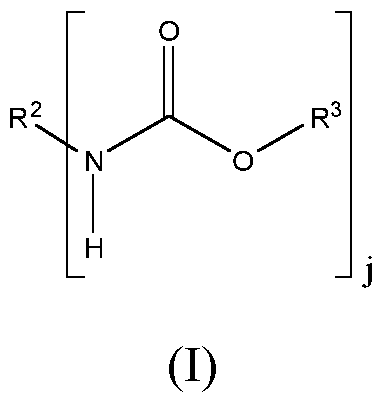
- the at least one allyl monomer or allyl oligomer comprises 1% to 10%, in particular 1% to 5% by mass relative to m a ii yi of a monomer represented by formula (I): wherein R 2 is a polyvalent linking group that is free of urethane linkages; R 3 is a residue of a material having a single hydroxy group and at least one allyl group, R being free of urethane linkages, and j is a number from 2 to 4.
- R 2 is a residue of a cycloaliphatic diisocyanate selected from isophorone diisocyanate, cyclohexane diisocyanate, methylcyclohexane diisocyanate, bis(isocyanatomethyl)cyclohexane, bis(isocyanatocyclohexyl)methane, bis(isocyanatocyclohexyl)-2,2-propane, bis(isocyanatocyclohexyl)-l,2-ethane, and mixtures thereof, and j is 2.
- a cycloaliphatic diisocyanate selected from isophorone diisocyanate, cyclohexane diisocyanate, methylcyclohexane diisocyanate, bis(isocyanatomethyl)cyclohexane, bis(isocyanatocyclohexyl)methane, bis(isocyanatocyclohexyl)-2,2-propane
- R 3 is a residue selected from C2-C4 alkylene glycol allyl ether, poly(C2-C4 alkylene glycol) allyl ether (such as a residue selected from poly(ethylene glycol) allyl ether, poly(l,2-propylene glycol) allyl ether and mixtures thereof), trimethylol propane di(allyl ether), trimethylol ethane di(allyl ether), pentaerythritol tri(allyl ether), di-trimethylol propane tri(allyl ether) and mixtures thereof.
- the polymerizable composition comprises at least one light-absorbing additive such as a dye, a pigment, an UV absorber, or an IR absorber.
- UV absorber has the following structure (II): I) wherein R 4 and R 5 are each independently chosen from H or an alkyl chain having 1 to 12 carbon atoms, in particular wherein R 4 and R 5 are methyl groups.
- step d. water is stripped from the polymerizable composition until the mass of water in the dried polymerizable composition m wa ter2 is below 0.65%, such as 0.05% to 0.65%, in particular below 0.63%, such as 0.05% to 0.63%, more particularly below 0.6%, such as 0.05% to 0.60%, even more particularly below 0.59%, such as 0.05% to 0.59%, of the total mass of the dried polymerizable composition.
- step f. a step of edging the lens, preferably the step of edging the lens is performed directly after annealing the lens or together with the surfacing.
- step d. water is stripped from the polymerizable composition until the mass of water in the dried polymerizable composition m wa ter2 is below 0.6%, such as 0.05% to 0.60%, in particular below 0.59%, such as 0.05% to 0.59%, of the total mass of the dried polymerizable composition, the ratio mBPo/m a ii yi of the dry mass of the BPO over the dry mass of the at least one allyl monomer or allyl oligomer, is of 0.021 to 0.025, in particular of 0.022 to 0.024, m a iiyi represents at least 95% of the total mass of the polymerizable composition, the ratio m wa teri/mBPO of the mass of the water in the RIC over the dry mass of the BPO in the radical initiator composition is of at least 0.28, in particular of 0.29 to 0.45.
- a polymerizable composition for manufacturing a lens comprising at least one allyl monomer or oligomer, BPO, and 0.05% to 0.65%, in particular 0.05% to 0.63%, more particularly 0.05% to 0.60%, even more particularly 0.05% to 0.59% of water, by mass relative to the total mass of the composition.
- composition according to item FF wherein the composition is a composition for manufacturing an ophthalmic lens.
- composition according to any one of items FF to HH, wherein the ratio mBPo/m a ii yi of the dry mass of the BPO in the composition over the dry mass of the at least one allyl monomer or allyl oligomer in the composition, is of at least 0.01, in particular of 0.014 to 0.046, more particularly of 0.021 to 0.025, even more particularly of 0.022 to 0.024.
- composition according to any one of items FF-JJ wherein the composition comprises at least one light-absorbing additive such as a dye, a pigment, an UV absorber, or an IR absorber.
- the at least one light absorbing additives comprises an UV absorber soluble in the composition, alone or in mixture with one or more color balancing dyes.
- composition according to item LL, wherein the UV absorber has the following structure (II): I) wherein R 4 and R 5 are each independently chosen from H or an alkyl chain having 1 to 12 carbon atoms, in particular wherein R 4 and R 5 are methyl groups.
- any one of items OO-QQ wherein the ratio mBPo/m a ii yi of the dry mass of the BPO in the polymerizable composition over the dry mass of the at least one allyl monomer or allyl oligomer in the polymerizable composition, is of at least 0.01, in particular of 0.014 to 0.046, more particularly of 0.021 to 0.025, even more particularly of 0.022 to 0.024.
- the polymerizable composition comprises at least one light-absorbing additive such as a dye, a pigment, an UV absorber, or an IR absorber.
- the at least one light absorbing additives comprises an UV absorber soluble in the polymerizable composition, alone or in mixture with one or more color balancing dyes.
- UV absorber has the following structure (II): wherein R 4 and R 5 are each independently chosen from H or an alkyl chain having 1 to 12 carbon atoms, in particular wherein R 4 and R 5 are methyl groups.
- the presently disclosed method for manufacturing a lens comprises the following steps: a. Providing a mass m a ii yi of at least one allyl monomer or allyl oligomer, b. Providing a radical initiator composition comprising benzoyl peroxide (BPO) in mixture with water, c. Mixing said at least one allyl monomer or allyl oligomer with the radical initiator composition to obtain a polymerizable composition, d. Stripping the water from the polymerizable composition to obtain a dried polymerizable composition, e. Providing a mold assembly and filling the mold assembly with the dried polymerizable composition, f. Curing the dried polymerizable composition in the mold assembly to obtain the lens.
- a radical initiator composition comprising benzoyl peroxide (BPO) in mixture with water
- BPO benzoyl peroxide
- the lens may be an ophthalmic lens.
- an ophthalmic lens is a lens which is designed to be used in monocles or in eyeglasses (including sunglasses, goggles and safety glasses).
- contact lenses are not ophthalmic lenses.
- Ophthalmic lenses are typically used to protect the eye and/or correct the sight.
- Ophthalmic lenses can be uncorrective ophthalmic lenses (also called piano or afocal lenses) or corrective ophthalmic lenses.
- a corrective lens may be a unifocal, a bifocal, a trifocal or a progressive lens.
- ophthalmic lenses can be finished lenses of semifinished lenses.
- a semi-finished lens undergoes various treatment steps such as surfacing, coloring, coating and edging before being finally included in eyeglasses or in a monocle.
- a finished lens is ready to be included in eyeglasses or in a monocle.
- the one allyl monomer or allyl oligomer (also called hereinafter the allyl component) can be a single allyl monomer, a single allyl oligomer, a mixture of two or more allyl monomers, a mixture of two or more allyl oligomers or a mixture of one or more allyl monomer with one or more allyl oligomer.
- the allyl component may be provided as part of an allyl composition comprising more than 95%, in particular more than 97%, more particularly more than 99% allyl monomers or allyl oligomers by mass relative to the total mass of the allyl composition.
- the allyl composition may comprise residual moisture, for example 0.003 to 0.04% of water by mass relative to the total mass of the allyl composition.
- m a ii yi is the mass of the allyl component present in the allyl composition, thus excluding, for example, water and impurities, which are not allyl monomers or oligomers, present in the allyl composition.
- the at least one allyl monomer or allyl oligomer is a compound or a mixture of compounds, wherein all the compounds comprise at least two allyl groups each.
- the at least one allyl monomer or allyl oligomer may comprise at least 90%, more particularly 95% to 99% by mass relative to m a ii yi of a compound selected in the group consisting of diethylene glycol bis(allyl carbonate), oligomers of diethylene glycol bis(allyl carbonate), ethylene glycol bis(allyl carbonate), oligomers of ethylene glycol bis(allyl carbonate), bisphenol A bis(allyl carbonate), oligomers of bisphenol A bis(allyl carbonate), diallyl phthalate, diallyl isophthalate, diallyl terephthalate, and mixtures thereof.
- the repeated unit is the diethylene glycol carbonate unit, the ethylene glycol carbonate unit or the bisphenol A carbonate unit respectively.
- the at least one allyl monomer or allyl oligomer may comprise 1% to 10%, in particular 1% to 5% by mass relative to m a ii yi of a monomer represented by formula (I): wherein R 2 is a polyvalent linking group that is free of urethane linkages; R 3 is a residue of a material having a single hydroxy group and at least one allyl group, R being free of urethane linkages, and j is a number from 2 to 4.
- R 2 is a polyvalent linking group that is free of urethane linkages
- R 3 is a residue of a material having a single hydroxy group and at least one allyl group, R being free of urethane linkages
- j is a number from 2 to 4.
- R 2 may be a residue of a cycloaliphatic diisocyanate selected from isophorone diisocyanate, cyclohexane diisocyanate, methylcyclohexane diisocyanate, bis(isocyanatomethyl)cyclohexane, bis(isocyanatocyclohexyl)methane, bis(isocyanatocyclohexyl)-2,2-propane, bis(isocyanatocyclohexyl)-l,2-ethane, and mixtures thereof, and j is 2.
- a cycloaliphatic diisocyanate selected from isophorone diisocyanate, cyclohexane diisocyanate, methylcyclohexane diisocyanate, bis(isocyanatomethyl)cyclohexane, bis(isocyanatocyclohexyl)methane, bis(isocyanatocyclohexyl)-2,2-propan
- R 3 may be a residue selected from C2-C4 alkylene glycol allyl ether, poly(C2-C4 alkylene glycol) allyl ether (such as a residue selected from polyethylene glycol) allyl ether, poly(l,2-propylene glycol) allyl ether and mixtures thereof), trimethylol propane di(allyl ether), trimethylol ethane di(allyl ether), pentaerythritol tri(allyl ether), di-trimethylol propane tri(allyl ether) and mixtures thereof.
- poly(C2-C4 alkylene glycol) allyl ether such as a residue selected from polyethylene glycol) allyl ether, poly(l,2-propylene glycol) allyl ether and mixtures thereof
- trimethylol propane di(allyl ether) trimethylol ethane di(allyl ether)
- pentaerythritol tri(allyl ether) di-trimethylol propane
- Monomers of formula (I) may be comprised in the allyl component in order to prevent the formation of so-called “fern” defects, which are observable on tinted lenses.
- One example of a monomer according to formula (I) is CR39-E provided by PPG.
- the at least one allyl monomer or allyl oligomer may comprise 95% to 99% by mass relative to m a ii yi of a mixture of diethylene glycol bis(allyl carbonate) and oligomers of diethylene glycol bis(allyl carbonate) and 1% to 5% by mass relative to m a ii yi of a monomer of formula (I).
- the diethylene glycol bis(allyl carbonate) may represent 90% to 99% of the total mass of the mixture of diethylene glycol bis(allyl carbonate) and oligomers of diethylene glycol bis(allyl carbonate).
- BPO and water may represent 95% to 100% of the mass of the radical initiator composition (RIC), in particular 99% to 100%.
- water may represent 5% to 40% of the mass of the radical initiator composition (RIC), in particular 20% to 30%.
- the use of a RIC with sufficiently large values for the ratio m wa teri/m B po of the mass of the water in the RIC over the dry mass of the BPO in the RIC allows the safe handling of BPO, in particular safe handling without requiring the use of low temperature throughout the process. Indeed, it should be understood that no water is removed from the RIC before step c., for example before step d. Moreover, after step c., the BPO is in mixture with the allyl component, which also makes it less dangerous (less sensitive to shocks and friction).
- the ratio m wa teri/mBPo of the mass of the water in the RIC over the dry mass of the BPO in the radical initiator composition may be of at least 0.28, in particular of 0.29 to 0.45, more particularly of 0.295 to 0.40, even more particularly of 0.30 to 0.39.
- the RIC is directly mixed in step c. to give the polymerizable composition.
- no step of removal of water are performed between step b. and step c., for example no step of removal of water are performed between step b. and step d., thus allowing a safer and simpler handling of the various compositions (e.g., the RIC, the polymerizable composition, the dried polymerizable composition) when manufacturing a lens.
- the various compositions can be safely handled at room temperature and do not require the use of low temperature.
- steps a. to e. may be performed at room temperature.
- performing a step at room temperature means that no heating device or cooling device is used to bring the temperature of the compounds used in said step outside a range of 15 to 30°C.
- the ratio mBPo/m a ii yi of the dry mass of the BPO over the dry mass of the at least one allyl monomer or allyl oligomer may be of at least 0.01, in particular of 0.014 to 0.046, more particularly of 0.021 to 0.025, even more particularly of 0.022 to 0.024, and m a ii yi may represent at least 95%, in particular 95% to 99%, more particularly 95% to 98%, even more particularly of 95% to 97% of the total mass of the polymerizable composition.
- the ratio mBPo/m a ii yi and the proportion of allyl in the polymerizable compositions are chosen to ensure proper polymerization of the allyl component in step f.
- a ratio that is too low may lead to a polymer insufficiently cross-linked and therefore to poor thermomechanical properties for the lens.
- Additives other than BPO, water and the allyl component may be present before step c. either in the allyl composition or in the RIC.
- additives other than BPO, water and the allyl component may be mixed with the allyl component and the RIC.
- additives are mixed with the allyl component and the RIC in step c.
- said additives may be mixed with the allyl component before mixing with the RIC.
- the mass of the additives m a dditives (comprising the additives other than BPO, water and the allyl component, which are present initially in the RIC or in the allyl composition or added in step c.) is comprised in the total mass of the polymerizable composition.
- m a dditives may represent less than 1%, in particular less than 0.5%, of the total mass of the polymerizable composition.
- Additives may comprise light-absorbing additives such as a dye, a pigment, an UV absorber, or an IR absorber.
- At least one light absorbing additive may be mixed with the at least one allyl monomer or allyl oligomer and the radical initiator composition during step c.
- Said at least one light absorbing additives may comprise an UV absorber soluble in the polymerizable composition, alone or in mixture with one or more color balancing dyes.
- Said UV absorber may have the following structure (II): wherein R 4 and R 5 are each independently chosen from H or an alkyl chain having 1 to 12 carbon atoms, in particular wherein R 4 and R 5 are methyl groups.
- the at least one light absorbing additive may represent less than 0.5%, in particular less than 0.2% of the total mass of the polymerizable composition.
- water may be stripped from the polymerizable composition until the mass of water in the dried polymerizable composition m wa ter2 is below 0.65%, such as 0.05% to 0.65%, in particular below 0.63%, such as 0.05% to 0.63%, more particularly below 0.60%, such as 0.05% to 0.60%, even more particularly below 0.59%, such as 0.05% to 0.59%, of the total mass of the dried polymerizable composition.
- the means for stripping water from the polymerizable composition in step d. are not particularly limited. Any method known by the skilled person may be used.
- m wa ter2 represents the total mass of water in the dried polymerizable composition.
- the polymerizable composition may comprise water coming from m wa teri and from water present in the allyl composition or in the additives, if any.
- step d. is done after the mixing step c. and before the curing step f. In particular it may be performed before the step of filling the mold assembly e.
- Water contents may be measured using a coulometric titration method known as the Karl Fischer coulometric method. This method is well-known of the skilled person. An automated Karl Fischer titrator may be used for the titration.
- Curing of the dried polymerizable composition comprises the radical polymerization and crosslinking of the allyl component initiated by the radical initiator BPO. It comprises the decomposition of BPO into radical species able to initiate the reaction of the allyl component. It also comprises the propagation of the polymerization.
- the fragmentation of BPO may be obtained by heating the composition, for example by placing the filled mold assembly in an oven. Further heating may ensure adequate propagation and cross-linking.
- curing the dried polymerizable composition may comprise 15 to 25 hours of heating the dried polymerizable composition between 60°C and 125°C, said heating comprising maintaining the dried polymerizable composition at temperatures of at least 110°C for 2 to 10 hours.
- the herein disclosed method may further comprise post-curing treatments.
- Post curing treatments may include: Annealing the lens.
- the annealing helps relaxing internal stresses that may have built up in the lens in the previous steps of the method (in particular during the curing step).
- the annealing may comprise or consist of 45 min to lh30 of heating at a temperature of 85 to 115°C.
- surfacing of the lens in particular surfacing of a back face of the lens, i.e. the side of the lens that is the closest to the eye of the wearer.
- the surfacing helps adjusting the geometry of the lens to give it the desired corrective power.
- the present disclosure also relates to a polymerizable composition for manufacturing a lens (hereafter the presently disclosed composition), in particular an ophthalmic lens, comprising at least one allyl monomer or oligomer, BPO, and 0.05% to 0.65%, in particular 0.05% to 0.63%, more particularly 0.05% to 0.60%, even more particularly 0.05% to 0.59% of water, by mass relative to the total mass of the composition.
- a polymerizable composition for manufacturing a lens hereafter the presently disclosed composition
- a polymerizable composition for manufacturing a lens hereafter the presently disclosed composition
- ophthalmic lens comprising at least one allyl monomer or oligomer, BPO, and 0.05% to 0.65%, in particular 0.05% to 0.63%, more particularly 0.05% to 0.60%, even more particularly 0.05% to 0.59% of water, by mass relative to the total mass of the composition.
- a ratio mBPo/m a ii yi may be defined mutatis mutandis for the polymerizable composition of the presently disclosed composition as it has been for the presently disclosed method.
- the presently disclosed composition may comprise additives.
- the mass of additives in the presently disclosed composition, m a dditives, may represent less than 1%, in particular less than 0.5%, of the total mass of the presently disclosed composition.
- the presently disclosed composition comprises light absorbing additives, they may represent 0.02% to 0.5%, in particular 0.05% to 0.2% of the total mass of the presently disclosed composition.
- the present disclosure also relates to the use of less than 0.65%, such as 0.05% to 0.65%, in particular less than 0.63%, such as 0.05% to 0.63%, more particularly less than 0.6%, such as 0.05% to 0.60%, even more particularly less than 0.59%, such as 0.05% to 0.59%, of water in a polymerizable composition comprising BPO and at least one allyl monomer or allyl oligomer for reducing the yellowness index of the cured polymerizable composition, wherein the percentage is a mass percentage relative to the total mass of the polymerizable composition.
- the presently disclosed use may be a use in the manufacturing of a lens, in particular an ophthalmic lens.
- a ratio mBPo/m a ii yi may be defined for the polymerizable composition of the presently disclosed use as it has been for the presently disclosed method.
- the polymerizable composition of the presently disclosed use may comprise additives.
- the mass of additives in the presently disclosed use, m a dditives, may represent less than 1%, in particular less than 0.5%, of the total mass of the polymerizable composition.
- the polymerizable composition when the polymerizable composition comprises light absorbing additives, they may represent 0.02% to 0.5%, in particular 0.05% to 0.2% of the total mass of the polymerizable composition.
- the water content in the samples is measured by the Karl Fischer coulometric titration method using an automated Karl Fischer titrator (Metrohm - 870 KF titrino plus).
- CR39 designates the commercial product sold by PPG industries. It is a composition comprising more than 98% by mass of a mixture of di ethylene glycol bis(allyl carbonate) and oligomers of diethylene glycol bis(allyl carbonate) relative to the total mass of the composition.
- the diethylene glycol bis(allyl carbonate) represents more than 91% of the total mass of the mixture of diethylene glycol bis(allyl carbonate) and oligomers of diethylene glycol bis(allyl carbonate).
- BPO 75% designates a mixture of BPO and water in the form of granules comprising 75% by mass of BPO and 25% by mass of water, relative to the total mass of the mixture.
- the effect on the yellowness index of the water content is specific to BPO since no effect is observed with IPP.
Landscapes
- Chemical & Material Sciences (AREA)
- Health & Medical Sciences (AREA)
- Polymers & Plastics (AREA)
- Chemical Kinetics & Catalysis (AREA)
- Medicinal Chemistry (AREA)
- Organic Chemistry (AREA)
- Physics & Mathematics (AREA)
- Ophthalmology & Optometry (AREA)
- General Physics & Mathematics (AREA)
- Optics & Photonics (AREA)
- General Health & Medical Sciences (AREA)
- Engineering & Computer Science (AREA)
- Materials Engineering (AREA)
- Addition Polymer Or Copolymer, Post-Treatments, Or Chemical Modifications (AREA)
Abstract
Description




Claims

Priority Applications (3)
| Application Number | Priority Date | Filing Date | Title |
|---|---|---|---|
| US19/123,993 US20260152588A1 (en) | 2022-10-25 | 2023-10-24 | Manufacturing allylic lenses with improved color using benzoyl peroxide as the initiator |
| CN202380070269.4A CN119968404A (en) | 2022-10-25 | 2023-10-24 | Using benzoyl peroxide as an initiator to make allyl lenses with improved color |
| MX2025004798A MX2025004798A (en) | 2022-10-25 | 2025-04-24 | Manufacturing allylic lenses with improved color using benzoyl peroxide as the initiator |
Applications Claiming Priority (2)
| Application Number | Priority Date | Filing Date | Title |
|---|---|---|---|
| EP22306618.4A EP4361182A1 (en) | 2022-10-25 | 2022-10-25 | Manufacturing allylic lenses with improved color using benzoyl peroxide as the initiator |
| EP22306618.4 | 2022-10-25 |
Publications (1)
| Publication Number | Publication Date |
|---|---|
| WO2024088994A1 true WO2024088994A1 (en) | 2024-05-02 |
Family
ID=84358818
Family Applications (1)
| Application Number | Title | Priority Date | Filing Date |
|---|---|---|---|
| PCT/EP2023/079545 Ceased WO2024088994A1 (en) | 2022-10-25 | 2023-10-24 | Manufacturing allylic lenses with improved color using benzoyl peroxide as the initiator |
Country Status (5)
| Country | Link |
|---|---|
| US (1) | US20260152588A1 (en) |
| EP (1) | EP4361182A1 (en) |
| CN (1) | CN119968404A (en) |
| MX (1) | MX2025004798A (en) |
| WO (1) | WO2024088994A1 (en) |
Citations (3)
| Publication number | Priority date | Publication date | Assignee | Title |
|---|---|---|---|---|
| US4146696A (en) * | 1976-08-11 | 1979-03-27 | Buckbee-Mears Company | Industrial production of cast plastic lenses |
| US4686266A (en) * | 1984-11-23 | 1987-08-11 | Ppg Industries, Inc. | Bis(allyl carbonate) monomer and method for polymerizing same |
| US20030173551A1 (en) | 1999-12-13 | 2003-09-18 | Nagpal Vidhu J. | Polymerizable polyol (allyl carbonate) compositions |
-
2022
- 2022-10-25 EP EP22306618.4A patent/EP4361182A1/en active Pending
-
2023
- 2023-10-24 WO PCT/EP2023/079545 patent/WO2024088994A1/en not_active Ceased
- 2023-10-24 US US19/123,993 patent/US20260152588A1/en active Pending
- 2023-10-24 CN CN202380070269.4A patent/CN119968404A/en active Pending
-
2025
- 2025-04-24 MX MX2025004798A patent/MX2025004798A/en unknown
Patent Citations (3)
| Publication number | Priority date | Publication date | Assignee | Title |
|---|---|---|---|---|
| US4146696A (en) * | 1976-08-11 | 1979-03-27 | Buckbee-Mears Company | Industrial production of cast plastic lenses |
| US4686266A (en) * | 1984-11-23 | 1987-08-11 | Ppg Industries, Inc. | Bis(allyl carbonate) monomer and method for polymerizing same |
| US20030173551A1 (en) | 1999-12-13 | 2003-09-18 | Nagpal Vidhu J. | Polymerizable polyol (allyl carbonate) compositions |
Also Published As
| Publication number | Publication date |
|---|---|
| US20260152588A1 (en) | 2026-06-04 |
| EP4361182A1 (en) | 2024-05-01 |
| MX2025004798A (en) | 2025-05-02 |
| CN119968404A (en) | 2025-05-09 |
Similar Documents
| Publication | Publication Date | Title |
|---|---|---|
| KR101954346B1 (en) | Isocyanate composition with improved stability and reactivity, and optical lens using the same | |
| KR101729368B1 (en) | Plastic polarizing lens, method for producing same, and polarizing film | |
| US20030136948A1 (en) | Photochromic polymerizable compositions | |
| DE60304935T2 (en) | Process for the production of plastic lenses and the produced plastic lens | |
| KR20140134050A (en) | Polyurethane compositions for high-refractive index transparent lenses with good heat resistance | |
| JP2022064984A (en) | Polythiourethane-based plastic lens | |
| WO2022224928A1 (en) | Method for manufacturing an optical material and composition used in this method | |
| JPH11295502A (en) | Plastic lens | |
| KR102006338B1 (en) | Polymerizable composition for polythiourethane plastic lens | |
| EP4361182A1 (en) | Manufacturing allylic lenses with improved color using benzoyl peroxide as the initiator | |
| JPH11218602A (en) | Plastic lens | |
| JP7335807B2 (en) | Compositions for the production of organic glasses based on allyl monomers and peroxides | |
| US5288844A (en) | High-refractive index plastic optical material | |
| JP4329281B2 (en) | Plastic lens manufacturing method and plastic lens manufactured by the manufacturing method | |
| JP2856236B2 (en) | Coating composition for high refractive index plastic lens | |
| US5235014A (en) | High-refractivity plastic lens resin | |
| KR101580878B1 (en) | Polythiourethane polymerization compositions having high impact resistance and preparation method of optical resin using them | |
| EP4442724A1 (en) | Method of curing a polythiourethane-based substrate from a pre-polymer | |
| WO2024126747A1 (en) | Method of curing a polythiourethane based substrate tolerant to water | |
| CN116569076B (en) | Liquid polymerizable allyl compositions containing lake pigments | |
| WO2025023227A1 (en) | Method for manufacturing a polymeric optical article and a composition used therefor | |
| KR101918294B1 (en) | Resin composition for optical material having advanced property and preparation method of optical material using it | |
| CN109666113A (en) | A kind of high dioptrics polymerizable composition, polymerizable composition and application | |
| US11634537B2 (en) | Polymerizable composition for optical articles and optical articles made therefrom | |
| WO2025047768A1 (en) | Method for preparing a polyallyl-functional prepolymer composition, and method for manufacturing an optical article wherein said prepolymer composition is used |
Legal Events
| Date | Code | Title | Description |
|---|---|---|---|
| 121 | Ep: the epo has been informed by wipo that ep was designated in this application |
Ref document number: 23797740 Country of ref document: EP Kind code of ref document: A1 |
|
| WWE | Wipo information: entry into national phase |
Ref document number: 202517030103 Country of ref document: IN |
|
| WWE | Wipo information: entry into national phase |
Ref document number: 202380070269.4 Country of ref document: CN |
|
| REG | Reference to national code |
Ref country code: BR Ref legal event code: B01A Ref document number: 112025006173 Country of ref document: BR |
|
| WWE | Wipo information: entry into national phase |
Ref document number: 2501002346 Country of ref document: TH |
|
| WWP | Wipo information: published in national office |
Ref document number: 202380070269.4 Country of ref document: CN |
|
| WWP | Wipo information: published in national office |
Ref document number: 202517030103 Country of ref document: IN |
|
| NENP | Non-entry into the national phase |
Ref country code: DE |
|
| ENP | Entry into the national phase |
Ref document number: 112025006173 Country of ref document: BR Kind code of ref document: A2 Effective date: 20250328 |
|
| 122 | Ep: pct application non-entry in european phase |
Ref document number: 23797740 Country of ref document: EP Kind code of ref document: A1 |