WO2024080171A1 - 電池性能推定方法、電池性能推定装置及び電池性能推定プログラム - Google Patents
電池性能推定方法、電池性能推定装置及び電池性能推定プログラム Download PDFInfo
- Publication number
- WO2024080171A1 WO2024080171A1 PCT/JP2023/035784 JP2023035784W WO2024080171A1 WO 2024080171 A1 WO2024080171 A1 WO 2024080171A1 JP 2023035784 W JP2023035784 W JP 2023035784W WO 2024080171 A1 WO2024080171 A1 WO 2024080171A1
- Authority
- WO
- WIPO (PCT)
- Prior art keywords
- carbon
- battery
- battery performance
- physical property
- performance
- Prior art date
- Legal status (The legal status is an assumption and is not a legal conclusion. Google has not performed a legal analysis and makes no representation as to the accuracy of the status listed.)
- Ceased
Links
Images



Classifications
-
- G—PHYSICS
- G01—MEASURING; TESTING
- G01R—MEASURING ELECTRIC VARIABLES; MEASURING MAGNETIC VARIABLES
- G01R31/00—Arrangements for testing electric properties; Arrangements for locating electric faults; Arrangements for electrical testing characterised by what is being tested not provided for elsewhere
- G01R31/36—Arrangements for testing, measuring or monitoring the electrical condition of accumulators or electric batteries, e.g. capacity or state of charge [SoC]
- G01R31/367—Software therefor, e.g. for battery testing using modelling or look-up tables
-
- G—PHYSICS
- G01—MEASURING; TESTING
- G01R—MEASURING ELECTRIC VARIABLES; MEASURING MAGNETIC VARIABLES
- G01R31/00—Arrangements for testing electric properties; Arrangements for locating electric faults; Arrangements for electrical testing characterised by what is being tested not provided for elsewhere
- G01R31/36—Arrangements for testing, measuring or monitoring the electrical condition of accumulators or electric batteries, e.g. capacity or state of charge [SoC]
- G01R31/382—Arrangements for monitoring battery or accumulator variables, e.g. SoC
-
- G—PHYSICS
- G01—MEASURING; TESTING
- G01R—MEASURING ELECTRIC VARIABLES; MEASURING MAGNETIC VARIABLES
- G01R31/00—Arrangements for testing electric properties; Arrangements for locating electric faults; Arrangements for electrical testing characterised by what is being tested not provided for elsewhere
- G01R31/36—Arrangements for testing, measuring or monitoring the electrical condition of accumulators or electric batteries, e.g. capacity or state of charge [SoC]
- G01R31/385—Arrangements for measuring battery or accumulator variables
-
- G—PHYSICS
- G01—MEASURING; TESTING
- G01R—MEASURING ELECTRIC VARIABLES; MEASURING MAGNETIC VARIABLES
- G01R31/00—Arrangements for testing electric properties; Arrangements for locating electric faults; Arrangements for electrical testing characterised by what is being tested not provided for elsewhere
- G01R31/36—Arrangements for testing, measuring or monitoring the electrical condition of accumulators or electric batteries, e.g. capacity or state of charge [SoC]
- G01R31/385—Arrangements for measuring battery or accumulator variables
- G01R31/387—Determining ampere-hour charge capacity or SoC
-
- H—ELECTRICITY
- H01—ELECTRIC ELEMENTS
- H01M—PROCESSES OR MEANS, e.g. BATTERIES, FOR THE DIRECT CONVERSION OF CHEMICAL ENERGY INTO ELECTRICAL ENERGY
- H01M10/00—Secondary cells; Manufacture thereof
- H01M10/42—Methods or arrangements for servicing or maintenance of secondary cells or secondary half-cells
- H01M10/48—Accumulators combined with arrangements for measuring, testing or indicating the condition of cells, e.g. the level or density of the electrolyte
-
- H—ELECTRICITY
- H02—GENERATION; CONVERSION OR DISTRIBUTION OF ELECTRIC POWER
- H02J—ELECTRIC POWER NETWORKS; CIRCUIT ARRANGEMENTS OR SYSTEMS FOR SUPPLYING OR DISTRIBUTING ELECTRIC POWER; SYSTEMS FOR STORING ELECTRIC ENERGY
- H02J7/00—Circuit arrangements for charging or discharging batteries or for supplying loads from batteries
Definitions
- This invention relates to a battery performance estimation method, a battery performance estimation device, and a battery performance estimation program.
- Patent Document 1 In order to understand the state of the battery, attempts have been made to measure the Raman spectrum and X-ray diffraction spectrum of the carbon used as the negative electrode active material and to investigate the degree of graphitization, lattice spacing, and crystallite size of the carbon (Patent Document 1).
- the present invention was made in consideration of the above-mentioned problems, and aims to estimate with high accuracy the performance of a battery manufactured using carbon as a negative electrode active material, based on the physical properties of the carbon used as the negative electrode active material.
- the present invention was completed after extensive research by the inventors to solve the above problems, and it was discovered that by using the above (a) and (b) as the physical property values of carbon, and estimating battery performance using a machine learning model obtained based on training data including these (a) and (b) and values related to battery performance measured for batteries manufactured using the carbon as the negative electrode active material, it is possible to estimate battery performance with a sufficiently higher accuracy than before.
- the battery performance estimation method of the present invention is a method for estimating the performance of a battery manufactured using carbon as a negative electrode active material from the physical property values of the carbon, and is characterized in that the battery performance is estimated using a machine learning model obtained based on training data including the physical property values of carbon, namely (a) and (b) below, and values related to battery performance measured for a battery manufactured using the carbon as a negative electrode active material.
- a the ratio (ID/IG) of the peak top intensity (ID) of the D band to the peak top intensity (IG) of the G band calculated from the Raman spectrum, or a value related to said ratio
- the physical property data further include (c) a value relating to the lattice spacing in the C-axis direction calculated from the X-ray diffraction spectrum.
- (c) is obtained by dimensional reduction of multiple types of variables calculated from an X-ray diffraction spectrum.
- An example of the battery performance estimated by the present invention is the charge/discharge capacity or C-rate characteristics of the battery.
- the training data may further include values related to the environmental temperature and the number of charge/discharge cycles of the battery in addition to the aforementioned carbon physical property values or values related to the battery performance.
- the performance of a battery manufactured using carbon can be estimated with high accuracy based on the physical properties of the carbon used as the negative electrode active material.
- FIG. 1 is an overall schematic diagram of a battery performance estimation device according to an embodiment of the present invention
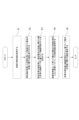
- 3 is a schematic diagram showing a procedure for estimating battery performance and measurement results using the battery performance estimation device according to the embodiment
- FIG. 13 is a schematic diagram showing a machine learning device according to another embodiment of the present invention.
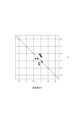
- FIG. 4 is a diagram showing the results of an experiment verifying the effect of the battery performance estimation method according to the present invention.
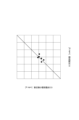
- FIG. 4 is a diagram showing the results of an experiment verifying the effect of the battery performance estimation method according to the present invention.
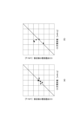
- FIG. 4 is a diagram showing the results of an experiment verifying the effect of the battery performance estimation method according to the present invention.
- FIG. 4 is a diagram showing the results of an experiment verifying the effect of the battery performance estimation method according to the present invention.
- the battery performance estimation device 100 includes a measurement unit 1 that measures the physical property values of carbon, and an information processing unit 2 that receives the physical property values of carbon output from the measurement unit 1 and estimates the performance of a battery manufactured using the carbon as a negative electrode material.
- the measurement unit 1 includes a Raman spectroscopic section 11 that measures the Raman spectrum of carbon, and an X-ray diffraction section 12 that measures the X-ray diffraction spectrum of carbon.
- the Raman spectroscopic section 11 and the X-ray diffraction section 12 may be equipped with a commercially available Raman spectroscopic device, an X-ray diffraction device, or the like.
- the measurement unit 1 may also include, for example, a temperature sensor that measures the environmental temperature at the time when the Raman spectrum or X-ray diffraction spectrum of carbon is measured.
- the measurement unit 1 is configured to be able to send and receive data to and from the information processing unit 2 via wired or wireless communication.
- the information processing unit 2 is, for example, a general-purpose computer that has analog electrical circuits including buffers, amplifiers, etc., digital electrical circuits including a CPU, memory, DSP, etc., and A/D converters and the like interposed between them.
- the information processing unit 2 is configured to function as a data receiving unit 21 that receives signals (e.g., Raman spectra and X-ray diffraction spectra) output from the Raman spectroscopy unit 11 and X-ray diffraction unit 12, and an estimation unit 22 that estimates battery performance based on the signals received by the data receiving unit 21, by the CPU and its peripheral devices working together in accordance with a predetermined program stored in the memory.
- signals e.g., Raman spectra and X-ray diffraction spectra
- the information processing unit 2 in this embodiment also functions as a memory unit 23 that stores and accumulates teacher data created based on the data accepted by the data accepting unit 21, and a machine learning model generation unit 24 that generates a machine learning model by performing machine learning based on the teacher data accumulated in the memory unit 23.
- the estimation unit 22 is configured to estimate a value related to the performance of the battery using the machine learning model generated by the machine learning model generation unit 24 .
- a method of estimating battery performance using the battery performance estimation device 100 configured in this manner involves, for example, acquiring training data for generating a machine learning model (S1, S2), creating a machine learning model based on the training data (S3), and further estimating battery performance from the physical property values of an actual carbon sample based on this machine learning model (S4, S5), as shown in Fig. 2.
- S1, S2 training data for generating a machine learning model
- S3 machine learning model based on the training data
- S4 S5 machine learning model based on this machine learning model
- the training data used in this embodiment is a set of data that links together the physical property values of carbon, the physical property values of carbon measured by the measurement unit 1 of a battery manufactured using the carbon as a negative electrode active material, and values related to the performance of a battery actually manufactured using the carbon (also referred to as battery performance data).
- the physical property values of carbon are calculated based on the Raman spectrum and the X-ray diffraction spectrum measured by the measurement unit 1 .
- the calculation of the physical property values can be performed, for example, by the data receiving unit 21.
- the data receiving unit 21 can be said to be a pre-processing unit.
- the following (a) to (c) are used as the physical property values.
- the Raman spectrum of carbon obtained by Raman spectroscopy using excitation light with a wavelength of 532 nm contains a peak in the D band (a band from 1350 cm ⁇ 1 to 1370 cm ⁇ 1 ) and a peak in the G band (a band from 1570 cm ⁇ 1 to 1620 cm ⁇ 1 ).
- the ratio (ID/IG) of the maximum value of the peak intensity (also referred to as peak top intensity or ID) contained in the D band to the maximum value of the peak intensity (also referred to as peak top intensity or IG) contained in the G band, and the bandwidth of the G band (half width of the peak in the G band) are known to be indicators of the crystallinity, etc. of carbon.
- values relating to the lattice spacing in the C-axis direction calculated from the X-ray diffraction spectrum include values relating to the lattice constant (d) and crystallite size (L) obtained by X-ray diffraction, such as d(002), d(004), d(006), L(002), L(004), L(006), L(110), and L(112).
- the physical values related to these lattice constants are not used as they are, but rather, by utilizing the multicollinearity that exists between the values related to these lattice constants (d) and crystallite size (L), the dimensionality is reduced for the multiple variables related to the lattice constants (d) and crystallite size (L) described above (for example, the eight variables described above), and the values obtained by making them one-dimensional variables are used as the physical values.
- the above-mentioned values of (a), (b), and (c) are calculated as follows. Raman spectroscopy and X-ray diffraction analysis are performed on a certain carbon, and the ratio (ID/IG) and the bandwidth of the G band are calculated from the obtained Raman spectroscopy spectrum, and the eight variables are calculated from the X-ray diffraction spectrum, thereby obtaining a total of 10 physical property values. Meanwhile, the performance values of a battery produced using this carbon (for example, the charge capacity of a lithium ion secondary battery) are measured.
- the PLS method has been described here as a method for setting a new axis that maximizes the covariance between the value related to the battery performance and the physical property value
- other methods such as the Principal Component Regression (PCR) method may be used instead of the PLS method.
- PCR Principal Component Regression
- values related to the battery performance include various indices that are generally measured when performing quality control of batteries, such as the charge capacity, irreversible capacity, and input performance of C-rate characteristics of the battery.
- the values relating to the performance of these batteries may be measured for a battery that was actually manufactured using the carbon whose physical properties were measured as the negative electrode active material, and the measured values may be input to the information processing unit 2 by the user, or the values relating to the performance of the battery may be directly input to the information processing unit 2 from a measuring device that measures the values relating to the performance of the battery.
- the memory unit 23 stores and accumulates a set of data containing, as components, the physical property values of the carbon calculated in this manner and values related to the performance of the battery manufactured using the carbon as the negative electrode active material, as training data.
- the machine learning model generation unit 24 When the training data is stored in the memory unit 23 as described above, the machine learning model generation unit 24 generates a machine learning model regarding the correlation between the physical properties of carbon and battery performance based on the training data stored in the memory unit 23.
- the Raman spectrum and X-ray diffraction spectrum of the carbon for which the battery performance is to be actually estimated are measured in the measurement unit, and the data receiving unit 21 that receives this measurement data calculates the physical property values (a) to (c) of the carbon described above.
- the physical property values of carbon calculated in this manner are sent to an estimation unit 22 that estimates battery performance.
- the estimation unit 22 estimates the performance of the battery based on the machine learning model generated by the machine learning model generation unit 24 and the physical property values, and outputs a value related to the battery performance (also referred to as battery performance estimation data) as the estimation result.
- a machine learning model is generated using the following (a) and (b) as physical property values of carbon, so that values related to battery performance can be estimated with higher accuracy than conventional estimation methods.
- all values related to the performance of the battery to be used as the teacher data are measured under standard conditions such as 25° C., one atmospheric pressure, and a charge rate of 0.1 C, but it is also possible to plot the charge capacity maintenance rate when the charge rate is changed when charging the battery, assuming that the charge capacity of the lithium-ion secondary battery when charged at a specific charge rate and temperature is 100%, determine an approximation formula based on this plot, and further include one or more coefficients included in this approximation formula in the teacher data.
- the C rate characteristics of the battery can be estimated.
- coefficients for gradually changing the temperature when the battery is charged may be calculated in a similar manner and included in the teacher data.
- the environmental temperature is included as teacher data, it is also possible to estimate values related to the performance of the battery at a certain environmental temperature (such as charging capacity) by inputting information on the environmental temperature at which the battery is planned to be used in addition to the physical property values of carbon.
- the battery performance estimation device was described as having both a Raman spectroscopy section and an X-ray diffraction section in the measurement unit, but it is sufficient to have at least a Raman spectroscopy section, and an X-ray diffraction section is not necessarily a required component.
- the measurement unit directly outputs the Raman spectrum or X-ray diffraction spectrum measured by the measurement unit to the information processing unit, but the measurement unit is not necessarily a required component, and the user may manually input measurement data about carbon previously measured by another device or already calculated physical property values to the information processing unit.
- measuring equipment such as a temperature sensor for measuring the physical properties of carbon and values related to the measurement conditions may be provided in the measurement unit, or measurements taken using independent measuring equipment may be input separately into an information processing device.
- the components of the training data may further include, for example, measurement data on which the physical properties of carbon are based, the measurement conditions when the battery performance was measured (such as information on humidity, the model number and year of the measuring device, etc.), information on the structure and components of the battery, and battery quality information such as the number of charge/discharge cycles of the battery at the time the battery performance was measured to obtain the training data.
- measurement data on which the physical properties of carbon are based such as information on humidity, the model number and year of the measuring device, etc.
- the battery quality information such as the number of charge/discharge cycles of the battery at the time the battery performance was measured to obtain the training data.
- a part of the information processing unit may be, for example, a machine learning device configured with an independent server device or the like capable of communicating with multiple measuring devices via the Internet, and may collect training data from measuring units used by an unspecified number of users, and distribute measurement values calculated using a machine learning model or the machine learning model to each of the multiple measuring units.
- a machine learning device configured with an independent server device or the like capable of communicating with multiple measuring devices via the Internet, and may collect training data from measuring units used by an unspecified number of users, and distribute measurement values calculated using a machine learning model or the machine learning model to each of the multiple measuring units.
- the machine learning device may be, for example, as shown in FIG. 3, equipped with a data receiving unit that receives training data, a storage unit, and a machine learning model generating unit, which accumulates training data output from multiple measurement units, generates a machine learning model, and outputs the generated machine learning model for each measurement unit.
- the carbon used as the negative electrode active material various commercially available carbon powders were used. Specifically, we prepared approximately 20 types of carbon materials that can be used as negative electrode active materials in lithium secondary batteries, including spherical or crushed natural graphite and spherical or crushed artificial graphite, each with different manufacturers, product numbers, average particle sizes, etc. The Raman spectrum and the X-ray diffraction spectrum of each of the carbons used were measured.
- the device used for the Raman spectroscopic analysis was a microscopic laser Raman spectrometer manufactured by Horiba, Ltd., and the measurement conditions were as follows: Laser power: 2mW Exposure time: 60 seconds; Number of times of accumulation: 2 times; The apparatus used for X-ray diffraction was a SmartLab manufactured by Rigaku Corporation, and the measurement was carried out using Cu K ⁇ 1 radiation.
- a new axis is set on which the covariance between the actual battery performance values and the physical properties of carbon (a total of 10 variables: eight variables calculated from the X-ray diffraction spectrum, the ratio (ID/IG) calculated from the Raman spectroscopy spectrum, and the width of the G band) is maximized, and all eight variables calculated from the X-ray diffraction spectrum are projected together onto the set new axis to reduce the dimension to one-dimensional variables, or the eight variables calculated from the X-ray diffraction spectrum are not reduced in dimension, and d(002), d(004), d(006), L(002), L(004), L(006), L(110), and L(112) are used as they are as the physical property value (c).
- independent values of the variables obtained by projecting each onto the new axis obtained as described above were used.
- Lithium ion secondary batteries were actually fabricated using the various carbons described above as the negative electrode active material, and the performance values of the lithium ion secondary batteries were measured. As values relating to the performance of the battery, the charge/discharge capacity and C-rate characteristics were measured.
- the method for measuring the charge/discharge capacity and C rate characteristics of the battery is as follows. A mixed powder containing carbon as the negative electrode active material and a solid electrolyte in a 1:1 ratio was compressed into a pellet shape, and the pellet was laminated on a pellet-shaped solid electrolyte layer formed from the solid electrolyte to prepare a test battery cell using lithium metal as a counter electrode.
- the charge/discharge measurement was performed using a Scribner Associates, Inc.-manufactured charge/discharge measurement system.
- the charge/discharge capacity was measured for three cycles at a 10-hour charge rate (a charge rate that takes 10 hours to charge).
- the C-rate characteristics were evaluated by measuring the charge capacity at each charge rate while changing the charge rate, and examining the charge capacity retention rate at each charge rate when the charge capacity at a certain charge rate (0.1 C in this case) was taken as 100%.
- the thus measured physical property values (a) to (c) of carbon and values related to the battery performance were provided to the machine learning model generation unit as a set of training data, and the machine learning model generation unit was caused to generate a machine learning model.
- test data a similar dataset (called test data) was obtained using the same procedure as for the training data, but using a different type of carbon than the one used to obtain the training data.
- FIG. 4 shows the results of estimating the C-rate characteristics of a battery using (a) and (b) as the physical property values of carbon.
- the vertical axis of FIG. 4 represents A, which is one of the coefficients of a cubic expression that is an approximation equation when the C-rate characteristics are plotted against the actual measured values, and the horizontal axis represents the estimated coefficient A. When these lie on a straight line with a slope of 1, this indicates that the actual measured values and the estimated values for the C-rate characteristics of the battery match.
- A is one of the coefficients of a cubic expression that is an approximation equation when the C-rate characteristics are plotted against the actual measured values
- the horizontal axis represents the estimated coefficient A.
- the present invention it is possible to estimate with high accuracy the performance of a battery manufactured using carbon as the negative electrode active material, based on the physical properties of the carbon used as the negative electrode active material.
- REFERENCE SIGNS LIST 100 Battery performance estimation device 1: Measurement unit 11: Raman spectroscopy section 12: X-ray diffraction section 2: Information processing unit 21: Data reception section 22: Estimation section 23: Memory section 24: Machine learning model generation section
Landscapes
- Physics & Mathematics (AREA)
- General Physics & Mathematics (AREA)
- Engineering & Computer Science (AREA)
- Power Engineering (AREA)
- Manufacturing & Machinery (AREA)
- Chemical & Material Sciences (AREA)
- Chemical Kinetics & Catalysis (AREA)
- Electrochemistry (AREA)
- General Chemical & Material Sciences (AREA)
- Investigating, Analyzing Materials By Fluorescence Or Luminescence (AREA)
- Battery Electrode And Active Subsutance (AREA)
Abstract
炭素の物性値から、この炭素を負極活物質として用いて製造された電池の性能を高精度で推定する。 炭素の物性値から該炭素を負極活物質として製造した電池の性能を推定する方法であって、炭素の物性値である以下の(a)及び(b)と、該炭素を負極活物質として製造した電池について測定された電池性能に関する値と、を含む教師データに基づいて得られた機械学習モデルを用いて電池の性能を推定することを特徴とする電池性能推定方法。 (a)ラマンスペクトルから算出したDバンドのピークトップ強度(ID)とGバンドのピークトップ強度(IG)との比(ID/IG)又は前記比に関する値 (b)ラマンスペクトルから算出したGバンドの幅又は前記幅に関する値
Description
この発明は、電池性能推定方法、電池性能推定装置及び電池性能推定プログラムに関するものである。
電池の開発工数や実験設備投資の削減、製造した電池性能が妥当なものかどうかを判断するベンチマークが求められている。
そこで、電池の状態を知るために負極活物質として使用する炭素のラマンスペクトルやX線回折スペクトルを測定し、炭素の黒鉛化度や格子間隔、結晶子サイズを調査することが試みられている(特許文献1)。
しかしながら、前述したような炭素の黒鉛化度や格子間隔、結晶子サイズの分析結果から電池の性能を推定する場合には予期することができないノイズを排除することができないという問題がある。また炭素についての様々な分析結果のうち具体的にどのパラメータを用いれば精度よく推測できるかは明らかではなく、電池の性能を正確に推測する方法は未だ確立されていない状況である。
本発明は、前述した課題に鑑みてなされたものであり、負極活物質として用いる炭素の物性値から、この炭素を負極活物質として用いて電池を製造した場合の電池の性能を高精度で推定することを目的とする。
本発明は、前記課題を解決すべく本発明者が鋭意検討を重ねた結果、炭素の物性値として前記(a)及び(b)を用い、これら(a)及び(b)と該炭素を負極活物質として製造した電池について測定された電池性能に関する値とを含む教師データに基づいて得られた機械学習モデルを用いて電池の性能を推定することにより、従来よりも十分に高い精度で電池の性能を推定できることを見出して初めて完成されたものである。
すなわち本発明に係る電池性能推定方法は、炭素の物性値から該炭素を負極活物質として製造した電池の性能を推定する方法であって、炭素の物性値である以下の(a)及び(b)と、該炭素を負極活物質として製造した電池について測定された電池性能に関する値と、を含む教師データに基づいて得られた機械学習モデルを用いて電池の性能を推定することを特徴とするものである。
(a)ラマンスペクトルから算出したDバンドのピークトップ強度(ID)とGバンドのピークトップ強度(IG)との比(ID/IG)又は前記比に関する値
(b)ラマンスペクトルから算出したGバンドの幅又は前記幅に関する値
(a)ラマンスペクトルから算出したDバンドのピークトップ強度(ID)とGバンドのピークトップ強度(IG)との比(ID/IG)又は前記比に関する値
(b)ラマンスペクトルから算出したGバンドの幅又は前記幅に関する値
電池性能をより多角的に精度よく推定するには、前記物性データとしてさらに(c)X線回折スペクトルから算出したC軸方向の格子間隔に関する値を含むものとすることが好ましい。
本発明の具体的な実施態様の一つとしては、前記(c)が、X線回折スペクトルから算出した複数種類の変数を次元削減して得たものであるものを挙げることができる。
本発明によって推定する電池性能の一例としては、電池の充放電容量又はCレート特性を挙げることができる。
前記教師データとして、前述した炭素の物性値又は電池性能に関する値以外に環境温度に関する値や電池の充放電サイクル数に関する値をさらに含むものとしても良い。
本発明によれば、負極活物質として用いる炭素の物性値に基づいて、この炭素を用いて製造された電池の性能を高精度で推定することができる。
以下に本発明の一実施形態について図面を参照して説明する。
<本実施形態に係る電池性能推定装置の構成>
本実施形態に係る電池性能推定装置100は、例えば、図1に示すように、炭素の物性値を測定する測定ユニット1と、該測定ユニット1から出力される炭素の物性値を受け付けて、前記炭素を負極材料として用いて製造された電池性能を推定する情報処理ユニット2とを備えるものである。
本実施形態に係る電池性能推定装置100は、例えば、図1に示すように、炭素の物性値を測定する測定ユニット1と、該測定ユニット1から出力される炭素の物性値を受け付けて、前記炭素を負極材料として用いて製造された電池性能を推定する情報処理ユニット2とを備えるものである。
測定ユニット1は、炭素のラマンスペクトルを測定するラマン分光部11及び炭素のX線回折スペクトルを測定するX線回折部12を備えるものである。
ラマン分光部11及X線回折部12としては、市販のラマン分光装置、X線回折装置等を備えるものとすることができる。
測定ユニット1は、前述したもの以外にも、例えば、炭素のラマンスペクトルやX線回折スペクトルを測定した時点の環境温度を測定する温度センサ等を備えるものとしても良い。
ラマン分光部11及X線回折部12としては、市販のラマン分光装置、X線回折装置等を備えるものとすることができる。
測定ユニット1は、前述したもの以外にも、例えば、炭素のラマンスペクトルやX線回折スペクトルを測定した時点の環境温度を測定する温度センサ等を備えるものとしても良い。
測定ユニット1は有線又は無線により情報処理ユニット2との間でデータを送受信することができるように構成されている。
情報処理ユニット2は、バッファ、増幅器などを有したアナログ電気回路と、CPU、メモリ、DSPなどを有したデジタル電気回路と、それらの間に介在するA/Dコンバータ等を有した、例えば汎用のコンピュータである。
該情報処理ユニット2は、メモリに格納した所定のプログラムにしたがってCPUやその周辺機器が協動することにより、前述したラマン分光部11やX線回折部12から出力される信号(例えば、ラマンスペクトルやX線回折スペクトル)を受け付けるデータ受付部21と、データ受付部21が受け付けた信号に基づいて電池性能を推定する推定部22としての機能を発揮するように構成されている。
本実施形態に係る情報処理ユニット2は、データ受付部21が受け付けたデータに基づいて作成された教師データを記憶し蓄積する記憶部23と、該記憶部23に蓄積された教師データに基づいて機械学習を行うことによって機械学習モデルを生成する機械学習モデル生成部24としての機能をも発揮するものである。
推定部22は、前記機械学習モデル生成部24によって生成された機械学習モデルを用いて、電池の性能に関する値を推定するように構成されている。
推定部22は、前記機械学習モデル生成部24によって生成された機械学習モデルを用いて、電池の性能に関する値を推定するように構成されている。
<本実施形態に係る電池性能推定装置による電池性能推定方法>
このように構成された電池性能推定装置100を用いて電池性能を推定する方法は、例えば図2に示すように、機械学習モデルを生成するための教師データを取得し(S1、S2)、これら教師データに基づいて機械学習モデルを作成し(S3)、さらにこの機械学習モデルに基づいて実際の炭素サンプルの物性値から電池性能を推定する(S4、S5)ものである。以下にこれら各工程について詳しく説明する。
このように構成された電池性能推定装置100を用いて電池性能を推定する方法は、例えば図2に示すように、機械学習モデルを生成するための教師データを取得し(S1、S2)、これら教師データに基づいて機械学習モデルを作成し(S3)、さらにこの機械学習モデルに基づいて実際の炭素サンプルの物性値から電池性能を推定する(S4、S5)ものである。以下にこれら各工程について詳しく説明する。
本実施形態において用いられる教師データは、炭素の物性値と該炭素を負極活物質として用いて製造された電池の測定ユニット1によって測定された炭素の物性値と、前記炭素を使用して実際に製造した電池の性能に関する値(電池性能データともいう。)と互いに紐づけた状態で一組のデータセットである。
前記炭素の物性値は、本実施形態では前記測定ユニット1によって測定されたラマンスペクトル及びX線回折スペクトルに基づいて算出されるものである。
物性値の算出は、例えば、データ受付部21が行うものとすることができる。この場合には、データ受付部21は前処理部であるということができる。
物性値の算出は、例えば、データ受付部21が行うものとすることができる。この場合には、データ受付部21は前処理部であるということができる。
前記物性値として、本実施形態においては以下の(a)~(c)を用いている。
(a)ラマンスペクトルから算出したDバンドのピークトップ強度(ID)とGバンドのピークトップ強度(IG)との比(ID/IG)又は前記比に関する値
(b)ラマンスペクトルから算出したGバンドの幅又は前記幅に関する値
(c)X線回折スペクトルから算出したC軸方向の格子間隔に関する値
(a)ラマンスペクトルから算出したDバンドのピークトップ強度(ID)とGバンドのピークトップ強度(IG)との比(ID/IG)又は前記比に関する値
(b)ラマンスペクトルから算出したGバンドの幅又は前記幅に関する値
(c)X線回折スペクトルから算出したC軸方向の格子間隔に関する値
波長532nmの励起光を用いたラマン分光分析によって得られる炭素のラマンスペクトルには、Dバンド(1350cm‐1以上1370cm‐1以下の帯域)に含まれるピークとGバンド(1570cm‐1以上1620cm‐1以下の帯域)に含まれるピークが存在することが知られている。
これらDバンドに含まれるピーク強度の最大値(ピークトップ強度又はIDともいう。)とGバンドに含まれるピーク強度の最大値(ピークトップ強度又はIGともいう。)との比(ID/IG)、及びGバンドのバンド幅(Gバンドに存在するピークの半値幅)は炭素の結晶化度等を示す指標であることが知られている。
これらDバンドに含まれるピーク強度の最大値(ピークトップ強度又はIDともいう。)とGバンドに含まれるピーク強度の最大値(ピークトップ強度又はIGともいう。)との比(ID/IG)、及びGバンドのバンド幅(Gバンドに存在するピークの半値幅)は炭素の結晶化度等を示す指標であることが知られている。
X線回折スペクトルから算出したC軸方向の格子間隔に関する値として、具体的には、X線回折により得られる格子定数(d)及び結晶子サイズ(L)に関する値であるd(002)、d(004)、d(006)、L(002)、L(004)、L(006)、L(110)及びL(112)等を挙げることができる。
本実施形態においては、これら格子定数に関する物性値をそのまま使用するのではなく、これら格子定数(d)及び結晶子サイズ(L)に関する各値の間に存在する多重共線性を利用して、前述した格子定数(d)及び結晶子サイズ(L)に関する複数の変数(例えば、前述した8つの変数)について次元削減を行い1次元の変数とすることによって得た値を物性値として用いるようにしている。
本実施形態においては、これら格子定数に関する物性値をそのまま使用するのではなく、これら格子定数(d)及び結晶子サイズ(L)に関する各値の間に存在する多重共線性を利用して、前述した格子定数(d)及び結晶子サイズ(L)に関する複数の変数(例えば、前述した8つの変数)について次元削減を行い1次元の変数とすることによって得た値を物性値として用いるようにしている。
本実施形態においては、前述した(a)、(b)、(c)の値を以下のようにして求めている。
ある炭素についてラマン分光分析及びX線回折分析を行い、得られたラマン分光スペクトルから算出した前記比(ID/IG)及びGバンドのバンド幅と、X線回折スペクトルから算出した前記8種類の変数を算出し、合計10種類の物性値を取得する。
一方で、この炭素を用いて製造した電池の性能に関する値(例えば、リチウムイオン二次電池の充電容量)を測定する。
この作業を様々な炭素及びこれを用いた電池について繰り返して得られたデータ群について、Partial Least Square法(PLS法)により、測定されたすべての電池性能に関する値と前述した10種類の物性値との共分散が最大となる新規な軸を設定する。
このようにして設定された新規な軸に対して、X線回折スペクトルから算出された8次元の変数を投射して1次元の変数へと次元削減したものを物性値(c)として用いている。
さらに前述した(a)及び(b)についても、前述したように求めた新軸に対してそれぞれ投射して得た変数を、それぞれ独立した物性値(a)及び(b)として使用している。なお、電池性能に関する値と物性値との共分散が最大となる新規な軸を設定する方法として、ここではPLS法を用いた場合を説明したが、PLS法に変えてPrincipal component regression(PCR法)等の他の方法を用いてもよい。
ある炭素についてラマン分光分析及びX線回折分析を行い、得られたラマン分光スペクトルから算出した前記比(ID/IG)及びGバンドのバンド幅と、X線回折スペクトルから算出した前記8種類の変数を算出し、合計10種類の物性値を取得する。
一方で、この炭素を用いて製造した電池の性能に関する値(例えば、リチウムイオン二次電池の充電容量)を測定する。
この作業を様々な炭素及びこれを用いた電池について繰り返して得られたデータ群について、Partial Least Square法(PLS法)により、測定されたすべての電池性能に関する値と前述した10種類の物性値との共分散が最大となる新規な軸を設定する。
このようにして設定された新規な軸に対して、X線回折スペクトルから算出された8次元の変数を投射して1次元の変数へと次元削減したものを物性値(c)として用いている。
さらに前述した(a)及び(b)についても、前述したように求めた新軸に対してそれぞれ投射して得た変数を、それぞれ独立した物性値(a)及び(b)として使用している。なお、電池性能に関する値と物性値との共分散が最大となる新規な軸を設定する方法として、ここではPLS法を用いた場合を説明したが、PLS法に変えてPrincipal component regression(PCR法)等の他の方法を用いてもよい。
前記電池の性能に関する値としては、例えば、電池の充電容量や不可逆容量、Cレート特性の入力性能等の電池の品質管理を行う際に一般に測定される各指標を挙げることができる。
これら電池の性能に関する値については、物性値を測定した炭素を負極活物質として用いて実際に製造された電池についてそれぞれ測定されたものをユーザが情報処理ユニット2に対して入力するようにしても良いし、電池の性能に関する値を測定する測定機器から情報処理ユニット2に対して直接入力するものとしても良い。
これら電池の性能に関する値については、物性値を測定した炭素を負極活物質として用いて実際に製造された電池についてそれぞれ測定されたものをユーザが情報処理ユニット2に対して入力するようにしても良いし、電池の性能に関する値を測定する測定機器から情報処理ユニット2に対して直接入力するものとしても良い。
記憶部23は、このように算出された炭素の物性値と、該炭素を負極活物質として用いて製造された電池について測定された電池の性能に関する値とを成分として含む一組のデータセットを教師データとして記憶し蓄積する。
前述したようにして教師データが記憶部23に蓄積されると、機械学習モデル生成部24が記憶部23に蓄積された教師データに基づいて、炭素の物性値と電池性能との相関関係に関する機械学習モデルを生成する。
このように機械学習モデルが生成された後、実際に電池性能を推定したい炭素について測定ユニットにおいてラマンスペクトル及びX線回折スペクトルを測定すると、この測定データを受け付けたデータ受付部21が前述した炭素の物性値(a)~(c)を算出する。
このように算出された炭素の物性値が電池性能を推定する推定部22に送られると、推定部22が機械学習モデル生成部24によって生成された機械学習モデルと物性値に基づいて電池の性能を推定し推定結果として電池の性能に関する値(電池性能推定データともいう。)を出力する。
このように算出された炭素の物性値が電池性能を推定する推定部22に送られると、推定部22が機械学習モデル生成部24によって生成された機械学習モデルと物性値に基づいて電池の性能を推定し推定結果として電池の性能に関する値(電池性能推定データともいう。)を出力する。
<本実施形態の効果>
このように構成した本実施形態に係る電池性能推定装置100によれば、炭素の物性値として以下の(a)及び(b)を用いて機械学習モデルを生成するようにしているので、従来の推定方法に比べて電池の性能に関する値を高精度で推定することができる。
(a)ラマンスペクトルから算出したDバンドのピークトップ強度(ID)とGバンドのピークトップ強度(IG)との比(ID/IG)に関する値
(b)ラマンスペクトルから算出したGバンドの幅に関する値
このように構成した本実施形態に係る電池性能推定装置100によれば、炭素の物性値として以下の(a)及び(b)を用いて機械学習モデルを生成するようにしているので、従来の推定方法に比べて電池の性能に関する値を高精度で推定することができる。
(a)ラマンスペクトルから算出したDバンドのピークトップ強度(ID)とGバンドのピークトップ強度(IG)との比(ID/IG)に関する値
(b)ラマンスペクトルから算出したGバンドの幅に関する値
さらに、炭素の物性値として(a)及び(b)に加えてさらに以下の(c)を用いているので、電池の性能に関する値について、さらに高精度で推定することができる。
(c)X線回折スペクトルから算出したC軸方向の格子間隔に関する値
(c)X線回折スペクトルから算出したC軸方向の格子間隔に関する値
前述したようにして算出した炭素の物性値を用いることによって、これら物性値から推定される電池の性能に関する値の誤差をできるだけ小さく抑えることができるので、従来よりも精度よく電池の性能を推定することができる。
<本発明に係るその他の実施形態>
なお、本発明は前記実施形態に限られるものではない。
前述した実施形態においては、(a)及び(b)として、それぞれPLS法に基づいて定めた新軸に投射した値を使用するものとしたが、これら(a)及び(b)としてこのような処理を行っていない比(ID/IG)やGバンドの幅をそのまま使用するものとしても良い。
また、(c)についても必ずしも次元削減が必要というわけではなく、X線回折スペクトルから算出したC軸方向の格子間隔に関する値をそのまま使用したり、その一部のみを次元削減するようにして(C)の物性値として複数種類のものを使用するものとしても良い。
さらに言えば、物性値として(C)は必ずしも用いなくても良い。
なお、本発明は前記実施形態に限られるものではない。
前述した実施形態においては、(a)及び(b)として、それぞれPLS法に基づいて定めた新軸に投射した値を使用するものとしたが、これら(a)及び(b)としてこのような処理を行っていない比(ID/IG)やGバンドの幅をそのまま使用するものとしても良い。
また、(c)についても必ずしも次元削減が必要というわけではなく、X線回折スペクトルから算出したC軸方向の格子間隔に関する値をそのまま使用したり、その一部のみを次元削減するようにして(C)の物性値として複数種類のものを使用するものとしても良い。
さらに言えば、物性値として(C)は必ずしも用いなくても良い。
前述した実施形態においては、教師データとするための電池の性能に関する値は全て25℃、一気圧、充電レート0.1C等の標準的な条件で測定しているが、例えば、特定の充電レート及び温度で充電した場合のリチウムイオン二次電池の充電容量を100%とした場合に電池を充電する際の充電レートを変化させた場合の充電容量維持率をプロットして、このプロットに基づいて近似式を求め、この近似式に含まれる1つまたは複数の係数を前記教師データにさらに含めるものとしても良い。このような教師データを用いることによって、電池のCレート特性を推定することができる。
また、電池を充電する際の温度(電池を使用する際の温度、すなわち環境温度)を徐々に変化させた場合の係数を同様に求めて教師データに含めておくようにしても良い。環境温度を教師データとして含めている場合には、炭素の物性値に加えて、使用を予定している環境温度の情報をさらに入力することによって、ある環境温度における電池の性能に関する値(充電容量等)を推定することも可能である。
また、電池を充電する際の温度(電池を使用する際の温度、すなわち環境温度)を徐々に変化させた場合の係数を同様に求めて教師データに含めておくようにしても良い。環境温度を教師データとして含めている場合には、炭素の物性値に加えて、使用を予定している環境温度の情報をさらに入力することによって、ある環境温度における電池の性能に関する値(充電容量等)を推定することも可能である。
例えば、前述した実施形態では、電池性能推定装置が測定ユニットにラマン分光部とX線回折部とを両方備えるものについて説明したが、少なくともラマン分光部を備えるものとすればよく、X線回折部については必ずしも必須の構成ではない。
前述した実施形態においては、測定ユニットが測定したラマンスペクトルやX線回折スペクトルを直接測定ユニットが直接情報処理ユニットに対して出力する場合について説明したが、測定ユニットは必ずしも必須の構成ではなく、別の装置によって予め測定された炭素についての測定データ又は既に算出された物性値をユーザが情報処理ユニットに手動で入力するようにしてもよい。
また、温度センサ等の炭素の物性値や測定条件に関する値を測定するための測定機器についても、測定ユニットに備えられているものとしても良いし、独立した測定機器を用いて測定したものを別途情報処理装置に入力できるようにしても良い。
教師データの成分としては、前述したもの以外にも、例えば、炭素の物性値の元となる測定データや電池性能を測定した際の測定条件(湿度や測定装置の品番や年式等に関する情報等)や、電池の構造や構成成分についての情報、教師データを得るために電池性能を測定した時点における電池の充放電サイクル数等の電池の品質情報をさらに含むものとしてもよい。
情報処理ユニットの一部が例えば、インターネットなどを介して複数の測定器との間で通信可能な、独立したサーバ装置等で構成された機械学習装置であっても良く、不特定多数のユーザが使用している測定ユニット等から教師データを収集して、機械学習モデルを用いて算出した測定値又は機械学習モデルを複数の各測定ユニットに対して配信するものとしても良い。
この場合の機械学習装置としては、例えば、図3に示すように、教師データを受け付けるデータ受付部と、記憶部と、機械学習モデル生成部とを備え、複数の測定ユニットから出力される教師データを蓄積し、機械学習モデルを生成して、各測定ユニットに対して生成した機械学習モデルを出力するものを挙げることができる。
その他、前述した実施形態や変形実施形態の一部又は全部を適宜組み合わせてもよく、その趣旨を逸脱しない範囲で種々の変形が可能であるのは言うまでもない。
以下に、本発明に係る電池性能推定方法について、より具体的な例を挙げてその効果を説明するが、本発明はこれに限られない。
負極活物質として使用する炭素については、市販品として入手可能な様々な炭素の粉末を用いた。
具体的にはリチウム二次電池の負極活物質として使用可能な炭素材料であって、球状又は破砕された天然黒鉛、球状又は破砕された人造黒鉛について、メーカーや品番、平均粒径等が互いに異なるものを20種類程度用意した。
使用した各種炭素について、それぞれラマンスペクトル及びX線回折スペクトルを測定した。ラマン分光分析に用いた装置は、株式会社堀場製作所製顕微レーザーラマン分光測定装置であり、測定条件は以下の通りとした。
レーザーパワー:2mW
露光時:60秒
積算回数:2回
X線回折に用いた装置は、株式会社リガク製SmartLabであり、測定はCuのKα1線を使用して行った。
具体的にはリチウム二次電池の負極活物質として使用可能な炭素材料であって、球状又は破砕された天然黒鉛、球状又は破砕された人造黒鉛について、メーカーや品番、平均粒径等が互いに異なるものを20種類程度用意した。
使用した各種炭素について、それぞれラマンスペクトル及びX線回折スペクトルを測定した。ラマン分光分析に用いた装置は、株式会社堀場製作所製顕微レーザーラマン分光測定装置であり、測定条件は以下の通りとした。
レーザーパワー:2mW
露光時:60秒
積算回数:2回
X線回折に用いた装置は、株式会社リガク製SmartLabであり、測定はCuのKα1線を使用して行った。
各種炭素について測定したラマンスペクトルから、各種炭素について前述した物性値(a)及び(b)をそれぞれ算出した。
また、各種炭素について測定したX線回折スペクトルから、各種炭素について前述した物性値(c)を算出した。
具体的には、前述した実施形態で説明したように、電池性能の実測値と炭素の物性値(X線回折スペクトルから算出された8つの変数、ラマン分光スペクトルから算出された比(ID/IG)及びGバンドの幅の合計10種類の変数)との共分散が最大になる新軸を設定して、設定された新規な軸に対して、X線回折スペクトルから算出された8つの変数を全て併せて投射して1次元の変数へと次元削減したもの、又はX線回折スペクトルから算出された8つの変数について次元削減を行わずd(002)、d(004)、d(006)、L(002)、L(004)、L(006)、L(110)及びL(112)をそのまま使用してを物性値(c)として用いた。
(a)及び(b)については、前述したようにして求めた前記新軸に対してそれぞれ投射して得た変数を、それぞれ独立した値をそれぞれ用いた。
また、各種炭素について測定したX線回折スペクトルから、各種炭素について前述した物性値(c)を算出した。
具体的には、前述した実施形態で説明したように、電池性能の実測値と炭素の物性値(X線回折スペクトルから算出された8つの変数、ラマン分光スペクトルから算出された比(ID/IG)及びGバンドの幅の合計10種類の変数)との共分散が最大になる新軸を設定して、設定された新規な軸に対して、X線回折スペクトルから算出された8つの変数を全て併せて投射して1次元の変数へと次元削減したもの、又はX線回折スペクトルから算出された8つの変数について次元削減を行わずd(002)、d(004)、d(006)、L(002)、L(004)、L(006)、L(110)及びL(112)をそのまま使用してを物性値(c)として用いた。
(a)及び(b)については、前述したようにして求めた前記新軸に対してそれぞれ投射して得た変数を、それぞれ独立した値をそれぞれ用いた。
前述した各種炭素を負極活物質として用いて実際にリチウムイオン二次電池を作製し、このリチウムイオン二次電池の性能に関する値を測定した。
電池の性能に関する値としては、充放電容量及びCレート特性を測定した。
電池の充放電容量及びCレート特性の測定方法は、以下のようなものである。
負極活物質である炭素と固体電解質とを1:1割合で含有する混合粉末を押し固めてペレット状にしたものを、前記固体電解質で形成したペレット状の固体電解質層に積層し、対極としてリチウム金属を用いた試験用電池セルを作成し、Scribner Associates, Inc.製充放電測定システムを用いて行った。
充放電容量の測定は、10時間充電レート(充電に10時間かかる充電レート)で3サイクル測定した。Cレート特性の評価は、充電レートを変化させて、各充電レートにおける充電容量を測定し、ある充電レート(ここでは0.1C)での充電容量を100%とした場合の各充電レートにおける充電容量維持率を調べることによって行った。
電池の性能に関する値としては、充放電容量及びCレート特性を測定した。
電池の充放電容量及びCレート特性の測定方法は、以下のようなものである。
負極活物質である炭素と固体電解質とを1:1割合で含有する混合粉末を押し固めてペレット状にしたものを、前記固体電解質で形成したペレット状の固体電解質層に積層し、対極としてリチウム金属を用いた試験用電池セルを作成し、Scribner Associates, Inc.製充放電測定システムを用いて行った。
充放電容量の測定は、10時間充電レート(充電に10時間かかる充電レート)で3サイクル測定した。Cレート特性の評価は、充電レートを変化させて、各充電レートにおける充電容量を測定し、ある充電レート(ここでは0.1C)での充電容量を100%とした場合の各充電レートにおける充電容量維持率を調べることによって行った。
このようにして測定した炭素の物性値(a)~(c)と電池の性能に関する値とを一組の教師データとして機械学習モデル生成部に対して複数与えて、機械学習モデル生成部に機械学習モデルを生成させた。
次に、教師データを得るために用いた炭素とは異なる種類の炭素について教師データと同様の手順で、同様のデータセット(テストデータと呼ぶ。)を取得した。
そして、あるテストデータに含まれる炭素の物性値(a)~(c)を推定部に与え、推定部がこれら物性値と前述した機械学習モデルとに基づいて推定した電池の性能に関する値と、前記テストデータに含まれる電池の性能に関する値とが一致するかどうかを調べた結果が図4~図7である。
炭素の物性値として(a)と(b)とを使用して電池のCレート特性を推定した場合の結果を図4に示す。
図4の縦軸は実測値についてCレート特性をプロットした場合の近似式である3次式の係数の一つであるAを、横軸は推定された係数Aを表しており、これらが傾き1の直線上にある場合には電池のCレート特性についての実測値と推定値とが一致していることを示している。
図4示すように、炭素の物性値として(a)と(b)とを使用したところ、電池のCレート特性について推定部から出力された推定値とテストデータに含まれる実測値との相関関係を示すドットの分布が傾き1の直線の近傍に集まっており、推定値と実測値のずれがほとんどないことから、本発明によれば炭素の物性値から電池のCレート特性を非常に精度よく推定できることが確かめられた。
図4の縦軸は実測値についてCレート特性をプロットした場合の近似式である3次式の係数の一つであるAを、横軸は推定された係数Aを表しており、これらが傾き1の直線上にある場合には電池のCレート特性についての実測値と推定値とが一致していることを示している。
図4示すように、炭素の物性値として(a)と(b)とを使用したところ、電池のCレート特性について推定部から出力された推定値とテストデータに含まれる実測値との相関関係を示すドットの分布が傾き1の直線の近傍に集まっており、推定値と実測値のずれがほとんどないことから、本発明によれば炭素の物性値から電池のCレート特性を非常に精度よく推定できることが確かめられた。
また図5に示すように、炭素の物性値として(a)と(b)と次元削減をして1次元に集約した(c)とを使用したところ、電池の充放電容量について推定部から出力された電池の性能に関する値(電池性能推定データ)とテストデータに含まれる電池の性能に関する実測値との誤差はほとんどなく、炭素の物性値から電池の充放電容量についても非常に精度よく推定できることが確かめられた。
この結果を電池の充放電容量の推定について、図6に示すように、炭素の物性値(c)のみを使用した比較例(図6(b)は物性値としてd(002)を使用、図6(c)は物性値としてd(002)、d(004)、d(006)、L(002)及びL(004)の5変数を使用)と比較すると、炭素の物性値として(a)と(b)と(c)を使用する本発明に係る推定方法(図6(a))によれば、分布が傾き1の直線の近傍により集まっており、明らかに推定精度が向上していることが分かる。
この結果を電池の充放電容量の推定について、図6に示すように、炭素の物性値(c)のみを使用した比較例(図6(b)は物性値としてd(002)を使用、図6(c)は物性値としてd(002)、d(004)、d(006)、L(002)及びL(004)の5変数を使用)と比較すると、炭素の物性値として(a)と(b)と(c)を使用する本発明に係る推定方法(図6(a))によれば、分布が傾き1の直線の近傍により集まっており、明らかに推定精度が向上していることが分かる。
さらに、炭素の物性値として(a)と(b)と(c)を全て使用している場合について、図7に示すようにより詳細な検討を行ったところ、物性値(c)について次元削減を行わず、d(002)、d(004)、d(006)、L(002)、L(004)、L(006)、L(110)及びL(112)をそのまま使用して10変数での重回帰を行った場合(図7(b))よりも、物性値(c)についてd(002)、d(004)、d(006)、L(002)、L(004)、L(006)、L(110)及びL(112)を次元削減により1つの変数としてから用いた場合(図7(a))の方が、推定精度が向上することが分かった。
本発明によれば、負極活物質として用いる炭素の物性値から、この炭素を負極活物質として用いて電池を製造した場合の電池の性能を高精度で推定することができる。
100・・・電池性能推定装置
1 ・・・測定ユニット
11 ・・・ラマン分光部
12 ・・・X線回折部
2 ・・・情報処理ユニット
21 ・・・データ受付部
22 ・・・推定部
23 ・・・記憶部
24 ・・・機械学習モデル生成部
1 ・・・測定ユニット
11 ・・・ラマン分光部
12 ・・・X線回折部
2 ・・・情報処理ユニット
21 ・・・データ受付部
22 ・・・推定部
23 ・・・記憶部
24 ・・・機械学習モデル生成部
Claims (11)
- 炭素の物性値から該炭素を負極活物質として製造した電池の性能を推定する方法であって、
炭素の物性値である以下の(a)及び(b)と、該炭素を負極活物質として製造した電池について測定された電池性能に関する値と、を含む教師データに基づいて得られた機械学習モデルを用いて電池の性能を推定することを特徴とする電池性能推定方法。
(a)ラマンスペクトルから算出したDバンドのピークトップ強度(ID)とGバンドのピークトップ強度(IG)との比(ID/IG)又は前記比に関する値
(b)ラマンスペクトルから算出したGバンドの幅又は前記幅に関する値 - 前記物性値としてさらに以下の値を含む、請求項1に記載の電池性能推定方法。
(c)X線回折スペクトルから算出したC軸方向の格子間隔に関する値 - 前記(c)が、X線回折スペクトルから算出した複数の変数を次元削減して得たものである、請求項1又は2に記載の電池性能推定方法。
- 前記電池性能が電池の充放電容量又はCレート特性である、請求項1~3のいずれか一項に記載の電池性能推定方法。
- 前記教師データが環境温度に関する値をさらに含む、請求項1~4のいずれか一項に記載の電池性能推定方法。
- 前記教師データが電池の充放電サイクル数に関する値をさらに含む、請求項1~5のいずれか一項に記載の電池性能推定方法。
- 炭素の物性値から該炭素を負極活物質として製造した電池の性能を推定する推定部を備え、
前記推定部が、炭素の物性値である以下の(a)及び(b)と、該炭素を負極活物質として製造した電池について測定された電池性能に関する値と、を含む教師データに基づいて得られた機械学習モデルを用いて電池の性能を推定するものであることを特徴とする電池性能推定装置。
(a)ラマンスペクトルから算出したDバンドのピークトップ強度(ID)とGバンドのピークトップ強度(IG)との比(ID/IG)又は前記比に関する値
(b)ラマンスペクトルから算出したGバンドの幅又は前記幅に関する値 - 炭素の物性値から該炭素を負極活物質として製造した電池の性能を推定する電池性能推定プログラムであって、
炭素の物性値である以下の(a)及び(b)と、該炭素を負極活物質として製造した電池について測定された電池性能に関する値と、を含む教師データに基づいて得られた機械学習モデルを用いて電池の性能を推定する推定部としての機能をコンピュータに発揮させることを特徴とする電池性能推定プログラム。
(a)ラマンスペクトルから算出したDバンドのピークトップ強度(ID)とGバンドのピークトップ強度(IG)との比(ID/IG)又は前記比に関する値
(b)ラマンスペクトルから算出したGバンドの幅又は前記幅に関する値 - 炭素の物性値から該炭素を負極活物質として製造した電池の性能を推定する電池性能推定装置に用いられる機械学習装置であって、
前記炭素の物性値である以下の(a)及び(b)と、該炭素を負極活物質として製造した電池について測定された電池性能に関する値とを含む教師データを取得するデータ受付部と、
前記データ受付部によって取得された前記教師データに基づいて機械学習モデルを生成する機械学習モデル生成部とを備える、機械学習装置。
(a)ラマンスペクトルから算出したDバンドのピークトップ強度(ID)とGバンドのピークトップ強度(IG)との比(ID/IG)又は前記比に関する値
(b)ラマンスペクトルから算出したGバンドの幅又は前記幅に関する値 - 炭素の物性値から該炭素を負極活物質として製造した電池の性能を推定するために用いられる機械学習方法であって、
前記炭素の物性値である以下の(a)及び(b)と、該炭素を負極活物質として製造した電池について測定された電池性能に関する値とを含む教師データを取得し、
取得された前記教師データに基づいて機械学習モデルを生成する機械学習方法。
(a)ラマンスペクトルから算出したDバンドのピークトップ強度(ID)とGバンドのピークトップ強度(IG)との比(ID/IG)又は前記比に関する値
(b)ラマンスペクトルから算出したGバンドの幅又は前記幅に関する値 - 炭素の物性値から該炭素を負極活物質として製造した電池の性能を推定する電池性能推定装置に用いられる機械学習装置用のプログラムであって、
前記炭素の物性値である以下の(a)及び(b)と、該炭素を負極活物質として製造した電池について測定された電池性能に関する値とを含む教師データを取得するデータ受付部と、
前記データ受付部によって取得された前記教師データに基づいて機械学習モデルを生成する機械学習モデル生成部としての機能をコンピュータに発揮させる、機械学習プログラム。
(a)ラマンスペクトルから算出したDバンドのピークトップ強度(ID)とGバンドのピークトップ強度(IG)との比(ID/IG)又は前記比に関する値
(b)ラマンスペクトルから算出したGバンドの幅又は前記幅に関する値
Priority Applications (1)
| Application Number | Priority Date | Filing Date | Title |
|---|---|---|---|
| JP2024551416A JPWO2024080171A1 (ja) | 2022-10-12 | 2023-09-29 |
Applications Claiming Priority (2)
| Application Number | Priority Date | Filing Date | Title |
|---|---|---|---|
| JP2022163777 | 2022-10-12 | ||
| JP2022-163777 | 2022-10-12 |
Publications (1)
| Publication Number | Publication Date |
|---|---|
| WO2024080171A1 true WO2024080171A1 (ja) | 2024-04-18 |
Family
ID=90669052
Family Applications (1)
| Application Number | Title | Priority Date | Filing Date |
|---|---|---|---|
| PCT/JP2023/035784 Ceased WO2024080171A1 (ja) | 2022-10-12 | 2023-09-29 | 電池性能推定方法、電池性能推定装置及び電池性能推定プログラム |
Country Status (2)
| Country | Link |
|---|---|
| JP (1) | JPWO2024080171A1 (ja) |
| WO (1) | WO2024080171A1 (ja) |
Citations (3)
| Publication number | Priority date | Publication date | Assignee | Title |
|---|---|---|---|---|
| JPH1154123A (ja) * | 1997-05-30 | 1999-02-26 | Matsushita Electric Ind Co Ltd | 非水電解質二次電池 |
| JP2020184516A (ja) * | 2019-04-26 | 2020-11-12 | パナソニックIpマネジメント株式会社 | 電池の安全性推定装置および電池の安全性推定方法 |
| JP2022111692A (ja) * | 2021-01-20 | 2022-08-01 | 三洋化成工業株式会社 | リチウムイオン電池の良否推定方法、リチウムイオン電池の良否推定装置及びコンピュータプログラム |
-
2023
- 2023-09-29 JP JP2024551416A patent/JPWO2024080171A1/ja active Pending
- 2023-09-29 WO PCT/JP2023/035784 patent/WO2024080171A1/ja not_active Ceased
Patent Citations (3)
| Publication number | Priority date | Publication date | Assignee | Title |
|---|---|---|---|---|
| JPH1154123A (ja) * | 1997-05-30 | 1999-02-26 | Matsushita Electric Ind Co Ltd | 非水電解質二次電池 |
| JP2020184516A (ja) * | 2019-04-26 | 2020-11-12 | パナソニックIpマネジメント株式会社 | 電池の安全性推定装置および電池の安全性推定方法 |
| JP2022111692A (ja) * | 2021-01-20 | 2022-08-01 | 三洋化成工業株式会社 | リチウムイオン電池の良否推定方法、リチウムイオン電池の良否推定装置及びコンピュータプログラム |
Also Published As
| Publication number | Publication date |
|---|---|
| JPWO2024080171A1 (ja) | 2024-04-18 |
Similar Documents
| Publication | Publication Date | Title |
|---|---|---|
| Puls et al. | Benchmarking the reproducibility of all-solid-state battery cell performance | |
| Peng et al. | State estimation of lithium-ion batteries based on strain parameter monitored by fiber Bragg grating sensors | |
| Leng et al. | Effect of temperature on the aging rate of Li ion battery operating above room temperature | |
| Sharma et al. | Current-dependent electrode lattice fluctuations and anode phase evolution in a lithium-ion battery investigated by in situ neutron diffraction | |
| Valentin et al. | Modeling of thermo-mechanical stresses in Li-ion battery | |
| Liu et al. | Origin of phase separation in Ni-rich layered oxide cathode materials during electrochemical cycling | |
| Pidaparthy et al. | Physicochemical heterogeneity in silicon anodes from cycled lithium-ion cells | |
| Marchesini et al. | Surface analysis of pristine and cycled NMC/graphite lithium-ion battery electrodes: addressing the measurement challenges | |
| Bal et al. | Probing the formation of cathode-electrolyte interphase on lithium iron phosphate cathodes via operando mechanical measurements | |
| Song et al. | In situ measurement of strain evolution in the graphene electrode during electrochemical lithiation and delithiation | |
| Daubner et al. | Combined study of phase transitions in the P2-type Na X Ni1/3Mn2/3O2 cathode material: experimental, ab-initio and multiphase-field results | |
| De Jesus et al. | Striping modulations and strain gradients within individual particles of a cathode material upon lithiation | |
| Robert et al. | Scanning X-ray fluorescence imaging study of lithium insertion into copper based oxysulfides for Li-ion batteries | |
| Mullaliu et al. | Beyond the oxygen redox strategy in designing cathode material for batteries: Dynamics of a prussian blue-like cathode revealed by operando X-ray diffraction and X-ray absorption fine structure and by a theoretical approach | |
| Santos et al. | Multivariate hyperspectral data analytics across length scales to probe compositional, phase, and strain heterogeneities in electrode materials | |
| Snyder et al. | Measuring Li+ inventory losses in LiCoO2/graphite cells using raman microscopy | |
| Lanjan et al. | Multiscale investigation of the diffusion mechanism within the solid–electrolyte interface layer: coupling quantum mechanics, molecular dynamics, and macroscale mathematical modeling | |
| Adams et al. | Materials by design: tailored morphology and structures of carbon anodes for enhanced battery safety | |
| Krishnan et al. | Monitoring redox processes in lithium-ion batteries by laboratory-scale operando X-ray emission spectroscopy | |
| Wang et al. | Internal temperature evolution of lithium-ion battery over long-term cycling via advanced fiber sensing | |
| Dai et al. | Novel method for synthesis of γ-lithium vanadium oxide as cathode materials in lithium ion batteries | |
| WO2024080171A1 (ja) | 電池性能推定方法、電池性能推定装置及び電池性能推定プログラム | |
| Jia et al. | Revealing local structures through machine-learning-fused multimodal spectroscopy | |
| Zhang et al. | Multimodal Operando Characterization Platform for Monitoring Lithium-ion Battery Pouch-Cell | |
| Roscher et al. | Method and measurement setup for battery state determination using optical effects in the electrode material |
Legal Events
| Date | Code | Title | Description |
|---|---|---|---|
| 121 | Ep: the epo has been informed by wipo that ep was designated in this application |
Ref document number: 23877176 Country of ref document: EP Kind code of ref document: A1 |
|
| WWE | Wipo information: entry into national phase |
Ref document number: 2024551416 Country of ref document: JP |
|
| NENP | Non-entry into the national phase |
Ref country code: DE |
|
| 122 | Ep: pct application non-entry in european phase |
Ref document number: 23877176 Country of ref document: EP Kind code of ref document: A1 |