WO2024042560A1 - パラメータ探索装置およびパラメータ探索方法 - Google Patents
パラメータ探索装置およびパラメータ探索方法 Download PDFInfo
- Publication number
- WO2024042560A1 WO2024042560A1 PCT/JP2022/031475 JP2022031475W WO2024042560A1 WO 2024042560 A1 WO2024042560 A1 WO 2024042560A1 JP 2022031475 W JP2022031475 W JP 2022031475W WO 2024042560 A1 WO2024042560 A1 WO 2024042560A1
- Authority
- WO
- WIPO (PCT)
- Prior art keywords
- search
- parameter
- parameters
- unit
- evaluation value
- Prior art date
- Legal status (The legal status is an assumption and is not a legal conclusion. Google has not performed a legal analysis and makes no representation as to the accuracy of the status listed.)
- Ceased
Links
Images







Classifications
-
- G—PHYSICS
- G05—CONTROLLING; REGULATING
- G05B—CONTROL OR REGULATING SYSTEMS IN GENERAL; FUNCTIONAL ELEMENTS OF SUCH SYSTEMS; MONITORING OR TESTING ARRANGEMENTS FOR SUCH SYSTEMS OR ELEMENTS
- G05B13/00—Adaptive control systems, i.e. systems automatically adjusting themselves to have a performance which is optimum according to some preassigned criterion
- G05B13/02—Adaptive control systems, i.e. systems automatically adjusting themselves to have a performance which is optimum according to some preassigned criterion electric
- G05B13/0265—Adaptive control systems, i.e. systems automatically adjusting themselves to have a performance which is optimum according to some preassigned criterion electric the criterion being a learning criterion
-
- F—MECHANICAL ENGINEERING; LIGHTING; HEATING; WEAPONS; BLASTING
- F24—HEATING; RANGES; VENTILATING
- F24F—AIR-CONDITIONING; AIR-HUMIDIFICATION; VENTILATION; USE OF AIR CURRENTS FOR SCREENING
- F24F11/00—Control or safety arrangements
- F24F11/62—Control or safety arrangements characterised by the type of control or by internal processing, e.g. using fuzzy logic, adaptive control or estimation of values
- F24F11/63—Electronic processing
-
- G—PHYSICS
- G05—CONTROLLING; REGULATING
- G05B—CONTROL OR REGULATING SYSTEMS IN GENERAL; FUNCTIONAL ELEMENTS OF SUCH SYSTEMS; MONITORING OR TESTING ARRANGEMENTS FOR SUCH SYSTEMS OR ELEMENTS
- G05B15/00—Systems controlled by a computer
- G05B15/02—Systems controlled by a computer electric
-
- G—PHYSICS
- G05—CONTROLLING; REGULATING
- G05B—CONTROL OR REGULATING SYSTEMS IN GENERAL; FUNCTIONAL ELEMENTS OF SUCH SYSTEMS; MONITORING OR TESTING ARRANGEMENTS FOR SUCH SYSTEMS OR ELEMENTS
- G05B2219/00—Program-control systems
- G05B2219/20—Pc systems
- G05B2219/26—Pc applications
- G05B2219/2614—HVAC, heating, ventillation, climate control
Definitions
- the present disclosure relates to a parameter search device and a parameter search method.
- the air conditioner linked control system described in Patent Document 1 calculates the estimated power consumption estimated by the power consumption learning model under the condition that the estimated temperature and humidity estimated by the temperature and humidity learning model is within a predetermined range.
- the combination of the minimum air conditioner setting conditions and the CPU load distribution of the information processing device is searched for as the optimal combination state.
- Patent Document 1 searches for parameters indicating each operating condition of an air conditioner and an information processing device, which are mechanical devices, under the condition that the estimated temperature and humidity are within a predetermined range. It is something. For this reason, a parameter search is performed with a fixed number of searches or a fixed search time determined by the specified range, so there is a problem that parameters cannot be searched efficiently. For example, depending on the number of searches or the search time, the target parameter may not be sufficiently searched, or even if the target parameter is searched, unnecessary searches may continue.
- the present disclosure solves the above problems, and aims to provide a parameter search device and a parameter search method that can efficiently search for parameters indicating target operating conditions of a mechanical device.
- the parameter search device includes an operation result collection unit that collects operation results including parameters indicating operating conditions of a mechanical device, and an evaluation value acquisition unit that acquires evaluation values of parameters obtained using the operation results. , a parameter search unit that searches for a target parameter from parameters indicating operating conditions of a mechanical device, and when a plurality of search candidates for parameters and evaluation values are input, the parameter search unit searches for parameters in the search candidates.
- the relationship between the parameters and evaluation values in the search candidates is predicted, and the prediction result of the machine learning model and the evaluation value of the searched parameters are
- the number of search candidates whose evaluation value exceeds the search best is set as a search end index, and the parameter search is continued based on the comparison result between the search end index and the threshold value. Determine whether or not.
- the result of predicting the relationship between a parameter that is a search candidate and an evaluation value is compared with the search best that has the maximum evaluation value among the searched parameters, and the search is performed such that the evaluation value exceeds the search best.
- the search end index which is the number of candidates, and the threshold.
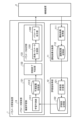
- FIG. 1 is a block diagram showing the configuration of a parameter search device according to Embodiment 1.
- FIG. 3 is a diagram showing the relationship between parameters and evaluation values at an initial stage of parameter search.
- FIG. 7 is a diagram showing the relationship between parameters and evaluation values in the latter stage of parameter search.
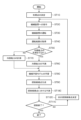
- 3 is a flowchart showing a parameter search method according to the first embodiment.
- FIGS. 5A and 5B are block diagrams showing a hardware configuration that implements the functions of the parameter search device according to the first embodiment.
- 1 is a block diagram showing the configuration of a specific example of a parameter search device according to Embodiment 1.
- FIG. 3 is a flowchart showing a specific example of the parameter search method according to the first embodiment.
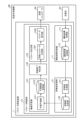
- FIG. 2 is a block diagram showing the configuration of a parameter search device according to a second embodiment.
- FIG. 3 is a block diagram showing the configuration of a parameter search device according to a third embodiment.
- 12 is a flowchart showing a parameter search method according to Embodiment 3.
- FIG. 3 is a block diagram showing the configuration of a parameter search device according to a fourth embodiment.
- FIG. 7 is a block diagram showing the configuration of a parameter search device according to a fifth embodiment. It is a conceptual diagram which shows the refrigeration cycle of the air-conditioning cold equipment in Embodiment 5.
- 12 is a flowchart showing a parameter search method according to Embodiment 5.
- FIG. 12 is a block diagram showing the configuration of an air conditioning and cooling device including a parameter search device according to a fifth embodiment.
- FIG. 7 is a block diagram showing the configuration of a parameter search device according to a sixth embodiment. It is a conceptual diagram which shows the refrigeration cycle of the air-conditioning cold equipment in Embodiment
- FIG. 1 is a block diagram showing the configuration of a parameter search device 1 according to the first embodiment.
- a parameter search device 1 is a device that searches for a target operating condition of a mechanical device 2, and specifically searches for a parameter indicating an operating condition of the mechanical device 2.
- the parameter values of the search results are set in the mechanical device 2.
- the mechanical device 2 is, for example, an air conditioning/cooling device equipped with a fan, an electronic expansion valve, a compressor, etc., an industrial device such as a machine tool, or a device such as a household electric appliance.
- the operating conditions are information indicating the content of the operation to be performed by each component to be controlled included in the mechanical device 2.
- the mechanical device 2 is an air conditioning cooling device
- an electronic expansion valve included in the air conditioning device the solenoid valve, the operating frequency of the compressor, the air volume of the fan, the rotational speed of the fan, the angle of the vane that determines the blowing direction, and the values of operating parameters indicating the flow rate of water to be controlled for cooling and heating.
- the parameter search device 1 uses a machine learning model to predict the relationship between parameters and evaluation values in a plurality of search candidates. Then, the parameter search device 1 compares the prediction result of the machine learning model with the search best having the maximum evaluation value among the searched parameters, and completes the search by determining the number of search candidates whose evaluation value exceeds the search best. Use as an indicator. The parameter search device 1 determines whether to continue searching for parameters based on the comparison result between the search end index and the threshold value.
- the parameter search device 1 efficiently searches for parameters indicating the optimal operating conditions of the mechanical device 2 using Bayesian optimization, and searches using the predicted relationship between parameters and evaluation values based on a Gaussian process regression model. Determine the exit indicator. By using the determined search end index, the parameter search is ended at an appropriate timing. Thereby, the parameter search device 1 can efficiently search for a parameter indicating the target operating condition of the mechanical device 2 without setting a certain number of searches or search time in advance.
- the parameter search device 1 includes a driving result collection section 11, an evaluation value acquisition section 12, and a parameter search section 13.
- the operation result collection unit 11 collects operation results of the mechanical device 2 .
- the operation result of the mechanical device 2 is information including parameters indicating the operating conditions of the mechanical device 2.
- the operation results include, for example, the values of parameters set as operating conditions of the mechanical device 2, information indicating the configuration of the mechanical device 2, information specific to the mechanical device 2 such as the operating mode, log data of past operations, etc. This is information that includes.
- the operation result collection unit 11 may acquire the operation results of the mechanical device 2 from the mechanical device 2 via an encoder.
- the operation result collection unit 11 may directly collect detection values detected by sensors such as a temperature sensor, a pressure sensor, an acceleration sensor, a gyro sensor, or a humidity sensor installed in the mechanical device 2; Calculated values may be collected using the values.
- the evaluation value acquisition unit 12 acquires evaluation values obtained using driving results for parameters indicating driving conditions.
- the evaluation value is an index value indicating how close the parameter corresponding to the evaluation value is to the parameter indicating the target operating condition of the mechanical device 2.
- the evaluation value is stored in a storage device from which the parameter search device 1 can read out the stored contents in association with the parameter, and the evaluation value acquisition unit 12 stores the evaluation value corresponding to the parameter included in the driving result. , it may be read and acquired from the storage device.
- the evaluation value of the parameter may be a value that is maximized or minimized so that the difference between the actually measured value of the parameter and its target value is minimized.
- the evaluation value acquisition unit 12 acquires an evaluation value expressed by the following formula (1), and the parameter search device 1 Search is performed using the parameter that minimizes the parameter as the target parameter.
- Evaluation value (actually measured operating speed - target operating speed) 2 ...(1)
- the evaluation value acquisition unit 12 may acquire the evaluation value of each of these parameters, or may obtain the evaluation value by performing a calculation such as a weighted sum. A common evaluation value may be obtained.
- the evaluation value acquisition unit 12 may use the operation results of the mechanical device 2 to calculate evaluation values of parameters included in the operation results. For example, when the target value is set for the operating speed of the component included in the mechanical device 2, and the evaluation value acquisition unit 12 obtains the actually measured operating speed as the operation result, the above equation (1) is calculated using both of them. Calculate the evaluation value shown. In this way, "obtaining" the evaluation value of a parameter in the parameter search device 1 also includes “calculating” and obtaining the evaluation value using the operation results of the mechanical device 2.
- the parameter search unit 13 searches for target parameters from the parameters indicating the operating conditions of the mechanical device 2 collected by the operation result collection unit 11. Specifically, when a plurality of search candidates regarding parameters and evaluation values are input, the parameter search unit 13 uses a machine learning model that outputs the relationship between the parameters and evaluation values in the search candidates to determine the relationship between the parameters and evaluation values in the search candidates. Predict the relationship between parameters and evaluation values.
- Machine learning models may include one or more of the following models: linear regression, generalized linear models, Gaussian process regression, hierarchical Bayesian models, neural networks, neural processes, random forests, or gradient boosted trees. be done.
- linear regression linear regression
- generalized linear models Gaussian process regression
- hierarchical Bayesian models neural networks
- neural processes random forests, or gradient boosted trees.
- the parameter search unit 13 uses the parameter search candidates generated based on the operation results of the mechanical device 2 as learning data, and causes the machine learning model to learn the relationship between the parameters included in the operation results and the evaluation values. In this way, since the parameter search unit 13 generates a machine learning model each time using the actual measurement data of the operation results of the mechanical device 2, a machine learning model corresponding to the current situation of the mechanical device 2 can be obtained.
- the machine learning model is associated with the parameter and stored in a storage device from which the parameter search device 1 can read the stored contents, and the parameter search unit 13 stores the machine learning model corresponding to the parameter included in the operation result. may be read out from the storage device and used.
- the parameter search unit 13 compares the prediction result by the machine learning model with the search best that has the maximum evaluation value among the searched parameters, and determines the number of search candidates whose evaluation value exceeds the search best. "Indicators”. The parameter search unit 13 determines whether to continue searching for parameters based on the comparison result between the search end index and the threshold value. The parameters of the final search result are set in the mechanical device 2. Thereby, the mechanical device 2 operates under the target operating conditions indicated by the parameters of the search results.
- FIG. 2 is a diagram showing the relationship between parameters and evaluation values at the initial stage of parameter search.
- FIG. 3 is a diagram showing the relationship between parameters and evaluation values in the latter stage of parameter search.
- the horizontal axis is a parameter indicating a certain operating condition
- the vertical axis is an evaluation value of the parameter.
- the parameter search unit 13 uses the parameters and evaluation values included in the operation results of the mechanical device 2 collected by the operation result collection unit 11 as learning data, and causes the machine learning model to learn the relationship between the parameters and evaluation values included in the operation results. .
- the parameter search unit 13 generates a plurality of search candidates for parameters and evaluation values, and inputs these search candidate data into a machine learning model to determine the relationship between the parameters and evaluation values in the search candidates. Predict.
- the predicted result of the relationship between parameters and evaluation values in search candidates is, for example, predicted values of the average ⁇ and standard deviation ⁇ of search candidate data whose elements are parameters and evaluation values.
- A1 and A2 are functions indicating the average ⁇ of evaluation values for the parameters.
- B1 and B2 are functions representing +2 ⁇ for the average ⁇ .
- C is the parameters and evaluation values collected by the operation result collection unit 11, and is actual measurement data actually measured in the mechanical device 2.
- the average ⁇ indicated by the functions A1 and A2 is predicted for the actual measurement point C using a machine learning model.
- D1 and D2 are functions representing ⁇ 2 ⁇ for averages A1 and A2.
- the parameter search unit 13 sets the actual measured value of the parameter with the highest evaluation value among the parameters included in the actually measured driving results as the search best E1. Subsequently, the parameter search unit 13 counts the number of search candidates that exceed the search best E1 indicated by the broken line in FIG. 2, and uses the counted number as a search end index. At the initial stage of the parameter search, as shown in FIG. 2, the number of search candidates exceeding the search best E1 is large, so the value of the search end index is equal to or greater than the threshold value. If the search end index is equal to or greater than the threshold, the parameter search unit 13 determines to continue searching for parameters.
- the parameter search unit 13 determines, for example, a search candidate whose relationship between the predicted parameter and the evaluation value satisfies the selection condition as the next search target, and sets it in the mechanical device 2. For example, a search candidate whose relationship between parameters and evaluation values is closest to the target is determined as the next search target.
- the determined search target parameters are set in the mechanical device 2.
- the mechanical device 2 is operated under the operating conditions indicated by the parameters to be searched, and the operation result collection unit 11 collects the operation results, so that the parameter search unit 13 repeatedly executes the above-described series of parameter searches.
- the parameter search is repeatedly executed, and the process moves to the latter stage of the parameter search shown in FIG.
- the parameter search unit 13 sets the actual measured value of the parameter with the highest evaluation value among the parameters included in the actually measured driving results as the search best E2. Subsequently, the parameter search unit 13 counts the number of search candidates that exceed the search best E2 indicated by the broken line in FIG. 3, and uses the counted number as a search end index. In the latter stage of the parameter search, as shown in FIG. 3, the number of search candidates that exceed the search best E2 decreases. For example, when the search end index becomes less than the threshold, the parameter search unit 13 determines the end of the parameter search. When the threshold value is "0", the search for parameters is terminated at the timing when the search end index becomes 0, that is, at the timing when the number of search candidates exceeding the search best becomes 0.
- the parameter search device 1 can efficiently perform a parameter search by combining the parameter search and the search end determination. Furthermore, since the parameter search can be terminated at an appropriate timing based on the search end index, the parameter search time can be shortened.
- FIG. 4 is a flowchart showing a parameter search method according to the first embodiment, which is a parameter search method performed by the parameter search device 1.
- the operation result collection unit 11 collects operation results including parameters indicating the operating conditions of the mechanical device 2 (step ST1).
- the evaluation value acquisition unit 12 acquires the evaluation value of the parameter determined using the driving results (step ST2).
- the parameter search unit 13 searches for a target parameter from among the parameters indicating the operating conditions of the mechanical device 2 (step ST3).
- the parameter search unit 13 uses the machine learning model to predict the relationship between the parameters and evaluation values in the search candidates, and determines which of the prediction results by the machine learning model and the searched parameters has the maximum evaluation value.
- the number of search candidates whose evaluation values exceed the search best is determined as a search end index, and it is determined whether or not to continue searching for parameters based on the comparison result between the search end index and the threshold value.
- the parameter search device 1 includes a processing circuit for executing the processing from step ST1 to step ST3 shown in FIG.
- the processing circuit may be dedicated hardware, or it may be a CPU that executes a program stored in memory.
- FIG. 5A is a block diagram showing the hardware configuration that realizes the functions of the parameter search device 1.
- FIG. 5B is a block diagram showing a hardware configuration that executes software that implements the functions of the parameter search device 1.
- an input interface 100 is an interface through which the parameter search device 1 relays information indicating the operation results from the mechanical device 2.
- the output interface 101 is an interface that relays search result parameters etc. output from the parameter search device 1 to the mechanical device 2.
- the processing circuit 102 may be, for example, a single circuit, a composite circuit, a programmed processor, a parallel programmed processor, or an ASIC (Application Specific Integrated Circuit). ), FPGA (Field-Programmable Gate Array), or a combination of these.
- the functions of the driving result collection unit 11, evaluation value acquisition unit 12, and parameter search unit 13 included in the parameter search device 1 may be realized by separate processing circuits, or these functions may be realized by a single processing circuit. It's okay.
- the functions of the driving result collection unit 11, evaluation value acquisition unit 12, and parameter search unit 13 included in the parameter search device 1 are software, firmware, or a combination of software and firmware. This is realized by Note that software or firmware is written as a program and stored in the memory 104.
- the processor 103 realizes the functions of the driving result collection unit 11, evaluation value acquisition unit 12, and parameter search unit 13 included in the parameter search device 1 by reading and executing the program stored in the memory 104.
- the parameter search device 1 includes a memory 104 for storing a program that, when executed by the processor 103, results in the processing from step ST1 to step ST3 shown in FIG. These programs cause the computer to execute processing procedures or methods performed by the driving result collection section 11, evaluation value acquisition section 12, and parameter search section 13.
- the memory 104 may be a computer-readable storage medium that stores a program for causing the computer to function as the driving result collection section 11, the evaluation value acquisition section 12, and the parameter search section 13.
- the memory 104 is, for example, RAM (Random Access Memory), ROM (Read Only Memory), flash memory, EPROM (Erasable Programmable Read Only Memory), EE Non-volatile or volatile, such as PROM (Electrically-EPROM) (registered trademark) This includes semiconductor memory, magnetic disks, flexible disks, optical disks, compact disks, mini disks, DVDs, etc.
- the functions of the operation result collection unit 11, evaluation value acquisition unit 12, and parameter search unit 13 included in the parameter search device 1 are realized by dedicated hardware, and other parts are realized by software or firmware.
- the driving result collection unit 11 and the evaluation value acquisition unit 12 realize their functions by the processing circuit 102 which is dedicated hardware, and the parameter search unit 13 realizes the functions by the processor 103 reading out a program stored in the memory 104. Achieve a function by executing it.
- the processing circuit can implement the above functions using hardware, software, firmware, or a combination thereof.
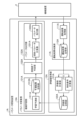
- FIG. 6 is a block diagram showing the configuration of a specific example of the parameter search device 1.
- the parameter search device 1 includes a driving result collection section 11, an evaluation value acquisition section 12, and a parameter search section 13.
- the driving result collection unit 11 includes a driving result acquisition unit 111 and a driving result storage unit 112.
- the evaluation value acquisition section 12 includes an evaluation value calculation section 121 and an evaluation value storage section 122.
- the parameter search unit 13 includes a machine learning unit 131, a search end determination unit 132, and a parameter determination unit 133.
- the operation result acquisition unit 111 acquires the operation results of the mechanical device 2.
- the driving result acquisition unit 111 acquires a detection value detected by a group of sensors (temperature sensor, pressure sensor, acceleration sensor, gyro sensor, or humidity sensor) installed in the mechanical device 2. These detected values are values of parameters that define the operating conditions under which the mechanical device 2 is operated. Further, the driving result acquisition unit 111 may acquire physical quantities that define driving conditions calculated using these detected values.
- the driving result storage unit 112 stores the driving results acquired by the driving result acquisition unit 111.
- the driving result storage unit 112 is a storage device included in the computer functioning as the parameter search device 1, and includes storage such as an HDD (Hard Disk Drive) or an SSD (Solid State Drive), or the memory 104 in FIG. 5B. .
- the evaluation value calculation unit 121 uses data indicating the operation results of the mechanical device 2 to calculate evaluation values of parameters indicating operating conditions. For example, when there is a target value for the operating speed of a component included in the mechanical device 2, the evaluation value calculation unit 121 uses the operating speed data included in the operation result read from the operation result storage unit 112 to calculate the operation speed using the above formula (1 ) to calculate the evaluation value.
- the evaluation value calculated by the evaluation value calculation unit 121 is stored in the evaluation value storage unit 122 in association with the parameter.
- the evaluation value storage unit 122 stores evaluation values of parameters.
- the evaluation value storage unit 122 is a storage device included in the computer functioning as the parameter search device 1, and includes storage such as an HDD or SSD, or the memory 104 in FIG. 5B.
- the machine learning unit 131 generates a machine learning model for predicting the relationship between parameters and evaluation values in search candidates based on the operation results of the mechanical device 2, and uses the generated machine learning model to predict the parameters and evaluation values. Predict relationships with values.
- the machine learning unit 131 includes a learning prediction unit 1311 and a prediction result storage unit 1312, as shown in FIG.
- the learning prediction unit 1311 generates search candidates for parameters and evaluation values based on the operation results of the mechanical device 2, and uses the search candidates as learning data to calculate the relationship between the parameters and evaluation values included in the operation results using a machine learning model. Let them learn. Furthermore, the learning prediction unit 1311 uses a machine learning model to predict the relationship between parameters and evaluation values in search candidates.
- the prediction result storage unit 1312 stores prediction results based on the machine learning model.
- the prediction result storage unit 1312 is a storage device included in the computer functioning as the parameter search device 1, and includes storage such as an HDD or SSD, or the memory 104 in FIG. 5B.
- the search end determination unit 132 determines the end of the parameter search based on the prediction result by the machine learning model. For example, the search end determination unit 132 sets the actual measured value of the parameter with the highest evaluation value among the driving results as the search best, and sets the number of search candidates exceeding the search best as the search end index. For example, the search end determination unit 132 determines to continue the parameter search when the search end index is equal to or greater than the threshold value, and determines to end the parameter search when the search end index becomes less than the threshold value. When determining whether to continue the parameter search, the search end determination unit 132 reads the current prediction result from the prediction result storage unit 1312 and outputs it to the parameter determination unit 133.
- the parameter determination unit 133 determines the next parameter to be searched (search target).
- the parameter determination unit 133 includes a search parameter calculation unit 1331 and a parameter command unit 1332, as shown in FIG.
- the search parameter calculation unit 1331 calculates the parameters to be searched next. For example, the search parameter calculation unit 1331 calculates, as the next search target, a search candidate whose relationship between parameters and evaluation values is closest to the target among the current prediction results regarding the relationship between parameters and evaluation values. When Bayesian optimization is used for parameter search, the search parameter calculation unit 1331 selects the search candidate with the largest value of the acquisition function considering the average ⁇ and standard deviation ⁇ of the search candidates as the next search target.
- the parameter command unit 1332 commands the mechanical device 2 to use the parameters calculated by the search parameter calculation unit 1331.
- the parameter command unit 1332 transmits the parameters to be searched to the mechanical device 2 using a wireless or wired communication device (not shown in FIG. 6).
- the mechanical device 2 operates under the operating conditions indicated by the parameters received from the parameter command unit 1332.
- driving result storage unit 112, evaluation value storage unit 122, and prediction result storage unit 1312 are each different storage units, these storage units are provided in the storage area of one storage device. Good too.
- the driving result storage unit 112, evaluation value storage unit 122, and prediction result storage unit 1312 are storage units included in the parameter search device 1, an external storage device provided separately from the parameter search device 1 is shown. It may be a storage unit included in the.
- the external storage device is a storage device whose storage contents can be read out from the parameter search device 1 through wireless or wired communication.
- FIG. 7 is a flowchart showing a specific example of the parameter search method according to the first embodiment, and shows the operations of the parameter search device 1 and mechanical device 2 shown in FIG.
- the search parameter calculation unit 1331 determines the initial value (initial point) of the parameter to be searched (step ST1A). For example, the search parameter calculation unit 1331 randomly determines the initial value of the parameter to be searched from among parameters indicating various operating conditions of the mechanical device 2. Furthermore, if a parameter with a high evaluation value is known in advance, the parameter may be used as the initial value.
- the parameter command unit 1332 commands the mechanical device 2 the initial value of the search target parameter calculated by the search parameter calculation unit 1331 (step ST2A).
- the parameter command unit 1332 transmits and sets the initial value of the parameter to be searched for to the mechanical device 2 using a wireless or wired communication device.
- the mechanical device 2 When the mechanical device 2 receives the initial value of the parameter from the parameter command unit 1332, it operates under the operating conditions indicated by the received parameter value (step ST3A).
- the operation result acquisition unit 111 sequentially acquires the operation results from the mechanical device 2 (step ST4A).
- the driving results acquired by the driving result acquisition unit 111 are stored in the driving result storage unit 112.
- the evaluation value calculation unit 121 calculates evaluation values of parameters included in the driving results stored in the driving result storage unit 112.
- the evaluation value calculated by the evaluation value calculation unit 121 is stored in the evaluation value storage unit 122 in association with the parameter.
- the learning prediction unit 1311 uses the parameters and evaluation values stored in the evaluation value storage unit 122 as learning data to cause the machine learning model to learn the relationship between the parameters and the evaluation values (step ST5A).
- the learning prediction unit 1311 uses a machine learning model to learn the relationship between the parameter x t indicated by the data D t read from the evaluation value storage unit 122, the state quantity s t indicating the state of the mechanical device 2, and the evaluation value y t . Note that, although the parameter x t and the evaluation value y t are essential as the learning data, the state quantity s t is not limited thereto.
- the learning prediction unit 1311 generates search candidates (search candidate points) for parameters indicating the operating conditions of the mechanical device 2 (step ST6A). For example, the learning prediction unit 1311 randomly generates a plurality of search candidate points using information indicating the parameters and evaluation values stored in the evaluation value storage unit 122. Further, when the maximum value or minimum value of the evaluation value of a parameter is known, the learning prediction unit 1311 arranges the evaluation value and the parameter at equal intervals so that the known evaluation value and the parameter become a lattice shape when illustrated as reference points. Search candidate points may also be determined. Furthermore, the learning prediction unit 1311 may generate a plurality of search candidate points using a design of experiments.
- the learning prediction unit 1311 uses the machine learning model to predict the relationship between the parameters and evaluation values at the search candidate points (step ST7A). For example, when Bayesian optimization is used to determine parameters for a search target, the learning prediction unit 1311 calculates the next search target by calculating a function value called an acquisition function.
- the search end determination section 132 determines whether or not to end the parameter search based on the prediction result stored in the prediction result storage section 1312 (step ST8A). For example, the search end determination unit 132 compares the average ⁇ of the search candidate points, the standard deviation ⁇ , and the search best y best, which are prediction results using a Gaussian process regression model that is a machine learning model, and determines the search best y best . The number of search candidate points exceeding the above is set as the search end index St.
- the search end index S t is calculated using a calculation formula for each acquisition function.
- the search end index S t using UCB is expressed by the following equation (2).
- the search end index S t using EI is expressed by the following equation (3).
- COUNT[ ] is a function that calculates the number of search candidate points that satisfy the conditions in [ ].
- the search end determination unit 132 can determine whether to terminate the parameter search because it is expected that there is no search candidate point that exceeds the search best y best .
- the threshold value is 0
- any numerical value may be set as the threshold value as long as it is a value of 0 or more.
- S t COUNT [( ⁇ + ⁇ y best ) ⁇ 0] (2)
- S t COUNT [( ⁇ y best )/ ⁇ 0] (3)
- step ST8A determines the search end index S t is less than the threshold value (step ST8A; YES). This completes the series of processes shown in FIG. On the other hand, if it is determined that the search end index S t is equal to or greater than the threshold (step ST8A; NO), the search end determination section 132 determines to continue the parameter search, and stores the current prediction result from the prediction result storage section 1312. It is read out and output to the parameter determination section 133.
- the search parameter calculation unit 1331 calculates the search candidate point with the largest value of the acquisition function considering the average ⁇ and standard deviation ⁇ of the search candidate points as the next search target (step ST9A).
- the parameter command unit 1332 commands the mechanical device 2 to search the parameters calculated by the search parameter calculation unit 1331.
- the mechanical device 2 operates under the operating conditions indicated by the parameters received from the parameter command unit 1332. After this, the process returns to step ST2A, and the above-described process is repeated.
- UCB Upper Confidence Bound
- EI Expected Improvement
- the search parameter calculation unit 1331 may calculate EI from the function acq EI expressed by the following formula (5) using the average ⁇ and standard deviation ⁇ of the search candidate points.
- y best is the search best obtained at a certain point in time.
- Z is ( ⁇ y best )/ ⁇ .
- ⁇ (Z) is the cumulative density function of the standard normal distribution
- ⁇ (Z) is the probability density function of the standard normal distribution.
- the search parameter calculation unit 1331 determines the search candidate point with the largest value of these acquisition functions as the next search target.
- the parameter search device 1 includes the driving result collection unit 11 that collects driving results, and the evaluation value acquisition unit 12 that acquires evaluation values of parameters determined using the driving results. , a parameter search unit 13 that searches for target parameters.
- the parameter search unit 13 predicts the relationship between parameters and evaluation values using a machine learning model, uses the number of search candidates whose evaluation values exceed the search best as a search end index, and uses the comparison result between the search end index and the threshold value as a search end index.
- the next search target is determined from the search candidates based on the evaluation value.
- the parameter search device 1 can efficiently search for a parameter indicating the target operating condition of the mechanical device 2 without setting a fixed number of searches or a fixed search time.
- the parameter search unit 13 learns a machine learning model. Since the parameter search unit 13 generates a machine learning model each time using actual measurement data of the operation results of the mechanical device 2, a machine learning model corresponding to the current situation of the mechanical device 2 can be obtained.
- the parameter search method includes a step in which the driving result collection unit 11 collects driving results, and a step in which the evaluation value acquisition unit 12 acquires evaluation values of parameters obtained using the driving results. , a step in which the parameter search unit 13 searches for a target parameter.
- the parameter search unit 13 predicts the relationship between parameters and evaluation values using a machine learning model, uses the number of search candidates whose evaluation values exceed the search best as a search end index, and uses the comparison result between the search end index and the threshold value as a search end index.
- the next search target is determined from the search candidates based on the evaluation value.
- Embodiment 2 In the first embodiment, the relationship between the parameters indicating the operating conditions of the mechanical device 2 and the evaluation value is learned, and the parameters are searched based on these relationships. On the other hand, in Embodiment 2, in addition to parameters and evaluation values, data regarding constraints to be satisfied in the operation of mechanical device 2 is collected, and parameters are searched based on the relationship between the parameters, evaluation values, and constraints. It is something.
- FIG. 8 is a block diagram showing the configuration of a parameter search device 1A according to the second embodiment.
- the parameter search device 1A includes a driving result collection section 11A, an evaluation value acquisition section 12A, and a parameter search section 13A.
- the driving result collection unit 11A includes a driving result acquisition unit 111A and a driving result storage unit 112A.
- the evaluation value acquisition section 12A includes an evaluation value calculation section 121A, an evaluation value storage section 122A, and a constraint calculation section 123.
- the parameter search unit 13A includes a machine learning unit 131A, a search end determination unit 132A, and a parameter determination unit 133A.
- the operation result acquisition unit 111A acquires operation results that further include constraints on the operation of the mechanical device 2 in addition to parameters indicating the operating conditions of the mechanical device 2.
- the constraint condition is a condition that must be satisfied in the operation of the mechanical device 2, and is different from the evaluation value of the parameter in that it must be satisfied in the operation of the mechanical device 2.
- the operation result acquisition unit 111A detects a value detected by a group of sensors (a temperature sensor, a pressure sensor, an acceleration sensor, a gyro sensor, or a humidity sensor) installed in the mechanical device 2.
- the detected value may be acquired as a constraint condition.
- the driving result acquisition unit 111A may acquire physical quantities that define driving conditions calculated using these detected values as constraints.
- the constraint c can be calculated using the following formula (6).
- the parameter search device 1A may search for a parameter for which the k-th constraint c k is 0 or more.
- c 1 c upper - c measure (7)
- c 2 c measure - c lower (8)
- the driving result storage unit 112A stores the driving results acquired by the driving result acquisition unit 111A.
- the driving result storage unit 112A is a storage device included in the computer functioning as the parameter search device 1A, and includes storage such as an HDD or SSD, or the memory 104 in FIG. 5B.
- the evaluation value acquisition unit 12A acquires constraint conditions in addition to evaluation values of parameters determined using the driving results.
- the constraint calculation unit 123 uses the operation results acquired by the operation result acquisition unit 111A to calculate constraints to be satisfied in the operation of the mechanical device 2. For example, the constraint calculation unit 123 uses the driving result read from the driving result storage unit 112A to calculate the constraint according to the above equation (6) or the above equation (7) and the above equation (8).
- the constraint conditions calculated by the constraint calculation unit 123 are stored in the evaluation value storage unit 122A in association with the parameters and evaluation values.
- the evaluation value storage unit 122A stores parameters, evaluation values, and constraint conditions.
- the evaluation value storage unit 122A is a storage device included in the computer functioning as the parameter search device 1, and includes storage such as an HDD or SSD, or the memory 104 in FIG. 5B.
- the machine learning unit 131A generates a machine learning model for predicting the relationship between parameters, evaluation values, and constraints in search candidates based on the operation results of the mechanical device 2, and uses the machine learning model to predict the parameters and evaluation values. Predict the relationship between and constraints. As shown in FIG. 8, the machine learning unit 131A includes a learning prediction unit 1311A and a prediction result storage unit 1312A.
- the learning prediction unit 1311A generates search candidates for parameters and constraints based on the operation results of the mechanical device 2, and uses the search candidates as learning data to perform machine learning on the relationship between the parameters, constraints, and evaluation values included in the operation results. Let the model learn. Furthermore, the learning prediction unit 1311A uses a machine learning model to predict the relationship between parameters, constraints, and evaluation values in search candidates.
- the learning prediction unit 1311A uses a machine learning model to learn the relationship between parameters and constraints, and uses this machine learning model to predict the relationship between parameters that satisfy the constraints and evaluation values. By using this prediction result, the parameter search device 1A can search for parameters with high evaluation values while satisfying the constraint conditions.
- an evaluation value may be calculated taking into account the constraint conditions. For example, a penalty function whose value increases as it moves away from a certain threshold outside the range indicated by the constraint, a barrier function whose value increases as it approaches a certain threshold within the range indicated by the constraint, or the values of these functions. It is also possible to calculate a term by adding a term combining the above to the evaluation value function indicating the evaluation value.
- the learning prediction unit 1311A uses a Gaussian process regression model to calculate the average ⁇ and standard deviation ⁇ of the search candidate points, which are the prediction results of the relationship between the parameters and the evaluation values, and calculates the constraint conditions for the parameters at the search candidate points.
- the average ⁇ k and the standard deviation ⁇ k which are the prediction results of the relationship, may be calculated, and the acquisition function may be calculated using these prediction results in the same manner as in the first embodiment.
- EIC Expected Improvement with Constraints
- acq EIC of formula (9) below.
- the search parameter calculation unit 1331A calculates a search candidate point with the maximum value of the acquisition function acq EIC , and outputs the calculated search candidate point to the parameter command unit 1332A as the next search target. .
- the prediction result storage unit 1312A stores prediction results based on the machine learning model.
- the prediction result storage unit 1312A is a storage device included in the computer functioning as the parameter search device 1A, and includes storage such as an HDD or SSD, or the memory 104 in FIG. 5B.
- the search end determination unit 132A determines the end of the parameter search based on the prediction result by the machine learning model.
- the learning prediction unit 1311A uses a Gaussian process regression model for evaluation values and constraint conditions to predict relationships with parameters.
- the average ⁇ and standard deviation ⁇ which are the prediction results for the evaluation value using the Gaussian process regression model
- the average ⁇ k and standard deviation ⁇ k which are the prediction results for the constraint conditions using the Gaussian process regression model
- the search candidate points that satisfy the constraint can be expressed by the following equation (10). Similar to the first embodiment, the search end determination unit 132A uses the number of search candidates exceeding the search best y best as a search end index. ( ⁇ k ⁇ c k )/ ⁇ k ⁇ 0 (10)
- the search end determination unit 132A determines to continue the parameter search if the search end index is equal to or greater than the threshold value, and determines to end the parameter search if the search end index becomes less than the threshold value.
- the search end determination unit 132A reads the current prediction result from the prediction result storage unit 1312A and outputs it to the parameter determination unit 133A.
- the parameter determination unit 133A determines the next parameter to be searched (search target).
- the parameter determination unit 133A includes a search parameter calculation unit 1331A and a parameter command unit 1332A, as shown in FIG.
- the search parameter calculation unit 1331A calculates the parameters to be searched next. For example, the search parameter calculation unit 1331A selects a search candidate whose relationship between parameters, evaluation values, and constraints is closest to the target among the current prediction results regarding the relationship between parameters, evaluation values, and constraints as the next search target. Calculated as When Bayesian optimization is used for parameter search, the search candidate point with the largest value of the acquisition function considering the average ⁇ and standard deviation ⁇ of the search candidate points is the next search target.
- the parameter command unit 1332A commands the mechanical device 2 to use the parameters calculated by the search parameter calculation unit 1331A.
- the parameter command unit 1332A transmits the search target parameter to the mechanical device 2 using a wireless or wired communication device (not shown in FIG. 8).
- the mechanical device 2 operates under the operating conditions indicated by the parameters received from the parameter command unit 1332A.
- driving result storage section 112A evaluation value storage section 122A, and prediction result storage section 1312A are each different storage sections, these storage sections may be provided in the storage area of one storage device. good.
- the driving result storage unit 112A, the evaluation value storage unit 122A, and the prediction result storage unit 1312A are storage units included in the parameter search device 1A
- an external storage device provided separately from the parameter search device 1A is shown. It may be a storage unit included in the.
- the external storage device is a storage device whose storage contents can be read out from the parameter search device 1A through wireless or wired communication.
- the operation result collection unit 11A collects operation results that further include constraint conditions that must be satisfied in the operation of the mechanical device 2.
- the parameter search unit 13A uses a machine learning model that outputs a predicted value indicating the relationship between the parameters, evaluation values, and constraints in the search candidates. Then, the relationship between parameters, evaluation values, and constraints in search candidates is predicted. Thereby, the parameter search device 1A can efficiently search for a parameter indicating the target operating condition of the mechanical device 2 without setting a fixed number of searches or a fixed search time.
- Embodiment 3 searches for parameters indicating the operating conditions of the mechanical device 2 based on a simulator that simulates the operation of the mechanical device 2 or data acquired in advance about the mechanical device 2 .
- FIG. 9 is a block diagram showing the configuration of a parameter search device 1B according to the third embodiment.
- the parameter search device 1B uses the prior data collected by the prior data collection device 3 to cause the machine learning model to learn the relationship between the parameters, evaluation values, and constraints that indicate the operating conditions of the mechanical device 2. .
- the parameter search device 1B searches for a target operating condition of the mechanical device 2 using the prediction result of the relationship between parameters, evaluation values, and constraints based on the machine learning model.
- the preliminary data collection device 3 acquires data regarding the characteristics of the mechanical device 2 before the parameter search device 1B searches for parameters.
- the preliminary data collection device 3 includes a preliminary data acquisition section 31 and a preliminary data storage section 32.
- the preliminary data collection device 3 is an external device provided separately from the parameter search device 1B, as shown in FIG. Further, the preliminary data collection device 3 may be an internal device of the parameter search device 1B.
- the advance data acquisition unit 31 acquires data regarding the characteristics of the mechanical device 2.
- data regarding the characteristics of the mechanical device 2 is data used to predict the relationship between parameters and evaluation values or the relationship between parameters and constraints.
- the parameter search device 1B can predict the relationship between a parameter and an evaluation value or the relationship between a parameter and a constraint condition by using data regarding the characteristics of the mechanical device 2 as learning data.
- the preliminary data acquisition unit 31 acquires data regarding the characteristics of the mechanical device 2 from an actual machine of the mechanical device 2 or a simulator that simulates the operation of the mechanical device 2.
- the prior data acquired by the prior data acquisition section 31 is stored in the prior data storage section 32.
- the prior data storage unit 32 is a storage device in which the prior data acquired by the prior data acquisition unit 31 is stored.
- the prior data storage unit 32 may be a storage device included in the prior data collection device 3, or may be an external storage device provided separately from the prior data collection device 3.
- the prior data storage section 32 may be a cloud device that can be read and written by the parameter search device 1B and the prior data acquisition section 31 via a network.
- the parameter search device 1B includes a driving result collection section 11A, an evaluation value acquisition section 12A, and a parameter search section 13B.
- the driving result collection unit 11A includes a driving result acquisition unit 111A and a driving result storage unit 112A.
- the evaluation value acquisition section 12A includes an evaluation value calculation section 121, an evaluation value storage section 122A, and a constraint calculation section 123.
- the parameter search unit 13B includes a machine learning unit 131B, a search end determination unit 132B, and a parameter determination unit 133B.
- the operation result acquisition unit 111A acquires operation results that further include constraints on the operation of the mechanical device 2 in addition to parameters indicating the operating conditions of the mechanical device 2.
- the driving result storage section 112A stores the driving results acquired by the driving result acquisition section 111A.
- the evaluation value acquisition unit 12A acquires constraint conditions in addition to the evaluation values of the parameters determined using the driving results.
- the constraint calculation unit 123 uses the operation results acquired by the operation result acquisition unit 111A to calculate constraints to be satisfied in the operation of the mechanical device 2.
- the evaluation value storage unit 122A stores parameters, evaluation values, and constraint conditions.
- the evaluation value storage unit 122A is a storage device included in the computer functioning as the parameter search device 1, and includes storage such as an HDD or SSD, or the memory 104 in FIG. 5B.
- the machine learning unit 131B generates a machine learning model for predicting the relationship between parameters, evaluation values, and constraints in search candidates based on the operation results of the mechanical device 2, and uses the machine learning model to predict the relationship between the parameters and evaluation values. Predict the relationship between and constraints.
- the machine learning unit 131B includes a learning prediction unit 1311B, a prediction result storage unit 1312B, and a pre-learning unit 1313, as shown in FIG.
- the learning prediction unit 1311B generates search candidate points for parameters and constraints based on the operation results of the mechanical device 2, and uses the search candidate points as learning data to create a machine learning model of the relationship between the parameters, constraints, and evaluation values. Let them learn. Further, the learning prediction unit 1311B uses the pre-learning model learned by the pre-learning unit 1313 to generate the machine learning model.
- the machine learning model and the pre-learning model are the same type of model.
- the learning prediction unit 1311B uses the parameters, evaluation values, and constraints stored in the evaluation value storage unit 122A to further learn the relationship between the parameters, evaluation values, and constraints using the pre-learning model.
- the pre-learning model of is used as the above machine learning model.
- the learning prediction unit 1311B uses a machine learning model to predict relationships among parameters, constraints, and evaluation values in search candidates. For example, the learning prediction unit 1311B uses a machine learning model to learn the relationship between parameters and constraints, and uses this machine learning model to predict the relationship between parameters that satisfy the constraints and evaluation values. By using this prediction result, the parameter search device 1B can search for parameters with high evaluation values while satisfying the constraint conditions.
- the prediction result storage unit 1312B stores prediction results based on the machine learning model.
- the prediction result storage unit 1312B is a storage device included in the computer functioning as the parameter search device 1B, and includes storage such as an HDD or SSD, or the memory 104 in FIG. 5B.
- the pre-learning unit 1313 uses the prior data stored in the prior data storage unit 32 to learn the relationship between the parameters, evaluation values, and constraints in the search candidates using a pre-learning model.
- the pre-learning model that has learned the relationship between parameters, evaluation values, and constraints is output to the learning prediction unit 1311B.
- the search end determination unit 132B determines the end of the parameter search based on the prediction result by the machine learning model. For example, the learning prediction unit 1311B uses a Gaussian process regression model to predict the relationship between evaluation values and constraints with parameters. For example, the search end determination unit 132B determines to continue the parameter search if the search end index is equal to or greater than the threshold value, and determines to end the parameter search if the search end index becomes less than the threshold value. When determining whether to continue the parameter search, the search end determining unit 132B reads the current prediction result from the prediction result storage unit 1312B and outputs it to the parameter determining unit 133B.
- the search end determining unit 132B reads the current prediction result from the prediction result storage unit 1312B and outputs it to the parameter determining unit 133B.
- the parameter determination unit 133B determines the next parameter to be searched.
- the parameter determination unit 133B includes a search parameter calculation unit 1331B and a parameter command unit 1332B, as shown in FIG.
- the search parameter calculation unit 1331B calculates the parameters to be searched next. For example, the search parameter calculation unit 1331B selects the search candidate whose relationship between the parameter, evaluation value, and constraint is closest to the target out of the current prediction results regarding the relationship between the parameter, evaluation value, and constraint as the next search target. Calculated as When Bayesian optimization is used for parameter search, the search parameter calculation unit 1331B selects the search candidate with the largest value of the acquisition function considering the average ⁇ and standard deviation ⁇ of the search candidates as the next search target.
- the parameter command unit 1332B commands the mechanical device 2 the parameters calculated by the search parameter calculation unit 1331B.
- the parameter command unit 1332B transmits the search target parameter to the mechanical device 2 using a wireless or wired communication device (not shown in FIG. 9).
- the mechanical device 2 operates under the operating conditions indicated by the parameters received from the parameter command unit 1332B.
- driving result storage unit 112A evaluation value storage unit 122A, and prediction result storage unit 1312B are different storage units, these storage units may be provided in the storage area of one storage device. good.
- the driving result storage unit 112A, the evaluation value storage unit 122A, and the prediction result storage unit 1312B are storage units included in the parameter search device 1B
- an external storage device provided separately from the parameter search device 1B is illustrated. It may be a storage unit included in the.
- the external storage device is a storage device whose storage contents can be read out from the parameter search device 1B through wireless or wired communication.
- FIG. 10 is a flowchart showing the parameter search method according to the third embodiment, and shows the operations of the parameter search device 1B, the mechanical device 2, and the preliminary data collection device 3.
- the preliminary data collection device 3 checks whether preliminary data is present in a predetermined storage location (step ST1B).
- the predetermined storage location may be a cloud on a network.
- the prior data collection device 3 accesses the storage location and collects the prior data from the storage location (step ST2B).
- the preliminary data acquisition unit 31 connects to a cloud on the network and downloads the preliminary data.
- the prior data acquired by the prior data acquisition section 31 is stored in the prior data storage section 32.
- the prior learning unit 1313 uses the prior data read from the prior data storage unit 32 as learning data to learn the relationship between the parameters, evaluation values, and constraints indicating the operating conditions of the mechanical device 2 using the prior learning model. (Step ST3B).
- the pre-learning model that has learned the relationship between parameters, evaluation values, and constraints is output to the learning prediction unit 1311B.
- the search parameter calculation unit 1331B determines the initial value (initial point) of the parameter to be searched. (Step ST4B). For example, the search parameter calculation unit 1331B randomly determines the initial value of the parameter to be searched from parameters indicating various operating conditions of the mechanical device 2. Furthermore, if a parameter with a high evaluation value is known in advance, the parameter may be used as the initial value.
- the parameter command unit 1332B commands the mechanical device 2 the initial value of the parameter to be searched calculated by the search parameter calculation unit 1331B (step ST5B).
- the parameter command unit 1332B transmits and sets the initial value of the parameter to be searched for to the mechanical device 2 using a wireless or wired communication device.
- the mechanical device 2 When the mechanical device 2 receives the initial value of the parameter from the parameter command unit 1332B, it operates under the operating conditions indicated by the received parameter value (step ST6B). When the mechanical device 2 starts operating, the operation result acquisition unit 111A sequentially acquires the operation results from the mechanical device 2 (step ST7B). The driving results acquired by the driving result acquisition unit 111A are stored in the driving result storage unit 112A.
- the evaluation value calculation unit 121A calculates evaluation values of parameters included in the driving results stored in the driving result storage unit 112A.
- the evaluation value calculated by the evaluation value calculation unit 121A is stored in the evaluation value storage unit 122A in association with the parameter.
- the constraint calculation unit 123 calculates constraints using the driving results stored in the driving result storage unit 112A.
- the constraint conditions calculated by the constraint condition calculation unit 123 are stored in the evaluation value storage unit 122A in association with the parameters.
- the learning prediction unit 1311B uses the parameters, evaluation values, and constraints stored in the evaluation value storage unit 122A as learning data, and calculates the relationship between the parameters, evaluation values, and constraints using a machine learning model (or pre-learning model). ) (step ST8B).
- the learning prediction unit 1311B generates search candidate points for parameters indicating the operating conditions of the mechanical device 2 (step ST9B).
- the learning prediction unit 1311B uses the machine learning model (or pre-learning model) to predict the relationship between the parameters, evaluation values, and constraint conditions at the search candidate points (step ST10B). For example, when Bayesian optimization is used to determine parameters for a search target, the learning prediction unit 1311B calculates a function value called an acquisition function, and uses the acquisition function value to calculate the next search target.
- the search end determination unit 132B determines whether to end the parameter search based on the prediction result stored in the prediction result storage unit 1312B (step ST11B). If it is determined that the search end index is less than the threshold (step ST11B; YES), the search end determination unit 132B determines the end of the parameter search. As a result, the series of processing shown in FIG. 10 is completed. On the other hand, if it is determined that the search end index is equal to or greater than the threshold (step ST11B; NO), the search end determination section 132B determines to continue the parameter search and reads out the current prediction result from the prediction result storage section 1312B. It is output to the parameter determining section 133B.
- the search parameter calculation unit 1331B calculates the search candidate point with the largest value of the acquisition function considering the average ⁇ and standard deviation ⁇ of the search candidate points as the next search target (step ST12B).
- the parameter command unit 1332B commands the mechanical device 2 to use the search target parameters calculated by the search parameter calculation unit 1331B.
- the mechanical device 2 operates under the operating conditions indicated by the parameters received from the parameter command unit 1332B. Thereafter, the process returns to step ST5B, and the above-described process is repeated.
- parameter search device 1B according to the third embodiment has the configuration of the second embodiment with a pre-learning section 1313 added, but the parameter search device 1B according to the third embodiment has the configuration of the first embodiment with the pre-learning section 1313 added. There may be.
- the pre-learning unit 1313 uses the prior data stored in the prior data storage unit 32 to learn the relationship between the parameters and evaluation values in the search candidates using a pre-learning model.
- the pre-learning model that has learned the relationship between parameters and evaluation values is output to the learning prediction unit 1311B.
- the learning prediction unit 1311B uses the parameters and evaluation values stored in the evaluation value storage unit 122A to further learn the relationship between the parameters and the evaluation values using the pre-learning model, thereby converting the pre-learning model after learning into the above-mentioned pre-learning model.
- the parameter search device 1B can efficiently search for parameters indicating the operating conditions of the mechanical device 2 even if there is little data indicating the operating results of the mechanical device 2. be.
- the parameter search unit 13B acquires a pre-learning model that has learned the relationship between parameters and evaluation values in advance, and uses the pre-learning model to Learn the learning model. If a machine learning model has little training data, the learning will be insufficient and it will not be able to make accurate predictions. For this reason, the efficiency of parameter search using a machine learning model with insufficient learning also deteriorates. In contrast, by using a model learned in advance, the parameter search device 1B efficiently searches for parameters indicating the operating conditions of the mechanical device 2 even if there is little data indicating the operating results of the mechanical device 2. Is possible.
- the parameter search unit 13B acquires a pre-learning model that has learned the relationship between parameters, constraints, and evaluation values in advance, and uses the pre-learning model to create a machine learning model. Learn. By using a model learned in advance, the parameter search device 1B can efficiently search for parameters indicating the operating conditions of the mechanical device 2 even if there is little data indicating the operating results of the mechanical device 2. be.
- Embodiment 4 uses external information detected by an external sensor provided in the mechanical device in addition to the operational results of the mechanical device to determine the relationship between parameters, evaluation values, and external information that indicate the operating conditions of the mechanical device, or , which predicts the relationship between parameters, constraints, and external information.
- FIG. 11 is a block diagram showing the configuration of a parameter search device 1C according to the fourth embodiment.
- the parameter search device 1C uses the preliminary data collected by the preliminary data collection device 3 and the external information detected by the external sensor 4 to determine the parameters, evaluation values, and constraints that indicate the operating conditions of the mechanical device 2. Learn relationships.
- the parameter search device 1C searches for a target operating condition of the mechanical device 2 using the prediction result of the relationship between the parameter, the evaluation value, and the constraint condition.
- the preliminary data collection device 3 acquires data regarding the characteristics of the mechanical device 2 before the parameter search device 1C searches for parameters.
- the preliminary data collection device 3 includes a preliminary data acquisition section 31 and a preliminary data storage section 32.
- the preliminary data collection device 3 is an external device provided separately from the parameter search device 1C, as shown in FIG. Further, the preliminary data collection device 3 may be an internal device of the parameter search device 1C.
- the advance data acquisition unit 31 acquires data regarding the characteristics of the mechanical device 2.
- data regarding the characteristics of the mechanical device 2 is data used to predict the relationship between parameters and evaluation values or the relationship between parameters and constraints.
- the parameter search device 1C can predict the relationship between a parameter and an evaluation value or the relationship between a parameter and a constraint condition by using data regarding the characteristics of the mechanical device 2 as learning data.
- the prior data storage unit 32 is a storage device in which the prior data acquired by the prior data acquisition unit 31 is stored.
- the prior data storage unit 32 may be a storage device included in the prior data collection device 3, or may be an external storage device provided separately from the prior data collection device 3.
- the prior data storage section 32 may be a cloud device that can be read and written by the parameter search device 1C and the prior data acquisition section 31 via a network.
- the external sensor 4 is a sensor provided around or inside the mechanical device 2 and detects external information about the mechanical device 2.
- the external information is information including at least one of peripheral information of the mechanical device 2 or information regarding the driving task.
- the mechanical device 2 is a processing machine
- the external information is information indicating the temperature, vibration, or shape of the workpiece of the mechanical device 2. These are pieces of information that affect the smoothness of the machined shape of the workpiece and the processing speed.
- the parameter search device 1C includes a driving result collection section 11B, an evaluation value acquisition section 12B, and a parameter search section 13C.
- the driving result collection unit 11B includes a driving result acquisition unit 111B, a driving result storage unit 112B, a sensor data acquisition unit 113, and a sensor data storage unit 114.
- the evaluation value acquisition section 12B includes an evaluation value calculation section 121B, an evaluation value storage section 122B, and a constraint calculation section 123A.
- the parameter search unit 13C includes a machine learning unit 131C, a search end determination unit 132C, and a parameter determination unit 133C.
- the operation result acquisition unit 111A acquires operation results that further include constraints on the operation of the mechanical device 2 in addition to parameters indicating the operating conditions of the mechanical device 2.
- the driving result storage section 112A stores the driving results acquired by the driving result acquisition section 111A.
- the sensor data acquisition unit 113 acquires external information from the external sensor 4.
- the sensor data acquisition unit 113 acquires external information from the external sensor 4 through wired or wireless communication, and stores the acquired external information in the sensor data storage unit 114.
- the sensor data storage unit 114 stores external information acquired by the sensor data acquisition unit 113.
- the evaluation value acquisition unit 12B acquires constraint conditions in addition to the evaluation values of the parameters determined using the operation results of the mechanical device 2 and external information.
- the evaluation value calculation unit 121B calculates the evaluation value of the parameter using the driving result, and calculates the evaluation value of the parameter using external information.
- the constraint calculation unit 123A uses the operation results to calculate the constraints to be satisfied in the operation of the mechanical device 2, and uses external information to calculate the constraints.
- the evaluation value storage unit 122B stores parameters, evaluation values, and constraints.
- the evaluation value storage unit 122B is a storage device included in the computer functioning as the parameter search device 1, and includes storage such as an HDD or SSD, or the memory 104 in FIG. 5B.
- the machine learning unit 131C generates a machine learning model for predicting the relationship between parameters, evaluation values, and constraints in search candidates based on the operation results of the mechanical device 2, and uses the machine learning model to predict the relationships between parameters and evaluation values. Predict the relationship between and constraints.
- the machine learning unit 131C includes a learning prediction unit 1311C, a prediction result storage unit 1312C, and a pre-learning unit 1313, as shown in FIG.
- the learning prediction unit 1311C generates search candidates for parameters and constraints based on the operation results of the mechanical device 2, and uses the search candidates as learning data to perform machine learning on the relationship between the parameters, constraints, and evaluation values included in the operation results. Let the model learn. Further, the learning prediction unit 1311C generates the machine learning model using the pre-learning model learned by the pre-learning unit 1313.
- the machine learning model and the pre-learning model are the same type of model.
- the learning prediction unit 1311C uses the parameters, evaluation values, and constraints stored in the evaluation value storage unit 122C to further learn the relationship between the parameters, evaluation values, and constraints using the pre-learning model.
- the pre-learning model of is used as the above machine learning model.
- the learning prediction unit 1311C uses a machine learning model to predict relationships among parameters, constraints, and evaluation values in search candidates. For example, the learning prediction unit 1311C uses a machine learning model to learn the relationship between parameters and constraints, and uses this machine learning model to predict the relationship between parameters that satisfy the constraints and evaluation values. By using this prediction result, the parameter search device 1C can search for parameters with high evaluation values while satisfying the constraint conditions.
- the prediction result storage unit 1312C stores prediction results based on the machine learning model.
- the prediction result storage unit 1312C is a storage device included in a computer functioning as the parameter search device 1C, and includes storage such as an HDD or SSD, or the memory 104 in FIG. 5B.
- the pre-learning unit 1313 uses the prior data stored in the prior data storage unit 32 to learn the relationship between the parameters, evaluation values, and constraints in the search candidates using a pre-learning model.
- the pre-learning model that has learned the relationships among the parameters, evaluation values, and constraints is output to the learning prediction unit 1311C.
- the search end determination unit 132C determines the end of the parameter search based on the prediction result by the machine learning model. For example, the learning prediction unit 1311C uses a Gaussian process regression model to predict the relationship between the evaluation value and the constraint condition and the parameter. For example, the search end determination unit 132C determines to continue the parameter search if the search end index is equal to or greater than the threshold value, and determines to end the parameter search when the search end index becomes less than the threshold value. When determining whether to continue the parameter search, the search end determination unit 132C reads the current prediction result from the prediction result storage unit 1312C and outputs it to the parameter determination unit 133C.
- the parameter determination unit 133C determines the next parameter to be searched.
- the parameter determination unit 133C includes a search parameter calculation unit 1331C and a parameter command unit 1332C, as shown in FIG.
- the search parameter calculation unit 1331C calculates the parameters to be searched next. For example, the search parameter calculation unit 1331C selects a search candidate point whose relationship between the parameter, evaluation value, and constraint is closest to the target among the current prediction results regarding the relationship between the parameter, evaluation value, and constraint in the next search. Calculate as a target. When Bayesian optimization is used for parameter search, the search parameter calculation unit 1331C sets the search candidate point with the largest value of the acquisition function considering the average ⁇ and standard deviation ⁇ of the search candidates as the next search target.
- the parameter command unit 1332C commands the mechanical device 2 the parameters calculated by the search parameter calculation unit 1331C.
- the parameter command unit 1332C transmits the search target parameter to the mechanical device 2 using a wireless or wired communication device (not shown in FIG. 11).
- the mechanical device 2 operates under the operating conditions indicated by the parameters received from the parameter command unit 1332C.
- driving result storage unit 112A, evaluation value storage unit 122B, and prediction result storage unit 1312C are different storage units, these storage units may be provided in the storage area of one storage device. good.
- the driving result storage unit 112A, the evaluation value storage unit 122B, and the prediction result storage unit 1312C are storage units included in the parameter search device 1C
- an external storage device provided separately from the parameter search device 1C is shown. It may be a storage unit included in the.
- the external storage device is a storage device whose stored contents can be read out from the parameter search device 1C through wireless or wired communication.
- the parameter search device 1C replaces the driving result collection unit 11A with a driving result collection unit 11B, and replaces the evaluation value acquisition unit 12A with an evaluation value acquisition unit 12B. It was something like that.
- the parameter search device 1C replaces only the driving result collection unit 11 in the parameter search device 1 according to the first embodiment with the driving result collection unit 11B, and stores external information from the sensor data storage unit 114 in the evaluation value calculation unit. The information may be output only to 121.
- the evaluation value calculation unit 121 calculates the evaluation value of the parameter using the driving result, and calculates the evaluation value of the parameter using external information. Since the machine learning model can be trained using peripheral information of the mechanical device 2 or information regarding the driving task, the prediction accuracy of the machine learning model increases. Thereby, the parameter search device 1C can efficiently search for parameters indicating the operating conditions of the mechanical device 2.
- the driving result collection unit 11B further acquires external information including at least one of peripheral information of the mechanical device 2 or information regarding the driving task.
- the evaluation value acquisition unit 12B calculates the evaluation value of the parameter using external information. Since the machine learning model can be trained using external information, the prediction accuracy of the relationship between parameters and evaluation values by the machine learning model increases. Thereby, the parameter search device 1C can efficiently search for parameters indicating the operating conditions of the mechanical device 2.
- the driving result collection unit 11B further acquires external information including at least one of peripheral information of the mechanical device 2 or information regarding the driving task.
- the evaluation value acquisition unit 12B calculates the evaluation value of the constraint condition using external information. Since the machine learning model can be trained using external information, the accuracy of predicting the relationship between parameters, evaluation values, and constraints using the machine learning model increases. Thereby, the parameter search device 1C can efficiently search for parameters indicating the operating conditions of the mechanical device 2.
- FIG. 12 is a block diagram showing the configuration of the parameter search device 1 according to the fifth embodiment.
- the mechanical device is an air conditioning cold/heat appliance 2A
- the parameter search device 1 according to Embodiment 1 searches for a parameter indicating the operating condition of the air conditioning cold/heat appliance 2A.
- FIG. 13 is a conceptual diagram showing a refrigeration cycle of the air conditioning cold/heat equipment 2A.
- the air conditioning cold/heat equipment 2A is, for example, an air conditioner, ventilation equipment, sanitary equipment, refrigerator, water heater, or the like. As shown in FIG. 13, the air conditioning and cooling equipment 2A includes an indoor unit 21 and an outdoor unit 22.
- the indoor unit 21 includes an indoor heat exchanger 211 and an electronic expansion valve 212.
- the outdoor unit 22 includes a bypass electronic expansion valve 221, a refrigerant-refrigerant heat exchanger 222, a four-way valve 223, a compressor 224, an accumulator 225, an outdoor heat exchanger 226, a solenoid valve 227A, and a solenoid valve 227B.
- the air conditioning cold/heat equipment 2A includes a compressor 224 for transporting refrigerant, a condenser for discharging the heat of the refrigerant to the surrounding fluid, an evaporator for absorbing heat from the surrounding fluid to the refrigerant, and a compressor for applying a pressure difference to the refrigerant. It is composed of an electronic expansion valve 212 and an electronic expansion valve 221.
- the condenser is the outdoor heat exchanger 226 included in the outdoor unit 22, and the evaporator is the indoor heat exchanger 211 included in the indoor unit 21.
- the operation result collection unit 11 collects operation results including parameters indicating the operating conditions of the air conditioning and cooling equipment 2A.
- the parameters include the opening degree of the electronic expansion valve 212, the opening degree of the electronic expansion valve 221, the opening degree of the four-way valve 223, the opening degree of the electromagnetic valves 227A and 227B, and the operating frequency of the compressor 224, which are included in the air conditioning and cooling equipment 2A. , the air volume of the fan, the number of rotations of the fan, the angle of the vane that determines the blowing direction, and the flow rate of the water to be controlled for cooling and heating.
- the parameter search device 1 is able to efficiently search for parameters indicating the operating conditions of the air conditioning and cooling equipment 2A.
- the evaluation value calculation unit 121 uses the operation results of the air conditioning and cooling equipment 2A to calculate evaluation values of parameters indicating the operating conditions of the air conditioning and cooling equipment 2A.
- the evaluation values include the heating and cooling capacity of the air conditioning equipment 2A, the energy efficiency (COP) indicating the heating and cooling capacity for the power consumption of the air conditioning equipment 2A, the comfort index (PMV) of the air conditioning equipment 2A, and the air conditioning equipment 2A. It includes at least one of the temperature of the air outlet, the outlet temperature of the water subject to cooling/heating control of the air conditioning/cold device 2A, and the carbon dioxide concentration discharged by the cooling/heating control by the air conditioning/cold/heat device 2A.
- the parameter search device 1 is able to efficiently search for parameters indicating the operating conditions of the air conditioning and cooling equipment 2A.
- the evaluation value calculation unit 121 calculates the COP according to the following formula (11).
- the parameter search unit 13 searches for a parameter with the maximum COP value.
- the evaluation value calculation unit 121 can generally calculate the heating and cooling capacity based on the heat balance (difference in temperature or humidity and air volume of suction or discharge air) in the indoor unit 21.
- the learning prediction unit 1311 may calculate the physical properties of the refrigerant using the accumulator 225 or the indoor and outdoor air temperatures, and predict the heat balance of the refrigerant based on the calculation result.
- COP Rated capacity (kW)/Rated power consumption (kW) (11)
- FIG. 14 is a flowchart showing the parameter search method according to the fifth embodiment, and shows the operations of the parameter search device 1 and the air conditioning cold/heat equipment 2A.
- the search parameter calculation unit 1331 determines the initial value of the parameter to be searched (step ST1C). For example, the search parameter calculation unit 1331 randomly determines the initial value of the parameter to be searched from among parameters indicating various operating conditions of the air conditioning/cold equipment 2A. Furthermore, if a parameter with a high evaluation value is known in advance, the parameter may be used as the initial value.
- the parameter command unit 1332 commands the air conditioning and cooling equipment 2A to set the initial value of the search target parameter calculated by the search parameter calculation unit 1331 (step ST2C).
- the parameter command unit 1332 transmits and sets the initial value of the parameter to be searched for to the air conditioning cooling device 2A via the air conditioning controller (not shown in FIG. 12).
- the air conditioning cold/heat equipment 2A Upon receiving the initial values of the parameters from the parameter command unit 1332, the air conditioning cold/heat equipment 2A operates under the operating conditions indicated by the received parameter values (step ST3C).
- the operation result acquisition unit 111 sequentially acquires the driving results from the air conditioning cold/heat equipment 2A via the air conditioning controller (step ST4C).
- the driving results acquired by the driving result acquisition unit 111 are stored in the driving result storage unit 112.
- the operation result acquisition unit 111 confirms whether or not to predict the cooling capacity of the air conditioning cold/heat equipment 2A (step ST5C). For example, the operation result acquisition unit 111 displays a confirmation screen on the air conditioning controller and inquires of the user.
- the operation result acquisition unit 111 predicts the cooling capacity of the air conditioning cooling device 2A (step ST6C). For example, the operation result acquisition unit 111 predicts the heat balance of the refrigerant of the air conditioning equipment 2A using an accumulator included in the air conditioning equipment 2A or the indoor and outdoor air temperature, and uses the predicted result of the heat balance of the refrigerant to predict the heat balance of the air conditioning equipment 2A. Calculate the cooling capacity of device 2A. Subsequently, the evaluation value calculation unit 121 calculates the evaluation value of the parameter indicating the cooling capacity of the air conditioning and cooling equipment 2A. The evaluation value calculated by the evaluation value calculation unit 121 is stored in the evaluation value storage unit 122 in association with the parameter.
- the operation result acquisition unit 111 uses the operation result stored in the operation result storage unit 112 to obtain a parameter indicating the cooling capacity of the air conditioning cooling device 2A. is calculated (step ST7C). For example, the operation result acquisition unit 111 calculates the cooling capacity of the air conditioning cooling device 2A using the difference in air temperature or humidity at the inlet or outlet of the air conditioning cooling device 2A and the measurement data of the air volume.
- the evaluation value calculation unit 121 calculates the evaluation value of the parameter indicating the cooling capacity of the air conditioning cold equipment 2A.
- the evaluation value calculated by the evaluation value calculation unit 121 is stored in the evaluation value storage unit 122 in association with the parameter.
- the learning prediction unit 1311 uses the parameters and evaluation values stored in the evaluation value storage unit 122 as learning data to cause the machine learning model to learn the relationship between the parameters and the evaluation values (step ST8C). Subsequently, the learning prediction unit 1311 generates search candidates for parameters indicating the cooling capacity of the air conditioning cold/heat equipment 2A (step ST9C). For example, the learning prediction unit 1311 randomly generates a plurality of search candidates using information indicating the parameters and evaluation values stored in the evaluation value storage unit 122.
- the learning prediction unit 1311 uses the machine learning model to predict the relationship between the parameters and evaluation values in the search candidates (step ST10C). For example, when Bayesian optimization is used to determine parameters for a search target, the learning prediction unit 1311 calculates the next search target by calculating a function value called an acquisition function.
- the search end determination section 132 determines whether or not to end the parameter search based on the prediction result stored in the prediction result storage section 1312 (step ST11C). For example, the search end determination unit 132 compares the average ⁇ , the standard deviation ⁇ , and the search best y best of the search candidates, which are prediction results using a Gaussian process regression model that is a machine learning model, and determines the search best y best . The number of search candidates exceeding the number is set as a search end index St.
- step ST11C determines the search end index S t is less than the threshold value (step ST11C; YES). If it is determined that the search end index S t is less than the threshold value (step ST11C; YES), the search end determination unit 132 determines the end of the parameter search. As a result, the series of processing shown in FIG. 14 is completed. On the other hand, if it is determined that the search end index S t is equal to or greater than the threshold (step ST11C; NO), the search end determination section 132 determines to continue the parameter search, and reads out the current prediction result from the prediction result storage section 1312. and outputs it to the parameter determining section 133.
- the search parameter calculation unit 1331 calculates the search candidate with the largest value of the acquisition function considering the average ⁇ and standard deviation ⁇ of the search candidates as the next search target (step ST12C).
- the parameter command unit 1332 commands the search target parameters calculated by the search parameter calculation unit 1331 to the air conditioning and cooling equipment 2A.
- the air conditioning cold/heat equipment 2A operates under the operating conditions indicated by the parameters received from the parameter command unit 1332. Thereafter, the process returns to step ST2C, and the above-described process is repeated.
- FIG. 15 is a block diagram showing the configuration of an air-conditioning cold/heat equipment 2B equipped with the parameter search device 1.
- an air conditioning/cold/heat device 2B which is a mechanical device, may include a parameter search device 1.
- the air conditioning cold/heat equipment 2B includes a flow meter 23 and an air conditioning controller 24 in addition to the parameter search device 1.
- the flow meter 23 measures the air volume at the inlet or outlet of the air conditioning/cold equipment 2B.
- the air conditioning controller 24 inputs the parameters of the search results, the air conditioning controller 24 sets them in the air conditioning cold/heat equipment 2B. Thereby, the air conditioning cold/heat equipment 2B is operated under the operating conditions indicated by the parameters searched by the parameter search device 1.
- the parameter search device 1 searches for parameters indicating the operating conditions of the air conditioning and cooling equipment 2A.
- the parameter search device 1A, 1B, or 1C may search for a parameter indicating the operating condition of the air conditioner/cold/heat device 2A.
- the external information includes, for example, the dry bulb temperature, the wet bulb temperature, the length of the gas pipe, the length of the liquid pipe provided in the air conditioning cold/heat equipment 2A. This includes at least one of the following: temperature, refrigerant amount, and heat load.
- the parameter search device 1C is able to efficiently search for parameters indicating the operating conditions of the air conditioning and cooling equipment 2A.
- the mechanical device is the air-conditioning and cooling equipment 2A.
- the parameters include the opening degree of the electronic expansion valve 212, the opening degree of the electronic expansion valve 221, the opening degree of the four-way valve 223, the opening degree of the electromagnetic valve 227A, the opening degree of the electromagnetic valve 227B, and the compressor 224, which are included in the air conditioning and cooling equipment 2A. It includes at least one of the operating frequency of the fan, the fan air volume, the fan rotation speed, the vane angle that determines the blowing direction, and the flow rate of the water to be controlled for cooling and heating. Thereby, the parameter search device 1 is able to efficiently search for parameters indicating the operating conditions of the air conditioning and cooling equipment 2A.
- the evaluation values include the heating and cooling capacity of the air conditioning equipment 2A, the COP indicating the heating and cooling capacity with respect to the power consumption of the air conditioning equipment 2A, the PMV of the air conditioning equipment 2A, and the air conditioning equipment 2A. It includes at least one of the temperature of the air outlet, the outlet temperature of the water subject to cooling/heating control of the air conditioning/cold equipment 2A, and the carbon dioxide concentration discharged by the cooling/heating control by the air conditioning/cold/heat equipment 2A.
- the parameter search device 1 is able to efficiently search for parameters indicating the operating conditions of the air conditioning and cooling equipment 2A.
- the external information includes the dry bulb temperature, the wet bulb temperature, the length of the gas pipe, the length of the liquid pipe, the amount of refrigerant, and the heat provided in the air conditioning cooling and heating equipment 2A. at least one of the loads.
- the parameter search device 1C is able to efficiently search for parameters indicating the operating conditions of the air conditioning and cooling equipment 2A.
- FIG. 16 is a block diagram showing the configuration of a parameter search device 1A according to the sixth embodiment.
- the mechanical device is an air conditioning cold/heat appliance 2C
- the parameter search device 1A according to Embodiment 2 searches for parameters indicating the operating conditions of the air conditioning cold/heat appliance 2C.
- the constraint calculation unit 123 uses the operation results acquired by the operation result acquisition unit 111A to calculate the constraints to be satisfied in the operation of the air conditioning cold/heat equipment 2C.
- the constraint conditions include, for example, the heating and cooling capacity of the air conditioning equipment 2C, the power consumption of the air conditioning equipment 2C, the COP indicating the heating and cooling capacity for the power consumption of the air conditioning equipment 2C, the suction heating degree of the compressor included in the air conditioning equipment 2C, The degree of subcooling at the inlet of the electronic expansion valve included in the air conditioning/cold/heat equipment 2C, the temperature and pressure of the refrigerant controlled by the compressor, the flow rate, temperature, and pressure of the cooling/heating controlled water of the air/conditioning/cold/heat equipment 2C, and the air conditioning/cold/heat equipment 2C is provided with. At least one of the currents flowing through the electronic circuit of the electronic board is included.
- the parameter search device 1A can efficiently search for parameters indicating the operating conditions of the air conditioning and cooling equipment 2C.
- the constraint calculation unit 123 calculates the value of the constraint c using equation (12) below.
- Constraint c Actual cooling capacity value - 40 (kW) ⁇ 0 (12)
- the parameter search device 1A searches for parameters indicating the operating conditions of the air conditioning and cooling equipment 2C.
- the parameter search device 1B or 1C may search for parameters indicating the operating conditions of the air conditioning and cooling equipment 2A.
- the preliminary data acquired by the preliminary data collection device 3 includes at least one of a plurality of parameters that are search candidates, and the parameter This is the evaluation value of
- the prior data includes, for example, operation results obtained by simulating the operation of the air conditioning cold/heat equipment 2C using a simulator, or log data when the air conditioning cold/heat equipment 2C was experimentally operated in the past.
- the preliminary learning unit 1313 uses data indicating the parameters indicating the operating conditions of the air conditioning cold/heat appliance 2C, the state quantity of the air conditioning cold/heat appliance 2C, and the constraint conditions. , generate a pre-trained model that has learned the relationship between parameters and constraints.
- the pre-learning unit 1313 uses this pre-learning model to predict the relationship between parameters and constraints, and generates a prior distribution indicating the distribution of parameters and constraints.
- the learning prediction unit 1311B or 1311C causes the machine learning model to learn the relationship between parameters and constraints using the prior distribution.
- a machine learning model that has been trained in advance with a small amount of learning data can be further trained using prior data, so it is possible to improve the accuracy of prediction by the machine learning model. Since the prediction accuracy of the machine learning model is improved, it is possible to efficiently search for parameters indicating the operating conditions of the air conditioning and cooling equipment 2C.
- the parameter search device may be a parameter search device 1C that searches for parameters indicating the operating conditions of the air conditioning and cooling equipment 2C.
- the parameter search device 1C uses external information detected by an external sensor provided in the air conditioning equipment 2C to determine the relationship between the parameters, evaluation values, and external information that indicate the operating conditions of the air conditioning equipment 2C, or The relationship between parameters, constraints, and external information will be predicted.
- the external sensor examples include a temperature sensor or an infrared camera installed in the same room as the indoor unit 21 of the air conditioning/cold equipment 2C.
- the external information is, for example, at least one of the dry bulb temperature, the wet bulb temperature, the length of the gas pipe, the length of the pipe (liquid pipe), the amount of refrigerant, and the heat load that the air conditioning cold/heat equipment 2C is equipped with. This is information that includes.
- the information indicating the outdoor temperature may be the temperature information around the air conditioning cooling/heating equipment 2C acquired by the operation result collection unit 11A from the network. Further, the external information may be information indicating the configuration of the air conditioning and cooling equipment 2C, such as the number or capacity of the indoor units 21.
- the heat load is information regarding the indoor heat source defined by the outdoor temperature, people present in the room, or other electronic devices that can serve as a heat source.
- the operation result collection unit 11A collects the temperature information detected by the indoor thermometer, the temperature information of the smartphone, an infrared camera image, and the surrounding area of the room where the air conditioning equipment 2C is installed. Using the weather information, the heat load in the room in which the air conditioning and cooling equipment 2C is installed is calculated.
- the operation result collection unit 11A may calculate the heat load by considering the number of people present in the room.
- the number of people can be calculated using the location information of smartphones carried by each person, infrared camera images, records of entry and exit from the room where air conditioning equipment 2C is installed, or each person's schedule information. be.
- the operation result collection unit 11A calculates the heat load using a physical model regarding the heat load in the room in which the air conditioning/cold equipment 2C is installed or a machine learning model trained to predict the heat load. It's okay.
- Information regarding the dry bulb temperature, wet bulb temperature, gas pipe length, piping length, or piping height difference provided in the air conditioning cold/heat equipment 2C is collected by the operation result collection unit 11A from the air conditioner provided on the network.
- the information may be collected from the catalog information of the cooling and heating equipment 2C.
- the driving result collection unit 11A may collect individual data values as the above-mentioned external information, or may collect index values calculated based on these data.
- the parameter search device 1C can search and set appropriate parameters for each provider of the air conditioning cold/heat equipment 2C. Thereby, the air conditioning/cold/heat equipment 2C can be operated so that the COP, cooling/heating capacity, or power consumption is maximized or minimized for each installation environment.
- FIG. 17 is a conceptual diagram showing the refrigeration cycle of the air conditioning cold/heat equipment 2C.
- the air conditioning cold/heat equipment 2C is, for example, an air conditioner, ventilation equipment, sanitary equipment, refrigerator, water heater, or the like.
- the air conditioning and cooling equipment 2A includes an indoor unit 21 and an outdoor unit 22.
- Piping 25A and piping 25B are piping that connects indoor unit 21 and outdoor unit 22.
- the lengths of the piping 25A and the piping 25B connecting the indoor unit 21 and the outdoor unit 22 may differ depending on the installation location.
- the lengths of the piping 25A and the piping 25B are factors that greatly influence the operation of the air conditioning and cooling equipment 2C. For this reason, the parameters, evaluation values, or constraint conditions that indicate the optimal operating conditions for the operation of the air-conditioning cold/heat equipment 2C also differ depending on the lengths of the pipes 25A and 25B.
- the parameter search device 1C uses the lengths of the piping 25A and the piping 25B as external information to determine the relationship between the parameter, evaluation value, and external information that indicates the operating condition of the air conditioning equipment 2C, or the relationship between the parameter and the constraint condition.
- the relationship between the information and external information may be predicted.
- the parameter search device 1C searches for parameters indicating the operating conditions of the air conditioning and cooling equipment 2C in consideration of standards such as JRA or the stability of the refrigeration cycle, thereby providing a high quality air conditioning and cooling equipment 2C. Is possible.
- the mechanical device is the air conditioning cold/heat equipment 2C.
- the constraint conditions are the cooling/heating capacity of the air conditioning cold/heat equipment 2C, the power consumption of the air conditioning cold/heat equipment 2C, the energy efficiency indicating the cooling/heating capacity for the power consumption of the air conditioning cold/heat equipment 2C, the degree of suction heating of the compressor 224 included in the air conditioning cold/heat equipment 2C, and the air conditioning The degree of subcooling at the inlets of the electronic expansion valves 212 and 221 included in the cooling and heating equipment 2C, the temperature and pressure of the refrigerant controlled by the compressor 224, the flow rate, temperature and pressure of the water to be controlled for cooling and heating in the air conditioning and cooling equipment 2C, and the air conditioning and cooling equipment. At least one value of the current flowing through the electronic circuit of the electronic board included in 2C is within a certain range. Thereby, the parameter search device 1A can efficiently search for parameters indicating the operating conditions of
- the external information includes the dry bulb temperature, the wet bulb temperature, the length of the gas pipe, the length of the liquid pipe, the amount of refrigerant, and the heat provided in the air conditioning cooling and heating equipment 2C. at least one of the loads.
- the parameter search device 1C is able to efficiently search for parameters indicating the operating conditions of the air conditioning and cooling equipment 2A.
- the parameter search device can be used, for example, to search for operating conditions of air conditioning and cooling equipment.
Landscapes
- Engineering & Computer Science (AREA)
- Physics & Mathematics (AREA)
- Artificial Intelligence (AREA)
- General Physics & Mathematics (AREA)
- Automation & Control Theory (AREA)
- Signal Processing (AREA)
- Software Systems (AREA)
- Computer Vision & Pattern Recognition (AREA)
- Evolutionary Computation (AREA)
- Medical Informatics (AREA)
- Health & Medical Sciences (AREA)
- General Engineering & Computer Science (AREA)
- Mathematical Physics (AREA)
- Fuzzy Systems (AREA)
- Chemical & Material Sciences (AREA)
- Combustion & Propulsion (AREA)
- Mechanical Engineering (AREA)
- Testing And Monitoring For Control Systems (AREA)
- Air Conditioning Control Device (AREA)
- Feedback Control In General (AREA)
Priority Applications (5)
| Application Number | Priority Date | Filing Date | Title |
|---|---|---|---|
| EP22956388.7A EP4557022A4 (en) | 2022-08-22 | 2022-08-22 | PARAMETER SEARCH DEVICE AND PARAMETER SEARCH METHOD |
| JP2024535177A JP7562050B2 (ja) | 2022-08-22 | 2022-08-22 | パラメータ探索装置およびパラメータ探索方法 |
| PCT/JP2022/031475 WO2024042560A1 (ja) | 2022-08-22 | 2022-08-22 | パラメータ探索装置およびパラメータ探索方法 |
| CN202280099177.4A CN119731602A (zh) | 2022-08-22 | 2022-08-22 | 参数搜索装置和参数搜索方法 |
| US19/014,521 US20250147471A1 (en) | 2022-08-22 | 2025-01-09 | Parameter search device and parameter search method |
Applications Claiming Priority (1)
| Application Number | Priority Date | Filing Date | Title |
|---|---|---|---|
| PCT/JP2022/031475 WO2024042560A1 (ja) | 2022-08-22 | 2022-08-22 | パラメータ探索装置およびパラメータ探索方法 |
Related Child Applications (1)
| Application Number | Title | Priority Date | Filing Date |
|---|---|---|---|
| US19/014,521 Continuation US20250147471A1 (en) | 2022-08-22 | 2025-01-09 | Parameter search device and parameter search method |
Publications (1)
| Publication Number | Publication Date |
|---|---|
| WO2024042560A1 true WO2024042560A1 (ja) | 2024-02-29 |
Family
ID=90012773
Family Applications (1)
| Application Number | Title | Priority Date | Filing Date |
|---|---|---|---|
| PCT/JP2022/031475 Ceased WO2024042560A1 (ja) | 2022-08-22 | 2022-08-22 | パラメータ探索装置およびパラメータ探索方法 |
Country Status (5)
| Country | Link |
|---|---|
| US (1) | US20250147471A1 (https=) |
| EP (1) | EP4557022A4 (https=) |
| JP (1) | JP7562050B2 (https=) |
| CN (1) | CN119731602A (https=) |
| WO (1) | WO2024042560A1 (https=) |
Families Citing this family (1)
| Publication number | Priority date | Publication date | Assignee | Title |
|---|---|---|---|---|
| CN115398446A (zh) * | 2020-06-05 | 2022-11-25 | 谷歌有限责任公司 | 使用符号编程的机器学习算法搜索 |
Citations (3)
| Publication number | Priority date | Publication date | Assignee | Title |
|---|---|---|---|---|
| JP2012149839A (ja) | 2011-01-20 | 2012-08-09 | Nippon Telegr & Teleph Corp <Ntt> | 空調機連係制御システム、空調機連係制御方法および空調機連係制御プログラム |
| WO2020261572A1 (ja) * | 2019-06-28 | 2020-12-30 | 三菱電機株式会社 | 加工条件探索装置および加工条件探索方法 |
| WO2021186521A1 (ja) * | 2020-03-17 | 2021-09-23 | 三菱電機株式会社 | 加工条件探索装置および加工条件探索方法 |
Family Cites Families (4)
| Publication number | Priority date | Publication date | Assignee | Title |
|---|---|---|---|---|
| US10094586B2 (en) * | 2015-04-20 | 2018-10-09 | Green Power Labs Inc. | Predictive building control system and method for optimizing energy use and thermal comfort for a building or network of buildings |
| US11675322B2 (en) * | 2017-04-25 | 2023-06-13 | Johnson Controls Technology Company | Predictive building control system with discomfort threshold adjustment |
| CN111486557B (zh) * | 2019-01-29 | 2024-02-23 | Urecsys-城市生态系统-室内空气质量管理有限公司 | 用于最小化封闭结构中的空气污染的库、系统和方法 |
| JP7168127B2 (ja) * | 2020-06-05 | 2022-11-09 | 三菱電機株式会社 | 故障予兆検知装置、故障予兆検知方法、故障予兆検知プログラム、学習装置、学習済みの学習モデルの生成方法、学習済みの学習モデル生成プログラム |
-
2022
- 2022-08-22 WO PCT/JP2022/031475 patent/WO2024042560A1/ja not_active Ceased
- 2022-08-22 CN CN202280099177.4A patent/CN119731602A/zh active Pending
- 2022-08-22 JP JP2024535177A patent/JP7562050B2/ja active Active
- 2022-08-22 EP EP22956388.7A patent/EP4557022A4/en active Pending
-
2025
- 2025-01-09 US US19/014,521 patent/US20250147471A1/en active Pending
Patent Citations (3)
| Publication number | Priority date | Publication date | Assignee | Title |
|---|---|---|---|---|
| JP2012149839A (ja) | 2011-01-20 | 2012-08-09 | Nippon Telegr & Teleph Corp <Ntt> | 空調機連係制御システム、空調機連係制御方法および空調機連係制御プログラム |
| WO2020261572A1 (ja) * | 2019-06-28 | 2020-12-30 | 三菱電機株式会社 | 加工条件探索装置および加工条件探索方法 |
| WO2021186521A1 (ja) * | 2020-03-17 | 2021-09-23 | 三菱電機株式会社 | 加工条件探索装置および加工条件探索方法 |
Non-Patent Citations (1)
| Title |
|---|
| See also references of EP4557022A4 |
Also Published As
| Publication number | Publication date |
|---|---|
| EP4557022A1 (en) | 2025-05-21 |
| EP4557022A4 (en) | 2025-10-08 |
| JP7562050B2 (ja) | 2024-10-04 |
| CN119731602A (zh) | 2025-03-28 |
| JPWO2024042560A1 (https=) | 2024-02-29 |
| US20250147471A1 (en) | 2025-05-08 |
Similar Documents
| Publication | Publication Date | Title |
|---|---|---|
| US11802704B2 (en) | Predictive temperature scheduling for a thermostat using machine learning | |
| US11574102B2 (en) | Parameter estimation apparatus, air-conditioning system evaluation apparatus, parameter estimation method, and non-transitory computer readable medium | |
| US11609014B2 (en) | Predictive presence scheduling for a thermostat using machine learning | |
| WO2021082478A1 (zh) | 空调系统能耗预测方法及装置 | |
| US11598542B2 (en) | Thermostat scheduling using user devices and machine learning | |
| US11644204B2 (en) | Error correction for predictive schedules for a thermostat | |
| CN116045461B (zh) | 一种基于给回水温度调节的风冷空调节能控制方法及装置 | |
| CN105868487A (zh) | 一种基于能耗设备模型的节能专家系统 | |
| CN110736225A (zh) | 空调的控制方法和装置 | |
| CN112413820A (zh) | 空调除霜方法、装置、空调设备及计算机可读存储介质 | |
| US20250020348A1 (en) | Air conditioning control device, air conditioning control method, and computer readable medium | |
| CN113028610B (zh) | 中央空调动态负荷全局优化与节能控制的方法和装置 | |
| US20250147471A1 (en) | Parameter search device and parameter search method | |
| Ejenakevwe et al. | Review of fault detection and diagnosis studies on residential HVAC systems | |
| CN111928430A (zh) | 空调能效等级确定方法、装置、计算机设备和存储介质 | |
| CN107990487A (zh) | 空调器和空调器功耗的预测方法、装置 | |
| CN115930376A (zh) | 一种空调控制算法评估方法、装置、设备及存储介质 | |
| CN116792912B (zh) | 膨胀阀的控制方法、装置、电子设备及存储介质 | |
| CN116772374A (zh) | 一种空调控制方法及空调系统 | |
| CN114061060B (zh) | 空气调节设备及其控制方法、控制装置、计算机存储介质 | |
| JP7817602B2 (ja) | 空調ゾーニング方法 | |
| CN119755768B (zh) | 一种基于物联网的智能空调状态判断分析系统及方法 | |
| KR102838440B1 (ko) | 오염 물질 농도 변화량 예측 기반 공조 제어 방법 및 이를 수행하는 빌딩 자동 제어 시스템 | |
| CN119737676A (zh) | 一种基于节能空调的能效控制方法及系统 | |
| CN117993135A (zh) | 一种功率预测方法、装置和存储介质 |
Legal Events
| Date | Code | Title | Description |
|---|---|---|---|
| 121 | Ep: the epo has been informed by wipo that ep was designated in this application |
Ref document number: 22956388 Country of ref document: EP Kind code of ref document: A1 |
|
| ENP | Entry into the national phase |
Ref document number: 2024535177 Country of ref document: JP Kind code of ref document: A |
|
| WWE | Wipo information: entry into national phase |
Ref document number: 2022956388 Country of ref document: EP Ref document number: 202280099177.4 Country of ref document: CN |
|
| ENP | Entry into the national phase |
Ref document number: 2022956388 Country of ref document: EP Effective date: 20250214 |
|
| NENP | Non-entry into the national phase |
Ref country code: DE |
|
| WWP | Wipo information: published in national office |
Ref document number: 202280099177.4 Country of ref document: CN |
|
| WWP | Wipo information: published in national office |
Ref document number: 2022956388 Country of ref document: EP |