WO2024039293A1 - Synthesis of hexamethylenediamine and adipic acid via homocoupling of acrylamides - Google Patents
Synthesis of hexamethylenediamine and adipic acid via homocoupling of acrylamides Download PDFInfo
- Publication number
- WO2024039293A1 WO2024039293A1 PCT/SG2023/050558 SG2023050558W WO2024039293A1 WO 2024039293 A1 WO2024039293 A1 WO 2024039293A1 SG 2023050558 W SG2023050558 W SG 2023050558W WO 2024039293 A1 WO2024039293 A1 WO 2024039293A1
- Authority
- WO
- WIPO (PCT)
- Prior art keywords
- acrylamide
- solvent
- substrate
- reaction mixture
- mixing
- Prior art date
- Legal status (The legal status is an assumption and is not a legal conclusion. Google has not performed a legal analysis and makes no representation as to the accuracy of the status listed.)
- Ceased
Links
Classifications
-
- C—CHEMISTRY; METALLURGY
- C07—ORGANIC CHEMISTRY
- C07C—ACYCLIC OR CARBOCYCLIC COMPOUNDS
- C07C231/00—Preparation of carboxylic acid amides
- C07C231/08—Preparation of carboxylic acid amides from amides by reaction at nitrogen atoms of carboxamide groups
-
- C—CHEMISTRY; METALLURGY
- C07—ORGANIC CHEMISTRY
- C07C—ACYCLIC OR CARBOCYCLIC COMPOUNDS
- C07C209/00—Preparation of compounds containing amino groups bound to a carbon skeleton
- C07C209/44—Preparation of compounds containing amino groups bound to a carbon skeleton by reduction of carboxylic acids or esters thereof in presence of ammonia or amines, or by reduction of nitriles, carboxylic acid amides, imines or imino-ethers
- C07C209/50—Preparation of compounds containing amino groups bound to a carbon skeleton by reduction of carboxylic acids or esters thereof in presence of ammonia or amines, or by reduction of nitriles, carboxylic acid amides, imines or imino-ethers by reduction of carboxylic acid amides
-
- C—CHEMISTRY; METALLURGY
- C07—ORGANIC CHEMISTRY
- C07C—ACYCLIC OR CARBOCYCLIC COMPOUNDS
- C07C209/00—Preparation of compounds containing amino groups bound to a carbon skeleton
- C07C209/62—Preparation of compounds containing amino groups bound to a carbon skeleton by cleaving carbon-to-nitrogen, sulfur-to-nitrogen, or phosphorus-to-nitrogen bonds, e.g. hydrolysis of amides, N-dealkylation of amines or quaternary ammonium compounds
-
- C—CHEMISTRY; METALLURGY
- C07—ORGANIC CHEMISTRY
- C07C—ACYCLIC OR CARBOCYCLIC COMPOUNDS
- C07C51/00—Preparation of carboxylic acids or their salts, halides or anhydrides
- C07C51/06—Preparation of carboxylic acids or their salts, halides or anhydrides from carboxylic acid amides
-
- C—CHEMISTRY; METALLURGY
- C07—ORGANIC CHEMISTRY
- C07D—HETEROCYCLIC COMPOUNDS
- C07D231/00—Heterocyclic compounds containing 1,2-diazole or hydrogenated 1,2-diazole rings
- C07D231/02—Heterocyclic compounds containing 1,2-diazole or hydrogenated 1,2-diazole rings not condensed with other rings
- C07D231/10—Heterocyclic compounds containing 1,2-diazole or hydrogenated 1,2-diazole rings not condensed with other rings having two or three double bonds between ring members or between ring members and non-ring members
- C07D231/12—Heterocyclic compounds containing 1,2-diazole or hydrogenated 1,2-diazole rings not condensed with other rings having two or three double bonds between ring members or between ring members and non-ring members with only hydrogen atoms, hydrocarbon or substituted hydrocarbon radicals, directly attached to ring carbon atoms
Definitions
- the present disclosure generally relates to a method of synthesising hexamethylenediamine and adipic acid.
- the present disclosure relates to a method of synthesising hexamethylenediamine and adipic acid by homocoupling of acrylamides.
- Hexamethylenediamine and adipic acid are used in the production of nylon, particularly nylon 66 which is synthesized by polycondensation of hexamethylenediamine and adipic acid.
- Nylon 66 is utilized in a variety of industries, including electronics, textiles, automotive and other industries. The increase in demand of nylon 66 from these industries in turn increases the demand for hexamethylenediamine and adipic acid.
- One of the conventional methods for synthesising hexamethylenediamine involves energy-demanding electrocatalytic homocoupling of acrylonitrile.
- Other method includes homocoupling of acrylamides and acrylonitrile.
- These methods use metals such as cobalt, ruthenium, etc. as catalysts in the homocoupling reactions, and metal zinc as the reductant.
- Some of these methods generate several by-products such as hydrogen, propionitrile, and oligomers. Further processes are often required for removing the by-products, and this increases the overall production costs.
- It is therefore desirable to provide a method of synthesising hexamethylenediamine and adipic acid which seeks to address at least one of the problems described hereinabove, or at least to provide an alternative.
- the present disclosure provides a method of synthesising hexamethylenediamine and adipic acid.
- the method comprises homocoupling of acrylamide represented by the general formula (I):
- the method further comprises a pathway 1 or a pathway 2 for forming hexamethylenediamine and adipic acid, respectively.
- the pathway 2 further comprises steps for forming adipamide.
- the articles “a”, “an” and “the” as used with regard to a feature or element include a reference to one or more of the features or elements.
- the term “about” or “approximately” as applied to a numeric value encompasses the exact value and a reasonable variance, e.g. within 10% of the specified value.
- the present disclosure relates to a method of synthesising hexamethylenediamine and/or adipic acid via metal-free photocatalytic homocoupling of acrylamide, wherein oxalic acid is used as a reductant.
- the method comprises homocoupling of acrylamide represented by the general formula (I): under conditions including using oxalic acid as a reductant and irradiating a reaction mixture comprising acrylamide with light from a light source to obtain an amide substrate represented by the general formula (II): wherein Ri and R2 are each independently hydrogen, alkyl or aryl; and wherein the method further comprises a pathway 1 and/or a pathway 2.
- the pathway 1 comprises mixing the amide substrate of formula (II) with benzylamine in a first solvent at a first elevated temperature to obtain a dibenzyladipamide substrate after cooling the mixture to room temperature; mixing the dibenzyladipamide substrate with borane -tetrahydrofuran in a second solvent; quenching the reaction with a quenching reagent; extracting dibenzyldiamine and drying the extracted dibenzyldiamine; and mixing the dibenzyldiamine with a first acid and a third solvent in the presence of a catalyst at a second elevated temperature under a hydrogen gas atmosphere to form a 1 ,6-diamine, wherein the 1,6-diamine is hexamethylenediamine.
- the amide substrate is mixed with the benzylamine at the first elevated temperature ranging from 45°C to 55°C.
- the dibenzyladipamide substrate precipitates as solid after the mixture is cooled to room temperature, and pyrazole is recovered from the mixture and purified before it is recycled for use to produce the acrylamide of general formula (I).
- the reaction mixture comprising the dibenzyladipamide substrate and the borane -tetrahydrofuran in the second solvent is subjected to refluxing for a duration ranging from 13 to 17 hours.
- hydrochloric acid is used as the quenching reagent.
- quenching reagents may be used without departing from the scope of the present disclosure.
- the pH of the reaction mixture comprising the dibenzyladipamide substrate and the borane -tetrahydrofuran may be adjusted before extraction of dibenzyldiamine takes place.
- the pH is 13 to 15, and in one embodiment, the pH is 14.
- the dibenzyldiamine is mixed with the first acid and the third solvent in the presence of palladium on active carbon as the catalyst, at a second elevated temperature ranging from 65°C to 75°C.
- the mixture is heated for a duration ranging from 14 to 18 hours. This step is carried out under a hydrogen gas atmosphere.
- the mixture is filtered after it is cooled to room temperature and the filtrate is dried to provide the pure 1,6-diamine, which is hexamethylenediamine, with a yield of 80% to 85%.
- the first acid is hydrochloric acid.
- suitable acids may be used without departing from the scope of the present disclosure.
- the pathway 2 comprises the steps for producing adipic acid.
- the steps include mixing the amide substrate with an aqueous sodium hydroxide in a fourth solvent to obtain an aqueous phase; and adding a second acid into the aqueous phase to adjust the pH value and extracting 1,6-diacid, wherein the 1-6-diacid is adipic acid, with a yield of 85% to 90%.
- the aqueous phase comprises adipic acid and pyrazole.
- the pyrazole is extracted from the aqueous phase and recycled for use to produce acrylamide of general formula (I).
- the pH of the remaining aqueous phase is adjusted before the aqueous phase is subjected to evaporation to form a solid.
- the adipic acid is extracted from the solid to obtain a yield of 85% to 90%.
- the second acid is hydrochloric acid.
- suitable acids may be used without departing from the scope of the present disclosure.
- the acrylamide represented by the general formula (I) is prepared by mixing a pyrazole represented by the general formula (III): wherein Ri and R2 are each independently hydrogen, alkyl or aryl, with triethylamine in a fifth solvent at a temperature of 0°C to obtain a second reaction mixture; and adding an acryloyl chloride to the reaction mixture. The reaction mixture is quenched, and the acrylamide of general formula (I) is extracted from the reaction mixture.
- the reaction is quenched using a quenching reagent.
- the quenching regent is ammonium chloride.
- suitable quenching reagents may be used without departing from the scope of the present disclosure.
- the acryloyl chloride is added slowly into the reaction mixture.
- the reaction is an exothermic reaction and adding the acryloyl chloride slowly into the reaction mixture helps to control the temperature to near 0°C.
- the conditions for homocoupling of the acrylamide comprises mixing the acrylamide of general formula (I) with an oxalic acid, 1,3,3-tetramethylguanidine and l,3-dicyano-2,4,5,6-tetrakis(diphenylamino)-benzene in a sixth solvent to form a third reaction mixture; irradiating the third reaction mixture with light from a light source; quenching the reaction; and extracting the amide substrate.
- the light source contains blue light with a wavelength of 400 to 490 nm. Examples of such light source include, but are not limited to, blue LED, white LED and compact fluorescent lamps.
- the reaction is quenched using ammonium chloride.
- ammonium chloride One skilled in the art will appreciate that other suitable quenching reagent may be used without departing from the scope of the present disclosure.
- the pathway 2 further comprises mixing a second batch of amide substrate with an aqueous ammonium hydroxide in a seventh solvent to form a solid phase and a second aqueous phase, wherein the solid phase is collected by fdtration to obtain adipamide.
- pyrazole is extracted from the fdtrate and recycled for use to produce the acrylamide of general formula (I).
- the pyrazole is 3,5-dimethylpyrazole when Ri and R2 in general formula (III) are both CH3.
- the acrylamide is l-(3,5-dimethyl-lH-pyrazol-l-yl)prop-2- en-l-one.
- the the amide substrate is l,6-bis(3,5-dimethyl-lH-pyrazol- 1 -y l)hexane -1,6-dione.
- the dibenzyladipamide substrate is Nl, N6- dibenzyladipamide .
- the dibenzyldiamine is Nl, N6-dibenzylhexane-l,6-diamine.
- the solvents used in the various steps may be any solvents suitable for dissolving the compounds used in that step.
- the solvents include, but are not limited to, dichloromethane, dimethylformamide (DMF), chloroform, tetrahydrofuran (THF), water/THF and ethanol.
- the amide substrate is formed from photocatalytic homocoupling of acrylamide utilizing oxalic acid as the reductant. The amide substrate is transformed into adipamide and adipic acid in excellent yield by simple aminolysis and hydrolysis. Hexamethylenediamine is obtained with several steps of transformations from the amide substrate.
- the synthesis of the present disclosure offers several advantages.
- the advantages include metal-free photocatalytic homocoupling of acrylamide, use of oxalic acid as a cheap reductant, and recyclable pyrazole.
- the method of the present disclosure utilizes oxalic acid as a reductant which can be prepared from biomass. This eliminates the use of energy -demanding electrocatalysis.
- the method employs an environmental-friendly metal-free photocatalysis in the homocoupling process and this eliminates the use of metal catalysts in the reaction processes for producing hexamethylenediamine and adipic acid.
- the method displays an excellent selectivity.
- the pyrazole produced during the various processes can be recycled for use in producing the acrylamide for the homocoupling process.
- the organic phase was dried under vacuum.
- the target compound, amide substrate (4) with formula 1,6- bis(3,5-dimethyl-lH-pyrazol-l-yl)hexane-l, 6-dione was isolated in about 55% yield by silica gel column chromatography (hexane/EA).
- amide substrate (4) (1 equiv.), benzylamine (2.1 equiv.), and chloroform (0.05 M). The mixture was stirred and heated to 50°C for 12 hours.
- the target compound (5) (Nl, N6-dibenzyladipamide) was precipitated as solid after cooling to room temperature.
- Nl, N6-dibenzyladipamide (5) was collected by filtration and washed by hexane/dichloromethane with 98% yield.
- Pyrazole (2) was recycled from the filtrate and purified by silica gel column chromatography with about 87% yield.
- a flask was chaiged with Nl, N6-dibenzyladipamide (5) (1 equiv.) and connected to a condenser. The atmosphere was exchanged by applying vacuum and backfilling with argon. Then tetrahydrofuran (THF) (0.05 M) and borane -tetrahydrofuran (BH3 THF) solution (9 equiv., 0.9 M in THF) was injected into the reaction system via syringe. The reaction mixture was stirred and refluxed for 15 hours. After cooling down to room temperature, aqueous hydrochloric acid solution (1.2 equiv. 6 M) was added carefully to quench the exceeded borane.
- THF tetrahydrofuran
- BH3 THF borane -tetrahydrofuran
- amide substrate (4) (1 equiv.), sodium hydroxide (5 equiv.), and water/THF (1: 1, 0.05 M). The mixture was stirred at room temperature for 12 hours. Pyrazole (2) was extracted from the mixture by diethyl ether and purified by silica gel column chromatography with about 81% yield. The remaining aqueous phase was acidified by aqueous hydrochloric acid solution until pH reached 1. Water was evaporated under vacuum, and target compound (9), adipic acid was extracted from the remaining solids by methanol with 87% yield.
Landscapes
- Chemical & Material Sciences (AREA)
- Organic Chemistry (AREA)
- Chemical Kinetics & Catalysis (AREA)
- Engineering & Computer Science (AREA)
- Oil, Petroleum & Natural Gas (AREA)
- Organic Low-Molecular-Weight Compounds And Preparation Thereof (AREA)
Abstract
The present disclosure relates to a method of synthesising hexamethylenediamine and adipic acid. The method comprises homocoupling of acrylamide under conditions including using oxalic acid as a reductant and irradiating a reaction mixture comprising acrylamide with light from a light source to obtain an amide substrate, wherein the method further comprises a pathway 1 and a pathway 2 for forming hexamethylenediamine and adipic acid, respectively using the amide substrate.
Description
SYNTHESIS OF HEXAMETHYLENEDIAMINE AND ADIPIC ACID VIA
HOMOCOUPLING OF ACRYLAMIDES
CROSS-REFERENCE TO RELATED APPLICATION
[0001] This application claims the benefit of priority of Singapore application No. 10202250766W filed 18 August 2022, the contents of it being hereby incorporated by reference in its entirety for all purposes.
TECHNICAL FIELD
[0002] The present disclosure generally relates to a method of synthesising hexamethylenediamine and adipic acid. In particular, the present disclosure relates to a method of synthesising hexamethylenediamine and adipic acid by homocoupling of acrylamides.
BACKGROUND
[0003] Hexamethylenediamine and adipic acid are used in the production of nylon, particularly nylon 66 which is synthesized by polycondensation of hexamethylenediamine and adipic acid. Nylon 66 is utilized in a variety of industries, including electronics, textiles, automotive and other industries. The increase in demand of nylon 66 from these industries in turn increases the demand for hexamethylenediamine and adipic acid.
[0004] One of the conventional methods for synthesising hexamethylenediamine involves energy-demanding electrocatalytic homocoupling of acrylonitrile. Other method includes homocoupling of acrylamides and acrylonitrile. These methods, however, use metals such as cobalt, ruthenium, etc. as catalysts in the homocoupling reactions, and metal zinc as the reductant. Some of these methods generate several by-products such as hydrogen, propionitrile, and oligomers. Further processes are often required for removing the by-products, and this increases the overall production costs.
[0005] It is therefore desirable to provide a method of synthesising hexamethylenediamine and adipic acid which seeks to address at least one of the problems described hereinabove, or at least to provide an alternative.
SUMMARY
[0006] In one aspect, the present disclosure provides a method of synthesising hexamethylenediamine and adipic acid. The method comprises homocoupling of acrylamide represented by the general formula (I):

[0007] under conditions including using oxalic acid as a reductant and irradiating a reaction mixture comprising acrylamide with light from a light source to obtain an amide substrate represented by the general formula (II):
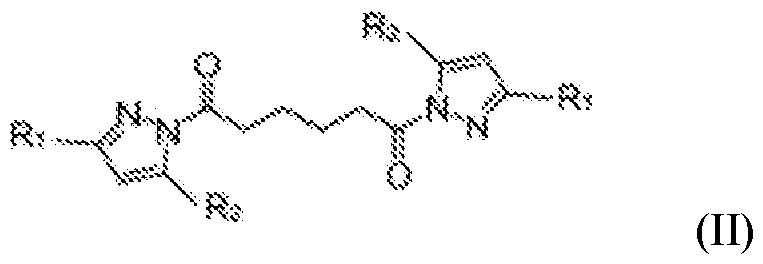 wherein Ri and R2 are each independently hydrogen, alkyl or aryl,
[0008] wherein the method further comprises a pathway 1 or a pathway 2 for forming hexamethylenediamine and adipic acid, respectively.
[0009] In one embodiment, the pathway 2 further comprises steps for forming adipamide.
DESCRIPTION
[0010] The following description sets forth exemplary methods, parameters, and the like.
The embodiments are described in sufficient detail to enable those skilled in the art to practise
the invention. Other embodiments may be utilized, and structural and logical changes may be made without departing from the scope of the invention. The various embodiments are not necessarily mutually exclusive, as some embodiments can be combined with one or more other embodiments to form new embodiments.
[0011] Features that are described in the context of an embodiment may correspondingly be applicable to the same or similar features in the other embodiments. Features that are described in the context of an embodiment may correspondingly be applicable to the other embodiments, even if not explicitly described in these other embodiments. Furthermore, additions and/or combinations and/or alternatives as described for a feature in the context of an embodiment may correspondingly be applicable to the same or similar feature in the other embodiments.
[0012] In the context of various embodiments, the articles “a”, “an” and “the” as used with regard to a feature or element include a reference to one or more of the features or elements.
[0013] In the context of various embodiments, the term “about” or “approximately” as applied to a numeric value encompasses the exact value and a reasonable variance, e.g. within 10% of the specified value.
[0014] As used herein, the term “and/or” includes any and all combinations of one or more of the associated listed items.
[0015] By “comprising” it is meant including, but not limited to, whatever follows the word “comprising”. Thus, use of the term “comprising” indicates that the listed elements are required or mandatory, but that other elements are optional and may or may not be present.
[0016] By “consisting of’ is meant including, and limited to, whatever follows the phrase “consisting of’. Thus, the phrase “consisting of’ indicates that the listed elements are required or mandatory, and that no other elements may be present.
[0017] The present disclosure relates to a method of synthesising hexamethylenediamine and/or adipic acid via metal-free photocatalytic homocoupling of acrylamide, wherein oxalic
acid is used as a reductant. The method comprises homocoupling of acrylamide represented by the general formula (I):
 under conditions including using oxalic acid as a reductant and irradiating a reaction mixture comprising acrylamide with light from a light source to obtain an amide substrate represented by the general formula (II):
 wherein Ri and R2 are each independently hydrogen, alkyl or aryl; and wherein the method further comprises a pathway 1 and/or a pathway 2. [0018] The pathway 1 comprises mixing the amide substrate of formula (II) with benzylamine in a first solvent at a first elevated temperature to obtain a dibenzyladipamide substrate after cooling the mixture to room temperature; mixing the dibenzyladipamide substrate with borane -tetrahydrofuran in a second solvent; quenching the reaction with a quenching reagent; extracting dibenzyldiamine and drying the extracted dibenzyldiamine; and mixing the dibenzyldiamine with a first acid and a third solvent in the presence of a catalyst at a second elevated temperature under a hydrogen gas atmosphere to form a 1 ,6-diamine, wherein the 1,6-diamine is hexamethylenediamine.
[0019] In some embodiments, the amide substrate is mixed with the benzylamine at the first elevated temperature ranging from 45°C to 55°C. The dibenzyladipamide substrate precipitates as solid after the mixture is cooled to room temperature, and pyrazole is recovered from the
mixture and purified before it is recycled for use to produce the acrylamide of general formula (I).
[0020] In some embodiments, the reaction mixture comprising the dibenzyladipamide substrate and the borane -tetrahydrofuran in the second solvent is subjected to refluxing for a duration ranging from 13 to 17 hours.
[0021] In some embodiments, hydrochloric acid is used as the quenching reagent. One skilled in the art will appreciate that other suitable quenching reagents may be used without departing from the scope of the present disclosure.
[0022] The pH of the reaction mixture comprising the dibenzyladipamide substrate and the borane -tetrahydrofuran may be adjusted before extraction of dibenzyldiamine takes place. In various embodiments, the pH is 13 to 15, and in one embodiment, the pH is 14.
[0023] In some embodiments, the dibenzyldiamine is mixed with the first acid and the third solvent in the presence of palladium on active carbon as the catalyst, at a second elevated temperature ranging from 65°C to 75°C. The mixture is heated for a duration ranging from 14 to 18 hours. This step is carried out under a hydrogen gas atmosphere. The mixture is filtered after it is cooled to room temperature and the filtrate is dried to provide the pure 1,6-diamine, which is hexamethylenediamine, with a yield of 80% to 85%. In various embodiments, the first acid is hydrochloric acid. One skilled in the art will appreciate that other suitable acids may be used without departing from the scope of the present disclosure.
[0024] The pathway 2 comprises the steps for producing adipic acid. The steps include mixing the amide substrate with an aqueous sodium hydroxide in a fourth solvent to obtain an aqueous phase; and adding a second acid into the aqueous phase to adjust the pH value and extracting 1,6-diacid, wherein the 1-6-diacid is adipic acid, with a yield of 85% to 90%.
[0025] In some embodiments, the aqueous phase comprises adipic acid and pyrazole. The pyrazole is extracted from the aqueous phase and recycled for use to produce acrylamide of
general formula (I). The pH of the remaining aqueous phase is adjusted before the aqueous phase is subjected to evaporation to form a solid. The adipic acid is extracted from the solid to obtain a yield of 85% to 90%. In various embodiments, the second acid is hydrochloric acid. One skilled in the art will appreciate that other suitable acids may be used without departing from the scope of the present disclosure.
[0026] In some embodiments, the acrylamide represented by the general formula (I) is prepared by mixing a pyrazole represented by the general formula (III):
 wherein Ri and R2 are each independently hydrogen, alkyl or aryl, with triethylamine in a fifth solvent at a temperature of 0°C to obtain a second reaction mixture; and adding an acryloyl chloride to the reaction mixture. The reaction mixture is quenched, and the acrylamide of general formula (I) is extracted from the reaction mixture.
[0027] In some embodiments, the reaction is quenched using a quenching reagent. In one embodiment, the quenching regent is ammonium chloride. One skilled in the art will appreciate that other suitable quenching reagents may be used without departing from the scope of the present disclosure.
[0028] In some embodiments, the acryloyl chloride is added slowly into the reaction mixture. The reaction is an exothermic reaction and adding the acryloyl chloride slowly into the reaction mixture helps to control the temperature to near 0°C.
[0029] In some embodiments, the conditions for homocoupling of the acrylamide comprises mixing the acrylamide of general formula (I) with an oxalic acid, 1,3,3-tetramethylguanidine and l,3-dicyano-2,4,5,6-tetrakis(diphenylamino)-benzene in a sixth solvent to form a third reaction mixture; irradiating the third reaction mixture with light from a light source; quenching the reaction; and extracting the amide substrate.
[0030] In some embodiments, the light source contains blue light with a wavelength of 400 to 490 nm. Examples of such light source include, but are not limited to, blue LED, white LED and compact fluorescent lamps.
[0031] In some embodiments, the reaction is quenched using ammonium chloride. One skilled in the art will appreciate that other suitable quenching reagent may be used without departing from the scope of the present disclosure.
[0032] In another embodiment, the pathway 2 further comprises mixing a second batch of amide substrate with an aqueous ammonium hydroxide in a seventh solvent to form a solid phase and a second aqueous phase, wherein the solid phase is collected by fdtration to obtain adipamide. In some embodiments, pyrazole is extracted from the fdtrate and recycled for use to produce the acrylamide of general formula (I).
[0033] In some embodiments, the pyrazole is 3,5-dimethylpyrazole when Ri and R2 in general formula (III) are both CH3.
[0034] In some embodiments, the acrylamide is l-(3,5-dimethyl-lH-pyrazol-l-yl)prop-2- en-l-one.
[0035] In some embodiments, the the amide substrate is l,6-bis(3,5-dimethyl-lH-pyrazol- 1 -y l)hexane -1,6-dione.
[0036] In some embodiments, the dibenzyladipamide substrate is Nl, N6- dibenzyladipamide .
[0037] In some embodiments, the dibenzyldiamine is Nl, N6-dibenzylhexane-l,6-diamine. [0038] The solvents used in the various steps may be any solvents suitable for dissolving the compounds used in that step. In various embodiments, the solvents include, but are not limited to, dichloromethane, dimethylformamide (DMF), chloroform, tetrahydrofuran (THF), water/THF and ethanol.
[0039] In the present disclosure, the amide substrate is formed from photocatalytic homocoupling of acrylamide utilizing oxalic acid as the reductant. The amide substrate is transformed into adipamide and adipic acid in excellent yield by simple aminolysis and hydrolysis. Hexamethylenediamine is obtained with several steps of transformations from the amide substrate.
[0040] The synthesis of the present disclosure offers several advantages. The advantages include metal-free photocatalytic homocoupling of acrylamide, use of oxalic acid as a cheap reductant, and recyclable pyrazole.
[0041] The method of the present disclosure utilizes oxalic acid as a reductant which can be prepared from biomass. This eliminates the use of energy -demanding electrocatalysis. The method employs an environmental-friendly metal-free photocatalysis in the homocoupling process and this eliminates the use of metal catalysts in the reaction processes for producing hexamethylenediamine and adipic acid. The method displays an excellent selectivity. The pyrazole produced during the various processes can be recycled for use in producing the acrylamide for the homocoupling process.
[0042] To facilitate a better understanding of the present disclosure, the following examples of specific embodiments are given. In no way should the following examples be read to limit or define the entire scope of the disclosure. One skilled in the art will recognize that the examples set out below are not an exhaustive list of the embodiments of this disclosure.
EXAMPLES
Example 1 - Synthesis of acrylamide
1 -(3 ,5 -dimethyl- IH-pyrazol- 1 -yl)prop-2-en- 1 -one
 [0043] A flask was charged with 3,5-dimethylpyrazole (2), triethylamine (1.5 equiv.), and dichloromethane (0.1 M). The mixture was stirred at 0°C in an ice-water bath, and then acryloyl chloride (1) (1.1 equiv.) was slowly added to the reaction mixture. The ice bath was then removed and stirred for 30 min, while the temperature was naturally warmed to room temperature. The reaction was quenched by adding aqueous ammonium chloride, and the target acrylamide compound, was extracted by ethyl acetate. Pure product of acrylamide (3), l-(3,5- dim ethyl- IH-pyrazol- 1 -yl)prop-2-en- 1 -one was obtained by silica gel column chromatography with about 86% yield.
Example 2 - Synthesis of amide substrate
1 ,6-bis(3,5-dimethyl- IH-pyrazol- 1 -yl)hexane- 1 ,6-dione

[0044] A flask was charged with acrylamide compound (3), oxalic acid (1.1 equiv.), 1, 1,3,3- tetramethylguanidine (TMG, 1.1 equiv.), l,3-dicyano-2,4,5,6-tetrakis(diphenylamino)-benzene (4DPAIPN, 0.01 equiv.), and dimethylformamide (DMF) (0.1 M). The atmosphere was exchanged by applying vacuum and backfilling with argon. The resulting mixture was stirred at room temperature and irradiated under blue LED lamps. After 12 hours, the reaction was quenched by aqueous ammonium chloride solution, and extracted by ethyl acetate. The organic phase was dried under vacuum. The target compound, amide substrate (4) with formula 1,6- bis(3,5-dimethyl-lH-pyrazol-l-yl)hexane-l, 6-dione was isolated in about 55% yield by silica gel column chromatography (hexane/EA).
Example 3 - Synthesis of hexamethylenediamine
[0045] (Step 3-1) Synthesis ofNl, N6-dibenzyladipamide

[0046] A flask was charged with amide substrate (4) (1 equiv.), benzylamine (2.1 equiv.), and chloroform (0.05 M). The mixture was stirred and heated to 50°C for 12 hours. The target compound (5) (Nl, N6-dibenzyladipamide) was precipitated as solid after cooling to room temperature. Nl, N6-dibenzyladipamide (5) was collected by filtration and washed by hexane/dichloromethane with 98% yield. Pyrazole (2) was recycled from the filtrate and purified by silica gel column chromatography with about 87% yield.
[0047] (Step 3-2) Synthesis ofNl, N6-dibenzylhexane-l,6-diamine

[0048] A flask was chaiged with Nl, N6-dibenzyladipamide (5) (1 equiv.) and connected to a condenser. The atmosphere was exchanged by applying vacuum and backfilling with argon. Then tetrahydrofuran (THF) (0.05 M) and borane -tetrahydrofuran (BH3 THF) solution (9 equiv., 0.9 M in THF) was injected into the reaction system via syringe. The reaction mixture was stirred and refluxed for 15 hours. After cooling down to room temperature, aqueous hydrochloric acid solution (1.2 equiv. 6 M) was added carefully to quench the exceeded borane. Water (0.05 M) was added into the solution and stirred for 10 min. Then 10% aqueous sodium hydroxide was added until pH reached 14. The mixture was extracted by diethyl ether and dried under vacuum. The compound (6), Nl, N6-dibenzylhexane-l,6-diamine was purified by silica gel chromatography (CThCh/MeOH). The yield was determined by crude NMR with dibromomethane as the internal standard (93%).
[0049] (Step 3-3) Synthesis of hexamethylenediamine

[0050] A flask was charged with Nl, N6-dibenzylhexane-l,6-diamine (6) (1 equiv.), 10% w/w palladium on active carbon (10% w/w), aqueous hydrochloric acid solution (3 equiv.), and ethanol (0.05 M). The atmosphere was exchanged by hydrogen ( 1 atm). The mixture was stirred and heated to 70°C for 16 hours. After cooling to room temperature, the mixture was filtered through a diatomite pad and the filtrate was dried under vacuum to provide the target pure product, hexamethylenediamine (7). The yield was determined by crude NMR with dibromomethane as the internal standard (82%).
Example 4 - Synthesis of adipamide

[0051] A flask was charged with amide substrate (4) (1 equiv.) and aqueous ammonium hydroxide (22-25%) / THF (1: 1, 0.05 M). The mixture was stirred at room temperature for 12 hours. The target compound (8), adipamide was precipitated as solid and collected by filtration with about 91% yield. Pyrazole (2) was recycled from the filtrate and purified by silica gel column chromatography with about 72% yield.
Example 5 - Synthesis of adipic acid

[0052] A flask was charged with amide substrate (4) (1 equiv.), sodium hydroxide (5 equiv.),
and water/THF (1: 1, 0.05 M). The mixture was stirred at room temperature for 12 hours. Pyrazole (2) was extracted from the mixture by diethyl ether and purified by silica gel column chromatography with about 81% yield. The remaining aqueous phase was acidified by aqueous hydrochloric acid solution until pH reached 1. Water was evaporated under vacuum, and target compound (9), adipic acid was extracted from the remaining solids by methanol with 87% yield. [0053] As demonstrated hereinabove, hexamethylenediamine, adipamide and adipic acid can be synthesised from amide substrate in excellent yield by simple aminolysis and hydrolysis. [0054] Although embodiments of the invention have been shown and described, the invention is not limited to the described embodiments. Instead, it would be appreciated by those skilled in the art that various modifications and variations can be made to the embodiments of the invention without departing from the scope of the invention, the scoop of which is set forth in the following claims.
Claims
1. A method of synthesising hexamethylenediamine and/or adipic acid, the method comprising: homocoupling of acrylamide represented by the general formula (I):
 under conditions including using oxalic acid as a reductant and irradiating a reaction mixture comprising acrylamide with light from a light source to obtain an amide substrate represented by the general formula (II):
 wherein Ri and R2 are each independently hydrogen, alkyl or aryl, wherein the method further comprises a pathway 1 and/or a pathway 2, wherein the pathway 1 comprises: mixing the amide substrate with benzylamine in a first solvent at a first elevated temperature to obtain a dibenzyladipamide substrate after cooling the mixture to room temperature; mixing the dibenzyladipamide substrate with borane-tetrahydrofuran in a second solvent; quenching reaction with a quenching reagent; extracting dibenzyldiamine and drying the extracted dibenzyldiamine; and
mixing the dibenzyldiamine with a first acid and a third solvent in the presence of a catalyst at a second elevated temperature under a hydrogen gas atmosphere to form hexamethylenediamine ; wherein the pathway 2 comprises: mixing the amide substrate with an aqueous sodium hydroxide in a fourth solvent to obtain a first aqueous phase; adding a second acid into the first aqueous phase to adjust the pH value; and extracting adipic acid to obtain a yield of 85% to 90%.
wherein Ri and R2 are each independently hydrogen, alkyl or aryl, wherein the method further comprises a pathway 1 and/or a pathway 2, wherein the pathway 1 comprises: mixing the amide substrate with benzylamine in a first solvent at a first elevated temperature to obtain a dibenzyladipamide substrate after cooling the mixture to room temperature; mixing the dibenzyladipamide substrate with borane-tetrahydrofuran in a second solvent; quenching reaction with a quenching reagent; extracting dibenzyldiamine and drying the extracted dibenzyldiamine; and
mixing the dibenzyldiamine with a first acid and a third solvent in the presence of a catalyst at a second elevated temperature under a hydrogen gas atmosphere to form hexamethylenediamine ; wherein the pathway 2 comprises: mixing the amide substrate with an aqueous sodium hydroxide in a fourth solvent to obtain a first aqueous phase; adding a second acid into the first aqueous phase to adjust the pH value; and extracting adipic acid to obtain a yield of 85% to 90%.
2. The method according to claim 1, wherein the acrylamide represented by the general formula (I) is prepared by: mixing pyrazole with triethylamine in a fifth solvent at a temperature of 0°C to obtain a second reaction mixture and adding an acryloyl chloride to the second reaction mixture; and quenching the reaction and extracting the acrylamide of general formula (I) from the second reaction mixture.
3. The method according to claim 1 or 2, wherein the conditions for homocoupling of the acrylamide comprises: mixing the acrylamide of general formula (I) with the oxalic acid, 1,3,3- tetramethylguanidine and l,3-dicyano-2,4,5,6-tetrakis(diphenylamino)-benzene in a sixth solvent to form a third reaction mixture; irradiating the third reaction mixture with light from the light source; and quenching the reaction and extracting the amide substrate.
4. The method according to claim 1, wherein the pathway 2 further comprises:
mixing a second batch of amide substrate with an aqueous ammonium hydroxide in a seventh solvent to form a solid phase and a second aqueous phase, wherein the solid phase is collected by filtration to obtain adipamide.
5. The method according to claim 1, further comprising extracting pyrazole from the first aqueous phase.
6. The method according to claim 4, further comprising extracting pyrazole from the second aqueous phase.
7. The method according to any one of the preceding claims, wherein the solvent is selected from the group consisting of dichloromethane, dimethylformamide (DMF), chloroform, tetrahydrofuran (THF), water/THF and ethanol.
8. The method according to claim 2, wherein the pyrazole is represented by the general formula (III):
 wherein Ri and R2 are each independently hydrogen, alkyl or aryl.
9. The method according to claim 8, wherein the pyrazole is 3,5-dimethylpyrazole.
10. The method according to claim 2 or 8, wherein the acrylamide is l-(3,5-dimethyl-lH- pyrazol- 1 -yl)prop-2-en- 1 -one .
11. The method according to claim 3, wherein the amide substrate is l,6-bis(3,5-dimethyl- IH-pyrazol-l-yl) hexane- 1,6-dione.
12. The method according to claim 1, wherein the dibenzyladipamide substrate is Nl, N6- dibenzyladipamide .
13. The method according to claim 1, wherein the dibenzyldiamine is Nl, N6- dibenzylhexane- 1 ,6-diamine .
14. The method according to claim 3, wherein the light source contains blue light with a wavelength of 400 to 490 nm.
15. The method according to claim 1, wherein the acid is hydrochloric acid and the catalyst is palladium on active carbon.
Applications Claiming Priority (2)
| Application Number | Priority Date | Filing Date | Title |
|---|---|---|---|
| SG10202250766W | 2022-08-18 | ||
| SG10202250766W | 2022-08-18 |
Publications (1)
| Publication Number | Publication Date |
|---|---|
| WO2024039293A1 true WO2024039293A1 (en) | 2024-02-22 |
Family
ID=89942428
Family Applications (1)
| Application Number | Title | Priority Date | Filing Date |
|---|---|---|---|
| PCT/SG2023/050558 Ceased WO2024039293A1 (en) | 2022-08-18 | 2023-08-15 | Synthesis of hexamethylenediamine and adipic acid via homocoupling of acrylamides |
Country Status (1)
| Country | Link |
|---|---|
| WO (1) | WO2024039293A1 (en) |
-
2023
- 2023-08-15 WO PCT/SG2023/050558 patent/WO2024039293A1/en not_active Ceased
Non-Patent Citations (4)
| Title |
|---|
| KASHIWAGI, K. SUGISE, R. SHIMAKAWA, T. MATUURA, T. SHIRAI, M.: "Ruthenium-catalyzed dimerization of acrylonitrile in the presence of carboxylic acids", JOURNAL OF MOLECULAR CATALYSIS A CHEMICAL, ELSEVIER, AMSTERDAM., NL, vol. 264, no. 1-2, 16 February 2007 (2007-02-16), NL , pages 9 - 16, XP005893138, ISSN: 1381-1169, DOI: 10.1016/j.molcata.2006.08.077 * |
| MOHAMED ATEIA, ALAAEDDIN ALSBAIEE, TANJU KARANFIL, WILLIAM DICHTEL: "Efficient PFAS Removal by Amine-Functionalized Sorbents: Critical Review of the Current Literature", ENVIRONMENTAL SCIENCE & TECHNOLOGY LETTERS, AMERICAN CHEMICAL SOCIETY, US, vol. 6, no. 12, 10 December 2019 (2019-12-10), US , pages 688 - 695, XP055762701, ISSN: 2328-8930, DOI: 10.1021/acs.estlett.9b00659 * |
| WANG, C.-C. LIN, P.-S. CHENG, C.-H.: "Cobalt-catalyzed dimerization of alkenes", TETRAHEDRON LETTERS, ELSEVIER, AMSTERDAM , NL, vol. 45, no. 32, 2 August 2004 (2004-08-02), Amsterdam , NL , pages 6203 - 6206, XP004521209, ISSN: 0040-4039, DOI: 10.1016/j.tetlet.2004.04.085 * |
| WU ZUGEN, WU MINGYUE, ZHU KUN, WU JIE, LU YIXIN: "Photocatalytic coupling of electron-deficient alkenes using oxalic acid as a traceless linchpin", CHEM, CELL PRESS, US, vol. 9, no. 4, 13 April 2023 (2023-04-13), US , pages 978 - 988, XP009554407, ISSN: 2451-9294, DOI: 10.1016/j.chempr.2022.12.013 * |
Similar Documents
| Publication | Publication Date | Title |
|---|---|---|
| CN109942433B (en) | A kind of chemical synthesis method of 3', 4', 5'-trifluoro-2-aminobiphenyl | |
| WO2024169490A1 (en) | Asymmetric catalytic hydrogenation synthesis method for brivaracetam intermediate | |
| WO2005047291A9 (en) | Method for the catalytic production of hydrocodone and hydromorphone | |
| JP5630058B2 (en) | Method for producing alcohol compound | |
| US8729303B2 (en) | 2,2′,6,6′-tetrasubstituted aminophosphine ligand and its synthesis method | |
| CN109942446A (en) | A kind of preparation method of pregabalin | |
| CN101440044B (en) | Fluoride-containing Gemini quaternary ammonium salt rare earth Lewis acid | |
| CN100537582C (en) | Method for synthesizing di-ferrocene phosphine diimine structure connected with aliphatic series and benzene ring | |
| CN117417257A (en) | A method for synthesizing amine compounds through catalytic hydrogenation | |
| JP2002510699A (en) | Preparation of phosphine ligand | |
| CN113443950A (en) | Method for reducing carbonyl into methylene under illumination | |
| CN107382874B (en) | Preparation method and application of a class of chiral six-membered nitrogen heterocyclic carbene precursor salt | |
| CN111675633A (en) | A kind of synthetic method of N-acyl hydroxylamine | |
| CN117362142B (en) | Asymmetric catalytic hydrogenation method for cyclohexene derivatives | |
| CN116063137B (en) | Synthesis method for synthesizing chiral 2-pyridyl aryl methanol by iridium catalysis | |
| CN119080680A (en) | Glutarimide-based ionic liquid and phthalimide-based ionic liquid and method for catalyzing synthesis of quinazoline-2,4(1H,3H)-dione | |
| CN108479769A (en) | A method of preparing Pd nano-particles | |
| CN113620977A (en) | Synthesis method of thiazolidine pyrimidone acetic acid | |
| CN121226394A (en) | A thioheterocyclic butane-indoline heterocyclic compound, its preparation method and application | |
| JP2003171327A (en) | Method for producing optically active 1,1'-bi-2-naphthols | |
| CN118724798A (en) | A highly efficient synthesis method of (Z)-N-alkenyl-2-pyridone compounds | |
| US20110166360A1 (en) | Catalytic Process for Asymmetric Hydrogenation | |
| WO2025215410A2 (en) | A novel cobalt catalyst for organic reactions and process thereof | |
| CN118598798A (en) | A preparation method for directly synthesizing aromatic amine compounds based on aromatic hydrocarbons and fatty amines | |
| CN118063391A (en) | Pyrimidine compound and synthetic method and application thereof |
Legal Events
| Date | Code | Title | Description |
|---|---|---|---|
| 121 | Ep: the epo has been informed by wipo that ep was designated in this application |
Ref document number: 23855227 Country of ref document: EP Kind code of ref document: A1 |
|
| NENP | Non-entry into the national phase |
Ref country code: DE |
|
| 122 | Ep: pct application non-entry in european phase |
Ref document number: 23855227 Country of ref document: EP Kind code of ref document: A1 |