WO2024018600A1 - 情報処理装置、制御方法、及び制御プログラム - Google Patents
情報処理装置、制御方法、及び制御プログラム Download PDFInfo
- Publication number
- WO2024018600A1 WO2024018600A1 PCT/JP2022/028383 JP2022028383W WO2024018600A1 WO 2024018600 A1 WO2024018600 A1 WO 2024018600A1 JP 2022028383 W JP2022028383 W JP 2022028383W WO 2024018600 A1 WO2024018600 A1 WO 2024018600A1
- Authority
- WO
- WIPO (PCT)
- Prior art keywords
- facility
- content
- information
- user
- attribute
- Prior art date
- Legal status (The legal status is an assumption and is not a legal conclusion. Google has not performed a legal analysis and makes no representation as to the accuracy of the status listed.)
- Ceased
Links
Images







Classifications
-
- G—PHYSICS
- G06—COMPUTING OR CALCULATING; COUNTING
- G06F—ELECTRIC DIGITAL DATA PROCESSING
- G06F3/00—Input arrangements for transferring data to be processed into a form capable of being handled by the computer; Output arrangements for transferring data from processing unit to output unit, e.g. interface arrangements
- G06F3/14—Digital output to display device ; Cooperation and interconnection of the display device with other functional units
-
- G—PHYSICS
- G06—COMPUTING OR CALCULATING; COUNTING
- G06Q—INFORMATION AND COMMUNICATION TECHNOLOGY [ICT] SPECIALLY ADAPTED FOR ADMINISTRATIVE, COMMERCIAL, FINANCIAL, MANAGERIAL OR SUPERVISORY PURPOSES; SYSTEMS OR METHODS SPECIALLY ADAPTED FOR ADMINISTRATIVE, COMMERCIAL, FINANCIAL, MANAGERIAL OR SUPERVISORY PURPOSES, NOT OTHERWISE PROVIDED FOR
- G06Q30/00—Commerce
- G06Q30/02—Marketing; Price estimation or determination; Fundraising
Definitions
- the present disclosure relates to an information processing device, a control method, and a control program.
- Patent Document 1 It is known that content is displayed on a display device. For example, signage displays content.
- a technique for displaying content that is an advertisement and the degree of congestion has been proposed (see Patent Document 1).
- the information display system of Patent Document 1 includes a plurality of first display terminals and a plurality of second display terminals. The degree of congestion is displayed on the first display terminal. An advertisement is displayed on the second display terminal.
- each of the plurality of second display terminals displays content that is an advertisement.
- the displayed content may include content that does not arouse interest. It is undesirable for content to be provided that does not arouse interest.
- the purpose of this disclosure is to provide interesting content.
- the information processing device communicates with the display device.
- the information processing device includes an acquisition unit that acquires ratio information indicating a proportion of each attribute corresponding to a plurality of users existing around the display device, and facility information indicating a correspondence relationship between content and attributes; a specifying unit that specifies one attribute based on a ranking corresponding to a percentage of each, and specifies content corresponding to the specified attribute based on the facility information; and a display device that displays the specified content. and a control unit that performs control to perform the control.
- FIG. 1 is a diagram showing an information providing system according to Embodiment 1.
- FIG. FIG. 2 is a diagram showing hardware included in the information processing apparatus according to the first embodiment.
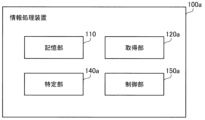
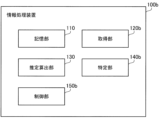
- FIG. 2 is a block diagram showing functions of the information processing device according to the first embodiment.
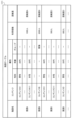
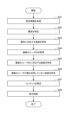
- FIG. 3 is a diagram showing an example of a facility table according to the first embodiment. 3 is a flowchart illustrating an example of processing executed by the information processing apparatus according to the first embodiment.
- FIG. 3 is a diagram showing an information providing system according to a second embodiment.
- FIG. 2 is a block diagram showing functions of an information processing device according to a second embodiment.
- FIG. 7 is a diagram showing an example of a usage history table according to the second embodiment.
- FIG. 12 is a flowchart illustrating an example of processing executed by the information processing apparatus according to the second embodiment. 12 is a flowchart illustrating an example of processing executed by an information processing apparatus according to a modification of the second embodiment.
- FIG. 7 is a diagram showing an information providing system according to a third embodiment.
- FIG. 3 is a block diagram showing functions of an information processing device according to a third embodiment.
- 12 is a flowchart illustrating an example of processing executed by the information processing apparatus according to the third embodiment.
- 12 is a flowchart illustrating an example of processing executed by an information processing apparatus according to a modification of the third embodiment.
- FIG. 7 is a block diagram showing functions of an information processing device according to a fourth embodiment.
- FIG. 7 is a diagram showing an example of an induction effect table according to Embodiment 4;
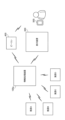
- FIG. 1 is a diagram showing an information providing system according to the first embodiment.
- the information providing system includes an information processing device 100, a camera 200, and a display device 300.
- Information processing device 100, camera 200, and display device 300 communicate via a network.
- the network may be a wired network or a wireless network.
- the information processing device 100 is a device that executes a control method.
- the information processing device 100 is a server.
- the information processing device 100 may communicate with a communication device installed in a facility.
- the information processing device 100 may communicate with communication devices installed in facilities A, B, C, and D. Four facilities are depicted in Figure 1.
- the information processing device 100 may communicate with communication devices installed in four or more facilities.
- the information processing device 100 may receive the congestion degree of the facility from a communication device installed in the facility.
- the camera 200 photographs a plurality of users present around the display device 300.
- Display device 300 is, for example, a signage.
- FIG. 2 is a diagram showing hardware included in the information processing apparatus according to the first embodiment.
- the information processing device 100 includes a processor 101, a volatile storage device 102, and a nonvolatile storage device 103.
- the processor 101 controls the entire information processing device 100.
- the processor 101 is a CPU (Central Processing Unit), an FPGA (Field Programmable Gate Array), or the like.
- Processor 101 may be a multiprocessor.
- the information processing device 100 may include a processing circuit.
- the volatile storage device 102 is the main storage device of the information processing device 100.
- the volatile storage device 102 is a RAM (Random Access Memory).
- the nonvolatile storage device 103 is an auxiliary storage device of the information processing device 100.
- the nonvolatile storage device 103 is a HDD (Hard Disk Drive) or an SSD (Solid State Drive).
- FIG. 3 is a block diagram showing the functions of the information processing apparatus according to the first embodiment.
- the information processing device 100 includes a storage section 110, an acquisition section 120, an estimation calculation section 130, a specification section 140, and a control section 150.
- the storage unit 110 may be realized as a storage area secured in the volatile storage device 102 or the nonvolatile storage device 103.
- Part or all of the acquisition unit 120, the estimation calculation unit 130, the identification unit 140, and the control unit 150 may be realized by a processing circuit. Further, a part or all of the acquisition unit 120, the estimation calculation unit 130, the identification unit 140, and the control unit 150 may be realized as a module of a program executed by the processor 101.
- the program executed by processor 101 is also referred to as a control program.
- the control program is recorded on a recording medium.
- the storage unit 110 may store a facility table.
- the facility table will be explained later.
- the acquisition unit 120 may acquire images obtained by the camera 200 photographing a plurality of users.
- the estimation calculation unit 130 estimates attributes of a plurality of users based on the image. For example, the attributes are gender, age, group, etc. For example, the estimation calculation unit 130 estimates attributes of a plurality of users using image recognition technology. Further, for example, when a group is estimated, the estimation calculation unit 130 estimates a group in which users are close to each other as a group. When a group is estimated, the estimation calculation unit 130 may estimate a group wearing the same uniform as a group.
- the estimation calculation unit 130 estimates the number of users based on the image. For example, the estimation calculation unit 130 estimates the number of people (that is, the total number of people) using image recognition technology. The estimation calculation unit 130 calculates the ratio for each attribute using the estimated number of people of the attribute and the total number of people. For example, the estimation calculation unit 130 calculates the proportion of men based on the number of men and the total number of people. In this way, the ratio for each attribute is calculated. For example, the proportion for each attribute is the proportion of men, the proportion of women, the proportion of people in their 20s, the proportion of people in their 30s, the proportion of family members, etc.
- the acquisition unit 120 acquires ratio information indicating the ratio for each attribute. For example, the acquisition unit 120 acquires the ratio information calculated by the estimation calculation unit 130. Further, for example, the acquisition unit 120 acquires ratio information from an external device.
- the external device is a device having the same function as the estimation calculation unit 130. Illustrations of the external device are omitted.
- the specifying unit 140 specifies one attribute based on the ranking corresponding to the ratio of each attribute. For example, the specifying unit 140 specifies the attribute ranked first. That is, the specifying unit 140 specifies the attribute with the highest ratio. Further, for example, the specifying unit 140 specifies the attribute ranked second. It is preferable that the specifying unit 140 specifies higher-rank attributes.
- the acquisition unit 120 acquires the facility table.
- the acquisition unit 120 acquires the facility table from the storage unit 110. Further, for example, the acquisition unit 120 acquires a facility table from an external device. Here, the facility table is shown.
- FIG. 4 is a diagram showing an example of a facility table according to the first embodiment.
- the facility table 111 is stored in the storage unit 110.
- the facility table 111 is also referred to as facility information.
- the facility table 111 shows the correspondence between facilities, content, attributes, number of users, and congestion level of the facility.
- the facility table 111 has items such as facility name, content, attributes, number of users, and congestion degree.
- the name of the facility is registered in the facility name field.
- Content is registered in the content item.
- Attributes are registered in the attribute field.
- the number of people who used the facility is registered in the item number of users.
- the congestion degree item the congestion degree received from the communication device installed in the facility is registered.
- the identifying unit 140 Based on the facility table 111, the identifying unit 140 identifies the content corresponding to the identified attribute. For example, when the specified attribute is male, the specifying unit 140 specifies contents A1, C1, and D.
- the control unit 150 controls the display device 300 to display the specified content. Specifically, the control unit 150 transmits the specified content and an instruction to display the content to the display device 300. Thereby, the display device 300 displays the content. Further, if the display device 300 stores the specified content, the control unit 150 transmits an instruction to display the content to the display device 300. Thereby, the display device 300 displays the content.
- FIG. 5 is a flowchart illustrating an example of processing executed by the information processing apparatus according to the first embodiment.
- the acquisition unit 120 acquires an image including multiple users.
- the estimation calculation unit 130 estimates attributes of a plurality of users based on the image.
- the estimation calculation unit 130 estimates the total number of people based on the image.
- the estimation calculation unit 130 calculates the ratio for each attribute using the estimated number of people of the attribute and the total number of people.
- the specifying unit 140 specifies one attribute based on the ranking corresponding to the ratio of each attribute.
- the identifying unit 140 Based on the facility table 111, the identifying unit 140 identifies the content corresponding to the identified attribute.
- the control unit 150 controls the display device 300 to display the specified content.
- the information processing device 100 specifies an attribute with a high proportion among a plurality of attributes corresponding to a plurality of users, and provides content corresponding to the specified attribute. Therefore, the provided content attracts the interest of many users. Therefore, the information processing device 100 can provide interesting content.
- the identifying unit 140 may identify the top two or more attributes in the ranking corresponding to the ratio of each attribute. For example, the specifying unit 140 specifies the top two attributes: a male attribute and a 30's attribute. Then, based on the facility table 111, the specifying unit 140 specifies the content corresponding to the specified attribute. Thereby, for example, the specifying unit 140 specifies the content C1. In this way, the information processing device 100 can display more appropriate content on the display device 300 by narrowing down the attributes to be specified.
- the identifying unit 140 may identify the degree of congestion corresponding to the identified content. For example, when content A1 is specified, the specifying unit 140 specifies the degree of congestion A of facility A.
- the control unit 150 controls the display device 300 to display the specified content and the specified congestion degree. Thereby, the display device 300 displays the content and the degree of congestion. For example, the display device 300 displays content A1 and congestion degree A. By displaying the congestion degree on the display device 300, the information processing device 100 can provide useful information to the user.
- the specifying unit 140 may specify the degree of congestion corresponding to each of the plurality of facilities in the plurality of contents based on the facility table 111.
- the control unit 150 controls the display device 300 to display a plurality of contents in descending order of the congestion degree. Thereby, the display device 300 displays the contents in order of decreasing congestion degree. The user can easily recognize facilities with low congestion.
- the identifying unit 140 may identify the degree of congestion corresponding to the identified content. For example, when content A1 is specified, the specifying unit 140 specifies the degree of congestion A of facility A.
- the control unit 150 controls the display device 300 to display the specified content when the congestion degree is less than or equal to a predetermined threshold. Thereby, the display device 300 displays content of facilities with a low degree of congestion. Therefore, the information processing device 100 can guide the user to a less crowded facility. Moreover, the control unit 150 does not perform content display control when the degree of congestion is greater than a threshold value. As a result, the user will not go to a facility that is highly crowded.
- the information processing device 100 may execute the following processing.
- the specifying unit 140 specifies one attribute based on the ranking corresponding to the ratio of each attribute. For example, the specifying unit 140 specifies the attribute ranked first.
- the specifying unit 140 specifies a facility corresponding to the specified attribute based on the facility table 111.
- the identifying unit 140 identifies the facility with the largest number of users among the identified facilities.
- the specifying unit 140 specifies content corresponding to the specified attribute from among the contents corresponding to the specified facility (that is, the facility with the largest number of users).
- the control unit 150 controls the display device 300 to display the specified content. Thereby, the display device 300 displays the content of the facility that is used most often by the identified attribute. Therefore, the information processing apparatus 100 can provide content that is of interest to users with the specified attributes.
- FIG. 6 is a diagram showing an information providing system according to the second embodiment.
- the information providing system includes an information processing device 100a, a display device 300, and a beacon 400.
- the information processing device 100a, the display device 300, and the beacon 400 communicate via a network.
- the network may be a wired network or a wireless network.
- the information processing device 100a communicates with the terminal device 500 via the network.
- Beacon 400 may exist around display device 300.
- a user has a terminal device 500.
- the terminal device 500 stores the user ID (Identifier) of the user.
- the user ID is also referred to as specific information that can identify the user.
- the specific information may be the user's name.
- the user ID in the following explanation may be replaced with the user's name.
- FIG. 7 is a block diagram showing the functions of the information processing device according to the second embodiment.
- the information processing device 100a includes an acquisition section 120a, an identification section 140a, and a control section 150a.
- the acquisition unit 120a may acquire the user ID stored in the terminal device 500 via the beacon 400.
- the storage unit 110 may store user attribute information indicating user attributes. For example, the attributes are gender, age, etc.
- the acquisition unit 120a may acquire user attribute information from the storage unit 110 based on the user ID.
- the acquisition unit 120a may acquire the user ID and user attribute information from an external device.
- the external device stores user attribute information.
- the external device acquires the user ID stored in the terminal device 500 via the beacon 400.
- the external device acquires user attribute information based on the user ID.
- the external device transmits the user ID and user attribute information to the information processing device 100a. Thereby, the acquisition unit 120a can acquire the user ID and user attribute information.
- the storage unit 110 may store a usage history table. Shows the usage history table.
- FIG. 8 is a diagram illustrating an example of a usage history table according to the second embodiment.
- the usage history table 112 is stored in the storage unit 110.
- the usage history table 112 is also referred to as usage history information.
- the usage history table 112 has items such as user ID, usage date, and facility name.
- a user ID is registered in the user ID field.
- the usage date is registered in the usage date field. In other words, the date of visit is registered in the date of use field.
- the facility name field the name of the facility used by the user is registered.
- the acquisition unit 120a acquires the usage history table 112 from the storage unit 110 or an external device.
- the identifying unit 140a identifies the facility corresponding to the user ID based on the usage history table 112 and the user ID. That is, the identifying unit 140a identifies the facility used by the user with the user ID. For example, when the user ID is "U1", the specifying unit 140a specifies facilities A, B, and D. The identified facility is also referred to as a second facility.
- the identifying unit 140a Based on the facility table 111, the identifying unit 140a identifies the facility corresponding to the attribute indicated by the user attribute information. For example, when the attribute indicated by the user attribute information is male, the specifying unit 140a specifies facilities A, C, and D that correspond to males. The identified facility is also referred to as a first facility.
- the identifying unit 140a compares the facilities identified based on the facility table 111 and the facilities identified based on the usage history table 112, and determines the user ID among the facilities identified based on the facility table 111. Identify facilities that users have never been to. For example, the identifying unit 140a compares facilities A, C, and D with facilities A, B, and D, and determines which facility among facilities A, C, and D the user with user ID "U1" has never visited. Identify C.
- the identifying unit 140a Based on the facility table 111, the identifying unit 140a identifies content that corresponds to the attribute indicated by the user attribute information, from among the contents that correspond to the identified facility. For example, when the specified facility is facility C and the attribute indicated by the user attribute information is male, the specifying unit 140a specifies content C1.
- the control unit 150a controls the terminal device 500 to display the specified content.
- the control unit 150a transmits the specified content and an instruction to display the content to the terminal device 500.
- the terminal device 500 displays the content.
- the control unit 150a may control the display device 300 to display the specified content.
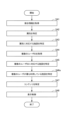
- FIG. 9 is a flowchart illustrating an example of processing executed by the information processing apparatus according to the second embodiment.
- the acquisition unit 120a acquires a user ID and user attribute information.
- the identification unit 140a uses the usage history table 112 to identify the facility corresponding to the user ID.
- Step S23 Based on the facility table 111, the identifying unit 140a identifies the facility corresponding to the attribute indicated by the user attribute information.
- Step S24 The identifying unit 140a compares the facilities identified based on the facility table 111 and the facilities identified based on the usage history table 112, Then, a facility that the user with the user ID has never been to is identified.
- Step S25 Based on the facility table 111, the specifying unit 140a specifies the content corresponding to the attribute indicated by the user attribute information from among the contents corresponding to the specified facility.
- Step S26 The control unit 150a controls the terminal device 500 to display the specified content.
- the information processing device 100a provides content of a facility that the user has never been to.
- the facility corresponding to the content is a facility that the user has never been to. Therefore, when the content is provided, it can be said that the user is interested in the content.
- the content is specified based on the attribute indicated by the user attribute information. Therefore, it can be said that the content is content that attracts the interest of users with the attribute. Therefore, the information processing device 100a can provide interesting content.
- the acquisition unit 120a acquires user attribute information.
- the user attribute information is acquired using the method described above.
- the acquisition unit 120a acquires the facility table 111.
- the specifying unit 140a specifies, based on the facility table 111, a facility corresponding to the attribute indicated by the user attribute information. For example, when the attribute indicated by the user attribute information is male, the specifying unit 140a specifies facilities A, C, and D that correspond to males.
- the identifying unit 140a identifies the facility with the largest number of users among the identified facilities. For example, the identifying unit 140a identifies facility A.
- the identifying unit 140a identifies content that corresponds to the attribute indicated by the user attribute information, from among the contents that correspond to the identified facility (that is, the facility that has the largest number of users). For example, when the attribute is male, the specifying unit 140a specifies content A1.
- the control unit 150a controls the terminal device 500 to display the specified content. Further, the control unit 150a may control the display device 300 to display the specified content.
- FIG. 10 is a flowchart illustrating an example of processing executed by an information processing apparatus according to a modification of the second embodiment.
- the acquisition unit 120a acquires user attribute information.
- the identifying unit 140a Based on the facility table 111, the identifying unit 140a identifies the facility corresponding to the attribute indicated by the user attribute information.
- the identifying unit 140a identifies the facility with the largest number of users among the identified facilities.
- the specifying unit 140a specifies the content corresponding to the attribute indicated by the user attribute information from among the contents corresponding to the specified facility.
- the control unit 150a controls the terminal device 500 to display the specified content.
- the information processing device 100a can provide interesting content.
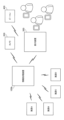
- FIG. 11 is a diagram showing an information providing system according to the third embodiment.
- the information providing system includes an information processing device 100b, a camera 200, a display device 300, and a beacon 400. Camera 200 photographs a plurality of users. A plurality of users exist around the display device 300. Each of the plurality of users has a terminal device.
- FIG. 12 is a block diagram showing the functions of the information processing device according to the third embodiment.
- the information processing device 100b includes a storage section 110, an acquisition section 120b, an estimation calculation section 130, a specification section 140b, and a control section 150b.
- the acquisition unit 120b acquires ratio information indicating the ratio of each attribute obtained based on images obtained by photographing a plurality of users. For example, the acquisition unit 120b acquires the ratio information calculated by the estimation calculation unit 130. Further, for example, the acquisition unit 120b acquires ratio information from an external device.
- the specifying unit 140b specifies one attribute based on the ranking corresponding to the ratio of each attribute. For example, the specifying unit 140b specifies the attribute ranked first. It is desirable that the specifying unit 140b specifies the higher-rank attributes.
- the identifying unit 140b identifies a facility corresponding to the identified attribute based on the facility table 111. The identified facility is also referred to as a first facility.
- the acquisition unit 120b acquires multiple user IDs from multiple terminal devices owned by multiple users via the beacon 400. Further, the plurality of user IDs are also referred to as a plurality of pieces of specific information that can specify a plurality of users.
- the identifying unit 140b identifies facilities corresponding to multiple user IDs based on the usage history table 112 and the multiple user IDs. That is, the identification unit 140b identifies facilities used by multiple users.
- the identified facility is also referred to as a second facility.
- the specifying unit 140b compares the facilities specified based on the facility table 111 and the facilities specified based on the usage history table 112, and selects a plurality of facilities among the facilities specified based on the facility table 111. To identify a facility that is least used by a plurality of users corresponding to a user ID. Based on the facility table 111, the specifying unit 140b specifies content corresponding to the specified attribute from among the contents corresponding to the specified facility.
- the control unit 150b controls the display device 300 to display the specified content.
- FIG. 13 is a flowchart illustrating an example of processing executed by the information processing apparatus according to the third embodiment.
- the acquisition unit 120b acquires ratio information indicating the ratio for each attribute.
- the identifying unit 140b identifies one attribute based on the ranking corresponding to the ratio of each attribute.
- Step S43 Based on the facility table 111, the identifying unit 140b identifies the facility corresponding to the identified attribute.
- the acquisition unit 120b acquires multiple user IDs from multiple terminal devices owned by multiple users via the beacon 400.
- the identifying unit 140b uses the usage history table 112 to identify facilities corresponding to the plurality of user IDs.
- the identifying unit 140b compares the facilities identified based on the facility table 111 and the facilities identified based on the usage history table 112, Then, a facility that is least used by a plurality of users corresponding to a plurality of user IDs is identified.
- the specifying unit 140b Based on the facility table 111, specifies the content corresponding to the specified attribute from among the contents corresponding to the specified facility.
- the control unit 150b controls the display device 300 to display the specified content.
- the information processing device 100b provides content of a facility that many users have never used.
- the facility corresponding to the content is a facility that many users have never used. Therefore, when the content is provided, it can be said that many users are interested in the content.
- the content is content specified based on attributes corresponding to a plurality of users. Therefore, it can be said that the content is content that attracts the interest of users with the attribute. Therefore, the information processing device 100b can provide interesting content.
- Embodiment 3 a case has been described in which content of a facility that many users have never used is provided. In a modification of Embodiment 3, a case will be described in which content of a facility most used by a plurality of users is provided.
- FIG. 14 is a flowchart illustrating an example of processing executed by an information processing apparatus according to a modification of the third embodiment.
- the process in FIG. 14 differs from the process in FIG. 13 in that step S46a is executed. Therefore, in FIG. 14, step S46a will be explained. Further, a description of processes other than step S46a will be omitted.
- the identifying unit 140b compares the facilities identified based on the facility table 111 and the facilities identified based on the usage history table 112, and Then, the facility most used by a plurality of users corresponding to a plurality of user IDs is identified.
- the information processing device 100b provides content of facilities used by many users. Further, the content is the content of a facility used by many users with the specified attribute. Therefore, it can be said that the content is of interest to many users. Therefore, the information processing device 100b can provide interesting content.
- Embodiment 4 Next, Embodiment 4 will be described. In Embodiment 4, matters that are different from Embodiments 1 to 3 will be mainly explained. In Embodiment 4, explanations of matters common to Embodiments 1 to 3 will be omitted.
- FIG. 15 is a block diagram showing the functions of the information processing device according to the fourth embodiment.
- the information processing device 100 further includes a guidance effect calculation unit 160.
- the information processing device 100 provides the content to the display device 300, so that the display device 300 displays the content.
- a visibility rate can be obtained by displaying the content on the display device 300.
- the visibility rate may be calculated by a device such as the display device 300.
- the acquisition unit 120 acquires the visibility rate. For example, the acquisition unit 120 acquires the visibility rate from the device that calculated the visibility rate.
- the acquisition unit 120 acquires a first congestion degree, which is the congestion degree of the facility corresponding to the content before the content is displayed, from a device installed in the facility.
- the acquisition unit 120 acquires a second congestion degree, which is the congestion degree of the facility corresponding to the content after the content is displayed, from a device installed in the facility.
- the guidance effect calculation unit 160 calculates the congestion degree increase rate based on the first congestion degree and the second congestion degree.
- the induction effect calculation unit 160 calculates the induction effect value using equation (1). Note that ⁇ is a constant.
- Guidance effect value congestion increase rate + ⁇ x visibility rate... (1)
- the terminal device 500 displays the content. After the terminal device 500 displays the content, the user clicks on the content that interests him. The terminal device 500 calculates a click rate based on the number of displayed contents and the number of clicked contents.
- the acquisition unit 120 may acquire the click rate from the terminal device 500.
- the induction effect calculation unit 160 may calculate the induction effect value using equation (2).
- Induction effect value congestion increase rate + ⁇ x click rate... (2)
- the acquisition unit 120 may acquire the success rate from the terminal device 500.
- the guiding effect calculation unit 160 may calculate the guiding effect value using equation (3). Note that ⁇ is a constant.
- Induction effect value congestion increase rate + ⁇ ⁇ click rate + ⁇ ⁇ success rate ... (3)
- the induction effect value is calculated.
- the calculation of the induction effect value may be performed by a device other than the information processing device 100.
- the guiding effect value is also referred to as a value indicating the guiding effect to the facility.
- the storage unit 110 stores a guidance effect table that indicates the correspondence between guidance effect values and content. An example of an induction effect table is illustrated.
- FIG. 16 is a diagram showing an example of the induction effect table according to the fourth embodiment.
- the induction effect table 113 is stored in the storage unit 110.
- the induction effect table 113 is also referred to as induction effect information.
- the induction effect table 113 shows the correspondence between the induction effect value and the content. Note that the induction effect table 113 may be stored in a device other than the information processing device 100.
- the acquisition unit 120 acquires the induction effect table 113.
- the acquisition unit 120 acquires the induction effect table 113 from the storage unit 110.
- the identifying unit 140 After identifying the content corresponding to the attribute, the identifying unit 140 identifies the content based on the guidance effect value corresponding to the identified content. For example, the specifying unit 140 specifies the content with the highest induction effect value. Further, for example, the specifying unit 140 specifies the content with the second highest induction effect value. In this way, it is preferable that the identifying unit 140 identifies content with a high induction effect value.
- the control unit 150 controls the display device 300 to display the specified content.
- the information processing device 100 can provide content with a high guiding effect.
- the information processing apparatuses 100a and 100b are capable of providing content with a high guiding effect. can.
- the information processing device 100 may communicate with the terminal device 500.
- the information processing apparatus 100 may then perform the following process.
- the acquisition unit 120 acquires the user attribute information, the facility table 111, and the guidance effect table 113.
- the specifying unit 140 specifies content corresponding to the attribute indicated by the user attribute information based on the facility table 111.
- the specifying unit 140 specifies content based on the induction effect value corresponding to the specified content.
- the control unit 150 controls the terminal device 500 to display the specified content. In this way, the information processing device 100 provides content with a high guiding effect. Therefore, the information processing device 100 can provide interesting content.
- 100 Information processing device 100a Information processing device, 100b Information processing device, 101 Processor, 102 Volatile storage device, 103 Nonvolatile storage device, 110 Storage unit, 111 Facility table, 112 Usage history table, 113 Induction effect table, 120 obtained part, 120a acquisition part, 120b acquisition part, 130 estimation calculation part, 140 identification part, 140a identification part, 140b identification part, 150 control part, 150a control part, 150b control part, 160 Guidance effect calculation unit, 200 camera, 300 display device, 400 beacon, 500 terminal device.
Landscapes
- Engineering & Computer Science (AREA)
- Theoretical Computer Science (AREA)
- Physics & Mathematics (AREA)
- General Physics & Mathematics (AREA)
- Business, Economics & Management (AREA)
- Human Computer Interaction (AREA)
- General Engineering & Computer Science (AREA)
- Development Economics (AREA)
- Accounting & Taxation (AREA)
- Finance (AREA)
- Strategic Management (AREA)
- Entrepreneurship & Innovation (AREA)
- Game Theory and Decision Science (AREA)
- Economics (AREA)
- Marketing (AREA)
- General Business, Economics & Management (AREA)
- Management, Administration, Business Operations System, And Electronic Commerce (AREA)
- Information Retrieval, Db Structures And Fs Structures Therefor (AREA)
Priority Applications (5)
| Application Number | Priority Date | Filing Date | Title |
|---|---|---|---|
| CN202280098167.9A CN119547098A (zh) | 2022-07-21 | 2022-07-21 | 信息处理装置、控制方法以及控制程序 |
| PCT/JP2022/028383 WO2024018600A1 (ja) | 2022-07-21 | 2022-07-21 | 情報処理装置、制御方法、及び制御プログラム |
| JP2024534870A JP7551040B2 (ja) | 2022-07-21 | 2022-07-21 | 情報処理装置、制御方法、及び制御プログラム |
| DE112022007249.0T DE112022007249T5 (de) | 2022-07-21 | 2022-07-21 | Informationsverarbeitungsvorrichtung, steuerverfahren und steuerprogramm |
| US18/947,861 US20250068370A1 (en) | 2022-07-21 | 2024-11-14 | Information processing device, and control method |
Applications Claiming Priority (1)
| Application Number | Priority Date | Filing Date | Title |
|---|---|---|---|
| PCT/JP2022/028383 WO2024018600A1 (ja) | 2022-07-21 | 2022-07-21 | 情報処理装置、制御方法、及び制御プログラム |
Related Child Applications (1)
| Application Number | Title | Priority Date | Filing Date |
|---|---|---|---|
| US18/947,861 Continuation US20250068370A1 (en) | 2022-07-21 | 2024-11-14 | Information processing device, and control method |
Publications (1)
| Publication Number | Publication Date |
|---|---|
| WO2024018600A1 true WO2024018600A1 (ja) | 2024-01-25 |
Family
ID=89617290
Family Applications (1)
| Application Number | Title | Priority Date | Filing Date |
|---|---|---|---|
| PCT/JP2022/028383 Ceased WO2024018600A1 (ja) | 2022-07-21 | 2022-07-21 | 情報処理装置、制御方法、及び制御プログラム |
Country Status (5)
| Country | Link |
|---|---|
| US (1) | US20250068370A1 (https=) |
| JP (1) | JP7551040B2 (https=) |
| CN (1) | CN119547098A (https=) |
| DE (1) | DE112022007249T5 (https=) |
| WO (1) | WO2024018600A1 (https=) |
Families Citing this family (1)
| Publication number | Priority date | Publication date | Assignee | Title |
|---|---|---|---|---|
| JP7822115B1 (ja) * | 2025-04-15 | 2026-03-02 | 株式会社電通 | コンテンツ提供装置、コンテンツ提供方法及びコンテンツ提供プログラム |
Citations (6)
| Publication number | Priority date | Publication date | Assignee | Title |
|---|---|---|---|---|
| JP2011233119A (ja) * | 2010-04-30 | 2011-11-17 | Nippon Telegr & Teleph Corp <Ntt> | 広告効果測定装置、広告効果測定方法およびプログラム |
| JP2015060355A (ja) * | 2013-09-18 | 2015-03-30 | カシオ計算機株式会社 | 表示システム、サーバ装置及びプログラム |
| JP6153177B1 (ja) * | 2016-11-02 | 2017-06-28 | 株式会社バカン | デジタルサイネージ制御装置、デジタルサイネージ制御プログラム、及びデジタルサイネージシステム |
| JP2018028729A (ja) * | 2016-08-15 | 2018-02-22 | ヤフー株式会社 | 決定装置、決定方法、及び決定プログラム |
| JP2018165901A (ja) * | 2017-03-28 | 2018-10-25 | Kddi株式会社 | 情報処理装置、情報処理方法、プログラム、及び情報処理システム |
| JP2022067773A (ja) * | 2020-10-21 | 2022-05-09 | Awl株式会社 | 表示制御システム、及び表示制御プログラム |
Family Cites Families (1)
| Publication number | Priority date | Publication date | Assignee | Title |
|---|---|---|---|---|
| JP5243581B2 (ja) | 2010-11-25 | 2013-07-24 | 三菱電機インフォメーションシステムズ株式会社 | 情報表示装置及び情報表示プログラム |
-
2022
- 2022-07-21 DE DE112022007249.0T patent/DE112022007249T5/de active Pending
- 2022-07-21 CN CN202280098167.9A patent/CN119547098A/zh active Pending
- 2022-07-21 JP JP2024534870A patent/JP7551040B2/ja active Active
- 2022-07-21 WO PCT/JP2022/028383 patent/WO2024018600A1/ja not_active Ceased
-
2024
- 2024-11-14 US US18/947,861 patent/US20250068370A1/en active Pending
Patent Citations (6)
| Publication number | Priority date | Publication date | Assignee | Title |
|---|---|---|---|---|
| JP2011233119A (ja) * | 2010-04-30 | 2011-11-17 | Nippon Telegr & Teleph Corp <Ntt> | 広告効果測定装置、広告効果測定方法およびプログラム |
| JP2015060355A (ja) * | 2013-09-18 | 2015-03-30 | カシオ計算機株式会社 | 表示システム、サーバ装置及びプログラム |
| JP2018028729A (ja) * | 2016-08-15 | 2018-02-22 | ヤフー株式会社 | 決定装置、決定方法、及び決定プログラム |
| JP6153177B1 (ja) * | 2016-11-02 | 2017-06-28 | 株式会社バカン | デジタルサイネージ制御装置、デジタルサイネージ制御プログラム、及びデジタルサイネージシステム |
| JP2018165901A (ja) * | 2017-03-28 | 2018-10-25 | Kddi株式会社 | 情報処理装置、情報処理方法、プログラム、及び情報処理システム |
| JP2022067773A (ja) * | 2020-10-21 | 2022-05-09 | Awl株式会社 | 表示制御システム、及び表示制御プログラム |
Also Published As
| Publication number | Publication date |
|---|---|
| JP7551040B2 (ja) | 2024-09-13 |
| US20250068370A1 (en) | 2025-02-27 |
| DE112022007249T5 (de) | 2025-03-06 |
| CN119547098A (zh) | 2025-02-28 |
| JPWO2024018600A1 (https=) | 2024-01-25 |
Similar Documents
| Publication | Publication Date | Title |
|---|---|---|
| US10726465B2 (en) | System, method and computer program product providing eye tracking based cognitive filtering and product recommendations | |
| US9817896B2 (en) | Search query scoring and popularity monitoring and systems and methods therefor | |
| US20130036165A1 (en) | Displaying Social Opportunities by Location on a Map | |
| US12591806B2 (en) | Optimizing content distribution using a model | |
| CN111639988B (zh) | 经纪人推荐方法、装置、电子设备和存储介质 | |
| US20150066630A1 (en) | Content selection with precision controls | |
| US11205195B2 (en) | Information processing device, information processing method, and information processing program | |
| CN116762070A (zh) | 用于提供图像推荐的系统、方法、计算平台和存储介质 | |
| US10817888B2 (en) | System and method for businesses to collect personality information from their customers | |
| JP2017534124A (ja) | 広告のターゲット基準による閲覧者メトリックの使用 | |
| KR101861828B1 (ko) | 개인화 컨텐츠 제공 방법 및 이를 위한 컴퓨터 프로그램 | |
| US20230334261A1 (en) | Methods, systems, and media for identifying relevant content | |
| JP7127096B2 (ja) | 情報処理装置、情報処理方法及び情報処理プログラム | |
| WO2024018600A1 (ja) | 情報処理装置、制御方法、及び制御プログラム | |
| US20130185295A1 (en) | Information provisioning device, information provisioning method, program, and information recording medium | |
| JP2021149681A (ja) | 判定装置、判定方法及び判定プログラム | |
| JP6948425B2 (ja) | 判定装置、判定方法及び判定プログラム | |
| US10970728B2 (en) | System and method for collecting personality information | |
| US20230255531A1 (en) | Stress coping management apparatus, stress coping management method, and computer-readable recording medium | |
| JP2019096189A (ja) | 楽曲選択装置、楽曲選択方法及びプログラム | |
| US20100100827A1 (en) | System and method for managing wisdom solicited from user community | |
| JP6280381B2 (ja) | アイテム提示装置、アイテム提示方法、およびプログラム | |
| JP2018045476A (ja) | 評価値に基づいて推奨するコンテンツを決定するシステム | |
| CN117370661A (zh) | 产品推荐方法、装置、电子设备及存储介质 | |
| JP2019053520A (ja) | 提供装置、提供方法及び提供プログラム |
Legal Events
| Date | Code | Title | Description |
|---|---|---|---|
| 121 | Ep: the epo has been informed by wipo that ep was designated in this application |
Ref document number: 22951985 Country of ref document: EP Kind code of ref document: A1 |
|
| WWE | Wipo information: entry into national phase |
Ref document number: 2024534870 Country of ref document: JP |
|
| WWE | Wipo information: entry into national phase |
Ref document number: 202280098167.9 Country of ref document: CN |
|
| WWE | Wipo information: entry into national phase |
Ref document number: 112022007249 Country of ref document: DE |
|
| WWP | Wipo information: published in national office |
Ref document number: 202280098167.9 Country of ref document: CN |
|
| WWP | Wipo information: published in national office |
Ref document number: 112022007249 Country of ref document: DE |
|
| 122 | Ep: pct application non-entry in european phase |
Ref document number: 22951985 Country of ref document: EP Kind code of ref document: A1 |