WO2024014267A1 - 測定装置、測定方法、及びプログラム - Google Patents
測定装置、測定方法、及びプログラム Download PDFInfo
- Publication number
- WO2024014267A1 WO2024014267A1 PCT/JP2023/023541 JP2023023541W WO2024014267A1 WO 2024014267 A1 WO2024014267 A1 WO 2024014267A1 JP 2023023541 W JP2023023541 W JP 2023023541W WO 2024014267 A1 WO2024014267 A1 WO 2024014267A1
- Authority
- WO
- WIPO (PCT)
- Prior art keywords
- measurement
- binary tree
- user
- sound
- search
- Prior art date
- Legal status (The legal status is an assumption and is not a legal conclusion. Google has not performed a legal analysis and makes no representation as to the accuracy of the status listed.)
- Ceased
Links
Images



Classifications
-
- G—PHYSICS
- G06—COMPUTING OR CALCULATING; COUNTING
- G06F—ELECTRIC DIGITAL DATA PROCESSING
- G06F3/00—Input arrangements for transferring data to be processed into a form capable of being handled by the computer; Output arrangements for transferring data from processing unit to output unit, e.g. interface arrangements
- G06F3/16—Sound input; Sound output
- G06F3/167—Audio in a user interface, e.g. using voice commands for navigating, audio feedback
-
- A—HUMAN NECESSITIES
- A61—MEDICAL OR VETERINARY SCIENCE; HYGIENE
- A61B—DIAGNOSIS; SURGERY; IDENTIFICATION
- A61B5/00—Measuring for diagnostic purposes; Identification of persons
- A61B5/12—Audiometering
-
- G—PHYSICS
- G06—COMPUTING OR CALCULATING; COUNTING
- G06F—ELECTRIC DIGITAL DATA PROCESSING
- G06F3/00—Input arrangements for transferring data to be processed into a form capable of being handled by the computer; Output arrangements for transferring data from processing unit to output unit, e.g. interface arrangements
- G06F3/16—Sound input; Sound output
- G06F3/162—Interface to dedicated audio devices, e.g. audio drivers, interface to CODECs
-
- G—PHYSICS
- G06—COMPUTING OR CALCULATING; COUNTING
- G06F—ELECTRIC DIGITAL DATA PROCESSING
- G06F3/00—Input arrangements for transferring data to be processed into a form capable of being handled by the computer; Output arrangements for transferring data from processing unit to output unit, e.g. interface arrangements
- G06F3/16—Sound input; Sound output
- G06F3/165—Management of the audio stream, e.g. setting of volume, audio stream path
Definitions
- the present disclosure relates to a measuring device, a measuring method, and a program.
- a technique is known in which a plurality of measurement sounds with different volumes are output to an earphone or the like, and the hearing ability of the user is measured according to the user's response.
- Patent Document 1 discloses an acoustic signal processing device that includes an audiometry unit that outputs a measurement sound and measures the hearing characteristics of a user.
- the audiometry section presents sounds to the user at various levels for each octave.
- the audiometry unit can determine the level of the sound to be presented using, for example, a binary tree search method.
- the user presses the OK button on the operation unit only when the presented sound is heard.
- the audiometry unit determines the minimum value of the level at which the OK button was pressed among the presented levels as the user's minimum audible level. By doing so, the acoustic signal processing device disclosed in Patent Document 1 can measure the user's hearing characteristics according to the response from the user.
- the acoustic signal processing device may not be able to properly perform a binary tree search, and therefore may not be able to obtain appropriate measurement results.
- the response to the first measurement sound of the plurality of measurement sounds is incorrect, the measurement results may vary greatly.
- an object of the present disclosure is to provide a measuring device, a measuring method, and a program that can prevent significant deviations in measurement results in audiometry.
- the measuring device is A measurement device that measures the user's hearing ability by performing a binary tree search based on the user's response to the measurement sound, the measurement device comprising: The hearing measurement range is divided into a plurality of groups, and a first search processing unit selects one group from the plurality of groups and sets it as a selected group; and a second search processing unit that determines the hearing ability by repeating the binary tree search within the selected group until convergence.
- the measurement method is A measurement method for measuring the user's hearing ability by performing a binary tree search based on the user's response to the measurement sound, the method comprising: The hearing measurement range is divided into a plurality of groups, and a first search processing step of selecting one group from the plurality of groups as a selected group; The method includes a second search processing step of determining the hearing ability by repeating the binary tree search within the selected group until convergence.
- the program according to this embodiment is A program that causes a computer of a measurement device that measures the user's hearing ability to execute a measurement method by performing a binary tree search based on the user's response to the measurement sound, the program comprising:
- the measurement method is The hearing measurement range is divided into a plurality of groups, and a first search processing step of selecting one group from the plurality of groups as a selected group;
- the method includes a second search processing step of determining the hearing ability by repeating the binary tree search within the selected group until convergence.
- the measurement device, measurement method, and program according to the present embodiment can prevent significant deviations in measurement results in audiometry.
- FIG. 1 is a block diagram showing the configuration of a measuring device according to an embodiment.
- FIG. 3 is a diagram showing an example of a display screen output to the input/output unit according to the embodiment.
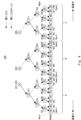
- FIG. 3 is a diagram showing a first binary tree according to the embodiment.
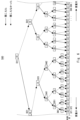
- FIG. 3 is a diagram showing a second binary tree according to the embodiment.
- 3 is a flowchart showing measurement processing performed by the measurement device according to the embodiment. It is a diagram showing a binary tree used in related technology.
- FIG. 6 is a diagram showing a binary tree 500 used in related technology.
- a measuring device 10a (not shown) measures the user's hearing ability.
- the measuring device 10a stores the binary tree 500 in a storage device included in the measuring device 10a, and searches the binary tree 500. Thereby, the measuring device 10a performs a measurement process for measuring the user's hearing ability.
- the measuring device 10a includes a sound output section 13 and an input/output section 14, similar to the measuring device 10 according to the present embodiment described later.
- the sound output unit 13 is an output device that outputs measurement sound.
- the sound output section 13 is, for example, an earphone.
- the input/output unit 14 is an input/output device that receives input of a response to the measurement sound from the user.
- the response to the measurement sound may be information indicating whether or not the measurement sound was heard.
- the input/output unit 14 is, for example, a display with a touch panel that allows the user to perform input operations by touching with a finger or the like. Note that in the following description, the measurement sound may be simply referred to as "sound".
- the binary tree 500 has nodes D11, D21, D22, . . . , D99.
- Binary tree 500 is a binary tree structure used to measure the user's hearing. Note that the binary tree 500 continues on the left and right sides of the illustrated range, but is not illustrated here.
- each node is shown using a rectangular frame. Furthermore, within the frame line, the volume level of the measurement sound associated with each node is shown. The unit of the volume level is dB.
- the measurement device 10a When the measurement device 10a reaches a certain node, it outputs a measurement sound with a volume level corresponding to the node.
- the measuring device 10a starts the measurement process starting from the highest node D11, and this node D11 is associated with a volume level of -58 dB. Therefore, the measuring device 10a first outputs a measurement sound with a volume level of -58 dB to the sound output section 13.
- the binary tree 500 is configured such that the nodes branch depending on whether the measurement sound is heard or not.
- the case where the measurement sound is heard is shown by a solid line arrow, and the case where the measurement sound is not heard is shown by a broken line arrow.
- the measuring device 10a outputs a measurement sound corresponding to each node, and repeatedly performs a binary tree search according to the user's response to the measurement sound.
- the measuring device 10a ends the search when a convergence point node is reached.
- the measuring device 10a determines the user's hearing ability based on the volume level corresponding to the node of the convergence point. Thereby, the measuring device 10a can measure the user's hearing ability.
- the measurement device 10a can measure the user's hearing ability using the range in which the convergence point is set as the measurement range.
- the measurement range may correspond to, for example, the range of volume that can be output by the sound output unit 13 (earphones).
- the measurement range can be set using the highest maximum volume and the lowest minimum volume among the volumes that can be output by the sound output unit 13. Note that in FIG. 6, the left and right sides of the binary tree 500 are omitted, so the maximum volume and minimum volume that can be output by the sound output unit 13 are not illustrated. For example, assume that in the binary tree 500, the maximum volume is -26 dB and the minimum volume is -120 dB. In this case, the measurement range is -120dB to -26dB. Note that the measurement range may be set to a range different from the range of volume that can be output by the sound output unit 13. For example, the measurement range may be set to be smaller than the volume range that can be output by the sound output unit 13.
- the measuring device 10a first outputs a -58 dB measurement sound corresponding to the highest node D11 of the binary tree 500 to the sound output section 13.
- the user inputs into the measuring device 10a via the input/output section 14 whether or not the measurement sound outputted to the sound output section 13 was heard. As will be described later, it is assumed that a display screen as shown in FIG. 2 is displayed on the input/output unit 14.
- the user determines that the measurement sound is heard, the user operates the input/output unit 14 and presses the "I heard” button. Further, if the user determines that the measurement sound cannot be heard, the user operates the input/output unit 14 and presses the "I can't hear” button. Alternatively, if the user does not operate the input/output unit 14 for a predetermined period of time (for example, 5 seconds), the measuring device 10a determines that the user did not hear the measurement sound. In this way, the measuring device 10a receives a response from the user.
- a predetermined period of time for example, 5 seconds
- the measuring device 10a proceeds from the node D11 of the binary tree 500 to the node D21, and outputs a measurement sound of -90 dB. It is assumed that the user responds to this measurement sound by saying that he did not hear the measurement sound. In response to the user's response, the measuring device 10a proceeds to the node D31 and outputs a -74 dB measurement sound.
- the measuring device 10a advances the search in the binary tree 500 by repeatedly performing such processing. For example, suppose that in the subsequent processing, the measuring device 10a advances the binary tree search in the order of nodes D41, D51, D61, and D71. The measuring device 10a obtains a volume level of ⁇ 88 dB corresponding to the node D71, which is the convergence point. The measuring device 10a determines the user's hearing ability based on the volume level -88 dB.
- the measuring device 10a measures the user's hearing through the measurement process described above.
- a binary tree such as the binary tree 500
- the measurement result will not be obtained correctly.
- the user may accidentally press the "I heard” button even though the measurement sound was not heard. Furthermore, the user may accidentally press the "I can't hear” button even though the user can hear the measurement sound. Furthermore, the user may think that he or she has pressed the "I can hear” or “I can't hear” button correctly, but the user may not have pressed the button correctly. In addition to such press errors, it is also conceivable that, due to the influence of surrounding sounds, the user may mistakenly perceive that he or she has heard a measurement sound that was not actually heard.
- the measuring device 10a cannot perform accurate hearing measurements.
- the measurement results may vary greatly.
- the measuring device 10a should correctly proceed to the node D21, but according to the user's incorrect response, the measuring device 10a proceeds to the node D22 and performs the subsequent processing. Node D21 and node D22 have different ranges of lower convergence points. Therefore, the measuring device 10a cannot accurately measure the user's hearing ability.
- the measuring device 10 according to the present disclosure addresses such problems.
- FIG. 1 is a block diagram showing the configuration of a measuring device 10. As shown in FIG. 1, the measuring device 10 includes a first search processing section 11, a second search processing section 12, a sound output section 13, and an input/output section 14.
- the basic flow of the binary tree search described above is the same in the processing according to this embodiment. Therefore, redundant explanations may be omitted as appropriate below.
- the measuring device 10 is a device that measures the user's hearing ability by performing a binary tree search based on the user's response to the measurement sound. Specifically, the measurement device 10 outputs a plurality of measurement sounds with different volume levels according to a predetermined binary tree. The measuring device 10 obtains the user's response to each measurement sound, and performs a binary tree search based on the content of the response.
- the response content may be expressed as "I heard” or "I could't hear” as in the above example.
- the measuring device 10 can be used in various devices that measure a user's hearing ability.
- the measuring device 10 can be used, for example, in an audio receiving device that receives audio from a TV, DVD, etc., and adjusts the magnitude of the output audio according to the user's hearing ability. By measuring the user's hearing with the measuring device 10, the result can be reflected in the volume adjustment.
- the measurement device 10 is not limited to this, and may be used in a communication device or the like. Furthermore, the measuring device 10 may be used in a hearing test for simply measuring hearing ability.
- the measuring device 10 may or may not be realized using a dedicated device.
- the measuring device 10 may be configured using, for example, a smartphone, a mobile phone terminal, a tablet terminal, a PC (Personal Computer), or the like. This embodiment will be described using an example in which the measuring device 10 is implemented in an information terminal such as a smartphone.
- the measuring device 10 may be implemented as the measuring device 10 by installing a predetermined application on the terminal.
- the measuring device 10 includes a processor, a memory, and a storage device as components not shown.
- the storage device stores a computer program in which the processing according to the present embodiment is implemented.
- the processor can load a computer program into memory from the storage device and execute the computer program. Thereby, the processor realizes the functions of the first search processing section 11, the second search processing section 12, the sound output section 13, and the input/output section 14.
- the first search processing section 11, the second search processing section 12, the sound output section 13, and the input/output section 14 may each be realized by dedicated hardware. Further, a part or all of each component of each device may be realized by a general-purpose or dedicated circuit, a processor, etc., or a combination thereof. These may be configured by a single chip or multiple chips connected via a bus. A part or all of each component of each device may be realized by a combination of the circuits and the like described above and a program. Further, as the processor, a CPU (Central Processing Unit), a GPU (Graphics Processing Unit), an FPGA (Field-Programmable Gate Array), a quantum processor (Quantum Computer Control Chip), etc. can be used.
- a CPU Central Processing Unit
- GPU Graphics Processing Unit
- FPGA Field-Programmable Gate Array
- quantum processor Quantum Computer Control Chip
- each component of the measurement device 10 when a part or all of each component of the measurement device 10 is realized by a plurality of information processing devices, circuits, etc., the plurality of information processing devices, circuits, etc. may be centrally arranged or distributed. may be placed.
- information processing devices, circuits, etc. may be realized as a client server system, a cloud computing system, or the like, in which each is connected via a communication network.
- the functions of the measuring device 10 may be provided in a SaaS (Software as a Service) format.
- SaaS Software as a Service
- FIG. 2 is a diagram showing an example of a display screen output to the input/output unit 14.
- the input/output unit 14 displays a selection display area on the screen for accepting input from the user.
- the selection display area may be, for example, a button on which the characters "I heard” or “I can't hear” are shown, as shown in FIG. 2.
- the selection display area is not limited to this, and may be provided in any form as long as it can accept a user's response to the output measurement sound.
- the selection display area may include an "OK” button, a "NG” button, and the like.
- the input/output unit 14 displays various messages related to measurement on the screen. By viewing the screen of the input/output unit 14, the user can proceed with the measurement process according to the process performed by the measurement device 10.
- the measuring device 10 outputs a measurement sound according to a predetermined binary tree. As will be described later, each node of the binary tree is associated with a volume level indicating the volume of the measured sound. If the user hears a sound from the sound output unit 13, the user presses the "I hear” button, and if the user does not hear the sound, the user presses the "Can't hear” button. Thereby, the user responds to the measurement device 10 that the measurement sound was heard or not heard.
- the input/output unit 14 may display only the "heard” button and not accept user input if no sound is heard. In this case, the measuring device 10 determines that the sound was not heard if a predetermined time elapses without the "heard" button being pressed after outputting the measurement sound.
- the measuring device 10 Upon receiving the user's response, the measuring device 10 outputs the next measurement sound from the sound output unit 13 according to the binary tree. In response to this, the user responds in the same way as above, indicating whether or not the measurement sound was heard. The measuring device 10 repeatedly performs such processing until a convergence point where the binary tree converges. Once the convergence point is reached, the measurement device 10 determines the user's hearing based on the volume level at the convergence point.
- the measuring device 10 measures the user's hearing within a predetermined measurement range.
- the predetermined measurement range may be fixed or may be changed as appropriate.
- the measurement range may correspond to, for example, the range of volume that can be output by the sound output unit 13 (earphones, etc.).
- the measurement range can be set using the highest maximum volume and the lowest minimum volume among the volumes that can be output by the sound output unit 13.
- the measurement range may be set to a range different from the range of volume that can be output by the sound output unit 13.
- the measurement range may be set to be smaller than the volume range that can be output by the sound output unit 13.
- the hearing measurement range is divided into a plurality of groups.
- the first search processing unit 11 performs a first search process to select one group from the plurality of groups and set it as the selected group in response to the user's response.
- the selection group selected by the first search processing unit 11 is used in the second search process.
- FIG. 3 is a diagram showing the first binary tree 100. Further, the explanation will be given with reference to FIG. 4 as appropriate.
- FIG. 4 is a diagram showing a second binary tree 200 used in the second search process.
- the first binary tree 100 and the second binary tree 200 may be stored in advance in a storage device (not shown) or the like.
- the first binary tree 100 has nodes X11, X21, X22, ..., X34.
- Each node is associated with the volume level of the measurement sound output by the measurement device 10.
- the volume level of the highest node X11 is -52 dB.
- the first binary tree 100 is arranged so that the volume level of the measurement sound decreases from the higher nodes to the lower nodes. Therefore, the first search processing unit 11 outputs a measurement sound with a lower volume level as the first binary tree 100 becomes deeper. Thereby, the user can perform hearing measurement without feeling uncomfortable.
- the first binary tree 100 has a number of nodes corresponding to the number of division points that divide the hearing measurement range.
- the measurement range may indicate the range from the maximum level of hearing ability to the minimum level of hearing ability that the measuring device 10 measures.
- the measurement range corresponds to the range where there is a convergence point where the second binary tree 200 shown in FIG. 4 converges.
- the measurement range is set using the maximum volume Vmax and the minimum volume Vmin.
- Vmax corresponds to node C48, and its volume level is -36 dB.
- node A41 corresponds to Vmin, and its volume level is -82 dB. Therefore, the measurement range is -82 dB to -36 dB.
- the measurement range indicated by the second binary tree 200 is divided into three groups.
- the number of division points that divide the measurement range is two.
- the first binary tree 100 has three nodes X11, X21, and X22 depending on the number of division points. For example, when the number of division points is three or more, the first binary tree 100 may further have nodes below nodes X21 and X22. That is, the greater the number of division points, the deeper the first binary tree 100 can become.
- the plurality of groups represent binary trees A to C shown in FIG. Details of binary trees A to C will be described later.
- each of the plurality of nodes included in the first binary tree 100 is associated with a volume level that is a boundary value in the second binary tree 200.
- the boundary value indicates the volume level associated with the boundary node located at the boundary of the group of the second binary tree 200.
- nodes B48 and A48 which are shaded, are used as boundary nodes.
- volume levels of nodes B48 and A48 which are boundary nodes, be a first volume level and a second volume level, respectively.
- the first volume level is -52 dB, corresponding to node B 48
- the second volume level is -68 dB, corresponding to node A 48.
- the first binary tree 100 has nodes corresponding to the first and second volume levels. Specifically, in the first binary tree 100, the node X11 is associated with a first volume level of -52 dB. Furthermore, both nodes X21 and X22 are associated with a second volume level, which is a volume level of ⁇ 68 dB.
- the first search processing unit 11 outputs the measurement sound at the same volume level at the node X21 or X22, regardless of whether the user's response at the node X11 is "I heard" or "I could't hear.” Note that, for example, if the number of division points is three, the nodes below nodes X21 and X22 are associated with the measurement sound of the third boundary value.
- the first search process will be specifically explained using the first binary tree 100.
- the first search processing unit 11 outputs a measurement sound at the first volume level (-52 dB) at the highest node X11. If there is a response from the user that the sound was heard, the first search processing unit 11 proceeds to the node X21 and outputs the measurement sound at the second volume level (-68 dB). The first search processing unit 11 receives a user's response to the measurement sound.
- the first search processing unit 11 determines whether there is a contradiction between the response to the measurement sound of the first volume level and the response to the measurement sound of the second volume level. When determining that a contradiction has occurred, the first search processing section 11 determines that an error has occurred, and performs error processing. If the first search processing unit 11 determines that no contradiction has occurred, it continues the search according to the first binary tree 100.
- the first search processing unit 11 proceeds to node X31 and selects binary tree A as the selection group. Furthermore, if the user responds that no sound was heard, the first search processing unit 11 proceeds to node X32 and selects binary tree B as the selection group.
- the first search processing unit 11 proceeds to the node X22 and outputs the measurement sound of the second volume level.
- the first search processing unit 11 receives a response to the measurement sound of the second volume level.
- the user responds that he/she heard a sound.
- the user responded that he/she did not hear the sound at the first volume level
- the user responded that he/she heard the sound at the second volume level, which was lower in volume than the first volume level.
- the user may have erroneously responded at node X11 or erroneously responded at node X22.
- the user may have misunderstood both the responses of nodes X11 and X22.
- the first search processing unit 11 determines that there is a contradiction between the response to the measurement sound of the first volume level and the response to the measurement sound of the second volume level.
- the first search processing unit 11 proceeds to the next node X33 and performs error processing.
- the node X33 is shown using hatching.
- the first search processing unit 11 considers that the measurement result at the node X22 output later is correct, and selects the binary tree A as the selection group, as shown in FIG.
- the first search processing unit 11 may perform the first search process again as error processing. In that case, the first search processing unit 11 returns to the node X11, outputs the measurement sound of the first volume level again, and receives a response to the measurement sound again. This allows the user to give a correct response in the second measurement.
- the first search processing unit 11 determines that there is no contradiction in the response. judge.
- the first search processing unit 11 proceeds to node X34 and selects binary tree C as the selection group.
- the number of dividing points for dividing the measurement range is two, but the present invention is not limited to this.
- the number of division points may be three or more. Therefore, the measurement range may be divided into four or more groups.
- the first binary tree 100 may be configured such that the depth increases as the number of division points increases.
- the first search processing unit 11 may perform error processing by making a determination using predetermined determination conditions. For example, the first search processing unit 11 determines whether or not there is a contradiction in the user's responses based on responses to measurement sounds of three or more volume levels. The first search processing unit 11 performs error processing according to the determination result.
- the first search processing unit 11 selects one group from the second binary tree 200 by performing the first search process again due to error processing.
- the first search processing unit 11 may use various determination conditions to perform error processing.
- the first binary tree 100 is provided so that the volume level decreases from the upper nodes to the lower nodes, but the present invention is not limited to this.
- a higher node may have a lower volume level than a lower node.
- the second search processing unit 12 uses the second binary tree 200 to perform a second search process for determining the user's hearing ability by repeating the binary tree search within the selected group until convergence.
- the selection group is one of the binary trees A to C selected in the first search process.
- the second binary tree 200 may be stored in advance in a storage device (not shown).
- the second binary tree 200 will be further explained with reference to FIG. 4.
- the second binary tree 200 corresponds to the measurement range set using the maximum volume Vmax and the minimum volume Vmin.
- the second binary tree 200 has binary trees A to C that divide the measurement range into three.
- Binary tree A has nodes A11 to A48
- binary tree B has nodes B11 to B48
- binary tree C has nodes C11 to C48.
- the second search processing unit 12 uses the binary tree selected in the first search process from among the binary trees A to C to perform a binary tree search from the highest node until a convergence point is reached.
- the convergence points are indicated by nodes A41, A42, ..., C48. As with other nodes, the convergence point is associated with the volume level of the measured sound.
- the second search processing unit 12 determines the user's hearing ability based on the volume level associated with the convergence point. Note that in FIG. 4, the convergence points are provided every 2 dB, but the interval between the convergence points is not limited to this. The interval between the convergence points may be set smaller than 2 dB, or may be set larger. Furthermore, the convergence points do not need to be provided at regular intervals.
- the binary trees A to C each have a volume range defined by an upper volume limit and a lower volume limit, and the volume ranges are set so as not to overlap with each other.
- the binary tree A has a volume range defined by an upper limit volume Amax and a lower volume volume Amin.
- Amax is ⁇ 68 dB associated with node A48.
- Amin is ⁇ 82 dB associated with node A41. Therefore, binary tree A has a volume range of -82 dB to -68 dB.
- binary tree A has eight convergence points at 2 dB intervals.
- Binary trees B and C have the same configuration as binary tree A.
- Binary tree B has nodes B48 and B41 corresponding to upper limit volume Bmax and lower limit volume Bmin.
- the upper limit volume Bmax and the lower volume limit Bmin are -52 dB and -66 dB, respectively. Therefore, binary tree B has a volume range of -66 dB to -52 dB.
- the binary tree C has nodes C48 and C41 corresponding to the upper limit volume Cmax and the lower limit volume Cmin.
- the upper limit volume Cmax and the lower limit volume Cmin are -36 dB and -50 dB, respectively. Therefore, binary tree C has a volume range of -50 dB to -36 dB.
- the binary trees A to C are set so that their volume ranges do not overlap.
- the second search processing unit 12 can reduce the number of times the user responds to the second search process. Therefore, the second search processing unit 12 can efficiently perform the second search process. Furthermore, by reducing the number of responses, the burden on the user can be reduced. Note that the present invention is not limited to this, and the plurality of groups may be set so that the volume ranges overlap.
- the sound output unit 13 is an audio output device that outputs measurement sound.
- the sound output unit 13 may be, for example, a listening device such as earphones or headphones.
- the sound output unit 13 may be configured to be able to communicate with the measuring device 10 by wire or wirelessly.
- the sound output unit 13 may be, for example, a wireless earphone that connects to the measuring device 10 using a wireless communication standard such as Bluetooth (registered trademark).
- the sound output unit 13 may be a left and right separated earphone (completely wireless type) in which the left and right output units are independent, or a left and right integrated earphone such as a neckband type earphone in which the left and right output units are connected. It may be.
- the sound output unit 13 may output sounds other than the measurement sound.
- the sound output unit 13 may be configured to output audio related to measurement processing.
- the input/output unit 14 is an input/output device that receives input of a response to the measurement sound from the user.
- the input/output unit 14 includes an input unit that receives input from a user, and an output unit that outputs display information to the user.
- a display with a touch panel is used that allows the user to perform input operations by touching with a finger or the like.
- the present invention is not limited to this, and the input/output section 14 may be provided with an input section and an output section separately.
- the input section may be an input device such as a keyboard
- the output section may be a display device such as a liquid crystal panel.
- the input/output unit 14 is not limited to these, and may be configured in various forms.
- the input/output unit 14 may be configured to be able to input the response content using the user's voice.
- the input unit may be configured using a physical button or a touch sensor placed on the earphone. Further, the input unit may be configured to allow input using existing physical buttons in the display with a touch panel of this embodiment.
- the input/output unit 14 outputs information regarding the measurement process and notifies the user. For example, as shown in FIG. 2, the input/output unit 14 displays a message such as "If you hear a sound, please tap 'I heard'.” Thereby, the input/output unit 14 prompts the user to respond to the measurement sound.
- the input/output unit 14 receives a response from the user to the measurement sound.
- the input/output unit 14 receives a response from the user in response to pressing the "I heard” button or the "I can't hear” button shown in FIG. 2.
- the input/output unit 14 determines that the user did not hear the measurement sound. It may be considered. If the input/output unit 14 determines that there is no response, it may output the measurement sound again.
- FIG. 5 is a flowchart showing the measurement processing performed by the measurement device 10.
- the measurement device 10 performs measurement processing using the first binary tree 100 and the second binary tree 200 shown in FIGS. 3 and 4.
- the first search processing unit 11 performs a first search process using the first binary tree 100 (S1 to S4).
- the second search processing unit 12 performs a second search process using the second binary tree 200 (S5).
- the first search processing unit 11 causes the sound output unit 13 to output a measurement sound (S1).
- the volume level of the measurement sound is determined according to the first binary tree 100. For example, at the start of measurement, the first search processing unit 11 outputs a measurement sound of the volume level associated with the highest node X11 of the first binary tree 100.
- the user inputs a response indicating whether or not the measurement sound was heard into the measurement device 10 via the input/output unit 14. For example, when the user hears a measurement sound, the user presses (tap) a "heard” button on the screen displayed on the input/output unit 14. Further, if the user does not hear the measurement sound, the user presses the "I can't hear” button on the display screen.
- the first search processing unit 11 receives a response from the user (S2).
- the first search processing unit 11 determines whether or not the processing of steps S1 and S2 has reached a predetermined number of times (S3).
- the predetermined number of times is set according to the number of division points that divide the hearing measurement range. Here, since the number of division points is 2, the predetermined number of times is 2. If there are more division points, the predetermined number of times may be set to be larger. If the processing in steps S1 and S2 has not reached the predetermined number of times (NO in S3), the process returns to step S1.
- the first search processing unit 11 repeats the processing of steps S1 and S2 until reaching a predetermined number of times.
- the first search processing unit 11 outputs a -52 dB measurement sound corresponding to the node X11 of the first binary tree 100, and then receives a response from the user.
- the first search processing unit 11 proceeds to node X21 or X22 depending on the response content.
- the first search processing unit 11 outputs a -68 dB measurement sound corresponding to the node X21 or X22, and receives a response from the user. Thereby, the processing of steps S1 and S2 reaches a predetermined number of times.
- the first search processing unit 11 selects one group according to the user's response result (S4).
- the first search processing unit 11 determines whether or not there is a contradiction in the response contents, and selects a group according to the determination result.
- the first search processing section 11 determines that an error has occurred, and performs error processing. Further, if the first search processing unit 11 determines that there is no contradiction, it selects a binary tree according to the first binary tree 100.
- the first search processing unit 11 proceeds to node X33 and performs error processing. As an error process, the first search processing unit 11 selects the binary tree A, assuming that the measurement result at the node X22 output later is correct. Alternatively, the first search processing unit 11 may perform the first search process again as error processing. In that case, the first search processing unit 11 returns to the node X11, outputs the -52 dB measurement sound again, and receives a response to the measurement sound again. In this way, the first search processing unit 11 selects one binary tree from among the binary trees AC.
- the second search processing unit 12 determines the hearing ability of the user within the selected group by repeating the binary tree search until convergence (S5). Specifically, the second search processing unit 12 uses the second binary tree 200 to perform a binary tree search. The second search processing unit 12 searches the selected binary tree from among the binary trees A to C until it converges. The second search processing unit 12 determines the user's hearing ability based on the volume level corresponding to the node at the convergence point. This completes the measurement of the user's hearing ability.
- the measuring device 10 may output the measurement results using the sound output section 13 or the input/output section 14. Furthermore, the measurement device 10 may change the frequency of the measurement sound and restart the measurement process. Furthermore, the measuring device 10 may start the measurement process for the ear on the opposite side of the measured ear.
- the measuring device 10 measures the hearing ability of the user by performing a binary tree search using the first binary tree 100 and the second binary tree 200.
- the hearing measurement range is divided into a plurality of groups, and the first search processing unit 11 selects one group from the plurality of groups and sets it as the selected group.
- the second search processing unit 12 also determines the user's hearing ability by repeating the binary tree search within the selected group until convergence.
- the measuring device 10 can prevent significant deviations in measurement results caused by the user's mishearing or button presses during audiometry.
- Each functional component of the measuring device 10 described above may be realized by hardware that implements each functional component (e.g., a hardwired electronic circuit), or by a combination of hardware and software (e.g., a hardwired electronic circuit). (e.g., a combination of an electronic circuit and a program that controls it).
- the present disclosure can also implement arbitrary processing by causing a CPU (Central Processing Unit) to execute a computer program.
- a CPU Central Processing Unit
- a program includes a set of instructions (or software code) that, when loaded into a computer, causes the computer to perform one or more of the functions described in the embodiments.
- the program may be stored on a non-transitory computer readable medium or a tangible storage medium.
- non-transitory computer-readable or tangible storage media may include random-access memory (RAM), read-only memory (ROM), flash memory, solid-state drive (SSD), or other Memory technology, including CD-ROM, digital versatile disc (DVD), Blu-ray disc or other optical disc storage, magnetic cassette, magnetic tape, magnetic disc storage or other magnetic storage device.
- a program may be transmitted on various types of transitory computer readable medium or communication media.
- transitory computer-readable or communication media includes electrical, optical, acoustic, or other forms of propagating signals.
- This disclosure includes matters that contribute to the realization of the SDGs (Sustainable Development Goals) of "health and well-being for all” and contribute to value creation through healthcare products and services.
- the present disclosure can be used in measurement devices and the like used for hearing measurement.
- Second binary tree 500 Binary tree A to C Binary tree A11 to A48 Nodes ( section) B11 to B48 Nodes C11 to C48 Nodes D11 to D99 Nodes X11 to X34 Nodes Amax, Bmax, Cmax Upper limit volume Amin, Bmin, Cmin Lower limit volume Vmax Maximum volume Vmin Minimum volume
Landscapes
- Engineering & Computer Science (AREA)
- Theoretical Computer Science (AREA)
- Health & Medical Sciences (AREA)
- Physics & Mathematics (AREA)
- Multimedia (AREA)
- Audiology, Speech & Language Pathology (AREA)
- General Health & Medical Sciences (AREA)
- Human Computer Interaction (AREA)
- General Engineering & Computer Science (AREA)
- General Physics & Mathematics (AREA)
- Life Sciences & Earth Sciences (AREA)
- Acoustics & Sound (AREA)
- Biophysics (AREA)
- Pathology (AREA)
- Biomedical Technology (AREA)
- Heart & Thoracic Surgery (AREA)
- Medical Informatics (AREA)
- Molecular Biology (AREA)
- Surgery (AREA)
- Animal Behavior & Ethology (AREA)
- Public Health (AREA)
- Veterinary Medicine (AREA)
- Measurement Of The Respiration, Hearing Ability, Form, And Blood Characteristics Of Living Organisms (AREA)
Abstract
Description
測定音に対するユーザの応答に基づいて二分木探索を行うことで、前記ユーザの聴力を測定する測定装置であって、
前記聴力の測定範囲は複数のグループに分割されており、前記複数のグループから1つのグループを選択して選択グループとする第1探索処理部と、
前記選択グループの中で二分木探索を収束するまで繰り返して、前記聴力を決定する第2探索処理部と、を備えるものである。
測定音に対するユーザの応答に基づいて二分木探索を行うことで、前記ユーザの聴力を測定する測定方法であって、
前記聴力の測定範囲は複数のグループに分割されており、前記複数のグループから1つのグループを選択して選択グループとする第1探索処理ステップと、
前記選択グループの中で二分木探索を収束するまで繰り返して、前記聴力を決定する第2探索処理ステップと、を含むものである。
測定音に対するユーザの応答に基づいて二分木探索を行うことで前記ユーザの聴力を測定する測定装置のコンピュータに、測定方法を実行させるプログラムであって、
前記測定方法は、
前記聴力の測定範囲は複数のグループに分割されており、前記複数のグループから1つのグループを選択して選択グループとする第1探索処理ステップと、
前記選択グループの中で二分木探索を収束するまで繰り返して、前記聴力を決定する第2探索処理ステップと、を含むものである。
初めに、図6を参照して、本開示にかかる課題について具体的に説明する。図6は、関連する技術において用いられる二分木500を示す図である。ここでは、図示しない測定装置10aがユーザの聴力を測定するとする。測定装置10aは、測定装置10aが備える記憶装置などに二分木500を記憶し、二分木500を探索する。これにより、測定装置10aは、ユーザの聴力を測定するための測定処理を行う。
続いて、図1を参照して、本実施形態にかかる測定装置10について説明する。図1は、測定装置10の構成を示すブロック図である。図1に示されるように、測定装置10は、第1探索処理部11、第2探索処理部12、音出力部13、及び入出力部14を備えている。上述した二分木探索の基本的な流れは、本実施形態にかかる処理においても同様である。よって、以下では重複する説明については適宜省略する場合がある。
続いて、図5を参照して、本実施形態にかかる測定装置10が行う測定処理について説明する。図5は、測定装置10が行う測定処理を示すフローチャートである。
上述した測定装置10の各機能構成部は、各機能構成部を実現するハードウエア(例:ハードワイヤードされた電子回路など)で実現されてもよいし、ハードウエアとソフトウエアとの組み合わせ(例:電子回路とそれを制御するプログラムの組み合わせなど)で実現されてもよい。例えば、本開示は、任意の処理を、CPU(Central Processing Unit)にコンピュータプログラムを実行させることにより実現することも可能である。
11 第1探索処理部
12 第2探索処理部
13 音出力部
14 入出力部
100 第1の二分木
200 第2の二分木
500 二分木
A~C 二分木
A11~A48 ノード(節)
B11~B48 ノード
C11~C48 ノード
D11~D99 ノード
X11~X34 ノード
Amax、Bmax、Cmax 上限音量
Amin、Bmin、Cmin 下限音量
Vmax 最大音量
Vmin 最小音量
Claims (8)
- 測定音に対するユーザの応答に基づいて二分木探索を行うことで、前記ユーザの聴力を測定する測定装置であって、
前記聴力の測定範囲は複数のグループに分割されており、前記複数のグループから1つのグループを選択して選択グループとする第1探索処理部と、
前記選択グループの中で二分木探索を収束するまで繰り返して、前記聴力を決定する第2探索処理部と、を備える
測定装置。 - 前記第1探索処理部は、前記測定範囲を分割する分割点の数に応じた数の節を有する二分木を探索することで、前記選択グループを選択する
請求項1に記載の測定装置。 - 前記第1探索処理部は、上位の節から下位の節に向かうにつれて前記測定音の音量レベルが小さくなるように設けられた二分木を探索することで、前記選択グループを選択する
請求項1又は2に記載の測定装置。 - 前記複数のグループは、上限音量と下限音量とで規定される音量範囲をそれぞれ有しており、前記音量範囲は互いに重複しないように設定されている
請求項1又は2に記載の測定装置。 - 前記第1探索処理部は、前記上位の節における測定音に対する応答と前記下位の節における測定音に対する応答との間に矛盾が生じているか否かを判定し、矛盾が生じていると判定した場合、エラーが発生したと判定してエラー処理を行う
請求項3に記載の測定装置。 - 前記第1探索処理部は、前記エラー処理として、前記下位の節における測定結果が正しいとみなし、前記下位の節から分岐する音量レベルの小さい方の前記選択グループを選択する
請求項5に記載の測定装置。 - 測定音に対するユーザの応答に基づいて二分木探索を行うことで、前記ユーザの聴力を測定する測定方法であって、
前記聴力の測定範囲は複数のグループに分割されており、前記複数のグループから1つのグループを選択して選択グループとする第1探索処理ステップと、
前記選択グループの中で二分木探索を収束するまで繰り返して、前記聴力を決定する第2探索処理ステップと、を含む
測定方法。 - 測定音に対するユーザの応答に基づいて二分木探索を行うことで前記ユーザの聴力を測定する測定装置のコンピュータに、測定方法を実行させるプログラムであって、
前記測定方法は、
前記聴力の測定範囲は複数のグループに分割されており、前記複数のグループから1つのグループを選択して選択グループとする第1探索処理ステップと、
前記選択グループの中で二分木探索を収束するまで繰り返して、前記聴力を決定する第2探索処理ステップと、を含む
プログラム。
Priority Applications (2)
| Application Number | Priority Date | Filing Date | Title |
|---|---|---|---|
| CN202380041088.9A CN119212616A (zh) | 2022-07-13 | 2023-06-26 | 测定装置、测定方法以及程序 |
| US18/980,748 US20250110693A1 (en) | 2022-07-13 | 2024-12-13 | Measuring apparatus, measuring method, and program |
Applications Claiming Priority (2)
| Application Number | Priority Date | Filing Date | Title |
|---|---|---|---|
| JP2022112550A JP2024010937A (ja) | 2022-07-13 | 2022-07-13 | 測定装置及び測定方法 |
| JP2022-112550 | 2022-07-13 |
Related Child Applications (1)
| Application Number | Title | Priority Date | Filing Date |
|---|---|---|---|
| US18/980,748 Continuation US20250110693A1 (en) | 2022-07-13 | 2024-12-13 | Measuring apparatus, measuring method, and program |
Publications (1)
| Publication Number | Publication Date |
|---|---|
| WO2024014267A1 true WO2024014267A1 (ja) | 2024-01-18 |
Family
ID=89536427
Family Applications (1)
| Application Number | Title | Priority Date | Filing Date |
|---|---|---|---|
| PCT/JP2023/023541 Ceased WO2024014267A1 (ja) | 2022-07-13 | 2023-06-26 | 測定装置、測定方法、及びプログラム |
Country Status (4)
| Country | Link |
|---|---|
| US (1) | US20250110693A1 (ja) |
| JP (1) | JP2024010937A (ja) |
| CN (1) | CN119212616A (ja) |
| WO (1) | WO2024014267A1 (ja) |
Citations (4)
| Publication number | Priority date | Publication date | Assignee | Title |
|---|---|---|---|---|
| JP2010537261A (ja) * | 2007-08-24 | 2010-12-02 | クゥアルコム・インコーポレイテッド | 周波数サブバンドのスペクトルダイナミクスに基づくオーディオ符号化における時間マスキング |
| JP2012100805A (ja) * | 2010-11-09 | 2012-05-31 | Jb Electronics Kk | 聴力測定方法及び該方法に用いる聴力評価装置 |
| JP2012213114A (ja) * | 2011-03-31 | 2012-11-01 | Jvc Kenwood Corp | 音響信号処理装置及び音響信号処理方法 |
| US20210392444A1 (en) * | 2018-04-13 | 2021-12-16 | Concha Inc. | Hearing evaluation and configuration of a hearing assistance-device |
-
2022
- 2022-07-13 JP JP2022112550A patent/JP2024010937A/ja active Pending
-
2023
- 2023-06-26 CN CN202380041088.9A patent/CN119212616A/zh active Pending
- 2023-06-26 WO PCT/JP2023/023541 patent/WO2024014267A1/ja not_active Ceased
-
2024
- 2024-12-13 US US18/980,748 patent/US20250110693A1/en active Pending
Patent Citations (4)
| Publication number | Priority date | Publication date | Assignee | Title |
|---|---|---|---|---|
| JP2010537261A (ja) * | 2007-08-24 | 2010-12-02 | クゥアルコム・インコーポレイテッド | 周波数サブバンドのスペクトルダイナミクスに基づくオーディオ符号化における時間マスキング |
| JP2012100805A (ja) * | 2010-11-09 | 2012-05-31 | Jb Electronics Kk | 聴力測定方法及び該方法に用いる聴力評価装置 |
| JP2012213114A (ja) * | 2011-03-31 | 2012-11-01 | Jvc Kenwood Corp | 音響信号処理装置及び音響信号処理方法 |
| US20210392444A1 (en) * | 2018-04-13 | 2021-12-16 | Concha Inc. | Hearing evaluation and configuration of a hearing assistance-device |
Also Published As
| Publication number | Publication date |
|---|---|
| JP2024010937A (ja) | 2024-01-25 |
| CN119212616A (zh) | 2024-12-27 |
| US20250110693A1 (en) | 2025-04-03 |
Similar Documents
| Publication | Publication Date | Title |
|---|---|---|
| US8753287B2 (en) | Hearing test method and apparatus | |
| US11304012B1 (en) | Equalizer adjustment method and electronic device | |
| CN106775304A (zh) | 自适应地显示输入法界面的方法和设备 | |
| JP7508670B2 (ja) | 情報処理装置、チェック処理方法およびチェック処理プログラム | |
| JP7131720B2 (ja) | 情報提供方法 | |
| CN104013410A (zh) | 音频播放方法、装置及系统 | |
| Tan et al. | Perception of nonlinear distortion by hearing-impaired people | |
| AU2022203591B2 (en) | Method and apparatus for switching display interface, and electronic device | |
| US20150109210A1 (en) | Control method, and input device of touch screen terminal | |
| KR101442022B1 (ko) | 청력테스트 결과에 따른 난청 보정 서비스 방법 및 그 장치 | |
| JP2024010937A (ja) | 測定装置及び測定方法 | |
| CN107294811A (zh) | 网络检测方法、网络检测装置及智能终端 | |
| CN112800363A (zh) | 页面显示方法、装置、电子设备和计算机可读介质 | |
| CN114903473A (zh) | 听力检测方法、装置、电子设备以及存储介质 | |
| WO2021092806A1 (zh) | 一种屏幕参数调整方法、装置及终端设备 | |
| EP4052480B1 (en) | Managing low frequencies of an output signal | |
| WO2016184171A1 (zh) | 对象选择方法和装置 | |
| CN112000905B (zh) | 信息的显示方法和装置 | |
| US10645210B2 (en) | System, method, and program for providing information | |
| CN105163338B (zh) | 一种播放设备的分组管理方法及终端 | |
| CN110020264A (zh) | 一种无效超链接的确定方法及装置 | |
| CN116072040A (zh) | 数据传输方法、电子设备和存储介质 | |
| CN110623677A (zh) | 仿真听力校正的设备与仿真听力校正的方法 | |
| JP2013075066A (ja) | 電子機器、音響信号の補正方法およびプログラム | |
| CN106028221B (zh) | 一种控制时间同步的方法及智能音箱 |
Legal Events
| Date | Code | Title | Description |
|---|---|---|---|
| 121 | Ep: the epo has been informed by wipo that ep was designated in this application |
Ref document number: 23839441 Country of ref document: EP Kind code of ref document: A1 |
|
| WWE | Wipo information: entry into national phase |
Ref document number: 202380041088.9 Country of ref document: CN |
|
| WWP | Wipo information: published in national office |
Ref document number: 202380041088.9 Country of ref document: CN |
|
| NENP | Non-entry into the national phase |
Ref country code: DE |
|
| 122 | Ep: pct application non-entry in european phase |
Ref document number: 23839441 Country of ref document: EP Kind code of ref document: A1 |