WO2024009852A1 - タイヤのリサイクルの情報管理を支援する情報処理装置 - Google Patents
タイヤのリサイクルの情報管理を支援する情報処理装置 Download PDFInfo
- Publication number
- WO2024009852A1 WO2024009852A1 PCT/JP2023/023846 JP2023023846W WO2024009852A1 WO 2024009852 A1 WO2024009852 A1 WO 2024009852A1 JP 2023023846 W JP2023023846 W JP 2023023846W WO 2024009852 A1 WO2024009852 A1 WO 2024009852A1
- Authority
- WO
- WIPO (PCT)
- Prior art keywords
- tire
- information
- processing device
- information processing
- related information
- Prior art date
- Legal status (The legal status is an assumption and is not a legal conclusion. Google has not performed a legal analysis and makes no representation as to the accuracy of the status listed.)
- Ceased
Links
Images




Classifications
-
- G—PHYSICS
- G06—COMPUTING OR CALCULATING; COUNTING
- G06Q—INFORMATION AND COMMUNICATION TECHNOLOGY [ICT] SPECIALLY ADAPTED FOR ADMINISTRATIVE, COMMERCIAL, FINANCIAL, MANAGERIAL OR SUPERVISORY PURPOSES; SYSTEMS OR METHODS SPECIALLY ADAPTED FOR ADMINISTRATIVE, COMMERCIAL, FINANCIAL, MANAGERIAL OR SUPERVISORY PURPOSES, NOT OTHERWISE PROVIDED FOR
- G06Q10/00—Administration; Management
- G06Q10/08—Logistics, e.g. warehousing, loading or distribution; Inventory or stock management
-
- G—PHYSICS
- G06—COMPUTING OR CALCULATING; COUNTING
- G06Q—INFORMATION AND COMMUNICATION TECHNOLOGY [ICT] SPECIALLY ADAPTED FOR ADMINISTRATIVE, COMMERCIAL, FINANCIAL, MANAGERIAL OR SUPERVISORY PURPOSES; SYSTEMS OR METHODS SPECIALLY ADAPTED FOR ADMINISTRATIVE, COMMERCIAL, FINANCIAL, MANAGERIAL OR SUPERVISORY PURPOSES, NOT OTHERWISE PROVIDED FOR
- G06Q10/00—Administration; Management
- G06Q10/30—Administration of product recycling or disposal
-
- G—PHYSICS
- G06—COMPUTING OR CALCULATING; COUNTING
- G06Q—INFORMATION AND COMMUNICATION TECHNOLOGY [ICT] SPECIALLY ADAPTED FOR ADMINISTRATIVE, COMMERCIAL, FINANCIAL, MANAGERIAL OR SUPERVISORY PURPOSES; SYSTEMS OR METHODS SPECIALLY ADAPTED FOR ADMINISTRATIVE, COMMERCIAL, FINANCIAL, MANAGERIAL OR SUPERVISORY PURPOSES, NOT OTHERWISE PROVIDED FOR
- G06Q10/00—Administration; Management
- G06Q10/20—Administration of product repair or maintenance
-
- G—PHYSICS
- G06—COMPUTING OR CALCULATING; COUNTING
- G06Q—INFORMATION AND COMMUNICATION TECHNOLOGY [ICT] SPECIALLY ADAPTED FOR ADMINISTRATIVE, COMMERCIAL, FINANCIAL, MANAGERIAL OR SUPERVISORY PURPOSES; SYSTEMS OR METHODS SPECIALLY ADAPTED FOR ADMINISTRATIVE, COMMERCIAL, FINANCIAL, MANAGERIAL OR SUPERVISORY PURPOSES, NOT OTHERWISE PROVIDED FOR
- G06Q30/00—Commerce
- G06Q30/01—Customer relationship services
- G06Q30/015—Providing customer assistance, e.g. assisting a customer within a business location or via helpdesk
- G06Q30/016—After-sales
-
- G—PHYSICS
- G06—COMPUTING OR CALCULATING; COUNTING
- G06Q—INFORMATION AND COMMUNICATION TECHNOLOGY [ICT] SPECIALLY ADAPTED FOR ADMINISTRATIVE, COMMERCIAL, FINANCIAL, MANAGERIAL OR SUPERVISORY PURPOSES; SYSTEMS OR METHODS SPECIALLY ADAPTED FOR ADMINISTRATIVE, COMMERCIAL, FINANCIAL, MANAGERIAL OR SUPERVISORY PURPOSES, NOT OTHERWISE PROVIDED FOR
- G06Q30/00—Commerce
- G06Q30/018—Certifying business or products
-
- G—PHYSICS
- G06—COMPUTING OR CALCULATING; COUNTING
- G06Q—INFORMATION AND COMMUNICATION TECHNOLOGY [ICT] SPECIALLY ADAPTED FOR ADMINISTRATIVE, COMMERCIAL, FINANCIAL, MANAGERIAL OR SUPERVISORY PURPOSES; SYSTEMS OR METHODS SPECIALLY ADAPTED FOR ADMINISTRATIVE, COMMERCIAL, FINANCIAL, MANAGERIAL OR SUPERVISORY PURPOSES, NOT OTHERWISE PROVIDED FOR
- G06Q30/00—Commerce
- G06Q30/06—Buying, selling or leasing transactions
-
- G—PHYSICS
- G06—COMPUTING OR CALCULATING; COUNTING
- G06Q—INFORMATION AND COMMUNICATION TECHNOLOGY [ICT] SPECIALLY ADAPTED FOR ADMINISTRATIVE, COMMERCIAL, FINANCIAL, MANAGERIAL OR SUPERVISORY PURPOSES; SYSTEMS OR METHODS SPECIALLY ADAPTED FOR ADMINISTRATIVE, COMMERCIAL, FINANCIAL, MANAGERIAL OR SUPERVISORY PURPOSES, NOT OTHERWISE PROVIDED FOR
- G06Q50/00—Information and communication technology [ICT] specially adapted for implementation of business processes of specific business sectors, e.g. utilities or tourism
- G06Q50/04—Manufacturing
-
- G—PHYSICS
- G06—COMPUTING OR CALCULATING; COUNTING
- G06Q—INFORMATION AND COMMUNICATION TECHNOLOGY [ICT] SPECIALLY ADAPTED FOR ADMINISTRATIVE, COMMERCIAL, FINANCIAL, MANAGERIAL OR SUPERVISORY PURPOSES; SYSTEMS OR METHODS SPECIALLY ADAPTED FOR ADMINISTRATIVE, COMMERCIAL, FINANCIAL, MANAGERIAL OR SUPERVISORY PURPOSES, NOT OTHERWISE PROVIDED FOR
- G06Q50/00—Information and communication technology [ICT] specially adapted for implementation of business processes of specific business sectors, e.g. utilities or tourism
- G06Q50/40—Business processes related to the transportation industry
-
- G—PHYSICS
- G06—COMPUTING OR CALCULATING; COUNTING
- G06Q—INFORMATION AND COMMUNICATION TECHNOLOGY [ICT] SPECIALLY ADAPTED FOR ADMINISTRATIVE, COMMERCIAL, FINANCIAL, MANAGERIAL OR SUPERVISORY PURPOSES; SYSTEMS OR METHODS SPECIALLY ADAPTED FOR ADMINISTRATIVE, COMMERCIAL, FINANCIAL, MANAGERIAL OR SUPERVISORY PURPOSES, NOT OTHERWISE PROVIDED FOR
- G06Q2220/00—Business processing using cryptography
Definitions
- the present disclosure relates to an information processing device, an information processing method, and a program.
- Patent Document 1 a technology has been known that manages component information of waste-derived ethanol using a blockchain to ensure traceability.
- the information managed by the above background technology is only the component information of waste-derived ethanol.
- the purpose of the present disclosure which was made in view of such circumstances, is to support the management of information acquired at each stage of tire recycling.
- An information processing device capable of communicating with a network, including a control unit, the control unit comprising: receiving first tire-related information regarding the tire from a first communication terminal associated with a first step in recycling the tire; receiving second tire-related information regarding the tire from a second communication terminal associated with a second stage in the recycling; storing the first tire-related information and the second tire-related information in association with identification information of the tire; Upon receiving the identification information from the user terminal, transmitting the first tire-related information and the second tire-related information to the user terminal; An information processing device that executes operations including.
- An information processing device as an embodiment of the present disclosure includes: [2] In the information processing device described in [1] above, The information processing device is one of the nodes of a blockchain network, The information processing apparatus includes storing the first tire-related information and the second tire-related information in association with the identification information in a blockchain.
- An information processing device as an embodiment of the present disclosure includes: [3] In the information processing device according to [1] or [2] above, A QR code (registered trademark) containing the identification information, a barcode containing the identification information, or an RFID chip storing the identification information is pasted or embedded in the tire, or is used in the tire.
- the information processing device is an information processing device in which a chemical marker linked to the identification information is blended or applied to the rubber.
- An information processing device as an embodiment of the present disclosure includes: [4] In the information processing device according to any one of [1] to [3] above,
- the first tire-related information is an information processing device that includes information on the usage rate of recycled materials in the tire.
- An information processing device as an embodiment of the present disclosure includes: [5] In the information processing device according to any one of [1] to [4] above,
- the first stage is a sales stage of the tire
- the operation is an information processing apparatus that includes identifying a customer who purchased the tire from the first tire-related information, and transmitting service information to a user terminal operated by the customer.
- An information processing device as an embodiment of the present disclosure includes: [6] In the information processing device according to any one of [1] to [4] above, The first stage is a sales stage of the tire, The second stage is a used tire collection stage, an information processing apparatus, wherein the operation includes calculating a proportion of one or more tires collected among one or more tires sold from the first tire-related information and the second tire-related information; It is.
- An information processing device as an embodiment of the present disclosure includes: [7] In the information processing device according to any one of [1] to [4] above, the second stage is a stage of pyrolysis of the tire, an information processing apparatus, wherein the operation includes transmitting decomposition condition information corresponding to formulation information included in the first tire-related information to the second communication terminal associated with the second stage; It is.
- An information processing method as an embodiment of the present disclosure includes: [8] An information processing method using an information processing device capable of communicating with a network, the method comprising: receiving first tire-related information regarding the tire from a first communication terminal associated with a first step in recycling the tire; receiving second tire-related information regarding the tire from a second communication terminal associated with a second stage in the recycling; storing the first tire-related information and the second tire-related information in association with identification information of the tire; Upon receiving the identification information from the user terminal, transmitting the first tire-related information and the second tire-related information to the user terminal;
- An information processing method including:
- a program as an embodiment of the present disclosure includes: [9] A program for causing a computer to function as the information processing device according to any one of [1] to [7] above.
- FIG. 1 is a schematic diagram of an information processing system.
- FIG. 1 is a block diagram showing the configuration of an information processing device.
- FIG. 2 is a block diagram showing the configuration of a communication terminal.
- FIG. 2 is a block diagram showing the configuration of a user terminal.
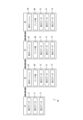
- FIG. 1 is a diagram showing a value chain for tire recycling. It is a figure showing the data structure of tire related information DB (database).
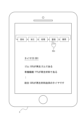
- FIG. 1 is a diagram showing a blockchain network. It is a diagram showing a blockchain. It is a figure showing the acquisition method of tire related information. It is a figure showing an example of a display of tire related information.
- 3 is a flowchart showing operations performed by the information processing device.
- FIG. 1 is a schematic diagram of the information processing system S of this embodiment.
- the information processing system S includes an information processing device 1, a communication terminal 2, and a user terminal 3 that can communicate with each other via a network NW.
- a network NW includes, for example, a mobile communication network and the Internet, and includes at least one of wired and wireless networks.
- FIG. 1 one information processing device 1 and one user terminal 3 are illustrated for ease of explanation.
- the number of information processing devices 1 and user terminals 3 is not limited to this.
- the processing executed by the information processing apparatus 1 of this embodiment may be executed by a plurality of distributed information processing apparatuses 1.
- the information processing device 1 is installed in a facility such as a data center.
- the information processing device 1 is a computer such as a server belonging to a cloud computing system or other computing system.
- the internal configuration of the information processing device 1 will be explained in detail with reference to FIG. 2.
- the information processing device 1 includes a control section 11, a communication section 12, and a storage section 13. Each component of the information processing device 1 is communicably connected to each other via a dedicated line, for example.
- the control unit 11 includes, for example, one or more general-purpose processors including a CPU (Central Processing Unit) or an MPU (Micro Processing Unit).
- the control unit 11 may include one or more dedicated processors specialized for specific processing.
- the control unit 11 may include one or more dedicated circuits instead of including a processor.
- the dedicated circuit may be, for example, an FPGA (Field-Programmable Gate Array) or an ASIC (Application Specific Integrated Circuit).
- the control unit 11 may include an ECU (Electronic Control Unit).
- the control unit 11 transmits and receives arbitrary information via the communication unit 12.
- the communication unit 12 includes one or more communication modules compatible with wired or wireless LAN (Local Area Network) standards for connection to the network NW.
- the communication unit 12 may include a module compatible with one or more mobile communication standards including LTE (Long Term Evolution), 4G (4th Generation), or 5G (5th Generation).
- the communication unit 12 communicates with one or more short-range communication standards or specifications including Bluetooth (registered trademark), AirDrop (registered trademark), IrDA, ZigBee (registered trademark), Felica (registered trademark), or RFID. It may include modules, etc.
- the communication unit 12 transmits and receives arbitrary information via the network NW.
- the storage unit 13 includes, for example, a semiconductor memory, a magnetic memory, an optical memory, or a combination of at least two of these, but is not limited to these.
- the semiconductor memory is, for example, RAM or ROM.
- the RAM is, for example, SRAM or DRAM.
- the ROM is, for example, an EEPROM.
- the storage unit 13 may function as, for example, a main storage device, an auxiliary storage device, or a cache memory.
- the storage unit 13 may store information as a result of analysis or processing by the control unit 11.
- the storage unit 13 may store various information related to the operation or control of the information processing device 1 .
- the storage unit 13 may store system programs, application programs, embedded software, and the like.
- the program may be, for example, Python, but is not limited to this.
- the storage unit 13 may be provided outside the information processing device 1 and may be accessed from the information processing device 1 .
- the storage unit 13 includes a tire-related information DB that will be described later.
- the communication terminal 2 may be a general-purpose device such as a PC, or a dedicated device. "PC" is an abbreviation for personal computer.
- the communication terminal 2 may be a mobile device such as a mobile phone, a smartphone, a wearable device, or a tablet.
- Each of the plurality of communication terminals 2 may be a different type of terminal.
- the communication terminal 2-1 may be a PC
- the communication terminal 2-2 may be a mobile phone.
- the communication terminal 2 includes a control section 21 , a communication section 22 , a storage section 23 , a display section 24 , an input section 25 , and an imaging section 26 .
- the components of the communication terminal 2 are communicably connected to each other via, for example, a dedicated line.
- the description of the hardware configuration of the control unit 21, communication unit 22, and storage unit 23 of the communication terminal 2 is the same as the description of the hardware configuration of the control unit 11, communication unit 12, and storage unit 13 of the information processing device 1. May be the same. Description here will be omitted.
- the display unit 24 is, for example, a display.
- the display is, for example, an LCD or an organic EL display.
- LCD is an abbreviation for liquid crystal display.
- EL is an abbreviation for electro luminescence.
- the display unit 24 may be connected to the communication terminal 2 as an external output device instead of being included in the communication terminal 2.
- any method such as USB, HDMI (registered trademark), or Bluetooth (registered trademark) can be used.
- USB is an abbreviation for Universal Serial Bus.
- HDMI registered trademark
- HDMI registered trademark
- HDMI registered trademark
- HDMI registered trademark
- HDMI registered trademark
- HDMI registered trademark
- HDMI registered trademark
- HDMI registered trademark
- HDMI registered trademark
- HDMI registered trademark
- HDMI registered trademark
- HDMI registered trademark
- HDMI registered trademark
- HDMI registered trademark
- HDMI registered trademark
- HDMI registered trademark
- HDMI registered trademark
- HDMI registered trademark
- HDMI registered trademark
- HDMI registered trademark
- HDMI registered trademark
- HDMI registered trademark
- HDMI registered trademark
- HDMI registered trademark
- HDMI registered
- the input unit 25 is, for example, a physical key, a capacitive key, a pointing device, a touch screen provided integrally with a display, or a microphone.
- the input unit 25 accepts an operation to input information used for the operation of the communication terminal 2 .
- the input unit 25 may be connected to the communication terminal 2 as an external input device instead of being included in the communication terminal 2.
- the imaging unit 26 includes a camera.
- the imaging unit 26 can image the surroundings.
- the imaging unit 26 may record the captured image in the storage unit 23 or transmit it to the control unit 21 for image analysis. Images include still images or moving images.
- the imaging unit 26 may be connected to the communication terminal 2 as an external input device instead of being included in the communication terminal 2.
- the user terminal 3 may be a general-purpose device such as a PC, or a dedicated device. "PC" is an abbreviation for personal computer.
- the user terminal 3 may be a mobile device such as a mobile phone, a smartphone, a wearable device, or a tablet.
- the internal configuration of the user terminal 3 will be explained in detail with reference to FIG.
- the user terminal 3 includes a control section 31, a communication section 32, a storage section 33, a display section 34, an input section 35, and an imaging section 36.
- the components of the user terminal 3 are communicably connected to each other via, for example, a dedicated line.
- control section 31, communication section 32, storage section 33, display section 34, input section 35, and imaging section 36 of the user terminal 3 will be explained below.
- the description of the hardware configuration of the section 23, display section 24, input section 35, and imaging section 36 may be the same. Description here will be omitted.
- the communication terminals 2-1, 2-2, 2-3, . D-3, . . . is operated by the person in charge of stage D-n.
- the chain of steps in tire recycling is also called a value chain.
- the inclusion of sustainable materials here can be derived by any calculation method, such as the sum of the importance of sustainable materials per tire weight, or the ratio of the number of sustainable materials in the blend when the rubber component is taken as 100.
- ⁇ Stage D-1 Collection of used tires
- Stage D-2 Processing of collected tires (e.g., sorting of tire types or parts, removal of non-rubber materials, crushing of tires)
- Step D-3 Processing step of processed tires (e.g., impurity removal, swelling, decomposition, depolymerization, polymerization, oil conversion, refining, lightening, chemical conversion)
- ⁇ Stage D-4 Manufacturing stage of new tires using recycled materials
- ⁇ Stage D-5 Sales stage of manufactured tires
- a QR code (registered trademark) is attached to the tires TR collected in step D-1.
- This QR code (registered trademark) is not only stamped during the tire manufacturing process, but also printed and pasted on the tire surface at any time, such as when shipped from the manufacturing factory, when sold at a tire store, or when collected after use. You can.
- the QR code (registered trademark) includes identification information of the tire TR.
- each of the plurality of tires is given identification information that uniquely identifies the tire TR.
- the QR code (registered trademark) is read by the communication terminal 2.
- the communication terminal 2 functions as a QR code reader using the control section 21 and the imaging section 26.
- a QR code (registered trademark) can be replaced by a barcode, RFID chip or chemical marker. That is, a barcode containing identification information is pasted on the tire TR.
- the RFID chip that stores identification information may be attached to the tire TR or may be embedded in the tire TR.
- the chemical marker including identification information is a specific chemical substance blended into the rubber of the tire TR, and may be included in the tire TR.
- the identification information contained in the barcode, RFID chip or chemical marker is read by the communication terminal 2.
- Communication terminal 2 functions as a barcode reader or RFID reader.
- At least two of QR codes, barcodes, RFID chips and chemical markers may be used in combination. For example, RFID chips may be used at certain stages in recycling, and QR codes may be used at other stages (eg, the consumer sales stage).
- the person in charge of stage D-1 collects the tire TR
- the person in charge uses the communication terminal 2-1 to read the identification information of the tire TR.
- the person in charge accesses the information processing device 1 using the communication terminal 2-1.
- Information such as the URL of the access destination may be included in the QR code.
- the person in charge registers the first tire-related information collected in step D-1 in the information processing device 1 in association with the identification information of the tire TR.
- the first tire-related information may include, for example, at least one of the following: ⁇ Wear information (tread wear amount, etc.) - Deterioration information - Years of use - Size - Tire manufacturer - Tire type (for passenger cars, trucks and buses, mining vehicles, aircraft, etc.) ⁇ Percentage of collected (recycled) tires among sold tires ⁇ CO2 emissions during the tire transportation process ⁇ Information on tire defects ⁇ Amount of reduction in CO2 emissions during vehicle operation ⁇ Where the tires came from
- the information processing device 1 Upon receiving the first tire-related information and identification information from the communication terminal 2-1, the information processing device 1 receives the first tire-related information and identification information (corresponding to "tire ID") as shown in FIG. and are stored in the tire-related information DB of the storage unit 13 in association with each other.
- step D-2 The collected tires TR are sent to the next stage D-2.
- step D-2 the tire TR is processed.
- the tire TR is crushed together with the QR code (registered trademark).
- a QR code (registered trademark) that is the same as the QR code (registered trademark) of the tire TR may be printed on the tire TR slip, etc., or may be attached to each batch of containers or containers containing chips.
- the person in charge of step D-2 accesses the information processing device 1 using the communication terminal 2-2.
- the person in charge registers the second tire-related information collected in step D-2 in the information processing device 1 in association with the identification information read from the QR code (registered trademark).
- the second tire-related information may include, for example, at least one of the following: ⁇ Information on the crusher ⁇ Chip size ⁇ Whether other companies' products are mixed in ⁇ Tire parts before chip processing (tread, side, etc.) ⁇ CO2 generation amount
- the information processing device 1 Upon receiving the second tire-related information and identification information from the communication terminal 2-2, the information processing device 1 stores the second tire-related information in association with the identification information, as shown in FIG.
- multiple tires may be processed simultaneously to produce tire chips in step D-2.
- the plurality of generated tire chips may be managed as one group for each batch, such as a container or a container.
- the control unit 11 of the information processing device 1 can assign one piece of identification information (for example, one QR code) to one group.
- the given piece of identification information may be stored in the storage unit 13 in association with a plurality of pieces of identification information corresponding to a plurality of tires before processing.
- the control unit 11 of the information processing device 1 can add one piece of new identification information and associate the new piece of identification information with a plurality of previous pieces of identification information.
- the control unit 11 of the information processing device 1 can associate one piece of identification information at a certain stage with a plurality of pieces of identification information at another stage. Such association can be performed at any stage.
- the tire TR is then sequentially sent to stage D-3, stage D-4, and stage D-5.
- the work performed by the person in charge at each stage is similar to the work performed at stage D-1 and stage D-2, and therefore will not be described again. That is, the person in charge of each stage reads the identification information from the QR code (registered trademark) using the communication terminal 2, and registers the tire-related information collected at each stage in the information processing device 1 in association with the identification information.
- QR code registered trademark
- Step D-3 which is a processing step, includes a step of separating tire chips into oil, carbon black, silica, etc. by methods such as pyrolysis and gasification, and steps A to C, which will be described later, of converting the oil into synthetic rubber. It's fine.
- Step A Pyrolysis oil (r-naphtha) and petroleum-derived naphtha are mixed and charged into a naphtha cracker.
- Step B Separate into a C2 fraction, a C3 fraction, and a C4 fraction by cracking, and take out the C4 fraction (butadiene).
- Step C Synthetic rubber is manufactured using the extracted butadiene.
- the manufactured synthetic rubber is used for manufacturing tires in step D-4 described below.
- stage D-4 there is not a 1:1 correspondence between the tire before recycling and the butadiene rubber derived from recycled oil.
- the mass balance method ensures that a certain proportion of the synthetic rubber delivered is derived from recycled oil.
- the identification information that was given to the tire chip may be given again, or the identification information that was given to the tire chip is not used, and only information such as the amount of recycled material used is newly given. You may do so.
- carbon black and silica may be recycled into raw materials through processes such as surface treatment, if necessary.
- the mass balance method may not be used.
- the synthetic rubber produced is treated as 100% recycled.
- the identification information that was given to tire chips may be given again, or the identification information that was given to tire chips is not used, and only information such as the amount of recycled material used is newly given. It's okay.
- the third tire-related information collected in step D-3 may include, for example, at least one of the following: ⁇ Information on oil produced from tires (viscosity, molecular weight, amount of impurities, molecular structure) - Information on carbon black obtained from tires (ash content, pH, particle size, sulfur content, sieve residue, toluene extract, etc.) ⁇ Information on silica generated from tires ⁇ Container identification information ⁇ Catalyst information ⁇ Monomer information ⁇ Temperature of tire thermal decomposition ⁇ Amount of CO2 generated
- the fourth tire-related information collected at step D-4 may include, for example, at least one of the following: - Compound information of manufactured tires (compounding amount of each material, detailed information on each material, information on the origin of each material such as non-fossil resource origin, bio origin, recycled origin, etc.) ⁇ CO2 emissions during manufacturing ⁇ Usage rate of recycled materials (e.g. recycled rubber) in manufactured tires ⁇ Usage rate of sustainable materials (derived from non-fossil resources, bio-based materials, recycled materials, etc.) in manufactured tires Tire TR
- the QR code (registered trademark) containing identification information may be pasted on the tire TR in step D-4, or may be printed on a slip attached to the tire TR.
- the fifth tire-related information collected at stage D-5 which is the tire TR sales stage, may include at least one of the following, for example. ⁇ Information on customers who purchased tires ⁇ Information on retailers ⁇ Amount of CO2 generated
- the QR code containing the identification information of the tire TR may be affixed to the tire TR in step D-5, or may be printed on the slip or product label attached to the tire TR.
- control unit 11 of the information processing device 1 stores the tire-related information received from each stage in the storage unit 13 in association with the identification information of the tire TR.
- the recycling shown in FIG. 5 may be performed not only in one round but also in multiple rounds.
- the control unit 11 can store all the tire-related information acquired during the multiple times.
- the information processing device 1 may be one of the nodes of a blockchain network or a device that can access a node of the blockchain network.
- the information processing device 1 may be one of the nodes communicably connected to the blockchain network BN.
- the information processing device 1 can communicate with one or more other information processing devices 4 to 7 via the blockchain network BN. Although five information processing devices are illustrated in FIG. 7, the number of information processing devices is arbitrary.
- the hardware configurations of the information processing devices 4 to 7 are the same as the hardware configuration of the information processing device 1, so a description thereof will be omitted here.
- Blockchain network BN is a distributed ledger (Hyperledger) type. All nodes connected to the blockchain network BN hold the same data as one or more blocks in chronological order.
- the blockchain network BN may be of a public type, a private type, or a consortium type.
- the storage unit 13 of the information processing device 1 stores the blockchain BC.
- Blockchain BC is shared by all nodes in blockchain network BN.
- the blockchain BC includes a first block B1, a second block B2, a third block B3, and a fourth block B4.
- the number of blocks included in blockchain BC is arbitrary.
- the first block B1 is the first block of the blockchain BC and includes transaction data T1.
- one block includes three pieces of transaction data.
- the second block B2 includes a hash H2 of the first block B1 which is the previous block, a nonce value N2 corresponding to the hash H2, and transaction data T2. Descriptions of the third block B3 and fourth block B4 will be omitted to avoid redundant description.
- the control unit 11 of the information processing device 1 may store identification information of the tire TR and tire-related information in the blockchain BC.
- the control unit 11 may store a record corresponding to one piece of identification information of a tire TR in one block, or may store identification information and tire-related information received from each stage in different blocks for each stage. good.
- electronic authentication or electronic signature systems may be used to record or manage tire-related information.
- FIG. 10 shows a display example of tire-related information on the display unit 34 of the user terminal 3.
- each stage is displayed in a selectable manner.
- the control unit 11 of the information processing device 1 acquires tire-related information stored in association with the manufacturing stage from the storage unit 13.
- the control unit 11 transmits the tire-related information to the user terminal 3 and causes the user terminal 3 to display the tire-related information.
- the user terminal 3 displays, as tire-related information, the usage rate of recycled materials for each of rubber, compounding agents, organic fibers, steel cord, etc., and the fact that 80% of the entire tire TR is derived from recycled materials. .
- the control unit 11 determines how the information (performance, physical properties, etc.) acquired in a particular round of recycling (for example, the first round) changes in the subsequent round of recycling (for example, the second round). be able to. For example, the control unit 11 determines how the breaking strength of rubber, the molecular weight of synthetic rubber, the molecular weight of oil, etc. have changed in each round of recycling.
- the control unit 11 may transmit the determination content to the user terminal 3.
- the control unit 11 calculates what percentage of the new tire has been recycled at any given time. For example, the control unit 11 selects a new tire based on the amount of recycled materials used or related information recorded at the tire manufacturing stage among the identification information read from one or more new tires at stage D-5, which is the sales stage. You may calculate what percentage of the tires are recycled. The control unit 11 transmits the calculation result to the user terminal 3.
- the control unit 11 may provide the tire-related information collected at a specific stage to the person in charge at the next stage. For example, the control unit 11 receives tire formulation information from the communication terminal 2-2 in step D-2 of processing the tire, and reads decomposition condition information corresponding to the formulation information from the storage unit 13. The control unit 11 transmits the read decomposition conditions to the communication terminal 2-3 in stage D-3 where thermal decomposition is performed. For example, the control unit 11 transmits different decomposition condition information to the communication terminal 2-3 depending on whether the composition information of the tire TR is carbon-based, silica-based, synthetic rubber-based, or natural rubber-based.
- the control unit 11 detects that the tire TR has been purchased at stage D-5, which is the sales stage, the control unit 11 identifies the purchasing user from the tire-related information.
- the control unit 11 reads the contact information of the user terminal 3 of the purchasing user from the storage unit 13 and the like.
- the control unit 11 transmits service information corresponding to the purchased tire TR to the user terminal 3.
- the service information may be, for example, that a discount is available at a specific gas station, that a discount is available at a specific tire store, etc.
- step S1 the control unit 11 receives first tire-related information from the first communication terminal 2 (which may be any one of 2-1, 2-2, ... 2-n) via the communication unit 12. .
- step S2 the control unit 11 receives second tire-related information from the second communication terminal 2 (which may be any one of 2-1, 2-2, ... 2-n) via the communication unit 12. do.
- step S3 the control unit 11 stores the first tire-related information and the second tire-related information in association with the tire identification information.
- step S4 upon receiving the identification information from the user terminal 3, the control unit 11 transmits the first tire-related information and the second tire-related information to the user terminal 3.
- the control unit 11 of the information processing device 1 receives first tire-related information regarding tires from the first communication terminal 2 associated with the first step in tire recycling. receiving second tire-related information about the tire from a second communication terminal 2 associated with a second stage in recycling; information in association with tire identification information; and upon receiving the identification information from the user terminal 3, transmitting the first tire related information and the second tire related information to the user terminal 3. Execute actions that include.
- the information processing device 1 can support the management, sharing, and utilization of information acquired at each stage of tire recycling, thereby increasing traceability.
- the information processing device 1 can perform efficient recycling, cooperation within related companies, information disclosure to customers, etc. using tire-related information. Through these, the information processing device 1 can promote recycling, promote the use of recycled materials, or promote the spread of tires using recycled materials.
- the information processing device 1 is one of the nodes of the blockchain network, and the operation of the control unit 11 is to associate the first tire-related information and the second tire-related information with identification information.
- blockchain technology is used in this way, the registered information is distributed and shared by all nodes, making it difficult to tamper with it. Therefore, the information processing device 1 can realize a highly secure system.
- a QR code registered trademark
- a barcode containing identification information
- an RFID chip storing identification information
- a chemical marker linked to identification information is blended or applied to the rubber used.
- the first tire-related information includes information on the usage rate of recycled materials in the tire.
- the information processing device 1 can provide recycling information to the customer, thereby motivating the customer to purchase tires.
- the first stage is a tire sales stage
- the operation includes identifying a customer who has purchased a tire from the first tire-related information, and transmitting service information to the user terminal 3 operated by the customer. including sending.
- the information processing device 1 can provide services to the customer after purchase.
- the first stage is a tire sales stage
- the second stage is a used tire collection stage.
- the operation of the control unit 11 includes calculating, from the first tire-related information and the second tire-related information, the proportion of one or more tires collected among the one or more tires sold. With this configuration, the information processing device 1 can determine the recycling status of tires.
- the second stage is a stage of thermal decomposition of the tire, and the operation is such that the decomposition condition information corresponding to the formulation information included in the first tire-related information is associated with the second stage. This includes transmitting the information to the second communication terminal 2 that has been received.
- the information processing device 1 can support appropriate thermal decomposition processing.
- each means or each step can be rearranged so as not to be logically contradictory, and it is possible to combine or divide a plurality of means or steps into one.
- the expressions "first" and “second” in the claims are only used to distinguish between the two, and do not refer to a specific subject in the specification. .
- a program that executes all or part of the functions or processes of the information processing device 1 can be recorded on a computer-readable recording medium.
- a computer readable recording medium includes a non-transitory computer readable medium, such as a magnetic recording device, an optical disk, a magneto-optical recording medium, or a semiconductor memory.
- the program is distributed, for example, by selling, transferring, or lending a portable recording medium such as a DVD (Digital Versatile Disc) or a CD-ROM (Compact Disc Read Only Memory) on which the program is recorded.
- the program may be distributed by storing the program in the storage of an arbitrary server and transmitting the program from the arbitrary server to another computer.
- the program may also be provided as a program product.
- the present disclosure can also be implemented as a program executable by a processor.
- a computer temporarily stores a program recorded on a portable recording medium or a program transferred from a server in a main storage device. Then, the computer uses a processor to read a program stored in the main memory, and causes the processor to execute processing according to the read program.
- a computer may directly read a program from a portable recording medium and execute processing according to the program.
- the computer may sequentially execute processing according to the received program each time the program is transferred to the computer from the server. Processing may be performed using a so-called ASP type service that implements functions only by issuing execution instructions and obtaining results without transferring programs from the server to the computer. “ASP” is an abbreviation for application service provider.
- the program includes information similar to a program that is used for processing by an electronic computer. For example, data that is not a direct command to a computer but has the property of regulating computer processing falls under "something similar to a program.”
Landscapes
- Business, Economics & Management (AREA)
- Engineering & Computer Science (AREA)
- Economics (AREA)
- Human Resources & Organizations (AREA)
- Marketing (AREA)
- Strategic Management (AREA)
- Physics & Mathematics (AREA)
- General Business, Economics & Management (AREA)
- General Physics & Mathematics (AREA)
- Theoretical Computer Science (AREA)
- Tourism & Hospitality (AREA)
- Entrepreneurship & Innovation (AREA)
- Operations Research (AREA)
- Accounting & Taxation (AREA)
- Finance (AREA)
- Quality & Reliability (AREA)
- Development Economics (AREA)
- Life Sciences & Earth Sciences (AREA)
- Sustainable Development (AREA)
- Health & Medical Sciences (AREA)
- General Health & Medical Sciences (AREA)
- Primary Health Care (AREA)
- Manufacturing & Machinery (AREA)
- Management, Administration, Business Operations System, And Electronic Commerce (AREA)
Priority Applications (3)
| Application Number | Priority Date | Filing Date | Title |
|---|---|---|---|
| JP2024532062A JPWO2024009852A1 (https=) | 2022-07-08 | 2023-06-27 | |
| US18/874,224 US20250356325A1 (en) | 2022-07-08 | 2023-06-27 | Information processing apparatus for assisting in information management for tire recycling |
| EP23835384.1A EP4553731A1 (en) | 2022-07-08 | 2023-06-27 | Information processing device for assisting in management of tire recycling information |
Applications Claiming Priority (2)
| Application Number | Priority Date | Filing Date | Title |
|---|---|---|---|
| JP2022-110841 | 2022-07-08 | ||
| JP2022110841 | 2022-07-08 |
Publications (1)
| Publication Number | Publication Date |
|---|---|
| WO2024009852A1 true WO2024009852A1 (ja) | 2024-01-11 |
Family
ID=89453411
Family Applications (1)
| Application Number | Title | Priority Date | Filing Date |
|---|---|---|---|
| PCT/JP2023/023846 Ceased WO2024009852A1 (ja) | 2022-07-08 | 2023-06-27 | タイヤのリサイクルの情報管理を支援する情報処理装置 |
Country Status (4)
| Country | Link |
|---|---|
| US (1) | US20250356325A1 (https=) |
| EP (1) | EP4553731A1 (https=) |
| JP (1) | JPWO2024009852A1 (https=) |
| WO (1) | WO2024009852A1 (https=) |
Cited By (2)
| Publication number | Priority date | Publication date | Assignee | Title |
|---|---|---|---|---|
| WO2025023294A1 (ja) * | 2023-07-26 | 2025-01-30 | Eneos株式会社 | 化成品及び炭化物の製造方法並びに化成品の管理方法 |
| WO2025023293A1 (ja) * | 2023-07-26 | 2025-01-30 | Eneos株式会社 | 化成品の製造方法およびその管理方法 |
Citations (4)
| Publication number | Priority date | Publication date | Assignee | Title |
|---|---|---|---|---|
| JP2002245209A (ja) * | 2001-02-19 | 2002-08-30 | Casio Comput Co Ltd | 商品リサイクル追跡支援方法及び商品リサイクル追跡支援装置 |
| JP2017182299A (ja) * | 2016-03-29 | 2017-10-05 | 山陽製紙株式会社 | 古紙リサイクル情報管理システムおよび古紙リサイクル情報管理方法 |
| US20200122533A1 (en) * | 2018-10-19 | 2020-04-23 | Mutual-Pak Technology Co., Ltd. | Unique id electronic tag for tire |
| JP2022110841A (ja) | 2021-01-19 | 2022-07-29 | 株式会社Subaru | 車両の走行制御システム |
Family Cites Families (7)
| Publication number | Priority date | Publication date | Assignee | Title |
|---|---|---|---|---|
| US7313602B2 (en) * | 2001-10-26 | 2007-12-25 | Canon Kabushiki Kaisha | Server, management system, and management control method |
| US20070260466A1 (en) * | 2006-03-20 | 2007-11-08 | Casella Waste Systems, Inc. | System and methods for a recycling program |
| US8209076B2 (en) * | 2008-10-06 | 2012-06-26 | International Business Machines Corporation | Tracking vehicle maintenance using sensor detection |
| US8112318B2 (en) * | 2010-11-15 | 2012-02-07 | Tire Centers, Llc | System and method for managing a plurality of tires |
| CN105829087A (zh) * | 2013-12-19 | 2016-08-03 | 普利司通美国轮胎运营有限责任公司 | 包括轮胎热解的轮胎回收利用系统和方法 |
| US20200143336A1 (en) * | 2018-11-05 | 2020-05-07 | Klean Industries, Inc. | System and method for a circular waste recycling economy utilizing a distributed ledger |
| EP3989133A1 (en) * | 2020-10-21 | 2022-04-27 | adidas AG | The recycling process of a recyclable sports article and generation process for a regenerated sports article |
-
2023
- 2023-06-27 WO PCT/JP2023/023846 patent/WO2024009852A1/ja not_active Ceased
- 2023-06-27 EP EP23835384.1A patent/EP4553731A1/en active Pending
- 2023-06-27 US US18/874,224 patent/US20250356325A1/en active Pending
- 2023-06-27 JP JP2024532062A patent/JPWO2024009852A1/ja active Pending
Patent Citations (4)
| Publication number | Priority date | Publication date | Assignee | Title |
|---|---|---|---|---|
| JP2002245209A (ja) * | 2001-02-19 | 2002-08-30 | Casio Comput Co Ltd | 商品リサイクル追跡支援方法及び商品リサイクル追跡支援装置 |
| JP2017182299A (ja) * | 2016-03-29 | 2017-10-05 | 山陽製紙株式会社 | 古紙リサイクル情報管理システムおよび古紙リサイクル情報管理方法 |
| US20200122533A1 (en) * | 2018-10-19 | 2020-04-23 | Mutual-Pak Technology Co., Ltd. | Unique id electronic tag for tire |
| JP2022110841A (ja) | 2021-01-19 | 2022-07-29 | 株式会社Subaru | 車両の走行制御システム |
Non-Patent Citations (1)
| Title |
|---|
| See also references of EP4553731A4 |
Cited By (2)
| Publication number | Priority date | Publication date | Assignee | Title |
|---|---|---|---|---|
| WO2025023294A1 (ja) * | 2023-07-26 | 2025-01-30 | Eneos株式会社 | 化成品及び炭化物の製造方法並びに化成品の管理方法 |
| WO2025023293A1 (ja) * | 2023-07-26 | 2025-01-30 | Eneos株式会社 | 化成品の製造方法およびその管理方法 |
Also Published As
| Publication number | Publication date |
|---|---|
| EP4553731A4 (en) | 2025-05-14 |
| EP4553731A1 (en) | 2025-05-14 |
| US20250356325A1 (en) | 2025-11-20 |
| JPWO2024009852A1 (https=) | 2024-01-11 |
Similar Documents
| Publication | Publication Date | Title |
|---|---|---|
| WO2024009852A1 (ja) | タイヤのリサイクルの情報管理を支援する情報処理装置 | |
| CN101650717B (zh) | 一种节约数据库存储空间的方法和系统 | |
| US8862506B2 (en) | User controlled system and method for collecting, pricing, and trading data | |
| KR102671783B1 (ko) | 이륜차 표준 보험 견적 청구 및 손해사정 서비스를 지원하는 시스템 및 방법 | |
| CN116368510A (zh) | 认证方法、认证系统以及程序 | |
| CN103023747B (zh) | 基于消息内容的信息推荐方法和系统 | |
| CN108416506A (zh) | 客户风险等级管理方法、服务器及计算机可读存储介质 | |
| CA2920407A1 (en) | Promoter system and method for processing product and service data | |
| CN107784591B (zh) | 名单数据处理方法及装置 | |
| US12488866B2 (en) | Method and apparatus for intelligent pharmacovigilance platform | |
| KR102011238B1 (ko) | 중고 차량 거래 방법 및 이를 실행하기 위하여 기록매체에 기록된 컴퓨터 프로그램 | |
| CN112053249A (zh) | 保险平台系统 | |
| CN115859320A (zh) | 一种基于区块链的再生资源回收数据防篡改系统 | |
| JP6931025B2 (ja) | 情報処理装置及びプログラム | |
| CN114331008B (zh) | 数据影响力评估方法、装置、计算机设备及存储介质 | |
| CN1845161A (zh) | 营业店系统 | |
| CN117785918A (zh) | 数据处理方法、装置、存储介质、程序产品及电子设备 | |
| JP2021096706A (ja) | 装置、方法およびプログラム | |
| CN117495296B (zh) | 汽车产业链研发管理系统、方法、装置、设备及存储介质 | |
| TW202119399A (zh) | 基於區塊鏈之保險系統及其保險方法 | |
| Patrick et al. | Vanishing twin syndrome results in higher risk of miscarriage even following euploid embryo transfer | |
| Dolitsky et al. | CHANGES IN UTILIZATION PGT-A OVER THE LAST DECADE | |
| CN116225926B (zh) | 基于excel的自动化测试方法、电子设备及可读存储介质 | |
| US11308941B2 (en) | Natural language processing apparatus and program | |
| Takeuchi et al. | RE-EXPANSION CAPABILITY OF EUPLOID BLASTOCYSTS AFTER WARMING IS PREDICTIVE OF PREGNANCY OUTCOME, BUT NOT THE EXPANSION DEGREE AT THE TIME OF BIOPSY |
Legal Events
| Date | Code | Title | Description |
|---|---|---|---|
| 121 | Ep: the epo has been informed by wipo that ep was designated in this application |
Ref document number: 23835384 Country of ref document: EP Kind code of ref document: A1 |
|
| WWE | Wipo information: entry into national phase |
Ref document number: 2024532062 Country of ref document: JP |
|
| WWE | Wipo information: entry into national phase |
Ref document number: 18874224 Country of ref document: US |
|
| WWE | Wipo information: entry into national phase |
Ref document number: 2023835384 Country of ref document: EP |
|
| NENP | Non-entry into the national phase |
Ref country code: DE |
|
| ENP | Entry into the national phase |
Ref document number: 2023835384 Country of ref document: EP Effective date: 20250210 |
|
| WWP | Wipo information: published in national office |
Ref document number: 2023835384 Country of ref document: EP |
|
| WWP | Wipo information: published in national office |
Ref document number: 18874224 Country of ref document: US |