WO2023228484A1 - マッチング支援システム、及びマッチング支援方法 - Google Patents
マッチング支援システム、及びマッチング支援方法 Download PDFInfo
- Publication number
- WO2023228484A1 WO2023228484A1 PCT/JP2023/004317 JP2023004317W WO2023228484A1 WO 2023228484 A1 WO2023228484 A1 WO 2023228484A1 JP 2023004317 W JP2023004317 W JP 2023004317W WO 2023228484 A1 WO2023228484 A1 WO 2023228484A1
- Authority
- WO
- WIPO (PCT)
- Prior art keywords
- agency
- client
- request
- information
- provider
- Prior art date
- Legal status (The legal status is an assumption and is not a legal conclusion. Google has not performed a legal analysis and makes no representation as to the accuracy of the status listed.)
- Ceased
Links
Images












Classifications
-
- G—PHYSICS
- G06—COMPUTING OR CALCULATING; COUNTING
- G06Q—INFORMATION AND COMMUNICATION TECHNOLOGY [ICT] SPECIALLY ADAPTED FOR ADMINISTRATIVE, COMMERCIAL, FINANCIAL, MANAGERIAL OR SUPERVISORY PURPOSES; SYSTEMS OR METHODS SPECIALLY ADAPTED FOR ADMINISTRATIVE, COMMERCIAL, FINANCIAL, MANAGERIAL OR SUPERVISORY PURPOSES, NOT OTHERWISE PROVIDED FOR
- G06Q50/00—Information and communication technology [ICT] specially adapted for implementation of business processes of specific business sectors, e.g. utilities or tourism
- G06Q50/10—Services
- G06Q50/20—Education
- G06Q50/205—Education administration or guidance
-
- G—PHYSICS
- G06—COMPUTING OR CALCULATING; COUNTING
- G06Q—INFORMATION AND COMMUNICATION TECHNOLOGY [ICT] SPECIALLY ADAPTED FOR ADMINISTRATIVE, COMMERCIAL, FINANCIAL, MANAGERIAL OR SUPERVISORY PURPOSES; SYSTEMS OR METHODS SPECIALLY ADAPTED FOR ADMINISTRATIVE, COMMERCIAL, FINANCIAL, MANAGERIAL OR SUPERVISORY PURPOSES, NOT OTHERWISE PROVIDED FOR
- G06Q10/00—Administration; Management
- G06Q10/06—Resources, workflows, human or project management; Enterprise or organisation planning; Enterprise or organisation modelling
- G06Q10/063—Operations research, analysis or management
- G06Q10/0631—Resource planning, allocation, distributing or scheduling for enterprises or organisations
-
- G—PHYSICS
- G06—COMPUTING OR CALCULATING; COUNTING
- G06Q—INFORMATION AND COMMUNICATION TECHNOLOGY [ICT] SPECIALLY ADAPTED FOR ADMINISTRATIVE, COMMERCIAL, FINANCIAL, MANAGERIAL OR SUPERVISORY PURPOSES; SYSTEMS OR METHODS SPECIALLY ADAPTED FOR ADMINISTRATIVE, COMMERCIAL, FINANCIAL, MANAGERIAL OR SUPERVISORY PURPOSES, NOT OTHERWISE PROVIDED FOR
- G06Q10/00—Administration; Management
- G06Q10/06—Resources, workflows, human or project management; Enterprise or organisation planning; Enterprise or organisation modelling
- G06Q10/063—Operations research, analysis or management
- G06Q10/0631—Resource planning, allocation, distributing or scheduling for enterprises or organisations
- G06Q10/06311—Scheduling, planning or task assignment for a person or group
- G06Q10/063112—Skill-based matching of a person or a group to a task
-
- G—PHYSICS
- G06—COMPUTING OR CALCULATING; COUNTING
- G06Q—INFORMATION AND COMMUNICATION TECHNOLOGY [ICT] SPECIALLY ADAPTED FOR ADMINISTRATIVE, COMMERCIAL, FINANCIAL, MANAGERIAL OR SUPERVISORY PURPOSES; SYSTEMS OR METHODS SPECIALLY ADAPTED FOR ADMINISTRATIVE, COMMERCIAL, FINANCIAL, MANAGERIAL OR SUPERVISORY PURPOSES, NOT OTHERWISE PROVIDED FOR
- G06Q10/00—Administration; Management
- G06Q10/10—Office automation; Time management
- G06Q10/105—Human resources
- G06Q10/1053—Employment or hiring
-
- G—PHYSICS
- G06—COMPUTING OR CALCULATING; COUNTING
- G06Q—INFORMATION AND COMMUNICATION TECHNOLOGY [ICT] SPECIALLY ADAPTED FOR ADMINISTRATIVE, COMMERCIAL, FINANCIAL, MANAGERIAL OR SUPERVISORY PURPOSES; SYSTEMS OR METHODS SPECIALLY ADAPTED FOR ADMINISTRATIVE, COMMERCIAL, FINANCIAL, MANAGERIAL OR SUPERVISORY PURPOSES, NOT OTHERWISE PROVIDED FOR
- G06Q50/00—Information and communication technology [ICT] specially adapted for implementation of business processes of specific business sectors, e.g. utilities or tourism
- G06Q50/10—Services
Definitions
- the present invention relates to a matching support system and a matching support method.
- Patent Document 1 describes an educational mediation processing device that evaluates the teacher's level in advance and introduces the student to a teacher that matches the student's level.
- the educational mediation processing device evaluates the level of the teacher recruited by the teacher recruitment means, and mediates between the teacher and the student whose evaluation level corresponds to the level of the student recruited by the student recruitment means. Further, the educational mediation processing device performs a predetermined test on the teacher and evaluates the teacher's level according to the test result. Further, the educational mediation processing device extracts teachers whose evaluation level corresponds to the obtained level of the student, and allows the student to select a desired teacher from among the extracted teachers.
- Patent Document 2 discloses that a supporter who supports the user is matched with a user who belongs to one of a plurality of pre-registered local communities, and mutual aid activities between the user and the supporter are supported.
- a support system configured for this purpose is described.
- the support system manages support registration data that includes supporter information for each of multiple approved supporters approved by the administrator who manages the local community to which the supporter belongs, and responds to support requests from users.
- a supporter candidate is selected from a plurality of approved supporters included in the support registration data. Further, the support system selects, with priority, a supporter candidate whose individual reliability is determined by the administrator from among the plurality of approved supporters included in the support registration data.
- the client may, for example, say, ⁇ I want to select an agency that will perform the service appropriately,'' or ⁇ I want to request an agency that will provide the service at a reasonable price.'' ” and “I want to hire an agent who is familiar with the field of service I am requesting.”
- service providers should be advised that ⁇ if they are inexperienced (have not built trust), they are not highly specialized in various service fields (they are not highly specialized in By experiencing a wide range of services (which are not necessarily required), I would like to assess my own expertise and increase my credibility as a service provider.” We want to further enhance our expertise and increase our credibility as a service provider.”
- the teacher's level is evaluated in advance, and a teacher who matches the student's level is introduced to the student. Further, in the above-mentioned Patent Document 2, the user selects reliable supporter candidates based on the supporter candidate's experience level and other information (e.g., presence or absence of qualifications). However, with regard to the mechanisms described in both documents, the client (student, user) and service provider (teacher, potential supporter) are It is not intended to match between.
- An object of the present invention is to provide a matching support system and a matching support method that can support appropriate matching between a client (service recipient) and a service provider.
- One of the present inventions for achieving the above object is a matching support that supports matching between a client and a service provider when the client requests a service provider to provide a service.
- the system is configured using an information processing device having a processor and a storage device, and includes basic information that is information about each of the plurality of providers, request information that is information about the request received from the client, and a plurality of basic information that is information about each of the plurality of providers.
- Store reliability which is information indicating the degree of trust of each of the providers, and information indicating the expertise of each of the providers regarding the service, and determine the difficulty level of the request based on the request information.
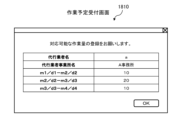
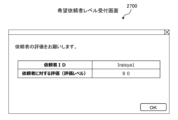
- FIG. 12 is a flowchart illustrating an example of specialized field determination table generation processing. This is an example of a specialized field reception screen. This is an example of a competency information confirmation screen. This is an example of a request evaluation reception screen. This is an example of an information processing device used to configure a matching support system. This is an example of the functions provided by the proxy request support device according to the second embodiment.
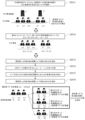
- FIG. 6 is a diagram showing how a difficulty level determination section generates a difficulty level determination result.
- FIG. 6 is a diagram illustrating how a workload determination unit generates a workload determination result. This is an example of a work schedule reception screen.
- 12 is a flowchart illustrating proxy request support processing according to the second embodiment. It is a flowchart explaining a 3rd extraction process. It is a figure explaining the outline of the 3rd extraction result generation process. It is a flowchart explaining the 3rd extraction result generation process. It is a flowchart explaining the 4th extraction result generation process.
- This is an example of the functions provided by the proxy request support device according to the third embodiment.
- This is an example of a basic information table.
- This is an example of a client evaluation table.
- identification information when describing identification information, expressions such as “identifier”, “name”, “ID”, and “number” are used, but these can be replaced with each other. Further, in the following description, various information may be described using expressions such as “table” and “information,” but various information may be expressed using data structures other than these. Furthermore, to indicate that it does not depend on the data structure, a "XX table” or the like is sometimes referred to as "XX information.” In addition, in the following description, “database” may be referred to as "DB”. Further, in the following description, redundant description of the same or similar configurations may be omitted. Furthermore, in the following explanation, the letter “S” added in front of the reference numeral means a processing step.
- the matching support system 1 supports matching between a client and a service provider when the client requests a service provider (hereinafter referred to as a "service provider”) to provide a service. do.
- a service provider hereinafter referred to as a "service provider”
- the clients and service providers targeted by the matching support system 1 are not necessarily limited.
- the client is an individual, a company, etc.
- the service provider is a person who provides services for processing various applications made to institutions such as the national or local government (for example, an agency).
- An example will be explained in which a person is a professional professional such as a lawyer, judicial scrivener, administrative scrivener, etc. (hereinafter referred to as an "agent").
- a client When requesting an agency to provide a service, a client may, for example, say, ⁇ I want to select an agency that will perform the service appropriately,'' ⁇ I want to request an agency that will provide the service at a reasonable price,'' or ⁇ Select an agent based on the viewpoint that you want to hire an agent who is familiar with the field of service you are requesting.
- agents have the following advice: ⁇ Inexperienced (low trust) service providers should be given extensive experience with less specialized services (that do not necessarily require specialization) in various service fields.
- Matching support system 1 is a system that comprehensively considers the client's perspective and the agency's thoughts, and recommends agency candidates that are suitable for providing the service requested by the client. I will provide a. When making a recommendation, the matching support system 1 selects an agent to recommend, taking into account, for example, the ability and reliability of the agent, the content of the requested service, and the cost.
- the matching support system 1 may be configured to, for example, identify the actual state of the agency's work (diversification of business content, difficulty in keeping up with the latest information, classification based on the expertise of the agency, differences in the level of difficulty of each task, etc.) We select an appropriate agency by taking into account the following: (securing educational opportunities for unskilled workers to advance their careers, securing profits commensurate with their services, etc.)
- the agency request support device 100 receives information regarding a service agency request (hereinafter referred to as "request information”) from the client terminal 200, and based on the received request information, provides services specified in the request request information. Select an agent to act on your behalf. Then, the agency request support device 100 generates information describing the selected agency (hereinafter referred to as "recommendation information”) and transmits it to the client terminal 200.
- request information information regarding a service agency request
- the client terminal 200 receives request details from the client, generates request information that describes the received request details, and sends it to the agency request support device 100.
- the client terminal 200 also receives recommendation information from the agency request support device 100 and presents the received recommendation information to the client.
- the agency terminal 300 receives information used by the agency request support device 100 when selecting an agency (hereinafter referred to as “agency information”) from the agency, and transmits the received agency information to the agency request support device 100. do.
- age information an agency
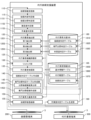
- FIG. 2 is a diagram showing the main functions provided by the agency request support device 100.
- the agency request support device 100 includes a request information receiving section 110, a request content determination section 115, an agency extraction section 120, an agency organization evaluation section 125, a recommendation section 130, an agency requesting section 135, and a trustworthy agency requesting section 135. It includes the following functions: degree determination table generation section 140, specialty field determination table generation section 145, agency competency display section 150, request evaluation registration section 155, agency competency DB 180, and agency information DB 185.
- the agency competency DB 180 manages a reliability determination table 1810 and a specialty field determination table 1820.
- the agency information DB 185 also manages a basic information table 1851, an application history table 1852, and a request status table 1870.
- the request information receiving unit 110 receives and stores request information sent from the requester terminal 200.
- the request information includes information that identifies the client (hereinafter referred to as “client ID”), information regarding the specific content of the requested service, and various information necessary to perform the service.
- the request content determination unit 115 includes a request field determination unit 1151 and a difficulty level determination unit 152.
- the requested field determining unit 1151 determines the field of the requested service (type of application, etc., hereinafter referred to as "request field") based on the request information. For example, if the request information includes information indicating the requested field, the requested field determination unit 1151 uses this information to determine the requested field. Further, the requested field determination unit 1151 determines the requested field by applying a category classification algorithm or natural language processing to the description (text data, etc.) included in the request information, for example.
- the difficulty determining unit 152 determines the difficulty of the request (the difficulty of the service provided in response to the request) based on the request information.
- the difficulty level determining unit 152 determines the level of difficulty based on, for example, the effort required to provide the service for the request, the amount of processing, the complexity of the work, the required period (delivery date), and the like. In this embodiment, it is assumed that the difficulty level is one of "low”, “medium”, and “high”, but the difficulty level is, for example, a continuous value (the larger the value, the higher the difficulty). continuous values).
- the request information includes information indicating the difficulty level
- the difficulty level determination unit 152 determines the difficulty level using the information.
- the requested field determination unit 1151 determines the difficulty level of the description (text data, etc.) included in the request information, for example, by applying a predetermined algorithm or natural language processing.
- the agency organization evaluation unit 125 determines the organization to which the agency listed in the second extraction result belongs (for example, a law firm, a judicial scrivener's office, an administrative scrivener's office, office (hereinafter referred to as "agency organization”), generates information describing the evaluation results (hereinafter referred to as "evaluation information"), and stores the generated evaluation information in the request status table 1870. reflect.
- the agency organization evaluation unit 125 evaluates, for example, the physical distance from the client's location to the location of the agency organization (the closer the two are, the higher the convenience and therefore the higher the evaluation), the fee paid to the agency organization ( The agency organization is evaluated based on the unit price, agency commission, other costs), reputation of the agency organization, etc.
- the evaluation information may be received from the user via the user interface, or may be generated by the agency organization evaluation unit 125 based on evaluation using a predetermined algorithm or machine learning model. Note that if there are multiple agents in the same agency organization, the agent organization evaluation unit 125 registers, for example, the evaluation information of the agent with the highest rating among them in the request status table 1870 as the evaluation information of the agency organization. do.
- the recommendation unit 130 identifies the agency organization to which the agency listed in the second extraction result belongs from the basic information table 1851, and uses the second extraction result, the agency organization to which each agency belongs, and each agency. information including the evaluation information is transmitted to the client terminal 200.
- the client terminal 200 receives the above information from the recommendation section 130 and presents the received information to the user.
- the client terminal 200 also receives the designation of an agency from the user, and also includes information identifying the designated agency (hereinafter referred to as "agency ID”) and information identifying the designated agency organization (hereinafter referred to as "agency organization ID”) is transmitted to the agency request support device 100.
- the recommendation unit 130 receives the agency ID and agency organization ID sent from the client terminal 200.
- the agency requesting unit 135 When the agency requesting unit 135 receives the agency ID from the client terminal 200, it updates the request status table 1870. In addition, the agency requesting unit 135 sends information to the agency terminal 300 of the agency organization to which the agency corresponding to the agency ID received by the recommendation unit 130 indicates that the agency is to be requested (delegated) to act on behalf of the agency ( (hereinafter referred to as a "substitution request notification"). When the agency terminal 300 receives the agency request notification, it presents information indicating that the client has made a request to the agency. Note that the agency request notification may include, for example, information regarding the specific content of the requested service.
- the reliability determination table generation unit 140 performs processing related to generation (including editing and deletion) of the reliability determination table 1810. Details of this processing will be described later.
- the specialty field determination table generation unit 145 includes a field-specific experience value calculation unit 1451 and a specialty field candidate generation unit 1452.
- the field-by-field experience value calculation unit 1451 calculates the field-by-field experience value of the agency.
- the specialty field candidate generation unit 1452 generates a specialty field determination table 1820 (including editing and deletion) based on the agent's experience value for each field.
- the agency competency display unit 150 transmits the contents of the reliability determination table 1810 and the specialty field determination table 1820 to the agency terminal 300.
- the agency terminal 300 receives the contents of the specialty field determination table 1820 and presents it to the agency.
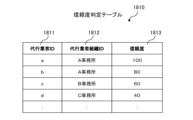
- FIG. 3 shows an example of the reliability determination table 1810.
- the reliability determination table 1810 manages the reliability of the agency.
- the illustrated reliability determination table 1810 includes one or more records having the following items: agency ID 1811, agency organization ID 1812, and reliability 1813.
- One record in reliability determination table 1810 corresponds to one agency.
- the agency ID 1811 stores the agency ID (name of the agency, etc.).
- the agency organization ID 1812 stores the agency organization ID (office name, etc.) of the organization to which the agency belongs.
- the reliability level 1813 stores information indicating the reliability of the agency concerned. In this example, a value indicating reliability (maximum value is 100) is stored. The larger the above value, the higher the reliability. Note that details of how to generate the reliability determination table 1810 will be described later.
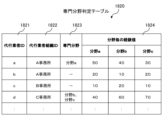
- FIG. 4 shows an example of the specialty field determination table 1820.
- the specialized field determination table 1820 manages information indicating the specialized field and experience level of each agency (information indicating the specialty of each agency).
- the illustrated specialty field determination table 1820 includes one or more records having the following items: agency ID 1811, agency organization ID 1822, specialty field 1823, and experience value for each field 1824.
- One record in the specialty field determination table 1820 corresponds to one agency.
- the agency ID 1821 stores the agency ID.
- the agency organization ID 1822 stores the agency organization ID of the organization to which the agency belongs.
- the specialized field 1823 stores information indicating the specialized field of the agency concerned.
- the experience value for each field 1824 stores information indicating the experience value of the agency for each field. In this example, a value indicating an experience value (maximum value is 100) is stored. The larger the above value, the more experienced the person is (skilled, skilled). Note that the details of how to generate the specialty field determination table 1820 will be described later.
- FIG. 5 shows an example of the basic information table 1850.
- the basic information table 1850 manages basic information (hereinafter referred to as "basic information") regarding each agency.
- the illustrated basic information table 1850 includes one or more records having the following items: agency ID 1851, agency organization ID 1852, address 1853, agency fee 1854, and years of service 1855.
- agency ID 1851 agency ID 1851
- agency organization ID 1852 address 1853
- agency fee 1854 agency fee
- years of service 1855 years of service 1855.
- One record in the basic information table 1850 corresponds to one agency.
- the agency ID 1851 stores the agency ID (name of the agency, etc.).
- the agency organization ID 1852 stores the agency organization ID (office name, etc.) of the organization to which the agency belongs.
- the address 1853 stores the address of the agency organization.
- the agency fee 1854 stores the fee (basic fee, additional fee, etc.) when the agency is requested to perform the agency.
- the number of years of service 1855 stores the number of years of service (years of service) of the agency in question.
- FIG. 6 shows an example of the proxy history table 1860.
- the agency history table 1860 manages the agency history of each agency.
- the illustrated agency history table 1860 includes one or more records having the following items: agency ID 1861, agency organization ID 1862, request field 1863, agency result 1864, client evaluation 1865, and agency request date 1866.
- One record in the agency history table 1860 corresponds to one agency history of one agency.
- the agency ID 1861 stores the agency ID (name of the agency, etc.).
- the agency organization ID 1862 stores the agency organization ID (office name, etc.) of the organization to which the agency belongs.
- the request field 1863 stores information indicating the field of the agency request.
- the agency result 1864 stores information indicating the result of the agency acting on behalf of the agency request (for example, information such as whether the application documents were "accepted” or "not accepted” by the public institution).
- the client evaluation 1865 stores the client's evaluation of the agency request handled by the agency. In this example, a value indicating the evaluation (maximum value is 100) is stored. The larger the value, the higher the evaluation.
- the agency request date 1866 stores the date on which the agency accepted the agency request.
- FIG. 7 shows an example of the request status table 1870.
- the request status table 1870 manages agency requests that have been accepted from clients (representative requests for which processing by the agency has not been completed after acceptance).
- the illustrated request status table 1870 includes one or more records having the following items: client ID 1871, request ID 1872, status 1873, client candidate information 1874, client information 1875, and date of request to agency 1876.
- One record in the request status table 1870 corresponds to one agency request received from a client.
- the client ID 1871 stores the client's identifier (the client's name, etc., hereinafter referred to as "client ID”).
- the request ID 1872 stores the identifier of the accepted proxy request (hereinafter referred to as "request ID”).
- the status 1873 stores information indicating the current status of the agency request (“Waiting for agency selection”, “Requested to agency”, etc.).
- the client candidate information 1874 stores information regarding one or more candidate agency candidates narrowed down for the agency request (agency agency organization name, agency name, agency organization evaluation information, fees, etc.) be done.
- the requested information 1875 stores information on the agency selected for the agency request (agency organization name, agency name, agency organization evaluation information, fee, etc.).
- the agency request date 1876 stores the date on which the agency was requested to process the agency request.
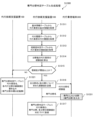
- FIG. 8 is a flowchart illustrating the processing performed in the matching support system 1 (hereinafter referred to as "proxy request support processing S800").
- the proxy request support process S300 will be described below with reference to the same figure.
- the first extraction unit 1201 extracts agents who are candidates for recommendation from the basic information table 1851 based on the reliability determination table 1810 and generates a first extraction result (S813).
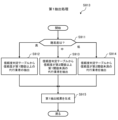
- FIG. 9 is a flowchart illustrating the process performed by the first extraction unit 1201 in S813 of FIG. 8 (hereinafter referred to as "first extraction process S813").
- the first extraction process S813 will be described below with reference to the same figure.
- the first extraction unit 1201 selects an agent whose reliability level 1813 is equal to or higher than a preset first threshold value from the reliability determination table 1810.
- the agent is extracted (S912), and a first extraction result including a list of extracted agents is generated (S915). After that, the process advances to S814 in FIG. 8.
- the first extraction unit 1201 determines that the reliability level 1813 is equal to or higher than the preset second threshold value and the first Agents that are less than the threshold are extracted (S913), and a first extraction result including a list of the extracted agents is generated (S915). After that, the process advances to S814 in FIG. 8.
- the first extraction unit 1201 extracts a proxy whose reliability level 1813 is less than a preset second threshold value from the reliability determination table 1810. A vendor is extracted (S914), and a first extraction result including a list of the extracted agency vendors is generated (S915). After that, the process advances to S814 in FIG. 8.
- agents whose reliability level corresponds to the difficulty level of the requested service are extracted as the first extraction result. For example, for services with a high level of difficulty, agents with high reliability are extracted, for services with a medium level of difficulty, agents with a medium level of reliability are extracted, and for services with a low level of difficulty, agents with a high degree of reliability are extracted. Agents with low reliability are extracted.
- FIG. 10 is a flowchart illustrating the process performed by the second extraction unit 1202 in S814 of FIG. 8 (hereinafter referred to as "second extraction process S814").
- the second extraction process S814 will be described below with reference to the same figure.
- the second extraction unit 1202 branches the subsequent processing according to the difficulty level determined in S812 (S1011).
- the second extraction unit 1202 extracts the level of difficulty from the specialty field determination table 1820 that is A second extraction result is generated by extracting agents whose field 1823 includes the requested field (S1012, S1014). After that, the process advances to S815 in FIG. 8.
- the second extraction unit 1202 extracts from the specialty field determination table 1820 the experience level in the requested field that is described in the first extraction result.
- a second extraction result is generated by extracting agents whose values are equal to or less than a preset threshold (S1013, S1014). After that, the process advances to S815 in FIG. 8.
- the agency organization evaluation unit 125 identifies the agency organization to which the agency of the second extraction result belongs from the basic information table 1851, and uses the contents of the agency competency DB 180 and the agency information DB 185. Based on this, evaluation information for the identified agency organization is generated. Further, the agency organization evaluation unit 125 reflects the generated evaluation information in the request status table 1870 (S815).
- the recommendation unit 130 transmits recommendation information including the second extraction result, the specified agency organization, and evaluation information of each agency organization to the client terminal 200.
- the recommendation unit 130 also updates the status 1873 of the request status table 1870 (S816).
- the client terminal 200 receives the recommendation information sent from the recommendation section 130 and presents the received recommendation information to the user.
- the client terminal 200 also accepts the designation of an agency organization or agency from the user, and transmits the accepted agency ID and agency organization ID to the agency request support device 100.
- the recommendation unit 130 receives the agency ID and agency organization ID sent from the client terminal 200 (S817).
- the agency requesting unit 135 sends an agency request notification to the agency terminal 300 of the agency organization with the agency organization ID received by the recommendation unit 130. Furthermore, the agency requesting unit 135 updates the status 1873 of the request status table 1870 (S818).
- agencies with high reliability and knowledge of the requested field are extracted. . Therefore, for services with a difficulty level of ⁇ high'' or ⁇ medium,'' the requester may choose an agency organization or agency that meets the client's needs to receive highly reliable service from an agency that is familiar with the requested field. can be recommended.
- agents the possibility of accepting requests in their field of expertise increases, and they are able to utilize their expertise to provide high-quality services. Furthermore, by increasing the client's satisfaction level, the agent can expect a satisfactory return.
- FIG. 11 is a flowchart illustrating the process performed by the reliability determination table generation unit 140 of the agency request support device 100 when generating the reliability determination table 1810 (hereinafter referred to as "reliability determination table generation process S1100"). be.
- the reliability determination table generation process S1100 will be described below with reference to FIG. Note that the reliability determination table generation process S1100 described below is performed for each agent (agent ID 1851) in the basic information table 1850.
- the reliability determination table generation unit 140 acquires basic information of the agency to be processed (hereinafter referred to as "the agency") from the basic information table 1850 (S1111).
- the reliability determination table generation unit 140 obtains record information of the agency (the agency history of the agency) from the agency history table 1860 (S1111).
- the reliability determination table generation unit 140 obtains the experience value for each field of the agency from the specialized field determination table 1820 (S1113).
- the reliability determination table generation unit 140 calculates the reliability of the agency (S1114).
- the reliability determination table generation unit 140 calculates the reliability based on, for example, the following formula (hereinafter referred to as "Formula 1").
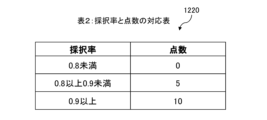
- the reliability determination table generation unit 140 converts the second term "score based on the number of applications" in Equation 1 into, for example, Table 1 shown in FIG. 12A (hereinafter referred to as "correspondence table 1210 between the number of applications and scores”). Find based on.
- the reliability determination table generation unit 140 generates a record that associates the agency ID of the agency, the agency organization ID of the organization to which the agency belongs, and the reliability obtained in S1214, and determines the reliability. It is stored (registered) in the degree determination table 1810 (S1215).
- FIG. 13 is a flowchart illustrating the process performed by the specialty field determination table generation unit 145 of the agency request support device 100 when generating the specialty field determination table 1820 (hereinafter referred to as "specialty field determination table generation process S1300").
- the specialized field determination table generation process S1300 will be described below with reference to the same figure.
- the specialized field determination table generation process S1300 is performed for each agent (agent ID 1851) in the basic information table 1850.
- the specialty field determination table generation unit 145 acquires basic information of the agency to be processed (hereinafter referred to as "the agency") from the basic information table 1850 (S1311).
- the reliability determination table generation unit 140 obtains record information of the agency (the agency history of the agency) from the agency history table 1860 (S1312).
- the reliability determination table generation unit 140 obtains the reliability of the agency from the reliability determination table 1810 (S1313).
- the reliability determination table generation unit 140 calculates the experience value of the agency for each field (S1313).
- the specialty field determination table generation unit 145 calculates the experience value for each field based on, for example, the following formula (hereinafter referred to as "Formula 2").
- the specialty field determination table generation unit 145 converts the first term in equation 2 "score based on the number of applications for the field of It is calculated based on the score correspondence table 1210).
- the specialty field determination table generation unit 145 converts the third term in equation 2, “score based on the average value of client evaluations in It is calculated based on the average value and score correspondence table 1230.
- the specialty field determination table generation unit 145 transmits all field names and the experience value obtained for each field to the agency terminal 300 (S1316).
- the agency terminal 300 receives and accepts the input of the field in which the agency wishes to specialize (specialized field) while presenting all the field names sent from the agency request support device 100 and the experience value obtained for each field.
- the field is transmitted to the agency request support device 100 (S1331).
- the specialty field determination table generation unit 145 stores the agency ID of the agency, the agency organization ID of the organization to which the agency belongs, and the agency terminal 300 in the specialty field determination table.
- a record is generated that associates the field received from the field with the experience value of each field obtained in S1314, and is stored (registered) in the specialized field determination table 1820 (S1317).
- the specialty field determination table generation unit 145 adds the agency ID of the agency and the organization to which the agency belongs to the specialty field determination table.
- a record (in this case, the item of specialty field 1823 is not described) is generated that associates the agency organization ID of and the experience value of each field obtained in S1314, and is stored (registered) in the specialty field determination table 1820 ( S1321).
- FIG. 14AB shows an example of a screen (hereinafter referred to as "specialty field reception screen 1410") that is displayed when the agency terminal 300 receives a field (specialty field) from the agency in S1331.
- specialty field reception screen 1410 a screen that is displayed when the agency terminal 300 receives a field (specialty field) from the agency in S1331.
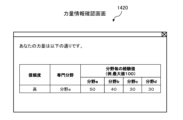
- the agent competency display unit 150 of the agency request support device 100 displays the agent's competency (reliability, specialty field, , experience values for each field) (hereinafter referred to as "competency information confirmation screen 1420") is generated and presented to the user.
- FIG. 14B shows an example of the competency information confirmation screen 1420.
- the agency competency display unit 150 may transmit the competency information confirmation screen 1420 to the agency terminal 300 so that the agency can refer to it.
- the agency can confirm what kind of content of its own competency is registered in the agency request support device 100.
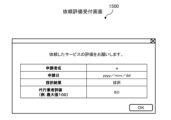
- the request evaluation registration unit 155 of the agency request support device 100 receives an evaluation of the service provided by the agency from the client via the client terminal 200, and reflects the received evaluation in the agency history table 1860.
- FIG. 15 shows an example of a screen (hereinafter referred to as "request evaluation reception screen 1500") displayed by the client terminal 200 when accepting an evaluation from a client.
- FIG. 16 is an example of the hardware configuration of an information processing device (computer) used in the configuration of the matching support system 1 (implementation of the agency request support device 100, client terminal 200, and agency terminal 300).
- the illustrated information processing device 10 includes a processor 11, a main storage device 12 (memory), an auxiliary storage device 13 (external storage device), an input device 14, an output device 15, and a communication device 16. These are communicably connected via a bus, communication cable, or the like. Examples of the information processing device 10 include a personal computer, a server device, a smartphone, a tablet, an office computer, a general-purpose machine (mainframe), and the like.
- the information processing device 10 uses virtual information processing resources, in whole or in part, provided using virtualization technology, process space separation technology, etc., such as a virtual server provided by a cloud system, for example. It may also be realized by Further, all or part of the functions provided by the information processing device 10 may be realized by, for example, a service provided by a cloud system via an API (Application Programming Interface) or the like. Further, all or part of the functions provided by the information processing device 10 may be realized using, for example, SaaS (Software as a Service), PaaS (Platform as a Service), IaaS (Infrastructure as a Service), etc. It may be something that
- the processor 11 is, for example, a CPU (Central Processing Unit), MPU (Micro Processing Unit), GPU (Graphics Processing Unit), FPGA (Field Programmable Gate Array), ASIC (Application Specific Integrated Circuit), AI (Artificial Intelligence) chip, etc. It is configured using
- the main storage device 12 is a device used when the processor 11 executes a program, and includes, for example, ROM (Read Only Memory), RAM (Random Access Memory), nonvolatile memory (NVRAM (Non Volatile RAM)), etc. be.
- ROM Read Only Memory
- RAM Random Access Memory
- NVRAM Non Volatile RAM
- the auxiliary storage device 13 is a device that stores programs and data, and includes, for example, an SSD (Solid State Drive), a hard disk drive, an optical storage device (CD (Compact Disc), DVD (Digital Versatile Disc), etc.), and a storage system. , a reading/writing device for non-temporary recording media such as an IC card, an SD card, or an optical recording medium, a non-temporary storage area of a cloud server, etc. Programs and data can be read into the auxiliary storage device 13 from a non-temporary recording medium or another information processing device equipped with a non-temporary storage device via a recording medium reading device or a communication device 16. . Programs and data stored in the auxiliary storage device 13 are read into the main storage device 12 at any time.
- an SSD Solid State Drive
- CD Compact Disc
- DVD Digital Versatile Disc
- Programs and data can be read into the auxiliary storage device 13 from a non-temporary recording medium or another information processing device equipped with a non
- the input device 14 is an interface that accepts input of information from the outside, and includes, for example, a keyboard, a mouse, a touch panel, a card reader, a pen-input tablet, a voice input device, and the like.
- the output device 15 is an interface that outputs various information such as processing progress and processing results to the outside.
- the output device 15 is, for example, a display device that visualizes the above various information (liquid crystal monitor, LCD (Liquid Crystal Display), graphic card, etc.), a device that converts the above various information into audio (sound output device (speaker, etc.)) , a device (printing device, etc.) that converts the above various information into characters.
- a configuration may be adopted in which the information processing device 10 inputs and outputs information to and from other devices via the communication device 16.
- the input device 14 and the output device 15 constitute a user interface that realizes interaction processing (receiving information, providing information, etc.) with the user.
- the communication device 16 is a device that realizes communication with other devices.
- the communication device 16 is a wired or wireless communication interface that realizes communication with other devices via a communication network, and is, for example, a NIC (Network Interface Card), a wireless communication module, a USB module, etc. be.
- NIC Network Interface Card
- the information processing device 10 may have, for example, an operating system, a file system, a DBMS (DataBase Management System) (relational database, NoSQL, etc.), a KVS (Key-Value Store), etc. installed therein.
- DBMS DataBase Management System
- NoSQL NoSQL
- KVS Key-Value Store
- agents recommended to the client are extracted from the viewpoints of reliability and field (specialty field).
- the matching support system 1 of the second embodiment further takes into account the amount of work required to perform the service and extracts agents. Furthermore, the matching support system 1 of the second embodiment extracts agents in consideration of the case where a plurality of agents jointly perform services for one request. In this way, the matching support system 1 of the second embodiment extracts agents to recommend considering the amount of work, so an agent who cannot secure the amount of work is recommended, and the requester is rejected by the agent. This can reduce the possibility of such situations occurring.
- the matching support system 1 of the second embodiment calculates the amount of work required to perform the service related to the agency request for each difficulty level from the request information of the agency request received from the requester. Then, the matching support system 1 extracts agents by comparing the amount of work for each difficulty level with the separately stored amount of work that each agent of each agent organization can handle.
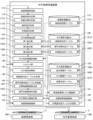
- FIG. 17 is a diagram showing the main functions of the agency request support device 100 of the matching support system 1 of the second embodiment.
- the agency request support device 100 of the second embodiment has the same basic configuration as the agency request support device 100 of the first embodiment, but differs in configuration from the agency request support device 100 of the first embodiment in the following points. .
- the processing of the difficulty level determination unit 1152 of the request content determination unit 115 is different. Further, the configuration is different in that the request content determination section 115 further includes a work amount determination section 1153. Further, the configuration is different in that the first extraction unit 1201 and the second extraction unit 1202 perform processing for each difficulty level of request information. Further, the configuration is different in that the agency extraction unit 120 further includes a third extraction unit 1203. Furthermore, the configuration is different in that the agency competency DB 180 manages a workload determination table 1830 used to determine the workload of the service. Further, the configuration is different in that the agency requesting unit 135 subtracts the amount of work required for the received work from the available work time of the record of the agency in the work amount determination table 1830 for the requested agency. Furthermore, the configuration differs in that it further includes a work amount determination table generation section 190. In the following, differences from the agency request support device 100 of the first embodiment will be mainly explained.
- the difficulty level determining unit 1152 of the agency request support device 100 of the second embodiment determines the level of difficulty for each element of the service (for example, each item in the application form).
- the difficulty level determination unit 1152 generates and manages (stores) a difficulty level determination result that describes the determined result.
- the difficulty level may be determined by the user or automatically by the difficulty level determination unit 1152 based on the request information. For example, the acceptance rate of past applications (the lower the acceptance rate, the higher the difficulty level, etc.), the amount of information in the application form (the more information there is, the higher the difficulty level, etc.), the amount of free description (the amount of free description, etc.)
- the difficulty level is determined based on the following criteria: the higher the number, the higher the difficulty level, etc.).
- FIG. 18A shows how the difficulty level determination unit 1152 generates a difficulty level determination result 1801 by determining the level of difficulty for each element (each item) based on the contents of the application form 1805 included in the request information.
- the workload determination unit 1153 of the agency request support device 100 determines (estimates) the workload required to perform the service of the received request based on the request information.
- the workload determination unit 1153 determines the workload of the requested service for each difficulty level determined for each element.
- the workload determination unit 1153 generates and manages (stores) a workload determination result that describes the determined result.
- FIG. 18B shows how the workload determination unit 1153 determines the workload of the requested service for each level of difficulty determined for each element and generates the workload determination result 1802.
- the third extraction unit 1203 refers to the workload determination table 1830, extracts from the second extraction results a combination of agencies that can perform the requested work, and writes the extracted results. A third extraction result is generated.
- the work amount determination table generation unit 190 of the agency request support device 100 of the second embodiment receives a work schedule (already scheduled work date/time/work period and work amount) from the agency via the agency terminal 300, A work amount determination table 1830 is generated (including editing, deletion, etc.) based on the received work schedule.
- FIG. 19 is an example of a screen (hereinafter referred to as "work schedule reception screen 1900") that the work amount determination table generation unit 190 displays when the agency terminal 300 receives a work schedule from the agency.
- the work schedule reception screen 1900 may be generated by the agency terminal 300 or may be generated by the agency request support device 100 and sent to the agency terminal 300.
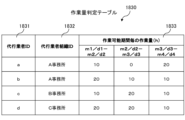
- FIG. 20 is an example of a workload determination table 1830 generated by the workload determination table generation unit 190 based on the received work schedule.
- the work amount determination table 1830 is composed of one or more records having the following items: agency ID 1831, agency organization ID 1832, and amount of work for each workable period 1833.
- agency ID 1831 the work amount determination table 1830
- agency organization ID 1832 the work amount determination table 1830
- amount of work for each workable period 1833 One of the records in the workload determination table 1830 corresponds to one agency.
- the agency ID 1831 stores the agency ID of the agency concerned.
- the agency organization ID 1832 stores the agency organization ID of the organization to which the agency belongs.
- the amount of work per workable period 1833 stores the amount of work (in units of time (h)) for each workable period.
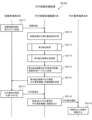
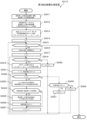
- FIG. 21 is a flowchart illustrating the processing performed in the matching support system 1 of the second embodiment (hereinafter referred to as "proxy request support processing S2100").
- the processing in S2111 of the agency request support process S2100 is the same as S811 in the agency request support process S800 shown in FIG. 8, and S2117 to S2119 are the same as S817 to S819 in the agency request support process S800 shown in FIG.
- the processing in S2112 to S2116 is different from the agency request support processing S800 shown in FIG.
- the proxy request support process S2100 of the second embodiment will be described with reference to the figure, focusing on the differences from the proxy request support process S800.
- the requested field determination unit 1151 determines the field of the requested service (type of application form, etc.), and the difficulty level determination unit 1152 determines the field of service to be requested (for example, the type of application form), and the difficulty level determination unit 1152 determines the field of service to be requested (for example, each item of the application form) for each element of the service (for example, for each item of the application form).
- Determine the difficulty level Note that the agency request support device 100 stores the determined difficulty level for each field and element as the difficulty level determination result 1801 (S812).
- the agency extraction unit 120 (first extraction unit 1201, second extraction unit 1202) performs processing for each difficulty level of the difficulty level determination result 1801, and generates a first extraction result and a second extraction result. (hereinafter referred to as "third extraction process S2113").
- FIG. 22 is a flowchart illustrating the third extraction process S2113.
- the third extraction process S2113 will be described below with reference to FIG. Note that this figure corresponds to processing for a certain difficulty level "x". That is, the third extraction process S2113 is executed for each difficulty level.
- the agency extraction unit 120 obtains the amount of work with the difficulty level “x” determined by the difficulty level determination unit 1152 (S2211).
- the agency extraction unit 120 determines whether the obtained amount of work is greater than "0" (S2212). If the amount of work is not greater than "0" (S2212: NO), the third extraction process S2113 for the difficulty level ends. If the amount of work is greater than "0" (S2212: YES), the process advances to S2213.
- the first extraction unit 1201 performs the first extraction process S813 shown in FIG. 9 with the difficulty level set to "x" to generate a first extraction result.
- the second extraction unit 1202 performs the second extraction process S814 shown in FIG. 10 with the difficulty level set to "x" to generate a second extraction result (S2214).
- the third extraction unit 1203 extracts the agency based on the second extraction result while considering the workload, and generates a third extraction result in which the extracted result is described (hereinafter referred to as "third extraction result"). generation process S2215”) is performed.
- FIG. 23 is a diagram illustrating an outline of the third extraction result generation process S2215.
- the outline of the third extraction result generation process S2215 will be described below with reference to the same figure.
- the third extraction unit 1203 groups records of agencies that belong to the same agency organization (have the same agency organization ID) (S2312).
- the records of agents ⁇ 1 to ⁇ 3 are grouped into group A1
- the records of agents ⁇ 1 to ⁇ 2 are grouped into group A2.
- the third extraction unit 1203 adds a record of the combination ai" to the third extraction result with difficulty level "x" (S2313).
- i is the small group that creates i' in group Ai. When expressed as the number of people in the group, it represents the number of combination a in a small group consisting of i' people.
- the third extraction unit 1203 generates all i' combinations a1, a2,..., ai",...,an" within Ai (S2314).
- n is the total number of groups A for each agency organization.
- n'' is the total number of combinations a.
- the third extraction unit 1203 calculates the total amount of work within the designated period of the agency included in "ai" (S2315).
- the third extraction unit 1203 stores the combination ai'' in the third extraction result with difficulty level "x" (S2316).
- the difficulty level of the requested service is “medium”
- the amount of work is "30”
- i' is "2”
- the available work time of agency ⁇ 1 is “10”
- the available work time of agency ⁇ 2. is “20”
- the workable time of agency ⁇ 3 is “10”.
- the total workable time of the agency is less than the amount of work "30” and the work can be completed.
- the 3 extraction unit 1203 stores records corresponding to each combination of ( ⁇ 1, ⁇ 2) and ( ⁇ 2, ⁇ 3) in the third extraction result with the difficulty level “medium”.
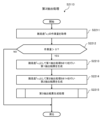
- FIG. 24 is a flowchart illustrating the third extraction result generation process S2215.
- the third extraction result generation process S2215 will be described below with reference to FIG.
- the third extraction unit 1203 obtains the second extraction result for the difficulty level "x", the period, and the amount of work for the difficulty level "x" (S2411).
- the third extraction unit 1203 extracts a record in which the agency ID is included in the second extraction result with difficulty level "x" from the workload determination table (S2412).
- the third extraction unit 1203 groups the extracted records for each record with the same agency organization ID (generates A1, A2, . . . , Ai, . . . , An) (S2413).
- the third extraction unit 1203 sets the index i to "1" (S2414).
- the third extraction unit 1203 determines whether i is less than or equal to n (S2415). If i is less than or equal to n (S2415: YES), the process advances to S2416. On the other hand, if i is larger than n (S2415: NO), the third extraction result generation process S2215 ends.
- the third extraction unit 1203 obtains the number of people in Ai n' (total number in Ai) (S2416).
- the third extraction unit 1203 sets i' to "1" (S2417).
- the third extraction unit 1203 determines whether i' is less than or equal to n (S2418). If i' is less than or equal to n (S2418: YES), the process advances to S2419. On the other hand, if i' is larger than n (S2418: NO), "1" is added (incremented) to i, and then the process returns to S2415.
- the third extraction unit 1203 generates all combinations "a1, a2, . . . , ai", . . ., an" of i' people in Ai.
- the third extraction unit 1203 sets "i” to “1” and sets the work possible flag to "0" (S2421).
- the third extraction unit 1203 calculates the total amount of work for the agency included in "ai" within the specified period.
- the third extraction unit 1203 determines whether the total amount of work is greater than or equal to the amount of work for difficulty level "x" (S2424). If the total amount of work is equal to or greater than the amount of work for difficulty level "x" (S2424ES), the process advances to S2425. On the other hand, if the total amount of work is less than the amount of work for difficulty level "x" (S2424: NO), the process advances to S2427.
- the third extraction unit 1203 adds the combination "ai" to the third extraction result with difficulty level "x".
- the third extraction unit 1203 sets the work ready flag to "1" (S2426).
- the third extraction unit 1203 adds (increments) "1" to i'', and then the process returns to S2418.
- the third extraction unit 1203 determines whether the work ready flag is "1". If the work ready flag is "1" (S2430: YES), the third extraction unit 1203 adds (increments) "1" to i (S2431), and then the process returns to S2415. On the other hand, if the work ready flag is not "1" (S2430: NO), the third extraction unit 1203 adds (increments) "1" to i' (S2431), and then the process returns to S2418.
- the agency extraction unit 120 subsequently performs a process (hereinafter referred to as "fourth extraction result generation process S2114") of generating a fourth extraction result 174 based on the third extraction result (S2114). ).
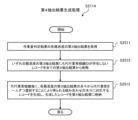
- FIG. 25 is a flowchart illustrating the fourth extraction result generation process S2114.
- the fourth extraction result generation process S2114 will be described below with reference to FIG.
- the agency extraction unit 120 obtains the third extraction result for each difficulty level of the workload determination result 1802 in FIG. 18B (S2511).
- the agency extraction unit 120 deletes records in which the agency organization ID does not exist in the third extraction results of any difficulty level from all the third extraction results (S2512).
- the agency extraction unit 120 generates records corresponding to each combination obtained by selecting one agency from the third extraction results of each difficulty level for each agency organization.
- the record is stored in the fourth extraction result 174 (S2513).
- the matching support system 1 of the second embodiment extracts agents by further considering the amount of work required to perform the service, for example, an agent whose amount of work cannot be secured is not recommended. , you can prevent your request from being turned down by an agency.
- the matching support system 1 of the second embodiment also takes into consideration the case where multiple agents (each agent does not need to belong to the same agency organization) jointly perform services for one request. You can extract agents using
- the matching support system 1 of the third embodiment When matching between a client and a service provider, for example, reasons such as not accepting requests from clients who do not have a good reputation as much as possible, and not accepting requests from clients who may lead to trouble, etc. In some cases, the agent wishes to be able to select the client. In order to meet the needs of such agencies, the matching support system 1 of the third embodiment further includes a mechanism for evaluating clients from agencies. Specifically, the matching support system 1 of the third embodiment receives the evaluation of the client from the agency, and if the client does not meet the level registered in advance by the agency, the client is to avoid recommending the agency.
- FIG. 26 is a diagram showing the main functions of the proxy request support device 100 in the matching support system 1 of the third embodiment, which is configured based on the proxy request support device 100 of the second embodiment.
- the functions of the agency request support device 100 of the third embodiment have the same basic configuration as the functions of the agency request support device 100 of the second embodiment, but the agency request support device 100 of the second embodiment has the following points. The configuration is different.
- the agency request support device 100 of the third embodiment further includes the functions of a client information DB 170, a desired client level registration section 191, and a client evaluation registration section 192.
- the client information DB 170 manages a client evaluation table 1710 in which evaluations of clients by agencies are stored. Furthermore, an item is added to the basic information table 1850 managed by the agency information DB 185 of the third embodiment to store the level of the client desired by the agency (hereinafter referred to as "desired client level"). ing. Further, the recommendation unit 130 of the agency request support device 100 of the third embodiment does not recommend the agency to the client if the client does not meet the agency's desired client level.
- the desired client level registration unit 191 receives the setting of the desired client level from the agency via the agency terminal 300, and registers the received desired client level. It is stored in the basic information table 1850.
- FIG. 27 shows an example of a screen (hereinafter referred to as "desired client level reception screen 2700") displayed by the agency terminal 300 when the desired client level registration unit 191 accepts the setting of the desired client level. .
- FIG. 28 shows an example of the basic information table 1850 of the third embodiment.
- the basic information table 1850 of the third embodiment further includes an item of desired client level 1856 in addition to the above-mentioned items.
- the client evaluation registration unit 192 shown in FIG. 26 receives the setting of the client's evaluation (hereinafter referred to as "client evaluation level") from the agency via the agency terminal 300, and sends the received content to the client. It is registered in the evaluation table 1710. In addition, if the agency has received multiple requests from the same client in the past, the agency will determine the client's evaluation level by using, for example, the average value of the client's evaluations for each past request. Set as .
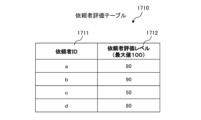
- FIG. 29 shows an example of the client evaluation table 1710.
- the client evaluation table 1710 is composed of one or more records having items such as a client ID 1711 and a client evaluation level 1712.
- a client ID is stored in the client ID 1711.
- the client evaluation level 1712 stores the client evaluation level.
- the recommendation unit 130 of the agency request support device 100 of the third embodiment compares the desired client level 1856 in the basic information table 1850 with the client evaluation in the client evaluation table 1710, and Even if the agency is an agent, the agency will not be recommended to the client if the client does not meet the desired client level of the agency.
- the matching support system 1 of the third embodiment receives the evaluation of the client from the agency, and if the client does not meet the level registered in advance by the agency, the matching support system 1 receives the evaluation of the client from the agency. Do not recommend the agency. Therefore, for example, it is possible to respond to an agent's desire to avoid accepting requests from clients who do not have a good reputation, or to avoid requests from clients who may lead to trouble.
- the matching support system 1 of the third embodiment is configured based on the agency request support device 100 of the second embodiment
- the agency request support device 100 of the first embodiment can be configured in a similar manner.
- the matching support system 1 of the third embodiment may be configured based on the following.
- the present invention is not limited to the above embodiments, includes various modifications, and is not necessarily limited to those having all the configurations described. It is also possible to replace part of the configuration of one embodiment with the configuration of another embodiment, or to add the configuration of another embodiment to the configuration of one embodiment. Furthermore, it is possible to add, delete, or replace some of the configurations of each embodiment with other configurations.
- the service that the client seeks to receive from the service provider may be a service for a financial institution, infrastructure provider (electricity company, gas company, communication company, etc.), hospital, etc.
- the services may include, for example, searching for and distributing information and services, confirming the authenticity of information, confirming consent when using information, and eliminating the complexity of various procedures.
Landscapes
- Business, Economics & Management (AREA)
- Human Resources & Organizations (AREA)
- Engineering & Computer Science (AREA)
- Strategic Management (AREA)
- Tourism & Hospitality (AREA)
- Economics (AREA)
- Educational Administration (AREA)
- Entrepreneurship & Innovation (AREA)
- Theoretical Computer Science (AREA)
- Marketing (AREA)
- Physics & Mathematics (AREA)
- General Business, Economics & Management (AREA)
- General Physics & Mathematics (AREA)
- Educational Technology (AREA)
- Quality & Reliability (AREA)
- Operations Research (AREA)
- Development Economics (AREA)
- Game Theory and Decision Science (AREA)
- Health & Medical Sciences (AREA)
- General Health & Medical Sciences (AREA)
- Primary Health Care (AREA)
- Data Mining & Analysis (AREA)
- Management, Administration, Business Operations System, And Electronic Commerce (AREA)
Abstract
Description
以下、本発明の一実施形態にかかる情報処理システム(以下、「マッチング支援システム1」と称する。)について説明する。マッチング支援システム1は、依頼者がサービスを提供する者(以下、「サービス提供者」と称する。)に対してサービスの提供を依頼する際の、依頼者とサービス提供者と間のマッチングを支援する。尚、マッチング支援システム1が対象とする依頼者やサービス提供者は必ずしも限定されない。以下では、依頼者が、個人や企業等であり、サービス提供者が、国や自治体等の機関に対して行われる各種申請にかかる処理を代行するサービスを業として行う者(例えば、代行業者が弁護士や司法書士、行政書士等の士業者。以下、「代行業者」と称する。)である場合を例として説明する。
図11は、代行依頼支援装置100の信頼度判定テーブル生成部140が、信頼度判定テーブル1810の生成に際して行う処理(以下、「信頼度判定テーブル生成処理S1100」と称する。)を説明するフローチャートである。以下、同図とともに信頼度判定テーブル生成処理S1100について説明する。尚、以下に説明する信頼度判定テーブル生成処理S1100は、基本情報テーブル1850における代行業者(代行業者ID1851)毎に行われる。
[数1]
信頼度=専門分野判定テーブルの代行業者の分野毎の経験値の平均値
+申請件数に基づく点数
+採択率(=採択数/これまでの申請件数)に基づく点数
図13は、代行依頼支援装置100の専門分野判定テーブル生成部145が、専門分野判定テーブル1820の生成に際して行う処理(以下、「専門分野判定テーブル生成処理S1300」と称する。)を説明するフローチャートである。以下、同図ととも専門分野判定テーブル生成処理S1300について説明する。尚、専門分野判定テーブル生成処理S1300は、基本情報テーブル1850の代行業者(代行業者ID1851)毎に行われる。
[数2]
〇〇分野における経験値=
申請履歴テーブル内の代行業者の〇〇分野の申請件数に基づく点数
+〇〇分野の採択率(=採択数/これまでの申請件数)に基づく点数
+〇〇分野の依頼者評価の平均値に基づく点数
代行依頼支援装置100の代行業者力量表示部150は、代行業者力量DB180が管理している情報(信頼度判定テーブル1810、専門分野判定テーブル1820)に基づき、代行業者の力量(信頼度、専門分野、分野毎の経験値)を記載した画面(以下、「力量情報確認画面1420」と称する。)を生成してユーザに提示する。
代行依頼支援装置100の依頼評価登録部155は、代行業者が行ったサービスについての評価を依頼者端末200を介して依頼者から受け付け、受け付けた評価を代行履歴テーブル1860に反映する。
図16は、マッチング支援システム1の構成(代行依頼支援装置100や依頼者端末200、代行業者端末300の実現)に用いる情報処理装置(コンピュータ)のハードウェア構成例である。
第1実施形態のマッチング支援システム1では、信頼度と分野(専門分野)の観点から依頼者にリコメンドする代行業者を抽出した。第2実施形態のマッチング支援システム1は、更にサービスの遂行に必要な作業量を考慮して代行業者を抽出する。また、第2実施形態のマッチング支援システム1は、一つの依頼に対するサービスを複数の代行業者が共同して遂行する場合も考慮して代行業者を抽出する。このように、第2実施形態のマッチング支援システム1は作業量を考慮してリコメンドする代行業者を抽出するので、作業量が確保できない代行業者がリコメンドされ、依頼者が代行業者から依頼を断られてしまうといった事態が生じる可能性を減らすことができる。
依頼者とサービスの提供者との間のマッチングに際しては、例えば、評判の良くない依頼者からの依頼はなるべく受けたくない、トラブルに繋がる可能性のある依頼者からの依頼は受けたくないといった理由から、代行業者が依頼者を選択できることを希望する場合がある。そのような代行業者のニーズに対応するため、第3実施形態のマッチング支援システム1は、代行業者から依頼者を評価する仕組みを更に備える。具体的には、第3実施形態のマッチング支援システム1は、代行業者から依頼者の評価を受け付け、代行業者が事前に登録しておいたレベルに満たない依頼者については、当該依頼者に対して当該代行業者をリコメンドしないようにする。
5 通信ネットワーク
100 代行依頼支援装置
110 依頼情報受信部
115 依頼内容判定部
1151 依頼分野判定部
1152 難易度判定部
1153 作業量判定部
120 代行業者抽出部
1201 第1抽出部
1202 第2抽出部
1203 第3抽出部
125 代行業者組織評価部
130 リコメンド部
135 代行業者依頼部
140 信頼度判定テーブル生成部
145 専門分野判定テーブル生成部
1451 分野別経験値算出部
1452 専門分野候補生成部
150 代行業者力量表示部
155 依頼評価登録部
170 依頼者情報DB
1710 依頼者評価テーブル
180 代行業者力量DB
1801 難易度判定結果
1802 作業量判定結果
1805 申請書
1810 信頼度判定テーブル
1820 専門分野判定テーブル
1830 作業量判定テーブル
185 代行業者情報DB
1850 基本情報テーブル
1860 代行履歴テーブル
1870 依頼状況テーブル
190 作業量判定テーブル生成部
191 希望依頼者レベル登録部
192 依頼者評価登録部
200 依頼者端末
2700 希望依頼者レベル受付画面
300 代行業者端末
Claims (15)
- サービスの提供者に対して依頼者がサービスの提供を依頼する際の依頼者とサービスの提供者と間のマッチングを支援するシステムであって、
プロセッサと記憶装置を有する情報処理装置を用いて構成され、
複数の前記提供者の夫々に関する情報である基本情報、
前記依頼者から受け付けた依頼に関する情報である依頼情報、
複数の前記提供者の夫々の信頼の度合いを示す情報である信頼度、及び、
前記提供者の夫々の前記サービスに対する専門性を示す情報、
を記憶し、
前記依頼情報に基づき前記依頼の難易度を判定する難易度判定部と、
前記難易度の高い前記依頼ほど前記信頼度の高い前記提供者が抽出されるように、前記サービスの提供者の候補を前記基本情報から抽出し、抽出した結果を記載した第1抽出結果を生成する第1抽出部と、
前記難易度の高い前記依頼ほどでは前記サービスに対する専門性の高い前記提供者が抽出されるように、前記サービスの提供者の候補を前記第1抽出結果から抽出し、抽出した結果を記載した第2抽出結果を生成する第2抽出部と、
を備える、マッチング支援システム。 - 請求項1に記載のマッチング支援システムであって、
前記信頼度は、前記提供者の前記サービスの分野毎の経験値、前記サービスの提供件数、及び前記サービスの成功率のうちの少なくともいずれかに基づき求められる、
マッチング支援システム。 - 請求項1に記載のマッチング支援システムであって、
前記専門性の高さは、前記提供者の前記サービスの分野毎の経験値、前記サービスの分野ごとの提供件数、提供した前記サービスに対する依頼者の評価、及び前記提供者から受け付けた専門分野のうちの少なくともいずれかに基づき特定される、
マッチング支援システム。 - 請求項1に記載のマッチング支援システムであって、
前記第2抽出結果に基づく前記提供者の候補を、ユーザインタフェースを介して前記依頼者に提示するリコメンド部、
を更に備える、マッチング支援システム。 - 請求項1に記載のマッチング支援システムであって、
前記提供者の夫々の作業可能時間の予定を更に記憶し、
前記難易度判定部は、前記依頼の要素毎に難易度を判定し、
前記依頼の難易度毎の作業量を算出する作業量判定部を更に備え、
前記第1抽出部は、前記難易度毎に前記第1抽出結果を生成し、
前記第2抽出部は、前記難易度毎に前記第2抽出結果を生成し、
前記難易度毎の作業量に対応することが可能な、前記難易度毎の前記第2抽出結果における前記提供者の組み合わせを抽出し、抽出した組み合わせを記載した第3抽出結果を生成する第3抽出部を更に備える、
マッチング支援システム。 - 請求項5に記載のマッチング支援システムであって、
前記第3抽出結果に基づく前記提供者の候補を、ユーザインタフェースを介して前記依頼者に提示するリコメンド部、
を更に備える、マッチング支援システム。 - 請求項5に記載のマッチング支援システムであって、
前記組み合わせを構成する前記提供者に、所属する組織の異なる提供者の組み合わせが含まれる、
マッチング支援システム。 - 請求項4に記載のマッチング支援システムであって、
前記提供者から、過去に依頼を受けた前記依頼者についての評価を受け付けて記憶する依頼者評価登録部と、
前記提供者から、希望する依頼者の判定に用いる評価の閾値である希望依頼者レベルを受け付けて記憶する希望依頼者レベル登録部と、
を更に備え、
前記リコメンド部は、前記第2抽出結果に基づく前記提供者の候補のうち、前記依頼者の評価が前記希望依頼者レベルに満たない提供者については前記依頼者に提示しない、
マッチング支援システム。 - 請求項6に記載のマッチング支援システムであって、
前記提供者から、過去に依頼を受けた前記依頼者についての評価を受け付けて記憶する依頼者評価登録部と、
前記提供者から、希望する依頼者の判定に用いる評価の閾値である希望依頼者レベルを受け付けて記憶する希望依頼者レベル登録部と、
を更に備え、
前記リコメンド部は、前記第3抽出結果に基づく前記提供者の候補のうち、前記依頼者の評価が前記希望依頼者レベルに満たない提供者については前記依頼者に提示しない、
マッチング支援システム。 - サービスの提供者に対して依頼者がサービスの提供を依頼する際の依頼者とサービスの提供者と間のマッチングを支援する方法であって、
プロセッサと記憶装置を有する情報処理装置が、
複数の前記提供者の夫々に関する情報である基本情報、
前記依頼者から受け付けた依頼に関する情報である依頼情報、
複数の前記提供者の夫々の信頼の度合いを示す情報である信頼度、及び、
前記提供者の夫々の前記サービスに対する専門性を示す情報、
を記憶するステップ、
前記依頼情報に基づき前記依頼の難易度を判定するステップ、
前記難易度の高い前記依頼ほど前記信頼度の高い前記提供者が抽出されるように、前記サービスの提供者の候補を前記基本情報から抽出し、抽出した結果を記載した第1抽出結果を生成するステップ、及び、
前記難易度の高い前記依頼ほど前記サービスに対する専門性の高い前記提供者が抽出されるように、前記サービスの提供者の候補を前記第1抽出結果から抽出し、抽出した結果を記載した第2抽出結果を生成するステップ、
を実行する、マッチング支援方法。 - 請求項10に記載のマッチング支援方法であって、
前記情報処理装置が、前記第2抽出結果に基づく前記提供者の候補を、ユーザインタフェースを介して前記依頼者に提示するステップ、
を更に実行する、マッチング支援方法。 - 請求項10に記載のマッチング支援方法であって、
前記情報処理装置が、
前記提供者の夫々の作業可能時間の予定を更に記憶するステップ、
前記依頼の要素毎に難易度を判定するステップ、
前記依頼の難易度毎の作業量を算出するステップ、
前記難易度毎に前記第1抽出結果を生成するステップ、
前記難易度毎に前記第2抽出結果を生成するステップ、及び、
前記難易度毎の作業量に対応することが可能な、前記難易度毎の前記第2抽出結果における前記提供者の組み合わせを抽出し、抽出した組み合わせを記載した第3抽出結果を生成するステップ、
を更に実行する、マッチング支援方法。 - 請求項12に記載のマッチング支援方法であって、
前記情報処理装置が、前記第3抽出結果に基づく前記提供者の候補を、ユーザインタフェースを介して前記依頼者に提示するステップ、
を更に実行する、マッチング支援方法。 - 請求項11に記載のマッチング支援方法であって、
前記情報処理装置が、
前記提供者から、過去に依頼を受けた前記依頼者についての評価を受け付けて記憶するステップ、
前記提供者から、希望する依頼者の判定に用いる評価の閾値である希望依頼者レベルを受け付けて記憶するステップ、
前記第2抽出結果に基づく前記提供者の候補のうち、前記依頼者の評価が前記希望依頼者レベルに満たない提供者については前記依頼者に提示しないステップ、
を更に実行する、マッチング支援方法。 - 請求項13に記載のマッチング支援方法であって、
前記情報処理装置が、
前記提供者から、過去に依頼を受けた前記依頼者についての評価を受け付けて記憶するステップ、
前記提供者から、希望する依頼者の判定に用いる評価の閾値である希望依頼者レベルを受け付けて記憶するステップ、
前記第3抽出結果に基づく前記提供者の候補のうち、前記依頼者の評価が前記希望依頼者レベルに満たない提供者については前記依頼者に提示しないステップ、
を更に実行する、マッチング支援方法。
Priority Applications (1)
| Application Number | Priority Date | Filing Date | Title |
|---|---|---|---|
| US18/867,211 US20250322329A1 (en) | 2022-05-25 | 2023-02-09 | Matching support system and matching support method |
Applications Claiming Priority (2)
| Application Number | Priority Date | Filing Date | Title |
|---|---|---|---|
| JP2022-085045 | 2022-05-25 | ||
| JP2022085045A JP7725421B2 (ja) | 2022-05-25 | 2022-05-25 | マッチング支援システム、及びマッチング支援方法 |
Publications (1)
| Publication Number | Publication Date |
|---|---|
| WO2023228484A1 true WO2023228484A1 (ja) | 2023-11-30 |
Family
ID=88918959
Family Applications (1)
| Application Number | Title | Priority Date | Filing Date |
|---|---|---|---|
| PCT/JP2023/004317 Ceased WO2023228484A1 (ja) | 2022-05-25 | 2023-02-09 | マッチング支援システム、及びマッチング支援方法 |
Country Status (3)
| Country | Link |
|---|---|
| US (1) | US20250322329A1 (ja) |
| JP (1) | JP7725421B2 (ja) |
| WO (1) | WO2023228484A1 (ja) |
Cited By (1)
| Publication number | Priority date | Publication date | Assignee | Title |
|---|---|---|---|---|
| WO2026058749A1 (ja) * | 2024-09-13 | 2026-03-19 | ソニーグループ株式会社 | 割当管理装置、割当管理方法および割当管理プログラム |
Citations (4)
| Publication number | Priority date | Publication date | Assignee | Title |
|---|---|---|---|---|
| JP2001265874A (ja) * | 2000-03-17 | 2001-09-28 | Goodwill Group Inc | 人材と顧客のマッチングシステム及びその記録媒体 |
| JP2016181036A (ja) * | 2015-03-23 | 2016-10-13 | 株式会社富士通エフサス | 作業配分支援装置、作業配分支援プログラムおよび作業配分支援方法 |
| JP2019061606A (ja) * | 2017-09-28 | 2019-04-18 | エヌ・ティ・ティ・コムウェア株式会社 | 人材配置支援システム、人材配置支援方法、および人材配置支援プログラム |
| JP2021124955A (ja) * | 2020-02-05 | 2021-08-30 | オムロン株式会社 | マッチング支援システム、マッチング支援装置、信頼度算出方法、及び信頼度算出プログラム |
Family Cites Families (1)
| Publication number | Priority date | Publication date | Assignee | Title |
|---|---|---|---|---|
| JP2021012495A (ja) * | 2019-07-05 | 2021-02-04 | 株式会社リンクアンドモチベーション | 情報処理装置、情報処理方法、およびプログラム |
-
2022
- 2022-05-25 JP JP2022085045A patent/JP7725421B2/ja active Active
-
2023
- 2023-02-09 US US18/867,211 patent/US20250322329A1/en active Pending
- 2023-02-09 WO PCT/JP2023/004317 patent/WO2023228484A1/ja not_active Ceased
Patent Citations (4)
| Publication number | Priority date | Publication date | Assignee | Title |
|---|---|---|---|---|
| JP2001265874A (ja) * | 2000-03-17 | 2001-09-28 | Goodwill Group Inc | 人材と顧客のマッチングシステム及びその記録媒体 |
| JP2016181036A (ja) * | 2015-03-23 | 2016-10-13 | 株式会社富士通エフサス | 作業配分支援装置、作業配分支援プログラムおよび作業配分支援方法 |
| JP2019061606A (ja) * | 2017-09-28 | 2019-04-18 | エヌ・ティ・ティ・コムウェア株式会社 | 人材配置支援システム、人材配置支援方法、および人材配置支援プログラム |
| JP2021124955A (ja) * | 2020-02-05 | 2021-08-30 | オムロン株式会社 | マッチング支援システム、マッチング支援装置、信頼度算出方法、及び信頼度算出プログラム |
Cited By (1)
| Publication number | Priority date | Publication date | Assignee | Title |
|---|---|---|---|---|
| WO2026058749A1 (ja) * | 2024-09-13 | 2026-03-19 | ソニーグループ株式会社 | 割当管理装置、割当管理方法および割当管理プログラム |
Also Published As
| Publication number | Publication date |
|---|---|
| JP7725421B2 (ja) | 2025-08-19 |
| JP2023173055A (ja) | 2023-12-07 |
| US20250322329A1 (en) | 2025-10-16 |
Similar Documents
| Publication | Publication Date | Title |
|---|---|---|
| Sejane | Access to and use of electronic information resources in the academic libraries of the Lesotho library consortium | |
| US8600814B2 (en) | Structured analysis and organization of documents online and related methods | |
| WO2022269998A1 (ja) | 情報処理装置、情報処理方法、及び、プログラム | |
| US8798521B2 (en) | Content creation in an online learning environment | |
| Noonan et al. | Data curation and the university archives | |
| WO2021214896A1 (ja) | 検索処理装置、検索処理方法および外国人材情報管理システム | |
| Byerley et al. | Accessibility of web‐based library databases: the vendors' perspectives in 2007 | |
| WO2023228484A1 (ja) | マッチング支援システム、及びマッチング支援方法 | |
| JP7479145B2 (ja) | 情報処理装置、情報処理方法及びプログラム | |
| JP2013149012A (ja) | コンテンツ流通サーバ | |
| JP2017054317A (ja) | 人材派遣システム、人材派遣方法およびそのプログラム | |
| JP6403360B1 (ja) | 財務諸表解釈支援装置、コンピュータプログラム | |
| Chmielarz et al. | E-Government usage by Polish citizens | |
| US20100250303A1 (en) | Computer implemented recruitment system | |
| Kesar et al. | E–government implementation challenges in the UK: a case study at the Trading Standards Department | |
| Crowley | Unmediated document delivery: a project using FirstSearch and EBSCOdoc | |
| Hauptman et al. | The people speak: The dispersion and impact of technology in American libraries | |
| Pradhan et al. | Manipulation of online reviews: Analysis of negative reviews for healthcare providers | |
| JP7749748B1 (ja) | プログラム、方法、情報処理装置 | |
| JP7700877B2 (ja) | 課題解決支援装置、課題解決支援方法、及び、課題解決支援プログラム | |
| JP7340138B1 (ja) | 与信判定システム、与信判定プログラム及び与信判定方法 | |
| JP6867661B1 (ja) | 情報処理方法、コンピュータプログラム及び情報処理装置 | |
| HALID | DIGITAL PRESERVATION OF INFORMATION MATERIALS AT GULU UNIVERSITY LIBRARY | |
| Damson et al. | A CURRENT AWARENESS SERVICE SYSTEM FOR ROYAL INSTITUTE OF BUSINESS AND EDUCATION LIBRARY | |
| Obinna et al. | Electronic Collection Development Activities in Babcock University Laz Otti Memorial Library |
Legal Events
| Date | Code | Title | Description |
|---|---|---|---|
| 121 | Ep: the epo has been informed by wipo that ep was designated in this application |
Ref document number: 23811365 Country of ref document: EP Kind code of ref document: A1 |
|
| WWE | Wipo information: entry into national phase |
Ref document number: 18867211 Country of ref document: US |
|
| NENP | Non-entry into the national phase |
Ref country code: DE |
|
| 122 | Ep: pct application non-entry in european phase |
Ref document number: 23811365 Country of ref document: EP Kind code of ref document: A1 |
|
| WWP | Wipo information: published in national office |
Ref document number: 18867211 Country of ref document: US |