WO2023218613A1 - 校区計画装置、校区計画方法、及びプログラム - Google Patents
校区計画装置、校区計画方法、及びプログラム Download PDFInfo
- Publication number
- WO2023218613A1 WO2023218613A1 PCT/JP2022/020101 JP2022020101W WO2023218613A1 WO 2023218613 A1 WO2023218613 A1 WO 2023218613A1 JP 2022020101 W JP2022020101 W JP 2022020101W WO 2023218613 A1 WO2023218613 A1 WO 2023218613A1
- Authority
- WO
- WIPO (PCT)
- Prior art keywords
- school
- district
- type
- student
- planning
- Prior art date
- Legal status (The legal status is an assumption and is not a legal conclusion. Google has not performed a legal analysis and makes no representation as to the accuracy of the status listed.)
- Ceased
Links
Images




Classifications
-
- G—PHYSICS
- G06—COMPUTING OR CALCULATING; COUNTING
- G06Q—INFORMATION AND COMMUNICATION TECHNOLOGY [ICT] SPECIALLY ADAPTED FOR ADMINISTRATIVE, COMMERCIAL, FINANCIAL, MANAGERIAL OR SUPERVISORY PURPOSES; SYSTEMS OR METHODS SPECIALLY ADAPTED FOR ADMINISTRATIVE, COMMERCIAL, FINANCIAL, MANAGERIAL OR SUPERVISORY PURPOSES, NOT OTHERWISE PROVIDED FOR
- G06Q50/00—Information and communication technology [ICT] specially adapted for implementation of business processes of specific business sectors, e.g. utilities or tourism
- G06Q50/10—Services
- G06Q50/20—Education
Definitions
- the present invention relates to technology that supports school district reorganization planning.
- Non-Patent Document 1 describes how to minimize the sum of school operating costs and students' commuting costs by formulating it as an integer programming problem. A technology has been disclosed to make this possible.
- Non-Patent Document 2 discloses a technique for realizing a school family that includes an elementary school district into a junior high school district by formulating it as an integer programming problem when reorganizing school districts.
- a school family is a school district in which each junior high school district completely encompasses one or more elementary school districts, and in a school family all children attending one elementary school attend the same junior high school. .
- Non-Patent Document 1 With the technology disclosed in Non-Patent Document 1, it is not possible to create a school family, and students may end up in a different school from their classmates when they go on to higher education. In addition, with the technology disclosed in Non-Patent Document 2, it is possible to obtain the allocation of school districts that satisfy a given school family, but the allocation of elementary schools and junior high schools in the school family cannot be optimized, and the cost may become excessive. .
- Non-Patent Documents 1 and 2 current students transfer schools when school districts are reorganized. If a current student transfers or the school family conditions are not met at the time of advancement, the student will be enrolled in a different school from their classmates, which may have the disadvantage of causing a psychological burden on the student. .
- the present invention has been made in view of the above points, and aims to provide a technology that makes it possible to realize a school family without causing current students to transfer schools during school district reorganization.
- an acquisition unit that acquires information regarding students' commuting costs and information regarding school operating costs; Based on the information acquired by the acquisition unit, the type 1 school that the student should attend and the type 1 school that the student should attend are determined for each year of birth of the student and for each block in which the student resides so that the total cost over multiple years is minimized.
- a school district planning device comprising: a school district plan calculation unit that performs a school district plan to determine a class 2 school as a destination from a class 1 school to a class 2 school.
- a technology that makes it possible to realize a school family without causing current students to transfer schools during school district reorganization.
- FIG. 1 is a configuration diagram of a school district planning device 100.
- FIG. It is a flowchart showing the procedure for creating a school district plan. It is a figure showing an example of a data format of block population DB10. It is a figure showing an example of a data format of school DB20. It is a figure showing an example of a data format of commuting cost DB30. It is a figure which shows the example of the data format of school district DB40 at the present time. It is a figure which shows the example of the data format of school year DB50.
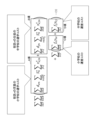
- FIG. 2 is a diagram showing an example of a school district plan output by the school district planning device 100.
- FIG. It is a figure showing the definition of a symbol.
- FIG. 3 is a diagram showing an objective function.
- 1 is a diagram showing an example of a hardware configuration of a school district planning device 100.
- the population of each district and each year of birth is collected in advance. Then, a school district plan will be created to prevent current students from transferring schools during school district reorganization. More specifically, the optimization target is allocation between schools in a school family, and a formulation is used to find the allocation that minimizes student commuting costs and school operating costs in the target year, taking school capacity into account. and create a school district plan.
- a school district refers to the area where students attend school, and has the function of designating a specific school for students to attend.
- School district planning is the process of planning (designating) schools for each block that students residing in that block should attend.
- a block is, for example, a mesh obtained by dividing an area into meshes of a certain size.
- this embodiment deals with school district plans for elementary schools and junior high schools
- the present invention is also applicable to school district plans other than school district plans for elementary schools and junior high schools.
- the present invention can be applied to school district plans for junior high schools and high schools, school district plans for high schools and universities, and the like.
- Type 1 schools Schools before going on to school, such as elementary schools, may be called “Type 1 schools,” and schools such as junior high schools after advancing from “Type 1 schools” may be called “Type 2 schools.”
- FIG. 1 shows a configuration diagram of a school district planning system in this embodiment.
- the school district planning system in this embodiment includes a block population DB (database) 10, a school DB 20, a commuting cost DB 30, a current school district DB 40, a school attendance year DB 50, and a school district planning device 100.
- the school district planning device 100 creates and outputs a school district plan (which may also be called a school district reorganization plan) by solving an integer planning problem using the data read from each DB.
- a school district plan which may also be called a school district reorganization plan
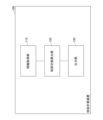
- FIG. 2 shows a configuration diagram of the school district planning device 100.
- the school district planning device 100 includes an information acquisition section 110, a school district plan calculation section 120, and an output section 130.
- the school district planning device 100 creates a school district plan according to the procedure shown in FIG.
- the information acquisition unit 110 acquires the resident population from the block population DB 10, the operating cost from the school DB 20, the commuting cost from the school commuting cost DB 30, and the current school district DB 40. , obtain the current school district, and obtain information on the school year from the school year DB50.
- the school district plan calculation unit 120 uses the data acquired in S1 to find a solution to the integer planning problem and obtain a school district plan.
- the output unit 130 outputs the school district plan.
- the process of S1 transfers the DB information from the storage device to the memory (or processor) within the school district planning device 100. It may also be to read .
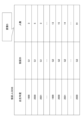
- FIG. 4 shows an example of the data format of the block population DB 10.
- the block population DB 10 stores the number of people (population) for each block for each student's year of birth.
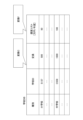
- FIG. 5 shows an example of the data format of the school DB 20. As shown in FIG. 5, the school DB 20 stores the capacity and operating cost for each type of school.
- FIG. 6 shows an example of the data format of the school commuting cost DB 30.
- the commuting cost DB 30 stores commuting costs from a block to a school for each block and for each school.
- the commuting cost is, for example, a value proportional to the distance between the center of gravity of a city block and the school.
- FIG. 7 shows an example of the data format of the current school district DB 40.
- the current school district DB 40 stores elementary school IDs and junior high school IDs attended by students residing in the district, for each starting year and for each block.
- the starting year is the first year in which costs are considered.
- Figure 8 shows an example of the data format of the school year DB50.
- the school year DB 50 stores the school year (birth year) of each elementary school and junior high school for each target year.
- the school district planning device 100 outputs, as a school district plan, the elementary school ID and junior high school ID in which the student attends, for each year of birth of the student and for each block of residence.
- FIG. 10 shows the definitions of symbols used in the following integer programming problem. As shown in FIG. 10, each symbol has the following meaning. In the following description, the figure number showing the relevant data is written in parentheses. Note that N is a set of city blocks (n ⁇ N).
- Equation (1) in FIG. 11 represents the objective function.
- the school district plan calculation unit 120 creates a school district plan so as to minimize the objective function of equation (1).
- Equation (1) shown in FIG. 11 indicates the cost of commuting to elementary school for children in block n.
- Term B indicates the cost of commuting to junior high school for students in block n.
- Term C indicates the operating cost of the elementary school.
- Term D indicates the operating cost of the junior high school.
- equation (1) a school district plan is created so as to minimize the sum of costs over multiple years in which costs are considered.
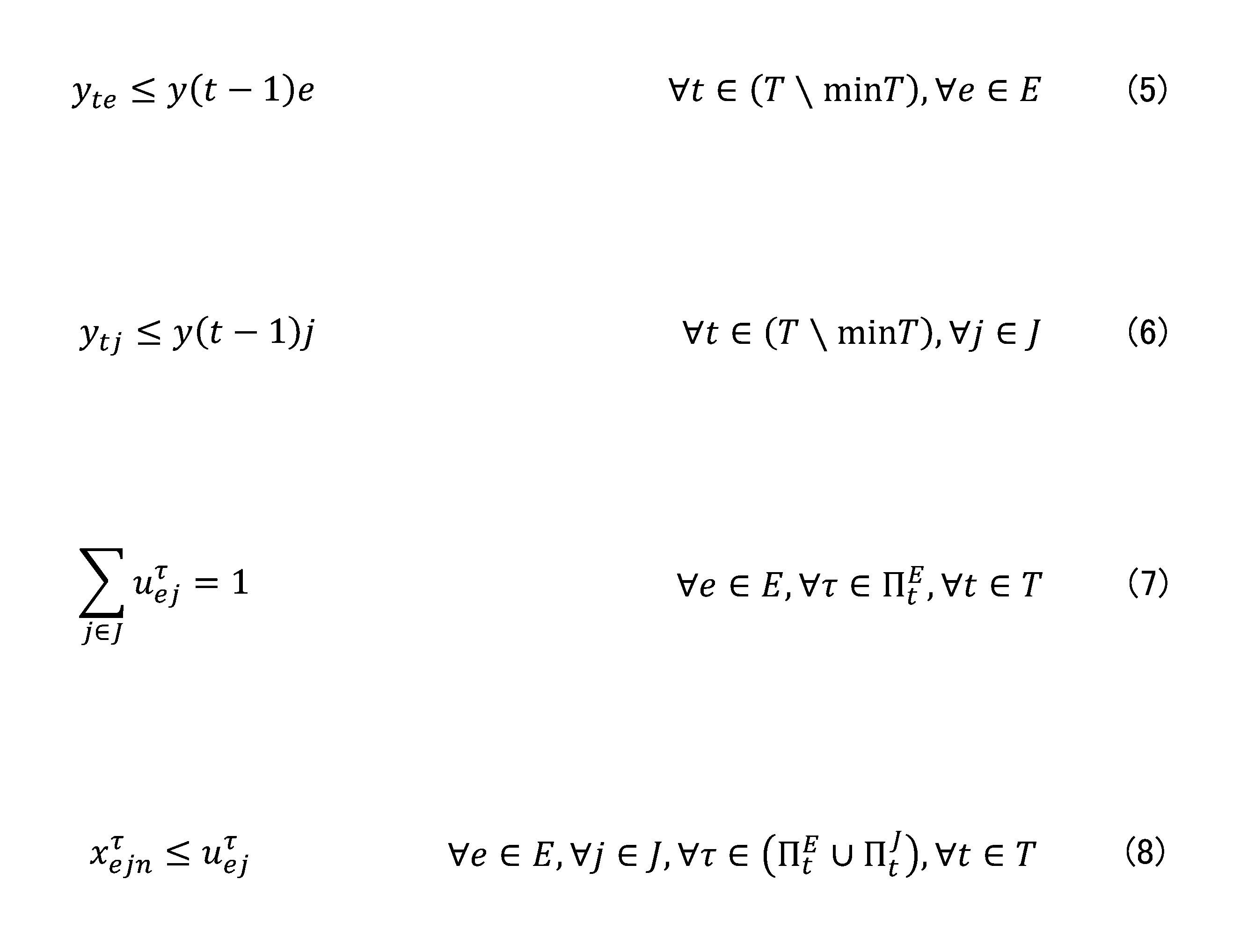
- Equation (2) is a constraint that the number of elementary school children does not exceed the capacity in any elementary school in any fiscal year.
- Equation (3) is a constraint that the number of junior high school students does not exceed the capacity for any junior high school in any academic year.
- Equation (4) is a constraint condition that a student with birth year ⁇ is assigned to any one "elementary school and junior high school" pair.
- Equation (5) is a constraint that once an elementary school has been closed, it will not reopen.
- Equation (6) is a constraint that once a junior high school is closed, it will not be reopened.
- Equation (7) is a constraint that an elementary school and any junior high school are assigned as a school family.
- Equation (8) is a constraint condition that students who have been in elementary school will not go on to any junior high school other than the junior high school assigned to the school family for that elementary school.
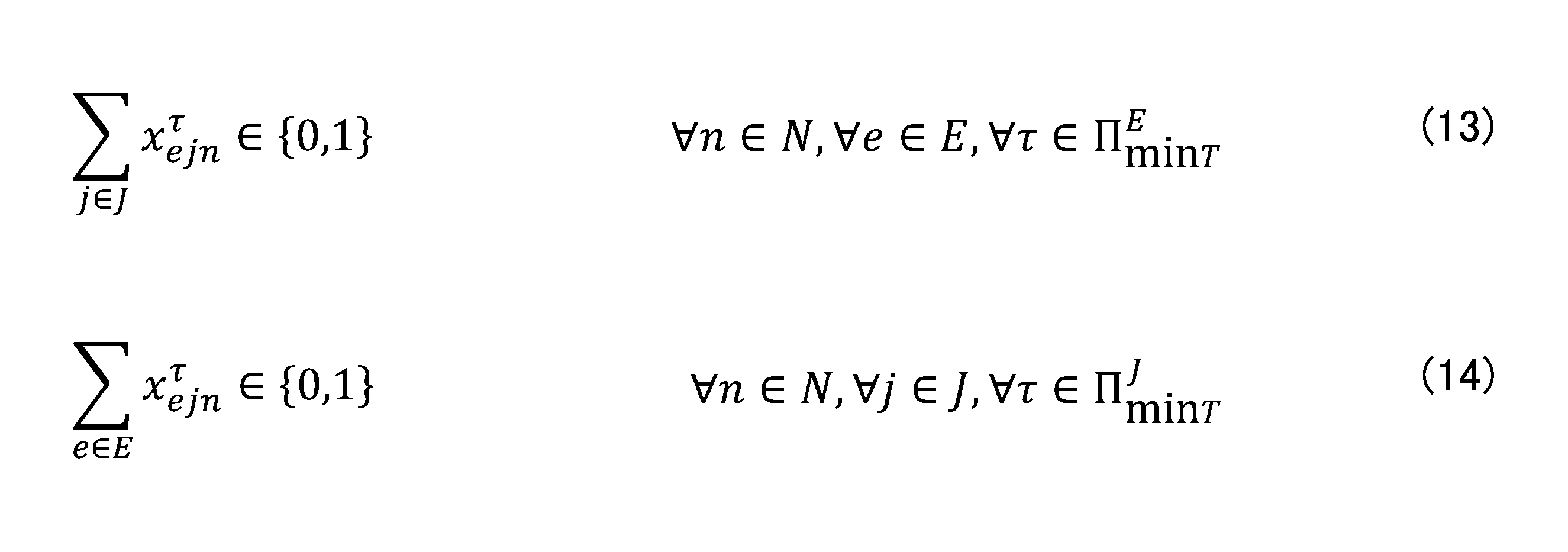
- Equations (13) and (14) correspond to the information in the current school district DB 40 shown in FIG. minT in equations (5), (6), (13), and (14) corresponds to the starting year in FIG.
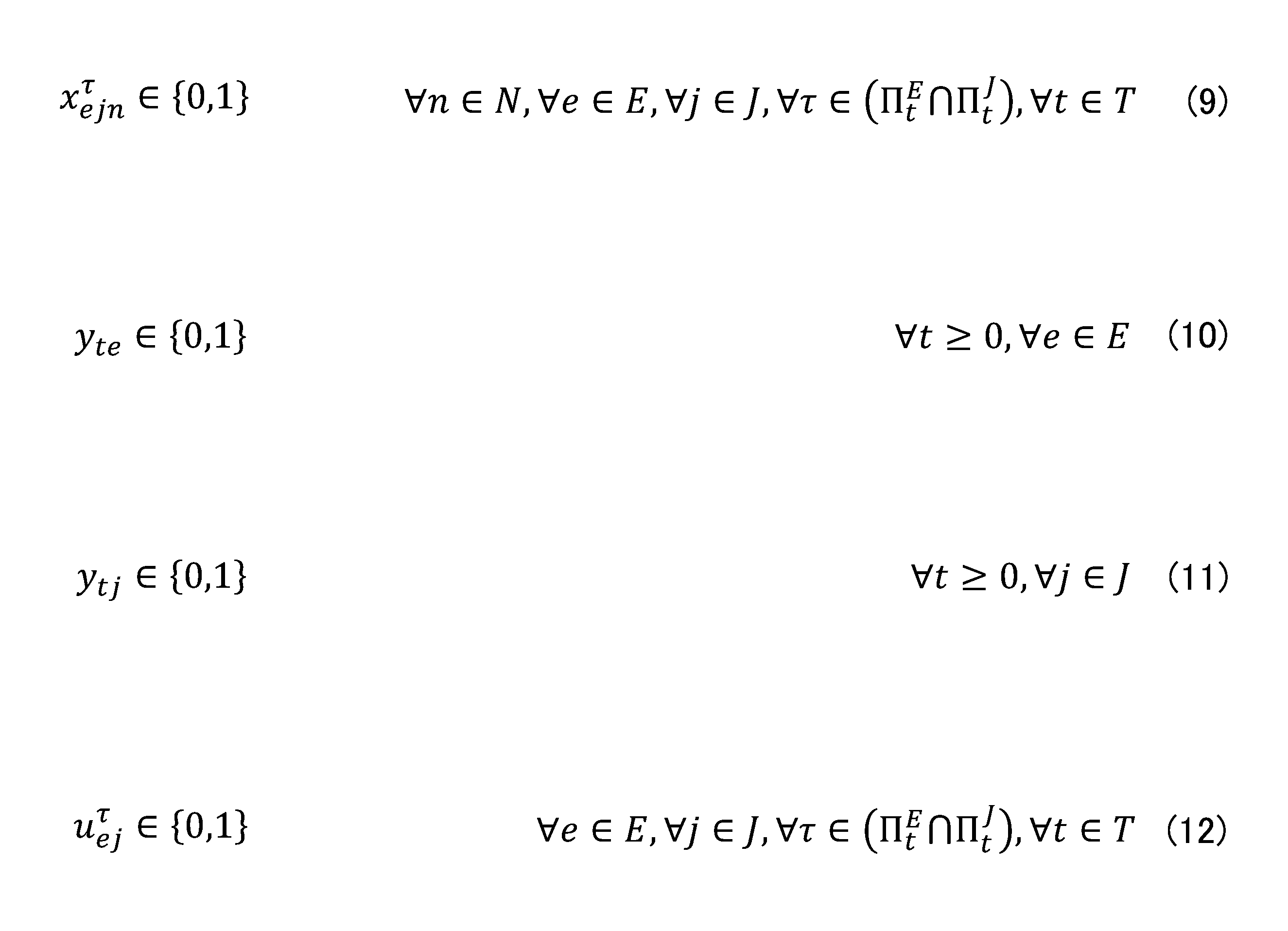
- the school district plan calculation unit 120 calculates the plan for each block n, for each year ⁇ , for each elementary school e, and for each junior high school j so that the objective function (total sum of costs) of equation (1) is minimized.
- each elementary school and each junior high school in each year are calculated using equations (10) and (11).
- equation (12) the pairs of elementary schools and junior high schools that make up the school family for each fiscal year and each year of birth are calculated. If the value is 1, it constitutes a school family, and if the value is 0, it does not constitute a school family.
- the school district planning device 100 can be realized, for example, by causing a computer to execute a program.
- This computer may be a physical computer or a virtual machine on the cloud.
- the school district planning device 100 can be realized by using hardware resources such as a CPU and memory built into a computer to execute a program corresponding to the processing performed by the school district planning device 100.
- the above program can be recorded on a computer readable recording medium (such as a portable memory), and can be stored or distributed. Furthermore, it is also possible to provide the above program through a network such as the Internet or e-mail.
- FIG. 12 is a diagram showing an example of the hardware configuration of the computer.
- the computer in FIG. 12 includes a drive device 1000, an auxiliary storage device 1002, a memory device 1003, a CPU 1004, an interface device 1005, a display device 1006, an input device 1007, an output device 1008, etc., which are interconnected by a bus BS.
- a program that realizes processing on the computer is provided, for example, on a recording medium 1001 such as a CD-ROM or a memory card.
- a recording medium 1001 such as a CD-ROM or a memory card.
- the program is installed from the recording medium 1001 to the auxiliary storage device 1002 via the drive device 1000.
- the program does not necessarily need to be installed from the recording medium 1001, and may be downloaded from another computer via a network.
- the auxiliary storage device 1002 stores installed programs as well as necessary files, data, and the like.
- the memory device 1003 reads and stores the program from the auxiliary storage device 1002 when there is an instruction to start the program.
- the CPU 1004 implements functions related to the school district planning device 100 according to programs stored in the memory device 1003.
- the interface device 1005 is used as an interface for connecting to a network or the like.
- a display device 1006 displays a GUI (Graphical User Interface) and the like based on a program.
- the input device 1007 is composed of a keyboard, a mouse, buttons, a touch panel, or the like, and is used to input various operation instructions.
- An output device 1008 outputs the calculation result.
- the program in this embodiment is, for example, a solver program that solves an integer programming problem.
- the program allows the computer to solve integer programming problems.
- costs can be minimized by simultaneously determining the allocation between schools in a school family and the allocation between blocks and schools without causing current students to transfer during school district reorganization.
- the processor includes: Obtain information on student commuting costs and school operating costs, Based on the acquired information, the type 1 school that the student should attend and the type 1 school for each year of birth of the student and for each block in which the student resides are determined so that the total cost over multiple years is minimized.
- a school district planning device that performs school district planning to determine the type 2 school that students will attend.
- the processor performs the school district planning by solving an integer programming problem using a constraint that a student born in a certain year in a certain block attends one type 1 school and one type 2 school.
- the school district planning device described in Supplementary Note 1. (Additional note 3) Supplementary Note 1 or 2, wherein the processor performs the school district planning by solving an integer programming problem using a constraint condition in which a certain type 1 school and any one type 2 school are a school family. School district planning device. (Additional note 4) The processor determines that when a student advances from a type 1 school to a type 2 school, the student does not proceed to a type 2 school other than the type 2 school assigned to the school family for the type 1 school.
- the school district planning device according to any one of Supplementary Notes 1 to 3, wherein the school district planning is performed by solving an integer planning problem using constraints.
- a computer-implemented school district planning method comprising: an acquisition step of acquiring information about the student's commuting costs and information about the school's operating costs; Based on the information acquired in the acquisition step, the type 1 school that the student should attend and the type 1 school that the student should attend are determined for each year of birth of the student and for each block in which the student resides so that the total cost over multiple years is minimized.
- a school district planning method comprising: a school district plan calculation step for performing a school district plan to determine a class 2 school as a destination from a class 1 school.
- a non-temporary storage medium storing a program for causing a computer to execute each process in the school district planning device according to any one of Supplementary Notes 1 to 4.
- Block population DB 20 School DB 30 School Commuting Cost DB 40 Current school district DB 50 School year DB 100 School district planning device 110 Information acquisition unit 120 School district plan calculation unit 130 Output unit 1000 Drive device 1001 Recording medium 1002 Auxiliary storage device 1003 Memory device 1004 CPU 1005 Interface device 1006 Display device 1007 Input device 1008 Output device
Landscapes
- Business, Economics & Management (AREA)
- Tourism & Hospitality (AREA)
- Engineering & Computer Science (AREA)
- Human Resources & Organizations (AREA)
- Primary Health Care (AREA)
- Health & Medical Sciences (AREA)
- Economics (AREA)
- General Health & Medical Sciences (AREA)
- Educational Administration (AREA)
- Marketing (AREA)
- Educational Technology (AREA)
- Strategic Management (AREA)
- Physics & Mathematics (AREA)
- General Business, Economics & Management (AREA)
- General Physics & Mathematics (AREA)
- Theoretical Computer Science (AREA)
- Management, Administration, Business Operations System, And Electronic Commerce (AREA)
Abstract
校区計画装置において、学生の通学コストに関する情報と、学校の運営コストに関する情報を取得する取得部と、前記取得部により取得した情報に基づいて、複数年度にわたるコストの総和が最小になるように、学生の出生年度ごと、学生が居住する街区ごとに、学生が就学すべき第1種学校と、第1種学校からの進学先である第2種学校とを決定する校区計画を行う校区計画算出部とを備える。
Description
本発明は、校区再編計画を支援する技術に関連するものである。
街区と学校を対応させる校区を再編(計画)するための技術として、非特許文献1には、整数計画問題としての定式化を行うことで、学校の運営コストと生徒の通学コストの合計を最小化する技術が開示されている。
また、非特許文献2には、校区を再編する際に、整数計画問題としての定式化を行うことで、小学校の校区を中学校の校区に包含させるスクールファミリーを実現する技術が開示されている。スクールファミリーとは、各中学校区が1つ又は複数の小学校区を完全に包含するような校区の形態であり、スクールファミリーにおいては一の小学校に通う児童は、すべて同一の中学校に通うことになる。
なお、一般に、就学する人を、小学校では「児童」、中学校では「生徒」と呼ぶが、本明細書において、両者を包含する場合にはその呼称として「学生」を用いる。
Antonioら,A dynamic optimization model for school network planning、Socio-Economic Planning Sciences 34 (2000)
富永ら,GISによる学区再編の計画立案-スクールファミリー制度の導入可能性の検討-、地理学評論 76-10 743-758 2003
非特許文献1に開示された技術では、スクールファミリーは実現できず、進学時に同級生と別の学校になる場合が生じる。また、非特許文献2に開示された技術では、所与のスクールファミリーを満たす校区の割当が得られるが、スクールファミリーにおける小学校と中学校の割当は最適化できず、コストが過大になる場合が生じる。
また、非特許文献1、2に開示された技術ではともに、校区を再編する際に在校生の転校が発生する。在校生の転校が発生したり、進学時にスクールファミリーの条件が満たされなかったりすると、学生は同級生と別の学校に就学することになり、学生の心理的な負担が発生するというデメリットが考えられる。
本発明は上記の点に鑑みてなされたものであり、校区再編時に、在校生の転校を発生させずに、スクールファミリーを実現することを可能とする技術を提供することを目的とする。
開示の技術によれば、学生の通学コストに関する情報と、学校の運営コストに関する情報を取得する取得部と、
前記取得部により取得した情報に基づいて、複数年度にわたるコストの総和が最小になるように、学生の出生年度ごと、学生が居住する街区ごとに、学生が就学すべき第1種学校と、第1種学校からの進学先である第2種学校とを決定する校区計画を行う校区計画算出部と
を備える校区計画装置が提供される。
前記取得部により取得した情報に基づいて、複数年度にわたるコストの総和が最小になるように、学生の出生年度ごと、学生が居住する街区ごとに、学生が就学すべき第1種学校と、第1種学校からの進学先である第2種学校とを決定する校区計画を行う校区計画算出部と
を備える校区計画装置が提供される。
開示の技術によれば、校区再編時に、在校生の転校を発生させずに、スクールファミリーを実現することを可能とする技術が提供される。
以下、図面を参照して本発明の実施の形態(本実施の形態)を説明する。以下で説明する実施の形態は一例に過ぎず、本発明が適用される実施の形態は、以下の実施の形態に限られるわけではない。概要は次のとおりである。
本実施の形態の校区計画システムでは、事前に街区ごと出生年度ごとの人口を収集する。そして、校区再編時の在校生の転校を発生させないように、校区計画を作成する。より具体的には、スクールファミリーの学校間の割当を最適化対象とし、学校の定員を考慮して、対象年度の学生の通学コストと学校の運営コストを最小にする割当を求める定式化を用いて、校区計画を作成する。
校区とは、学校に通う学生の通学区域を指すものであり、就学すべき学校を特定の学校に指定する機能を持つ。校区計画は、街区ごとに、その街区に在住(居住)する学生が就学すべき学校を計画(指定)することである。街区とは、例えば、地域をある大きさのメッシュに分割したことにより得られる当該メッシュである。
なお、本実施の形態では、小学校と中学校に対する校区計画を対象とするが、本発明は、小学校と中学校に対する校区計画以外の校区計画にも適用可能である。例えば、中学校と高校の校区計画、高校と大学の校区計画などにも本発明を適用可能である。
小学校などの進学前の学校を「第1種学校」と呼び、「第1種学校」から進学した後の中学校などの学校を「第2種学校」と呼んでもよい。
(システム構成、動作概要)
図1に、本実施の形態における校区計画システムの構成図を示す。図1に示すとおり、本実施の形態における校区計画システムは、街区人口DB(データベース)10、学校DB20、通学コストDB30、現時点の校区DB40、就学年度DB50、及び校区計画装置100を有する。
図1に、本実施の形態における校区計画システムの構成図を示す。図1に示すとおり、本実施の形態における校区計画システムは、街区人口DB(データベース)10、学校DB20、通学コストDB30、現時点の校区DB40、就学年度DB50、及び校区計画装置100を有する。
校区計画装置100が、各DBから読み出したデータを用いて整数計画問題を解くことで校区計画(校区再編計画と呼んでもよい)を作成し、出力する。
図2に、校区計画装置100の構成図を示す。図2に示すように、校区計画装置100は、情報取得部110、校区計画算出部120、出力部130を有する。
校区計画装置100は、図3に示す手順で校区計画を作成する。S1(ステップ1)において、情報取得部110は、街区人口DB10から、住民人口を取得し、学校DB20から、運営コストを取得し、通学コストDB30から、通学コストを取得し、現時点の校区DB40から、現時点の校区を取得し、就学年度DB50から、就学年度の情報を取得する。
S2において、校区計画算出部120が、S1で取得したデータを用いて、整数計画問題の解を求めて、校区計画を取得する。S3において、出力部130が、校区計画を出力する。
なお、各DBの情報が校区計画装置100内のハードディスク等の記憶装置に格納されている場合において、S1の処理は、校区計画装置100内で、記憶装置からメモリ(あるいはプロセッサ)へDBの情報を読み込むことであってもよい。
(データ形式の例)
次に、図4~図8を参照して各DBのデータ形式(データのイメージ)の例を示す。各図には、後述する主な変数がどのデータに対応するかの情報も示されている。
次に、図4~図8を参照して各DBのデータ形式(データのイメージ)の例を示す。各図には、後述する主な変数がどのデータに対応するかの情報も示されている。
図4に、街区人口DB10のデータ形式の例を示す。図4に示すように、街区人口DB10には、学生の出生年度ごと、街区ごとの人数(人口)が格納されている。
図5に、学校DB20のデータ形式の例を示す。図5に示すように、学校DB20には、各種別の学校ごとの定員と運営コストが格納されている。
図6に、通学コストDB30のデータ形式の例を示す。図6に示すように、通学コストDB30には、街区ごと、学校ごとの、街区から学校への通学コストが格納される。通学コストは、例えば、街区の重心と学校との間の距離に比例した値である。
図7に、現時点の校区DB40のデータ形式の例を示す。図7に示すように、現時点の校区DB40には、開始年度ごと、街区ごとの、街区に居住する学生が就学する小学校IDと中学校IDが格納されている。開始年度とは、コストを考慮する年度の最初の年度である。
図8に、就学年度DB50のデータ形式の例を示す。図8に示すように、就学年度DB50には、対象年度ごとの小学校、中学校それぞれの就学年度(出生年度)が格納される。
次に、図9を参照して、校区計画装置100が出力する校区計画の例を説明する。図9に示すように、校区計画装置100は、校区計画として、学生の出生年度ごと、居住する街区ごとの、学生が就学する小学校IDと中学校IDを出力する。
(変数について)
図10に、以降の整数計画問題において使用する記号の定義を示す。図10に示すとおり、各記号は、下記の意味を有する。下記の記載において、関連するデータを示した図番号を括弧内に記載している。なお、Nは街区集合である(n∈N)。
図10に、以降の整数計画問題において使用する記号の定義を示す。図10に示すとおり、各記号は、下記の意味を有する。下記の記載において、関連するデータを示した図番号を括弧内に記載している。なお、Nは街区集合である(n∈N)。
Πt
E:t年度に小学校に在校する児童の出生年度の集合(図8)
Πt J:t年度に中学校に在校する生徒の出生年度の集合(図8)
Sn τ:街区nのτ年度に出生した学生数(図4)
E:小学校集合、e∈E
J:中学校集合、j∈J
T:コストを考慮する年度の集合、t∈T(図8)
fe:小学校eを運営する1年度分のコスト(図5)
fj:中学校jを運営する1年度分のコスト(図5)
Ce:小学校eの児童の定員(図5)
Cj:中学校jの生徒の定員(図5)
den:児童が住所nから小学校eまで通学するコスト(図6)
djn:生徒が住所nから中学校jまで通学するコスト(図6)
xejn τ:街区nのτ年度に出生した学生が小学校eと中学校jに就学することの指示変数(図7、図9)
uej τ:τ年度に出生した学生が小学校eと中学校jに就学することの指示変数
yte:t年度に小学校eを運営することの指示変数
ytj:t年度に中学校jを運営することの指示変数
(整数計画問題について)
次に、校区計画算出部120が解く整数計画問題について説明する。校区計画算出部120は、例えば、整数計画問題を解くソルバーのプログラムがコンピュータにおいて実行されることで実現される機能部に相当する。
Πt J:t年度に中学校に在校する生徒の出生年度の集合(図8)
Sn τ:街区nのτ年度に出生した学生数(図4)
E:小学校集合、e∈E
J:中学校集合、j∈J
T:コストを考慮する年度の集合、t∈T(図8)
fe:小学校eを運営する1年度分のコスト(図5)
fj:中学校jを運営する1年度分のコスト(図5)
Ce:小学校eの児童の定員(図5)
Cj:中学校jの生徒の定員(図5)
den:児童が住所nから小学校eまで通学するコスト(図6)
djn:生徒が住所nから中学校jまで通学するコスト(図6)
xejn τ:街区nのτ年度に出生した学生が小学校eと中学校jに就学することの指示変数(図7、図9)
uej τ:τ年度に出生した学生が小学校eと中学校jに就学することの指示変数
yte:t年度に小学校eを運営することの指示変数
ytj:t年度に中学校jを運営することの指示変数
(整数計画問題について)
次に、校区計画算出部120が解く整数計画問題について説明する。校区計画算出部120は、例えば、整数計画問題を解くソルバーのプログラムがコンピュータにおいて実行されることで実現される機能部に相当する。
<目的関数>
図11の式(1)は目的関数を示す。校区計画算出部120は、式(1)の目的関数を最小化するように、校区計画を作成する。
図11の式(1)は目的関数を示す。校区計画算出部120は、式(1)の目的関数を最小化するように、校区計画を作成する。
図11に示す式(1)のA項は、街区nの児童の小学校の通学コストを示す。B項は、街区nの生徒の中学校の通学コストを示す。C項は、小学校の運営コストを示す。D項は、中学校の運営コストを示す。式(1)に示すとおり、コストを考慮する複数年度にわたるコストの総和を最小にするように校区計画を作成する。
<制約条件>
整数計画問題における制約条件は下記の式(2)~式(8)に示すとおりである。
整数計画問題における制約条件は下記の式(2)~式(8)に示すとおりである。

式(3)は、いずれの年度、いずれの中学校においても、中学校の生徒が定員を超えないという制約条件である。
式(4)は、出生年度τの学生がいずれかの1つの「小学校と中学校」の組に割当てられるという制約条件である。
式(5)は、小学校を一旦閉鎖した後は再度開校しないという制約条件である。式(6)は、中学校を一旦閉鎖した後は再度開校しないという制約条件である。
式(7)は、小学校といずれかの中学校とをスクールファミリーとして割当てるという制約条件である。
式(8)は、小学校にいた学生が、その小学校に対するスクールファミリーに割当てられた中学校以外の中学校には進学しないという制約条件である。
<最適化対象>
整数計画問題における最適化対象は下記の式(9)~式(12)に示すとおりである。
整数計画問題における最適化対象は下記の式(9)~式(12)に示すとおりである。
また、式(10)、式(11)により、各年度の各小学校及び各中学校の運営(1)、非運営(0)が算出される。また、式(12)により、各年度、各出生年度のスクールファミリーを構成する小学校と中学校の組が算出される。値が1であればスクールファミリーを構成し、値が0であればスクールファミリーを構成しない。
(ハードウェア構成例)
校区計画装置100は、例えば、コンピュータにプログラムを実行させることにより実現できる。このコンピュータは、物理的なコンピュータであってもよいし、クラウド上の仮想マシンであってもよい。
校区計画装置100は、例えば、コンピュータにプログラムを実行させることにより実現できる。このコンピュータは、物理的なコンピュータであってもよいし、クラウド上の仮想マシンであってもよい。
すなわち、校区計画装置100は、コンピュータに内蔵されるCPUやメモリ等のハードウェア資源を用いて、校区計画装置100で実施される処理に対応するプログラムを実行することによって実現することが可能である。上記プログラムは、コンピュータが読み取り可能な記録媒体(可搬メモリ等)に記録して、保存したり、配布したりすることが可能である。また、上記プログラムをインターネットや電子メール等、ネットワークを通して提供することも可能である。
図12は、上記コンピュータのハードウェア構成例を示す図である。図12のコンピュータは、それぞれバスBSで相互に接続されているドライブ装置1000、補助記憶装置1002、メモリ装置1003、CPU1004、インタフェース装置1005、表示装置1006、入力装置1007、出力装置1008等を有する。
当該コンピュータでの処理を実現するプログラムは、例えば、CD-ROM又はメモリカード等の記録媒体1001によって提供される。プログラムを記憶した記録媒体1001がドライブ装置1000にセットされると、プログラムが記録媒体1001からドライブ装置1000を介して補助記憶装置1002にインストールされる。但し、プログラムのインストールは必ずしも記録媒体1001より行う必要はなく、ネットワークを介して他のコンピュータよりダウンロードするようにしてもよい。補助記憶装置1002は、インストールされたプログラムを格納すると共に、必要なファイルやデータ等を格納する。
メモリ装置1003は、プログラムの起動指示があった場合に、補助記憶装置1002からプログラムを読み出して格納する。CPU1004は、メモリ装置1003に格納されたプログラムに従って、校区計画装置100に係る機能を実現する。インタフェース装置1005は、ネットワーク等に接続するためのインタフェースとして用いられる。表示装置1006はプログラムによるGUI(Graphical User Interface)等を表示する。入力装置1007はキーボード及びマウス、ボタン、又はタッチパネル等で構成され、様々な操作指示を入力させるために用いられる。出力装置1008は演算結果を出力する。
本実施の形態におけるプログラムは、例えば、整数計画問題を解くソルバープログラムである。当該プログラムにより、上記コンピュータは、整数計画問題を解くことができる。
(実施の形態のまとめ、効果)
以上説明したように、本実施の形態では、整数計画問題の定式化において、スクールファミリーの割当に対応する変数(例えばuej τ)を導入したことで、スクールファミリーの学校間(小学校と中学校)の割当を最適化することができる。
以上説明したように、本実施の形態では、整数計画問題の定式化において、スクールファミリーの割当に対応する変数(例えばuej τ)を導入したことで、スクールファミリーの学校間(小学校と中学校)の割当を最適化することができる。
また、整数計画問題の定式化において、生徒の出生年度ごとに校区を割当する変数(例えばxejn
τ)導入したことで、校区再編時の際に在校生の転校を発生させないようにすることができる。
本実施の形態に係る技術により、校区再編時の在校生の転校を発生させずに、スクールファミリーの学校間の割当と、街区と学校の割当を同時に決定して、コストを最小化できる。
すなわち、校区再編時に転校を発生させずにスクールファミリーを実現することで、進学時にも同級生との別れを発生させない、という在校生の負担を考慮した割当が可能となる。
(付記)
以上の実施形態に関し、更に以下の付記項を開示する。
(付記項1)
メモリと、
前記メモリに接続された少なくとも1つのプロセッサと、
を含み、
前記プロセッサは、
学生の通学コストに関する情報と、学校の運営コストに関する情報を取得し、
前記取得した情報に基づいて、複数年度にわたるコストの総和が最小になるように、学生の出生年度ごと、学生が居住する街区ごとに、学生が就学すべき第1種学校と、第1種学校からの進学先である第2種学校とを決定する校区計画を行う
校区計画装置。
(付記項2)
前記プロセッサは、ある街区のある年度に出生した学生は、1つの第1種学校と1つの第2種学校に就学するという制約条件を用いた整数計画問題を解くことにより、前記校区計画を行う
付記項1に記載の校区計画装置。
(付記項3)
前記プロセッサは、ある第1種学校といずれか1つの第2種学校とをスクールファミリーとする制約条件を用いた整数計画問題を解くことにより、前記校区計画を行う
付記項1又は2に記載の校区計画装置。
(付記項4)
前記プロセッサは、学生が第1種学校から第2種学校に進学する場合に、当該第1種学校に対してスクールファミリーに割当てられた第2種学校以外の第2種学校には進学しないという制約条件を用いた整数計画問題を解くことにより、前記校区計画を行う
付記項1ないし3のうちいずれか1項に記載の校区計画装置。
(付記項5)
コンピュータが実行する校区計画方法であって、
学生の通学コストに関する情報と、学校の運営コストに関する情報を取得する取得ステップと、
前記取得ステップにより取得した情報に基づいて、複数年度にわたるコストの総和が最小になるように、学生の出生年度ごと、学生が居住する街区ごとに、学生が就学すべき第1種学校と、第1種学校からの進学先である第2種学校とを決定する校区計画を行う校区計画算出ステップと
を備える校区計画方法。
(付記項6)
コンピュータに、付記項1ないし4のうちいずれか1項に記載の校区計画装置における各処理を実行させるプログラムを記憶した非一時的記憶媒体。
以上の実施形態に関し、更に以下の付記項を開示する。
(付記項1)
メモリと、
前記メモリに接続された少なくとも1つのプロセッサと、
を含み、
前記プロセッサは、
学生の通学コストに関する情報と、学校の運営コストに関する情報を取得し、
前記取得した情報に基づいて、複数年度にわたるコストの総和が最小になるように、学生の出生年度ごと、学生が居住する街区ごとに、学生が就学すべき第1種学校と、第1種学校からの進学先である第2種学校とを決定する校区計画を行う
校区計画装置。
(付記項2)
前記プロセッサは、ある街区のある年度に出生した学生は、1つの第1種学校と1つの第2種学校に就学するという制約条件を用いた整数計画問題を解くことにより、前記校区計画を行う
付記項1に記載の校区計画装置。
(付記項3)
前記プロセッサは、ある第1種学校といずれか1つの第2種学校とをスクールファミリーとする制約条件を用いた整数計画問題を解くことにより、前記校区計画を行う
付記項1又は2に記載の校区計画装置。
(付記項4)
前記プロセッサは、学生が第1種学校から第2種学校に進学する場合に、当該第1種学校に対してスクールファミリーに割当てられた第2種学校以外の第2種学校には進学しないという制約条件を用いた整数計画問題を解くことにより、前記校区計画を行う
付記項1ないし3のうちいずれか1項に記載の校区計画装置。
(付記項5)
コンピュータが実行する校区計画方法であって、
学生の通学コストに関する情報と、学校の運営コストに関する情報を取得する取得ステップと、
前記取得ステップにより取得した情報に基づいて、複数年度にわたるコストの総和が最小になるように、学生の出生年度ごと、学生が居住する街区ごとに、学生が就学すべき第1種学校と、第1種学校からの進学先である第2種学校とを決定する校区計画を行う校区計画算出ステップと
を備える校区計画方法。
(付記項6)
コンピュータに、付記項1ないし4のうちいずれか1項に記載の校区計画装置における各処理を実行させるプログラムを記憶した非一時的記憶媒体。
以上、本実施の形態について説明したが、本発明はかかる特定の実施形態に限定されるものではなく、特許請求の範囲に記載された本発明の要旨の範囲内において、種々の変形・変更が可能である。
10 街区人口DB
20 学校DB
30 通学コストDB
40 現時点の校区DB
50 就学年度DB
100 校区計画装置
110 情報取得部
120 校区計画算出部
130 出力部
1000 ドライブ装置
1001 記録媒体
1002 補助記憶装置
1003 メモリ装置
1004 CPU
1005 インタフェース装置
1006 表示装置
1007 入力装置
1008 出力装置
20 学校DB
30 通学コストDB
40 現時点の校区DB
50 就学年度DB
100 校区計画装置
110 情報取得部
120 校区計画算出部
130 出力部
1000 ドライブ装置
1001 記録媒体
1002 補助記憶装置
1003 メモリ装置
1004 CPU
1005 インタフェース装置
1006 表示装置
1007 入力装置
1008 出力装置
Claims (6)
- 学生の通学コストに関する情報と、学校の運営コストに関する情報を取得する取得部と、
前記取得部により取得した情報に基づいて、複数年度にわたるコストの総和が最小になるように、学生の出生年度ごと、学生が居住する街区ごとに、学生が就学すべき第1種学校と、第1種学校からの進学先である第2種学校とを決定する校区計画を行う校区計画算出部と
を備える校区計画装置。 - 前記校区計画算出部は、ある街区のある年度に出生した学生は、1つの第1種学校と1つの第2種学校に就学するという制約条件を用いた整数計画問題を解くことにより、前記校区計画を行う
請求項1に記載の校区計画装置。 - 前記校区計画算出部は、ある第1種学校といずれか1つの第2種学校とをスクールファミリーとする制約条件を用いた整数計画問題を解くことにより、前記校区計画を行う
請求項1に記載の校区計画装置。 - 前記校区計画算出部は、学生が第1種学校から第2種学校に進学する場合に、当該第1種学校に対してスクールファミリーに割当てられた第2種学校以外の第2種学校には進学しないという制約条件を用いた整数計画問題を解くことにより、前記校区計画を行う
請求項1に記載の校区計画装置。 - コンピュータが実行する校区計画方法であって、
学生の通学コストに関する情報と、学校の運営コストに関する情報を取得する取得ステップと、
前記取得ステップにより取得した情報に基づいて、複数年度にわたるコストの総和が最小になるように、学生の出生年度ごと、学生が居住する街区ごとに、学生が就学すべき第1種学校と、第1種学校からの進学先である第2種学校とを決定する校区計画を行う校区計画算出ステップと
を備える校区計画方法。 - コンピュータを、請求項1ないし4のうちいずれか1項に記載の校区計画装置における各部として機能させるためのプログラム。
Priority Applications (1)
| Application Number | Priority Date | Filing Date | Title |
|---|---|---|---|
| PCT/JP2022/020101 WO2023218613A1 (ja) | 2022-05-12 | 2022-05-12 | 校区計画装置、校区計画方法、及びプログラム |
Applications Claiming Priority (1)
| Application Number | Priority Date | Filing Date | Title |
|---|---|---|---|
| PCT/JP2022/020101 WO2023218613A1 (ja) | 2022-05-12 | 2022-05-12 | 校区計画装置、校区計画方法、及びプログラム |
Publications (1)
| Publication Number | Publication Date |
|---|---|
| WO2023218613A1 true WO2023218613A1 (ja) | 2023-11-16 |
Family
ID=88730152
Family Applications (1)
| Application Number | Title | Priority Date | Filing Date |
|---|---|---|---|
| PCT/JP2022/020101 Ceased WO2023218613A1 (ja) | 2022-05-12 | 2022-05-12 | 校区計画装置、校区計画方法、及びプログラム |
Country Status (1)
| Country | Link |
|---|---|
| WO (1) | WO2023218613A1 (ja) |
Citations (1)
| Publication number | Priority date | Publication date | Assignee | Title |
|---|---|---|---|---|
| JP2010113547A (ja) * | 2008-11-06 | 2010-05-20 | Fujitsu Ltd | 通学範囲最適化装置および通学範囲最適化プログラム |
-
2022
- 2022-05-12 WO PCT/JP2022/020101 patent/WO2023218613A1/ja not_active Ceased
Patent Citations (1)
| Publication number | Priority date | Publication date | Assignee | Title |
|---|---|---|---|---|
| JP2010113547A (ja) * | 2008-11-06 | 2010-05-20 | Fujitsu Ltd | 通学範囲最適化装置および通学範囲最適化プログラム |
Non-Patent Citations (4)
| Title |
|---|
| EGAWA HIROLE, YUKIO SADAHIRO: "Classification of spatial tessellations with representative points based on similarity − A case study on school districtplanning一", J.ENVIRON.ENG. PROCEEDINGS OF THE ARCHITECTURAL INSTITUTE OF JAPAN, ENVIRONMENTAL DIVISION, no. 588, 1 February 2005 (2005-02-01), pages 79 - 86, XP093107731 * |
| SASAYA TOSHINORI, SADAHIRO YUKIO: "Analysis of similarity and hierarchy among spatial tessellations", THEORY AND APPLICATIONS OF GIS, vol. 16, no. 2, 31 December 2008 (2008-12-31), pages 147 - 157, XP093107727, ISSN: 1340-5381, DOI: 10.5638/thagis.16.147 * |
| TERAO JUN: "11 Fabrication of non-invasive disease diagnosis device using molecular recognition ability.", RESEARCH REPORTS OF THE UEHARA MEMORIAL FOUNDATION, vol. 32, 1 January 2018 (2018-01-01), pages 1 - 6, XP093107725 * |
| TOMOYA KOISHI: "Consideration regarding the consolidation and abolition of Funabashi City elementary schools based on future population projections", BACHELOR THESIS, 1 March 2015 (2015-03-01), Chuo University, pages 1 - 56, XP009550496, Retrieved from the Internet <URL:https://web.archive.org/web/20220225114237/http://www.ise.chuo-u.ac.jp/ise-labs/taguchi-lab/pdf/bachelor/2014/r2014_koishi.pdf> * |
Similar Documents
| Publication | Publication Date | Title |
|---|---|---|
| Figueiredo et al. | Primary care nurses’ learning styles in the light of David Kolb | |
| Kimball et al. | Visible numbers: Essays on the history of statistical graphics | |
| Chretien et al. | AAIM recommendations for the 2020-2021 internal medicine residency application cycle in response to the COVID-19 pandemic | |
| Gortázar et al. | Residence-based priorities and school choice | |
| Noh et al. | Plagiarism in graphic design | |
| JP5922164B2 (ja) | 学務統合支援システム及び支援方法 | |
| WO2023218613A1 (ja) | 校区計画装置、校区計画方法、及びプログラム | |
| Doja et al. | Computational challenges to test and revitalize Claude Lévi-Strauss transformational methodology | |
| Moerchen et al. | Maternal and child health pipeline training programs: A description of training across 6 funded programs | |
| Bitar et al. | Comparative analysis of scrollable DICOM images and static CT images in teaching thoracic imaging anatomy to first‐year medical students | |
| WO2024053070A1 (ja) | 校区計画装置、校区計画方法、及びプログラム | |
| Kalil-Filho et al. | Multiprofessional electronic protocol for digestive surgery validation | |
| Bandi et al. | Crafting a data visualization course for the tech industry | |
| JP7819781B2 (ja) | 計画装置、計画方法、及びプログラム | |
| Siahaan | Scheduling Courses using Genetic Algorithms | |
| Kamada et al. | The Walras-Bowley Lecture: Fragmentation of Matching Markets and How Economics Can Help Integrate Them | |
| Saleem | Applying bluetooth as novel approach for assessing student learning | |
| Bellaguarda et al. | Biographical method in the teaching of nursing history | |
| WO2025238875A1 (ja) | 情報提供プログラム、情報提供方法及び情報処理装置 | |
| Federighi et al. | The Great Game: Teaching Architectural Design as Collective Practice | |
| Kutiuhova | INNOVATIVE TECHNOLOGICAL APPROACHES TO CREATINGPRESENTATIONS TO PRESENT THE RESULTS OF THE PROJECTMETHOD IN THE TRAINING OF FUTURE MEDICAL SPECIALISTS | |
| Kayamba et al. | Initiatives to enhance medical subspecialist training in Zambia: A cross-sectional analysis | |
| Nhadumbuque et al. | Understanding the Lecturers' Perception About a Programming Learning Prototype. | |
| Wahyudin et al. | Virtual Reality Research in Office Management: A Bibliometric Analysis | |
| Suzuki et al. | A User Interactive Shift Scheduling and Timetabling System Based on Evolutionary Computation for Private Tutoring Schools |
Legal Events
| Date | Code | Title | Description |
|---|---|---|---|
| 121 | Ep: the epo has been informed by wipo that ep was designated in this application |
Ref document number: 22941693 Country of ref document: EP Kind code of ref document: A1 |
|
| NENP | Non-entry into the national phase |
Ref country code: DE |
|
| 122 | Ep: pct application non-entry in european phase |
Ref document number: 22941693 Country of ref document: EP Kind code of ref document: A1 |
|
| NENP | Non-entry into the national phase |
Ref country code: JP |