WO2023214541A1 - モデル生成方法、コンピュータプログラム及び情報処理装置 - Google Patents
モデル生成方法、コンピュータプログラム及び情報処理装置 Download PDFInfo
- Publication number
- WO2023214541A1 WO2023214541A1 PCT/JP2023/016791 JP2023016791W WO2023214541A1 WO 2023214541 A1 WO2023214541 A1 WO 2023214541A1 JP 2023016791 W JP2023016791 W JP 2023016791W WO 2023214541 A1 WO2023214541 A1 WO 2023214541A1
- Authority
- WO
- WIPO (PCT)
- Prior art keywords
- state
- processed
- model
- target
- data indicating
- Prior art date
- Legal status (The legal status is an assumption and is not a legal conclusion. Google has not performed a legal analysis and makes no representation as to the accuracy of the status listed.)
- Ceased
Links
Images






Classifications
-
- G—PHYSICS
- G05—CONTROLLING; REGULATING
- G05B—CONTROL OR REGULATING SYSTEMS IN GENERAL; FUNCTIONAL ELEMENTS OF SUCH SYSTEMS; MONITORING OR TESTING ARRANGEMENTS FOR SUCH SYSTEMS OR ELEMENTS
- G05B19/00—Program-control systems
- G05B19/02—Program-control systems electric
- G05B19/418—Total factory control, i.e. centrally controlling a plurality of machines, e.g. direct or distributed numerical control [DNC], flexible manufacturing systems [FMS], integrated manufacturing systems [IMS] or computer integrated manufacturing [CIM]
-
- G—PHYSICS
- G06—COMPUTING OR CALCULATING; COUNTING
- G06F—ELECTRIC DIGITAL DATA PROCESSING
- G06F30/00—Computer-aided design [CAD]
- G06F30/20—Design optimisation, verification or simulation
- G06F30/27—Design optimisation, verification or simulation using machine learning, e.g. artificial intelligence, neural networks, support vector machines [SVM] or training a model
-
- G—PHYSICS
- G06—COMPUTING OR CALCULATING; COUNTING
- G06F—ELECTRIC DIGITAL DATA PROCESSING
- G06F30/00—Computer-aided design [CAD]
- G06F30/30—Circuit design
- G06F30/32—Circuit design at the digital level
- G06F30/33—Design verification, e.g. functional simulation or model checking
- G06F30/3308—Design verification, e.g. functional simulation or model checking using simulation
-
- G—PHYSICS
- G06—COMPUTING OR CALCULATING; COUNTING
- G06F—ELECTRIC DIGITAL DATA PROCESSING
- G06F30/00—Computer-aided design [CAD]
- G06F30/30—Circuit design
- G06F30/32—Circuit design at the digital level
- G06F30/337—Design optimisation
-
- G—PHYSICS
- G06—COMPUTING OR CALCULATING; COUNTING
- G06N—COMPUTING ARRANGEMENTS BASED ON SPECIFIC COMPUTATIONAL MODELS
- G06N20/00—Machine learning
-
- H—ELECTRICITY
- H10—SEMICONDUCTOR DEVICES; ELECTRIC SOLID-STATE DEVICES NOT OTHERWISE PROVIDED FOR
- H10P—GENERIC PROCESSES OR APPARATUS FOR THE MANUFACTURE OR TREATMENT OF DEVICES COVERED BY CLASS H10
- H10P95/00—Generic processes or apparatus for manufacture or treatments not covered by the other groups of this subclass
-
- G—PHYSICS
- G06—COMPUTING OR CALCULATING; COUNTING
- G06F—ELECTRIC DIGITAL DATA PROCESSING
- G06F2119/00—Details relating to the type or aim of the analysis or the optimisation
- G06F2119/18—Manufacturability analysis or optimisation for manufacturability
-
- Y—GENERAL TAGGING OF NEW TECHNOLOGICAL DEVELOPMENTS; GENERAL TAGGING OF CROSS-SECTIONAL TECHNOLOGIES SPANNING OVER SEVERAL SECTIONS OF THE IPC; TECHNICAL SUBJECTS COVERED BY FORMER USPC CROSS-REFERENCE ART COLLECTIONS [XRACs] AND DIGESTS
- Y02—TECHNOLOGIES OR APPLICATIONS FOR MITIGATION OR ADAPTATION AGAINST CLIMATE CHANGE
- Y02P—CLIMATE CHANGE MITIGATION TECHNOLOGIES IN THE PRODUCTION OR PROCESSING OF GOODS
- Y02P90/00—Enabling technologies with a potential contribution to greenhouse gas [GHG] emissions mitigation
- Y02P90/02—Total factory control, e.g. smart factories, flexible manufacturing systems [FMS] or integrated manufacturing systems [IMS]
Definitions
- the present invention relates to a model generation method, a computer program, and an information processing device.
- a process recipe is created by describing control values for various control components that make up the semiconductor processing equipment step by step, and various processes are performed according to each step of the created process recipe.
- Patent Document 1 describes a prediction model that shows the relationship between input parameter values and output values that are actually measured values of processing results in order to search for input parameter values to be set in a semiconductor processing device for processing into a target processing shape. A method for generating this is disclosed.
- the present disclosure aims to provide a model generation method, a computer program, and an information processing device that can present a group of variables recommended for a process recipe according to the current shape of an object to be processed.
- the model generation method of the present disclosure includes a plurality of variable groups for constructing a process recipe, state data indicating the state of the object to be processed before a specific step of the process recipe is executed, and of the object to be processed obtained by acquiring target data indicating a target state, selecting one variable group from the plurality of variable groups, and executing one step characterized by the selected one variable group.
- a computer performs a process of evaluating the state and generating a model for constructing a process recipe by reinforcement learning using acquired state data and target data, and a reward determined according to the evaluated state of the object to be processed. Execute by.
- a group of variables recommended for a process recipe can be presented according to the current shape of the object to be processed.
- FIG. 1 is an explanatory diagram illustrating an overview of an information processing system according to an embodiment.
- FIG. 2 is an explanatory diagram illustrating the structure of data obtained in a manufacturing process.
- FIG. 2 is an explanatory diagram illustrating the configuration of proxel.
- FIG. 2 is a block diagram showing the internal configuration of an information processing device.
- FIG. 2 is a conceptual diagram showing an example of a proxel database. It is a schematic diagram of a reinforcement learning algorithm.
- FIG. 2 is a schematic diagram showing a configuration example of a learning model.
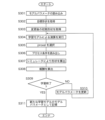
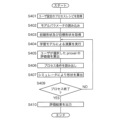
- 3 is a flowchart illustrating a learning model generation procedure. It is a flowchart explaining the recipe construction procedure using a learning model.
- 7 is a schematic diagram showing a configuration example of a learning model in Embodiment 2.
- FIG. 3 is a flowchart illustrating a fine tuning processing procedure.
- 3 is a flowchart illustrating a process recipe evaluation procedure.
- FIG. 1 is an explanatory diagram illustrating an overview of an information processing system according to an embodiment.
- the information processing system according to the embodiment includes an information processing device 100 and a semiconductor manufacturing device 200.
- the information processing device 100 and the semiconductor manufacturing device 200 are, for example, communicably connected.
- the semiconductor manufacturing device 200 may include any device that performs a semiconductor manufacturing process, such as an exposure device, an etching device, a film forming device, an ion implantation device, an ashing device, a sputtering device, or the like.
- the information processing apparatus 100 constructs a recommended process recipe for a manufacturing process executed in the semiconductor manufacturing apparatus 200, and presents the constructed process recipe to a manufacturer or the like (user).
- step refers to the smallest processing unit that changes the state (attributes of the processing object or the state of the semiconductor manufacturing equipment) in the semiconductor manufacturing process. Therefore, in the case where the state changes over time, in this embodiment, the steps before and after the elapse of time are treated as separate steps.
- the information processing device 100 selects one variable group to be used in each step from among a plurality of variable groups prepared in advance, and determines the processing content to be executed in each step, thereby creating a process recommended to the user. Build a recipe.
- variable group a series of variables (setting values, control values, etc.) that achieve the same effect in each step.
- variable group will also be referred to as proxel.
- a proxel is the smallest unit of data for determining the processing content in each step, and is called a pixel in the same way that the smallest unit of an image (picture element) is called a pixel, and the smallest unit of a three-dimensional object (volume element) is called a voxel.
- one proxel is shown by one regular hexagon. Details of proxel will be specifically explained using FIGS. 2 and 3.
- a learning model MD1 (see FIG. 7) using reinforcement learning is used to search for a proxel for constructing a process recipe. For example, when state data indicating the current state of the processing object (processed object) and target data indicating the target state of the processing object set by the user are input, the learning model MD1 makes recommendations in the next step. The proxel is learned to output information about the proxel. The information processing device 100 executes calculations using the learning model MD1 at each step, and determines proxels to be selected at each step based on the calculation results, thereby constructing a process recipe recommended to the user.
- the configuration of the learning model MD1 and the method for generating the learning model MD1 will be described in detail later.
- FIG. 2 is an explanatory diagram illustrating the structure of data obtained in the manufacturing process.
- a semiconductor manufacturing process is performed step-by-step in accordance with a plurality of steps that constitute a process recipe.
- six items including initial data (I), setting data (R), output data (E), measurement data (Pl), experimental data (Pr), and target data (Pf) data is obtained.
- the initial data (I) is data regarding the object to be processed.
- the initial data (I) is set by the user, for example.
- the initial data (I) includes, for example, data such as initial critical dimension (Initial CD), material, thickness, aspect ratio, and mask coverage.
- the setting data (R) is data set for the semiconductor manufacturing equipment.
- the setting data (R) is set by the user according to the attributes of the processing object and the final target object, the characteristics of the semiconductor manufacturing equipment to be used, and the like.
- the setting data (R) includes data such as the pressure in the chamber (Pressure), the power of the high frequency power source (Power), the gas flow rate (Gas), the temperature in the chamber, and the surface temperature of the object to be processed (Temperature). .
- the output data (E) is data output from the semiconductor manufacturing equipment.
- the output data (E) includes, for example, data such as the peak-to-peak voltage (Vpp) of the RF signal, the DC self-bias voltage (Vdc), the emission intensity (OES) by optical emission spectrometry, and the reflected wave power (Reflect).
- the measurement data (Pl) is data related to the implementation environment of the manufacturing process.
- the measurement data (Pl) is measured using various sensors and measurement devices.
- the measurement data (Pl) includes, for example, data such as plasma density, ion energy, and ion flux.
- the experimental data (Pr) is data regarding the results obtained in each step.
- the experimental data (Pr) is measured using various sensors and measuring devices.
- the experimental data (Pr) includes, for example, etching rate, deposition rate, XY position, film type, vertical/lateral classification. Contains data such as.
- the target data (Pf) is data regarding the final target.
- the target data (Pf) is set by the user according to the attributes that the final target should reach.
- the target data (Pf) includes data such as critical dimension (CD), depth, taper angle, tilt angle, and bowing.
- the items shown in FIG. 2 are just examples, and the types of items included in each step are not limited to those shown. For example, some items may not be included depending on the manufacturing process or step, or different items may be included depending on the manufacturing process or step.
- the data of each item shown in FIG. 2 is an example, and the type of data included in each item is not limited to what is shown in the figure. Data for each item can be set as appropriate depending on the manufacturing process and steps.
- a series of variables (group of variables) that can achieve similar effects in the same manufacturing process and the same step is defined as proxel.
- the effect in a predetermined step of the manufacturing process is an amount derived as the difference between the state of the object to be processed before executing the step and the state of the object to be processed after executing the step.
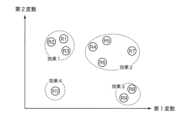
- FIG. 3 is an explanatory diagram illustrating the configuration of proxel.
- the configuration of proxel will be described using as an example a two-dimensional feature space in which the horizontal axis is a first variable and the vertical axis is a second variable.
- the first and second variables can be used to obtain the same effect at each step. You can find the range of a variable.
- Each region shown with reference numerals R1 to R10 in FIG. 3 is a region defined by defining the ranges of the first variable and the second variable. It is assumed that when the same step in the same manufacturing process is executed using the variables in each of the regions R1, R2, and R3 among these regions R1 to R10, the same effect called "effect 1" is obtained. .
- a plurality of variables included in the regions R1, R2, and R3 are grouped as one variable group, and these variable groups are defined as one proxel (referred to as proxel1).
- proxel4 proxel4
- proxel4 another proxel
- each step includes K variables (K is an integer greater than or equal to 1), K-dimensional features Using quantity space, the range (spatial region) of each variable that provides the same effect can be found, the variables can be grouped for each effect, and proxels can be defined.
- FIG. 4 is a block diagram showing the internal configuration of the information processing device 100.
- the information processing device 100 is, for example, a dedicated or general-purpose computer that includes a control section 101, a storage section 102, a communication section 103, an operation section 104, and a display section 105.
- the control unit 101 includes a CPU (Central Processing Unit), a ROM (Read Only Memory), a RAM (Random Access Memory), and the like.
- the ROM included in the control unit 101 stores control programs and the like that control the operations of each hardware unit included in the information processing device 100.
- the CPU in the control unit 101 reads and executes the control program stored in the ROM and various computer programs stored in the storage unit 102, and controls the operation of each hardware part, thereby controlling the entire apparatus according to the present disclosure. function as an information processing device.
- the RAM included in the control unit 101 temporarily stores data used during execution of calculations.
- control unit 101 is configured to include a CPU, a ROM, and a RAM, but the configuration of the control unit 101 is not limited to the above.
- the control unit 101 includes one or more control circuits or arithmetic operations including, for example, a GPU (Graphics Processing Unit), an FPGA (Field Programmable Gate Array), a DSP (Digital Signal Processor), a quantum processor, a volatile or nonvolatile memory, etc. It may also be a circuit.
- the control unit 101 may also include functions such as a clock that outputs date and time information, a timer that measures the elapsed time from when a measurement start instruction is given until a measurement end instruction is given, and a counter that counts the number of measurements.
- the storage unit 102 includes storage devices such as an HDD (Hard Disk Drive), an SSD (Solid State Drive), and an EEPROM (Electronically Erasable Programmable Read Only Memory).
- the storage unit 102 stores various computer programs executed by the control unit 101 and various data used by the control unit 101.
- the computer programs (program products) stored in the storage unit 102 include a learning program PG1 for generating a learning model MD1, a recipe construction program PG2 for constructing a recipe, a simulator SIM for virtually performing a manufacturing process according to a process recipe, etc. including.
- Each of these computer programs may be a single computer program, or may be composed of multiple computer programs. Furthermore, these computer programs may partially use existing libraries.
- Computer programs such as the learning program PG1 and the recipe construction program PG2 stored in the storage unit 102 are provided by a non-temporary recording medium RM that readably records the computer programs.
- the recording medium RM is a portable memory such as a CD-ROM, a USB memory, an SD (Secure Digital) card, a micro SD card, or a Compact Flash (registered trademark).
- the control unit 101 reads various computer programs from the recording medium RM using a reading device (not shown), and stores the read various computer programs in the storage unit 102. Further, the computer program stored in the storage unit 102 may be provided through communication. In this case, the control unit 101 may acquire a computer program through communication via the communication unit 103 and store the acquired computer program in the storage unit 102.
- the learning model MD1 is stored in the storage unit 102.
- the learning model MD1 is a learning model generated by reinforcement learning, which will be described later.
- the storage unit 102 stores configuration information on the layers that make up the learning model MD1, information on the nodes that make up each layer, and model parameters such as weighting and bias between nodes.
- the storage unit 102 includes a proxel database DB.
- FIG. 5 is a conceptual diagram showing an example of the proxel database DB.
- the proxel database DB stores each proxel defined as described above in association with a process ID, a data range of each data, an effect, a process ID, and a step number. That is, the proxel database DB stores a large number of process conditions summarized for each manufacturing process, each step, and each effect.
- one semiconductor process condition (variable group) that provides the same effect is determined.
- the configuration is such that the proxel database DB is provided inside the information processing device 100, but the proxel database DB is provided outside the information processing device 100, and is accessed via the communication unit 103 to obtain necessary data. It is also possible to have a configuration in which
- the communication unit 103 includes a communication interface for transmitting and receiving various data to and from external devices.
- a communication interface compliant with communication standards such as LAN (Local Area Network) can be used.
- the external devices may include the semiconductor manufacturing device 200 and a server device (not shown). If the data to be transmitted is input from the control unit 101, the communication unit 103 transmits the data to the destination external device, and if the data transmitted from the external device is received, the communication unit 103 outputs the received data to the control unit 101. do.
- the operation unit 104 includes operation devices such as a touch panel, a keyboard, and switches, and accepts various operations and settings by a user or the like.
- the control unit 101 performs appropriate control based on various types of operation information given from the operation unit 104, and stores setting information in the storage unit 102 as necessary.
- the display unit 105 includes a display device such as a liquid crystal monitor or an organic EL (Electro-Luminescence), and displays information to be notified to the user etc. in accordance with instructions from the control unit 101.
- a display device such as a liquid crystal monitor or an organic EL (Electro-Luminescence), and displays information to be notified to the user etc. in accordance with instructions from the control unit 101.
- the information processing device 100 in this embodiment may be a single computer, or may be a computer system configured with multiple computers, peripheral devices, and the like. Furthermore, the information processing apparatus 100 may be a virtual machine or may be a cloud. Further, in this embodiment, the information processing apparatus 100 and the semiconductor manufacturing apparatus 200 are described as separate bodies, but the information processing apparatus 100 may be provided inside the semiconductor manufacturing apparatus 200.
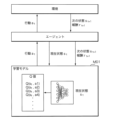
- a reinforcement learning algorithm is used to construct a process recipe to be presented to the user.
- FIG. 6 is a schematic diagram of the reinforcement learning algorithm.
- a reinforcement learning algorithm is an algorithm that deals with the problem of an agent placed in a certain environment observing the current state of an observation target and deciding what action to take.
- DQN Deep Q-Network
- the learning model in reinforcement learning calculates the value of the action value function (Q value) for each of the possible actions a1, a2, ..., an (n is an integer of 2 or more) when the current state s t of the observation target is input. is learned to output.
- DQN is a method that approximates an action value function using a neural network and performs reinforcement learning.
- the learning model MD1 is expressed using a neural network that approximates the action value function, and the learning model MD1 is enhanced to output information regarding the value when each proxel is selected according to the current state of the object to be processed.
- the state s t input to the learning model MD1 is, for example, difference data between state data indicating the current state of the object to be processed and target data indicating the target state of the object to be processed. More specifically, difference data between image data indicating the current shape of the object to be processed and image data indicating the target shape of the object to be processed can be used.
- the learning model MD1 calculates the values of action value functions Q(s t , a1), Q for each of possible actions a1, a2, ..., an (n is an integer of 2 or more) for the input of the current state s t . (s t , a2), ..., Q(s t , an) are output.
- the value of the action value function represents the expected value of profits obtained in the future when action a is selected in state s t and is also called the Q value. That is, the value of the action value function (Q value) does not represent a short-term reward, but represents value in a long-term sense.
- action a corresponds to executing one step that configures a process according to the conditions defined by the selected proxel.
- the agent refers to the Q value output for each action from the learning model MD1, and selects the action a t that has the highest Q value from among the actions a1, a2, . . . , an that can be taken in the state st .
- the environment is updated by the selected action a t and the next state s t+1 is determined.
- the agent is the control unit 101 of the information processing apparatus 100, and the environment is a simulator that virtually executes a manufacturing process according to a process recipe.
- the agent obtains a reward r t+ 1 from the environment according to the next state s t+1 generated by selecting the action a t . If the manufacturing process to be performed is an etching process, the reward r t+1 is determined depending on, for example, the amount of the object to be processed removed, the loss of uncut parts, the loss of over-cutting, the validity of the selected proxel, etc. be done.
- agents learn behaviors that maximize future rewards (profits). Specifically, the agent sequentially updates the learning model MD1 based on the following formula (1) using the state s t , the state s t+1 , and the reward r t+1 for the previous action a t .
- ⁇ is a learning coefficient
- ⁇ is a discount rate
- r t+1 is a reward obtained as a result of action a t .
- the learning coefficient ⁇ is a parameter that determines the speed of learning, and satisfies the relationship 0 ⁇ 1.
- the discount rate ⁇ is a parameter indicating how much to discount the evaluation of the future state, and satisfies the relationship 0 ⁇ 1.
- the model parameters of the learning model MD1 are learned using error backpropagation or the like so that the second term on the right side of Equation (1) becomes zero. This means that when state s t transitions to state s t+1 due to action a t , the Q value of that action a t is changed to the value when the next state s t+1 is the state with the highest Q value. It means to get closer.
- the agent repeatedly updates the learning model MD1 until a predetermined termination condition is met. By repeating the update, the learning model MD1 is trained to maximize the reward r t+1 .
- the termination conditions are appropriately set, for example, when updating is performed a predetermined number of times, when the shape of the object to be processed approaches the target shape, when the object to be processed can no longer be cut.
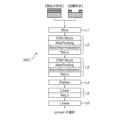
- FIG. 7 is a schematic diagram showing a configuration example of the learning model MD1.
- the learning model MD1 includes, for example, six layers from the first layer L1 to the sixth layer L6 shown in FIG. 7.
- the first layer L1 includes a slice layer. Difference data between image data indicating the current shape of the object to be processed and image data indicating the target shape is input to the first layer L1.
- the first layer L1 cuts out a part of the input difference data and outputs it to the subsequent second layer.
- the second layer L2 includes a CNN (Convolutional Neural Network) block, a maximum pooling layer, a batch normalization layer, and a ReLU (Rectified Linear Unit) layer.
- the second layer L2 extracts feature amounts from the difference data input from the first layer L1, and outputs the extracted data to the subsequent third layer.
- the third layer L3 like the second layer L2, includes a CNN block, a maximum pooling layer, a batch normalization layer, and a ReLU layer.
- the second layer L2 extracts feature amounts from the data input from the second layer L2, and outputs the extracted data to the subsequent third layer.
- the fourth layer L4 includes a smoothing (Flatten) layer
- the fifth layer L5 includes a linear layer and a ReLU layer
- the sixth layer includes a linear layer.
- the final linear layer included in the sixth layer L6 includes the same number of nodes as the number of possible actions a1, a2, ..., an, and an action value function for each of the corresponding actions a1, a2, ..., an from each node. Output the value of .
- an appropriate proxel is selected when the shape is close to the target shape. It has the advantage of being easy to use.
- the operation of the information processing device 100 will be described below.
- the information processing device 100 performs a process of generating a learning model MD1 in a learning phase before the start of actual operation, and a recipe construction process using the learning model MD1 in an operation phase after the learning model MD1 is generated. Execute.
- FIG. 8 is a flowchart illustrating the procedure for generating the learning model MD1.
- the control unit 101 of the information processing device 100 executes the learning program PG1 stored in the storage unit 102, and executes the following procedure to generate the learning model MD1. It is assumed that, before starting learning, initial values are given to the model parameters describing the learning model MD1.
- the control unit 101 acquires image data indicating the target shape of the object to be processed (step S101).
- the target shape is a target cross-sectional shape set by the user regarding the object to be processed.
- the control unit 101 can be acquired, for example, from a user terminal (not shown) through the communication unit 103.
- the control unit 101 acquires image data indicating the current shape of the object to be processed (step S102).
- the image data indicating the current shape of the object to be processed is, for example, image data of the cross-sectional shape of the object to be processed, which is obtained by calculation using the simulator SIM.
- the control unit 101 inputs the difference data between the image data indicating the current shape of the object to be processed and the image data indicating the target shape to the learning model MD1, and executes the calculation by the learning model MD1 (step S103).
- a value (Q value) of an action value function is obtained for each possible action.
- the control unit 101 selects proxel based on the calculation result by the learning model MD1 (step S104).
- the control unit 101 selects proxel by selecting action a such that the Q value is the highest among the Q values of each action calculated according to the current state s t .
- the control unit 101 causes the storage unit 102 to store information on the selected proxel.
- the control unit 101 refers to the proxel database DB and reads out the process conditions stored in association with the selected proxel (step S105).
- the control unit 101 may read data ranges of setting data, output data, measurement data, and experimental data as process conditions.
- the control unit 101 executes a simulation using the simulator SIM based on the process conditions read from the proxel database DB, and calculates the shape of the object to be processed (step S106).
- the control unit 101 calculates a reward based on the calculated shape of the object to be processed (step S107). For example, the control unit 101 calculates the shaved amount by comparing the current shape of the processed object acquired in step S102 with the shape of the processed object calculated by the simulator SIM in step S106, and calculates the shaved amount. For example, a reward of -0.1 to 0.1 is given depending on the amount. Furthermore, the control unit 101 calculates the uncut loss or over-cutting loss by comparing the target shape acquired in step S101 and the shape of the object to be processed calculated in step S106, and calculates the uncut loss or overcutting loss.
- a reward of -0.1 to 0.1 may be given for the loss due to excessive cutting, and a reward of -0.1 to 0 may be given for the loss due to excessive cutting. Further, the control unit 101 gives a reward of -1 if the proxel input in step S103 is not valid.
- the control unit 101 determines whether to end the learning (step S108). For example, if the number of steps in the manufacturing process exceeds a threshold value, if the loss due to overcutting exceeds a threshold value, or if the difference between the current shape and the target shape becomes less than a threshold value, the control unit 101 controls the If a proxel that is not a proxel is selected a set number of times or more, it is determined that learning is finished.
- the control unit 101 updates the model parameters including the weights and biases between the nodes forming the learning model MD1 (step S109), and returns the process to step S103. After returning the process to step S103, the control unit 101 regards the shape calculated by the simulator SIM as the current shape and executes calculations using the learning model MD1. In Q learning, the model parameters of the learning model MD1 are learned so that the second term of the above equation (1) approaches zero by repeatedly performing the calculations in steps S103 to S109 described above.
- control unit 101 ends the processing according to this flowchart.
- the storage unit 102 stores model parameters for the trained learning model MD1.
- the control unit 101 may generate the learning model MD1 by executing the procedure shown in the flowchart of FIG. 8 multiple times for the same process. In this case, the control unit 101 may proceed with reinforcement learning by providing rewards after each process ends. For example, the control unit 101 may give a reward of -1 to 1 for the final uncut loss, and a reward of 0 to 1 depending on the number of steps. Further, the control unit 101 may give a reward of -1 to 0 for the loss due to over-shaving.
- a learning algorithm using Q-learning has been described as an example, but the method for generating the learning model MD1 is not limited to Q-learning, and includes, for example, TD learning (Temporal Difference Learning), policy gradients method, Any reinforcement learning algorithm can be used, such as SARSA (State-Action-Reward-State-Action) and Actor-critic.
- FIG. 9 is a flowchart illustrating the recipe construction procedure using the learning model MD1.
- the control unit 101 of the information processing device 100 executes the recipe construction program PG2 stored in the storage unit 102, and executes the following procedure for constructing a process recipe. Execute. It is assumed that learned model parameters are stored in the storage unit 102 before starting operation.
- the control unit 101 acquires image data indicating the initial shape and target shape of the object to be processed (step S122).
- the initial shape is the cross-sectional shape of the object to be processed before the start of the process, which is set by the user
- the target shape is the target cross-sectional shape of the object to be processed, which is set by the user.
- the control unit 101 can be acquired, for example, from a user terminal (not shown) through the communication unit 103.
- the control unit 101 inputs the difference data between the image data indicating the current shape of the object to be processed and the image data indicating the target shape to the learning model MD1, and executes the calculation by the learning model MD1 (step S123).
- the calculation result by the learning model MD1 includes information on the recommended proxel.
- information on the action with the highest Q value corresponds to information on the recommended proxel.
- the control unit 101 selects proxel based on the calculation result by the learning model MD1 (step S124).
- the control unit 101 causes the storage unit 102 to store the selected proxel as the proxel with index i.
- the control unit 101 refers to the proxel database DB, reads out the process conditions stored in association with the selected proxel (step S125), and executes a simulation using the simulator SIM to determine the shape of the object to be processed. Calculate (step S126).
- the control unit 101 determines whether to end the process (step S127). For example, if the difference between the shape of the object to be processed (current shape) calculated in step S126 and the target shape is less than the threshold value, the control unit 101 determines to end the process.
- control unit 101 If it is determined that the process is not to end (S127: NO), the control unit 101 increases the index i of proxel by +1 (step S128), and returns the process to step S123.
- the control unit 101 regards the shape calculated in step S126 as the current shape, and repeats the calculation using the learning model MD1.
- n is the index of proxel at the time the process ends.
- the control unit 101 may transmit information on the constructed process recipe to the user terminal from the communication unit 103, or may display the information on the display unit 105.
- the learning model MD1 for recipe construction can be generated using reinforcement learning. Since the trained learning model MD1 can be stored in the storage unit 102, during operation, calculations can be made by reading the model parameters of the learning model MD1 from the storage unit 102, and a process recipe recommended to the user can be constructed. can do.
- the difference between the image data representing the current shape and the image data representing the target shape is used as input to the learning model MD1, so when the current shape becomes close to the target shape, This makes it easier to select an appropriate proxel, and it is possible to construct a more appropriate process recipe.
- difference data between the initial shape and the target shape is input to the trained learning model MD1, and a process recipe for the entire manufacturing process is constructed.
- the control unit 101 inputs difference data between shape data at a first point in time in the manufacturing process and shape data at a second time point later than the first time point into the learning model MD1. , a partial process recipe from the first point in time to the second point in time may be generated.
- control unit 101 may display the information on the proxel selected in each step together with the value of the action value function calculated for the proxel.
- the control unit 101 may display the information on the proxel selected in each step together with the value of the action value function calculated for the proxel.
- control unit 101 may use Gradient-weighted Calss Activation Mapping (Gradient-weighted Cals Activation Mapping) technology to display the location of interest in proxel selection in a heat map.
- the control unit 101 extracts the results of the second layer L2, third layer L3, and fourth layer L4 that constitute the learning model MD1, performs error backpropagation using the classification results of the fourth layer L4, and transfers the results to the third layer L4.
- a heat map indicating the point of interest may be generated by calculating the gradient of the convolutional layer in L3 and the second layer L2.
- Embodiment 2 In Embodiment 2, a modification of the learning model will be described.
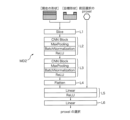
- FIG. 10 is a schematic diagram showing a configuration example of the learning model MD2 in the second embodiment.
- the configuration of the learning model MD2 in the second embodiment is similar to the learning model MD1 in the first embodiment, and includes the first layer L1 to the sixth layer L6.
- the learning model MD2 in the second embodiment includes image data indicating the shape of the object to be processed before the i-th step (i is an integer of 2 or more) in the process recipe is executed, and image data indicating the target shape.
- the difference data between the two and the information of the proxel selected when the i-1th step is executed are input.
- the tensor smoothed in the fourth layer L4 may be combined with the index of the previously selected proxel as a one-hot expression. That is, it is sufficient to combine vectors in which the element corresponding to the selected proxel is set to 1 and the remaining elements are set to 0.
- reinforcement learning is performed taking into consideration the information of the proxel selected last time. For example, if the same proxel as last time is selected, the reward may be set to zero, and if a different proxel is selected from the previous time, reinforcement learning may be performed with the reward set to a negative value (for example, -0.5).
- the processing procedure of reinforcement learning and the recipe construction procedure after learning are the same as those in Embodiment 1, so a detailed explanation thereof will be omitted.
- reinforcement learning is performed taking into consideration the information of the previously selected proxel, so it is expected that a more natural process recipe with less proxel switching, for example, can be constructed.
- Embodiment 3 fine tuning of a learning model will be described.
- the information processing device 100 updates the fine learning model MD1 when the initial shape of the object to be processed changes, when the proxel data stored in the proxel database DB changes, etc. Perform tuning.
- the initial shape of the object to be processed is changed and the learning model MD1 is fine-tuned.
- FIG. 11 is a flowchart illustrating the fine tuning processing procedure.
- the control unit 101 reads model parameters of the learning model MD1 from the storage unit 102 (step S301).
- the control unit 101 obtains image data indicating the target shape of the object to be processed (step S302), and obtains image data indicating the initial shape of the object to be processed after the change (step S303).
- the control unit 101 inputs the difference data between the image data indicating the current shape of the object to be processed and the image data indicating the target shape to the learning model MD1, and executes the calculation by the learning model MD1 (step S304). That is, the calculation may be performed based on the model parameters read in step S301. By calculation using the learning model MD1, a value (Q value) of an action value function is obtained for each possible action.
- the control unit 101 selects a proxel based on the calculation result by the learning model MD1 (step S305), and reads out the process conditions stored in association with the selected proxel (step S306).
- the control unit 101 executes a simulation using the simulator SIM based on the process conditions read from the proxel database DB, calculates the shape of the object to be processed (step S307), and calculates a reward based on the calculated shape of the object to be processed. (Step S308).
- the control unit 101 determines whether or not to end the learning (step S309), and if it is determined not to end the learning (S309: NO), the control unit 101 sets the model parameters including the weights and biases between the nodes constituting the learning model MD1. is updated (step S310), and the predetermined value is returned to step S304.
- control unit 101 stores the finally obtained model parameters in the storage unit 102 as model parameters of a new learning model (Step S311).
- a new learning model can be generated by fine tuning using the trained learning model MD1, so that it is possible to generate a new learning model for a new object to be processed.
- the time required for learning can be shortened.
- the flowchart in Figure 11 describes fine tuning when the initial shape is different, but even when the proxel data stored in the proxel database DB changes, fine tuning allows you to create a new shape without spending time.
- a learning model can be generated.
- Embodiment 4 a configuration for evaluating user-set recipes using learning model MD1 will be described.
- FIG. 12 is a flowchart illustrating the process recipe evaluation procedure.
- the control unit 101 acquires the process recipe set by the user (step S401).
- the control unit 101 can obtain a process recipe from a user terminal (not shown) through the communication unit 103, for example.
- the control unit 101 reads the model parameters of the learning model MD1 from the storage unit 102 (step S402).
- the model parameters of the learning model MD1 which is generated for a target object that is the same as or similar to the target object assumed in the process recipe set by the user, are read.
- the control unit 101 acquires the initial shape and the target shape (step S403), and inputs their difference data to the learning model MD1, thereby executing calculations using the learning model MD1 (step S404).
- the control unit 101 calculates the evaluation value of the proxel selected in the user-set process recipe (step S405). For example, the control unit 101 calculates, as an evaluation value, the probability that the proxel selected by the user is selected by the learning model MD1, based on the calculation result in step S404.
- control unit 101 Based on the information of the proxel selected by the user, the control unit 101 reads the process conditions from the proxel database DB (step S406), and calculates the shape using the simulator (step S407).
- the control unit 101 determines whether the process has ended (step S409), and when determining that the process has not ended (S409: NO), returns the process to step S404, and in the next step, the proxel selected by the user carry out evaluations.
- control unit 101 If it is determined that the process has ended (S409: YES), the control unit 101 outputs the evaluation result of the process recipe including the evaluation value of each proxel (Step S410).
- the control unit 101 may transmit the calculated evaluation result of the process recipe to the user terminal from the communication unit 103, or may display it on the display unit 105.
- the trained learning model MD1 by using the trained learning model MD1, it is possible to quantitatively evaluate the process recipe set by the user.
- Control unit 102 Storage unit 103 Communication unit 104 Operation unit 115
- Display unit PG1 Learning program PG2 Recipe construction program SIM Simulator MD1, MD2 Learning model DB proxel database
Landscapes
- Engineering & Computer Science (AREA)
- Physics & Mathematics (AREA)
- Theoretical Computer Science (AREA)
- Computer Hardware Design (AREA)
- General Physics & Mathematics (AREA)
- Evolutionary Computation (AREA)
- General Engineering & Computer Science (AREA)
- Geometry (AREA)
- Software Systems (AREA)
- Medical Informatics (AREA)
- Computer Vision & Pattern Recognition (AREA)
- Artificial Intelligence (AREA)
- Manufacturing & Machinery (AREA)
- Quality & Reliability (AREA)
- Automation & Control Theory (AREA)
- Data Mining & Analysis (AREA)
- Computing Systems (AREA)
- Mathematical Physics (AREA)
- Management, Administration, Business Operations System, And Electronic Commerce (AREA)
- Condensed Matter Physics & Semiconductors (AREA)
- Stored Programmes (AREA)
Abstract
Description
(実施の形態1)
図1は実施の形態に係る情報処理システムの概要を説明する説明図である。実施の形態に係る情報処理システムは、情報処理装置100及び半導体製造装置200を備える。情報処理装置100及び半導体製造装置200は、例えば通信可能に接続される。半導体製造装置200は、露光装置、エッチング装置、成膜装置、イオン注入装置、アッシング装置、スパッタリング装置など、半導体の製造プロセスを実施する任意の装置を含み得る。情報処理装置100は、半導体製造装置200において実行される製造プロセスに関して、推奨するプロセスレシピを構築し、構築したプロセスレシピを製造者等(ユーザ)に提示する。
+α{rt+1 +γ・maxQ(st+1 ,at+1 )-Q(st ,at )}
‥‥‥(1)
情報処理装置100は、実運用が開始される前の学習フェーズにて学習モデルMD1の生成処理を行い、学習モデルMD1が生成された後の運用フェーズにて学習モデルMD1を用いたレシピ構築処理を実行する。
実施の形態2では、学習モデルの変形例について説明する。
実施の形態3では、学習モデルのファインチューニングについて説明する。
実施の形態4では、学習モデルMD1を用いて、ユーザ設定のレシピを評価する構成について説明する。
101 制御部
102 記憶部
103 通信部
104 操作部
115 表示部
PG1 学習プログラム
PG2 レシピ構築プログラム
SIM シミュレータ
MD1,MD2 学習モデル
DB proxelデータベース
Claims (17)
- プロセスレシピを構築するための複数の変数群と、前記プロセスレシピの特定のステップが実行される前の被処理体の状態を示す状態データと、前記被処理体の目標状態を示す目標データとを取得し、
前記複数の変数群から一の変数群を選択し、選択した一の変数群により特徴付けられる一のステップを実行することによって得られる前記被処理体の状態を評価し、
取得した状態データ及び目標データ、並びに、評価した前記被処理体の状態に応じて決定される報酬を用いた強化学習によって、プロセスレシピ構築のためのモデルを生成する
処理をコンピュータにより実行するモデル生成方法。 - 前記モデルは、被処理体の状態を示す状態データと、前記被処理体の目標状態を示す目標データとに基づくデータを入力した場合、前記プロセスレシピの各ステップで推奨する変数群の情報を出力するよう構成される
請求項1に記載のモデル生成方法。 - 前記状態データは、前記特定のステップが実行される前の被処理体の形状を示す画像データであり、
前記目標データは、前記被処理体の目標形状を示す画像データであり、
前記被処理体の形状を示す画像データと、前記目標形状を示す画像データとの間の差分データを前記モデルに入力する
処理を前記コンピュータにより実行する請求項2に記載のモデル生成方法。 - 前記一のステップをシミュレータにより実行する
処理を前記コンピュータにより実行する請求項1に記載のモデル生成方法。 - 前記一のステップを実行する前後の前記被処理体の状態の変化、及び、前記一のステップを実行した後の被処理体の状態と目標状態との差を算出することにより、前記一のステップを実行することによって得られる前記被処理体の状態を評価する
処理を前記コンピュータにより実行する請求項1に記載のモデル生成方法。 - 算出した状態の変化、及び算出した目標状態との差に応じて、前記報酬を決定する
処理を前記コンピュータにより実行する請求項5に記載のモデル生成方法。 - 前記モデルは、構築すべきプロセスレシピにおけるi番目(iは2以上の整数)のステップが実行される前の前記被処理体の状態を示す状態データと、前記被処理体の目標状態を示す目標データとに基づくデータ、及びi-1番目のステップが実行される際に選択された変数群の情報を入力した場合、前記i番目のステップで推奨する変数群の情報を出力するよう構成される
請求項1に記載のモデル生成方法。 - 前記i-1番目のステップが実行される際に選択された変数群と、前記i番目のステップが実行される際に選択された変数群とが同一であるか否かに応じて、前記報酬を決定する
処理を前記コンピュータにより実行する請求項7に記載のモデル生成方法。 - 複数回のプロセスを実行し、各プロセスで最終的に得られた被処理体の状態、及び各プロセスのステップ数に応じて、前記報酬を決定する
処理を前記コンピュータにより実行する請求項1に記載のモデル生成方法。 - プロセスレシピを構築するための複数の変数群と、前記プロセスレシピの特定のステップが実行される前の被処理体の状態を示す状態データと、前記被処理体の目標状態を示す目標データとを取得し、
前記複数の変数群から一の変数群を選択し、選択した一の変数群により特徴付けられる一のステップを実行することによって得られる前記被処理体の状態を評価し、
取得した状態データ及び目標データ、並びに、評価した前記被処理体の状態に応じて決定される報酬を用いた強化学習によって、プロセスレシピ構築のためのモデルを生成する
処理をコンピュータに実行させるためのコンピュータプログラム。 - 生成したモデルのモデルパラメータを初期値に用いて、前記被処理体とは異なる別の被処理体について新たなモデルを生成する
処理を前記コンピュータに実行させるための請求項10に記載のコンピュータプログラム。 - プロセスレシピの特定のステップが実行される前の被処理体の状態を示す状態データと、前記被処理体の目標状態を示す目標データとを取得し、
取得した状態データ及び目標データを、請求項1から請求項9の何れか1つに記載のモデル生成方法にて生成されたモデルに入力して該モデルによる演算を実行し、
前記モデルによる演算結果に基づき、前記ステップで採用すべき変数群を特定し、
複数のステップの夫々で特定した変数群に基づき、前記プロセスレシピを構築する
処理をコンピュータに実行させるためのコンピュータプログラム。 - 前記モデルは、複数の変数群のそれぞれについて行動価値関数の値を出力するよう構成してあり、
各ステップで選択した変数群の行動価値関数の値を出力する
処理を前記コンピュータに実行させるための請求項12に記載のコンピュータプログラム。 - 前記変数群の選択に寄与した前記状態データの部分を可視化する
処理を前記コンピュータに実行させるための請求項12に記載のコンピュータプログラム。 - ユーザにより設定されたプロセスレシピと、前記モデルにより構築されたプロセスレシピとを比較する
処理を前記コンピュータに実行させるための請求項12に記載のコンピュータプログラム。 - プロセスレシピを構築するための複数の変数群を記憶する記憶部と、
前記プロセスレシピの特定のステップが実行される前の被処理体の状態を示す状態データと、前記被処理体の目標状態を示す目標データとを取得する取得部と、
前記複数の変数群から1又は複数の変数群を選択し、選択した1又は複数の変数群により特徴付けられる1又は複数のステップを実行することによって得られる前記被処理体の状態を評価する評価部と、
取得した状態データ及び目標データ、並びに、評価した前記被処理体の状態に応じて算出される報酬を用いた強化学習によって、プロセスレシピ構築のためのモデルを生成する生成部と
を備える情報処理装置。 - プロセスレシピの特定のステップが実行される前の被処理体の状態を示す状態データと、前記被処理体の目標状態を示す目標データとを取得する取得部と、
取得した状態データ及び目標データを、請求項1から請求項9の何れか1つに記載のモデル生成方法にて生成されたモデルに入力して前記モデルによる演算を実行する演算部と、
前記モデルによる演算結果に基づき、前記ステップで採用すべき変数群を特定する特定部と、
複数のステップの夫々で特定した変数群に基づき、前記プロセスレシピを構築する構築部と
を備える情報処理装置。
Priority Applications (4)
| Application Number | Priority Date | Filing Date | Title |
|---|---|---|---|
| JP2024519208A JPWO2023214541A1 (ja) | 2022-05-06 | 2023-04-28 | |
| KR1020247039931A KR20250005440A (ko) | 2022-05-06 | 2023-04-28 | 모델 생성 방법, 컴퓨터 프로그램 및 정보 처리 장치 |
| CN202380038791.4A CN119156688A (zh) | 2022-05-06 | 2023-04-28 | 模型生成方法、计算机程序以及信息处理装置 |
| US18/938,566 US20250061254A1 (en) | 2022-05-06 | 2024-11-06 | Model generation method, recording medium, and information processing apparatus |
Applications Claiming Priority (2)
| Application Number | Priority Date | Filing Date | Title |
|---|---|---|---|
| JP2022-076699 | 2022-05-06 | ||
| JP2022076699 | 2022-05-06 |
Related Child Applications (1)
| Application Number | Title | Priority Date | Filing Date |
|---|---|---|---|
| US18/938,566 Continuation US20250061254A1 (en) | 2022-05-06 | 2024-11-06 | Model generation method, recording medium, and information processing apparatus |
Publications (1)
| Publication Number | Publication Date |
|---|---|
| WO2023214541A1 true WO2023214541A1 (ja) | 2023-11-09 |
Family
ID=88646478
Family Applications (1)
| Application Number | Title | Priority Date | Filing Date |
|---|---|---|---|
| PCT/JP2023/016791 Ceased WO2023214541A1 (ja) | 2022-05-06 | 2023-04-28 | モデル生成方法、コンピュータプログラム及び情報処理装置 |
Country Status (6)
| Country | Link |
|---|---|
| US (1) | US20250061254A1 (ja) |
| JP (1) | JPWO2023214541A1 (ja) |
| KR (1) | KR20250005440A (ja) |
| CN (1) | CN119156688A (ja) |
| TW (1) | TW202407483A (ja) |
| WO (1) | WO2023214541A1 (ja) |
Cited By (2)
| Publication number | Priority date | Publication date | Assignee | Title |
|---|---|---|---|---|
| WO2025164585A1 (ja) * | 2024-02-02 | 2025-08-07 | 東京エレクトロン株式会社 | コンピュータプログラム、情報処理方法及び情報処理装置 |
| WO2025216108A1 (ja) * | 2024-04-12 | 2025-10-16 | 東京エレクトロン株式会社 | 情報処理方法、情報処理装置及びコンピュータプログラム |
Families Citing this family (1)
| Publication number | Priority date | Publication date | Assignee | Title |
|---|---|---|---|---|
| CN120220873A (zh) * | 2025-03-12 | 2025-06-27 | 成都大帝汉克生物科技有限公司 | 基于人工智能的香料配方组成与优化方法、系统、设备以及介质 |
Citations (4)
| Publication number | Priority date | Publication date | Assignee | Title |
|---|---|---|---|---|
| JP2019212001A (ja) * | 2018-06-05 | 2019-12-12 | 株式会社日立製作所 | システム及び処理条件の決定方法 |
| JP2020043270A (ja) * | 2018-09-12 | 2020-03-19 | 東京エレクトロン株式会社 | 学習装置、推論装置及び学習済みモデル |
| WO2021081213A1 (en) * | 2019-10-23 | 2021-04-29 | Lam Research Corporation | Determination of recipe for manufacturing semiconductor |
| JP2021182182A (ja) * | 2020-05-18 | 2021-11-25 | 株式会社日立製作所 | 処理条件探索装置および処理条件探索方法 |
Family Cites Families (1)
| Publication number | Priority date | Publication date | Assignee | Title |
|---|---|---|---|---|
| JP7137943B2 (ja) | 2018-03-20 | 2022-09-15 | 株式会社日立ハイテク | 探索装置、探索方法及びプラズマ処理装置 |
-
2023
- 2023-04-24 TW TW112115105A patent/TW202407483A/zh unknown
- 2023-04-28 WO PCT/JP2023/016791 patent/WO2023214541A1/ja not_active Ceased
- 2023-04-28 JP JP2024519208A patent/JPWO2023214541A1/ja active Pending
- 2023-04-28 KR KR1020247039931A patent/KR20250005440A/ko active Pending
- 2023-04-28 CN CN202380038791.4A patent/CN119156688A/zh active Pending
-
2024
- 2024-11-06 US US18/938,566 patent/US20250061254A1/en active Pending
Patent Citations (4)
| Publication number | Priority date | Publication date | Assignee | Title |
|---|---|---|---|---|
| JP2019212001A (ja) * | 2018-06-05 | 2019-12-12 | 株式会社日立製作所 | システム及び処理条件の決定方法 |
| JP2020043270A (ja) * | 2018-09-12 | 2020-03-19 | 東京エレクトロン株式会社 | 学習装置、推論装置及び学習済みモデル |
| WO2021081213A1 (en) * | 2019-10-23 | 2021-04-29 | Lam Research Corporation | Determination of recipe for manufacturing semiconductor |
| JP2021182182A (ja) * | 2020-05-18 | 2021-11-25 | 株式会社日立製作所 | 処理条件探索装置および処理条件探索方法 |
Cited By (2)
| Publication number | Priority date | Publication date | Assignee | Title |
|---|---|---|---|---|
| WO2025164585A1 (ja) * | 2024-02-02 | 2025-08-07 | 東京エレクトロン株式会社 | コンピュータプログラム、情報処理方法及び情報処理装置 |
| WO2025216108A1 (ja) * | 2024-04-12 | 2025-10-16 | 東京エレクトロン株式会社 | 情報処理方法、情報処理装置及びコンピュータプログラム |
Also Published As
| Publication number | Publication date |
|---|---|
| KR20250005440A (ko) | 2025-01-09 |
| JPWO2023214541A1 (ja) | 2023-11-09 |
| CN119156688A (zh) | 2024-12-17 |
| TW202407483A (zh) | 2024-02-16 |
| US20250061254A1 (en) | 2025-02-20 |
Similar Documents
| Publication | Publication Date | Title |
|---|---|---|
| WO2023214541A1 (ja) | モデル生成方法、コンピュータプログラム及び情報処理装置 | |
| US11907235B2 (en) | Plasma processing apparatus including predictive control | |
| KR102039394B1 (ko) | 탐색 장치 및 탐색 방법 | |
| US11237544B2 (en) | Information processing device, program, process treatment executing device, and information processing system | |
| JP7735459B2 (ja) | 高度に共線的なレスポンススペースにおける処方分析 | |
| US7092863B2 (en) | Model predictive control (MPC) system using DOE based model | |
| KR102206347B1 (ko) | 시스템 및 처리 조건의 결정 방법 | |
| WO2021111511A1 (ja) | 探索装置、探索プログラム及びプラズマ処理装置 | |
| JP7841927B2 (ja) | 製造システムにおける多変量時系列データの予測方法およびシステム | |
| US12614101B2 (en) | Preprocessing for correlated topological quantum error correction | |
| JP2020112756A (ja) | 学習済モデルの生成方法、構造設計方法、コンピュータプログラム及び学習済モデル | |
| JP2019220028A (ja) | 最適化装置、最適化方法、およびプログラム | |
| KR20260026535A (ko) | 제조 시스템의 다중 레벨 rf 펄스 모니터링 및 rf 펄싱 파라미터 최적화 | |
| WO2024252995A1 (ja) | 物性予測装置、物性予測方法、及び物性予測プログラム | |
| WO2025205051A1 (ja) | 情報処理装置、情報処理方法及びコンピュータプログラム | |
| CN120604246A (zh) | 计算机程序、信息处理方法、以及信息处理装置 | |
| CN120937118A (zh) | 计算机程序、信息处理方法以及信息处理装置 | |
| WO2025004959A1 (ja) | 情報処理方法、コンピュータプログラム及び情報処理装置 | |
| KR20250142393A (ko) | 컴퓨터 프로그램, 분석 방법 및 분석 장치 | |
| TW202518626A (zh) | 基板處理操作分析應用與可視圖像生成 | |
| WO2024203791A1 (ja) | コンピュータプログラム、情報処理方法及び情報処理装置 | |
| Shirman et al. | Strategic Monte Carlo Methods for State and Parameter Estimation in High Dimensional Nonlinear Problems |
Legal Events
| Date | Code | Title | Description |
|---|---|---|---|
| 121 | Ep: the epo has been informed by wipo that ep was designated in this application |
Ref document number: 23799471 Country of ref document: EP Kind code of ref document: A1 |
|
| WWE | Wipo information: entry into national phase |
Ref document number: 2024519208 Country of ref document: JP |
|
| WWE | Wipo information: entry into national phase |
Ref document number: 202380038791.4 Country of ref document: CN |
|
| ENP | Entry into the national phase |
Ref document number: 20247039931 Country of ref document: KR Kind code of ref document: A |
|
| NENP | Non-entry into the national phase |
Ref country code: DE |
|
| 122 | Ep: pct application non-entry in european phase |
Ref document number: 23799471 Country of ref document: EP Kind code of ref document: A1 |