WO2023214483A1 - 行動変容装置 - Google Patents
行動変容装置 Download PDFInfo
- Publication number
- WO2023214483A1 WO2023214483A1 PCT/JP2023/011911 JP2023011911W WO2023214483A1 WO 2023214483 A1 WO2023214483 A1 WO 2023214483A1 JP 2023011911 W JP2023011911 W JP 2023011911W WO 2023214483 A1 WO2023214483 A1 WO 2023214483A1
- Authority
- WO
- WIPO (PCT)
- Prior art keywords
- user
- avatar
- unit
- information
- nudge
- Prior art date
- Legal status (The legal status is an assumption and is not a legal conclusion. Google has not performed a legal analysis and makes no representation as to the accuracy of the status listed.)
- Ceased
Links
Images




Classifications
-
- G—PHYSICS
- G06—COMPUTING OR CALCULATING; COUNTING
- G06F—ELECTRIC DIGITAL DATA PROCESSING
- G06F8/00—Arrangements for software engineering
- G06F8/60—Software deployment
- G06F8/61—Installation
-
- G—PHYSICS
- G06—COMPUTING OR CALCULATING; COUNTING
- G06F—ELECTRIC DIGITAL DATA PROCESSING
- G06F3/00—Input arrangements for transferring data to be processed into a form capable of being handled by the computer; Output arrangements for transferring data from processing unit to output unit, e.g. interface arrangements
- G06F3/01—Input arrangements or combined input and output arrangements for interaction between user and computer
- G06F3/048—Interaction techniques based on graphical user interfaces [GUI]
- G06F3/0481—Interaction techniques based on graphical user interfaces [GUI] based on specific properties of the displayed interaction object or a metaphor-based environment, e.g. interaction with desktop elements like windows or icons, or assisted by a cursor's changing behaviour or appearance
-
- G—PHYSICS
- G06—COMPUTING OR CALCULATING; COUNTING
- G06N—COMPUTING ARRANGEMENTS BASED ON SPECIFIC COMPUTATIONAL MODELS
- G06N5/00—Computing arrangements using knowledge-based models
- G06N5/02—Knowledge representation; Symbolic representation
- G06N5/022—Knowledge engineering; Knowledge acquisition
-
- G—PHYSICS
- G06—COMPUTING OR CALCULATING; COUNTING
- G06T—IMAGE DATA PROCESSING OR GENERATION, IN GENERAL
- G06T19/00—Manipulating three-dimensional [3D] models or images for computer graphics
Definitions
- One aspect of the present disclosure relates to a behavior change device that encourages a user to change his or her behavior.
- Patent Document 1 discloses a furniture-type device that can give the user the feeling of moving within a virtual space.
- the above-mentioned furniture-type equipment cannot encourage a user to change his or her behavior within a virtual space, for example. Therefore, it is desired to encourage users to change their behavior in virtual space.
- a behavior modification device includes a determining unit that determines a trick for the user in a virtual space based on the user's cognitive bias, and an installation unit that installs the trick determined by the determining unit in the virtual space. Equipped with
- the device for the user since the device for the user is installed in the virtual space, it is possible to encourage the user to change his or her behavior in the virtual space.
- FIG. 1 is a diagram illustrating an example of a functional configuration of a behavior modification device according to an embodiment. It is a figure showing an example of a table of behavior change rate for each nudge for each user. It is a figure which shows the example of a table of the behavior change rate for every nudge of an unknown user.
- FIG. 3 is a diagram illustrating an example of a moving device based on a tuning bias.
- FIG. 6 is a diagram illustrating another example of a moving mechanism based on tuning bias.
- FIG. 3 is a diagram showing an example of a mobile device based on decision avoidance.
- FIG. 3 is a diagram showing an example of a mobile device based on scarcity.
- FIG. 3 is a diagram showing an example of a moving device based on a simple contact effect.
- FIG. 3 is a diagram showing an example of a moving mechanism based on competitive spirit. It is a figure which shows the example of a table of cognitive bias information of a specific user. It is a figure which shows the example of a table of the optimal wording information regarding a specific user.
- FIG. 3 is a diagram illustrating an example of a table of optimal audio information regarding a specific user. It is a figure which shows the example of a table of optimal avatar information regarding a specific user.
- FIG. 7 is a diagram illustrating an example of a table of optimal facial expression information regarding a specific user.
- FIG. 2 is a sequence diagram showing an example of a process executed by the behavior modification device according to the embodiment.
- FIG. 2 is a flowchart illustrating an example of a process executed by the behavior modification device according to the embodiment.
- FIG. 3 is a diagram showing an example of selecting an optimal device based on an individual's cognitive bias.
- 1 is a diagram illustrating an example of a hardware configuration of a computer used in a behavior modification device according to an embodiment.
- FIG. 1 is a diagram showing an example of the functional configuration of a behavior modification device 1 according to an embodiment.
- the behavior change device 1 is a computer device that encourages a user to change his or her behavior. More specifically, the behavior change device 1 can bring benefits to both the user and the producer by guiding the appropriate user to appropriate content (prompting behavior change) in the virtual space.
- a virtual space is a virtual two-dimensional or three-dimensional space.
- the term “space” may be replaced with “world” as appropriate, or conversely, the term “world” may be replaced with “space” as appropriate.
- the virtual space may be, for example, a metaverse, which is a three-dimensional space different from the real world, built on a computer or a computer network (such as the Internet).
- the content is, for example, a store, facility, thing, or information for economic activity or entertainment.
- the content exists or is installed in a virtual space, but the content is not limited to this. Since virtual space is not subject to restrictions on location or time, it is possible to install a variety of content compared to the real world.
- the behavior modification device 1 includes a storage section 10, a device determining section 11 (determining section), and a field setting section 19 (installing section). Further, the device determination unit 11 includes a nudge optimization unit 12, a moving device generation unit 13, a wording optimization unit 14, a voice optimization unit 15, an avatar optimization unit 16, an expression optimization unit 17, and a navigator generation unit 18. Consists of.
- each functional block of the behavior modification device 1 is assumed to function within the behavior modification device 1, the present invention is not limited to this.
- some of the functional blocks of the behavior modification device 1 are computer devices different from the behavior modification device 1, and are configured to send and receive information to and from the behavior modification device 1 as appropriate within the computer device connected to the behavior modification device 1 through a network. It is possible to function while doing so.
- some functional blocks of the behavior modification device 1 may be omitted, multiple functional blocks may be integrated into one functional block, or one functional block may be decomposed into multiple functional blocks. good.
- the storage unit 10 stores arbitrary information used in calculations in the behavior modification device 1, results of calculations in the behavior modification device 1, and the like.
- the information stored by the storage unit 10 may be appropriately referenced by each function of the behavior modification device 1.
- the trick determining unit 11 determines (or generates) a trick for the user in the virtual space based on the user's cognitive bias.
- the device determination unit 11 may determine one or more (including a plurality of) devices for the user in the virtual space based on one or more (including a plurality of) cognitive biases of the user.
- Cognitive bias is a psychological phenomenon in which people make irrational decisions based on intuition or preconceived notions based on past experience, or when people unconsciously make irrational decisions based on their own beliefs or the surrounding environment. It is a psychological phenomenon.
- a gimmick is something devised for a purpose.
- the device is assumed to be installed in a virtual space, it is not limited to this.
- the device may be a device that guides the user to predetermined content that exists in the virtual space.
- the device may include a device related to virtual movement of the user in the virtual space (moving device). For example, when a user is able to move his or her own avatar (on the virtual space) in a virtual space based on the user's instructions, this is a device that acts on the movement or a device that guides the movement.
- a device related to virtual movement of the user in the virtual space moving device. For example, when a user is able to move his or her own avatar (on the virtual space) in a virtual space based on the user's instructions, this is a device that acts on the movement or a device that guides the movement.
- the device may include a device (navigator) related to guiding the user by a guiding avatar, which is a predetermined avatar, in the virtual space.
- the guiding avatar is an avatar for guiding the user, and is assumed to be a different avatar from the user avatar, but is not limited to this.
- the words uttered by the guide avatar during guidance (message content, method of communication), the voice uttered by the guide avatar during guidance (frequency, strength, volume, intonation), the appearance of the guide avatar, or the avatar's appearance during guidance.
- At least one of the facial expressions may be based on a user's cognitive bias.
- the device determination unit 11 may output the device information regarding the determined device to the field installation unit 19 or may store it in the storage unit 10.
- the device determination unit 11 may acquire cognitive bias information regarding the user's cognitive bias, and determine the device information regarding the device for the user in the virtual space based on the acquired cognitive bias information.
- the timing at which the in-progress determination unit 11 acquires the cognitive bias information may be based on an instruction from any person such as the administrator or user of the behavior modification device 1, or periodically (for example, once every hour). It may be.
- the work-in-progress determining unit 11 may acquire the cognitive bias information from the storage unit 10 in which it is stored in advance, or may acquire it from another device via a network.
- the in-process determining unit 11 refers to information in which cognitive bias information and in-process information are associated, which is stored in advance in the storage unit 10, and extracts in-process information associated with the acquired cognitive bias information, and determines the extracted in-process information.
- the information may be determined as the finally determined in-progress information (device).
- the device determination unit 11 refers to information stored in advance in the storage unit 10 in which the cognitive bias information is associated with text information regarding the text uttered by the guiding avatar during guidance, and associates the acquired cognitive bias information with the acquired cognitive bias information.
- the extracted wording information may be determined as the finally determined wording information (the wording uttered by the guiding avatar during guidance).
- the device determination unit 11 refers to information stored in advance in the storage unit 10 in which cognitive bias information is associated with audio information regarding the voice emitted by the guide avatar during guidance, and associates the acquired cognitive bias information with the acquired cognitive bias information.
- the extracted audio information may be determined as the finally determined audio information (the audio emitted by the guiding avatar during guidance).
- the work-in-progress determining unit 11 refers to information stored in advance in the storage unit 10 in which cognitive bias information is associated with appearance information regarding the appearance of the guiding avatar, and extracts appearance information associated with the acquired cognitive bias information.
- the extracted appearance information may be determined as the finally determined appearance information (the appearance of the guiding avatar).
- the device determining unit 11 associates the acquired cognitive bias information with the information stored in advance in the storage unit 10 in which the cognitive bias information is associated with the facial expression information regarding the facial expression of the guide avatar during guidance.
- the facial expression information may be extracted and the extracted facial expression information may be determined as the finally determined facial expression information (the facial expression of the guidance avatar during guidance).
- the trick determining unit 11 may determine a nudge for the user based on the user's cognitive bias, and determine a trick for the user in the virtual space based on the determined nudge.
- a nudge is a device or environmental change that encourages the user to choose a desired behavior voluntarily rather than by force, or a device or environmental change that gently makes the user aware and unconsciously or reflexively guides the user in the appropriate direction. It's a change.
- the in-progress determining unit 11 acquires cognitive bias information regarding the user's cognitive bias, determines nudge information regarding a nudge to the user based on the acquired cognitive bias information, and performs a nudge based on the determined nudge information. In-progress information regarding a gimmick for the user in the virtual space may be determined.
- the work-in-progress determination unit 11 refers to information in which cognitive bias information and nudge information are associated, which is stored in advance in the storage unit 10, extracts nudge information associated with the acquired cognitive bias information, and stores the nudge information in advance in the storage unit 10.
- the information in which nudge information and in-process information are associated is extracted, and the in-process information associated with the extracted nudge information is extracted, and the extracted in-process information is converted into the finally determined in-process information ( It may also be determined as a gimmick).
- the device determining unit 11 may determine the device using a prediction model that predicts the degree of behavioral change of the user due to the device by inputting the degree of the user's cognitive bias.
- the degree of cognitive bias is, for example, a real number from “0" to “1", and the closer it is to "0", the lower the degree (tendency), and the closer it is to "1", the higher the degree (tendency).
- the degree of behavior change may be a real number between "0” and “1", for example, and the closer it is to "0", the smaller the degree (tendency), and the closer it is to "1", the higher the degree (tendency).
- the predictive model may be a trained model generated by machine learning, or may be a mathematical model.
- the device determination unit 11 may determine the device with the greatest degree of change in the user's behavior due to the device, which is predicted by inputting the degree of the user's cognitive bias into the prediction model, or may determine the device with the greatest degree of change in the user's behavior due to the device, which is predicted by inputting the degree of the user's cognitive bias into the prediction model. (N is an integer greater than or equal to 1) may be determined.
- the device determining unit 11 may determine the device further based on the user's attributes.
- the attributes include, for example, gender and age. That is, the device determination unit 11 may determine a device for the user in the virtual space based on the user's cognitive bias and the user's attributes.
- the in-progress determination unit 11 determines one or more (including a plurality of) information for the user in the virtual space based on one or more (including a plurality) cognitive biases of the user and one or more (including a plurality) of attributes of the user. ) may be decided.
- the device determination unit 11 acquires cognitive bias information regarding the user's cognitive bias and attribute information regarding the user's attributes, and determines device information regarding the device for the user in the virtual space based on the acquired cognitive bias information and attribute information. You may decide.
- the work-in-progress determining unit 11 may acquire the cognitive bias information and attribute information from the storage unit 10 where they are stored in advance, or may acquire them from another device via a network.
- the in-process determining unit 11 refers to information in which cognitive bias information, attribute information, and in-process information are associated with each other, which is stored in advance in the storage unit 10, and determines in-process information that is associated with the acquired cognitive bias information and attribute information.
- the extracted in-process information may be determined as the finally determined in-process information (device).
- the device determining section 11 includes a nudge optimization section 12, a moving device generation section 13, a wording optimization section 14, a voice optimization section 15, an avatar optimization section 16, an expression optimization section 17, and a navigator generation section 18. be done.
- the nudge optimization unit 12 determines the optimal nudge for the user based on the user's cognitive bias.
- the optimal nudge is a nudge that has the highest effect on the user or whose effect on the user satisfies a predetermined criterion.
- the nudge optimization unit 12 may determine one or more nudges suitable for the user based on one or more cognitive biases of the user.
- a suitable nudge is one whose effect on the user satisfies predetermined criteria.
- the nudge optimization unit 12 may determine one or more nudges suitable for the user based on one or more cognitive biases of the user and one or more attributes of the user.
- the nudge optimization unit 12 may output nudge information regarding the determined nudge to the moving work in process generation unit 13 and the wording optimization unit 14, or may store it in the storage unit 10.
- the nudge optimization unit 12 may obtain and use the behavior change rate (probability of behavior change) of each nudge for each user, which is stored in advance by the storage unit 10.
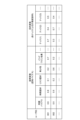
- FIG. 2 is a diagram showing an example of a table of behavior change rates for each nudge for each user.
- the user ID that identifies the user
- the degree of conformity bias that is the user's cognitive bias
- the degree of time preference that is the user's cognitive bias
- the risk preference that is the user's cognitive bias.
- the degree of rarity which is the cognitive bias of the user
- the degree of bandwagon effect which is the cognitive bias of the user
- the degree of any other cognitive bias of the user and the nudge which is the predetermined nudge.
- the behavior change rate is, for example, a real number between "0" and "1”; the closer it is to "0”, the lower the probability (tendency) of behavior change, and the closer it is to "1", the higher the probability (tendency) of behavior change. Good too.
- the behavioral change device 1 may learn to estimate the behavioral change rate due to each nudge from the cognitive bias, using the cognitive bias as an explanatory variable and the behavioral change rate due to each nudge as the objective variable. You can also intervene with random nudges for learning. A predictive model may be generated as a result of learning. As a result of the learning by the behavior change device 1, the nudge optimization unit 12 may predict the rate of behavior change by each nudge for an unknown user using the cognitive bias as input. The nudge optimization unit 12 may determine (select) the nudge that is expected to be the most effective (has a large predicted value).
- FIG. 3 is a diagram showing an example of a table of behavior change rates for each nudge of an unknown user.
- the example table in Figure 3 shows the user ID that identifies an (unknown) user, the degree of conformity bias of the user, the degree of time preference of the user, the degree of risk preference of the user, and the degree of scarcity of the user. degree of gender, the degree of bandwagon effect of the user, the degree of any other cognitive bias of the user, the rate of behavioral change of the user due to nudge (1), and the user's behavior due to nudge (2).
- the rate of change, the rate of behavior change of the user due to nudge (3), and the rate of behavior change of the user due to any other predetermined nudge are associated.
- the nudge optimization unit 12 calculates the degree of conformity bias of the user, the degree of time preference of the user, the degree of risk preference of the user, the degree of scarcity of the user, and the bandwagon effect of the user.
- the change rate, the behavior change rate of the user due to nudge (3), and the behavior change rate of the user due to any other predetermined nudge are acquired, and the optimal nudge for the user is determined based on the acquired behavior change rate. may be determined.
- Behavior change device 1 randomly intervenes on an unspecified number of users with "nudges linked to conformity bias,” “nudges linked to scarcity,” and “nudges linked to mere exposure effect” in order to collect data. .
- nudges linked to conformity bias are effective for people in their 20s
- nudges linked to scarcity are effective for people in their 30s and 40s
- nudges linked to the mere exposure effect are effective for people in their 50s and above.
- such data are collected (there will be differences in the effectiveness of nudges depending on attributes and cognitive biases).
- the estimated value of nudges linked to conformity bias will be high for people in their 20s, and the estimated value of nudges linked to the mere exposure effect will be high for people in their 50s and above.
- a general machine learning method is used for learning.
- the nudge optimization unit 12 may input at least one of attribute information stored in advance by the storage unit 10 and scores for each cognitive bias stored in advance by the storage unit 10.
- the nudge optimization unit 12 estimates the effectiveness (0% to 100%) of each nudge from the input data from the nudge presets (nudge (1), nudge (2), nudge (3), ...), and determines which You may choose which one is most effective. For example, if a user estimates that nudge (1) is 70%, nudge (2) is 50%, and nudge (3) is 40%, the user can say that nudge (1) is the most effective, so nudge ( Select 1).
- the preset is, for example, a nudge linked to a tuning bias (see FIGS. 4 to 9 described later).
- the nudge optimization unit 12 may output nudge information regarding the most effective nudge selected from the nudge presets to the moving work in process generation unit 13 and wording optimization 14, or may be stored in the storage unit 10.
- the moving device generation unit 13 generates a moving device based on the nudge determined by the nudge optimization unit 12. More specifically, the moving device generation unit 13 refers to information stored in advance in the storage unit 10 in which nudge information and moving device information related to moving devices are associated with each other, and generates information input from the nudge optimization unit 12. The moving device information associated with the nudge information is extracted, and the moving device indicated by the extracted moving device information is generated (in virtual space). The mobile device generation unit 13 may output information regarding the generation of the mobile device or information regarding the generated mobile device to the field installation unit 19 or may cause the storage unit 10 to store the information.
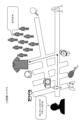
- FIG. 4 is a diagram showing an example of a moving device based on a tuning bias.
- FIG. 4 (same as FIGS. 5 to 9) is a diagram showing a virtual space.
- the user avatar is represented by an icon in the shape of a person's entire body. By moving the user avatar to the position of the content icon, the user can consume the content corresponding to the content icon.
- FIGS. 4 to 9 are examples, and the present invention is not limited thereto.
- the placement of content icons is not essential, and if the content can be identified by other display formats, the content icons may not be placed.
- T-shirt content which is content shown in the form of a T-shirt.
- the mobile device generation unit 13 (and the field installation unit 19 described below) generates and places a group of NPCs (Non Player Characters) around the icon of the T-shirt content that you want to guide, so that the user can interact with the T-shirt content. move.
- NPCs Non Player Characters
- the user may be guided to the T-shirt icon by a guiding avatar generated by the navigator generating unit 18, which will be described later, saying or displaying a message saying, "There's a crowd of people over there.”
- FIG. 5 is a diagram showing another example of a moving device based on tuning bias.
- the moving device generation unit 13 (and the field installation unit 19 described below) prompts the user to avoid congestion by generating and installing a group of NPCs on a route other than the desired route.
- the user may be guided to the T-shirt icon by a guiding avatar generated by the navigator generating unit 18 (described later) saying or displaying a message saying, "I would like to avoid crowding.”
- FIG. 6 is a diagram showing an example of a moving mechanism based on decision avoidance.
- the moving device generation unit 13 (and the field setting unit 19, which will be described later) narrows the user's options and guides the user by generating and arranging the specific route to make it stand out.
- the user may be guided to the T-shirt icon by a guiding avatar generated by the navigator generating unit 18, which will be described later, saying or displaying a message saying, "It looks like there's something ahead.”
- FIG. 7 is a diagram illustrating an example of a mobile device based on rarity.
- the mobile device generation unit 13 (and the field installation unit 19, which will be described later) generates items by placing highly rare (and interesting to the user) items (jewels in the figure) on the conductor of the route. , to guide the user. It does not have to be an item, but may be, for example, creating and installing a route (road) that makes a sound when walking.
- the user may be guided to the T-shirt icon by a guiding avatar generated by the navigator generating unit 18, which will be described later, saying or displaying a message saying, "Something is falling.”
- FIG. 8 is a diagram showing an example of a moving mechanism based on the simple contact effect.
- the mobile device generation unit 13 (and the field installation unit 19 described below) generates and arranges directional music that is familiar to the user to be played around the T-shirt content to guide the user.
- the user may be guided to the T-shirt icon by a guiding avatar generated by the navigator generating unit 18, which will be described later, saying or displaying a message saying, "I can hear something over there.”
- FIG. 9 is a diagram showing an example of a mobile device based on a competitive spirit.
- the moving device generation unit 13 and the field installation unit 19 described below
- the user may be guided to the T-shirt icon by a guiding avatar generated by the navigator generating unit 18 (to be described later) saying or displaying a message saying, ⁇ Next time you visit, you'll be in 3rd place.''
- the wording optimization unit 14 determines the best wording for the user based on the user's cognitive bias.
- the optimal wording is a wording that has the highest effect on the user or whose effect on the user satisfies a predetermined criterion.
- Wording optimization 14 may determine one or more wordings suitable for the user based on one or more cognitive biases of the user.
- a suitable wording is a wording whose effect on the user satisfies a predetermined criterion.
- Wording optimization 14 may determine one or more wordings suitable for the user based on one or more cognitive biases of the user and one or more attributes of the user.
- the wording optimization 14 may output wording information regarding the determined wording to the navigator generation unit 18 or may cause the storage unit 10 to store the wording information.
- FIG. 10 is a diagram showing an example of a table of cognitive bias information of a specific user.
- the user ID that identifies the user
- the attribute information regarding the user's attributes (gender, age, etc.)
- the degree of conformity bias that is the user's cognitive bias
- the user's cognitive bias A degree of time preference, a degree of risk preference which is a cognitive bias of the user, a degree of scarcity which is a cognitive bias of the user, a bandwagon effect which is a cognitive bias of the user, and other factors of the user.
- the wording optimization 14 may determine the best wording for the user based on the user's cognitive bias information as shown in FIG.
- FIG. 11 is a diagram showing an example of a table of optimal wording information regarding a specific user.
- the user ID that identifies the user
- the behavior change rate of the predetermined wording (1) the behavior change rate of the predetermined wording (2)
- the predetermined wording The behavior change rate of a certain phrase (3), the behavior change rate of a predetermined phrase (4), and the behavior change rate of other predetermined phrases are associated.
- the predetermined wording is a preset for each type of nudge.
- wording (1) is a preset for nudge (1)
- wording (2) is a preset for nudge (2)
- wording (3) is a preset for nudge (3)
- wording (4) is a preset for nudge (2). This is the preset (4).
- the wording optimization 14 may determine the best wording for a specific user based on the best wording information regarding the specific user as shown in FIG.
- the wording optimization 14 uses attribute information stored in advance in the storage unit 10, nudge information input from the nudge optimization unit 12 (or stored in advance in the storage unit 10), and nudge information stored in advance in the storage unit 10. At least one score of each cognitive bias may be input.
- the wording optimization 14 may first obtain a preset wording associated with the optimal nudge. From the wording presets (wording (1), wording (2), wording (3), etc.), estimate the effectiveness (0% to 100%) of each wording from the input data and find out which one is the most effective. Decide (select). For example, if a user estimates that wording (1) is 70%, wording (2) is 50%, and wording (3) is 40%, the user can say that wording (1) is the most effective. 1) Determine.
- the preset may be, for example (in the case of FIG. 4), "There's a crowd of people over there,” or "The crowd over there is a restaurant that's popular on SNS.”
- the wording optimization 14 may output wording information regarding the determined wording (the most effective wording selected from the wording presets) to the navigator generation unit 18 or may cause the storage unit 10 to store the wording information.
- the audio optimization unit 15 determines the optimal audio for the user based on the user's cognitive bias.
- the optimal voice is the voice that has the highest effect on the user or whose effect on the user satisfies a predetermined criterion.
- the audio optimization unit 15 may determine one or more voices suitable for the user based on one or more cognitive biases of the user. Suitable audio is audio whose effect on the user satisfies predetermined criteria.
- the audio optimization unit 15 may determine one or more voices suitable for the user based on one or more cognitive biases of the user and one or more attributes of the user.
- the audio optimization unit 15 may output audio information regarding the determined audio to the navigator generation unit 18 or may store it in the storage unit 10.
- the audio optimization unit 15 may determine the optimal audio for the user based on the user's cognitive bias information as shown in FIG.
- FIG. 12 is a diagram showing an example of a table of optimal audio information regarding a specific user.
- the user ID that identifies the user
- the behavior change rate of voice (1) that is a predetermined voice
- the behavior change rate of voice (2) that is a predetermined voice
- the behavior change rate of voice (2) that is a predetermined voice.
- the behavior change rate of a certain voice (3), the behavior change rate of a predetermined voice (4), and the behavior change rate of other predetermined voices are associated.
- the audio optimization unit 15 may determine the optimal audio for a specific user based on optimal audio information regarding the user as shown in FIG.
- the speech optimization unit 15 may input at least one of the attribute information stored in advance by the storage unit 10 and the score of each cognitive bias stored in advance by the storage unit 10.
- the audio optimization unit 15 prepares audio presets (audio (1), audio (2), audio (3), etc.) and estimates the effectiveness (0% to 100%) of each audio from the input data. , you may decide (select) which one is most effective. For example, if a certain user estimates that voice (1) is 70%, voice (2) is 50%, and voice (3) is 40%, it can be said that voice (1) is the most effective for the user, so voice ( 1) Determine.
- the presets include, for example, speaking quickly at a high frequency, speaking quickly at a low frequency, speaking slowly at a high frequency, or slowly at a low frequency.
- the audio optimization unit 15 may output audio information regarding the determined audio (the most effective audio selected from audio presets) to the navigator generation unit 18 or may store it in the storage unit 10.
- the avatar optimization unit 16 determines (the appearance of) the guidance avatar that is optimal for the user based on the user's cognitive bias.
- the optimal guidance avatar is a guidance avatar that has the highest effect on the user or whose effect on the user satisfies a predetermined criterion.
- the avatar optimization unit 16 may determine one or more guiding avatars suitable for the user based on one or more cognitive biases of the user.
- a suitable guiding avatar is one whose effect on the user satisfies predetermined criteria.
- the avatar optimization unit 16 may determine one or more guiding avatars suitable for the user based on one or more cognitive biases of the user and one or more attributes of the user.
- the avatar optimization unit 16 may output guidance avatar information regarding the determined guidance avatar to the navigator generation unit 18 or may cause the storage unit 10 to store it.
- the avatar optimization unit 16 may determine the optimal guiding avatar for the user based on the user's cognitive bias information as shown in FIG.
- FIG. 13 is a diagram showing an example of a table of optimal avatar information regarding a specific user.
- the user ID that identifies the user
- the behavior change rate of avatar (1) that is a predetermined guide avatar
- the behavior change rate of avatar (2) that is a predetermined guide avatar
- the predetermined The behavior change rate of the guide avatar (3), which is an avatar
- the behavior change rate of the guide avatar (4) which is a predetermined avatar
- the behavior change rate of other predetermined avatars are associated with each other.
- the avatar optimization unit 16 may determine the optimal guiding avatar for a specific user based on the optimal avatar information regarding the specific user as shown in FIG.
- the avatar optimization unit 16 may input at least one of attribute information stored in advance by the storage unit 10 and scores for each cognitive bias stored in advance by the storage unit 10.
- the avatar optimization unit 16 prepares preset guide avatars (avatar (1), avatar (2), avatar (3), ...), and calculates the effectiveness (0% to 100%) of each guide avatar from input data. You may make an estimate and decide (select) which one is most effective. For example, if a certain user estimates that avatar (1) is 70%, avatar (2) is 50%, and avatar (3) is 40%, the user can say that avatar (1) is the most effective, so avatar (1) is the most effective. 1) Determine.
- the presets include, for example, long hair for men, long hair for women, short hair for men, short hair for women, elderly men, and elderly women.
- the avatar optimization unit 16 may output guidance avatar information regarding the determined guidance avatar (the most effective guidance avatar selected from the guidance avatar presets) to the navigator generation unit 18, or may store it in the storage unit 10. Good too.
- the facial expression optimization unit 17 determines the facial expression (hereinafter simply referred to as "facial expression") of the guidance avatar that is optimal for the user based on the user's cognitive bias.
- the optimal facial expression is a facial expression that has the highest effect on the user or whose effect on the user satisfies a predetermined criterion.
- the facial expression optimization unit 17 may determine one or more facial expressions suitable for the user based on one or more cognitive biases of the user.
- a suitable facial expression is a facial expression whose effect on the user satisfies predetermined criteria.
- the facial expression optimization unit 17 may determine one or more facial expressions suitable for the user based on one or more cognitive biases of the user and one or more attributes of the user.
- the facial expression optimization unit 17 may output the facial expression information regarding the determined facial expression to the navigator generating unit 18 or may cause the storage unit 10 to store the facial expression information.
- the facial expression optimization unit 17 may determine the optimal facial expression for the user based on the user's cognitive bias information as shown in FIG.
- FIG. 14 is a diagram showing an example of a table of optimal facial expression information regarding a specific user.
- the user ID that identifies the user
- the behavior change rate for a predetermined expression of joy the behavior change rate for a predetermined expression of anger
- the predetermined expression The behavior change rate for a certain sadness (sadness), the behavior change rate for a predetermined expression of happiness (pleasure), and the behavior change rate for other predetermined expressions are associated.
- the facial expression optimization unit 17 may determine the optimal facial expression for a specific user based on the optimal facial expression information regarding the specific user as shown in FIG.
- the facial expression optimization unit 17 may input at least one of attribute information stored in advance by the storage unit 10 and scores for each cognitive bias stored in advance by the storage unit 10.
- the facial expression optimization unit 17 prepares preset facial expressions (happy, angry, sad,%), estimates the effectiveness (0% to 100%) of each facial expression from input data, and determines which one is the most effective. You may decide (select). For example, if it is estimated that a certain user is 70% happy, 50% angry, and 40% sad, the user selects joy because it can be said that happiness is the most effective. Note that the presets are, for example, happy, angry, sad, or happy.
- the facial expression optimization unit 17 may output the facial expression information regarding the determined facial expression (the most effective facial expression selected from the facial expression presets) to the navigator generating unit 18 or may cause the storage unit 10 to store the facial expression information.
- the navigator generation unit 18 generates wording information determined (input) by the wording optimization unit 14, voice information determined (input) by the voice optimization unit 15, and guidance determined (input) by the avatar optimization unit 16.
- a navigator (device) is generated (in the virtual space) based on the avatar information and the facial expression information determined by the facial expression optimization unit 17.
- the navigator is a guide who guides the user.
- the navigator may use the appearance of the guide avatar indicated by the guide avatar information, the facial expression indicated by the facial expression information, and the wording indicated by the text information using the voice indicated by the audio information. That is, the navigator utters the most suitable avatar (appearance), the most suitable facial expression, the most suitable words, and the most suitable voice for the user.
- the navigator generation unit 18 may output information regarding the fact that a navigator has been generated or information regarding the generated navigator to the field installation unit 19 or may cause the storage unit 10 to store the information.
- the field installation unit 19 installs the device determined by the device determination unit 11 in (the field of) the virtual space. More specifically, the field installation unit 19 installs the mobile device generated (determined) by the mobile device generation unit 13 and the navigator generated (determined) by the navigator generation unit 18 in the virtual space. At the timing when the information regarding the generation of the mobile device is input from the mobile device generation unit 13, the field installation unit 19 installs the mobile device generated by the mobile device generation unit 13 (the generated mobile device input from the mobile device generation unit 13). The mobile device indicated by the information regarding the mobile device) may be installed in the virtual space.
- the field installation section 19 installs the navigator generated by the navigator generation section 18 (indicated by the information regarding the generated navigator input from the navigator generation section 18). Navigator) may be installed in virtual space.
- the virtual space in which the device is installed by the field installation unit 19 may be displayed on the user interface of the behavior modification device 1.
- the field installation unit 19 may install a device in the virtual space for each user (individual) according to the generation result of the device determining unit 11.
- the device may include (guidance by) a moving device and (guidance by) a navigator.
- the field installation unit 19 does not need to install the navigator (or not provide the guidance) in the case of a user whose behavior can be changed without the guidance of the navigator.
- FIG. 15 is a sequence diagram illustrating an example of processing executed by the behavior modification device according to the embodiment.
- the behavior modification device 1 generates cognitive bias information based on the user (for example, based on the user's questionnaire responses) and causes the storage unit 10 to store the cognitive bias information.
- the nudge optimization unit 12 (or the in-process determination unit 11) estimates an appropriate nudge based on the cognitive bias information stored by the storage unit 10 (step S1).
- the mobile device generation unit 13 (or the device determination unit 11) generates a mobile device based on the estimation result in S1 (step S2).
- the wording optimization 14 (or the in-process determining unit 11) estimates an appropriate wording based on the estimation result in S1 and the cognitive bias information stored by the storage unit 10 (step S3).
- the voice optimization unit 15 (or the device determining unit 11) estimates an appropriate voice based on the cognitive bias information stored by the storage unit 10 (step S4).
- the avatar optimization unit 16 (or the work-in-progress determining unit 11) estimates an appropriate avatar (guiding avatar) based on the cognitive bias information stored by the storage unit 10 (step S5).
- the facial expression optimization unit 17 (or the device determining unit 11) estimates an appropriate facial expression based on the cognitive bias information stored by the storage unit 10 (step S6).
- the navigator generation unit 18 (or the in-process determination unit 11) generates a navigator based on the estimation result in S3, the estimation result in S4, the estimation result in S5, and the estimation result in S6 (step S7 ).
- the field installation unit 19 forms a virtual space in which the mobile device generated in S2 and the navigator generated in S7 are installed (step S8), and outputs (displays) it to the user.
- S1 may be performed at any time before S2 and S3.
- S2 may be performed at any time after S1 and before S8.
- S3 may be performed at any time after S1 and before S7.
- Each of S4 to S6 may be performed at any time before S7.
- S7 may be performed at any time after S3 to S6.
- S8 may be performed at any time after S2 and S7.
- FIG. 16 is a flowchart illustrating an example of a process executed by the behavior modification device 1 according to the embodiment.
- the device determination unit 11 determines a device for the user in the virtual space based on the user's cognitive bias (step S10).
- the field installation unit 19 installs the device determined in S10 in the virtual space (step S11).
- FIG. 17 is a diagram showing an example of selecting an optimal device based on an individual's cognitive bias. As shown in FIG. 17, when the conformity bias, which is a cognitive bias, of a certain individual (user) is 80%, and the tendency to avoid decision making, which is a cognitive bias, is 50%, the behavior change device 1 can detect the conformity bias of a higher degree. Select a device based on.
- the device determining unit 11 determines a device for the user in the virtual space based on the user's cognitive bias, and the field setting unit 19 places the device determined by the device determining unit 11 in the virtual space. to be installed.
- the device determining unit 11 may determine the device using a prediction model that predicts the degree of behavioral change of the user due to the device by inputting the degree of the user's cognitive bias.
- the device may be a device that guides the user to predetermined content that exists in the virtual space. With this configuration, it is possible to guide the user to predetermined content that exists in the virtual space.
- the device determining unit 11 may determine the device further based on the user's attributes. With this configuration, it is possible to encourage more reliable behavior change based on the user's attributes.
- the device may include a device related to virtual movement of the user in the virtual space (movement device).
- movement device a device related to virtual movement of the user in the virtual space.
- the device may include a device related to guiding the user by a predetermined avatar (guiding avatar) in the virtual space.
- a predetermined avatar guiding avatar
- the device since the user can be guided by the guiding avatar, it is possible to more reliably encourage the user to change his or her behavior.
- At least one of the words uttered by the avatar during guidance, the voice uttered by the avatar during guidance, the appearance of the avatar (guiding avatar), or the facial expression of the avatar during guidance is , may be based on the user's cognitive biases.
- the behavior change device 1 it is possible to realize a user's behavior change by optimizing guidance in the metaverse, for example.
- the Metaverse is attracting attention during the COVID-19 pandemic. Since the virtual world is not subject to restrictions of location or time, it is possible to install a variety of contents compared to the real world. Contents include stores for economic activities, facilities for entertainment, and the like. In a virtual world, guiding appropriate users to appropriate content (behavioral change) can bring benefits to both users and producers. A simple method is to provide guidance through messaging. Even with similar guidance, the way it is conveyed, the person who conveys it, the tone of voice (frequency, intensity, volume), and whether it motivates action varies from person to person. These are thought to depend on individual attributes and cognitive biases.
- the behavior modification device 1 installs a mechanism linked to cognitive bias in the virtual world in order to guide the user to specific content.
- the behavior modification device 1 selects the optimal mechanism based on the individual's cognitive bias.
- the behavior modification device 1 individually optimizes each element in navigation (estimated from attributes and cognitive biases). Specifically, it includes message content (how it is conveyed), tone of voice (frequency, strength, volume), avatar (the appearance of the speaker), and facial expressions.
- the behavior modification device 1 prepares presets for the above and selects the optimal one.
- the voice tone and avatar may be automatically generated by GAN instead of preset (modified example).
- the behavior modification device 1 does not necessarily need to include all the audio guidance elements.
- Behavior modification device 1 is a system that prepares mechanisms linked to cognitive biases, such as setting up groups of NPCs and highlighting specific routes in a virtual world, and assigns them to each user according to the user's individual cognitive biases. .
- Behavior modification device 1 optimizes the message content, the appearance of the speaker (avatar), the speaker's voice, and the speaker's facial expression when navigating in a virtual world based on cognitive biases in a way that best promotes behavior change on an individual basis. Furthermore, it is a system that guides individuals to specific content using the most suitable means through navigation. The behavior modification device 1 may not require navigation depending on the user.
- the behavior modification device 1 of the present disclosure has the following configuration.
- a determining unit that determines a mechanism for the user in the virtual space based on the user's cognitive bias; an installation unit that installs the device determined by the determination unit in the virtual space;
- a behavior modification device equipped with
- the determining unit determines the trick using a prediction model that predicts the degree of behavioral change of the user due to the trick by inputting the degree of the cognitive bias of the user.
- the behavior modification device according to [1].
- the device is a device that guides the user to predetermined content existing in the virtual space.
- the behavior modification device according to [1] or [2].
- the determining unit determines the device further based on attributes of the user.
- the behavior modification device according to any one of [1] to [3].
- the device includes a device related to virtual movement of the user in the virtual space.
- the behavior modification device according to any one of [1] to [4].
- the device includes a device related to guiding the user by a predetermined avatar in the virtual space.
- the behavior modification device according to any one of [1] to [5].
- At least one of the words uttered by the avatar during the guidance, the voice uttered by the avatar during the guidance, the appearance of the avatar, or the facial expression of the avatar during the guidance corresponds to the cognitive bias of the user. based on, The behavior modification device according to [6].
- each functional block may be realized using one physically or logically coupled device, or may be realized using two or more physically or logically separated devices directly or indirectly (e.g. , wired, wireless, etc.) and may be realized using a plurality of these devices.
- the functional block may be realized by combining software with the one device or the plurality of devices.
- Functions include judgment, decision, judgment, calculation, calculation, processing, derivation, investigation, exploration, confirmation, reception, transmission, output, access, resolution, selection, selection, establishment, comparison, assumption, expectation, consideration, These include, but are not limited to, broadcasting, notifying, communicating, forwarding, configuring, reconfiguring, allocating, mapping, and assigning. I can't do it.
- a functional block (configuration unit) that performs transmission is called a transmitting unit or a transmitter. In either case, as described above, the implementation method is not particularly limited.
- the behavior modification device 1 in an embodiment of the present disclosure may function as a computer that performs processing of the behavior modification method of the present disclosure.
- FIG. 18 is a diagram showing an example of the hardware configuration of the behavior modification device 1 according to an embodiment of the present disclosure.
- the behavior modification device 1 described above may be physically configured as a computer device including a processor 1001, a memory 1002, a storage 1003, a communication device 1004, an input device 1005, an output device 1006, a bus 1007, and the like.
- the word “apparatus” can be read as a circuit, a device, a unit, etc.
- the hardware configuration of the behavior modification device 1 may be configured to include one or more of each device shown in the figure, or may be configured without including some of the devices.
- Each function in the behavior modification device 1 is implemented by loading predetermined software (programs) onto hardware such as a processor 1001 and a memory 1002, so that the processor 1001 performs calculations, controls communication by the communication device 1004, and controls communication by the communication device 1004. This is realized by controlling at least one of reading and writing data in the storage 1002 and the storage 1003.
- the processor 1001 operates an operating system to control the entire computer.
- the processor 1001 may be configured by a central processing unit (CPU) including an interface with peripheral devices, a control device, an arithmetic unit, registers, and the like.
- CPU central processing unit
- the field installation unit 19 and the like may be realized by the processor 1001.
- the processor 1001 reads programs (program codes), software modules, data, etc. from at least one of the storage 1003 and the communication device 1004 to the memory 1002, and executes various processes in accordance with these.
- programs program codes
- the program a program that causes a computer to execute at least part of the operations described in the above embodiments is used.
- the unit 19 may be realized by a control program stored in the memory 1002 and operated in the processor 1001, and other functional blocks may be similarly realized.
- Processor 1001 may be implemented by one or more chips. Note that the program may be transmitted from a network via a telecommunications line.
- the memory 1002 is a computer-readable recording medium, and includes at least one of ROM (Read Only Memory), EPROM (Erasable Programmable ROM), EEPROM (Electrically Erasable Programmable ROM), RAM (Random Access Memory), etc. may be done.
- Memory 1002 may be called a register, cache, main memory, or the like.
- the memory 1002 can store executable programs (program codes), software modules, and the like to implement a wireless communication method according to an embodiment of the present disclosure.
- the storage 1003 is a computer-readable recording medium, such as an optical disk such as a CD-ROM (Compact Disc ROM), a hard disk drive, a flexible disk, or a magneto-optical disk (for example, a compact disk, a digital versatile disk, or a Blu-ray disk). (registered trademark disk), smart card, flash memory (eg, card, stick, key drive), floppy disk, magnetic strip, etc.
- Storage 1003 may also be called an auxiliary storage device.
- the storage medium mentioned above may be, for example, a database including at least one of memory 1002 and storage 1003, a server, or other suitable medium.
- the communication device 1004 is hardware (transmission/reception device) for communicating between computers via at least one of a wired network and a wireless network, and is also referred to as a network device, network controller, network card, communication module, etc., for example.
- the communication device 1004 includes, for example, a high frequency switch, a duplexer, a filter, a frequency synthesizer, etc. in order to realize at least one of frequency division duplex (FDD) and time division duplex (TDD). It may be composed of.
- FDD frequency division duplex
- TDD time division duplex
- the field installation unit 19 and the like may be realized by the communication device 1004.
- the input device 1005 is an input device (eg, keyboard, mouse, microphone, switch, button, sensor, etc.) that accepts input from the outside.
- the output device 1006 is an output device (for example, a display, a speaker, an LED lamp, etc.) that performs output to the outside. Note that the input device 1005 and the output device 1006 may have an integrated configuration (for example, a touch panel).
- each device such as the processor 1001 and the memory 1002 is connected by a bus 1007 for communicating information.
- the bus 1007 may be configured using a single bus, or may be configured using different buses for each device.
- the behavior modification device 1 also includes hardware such as a microprocessor, a digital signal processor (DSP), an application specific integrated circuit (ASIC), a programmable logic device (PLD), and a field programmable gate array (FPGA).
- DSP digital signal processor
- ASIC application specific integrated circuit
- PLD programmable logic device
- FPGA field programmable gate array
- a part or all of each functional block may be realized by the hardware.
- processor 1001 may be implemented using at least one of these hardwares.
- LTE Long Term Evolution
- LTE-A Long Term Evolution-Advanced
- SUPER 3G IMT-Advanced
- 4G 4th generation mobile communication system
- 5G 5th generation mobile communication system
- FRA Fluture Radio Access
- NR new Radio
- W-CDMA registered trademark
- GSM registered trademark
- CDMA2000 Code Division Multiple Access 2000
- UMB Universal Mobile Broadband
- IEEE 802.11 Wi-Fi (registered trademark)
- IEEE 802.16 WiMAX (registered trademark)
- IEEE 802.20 UWB (Ultra-WideBand
- Bluetooth registered trademark
- a combination of a plurality of systems may be applied (for example, a combination of at least one of LTE and LTE-A and 5G).
- the input/output information may be stored in a specific location (for example, memory) or may be managed using a management table. Information etc. to be input/output may be overwritten, updated, or additionally written. The output information etc. may be deleted. The input information etc. may be transmitted to other devices.
- Judgment may be made using a value expressed by 1 bit (0 or 1), a truth value (Boolean: true or false), or a comparison of numerical values (for example, a predetermined value). (comparison with a value).
- notification of prescribed information is not limited to being done explicitly, but may also be done implicitly (for example, not notifying the prescribed information). Good too.
- Software includes instructions, instruction sets, code, code segments, program code, programs, subprograms, software modules, whether referred to as software, firmware, middleware, microcode, hardware description language, or by any other name. , should be broadly construed to mean an application, software application, software package, routine, subroutine, object, executable, thread of execution, procedure, function, etc.
- software, instructions, information, etc. may be sent and received via a transmission medium.
- a transmission medium For example, if the software uses wired technology (coaxial cable, fiber optic cable, twisted pair, digital subscriber line (DSL), etc.) and/or wireless technology (infrared, microwave, etc.) to create a website, When transmitted from a server or other remote source, these wired and/or wireless technologies are included within the definition of transmission medium.
- wired technology coaxial cable, fiber optic cable, twisted pair, digital subscriber line (DSL), etc.
- wireless technology infrared, microwave, etc.
- data, instructions, commands, information, signals, bits, symbols, chips, etc. which may be referred to throughout the above description, may refer to voltages, currents, electromagnetic waves, magnetic fields or magnetic particles, light fields or photons, or any of these. It may also be represented by a combination of
- system and “network” are used interchangeably.
- information, parameters, etc. described in this disclosure may be expressed using absolute values, relative values from a predetermined value, or using other corresponding information. may be expressed.
- determining may encompass a wide variety of operations.
- “Judgment” and “decision” include, for example, judging, calculating, computing, processing, deriving, investigating, looking up, search, and inquiry. (e.g., searching in a table, database, or other data structure), and regarding an ascertaining as a “judgment” or “decision.”
- judgment and “decision” refer to receiving (e.g., receiving information), transmitting (e.g., sending information), input, output, and access.
- (accessing) may include considering something as a “judgment” or “decision.”
- judgment and “decision” refer to resolving, selecting, choosing, establishing, comparing, etc. as “judgment” and “decision”. may be included.
- judgment and “decision” may include regarding some action as having been “judged” or “determined.”
- judgment (decision) may be read as "assuming", “expecting", “considering”, etc.
- connection means any connection or coupling, direct or indirect, between two or more elements and each other. It may include the presence of one or more intermediate elements between two elements that are “connected” or “coupled.”
- the bonds or connections between elements may be physical, logical, or a combination thereof. For example, "connection” may be replaced with "access.”
- two elements may include one or more electrical wires, cables, and/or printed electrical connections, as well as in the radio frequency domain, as some non-limiting and non-inclusive examples. , electromagnetic energy having wavelengths in the microwave and optical (both visible and non-visible) ranges.
- the phrase “based on” does not mean “based solely on” unless explicitly stated otherwise. In other words, the phrase “based on” means both “based only on” and “based at least on.”
- any reference to elements using the designations "first,” “second,” etc. does not generally limit the amount or order of those elements. These designations may be used in this disclosure as a convenient way to distinguish between two or more elements. Thus, reference to a first and second element does not imply that only two elements may be employed or that the first element must precede the second element in any way.
- a and B are different may mean “A and B are different from each other.” Note that the term may also mean that "A and B are each different from C”. Terms such as “separate” and “coupled” may also be interpreted similarly to “different.”
Landscapes
- Engineering & Computer Science (AREA)
- General Engineering & Computer Science (AREA)
- Theoretical Computer Science (AREA)
- Software Systems (AREA)
- Physics & Mathematics (AREA)
- General Physics & Mathematics (AREA)
- Data Mining & Analysis (AREA)
- Computing Systems (AREA)
- Evolutionary Computation (AREA)
- Mathematical Physics (AREA)
- Computational Linguistics (AREA)
- Artificial Intelligence (AREA)
- Computer Graphics (AREA)
- Computer Hardware Design (AREA)
- Human Computer Interaction (AREA)
- Information Retrieval, Db Structures And Fs Structures Therefor (AREA)
- User Interface Of Digital Computer (AREA)
- Management, Administration, Business Operations System, And Electronic Commerce (AREA)
Abstract
Description
ユーザの認知バイアスに基づいて仮想空間における当該ユーザに対する仕掛けを決定する決定部と、
前記決定部によって決定された前記仕掛けを前記仮想空間に設置する設置部と、
を備える行動変容装置。
前記決定部は、前記ユーザの前記認知バイアスの度合を入力することで前記仕掛けによる前記ユーザの行動変容の度合を予測する予測モデルを用いて前記仕掛けを決定する、
[1]に記載の行動変容装置。
前記仕掛けは、前記仮想空間に存在する所定のコンテンツへ前記ユーザを誘導する仕掛けである、
[1]又は[2]に記載の行動変容装置。
前記決定部は、前記ユーザの属性にさらに基づいて前記仕掛けを決定する、
[1]~[3]の何れか一項に記載の行動変容装置。
前記仕掛けは、前記仮想空間での前記ユーザの仮想的な移動に関する仕掛けを含む、
[1]~[4]の何れか一項に記載の行動変容装置。
前記仕掛けは、前記仮想空間での所定のアバターによる前記ユーザの誘導に関する仕掛けを含む、
[1]~[5]の何れか一項に記載の行動変容装置。
前記誘導の際に前記アバターが発する文言、前記誘導の際に前記アバターが発する音声、前記アバターの見た目、又は、前記誘導の際の前記アバターの表情の少なくとも一つは、前記ユーザの前記認知バイアスに基づく、
[6]に記載の行動変容装置。
Claims (7)
- ユーザの認知バイアスに基づいて仮想空間における当該ユーザに対する仕掛けを決定する決定部と、
前記決定部によって決定された前記仕掛けを前記仮想空間に設置する設置部と、
を備える行動変容装置。 - 前記決定部は、前記ユーザの前記認知バイアスの度合を入力することで前記仕掛けによる前記ユーザの行動変容の度合を予測する予測モデルを用いて前記仕掛けを決定する、
請求項1に記載の行動変容装置。 - 前記仕掛けは、前記仮想空間に存在する所定のコンテンツへ前記ユーザを誘導する仕掛けである、
請求項1に記載の行動変容装置。 - 前記決定部は、前記ユーザの属性にさらに基づいて前記仕掛けを決定する、
請求項1に記載の行動変容装置。 - 前記仕掛けは、前記仮想空間での前記ユーザの仮想的な移動に関する仕掛けを含む、
請求項1に記載の行動変容装置。 - 前記仕掛けは、前記仮想空間での所定のアバターによる前記ユーザの誘導に関する仕掛けを含む、
請求項1又は5に記載の行動変容装置。 - 前記誘導の際に前記アバターが発する文言、前記誘導の際に前記アバターが発する音声、前記アバターの見た目、又は、前記誘導の際の前記アバターの表情の少なくとも一つは、前記ユーザの前記認知バイアスに基づく、
請求項6に記載の行動変容装置。
Priority Applications (2)
| Application Number | Priority Date | Filing Date | Title |
|---|---|---|---|
| JP2024519175A JP7796215B2 (ja) | 2022-05-02 | 2023-03-24 | 行動変容装置 |
| US18/856,943 US20250265063A1 (en) | 2022-05-02 | 2023-03-24 | Behavior change apparatus |
Applications Claiming Priority (2)
| Application Number | Priority Date | Filing Date | Title |
|---|---|---|---|
| JP2022-075999 | 2022-05-02 | ||
| JP2022075999 | 2022-05-02 |
Publications (1)
| Publication Number | Publication Date |
|---|---|
| WO2023214483A1 true WO2023214483A1 (ja) | 2023-11-09 |
Family
ID=88646455
Family Applications (1)
| Application Number | Title | Priority Date | Filing Date |
|---|---|---|---|
| PCT/JP2023/011911 Ceased WO2023214483A1 (ja) | 2022-05-02 | 2023-03-24 | 行動変容装置 |
Country Status (3)
| Country | Link |
|---|---|
| US (1) | US20250265063A1 (ja) |
| JP (1) | JP7796215B2 (ja) |
| WO (1) | WO2023214483A1 (ja) |
Citations (3)
| Publication number | Priority date | Publication date | Assignee | Title |
|---|---|---|---|---|
| JP2004145573A (ja) * | 2002-10-23 | 2004-05-20 | Link Cube Kk | インフォメーションシステム |
| JP2007530967A (ja) * | 2004-03-31 | 2007-11-01 | ブリティッシュ・テレコミュニケーションズ・パブリック・リミテッド・カンパニー | 経路探索システム |
| JP2013050956A (ja) * | 2012-09-11 | 2013-03-14 | Olympus Imaging Corp | 画像鑑賞システム、画像鑑賞方法、画像鑑賞用サーバー、および端末機器 |
Family Cites Families (1)
| Publication number | Priority date | Publication date | Assignee | Title |
|---|---|---|---|---|
| WO2020071233A1 (ja) * | 2018-10-04 | 2020-04-09 | ソニー株式会社 | 情報処理装置、情報処理方法、およびプログラム |
-
2023
- 2023-03-24 JP JP2024519175A patent/JP7796215B2/ja active Active
- 2023-03-24 WO PCT/JP2023/011911 patent/WO2023214483A1/ja not_active Ceased
- 2023-03-24 US US18/856,943 patent/US20250265063A1/en active Pending
Patent Citations (3)
| Publication number | Priority date | Publication date | Assignee | Title |
|---|---|---|---|---|
| JP2004145573A (ja) * | 2002-10-23 | 2004-05-20 | Link Cube Kk | インフォメーションシステム |
| JP2007530967A (ja) * | 2004-03-31 | 2007-11-01 | ブリティッシュ・テレコミュニケーションズ・パブリック・リミテッド・カンパニー | 経路探索システム |
| JP2013050956A (ja) * | 2012-09-11 | 2013-03-14 | Olympus Imaging Corp | 画像鑑賞システム、画像鑑賞方法、画像鑑賞用サーバー、および端末機器 |
Non-Patent Citations (1)
| Title |
|---|
| ARAKAWA YUTAKA: "Information and Communication Technology to support Behavior Change for Social Benefits", IEICE 2022 GENERAL CONFERENCE PROCEEDINGS, 1 March 2022 (2022-03-01), pages SS - SS-87, XP093106216, Retrieved from the Internet <URL:https://arakawa-lab.com/wp-content/uploads/2022/06/IEICE_taikai_2022.pdf> [retrieved on 20231128] * |
Also Published As
| Publication number | Publication date |
|---|---|
| US20250265063A1 (en) | 2025-08-21 |
| JP7796215B2 (ja) | 2026-01-08 |
| JPWO2023214483A1 (ja) | 2023-11-09 |
Similar Documents
| Publication | Publication Date | Title |
|---|---|---|
| JP7114307B2 (ja) | 情報処理装置 | |
| JP7005694B2 (ja) | コンピュータによるエージェントのための合成音声の選択 | |
| ES3034983T3 (en) | Automatic performance of user interaction operations on a computing device | |
| EP3513324B1 (en) | Computerized natural language query intent dispatching | |
| CN110741367B (zh) | 用于实时交互式推荐的方法和装置 | |
| US9865264B2 (en) | Selective speech recognition for chat and digital personal assistant systems | |
| JP6966979B2 (ja) | 対話システムの制御方法、対話システム及びプログラム | |
| CN111737411A (zh) | 人机对话中的响应方法、对话系统及存储介质 | |
| JP2020161153A (ja) | ダイアログ・システムにおけるパラメータ収集および自動ダイアログ生成 | |
| KR20170101730A (ko) | 사용자 데모그래픽 정보 및 콘텍스트 정보에 기초한 텍스트 입력 예측 방법 및 장치 | |
| CN107305493A (zh) | 具有集成搜索的图形键盘应用 | |
| US20230088445A1 (en) | Conversational recommendation method, method of training model, device and medium | |
| JP6983118B2 (ja) | 対話システムの制御方法、対話システム及びプログラム | |
| WO2021070819A1 (ja) | 採点モデル学習装置、採点モデル及び判定装置 | |
| WO2021111767A1 (ja) | 対話支援装置 | |
| JP7796215B2 (ja) | 行動変容装置 | |
| JP2020187729A (ja) | テキスト処理方法、装置、デバイス、及び記憶媒体 | |
| US11604831B2 (en) | Interactive device | |
| WO2023214484A1 (ja) | 興味推定装置 | |
| WO2008096934A1 (en) | Prediction-based word inputting method | |
| KR20200009812A (ko) | 모바일 기기의 입력 인터페이스 내에서 맞춤법 검사를 지원하는 방법 및 시스템 | |
| WO2021256278A1 (ja) | 推奨情報提供装置 | |
| JP2022025917A (ja) | 対話装置 | |
| WO2021005985A1 (ja) | 楽曲レコメンド用モデル生成システム及び楽曲レコメンドシステム | |
| KR102643720B1 (ko) | 로봇용 인공지능 인터페이스 시스템 |
Legal Events
| Date | Code | Title | Description |
|---|---|---|---|
| 121 | Ep: the epo has been informed by wipo that ep was designated in this application |
Ref document number: 23799415 Country of ref document: EP Kind code of ref document: A1 |
|
| ENP | Entry into the national phase |
Ref document number: 2024519175 Country of ref document: JP Kind code of ref document: A |
|
| WWE | Wipo information: entry into national phase |
Ref document number: 18856943 Country of ref document: US |
|
| NENP | Non-entry into the national phase |
Ref country code: DE |
|
| 122 | Ep: pct application non-entry in european phase |
Ref document number: 23799415 Country of ref document: EP Kind code of ref document: A1 |
|
| WWP | Wipo information: published in national office |
Ref document number: 18856943 Country of ref document: US |