WO2023199536A1 - Method and transmitter for transmitting data using constellation - Google Patents

Method and transmitter for transmitting data using constellation Download PDF

Info

Publication number
WO2023199536A1
WO2023199536A1 PCT/JP2022/033813 JP2022033813W WO2023199536A1 WO 2023199536 A1 WO2023199536 A1 WO 2023199536A1 JP 2022033813 W JP2022033813 W JP 2022033813W WO 2023199536 A1 WO2023199536 A1 WO 2023199536A1
Authority
WO
WIPO (PCT)
Prior art keywords
constellation
log
symbol
sub
bits
Prior art date
Legal status (The legal status is an assumption and is not a legal conclusion. Google has not performed a legal analysis and makes no representation as to the accuracy of the status listed.)
Ceased
Application number
PCT/JP2022/033813
Other languages
French (fr)
Inventor
Vincent CORLAY
Cristina Ciochina-Duchesne
Current Assignee (The listed assignees may be inaccurate. Google has not performed a legal analysis and makes no representation or warranty as to the accuracy of the list.)
Mitsubishi Electric Corp
Mitsubishi Electric R&D Centre Europe BV Netherlands
Original Assignee
Mitsubishi Electric Corp
Mitsubishi Electric R&D Centre Europe BV Netherlands
Priority date (The priority date is an assumption and is not a legal conclusion. Google has not performed a legal analysis and makes no representation as to the accuracy of the date listed.)
Filing date
Publication date
Application filed by Mitsubishi Electric Corp, Mitsubishi Electric R&D Centre Europe BV Netherlands filed Critical Mitsubishi Electric Corp
Priority to US18/843,624 priority Critical patent/US20250167916A1/en
Priority to CN202280094599.2A priority patent/CN118975169A/en
Priority to JP2024560966A priority patent/JP7745779B2/en
Publication of WO2023199536A1 publication Critical patent/WO2023199536A1/en
Anticipated expiration legal-status Critical
Ceased legal-status Critical Current

Links

Classifications

    • HELECTRICITY
    • H04ELECTRIC COMMUNICATION TECHNIQUE
    • H04LTRANSMISSION OF DIGITAL INFORMATION, e.g. TELEGRAPHIC COMMUNICATION
    • H04L1/00Arrangements for detecting or preventing errors in the information received
    • H04L1/004Arrangements for detecting or preventing errors in the information received by using forward error control
    • H04L1/0041Arrangements at the transmitter end
    • H04L1/0042Encoding specially adapted to other signal generation operation, e.g. in order to reduce transmit distortions, jitter, or to improve signal shape
    • HELECTRICITY
    • H04ELECTRIC COMMUNICATION TECHNIQUE
    • H04LTRANSMISSION OF DIGITAL INFORMATION, e.g. TELEGRAPHIC COMMUNICATION
    • H04L1/00Arrangements for detecting or preventing errors in the information received
    • H04L1/004Arrangements for detecting or preventing errors in the information received by using forward error control
    • H04L1/0056Systems characterized by the type of code used
    • H04L1/0061Error detection codes
    • HELECTRICITY
    • H04ELECTRIC COMMUNICATION TECHNIQUE
    • H04LTRANSMISSION OF DIGITAL INFORMATION, e.g. TELEGRAPHIC COMMUNICATION
    • H04L27/00Modulated-carrier systems
    • H04L27/02Amplitude-modulated carrier systems, e.g. using on-off keying; Single sideband or vestigial sideband modulation
    • H04L27/04Modulator circuits; Transmitter circuits

Definitions

  • At least one of the present embodiments generally relates to a method, in a transmitter, for transmitting data to a receiver over a communication channel. At least one embodiment relates to a transmitter configured to implement the method.
  • a transmitter is coupled to a receiver by way of a communication channel (e.g. an optical fiber).
  • the transmitter usually comprises an encoder configured to encode the input data, e.g. a bitstream, into symbols belonging to a finite set, called a constellation.
  • ASK American acronym of “Amplitude- Shift Keying”
  • QAM Two dimensional QAM
  • one dimensional or two dimensional constellations mean that the symbols take value in R or in R 2 , respectively, R being the set of real numbers. These symbols are then transmitted over the communication channel to the receiver.
  • the receiver comprises a decoder configured to decode the received symbols into output data.
  • the signal should be protected against errors with a so-called error-correcting code.
  • error-correcting code is complex.
  • the method comprises:
  • each group of m — log 2 ( N ) shaping bits identifies one symbol X j in the reference sub-constellation, j ⁇ [ l ;k] ;
  • This method is compliant with distribution matchers that consider the sign bits as shaping bits. In addition, it is also adapted to non-symmetric distributions.
  • obtaining from a source of data, k groups of m — log 2 ( N ) shaping bits wherein each group of m — log 2 ( N ) shaping bits identifies one symbol X j in the reference sub-constellation, j ⁇ [ l ;k] comprises:
  • the labelling function is a natural labelling function.
  • the labelling function is a Gray labelling function.
  • identifying, for each symbol X j , a sub- constellation using at least the group of log 2 (N ) parity bits and selecting a symbol identified by said m — log 2 (N ) shaping bits in said identified sub- constellation comprises : selecting a shift value in the set ⁇ 0; 2 ⁇ responsive to at least the group of log 2 ( N ) parity bits and adding the selected shift value to the symbol xj of the reference constellation to obtain the symbol to transmit.
  • selecting a shift value in the set ⁇ 0; 2 ⁇ responsive to at least the group of log 2 (N ) parity bits comprises selecting a shift value responsive to double a sum modulo 2 of the group of log 2 ( N ) parity bits and of the corresponding m — log 2 (N ) shaping bits.
  • the constellation is a M-ASK constellation.
  • said source of data is an equiprobable source.
  • the transmitter comprises at least one processor configured to: - obtain from a source of data, k groups of m - log 2 (N ) shaping bits wherein each group of m — log 2 (N ) shaping bits identifies one symbol X j in the reference sub-constellation, je[l;k] ;
  • k groups of m — log 2 ( N ) shaping bits wherein each group of m — log 2 (N ) shaping bits identifies one symbol X j in the reference sub-constellation, j ⁇ [ l ;k] comprises:
  • the labelling function is a natural labelling function.
  • the labelling function is a Gray labelling function.
  • to identify, for symbol X j , a sub - constellation using at least the group of log 2 ( N ) parity bits and to select a symbol identified by said m — log 2 (N ) shaping bits in said identified sub- constellation comprises : to select a shift value in the set ⁇ 0; 2 ⁇ responsive to at least the group of log 2 (N ) parity bits and to add the selected shift value to the symbol xj of the reference constellation to obtain the symbol to transmit.
  • to select a shift value in the set ⁇ 0; 2 ⁇ responsive to at least the group of log 2 (N ) parity bits comprises to select a shift value responsive to double a sum modulo 2 of the group of log 2 (N ) parity bits and of the corresponding m — log 2 ( N ) shaping bits.
  • a computer program product comprises program code instructions that can be loaded in a programmable device, the program code instructions causing implementation of the method according to any one of the disclosed embodiments when the program code instructions are fun by the programmable device.
  • a storage medium is also disclosed that stores a computer program comprising program code instructions, the program code instructions causing implementation of the method according to any one of the disclosed embodiments when the program code instructions are read from the storage medium and run by a programmable device.
  • FIG. 1 illustrates schematically a communication system in which the present embodiments may be implemented.
  • FIG. 2 illustrates schematically a communication system in which the present embodiments may be implemented.
  • Fig. 2 depicts the symbols of an 8-ASK constellation.
  • Fig. 3 depicts an example of a quantized target bit distribution of a 16- ASK constellation.
  • Fig. 4 depicts two sub-constellations of the 16-ASK constellation and a natural labelling of the symbols according to an embodiment.
  • Fig. 5 depicts an example of a quantized target bit distribution of an 8- ASK constellation.
  • Fig. 7 depicts an example of a target distribution of a reference sub- constellation in the case of a 16-ASK constellation according to one embodiment.
  • Fig. 8 A depicts a method, in a transmitter, for transmitting binary data using a 16-ASK constellation defined as a union of two sub-constellations according to a specific embodiment.
  • Fig. 8B depicts a method, in a transmitter, for transmitting binary data using a 16-ASK constellation defined as a union of two sub-constellations according to a specific embodiment.
  • FIG. 9 A depicts a method, in a transmitter, for transmitting binary data using a 16-ASK constellation defined as a union of two sub-constellations according to a specific embodiment.
  • Fig. 9B depicts a method, in a transmitter, for transmitting binary data using a 16-ASK constellation defined as a union of two sub-constellations according to a specific embodiment.
  • Fig. 10A depicts for a reference sub-constellation of a 16-ASK constellation and the probabilities of the last bit level according to a specific embodiment.
  • Fig. 10B depicts for a reference sub-constellation of a 16-ASK constellation and the probabilities of the last bit level according to a specific embodiment.
  • Fig.l 1 illustrates schematically an example of hardware architecture of a transmitter according to a specific embodiment.
  • Fig.l illustrates schematically a communication system 1 in which the present embodiments may be implemented.
  • the communication system 1 comprises a transmitter 10 and a receiver 14 that are coupled to one another by way of a communication channel 12.
  • the transmitter 10 is fed with input data by at least one binary source SO and outputs symbols selected in a given alphabet X of symbols.
  • the binary source SO is equiprobable.
  • the input data are for example bits of an audio/video bitstream.
  • the symbols of a M-ASK constellations are defined as follows: [0027]
  • Fig. 2 depicts the symbols of an 8-ASK constellation wherein the first symbol is -7 and the last one is 7.
  • the various embodiments are described with reference to the ASK constellation. It will be appreciated, however, that the present embodiments are not restricted to the ASK constellation. As an example, it may also be used with a one dimensional constellation where the symbols have different values than the one specified in the above equation, such as the one obtained with geometric shaping (in this case geometric and probabilistic shaping would be combined).
  • X be a discrete random variable representing the symbols at the input of the communication channel 12 with probability distribution p be the channel distribution, e.g. with a Gaussian channel p , for all x i .
  • the signal-to-noise ratio (SNR) is defined as follows:
  • p*(x) be the distribution of the input X that maximizes the mutual information (MI) for a given constellation where P is the maximum average power.
  • MI mutual information
  • P the maximum average power.
  • a discrete input is considered and optimization is only done over its distribution.
  • the constellation i.e., the set of positions of the elements of the discrete input) is not an optimization variable.
  • [0030] is defined as the set of quasi- optimal distributions, i.e. where ⁇ is a quantity whose magnitude depends on the requirements of the communication systems.
  • the aim of probabilistic shaping is to process the input such that its probability distribution maximizes, or almost maximizes, the mutual information I(X; Y). Said otherwise, the distribution of the input should be in [0032]
  • p(x) is often chosen as the MB distribution (English acronym of “Maxwell-Boltzmann distribution”). Indeed, in this case, the obtained performance is close to the one obtained with p*(x) for ⁇ small).
  • the MB distribution can be quantized at the cost of negligible performance loss.
  • a quantized distribution for a 16-ASK constellation as illustrated on Fig.3 exhibits quasi-optimal performance and thus can be used as a target shaping distribution.
  • the target shaping distribution is quantized such that it can be expressed as the union of at least two sub- constellations where, for any symbol with a given probability value pi in the first sub-constellation, there is a symbol in the other sub-constellation with the same probability value pi.
  • the first sub-constellation is called the reference sub-constellation and its distribution the reference distribution.
  • the distribution of the reference sub-constellation is identified with bold lines.
  • the target shaping distribution is quantized such that two adjacent symbols have the same probability value. This is the case of the distribution illustrated on Fig.3.
  • log 2 (M) 4 bits are required for the labelling of the symbols.
  • the natural labelling of the symbols in this constellation is used and provided by the following table 1.
  • the bit level 4 is the sign bit and is used as a shaping bit.
  • the first bit level b 1 which is the parity bit discriminates between the two sub-constellations as shown on Fig. 4. Indeed, the adjacent symbols with the same probability (according to Fig.3) have a different value for bi. The symbols of same probability values have the same remaining labelling bits (bit-level 2 to 4), e.g. -15 and -13.
  • the whole 16-ASK constellation X may be expressed as the union of a reference constellation X r and a shifted version of this reference constellation.
  • the reference sub-constellation X r comprises the symbols in grey cells of table 1, i.e. ⁇ -15; -11; -7, -3, 1, 5, 9, 13 ⁇ .
  • Gray labelling of the symbols in this constellation is used and provided by the following table 2.
  • the whole 16-ASK constellation X may be expressed as the union of a reference constellation X r and a shifted version of this reference constellation.
  • the bit level 1 is used as the parity bit and enables to discriminate between the two sub-constellations. Indeed, the adjacent symbols with the same probability (according to Fig.3) have a different value for bi. Therefore, as in the case of natural labelling, the bits b 2 , b 3 and b 4 are used to label the symbols in X r .
  • the reference sub-constellation X r comprises the symbols in grey cells of the above table 2.
  • the second sub-constellation comprises the other symbols.
  • the rule to discriminate between the sub-constellations depends on the value of b 2 , b 3 and b 4 , more precisely on the value of a sum S.
  • the sum S of its bit-levels is computed modulo 2. This sum S (last line of Table 2) is used in addition to the parity bit bi to discriminate between the two sub-constellations.
  • the target shaping distribution is quantized such that two symbols which are not necessarily adjacent have the same probability value.
  • the sub-constellations are not “shifts” of each other. This is the case of the distribution of an 8-ASK constellation illustrated on Fig.5. On Fig.5, the symbols -3 and 5 have the same probability values but are not adjacent while the symbols -7 and -5 have the same probability value and are adjacent. On this figure, the distribution of the reference sub-constellation is identified with bold lines.
  • log 2 (M) 3 bits are required for the labelling.
  • the labelling of the symbols in this constellation is provided by the following table 3.
  • the bit level 3 is the sign bit and is used as a shaping bit.
  • the first bit level discriminates between the two sub-constellations.
  • the symbols of same probability values have the same remaining labelling bits (bit-level 2 to 3).
  • the reference sub-constellation X r comprises the symbols in grey cells of table 1.
  • the second sub-constellation comprises the other symbols.
  • the method can be extended to cases with more than two sub- constellations, wherein for any symbol in the reference sub-constellation, there is a symbol in each of the other sub-constellations with a same probability value.
  • N sub-constellations N being an integer
  • log 2 (N ) bits are required to label and thus identify each of the N sub-constellations. Consequently, there should be log 2 ( N ) parity bits for each symbol of the reference sub-constellation in order to identify a sub-constellation to which the symbol belongs.
  • k groups of m — log 2 (N ) shaping bits wherein each group of m — log 2 ( ) shaping bits identifies one symbol in the reference sub-constellation X r are obtained from a source of data S.
  • the source of data S is equiprobable.
  • the k groups of m — log 2 (N ) bits are obtained as disclosed on Fig.6 by using a distribution matcher in a step SI 00-1 to transform data of the source S into k symbols ⁇ xl, x2, . .., xk ⁇ , where each of the k symbols is in the reference sub-constellation X r .
  • the symbols in the reference sub-constellation X r are approximately distributed according to the target distribution of the reference sub- constellation X r .
  • Each symbol xje ⁇ xl, x2, ..., xk ⁇ , j being an integer in [l;k], is labelled in a step SI 00-2 with a group b(xj) of m-log2(N) bits called shaping bits, where b(.) is a labelling function, e.g. a natural labelling function or a Gray labeling function.
  • b(.) is a labelling function, e.g. a natural labelling function or a Gray labeling function.
  • the k groups of m-log2(N) shaping bits ⁇ b(xl), b(x2), ..., b(xk) ⁇ which thus corresponds to the k symbols ⁇ xl, x2, ..., xk ⁇ are used as input to a systematic error correcting code P which outputs, in a step SI 04, one group of log 2 (N) parity bits per each symbol xj, xj being in the reference constellation X r .
  • An example of a systematic error correcting code is disclosed in section VII of the document from Bocherer et al entitled “Bandwidth Efficient and Rate-Matched Low-Density Parity-Check Coded Modulation” .
  • each group of log2(N) parity bits identifies a sub- constellation among the N sub-constellations and the symbol identified by said m — log 2 (N ) shaping bits in said identified sub-constellation is selected.
  • a step SI 08 the selected symbols are finally transmitted to a receiver over a communication channel.
  • step S100 k groups of m — 1 shaping bits wherein each group of m — 1 shaping bits identifies one symbol in the reference sub-constellation X r are obtained from a source of data S.
  • the k groups of m — 1 shaping bits are obtained as disclosed on Fig. 8A by using a distribution matcher in the step SI 00-1 to transform uniform data blocks of a source S into k symbols ⁇ xl, x2, ..., xk ⁇ , where xi is in the reference sub-constellation X r .
  • Any arbitrary types of distribution matchers may be used.
  • the symbols in the reference sub- constellation X r are approximately distributed according to the target distribution of the reference sub-constellation X r .
  • 3 shaping bits are obtained per symbol xj ⁇ xl, x2, ..., xk ⁇ .
  • the k groups of shaping bits ⁇ b(xl), b(x2), ..., b(xk) ⁇ corresponding to these symbols ⁇ xl , x2, ..., xk ⁇ are used as input to a systematic error correcting code P which outputs, in the step SI 04, one parity bit per each symbol xj, xj being in the reference constellation X r .
  • the selected symbols are finally transmitted to a receiver over a communication channel.
  • step SI 00 k groups of m — 1 shaping bits wherein each group of m — 1 shaping bits identifies one symbol in the reference sub-constellation X r are obtained from a source of data S.
  • the k groups of m — 1 shaping bits are obtained as disclosed on Fig. 8B by using a distribution matcher in the step SI 00-1 to transform uniform data blocks of a source S into k symbols ⁇ xl, x2, . . ., xk], where xi is in the reference sub-constellation X r .
  • Any arbitrary types of distribution matchers may be used.
  • the symbols in the reference sub- constellation X r are approximately distributed according to the target distribution of the reference sub-constellation X r .
  • 3 shaping bits are obtained per symbol xjc ⁇ xl, x2, ..., xk ⁇ .
  • the k groups of shaping bits ⁇ b(xl), b(x2), ..., b(xk) ⁇ corresponding to these symbols ⁇ xl , x2, ..., xk ⁇ are used as input to a systematic error correcting code P which outputs, in the step SI 04, one parity bit per each symbol xj, xj being in the reference constellation X r .
  • the determined shift value is added to the symbol xj of the reference sub-constellation.
  • the selected symbols are finally transmitted to a receiver over a communication channel.
  • the parity bit is used to identify one sub-constellation among the sub-constellations whose union form the main constellation, e.g. a 16-ASK constellation. Consequently, the sign bit is available for the shaping operation. Therefore, sign-bit shaping can be advantageously combined with systematic error- correcting code as depicted on Figs 9 A and 9B.
  • the target distribution depicted on Fig.7 can be realized as shown on Fig. 9A.
  • k groups of 3 shaping bits wherein each group identifies one symbol xj in the reference sub-constellation X r are obtained from a source of data SO.
  • the second and third bit levels in table 1, i.e. b are equiprobable and independent. Therefore, these two bits b are obtained from a binary source S o .
  • the output of the source SO is used as input of four binary DMs, namely DM1, DM2, DM3 and DM4. These binary DMs output four sequences of bits identified as four binary non- equiprobable sources Si, S2, S3 and S4.
  • the probability of the last bit level i.e.
  • a switch selects a given non- equiprobable source S 2 , S 3 or S 4 ) based on the values of and b
  • the different values for are depicted on Fig. 10A.
  • the parameters pi represent the probabilities of the last bit level conditioned on the values of and .
  • the shaping encoder is simplified with the number of binary sources being divided by two and bit flipping being used.
  • This shaping method is disclosed in the patent application EP21305730.0 filed on June 1 st , 2021.
  • the k groups of shaping bits corresponding to the symbols ⁇ xl, x2, ..., xk ⁇ are used as input to a systematic error correcting code P which outputs, in the step SI 04, one parity bit per each symbol xj, xj being in the reference constellation X r .
  • each parity bit identifies a sub-constellation among the N sub-constellations and the symbol identified by said shaping bits in said identified sub-constellation is selected.
  • step S 108 the selected symbols are finally transmitted to a receiver over a communication channel.
  • the target distribution depicted on Fig.7 can be realized as shown on Fig. 9B.
  • k groups of 3 shaping bits wherein each group identifies one symbol xj in the reference sub-constellation X r are obtained from a source of data SO.
  • the second and fourth bit levels in table 2, i.e. b are equiprobable and independent. Therefore, these two bits are obtained from a binary source S 0 .
  • the output of the source SO is used as input of four binary DMs, namely DM1, DM2, DM3 and DM4. These binary DMs output four sequences of bits identified as four binary non-equiprobable sources S 1 , S 2 , S 3 and S 4 .
  • the probability of the third bit level i.e.
  • bit b 3 is chosen based on the values of and b i.e. , and is independent of the value of Consequently, a switch selects a given non- equiprobable source (S 1 , S 2 , S 3 or S 4 ) based on the value of and .
  • the different values for p are depicted on Fig. 10B.
  • the parameters pi represent the probabilities of the third bit level conditioned on the values of and .
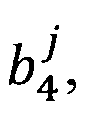
  • the k groups of shaping bits corresponding to the symbols ⁇ xl, x2, ..., xk ⁇ are used as input to a systematic error correcting code P which outputs, in the step SI 04, one parity bit b 4 per each symbol xj, xj being in the reference constellation X r .
  • a sum Sj of the parity bit and of the associated shaping bits b(xj) is computed modulo 2, i.e. 2).
  • the determined shift value is added to the symbol xj of the reference sub- constellation obtained by mapping the shaping bits to a symbol xj in the reference sub-constellation.
  • the selected symbols are finally transmitted to a receiver over a communication channel.
  • Fig. 11 illustrates schematically an example of hardware architecture of a transmitter 10 according to a specific embodiment.
  • the transmitter 10 comprises, connected by a communication bus 110: a processor or CPU (acronym of “Central Processing Unit”) 101; a random access memory RAM 112; a read only memory ROM 113; a storage unit 114 such as an hard disk or such as a storage medium reader, e.g. a SD (acronym of “Secure Digital”) card reader; and at least one set of communication interfaces COM 115 enabling the transmitter 10 to transmit and receive data.
  • a processor or CPU (acronym of “Central Processing Unit”) 101
  • RAM 112 random access memory
  • ROM 113 read only memory
  • storage unit 114 such as an hard disk or such as a storage medium reader, e.g. a SD (acronym of “Secure Digital”) card reader
  • at least one set of communication interfaces COM 115 enabling the transmitter 10 to transmit and receive data.
  • the processor 111 is capable of executing instructions loaded into the RAM 112 from the ROM 113, from an external memory (such as an SD card), from a storage medium (such as the HDD), or from a communication network. When the transmitter 10 is powered up, the processor 111 is capable of reading instructions from the RAM 112 and executing them. These instructions form a computer program causing the implementation, by the processor 111, of the methods described in relation to Figs. 6, 8 and 9.
  • the methods described in relation to Figs. 6, 8 and 9 may be implemented in software form by the execution of the set of instructions by a programmable machine, for example a DSP (acronym of “Digital Signal Processor”), a microcontroller or a GPU (acronym of “Graphics Processing Unit”), or be implemented in hardware form by a machine or a dedicated component (chip or chipset), for example an FPGA (acronym of “Field- Programmable Gate Array”) or an ASIC (acronym of “Application-Specific Integrated Circuit”).
  • the transmitter 10 includes electronic circuitry adapted and configured for implementing the methods described in relation to Figs. 6, 8 and 9.

Landscapes

  • Engineering & Computer Science (AREA)
  • Computer Networks & Wireless Communication (AREA)
  • Signal Processing (AREA)
  • Error Detection And Correction (AREA)
  • Optical Communication System (AREA)
  • Digital Transmission Methods That Use Modulated Carrier Waves (AREA)

Abstract

A method, in a transmitter, is disclosed. The method is for transmitting data using a constellation with M = 2m symbols, divided in N sub- constellations, N and M being integers, where for any symbol in a reference sub-constellation, there is a symbol in each of the other sub-constellations with a same probability value. The method comprises: - obtaining from a source of data, k groups of m — log2 (N) shaping bits wherein each group of m — log2 (N) shaping bits identifies one symbol xj in the reference sub-constellation, jϵ[1;k]; - applying a systematic error correcting code on said k groups of m - log2(N) shaping bits to output one group of log2(N) parity bits per each symbol xj; - for each symbol xj, identifying a sub-constellation using at least the group of log2 (N) parity bits and selecting a symbol identified by said m — log2(N) shaping bits in said identified sub-constellation; and - transmitting each of said k selected symbols to a receiver over a communication channel.

Description

1
[DESCRIPTION]
[Title of Invention]
METHOD AND TRANSMITTER FOR TRANSMITTING DATA
USING CONSTELLATION
[Technical Field]
[0001]
At least one of the present embodiments generally relates to a method, in a transmitter, for transmitting data to a receiver over a communication channel. At least one embodiment relates to a transmitter configured to implement the method.
[Background Art]
[0002]
In a communication system, a transmitter is coupled to a receiver by way of a communication channel (e.g. an optical fiber). The transmitter usually comprises an encoder configured to encode the input data, e.g. a bitstream, into symbols belonging to a finite set, called a constellation. One dimensional ASK (English acronym of “Amplitude- Shift Keying”) and two dimensional QAM (English acronym of “Quadrature- Amplitude Keying”) are examples of such constellations. Here, one dimensional or two dimensional constellations mean that the symbols take value in R or in R2, respectively, R being the set of real numbers. These symbols are then transmitted over the communication channel to the receiver. The receiver comprises a decoder configured to decode the received symbols into output data.
[0003]
Communication systems in which uniformly distributed symbols are transmitted usually lead to an absence of a shaping gain. Therefore, in order to approach the channel capacity, it is known that the transmitter should process the input data to change the probability distribution of the transmitted symbols. More precisely, the input data are processed so that the transmitted symbols have a non-uniform probability distribution that is adapted to the communication channel. This operation, called probabilistic shaping, can provide energy savings also known as shaping gain.
[0004]
In addition to shaping, the signal should be protected against errors with a so-called error-correcting code. Combining shaping and error-correcting code is complex.
[0005]
The document from Bocherer et al entitled “ Bandwidth Efficient and Rate-Matched Low-Density Parity-Check Coded Modulation ' and published in IEEE transactions on communications, vol. 63, no. 12, Dec. 2015 discloses a new coded modulation scheme that, at the transmitter, combines a distribution matcher for probabilistic shaping with a systematic error-correcting code . This method requires that the parity bit of the error-correcting code has an equiprobable distribution and is thus well-suited to the shaping of symmetric distributions as the symbols have the same probability to be positive or negative. However, it is not adapted to the shaping of non-symmetric distributions. In addition, this method is not compliant with distribution matchers that consider the sign bits as shaping bits and therefore change the conditional distribution of the sign bit which is no more independent of the value of the other bits.
[0006]
It is thus desirable to find a method for transmitting data that is adapted to non-symmetric distributions and that makes it possible to use distribution matchers which consider the sign bits as shaping bits.
[Summary of Invention] [0007] At least one of the present embodiments generally relates to a method, in a transmitter, for transmitting data using a constellation with M = 2m symbols, divided in N sub-constellations, N and M being integers, where for any symbol in a reference sub-constellation, there is a symbol in each of the other sub- constellations with a same probability value. The method comprises:
- obtaining from a source of data, k groups of m — log2( N ) shaping bits wherein each group of m — log2 ( N ) shaping bits identifies one symbol Xj in the reference sub-constellation, j∈[ l ;k] ;
- applying a systematic error correcting code on said k groups of m — log2(N ) shaping bits to output one group of log2( N ) parity bits per each symbol Xj ;
- for each symbol Xj, identifying a sub-constellation using at least the group of log2 (N ) parity bits and selecting a symbol identified by said — log2( N ) shaping bits in said identified sub-constellation; and
- transmitting each of said k selected symbols to a receiver over a communication channel.
[0008]
This method is compliant with distribution matchers that consider the sign bits as shaping bits. In addition, it is also adapted to non-symmetric distributions.
[0009]
In one embodiment, obtaining from a source of data, k groups of m — log2( N ) shaping bits wherein each group of m — log2( N ) shaping bits identifies one symbol Xj in the reference sub-constellation, j∈[ l ;k] comprises:
- applying a distribution matcher on said data of said source to obtain k symbols Xj in the reference sub-constellation ; and
- labelling each symbol with a group of m — log2( N shaping bits using a labelling function. [0010]
In one embodiment, the labelling function is a natural labelling function. [0011]
In one embodiment, the labelling function is a Gray labelling function. [0012]
In one embodiment, wherein N=2, identifying, for each symbol Xj, a sub- constellation using at least the group of log2(N ) parity bits and selecting a symbol identified by said m — log2(N ) shaping bits in said identified sub- constellation comprises : selecting a shift value in the set {0; 2} responsive to at least the group of log2 ( N ) parity bits and adding the selected shift value to the symbol xj of the reference constellation to obtain the symbol to transmit. [0013]
In one embodiment, selecting a shift value in the set {0; 2} responsive to at least the group of log2 (N ) parity bits comprises selecting a shift value responsive to double a sum modulo 2 of the group of log2( N ) parity bits and of the corresponding m — log2(N ) shaping bits.
[0014]
In one embodiment, the constellation is a M-ASK constellation. [0015]
In one embodiment, wherein said source of data is an equiprobable source.
[0016]
At least one of the present embodiments generally relates to a transmitter configured to transmit data using a constellation with M = 2m symbols, divided in N sub-constellations, N and M being integers, where for any symbol in a reference sub-constellation, there is a symbol in each of the other sub- constellations with a same probability value. The transmitter comprises at least one processor configured to: - obtain from a source of data, k groups of m - log2 (N ) shaping bits wherein each group of m — log2(N ) shaping bits identifies one symbol Xj in the reference sub-constellation, je[l;k] ;
- apply a systematic error correcting code on said k groups of m — log2( N ) shaping bits to output one group of log2(N ) parity bits per each symbol Xj ;
- for each symbol Xj, identify a sub-constellation using at least the group oflog2( N ) parity bits and select a symbol identified by said m — log2(N ) shaping bits in said identified sub-constellation; and
- transmit each of said k selected symbols to a receiver over a communication channel.
[0017]
In one embodiment, to obtain from a source of data, k groups of m — log2( N ) shaping bits wherein each group of m — log2(N ) shaping bits identifies one symbol Xj in the reference sub-constellation, j∈[ l ;k] comprises:
- to apply a distribution matcher on said data of said source to obtain k symbols Xj in the reference sub-constellation ; and
- to label each symbol with a group of m — log2 (N ) shaping bits using a labelling function.
[0018]
In one embodiment, the labelling function is a natural labelling function. [0019]
In one embodiment, the labelling function is a Gray labelling function. [0020]
In one embodiment, wherein N=2, to identify, for symbol Xj, a sub - constellation using at least the group of log2( N ) parity bits and to select a symbol identified by said m — log2(N ) shaping bits in said identified sub- constellation comprises : to select a shift value in the set {0; 2} responsive to at least the group of log2 (N ) parity bits and to add the selected shift value to the symbol xj of the reference constellation to obtain the symbol to transmit. [0021]
In one embodiment, to select a shift value in the set {0; 2} responsive to at least the group of log2(N ) parity bits comprises to select a shift value responsive to double a sum modulo 2 of the group of log2(N ) parity bits and of the corresponding m — log2( N ) shaping bits.
[0022]
A computer program product is also disclosed that comprises program code instructions that can be loaded in a programmable device, the program code instructions causing implementation of the method according to any one of the disclosed embodiments when the program code instructions are fun by the programmable device. [0023]
A storage medium is also disclosed that stores a computer program comprising program code instructions, the program code instructions causing implementation of the method according to any one of the disclosed embodiments when the program code instructions are read from the storage medium and run by a programmable device.
[0024]
The characteristics of the invention will emerge more clearly from a reading of the following description of at least one example of embodiment, said description being produced with reference to the accompanying drawings. [Brief Description of Drawings] [0025] [FIG. 1]
Fig. 1 illustrates schematically a communication system in which the present embodiments may be implemented. [FIG. 2]
Fig. 2 depicts the symbols of an 8-ASK constellation.
[FIG. 3]
Fig. 3 depicts an example of a quantized target bit distribution of a 16- ASK constellation.
[FIG. 4]
Fig. 4 depicts two sub-constellations of the 16-ASK constellation and a natural labelling of the symbols according to an embodiment.
[FIG. 5]
Fig. 5 depicts an example of a quantized target bit distribution of an 8- ASK constellation.
[FIG. 6]
Fig. 6 depicts a method, in a transmitter, for transmitting binary data using a constellation with M = 2m symbols according to a specific embodiment.
[FIG. 7]
Fig. 7 depicts an example of a target distribution of a reference sub- constellation in the case of a 16-ASK constellation according to one embodiment.
[FIG. 8A]
Fig. 8 A depicts a method, in a transmitter, for transmitting binary data using a 16-ASK constellation defined as a union of two sub-constellations according to a specific embodiment.
[FIG. 8B]
Fig. 8B depicts a method, in a transmitter, for transmitting binary data using a 16-ASK constellation defined as a union of two sub-constellations according to a specific embodiment.
[FIG. 9 A] Fig. 9 A depicts a method, in a transmitter, for transmitting binary data using a 16-ASK constellation defined as a union of two sub-constellations according to a specific embodiment.
[FIG. 9B]
Fig. 9B depicts a method, in a transmitter, for transmitting binary data using a 16-ASK constellation defined as a union of two sub-constellations according to a specific embodiment.
[FIG. 10A]
Fig. 10A depicts for a reference sub-constellation of a 16-ASK constellation and the probabilities of the last bit level according to a specific embodiment.
[FIG. 10B]
Fig. 10B depicts for a reference sub-constellation of a 16-ASK constellation and the probabilities of the last bit level according to a specific embodiment.
[FIG. 11]
Fig.l 1 illustrates schematically an example of hardware architecture of a transmitter according to a specific embodiment.
[Description of Embodiments]
[0026]
Fig.l illustrates schematically a communication system 1 in which the present embodiments may be implemented. The communication system 1 comprises a transmitter 10 and a receiver 14 that are coupled to one another by way of a communication channel 12. The transmitter 10 is fed with input data by at least one binary source SO and outputs symbols selected in a given alphabet X of symbols. In one embodiment, the binary source SO is equiprobable. The input data are for example bits of an audio/video bitstream. In an exemplary embodiment, the alphabet X is a M-ASK constellation, where M=2m with M and m being integers. The symbols of a M-ASK constellations are defined as follows:
Figure imgf000011_0001
[0027]
Consequently, each symbol in this constellation can be represented by a sequence of m = log2M bits. Fig. 2 depicts the symbols of an 8-ASK constellation wherein the first symbol is -7 and the last one is 7. In the following, the various embodiments are described with reference to the ASK constellation. It will be appreciated, however, that the present embodiments are not restricted to the ASK constellation. As an example, it may also be used with a one dimensional constellation where the symbols have different values than the one specified in the above equation, such as the one obtained with geometric shaping (in this case geometric and probabilistic shaping would be combined). [0028]
With reference to Fig. 1 , let X be a discrete random variable representing the symbols at the input of the communication channel 12 with probability distribution p be the channel
Figure imgf000011_0002
distribution, e.g. with a Gaussian channel p , for all xi. Let
Figure imgf000011_0005
Y be a random variable representing the communication channel output. In the case of a Gaussian channel, Y is defined as follows: Y = X + W, where W is a Gaussian noise, e.g.
Figure imgf000011_0003
. [0029]
For the Gaussian channel, the signal-to-noise ratio (SNR) is defined as follows:
Figure imgf000011_0004
Given any communication channel, let p*(x) be the distribution of the input X that maximizes the mutual information (MI) for a given constellation
Figure imgf000012_0001
where P is the maximum average power. The quantity
Figure imgf000012_0002
where the maximization is not only over the probability distribution but also over all possible inputs, is called the channel capacity. In the following, a discrete input is considered and optimization is only done over its distribution. The constellation (i.e., the set of positions of the elements of the discrete input) is not an optimization variable.
[0030]
Figure imgf000012_0003
is defined as the set of quasi- optimal distributions, i.e.
Figure imgf000012_0004
where ε is a quantity whose magnitude depends on the requirements of the communication systems.
[0031]
The aim of probabilistic shaping is to process the input such that its probability distribution maximizes, or almost maximizes, the mutual information I(X; Y). Said otherwise, the distribution of the input should be in
Figure imgf000012_0005
[0032]
For the M-ASK constellation, p(x) is often chosen as the MB distribution (English acronym of “Maxwell-Boltzmann distribution”). Indeed, in this case, the obtained performance is close to the one obtained with p*(x) for ε small). The MB distribution can be quantized at the
Figure imgf000012_0006
cost of negligible performance loss. As an example, a quantized distribution for a 16-ASK constellation as illustrated on Fig.3 exhibits quasi-optimal performance and thus can be used as a target shaping distribution. [0033]
According to the present principles, the target shaping distribution is quantized such that it can be expressed as the union of at least two sub- constellations where, for any symbol with a given probability value pi in the first sub-constellation, there is a symbol in the other sub-constellation with the same probability value pi. The first sub-constellation is called the reference sub-constellation and its distribution the reference distribution. On Fig. 3, the distribution of the reference sub-constellation is identified with bold lines.
[0034]
In one embodiment, the target shaping distribution is quantized such that two adjacent symbols have the same probability value. This is the case of the distribution illustrated on Fig.3. For the M=16-ASK constellation, log2(M) = 4 bits are required for the labelling of the symbols. In one embodiment, the natural labelling of the symbols in this constellation is used and provided by the following table 1.
Figure imgf000013_0001
Table 1
[0035]
The bit level 4 is the sign bit and is used as a shaping bit. The first bit level b 1 which is the parity bit discriminates between the two sub-constellations as shown on Fig. 4. Indeed, the adjacent symbols with the same probability (according to Fig.3) have a different value for bi. The symbols of same probability values have the same remaining labelling bits (bit-level 2 to 4), e.g. -15 and -13. Hence, the whole 16-ASK constellation X may be expressed as the union of a reference constellation Xr and a shifted version of this reference constellation. The reference sub-constellation Xr comprises the symbols in grey cells of table 1, i.e. {-15; -11; -7, -3, 1, 5, 9, 13}. The second sub- constellation comprises the other symbols. Said otherwise, X = Xr U , where α = {0,2}. Moreover, a transmitted
Figure imgf000014_0001
symbol belongs equiprobably to one of the two sub-constellations.
[0036]
In another embodiment, Gray labelling of the symbols in this constellation is used and provided by the following table 2.
Figure imgf000014_0002
Table 2
[0037]
As in the case of natural labelling (Table 1), the whole 16-ASK constellation X may be expressed as the union of a reference constellation Xr and a shifted version of this reference constellation. The bit level 1 is used as the parity bit and enables to discriminate between the two sub-constellations. Indeed, the adjacent symbols with the same probability (according to Fig.3) have a different value for bi. Therefore, as in the case of natural labelling, the bits b2, b3 and b4 are used to label the symbols in Xr. [0038]
The reference sub-constellation Xr comprises the symbols in grey cells of the above table 2. The second sub-constellation comprises the other symbols. However, unlike with natural labelling, the rule to discriminate between the sub-constellations depends on the value of b2, b3 and b4, more precisely on the value of a sum S. For each symbol, the sum S of its bit-levels is computed modulo 2. This sum S (last line of Table 2) is used in addition to the parity bit bi to discriminate between the two sub-constellations.
[0039]
In another embodiment, the target shaping distribution is quantized such that two symbols which are not necessarily adjacent have the same probability value. In this case, the sub-constellations are not “shifts” of each other. This is the case of the distribution of an 8-ASK constellation illustrated on Fig.5. On Fig.5, the symbols -3 and 5 have the same probability values but are not adjacent while the symbols -7 and -5 have the same probability value and are adjacent. On this figure, the distribution of the reference sub-constellation is identified with bold lines.
[0040]
For the =8-ASK constellation, log2 (M) = 3 bits are required for the labelling. The labelling of the symbols in this constellation is provided by the following table 3.
Figure imgf000015_0001
Table 3
[0041] The bit level 3 is the sign bit and is used as a shaping bit. The first bit level discriminates between the two sub-constellations. The symbols of same probability values have the same remaining labelling bits (bit-level 2 to 3). The reference sub-constellation Xr comprises the symbols in grey cells of table 1. The second sub-constellation comprises the other symbols.
[0042]
The method can be extended to cases with more than two sub- constellations, wherein for any symbol in the reference sub-constellation, there is a symbol in each of the other sub-constellations with a same probability value. Given N sub-constellations, N being an integer, log2(N ) bits are required to label and thus identify each of the N sub-constellations. Consequently, there should be log2( N ) parity bits for each symbol of the reference sub-constellation in order to identify a sub-constellation to which the symbol belongs.
[0043]
Fig. 6 depicts a method, in a transmitter, for transmitting data using a constellation with M = 2m symbols according to a specific embodiment. [0044]
In a step SI 00, k groups of m — log2(N ) shaping bits wherein each group of m — log2 ( ) shaping bits identifies one symbol in the reference sub-constellation Xr are obtained from a source of data S. In a specific embodiment, the source of data S is equiprobable.
[0045]
In an exemplary embodiment, the k groups of m — log2(N ) bits are obtained as disclosed on Fig.6 by using a distribution matcher in a step SI 00-1 to transform data of the source S into k symbols {xl, x2, . .., xk}, where each of the k symbols is in the reference sub-constellation Xr . The constant composition distribution matcher disclosed in the document from Schulte et al entitled “Constant composition distribution matching ' published in IEEE Transactions on Information Theory 62(1), Nov. 2015, is an example of such a distribution matcher. Any other arbitrary types of distribution matchers may be used. The symbols in the reference sub-constellation Xr are approximately distributed according to the target distribution of the reference sub- constellation Xr. An example of such a target distribution in the case where N=2 and the constellation is the 16-ASK constellation is depicted on Fig. 7. [0046]
Each symbol xje{xl, x2, ..., xk}, j being an integer in [l;k], is labelled in a step SI 00-2 with a group b(xj) of m-log2(N) bits called shaping bits, where b(.) is a labelling function, e.g. a natural labelling function or a Gray labeling function. The k groups of m-log2(N) shaping bits {b(xl), b(x2), ..., b(xk)} which thus corresponds to the k symbols {xl, x2, ..., xk} are used as input to a systematic error correcting code P which outputs, in a step SI 04, one group of log2(N) parity bits per each symbol xj, xj being in the reference constellation Xr. An example of a systematic error correcting code is disclosed in section VII of the document from Bocherer et al entitled “Bandwidth Efficient and Rate-Matched Low-Density Parity-Check Coded Modulation” . [0047]
In a step SI 06, each group of log2(N) parity bits identifies a sub- constellation among the N sub-constellations and the symbol identified by said m — log2(N ) shaping bits in said identified sub-constellation is selected. [0048]
In a step SI 08, the selected symbols are finally transmitted to a receiver over a communication channel.
[0049]
Fig. 8 A depicts a method, in a transmitter, for transmitting data, in the specific case where N=2 and natural labelling is used. [0050]
In the step S100 , k groups of m — 1 shaping bits wherein each group of m — 1 shaping bits identifies one symbol in the reference sub-constellation Xr are obtained from a source of data S.
[0051]
In an exemplary embodiment, the k groups of m — 1 shaping bits are obtained as disclosed on Fig. 8A by using a distribution matcher in the step SI 00-1 to transform uniform data blocks of a source S into k symbols {xl, x2, ..., xk}, where xi is in the reference sub-constellation Xr. Any arbitrary types of distribution matchers may be used. The symbols in the reference sub- constellation Xr are approximately distributed according to the target distribution of the reference sub-constellation Xr . An example of such a target distribution in the case where N=2 and the constellation is the 16-ASK constellation is depicted on Fig. 7. In this case, 3 shaping bits are obtained per symbol xj∈{xl, x2, ..., xk}.
[0052]
Each symbol xje{xl, x2, ..., xk}, j being an integer in [l ;k], is labelled in the step SI 00-2 using a natural labelling function with a group b(xj) of bits called shaping bits, namely 3 bits in case of a 16-ASK constellation. The k groups of shaping bits {b(xl), b(x2), ..., b(xk)} corresponding to these symbols {xl , x2, ..., xk} are used as input to a systematic error correcting code P which outputs, in the step SI 04, one parity bit per each symbol xj, xj being in the
Figure imgf000018_0002
reference constellation Xr.
[0053]
In the step S 106, each parity bit determines a shift value aj in the set
Figure imgf000018_0001
a={0, 2} for the symbol xj of the reference sub-constellation. Thus, the parity bit b identifies in which sub-constellation the symbol to be transmitted should be chosen. As an example, if the parity bit = 0 then the symbol xj is from the first sub-constellation while if the parity bit
Figure imgf000019_0001
= 1 then the symbol xj is from the second sub-constellation. This is a convention and an opposite convention may be used, wherein if the parity bit b
Figure imgf000019_0002
= 0 then the symbol xj is from the second sub-constellation while if the parity bit = 1 then the symbol
Figure imgf000019_0003
xj is from the first sub-constellation. The determined shift value is added to the symbol xj of the reference sub-constellation.
[0054]
In the step SI 08, the selected symbols are finally transmitted to a receiver over a communication channel. Thus, in the case where aj = 0, the transmitted symbol is the symbol xj the reference, and in the case where aj = 2, the symbol in the shifted sub-constellation is transmitted.
[0055]
Fig. 8B depicts a method, in a transmitter, for transmitting data, in the specific case where N=2 and Gray labelling is used.
[0056]
In the step SI 00, k groups of m — 1 shaping bits wherein each group of m — 1 shaping bits identifies one symbol in the reference sub-constellation Xr are obtained from a source of data S.
[0057]
In an exemplary embodiment, the k groups of m — 1 shaping bits are obtained as disclosed on Fig. 8B by using a distribution matcher in the step SI 00-1 to transform uniform data blocks of a source S into k symbols {xl, x2, . . ., xk], where xi is in the reference sub-constellation Xr. Any arbitrary types of distribution matchers may be used. The symbols in the reference sub- constellation Xr are approximately distributed according to the target distribution of the reference sub-constellation Xr . An example of such a target distribution in the case where N=2 and the constellation is the 16-ASK constellation is depicted on Fig. 7. In this case, 3 shaping bits are obtained per symbol xjc{xl, x2, ..., xk}.
[0058]
Each symbol xjc{xl, x2, xk}, j being an integer in [l ;k], is labelled in the step SI 00-2 using a Gray labelling function with a group b(xj) of bits called shaping bits, namely 3 bits in case of a 16-ASK constellation. The k groups of shaping bits {b(xl), b(x2), ..., b(xk)} corresponding to these symbols {xl , x2, ..., xk} are used as input to a systematic error correcting code P which outputs, in the step SI 04, one parity bit per each symbol xj, xj being in the
Figure imgf000020_0003
reference constellation Xr.
[0059]
In the step SI 06, for each parity bit , a sum Sj of the parity bit b and
Figure imgf000020_0004
of the associated shaping bits b(xj) is computed modulo 2, i.e. , where the shaping bits b Double the
Figure imgf000020_0001
Figure imgf000020_0002
sum Sj is the shift value aj in the set α={0, 2} for the symbol xj of the reference sub-constellation, i.e. aj = 2 * Sj . The determined shift value is added to the symbol xj of the reference sub-constellation. Thus, in the case where aj = 0, the transmitted symbol is the symbol xj the reference, and in the case where aj = 2, the symbol in the shifted sub-constellation is transmitted. [0060]
In the step SI 08, the selected symbols are finally transmitted to a receiver over a communication channel.
[0061]
In the embodiments disclosed with respect to Figs 6, 8 A and 8B, the parity bit is used to identify one sub-constellation among the sub-constellations whose union form the main constellation, e.g. a 16-ASK constellation. Consequently, the sign bit is available for the shaping operation. Therefore, sign-bit shaping can be advantageously combined with systematic error- correcting code as depicted on Figs 9 A and 9B.
[0062]
Fig. 9 A depicts a method, in a transmitter, for transmitting binary data, in the specific case where a 16- ASK constellation is considered and N=2 according to another embodiment. In this embodiment, natural labelling is used.
[0063]
The target distribution depicted on Fig.7 can be realized as shown on Fig. 9A.
[0064]
In the step SI 00, k groups of 3 shaping bits wherein each group
Figure imgf000021_0001
identifies one symbol xj in the reference sub-constellation Xr are obtained from a source of data SO. In one specific embodiment, the second and third bit levels in table 1, i.e. b
Figure imgf000021_0002
are equiprobable and independent. Therefore, these two bits b are obtained from a binary source So. The output of the source
Figure imgf000021_0003
SO is used as input of four binary DMs, namely DM1, DM2, DM3 and DM4. These binary DMs output four sequences of bits identified as four binary non- equiprobable sources Si, S2, S3 and S4. The probability of the last bit level, i.e. the sign bit b4, is chosen based on the value of b , and is
Figure imgf000021_0005
independent of the value of b4 . Consequently, a switch selects a given non- equiprobable source S2, S3 or S4) based on the values of
Figure imgf000021_0006
and b The
Figure imgf000021_0007
different values for are depicted on Fig. 10A.
Figure imgf000021_0004
[0065]
On Fig. 10A, the parameters pi represent the probabilities of the last bit level conditioned on the values of and . [0066]
In the specific case of a symmetric target distribution (in the case of a Gaussian channel), i.e. pl ’=pl and p2’=p2, , the number of non-equiprobable sources is divided by two and thus the switch selects a given non-equiprobable source (S1 or S2) based on the value of e.g. S1 is selected in the case where
Figure imgf000022_0001
= 0 and S2 is selected otherwise.
[0067]
Taking into account this symmetry, the shaping encoder is simplified with the number of binary sources being divided by two and bit flipping being used. This shaping method is disclosed in the patent application EP21305730.0 filed on June 1st, 2021.
[0068]
The k groups of shaping bits corresponding to the
Figure imgf000022_0002
symbols {xl, x2, ..., xk} are used as input to a systematic error correcting code P which outputs, in the step SI 04, one parity bit
Figure imgf000022_0003
per each symbol xj, xj being in the reference constellation Xr.
[0069]
In the step SI 06, each parity bit identifies a sub-constellation among
Figure imgf000022_0004
the N sub-constellations and the symbol identified by said shaping
Figure imgf000022_0005
bits in said identified sub-constellation is selected.
[0070]
In the step S 108, the selected symbols are finally transmitted to a receiver over a communication channel.
[0071]
Fig. 9B depicts a method, in a transmitter, for transmitting binary data, in the specific case where a 16-ASK constellation is considered and N=2 according to another embodiment. In this embodiment, Gray labelling is used. [0072]
The target distribution depicted on Fig.7 can be realized as shown on Fig. 9B.
[0073]
In the step SI 00, k groups of 3 shaping bits wherein each group
Figure imgf000023_0001
identifies one symbol xj in the reference sub-constellation Xr are obtained from a source of data SO. In one specific embodiment, the second and fourth bit levels in table 2, i.e. b are equiprobable and independent. Therefore,
Figure imgf000023_0002
these two bits
Figure imgf000023_0003
are obtained from a binary source S0. The output of the source SO is used as input of four binary DMs, namely DM1, DM2, DM3 and DM4. These binary DMs output four sequences of bits identified as four binary non-equiprobable sources S1 , S2, S3 and S4. The probability of the third bit level, i.e. the bit b3, is chosen based on the values of
Figure imgf000023_0004
and b
Figure imgf000023_0005
i.e. , and
Figure imgf000023_0006
is independent of the value of Consequently, a switch selects a given non-
Figure imgf000023_0007
equiprobable source (S1, S2, S3 or S4) based on the value of and . The
Figure imgf000023_0015
Figure imgf000023_0016
different values for p are depicted on Fig. 10B. On Fig. 10B, the
Figure imgf000023_0008
parameters pi represent the probabilities of the third bit level conditioned on
Figure imgf000023_0017
the values of
Figure imgf000023_0009
and
Figure imgf000023_0010
. In the specific case where pl ’=pl and p2’=p2, then p In this case, the number of non-equiprobable sources is
Figure imgf000023_0011
divided by two and thus the switch selects a given non-equiprobable source (S1 or S2) based on the value of , e.g. Si is selected in the case where = 0 and
Figure imgf000023_0013
Figure imgf000023_0014
S2 is selected otherwise.
[0074]
The k groups of shaping bits corresponding to the
Figure imgf000023_0012
symbols {xl, x2, ..., xk} are used as input to a systematic error correcting code P which outputs, in the step SI 04, one parity bit b4 per each symbol xj, xj being in the reference constellation Xr. [0075]
In the step S 106, for each parity bit
Figure imgf000024_0004
, a sum Sj of the parity bit
Figure imgf000024_0003
and of the associated shaping bits b(xj) is computed modulo 2, i.e. 2). Double the sum Sj is the shift value aj in the set a={0,
Figure imgf000024_0001
2} for the symbol xj of the reference sub-constellation, i.e. aj = 2 * Sj. The determined shift value is added to the symbol xj of the reference sub- constellation obtained by mapping the shaping bits to a symbol xj in
Figure imgf000024_0002
the reference sub-constellation. Thus, in the case where aj = 0, the transmitted symbol is the symbol xj the reference, and in the case where aj = 2, the symbol in the shifted sub-constellation is transmitted.
[0076]
In the step SI 08, the selected symbols are finally transmitted to a receiver over a communication channel.
[0077]
Fig. 11 illustrates schematically an example of hardware architecture of a transmitter 10 according to a specific embodiment.
[0078]
The transmitter 10 comprises, connected by a communication bus 110: a processor or CPU (acronym of “Central Processing Unit”) 101; a random access memory RAM 112; a read only memory ROM 113; a storage unit 114 such as an hard disk or such as a storage medium reader, e.g. a SD (acronym of “Secure Digital”) card reader; and at least one set of communication interfaces COM 115 enabling the transmitter 10 to transmit and receive data.
[0079]
The processor 111 is capable of executing instructions loaded into the RAM 112 from the ROM 113, from an external memory (such as an SD card), from a storage medium (such as the HDD), or from a communication network. When the transmitter 10 is powered up, the processor 111 is capable of reading instructions from the RAM 112 and executing them. These instructions form a computer program causing the implementation, by the processor 111, of the methods described in relation to Figs. 6, 8 and 9.
[0080]
The methods described in relation to Figs. 6, 8 and 9 may be implemented in software form by the execution of the set of instructions by a programmable machine, for example a DSP (acronym of “Digital Signal Processor”), a microcontroller or a GPU (acronym of “Graphics Processing Unit”), or be implemented in hardware form by a machine or a dedicated component (chip or chipset), for example an FPGA (acronym of “Field- Programmable Gate Array”) or an ASIC (acronym of “Application-Specific Integrated Circuit”). In general, the transmitter 10 includes electronic circuitry adapted and configured for implementing the methods described in relation to Figs. 6, 8 and 9.

Claims

[CLAIMS]
[Claim 1]
A method, in a transmitter, for transmitting data using a constellation with M = 2m symbols, divided in N sub-constellations, N and M being integers, where for any symbol in a reference sub-constellation, there is a symbol in each of the other sub-constellations with a same probability value, comprising:
- obtaining from a source of data, k groups of m — log2(N shaping bits wherein each group of m — log2(N ) shaping bits identifies one symbol Xj in the reference sub-constellation, j ∈[ l ;k] ;
- applying a systematic error correcting code on said k groups of m — log2(N ) shaping bits to output one group of log2(N ) parity bits per each symbol Xj ;
- for each symbol Xj, identifying a sub-constellation using at least the group of log2 (N ) parity bits and selecting a symbol identified by said m — log2(N ) shaping bits in said identified sub-constellation; and
- transmitting each of said k selected symbols to a receiver over a communication channel.
[Claim 2]
The method according to claim 1, wherein obtaining from a source of data, k groups of m — log2(N ) shaping bits wherein each group of m — log2(N ) shaping bits identifies one symbol Xj in the reference sub- constellation, je[l ;k] comprises:
- Applying a distribution matcher on said data of said source to obtain k symbols Xj in the reference sub-constellation ; and
- Labelling each symbol with a group of m — log2(N ) shaping bits using a labelling function.
[Claim 3] The method according to claim 2, wherein the labelling function is a natural labelling function.
[Claim 4]
The method according to claim 2, wherein the labelling function is a Gray labelling function.
[Claim 5]
The method according to any one of claims 1 to 4, wherein N=2 and wherein for each symbol Xj, identifying a sub-constellation using at least the group oflog2(N ) parity bits and selecting a symbol identified by said — log2(N) shaping bits in said identified sub-constellation comprises : selecting a shift value in the set {0; 2} responsive to at least the group of log2 (N ) parity bits and adding the selected shift value to the symbol xj of the reference constellation to obtain the symbol to transmit.
[Claim 6]
The method according to claim 5, wherein selecting a shift value in the set {0; 2} responsive to at least the group of log2(N ) parity bits comprises selecting a shift value responsive to double a sum modulo 2 of the group of log2(N ) parity bits and of the corresponding m — log2(N ) shaping bits.
[Claim 7]
The method according to any one of claims 1 to 6, wherein the constellation is an M-ASK constellation.
[Claim 8]
The method according to any one of claims 1 to 7, wherein said source of data is an equiprobable source.
[Claim 9]
A transmitter configured to transmit data using a constellation with M = 2m symbols, divided in N sub-constellations, N and M being integers, where for any symbol in a reference sub-constellation, there is a symbol in each of the other sub-constellations with a same probability value, the transmitter comprises at least one processor configured to:
- obtain from a source of data, k groups of m — log2(N ) shaping bits wherein each group of m — log2 (N ) shaping bits identifies one symbol Xj in the reference sub-constellation, j∈[l ;k] ;
- apply a systematic error correcting code on said k groups of m — log2(N ) shaping bits to output one group oflog2(N ) parity bits per each symbol Xj ;
- for each symbol Xj, identify a sub-constellation using at least the group of log2 ( N ) parity bits and select a symbol identified by said m — log2( N ) shaping bits in said identified sub-constellation; and
- transmit each of said k selected symbols to a receiver over a communication channel.
[Claim 10]
The transmitter according to claim 9, wherein to obtain from a source of data, k groups of m — log2(N ) shaping bits wherein each group of m — log2(N ) shaping bits identifies one symbol Xj in the reference sub- constellation, jc[l;k] comprises:
- to apply a distribution matcher on said data of said source to obtain k symbols Xj in the reference sub-constellation ; and
- to label each symbol with a group of m — log2 (N ) shaping bits using a labelling function.
[Claim 11]
The transmitter according to claim 10, wherein the labelling function is a natural labelling function.
[Claim 12]
The transmitter according to claim 10, wherein the labelling function is a Gray labelling function.
[Claim 13]
The transmitter according to any one of claims 9 to 12, wherein N=2 and wherein for each symbol Xj, to identify a sub-constellation using at least the group of log2 (N ) parity bits and to select a symbol identified by said m — log2(N ) shaping bits in said identified sub-constellation comprises : to select a shift value in the set {0; 2} responsive to at least the group of log2(N ) parity bits and to add the selected shift value to the symbol xj of the reference constellation to obtain the symbol to transmit.
[Claim 14]
The transmitter according to claim 13, wherein to select a shift value in the set {0; 2} responsive to at least the group of log2(N ) parity bits comprises to select a shift value responsive to double a sum modulo 2 of the group of log2(N ) parity bits and of the corresponding m — log2(N ) shaping bits.
[Claim 15]
A computer program product comprising program code instructions that can be loaded in a programmable device, the program code instructions causing implementation of the method according to any one of claims 1 to 8 when the program code instructions are run by the programmable device.
[Claim 16]
A storage medium storing a computer program comprising program code instructions, the program code instructions causing implementation of the method according to any one of claims 1 to 8 when the program code instructions are read from the storage medium and run by a programmable device.
PCT/JP2022/033813 2022-04-13 2022-09-02 Method and transmitter for transmitting data using constellation Ceased WO2023199536A1 (en)

Priority Applications (3)

Application Number Priority Date Filing Date Title
US18/843,624 US20250167916A1 (en) 2022-04-13 2022-09-02 Method and transmitter for transmitting data using constellation
CN202280094599.2A CN118975169A (en) 2022-04-13 2022-09-02 Method and transmitter for transmitting data using constellations
JP2024560966A JP7745779B2 (en) 2022-04-13 2022-09-02 Method and transmitter for transmitting data using a constellation

Applications Claiming Priority (2)

Application Number Priority Date Filing Date Title
EP22305529.4 2022-04-13
EP22305529.4A EP4262115A1 (en) 2022-04-13 2022-04-13 Method for transmitting data to a receiver and transmitter configured to implement the method

Publications (1)

Publication Number Publication Date
WO2023199536A1 true WO2023199536A1 (en) 2023-10-19

Family

ID=81388981

Family Applications (1)

Application Number Title Priority Date Filing Date
PCT/JP2022/033813 Ceased WO2023199536A1 (en) 2022-04-13 2022-09-02 Method and transmitter for transmitting data using constellation

Country Status (5)

Country Link
US (1) US20250167916A1 (en)
EP (1) EP4262115A1 (en)
JP (1) JP7745779B2 (en)
CN (1) CN118975169A (en)
WO (1) WO2023199536A1 (en)

Citations (3)

* Cited by examiner, † Cited by third party
Publication number Priority date Publication date Assignee Title
US20180026725A1 (en) * 2016-07-20 2018-01-25 Alcatel-Lucent Usa Inc. Low-complexity constellation shaping
WO2019034781A1 (en) * 2017-08-17 2019-02-21 Sony Corporation Probabilistic signal point shaping device and method
EP3852326A1 (en) * 2020-01-15 2021-07-21 Nokia Technologies Oy Transmitter

Family Cites Families (11)

* Cited by examiner, † Cited by third party
Publication number Priority date Publication date Assignee Title
US6891896B1 (en) * 2000-02-10 2005-05-10 Paradyne Corporation Embedded signal constellations
US7831887B2 (en) * 2005-12-15 2010-11-09 General Instrument Corporation Method and apparatus for using long forward error correcting codes in a content distribution system
CN104429033B (en) * 2012-07-09 2018-06-29 索尼公司 Coding and modulation devices using non-uniform constellations
JP6420333B2 (en) * 2013-07-05 2018-11-07 ソニー株式会社 Coded modulation device using non-uniform constellation
KR102323765B1 (en) * 2014-02-13 2021-11-11 한국전자통신연구원 Modulator using non-uniform 16-symbol signal constellation for low density parity check codeword with 3/15 code rate, and method using the same
CA2881540C (en) * 2014-02-13 2017-08-01 Electronics And Telecommunications Research Institute Modulator and modulation method using non-uniform 16-symbol signal constellation for low-density parity check codeword having 4/15 code rate
AU2016327482A1 (en) 2015-09-24 2018-03-29 Sony Corporation Apparatus, method, and program
US10091046B1 (en) * 2017-11-20 2018-10-02 Nokia Technologies Oy Joint use of probabilistic signal shaping and forward error correction
US10200231B1 (en) * 2018-03-22 2019-02-05 Nokia Technologies Oy Partial probabilistic signal shaping
US11012187B1 (en) 2020-03-04 2021-05-18 Fujitsu Limited Error correction in optical networks with probabilistic shaping and symbol rate optimization
US11838123B2 (en) * 2022-01-14 2023-12-05 Huawei Technologies Co., Ltd. Bit-channel combiner and combined probabilistic constellation shaping and polar encoder

Patent Citations (3)

* Cited by examiner, † Cited by third party
Publication number Priority date Publication date Assignee Title
US20180026725A1 (en) * 2016-07-20 2018-01-25 Alcatel-Lucent Usa Inc. Low-complexity constellation shaping
WO2019034781A1 (en) * 2017-08-17 2019-02-21 Sony Corporation Probabilistic signal point shaping device and method
EP3852326A1 (en) * 2020-01-15 2021-07-21 Nokia Technologies Oy Transmitter

Non-Patent Citations (4)

* Cited by examiner, † Cited by third party
Title
BOCHERER ET AL., BANDWIDTH EFFICIENT AND RATE-MATCHED LOW-DENSITY PARITY-CHECK CODED MODULATION
BOCHERER ET AL.: "Bandwidth Efficient and Rate-Matched Low-Density Parity-Check Coded Modulation", IEEE TRANSACTIONS ON COMMUNICATIONS, vol. 63, no. 12, December 2015 (2015-12-01), XP011593618, DOI: 10.1109/TCOMM.2015.2494016
FAYCAL AIT AOUDIA ET AL: "Joint Learning of Probabilistic and Geometric Shaping for Coded Modulation Systems", ARXIV.ORG, CORNELL UNIVERSITY LIBRARY, 201 OLIN LIBRARY CORNELL UNIVERSITY ITHACA, NY 14853, 10 April 2020 (2020-04-10), XP081641910 *
SCHULTE ET AL.: "Constant composition distribution matching", IEEE TRANSACTIONS ON INFORMATION THEORY, vol. 62, no. 1, November 2015 (2015-11-01)

Also Published As

Publication number Publication date
JP2024545828A (en) 2024-12-12
US20250167916A1 (en) 2025-05-22
EP4262115A1 (en) 2023-10-18
CN118975169A (en) 2024-11-15
JP7745779B2 (en) 2025-09-29

Similar Documents

Publication Publication Date Title
US11683101B1 (en) Probabilistic shaping techniques for high performance coherent optical transceivers
EP3718228B1 (en) Communication system and method using a set of distribution matchers
CN114600398B (en) Device for multi-level encoding
US9015566B2 (en) Power and pin efficient chip-to-chip communications with common-mode rejection and SSO resilience
US6304196B1 (en) Disparity and transition density control system and method
EP3328012A1 (en) Methods of converting or reconverting a data signal and method and system for data transmission and/or data reception
JP2022529393A (en) Short block length distribution matching algorithm
US11621726B1 (en) Multidimensional multilevel coding encoder and decoder
CN110418220A (en) A generalized frequency division multiplexing system, method and device for generating optical fiber signals
CN117640320A (en) A hybrid shaping multidimensional modulation and demodulation method, device, equipment and medium
WO2023199536A1 (en) Method and transmitter for transmitting data using constellation
CN114793144B (en) Signal encoding, decoding method, device, electronic device, chip and storage medium
EP4099652B1 (en) Method and device for transmitting binary data
US20230155680A1 (en) Modulation and Encoding Method and Apparatus, Demodulation and Decoding Method and Apparatus, Device, and Communication System
US20250202743A1 (en) Method and device for transmitting binary data
US20260025209A1 (en) Encoding and decoding using probabilistic shaping
JP7618118B1 (en) Probability shaping coding circuit and probability shaping coding method
JP7618120B1 (en) Probability shaping decoding circuit and probability shaping decoding method
US8705662B2 (en) Soft decision method and associated signal receiving system
US20250023662A1 (en) Modulation using variable-length bit mappings
CN120675671A (en) Coding modulation probability shaping method and related device

Legal Events

Date Code Title Description
121 Ep: the epo has been informed by wipo that ep was designated in this application

Ref document number: 22782596

Country of ref document: EP

Kind code of ref document: A1

WWE Wipo information: entry into national phase

Ref document number: 2024560966

Country of ref document: JP

WWE Wipo information: entry into national phase

Ref document number: 18843624

Country of ref document: US

WWE Wipo information: entry into national phase

Ref document number: 202280094599.2

Country of ref document: CN

NENP Non-entry into the national phase

Ref country code: DE

122 Ep: pct application non-entry in european phase

Ref document number: 22782596

Country of ref document: EP

Kind code of ref document: A1

WWP Wipo information: published in national office

Ref document number: 18843624

Country of ref document: US