WO2023191074A1 - キサントモナス属細菌溶菌性バクテリオファージ - Google Patents
キサントモナス属細菌溶菌性バクテリオファージ Download PDFInfo
- Publication number
- WO2023191074A1 WO2023191074A1 PCT/JP2023/013613 JP2023013613W WO2023191074A1 WO 2023191074 A1 WO2023191074 A1 WO 2023191074A1 JP 2023013613 W JP2023013613 W JP 2023013613W WO 2023191074 A1 WO2023191074 A1 WO 2023191074A1
- Authority
- WO
- WIPO (PCT)
- Prior art keywords
- seq
- phage
- amino acid
- base sequence
- bacteria
- Prior art date
- Legal status (The legal status is an assumption and is not a legal conclusion. Google has not performed a legal analysis and makes no representation as to the accuracy of the status listed.)
- Ceased
Links
Images


Classifications
-
- A—HUMAN NECESSITIES
- A61—MEDICAL OR VETERINARY SCIENCE; HYGIENE
- A61K—PREPARATIONS FOR MEDICAL, DENTAL OR TOILETRY PURPOSES
- A61K35/00—Medicinal preparations containing materials or reaction products thereof with undetermined constitution
- A61K35/66—Microorganisms or materials therefrom
- A61K35/76—Viruses; Subviral particles; Bacteriophages
- A61K35/768—Oncolytic viruses not provided for in groups A61K35/761 - A61K35/766
-
- A—HUMAN NECESSITIES
- A01—AGRICULTURE; FORESTRY; ANIMAL HUSBANDRY; HUNTING; TRAPPING; FISHING
- A01N—PRESERVATION OF BODIES OF HUMANS OR ANIMALS OR PLANTS OR PARTS THEREOF; BIOCIDES, e.g. AS DISINFECTANTS, AS PESTICIDES OR AS HERBICIDES; PEST REPELLANTS OR ATTRACTANTS; PLANT GROWTH REGULATORS
- A01N63/00—Biocides, pest repellants or attractants, or plant growth regulators containing microorganisms, viruses, microbial fungi, animals or substances produced by, or obtained from, microorganisms, viruses, microbial fungi or animals, e.g. enzymes or fermentates
- A01N63/40—Viruses, e.g. bacteriophages
-
- A—HUMAN NECESSITIES
- A01—AGRICULTURE; FORESTRY; ANIMAL HUSBANDRY; HUNTING; TRAPPING; FISHING
- A01P—BIOCIDAL, PEST REPELLANT, PEST ATTRACTANT OR PLANT GROWTH REGULATORY ACTIVITY OF CHEMICAL COMPOUNDS OR PREPARATIONS
- A01P1/00—Disinfectants; Antimicrobial compounds or mixtures thereof
-
- A—HUMAN NECESSITIES
- A61—MEDICAL OR VETERINARY SCIENCE; HYGIENE
- A61K—PREPARATIONS FOR MEDICAL, DENTAL OR TOILETRY PURPOSES
- A61K35/00—Medicinal preparations containing materials or reaction products thereof with undetermined constitution
- A61K35/66—Microorganisms or materials therefrom
- A61K35/76—Viruses; Subviral particles; Bacteriophages
-
- C—CHEMISTRY; METALLURGY
- C07—ORGANIC CHEMISTRY
- C07K—PEPTIDES
- C07K14/00—Peptides having more than 20 amino acids; Gastrins; Somatostatins; Melanotropins; Derivatives thereof
- C07K14/005—Peptides having more than 20 amino acids; Gastrins; Somatostatins; Melanotropins; Derivatives thereof from viruses
-
- C—CHEMISTRY; METALLURGY
- C07—ORGANIC CHEMISTRY
- C07K—PEPTIDES
- C07K14/00—Peptides having more than 20 amino acids; Gastrins; Somatostatins; Melanotropins; Derivatives thereof
- C07K14/005—Peptides having more than 20 amino acids; Gastrins; Somatostatins; Melanotropins; Derivatives thereof from viruses
- C07K14/01—DNA viruses
-
- C—CHEMISTRY; METALLURGY
- C12—BIOCHEMISTRY; BEER; SPIRITS; WINE; VINEGAR; MICROBIOLOGY; ENZYMOLOGY; MUTATION OR GENETIC ENGINEERING
- C12N—MICROORGANISMS OR ENZYMES; COMPOSITIONS THEREOF; PROPAGATING, PRESERVING, OR MAINTAINING MICROORGANISMS; MUTATION OR GENETIC ENGINEERING; CULTURE MEDIA
- C12N1/00—Microorganisms; Compositions thereof; Processes of propagating, maintaining or preserving microorganisms or compositions thereof; Processes of preparing or isolating a composition containing a microorganism; Culture media therefor
- C12N1/06—Lysis of microorganisms
-
- C—CHEMISTRY; METALLURGY
- C12—BIOCHEMISTRY; BEER; SPIRITS; WINE; VINEGAR; MICROBIOLOGY; ENZYMOLOGY; MUTATION OR GENETIC ENGINEERING
- C12N—MICROORGANISMS OR ENZYMES; COMPOSITIONS THEREOF; PROPAGATING, PRESERVING, OR MAINTAINING MICROORGANISMS; MUTATION OR GENETIC ENGINEERING; CULTURE MEDIA
- C12N7/00—Viruses; Bacteriophages; Compositions thereof; Preparation or purification thereof
-
- C—CHEMISTRY; METALLURGY
- C12—BIOCHEMISTRY; BEER; SPIRITS; WINE; VINEGAR; MICROBIOLOGY; ENZYMOLOGY; MUTATION OR GENETIC ENGINEERING
- C12Q—MEASURING OR TESTING PROCESSES INVOLVING ENZYMES, NUCLEIC ACIDS OR MICROORGANISMS; COMPOSITIONS OR TEST PAPERS THEREFOR; PROCESSES OF PREPARING SUCH COMPOSITIONS; CONDITION-RESPONSIVE CONTROL IN MICROBIOLOGICAL OR ENZYMOLOGICAL PROCESSES
- C12Q1/00—Measuring or testing processes involving enzymes, nucleic acids or microorganisms; Compositions therefor; Processes of preparing such compositions
- C12Q1/02—Measuring or testing processes involving enzymes, nucleic acids or microorganisms; Compositions therefor; Processes of preparing such compositions involving viable microorganisms
- C12Q1/04—Determining presence or kind of microorganism; Use of selective media for testing antibiotics or bacteriocides; Compositions containing a chemical indicator therefor
-
- C—CHEMISTRY; METALLURGY
- C12—BIOCHEMISTRY; BEER; SPIRITS; WINE; VINEGAR; MICROBIOLOGY; ENZYMOLOGY; MUTATION OR GENETIC ENGINEERING
- C12N—MICROORGANISMS OR ENZYMES; COMPOSITIONS THEREOF; PROPAGATING, PRESERVING, OR MAINTAINING MICROORGANISMS; MUTATION OR GENETIC ENGINEERING; CULTURE MEDIA
- C12N2795/00—Bacteriophages
- C12N2795/00011—Details
- C12N2795/00021—Viruses as such, e.g. new isolates, mutants or their genomic sequences
-
- C—CHEMISTRY; METALLURGY
- C12—BIOCHEMISTRY; BEER; SPIRITS; WINE; VINEGAR; MICROBIOLOGY; ENZYMOLOGY; MUTATION OR GENETIC ENGINEERING
- C12N—MICROORGANISMS OR ENZYMES; COMPOSITIONS THEREOF; PROPAGATING, PRESERVING, OR MAINTAINING MICROORGANISMS; MUTATION OR GENETIC ENGINEERING; CULTURE MEDIA
- C12N2795/00—Bacteriophages
- C12N2795/00011—Details
- C12N2795/00022—New viral proteins or individual genes, new structural or functional aspects of known viral proteins or genes
-
- C—CHEMISTRY; METALLURGY
- C12—BIOCHEMISTRY; BEER; SPIRITS; WINE; VINEGAR; MICROBIOLOGY; ENZYMOLOGY; MUTATION OR GENETIC ENGINEERING
- C12N—MICROORGANISMS OR ENZYMES; COMPOSITIONS THEREOF; PROPAGATING, PRESERVING, OR MAINTAINING MICROORGANISMS; MUTATION OR GENETIC ENGINEERING; CULTURE MEDIA
- C12N2795/00—Bacteriophages
- C12N2795/00011—Details
- C12N2795/00032—Use of virus as therapeutic agent, other than vaccine, e.g. as cytolytic agent
-
- C—CHEMISTRY; METALLURGY
- C12—BIOCHEMISTRY; BEER; SPIRITS; WINE; VINEGAR; MICROBIOLOGY; ENZYMOLOGY; MUTATION OR GENETIC ENGINEERING
- C12N—MICROORGANISMS OR ENZYMES; COMPOSITIONS THEREOF; PROPAGATING, PRESERVING, OR MAINTAINING MICROORGANISMS; MUTATION OR GENETIC ENGINEERING; CULTURE MEDIA
- C12N2795/00—Bacteriophages
- C12N2795/00011—Details
- C12N2795/00071—Demonstrated in vivo effect
-
- C—CHEMISTRY; METALLURGY
- C12—BIOCHEMISTRY; BEER; SPIRITS; WINE; VINEGAR; MICROBIOLOGY; ENZYMOLOGY; MUTATION OR GENETIC ENGINEERING
- C12N—MICROORGANISMS OR ENZYMES; COMPOSITIONS THEREOF; PROPAGATING, PRESERVING, OR MAINTAINING MICROORGANISMS; MUTATION OR GENETIC ENGINEERING; CULTURE MEDIA
- C12N2795/00—Bacteriophages
- C12N2795/00011—Details
- C12N2795/10011—Details dsDNA Bacteriophages
- C12N2795/10021—Viruses as such, e.g. new isolates, mutants or their genomic sequences
-
- C—CHEMISTRY; METALLURGY
- C12—BIOCHEMISTRY; BEER; SPIRITS; WINE; VINEGAR; MICROBIOLOGY; ENZYMOLOGY; MUTATION OR GENETIC ENGINEERING
- C12N—MICROORGANISMS OR ENZYMES; COMPOSITIONS THEREOF; PROPAGATING, PRESERVING, OR MAINTAINING MICROORGANISMS; MUTATION OR GENETIC ENGINEERING; CULTURE MEDIA
- C12N2795/00—Bacteriophages
- C12N2795/00011—Details
- C12N2795/10011—Details dsDNA Bacteriophages
- C12N2795/10022—New viral proteins or individual genes, new structural or functional aspects of known viral proteins or genes
-
- C—CHEMISTRY; METALLURGY
- C12—BIOCHEMISTRY; BEER; SPIRITS; WINE; VINEGAR; MICROBIOLOGY; ENZYMOLOGY; MUTATION OR GENETIC ENGINEERING
- C12N—MICROORGANISMS OR ENZYMES; COMPOSITIONS THEREOF; PROPAGATING, PRESERVING, OR MAINTAINING MICROORGANISMS; MUTATION OR GENETIC ENGINEERING; CULTURE MEDIA
- C12N2795/00—Bacteriophages
- C12N2795/00011—Details
- C12N2795/10011—Details dsDNA Bacteriophages
- C12N2795/10032—Use of virus as therapeutic agent, other than vaccine, e.g. as cytolytic agent
-
- C—CHEMISTRY; METALLURGY
- C12—BIOCHEMISTRY; BEER; SPIRITS; WINE; VINEGAR; MICROBIOLOGY; ENZYMOLOGY; MUTATION OR GENETIC ENGINEERING
- C12R—INDEXING SCHEME ASSOCIATED WITH SUBCLASSES C12C - C12Q, RELATING TO MICROORGANISMS
- C12R2001/00—Microorganisms ; Processes using microorganisms
- C12R2001/01—Bacteria or Actinomycetales ; using bacteria or Actinomycetales
- C12R2001/64—Xanthomonas
Definitions
- the present invention relates to a bacteriophage-based bacteriolytic agent, a plant disease control composition containing the same, and a plant disease control method.
- Bacteriophage (herein often abbreviated as "phage”) is a general term for viruses that infect only bacteria. Many phages, also called lytic phages, specifically adsorb to their target bacterial hosts, inject their own DNA, and self-amplify using the bacterial translation machinery. Furthermore, by lysing the bacterium, the amplified phage is spread, and infection of new target bacteria is repeated (Non-Patent Document 1).
- Non-Patent Document 2 discloses a new control method.
- Patent Documents 1 to 3 Examples of phages that exhibit bacteriolytic properties against bacteria of the genus Xanthomonas are reported in Patent Documents 1 to 3 and Non-Patent Document 2.
- the host range of phages is extremely narrow, so the search for new phages and the discovery of phages with higher lytic activity remain important.
- phage which is a virus
- phage is a natural product, so no drug damage has been reported to date.
- phage because it is highly specific to the host, only specific genera and species of bacteria are targeted, and its impact on the bacterial flora balance is extremely limited.
- it is highly safe and harmless not only to animals including humans but also to plants.
- Another object of the present invention is to provide a composition containing the phage as an active ingredient, and to apply it to disease control, detection of pathogenic bacteria, and the like.
- the present inventors isolated novel phages from natural wastewater and soil using a method to detect lytic plaques formed on soft agar medium cultured with Xanthomonas bacteria, and the phages were used against various Xanthomonas bacteria.
- the present invention has been completed based on the above research and development results, and specifically provides the following.
- Lytic bacteriophage consisting of a bacteriophage consisting of the amino acid sequence shown in any one of the following (a) to (c) and containing a gene encoding a tail fiber protein having target bacterium recognition activity in its genomic DNA Agent: (a) Amino acid sequence shown in SEQ ID NO: 1; (b) Amino acid sequence in which one or more amino acids are added, deleted, and/or substituted in the amino acid sequence shown in SEQ ID NO: 1; (c) Sequence An amino acid sequence that has 90% or more sequence identity with the amino acid sequence shown in number 1.
- the Xanthomonas bacterium is from the group consisting of Xanthomonas arboricola, Xanthomonas campestris, Xanthomonas citri, Xanthomonas oryzae, and Xanthomonas cucurbitae.
- the bacteriolytic agent according to (1-5) which is at least one selected bacterium.
- the lytic agent according to (2-1) or (2-2), wherein the genomic DNA base sequence consists of the base sequence shown in any one of the following (a) to (e): (a) Base sequence shown by SEQ ID NO: 13, 47 or 48; (b) Base sequence shown by SEQ ID NO: 13, 47 or 48 other than the gene base sequence described in (2-1) or (2-2) above.
- a base sequence in which one or more bases are added, deleted, and/or substituted (c) the base sequence shown in SEQ ID NO: 13, 47, or 48 in the above (2-1) or (2- 2) A nucleotide sequence having 98.5% or more sequence identity with a nucleotide sequence other than the gene nucleotide sequence described in 2); (d) one or more nucleotides are added to the nucleotide sequence shown in SEQ ID NO: 13, 47, or 48; Deleted and/or substituted base sequences; (e) Base sequences having 98.5% or more sequence identity with the base sequence shown in SEQ ID NO: 13, 47, or 48.
- the Xanthomonas bacterium is selected from the group consisting of Xanthomonas arboricola, Xanthomonas campestris, Xanthomonas citri, Xanthomonas oryzae, and Xanthomonas cucurbitae.
- the bacteriolytic agent according to (2-4) which is at least one bacterium.
- a lytic agent consisting of a bacteriophage having a genomic DNA sequence containing the nucleotide sequence shown in any one of the following (a) to (c): (a) the nucleotide sequence shown in SEQ ID NO: 14; (b) A nucleotide sequence in which one or more bases are added, deleted, and/or substituted in the nucleotide sequence shown in SEQ ID NO: 14; (c) having 90% or more sequence identity with the nucleotide sequence shown in SEQ ID NO: 14; Base sequence. (3-2) The lytic agent according to (3-1), which exhibits lytic activity against bacteria of the genus Xanthomonas. (3-3) The bacteriolytic agent according to (3-2), wherein the Xanthomonas bacterium is Xanthomonas arboricola.
- a lytic agent consisting of a bacteriophage whose genomic DNA contains a gene encoding a protein consisting of the amino acid sequence shown in any one of the following (a) to (c): (a) Shown by SEQ ID NO: 21 Amino acid sequence; (b) Amino acid sequence in which one or more amino acids are added, deleted, and/or substituted in the amino acid sequence shown in SEQ ID NO: 21; (c) 90% or more of the amino acid sequence shown in SEQ ID NO: 21 Amino acid sequences having sequence identity.
- (6-3) The lytic agent according to (6-1) or (6-2), wherein the genomic DNA base sequence consists of the base sequence shown in any one of the following (g) to (k): (g) Base sequence shown by SEQ ID NO: 23; (h) One or more bases in the base sequence other than the gene described in (6-1) or (6-2) above in the base sequence shown by SEQ ID NO: 23.
- a nucleotide sequence in which is added, deleted, and/or substituted; (i) 95% or more of the nucleotide sequence shown by SEQ ID NO: 23 is other than the gene described in (6-1) or (6-2) above; A base sequence having sequence identity of: (j) a base sequence in which one or more bases are added, deleted, and/or substituted in the base sequence shown in SEQ ID NO: 23; (k) a base sequence shown in SEQ ID NO: 23 A base sequence that has 95% or more sequence identity. (6-4) The lytic agent according to any one of (6-1) to (6-3), which exhibits lytic activity against bacteria of the genus Xanthomonas. (6-5) The bacteriolytic agent according to (6-4), wherein the Xanthomonas bacterium is Xanthomonas arboricola.
- a gene encoding tail tube protein A which consists of the amino acid sequence shown in any one of the following (a) to (c) and has target bacterium recognition activity, and the following (d) to (f).
- a bacteriophage consisting of a bacteriophage comprising a gene encoding tail tube protein B having target bacterium recognition activity in its genomic DNA and consisting of the amino acid sequence shown in any one of the following: (a) SEQ ID NO: 24, 49 or 60 (b) Amino acid sequence in which one or more amino acids are added, deleted, and/or substituted in the amino acid sequence shown in SEQ ID NO: 24 or 49; (c) Amino acid sequence shown in SEQ ID NO: 24 or 49 Amino acid sequence having 97% or more sequence identity with the amino acid sequence; (d) Amino acid sequence shown in SEQ ID NO: 57, 50 or 61; (e) One or more amino acids in the amino acid sequence shown in SEQ ID NO: 57 or 50 (f) An amino acid sequence having
- Agent (j) a base sequence shown in SEQ ID NO: 27 or 52; (k) a base sequence in which one or more bases are added, deleted, and/or substituted in the base sequence shown in SEQ ID NO: 27 or 52; (l) A nucleotide sequence having 97% or more sequence identity with the nucleotide sequence shown in SEQ ID NO: 27 or 52. (7-4) The nucleotide sequence according to any one of (7-1) to (7-3), wherein the genomic DNA base sequence consists of the nucleotide sequence shown in any one of the following (m) to (q).
- Bacteriolytic agent (m) Base sequence shown by SEQ ID NO: 28, 29 or 53; (n) Base sequence shown by SEQ ID NO: 28, 29 or 53 described in any one of (7-1) to (7-3) above. A base sequence in which one or several bases are added, deleted, and/or substituted in a base sequence other than the gene base sequence of 1) A nucleotide sequence other than the gene described in any of (7-3) that has 95% or more sequence identity: (p) one or more nucleotide sequences in the nucleotide sequence shown in SEQ ID NO: 28, 29 or 53; A base sequence in which a plurality of bases are added, deleted, and/or substituted; (q) A base sequence having 95% or more sequence identity with the base sequence shown in SEQ ID NO: 28, 29, or 53.
- a gene encoding tail tube protein A which consists of the amino acid sequence shown in any one of the following (a) to (c) and has target bacterium recognition activity, and the following (d) to (f).
- a bacteriophage consisting of a bacteriophage comprising a gene encoding tail tube protein B having target bacterium recognition activity in its genomic DNA, consisting of the amino acid sequence shown in any one of the following: (a) Amino acid sequence shown in SEQ ID NO: 37 (b) An amino acid sequence in which one or more amino acids are added, deleted, and/or substituted in the amino acid sequence shown in SEQ ID NO: 37; (c) A sequence that is 92% or more of the amino acid sequence shown in SEQ ID NO: 37 Amino acid sequence having identity; (d) Amino acid sequence shown in SEQ ID NO: 38, 54 or 59; (e) Addition, deletion and/or deletion of one or more amino acids in the amino acid sequence shown in SEQ ID NO: 38 or 54; or a
- the Xanthomonas bacterium is at least one bacterium selected from the group consisting of Xanthomonas arboricola, Xanthomonas campestris, and Xanthomonas citri (9-5) A bacteriolytic agent as described in .
- a lytic bacteriophage consisting of a bacteriophage consisting of the amino acid sequence shown in any one of the following (a) to (c) and containing a gene encoding a tail fiber protein having target bacterium recognition activity in its genomic DNA Agent: (a) Amino acid sequence shown in SEQ ID NO: 42; (b) Amino acid sequence in which one or more amino acids are added, deleted, and/or substituted in the amino acid sequence shown in SEQ ID NO: 42; (c) Sequence An amino acid sequence having 90% or more sequence identity with the amino acid sequence shown by number 42.
- (10-2) The lytic agent according to (10-1), wherein the gene consists of the nucleotide sequence shown in any one of the following (d) to (f): (d) the nucleotide sequence shown in SEQ ID NO: 43; (e) A base sequence in which one or more bases are added, deleted, and/or substituted in the base sequence shown in SEQ ID NO: 43; (f) 90% or more sequence identical to the base sequence shown in SEQ ID NO: 43 A base sequence that has sex.
- the Xanthomonas bacterium is at least one bacterium selected from the group consisting of Xanthomonas arboricola, Xanthomonas campestris, and Xanthomonas citri. (10-4) A bacteriolytic agent as described in .
- a lytic bacteriophage consisting of a bacteriophage consisting of the amino acid sequence shown in any one of the following (a) to (d) and containing a gene encoding a tail fiber protein having target bacterium recognition activity in its genomic DNA.
- Agent (a) an amino acid sequence represented by any one selected from the group consisting of SEQ ID NO: 11, 45, 42, and 1; (b) an amino acid sequence in which one or more amino acids are present in the amino acid sequence represented by SEQ ID NO: 42 or 1; An added, deleted, and/or substituted amino acid sequence; (c) an amino acid sequence having 90% or more sequence identity with the amino acid sequence shown in SEQ ID NO: 42 or 1; or (d) an amino acid sequence shown in SEQ ID NO: 11. An amino acid sequence in which one amino acid other than positions 278 and 350 has been substituted.
- a gene consisting of an amino acid sequence shown in any one of the following (e) to (g) and a gene consisting of an amino acid sequence shown in any one of the following (h) to (j) as genomic DNA A lytic agent comprising a bacteriophage contained therein, wherein the genes are a gene encoding tail tube protein A and a gene encoding tail tube protein B, respectively, which have target bacterium recognition activity.
- Amino acid sequence shown in SEQ ID NO: 24, 49 or 60 (f) Amino acid sequence in which one or more amino acids are added, deleted and/or substituted in the amino acid sequence shown in SEQ ID NO: 24 or 49, (g ) Amino acid sequence having 97% or more sequence identity with the amino acid sequence shown in SEQ ID NO: 24 or 49, (h) Amino acid sequence shown in SEQ ID NO: 57, 50 or 61, (i) Amino acid sequence shown in SEQ ID NO: 57 or 50 (j) an amino acid sequence having 97% or more sequence identity with the amino acid sequence shown in SEQ ID NO: 57 or 50; [1-3] A gene consisting of an amino acid sequence shown in any one of the following (k) to (m) and a gene consisting of an amino acid sequence shown in any one of the following (n) to (p) as genomic DNA A lytic agent comprising a bacteriophage contained in the lytic agent, wherein the genes are a gene encoding tail tube protein A and
- Amino acid sequence shown in SEQ ID NO: 37 (l) Amino acid sequence in which one or more amino acids are added, deleted, and/or substituted in the amino acid sequence shown in SEQ ID NO: 37, (m) Amino acid sequence shown in SEQ ID NO: 37 An amino acid sequence having 92% or more sequence identity with the amino acid sequence, (n) the amino acid sequence shown in SEQ ID NO: 38, 54 or 59, (o) one or more amino acids in the amino acid sequence shown in SEQ ID NO: 38 or 54. (p) An amino acid sequence having 92% or more sequence identity with the amino acid sequence shown in SEQ ID NO: 38 or 54.
- genomic DNA base sequence consists of a base sequence represented by any one of the following (1') to (7'): (1') Base sequence represented by any one selected from the group consisting of SEQ ID NO: 13, 47, 48, 44 and 8 to 10, (2') selected from the group consisting of SEQ ID NO: 13, 47, 48, 44 and 8 to 10
- Base sequence represented by any one selected from the group consisting of SEQ ID NO: 13, 47, 48, 44 and 8 to 10, (2') selected from the group consisting of SEQ ID NO: 13, 47, 48, 44 and 8 to 10
- Agent (7) base sequence shown in SEQ ID NO: 27 or 52, (8) base sequence in which one or more bases are added, deleted, and/or substituted in the base sequence shown in SEQ ID NO: 27 or 52, or (9) a base sequence having 97% or more sequence identity with the base sequence shown in SEQ ID NO: 27 or 52.
- a base sequence having sequence identity (11') a base sequence in which one or more bases are added, deleted, and/or substituted in the base sequence shown in SEQ ID NO: 28, 29, or 53, or (12' ) A nucleotide sequence having 95% or more sequence identity with the nucleotide sequence shown in SEQ ID NO: 28, 29 or 53.
- [1-10] The lytic agent according to [1-3], wherein the gene encoding the tail tube protein A consists of the base sequence shown in any one of the following (10) to (12): (10) sequence The base sequence shown in SEQ ID NO: 39, (11) the base sequence in which one or more bases are added, deleted, and/or substituted in the base sequence shown in SEQ ID NO: 39, or (12) the base shown in SEQ ID NO: 39. A base sequence that has 90% or more sequence identity with the sequence. [1-11] The bacteriolysis according to [1-3] or [1-10], wherein the gene encoding the tail tube protein B consists of the base sequence shown in any one of the following (13) to (15).
- Missing and/or substituted base sequence (15') Base having 80% or more sequence identity with the base sequence other than the gene described in [1-3] in the base sequence shown in SEQ ID NO: 41 or 56 sequence, (16') a base sequence in which one or more bases are added, deleted, and/or substituted in the base sequence shown in SEQ ID NO: 41 or 56, or (17') shown in SEQ ID NO: 41 or 56 A base sequence with 90% or more sequence identity.
- the lytic agent according to any one of [1-1] to [1-12], which exhibits lytic activity against bacteria of the genus Xanthomonas.
- a bacteriolytic agent comprising a bacteriophage contained therein, wherein the genes are a gene encoding a tail tube protein A and a gene encoding a tail tube protein B, each of which has target bacterium recognition activity: (a ) Amino acid sequence shown in SEQ ID NO: 24, 49 or 60, (b) Amino acid sequence in which one or more amino acids are added, deleted and/or substituted in the amino acid sequence shown in SEQ ID NO: 24 or 49, (c ) Amino acid sequence having 97% or more sequence identity with the amino acid sequence shown in SEQ ID NO: 24 or 49, (d) Amino acid sequence shown in SEQ ID NO: 57, 50 or 61, (e) Amino acid sequence shown in SEQ ID NO: 57 or 50.
- a lytic bacteriophage consisting of a bacteriophage consisting of the amino acid sequence shown in any one of the following (g) to (j) and containing a gene encoding a tail fiber protein having target bacterium recognition activity in its genomic DNA Agent: (g) an amino acid sequence selected from the group consisting of SEQ ID NO: 1, 11, 45, 15 and 42; (h) an amino acid sequence selected from the group consisting of SEQ ID NO: 1, 11, 15 and 42.
- amino acid sequence in which one or more amino acids are added, deleted, and/or substituted in the amino acid sequence shown in any one (i) an amino acid sequence selected from the group consisting of SEQ ID NOs: 1, 11, 15, and 42; (j) An amino acid sequence having 90% or more sequence identity with the amino acid sequence shown in (1), or (j) an amino acid sequence in which one amino acid other than positions 278 and 350 in the amino acid sequence shown in SEQ ID NO: 11 is substituted.
- a bacteriolytic agent comprising a bacteriophage contained therein, wherein the genes are a gene encoding a tail tube protein A and a gene encoding a tail tube protein B, respectively, which have target bacterium recognition activity: (k ) Amino acid sequence shown in SEQ ID NO: 37, (l) Amino acid sequence in which one or more amino acids are added, deleted, and/or substituted in the amino acid sequence shown in SEQ ID NO: 37, (m) Amino acid sequence shown in SEQ ID NO: 37 An amino acid sequence having 92% or more sequence identity with the amino acid sequence, (n) the amino acid sequence shown in SEQ ID NO: 38, 54 or 59, (o) one or more amino acids in the amino acid sequence shown in SEQ ID NO: 38 or 54.
- (p) An amino acid sequence having 92% or more sequence identity with the amino acid sequence shown in SEQ ID NO: 38 or 54.
- a lytic agent consisting of a bacteriophage whose genomic DNA contains a gene encoding a protein consisting of the amino acid sequence shown in any one of the following (q) to (s): (q) shown in SEQ ID NO: 21 Amino acid sequence, (r) an amino acid sequence in which one or more amino acids are added, deleted, and/or substituted in the amino acid sequence shown in SEQ ID NO: 21, or (s) 90% of the amino acid sequence shown in SEQ ID NO: 21. Amino acid sequences having the above sequence identity.
- a lytic agent consisting of a bacteriophage having a genomic DNA sequence containing the base sequence shown in any one of the following (1') to (3'): (1') SEQ ID NOs: 14, 18, 19 and (2') One base sequence in the base sequence selected from the group consisting of SEQ ID NOs: 14, 18, 19, and 32 to 36. or a base sequence in which a plurality of bases are added, deleted, and/or substituted, or (3') a base sequence represented by any one selected from the group consisting of SEQ ID NOs: 14, 18, 19, and 32 to 36. A base sequence that has 90% or more sequence identity with.
- genomic DNA base sequence consists of a base sequence represented by any one of the following (4') to (8'): (4') Base sequence shown by SEQ ID NO: 28, 29 or 53, (5') One or several bases in the base sequence other than the gene described in [2-2] in the base sequence shown by SEQ ID NO: 28, 29 or 53 is added, deleted, and/or substituted, (6') The base sequence shown in SEQ ID NO: 28, 29, or 53 has 95% or more of the base sequence other than the gene described in [2-2].
- a base sequence having sequence identity (7') a base sequence in which one or more bases are added, deleted, and/or substituted in the base sequence shown in SEQ ID NO: 28, 29, or 53, or (8' ) A base sequence having 95% or more sequence identity with the base sequence shown in SEQ ID NO: 28, 29 or 53.
- the lytic agent according to any one of [2-1] to [2-6], which exhibits lytic activity against bacteria of the genus Xanthomonas.
- a lytic agent consisting of a bacteriophage having a genomic DNA sequence containing the base sequence shown in any one of the following (1') to (3'): (1') SEQ ID NOs: 32 to 36, 14, (2') One base sequence shown in any one selected from the group consisting of SEQ ID NOs: 32 to 36, 14, 18, and 19. or a base sequence in which multiple bases are added, deleted, and/or substituted, or (3') a base sequence represented by any one selected from the group consisting of SEQ ID NOs: 32 to 36, 14, 18, and 19. A base sequence that has 90% or more sequence identity with.
- a lytic bacteriophage consisting of a bacteriophage consisting of the amino acid sequence shown in any one of the following (a) to (c) and containing a gene encoding a tail fiber protein having target bacterium recognition activity in its genomic DNA.
- Agent (a) the amino acid sequence shown in SEQ ID NO: 15, (b) the amino acid sequence in which one or more amino acids are added, deleted, and/or substituted in the amino acid sequence shown in SEQ ID NO: 15, or (c) An amino acid sequence having 90% or more sequence identity with the amino acid sequence shown in SEQ ID NO: 15.
- a lytic agent consisting of a bacteriophage whose genomic DNA contains a gene encoding a protein consisting of the amino acid sequence shown in any one of the following (d) to (f): (d) shown in SEQ ID NO: 21 Amino acid sequence, (e) an amino acid sequence in which one or more amino acids are added, deleted, and/or substituted in the amino acid sequence shown in SEQ ID NO: 21, or (f) 90% of the amino acid sequence shown in SEQ ID NO: 21. Amino acid sequences having the above sequence identity.
- genomic DNA base sequence consists of a base sequence represented by any one of the following (4') to (8'): (4') The base sequence shown in SEQ ID NO: 17, (5') In the base sequence shown in SEQ ID NO: 17, one or more bases are added to, deleted from, and/or in the base sequence other than the gene described in [3-2].
- a base sequence with [3-6] The lytic agent according to [3-3], wherein the gene consists of the base sequence shown in any of the following (4) to (6): (4) the base sequence shown in SEQ ID NO: 22, ( 5) A nucleotide sequence in which one or more bases are added, deleted, and/or substituted in the nucleotide sequence shown in SEQ ID NO: 22, or (6) 90% or more identical to the nucleotide sequence shown in SEQ ID NO: 22.
- [3-7] The lytic agent according to [3-3], wherein the genomic DNA base sequence consists of a base sequence represented by any one of the following (9') to (13'): (9') The base sequence shown in SEQ ID NO: 23, (10') In the base sequence shown in SEQ ID NO: 23, one or more bases are added to, deleted from, and/or in the base sequence other than the gene described in [3-3].
- a base sequence with [3-8] The lytic agent according to any one of [3-1] to [3-7], which exhibits lytic activity against bacteria of the genus Xanthomonas.
- [4-1] A gene encoding a tail fiber protein consisting of an amino acid sequence selected from the group consisting of SEQ ID NOs: 42, 11, 45, and 15 and having target bacterium recognition activity is inserted into genomic DNA.
- a lytic agent consisting of bacteriophage containing.
- [4-2] The lytic agent according to [4-1], wherein the gene has a base sequence selected from the group consisting of SEQ ID NOs: 43, 12, 46, and 16.
- [4-3] The bacteriolysis according to [4-1], wherein the base sequence of the genomic DNA is a base sequence selected from the group consisting of SEQ ID NOs: 44, 13, 47, 48, and 17. agent.
- a lytic agent consisting of a bacteriophage that has the amino acid sequence shown in SEQ ID NO: 1 and contains a gene encoding a tail fiber protein having target bacterium recognition activity in its genomic DNA.
- the bacteriolytic agent according to [4-4] wherein the amino acid sequence shown by SEQ ID NO: 1 is the amino acid sequence shown by any one of SEQ ID NOs: 2 to 4.
- the bacteriolytic agent according to [4-4] wherein the gene consists of a base sequence shown in any one of SEQ ID NOs: 5 to 7.
- the bacteriolytic agent according to [4-4] wherein the base sequence of the genomic DNA consists of a base sequence shown in any one of SEQ ID NOS: 8 to 10.
- a lytic agent comprising a bacteriophage having a genomic DNA sequence including a base sequence selected from the group consisting of SEQ ID NOs: 14, 18, 19, and 32-36.
- a lytic agent consisting of a bacteriophage whose genomic DNA contains a gene encoding a protein consisting of the amino acid sequence shown by SEQ ID NO: 21.
- the bacteriolytic agent according to [4-9] wherein the base sequence of the genomic DNA consists of the base sequence shown in SEQ ID NO: 23.
- a gene encoding tail tube protein A which consists of the amino acid sequence shown in SEQ ID NO: 24, 49, or 37 and has target bacterium recognition activity, and a group consisting of SEQ ID NO: 57, 50, 38, 54, and 59.
- a lytic agent consisting of a bacteriophage that contains in its genomic DNA a gene encoding tail tube protein B, which has an amino acid sequence selected from the following and has recognition activity for target bacteria.
- the bacteriolytic agent according to [4-12] wherein the gene encoding tail tube protein A consists of the base sequence shown in SEQ ID NO: 26, 51, or 39.
- ⁇ 1> A composition containing one or more of the bacteriolytic agents according to any one of (1-1) to (10-5) and [1-1] to [4-16] as an active ingredient.
- ⁇ 2> A composition containing two or more of the bacteriolytic agents according to any one of (1-1) to (10-5) and [1-1] to [4-16] as active ingredients.
- ⁇ 3> A plant disease control composition comprising the composition according to ⁇ 1> or ⁇ 2>.
- ⁇ 4> The plant disease control composition according to ⁇ 3>, which is a plant disease caused by bacteria of the genus Xanthomonas.
- ⁇ 5> The plant disease control composition according to ⁇ 3> or ⁇ 4>, which contains another bacteriophage that exhibits lytic activity against bacteria of the genus Xanthomonas.
- ⁇ 6> A method for controlling plant diseases, including a contacting step of contacting a target plant with the plant disease control composition according to any one of ⁇ 3> to ⁇ 5>.
- a method for identifying bacteria of the genus Xanthomonas comprising a culturing step of culturing test bacteria isolated from plant tissues affected by plant diseases to obtain a culture, the culture and (1-1) to ( 10-5), a mixing step of obtaining a mixture by mixing the lysing agent according to any one of [1-1] to [4-16], a mixture culturing step of culturing the mixture under predetermined conditions, and the above-mentioned
- the method includes a determination step of determining that the test bacterium is a Xanthomonas bacterium when the test bacterium is lysed after the mixture culturing step.
- ⁇ 8> The method according to ⁇ 7>, wherein in the mixture culturing step, the mixture further includes a liquid medium containing soft agar, and the mixture is cultured on a solid medium.
- the culture includes a liquid medium containing soft agar, and the culture is cultured on a solid medium.
- ⁇ 10> The method according to any one of ⁇ 7> to ⁇ 9>, further comprising an isolation step of isolating a test bacterium from a plant tissue affected by a plant disease before the culturing step.
- specific target bacteria can be lysed.
- FIG. 3 is a diagram showing the lytic activity of the first bacteriophage obtained in Example 1.
- A is a diagram in which, after culturing the Xanthomonas bacteria shown in Table 2 and the control Pseudomonas fluorescens spread on an agar plate, the first purified phage solution was dropped onto the plate, and the culture was left standing.
- B is a plate diagram corresponding to A, showing the position of the phage purified solution dropped onto each plate.
- 1A and B 1 is a plate containing bacteria with ID MAFF No. 211191
- 2 is a plate containing bacteria with ID MAFF No. 311351
- 3 is a plate containing bacteria with ID MAFF No. 301256.
- FIG. 3 is a diagram showing the lytic activity of the second bacteriophage obtained in Example 2.
- A is a diagram in which, after culturing Xanthomonas bacteria spread on an agar plate and Pseudomonas fluorescens for control, the second phage purified solution was dropped into the center of the plate and cultured stationary.
- B is a plate diagram corresponding to A, showing the bacteria shown in Table 4 spread on each plate.
- FIG. 3 is a diagram showing the lytic activity of the third bacteriophage obtained in Example 3.
- A is a diagram in which the bacteria of the genus Xanthomonas shown in Table 5 and Pseudomonas fluorescens for control were cultivated on an agar plate, and then the third phage purified solution was dropped onto the plate and cultured stationary.
- FIG. 4 is a diagram showing the lytic activity of the fourth bacteriophage obtained in Example 4.
- A is a diagram in which, after culturing Xanthomonas bacteria spread on an agar plate and Pseudomonas fluorescens for control, the fourth purified phage solution was dropped into the center of the plate and cultured stationary.
- B is a plate diagram corresponding to A, showing the bacteria shown in Table 6 spread on each plate.
- FIG. 3 is a diagram showing the lytic activity of the fifth bacteriophage obtained in Example 5.
- the upper row (1 to 3) of FIG. 5 shows the lytic activity of the bacteriophage of SEQ ID NO: 18, and the lower row (4 to 6) shows the lytic activity of the bacteriophage of SEQ ID NO: 19.
- A is a diagram in which, after culturing the Xanthomonas bacteria shown in Table 7 and Pseudomonas fluorescens for control, which were spread on an agar plate, the fifth phage purified solution was dropped onto the plate and cultured stationary.
- B is a plate diagram corresponding to A, showing the position of the phage purified solution dropped onto each plate.
- 1 and 4 are plates containing bacteria with ID MAFF No. 211971
- 2 and 5 are plates containing bacteria with ID MAFF No. 311351
- 3 and 6 are plates with ID NCIMB-ID 10460.
- a control plate developed with Pseudomonas fluorescens is shown.
- FIG. 6 is a diagram showing the lytic activity of the sixth bacteriophage obtained in Example 6.
- A is a diagram in which, after culturing Xanthomonas bacteria spread on an agar plate and Pseudomonas fluorescens for control, the sixth phage purified solution was dropped into the center of the plate and cultured stationary.
- B is a plate diagram corresponding to A, showing the bacteria shown in Table 9 spread on each plate.
- FIG. 7 is a diagram showing the lytic activity of the seventh bacteriophage obtained in Example 7.
- A is a diagram in which the bacteria of the genus Xanthomonas shown in Table 10 and Pseudomonas fluorescens for control were cultivated on an agar plate, and then the seventh phage purified solution was dropped onto the plate and cultured stationary.
- B is a plate diagram corresponding to A, showing the position of the phage purified solution dropped onto each plate.
- 1 is a plate on which bacteria with ID MAFF No. 311351 was spread
- 2 is a plate on which bacteria with ID is MAFF No. 311622 was spread
- 3 is a plate on which bacteria with ID is MAFF No. 106642 was spread.
- FIG. 7 is a diagram showing the lytic activity of the eighth bacteriophage obtained in Example 8.
- A is a diagram in which, after culturing the Xanthomonas bacteria shown in Table 11 and Pseudomonas fluorescens for control, which were spread on an agar plate, the eighth phage purified solution was dropped onto the plate and cultured stationary.
- FIG. 8A is a plate diagram corresponding to A, showing the position of the phage purified solution dropped onto each plate.
- 1 is a plate on which bacteria with ID MAFF No. 211971 was spread
- 2 is a plate on which bacteria with ID is MAFF No. 311282 was spread
- 3 is a plate on which bacteria with ID is MAFF No. 301420 was spread.
- 4 is a plate with bacteria with ID MAFF No. 301426
- 5 is a plate with bacteria with ID MAFF No. 311351
- 6 is a plate with bacteria with ID MAFF No. 311414
- 7 is a plate with ID MAFF No. 311414.
- Plate 8 contains bacteria with ID MAFF No. 311417
- plate 9 contains bacteria with ID MAFF No.
- plate 10 contains bacteria with ID MAFF No. 311618.
- Plate 11 is a plate on which bacteria with ID MAFF No. 311622 is spread, and 12 is a plate on which control Pseudomonas fluorescens with ID NCIMB-ID 10460 is spread.
- a indicates the position of the purified solution of the phage having the genomic DNA sequence of SEQ ID NO: 32.
- FIG. 7 is a diagram showing the lytic activity of the eighth bacteriophage obtained in Example 8.
- A is a diagram in which, after culturing the Xanthomonas bacteria shown in Table 11 and Pseudomonas fluorescens for control, which were spread on an agar plate, the eighth phage purified solution was dropped onto the plate and cultured stationary.
- B is a plate diagram corresponding to A, showing the position of the phage purified solution dropped onto each plate.
- 1 is a plate on which bacteria with ID MAFF No. 211971 was spread
- 2 is a plate on which bacteria with ID is MAFF No. 311282 was spread
- 3 is a plate on which bacteria with ID is MAFF No. 301420 was spread.
- 4 is a plate developed with bacteria with ID MAFF No.
- FIG. 9 is a diagram showing the lytic activity of the bacteriophage obtained in Example 9.
- A is a diagram in which, after culturing the Xanthomonas bacteria shown in Table 13 and Pseudomonas fluorescens for control, which were spread on an agar plate, a purified phage solution was dropped onto the plate, and the cells were left to stand.
- B is a plate diagram corresponding to A, showing the position of the phage purified solution dropped onto each plate.
- FIG. 3 is a diagram showing the lytic activity of the bacteriophage obtained in Example 10.
- A is a diagram in which, after culturing the Xanthomonas bacteria shown in Table 13 and Pseudomonas fluorescens for control, which were spread on an agar plate, a purified phage solution was dropped onto the plate, and the cells were left to stand.
- B is a plate diagram corresponding to A, showing the position of the phage purified solution dropped onto each plate.
- FIG. 3 is a diagram showing an example of a plate for the first bacteriophage plaque assay obtained in Example 1.
- FIG. 3 is a diagram showing an example of a second bacteriophage plaque assay plate obtained in Example 2.
- FIG. 3 is a diagram showing the lytic activity of the second bacteriophage obtained in Example 11.
- A is a diagram in which, after culturing the Xanthomonas bacteria shown in Table 4 and Pseudomonas fluorescens as a control spread on an agar plate, the second phage purified solution was dropped onto the plate and cultured stationary.
- B is a plate diagram corresponding to A, showing the position of the phage purified solution dropped onto each plate.
- 1 is a plate on which bacteria with an ID of MAFF No. 673005 was spread
- 2 is a plate on which bacteria with an ID of MAFF No. 301256 was spread
- 3 is a plate on which bacteria with an ID of MAFF No. 301352 was spread.
- 4 is a plate developed with bacteria with ID MAFF No.
- FIG. 3 is a diagram showing the lytic activity of the seventh phage obtained in Example 2 and two types of second bacteriophage obtained in Example 11.
- A is a diagram in which, after culturing the Xanthomonas bacteria shown in Table 14 spread on an agar plate, the second phage purified solution was dropped onto the plate and the culture was left standing.
- B is a plate diagram corresponding to A, showing the position of the phage purified solution dropped onto each plate.
- a indicates the position of the purified solution of the phage having the genomic DNA sequence of SEQ ID NO: 12
- b indicates the position of the purified solution of the phage having the genomic DNA sequence of SEQ ID NO: 47
- c indicates the genomic DNA of SEQ ID NO: 48. The location of the purified phage having the sequence is shown.
- FIG. 7 is a diagram showing the lytic activity of the seventh bacteriophage obtained in Example 12.
- A is a diagram in which the bacteria of the genus Xanthomonas shown in Table 10 and Pseudomonas fluorescens for control were cultivated on an agar plate, and then the purified phage solution was dropped onto the plate and cultured stationary.
- B is a plate diagram corresponding to A, showing the ID of bacteria cultured on each plate.
- FIG. 3 is a diagram showing the lytic activity of two seventh phage obtained in Example 7 and the phage obtained in Example 12.
- A is a diagram in which a Xanthomonas bacterium with an ID of MAFF No.
- B is a plate diagram corresponding to A, showing the position of the phage purified solution dropped onto each plate.
- a indicates the position of the purified solution of the phage having the genomic DNA sequence of SEQ ID NO: 28
- b indicates the position of the purified solution of the phage having the genomic DNA sequence of SEQ ID NO: 29
- c indicates the location of the purified solution of the phage having the genomic DNA sequence of SEQ ID NO: 29.
- the location of the purified phage solution having the genomic DNA sequence of SEQ ID NO: 53 is shown.
- FIG. 7 is a diagram showing the lytic activity of the ninth bacteriophage obtained in Example 13.
- A is a diagram in which purified solutions of Xanthomonas bacteria and phage shown in Table 13 developed on an agar plate were dropped onto the plate and cultured stationary.
- B is a plate diagram corresponding to A, showing the ID of bacteria cultured on each plate.
- FIG. 4 shows the lytic activity of the bacteriophage combinations tested in Example 14.
- A is a diagram in which a Xanthomonas bacterium with an ID of MAFF No. 311351 was developed on an agar plate, and then a purified phage solution was dropped onto the plate and cultured stationary.
- FIG. B is a plate diagram corresponding to A, showing the types of phages contained in the phage purification solution dropped onto each plate.
- a represents the first phage having the genomic DNA sequence of SEQ ID NO: 8
- b represents the second phage having the genomic DNA sequence of SEQ ID NO: 13
- c represents the second phage having the genomic DNA sequence of SEQ ID NO: 28. 7 phage, d the 9th phage having the genomic DNA sequence of SEQ ID NO: 41, e the 10th phage having the genomic DNA sequence of SEQ ID NO: 44, and f having the genomic DNA sequence of SEQ ID NO: 14.
- FIG. 4 shows the lytic activity of the bacteriophage combinations tested in Example 14.
- A is a diagram in which a Xanthomonas bacterium with an ID of MAFF No.
- B is a plate diagram corresponding to A, showing the types of phages contained in the phage purification solution dropped onto each plate.
- a represents the first phage having the genomic DNA sequence of SEQ ID NO: 8
- b represents the second phage having the genomic DNA sequence of SEQ ID NO: 13
- c represents the second phage having the genomic DNA sequence of SEQ ID NO: 28.
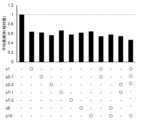
- 3 is a graph showing the results of a disease control effect test on peach borehole bacterial disease tested in Example 15. Average attack rates are expressed relative to the untreated group. The numbers below each bar indicate the type of phage used. In each experimental group, phage 1 to 8 were used alone. 3 is a graph showing the results of a disease control effect test on peach borehole bacterial disease tested in Example 15. Average attack rates are expressed relative to the untreated group. The numbers below each bar graph indicate the types of phages used in combination. In each experimental group, four types of phage combinations were used: the first phage, the third phage, the fifth phage, and the seventh phage; the second phage, the fourth phage, the sixth phage, and the eighth phage.
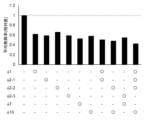
- 12 is a graph showing the results of the broccoli black rot disease control effect test tested in Example 16. Average attack rates are expressed relative to the untreated group. The numbers shown in each bar graph indicate the type of phage used. In the figure, a circle indicates that the phage was used, and a "-" indicates that the phage was not used.
- ⁇ 1 is the first phage having the genomic DNA sequence of SEQ ID NO: 10
- ⁇ 2-1 is the second phage having the genomic DNA sequence of SEQ ID NO: 13
- ⁇ 2-2 is the second phage having the genomic DNA sequence of SEQ ID NO: 47.
- ⁇ 7-1 is the seventh phage having the genomic DNA sequence of SEQ ID NO: 28
- ⁇ 7-2 is the seventh phage having the genomic DNA sequence of SEQ ID NO: 53
- ⁇ 9 is the genome of SEQ ID NO: 41
- ⁇ 10 represents the ninth phage having the DNA sequence
- ⁇ 10 represents the tenth phage having the genomic DNA sequence of SEQ ID NO: 44.
- 3 is a graph showing the results of a disease control effect test for bacterial bacterial spot disease tested in Example 17. Average attack rates are expressed relative to the untreated group. The numbers shown in each bar graph indicate the type of phage used. In the figure, a circle indicates that the phage was used, and a "-" indicates that the phage was not used.
- ⁇ 1 is the first phage having the genomic DNA sequence of SEQ ID NO: 10
- ⁇ 2-1 is the second phage having the genomic DNA sequence of SEQ ID NO: 13
- ⁇ 2-2 is the second phage having the genomic DNA sequence of SEQ ID NO: 47
- ⁇ 2-3 is the second phage having the genomic DNA sequence of SEQ ID NO: 48
- ⁇ 7 is the seventh phage having the genomic DNA sequence of SEQ ID NO: 28
- ⁇ 10 is the genomic DNA sequence of SEQ ID NO: 44.
- the 10th phage having the following is shown.
- Bacteriolytic agent 1-1 Overview
- the first aspect of the present invention is a bacteriolytic agent.
- the bacteriolytic agent of the present invention consists of a bacteriophage having a genome sequence containing a specific base sequence.
- the bacteriolytic agent of the present invention exhibits bacteriolytic activity against target bacteria that can be pathogenic bacteria of plant diseases.
- lytic agent refers to a drug consisting of a bacteriophage that has bacteriolytic activity against target bacteria.
- Bacteria is one of the major lineages of organisms that, along with archaea and eukaryotes, divides the entire living world into three. Bacteria consist of cells without a cell nucleus and are capable of self-replication as long as they have a nutrient source. Bacterial names are indicated by family, genus, and species based on the International Code of Bacterial Nomenclature.
- target bacterium refers to a host bacterium that can be a target of a phage constituting the lytic agent of the present invention or a phage contained in the composition and plant disease control composition of the present invention.
- a host bacterium that can be a target of a phage constituting the lytic agent of the present invention or a phage contained in the composition and plant disease control composition of the present invention.
- it is a bacterium that has a membrane surface receptor on the extracellular membrane that is recognized by the above-mentioned phage.
- it is a bacterium that has a membrane surface receptor on its extracellular membrane that is recognized by a tail fiber protein consisting of a specific amino acid sequence, for example.
- the "membrane surface receptor” is a site where, for example, the tail and tail fiber of a phage bind, and is composed of proteins, lipopolysaccharides, pili, etc. present in the outer layer of the bacterial outer membrane.
- target bacteria in this specification include bacteria of the genus Xanthomonas.
- Xanthomonas bacteria refers to bacteria belonging to the genus Xanthomonas. Bacteria of the genus Xanthomonas generally produce a yellow pigment called xanthomonadin, and many of them are known as plant pathogenic bacteria. Note that subtypes and pathovars are classified below species, and are indicated by adding subsp. or pv. after the bacterial name. Furthermore, the smallest unit of classification is a strain, which refers to a population of cells that are considered to be genetically homogeneous. Table 1 below shows representative bacteria of the genus Xanthomonas, their host plants, and plant diseases caused by them.
- bacteria of the genus Xanthomonas include, but are not limited to, Xanthomonas arboricola, Xanthomonas campestris, Xanthomonas citri, Xanthomonas oryzae, and Xanthomonas cucurbitae. cucurbitae) is the present invention preferred as a target bacterium.
- Specific examples of Xanthomonas arboricola include Xanthomonas arboricola pv. pruni whose pathotype is pruni and Xanthomonas arboricola pv. juglandis whose pathotype is juglandis.
- Xanthomonas campestris examples include Xanthomonas campestris pv. vesicatoria whose pathotype is vesicatoria, Xanthomonas campestris pv. campestris whose pathotype is campestris, and Xanthomonas campestris pv. raphani, Xanthomonas campestris pv. raphani.
- a specific example of Xanthomonas citri is Xanthomonas citri subsp. citri.
- a specific example of Xanthomonas oryzae is Xanthomonas oryzae pv. oryzae, whose pathotype is oryzae.
- Bacteriophage (as mentioned above, herein, often abbreviated as “phage”) is a general term for viruses that infect bacteria.
- a typical phage is composed of three parts: a head, a tail, and a tail fiber.
- the head is composed of capsomeres, which are coat proteins, and is composed of a capsid (viral shell) with an icosahedral structure, and contains the phage's genomic DNA in its internal space.
- the tail has a tubular structure consisting of a tail tube protein and a sheath protein covering it. One end of the tail connects with the head and the other end connects with the tail fibers.
- the tail functions as an introduction tube for injecting the genomic DNA from the head into host bacterial cells.
- the tail fiber is composed of several fibrous structures composed of tail fiber proteins.
- the tail and tail fibers have host recognition and adsorption functions that recognize receptors present on the outer membrane surface of host bacteria and adsorb to the cell surface. Phages are highly host specific, and their characteristics are based on the function of their tails and tail fibers.
- phages do not infect eukaryotes, drugs using phages are harmless to humans, animals, and plants.
- phages are broadly classified into “lytic cycle,” “lysogenic cycle,” and “lytic/lysogenic cycle” based on the mode of infection.
- the lysogenic cycle integrates its own DNA into the bacterial chromosome without lysing the target bacterium, and multiplies as the bacterium multiplies.
- the host bacterium is lysed and a large amount of progeny phages are released.
- the target phage of the present invention is a virulent phage that undergoes a lytic cycle.
- tail fiber protein is a protein that constitutes the tail fiber of a phage.
- Tail fiber proteins are known to play an important role in the specificity of host recognition and adsorption capacity of the tail and tail fibers (Nobrega F.L. et al., Nat. Rev. Microbiol., 2018, 16:760- 773). Therefore, even if the host bacterium is the same as a known phage, a new phage with a characteristic tail fiber protein has a different host recognition site, so it can exhibit lytic activity even in bacteria that are resistant to infection with known phages. etc., its utility value is extremely high.
- Tail fiber gene refers to a gene that is contained in the genomic DNA of a phage and encodes the tail fiber protein.
- tail tube protein is a protein that constitutes the tubular structure of the tail of a phage.
- Tail tube proteins are known to interact with tail fibers and play an important role together with the tail fibers in the specificity of host recognition and adsorption capacity (Maozhi Hu, et ai., 2020, 9:1, 855 -867).
- Tail tube fiber protein A and tail tube protein B are known as tail tube proteins.
- Tail tube protein A is a protein that forms a ring at the bottom of the tubular structure of the tail and interacts with the tail fibers.
- “Tail tube protein B” is a protein that forms the lower end of the tubular structure of the tail and binds to a receptor present on the outer membrane surface of the host bacterium.
- Tiil tube gene refers to a gene that is contained in the genomic DNA of a phage and encodes the tail tube protein.
- Tiil tube protein A gene refers to a gene encoding tail tube protein A
- tail tube protein B gene refers to a gene encoding tail tube protein B, respectively.
- Bacteria Bacteria are killed by lysis. Bacteriolysis begins when a phage specifically adsorbs to a target bacterium and injects its own DNA into the target bacterium's cells via its tail. The bacteria then uses the translation mechanism of the bacterium to replicate itself and produce a large number of child phages, and then lyses the bacteria and releases the child phages into the outside world.
- plant disease refers to a general term for diseases that occur on plants. Plant diseases include diseases caused by infectious pathogens such as viruses, bacteria, filamentous fungi, actinomycetes, viroids, phytoplasmas, nematodes, mites, and insects, as well as lack or excess of nutrients or moisture, chemical damage, etc. Diseases caused by non-communicable pathogens are known. Unless otherwise specified, plant diseases in this specification refer to diseases caused by bacteria, that is, plant pathogenic bacteria. In this specification, unless otherwise specified, the plant pathogenic bacteria correspond to the aforementioned target bacteria, such as bacteria of the genus Xanthomonas.
- control refers to prevention or treatment (extermination) (from the Japan Pesticide Industry Association website). Therefore, as used herein, “plant disease control” refers to prevention of plant diseases, especially target bacteria, or treatment of plant diseases caused by target bacteria.
- target plant refers to a plant to which the plant disease control composition of the present invention, which will be described later, is applied. This plant corresponds to a plant that has developed a specific plant disease due to infection with the target bacterium, or a plant that is at risk of being infected by the target bacterium.
- composition The bacteriolytic agent of the present invention consists of a bacteriophage.
- the first phage is characterized by containing a gene encoding a tail fiber protein consisting of a specific amino acid sequence in its genomic DNA, and exhibits specific lytic activity against target bacteria.
- Tail fiber protein has an amino acid sequence shown in SEQ ID NO: 1 consisting of 1371 amino acid residues, an amino acid sequence shown in SEQ ID NO: 1 to which one or more amino acids are added, Deleted and/or substituted amino acid sequence, or 90% or more, 95% or more, 96% or more, 97% or more, 98% or more, or 99% or more amino acid sequence identical to the amino acid sequence shown in SEQ ID NO: 1 It consists of a unique amino acid sequence. All tail fiber proteins are characterized by having target bacterium-specific recognition activity.
- a plurality of pieces refers to 2 to 10 pieces, such as 2 to 7 pieces, 2 to 5 pieces, 2 to 4 pieces, and 2 to 3 pieces.
- (amino acid) substitution refers to substitution within a group of conservative amino acids with similar properties such as charge, side chain, polarity, and aromaticity among the 20 types of amino acids that make up natural proteins. .
- uncharged polar amino acids with low polar side chains (Gly, Asn, Gln, Ser, Thr, Cys, Tyr), branched chain amino acids (Leu, Val, Ile), neutral amino acids (Gly, Ile), , Val, Leu, Ala, Met, Pro), neutral amino acids with hydrophilic side chains (Asn, Gln, Thr, Ser, Tyr, Cys), acidic amino acids (Asp, Glu), and basic amino acids (Asp, Glu).
- Examples include substitutions within aromatic amino acid groups (Phe, Tyr, Trp). Amino acid substitutions within these groups are preferred because they are known to be less likely to cause changes in the properties of the polypeptide.
- amino acid is a numerical value indicating the percentage of sites where the types of amino acid residues are the same within the comparison range of two amino acid sequences.
- Amino acid sequence identity can be calculated by aligning two amino acid sequences so that the degree of amino acid identity within the comparison range is highest, even if the lengths of the two amino acid sequences are different.
- a typical algorithm for performing such analysis is BLAST.
- BLAST can be used with various software and web services.
- the BLAST server provided by NCBI (https://blast.ncbi.nlm.nih.gov/Blast.cgi), etc.
- GENETYX https://www.genetyx.co.jp/
- NCBI https://blast.ncbi.nlm.nih.gov/Blast.cgi
- FASTA FASTA
- the present inventors discovered three types of phages that have bacteriolytic activity against bacteria of the genus Xanthomonas, and identified tail fiber genes from the genomic DNA sequences of these phages (SEQ ID NOs: 8 to 10, respectively).
- the amino acid sequences (SEQ ID NOs: 2 to 4) encoded by these tail fiber genes were analyzed using the genetic information processing software GENETYX and were found to have high sequence identity of 98% or more to each other.
- SEQ ID NO: 1 is an amino acid sequence common to the amino acid sequences of SEQ ID NOs: 2 to 4 above.
- amino acid sequence shown in SEQ ID NO: 1 may be the amino acid sequence shown in any of SEQ ID NOs: 2 to 4.
- the first bacteriophage contains a tail fiber gene consisting of a base sequence encoding the tail fiber protein in its genomic DNA.
- Specific base sequences of the tail fiber gene include, for example, the base sequences shown in any of SEQ ID NOs: 5 to 7, or the base sequences shown in any of SEQ ID NOs: 5 to 7 with one or more bases added, Deleted and/or substituted base sequences, and 90% or more, 95% or more, 96% or more, 97% or more, 98% or more, or 99% or more of the base sequence shown in any of SEQ ID NOS: 5 to 7. or a base sequence that hybridizes under highly stringent conditions to a base sequence complementary to the base sequence shown in any of SEQ ID NOS: 5 to 7.
- sequence identity of bases is a numerical value indicating the proportion of sites where the type of base is the same within the comparison range of two base sequences, similar to the amino acid sequence identity described above. Even if two base sequences have different lengths, base sequence identity can be calculated by aligning them so that the degree of base matching within the comparison range is the highest.
- analysis algorithms such as MUMmer can also be used to analyze base sequence identity.
- high stringent conditions refers to environmental conditions that do not easily cause non-specific hybridization. Under highly stringent conditions, a nucleic acid having a target base sequence can form a hybrid, but a nucleic acid having a non-specific base sequence cannot substantially form a hybrid.
- high stringency conditions refer to conditions with low salt concentration and high temperature. Low salt concentration refers to, for example, 15-750mM, preferably 15-500mM, 15-300mM or 15-200mM.
- high temperature refers to, for example, 50 to 68°C or 55 to 70°C.
- a specific example of high stringency conditions includes washing after hybridization at 65°C with 0.1x SSC and 0.1% SDS.
- the first bacteriophage contains the tail fiber gene.
- genes or base sequences other than the tail fiber gene include, for example, the base sequence shown in any one of SEQ ID NOs: 8 to 10 (respectively 201015bp, 200185bp, 200277bp), the base sequence shown in any one of SEQ ID NOS: 8 to 10 in a region other than the tail fiber gene.
- a base sequence in which one or more bases are added, deleted, and/or substituted to the base sequence, and a base sequence in a region other than the tail fiber gene in the base sequences shown in SEQ ID NOs: 8 to 10 is SEQ ID NO: 8.
- sequence identity may be expressed as Average Nucleotide Identity (ANI), etc., and these may be used.
- ANI Average Nucleotide Identity
- the sequences may have the above-mentioned sequence identity within the range that is automatically aligned and arranged using the above-mentioned software or web service.
- the ratio of the range to be compared to the total range of phage genome DNA is calculated as a value called Query Cover. do.
- sequence identity of the entire range can be estimated based on the result. You can also do it. For example, a value obtained by multiplying the Query Cover value by the value of sequence identity in the aligned and compared range (sequence identity of the aligned range) can be used as the estimated value of the sequence identity of the entire range.
- sequence identity of the aligned range can be used as the estimated value of the sequence identity of the entire range.
- sequence identity of SEQ ID NO: 8 to SEQ ID NO: 9 was 98 over 96% of the total length. % or more, and the sequence identity to SEQ ID NO: 10 was 98% or more over 95% or more of the entire length. Therefore, the sequence identity of the genomic DNA sequence of SEQ ID NO: 8 to the full length genomic DNA sequence of SEQ ID NO: 9 can be estimated to be 94% or more. Further, the sequence identity of the genomic DNA sequence of SEQ ID NO: 8 to the full length genomic DNA sequence of SEQ ID NO: 10 can be estimated to be 93% or more.
- genomic DNA of the phage in this specification when packaged, it may be linear or circular.
- genomic DNA is fragmented, the base sequences of individual fragments are read, and the sequence is determined through analysis that connects the fragments.
- phages In the case of phages, they are often assembled without a reference genomic DNA sequence (de novo assembly). Therefore, it is difficult to unambiguously determine the starting point and end of the analyzed genome (Merrill, B.D., et al. BMC Genomics, 2016 17, 679).
- the starting points and ends of the genome sequences to be compared may be different, and are automatically taken into account in analyzes using software or analysis servers.
- the bacteriolytic agent of the present invention containing the first phage can exhibit bacteriolytic activity against a wide variety of bacterial species of the genus Xanthomonas, and can be applied to various plant diseases.
- phages that exhibit bacteriolytic activity against a wide variety of bacterial species such as the bacteriolytic agent of the present invention, are extremely useful.
- the second phage is characterized by containing a gene encoding a tail fiber protein consisting of a specific amino acid sequence in its genomic DNA, and exhibits specific lytic activity against target bacteria.
- tail fiber protein has an amino acid sequence shown in SEQ ID NO: 11 consisting of 487 amino acid residues, or one amino acid sequence other than positions 278 and 350 in the amino acid sequence shown in SEQ ID NO: 11. It consists of an amino acid sequence in which the following amino acids have been substituted.
- the tail fiber protein consisting of the amino acid sequence shown in SEQ ID NO: 11 or its mutants has the utility of being specific to a specific genus of bacteria and exhibiting bacteriolytic activity against a wide variety of bacterial species within that specific genus. extremely high host specificity can be achieved.
- the position is not particularly limited as long as it is at a position other than positions 278 and 350.
- one arbitrary amino acid within the range of positions 1 to 250 in the amino acid sequence shown in SEQ ID NO: 11 may be substituted.
- one amino acid before position 156, before position 155, and before position 154 can be substituted.
- One amino acid at positions 130 to 156, 140 to 156, 150 to 156, 153 to 156, 154 to 156, or 154 is substituted. I can do that.
- amino acid region from position 67 to position 156 in the amino acid sequence shown by SEQ ID NO: 11 is considered to form one domain, when one amino acid is substituted, if the amino acid is within this amino acid region, the It may have the characteristics of a second phage regardless of its location.
- the type of amino acid substitution is not particularly limited. For example, it may be a conservative substitution, and also, for example, a group of amino acids with less polar side chains (Gly, Asn, Gln, Ser, Thr, Cys, Tyr, Leu, Val, Ile, Val, Ala, Met, Pro ) may be substituted.
- a group of amino acids with less polar side chains (Gly, Asn, Gln, Ser, Thr, Cys, Tyr)
- Leu, Val, Ile, Val, Ala, Met, Pro ) may be substituted.
- uncharged polar amino acids Gly, Asn, Gln, Ser, Thr, Cys, Tyr
- neutral amino acids with hydrophilic side chains Asn, Gln, Thr, Ser, Tyr, Cys
- It may be replaced with the group (Gly, Ile, Val, Leu, Ala, Met, Pro).
- threonine (Thr) may be replaced with alanine (Ala).
- An example of such a substituted amino acid sequence is the amino acid sequence shown in SEQ ID NO: 45. In this sequence, the amino acid at position 154 in the amino acid sequence shown in SEQ ID NO: 11 is substituted from threonine (Thr) to alanine (Ala).
- the second bacteriophage contains a tail fiber gene consisting of a base sequence encoding the tail fiber protein in its genomic DNA.
- the specific base sequence of the tail fiber gene is the amino acid sequence shown in SEQ ID NO: 11, or a base encoding an amino acid sequence in which one amino acid other than positions 278 and 350 is substituted in the amino acid sequence shown in SEQ ID NO: 11.
- it refers to a gene consisting of the base sequence shown in SEQ ID NO: 12 which encodes the amino acid sequence shown in SEQ ID NO: 11.
- it refers to a gene consisting of the base sequence shown in SEQ ID NO: 46 which encodes the amino acid sequence shown in SEQ ID NO: 45.
- the protein encoded by the tail fiber gene achieves highly useful host specificity, being specific to a specific genus of bacteria and showing lytic activity against a wide range of bacterial species within that specific genus. can be done.
- the second bacteriophage contains the tail fiber gene.
- the phage genomic DNA includes a 63753 bp base sequence shown in SEQ ID NO: 13, a 63743 bp base sequence shown in SEQ ID NO: 47 or 48, and a 63743 bp base sequence shown in SEQ ID NO: 13, 47 or 48 in a region other than the tail fiber gene.
- a base sequence in which one or more bases are added, deleted, and/or substituted, and a base sequence in a region other than the tail fiber gene in the base sequence shown in SEQ ID NO: 13, 47, or 48 is SEQ ID NO: Base sequence shown in 13, 47 or 48 and 98.5% or more, 98.6% or more, 98.7% or more, 98.8% or more, or 98.9% or more, 99.0% or more, 99.1% or more, 99.2% or more, 99.3% or more, 99.4% or more , a base sequence having sequence identity of 99.5% or more, 99.6% or more, 99.7% or more, 99.8% or more, or 99.9% or more, in which one or more bases in the base sequence shown in SEQ ID NO: 13, 47 or 48 99.0% or more, 99.1% or more, 99.2% or more, 99.3% or more, 99.4% when aligned with the added, deleted, and/or substituted base sequence and the base sequence shown in SEQ ID NO: 13, 47, or 48.
- Examples include genomic DNA consisting of a base sequence that hybridizes under highly stringent conditions to a base sequence in the region.
- the bacteriolytic agent of the present invention containing the second phage can exhibit bacteriolytic activity against a wide variety of bacterial species of the genus Xanthomonas, and can be applied to various plant diseases.
- phages that exhibit bacteriolytic activity against a wide variety of bacterial species such as the bacteriolytic agent of the present invention containing the second phage, are extremely useful.
- the third phage is characterized by having a genomic DNA sequence containing a specific base sequence, and exhibits specific lytic activity against target bacteria.
- Genomic DNA The genomic DNA sequence is a 61291 bp base sequence shown in SEQ ID NO: 14, a base sequence in which one or more bases are added, deleted, and/or substituted in the base sequence shown in SEQ ID NO: 14, or SEQ ID NO: 14. Sequence identity of 80% or more, 83% or more, 85% or more, 88% or more, 90% or more, 95% or more, 96% or more, 97% or more, 98% or more, or 99% or more with the base sequence shown in Contains or consists of a base sequence with Bacteriophages having any of the genomic DNA sequences are characterized by being able to specifically adsorb to target bacteria and inject the genomic DNA into the cells of the target bacteria.
- the bacteriolytic agent of the present invention containing the third phage can exhibit bacteriolytic activity against bacteria of the genus Xanthomonas, and can be applied to plant diseases.
- the fourth phage is characterized by containing a gene encoding a tail fiber protein consisting of a specific amino acid sequence in its genomic DNA, and exhibits specific lytic activity against target bacteria.
- Tail fiber protein has an amino acid sequence shown in SEQ ID NO: 15 consisting of 604 amino acid residues, an amino acid sequence shown in SEQ ID NO: 15 to which one or more amino acids are added, Deleted and/or substituted amino acid sequence, or 90% or more, 95% or more, 96% or more, 97% or more, 98% or more, or 99% or more amino acid sequence identity with the amino acid sequence shown in SEQ ID NO: 15 It consists of a unique amino acid sequence. All tail fiber proteins are characterized by having target bacterium-specific recognition activity.
- the fourth bacteriophage contains a tail fiber gene consisting of a base sequence encoding the tail fiber protein in its genomic DNA.
- the base sequence shown in SEQ ID NO: 16 which encodes the amino acid sequence shown in SEQ ID NO: 15, or the base sequence shown in SEQ ID NO: 16, in which one or more bases are Added, deleted, and/or substituted base sequences, as well as 90% or more, 95% or more, 96% or more, 97% or more, 98% or more, or 99% or more of the base sequence shown in SEQ ID NO: 16.
- the fourth bacteriophage contains the tail fiber gene.
- the phage genome DNA has a 46393 bp base sequence shown in SEQ ID NO: 17, a base sequence shown in SEQ ID NO: 3, in which one or more bases are added to, deleted from, or removed from the base sequence in a region other than the tail fiber gene. / or the substituted base sequence, and the base sequence shown in SEQ ID NO: 17, in which the base sequence in a region other than the tail fiber gene is 80% or more, 81% or more, 82% or more, 83% of the base sequence shown in SEQ ID NO: 17.
- the bacteriolytic agent of the present invention containing the fourth phage can exhibit bacteriolytic activity against bacteria of the genus Xanthomonas, and can be applied to plant diseases.
- the fifth phage is characterized by having a genomic DNA sequence containing a specific base sequence, and the lytic agent of the present invention exhibits specific lytic activity against target bacteria.
- the fifth bacteriophage has a 43177 bp nucleotide sequence shown in SEQ ID NO: 18, a 43741 bp nucleotide sequence shown in SEQ ID NO: 19, or one nucleotide sequence in the nucleotide sequence shown in SEQ ID NO: 18 or 19. or a base sequence in which multiple bases have been added, deleted, and/or substituted, or 90% or more, 95% or more, 96% or more, 97% or more, 98% or more of the base sequence shown in SEQ ID NO: 18 or 19.
- nucleotide sequence having 99% or more sequence identity 95.0% or more, 95.5% or more, 96.0% or more, 96.5% or more, 97.0% or more, 97.5 when aligned with the nucleotide sequence shown in SEQ ID NO: 18 or 19.
- % or more 98.0% or more, 98.5% or more, 99.0% or more, 99.1% or more, 99.2% or more, 99.3% or more, 99.4% or more, 99.5% or more, 99.6% or more, 99.7% or more, 99.8% or more, or 99.9% It has a base sequence having the above sequence identity, and further has a base sequence that hybridizes under highly stringent conditions to a base sequence complementary to the base sequence shown in SEQ ID NO: 18 or 19.
- the bacteriolytic agent of the present invention containing the fifth phage can exhibit bacteriolytic activity against bacteria of the genus Xanthomonas, and can be applied to plant diseases.
- the sixth phage is characterized by containing in its genomic DNA a gene encoding the protein newly discovered in the present invention (herein, often simply referred to as "the protein of the present invention"), and Shows specific lytic activity against bacteria.
- the protein of the present invention has an amino acid sequence shown in SEQ ID NO: 21 consisting of 84 amino acid residues, and an amino acid sequence in which one or more amino acids are present in the amino acid sequence shown in SEQ ID NO: 21. Added, deleted, and/or substituted amino acid sequence, or 90% or more, 95% or more, 96% or more, 97% or more, 98% or more, or 99% or more of the amino acid sequence shown in SEQ ID NO: 21. Consists of amino acid sequences that have sequence identity. All of the proteins of the present invention are characterized by having target bacterium-specific recognition activity.
- the protein of the present invention is a novel protein that plays an important role in determining host range.
- the sixth bacteriophage has a gene encoding the protein of the present invention (herein often simply referred to as "gene of the present invention”). Contained in genomic DNA.
- the gene of the present invention is not particularly limited as long as it has a base sequence that encodes the amino acid sequence shown in SEQ ID NO: 21 above.
- a specific base sequence for example, the base sequence shown in SEQ ID NO: 22 which encodes the amino acid sequence shown in SEQ ID NO: 21, or the base sequence shown in SEQ ID NO: 22, in which one or more bases are added or deleted. Sequence identity of 90% or more, 95% or more, 96% or more, 97% or more, 98% or more, or 99% or more of the base with the missing and/or substituted base sequence, and the base sequence shown in SEQ ID NO: 22. or a nucleotide sequence that hybridizes under highly stringent conditions to a nucleotide sequence complementary to the nucleotide sequence shown in SEQ ID NO: 22.
- All of the proteins encoded by the genes of the present invention have lytic activity against target bacteria.
- the sixth bacteriophage contains the gene of the present invention.
- the phage genomic DNA includes a 42708 bp base sequence shown in SEQ ID NO: 23, one or more bases added to or deleted from the base sequence in a region other than the gene of the present invention in the base sequence shown in SEQ ID NO: 23, and/or the substituted base sequence, and further, in the base sequence shown in SEQ ID NO: 23, the base sequence in the region other than the gene of the present invention is 95% or more, 96% or more, 97% or more of the base sequence shown in SEQ ID NO: 23, A base sequence with sequence identity of 98% or more or 99% or more, a base sequence in which one or more bases are added, deleted, and/or substituted in the base sequence shown in SEQ ID NO: 23, and SEQ ID NO: 95.0% or more, 95.5% or more, 96.0% or more, 96.5% or more, 97.0% or
- the lytic agent of the present invention containing the sixth phage can exhibit lytic activity against bacteria of the genus Xanthomonas, and can be applied to plant diseases.
- the seventh phage is characterized by containing a gene encoding a tail tube protein consisting of a specific amino acid sequence in its genomic DNA, and exhibits specific lytic activity against target bacteria.
- the tail tube protein includes tail tube protein A and tail tube protein B.
- the tail tube protein A has an amino acid sequence shown in SEQ ID NO: 24 or 49 consisting of 205 amino acid residues, an addition or deletion of one or more amino acids in the amino acid sequence shown in SEQ ID NO: 24 or 49, and/or a substituted amino acid sequence, or an amino acid sequence identity of 97% or more, 97.5% or more, 98% or more, 98.5% or more, 99% or more, or 99.5% or more with the amino acid sequence shown in SEQ ID NO: 24 or 49. It consists of an amino acid sequence with
- amino acid substitution here is from the group consisting of positions 28, 108, 110, 153, 157, 189, and 201 in the amino acid sequence shown in SEQ ID NO: 24 or 49.
- Amino acid substitutions at one or more selected positions can be included. For example, substitution at two or more, three or more, four or more, five or more, six or more, or all of these positions can be included.
- amino acid substitution is not particularly limited. For example, it may be a conservative substitution and may include one or several non-conservative substitutions.
- amino acid sequence of tail tube protein A of the seventh phage may be the amino acid sequence shown in SEQ ID NO: 60.
- This amino acid sequence is identical to the amino acid sequence shown in SEQ ID NO: 24 or 49 except for the amino acids at the positions listed below: glutamic acid (Glu) or aspartic acid (Asp) at position 28, serine (Ser) or Asparagine (Asn), the 110th position is glutamine (Gln) or histidine (His), the 153rd position is glutamine (Gln) or lysine (Lys), and the 157th position is aspartic acid (Asp) or asparagine. (Asn), the 189th position is tyrosine (Tyr) or phenylalanine (Phe), and the 201st position is valine (Val) or tyrosine (Tyr).
- the tail tube protein B has the amino acid sequence shown by SEQ ID NO: 25 (correctly SEQ ID NO: 57) or 50, and the amino acid sequence shown by SEQ ID NO: 25 (correctly SEQ ID NO: 57) or 50, consisting of 834 amino acid residues.
- amino acid substitutions here are at positions 25, 53, 216, 221, 272, 389, 395, and 410 in the amino acid sequence shown in SEQ ID NO: 57 or 50. , No. 425, No. 472, No. 607, No. 623, No. 662, No. 670, No. 699, No. 707, No. 757, No. 763, No. 764, and No. 765. may include amino acid substitutions at one or more positions selected from the group. For example, substitution at two or more, three or more, four or more, five or more, ten or more, fifteen or more, or all of these positions can be included.
- the amino acid sequence of tail tube protein B of the seventh phage may be the amino acid sequence shown in SEQ ID NO: 61.
- This amino acid sequence is identical to the amino acid sequence shown in SEQ ID NO: 57 or 50 except for the amino acids at the positions listed below: position 25 is alanine (Ala) or proline (Pro), and position 53 is alanine (Ala).
- the 216th position is alanine (Ala) or proline (Pro)
- the 221st position is histidine (His) or tyrosine (Tyr)
- the 272nd position is valine (Val) or
- position 389 is alanine (Ala) or glutamic acid (Glu)
- position 395 is serine (Ser) or alanine (Ala)
- position 410 is valine (Val) or isoleucine (Ile).
- the 425th position is isoleucine (Ile) or valine (Val)
- the 472nd position is glycine (Gly) or alanine (Ala)
- the 607th position is alanine (Ala) or serine (Ser).
- the 623rd position is isoleucine (Ile) or valine (Val)
- the 662nd position is arginine (Arg) or serine (Ser)
- the 670th position is leucine (Leu) or glutamine (Gln)
- Position 699 is threonine (Thr) or asparagine (Asn)
- position 707 is aspartic acid (Asp) or glycine (Gly)
- position 757 is serine (Ser) or alanine (Ala)
- position 763 is The position is glycine (Gly) or serine (Ser)
- the 764th position is serine (Ser) or asparagine (Asn)
- the 765th position is methionine (Met) or valine (Val).
- tail tube proteins are characterized by being involved in target bacterium-specific recognition activity.
- the seventh bacteriophage contains a tail tube gene consisting of a base sequence encoding the tail tube protein in its genomic DNA.
- the tail tube gene is not particularly limited as long as it is a gene encoding a tail tube protein. Includes tail tube protein A gene and tail tube protein B gene.
- the base sequence shown in SEQ ID NO: 26 or 51 encoding the amino acid sequence shown in SEQ ID NO: 24 or 49, or the base sequence shown in SEQ ID NO: 26 or 51, A base sequence in which one or more bases have been added, deleted, and/or substituted, and a base sequence shown in SEQ ID NO: 26 or 51 and 97% or more, 97.5% or more, 98% or more, 98.5% or more, 99 % or more, or 99.5% or more of base sequence identity, or a base sequence that hybridizes under high stringency conditions to a base sequence complementary to the base sequence shown in SEQ ID NO: 26 or 51. It refers to the gene that becomes The base sequence of the tail tube protein A gene may be a base sequence encoding the amino acid sequence shown in SEQ ID NO: 60.
- the base shown by SEQ ID NO: 27 (correctly SEQ ID NO: 58) or 52 encodes the amino acid sequence shown by SEQ ID NO: 25 (correctly SEQ ID NO: 57) or 50.
- SEQ ID NO: 27 (correctly SEQ ID NO: 58) or 52; A base sequence having 97% or more, 97.5% or more, 98% or more, 98.5% or more, 99% or more, or 99.5% or more base sequence identity with the base sequence shown in SEQ ID NO: 58) or 52, or SEQ ID NO: A gene consisting of a base sequence that hybridizes under highly stringent conditions to a base sequence complementary to the base sequence shown in 27 (correctly SEQ ID NO: 58) or 52.
- the base sequence of the tail tube protein B gene may be a base sequence encoding the amino acid sequence shown in SEQ ID NO: 61.
- the seventh bacteriophage contains the tail tube gene.
- genes or base sequences other than the tail tube gene There are no limitations on genes or base sequences other than the tail tube gene.
- phage genomic DNA has a 44,716 bp base sequence as shown in SEQ ID NO: 28, a 44,829 bp base sequence as shown in SEQ ID NO: 29, a 44,585 bp base sequence as shown in SEQ ID NO: 53, or a nucleotide sequence as shown in SEQ ID NO: 28, 29 or 53.
- the above examples include genomic DNA consisting of a base sequence having sequence identity of 99.5% or more, 99.6% or more, 99.7% or more, 99.8% or more, or 99.9% or more.
- the bacteriolytic agent of the present invention containing the seventh phage can exhibit bacteriolytic activity against a wide variety of bacterial species of the genus Xanthomonas, and can be applied to various plant diseases.
- phages that exhibit bacteriolytic activity against two or more bacterial species such as the lytic agent of the present invention containing the seventh phage, are extremely useful.
- the eighth phage is characterized by having a genomic DNA sequence containing a specific base sequence, and exhibits specific lytic activity against target bacteria.
- Genomic DNA The genomic DNA sequence includes one or more base sequences shown in any of SEQ ID NOs: 32 to 36 (respectively 44388bp, 44377bp, 45279bp, 44378bp, 44408bp), 80% or more, 81% or more, 82% or more, 83% when aligned with the base sequence shown in any of SEQ ID NOS: 32 to 36.
- the lytic agent of the present invention containing the eighth phage can exhibit lytic activity against bacteria of the genus Xanthomonas, and can be applied to plant diseases.
- the ninth phage is characterized by containing a gene encoding a tail tube protein consisting of a specific amino acid sequence in its genomic DNA, and exhibits specific lytic activity against target bacteria.
- the tail tube protein includes tail tube protein A and tail tube protein B.
- the tail tube protein A has an amino acid sequence shown in SEQ ID NO: 37 consisting of 206 amino acid residues, and an addition, deletion, and/or substitution of one or more amino acids in the amino acid sequence shown in SEQ ID NO: 37. 92% or more, 93% or more, 94% or more, 95% or more, 96% or more, 97% or more, 97.5% or more, 98% or more, 98.5% or more with the amino acid sequence shown in SEQ ID NO: 37, Consists of amino acid sequences having 99% or more or 99.5% or more amino acid sequence identity.
- the tail tube protein B has an amino acid sequence shown in SEQ ID NO: 38 or 54 consisting of 847 amino acid residues, an addition or deletion of one or more amino acids in the amino acid sequence shown in SEQ ID NO: 38 or 54, and/or substituted amino acid sequence, or 92% or more, 93% or more, 94% or more, 95% or more, 96% or more, 97% or more, 97.5% or more, 98% of the amino acid sequence shown in SEQ ID NO: 38 or 54. Consists of amino acid sequences having amino acid sequence identity of 98.5% or more, 99% or more, 99.1% or more, 99.2% or more, 99.3% or more, 99.4% or more, or 99.5% or more.
- amino acid substitution here is one selected from the group consisting of position 61, position 108, position 404, position 679, position 682, and position 727 in the amino acid sequence shown in SEQ ID NO: 38 or 54.
- Amino acid substitutions at the above positions can be included. For example, substitutions at two or more, three or more, four or more, five or more, or all of these positions can be included.
- substitutions may be made within a group of amino acids having low polarity side chains (Gly, Asn, Gln, Ser, Thr, Cys, Tyr, Leu, Val, Ile, Val, Ala, Met, Pro).
- uncharged polar amino acids Gly, Asn, Gln, Ser, Thr, Cys, Tyr
- neutral amino acids with hydrophilic side chains Asn, Gln, Thr, Ser, Tyr, Cys
- It may be replaced with the group (Gly, Ile, Val, Leu, Ala, Met, Pro). More specifically, for example, threonine (Thr) may be replaced with alanine (Ala).
- a specific amino acid sequence includes the amino acid sequence shown in SEQ ID NO: 59. This amino acid sequence is identical to the amino acid sequence shown in SEQ ID NO: 38 except for the amino acids at the positions listed below: the amino acid at position 61 is threonine (Thr) or alanine (Ala), and the amino acid at position 108 is glutamine ( Gln) or lysine (Lys), the amino acid at position 404 is proline (Pro) or glutamine (Gln), the amino acid at position 679 is proline (Pro) or serine (Ser), and the amino acid at position 682 is proline (Pro) or glutamine (Gln).
- the amino acid is threonine (Thr) or alanine (Ala), and the amino acid at position 727 is isoleucine (Ile) or valine (Val).
- the amino acid sequence of tail tube protein B is an amino acid sequence in which one or more amino acids are added, deleted, and/or substituted in the amino acid sequence shown in SEQ ID NO: 59, or an amino acid sequence shown in SEQ ID NO: 59. Sequence and 92% or more, 93% or more, 94% or more, 95% or more, 96% or more, 97% or more, 97.5% or more, 98% or more, 98.5% or more, 99% or more, 99.1% or more, 99.2% or more, A phage comprising an amino acid sequence having amino acid sequence identity of 99.3% or more, 99.4% or more, or 99.5% or more is also included in the ninth phage of the present invention.
- tail tube proteins are characterized by being involved in target bacterium-specific recognition activity.
- the ninth bacteriophage contains a tail tube gene consisting of a base sequence encoding the tail tube protein in its genomic DNA.
- the tail tube gene is not particularly limited as long as it is a gene encoding a tail tube protein. Includes tail tube protein A gene and tail tube protein B gene.
- the base sequence shown in SEQ ID NO: 39 which encodes the amino acid sequence shown in SEQ ID NO: 37, or one or more base sequences in the base sequence shown in SEQ ID NO: 39.
- the base sequence of the tail tube protein A gene may be a base sequence encoding the amino acid sequence shown in SEQ ID NO: 59.
- the base sequence shown in SEQ ID NO: 40 or 55 encoding the amino acid sequence shown in SEQ ID NO: 38 or 54, or the base sequence shown in SEQ ID NO: 40 or 55
- a specific base sequence of the tail tube protein B gene includes, for example, the base sequence encoding the amino acid sequence shown in SEQ ID NO: 59.
- the ninth bacteriophage contains the tail tube gene.
- genes or base sequences other than the tail tube gene There are no limitations on genes or base sequences other than the tail tube gene.
- phage genomic DNA has a base sequence of 43,667 bp shown in SEQ ID NO: 41, a base sequence of 43336 bp shown in SEQ ID NO: 56, or a nucleotide sequence in a region other than the tail tube gene in the nucleotide sequence shown in SEQ ID NO: 41 or 56.
- a base sequence in which one or more bases are added, deleted, and/or substituted, and a base sequence in a region other than the tail tube gene in the base sequence shown in SEQ ID NO: 41 or 56 is shown in SEQ ID NO: 41 or 56.
- genomic DNA consisting of a base sequence having sequence identity of 99.2% or more, 99.3% or more, 99.4% or more, 99.5% or more, 99.6% or more, 99.7% or more, 99.8% or more, or 99.9% or more.
- the bacteriolytic agent of the present invention can exhibit bacteriolytic activity against a wide variety of bacterial species of the genus Xanthomonas, and can be applied to various plant diseases.
- phages that exhibit bacteriolytic activity against two or more bacterial species are extremely useful.
- the tenth phage is characterized by containing a gene encoding a tail fiber protein consisting of a specific amino acid sequence in its genomic DNA, and exhibits specific lytic activity against target bacteria.
- Tail fiber protein has an amino acid sequence shown in SEQ ID NO: 42 consisting of 568 amino acid residues, an amino acid sequence shown in SEQ ID NO: 42 to which one or more amino acids are added, Deleted and/or substituted amino acid sequence, or 90% or more, 95% or more, 96% or more, 97% or more, 98% or more, or 99% or more amino acid sequence identical to the amino acid sequence shown in SEQ ID NO: 42 It consists of a unique amino acid sequence. All tail fiber proteins are characterized by having target bacterium-specific recognition activity.
- the tenth bacteriophage contains a tail fiber gene consisting of a base sequence encoding the tail fiber protein in its genomic DNA.
- the base sequence shown in SEQ ID NO: 43 which encodes the amino acid sequence shown in SEQ ID NO: 42, or the base sequence shown in SEQ ID NO: 43, in which one or more bases are Additional, deleted, and/or substituted base sequences, as well as 90% or more, 95% or more, 96% or more, 97% or more, 98% or more, or 99% or more of the base sequence shown in SEQ ID NO: 43.
- phage genomic DNA has a base sequence of 76,340 bp shown in SEQ ID NO: 44, one or more bases added to or deleted from the base sequence in a region other than the tail fiber gene in the base sequence shown in SEQ ID NO: 44, and / or the substituted base sequence, and further the base sequence in the region other than the tail fiber gene in the base sequence shown in SEQ ID NO: 44 is 80% or more, 81% or more, 82% or more, 83% of the base sequence shown in SEQ ID NO: 44 84% or more, 85% or more, 86% or more, 87% or more, 88% or more, 89% or more, 90% or more, 91% or more, 92% or more, 93% or more, 94% or more, 95% or more, Base sequence with sequence identity of 96% or more, 97% or more, 98% or more, or 99% or more,
- the bacteriolytic agent of the present invention can exhibit bacteriolytic activity against a wide variety of bacterial species of the genus Xanthomonas, and can be applied to various plant diseases.
- a second aspect of the present invention is a composition, particularly a composition that can be used for controlling plant diseases.
- the composition of the present invention is characterized by containing the bacteriolytic agent according to the first aspect as an active ingredient.
- composition of the present invention when used for plant disease control, it is safe for the human body, has no chemical damage to the environment, and can specifically prevent or treat the target plant disease. It is possible to provide sustainable pesticides against plant diseases.
- plant disease control composition refers to the case where the composition of the present invention is used for plant disease control.
- composition of the present invention contains a bacteriophage, which is a bacteriolytic agent according to the first aspect, as an active ingredient as an essential component. Furthermore, an agriculturally acceptable carrier and/or medium may be included as long as it does not inhibit or suppress the lytic activity of the phage against the target bacteria. Furthermore, other active ingredients may be included as necessary. Each component will be specifically explained below.
- the composition of the present invention includes the bacteriolytic agent described in the first aspect as an essential active ingredient.
- the target bacteria of the present invention are lysed by the active ingredient, plant diseases caused by the target bacteria can be prevented or treated.
- the amount of active ingredient contained per unit amount in the composition varies depending on various conditions such as dosage form, type of plant pathogenic bacteria, target plant type, application location, and application method. be done. It is preferable that the effective ingredient, phage, is present in an amount sufficient to contact and infect plant pathogenic bacteria that have infected the target plant. Therefore, within the scope of common technical knowledge in the field, the amount of the bacteriolytic agent contained in the plant disease control composition of the present invention may be determined in consideration of each condition so that the amount is effective against the target bacteria after application.
- the plant disease control composition of the present invention can contain, as an active ingredient, one or more other phages that specifically recognize the bacteria of the genus Xanthomonas and have bacteriolytic activity as specifically exemplified below. For example, even if the target bacteria are the same, if the phages recognize different cell surface receptors, a synergistic or complementary effect in lytic activity can be expected by combining them.
- the specific types of phages are not particularly limited. For example, it may contain only the phage described herein as an active ingredient, or it may additionally contain any other phage as an active ingredient. Furthermore, phages having similar host ranges and/or phages having different host ranges may be included. Combinations of phages with similar host ranges include, for example, combinations that commonly exhibit lytic activity against bacteria of the same genus (e.g., Xanthomonas genus), and combinations of one or more species of the same genus (e.g., Xanthomonas arboricola).
- Examples include a combination of phages that commonly exhibit lytic activity among bacteria of the same genus, and a combination of phages that commonly exhibit lytic activity among bacteria of one or more pathogenic types of the same genus (for example, Xanthomonas arboricola pv. pruni).
- combinations of phages with dissimilar host ranges include combinations of phages that exhibit and do not exhibit lytic activity against bacteria belonging to a specific genus (e.g., (e.g., Xanthomonas arboricola pv.
- pruni combinations of phages with and without lytic activity against bacteria of a particular genus and species (e.g., Xanthomonas arboricola); combinations of phages not shown, phages that exhibit specific lytic activity against bacteria of a particular genus (e.g., Xanthomonas genus), species (e.g., Xanthomonas arboricola), or pathotype (e.g., Xanthomonas arboricola pv. pruni); Examples include combinations of phages that specifically exhibit bacteriolytic activity.
- the composition of the present invention can contain a combination of two or more types of phages among the first to tenth phages described herein. Specifically, for example, it can contain a combination of two or more phages selected from the group consisting of the first phage, the second phage, the seventh phage, the ninth phage, and the tenth phage. Furthermore, for example, a combination of two or more phages selected from the group consisting of a third phage, a fourth phage, a fifth phage, a sixth phage, and an eighth phage can be included.
- one or more phages selected from the group consisting of a first phage, a second phage, a seventh phage, a ninth phage, and a tenth phage, a third phage, and a fourth phage. , a fifth phage, a sixth phage, and an eighth phage.
- the number of the first to tenth phages described in this specification contained in the composition of the present invention is not particularly limited as long as it is one or more.
- it can contain 2 or more types, 3 or more types, 4 or more types, 5 or more types, 6 or more types, 7 or more types, 8 or more types, 9 or more types, or 10 or more types of phages.
- the composition of the present invention can contain multiple types of phages that are included in the range of each phage (for example, a second phage, etc.) but have different genomic DNA sequences. Specifically, it can contain two or more types of second phage and/or two or more types of seventh phage.
- a phage containing in its genomic DNA a gene encoding the amino acid sequence shown in SEQ ID NO: 1 as a common amino acid sequence for tail fiber proteins, specifically a gene encoding an amino acid sequence shown in any one of SEQ ID NOs: 2 to 4.
- An amino acid sequence in which one or more amino acids have been added, deleted, and/or substituted in the phage contained in the genomic DNA and the amino acid sequence shown in any of SEQ ID NOs: 1 to 4, or 90% or more of the sequence Examples include phages that contain genes encoding identical amino acid sequences in their genomic DNA.
- genes encoding such amino acid sequences include genes consisting of the nucleotide sequences shown in any of SEQ ID NOs: 5 to 7, and genes containing one or more nucleotide sequences in any of SEQ ID NOs: 5 to 7. Examples include base sequences in which a plurality of bases are added, deleted, and/or substituted, or base sequences having 90% or more sequence identity.
- genomic DNA of a phage containing such a gene for example, genomic DNA consisting of a nucleotide sequence shown in any one of SEQ ID NOs: 8 to 10, and one or more nucleotide sequences shown in any one of SEQ ID NOs 8 to 10.
- 80% or more of the base sequence is a base sequence in which one or more bases have been added, deleted, and/or substituted, or a base sequence other than the base sequence encoding the amino acid sequence shown in any of SEQ ID NOs: 2 to 4.
- Examples include genomic DNA consisting of a base sequence having sequence identity.
- a phage containing a gene encoding the amino acid sequence shown in SEQ ID NO: 11 or 45 as the amino acid sequence of the tail fiber protein in its genomic DNA and a phage containing a gene encoding the amino acid sequence shown in SEQ ID NO: 11 or 45 in the amino acid sequence shown in SEQ ID NO: 11, Examples include phages that contain in their genomic DNA a gene encoding an amino acid sequence in which one or more amino acids are added, deleted, and/or substituted, or an amino acid sequence with a sequence identity of 90% or more.
- genes encoding such amino acid sequences include genes consisting of the base sequence shown in SEQ ID NO: 12 or 46, and genes in which one or more bases are added to the base sequence shown in SEQ ID NO: 12 or 46. , deletions, and/or substituted base sequences, or base sequences having 90% or more sequence identity.
- genomic DNA of a phage containing such a gene for example, genomic DNA consisting of the base sequence shown in SEQ ID NO: 13, 47 or 48, and in the base sequence shown in SEQ ID NO: 13, 47 or 48, 1 A base sequence in which one or more bases have been added, deleted, and/or substituted, a base sequence with 90% or more sequence identity, a base sequence other than the base sequence encoding the amino acid sequence shown in SEQ ID NO: 11 or 45 A nucleotide sequence in which one or more bases have been added, deleted, and/or substituted, or a nucleotide sequence other than the nucleotide sequence encoding the amino acid sequence shown in SEQ ID NO: 11 or 45, with 80% or more sequence identity
- genomic DNA of the phage includes, for example, the base sequence shown in SEQ ID NO: 14, 18, 19, and any one of 32 to 36, and any one of SEQ ID NO: 14, 18, 19, and 32 to 36.
- Genomic DNA includes a base sequence in which one or more bases have been added, deleted, and/or substituted, and a base sequence having 90% or more sequence identity in the base sequence represented by .
- a phage containing a gene encoding the amino acid sequence shown in SEQ ID NO: 15 or 42 as the amino acid sequence of the tail fiber protein in its genomic DNA, and one or more genes in the amino acid sequence shown in SEQ ID NO: 15 or 42 examples include phages that contain in their genomic DNA a gene encoding an amino acid sequence in which amino acids have been added, deleted, and/or substituted, or an amino acid sequence having 90% or more sequence identity.
- genes encoding such amino acid sequences include genes consisting of the base sequence shown in SEQ ID NO: 16 or 43, and genes in which one or more bases are added to the base sequence shown in SEQ ID NO: 16 or 43.
- genomic DNA of a phage containing such a gene for example, genomic DNA consisting of the base sequence shown in SEQ ID NO: 17 or 44, and one or more of the base sequence shown in SEQ ID NO: 17 or 44.
- Examples include genomic DNA consisting of sequences.
- a phage containing a gene encoding the amino acid sequence shown in SEQ ID NO: 21 in its genomic DNA, and one or more amino acids added, deleted, and/or substituted in the amino acid sequence shown in SEQ ID NO: 21 examples include phages that contain in their genomic DNA a gene encoding an amino acid sequence with a sequence identity of 90% or more.
- genes encoding such amino acid sequences include genes consisting of the base sequence shown in SEQ ID NO: 22, and genes in which one or more bases are added, deleted, or deleted in the base sequence shown in SEQ ID NO: 22. and/or substituted base sequences, or base sequences having 90% or more sequence identity.
- genomic DNA of a phage containing such a gene for example, a genomic DNA consisting of the base sequence shown in SEQ ID NO: 23, and a DNA in which one or more bases are added to the base sequence shown in SEQ ID NO: 23. , a deleted and/or substituted base sequence, a base sequence with 90% or more sequence identity, a base sequence other than the base sequence encoding the amino acid sequence shown in SEQ ID NO: 21, in which one or more bases are present.
- TTPA Tuil-Tubular protein A gene consisting of the amino acid sequence shown in SEQ ID NO: 24, 49, 60, or 37, and SEQ ID NO: 25 (correctly SEQ ID NO: 57), 50, 61, or 38, 54, or 59.
- a TTPA gene encoding an amino acid sequence in which one or more amino acids are added, deleted, and/or substituted in the amino acid sequence shown in , or an amino acid sequence with 90% or more sequence identity is inserted into the genomic DNA.
- Examples include phage containing.
- Specific examples of genes encoding such amino acid sequences include genes consisting of the base sequences shown in SEQ ID NO: 26 or 39, or 27 (correctly SEQ ID NO: 58), 40 or 55, and SEQ ID NO: 26 or 39, or 27 (correctly SEQ ID NO: 58), 40, or 55, in which one or more bases are added, deleted, and/or substituted, or with 90% or more sequence identity. Examples include base sequences having the following.
- genomic DNA of a phage containing such a gene for example, genomic DNA consisting of the base sequence shown in any one of SEQ ID NO: 28, 29, 41, or 56, and SEQ ID NO: 28, 29, 41, or 56.
- a base sequence other than the base sequence encoding the amino acid sequence shown in SEQ ID NO: 24 or 37, or 25 (correctly SEQ ID NO: 57), 50, 38, 54, or 59, with which the sequence identity is 80% or more Examples include genomic DNA consisting of sequences.
- Sequence identity in this specification is not particularly limited. Specifically, for example, 80% or more, 81% or more, 82% or more, 83% or more, 84% or more, 85% or more, 86% or more, 87% or more, 88% or more with respect to the reference sequence.
- Agriculturally acceptable carrier and/or medium means a carrier and/or medium that facilitates the application of the composition, maintains the viability and infectivity of the phage that is the active ingredient, and /Or a substance whose rate of action can be controlled, which has no or very little harmful effect on the environment such as soil and water quality when applied outdoors, and has no or very little harmful effect on animals, especially humans. .
- Carrier Specific examples of agriculturally acceptable carriers include surfactants, protective agents, excipients, and the like. Minor amounts of wetting agents, emulsifying agents, pH buffering agents, and the like may also be utilized, if desired.
- the carrier may be blended in advance or just before application.
- the surfactant has the effect of improving the physicochemical properties of the composition on plants, such as wettability, emulsification, dispersibility, permeability, adhesion, defoaming, and spreadability.
- Surfactants can be used as the main component of agricultural chemical adjuvants called spreading agents.
- the spreading agent include nonionic surfactants, combinations of nonionic surfactants and anionic surfactants, paraffinic surfactants, and paroxyethylene resin acid esters.
- polyoxyethylene alkyl ether compounds More specifically, for example, polyoxyethylene alkyl ether compounds, polyoxyethylene fatty acid ester compounds, lignin sulfonate compounds, naphthyl methanesulfonate compounds, alkyl sulfosuccinate compounds, and tetraalkylammonium salts.
- examples include type compounds.
- the protective agent is expected to have effects such as reducing damage caused by ultraviolet rays.
- examples include skim milks, caseins, gelatins, and the like.
- excipients examples include glucose, lactose, sucrose, gelatin, starch, malt, and wheat flour.
- solvents include water (including aqueous solutions), buffers, and liquid media.
- the solvent is a sterile liquid.
- composition of the present invention may contain the same and/or different pharmacological agents to the extent that they do not affect the lytic activity of the phages constituting the bacteriolytic agent. It may contain one or more other active ingredients.
- phrases having bacteriolytic activity against the same bacteria include, for example, other phages that specifically recognize and bind to bacteria of the genus Xanthomonas, similar to the phage constituting the lytic agent according to the first aspect.
- active ingredients may include pesticides, herbicides, fertilizers (e.g. urea, ammonium nitrate, superphosphates) and, if necessary, known chemical pesticides, antibiotics and biopesticides. can.
- fertilizers e.g. urea, ammonium nitrate, superphosphates
- chemical pesticides antibiotics and biopesticides. can.
- the dosage form of the composition of the present invention is determined based on the infection site of the target bacteria on the target plant, the colonization ability of the target plant, and/or the target bacteria of the phage that is the active ingredient. Any dosage form may be used as long as it maintains the ease of infection.
- the plant disease control composition may be prepared as a liquid solution or wettable powder suspended in an appropriate solution, or may be mixed with a carrier and solidified as a solid powder, granule, or gel. .
- the infection site of the target bacteria in the target plant is the above-ground leaves, flowers, fruits, stems, branches, or trunks, a solution, water, or A Japanese preparation or a gel preparation is suitable.
- the infection site of the target bacteria is underground roots or underground rhizomes, powders or granules that are slowly released in the soil and can exert a sustained effect on the infection site are suitable, although not limited thereto. .
- any method known in the art may be used as long as the method allows the plant disease control composition to be applied to the target plant.
- Phage which is an active ingredient of a plant disease control composition, can invade the entire surface of a target plant, such as the stems, leaves, roots, etc., and therefore can be applied by an appropriate method depending on the purpose.
- the application site is an above-ground part such as a foliage part
- the plant disease control composition may be applied so as to come into direct contact with the application site. Direct contact includes, for example, applying, spraying, spraying, or dipping the plant disease control composition onto the application site.
- the application is carried out to a site of the target plant infected with the target bacteria or a site at risk of infection.
- the application site is underground such as roots, it may be applied indirectly by adding it into the soil, or if it is a culture medium, it may be added into the culture medium.
- the "soil” here is not particularly limited as long as it is soil that allows the growth of target plants. Usually, a planting soil containing suitable nutrients and having an appropriate pH value is used. The location of the soil does not matter.
- “medium” refers to an artificially prepared cultivation medium for a target plant. It may be a solid medium such as an agar medium, or a liquid medium. Examples of media include, for example, isolation beds, root zone restriction pots or nurseries.
- the composition of the medium may be any known medium composition in the art. It can be selected appropriately depending on the type of plant and the like.
- target plant of the plant disease control composition of the present invention is not particularly limited in type as long as it is a plant capable of developing a plant disease caused by the target bacterium of the present invention. It may be either an angiosperm or a gymnosperm. Furthermore, it does not matter whether it is a herbaceous plant or a woody plant. Preferred specific examples of target plants include agriculturally important plants, such as crop plants such as cereals, vegetables, and fruits, and flower plants.
- monocots include plants of the Poaceae family (e.g., rice, wheat, barley, corn, sugarcane, sorghum, sorghum, turfgrass), plants of the Musaceae family (e.g., banana), and plants of the Amaryllidaceae family.
- Amaryllidaceae plants (for example, green onions, onions, garlic, chives), Liliaceae (Liliaceae) plants (for example, lilies, tulips).
- Dicotyledonous plants include Brassicaceae plants (e.g. cabbage, radish, Chinese cabbage, brassica), Asteraceae plants (e.g. lettuce, burdock, chrysanthemum), Fabaceae plants (e.g.
- Solanaceae plants e.g. tomatoes, eggplants, potatoes, tobacco, peppers, capsicum, petunia
- Rosaceae plants e.g. Strawberries, apples, pears, peaches, loquats, almonds, plums, roses, plums, cherries
- Cucurbitaceae plants e.g. cucumbers, gourds, pumpkins, melons, watermelons
- Anacardiaceae plants e.g. mangoes, pistachios, cashews
- Lauraceae plants e.g. avocado
- Rutaceae plants e.g. tangerines, grapefruit, lemons, yuzu
- Convolvulaceae plants e.g. sweet potato
- Camellia family Theaceae
- Theaceae plants
- Vitaceae Vitaceae
- Target plant diseases to which the plant disease control composition of the present invention is applied include all plant diseases caused by the target bacteria of the present invention.
- it is a plant disease caused by bacteria of the genus Xanthomonas.
- bacteria of the genus Xanthomonas For example, bacterial spot (bacterial spot) seen on peaches, bacterial blight (bacterial blight) seen on walnuts, bacterial pustule (bacterial pustule) seen on soybeans, horn spot disease seen on strawberries etc.
- bacterial spot Bacterial blight seen on tomatoes, peppers, and lettuce, Black rot seen on cabbage, Chinese cabbage, broccoli, etc., Canker disease seen on oranges, grapefruit, etc.
- Bacterial canker angular leaf spot seen on cotton etc., and leaf blight seen on rice etc.
- Plant disease control method 3-1 Summary
- the third aspect of the present invention is a method for controlling plant diseases.
- the method for controlling plant diseases of the present invention is characterized in that plant diseases of a target plant are controlled by applying the plant disease control composition according to the second aspect to the target plant.
- the method for controlling plant diseases of the present invention includes a contacting step as an essential step.
- the "contact step” is a step of bringing the plant disease control composition described in the second aspect into contact with a target plant. This step basically follows "2-3. Application method" in the plant disease control composition of the second embodiment.
- contact refers to contact between the plant disease control composition and the target plant.
- the lytic agent according to the first aspect that is, the phage, which is an active ingredient of the plant disease control composition, comes into contact with the plant body of the target plant, preferably a site infected by the target bacteria or a site at risk of infection. Say something.
- the purpose of this step is to infect target bacteria with phage, which is an active ingredient, thereby lysing the target bacteria. As a result, the effect of controlling plant diseases caused by the target bacteria can be exerted.
- Contact may be direct contact or indirect contact.
- direct contact means that the plant disease control composition directly contacts a predetermined site of the target plant. Specifically, it refers to, for example, applying, spraying, scattering, or dipping a liquid or gel-like plant disease control composition onto the body of a target plant. In this case, the parts of the plant to be contacted are mainly leaves, flowers, fruits, stems, branches, and/or trunks.
- indirect contact means that the plant disease control composition comes into contact with a predetermined site of the target plant via an intermediary. For example, it refers to applying a granular plant disease control composition into the soil around the roots of a target plant. Phage, the active ingredient, is transported through water in the soil and eventually absorbed through the roots.
- Phage which is an active ingredient of the composition obtained by the present invention, can efficiently kill target bacteria, and is therefore useful for preventing and suppressing diseases caused by target bacteria. Furthermore, disease diagnosis becomes possible by detecting and identifying target bacteria based on their specific bacteriolytic activity. Copper agents and antibiotics are examples of drugs that have been conventionally used against bacteria of the genus Xanthomonas, but these drugs can cause drug damage and disrupt the bacterial flora balance.
- the fourth aspect of the present invention is a method for identifying bacteria of the genus Xanthomonas.
- the identification method of the present invention is characterized in that bacteria of the genus Xanthomonas are identified using the host specificity of the phage constituting the lytic agent according to the first aspect.
- the identification method of the present invention includes a culture step, a mixing step, a mixture culture step, and a determination step as essential steps, and an isolation step as a selection step. Each process will be explained below.
- Isolation process is a process of isolating test bacteria from plant tissues affected by plant diseases. This step is a selection step and may be performed as necessary.
- Test bacteria is a plant pathogenic bacterium that is subjected to the Xanthomonas genus bacteria identification method of the fourth aspect of the present invention or the Xanthomonas genus bacteria detection method of the fifth aspect described below, and whose species is clearly identified. refers to bacteria that have not been exposed to
- the plant tissue may be any part of the plant that has developed a plant disease, but it is preferably a part where symptoms of the plant disease are noticeable. For example, if a peach has developed bacterial peach borer disease, leaves with the disease may be used.
- a diseased specimen may be extracted by immersing it in a solvent such as water, and the specimen may be fragmented and crushed during extraction. Subsequently, the extract may be streaked onto an agar medium and a single colony may be picked.
- a solvent such as water
- the “cultivation process” is a process of culturing the isolated test bacteria to obtain a culture.
- the test bacteria may be cultured by methods known in the art.
- “Culture” is obtained by culturing test bacteria, and may be either liquid or solid.
- test bacteria are in an unidentified state, so it is desirable to use a medium that can widely culture plant pathogenic bacteria as the medium used in this step.
- a medium capable of cultivating at least Xanthomonas bacteria, which are the bacteria to be identified in the present invention, is used.
- examples of such a medium include protein enzyme decomposition products such as peptone and tryptone, biological extracts such as potato dextrose and yeast extract, amino acids or salts thereof such as glutamic acid, sugars such as glucose and sucrose, sodium chloride, and magnesium chloride. Any medium may be used as long as it contains one or more components selected from inorganic salts such as , potassium dihydrogen phosphate, and the like.
- Specific media and compositions include LB medium (tryptone, yeast extract, sodium chloride), YPG medium (yeast extract, peptone, glucose), PD medium (potato dextrose), Suwa medium with peptone (sucrose, glutamic acid, peptone). ) etc.
- the isolated test bacteria are inoculated into the medium and cultured under appropriate culture conditions.
- a culture can be obtained by culturing under stirring conditions, for example, at 20-40°C, 20-30°C, 22-28°C, or 24-26°C.
- the culture time is not limited, for example, the culture may be performed until the turbidity at 600 nm reaches about 1.0.
- the culture may be a two or more multi-stage culture. For example, a soft agar-containing liquid medium is added to the culture solution obtained after culturing in a liquid medium, and the mixture can be further cultured after being poured onto a solid medium such as an agar medium and solidified.
- the “mixing process” is a process of mixing the culture obtained in the culturing process and the bacteriolytic agent according to the first aspect to obtain a mixture.
- the “mixture” is a mixture of a culture and a bacteriolytic agent, and may be either liquid or solid.
- the mixing method is not particularly limited as long as the culture and the bacteriolytic agent can be mixed.
- the bacteriolytic agent according to the first aspect may be in a solid state, or may be administered in a liquid state suspended in water or a liquid medium.
- the volume ratio of culture and lysate should be 1:9, 2:8, 3:7, 4:6, 5:5, 6:4, 7:3, The ratio should be 8:2 or 9:1.
- the culture and the lysing agent may be thoroughly mixed by stirring or the like.
- the culture is solid.
- a mixture may be obtained by dropping a lytic agent onto a solid culture such as a gel surface to mix the two on a solid medium.
- the "mixture culturing process” is a process of culturing the mixture under predetermined conditions.
- a liquid medium containing soft agar to the mixture, pour it onto a solid medium such as an agar medium, solidify it, and then further culture it.
- the basic procedure of this step is similar to the culture step described above.
- this step although not limited, it is preferable to perform culture based on a so-called plaque assay method so that it is easy to confirm whether or not the test bacteria are lysed by the phages constituting the lytic agent in the determination step described below.
- a so-called plaque assay method so that it is easy to confirm whether or not the test bacteria are lysed by the phages constituting the lytic agent in the determination step described below.
- a so-called plaque assay method so that it is easy to confirm whether or not the test bacteria are lysed by the phages constituting the lytic agent in the determination step described below.
- the "determination step” is a step of determining that the test bacterium is a Xanthomonas bacterium when the test bacterium is lysed after the culturing step.
- the determination of the presence or absence of bacteriolysis is not limited, but for example, if it is based on a plaque assay method, it may be determined based on the presence or absence of plaque formation. If plaques are present on the solidified soft agar medium spread out on the agar medium after the above-mentioned mixture cultivation step, this indicates that the test bacteria have been lysed by infection with the phage constituting the lytic agent of the present invention. Therefore, the test bacterium at this time can be determined to be a bacterium of the genus Xanthomonas. On the other hand, if the test bacterium grows all over the agar medium and no plaque is present, it can be determined that the test bacterium is not a Xanthomonas bacterium.
- the method for identifying bacteria of the genus Xanthomonas of the present invention it is possible to detect whether or not bacteria of the genus Xanthomonas are present in a lesion of a plant that has developed a plant disease that is predicted to be caused by bacteria of the genus Xanthomonas.
- Example 1 corresponds to Example 1
- Example 2 corresponds to Example 2
- Example 3 corresponds to Example 3
- Example 4 to Example 4 Example 5 to Example 5, Example 6 to Example 6,
- Example 9 to Example 9 Embodiment 10 corresponds to Embodiment 10, respectively.
- Tables 1 to 13 in this application are completely the same as Tables 1 to 13 in Japanese Patent Application No. 2022-156882.
- FIGS. 1 to 11 in this application are completely the same as FIGS. 1 to 11 in Japanese Patent Application No. 2022-156882.
- SEQ ID NOS: 1 to 44 in the present application are completely the same as SEQ ID NOS: 1 to 44 in Japanese Patent Application No. 2022-156882.
- Example 1 Isolation of a novel bacteriophage and its lytic activity (1)> (the purpose) We will isolate a new bacteriophage that has lytic activity against plant pathogenic bacteria and verify its lytic activity against plant pathogenic bacteria.
- NCIMB-ID UK Microorganism Strain Library UKNCC
- Xanthomonas oryzae pv A medium (SW+P Broth) was used.
- SW+P Broth a liquid medium in which 1 g of peptone, 1 g of yeast extract, and 2 g of glucose were dissolved in 1 L of H 2 O and then autoclaved was used.
- an agar medium prepared by adding 15g of agar per liter to the above Broth (SW+P Broth or YPG Broth) and autoclaving it (when using SW+P Broth, use "SW+P Agar", YPG Broth When using YPG Agar, it is written as “YPG Agar”).
- SW+P Broth or YPG Broth an agar medium prepared by adding 15g of agar per liter to the above Broth
- SW+P Broth When using SW+P Broth, use "SW+P Agar", YPG Broth When using YPG Agar, it is written as “YPG Agar”).
- the soft agar medium (Top Agar) 5 g of agarose per liter was added to the above Broth, the autoclaved Top Agar was stored at approximately 50°C, and used as needed.
- the new phage was isolated from natural sewage or soil obtained in Japan.
- the phage isolation method was based on a conventional plaque assay method. First, wastewater from ponds, lakes, etc., or wastewater containing soil suspended in water, was filtered through a 0.45 ⁇ m filter to prepare a phage-containing solution. Subsequently, equal amounts of the bacterial solution and the phage-containing solution were mixed and left at room temperature for about 10 minutes. Next, 0.2 mL of the bacteria/phage mixture was added to 3 mL of Top Agar, quickly mixed using a vortex mixer, and then poured onto the Agar.
- Top Agar After the Top Agar had solidified, it was statically cultured at 25°C for about 12 hours. Lytic plaques were formed on lawns of bacteria formed by culture. Thereafter, the gel in the plaque area was aspirated using a cut-off tip, and phages having bacteriolytic activity against Xanthomonas bacteria were isolated. Thereafter, the phage was purified by repeating this procedure using a phage-containing solution containing a high concentration of the isolated phages instead of waste water.
- a total of three new phages were isolated from natural sewage and soil using a method that detects lytic plaques formed on soft agar media in which any of the above bacterial strains had been amplified.
- the three new phages isolated in Example 1 are referred to as "first phage.”
- the isolated phages were suspended in SM Buffer and collected as a phage-containing solution through a 0.2 ⁇ m filter. This phage-containing solution was mixed with the bacterial solution under the above conditions, and the phage was isolated again. The phages were further purified by repeating this procedure several times.
- the composition of SM Buffer is shown in Table 3.
- the plate lysate (PL) method which is an amplification method using a plaque assay method, was performed.
- a bacteria/phage mixture was prepared so that many plaques were formed on Agar, mixed with Top Agar, and then spread and cultured on YPG Agar. Thereafter, 3 mL SM Buffer was added to Top Agar on which plaques were formed, and the mixture was shaken at 25° C. for about 30 minutes, and the supernatant was passed through a 0.2 ⁇ m filter to collect a recovery solution containing phages.
- the first phage was purified by adding and dissolving 1 g of PEG 6000 (10% final concentration) and 0.4 g of NaCl (4% final concentration) to 10 mL of the recovered solution, and spinning at 4°C overnight using a rotator. I did it. Thereafter, the mixture was centrifuged at ⁇ 15,000g/4°C/60 minutes, and the supernatant was removed. The collected pellet was resuspended in 0.5 mL of SM Buffer. Subsequently, 0.5 mL of chloroform was added, stirred vigorously, and left on ice for 6 hours. After centrifugation at ⁇ 8,000g/4°C/10 minutes, the upper layer was carefully collected to obtain a phage purified solution.
- the concentration of the purified phage solution is generally expressed as a titer [PFU/mL] based on the number of plaque forming units (PFU) in the plaque assay method, which is an indicator of lytic activity. .
- PFU plaque forming units
- the titer of the prepared first phage purified solution was determined by plaque assay using an appropriately diluted solution, and was confirmed to be 10 8 PFU/mL or more.
- the host range of the first phage was evaluated using a spot test method. 0.1 mL of the bacterial solution was added to 3 mL of Top Agar and mixed, then poured into Agar, spread over the entire plate, and solidified. In addition to the bacterial suspensions of each Xanthomonas bacteria shown in Table 1 prepared in (1) above, a bacterial suspension of Pseudomonas fluorescens for control was also prepared. Thereafter, approximately 5 ⁇ L of the phage purified solution was added dropwise, and the mixture was statically cultured at 25° C. for about 12 hours. If a circle (approximately 1 cm in diameter) of the droplet became clear on the plate where a lawn of bacteria had been formed, the dropped phage was determined to have bacteriolytic activity against that bacterial strain.
- FIG. 1 An example of the results is shown in Figure 1.
- the three types of first phage obtained by the present invention have lytic activity against all of the strains belonging to the five bacterial species shown in Table 2: Xanthomonas arboricola, Xanthomonas campestris, Xanthomonas citri, Xanthomonas oryzae, and Xanthomonas cucurbitae. showed that. On the other hand, it was also confirmed that it did not exhibit bacteriolytic activity against Pseudomonas fluorescens. Although there are reports of phages showing activity against two or more species of Xanthomonas, the pattern described above has not been reported (Nakayinga R. et al., BMC Microbiology, 2021, 21:291).
- FIG. 12 shows an example of a plaque assay plate for the first phage having the nucleotide sequence shown in SEQ ID NO: 8, using Xanthomonas oryzae pv. oryzae with ID MAFF No. 311019 as the bacterial species.
- the number of plaques formed as a result of bacteriolysis indicates that the first phage also exhibits lytic activity against this bacterium isolated from rice.
- These results indicate that the first phage may be applicable to various plant diseases. For example, it has been suggested that it is useful for controlling peach borer disease, rice leaf blight, tangerine canker disease, and broccoli black rot caused by Xanthomonas bacteria, and it has also been shown to have high industrial value. Be expected.
- Genome analysis of the first phage The genomic DNA sequence of the first phage was determined and analyzed.
- genomic DNA was measured using Qubit dsDNA HS Assay kit (Thermo Fisher Scientific), and 50 ⁇ L of genomic DNA solution was prepared to have a final concentration of 0.2 ng/ ⁇ L.
- Nextera XT DNA Library Prep Illumina
- electrophoresis was performed with a Bioanalyzer (Agilent Technologies) using the Agilent High Sensitivity DNA Kit (Agilent Technologies), the average bp size of the sample was measured, and the concentration of DNA fragments was determined.
- tail fiber genes were found in the genome sequences of each phage.
- RAST server https://rast.nmpdr.org/
- PHASTER https://phaster.ca/
- tail fiber genes were found in the genome sequences of each phage.
- the nucleotide sequences of SEQ ID NOs: 5 to 7 have high sequence identity with each other.
- the nucleotide sequences of SEQ ID NOs: 5 to 7 have high sequence identity.
- the sequence identity for each base sequence was 96% or more, and the sequence identity for the base sequences of SEQ ID NOs: 6 and 7 was 98% or more.
- the amino acid sequences of SEQ ID NOs: 2 to 4 also have high sequence identity with each other, The sequence identity between the amino acid sequences of SEQ ID NOs: 2 to 4 was 98% or more.
- phage Mija The lytic activity of phage Mija has been confirmed in Xylella fastidiosa and the like, and the host range of phage Mija is different from that of the phage of the present invention.
- the characteristics related to host specificity and host range of phages are thought to have a large role of the tail fiber protein (Nobrega F.L. et al., Nat. Rev. Microbiol., 2018, 16:760-773).
- the present inventors thought that the above-mentioned difference in host range might be due to difference in tail fiber genes.
- the tail fiber protein of Stenotrophomonas phage vB_SmaS-DLP_6 (GenBank accession number: AMQ65898.1) had the highest similarity score.
- its amino acid sequence has low sequence identity to any of the amino acid sequences of SEQ ID NO: 2 to 4.
- Stenotrophomonas phage vB_SmaS-DLP_6 targets the genus Stenotrophomonas, and targets bacteria of a different genus from the phage of the present invention.
- Example 2 Isolation of a novel bacteriophage and its lytic activity (2)> (the purpose) We will isolate a new bacteriophage that has lytic activity against plant pathogenic bacteria and verify its lytic activity against plant pathogenic bacteria.
- Method and results (1) Obtaining and culturing plant pathogenic bacteria
- the target plant pathogenic bacteria were Xanthomonas bacteria, and all strains were obtained from the National Agriculture and Food Research Organization (NARO).
- NARO National Agriculture and Food Research Organization
- Each of the bacteria used in Example 2 is listed in Table 4 together with the respective deposit number (MAFF No.) of the National Agriculture and Food Research Organization.
- Bacteria of the genus Xanthomonas and Pseudomonas fluorescens were cultured according to the method described in Example 1, "(1) Obtaining and culturing plant pathogenic bacteria.”
- the isolated phages were suspended in SM Buffer and collected as a phage-containing solution through a 0.2 ⁇ m filter. This phage-containing solution was mixed with the bacterial solution under the above conditions, and the phage was isolated again. Phage were purified by repeating this procedure several times.
- a plate lysate (PL) method was performed to amplify and purify the isolated and purified second phage.
- the specific method was in accordance with the method described in Example 1, "(3) Amplification and purification of the first phage.”
- the titer of the prepared second phage purified solution was determined by a plaque assay method using an appropriately diluted solution, and was confirmed to be 10 8 PFU/mL or more.
- FIG. 13 shows an example of a plaque assay plate for this second phage, using Xanthomonas oryzae pv. oryzae with ID MAFF No. 311019 as the bacterial species.
- the large number of plaques formed as a result of bacteriolysis indicates that the second phage also exhibits lytic activity against this bacterium isolated from rice. These results suggest that the isolated second phage exhibits lytic activity against a wide range of bacteria of the genus Xanthomonas.
- the second phage is useful for controlling peach borer disease, rice leaf blight, citrus canker disease, and broccoli black rot caused by Xanthomonas bacteria. .
- Genome analysis of the second phage The genomic DNA sequence of the second phage was determined and analyzed.
- the sequences of their tail fiber proteins were compared.
- the tail fiber gene was identified from the genome sequence of the second phage of this example.
- RAST server https://rast.nmpdr.org/
- PHASTER server https://phaster.ca/
- amino acid sequence (SEQ ID NO: 11) encoded by the gene consisting of the nucleotide sequence shown in SEQ ID NO: 12 is found at positions 278 and 350 when compared with the amino acid sequence of a related protein of Xp12 (access code: QNN97189.1).
- the types of amino acids were different. Specifically, valine at position 278 in Xp12 was changed to alanine, and serine at position 350 was changed to tryptophan. These substitutions are not conservative substitutions, and serine in particular often contributes to protein-protein interactions, so these substitutions are likely to cause differences in function.
- Example 3 Isolation of a novel bacteriophage and its lytic activity (3)> (the purpose) We will isolate a new bacteriophage that has lytic activity against plant pathogenic bacteria and verify its lytic activity against plant pathogenic bacteria.
- Bacteria of the genus Xanthomonas and Pseudomonas fluorescens were cultured according to the method described in Example 1, "(1) Obtaining and culturing plant pathogenic bacteria.”
- the isolated phages were suspended in SM Buffer and collected as a phage-containing solution through a 0.2 ⁇ m filter. This phage-containing solution was mixed with the bacterial solution under the above conditions, and the phage was isolated again. Phage were purified by repeating this procedure several times.
- a plate lysate (PL) method was performed to amplify and purify the isolated and purified third phage.
- the specific method was in accordance with the method described in Example 1, "(3) Amplification and purification of the first phage.”
- the titer of the prepared third phage purified solution was determined by a plaque assay method using an appropriately diluted solution, and was confirmed to be 10 8 PFU/mL or more.
- the phages isolated in this example showed bacteriolytic activity against all of the Xanthomonas bacteria isolated from different regions, as shown in the collection locations in Table 5. This suggests that the isolated third phage exhibits lytic activity broadly against Xanthomonas bacteria.
- the third phage is useful for controlling peach borehole bacterial disease caused by bacteria of the genus Xanthomonas.
- Genome analysis of the third phage The genomic DNA sequence of the third phage was determined and analyzed.
- Example 4 Isolation of a novel bacteriophage and its lytic activity (4)> (the purpose) We will isolate a new bacteriophage that has lytic activity against plant pathogenic bacteria and verify its lytic activity against plant pathogenic bacteria.
- Bacteria of the genus Xanthomonas and Pseudomonas fluorescens were cultured according to the method described in Example 1, "(1) Obtaining and culturing plant pathogenic bacteria.”
- the isolated phages were suspended in SM Buffer and collected as a phage-containing solution through a 0.2 ⁇ m filter. This phage-containing solution was mixed with the bacterial solution under the above conditions, and the phage was isolated again. Phage were purified by repeating this procedure several times.
- the plate lysate (PL) method which is an amplification method using a plaque assay method, was performed.
- the specific method was in accordance with the method described in Example 1, "(3) Amplification and purification of the first phage.”
- the titer of the prepared fourth phage purified solution was determined by a plaque assay method using an appropriately diluted solution, and was confirmed to be 10 8 PFU/mL or more.
- the host range of the fourth phage was evaluated using a spot test method. The basic operation was based on the method described in "(4) First phage host range evaluation" in Example 1. An example of the results is shown in FIG.
- the fourth phage obtained by the present invention showed bacteriolytic activity against all strains of Xanthomonas bacteria shown in Table 6. As in Example 3, it showed bacteriolytic activity against all of the Xanthomonas bacteria isolated in different regions. This suggests that the isolated phage exhibits lytic activity against a wide range of bacteria of the genus Xanthomonas.
- the fourth phage is useful for controlling peach borehole bacterial disease caused by bacteria of the genus Xanthomonas.
- Genome analysis of the fourth phage The genomic DNA sequence of the fourth phage was determined and analyzed.
- the fourth phage has a novel host range for the genus Xanthomonas that has not been previously reported, and that this characteristic is particularly borne by the novel tail fiber gene.
- Example 5 Isolation of a novel bacteriophage and its lytic activity (5)> (the purpose) We will isolate a new bacteriophage that has lytic activity against plant pathogenic bacteria and verify its lytic activity against plant pathogenic bacteria.
- Method and results (1) Obtaining and culturing plant pathogenic bacteria
- the plant pathogenic bacteria serving as the target bacteria were bacteria of the genus Xanthomonas, and all strains were obtained from the National Agriculture and Food Research Organization (NARO).
- NARO National Agriculture and Food Research Organization
- Each of the bacteria used in this example is listed in Table 7 together with the respective deposit number (MAFF No.) of the National Agriculture and Food Research Organization.
- Bacteria of the genus Xanthomonas and Pseudomonas fluorescens were cultured according to the method described in Example 1, "(1) Obtaining and culturing plant pathogenic bacteria.”
- the isolated phages were suspended in SM Buffer and collected as a phage-containing solution through a 0.2 ⁇ m filter. This phage-containing solution was mixed with the bacterial solution under the above conditions, and the phage was isolated again. Phage were purified by repeating this procedure several times.
- a plate lysate (PL) method was performed to amplify and purify the isolated and purified fifth phage.
- the specific method was in accordance with the method described in Example 1, "(3) Amplification and purification of the first phage.”
- the titer of the prepared fifth phage purified solution was determined by a plaque assay method using an appropriately diluted solution, and was confirmed to be 10 8 PFU/mL or more.
- the host range of the fifth phage was evaluated using a spot test method. The basic operation was based on the method described in "(4) First phage host range evaluation" in Example 1.
- the fifth phage obtained by the present invention showed lytic activity against all of the Xanthomonas bacteria shown in Table 7. On the other hand, it did not show bacteriolytic activity against Pseudomonas fluorescens. As in Example 3, it showed bacteriolytic activity against all of the Xanthomonas bacteria isolated in different regions. This suggests that the isolated fifth phage exhibits lytic activity against a wide range of bacteria of the genus Xanthomonas.
- the fifth phage is useful for controlling peach borehole bacterial disease caused by bacteria of the genus Xanthomonas.
- Genome analysis of the fifth phage The genomic DNA sequence of the fifth phage was determined and analyzed.
- sequence identity is a numerical value for the range automatically aligned by the analysis server for the full length genome of SEQ ID NO: 18 or 19.
- the numerical value in that range is displayed as Query Cover.
- sequence identity of vB_PaeS of 98.28% is a numerical value calculated by limiting the region to 90% of the total length of SEQ ID NO: 18. Therefore, although it is difficult to calculate the sequence identity for the entire length, it is estimated to be at least lower than 98.28%, which corresponds to a value lower than 90%. In the case of P1940, it is estimated to correspond to a value lower than 95%.
- the target bacterium of the phage having the genome of the above-mentioned known sequence was a bacterium of the genus Pseudomonas. Therefore, although the fifth phage of this example has extremely high sequence identity with the genome sequences of known phages, it was difficult to identify it as its target bacterium. At the same time, phages that show higher sequence identity over a broader range than vB_PaeS and P1940 to the fifth phage have the same host range as the fifth phage of this example, i.e., Xanthomonas spp. It is considered that there is a high possibility.
- Example 6 Isolation of a novel bacteriophage and its lytic activity (6)> (the purpose) We will isolate a new bacteriophage that has lytic activity against plant pathogenic bacteria and verify its lytic activity against plant pathogenic bacteria.
- the target plant pathogenic bacteria are Xanthomonas bacteria, and all strains were obtained from the National Agriculture and Food Research Organization (NARO).
- NARO National Agriculture and Food Research Organization
- Each of the bacteria used in this example is listed in Table 9 together with the respective deposit number (MAFF No.) of the National Agriculture and Food Research Organization.
- Bacteria of the genus Xanthomonas and Pseudomonas fluorescens were cultured according to the method described in Example 1, "(1) Obtaining and culturing plant pathogenic bacteria.”
- the isolated phages were suspended in SM Buffer and collected as a phage-containing solution through a 0.2 ⁇ m filter. This phage-containing solution was mixed with the bacterial solution under the above conditions, and the phage was isolated again. Phage were purified by repeating this procedure several times.
- a plate lysate (PL) method was performed to amplify and purify the isolated and purified sixth phage.
- the specific method was in accordance with the method described in Example 1, "(3) Amplification and purification of the first phage.”
- the titer of the prepared sixth phage purified solution was determined by plaque assay using an appropriately diluted solution, and was confirmed to be 10 8 PFU/mL or more.
- the host range of the 6th phage was evaluated using a spot test method. The basic operation was based on the method described in "(4) First phage host range evaluation" in Example 1.
- FIG. 6 An example of the results is shown in Figure 6.
- the sixth phage obtained by the present invention showed bacteriolytic activity against all of the Xanthomonas bacteria shown in Table 9. On the other hand, it did not show bacteriolytic activity against Pseudomonas fluorescens. As in Example 3, it showed bacteriolytic activity against all of the Xanthomonas bacteria isolated in different regions. This suggests that the isolated sixth phage exhibits lytic activity against a wide range of bacteria of the genus Xanthomonas.
- the sixth phage is useful for controlling peach borehole bacterial disease caused by bacteria of the genus Xanthomonas.
- Genome analysis of the sixth phage The genomic DNA sequence of the sixth phage was determined and analyzed.
- the target bacteria of these known phages were not of the genus Xanthomonas but of the genus Pseudomonas or Stenotrophomonas. Therefore, it was suggested that the sixth phage is a completely new phage that targets bacteria of the genus Xanthomonas.
- the ranges from positions 8062 to 9473 and from positions 31995 to 34230 in the genome nucleotide sequence shown by SEQ ID NO: 23 were found to be regions with low sequence identity to known phages. .
- a total of five ORFs were detected in this region.
- the specific ORFs are positions 8082 to 8573, positions 8645 to 8842, positions 9223 to 9477, positions 31881 to 32789, and positions 32792, respectively, in the genome base sequence of SEQ ID NO: 23. This was the DNA region shown by the base sequence from position 33694 to position 33694.
- this gene is a known gene or not, based on the amino acid sequence of the translation product (SEQ ID NO: 21), we used the BLAST server provided by NCBI to identify not only bacteriophages targeting bacteria of the genus Xanthomonas. We conducted a wide search for similar amino acid sequences. As a result, even the sequence with the highest similarity score had only about 50% sequence identity, and no sequences showing high sequence identity were detected.
- Example 7 Isolation of a novel bacteriophage and its lytic activity (7)> (the purpose) We will isolate a new bacteriophage that has lytic activity against plant pathogenic bacteria and verify its lytic activity against plant pathogenic bacteria.
- the target plant pathogenic bacteria are Xanthomonas bacteria, and all strains were obtained from the National Agriculture and Food Research Organization (NARO).
- NARO National Agriculture and Food Research Organization
- Each of the bacteria used in this example is listed in Table 10 together with the respective deposit number (MAFF No.) of the National Agriculture and Food Research Organization.
- Bacteria of the genus Xanthomonas and Pseudomonas fluorescens were cultured according to the method described in Example 1, "(1) Obtaining and culturing plant pathogenic bacteria.”
- the isolated phages were suspended in SM Buffer and collected as a phage-containing solution through a 0.2 ⁇ m filter. This phage-containing solution was mixed with the bacterial solution under the above conditions, and the phage was isolated again. Phage were purified by repeating this procedure several times.
- a plate lysate (PL) method was performed to amplify and purify the isolated and purified seventh phage.
- the specific method was in accordance with the method described in Example 1, "(3) Amplification and purification of the first phage.”
- the titer of the prepared seventh phage purified solution was determined by plaque assay using an appropriately diluted solution, and was confirmed to be 10 8 PFU/mL or more.
- the host range of the seventh phage was evaluated using a spot test method. The basic operation was based on the method described in "(4) First phage host range evaluation" in Example 1.
- FIG. 7 An example of the results is shown in Figure 7.
- the seventh phage obtained by the present invention showed lytic activity against all of the Xanthomonas bacteria shown in Table 10. On the other hand, it did not show bacteriolytic activity against Pseudomonas fluorescens.
- it exhibited bacteriolytic activity against all of the various bacterial species, and also exhibited bacteriolytic activity against all of the bacterial strains isolated from different regions. This suggests that the isolated seventh phage exhibits lytic activity against a wide range of bacteria of the genus Xanthomonas.
- the seventh phage is useful for controlling peach borehole bacterial disease caused by bacteria of the genus Xanthomonas and broccoli black rot.
- Genome analysis of the seventh phage The genomic DNA sequence of the seventh phage was determined and analyzed.
- the genome nucleotide sequences of f30-Xaj and f20-Xaj had approximately 91% sequence identity over 74% of the total length. From this result, it is estimated that the sequence identity with respect to the full length corresponds to a value of about 70%. However, none of the phages targeted Xanthomonas arboricola pv. pruni.
- SEQ ID NO: 26 shows the base sequence of the tail tube protein A gene contained in the genome base sequence (SEQ ID NO: 28) of the seventh phage found in this example, and SEQ ID NO: 24 shows the amino acid sequence of tail tube protein A. shows.
- SEQ ID NO: 27 shows the base sequence of the tail tube protein B gene
- SEQ ID NO: 25 shows the amino acid sequence of tail tube protein B.
- Tail tube protein A and tail tube protein B are reported to be involved in the specific adsorption of phages to bacteria (Maozhi Hu, et ai., 2020, 9:1, 855-867), so the seventh It is highly likely that this phage is also involved in the host range of the phage.
- SEQ ID NO: 24 amino acid sequence of tail tube protein A
- SEQ ID NO: 25 amino acid sequence of tail tube protein B
- these proteins are novel tail tube proteins that mediate the lytic action against bacteria of the genus Xanthomonas.
- Example 8 Isolation of a novel bacteriophage and its lytic activity (8)> (the purpose) We will isolate a new bacteriophage that has lytic activity against plant pathogenic bacteria and verify its lytic activity against plant pathogenic bacteria.
- the target plant pathogenic bacteria are Xanthomonas bacteria, and all strains were obtained from the National Agriculture and Food Research Organization (NARO).
- NARO National Agriculture and Food Research Organization
- Each of the bacteria used in this example is listed in Table 11 along with the respective deposit number (MAFF No.) of the National Agriculture and Food Research Organization.
- Bacteria of the genus Xanthomonas and Pseudomonas fluorescens were cultured according to the method described in Example 1, "(1) Obtaining and culturing plant pathogenic bacteria.”
- the isolated phages were suspended in SM Buffer and collected as a phage-containing solution through a 0.2 ⁇ m filter. This phage-containing solution was mixed with the bacterial solution under the above conditions, and the phage was isolated again. Phage were purified by repeating this procedure several times.
- a plate lysate (PL) method was performed to amplify and purify the isolated and purified eighth phage.
- the specific method was in accordance with the method described in Example 1, "(3) Amplification and purification of the first phage.”
- the titer of the prepared eighth phage purified solution was determined by a plaque assay method using an appropriately diluted solution, and was confirmed to be 10 8 PFU/mL or more.
- the host range of the 8th phage was evaluated using a spot test method. The basic operation was based on the method described in "(4) First phage host range evaluation" in Example 1.
- FIGS. 8 and 9 An example of the results is shown in FIGS. 8 and 9.
- the eighth phage obtained by the present invention showed bacteriolytic activity against all of the Xanthomonas bacteria shown in Table 11. On the other hand, it did not show bacteriolytic activity against Pseudomonas fluorescens. As in Example 3, it showed bacteriolytic activity against all of the Xanthomonas bacteria isolated in different regions. This suggests that the isolated eighth phage exhibits lytic activity against a wide range of bacteria of the genus Xanthomonas.
- the eighth phage is useful for controlling peach borehole bacterial disease caused by bacteria of the genus Xanthomonas.
- Genome analysis of the 8th phage The genomic DNA sequence of the 8th phage was determined and analyzed.
- sequence identity between the genomic DNA sequences of each phage with SEQ ID NOs: 32 to 36 was determined using GENETYX-NGS, which is implemented in the genetic information processing software GENETYX (https://www.genetyx.co.jp/).
- BLAST analysis was performed using Sequence identity using Average Nucleotide Identity (ANI) as an index was as shown in Table 12 below.
- the ANI values and comparison ranges for the genomic DNA sequences in each column of the genomic DNA sequences in each row are shown in the format of "ANI value (%)/comparison range (%)".
- the comparison range (%) in Table 12 is the percentage of the region in the genomic DNA sequence in the corresponding column that is aligned with the genomic DNA sequence in the corresponding row. For example, if the ANI value (%)/comparison range (%) is "90/90", the genomic DNA sequence in the corresponding row covers 90% of the total length of the genomic DNA sequence in the corresponding column. They have 90% sequence identity.
- the ANI value and comparison range for the genomic DNA sequence in each column of the genomic DNA sequence in each row in Table 12 are calculated by swapping the row and column.
- the ANI value and comparison range may differ slightly from the actual ANI value and comparison range. For example, when comparing the ANI value and comparison range of the row of SEQ ID NO: 32 and column of SEQ ID NO: 35 with the ANI value and comparison range of the row of SEQ ID NO: 35 and column of SEQ ID NO: 32, both ANI values are 100%. However, since the lengths of the genomes of SEQ ID NOs: 32 and 35 are different, the numerical values of the comparison range are different.
- nucleotide sequences of SEQ ID NOs: 32 to 36 have sequence identity of 98 to 100% in the range of 90% to 100%, indicating that they are very similar to each other. found.
- sequence identity of the entire range was estimated by multiplying the ANI value and comparison range in Table 12, the sequence identity of SEQ ID NO: 35 to SEQ ID NO: 36 was the lowest, 90%.
- the phages have a genomic DNA sequence containing a nucleotide sequence having 90% or more sequence identity with any of the nucleotide sequences of SEQ ID NOs: 32 to 36.
- a phage that has a genomic DNA sequence containing a base sequence in which about 10% of the bases have been added, deleted, and/or substituted in any of the base sequences also has a genomic DNA sequence of any of SEQ ID NOs: 32 to 36. It was shown to have essentially the same host range and lytic activity as phages.
- Example 9 Isolation of a novel bacteriophage and its lytic activity (9)> (the purpose) We will isolate a new bacteriophage that has lytic activity against plant pathogenic bacteria and verify its lytic activity against plant pathogenic bacteria.
- the target plant pathogenic bacteria are Xanthomonas bacteria, and all strains were obtained from the National Agriculture and Food Research Organization (NARO).
- NARO National Agriculture and Food Research Organization
- Each of the bacteria used in this example is listed in Table 13 together with the respective deposit number (MAFF No.) of the National Agriculture and Food Research Organization.
- NCIMB-ID UK Microorganism Strain Library UKNCC
- the isolated phages were suspended in SM Buffer and collected as a phage-containing solution through a 0.2 ⁇ m filter. This phage-containing solution was mixed with the bacterial solution under the above conditions, and the phage was isolated again. Phage were purified by repeating this procedure several times.
- a plate lysate (PL) method was performed to amplify and purify the isolated and purified 9th phage.
- the specific method was in accordance with the method described in Example 1, "(3) Amplification and purification of the first phage.”
- the titer of the prepared ninth phage purified solution was determined by a plaque assay method using an appropriately diluted solution, and was confirmed to be 10 8 PFU/mL or more.
- the host range of the 9th phage was evaluated using a spot test method. The basic operation was based on the method described in "(4) First phage host range evaluation" in Example 1.
- the phages obtained according to the present invention exhibited bacteriolytic activity against all strains belonging to the three bacterial species shown in Table 13: Xanthomonas arboricola, Xanthomonas citri, and Xanthomonas campestris. Furthermore, Xanthomonas arboricola and Xanthomonas campestris showed bacteriolytic activity against strains of different pathogenic types. On the other hand, it was also confirmed that it did not exhibit bacteriolytic activity against Pseudomonas fluorescens.
- phages showing activity against two or more species of Xanthomonas Although there are reports of phages showing activity against two or more species of Xanthomonas, the above-mentioned pattern, including pathotypes, has not been reported (Nakayinga R. et al., BMC Microbiology, 2021, 21 :291). This result indicates that the phage of the present invention may be applicable to various plant diseases. For example, it has been suggested that it is useful for controlling peach borer disease, tangerine canker disease, and broccoli black rot caused by bacteria of the genus Xanthomonas, and is expected to have high industrial value.
- Genome analysis of the 9th phage The genomic DNA sequence of the 9th phage was determined and analyzed.
- SEQ ID NO: 39 shows the base sequence of the tail tube protein A gene contained in the genome base sequence (SEQ ID NO: 41) of the ninth phage found in this example, and SEQ ID NO: 37 shows the amino acid sequence of tail tube protein A. shows.
- SEQ ID NO: 40 shows the base sequence of the tail tube protein B gene, and SEQ ID NO: 38 shows the amino acid sequence of tail tube protein B.
- Tail tube protein A and tail tube protein B are reported to be involved in the specific adsorption of phages to bacteria (Maozhi Hu, et ai., 2020, 9:1, 855-867), so the 9th It is highly likely that this phage is also involved in the host range of the phage.
- BLAST server provided by NCBI based on the amino acid sequence of tail tube protein A (SEQ ID NO: 37) and the amino acid sequence of tail tube protein B (SEQ ID NO: 38), we found that more than 97% of the sequences were found for both. There were no amino acid sequences with identity.
- the amino acid sequence of tail tube protein A the amino acid sequence of tail tube protein A of the aforementioned Xanthomonas phage Xaa_vB_phi31 showed the highest sequence identity of about 95%.
- the sequence identity between the base sequence of SEQ ID NO: 39 and the base sequence encoding tail tube protein A of Xaa_vB_phi31 was about 89%.
- the amino acid sequence of tail tube protein B the amino acid sequence of tail tube protein B of Xaa_vB_phi31 showed the highest sequence identity of about 91%.
- the sequence identity of the nucleotide sequence of the gene with the nucleotide sequence of SEQ ID NO: 40 was about 86%.
- these proteins are novel tail tube proteins that mediate the lytic action against bacteria of the genus Xanthomonas.
- Example 10 Isolation of a novel bacteriophage and its lytic activity (10)> (the purpose) We will isolate a new bacteriophage that has lytic activity against plant pathogenic bacteria and verify its lytic activity against plant pathogenic bacteria.
- Bacteria of the genus Xanthomonas and Pseudomonas fluorescens were cultured according to the method described in Example 1, "(1) Obtaining and culturing plant pathogenic bacteria.”
- the isolated phages were suspended in SM Buffer and collected as a phage-containing solution through a 0.2 ⁇ m filter. This phage-containing solution was mixed with the bacterial solution under the above conditions, and the phage was isolated again. Phage were purified by repeating this procedure several times.
- a plate lysate (PL) method was performed to amplify and purify the isolated and purified phage.
- the specific method was in accordance with the method described in Example 1, "(3) Amplification and purification of the first phage.”
- the titer of the 10th phage purified solution was determined by a plaque assay method using an appropriately diluted solution, and was confirmed to be 10 8 PFU/mL or more.
- the host range of the 10th phage was evaluated using a spot test method. The basic operation was based on the method described in "(4) First phage host range evaluation" in Example 1.
- FIG. 11 An example of the results is shown in FIG. 11. If the phage exhibits lytic activity, the lawn of bacteria formed on the plate becomes transparent only when the purified phage solution is dropped.
- the 10th phage showed bacteriolytic activity against all strains belonging to the three bacterial species shown in Table 13: Xanthomonas arboricola, Xanthomonas citri, and Xanthomonas campestris. Furthermore, Xanthomonas arboricola and Xanthomonas campestris showed bacteriolytic activity against strains of different pathogenic types. On the other hand, it was also confirmed that it did not exhibit bacteriolytic activity against Pseudomonas fluorescens.
- Genome analysis of the 10th phage The genomic DNA sequence of the 10th phage was determined and analyzed.
- the sequence of the tail fiber gene of the aforementioned phage RiverRider had the highest similarity score.
- the sequence identity of this base sequence was approximately 77% over the first half (1st to 890th positions: equivalent to approximately 52% of the total length) of the base sequence of SEQ ID NO: 43.
- the protein with the highest similarity score was the tail fiber protein of RiverRider.
- the sequence identity of the amino acid sequence was approximately 82% over approximately 52% of the total length. From this, it was found that the tail fiber protein of the 10th phage is a novel protein with no highly related proteins, and is a particularly characteristic protein in the phage of the present invention compared to known phages. Ta.
- the above-mentioned document states that it showed bacteriolytic activity against Xanthomonas fragariae, but did not show bacteriolytic activity against Xanthomonas arboricola and Xanthomonas campestris. Therefore, the host range is clearly different from that of the 10th phage, and it was suggested that the large difference in the host range between this phage RiverRider and the phage obtained in this example is due to the difference in the tail fiber genes.
- Example 11 Isolation of a novel second bacteriophage and its lytic activity> (the purpose) We will isolate a new bacteriophage that has lytic activity against plant pathogenic bacteria and verify its lytic activity against plant pathogenic bacteria.
- Method and results (1) Obtaining and culturing plant pathogenic bacteria
- the target plant pathogenic bacteria were Xanthomonas bacteria, and all strains were obtained from the National Agriculture and Food Research Organization (NARO).
- NARO National Agriculture and Food Research Organization
- the bacteria listed in Table 14 were used.
- Bacteria of the genus Xanthomonas and Pseudomonas fluorescens were cultured according to the method described in Example 1, "(1) Obtaining and culturing plant pathogenic bacteria.”
- the isolated phages were suspended in SM Buffer and collected as a phage-containing solution through a 0.2 ⁇ m filter. This phage-containing solution was mixed with the bacterial solution under the above conditions, and the phage was isolated again. Phage were purified by repeating this procedure several times.
- Phage host range evaluation The phage host range was evaluated using a spot test method. The basic operation was based on the method described in "(4) First phage host range evaluation" in Example 1.
- FIGS. 14 and 15 An example of the results is shown in FIGS. 14 and 15. If the phage exhibits lytic activity, the lawn of bacteria formed on the plate becomes transparent only when the purified phage solution is dropped.
- the two types of phages obtained by the present invention like the second phage, exhibited bacteriolytic activity against all of the bacteria of the genus Xanthomonas shown in Table 4 (FIG. 14). On the other hand, it did not show bacteriolytic activity against Pseudomonas fluorescens. This suggests that the two isolated phages may be highly related to the second phage. Furthermore, the lytic activity against Xanthomonas campestris pv. campestris was confirmed for the second phage obtained in Example 2 and the two types of phages obtained in this example. As a result, all three types of phages showed bacteriolytic activity against this strain ( Figure 15).
- the phage obtained in this example is useful for controlling peach borer disease, rice leaf blight, citrus canker disease, and broccoli black rot caused by bacteria of the genus Xanthomonas. was suggested.
- Phage genome analysis The genomic DNA sequence of the phage obtained in this example was determined and analyzed.
- the tail fiber gene was identified from the genome sequences of each of the two phages of this example.
- RAST server https://rast.nmpdr.org/
- PHASTER server https://phaster.ca/
- SEQ ID NO: 46 was identified as the nucleotide sequence of the tail fiber gene.
- the base sequences of the tail fiber genes of the two types of phages isolated in this example were the same.
- amino acid sequence (SEQ ID NO: 45) encoded by the gene consisting of the base sequence shown in SEQ ID NO: 46 was compared with the amino acid sequence (SEQ ID NO: 11) encoded by the tail fiber gene of the phage isolated in Example 2. did.
- amino acid sequence (SEQ ID NO: 11) encoded by the tail fiber gene of the phage isolated in Example 2. did.
- only the type of amino acid at position 154 was different.
- Thr threonine
- amino acid sequence (Ala) at position 154 in SEQ ID NO: 11 was changed to alanine (Ala).
- the amino acid sequence of the related protein is the same as that of the phage isolated in Example 2, at positions 278 and 350.
- the phages obtained in this example also had different types of amino acids at position 154.
- Xanthomonas oryzae is the only known bacterial species in which phage Xp12 exhibits lytic activity. It was suggested that this is due to a difference in the amino acids at positions 278 and 350. Furthermore, it was suggested that even a phage that additionally has a different amino acid at another position, such as the second phage obtained in this example, has a wide host range.
- Example 12 Isolation of a novel seventh bacteriophage and its lytic activity> (the purpose) We will isolate a new bacteriophage that has lytic activity against plant pathogenic bacteria and verify its lytic activity against plant pathogenic bacteria.
- the target plant pathogenic bacteria are Xanthomonas bacteria, and all strains were obtained from the National Agriculture and Food Research Organization (NARO).
- NARO National Agriculture and Food Research Organization
- the bacteria used in this example are listed in Table 15 along with the deposit numbering (MAFF No.) of the National Agriculture and Food Research Organization.
- Bacteria of the genus Xanthomonas and Pseudomonas fluorescens were cultured according to the method described in Example 1, "(1) Obtaining and culturing plant pathogenic bacteria.”
- the isolated phages were suspended in SM Buffer and collected as a phage-containing solution through a 0.2 ⁇ m filter. This phage-containing solution was mixed with the bacterial solution under the above conditions, and the phage was isolated again. Phage were purified by repeating this procedure several times.
- FIGS. 16 and 17 An example of the results is shown in FIGS. 16 and 17. If the phage exhibits lytic activity, the lawn of bacteria formed on the plate becomes transparent only when the purified phage solution is dropped.
- the phages obtained according to the present invention exhibited lytic activity against all of the Xanthomonas bacteria shown in Table 10 (FIG. 16). On the other hand, it did not show bacteriolytic activity against Pseudomonas fluorescens. This suggests that the isolated phage may be highly related to the seventh phage. Furthermore, the lytic activity against Xanthomonas campestris pv. vesicatoria was confirmed for the two seventh phage obtained in Example 7 and the phage obtained in this example. As a result, all three types of phages showed bacteriolytic activity against this strain ( Figure 17).
- the phage obtained in this example is useful for controlling peach borehole bacterial disease caused by bacteria of the genus Xanthomonas and broccoli black rot.
- Genome analysis of the seventh phage The genomic DNA sequence of the phage obtained in this example was determined and analyzed.
- a gene group encoding the tail tube protein was identified from the genome sequence of the phage of this example.
- BRAST server https://rast.nmpdr.org/
- PHASTER server https://phaster.ca/
- SEQ ID NO: 51 shows the nucleotide sequence of the tail tube protein A gene contained in the phage genome nucleotide sequence (SEQ ID NO: 53) found in this example, and SEQ ID NO: 49 shows the amino acid sequence of tail tube protein A.
- SEQ ID NO: 52 shows the base sequence of the tail tube protein B gene, and SEQ ID NO: 50 shows the amino acid sequence of tail tube protein B.
- the amino acid sequences of these tail tube proteins were compared with the amino acid sequences of the tail tube proteins of the phage isolated in Example 7 (SEQ ID NOs: 24 and 58).
- the sequence identity of the amino acid sequence of tail tube protein A was 96.58%
- the sequence identity of the amino acid sequence of tail tube protein B was 97.60%.
- the phage obtained in this example was also referred to as the "seventh phage" together with the phage obtained in Example 7.
- amino acid sequence of tail tube protein A the following seven amino acid substitutions were found in the amino acid sequence of SEQ ID NO: 49 from the amino acid sequence shown in SEQ ID NO: 24: glutamic acid (Glu) at position 28; substitution with aspartic acid (Asp), substitution of serine (Ser) at position 108 with asparagine (Asn), substitution of glutamine (Gln) at position 110 with histidine (His), substitution of glutamine at position 153 ( Gln) to lysine (Lys), aspartic acid (Asp) at position 157 to asparagine (Asn), tyrosine (Tyr) at position 189 to phenylalanine (Phe), position 201 to Substitution of valine (Val) to tyrosine (Tyr).
- amino acid sequence of tail tube protein B the following 20 amino acid substitutions were observed in the amino acid sequence shown in SEQ ID NO: 50 from the amino acid sequence shown in SEQ ID NO: 58: proline (alanine (Ala) at position 25) Substitution of alanine (Ala) at position 53 with serine (Ser), substitution of alanine (Ala) at position 216 with proline (Pro), substitution of histidine (His) at position 221 with tyrosine (Tyr) substitution, substitution of valine (Val) at position 272 with (Ile), substitution of alanine (Ala) at position 389 with glutamic acid (Glu), substitution of serine (Ser) at position 395 with alanine (Ala), substitution of valine (Val) at position 410 with isoleucine (Ile), substitution of isoleucine (Ile) at position 425 with valine (Val), substitution of glycine (Gly) at position 472.
- SEQ ID NOs: 58 and 50 belong to the amino acid sequence shown in SEQ ID NO: 61, whereas known phages including ⁇ Xc10 and f20-Xaj that belong to the amino acid sequence shown in SEQ ID NO: 61 do not exist. I didn't.
- phage ⁇ Xc10 and f20-Xaj were not phages that showed lytic activity against Xanthomonas arboricola pv. It was suggested that this is due to differences in the amino acid sequences of Furthermore, even when there are some differences in the amino acid sequences of the tail tube proteins, as in the case of the seventh phage obtained in this example, it was suggested that they have similar host ranges depending on their positions.
- Example 13 Isolation of a novel ninth bacteriophage and its lytic activity> (the purpose) We will isolate a new bacteriophage that has lytic activity against plant pathogenic bacteria and verify its lytic activity against plant pathogenic bacteria.
- the target plant pathogenic bacteria are Xanthomonas bacteria, and all strains were obtained from the National Agriculture and Food Research Organization (NARO).
- NARO National Agriculture and Food Research Organization
- bacteria of the genus Xanthomonas listed in Table 13 were used.
- NCIMB-ID UK Microorganism Strain Library UKNCC
- the isolated phages were suspended in SM Buffer and collected as a phage-containing solution through a 0.2 ⁇ m filter. This phage-containing solution was mixed with the bacterial solution under the above conditions, and the phage was isolated again. Phage were purified by repeating this procedure several times.
- FIG. 18 An example of the results is shown in FIG. 18. If the phage exhibits lytic activity, the lawn of bacteria formed on the plate becomes transparent only when the purified phage solution is dropped.
- the phage obtained in this example like the phage obtained in Example 9, exhibited bacteriolytic activity against all strains belonging to three bacterial species: Xanthomonas arboricola, Xanthomonas citri, and Xanthomonas campestris ( Figure 18 ). It was also confirmed that it exhibits bacteriolytic activity against bacterial strains of different pathotypes. On the other hand, it was also confirmed that it did not exhibit bacteriolytic activity against Pseudomonas fluorescens. This suggests that the isolated phage may be highly related to the ninth phage.
- the phage obtained in this example is useful for controlling, for example, peach borer disease, citrus canker disease, and broccoli black rot caused by bacteria of the genus Xanthomonas. .
- Phage genome analysis The genomic DNA sequence of the obtained phage was determined and analyzed.
- a gene group encoding the tail tube protein was identified from the genome sequence of the phage of this example.
- BRAST server https://rast.nmpdr.org/
- PHASTER server https://phaster.ca/
- the nucleotide sequence of the tail tube protein A gene contained in the phage genome nucleotide sequence (SEQ ID NO: 56) found in this example is the nucleotide sequence of the tail tube protein A gene of the phage isolated in Example 9 (SEQ ID NO: 56). 39) were completely identical. Therefore, the translated amino acid sequence of tail tube protein A was identical to the amino acid sequence of tail tube protein A of the phage isolated in Example 9 (SEQ ID NO: 37). For this reason, the phage obtained in this example was also referred to as the "ninth phage" together with the phage obtained in Example 9.
- SEQ ID NO: 55 shows the base sequence of the tail tube protein B gene
- SEQ ID NO: 54 shows the amino acid sequence of tail tube protein B.
- tail tube protein B (SEQ ID NO: 54) was compared with the amino acid sequence of tail tube protein B of the phage isolated in Example 9 (SEQ ID NO: 38). The sequence identity of the amino acid sequence of tail tube protein B was 99.3%.
- substitutions were observed from the amino acid sequence shown in SEQ ID NO: 38: substitution of threonine (Thr) at position 61 with alanine (Ala); , substitution of glutamine (Gln) at position 108 with lysine (Lys), substitution of proline (Pro) at position 404 with glutamine (Gln), substitution of proline (Pro) at position 679 with serine (Ser) Substitutions, substitution of threonine (Thr) at position 682 with alanine (Ala), and substitution of isoleucine (Ile) with position 727 of valine (Val).
- Example 9 no phage was known that had sequence identity of 97% or more to the amino acid sequences of tail tube proteins A and B of the ninth phage obtained in Example 9.
- phages such as Xanthomonas phage Xaa_vB_phi31, which had a high similarity score with the ninth phage, were not known to exhibit a wide range of lytic activities against various species of Xanthomonas bacteria like the ninth phage.
- Example 14 Lytic activity of the resulting bacteriophage combination> (the purpose)
- a mixed solution in which equal amounts of the phage purification liquids prepared in each example were mixed was used as the phage purification liquid to be added dropwise.
- the mixed solution was prepared by appropriately diluting it so that the total titer was equivalent to that when used alone.
- the phages used in this example are as follows.
- a phage having the genomic DNA sequence of SEQ ID NO: 8 was used as the first phage
- a phage having the genomic DNA sequence of SEQ ID NO: 13 was used as the second phage
- a genomic DNA of SEQ ID NO: 14 was used as the third phage.
- a phage having the genomic DNA sequence of SEQ ID NO: 18 as a fifth phage
- a phage having the genome DNA sequence of SEQ ID NO: 23 as a sixth phage.
- a phage having a genomic DNA sequence and a phage having a genomic DNA sequence of SEQ ID NO: 44 were used as the 10th phage, respectively.
- FIGS. 19 and 20 An example of the results is shown in FIGS. 19 and 20. If the phage combination exhibits lytic activity, only the lawn of bacteria formed on the plate becomes transparent when the purified phage solution is dropped. It was found that any of the combinations of 2, 5, and 8 phages tested exhibited at least the same lytic activity as when each phage was used alone (FIGS. 19 and 20).
- Example 15 Disease control effect test on peach borehole bacterial disease> (the purpose) We will examine the effects of isolated novel bacteriophages that have lytic activity against plant disease-causing bacteria when applied to plants.
- phage spray solution used in this test was prepared according to the following procedure.
- a host bacterial cell culture solution for phage amplification was prepared according to the following procedure.
- the host used was Xanthomonas arboricola pv. pruni (MAFF No. 311351), a strain in which lytic activity was confirmed in all phages tested.
- the bacterial cells were inoculated into YPG Broth and incubated overnight in a shaker set at 25°C. After incubation, the OD 600 (turbidity at a wavelength of 600 nm) was measured, and the one that was approximately 1.0 was used as the bacterial culture solution below.
- a mixture of equal amounts of the prepared bacterial cell culture solution and the phage purified solution containing one type of phage (titer of about 10 8 PFU/mL) prepared in Examples 1 to 13 was mixed 100 times.
- the phages were inoculated into a large amount of YPG culture solution and incubated in a shaker set at 25°C for about 8 to 12 hours, and the resulting culture solution was collected as a crude phage solution. After adding 1/10 amount of chloroform to the recovered crude liquid and stirring vigorously, centrifugation was performed at ⁇ 8,000g/20°C/5 minutes to recover the supernatant.
- the collected supernatant was passed through a 0.2 ⁇ m filter, and the filtrate was used as a phage purified solution.
- a phage purified solution diluted with sterilized tap water to a titer of approximately 10 9 PFU/mL was used.
- a phage spray solution containing multiple types of phages mix equal amounts of each phage purified solution adjusted to have the same titer, and mix it with sterile water so that the titer is approximately 10 9 PFU/mL. It was used diluted with water.
- a phage having the genomic DNA sequence of SEQ ID NO: 17 as the fourth phage a phage having the genomic DNA sequence of SEQ ID NO: 18 as the fifth phage, and a phage having the genomic DNA sequence of SEQ ID NO: 23 as the sixth phage.
- a phage having the genomic DNA sequence of SEQ ID NO: 28 was used as the seventh phage, and a phage having the genomic DNA sequence of SEQ ID NO: 32 was used as the eighth phage.
- the bacterial culture solution prepared in (1) was used to prepare the bacterial spray solution used to treat plant infections in this test.
- a bacterial culture solution diluted approximately 10,000 times with sterile tap water was applied to a YPG Agar plate and incubated in an incubator set at 25°C for approximately 1 to 3 days.
- a bacterial suspension obtained by suspending colonies on a YPG Agar plate with sterile tap water was diluted with sterile tap water to give a final OD 600 of approximately 0.5, and a bacterial spray solution was prepared.
- Plant specimen Commercially available peach seedlings (variety: Kawanakajima, 1 year old) were grown in a greenhouse, and the seedlings that had grown to about 100 leaves were used as specimens for evaluation.
- the phage spray solution was sprayed on the leaves of each specimen twice, with an interval of 2 to 3 days, twice before and after the bacterial infection treatment. After 2 to 3 days, the specimens were infected with bacteria by spraying the bacterial spray solution on the leaves. After the bacterial infection was treated, the specimens were left in a humidified plastic greenhouse for about two days. Thereafter, the phage spray solution was sprayed on the leaves twice at an interval of 2 to 3 days.
- the treatment was carried out in the same manner as described above, except that sterile tap water was used instead of the phage purified solution.
- Leaves with brown spots on the leaf surface which is a characteristic of peach borehole bacterial disease, were determined to be infected leaves, and the ratio of the number of infected leaves to the total number of leaves was calculated as the disease incidence rate.
- the relative attack rate of the phage-treated group was calculated as a relative value when the attack rate of the untreated group was set as 100%.
- the results are shown in Figures 21 and 22.
- the attack rate in the untreated group was approximately 36%.
- the relative attack rate taking the attack rate of the untreated group as 100%, was approximately 50% on average when a phage spray solution containing one type of phage was applied.
- the highest relative attack rate was about 61% (groups treated with phage 6 and groups treated with phage 8).
- the group to which the seventh phage was applied had the lowest relative attack rate, at approximately 24%.
- the disease attack rate was further reduced compared to when a phage spray solution containing one type of phage was applied.
- the attack rate in the untreated group was approximately 15%.
- the highest relative attack rate was about 41% (combination of phage 2, 4, 6 and 8).
- the relative attack rate was the lowest, about 34%.
- the phages of the present invention can effectively control plants from diseases even when applied to actual plants. It was also found that higher effects can be obtained by applying them in combination. Furthermore, it was found that the disease control effect of the phages of the present invention is effective even under conditions where the disease incidence is low in the untreated group.
- Example 16 Broccoli black rot disease control effect test> (the purpose) We will examine the effects of isolated novel bacteriophages that have lytic activity against plant disease-causing bacteria when applied to plants.
- Phage spray was carried out according to the description in Example 15, except that the bacteria used as the bacterial cells were Xanthomonas campestris pv. campestris (MAFF No. 106765) and the following phages were used. A liquid was prepared.
- a phage ( ⁇ 1 in FIG. 23) having the genomic DNA sequence of SEQ ID NO: 7 was used as the first phage
- a phage ( ⁇ 1 in FIG. 23) having the genomic DNA sequence of SEQ ID NO: 13 was used as the second phage.
- a phage having the genomic DNA sequence of SEQ ID NO: 53 ( ⁇ 7-2 in FIG.
- a phage having the genomic DNA sequence of SEQ ID NO: 41 ( ⁇ 9 in FIG. 23) as the tenth phage A phage ( ⁇ 10 in FIG. 23) having the genomic DNA sequence of SEQ ID NO: 44 was used.
- the results are shown in FIG. 23.
- the attack rate in the untreated group was approximately 52%.
- the relative attack rate taking the attack rate of the untreated group as 100%, was approximately 62% on average when a phage spray solution containing one type of phage was applied.
- the relative attack rate was approximately 66% at the highest (the group in which a phage having the genomic DNA sequence of SEQ ID NO: 28 ( ⁇ 7-1 in Figure 23) was applied as the seventh phage) ).
- the group in which the phage having the genomic DNA sequence of SEQ ID NO: 47 ( ⁇ 2-2 in FIG. 23) was applied as the second phage had the lowest relative attack rate, at about 56%.
- the relative attack rate was further reduced to about 53% on average.
- the highest relative attack rate was about 58% when the ninth phage ( ⁇ 9 in Figure 23) and the tenth phage ( ⁇ 10 in Figure 23) were combined.
- a total of four types of phage, the first phage ( ⁇ 1 in Figure 23), two types of second phage ( ⁇ 2-1 and ⁇ 2-2 in Figure 23), and the tenth phage ( ⁇ 10 in Figure 23) The relative attack rate was lowest when the phages were combined, at about 47%.
- the phage of the present invention can effectively control plants from diseases, regardless of the type of plant itself. It was also found that higher effects can be obtained by applying the phages of the present invention in combination.
- Example 17 Disease control effect test on tomato bacterial spot disease> (the purpose)
- Phage spray was carried out according to the description in Example 15, except that the bacteria used as the bacterial cells were Xanthomonas campestris pv. vesicatoria (MAFF No. 301256) and the following phages were used. A liquid was prepared.
- a phage ( ⁇ 1 in FIG. 24) having the genomic DNA sequence of SEQ ID NO: 7 was used as the first phage
- a phage ( ⁇ 1 in FIG. 24) having the genomic DNA sequence of SEQ ID NO: 13 was used as the second phage.
- a seventh phage A phage having the genomic DNA sequence of SEQ ID NO: 28 ( ⁇ 7 in FIG. 24) was used as the 10th phage
- a phage having the genomic DNA sequence of SEQ ID NO: 44 ( ⁇ 10 in FIG. 24) was used as the 10th phage.
- Plant specimen Commercially available tomato seeds were sown, grown in a greenhouse, and seedlings with 50 or more leaves were used as specimens for evaluation.
- the results are shown in FIG. 24.
- the attack rate in the untreated group was approximately 25%.
- the relative attack rate taking the attack rate of the untreated group as 100%, was approximately 60% on average when a phage spray solution containing one type of phage was applied.
- the relative attack rate was approximately 66% at the highest (the group in which a phage having the genomic DNA sequence of SEQ ID NO: 47 ( ⁇ 2-2 in Figure 24) was applied as the second phage).
- the group to which the seventh phage ( ⁇ 7 in FIG. 24) was applied had the lowest relative attack rate, about 53%.
- the relative attack rate was further reduced to about 49% on average.
- the relative attack rate was highest when the second phage having the genomic DNA sequence of SEQ ID NO: 48 ( ⁇ 2-3 in Figure 24) was combined with the seventh phage ( ⁇ 7 in Figure 24). Yes, it was about 55%.
- a total of four types of phage, the first phage ( ⁇ 1 in Figure 24), two types of second phage ( ⁇ 2-1 and ⁇ 2-2 in Figure 24), and the tenth phage ( ⁇ 10 in Figure 24) The relative attack rate was lowest when the phages were combined, at approximately 43%.
- the phage of the present invention can effectively control plants from diseases, regardless of the type of plant itself. It was also found that higher effects can be obtained by applying the phages of the present invention in combination.
Landscapes
- Life Sciences & Earth Sciences (AREA)
- Health & Medical Sciences (AREA)
- Chemical & Material Sciences (AREA)
- Engineering & Computer Science (AREA)
- Zoology (AREA)
- Organic Chemistry (AREA)
- Wood Science & Technology (AREA)
- General Health & Medical Sciences (AREA)
- Virology (AREA)
- Genetics & Genomics (AREA)
- Microbiology (AREA)
- Bioinformatics & Cheminformatics (AREA)
- Biotechnology (AREA)
- Biochemistry (AREA)
- Medicinal Chemistry (AREA)
- Proteomics, Peptides & Aminoacids (AREA)
- General Engineering & Computer Science (AREA)
- Immunology (AREA)
- Pest Control & Pesticides (AREA)
- Plant Pathology (AREA)
- Environmental Sciences (AREA)
- Molecular Biology (AREA)
- Biophysics (AREA)
- Biomedical Technology (AREA)
- Mycology (AREA)
- Toxicology (AREA)
- Pharmacology & Pharmacy (AREA)
- Physics & Mathematics (AREA)
- Veterinary Medicine (AREA)
- Public Health (AREA)
- Chemical Kinetics & Catalysis (AREA)
- General Chemical & Material Sciences (AREA)
- Animal Behavior & Ethology (AREA)
- Epidemiology (AREA)
- Analytical Chemistry (AREA)
- Agronomy & Crop Science (AREA)
- Dentistry (AREA)
- Gastroenterology & Hepatology (AREA)
- Oncology (AREA)
- Tropical Medicine & Parasitology (AREA)
Priority Applications (3)
| Application Number | Priority Date | Filing Date | Title |
|---|---|---|---|
| CN202380032166.9A CN119137264A (zh) | 2022-03-31 | 2023-03-31 | 黄单胞菌属细菌溶菌性噬菌体 |
| JP2024512924A JPWO2023191074A1 (https=) | 2022-03-31 | 2023-03-31 | |
| US18/901,556 US20250089725A1 (en) | 2022-03-31 | 2024-09-30 | Bacteriophage having bacteriolysis activity on xanthomonas spp |
Applications Claiming Priority (32)
| Application Number | Priority Date | Filing Date | Title |
|---|---|---|---|
| JP2022-060441 | 2022-03-31 | ||
| JP2022-060819 | 2022-03-31 | ||
| JP2022-061075 | 2022-03-31 | ||
| JP2022060822 | 2022-03-31 | ||
| JP2022-059936 | 2022-03-31 | ||
| JP2022060909 | 2022-03-31 | ||
| JP2022060887 | 2022-03-31 | ||
| JP2022060143 | 2022-03-31 | ||
| JP2022060249 | 2022-03-31 | ||
| JP2022-060909 | 2022-03-31 | ||
| JP2022060819 | 2022-03-31 | ||
| JP2022-060822 | 2022-03-31 | ||
| JP2022-060143 | 2022-03-31 | ||
| JP2022-060887 | 2022-03-31 | ||
| JP2022060441 | 2022-03-31 | ||
| JP2022061075 | 2022-03-31 | ||
| JP2022059936 | 2022-03-31 | ||
| JP2022-060249 | 2022-03-31 | ||
| JP2022156972 | 2022-09-29 | ||
| JP2022157086 | 2022-09-29 | ||
| JP2022-157086 | 2022-09-29 | ||
| JP2022-156882 | 2022-09-29 | ||
| JP2022156882 | 2022-09-29 | ||
| JP2022-156972 | 2022-09-29 | ||
| JP2023041699 | 2023-03-16 | ||
| JP2023-041776 | 2023-03-16 | ||
| JP2023041827 | 2023-03-16 | ||
| JP2023-041784 | 2023-03-16 | ||
| JP2023-041827 | 2023-03-16 | ||
| JP2023041784 | 2023-03-16 | ||
| JP2023041776 | 2023-03-16 | ||
| JP2023-041699 | 2023-03-16 |
Related Child Applications (1)
| Application Number | Title | Priority Date | Filing Date |
|---|---|---|---|
| US18/901,556 Continuation US20250089725A1 (en) | 2022-03-31 | 2024-09-30 | Bacteriophage having bacteriolysis activity on xanthomonas spp |
Publications (1)
| Publication Number | Publication Date |
|---|---|
| WO2023191074A1 true WO2023191074A1 (ja) | 2023-10-05 |
Family
ID=88202336
Family Applications (4)
| Application Number | Title | Priority Date | Filing Date |
|---|---|---|---|
| PCT/JP2023/013613 Ceased WO2023191074A1 (ja) | 2022-03-31 | 2023-03-31 | キサントモナス属細菌溶菌性バクテリオファージ |
| PCT/JP2023/013610 Ceased WO2023191071A1 (ja) | 2022-03-31 | 2023-03-31 | キサントモナス属細菌溶菌性バクテリオファージ |
| PCT/JP2023/013612 Ceased WO2023191073A1 (ja) | 2022-03-31 | 2023-03-31 | キサントモナス属細菌溶菌性バクテリオファージ |
| PCT/JP2023/013611 Ceased WO2023191072A1 (ja) | 2022-03-31 | 2023-03-31 | キサントモナス属細菌溶菌性バクテリオファージ |
Family Applications After (3)
| Application Number | Title | Priority Date | Filing Date |
|---|---|---|---|
| PCT/JP2023/013610 Ceased WO2023191071A1 (ja) | 2022-03-31 | 2023-03-31 | キサントモナス属細菌溶菌性バクテリオファージ |
| PCT/JP2023/013612 Ceased WO2023191073A1 (ja) | 2022-03-31 | 2023-03-31 | キサントモナス属細菌溶菌性バクテリオファージ |
| PCT/JP2023/013611 Ceased WO2023191072A1 (ja) | 2022-03-31 | 2023-03-31 | キサントモナス属細菌溶菌性バクテリオファージ |
Country Status (5)
| Country | Link |
|---|---|
| US (4) | US20250089724A1 (https=) |
| EP (1) | EP4502151A1 (https=) |
| JP (4) | JPWO2023191073A1 (https=) |
| CN (1) | CN119137264A (https=) |
| WO (4) | WO2023191074A1 (https=) |
Citations (1)
| Publication number | Priority date | Publication date | Assignee | Title |
|---|---|---|---|---|
| JP2016032435A (ja) * | 2014-07-30 | 2016-03-10 | 国立大学法人広島大学 | バクテリオファージ、カンキツかいよう病菌の検出剤、カンキツかいよう病菌の検出方法、カンキツかいよう病の防除剤およびカンキツかいよう病の防除方法 |
Family Cites Families (20)
| Publication number | Priority date | Publication date | Assignee | Title |
|---|---|---|---|---|
| PE20151287A1 (es) | 2012-10-19 | 2015-10-08 | Texas Aandm University System | Metodos y composiciones para el tratamiento y control de enfermedades en las plantas |
| US10499651B2 (en) | 2012-10-19 | 2019-12-10 | The Texas A&M University System | Method for treatment and control of plant disease |
| EP3018201A1 (en) | 2014-11-07 | 2016-05-11 | Pherecydes Pharma | Phage therapy |
| CL2015003754A1 (es) | 2015-12-29 | 2016-08-12 | Univ Chile | Composición bactericida en base a una mezcla de bacteriófagos para el control de peste negra en plantas o partes de las mismas, preferentemente, nogal, producida por xanthomonas arborícola pv. juglandis; método de preparación y aplicación. |
| US10686213B2 (en) | 2017-05-18 | 2020-06-16 | Panasonic Intellectual Property Management Co., Ltd. | Battery |
| CN113067230B (zh) | 2018-06-28 | 2023-05-09 | 日本自动机械株式会社 | 电线包覆层剥离装置、端子压接装置、电线端处理装置、端子压接电线制造装置及制造方法 |
| JP7031534B2 (ja) | 2018-08-31 | 2022-03-08 | 株式会社三洋物産 | 遊技機 |
| JP7274331B2 (ja) | 2019-04-03 | 2023-05-16 | 東京瓦斯株式会社 | 需要調整システム、需要調整方法及びプログラム |
| KR20230017294A (ko) | 2020-08-05 | 2023-02-03 | 미쓰이금속광업주식회사 | 스퍼터링 타깃재 및 산화물 반도체 |
| JP7471989B2 (ja) | 2020-10-02 | 2024-04-22 | 矢崎総業株式会社 | 給電装置 |
| US12093812B2 (en) | 2020-10-02 | 2024-09-17 | Sandisk Technologies Llc | Ultralow power inference engine with external magnetic field programming assistance |
| JP7606312B2 (ja) | 2020-10-05 | 2024-12-25 | 日東シンコー株式会社 | 熱伝導性シート |
| JP7570874B2 (ja) | 2020-10-05 | 2024-10-22 | キヤノン株式会社 | 記録装置 |
| JP7176554B2 (ja) | 2020-10-05 | 2022-11-22 | 株式会社リコー | 情報処理装置、情報処理方法、情報処理プログラム、情報処理システム |
| JP6935567B1 (ja) | 2020-10-05 | 2021-09-15 | エヌ・ティ・ティ・コミュニケーションズ株式会社 | 情報取引管理システム、方法およびプログラム |
| JP2022061075A (ja) | 2020-10-06 | 2022-04-18 | 株式会社寺岡精工 | ラベル貼付装置 |
| JP7455777B2 (ja) | 2021-03-31 | 2024-03-26 | 日東電工株式会社 | 光学積層体および画像表示装置 |
| JP2022156972A (ja) | 2021-03-31 | 2022-10-14 | 住友大阪セメント株式会社 | 表面被覆酸化チタン粉体、分散液、化粧料 |
| JP7735067B2 (ja) | 2021-03-31 | 2025-09-08 | キヤノン株式会社 | センサモジュール |
| JP7351594B2 (ja) | 2021-09-13 | 2023-09-27 | 株式会社オプティム | プログラム、方法、情報処理装置、システム |
-
2023
- 2023-03-31 JP JP2024512923A patent/JPWO2023191073A1/ja active Pending
- 2023-03-31 JP JP2024512922A patent/JPWO2023191072A1/ja active Pending
- 2023-03-31 CN CN202380032166.9A patent/CN119137264A/zh active Pending
- 2023-03-31 WO PCT/JP2023/013613 patent/WO2023191074A1/ja not_active Ceased
- 2023-03-31 WO PCT/JP2023/013610 patent/WO2023191071A1/ja not_active Ceased
- 2023-03-31 WO PCT/JP2023/013612 patent/WO2023191073A1/ja not_active Ceased
- 2023-03-31 JP JP2024512924A patent/JPWO2023191074A1/ja active Pending
- 2023-03-31 WO PCT/JP2023/013611 patent/WO2023191072A1/ja not_active Ceased
- 2023-03-31 JP JP2024512921A patent/JPWO2023191071A1/ja active Pending
- 2023-03-31 EP EP23781079.1A patent/EP4502151A1/en active Pending
-
2024
- 2024-09-27 US US18/899,149 patent/US20250089724A1/en active Pending
- 2024-09-27 US US18/900,248 patent/US20250090608A1/en active Pending
- 2024-09-30 US US18/901,556 patent/US20250089725A1/en active Pending
- 2024-09-30 US US18/902,219 patent/US20250129129A1/en active Pending
Patent Citations (1)
| Publication number | Priority date | Publication date | Assignee | Title |
|---|---|---|---|---|
| JP2016032435A (ja) * | 2014-07-30 | 2016-03-10 | 国立大学法人広島大学 | バクテリオファージ、カンキツかいよう病菌の検出剤、カンキツかいよう病菌の検出方法、カンキツかいよう病の防除剤およびカンキツかいよう病の防除方法 |
Non-Patent Citations (2)
| Title |
|---|
| DATABASE Nucleotide 23 October 2019 (2019-10-23), ANONYMOUS : "Xanthomonas phage RiverRider, complete genome", XP093094457, retrieved from NCBI Database accession no. MG983743 * |
| NAKAYINGA RITAH, MAKUMI ANGELA, TUMUHAISE VENANSIO, TINZAARA WILLIAM: "Xanthomonas bacteriophages: a review of their biology and biocontrol applications in agriculture", BMC MICROBIOLOGY, vol. 21, no. 1, 1 December 2021 (2021-12-01), pages 291, XP093094454, DOI: 10.1186/s12866-021-02351-7 * |
Also Published As
| Publication number | Publication date |
|---|---|
| US20250129129A1 (en) | 2025-04-24 |
| JPWO2023191073A1 (https=) | 2023-10-05 |
| JPWO2023191074A1 (https=) | 2023-10-05 |
| CN119137264A (zh) | 2024-12-13 |
| EP4502151A1 (en) | 2025-02-05 |
| US20250089725A1 (en) | 2025-03-20 |
| WO2023191072A1 (ja) | 2023-10-05 |
| US20250090608A1 (en) | 2025-03-20 |
| WO2023191073A1 (ja) | 2023-10-05 |
| JPWO2023191071A1 (https=) | 2023-10-05 |
| WO2023191071A1 (ja) | 2023-10-05 |
| JPWO2023191072A1 (https=) | 2023-10-05 |
| US20250089724A1 (en) | 2025-03-20 |
Similar Documents
| Publication | Publication Date | Title |
|---|---|---|
| JP6391579B2 (ja) | 植物病害を治療及び防除する方法及び組成物 | |
| Elhalag et al. | Potential use of soilborne lytic Podoviridae phage as a biocontrol agent against Ralstonia solanacearum | |
| Holtappels et al. | The potential of bacteriophages to control Xanthomonas campestris pv. campestris at different stages of disease development | |
| US20230225329A1 (en) | Boxwood endophyte burkholderia sp ssg as potential biocontrol agent against a wide range of pathogens | |
| CN113151192A (zh) | 一种可跨种裂解的黄单胞菌噬菌体和其组合物、试剂盒和应用 | |
| Wang et al. | Colonization and movement of Xanthomonas fragariae in strawberry tissues | |
| BR112020006366A2 (pt) | uso de composições contendo streptomyces melanosporofaciens agl225 no controle de doenças vegetais | |
| Ghaderi et al. | Morphological and molecular characterization of Phytophthora species associated with root and crown rot of pomegranate in Iran | |
| Somashetty et al. | A COMPREHENSIVE REVIEW ON RECENT ADVANCES IN THE RESEARCH ON BACTERIAL LEAF SPOT IN TOMATO CAUSED BY XANTHOMONAS SPECIES. | |
| CA2616152C (en) | Fungal isolates and biological control compositions for the control of weeds | |
| WO2023191074A1 (ja) | キサントモナス属細菌溶菌性バクテリオファージ | |
| Griffiths | Forest diseases caused by prokaryotes: phytoplasmal and bacterial diseases. | |
| US20260096561A1 (en) | Bacteriophage having bacteriolytic activity against xanthomonas bacteria | |
| KR20230171302A (ko) | 과수화상병 및 가지검은마름병에 특이적인 신규 박테리오파지 및 이의 이용 | |
| Liu et al. | The use of rifampicin mutants and ERIC-PCR to track plant colonization and in planta efficacy of bacterial biocontrol agents against Neonectria ditissima | |
| Mori et al. | Bois noir epidemiology and management | |
| Satta | Studies on phytoplasma seed transmission in different biological systems | |
| Mullett et al. | P seudomonas syringae pv. aesculi: foliar infection of A esculus species and temperature–growth relationships | |
| WO2024248028A1 (ja) | キサントモナス属細菌溶菌性バクテリオファージ | |
| Tien et al. | Efficacy of bacteriophages in controlling bacterial vascular wilt caused by Ralstonia solanacearum Smith on eggplants | |
| EP4623692A1 (en) | Bacteriophages against erwinia amylovora fire blight | |
| CN121203974B (zh) | 西瓜嗜酸菌噬菌体及其应用 | |
| Maeda et al. | Appearance of a new leaf rot disease on common ice plant | |
| Rombouts et al. | Management of the bacterial pathogens Xanthomonas campestris pv. campestris and Pseudomonas syringae pv. porri in cabbage and leek production using novel bacteriophages | |
| Singh et al. | Ornamental plants: Silent carrier of evolving viroids |
Legal Events
| Date | Code | Title | Description |
|---|---|---|---|
| 121 | Ep: the epo has been informed by wipo that ep was designated in this application |
Ref document number: 23781082 Country of ref document: EP Kind code of ref document: A1 |
|
| ENP | Entry into the national phase |
Ref document number: 2024512924 Country of ref document: JP Kind code of ref document: A |
|
| WWE | Wipo information: entry into national phase |
Ref document number: 202380032166.9 Country of ref document: CN |
|
| NENP | Non-entry into the national phase |
Ref country code: DE |
|
| 122 | Ep: pct application non-entry in european phase |
Ref document number: 23781082 Country of ref document: EP Kind code of ref document: A1 |