WO2023190859A1 - 開封管理システム、および開封検知器 - Google Patents
開封管理システム、および開封検知器 Download PDFInfo
- Publication number
- WO2023190859A1 WO2023190859A1 PCT/JP2023/013159 JP2023013159W WO2023190859A1 WO 2023190859 A1 WO2023190859 A1 WO 2023190859A1 JP 2023013159 W JP2023013159 W JP 2023013159W WO 2023190859 A1 WO2023190859 A1 WO 2023190859A1
- Authority
- WO
- WIPO (PCT)
- Prior art keywords
- opening
- detector
- detection
- management system
- packaging material
- Prior art date
- Legal status (The legal status is an assumption and is not a legal conclusion. Google has not performed a legal analysis and makes no representation as to the accuracy of the status listed.)
- Ceased
Links
Images









Classifications
-
- G—PHYSICS
- G16—INFORMATION AND COMMUNICATION TECHNOLOGY [ICT] SPECIALLY ADAPTED FOR SPECIFIC APPLICATION FIELDS
- G16H—HEALTHCARE INFORMATICS, i.e. INFORMATION AND COMMUNICATION TECHNOLOGY [ICT] SPECIALLY ADAPTED FOR THE HANDLING OR PROCESSING OF MEDICAL OR HEALTHCARE DATA
- G16H20/00—ICT specially adapted for therapies or health-improving plans, e.g. for handling prescriptions, for steering therapy or for monitoring patient compliance
- G16H20/10—ICT specially adapted for therapies or health-improving plans, e.g. for handling prescriptions, for steering therapy or for monitoring patient compliance relating to drugs or medications, e.g. for ensuring correct administration to patients
-
- A—HUMAN NECESSITIES
- A61—MEDICAL OR VETERINARY SCIENCE; HYGIENE
- A61J—CONTAINERS SPECIALLY ADAPTED FOR MEDICAL OR PHARMACEUTICAL PURPOSES; DEVICES OR METHODS SPECIALLY ADAPTED FOR BRINGING PHARMACEUTICAL PRODUCTS INTO PARTICULAR PHYSICAL OR ADMINISTERING FORMS; DEVICES FOR ADMINISTERING FOOD OR MEDICINES ORALLY; BABY COMFORTERS; DEVICES FOR RECEIVING SPITTLE
- A61J1/00—Containers specially adapted for medical or pharmaceutical purposes
- A61J1/03—Containers specially adapted for medical or pharmaceutical purposes for pills or tablets
-
- A—HUMAN NECESSITIES
- A61—MEDICAL OR VETERINARY SCIENCE; HYGIENE
- A61J—CONTAINERS SPECIALLY ADAPTED FOR MEDICAL OR PHARMACEUTICAL PURPOSES; DEVICES OR METHODS SPECIALLY ADAPTED FOR BRINGING PHARMACEUTICAL PRODUCTS INTO PARTICULAR PHYSICAL OR ADMINISTERING FORMS; DEVICES FOR ADMINISTERING FOOD OR MEDICINES ORALLY; BABY COMFORTERS; DEVICES FOR RECEIVING SPITTLE
- A61J1/00—Containers specially adapted for medical or pharmaceutical purposes
- A61J1/14—Details; Accessories therefor
-
- A—HUMAN NECESSITIES
- A61—MEDICAL OR VETERINARY SCIENCE; HYGIENE
- A61J—CONTAINERS SPECIALLY ADAPTED FOR MEDICAL OR PHARMACEUTICAL PURPOSES; DEVICES OR METHODS SPECIALLY ADAPTED FOR BRINGING PHARMACEUTICAL PRODUCTS INTO PARTICULAR PHYSICAL OR ADMINISTERING FORMS; DEVICES FOR ADMINISTERING FOOD OR MEDICINES ORALLY; BABY COMFORTERS; DEVICES FOR RECEIVING SPITTLE
- A61J7/00—Devices for administering medicines orally, e.g. spoons; Pill counting devices; Arrangements for time indication or reminder for taking medicine
- A61J7/04—Arrangements for time indication or reminder for taking medicine, e.g. programmed dispensers
Definitions
- the present technology relates to a tamper management system and a tamper detector.
- Patent Document 1 Conventionally, in order to prevent patients from forgetting to take medicines, management systems have been known that notify patients when to take their medicines, and one example of this is disclosed in Patent Document 1.
- schedule information such as the designated date and time of medication is sent by e-mail from an information distribution device installed at a dispensing pharmacy.
- the transmitted schedule information is received by a video device (specifically, a television receiver), and the television receiver performs notification processing to encourage medication taking. More specifically, the television receiver performs telop display based on schedule information, display in conjunction with the electronic program guide, and the like.
- the dosing management system described in Patent Document 1 by notifying the patient using a nearby television receiver, it is possible to reliably and effectively notify the patient and prevent forgetting to take the medication.
- the medication management system described in Patent Document 1 is a mechanism that notifies patients based on schedule information regardless of whether or not they have taken the medication, and it is not possible to determine which medication the patient has actually taken. . Therefore, even if the patient has finished taking the medication, subtitles and the like continue to be displayed on the television receiver for a certain period of time. As a result, there are concerns that patients may accidentally take the medication again even though they have already taken it, or they may end up taking a different medication than the one prescribed.
- the present technology was developed based on the above-mentioned circumstances, and aims to realize a tamper management system and tamper detector that can notify based on the state of tampering.
- a communication unit that is attached to a packaging material and can communicate with a tamper detector that detects the tampering state of the packaging material, and information that generates setting information for causing the tamper detector to perform predetermined processing related to tamper detection.
- An unsealing management system comprising a generation unit.
- the setting information includes a detection time at which the opening detector detects opening, and the predetermined processing includes detecting the opening state of the packaging material after the detection time, and determining whether the opening state is unopened.
- the setting information includes a detection frequency at which the opening detector performs opening detection, and the predetermined processing includes detecting the opening state of the packaging material at the detection frequency, and determining whether the opening state is an unopened package.
- ⁇ 4> The opening management system according to ⁇ 3> above, wherein the detection frequency is set to either regular detection in which detection is performed periodically at fixed intervals, or constant detection.
- ⁇ 5> The opening management system according to any one of ⁇ 1> to ⁇ 4>, wherein the setting information includes a request frequency at which the opening detector requests transmission of the setting information.
- ⁇ 6> The opening management system according to ⁇ 5>, wherein the communication unit transmits the setting information to the opening detector upon receiving a request to send the setting information from the opening detector.
- ⁇ 7> The opening management system according to any one of ⁇ 1> to ⁇ 6>, wherein the setting information includes a transmission frequency at which the opening detector transmits the opening status to the communication unit.
- the opening management system according to any one of ⁇ 1> to ⁇ 7> above.
- An opening detector comprising a communication unit capable of communicating with the opening management system according to any one of ⁇ 1> to ⁇ 9> above, and a detection unit that detects an opening state of the packaging material.
- the opening detector according to ⁇ 10> above including a notification section that issues a notification when the detection result of the detection section is that the package is unopened.
- ⁇ 12> The opening detector according to ⁇ 10> or ⁇ 11>, wherein the detection unit detects the opening state of the packaging material after a detection time included in the setting information.
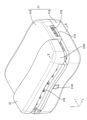
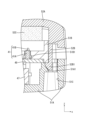
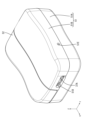
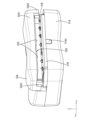
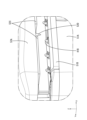
- FIG. 1 Schematic diagram of an unsealing management system according to Embodiment 1 Perspective view of a tamper detector attached to packaging material Perspective view of tamper detector Perspective view of built-in parts of tamper detector A perspective view of the tampering detector with the second casing displaced upwards An enlarged perspective view of the right side of the first housing Cross-sectional view taken along line II in Figure 3 II-II line sectional view in Figure 5 Bottom view of tamper detector Perspective view of tamper detector A perspective view of the tampering detector with the second casing displaced upwards An enlarged perspective view of the vicinity of the first protrusion and second protrusion in FIG.
- FIGS. 1 to 15B The opening management system 10 according to the first embodiment will be explained with reference to FIGS. 1 to 15B.
- Some of the figures show the X-axis, Y-axis, and Z-axis, and are drawn so that the direction of each axis is the same direction in each figure. Further, the directions along the X-axis, Y-axis, and Z-axis are respectively referred to as the left-right direction, the front-back direction, and the up-down direction. However, the above directions are merely determined for convenience and should not be construed in a limiting manner.
- the opening management system 10 is a system for managing the administration of the medicine T based on the opening state of the packaging material 20 that houses the medicine T in the form of a tablet (an example of a contained object).
- a tampering management system for pharmaceuticals will be exemplified as the tampering management system 10, but the object to be accommodated may be other than the medicine T, and the tampering management system 10 can be widely applied to the tampering management of packaging materials.
- the unsealing management system 10 includes an unsealing detector 40 attached to the packaging material 20, a management server (application server) 60, and an information processing terminal 70.
- the management server 60 and the information processing terminal 70 are connected to a communication network 80.
- LPWA low power wide area wireless communication
- LPWA Low Power Wide Area
- LPWA is a wireless communication that realizes long-distance transmission while reducing power consumption (for example, transmission distance of 10 km or more with a transmission power of 1 W or less), and is also known as a fundamental technology of IoT (Internet of Things).
- LPWA communication services are provided by multiple carriers, such as sigfox (registered trademark), LoRa (registered trademark), and NB-IoT.
- the opening detector 40 is wirelessly connected to a base station 85 for LPWA, and the base station 85 is connected to a communication server (LPWA cloud server) 86 for LPWA.
- the communication server 86 is connected to the communication network 80. Therefore, the opening detector 40 can communicate with the management server 60 connected to the communication network 80 via the communication server 86.
- the opening detectors 40 have unique ID information, and the management server 60 can communicate with each opening detector 40.
- the opening detector 40 only needs to be communicatively connected to at least one of the management server 60 and the information processing terminal 70, and a communication technology other than LPWA may be adopted as the communication means of the opening detector 40.
- a communication technology other than LPWA may be adopted as the communication means of the opening detector 40.
- a low power consumption wireless communication technology such as BLE (Bluetooth Low Energy (registered trademark)) is preferable, but more general Wi-Fi, LTE, etc. may also be used.
- the information processing terminal 70 is a general-purpose information processing device such as a smartphone or a computer.
- the information processing terminal 70 is assumed to be used by patients as well as medical personnel at hospitals and pharmacies that have prescribed the drug T, but the users are not particularly limited (hereinafter referred to as "users of the information processing terminal 70"). ).
- a plurality of information processing terminals 70 are provided, and each terminal may be used by a different user.
- the information processing terminal 70 executes a program for the user to input registration information such as the time of administration of the medicine T and to display the opening status of the medicine T.
- the program is assumed to be installed on the information processing terminal 70 as application software (hereinafter referred to as an application), but it may not be installed and may be executed through browser software, for example. . Thereby, the size of the opening detector 40 can be reduced, and the power consumption of the opening detector 40 can be suppressed.
- application software hereinafter referred to as an application
- the management server 60 provides information and processing results in response to requests from the information processing terminal 70 or the opening detector 40.
- the management server 60 refers to means for implementing server functions that execute programs that implement these functions.
- the management server 60 is exemplified as a server computer as shown in FIG. 1, but it may be one that virtually exists in a network space using distributed computing or the like. Furthermore, the management server 60 may perform processing using artificial intelligence.
- the management server 60 includes at least a communication section 61 for connecting to the communication network 80 and an information generation section 62.
- the management server 60 is capable of communicating with the information processing terminal 70 via the communication unit 61 and is also capable of communicating with the tampering detector 40 via the communication server 86 .
- the information generation unit 62 generates setting information for causing the opening detector 40 to perform a predetermined process related to opening detection based on the registration information from the information processing terminal 70. The processing of the management server 60 will be described in detail later.
- the opening detector 40 includes a plurality of (12 in this embodiment) connection sections 41, a communication module 42 for LPWA, an LED 45 (an example of a notification section), and a reset button. 46 (an example of an operation section), a rechargeable battery 47 (an example of a power supply section), a board 49, and a casing 50.
- the board 49 mounts a connecting portion 41, a communication module 42, an LED 45, a reset button 46, and a connector insertion portion 37A for connecting an external power source to the rechargeable battery 47.
- the casing 50 accommodates the board 49 on which each part is mounted and the rechargeable battery 47, and also serves as a mounting part that holds the packaging material 20 in a detachable manner.
- the connecting portion 41 includes a support 41A and a contact 41B.
- the support body 41A is installed on the substrate 49, and has a substantially cylindrical shape in this embodiment, but its shape is not limited.
- the contactor 41B protrudes upward from the upper surface (the surface opposite to the substrate 49) of the support body 41A, and at least its protruding end is electrically conductive.
- the contactor 41B comes into contact with a circuit pattern 32 (described later) of the packaging material 20 and becomes electrically conductive.
- the communication module 42 includes a communication section 43 (specifically, an antenna), a control section 44 (specifically, a microcomputer), and a storage section 48 (specifically, a ROM and a RAM). I'm here.
- the communication unit 43 is wirelessly connected to the base station 85 and can communicate with the management server 60 via the communication server 86.
- the storage unit 48 stores a control program for the opening detector 40, ID information, and the like.
- the control unit 44 controls each part of the opening detector 40 based on the control program in the storage unit 48 and the setting information transmitted from the management server 60. Further, the control section 44 includes a timer having a timekeeping function, and also serves as a detection section that detects the opening of the packaging material 20.
- the control unit (detection unit) 44 applies a current to the connection unit 41 and detects the voltage generated in the circuit pattern 32 of the packaging material 20. Then, the control unit 44 compares the detected voltage value with a predetermined threshold value, and if it is below the threshold value, it is determined that the circuit pattern 32 is not broken and is in an unopened state, and if it is larger than the threshold value, the circuit pattern 32 is determined to be broken. It is determined that the package has been opened.
- the control unit 44 may determine the unsealed state based on the resistance value of the circuit pattern 32 that changes due to the breakage, or may determine the unsealed state based on the current value when a predetermined voltage is applied.
- the LED 45 lights up (blinks) in a predetermined pattern when the detection result (judgment result) of the control unit 44 indicates that the package is unopened, thereby notifying the user that the medicine has been forgotten.
- the LED 45 also lights up when the opening detector 40 is connected to an external power source.
- the LED 45 is built into the housing 50, and the light emitted from the LED 45 is transmitted through the housing 50. More specifically, the housing 50 is made of a material and has a thickness that allows light emission from the LED 45 to pass through.
- the LED 45 is only an example of the notification section, and the notification section may be a light emitting means other than the LED, a sounding means such as a buzzer, a display means for displaying a message, or a combination thereof. do not have.
- the casing 50 is made of a resin material, and has a rounded horizontally elongated rectangular parallelepiped shape as shown in FIGS. 3 and 5.
- the housing 50 includes a first housing 51 and a second housing 52.
- the first casing 51 occupies most of the casing 50, and has a depressed front upper part.
- the second housing 52 is a lid that covers a recess in the upper front side of the first housing 51 .
- the second housing 52 is attached to the first housing 51 so as to be movable in the vertical direction (Z-axis direction). As the second housing 52 is displaced, the packaging material 20 is held between the first housing 51 and the second housing 52, as shown in FIG.
- the casing 50 is provided with a clamping structure composed of the first casing 51 and the second casing 52 as an attachment part for the packaging material 20.
- a clamping structure composed of the first casing 51 and the second casing 52 as an attachment part for the packaging material 20.
- Each part of the casing 50 will be described in detail below, but illustrations of the packaging material 20 will be omitted except in FIG. 2 in order to clearly show the structure of the casing 50.
- the first housing 51 has a tray-shaped bottom 51A that opens upward, and an upper part 51B that covers the opening of the bottom 51A from above.
- the bottom portion 51A accommodates a rechargeable battery 47, and a board 49 is placed on the rechargeable battery 47.
- the upper part of the substrate 49 is covered with an upper part 51B.
- the upper part 51B is provided with a through hole 51B1 through which the connecting portion 41 installed on the substrate 49 passes, and the contact 41B of the connecting portion 41 protrudes from the through hole 51B1 and is exposed to the outside (Fig. 6 , Figure 11).
- the bottom portion 51A of the first housing 51 is provided with two first communication holes 51C that communicate with two engaging portions 52B of the second housing 52, which will be described later. There is.
- the first communication hole 51C is provided so as to overlap the engaging portion 52B in plan view. Further, in the bottom portion 51A of the first housing 51, a part of the opening edge of the first communication hole 51C protrudes upward, and a protrusion 51A1 is formed at the protruding end.
- the protrusion 51A1 engages (fits) with the protrusion 52B1 of the engagement portion 52B of the second housing 52 (FIGS. 7 and 8).
- an alignment mark 51A2 (an example of an alignment part) is provided on the front surface of the bottom 51A.
- the alignment mark 51A2 is formed as a convex portion at the center position in the left-right direction (X-axis direction) on the front surface of the bottom portion 51A.
- the alignment mark 51A2 serves as an index for alignment with a predetermined position of the packaging material 20 (for example, the end portion 32A of the circuit pattern 32 of the packaging material 20). This facilitates positioning when attaching the packaging material 20 to the opening detector 40, and ensures that the circuit pattern 32 of the packaging material 20 and the contact 41B of the opening detector 40 are brought into contact and electrically connected.
- an insertion hole 51D for inserting a connector into the connector insertion portion 37A is provided on the right side of the first housing 51, and as shown in FIG. As shown, a second communication hole 51E is provided that communicates with the space where the reset button 46 is located. By inserting an operating pin or the like from the outside into the second communication hole 51E and pressing the reset button 46, it is possible to cause the control unit 44 to perform a reset process to return to the initial state.
- the lid portion 52A extends above the exposed portion of the contact 41B.
- the lid portion 52A includes a ceiling wall portion 52A1 that covers the contact 41B from above, and a right side wall portion 52A2 (another example of a positioning portion) that covers the contact 41B from the right.
- the lid portion 52A does not cover the contactor 41B from the front and left side, and has a substantially L-shaped opening 52A3 that opens to the front and left side.
- the present invention can be applied to packaging materials 20 having different sizes (lengths in the short side direction).
- the engaging portion 52B extends downward from the lid portion 52A and engages (fits) with the bottom portion 51A of the first housing 51.
- a convex portion 52B1 is formed at the extending end of the engaging portion 52B, and the convex portion 52B1 engages with the protrusion 51A1 of the bottom portion 51A.
- the engaging portion 52B is in a state in which the second housing 52 is displaced downward and the first housing is The packaging material 20 is held between the body 51 and the second casing 52 in a sandwiched state.
- the engaging part 52B is in a state in which the second housing 52 is displaced upward, and the second housing 52 is in the first position.
- the packaging material 20 is not held between the housing 51 and the second housing 52, resulting in a non-sandwiched state.
- the engaging portion 52B is engaged with and connected to the bottom portion 51A of the first housing 51 in both the first position and the second position.
- the convex portion 52B1 slides down from above the protrusion 51A1, and is displaced from the second position to the first position. Furthermore, when an operating pin or the like is passed through the first communication hole 51C from the outside and the convex portion 52B1 is operated using the operating pin or the like, the engaging portion 52B is displaced from the first position to the second position. More specifically, as shown in FIG. 9, the opening detector 40 is arranged so that the bottom part 51A faces upward, and in this state, an operation pin or the like is passed from the outside through the first communication hole 51C, and the convex part 52B1 is moved in the left-right direction.
- the protrusion 52B1 When the protrusion 52B1 is pushed downward (towards the upper part 51B) while moving in the direction of the white arrow in FIG. 7, for example, the protrusion 52B1 slides along the slope 51A1S of the protrusion 51A1. Thereby, the engaging portion 52B is easily displaced from the first position to the second position.
- it in order to change the packaging material 20 from the clamped state (first position) to the non-clamped state (second position), it is necessary to move the convex portion 52B1 using an operation pin or the like, but by hand or the like. Since it cannot be operated directly, it is easier to prevent erroneous operations. Furthermore, in the pinched state, the packaging material 20 can be held more stably.
- the slope 51A1S of the protrusion 51A1 is covered by the convex part 52B1, so the convex part 52B1 is displaced from the outside using an operating pin or the like, and the second housing 52 is moved to the second position. It becomes difficult to completely remove it from the 1 housing 51.
- the second housing 52 is connected to the first housing 51 such that it can be displaced in the vertical direction (Z-axis direction) and cannot be completely removed.
- the first communication hole 51C communicating with the engagement portion 52B means that the first communication hole 51C communicates with a space (first position) where the engagement portion 52B exists in the sandwiched state.
- the first protrusion 52C is made of a flexible soft material, and is provided so as to protrude downward from the lid 52A, as shown in FIGS. 11 and 12.
- the first protrusions 52C have a horizontally long rectangular parallelepiped shape, and are provided in two at intervals in the left-right direction (X-axis direction).
- the second protrusion 52D is made of a hard material, has a rod shape with a tapered tip, and is provided between two second protrusions 52D.
- first protrusion 52C and the second protrusion 52D By providing the first protrusion 52C and the second protrusion 52D, it is possible to improve the holding force when holding the packaging material 20 between them. Since the first protrusion 52C and the second protrusion 52D do not contact the circuit pattern 32 of the packaging material 20 and are non-conductive, the holding force can be improved, but the opening detection is not affected. Note that the material and shape of the first protrusion 52C and the second protrusion 52D can be changed as appropriate as long as the holding force can be improved by the anti-slip effect. You can leave it there. Furthermore, only one of the first protrusion 52C and the second protrusion 52D may be provided instead of both.
- the opening detector 40 and the packaging material 20 can be easily and firmly attached without using a separate fixture. Further, by displacing the second housing 52, the attachment/detachment function can be easily realized.
- the packaging material 20 includes a main body part 21 that accommodates the pharmaceutical drug T in the form of a tablet, and an tamper detection sheet 30 that is attached to the main body part 21.
- a known PTP press-through package
- the main body part 21 has an overall rectangular shape (rectangular shape), and includes a sheet-like container provided with a storage part 22 in which the medicine T is stored, and a lid member 24 .
- the lid material 24 is affixed to the sheet-like container, covers the opening 22A of the housing section 22, and seals the housing section 22.
- the opening detection sheet 30 has a planar shape and planar size that follows the main body 21, and is attached to the lid 24 of the main body 21.
- the opening detection sheet 30 is a sheet-like composite material in which a base material 31, a circuit pattern 32, and a protective layer 33 are laminated in order from the main body 21 side.
- the circuit pattern 32 is a plurality of wirings formed by printing conductive ink or the like on the base material 31.
- the circuit pattern 32 is formed to include the same number of current paths as the number of accommodating parts 22, and a portion of each current path overlaps with the opening 22A of the accommodating part 22 in a plan view.
- the protective layer 33 is formed of a resin material, and covers and protects the circuit pattern 32.
- the protective layer 33 is formed on the surface of each wiring constituting the circuit pattern 32 other than the end portion 32A. In other words, the protective layer 33 does not cover the end portion 32A of the circuit pattern 32, and the end portion 32A is exposed to the outside.
- the packaging material 20 is opened so that the front surface (first main surface) of the opening detection sheet 30 is on the first casing 51 side, and the front surface (second main surface) of the main body 21 is on the second casing 52 side. It is attached to the detector 40 (FIG. 2).
- the end portion 32A of the circuit pattern 32 comes into contact with the contact 41B of the connection portion 41 of the opening detector 40 and becomes electrically conductive.
- the opening detection sheet 30 is pierced together with the lid material 24.
- the circuit pattern 32 that overlaps the accommodating portion 22 in plan view is broken.
- the control unit 44 of the tamper detector 40 determines whether the packaging material 20 is in the opened or unopened state. It becomes possible to determine.
- the user starts the application on the information processing terminal 70 and inputs the registration information for the tampering detector 40.
- the management server 60 can read the ID information attached to the casing 50 of the opening detector 40 and enter it into the information processing terminal 70, or the information processing terminal 70 can read it directly.
- the correspondence relationship between the ID information of the opening detector 40 and the identification information of the information processing terminal 70 is recorded.
- an encrypted code may be attached to the casing 50 of the opening detector 40, and the management server 60 may decode the code into ID information.
- the ID information of the opening detector 40 may be information unique to the opening detector 40 or the information processing terminal 70.
- the identification information of the information processing terminal 70 may be information specific to the information processing terminal 70 or may be information specific to the user using the information processing terminal 70.
- the input registration information is downlink transmitted to the management server 60 by the information processing terminal 70, as shown in FIG. 14A (S100).
- the registered information includes the time of taking the medicine T (an example of detection time), the frequency of tamper detection by the tamper detector 40, the notification setting of the tamper detector 40, the frequency of transmission of tamper detection results from the tamper detector 40, and the frequency of requests for transmission of setting information from the management server 60.
- the registration information that is downlink transmitted to the management server 60 is associated with the ID information of the opening detector 40 and the identification information of the information processing terminal 70.
- the medication administration time includes each medication administration time.
- the medication administration time includes the medication administration times after breakfast, lunch, and dinner.
- the frequency of opening detection is determined by whether detection is performed periodically at fixed intervals (hereinafter referred to as periodic detection) or constantly (hereinafter referred to as real-time detection), and whether the detection is performed at regular intervals (hereinafter referred to as real-time detection).
- the settings are 5 minutes, 10 minutes, 15 minutes, 20 minutes, 30 minutes, 60 minutes, 120 minutes). Setting periodic detection can save power compared to real-time detection, and the longer the periodic detection time interval is set, the more power can be saved. In this embodiment, a case where periodic detection is set will be specifically described.
- the notification setting of the opening detector 40 is the setting of the lighting pattern of the LED 45 when medication is forgotten (unopened), and can be selected from a plurality of patterns with different lighting (flashing) times.
- the frequency of transmission of the opening detection result from the opening detector 40 is a setting for determining whether to perform information transmission (uplink) from the opening detector 40 only when there is a change in the opening detection result. If it is set only when there is a change in the opening detection result, the data transmission frequency of the opening detector 40 can be reduced, so power can be saved. In this embodiment, a case in which data is set to be transmitted only when there is a change in the opening detection result will be specifically described.
- the frequency of requests for transmission of setting information from the management server 60 (hereinafter referred to as regular downlink frequency) is set to be sent once a day (for example, after the medication time after dinner) or multiple times (for example, after breakfast, lunch). This is the setting for sending the medicine after each medication (after dinner, after each medication time).
- regular downlink frequency By adjusting the periodic downlink frequency, it is possible to update the setting information of the opening detector 40 and adjust the power consumption of the opening detector 40 as much as possible due to the update.
- the regular downlink frequency is set after each medication time will be specifically described.
- the opening detector 40 transmits initial data uplink when activated (S200).
- the data (uplink data) transmitted uplink from the opening detector 40 includes ID information, opening time, opening detection result (judgment result by the control unit 44 regarding the opening state of each storage section 22), remaining capacity of the rechargeable battery 47, and connection. This includes whether the circuit pattern 32 of the packaging material 20 is connected to the portion 41 and whether the independent mode is activated.
- the initial data is uplink data when the opening detector 40 is activated or when the reset button 46 is turned on.
- the uplink data includes the ID information of the tamper detector 40, even if there are multiple tamper detectors 40 (even if there are multiple packaging materials 20 (and by extension, pharmaceutical products T)) , it is possible to perform opening detection for each opening detector 40 and to issue a notification based on the opening state for each opening detector 40.
- the independent mode is an operation mode that is activated when downlink data, which will be described later, is not transmitted to the opening detector 40 due to poor radio wave conditions.
- uplink data is transmitted at regular intervals by a timer included in the control unit 44 of the tamper detector 40, rather than at the data transmission frequency (transmission frequency of tamper detection results) set in the registration information input in the app.
- the independent mode even if downlink data is not normally transmitted to the tamper detector 40 due to poor radio wave conditions, the tamper detector 40 will transmit uplink data.
- the process of flashing the LED 45 to issue an alert to notify of forgotten medication is not executed.
- the communication server 86 when the communication server 86 receives uplink data from the opening detector 40, it transfers the uplink data to the management server 60, and also makes a callback request (transmission request) for configuration information to the management server 60. (S300).
- the management server 60 receives the uplink data transferred from the communication server 86 (S400).
- the information generation unit 62 of the management server 60 generates setting information for causing the opening detector 40 to perform a predetermined process related to opening detection based on the registration information transmitted from the information processing terminal 70 in step S100, This setting information (hereinafter referred to as downlink data) is output (sent) in response to a callback request from the communication server 86 (S402).
- the downlink data is setting information generated as 64-bit data in this embodiment, and includes the registration information described above and the current time.
- the communication server 86 receives downlink data from the management server 60 and transfers it to the opening detector 40 (S302).
- the downlink data is overwritten in the storage unit 48 of the opening detector 40, and the setting information of the opening detector 40 is updated (S202). Therefore, after the update, the control unit 44 of the opening detector 40 executes a predetermined process related to opening detection based on the updated setting information.
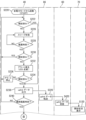
- the control unit 44 of the opening detector 40 determines whether it is the last time to take the medication in one day (for example, the third time in the case of 3 times a day) (S204) . If it is the final dose (YES in S204), the control unit 44 sets a timer to switch the operation mode of the opening detector 40 to the power saving mode (night mode) after a certain period of time (for example, after 4 hours).
- the power saving mode is a type of power saving mode, and is an operation mode in which regular detection is stopped in addition to the standby mode operation described later. In the power saving mode, power consumption can be reduced by putting the tamper detector 40 on standby and not detecting tampering during times such as nighttime when no medication is being taken and tamper detection is unnecessary.
- the opening detector 40 After setting the timer, when the opening detector 40 requests downlink data for the next day (S210), a callback request is issued from the communication server 86 (S304), and the downlink data is output (sent) from the management server 60 (S404). .
- the downlink data is transmitted to the tamper detector 40 via the communication server 86 (S306).
- the downlink data is overwritten in the storage unit 48 of the tampering detector 40, and the setting information of the tampering detector 40 is updated (S212).
- the unsealing detector 40 After the timer setting time in step S206 has elapsed, the unsealing detector 40 is switched to the power saving mode and enters a standby state (S214).
- step S204 if it is determined in step S204 that it is not the final administration time (NO in S204), the control unit 44 switches the operation mode of the opening detector 40 to the power saving mode (standby mode) (S214).
- the standby mode is a type of power saving mode, and tamper detection (current is applied to the connection part 41 of the tamper detector 40, voltage generated in the circuit pattern 32 of the packaging material 20 is detected, and the tampering state is determined) is performed. There is no operating mode.
- the opening detector 40 After the opening detector 40 is switched to the power saving mode (S214 in FIG. 14B), as shown in FIG. 15A, the opening detector 40 activates the control unit at a predetermined timing (for example, in the case of periodic detection, based on the detection interval included in the downlink data). 44) from the power saving mode (S220). Then, the control unit 44 detects the opening of each storage unit 22 to determine the unsealed state (S222), and outputs (sends) uplink data in the case of the unsealed state (S238). The uplink data is transmitted to the management server 60 (S420) via the communication server 86 (S320), and the opening status is displayed on the information processing terminal 70 (S120). On the other hand, if the package is unopened in step S222, the control unit 44 sets the package opening detector 40 to power saving mode (standby mode) (S226).
- a predetermined timing for example, in the case of periodic detection, based on the detection interval included in the downlink data). 44
- the control unit 44 cancels the power saving mode (standby mode) (S229) and performs opening detection again (S230). If the package is unopened (NO in S230), the packaging material 20 has not been opened (and the drug T has not been taken out) even after the medication administration time, so an alert is issued by flashing the LED 45. (S232). On the other hand, if the package is opened (YES in S230), the process returns to step S222.
- the control unit 44 performs opening detection again after the set periodic detection time interval (S234). If it is in an unopened state (NO in S234), there is no change from the unopened state (NO in S230), which is the previous opening detection result, so uplink data will not be output (sent) and an alert will be sent after a certain period of time. It is stopped (S236) and returns to step S222. On the other hand, if the package is in an opened state (YES in S234), the uplink data is output (sent) to the communication server 86 because it has changed from the previous opened state (NO in S230). S238).
- the uplink data includes data indicating the opening time, which is the current time when the control unit 44 of the opening detector 40 detects the opening state.
- the uplink data is transmitted to the management server 60 (S420) via the communication server 86 (S320), and the opening status is displayed on the information processing terminal 70 (S120).
- the management server 60 transfers the uplink data to the information processing terminal 70, and the information processing terminal 70 displays the opening status including at least the opening time based on the uplink data.
- the management server 60 also acquires the ID information of the opening detector 40 included in the uplink data, and transfers the uplink data to the information processing terminal 70 that has input the registration information associated with this ID information.
- the control unit 44 of the opening detector 40 determines whether the current time is after the final medication time (S240).
- the final medication administration time is the latest medication administration time among multiple medication administration times included in the downlink data.
- the final drug administration time is the final time at which the drug T is to be administered, which is a predetermined time after the drug administration time. Since the medicine T is required to be taken after the medication administration time and at the latest by the final medication administration time, the packaging material 20 is therefore required to be opened after the medication administration time and before the final medication administration time. If the current time is not after the final medication time (NO in S240), the process returns to step S222 and the above-described processing related to opening detection is repeated.
- the opening detector 40 requests downlink data (S242), and the communication server 86 issues a callback request (S322). ), downlink data is output (transmitted) from the management server 60 (S422). The downlink data is transmitted to the tamper detector 40 via the communication server 86 (S324). The downlink data is overwritten in the storage unit 48 of the tamper detector 40, and the setting information of the tamper detector 40 is updated (S244). After the update, the opening detector 40 switches to power saving mode (S246).
- the opening detector 140 is communicatively connected to the information processing terminal 170 via BLE (Bluetooth Low Energy (registered trademark)).
- the opening detector 140 includes a BLE communication module, and the information processing terminal 170 has a BLE function.
- the opening detector 140 is connected to the information processing terminal 170 in a pairing manner, and can communicate with the management server 60 connected to the communication network 80 via the information processing terminal 170. In this way, even in a situation where LPWA communication is not available (for example, in an area where the base station 85 is not available), it becomes possible to detect the opening of the package and to make a notification based on the state of the package being opened.
- the shape of the housing 50 shown in the drawings is an example, and can be changed as appropriate.
- the management server 60 may directly transfer the uplink data to the information processing terminal 70, but may also send various processed data generated by information processing based on the uplink data to the information processing terminal 70. Furthermore, the management server 60 may transmit uplink data and processed data to terminals other than the information processing terminal 70 that input the registration information.
- the uplink data and processed data may be sent to a terminal used by a person who takes the drug T packaged in the packaging material 20, may be sent to a terminal of a medical institution that prescribed the drug T, or may be sent to a terminal of a medical institution that prescribed the drug T. It may be a terminal of a drug manufacturer that manufactures the packaging material 20, a terminal of a packaging material manufacturer that manufactures the packaging material 20, or a terminal of a distributor on the distribution route of the pharmaceutical T. It is preferable that the management server 60 is configured to make the uplink data and processed data inaccessible from the outside and to transmit the uplink data and processed data only to genuine destinations. The management server 60 may encrypt and record uplink data and processed data so that only the authentic destination can decrypt it.
- the management server 60 may perform the following information processing based on the uplink data.
- the management server 60 may create an opening time database in which the registration information input at the information processing terminal 70 and the opening time indicated by the uplink data are accumulated. Furthermore, the management server 60 determines whether or not the medication is being taken appropriately by comparing the medication administration time indicated by the registered information and the opening time, and sends processed data indicating the determination result to various terminals. It's okay. Such processed data is useful not only to those who prescribe the drug T, such as doctors and pharmacists, but also to those who take the drug T.
- the management server 60 may generate processed data by statistically processing the opening times accumulated in the opening time database. Specifically, the management server 60 may statistically process the opening time for each attribute (for example, age, gender, etc.) of the person taking the medicine T, or may statistically process the opening time for each type of medicine T. Good too. Furthermore, the management server 60 may generate a prediction model that predicts the medication status of the drug T by performing machine learning using the opening times accumulated in the opening time database as training data. The management server 60 may transmit data indicating the medication status predicted by the prediction model to each terminal as processed data.
- attribute for example, age, gender, etc.
- the management server 60 may transmit data indicating the medication status predicted by the prediction model to each terminal as processed data.
- the packaging material 20 is not necessarily limited to packaging the medicine T, but may be used to package any package that is used or consumed after being opened. Further, the packaging material may be any material as long as the tampering detector 40 can be attached thereto, and the package does not necessarily need to be sealed. Furthermore, the packaging material may be a sticker that is pasted across the container that accommodates the packaged item and the packaged item, or may be broken when the packaged item is taken out from the container. For example, the packaging material may be a sticker that is affixed across a file as a container and a book or booklet as a package.
- the present invention when the present invention is applied to a packaged product with a limited expiration date, such as food, it becomes possible to verify whether the packaged product is consumed at an appropriate timing based on the opening time indicated by the uplink data. Even when the present invention is applied to packages with an indefinite expiry date, the consumption status of the package can be determined based on the opening time indicated by uplink data, providing useful information to suppliers and producers of packages. can.
- Opening management system 20: Packaging material, 40, 140: Opening detector, 43: Communication section, 44: Control section (detection section), 45: LED (notification section), 61: Communication section, 62: Information generation Department, T: Pharmaceuticals
Landscapes
- Health & Medical Sciences (AREA)
- General Health & Medical Sciences (AREA)
- Public Health (AREA)
- Engineering & Computer Science (AREA)
- Animal Behavior & Ethology (AREA)
- Life Sciences & Earth Sciences (AREA)
- Veterinary Medicine (AREA)
- Pharmacology & Pharmacy (AREA)
- Medical Informatics (AREA)
- Chemical & Material Sciences (AREA)
- Bioinformatics & Cheminformatics (AREA)
- Medicinal Chemistry (AREA)
- Epidemiology (AREA)
- Primary Health Care (AREA)
- Medical Preparation Storing Or Oral Administration Devices (AREA)
- Packages (AREA)
Abstract
Description
しかしながら、特許文献1に記載の服用管理システムは、医薬品を服用したか否かに関わらずスケジュール情報に基づき報知する仕組みであり、実際に患者がどの医薬品を服用したかどうかを把握することはできない。このため服薬が済んだ場合であっても、テレビ受像機には一定時間テロップ等が表示され続ける。その結果、服薬したにも関わらず誤って再度服用してしまったり、指定された医薬品とは別の医薬品を服用してしまったりする懸念がある。
上記課題を解決するための手段は以下の通りである。
本技術によれば、開封状態に基づき報知できる開封管理システム、および開封検知器を実現できる。
実施形態1に係る開封管理システム10を図1から図15Bを参照して説明する。一部の図には、X軸、Y軸、及びZ軸を示しており、各軸方向が各図で共通した方向となるように描かれている。また、X軸、Y軸、及びZ軸に沿う方向をそれぞれ左右方向、前後方向、及び上下方向とする。ただし上記方向は便宜的に定めたものに過ぎず、限定的に解釈すべきものではない。
実施形態2に係る開封管理システム110について図16を参照して説明する。実施形態2において、実施形態1と同様の構成、作用及び効果については重複する説明は省略する。
本発明は上記記述及び図面によって説明した実施形態に限定されるものではなく、例えば次のような実施形態も本発明の技術的範囲に含まれる。
既述したように管理サーバー60は、uplinkデータを情報処理端末70にそのまま転送してもよいが、uplinkデータに基づく情報処理によって生成した各種加工データを情報処理端末70に送信してもよい。さらに、管理サーバー60は、登録情報を入力した情報処理端末70以外の端末に対してuplinkデータや加工データを送信してもよい。
Claims (12)
- 包装材に取り付けられて前記包装材の開封状態を検知する開封検知器と通信可能な交信部と、
前記開封検知器に開封検知に関する所定処理を行わせるための設定情報を生成する情報生成部と、を備える開封管理システム。 - 前記設定情報は、前記開封検知器が開封検知を行う検知時刻を含んでおり、
前記所定処理は、前記検知時刻以降に前記包装材の前記開封状態を検知し、前記開封状態が未開封状態の場合には報知を発出することを含む請求項1に記載の開封管理システム。 - 前記設定情報は、前記開封検知器が開封検知を行う検知頻度を含んでおり、
前記所定処理は、前記検知頻度で前記包装材の前記開封状態を検知し、前記開封状態が未開封状態の場合には報知を発出することを含む請求項1または請求項2に記載の開封管理システム。 - 前記検知頻度として、一定時間毎に定期的に検知を行う定期検知、または常時検知のいずれかが設定される請求項3に記載の開封管理システム。
- 前記設定情報は、前記開封検知器が前記設定情報の送信を要求する要求頻度を含んでいる請求項1から請求項4のいずれか1項に記載の開封管理システム。
- 前記交信部は、前記開封検知器からの前記設定情報の送信要求を受信すると、当該開封検知器に対して前記設定情報を送信する請求項5に記載の開封管理システム。
- 前記設定情報は、前記開封検知器が前記開封状態を前記交信部に送信する送信頻度を含んでいる請求項1から請求項6のいずれか1項に記載の開封管理システム。
- 前記開封検知器は複数あり、各々が固有のID情報を有しており、
前記設定情報は、前記ID情報を含んでおり、
前記交信部は、前記開封検知器の各々と通信可能である請求項1から請求項7のいずれか1項に記載の開封管理システム。 - 前記包装材には医薬品が収容されている請求項1から請求項8のいずれか1項に記載の開封管理システム。
- 請求項1から請求項9のいずれか1項に記載の開封管理システムと通信可能な通信部と、
前記包装材の開封状態を検知する検知部と、を備える開封検知器。 - 前記検知部の検知結果が未開封状態である場合に報知を発出する報知部を備える請求項10に記載の開封検知器。
- 前記検知部は、前記設定情報に含まれる検知時刻以降に前記包装材の前記開封状態を検知する請求項10または請求項11に記載の開封検知器。
Priority Applications (2)
| Application Number | Priority Date | Filing Date | Title |
|---|---|---|---|
| CN202380025833.0A CN118900676A (zh) | 2022-03-31 | 2023-03-30 | 开封管理系统以及开封检测器 |
| US18/848,435 US20250228741A1 (en) | 2022-03-31 | 2023-03-30 | Opening management system and opening detection device |
Applications Claiming Priority (2)
| Application Number | Priority Date | Filing Date | Title |
|---|---|---|---|
| JP2022-059906 | 2022-03-31 | ||
| JP2022059906A JP7844227B2 (ja) | 2022-03-31 | 2022-03-31 | 開封管理システム、および開封検知器 |
Publications (1)
| Publication Number | Publication Date |
|---|---|
| WO2023190859A1 true WO2023190859A1 (ja) | 2023-10-05 |
Family
ID=88202859
Family Applications (1)
| Application Number | Title | Priority Date | Filing Date |
|---|---|---|---|
| PCT/JP2023/013159 Ceased WO2023190859A1 (ja) | 2022-03-31 | 2023-03-30 | 開封管理システム、および開封検知器 |
Country Status (4)
| Country | Link |
|---|---|
| US (1) | US20250228741A1 (ja) |
| JP (1) | JP7844227B2 (ja) |
| CN (1) | CN118900676A (ja) |
| WO (1) | WO2023190859A1 (ja) |
Citations (4)
| Publication number | Priority date | Publication date | Assignee | Title |
|---|---|---|---|---|
| JP2005539300A (ja) * | 2002-09-03 | 2005-12-22 | ディーディーエムエス ホールディングス エル エル シー | 計装薬剤パッケージの電力制御 |
| JP2012130537A (ja) * | 2010-12-22 | 2012-07-12 | Kenji Hoshi | ドーズパッケージおよびドーズパッケージシステム |
| WO2015008528A1 (ja) * | 2013-07-19 | 2015-01-22 | ソニー株式会社 | 信号処理装置、開封検出モジュール、プログラム、開封検出方法及び物品包装材 |
| US20180228696A1 (en) * | 2017-02-10 | 2018-08-16 | Rajesh Rawal | Systems, methods, and apparatuses for managing adherence to a regimen |
Family Cites Families (1)
| Publication number | Priority date | Publication date | Assignee | Title |
|---|---|---|---|---|
| US8174383B1 (en) * | 2004-08-26 | 2012-05-08 | Avante International Technology, Inc. | System and method for operating a synchronized wireless network |
-
2022
- 2022-03-31 JP JP2022059906A patent/JP7844227B2/ja active Active
-
2023
- 2023-03-30 US US18/848,435 patent/US20250228741A1/en active Pending
- 2023-03-30 WO PCT/JP2023/013159 patent/WO2023190859A1/ja not_active Ceased
- 2023-03-30 CN CN202380025833.0A patent/CN118900676A/zh active Pending
Patent Citations (4)
| Publication number | Priority date | Publication date | Assignee | Title |
|---|---|---|---|---|
| JP2005539300A (ja) * | 2002-09-03 | 2005-12-22 | ディーディーエムエス ホールディングス エル エル シー | 計装薬剤パッケージの電力制御 |
| JP2012130537A (ja) * | 2010-12-22 | 2012-07-12 | Kenji Hoshi | ドーズパッケージおよびドーズパッケージシステム |
| WO2015008528A1 (ja) * | 2013-07-19 | 2015-01-22 | ソニー株式会社 | 信号処理装置、開封検出モジュール、プログラム、開封検出方法及び物品包装材 |
| US20180228696A1 (en) * | 2017-02-10 | 2018-08-16 | Rajesh Rawal | Systems, methods, and apparatuses for managing adherence to a regimen |
Also Published As
| Publication number | Publication date |
|---|---|
| JP7844227B2 (ja) | 2026-04-13 |
| JP2023150683A (ja) | 2023-10-16 |
| CN118900676A (zh) | 2024-11-05 |
| US20250228741A1 (en) | 2025-07-17 |
Similar Documents
| Publication | Publication Date | Title |
|---|---|---|
| US20080054007A1 (en) | System and method for distributing medication and monitoring medication protocol compliance | |
| US11571363B2 (en) | Method and system for improving and assisting in medication compliance | |
| US7295890B2 (en) | Prescription drug compliance monitoring system | |
| US11021306B2 (en) | Enhanced product packaging | |
| CN106943305B (zh) | 具有提醒功能的智能药盒及智能服药系统 | |
| US9558596B2 (en) | Alerting patient at dosing times and tracking medicine use | |
| PT1546819E (pt) | Controlo de energia para embalagem de medicação instrumentada | |
| CN105492058A (zh) | 用于遵守度监控的设备、系统和方法及用于监控消耗品分配器的使用的设备、系统和方法 | |
| US20140288942A1 (en) | Pill Dispensing System for Monitoring Compliant Receipt of Pills by a Patient | |
| EP1836603A1 (en) | Unit dose compliance monitoring & reporting device & system | |
| WO2016025547A1 (en) | System and method for monitoring pill container activity | |
| US20170248401A1 (en) | Methods and systems for tracking usage of an item | |
| US20230051106A1 (en) | Usage tracking system | |
| EP2269561A1 (en) | Blister pack with content monitoring system (OtCM) based on printed polymer electronics | |
| US20090065522A1 (en) | Unit dose compliance monitoring and reporting device and system | |
| WO2023190859A1 (ja) | 開封管理システム、および開封検知器 | |
| JP7766547B2 (ja) | 開封検知器 | |
| JP7811503B2 (ja) | 開封検知シート、包装材 | |
| JP7811504B2 (ja) | 開封検知シート、包装材 | |
| WO2017135279A1 (ja) | 服薬管理装置、服薬管理方法、および服薬管理システム | |
| WO2023190857A1 (ja) | 開封検知シート、包装材 | |
| EP1986586A2 (en) | A package-companion-user interactive system | |
| WO2024166048A1 (en) | Smart pack with oleds | |
| US20070125868A1 (en) | Disposable serial package and monitoring system thereof | |
| TW201740352A (zh) | 用於病人順從性之促進的基於雲端之平台與相關應用 |
Legal Events
| Date | Code | Title | Description |
|---|---|---|---|
| 121 | Ep: the epo has been informed by wipo that ep was designated in this application |
Ref document number: 23780867 Country of ref document: EP Kind code of ref document: A1 |
|
| WWE | Wipo information: entry into national phase |
Ref document number: 202380025833.0 Country of ref document: CN |
|
| WWE | Wipo information: entry into national phase |
Ref document number: 202417071698 Country of ref document: IN |
|
| NENP | Non-entry into the national phase |
Ref country code: DE |
|
| WWP | Wipo information: published in national office |
Ref document number: 202417071698 Country of ref document: IN |
|
| 122 | Ep: pct application non-entry in european phase |
Ref document number: 23780867 Country of ref document: EP Kind code of ref document: A1 |
|
| WWP | Wipo information: published in national office |
Ref document number: 18848435 Country of ref document: US |