WO2023181985A1 - 林木用育種親の選抜方法 - Google Patents
林木用育種親の選抜方法 Download PDFInfo
- Publication number
- WO2023181985A1 WO2023181985A1 PCT/JP2023/009250 JP2023009250W WO2023181985A1 WO 2023181985 A1 WO2023181985 A1 WO 2023181985A1 JP 2023009250 W JP2023009250 W JP 2023009250W WO 2023181985 A1 WO2023181985 A1 WO 2023181985A1
- Authority
- WO
- WIPO (PCT)
- Prior art keywords
- principal component
- breeding
- plants
- difference
- parents
- Prior art date
- Legal status (The legal status is an assumption and is not a legal conclusion. Google has not performed a legal analysis and makes no representation as to the accuracy of the status listed.)
- Ceased
Links
Images

Classifications
-
- A—HUMAN NECESSITIES
- A01—AGRICULTURE; FORESTRY; ANIMAL HUSBANDRY; HUNTING; TRAPPING; FISHING
- A01G—HORTICULTURE; CULTIVATION OF VEGETABLES, FLOWERS, RICE, FRUIT, VINES, HOPS OR SEAWEED; FORESTRY; WATERING
- A01G2/00—Vegetative propagation
- A01G2/10—Vegetative propagation by means of cuttings
-
- C—CHEMISTRY; METALLURGY
- C12—BIOCHEMISTRY; BEER; SPIRITS; WINE; VINEGAR; MICROBIOLOGY; ENZYMOLOGY; MUTATION OR GENETIC ENGINEERING
- C12Q—MEASURING OR TESTING PROCESSES INVOLVING ENZYMES, NUCLEIC ACIDS OR MICROORGANISMS; COMPOSITIONS OR TEST PAPERS THEREFOR; PROCESSES OF PREPARING SUCH COMPOSITIONS; CONDITION-RESPONSIVE CONTROL IN MICROBIOLOGICAL OR ENZYMOLOGICAL PROCESSES
- C12Q1/00—Measuring or testing processes involving enzymes, nucleic acids or microorganisms; Compositions therefor; Processes of preparing such compositions
- C12Q1/68—Measuring or testing processes involving enzymes, nucleic acids or microorganisms; Compositions therefor; Processes of preparing such compositions involving nucleic acids
- C12Q1/6813—Hybridisation assays
- C12Q1/6827—Hybridisation assays for detection of mutation or polymorphism
Definitions
- the present invention relates to a method for selecting a breeding parent for forest trees, and more particularly, to a method for selecting a breeding parent for forest trees, a method for producing seedlings, a forest tree, and a method for creating a forest using the selected breeding parents.
- Reforestation projects require a long period of time from planting to felling and harvesting, and it is necessary to select and plant individual plants with excellent growth performance and wood quality.
- the growth potential of planted trees has been attracting attention, as it is believed that the high growth of planted trees means that they have a high CO 2 fixation ability.
- hybrid vigor As a method of producing individuals with high growth potential, a phenomenon is known in which hybridization is carried out using a combination of parents of different tree species, and the hybrid progeny (especially the hybrid first generation F1) has characteristics superior to the parents (hybrid vigor: heterosis).
- hybrid vigor heterosis
- eucalyptus which is the main tree species for industrial afforestation
- Eucalyptus eurograndis E. urograndis
- a hybrid of E. urophylla and E. grandis has shown results in industrial afforestation and is showing hybrid vigor. Breeding using is considered to be an effective means (for example, Non-Patent Document 1).
- Patent Document 1 discloses that the species of interspecific hybrids of Eucalyptus plants can be identified based on multiple specific single nucleotide polymorphisms (SNPs), and superior varieties can be selected more efficiently and accurately than conventional methods. It describes what you can do.
- Non-Patent Document 2 describes that the genetic distance between parents calculated using maize SNP and silico DarT marker is associated with hybrid vigor.
- Patent Document 1 In order to find a family that produces a high-growth population using the method of Patent Document 1, after determining the tree species, artificial cross-breeding is performed in various combinations, the obtained seeds are sown, and the individual seedlings are evaluated. This is not a simple method for finding families that produce high-growth populations, as it requires determining the optimal combination, which requires considerable effort, time, and cost. Further, Patent Document 1 performs analysis after extracting markers associated with predetermined traits in advance, and cannot be said to be a method for efficiently selecting the growth potential of progeny individuals. In addition, Non-Patent Document 2 clarifies the genetic distance calculated from maize SNP and silico DarT marker, and the relationship between Mahalanobis distance and hybrid vigor. There is no specific mention of whether individuals with superior traits should be selected using this method.
- An object of the present invention is to provide a method for selecting breeding parents for forest trees that can produce high-growth populations based on genetic polymorphism information.
- the present invention provides the following [1] to [11].
- Method for selecting breeding parents for forest trees including (A) to (D): (A): Obtaining genetic polymorphism information for each of two or more test plants constituting a breeding parent candidate population; (B): Calculating a kinship matrix from the genetic polymorphism information obtained in (A); (C): Performing principal component analysis on the kinship matrix calculation results obtained in (B), extracting at least the first principal component, and obtaining its principal component score; and (D): Constructing a breeding parent candidate population. Calculate the absolute value of the difference between the principal component scores obtained in (C) for two or more test plants, and select breeding parents using this as an evaluation index for selection.
- step (D) The selection method according to [4], wherein the genetic polymorphism information is the abundance of genetic polymorphisms at 1,000 or more genetic polymorphism sites.
- step (D) the difference (absolute value) between the principal component scores of the two breeding parent candidates is The selection method according to any one of [1] to [5], which selects a breeding parent whose value is 1/2 or more of the maximum value.
- step (D) The selection method according to any one of [1] to [6], wherein the test plant is a Eucalyptus plant.
- a method for producing seedlings for forest trees which comprises selecting breeding parents by the selection method according to any one of [1] to [7], and producing seedlings by crossing the selected breeding parents.
- breeding parents for forest trees that can produce high-growth populations can be selected based on genetic polymorphism information, and seedlings with good growth and high CO 2 fixation ability can be produced. Since we can provide a method that can improve productivity, we can provide sustainable wood resources and reduce global warming.
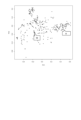
- FIG. 1 is a graph plotting the first principal component score (PC1) and second principal component score (PC2) of 291 individuals obtained in Example 1.
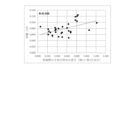
- FIG. 2 is a graph showing the relationship between the difference in the first principal component scores of parents and the volume of F1 in Example 1.
- FIG. 3 is a graph showing the relationship between the difference in the sum of the first principal component score and the second principal component score of the parents and the volume of F1 in Example 1.
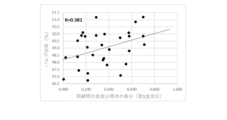
- FIG. 4 is a graph showing the relationship between the difference in the first principal component scores of the parents and the pulp yield of F1 in Example 1.
- FIG. 5 is a graph showing the relationship between the difference in the sum of the first principal component score and the second principal component score of the parents and the pulp yield of F1 in Example 1.
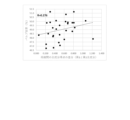
- FIG. 6 is a graph showing the relationship between the difference in the sum of the first principal component score and the second principal component score of the parents and the tree height of F1 in Example 3.
- the method for selecting breeding parents for forest trees includes at least the following steps (A) to (D).
- step (A): genetic polymorphism information of the test plant is obtained.
- the test plant may be a breeding parent candidate.
- Breeding parent candidates can be selected from the viewpoint of traits normally required for forest trees (for example, wood volume, tree height, volumetric weight, pulp yield).
- traits normally required for forest trees for example, wood volume, tree height, volumetric weight, pulp yield.
- woody plants that can be used as forest trees are preferred, and forest tree species are more preferred.
- Cryptomeria plants (Cryptomeria japonica, etc.), Chamaecyparis plants (Chamaecyparis obtusa, etc.), Pinaceae plants (Pinaceae) inus) plant (Pinus thunbergii ), Larix plants (Larix kaempferi, Larix gmelinii, etc.), Abies plants (Abies sachalinensis, etc.), Eucalyptus ) plants, Prunus ( Prunus plants (Prunus spp., Prunus mume, Prunus tomentosa, etc.), Mangifera plants (Mangifera indica, etc.), Acacia plants (Mangifera indica, etc.) ia) Plant, Proteus ( Myrica plants, Quercus plants (Quercus acutissima), Vitis plants, Malus plants, Rosa plants, Camellia plants (Camellia sinensis
- plants of the genus Sugi plants of the genus Cypress, plants of the genus Pinaceae (plants of the genus Pinus, plants of the genus Larch, plants of the genus Fir). plants of the genus), plants of the genus Eucalyptus, plants of the genus Camellia, plants of the genus Mango, and plants of the genus Alligatorium are preferred, and plants of the genus Cedar, plants of the genus Cypress, plants of the genus Pinus, plants of the genus Larch, plants of the genus Fir, and plants of the genus Eucalyptus are more preferred.
- the test plants are preferably plants of the same genus, and more preferably plants of different varieties or strains of the same genus.This allows for the production of higher-growing individuals due to hybrid vigor.
- eucalyptus Plants of the genus include Eucalyptus pellita, Eucalyptus brassiana, Eucalyptus urophylla x Eucalyptus grandis, Eucalyptus pellita x Eucalyp tus brassiana, Eucalyptus urophylla, Eucalyptus grandis, Eucalyptus maculata, Eucalyptus tereticornis, Eucalyptus ca maldulensis, Eucalyptus rudis, Eucalyptus resinifera, Eucalyptus propinqua, Eucalyptus sideroxylon, Examples include Eucalyptus botryoides, Eucalyptus viminalis, Eu
- test plants constitute a breeding parent candidate population, and the number is usually 5 or more, preferably 10 or more, more preferably 15 or more, and still more preferably 20 or more. . There is no particular upper limit to the number of test plants included in the candidate population, but it is usually 10 million or less, preferably 100,000 or less, more preferably 10,000 or less, and even more preferably 1,000 or less. This may facilitate implementation of the method.
- the test plants may be either genetically related individuals (e.g. belonging to the same family) or genetically different individuals (e.g. belonging to different families), and may contain only one or both. However, it is preferable to include at least one or at least two individuals that are genetically different (for example, belong to different families), and more preferably to be composed of genetically different individuals. As a result, breeding parents with various genotypes can be selected without limiting genetic distance, and populations with good traits can be produced.
- the genetic polymorphism information may be any information related to genetic polymorphisms, and includes, for example, the abundance (eg, number, ratio) of genetic polymorphisms that the test plant has.
- Genetic polymorphisms may be any different genes or base parts that exist multiple times in a population of the same species or closely related species (for example, found at a frequency of 1% or more), such as single nucleotide polymorphisms (SNPs). , restriction enzyme fragment length polymorphism (RFLP), repetitive sequences (satellite DNA, minisatellite, microsatellite), base deletion/addition, and amino acid substitution/insertion/deletion, with SNP being preferred.
- SNPs single nucleotide polymorphisms
- Genetic polymorphisms may be those that appear in the phenotype (polymorphisms that change gene function or expression) or those that do not appear (polymorphisms that do not change gene function or expressed proteins); in the former case, the expression Although the degree of influence on the type does not matter, genetic polymorphisms that are distributed over the entire genome of the plant are preferred, and genetic polymorphisms that are distributed substantially uniformly are more preferred.
- genetic polymorphism information is the abundance of genetic polymorphisms, it is usually the abundance of genetic polymorphisms at one or more genetic polymorphism sites, for example, 100 or more, 300 or more, preferably 500 or more, 700 or more, Or the abundance of genetic polymorphisms at 800 or more, more preferably 1000 or more, even more preferably 5000 or more or 10000 or more genetic polymorphism sites (which may be known or new).
- the upper limit is preferably larger, but from the viewpoint of ease of handling information, it is usually 500,000 or less, for example 300,000 or less, preferably 200,000 or less, more preferably 100,000 or less, and still more preferably 70,000. It is as follows. Genetic polymorphism information is obtained by genetic analysis of test plants.
- Gene analysis methods are not particularly limited, and include, for example, a method using a DNA chip and a method using a next-generation sequencer.
- a SNP chip such as EUChip60K (developed by EMBRAPA (Brazilian Agricultural and Livestock Corporation)) can be used.
- Step (A) is performed for each test plant included in the breeding parent candidate population. That is, when the breeding parent candidate population includes n individual test plants, n sets of genetic polymorphism information are obtained by performing step (A).
- step (B): Calculation of blood relation matrix In step (B), a kinship matrix of each test plant is calculated from the genetic polymorphism information of each test plant obtained in (A). Derivation of a kinship matrix from genetic polymorphism information and calculation of the matrix can be performed using analysis software such as R (free software).
- step (B) is also carried out for each test plant included in the breeding parent population. That is, when the breeding parent population includes n individual test plants, n sets of kinship matrix calculation results are obtained by performing step (B).
- step (C) Principal component analysis
- principal component analysis is performed on the blood relation matrix calculation results obtained in step (B).
- principal component analysis the principal component with the highest contribution rate (first principal component) is extracted from the calculation results of the kinship matrix obtained in (B), and its principal component score (first principal component score) is at least calculate.
- a plurality of principal components may be extracted (from the one with the highest contribution rate, the second principal component, the third principal component, etc.). For example, by extracting up to the fourth principal component, it is possible to improve the accuracy of selection based on the principal component score of each principal component.
- step (C) is also performed for each test plant included in the breeding parent candidate population. That is, when the breeding parent candidate population includes n individual test plants, n sets of principal component scores (first, second and subsequent principal component scores as necessary) are obtained by implementing step (C).
- Extraction of principal components and calculation of principal component scores by principal component analysis can be performed using analysis software such as R (free software).
- step (D) Selection of breeding parents
- the absolute value of the difference between the respective principal component scores is calculated for two or more test plants constituting the breeding parent candidate population, and this is used as an evaluation index for selection of at least one breeding parent (test plant). Select a combination of plants. It is preferable to select a combination of test plants with a large absolute value of the difference as breeding parents. Examples of the breeding parent selection criteria include 1/3 or more, or 1/2 or more of the maximum absolute value of the difference between two or more test plants constituting the breeding parent candidate population.
- Seedlings for forest trees can be produced by breeding the breeding parents selected by the selection method and raising the resulting hybrid seedlings.
- seedlings can be grown from seeds of hybrid progeny (F1).
- a cutting mother tree can be grown from F1 seeds, the ears can be harvested, and the cuttings can be planted to obtain cutting seedlings.
- containers such as containers and seedling pots may be used, or cultivation may be carried out in the open.
- Seedling-raising conditions such as temperature, light irradiation, soil composition, fertilizer composition, amount of fertilizer, fertilization interval, and watering conditions, and rooting conditions in the case of seedlings from cuttings may be determined according to conventional methods. Since the produced seedlings can show good growth, they are expected to show good CO 2 fixation ability and contribute to the prevention of global warming.
- a forest can be created by planting seedlings produced by the seedling production method in a plantation area, etc., and nurturing them. This will promote the procurement of sustainable wood resources.
- Example 1 We investigated the correlation between the difference (absolute difference) in principal component scores between the parents, the volume of the seedling population, and the pulp yield (parents of 30 families). Specifically, we used the principal component scores of the parents of 30 families and the trait data of 30 families as target samples, and confirmed the correlation between the difference (absolute difference) in the principal component scores between the parents and the trait data.
- (A): Obtaining SNP data of both parents Leaf samples were collected from 291 breeding parent candidates of Amsel, and DNA was extracted. Thereafter, approximately 60,000 SNP data (single nucleotide polymorphism data) were obtained using the SNP chip.
- the breeding parent candidates are E. grandis, E. urophylla, E. camaldulensis, E. Pellita, E. brassiana, E. tereticornis, E. Includes parent individuals of plants of the genus Eucalyptus such as platyphylla.
- the SNP chip the SNP chip EUChip60K developed by EMBRAPA (Brazilian Agricultural and Livestock Corporation) of Brazil was used.
- EUChip60K was created based on SNPs selected from approximately 47 million SNPs obtained from a total of 240 individuals of 12 Eucalyptus varieties collected from Brazilian afforestation companies (Silva et al. (2015) ) New Phytologist 206:1527-1540) is a SNP chip loaded with approximately 60,904 SNPs uniformly present on 11 chromosomes of Eucalyptus.
- the chips were subjected to a cooking test (using a rotary multi-digester, sulfidity 25%, liquid ratio 2.5L/kg, maximum temperature 160°C, holding time 110 minutes, H factor 830), and 132 points were actually measured ( The actual pulp yield) and the near-infrared spectra obtained by near-infrared spectroscopy (NIR) were obtained, and a calibration curve model was created in which they were statistically correlated. On the other hand, the near-infrared spectrum of each individual eucalyptus seedling was measured, the pulp yield was determined based on a calibration curve model, and the average value for each family was calculated.
- NIR near-infrared spectroscopy
- Example 2 (number of principal components used)
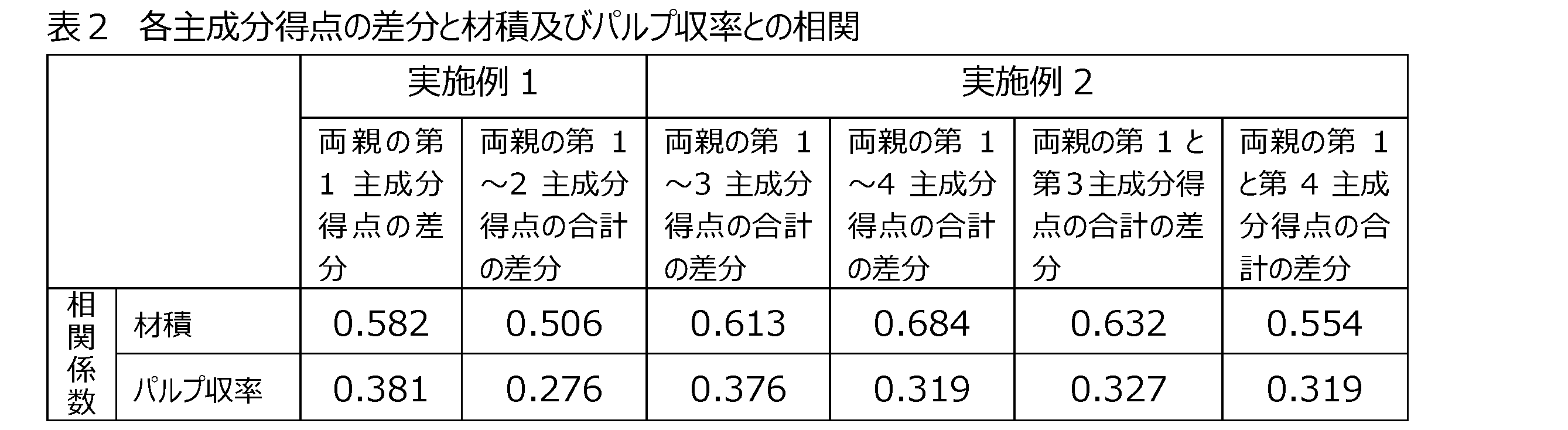
- the third and fourth principal components are also extracted in the principal component analysis, and the difference in the sum of the first to third principal component scores, the difference in the sum of the first to fourth principal component scores, and the difference in the sum of the first to fourth principal component scores are calculated.
- the difference in the total of the three principal component scores and the difference in the total of the first and fourth principal component scores (all absolute differences) were calculated (Table 2).
- Table 2 As a result, it was confirmed that the difference in the total of the first to third principal component scores and the difference in the total of the first to fourth principal component scores were similarly correlated with the volume and pulp yield.
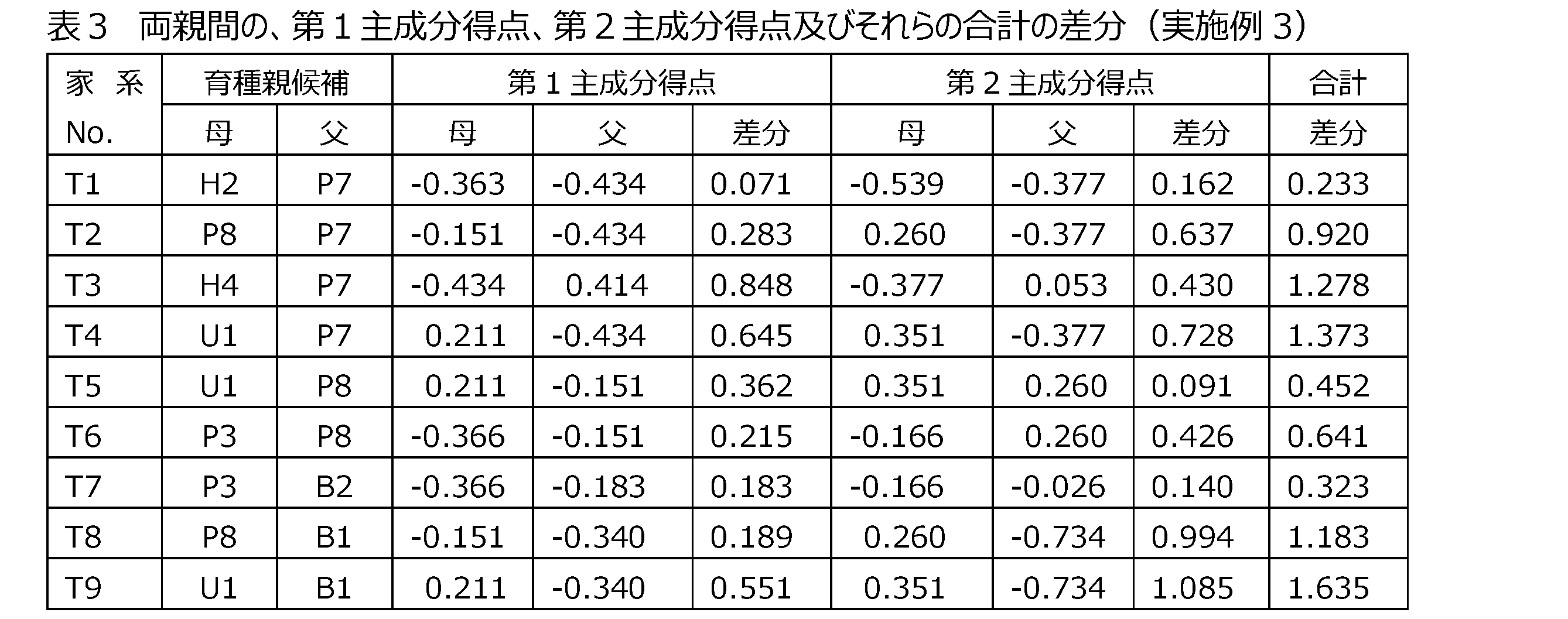
- Example 3 Regarding trait data other than wood volume, we also verified whether there was a correlation with the difference (absolute difference) in principal component scores between parents. Specifically, the process was carried out in the same manner as in Example 1, except that the principal component scores between the parents of 9 families and a total of 1000 individuals were used as the target samples, and the difference (absolute difference) in the principal component scores between the parents was calculated. did.
- Example 4 Numberer of SNPs used as genetic polymorphism information
- principal component analysis and correlation with trait data were confirmed in the same manner as in Example 1, except that 1000 of the 60,000 acquired SNP data were extracted and used.
- the difference absolute difference
- the difference in the first principal component scores between the parents the difference in the first and second principal component scores
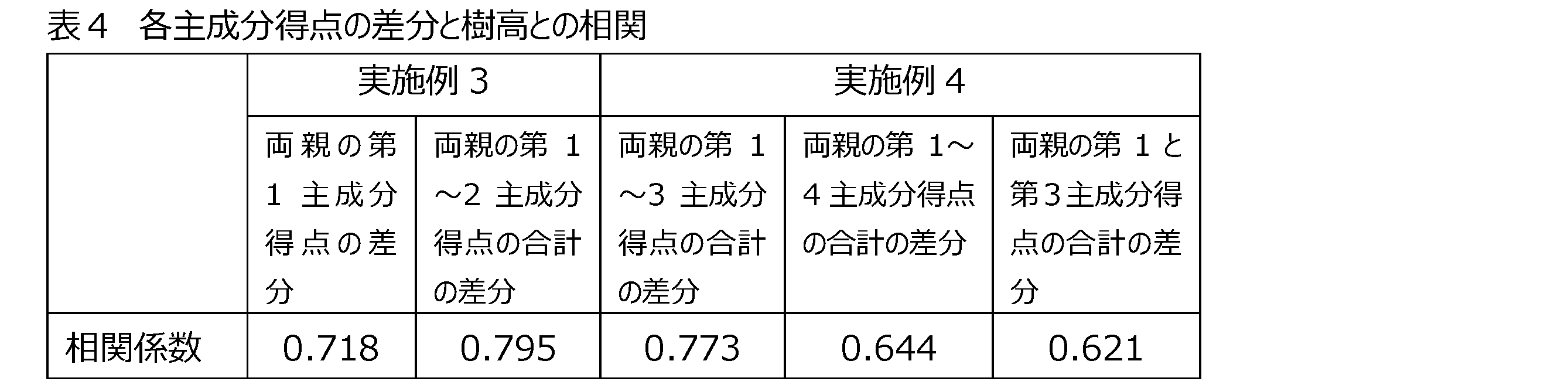
- Example 5 (Number of principal components used) In Example 3, the third and fourth principal components were also extracted in the principal component analysis, and the difference in the total of the first to third principal component scores and the difference in the total of the first to fourth principal component scores (both absolute differences) ) was calculated (Table 4). As a result, the difference in the sum of the first to third principal component scores, the difference in the sum of the first to fourth principal component scores, and the difference in the sum of the first and third principal component scores are also calculated in the same way. We confirmed that there is a correlation.
Landscapes
- Life Sciences & Earth Sciences (AREA)
- Chemical & Material Sciences (AREA)
- Organic Chemistry (AREA)
- Proteomics, Peptides & Aminoacids (AREA)
- Zoology (AREA)
- Wood Science & Technology (AREA)
- Engineering & Computer Science (AREA)
- Health & Medical Sciences (AREA)
- Immunology (AREA)
- Botany (AREA)
- Analytical Chemistry (AREA)
- Biotechnology (AREA)
- Physics & Mathematics (AREA)
- Microbiology (AREA)
- Molecular Biology (AREA)
- Environmental Sciences (AREA)
- Developmental Biology & Embryology (AREA)
- Biophysics (AREA)
- Biochemistry (AREA)
- Bioinformatics & Cheminformatics (AREA)
- General Engineering & Computer Science (AREA)
- General Health & Medical Sciences (AREA)
- Genetics & Genomics (AREA)
- Measuring Or Testing Involving Enzymes Or Micro-Organisms (AREA)
- Cultivation Of Plants (AREA)
Abstract
Description
また、非特許文献2は、トウモロコシのSNP及びシリコDarTマーカーから、算出した遺伝的距離、およびマハラノビス距離と雑種強勢との関係を明らかにしているが、どういう条件で、遺伝的距離、およびマハラノビス距離を利用して、形質の優れる個体を選抜すればよいのか具体的には言及していない。
〔1〕(A)~(D)を含む、林木用育種親の選抜方法:
(A):育種親候補集団を構成する2以上の被検植物のそれぞれについて、遺伝子多型情報を得ること;
(B):(A)で得られた遺伝子多型情報から、血縁行列を算出すること;
(C):(B)で得られた血縁行列算出結果を主成分分析し、少なくとも第1主成分を抽出し、その主成分得点を得ること;及び
(D):育種親候補集団を構成する2以上の被検植物の、(C)で得られた主成分得点の差分の絶対値を算出し、これを選抜の評価指標として育種親を選抜すること。
〔2〕(C)において、さらに第2、第3、第4主成分の少なくともいずれかを抽出し、その主成分得点を得ること、
(D)において、2つの育種親候補の第1主成分得点の差分と、第2、第3、及び第4主成分から選ばれる少なくとも1つの主成分得点との差分の合計を算出する、〔1〕に記載の選抜方法。
〔3〕育種親候補集団を構成する被検植物が、同属であって異なる品種又は系統の植物である〔1〕又は〔2〕に記載の選抜方法。
〔4〕遺伝子多型情報が、一塩基多型の情報である、〔1〕~〔3〕のいずれか1項に記載の選抜方法。
〔5〕遺伝子多型情報が、1,000以上の遺伝子多型部位における遺伝子多型の存在量である、〔4〕に記載の選抜方法。
〔6〕(D)工程において、2つの育種親候補の主成分得点の差分(絶対値)が、
最大値の1/2以上である育種親を選ぶ、〔1〕~〔5〕のいずれか1項に記載の選抜方法。
〔7〕被検植物がユーカリ属植物である、〔1〕~〔6〕のいずれか1項に記載の選抜方法。
〔8〕〔1〕~〔7〕のいずれか1項に記載の選抜方法により育種親を選抜し、選抜された育種親を交配して苗を生産する、林木用の苗の生産方法。
〔9〕苗は、実生苗又は挿し木苗である、〔8〕に記載の生産方法。
〔10〕〔8〕又は〔9〕に記載の生産方法により生産された苗を育成する、林木の生産方法。
〔11〕〔10〕に記載の生産方法により生産された林木を植樹し育成する、森林の造成方法。
林木用育種親の選抜方法は、以下の(A)~(D)工程を少なくとも含む。
工程(A)では、被検植物の遺伝子多型情報を得る。
工程(B)では、(A)で得られた各被検植物の遺伝子多型情報より、被検植物の血縁行列を算出する。遺伝的多型情報からの血縁行列の導出、行列の算出は、R(フリーソフト)等の解析ソフトウェアを用いて実施できる。
工程(C)では、(B)で得られた血縁行列算出結果に対し主成分分析を行う。主成分分析では、(B)で得られた血縁行列の算出結果のうち、最も寄与率の高い主成分(第1主成分)を抽出し、その主成分得点(第1主成分得点)を少なくとも算出する。主成分は、複数抽出してもよい(寄与率の高いほうから、第2主成分、第3主成分・・・)。例えば、第4主成分まで抽出することにより、各主成分の主成分得点をもとに、選抜の精度を高めることができる。
工程(D)では、育種親候補集団を構成する2以上の被検植物について、それぞれの主成分得点の差分の絶対値を算出し、これを選抜の評価指標として少なくとも1つの育種親(被検植物の組み合わせ)を選抜する。差分の絶対値が大きい被検植物の組み合わせを育種親として選抜することが好ましい。育種親の選抜基準としては、例えば、育種親候補集団を構成する2以上の被検植物の前記差分の絶対値の最大値の1/3以上、又は1/2以上が挙げられる。
選抜方法により選抜された育種親を交配し、得られる交配種の苗を育苗することにより、林木用の苗を生産できる。例えば、交配後代(F1)の種子から実生苗を育成できる。また、F1の種子から採穂母樹を育成して採穂し、これを挿し付けて、挿し木苗を得ることができる。苗の生産には、コンテナ、育苗ポット等の容器を使用してもよいし、露地栽培でもよい。温度、光照射、培土組成、肥料組成、施肥量、施肥間隔、灌水条件などの、育苗条件、挿し木苗の場合の発根条件は、常法に従えばよい。生産される苗は、良好な成長を示すことができるので、良好なCO2固定能力を示すものとして、地球温暖化防止に貢献するものと期待される。
苗の生産方法により生産された苗を、植林地等に植樹し、育成することにより、森林を造成できる。これにより、持続可能な木質資源の調達を推進することができる。
両親間の主成分得点の差分(絶対差)とその実生個体群の材積、パルプ収率との相関(30家系の両親)を検討した。具体的には、対象サンプルとして30家系の両親の主成分得点と、30家系の形質データを用い、両親間の主成分得点の差分(絶対差)と形質データの相関を確認した。
アムセル社の育種親候補291個体から葉サンプルを採取しDNAを抽出した。その後SNPチップを利用して、約60,000個のSNPデータ(一塩基多型データ)を取得した。育種親候補は、E.grandis、E.urophylla、E.camaldulensis、E.pellita、E.brassiana、E.tereticornis、E.platyphyllaなどのユーカリ属植物の親個体を含む。SNPチップは、ブラジルのEMBRAPA(ブラジル農牧公社)が開発したSNPチップEUChip60Kを利用した。EUChip60Kは、ブラジルの植林会社などから集められたユーカリ12品種の合計240個体から得られた約4,700万個のSNPから選抜したSNPをもとに作製されており(Silva et al.(2015)New Phytologist 206:1527-1540)、ユーカリの11本の染色体に均一に存在する約60,904個のSNPが搭載されたSNPチップである。
得られた育種親候補291個体のSNPデータをもとに、統計解析ソフトRと、Rパッケージ(rrBLUP関数)を用いて、相加的血縁行列を算出した。その後、eigen関数を利用して、主成分得点を算出した。
上述の手順で得られた主成分得点をもとに、人工交配の組合せ30家系の両親(育種親候補に含まれる)の第1主成分の差分と、第2主成分得点の差分、第1主成分得点の差分と第2主成分得点の合計の差分(いずれも絶対差)を算出した(表1)。

B1:E.Brassiana
H1~3:E.urophylla×E.grandis
P1~6:E.pellita
U1~U3:E.urophylla
差分:両親の、第1主成分得点の差分、第2主成分得点の差分であり、絶対値である。
実生林試験地(ブラジル)で3.0年生のユーカリ実生個体(30家系(表1)×16個体)の形質データ(材積、パルプ収率)を取得した。これらの個体は、上述の主成分分析の被検植物を親とするF1系統に相当する。
パルプ収率は、サンプルの実測パルプ収率と近赤外線スペクトルより予め作成した検量線モデルを用いて特定し、家系別での平均値を算出した。すなわち、チップを蒸解試験(回転式マルチダイジェスター使用、硫化度25%、液比2.5L/kg、最高温度160℃、保持時間110分、Hファクター830)に供し求めた実測値132点(実測パルプ収率)と、それぞれの近赤外分光分析法(NIR)による近赤外線スペクトルとを取得し、統計的に関連付けた検量線モデルを作成した。一方、各ユーカリ実生個体の近赤外線スペクトルを測定し、検量線モデルに基づきパルプ収率を特定し、家系別の平均値を算出した。
実施例1において、主成分分析において第3、第4主成分も抽出し、第1~第3主成分得点の合計の差分、第1~第4主成分得点の合計の差分、第1及び第3主成分得点の合計の差分、第1及び第4主成分得点の合計の差分(いずれも絶対差)を算出した(表2)。その結果、第1~第3主成分得点の合計の差分、第1~第4主成分得点の合計の差分も、同様に材積とパルプ収率とに相関があることを確認した。
材積以外の形質データについても、両親間の主成分得点の差分(絶対差)と相関がみられるかどうかを検証した。具体的には、対象サンプルとして9家系、合計1000個体の、両親間の主成分得点を用いたほかは、実施例1と同様に行い、両親間の主成分得点の差分(絶対差)を算出した。
B1~2:E.Brassiana
H2、4:E.urophylla×E.grandis
P3、7、8:E.pellita
U1:E.urophylla
差分:両親の、第1主成分得点の差分、第2主成分得点の差分であり、絶対値である。
実施例3において、取得した60,000のSNPデータのうち1000個を抽出して利用したほかは、実施例1と同様に主成分分析、形質データとの相関の確認を行った。その結果、両親間の第1主成分得点の差分(絶対差)、第1、第2主成分得点の差分と材積に相関があること(それぞれ、R=0.699、R=0.815;後者は、T検定有意水準5%で有意差あり)を確認した。
実施例3において、主成分分析において第3、第4主成分も抽出し、第1~第3主成分得点の合計の差分、第1~第4主成分得点の合計の差分(いずれも絶対差)を算出した(表4)。その結果、第1~第3主成分得点の合計の差分、第1~第4主成分得点の合計の差分、第1主成分得点と第3主成分得点の合計の差分も、同様に材積に相関があることを確認した。
Claims (11)
- (A)~(D)を含む、林木用育種親の選抜方法:
(A):育種親候補集団を構成する2以上の被検植物のそれぞれについて、遺伝子多型情報を得ること;
(B):(A)で得られた遺伝子多型情報から、血縁行列を算出すること;
(C):(B)で得られた血縁行列算出結果を主成分分析し、少なくとも第1主成分を抽出し、その主成分得点を得ること;及び
(D):育種親候補集団を構成する2以上の被検植物の、(C)で得られた主成分得点の差分の絶対値を算出し、これを選抜の評価指標として育種親を選抜すること。 - (C)において、さらに第2、第3、第4主成分の少なくともいずれかを抽出し、その主成分得点を得ること、
(D)において、2つの育種親候補の第1主成分得点の差分と、第2、第3、及び第4主成分から選ばれる少なくとも1つの主成分得点との差分の合計を算出する、請求項1に記載の選抜方法。 - 育種親候補集団を構成する被検植物が、同属であって異なる品種又は系統の植物である請求項1又は2に記載の選抜方法。
- 遺伝子多型情報が、一塩基多型の情報である、請求項1~3のいずれか1項に記載の選抜方法。
- 遺伝子多型情報が、1,000以上の遺伝子多型部位における遺伝子多型の存在量である、請求項4に記載の選抜方法。
- (D)工程において、2つの育種親候補の主成分得点の差分(絶対値)が、
最大値の1/2以上である育種親を選ぶ、請求項1~5のいずれか1項に記載の選抜方法。 - 被検植物がユーカリ属植物である、請求項1~6のいずれか1項に記載の選抜方法。
- 請求項1~7のいずれか1項に記載の選抜方法により育種親を選抜し、選抜された育種親を交配して苗を生産する、林木用の苗の生産方法。
- 苗は、実生苗又は挿し木苗である、請求項8に記載の生産方法。
- 請求項8又は9に記載の生産方法により生産された苗を育成する、林木の生産方法。
- 請求項10に記載の生産方法により生産された林木を植樹し育成する、森林の造成方法。
Priority Applications (1)
| Application Number | Priority Date | Filing Date | Title |
|---|---|---|---|
| JP2023579854A JP7585527B2 (ja) | 2022-03-23 | 2023-03-10 | 林木用育種親の選抜方法 |
Applications Claiming Priority (2)
| Application Number | Priority Date | Filing Date | Title |
|---|---|---|---|
| JP2022046840 | 2022-03-23 | ||
| JP2022-046840 | 2022-03-23 |
Publications (1)
| Publication Number | Publication Date |
|---|---|
| WO2023181985A1 true WO2023181985A1 (ja) | 2023-09-28 |
Family
ID=88101287
Family Applications (1)
| Application Number | Title | Priority Date | Filing Date |
|---|---|---|---|
| PCT/JP2023/009250 Ceased WO2023181985A1 (ja) | 2022-03-23 | 2023-03-10 | 林木用育種親の選抜方法 |
Country Status (2)
| Country | Link |
|---|---|
| JP (1) | JP7585527B2 (ja) |
| WO (1) | WO2023181985A1 (ja) |
Family Cites Families (3)
| Publication number | Priority date | Publication date | Assignee | Title |
|---|---|---|---|---|
| EP1825002A4 (en) * | 2004-12-09 | 2008-04-09 | Perlegen Sciences Inc | MARKERS FOR METABOLIC SYNDROME, OBESITY AND INSULIN RESETENCE |
| EP2660310A4 (en) * | 2010-12-28 | 2015-09-30 | Tashiro Kei | COMPREHENSIVE GLAUCOMOTIC PROCESS WITH A GLAUKOM DIAGNOSIS CHIP AND A CLUSTER ANALYSIS OF A DEFORMED PROTEOMIC |
| WO2018025521A1 (ja) * | 2016-08-05 | 2018-02-08 | 京都府公立大学法人 | 落屑症候群又は落屑緑内障の発症リスクの判定方法 |
-
2023
- 2023-03-10 WO PCT/JP2023/009250 patent/WO2023181985A1/ja not_active Ceased
- 2023-03-10 JP JP2023579854A patent/JP7585527B2/ja active Active
Non-Patent Citations (7)
| Title |
|---|
| GRATTAPAGLIA DARIO, RESENDE MARCOS D. V.: "Genomic selection in forest tree breeding", TREE GENETICS, SPRINGER BERLIN HEIDELBERG, BERLIN/HEIDELBERG, vol. 7, no. 2, 1 April 2011 (2011-04-01), Berlin/Heidelberg, pages 241 - 255, XP093091818, ISSN: 1614-2942, DOI: 10.1007/s11295-010-0328-4 * |
| GRATTAPAGLIA DARIO, SILVA-JUNIOR ORZENIL B., RESENDE RAFAEL T., CAPPA EDUARDO P., MÜLLER BÁRBARA S. F., TAN BIYUE, ISIK FIKRET, RA: "Quantitative Genetics and Genomics Converge to Accelerate Forest Tree Breeding", FRONTIERS IN PLANT SCIENCE, vol. 9, XP093091832, DOI: 10.3389/fpls.2018.01693 * |
| ISIK FIKRET, BARTHOLOMÉ JÉRÔME, FARJAT ALFREDO, CHANCEREL EMILIE, RAFFIN ANNIE, SANCHEZ LEOPOLDO, PLOMION CHRISTOPHE, BOUFFIER LAU: "Genomic selection in maritime pine", PLANT SCIENCE, ELSEVIER IRELAND LTD, IE, vol. 242, 1 January 2016 (2016-01-01), IE , pages 108 - 119, XP093091814, ISSN: 0168-9452, DOI: 10.1016/j.plantsci.2015.08.006 * |
| KONDO, TEIJI: "Heterosis in Timber and Breeding Methods Therefor", FOREST GENETICS AND TREE BREEDING, vol. 5, no. 1, 1 January 2016 (2016-01-01), pages 1 - 4, XP009549205, ISSN: 2187-350X, DOI: 10.32135/fgtb.5.1_1 * |
| RESENDE M F R, MUÑOZ P, GARRICK D J, FERNANDO R L, DAVIS J M, JOKELA E J, MARTIN T A, PETER G F, KIRST M: "Accuracy of Genomic Selection Methods in a Standard Data Set of Loblolly Pine ( Pinus taeda L.)", GENETICS, vol. 190, no. 4, 1 April 2012 (2012-04-01), pages 1503 - 1510, XP093091811, DOI: 10.1534/genetics.111.137026 * |
| SHINYA, TOMOTAKA ET AL.: "Selective Breeding of Eucalyptus Using Genomic Selection", FOREST GENETICS AND TREE BREEDING, vol. 6, no. 3, 25 July 2017 (2017-07-25), pages 98 - 102, XP009549206, ISSN: 2187-350X, DOI: 10.32135/fgtb.6.3_98 * |
| TONGLI WANG, HAGQVIST RISTO, TIGERSTEDT PETER M.A: "Inbreeding depression in three generations of selfed families of silver birch (Betula pendula)", CANADIAN JOURNAL OF FOREST RESEARCH, NATIONAL RESEARCH COUNCIL OF CANADA, OTTAWA, CA, vol. 29, no. 6, 1 January 1999 (1999-01-01), CA , pages 662 - 668, XP055347373, ISSN: 0045-5067, DOI: 10.1139/cjfr-29-6-662 * |
Also Published As
| Publication number | Publication date |
|---|---|
| JPWO2023181985A1 (ja) | 2023-09-28 |
| JP7585527B2 (ja) | 2024-11-18 |
Similar Documents
| Publication | Publication Date | Title |
|---|---|---|
| Burton et al. | QTL mapping and phenotypic variation for root architectural traits in maize (Zea mays L.) | |
| Foster et al. | Two quantitative trait loci, Dw1 and Dw2, are primarily responsible for rootstock-induced dwarfing in apple | |
| Pelsy et al. | An extensive study of the genetic diversity within seven French wine grape variety collections | |
| Fazio et al. | Dw2, a new dwarfing locus in apple rootstocks and its relationship to induction of early bearing in apple scions | |
| Díaz-Rueda et al. | SILVOLIVE, a germplasm collection of wild subspecies with high genetic variability as a source of rootstocks and resistance genes for olive breeding | |
| Oyekunle et al. | Genetic diversity of tropical early-maturing maize inbreds and their performance in hybrid combinations under drought and optimum growing conditions | |
| Chitwood et al. | Population structure and association analysis of bolting, plant height, and leaf erectness in spinach | |
| Ergon et al. | Allele frequency changes provide evidence for selection and identification of candidate loci for survival in red clover (Trifolium pratense L.) | |
| Moriguchi et al. | Gene flow and mating system in five Cryptomeria japonica D. Don seed orchards as revealed by analysis of microsatellite markers | |
| Yue et al. | Heterotic prediction of hybrid performance based on genome-wide SNP markers and the phenotype of parental inbred lines in heading Chinese cabbage (Brassica rapa L. ssp. pekinensis) | |
| Saygili et al. | Genetic and agronomic diversity of Basma tobacco (Nicotiana tabacum L.) landrace in Turkey | |
| Clarke et al. | Genetic and morphological characterization of United States tea (Camellia sinensis): Insights into crop history, breeding strategies, and regional adaptability | |
| Balakrishnan et al. | An overview of teak genetic improvement towards conservation of genetic resources in a changing climate with special emphasis on India | |
| Kasule et al. | Genetic diversity, population structure, and a genome-wide association study of sorghum lines assembled for breeding in Uganda | |
| Grattapaglia | in Eucalyptus | |
| Huang et al. | Genetic variation and origin of teak (Tectona grandis Lf) native and introduced provenances | |
| KR102847792B1 (ko) | 콩의 가뭄 저항성 양적형질유전자지도 및 이를 이용한 콩의 가뭄 저항성 측정 방법 | |
| JP7585527B2 (ja) | 林木用育種親の選抜方法 | |
| Dhariwal et al. | QTL analysis identified two major all-internodes solidness loci from a completely solid-stemmed spring wheat line | |
| US20230329172A1 (en) | Sunflower Plant | |
| Hirano et al. | Propagation management methods have altered the genetic variability of two traditional mango varieties in Myanmar, as revealed by SSR | |
| JPWO2012127558A1 (ja) | 新品種、植物品種の鑑別方法、及びイネ個体を早生化する方法 | |
| Guzman et al. | Challenges and opportunities in pear breeding | |
| CN107663548B (zh) | “申阳”草莓的ssr分子指纹图谱的构建方法及应用 | |
| Popescu et al. | Morphological characterization and genetic variability assessment with SSR markers in several tomato genotypes. |
Legal Events
| Date | Code | Title | Description |
|---|---|---|---|
| 121 | Ep: the epo has been informed by wipo that ep was designated in this application |
Ref document number: 23774584 Country of ref document: EP Kind code of ref document: A1 |
|
| WWE | Wipo information: entry into national phase |
Ref document number: 2023579854 Country of ref document: JP |
|
| WWE | Wipo information: entry into national phase |
Ref document number: 2401006086 Country of ref document: TH |
|
| NENP | Non-entry into the national phase |
Ref country code: DE |
|
| 122 | Ep: pct application non-entry in european phase |
Ref document number: 23774584 Country of ref document: EP Kind code of ref document: A1 |