WO2023162002A1 - ログ解析装置、ログ解析方法、及びプログラム - Google Patents
ログ解析装置、ログ解析方法、及びプログラム Download PDFInfo
- Publication number
- WO2023162002A1 WO2023162002A1 PCT/JP2022/007263 JP2022007263W WO2023162002A1 WO 2023162002 A1 WO2023162002 A1 WO 2023162002A1 JP 2022007263 W JP2022007263 W JP 2022007263W WO 2023162002 A1 WO2023162002 A1 WO 2023162002A1
- Authority
- WO
- WIPO (PCT)
- Prior art keywords
- log
- inference
- models
- parsers
- log analysis
- Prior art date
- Legal status (The legal status is an assumption and is not a legal conclusion. Google has not performed a legal analysis and makes no representation as to the accuracy of the status listed.)
- Ceased
Links
Images




Classifications
-
- G—PHYSICS
- G06—COMPUTING OR CALCULATING; COUNTING
- G06F—ELECTRIC DIGITAL DATA PROCESSING
- G06F11/00—Error detection; Error correction; Monitoring
- G06F11/30—Monitoring
- G06F11/34—Recording or statistical evaluation of computer activity, e.g. of down time, of input/output operation ; Recording or statistical evaluation of user activity, e.g. usability assessment
-
- G—PHYSICS
- G06—COMPUTING OR CALCULATING; COUNTING
- G06N—COMPUTING ARRANGEMENTS BASED ON SPECIFIC COMPUTATIONAL MODELS
- G06N20/00—Machine learning
Definitions
- the present invention relates to the analysis of logs obtained from software in ICT systems, large-scale distributed systems, and the like.
- Logs which are semi-structured texts output from systems, software, devices, etc., record information at the time of their execution, and are important data that can be used to check the status and operation at the time of execution ( He, S., He, P., Chen, Z., Yang, T., Su, Y., and Lyu, M. R., "A Survey on Automated Log Analysis for Reliability Engineering", arXiv:2009.07237, 2020 .).
- logs obtained from large-scale and complex systems are often large and complicated, and research into automatic log analysis is underway to improve the efficiency of log analysis.
- Log analysis after log acquisition from a system or the like consists of a log parser and a log mining process. The results obtained from log analysis are used for system management, monitoring, and troubleshooting.
- Log parser methods in the process of log analysis include frequent pattern mining (Non-Patent Document 2) for searching for frequent words, clustering for grouping (Non-Patent Document 3), and a method for repeatedly dividing logs (Non-Patent Document 3). There are various methods such as Reference 4).
- log mining data trends are found in advance through learning, etc., and a model used for log analysis is created.
- the learning log is passed through a log parser used for log analysis, and the result is used as the input log.
- the present invention has been made in view of the above points, and aims to provide a technology that enables highly accurate log analysis by applying a parsing method suitable for logs.
- a log analysis device that analyzes a log obtained from software, a log parsing unit having a plurality of log parsers; an inference unit having a plurality of models for calculating loss from input logs output from each log parser in the plurality of log parsers; a log analysis method determination unit that determines a set of log parsers and models to be used in an inference phase from among the plurality of log parsers and the plurality of models based on the loss output from each model in the plurality of models;
- a log analysis device is provided.
- a technology that enables highly accurate log analysis by applying a parsing method suitable for logs.
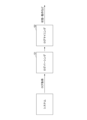
- FIG. 4 is a diagram for explaining the flow of log analysis;
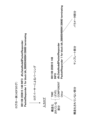
- FIG. 4 is a diagram showing an example of logs and parsing;
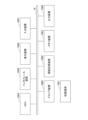
- 1 is a configuration diagram of a log analysis device 100;
- FIG. 4 is a diagram for explaining the flow of processing executed by the log analysis device 100;
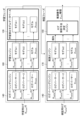
- FIG. 4 is a diagram for explaining detailed processing of a learning phase and a verification phase;
- FIG. 10 is a diagram for explaining detailed processing in an inference phase;
- 2 is a diagram showing a structural example of a model 200;
- FIG. FIG. 4 is a diagram for explaining an operation example of a log analysis method determination engine 150;
- FIG. 4 is a diagram showing an example hardware configuration of the log analysis device 100;
- FIG. 4 is a diagram showing an example hardware configuration of the log analysis device 100;
- FIG. 1 As described above, log analysis after log acquisition from a system or the like consists of a log parser and a log mining process.
- Figure 1 shows the flow of log analysis.
- a log is acquired from the system and parsed by a log parser in S1 (step 1).
- the semi-structured text of each line log is decomposed into structured and unstructured parts. , into parameter parts where variables, etc. are assigned.
- FIG. 2 shows an example of parsing a line in the HDFS log (Non-Patent Document 1).
- the parsing process transforms the log into a shape that can be used as input for the next log mining (for example, the shape of table data).
- a log that has been parsed and has a shape that can be used as an input for log mining will be referred to as an input log.
- log mining is performed.
- the input logs obtained from the log parser are used as input data, and by searching through machine learning, data mining, etc., meaningful patterns and trends are extracted, and the state and behavior of the system, etc., which is the output source of the log. and so on.
- the results obtained from log analysis are used for system management, monitoring, and troubleshooting.
- the log text differs depending on the log output source, and the appropriate parsing method differs depending on the log. Therefore, in the conventional technology, there is a problem that a highly accurate model cannot be created, the result of log mining is deteriorated, and tasks such as system management may be affected.
- the device configuration and device operation for solving such problems will be described below.
- FIG. 3 shows a block diagram of the log analysis device 100 according to this embodiment.
- the log analysis device 100 includes a log database 110, a log parser database 120, a trained model database 130, a log parsing engine 140, a log analysis method determination engine 150, a learning engine 160, an inference engine 170, and an integration engine 180.
- the log database 110 stores logs obtained from systems and the like, and the log parser database 120 stores log parsers (programs) used for log parsing.
- the trained model database 130 stores trained models.
- the model of the present embodiment is composed of functions with weight parameters and the like.
- the model may be a neural network.
- the model is stored in the database 130, it is stored as data such as weight parameters and function programs.
- log parsing engine 140 the log analysis method determination engine 150, the learning engine 160, the inference engine 170, and the integration engine 180 are respectively defined as the log parsing unit 140, the log analysis method determination unit 150, the learning unit 160, the inference unit 170, and the integration unit. You can call it 180.
- the log parsing engine 140, the log analysis method determination engine 150, the learning engine 160, the inference engine 170, and the integration engine 180 may each be a functional unit realized by executing a program on a computer, It may be a hardware circuit (dedicated processor), or a combination of a functional unit and a hardware circuit realized by executing a program on a computer.
- each database may be provided outside the log analysis device 100 .
- the log analysis device 100 accesses the database via the network to store data, read data, and the like.
- FIG. 4 shows the flow of processing executed by log analysis apparatus 100 according to the present embodiment.
- a log used for learning is expressed as a learning log
- a log used for verification is expressed as a verification log
- a log used for inference is expressed as an inference log.
- the learning process will be referred to as a learning phase
- the verification process will be referred to as a verification phase
- the inference process will be referred to as an inference phase.
- the log analysis device 100 executes log analysis consisting of a learning phase, a verification phase, and an inference phase.
- the model is learned in the learning phase, and the learned model is stored in the learned model database 130.
- the inference engine 170 performs inference on the input log using the trained model, and the log analysis technique decision engine 150 decides the log analysis technique using loss on inference results.
- inference is performed using the log analysis method (pair of log parser and model) determined in the verification phase.
- one log analysis device 100A may execute the learning phase and the verification phase, and another log analysis device 100B may execute the inference phase using the log analysis technique determined thereby.
- one log analysis device 100A may execute the learning phase
- another log analysis device 100B may execute the verification phase and the inference phase using the model learned thereby.
- the learning phase, verification phase, and inference phase may be executed by separate log analysis devices 100 (eg, log analysis device 100-1, log analysis device 100-2, log analysis device 100-3).
- log analysis devices 100 eg, log analysis device 100-1, log analysis device 100-2, log analysis device 100-3.
- ⁇ Learning phase In the learning phase, first, the log parsing engine 140 acquires N train rows of learning logs from the log database 110 . Next, the log parsing engine 140 obtains and retains p train log parsers from the log parsers database 120, and parses N train rows of the training log with each of the p train log parsers.
- the log parsing engine 140 inputs the input log of N train rows of p train type created by parsing to the learning engine 160 .
- the learning engine 160 uses each of the p train type N train rows of input logs to create a p train type model to be used in the verification phase, and stores the p train type model in the trained model database 130. .
- the validation phase first inputs a validation log consisting of N valid rows to the log parsing engine 140 .
- the log parsing engine 140 uses the same log parser as in the learning phase.
- the inference engine 170 reads out from the trained model database 130 and holds the p train type model learned in the learning phase.
- the log parsing engine 140 inputs the input log of N valid rows of p train type produced by parsing to the inference engine 170 which consists of the models of p train type trained in the learning phase.
- the inference engine 170 calculates the loss (described later) calculated by the model for N valid rows, obtains the average loss for p train types, and inputs it to the log analysis method determination engine 150 .
- the p test type inference number output from the log analysis method determination engine 150 corresponds to the set number of the log parser and model determined to be used in the inference phase.
- the log parsing engine 140 reads from the log parser database 120 and holds the p test type log parser identified by the p test type inference number.
- the inference engine 170 reads from the trained model database 130 and holds the p test type model identified by the p test type inference number.
- the log parsing engine 140 and inference engine 160 used in the verification phase may be used as they are.
- the log parsing engine 140 uses only the p test kind of log parsers identified by the p test kind of inference number
- the inference engine 160 uses only the p test kind of log parsers identified by the p test kind of inference number.
- an inference log of N test lines is obtained from the log database 110 and input to the log parsing engine 140 .
- parsing is performed by each log parser to create an input log of N test lines of p test type, and the created input log of N test lines of p test type is input to the inference engine 170 .
- each model makes inferences from the N test rows of input logs, and outputs p test types of outputs (inference results) obtained from the models to the integration engine 180 .
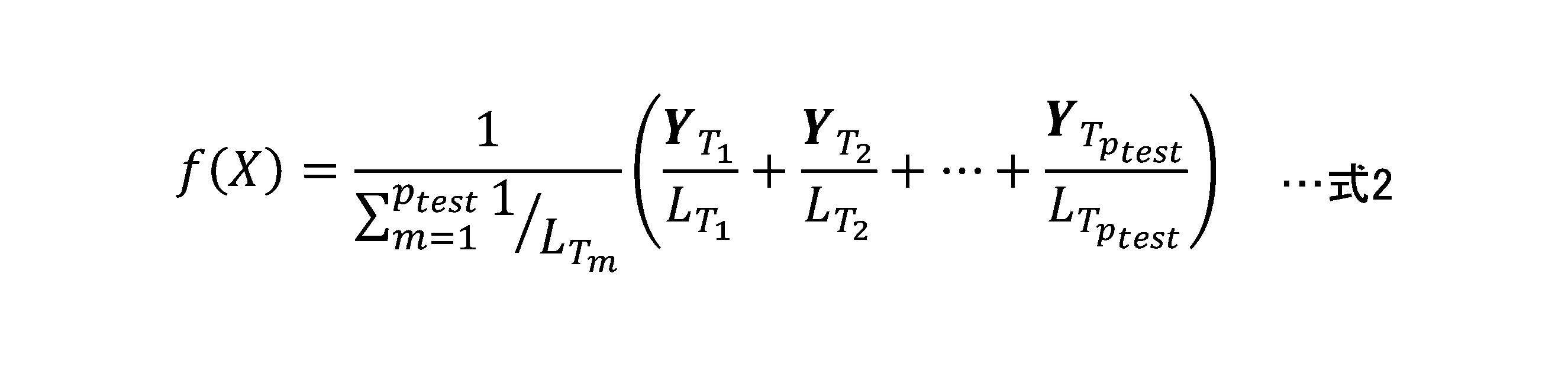
- p test types of inference results are input to the function f(X), and the output of N test rows is obtained from the function f(X).
- the output of this N test line is the log analysis result by the log analysis device 100, and it is assumed that this result will be used later, for example, for the task of checking the state and operation of the system that is the log output source, and the task of detecting anomalies.
- FIG. 7 shows a structural example of the model 200.
- the model 200 is input with N rows of input logs obtained by parsing.
- a data extractor 210 in the model extracts necessary data from the input log and inputs it to the function 220 in the model 200 .
- Some examples of how to extract the required data from the input log are given below with reference to the input log in FIG. All of the following extraction methods may be implemented, some of the following extraction methods may be implemented, or extraction methods other than the following extraction methods may be implemented.
- the user of the log analysis device 100 can freely set the extraction of data from the input log by methods other than the above. Since the data extracted here is input to the function 220, it is desirable that the data be numeric data or numeric string data consisting of M columns. In the following description, it is assumed that the extracted data is numerical data of N rows and M columns.
- the functions 220 in the model 200 include a function 221 with weight parameters, an output calculation function 222, and a loss calculation function 223.
- the function 221 with weighting parameters includes, for example, a linear function such as ⁇ X obtained by multiplying numerical string data by a matrix ⁇ consisting of weighting parameters, and a nonlinear function that constitutes a neural network.
- the weight parameter of this function 221 is learned during learning by the learning engine 160 .
- the output from the function 221 with weighting parameters is to be numeric column data of N rows and R columns.
- R is set to match the number of columns of the numerical value sequence that is used as an index for comparison when calculating the loss (described later) by the loss calculation function 223 .
- R Q
- the output calculation function 222 calculates the calculation result of the function 221 with weighting parameters into a form suitable as an output from the model 200 .
- an identity function which is often used when resolving a regression problem, or a softmax function, which is often used when resolving a classification problem, is used.
- the inference engine 170 outputs the calculation result of the output calculation function 222 from the model 200 .
- the loss calculation function 223 compares the calculation result of the output calculation function 222 with the numerical value string serving as an index in each row using functions such as RMSE and cross-entropy error, and obtains the sum of the comparison results for each row numerical value.
- this numerical value is called a loss
- Label data P, numeric string data X, etc. are used as numeric strings that serve as indexes, for example, as described above.
- the average loss of each row is calculated as the loss L, and the weight parameter of the function 221 with the weight parameter is learned so as to minimize the loss.
- the inference engine 170 in the verification phase outputs the average loss calculated from the learned model as the loss L from the model.
- the log analysis method determination engine 150 first sorts the losses in ascending order.
- the losses after sorting are expressed as L T_1 , L T_2 , . . . in ascending order.
- subscripts of subscripts are represented using "_", for example, L T_1 .
- p test is given by specifying in advance an arbitrary integer less than or equal to p train , or by determining it as the maximum n that satisfies L T_n ⁇ L th (L th is a threshold value). Note that p test is assumed to be a number greater than 1, but may be 1.
- Y T_m is a numeric sequence of N test rows and R columns obtained from the model T m ,
- Equation 1 corresponds to averaging the outputs from p test models.
- Equation 2 corresponds to weighting each of the outputs from the p test models and obtaining a weighted average.
- the method of integrating outputs from a plurality of models is not limited to the above two examples, and methods other than the above two examples may be used.
- the log analysis device 100 can be implemented, for example, by causing a computer to execute a program.
- This computer may be a physical computer or a virtual machine on the cloud.
- the log analysis device 100 can be realized by executing a program corresponding to the processing performed by the log analysis device 100 using hardware resources such as a CPU and memory built into the computer. .
- the above program can be recorded in a computer-readable recording medium (portable memory, etc.), saved, or distributed. It is also possible to provide the above program through a network such as the Internet or e-mail.
- FIG. 10 is a diagram showing a hardware configuration example of the computer.
- the computer of FIG. 10 has a drive device 1000, an auxiliary storage device 1002, a memory device 1003, a CPU 1004, an interface device 1005, a display device 1006, an input device 1007, an output device 1008, etc., which are interconnected by a bus BS.
- a program that implements the processing in the computer is provided by a recording medium 1001 such as a CD-ROM or memory card, for example.
- a recording medium 1001 such as a CD-ROM or memory card
- the program is installed from the recording medium 1001 to the auxiliary storage device 1002 via the drive device 1000 .
- the program does not necessarily need to be installed from the recording medium 1001, and may be downloaded from another computer via the network.
- the auxiliary storage device 1002 stores installed programs, as well as necessary files and data.
- the memory device 1003 reads and stores the program from the auxiliary storage device 1002 when a program activation instruction is received.
- the CPU 1004 implements functions related to the log analysis device 100 according to programs stored in the memory device 1003 .
- the interface device 1005 is used as an interface for connecting to a network or the like.
- a display device 1006 displays a GUI (Graphical User Interface) or the like by a program.
- An input device 1007 is composed of a keyboard, a mouse, buttons, a touch panel, or the like, and is used to input various operational instructions.
- the output device 1008 outputs the calculation result.
- parsing methods using a plurality of log parsers are evaluated when a log mining model is created, and a parsing method with less loss is selected. This enables parsing according to the log.
- by integrating the results of multiple log parsers and models to obtain the final output we can expect to improve the accuracy of the inference results.
- (Appendix) Regarding the above embodiments, the following additional items are disclosed.
- Each log parser in the multiple log parsers performs log parsing, each model in the plurality of models calculates a loss from input logs output from each log parser in the plurality of log parsers;
- a log analysis device that determines a set of a log parser and a model to be used in an inference phase from among the plurality of log parsers and the plurality of models based on losses output from each model in the plurality of models.
- Appendix 2 The log analysis device according to additional item 1, wherein the processor determines a set of a predetermined number of log parsers and models in the order of decreasing loss as a set of log parsers and models to be used in an inference phase.
- Appendix 3 3. The log analysis device according to claim 2, wherein the processor outputs an inference result obtained by integrating the predetermined number of inference results obtained using the set of the predetermined number of log parsers and models.
- Appendix 4 4. The log analysis device according to claim 3, wherein the processor outputs an average of the predetermined number of inference results or a weighted average of the predetermined number of inference results as the integrated inference result.
- a non-transitory storage medium storing a program executable by a computer to perform log analysis processing, The log analysis process includes Each log parser in the multiple log parsers performs log parsing, each model in the plurality of models calculates a loss from input logs output from each log parser in the plurality of log parsers; A non-transitory storage medium that determines a set of log parsers and models to be used in an inference phase from among the plurality of log parsers and the plurality of models based on losses output from each model in the plurality of models.
- Log analysis device 110 Log database 120 Log parser database 130 Trained model database 140 Log parsing engine 150 Log analysis method determination engine 160 Learning engine 170 Inference engine 180 Integration engine 1000 Drive device 1001 Recording medium 1002 Auxiliary storage device 1003 Memory device 1004 CPU 1005 interface device 1006 display device 1007 input device 1008 output device
Landscapes
- Engineering & Computer Science (AREA)
- Theoretical Computer Science (AREA)
- General Engineering & Computer Science (AREA)
- Software Systems (AREA)
- Physics & Mathematics (AREA)
- General Physics & Mathematics (AREA)
- Quality & Reliability (AREA)
- Artificial Intelligence (AREA)
- Computer Vision & Pattern Recognition (AREA)
- Data Mining & Analysis (AREA)
- Evolutionary Computation (AREA)
- Medical Informatics (AREA)
- Computer Hardware Design (AREA)
- Computing Systems (AREA)
- Mathematical Physics (AREA)
- Debugging And Monitoring (AREA)
Abstract
ソフトウェアから得られるログの解析を行うログ解析装置において、複数のログパーサーを有するログパーシング部と、前記複数のログパーサーにおける各ログパーサーから出力される入力ログから損失を計算するモデルを複数個有する推論部と、前記複数のモデルにおける各モデルから出力される損失に基づいて、前記複数のログパーサー及び前記複数のモデルの中から、推論フェーズで使用するログパーサーとモデルの組を決定するログ解析手法決定部とを備える。
Description
本発明は、本発明は、ICTシステム、大規模分散システムなどでソフトウェアから得られるログの分析に関するものである。
システム、ソフトウェア、機器などから出力された半構造化テキストであるログは、それらの実行時の情報が記録されており、実行時の状態や動作などを確認することができる重要なデータである(He, S., He, P., Chen, Z., Yang, T., Su, Y., and Lyu, M. R., "A Survey on Automated Log Analysis for Reliability Engineering", arXiv:2009.07237 , 2020.)。
大規模で複雑なシステム等から得られるログは大量で煩雑な場合も多く、ログの解析を効率化するため自動ログ解析の研究が進められている。システム等からログ取得後のログ解析はログパーサー、及びログマイニングの行程によって成り立つ。ログ解析から得られた結果は、システムなどの管理、監視、トラブルシューティングに活かされる。
https://github.com/logpai/loghub/tree/master/HDFS
M. Nagappan and M. A. Vouk, "Abstracting log lines to log event types for mining software system logs," 2010 7th IEEE Working Conference on Mining Software Repositories (MSR 2010), 2010, pp. 114-117.
Tang, L., Li, T., and Perng, C., "LogSig: Generating system events from raw textual logs", Proceedings of the 20th ACM international conference on Information and knowledge management, 2011, pp. 785-794.
A. Makanju, A. N. Zincir-Heywood and E. E. Milios, "A Lightweight Algorithm for Message Type Extraction in System Application Logs," in IEEE Transactions on Knowledge and Data Engineering, vol. 24, no. 11, pp. 1921-1936, Nov. 2012
ログ解析の行程のログパーサーの手法には、頻出単語を探索する頻出パターンマイニング(非特許文献2)、グループ分けを行うクラスタリング(非特許文献3)、反復してログを分割する手法(非特許文献4)など、様々なものがある。
ログマイニングでは事前に学習等でデータの傾向を見出し、ログ解析に用いるモデルを作成する。ログマイニングでモデルを作成する際、学習用ログをログ解析に用いるログパーサーに通し、その結果を入力ログとして用いる。
そのためログマイニングで抽出された傾向はパーシング方法からも影響を受けていると考えられる。しかし、ログのテキストはログの出力源となるシステム等の開発者が指定した形状で作成されることから、ログの出力源によってログのテキストが異なり、ログによって適したパーシング方法が異なる。
ログパーサーで正しくパーシングできていない場合、精度が高いモデルを作成できず、ログマイニングの結果が悪くなり、システム管理等のタスクに影響が生じる可能性がある。
本発明は上記の点に鑑みてなされたものであり、ログに適したパーシング方法を適用して、精度の高いログ解析を行うことを可能とする技術を提供することを目的とする。
開示の技術によれば、ソフトウェアから得られるログの解析を行うログ解析装置であって、
複数のログパーサーを有するログパーシング部と、
前記複数のログパーサーにおける各ログパーサーから出力される入力ログから損失を計算するモデルを複数個有する推論部と、
前記複数のモデルにおける各モデルから出力される損失に基づいて、前記複数のログパーサー及び前記複数のモデルの中から、推論フェーズで使用するログパーサーとモデルの組を決定するログ解析手法決定部と
を備えるログ解析装置が提供される。
複数のログパーサーを有するログパーシング部と、
前記複数のログパーサーにおける各ログパーサーから出力される入力ログから損失を計算するモデルを複数個有する推論部と、
前記複数のモデルにおける各モデルから出力される損失に基づいて、前記複数のログパーサー及び前記複数のモデルの中から、推論フェーズで使用するログパーサーとモデルの組を決定するログ解析手法決定部と
を備えるログ解析装置が提供される。
開示の技術によれば、ログに適したパーシング方法を適用して、精度の高いログ解析を行うことを可能とする技術が提供される。
以下、図面を参照して本発明の実施の形態(本実施の形態)を説明する。以下で説明する実施の形態は一例に過ぎず、本発明が適用される実施の形態は、以下の実施の形態に限られるわけではない。
(ログ解析の概要)
まず、ログ解析の概要を図1、図2を参照して説明する。前述したように、システム等からログを取得した後のログ解析はログパーサー、及びログマイニングの行程によって成り立つ。
まず、ログ解析の概要を図1、図2を参照して説明する。前述したように、システム等からログを取得した後のログ解析はログパーサー、及びログマイニングの行程によって成り立つ。
図1にログ解析の流れを示す。システムからログを取得し、S1(ステップ1)において、ログパーサーがパーシングを行う。パーシングでは、各行のログの半構造化テキストを、構造化されている部分、構造化されていない部分に分解し、構造化されていない部分については、その中の固定されたテキストであるテンプレート部分、変数等が充てられるパラメータ部分に分解する。図2にHDFSログ(非特許文献1)のある一行でパーシングをした例を示す。
パーシングの作業により、次のログマイニングの入力として使用可能な形状(例えばテーブルデータの形状など)にログを変形する。以降、パーシングしログマイニングの入力として使用できる形状になったログを入力ログと表現する。
図1に示すS2において、ログマイニングが実行される。ログマイニングでは、ログパーサーから得た入力ログを入力データとして用い、機械学習、データマイニングなどにより探索することで意味のあるパターンや傾向を抽出し、ログの出力源であるシステム等の状態や動作などを出力する。ログ解析から得られた結果は、システムなどの管理、監視、トラブルシューティングに活かされる。
前述したとおり、ログの出力源によってログのテキストが異なり、ログによって適したパーシング方法が異なる。そのため、従来技術では、精度が高いモデルを作成できず、ログマイニングの結果が悪くなり、システム管理等のタスクに影響が生じる可能性があるという課題があった。以下、このような課題を解決するための装置構成及び装置動作について説明する。
(装置構成例)
図3に、本実施の形態におけるログ解析装置100の構成図を示す。図3に示すとおり、ログ解析装置100は、ログデータベース110、ログパーサーデータベース120、学習済みモデルデータベース130、ログパーシングエンジン140、ログ解析手法決定エンジン150、学習エンジン160、推論エンジン170、統合エンジン180を有する。
図3に、本実施の形態におけるログ解析装置100の構成図を示す。図3に示すとおり、ログ解析装置100は、ログデータベース110、ログパーサーデータベース120、学習済みモデルデータベース130、ログパーシングエンジン140、ログ解析手法決定エンジン150、学習エンジン160、推論エンジン170、統合エンジン180を有する。
ログデータベース110にはシステムなどから得られたログが保存されており、ログパーサーデータベース120にはログパーシングに使用するログパーサー(プログラム)が保存されている。
また、学習済みモデルデータベース130には、学習済みモデルが格納されている。なお、後述するように、本実施の形態のモデルは、重みパラメータ付き関数等から構成されるものである。当該モデルはニューラルネットワークであってもよい。当該モデルがデータベース130に格納される際には、重みパラメータ、関数のプログラム等のデータとして格納される。
また、ログパーシングエンジン140、ログ解析手法決定エンジン150、学習エンジン160、推論エンジン170、統合エンジン180をそれぞれ、ログパーシング部140、ログ解析手法決定部150、学習部160、推論部170、統合部180と呼んでもよい。
また、ログパーシングエンジン140、ログ解析手法決定エンジン150、学習エンジン160、推論エンジン170、統合エンジン180はそれぞれ、プログラムがコンピュータ上で実行されることにより実現される機能部であってもよいし、ハードウェア回路(専用の処理プロセッサ)であってもよいし、プログラムがコンピュータ上で実行されることにより実現される機能部とハードウェア回路との組み合わせであってもよい。
また、各データベースは、ログ解析装置100の外部に備えられていてもよい。その場合、ログ解析装置100は、ネットワークを介してデータベースにアクセスして、データ保存、データ読み出しなどを行う。
(装置動作の概要)
本実施の形態におけるログ解析装置100が実行する処理の流れを図4に示す。図4に示すとおり、ログデータベース110から取得するログについて、学習に用いるログは学習用ログ、検証に用いるログは検証用ログ、推論に用いるログは推論用ログと表現する。以降、学習の工程を学習フェーズ、検証の工程を検証フェーズ、推論の工程を推論フェーズと表現する。ログ解析装置100は、学習フェーズ、検証フェーズ、推論フェーズからなるログ解析を実行する。
本実施の形態におけるログ解析装置100が実行する処理の流れを図4に示す。図4に示すとおり、ログデータベース110から取得するログについて、学習に用いるログは学習用ログ、検証に用いるログは検証用ログ、推論に用いるログは推論用ログと表現する。以降、学習の工程を学習フェーズ、検証の工程を検証フェーズ、推論の工程を推論フェーズと表現する。ログ解析装置100は、学習フェーズ、検証フェーズ、推論フェーズからなるログ解析を実行する。
図4に示すように、学習フェーズでモデルが学習され、学習済みモデルが学習済みモデルデータベース130に格納される。検証フェーズでは、推論エンジン170が、学習済みモデルを用いて入力ログに対する推論を実行し、ログ解析手法決定エンジン150が、推論結果に対する損失を用いてログ解析手法を決定する。推論フェーズでは、検証フェーズで決定されたログ解析手法(ログパーサーとモデルの組)を用いて推論を実行する。
なお、あるログ解析装置100Aが学習フェーズと検証フェーズを実行し、これにより決定されたログ解析手法を用いて、別のログ解析装置100Bが推論フェーズを実行してもよい。
また、あるログ解析装置100Aが学習フェーズを実行し、これにより学習されたモデルを用いて、別のログ解析装置100Bが検証フェーズと推論フェーズを実行してもよい。
また、学習フェーズ、検証フェーズ、推論フェーズを別々のログ解析装置100(例:ログ解析装置100-1、ログ解析装置100-2、ログ解析装置100-3)が実行してもよい。
(学習フェーズ、及び検証フェーズの詳細処理)
学習フェーズ、検証フェーズのそれぞれにおける処理の詳細を、図5を参照して説明する。
学習フェーズ、検証フェーズのそれぞれにおける処理の詳細を、図5を参照して説明する。
<学習フェーズ>
学習フェーズでは、まず、ログパーシングエンジン140が、ログデータベース110からNtrain行の学習用ログを取得する。次に、ログパーシングエンジン140は、ログパーサーデータベース120からptrain個のログパーサーを取得して保持し、Ntrain行の学習用ログを、ptrain個のログパーサーのそれぞれでパーシングする。
学習フェーズでは、まず、ログパーシングエンジン140が、ログデータベース110からNtrain行の学習用ログを取得する。次に、ログパーシングエンジン140は、ログパーサーデータベース120からptrain個のログパーサーを取得して保持し、Ntrain行の学習用ログを、ptrain個のログパーサーのそれぞれでパーシングする。
ログパーシングエンジン140は、パーシングにより作成されたptrain種類のNtrain行の入力ログを学習エンジン160に入力する。学習エンジン160は、ptrain種類のNtrain行の入力ログのそれぞれを用いて、検証フェーズで使用するptrain種類のモデルを作成し、当該ptrain種類のモデルを学習済みモデルデータベース130に保存する。
<検証フェーズ>
検証フェーズでは、まず、Nvalid行から成る検証用ログをログパーシングエンジン140へ入力する。このときのログパーシングエンジン140は学習フェーズと同じログパーサーで構成されているものを使用する。また、推論エンジン170は、学習フェーズで学習したptrain種類のモデルを学習済みモデルデータベース130から読み出して保持している。
検証フェーズでは、まず、Nvalid行から成る検証用ログをログパーシングエンジン140へ入力する。このときのログパーシングエンジン140は学習フェーズと同じログパーサーで構成されているものを使用する。また、推論エンジン170は、学習フェーズで学習したptrain種類のモデルを学習済みモデルデータベース130から読み出して保持している。
ログパーシングエンジン140は、パーシングにより作成されたptrain種類のNvalid行の入力ログを、学習フェーズで学習したptrain種類のモデルから成る推論エンジン170へ入力する。推論エンジン170は、モデルで計算されるロス(後述)をNvalid行分計算し、その平均を損失としてptrain種類分求め、ログ解析手法決定エンジン150へ入力する。
ログ解析手法決定エンジン150ではptrain種類のログパーサー及びモデルの組のうち、推論フェーズで使用するptest種類を決定し、決定したptest種類のモデルの識別番号(=ログパーサーの識別番号)を推論番号として出力する。ログ解析手法決定エンジン150から出力するptest種類の推論番号は、推論フェーズで使用すると決定されたログパーサーとモデルの組の番号に相当する。
(推論フェーズの詳細処理)
ログパーシングエンジン140は、ptest種類の推論番号により識別されるptest種類のログパーサーをログパーサーデータベース120から読み出して保持する。推論エンジン170は、ptest種類の推論番号により識別されるptest種類のモデルを学習済みモデルデータベース130から読み出して保持する。
ログパーシングエンジン140は、ptest種類の推論番号により識別されるptest種類のログパーサーをログパーサーデータベース120から読み出して保持する。推論エンジン170は、ptest種類の推論番号により識別されるptest種類のモデルを学習済みモデルデータベース130から読み出して保持する。
あるいは、検証フェーズで使用したログパーシングエンジン140と推論エンジン160をそのまま使用してもよい。この場合、ログパーシングエンジン140では、ptest種類の推論番号により識別されるptest種類のログパーサーのみを使用し、推論エンジン160では、ptest種類の推論番号により識別されるptest種類のモデルのみを使用する。
推論フェーズにおける詳細処理を、図6を参照して説明する。推論フェーズでは、Ntest行の推論用ログをログデータベース110から取得し、ログパーシングエンジン140へ入力する。
ログパーシングエンジン140において、各ログパーサーによりパーシングを実行してptest種類のNtest行の入力ログを作成し、作成されたptest種類のNtest行の入力ログを推論エンジン170に入力する。
推論エンジン170において、各モデルがNtest行の入力ログから推論を行って、モデルから得られるptest種類の出力(推論結果)を統合エンジン180に入力する。統合エンジン180において、ptest種類の推論結果を関数f(X)に入力し、関数f(X)からNtest行の出力を得る。
このNtest行の出力がログ解析装置100によるログ解析結果であり、この結果はその後、例えばログ出力源であるシステム等の状態や動作の確認タスクや異常検知タスクに使用することを想定している。
(モデルの例)
学習エンジン160、及び推論エンジン170にあるモデルについて説明する。図7にモデル200の構造例を示す。モデル200にはパーシングにより得られるN行の入力ログが入力される。モデル内のデータ抽出部210が、入力ログから必要なデータを抽出してモデル200内の関数220へ入力する。入力ログからの必要なデータの抽出方法について、図2の入力ログを参照していくつか例を以下に挙げる。以下の抽出方法の全部を実施してもよいし、以下の抽出方法のうちの一部を実施してもよいし、以下の抽出方法以外の抽出方法を実施してもよい。
学習エンジン160、及び推論エンジン170にあるモデルについて説明する。図7にモデル200の構造例を示す。モデル200にはパーシングにより得られるN行の入力ログが入力される。モデル内のデータ抽出部210が、入力ログから必要なデータを抽出してモデル200内の関数220へ入力する。入力ログからの必要なデータの抽出方法について、図2の入力ログを参照していくつか例を以下に挙げる。以下の抽出方法の全部を実施してもよいし、以下の抽出方法のうちの一部を実施してもよいし、以下の抽出方法以外の抽出方法を実施してもよい。
・テンプレート部分を数値ID化し、テンプレート部分のIDを入力データとして抽出する。
・テンプレート部分を数値ID化し、パラメータ部分の数値にテンプレート部分のIDを付随させたラベル付き入力データとして抽出する。
・LEVEL、COMPONENT、テンプレート部分を数値ID化し、テンプレート部分のIDにLEVELもしくはCOMPOMENTのIDをラベルとして付随させたラベル付き入力データを抽出する。
・構造化されていない部分の文字列を文字コードの数値データに変換し入力データとして抽出する。
・TIMEに与えられる数値データを上記の例に挙げられる入力データに付随させ、時系列データとして抽出する。
入力ログからのデータの抽出は、上記以外の方法でもログ解析装置100の使用者が自由に設定できる。なお、ここで抽出したデータは関数220へ入力するため、数値データもしくはM列から成る数値列データであることが望ましい。以降、抽出したデータがN行M列の数値列データであるとして説明する。
この数値列データをX={x1,…,xN}と表す。なお、xn (n=1,…,N)はn行目の数値列であり、各列をxn=[xn,1,…,xn,M]と表現するものとする。また、ラベル付きデータである場合のラベルも数値データもしくは数値列データであることが望ましく、本稿では各行のラベルがQ列から成るものとして、数値列データと同様にラベルデータをP={p1,…,pN}, pn=[pn,1,…,pn,Q] (n=1,…,N)と表現する。
モデル200内の関数220には重みパラメータ付き関数221、出力計算関数222、ロス計算関数223がある。
重みパラメータ付き関数221には、例えば重みパラメータから成る行列θを数値列データに掛けたθXというような線形関数や、ニューラルネットワークを構成する非線形関数などが挙げられる。学習エンジン160での学習時にはこの関数221の重みパラメータを学習する。
重みパラメータ付き関数221からの出力はN行R列の数値列データとなるようにする。ここでRはロス計算関数223でロス(後述)を求める際に比較する指標となる数値列の列数と合わせるようにする。例えば、ラベルデータPと比較する分類問題を想定する場合R=Qとし、オートエンコーダのように入力された数値列を復元する回帰問題を想定する場合、数値列データXと比較するためそれに合わせてR=Mとする。
出力計算関数222では重みパラメータ付き関数221の計算結果をモデル200からの出力としてふさわしい形状に計算する。出力計算関数221には、回帰問題に帰着させる際に使用することが多い恒等関数や、分類問題に帰着させる際に使用することが多いソフトマックス関数などを用いる。推論フェーズの推論エンジン170ではモデル200から出力計算関数222の計算結果を出力する。本実施の形態では出力計算関数222の計算結果を各行R列であるとし、Y={y1,…,yN}, yn=[yn,1,…,yn,R] (n=1,…,N)と表現する。
ロス計算関数223では、RMSEや交差エントロピー誤差などの関数を用いて、各行で出力計算関数222の計算結果と指標となる数値列との比較を行い、その比較結果の合計を各行数値で求める。本実施の形態ではこの数値のことをロスと呼び、n行(n=1,…,N)のロスをlnと表す。指標となる数値列には、例えば上記で挙げたようにラベルデータPや数値列データXなどを用いる。学習エンジン160での学習では、各行のロスの平均を損失Lとして計算し、損失を最小化するように重みパラメータ付き関数221の重みパラメータを学習する。また検証フェーズの推論エンジン170では、学習済みであるモデルから計算されるロスの平均を損失Lとしてモデルから出力する。
(ログ解析手法決定エンジン150の動作例)
検証フェーズにおけるログ解析手法決定エンジン150の動作例を、図8を参照して説明する。ここで推論エンジン170のモデルn(n=1,…,ptrain)から得た損失をLnと表す。
検証フェーズにおけるログ解析手法決定エンジン150の動作例を、図8を参照して説明する。ここで推論エンジン170のモデルn(n=1,…,ptrain)から得た損失をLnと表す。
ログ解析手法決定エンジン150では、まず損失を小さい順にソートする。以降、ソート後の損失を小さい順にLT_1,LT_2,…と表現する。なお、本明細書のテキストにおいて、下付き文字の下付き文字は、例えば、LT_1のように、"_"を用いて表す。
ソートした損失のうち、LT_m(m=1,…,ptest)に対応するログパーサー及びモデルを推論フェーズで使用するため、ログ解析手法決定エンジン150からはTm(m=1,…,ptest)のptest種類の数値を推論番号として出力する。なお、ptestは事前にptrain以下の任意の整数で事前に指定したり、LT_n≦Lth(Lthはしきい値)を満たす最大のnとして決定したりすることで与える。なお、ptestは1よりも大きな数であることを想定するが、1であってもよい。
(関数f(X)の例)
次に、推論フェーズにおける統合エンジン180に備えられた関数f(X)について説明する。関数f(X)の入出力を図9に示す。推論エンジン170からのptest種類の出力を
次に、推論フェーズにおける統合エンジン180に備えられた関数f(X)について説明する。関数f(X)の入出力を図9に示す。推論エンジン170からのptest種類の出力を



(ハードウェア構成例)
ログ解析装置100は、例えば、コンピュータにプログラムを実行させることにより実現できる。このコンピュータは、物理的なコンピュータであってもよいし、クラウド上の仮想マシンであってもよい。
ログ解析装置100は、例えば、コンピュータにプログラムを実行させることにより実現できる。このコンピュータは、物理的なコンピュータであってもよいし、クラウド上の仮想マシンであってもよい。
すなわち、ログ解析装置100は、コンピュータに内蔵されるCPUやメモリ等のハードウェア資源を用いて、ログ解析装置100で実施される処理に対応するプログラムを実行することによって実現することが可能である。上記プログラムは、コンピュータが読み取り可能な記録媒体(可搬メモリ等)に記録して、保存したり、配布したりすることが可能である。また、上記プログラムをインターネットや電子メール等、ネットワークを通して提供することも可能である。
図10は、上記コンピュータのハードウェア構成例を示す図である。図10のコンピュータは、それぞれバスBSで相互に接続されているドライブ装置1000、補助記憶装置1002、メモリ装置1003、CPU1004、インタフェース装置1005、表示装置1006、入力装置1007、出力装置1008等を有する。
当該コンピュータでの処理を実現するプログラムは、例えば、CD-ROM又はメモリカード等の記録媒体1001によって提供される。プログラムを記憶した記録媒体1001がドライブ装置1000にセットされると、プログラムが記録媒体1001からドライブ装置1000を介して補助記憶装置1002にインストールされる。但し、プログラムのインストールは必ずしも記録媒体1001より行う必要はなく、ネットワークを介して他のコンピュータよりダウンロードするようにしてもよい。補助記憶装置1002は、インストールされたプログラムを格納すると共に、必要なファイルやデータ等を格納する。
メモリ装置1003は、プログラムの起動指示があった場合に、補助記憶装置1002からプログラムを読み出して格納する。CPU1004は、メモリ装置1003に格納されたプログラムに従って、ログ解析装置100に係る機能を実現する。インタフェース装置1005は、ネットワーク等に接続するためのインタフェースとして用いられる。表示装置1006はプログラムによるGUI(Graphical User Interface)等を表示する。入力装置1007はキーボード及びマウス、ボタン、又はタッチパネル等で構成され、様々な操作指示を入力させるために用いられる。出力装置1008は演算結果を出力する。
(実施の形態の効果)
以上説明したように、本実施の形態では、ログマイニングのモデル作成時に複数のログパーサーによるパーシング方法を評価して、損失の少ないパーシング方法を選ぶこととした。これにより、ログに合わせたパーシングが可能となる。また、複数のログパーサー、モデルを通した結果を統合して最終的な出力を求めることで、推論結果の精度向上が期待できる。
以上説明したように、本実施の形態では、ログマイニングのモデル作成時に複数のログパーサーによるパーシング方法を評価して、損失の少ないパーシング方法を選ぶこととした。これにより、ログに合わせたパーシングが可能となる。また、複数のログパーサー、モデルを通した結果を統合して最終的な出力を求めることで、推論結果の精度向上が期待できる。
(付記)
以上の実施形態に関し、更に以下の付記項を開示する。
(付記項1)
メモリと、
前記メモリに接続された少なくとも1つのプロセッサと、
を含み、
前記プロセッサは、
複数のログパーサーにおける各ログパーサーにより、ログのパーシングを実行し、
複数のモデルにおける各モデルにより、前記複数のログパーサーにおける各ログパーサーから出力される入力ログから損失を計算し、
前記複数のモデルにおける各モデルから出力される損失に基づいて、前記複数のログパーサー及び前記複数のモデルの中から、推論フェーズで使用するログパーサーとモデルの組を決定する
ログ解析装置。
(付記項2)
前記プロセッサは、前記損失が小さい順番における上位の所定数個のログパーサーとモデルの組を、推論フェーズで使用するログパーサーとモデルの組として決定する
付記項1に記載のログ解析装置。
(付記項3)
前記プロセッサは、前記所定数個のログパーサーとモデルの組を用いて得られた前記所定数個の推論結果を統合した推論結果を出力する
付記項2に記載のログ解析装置。
(付記項4)
前記プロセッサは、前記所定数個の推論結果の平均、又は、前記所定数個の推論結果の重み付き平均を、前記統合した推論結果として出力する
付記項3に記載のログ解析装置。
(付記項5)
ソフトウェアから得られるログの解析を行うコンピュータが実行するログ解析方法であって、
複数のログパーサーにおける各ログパーサーが、ログのパーシングを実行するステップと、
複数のモデルにおける各モデルが、前記複数のログパーサーにおける各ログパーサーから出力される入力ログから損失を計算するステップと、
前記複数のモデルにおける各モデルから出力される損失に基づいて、前記複数のログパーサー及び前記複数のモデルの中から、推論フェーズで使用するログパーサーとモデルの組を決定するステップと
を備えるログ解析方法。
(付記項6)
ログ解析処理を実行するようにコンピュータによって実行可能なプログラムを記憶した非一時的記憶媒体であって、
前記ログ解析処理は、
複数のログパーサーにおける各ログパーサーにより、ログのパーシングを実行し、
複数のモデルにおける各モデルにより、前記複数のログパーサーにおける各ログパーサーから出力される入力ログから損失を計算し、
前記複数のモデルにおける各モデルから出力される損失に基づいて、前記複数のログパーサー及び前記複数のモデルの中から、推論フェーズで使用するログパーサーとモデルの組を決定する
非一時的記憶媒体。
以上の実施形態に関し、更に以下の付記項を開示する。
(付記項1)
メモリと、
前記メモリに接続された少なくとも1つのプロセッサと、
を含み、
前記プロセッサは、
複数のログパーサーにおける各ログパーサーにより、ログのパーシングを実行し、
複数のモデルにおける各モデルにより、前記複数のログパーサーにおける各ログパーサーから出力される入力ログから損失を計算し、
前記複数のモデルにおける各モデルから出力される損失に基づいて、前記複数のログパーサー及び前記複数のモデルの中から、推論フェーズで使用するログパーサーとモデルの組を決定する
ログ解析装置。
(付記項2)
前記プロセッサは、前記損失が小さい順番における上位の所定数個のログパーサーとモデルの組を、推論フェーズで使用するログパーサーとモデルの組として決定する
付記項1に記載のログ解析装置。
(付記項3)
前記プロセッサは、前記所定数個のログパーサーとモデルの組を用いて得られた前記所定数個の推論結果を統合した推論結果を出力する
付記項2に記載のログ解析装置。
(付記項4)
前記プロセッサは、前記所定数個の推論結果の平均、又は、前記所定数個の推論結果の重み付き平均を、前記統合した推論結果として出力する
付記項3に記載のログ解析装置。
(付記項5)
ソフトウェアから得られるログの解析を行うコンピュータが実行するログ解析方法であって、
複数のログパーサーにおける各ログパーサーが、ログのパーシングを実行するステップと、
複数のモデルにおける各モデルが、前記複数のログパーサーにおける各ログパーサーから出力される入力ログから損失を計算するステップと、
前記複数のモデルにおける各モデルから出力される損失に基づいて、前記複数のログパーサー及び前記複数のモデルの中から、推論フェーズで使用するログパーサーとモデルの組を決定するステップと
を備えるログ解析方法。
(付記項6)
ログ解析処理を実行するようにコンピュータによって実行可能なプログラムを記憶した非一時的記憶媒体であって、
前記ログ解析処理は、
複数のログパーサーにおける各ログパーサーにより、ログのパーシングを実行し、
複数のモデルにおける各モデルにより、前記複数のログパーサーにおける各ログパーサーから出力される入力ログから損失を計算し、
前記複数のモデルにおける各モデルから出力される損失に基づいて、前記複数のログパーサー及び前記複数のモデルの中から、推論フェーズで使用するログパーサーとモデルの組を決定する
非一時的記憶媒体。
以上、本実施の形態について説明したが、本発明はかかる特定の実施形態に限定されるものではなく、特許請求の範囲に記載された本発明の要旨の範囲内において、種々の変形・変更が可能である。
100 ログ解析装置
110 ログデータベース
120 ログパーサーデータベース
130 学習済みモデルデータベース
140 ログパーシングエンジン
150 ログ解析手法決定エンジン
160 学習エンジン
170 推論エンジン
180 統合エンジン
1000 ドライブ装置
1001 記録媒体
1002 補助記憶装置
1003 メモリ装置
1004 CPU
1005 インタフェース装置
1006 表示装置
1007 入力装置
1008 出力装置
110 ログデータベース
120 ログパーサーデータベース
130 学習済みモデルデータベース
140 ログパーシングエンジン
150 ログ解析手法決定エンジン
160 学習エンジン
170 推論エンジン
180 統合エンジン
1000 ドライブ装置
1001 記録媒体
1002 補助記憶装置
1003 メモリ装置
1004 CPU
1005 インタフェース装置
1006 表示装置
1007 入力装置
1008 出力装置
Claims (6)
- ソフトウェアから得られるログの解析を行うログ解析装置であって、
複数のログパーサーを有するログパーシング部と、
前記複数のログパーサーにおける各ログパーサーから出力される入力ログから損失を計算するモデルを複数個有する推論部と、
前記複数のモデルにおける各モデルから出力される損失に基づいて、前記複数のログパーサー及び前記複数のモデルの中から、推論フェーズで使用するログパーサーとモデルの組を決定するログ解析手法決定部と
を備えるログ解析装置。 - 前記ログ解析手法決定部は、前記損失が小さい順番における上位の所定数個のログパーサーとモデルの組を、推論フェーズで使用するログパーサーとモデルの組として決定する
請求項1に記載のログ解析装置。 - 前記ログパーシング部と前記推論部により、前記所定数個のログパーサーとモデルの組を用いて得られた前記所定数個の推論結果を入力とし、前記所定数個の推論結果を統合した推論結果を出力する統合部
を更に備える請求項2に記載のログ解析装置。 - 前記統合部は、前記所定数個の推論結果の平均、又は、前記所定数個の推論結果の重み付き平均を、前記統合した推論結果として出力する
請求項3に記載のログ解析装置。 - ソフトウェアから得られるログの解析を行うコンピュータが実行するログ解析方法であって、
複数のログパーサーにおける各ログパーサーが、ログのパーシングを実行するステップと、
複数のモデルにおける各モデルが、前記複数のログパーサーにおける各ログパーサーから出力される入力ログから損失を計算するステップと、
前記複数のモデルにおける各モデルから出力される損失に基づいて、前記複数のログパーサー及び前記複数のモデルの中から、推論フェーズで使用するログパーサーとモデルの組を決定するステップと
を備えるログ解析方法。 - コンピュータを、請求項1ないし4のうちいずれか1項に記載のログ解析装置における各部として機能させるためのプログラム。
Priority Applications (2)
| Application Number | Priority Date | Filing Date | Title |
|---|---|---|---|
| JP2024502257A JP7655444B2 (ja) | 2022-02-22 | 2022-02-22 | ログ解析装置、ログ解析方法、及びプログラム |
| PCT/JP2022/007263 WO2023162002A1 (ja) | 2022-02-22 | 2022-02-22 | ログ解析装置、ログ解析方法、及びプログラム |
Applications Claiming Priority (1)
| Application Number | Priority Date | Filing Date | Title |
|---|---|---|---|
| PCT/JP2022/007263 WO2023162002A1 (ja) | 2022-02-22 | 2022-02-22 | ログ解析装置、ログ解析方法、及びプログラム |
Publications (1)
| Publication Number | Publication Date |
|---|---|
| WO2023162002A1 true WO2023162002A1 (ja) | 2023-08-31 |
Family
ID=87765223
Family Applications (1)
| Application Number | Title | Priority Date | Filing Date |
|---|---|---|---|
| PCT/JP2022/007263 Ceased WO2023162002A1 (ja) | 2022-02-22 | 2022-02-22 | ログ解析装置、ログ解析方法、及びプログラム |
Country Status (2)
| Country | Link |
|---|---|
| JP (1) | JP7655444B2 (ja) |
| WO (1) | WO2023162002A1 (ja) |
Citations (3)
| Publication number | Priority date | Publication date | Assignee | Title |
|---|---|---|---|---|
| US20200125954A1 (en) * | 2018-10-17 | 2020-04-23 | Capital One Services, Llc | Systems and methods for selecting and generating log parsers using neural networks |
| US20210027185A1 (en) * | 2019-07-22 | 2021-01-28 | Chronicle Llc | Parsing unlabeled computer security data logs |
| US20210037032A1 (en) * | 2019-07-31 | 2021-02-04 | Secureworks Corp. | Methods and systems for automated parsing and identification of textual data |
-
2022
- 2022-02-22 WO PCT/JP2022/007263 patent/WO2023162002A1/ja not_active Ceased
- 2022-02-22 JP JP2024502257A patent/JP7655444B2/ja active Active
Patent Citations (3)
| Publication number | Priority date | Publication date | Assignee | Title |
|---|---|---|---|---|
| US20200125954A1 (en) * | 2018-10-17 | 2020-04-23 | Capital One Services, Llc | Systems and methods for selecting and generating log parsers using neural networks |
| US20210027185A1 (en) * | 2019-07-22 | 2021-01-28 | Chronicle Llc | Parsing unlabeled computer security data logs |
| US20210037032A1 (en) * | 2019-07-31 | 2021-02-04 | Secureworks Corp. | Methods and systems for automated parsing and identification of textual data |
Also Published As
| Publication number | Publication date |
|---|---|
| JPWO2023162002A1 (ja) | 2023-08-31 |
| JP7655444B2 (ja) | 2025-04-02 |
Similar Documents
| Publication | Publication Date | Title |
|---|---|---|
| Huang et al. | Hitanomaly: Hierarchical transformers for anomaly detection in system log | |
| Gao et al. | Smartembed: A tool for clone and bug detection in smart contracts through structural code embedding | |
| US10705809B2 (en) | Pruning engine | |
| CN115617614B (zh) | 基于时间间隔感知自注意力机制的日志序列异常检测方法 | |
| US8495429B2 (en) | Log message anomaly detection | |
| Thomas et al. | Static test case prioritization using topic models | |
| CN113779272A (zh) | 基于知识图谱的数据处理方法、装置、设备及存储介质 | |
| CN112115326B (zh) | 一种以太坊智能合约的多标签分类和漏洞检测方法 | |
| US20050246353A1 (en) | Automated transformation of unstructured data | |
| CN114218580A (zh) | 一种基于多任务学习的智能合约漏洞检测方法 | |
| CN111104242A (zh) | 基于深度学习的操作系统的异常日志的处理方法及装置 | |
| Phung et al. | Error-type—a novel set of software metrics for software fault prediction | |
| CN120215889A (zh) | 一种互联网软件开发管理系统及方法 | |
| CN114036531A (zh) | 一种基于多尺度代码度量的软件安全漏洞检测方法 | |
| Zhao et al. | Suzzer: A vulnerability-guided fuzzer based on deep learning | |
| Orel et al. | Codet-m4: Detecting machine-generated code in multi-lingual, multi-generator and multi-domain settings | |
| Rajbahadur et al. | Pitfalls analyzer: quality control for model-driven data science pipelines | |
| Bertalan et al. | Using transformer models and textual analysis for log parsing | |
| Parisi et al. | Making the most of scarce input data in deep learning-based source code classification for heterogeneous device mapping | |
| Alrabaee et al. | BinDeep: Binary to source code matching using deep learning | |
| Xu et al. | Mining executable specifications of web applications from selenium ide tests | |
| Salman | Test case generation from specifications using natural language processing | |
| CN113836005A (zh) | 一种虚拟用户的生成方法、装置、电子设备和存储介质 | |
| JP7655444B2 (ja) | ログ解析装置、ログ解析方法、及びプログラム | |
| US12511478B2 (en) | Artificial intelligence based log mask prediction for communications system testing |
Legal Events
| Date | Code | Title | Description |
|---|---|---|---|
| 121 | Ep: the epo has been informed by wipo that ep was designated in this application |
Ref document number: 22928533 Country of ref document: EP Kind code of ref document: A1 |
|
| ENP | Entry into the national phase |
Ref document number: 2024502257 Country of ref document: JP Kind code of ref document: A |
|
| NENP | Non-entry into the national phase |
Ref country code: DE |
|
| 122 | Ep: pct application non-entry in european phase |
Ref document number: 22928533 Country of ref document: EP Kind code of ref document: A1 |