WO2023144705A1 - Firefighting composition with quaternary functional copolymer - Google Patents
Firefighting composition with quaternary functional copolymer Download PDFInfo
- Publication number
- WO2023144705A1 WO2023144705A1 PCT/IB2023/050607 IB2023050607W WO2023144705A1 WO 2023144705 A1 WO2023144705 A1 WO 2023144705A1 IB 2023050607 W IB2023050607 W IB 2023050607W WO 2023144705 A1 WO2023144705 A1 WO 2023144705A1
- Authority
- WO
- WIPO (PCT)
- Prior art keywords
- monomer
- composition
- acrylamide
- aqueous
- meth
- Prior art date
- Legal status (The legal status is an assumption and is not a legal conclusion. Google has not performed a legal analysis and makes no representation as to the accuracy of the status listed.)
- Ceased
Links
Classifications
-
- A—HUMAN NECESSITIES
- A62—LIFE-SAVING; FIRE-FIGHTING
- A62D—CHEMICAL MEANS FOR EXTINGUISHING FIRES OR FOR COMBATING OR PROTECTING AGAINST HARMFUL CHEMICAL AGENTS; CHEMICAL MATERIALS FOR USE IN BREATHING APPARATUS
- A62D1/00—Fire-extinguishing compositions; Use of chemical substances in extinguishing fires
- A62D1/0071—Foams
Definitions
- Firefighting foams are often able to fight Class A and Class B fires.
- Class A fires are those involving combustible material such as paper, wood, etc. and can be fought by quenching and cooling with large quantities of water or solutions containing water.
- Class B fires are those involving flammable liquid fuels, gasoline, and other hydrocarbons. Due to the liquid nature of the fuel involved, Class B fires are difficult to extinguish. Most flammable liquids exhibit high vapor pressure along with low fire and flash points. This typically results in a wide flammability range. In this type of fire, the use of water as the sole firefighting agent is generally ineffective because the only means of fighting fire with water is through cooling.
- Foaming firefighting agents are better able to combat class B fires, as they function to smother the fire and deprive it of an oxygen source.
- Conventional foam-forming firefighting compositions may include fluorinated and perfluorinated surfactants.
- Perfluoroalkyl surfactants have been used in the preparation of aqueous firefighting foams (AFFFs). These surfactants are effective when used in preparing foams used to extinguish fires caused by non-polar fuels such as hydrocarbons, and act by covering the surface of the burning fuel with a vapor-suppressing film. However, such foams may be ineffective in fighting fires caused by polar solvents, such as alcohols, ketones, or tetrahydrofuran, because the foam can be destroyed by mixing with the water-miscible fuel.
- polar solvents such as alcohols, ketones, or tetrahydrofuran
- AR-AFFFs alcohol -resistant firefighting foams
- polar fuels water-soluble polymers that prevent the foam from collapsing on polar fuels and also significantly lengthen the foam drain time by increasing the viscosity of the aqueous phase.
- the polymers employed include polysaccharides, such as xanthan and rhamsan gums. The dissolved gum precipitates from the foam solution when it contacts the polar fuel and forms a soft mat or membrane between the foam blanket and fuel to block further intermixing.
- the high concentrations of polysaccharide gums required for an effective AR-AFFF concentrate can often cause the concentrate to be too viscous.
- fluoropolymer surfactants has the same polar fuel performance as xanthan gums, but with much lower viscosity increase. Replacement of a significant portion of the gum by fluoropolymer surfactants has been demonstrated to provide better AR-AFFF performance. However, fluoropolymer surfactants have become associated with environmental contamination issues, leading to such materials currently being disfavored for formulating AR-AFFF concentrates.
- the present application is directed to aqueous firefighting compositions, typically in concentrate form, which can be diluted with an aqueous diluent to provide a foam precursor composition.
- the foam precursor composition may subsequently be aerated to provide a firefighting foam.
- the present aqueous firefighting compositions may be used as a firefighting foam preservative additive and combined with another aqueous firefighting foam concentrate (either directly or indirectly by introducing both compositions into a flowing stream of aqueous diluent) and used to generate a firefighting foam.
- the present aqueous firefighting compositions include a non-fluorinated copolymer having quaternary ammonium groups and, optionally, siloxane moieties; where the copolymer has a net cationic charge.
- Suitable examples of the cationic copolymer include cationic copolymers that are the polymerization product of a monomer mixture comprising a neutral vinyl monomer and a quaternary ammonium containing monomer.
- the monomer mixture may optionally also include a silicone-containing monomer and/or an anionic monomer.
- cationic copolymer examples include copolymers including polymerized units derived from a mixture comprising: (i) a water-soluble (meth)acrylamide monomer; (ii) a cationic monomer comprising a quaternary ammonium salt; (iii) optionally, a silicone-containing monomer; and (iv) optionally, an anionic monomer containing at least one carboxylate and/or sulfonate group.
- the present aqueous firefighting compositions may include a non-fluorinated copolymer having quaternary ammonium groups and siloxane moieties; wherein the polymer has a net cationic charge.
- the composition may desirably be substantially free of any fluorinated additive, e.g., contain no more than 0.1 wt.% and preferably no more than 0.01 wt.% fluorinated additive(s) and, often, is completely free of any fluorinated surfactant or other fluorinated additive.
- the copolymer may include the polymerization product of a monomer mixture comprising a neutral vinyl monomer and a quaternary ammonium containing monomer, in such a combination that the resulting polymer still has a net cationic charge.
- An illustrative embodiment provides an aqueous firefighting composition including a copolymer formed from a mixture including a neutral vinyl monomer, that includes a (meth)acrylamide monomer, an N-vinylformamide monomer, and/or (meth)acrylate monomer; and a quaternary ammonium containing monomer, that includes a quaternary ammonium substituted (meth)acrylamide monomer and/or a quaternary ammonium substituted (meth)acrylate monomer and/or a quaternary ammonium substituted allyl monomer.
- the (meth)acrylamide monomer includes one or more of an N,N-dialkyl acrylamide, an N-alkyl acrylamide, an N,N-dialkyl methacrylamide, an N-alkyl methacrylamide and acrylamide; such as for example, N,N-dimethyl acrylamide, N,N-diethyl acrylamide, N-isopropyl acrylamide, N-isobutyl acrylamide, N-t-butyl acrylamide and acrylamide.
- the (meth)acrylate monomer includes, one or more of an alkyl acrylate, an alkyl methacrylate, a dialkylaminoalkyl acrylate and a dialkylaminoalkyl methacrylate; such as for example methyl acrylate, methyl methacrylate, ethyl acrylate, ethyl methacrylate, propyl acrylate, propyl methacrylate, butyl acrylate, butyl methacrylate, octyl acrylate, lauryl methacrylate, dimethylaminoethyl acrylate, and dimethylaminoethyl methacrylate.
- the quaternary ammonium containing monomer includes a quaternary ammonium substituted (meth)acrylamide monomer and/or a quaternary ammonium substituted (meth)acrylate monomer and/or a quaternary ammonium substituted allyl monomer; such as for example (acrylamidoalkyl)trialkylammonium salt, a (methacrylamidoalkyl)trialkylammonium salt, an (acryloyloxyalkyl)trialkylammonium salt and a (methacryloyloxyalkyl)trialkylammonium salt.
- a quaternary ammonium substituted (meth)acrylamide monomer and/or a quaternary ammonium substituted (meth)acrylate monomer and/or a quaternary ammonium substituted allyl monomer such as for example (acrylamidoalkyl)trialkylammonium salt, a (methacrylamido
- Illustrative quaternary ammonium containing monomer includes one or more of (3- acrylamidopropyl)trimethylammonium chloride (APTAC), (3 -methacrylamidopropyl) trimethylammonium chloride (MAPTAC), [2- (acryloyloxy)ethyl]trimethylammonium chloride (AETAC), [3- (methacryloyloxy)-propyl]trimethylammonium chloride (MAETAC).
- APITAC (3- acrylamidopropyl)trimethylammonium chloride
- MAETAC 3-methacrylamidopropyl trimethylammonium chloride
- Another illustrative embodiment provides an aqueous firefighting composition including a polymerization product of a monomer mixture comprising a neutral vinyl monomer, a quaternary ammonium containing monomer and a siloxane substituted vinyl monomer.
- the siloxane substituted vinyl monomer includes a siloxane substituted (meth)acrylate monomer and/or a siloxane substituted (meth)aciylamide monomer; such as for example, one or more of 3-[tris(trimethylsiloxy)silyl]propyl methacrylate, 3- trimethoxysilylpropyl 2-methylprop-2-enoate, 3-[tris(trimethylsiloxy)silyl]propyl acrylate, N-[tris(trimethylsiloxy) silylpropyl]-(meth)acrylamide, N-[tris(dimethylpropylsiloxy)- silylpropyl](meth)acrylamide, N-[tris(dimethylphenylsiloxy)-silylpropyl](meth)acrylamide, and N-[tris(dimethylethylsiloxy) silylpropyl](meth)acrylamide.
- aqueous firefighting composition including a polymerization product of a monomer mixture comprising a neutral vinyl monomer, a quaternary ammonium containing monomer, a siloxane substituted vinyl monomer and an anionic vinyl monomer.
- the anionic vinyl monomer includes a vinyl monomer having one or more carboxylic acid and/or sulfonic acid groups or salts thereof; such as for example, one or more of acrylic acid, sodium methacrylate, methacrylic acid, sodium methacrylate, potassium 3-sulfopropyl acrylate, sodium 3-sulfopropyl methacrylate, 2-acrylamido-2-methyl-l -propanesulfonic acid, potassium 2-acrylamido-2-methyl-l- propanesulfonate (K-AMPS), 2-methaciylamido-2-methyl-l -propanesulfonic acid sodium salt and 2-acrylamido-2-m ethyl- 1 -propanesulfonic acid sodium salt (Na- AMPS).
- a vinyl monomer having one or more carboxylic acid and/or sulfonic acid groups or salts thereof such as for example, one or more of acrylic acid, sodium methacrylate, methacrylic acid, sodium methacrylate,
- the aqueous firefighting compositions may further include one or more surfactants selected from the group consisting of a nonionic surfactant, an anionic surfactant, a zwitterionic surfactant, an amphoteric surfactant, and combinations thereof.
- Another illustrative embodiment provides an aqueous firefighting composition that includes a non-fluorinated copolymer having quaternary ammonium groups and siloxane moieties; a water-miscible organic solvent; and one or more surfactants selected from the group consisting of a nonionic surfactant, an anionic surfactant, and a zwitterionic surfactant.
- Another illustrative embodiment provides an aqueous firefighting composition that includes a non-fluorinated copolymer having quaternary ammonium groups and siloxane moieties; an alkyl polysaccharide and/or aliphatic alcohol-based surfactant; an alkyl sulfate and/or alkyl ether sulfate surfactant; and a water-miscible organic solvent comprising an alkylene glycol, and/or an alkylene glycol ether.
- Another illustrative embodiment provides an aqueous firefighting composition that includes a non-fluorinated copolymer having quaternary ammonium groups and siloxane moieties; an alkyl sulfate and/or alkyl ether sulfate surfactant; an alkylamidoalkyl hydroxysultaine surfactant and/or alkyl betaine surfactant; and a water-miscible organic solvent comprising an alkylene glycol, and/or an alkylene glycol ether.
- aqueous firefighting composition as described above, further including one or more of: (a) a polysaccharide thickener, such as diutan gum and/or xanthan gum; (b) a sugar component, which comprises monosaccharide sugar (e.g., glucose and/or fructose) and/or sugar alcohol (e.g., sorbitol, mannitol and/or xylitol); c) divalent cation salt; and (d) an additive including one or more of a preservative, a corrosion inhibitor, an alkanolamine, and a pH adjusting agent.
- a polysaccharide thickener such as diutan gum and/or xanthan gum
- a sugar component which comprises monosaccharide sugar (e.g., glucose and/or fructose) and/or sugar alcohol (e.g., sorbitol, mannitol and/or xylitol);
- An aqueous firefighting foam precursor can be formed by diluting the concentrated composition described herein with a much larger volume of an aqueous diluent, e.g., municipal water and/or salt water. The resulting firefighting foam precursor can then be aerated to provide a firefighting foam.
- an aqueous diluent e.g., municipal water and/or salt water.
- aqueous firefighting compositions are designed to meet UL 162, Class B performance criteria for at least one of AFFF agents and fluoroprotein (FP) agents without requiring any fluorinated additive.
- an illustrative embodiment provides a method of fighting a fire, that includes forming a foam comprising the aqueous firefighting composition, and applying the foam directly or indirectly onto the fire, such as a class B fire.
- an aqueous firefighting composition including (a) a cationic copolymer comprising polymerized units derived from a mixture that includes (i) a water-soluble (meth)acrylamide monomer, (ii) a cationic monomer comprising a quaternary ammonium salt, and (iii) optionally, a silicone-containing monomer, and (iv) optionally, an anionic monomer containing at least one carboxylate and/or sulfonate group;
- composition being substantially free of fluorinated additives.
- an aqueous firefighting composition including (a) a cationic copolymer comprising polymerized units derived from a mixture that includes (i) a water-soluble (meth)acrylamide monomer, (ii) a cationic monomer comprising a quaternary ammonium salt, and (iii) optionally, a silicone-containing monomer, and (iv) optionally, an anionic monomer containing at least one carboxylate and/or sulfonate group;
- composition being substantially free of fluorinated additives.
- an aqueous firefighting composition including (a) a cationic polymer comprising polymerized units derived from a mixture that includes (i) a water-soluble (meth)acrylamide monomer, (ii) a cationic monomer comprising a quaternary ammonium salt, and (iii) optionally, a silicone-containing monomer, and (iv) optionally, an anionic monomer containing at least one carboxylate and/or sulfonate group;
- composition being substantially free of fluorinated additives.
- aqueous firefighting composition including a cationic polymer comprising polymerized units derived from a mixture that includes (i) a water-soluble (meth)acrylamide monomer, (ii) a cationic monomer comprising a quaternary ammonium salt, and (iii) a silicone-containing monomer, and (iv) optionally, an anionic monomer containing at least one carboxylate and/or sulfonate group.
- aqueous firefighting composition including a cationic polymer comprising polymerized units derived from a mixture that includes (i) a water-soluble (meth)acrylamide monomer, (ii) a cationic monomer comprising a quaternary ammonium salt, and (iii) a silicone-containing monomer, and (iv) an anionic monomer containing at least one carboxylate and/or sulfonate group.
- aqueous firefighting composition including a cationic polymer comprising polymerized units derived from a mixture that includes (i) a water-soluble (meth)acrylamide monomer, (ii) a cationic monomer comprising a quaternary ammonium salt, and (iii) an anionic monomer containing at least one carboxylate and/or sulfonate group.
- the anionic monomer comprises an anionic vinyl monomer.
- the anionic vinyl monomer may suitably include a vinyl monomer having one or more carboxylic acid and/or sulfonic acid groups or salts thereof.
- the anionic vinyl monomer may include, without limitation, acrylic acid, methacrylic acid, 2- acrylamido-2-methylpropanesulfonic acid, 2-methyl acrylamido-2-methylpropanesulfonic acid, and sodium, potassium or ammonium salts of these acids.
- the anionic vinyl monomer may include, without limitation, one or more of acrylic acid, sodium methacrylate, methacrylic acid, sodium methacrylate, potassium 3-sulfopropyl acrylate, sodium 3-sulfopropyl methacrylate, 2-acrylamido-2-methyl-l -propanesulfonic acid, potassium 2-acrylamido-2-methyl-l -propanesulfonate (K-AMPS), 2-methacrylamido-2- methyl-1 -propanesulfonic acid sodium salt and 2-acrylamido-2-methyl-l -propanesulfonic acid sodium salt (Na-AMPS).
- acrylic acid sodium methacrylate, methacrylic acid, sodium methacrylate, potassium 3-sulfopropyl acrylate, sodium 3-sulfopropyl methacrylate, 2-acrylamido-2-methyl-l -propanesulfonic acid, potassium 2-acrylamido-2-methyl-l -propanesulfonate (K-
- an aqueous firefighting composition including a cationic copolymer including polymerized units derived from a mixture including (i) N,N-dimethylacrylamide and/or N-isopropylacrylamide, (ii) (3- acrylamidopropyl)trimethyl ammonium chloride and/or (2-acrylamidoethyl)trimethyl ammonium chloride, and (iii) optionally 3-[tris(trimethylsiloxy)silyl]propyl methacrylate.
- the mole ratio of the monomers (i), (ii) and (iii) is about 1.0:0.05 to 1.0:0.005 to 0.15.
- aqueous firefighting composition including a cationic polymer derived from polymerizing monomers including (i) N,N- dimethylacrylamide; and (ii) (3-methacrylamidopropyl)trimethyl ammonium chloride.
- the mole ratio of the monomers (i) to (ii) is 1.0 to about 0.05-1.0.
- aqueous firefighting composition including a cationic polymer derived from polymerizing monomers including (i) N,N- dimethylacrylamide; (ii) (3-methacryl-amidopropyl)-trimethyl ammonium chloride; and (iii) 3-[tris(trimethylsiloxy)silyl]-propyl methacrylate.
- the mole ratio of the monomers (i), (ii), and (iii) is about 1.0:0.05 to 1.0:0.005 to 0.15.
- aqueous firefighting composition including a cationic polymer derived from polymerizing monomers including (i) N,N- dimethylacrylamide; (ii) (3-acrylamidopropyl)trimethyl ammonium chloride; (iii) 3- [tris(trimethylsiloxy)silyl]propyl methacrylate; and (iv) acrylamide.
- the mole ratio of the monomers (i), (ii), (iii) and (iv) is about 1.0:0.1 to 0.5:0.02 to 0.15:0.5-2.5.
- an aqueous firefighting composition including (a) a cationic polymer comprising polymerized units derived from monomers that includes (i) N,N-di methyl acrylamide and acrylamide, (ii) (3-acrylamidopropyl)trimethyl ammonium chloride and/or (2-acrylamidoethyl)trimethyl ammonium chloride, and (iii) optionally 3-[tris(trimethylsiloxy)silyl]propyl methacrylate.
- a cationic polymer comprising polymerized units derived from monomers that includes (i) N,N-di methyl acrylamide and acrylamide, (ii) (3-acrylamidopropyl)trimethyl ammonium chloride and/or (2-acrylamidoethyl)trimethyl ammonium chloride, and (iii) optionally 3-[tris(trimethylsiloxy)silyl]propyl methacrylate.
- an aqueous firefighting composition including (a) a cationic copolymer comprising polymerized units derived from a mixture that includes (i) a water-soluble (meth)acrylamide monomer, (ii) an N-vinylformamide monomer, (iii) a cationic monomer comprising a quaternary ammonium salt, and (iv) a silicone- containing monomer, and (v) optionally, an anionic monomer containing at least one carboxylate and/or sulfonate group; (b) a surfactant component comprising anionic surfactant and nonionic surfactant; (c) water-miscible organic solvent comprising an alkylene glycol and/or an alkylene glycol ether; and (d) divalent cation salt; the composition being substantially free of fluorinated additives.
- a cationic copolymer comprising polymerized units derived from a mixture that includes (i) a water-soluble (meth)
- an aqueous firefighting composition including (a) a cationic copolymer comprising polymerized units derived from a mixture that includes (i) a water-soluble (meth)acrylamide monomer, (ii) an N-vinylformamide monomer, (iii) a cationic monomer comprising a quaternary ammonium salt, and (iv) a silicone- containing monomer, and (v) optionally, an anionic monomer containing at least one carboxylate and/or sulfonate group; (b) a surfactant component comprising anionic surfactant and zwitterionic surfactant, and (c) a sugar component; the composition being substantially free of fluorinated additives.
- a cationic copolymer comprising polymerized units derived from a mixture that includes (i) a water-soluble (meth)acrylamide monomer, (ii) an N-vinylformamide monomer, (iii) a cationic mono
- an aqueous firefighting composition including (a) a cationic polymer comprising polymerized units derived from a mixture that includes (i) a water-soluble (meth)acrylamide monomer, (ii) an N-vinylformamide monomer, (iii) a cationic monomer comprising a quaternary ammonium salt, and (iv) a silicone- containing monomer, and (v) optionally, an anionic monomer containing at least one carboxylate and/or sulfonate group; (b) a surfactant component; and (c) a polysaccharide thickener; the composition being substantially free of fluorinated additives.
- a cationic polymer comprising polymerized units derived from a mixture that includes (i) a water-soluble (meth)acrylamide monomer, (ii) an N-vinylformamide monomer, (iii) a cationic monomer comprising a quaternary ammonium salt,
- aqueous firefighting composition including a cationic polymer derived from polymerizing monomers including (i) N,N- dimethyl acrylamide; (ii) N-vinylformamide, (iii) (3-methacryl-amidopropyl)-trimethyl ammonium chloride; and (iv) 3-[tris(trimethylsiloxy)silyl]-propyl methacrylate.
- a cationic polymer derived from polymerizing monomers including (i) N,N- dimethyl acrylamide; (ii) N-vinylformamide, (iii) (3-methacryl-amidopropyl)-trimethyl ammonium chloride; and (iv) 3-[tris(trimethylsiloxy)silyl]-propyl methacrylate.
- the mole ratio of the monomers (i), (ii), (iii), and (iv) is about 1:0.05-3.5:0.05- 0.50:0.015, including about 1.0:1.09:0.18:0.09, including about 1.0:1.5:0.2:0.15, including about 1.0:2.0:0.3:0.15, including about 1.0:2.5:0.4:0.15, including about 1.0:3.5:0.5:0.15, including about 1.0:1.0:0.1:0.1, including about 1.0:0.5:0.05:0.05, including about 1.0:0.3:0.05:0.05, including about 1.0:0.1 :0.05:0.05, or about 1.0:0.05:0.05:0.05, and ratios in between and including these values.
- the aqueous firefighting foam compositions of the present disclosure may include a sugar component, e.g., a monosaccharide sugar and/or sugar alcohol; polysaccharide thickener; a surfactant component, which comprises anionic surfactant, zwitterionic surfactant and/or an aliphatic alcohol-based nonionic surfactant; a water-miscible organic solvent; and at least about 30 wt.% water.
- a sugar component e.g., a monosaccharide sugar and/or sugar alcohol
- polysaccharide thickener e.g., a surfactant component, which comprises anionic surfactant, zwitterionic surfactant and/or an aliphatic alcohol-based nonionic surfactant
- a water-miscible organic solvent e.g., a water-miscible organic solvent
- aqueous firefighting compositions described above may suitably also include one or more other additives of the type found in firefighting foam concentrates.
- the firefighting compositions may include one or more of the following:
- a divalent metal salt such as a magnesium salt.
- the surfactant component may include one or more of an anionic surfactant, e.g., an alkyl sulfate and/or alkyl ether sulfate surfactant; a zwitterionic surfactant, e.g., an aliphatic amidoalkyl hydroxysultaine surfactant and/or aliphatic betaine surfactant; and a nonionic surfactant, e.g., an alkylpolyglycoside and/or an aliphatic alcohol-based surfactant.
- suitable water-miscible solvents include glycol solvents, glycol ether solvents, glycerol, and water-soluble polyethylene glycols.
- the aqueous firefighting compositions may be substantially free of fluorinated additives and in many instances contain a total of no more than about 0.1 wt.% fluorinated additives.
- the aqueous firefighting compositions may also include one or more additional additives, such as a preservative, a corrosion inhibitor, and/or a pH adjusting agent.
- the firefighting composition includes a pH- adjusting agent, such as an alkanolamine.
- the present aqueous firefighting compositions may be used to form firefighting foams.
- the present aqueous firefighting composition in the form of a concentrate is diluted with an aqueous diluting agent to provide a foam precursor solution.
- Suitable aqueous diluting agents include one or more of municipal water, brackish water and salt water.
- the foam precursor solution is then aerated to provide the firefighting foam.
- the firefighting foam may be used to secure a hazard, such as a liquid hydrocarbon or organic solvent fire by applying the firefighting foam directly or indirectly onto the hazard to extinguish fire and/or suppress flammable vapors.
- the present aqueous firefighting foams may be particularly useful when the fire is a class B fire.
- the present technology provides firefighting compositions, e.g., aqueous firefighting concentrates, without requiring a fluorine component or having no added fluorochemical surfactants or fluorinated polymers.
- the present aqueous firefighting compositions may advantageously be substantially free of any fluorinated additives.
- the “phrase substantially free of fluorinated additives” means that the aqueous firefighting composition includes no more than 0.1 wt.% fluorinated additives.
- the aqueous firefighting composition includes no more than 0.01 wt.% and, in some instances, no more than about 0.005 wt.% fluorinated additives.
- the aqueous firefighting compositions of the present disclosure may be substantially free of fluorine in any form.
- the phrase “substantially free of fluorine” means that the aqueous firefighting composition has no intentionally added fluorine and, in some instances, may have a total concentration of fluorine atoms on a weight percentage basis of no more than about 1 ppm F.
- the present application is directed to aqueous firefighting compositions that may be provided in a foam concentrate form, which can be diluted with an aqueous diluent to provide a foam precursor composition, which may be aerated to form a firefighting foam.
- the aqueous firefighting compositions may include a nonfluorinated copolymer having quaternary ammonium groups and siloxane moieties, wherein the polymer has a net cationic charge.
- a copolymer is essentially fluorine-free and may include the polymerization product of a monomer mixture comprising a neutral vinyl monomer and a quaternary ammonium containing monomer, in such a combination that the resulting polymer still has a net cationic charge.
- the compositions may include from about 0.1 wt.% to about 50 wt.%, including from about 0.5 wt.% to about 25 wt.%, about 1 wt.% to about 10 wt.%, about 1 wt.% to about 5 wt.%, and about 0.5 wt.% to about 3 wt.%, of a nonfluorinated copolymer having quaternary ammonium groups and siloxane moieties, based on the total weight of the composition.
- the monomer mixture of the present technology includes a neutral vinyl monomer.
- the neutral vinyl monomer may include a (meth)acrylamide monomer, an N-vinylformamide monomer, and/or (meth)acrylate monomer.
- the (meth)acrylamide monomer may include one or more of alkyl (meth)acrylamide and dialkyl (meth)acrylamide including, without limitation, an N,N- dialkyl acrylamide, an N-alkyl acrylamide, an N,N-dialkyl methacrylamide, an N-alkyl methacrylamide and acrylamide.
- the alkyl group may include, without limitation, one or more of methyl, ethyl, n-propyl, iso-propyl, n-butyl, iso-butyl, sec-butyl, tert-butyl, n-pentyl, hexyl, heptyl, octyl, lauryl, and cetyl.
- Suitable (meth)acrylamide monomers include, without limitation, one or more of acrylamide, N,N-dimethyl acrylamide, N,N-diethyl acrylamide, N-ethyl-N-methyl-acrylamide, N-isopropyl acrylamide, N,N- dipropyl acrylamide, N,N-diisopropyl acrylamide, N-methyl-N-propyl-acrylamide, N- isobutyl acrylamide, N-t-butyl acrylamide, N,N-dibutyl acrylamide, N,N-dimethyl methacrylamide, N,N-dibutyl methacrylamide, and the like and their derivatives.
- the (meth)acrylamide monomer may include one or more of N,N-dimethyl acrylamide, N,N-diethyl acrylamide, N-isopropyl acrylamide, N-isobutyl acrylamide, N-t- butyl acrylamide, and acrylamide.
- the monomer mixture of the present technology includes an N-vinylformamide monomer.
- the N- vinylformamide monomer may include one or more of N-vinylformamide monomers or suitable derivatives or salts thereof.
- the N-vinylformamide monomer derivative includes an N-alkyl-N-vinylformamide monomer, such as N-methyl-N- vinylformamide, N-ethyl-N-vinylformamide, and the like.
- the monomer mixture of the present technology includes a (meth)acrylate monomer.
- the (meth)acrylate monomer may include one or more of alkyl (meth)acrylate, dialkyl (meth)acrylate, alkylaminoalkyl (meth)acrylate, and dialkylaminoalkyl (meth)acrylate including, without limitation, an alkyl acrylate, an alkyl methacrylate, a dialkylaminoalkyl acrylate and a dialkylaminoalkyl methacrylate.
- the alkyl group may include, without limitation, one or more of methyl, ethyl, n-propyl, iso-propyl, n-butyl, isobutyl, sec-butyl, tert-butyl, n-pentyl, hexyl, heptyl, octyl, lauryl, and cetyl.
- Suitable (meth)acrylate monomers include, without limitation, one or more of methyl acrylate, methyl methacrylate, ethyl acrylate, ethyl methacrylate, propyl acrylate, propyl methacrylate, butyl acrylate, butyl methacrylate, hexyl methacrylate, 2-ethylhexyl acrylate, octyl acrylate, octyl methacrylate, lauryl acrylate, lauryl methacrylate, dimethylaminoethyl methacrylate, dimethylaminoethyl acrylate.
- the (meth)acrylate monomer may include one or more of methyl acrylate, methyl methacrylate, ethyl acrylate, ethyl methacrylate, propyl acrylate, propyl methacrylate, butyl acrylate, butyl methacrylate, octyl acrylate, lauryl methacrylate, dimethylaminoethyl acrylate, and dimethylaminoethyl methacrylate.
- the monomer mixture of the present technology includes a quaternary ammonium containing monomer.
- the quaternary ammonium group generally has formula -bTR X’- or -NkRsX", wherein each R independently can be selected from optionally substituted C1-C12 alkyl group or a C6-C12 aryl group, and X is a halogen atom, e.g., Cl, Br or I.
- the quaternary ammonium containing monomer includes one or more of a quaternary ammonium substituted (meth)acrylamide monomer and/or a quaternary ammonium substituted (meth)acrylate monomer and/or a quaternary ammonium substituted allyl monomer.
- Suitable quaternary ammonium substituted monomers include, without limitation, one or more of an (acrylamidoalkyl)trialkylammonium salt, a (methacrylamidoalkyl)trialkylammonium salt, an (acryloyloxyalkyl)trialkylammonium salt and a (methacryloyloxyalkyl)trialkylammonium salt.
- the quaternary ammonium substituted (meth)acrylamide monomer and/or quaternary ammonium substituted (meth)acrylate monomer may include, without limitation one or more of (3-acrylamidopropyl) trimethylammonium chloride (APTAC), (3- methacrylamidopropyl) trimethylammonium chloride (MAPTAC), [2- (acryloyloxy)ethyl]trimethylammonium chloride (AETAC), [3- (methacryloyloxy)- propyl]trimethylammonium chloride (MAETAC).
- ATAC (3-acrylamidopropyl) trimethylammonium chloride
- MAETAC [2- (acryloyloxy)ethyl]trimethylammonium chloride
- MAETAC [3- (methacryloyloxy)- propyl]trimethylammonium chloride
- the monomer mixture also includes a siloxane substituted monomer, such as a siloxane substituted vinyl monomer.
- a siloxane substituted vinyl monomer may include, without limitation, a siloxane substituted (meth)acrylate monomer and/or a siloxane substituted (meth)acrylamide monomer.
- the siloxane substituted (meth)acrylate monomer and/or a siloxane substituted (meth)acrylamide monomer includes one or more of 3- [tris(trimethylsiloxy)silyl]propyl methacrylate, 3 -trimethoxy silylpropyl 2-methylprop-2- enoate, 3-[tris(trimethylsiloxy)silyl]propyl acrylate, N-[tris(trimethylsiloxy) silylpropyl]- (meth)acrylamide, N-[tris(dimethylpropylsiloxy)-silylpropyl](meth)acrylamide, N- [tris(dimethylphenylsiloxy)-silylpropyl](meth)acrylamide, and N-[tris(dimethylethylsiloxy) silylpropyl](meth)acrylamide.
- the monomer mixture of the present technology further includes an anionic monomer, such as an anionic vinyl monomer.
- the anionic vinyl monomer may suitably include a vinyl monomer having one or more carboxylic acid and/or sulfonic acid groups or salts thereof.
- the anionic vinyl monomer may include, without limitation, acrylic acid, methacrylic acid, 2- acrylamido-2-methylpropanesulfonic acid, 2-methyl acrylamido-2-methylpropanesulfonic acid, and sodium, potassium or ammonium salts of these acids.
- the anionic vinyl monomer may include, without limitation, one or more of acrylic acid, sodium methacrylate, methacrylic acid, sodium methacrylate, potassium 3-sulfopropyl acrylate, sodium 3-sulfopropyl methacrylate, 2-acrylamido-2-methyl-l -propanesulfonic acid, potassium 2-acrylamido-2-methyl-l -propanesulfonate (K-AMPS), 2-methacrylamido-2- methyl-1 -propanesulfonic acid sodium salt and 2-acrylamido-2-methyl-l -propanesulfonic acid sodium salt (Na-AMPS).
- acrylic acid sodium methacrylate, methacrylic acid, sodium methacrylate, potassium 3-sulfopropyl acrylate, sodium 3-sulfopropyl methacrylate, 2-acrylamido-2-methyl-l -propanesulfonic acid, potassium 2-acrylamido-2-methyl-l -propanesulfonate (K-
- Another illustrative embodiment provides a non-fluorinated copolymer having quaternary ammonium groups and siloxane moieties; wherein the polymer has a net cationic charge.
- a copolymer may be the polymerization product of a monomer mixture comprising a neutral vinyl monomer and a quaternary ammonium containing monomer.
- the neutral vinyl monomer may include a (meth)acrylamide monomer, an N-vinylformamide monomer and/or (meth)acrylate monomer.
- Suitable (meth)acrylamide monomers include one or more of an N,N-dialkyl acrylamide, an N-alkyl acrylamide, an N,N-dialkyl methacrylamide, an N-alkyl methacrylamide and acrylamide.
- Suitable (meth)acrylate monomers include one or more of an alkyl acrylate, an alkyl methacrylate, a dialkylaminoalkyl acrylate and a dialkylaminoalkyl methacrylate.
- the quaternary ammonium containing monomer may include a quaternary ammonium substituted (meth)acrylamide monomer and/or a quaternary ammonium substituted (meth)acrylate monomer and/or a quaternary ammonium substituted allyl monomer.
- Suitable quaternary ammonium substituted monomers include one or more of an (acrylamidoalkyl)trialkylammonium salt, a (methacrylamidoalkyl)trialkylammonium salt, a (methacryloyloxyalkyl)trialkylammonium salt and a (acryloyloxyalkyl)trialkylammonium salt.
- the monomer mixture also includes a siloxane substituted monomer, such as a siloxane substituted vinyl monomer.
- a siloxane substituted vinyl monomer such as a siloxane substituted vinyl monomer.
- Suitable siloxane substituted vinyl monomers include siloxane substituted (meth)acrylate monomers and/or a siloxane substituted (meth)acrylamide monomers.
- An illustrative embodiment provides aqueous firefighting compositions which include a cationic copolymer containing polymerized units derived from a mixture, that includes (i) a water-soluble (meth)acrylamide monomer, (ii) a cationic monomer comprising a quaternary ammonium salt, and (iii) optionally, a silicone-containing monomer, and (iv) optionally, an anionic monomer containing at least one carboxylate and/or sulfonate group.
- a cationic copolymer containing polymerized units derived from a mixture that includes (i) a water-soluble (meth)acrylamide monomer, (ii) a cationic monomer comprising a quaternary ammonium salt, and (iii) optionally, a silicone-containing monomer, and (iv) optionally, an anionic monomer containing at least one carboxylate and/or sulfonate group.
- aqueous firefighting compositions which include a cationic copolymer containing polymerized units derived from a mixture, that includes (i) a water-soluble (meth)acrylamide monomer, (ii) an N-vinylformamide monomer, (iii) a cationic monomer comprising a quaternary ammonium salt, and (iv) a silicone-containing monomer, and (v) optionally, an anionic monomer containing at least one carboxylate and/or sulfonate group.
- a cationic copolymer containing polymerized units derived from a mixture that includes (i) a water-soluble (meth)acrylamide monomer, (ii) an N-vinylformamide monomer, (iii) a cationic monomer comprising a quaternary ammonium salt, and (iv) a silicone-containing monomer, and (v) optionally, an anionic monomer containing at least one carboxylate and/or
- aqueous firefighting compositions which include a cationic copolymer containing polymerized units derived from a mixture, that includes (i) a water-soluble (meth)acrylamide monomer, (ii) a cationic monomer comprising a quaternary ammonium salt, and (iii) a silicone-containing monomer, and (iv) an anionic monomer containing at least one carboxylate and/or sulfonate group.
- aqueous firefighting compositions which include a cationic copolymer containing polymerized units derived from a mixture, that includes (i) a water-soluble (meth)acrylamide monomer, (ii) an N-vinylformamide monomer, (iii) a cationic monomer comprising a quaternary ammonium salt, and (iv) a silicone-containing monomer, and (v) an anionic monomer containing at least one carboxylate and/or sulfonate group.
- a cationic copolymer containing polymerized units derived from a mixture that includes (i) a water-soluble (meth)acrylamide monomer, (ii) an N-vinylformamide monomer, (iii) a cationic monomer comprising a quaternary ammonium salt, and (iv) a silicone-containing monomer, and (v) an anionic monomer containing at least one carboxylate and/or sulfonate
- the anionic monomer comprises an anionic vinyl monomer.
- the anionic vinyl monomer may suitably include a vinyl monomer having one or more carboxylic acid and/or sulfonic acid groups or salts thereof.
- the anionic vinyl monomer may include, without limitation, acrylic acid, methacrylic acid, 2- acrylamido-2-methylpropanesulfonic acid, 2-methyl acrylamido-2-methylpropanesulfonic acid, and sodium, potassium or ammonium salts of these acids.
- the anionic vinyl monomer may include, without limitation, one or more of acrylic acid, sodium methacrylate, methacrylic acid, sodium methacrylate, potassium 3-sulfopropyl acrylate, sodium 3-sulfopropyl methacrylate, 2-acrylamido-2-methyl-l -propanesulfonic acid, potassium 2-acrylamido-2-methyl-l -propanesulfonate (K-AMPS), 2-methacrylamido-2- methyl-1 -propanesulfonic acid sodium salt and 2-acrylamido-2-methyl-l -propanesulfonic acid sodium salt (Na-AMPS).
- acrylic acid sodium methacrylate, methacrylic acid, sodium methacrylate, potassium 3-sulfopropyl acrylate, sodium 3-sulfopropyl methacrylate, 2-acrylamido-2-methyl-l -propanesulfonic acid, potassium 2-acrylamido-2-methyl-l -propanesulfonate (K-
- the aqueous firefighting composition may further include additional surfactants selected from the group consisting of nonionic, anionic, zwitterionic, amphoteric, ampholytic, nonionic and cationic surfactants, and mixtures thereof.
- the compositions of the present technology further include one or more of nonionic surfactant, zwitterionic surfactant, and anionic surfactant.
- the compositions include nonionic surfactant and anionic surfactant.
- the compositions include nonionic surfactant and zwitterionic surfactant.
- the compositions include zwitterionic surfactant, and anionic surfactant.
- the present aqueous firefighting compositions may include a nonionic surfactant.
- Suitable nonionic surfactants include, without limitation, alkyl polysaccharide and/or aliphatic alcohol-based surfactants.
- the alkyl polysaccharides surfactants have a hydrophobic group containing from about 8 to about 20 carbon atoms, preferably from about 10 to 16 carbon atoms, most preferably from about 12 to 14 carbon atoms, and polysaccharide hydrophilic group containing from about 1.5 to 10, preferably from about 1.5 to 4, most preferably from about 1.6 to 2.7 saccharide units (e.g., galactoside, glucoside, fructoside, glucosyl, fructosyl; and/or galactosyl units).
- alkyl polysaccharide surfactants may also include mixtures of saccharide moieties.
- Suitable alkyl polysaccharides include, without limitation, decyl, dodecyl, tetradecyl, pentadecyl, hexadecyl, and octadecyl, di-, tri-, tetra-, penta-, and hexaglucosides, galactosides, lactosides, fructosides, fructosyls, lactosyls, glucosyls and/or galactosyls and mixtures thereof.
- Suitable aliphatic alcohol-based surfactants include primary and secondary aliphatic alcohol alkoxylates, alcohol ethylene oxide propylene oxide condensate e.g., Plurafacs) and condensates of ethylene oxide with sorbitan fatty acid esters (e.g, Tweens).
- the alcohol-based surfactants may also include fatty alcohols (having linear or branched C12-C14 alkyl groups, e.g, cetyl alcohol, stearyl alcohol, oleyl alcohol), polyoxethylene or polyoxypropylene glycol alkyl or alkylphenol ethers, block copolymers of polyoxyethylene and polyoxypropylene, and others as known in the art.
- the nonionic surfactants used in the aqueous firefighting composition include alkyl glycosides and polyglycosides surfactants.
- the nonionic surfactants include a surfactant prepared from glucose and Cs-Cio fatty alcohols.
- the aqueous firefighting composition may include about 1 to 25 wt.% or about 2 to 20 wt.% of the nonionic surfactant.
- the aqueous firefighting composition may include about 2 to 15 wt.%, about 3 to 12 wt.% and, in some instances, about 5 to 10 wt.% of the nonionic surfactant.
- the present aqueous firefighting foam concentrates may include an aliphatic alcohol-based component as a nonionic surfactant, such as an aliphatic alcohol and/or an aliphatic alcohol ethoxylate.
- the concentrate may include an aliphatic alcohol -based component including an aliphatic alcohol having 8 to 14 carbon atoms or an aliphatic alcohol ethoxylate having 10 to 16 carbon atoms in its alcohol portion.
- the concentrate may include a mixture of an aliphatic alcohol having 8 to 14 carbon atoms and an aliphatic alcohol ethoxylate having 10 to 16 carbon atoms in its alcohol portion.
- the ratio of aliphatic alcohol to aliphatic alcohol ethoxylate may be in range of about 10:1 to 1 :10, or about 5:1 to 1 :5, about 2:1 to 1 :2, about 1.5:1 to 1 :1 :5, or about 1 :1.
- the foam concentrate may suitably include about 0.1 to 5 wt.%, about 0.2 to 3 wt.%, or about 0.3 to 2 wt.% of the aliphatic alcohol-based nonionic surfactant.
- the aliphatic alcohol ethoxylate may have an average degree of polymerization (i.e., the average number of ethylene oxide units) of about 0.5-6.0 and often of no more than about 4.0, desirably no more than about 3.0 or no more than about 2.0.
- Aliphatic alcohols which include a linear Cs-u- aliphatic alcohol, such as a Cs-u-fatty alcohol, are suitable for use as a nonionic surfactant in the present concentrates. Suitable examples of such alcohols include one or more of octyl alcohol, decyl alcohol, lauryl alcohol, and myristyl alcohol.
- the foam concentrate may include an aliphatic alcohol ethoxylate having an average of no more than about 3 ethylene oxide units.
- the aliphatic alcohol portion of such ethoxylates typically has about 10 to 16 carbon atoms. Suitable examples include decyl alcohol ethoxylates, lauryl alcohol ethoxylates, myristyl alcohol ethoxylates, and/or cetyl alcohol ethoxylates. Such ethoxylates may have an average of no more than about 3 ethylene oxide units, no more than about 2.0 ethylene oxide units, no more than about 1.5 ethylene oxide units and, in some instances, no more than about 1 ethylene oxide units. In one suitable embodiment, the aliphatic alcohol ethoxylate comprises an ethoxylate of a linear Cs-i4-aliphatic alcohol having no more than about 1.2 ethylene oxide units.
- the aliphatic alcohol-based component may include an aliphatic alcohol ethoxylate.
- the aliphatic alcohol ethoxylate may have an average degree of polymerization (i.e., the average number of ethylene oxide units) of about 0.5-6.0 and often of no more than about 4.0, desirably no more than about 3.0 or no more than about 2.0.
- Aliphatic alcohols which include a linear Cs-u-aliphatic alcohol, such as a Cs-u-fatty alcohol, are suitable for use as a nonionic surfactant in the present concentrates. Suitable examples of such alcohols include one or more of octyl alcohol, decyl alcohol, lauryl alcohol, and myristyl alcohol.
- the foam concentrate may include an aliphatic alcohol ethoxylate having an average of no more than about 3 ethylene oxide units.
- the aliphatic alcohol portion of such ethoxylates typically has about 10 to 16 carbon atoms. Suitable examples include decyl alcohol ethoxylates, lauryl alcohol ethoxylates, myristyl alcohol ethoxylates, and/or cetyl alcohol ethoxylates.
- Such ethoxylates may have an average of no more than about 3 ethylene oxide units, no more than about 2.0 ethylene oxide units, no more than about 1.5 ethylene oxide units and, in some instances, no more than about 1 ethylene oxide units.
- the aliphatic alcohol ethoxylate comprises an ethoxylate of a linear Cs-u-aliphatic alcohol having no more than about 1.2 ethylene oxide units.
- the present aqueous fire-fighting foam compositions may include an anionic surfactant.
- the anionic surfactant may suitably include an aliphatic sulfate surfactant, an aliphatic sulfonate surfactant, aliphatic ether sulfate surfactant, and/or an aliphatic ether sulfonate surfactant.
- the anionic surfactant may suitably include an alkyl sulfate surfactant, an alkyl sulfonate surfactant, alkyl ether sulfate surfactant and/or an alkyl ether sulfonate surfactant.
- the anionic surfactant typically includes an alkyl sulfate surfactant and/or an alkyl sulfonate surfactant.
- the alkyl sulfate salt surfactant typically includes include a Cs-i2- alkyl sulfate salt.
- Suitable examples of the Cs-i2-alkyl sulfate salt include a dodecyl sulfate salt (lauryl sulfate salt), a decyl sulfate salt, an octyl sulfate salt, or a combination of any two or more thereof.
- the alkyl sulfate salt includes an alkyl sulfate sodium salt, such as a sodium decyl sulfate, sodium octyl sulfate, or a combination thereof.
- the alkyl sulfate salt includes an alkyl sulfate ammonium salt, such as an ammonium decyl sulfate, ammonium octyl sulfate, ammonium lauryl sulfate, triethanolamine lauryl sulfate salt, or a combination thereof.
- the anionic surfactant is selected from the group consisting of sodium lauryl sulfate, ammonium lauryl sulfate, sodium octyl sulfate, sodium decyl sulfate, sodium lauryl ether sulfate, ammonium lauryl ether sulfate, sodium lauroyl sarconisate, sodium oleyl succinate, sodium lauryl ether sulphosuccinate, ammonium lauryl sulfosuccinate, sodium dodecylbenzol sulfonate and triethanolamine dodecylbenzol sulfonate or mixtures thereof.
- the aqueous firefighting composition may include about 1 to 25 wt.% or about 2 to 20 wt.% of the anionic surfactant.
- the aqueous firefighting composition includes about 2 to 15 wt.%, about 3 to 12 wt.% and, in some instances, about 5 to 10 wt.% of a the anionic surfactant.
- the aqueous fire-fighting foam composition may include an anionic surfactant comprises a Cs-i4-alkyl sulfate salt and/or a Cs-i4-alkyl sulfonate salt.
- the aqueous fire-fighting foam composition may include an anionic surfactant, which comprises one or more surfactants selected from Cx-12-alkyl sulfate salts and/or a Cs-i2-alkyl sulfonate salts.
- octyl sulfate salts may be suitable for use as anionic surfactants in the present foam composition.
- the anionic surfactant may suitably be a sodium, potassium, and/or ammonium salt (e.g., an NH 4+ or trialkyl ammonium salt).
- the aqueous fire-fighting foam composition may include an anionic surfactant comprising a Cs-i4-alkyl sulfate amine salt.
- the aqueous fire-fighting foam composition may include an anionic surfactant, which comprises one or more surfactants selected from Cs-i2-alkyl sulfate amine salts and/or a Cs-12-alkyl sulfonate amine salts.
- triethanolamine octyl sulfate salts may be suitable for use as anionic surfactants in the present fire-fighting foam composition.
- triethanolamine decyl sulfate salts may be suitable for use as anionic surfactants in the present fire-fighting foam composition.
- triethanolamine dodecyl sulfate salts may be suitable for use as anionic surfactants in the present fire-fighting foam composition.
- the present aqueous fire-fighting foam compositions may include a zwitterionic surfactant.
- the zwitterionic surfactant typically includes one or more of an aliphatic amidoalkyl betaine surfactant, an aliphatic betaine surfactant, an aliphatic sulfobetaine surfactant and an aliphatic amidoalkylene hydroxysultaine surfactant, such as an aliphatic amidopropyl hydroxysultaine surfactant.
- the zwitterionic surfactant may include one or more of an alkylamidoalkyl betaine surfactant, an alkyl betaine surfactant, an alkyl sulfobetaine surfactant and an alkylamidoalkylene hydroxysultaine surfactant, such as an alkylamidopropyl hydroxysultaine surfactant.
- the foam composition may include a zwitterionic surfactant, which comprises one or more of a Cs-is-alkylamidopropyl hydroxysultaine surfactant, a Cs-is-alkylamidopropyl betaine surfactant a Cs-is-alkyl sulfobetaine surfactant and a Cs-is-alkyl betaine surfactant.
- a zwitterionic surfactant which comprises one or more of a Cs-is-alkylamidopropyl hydroxysultaine surfactant, a Cs-is-alkylamidopropyl betaine surfactant a Cs-is-alkyl sulfobetaine surfactant and a Cs-is-alkyl betaine surfactant.
- alkylamidoalkylene hydroxysultaine surfactant examples include a Cs-is-alkylamidopropyl hydroxysultaine surfactant, such as a cocamidopropyl hydroxysultaine surfactant, that includes a lauryl amidopropyl hydroxysultaine and a myristylamidopropyl hydroxysultaine.
- alkylamidoalkyl betaine surfactant examples include a Cs-is-alkylamidoalkyl betaine surfactant, such as a cocamidopropyl betaine, a tallowamidopropyl betaine, a lauryl amidopropyl betaine, or a myristyl amidopropyl betaine.
- the zwitterionic surfactant includes a Cs-i4-alkylamidopropyl hydroxysultaine, such as a cocamidopropyl hydroxysultaine.
- Suitable zwitterionic surfactants include, without limitation, betaines, sultaines, and amphoacetates.
- the zwitterionic surfactant may include alkylamidoalkyl hydroxysultaine surfactants, alkylsulfobetaine surfactants and/or alkyl betaine surfactants.
- the zwitterionic surfactant is selected from the group consisting of cocamidopropyl betaine, lauramidopropyl betaine, myristylamidopropyl betaine, cocamidopropyl hydroxysultaine, lauramidopropyl hydroxysultaine, sodium lauroamphoacetate, sodium cocoamphoacetate, disodium cocoamphodipropionate, and disodium lauroamphodipropionate.
- the zwitterionic surfactant includes lauryl amidopropyl hydroxysultaine and/or myristyl amidopropyl hydroxysultaine.
- the aqueous firefighting composition includes about 1 to 15 wt.% and often about 1 to 12 wt.% of the zwitterionic surfactant.
- the aqueous firefighting composition may include about 1 to 10 wt.%, or in some embodiments about 2 to 7 wt.%, of the zwitterionic surfactant.
- Suitable amphoteric surfactants include, without limitation, sodium N- dodecyl-P-alanine, sodium N-lauryl-p-iminodipropionate, myristoamphoacetate, lauryl betaine, and lauryl sulfobetaine.
- the amphoteric surfactant may include sodium -N -1 auryl -B-iminodipropi onate .
- the amount of surfactant in the aqueous firefighting composition can vary depending on the type of surfactant(s) used.
- the aqueous firefighting composition may include about 2 to 10 wt.% and, in some instances about 4 to 8 wt.% of a nonionic surfactant, based on the total weight of the composition.
- the composition may contain about 3-6 wt.% of the nonionic surfactant.
- the aqueous firefighting composition may include about 2 to 6 wt.% or about 2 to 5 wt.% of an anionic surfactant, based on the total weight of the composition.
- the composition may include about 2.5 to 4 wt.% of an anionic surfactant.
- the aqueous firefighting composition may include about 3 to 6 wt.% of a zwitterionic surfactant, based on the total weight of the composition. In some embodiments, the composition may include about 3 to 5 wt.% of the zwitterionic surfactant. The aqueous firefighting composition may include about 0.5 to 5 wt.% of a amphoteric surfactant, based on the total weight of the composition. In some embodiments, the composition may include about 0.5 to 3 wt.% of the amphoteric surfactant.
- the present aqueous firefighting compositions may include a water-miscible solvent, which may suitably include one or more of a glycol, a glycol ether, glycerol, and a water-soluble polyethylene glycol.
- suitable organic solvents include diethylene glycol n-butyl ether, dipropylene glycol n-propyl ether, hexylene glycol, ethylene glycol, propylene glycol, diethylene glycol, dipropylene glycol, tripropylene glycol, dipropylene glycol monobutyl ether, dipropylene glycol monomethyl ether, diethylene glycol monobutyl ether (“butyl carbitol”), ethylene glycol monobutyl ether, tripropylene glycol monomethyl ether, dipropylene glycol monoethyl ether, glycerol, and mixtures of two or more thereof.
- the organic solvent may include a mixture of glycerol (glycerine), an alkylene glycol, and a glycol ether, such as a glycol butyl ether.
- the organic solvent includes an alkylene glycol ether, such as ethylene glycol monoalkyl ether, propylene glycol monoalkyl ether, dipropylene glycol monoalkyl ether (e.g., diethylene glycol monoalkyl ether (e.g., butyl carbitol).
- the organic solvent includes an alkylene glycol, such as ethylene glycol, propylene glycol, dipropylene glycol and/or di ethylene glycol.
- the organic solvent includes a polyol, such as glycerine.
- the organic solvent may include a mixture of butyl carbitol, a glycol ether, such as ethylene glycol and/or propylene glycol, and glycerine
- the organic solvent can include glycerine, ethylene glycol, and butyl carbitol.
- the organic solvent includes glycerine, propylene glycol, and butyl carbitol.
- the organic solvent includes ethylene glycol and alkyl carbitol.
- the organic solvent includes propylene glycol and butyl carbitol.
- the organic solvent present in the present compositions may include one or more glycol ethers having at least 8 carbon atoms and/or alkylene glycols having at least 5 carbon atoms (e.g., having about 5 to 12 carbon atoms).
- alkylene glycols include 1,5-pentanediol, 1,6-hexanediol, hexylene glycol, 1,7-heptanediol, 1,8-octanediol, 1,9-nonanediol, 1,10-decanediol, and 1,12-dodecanediol.
- glycol ethers examples include ethyleneglycol monophenyl ether, diethyleneglycol monobutyl ether (“butyl carbitol”), ethyleneglycol monohexyl ether, dipropyleneglycol monopropyl ether, and dipropylene glycol monobutyl ether.
- the organic solvent may include one or more of 1,6-hexanediol, hexylene glycol, ethyleneglycol monophenyl ether, butyl carbitol, 1,12-dodecanediol, and dipropylene glycol monobutyl ether.
- the organic solvent may include a combination of 1,6-hexanediol and dipropylene glycol monobutyl ether.
- the organic solvent may include a combination of 1,6-hexanediol, ethyleneglycol, butyl carbitol, and dipropylene glycol monobutyl ether.
- the organic solvent may include a combination of 1,6-hexanediol, dipropylene glycol monobutyl ether, and ethyleneglycol monophenyl ether.
- the organic solvent may include a combination of 1,6-hexanediol, 1,12-dodecanediol, ethyleneglycol monophenyl ether, and dipropylene glycol monobutyl ether.
- the organic solvent may include a combination of 1,12-dodecanediol, ethyleneglycol monophenyl ether, and dipropylene glycol monobutyl ether.
- the organic solvent may include a combination of 1,6-hexanediol, 1,12-dodecanediol, and ethyleneglycol monophenyl ether.
- the present composition may suitably include about 1 to 50 wt.% of the organic solvent. This may include about 1 to 25 wt.%, about 1 to 20 wt.%, about 2 to 15 wt.%, or about 5 to 10 wt.% of the organic solvent.
- the aqueous firefighting foam composition includes an organic solvent including one or more of an alkylene glycol, glycerine, and a glycol ether.
- the alkylene glycol may include 1,6- hexanediol, 1,12-dodecanediol, propylene glycol and/or ethylene glycol.
- the glycol ether typically includes ethylene glycol monoalkyl ether, diethylene glycol monoalkyl ether, dipropylene glycol monoalkyl ether, triethylene glycol monoalkyl ether, ethyleneglycol monophenyl ether, and l-butoxyethoxy-2-propanol.
- the organic solvent may be a mixture of glycerine, alkylene glycol, and glycol ether.
- the organic solvent may be a mixture of glycerine, propylene glycol, and alkyl carbitol.
- the organic solvent may be a mixture of glycerine, ethylene glycol, and alkyl carbitol.
- the organic may include the alkylene glycol and alkyl carbitol in a weight ratio of about 0.1:1 to 10: 1 or about 0.2:1 to 5: 1.
- the organic solvent may be a mixture of glycerine, ethylene glycol, and butyl carbitol.
- the composition may include about 1 to 15 wt.% and often about 1 to 10 wt.% alkylene glycol, such as ethylene glycol and/or propylene glycol, with about 1 to 15 wt.% and often about 1 to 10 wt.% of a glycol ether, such as butyl carbitol.
- the composition may also include about 0.1 to 5 wt.% or about 0.1 to 2 wt.% glycerol.
- the water-miscible organic solvent may include alkylene glycol and alkyl carbitol in a weight ratio of about 0.1 : 1 to 5 : 1.
- the organic solvent may include about 5 to 25 wt.% alkylene glycol and about 3 to 15 wt.% glycol ether.
- the aqueous firefighting composition can include about 1 to 50 wt.% of the organic solvent. This may include about 1 to 25 wt.%, about 1 to 20 wt.%, about 2 to 15 wt.%, or about 5 to 10 wt.% of the organic solvent.
- the aqueous firefighting foam concentrate may also include a metallic salt, typically a metallic salt that includes a multi-valent cation.
- suitable salts may include a cation selected from the group consisting of aluminum, calcium, copper, iron, magnesium, potassium, and calcium cations.
- the counteranion may suitably be a sulfate and/or phosphate anion.
- the metallic salt may include a divalent salt, e.g., a magnesium salt such as magnesium sulfate, magnesium acetate, and magnesium nitrate.
- the aqueous firefighting compositions may include, a divalent cation salt, such as magnesium sulfate and/or magnesium acetate.
- a divalent salt may suitably be present as about 0.1 to 10 wt.%, about 0.3 to 5 wt.%, about 0.5 to 4 wt.% and in some instances, about 1 to 3 wt.% of the composition.
- the aqueous firefighting compositions may further include a thickener, such as a polysaccharide thickener.
- the polysaccharide thickener may include a polysaccharide that is soluble in the aqueous firefighting foam concentrate and a second polysaccharide that is less soluble or insoluble in the aqueous firefighting foam concentrate.
- the second polysaccharide may be insoluble (and dispersed) in the aqueous firefighting concentrate but may be soluble in water alone or in solutions where the concentrate has been diluted with a much larger volume of water.
- the concentrate may only include one or more polysaccharides that are completely soluble in the concentrate.
- the foam concentrate typically includes about 0.1 to 5 wt.% of the polysaccharide thickener. This may include about 0.2 to 4 wt.%, about 0.3 to 3 wt.%, or about 0.5 to 3 wt.% of the polysaccharide thickener.
- Suitable polysaccharide thickener include, without limitation, guar gum, diutan gum, xanthan gum, rhamsan gum, welan gum, gellan gum, mannan gum, locust bean gum, galactomannan gum, carrageenan, gum arabic, gum guaicum, neem gum, pistacia lentiscus, gum chatti, caranna, gum tragacanth, karaya gum, beta-glucan, chicle gum, kino gum, dammar gum, mastic gum, spruce gum, tara gum, acacia gum, cassia gum, fenugreek gum, ghatti gum, sulfated locust bean gum, sodium alginate, propylene glycol alginate, alginic acid, pectic acid, agar, pectin, starch, bacterial alginic acid, succinoglucan, cellulose, hydroxyethyl cellulose, hydroxy
- the polysaccharide thickener may include one or more of xanthan gum, diutan gum, rhamsan gum, welan, gellan gum, guar gum, konjac gum, tarn gum, and methylcellulose.
- it may advantageous to include a mixture of xanthan gum and one or more of diutan gum, rhamsan gum, welan, gellan gum, guar gum, konjac gum, tarn gum, and methylcellulose.
- the firefighting composition may include a mixture of xanthan gum and one or more of diutan gum, rhamsan gum, welan gum, and gellan gum as the polysaccharide thickener.
- the firefighting composition may advantageously include a mixture of xanthan gum and diutan gum and/or rhamsan gum. In other embodiments, the firefighting composition may advantageously include a mixture of xanthan gum and diutan gum. In other embodiments, the firefighting composition may advantageously include a mixture of xanthan gum and konjac gum.
- Polysaccharide thickeners which include a combination of xanthan gum and diutan gum, may be particularly suitable for use in the present firefighting compositions.
- the firefighting composition may include about 0.2 to 3 wt.%, about 0.3 to 2 wt.%, about 0.5 to 1.5 wt.% and even, about 0.5 to 1 wt.% xanthan gum.
- Such firefighting compositions may also include about 0.1 to 2 wt.%, about 0.2 to 1.5 wt.%, or even, about 0.2 to 1 wt.% diutan gum.
- polysaccharide thickeners which include a combination of xanthan gum and succinoglycan, may be particularly suitable for use in the present foam concentrates.
- the foam concentrate may include xanthan gum and about 0.5 to 5 wt.%, about 0.5 to 4 wt.% or even, about 1 to 3 wt.% succinoglycan.
- polysaccharide thickeners which include a combination of xanthan gum and welan gum, may be particularly suitable for use in the present foam concentrates.
- the foam concentrate may include xanthan gum and about 0.5 to 5 wt.%, about 0.5 to 4 wt.% or even, about 1 to 3 wt.% welan gum.
- the present aqueous firefighting composition may include a sugar component.
- Saccharides suitable for use in the present aqueous fire-fighting foam concentrates are generally simple monosaccharide sugars and may include other carbohydrates, such as common sugar (sucrose/dextrose) derived from sugar cane or sugar beets.
- Sucrose is a disaccharide composed from the basic, simple sugar molecules glucose, and fructose.
- sucrose is quite suitable for use in the present concentrates.
- Sucrose is readily available in view of its world production from cane and sugar beet on the order of millions of tons per annum.
- suitable monosaccharides for use in the present foam concentrates include one or more of glucose, fructose, mannose, xylose, and galactose.
- suitable sugar alcohols for use in the present foam concentrates include one or more of a four carbon sugar alcohol, such as erythritol, a five carbon alditol, such as xylitol, a six carbon alditol, such as mannitol and/or sorbitol, and other sugar alcohols, such as isomalt.
- the sugar alcohol may be one derived from a monosaccharide.
- Suitable sugar components include, for example, monosaccharide sugars and/or sugar alcohols.
- suitable monosaccharides for use in the present foam compositions include one or more of glucose, fructose, mannose, xylose, and galactose.
- suitable sugar alcohols for use in the present foam compositions include one or more of a four carbon sugar alcohol, such as erythritol, a five carbon alditol, such as xylitol, a six carbon alditol, such as mannitol and/or sorbitol, and other sugar alcohols, such as isomalt.
- Sugars and/or sugar alcohols suitable for use in the present aqueous fire-fighting foam compositions are generally simple monosaccharide sugars or related sugar alcohols, but may include small amounts of other carbohydrates, such as common sugar (sucrose/dextrose) derived from sugar cane or sugar beets.
- Sucrose is a disaccharide composed from the basic, simple sugar molecules glucose and fructose. Mixtures where the majority of the sucrose has been broken down into its monosaccharide components, glucose and fructose (e.g., invert sugar), are quite suitable for use in the present compositions.
- the sugar component may contain at least about 40 wt.%, or preferably at least 50 wt.% monosaccharide sugars and/or sugar alcohols.
- the sugar component suitably contains at least about 40 wt.%, or more preferably at least about 50 wt.% monosaccharide sugars, such as glucose and/or fructose.
- the sugar component typically contains a total of no more than about 10 wt.% and, often no more than about 5 wt.% disaccharide sugars and oligosaccharides (as a percentage of the total weight of the sugar component).
- the sugar component includes at least about 50 wt.% of a sugar alcohol, a monosaccharide sugar or combinations thereof.
- the present aqueous fire-fighting foam concentrates may include a sugar component comprising at least about 50 wt.% of one or more monosaccharide sugars and/or sugar alcohols. Suitable examples include a sugar component containing one or more of glucose, fructose, mannose, xylose, sorbitol, xylitol, and mannitol.
- the foam concentrate may include about 5 to 25 wt.%, or about 10 to 20 wt.%, of the sugar component. In some instances, the foam concentrate may include as much as about 45 wt.% or even 50 wt.% of the sugar component.
- the sugar component comprises at least about 75 wt.%, at least about 80 wt.%, or even at least about 90 wt.% monosaccharide sugar and/or sugar alcohol.
- the sugar component may comprise at least about 50 wt.%, at least about 75 wt.%, at least about 80 wt.%, or even at least about 90 wt.% of one or more of glucose, fructose, mannose, xylitol, sorbitol and mannitol.
- the foam concentrate may include a sugar component, which comprises at least about 50 wt.% of one or more sugar alcohols, such as xylitol, sorbitol and mannitol.
- the sugar component may include at least about 50 wt.%, at least about 75 wt.%, at least about 80 wt.%, or even at least about 90 wt.% of one or more of glucose, fructose and sorbitol.
- the sugar component may include at least about 50 wt.%, or at least about 75 wt.% glucose and/or fructose.
- the aqueous firefighting compositions may further include one or more additives, such as chelating agents, electrolytes, foam stabilizers, foaming agent, diluents, film formers, antimicrobials, preservatives, corrosion inhibitors, and pH adjusting agents. Such materials are well known to those skilled in the art.
- the aqueous firefighting compositions may further include preservative, a corrosion inhibitor, and a pH- adjusting agent.
- the aqueous firefighting foam composition includes one or more chelators or sequestering buffers.
- chelators and sequestering buffers include agents that sequester and chelate metal ions, including polyamminopolycarboxylic acids, ethylenediaminetetraacetic acid, citric acid, tartaric acid, nitrilotriacetic acid, hydroxyethylethylenediaminetriacetic acid, and salts thereof.
- Illustrative buffers include Sorensen's phosphate or Mcllvaine's citrate buffers.
- the aqueous firefighting foam composition includes one or more corrosion inhibitors.
- Suitable corrosion inhibitors include, without limitation, ortho- phenylphenol, tolyltri azole, and phosphate ester acids.
- the corrosion inhibitor includes tolyltriazole.
- the corrosion inhibitor when present, may be included in an amount of from about 0.01 to about 5 wt.%, based on the total weight of the composition.
- the aqueous firefighting compositions may further include a preservative ingredient, such as one or more antimicrobial additives and/or biocidal additives. These components are included to prevent the biological decomposition of natural product based polymers that are incorporated as polymeric film formers (e.g., a polysaccharide gum). Examples include Kathon CG/ICP (Rohm & Haas Company), Givgard G-440 (Givaudan, Inc.), Dowicil 75 and Dowicide A (Dow Chemical Company).
- the biocidal agent in the present composition may include a phenol-based biocide, such as Dowicide A (sodium o-phenylphenate).
- Such more preservative ingredients, when present, may be included in an amount of from about 0.01 to about 5 wt.%, based on the total weight of the composition.
- the present aqueous firefighting foam composition may include an alkanolamine, which can act as a pH adjusting agent and/or buffer.
- Suitable alkanolamines comprise monoethanolamine, diethanolamine, diisopropanolamine, and/or triethanolamine.
- the present compositions may include triethanolamine.
- the triethanolamine may be present in only a relatively small amount, e.g., about 0.1 to 0.3 wt.% when included primarily as a pH adjusting agent.
- the alkanolamine may be present in a higher amount, whether introduced per se as an ingredient and/or in the form of a cation as part of one of the surfactants present in the composition.
- an alkanolamine such as triethanolamine, may suitably be present as about 0.1 to 5 wt.%, about 0.3 to 5 wt.%, about 0.5 to 3 wt.% and in some instances, about 0.5 to 2 wt.% of the composition.
- the aqueous firefighting composition includes water.
- the water is water from a municipal water source (e.g., tap water).
- the water is a purified water, such as purified water that meets the standards set forth in the United States Pharmacopeia, which is incorporated by reference herein in relevant part.
- the aqueous firefighting composition includes at least about 30 wt.% water, at least about 40 wt.% water, or at least about 50 wt.% water.
- the aqueous firefighting foam composition includes greater than about 60 wt.% water.
- the aqueous firefighting composition may be produced using a source of water that has a total concentration of fluorine atoms on a weight percentage basis of no more than about 1 ppm F.
- aqueous firefighting compositions which include (a) a cationic polymer comprising polymerized units derived from a mixture comprising (i) a water-soluble (meth)acrylamide monomer, (ii) a cationic monomer comprising a quaternary ammonium salt, and (iii) optionally, a silicone-containing monomer, and (iv) optionally, an anionic monomer containing at least one carboxylate and/or sulfonate group; (b) a surfactant component comprising anionic surfactant and nonionic surfactant; (c) water-miscible organic solvent comprising an alkylene glycol and/or an alkylene glycol ether; and (d) divalent cation salt; the composition being substantially free of fluorinated additives.
- a cationic polymer comprising polymerized units derived from a mixture comprising (i) a water-soluble (meth)acrylamide monomer, (ii) a cationic mono
- an aqueous firefighting composition including (a) a cationic copolymer comprising polymerized units derived from a mixture that includes (i) a water-soluble (meth)acrylamide monomer, (ii) an N-vinylformamide monomer, (iii) a cationic monomer comprising a quaternary ammonium salt, and (iv) a silicone- containing monomer, and (v) optionally, an anionic monomer containing at least one carboxylate and/or sulfonate group; (b) a surfactant component comprising anionic surfactant and nonionic surfactant; (c) water-miscible organic solvent comprising an alkylene glycol and/or an alkylene glycol ether; and (d) divalent cation salt; the composition being substantially free of fluorinated additives.
- a cationic copolymer comprising polymerized units derived from a mixture that includes (i) a water-soluble (meth)
- aqueous firefighting compositions which include (a) a cationic polymer comprising polymerized units derived from a mixture comprising (i) a water-soluble (meth)acrylamide monomer, (ii) a cationic monomer comprising a quaternary ammonium salt, and (iii) optionally, a silicone-containing monomer, and (iv) optionally, an anionic monomer containing at least one carboxylate and/or sulfonate group; (b) a surfactant component comprising anionic surfactant and zwitterionic surfactant; and (c) a sugar component; the composition being substantially free of fluorinated additives.
- a cationic polymer comprising polymerized units derived from a mixture comprising (i) a water-soluble (meth)acrylamide monomer, (ii) a cationic monomer comprising a quaternary ammonium salt, and (iii) optionally, a silicone-containing monomer,
- an aqueous firefighting composition including (a) a cationic copolymer comprising polymerized units derived from a mixture that includes (i) a water-soluble (meth)acrylamide monomer, (ii) an N-vinylformamide monomer, (iii) a cationic monomer comprising a quaternary ammonium salt, and (iv) a silicone- containing monomer, and (v) optionally, an anionic monomer containing at least one carboxylate and/or sulfonate group; (b) a surfactant component comprising anionic surfactant and zwitterionic surfactant, and (c) a sugar component; the composition being substantially free of fluorinated additives.
- a cationic copolymer comprising polymerized units derived from a mixture that includes (i) a water-soluble (meth)acrylamide monomer, (ii) an N-vinylformamide monomer, (iii) a cationic mono
- An illustrative embodiment provides aqueous firefighting compositions which include (a) a cationic polymer comprising polymerized units derived from a mixture comprising (i) a water-soluble (meth)acrylamide monomer, and (ii) a cationic monomer comprising a quaternary ammonium salt.
- the mole ratio of the (i) a water-soluble (meth)acrylamide monomer to (ii) a cationic monomer comprising a quaternary ammonium salt can range from about 1.0:0.05 to about 0.05: 1.0, including about 1.0:0.1, about 1.0:0.2, about 1.0:0.4, about 1.0:0 4, about 1.0:0.7, about 1.0: 1.0 or about 0.2: 1.0, and ratios in between and including the two values.
- An illustrative embodiment provides aqueous firefighting compositions which include (a) a cationic polymer comprising polymerized units derived from a mixture comprising (i) a water-soluble (meth)acrylamide monomer, (ii) an N-vinylformamide monomer, (iii) a cationic monomer comprising a quaternary ammonium salt, and (iv) a silicone-containing monomer.
- the mole ratio of the (i) a water-soluble (meth)acrylamide monomer to (ii) an N-vinylformamide monomer to (iii) a cationic monomer comprising a quaternary ammonium salt to (iv) a silicone-containing monomer may be from about 1:0.05- 3.5:0.05-0.50:0.05-0.15, including about 1.0: 1.09:0.18:0.09, including about 1.0:1.5:0.2:0.15, including about 1.0:2.0:0.3:0.15, including about 1.0:2.5:0.4:0.15, including about 1.0:3.5:0.5:0.15, including about 1.0:1.0:0.1:0.1, including about 1.0:0.5:0.05:0.05, including about 1.0:0.3:0.05:0.05, including about 1.0:0.1 :0.05:0.05, or about 1.0:0.05:0.05:0.05, and ratios in between and including these values.
- aqueous firefighting compositions which include (a) a cationic polymer comprising polymerized units derived from a mixture comprising (i) a water-soluble (meth)acrylamide monomer, (ii) a cationic monomer comprising a quaternary ammonium salt, and (iii) optionally, a silicone-containing monomer, and (iv) optionally, an anionic monomer containing at least one carboxylate and/or sulfonate group; (b) a surfactant component; and (c) a polysaccharide thickener; the composition being substantially free of fluorinated additives.
- a cationic polymer comprising polymerized units derived from a mixture comprising (i) a water-soluble (meth)acrylamide monomer, (ii) a cationic monomer comprising a quaternary ammonium salt, and (iii) optionally, a silicone-containing monomer, and (iv) optionally, an ani
- aqueous firefighting compositions which include (a) a cationic polymer comprising polymerized units derived from a mixture comprising (i) a water-soluble (meth)acrylamide monomer, (ii) an N- vinylformamide monomer, (iii) a cationic monomer comprising a quaternary ammonium salt, and (iv) a silicone-containing monomer, and (v) optionally, an anionic monomer containing at least one carboxylate and/or sulfonate group; (b) a surfactant component; and (c) a polysaccharide thickener; the composition being substantially free of fluorinated additives.
- a cationic polymer comprising polymerized units derived from a mixture comprising (i) a water-soluble (meth)acrylamide monomer, (ii) an N- vinylformamide monomer, (iii) a cationic monomer comprising a quaternary ammonium salt, and (iv
- the cationic polymer may be derived from polymerizing (i) N,N-dimethylacrylamide; and (ii) (3-methacrylamidopropyl) trimethyl ammonium chloride.
- the mole ratio of (i) N,N-dimethylacrylamide and (ii) (3- methacrylamidopropyl) trimethyl ammonium chloride is from about 1.0 to about 0.05-1.0.
- aqueous firefighting compositions which include (a) a cationic polymer comprising polymerized units derived from a mixture comprising (i) N,N-dimethylacrylamide and/or N-isopropylacrylamide, (ii) (3- acrylamidopropyl)trimethyl ammonium chloride and/or (2-acrylamidoethyl)trimethyl ammonium chloride, and (iii) optionally 3-[tris(trimethylsiloxy)silyl]propyl methacrylate.
- a cationic polymer comprising polymerized units derived from a mixture comprising (i) N,N-dimethylacrylamide and/or N-isopropylacrylamide, (ii) (3- acrylamidopropyl)trimethyl ammonium chloride and/or (2-acrylamidoethyl)trimethyl ammonium chloride, and (iii) optionally 3-[tris(trimethylsiloxy)silyl]propyl me
- the mole ratio of the monomers (i) N,N-dimethylacrylamide and/or N-isopropylacrylamide, (ii) (3-acrylamidopropyl)trimethyl ammonium chloride and/or (2-acrylamidoethyl)trimethyl ammonium chloride, and (iii) optionally 3-[tris(trimethylsiloxy)silyl]propyl methacrylate may range from about 1:0.05-1.0:0.005-0.15, including about 1 :0.36:0.04, about 1:0.18:0.09, about 1 :0.18:0.09, about 1:0.36:0.02, about 1:0.18:0.12, about 1:0.38:0.01, about 1 :0.30:0.09, about 1 :0.5:0.09 and about 1 :0.36:0.10, and ranges in between and including these values.
- aqueous firefighting compositions which include (a) a cationic polymer comprising polymerized units derived from a mixture comprising (i) N,N-dimethylacrylamide, (ii) N-vinylformamide, (iii) (3- methacrylamidopropyl)trimethyl ammonium chloride, and (iv) optionally 3- [tris(trimethylsiloxy)silyl]propyl methacrylate.
- the mole ratio of the monomers (i) N,N- dimethylacrylamide, (ii) N-vinylformamide, (iii) (3-methacrylamidopropyl)trimethyl ammonium chloride, and (iv) optionally 3-[tris(trimethylsiloxy)silyl]propyl methacrylate may range from about 1:0.05-3.5:0.05-0.50:0.05-0.15, including about 1.0:1.09:0.18:0.09, including about 1.0:1.5:0.2:0.15, including about 1.0:2.0:0.3:0.15, including about 1.0:2.5:0.4:0.15, including about 1.0:3.5:0.5:0.15, including about 1.0: 1.0:0.1 :0.1, including about 1.0:0.5:0.05:0.05, including about 1.0:0.3 :0.05:0.05, including about 1.0:0.1 :0.05:0.05, or about 1.0:0.05:0.05:0.05, and ratios in between and including these values.
- aqueous firefighting compositions which include (a) a cationic polymer comprising polymerized units derived from a mixture comprising (i) N,N-dimethylacrylamide and/or N-isopropylacrylamide, (ii) (3-methacrylamidopropyl) trimethyl ammonium chloride and/or (2- methacrylamidoethyl)trimethyl ammonium chloride, and (iii) optionally 3- [tri s(trimethy 1 sil oxy ) si ly 1 ]propy 1 methacrylate .
- a cationic polymer comprising polymerized units derived from a mixture comprising (i) N,N-dimethylacrylamide and/or N-isopropylacrylamide, (ii) (3-methacrylamidopropyl) trimethyl ammonium chloride and/or (2- methacrylamidoethyl)trimethyl ammonium chloride, and (iii) optionally 3- [tri
- aqueous firefighting compositions which include (a) a cationic polymer comprising polymerized units derived from monomers comprising (i) N,N-dimethylacrylamide and acrylamide, (ii) (3-aciylamidopropyl)trimethyl ammonium chloride and/or (2-acrylamidoethyl)trimethyl ammonium chloride, and (iii) optionally 3-[tris(trimethylsiloxy)silyl]propyl methacrylate.
- a cationic polymer comprising polymerized units derived from monomers comprising (i) N,N-dimethylacrylamide and acrylamide, (ii) (3-aciylamidopropyl)trimethyl ammonium chloride and/or (2-acrylamidoethyl)trimethyl ammonium chloride, and (iii) optionally 3-[tris(trimethylsiloxy)silyl]propyl methacrylate.
- aqueous firefighting compositions which include (a) a cationic polymer comprising polymerized units derived from monomers comprising (i) N,N-dimethylacrylamide, (ii) N-vinylformamide, (iii) (3- methacrylamidopropyl)trimethyl ammonium chloride, and (iv) optionally 3- [tris(trimethylsiloxy)silyl]propyl methacrylate.
- aqueous firefighting compositions which include a cationic polymer comprising polymerizing monomers comprising (i) N,N-dimethylacrylamide; (ii) (3-acrylamidopropyl)trimethyl ammonium chloride; (iii) 3-[tris(trimethylsiloxy)silyl]propyl methacrylate; and (iv) acrylamide.
- a cationic polymer comprising polymerizing monomers comprising (i) N,N-dimethylacrylamide; (ii) (3-acrylamidopropyl)trimethyl ammonium chloride; (iii) 3-[tris(trimethylsiloxy)silyl]propyl methacrylate; and (iv) acrylamide.
- the mole ratio of the monomers (i) N,N-dimethylacrylamide; (ii) (3- acrylamidopropyl)trimethyl ammonium chloride; (iii) 3-[tris(trimethylsiloxy)silyl]propyl methacrylate; and (iv) acrylamide may range from about 1.0:0.01-0.5:0.02-0.15:0.5-2.5, including about 1 :0.18:0.09:0.09, about 1 :0.18:0.09:0.18, about 1 :0.18:0.09:0.54, about 1:0.18:0.09:1.09, about 1:0.18:0.09:1.09, about 1:0.18:0.09:1.09, about 1:0.18:0.09:2.2, about 1:0.18:0.09:2.0, about 1:0.18:0.09:2.20 or about 1:0.18:0.09:1.09, and ranges in between and including these values.
- aqueous firefighting compositions which include (a) a cationic polymer comprising polymerized units derived from monomers comprising (i) N,N-dimethylacrylamide and acrylamide, (ii) (3-acrylamidopropyl)trimethyl ammonium chloride and/or (2-acrylamidoethyl)trimethyl ammonium chloride, and (iii) optionally 3-[tris(trimethylsiloxy)silyl]propyl methacrylate.
- a cationic polymer comprising polymerized units derived from monomers comprising (i) N,N-dimethylacrylamide and acrylamide, (ii) (3-acrylamidopropyl)trimethyl ammonium chloride and/or (2-acrylamidoethyl)trimethyl ammonium chloride, and (iii) optionally 3-[tris(trimethylsiloxy)silyl]propyl methacrylate.
- the present technology provides firefighting compositions of the synthetic type which meet and exceed UL listing requirements for use on Class B fires as listed in ULI 62 that may have "zero" fluorine content. Further, these products may be used at 3% concentrate level. No fluorosurfactants or fluorinated polymers are required to meet the ULI 62 standard but may be used to improve extinguishing speed andexk times, if desired.
- the compositions for use as fire extinguishing concentrates can meet or exceed fluoroprotein (FP) and AFFF performance criteria on Class B, UL162 non-polar (water insoluble) liquid fires, but without the need of fluorochemical surfactants or polymers, as required in the prior art.
- FP fluoroprotein
- AFFF AFFF performance criteria
- compositions include synthetic liquid concentrates stabilized with high molecular weight acidic polymers (HMWAP) and coordinating salt(s), which extinguish non- polar Class B fires.
- HMWAP high molecular weight acidic polymers
- coordinating salt(s) which extinguish non- polar Class B fires.
- No fluorosurfactants or fluorinated polymers are required to meet the ULI 62 standard, but may be used to improve extinguishment speed and burnback times, if desired.
- the aqueous firefighting composition meets UL 162, Class B performance criteria for at least one of AFFF agents and fluoroprotein (FP) agents without requiring any fluorinated additive.
- the firefighting compositions described herein may be mixed with a diluent to form firefighting foam precursor solution, i.e., a use strength composition.
- the firefighting foam precursor solution may be aerated e.g., using a nozzle) to produce a firefighting foam including the firefighting foam concentrate and the diluent.
- the concentrate is mixed into a flowing stream of the diluent, e.g., the concentrate is introduced through the use of an eductor into a stream of the diluent flowing through a hose or pipe.
- Illustrative diluents may include water, such as fresh water, brackish water, sea water, and combinations thereof.
- the firefighting compositions described above may be 1 vol.%, 3 vol.%, or 5 vol.% concentrate solutions, meaning that the firefighting compositions are mixed with 99 vol.%, 97 vol. %, or 95 vol.% diluent, respectively, to form the firefighting precursor solution.
- the order of addition of ingredients with appropriate agitation in producing the present concentrates may impact the actual firefighting performance as seen in the UL and EN fire tests.
- a water-miscible solvent component may be suitable to begin by mixing all or a portion of a water-miscible solvent component with a substantial amount of water and subsequently preparing a solution or slurry of the polysaccharide thickener in the resulting aqueous solution prior to blending in the remaining components of the foam concentrate.
- first preparing a suspension by combining and mixing water- miscible solvent with gum may facilitate later dissolution and/or dispersal of biogums/biopolymers (e.g., xanthan gum) in water. This can allow the gums to properly hydrate without encapsulating (clumping) upon the addition of the surfactant(s), other optional additives, and remaining amounts of water.
- Surfactants and other optional additives can then be added and the resulting mixture may finally be diluted further with water to decrease the viscosity of the preparation, if desired.
- Firefighting foams that were prepared not following this order of component addition may result in polysaccharide biogums that are encapsulated, but not fully hydrated, which can result in the production of foams that exhibit less than satisfactory for fire suppression performance.
- the initial formation of an aqueous solution containing water-miscible solvent can be important in process order and can be used to dissolve/disperse polysaccharide thickener(s) into the foam concentrate before addition of any other ingredients, such as surfactant(s) and/or other additives.
- Another illustrative embodiment provides a method of forming a firefighting foam including diluting the composition of any of the aqueous firefighting foam compositions previously disclosed herein with an aqueous diluting agent to provide a foam precursor solution, and aerating the foam precursor solution to provide the firefighting foam.
- the aqueous diluting agent may include one or more of municipal water, brackish water and salt water.
- the firefighting compositions described herein may be used to fight one or more of class A fires, class B fires, class C fires, class D fires and class K fires. In an embodiment, the firefighting compositions described herein are used to fight one or more of class A fires, class B fires, and class D fires. In an embodiment, the firefighting compositions described herein are used to fight class B fires.
- the firefighting compositions described herein may be used to fight a fire and/or to suppress flammable vapors by forming a foam comprising the aqueous firefighting composition and applying the foam directly or indirectly onto the fire.
- the firefighting compositions described herein may be used to fight a fire and/or to suppress flammable vapors by mixing the firefighting foam compositions with a diluent, aerating the resulting firefighting foam precursor solution to form a firefighting foam, and administering the firefighting foam to a fire or applying the firefighting foam to the surface of a volatile flammable liquid (e.g., gasoline or other flammable hydrocarbon or a flammable polar solvent).
- a volatile flammable liquid e.g., gasoline or other flammable hydrocarbon or a flammable polar solvent
- Another illustrative embodiment provides a method of fighting a fire, including forming a foam from a composition that includes at least one of the aqueous firefighting foam compositions previously disclosed herein, and applying the foam directly or indirectly onto the fire. Such a method may be employed to fight a class A or class B fire.
- Tables A-E provide illustrative examples of firefighting compositions that are suitable under the present disclosure.
- the compositions are designed to be combined with an aqueous diluent, aerated, and administered to as a firefighting foam to fight and/or suppress a fire.
- Tables 1 and 2 below show the compositions of a number of illustrative formulations of the present aqueous firefighting foam concentrate.
- the amounts shown in the Table 1 represent the weight percentage of the particular active component based on the total weight of the composition.
- Table 1 shows the composition of the base formulation that was used to prepare a number of different examples of the present concentrate.
- the base formulation includes a biocide; a corrosion inhibitor, such as tolyltriazole; anionic surfactant(s), such as the sodium salt of octyl sulfate; a nonionic surfactant, such as a Cs/io alkyl polyglucoside; a water-miscible organic solvent, such as ethylene glycol and/or butyl carbitol; a divalent metal salt, such as magnesium sulfate; and water together with one of the quaternary group substituted copolymers described herein.
- a corrosion inhibitor such as tolyltriazole
- anionic surfactant(s) such as the sodium salt of octyl sulfate
- a nonionic surfactant such as a Cs/io alkyl polyglucoside
- a water-miscible organic solvent such as ethylene glycol and/or butyl carbitol
- a divalent metal salt such as magnesium sulfate
- the quaternary group substituted copolymers component was included at a level of 5 wt.% of the concentrate.
- the concentrates were then diluted 97:3 with tap water to provide foam precursor solutions, which were used for measuring various properties of the examples. Viscosity measurements, where reported, were made using the undiluted concentrate. The measured properties of various examples are shown in Tables 2 and 3.
- the following monomers were used to prepare the illustrative copolymers listed in Tables 2 and 3:
- the present application is directed to aqueous foam compositions, typically in concentrate form, which can be diluted with an aqueous diluent to provide a foam precursor composition, which may be aerated to form a firefighting foam.
- a first illustrative embodiment provides an aqueous firefighting composition that includes a non-fluorinated copolymer having quaternary ammonium groups and siloxane moieties; wherein the polymer has a net cationic charge.
- Another illustrative embodiment provides an aqueous firefighting composition that includes a cationic copolymer, which comprises the polymerization product of a monomer mixture comprising a neutral vinyl monomer and a quaternary ammonium containing monomer.
- the present compositions may include a cationic copolymer containing polymerized units derived from a mixture, that includes
- aqueous firefighting foam composition including (a) a cationic polymer comprising polymerized units derived from a mixture comprising:
- a surfactant component comprising anionic surfactant and nonionic surfactant
- divalent metal cation salt e.g., a magnesium salt, such as magnesium sulfate and/or magnesium acetate; where the composition is substantially free of fluorinated additives.
- Another illustrative embodiment provides an aqueous firefighting foam composition including
- a surfactant component comprising anionic surfactant and zwitterionic surfactant
- a sugar component e.g., a monosaccharide and/or sugar alcohol; where the composition being substantially free of fluorinated additives.
- the aqueous firefighting foam composition includes
- the present compositions may include a cationic copolymer containing polymerized units derived from a mixture, that includes
- aqueous firefighting foam composition including (a) a cationic polymer comprising polymerized units derived from a mixture comprising:
- divalent metal cation salt e.g., a magnesium salt, such as magnesium sulfate and/or magnesium acetate; where the composition is substantially free of fluorinated additives.
- aqueous firefighting foam composition including (a) a cationic polymer comprising polymerized units derived from a mixture comprising:
- a surfactant component comprising anionic surfactant and zwitterionic surfactant
- a sugar component e.g., a monosaccharide and/or sugar alcohol; where the composition being substantially free of fluorinated additives.
- the aqueous firefighting foam composition includes (a) a cationic polymer comprising polymerized units derived from a mixture comprising:
- a silicone-containing monomer (iv) a silicone-containing monomer, and (v) optionally, an anionic monomer containing at least one carboxylate and/or sulfonate group;
- the aqueous firefighting composition may suitably include: a) nonionic surfactant; b) anionic surfactant; and c) water-miscible organic solvent.
- the aqueous firefighting composition may suitably include: a) alkyl polysaccharide and/or aliphatic alcohol-based surfactant; b) alkyl sulfate and/or alkyl ether sulfate surfactant; and c) water-miscible organic solvent comprising an alkylene glycol and/or an alkylene glycol ether.
- Such an aqueous firefighting composition may also include a polysaccharide thickener and a sugar component.
- the aqueous firefighting composition may suitably include: a) anionic surfactant; b) zwitterionic surfactant; and c) water-miscible organic solvent.
- the aqueous firefighting composition may suitably include: a) alkyl sulfate and/or alkyl ether sulfate surfactant; b) alkylamidoalkyl hydroxysultaine surfactant and/or alkyl betaine surfactant; and c) water- miscible organic solvent comprising an alkylene glycol and/or an alkylene glycol ether.
- such an aqueous firefighting composition may also include a polysaccharide thickener and a sugar component.
- the aqueous firefighting composition may suitably include: a) nonionic surfactant; b) zwitterionic surfactant; c) anionic surfactant; and d) water-miscible organic solvent.
- the aqueous firefighting composition may suitably include: a) alkyl sulfate and/or alkyl ether sulfate surfactant; b) alkylamidoalkyl hydroxysultaine surfactant and/or alkyl betaine surfactant; c) an aliphatic alcohol-based component (e.g., an aliphatic alcohol and/or an aliphatic alcohol ethoxylate) and/or an alkyl polyglucoside as a nonionic surfactant; and d) water-miscible organic solvent comprising an alkylene glycol and/or an alkylene glycol ether.
- an aliphatic alcohol-based component e.g., an aliphatic alcohol and/or an aliphatic alcohol ethoxylate
- water-miscible organic solvent comprising an alkylene glycol and/or an alkylene glycol ether.
- such an aqueous firefighting composition may also include a polysaccharide thickener and a sugar component.
- the aqueous firefighting compositions described in this section may also include one or more additional additives, such as a preservative, a corrosion inhibitor, and/or a pH adjusting agent.
- the firefighting compositions include a pH adjusting agent, such as an alkanolamine.
- Another illustrative embodiment provides a method of fighting a fire, including forming a foam from a composition that includes at least one of the aqueous firefighting foam compositions previously disclosed herein, and applying the foam directly or indirectly onto the fire. Such a method may be employed to fight a class A or class B fire.
- Another illustrative embodiment provides a method of forming a firefighting foam including diluting the composition of any of the aqueous firefighting foam compositions previously disclosed herein with an aqueous diluting agent to provide a foam precursor solution, and aerating the foam precursor solution to provide the firefighting foam.
- the aqueous diluting agent may include one or more of municipal water, brackish water and salt water.
- Another illustrative embodiment provides a non-fluorinated copolymer having quaternary ammonium groups and siloxane moieties; wherein the copolymer has a net cationic charge.
- a copolymer may be the polymerization product of a monomer mixture comprising a neutral vinyl monomer and a quaternary ammonium containing monomer.
- the neutral vinyl monomer may include a (meth)acrylamide monomer, an N-vinylformamide monomer and/or (meth)acrylate monomer.
- Suitable (meth)acrylamide monomers include one or more of an N,N-dialkyl acrylamide, an N-alkyl acrylamide, an N,N-dialkyl methacrylamide, an N-alkyl methacrylamide and acrylamide.
- Suitable (meth)acrylate monomers include one or more of an alkyl acrylate, an alkyl methacrylate, a dialkylaminoalkyl acrylate and a dialkylaminoalkyl methacrylate.
- the quaternary ammonium containing monomer may include a quaternary ammonium substituted (meth)acrylamide monomer and/or a quaternary ammonium substituted (meth)acrylate monomer and/or a quaternary ammonium substituted allyl monomer.
- Suitable quaternary ammonium substituted monomers include one or more of an (acrylamidoalkyl)trialkylammonium salt, a (methacrylamidoalkyl)trialkylammonium salt, a (methacryloyloxyalkyl)trialkylammonium salt and a (acryloyloxyalkyl)trialkylammonium salt.
- the monomer mixture also includes a siloxane substituted monomer, such as a siloxane substituted vinyl monomer.
- Suitable siloxane substituted vinyl monomers include siloxane substituted (meth)acrylate monomers and/or a siloxane substituted (meth)acrylamide monomers.
- the monomer mixture may also include an anionic monomer, such as an anionic vinyl monomer.
- the anionic vinyl monomer may suitably include a vinyl monomer having one or more carboxylic acid and/or sulfonic acid groups or salts thereof.
- Alkyl refers to monovalent saturated aliphatic hydrocarbyl groups having from 1 to 14 carbon atoms, preferably 1 to 12 carbon atoms and more preferably 1 to 6 carbon atoms (“lower alkyl”). Higher carbon atom containing alkyl groups are also contemplated in certain embodiments, as the context will indicate.
- This term includes, by way of example, linear and branched hydrocarbyl groups such as methyl (CH3-), ethyl (CH3CH2), -n- propyl- (CH3CH2CH2-), isopropyl ((CH3)2CH), -n-butyl- (CH3CH2CH2CH2-), isobutyl ((CH3)2CHCH2-), sec-butyl ((CH3)(CH3CH2)CH), -t-butyl- ((CH3)3C), -n- pentyl- (CH3CH2CH2CH2CH2-), and neopentyl ((CH3)3CCH2-).
- linear and branched hydrocarbyl groups such as methyl (CH3-), ethyl (CH3CH2), -n- propyl- (CH3CH2CH2-), isopropyl ((CH3)2CH), -n-butyl- (CH3CH2CH2CH2-), isobutyl ((CH
- the alkyl group may be optionally substituted by 1 to 5, preferably 1 to 3, or more preferably 1 to 2 substituents selected from the group consisting of alkoxy, acyl, acylamino, acyloxy, amino, aryl, aryloxy, carboxyl, cyano, and cycloalkyl groups.
- Aryl refers to an aromatic carbocyclic group of from 6 to 14 carbon atoms having a single ring (e.g., phenyl) or multiple condensed rings (e.g., naphthyl or anthryl) which condensed rings may or may not be aromatic (e.g., 2-benzoxazolinone, 2H-1,4- benzoxazin-3(4H)-one-7-yl, and the like) provided that the point of attachment is at an aromatic carbon atom.
- the aryl group may be optionally substituted by 1 to 5, preferably 1 to 3, or more preferably 1 to 2 substituents selected from the group consisting of alkyl, alkoxy, acyl, acylamino, acyloxy, amino, carboxyl, cyano, and cycloalkyl groups.
- (Meth)acryl- as mentioned herein includes both acryl- as well as methacrylgroups.
- (meth)acrylamide encompasses acrylamide as well as methacrylamide
- (meth)acrylate includes both acrylate and methacrylate.
Landscapes
- Chemical & Material Sciences (AREA)
- Chemical Kinetics & Catalysis (AREA)
- General Chemical & Material Sciences (AREA)
- Business, Economics & Management (AREA)
- Emergency Management (AREA)
- Addition Polymer Or Copolymer, Post-Treatments, Or Chemical Modifications (AREA)
- Fire-Extinguishing Compositions (AREA)
Abstract
Description


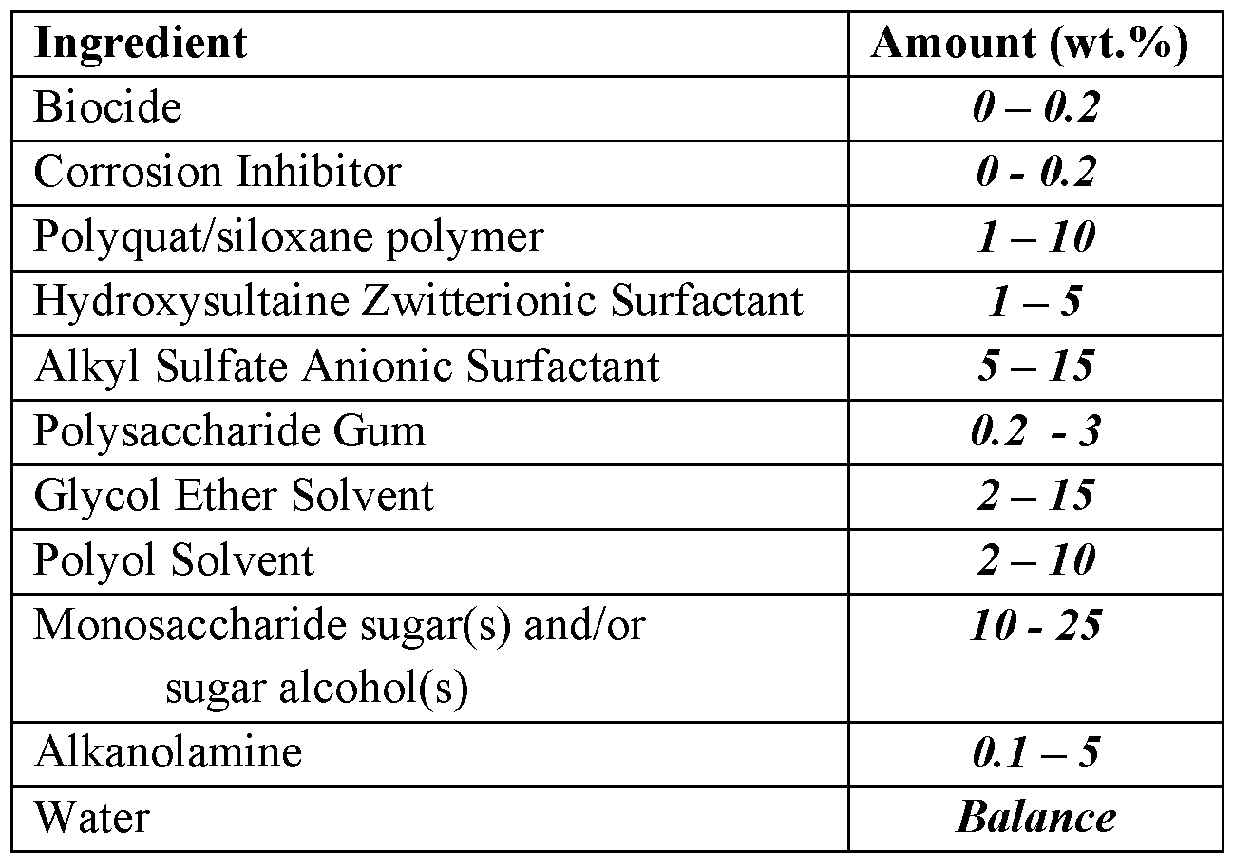


Claims
Priority Applications (1)
| Application Number | Priority Date | Filing Date | Title |
|---|---|---|---|
| US18/703,059 US20250229117A1 (en) | 2022-01-27 | 2023-01-24 | Firefighting composition with quaternary functional copolymer |
Applications Claiming Priority (2)
| Application Number | Priority Date | Filing Date | Title |
|---|---|---|---|
| US202263303553P | 2022-01-27 | 2022-01-27 | |
| US63/303,553 | 2022-01-27 |
Publications (1)
| Publication Number | Publication Date |
|---|---|
| WO2023144705A1 true WO2023144705A1 (en) | 2023-08-03 |
Family
ID=85157412
Family Applications (1)
| Application Number | Title | Priority Date | Filing Date |
|---|---|---|---|
| PCT/IB2023/050607 Ceased WO2023144705A1 (en) | 2022-01-27 | 2023-01-24 | Firefighting composition with quaternary functional copolymer |
Country Status (2)
| Country | Link |
|---|---|
| US (1) | US20250229117A1 (en) |
| WO (1) | WO2023144705A1 (en) |
Citations (5)
| Publication number | Priority date | Publication date | Assignee | Title |
|---|---|---|---|---|
| CN108912926A (en) * | 2018-06-20 | 2018-11-30 | 湖南辰砾新材料有限公司 | A kind of furniture polish and preparation method thereof |
| CN109260643A (en) * | 2018-10-16 | 2019-01-25 | 上海六里消防科技有限公司 | A kind of new and effective universal composite foam extinguishing chemical |
| WO2021138147A1 (en) * | 2019-12-30 | 2021-07-08 | Dow Silicones Corporation | Cationic surfactant foam stabilizing composition |
| WO2021191706A1 (en) * | 2020-03-27 | 2021-09-30 | Tyco Fire Products Lp | Fire-fighting foam concentrate with silicone surfactant |
| WO2021252379A1 (en) * | 2020-06-08 | 2021-12-16 | Envirocool Lp Llc | Novel fire fighting foam systems and methods for making and using same |
-
2023
- 2023-01-24 US US18/703,059 patent/US20250229117A1/en active Pending
- 2023-01-24 WO PCT/IB2023/050607 patent/WO2023144705A1/en not_active Ceased
Patent Citations (5)
| Publication number | Priority date | Publication date | Assignee | Title |
|---|---|---|---|---|
| CN108912926A (en) * | 2018-06-20 | 2018-11-30 | 湖南辰砾新材料有限公司 | A kind of furniture polish and preparation method thereof |
| CN109260643A (en) * | 2018-10-16 | 2019-01-25 | 上海六里消防科技有限公司 | A kind of new and effective universal composite foam extinguishing chemical |
| WO2021138147A1 (en) * | 2019-12-30 | 2021-07-08 | Dow Silicones Corporation | Cationic surfactant foam stabilizing composition |
| WO2021191706A1 (en) * | 2020-03-27 | 2021-09-30 | Tyco Fire Products Lp | Fire-fighting foam concentrate with silicone surfactant |
| WO2021252379A1 (en) * | 2020-06-08 | 2021-12-16 | Envirocool Lp Llc | Novel fire fighting foam systems and methods for making and using same |
Also Published As
| Publication number | Publication date |
|---|---|
| US20250229117A1 (en) | 2025-07-17 |
Similar Documents
| Publication | Publication Date | Title |
|---|---|---|
| US11338162B2 (en) | Low molecular weight polyethylene glycol (PEG) in fluorine containing fire fighting foam concentrates | |
| EP2969054B1 (en) | Trimethylglycine as a freeze suppressant in fire fighting foams | |
| AU2004249267B2 (en) | Fluorine-free fire fighting agents and methods | |
| CA3218803A1 (en) | Fire-fighting foam composition | |
| AU2021240438A1 (en) | Fire-fighting foam concentrate with silicone surfactant | |
| WO2023067444A1 (en) | Fire-fighting foam composition | |
| WO2023144705A1 (en) | Firefighting composition with quaternary functional copolymer | |
| WO2023073506A1 (en) | Glycol-free fire-fighting composition | |
| US20250144461A1 (en) | Fire-fighting foam composition | |
| CN112642088A (en) | Seawater-resistant hydrocarbon foaming agent for fire fighting |
Legal Events
| Date | Code | Title | Description |
|---|---|---|---|
| 121 | Ep: the epo has been informed by wipo that ep was designated in this application |
Ref document number: 23702917 Country of ref document: EP Kind code of ref document: A1 |
|
| WWE | Wipo information: entry into national phase |
Ref document number: 18703059 Country of ref document: US |
|
| NENP | Non-entry into the national phase |
Ref country code: DE |
|
| 122 | Ep: pct application non-entry in european phase |
Ref document number: 23702917 Country of ref document: EP Kind code of ref document: A1 |
|
| WWP | Wipo information: published in national office |
Ref document number: 18703059 Country of ref document: US |