WO2023120551A1 - 自閉スペクトラム症治療のためのオピオイドの使用 - Google Patents
自閉スペクトラム症治療のためのオピオイドの使用 Download PDFInfo
- Publication number
- WO2023120551A1 WO2023120551A1 PCT/JP2022/047004 JP2022047004W WO2023120551A1 WO 2023120551 A1 WO2023120551 A1 WO 2023120551A1 JP 2022047004 W JP2022047004 W JP 2022047004W WO 2023120551 A1 WO2023120551 A1 WO 2023120551A1
- Authority
- WO
- WIPO (PCT)
- Prior art keywords
- pharmaceutically acceptable
- acceptable salt
- buprenorphine
- pharmaceutical composition
- morphine
- Prior art date
- Legal status (The legal status is an assumption and is not a legal conclusion. Google has not performed a legal analysis and makes no representation as to the accuracy of the status listed.)
- Ceased
Links
Images





Classifications
-
- A—HUMAN NECESSITIES
- A61—MEDICAL OR VETERINARY SCIENCE; HYGIENE
- A61P—SPECIFIC THERAPEUTIC ACTIVITY OF CHEMICAL COMPOUNDS OR MEDICINAL PREPARATIONS
- A61P25/00—Drugs for disorders of the nervous system
- A61P25/18—Antipsychotics, i.e. neuroleptics; Drugs for mania or schizophrenia
-
- A—HUMAN NECESSITIES
- A61—MEDICAL OR VETERINARY SCIENCE; HYGIENE
- A61K—PREPARATIONS FOR MEDICAL, DENTAL OR TOILETRY PURPOSES
- A61K31/00—Medicinal preparations containing organic active ingredients
- A61K31/33—Heterocyclic compounds
- A61K31/395—Heterocyclic compounds having nitrogen as a ring hetero atom, e.g. guanethidine or rifamycins
- A61K31/435—Heterocyclic compounds having nitrogen as a ring hetero atom, e.g. guanethidine or rifamycins having six-membered rings with one nitrogen as the only ring hetero atom
- A61K31/47—Quinolines; Isoquinolines
- A61K31/485—Morphinan derivatives, e.g. morphine, codeine
-
- A—HUMAN NECESSITIES
- A61—MEDICAL OR VETERINARY SCIENCE; HYGIENE
- A61P—SPECIFIC THERAPEUTIC ACTIVITY OF CHEMICAL COMPOUNDS OR MEDICINAL PREPARATIONS
- A61P25/00—Drugs for disorders of the nervous system
Definitions
- the present invention is particularly preferred for treating and/or preventing autism spectrum disorders, fragile X syndrome, autism spectrum-like symptoms and/or disorders in social communication and/or social interactions. It relates to new pharmaceutical compositions and methods for treating spectrum disorders.
- ASD Autism Spectrum Disorder
- Behavioral therapy such as applied behavior analysis is the main treatment for ASD, but it is known that behavioral therapy requires a great deal of time and human resources, and its effectiveness decreases with age. Therefore, the number of patients who can benefit from it is very limited. Against the background described above, there is a strong demand for a therapeutic drug that is effective for the core symptoms of ASD.
- Non-Patent Document 3 a theory was proposed that ASD symptoms were caused by excessive opioid signals in the brain (Non-Patent Document 3), and then clinical trials were conducted on the therapeutic effects of Naltrexone, a ⁇ opioid receptor antagonist, on ASD. Effectiveness was confirmed for symptoms such as irritability (Non-Patent Document 4). On the other hand, analysis of ⁇ opioid receptor (MOR) knockout mice has reported that ASD-like symptoms are also induced by decreased opioid signals (Non-Patent Document 5).
- Non-Patent Document 6 There is also a report that administration of a MOR agonist increases social behavior in normal rats. As described above, the possibility that opioid signals are involved in ASD symptoms and social behavior has been suggested, but as discussed in the review paper Non-Patent Document 5, the details are unknown. It is also unclear whether it is better to lower or enhance opioid signaling in ASD treatment.
- FXS human fragile X syndrome
- Buprenorphine is a mu opioid receptor partial agonist and a kappa opioid receptor antagonist.
- formulations for transdermal administration, transmucosal administration (buccal, sublingual, suppository), and injections (intravenous, intramuscular, subcutaneous) have been approved (Non-Patent Documents 10 to 16). The contents of these documents are incorporated by reference into the present application).
- Morphine is an opioid agonist, in particular a mu opioid receptor agonist.
- formulations for oral administration formulations for transmucosal administration (suppositories), and injections (intravenous, subcutaneous, etc.) have been approved (Non-Patent Documents 17 to 22.
- Patent Document 3 describes combined use data of oxytocin and naloxone (mu opioid receptor antagonist).
- Non-Patent Document 26 describes the pharmacokinetics of sublingual administration of buprenorphine.
- Non-Patent Document 28 describes the results of evaluating the analgesic effect of buprenorphine using mice and the like.
- autism spectrum disorders fragile X syndrome, autism spectrum-like symptoms and/or disorders in social communication and/or social interactions, particularly preferably autism spectrum disorders
- New pharmaceutical compositions and methods for treatment are provided.
- the present inventors particularly preferably use the Pharmaceutical compositions and methods for treating autism spectrum disorders have been extensively investigated and suitable active ingredients have been found. Furthermore, they have found a preferred administration method, dosage, and the like for the active ingredient.
- the present invention relates to, for example, the following.
- (2A) The pharmaceutical composition according to any one of (1) and (1A) to (1C) above for treating and/or preventing core symptoms of autism spectrum disorders.
- (3) The pharmaceutical composition according to any one of (1), (2), (1A) to (1C) and (2A) above, for administration to a patient diagnosed with an autism spectrum disorder.
- buprenorphine or a pharmaceutically acceptable salt thereof and/or morphine or a pharmaceutically acceptable salt thereof is buprenorphine or a pharmaceutically acceptable salt thereof, (1) to (7), (1A)
- the pharmaceutical composition has (eg, continuously for about 30 minutes or more) buprenorphine in plasma within the range of about 4 pg/mL to about 1 ng/mL (eg, about 4 pg/mL to about 0.6 ng/mL); any of (1)-(10), (1A)-(1C), (2A), (5A)-(5C), (7A), and (10A)-(10C) above, which provides concentration Pharmaceutical composition as described.
- a) to c) below a) a pharmaceutical composition for transdermal administration containing from about 0.01 mg to about 10 mg of buprenorphine or a pharmaceutically acceptable salt thereof; b) a pharmaceutical composition for transdermal administration that releases buprenorphine or a pharmaceutically acceptable salt thereof at about 0.01 ⁇ g/h to about 10 ⁇ g/h; and c) a pharmaceutical composition for transmucosal administration containing about 0.0001 mg to 0.1 mg of buprenorphine or a pharmaceutically acceptable salt thereof; Any of the above (1) to (12), (1A) to (1C), (2A), (5A) to (5C), (7A), (10A) to (10E), and (12A ).
- (13B) a) a pharmaceutical composition for transdermal administration containing from about 0.56 mg to about 1.7 mg of buprenorphine or a pharmaceutically acceptable salt thereof; or b) a pharmaceutical composition for transdermal administration that releases buprenorphine or a pharmaceutically acceptable salt thereof at about 0.56 ⁇ g/h to about 1.7 ⁇ g/h; Any of the above (1) to (13), (1A) to (1C), (2A), (5A) to (5C), (7A), (10A) to (10E), (12A) , and (13A).
- (13C) a) a pharmaceutical composition for transdermal administration containing about 0.56 mg or about 1.7 mg of buprenorphine or a pharmaceutically acceptable salt thereof; or b) a pharmaceutical composition for transdermal administration that releases buprenorphine or a pharmaceutically acceptable salt thereof at about 0.56 ⁇ g/h or about 1.7 ⁇ g/h; Any of the above (1) to (13), (1A) to (1C), (2A), (5A) to (5C), (7A), (10A) to (10E), (12A) , (13A) and (13B).
- (16B) The above (1) to (16), (1A) to (1C), (2A), (5A) to (5C), (10A) to (10E), which are pharmaceutical compositions for transdermal administration, (12A), (13A) to (13C), and the pharmaceutical composition according to any one of (14A).
- (16C) The above (1) to (16), (1A) to (1C), (2A), (5A) to (5C), (7A), (10A) to which is a pharmaceutical composition for transmucosal administration The pharmaceutical composition according to any one of (10E), (12A), (13A)-(13C) and (14A).
- (101B) autism spectrum comprising administering buprenorphine or a derivative thereof or a pharmaceutically acceptable salt thereof and/or morphine or a derivative thereof (derivatives of morphine such as codeine) or a pharmaceutically acceptable salt thereof A method of treating and/or preventing autism spectrum disorder, fragile X syndrome, and/or autism spectrum disorder-like symptoms.
- (102) The method according to any of (101) and (101A) to (101C) above for treating and/or preventing autism spectrum disorders.
- (102A) The method according to any of (101) and (101A) to (101C) above for treating and/or preventing core symptoms of autism spectrum disorders.
- (103) The method according to any one of (101), (102), (101A) to (101C) and (102A) above, for administering to a patient diagnosed with an autism spectrum disorder.
- Buprenorphine or a pharmaceutically acceptable salt thereof and/or morphine or a pharmaceutically acceptable salt thereof is administered at a dose less than or equal to the minimum effective pain treatment dose, (101) to (105), (101A) ) to (101C), (102A), and (105A) to (105C).
- the buprenorphine or a pharmaceutically acceptable salt thereof and/or morphine or a pharmaceutically acceptable salt thereof is buprenorphine or a pharmaceutically acceptable salt thereof (101) to (107), (101A) (101C), (102A), (105A) to (105C), and (107A).
- the maximum plasma concentration of buprenorphine or a pharmaceutically acceptable salt thereof in the patient to whom it is administered is about 1 ng/mL or less (101) to (108), (101A) to (101C), ( 102A), (105A)-(105C), and (107A).
- the maximum plasma concentration of buprenorphine or a pharmaceutically acceptable salt thereof in the patient to whom it is administered is about 4 pg/mL to about 0.6 ng/mL (101) to (109), (101A) above (101C), (102A), (105A) to (105C), and (107A).
- the peak plasma concentration of buprenorphine or a pharmaceutically acceptable salt thereof in the administered patient is greater than 3.3 pg/mL and less than or equal to about 0.6 ng/mL (101) to (110) above , (101A)-(101C), (102A), (105A)-(105C), and (107A).
- the maximum plasma concentration of buprenorphine or a pharmaceutically acceptable salt thereof in the patient to whom it is administered is about 0.6 ng/mL or less (101) to (110), (101A) to (101C) above , (102A), (105A)-(105C), (107A), and (110A).
- the maximum plasma concentration of buprenorphine or a pharmaceutically acceptable salt thereof in the patient to whom it is administered is about 1 pg/mL to about 1 ng/mL (101)-(110), (101A)-( 101C), (102A), (105A)-(105C), (107A), (110A), and (110B).
- (110E) a peak plasma concentration of buprenorphine or a pharmaceutically acceptable salt thereof in the administered patient within the range of about 4 pg/mL to about 1 ng/mL (eg, about 3 pg/mL to about 0.6 ng/mL)
- the method according to any one of (101) to (110), (101A) to (101C), (102A), (105A) to (105C), (107A) and (110A) to (110D) above. .
- the maximum plasma concentration of buprenorphine or a pharmaceutically acceptable salt thereof in the patient to whom it is administered is about 0.2 ng/mL or less (101) to (110), (101A) to (101C) above , (102A), (105A)-(105C), (107A), and (110A)-(110E).
- the maximum plasma concentration of buprenorphine or a pharmaceutically acceptable salt thereof in the patient to whom it is administered is about 8 pg/mL to about 0.2 ng/mL (101) to (111), (101A) above - (101C), (102A), (105A) - (105C), (107A), and (110A) - (110E).
- the maximum plasma concentration or plasma concentration is the maximum plasma concentration or plasma concentration at steady state, (101) to (112), (101A) to (101C), (102A), ( 105A) to (105C), (107A), and (110A) to (110E).
- (113) a) to c) below: a) transdermally administering from about 0.01 mg to about 10 mg of buprenorphine or a pharmaceutically acceptable salt thereof; b) transdermal administration of buprenorphine or a pharmaceutically acceptable salt thereof at about 0.01 ⁇ g/h to about 10 ⁇ g/h, and c) administering about 0.0001 mg to 0.1 mg transmucosally of buprenorphine or a pharmaceutically acceptable salt thereof; (101) to (112), (101A) to (101C), (102A), (105A) to (105C), (107A), (110A) to (110E), and (112A), including any of ).
- (113B) a) transdermally administering about 0.56 mg to about 1.7 mg of buprenorphine or a pharmaceutically acceptable salt thereof, or b) transdermal administration of buprenorphine or a pharmaceutically acceptable salt thereof at about 0.56 ⁇ g/h to about 1.7 ⁇ g/h; Any of the above (101) to (113), (101A) to (101C), (102A), (105A) to (105C), (107A), (110A) to (110E), (112A) , and (113A).
- (113C) a) transdermally administering about 0.56 mg or about 1.7 mg of buprenorphine or a pharmaceutically acceptable salt thereof, or b) about 0.56 ⁇ g/h of buprenorphine or a pharmaceutically acceptable salt thereof or transdermal administration at about 1.7 ⁇ g/h, Any of the above (101) to (113), (101A) to (101C), (102A), (105A) to (105C), (107A), (110A) to (110E), (112A) , (113A) and (113B).
- (114) The above (101) to (113), (101A) to (101C), (102A), (105A) to (105C), wherein buprenorphine or a pharmaceutically acceptable salt thereof is administered at an administration interval of 12 hours or longer ), (107A), (110A)-(110E), (112A), and (113A)-(113C).
- (114A) The above (101) to (114), (101A) to (101C), (102A), (105A) to (105C), (107A), (110A), wherein the administration frequency is twice a day or less ) to (110E), (112A), and (113A) to (113C).
- (116A) Transdermal or transmucosal administration of buprenorphine or a pharmaceutically acceptable salt thereof, (101) to (116), (101A) to (101C), (102A), (105A) to (105C) ), (107A), (110A)-(110E), (112A), (113A)-(113C), and (114A).
- (116B) Transdermal administration of buprenorphine or a pharmaceutically acceptable salt thereof, (101) to (116), (101A) to (101C), (102A), (105A) to (105C), (107A) ), (110A)-(110E), (112A), (113A)-(113C), and (114A).
- (116C) Transmucosal administration of buprenorphine or a pharmaceutically acceptable salt thereof, (101) to (116), (101A) to (101C), (102A), (105A) to (105C), (107A) ), (110A)-(110E), (112A), (113A)-(113C), and (114A).
- Buprenorphine or a pharmaceutically acceptable salt thereof and/or morphine or a pharmaceutically acceptable salt thereof is morphine or a pharmaceutically acceptable salt thereof (101) to (107), (101A) (101C), (102A), (105A) to (105C), and (107A).
- (119A) Activates the nucleus accumbens and the medial prefrontal cortex and does not activate the dorsomedial periaqueductal gray matter, (101) to (119), (101A) to (101C), (102A), ( 105A) to (105C), (107A), (110A) to (110E), (112A), (113A) to (113C), (114A), and (116A) to (116C). .
- (201B) Buprenorphine or a derivative thereof or a pharmaceutically acceptable salt thereof and/or morphine or a derivative thereof for the treatment and/or prevention of autism spectrum disorder, fragile X syndrome, and/or autism spectrum disorder-like symptoms (as a derivative of morphine, eg codeine) or a pharmaceutically acceptable salt thereof.
- (201C) The ⁇ opioid agonist buprenorphine or a pharmaceutically acceptable salt thereof and/or morphine or a pharmaceutically acceptable salt thereof.
- (202) Buprenorphine or a pharmaceutically acceptable salt thereof and/or morphine or morphine according to any one of (201) and (201A) to (201C) above for the treatment and/or prevention of autism spectrum disorder A pharmaceutically acceptable salt.
- (202A) Buprenorphine or a pharmaceutically acceptable salt thereof and/or according to any of (201) and (201A) to (201C) above for the treatment and/or prevention of core symptoms of autism spectrum disorder Morphine or a pharmaceutically acceptable salt thereof.
- (203) Buprenorphine or a pharmaceutical formulation thereof according to any one of (201), (202), (201A) to (201C), and (202A) above for administration to a patient diagnosed with an autism spectrum disorder Acceptable salts and/or morphine or a pharmaceutically acceptable salt thereof.
- (302) Use according to any of (301) and (301A) to (301C) above for the manufacture of a pharmaceutical composition for treating and/or preventing autism spectrum disorders.
- (302A) Use according to any of (301) and (301A) to (301C) above for the manufacture of a pharmaceutical composition for the treatment and/or prevention of core symptoms of autism spectrum disorders.
- (303) Any of the above (301), (302), (301A) to (301C), and (302A) for the manufacture of a pharmaceutical composition for administration to a patient diagnosed with an autism spectrum disorder Use as described.
- (304) The above (301) to ( 303), (301A) to (301C), and (302A).
- (305B) The use according to any one of (301) to (305), (301A) to (301C), (302A) and (305A) above, wherein the pharmaceutical composition does not substantially exhibit an analgesic effect.
- (305C) The above (301 ) to (305), (301A) to (301C), (302A), (305A), and (305B).
- (306) The content of buprenorphine or a pharmaceutically acceptable salt thereof and/or morphine or a pharmaceutically acceptable salt thereof is less than or equal to the minimum effective amount for pain treatment, for the above (301)
- a pharmaceutical composition in which the content of buprenorphine or a pharmaceutically acceptable salt thereof and/or morphine or a pharmaceutically acceptable salt thereof is about 1/30 times to about 3 times the minimum effective amount for pain treatment Use according to any of (301) to (306), (301A) to (301C), (302A) and (305A) to (305C) above for the manufacture.
- (307A) For the manufacture of a pharmaceutical composition in which the content of buprenorphine or a pharmaceutically acceptable salt thereof and/or morphine or a pharmaceutically acceptable salt thereof is less than or equal to about 1/2 times the minimum effective pain treatment dose of any one of (301) to (307), (301A) to (301C), (302A) and (305A) to (305C) above.
- Buprenorphine or a pharmaceutically acceptable salt thereof and/or morphine or a pharmaceutically acceptable salt thereof is buprenorphine or a pharmaceutically acceptable salt thereof (301) to (307), (301A) - (301C), (302A), (305A) - (305C), and (307A).
- the pharmaceutical composition is a pharmaceutical composition that provides a peak plasma concentration of buprenorphine or a pharmaceutically acceptable salt thereof of about 4 pg/mL to about 0.6 ng/mL (301) to ( 309), (301A)-(301C), (302A), (305A)-(305C), and (307A).
- the pharmaceutical composition is a pharmaceutical composition that provides a maximum plasma concentration of buprenorphine or a pharmaceutically acceptable salt thereof of about 0.6 ng/mL or less (301) to (310), ( 301A) to (301C), (302A), (305A) to (305C), (307A) and (310A).
- the pharmaceutical composition comprises (eg, continuously for about 30 minutes or more) buprenorphine in the plasma within the range of about 4 pg/mL to about 1 ng/mL (eg, about 4 pg/mL to about 0.6 ng/mL); Any of the above (301) to (310), (301A) to (301C), (302A), (305A) to (305C), and (310A) to (310C), which is a pharmaceutical composition that provides concentration Use as described.
- the pharmaceutical composition provides a plasma concentration of buprenorphine within the range of about 4 pg/mL to about 1 ng/mL (eg, about 3 pg/mL to about 0.6 ng/mL); Use according to any of (301) to (310), (301A) to (301C), (302A), (305A) to (305C), (307A), and (310A) to (310D) above.
- the pharmaceutical composition is a pharmaceutical composition that provides a maximum plasma concentration of buprenorphine or a pharmaceutically acceptable salt thereof of about 0.2 ng/mL or less (301) to (310), ( 301A) to (301C), (302A), (305A) to (305C), (307A), and (310A) to (310E).
- the pharmaceutical composition is a pharmaceutical composition that provides a maximum plasma concentration of buprenorphine or a pharmaceutically acceptable salt thereof of about 8 pg/mL to about 0.2 ng/mL (301) to ( 311), (301A) to (301C), (302A), (305A) to (305C), (307A), and (310A) to (310E).
- the maximum plasma concentration or plasma concentration is the maximum plasma concentration or plasma concentration at steady state, (301) to (312), (301A) to (301C), (302A), ( 305A) to (305C), (307A), and (310A) to (310E).
- the pharmaceutical composition comprises the following a)-c): a) a pharmaceutical composition for transdermal administration containing from about 0.01 mg to about 10 mg of buprenorphine or a pharmaceutically acceptable salt thereof; b) a pharmaceutical composition for transdermal administration that releases buprenorphine or a pharmaceutically acceptable salt thereof at about 0.01 ⁇ g/h to about 10 ⁇ g/h; and c) a pharmaceutical composition for transmucosal administration containing about 0.0001 mg to 0.1 mg of buprenorphine or a pharmaceutically acceptable salt thereof; Any of the above (301) to (312), (301A) to (301C), (302A), (305A) to (305C), (307A), (310A) to (310E), and (312A ).
- the pharmaceutical composition comprises the following a)-c): a) a pharmaceutical composition for transdermal administration containing from about 0.01 mg to about 5 mg of buprenorphine or a pharmaceutically acceptable salt thereof; b) a pharmaceutical composition for transdermal administration that releases buprenorphine or a pharmaceutically acceptable salt thereof at about 0.1 ⁇ g/h to about 5 ⁇ g/h; and c) a pharmaceutical composition for transmucosal administration containing 0.001 mg to 0.075 mg of buprenorphine or a pharmaceutically acceptable salt thereof; Any of the above (301) to (313), (301A) to (301C), (302A), (305A) to (305C), (307A), (310A) to (310E), and (312A ).
- the pharmaceutical composition comprises a) a pharmaceutical composition for transdermal administration containing from about 0.56 mg to about 1.7 mg of buprenorphine or a pharmaceutically acceptable salt thereof, or b) a pharmaceutical composition for transdermal administration that releases buprenorphine or a pharmaceutically acceptable salt thereof at about 0.56 ⁇ g/h to about 1.7 ⁇ g/h; Any of the above (301) to (313), (301A) to (301C), (302A), (305A) to (305C), (307A), (310A) to (310E), (312A) , and (313A).
- the pharmaceutical composition comprises a) a pharmaceutical composition for transdermal administration containing about 0.56 mg or about 1.7 mg of buprenorphine or a pharmaceutically acceptable salt thereof, or b) a pharmaceutical composition for transdermal administration that releases buprenorphine or a pharmaceutically acceptable salt thereof at about 0.56 ⁇ g/h or about 1.7 ⁇ g/h; Any of the above (301) to (313), (301A) to (301C), (302A), (305A) to (305C), (307A), (310A) to (310E), (312A) , (313A) and (313B).
- (314) The above (301) to (313), (301A) to (301C), (302A), (305A), wherein the pharmaceutical composition is a pharmaceutical composition for administration at an administration interval of 12 hours or more. - (305C), (307A), (310A) - (310E), (312A), and (313A) - (313C). (314A) The above (301)-(314), (301A)-(301C), (302A), (305A)-, wherein the pharmaceutical composition is a pharmaceutical composition for administration twice a day or less Use according to any of (305C), (307A), (310A)-(310E), (312A), and (313A)-(313C).
- (315) The above (301)-(314), (301A)-(301C), (302A), (305A)-( 305C), (307A), (310A)-(310E), (312A), (313A)-(313C), and (314A).
- (316) The above (301) to (315), (301A) to (301C), (302A), wherein the pharmaceutical composition contains only buprenorphine or a pharmaceutically acceptable salt thereof as an active ingredient. ), (305A) to (305C), (307A), (310A) to (310E), (312A), (313A) to (313C), and (314A).
- the pharmaceutical composition is a pharmaceutical composition for transdermal administration or a pharmaceutical composition for transmucosal administration (301) to (316), (301A) to (301C), (302A), (305A) ) to (305C), (307A), (310A) to (310E), (312A), (313A) to (313C), and (314A).
- the pharmaceutical composition is a pharmaceutical composition for transdermal administration, (301) to (316), (301A) to (301C), (302A), (305A) to (305C), (307A) ), (310A) to (310E), (312A), (313A) to (313C), and (314A).
- the pharmaceutical composition is a pharmaceutical composition for transmucosal administration, (301) to (316), (301A) to (301C), (302A), (305A) to (305C), (307A) ), (310A) to (310E), (312A), (313A) to (313C), and (314A).
- Buprenorphine or a pharmaceutically acceptable salt thereof and/or morphine or a pharmaceutically acceptable salt thereof is morphine or a pharmaceutically acceptable salt thereof (301) to (307), (301A) - (301C), (302A), (305A) - (305C), and (307A).
- buprenorphine or a pharmaceutically acceptable salt thereof and/or morphine or a pharmaceutically acceptable salt thereof that includes one or more of the characteristics described in any one or more of the above items.
- compositions and methods of the present invention are useful in the treatment of various psychiatric disorders, particularly Autism Spectrum Disorders, Fragile X Syndrome, Autism Spectrum Disorder-like symptoms, and/or disorders in social communication and/or social interaction. and/or useful for prophylaxis.
- Fig. 1 shows the results of evaluating the social improvement effect of morphine using valproic acid model mice, which are ASD model mice.
- Fig. 2 shows the relationship between the plasma concentration of unchanged morphine and the improvement of social disorders and analgesic efficacy.
- Fig. 2 shows the relationship between the plasma concentration of unchanged buprenorphine, improvement of social disorder, and analgesic efficacy.
- Fig. 1 shows the results of evaluating the social improvement effect of morphine using valproic acid model mice, which are ASD model mice.
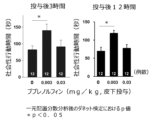
- FIG. 1 shows the results of evaluating the sustained social improvement effect of buprenorphine using valproic acid model mice.
- FMR-1 knockout mice results of evaluation of buprenorphine's social improvement effect are shown.
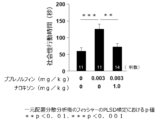
- valproic acid model mice the results of evaluating the effect of naloxone concomitant use on the social improvement action of buprenorphine are shown.
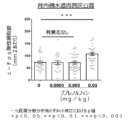
- the results of quantifying the activation of the nucleus accumbens (NAc) by buprenorphine using valproic acid model mice are shown.
- FIG. 2 shows the results of quantification of activation of the medial prefrontal cortex by buprenorphine using valproic acid model mice.
- Fig. 2 shows the results of quantifying the activation of dorsomedial periaqueductal gray (dmPAG) by buprenorphine using valproic acid model mice.
- dmPAG dorsomedial periaqueductal gray
- ATD autism Spectrum Disorder
- ICD International Classification of Diseases
- WHO World Health Organization
- DSM-5 American Psychiatric Association
- autism spectrum disorder includes "persistent impairment of social communication and/or social interaction” and “restricted and repetitive patterns of behavior, interests, or activities” in individuals with autism spectrum disorder.
- symptoms include, for example, persistent impairment of social communication and/or social interaction.
- autism spectrum disorder-like symptoms include those who do not meet the diagnostic criteria for autism spectrum disorder but exhibit autism spectrum disorder-like symptoms.
- autism spectrum disorder-like symptoms further include autism spectrum disorder-like symptoms associated with other diseases (eg, fragile X syndrome, Rett syndrome, tuberous sclerosis (TSC), etc.).
- “Autism spectrum disorder-like symptoms” include, for example, “impaired social communication and/or social interaction (including persistent impairment)” and “limited and repetitive patterns of behavior, interests, or activities””symptoms related to”, preferably impairments (including persistent impairments) of social communication and/or social interactions.
- prevention includes avoiding the development of symptoms. Treatment includes relief, alleviation and amelioration of symptoms.
- a "pain therapeutically effective amount” is a dose effective to treat pain.
- a "pain therapeutically effective amount” for example, formulations containing 5 mg, 10 mg, and 20 mg of buprenorphine for transdermal administration have been approved, and the release rates of buprenorphine in these formulations are 5 ⁇ g/h and 10 ⁇ g/h, respectively. , 20 ⁇ g/h (Non-Patent Documents 10, 11).
- the "effective amount for pain treatment” for example, 0.075 mg, 0.15 mg, 0.3 mg, 0.6 mg, 0.75 mg, and 0.9 mg are approved as transmucosal preparations of buprenorphine for buccal film. ing.
- 200 ⁇ g, 400 ⁇ g, 2 mg, and 8 mg have been approved as sublingual tablets (Non-Patent Documents 12-14).
- 0.2 mg and 0.4 mg have been approved as suppositories (Non-Patent Document 15), and 0.2 mg and 0.4 mg have been approved as injections of buprenorphine (Non-Patent Document 16 ).
- a minimally effective pain treatment amount includes a formulation containing about 5 mg.
- the transdermal administration formulations of buprenorphine described in Non-Patent Documents 7 and 8 are formulations that are administered once every 7 days, in one embodiment, when buprenorphine is transdermally administered, the minimum amount used for pain treatment is The dose (per day) is approximately 0.7 mg containing formulation. In one aspect, when buprenorphine is transdermally administered, the minimum effective dose for pain treatment is, for example, about 5 ⁇ g/h. Minimal doses (per day) used for pain treatment include, for example, a dose of about 0.12 mg when administered at about 5 ⁇ g/h for 24 hours.
- a minimally effective pain-treating dose when buprenorphine is administered transmucosally (eg, oromucosally), a minimally effective pain-treating dose is about 0.075 mg. In one aspect, about 0.075 mg is the daily dose. In one aspect, when morphine is administered orally, a minimally effective pain treatment amount includes about 5 mg. In one aspect, when morphine is administered transmucosally or as an injection, the minimum effective dose for pain treatment is about 10 mg.
- An "autism spectrum disorder therapeutically effective amount" is an amount effective to treat and/or prevent autism spectrum disorder, fragile X syndrome, and/or autism spectrum disorder-like symptoms. Preferably, the amount is effective for treating and/or preventing autism spectrum disorders.
- Buprenorphine is 21-cyclopropyl-7- ⁇ -[(S)-1-hydroxy-1,2,2-trimethylpropyl]-6,14-endo-ethano-6,7,8,14 tetrahydrooripavine.
- Buprenorphine has the following formula: is a compound represented by Buprenorphine or a pharmaceutically acceptable salt thereof for use in the present invention includes possible isomers of buprenorphine (e.g., keto-enol isomers, imine-enamine isomers, diastereoisomers, optical isomers, rotational isomers, racemates or mixtures thereof), prodrugs or pharmaceutically acceptable salts thereof.
- One or more hydrogen, carbon and/or other atoms of the buprenorphine of the present invention may be substituted with isotopes of hydrogen, carbon and/or other atoms, respectively.
- isotopes include hydrogen, carbon, nitrogen and oxygen as 2 H, 3 H, 11 C, 13 C, 14 C, 15 N, 18 O, 17 O respectively.
- the buprenorphine of the present invention also includes buprenorphine substituted with such isotopes.
- the isotopically substituted buprenorphine is also useful as a pharmaceutical, including all radiolabeled forms of buprenorphine.
- a "radiolabeling method" for producing the "radiolabel” is also encompassed by the present invention, and the “radiolabel” is useful as a research and/or diagnostic tool in metabolic pharmacokinetic studies, binding assays. is.
- the radiolabeled buprenorphine of the present invention can be prepared by methods well known in the art.
- a tritiated compound of buprenorphine can be prepared by introducing tritium into buprenorphine through a catalytic dehalogenation reaction with tritium. The method involves reacting a precursor in which the buprenorphine is appropriately halogenated with tritium gas in the presence or absence of a base in the presence of a suitable catalyst such as Pd/C.
- a suitable catalyst such as Pd/C.
- Other suitable methods for preparing tritiated compounds can be found in "Isotopes in the Physical and Biomedical Sciences, Vol. 1, Labeled Compounds (Part A), Chapter 6 (1987)". 14 C-labeled compounds can be prepared by using starting materials with a 14 C carbon.
- Morphine has the following formula: is a compound represented by Morphine or a pharmaceutically acceptable salt thereof for use in the present invention includes possible isomers of morphine (e.g., keto-enol isomers, imine-enamine isomers, diastereoisomers, optical isomers, rotational isomers, racemates or mixtures thereof), prodrugs or pharmaceutically acceptable salts thereof.
- morphine e.g., keto-enol isomers, imine-enamine isomers, diastereoisomers, optical isomers, rotational isomers, racemates or mixtures thereof
- prodrugs e.g., prodrugs or pharmaceutically acceptable salts thereof.
- One or more hydrogen, carbon and/or other atoms of the morphine of the present invention may be substituted with isotopes of hydrogen, carbon and/or other atoms, respectively.
- isotopes include hydrogen, carbon, nitrogen and oxygen as 2 H, 3 H, 11 C, 13 C, 14 C, 15 N, 18 O, 17 O respectively.
- the morphine of the present invention also includes morphine substituted with such isotopes.
- the isotopically substituted morphine is also useful as a pharmaceutical, including all radiolabeled forms of morphine.
- a "radiolabeling method" for producing the "radiolabel” is also encompassed by the present invention, and the “radiolabel” is useful as a research and/or diagnostic tool in metabolic pharmacokinetic studies, binding assays. is.
- the radiolabeled forms of morphine of the present invention can be prepared by methods well known in the art.
- a tritiated compound of morphine can be prepared by introducing tritium into morphine by a catalytic dehalogenation reaction with tritium.
- the method involves reacting a morphine suitably halogenated precursor with tritium gas in the presence or absence of a base in the presence of a suitable catalyst such as Pd/C.
- a suitable catalyst such as Pd/C.
- Other suitable methods for preparing tritiated compounds can be found in "Isotopes in the Physical and Biomedical Sciences, Vol. 1, Labeled Compounds (Part A), Chapter 6 (1987)".
- 14 C-labeled compounds can be prepared by using starting materials with a 14 C carbon.
- the term "pharmaceutically acceptable salt” includes basic salts such as alkali metal salts such as lithium salts, sodium salts and potassium salts; alkaline earth metal salts such as calcium salts and barium salts; salts, transition metal salts such as iron salts; magnesium salts; ammonium salts; Amine salts; aralkylamine salts such as N,N-dibenzylethylenediamine; heterocyclic aromatic amine salts such as pyridine salts, picoline salts, quinoline salts and isoquinoline salts; tetramethylammonium salts, tetraethylammonium salts, benzyltrimethylammonium salts, quaternary ammonium salts such as benzyltriethylammonium salt, benzyltributylammonium salt, methyltrioctylammonium salt and tetrabutylammonium salt; basic amino acid salts such as arg
- Buprenorphine or a pharmaceutically acceptable salt thereof and morphine or a pharmaceutically acceptable salt thereof used in the present invention may be solvates, co-crystals and/or polymorphs thereof.
- Solvates include organic solvates with any number of organic solvent molecules and hydrates with any number of water molecules.
- solvate means a solvate of the compound or a pharmaceutically acceptable salt thereof, such as monosolvate, disolvate, monohydrate, dihydrate things, etc.
- hydrate, ethanolate, methyl acetate, ethyl acetate and 2-propanol, n-propyl acetate and 2-propanol, acetonitrile, 1,2-dimethoxyethane, methylisobutyl Ketone hydrates may be mentioned, preferably hydrates, eg monohydrates, eg trihydrates.
- buprenorphine or a pharmaceutically acceptable salt thereof includes buprenorphine hydrochloride.
- morphine or a pharmaceutically acceptable salt thereof includes morphine hydrochloride (eg, morphine hydrochloride hydrate) and morphine sulfate.
- An effective amount of the compound used in the present invention is optionally mixed with various pharmaceutical additives such as excipients, binders, disintegrants, and lubricants suitable for the dosage form to prepare a pharmaceutical composition.
- various pharmaceutical additives such as excipients, binders, disintegrants, and lubricants suitable for the dosage form to prepare a pharmaceutical composition.
- the pharmaceutical composition can be made into a pharmaceutical composition for children, the elderly, critically ill patients, or surgery by appropriately changing the effective amount of the compound, dosage form and/or various pharmaceutical additives. can also
- the administration route of the pharmaceutical composition of the present invention is not particularly limited, and it can be administered either orally or parenterally.
- parenteral administration methods include transdermal, subcutaneous, intravenous, intraarterial, intramuscular, intraperitoneal, transmucosal, inhalation, nasal, ocular, ear and intravaginal administration.
- the route of administration of the pharmaceutical composition of the present invention is transdermal or transmucosal administration (e.g., transoral mucosa, sublingual, suppository, preferably transoral mucosa, sublingual), e.g., transdermal administration. .
- internal solid preparations e.g., tablets, powders, granules, capsules, pills, films, etc.
- internal liquid preparations e.g., suspensions, emulsions, elixirs, syrups, etc.
- Tablets may be sugar-coated tablets, film-coated tablets, enteric-coated tablets, sustained-release tablets, troches, sublingual tablets, buccal tablets, chewable tablets or orally disintegrating tablets, and powders and granules may be dry syrups.
- the capsules may be soft capsules, microcapsules or sustained release capsules.
- injections, drops, external preparations e.g., eye drops, nasal drops, ear drops, aerosols, inhalants, lotions, injections, coatings, mouthwashes, enemas, Any commonly used dosage form such as ointments, plasters, jellies, creams, patches, poultices, powders for external use, suppositories, etc.
- Injections may be emulsions such as O/W, W/O, O/W/O and W/O/W types.
- Pharmaceutical compositions for transdermal administration are not particularly limited. ), ointments, creams, gels, patches (eg, tapes (eg, plasters, plasters), poultices), and the like. For example, a patch.
- Embodiments of the method, agent, and pharmaceutical composition of the present invention are not particularly limited, and can be appropriately determined according to the degree of symptoms, patient's body weight, age, dosage form of the agent, and the like. Aspects of the invention are exemplified below. Embodiments of the methods, medicaments, and pharmaceutical compositions of the present invention are exemplified by the embodiments and ranges of all possible combinations of the above items and the items exemplified below. Buprenorphine or a pharmaceutically acceptable salt thereof and/or morphine or a pharmaceutically acceptable salt thereof in a dose less than the pain therapeutically effective amount (e.g., about 1/2 times or less, about 1/10 times the pain therapeutically effective amount) dose below).
- the pain therapeutically effective amount e.g., about 1/2 times or less, about 1/10 times the pain therapeutically effective amount
- Buprenorphine or a pharmaceutically acceptable salt thereof and/or morphine or a pharmaceutically acceptable salt thereof about 3 times or less (e.g., about 3 times less), about 2 times or less (e.g., about 1-fold or less, about 1/2-fold or less, about 1/3-fold or less, about 1/4-fold or less).
- Buprenorphine or a pharmaceutically acceptable salt thereof and/or morphine or a pharmaceutically acceptable salt thereof at least about 1/33 times the minimum effective pain treatment dose (e.g., a dose greater than about 1/33 times), pain It is administered at about 1/30 times or more (eg, about 1/25 times or more, about 1/20 times or more, about 1/10 times or more) of the minimally effective therapeutic dose.
- Buprenorphine or a pharmaceutically acceptable salt thereof and/or morphine or a pharmaceutically acceptable salt thereof from about 1/33 to about 3 times the pain treatment minimally effective amount (e.g., greater than about 1/33 to about 3 times) less than 1/30 times), about 1/30 to about 3 times (for example, about 1/30 to about 3 times), about 1/30 to about 2 times, about 1/30 to about 1 times, about 1 /30 times to about 1/2 times, about 1/20 times to about 3 times (for example, about 1/20 times or more and less than about 3 times), about 1/20 times to about 2 times, about 1/20 times or more about 1-fold, about 1/30-fold to about 1/2-fold, about 1/10-fold to about 3-fold (for example, about 1/10-fold to about 3-fold), about 1/10-fold to about 2-fold, It is administered at about 1/10 to about 1, about 1/10 to about 1/2 times.
- the plasma concentration (preferably the maximum plasma concentration) of buprenorphine or a pharmaceutically acceptable salt thereof is, for example, about 2 ng/mL or less, about 1.5 ng/mL or less, about 1 ng/mL or less, about 0.9 ng/mL mL or less, about 0.8 ng/mL or less, about 0.7 ng/mL or less.
- it is about 0.2 ng/mL or less, for example, about 0.18 ng/mL or less, about 0.17 ng/mL or less, about 0.15 ng/mL or less, about 0.1 ng/mL or less, about 90 pg /mL or less, about 80 pg/mL or less, about 70 pg/mL or less, about 60 pg/mL or less, about 50 pg/mL or less (the plasma concentration is expressed in buprenorphine-equivalent concentration without considering the salt portion .same as below.).
- the plasma concentration (preferably the maximum plasma concentration) of buprenorphine or a pharmaceutically acceptable salt thereof is, for example, about 0.1 pg/mL or more, about 0.5 pg/mL or more, about 1 pg/mL or more, about 2 pg/mL mL or greater, about 3 pg/mL or greater, greater than about 3 pg/mL, greater than about 3.3 pg/mL.
- the concentration is, for example, about 0.9 ng/mL or less, about 0.8 ng/mL or less, about 0.7 ng/mL or less.
- concentration is, for example, about 0.6 ng/mL or less, about 0.62 ng/mL or less, about 0.6 ng/mL or less, about 0.62 ng/mL or less, about 0.5 ng/mL or less, about 0.4 ng/mL mL or less, about 0.3 ng/mL or less.
- 0.2 ng/mL or less More preferably, for example, about 0.2 ng/mL or less, about 0.18 ng/mL or less, about 0.17 ng/mL or less, about 0.15 ng/mL or less, about 0.1 ng/mL or less, about 90 pg/mL Below, about 80 pg/mL or less, about 70 pg/mL or less, about 60 pg/mL or less, about 50 pg/mL or less, about 40 pg/mL or less.
- the plasma concentration (preferably maximum plasma concentration) of buprenorphine or a pharmaceutically acceptable salt thereof is, for example, about 1 pg/mL to about 2 ng/mL or less, about 1 pg/mL to about 1 ng/mL or less, about 1 pg/mL to about 0.6 ng/mL, about 1 pg/mL to about 0.2 ng/mL, about 1 pg/mL to about 0.1 ng/mL, from about 1 pg/mL to about 50 pg/mL, about 3 pg/mL to about 2 ng/mL or less, about 3 pg/mL to about 1 ng/mL or less, about 3 pg/mL to about 0.6 ng/mL, about 3 pg/mL to about 0.3 ng/mL, about 3 pg/mL to about 0.2 ng/mL, from about 3 pg/mL to about 0.1 ng/mL, from about 3
- an inclusive range e.g., about 3 pg/mL to about 0.6 ng/mL, greater than about 3 pg/mL to about 0.6 ng/mL less than
- the plasma concentration is the peak plasma concentration at steady state.
- the plasma concentration is the plasma concentration at steady state.
- the plasma concentration is maintained continuously for 30 minutes or more, such as 1 hour or more, such as 2 hours or more.
- the content or dosage of buprenorphine or a pharmaceutically acceptable salt thereof is, for example, about 20 mg or less, about 10 mg or less, about 7 mg or less, or about 5 mg below, about 4 mg or less, about 2.5 mg or less, about 2 mg or less, about 1 mg or less, about 0.7 mg or less, about 0.5 mg or less, about 0.4 mg or less, about 0.3 mg or less, about 0.2 mg or less; It is about 0.1 mg or less (the content or dose is expressed in terms of buprenorphine without considering the salt portion; the same shall apply hereinafter).
- the content or dosage of buprenorphine or a pharmaceutically acceptable salt thereof (e.g., the content or dosage in a pharmaceutical composition for transdermal administration) is, for example, about 0.001 mg or more, about 0.003 mg or more, about 0 0.005 mg or more, about 0.01 mg or more, about 0.03 mg or more, about 0.05 mg or more, about 0.1 mg or more, about 0.3 mg or more, about 0.5 mg or more.
- the content of buprenorphine or a pharmaceutically acceptable salt thereof in the pharmaceutical composition for transdermal administration of the present invention may be about 0.56 mg to about 1.7 mg, and may be about 0.56 mg or about 1.7 mg. Sometimes there is.
- the content or dose of buprenorphine or a pharmaceutically acceptable salt thereof is, for example, about 20 ⁇ g/h or less, about 10 ⁇ g/h or less, or about 5 ⁇ g /h or less, about 2.5 ⁇ g/h or less, about 3 ⁇ g/h or less, about 2 ⁇ g/h or less, about 1 ⁇ g/h or less, about 0.1 ⁇ g/h or less (the release rate does not consider the salt portion It is expressed in terms of buprenorphine equivalent. The same shall apply hereinafter.).
- the content or dose of buprenorphine or a pharmaceutically acceptable salt thereof is, for example, about 0.01 ⁇ g/h or more, about 0.05 ⁇ g/h Above, about 0.1 ⁇ g/h or more, about 0.5 ⁇ g/h or more, about 1 ⁇ g/h or more.
- a pharmaceutical composition for transdermal administration of buprenorphine or a pharmaceutically acceptable salt thereof of the present invention may have a release rate of about 0.56 ⁇ g/h to about 1.7 ⁇ g/h, and about 0.56 ⁇ g/h. or about 1.7 ⁇ g/h.
- the content or dosage of buprenorphine or a pharmaceutically acceptable salt thereof is, for example, about 1 mg or less, about 0.5 mg or less, about 0.2 mg Below, about 0.1 mg or less, about 0.075 mg or less, about 0.05 mg or less, about 0.01 mg or less.
- the content or dosage of buprenorphine or a pharmaceutically acceptable salt thereof is, for example, about 0.00001 mg or more, about 0.0001 mg or more, about 0 0.001 mg or more, about 0.01 mg or more.
- the content or dosage of buprenorphine or a pharmaceutically acceptable salt thereof is, for example, about 0.3 ⁇ g/kg to about 30 ⁇ g/kg (eg, greater than about 0.3 ⁇ g/kg and less than about 30 ⁇ g/kg), about 0 .5 ⁇ g/kg to about 20 ⁇ g/kg, about 1 ⁇ g/kg to about 10 ⁇ g/kg.
- a 60 kg patient for example about 18 ⁇ g to about 1.8 mg (eg, greater than about 18 ⁇ g and less than about 1.8 mg), about 30 ⁇ g to about 1.2 mg, about 60 ⁇ g to about 0.6 mg. .
- the 20 ⁇ g to about 0.8 mg when administered to a 40 kg patient, for example about 12 ⁇ g to about 1.2 mg (eg, greater than about 12 ⁇ g and less than about 1.2 mg), about 20 ⁇ g to about 0.8 mg, about 40 ⁇ g to about 0.4 mg.
- the 20 kg patient when administered to a 20 kg patient, for example about 6 ⁇ g to about 0.6 mg (eg, greater than about 6 ⁇ g and less than about 0.6 mg), about 10 ⁇ g to about 0.4 mg, about 20 ⁇ g to about 0.2 mg.
- the plasma concentration (preferably the maximum plasma concentration) of morphine or a pharmaceutically acceptable salt thereof is, for example, about 500 ng/mL or less, about 350 ng/mL or less, about 300 ng/mL or less, about 200 ng/mL or less, about 100 ng/mL or less, about 10 ng/mL or less, about 7 ng/mL or less.
- Plasma concentration (preferably maximum plasma concentration) of morphine or a pharmaceutically acceptable salt thereof is, for example, about 0.1 ng/mL or more, about 0.5 ng/mL or more, about 1 ng/mL or more, about 2 ng/mL mL or greater, about 5 ng/mL or greater, about 10 ng/mL or greater.
- the plasma concentration is the peak plasma concentration at steady state. In one embodiment, the plasma concentration is the plasma concentration at steady state. In one embodiment, the plasma concentration is maintained continuously for 30 minutes or longer (eg, 1 hour or longer, 2 hours or longer).
- the content or dosage of morphine or a pharmaceutically acceptable salt thereof is, for example, 10 mg or less, 5 mg or less, 3 mg or less, 1 mg or less, or 0.1 mg or less.
- the content or dosage of morphine or a pharmaceutically acceptable salt thereof is, for example, 0.01 mg or more, 0.05 mg or more, 0.1 mg or more, 0.5 mg or more, or 1 mg or more.
- the content or dosage of morphine or a pharmaceutically acceptable salt thereof is, for example, about 0.03 mg/kg to about 0.3 mg/kg (eg, greater than about 0.03 mg/kg and less than about 0.3 mg/kg). ), from about 0.03 mg/kg to about 0.1 mg/kg.
- about 0.03 mg/kg to about 0.1 mg/kg when administered to a 60 kg patient, for example about 1.8 mg to about 18 mg (eg, greater than about 1.8 mg and less than about 18 mg), about 1.8 mg to about 6 mg.
- about 1.2 mg to about 12 mg eg, greater than about 1.2 mg and less than about 12 mg
- about 1.2 mg to about 4 mg when administered to a 40 kg patient.
- when administered to a 20 kg patient for example about 0.6 mg to about 6 mg (eg, greater than about 0.6 mg and less than about 6 mg), about 0.6 mg to about 2 mg.
- the methods, agents, medicaments, and pharmaceutical compositions of the present invention contain a single active ingredient and may be administered alone.
- the dosing interval is about 12 hours or more (eg, about 24 hours, about 24 hours or more).
- the administration frequency is twice a day or less (eg, once a day).
- the methods, agents, medicines, pharmaceutical compositions, etc. of the present invention include guidelines for treatment and / or prevention, such as specifying the target patient or subject of the present invention as a treatment subject, dosage and administration, precautions, etc. , may include package inserts and labels that are written to give instructions to medical professionals such as doctors who are engaged in prevention or treatment, but these official documents are not limited to paper media and are provided via the Internet In addition to official documents, various other sources of information can be used to provide preventive or therapeutic guidance to physicians and the like. Therefore, it is understood that the present invention encompasses embodiments that are used based on information other than package inserts and labels. As embodiments of the methods, agents, medicaments, and pharmaceutical compositions of the present invention, the may also be used, and may be used without these.
- the pharmaceutical compositions or methods of the invention preferably have one or more of the distinguishing characteristics selected from the following.
- it is useful for treating and/or preventing autism spectrum disorders.
- it is useful for treating and/or preventing core symptoms of autism spectrum disorders.
- Buprenorphine and its pharmaceutically acceptable salts and morphine or its pharmaceutically acceptable salts can be synthesized according to known methods. (Example)
- a valproic acid model mouse (VPA model) is an ASD model mouse based on clinical evidence that administration of valproic acid during pregnancy in humans significantly increases the probability of a neonate suffering from ASD. Since ASD-like symptoms such as social disorder and cognitive dysfunction are observed, it is one of the most widely used ASD model mice.
- Previous research (Hara Y, Ago Y, Higuchi M, Hasebe S, Nakazawa T, Hashimoto H, Matsuda T, Takuma K. Oxytocin attenuates deficits in social interaction but not recognition memory in a prenatal valproic acid-induced mouse model of autism. 2017 Nov;96:130-136.
- morphine, buprenorphine, or tramadol which is an MOR agonist used as an analgesic
- tramadol which is an MOR agonist used as an analgesic
- both compounds showed a characteristic dose-dependency in which the ameliorating effect on social disorders decreased.
- Tramadol which is used as an analgesic similarly to morphine and buprenorphine and has MOR agonist activity in vivo, was not found to have an ameliorating effect on social disorders.
- morphine and buprenorphine are thought to have ameliorating effects on social disturbance in ASD and be useful as therapeutic agents for ASD.
- morphine and buprenorphine have a stronger analgesic action in the high dose range, but in terms of the social improvement action, it was surprisingly found that they tend to exhibit high efficacy, especially in the low dose range.
- buprenorphine improved social disorders at a lower dose than morphine, so it is expected as a highly safe ASD therapeutic drug with a low risk of side effects.
- Example 2 Pharmacokinetics
- ICR mice were subcutaneously administered morphine hydrochloride or buprenorphine adjusted to each dose with saline, blood was collected and the brain was removed at each time point after administration, and drug concentrations in plasma and brain were determined by LC-MS. It was measured. Doses were calculated as hydrochloride for morphine and free form for buprenorphine. Results are shown in Tables 1 and 2.
- Figures 4 and 5 show the relationship between plasma concentrations of unchanged morphine and buprenorphine, improvement of social disorders, and analgesic efficacy. 4 and 5, the left axis shows the social disorder ameliorating action measured in the same manner as in Example 1, and the right axis shows the analgesic action.
- BLQ LLOQ (lower limit of quantification: 2pg/mL) or less *: Samples were quantified after 10-fold dilution.
- Example 3 Confirmation of sustained effect
- Saline or buprenorphine was subcutaneously administered to the VPA model in the same manner as in Example 1, and the amount of social behavior was quantified for 20 minutes from 3 hours or 20 minutes from 12 hours after administration.
- the results are shown in FIG.
- the effect of 0.003 mg/kg administration of buprenorphine on improving social disorders was also observed 3 hours and 12 hours after administration.
- oxytocin which is under development as a therapeutic drug for autism spectrum disorders, has been shown to improve social disorders in a model similar to this experiment, but it has been reported that the drug effect disappears 3 hours after administration (Horm 2017 Nov;96:130-136.).
- buprenorphine has a longer lasting efficacy in improving social disorders than oxytocin, and can be a useful therapeutic drug.
- Table 2 the plasma concentration of buprenorphine at 12 hours after administration was lower than that at 3 hours after administration in each of 0.003 mg/kg and 0.03 mg/kg.
- Cmax maximum plasma concentration
- Example 4 Estimation of Preferred Buprenorphine Doses in Humans 2 and 3, buprenorphine showed a significant sociability-improving action in VPA model mice at 1 ⁇ g/kg to 10 ⁇ g/kg. From Example 2, the Cmax of buprenorphine at 0.3 ⁇ g/kg administration and 30 ⁇ g/kg administration were 26.6 pg/mL and 2360 pg/mL, respectively. Accordingly, preferred peak plasma concentrations for ASD applications in mice are within the range of about 26.6 pg/mL to about 2360 pg/mL (preferably greater than about 26.6 pg/mL and less than about 2360 pg/mL).
- the Cmax of buprenorphine at 1 ⁇ g/kg administration and 10 ⁇ g/kg administration which showed a significant social improvement effect, was 67 pg/mL (estimated) and 670 pg/mL, respectively.
- a range of intermediate concentrations includes about 67 pg/mL to 670 pg/mL.
- a latency response was observed at doses of 10 ⁇ g/kg subcutaneous administration or higher (Non-Patent Document 28), so 10 ⁇ g/kg is the minimum dose at which analgesic activity is observed.
- the Cmax at the lowest approved dose is 176 pg/mL.
- the Cmax at the lowest approved dose is 0.17 ⁇ 0.30 ng/mL.
- the Cmax at the minimum approved dose is 84 pg ⁇ 19/mL.
- a 10 ⁇ g/kg dose of buprenorphine in mice would be equivalent to a Cmax of buprenorphine in humans of approximately 84 pg/mL to 176 pg/mL.
- Preferred peak plasma concentrations for ASD applications in mice as described above are in the range of 26.6 pg/mL (at 0.3 ⁇ g/kg dose) to 2360 pg/mL (at 30 ⁇ g/kg dose) (preferably about 26 .6 pg/mL and less than about 2360 pg/mL).
- the preferred peak plasma concentration for ASD use in humans is in the range of about 3.3 pg/mL to about 620 pg/mL (preferably greater than about 3.3 pg/mL and less than about 620 pg/mL ). Furthermore, a particularly preferred peak plasma concentration in humans is estimated to be about 8.4 pg/mL to about 176 pg/mL, corresponding to the range of particularly preferred peak plasma concentrations in mice (67 pg/mL to 670 pg/mL). rice field.
- a particularly preferred dose of buprenorphine is the minimum dose approved as a pain treatment drug (for example, a transdermal dosage formulation containing 5 mg (a 7-day dosage formulation, and a daily dose of is about 0.7 mg), about 1/10 to about 1 times the dosage of transdermal administration formulations with a release rate of 5 ⁇ g/h, 75 ⁇ g transoral mucosal administration formulations, etc.).
- doses corresponding to administration of 0.3 ⁇ g/kg and administration of 30 ⁇ g/kg to mice are approximately 1/33 times and approximately 3 times the minimum doses approved as pain therapeutic drugs, respectively.
- FXS human fragile X syndrome
- ASD Non-Patent Documents 7 to 9
- An Fmr1 knockout mouse (Cell, 1994, 15;78(1):23-33) is a model mouse mimicking human fragile X syndrome (FXS), and is also widely used as an ASD model.
- a single dose of buprenorphine hydrochloride, a MOR partial agonist used as an analgesic, and physiological saline as a solvent was administered, and the effect on social dysfunction in Fmr1 knockout mice was examined.
- the dose of buprenorphine was calculated as the free form.
- 3 chamber test (Nature Medicine, 2017, 23; p674-677) was used.
- 3-chamber test two types of mice (Unfamiliar and Familiar) were placed in cups at the left and right ends of the three compartments, and the ratio of time spent exploring the novelty mice and the mice with low novelty was calculated. It is quantified as social function (preference for highly novel mice).
- the results are shown in FIG. Fmr1 knockout mice exhibited social impairment compared to wild-type normal B6 mice, and subcutaneous administration of buprenorphine significantly improved social impairment. This drug effect was observed at a low dose of less than 1/10 of the dose (1 mg/kg) at which the analgesic effect of buprenorphine is maximal, indicating a characteristic effect in the low dose range.
- Example 6 antagonist test
- Saline or a MOR selective antagonist, naloxone hydrochloride was subcutaneously administered as hydrochloride to the VPA model at a concentration of 1 mg/kg, and 15 minutes later, 0.003 mg/kg of buprenorphine was subcutaneously administered. Then, the amount of social behavior was quantified for 20 minutes from 1 hour after administration of buprenorphine. The results are shown in FIG. The effect of 0.003 mg/kg administration of buprenorphine on improving social impairment was antagonized by concomitant use of naloxone. From this, it was shown that buprenorphine exhibits a social disorder ameliorating effect by activating MOR.
- Example 7 Analysis of activated regions of the brain
- the number of c-Fos-positive cells in the dorsomedial periaqueductal gray (dmPAG) region was quantified as the number of activated neurons. The results are shown in Figures 9-11.
- ⁇ 1 -Opioid receptors in the dorsomedial and ventrolateral columns of the periaqueductal gray matter are critical for the enhancement of post-ictal antinociception. Synapse. 2016 Dec;70(12 ): 519-530. doi: 10.1002/syn.21926. Epub 2016 Sep 6. PMID: 27503688.) that activation of the dorsomedial periaqueductal gray matter is important for the expression of analgesia by opioids. Therefore, it is considered that a dose lower than that of buprenorphine used for analgesic purposes is preferable for improving social disorders.
- Example 8 Test to investigate the effect of low-dose buprenorphine administration on ASD symptoms The following studies are conducted to investigate the effects of ASD when low doses of buprenorphine are administered to children with autism spectrum disorders. To examine the effects of buprenorphine administration on dozens of children diagnosed with autism spectrum disorder according to DSM-5 criteria, under clinical and biological surveillance. Buprenorphine is transdermally administered to a subject using a transdermal patch at a patch dose of 0.56 mg or 1.7 mg and a release rate of about 0.56 ⁇ g/h or about 1.7 ⁇ g/h. do.
- a buprenorphine patch may be administered at 1/9 or 1/3 dose.
- Standard ASD symptom rating scales such as SRS-2 (Social Responsiveness Scale Second Edition), CARS-2 (Childhood Autism Rating Scale Second Edition), RBS-R (Repetitive Behavior Scale-Rev. ised), etc., by medication Examine the presence or absence of symptom changes.
- changes in gaze patterns in ASD patients which has been suggested as an objective symptom evaluation index, we will examine whether there are changes due to medication using a gaze measurement device.
- buprenorphine or a pharmaceutically acceptable salt thereof and/or morphine or a pharmaceutically acceptable salt thereof by any conventional route, e.g. orally, e.g., in tablet or capsule form, or parenterally, It can be administered as a pharmaceutical composition, eg in the form of an injectable solution or suspension, topically, eg in the form of a lotion, gel, ointment or cream, or in nasal or suppository form.
- a pharmaceutical composition containing the salt can be prepared in a conventional manner by mixing, granulating or coating methods.
- oral compositions can be tablets, granules, capsules containing excipients, disintegrants, binders, lubricants, etc. and active ingredients.
- injectable compositions may be in the form of solutions or suspensions, may be sterilized, and may contain preservatives, stabilizers, buffers and the like.
- compositions containing buprenorphine or a pharmaceutically acceptable salt thereof and/or morphine or a pharmaceutically acceptable salt thereof and buprenorphine or a pharmaceutically acceptable salt thereof and/or morphine or a pharmaceutically acceptable salt thereof of the present invention are useful for treating and/or preventing autism spectrum disorders, fragile X syndrome, and/or autism spectrum disorder-like symptoms. Furthermore, the pharmaceutical composition or method of the present invention has a low effective concentration and is a highly safe medicine or therapeutic method.
Landscapes
- Health & Medical Sciences (AREA)
- Pharmacology & Pharmacy (AREA)
- Veterinary Medicine (AREA)
- Public Health (AREA)
- Chemical & Material Sciences (AREA)
- General Health & Medical Sciences (AREA)
- Animal Behavior & Ethology (AREA)
- Medicinal Chemistry (AREA)
- Life Sciences & Earth Sciences (AREA)
- Engineering & Computer Science (AREA)
- Bioinformatics & Cheminformatics (AREA)
- Neurosurgery (AREA)
- Organic Chemistry (AREA)
- Nuclear Medicine, Radiotherapy & Molecular Imaging (AREA)
- General Chemical & Material Sciences (AREA)
- Chemical Kinetics & Catalysis (AREA)
- Neurology (AREA)
- Biomedical Technology (AREA)
- Emergency Medicine (AREA)
- Epidemiology (AREA)
- Psychiatry (AREA)
- Pharmaceuticals Containing Other Organic And Inorganic Compounds (AREA)
Priority Applications (4)
| Application Number | Priority Date | Filing Date | Title |
|---|---|---|---|
| EP22911253.7A EP4454649A4 (en) | 2021-12-21 | 2022-12-21 | USE OF OPIOIDS FOR THE TREATMENT OF AUTISM SPECTRUM DISORDERS |
| US18/722,305 US20250073226A1 (en) | 2021-12-21 | 2022-12-21 | Use of opioid for treatment of autism spectrum disorders |
| CN202280084611.1A CN118434419A (zh) | 2021-12-21 | 2022-12-21 | 类鸦片用于治疗自闭症谱系障碍的用途 |
| JP2023569475A JPWO2023120551A1 (https=) | 2021-12-21 | 2022-12-21 |
Applications Claiming Priority (2)
| Application Number | Priority Date | Filing Date | Title |
|---|---|---|---|
| JP2021206572 | 2021-12-21 | ||
| JP2021-206572 | 2021-12-21 |
Publications (1)
| Publication Number | Publication Date |
|---|---|
| WO2023120551A1 true WO2023120551A1 (ja) | 2023-06-29 |
Family
ID=86902678
Family Applications (1)
| Application Number | Title | Priority Date | Filing Date |
|---|---|---|---|
| PCT/JP2022/047004 Ceased WO2023120551A1 (ja) | 2021-12-21 | 2022-12-21 | 自閉スペクトラム症治療のためのオピオイドの使用 |
Country Status (6)
| Country | Link |
|---|---|
| US (1) | US20250073226A1 (https=) |
| EP (1) | EP4454649A4 (https=) |
| JP (1) | JPWO2023120551A1 (https=) |
| CN (1) | CN118434419A (https=) |
| TW (1) | TW202329963A (https=) |
| WO (1) | WO2023120551A1 (https=) |
Citations (6)
| Publication number | Priority date | Publication date | Assignee | Title |
|---|---|---|---|---|
| WO2013042054A1 (en) | 2011-09-19 | 2013-03-28 | Carmel - Haifa University Economic Corporation Ltd. | Buprenorphine for the treatment of acute suicidality |
| JP2013544780A (ja) * | 2010-10-07 | 2013-12-19 | カリフォルニア インスティチュート オブ テクノロジー | 自閉症の生菌療法 |
| JP2014532703A (ja) * | 2011-10-31 | 2014-12-08 | ザ・ジョンズ・ホプキンス・ユニバーシティー | 自閉症の処置のための方法および組成物 |
| JP2019089755A (ja) * | 2017-11-06 | 2019-06-13 | スタリクラ ソシエテ アノニムStalicla Sa | 自閉症を治療するための医薬組成物 |
| US20190298703A1 (en) | 2018-03-30 | 2019-10-03 | The Florida State University Research Foundation, Incorporated | Methods of treating fragile x mental retardation syndrome |
| US20190328830A1 (en) | 2018-04-30 | 2019-10-31 | Yale University | Compositions and Methods for Treatment of Social Dysfunction Disorders |
-
2022
- 2022-12-21 JP JP2023569475A patent/JPWO2023120551A1/ja active Pending
- 2022-12-21 US US18/722,305 patent/US20250073226A1/en active Pending
- 2022-12-21 TW TW111149205A patent/TW202329963A/zh unknown
- 2022-12-21 EP EP22911253.7A patent/EP4454649A4/en active Pending
- 2022-12-21 CN CN202280084611.1A patent/CN118434419A/zh active Pending
- 2022-12-21 WO PCT/JP2022/047004 patent/WO2023120551A1/ja not_active Ceased
Patent Citations (6)
| Publication number | Priority date | Publication date | Assignee | Title |
|---|---|---|---|---|
| JP2013544780A (ja) * | 2010-10-07 | 2013-12-19 | カリフォルニア インスティチュート オブ テクノロジー | 自閉症の生菌療法 |
| WO2013042054A1 (en) | 2011-09-19 | 2013-03-28 | Carmel - Haifa University Economic Corporation Ltd. | Buprenorphine for the treatment of acute suicidality |
| JP2014532703A (ja) * | 2011-10-31 | 2014-12-08 | ザ・ジョンズ・ホプキンス・ユニバーシティー | 自閉症の処置のための方法および組成物 |
| JP2019089755A (ja) * | 2017-11-06 | 2019-06-13 | スタリクラ ソシエテ アノニムStalicla Sa | 自閉症を治療するための医薬組成物 |
| US20190298703A1 (en) | 2018-03-30 | 2019-10-03 | The Florida State University Research Foundation, Incorporated | Methods of treating fragile x mental retardation syndrome |
| US20190328830A1 (en) | 2018-04-30 | 2019-10-31 | Yale University | Compositions and Methods for Treatment of Social Dysfunction Disorders |
Non-Patent Citations (25)
| Title |
|---|
| "A neurochemical theory of autism", TRENDS NEUROSCI, vol. 2, pages 174 - 177 |
| "Isotopes in the Physical and Biomedical Sciences", vol. 1, 1987, article "Labeled Compounds (Part A" |
| "Labeled Compounds (Part A), Chapter", ISOTOPES IN THE PHYSICAL AND BIOMEDICAL SCIENCES, vol. 1, 1987 |
| AMJ PSYCHIATRY, vol. 173, 2016, pages 491 - 498 |
| BR J PHARMACOL., vol. 175, no. 14, July 2018 (2018-07-01), pages 2750 - 2769 |
| BR. J. CLIN. PHARMAC., vol. 13, 1982, pages 665 - 673 |
| CELL, vol. 78, no. 1, 1994, pages 23 - 33 |
| COLEY AAPADILLA-COREANO NPATEL RTYE KM: "Valence processing in the PFC: Reconciling circuit-level and systems-level views", INT REV NEUROBIOL., vol. 158, 4 February 2021 (2021-02-04), pages 171 - 212 |
| DE FREITAS RLMEDEIROS PKHAN AUCOIMBRA NC: "µ1-Opioid receptors in the dorsomedial and ventrolateral columns of the periaqueductal grey matter are critical for the enhancement of post-ictal antinociception", SYNAPSE, vol. 70, no. 12, 6 September 2016 (2016-09-06), pages 519 - 530 |
| FOLIA PHARMACOLOGICA JAPONICA (FOLIA PHARMCOL. JAPON., vol. 79, 1982, pages 147 - 162 |
| FRANKLIN TBSILVA BAPEROVA ZMARRONE LMASFERRER MEZHAN YKAPLAN AGREETHAM LVERRECHIA VHALMAN A: "Prefrontal cortical control of a brainstem social behavior circuit", NAT NEUROSCI., vol. 20, no. 2, 9 January 2017 (2017-01-09), pages 260 - 270, XP037083990, DOI: 10.1038/nn.4470 |
| HARA YAGO YHIGUCHI MHASEBE SNAKAZAWA THASHIMOTO HMATSUDA TTAKUMA K: "Oxytocin attenuates deficits in social interaction but not recognition memory in a prenatal valproic acid-induced mouse model of autism", HORM BEHAV, vol. 96, 28 September 2017 (2017-09-28), pages 130 - 136, XP085291632, DOI: 10.1016/j.yhbeh.2017.09.013 |
| HORM BEHAV., vol. 96, November 2017 (2017-11-01), pages 130 - 136 |
| J INTELLECT DISABIL RES, vol. 59, no. 4, April 2015 (2015-04-01), pages 293 - 306 |
| JAMA PEDIATR, vol. 168, no. 8, 2014, pages 721 - 728 |
| NATURE MEDICINE, vol. 23, 2017, pages 674 - 677 |
| PEDIATRICS, vol. 133, 2014, pages e520 - e529 |
| PSYCHONEUROENDOCRINOLOGY, vol. 53, 2015, pages 10 - 15 |
| PSYCHONEUROENDOCRINOLOGY, vol. 63, 2016, pages 43 - 49 |
| See also references of EP4454649A4 |
| SKOGLUND CHARLOTTE, LEKNES SIRI, HEILIG MARKUS: "The partial µ-opioid agonist buprenorphine in autism spectrum disorder: a case report", JOURNAL OF MEDICAL CASE REPORTS, vol. 16, no. 1, 1 December 2022 (2022-12-01), XP093074740, DOI: 10.1186/s13256-022-03384-w * |
| SOCIAL COGNITIVE AND AFFECTIVE NEUROSCIENCE, 2016, pages 1902 - 1909 |
| THORNTON, AOIFE M.; HUMPHREY, RACHEL M.; KERR, DANIEL M.; FINN, DAVID P.; ROCHE, MICHELLE: "Effects of pharmacological modulation of the endogenous opioid and cannabinoid systems on affective responding in a rat model of autism", BRAIN AND NEUROSCIENCE ADVANCES, SAGE PUBLISHING, vol. 3, 1 January 2019 (2019-01-01), pages 146, XP009547339, ISSN: 2398-2128 * |
| VANDERSCHUREN LJNIESINK RJSPRUIJT BMVAN REE JM: "Mu- and kappa-opioid receptor-mediated opioid effects on social play in juvenile rats", EUR J PHARMACOL, vol. 276, 1995, pages 257 - 266 |
| YAMAGUCHI, TAKU; YOSHIOKA, MITSUHIRO: "Evaluation for anxiety-related behaviors in rodents", NIHON NAIBUNPI GAKKAI ZASSHI - FOLIA ENDOCRINOLOGICA JAPONICA, NIHON NAIBUNPI GAKKAI, JP, vol. 130, no. 2, 1 January 2007 (2007-01-01), JP , pages 105 - 111, XP009547338, ISSN: 0029-0661, DOI: 10.1254/fpj.130.105 * |
Also Published As
| Publication number | Publication date |
|---|---|
| TW202329963A (zh) | 2023-08-01 |
| EP4454649A4 (en) | 2025-11-26 |
| EP4454649A1 (en) | 2024-10-30 |
| JPWO2023120551A1 (https=) | 2023-06-29 |
| US20250073226A1 (en) | 2025-03-06 |
| CN118434419A (zh) | 2024-08-02 |
Similar Documents
| Publication | Publication Date | Title |
|---|---|---|
| US10765646B2 (en) | Methods of treating developmental encephalopathies | |
| NO330626B1 (no) | Farmasoytiske sammensetninger som innbefatter dekstrometorfan og quinidin for behandling av neurologiske forstyrrelser | |
| EP2958573B1 (en) | Pharmaceutical formulations of nitrite and uses thereof | |
| EP3388062A1 (en) | Compositions for treating parkinson's disease | |
| WO2023186827A1 (en) | 5-methoxy-n,n-dimethyltryptamine for the treatment of postpartum depression | |
| WO2023186826A1 (en) | 5-meo-dmt for use in the treatment of postpartum depression | |
| CN114786660A (zh) | 使用mtorc1调节剂的治疗方法 | |
| AU2018383098A1 (en) | Cyclobenzaprine treatment for agitation, psychosis and cognitive decline in dementia and neurodegenerative conditions | |
| US12171758B1 (en) | Crystalline salt forms of kappa opioid receptor antagonist and products and methods related thereto | |
| WO2023120551A1 (ja) | 自閉スペクトラム症治療のためのオピオイドの使用 | |
| CN102600146A (zh) | 一种盐酸乐卡地平和氯沙坦钾复方制剂及其制备方法 | |
| KR100740079B1 (ko) | 당뇨병성 신경 장해용 의약 조성물 | |
| EP4613272A1 (en) | Use of pyridine derivative which is trpv1 antagonist | |
| Youssef et al. | Cardiac profile assessment of acute opioid intoxicated addicted patients admitted to general hospitals of port said and damietta governorates | |
| JP2023012557A (ja) | 新規肝性脳症治療剤 | |
| WO2024173873A2 (en) | Compounds, compositions, and methods for treating, ameliorating, and/or preventing pain | |
| JP2025510915A (ja) | 産後うつ病の処置のための5-メトキシ-n,n-ジメチルトリプタミン | |
| US20250221963A1 (en) | 5-meo-dmt for use in the treatment of postpartum depression | |
| JP2024058212A (ja) | 自閉スペクトラム症治療のためのamg517の使用 | |
| KR20250134717A (ko) | 산후 우울증의 치료에 사용하기 위한 5-meo-dmt | |
| HK40112834A (zh) | 用於痴呆和神经变性病况中的激越、精神病和认知衰退的环苯扎林治疗 | |
| CN117580576A (zh) | Luvadaxistat用于治疗认知损害的用途 | |
| Aki et al. | Toxicology in Emergency Medicine | |
| s Hemeda et al. | MEDICINE UPDATES JOURNAL |
Legal Events
| Date | Code | Title | Description |
|---|---|---|---|
| 121 | Ep: the epo has been informed by wipo that ep was designated in this application |
Ref document number: 22911253 Country of ref document: EP Kind code of ref document: A1 |
|
| WWE | Wipo information: entry into national phase |
Ref document number: 18722305 Country of ref document: US Ref document number: 202280084611.1 Country of ref document: CN Ref document number: 2023569475 Country of ref document: JP |
|
| NENP | Non-entry into the national phase |
Ref country code: DE |
|
| ENP | Entry into the national phase |
Ref document number: 2022911253 Country of ref document: EP Effective date: 20240722 |
|
| WWP | Wipo information: published in national office |
Ref document number: 18722305 Country of ref document: US |