WO2023095598A1 - ゲーム装置、及び、プログラム - Google Patents
ゲーム装置、及び、プログラム Download PDFInfo
- Publication number
- WO2023095598A1 WO2023095598A1 PCT/JP2022/041418 JP2022041418W WO2023095598A1 WO 2023095598 A1 WO2023095598 A1 WO 2023095598A1 JP 2022041418 W JP2022041418 W JP 2022041418W WO 2023095598 A1 WO2023095598 A1 WO 2023095598A1
- Authority
- WO
- WIPO (PCT)
- Prior art keywords
- game
- price
- player
- execution control
- providing
- Prior art date
- Legal status (The legal status is an assumption and is not a legal conclusion. Google has not performed a legal analysis and makes no representation as to the accuracy of the status listed.)
- Ceased
Links
Images








Classifications
-
- A—HUMAN NECESSITIES
- A63—SPORTS; GAMES; AMUSEMENTS
- A63F—CARD, BOARD, OR ROULETTE GAMES; INDOOR GAMES USING SMALL MOVING PLAYING BODIES; VIDEO GAMES; GAMES NOT OTHERWISE PROVIDED FOR
- A63F13/00—Video games, i.e. games using an electronically generated display having two or more dimensions
- A63F13/20—Input arrangements for video game devices
- A63F13/24—Constructional details thereof, e.g. game controllers with detachable joystick handles
-
- A—HUMAN NECESSITIES
- A63—SPORTS; GAMES; AMUSEMENTS
- A63F—CARD, BOARD, OR ROULETTE GAMES; INDOOR GAMES USING SMALL MOVING PLAYING BODIES; VIDEO GAMES; GAMES NOT OTHERWISE PROVIDED FOR
- A63F13/00—Video games, i.e. games using an electronically generated display having two or more dimensions
- A63F13/25—Output arrangements for video game devices
- A63F13/26—Output arrangements for video game devices having at least one additional display device, e.g. on the game controller or outside a game booth
-
- A—HUMAN NECESSITIES
- A63—SPORTS; GAMES; AMUSEMENTS
- A63F—CARD, BOARD, OR ROULETTE GAMES; INDOOR GAMES USING SMALL MOVING PLAYING BODIES; VIDEO GAMES; GAMES NOT OTHERWISE PROVIDED FOR
- A63F13/00—Video games, i.e. games using an electronically generated display having two or more dimensions
- A63F13/45—Controlling the progress of the video game
-
- A—HUMAN NECESSITIES
- A63—SPORTS; GAMES; AMUSEMENTS
- A63F—CARD, BOARD, OR ROULETTE GAMES; INDOOR GAMES USING SMALL MOVING PLAYING BODIES; VIDEO GAMES; GAMES NOT OTHERWISE PROVIDED FOR
- A63F13/00—Video games, i.e. games using an electronically generated display having two or more dimensions
- A63F13/50—Controlling the output signals based on the game progress
- A63F13/53—Controlling the output signals based on the game progress involving additional visual information provided to the game scene, e.g. by overlay to simulate a head-up display [HUD] or displaying a laser sight in a shooting game
-
- A—HUMAN NECESSITIES
- A63—SPORTS; GAMES; AMUSEMENTS
- A63F—CARD, BOARD, OR ROULETTE GAMES; INDOOR GAMES USING SMALL MOVING PLAYING BODIES; VIDEO GAMES; GAMES NOT OTHERWISE PROVIDED FOR
- A63F13/00—Video games, i.e. games using an electronically generated display having two or more dimensions
- A63F13/60—Generating or modifying game content before or while executing the game program, e.g. authoring tools specially adapted for game development or game-integrated level editor
- A63F13/69—Generating or modifying game content before or while executing the game program, e.g. authoring tools specially adapted for game development or game-integrated level editor by enabling or updating specific game elements, e.g. unlocking hidden features, items, levels or versions
-
- A—HUMAN NECESSITIES
- A63—SPORTS; GAMES; AMUSEMENTS
- A63F—CARD, BOARD, OR ROULETTE GAMES; INDOOR GAMES USING SMALL MOVING PLAYING BODIES; VIDEO GAMES; GAMES NOT OTHERWISE PROVIDED FOR
- A63F13/00—Video games, i.e. games using an electronically generated display having two or more dimensions
- A63F13/70—Game security or game management aspects
- A63F13/79—Game security or game management aspects involving player-related data, e.g. identities, accounts, preferences or play histories
- A63F13/792—Game security or game management aspects involving player-related data, e.g. identities, accounts, preferences or play histories for payment purposes, e.g. monthly subscriptions
-
- A—HUMAN NECESSITIES
- A63—SPORTS; GAMES; AMUSEMENTS
- A63F—CARD, BOARD, OR ROULETTE GAMES; INDOOR GAMES USING SMALL MOVING PLAYING BODIES; VIDEO GAMES; GAMES NOT OTHERWISE PROVIDED FOR
- A63F13/00—Video games, i.e. games using an electronically generated display having two or more dimensions
- A63F13/90—Constructional details or arrangements of video game devices not provided for in groups A63F13/20 or A63F13/25, e.g. housing, wiring, connections or cabinets
- A63F13/95—Storage media specially adapted for storing game information, e.g. video game cartridges
Definitions
- the present invention relates to game devices and programs.
- a game device that provides a player with items such as game cards corresponding to game elements used in the game after playing the game (for example, Patent Document 1). With such a game device, the player not only enjoys the game but also obtains items such as game cards. It can be performed.
- an object of the present invention is to provide a game device and a program that provide a highly entertaining game.
- a match using a game element and an article associated with the game element are provided to a computer on the condition that payment of a first price is detected.
- a first game execution control process for controlling the execution of a first game including providing; and a second game execution control process for controlling execution of a second game including a battle using the game element without providing the game element.
- the present invention can provide players with highly interesting games.
- FIG. 1 is a schematic diagram of a game system according to an embodiment of the present invention.
- FIG. 2 is a diagram showing an example of the appearance of the game device 1 according to this embodiment.
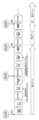
- FIG. 3 is a diagram for explaining an outline of a game executed by the game device 1 according to this embodiment.
- FIG. 4 is a block diagram showing the functional configuration of the game device 1 according to this embodiment.
- FIG. 5 is a diagram showing an example of the game element database 190.
- FIG. 6 is a block diagram showing the functional configuration of the game server 2 according to this embodiment.
- FIG. 7 is a diagram showing an example of the player database 210.
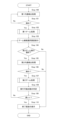
- FIG. FIG. 8 is an operation flowchart of the game device 1.
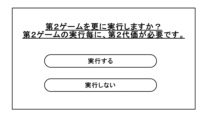
- FIG. FIG. 9 is an example of a game continuation selection screen.
- FIG. 9 is an example of a game continuation selection screen.
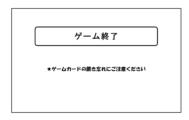
- FIG. 10 is a diagram showing an example of a game end screen.
- FIG. 11 is a flow chart of the operation of the first game process (Step 102).
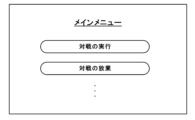
- FIG. 12 is a diagram showing an example of the main menu screen.
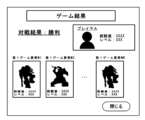
- FIG. 13 is a diagram showing an example of a game result screen.
- FIG. 14 is an operation flowchart of the game card providing process (Step 207).
- FIG. 15 is a diagram showing an example of a game card provision screen.
- FIG. 16 is a flow chart of the operation of the second game process (Step 107).
- FIG. 17 is a diagram for explaining a series of game plays in the second embodiment.
- FIG. 18 is a flow chart of the operation of the first game process (Step 102) in the second embodiment.
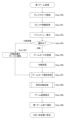
- FIG. 19 is an operational flowchart of the special battle process (Step 500).
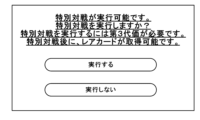
- FIG. 20 is a diagram showing an example of a special battle execution selection screen.
- FIG. 21 is a diagram for explaining an outline of a game executed by the game device 1 according to the third embodiment.
- FIG. 22 is a flow chart of the operation of the first game process (Step 102) in the third embodiment.
- FIG. 23 is a flowchart of game card continuous provision processing (Step 600)
- FIG. 24 is a diagram showing an example of a continuous provision screen.
- FIG. 1 is a diagram showing an example of the overall configuration of a game system according to this embodiment.
- the game system is configured with one or more game devices 1 and a game server 2 .
- the game device 1 and the game server 2 can be connected to a communication line N and can communicate with each other.
- Communication line N means a communication path that allows data communication. That is, the communication line N includes a dedicated line (dedicated cable) for direct connection, a LAN such as Ethernet (registered trademark), a telephone communication network, a cable network, and a communication network such as the Internet. / Regardless of radio.
- the game device 1 is a device that executes a game, is connected to the communication line N, and can perform data communication with the game server 2 .
- the game device 1 is, for example, an arcade game device (arcade game device), a smartphone, a mobile phone, a portable game device, a stationary home game device, a personal computer, a tablet computer, a controller for a stationary home game device, or the like. is.
- a plurality of game devices 1 are basically present and operated by each player.
- FIG. 2 is a diagram showing an example of the appearance of the game device 1.
- the game device 1 includes a display panel 11 on which a screen related to a game is displayed, an operation touch panel 12 integrated with the display panel 11, operation buttons 13, and a terminal for obtaining information about the player.
- a first reading unit 14, a second reading unit 15 configured to be able to arrange an article and reading information from the arranged article, an insertion slot 16 for inserting coins, and an outlet 17 for ejecting an article.
- the game server 2 is a server system that includes one or more server devices, storage devices, and the like.
- the game server 2 provides various services for operating the game of this embodiment, manages data necessary for operating the game, distributes game programs and data required for executing the game on the game device 1, and the like. It can be carried out.
- a plurality of game elements appear in the game according to this embodiment.
- a game element is a character (person, vehicle, item, etc.).
- Game elements are classified into game elements associated with items and game elements not associated with items.
- Game elements associated with items play a major role in competitive play are game elements that are indispensable in competitive play, and are game elements that would not be possible without the existence of such game elements.
- game elements associated with items have various character information (level, hit points, attack power, defense power, terrain suitability, weapons used, etc.), and are also game elements that are the main objects to be operated by the player in battle play. I can say
- a physical item is a game card, which is an item having a physical volume (physical item). Note that the item is not limited to the game card, but is not limited to the game card as long as the item is configured such that the game element associated with the item can be specified.
- the article may be a modeled object such as a figure having the appearance of a game element, for example.
- the description will be made assuming that the items associated with the multiple types of game elements appearing in the game provided by the game device 1 are all tangible game cards. It is also assumed that there are normal cards and rare cards for game cards depending on the type of game elements.
- a rare card is a game card associated with a game element having character information that has a higher game value than a game element corresponding to a normal card or that can advantageously advance a battle play.
- Which game element the game card is associated with can be identified by the reading unit (to be described later) acquiring identification information (game element ID) for identifying the game element attached to the game card.
- the identification information (game element ID) is added to the game card by, for example, printing a one-dimensional or multi-dimensional code obtained by converting the identification information for specifying the game element to the game card.
- it may be realized by other methods such as being recorded in a tag for near field communication (NFC: Near Field Communication) included in the game card or in an IC chip. There may be.
- NFC Near Field Communication
- game elements that are not associated with items are not necessarily required for battle play, but have character information that affects other game elements or player information (levels, experience points, etc.).
- a game element that is not associated with an item, as typified by an item has a secondary effect on character information of other game elements and player information to favorably advance battle play. It is a game element. Therefore, such game elements do not necessarily need to be embodied as tangible objects that can be recognized by the player in reality, but can be provided to the player as information (data) of intangible objects. can.
- these game elements are embodied in articles and the like, and they can be embodied in articles and the like and provided.
- the game executed by the game device 1 includes a first game executed on the condition that payment of the first price is detected, and a second game after the payment of the first price is detected. and a second game that is executed on the condition that payment of the price is detected.
- the flow of the first game and the second game will be described below.
- the first game executed by the game device 1 is started on the condition that the payment of the first price, which is the price of the game, is detected.
- the first game is a game including a battle using game cards and provision of game cards (goods).
- the game device 1 acquires information of the player who uses the game device 1 (hereinafter sometimes referred to as player information). For example, the game device 1 acquires player identification information from a recording medium (for example, a player card) in which the player identification information is recorded by the first reading unit 14, communicates with the game server 2, and the game server 2 Get managed player information. Player information is updated as the game progresses.
- player information is updated as the game progresses.
- the game device 1 displays the main menu on the display panel 11 and presents it to the player.
- the game device 1 receives a selection operation by the player through the operation touch panel 12 .
- Options presented in the main menu include, for example, "play match” and "abandon match".
- “execute battle” is selected, the processing of the battle proceeds.
- “abandoning the match” means that the player abandons the match without executing it.
- “abandon battle” the battle is skipped (abandoned) without being executed.
- the option of "play match” is for players who want to play a match
- the option of "abandon match” is for players who do not want to play and want to acquire a game card, which will be described later.
- the game device 1 executes a competition using game elements.
- a match may include a plurality of secondary matches, but in the present embodiment, the match associated with the payment of the first price is referred to as the first match.
- Game elements used in battles are characters (persons, vehicles, etc.) and are associated with tangible items.
- the item is a game card.
- Identification information for identifying the associated game element is added to the game card.
- each game element ID is read by the second reading unit 15 from a group of game cards placed on the second reading unit 15 by the player, and a group corresponding to the group of read game element IDs is read. is registered as a game element that can be used in battle.
- a match play progresses while a group of registered game elements perform a match action in a predetermined game field.
- the play of the battle is controlled based on the operation inputs made to the registered game elements and the character information (parameters) of the game elements. Then, when the winner is determined between the players, the battle ends.
- the game device 1 enables the first match to be played in response to the payment of the first price of the game. attached item) to the player. After the first match is over, or when "abandon match" is selected on the main menu to skip the match play and the first match is over, the game device 1 ejects the game card (item) from the outlet 17. Eject it and give it to the player. It is considered that the player's desire to acquire a game card is high immediately after the end of the battle. On the other hand, there are players whose purpose is to acquire game cards rather than to compete. Therefore, in order to satisfy both the players who want to play against each other and the players who do not want to play against each other but want to acquire game cards, game cards are provided at the timing after the end of the battle. .
- the game device 1 displays the game result.
- the information to be displayed is, for example, the result of the play of the first match, the level of the players and game elements updated according to the result of the play of the first match, and the like. If the player selects "abandon battle", that is, abandons the first battle, a message indicating that the battle has been abandoned is displayed. With this display, the game device 1 ends the first game associated with the first price.
- Second game (2-1) Display of game continuation selection screen After display of the game result display screen, the game device 1 detects payment of the first price, and on the condition that the second price is paid. , the game continuation selection screen displaying that the second game can be executed is displayed for a predetermined time (for example, 30 seconds).
- the second game executed by the game device 1 is a game that is executed on the condition that the payment of the second price is detected within a predetermined period of time after the end of the first game.
- the predetermined time after the end of the first game is, for example, while the game continuation selection screen is displayed.
- the second game is a game in which only battles using game cards are performed without providing game cards (goods).
- the second price is set lower than the first price. For example, the second price is half the price of the first price. This is because the second game is a game in which only battles using game cards are performed without providing game cards (goods). As a result, it is possible to provide a game that meets the desires of the player whose main purpose is competition.
- the game device 1 executes a competition using game elements.
- the competition may include a plurality of competitions, but in the present embodiment, the competition associated with the payment of the second price is referred to as the second competition.
- the game elements used in the second match are characters (persons, vehicles, etc.) and are associated with tangible game cards, as in the first match.
- each game element ID is read by the second reading unit 15 from a group of game cards placed on the second reading unit 15 by the player, and a group corresponding to the group of read game element IDs is read. is registered as a game element that can be used in battle.
- the registration of the game elements used in the second match may be configured such that the game elements registered in the first match are used as they are without registering new game elements.
- the play of the second match progresses while a group of registered game elements take action in a predetermined game field.
- the play of the second battle is controlled based on the operation inputs made to the registered game elements and the character information (parameters) of the game elements. Then, when the victory or defeat is determined between the players, the second battle ends.
- the game device 1 displays the result of the second match.
- the information to be displayed is, for example, the result of the play of the second match, the level of the players and game elements updated according to the result of the play of the second match, and the like.
- the game device 1 displays that the second game can be executed on the condition that the second price is further paid.
- the selected game continuation selection screen is displayed for a predetermined time (for example, 30 seconds). With this display, the game device 1 ends the first second game associated with the second price.
- the second game can be played repeatedly.
- the number of executable times of the second game it is possible to set the number of executable times to unlimited. times) is preferably limited to the following. The executable number of times can be set for each game device 1 .
- FIG. 4 is a block diagram showing a functional configuration example of the game device 1.
- the game device 1 includes a processing unit 20, a display unit 21, an operation input unit 22, a user information reading unit 23, a game card information reading unit 24, a price detection unit 25, a sound output unit 26, a first A game card providing unit 27 , a second game card providing unit 28 , a communication unit 29 , a storage unit 30 , a first reading unit 14 and a second reading unit 15 are provided.
- the processing unit 20 comprehensively controls the operation of the game apparatus 1 based on the programs and data stored in the storage unit 30, the input signals from the user information reading unit 23, the game card reading unit 24, the operation input unit 22, and the like. do.
- the functions of the processing unit 20 can be realized by, for example, electronic components such as microprocessors such as CPUs and GPUs, ASICs, and IC memories.
- the processing unit 20 includes a first game execution control unit 61 and a second game execution control unit 62 as main functional units. These parts will be described later.
- the display unit 21 displays various game screens based on the image signal output from the processing unit 20.
- the function of the display unit 21 can be realized by a display device such as a flat panel display such as liquid crystal, a projector, or a head mounted display. In FIG. 2, the display panel 11 corresponds to this.
- the operation input unit 22 is used by the player to input various operations related to the game, and outputs an operation input signal corresponding to the operation input to the processing unit 20 .
- the functions of the operation input unit 22 include, for example, a touch panel, a touch operation pad, a home button, a button switch, a joystick, a trackball, and other elements directly operated by the player's fingers, as well as an acceleration sensor, an angular velocity sensor, an inclination sensor, and a geomagnetic sensor. It can also be realized by an element or the like that detects motion or posture. In FIG. 2, the operation touch panel 12 and the operation button 13 correspond to this.
- the user information reading unit 23 controls the reader (first reading unit 14) that reads the recording medium recording the player identification information (player ID), and acquires the player ID from the recording medium recording the player ID.
- the recording medium in which the player ID is recorded is a tag, an IC chip, or the like built into the game card.
- the first reading section 14 and the user information reading section 23 constitute player ID obtaining means for obtaining the player ID from the player card.
- the game card reading unit 24 controls the reader (second reading unit 15) that reads the game card owned by the player, and acquires the identification information (game element ID) of the game card to appear in the game from the game card. For example, if a one-dimensional or multi-dimensional code encoding the game element ID is printed on the game card, the code is read to obtain the game element ID. If the game card includes a short-distance communication tag or IC chip in which a game element ID is recorded, the game element ID is acquired from the tag or IC chip.
- the second reading section 15 and the game card reading section 24 constitute game element ID obtaining means for obtaining a game element ID from the game card.
- the price detection unit 25 detects that payment has been made on the game device 1 .
- the payment of the price is detected, for example, when a coin of a predetermined amount or equivalent is inserted into the slot 16 of the game device 1, or when payment processing is completed based on communication with a chip related to predetermined electronic money. It may be judged by doing.
- the game device 1 of the present embodiment will be described as starting a series of processes related to a game including a match based on payment of a price related to the game. Also, the payment of the price is configured to be detectable even after a series of processing relating to the game is started.
- the sound output unit 26 is a speaker or the like for outputting sound effects and the like related to the game based on the sound signal output from the processing unit 20 .
- the first card providing unit 27 and the second card providing unit 28 are composed of card dispensers configured to be able to provide the game cards stored in the storage unit one by one.
- the game device 1 of this embodiment includes two types of card dispensers (the first game card providing unit 127 and the second game card providing unit 28) inside the housing of the game device 1. , is controlled as to whether the game card is provided from any of the game card providing units.
- One card dispenser has a storage unit configured to store game cards in a vertically stacked manner, and is held in the lowest layer according to a supply command issued by the first game execution control unit 61. It has a mechanism for sending out one game card. The sent game card is led to an accessible space through the outlet 17 and provided to the player.
- game elements are associated with the game cards provided by the game device 1 of the present embodiment, and the game elements can be made to appear in the game by using them during game play.
- the progress of the game is controlled according to the character information of the game elements that have appeared, and the more advantageous the game element has the character information, the higher the value in the game. Therefore, in this embodiment, the game cards are classified into two types according to the value of the associated game element in the game.
- the game device 1 of this embodiment is configured so that it is possible to provide and distribute different game cards.
- the first game card providing unit 27 and the second game card providing unit 28 store game cards of different types in the storage units, and based on the provision command issued by the first game execution control unit 61, , the first game card providing unit 27 or the second game card providing unit 28 is driven to provide a specific type of game card. For this reason, the game cards are delivered to the store or the like where the game device 1 is installed for each type (first type (ordinary cards) and second type (rare cards)), and when replenishing the game cards, the first game card is provided.
- the storage unit of the unit 27 stores a bundle of first type game cards (ordinary cards), and the storage unit of the second game card providing unit 28 stores a bundle of second type game cards (rare cards).
- the game device 1 of the present embodiment provides normal cards when the first game card providing unit 27 is driven, and provides rare cards when the second game card providing unit 28 is driven. is configured as
- the communication unit 29 is a communication interface with an external device.
- the communication unit 29 can be connected to an external device via a communication line N (whether wired or wireless) to enable data transmission/reception.
- the communication unit 29 converts, for example, information input as a transmission target into data in a predetermined format, and transmits the data to an external device such as the game server 2 via the communication line N.
- FIG. The communication unit 29 also receives information from an external device via the communication line N, for example.
- the storage unit 30 is a recording device capable of holding data, such as a non-volatile memory or HDD.
- the storage unit 30 stores, in addition to the operation programs of each unit of the game device 1, parameter information necessary for the operation of each unit, various graphics data used in the game executed by the game device 1, and the like.
- the storage unit 30 stores a game element database 190 (game element DB 190).
- Game element The game element DB 190 is a database that manages information (game element information) about each game element appearing in the game.
- the player places a game card on the second reading unit 15 to obtain information during game play, thereby allowing game elements associated with the game card to appear in the game. can be made
- the game element information managed for one game element is associated with a game element ID 191 that uniquely identifies the game element, for example, as shown in FIG.
- a game element ID 191 that uniquely identifies the game element, for example, as shown in FIG.
- parameters such as the experience value and level (element level) of the game element, and the game element are used.
- It includes character information 193 describing effects and the like.
- the character information 193 is information referred to in a game in which game elements appear, and is involved in progress control of the game.
- graphics data, character information, etc. are stored in the game element DB 190, and the game element information includes these data, but the implementation of the present invention is not limited to this.
- the game element information may include information indicating the storage location of the data of each piece of information.
- the first game execution control unit 61 executes the first game on the condition that the payment of the first price is detected.
- the first game execution control part 61 transmits the player identification information acquired by the first reading part 14 and the user information reading part 23 to the game server 2.
- the player information managed by the game server 2 is received and stored in the storage unit 30 .
- the game device 1 communicates with the game server 2 and registers player information.
- the first game execution control section 61 After acquiring the player information, the first game execution control section 61 displays the main menu on the display section 21 and accepts selection input by the player. Options presented in the main menu include, for example, "execute match” and "abandon match”. When "execute battle” is selected, the first game execution control unit 61 executes battle processing. In the battle process, first, the first game execution control unit 61 accepts registration of game cards to be used by the player in the first battle. After that, the first game execution control unit 61 executes a battle play against another player or a non-player character through communication with the game server 2 .
- the first game execution control section 61 controls the first game card providing section 27 or the second game card providing section 28 when the player finishes the battle, and performs processing for providing game cards to the player.
- the first game execution control unit 61 starts lottery processing to select either the first card providing unit 27 or the second card providing unit 28, and selects the winning card. Notifies the provision section of the provision order.
- the lottery is conducted by lottery using probability. For example, in the lottery, the ratio of selection of the first game card provision unit 27 is 0.8, and the ratio of selection of the second game card provision unit 28 is 0.2. That is, the game cards to be provided after the match are normal cards at a rate of 0.8 and rare cards at a rate of 0.2.
- the first game execution control section 61 may select only the first card providing section 27 . These are for increasing the value of rare cards. However, the above example is only an example, and the first game card providing unit 27 provides the first type game card (normal card) and the second game card providing unit 28 provides the second type game card (rare card). The percentage may be another numerical value.
- the first game execution control section 61 When the provision of the game card is completed, the first game execution control section 61 performs processing for displaying the game result.
- the displayed game result includes, for example, information such as the result of the first match, the player's evaluation, and the update of the experience value and level of the game element.
- the first game execution control unit 61 communicates with the game server 2 at a predetermined timing during the game to acquire information about the game result.
- the first game execution control section 61 notifies the second game execution control section 62 of the end of the first game.
- the second game execution control unit 62 When the second game execution control unit 62 receives the end notification of the first game from the first game execution control unit 61, it displays that the second game can be executed on condition that the second price is paid.
- the game continuation selection screen is displayed for a predetermined time (for example, 30 seconds).
- the second game execution control part 62 ends the process without executing the second game, Display the game end screen. This is because the second game involves only the second match, and whether or not to execute the second game is determined by the player. As a result, consideration can be given to players who do not want to play against each other.
- the second game execution control part 62 updates the player identification information updated in the first game. It is received from the game server 2 and stored in the storage unit 30 . Then, the second game execution control unit 62 executes battle processing. In the battle process, first, the second game execution control unit 62 accepts registration of the game card that the player uses in the second battle. After that, the second game execution control unit 62 executes a competitive play against another player or a non-player character through communication with the game server 2 . It should be noted that the registration of the game elements used in the second match may be configured such that the game elements registered in the first match are used as they are without registering new game elements.
- the second game execution control unit 62 performs a process of displaying the game result when the player's battle ends.
- the displayed game results include, for example, the results of the second match, player evaluations, experience values of game elements, update of levels, and other information.
- the second game execution control unit 62 communicates with the game server 2 at a predetermined timing during the game to acquire information about the game result.
- the second game execution control unit 62 displays the game continuation selection screen again for a predetermined time (for example, 30 seconds). This is because the second game can be played repeatedly. However, in order to prevent the game device 1 from being occupied by a single player, the number of possible executions is preset in the second game execution control unit 62, and when the number of executions of the second game reaches the possible number of executions , the second game execution control unit 62 displays the second game end screen without displaying the game continuation selection screen.
- a predetermined time for example, 30 seconds.
- FIG. 6 is a block diagram showing a functional configuration example of the game server 2. As shown in FIG.
- the game server 2 includes a processing section 200 , a communication section 220 and a storage section 240 .
- the processing unit 200 is, for example, a CPU, and controls the operation of each block that the server 2 has. Specifically, the processing unit 200 reads an operation program of each block recorded in the recording unit 240, develops it in a memory, and executes it, thereby controlling the operation of each block.
- the processing unit 200 includes a matching processing unit 201 and a management unit 202 as main functional units.
- the matching processing unit 201 performs matching processing for a battle game (interpersonal battle) between players provided in the game system of this embodiment. Through the matching process, of the game devices 1 connected to the server 2, for example, two game devices 1 that have sent matching requests at the same time establish a session, and transition to a state in which information communication related to the competitive game is possible. be done.
- the management unit 202 manages the player's evaluation of the game based on the content of the game played on the game device 1 . More specifically, the management unit 202 evaluates the player based on the play content for each game play, and generates or updates player information related to the player, which will be described later, based on the evaluation result.
- the recording unit 240 is a recording device capable of holding data, such as a non-volatile memory or HDD.
- the recording unit 21 stores information such as parameters necessary for the operation of each block in addition to the operation program of each block that the game server 2 has.
- the recording unit 240 also stores a player database 210 (player DB 210).
- the player DB 210 manages information (player information) indicating the usage status of the game associated with each user (player) with respect to the game provided with a play experience on the game device 1. It is a database that The player information is information for managing usage history of game play functions and various game elements available for each player. The player information is sequentially updated according to the play result of the game performed after using the player card in the game device 1, and is provided to the game device 1 when the player card is used again. As a result, the game device 1 can provide a game play that reflects the previous game play.
- the player information includes, for example, a player ID 211 that identifies the player, progress information 212 that indicates the progress of the game play of the player, progress information 212 that the player possesses, and Possessive information 213 indicating game elements usable by the player, strengthening status information 214 indicating the strengthening status of each game element usable for the player, and game elements that can be provided to the player. provided information 215, which is shown.
- the progress information 212 includes progress information indicating which stage of a predetermined story has progressed, battle record information indicating the battle record of the battle game, and evaluation information that evaluates the player's play situation. It's okay.
- the possession information 213 is configured by sequentially adding identification information of game elements possessed by the player.
- the enhancement status information 214 relates at least a game element that has been enhanced (changed from the initial state) to the game element ID 191 of the game element, and is an experience as an index that indicates a parameter that has changed due to enhancement. It may be configured to manage character information such as values and element levels.
- the enhancement status information 214 in this embodiment is described as being updated when the play result of the game played on the game device 1 is obtained. For example, the update may be performed in response to the fact that training result information is obtained by using a function related to training in the game device 1 or the like.
- the provided information 215 records identification information of game elements that can be provided to the player.
- the provided information 215 may be updated when the play result of the game played on the game device 1 is obtained, or when a notification that the player has abandoned the battle is obtained.
- the communication unit 220 is a communication interface with an external device.
- the communication unit 220 can be connected to an external device via a communication line N (whether wired or wireless) to enable data transmission/reception.
- the communication unit 220 converts, for example, information input as a transmission target into data in a predetermined format, and transmits the data to an external device such as the game device 1 via the communication line N.
- FIG. The communication unit 220 also receives information from an external device via the communication line N, for example.
- the operation of the game device 1 will be explained using the flowchart of FIG. In the following description, the first price is 200 yen, and the second price is 100 yen, which is half the first price.
- the price detection unit 25 performs detection processing for the first price (200 yen) (Step 100).
- the player inserts a 200-yen coin or equivalent coin into the slot 16 of the game device 1 as the first payment for executing the game.
- the price detection unit 25 detects the first price (200 yen) (Step 101)
- the first game execution control unit 61 starts the first game process (Step 102). Details of the first game process (Step 102) will be described later.
- the second game execution control section 62 displays a game continuation selection screen for a predetermined time (eg, 30 seconds) (Step 103).
- a predetermined time eg, 30 seconds
- FIG. 9 is an example of a game continuation selection screen. On the game continuation selection screen of FIG. 9, the selection of execution of the second game and the fact that the second price (100 yen) is required for each execution of the second game are displayed.
- FIG. 10 is a diagram showing an example of a game end screen. A series of games on the game device 1 ends with the display of the end screen.
- the price detection unit 25 detects the second price (100 yen) (Step 105).
- the second game execution control unit 62 starts the second game process (Step 107). Details of the second game process (Step 107) will be described later.
- the second game execution control unit 62 displays the end screen (Step 110). A series of games on the game device 1 ends with the display of the end screen.
- the second game execution control unit 62 determines whether the number of executions of the second game has reached the executable number (Step 108). Whether or not the executable count has been reached is determined based on the counter value of the counter C1, which will be described later. If the number of executions of the second game has not reached the executable number (Step 109), the process returns to Step 103 to display the game continuation selection screen (Step 103). On the other hand, when the number of executions of the second game has reached the number of executions possible, the second game execution control section 62 displays an end screen (Step 110). A series of games on the game device 1 ends with the display of the end screen. This completes the description of the overall operation of the game device 1 .
- FIG. 11 is a flow chart of the operation of the first game process (Step 102).
- player card reading processing is executed (Step 200).
- the player touches the first reader 14 (reader) of the game device 1 with the player card.
- the first reading unit 14 reads the player ID 211 from the player's player card, and the user information reading unit 23 transmits the player ID 211 read by the first reading unit 14 from the player's player card to the game server 2 .
- Receives and acquires player information (progress information 212, possession information 213, enhancement status information 214, provision information 215, etc.) associated with the player ID 211 (Step 201).
- the first game execution control section 61 displays the main menu (Step 202).
- FIG. 12 is a diagram showing an example of the main menu screen. On the main menu screen of FIG. 12, options such as "execute battle” and "abandon battle” are displayed so as to be selectable.
- the player selects the desired option from the displayed main menu.
- the first game execution control section 61 determines the option selected from the main menu (Step 203).
- the first game execution control unit 61 accepts the registration of the game card that the player will use in the first battle (Step 205). When the registration of the game element corresponding to the game card used by the player in the first battle is completed, the first game execution control section 61 executes the battle processing between the players (Step 206). Then, when the winner is determined, the first match ends, and the process proceeds to game card provision processing (Step 207). On the other hand, if the player does not want the battle and selects "Abandon battle" on the main menu, the first game execution control unit 61 notifies the game server 2 that the battle has been abandoned (Step 204). ). Then, proceed to the game card providing process (Step 207). Details of the game card providing process (Step 207) will be described later.
- FIG. 13 is a diagram showing an example of a game result screen.
- a screen to the effect that the battle has been abandoned is displayed.
- the first game execution control section 61 notifies the second game execution control section 62 of the end of the first game (Step 209). This completes the description of the operation of the first game process (Step 102).
- FIG. 14 is a flow chart of the operation of the game card providing process (Step 207).
- the first game execution control unit 61 determines the end of the first match or the abandonment of the first match (Step 300), and when the first match is finished or abandoned (Step 301), the game card is provided.
- a lottery process is performed to select the division (Step 302). In the lottery process, a lottery is performed with a predetermined probability so that normal cards or rare cards are provided at the above-described predetermined provision ratio.
- the first game execution control unit 61 selects either the first game card providing unit 27 or the second game card providing unit 28 based on the result of the lottery (Step 303), and issues a provision command to the selected card providing unit. (Step 304).
- the first game card providing section 27 or the second game card providing section 28 notified of the provision command ejects one game card from the outlet 17 .
- the first game execution control section 61 displays a game card providing screen (Step 305).
- FIG. 15 is a diagram showing an example of a game card provision screen. This completes the description of the operation of the game card providing process (Step 207).
- FIG. 16 is a flow chart of the operation of the second game process (Step 107).
- the second game execution control unit 62 accepts the registration of the game cards that the player will use in the second match (Step 400).
- the second game execution control section 62 executes the battle processing between the players (Step 401).
- the winner is determined, the second match ends, and the second game execution control section 62 displays the game result (Step 402).
- the game result screen is similar to that shown in FIG.
- 1 is added to the counter C1 for counting the number of executions of the second game (Step 403).
- the game of the first embodiment includes a first game that is executed on the condition that a first price is paid, and includes a battle using game cards (goods) and provision of game cards (goods); Finally, there is provided a second game which is executed on the condition that a second price is paid, and in which only a battle using game cards is performed without providing game cards (goods).
- a game that satisfies both players who want to compete and obtain game cards (goods) and players who only want to compete.
- the game of the first embodiment is suitable for players who want to play multiple battles.
- the game of the first embodiment is configured so that the first battle of the first game can be abandoned (skipped), players who wish only to acquire game cards (goods) will also be satisfied. It's a game you can play.
- FIG. 17 is a diagram for explaining a series of game plays in the second embodiment.
- a lottery for a special match is held. You can get the right to run a special match. Furthermore, the player can receive a game card after the special match.
- FIG. 18 is a flow chart of the operation of the first game process (Step 102) in the second embodiment.
- the game device 1 performs a special battle process (Step 500) after the game card providing process (Step 207).
- the special battle process (Step 500) will be explained using the flowchart of FIG. Since other processes are the same as those of the first embodiment, detailed description thereof will be omitted.
- the first game execution control section 61 starts lottery processing (Step 502).
- the lottery process uses a predetermined probability to determine whether or not a special battle will occur.
- Step 503 If the first game execution control unit 61 does not win (a special match occurs) (Step 503), it ends the special match processing and proceeds to Step 208.
- FIG. 20 is a diagram showing an example of a special battle execution selection screen.
- the special match execution selection screen of FIG. 20 it is indicated that the special match can be executed, that the payment of the third price is required to execute the special match, and that the rare card can be acquired after the special match. is displayed.
- the first game execution control section 61 ends the special match processing and proceeds to Step 208.
- the first game execution control unit 61 causes the price detection unit 25 to detect payment of the third price (Step 506).
- the third price is the same as the first price.
- the third price is 200 yen, which is the same amount as the first price.
- the special match is played during the gameplay of the first game, but the point that both the special match and the game card are provided to the player is that the first match and the game obtained by paying the first price are the same. It is the same as providing a card.
- the first game execution control section 61 ends the special battle process and proceeds to Step 208.
- the first game execution control section 61 executes a special match (Step 507).
- the special battle may be between players as in the first battle, or may be a battle with a non-player character (a so-called boss character) having a special ability.
- the first game execution control section 61 notifies the second game card providing section 28 of the provision command (Step 508).
- the second game card providing unit 28 ejects one game card from the outlet 17 .
- the game cards ejected from the second game card providing section 28 are rare cards.
- a special match is generated by winning a lottery, and this is because it has the same value as winning a rare card.
- the first game execution control section 61 ends the special battle process and proceeds to Step 208. Subsequent processing is the same as in the first embodiment.
- the second embodiment further provides a combination of a special battle and the provision of game cards (rare cards) during the first game on the condition that the player wins the lottery and pays the third price. , the player can be given the opportunity to play against each other and obtain game cards with high game value. It should be noted that the special battle described in the second embodiment can be carried out only with the first game without providing the second game.
- FIG. 21 is a diagram for explaining an outline of a game executed by the game device 1 according to the third embodiment.
- one game card is provided for the payment of the first price.
- another game card (goods) is provided at the player's request on the condition of further payment of a fourth price. provide.
- the reason why more game cards (goods) are provided after the match is that it is the timing when the player wants a game card that compensates for the weaknesses or has a higher value after receiving the result of the match.
- the player can continuously acquire the game card after the acquisition of the game card for the payment of the first price, such This is because it is beneficial to the player as well.
- the game device 1 accepts a player's selection operation as to whether or not he or she wishes to receive more game cards.
- the game device 1 requests the player to pay the fourth price.
- the game device 1 ejects one game card from the outlet 17 and provides it to the player.
- the fourth price is lower than the first price.
- the fourth price is 100 yen, which is lower than the first price.
- the player receives the right to play the first match and the right to obtain one game card as consideration for the first price, but the consideration for the fourth price is only the right to obtain one game card. is.
- Further game cards can be provided repeatedly for a predetermined number of times.
- the act of providing game cards repeatedly in this manner will be referred to as continuous provision of game cards.
- the player is allowed to select whether or not to further provide the game card.
- a further game card is provided subject to the payment of a fourth price. If the player does not wish to provide more game cards, or if the number of consecutive game card offers reaches a predetermined number, the consecutive game card offers are terminated.
- FIG. 22 is a flow chart of the operation of the first game process (Step 102) in the third embodiment. As shown in FIG. 22, the game device 1 performs game card continuous provision processing (Step 600) after displaying the game results (Step 208).
- Step 600 The game card continuous provision process (Step 600) will be explained using the flowchart of FIG. Since other processes are the same as those in the first or second embodiment, detailed description thereof will be omitted.
- the first game execution control unit 61 displays an input screen (continuous offer screen) for receiving selection input by the player as to whether or not to receive further game cards (Step 601).
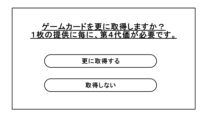
- FIG. 24 is a diagram showing an example of a continuous provision screen.
- the continuous provision screen of FIG. 24 is a screen for selecting continuous provision of game cards, and displays that the fourth price must be paid for each provision of one card.
- the first game execution control unit 61 determines the option selected by the player (Step 602), the selection to receive further game cards is made, and the payment of the fourth price is detected by the price detection unit 25. Then (Step 603), lottery processing is performed (Step 604).
- the lottery process is a lottery to select either the first card providing unit 27 or the second card providing unit 28 .
- the lottery is similar to the lottery for the game cards provided for the first price in that the lottery is performed by lottery using probability, but the ratio of the types of game cards provided is different.
- the first game execution control unit 61 has a ratio of selecting the first game card providing unit 27 of 0.2 and a ratio of selecting the second game card providing unit 28 of 0.8. That is, the main purpose of a player who continuously provides game cards is to acquire game cards with high game value, and the ratio of rare cards to be provided is set high so as to meet this purpose. Also, the provision ratio may be changed according to the number of times the game card is purchased. For example, when the possible number of consecutive offers is 4, in the case of the first game card provision, the ratio of selection by the first game card provision unit 27 is 0.8, and the ratio of selection by the second game card provision unit 28 is 0.8.
- the rate of selection of the first game card providing unit 27 is 0.5
- the rate of selection of the second game card providing unit 28 is 0.2.
- the ratio of selection of the first game card provision unit 27 is 0.2
- the ratio of selection of the second game card provision unit 28 is 0.8.
- the ratio of selection of the first game card supply unit 27 is 0, and the ratio of selection of the second game card supply unit 28 is 1. That is, as the number of times game cards are provided increases, the ratio of rare cards provided increases, and in the case of the consecutive possible number of times (fourth time in this example), a rare card is always provided.
- the second game card provision section 28 may always be selected.
- the ratio of the provision type may be another numerical value.
- the first game execution control unit 61 selects either the first game card providing unit 27 or the second game card providing unit 28 based on the result of the lottery (Step 605), and issues a provision command to the selected card providing unit. (Step 606).
- the first game card providing section 27 or the second game card providing section 28 notified of the provision command ejects one game card from the outlet 17 .
- the first game execution control unit 61 If the counter C2 has not reached the number of times of continuous play, the first game execution control unit 61 returns to Step 601 to display the continuous offer screen, and continues the processing from Step 602 onwards. On the other hand, if the first game execution control unit 61 selects not to obtain a game card, does not detect the fourth price, or if the counter C2 reaches the number of times that the counter C2 can continue, the continuous game card provision process ends. This is the end of the description of the operation of the continuous game card provision process.
- the third embodiment provides an opportunity to acquire only game cards (items) during the first game, and thus provides a game that meets the desires of players whose main purpose is to acquire game cards (items). can do.
- the continuous game card providing process described in the third embodiment can be implemented only with the first game without providing the second game. Also, the continuous game card providing process described in the third embodiment can be performed only with the first game without the special battle described in the second embodiment. Furthermore, a combination of the first embodiment and the third embodiment is also possible.
- the number is not limited to two.
- Three or more card providing units (goods providing units) may be provided according to the type of game card (goods).
Landscapes
- Engineering & Computer Science (AREA)
- Multimedia (AREA)
- Business, Economics & Management (AREA)
- Computer Security & Cryptography (AREA)
- General Business, Economics & Management (AREA)
- Physics & Mathematics (AREA)
- Optics & Photonics (AREA)
- Human Computer Interaction (AREA)
- Management, Administration, Business Operations System, And Electronic Commerce (AREA)
Applications Claiming Priority (2)
| Application Number | Priority Date | Filing Date | Title |
|---|---|---|---|
| JP2021193606A JP7206021B1 (ja) | 2021-11-29 | 2021-11-29 | ゲーム装置、及び、プログラム |
| JP2021-193606 | 2021-11-29 |
Publications (1)
| Publication Number | Publication Date |
|---|---|
| WO2023095598A1 true WO2023095598A1 (ja) | 2023-06-01 |
Family
ID=84923495
Family Applications (1)
| Application Number | Title | Priority Date | Filing Date |
|---|---|---|---|
| PCT/JP2022/041418 Ceased WO2023095598A1 (ja) | 2021-11-29 | 2022-11-07 | ゲーム装置、及び、プログラム |
Country Status (3)
| Country | Link |
|---|---|
| JP (2) | JP7206021B1 (https=) |
| CN (1) | CN115671710B (https=) |
| WO (1) | WO2023095598A1 (https=) |
Citations (5)
| Publication number | Priority date | Publication date | Assignee | Title |
|---|---|---|---|---|
| JP2017113438A (ja) * | 2015-12-25 | 2017-06-29 | 株式会社バンダイナムコエンターテインメント | ゲームシステム及びプログラム |
| JP2017196282A (ja) * | 2016-04-28 | 2017-11-02 | 株式会社バンダイナムコエンターテインメント | コンピュータシステム及びプログラム |
| JP2018019925A (ja) * | 2016-08-03 | 2018-02-08 | 株式会社バンダイ | ゲーム装置、及びプログラム |
| JP2019092573A (ja) * | 2017-11-17 | 2019-06-20 | 株式会社バンダイ | ゲーム装置、ゲームシステム及びプログラム |
| JP2020099714A (ja) * | 2020-02-25 | 2020-07-02 | 株式会社バンダイ | ゲーム装置、ゲームシステム及びプログラム |
Family Cites Families (3)
| Publication number | Priority date | Publication date | Assignee | Title |
|---|---|---|---|---|
| JP5419628B2 (ja) * | 2009-10-09 | 2014-02-19 | 株式会社コナミデジタルエンタテインメント | ゲームシステム及びそのコンピュータプログラム |
| CN106096952A (zh) * | 2016-06-22 | 2016-11-09 | 北京展鸿软通科技股份有限公司 | 手机游戏支付方法、支付服务器及支付系统 |
| JP6815433B2 (ja) * | 2019-03-29 | 2021-01-20 | 株式会社バンダイ | ゲーム装置、プログラム及びゲームシステム |
-
2021
- 2021-11-29 JP JP2021193606A patent/JP7206021B1/ja active Active
-
2022
- 2022-10-21 CN CN202211296360.1A patent/CN115671710B/zh active Active
- 2022-11-07 WO PCT/JP2022/041418 patent/WO2023095598A1/ja not_active Ceased
- 2022-12-28 JP JP2022212213A patent/JP7848109B2/ja active Active
Patent Citations (5)
| Publication number | Priority date | Publication date | Assignee | Title |
|---|---|---|---|---|
| JP2017113438A (ja) * | 2015-12-25 | 2017-06-29 | 株式会社バンダイナムコエンターテインメント | ゲームシステム及びプログラム |
| JP2017196282A (ja) * | 2016-04-28 | 2017-11-02 | 株式会社バンダイナムコエンターテインメント | コンピュータシステム及びプログラム |
| JP2018019925A (ja) * | 2016-08-03 | 2018-02-08 | 株式会社バンダイ | ゲーム装置、及びプログラム |
| JP2019092573A (ja) * | 2017-11-17 | 2019-06-20 | 株式会社バンダイ | ゲーム装置、ゲームシステム及びプログラム |
| JP2020099714A (ja) * | 2020-02-25 | 2020-07-02 | 株式会社バンダイ | ゲーム装置、ゲームシステム及びプログラム |
Also Published As
| Publication number | Publication date |
|---|---|
| JP2023079905A (ja) | 2023-06-08 |
| JP7848109B2 (ja) | 2026-04-20 |
| JP7206021B1 (ja) | 2023-01-17 |
| CN115671710B (zh) | 2026-04-10 |
| CN115671710A (zh) | 2023-02-03 |
| JP2023080060A (ja) | 2023-06-08 |
Similar Documents
| Publication | Publication Date | Title |
|---|---|---|
| US20200023280A1 (en) | Computer system and game system | |
| JP3857712B2 (ja) | ゲームシステム | |
| JP6404421B1 (ja) | ゲームプログラム、方法、および情報処理装置 | |
| JP7320648B1 (ja) | プログラム及びゲーム装置 | |
| WO2010004866A1 (ja) | ゲームシステム及びこれに用いるゲーム装置 | |
| KR100942637B1 (ko) | 아케이드 게임기 및 게임 시스템 | |
| JP6316903B1 (ja) | ゲームシステム、ゲーム装置、ゲーム用物品及びプログラム | |
| JP7638589B2 (ja) | アーケードゲーム装置およびゲームプログラム | |
| JP3766012B2 (ja) | ゲームシステム及びゲームシステムの制御方法 | |
| JP7633146B2 (ja) | ゲームプログラム及びゲーム装置 | |
| JP7206021B1 (ja) | ゲーム装置、及び、プログラム | |
| JP7173713B1 (ja) | プログラム、及び、ゲーム装置 | |
| JP7162717B1 (ja) | ゲーム装置及びプログラム | |
| JP2021003369A (ja) | ゲーム装置、ゲームシステム及びプログラム | |
| JP2004283460A (ja) | 遊技用システム | |
| JP2023171917A (ja) | プログラム、及び、ゲーム装置 | |
| JP2024031706A (ja) | プログラム、情報処理装置 | |
| JP2017144102A (ja) | ゲーム装置及びプログラム | |
| WO2016001945A1 (ja) | サービス提供装置、サービス提供システム、及びサービス提供方法 | |
| WO2025154482A1 (ja) | ゲーム装置及びプログラム | |
| JP7834910B1 (ja) | プログラム及びゲーム装置 | |
| JP2017142860A (ja) | ゲームシステムおよびゲームプログラム | |
| JP2016198548A (ja) | ゲームシステムおよびゲームプログラム | |
| JP3930530B2 (ja) | ゲームシステム及びゲームシステムの制御方法 | |
| JP2019042518A (ja) | ゲームプログラム、方法、および情報処理装置 |
Legal Events
| Date | Code | Title | Description |
|---|---|---|---|
| 121 | Ep: the epo has been informed by wipo that ep was designated in this application |
Ref document number: 22898382 Country of ref document: EP Kind code of ref document: A1 |
|
| NENP | Non-entry into the national phase |
Ref country code: DE |
|
| 122 | Ep: pct application non-entry in european phase |
Ref document number: 22898382 Country of ref document: EP Kind code of ref document: A1 |